WO2012045114A1 - Agents and methods for treating hematologic conditions - Google Patents
Agents and methods for treating hematologic conditions Download PDFInfo
- Publication number
- WO2012045114A1 WO2012045114A1 PCT/AU2011/001265 AU2011001265W WO2012045114A1 WO 2012045114 A1 WO2012045114 A1 WO 2012045114A1 AU 2011001265 W AU2011001265 W AU 2011001265W WO 2012045114 A1 WO2012045114 A1 WO 2012045114A1
- Authority
- WO
- WIPO (PCT)
- Prior art keywords
- selectin
- hematologic
- cells
- leukemia
- alkyl
- Prior art date
- Legal status (The legal status is an assumption and is not a legal conclusion. Google has not performed a legal analysis and makes no representation as to the accuracy of the status listed.)
- Ceased
Links
- 0 CC(NN1*C1)=O Chemical compound CC(NN1*C1)=O 0.000 description 15
- WERFIDUTXUPTLT-UHFFFAOYSA-N CC(CC1)OC1(C(O)=O)O Chemical compound CC(CC1)OC1(C(O)=O)O WERFIDUTXUPTLT-UHFFFAOYSA-N 0.000 description 1
- JWAWEQBUZOGIBZ-UHFFFAOYSA-N C[n]1nncc1 Chemical compound C[n]1nncc1 JWAWEQBUZOGIBZ-UHFFFAOYSA-N 0.000 description 1
- VNLMUKFUXHUZRK-UHFFFAOYSA-N Cc(cc1F)cc(F)c1O Chemical compound Cc(cc1F)cc(F)c1O VNLMUKFUXHUZRK-UHFFFAOYSA-N 0.000 description 1
- JINPHWNDUMOALG-UHFFFAOYSA-N Cc1ncc[n]1O Chemical compound Cc1ncc[n]1O JINPHWNDUMOALG-UHFFFAOYSA-N 0.000 description 1
Classifications
-
- A—HUMAN NECESSITIES
- A61—MEDICAL OR VETERINARY SCIENCE; HYGIENE
- A61K—PREPARATIONS FOR MEDICAL, DENTAL OR TOILETRY PURPOSES
- A61K31/00—Medicinal preparations containing organic active ingredients
- A61K31/70—Carbohydrates; Sugars; Derivatives thereof
-
- A—HUMAN NECESSITIES
- A61—MEDICAL OR VETERINARY SCIENCE; HYGIENE
- A61K—PREPARATIONS FOR MEDICAL, DENTAL OR TOILETRY PURPOSES
- A61K38/00—Medicinal preparations containing peptides
- A61K38/16—Peptides having more than 20 amino acids; Gastrins; Somatostatins; Melanotropins; Derivatives thereof
- A61K38/17—Peptides having more than 20 amino acids; Gastrins; Somatostatins; Melanotropins; Derivatives thereof from animals; from humans
- A61K38/177—Receptors; Cell surface antigens; Cell surface determinants
- A61K38/178—Lectin superfamily, e.g. selectins
-
- A—HUMAN NECESSITIES
- A61—MEDICAL OR VETERINARY SCIENCE; HYGIENE
- A61P—SPECIFIC THERAPEUTIC ACTIVITY OF CHEMICAL COMPOUNDS OR MEDICINAL PREPARATIONS
- A61P35/00—Antineoplastic agents
- A61P35/02—Antineoplastic agents specific for leukemia
-
- G—PHYSICS
- G01—MEASURING; TESTING
- G01N—INVESTIGATING OR ANALYSING MATERIALS BY DETERMINING THEIR CHEMICAL OR PHYSICAL PROPERTIES
- G01N33/00—Investigating or analysing materials by specific methods not covered by groups G01N1/00 - G01N31/00
- G01N33/48—Biological material, e.g. blood, urine; Haemocytometers
- G01N33/50—Chemical analysis of biological material, e.g. blood, urine; Testing involving biospecific ligand binding methods; Immunological testing
- G01N33/5005—Chemical analysis of biological material, e.g. blood, urine; Testing involving biospecific ligand binding methods; Immunological testing involving human or animal cells
- G01N33/5008—Chemical analysis of biological material, e.g. blood, urine; Testing involving biospecific ligand binding methods; Immunological testing involving human or animal cells for testing or evaluating the effect of chemical or biological compounds, e.g. drugs, cosmetics
- G01N33/5011—Chemical analysis of biological material, e.g. blood, urine; Testing involving biospecific ligand binding methods; Immunological testing involving human or animal cells for testing or evaluating the effect of chemical or biological compounds, e.g. drugs, cosmetics for testing antineoplastic activity
-
- G—PHYSICS
- G01—MEASURING; TESTING
- G01N—INVESTIGATING OR ANALYSING MATERIALS BY DETERMINING THEIR CHEMICAL OR PHYSICAL PROPERTIES
- G01N2333/00—Assays involving biological materials from specific organisms or of a specific nature
- G01N2333/435—Assays involving biological materials from specific organisms or of a specific nature from animals; from humans
- G01N2333/705—Assays involving receptors, cell surface antigens or cell surface determinants
- G01N2333/7056—Selectin superfamily, e.g. LAM-1, GlyCAM, ELAM-1, PADGEM
- G01N2333/70564—Selectins, e.g. CD62
-
- G—PHYSICS
- G01—MEASURING; TESTING
- G01N—INVESTIGATING OR ANALYSING MATERIALS BY DETERMINING THEIR CHEMICAL OR PHYSICAL PROPERTIES
- G01N2500/00—Screening for compounds of potential therapeutic value
- G01N2500/02—Screening involving studying the effect of compounds C on the interaction between interacting molecules A and B (e.g. A = enzyme and B = substrate for A, or A = receptor and B = ligand for the receptor)
Definitions
- This invention relates generally to methods and agents for modulating proliferation of hematologic cells. More particularly, the present invention relates to molecules that modulate the level or functional activity of L-selectin and to their use in modulating proliferation and/or death of cells of hematologic origin. Even more particularly, the present invention relates to molecules that reduce, impair or abrogate the level or functional activity of L-selectin, including inhibitor or antagonist molecules that are specific for L-selecti polynucleotides or their expression products, and to the use of these molecules for reducing or inhibiting proliferation and or stimulating death of hematologic cancer cells including leukemia cells.
- the present invention relates to the use of L-selectin modulatory agents, particularly antagonist agents, in methods and compositions for treating or preventing hematologic conditions including leukemias (e.g., chronic lymphocytic leukemia (CLL), lymphocytic leukemia (ALL), acute myelogenous leukemia (AML), chronic myelogenous leukemia (CML) hairy cell leukemia, myelodysplastic syndrome) and lymphoproliferative disorders.
- leukemias e.g., chronic lymphocytic leukemia (CLL), lymphocytic leukemia (ALL), acute myelogenous leukemia (AML), chronic myelogenous leukemia (CML) hairy cell leukemia, myelodysplastic syndrome
- L-selectin modulatory agents particularly antagonist agents
- Leukemia is a cancer of the blood cells, mostly white blood cells. Each year, nearly 27,000 adults and more than 2,000 children in the United States are diagnosed with leukemia. Leukemia occurs in males more often than in females and in Caucasians more often than other races.
- Leukemia There are several types of leukemia. Leukemia is either acute or chronic. In acute leukemia, the abnormal blood cells are blasts that remain very immature and cannot carry out their normal functions. The number of blasts increases rapidly, and the disease becomes worse quickly. In chronic leukemia, some blast cells are present, but in general, these cells are more mature and can carry out some of their normal functions. Also, the number of blasts increases less rapidly than in acute leukemia. As a result, chronic leukemia worsens gradually. [0004] Leukemia can arise in either of the two main types of white blood cells: lymphoid cells or myeloid cells. When leukemia affects lymphoid cells, it is called lymphocytic leukemia.
- myeloid or myelogenous leukemia When myeloid cells are affected, the disease is called myeloid or myelogenous leukemia.
- leukemia Acute Lymphocytic Leukemia (ALL) (which is the most common type of leukemia in young children and also affects adults, especially those age 65 and older); Acute Myeloid Leukemia (AML) (which occurs in both adults and children); Chronic Lymphocytic Leukemia (CLL) (which most often affects adults over the age of 55, although it sometimes occurs in younger adults, but it almost never affects children); Chronic Myeloid Leukemia (CML) occurs mainly in adults. A very small number of children also develop this disease. Hairy Cell Leukemia (which is an uncommon type of chronic leukemia).
- CLL is the most common adult leukemia in the Western hemisphere. This cancer of the white blood cells and bone marrow is characterized by uncontrolled proliferation and/or reduced cell death (apoptosis) of blood cells, specifically the B-lymphocytes.
- the clinical course and prognosis of CLL is fairly variable: some patients live an unaffected life with stable disease for years without intervention; others suffer an aggressive and wasting disease course with rapid progression, arduous treatments and advanced death.
- overall survival rates in CLL range from less than 18 months to more than 15 years (median 9 years) after diagnosis and almost one-third of patients die within 5 years after disease onset.
- CLL cerebral spastic leukemia
- B-lymphocytes antibody producing cells
- CNS central nervous system
- CHL chlorambucil
- CX cyclophosphamide
- CHOP CHOP
- CX doxorubicin, vincristine, prednisone
- Fludarabine (FAMP), cladribine (2CdA) and pentostatin (DCF) are three chemotherapeutic agents belonging to the family of purine analogs and displaying remarkable activity in malignancies arising from the clonal expansion of lymphocytes, and particularly in CLL. These three agents have similar chemical structures and mechanisms of action such as induction of apoptosis. However, they also have significant differences, especially in their interactions with enzymes involved in adenosine and deoxyadenosine metabolism. Different studies suggest that FAMP and 2CdA have similar activity in B-CLL while DCF used alone seems to be less active in this disease.
- chemoimmunotherapy regimens combining cytotoxic agents such as alkylating agents and purine nucleoside analogs with monoclonal antibodies such as Rituximab, have improved initial overall response (OR) rates, complete response (CR) rates and progression free survival (PFS).
- OR overall response
- CR complete response
- PFS progression free survival
- CLL remains incurable with standard therapies; patients inevitably relapse, become increasingly refractory to treatment, and often acquire high-risk chromosomal abnormalities such as del(l lq22) and del(17pl3), which correspond to loss of the ataxia telangiectasia mutated (ATM) and p53 tumor suppressor genes, respectively.
- ATM ataxia telangiectasia mutated
- the present invention is based in part on the discovery that L-selectin is upregulated in CLL cells and is associated with cell survival and that blocking antibodies to L-selectin result in rapid and specific death of CLL cells.
- the present inventors have also discovered that incubation of primary CLL cells with anti-L-selectin antibody results in their rapid death, while other cells are not affected.
- CLL cells were killed by treatment with anti-L-selectin antibody.
- the present inventors propose that L-selectin is upregulated in other hematologic cancer cells (e.g. , other leukemia cells) and that these cells can also be treated with L-selectin antagonists to reduce or inhibit their
- the present invention provides methods for inhibiting the proliferation, survival or viability of a hematologic malignant cell (e.g., a leukemia cell, including a lymphocytic leukemia cell such as a CLL cell). These methods generally comprise, consist or consist essentially of contacting the cell with a proliferation-, survival- or viability-inhibiting amount of an L-selectin antagonist.
- a hematologic malignant cell e.g., a leukemia cell, including a lymphocytic leukemia cell such as a CLL cell.
- the hematologic malignant cell is selected from leukemia cells, illustrative examples of which include acute lymphoblastic leukemia (ALL) cells, acute myelogenous leukemia (AML) cells, chronic lymphocytic leukemia (CLL) cells, chronic myelogenous leukemia (CML) cells, and acute monocytic leukemia (AMOL) cells, as well as Hodgkin's lymphoma cells and Non-Hodgkin's lymphoma cells, or precursors thereof.
- the hematologic malignant cell is associated with high numbers of circulating tumor cells (e.g., in blood).
- the hematologic malignant cell is a lymphoid leukemia cell (e.g., a lymphocytic leukemia cell such as CLL cell).
- Non-limiting examples of suitable L-selectin antagonists include small molecules, such as nucleic acids, peptides, polypeptides, peptidomimetics,
- carbohydrates lipids or other organic (carbon containing) or inorganic molecules.
- the L-selectin antagonist is selected from antigen-binding molecules that are immuno-interactive with L-selectin, peptides that bind to L-selectin and that block cell- cell adhesion, and carbohydrate or peptide mimetics of L-selectin ligands.
- the L-selectin antagonist reduces the expression of an L-selectin gene or the level or functional activity of an expression product of that gene.
- the L-selectin antagonist may antagonize the function of L-selectin, including reducing or abrogating the activity of at least one of its ligand-binding sites.
- the L-selectin antagonist reduces the expression of the L-selectin gene or the level or functional activity of an L-selectin expression product to less than about 9/10, 4/5, 7/10, 3/5, 1 ⁇ 2 , 2/5, 3/10, 1/5, 1/10, 1/20, 1/50, 10 1 , 10 2 , 10 "3 , lO "4 , 10 '5 , lO "6 , 10 '7 , 10 "8 , 10 '9 , lO '10 , 10 ⁇ ", lO '12 , lO- 13 , 10 '14 or about 10 "15 of the expression of the L-selectin gene, or the level or functional activity of a corresponding L-selectin expression product in the absence of the agent.
- the L-selectin antagonist is a selective L- selectin antagonist.
- agents that also antagonize the function of other selectins e.g., P-selectin and E-selectin are also contemplated in the practice of the present invention.
- the L-selectin antagonist is a Pan- selectin antagonist.
- Another aspect of the present prevention provides methods for treating or preventing a hematologic malignancy in a subject. These methods generally comprise, consist or consist essentially of administering to the subject an L-selectin antagonist in an effective amount to thereby treat or prevent the hematologic malignancy.
- the hematologic malignancy is associated with high numbers of circulating tumor cells (e.g., in blood).
- the malignancies include acute lymphoblastic leukemia (ALL), acute myelogenous leukemia (AML), chronic lymphocytic leukemia (CLL), chronic myelogenous leukemia (CML), acute monocytic leukemia (AMOL), Hodgkin's lymphomas and Non-Hodgkin's lymphomas.
- ALL acute lymphoblastic leukemia
- AML acute myelogenous leukemia
- CLL chronic lymphocytic leukemia
- CML chronic myelogenous leukemia
- AMOL acute monocytic leukemia
- Hodgkin's lymphomas e.g., a lymphocytic leukemia such as CLL.
- the L-selectin antagonist is administered on a routine schedule, for example, 2, 3, 4, 5, 6, 8, 10 or 12 times daily, every day, at least twice a week, at least three times a week, at least four times a week, at least five times a week, at least six times a week, every week, every other week, every third week, every fourth week, every month, every two months, every three months, every four months, and every six months.
- a routine schedule for example, 2, 3, 4, 5, 6, 8, 10 or 12 times daily, every day, at least twice a week, at least three times a week, at least four times a week, at least five times a week, at least six times a week, every week, every other week, every third week, every fourth week, every month, every two months, every three months, every four months, and every six months.
- the methods further comprise co-administering to the subject at least one ancillary therapy that treats or ameliorates the symptoms or reverses or inhibits the development or progression of the hematologic malignancy in the subject.
- ancillary therapy include radiation therapy, chemotherapy, stem cell transplant; and antibody therapy.
- the invention provides methods for identifying agents that are useful for inhibiting proliferation, survival or viability of a hematologic malignant cell or for treating or preventing a hematologic malignancy in a subject.
- These methods generally comprise contacting a preparation with a test agent, wherein the preparation comprises (i) a polypeptide comprising an amino acid sequence corresponding to at least a biologically active fragment of an L-selectin polypeptide, or to a variant or derivative thereof; or (ii) a polynucleotide comprising at least a portion . of a genetic sequence (e.g., a transcriptional element) that regulates the expression of an L-selecting gene, which is operably linked to a reporter gene.
- a genetic sequence e.g., a transcriptional element
- an agent which is useful for inhibiting proliferation of the hematologic malignant cell or for treating or preventing the hematologic malignancy antagonizes the binding between L-selectin and an L-selectin ligand, as determined by: contacting an L-selectin and the ligand with the agent and measuring the binding of the L-selectin with the ligand.
- agents can bind to the L-selectin or to the ligand and test positive when they reduce or abrogate the binding of the L-selectin with the ligand.
- the agents can be small molecules or antigen-binding molecules specific for the L-selectin or for the ligand.
- Still another aspect of the present invention provides methods of producing an agent for inhibiting proliferation, survival or viability of a hematologic malignant cell or for treating or preventing a hematologic malignancy, as broadly described above.
- These methods generally comprise: testing an agent suspected of antagonizing the function of L-selectin as broadly described above; and synthesizing the agent on the basis that it tests positive for the antagonism.
- the method further comprises derivatizing the agent, and optionally formulating the derivatized agent with a pharmaceutically acceptable carrier and/or diluent, to improve the efficacy of the agent for inhibiting proliferation, survival or viability of a hematologic malignant cell or for treating or preventing a hematologic malignancy.
- Still another aspect of the present invention provides the use of an L- selectin antagonist for proliferation, survival or viability proliferation of a hematologic malignant cell or for treating or preventing a hematologic malignancy, as broadly described above.
- the L-selectin antagonist is prepared or manufactured as a medicament for this purpose.
- Figure 1 is a graphical representation showing differential expression of surface markers on CLL cells after 3 weeks in culture. The most significant change was observed for L-selectin.
- Figure 2 is a graphical representation showing that L-selectin expression is constitutively increased in CLL PBMC cultures. A significant increase in L-selectin expression was observed for all 10 patients analyzed after 7 days in culture as determined by FACS analysis.
- Figure 3 is a graphical representation showing that the level of L- selectin as determined by FACS, increases significantly after only 24 hours in culture and continues to increase until it reached a maximum after 7 days. CD5 positive T cells were not affected and their level remained constant throughout the course of the culturing.
- FIG. 4 is a graphical and photographic representation showing that blocking L-selectin reduces CLL survival in vitro.
- CLL PBMCs were cultured in the presence of anti-L-selectin blocking antibody or an isotype matched control antibody (both at 0.1 ⁇ g ml) for 7 days and cell survival determined by trypan blue exclusion.
- Figure 5 is a graphical representation showing that the decrease in cell survival is mediated through apoptosis.
- CLL PBMCs were cultured as described for Figure 5 and survival analysed by Annexin V/PI staining and FACS analysis.
- FIG. 6 is a graphical representation showing that blocking L-selectin results in specific reduction in CLL cells.
- CLL PBMCs were cultured as described above and the % of CLL cells determined by FACS analysis. A significant decrease was observed when CLL cells were cultured with anti-L-selectin antibody.
- Figure 7 is a graphical representation showing that blocking L-selectin reduces CLL cell survival in vitro.
- administration concurrently or “administering concurrently” or “co-administering” and the like refer to the administration of a single composition containing two or more actives, or the administration of each active as separate compositions and/or delivered by separate routes either contemporaneously or simultaneously or sequentially within a short enough period of time that the effective result is equivalent to that obtained when all such actives are administered as a single composition.
- simultaneous is meant that the active agents are administered at substantially the same time, and desirably together in the same formulation.
- temporary it is meant that the active agents are administered closely in time, e.g., one agent is administered within from about one minute to within about one day before or after another.
- any contemporaneous time is useful. However, it will often be the case that when not administered simultaneously, the agents will be administered within about one minute to within about eight hours and suitably within less than about one to about four hours. When administered contemporaneously, the agents are suitably administered at the same site on the subject.
- the term "same site” includes the exact location, but can be within about 0.5 to about 15 centimeters, preferably from within about 0.5 to about 5 centimeters.
- the term “separately” as used herein means that the agents are administered at an interval, for example at an interval of about a day to several weeks or months.
- the active agents may be administered in either order.
- the term “sequentially” as used herein means that the agents are administered in sequence, for example at an interval or intervals of minutes, hours, days or weeks. If appropriate the active agents may be administered in a regular repeating cycle.
- agent or “modulatory agent” includes a compound that induces a desired pharmacological and/or physiological effect.
- the term also encompass pharmaceutically acceptable and pharmacologically active ingredients of those compounds specifically mentioned herein including but not limited to salts, esters, amides, prodrugs, active metabolites, analogs and the like. When the above term is used, then it is to be understood that this includes the active agent per se as well as pharmaceutically acceptable, pharmacologically active salts, esters, amides, prodrugs, metabolites, analogs, etc.
- agent is not to be construed narrowly but extends to small molecules, proteinaceous molecules such as peptides, polypeptides and proteins as well as compositions comprising them and genetic molecules such as RNA, DNA and mimetics and chemical analogs thereof as well as cellular agents.
- agent includes a cell that is capable of producing and secreting a polypeptide referred to herein as well as a polynucleotide comprising a nucleotide sequence that encodes that polypeptide.
- the term “agent” extends to nucleic acid constructs including vectors such as viral or non-viral vectors, expression vectors and plasmids for expression in and secretion in a range of cells.
- the term "antagonist” means an agent that decreases or inhibits the function or biological activity of L-selectin (also known as CD62L, SELL, LSEL, LAM-1, gp90 MEL , gplOO ⁇ , gpl 10 MEL , LYAM-1, Leu8, MEL-14, OX85, PLNHR (peripheral lymph node homing receptor), DREG, TQ-1, LEC-CAM-1) or the expression of an L-selectin gene.
- L-selectin also known as CD62L, SELL, LSEL, LAM-1, gp90 MEL , gplOO ⁇ , gpl 10 MEL , LYAM-1, Leu8, MEL-14, OX85, PLNHR (peripheral lymph node homing receptor), DREG, TQ-1, LEC-CAM-1) or the expression of an L-selectin gene.
- antigen-binding molecule a molecule that has binding affinity for a target antigen. It will be understood that this term extends to
- immunoglobulins immunoglobulins, immunoglobulin fragments and non-immunoglobulin derived protein frameworks that exhibit antigen-binding activity.
- Antigenic or immunogenic activity refers to the ability of a polypeptide, fragment, variant or derivative according to the invention to produce an antigenic or immunogenic response in an animal, suitably a mammal, to which it is administered, wherein the response includes the production of elements which specifically bind the polypeptide or fragment thereof.
- “Aralkyl” means alkyl as defined above which is substituted with an aryl group as defined above, e.g. ,-CH2phenyl,-(CH2)2phenyl,-(CH2)3phenyl,- H 2 CH(CH3)CH2phenyl, and the like and derivatives thereof.
- aromatic or aryl is intended to mean any stable monocyclic or bicyclic carbon ring of up to 7 atoms in each ring, wherein at least one ring is aromatic.
- aryl elements include, but are not limited to, phenyl, naphthyl, tetrahydronaphthyl, indanyl, biphenyl, phenanthryl, anthryl or acenaphthyl.
- substituents may be defined with a range of carbons that includes zero, such as (Co-C6)alkylene-aryl. If aryl is taken to be phenyl, this definition would include phenyl itself as well as, for example,-CH2Ph,-CH 2 CH 2 Ph, CH(CH 3 )CH 2 CH(CH 3 )Ph.
- the compounds described herein may possess asymmetric centres and are therefore capable of existing in more than one stereoisomeric form.
- the invention thus also relates to compounds in substantially pure isomeric form at one or more asymmetric centres e.g. , greater than about 90% ee, such as about 95% or 97% ee or greater than 99% ee, as well as mixtures, including racemic mixtures, thereof.
- Such isomers may be naturally occurring or may be prepared by asymmetric synthesis, for example using chiral intermediates, or by chiral resolution.
- the term "binds specifically," “specifically immuno- interactive” and the like when referring to an antigen-binding molecule refers to a binding reaction which is determinative of the presence of an antigen in the presence of a heterogeneous population of proteins and other biologies.
- the specified antigen-binding molecules bind to a particular antigen and do not bind in a significant amount to other proteins or antigens present in the sample.
- Specific binding to an antigen under such conditions may require an antigen-binding molecule that is selected for its specificity for a particular antigen.
- antigen-binding molecules can be raised to a selected protein antigen, which bind to that antigen but not to other proteins present in a sample.
- a variety of immunoassay formats may be used to select antigen-binding molecules specifically immuno-interactive with a particular protein.
- solid-phase ELISA immunoassays are routinely used to select monoclonal antibodies specifically immuno- interactive with a protein. See Harlow and Lane (1988) Antibodies, A Laboratory Manual, Cold Spring Harbor Publications, New York, for a description of immunoassay formats and conditions that can be used to determine specific immunoreactivity.
- polynucleotide having a nucleotide sequence that is substantially identical or complementary to all or a portion of a reference polynucleotide sequence or encoding an amino acid sequence identical to an amino acid sequence in a peptide or protein; or (b) a peptide or polypeptide having an amino acid sequence that is substantially identical to a sequence of amino acids in a reference peptide or protein.
- derivative is meant a polypeptide that has been derived from the basic sequence by modification, for example by conjugation or complexing with other chemical moieties or by post-translational modification techniques as would be understood in the art.
- derivative also includes within its scope alterations that have been made to a parent sequence including additions or deletions that provide for functional equivalent molecules.
- an effective amount in the context of treating or preventing a disease or condition (e.g. , a hematologic malignancy) is meant the administration of an amount of active agent to a subject, either in a single dose or as part of a series or slow release system, which is effective for the treatment or prevention of that disease or condition.
- the effective amount will vary depending upon the health and physical condition of the subject and the taxonomic group of individual to be treated, the formulation of the composition, the assessment of the medical situation, and other relevant factors.
- function refers to a biological, enzymatic, or therapeutic function.
- expression refers to either production of RNA message or translation of RNA message into proteins or polypeptides.
- expression vector any genetic element capable of directing the transcription of a polynucleotide contained within the vector and suitably the synthesis of a peptide or polypeptide encoded by the polynucleotide.
- expression vectors are known to practitioners in the art.
- the term "gene” as used herein refers to any and all discrete coding regions of the cell's genome, as well as associated non-coding and regulatory regions. The term is intended to mean the open reading frame encoding specific polypeptides, introns, and adjacent 5' and 3' non-coding nucleotide sequences involved in the regulation of expression.
- the gene may further comprise control signals such as promoters, enhancers, termination and/or polyadenylation signals that are naturally associated with a given gene, or heterologous control signals.
- the DNA sequences may be cDNA or genomic DNA or a fragment thereof.
- the gene may be introduced into an appropriate vector for extrachromosomal maintenance or for integration into the host.
- Heteroaralkyl means alkyl as defined above which is substituted with a heteroaryl group, e.g.,-CH 2 pyridinyl,-(CH 2 )2pyrimidinyl,- (CH2)3imidazolyl, and the like, and derivatives thereof.
- heteroaryl or “heteroaromatic”, as used herein, represents a stable monocyclic or bicyclic ring of up to 7 atoms in each ring, wherein at least one ring is aromatic and contains from 1 to 4 heteroatoms selected from the group consisting of O, N and S.
- Heteroaryl groups within the scope of this definition include but are not limited to: acridinyl, carbazolyl, cinnolinyl, quinoxalinyl, pyrrazolyl, indolyl, benzotnazolyl, furanyl, thienyl, benzothienyl, bezofuranyl, quinolinyl, isoquinolinyl, oxazolyl, isoxazolyl, indolyl, pyrazinyl, pyridazinyl, pyridinyl, pyrimidinyl, pyrrolyl, tetrahydroquinoline.
- heteroaryl is also understood to include the N-oxide derivative of any nitrogen- containing heteroaryl.
- heterocyclyl and “heteroaryl” include, but are not limited to, the following: benzoimidazolyl, benzofuranyl, benzofurazanyl, benzopyrazolyl, benzotnazolyl, benzothiophenyl, benzoxazolyl, carbazolyl, carbolinyl, cinnolinyl, furanyl, imidazoyl, indolinyl, indolyl, indolazinyl, indazolyl,
- dihydroisooxazolyl dihydroisothiazolyl, dihydrooxadiazolyl, dihydrooxazolyl, dihydropyrazinyl, dihydropyrazolyl, dihydropyridinyl, dihydropyrimidinyl,
- heteroarylene refers to a bivalent monocyclic or multicyclic ring system, preferably of about 3 to about 15 members where one or more, more preferably 1 to 3 of the atoms in the ring system is a heteroatom, that is, an element other than carbon, for example, nitrogen, oxygen and sulfur atoms.
- the heteroarylene group may be optionally substituted with one or more, preferably 1 to 3, aryl group substituents.
- Exemplary heteroarylene. groups include, for example, 1 ,4- imidazolylene.
- heterocycle is intended to mean a 5-to 10-membered nonaromatic heterocycle containing from 1 to 4 heteroatoms selected from the group consisting of O, N and S, and includes bicyclic groups.
- Heterocyclylalkyl means alkyl as defined above which is substituted with a heterocycle group, e.g. ,-CH2pyrrolidin-l-yl,-(CH2)2piperidin-l-yl, and the like, and derivatives thereof.
- Homolog is used herein to denote a gene or its product, which is related to another gene or product by decent from a common ancestral DNA sequence.
- Hybridization is used herein to denote the pairing of complementary nucleotide sequences to produce a DNA-DNA hybrid or a DNA-R A hybrid.
- Complementary base sequences are those sequences that are related by the base-pairing rules.
- the terms "match” and “mismatch” as used herein refer to the hybridization potential of paired nucleotides in complementary nucleic acid strands. Matched nucleotides hybridize efficiently, such as the classical A-T and G-C base pair mentioned above. Mismatches are other combinations of nucleotides that do not hybridize efficiently.
- the preferred mechanism of pairing involves hydrogen bonding, which may be Watson-Crick, Hoogsteen or reversed Hoogsteen hydrogen bonding, between complementary nucleoside or nucleotide bases (nucleobases) of the strands of oligomeric compounds.
- hydrogen bonding which may be Watson-Crick, Hoogsteen or reversed Hoogsteen hydrogen bonding, between complementary nucleoside or nucleotide bases (nucleobases) of the strands of oligomeric compounds.
- nucleobases nucleoside or nucleotide bases
- adenine and thymine are complementary nucleobases which pair through the formation of hydrogen bonds.
- Hybridization can occur under varying circumstances as known to those of skill in the art.
- hybridizing specifically to refers to the binding, duplexing, or hybridizing of a molecule only to a particular nucleotide sequence under stringent conditions when that sequence is present in a complex mixture (e.g., total cellular) DNA or RNA.
- hydrocarbyl as used herein includes any radical containing carbon and hydrogen including saturated, unsaturated, aromatic, straight or branched chain or cyclic including polycyclic groups. Hydrocarbyl includes but is not limited to Ci-Cgalkyl, Ca-Cealkenyl, C2-Csalkynyl, C 3 -Ciocycloalkyl, aryl such as phenyl and naphthyl, Ar (Ci-Cs)alkyl such as benzyl, any of which may be optionally substituted.
- immuno-interactive includes reference to any interaction, reaction, or other form of association between molecules and in particular where one of the molecules is, or mimics, a component of the immune system.
- isolated is meant material that is substantially or essentially free from components that normally accompany it in its native state.
- lower alkyl refers to straight and branched chain alkyl groups having from 1 to 6 carbon atoms, such as methyl, ethyl, n-propyl, iso-propyl, n- butyl, tert-butyl, sec-butyl, n-pentyl, n-hexyl, 2-methylpentyl, and the like.
- the lower alkyl group is methyl or ethyl.
- lower alkoxy refers to straight and branched chain alkoxy groups having from 1 to 6 carbon atoms, such as methoxy, ethoxy, n-propoxy, iso- propoxy, n-butoxy, tert-butoxy, sec-butoxy, n-pentoxy, n- hexoxy, 2-methyl-pentoxy, and the like.
- the lower alkoxy group is methoxy or ethoxy.
- modulating is meant increasing or decreasing, either directly or indirectly, the level or functional activity of a target molecule.
- an agent may indirectly modulate the level/activity by interacting with a molecule other than the target molecule.
- indirect modulation of a gene encoding a target polypeptide includes within its scope modulation of the expression of a first nucleic acid molecule, wherein an expression product of the first nucleic acid molecule modulates the expression of a nucleic acid molecule encoding the target polypeptide.
- oligonucleotide refers to a polymer composed of a multiplicity of nucleotide residues (deoxyribonucleotides or
- oligonucleotide typically refers to a nucleotide polymer in which the nucleotide residues and linkages between them are naturally occurring, it will be understood that the term also includes within its scope various analogues including, but not restricted to, peptide nucleic acids (PNAs), phosphoramidates, phosphorothioates, methyl phosphonates, 2-O-methyl ribonucleic acids, and the like. The exact size of the molecule can vary depending on the particular application.
- PNAs peptide nucleic acids
- phosphoramidates phosphoramidates
- phosphorothioates phosphorothioates
- methyl phosphonates 2-O-methyl ribonucleic acids
- oligonucleotide is typically rather short in length, generally from about 10 to 30 nucleotide residues, but the term can refer to molecules of any length, although the term “polynucleotide” or “nucleic acid” is typically used for large oligonucleotides.
- operably connected'Or “operably linked” means placing a structural gene under the regulatory control of a regulatory element including but not limited to a promoter, which then controls the transcription and optionally translation of the gene.
- promoter/structural gene combinations it is generally preferred to position the genetic sequence or promoter at a distance from the gene transcription start site that is approximately the same as the distance between that genetic sequence or promoter and the gene it controls in its natural setting; i.e., the gene from which the genetic sequence or promoter is derived. As is known in the art, some variation in this distance can be accommodated without loss of function.
- the preferred positioning of a regulatory sequence element with respect to a heterologous gene to be placed under its control is defined by the positioning of the element in its natural setting; /. e. , the genes from which it is derived.
- Suitable vertebrate animals that fall within the scope of the invention include, but are not restricted to, any member of the subphylum Chordata including primates (e.g., humans, monkeys and apes, and includes species of monkeys such from the genus Macaca (e.g., cynomologus monkeys such as Macacafascicularis, and/or rhesus monkeys (Macaca mulatto)) and baboon (Papio ursinus), as well as marmosets (species from the genus Callithrix), squirrel monkeys (species from the genus Saimiri) and tamarins (species from the genus Saguinus), as well as species of apes such as chimpanzees (Pan troglodytes)), rodents (
- pigs equines (e.g. , horses), canines (e.g. , dogs), felines (e.g. , cats), avians (e.g. , chickens, turkeys, ducks, geese, companion birds such as canaries, budgerigars etc), marine mammals (e.g., dolphins, whales), reptiles (snakes, frogs, lizards etc), and fish.
- the subject is a primate such as a human.
- the aforementioned terms do not imply that symptoms are present.
- pharmaceutically acceptable carrier a pharmaceutical vehicle comprised of a material that is not biologically or otherwise undesirable, i.e., the material may be administered to a subject along with the selected active agent without causing any or a substantial adverse reaction.
- Carriers may include excipients and other additives such as diluents, detergents, coloring agents, wetting or emulsifying agents, pH buffering agents, preservatives, and the like.
- a "pharmacologically acceptable" salt, ester, amide, prodrug or derivative of a compound as provided herein is a salt, ester, amide, prodrug or derivative that this not biologically or otherwise undesirable.
- polynucleotide include RNA, cDNA, genomic DNA, synthetic forms and mixed polymers, both sense and antisense strands, and may be chemically or biochemically modified or may contain non-natural or derivatized nucleotide bases, as will be readily appreciated by those skilled in the art.
- Phenylalkyl means alkyl as defined above which is substituted with phenyl, e.g.,-CH 2 phenyl,-(CH 2 ) 2 phenyl,-(CH 2 ) 3 phenyl, CH 3 CH(CH 3 )CH 2 phenyl, and the like and derivatives thereof. Phenylalkyl is a subset of the aralkyl group.
- polynucleotide variant and “variant” refer to
- polynucleotide variant and “variant” also include naturally occurring allelic variants.
- polypeptide and “protein” are used interchangeably herein to refer to a polymer of amino acid residues and to variants and synthetic analogues of the same. Thus, these terms apply to amino acid polymers in which one or more amino acid residues is a synthetic non-narurally- occurring amino acid, such as a chemical analogue of a corresponding naturally- occurring amino acid, as well as to naturally-occurring amino acid polymers. These terms do not exclude modifications, for example, glycosylations, acetylations, phosphorylations and the like. Soluble forms of the subject proteinaceous molecules are particularly useful. Included within the definition are, for example, polypeptides containing one or more analogs of an amino acid including, for example, unnatural amino acids or polypeptides with substituted linkages.
- polypeptide variant refers to polypeptides in which one or more amino acids have been replaced by different amino acids. It is well understood in the art that some amino acids may be changed to others with broadly similar properties without changing the nature of the activity of the polypeptide (conservative).
- substitutions as described hereinafter. These terms also encompass polypeptides in which one or more amino acids have been added or deleted, or replaced with different amino acids.
- the terms “prevent,” “prevented,” or “preventing,” refer to a prophylactic treatment which increases the resistance of a subject to developing the disease or condition or, in other words, decreases the likelihood that the subject will develop the disease or condition as well as a treatment after the disease or condition has begun in order to reduce or eliminate it altogether or prevent it from becoming worse. These terms also include within their scope preventing the disease or condition from occurring in a subject which may be predisposed to the disease or condition but has not yet been diagnosed as having it.
- selectin refers to compounds that inhibit or display antagonism towards L-selectin without displaying substantial inhibition or antagonism towards another selectin (e.g. , P-selectin or E-selectin). Accordingly, a compound that is selective for L-selectin exhibits an L-selectin selectivity of greater than about 2-fold, 5-fold, 10-fold, 20-fold, 50-fold or greater than about 100-fold with respect to inhibition or antagonism of another selectin (i.e., a selectin other than L-selectin).
- selective compounds display at least 50-fold greater inhibition or antagonism towards L-selectin than towards P- and/or L-selectin. In still other embodiments, selective compounds inhibit or display at least 100-fold greater inhibition or antagonism towards L-selectin than towards P- and/or E-selectin. In still other embodiments, selective compounds display at least 500-fold greater inhibition or antagonism towards L-selectin than towards P- and/or E-selectin. In still other embodiments, selective compounds display at least 1000-fold greater inhibition or antagonism towards L-selectin than towards P- and/or E-selectin.
- sequence identity refers to the extent that sequences are identical on a nucleotide-by-nucleotide basis or an amino acid-by-amino acid basis over a window of comparison.
- a "percentage of sequence identity” is calculated by comparing two optimally aligned sequences over the window of comparison, determining the number of positions at which the identical nucleic acid base (e.g., A, T, C, G, I) or the identical amino acid residue (e.g., Ala, Pro, Ser, Thr, Gly, Val, Leu, lie, Phe, Tyr, Trp, Lys, Arg, His, Asp, Glu, Asn, Gin, Cys and Met) occurs in both sequences to yield the number of matched positions, dividing the number of matched positions by the total number of positions in the window of comparison (i.e., the window size), and multiplying the result by 100 to yield the percentage of sequence identity.
- the identical nucleic acid base e.g., A, T, C, G, I
- the identical amino acid residue e.g., Ala, Pro, Ser, Thr, Gly, Val, Leu, lie, Phe, Tyr, Trp, Lys, Arg, His
- sequence identity will be understood to mean the “match percentage” calculated by an appropriate method.
- sequence identity analysis may be carried out using the DNASIS computer program (Version 2.5 for windows; available from Hitachi Software engineering Co., Ltd., South San Francisco, California, USA) using standard defaults as used in the reference manual accompanying the software.
- Similarity may be determined using sequence comparison programs such as GAP (Deveraux et al. 1 84, Nucleic Acids Research 12, 387-395). In this way, sequences of a similar or substantially different length to those cited herein might be compared by insertion of gaps into the alignment, such gaps being determined, for example, by the comparison algorithm used by GAP.
- sequence comparison programs such as GAP (Deveraux et al. 1 84, Nucleic Acids Research 12, 387-395).
- references to describe sequence relationships between two or more polynucleotides or polypeptides include “reference sequence”, “comparison window”, “sequence identity”, “percentage of sequence identity” and “substantial identity”.
- a “reference sequence” is at least 12 but frequently 15 to 18 and often at least 25 monomer units, inclusive of nucleotides and amino acid residues, in length.
- two polynucleotides may each comprise (1) a sequence (i.e., only a portion of the complete polynucleotide sequence) that is similar between the two polynucleotides, and (2) a sequence that is divergent between the two polynucleotides
- sequence comparisons between two (or more) polynucleotides are typically performed by comparing sequences of the two polynucleotides over a "comparison window" to identify and compare local regions of sequence similarity.
- a “comparison window” refers to a conceptual segment of at least 6 contiguous positions, usually about SO to about 100, more usually about 100 to about 150 in which a sequence is compared to a reference sequence of the same number of contiguous positions after the two sequences are optimally aligned.
- the comparison window may comprise additions or deletions ⁇ i.e. , gaps) of about 20% or less as compared to the reference sequence (which does not comprise additions or deletions) for optimal alignment of the two sequences.
- Optimal alignment of sequences for aligning a comparison window may be conducted by computerized implementations of algorithms (GAP, BESTFIT, FASTA, and TFASTA in the Wisconsin Genetics Software Package Release 7.0, Genetics Computer Group, 575 Science Drive Madison, WI, USA) or by inspection and the best alignment (i.e., resulting in the highest percentage homology over the comparison window) generated by any of the various methods selected.
- GAP Garnier et al.
- BESTFIT Pearson FASTA
- FASTA Pearson's Alignment of sequences
- TFASTA Pearson's Alignin Altschul et al.
- a detailed discussion of sequence analysis can be found in Unit 19.3 of Ausubel et al, "Current Protocols in Molecular Biology,” John Wiley & Sons Inc, 1994-1998, Chapter 15.
- small molecule refers to a composition that has a molecular weight of less than 3 kilodaltons (kDa), and typically less than 1.5 kilodaltons, and more preferably less than about 1 kilodalton.
- Small molecules may be nucleic acids, peptides, polypeptides, peptidomimetics, carbohydrates, lipids or other organic (carbon-containing) or inorganic molecules.
- extensive libraries of chemical and or biological mixtures often fungal, bacterial, or algal extracts, may be screened with any of the assays of the invention to identify compounds that modulate a bioactivity.
- a "small organic molecule” is an organic compound (or organic compound complexed with an inorganic compound (e.g. , metal)) that has a molecular weight of less than 3 kilodaltons, less than 1.5 kilodaltons, or even less than about 1 kDa.
- stringency refers to the temperature and ionic strength conditions, and presence or absence of certain organic solvents, during hybridization. The higher the stringency, the higher will be the observed degree of complementarity between sequences.
- stringency conditions refers to temperature and ionic conditions under which only polynucleotides having a high proportion of complementary bases, preferably having exact complementarity, will hybridize. The stringency required is nucleotide sequence dependent and depends upon the various components present during hybridization, and is greatly changed when nucleotide analogues are used.
- stringent conditions are selected to be about 10° C to 20° C less than the thermal melting point (Tm) for the specific sequence at a defined ionic strength and pH.
- Tm is the temperature (under defined ionic strength and pH) at which 50% of a target sequence hybridizes to a complementary probe. It will be understood that a polynucleotide will hybridize to a target sequence under at least low stringency conditions, preferably under at least medium stringency conditions and more preferably under high stringency conditions.
- Low stringency conditions include and encompass from at least about 1% v/v to at least about 15% v/v formamide and from at least about 1 M to at least about 2 M salt for hybridization at 42° C, and at least about 1 M to at least about 2 M salt for washing at 42° C.
- Low stringency conditions also may include 1 % Bovine Serum Albumin (BSA), 1 mM EDTA, 0.5 M NaHP04 (pH 7.2), 7% SDS for hybridization at 65° C, and (i) 2xSSC, 0.1% SDS; or (ii) 0.5% BSA, 1 mM EDTA, 40 mM NaHP04 (pH 7.2), 5% SDS for washing at room temperature.
- BSA Bovine Serum Albumin
- Medium stringency conditions include and encompass from at least about 16% v/v to at least about 30% v/v formamide and from at least about 0.5 M to at least about 0.9 M salt for hybridization at 42° C, and at least about 0.5 M to at least about 0.9 M salt for washing at 42° C.
- Medium stringency conditions also may include 1% Bovine Serum Albumin (BSA), 1 mM EDTA, 0.5 M NaHP04 (pH 7.2), 7% SDS for hybridization at 65° C, and (i) 2 x SSC, 0.1% SDS; or (ii) 0.5% BSA, 1 mM EDTA, 40 mM NaHP04 (pH 7.2), 5% SDS for washing at 42° C.
- BSA Bovine Serum Albumin
- High stringency conditions include and encompass from at least about 31% v/v to at least about 50% v/v formamide and from at least about 0.01 M to at least about 0.15 M salt for hybridization at 42° C, and at least about 0.01 M to at least about 0.15 M salt for washing at 42° C.
- High stringency conditions also may include 1% BSA, 1 mM EDTA, 0.5 M NaHP04 (pH 7.2), 7% SDS for hybridization at 65° C, and (i) 0.2 x SSC, 0.1% SDS; or (ii) 0.5% BSA, ImM EDTA, 40 mM NaHP04 (pH 7.2), 1% SDS for washing at a temperature in excess of 65° C.
- One embodiment of high stringency conditions includes hybridizing in 6 x SSC at about 45° C, followed by one or more washes in 0.2 x SSC, 0.1% SDS at 65° C.
- One embodiment of very high stringency conditions includes hybridizing 0.5 M sodium phosphate, 7% SDS at 65° C, followed by one or more washes at 0.2 x SSC, 1% SDS at 65° C.
- Other stringent conditions are well known in the art. A skilled addressee will recognize that various factors can be manipulated to optimize the specificity of the hybridization. Optimization of the stringency of the final washes can serve to ensure a high degree of hybridization.
- substantially complementary it is meant that an oligonucleotide or a subsequence thereof is sufficiently complementary to hybridize with a target sequence. Accordingly, the nucleotide sequence of the oligonucleotide or subsequence need not reflect the exact complementary sequence of the target sequence. In a preferred embodiment, the oligonucleotide contains no mismatches and with the target sequence.
- treatment refers to obtaining a desired pharmacologic and/or physiologic effect.
- the effect may be therapeutic in terms of a partial or complete cure for a disease or condition (e.g., a hematologic malignancy) and/or adverse affect attributable to the disease or condition.
- a disease or condition e.g., a hematologic malignancy
- adverse affect attributable to the disease or condition e.g., a hematologic malignancy
- These terms also cover any treatment of a condition or disease in a mammal, particularly in a human, and include: (a) inhibiting the disease or condition, i.e., arresting its development; or (b) relieving the disease or condition, i. e. , causing regression of the disease or condition.
- vector is meant a polynucleotide molecule, preferably a DNA molecule derived, for example, from a plasmid, bacteriophage, yeast or virus, into which a polynucleotide can be inserted or cloned.
- a vector preferably contains one or more unique restriction sites and can be capable of autonomous replication in a defined host cell including a target cell or tissue or a progenitor cell or tissue thereof, or be integrable with the genome of the defined host such that the cloned sequence is reproducible.
- the vector can be an autonomously replicating vector, i.e., a vector that exists as an extrachromosomal entity, the replication of which is independent of chromosomal replication, e.g., a linear or closed circular plasmid, an
- the vector can contain any means for assuring self-replication.
- the vector can be one which, when introduced into the host cell, is integrated into the genome and replicated together with the chromosome(s) into which it has been integrated.
- a vector system can comprise a single vector or plasmid, two or more vectors or plasmids, which together contain the total DNA to be introduced into the genome of the host cell, or a transposon. The choice of the vector will typically depend on the compatibility of the vector with the host cell into which the vector is to be introduced.
- the vector is preferably a viral or viral-derived vector, which is operably functional in animal and preferably mammalian cells.
- Such vector may be derived from a poxvirus, an adenovirus or yeast.
- the vector can also include a selection marker such as an antibiotic resistance gene that can be used for selection of suitable transformants. Examples of such resistance genes are known to those of skill in the art and include the nptll gene that confers resistance to the antibiotics kanamycin and G418 (Geneticin®) and the hph gene, which confers resistance to the antibiotic hygromycin B.
- underscoring or italicizing the name of a gene shall indicate the gene, in contrast to its protein product, which is indicated by the name of the gene in the absence of any underscoring or italicizing.
- L-selectiri shall mean the L-selecting gene
- L-selectin shall indicate the protein product or products generated from transcription and translation and/or alternative splicing of the "-L-selectin” gene.
- nt nucleotide
- kb kilobase(s) or kilobase pair(s)
- the present invention is based in part on the discovery that L-selectin antibodies stimulate the death of CLL cells. Based on this finding, the present inventors propose that L-selectin antagonists are useful in methods and compositions for reducing or abrogating the proliferation, survival or viability of CLL cells as well as other malignant cells of hematologic origin (e.g., other leukemia cells). The methods and compositions of the present invention are thus particularly useful in the treatment or prophylaxis of hematologic malignancies, as described hereafter.
- L-selectin antagonists include and encompass any active compound that binds to L-selectin and that suitably inhibits the functional activity of L-selectin, including small molecules, such as nucleic acids, peptides, polypeptides,
- the L-selectin antagonist is selected from antigen- binding molecules that are immuno-interactive with L-selectin, peptides that bind to L- selectin and that block cell-cell adhesion, as well as carbohydrate or peptide mimetics of L-selectin ligands. In some embodiments, the L-selectin antagonist reduces the expression of an L-selectin gene or the level or functional activity of an expression product of that gene.
- the L-selectin antagonist may directly antagonize the function of L-selectin, including reducing or abrogating the activity of at least one of its ligand-binding sites.
- the L-selectin antagonist may act indirectly on L- selectin by modulating the level or functional activity of a regulator of L-selectin or an expression product thereof.
- calmodulin binds to the cytoplasmic tail of L-selectin, which is considered to protect L-selectin from protease cleavage and shedding from the cell surface, and calmodulin inhibitors, such as trifluoperazine and calmidazolium, disrupt L-selectin-dependent adhesion by inducing its proteolytic release (i.e., shedding) from the cell surface, thereby inhibiting L-selectin mediated cell adhesion.
- calmodulin inhibitors such as trifluoperazine and calmidazolium
- Illustrative agents for reducing or abrogating L-selectin gene expression include, but are not restricted to, antagonist nucleic acid molecules that 5 function to inhibit the transcription or translation of L-selectin-encoding transcripts including L-selectin mRNA.
- Representative transcripts of this type include:
- nucleotide sequences that comprise the sequence:
- nucleotide sequences that share at least 70, 71 , 72, 73, 74, 75, 76, 77,
- nucleotide sequences that hybridize under at least low, medium or high stringency conditions to SEQ ID NO: 1;
- nucleotide sequences that encode an amino acid sequence that shares at least 70, 71, 72, 73, 74, 75, 76, 77, 78, 79, 80, 81, 82, 83, 84, 85, 86, 87, 88, 89, 90, 91 , 92, 93, 94, 95, 96, 97, 98, 99% sequence similarity with SEQ ID NO: 2; and [0095] nucleotide sequences that encode an amino acid sequence that shares at least 70, 71, 72, 73, 74, 75, 76, 77, 78, 79, 80, 81 , 82, 83, 84, 85, 86, 87, 88, 89, 90, 91, 92, 93, 94, 95, 96, 97, 98, 99% sequence identity with SEQ ID NO: 2.
- Illustrative antagonist nucleic acid molecules include antisense molecules, aptamers, ribozymes and triplex forming molecules, R Ai and external guide sequences.
- the nucleic acid molecules can act as effectors, inhibitors, modulators, and stimulators of a specific activity possessed by a target molecule, or the functional nucleic acid molecules can possess a de novo activity independent of any other molecules.
- Antagonist nucleic acid molecules can interact with any one of
- antagonist nucleic acid molecules can interact with L-selectin mRNA or the genomic DNA of L-selecti or they can interact with the L-selectin polypeptide.
- antagonist nucleic acid molecules are designed to interact with other nucleic acids based on sequence homology between the target molecule and the antagonist nucleic acid molecule.
- the specific recognition between the antagonist nucleic acid molecule and the target molecule is not based on sequence homology between the antagonist nucleic acid molecule and the target molecule, but rather is based on the formation of tertiary structure that allows specific recognition to take place.
- anti-sense RNA or DNA molecules are used to directly block the translation of L-selectin mRNA by binding to targeted mRNA and preventing protein translation.
- Antisense molecules are designed to interact with a target nucleic acid molecule through either canonical or non-canonical base pairing. The interaction of the antisense molecule and the target molecule may be designed to promote the destruction of the target molecule through, for example, RNAseH mediated RNA-DNA hybrid degradation. Alternatively the antisense molecule may be designed to interrupt a processing function that normally would take place on the target molecule, such as transcription or replication. Antisense molecules can be designed based on the sequence of the target molecule.
- Non- limiting methods include in vitro selection experiments and DNA modification studies using DMS and DEPC.
- the antisense molecules bind the target molecule with a dissociation constant (Kd) less than or equal to 10 "6 , 10 "8 , 10 "10 , or 10 "12 .
- Kd dissociation constant
- antisense oligodeoxyribonucleotides derived from the translation initiation site e.g., between -10 and +10 regions are employed.
- Aptamers are molecules that interact with a target molecule, suitably in a specific way.
- Aptamers are generally small nucleic acids ranging from 15-50 bases in length that fold into defined secondary and tertiary structures, such as stem-loops or G-quartets.
- Aptamers can bind small molecules, such as ATP and theophiline, as well as large molecules, such as reverse transcriptase and thrombin.
- Aptamers can bind very tightly with Kds from the target molecule of less than 10 "12 M.
- the aptamers bind the target molecule with a Kd less than 10 "6 , 10 *8 , 10 "10 , or 10 '12 .
- Aptamers can bind the target molecule with a very high degree of specificity.
- aptamers have been isolated that have greater than a 10,000 fold difference in binding affinities between the target molecule and another molecule that differ at only a single position on the molecule. It is desirable that an aptamer have a Kd with the target molecule at least 10-, 100-, 1000-, 10,000-, or 100,000-fold lower than the Kd with a background-binding molecule.
- Non-limiting L-selectin aptamers are described for example by Parma et al. in US Pat. Appl. Pub. No. US 2004/072234 and US Patent No. 7,399,752 and by
- L-selectin aptamers are selected from:
- L-selectin aptamers are selected from:
- anti-Z-se lectin ribozymes are used for catalyzing the specific cleavage of L-selecti RNA.
- the mechanism of ribozyme action involves sequence specific hybridization of the ribozyme molecule to complementary target RNA, followed by a endonucleolytic cleavage.
- ribozymes that catalyze nuclease or nucleic acid polymerase type reactions, which are based on ribozymes found in natural systems, such as hammerhead ribozymes, hairpin ribozymes, and tetrahymena ribozymes.
- ribozymes that are not found in natural systems, but which have been engineered to catalyze specific reactions de novo.
- Representative ribozymes cleave RNA or DNA substrates.
- ribozymes that cleave RNA substrates are employed.
- Specific ribozyme cleavage sites within potential RNA targets are initially identified by scanning the target molecule for ribozyme cleavage sites, which include the following sequences, GUA, GUU and GUC.
- RNA sequences of between 15 and 20 ribonucleotides corresponding to the region of the target gene containing the cleavage site may be evaluated for predicted structural features such as secondary structure that may render the oligonucleotide sequence unsuitable.
- the suitability of candidate targets may also be evaluated by testing their accessibility to hybridization with complementary oligonucleotides, using ribonuclease protection assays.
- Triplex forming functional nucleic acid molecules are molecules that can interact with either double-stranded or single-stranded nucleic acid.
- triplex molecules When triplex molecules interact with a target region, a structure called a triplex is formed, in which there are three strands of DNA forming a complex dependant on both Watson-Crick and Hoogsteen base pairing.
- Triplex molecules are preferred because they can bind target regions with high affinity and specificity. It is generally desirable that the triplex forming molecules bind the target molecule with a ⁇ j less than 10 "6 , 10 '8 , 10 "10 , or 10 '12 .
- EGSs External guide sequences
- RNAse P cleaves the target molecule.
- EGSs can be designed to specifically target a RNA molecule of choice.
- RNAse P aids in processing transfer RNA (tRNA) within a cell.
- Bacterial RNAse P can be recruited to cleave virtually any RNA sequence by using an EGS that causes the target RNA:EGS complex to mimic the natural tRNA substrate.
- EGS RNAse P-directed cleavage of RNA can be utilized to cleave desired targets within eukaryotic cells.
- RNA molecules that mediate RNA interference (RNAi) of an L-selectin gene or L-selectin transcript can be used to reduce or abrogate gene expression.
- RNAi refers to interference with or destruction of the product of a target gene by introducing a single-stranded or usually a double-stranded RNA
- RNAi double-stranded RNA interference (dsRNAi) or small interfering RNA (siRNA)
- dsRNAi double-stranded RNA interference
- siRNA small interfering RNA
- mammalian cells including mammalian cells and the nematode C. elegans (Fire et al. , 1998, Nature, 391 , 806-81 1 ).
- RNAi can be triggered by 21- to 23 -nucleotide (nt) duplexes of small interfering RNA (siRNA) (Chiu et al, 2002, Mol. Cell.
- RNA polymerase III promoters Zeng et al, 2002, Mol. Cell 9:1327-1333 ; Paddison et l , 2002, Genes Dev. 16:948-958; Lee et al, 2002, Nature Biotechnol. 20:500-505; Paul et al , Nature Biotechnol. 2002, 20:505-508; Tuschl, T., 2002, Nature Biotechnol.
- dsRNA per se and especially dsRNA- producing constructs corresponding to at least a portion of an L-selectin gene are used to reduce or abrogate its expression.
- RNAi-mediated inhibition of gene expression may be accomplished using any of the techniques reported in the art, for instance by transfecting a nucleic acid construct encoding a stem-loop or hairpin RNA structure into the genome of the target cell, or by expressing a transfected nucleic acid construct having homology for an L-selectin gene from between convergent promoters, or as a head to head or tail to tail duplication from behind a single promoter.
- Any similar construct may be used so long as it produces a single RNA having the ability to fold back on itself and produce a dsRNA, or so long as it produces two separate RNA transcripts, which then anneal to form a dsRNA having homology to a target gene.
- RNAi-encoding nucleic acids can vary in the level of homology they contain toward the target gene transcript, i.e., with dsRNAs of 100 to 200 base pairs having at least about 85% homology with the target gene, and longer dsRNAs, i.e., 300 to 100 base pairs, having at least about 75% homology to the target gene.
- RNA-encoding constructs that express a single RNA transcript designed to anneal to a separately expressed RNA, or single constructs expressing separate transcripts from convergent promoters are suitably at least about 100 nucleotides in length.
- RNA-encoding constructs that express a single RNA designed to form a dsRNA via internal folding are usually at least about 200 nucleotides in length.
- the promoter used to express the dsRNA-forming construct may be any type of promoter if the resulting dsRNA is specific for a gene product in the cell lineage targeted for destruction. Alternatively, the promoter may be lineage specific in that it is only expressed in cells of a particular development lineage. This might be advantageous where some overlap in homology is observed with a gene that is expressed in a non-targeted cell lineage.
- the promoter may also be inducible by externally controlled factors, or by intracellular environmental factors.
- RNA molecules of about 21 to about 23 nucleotides which direct cleavage of specific mRNA to which they correspond, as for example described by Tuschl et al. in U.S. Patent Application Publication No.
- RNA molecules can comprise a 3' hydroxyl group, can be single-stranded or double stranded (as two 21 - to 23-nt RNAs) wherein the dsRNA molecules can be blunt ended or comprise overhanging ends (e.g., 5', 3').
- the antagonist nucleic acid molecule is a siRNA.
- siRNAs can be prepared by any suitable method. For example, reference may be made to International Publication WO 02/44321, which discloses siRNAs capable of sequence-specific degradation of target mRNAs when base-paired with 3' overhanging ends, which is incorporated by reference herein. Sequence specific gene silencing can be achieved in mammalian cells using synthetic, short double-stranded RNAs that mimic the siRNAs produced by the enzyme dicer. siRNA can be chemically or in vitro- synthesized or can be the result of short double-stranded hairpin-like RNAs (shRNAs) that are processed into siRNAs inside the cell.
- shRNAs short double-stranded hairpin-like RNAs
- Synthetic siRNAs are generally designed using algorithms and a conventional DNA/RNA synthesizer.
- Suppliers include Ambion (Austin, Tex.), ChemGenes (Ashland, Mass.), Dharmacon (Lafayette, Colo.), Glen Research (Sterling, Va.), MWB Biotech (Esbersberg, Germany), Proligo (Boulder, Colo.), and Qiagen (Vento, The Netherlands).
- siRNA can also be synthesized in vitro using kits such as Ambion's SILENCERTM siRNA Construction Kit.
- siRNAs short hairpin RNAs
- Kits for the production of vectors comprising shRNA are available, such as, for example, Imgenex's GENESUPPRESSORTM Construction Kits and Invitrogen's BLOCK-ITTM inducible RNAi plasmid and lentivirus vectors.
- RNAi molecules e.g. , L-selectin siRNA and shRNA are available commercially from Santa Cruz Biotechnology, Inc. (Santa Cruz, CA, USA).
- an L-selectin polypeptide is inhibited through use of an anti-L-selectin antigen-binding molecule.
- an anti-L-selectin antigen-binding molecule Numerous anti-L-selectin antibodies are known, illustrative examples of which are disclosed in Redl et al. (2005, Critical Care, 9:R735-R744), in International
- L-selectin antibodies 1H3, 3H161 1 , 5k271, B-S13, DREG55, DREG56, FMC46, H-149, IVA94, laml-116, LT-TD180, Mel-14, N- 18 and 0x85 (Santa Cruz Biotechnology, Inc., Santa Cruz, CA, USA), Aselizumab (Pharmten Chemical Co., Ltd, Shizhong District, China), EL-246 (LigoCyte
- the anti-L-selectin antibody is a selective L-selectin antagonist.
- the anti-L-selectin antibody also binds to another selectin selected, for example, from P-selectin and E-selectin.
- the anti-L-selectin antibody is a Pan-selectin antibody, which binds, for example, to each of L-selectin, P-selectin and E-selectin.
- the L-selectin antagonist is selected from peptide inhibitors of L-selectin.
- Representative inhibitors of this type include glycopeptides inhibitors as disclosed, for example, by Cummings et al. in International Publication WO 99/065712, which is expressly incorporated herein by reference in its entirety.
- this reference discloses glycosulfopeptides (GSPs) which have one or more sulfated tyrosine residues and a glycan linked to the peptide, the glycan desirably including a sialyl Lewis" group or a sialyl Lewis 8 group.
- GSPs of this type have an O-glycan comprising a ⁇ 1 ,6 linkage to a GalNAc.
- Several exemplary GSPs are disclosed including compounds represented by the formula: SO," R
- Tyr is a tyrosine residue
- SO3 ' is a sulfate group attached to the tyrosine residue
- XA is an N-or O-linking amino acid residue
- R is a sialylated, fucosylated, N-acetyllactosamino glycan in O-or N-linkage to XA
- XB, XC» and XD are amino acid residues
- j, k and n are each from 0 to 12, wherein each amino acid sequence [ ⁇ ] [Xc]k » or [Xo]n comprises from 0 to 12 amino acid residues.
- the compound comprises no more than 38 amino acid residues.
- suitable GSPs are selected from the compounds disclosed by Cummings et al. in International Publication No. WO 2003/032925, which is expressly incorporated herein by reference in its entirety.
- Representative GSPs disclosed in this reference have the formula:
- Tyr is a tyrosine residue
- C is an N-, S-, or O-linking amino acid residue
- R is a sialylated, fucosylated, N-acetyllactosaminoglycan in 0-, S-, or N- Iinkage to C
- A, B, and D are amino acid sequences each comprising from 0 to 12 amino acid residues.
- C is Ser, Thr, hydroxyproline (Hyp), Tyr, Lys, hydroxylysine (Hyl), Met, Cys, Asn, Gin, or any N-linking, S-linking or O-linking amino acid;
- the glycosulfopeptide is optionally conjugated, linked or complexed to a polymeric carrier molecule (e.g. , PEG);
- a of the glycosulfopeptide comprises Xj-X 2 -
- X3-X4-X5 wherein X ⁇ and X3 are sulfated tyrosines and X 2 , X4 and X5 are amino acids selected from the group consisting of Ala, Asp, Cys, Glu, Phe, Gly, His, He, Lys, Leu, Met, Asn, Pro, Gin, Arg, Ser, Thr, Val, Tip, and Tyr, or is absent; B of the
- glycosulfopeptide is X6-X7-X8-X9-X10 wherein each of X 6 -Xio is an amino acid selected from the group consisting of Ala, Asp, Cys, Glu, Phe, Gly, His, He, Lys, Leu, Met, Asn, Pro, Gin, Arg, Ser, Thr, Val, Trp, and Tyr, or is absent; D of the glycosulfopeptide is Xii - X12 - Xi3 - Xi4 - Xi5 - Xi6 wherein each of Xn-Xi6 is an amino acid selected from the group consisting of Ala, Asp, Cys, Glu, Phe, Gly, His, He, Lys, Leu, Met, Asn, Pro, Gin, Arg, Ser, Thr, Val, Trp, and Tyr, or is absent.
- GSPs comprise the following structure:
- Xaaj is an amino acid selected from the group consisting of
- Xaa 2 is an amino acid selected from the group consisting of Ser, Thr, Hyp, Tyr, Lys, Hyl, Met, Cys, Asn, Gin or any N-linking, S-linking or O-linking amino acid; R is a sialylated, fucosylated, N-acetyllactosaminoglycan in 0-, S-, or N-linkage to Xaa 2 ; and Xaa 3 is an amino acid selected from the group consisting of Ala, Asp, Cys, Glu, Phe, Gly, His, He, Lys, Leu, Met, Asn, Pro, Gin, Arg, Ser, Thr, Val, Trp, wherein the glycosulfopeptide is optionally conjugated, linked or complexed to a poly
- suitable L-selectin antagonist peptides are selected from the compounds disclosed in LeppSnen et al. (2010, Glycobiology
- each of Yi and Y 2 is a tyrosine residue, each of which is optionally sulfated;
- C is an N-, S-, or O-linking amino acid residue;
- R is a sialylated, fucosylated, N-acetyllactosaminoglycan in 0-, S-, or N-linkage to C;
- A is an amino acid sequence comprising from 0 to 20 amino acid residues;
- Z, B and D are amino acid sequences each comprising from 0 to 12 amino acid residues.
- Z of the antagonist peptide comprises X1-X2-X3- X Xj.
- to X 5 is an amino acid selected from the group consisting of Ala, Asp, Cys, Glu, Phe, Gly, His, He, Lys, Leu, Met, Asn, Pro, Gly, Arg, Ser, Thr, Val, Trp, and Tyr, or is absent
- a of the antagonist peptide comprises X 6 -X 7 -X8-X9-Xio-Xi 1 -X12-X13- i4-Xi5-Xi6-Xi7- i8-Xi ⁇ r 20-X2i-X22 _ 23- 24- 25> wherein each of ⁇ to X25 is an amino acid selected from the group consisting of Ala, Asp, Cys, Glu, Phe, Gly, His, lie, Lys, Leu, Met, Asn,
- Yi is sulfated.
- Y 2 is sulfated.
- Yi and Y2 are each sulfated.
- Z comprises the sequence LQPPQ.
- A comprises the sequence
- the antagonist peptide comprises, consists or consists essentially of the sequence: LQPPQ Y 1 F WEEEEELNDS S LDLGPT AD Y 2 VFPDLT 1 EKAC , wherein Y t and Y2 are optionally sulfated and Ti is Thr having a sialylated, fucosylated, N-acetyllactosaminoglycan in 0-, S-, or N-linkage thereto.
- Yi is sulfated.
- Y2 is sulfated.
- each of Yi and Y 2 is sulfated.
- Xaai-Tyri-Glu-Tyr2-Leu-Asp-Tyr 3 -Asp-Phe-Leu-Pro-Glu-Xaa2-Xaa 3 [0254] wherein: Xaaj is an amino acid selected from the group consisting of Ala, Asp, Cys, Glu, Phe, Gly, His, lie, Lys, Leu, Met, Asn, Pro, Gin, Arg, Ser, Thr, Val, Trp, and Tyr; each of Tyri , Tyr 2 and Tyr 3 are optionally sulfated, Xaa 2 is an amino acid selected from the group consisting of Ser, Thr, Hyp, Tyr, Lys, Hyl, Met, Cys, Asn, Gin or any N-linking, S-linking or O-linking amino acid; R is a sialylated, fucosylated, N- acetyllactosaminoglycan in 0-, S-, or N-linkage
- Tyri is sulfated. In other specific embodiments, Tyr 2 is sulfated. In still other specific embodiments, Tyriand Tyr 2 are each sulfated. In still other specific embodiments, Tyr 2 and Tyr3 are each sulfated. In other specific embodiments, Tyri, Tyr 2 and Tyr3 are each sulfated.
- the antagonist peptide comprises, consists or consists essentially of the sequence: Glu-Tyri-Glu-Tyr 2 -Leu-Asp- TyT3-Asp-Phe-Leu-Pro-Glu-Thr i -Glu-Pro-Pro-Glu-Cys, wherein Tyri , Tyr 2 and Tyr 3 are optionally sulfated and Thricomprises a sialylated, fucosylated, N- acetyllactosaminoglycan in 0-, S-, or N-linkage thereto.
- Tyri is sulfated.
- Tyr 2 is sulfated.
- each of Yi and Y 2 is sulfated.
- Tyr 2 and Tyr 3 are each sulfated.
- Tyri, Tyr 2 and Tyr 3 are each sulfated.
- the L-selectin antagonist is selected from polypeptide inhibitors of L-selectin.
- Representative inhibitors of this type include soluble PSGL-1 proteins or a fragment thereof, as described for example by Eppihimer et al in US Pat. Appl. Pub. No. 2003/0166521, which is expressly incorporated herein by reference in its entirety.
- Representative soluble PSGL-1 polypeptides of this type include from amino acid 42 to amino acid 60, or from amino acid 42 to amino acid 1 18, or from amino acid 42 to amino acid 189, or from amino acid 42 to amino acid 310 of the sequence:
- the soluble PSGL-lpolypeptidefurther comprises an Fc portion of an immunoglobulin.
- Alternative polypeptide inhibitors include GlyC AM- 1 polypeptides as disclosed for example by Lasky et al. in International Publication WO 1992/019735and by van Zante et al. (2003, J. Exp. Med. 198 (9): 1289-1300), Hovel al. (2003, Mol. Endocrinol. 17 (10): 1910-1920), Lammert et al. (2002, Hepatology 36 (5): 1 145-1 154), Houet al. (2000, Endocrinology 141 (1 1): 4278-4283), Hemmerich et al. (1995, J. Biol. Chem. 270 (20): 12035-12047), Hemmerich et al.
- Non-limiting examples of GIyCAM-1 polypeptides include the sequence:
- the polypeptide inhibitor of L-selectin is a CD34 polypeptide as disclosed for example by Lasky et al. in International Publication WO 1994/025047 and US Pat Appl. Pub. No. 2008241 143, by Zander in US Pat. Appl. Pub. No. 20010039052and by Simmons et al. (1992, J. Immunol. 148 (1): 267-27) and Nakamura et al. (1993, Exp. Hematol. 21 (2): 236-242), which are expressly incorporated herein by reference in their entirety.
- Non-limiting examples of CD34 polypeptides are selected from the following sequences:
- the polypeptide inhibitor of L-selectin is a podocalyxin polypeptide as disclosed for example by Kershaw et ⁇ , (1997, J. Biol. Chem. 272: 15708-15714), which is expressly incorporated herein by reference in its entirety.
- Representative podocalyxin polypeptides are selected from the following sequences:
- the polypeptide inhibitor of L-selectin is a podocalyxin-like polypeptide, endoglycan, as disclosed for example by Sasetti et al. in US Patent No. 6,380,371 and by Rosen et al in US Patent No. 6,395,882, which are expressly incorporated herein by reference in their entirety.
- Illustrative endoglycan polypeptides are selected from the following sequences:
- L-selectin antagonist polypeptides include CD44 (also known as HCELL) polypeptides, as disclosed for example by Sackstein in US Pat. Appl. Pub. No. US20060003924 and by Jackson et al. (1992, J. Biol. Chem. 267 (7): 4732-4739) and Aruffo et al. (1990, Cell 61 (7), 1303-1313), which are expressly incorporated herein by reference in their entirety.
- Representative CD44 polypeptides are selected from the following sequences:
- the L-selectin antagonist is selected from carbohydrate inhibitors of L-selectin.
- the carbohydrate inhibitor is selected from the compounds described by Wong et al. in US Patent No. 5,830,871, which is expressly incorporated herein by reference in its entirety. In some embodiments, these compounds are represented by any one of the following formulae:
- is a radical selected from the group consisting of -H, -OH, -0-Ci-C 6 , -OBn, -N 3 , -OS0 3 2" , -
- R' is a radical selected from the group consisting of alkyl (Ci-Ce), acyl, decanoyl, phenylacetyl, and -COCH2CH2CO2H.
- R2 is a radical selected from the group consisting of -CH 2 PO3 " and -OPO3 " .
- R ⁇ is a radical selected from the group consisting of -H, -OH, -O-alkyl (C C 6 ), -OBn, -N 3 , -OPOP0 3 2 ⁇ - OCOCH2CH 2 CONHCH(CH 2 C0 2 H) C0 2 H, and -NHR';
- R' is a radical selected from the group consisting of alkyl (C1-C6), acyl, decanoyl, phenylacetyl, and -COCH2CH 2 C0 2 H;
- R 2 is a radical selected from the group consisting of -CH 2 P0 3 2" and OPO3 2" ; and "n" runs from 1 to 4.
- the carbohydrate inhibitor is selected from the oligosaccharide or glycomimetic compounds described by Magnani et al. in US Pat Appl. Pub. No. 2009/0253646, which is expressly incorporated herein by reference in its entirety.
- Representative compounds of this type have the formula:
- R 1 is one of
- Ar is aryl
- Q is H, a physiologically acceptable salt, Ci-Cg alkanyl, C
- -Cg alkenyl, Cj-Cg alkynyl, aryl, or (CH 2 ) m -aryl where m is 1-10, n l-4, and Z and Y are independently selected from Ci-Cg alkanyl, Ci-Cg alkenyl, Cj-Cg alkynyl, halogenated Ci-Cg alkanyl, and aryl substituted with Me, OMe, halide, OH, and R is CN, OH, NH 2 , Ci-Cg alkanyl, C C 8 alkenyl, Ci-Cg alkynyl, aryl, or (CH 2 ) m -aryl where m is 1-10.
- n X is independently selected from CpCg alkanyl, Ci-Cg alkenyl, Ci-Cg alkynyl, and
- any of the above ring compounds may be substituted with one to three independently selected of CI, F, C r C 8 alkanyl, C)-C 8 alkenyl, C r Cg alkynyl, C
- R v is aryl, heteroar l, cyclohexane, t-butane, adamantane, or triazole, and any of R 9 may be substituted with one to three independently selected of CI, F, Ci-C 8 alkanyl, CrCg alkenyl, Ci-Cg alkynyl or OY where Y is H, Cj-Cg alkanyl, CrCg alkenyl, CrCg alkynyl or CI-CM aryl;
- R 5 H, or R 4 and R are taken together to form 1 0 is aryl, heteroaryl,
- n 0- 10
- any one of the above ring compounds may be substituted with one to three independently selected of CI, F, C
- R 6 H, fucose, mannose, arabinose, galactose or polyols
- R 7 H, CrCg alkanyl, d-Cgalkenyl , Ci-Cg alkynyl or
- R , ,- 8 a any, ,- 8 a eny, j- g a yny,
- n is 0 or 1 ;
- X 1 is— P0 2 M,— S0 2 M or— CF 2 — wherein M is a pharmaceutically acceptable counterion;
- R 1 is— OH,— F or— C0 2 R 4 where R 4 is— H or— (CH 2 ) m — CH 3 and m is 0 to 3;
- R 2 is— H,— P0 3 M 2 ,— S0 3 M 2 ,— CH 2 — P0 3 M 2 ,— CH 2 — S0 3 M 2 ,— CF 3> — (CH 2 ) m — C(R 6 )H— R 5 or R 9 — N(R 10 )— wherein M is defined as above;
- R 3 is— H,— (CH 2 ) m — C(R 6 )H— R 5 or R 9 — N(R 10 )— wherein M is defined as above;
- R 3 is— H,— (CH 2 ) m — C(
- Ri and R2 are independently selected from hydrogen, an alkyl group, an aromatic group, an amino group or a carboxy group, and— CO— R3 where R3 is as defined above; and M is a pharmaceutically acceptable counterion.
- R 1 a benzyl amino sulfonic acid, a benzyl amino carboxylic acid, or a second compound or salt thereof having the above formula to form a dimer;
- R 4 is cyclohexane, t-butane, adamantane, benzene, triazole, triazole substituted with one to three of CI, F
- any one of the above ring compounds may be substituted with one to three of CI, F, C
- R 1 is a benzyl amino sulfonic acid and R 2 or X of R 2 is aromatic, then R 4 of R 3 is not cyclohexane.
- the carbohydrate inhibitor is selected from fluonnated glucosamine analogs as disclosed for example by Sackstein et al. in US Pat. Appl. Pub. No. 2006/0281708, which is expressly incorporated herein by reference in its entirety.
- Representative analogs of this type are fluonnated N-acetylglucosamines, illustrative examples of which include 2-acetamido-2-deoxy-l ,3,6-tri-0-acetyl-4-deoxy- 4-fluoro-D-glucopyranose and 2-acetamido-2-deoxy- 1 ,4,6-tri-0-acetyl-3-deoxy-3- fluoro-D-glucopyranose.
- the carbohydrate inhibitor is selected from sLe* oligosaccharides as disclosed for example by Renkonen et al. in US Patent No.
- Illustrative oligosaccharides of this type have a polylactosamine backbone (LacNAc) n , which may be branched or linear, wherein n > 1 and have interresidual links that are .beta.1-3' and/or ⁇ 1-6', to which at least two NeuNAca2-3Gaipi-4(Fucl-3) GlcNAc epitopes are linked by ⁇ !-3' and/or pl-6' bonds.
- the oligosaccharide is a tetravalent 22-meric oligosaccharide.
- the oligosaccharide is divalent.
- the sLe x oligosaccharide may have an O-glycosidic core containing a Gaipi-3GalNAc-ol sequence, and wherein the NeuNAca2-3Gaipi-4(Fucl-3) epitopes are bonded by ⁇ 1,3'-, ⁇ 1,6'-, or ⁇ 1,6 linkage.
- the oligosaccharide is a dodecameric O-glycosidic core 2 type oligosaccharide alditol with a branched polylactosamine backbone carrying two distal ⁇ 2,3' sialylated and a 1,3 fucosylated N-acetyllactosamine groups.
- representative oligosaccharides are selected from the following formula:
- Gal galactose
- Fuc fucose
- GlcNAc N- acetylglucosamine
- NeuNAc sialic acid
- the carbohydrate inhibitor is selected from oligosaccharides disclosed by Matta et al. in US Patent No. 5,972,907, which is expressly incorporated herein by reference in its entirety.
- Representative carbohydrate inhibitors of this type have the formula:
- Ri is independently H, alkyl, aryl, an aryl alkyl, alkenyl or one or more additional saccharide residues
- R 2 is H or OH provided that when R 2 is H, R 3 is OH;
- R 3 is H or OH provided that when R 3 is H, R 2 is OH,
- X is H, S0 3 ' or P0 4 -;
- Y is independently H, OH, OR> or NHCOR4, wherein R4 is alkyl;
- Z is an organic acid residue
- hydroxy groups of the fucose moiety can be substituted independently at each occurrence H or ORj where R5 is a methyl, ethyl or allyl group.
- the oligosaccharide is methyl 0-(2- acetamido-2-deoxy-p-D-galactopyranosyl)-(l ⁇ 4)-0-[(a -L-fucopyranosyl)-(l ->3)-OJ-
- the oligosaccharide is methyl 0-(2-acetamido-2-deoxy-P D-galactopyranosyl-(l-»3)-0]-(2- acetam ido-2-deoxy-p D-glucopyranosyl)-(l->6)-0-[(5-acetamido-3,5-dideoxy-D- glycero-cc-D-galacto-2-nonulopyranosylonic acid)-(2 ⁇ 3)-0-(P D-galactopyranosyl)-
- the oligosaccharide is methyl 0-(2-acetamido-2-deoxy-P-D- galactopyranosyl-( 1 - 4)-0-[a-L-fucopyranosyl-( 1 -»3)-0]-(2-acetamido-2-deoxy-P-D- glucopyranosyl )-(l ⁇ 6)-0-[(3-0-sulfo-P-D-galactopyranosyl sodium salt)-(l->3)-0]- 2-acetamido-2-deoxy-a-D-galactopyranoside.
- the carbohydrate inhibitor is selected from oligosaccharides disclosed by Bevilacqua et al. in International Publication WO 1994/026759 and US Patent No. 5,527,785, which are expressly incorporated herein by reference in their entirety.
- Non-limiting examples of these oligosaccharides have the structure of a heparin-like molecule comprising from about 2 to about 50 saccharide units.
- Representative examples include unbranched oligosaccharide which comprises 4 to 8 saccharide units containing 1 - 4 linked residues of L iduronic or D glucuronic acid alternating with D-glucosamine, and which binds to a selectin receptor associated with inflammation but lacks a binding site for antithrombin.
- the oligosaccharide is a tetrasaccharide, e.g. , having a structure selected from: AUA2Socl- 4DGIcNS6Sa l-4LIdoA2Sa 1 -4DGIcNS6S; AU A2Sal ⁇ DGlcNS6Sa l-4LIdoA2Sa 1 - 4DGlcN6S; and AUA2Sal ⁇ »DGlcNS6Spi-4DGlcAal-4DGlcNS6S.
- the oligosaccharide has a structure selected from:AUA2Sal- 4DGlcNS6Sal- LIdoA2Sal ⁇ DGlcN6Sal ⁇ LIdoA2Sal-B4DGlcN6S; and
- the carbohydrate inhibitor is selected from O-glycan compounds disclosed for example by McEver et al. in US Patent No.
- Rj is an H, a sugar or an aglycone, and a monosialylated, trifucosylated glycan having a polylactosamine backbone: Fucal
- R 2 is H, OH, a sugar or an aglycone and with the proviso that Ri is not an OH.
- the carbohydrate inhibitor is selected from oligosaccharides disclosed for example by Rosen et al. in US Patent No. 5,489,578, which is expressly incorporated herein by reference in its entirety.
- Representative oligosaccharides of this type are sulfated, sialylated, fucosylated O-linked
- GlcNAc is N-acetylglucosamine
- Gal is galactose
- Sia is sialic acid
- Fuc is fucose
- X is a moiety connected to the 1 -position of GlcNAc selected from the group of -OH, a detectable label and a pharmaceutically active drug.
- the oligosaccharides have the structure:
- X(c) is a moiety connected to GalNAc at the 1 -position selected from the group of -OH, a detectable label and a pharmaceutically active drug.
- the oligosaccharides have the structure:
- X ⁇ d is a moiety connected to GalNAc at the 1 -position selected from the group of -OH, a detectable label and a pharmaceutically active drug.
- the oligosaccharides have the structure:
- X( e ) is a moiety connected to GalNAc at the 1 -position selected from the group of -OH, a detectable label and a pharmaceutically active drug.
- the oligosaccharides disclosed by Rosen et al. have the structure: l
- GlcNAc N-acetylglucosamine
- Gal galactose
- Sia sialic acid
- Fuc fucose
- X is a moiety connected to the 1 -position of GlcNAc selected from the group of -OH, a detectable label and a pharmaceutically active drug.
- the oligosaccharide has a structure selected from the group consisting of:
- the carbohydrate inhibitor is selected from sulfated disaccharide compounds as disclosed for example by Rosen et al. in
- Ri and R5 are each independently H or S03 " ;
- R 2 , R4, and R7 are each independently H, alkyl, an acyl group, or fucose;
- R 3 is SO3-, H, alkyl, or an acyl group;
- R 3 ⁇ 4 is an alkyl group, an acetyl group, a acetic acid derivative group, or linkage to a conjugate moiety, wherein Ri to R « are selected in a manner so as to provide a compound which selectively binds to a selectin receptor.
- Ri, R 3 and R5 are each independently H or S0 3 " ; and
- R 2 , R4, R*, and R are H.
- Rj is a linking group, which may be covalently bound to a pharmaceutically active drug, or is linkage to a conjugate moiety selected from the group consisting of a protein, peptide, lipid, polymer, carbohydrate, oligosaccharide, or insoluble particle.
- the disaccharide compounds are selected from lactose 3'-sulfate, lactose 6 -sulfate, lactose 3',6' -disulfate, lactose 6',6-disulfate, and lactose 3',6',6- trisulfate.
- the carbohydrate inhibitor is selected from di- or trivalent small molecule inhibitors, as described from example by ogan et ah in US Patent No. 5, 19,768, which is expressly incorporated herein by reference in its entirety.
- Illustrative small molecules of this type have the following formula:
- X is selected from the group consisting of -CN, - (CH 2 ) friendshipC0 2 H, -(CH 2 ) endeavour CONHOH, -0(CH 2 ) m C0 2 H, -0(CH 2 ) m CONHOH, -(CH 2 ) resort CONHNHz, -(CH 2 ) resort COZ, -(CH 2 ) resort Z, -CH(C0 2 H)(CH 2 ) OT C0 2 H, - ⁇ CH 2 ) n 0(CH 2 )* C0 2 H, -CONH(CH 2 ) m C0 2 H, -CH(OZ)(C0 2 H), -CH(Z)(C0 2 H), - ⁇ CH 2 ) classroom S0 3 H, - (CH 2 ) classroom P0 3 Di D 2 ,— NH(CH 2 ) m C0 2 H, -CONH(CHR 3 )C0 2 H, (l-H
- Y is -iCH 2 ) , -CO(CH 2 )/CO-, -(CH 2 )/
- Y is:
- T is selected from the group consisting of -((3 ⁇ 4)/-, -0 ⁇ ((3 ⁇ 4)/- , -(CH 2 )g S(0)b (CH 2 )/-, and -CO(CH 2 )g S(0)b (CH 2 )/- where the carbonyl group is positioned contiguous to the biphenyl unit;
- Rj and R2 are independently selected from the group consisting of hydrogen, alkyl, halogen, -OZ, -N0 2 , -(CH 2 ) n C0 2 H, -NH 2 and -NHZ;
- R 3 is selected from the group consisting of hydrogen, alkyl, araikyi, hydroxyalkyl, aminoalkyl, alkyl carboxylic acid and alkyl carboxamide;
- f is 1 to 16
- g is 0 to 6
- n is 0 to 6
- m is 1 to 6
- p is 0 to 6
- b is 0 to 2
- Z is alkyl, aryl or araikyi
- Di and D2 are independently hydrogen or alkyl, and the pharmaceutically acceptable salts, esters, amides and prodrugs thereof.
- the compounds of Kogan et al have the following structure:
- Non-limiting examples of these compounds are selected from:
- L-selectin antagonists include substituted
- Non- limiting compounds of this type have the general formula:
- R , R or R contains a calcium binding moiety selected from Group I as shown below:
- R6 is selected from the Table 2 as shown below:
- n and/or n' and/or n can be 0, 1 , 2, 3, , 5 or 6;
- amino acid is selected from, 4-hydroxyproline, cysteine, serine, threonine, glycine, glutamine, asparagine, glutamic acid, aspartic acid, valine, alanine, iminodiacetic acid, 4-amino-2-hydroxy-butanoic acid and 4-amino-3hydroxy-butanoic acid,
- R 1 can be N-Boc-piperidino, or N-carboethoxypiperidino; and one of R 2 or R 3 are selected from Group 111 as defined below:
- Non-limiting examples of the compounds defined above include:
- L-selectin antagonists include non- glycosylated/non-glycosidic/non-peptidic small molecule PSGL-1 mimetics, as disclosed for example by Kranich et al. in International Publication WO 2005/090284, which is expressly incorporated herein by reference in its entirety.
- Representative compounds of this type have a structure selected from formula la or lb:
- R' H, CN, N0 2 , CPs, F, CI, Br, I, CH 3 ;
- R 2 H, CN, N0 2 , CF 3) F, CI, Br, I, CH 3 , Et, n-Pr, i-Pr, n-Bu, t-Bu, phenyl, thienyl, furyl, thiazolyl and either R 1 or R 2 is H;
- R 3 H, CN, N0 2 , CF 3 , F, CI, Br, I, CH 3 , Et, n-Pr, i-Pr, n-Bu, t-Bu, phenyl, thienyl, furyl, thiazolyl;
- R 4 being H, CH 3 , CH 2 CH 3 ,
- R 5 being H, N0 2 , CF 3 , F, CI, Br, I, CN, CH 3 , NH 2 , NHAlkyl, NHAryl, NHAcyl and - - being -S- or -O- and T being O, S or [H, H],
- [0578J R 6 being C0 2 H, C0 2 Alkyl, C0 2 Aryl, C0 2 NH 2 , C0 2 Aralkyl, S0 3 H, S0 2 NH 2 , PO(OH) 2 , 1-H-tetrazolyl-, CHO, COCH 3 , CH 2 OH, NH 2 , NHAlkyl,
- R 7 independently from R 6 being H, CH 3 , CH 2 CH 3 , CF 3 , F, CI, Br, I, CN, N0 2 ;
- R 8 independently from R 6 and R 7 being H, CH 3 , CH 2 CH 3 , CF 3 , F, CI,
- R ya being H, N0 2 , CF 3 , F, CI, Br, 1, CN, CH3, OCH 3 , SH, NH 2 ;
- R 9b independently from R 9 " being H, N0 2 , CF 3 , F, CI, Br, I, CN, CH 3 ,
- R 10 being C0 2 H, C0 2 alkyl, C0 2 aryl, C0 2 NH 2 , C0 2 aralkyl, CH 2 S0 3 H, CH 2 S0 2 NH 2 , CH 2 PO(OH) 2 , 1-H-tetrazolyl, CHO, COCH 3) CH 2 OH, CH 2 NH 2 , CH 2 NHalkyl, CH 2 N(alkyl)alkyl ⁇ CH 2 OCH 3 , CH 2 SH; and [0597] R 11 being C0 2 H, C0 2 alkyl, C0 2 aryl, C0 2 NH 2 , C0 2 aralkyl, S0 3 H, S0 2 NH 2 , PO(OH) 2 , 1-H-tetrazolyl, CHO, COCH 3 , OH, NH 2 , NHalkyl, N(alkyl)alkyl', OCH 3 , SH.
- L-selectin antagonists may be selected from phloroglucinol derivative compounds as disclosed for example by Aydt et al. in WO 2007/0391 12 and WO2007/0391 14 and in US Pat. Appl. Pub. Nos. 2011/152291, 2011/053939,
- R 2 being C0 2 H, C0 2 Alkyl, C0 2 Aryl, C0 2 NH 2 , C0 2 Aralkyl, S0 3 H, S0 2 NH 2 , PO(OH) 2 , 1-H-tetrazolyl-, CHO, COCH 3 , CH 2 OH, NH 2 , NHAlkyl,
- N(Alkyl)Alkyl ⁇ OCH 3 , CH 2 OCH 3 , SH, F, CI, Br, I, CH 3 , CH 2 CH 3 , CN, CF 3 , [0621] R 3 independently from R 2 being H, CH 3 , CH 2 CH 3 , CF 3 , F, CI, Br, I, CN, N0 2 and
- R 4 independently from R 2 and R 3 being H, CH 3 , CH 2 CH 3 , CF 3 , F, CI, Br,l,CN,N0 2 ,R 2 ,
- R 5 beingH,N0 2 ,CF 3 ,F,Cl.Br,I,CN,CH 3 ,OCH 3 ,SH,NH 2 and-
- R 6 independently from R 2 being H, F, CI, Me, tert-Bu, CN, NH 2 , 0627]
- R 7 independently from R 2 being H, N0 2 , CF 3 , F, CI. Br, I, CN, CH 3 ,
- R being C0 2 H, CO ⁇ lkyl, C0 2 aryl, C0 2 NH 2 , C0 2 aralkyl, CH 2 S0 3 H, CH 2 S0 2 NH 2 , CH 2 PO(OH) 2 , l-H-tetrazolyl, CHO, COCH 3 , CH 2 OH, CH 2 NH 2 , CH 2 NHalkyl, CH 2 N(alkyl)alkyl ⁇ CH 2 OCH 3 , CH 2 SH, wherein all indices, symbols and substituents are as defined above.
- T is O, S or [H,H];
- R 2 is C0 2 H, C0 2 alkyl, C0 2 aryl, C0 2 NH 2 , C0 2 aralkyl, CH 2 S0 3 H, CH2SO2NH2, CH 2 P0 2 (OH) 2 , S0 3 H, S0 2 NH 2 , PO(OH) 2 , 1-H-tetrazolyl-, CHO, COCH 3 , CH2OH, CH 2 NH 2 , NH 2 , CH 2 NHalkyl, CH 2 N(alkyl)alk y r, NHalkyl,
- N(alkyl)alkyr OCH 3 , CH 2 OCH 3 , CH 2 SH, SH, F, CI, Br, I, CH 3 , CH 2 CH 3 , CN, or CF 3 ;
- R 3 independently from R 2 is H, CH 3 , CH 2 CH 3 , CF 3 , F, CI, Br, I, CN, or N0 2 ;
- R 4 independently from R 2 and R 3 is H, CH 3 , CH 2 CH 3 , CF 3 , F, CI, Br, I, CN, N0 2 , or R 2 ;
- R 5 is H, N0 2 , CF 3 , F, CI, Br, I, CN, CH 3 , OCH 3 , SH, or NH 2 ;
- R 7 independently from R 2 is H, N0 2 , CF 3 , F, CI, Br, I, CN, CH 3 , OCH 3) SH, or NH 2 ;
- R 2 is C0 2 H, C0 2 Alkyl, C0 2 Aryl, C0 2 NH 2 , C0 2 Aralkyl, S0 3 H, S0 2 NH 2 , PO(OH) 2 , 1-H-tetrazolyl-, CHO, COCH3, CH 2 OH, NH 2 , NHAlkyl,
- N(Alkyl)Alkyl' OCH 3 , CH 2 OCH 3 , SH, F, CI, Br, I, CH 3 , CH 2 CH 3 , CN, or CF 3 ;
- R 3 independently from R 2 is H, CH 3 , CH 2 CH 3 , CF 3 , F, CI, Br, I, CN, or N0 2 ;
- R 4 independently from R 2 and R 3 is H, CH 3 , CH 2 CH 3 , CF 3 , F, CI, Br, I, CN, N0 2 , or R 2 ;
- R 5 is H, N0 2 , CF 3 , F, CI, Br, I, CN, CH 3 , OCH 3 , SH, or NH 2 ;
- R 6 independently from R 2 is H, F, CI, Me, tert-Bu, CN, or NH 2 ;
- R 7 independently from R 2 is H, N0 2 , CF 3 , F, CI, Br, I, CN, CH 3 , OCH 3 , SH, or NH 2 ;
- n is 0 or 1 ,
- Ri to 3 ⁇ 4 independently are H, COOH, COOCH 3 , COOC 2 H 5 or halogen
- X is C-N-0-(CH 2 ) m -Y or N-C(-0)-(CH 2 ) m -Y,
- m is 5 or 6
- R 7 is H or 0(CH 2 )9CH3,
- R 2 is H, COOH, COOCHs or halogen
- R 3 is H, COOH or COOCH3,
- R 5 is H, COOH, COOCH3 or halogen
- R6 is H
- R 7 is H or 0(CH 2 ) 9 CH 3 ,
- the antagonists compounds have the formula:
- n O or 1
- [07501 R is H, COOH or COOCH 3 ,
- R 2 is H, COOH, COOCH3 or COOC 2 H 5 ,
- R 3 is H, COOH or COOCH3,
- R4 is H, COOH or COOCH3,
- R 5 is H, COOH, COOCHj or COOC 2 H 5 ,
- R* is H
- R 7 is H or 0(CH 2 ) CH 3 ,
- the antagonists compounds have the formula:
- n is 0 or 1 ,
- R, to 3 ⁇ 4 independently are H, COOH, COOCH3, COOC 2 H 5 or halogen
- X is C-N-0-(CH 2 )m-Y or N-C(-0)-(CH 2 )m-Y,
- m is 5 or 6
- R 7 is H or 0(CH 2 ) 9 CH 3 ,
- the L-selectin antagonist is selected from multicyclic compounds, as disclosed for example by Kranich et al. in US Pat. Appl. Pub. No. 2009/0030015, which is incorporated herein by reference in its entirety.
- Non limiting embodiments of these compounds are selected from the following formulas:
- R 2 being C0 2 H, C0 2 Alkyl, C0 2 Aryl, C0 2 NH 2 , C0 2 Aralkyl, S0 3 H,
- N(Alkyl)Alkyl ⁇ OCH 3 , CH 2 OCH 3 , SH, F, CI, Br, I, CH 3 , CH 2 CH 3 , CN, CF 3
- R 3 independently from R 2 being H, CH 3 , CH 2 CH 3 , CF 3 , F, CI, Br, I, CN, N0 2 and
- R4 independently from R 2 and R 3 being H, CH 3 , CH 2 CH 3 , CF 3 , F, CI,
- R 5 being H, N0 2 , CF 3 , F, CI, Br, I, CN, CH 3 , OCH 3 , SH, NH 2
- the L-selectin antagonist is selected from the compounds disclosed by Neemu et al. in US Patent No. 7,465,798, which is expressly incorporated herein by reference.
- Representative antagonist compounds have the following formula:
- Wl and W2 taken together with the atoms to which they are attached form a 5 or 6 member carbocyclic or heterocyclic ring that can be saturated, partially saturated or aromatic, and that can be substituted with up to three groups independently selected from hydrogen, Ci.
- L is C0 2 H, an ester thereof, or a pharmaceutically acceptable acid mimetic
- Y is O, (CR 3 R4)p or NR 5 ;
- n' is O or l
- each Ri, R 3 , and » is independently hydrogen, Ci-6 alkyl, C1.6 perhaloalkyl, OC
- each R6 and R 7 is independently hydrogen or C1.6 alkyl that is optionally substituted with up to three substituents selected from OH, CF3, SH and halogen; [0818] each R 5 , R 8 and R is independently hydrogen, Cj.6 alkyl, Ci. 6 haloalkyl, thioalkyl, OH, (CH2)IOS0 3 H, (CH 2 )lSO 3 Ri 0 , SO3R10,
- n is an independently selected integer from 0 to 6;
- each 1 is an independently selected integer from 1 to 6;
- each Rio and Ri 1 is independently selected from hydrogen and Ci- $ alkyl that is optionally substituted with up to three substituents selected from OH, CF3, SH and halogen;
- Z is aryl, heteroaryl, arylalkyl or heterocyclo, wherein each of the aryl, heteroaryl, arylalkyl and heterocyclo is optionally substituted.
- Non-limiting example of the compounds disclosed by Neemu et al. have the following formula:
- bond a and bond b can each independently be a single bond or a double bond
- Q Q 2 , Q 3 and Q are each independently CR 2 ', CHR 2 ⁇ N or NR !3 ;
- k is O or l
- each R 2 ' is independently hydrogen, C
- each R 20 is independently selected from the group consisting of C 1-10 alkyl, OC I -10 alkyl and NR f tR 7 ;
- Ri, L, X, Y, n', and Z have the meaning described above.
- substituents (Y) plain-Z, X and L are attached at the 2-, 3- and 4-positions of the quinoline, respectively, as shown in the following formula:
- k is 1, and bonds a and b are each single bonds and optionally Q, Qi, Q 2 and ⁇ 3 ⁇ 4 are each independently CHR 2 ', preferably CH 2 .
- k is 0, bond a is a single bond, and Qi, Q 2 and Q 3 are each independently CHR2', preferably CH 2 .
- k is 0, bond a is a single bond, and Q, is NR13, preferably NH, preferably wherein Q 2 and Q3 are each CH 2 .
- k is 1, bond a and bond b are each double bonds, and Q, Qi, Q 2 and Q3 are each CR 2 , preferably CH 2 . In some embodiments, Qj, Q 2 and Q3 are CH 2 ; k is 1 , and Q is NR13. In some embodiments, n' is 0. In other embodiments, n' is 1. In some embodiments wherein n' is 1, Y is CR3R , preferably CH 2 , preferably wherein X is OH. In specific examples, L is C0 2 H or an ester thereof. In some embodiments, n' is 0 and X is OH, preferably wherein L is C0 2 H or an ester thereof.
- Z is selected from:
- (b) a six-membered heterocyclic ring containing one to three ring heteroatoms selected from N, S or O; wherein the six-membered heterocyclic ring is optionally substituted by from 1 to 3 substituents selected from halogen, Ci-10 alkyl, OCi-,0 alkyl, CHO, C0 2 H, C( O)R 20 , SO 2 R 20 , N0 2 , NH 2 , CN, CF 3 and OH;
- (c) a bicyclic ring moiety optionally containing from 1 to 3 ring heteroatoms selected from N or O; wherein the bicyclic ring moiety is optionally substituted by from 1 to 3 substituents selected from halogen, alkyl, OCi-6 alkyl, CHO, N0 2 , NH 2 , CN, CF 3 , C0 2 H, C( O)R 20 , SO 2 R 20 , and OH; and [0841] (d) a benzyl, naphthyl, or phenyl ring, each of which is optionally substituted by from 1 to 3 substituents selected from halogen, C
- and each R 2 are independently hydrogen, Ci ⁇ alkyl, C
- Z is phenyl or substituted phenyl.
- n' is O or l ;
- Ri is hydrogen, halogen, OH, CN, SH, Ci-6 alkyl, OCi -6 alkyl, C
- aryl and the heteroaryl can each optionally be substituted with up to three substituents selected from halogen, OH, CN, SH, NH 2 , C
- Ci-6 alkyl, OCi-6 alkyl and Ci_6 thioalkyl can each optionally be substituted with up to three substituents selected from halogen, OH, CN, SH, NH 2 , OCi-6 alkyl, Ci-6 perhaloalkyl and Ci-e thioalkyl;
- R23 is aryl or heteroaryl, wherein the aryl and the heteroaryl can each optionally be substituted with up to three substituents selected from halogen, OH, CN, SH, NH 2 , Ci-6 alkyl, OC
- R 23 is optionally substituted aryl, preferably optionally substituted phenyl.
- the phenyl is substituted at the 4-position thereof, preferably by a substituent selected from halogen, OH, CN, SH, NH 2 , CH 3 , OCH 3 , CF 3 and OCF 3 , preferably halogen and OCF 3 , more preferably CI and OCF 3 .
- R 24 and R 2 s together form unsubstituted - (CH 2 ) 3 -, -(CH 2 ) 4 -, -(CH 2 ) 2 -NH-, -(CH 2 ) 2 -NH-CH 2 - or -CH-CH-CH-CH- .
- Ri is H; and R 24 and R 2 s together form unsubstituted -(CH 2 ) 3 -. In further preferred embodiments, Ri is H; and R 24 and R 2 s together form unsubstituted -(CH 2 ) -. In further preferred embodiments, Ri is H; and R 24 and R 2 s together form unsubstituted -(CH 2 ) 2 -NH-. In still further preferred embodiments, R
- the present invention provides the compounds 2-(4-Chloro-phenyl)-3-hydroxy-benzo[h]quinoline-4-carboxylic acid; 2-(4- Chloro-phenyl)-3-hydroxy-7,8,9, 10-tetrahydro-benzo[h]quinoline-4-carboxylic acid; 3- Hydroxy-2-(4-trifluoromethoxy-benzyl)-7,8,9,10-tetrahydro-benzo[h]quinoline-4- carboxylic acid; 8-(4-ChIoro-benzyl)-7-hydroxy-2,3-dihydro-lH-aza- cyclopenta[a]naphthalene-6-carboxylic acid; 8-(4-Chloro-benzyl)-7-hydroxy-2,3- dihydro- 1 H-pyrrolo[3,2-h]quinoline-6-carboxylic acid; f 2-(4-Chloro-ben2yl)-3- hydroxy-7,8,
- the L-selectin antagonist is selected from glycosylsufotransferase inhibitors, as disclosed for example by Bistrup et al. in US Pat. Appl. Pub. No. 2002/01 4748, which is incorporated herein by reference in its entirety.
- the L-selectin antagonist is selected from compounds that inhibit the interaction between L-selectin and heparan sulfate glycosaminoglycans (HS-GAGs), as disclosed for example by Gregor et al. in US Pat. Appl. Pub. No. 2002/0164748, which is incorporated herein by reference in its entirety.
- H-GAGs heparan sulfate glycosaminoglycans
- Ri is selected from the group consisting of H; straight or branched alkyl of 1 -6 carbon atoms; arylalkyl; substituted arylalkyl; cycloalkyl, optionally substituted with alkyl groups; alkanoyl; arylcarbonyl optionally substituted at the aryl group; cycloalkylcarbonyl; alkoxycarbonyl;
- R 2 is selected from the group consisting of carboxy; cyano;
- Ci-C 6 alkyl or both alkyl groups together may form a 3-7 membered saturated, unsaturated or aromatic monocyclic or bicyclic nitrogen containing heterocyclyl, optionally containing one or two additional heteroatoms; allcoxycarbonyl; alkanoyl; cycloalkylcarbonyl; arylcarbonyl optionally substituted on the aryl group, benzothiazol-2-yl;
- R3 and R4 are selected from the group consisting of C
- R5, R , R7 and Rg are selected from the group consisting of H or C1-C6 alkyl, with the proviso that when R5, R$, R 7 and Rg are C1-C6 alkyl, Ri is hydrogen;
- R 2 is selected from the group consisting of cyano, methoxycarbonyl, ethoxycarbonyl, aminocarbonyl, methylaminocarbonyl, dimethylaminocarbonyl, pyrrolidinylcarbonyl, piperidinylcarbonyl,
- R 3 and R are selected from the group consisting of methyl, ethyl, propyl, butyl, methoxyethyl, chlorobutyl, cyanoethyl, phenyl, cyclopentyl, cyclohexyl, phenylmethyl, allyl or crotyl, R3 and R may be equal or different.
- R 3 and R4 form pyrrolidine, piperidine, 2- methyl, 3-methyl, 4-methyl or 3,5-dimethyl piperidine, perhydroazepine, mo holine, piperazine, 4-methylpiperazine, 3,4-dihydro-2(lH)-isoquinolinyl, 3,4-dihydro- l(2H)quinoline, l,3,3-trimethyl-6-azabicyclo[3.2.1]oct-6-ane and substituted derivatives thereof.
- the substituted derivatives include, but are not limited to, piperazinyl-4-carboxylic acid ester, piperidinyl-4-carboxylic acid ester, piperidinyl-3- carboxylic acid ester.
- Illustrative examples of the compounds disclosed by Gregor et al. include:
- the compounds are selected from:
- the compounds are selected from: 2- [[4-[(l ,3,3-trimethyl-6-azabicyclo[3.2.1.]oct-6-yl)sulfonyl]benzoyl]ami- no]-6-ethyl- 4,5,6, 7-tetrahydrothieno[2,3-c]pyridine-3-carboxylic acid ethyl ester; and 2-[[4- [[ethyl(phenylmethyl)amino]sulfonyl]benzoyl]amino]-6-ethyl-4,5,6,7- tetrahydrothieno[2,3-c]pyridine-3-carboxamide; 2-[[4-[(4-methyl-l - piperazinyl)sulfonyI]benzoyl]amino]-6-ethyl-4,5,6,7-te- trahydrothieno[2,3-c]pyridine- 3-car
- the invention not only encompasses known L-selectin antagonists but also antagonists identified by any suitable screening assay. Accordingly, the present invention extends to methods of screening for modulatory agents that reduce the level or functional activity of L-selectin for use in the therapeutic or prophylactic methods and compositions of the present invention.
- the methods comprise: (1) contacting a preparation with a test agent, wherein the preparation contains (i) a polypeptide comprising an amino acid sequence corresponding to at least a biologically active fragment of an L-selectin polypeptide, or to a variant or derivative thereof; or (ii) a polynucleotide comprising at least a portion of a genetic sequence that regulates the level or functional activity of the L-selectin polypeptide, which is operably linked to a reporter gene; and (2) detecting a change in the level and/or functional activity of the L- selectin polypeptide, or an expression product of the reporter gene, relative to a normal or reference level and/or functional activity in the absence of the test agent, which indicates that the agent modulates the level or functional activity of the L-selectin.
- Modulators falling within the scope of the present invention include antagonists of the level or functional activity of L-selectin, including antagonistic antigen-binding molecules, and inhibitor peptide fragments, antisense molecules, ribozymes, RNAi molecules and co-suppression molecules as well as carbohydrate inhibitors of L-selectin function, as for example described above.
- Candidate agents encompass numerous chemical classes, though typically they are organic molecules, preferably small organic compounds having a molecular weight of more than 50 and less than about 2,500 Dalton.
- Candidate agents comprise functional groups necessary for structural interaction with proteins, particularly hydrogen bonding, and typically include at least an amine, carbonyl, hydroxyl or carboxyl group, desirably at least two of the functional chemical groups.
- the candidate agent often comprises cyclical carbon or heterocyclic structures or aromatic or polyaromatic structures substituted with one or more of the above functional groups.
- Candidate agents are also found among biomolecules including, but not limited to: peptides, saccharides, fatty acids, steroids, purines, pyrimidines, derivatives, structural analogues or combinations thereof.
- Small (non-peptide) molecule modulators of an L-selectin polypeptide are particularly advantageous.
- small molecules are desirable because such molecules are more readily absorbed after oral administration, have fewer potential antigenic determinants, or are more likely to cross the cell membrane than larger, protein-based pharmaceuticals.
- Small organic molecules may also have the ability to gain entry into an appropriate cell and affect the expression of a gene (e.g., by interacting with the regulatory region or transcription factors involved in gene expression); or affect the activity of a gene by inhibiting or enhancing the binding of accessory molecules.
- libraries of natural compounds in the form of bacterial, fungal, plant and animal extracts are available or readily produced.
- natural or synthetically produced libraries and compounds are readily modified through conventional chemical, physical and biochemical means, and may be used to produce combinatorial libraries.
- Known pharmacological agents may be subjected to directed or random chemical modifications, such as acylation, alkylation, esterification, amidification, etc to produce structural analogues.
- Screening may also be directed to known pharmacologically active compounds and chemical analogues thereof.
- Screening for modulatory agents according to the invention can be achieved by any suitable method.
- the method may include contacting a cell expressing a polynucleotide corresponding to an L-selectin gene with an agent suspected of having the modulatory activity and screening for the modulation of the level or functional activity of a protein encoded by the polynucleotide, or the modulation of the level of a transcript encoded by the polynucleotide, or the modulation of the activity or expression of a downstream cellular target of the protein or of the transcript (hereafter referred to as target molecules).
- target molecules a downstream cellular target of the protein or of the transcript
- Detecting such modulation can be achieved utilizing techniques including, but not restricted to, ELISA, cell-based ELISA, inhibition ELISA, Western blots, immunoprecipitation, slot or dot blot assays, immunostaining, RIA, scintillation proximity assays, fluorescent immunoassays using antigen-binding molecule conjugates or antigen conjugates of fluorescent substances such as fluorescein or rhodamine, Ouchterlony double diffusion analysis, immunoassays employing an avidin-biotin or a streptavidin-biotin detection system, and nucleic acid detection assays including reverse transcriptase polymerase chain reaction (RT-PCR).
- a polynucleotide from which an L-selectin polypeptide is regulated or expressed may be naturally occurring in the cell, which is the subject of testing, or it may have been introduced into the host cell for the purpose of testing.
- the naturally-occurring or introduced polynucleotide may be constitutively expressed - thereby providing a model useful in screening for agents which down-regulate expression of an encoded product of the sequence wherein the down regulation can be at the nucleic acid or expression product level.
- a polynucleotide may comprise the entire coding sequence that codes for an L-selectin polypeptide or it may comprise a portion of that coding sequence (e.g., the ligand-binding domain of an L-selectin polypeptide) or a portion that regulates expression of an L-selectin gene (e.g., an L- selectin promoter).
- the promoter that is naturally associated with the polynucleotide may be introduced into the cell that is the subject of testing.
- detecting modulation of the promoter activity can be achieved, for example, by operably linking the promoter to a suitable reporter polynucleotide including, but not restricted to, green fluorescent protein (GFP), luciferase, ⁇ -galactosidase and catecholamine acetyl transferase (CAT). Modulation of expression may be determined by measuring the activity associated with the reporter polynucleotide.
- GFP green fluorescent protein
- CAT catecholamine acetyl transferase
- These methods provide a mechanism for performing high throughput screening of putative modulatory agents such as proteinaceous or non-proteinaceous agents comprising synthetic, combinatorial, chemical and natural libraries. These methods will also facilitate the detection of agents which bind either the polynucleotide encoding the target molecule or which modulate the expression of an upstream molecule, which subsequently modulates the expression of the polynucleotide encoding the target molecule. Accordingly, these methods provide a mechanism of detecting agents that either directly or indirectly modulate the expression or activity of a target molecule according to the invention.
- the present invention provides assays for identifying small molecules or other compounds (i.e. , modulatory agents) which are capable of inhibiting the level or functional activity of L-selectin.
- the assays may be performed in vitro using non-transformed cells, immortalized cell lines, or recombinant cell lines.
- the assays may detect the presence of increased or decreased expression of genes or production of proteins on the basis of increased or decreased mRNA expression (using, for example, nucleic acid probes that hybridize to an L- selectin gene or coding sequence), increased or decreased levels of L-selectin (using, for example, antigen binding molecules that are immuno-interactive with an L-selectin polypeptide), or increased or decreased levels of expression of a reporter gene (e.g., GFP, ⁇ -galactosidase or luciferase) operably linked to an L-selectin regulatory region (e.g., a promoter or enhancer) in a recombinant construct.
- a reporter gene e.g., GFP, ⁇ -galactosidase or luciferase
- an L-selectin regulatory region e.g., a promoter or enhancer
- the cells are hemopoietic stem cells. Using suitable nucleic acid probes or antigen-binding molecules, detection of changes in the level and or functional activity of an L-selectin expression product, and thus identification of the compound as agonist or antagonist of the target molecule requires only routine experimentation.
- recombinant assays are employed in which a reporter gene encoding, for example, GFP, ⁇ -galactosidase or luciferase is operably linked to the 5' regulatory regions of an L-selectin gene.
- a reporter gene encoding, for example, GFP, ⁇ -galactosidase or luciferase
- Such regulatory regions may be easily isolated and cloned by one of ordinary skill in the art.
- the reporter gene and regulatory regions are joined in-frame (or in each of the three possible reading frames) so that transcription and translation of the reporter gene may proceed under the control of the regulatory elements of the L-selectin gene.
- the recombinant construct may then be introduced into any appropriate cell type although mammalian cells are desirable, and human cells are more desirable.
- the transformed cells may be grown in culture and, after establishing the baseline level of expression of the reporter gene, test compounds may be added to the medium.
- test compounds may be added to the medium.
- random peptide libraries consisting of a large number of possible combinations of amino acids attached to a solid phase support may be used to identify peptides that are able to bind to an L-selectin polypeptide or to a functional domain thereof. Identification of molecules that are able to bind to an L- selectin polypeptide may be accomplished by screening a peptide library with a recombinant soluble L-selectin polypeptide. The L-selectin polypeptide may be purified, recombinantly expressed or synthesised by any suitable technique. Such polypeptides may be conveniently prepared by a person skilled in the art using standard protocols as for example described in Sambrook, et al.
- an L-selectin polypeptide or a portion thereof may be synthesized using solution synthesis or solid phase synthesis as described, for example, in Chapter 9 of Atherton and Shephard ⁇ supra) and in Roberge et al (1995, Science 269: 202).
- the L-selectin polypeptide can be conjugated to any suitable reporter molecule, including enzymes such as alkaline phosphatase and horseradish peroxidase and fluorescent reporter molecules such as fluorescein isothiocyanate (FITC), phycoerythrin (PE) and rhodamine. Conjugation of any given reporter molecule, with an L-selectin polypeptide, may be performed using techniques that are routine in the art.
- FITC fluorescein isothiocyanate
- PE phycoerythrin
- rhodamine rhodamine
- L-selectin expression vectors may be engineered to express a chimeric L-selectin polypeptide containing an epitope for which a commercially available antigen-binding molecule exists.
- the epitope specific antigen- binding molecule may be tagged using methods known in the art including labeling with enzymes, fluorescent dyes or colored or magnetic beads.
- the "tagged" L-selectin polypeptide conjugate is incubated with the random peptide library for 30 minutes to one hour at 22° C to allow complex formation between L-selectin polypeptide and peptide species within the library. The library is then washed to remove any unbound L-selectin polypeptide.
- the whole library is poured into a petri dish containing a substrate for either alkaline phosphatase or peroxidase, for example, 5-bromo-4-chloro-3-indoyl phosphate (BCIP) or 3,3',4 > 4"-diamnobenzidine (DAB), respectively.
- a substrate for either alkaline phosphatase or peroxidase for example, 5-bromo-4-chloro-3-indoyl phosphate (BCIP) or 3,3',4 > 4"-diamnobenzidine (DAB), respectively.
- BCIP 5-bromo-4-chloro-3-indoyl phosphate
- DAB 3,3',4 > 4"-diamnobenzidine
- complexes may be isolated by fluorescent activated sorting. If a fluorescently tagged L-selectin polypeptide has been used, complexes may be isolated by fluorescent activated sorting. If a chimeric target polypeptide having a heterologous epitope has been used, detection of the peptide/ L- selectin polypeptide complex may be accomplished by using a labeled epitope specific antigen-binding molecule. Once isolated, the identity of the peptide attached to the solid phase support may be determined by peptide sequencing.
- candidate compounds are tested for L- selectin antagonist activity, including any one or more of binding to L-selectin, inhibiting intercellular adhesion, stimulating death of a hematologic malignant cell, or reducing or abrogating proliferation of a hematologic malignant cell.
- Standard assays for these activities are known to those skilled in the art. An illustrative assay is described in Example 2 infra.
- L-selectin antagonist compounds in accordance with the present invention, are useful, suitably in pharmaceutical compositions, for treating or preventing hematologic malignancies.
- pharmaceutical compositions for treating, preventing and/or relieving the symptoms of a hematologic malignancy, wherein the compositions comprise an effective amount of an L-selectin antagonist and a pharmaceutically acceptable carrier and/or diluent.
- any L-selectin antagonist can be used in the compositions and methods of the present invention, provided that the antagonist is pharmaceutically active.
- a "pharmaceutically active" L-selectin antagonist is in a form that results in a reduction, impairment or abrogation in the proliferation, survival or viability of hematologic malignant cells and/or in the treatment and/or prevention of a hematologic malignancy, including the prevention of incurring a symptom, holding in check such symptoms or treating existing symptoms associated with the hematologic malignancy, when administered to an individual in need thereof.
- a hematologic malignancy is determined by measuring one or more diagnostic parameters indicative of the course of the disease, compared to a suitable control.
- a "suitable control” is an animal not treated with the L-selectin antagonist, or treated with the pharmaceutical composition without the L-selectin.
- a "suitable control” may be the individual before treatment, or may be a human (e.g., an age-matched or similar control) treated with a placebo.
- the treatment of a hematologic condition includes and encompasses without limitation: (i) preventing or reducing proliferation, survival or viability of hematologic malignant cells in a patient i.e., arresting its development; (ii) treating or preventing a hematologic malignancy experienced by a subject which may be predisposed to the condition but has not yet been diagnosed with the condition and, accordingly, the treatment constitutes prophylactic treatment for the pathologic condition; or (iii) causing regression of a hematologic condition.
- compositions and methods of the present invention are thus suitable for treating an individual who has been diagnosed with a hematologic malignancy, who is suspected of having a hematologic malignancy, who is known to be susceptible and who is considered likely to develop a hematologic malignancy, or who is considered likely to develop a recurrence of a previously treated hematologic malignancy.
- the L-selectin antagonist-containing compositions will generally contain about 0.000001% to 90%, about 0.0001% to 50%, or about 0.01% to about 25%, by weight of L-selectin antagonist, the remainder being suitable pharmaceutical carriers or diluents etc.
- the dosage of the L-selectin antagonist can depend on a variety of factors, such as mode of administration, the species of the affected subject, age, sex, weight and general health condition, and can be easily determined by a person of skill in the art using standard protocols. The dosages will also take into consideration the binding affinity of the L-selectin antagonist to its target molecule, its bioavailability and its in vivo and pharmacokinetic properties.
- precise amounts of the agents for administration can also depend on the judgment of the practitioner.
- the physician or veterinarian may evaluate the progression of the disease or condition over time.
- those of skill in the art may readily determine suitable dosages of the agents of the invention without undue
- the dosage of the actives administered to a patient should be sufficient to effect a beneficial response in the patient over time such as impairment or abrogation in the proliferation, survival or viability of hematologic malignant cells (e.g. , leukemia cells such as CLL cells) and/or in the treatment and/or prevention of a hematologic malignancy.
- the dosages may be administered at suitable intervals to ameliorating the symptoms of the hematologic malignancy. Such intervals can be ascertained using routine procedures known to persons of skill in the art and can vary depending on the type of active agent employed and its formulation. For example, the interval may be daily, every other day, weekly, fortnightly, monthly, bimonthly, quarterly, half-yearly or yearly.
- Dosage amount and interval may be adjusted individually to provide plasma levels of the active agent, which are sufficient to maintain L-selectin-inhibitory effects.
- Usual patient dosages for systemic administration range from 1-2000 mg/day, commonly from 1 -250 mg day, and typically from 10-150 mg/day. Stated in terms of patient body weight, usual dosages range from 0.02-25 mg/kg/day, commonly from 0.02-3 mg kg/day, typically from 0.2-1.5 mg/kg/day. Stated in terms of patient body surface areas, usual dosages range from 0.5-1200 mg/m 2 /day, commonly from 0.5-150 mg/m 2 /day, typically from 5-100 mg/m 2 /day.
- the L-selectin antagonist may be administered concurrently with at least one ancillary therapy that treats or ameliorates the symptoms or reverses or inhibits the development or progression of the hematologic malignancy in the subject.
- the antagonist may be used therapeutically after the ancillary therapy or may be used before the therapy is administered or together with the therapy.
- the present invention contemplates combination therapies, which employ an L-selectin antagonist and concurrent administration of an ancillary therapy (e.g., medical treatment), non- limiting examples of which include radiotherapy, surgery, chemotherapy, hormone abalation therapy, pro-apoptosis therapy and immunotherapy.
- an ancillary therapy e.g., medical treatment
- Radiotherapies include radiation and waves that induce DNA damage for example, ⁇ -irradiation, X-rays, UV irradiation, microwaves, electronic emissions, radioisotopes, and the like. Therapy may be achieved by irradiating the localized tumor site with the above described forms of radiations. It is most likely that all of these factors effect a broad range of damage DNA, on the precursors of DNA, the replication and repair of DNA, and the assembly and maintenance of chromosomes.
- Dosage ranges for X-rays range from daily doses of 50 to 200 roentgens for prolonged periods of time (3 to 4 weeks), to single doses of 2000 to 6000 roentgens.
- Dosage ranges for radioisotopes vary widely, and depend on the half life of the isotope, the strength and type of radiation emitted, and the uptake by the neoplastic cells.
- Non-limiting examples of radiotherapies include conformal external beam radiotherapy (50-100 Grey given as fractions over 4-8 weeks), either single shot or fractionated, high dose rate brachytherapy, permanent interstitial brachytherapy, systemic radio-isotopes (e.g., Strontium 89).
- the radiotherapy may be administered in combination with a radiosensitizing agent.
- radiosensitizing agents include but are not limited to efaproxiral, etanidazole, fluosol, misonidazole, nimorazole, temoporfin and tirapazamine.
- Chemotherapeutic agents may be selected from any one or more of the following categories:
- antiproliferative/antineoplastic drugs and combinations thereof, as used in medical oncology such as alkylating agents (for example cis-platin, carboplatin, cyclophosphamide, nitrogen mustard, melphalan, chlorambucil, busulphan and nitrosoureas); antimetabolites (for example antifolates such as fluoropyridines like 5- fluorouracil and tegafur, raltitrexed, methotrexate, cytosine arabinoside and
- alkylating agents for example cis-platin, carboplatin, cyclophosphamide, nitrogen mustard, melphalan, chlorambucil, busulphan and nitrosoureas
- antimetabolites for example antifolates such as fluoropyridines like 5- fluorouracil and tegafur, raltitrexed, methotrexate, cytosine arabinoside and
- anti-tumor antibiotics for example anthracyclines like adriamycin, bleomycin, doxorubicin, daunomycin, epirubicin, idarubicin, mitomycin-C,
Landscapes
- Health & Medical Sciences (AREA)
- Life Sciences & Earth Sciences (AREA)
- Chemical & Material Sciences (AREA)
- Engineering & Computer Science (AREA)
- Immunology (AREA)
- General Health & Medical Sciences (AREA)
- Medicinal Chemistry (AREA)
- Molecular Biology (AREA)
- Pharmacology & Pharmacy (AREA)
- Hematology (AREA)
- Animal Behavior & Ethology (AREA)
- Public Health (AREA)
- Veterinary Medicine (AREA)
- Biomedical Technology (AREA)
- Bioinformatics & Cheminformatics (AREA)
- Urology & Nephrology (AREA)
- Epidemiology (AREA)
- Cell Biology (AREA)
- Toxicology (AREA)
- Analytical Chemistry (AREA)
- Biotechnology (AREA)
- Proteomics, Peptides & Aminoacids (AREA)
- Microbiology (AREA)
- Gastroenterology & Hepatology (AREA)
- Zoology (AREA)
- Food Science & Technology (AREA)
- Physics & Mathematics (AREA)
- Tropical Medicine & Parasitology (AREA)
- Biochemistry (AREA)
- General Physics & Mathematics (AREA)
- Pathology (AREA)
- Oncology (AREA)
- Chemical Kinetics & Catalysis (AREA)
- General Chemical & Material Sciences (AREA)
- Nuclear Medicine, Radiotherapy & Molecular Imaging (AREA)
- Organic Chemistry (AREA)
- Pharmaceuticals Containing Other Organic And Inorganic Compounds (AREA)
- Medicines That Contain Protein Lipid Enzymes And Other Medicines (AREA)
Abstract
Disclosed are methods and agents for modulating proliferation of hematologic cells. More particularly, the present invention discloses molecules that modulate the level or functional activity of L-selectin and their use in modulating proliferation and/or death of cells of hematologic origin. Even more particularly, the present invention discloses molecules that reduce, impair or abrogate the level or functional activity of L-selectin, including inhibitor or antagonist molecules that are specific for L-selectin polynucleotides or their expression products, and the use of these molecules for reducing or inhibiting proliferation and/or stimulating death of hematologic cancer cells including leukemia cells. Furthermore, the present invention discloses the use of L-selectin modulatory agents in methods and compositions for treating or preventing hematologic conditions including leukemias (e.g., chronic lymphocytic leukemia (CLL), lymphocytic leukemia (ALL), acute myelogenous leukemia (AML), chronic myelogenous leukemia (CML) hairy cell leukemia, myelodysplastic syndrome) and lymphoproliferative disorders.
Description
TITLE OF THE INVENTION
"AGENTS AND METHODS FOR TREATING HEMATOLOGIC CONDITIONS"
FIELD OF THE INVENTION
[0001] This invention relates generally to methods and agents for modulating proliferation of hematologic cells. More particularly, the present invention relates to molecules that modulate the level or functional activity of L-selectin and to their use in modulating proliferation and/or death of cells of hematologic origin. Even more particularly, the present invention relates to molecules that reduce, impair or abrogate the level or functional activity of L-selectin, including inhibitor or antagonist molecules that are specific for L-selecti polynucleotides or their expression products, and to the use of these molecules for reducing or inhibiting proliferation and or stimulating death of hematologic cancer cells including leukemia cells. Furthermore, the present invention relates to the use of L-selectin modulatory agents, particularly antagonist agents, in methods and compositions for treating or preventing hematologic conditions including leukemias (e.g., chronic lymphocytic leukemia (CLL), lymphocytic leukemia (ALL), acute myelogenous leukemia (AML), chronic myelogenous leukemia (CML) hairy cell leukemia, myelodysplastic syndrome) and lymphoproliferative disorders. In specific embodiments, the invention relates the use of L-selectin antagonists for treating or preventing or preventing CLL.
BACKGROUND OF THE INVENTION
[0002] Leukemia is a cancer of the blood cells, mostly white blood cells. Each year, nearly 27,000 adults and more than 2,000 children in the United States are diagnosed with leukemia. Leukemia occurs in males more often than in females and in Caucasians more often than other races.
[0003] There are several types of leukemia. Leukemia is either acute or chronic. In acute leukemia, the abnormal blood cells are blasts that remain very immature and cannot carry out their normal functions. The number of blasts increases rapidly, and the disease becomes worse quickly. In chronic leukemia, some blast cells are present, but in general, these cells are more mature and can carry out some of their normal functions. Also, the number of blasts increases less rapidly than in acute leukemia. As a result, chronic leukemia worsens gradually.
[0004] Leukemia can arise in either of the two main types of white blood cells: lymphoid cells or myeloid cells. When leukemia affects lymphoid cells, it is called lymphocytic leukemia. When myeloid cells are affected, the disease is called myeloid or myelogenous leukemia. The most common types of leukemia are: Acute Lymphocytic Leukemia (ALL) (which is the most common type of leukemia in young children and also affects adults, especially those age 65 and older); Acute Myeloid Leukemia (AML) (which occurs in both adults and children); Chronic Lymphocytic Leukemia (CLL) (which most often affects adults over the age of 55, although it sometimes occurs in younger adults, but it almost never affects children); Chronic Myeloid Leukemia (CML) occurs mainly in adults. A very small number of children also develop this disease. Hairy Cell Leukemia (which is an uncommon type of chronic leukemia).
[0005] Of these, CLL is the most common adult leukemia in the Western hemisphere. This cancer of the white blood cells and bone marrow is characterized by uncontrolled proliferation and/or reduced cell death (apoptosis) of blood cells, specifically the B-lymphocytes. The clinical course and prognosis of CLL is fairly variable: some patients live an unaffected life with stable disease for years without intervention; others suffer an aggressive and wasting disease course with rapid progression, arduous treatments and advanced death. Hence, overall survival rates in CLL range from less than 18 months to more than 15 years (median 9 years) after diagnosis and almost one-third of patients die within 5 years after disease onset.
[0006] Many cases of CLL are detected by routine blood tests in persons with no symptoms; however, patients may have enlarged lymph nodes, enlarged liver and spleen, fatigue, bone pain, excessive sweating, loss of appetite, weight loss, flank pain, and generalized itching. Abnormal bruising, which is a more well known symptom of CLL, often does not appear until late in the illness. CLL affects the B-lymphocytes (antibody producing cells) and causes suppression of the immune system, failure of the bone marrow, and infiltration of malignant cells into organs. Although CLL starts in the bone marrow, it can spread to the blood, lymph nodes, spleen, liver, central nervous system (CNS), and other organs. It does not usually form a solid mass or tumor.
[0007] For several decades the standard treatment for this disease has been chlorambucil (CHL) or cyclophosphamide (CTX), alone or combined with
corticosteroids, but complete remissions have been rare with these agents. Other alkylator-based regimens including CVP (CTX, vincristine, prednisone) or CHOP (CTX, doxorubicin, vincristine, prednisone) have been reported to have a comparable efficacy in terms of response and survival. Since the late 1980s the success of cytarabine (ara-C) in the treatment of patients with leukemia and lymphoma has generated interest in other nucleoside analogs. Fludarabine (FAMP), cladribine (2CdA) and pentostatin (DCF) are three chemotherapeutic agents belonging to the family of purine analogs and displaying remarkable activity in malignancies arising from the clonal expansion of lymphocytes, and particularly in CLL. These three agents have similar chemical structures and mechanisms of action such as induction of apoptosis. However, they also have significant differences, especially in their interactions with enzymes involved in adenosine and deoxyadenosine metabolism. Different studies suggest that FAMP and 2CdA have similar activity in B-CLL while DCF used alone seems to be less active in this disease.
[0008] Advances in the therapy for CLL, particularly
"chemoimmunotherapy" regimens combining cytotoxic agents such as alkylating agents and purine nucleoside analogs with monoclonal antibodies such as Rituximab, have improved initial overall response (OR) rates, complete response (CR) rates and progression free survival (PFS). Despite these advances, CLL remains incurable with standard therapies; patients inevitably relapse, become increasingly refractory to treatment, and often acquire high-risk chromosomal abnormalities such as del(l lq22) and del(17pl3), which correspond to loss of the ataxia telangiectasia mutated (ATM) and p53 tumor suppressor genes, respectively.
[0009] Consequently, there is a pressing need for the identification of novel approaches to the treatment or prevention of leukemias such as CLL and other lymphoproliferative disorders.
SUMMARY OF THE INVENTION
[0010] The present invention is based in part on the discovery that L-selectin is upregulated in CLL cells and is associated with cell survival and that blocking antibodies to L-selectin result in rapid and specific death of CLL cells. The present inventors have also discovered that incubation of primary CLL cells with anti-L-selectin antibody results in their rapid death, while other cells are not affected. Of the 37 primary CLL patient samples tested to date, in all cases, CLL cells were killed by treatment with anti-L-selectin antibody. The present inventors propose that L-selectin is upregulated in other hematologic cancer cells (e.g. , other leukemia cells) and that these cells can also be treated with L-selectin antagonists to reduce or inhibit their
proliferation and/or to stimulate their death.
[0011] Accordingly, in one aspect, the present invention provides methods for inhibiting the proliferation, survival or viability of a hematologic malignant cell (e.g., a leukemia cell, including a lymphocytic leukemia cell such as a CLL cell). These methods generally comprise, consist or consist essentially of contacting the cell with a proliferation-, survival- or viability-inhibiting amount of an L-selectin antagonist. In some embodiments, the hematologic malignant cell is selected from leukemia cells, illustrative examples of which include acute lymphoblastic leukemia (ALL) cells, acute myelogenous leukemia (AML) cells, chronic lymphocytic leukemia (CLL) cells, chronic myelogenous leukemia (CML) cells, and acute monocytic leukemia (AMOL) cells, as well as Hodgkin's lymphoma cells and Non-Hodgkin's lymphoma cells, or precursors thereof. In some embodiments, the hematologic malignant cell is associated with high numbers of circulating tumor cells (e.g., in blood). In specific embodiments, the hematologic malignant cell is a lymphoid leukemia cell (e.g., a lymphocytic leukemia cell such as CLL cell).
[0012] Non-limiting examples of suitable L-selectin antagonists include small molecules, such as nucleic acids, peptides, polypeptides, peptidomimetics,
carbohydrates, lipids or other organic (carbon containing) or inorganic molecules.
Suitably, the L-selectin antagonist is selected from antigen-binding molecules that are immuno-interactive with L-selectin, peptides that bind to L-selectin and that block cell- cell adhesion, and carbohydrate or peptide mimetics of L-selectin ligands. In some embodiments, the L-selectin antagonist reduces the expression of an L-selectin gene or
the level or functional activity of an expression product of that gene. For example, the L-selectin antagonist may antagonize the function of L-selectin, including reducing or abrogating the activity of at least one of its ligand-binding sites. In some embodiments, the L-selectin antagonist reduces the expression of the L-selectin gene or the level or functional activity of an L-selectin expression product to less than about 9/10, 4/5, 7/10, 3/5, ½ , 2/5, 3/10, 1/5, 1/10, 1/20, 1/50, 10 1, 102, 10"3, lO"4, 10'5, lO"6, 10'7, 10"8, 10'9, lO'10, 10·", lO'12, lO-13, 10'14 or about 10"15 of the expression of the L-selectin gene, or the level or functional activity of a corresponding L-selectin expression product in the absence of the agent. In some embodiments, the L-selectin antagonist is a selective L- selectin antagonist. However, agents that also antagonize the function of other selectins (e.g., P-selectin and E-selectin) are also contemplated in the practice of the present invention. In illustrative examples of this type, the L-selectin antagonist is a Pan- selectin antagonist.
[0013] Another aspect of the present prevention provides methods for treating or preventing a hematologic malignancy in a subject. These methods generally comprise, consist or consist essentially of administering to the subject an L-selectin antagonist in an effective amount to thereby treat or prevent the hematologic malignancy. In some embodiments, the hematologic malignancy is associated with high numbers of circulating tumor cells (e.g., in blood). Illustrative hematologic
malignancies include acute lymphoblastic leukemia (ALL), acute myelogenous leukemia (AML), chronic lymphocytic leukemia (CLL), chronic myelogenous leukemia (CML), acute monocytic leukemia (AMOL), Hodgkin's lymphomas and Non-Hodgkin's lymphomas. In specific embodiments, the hematologic malignancy is a lymphoid leukemia (e.g., a lymphocytic leukemia such as CLL).
(0014] Generally, the L-selectin antagonist is administered on a routine schedule, for example, 2, 3, 4, 5, 6, 8, 10 or 12 times daily, every day, at least twice a week, at least three times a week, at least four times a week, at least five times a week, at least six times a week, every week, every other week, every third week, every fourth week, every month, every two months, every three months, every four months, and every six months.
|0015] In some embodiments, the methods further comprise co-administering to the subject at least one ancillary therapy that treats or ameliorates the symptoms or
reverses or inhibits the development or progression of the hematologic malignancy in the subject. Representative examples of such therapies include radiation therapy, chemotherapy, stem cell transplant; and antibody therapy.
[0016] In yet another aspect, the invention provides methods for identifying agents that are useful for inhibiting proliferation, survival or viability of a hematologic malignant cell or for treating or preventing a hematologic malignancy in a subject. These methods generally comprise contacting a preparation with a test agent, wherein the preparation comprises (i) a polypeptide comprising an amino acid sequence corresponding to at least a biologically active fragment of an L-selectin polypeptide, or to a variant or derivative thereof; or (ii) a polynucleotide comprising at least a portion . of a genetic sequence (e.g., a transcriptional element) that regulates the expression of an L-selecting gene, which is operably linked to a reporter gene. A detected reduction in the level and/or functional activity of the polypeptide, or an expression product of the reporter gene, relative to a normal or reference level and/or functional activity in the absence of the test agent, indicates that the agent is useful for inhibiting proliferation, survival or viability of the hematologic malignant cell or for treating or preventing the hematologic malignancy.
[0017] In some embodiments, an agent which is useful for inhibiting proliferation of the hematologic malignant cell or for treating or preventing the hematologic malignancy antagonizes the binding between L-selectin and an L-selectin ligand, as determined by: contacting an L-selectin and the ligand with the agent and measuring the binding of the L-selectin with the ligand. In these embodiments, agents can bind to the L-selectin or to the ligand and test positive when they reduce or abrogate the binding of the L-selectin with the ligand. The agents can be small molecules or antigen-binding molecules specific for the L-selectin or for the ligand.
[0018] Still another aspect of the present invention provides methods of producing an agent for inhibiting proliferation, survival or viability of a hematologic malignant cell or for treating or preventing a hematologic malignancy, as broadly described above. These methods generally comprise: testing an agent suspected of antagonizing the function of L-selectin as broadly described above; and synthesizing the agent on the basis that it tests positive for the antagonism. Suitably, the method further comprises derivatizing the agent, and optionally formulating the derivatized agent with
a pharmaceutically acceptable carrier and/or diluent, to improve the efficacy of the agent for inhibiting proliferation, survival or viability of a hematologic malignant cell or for treating or preventing a hematologic malignancy.
[0019] Still another aspect of the present invention provides the use of an L- selectin antagonist for proliferation, survival or viability proliferation of a hematologic malignant cell or for treating or preventing a hematologic malignancy, as broadly described above. In some embodiments, the L-selectin antagonist is prepared or manufactured as a medicament for this purpose.
BRIEF DESCRIPTION OF THE DRAWINGS
[0020] Figure 1 is a graphical representation showing differential expression of surface markers on CLL cells after 3 weeks in culture. The most significant change was observed for L-selectin.
[0021] Figure 2 is a graphical representation showing that L-selectin expression is constitutively increased in CLL PBMC cultures. A significant increase in L-selectin expression was observed for all 10 patients analyzed after 7 days in culture as determined by FACS analysis.
[0022] Figure 3 is a graphical representation showing that the level of L- selectin as determined by FACS, increases significantly after only 24 hours in culture and continues to increase until it reached a maximum after 7 days. CD5 positive T cells were not affected and their level remained constant throughout the course of the culturing.
[0023] Figure 4 is a graphical and photographic representation showing that blocking L-selectin reduces CLL survival in vitro. CLL PBMCs were cultured in the presence of anti-L-selectin blocking antibody or an isotype matched control antibody (both at 0.1 μg ml) for 7 days and cell survival determined by trypan blue exclusion.
[0024] Figure 5 is a graphical representation showing that the decrease in cell survival is mediated through apoptosis. CLL PBMCs were cultured as described for Figure 5 and survival analysed by Annexin V/PI staining and FACS analysis.
[0025] Figure 6 is a graphical representation showing that blocking L-selectin results in specific reduction in CLL cells. CLL PBMCs were cultured as described above and the % of CLL cells determined by FACS analysis. A significant decrease was observed when CLL cells were cultured with anti-L-selectin antibody.
[0026] Figure 7 is a graphical representation showing that blocking L-selectin reduces CLL cell survival in vitro.
DETAILED DESCRIPTION OF THE INVENTION
1. Definitions
[0027] Unless defined otherwise, all technical and scientific terms used herein have the same meaning as commonly understood by those of ordinary skill in the art to which the invention belongs. Although any methods and materials similar or equivalent to those described herein can be used in the practice or testing of the present invention, preferred methods and materials are described. For the purposes of the present invention, the following terms are defined below.
[0028] The articles "a" and "an" are used herein to refer to one or to more than one (i.e., to at least one) of the grammatical object of the article. By way of example, "an element" means one element or more than one element.
[0029] The terms "administration concurrently" or "administering concurrently" or "co-administering" and the like refer to the administration of a single composition containing two or more actives, or the administration of each active as separate compositions and/or delivered by separate routes either contemporaneously or simultaneously or sequentially within a short enough period of time that the effective result is equivalent to that obtained when all such actives are administered as a single composition. By "simultaneously" is meant that the active agents are administered at substantially the same time, and desirably together in the same formulation. By "contemporaneously" it is meant that the active agents are administered closely in time, e.g., one agent is administered within from about one minute to within about one day before or after another. Any contemporaneous time is useful. However, it will often be the case that when not administered simultaneously, the agents will be administered within about one minute to within about eight hours and suitably within less than about one to about four hours. When administered contemporaneously, the agents are suitably administered at the same site on the subject. The term "same site" includes the exact location, but can be within about 0.5 to about 15 centimeters, preferably from within about 0.5 to about 5 centimeters. The term "separately" as used herein means that the agents are administered at an interval, for example at an interval of about a day to several weeks or months. The active agents may be administered in either order. The term "sequentially" as used herein means that the agents are administered in sequence,
for example at an interval or intervals of minutes, hours, days or weeks. If appropriate the active agents may be administered in a regular repeating cycle.
[0030] The term "agent" or "modulatory agent" includes a compound that induces a desired pharmacological and/or physiological effect. The term also encompass pharmaceutically acceptable and pharmacologically active ingredients of those compounds specifically mentioned herein including but not limited to salts, esters, amides, prodrugs, active metabolites, analogs and the like. When the above term is used, then it is to be understood that this includes the active agent per se as well as pharmaceutically acceptable, pharmacologically active salts, esters, amides, prodrugs, metabolites, analogs, etc. The term "agent" is not to be construed narrowly but extends to small molecules, proteinaceous molecules such as peptides, polypeptides and proteins as well as compositions comprising them and genetic molecules such as RNA, DNA and mimetics and chemical analogs thereof as well as cellular agents. The term "agent" includes a cell that is capable of producing and secreting a polypeptide referred to herein as well as a polynucleotide comprising a nucleotide sequence that encodes that polypeptide. Thus, the term "agent" extends to nucleic acid constructs including vectors such as viral or non-viral vectors, expression vectors and plasmids for expression in and secretion in a range of cells.
[0031] As used herein, the term "antagonist" means an agent that decreases or inhibits the function or biological activity of L-selectin (also known as CD62L, SELL, LSEL, LAM-1, gp90MEL, gplOO^, gpl 10MEL, LYAM-1, Leu8, MEL-14, OX85, PLNHR (peripheral lymph node homing receptor), DREG, TQ-1, LEC-CAM-1) or the expression of an L-selectin gene.
[0032] By "antigen-binding molecule" is meant a molecule that has binding affinity for a target antigen. It will be understood that this term extends to
immunoglobulins, immunoglobulin fragments and non-immunoglobulin derived protein frameworks that exhibit antigen-binding activity.
[0033] "Antigenic or immunogenic activity" refers to the ability of a polypeptide, fragment, variant or derivative according to the invention to produce an antigenic or immunogenic response in an animal, suitably a mammal, to which it is administered, wherein the response includes the production of elements which specifically bind the polypeptide or fragment thereof.
[0034] "Aralkyl" means alkyl as defined above which is substituted with an aryl group as defined above, e.g. ,-CH2phenyl,-(CH2)2phenyl,-(CH2)3phenyl,- H2CH(CH3)CH2phenyl, and the like and derivatives thereof.
[0035] As used herein, "aromatic" or "aryl" is intended to mean any stable monocyclic or bicyclic carbon ring of up to 7 atoms in each ring, wherein at least one ring is aromatic. Examples of such aryl elements include, but are not limited to, phenyl, naphthyl, tetrahydronaphthyl, indanyl, biphenyl, phenanthryl, anthryl or acenaphthyl.
[0036] In certain instances, substituents may be defined with a range of carbons that includes zero, such as (Co-C6)alkylene-aryl. If aryl is taken to be phenyl, this definition would include phenyl itself as well as, for example,-CH2Ph,-CH2CH2Ph, CH(CH3)CH2CH(CH3)Ph.
[0037] It will also be recognised that the compounds described herein may possess asymmetric centres and are therefore capable of existing in more than one stereoisomeric form. The invention thus also relates to compounds in substantially pure isomeric form at one or more asymmetric centres e.g. , greater than about 90% ee, such as about 95% or 97% ee or greater than 99% ee, as well as mixtures, including racemic mixtures, thereof. Such isomers may be naturally occurring or may be prepared by asymmetric synthesis, for example using chiral intermediates, or by chiral resolution.
[0038] As used herein, the term "binds specifically," "specifically immuno- interactive" and the like when referring to an antigen-binding molecule refers to a binding reaction which is determinative of the presence of an antigen in the presence of a heterogeneous population of proteins and other biologies. Thus, under designated immunoassay conditions, the specified antigen-binding molecules bind to a particular antigen and do not bind in a significant amount to other proteins or antigens present in the sample. Specific binding to an antigen under such conditions may require an antigen-binding molecule that is selected for its specificity for a particular antigen. For example, antigen-binding molecules can be raised to a selected protein antigen, which bind to that antigen but not to other proteins present in a sample. A variety of immunoassay formats may be used to select antigen-binding molecules specifically immuno-interactive with a particular protein. For example, solid-phase ELISA immunoassays are routinely used to select monoclonal antibodies specifically immuno- interactive with a protein. See Harlow and Lane (1988) Antibodies, A Laboratory
Manual, Cold Spring Harbor Publications, New York, for a description of immunoassay formats and conditions that can be used to determine specific immunoreactivity.
[0039] Throughout this specification, unless the context requires otherwise, the words "comprise," "comprises" and "comprising" will be understood to imply the inclusion of a stated step or element or group of steps or elements but not the exclusion of any other step or element or group of steps or elements. Thus, use of the term "comprising" and the like indicates that the listed elements are required or mandatory, but that other elements are optional and may or may not be present. By "consisting of is meant including, and limited to, whatever follows the phrase "consisting of. Thus, the phrase "consisting of indicates that the listed elements are required or mandatory, and that no other elements may be present. By "consisting essentially of is meant including any elements listed after the phrase, and limited to other elements that do not interfere with or contribute to the activity or action specified in the disclosure for the listed elements. Thus, the phrase "consisting essentially of indicates that the listed elements are required or mandatory, but that other elements are optional and may or may not be present depending upon whether or not they affect the activity or action of the listed elements.
[0040] By "corresponds to" or "corresponding to" is meant (a) a
polynucleotide having a nucleotide sequence that is substantially identical or complementary to all or a portion of a reference polynucleotide sequence or encoding an amino acid sequence identical to an amino acid sequence in a peptide or protein; or (b) a peptide or polypeptide having an amino acid sequence that is substantially identical to a sequence of amino acids in a reference peptide or protein.
[0041] By "derivative" is meant a polypeptide that has been derived from the basic sequence by modification, for example by conjugation or complexing with other chemical moieties or by post-translational modification techniques as would be understood in the art. The term "derivative" also includes within its scope alterations that have been made to a parent sequence including additions or deletions that provide for functional equivalent molecules.
[0042] By "effective amount," in the context of treating or preventing a disease or condition (e.g. , a hematologic malignancy) is meant the administration of an amount of active agent to a subject, either in a single dose or as part of a series or slow
release system, which is effective for the treatment or prevention of that disease or condition. The effective amount will vary depending upon the health and physical condition of the subject and the taxonomic group of individual to be treated, the formulation of the composition, the assessment of the medical situation, and other relevant factors.
[0043] As used herein, the term "function" refers to a biological, enzymatic, or therapeutic function.
[0044] The terms "expression" or "gene expression" refer to either production of RNA message or translation of RNA message into proteins or polypeptides.
[0045] By "expression vector" is meant any genetic element capable of directing the transcription of a polynucleotide contained within the vector and suitably the synthesis of a peptide or polypeptide encoded by the polynucleotide. Such expression vectors are known to practitioners in the art.
[0046] The term "gene" as used herein refers to any and all discrete coding regions of the cell's genome, as well as associated non-coding and regulatory regions. The term is intended to mean the open reading frame encoding specific polypeptides, introns, and adjacent 5' and 3' non-coding nucleotide sequences involved in the regulation of expression. In this regard, the gene may further comprise control signals such as promoters, enhancers, termination and/or polyadenylation signals that are naturally associated with a given gene, or heterologous control signals. The DNA sequences may be cDNA or genomic DNA or a fragment thereof. The gene may be introduced into an appropriate vector for extrachromosomal maintenance or for integration into the host.
[0047] "Heteroaralkyl" group means alkyl as defined above which is substituted with a heteroaryl group, e.g.,-CH2pyridinyl,-(CH2)2pyrimidinyl,- (CH2)3imidazolyl, and the like, and derivatives thereof.
[0048] The term "heteroaryl" or "heteroaromatic", as used herein, represents a stable monocyclic or bicyclic ring of up to 7 atoms in each ring, wherein at least one ring is aromatic and contains from 1 to 4 heteroatoms selected from the group consisting of O, N and S. Heteroaryl groups within the scope of this definition include
but are not limited to: acridinyl, carbazolyl, cinnolinyl, quinoxalinyl, pyrrazolyl, indolyl, benzotnazolyl, furanyl, thienyl, benzothienyl, bezofuranyl, quinolinyl, isoquinolinyl, oxazolyl, isoxazolyl, indolyl, pyrazinyl, pyridazinyl, pyridinyl, pyrimidinyl, pyrrolyl, tetrahydroquinoline. As with the definition of heterocycle below, "heteroaryl" is also understood to include the N-oxide derivative of any nitrogen- containing heteroaryl.
[0049) Further examples of "heterocyclyl" and "heteroaryl" include, but are not limited to, the following: benzoimidazolyl, benzofuranyl, benzofurazanyl, benzopyrazolyl, benzotnazolyl, benzothiophenyl, benzoxazolyl, carbazolyl, carbolinyl, cinnolinyl, furanyl, imidazoyl, indolinyl, indolyl, indolazinyl, indazolyl,
isobenzofuranyl, isoindolyl, isoquinolyl, isothiazolyl, isoxazolyl, naphthpyridinyl, oxadiazolyl, oxazolyl, oxazoline, isoxazoline, oxetanyl, pyranyl, pyrazinyl, pyrazolyl, pyridazinyl, pyridopyridinyl, pyridazinyl, pyridyl, pyrimidyl, pyrrolyl, quinazolinyl, quinolyl, quinoxalinyl, tetrahydropyranyl, tetrazolyl, tetrazolopyridyl, thiadiazolyl, thiazolyl, thienyl, triazolyl, azetidinyl, aziridinyl, 1 ,4-dioxanyl, hexahydroazepinyl, piperazinyl, piperidinyl, pyrrolidinyl, mo holinyl, thiomorpholinyl,
dihydrobenzoimidazolyl, dihydrobenzofuranyl, dihydrobenzothiophenyl,
dihydrobenzoxazolyl, dihydrofuranyl, dihydroimidazolyl, dihydroindolyl,
dihydroisooxazolyl, dihydroisothiazolyl, dihydrooxadiazolyl, dihydrooxazolyl, dihydropyrazinyl, dihydropyrazolyl, dihydropyridinyl, dihydropyrimidinyl,
dihydropyrrolyl, dihydroquinolinyl, dihydrotetrazolyl, dihydrothiadiazolyl,
dihydrothiazolyl, dihydrothienyl, dihydrotriazolyl, dihydroazetidinyl,
methylenedioxybenzoyl, tetrahydrofuranyl, and tetrahydrothienyl, and N-oxides thereof. Attachment of a heterocyclyl substituent can occur via a carbon atom or via a heteroatom.
[0050] As used herein, "heteroarylene" refers to a bivalent monocyclic or multicyclic ring system, preferably of about 3 to about 15 members where one or more, more preferably 1 to 3 of the atoms in the ring system is a heteroatom, that is, an element other than carbon, for example, nitrogen, oxygen and sulfur atoms. The heteroarylene group may be optionally substituted with one or more, preferably 1 to 3, aryl group substituents. Exemplary heteroarylene. groups include, for example, 1 ,4- imidazolylene.
[0051] The term "heterocycle", "heteroaliphatic" or "heterocyclyl" as used herein is intended to mean a 5-to 10-membered nonaromatic heterocycle containing from 1 to 4 heteroatoms selected from the group consisting of O, N and S, and includes bicyclic groups.
[0052] "Heterocyclylalkyl" group means alkyl as defined above which is substituted with a heterocycle group, e.g. ,-CH2pyrrolidin-l-yl,-(CH2)2piperidin-l-yl, and the like, and derivatives thereof.
[0053] "Homolog" is used herein to denote a gene or its product, which is related to another gene or product by decent from a common ancestral DNA sequence.
(0054] "Hybridization" is used herein to denote the pairing of complementary nucleotide sequences to produce a DNA-DNA hybrid or a DNA-R A hybrid.
Complementary base sequences are those sequences that are related by the base-pairing rules. In DNA, A pairs with T and C pairs with G. In RNA U pairs with A and C pairs with G. In this regard, the terms "match" and "mismatch" as used herein refer to the hybridization potential of paired nucleotides in complementary nucleic acid strands. Matched nucleotides hybridize efficiently, such as the classical A-T and G-C base pair mentioned above. Mismatches are other combinations of nucleotides that do not hybridize efficiently. In the present invention, the preferred mechanism of pairing involves hydrogen bonding, which may be Watson-Crick, Hoogsteen or reversed Hoogsteen hydrogen bonding, between complementary nucleoside or nucleotide bases (nucleobases) of the strands of oligomeric compounds. For example, adenine and thymine are complementary nucleobases which pair through the formation of hydrogen bonds. Hybridization can occur under varying circumstances as known to those of skill in the art.
10055] The phrase "hybridizing specifically to" and the like refer to the binding, duplexing, or hybridizing of a molecule only to a particular nucleotide sequence under stringent conditions when that sequence is present in a complex mixture (e.g., total cellular) DNA or RNA.
[0056] The term "hydrocarbyl" as used herein includes any radical containing carbon and hydrogen including saturated, unsaturated, aromatic, straight or branched chain or cyclic including polycyclic groups. Hydrocarbyl includes but is not limited to
Ci-Cgalkyl, Ca-Cealkenyl, C2-Csalkynyl, C3-Ciocycloalkyl, aryl such as phenyl and naphthyl, Ar (Ci-Cs)alkyl such as benzyl, any of which may be optionally substituted.
[0057J Reference herein to "immuno-interactive" includes reference to any interaction, reaction, or other form of association between molecules and in particular where one of the molecules is, or mimics, a component of the immune system.
[0058] By "isolated" is meant material that is substantially or essentially free from components that normally accompany it in its native state.
[0059] The term "lower alkyl" refers to straight and branched chain alkyl groups having from 1 to 6 carbon atoms, such as methyl, ethyl, n-propyl, iso-propyl, n- butyl, tert-butyl, sec-butyl, n-pentyl, n-hexyl, 2-methylpentyl, and the like. In some embodiments, the lower alkyl group is methyl or ethyl.
[0060] The term "lower alkoxy" refers to straight and branched chain alkoxy groups having from 1 to 6 carbon atoms, such as methoxy, ethoxy, n-propoxy, iso- propoxy, n-butoxy, tert-butoxy, sec-butoxy, n-pentoxy, n- hexoxy, 2-methyl-pentoxy, and the like. Usually, the lower alkoxy group is methoxy or ethoxy.
[0061] By "modulating" is meant increasing or decreasing, either directly or indirectly, the level or functional activity of a target molecule. For example, an agent may indirectly modulate the level/activity by interacting with a molecule other than the target molecule. In this regard, indirect modulation of a gene encoding a target polypeptide includes within its scope modulation of the expression of a first nucleic acid molecule, wherein an expression product of the first nucleic acid molecule modulates the expression of a nucleic acid molecule encoding the target polypeptide.
[0062] The term "oligonucleotide" as used herein refers to a polymer composed of a multiplicity of nucleotide residues (deoxyribonucleotides or
ribonucleotides, or related structural variants or synthetic analogues thereof) linked via phosphodiester bonds (or related structural variants or synthetic analogues thereof). Thus, while the term "oligonucleotide" typically refers to a nucleotide polymer in which the nucleotide residues and linkages between them are naturally occurring, it will be understood that the term also includes within its scope various analogues including, but not restricted to, peptide nucleic acids (PNAs), phosphoramidates, phosphorothioates, methyl phosphonates, 2-O-methyl ribonucleic acids, and the like. The exact size of the
molecule can vary depending on the particular application. An oligonucleotide is typically rather short in length, generally from about 10 to 30 nucleotide residues, but the term can refer to molecules of any length, although the term "polynucleotide" or "nucleic acid" is typically used for large oligonucleotides.
[0063] The term "operably connected'Or "operably linked" as used herein means placing a structural gene under the regulatory control of a regulatory element including but not limited to a promoter, which then controls the transcription and optionally translation of the gene. In the construction of heterologous
promoter/structural gene combinations, it is generally preferred to position the genetic sequence or promoter at a distance from the gene transcription start site that is approximately the same as the distance between that genetic sequence or promoter and the gene it controls in its natural setting; i.e., the gene from which the genetic sequence or promoter is derived. As is known in the art, some variation in this distance can be accommodated without loss of function. Similarly, the preferred positioning of a regulatory sequence element with respect to a heterologous gene to be placed under its control is defined by the positioning of the element in its natural setting; /. e. , the genes from which it is derived.
[0064] The terms "patient," "subject," "host" or "individual" used
interchangeably herein, refer to any subject, particularly a vertebrate subject, and even more particularly a mammalian subject, for whom therapy or prophylaxis is desired. Suitable vertebrate animals that fall within the scope of the invention include, but are not restricted to, any member of the subphylum Chordata including primates (e.g., humans, monkeys and apes, and includes species of monkeys such from the genus Macaca (e.g., cynomologus monkeys such as Macacafascicularis, and/or rhesus monkeys (Macaca mulatto)) and baboon (Papio ursinus), as well as marmosets (species from the genus Callithrix), squirrel monkeys (species from the genus Saimiri) and tamarins (species from the genus Saguinus), as well as species of apes such as chimpanzees (Pan troglodytes)), rodents (e.g., mice rats, guinea pigs), lagomorphs (e.g., rabbits, hares), bovines (e.g., cattle), ovines (e.g., sheep), caprines (e.g., goats), porcines (e.g. , pigs), equines (e.g. , horses), canines (e.g. , dogs), felines (e.g. , cats), avians (e.g. , chickens, turkeys, ducks, geese, companion birds such as canaries, budgerigars etc), marine mammals (e.g., dolphins, whales), reptiles (snakes, frogs, lizards etc), and fish.
In specific embodiments, the subject is a primate such as a human. However, it will be understood that the aforementioned terms do not imply that symptoms are present.
[0065] By "pharmaceutically acceptable carrier" is meant a pharmaceutical vehicle comprised of a material that is not biologically or otherwise undesirable, i.e., the material may be administered to a subject along with the selected active agent without causing any or a substantial adverse reaction. Carriers may include excipients and other additives such as diluents, detergents, coloring agents, wetting or emulsifying agents, pH buffering agents, preservatives, and the like.
[0066] Similarly, a "pharmacologically acceptable" salt, ester, amide, prodrug or derivative of a compound as provided herein is a salt, ester, amide, prodrug or derivative that this not biologically or otherwise undesirable.
[0067] The terms "polynucleotide," "genetic material," "genetic forms," "nucleic acids" and "nucleotide sequence" include RNA, cDNA, genomic DNA, synthetic forms and mixed polymers, both sense and antisense strands, and may be chemically or biochemically modified or may contain non-natural or derivatized nucleotide bases, as will be readily appreciated by those skilled in the art.
[0068] "Phenylalkyl" means alkyl as defined above which is substituted with phenyl, e.g.,-CH2phenyl,-(CH2)2phenyl,-(CH2)3phenyl, CH3CH(CH3)CH2phenyl, and the like and derivatives thereof. Phenylalkyl is a subset of the aralkyl group.
[0069] The terms "polynucleotide variant" and "variant" refer to
polynucleotides displaying substantial sequence identity with a reference polynucleotide sequence or polynucleotides that hybridize with a reference sequence under stringent conditions as known in the art (see for example Sambrook et al, Molecular Cloniiig. A Laboratory Manual", Cold Spring Harbor Press, 1989). These terms also encompass polynucleotides in which one or more nucleotides have been added or deleted, or replaced with different nucleotides. In this regard, it is well understood in the art that certain alterations inclusive of mutations, additions, deletions and substitutions can be made to a reference polynucleotide whereby the altered polynucleotide retains a biological function or activity of the reference polynucleotide. The terms
"polynucleotide variant" and "variant" also include naturally occurring allelic variants.
[0070] The terms "polypeptide," "proteinaceous molecule," "peptide" and "protein" are used interchangeably herein to refer to a polymer of amino acid residues and to variants and synthetic analogues of the same. Thus, these terms apply to amino acid polymers in which one or more amino acid residues is a synthetic non-narurally- occurring amino acid, such as a chemical analogue of a corresponding naturally- occurring amino acid, as well as to naturally-occurring amino acid polymers. These terms do not exclude modifications, for example, glycosylations, acetylations, phosphorylations and the like. Soluble forms of the subject proteinaceous molecules are particularly useful. Included within the definition are, for example, polypeptides containing one or more analogs of an amino acid including, for example, unnatural amino acids or polypeptides with substituted linkages.
[0071] The term "polypeptide variant" refers to polypeptides in which one or more amino acids have been replaced by different amino acids. It is well understood in the art that some amino acids may be changed to others with broadly similar properties without changing the nature of the activity of the polypeptide (conservative
substitutions) as described hereinafter. These terms also encompass polypeptides in which one or more amino acids have been added or deleted, or replaced with different amino acids.
[0072] As used herein, the terms "prevent," "prevented," or "preventing," refer to a prophylactic treatment which increases the resistance of a subject to developing the disease or condition or, in other words, decreases the likelihood that the subject will develop the disease or condition as well as a treatment after the disease or condition has begun in order to reduce or eliminate it altogether or prevent it from becoming worse. These terms also include within their scope preventing the disease or condition from occurring in a subject which may be predisposed to the disease or condition but has not yet been diagnosed as having it.
[0073] The term "selective" refers to compounds that inhibit or display antagonism towards L-selectin without displaying substantial inhibition or antagonism towards another selectin (e.g. , P-selectin or E-selectin). Accordingly, a compound that is selective for L-selectin exhibits an L-selectin selectivity of greater than about 2-fold, 5-fold, 10-fold, 20-fold, 50-fold or greater than about 100-fold with respect to inhibition or antagonism of another selectin (i.e., a selectin other than L-selectin). In some
embodiments, selective compounds display at least 50-fold greater inhibition or antagonism towards L-selectin than towards P- and/or L-selectin. In still other embodiments, selective compounds inhibit or display at least 100-fold greater inhibition or antagonism towards L-selectin than towards P- and/or E-selectin. In still other embodiments, selective compounds display at least 500-fold greater inhibition or antagonism towards L-selectin than towards P- and/or E-selectin. In still other embodiments, selective compounds display at least 1000-fold greater inhibition or antagonism towards L-selectin than towards P- and/or E-selectin.
[0074] The term "sequence identity" as used herein refers to the extent that sequences are identical on a nucleotide-by-nucleotide basis or an amino acid-by-amino acid basis over a window of comparison. Thus, a "percentage of sequence identity" is calculated by comparing two optimally aligned sequences over the window of comparison, determining the number of positions at which the identical nucleic acid base (e.g., A, T, C, G, I) or the identical amino acid residue (e.g., Ala, Pro, Ser, Thr, Gly, Val, Leu, lie, Phe, Tyr, Trp, Lys, Arg, His, Asp, Glu, Asn, Gin, Cys and Met) occurs in both sequences to yield the number of matched positions, dividing the number of matched positions by the total number of positions in the window of comparison (i.e., the window size), and multiplying the result by 100 to yield the percentage of sequence identity. For the purposes of the present invention, "sequence identity" will be understood to mean the "match percentage" calculated by an appropriate method. For example, sequence identity analysis may be carried out using the DNASIS computer program (Version 2.5 for windows; available from Hitachi Software engineering Co., Ltd., South San Francisco, California, USA) using standard defaults as used in the reference manual accompanying the software.
[0075] "Similarity" refers to the percentage number of amino acids that are identical or constitute conservative substitutions as defined in Table 1.
TABLE 1

[0076] Similarity may be determined using sequence comparison programs such as GAP (Deveraux et al. 1 84, Nucleic Acids Research 12, 387-395). In this way, sequences of a similar or substantially different length to those cited herein might be compared by insertion of gaps into the alignment, such gaps being determined, for example, by the comparison algorithm used by GAP.
[0077] Terms used to describe sequence relationships between two or more polynucleotides or polypeptides include "reference sequence", "comparison window", "sequence identity", "percentage of sequence identity" and "substantial identity". A
"reference sequence" is at least 12 but frequently 15 to 18 and often at least 25 monomer units, inclusive of nucleotides and amino acid residues, in length. Because two polynucleotides may each comprise (1) a sequence (i.e., only a portion of the complete polynucleotide sequence) that is similar between the two polynucleotides, and (2) a sequence that is divergent between the two polynucleotides, sequence comparisons between two (or more) polynucleotides are typically performed by comparing sequences of the two polynucleotides over a "comparison window" to identify and compare local regions of sequence similarity. A "comparison window" refers to a conceptual segment of at least 6 contiguous positions, usually about SO to about 100, more usually about 100 to about 150 in which a sequence is compared to a reference sequence of the same number of contiguous positions after the two sequences are optimally aligned. The comparison window may comprise additions or deletions {i.e. , gaps) of about 20% or less as compared to the reference sequence (which does not comprise additions or deletions) for optimal alignment of the two sequences. Optimal alignment of sequences for aligning a comparison window may be conducted by computerized implementations of algorithms (GAP, BESTFIT, FASTA, and TFASTA in the Wisconsin Genetics Software Package Release 7.0, Genetics Computer Group, 575 Science Drive Madison, WI, USA) or by inspection and the best alignment (i.e., resulting in the highest percentage homology over the comparison window) generated by any of the various methods selected. Reference also may be made to the BLAST family of programs as for example disclosed by Altschul et al., 1997, Nucl. Acids Res. 25:3389. A detailed discussion of sequence analysis can be found in Unit 19.3 of Ausubel et al, "Current Protocols in Molecular Biology," John Wiley & Sons Inc, 1994-1998, Chapter 15.
[0078] As used herein a "small molecule" refers to a composition that has a molecular weight of less than 3 kilodaltons (kDa), and typically less than 1.5 kilodaltons, and more preferably less than about 1 kilodalton. Small molecules may be nucleic acids, peptides, polypeptides, peptidomimetics, carbohydrates, lipids or other organic (carbon-containing) or inorganic molecules. As those skilled in the art will appreciate, based on the present description, extensive libraries of chemical and or biological mixtures, often fungal, bacterial, or algal extracts, may be screened with any of the assays of the invention to identify compounds that modulate a bioactivity. A "small organic molecule" is an organic compound (or organic compound complexed
with an inorganic compound (e.g. , metal)) that has a molecular weight of less than 3 kilodaltons, less than 1.5 kilodaltons, or even less than about 1 kDa.
(0079] "Stringency" as used herein refers to the temperature and ionic strength conditions, and presence or absence of certain organic solvents, during hybridization. The higher the stringency, the higher will be the observed degree of complementarity between sequences. "Stringent conditions" as used herein refers to temperature and ionic conditions under which only polynucleotides having a high proportion of complementary bases, preferably having exact complementarity, will hybridize. The stringency required is nucleotide sequence dependent and depends upon the various components present during hybridization, and is greatly changed when nucleotide analogues are used. Generally, stringent conditions are selected to be about 10° C to 20° C less than the thermal melting point (Tm) for the specific sequence at a defined ionic strength and pH. The Tm is the temperature (under defined ionic strength and pH) at which 50% of a target sequence hybridizes to a complementary probe. It will be understood that a polynucleotide will hybridize to a target sequence under at least low stringency conditions, preferably under at least medium stringency conditions and more preferably under high stringency conditions. Reference herein to low stringency conditions include and encompass from at least about 1% v/v to at least about 15% v/v formamide and from at least about 1 M to at least about 2 M salt for hybridization at 42° C, and at least about 1 M to at least about 2 M salt for washing at 42° C. Low stringency conditions also may include 1 % Bovine Serum Albumin (BSA), 1 mM EDTA, 0.5 M NaHP04 (pH 7.2), 7% SDS for hybridization at 65° C, and (i) 2xSSC, 0.1% SDS; or (ii) 0.5% BSA, 1 mM EDTA, 40 mM NaHP04 (pH 7.2), 5% SDS for washing at room temperature. Medium stringency conditions include and encompass from at least about 16% v/v to at least about 30% v/v formamide and from at least about 0.5 M to at least about 0.9 M salt for hybridization at 42° C, and at least about 0.5 M to at least about 0.9 M salt for washing at 42° C. Medium stringency conditions also may include 1% Bovine Serum Albumin (BSA), 1 mM EDTA, 0.5 M NaHP04 (pH 7.2), 7% SDS for hybridization at 65° C, and (i) 2 x SSC, 0.1% SDS; or (ii) 0.5% BSA, 1 mM EDTA, 40 mM NaHP04 (pH 7.2), 5% SDS for washing at 42° C. High stringency conditions include and encompass from at least about 31% v/v to at least about 50% v/v formamide and from at least about 0.01 M to at least about 0.15 M salt for hybridization at 42° C, and at least about 0.01 M to at least about 0.15 M salt for washing at 42° C. High
stringency conditions also may include 1% BSA, 1 mM EDTA, 0.5 M NaHP04 (pH 7.2), 7% SDS for hybridization at 65° C, and (i) 0.2 x SSC, 0.1% SDS; or (ii) 0.5% BSA, ImM EDTA, 40 mM NaHP04 (pH 7.2), 1% SDS for washing at a temperature in excess of 65° C. One embodiment of high stringency conditions includes hybridizing in 6 x SSC at about 45° C, followed by one or more washes in 0.2 x SSC, 0.1% SDS at 65° C. One embodiment of very high stringency conditions includes hybridizing 0.5 M sodium phosphate, 7% SDS at 65° C, followed by one or more washes at 0.2 x SSC, 1% SDS at 65° C. Other stringent conditions are well known in the art. A skilled addressee will recognize that various factors can be manipulated to optimize the specificity of the hybridization. Optimization of the stringency of the final washes can serve to ensure a high degree of hybridization. For detailed examples, see CURRENT PROTOCOLS IN MOLECULAR BIOLOGY (supra) at pages 2.10.1 to 2.10.16 and MOLECULAR CLONING. A LABORATORY MANUAL (Sambrook, et a/., eds.) (Cold Spring Harbor Press 1989) at sections 1.101 to 1.104.
[0080] By "substantially complementary" it is meant that an oligonucleotide or a subsequence thereof is sufficiently complementary to hybridize with a target sequence. Accordingly, the nucleotide sequence of the oligonucleotide or subsequence need not reflect the exact complementary sequence of the target sequence. In a preferred embodiment, the oligonucleotide contains no mismatches and with the target sequence.
[0081] As used herein, the terms "treatment," "treating," and the like, refer to obtaining a desired pharmacologic and/or physiologic effect. The effect may be therapeutic in terms of a partial or complete cure for a disease or condition (e.g., a hematologic malignancy) and/or adverse affect attributable to the disease or condition. These terms also cover any treatment of a condition or disease in a mammal, particularly in a human, and include: (a) inhibiting the disease or condition, i.e., arresting its development; or (b) relieving the disease or condition, i. e. , causing regression of the disease or condition.
[0082] By "vector" is meant a polynucleotide molecule, preferably a DNA molecule derived, for example, from a plasmid, bacteriophage, yeast or virus, into which a polynucleotide can be inserted or cloned. A vector preferably contains one or more unique restriction sites and can be capable of autonomous replication in a defined host cell including a target cell or tissue or a progenitor cell or tissue thereof, or be
integrable with the genome of the defined host such that the cloned sequence is reproducible. Accordingly, the vector can be an autonomously replicating vector, i.e., a vector that exists as an extrachromosomal entity, the replication of which is independent of chromosomal replication, e.g., a linear or closed circular plasmid, an
extrachromosomal element, a minichromosome, or an artificial chromosome. The vector can contain any means for assuring self-replication. Alternatively, the vector can be one which, when introduced into the host cell, is integrated into the genome and replicated together with the chromosome(s) into which it has been integrated. A vector system can comprise a single vector or plasmid, two or more vectors or plasmids, which together contain the total DNA to be introduced into the genome of the host cell, or a transposon. The choice of the vector will typically depend on the compatibility of the vector with the host cell into which the vector is to be introduced. In the present case, the vector is preferably a viral or viral-derived vector, which is operably functional in animal and preferably mammalian cells. Such vector may be derived from a poxvirus, an adenovirus or yeast. The vector can also include a selection marker such as an antibiotic resistance gene that can be used for selection of suitable transformants. Examples of such resistance genes are known to those of skill in the art and include the nptll gene that confers resistance to the antibiotics kanamycin and G418 (Geneticin®) and the hph gene, which confers resistance to the antibiotic hygromycin B.
[0083] As used herein, underscoring or italicizing the name of a gene shall indicate the gene, in contrast to its protein product, which is indicated by the name of the gene in the absence of any underscoring or italicizing. For example, L-selectiri" shall mean the L-selecting gene, whereas "L-selectin" shall indicate the protein product or products generated from transcription and translation and/or alternative splicing of the "-L-selectin" gene.
2. Abbreviations
[0084] The following abbreviations are used throughout the application: nt =nucleotide
nts nucleotides
aa =amino acid(s)
kb =kilobase(s) or kilobase pair(s)
kDa =kilodalton(s)
d =day
h =hour
s =seconds
3. Compositions and methods for reducing or abrogating the proliferation or viability of hematologic malignant cells
[0085] The present invention is based in part on the discovery that L-selectin antibodies stimulate the death of CLL cells. Based on this finding, the present inventors propose that L-selectin antagonists are useful in methods and compositions for reducing or abrogating the proliferation, survival or viability of CLL cells as well as other malignant cells of hematologic origin (e.g., other leukemia cells). The methods and compositions of the present invention are thus particularly useful in the treatment or prophylaxis of hematologic malignancies, as described hereafter.
3.1 L-selectin antagonists
[0086] L-selectin antagonists include and encompass any active compound that binds to L-selectin and that suitably inhibits the functional activity of L-selectin, including small molecules, such as nucleic acids, peptides, polypeptides,
peptidomimetics, carbohydrates, lipids or other organic (carbon containing) or inorganic molecules. In some embodiments, the L-selectin antagonist is selected from antigen- binding molecules that are immuno-interactive with L-selectin, peptides that bind to L- selectin and that block cell-cell adhesion, as well as carbohydrate or peptide mimetics of L-selectin ligands. In some embodiments, the L-selectin antagonist reduces the expression of an L-selectin gene or the level or functional activity of an expression product of that gene. For example, the L-selectin antagonist may directly antagonize the function of L-selectin, including reducing or abrogating the activity of at least one of its ligand-binding sites. Alternatively, the L-selectin antagonist may act indirectly on L- selectin by modulating the level or functional activity of a regulator of L-selectin or an expression product thereof. In illustrative examples of this type, calmodulin binds to the cytoplasmic tail of L-selectin, which is considered to protect L-selectin from protease cleavage and shedding from the cell surface, and calmodulin inhibitors, such as trifluoperazine and calmidazolium, disrupt L-selectin-dependent adhesion by inducing
its proteolytic release (i.e., shedding) from the cell surface, thereby inhibiting L-selectin mediated cell adhesion.
[0087] Illustrative agents for reducing or abrogating L-selectin gene expression include, but are not restricted to, antagonist nucleic acid molecules that 5 function to inhibit the transcription or translation of L-selectin-encoding transcripts including L-selectin mRNA. Representative transcripts of this type include:
[0088] nucleotide sequences that comprise the sequence:
[0089] aggaggaaggggagggaaaaggggaggaggaggaggatgtgagactgggtt agagaaatgaaagaaagcaaggctttctgttgacattcagtgcagtctacctgcagcacagcac
10 actccctttgggcaaggacctgagacccttgtgctaagtcaagaggctcaatgggctgcagaag aactagagaaggaccaagcaaagccatgatatttccatggaaatgtcagagcacccagagggac ttatggaacatcttcaagttgtgggggtggacaatgctctgttgtgatttcctggcacatcatg gaaccgactgctggacttaccattattctgaaaaacccatgaactggcaaagggctagaagatt ctgccgagacaattacacagatttagttgccatacaaaacaaggcggaaattgagtatctggag
I S aagactctgcctttcagtcgttcttactactggataggaatccggaagataggaggaatatgga cgtgggtgggaaccaacaaatctcttactgaagaagcagagaactggggagatggtgagcccaa caacaagaagaacaaggaggactgcgtggagatctatatcaagagaaacaaagatgcaggcaaa tggaacgatgacgcctgccacaaactaaaggcagccctctgttacacagcttcttgccagccct ggtcatgcagtggccatggagaatgtgtagaaatcatcaataattacacctgcaactgtgatgt 0 ggggtactatgggccccagtgtcagtttgtgattcagtgtgagcctttggaggccccagagctg ggtaccatggactgtactcaccctttgggaaacttcagcttcagctcacagtgtgccttcagct gctctgaaggaacaaacttaactgggattgaagaaaccacctgtggaccatttggaaactggtc atctccagaaccaacctgtcaagtgattcagtgtgagcctctatcagcaccagatttggggatc atgaactgtagccatcccctggccagcttcagctttacctctgcatgtaccttcatctgctcag 5 aaggaactgagttaattgggaagaagaaaaccatttgtgaatcatctggaatctggtcaaatcc tagtccaatatgtcaaaaattggacaaaagtttctcaatgattaaggagggtgattataacccc ctcttcattccagtggcagtcatggttactgcattctctgggttggcatttatcatttggctgg caaggagattaaaaaaaggcaagaaatccaagagaagtatgaatgacccatattaaatcgccct tggtgaaagaaaattcttggaatactaaaaatcatgagatcctttaaatccttccatgaaacgt
30 tttgtgtggtggcacctcctacgtcaaacatgaagtgtgtttccttcagtgcatctgggaagat ttctacctgaccaacagttccttcagcttccatttcgcccctcatttatccctcaacccccagc ccacaggtgtttatacagctcagctttttgtcttttctgaggagaaacaaataagaccataaag
ggaaaggattcatgtggaatataaagatggctgactttgctctttcttgactcttgttttcagt ttcaattcagtgctgtacttgatgacagacacttctaaatgaagtgcaaatttgatacatatgt gaatatggactcagttttcttgcagatcaaatttcacgtcgtcttctgtatactgtggaggtac actcttatagaaagttcaaaaagtctacgctctcctttctttctaactccagtgaagtaatggg gtcctgctcaagttgaaagagtcctatttgcactgtagcctcgccgtctgtgaattggaccatc ctatttaactggcttcagcctccccaccttcttcagccacctctctttttcagttggctgactt ccacacctagcatctcatgagtgccaagcaaaaggagagaagagagaaatagcctgcgctgttt tttagtttgggggttttgctgtttccttttatgagacccattcctatttcttatagtcaatgtt tcttttatcacgatattattagtaagaaaacatcactgaaatgctagctgcaagtgacatctct ttgatgtcatatggaagagttaaaacaggtggagaaattccttgattcacaatgaaatgctctc ctttcccctgcccccagaccttttatccacttacctagattctacatattctttaaatttcatc tcaggcctccctcaaccccaccacttcttttataactagtcctttactaatccaacccatgatg agctcctcttcctggcttcttactgaaaggttaccctgtaacatgcaattttgcatttgaataa agcctgctttttaagtgttaact [SEQ ID NO: 1];
|0090] nucleotide sequences that share at least 70, 71 , 72, 73, 74, 75, 76, 77,
78, 79, 80, 81 , 82, 83, 84, 85, 86, 87, 88, 89, 90, 91, 92, 93, 94, 95, 96, 97, 98, 99% sequence identity with SEQ ID NO: 1;
[0091] nucleotide sequences that hybridize under at least low, medium or high stringency conditions to SEQ ID NO: 1;
[0092] nucleotide sequences that encode the amino acid sequence:
[0093] MGCRRT EGPS AMIFPWKCQSTQRDLWNIFKLWG TMLCCDFLAHH GTDCWTYHYSEKPMNWQRARRFCRDNYTDLVAIQNKAEIEYLE TLPFSRSYY IGIRK IGGIWTWVGTNKSLTEEAENWGDGEPNNK N EDCVEIYIKRN DAGKWNDDACHKLKA ALCYTASCQPWSCSGHGECVEIINNYTCNCDVGYYGPQCQFVIQCEPLEAPELGTMDCT HPLGNFSFSSQCAFSCSEGTNLTGIEETTCGPFGNWSSPEPTCQVIQCEPLSAPDLGI NCSHPLASFSFTSACTFICSEGTELIGKKKTICESSGIWSNPSPICQ LD SFSMIKEG DYNPLFIPVAV VTAFSGLAFIIWLARRLKKGKKS RSMNDPY [SEQ ID NO: 2];
[0094] nucleotide sequences that encode an amino acid sequence that shares at least 70, 71, 72, 73, 74, 75, 76, 77, 78, 79, 80, 81, 82, 83, 84, 85, 86, 87, 88, 89, 90, 91 , 92, 93, 94, 95, 96, 97, 98, 99% sequence similarity with SEQ ID NO: 2; and
[0095] nucleotide sequences that encode an amino acid sequence that shares at least 70, 71, 72, 73, 74, 75, 76, 77, 78, 79, 80, 81 , 82, 83, 84, 85, 86, 87, 88, 89, 90, 91, 92, 93, 94, 95, 96, 97, 98, 99% sequence identity with SEQ ID NO: 2.
[0096] Illustrative antagonist nucleic acid molecules include antisense molecules, aptamers, ribozymes and triplex forming molecules, R Ai and external guide sequences. The nucleic acid molecules can act as effectors, inhibitors, modulators, and stimulators of a specific activity possessed by a target molecule, or the functional nucleic acid molecules can possess a de novo activity independent of any other molecules.
[0097] Antagonist nucleic acid molecules can interact with any
macromolecule, such as DNA, RNA, polypeptides, or carbohydrate chains. Thus, antagonist nucleic acid molecules can interact with L-selectin mRNA or the genomic DNA of L-selecti or they can interact with the L-selectin polypeptide. Often antagonist nucleic acid molecules are designed to interact with other nucleic acids based on sequence homology between the target molecule and the antagonist nucleic acid molecule. In other situations, the specific recognition between the antagonist nucleic acid molecule and the target molecule is not based on sequence homology between the antagonist nucleic acid molecule and the target molecule, but rather is based on the formation of tertiary structure that allows specific recognition to take place.
[0098] In some embodiments, anti-sense RNA or DNA molecules are used to directly block the translation of L-selectin mRNA by binding to targeted mRNA and preventing protein translation. Antisense molecules are designed to interact with a target nucleic acid molecule through either canonical or non-canonical base pairing. The interaction of the antisense molecule and the target molecule may be designed to promote the destruction of the target molecule through, for example, RNAseH mediated RNA-DNA hybrid degradation. Alternatively the antisense molecule may be designed to interrupt a processing function that normally would take place on the target molecule, such as transcription or replication. Antisense molecules can be designed based on the sequence of the target molecule. Numerous methods for optimization of antisense efficiency by finding the most accessible regions of the target molecule exist. Non- limiting methods include in vitro selection experiments and DNA modification studies using DMS and DEPC. In specific examples, the antisense molecules bind the target
molecule with a dissociation constant (Kd) less than or equal to 10"6, 10"8, 10"10, or 10"12. In specific embodiments, antisense oligodeoxyribonucleotides derived from the translation initiation site, e.g., between -10 and +10 regions are employed.
[0099] Aptamers are molecules that interact with a target molecule, suitably in a specific way. Aptamers are generally small nucleic acids ranging from 15-50 bases in length that fold into defined secondary and tertiary structures, such as stem-loops or G-quartets. Aptamers can bind small molecules, such as ATP and theophiline, as well as large molecules, such as reverse transcriptase and thrombin. Aptamers can bind very tightly with Kds from the target molecule of less than 10"12 M. Suitably, the aptamers bind the target molecule with a Kd less than 10"6, 10*8, 10"10, or 10'12. Aptamers can bind the target molecule with a very high degree of specificity. For example, aptamers have been isolated that have greater than a 10,000 fold difference in binding affinities between the target molecule and another molecule that differ at only a single position on the molecule. It is desirable that an aptamer have a Kd with the target molecule at least 10-, 100-, 1000-, 10,000-, or 100,000-fold lower than the Kd with a background-binding molecule. Non-limiting L-selectin aptamers are described for example by Parma et al. in US Pat. Appl. Pub. No. US 2004/072234 and US Patent No. 7,399,752 and by
O'Connell et al. (1996, Proc. Natl. Acad. Sci. USA 93:5883-5887), which are hereby incorporated by reference herein in their entirety. In illustrative examples, L-selectin aptamers are selected from:
10100] CGCGUAUGUGUGAAAGCGUGUGCACGGAGGCGUCUACAAU
[0101] GGCAUUGUGUGAAUAGCUGAUCCCACAGGUAACAACAGCA
[0102] UAAUGUGUGAAUCAAGCAGUCUGAAUAGAUUAGACAAAAU
|0103] AUGUGUGAGUAGCUGAGCGCCCGAGUAUGAWACCUGACUA
[0104] AAACCUUGAUGUGUGAUAGAGCAUCCCCCAGGCGACGUAC
[0105] UUGAGAUGUGUGAGUACAAGCUCAAAAUCCCGUUGGAGG;
[0106] UAGAGGUAGUAUGUGUGGGAGAUGAAAAUACUGUGGAAAG
[0107] AAAGUUAUCAGUCCGUAUAUCAAGGUCGACAUGUGUGAAU
10108] CACGAAAAACCCGAAUUGGGUCGCCCAUAAGGAUGUGUGA
[0109] GUAAAGAGAUCCUAAUGGCUCGCUAGAUGUGAUGUGAAAC
[0110] UAACAACAAUCAAGGCGGGUUCACCGCCCCAGUAUGAGUG;
[0111] UAACAACAAUCAAGGCGGGUUYACCGCCCCAGUAUGAGUA;
[0112] UAACACAAUCAAGGCGGGUUYACCGCUCCAGUAUGAGUA;
[0113] UAACAACAAUCAAGGCGGGUUCACCGCCCCAGUAUGAGUG;
[0114] ACCAAGCAAUCUAUGGUCGAACGCUACACAUGAAUGACGUc;
[0115] GAACAUGAAGUAAUCAAAGUCGUACCAAUAUACAGGAAGC;
[0116] GAACAUGAAGUAAGACCGUCACAAUUCGAAUGAUUGAAUA;
[0117] GAACAUGAAGUAAAAAGUCGACGAAUUAGCUGUAACCAAAA;
[0118] GAACAUGAAGUAAAAGUCUGAGUUAGUAAAUUACAGUGAU;
[0119] GAACUUGAAGUUGAANUCGCUAAGGUUAUGGAUUCAAGAUU;
[0120] AACAUGAAGUAAUAAGUCGACGUAAUUAGCUGUAACUAAA;
[0121] AACAUGAAGUAAAAGUCU6AGUUAGAAAUUACAAGUGAU;
[0122] UAACAUAAAGUAGCGCGUCUGUGAGAGGAAGUGCCUGGAU;
[0123] AUAGAACCGCAAGGAUAACCUCGACCGUGGUCAACUGAGA;
[0124] UAAGAACCGCUAGCGCACGAUCAAACAAAGAGAAACAAA;
[0125] UUCUCUCCAAGAACYGAGCGAAUAAACSACCGGASUCACA;
[0126] UGUCUCUCCUGACUUUUAUUCUUAGUUCGAGCUGUCCUGG;
[0127] CCGUACAUGGUAARCCUCGAAGGAUUCCCGGGAUGAUCCC;
[0128] UCCCAGAGUCCCGUGAUGCGAAGAAUCCAUUAGUACCAGA;
[0129] GAUGUAAAUGACAAAUGAACCUCGAAAGAUUGCACACUC;
[0130] AUGUAAAUCUAGGCAGAAACGUAGGGCAUCCACCGCAACGA;
[0131] AUAACCCAAGCAGCNUCGAGAAAGAGCUCCAUAGAUGAU;
[0132] CAAAGCACGCGUAUGGCAUGAAACUGGCANCCCAAGUAAG;
[0133] CAAAAGGUUGACGUAGCGAAGCUCUCAAAAUGGUCAUGAC;
[0134] AAGUGAAGCUAAAGCGGAGGGCCAUUCAGUUUCNCACCA;
[0135] AA6UGAAGCUAAAGSG6AGGGCCACUCAGAAACGCACCA;
[0136] CACCGCUAAGCAGUGGCAUAGCCCAGUAACCUGUAAGAGA;
[0137] CACGCUAAGCAGUGGCAUAGCGWAACCUGUAAGAGA;
[0138] AGAUUACCAUAACCGCGUAGUCGAAGACAUAUAGUAGCGA;
[0139] ACUCGGGUAGAACGCGACUUGCCACCACUCCCAUAAAGAC;
[0140] UCAGAACUCUGCCGCUGUAGACAAAGAGGAGCUUAGCGAA;
[0141] AAUGAGCAUCGAGAGAGCGCGAACUCAUCGAGCGUACUAA;
[0142] CAAAGCACGCGUAUGGCAUGAAACUGGCANCCCAAGUAAG;
[0143] GAUGCAGCAACCUGAAAACGGCGUCCACAGGUAAUAACAG;
[0144] AAACUCGCUACAAACACCCAAUCCUAGAACGUUAUGGAGA;
[0145] CUAGCAUAGCCACCGGAACAGACAGAUACGAGCACGAUCA;
[0146] GAUUCGGAGUACUGAAAAACAACCCUCAAAAGUGCAUAGG;
[0147] GUCCAGGACGGACCGCAGCUGUGAUACAAUCGACUUACAC;
[0148] AAACUCGCUACAAACACCCAAUCCUAGAACGUUAUGGAGA;
[0149] CGGCCCUUAUCGGAGGUCUGCGCCACUAAUUACAUCCAC;
[0150] UCCAGAGCGUGAAGAUCAACGUCCCGGNGUCGAAGA;
[0151] GGAACACGTGAGGTTTACAAGGCACTCGACGTAAACACTT;
[0152] CCCCGAAGAACATTTTACAAGGTGCTAAACGTAAAATCAG;
[0153] GGCATCCCTGAGTCATTACAAGGTTCTTAACGTAATGTAC;
[0154] TGCACACCTGAGGGTTACAAGGCGCTAGACGTAACCTCTC;
[0155] CACGTTTCAAGGGGTTACACGAAACGATTCACTCCTTGGC;
[0156] CGGACATGAGCGTTACAAGGTGCTAAACGTAACGTACTT;
[0157] CGCATCCACATAGTTCAAGGGGCTACACGAAATATTGCA;
[0158] TACCCCTTGgGCCTCATAGACAAGGTCTTAAACGTTAGC;
[0159] CACATGCCTGACGCGGTACAAGGCCTGCACGTAACGTTG;
[0160] TAGTGCTCCACGTATTCAAGGTGCTAAACGAAGACGGCCT;
[0161] AGCGATGCAAGGGGCTACACGCAACGATTTAGATGCTCT;
[0162] CCAGGAGCACAGTACAAGGTGTTAAACGTAATGTCTGGT;
[0163] ACCACACCTGGGCGGTACAAGGAGTTATCCGTAACGTGT;
[0164] CAAGGTAACCAGTACAAGGTGCTAAACGTAATGGCTTCG;
[0165] ACCCCCGACCCGAGTACAAGGCATTCGACGTAATCTGGT;
[0166] CAGTACAAGGTGTTAAACGTAATGCCGATCGAGTTGTAT;
[0167] ACAACGAGTACAAGGAGATAGACGTAATCGGCGCAGGTATC;
[0168] CACGACAGAGAACAAGGCGTTAGACGTTATCCGACCACG;
[0169] AGGGAGAACAAGGTGCTAAACGTTTATCTACACTTCACCT;
[0170] AGGACCAAGGTGTTAAACGGCTCCCCTGGCTATGCCTCTT;
[0171] gcTACACAAGGTGCTAAACGTAGAGCCAGATCGGATCTGAGC;
[0172] GGACAAGGCACTCGACGTAGTTTATAACTCCCTCCGGgCC;
[0173] gcTACACAAGGGGCCAAACGGAGAGCCAGACGCGGATCTGACA;
[0174] CGGCTATACNNGGTGCTAAACGCAGAGACTCGATCAACA;
[0175] GAGTAGCCAAGGCGTTAGACGGAGGGGGAATGGAAGCTTG;
[0176] GAGTAGCCAAGGCGTTAGACGGAGGGGGAATGG;
[0177] GAGTAGCCAAGGCGTTAGACGGAGGGGGAATGTGAGCACA;
[0178] TAGCTCCACACACAASSCGCRGCACATAGGGGATATCTGG;
[0179] CGGC AGGGC ACTAAC AAGGTGTT AAACGTT ACGG ATGC C ;
[0180] TGCACACCGGCCCACCCGGACAAGGCGCTAGACGAAATGACTCTGTTCTG;
[0181] GACGAAGAGGCCAAGGTGATAACCGGAGTTTCCGTCCGC;
[0182] AAGGACTTAGCTATCCAAGGCACTCGACGAAGAGCCCGA;
[0183] ATGCCCAGTTCAAGGTTCTGACCGAAATGACTCTGTTCTG;
[0184] tagcCAAGGTAACCAGTACAAGGTGCTAAACGTAATGGCTTCGgctta;
[0185] GTAACCAGTACAAGGTGCTAAACGTAATGGCTTCGgcttac;
[0186] CCAGTACAAGGTGCTAAACGTAATGG;
[0187] CGCGGTAACCAGTACAAGGTGCTAAACGTAATGGCGCG;
[0188] GCGGTAACCAGTACAAGGTGCTAAACGTAATGGCGC;
[0189] ACATGAGCGTTAC AAGGTGCTAAACGTAACGTACTTgct t act c t c at gt ;
[0190] cgcGCGTTACAAGGTGCTAAACGTAACGTACTTgcttactcgcg;
[0191] GCGTTACAAGGTGCTAAACGTAACGT;
[0192] dtatagcCAAGGTAACCAGTACAAGGTGCTAAACGTAATGGCTTCGgctta ' 3 " ]t;
[0193] dtaCCAGTACAAGGTGCTAAACGTAATGGt [ 3 ' 3 ' ]t;
[0194] CATCAAGGACTTTGCCCGAAACCCTAGGTTCACGTGTGGG;
[0195] CATTCACCATGGCCCCTTCCTACGTATGTTCTGCGGGTG;
[0196] GCAACGTGGCCCCGTTTAGCTCATTTGACCGTTCCATCCG;
[0197] CCACAGACAATCGCAGTCCCCGTGTAGCTCTGGGTGTCT;
[0198] GCAGCGTGGCCCTGTTTAGCTCATTTGACCGTTCCATCCG;
[0199] tagcCATTCACCATGGCCCCTTCCTACGTATGTTCTGCGGGTGgctta;
[0200] CCACCGTGATGCACGATACATGAGGGTGTGTCAGCGCAT;
[0201] CGAGGTAGTCGTTATAGGGTGCGCACGACACACAGCGGTRG;
[0202] TGGCGGTACGGGCCGTGCACCCACTTACCTGGGAAGTGA;
[0203] CTCTGCTTACCTCATGTAGTTCCAAGCTTGGCGTAATCATG;
[0204] agcTGGCGGTACGGGCCGTGCACCCACTTACCTGGGAAGTGAgctta;
[0205] AGCGTTGTACGGGGTTACACACAACGATTTAGATGCTCT;
[0206] TGATGCGACTTTAGTCGAACGTTACTGGGGCTCAGAGGACA;
[0207] CGAGGATCTGATACTTATTGAACATAMCCGCACNCAGGCTT;
[0208] CGATCGTGTGTCATGCTACCTACGATCTGACTA;
(020 GCACACAAGTCAAGCATGCGACCTTCAACCATCGACCC6A;
[0210 ATGCCAGTGCAGGCTTCCATCCATCAGTCTGACANNNNNN;
[0211 CACTTCGGCTCTACTCCACCTCGGTCCTCCACTCCACAG;
[0212 CGCTAACTGACCCTCGATCCCCCCAAGCCATCCTCATCGC;
[0213 ATCTGACTAGCTCGGCGAGAGTACCCGCTCATGGCTTCGGCGAATGCCCT or
[021 TCCTGAGACGTTACAATAGGCTGCGGTACTGCAACGTGGA.
[0215 In other illustrative examples, L-selectin aptamers are selected from:
[0216 AUGUGUGAGUAGCUGAGCGCCCCAGUAUGAWACCUGACUA;
[0217 UAAUGUGUGAAUCAAGCAGUCUGAAUAGAUUAGACAAAAU;
[0218 GGCAUUGUGGAAUAGCUGAUCCCACAGGUAACAACAGCA;
[0219 CGCGUAUGUGUGAAAGCGUCUGCACGGAGGCGUCUACAAU;
[0220 UUGAGAUGUGUGAGUACAAGCUCAAAAUCCCGUUGGAGG;
[0221 AAACCUUGAUGUGUGAUAGAGCAUCCCCCAGGCGACGUAC;
[0222 UAGAGGUAGUAUGUGUGGGAGAUGAAAAUACUGUGGAAAG;
[0223 GUAAAGAGAUCCUAAUGGCUGUCUAGAUGUGAUGUGAAAC;
[0224 AAAGUUAUGAGUCCGUAUAUCAAGGUCGACAUGUGUGAAU;
[0225 CACGAAAAACCCGAAUUGGGUCGCCCAUAAGGAUGUGUGA; and
[0226 UAACAACAAUCAAGGCGGGUUCACCGCCCCAGUAUGAGUA.
[0227 In other embodiments, anti-Z-se lectin ribozymes are used for catalyzing the specific cleavage of L-selecti RNA. The mechanism of ribozyme action involves sequence specific hybridization of the ribozyme molecule to complementary target RNA, followed by a endonucleolytic cleavage. There are several different types of ribozymes that catalyze nuclease or nucleic acid polymerase type reactions, which are based on ribozymes found in natural systems, such as hammerhead ribozymes, hairpin ribozymes, and tetrahymena ribozymes. There are also a number of ribozymes that are not found in natural systems, but which have been engineered to catalyze
specific reactions de novo. Representative ribozymes cleave RNA or DNA substrates. In some embodiments, ribozymes that cleave RNA substrates are employed. Specific ribozyme cleavage sites within potential RNA targets are initially identified by scanning the target molecule for ribozyme cleavage sites, which include the following sequences, GUA, GUU and GUC. Once identified, short RNA sequences of between 15 and 20 ribonucleotides corresponding to the region of the target gene containing the cleavage site may be evaluated for predicted structural features such as secondary structure that may render the oligonucleotide sequence unsuitable. The suitability of candidate targets may also be evaluated by testing their accessibility to hybridization with complementary oligonucleotides, using ribonuclease protection assays.
[0228] Triplex forming functional nucleic acid molecules are molecules that can interact with either double-stranded or single-stranded nucleic acid. When triplex molecules interact with a target region, a structure called a triplex is formed, in which there are three strands of DNA forming a complex dependant on both Watson-Crick and Hoogsteen base pairing. Triplex molecules are preferred because they can bind target regions with high affinity and specificity. It is generally desirable that the triplex forming molecules bind the target molecule with a <j less than 10"6, 10'8, 10"10, or 10'12.
[0229] External guide sequences (EGSs) are molecules that bind a target nucleic acid molecule forming a complex, and this complex is recognized by RNAse P, which cleaves the target molecule. EGSs can be designed to specifically target a RNA molecule of choice. RNAse P aids in processing transfer RNA (tRNA) within a cell. Bacterial RNAse P can be recruited to cleave virtually any RNA sequence by using an EGS that causes the target RNA:EGS complex to mimic the natural tRNA substrate. Similarly, eukaryotic EGS RNAse P-directed cleavage of RNA can be utilized to cleave desired targets within eukaryotic cells.
[0230] In other embodiments, RNA molecules that mediate RNA interference (RNAi) of an L-selectin gene or L-selectin transcript can be used to reduce or abrogate gene expression. RNAi refers to interference with or destruction of the product of a target gene by introducing a single-stranded or usually a double-stranded RNA
(dsRNA) that is homologous to the transcript of a target gene. RNAi methods, including double-stranded RNA interference (dsRNAi) or small interfering RNA (siRNA), have been extensively documented in a number of organisms, including mammalian cells and
the nematode C. elegans (Fire et al. , 1998, Nature, 391 , 806-81 1 ). In mammalian cells, RNAi can be triggered by 21- to 23 -nucleotide (nt) duplexes of small interfering RNA (siRNA) (Chiu et al, 2002, Mol. Cell. 10:549-561 ; Elbashir et al, 2001, Nature 411 :494-498), or by micro-RNAs (miRNA), functional small-hairpin RNA (shRNA), or other dsRNAs which are expressed in vivo using DNA templates with RNA polymerase III promoters (Zeng et al, 2002, Mol. Cell 9:1327-1333 ; Paddison et l , 2002, Genes Dev. 16:948-958; Lee et al, 2002, Nature Biotechnol. 20:500-505; Paul et al , Nature Biotechnol. 2002, 20:505-508; Tuschl, T., 2002, Nature Biotechnol. 20:440-448; Yu et al, 2002, Proc. Natl. Acad. Sci. USA 99(9):6047-6052; McManus et al, 2002, RNA 8:842-850; Sui et al, 2002, Proc. Natl. Acad. Sci. USA 99(6):5515-5520).
[0231] In specific embodiments, dsRNA per se and especially dsRNA- producing constructs corresponding to at least a portion of an L-selectin gene are used to reduce or abrogate its expression. RNAi-mediated inhibition of gene expression may be accomplished using any of the techniques reported in the art, for instance by transfecting a nucleic acid construct encoding a stem-loop or hairpin RNA structure into the genome of the target cell, or by expressing a transfected nucleic acid construct having homology for an L-selectin gene from between convergent promoters, or as a head to head or tail to tail duplication from behind a single promoter. Any similar construct may be used so long as it produces a single RNA having the ability to fold back on itself and produce a dsRNA, or so long as it produces two separate RNA transcripts, which then anneal to form a dsRNA having homology to a target gene.
[0232] Absolute homology is not required for RNAi, with a lower threshold being described at about 85% homology for a dsRNA of about 200 base pairs (Plasterk and Ketting, 2000, Current Opinion in Genetics and Dev.10: 562-67). Therefore, depending on the length of the dsRNA, the RNAi-encoding nucleic acids can vary in the level of homology they contain toward the target gene transcript, i.e., with dsRNAs of 100 to 200 base pairs having at least about 85% homology with the target gene, and longer dsRNAs, i.e., 300 to 100 base pairs, having at least about 75% homology to the target gene. RNA-encoding constructs that express a single RNA transcript designed to anneal to a separately expressed RNA, or single constructs expressing separate transcripts from convergent promoters, are suitably at least about 100 nucleotides in length. RNA-encoding constructs that express a single RNA designed to form a dsRNA via internal folding are usually at least about 200 nucleotides in length.
[0233] The promoter used to express the dsRNA-forming construct may be any type of promoter if the resulting dsRNA is specific for a gene product in the cell lineage targeted for destruction. Alternatively, the promoter may be lineage specific in that it is only expressed in cells of a particular development lineage. This might be advantageous where some overlap in homology is observed with a gene that is expressed in a non-targeted cell lineage. The promoter may also be inducible by externally controlled factors, or by intracellular environmental factors.
[0234] In some embodiments, RNA molecules of about 21 to about 23 nucleotides, which direct cleavage of specific mRNA to which they correspond, as for example described by Tuschl et al. in U.S. Patent Application Publication No.
20020086356, can be utilized for mediating RNAi. Such 21- to 23-nt RNA molecules can comprise a 3' hydroxyl group, can be single-stranded or double stranded (as two 21 - to 23-nt RNAs) wherein the dsRNA molecules can be blunt ended or comprise overhanging ends (e.g., 5', 3').
[0235] In some embodiments, the antagonist nucleic acid molecule is a siRNA. siRNAs can be prepared by any suitable method. For example, reference may be made to International Publication WO 02/44321, which discloses siRNAs capable of sequence-specific degradation of target mRNAs when base-paired with 3' overhanging ends, which is incorporated by reference herein. Sequence specific gene silencing can be achieved in mammalian cells using synthetic, short double-stranded RNAs that mimic the siRNAs produced by the enzyme dicer. siRNA can be chemically or in vitro- synthesized or can be the result of short double-stranded hairpin-like RNAs (shRNAs) that are processed into siRNAs inside the cell. Synthetic siRNAs are generally designed using algorithms and a conventional DNA/RNA synthesizer. Suppliers include Ambion (Austin, Tex.), ChemGenes (Ashland, Mass.), Dharmacon (Lafayette, Colo.), Glen Research (Sterling, Va.), MWB Biotech (Esbersberg, Germany), Proligo (Boulder, Colo.), and Qiagen (Vento, The Netherlands). siRNA can also be synthesized in vitro using kits such as Ambion's SILENCER™ siRNA Construction Kit.
[0236] The production of siRNA from a vector is more commonly done through the transcription of a short hairpin RNAs (shRNAs). Kits for the production of vectors comprising shRNA are available, such as, for example, Imgenex's
GENESUPPRESSOR™ Construction Kits and Invitrogen's BLOCK-IT™ inducible RNAi plasmid and lentivirus vectors.
[0237J Illustrative RNAi molecules (e.g. , L-selectin siRNA and shRNA) are available commercially from Santa Cruz Biotechnology, Inc. (Santa Cruz, CA, USA).
(0238] In other embodiments, the functional activity of an L-selectin polypeptide is inhibited through use of an anti-L-selectin antigen-binding molecule. Numerous anti-L-selectin antibodies are known, illustrative examples of which are disclosed in Redl et al. (2005, Critical Care, 9:R735-R744), in International
Publications WO 1993/000111, WO 1993/002698, WO 1994/012215, WO
1999/015181, WO 2006/083322 and in US Patent No. 6,210,671, which are expressly incorporated herein by reference in their entirety. A range of anti-L-selectin antibodies is available commercially, for example, the L-selectin antibodies 1H3, 3H161 1 , 5k271, B-S13, DREG55, DREG56, FMC46, H-149, IVA94, laml-116, LT-TD180, Mel-14, N- 18 and 0x85 (Santa Cruz Biotechnology, Inc., Santa Cruz, CA, USA), Aselizumab (Pharmten Chemical Co., Ltd, Shizhong District, China), EL-246 (LigoCyte
Pharmaceuticals, Inc. Bozeman, MO, USA), LAM1.3 (Cell Genesys, Foster City, CA, USA) as well as DREGG-55 and DREG-200 (Protein Design Labs, Incline Village, NV, USA). In specific embodiments, the anti-L-selectin antibody is a selective L-selectin antagonist. In other embodiments, the anti-L-selectin antibody also binds to another selectin selected, for example, from P-selectin and E-selectin. In still other
embodiments, the anti-L-selectin antibody is a Pan-selectin antibody, which binds, for example, to each of L-selectin, P-selectin and E-selectin.
[0239] In some embodiments, the L-selectin antagonist is selected from peptide inhibitors of L-selectin. Representative inhibitors of this type include glycopeptides inhibitors as disclosed, for example, by Cummings et al. in International Publication WO 99/065712, which is expressly incorporated herein by reference in its entirety. In particular, this reference discloses glycosulfopeptides (GSPs) which have one or more sulfated tyrosine residues and a glycan linked to the peptide, the glycan desirably including a sialyl Lewis" group or a sialyl Lewis8 group. Illustrative GSPs of this type have an O-glycan comprising a β 1 ,6 linkage to a GalNAc. Several exemplary GSPs are disclosed including compounds represented by the formula:
SO," R
[0240] P<cJ| -Tyr -(Xek -*A-P oJn
[0241] wherein: Tyr is a tyrosine residue; SO3' is a sulfate group attached to the tyrosine residue; XA is an N-or O-linking amino acid residue; R is a sialylated, fucosylated, N-acetyllactosamino glycan in O-or N-linkage to XA; XB, XC» and XD are amino acid residues; and j, k and n are each from 0 to 12, wherein each amino acid sequence [ΧΒ] [Xc]k» or [Xo]n comprises from 0 to 12 amino acid residues. In illustrative examples of this type, the compound comprises no more than 38 amino acid residues.
[0242] In specific embodiments, X comprises one or two sulfated tyrosine residues; j = 0 to 10, k = 0 to 5, and n = 0 to 10; R is selected from the group consisting of Ri-Ris; j = 0, k = 0 to 5 and n = 0; XB comprises proline; Xc comprises tyrosine; the compound further comprises at least one additional sialylated, fucosylated O-glycan linked to an amino acid residue; XA is an O-linking amino acid; the O-linking amino acid residue is serine or threonine; XA is an N-linking amino acid; R comprises a β 1 ,6 linkage to a GalNAc; and/or R is core-2 based.
[0243] In other embodiments, suitable GSPs are selected from the compounds disclosed by Cummings et al. in International Publication No. WO 2003/032925, which is expressly incorporated herein by reference in its entirety. Representative GSPs disclosed in this reference have the formula:
SO, R [0244] A B C O
[0245] wherein: Tyr is a tyrosine residue; C is an N-, S-, or O-linking amino acid residue; R is a sialylated, fucosylated, N-acetyllactosaminoglycan in 0-, S-, or N- Iinkage to C; A, B, and D are amino acid sequences each comprising from 0 to 12 amino acid residues. In specific embodiments, C is Ser, Thr, hydroxyproline (Hyp), Tyr, Lys, hydroxylysine (Hyl), Met, Cys, Asn, Gin, or any N-linking, S-linking or O-linking amino acid; the glycosulfopeptide is optionally conjugated, linked or complexed to a polymeric carrier molecule (e.g. , PEG); A of the glycosulfopeptide comprises Xj-X2-
X3-X4-X5, wherein X\ and X3 are sulfated tyrosines and X2, X4 and X5 are amino acids selected from the group consisting of Ala, Asp, Cys, Glu, Phe, Gly, His, He, Lys, Leu,
Met, Asn, Pro, Gin, Arg, Ser, Thr, Val, Tip, and Tyr, or is absent; B of the
glycosulfopeptide is X6-X7-X8-X9-X10 wherein each of X6-Xio is an amino acid selected from the group consisting of Ala, Asp, Cys, Glu, Phe, Gly, His, He, Lys, Leu, Met, Asn, Pro, Gin, Arg, Ser, Thr, Val, Trp, and Tyr, or is absent; D of the glycosulfopeptide is Xii - X12 - Xi3 - Xi4 - Xi5 - Xi6 wherein each of Xn-Xi6 is an amino acid selected from the group consisting of Ala, Asp, Cys, Glu, Phe, Gly, His, He, Lys, Leu, Met, Asn, Pro, Gin, Arg, Ser, Thr, Val, Trp, and Tyr, or is absent. In illustrative examples of this type, GSPs comprise the following structure:
[0246]
 Xaa,
Xaa,
[0247] wherein: Xaaj is an amino acid selected from the group consisting of
Ala, Asp, Cys, Glu, Phe, Gly, His, He, Lys, Leu, Met, Asn, Pro, Gin, Arg, Ser, Thr, Val, Trp, and Tyr; Xaa2 is an amino acid selected from the group consisting of Ser, Thr, Hyp, Tyr, Lys, Hyl, Met, Cys, Asn, Gin or any N-linking, S-linking or O-linking amino acid; R is a sialylated, fucosylated, N-acetyllactosaminoglycan in 0-, S-, or N-linkage to Xaa2; and Xaa3 is an amino acid selected from the group consisting of Ala, Asp, Cys, Glu, Phe, Gly, His, He, Lys, Leu, Met, Asn, Pro, Gin, Arg, Ser, Thr, Val, Trp, wherein the glycosulfopeptide is optionally conjugated, linked or complexed to a polymeric carrier molecule {e.g., PEG).
[0248] Other representative GSPs of this structure are disclosed, for example, in Leppanen et al (2003, J. Biol. Chem. 278(29): 26391-26400), which is expressly incorporated herein by reference in its entirety.
[0249] In still other embodiments, suitable L-selectin antagonist peptides are selected from the compounds disclosed in LeppSnen et al. (2010, Glycobiology
20(9): 1 170-1 185), which is expressly incorporated herein by reference in its entirety. Representative antagonist peptides disclosed in this reference have the formula:

[0251] wherein: each of Yi and Y2 is a tyrosine residue, each of which is optionally sulfated; C is an N-, S-, or O-linking amino acid residue; R is a sialylated,
fucosylated, N-acetyllactosaminoglycan in 0-, S-, or N-linkage to C; Ais an amino acid sequence comprising from 0 to 20 amino acid residues; Z, B and D are amino acid sequences each comprising from 0 to 12 amino acid residues. In specific embodiments, one or both of Yj and Y2 are sulfated; Z of the antagonist peptide comprises X1-X2-X3- X Xj.wherein X| to X5is an amino acid selected from the group consisting of Ala, Asp, Cys, Glu, Phe, Gly, His, He, Lys, Leu, Met, Asn, Pro, Gly, Arg, Ser, Thr, Val, Trp, and Tyr, or is absent, A of the antagonist peptide comprises X6-X7-X8-X9-Xio-Xi 1 -X12-X13- i4-Xi5-Xi6-Xi7- i8-Xi<r 20-X2i-X22_ 23- 24- 25> wherein each of Χό to X25 is an amino acid selected from the group consisting of Ala, Asp, Cys, Glu, Phe, Gly, His, lie, Lys, Leu, Met, Asn, Pro, Gly, Arg, Ser, Thr, Val, Trp, and Tyr; B of the antagonist peptide is X26-X27-X28-X29-X30 wherein each of X26-X30 is an amino acid selected from the group consisting of Ala, Asp, Cys, Glu, Phe, Gly, His, He, Lys, Leu, Met, Asn, Pro, Gly, Arg, Ser, Thr, Val, Trp, and Tyr, or is absent; C is Ser, Thr, hydroxyproline (Hyp), Tyr, Lys, hydroxylysine (Hyl), Met, Cys, Asn, Gin, or any N-linking, S-linking or 0- linking amino acid; D of the antagonist peptide is X31-X32-X33-X34-X35-X36, wherein each of X31-X36 is an amino acid selected from the group consisting of Ala, Asp, Cys, Glu, Phe, Gly, His, He, Lys, Leu, Met, Asn, Pro, Gly, Org, Ser, Thr, Val, Trp, and Tyr, or is absent; and the antagonist peptide is optionally conjugated, linked or complexed to a polymeric carrier molecule (e.g., PEG). In illustrative examples of this type, Yi is sulfated. In other illustrative embodiments, Y2 is sulfated. In still other embodiments, Yi and Y2 are each sulfated. In some illustrative examples, Z comprises the sequence LQPPQ. In some illustrative examples, A comprises the sequence
FWEEEEELNDSSLDLGPTAD. In some illustrative examples, B comprises the sequence VFPDL. In some illustrative examples, D comprises the sequence E AC. In specific embodiments, the antagonist peptide comprises, consists or consists essentially of the sequence: LQPPQ Y 1 F WEEEEELNDS S LDLGPT AD Y2VFPDLT 1 EKAC , wherein Yt and Y2 are optionally sulfated and Ti is Thr having a sialylated, fucosylated, N-acetyllactosaminoglycan in 0-, S-, or N-linkage thereto. In illustrative examples of this type, Yi is sulfated. In other illustrative examples, Y2 is sulfated. In still other illustrative examples each of Yi and Y2 is sulfated.
[0252] Other representative peptides disclosed in Leppanen et al. (2010, supra) comprise an amino acid sequence having the formula:
[0253] Xaai-Tyri-Glu-Tyr2-Leu-Asp-Tyr3-Asp-Phe-Leu-Pro-Glu-Xaa2-Xaa3
[0254] wherein: Xaaj is an amino acid selected from the group consisting of Ala, Asp, Cys, Glu, Phe, Gly, His, lie, Lys, Leu, Met, Asn, Pro, Gin, Arg, Ser, Thr, Val, Trp, and Tyr; each of Tyri, Tyr2 and Tyr3 are optionally sulfated, Xaa2 is an amino acid selected from the group consisting of Ser, Thr, Hyp, Tyr, Lys, Hyl, Met, Cys, Asn, Gin or any N-linking, S-linking or O-linking amino acid; R is a sialylated, fucosylated, N- acetyllactosaminoglycan in 0-, S-, or N-linkage to Xaa2; and Xaa3 is an amino acid selected from the group consisting of Ala, Asp, Cys, Glu, Phe, Gly, His, He, Lys, Leu, Met, Asn, Pro, Gin, Arg, Ser, Thr, Val, Trp, wherein the glycosulfopeptide is optionally conjugated, linked or complexed to a polymeric carrier molecule (e.g., PEG). In specific embodiments, Tyri is sulfated. In other specific embodiments, Tyr2 is sulfated. In still other specific embodiments, Tyriand Tyr2 are each sulfated. In still other specific embodiments, Tyr2and Tyr3 are each sulfated. In other specific embodiments, Tyri, Tyr2and Tyr3 are each sulfated. In illustrative examples, the antagonist peptide comprises, consists or consists essentially of the sequence: Glu-Tyri-Glu-Tyr2-Leu-Asp- TyT3-Asp-Phe-Leu-Pro-Glu-Thr i -Glu-Pro-Pro-Glu-Cys, wherein Tyri , Tyr2and Tyr3 are optionally sulfated and Thricomprises a sialylated, fucosylated, N- acetyllactosaminoglycan in 0-, S-, or N-linkage thereto. In illustrative examples of this type, Tyri is sulfated. In other illustrative examples, Tyr2 is sulfated. In still other illustrative examples each of Yi and Y2 is sulfated. In still other specific embodiments, Tyr2and Tyr3 are each sulfated. In other specific embodiments, Tyri, Tyr2and Tyr3 are each sulfated.
[0255] In some embodiments, the L-selectin antagonist is selected from polypeptide inhibitors of L-selectin. Representative inhibitors of this type include soluble PSGL-1 proteins or a fragment thereof, as described for example by Eppihimer et al in US Pat. Appl. Pub. No. 2003/0166521, which is expressly incorporated herein by reference in its entirety. Representative soluble PSGL-1 polypeptides of this type include from amino acid 42 to amino acid 60, or from amino acid 42 to amino acid 1 18, or from amino acid 42 to amino acid 189, or from amino acid 42 to amino acid 310 of the sequence:
[0256] MPLQLLLLLILLGPGNSLQLWDTWADEAEKALGPLLARDRRQATEYEYLDY
DFLPETEPPEMLRNSTDTTPLTGPGTPESTTVEPAARRSTGLDAGGAVTE LTTELAN GNLSTD SAAMEIQTTQPAATEAQTTPLAATEAQTTRLTATEAQTTPLAATEAQTTPPAATEAQTTQPTGL
EAQTTAPAAMEAQTTAPAAMEAQTTPPAAMEAQTTQTTAMEAQTTAPEATEAQTTQPTATEAQT TPLAAMEALSTEPSATEALSMEPTTKRGLFIPFSVSSVTH GIPMAASNLSVNYPVGAPDHISV KQCLLAILILALVATIFFVCTWLAVRL5R GH YPVRNYSPTEMVCISSLLPDGGEGPSATAN GGLS AKSPGLTPEPREDREGDDLTLHSFLP,
[0257] or a sequence having at least 70, 71 , 72, 73, 74, 75, 76, 77, 78, 79, 80,
81, 82, 83, 84, 85, 86, 87, 88, 89, 90, 91, 92, 93, 94, 95, 96, 97, 98, 99% sequence identity or similarity thereto.
{0258] In specific embodiments, the soluble PSGL-lpolypeptidefurther comprises an Fc portion of an immunoglobulin.
[0259] Alternative polypeptide inhibitors include GlyC AM- 1 polypeptides as disclosed for example by Lasky et al. in International Publication WO 1992/019735and by van Zante et al. (2003, J. Exp. Med. 198 (9): 1289-1300), Hovel al. (2003, Mol. Endocrinol. 17 (10): 1910-1920), Lammert et al. (2002, Hepatology 36 (5): 1 145-1 154), Houet al. (2000, Endocrinology 141 (1 1): 4278-4283), Hemmerich et al. (1995, J. Biol. Chem. 270 (20): 12035-12047), Hemmerich et al. (1994, Biochemistry 33 (16): 4820- 4829), Lasky et al. (1992, Cell 69 (6): 927-938), Kawamura et al. (1987, J. Biochem. 101 (1): 103-110), Satow et al. (1986, J. Biochem. 99 (6): 1639-1643), which are expressly incorporated herein by reference in their entirety. Non-limiting examples of GIyCAM-1 polypeptides include the sequence:
[0260] MKFFTVLLFVSLAATSLALLPGSKDELQMKTQPTDAIPAAQSTPTSYTSEE
STSS DLSKEPSIFREELISKDNWIESTKPENQEAQDGLRSGSSQLEETTRPTTSAATTSEEN LT SSQTVEEELGKIIEGFVTGAEDIISGASRITKS,
(0261] or fragments thereof that bind to L-selectin, or a sequence having at least 70, 71, 72, 73, 74, 75, 76, 77, 78, 79, 80, 81, 82, 83, 84, 85, 86, 87, 88, 89, 90, 91, 92, 93, 94, 95, 96, 97, 98, 99% sequence identity or similarity thereto.
[0262] In other embodiments, the polypeptide inhibitor of L-selectin is a CD34 polypeptide as disclosed for example by Lasky et al. in International Publication WO 1994/025047 and US Pat Appl. Pub. No. 2008241 143, by Zander in US Pat. Appl. Pub. No. 20010039052and by Simmons et al. (1992, J. Immunol. 148 (1): 267-27) and Nakamura et al. (1993, Exp. Hematol. 21 (2): 236-242), which are expressly
incorporated herein by reference in their entirety. Non-limiting examples of CD34 polypeptides are selected from the following sequences:
(0263] MLVRRGARAGPR PRGWTALCLLSLLPSGFMSLDNNGTATPELPTQGTFSN VSTNVSYQETTTPSTLGSTSLHPVSQHGNEATTNITETTVKFTSTSVITSVYGNTNSSVQSQTS VISTVFTTPANVSTPETTL PSLSPGNVSDLSTTSTSLATSPTKPYTSSSPILSDI AEIKCSG IREVKLTQGICLEQNKTSSCAEFKKDRGEGLARVLCGEEQADADAGAQVCSLLLAQSEVRPQCL LLVLANRTEISSKLQLMKKHQSDLK LGILDFTEQDVASHQSYSQKTLIALVTSGALLAVLGIT GYFL NRRSWSPTGERLELEP;
(02641 MLVRRGARAGPRMPRGWTALCLLSLLPSGF SLDNNGTATPELPTQGTFSN VSTNVSYQETTTPSTLGSTSLHPVSQHGNEATTNITETTVKFTSTSVITSVYGNTNSSVQSQTS VISTVFTTPANVSTPETTL PSLSPGNVSDLSTTSTSLATSPTKPYTSSSPILSDI AEI CSG IREVKLTQGICLEQNKTSSCAEFKKDRGEGLARVLCGEEQADADAGAQVCSLLLAQSEVRPQCL LLVLANRTEISS LQLM HQSDLKKLGILDFTEQDVASHQSYSQ TLIALVTSGALLAVLGIT GYFL NRRSWSPTGERLGEDPYYTENGGGQGYSSGPGTSPEAQGKASVNRGAQENGTGQATSRN GHSARQHWADTEL;
(0265) MPRGWTALCLLSLLPSGFMSLDNNGTATPELPTQGTFSNVSTNVSYQETTT P5TLGSTSLHPVSQHGNEATTNITETTV FTSTSVITSVYGNTNSSVQSQTSVISTVFTTPANV STPETTL PSLSPGNVSDLSTTSTSLATSPTKPYTSSSPILSDI AEI CSGIREV LTQGICL EQN TSSCAEFKKDRGEGLARVLCGEEQADADAGAQVCSLLLAQSEVRPQCLLLVLANRTEISS LQLM HQSDLKKLGILDFTEQDVASHQSYSQKTLIALVTSGALLAVLGITGYFLMNRRSWSP TGERLGEDPYYTENGGGQGYSSGPGTSPEAQG ASVNRGAQ NGTGQATSRNGHSARQHWADT EL;
(0266] MPRG TALCLLSLLPSGFMSLDNNGTATPELPTQGTFSNVSTNVSYQETTT PSTLGSTSLHPVSQHGNEATTNITETTVKFTSTSVITSVYGNTNSSVQSQTSVISTVFTTPANV STPETTLKPSLSPGNVSDLSTTSTSLATSPTKPYTSSSPILSDIKAEI CSGIREV LTQGICL EQN TSSCAEF DRGEGLARVLCGEEQADADAGAQVCSLLLAQSEVRPQCLLLVLANRTEISS KLQLMKKHQSDLK LGILDFTEQDVASHQSYSQKTLIALVTSGALLAVLGITGYFLMNRRSWSP TGERLGEDPYYTENGGGQGYSSGPGTSPEAQGKASVNRGAQENGTGQATSRNGHSARQHWADT EL;
[0267] MPRGWTALCLLSLLPSGFMSLDNNGTATPELPTQGTFSNVSTNVSYQETTT
PSTLGSTSLHPVSQHGNEATTNITETTV FTSTSVITSVYGNTNSSVQSQTSVISTVFTTPANV
STPETTL PSLSPGNVSDLSTTSTSLATSPT PYTSSSPILSDI AEIKCSGIREVKLTQ6ICL EQN TSSCAEFK DRGEGLARVLCGEEQADADAGAQVCSLLLAQSEVRPQCLLLVLANRTEISS LQL KHQSDLK LGILDFTEQDVASHQSYSQ TLIALVTSGALLAVLGITGYFLMNRRS SP TGERLELEP; and
[0268] MPRGWTALCLLSLLPSGFMSLD NGTATPELPTQGTFSNVSTNVSYQETTT
PSTLGSTSLHPVSQHGNEATTNITETTV FTSTSVITSVYGNTNSSVQSQTSVISTVFTTPANV STPETTL PSLSPGNVSDLSTTSTSLATSPT PYTSSSPILSDI AEIKCSGIREV LTQGICL EQN TSSCAEF KDRGEGLARVLCGEEQADADAGAQVCSLLLAQSEVRPQCLLLVLANRTEISS KLQLMK HQSDL LGILDFTEQDVASHQSYSQ TLIALVTSGALLAVLGITGYFLMN,
[0269] or fragments thereof that bind to L-selectin, or a sequence having at least 70, 71 , 72, 73, 74, 75, 76, 77, 78, 79, 80, 81, 82, 83, 84, 85, 86, 87, 88, 89, 90, 91 , 92, 93, 94, 95, 96, 97, 98, 99% sequence identity or similarity thereto.
[0270] In other embodiments, the polypeptide inhibitor of L-selectin is a podocalyxin polypeptide as disclosed for example by Kershaw et αί, (1997, J. Biol. Chem. 272: 15708-15714), which is expressly incorporated herein by reference in its entirety. Representative podocalyxin polypeptides are selected from the following sequences:
[0271] MRCALALSALLLLLSTPPLLPSSPSPSPSPSQNATQTTTDSSNKTAPTPAS SVTIMATDTAQQSTVPTS ANEILASVKATTLGVSSDSPGTTTLAQQVSGPVNTTVARGGGSGN PTTTIESP STKSADTTTVATSTATA PNTTSSQNGAEDTTNSGGKSSHSVTTDLTSTKAEHLT TPHPTSPLSPRQPTSTHPVATPTSSGHDHLM ISSSSSTVAIPGYTFTSPGMTTTLLETVFHHV SQAGLELLTSGDLPTLASQSAGITASSVISQRTQQTSSQMPASSTAPSSQETVQPTSPATALRT PTLPETMSSSPTAASTTHRYP TPSPTVAHESNWA CEDLETQTQSE QLVLNLTGNTLCAGGA SDE LISLICRAV ATFNPAQD CGIRLASVPGSQT W EITIHT LPA DVYERLKDKWDEL EAGVSDM LGDQGPPEEAEDRFS PLIITIVCMASFLLLVAALYGCCHQRLSQR DQQRLTEE LQTVENGYHDNPTLEVMETSSEMQE KWSLNGELGDSWIVPLDNLTKDDLDEEEDTHL; and
[0272] MRCALALSALLLLLSTPPLLPSSPSPSPSPSQNATQTTTDSSNKTAPTPAS SVTIMATDTAQQSTVPTSKANEILASVKATTLGVSSDSPGTTTLAQQVSGPVNTTVARGGGSGN PTTTIESPKST SADTTTVATSTATAKPNTTSSQNGAEDTTNSGGKSSHSVTTDLTSTKAEHLT TPHPTSPLSPRQPTSTHPVATPTSSGHDHLM ISSSSSTVAIPGYTFTSPGMTTTLPSSVISQR TQQTSSQ PASSTAPSSQETVQPTSPATALRTPTLPETMSSSPTAASTTHRYPKTPSPTVAHES
NWA CEDLETQTQSEKQLVLNLTGNTLCAGGASDE LISLICRAVKATFNPAQDKCGIRLASVP GSQTVWKEITIHTKLPA DVYERLKD WDEL EAGVSDM LGDQGPPEEAEDRFSMPLIITIV CMASFLLLVAALYGCCHQRLSQRKDQQRLTEELQTVENGYHDNPTLEV ETSSEMQE KWSLN GELGDSWIVPLDNLTKDDLDEEEDTHL,
[0273] or fragments thereof that bind to L-selectin, or a sequence having at least 70, 71, 72, 73, 74, 75, 76, 77, 78, 79, 80, 81, 82, 83, 84, 85, 86, 87, 88, 89, 90, 91 , 92, 93, 94, 95, 96, 97, 98, 99% sequence identity or similarity thereto.
[0274J In other embodiments, the polypeptide inhibitor of L-selectin is a podocalyxin-like polypeptide, endoglycan, as disclosed for example by Sasetti et al. in US Patent No. 6,380,371 and by Rosen et al in US Patent No. 6,395,882, which are expressly incorporated herein by reference in their entirety. Illustrative endoglycan polypeptides are selected from the following sequences:
[0275] MGRLLRAARLPPLLSPLLLLLVGGAFLGACVAGSDEPGPEGLTSTSLLDLL LPTGLEPLDSEEPSETMGLGAGLGAPGSGFPSEENEESRILQPPQYFWEEEEELNDSSLDLGPT ADYVFPDLTEKAGSIEDTSQAQELPNLPSPLPKMNLVEPPWHMPPREEEEEEEEEEERE EEVE QEEEEEEELLPVNGSQEEAKPQVRDFSLTSSSQTPGATKSRHEDSGDQASSGVEVESSMGPSL LLPSVTPTTVTPGDQDSTSQEAEATVLPAAGLGVEFEAPQEASEEATAGAAGLSGQHEEVPALP SFPQTTAPSGAEHPDEDPLGSRTSASSPLAPGD ELTPSSATLGQEDLNQQLLEGQAAEAQSRI PWDSTQVIC DWSNLAG NYIILN TENIDCEVFRQHRGPQLLALVEEVLPRHGSGHHGAWHIS LSKPSE EQHLLMTLVGEQGWPTQDVLSMLGDIRRSLEEIGIQNYSTTSSCQARASQVRSDYG TLFWLWIGAICIIIIALGLLYNC QRRLP L HVSHGEELRFVENGCHDNPTLDVASDSQSE MQE HPSLNGGGALNGPGSWGALMGGKRDPEDSDVFEEDTHL; and
[0276] MGRLLRAARLPPLLSPLLLLLVGGAFLGACVAGSDEPGPEGLTSTSLLDLL LPTGLEPLDSEEPSETMGLGAGLGAPGSGFPSEENEESRILQPPQYFWEEEEELNDSSLDLGPT ADYVFPDLTEKAGSIEDTSQAQELPNLPSPLP MNLVEPPWHMPPREEEEEEEEEEEREKEEVE KQEEEEEEELLPVNGSQEEA PQVRDFSLTSSSQTPGATKSRHEDSGDQASSGVEVESSMGPSL LLPSVTPTTVTPGDQDSTSQEAEATVLPAAGLGVEFEAPQEASEEATAGAAGLSGQHEEVPALP SFPQTTAPSGAEHPDEDPLGSRTSASSPQLLALVEEVLPRHGSGHHGAWHISLSKPSEKEQHLL MTLVGEQGWPTQDVLSMLGDIRRSLEEIGIQ YSTTSSCQARASQVRSDYGTLFWLWIGAI CIIIIALGLLYNCWQRRLPKLKHVSHGEELRFVENGCHDNPTLDVASDSQSEMQE HPSLNGGG ALNGPGSWGALMGG RDPEDSDVFEEDTHL,
[0277] or fragments thereof that bind to L-selectin, or a sequence having at least 70, 71 , 72, 73, 74, 75, 76, 77, 78, 79, 80, 81, 82, 83, 84, 85, 86, 87, 88, 89, 90, 91, 92, 93, 94, 95, 96, 97, 98, 99% sequence identity or similarity thereto.
[0278] Other embodiments of L-selectin antagonist polypeptides include CD44 (also known as HCELL) polypeptides, as disclosed for example by Sackstein in US Pat. Appl. Pub. No. US20060003924 and by Jackson et al. (1992, J. Biol. Chem. 267 (7): 4732-4739) and Aruffo et al. (1990, Cell 61 (7), 1303-1313), which are expressly incorporated herein by reference in their entirety. Representative CD44 polypeptides are selected from the following sequences:
[0279] MDKF WHAAWGLCLVPLSLAQIDLNITCRFAGVFHVEKNGRYSISRTEAAD
LC AFNSTLPTMAQ E ALSIGFETCRYGFIEGHWIPRIHPNSICAANNTGVYILTSNTSQYD TYCFNASAPPEEDCTSVTDLPNAFDGPITITIVNRDGTRYVQ GEYRTNPEDIYPSNPTDDDVS SGSSSERSSTSGGYIFYTFSTVHPIPDEDSPWITDSTDRIPATTL STSATATETATKRQET D WFSWLFLPSESKNHLHTTTQMAGTSSNTI5AG EPNEENEDERDRHLSFSGSGIDDDEDFISST ISTTPRAFDHT QNQDWTQWNPSHSNPEVLLQTTTRMTDVDRNGTTAYEGNWNPEAHPPLIHHE HHEEEETPHSTSTIQATPSSTTEETATQ EQWFGNR HEGYRQTPKEDSHSTTGTAAASAHTSH PMQGRTTPSPEDSSWTDFFNPISHPMGRGHQAGRRMDMDSSHSITLQPTANPNTGLVEDLDRTG PLSMTTQQSNSQSFSTSHEGLEED DHPTTSTLTSSNRNDVTGGRRDPNHSEGSTTLLEGYTSH YPHT ESRTFIPVTSA TGSFGVTAVTVGDSNSNVNRSLSGDQDTFHPSGGSHTTHGSESDGHS HGSQEGGANTTSGPIRTPQIPEWLIILASLLALALILAVCIAVNSRRRCGQ LVINSGNGAV EDR PSGLNGEASKSQEMVHLVNKESSETPDQFMTADETRNLQNVDMKIGV;
[0280] MD FWWHAAWGLCLVPLSLAQIDLNITCRFAGVFHVE NGRYSISRTEAAD LC AFNSTLPTMAQME ALSIGFETCRYGFIEGHWIPRIHPNSICAANNTGWILTSNTSQYD TYCFNASAPPEEDCTSVTDLPNAFDGPITITIVNRDGTRYVQ GEYRTNPEDIYPSNPTDDDVS SGSSSERSSTSGGYIFYTFSTVHPIPDEDSP ITDSTDRIPATSTSSNTISAGWEPNEENEDER DRHLSFSGSGIDDDEDFISSTISTTPRAFDHT QNQDWTQWNPSHSNPEVLLQTTTRMTDVDRN GTTAYEGNWNPEAHPPLIHHEHHEEEETPHSTSTIQATPSSTTEETATQKEQWFGNRWHEGYRQ TPKEDSHSTTGTAAASAHTSHPMQGRTTPSPEDSSWTDFFNPISHPMGRGHQAGRRMDMDSSHS ITLQPTANPNTGLVEDLDRTGPLSMTTQQSNSQSFSTSHEGLEEDKDHPTTSTLTSSNRNDVTG GRRDPNHSEGSTTLLEGYTSHYPHT ESRTFIPVTSA TGSFGVTAVTVGDSNSNVNRSLSGDQ DTFHPSGGSHTTHGSESDGHSHGSQEGGANTTSGPIRTPQIPEWLIILASLLALALILAVCIAV
NSRRRC6QKKKLVINS6N6AVEDRKPS6LNGEAS SQEMVHLVN ESSETPDQFMTADETRNLQ NVDMKIGV;
[0281] MDKFW HAA GLCLVPLSLAQIDLNITCRFAGVFHVE NGRYSISRTEAAD LC AFNSTLPT AQME ALSIGFETCRYGFIEGHWIPRIHPNSICAANNTGVYILTSNT5QYD TYCFNASAPPEEDCTSVTDLPNAFDGPITITIVNRDGTRYVQKGEYRTNPEDIYPSNPTDDDVS SGSSSERSSTSGGYIFYTFSTVHPIPDEDSPWITDSTDRIPATNMDSSHSITLQPTANPNTGLV EDLDRTGPLSMTTQQSNSQSFSTSHEGLEED DHPTTSTLTSSMRNDVTGGRRDPNHSEGSTTL LEGYTSHYPHTKESRTFIPVTSA TGSFGVTAVTVGDSNSNVNRSLSGDQDTFHPSGGSHTTHG SESDGHSHGSQEGGANTTSGPIRTPQIPEWLIILASLLALALILAVCIAVNSRRRCGQK KLVI NSGNGAVEDRKPSGLNGEASKSQEMVHLVNKESSETPDQFMTADETRNLQNVDMKIGV. and
[0282] MDKF WHAAWGLCLVPLSLAQIDLNITCRFAGVFHVEKNGRYSISRTEAAD LCKAFNSTLPTMAQME ALSIGFETCRYGFIEGHWIPRIHPNSICAANNTGVYILTSNTSQYD TYCFNASAPPEEDCTSVTDLPNAFDGPITITIVNROGTRYVQGEYRTNPEDIYPSNPTDDDVS SGSSSERSSTSGGYIFYTFSTVHPIPDEDSP ITDSTDRIPATRDQDTFHPSGGSHTTHGSESD GHSHGSQEGGANTTSGPIRTPQIPEWLIILASLLALALILAVCIAVNSRRRCGQ K LVINSGN GAVEDRKPSGLNGEASKSQEMVHLVNKESSETPDQFMTADETRNLQNVDMKIGVMD F WHAAW GLCLVPLSLAQIDLNITCRFAGVFHVE NGRYSISRTEAADLC AFNSTLPTMAQMEKALSIGF ETCSLHCSQQSKKVWAEEKASDQQWQWSCGGQKAKWTQRRGQQVSGNGAFGEQGWRNSRPVYD
S,
[0283] or fragments thereof that bind to L-selectin, or a sequence having at least 70, 71, 72, 73, 74, 75, 76, 77, 78, 79, 80, 81, 82, 83, 84, 85, 86, 87, 88, 89, 90, 91, 92, 93, 94, 95, 96, 97, 98, 99% sequence identity or similarity thereto.
[0284] In still other embodiments, the L-selectin antagonist is selected from carbohydrate inhibitors of L-selectin. In illustrative examples of this type, the carbohydrate inhibitor is selected from the compounds described by Wong et al. in US Patent No. 5,830,871, which is expressly incorporated herein by reference in its entirety. In some embodiments, these compounds are represented by any one of the following formulae:


[0293] In the above formulas, R| is a radical selected from the group consisting of -H, -OH, -0-Ci-C6, -OBn, -N3, -OS03 2", -
OCOCH2CH2CONHCH(CH2C02 H)C02H, and -NHR'. R' is a radical selected from the group consisting of alkyl (Ci-Ce), acyl, decanoyl, phenylacetyl, and -COCH2CH2CO2H.
2 2
R2 is a radical selected from the group consisting of -CH2PO3 " and -OPO3 ".
[0294] Other embodiments of the carbohydrate inhibitors disclosed by Wong et al, are represented by the following formulae:

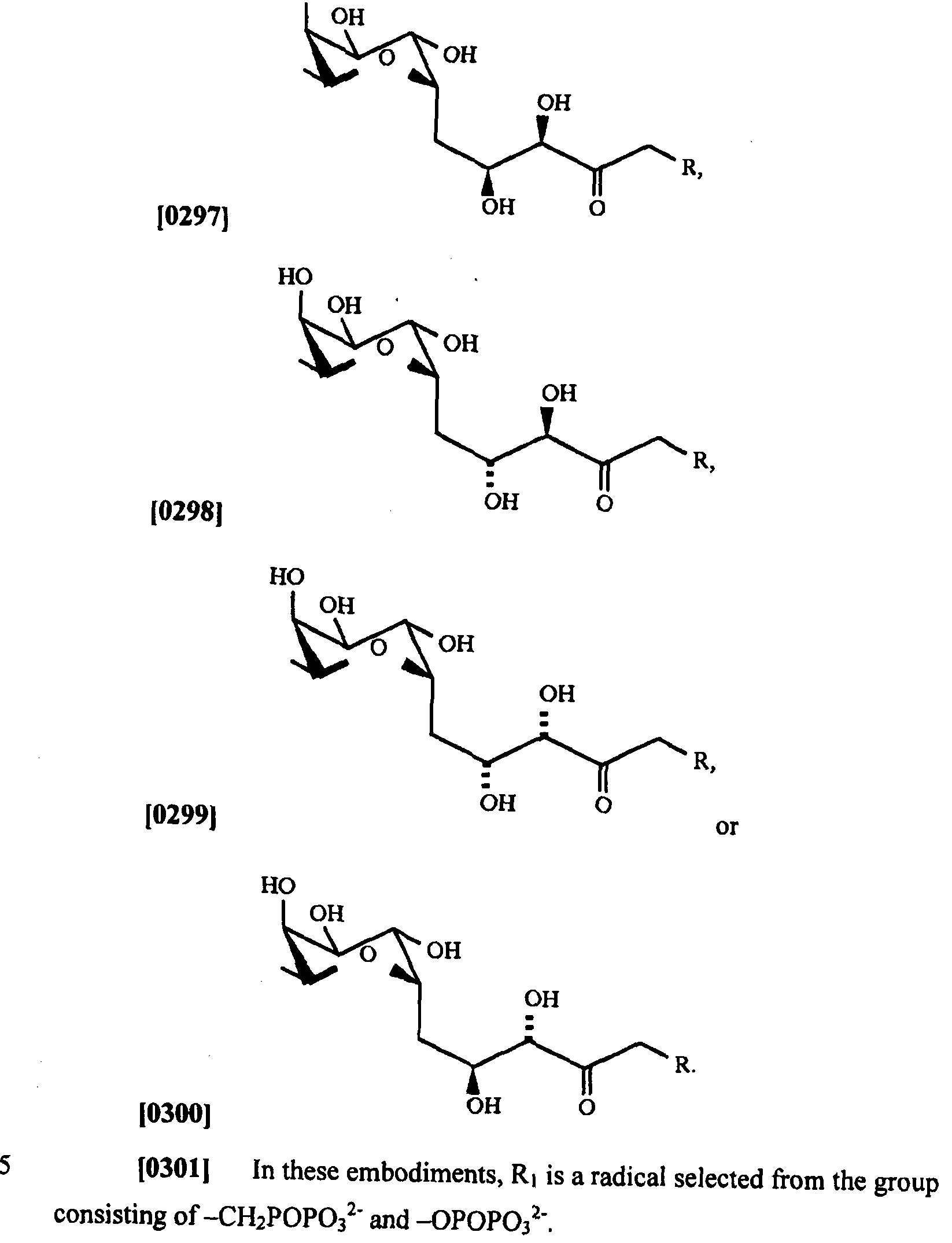
(0302] Still other embodiments of the carbohydrate inhibitors disclosed by Wong et al. , are represented by the following formulae:


[0311] In the above formulas: R\ is a radical selected from the group consisting of -H, -OH, -O-alkyl (C C6), -OBn, -N3, -OPOP03 2\ - OCOCH2CH2CONHCH(CH2C02H) C02H, and -NHR'; R' is a radical selected from the group consisting of alkyl (C1-C6), acyl, decanoyl, phenylacetyl, and -COCH2CH2C02H; R2 is a radical selected from the group consisting of -CH2P03 2" and OPO32"; and "n" runs from 1 to 4.
[0312] In other illustrative examples, the carbohydrate inhibitor is selected from the oligosaccharide or glycomimetic compounds described by Magnani et al. in US Pat Appl. Pub. No. 2009/0253646, which is expressly incorporated herein by reference in its entirety. Representative compounds of this type have the formula:

[0314] wherein
[0315] Bz=benzoyl;
[0316] Q is H or a physiologically acceptable salt;
(0317] L=linkt
er grou ;

[0319] R1 is one of


[0330] where Ar is aryl, Q is H, a physiologically acceptable salt, Ci-Cg alkanyl, C|-Cg alkenyl, Cj-Cg alkynyl, aryl, or (CH2)m-aryl where m is 1-10, n=l-4, and Z and Y are independently selected from Ci-Cg alkanyl, Ci-Cg alkenyl, Cj-Cg alkynyl, halogenated Ci-Cg alkanyl, and aryl substituted with Me, OMe, halide, OH, and R is CN, OH, NH2, Ci-Cg alkanyl, C C8 alkenyl, Ci-Cg alkynyl, aryl, or (CH2)m-aryl where m is 1-10.
[0331] In specific embodiments, where p=0, L is

[0333] where the N of L is attached to terminal C of C(=0) of the compound.
[0334] In other specific embodiments, where p=l, L is

[0336] where the N of L is attached to terminal C of C(=0) of the compound.
[0337] In other specific embodiments, where p= 1 , L is

where the N of L is attached to terminal C of C(=0) of the compound.
[0339] Alternate carbohydrate inhibitors by Magnani et al. are disclosed in International Publication No. WO 2007/028050 and in US Pat. Appl. Pub. No.
2007/0054870, which are expressly incorporated herein by reference in their entirety. These compounds are represented by the formula:

[0341] wherein:

[0343] where n = 0-2, and R are independently selected where n = 2;
[0344] R2 = H, -C(=0)OX where X is C|-C8 alkanyl, C,-C8 alkenyl, C,-C8 alkynyl or C,-C14 aryl, -C(=0)NH(CH2)nNH2, -[C(=0)NH(CH2)nNHC(=0)]m(L)mZ, where n = 0-30, m = 0-1, L is a linker, and Z is a benzyl amino sulfonic acid, a benzyl amino carboxylic acid, a polyethylene glycol, or a second compound or salt thereof having the above formula to form a dimer where R2 of the second compound or salt thereof has m = 0, no Z, and is the point of attachment;


[0348] and any of the above ring compounds may be substituted with one to three independently selected of CI, F, CrC8 alkanyl, C)-C8 alkenyl, CrCg alkynyl, C|- Ci aryl, or OY where Y is H, Ci-Cg alkanyl, Ci-Cg alkenyl, Ci-Cg alkynyl, or Ci-Cf4 aryl;

[0350) 6'sulfated GIcNAc, 6'carboxylated GIcNAc, 6'sulfated Gar Ac,
6'sulfated galactose, 6'carboxylated galactose or
[0351]
 where Rv is aryl, heteroar l, cyclohexane, t-butane, adamantane, or triazole, and any of R9 may be substituted with one to three independently selected of CI, F, Ci-C8 alkanyl, CrCg alkenyl, Ci-Cg alkynyl or OY where Y is H, Cj-Cg alkanyl, CrCg alkenyl, CrCg alkynyl or CI-CM aryl;
[0352] R5 = H, or R4 and R are taken together to form
 10 is aryl, heteroaryl,
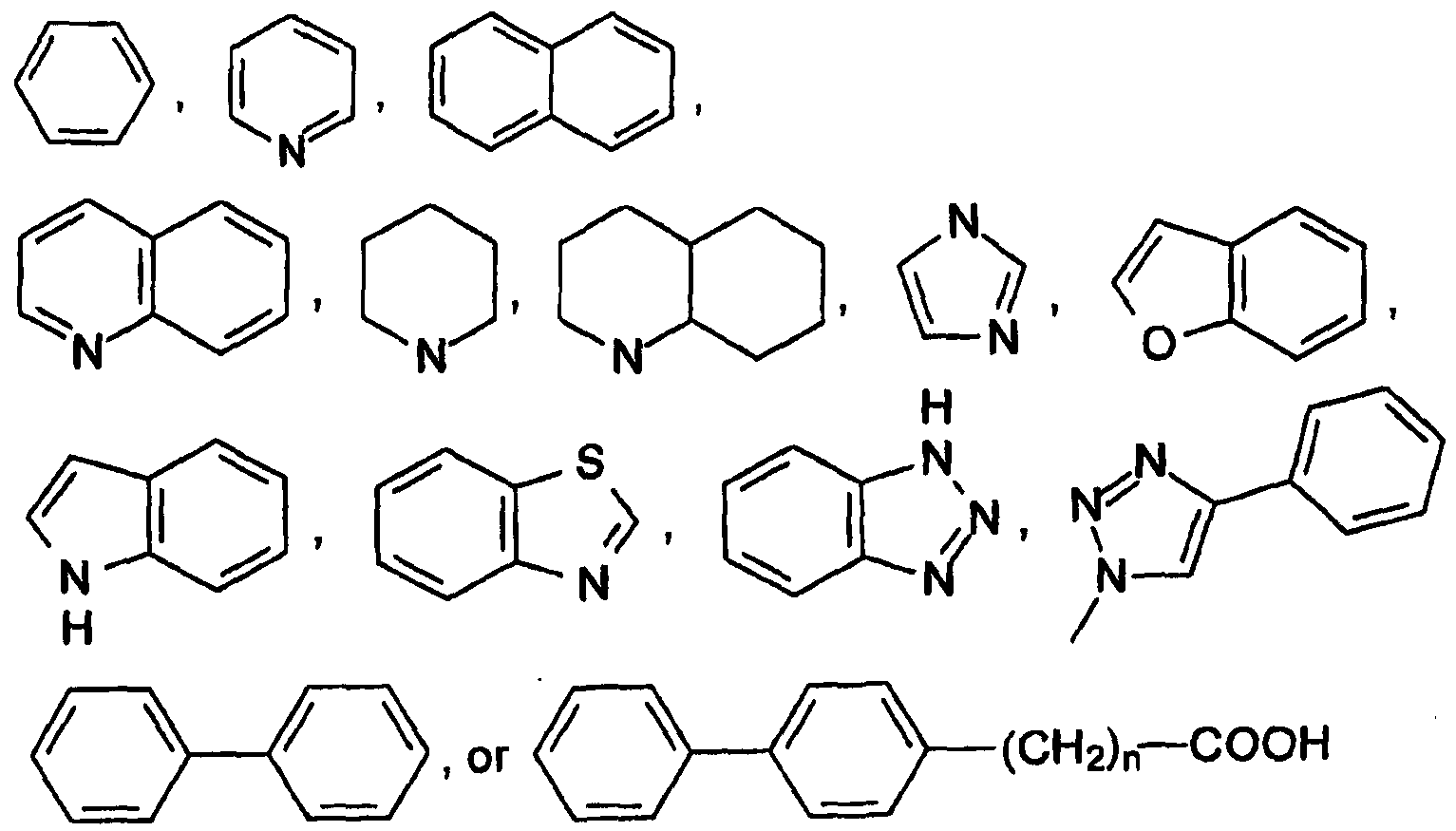
[0354] where n = 0- 10, and any one of the above ring compounds may be substituted with one to three independently selected of CI, F, C|-Cg alkanyl, Ci-Cg alkenyl, C Cg alkynyl or OY where Y is H, Ci-C8 alkanyl, Ci-Cg alkenyl or C|-C8 alkynyl;
[0355] R6 = H, fucose, mannose, arabinose, galactose or polyols;

[0356] R7 = H, CrCg alkanyl, d-Cgalkenyl , Ci-Cg alkynyl or

[0357] R = , ,- 8 a any, ,- 8 a eny, j- g a yny,

[0358]

[0360] where n=0-3 and X is independently selected from H, OH, CI, F, N3, NH2, Ci-C8 alkanyl, Ci-C8 alkenyl, CrC8 alkynyl, Ci-C)4 aryl, OCrC8 alkanyl, OCi-C8 alkenyl, OC|-C8 alkynyl, and OCi-Cu aryl, and any of the above ring compounds may be substituted with one to three independently selected of CI, F, C|-C8 alkanyl, C|-Cg
alkenyl, Ci-Cs alkynyl, C|-C|4 aryl or OY where Y is H, Ci-C8 alkanyl, Cj-Cs alkenyl, Ci-Ce alkynyl, or CI-CH aryl.
[0361] Alternate carbohydrate inhibitors by Magnani et al. are disclosed in US Appl. Pub. No. 2006/0194745, which is expressly incorporated herein by reference in its entirety. These compounds have the formula:

[0363J where n is 0 or 1 ; X1 is— P02M,— S02M or— CF2— wherein M is a pharmaceutically acceptable counterion; R1 is— OH,— F or— C02R4 where R4 is— H or— (CH2)m— CH3 and m is 0 to 3; R2 is— H,— P03M2,— S03M2,— CH2— P03M2,— CH2— S03M2,— CF3>— (CH2)m— C(R6)H— R5 or R9— N(R10)— wherein M is defined as above; R3 is— H,— (CH2)m— C(R6)H— R5 or R9— N(R10)— where R5 and R6 are independently selected from— H,— C02— R7 and— NH— R8; R7 and R8 are independently selected from hydrogen, an alkyl group, an aromatic group, an amino group and a carboxy group, and R9 and R10 are independently selected from— H,— (CH )m— CH3;— CH2— Ar, and— CO— Ar, where m is 0 to 3 and Ar is an aromatic group; or

[0364]
[0365] where Ri and R2 are independently selected from hydrogen, an alkyl group, an aromatic group, an amino group or a carboxy group, and— CO— R3 where R3 is as defined above; and M is a pharmaceutically acceptable counterion.
[0366] Other carbohydrate inhibitors by Magnani et al. are disclosed in International Publication No. WO 2006/127906, which is expressly incorporated herein by reference in its entirety. These compounds have the formula:

[0368] wherein: n = 0-20
[0369] R1 =
 a benzyl amino sulfonic acid, a benzyl amino carboxylic acid, or a second compound or salt thereof having the above formula to form a dimer;
[0370J
 -0-C(=0)-X or -NH-C(=0)-X
0371] where X is


HOO where R4 is cyclohexane, t-butane, adamantane, benzene, triazole, triazole substituted with one to three of CI, F| CpCg alkanyl or OY where Y is H or C Cg alkanyl, and where R5 is

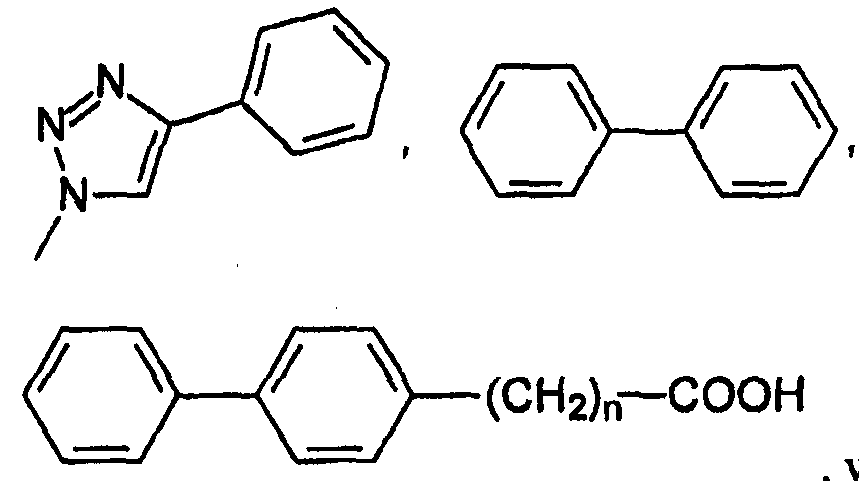
[0374] with the proviso that where R1 is a benzyl amino sulfonic acid and R2 or X of R2 is aromatic, then R4 of R3 is not cyclohexane.
[0375] Still other carbohydrate inhibitors by Magnani et at. are disclosed in International Publication No. WO 2003/097658, which is expressly incorporated herein by reference in its entirety. These compounds are represented by a formula selected from the group consisting of:


; and
[0379]
 [0380] Other carbohydrate inhibitors by Magnani ei al, are disclosed in US Patent No. 7,060,685, which is expressly incorporated herein by reference in their entirety. These compounds consist of a benzyl amino sulfonic acid (BASA) linked to a carbohydrate or a glycomimetic, wherein the carbohydrate or the glycomimetic binds a selectin; wherein the BASA is


-69-

-70-

-71 -


-73 -


-77-

-78-
[0421]


-80-

-81 -


-83 -

-84-


-86-

[0437J In still other embodiments, the carbohydrate inhibitor is selected from fluonnated glucosamine analogs as disclosed for example by Sackstein et al. in US Pat. Appl. Pub. No. 2006/0281708, which is expressly incorporated herein by reference in its entirety. Representative analogs of this type are fluonnated N-acetylglucosamines, illustrative examples of which include 2-acetamido-2-deoxy-l ,3,6-tri-0-acetyl-4-deoxy- 4-fluoro-D-glucopyranose and 2-acetamido-2-deoxy- 1 ,4,6-tri-0-acetyl-3-deoxy-3- fluoro-D-glucopyranose.
[0438] In other embodiments, the carbohydrate inhibitor is selected from sLe* oligosaccharides as disclosed for example by Renkonen et al. in US Patent No.
5,965,544 and in Glycobiology 7(4):453-461 (1997), which are expressly incorporated herein by reference in their entirety. Illustrative oligosaccharides of this type have a polylactosamine backbone (LacNAc)n, which may be branched or linear, wherein n > 1 and have interresidual links that are .beta.1-3' and/or β1-6', to which at least two NeuNAca2-3Gaipi-4(Fucl-3) GlcNAc epitopes are linked by β!-3' and/or pl-6' bonds. In some embodiments, the oligosaccharide is a tetravalent 22-meric oligosaccharide. In other embodiments, the oligosaccharide is divalent. The sLex oligosaccharide may have
an O-glycosidic core containing a Gaipi-3GalNAc-ol sequence, and wherein the NeuNAca2-3Gaipi-4(Fucl-3) epitopes are bonded by β1,3'-, β1,6'-, or β 1,6 linkage. Suitably, the oligosaccharide is a dodecameric O-glycosidic core 2 type oligosaccharide alditol with a branched polylactosamine backbone carrying two distal α2,3' sialylated and a 1,3 fucosylated N-acetyllactosamine groups. In some embodiments, representative oligosaccharides are selected from the following formula:
,3Gaipi 4GlcNAcpj
NeuNAcct2 / § Gaipi 4GlcNAc
Fuear
3θΒΐβ1 «ϋ,ΝΑςβ
/
NeuNAca2
[0439] Pucal

; and
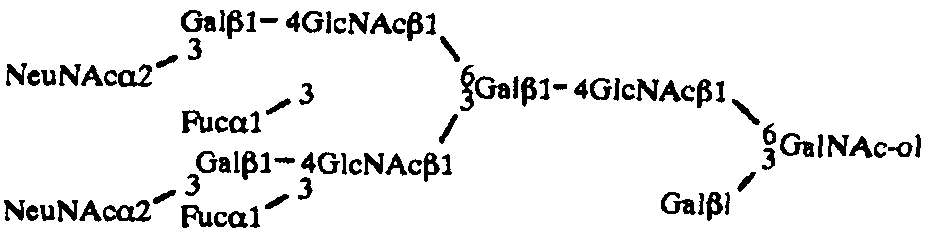
[0442]
[0443] wherein Gal is galactose; Fuc is fucose; GlcNAc is N- acetylglucosamine; and NeuNAc is sialic acid.
[0444] In still other embodiments, the carbohydrate inhibitor is selected from oligosaccharides disclosed by Matta et al. in US Patent No. 5,972,907, which is
expressly incorporated herein by reference in its entirety. Representative carbohydrate inhibitors of this type have the formula:
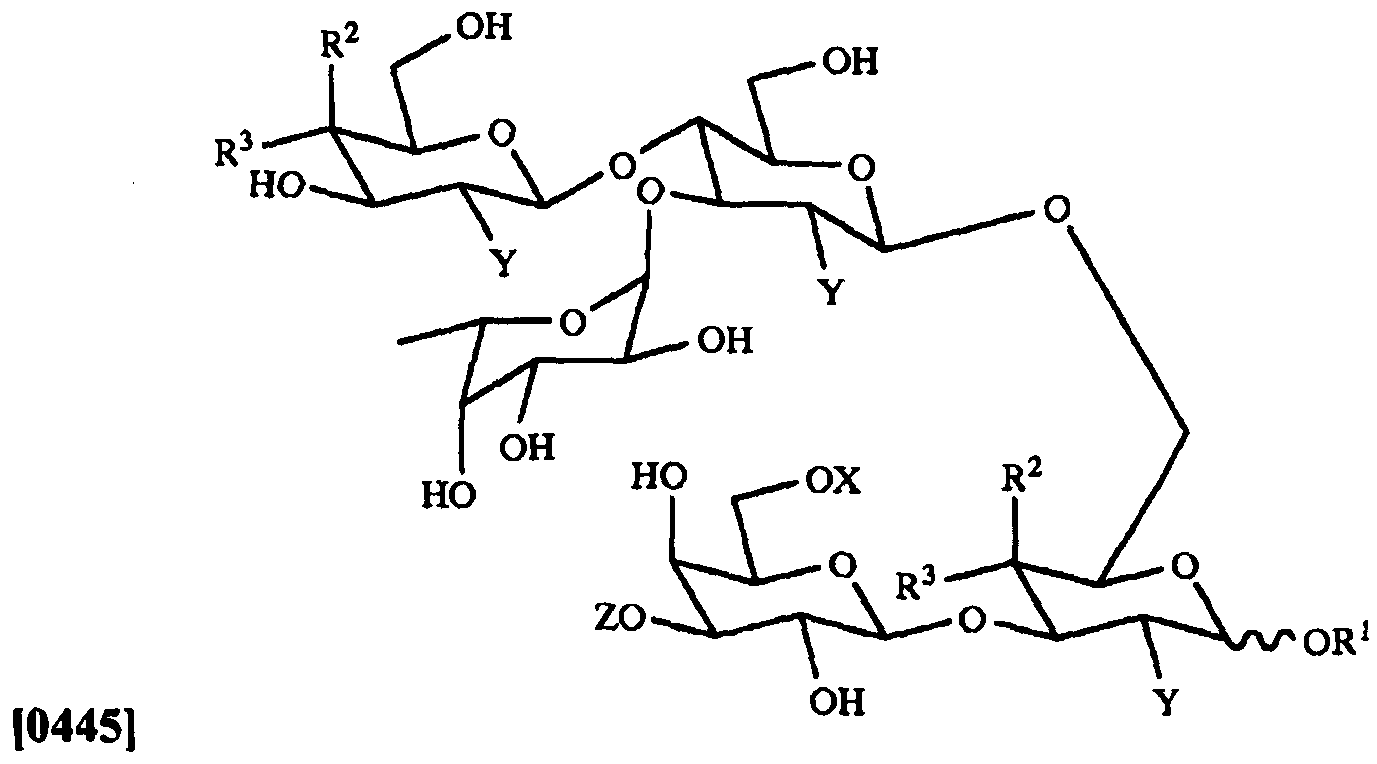
(0446] wherein Ri is independently H, alkyl, aryl, an aryl alkyl, alkenyl or one or more additional saccharide residues;
[0447] R2is H or OH provided that when R2is H, R3 is OH;
[0448] R3is H or OH provided that when R3 is H, R2 is OH,
[0449] X is H, S03 'or P04-;
[0450] Y is independently H, OH, OR> or NHCOR4, wherein R4 is alkyl;
[0451] Z is an organic acid residue; and
[0452] wherein the hydroxy groups of the fucose moiety can be substituted independently at each occurrence H or ORj where R5 is a methyl, ethyl or allyl group.
[0453] In illustrative examples, the oligosaccharide is methyl 0-(2- acetamido-2-deoxy-p-D-galactopyranosyl)-(l→4)-0-[(a -L-fucopyranosyl)-(l ->3)-OJ-
(2-acetamido-2-deoxy- -D-glucopyranosyl)-(l->6)-0-[(P-D-galactopyranosyl)-(l- 3)-
0]-2-acetamid o-2-deoxy-a D-galactopyranoside. In other illustrative examples, the oligosaccharide is methyl 0-(2-acetamido-2-deoxy-P D-galactopyranosyl-(l-»3)-0]-(2- acetam ido-2-deoxy-p D-glucopyranosyl)-(l->6)-0-[(5-acetamido-3,5-dideoxy-D- glycero-cc-D-galacto-2-nonulopyranosylonic acid)-(2→3)-0-(P D-galactopyranosyl)-
(l→3)-0]-2-acetami do-2-deoxy- -D-gaIactopyranoside. In still other illustrative examples, the oligosaccharide is methyl 0-(2-acetamido-2-deoxy-P-D- galactopyranosyl-( 1 - 4)-0-[a-L-fucopyranosyl-( 1 -»3)-0]-(2-acetamido-2-deoxy-P-D-
glucopyranosyl )-(l→6)-0-[(3-0-sulfo-P-D-galactopyranosyl sodium salt)-(l->3)-0]- 2-acetamido-2-deoxy-a-D-galactopyranoside.
[0454] In other embodiments, the carbohydrate inhibitor is selected from oligosaccharides disclosed by Bevilacqua et al. in International Publication WO 1994/026759 and US Patent No. 5,527,785, which are expressly incorporated herein by reference in their entirety. Non-limiting examples of these oligosaccharides have the structure of a heparin-like molecule comprising from about 2 to about 50 saccharide units. Representative examples include unbranched oligosaccharide which comprises 4 to 8 saccharide units containing 1 - 4 linked residues of L iduronic or D glucuronic acid alternating with D-glucosamine, and which binds to a selectin receptor associated with inflammation but lacks a binding site for antithrombin. In illustrative embodiments, the oligosaccharide is a tetrasaccharide, e.g. , having a structure selected from: AUA2Socl- 4DGIcNS6Sa l-4LIdoA2Sa 1 -4DGIcNS6S; AU A2Sal^DGlcNS6Sa l-4LIdoA2Sa 1 - 4DGlcN6S; and AUA2Sal^»DGlcNS6Spi-4DGlcAal-4DGlcNS6S. In other illustrative embodiments, the oligosaccharide has a structure selected from:AUA2Sal- 4DGlcNS6Sal- LIdoA2Sal^DGlcN6Sal^LIdoA2Sal-B4DGlcN6S; and
AUA2Sal^DGlcNS6Sal^LIdoA2Sal-4DGlcN6Socl^L IdoA2Sal^DGlcN6Sal- 4LIdoA2al- DGlcN6S.
[0455] In still other embodiments, the carbohydrate inhibitor is selected from O-glycan compounds disclosed for example by McEver et al. in US Patent No.
6,124,267, which is expressly incorporated herein by reference in its entirety.
Representative compounds of this type have the formula:
Fucpi
1
3
NeuAca2→3Gai i→4Glc Acpi
I
6
rn^ff-ri NeuAca2→3Gaipi→3GalNAc-R1 ,
[U456]
[0457] wherein Rj is an H, a sugar or an aglycone, and a monosialylated, trifucosylated glycan having a polylactosamine backbone:
Fucal
I
3
NeuAca2→3Gai i→4GlcNAcPl→3Galpl→
Fucal Fucal i i
3 3 4GlcNAc i→3Gai i→4GlcNAcpi
1
6
10458] Gaipi→3GalNAc-R2
[0459] wherein R2is H, OH, a sugar or an aglycone and with the proviso that Ri is not an OH.
[0460] In other embodiments, the carbohydrate inhibitor is selected from oligosaccharides disclosed for example by Rosen et al. in US Patent No. 5,489,578, which is expressly incorporated herein by reference in its entirety. Representative oligosaccharides of this type are sulfated, sialylated, fucosylated O-linked
oligosaccharides having the following structure:
Si

[0461] Fucal
[0462] wherein: GlcNAc is N-acetylglucosamine, Gal is galactose, Sia is sialic acid, Fuc is fucose and X is a moiety connected to the 1 -position of GlcNAc selected from the group of -OH, a detectable label and a pharmaceutically active drug.
[0463] In illustrative examples of this type, the oligosaccharides have the structure:
6SO3- 6SO3-
Siaa2 3Gai i Glc Acpl
I
±Fucal
6
[0464] Siaa2— 3 Ga$l— J> 3GalNAcl
[0465] wherein: X(c) is a moiety connected to GalNAc at the 1 -position selected from the group of -OH, a detectable label and a pharmaceutically active drug.
[0466] In other illustrative examples, the oligosaccharides have the structure:

[0468] wherein X<d) is a moiety connected to GalNAc at the 1 -position selected from the group of -OH, a detectable label and a pharmaceutically active drug.
[0469] In still other illustrative examples, the oligosaccharides have the structure:

[0471] wherein: X(e) is a moiety connected to GalNAc at the 1 -position selected from the group of -OH, a detectable label and a pharmaceutically active drug.
[0472] In other embodiments, the oligosaccharides disclosed by Rosen et al. have the structure:
l

[0473] Fuctxl [0474) wherein: GlcNAc is N-acetylglucosamine, Gal is galactose, Sia is sialic acid, Fuc is fucose and X is a moiety connected to the 1 -position of GlcNAc selected from the group of -OH, a detectable label and a pharmaceutically active drug.
[0475] In illustrative examples of this type, the oligosaccharide has a structure selected from the group consisting of:
Sia

[0477] «, ø .
± 6SO3- 6SO3-
Siaa2 - -^ 30β1βΙ 4Glc Ac i
dtFucol 3

[0478] Siaa2 - - 3Gal l > 3GalNAcl Xw . and
SO3-
6SO3- 3
Gaipi
6
SO3- A
[0479] Fucal
[0480] In still other embodiments, the carbohydrate inhibitor is selected from sulfated disaccharide compounds as disclosed for example by Rosen et al. in
International Publication WO 1997/07809 and in US Patent No. 5,977,080, which are expressly incorporated herein by reference in their entirety. Representative
disaccharides of this type have the structure:
[0481]

[0482] wherein: Ri and R5 are each independently H or S03"; R2, R4, and R7 are each independently H, alkyl, an acyl group, or fucose; R3 is SO3-, H, alkyl, or an acyl group; and R¾ is an alkyl group, an acetyl group, a acetic acid derivative group, or linkage to a conjugate moiety, wherein Ri to R« are selected in a manner so as to
provide a compound which selectively binds to a selectin receptor. In illustrative examples, Ri, R3 and R5 are each independently H or S03 "; and R2, R4, R*, and R, are H. Suitably, Rj is a linking group, which may be covalently bound to a pharmaceutically active drug, or is linkage to a conjugate moiety selected from the group consisting of a protein, peptide, lipid, polymer, carbohydrate, oligosaccharide, or insoluble particle. In specific examples, the disaccharide compounds are selected from lactose 3'-sulfate, lactose 6 -sulfate, lactose 3',6' -disulfate, lactose 6',6-disulfate, and lactose 3',6',6- trisulfate.
[0483] In other embodiments, the carbohydrate inhibitor is selected from di- or trivalent small molecule inhibitors, as described from example by ogan et ah in US Patent No. 5, 19,768, which is expressly incorporated herein by reference in its entirety. Illustrative small molecules of this type have the following formula:

[0485] wherein X is selected from the group consisting of -CN, - (CH2)„C02H, -(CH2)„ CONHOH, -0(CH2)m C02H, -0(CH2)m CONHOH, -(CH2)„ CONHNHz, -(CH2)„ COZ, -(CH2)„ Z, -CH(C02 H)(CH2)OT C02 H, -<CH2)n 0(CH2)* C02H, -CONH(CH2)m C02 H, -CH(OZ)(C02 H), -CH(Z)(C02 H), -{CH2)„ S03 H, - (CH2)„ P03 Di D2,— NH(CH2)m C02 H, -CONH(CHR3)C02H, (l-H-tetrazolyl-5-alkyl-), and -OH;
[0486] For divalent structures, Y is -iCH2) , -CO(CH2)/CO-, -(CH2)/
0(CH2)/-, ^CO(CH2)/0(CH2)/CO-, -(CH^g S(0)ft (CH2)/S(0)b (CH2)g -, - CO(CH2)g S(0)b (CH2)/S(0)A (CH2), CO- -(CH2)/V(CH2) - -(CH^ COVCOiCHz)/ -, -CO(CH2)/COVCO(CH2) CO-, -CO(CH2)/V(CH2)/CO-, -CONH(CH2) NHCO-, -CO(CH2)/ W(CH2)/CO-, -(CHzi/WSWCCHz)/-, -{C^/CONHiCHa NHCOiCHz)/
- -(CHz COWiCHz WCOiCHz) -, or -CH2 (CH2) W(CH2)/CH2 - where V is - N[(CH2)q]2 N- and q is independently 2 to 4, and W is aryl or heteroaryl;
10487] For trivalent structures, Y is:

[0489] and T is selected from the group consisting of -((¾)/-, -0Ο((¾)/- , -(CH2)g S(0)b (CH2)/-, and -CO(CH2)g S(0)b (CH2)/- where the carbonyl group is positioned contiguous to the biphenyl unit;
[0490] Rj and R2 are independently selected from the group consisting of hydrogen, alkyl, halogen, -OZ, -N02, -(CH2)n C02 H, -NH2 and -NHZ;
[0491] R3 is selected from the group consisting of hydrogen, alkyl, araikyi, hydroxyalkyl, aminoalkyl, alkyl carboxylic acid and alkyl carboxamide;
[0492] f is 1 to 16, g is 0 to 6, n is 0 to 6, m is 1 to 6, p is 0 to 6, b is 0 to 2, Z is alkyl, aryl or araikyi, and Di and D2 are independently hydrogen or alkyl, and the pharmaceutically acceptable salts, esters, amides and prodrugs thereof.
[0493] In specific embodiments, the compounds of Kogan et al have the following structure:

[0495] where X is -COOH, -(CH2)„ COOH or -0(CH2)„ COOH and Y is - (CH2)„ - -iCU2)„ W(CH2)„ - -(CH2)„ WOW(CH2)„ -, -<CH2)„ S(CH2)„ S(CH2)„ -, - CO(CH2)„ CO-,or -CCH2)„ COW(CH2)„ WCO(CH2)n - where W and n are as defined above.
[0496] Non-limiting examples of these compounds are selected from:


-98-

[0506] Other embodiments of L-selectin antagonists include substituted
thiazoles as described for example by Yoshimasa et al. in International Publication WO 2000/034255, which is expressly incorporated herein by reference in its entirety. Non- limiting compounds of this type have the general formula:

[0508] wherein at least one of R , R or R contains a calcium binding moiety selected from Group I as shown below:
or *N-linked amino aci

[0510] wherein: R6 is selected from the Table 2 as shown below:
TABLE 2

TABLE 2 cont.


[0511) In the above table n", and/or n' and/or n can be 0, 1 , 2, 3, , 5 or 6;
(0512) *D or L natural or unnatural single amino acid or dipeptide where the amino acid is selected from, 4-hydroxyproline, cysteine, serine, threonine, glycine, glutamine, asparagine, glutamic acid, aspartic acid, valine, alanine, iminodiacetic acid, 4-amino-2-hydroxy-butanoic acid and 4-amino-3hydroxy-butanoic acid,
[0513] in Case A: when R1 is selected from Group I, one of R2 or R3 are selected from Group II as defined below:
[0514] Group II:
[0515] (i) unsubstituted, mono-, di-, or tri-substituted aryl-Co-i i alkyl wherein aryl is selected from the group consisting of phenyl, pyridino, wherein the substituents are selected from the group consisting of:
[0516] (a) halo, hydroxy; or
[0517] (b) C0-6CO2R10, C0-6CONHR10, Co-6NHS02R10, trans-
 wherein R1 is CM6 alkyl, C,-I6
alkyloxyalkyl, C5.8 cycloalkyl, C\.\ \ alkylaryl, or CJ.J alkylaryl, Ci-s alkyl in which the alkyl group or the aryl group is unsubstituted, mono-or disubstituted with a member selected from hydroxy, carboxy, halo, C\.(, alkyl and Cu6 alkyloxy, Ci6 cycloalkyloxy, C1-C4 alkylaryl or C1.C4 alkoxy aryl in which the aryl group is either unsubstituted, mono- or disubstituted with a member selected from hydroxy, halo, C alkyl, or C alkyloxy; or R1 can be N-Boc-piperidino, or N-carboethoxypiperidino; and one of R2 or R3 are selected from Group 111 as defined below:
[0518] Group III:
[0519] (i) hydrogen; or
[0520] (ii) unsubstituted, mono or disubstituted Cj-ie alkyl, C0-16 alkylamino, Co-16 alkyloxyalkyl or C2-i6 alkenyl, wherein the substituents are independently selected from hydroxy, C|.e alkyl, Q-s alkyloxyalkyl, C|.8 alkylthioalkyl, phenyl-Ci-8 alkylamino, Ci-8 alkoxycarbonyl ; or Co.6 carboxyl, triazole, 2,3- (methylenedioxy) benzyl;or
[0521] (iii) substituted or unsubstituted N or C-linked pyrrolidine piperidino, piperidonyl, morpholino, piperazino, N-Boc-piperazino, N-CMO alkylpiperazino, N-C3-6 alkenylpiperazino, N-(Ci-6 alkoxy Ci-6 alkyl) piperazino, N-(C|6 alkoxy C3-6 alkenyl) piperazino, N- (Ci-6 alkylamino C|-6 alkyl) piperazino, N-(Ci.6 alkylamino C3-6 alkenyl) piperazino, wherein the substituents are N or C-linked and are independently selected from:
[0522] (a) substituted C|.i6 alkyloxy, C3.16 alkenyloxy, substituted C3.16 alkynyloxy; or
[0523] (b) substituted Ci-6 alkyl-amino, di (substituted Ci-6 alkyl) amino; or
[0524] (c) C3-6 alkenyl-amino, di (C3-6 alkenyl) amino, substituted C3.6 alkenyl-amino, di (substituted C3.6 alkenyl) amino; or
[0525] (d) CONHCi-Cie alkyl, COOC,-Ci6 alkyl, Co., i alkylC02H,
Co-nNHCCOiNHR11, C0-nNHSO2R", tra*y-CH=CHC02R"or trans- CH=CHCONHR", whereinR1 1 is Ci-i6 alkyl or Q.ie alkylaryl, in which the aryl group is mono- or disubstituted with a member selected from hydroxy, halo, Ci-6 alkyl and C|.6 alkyloxy,
 cycloalkyloxy, or C1-C4 alkyl aryl or C1-C4 alkoxy aryl in which the aryl group is either unsubstituted, mono- or disubstituted with a member selected from hydroxy, halo, C alkyl, C alkyloxy, and aryl; or
[0526] (e) pyrrolidino, piperidino, morpholino, imidazolyl, substituted, uracil or other purine or pyrimidine heterocycles, piperazino, N-C^ alkylpiperazino, N-C3..6 alkenylpiperazino , N-(C 1 ^ alkoxy Q-6 alky l)piperazino, N-(C 1.6 alkoxy
C3-6alkenyl)piperazino, N-(C|^ alkylamino Ci^ alkyl)piperazino, or N- (Ci-6 alkylamino C3.6 alkenyl)piperazino, where the substituents are chosen from hydroxy, Ci.j2 alkylalkoxy, Cj-12 alkylamino, C3-i2 alkenyloxy, or C3.i2 alkenylamino; or
[0527] (iv) either mono-, di, or tri-substituted aryl, or Co-C]2 aryl such as phenyl, N-trityl-imidazolyl, furanoyl, pyrimidino, pyridino, or N or C linked pyrrole or imidazolyl, wherein the substituents are independently selected from those listed above in Group III section (iii) (a) to (e), or a C linked, N-substituted pyrrole substituted with either-CH2CONHC2H5-0-Fucose or -CH2CONHC2H5-0-Mannose,
[0528] in Case B: when R3 is selected from Group I one of R1 or R2 is selected from Group II, and one of R1 or R2 is selected from Group III as defined above,
[0529] in Case C: when R2 is selected from Group I one of Rl or R3 is selected from Group II, and one of R1 or R3 is selected from Group III as defined above;
[0530] and their corresponding pharmaceutically acceptable salts.
[0531] Non-limiting examples of the compounds defined above include:
[0532]


10544]


- 109-

[0554] and their pharmaceutically acceptable salts.
[0555] Other embodiments of L-selectin antagonists include non- glycosylated/non-glycosidic/non-peptidic small molecule PSGL-1 mimetics, as disclosed for example by Kranich et al. in International Publication WO 2005/090284, which is expressly incorporated herein by reference in its entirety. Representative compounds of this type have a structure selected from formula la or lb:

[0557] wherein:
[0558] R'=H, CN, N02, CPs, F, CI, Br, I, CH3;
[05591 R2=H, CN, N02, CF3) F, CI, Br, I, CH3, Et, n-Pr, i-Pr, n-Bu, t-Bu, phenyl, thienyl, furyl, thiazolyl and either R1 or R2 is H;
[0560] R3=H, CN, N02, CF3, F, CI, Br, I, CH3, Et, n-Pr, i-Pr, n-Bu, t-Bu, phenyl, thienyl, furyl, thiazolyl;
[0561] -X-=
[0562] (a)

[0563]
[0564] with m = 0, 1 ; n = an integer from 1 to 6,

[0567] with R4 being H, CH3, CH2CH3,
[0568] (c)


[0571 ] with R5 being H, N02, CF3, F, CI, Br, I, CN, CH3, NH2, NHAlkyl, NHAryl, NHAcyl and - - being -S- or -O- and T being O, S or [H, H],
[0572] (d)


[0577J with s being 0 or 1;
[0578J R6 being C02H, C02Alkyl, C02Aryl, C02NH2, C02Aralkyl, S03H, S02NH2, PO(OH)2, 1-H-tetrazolyl-, CHO, COCH3, CH2OH, NH2, NHAlkyl,
N(Alkyl)Alkyl', OCH3, CH2OCH3, SH, F, CI, Br, I, CH3, CH2CH3, CN, CF3;
[0579] R7 independently from R6 being H, CH3, CH2CH3, CF3, F, CI, Br, I, CN, N02; and
[0580J R8 independently from R6 and R7 being H, CH3, CH2CH3, CF3, F, CI,
Br, I, CN, N02, R6;
[0581] Rya being H, N02, CF3, F, CI, Br, 1, CN, CH3, OCH3, SH, NH2;
[0582] t being 0, 1, 2
[0583] and -W- = -(CH2-)V, cw-CH=CH- or tr w-CH=CH-, and v being 0,
1, 2;
[0584] in case that R6 = NH2R7 or R8 or R9 must not be H ;
[0585] in case that -W- is cw-CH=CH- or trans-CU^CH-, R6 must not be NH2 or SH;
[0586] -Z =
(both enantiomers, each)

[0587] -W-R6
[0588] R9b independently from R9" being H, N02, CF3, F, CI, Br, I, CN, CH3,
OCH3, SH, NH2,
[0589] or the pharmaceutically acceptable salts, esters or amides and prodrugs of the above identified compounds of formulas (la) or (lb).
[0590] In illustrative examples of this type, the compounds are defined by formulas (Al), (Bl), (A2) or (B2), as set out below:

Al B1

[0592] wherein -X- and -Y are like defined above and wherein -X'- is

[0593] m=0,1
[0594] and wherein -Y' is

[0596] with R10 being C02H, C02alkyl, C02aryl, C02NH2, C02aralkyl, CH2S03H, CH2S02NH2, CH2PO(OH)2, 1-H-tetrazolyl, CHO, COCH3) CH2OH, CH2NH2, CH2NHalkyl, CH2N(alkyl)alkyl\ CH2OCH3, CH2SH; and
[0597] R11 being C02H, C02alkyl, C02aryl, C02NH2, C02aralkyl, S03H, S02NH2, PO(OH)2, 1-H-tetrazolyl, CHO, COCH3, OH, NH2, NHalkyl, N(alkyl)alkyl', OCH3, SH.
[0598] In other illustrative examples, the compounds are defined by formulas (C) or (D):
[0600] wherein -X'- and -Y' are as defined above.
[0601] Still other L-selectin antagonists may be selected from phloroglucinol derivative compounds as disclosed for example by Aydt et al. in WO 2007/0391 12 and WO2007/0391 14 and in US Pat. Appl. Pub. Nos. 2011/152291, 2011/053939,
2009/105280, 2008/0207741 and 2008/207639, which are expressly incorporated herein by reference in their entirety. Representative compounds of this type are represented by the following formula:

[0603] wherein the symbols and substituents have the following meanings:
[0604] -X- =
[0605] (a)

[0607] with m = 0, 1 ; n = an integer from 1 to 3;
[0608] (b)

[0610] wherein "rin " is selected from:

[0612] and with R being H, N02, CF3, F, CI, Br, I, CN, CH3, NH2, NHAlkyl, NHAryl, NHAcyl and k = 0, 1
[0613] (c)

[0615] T being O, S or [H,H]; p = 0, 1 ,2,
[0616] -Y =
[0617] (a)

[0619] with s being 0 or 1 ,
[0620] R2 being C02H, C02Alkyl, C02Aryl, C02NH2, C02Aralkyl, S03H, S02NH2, PO(OH)2, 1-H-tetrazolyl-, CHO, COCH3, CH2OH, NH2, NHAlkyl,
N(Alkyl)Alkyl\ OCH3, CH2OCH3, SH, F, CI, Br, I, CH3, CH2CH3, CN, CF3,
[0621] R3 independently from R2 being H, CH3, CH2CH3, CF3, F, CI, Br, I, CN, N02 and
[0622] R4 independently from R2 and R3 being H, CH3, CH2CH3, CF3, F, CI, Br,l,CN,N02,R2,
[0623] R5beingH,N02,CF3,F,Cl.Br,I,CN,CH3,OCH3,SH,NH2and-
W-
 and v being 0,1,2; in case that -W- is cw-CH=CH- or trans-CU=CU-, R2 must not be NH2 or SH;
[0624] (b)

[0626] R6 independently from R2 being H, F, CI, Me, tert-Bu, CN, NH2, 0627] (c)

[0629] (e)

[0631] with t being 0,1,2,
[0632] -Z =
[0633] (i)
[0634]
 [0635] R7 independently from R2 being H, N02, CF3, F, CI. Br, I, CN, CH3,

0636] (iv)

[0638] with K = NH, NMe, O, S
[0639] (v)

[0641] or their pharmaceutically acceptable salts, esters, amides or prodrugs.
[0642] In specific examples, the compounds disclosed by Aydt et al. have the following formula:

[0644] wherein -X'- is X (a) or X (b) and -Y as defined above.
[0645] In other specific examples, the compounds disclosed by Aydt et al. are defined b the following formulas:

[0647] wherein -Χ'- and -Y are as defined above and wherein -X"- is selected from:

[0649] and wherein -Y' is selected from:

[0651] wherein all indices, symbols and substituents are as defined above.
[0652] Still other examples of the compounds disclosed by Aydt et al. are defined by the following formula:

[0654] wherein -X"- is as defined above.
[0655] In other examples, the compounds disclosed by Aydt et al. are defined by the following formula:
[0656]
 [0657] wherein -X"- is as defined above and -Y" is selected from:

[0659] with R being C02H, CO^lkyl, C02aryl, C02NH2, C02aralkyl, CH2S03H, CH2S02NH2, CH2PO(OH)2, l-H-tetrazolyl, CHO, COCH3, CH2OH, CH2NH2, CH2NHalkyl, CH2N(alkyl)alkyl\ CH2OCH3, CH2SH, wherein all indices, symbols and substituents are as defined above.
[0660] Further examples of the compounds disclosed by Aydt et al. are defined by the following formulas (la) or (lb):
[
 0662]
0662]
[0663] wherein the symbols and substituents have the following meaning:
[0664] -X- is:

[0666] wherein "ring" is:

(0668] wherein Rj is H, N02, CF3, F, CI, Br, I, CN, C¾, NH2, NHAlkyl, NHAryl, NHAcyl, and k=0 or 1;

[0670] wherein "ring" is as defined above;
[0671] T is O, S or [H,H];
[0672] p=0, l , or 2;
[0673] -Y is

[0675] wherein s is 0 or 1 ;
[0676] R2 is C02 H, C02alkyl, C02aryl, C02NH2, C02aralkyl, CH2S03H, CH2SO2NH2, CH2P02(OH)2, S03 H, S02NH2, PO(OH)2, 1-H-tetrazolyl-, CHO, COCH3, CH2OH, CH2NH2, NH2, CH2NHalkyl, CH2N(alkyl)alkyr, NHalkyl,
N(alkyl)alkyr, OCH3, CH2OCH3, CH2SH, SH, F, CI, Br, I, CH3, CH2CH3, CN, or CF3;
[0677] R3 independently from R2 is H, CH3, CH2CH3, CF3, F, CI, Br, I, CN, or N02;
[0678] R4 independently from R2 and R3 is H, CH3, CH2CH3, CF3, F, CI, Br, I, CN, N02, or R2;
[0679] R5 is H, N02, CF3, F, CI, Br, I, CN, CH3, OCH3, SH, or NH2;
10680] -W- is -(CH2-)v, cis-CH=CH-or /raw-CH=CH-, and v is 0, 1 , or 2; J0681] in case that -W- is cis-CH=CH-or trans-CH=CH-, R2 must not be
NH2 or SH;

[0683] wherein t is 0, 1 , or 2;
[0684] -Z is
(i)

[0686] R7 independently from R2 is H, N02, CF3, F, CI, Br, I, CN, CH3, OCH3) SH, or NH2;

[0688] in which is NH, NMe, O, or S; or a pharmaceutically acceptable salt, ester, or amide thereof of the above identified compounds of formula (la) or (lb).
[0689] Yet further examples of the compounds disclosed by Aydt et al. are defined by the following formulas (lb), (Ic), (Ie) or (If):


[0697] with m=0, 1 ; n=an integer from 1 to 3
[0698] -Y is

[0700] in which s is 0 or 1;
[0701] R2 is C02H, C02Alkyl, C02Aryl, C02NH2, C02Aralkyl, S03H, S02NH2, PO(OH)2, 1-H-tetrazolyl-, CHO, COCH3, CH2OH, NH2, NHAlkyl,
N(Alkyl)Alkyl', OCH3, CH2OCH3, SH, F, CI, Br, I, CH3, CH2CH3, CN, or CF3;
[0702] R3 independently from R2 is H, CH3, CH2CH3, CF3, F, CI, Br, I, CN, or N02;
[0703] R4 independently from R2 and R3 is H, CH3, CH2CH3, CF3, F, CI, Br, I, CN, N02, or R2;
[0704] R5 is H, N02, CF3, F, CI, Br, I, CN, CH3, OCH3, SH, or NH2; -W- is -(CH2-)v, cis-CH=CH- or trans-CH=CH-, and v is 0, 1, or 2;
[0705] in case that -W- is cis-CH=CH- or tr ns-CH=CU-, R2 must not be
NH2 or SH;

[0707] in which t is 0, 1, or 2;
f

[0710] R6 independently from R2 is H, F, CI, Me, tert-Bu, CN, or NH2;
[0711] -Z is

[0713] R7 independently from R2 is H, N02, CF3, F, CI, Br, I, CN, CH3, OCH3, SH, or NH2;

[07151 in which is NH, NMe, O, or S;

[0718} or a pharmaceutically acceptable salt, ester, or amide thereof and prodrugs of the above identified compounds of formula (lb) or (Ic) or (Ie) or (If).
[0719] Other L-selectin antagonist compounds by Aydt et al. are disclosed in US Pat. Appl. Pub. Nos. 2010/0093653 and 2010/0144654, which are expressly incorporated herein by reference in their entirety. Non-limiting example of these compounds correspond to the following formula:

[0721] or stereoisomeric or polymorphic forms thereof.
[0722] Alternate non-glycosidic/non-peptidic small molecule L-selectin inhibitors are disclosed by Dannhardt et al. in US Pat. Appl. Pub. No. 2007/0276036 and in US Patent No. 7,485,742, which are expressly incorporated herein by reference
Representative compounds of this type are represented by the following formula:

[07241 wherein:
[0725] n is 0 or 1 ,
[0726J Ri to ¾ independently are H, COOH, COOCH3, COOC2H5 or halogen, and
[0727] X is C-N-0-(CH2)m-Y or N-C(-0)-(CH2)m-Y,
[0728] wherein
[0729] m is 5 or 6, and
[0730] Y is

[0732]
[0733] R7 is H or 0(CH2)9CH3,
[0734] or a derivative, diastereomer, or pharmaceutically acceptable salt
[0735] In specific examples, the antagonist compounds disclosed by
Dannhardt et al. have the following formula:

[07371 wherein
[07381 Ri is H,
[07391 R2 is H, COOH, COOCHs or halogen,
[07401 R3 is H, COOH or COOCH3,
[0741 J R4 is H,
[0742] R5 is H, COOH, COOCH3 or halogen,
[0743] R6 is H, and
[0744J R7 is H or 0(CH2)9CH3,
[07451 or a derivative, diastereomer, or pharmaceutically acceptable salt thereof.
[0746] In other specific examples, the antagonists compounds have the formula:

[07481 wherein
[0749] n is O or 1,
[07501 R, is H, COOH or COOCH3,
[0751] R2 is H, COOH, COOCH3 or COOC2H5,
[0752] R3 is H, COOH or COOCH3,
[0753] R4 is H, COOH or COOCH3,
[0754] R5 is H, COOH, COOCHj or COOC2H5,
[0755] R* is H, and
[0756] R7 is H or 0(CH2) CH3,
[0757] or a derivative, diastereomer, or pharmaceutically acceptable salt thereof.
[0758] In still other specific examples, the antagonists compounds have the formula:

[0760] wherein
[0761] n is 0 or 1 ,
[0762] R, to ¾ independently are H, COOH, COOCH3, COOC2H5 or halogen, and
[0763] X is C-N-0-(CH2)m-Y or N-C(-0)-(CH2)m-Y,
[0764] wherein
[0765] m is 5 or 6, and
[0766] Y is

[0768] wherein
[0769] R7 is H or 0(CH2)9CH3,
[0770] or a derivative, diastereomer, or, pharmaceutically acceptable salt thereof, and suitable additives or auxiliary agents.
[0771] In other embodiments, the L-selectin antagonist is selected from multicyclic compounds, as disclosed for example by Kranich et al. in US Pat. Appl. Pub. No. 2009/0030015, which is incorporated herein by reference in its entirety. Non limiting embodiments of these compounds are selected from the following formulas:

[0773] wherein the symbols and substituents have the following meaning
[0774]

[0776] with m=0, 1; n=an integer from 1 to 3

[0778J wherein "ring" is

[0782] and with Ri being H, N02, CF3, F, CI, Br, I, CN, CH3, NH2> NHAlkyl, NHAryl, NHAcyl and k=0, 1
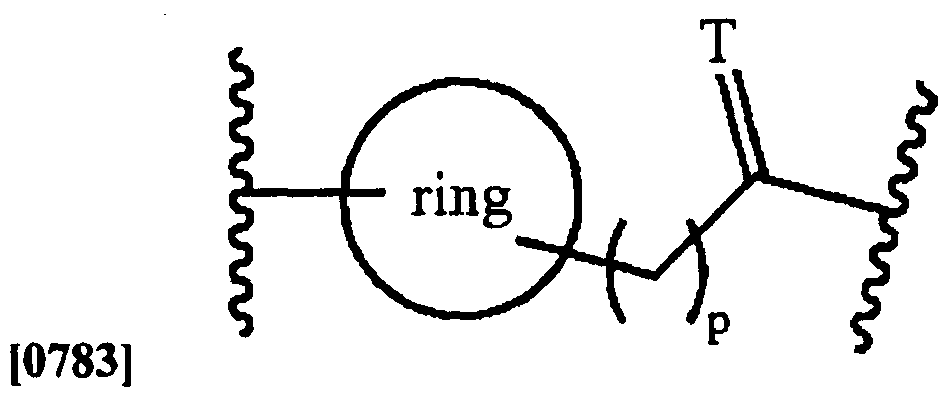
[0784] T being O, S or [H,H]; p=0, 1 , 2,
[0785]
 [0786] the double bond is either E- or Z-configurated
[0787] -Y =

[0789] with s being 0 or 1,
[0790] R2 being C02H, C02Alkyl, C02Aryl, C02NH2, C02Aralkyl, S03H,
S02NH2, PO(OH)2, 1-H-tetrazolyl-, CHO, COCH3, CH2OH, NH2, NHAlkyl,
N(Alkyl)Alkyl\ OCH3, CH2OCH3, SH, F, CI, Br, I, CH3, CH2CH3, CN, CF3
[0791] R3 independently from R2 being H, CH3, CH2CH3, CF3, F, CI, Br, I, CN, N02 and
[0792] R4 independently from R2 and R3 being H, CH3, CH2CH3, CF3, F, CI,
Br, I, CN, N02, R2
[0793] R5 being H, N02, CF3, F, CI, Br, I, CN, CH3, OCH3, SH, NH2
[0794] and -W- = -(CH2-)V, m-CH=CH- or trans-CH=CH-, and v being 0,
1, 2;
[0795] in case that -W- is cw-CH=CH- or trans-CU=CH-, R2 must not be
NH2 or SH;

[0797] with t being 0, 1, 2


[0806] Alternative compounds disclosed by Kranich et al. are described in International Publication WO 2008/087155, which is expressly incorporated herein by reference in its entirety. Illustrative compounds of this type correspond to the following formula:

(0808] In other embodiments, the L-selectin antagonist is selected from the compounds disclosed by Neemu et al. in US Patent No. 7,465,798, which is expressly incorporated herein by reference. Representative antagonist compounds have the following formula:

(0810] Wl and W2 taken together with the atoms to which they are attached form a 5 or 6 member carbocyclic or heterocyclic ring that can be saturated, partially
saturated or aromatic, and that can be substituted with up to three groups independently selected from hydrogen, Ci.6 alkyl, Ci-6 perhaloalkyl, OCi^ alkyl, OCi-6 perhaloalkyl, halogen, thioalkyl, CN, OH, SH, (CH2)„OS03H, (CH2)„S03H, (CH2)„C02R6, OS03¾, SO3R6, S02R6, PO3R6R7, (CH2)nS02NRgR9, (CH2)„C(=0)NR8R9, NRgR , C(=0)R,2, aryl, heterocyclo, C(=0)aryl, C(=0)heterocyclo, OC(=0)aryl, OC(=0)heterocyclo, Oaryl, Oheterocyclo, arylalkyl, C(=0)arylalkyl, OC(=0)arylalkyl, Oarylalkyl, alkenyl, alkynyl, and NHCORg, wherein any of the alkyl, Oalkyl, aryl, heterocyclo, C(=0)aryl, C(=0)heterocyclo, 0-C(=0)aryl, 0-C(=0)heterocyclo, O-aryl, O-heterocyclo, arylalkyl, C(=0)arylalkyl, 0-C(=0)arylalkyl, O-arylalkyl, alkenyl or alkynyl can optionally be substituted with up to three substituents selected from halogen, Ci-6 alkyl, OC1.6 alkyl and CN;
[0811] L is C02H, an ester thereof, or a pharmaceutically acceptable acid mimetic;
[0812] Y is O, (CR3R4)p or NR5;
[0813] n' is O or l;
[0814] p is 1 to 3;
[0815] X is hydrogen, OH, OR3, OC).6 alkyl, OC(=0)-aryl, OC(=0)Ci-6 alkyl, 0C(=O)0C1-6 alkyl, or NR3R3';
[0816] each Ri, R3, and » is independently hydrogen, Ci-6 alkyl, C1.6 perhaloalkyl, OC|.6 alkyl, OCi.6 perhaloalkyl, halogen, thioalkyl, CN, OH, SH, (CH2)„OS03H, (CH2)„S03H, (CH2)„C02R6, OSO3R6, S03Re, P03R6R7,
(CH2)„S02NRgR9, (CH2)„C(=0)NR8R9, NRgR9, C(=0)Ri2, aryl, heterocyclo,
C(=0)aryl, C(=0)heterocyclo, OC(=0)aryl, OC(=0)heterocyclo, Oaryl, Oheterocyclo, arylalkyl, C(=0)arylalkyl, OC(=0)arylalkyl, Oarylalkyl, alkenyl, alkynyl, or NHCORg, wherein any of the alkyl, Oalkyl, aryl, heterocyclo, C(=0)aryl, C(=0)heterocyclo, O- C(=0)aryl, 0-C(=0)heterocyclo, O-aryl, O-heterocyclo, arylalkyl, C(=0)arylalkyl, O- C(=0)arylalkyl, O-arylalkyl, alkenyl or alkynyl can optionally be substituted with up to three substituents selected from halogen, Ci- alkyl, OCi^ alkyl and CN;
[0817] each R6 and R7 is independently hydrogen or C1.6 alkyl that is optionally substituted with up to three substituents selected from OH, CF3, SH and halogen;
[0818] each R5, R8 and R is independently hydrogen, Cj.6 alkyl, Ci.6 haloalkyl, thioalkyl, OH, (CH2)IOS03H, (CH2)lSO3Ri0,
 SO3R10,
P03RioRu, (CH2)nS02(CH2)„NRioRii, (CH2)„CONRi0Ru, COR,0, aryl, heterocyclo, C(=0)aryl, C(=0)heterocyclo, OC(=0)aryl, OC(=0)heterocyclo, Oaryl, Oheterocyclo, arylalkyl, C(=0)arylalkyl, OC(=0)arylalkyl, Oarylalkyl, alkenyl, or alkynyl, wherein any of the alkyl, aryl, heterocyclo, C(=0)aryl, C(=0)heterocyclo, OC(=0)aryl,
OC(=0)heterocyclo, Oaryl, Oheterocyclo, arylalkyl, C(=0)arylalkyl, OC(=0)arylalkyl, Oarylalkyl, alkenyl or alkynyl can optionally be substituted with up to three substituents selected from halogen, Ci-6 alkyl, OCj-6 alkyl and CN;
|0819] each n is an independently selected integer from 0 to 6;
[0820] each 1 is an independently selected integer from 1 to 6;
[0821] each Rio and Ri 1 is independently selected from hydrogen and Ci-$ alkyl that is optionally substituted with up to three substituents selected from OH, CF3, SH and halogen;
[0822] each R12 is independently hydrogen, Ci.6 alkyl, Ci.6 perhaloalkyl, OCi. 6 alkyl, OCi-6 perhaloalkyl, thioalkyl, OH, (CH2)10S03H, (CH2)1S03H, (CH2)1C02R6, (CH2)1S02NR8R9, (CH2)1C(=0)NR8R9, NR8R9, alkenyl, alkynyl, or NHCORg, wherein any of the alkyl, Oalkyl, alkenyl or alkynyl can optionally be substituted with up to three substituents selected from halogen, C|.6 alkyl, OCi-6 alkyl and CN; and
[0823] Z is aryl, heteroaryl, arylalkyl or heterocyclo, wherein each of the aryl, heteroaryl, arylalkyl and heterocyclo is optionally substituted.
[0824] Non-limiting example of the compounds disclosed by Neemu et al. have the following formula:

[0826] wherein:
[0827] bond a and bond b can each independently be a single bond or a double bond;
[0828] Q Q2, Q3 and Q are each independently CR2', CHR2\ N or NR!3;
[0829] k is O or l;
[0830] each R2' is independently hydrogen, C|.6 alkyl, Ci- perhaloalkyl, OCi.
6 alkyl, OC,-6 perhaloalkyl, halogen, thioalkyl, CN, OH, SH, (CH2)„OS03H,
(CH2)„S03H, (CH2)„C02R6, OSOjRfi, SOaR^, P03R«R7, (CH2)„S02NR8R9,
(CH2)„C(=0)NRgR9, NRgR9, C(=0)R]2, aryl, heterocyclo, C(=0)aryl,
C(=0)heterocyclo, DC(=0)aryl, OC(=0)heterocyclo, Oaryl, Oheterocyclo, arylalkyl, C(=0)arylalkyl, OC(=0)arylalkyl, Oarylalkyl, alkenyl, alkynyl, or NHCOR*, wherein any of the alkyl, Oalkyl, aryl, heterocyclo, C(=0)aryl, C(=0)heterocyclo, 0-C(=0)aryl, 0-C(=0)heterocyclo, O-aryl, -O-heterocyclo, arylalkyl, C(=0)arylalkyl, O- C(=0)arylalkyl, O-arylalkyl, alkenyl or alkynyl can optionally be substituted with up to three substituents selected from halogen, Ci^ alkyl, OC|.6 alkyl and CN; and
[0831] each R]3 is each independently hydrogen, C(=0)R2o, SO2R20, Ci^ alkyl, Ci-e haloalkyt, thioalkyl, OH, (CH2)10S03H, (CH2)lSO3Ri0, (CH2)„CO2R|0, SO3R10, PO3R10R1 1 , (CH2)„SO2(CH2)nNR,0Rii, (CH2)„CONR,0Ri i, COR,0, aryl, heterocyclo, C(=0)aryl, C(=0)heterocyclo, OC(=0)aryl, OC(=0)heterocyclo, Oaryl, Oheterocyclo, arylalkyl, C(=0)arylalkyl, OC(=0)arylalkyl, Oarylalkyl, alkenyl, or alkynyl, wherein any of the alkyl, aryl, heterocyclo, C(=0)aryl, C(=0)heterocyclo, OC(=0)aryl, OC(=0)heterocyclo, Oaryl, Oheterocyclo, arylalkyl, C(=0)arylalkyl, OC(=0)arylalkyl, Oarylalkyl, alkenyl or alkynyl can optionally be substituted with up to three substituents selected from halogen, Ci-6 alkyl, OCi-6 alkyl and CN;
[0832] each R20 is independently selected from the group consisting of C 1-10 alkyl, OC I -10 alkyl and NRftR7;
[0833] and Ri, L, X, Y, n', and Z have the meaning described above.
[0834] In some embodiments, substituents (Y)„-Z, X and L are attached at the 2-, 3- and 4-positions of the quinoline, respectively, as shown in the following formula:
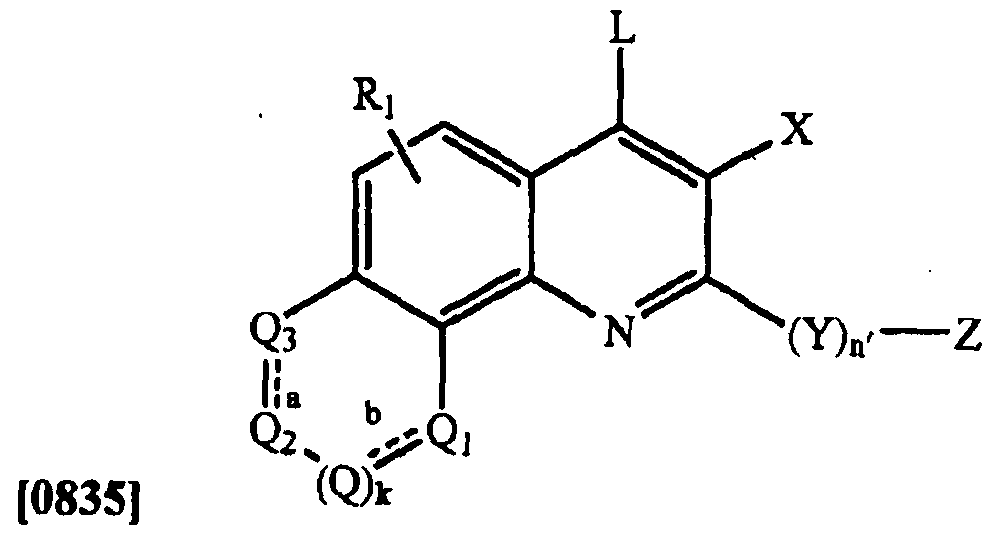
[0836] In some embodiments, k is 1, and bonds a and b are each single bonds and optionally Q, Qi, Q2 and <¾ are each independently CHR2', preferably CH2. In some embodiments, k is 0, bond a is a single bond, and Qi, Q2 and Q3 are each independently CHR2', preferably CH2. In some embodiments, k is 0, bond a is a single bond, and Q, is NR13, preferably NH, preferably wherein Q2 and Q3 are each CH2. In some
embodiments, k is 1, bond a and bond b are each double bonds, and Q, Qi, Q2 and Q3 are each CR2, preferably CH2. In some embodiments, Qj, Q2 and Q3 are CH2; k is 1 , and Q is NR13. In some embodiments, n' is 0. In other embodiments, n' is 1. In some embodiments wherein n' is 1, Y is CR3R , preferably CH2, preferably wherein X is OH. In specific examples, L is C02H or an ester thereof. In some embodiments, n' is 0 and X is OH, preferably wherein L is C02H or an ester thereof.
[0837] In some embodiments, Z is selected from:
[0838] (a) a five-membered heterocyclic ring containing one to three ring heteroatoms selected from N, S or O; wherein the five-membered heterocyclic ring is optionally substituted by from 1 to 3 substituents selected from halogen, Cj-io alkyl, OCi-)o alkyl, N02, NH2, CN, CF3( and C02H;
[0839] (b) a six-membered heterocyclic ring containing one to three ring heteroatoms selected from N, S or O; wherein the six-membered heterocyclic ring is optionally substituted by from 1 to 3 substituents selected from halogen, Ci-10 alkyl, OCi-,0 alkyl, CHO, C02H, C(=O)R20, SO2R20, N02, NH2, CN, CF3 and OH;
[0840] (c) a bicyclic ring moiety optionally containing from 1 to 3 ring heteroatoms selected from N or O; wherein the bicyclic ring moiety is optionally substituted by from 1 to 3 substituents selected from halogen,
 alkyl, OCi-6 alkyl, CHO, N02, NH2, CN, CF3, C02H, C(=O)R20, SO2R20, and OH; and
[0841] (d) a benzyl, naphthyl, or phenyl ring, each of which is optionally substituted by from 1 to 3 substituents selected from halogen, C|_6 alkyl, phenyl, benzyl, Ophenyl, Obenzyl, S02NH2, S02NH(C,-,6 alkyl), S02N(C)-,6 alkyl)2l CH2COOH, C02H, C02Me, C02Et, C02iPr, C(=0)NH2, C(=0)NH(C]-6 alkyl), C(=0)N(C,.6 alkyl)2, OH, SC,.6 alkyl, OC1-6 alkyl, N02, NH2, CF3, and CN.
alkyl, OCi-6 alkyl, CHO, N02, NH2, CN, CF3, C02H, C(=O)R20, SO2R20, and OH; and
[0841] (d) a benzyl, naphthyl, or phenyl ring, each of which is optionally substituted by from 1 to 3 substituents selected from halogen, C|_6 alkyl, phenyl, benzyl, Ophenyl, Obenzyl, S02NH2, S02NH(C,-,6 alkyl), S02N(C)-,6 alkyl)2l CH2COOH, C02H, C02Me, C02Et, C02iPr, C(=0)NH2, C(=0)NH(C]-6 alkyl), C(=0)N(C,.6 alkyl)2, OH, SC,.6 alkyl, OC1-6 alkyl, N02, NH2, CF3, and CN.
[0842] In further embodiments, R| and each R2 are independently hydrogen, Ci^ alkyl, C|_6 perhaloalkyl, OCi-6 alkyl, OCi^ perhaloalkyl, halogen, thioalkyl, CN, OH, SH, (CH2)„OS03H, (CH2)nS03H, (CH2)„C02R6, OSO^, SO3R6, Ρ03^7, (CH2)„S02NRgR9, (CH2)„C(=0)NRgR9, NRgR9, aryl, heterocyclo, C(=0)R12,
C(=0)aryl, C(=0)heterocyclo, 0C(O)aryl, OC(=0)heterocyclo, Oaryl, Oheterocyclo, C(=0)arylalkyl, OC(=0)arylalkyl, Oarylalkyl, alkenyl, alkynyl, or NHCORg.
[0843] In specific embodiments, Z is phenyl or substituted phenyl.
[0844] In other illustrative examples, the compounds disclosed by Neemu et al. have the following formula:

[0846] wherein:
[0847] n' is O or l ;
[0848] Ri is hydrogen, halogen, OH, CN, SH, Ci-6 alkyl, OCi-6 alkyl, C|.6 perhaloalkyl, Ci-6 thioalkyl, aryl or heteroaryl;
[0849] wherein the aryl and the heteroaryl can each optionally be substituted with up to three substituents selected from halogen, OH, CN, SH, NH2, C|_6 alkyl, OC|_6 alkyl, perhaloalkyl and Ci-6 thioalkyl; and
[0850] wherein the Ci-6 alkyl, OCi-6 alkyl and Ci_6 thioalkyl can each optionally be substituted with up to three substituents selected from halogen, OH, CN, SH, NH2, OCi-6 alkyl, Ci-6 perhaloalkyl and Ci-e thioalkyl;
(0851] R23 is aryl or heteroaryl, wherein the aryl and the heteroaryl can each optionally be substituted with up to three substituents selected from halogen, OH, CN, SH, NH2, Ci-6 alkyl, OC|-6 alkyl, Cj-6 perhaloalkyl and Ci.6 thioalkyl; and
[0852] wherein R24 and R25 together form -(CH2)3-, -(CH2)4-, -(CH2>2- NH-(CH2)2-NH-CH2- or -CH-CH-CH-CH-, any of which can be substituted with up to three substituents selected from the group consisting of halogen, OH, CN, SH, NH2, OC1-1 alkyl, Cw perhaloalkyl, C(=O)R20, S02R2o and C1-6 thioalkyl.
[0853] In some embodiments, R23 is optionally substituted aryl, preferably optionally substituted phenyl. Preferably, the phenyl is substituted at the 4-position thereof, preferably by a substituent selected from halogen, OH, CN, SH, NH2, CH3, OCH3, CF3 and OCF3, preferably halogen and OCF3, more preferably CI and OCF3.
[0854] In some embodiments, R24 and R2s together form unsubstituted - (CH2)3-, -(CH2)4-, -(CH2)2-NH-, -(CH2)2-NH-CH2- or -CH-CH-CH-CH- .
[0855] In some preferred embodiments, Ri is H; and R24 and R2s together form unsubstituted -(CH2)3-. In further preferred embodiments, Ri is H; and R24 and R2s together form unsubstituted -(CH2) -. In further preferred embodiments, Ri is H; and R24 and R2s together form unsubstituted -(CH2)2-NH-. In still further preferred embodiments, R| is H; and R24 and R2s together form unsubstituted -CH-CH-CH-CH-. In some further embodiments, Ri is H; and R2 and R2s together form optionally substituted -(CH2>2-NH-CH2-.
[0856] In some preferred embodiments, the present invention provides the compounds 2-(4-Chloro-phenyl)-3-hydroxy-benzo[h]quinoline-4-carboxylic acid; 2-(4- Chloro-phenyl)-3-hydroxy-7,8,9, 10-tetrahydro-benzo[h]quinoline-4-carboxylic acid; 3- Hydroxy-2-(4-trifluoromethoxy-benzyl)-7,8,9,10-tetrahydro-benzo[h]quinoline-4- carboxylic acid; 8-(4-ChIoro-benzyl)-7-hydroxy-2,3-dihydro-lH-aza- cyclopenta[a]naphthalene-6-carboxylic acid; 8-(4-Chloro-benzyl)-7-hydroxy-2,3- dihydro- 1 H-pyrrolo[3,2-h]quinoline-6-carboxylic acid; f 2-(4-Chloro-ben2yl)-3- hydroxy-7,8,9, 10-tetrahydro-benzo[h]quinoline-4-carboxylic acid; Triethylammonium 7,8-benzo-2-(4-chlorophenyl)-3-hydroxyquinoline-4-carboxylate; 2 -(3,4- Dichlorobenzyl)-3-hydroxy-7,8,9,10-tetrahydrobenzo[h]quinoline-4-carboxyIic acid; 3-
Hydroxy-2-(thiophen-2-ylmethyl)-7,8,9,10-tetrahydrobenzo[h]quinoline-4-carboxylic acid; 2-(Benzo[b]thiophen-3-ylmethyl)-3-hydroxy- 7,8,9, 10-
tetrahydrobenzo[h]quinoline-4-carboxylic acid; 2-(2-Chlorobenzyl)-3-hydroxy- 7,8,9, 10-tetrahydrobenzo[h]quinoline-4-carboxylic acid; 2-(3-Chlorobenzyl)-3- hydroxy-7,8,9,10-tetrahydrobenzo[h]quinoline-4-carboxylic acid; 3-Hydroxy-2-[2-(3- methylbenzo[b]thiophen-2-ylmethyl)]-7,8,9,10-tetrahydrobenzo[h]quinoline-4- carboxylic acid; 3-Hydroxy-2-(thiophen-3-ylmethyl)-7,8,9, 10- tetrahydrobenzo[h]quinoline-4-carboxylic acid; 3-Hydroxy-2-(indol-3-ylmethyl)- 7,8,9,10-tettahydrobenzo[h]quinoline-4-carboxylic acid; 2-(5-Chlorobenzo[b]thiophen-
3- ylmethyl)-3-hydroxy-7,8,9,l 0-tetrahydrobenzo[h]quinoline-4-carboxylic acid; 3- Hydroxy-2-phenyI-7,8,9, 10-tetrahydro-benzo[h]quinoline-4-carboxylic acid; 2-(4- Cyano-benzyl)-3-hydroxy-7, 8, 9,10-tetrahydro-benzo[h]quinoHne-4-carboxylic acid; 2- (4-Carboxy-benzyl)-3-hydroxy-7,8,9,10-tetrahydro-benzo[h]quinoline-4-carboxylic acid; 2-(4-Carbamoyl-benzyl)-3-hydroxy-7,8,9, 10-tetrahydro-benzo[h]quinoline-4- carboxylic acid; 2-Benzyl-3-hydroxy-7,8,9, 10-tetrahydro-benzo[h]quinoline-4- carboxylic acid; 3-Hydroxy-2-phenethyl-7,8,9, 10-tetrahydro-benzo[h]quinoline-4- carboxylic acid; 2-(4-Chloro-benzyl)-3-hydroxy-7,8,9, 10-tetrahydro-
[l,9]phenanthroline-4-carboxylic acid; 2-(4-Chloro-benzyI)-3-hydroxy-9-isopropyl- 7,8,9, 10-tetrahydro-[ 1 ,9]phenanthroline-4-carboxylic acid; 9-Benzyl-2-(4-chloro- benzyl)-3-hydroxy-7,8,9, 10-tetrahydro-[ 1 ,9]phenanthroline-4-carboxylic acid; 2-(4- Chloro-benzyl)-9-ethyl-3-hydroxy-7,8,9, 10-tetrahydro-[l ,9]phenanthxoline-4-carboxylic acid; 9-Acetyl-2-(4-chloro-benzyl)-3-hydroxy-7,8,9, 10-tetrahydro-[ 1 ,9]phenanthroline-
4- carboxylic acid; 9-Carbamoyl-2-(4-chloro-benzyl)-3-hydroxy-7,8,9,10-tetrahydro- [ 1 ,9]phenanthroline-4-carboxylic acid; 9-Benzoyl-2-(4-chloro-benzyl)-3-hydroxy- 7,8,9,l0-tetrahydro-[l ,9]phenanthroIine-4-carboxylic acid; 9-Benzoyl-3-benzoyloxy-2- (4-chloro-benzyl)-7,8,9, 10-tetrahydro-[ 1 ,9]phenanthroline-4-carboxylic acid; 2-(4- Chloro-benzyl)-3-hydroxy-9-methanesulfonyl-7,8,9,10-tetrahydro-[l,9]phenanthxoline- 4-carboxylic acid; 2-(4-Chloro-benzyl)-3-hydroxy-7,l 0-dihydro-8H- [l,9]phenanthroline-4,9-dicarboxylic acid 9-ethyl ester; 2-(4-Chloro-benzyl)-3- ethoxycarbonyloxy-7, 10-dihydro-8H-[ 1 ,9]phenanthroline-4,9-dicarboxylic acid 9-ethyl ester; 2-(4-Chloro-benzyl)-3-hydroxy-9-phenylacetyl-7,8,9, 10-tetrahydro- [l,9]phenanthroline-4-carboxylic acid; 2-(4-Chloro-benzyl)-3-hydroxy-9-(propane-2- sulfonyl)-7,8>9,10-tetrahydro-[l,9]phenanthroline-4-carboxylic acid; 2-(4-Chloro- benzyl)-3-methoxy-7,8,9, 10-tetrahydro-benzo[h]quinoline-4-carboxylic acid; 3- Hydroxy-2-piperidin-4-yl-7,8,9, 10-tetrahydro-benzo[h]quinoline-4-carboxylic acid; or
2-(l-acetyl-piperidin-4-yl)-3-hydroxy-7,8,9,10-tetrahydro-benzo[h]quinoline-4- carboxylic acid.
[0857] In other embodiments, the L-selectin antagonist is selected from glycosylsufotransferase inhibitors, as disclosed for example by Bistrup et al. in US Pat. Appl. Pub. No. 2002/01 4748, which is incorporated herein by reference in its entirety.
[0858] In still other embodiments, the L-selectin antagonist is selected from compounds that inhibit the interaction between L-selectin and heparan sulfate glycosaminoglycans (HS-GAGs), as disclosed for example by Gregor et al. in US Pat. Appl. Pub. No. 2002/0164748, which is incorporated herein by reference in its entirety. Non-limiting example of the compounds disclosed by Gregor et al. have the following formula:

[0860] Ri is selected from the group consisting of H; straight or branched alkyl of 1 -6 carbon atoms; arylalkyl; substituted arylalkyl; cycloalkyl, optionally substituted with alkyl groups; alkanoyl; arylcarbonyl optionally substituted at the aryl group; cycloalkylcarbonyl; alkoxycarbonyl;
[0861] R2 is selected from the group consisting of carboxy; cyano;
aminocarbonyl; alkylaminocarbonyl; arylaminocarbonyl optionally substituted at the aryl group; dialkylaminocarbonyl wherein each alkyl is straight or branched chain Ci-C6 alkyl or both alkyl groups together may form a 3-7 membered saturated, unsaturated or aromatic monocyclic or bicyclic nitrogen containing heterocyclyl, optionally containing one or two additional heteroatoms; allcoxycarbonyl; alkanoyl; cycloalkylcarbonyl; arylcarbonyl optionally substituted on the aryl group, benzothiazol-2-yl;
[0862] R3 and R4 are selected from the group consisting of C|-C6 alkyl, optionally substituted by hydroxy, alkoxy, amino or alkylamino, C2-C4
monounsaturated alkenyl, cycloalkyl, aryl, arylmethyl, or R3 and R together may form an optionally substituted 5-7 membered saturated, unsaturated or aromatic monocyclic or bicyclic nitrogen containing heterocyclyl, optionally containing one or two additional heteroatoms;
[0863] R5, R , R7 and Rg are selected from the group consisting of H or C1-C6 alkyl, with the proviso that when R5, R$, R7 and Rg are C1-C6 alkyl, Ri is hydrogen;
[0864] and pharmaceutically acceptable salts thereof; further comprising a pharmaceutically acceptable diluent or carrier.
[0865] In some embodiments of the compounds disclosed by Gregor et al. , Ri is selected from the group consisting of methyl, ethyl, 1-methylethyl, phenylmethyl, acetyl, ethoxycarbonyl and R$= R$= R7= Rg are hydrogen.
[0866] In other embodiments, R| is hydrogen and Rs= R6= R7= Rg are hydrogens or methyl groups.
[0867] In yet other embodiments, Ri= Rs= R are methyl and R7= Rg are hydrogens.
[0868] In some embodiments, R2 is selected from the group consisting of cyano, methoxycarbonyl, ethoxycarbonyl, aminocarbonyl, methylaminocarbonyl, dimethylaminocarbonyl, pyrrolidinylcarbonyl, piperidinylcarbonyl,
mo holinyIcarbonyl, benzothiazol-2-yl.
[0869] In some embodiments, R3 and R are selected from the group consisting of methyl, ethyl, propyl, butyl, methoxyethyl, chlorobutyl, cyanoethyl, phenyl, cyclopentyl, cyclohexyl, phenylmethyl, allyl or crotyl, R3 and R may be equal or different.
[0870] In other embodiments, R3 and R4 form pyrrolidine, piperidine, 2- methyl, 3-methyl, 4-methyl or 3,5-dimethyl piperidine, perhydroazepine, mo holine, piperazine, 4-methylpiperazine, 3,4-dihydro-2(lH)-isoquinolinyl, 3,4-dihydro- l(2H)quinoline, l,3,3-trimethyl-6-azabicyclo[3.2.1]oct-6-ane and substituted derivatives thereof. The substituted derivatives include, but are not limited to, piperazinyl-4-carboxylic acid ester, piperidinyl-4-carboxylic acid ester, piperidinyl-3- carboxylic acid ester.
[0871] Illustrative examples of the compounds disclosed by Gregor et al. , include:
[0872] 2-[[4-[(ethylbutylamino)sulfonyl]benzoyl]amino]-3-(benzothiazol-2- y- l)-6-ethyl-4,5 ,6,7-tetrahydrothieno[2 ,3 -c]pyridine ;
[0873] 2-[[(4-(3,4-dihydro-2(lH)-isoquinolinyl)suIfonyl] benzoyl]amino]-6-
( 1 -methylethyl)-4,5,6,7-tetrahydrothieno[2,3-c]pyridine- 3-carboxamide;
[0874] 2-[[4-(methylphenylamino)sulfonyl]benzoyl]amino]-6-(l- methylethyl)- 4,5,6,7-tetrahydrothieno[2,3-c]pyridine-3-carboxamide;
[0875] 2-[[4-(3,4-dihydro-l(2H)-quinolinyl)sulfonyl]benzoyl]amino]-4,5,6,7- -tetrahydro-5,5,7,7-tetramethyl thieno[2,3-c]pyridine-3-carboxamide;
[0876] 2-[[4-[(diethylamino)sulfonyl]benzoyl]amino]-3-(benzothiazol-2-yl)- 6-ethyl-4,5,6,7-tetrahydrothieno[2,3-c]pyridine;
[0877] 2-[[4-(morpholinylsulfonyl)benzoyl]amino]-3-(benzothiazoI-2-yl)-6-(- 1 -methylethyl)-4,5 ,6,7-tetrahydrothieno[2,3-c]pyridine;
[0878] 2-[[4-(diethylamio)sulfonyl]benzoyl]amino]-4,5,6,7-tetrahydro-5,5,7-
,7-tetramethyl thieno[2,3-c]pyridine-3-carboxylic acid ethyl ester;
[0879] 2-[[4-(3,4-dihydro-l(2H)-quinolinyl)sulfonyl]benzoyl]amino]-3- (benz- othiazol-2-yl)-4,5,6,7-tetrahydro-5,5,7,7-tetramethylthieno[2,3-c]pyridine- ;
[0880] 2-[[4-(hexahydro-lH-azepin-I-yl)sulfonyl]benzoyl]amino]-4,5,6,7- tet- rahydro-5,5,7,7-tetramethyl thieno[2,3-c]pyridine-3-carboxylic acid ethyl ester;
[0881] 2-[[4-[[4-(methyl)-l-piperazinyl]sulfonyl]benzoyl]amino]-3-(benzoth- iazol-2-yl)-6-methyl-4,5,6,7-tetrahydrothieno[2,3-c]pyridine;
[0882] 2-[[4-[(l ,3,3-trimethyl-6-azabicyclo [3.2.1]oct-6- yl)sulfonyl]benzoyl]amino]-3-(benzothiazol-2-yl)-6-methyl-4,- 5,6,7- tetrahydrothieno[2,3-c]pyridine;
[0883] 2-[[4-[(methylphenylamino)sulfonyl]benzoyl]amino]-3-(benzothiazol- 2- -yl)-6-methyl-4,5,6,7-tetrahydrothieno[2,3-c]pyridine;
[0884] 2-[[4-(morpholinylsulfonyl)benzoyl]amino]-3-(benzothiazol-2-yl)-6- m- ethyl-4,5,6,7-tetrahydrothieno[2,3-c]pyridine;
[0885] 2-[[4-[(diethylamino)sulfonyl]benzoyl]amino]-3-(benzothiazol-2- yl)-4,5,6,7-tetrahydrothieno[2,3-c]pyridine-6-carboxylic acid ethyl ester;
[0886] 2-[[4-[[4-(3-methyl-l-piperidinyl)]sulfonyl]benzoyl]amino]-3-(benzo- thiazol-2-yl)-6-methyl-4,5,6,7-tetrahydrothieno[2,3-c]pyridine;
[0887] 2-[[4-[(diethylamino)sulfonyl]benzoyl]amino]-3-(benzothiazol-2- yl)-6-(phenylmethyl)-4,5,6,7-tetrahydrothieno[2,3-c]pyridine;
[0888] 2-[[4-[(diethylamino)sulfonyl]benzoyl]amino]-3-(benzothiazol-2- yl)-6-methyl-4,5,6,7-tetrahydrothieno[2,3-c]pyridine;
[0889] 2-[[4-[[4-(ethoxycarbonyI)-l-piperazinyl]sulfonyl]benzoyl]amino]-4,- 5,6,7-tetrahydro-5,5,7,7-tetramethylthieno[2,3-c]pyridine-3-carboxamide;
[0890] 2-[[4-[(cyclohexylmethylamino)sulfonyl]benzoyl]amino]-4,5,6,7- tetra- hydro-5,5,7,7-tetramethylthieno[2,3-c]pyridine-3-carboxamide;
[0891] 2-[[4-[(di-2-propenylamino)sulfonyl]benzoyl]-4,5,6,7-tetrahydro-5,5- ,7,7-tetramethylthieno[2,3-c]pyridine-3-carboxylic acid methyl ester;
[0892] 2-[[4-[(di-2-methoxyethylamino)]sulfonyl]benzoyl]-4,5,6,7-tetrahydr- o-5,5,7,7-tetramethylthieno[2,3-c]pyridine-3-carboxamide;
[0893] 2-[[4-[(l ,3,3-trimethyl-6-azabicyclo[3.2.1.]oct-6-yl)sulfonyl]benzo- yl]mino]-6-methyl-4,5,6 -tetrahydrothieno[2,3-c]pyridine-3-carboxamide;
[0894] 2-[[4-[(diethylamino)sulfonyl]berizoyl]ar--ino]-3-(benzothiazol-2- yl)-6-methyl-4,5,6,7-tetrahydrothieno[2,3-c]pyridine;
[0895] 2-[[4-[(diethylamino)sulfonyl]benzoyl]amino]-3-(benzothiazol-2- yl)-6-(l-methylethyl)4,5,6,7-tetrahydrothieno[2,3-c]pyridine;
[0896] 2-[[4-[(di-2-methoxyethylamino)sulfonyl]benzoyl]-amino]-3- (benzothi- azol-2-yl)-6-methyl4,5,6,7-tetrahydrothieno[2,3-c]pyridine;
[0897] 2-[[4-[(methylphenylamino)sulfonyl]benzoyl]amino]-3-(benzothiazol-
2- -yl)-6-methyl-4,5,6,7-tetrahydrothieno[2,3-c]pyridine;
[0898] 2-[[4-[[4-(ethoxycarbonyl)- 1 -piperazinyl]sulfonyl]benzoyl]amino]-
3- (benzothiazol-2-yl)-6-methyl-4,5,6,7-tetrahydrothieno[2,3-c]pyridine;
[0899] 2-[[4-[(methylbutylamino)sulfonyl]benzoyl]amino]-6-(l - methylethyl)4- ,5,6,7-tetrahydrothieno[2,3-c]pyridine-3-carboxylic acid ethyl ester;
[0900J 2-[[4-[[4-(ethoxycarbonyl)- 1 -piperazinyl]sulfonyl]benzoyl]amino]- 6-(l-methylethyl)4,5,6,7-tetrahydrothieno[2,3-c]pyridine-3-carboxylic acid ethyl ester;
[0901] 2-[[4-(diethylamino)sulfonyl]benzoyl]amino]-4,5,6,7-tetrahydro-5,5,-
7,7-tetramethylthieno[2,3-c]pyridine-3-carboxamide;
[0902] 2-[[4-[(methylphenylamino)sulfonyl]benzoyl]amino]-6-ethyl-4,5,6,7- t- etrahydrothieno[2,3-c]pyridine-3-carboxylic acid methylamide;
[0903] 2-[[4-[[ethyl(phenylmethyl)amino]sulfony]]benzoyl]amino]-6- ethyl4,5- ,6,7-tetrahydrothieno[2,3-c]pyridine-3-carboxamide;
[0904] 2-[[4-[(4-methyl-l-piperazinyl)sulfonyl]benzoyl]amino]-6-ethyl4,5,6- ,7-tetrahydrothieno[2,3-c]pyridine-3-carboxamide;
[0905] 2-[[(4-(3,4-dihydro-l(2H)-quinolinyl)sulfonyl]benzoyl]amino]-6- ethy- l-4,5,6,7-tetrahydrothieno[2,3-c]pyridine-3-carboxylic acid methylamide;
[0906] 2-[[4-[(4-methyl-l -piperazinyl)sulfonyl]benzoyl]amino]-6-ethyl-4,5,-
6,7-tetrahydrothieno[2)3-c)pyridine-3-carboxylic acid methylamide;
[0907] 2-[[4-[(4-methyl- 1 -piperazinyl)sulfonyl]benzoyl]amino]-3-(benzothia- zol-2-yl)-6-ethyl-4,5,6,7-tetrahydrothieno[2,3-c]pyridine;
[0908] 2-[[4-(diethylamino)sulfonyl]benzoyI]amino]-6-ethyl-4,5,6,7-tetrahy- drothieno[2,3-c]pyridine-3-carboxylic acid N-methylamide;
[0909] 2-[[4-(diethylamino)sulfonyl]benzoyl]amino]-6-ethyl-4,5,6,7-tetrahy- drothieno[2,3-c]pyridine-3-carboxylic acid morpholinylamide.
[0910] In other illustrative examples, the compounds are selected from:
[0911 ] 2-[[4-[(ethylbutylamino)sulfonyl]benzoyl]amino]-3-(benzothiazol-2- y- l)-6-ethyl-4,5,6,7-tetrahydrothieno[2,3-c]pyridine;
[0912] 2-[[4-[(diethylamino)sulfonyl]benzoyl]amino]-3-(benzothiazol-2- yl)-6-ethyl-4,5,6,7-tetrahydrothieno[2,3-c]pyridine;
[0913] 2-[[4-[[ethyl(phenylmethyl)amino]sulfonyl]benzoyl]amino]-6-ethyl- 4,- 5,6,7-tetrahydrothieno[2,3-c]pyridine-3-carboxamide;
[0914] 2-[[4-[(4-methyl-l-piperazinyl)sulfonyl]benzoyl]amino]-6-ethyl-4,5,- 6,7-tetrahydrothieno[2,3-c]pyridine-3-carboxamide.
[0915] In still other illustrative examples the compounds are selected from: 2- [[4-[(l ,3,3-trimethyl-6-azabicyclo[3.2.1.]oct-6-yl)sulfonyl]benzoyl]ami- no]-6-ethyl- 4,5,6, 7-tetrahydrothieno[2,3-c]pyridine-3-carboxylic acid ethyl ester; and 2-[[4- [[ethyl(phenylmethyl)amino]sulfonyl]benzoyl]amino]-6-ethyl-4,5,6,7- tetrahydrothieno[2,3-c]pyridine-3-carboxamide; 2-[[4-[(4-methyl-l - piperazinyl)sulfonyI]benzoyl]amino]-6-ethyl-4,5,6,7-te- trahydrothieno[2,3-c]pyridine- 3-carboxamide.
[0916] The invention not only encompasses known L-selectin antagonists but also antagonists identified by any suitable screening assay. Accordingly, the present invention extends to methods of screening for modulatory agents that reduce the level or functional activity of L-selectin for use in the therapeutic or prophylactic methods and compositions of the present invention. In some embodiments, the methods comprise: (1) contacting a preparation with a test agent, wherein the preparation contains (i) a polypeptide comprising an amino acid sequence corresponding to at least a biologically active fragment of an L-selectin polypeptide, or to a variant or derivative thereof; or (ii) a polynucleotide comprising at least a portion of a genetic sequence that regulates the level or functional activity of the L-selectin polypeptide, which is operably linked to a reporter gene; and (2) detecting a change in the level and/or functional activity of the L- selectin polypeptide, or an expression product of the reporter gene, relative to a normal or reference level and/or functional activity in the absence of the test agent, which indicates that the agent modulates the level or functional activity of the L-selectin.
[0917] Modulators falling within the scope of the present invention include antagonists of the level or functional activity of L-selectin, including antagonistic antigen-binding molecules, and inhibitor peptide fragments, antisense molecules, ribozymes, RNAi molecules and co-suppression molecules as well as carbohydrate inhibitors of L-selectin function, as for example described above.
[0918] Candidate agents encompass numerous chemical classes, though typically they are organic molecules, preferably small organic compounds having a molecular weight of more than 50 and less than about 2,500 Dalton. Candidate agents comprise functional groups necessary for structural interaction with proteins,
particularly hydrogen bonding, and typically include at least an amine, carbonyl, hydroxyl or carboxyl group, desirably at least two of the functional chemical groups. The candidate agent often comprises cyclical carbon or heterocyclic structures or aromatic or polyaromatic structures substituted with one or more of the above functional groups. Candidate agents are also found among biomolecules including, but not limited to: peptides, saccharides, fatty acids, steroids, purines, pyrimidines, derivatives, structural analogues or combinations thereof.
(0919) Small (non-peptide) molecule modulators of an L-selectin polypeptide are particularly advantageous. In this regard, small molecules are desirable because such molecules are more readily absorbed after oral administration, have fewer potential antigenic determinants, or are more likely to cross the cell membrane than larger, protein-based pharmaceuticals. Small organic molecules may also have the ability to gain entry into an appropriate cell and affect the expression of a gene (e.g., by interacting with the regulatory region or transcription factors involved in gene expression); or affect the activity of a gene by inhibiting or enhancing the binding of accessory molecules.
[0920] Alternatively, libraries of natural compounds in the form of bacterial, fungal, plant and animal extracts are available or readily produced. Additionally, natural or synthetically produced libraries and compounds are readily modified through conventional chemical, physical and biochemical means, and may be used to produce combinatorial libraries. Known pharmacological agents may be subjected to directed or random chemical modifications, such as acylation, alkylation, esterification, amidification, etc to produce structural analogues.
[0921] Screening may also be directed to known pharmacologically active compounds and chemical analogues thereof.
[0922] Screening for modulatory agents according to the invention can be achieved by any suitable method. For example, the method may include contacting a cell expressing a polynucleotide corresponding to an L-selectin gene with an agent suspected of having the modulatory activity and screening for the modulation of the level or functional activity of a protein encoded by the polynucleotide, or the modulation of the level of a transcript encoded by the polynucleotide, or the modulation of the activity or expression of a downstream cellular target of the protein or of the
transcript (hereafter referred to as target molecules). Detecting such modulation can be achieved utilizing techniques including, but not restricted to, ELISA, cell-based ELISA, inhibition ELISA, Western blots, immunoprecipitation, slot or dot blot assays, immunostaining, RIA, scintillation proximity assays, fluorescent immunoassays using antigen-binding molecule conjugates or antigen conjugates of fluorescent substances such as fluorescein or rhodamine, Ouchterlony double diffusion analysis, immunoassays employing an avidin-biotin or a streptavidin-biotin detection system, and nucleic acid detection assays including reverse transcriptase polymerase chain reaction (RT-PCR).
[0923] It will be understood that a polynucleotide from which an L-selectin polypeptide is regulated or expressed may be naturally occurring in the cell, which is the subject of testing, or it may have been introduced into the host cell for the purpose of testing. In addition, the naturally-occurring or introduced polynucleotide may be constitutively expressed - thereby providing a model useful in screening for agents which down-regulate expression of an encoded product of the sequence wherein the down regulation can be at the nucleic acid or expression product level. Further, to the extent that a polynucleotide is introduced into a cell, that polynucleotide may comprise the entire coding sequence that codes for an L-selectin polypeptide or it may comprise a portion of that coding sequence (e.g., the ligand-binding domain of an L-selectin polypeptide) or a portion that regulates expression of an L-selectin gene (e.g., an L- selectin promoter). For example, the promoter that is naturally associated with the polynucleotide may be introduced into the cell that is the subject of testing. In this instance, where only the promoter is utilized, detecting modulation of the promoter activity can be achieved, for example, by operably linking the promoter to a suitable reporter polynucleotide including, but not restricted to, green fluorescent protein (GFP), luciferase, β-galactosidase and catecholamine acetyl transferase (CAT). Modulation of expression may be determined by measuring the activity associated with the reporter polynucleotide.
[0924] These methods provide a mechanism for performing high throughput screening of putative modulatory agents such as proteinaceous or non-proteinaceous agents comprising synthetic, combinatorial, chemical and natural libraries. These methods will also facilitate the detection of agents which bind either the polynucleotide encoding the target molecule or which modulate the expression of an upstream
molecule, which subsequently modulates the expression of the polynucleotide encoding the target molecule. Accordingly, these methods provide a mechanism of detecting agents that either directly or indirectly modulate the expression or activity of a target molecule according to the invention.
[0925 J In some embodiments, the present invention provides assays for identifying small molecules or other compounds (i.e. , modulatory agents) which are capable of inhibiting the level or functional activity of L-selectin. The assays may be performed in vitro using non-transformed cells, immortalized cell lines, or recombinant cell lines. In addition, the assays may detect the presence of increased or decreased expression of genes or production of proteins on the basis of increased or decreased mRNA expression (using, for example, nucleic acid probes that hybridize to an L- selectin gene or coding sequence), increased or decreased levels of L-selectin (using, for example, antigen binding molecules that are immuno-interactive with an L-selectin polypeptide), or increased or decreased levels of expression of a reporter gene (e.g., GFP, β-galactosidase or luciferase) operably linked to an L-selectin regulatory region (e.g., a promoter or enhancer) in a recombinant construct.
[0926] Thus, for example, one may culture cells which produce an L-selectin polypeptide and add to the culture medium one or more test compounds. After allowing a sufficient period of time (e.g., 6-72 hours) for the compound to inhibit the level or functional activity of the L-selectin polypeptide, any change in the level from an established baseline may be detected using, for example, any of the techniques described herein or known in the art. In specific embodiments, the cells are hemopoietic stem cells. Using suitable nucleic acid probes or antigen-binding molecules, detection of changes in the level and or functional activity of an L-selectin expression product, and thus identification of the compound as agonist or antagonist of the target molecule requires only routine experimentation.
[0927] In some embodiments, recombinant assays are employed in which a reporter gene encoding, for example, GFP, β-galactosidase or luciferase is operably linked to the 5' regulatory regions of an L-selectin gene. Such regulatory regions may be easily isolated and cloned by one of ordinary skill in the art. The reporter gene and regulatory regions are joined in-frame (or in each of the three possible reading frames) so that transcription and translation of the reporter gene may proceed under the control
of the regulatory elements of the L-selectin gene. The recombinant construct may then be introduced into any appropriate cell type although mammalian cells are desirable, and human cells are more desirable. The transformed cells may be grown in culture and, after establishing the baseline level of expression of the reporter gene, test compounds may be added to the medium. The ease of detection of the expression of the reporter gene provides for a rapid, high throughput assay for the identification of L-selectin antagonists of the invention.
[0928] Compounds identified by this method will have potential utility in modifying the expression of L-selectin in vivo. These compounds may be further tested in the animal models to identify those compounds having the most potent in vivo effects. In addition, as described above with respect to small molecules having target polypeptide binding activity, these molecules may serve as "lead compounds" for the further development of pharmaceuticals by, for example, subjecting the compounds to sequential modifications, molecular modeling, and other routine procedures employed in rational drug design.
[0929] In other embodiments, random peptide libraries consisting of a large number of possible combinations of amino acids attached to a solid phase support may be used to identify peptides that are able to bind to an L-selectin polypeptide or to a functional domain thereof. Identification of molecules that are able to bind to an L- selectin polypeptide may be accomplished by screening a peptide library with a recombinant soluble L-selectin polypeptide. The L-selectin polypeptide may be purified, recombinantly expressed or synthesised by any suitable technique. Such polypeptides may be conveniently prepared by a person skilled in the art using standard protocols as for example described in Sambrook, et al. , (1989, supra) in particular Sections 16 and 17; Ausubel et al, ("Current Protocols in Molecular Biology", John Wiley & Sons Inc, 1994-1998), in particular Chapters 10 and 16; and Coligan et al, ("Current Protocols in Immunology", (John Wiley & Sons, Inc, 1995-1997), in particular Chapters 1 , 5 and 6. Alternatively, an L-selectin polypeptide or a portion thereof may be synthesized using solution synthesis or solid phase synthesis as described, for example, in Chapter 9 of Atherton and Shephard {supra) and in Roberge et al (1995, Science 269: 202).
[0930] To identify and isolate the peptide/solid phase support that interacts and forms a complex with the L-selectin polypeptide it may be necessary to label or "tag" the L-selectin polypeptide. In this regard, the L-selectin polypeptide can be conjugated to any suitable reporter molecule, including enzymes such as alkaline phosphatase and horseradish peroxidase and fluorescent reporter molecules such as fluorescein isothiocyanate (FITC), phycoerythrin (PE) and rhodamine. Conjugation of any given reporter molecule, with an L-selectin polypeptide, may be performed using techniques that are routine in the art. Alternatively, L-selectin expression vectors may be engineered to express a chimeric L-selectin polypeptide containing an epitope for which a commercially available antigen-binding molecule exists. The epitope specific antigen- binding molecule may be tagged using methods known in the art including labeling with enzymes, fluorescent dyes or colored or magnetic beads.
[0931] For example, the "tagged" L-selectin polypeptide conjugate is incubated with the random peptide library for 30 minutes to one hour at 22° C to allow complex formation between L-selectin polypeptide and peptide species within the library. The library is then washed to remove any unbound L-selectin polypeptide. If the L-selectin polypeptide has been conjugated to alkaline phosphatase or horseradish peroxidase the whole library is poured into a petri dish containing a substrate for either alkaline phosphatase or peroxidase, for example, 5-bromo-4-chloro-3-indoyl phosphate (BCIP) or 3,3',4>4"-diamnobenzidine (DAB), respectively. After incubating for several minutes, the peptide/solid phase- L-selectin polypeptide complex changes color, and can be easily identified and isolated physically under a dissecting microscope with a micromanipulator. If a fluorescently tagged L-selectin polypeptide has been used, complexes may be isolated by fluorescent activated sorting. If a chimeric target polypeptide having a heterologous epitope has been used, detection of the peptide/ L- selectin polypeptide complex may be accomplished by using a labeled epitope specific antigen-binding molecule. Once isolated, the identity of the peptide attached to the solid phase support may be determined by peptide sequencing.
[0932] In specific embodiments, candidate compounds are tested for L- selectin antagonist activity, including any one or more of binding to L-selectin, inhibiting intercellular adhesion, stimulating death of a hematologic malignant cell, or reducing or abrogating proliferation of a hematologic malignant cell. Standard assays
for these activities are known to those skilled in the art. An illustrative assay is described in Example 2 infra.
4. Therapeutic and Prophylactic Uses
[0933] In accordance with the present invention, it is proposed that agents that antagonize L-selectin function are useful as actives for reducing or abrogating the proliferation, survival or viability of hematologic malignant cells. Thus, L-selectin antagonist compounds, in accordance with the present invention, are useful, suitably in pharmaceutical compositions, for treating or preventing hematologic malignancies. As such the present invention contemplates pharmaceutical compositions for treating, preventing and/or relieving the symptoms of a hematologic malignancy, wherein the compositions comprise an effective amount of an L-selectin antagonist and a pharmaceutically acceptable carrier and/or diluent.
[0934] Any L-selectin antagonist can be used in the compositions and methods of the present invention, provided that the antagonist is pharmaceutically active. A "pharmaceutically active" L-selectin antagonist is in a form that results in a reduction, impairment or abrogation in the proliferation, survival or viability of hematologic malignant cells and/or in the treatment and/or prevention of a hematologic malignancy, including the prevention of incurring a symptom, holding in check such symptoms or treating existing symptoms associated with the hematologic malignancy, when administered to an individual in need thereof.
[0935] Modes of administration, amounts of L-selectin antagonist administered, and L-selectin antagonist formulations, for use in the methods of the present invention, are routine and within the skill of practitioners in the art. Whether a hematologic malignancy has been treated is determined by measuring one or more diagnostic parameters indicative of the course of the disease, compared to a suitable control. In the case of an animal experiment, a "suitable control" is an animal not treated with the L-selectin antagonist, or treated with the pharmaceutical composition without the L-selectin. In the case of a human subject, a "suitable control" may be the individual before treatment, or may be a human (e.g., an age-matched or similar control) treated with a placebo. In accordance with the present invention, the treatment of a hematologic condition includes and encompasses without limitation: (i) preventing or reducing proliferation, survival or viability of hematologic malignant cells in a patient
i.e., arresting its development; (ii) treating or preventing a hematologic malignancy experienced by a subject which may be predisposed to the condition but has not yet been diagnosed with the condition and, accordingly, the treatment constitutes prophylactic treatment for the pathologic condition; or (iii) causing regression of a hematologic condition.
[0936] The compositions and methods of the present invention are thus suitable for treating an individual who has been diagnosed with a hematologic malignancy, who is suspected of having a hematologic malignancy, who is known to be susceptible and who is considered likely to develop a hematologic malignancy, or who is considered likely to develop a recurrence of a previously treated hematologic malignancy.
[0937] In some embodiments, and dependent on the intended mode of administration, the L-selectin antagonist-containing compositions will generally contain about 0.000001% to 90%, about 0.0001% to 50%, or about 0.01% to about 25%, by weight of L-selectin antagonist, the remainder being suitable pharmaceutical carriers or diluents etc. The dosage of the L-selectin antagonist can depend on a variety of factors, such as mode of administration, the species of the affected subject, age, sex, weight and general health condition, and can be easily determined by a person of skill in the art using standard protocols. The dosages will also take into consideration the binding affinity of the L-selectin antagonist to its target molecule, its bioavailability and its in vivo and pharmacokinetic properties. In this regard, precise amounts of the agents for administration can also depend on the judgment of the practitioner. In determining the effective amount of the agents to be administered in the treatment or prevention of a hematologic malignancy, the physician or veterinarian may evaluate the progression of the disease or condition over time. In any event, those of skill in the art may readily determine suitable dosages of the agents of the invention without undue
experimentation. The dosage of the actives administered to a patient should be sufficient to effect a beneficial response in the patient over time such as impairment or abrogation in the proliferation, survival or viability of hematologic malignant cells (e.g. , leukemia cells such as CLL cells) and/or in the treatment and/or prevention of a hematologic malignancy. The dosages may be administered at suitable intervals to ameliorating the symptoms of the hematologic malignancy. Such intervals can be ascertained using routine procedures known to persons of skill in the art and can vary depending on the
type of active agent employed and its formulation. For example, the interval may be daily, every other day, weekly, fortnightly, monthly, bimonthly, quarterly, half-yearly or yearly.
[0938] Dosage amount and interval may be adjusted individually to provide plasma levels of the active agent, which are sufficient to maintain L-selectin-inhibitory effects. Usual patient dosages for systemic administration range from 1-2000 mg/day, commonly from 1 -250 mg day, and typically from 10-150 mg/day. Stated in terms of patient body weight, usual dosages range from 0.02-25 mg/kg/day, commonly from 0.02-3 mg kg/day, typically from 0.2-1.5 mg/kg/day. Stated in terms of patient body surface areas, usual dosages range from 0.5-1200 mg/m2/day, commonly from 0.5-150 mg/m2/day, typically from 5-100 mg/m2/day.
|0939] The L-selectin antagonist may be administered concurrently with at least one ancillary therapy that treats or ameliorates the symptoms or reverses or inhibits the development or progression of the hematologic malignancy in the subject. The antagonist may be used therapeutically after the ancillary therapy or may be used before the therapy is administered or together with the therapy. Accordingly, the present invention contemplates combination therapies, which employ an L-selectin antagonist and concurrent administration of an ancillary therapy (e.g., medical treatment), non- limiting examples of which include radiotherapy, surgery, chemotherapy, hormone abalation therapy, pro-apoptosis therapy and immunotherapy.
4.1 Radiotherapy
10940] Radiotherapies include radiation and waves that induce DNA damage for example, γ-irradiation, X-rays, UV irradiation, microwaves, electronic emissions, radioisotopes, and the like. Therapy may be achieved by irradiating the localized tumor site with the above described forms of radiations. It is most likely that all of these factors effect a broad range of damage DNA, on the precursors of DNA, the replication and repair of DNA, and the assembly and maintenance of chromosomes.
[0941] Dosage ranges for X-rays range from daily doses of 50 to 200 roentgens for prolonged periods of time (3 to 4 weeks), to single doses of 2000 to 6000 roentgens. Dosage ranges for radioisotopes vary widely, and depend on the half life of the isotope, the strength and type of radiation emitted, and the uptake by the neoplastic cells.
[0942] Non-limiting examples of radiotherapies include conformal external beam radiotherapy (50-100 Grey given as fractions over 4-8 weeks), either single shot or fractionated, high dose rate brachytherapy, permanent interstitial brachytherapy, systemic radio-isotopes (e.g., Strontium 89). In some embodiments the radiotherapy may be administered in combination with a radiosensitizing agent. Illustrative examples of radiosensitizing agents include but are not limited to efaproxiral, etanidazole, fluosol, misonidazole, nimorazole, temoporfin and tirapazamine.
4.2 Chemotherapy
(0943] Chemotherapeutic agents may be selected from any one or more of the following categories:
[0944] (i) antiproliferative/antineoplastic drugs and combinations thereof, as used in medical oncology, such as alkylating agents (for example cis-platin, carboplatin, cyclophosphamide, nitrogen mustard, melphalan, chlorambucil, busulphan and nitrosoureas); antimetabolites (for example antifolates such as fluoropyridines like 5- fluorouracil and tegafur, raltitrexed, methotrexate, cytosine arabinoside and
hydroxyurea; anti-tumor antibiotics (for example anthracyclines like adriamycin, bleomycin, doxorubicin, daunomycin, epirubicin, idarubicin, mitomycin-C,
dactinomycin and mithramycin); antimitotic agents (for example vinca alkaloids like vincristine, vinblastine, vindesine and vinorelbine and taxoids like paclitaxel and docetaxel; and topoisomerase inhibitors (for example epipodophyllotoxins like etoposide and teniposide, amsacrine, topotecan and camptothecin);
[0945] (ii) cytostatic agents such as antioestrogens (for example tamoxifen, toremifene, raloxifene, droloxifene and iodoxyfene), oestrogen receptor down regulators (for example fulvestrant), antiandrogens (for example bicalutamide, flutamide, nilutamide and cyproterone acetate), UH antagonists or LHRH agonists (for example goserelin, leuprorelin and buserelin), progestogens (for example megestrol acetate), aromatase inhibitors (for example as anastrozole, letrozole, vorazole and exemestane) and inhibitors of 5a-reductase such as finasteride;
[0946] (iii) agents which inhibit cancer cell invasion (for example
metalloproteinase inhibitors like marimastat and inhibitors of urokinase plasminogen activator receptor function);
[0947] (iv) inhibitors of growth factor function, for example such inhibitors include growth factor antibodies, growth factor receptor antibodies (for example the anti-erbb2 antibody trastuzumab [Herceptin™] and the anti-erbbl antibody cetuximab [C225]), farnesyl transferase inhibitors, ME inhibitors, tyrosine kinase inhibitors and serine/threonine kinase inhibitors, for example other inhibitors of the epidermal growth factor family (for example other EGFR family tyrosine kinase inhibitors such as N-(3- chloro-4-fluorophenyl)-7-methox -6-(3-mo holinopropoxy)quinazolin-4- -amine (gefitinib, AZD1839), N-(3-ethynylphenyl)-6,7-bis(2-methoxyethoxy)quinazolin-4- amine (erlotinib, OSI-774) and 6-acrylamido-N-(3-chloro-4-fluorophenyI)-7-(3- morpholinopropoxy)quinazoli- n-4-amine (CI 1033)), for example inhibitors of the platelet-derived growth factor family and for example inhibitors of the hepatocyte growth factor family;
[0948] (v) anti-angiogenic agents such as those which inhibit the effects of vascular endothelial growth factor, (for example the anti-vascular endothelial cell growth factor antibody bevacizumab [Avastin™], compounds such as those disclosed in International Patent Applications WO 97/22596, WO 97/30035, WO 97/32856 and WO 98/13354) and compounds that work by other mechanisms (for example linomide, inhibitors of integrin .alpha.v.beta.3 function and angiostatin);
[0949] (vi) vascular damaging agents such as Combretastatin A4 and compounds disclosed in International Patent Applications WO 99/02166, WOOO/40529, WO 00/41669, WO01/92224, WO02/04434 and WO02/08213;
[0950] (vii) antisense therapies, for example those which are directed to the targets listed above, such as ISIS 2503, an anti-ras antisense; and
[0951] (viii) gene therapy approaches, including for example approaches to replace aberrant genes such as aberrant p53 or aberrant GDEPT (gene-directed enzyme pro-drug therapy) approaches such as those using cytosine deaminase, thymidine kinase or a bacterial nitroreductase enzyme and approaches to increase patient tolerance to chemotherapy or radiotherapy such as multi-drug resistance gene therapy.
4.3 Immunotherapy
[0952] Immunotherapy approaches, include for example ex-vivo and in-vivo approaches to increase the immunogenicity of patient tumor cells, such as transfection with cytokines such as interleukin 2, interleukin 4 or granulocyte-macrophage colony
stimulating factor, approaches to decrease T-cell anergy, approaches using transfected immune cells such as cytokine-transfected dendritic cells, approaches using cytokine- transfected tumor cell lines and approaches using anti-idiotypic antibodies. These approaches generally rely on the use of immune effector cells and molecules to target and destroy cancer cells. The immune effector may be, for example, an antibody specific for some marker on the surface of a malignant cell. The antibody alone may serve as an effector of therapy or it may recruit other cells to actually facilitate cell killing. The antibody also may be conjugated to a drug or toxin (chemotherapeutic, radionuclide, ricin A chain, cholera toxin, pertussis toxin, etc.) and serve merely as a targeting agent. Alternatively, the effector may be a lymphocyte carrying a surface molecule that interacts, either directly or indirectly, with a malignant cell target. Various effector cells include cytotoxic T cells and NK cells.
4.4 Other Therapies
[0953] Examples of other cancer therapies include phototherapy, cryotherapy, toxin therapy or pro-apoptosis therapy. One of skill in the art would know that this list is not exhaustive of the types of treatment modalities available for cancer and other hyperplastic lesions.
|0954] It is well known that chemotherapy and radiation therapy target rapidly dividing cells and/or disrupt the cell cycle or cell division. These treatments are offered as part of the treating several forms of cancer, aiming either at slowing their progression or reversing the symptoms of disease by means of a curative treatment. However, these ancillary treatments may lead to an immunocompromised state and ensuing pathogenic infections and thus the present invention also extends to
combination therapies, which employ both an L-selectin antagonist and an anti-infective agent that is effective against an infection that develops or that has an increased risk of developing from an immunocompromised condition resulting from a medical treatment. The anti-infective drug is suitably selected from antimicrobials, which include without limitation compounds that kill or inhibit the growth of microorganisms such as viruses, bacteria, yeast, fungi, protozoa, etc. and thus include antibiotics, amebicides, antifungals, antiprotozoals, antimalarials, antituberculotics and antivirals. Anti-infective drugs also include within their scope anthelmintics and nematocides. Illustrative antibiotics include quinolones (e.g., amifloxacin, cinoxacin, ciprofloxacin, enoxacin,
fleroxacin, flumequine, lomefloxacin, nalidixic acid, norfloxacin, ofloxacin,
levofloxacin, lomefloxacin, oxolinic acid, pefloxacin, rosoxacin, temafloxacin, tosufloxacin, sparfloxacin, clinafloxacin, gatifloxacin, moxifloxacin; gemifloxacin; and garenoxacin), tetracyclines, glycylcyclines and oxazolidinones (e.g., chlortetracycline, demeclocycline, doxycycline, lymecycline, methacycline, minocycline, oxytetracycline, tetracycline, tigecycline; linezolide, eperozolid), glycopeptides, aminoglycosides (e.g., amikacin, arbekacin, butirosin, dibekacin, fortimicins, gentamicin, kanamycin, meomycin, netilmicin, ribostamycin, sisomicin, spectinomycin, streptomycin, tobramycin), β-lactams (e.g., imipenem, meropenem, biapenem, cefaclor, cefadroxil, cefamandole, cefatrizine, cefazedone, cefazolin, cefixime, cefmenoxime, cefodizime, cefonicid, cefoperazone, ceforanide, cefotaxime, cefotiam, cefpimizole, cefpiramide, cefpodoxime, cefsulodin, ceftazidime, cefteram, ceftezole, ceftibuten, ceftizoxime, ceftriaxone, cefuroxime, cefuzonam, cephaacetrile, cephalexin, cephaloglycin, cephaloridine, cephalothin, cephapirin, cephradine, cefinetazole, cefoxitin, cefotetan, azthreonam, carumonam, flomoxef, moxalactam, amidinocillin, amoxicillin, ampicillin, azlocillin, carbenicillin, benzylpenicillin, carfecillin, cloxacillin, dicloxacillin, methicillin, mezlocillin, nafcillin, oxacillin, penicillin G, piperacillin, sulbenicillin, temocillin, ticarcillin, cefditoren, SC004, KY-020, cefdinir, ceftibuten, FK-312, S-1090, CP-0467, BK-218, FK-037, DQ-2556, FK-518, cefozopran, ME1228, KP-736, CP- 6232, Ro 09- 1227, OPC-20000, LY206763), rifamycins, macrolides (e.g. , azithromycin, clarithromycin, erythromycin, oleandomycin, rokitamycin, rosaramicin, roxithromycin, troleandomycin), ketolides (e.g., telithromycin, cethromycin), coumermycins, lincosamides (e.g., clindamycin, lincomycin) and chloramphenicol.
[0955] Illustrative antivirals include abacavir sulfate, acyclovir sodium, amantadine hydrochloride, amprenavir, cidofovir, delavirdine mesylate, didanosine, efavirenz, famciclovir, fomivirsen sodium, foscarnet sodium, ganciclovir, indinavir sulfate, lamivudine, lamivudine/zidovudine, nelfmavir mesylate, nevirapine, oseltamivir phosphate, ribavirin, rimantadine hydrochloride, ritonavir, saquinavir, saquinavir mesylate, stavudine, valacyclovir hydrochloride, zalcitabine, zanamivir, and zidovudine.
[0956] Non-limiting examples of amebicides or antiprotozoals include atovaquone, chloroquine hydrochloride, chloroquine phosphate, metronidazole, metronidazole hydrochloride, and pentamidine isethionate. Anthelmintics can be at least
one selected from mebendazole, pyrantel pamoate, albendazole, ivermectin and thiabendazole. Illustrative antifungals can be selected from amphotericin B, amphotericin B cholesteryl sulfate complex, amphotericin B lipid complex,
amphotericin B liposomal, fluconazole, flucytosine, griseofulvin microsize, griseofulvin ultramicrosize, itraconazole, ketoconazole, nystatin, and terbinafine hydrochloride. Non-limiting examples of antimalarials include chloroquine hydrochloride, chloroquine phosphate, doxycycline, hydroxychloroquine sulfate, mefloquine hydrochloride, primaquine phosphate, pyrimethamine, and pyrimethamine with sulfadoxine.
Antituberculotics include but are not restricted to clofazimine, cycloserine, dapsone, ethambutol hydrochloride, isoniazid, pyrazinamide, rifabutin, rifampin, rifapentine, and streptomycin sulfate.
(0957] As noted above, the present invention encompasses co-administration of an L-selectin antagonist in concert with an additional agent. It will be understood that, in embodiments comprising administration of the L-selectin antagonist with other agents, the dosages of the actives in the combination may on their own comprise an effective amount and the additional agent(s) may further augment the therapeutic or prophylactic benefit to the patient. Alternatively, the L-selectin antagonist and the additional agent(s) may together comprise an effective amount for preventing or treating the hematological malignancy. It will also be understood that effective amounts may be defined in the context of particular treatment regimens, including, e.g., timing and number of administrations, modes of administrations, formulations, etc. In some embodiments, the L-selectin antagonist and optionally the ancillary treatment are administered on a routine schedule. Alternatively, the ancillary treatment may be administered as symptoms arise. A "routine schedule" as used herein, refers to a predetermined designated period of time. The routine schedule may encompass periods of time which are identical or which differ in length, as long as the schedule is predetermined. For instance, the routine schedule may involve administration of the L- selectin antagonist on a daily basis, every two days, every three days, every four days, every five days, every six days, a weekly basis, a monthly basis or any set number of days or weeks there-between, every two months, three months, four months, five months, six months, seven months, eight months, nine months, ten months, eleven months, twelve months, etc. Alternatively, the predetermined routine schedule may involve concurrent administration of the L-selectin antagonist and the ancillary therapy
on a daily basis for the first week, followed by a monthly basis for several months, and then every three months after that. Any particular combination would be covered by the routine schedule as long as it is determined ahead of time that the appropriate schedule involves administration on a certain day.
[0958] Additionally, the present invention provides pharmaceutical compositions for reducing or abrogating the proliferation, survival or viability of hematologic malignant cells and for preventing or treating hematologic malignancies, which comprise an L-selectin antagonist and optionally an ancillary agent useful for treating hematologic malignancies. The formulations of the invention are administered in pharmaceutically acceptable solutions, which may routinely contain pharmaceutically acceptable concentrations of salt, buffering agents, preservatives, compatible carriers, adjuvants, and optionally other therapeutic ingredients. Depending on the specific conditions being treated, the formulations may be administered systemically or locally. Techniques for formulation and administration may be found in "Remington's
Pharmaceutical Sciences," Mack Publishing Co., Easton, Pa., latest edition. Suitable routes may, for example, include oral, rectal, transmucosal, or intestinal administration; parenteral delivery, including intramuscular, subcutaneous, intramedullary injections, as well as intrathecal, direct intraventricular, intravenous, intraperitoneal, intranasal, or intraocular injections. For injection, the active agents or drugs of the invention may be formulated in aqueous solutions, suitably in physiologically compatible buffers such as Hanks' solution, Ringer's solution, or physiological saline buffer. For transmucosal administration, penetrants appropriate to the barrier to be permeated are used in the formulation. Such penetrants are generally known in the art.
[0959] The drugs can be formulated readily using pharmaceutically acceptable carriers well known in the art into dosages suitable for oral administration. Such carriers enable the compounds of the invention to be formulated in dosage forms such as tablets, pills, capsules, liquids, gels, syrups, slurries, suspensions and the like, for oral ingestion by a patient to be treated. These carriers may be selected from sugars, starches, cellulose and its derivatives, malt, gelatin, talc, calcium sulfate, vegetable oils, synthetic oils, polyols, alginic acid, phosphate buffered solutions, emulsifiers, isotonic saline, and pyrogen-free water.
[0960] Pharmaceutical formulations for parenteral administration include aqueous solutions of the active compounds in water-soluble form. Additionally, suspensions of the active compounds may be prepared as appropriate oily injection suspensions. Suitable lipophilic solvents or vehicles include fatty oils such as sesame oil, or synthetic fatty acid esters, such as ethyl oleate or triglycerides, or liposomes. Aqueous injection suspensions may contain substances, which increase the viscosity of the suspension, such as sodium carboxymethyl cellulose, sorbitol, or dextran.
Optionally, the suspension may also contain suitable stabilizers or agents, which increase the solubility of the compounds to allow for the preparation of highly, concentrated solutions.
[0961] Pharmaceutical preparations for oral use can be obtained by combining the active compounds with solid excipient, optionally grinding a resulting mixture, and processing the mixture of granules, after adding suitable auxiliaries, if desired, to obtain tablets or dragee cores. Suitable excipients are, in particular, fillers such as sugars, including lactose, sucrose, mannitol, or sorbitol; cellulose preparations such as., for example, maize starch, wheat starch, rice starch, potato starch, gelatine, gum tragacanth, methyl cellulose, hydroxypropylmethyl-cellulose, sodium
carboxymethylcellulose, or polyvinylpyrrolidone (PVP). If desired, disintegrating agents may be added, such as the cross-linked polyvinyl pyrrolidone, agar, or alginic acid or a salt thereof such as sodium alginate. Such compositions may be prepared by any of the methods of pharmacy but all methods include the step of bringing into association one or more drugs as described above with the carrier, which constitutes one or more necessary ingredients. In general, the pharmaceutical compositions of the present invention may be manufactured in a manner that is itself known, e.g., by means of conventional mixing, dissolving, granulating, dragee-making, levigating, emulsifying, encapsulating, entrapping or lyophilizing processes.
[0962] Dragee cores are provided with suitable coatings. For this purpose, concentrated sugar solutions may be used, which may optionally contain gum arabic, talc, polyvinyl pyrrolidone, carbopol gel, polyethylene glycol, or titanium dioxide, lacquer solutions, and suitable organic solvents or solvent mixtures. Dyestuffs or pigments may be added to the tablets or dragee coatings for identification or to characterize different combinations of active compound doses.
[0963] Pharmaceutical which can be used orally include push-fit capsules made of gelatin, as well as soft, sealed capsules made of gelatin and a plasticizer, such as glycerol or sorbitol. The push-fit capsules can contain the active ingredients in admixture with filler such as lactose, binders such as starches, or lubricants such as talc or magnesium stearate and, optionally, stabilizers. In soft capsules, the active compounds may be dissolved or suspended in suitable liquids, such as fatty oils, liquid paraffin, or liquid polyethylene glycols. In addition, stabilizers may be added.
[0964] Dosage forms of the drugs of the invention may also include injecting or implanting controlled releasing devices designed specifically for this purpose or other forms of implants modified to act additionally in this fashion. Controlled release of an agent of the invention may be achieved by coating the same, for example, with hydrophobic polymers including acrylic resins, waxes, higher aliphatic alcohols, polylactic and polyglycolic acids and certain cellulose derivatives such as
hydroxypropylmethyl cellulose. In addition, controlled release may be achieved by using other polymer matrices, liposomes or microspheres.
[096S] The drugs of the invention may be provided as salts with
pharmaceutically compatible counterfoils. Pharmaceutically compatible salts may be formed with many acids, including but not limited to hydrochloric, sulfuric, acetic, lactic, tartaric, malic, succinic, etc. Salts tend to be more soluble in aqueous or other protonic solvents that are the corresponding free base forms.
[0966] For any compound used in the method of the invention, the therapeutically effective dose can be estimated initially from cell culture assays. For example, a dose can be formulated in animal models to achieve a circulating
concentration range that includes the IC50 as determined in cell culture (e.g., the concentration of an active agent, which achieves a half-maximal inhibition in activity of an L-selectin polypeptide). Such information can be used to more accurately determine useful doses in humans.
[0967] Toxicity and therapeutic efficacy of such drugs can be determined by standard pharmaceutical procedures in cell cultures or experimental animals, e.g. , for determining the LD50 (the dose lethal to 50% of the population) and the ED50 (the dose therapeutically effective in 50% of the population). The dose ratio between toxic and therapeutic effects is the therapeutic index and it can be expressed as the ratio
LD50/ED50. Compounds that exhibit large therapeutic indices are preferred. The data obtained from these cell culture assays and animal studies can be used in formulating a range of dosage for use in human. The dosage of such compounds lies preferably within a range of circulating concentrations that include the ED50 with little or no toxicity. The dosage may vary within this range depending upon the dosage form employed and the route of administration utilized. The exact formulation, route of administration and dosage can be chosen by the individual physician in view of the patient's condition. (See for example Fingl et al, 1975, in "The Pharmacological Basis of Therapeutics", Ch. 1 pi).
[0968] Alternately, one may administer the compound in a local rather than systemic manner, for example, via injection of the compound directly into a tissue, which is preferably subcutaneous or omental tissue, often in a depot or sustained release formulation.
(0969] Furthermore, one may administer the drug in a targeted drug delivery system, for example, in a liposome coated with tissue-specific antibody. The liposomes will be targeted to and taken up selectively by the tissue.
(0970] In cases of local administration or selective uptake, the effective local concentration of the agent may not be related to plasma concentration.
[0971] In order that the invention may be readily understood and put into practical effect, particular preferred embodiments will now be described by way of the following non-limiting examples.
EXAMPLES
EXAMPLE 1
IMMUNOPHENOTYPIC ANALYSIS OF CHRONIC LYMPHOCYTIC LEUKAEMIA (CLL) CELL CULTURES IDENTIFIES IMPORTANT CELL SURFACE MARKERS ASSOCIATED WITH
CLL CELL SURVIVAL
Methods & Results
[0972] PBMCs from CLL patients were purified and grown in culture at high density (107 cell/ml) for three weeks before cells were collected and the expression of 71 cell surface markers {see, Table 3) examined using FACS and compared to baseline expression at Day 0.
TABLE 3
Cell Surface Antibody
CDS CD15 CD30 ۩45 CD61 CD87 CD141 CD182
CD7 CD16 CD31 CD49a CD69P CD88 CD142 CD183
CDS CD18 CD32 CD49c CD63 CD95 CD146 CD184
CD9 CD19 CD33 CD49d CD69 CD103 CD152 CD200
CD10 CD20 CD34 CD49f CD79a CD104 CD161 CD208
CD11a CD23 CD35 CD54 CD79b CD106 CD163 CD273

CD13 CD26 CD40 CD58 CD81 CD138 CD165
CD14 CD29 CD44 CD59 CD86 Cm >9 Df8
(0973) Several cell surface markers were found to be significantly changed, including an increase in CD58, CD40, CD26 and CD49a and a decrease in CD1 lc, CD32, CD49f, CD62P, CD80, CD104, CD106, CD 140a, CD141, CD206 and CD273. The most significant change observed after 3 weeks in culture was the increase of L- selectin (see, Figure 1). The upregulation of L-selectin expression was confirmed in a further 10 CLL patients (Figure 2). A significant upregulation of L-selectin (typically from <10% to 40%) was present within 24 hours in culture and approximately 90% of cells positive for expression by 7 days as determined by FACS (Figure 3). The change in L-selectin expression and survival of CLL PBMCs in culture was examined by the addition of a functional blocking antibody to L-selectin at day 0. The survival of cultured cells was examined by trypan blue exclusion, annexin V/PI staining and light microscopy. All methods indicated that blocking L-selectin resulted in a significant reduction in CD5/CD19 positive CLL cell survival (see, Figure 4, 6 and 7), which was mediated through apoptosis (Figure 5).
[0974] Of the 37 primary CLL patient samples tested to date, in all cases,
CLL cells are killed by treatment with an anti -L-selectin antibody. Overall, in 90% of cases, this treatment results in the death of at least 50% of the CLL cells.
Conclusion
(0975] Immunophenotypic analysis of CLL cultures demonstrated that the expression of several cell surface markers change throughout in vitro culture. These markers are suggestive of cell-cell interactions that clearly provide survival signals. The most significant change observed was in the surface expression of L-selectin, which is involved with CLL cell survival in vitro and may be utilized as a potential novel therapeutic agent Identification of these cell surface markers may assist in
understanding the roles they play in mediating a supportive microenvironment for CLL in vitro and in vivo
EXAMPLE 2
ASSAY FOR L-SELECTIN ANTAGONIST ACTIVITY
[0976J The neoglycoprotein, sialylLea-HSA (Isosep ΑΒ, Sweden) is coated onto wells of a microtiter plate (plate 1) and the wells are then blocked by the addition of 2% bovine serum albumin (BSA) diluted in Dulbecco's phosphate-buffered saline (DPBS). In a second microtiter plate (plate 2), test L-selectin antagonists are serial diluted in 1% BSA in DPBS. L-selectin/hlg recombinant chimeric protein (GlycoTech Corp, Rockville, Md.) is then added to each well in plate 2. After blocking, plate 1 is washed and the contents of plate 2 are transferred to plate 1. The binding process is allowed to incubate for 2 hours at room temperature. Plate 1 is then washed with DPBS and peroxidase-labeled goat anti-human Ig(gamma) (KPL Labs, Gaithersburg, Md.) at 1 μg/ml is added to each well. After incubation at room temperature for 1 hour, the plate is washed with DPBS and then TMB substrate (KPL Labs) is added to each well. After 5 minutes, the reaction is stopped by the addition of 1 M H3PO4. Absorbance of light at 450 nm is then determined using a microtiter plate reader.
[0977] The disclosure of every patent, patent application, and publication cited herein is hereby incorporated herein by reference in its entirety.
[0978] The citation of any reference herein should not be construed as an admission that such reference is available as "Prior Art" to the instant application.
[0979] Throughout the specification the aim has been to describe the preferred embodiments of the invention without limiting the invention to any one embodiment or specific collection of features. Those of skill in the art will therefore appreciate that, in light of the instant disclosure, various modifications and changes can be made in the particular embodiments exemplified without departing from the scope of the present invention. All such modifications and changes are intended to be included within the scope of the appended claims.
Claims
1. A method for inhibiting proliferation, survival or viability of a hematologic malignant cell, the method comprising contacting the cell with a proliferation-, survival- or viability-inhibiting amount of an L-selectin antagonist.
2. A method according to claim 1, wherein the hematologic malignant cell is selected from leukemia cells.
3. A method according to claim 2, wherein the leukemia cells are selected from acute lymphoblastic leukemia (ALL) cells, acute myelogenous leukemia (AML) cells, chronic lymphocytic leukemia (CLL) cells, chronic myelogenous leukemia (CML) cells, and acute monocytic leukemia (A OL) cells, as well as Hodgkin's lymphoma cells and Non-Hodgkin's lymphoma cells, or precursors thereof.
4. A method according to claim 1, wherein the hematologic malignant cell is associated with high numbers of circulating tumor cells.
5. A method according to claim 1, wherein the hematologic malignant cell is a lymphoid leukemia cell.
6. A method according to claim 1, wherein the L-selectin antagonist is selected from antigen-binding molecules that are immuno-interactive with L-selectin, peptides that bind to L-selectin and that block cell-cell adhesion, and carbohydrate or peptide mimetics of L-selectin ligands.
7. A method according to claim 1, wherein the L-selectin antagonist reduces the expression of an L-selectin gene or the level or functional activity of an expression product of that gene.
8. A method according to claim 1, wherein the L-selectin antagonist antagonized the function of L-selectin, including reducing or abrogating the activity of at least one of its ligand-binding sites.
9. A method according to claim 8, wherein the L-selectin antagonist reduces the expression of the L-selectin gene or the level or functional activity of an L-selectin expression product to less than about 9/10 of the expression of the L-selectin gene, or the level or functional activity of a corresponding L-selectin expression product in the absence of the agent.
10. A method according to claim 1, wherein the L-selectin antagonist is a selective L-selectin antagonist.
11. A method according to claim 1, wherein the L-selectin antagonist also antagonizes the function of at least one other selectin.
12. A method according to claim 1, wherein the L-selectin antagonist is a Pan- selectin antagonist.
13. A method for treating or preventing a hematologic malignancy in a subject, the method comprising administering to the subject an L-selectin antagonist in an effective amount to thereby treat or prevent the hematologic malignancy.
14. A method according to claim 13, wherein the hematologic malignancy is associated with high numbers of circulating tumor cells.
15. A method according to claim 13, wherein the hematologic malignancy is selected from acute lymphoblastic leukemia (ALL), acute myelogenous leukemia (AML), chronic lymphocytic leukemia (CLL), chronic myelogenous leukemia (CML), acute monocytic leukemia (AMOL), Hodgkin's lymphomas and Non-Hodgkin's lymphomas.
16. A method according to claim 13, wherein the hematologic malignancy is associated with high numbers of circulating tumor cells.
17. A method according to claim 13, wherein the hematologic malignancy is a lymphoid leukemia
18. A method according to claim 13, wherein the hematologic malignancy is a lymphocytic leukemia.
19. A method according to claim 13, wherein the hematologic malignancy is
CLL.
20. A method according to claim 13, further comprising co-administering to the subject at least one ancillary therapy that treats or ameliorates the symptoms or reverses or inhibits the development or progression of the hematologic malignancy in the subject.
21. A method according to claim 20, wherein the therapy is selected from radiation therapy, chemotherapy, stem cell transplant; and antibody therapy.
22. A method for identifying agents that are useful for inhibiting proliferation, survival or viability of a hematologic malignant cell or for treating or preventing a hematologic malignancy in a subject, the method comprising contacting a preparation with a test agent, wherein the preparation comprises (i) a polypeptide comprising an amino acid sequence corresponding to at least a biologically active fragment of an L- selectin polypeptide, or to a variant or derivative thereof; or (ii) a polynucleotide comprising at least a portion of a genetic sequence (e.g., a transcriptional element) that regulates the expression of an L-selecting gene, which is operably linked to a reporter gene, wherein a detected reduction in the level and/or functional activity of the polypeptide, or an expression product of the reporter gene, relative to a normal or reference level and/or functional activity in the absence of the test agent, indicates that the agent is useful for inhibiting proliferation, survival or viability of the hematologic malignant cell or for treating or preventing the hematologic malignancy.
23. A method according to claim 22, wherein the agent antagonizes the binding between L-selectin and an L-selectin ligand, as determined by: contacting an L-selectin and the ligand with the agent and measuring the binding of the L-selectin with the ligand.
24. A method of producing an agent for inhibiting proliferation of a hematologic malignant cell, or for treating or preventing a hematologic malignancy, as broadly described above, the method comprising: testing an agent suspected of antagonizing the function of L-selectin as defined in claim 22 or claim 23; and synthesizing the agent on the basis that it tests positive for the antagonism.
25. A method according to claim 24, further comprising derivatizing the agent, and optionally formulating the derivatized agent with a pharmaceutically acceptable carrier and/or diluent, to improve the efficacy of the agent for inhibiting proliferation of a hematologic malignant cell or for treating or preventing a hematologic malignancy.
26. Use of an L-selectin antagonist for inhibiting proliferation of a hematologic malignant cell or for treating or preventing a hematologic malignancy.
27. Use of an L-selectin antagonist in the manufacture of a medicament for inhibiting proliferation of a hematologic malignant cell or for treating or preventing a hematologic malignancy.
Applications Claiming Priority (2)
| Application Number | Priority Date | Filing Date | Title |
|---|---|---|---|
| AU2010904485A AU2010904485A0 (en) | 2010-10-07 | Agents and Methods for Treating Hematologic Conditions | |
| AU2010904485 | 2010-10-07 |
Publications (1)
| Publication Number | Publication Date |
|---|---|
| WO2012045114A1 true WO2012045114A1 (en) | 2012-04-12 |
Family
ID=45927127
Family Applications (1)
| Application Number | Title | Priority Date | Filing Date |
|---|---|---|---|
| PCT/AU2011/001265 Ceased WO2012045114A1 (en) | 2010-10-07 | 2011-10-04 | Agents and methods for treating hematologic conditions |
Country Status (1)
| Country | Link |
|---|---|
| WO (1) | WO2012045114A1 (en) |
Citations (2)
| Publication number | Priority date | Publication date | Assignee | Title |
|---|---|---|---|---|
| US6787365B2 (en) * | 1998-02-09 | 2004-09-07 | The Regents Of The University Of California | Inhibition of L-selectin and P-selectin mediated binding using heparin |
| US20070021378A1 (en) * | 2005-07-22 | 2007-01-25 | The Regents Of The University Of California | Heparin compositions and selectin inhibition |
-
2011
- 2011-10-04 WO PCT/AU2011/001265 patent/WO2012045114A1/en not_active Ceased
Patent Citations (2)
| Publication number | Priority date | Publication date | Assignee | Title |
|---|---|---|---|---|
| US6787365B2 (en) * | 1998-02-09 | 2004-09-07 | The Regents Of The University Of California | Inhibition of L-selectin and P-selectin mediated binding using heparin |
| US20070021378A1 (en) * | 2005-07-22 | 2007-01-25 | The Regents Of The University Of California | Heparin compositions and selectin inhibition |
Non-Patent Citations (2)
| Title |
|---|
| BORSIG, L. ET AL.: "Selectin Blocking Activity of a Fucosylated Chondroitin Sulfate Glycosaminoglycan from Sea Cucumber", THE JOURNAL OF BIOLOGICAL CHEMISTRY, vol. 282, no. 20, 2007, pages 14984 - 14991 * |
| LAUBLI, H. ET AL.: "L-Selectin Facilitation of Metastasis Involves Temporal Induction of Fut7-Dependent Ligands at Sites of Tumor cell Arrest", CANCER RESEARCH, vol. 66, no. 3, 2006, pages 1536 - 1542 * |
Similar Documents
| Publication | Publication Date | Title |
|---|---|---|
| KR102237803B1 (en) | Anti-trop2 antibody-drug conjugate | |
| AU2008336249B2 (en) | Treatment and prophylaxis | |
| JP2020511512A (en) | Combination therapy for the treatment or prevention of tumors | |
| JP2026048860A (en) | Combination of antibody-drug conjugates and ATR inhibitors | |
| US20100004304A1 (en) | Methods and compositions for the treatment of malignant melanoma, breast, prostate, colon, papillary thyroid and pancreatic cancer | |
| EP3213752B1 (en) | Composition for treating cancer stem cells | |
| JP2008545651A (en) | Methods and compositions for the treatment of autoimmune and inflammatory diseases associated with toll-like receptors | |
| US20190192509A1 (en) | Stem Cell Modulation II | |
| AU2020408067B2 (en) | Combination treatment of liver diseases using integrin inhibitors | |
| EP2001492B1 (en) | A method of treating cancer and/or cellular proliferative conditions and agents targeting hyaluronan anabolism useful for same | |
| WO2013138951A1 (en) | Quinazoline derivate and use thereof as apoptosis inhibitor | |
| WO2012045114A1 (en) | Agents and methods for treating hematologic conditions | |
| KR20210013214A (en) | Organic compound | |
| EP3156064B1 (en) | Application of yb-1 protein and fragments thereof for preparing medicinal agents in treating alzheimer's disease | |
| JP2008230977A (en) | Anticancer agent containing nitidine as component, and sensitivity enhancer of said anticancer agent | |
| WO2024019661A1 (en) | Labdane based compounds and uses thereof | |
| WO2014000027A1 (en) | Prevention and treatment of haematological conditions | |
| JPH11269065A (en) | Agent for overcoming apoptosis resistance of cancer cells | |
| JP2022506341A (en) | Methods of treatment, prevention, and diagnosis | |
| HK40050148A (en) | Phenylpropionic acid derivatives for modulating pathogen activity | |
| HK40050148B (en) | Phenylpropionic acid derivatives for modulating pathogen activity | |
| EA044756B1 (en) | COMBINATION THERAPY FOR TREATMENT OR PREVENTION OF TUMORS | |
| NZ760379A (en) | Anti-trop2 antibody-drug conjugate |
Legal Events
| Date | Code | Title | Description |
|---|---|---|---|
| 121 | Ep: the epo has been informed by wipo that ep was designated in this application |
Ref document number: 11830115 Country of ref document: EP Kind code of ref document: A1 |
|
| DPE1 | Request for preliminary examination filed after expiration of 19th month from priority date (pct application filed from 20040101) | ||
| NENP | Non-entry into the national phase |
Ref country code: DE |
|
| 122 | Ep: pct application non-entry in european phase |
Ref document number: 11830115 Country of ref document: EP Kind code of ref document: A1 |