WO2012043768A1 - 地域特定サーバ、地域特定方法、地域特定プログラム、及びそのプログラムを記憶するコンピュータ読み取り可能な記録媒体 - Google Patents
地域特定サーバ、地域特定方法、地域特定プログラム、及びそのプログラムを記憶するコンピュータ読み取り可能な記録媒体 Download PDFInfo
- Publication number
- WO2012043768A1 WO2012043768A1 PCT/JP2011/072470 JP2011072470W WO2012043768A1 WO 2012043768 A1 WO2012043768 A1 WO 2012043768A1 JP 2011072470 W JP2011072470 W JP 2011072470W WO 2012043768 A1 WO2012043768 A1 WO 2012043768A1
- Authority
- WO
- WIPO (PCT)
- Prior art keywords
- address
- user
- unit
- location area
- terminal
- Prior art date
- Legal status (The legal status is an assumption and is not a legal conclusion. Google has not performed a legal analysis and makes no representation as to the accuracy of the status listed.)
- Ceased
Links
Images





Classifications
-
- H—ELECTRICITY
- H04—ELECTRIC COMMUNICATION TECHNIQUE
- H04L—TRANSMISSION OF DIGITAL INFORMATION, e.g. TELEGRAPHIC COMMUNICATION
- H04L67/00—Network arrangements or protocols for supporting network services or applications
- H04L67/50—Network services
- H04L67/52—Network services specially adapted for the location of the user terminal
-
- G—PHYSICS
- G06—COMPUTING OR CALCULATING; COUNTING
- G06F—ELECTRIC DIGITAL DATA PROCESSING
- G06F21/00—Security arrangements for protecting computers, components thereof, programs or data against unauthorised activity
- G06F21/10—Protecting distributed programs or content, e.g. vending or licensing of copyrighted material ; Digital rights management [DRM]
-
- G—PHYSICS
- G06—COMPUTING OR CALCULATING; COUNTING
- G06F—ELECTRIC DIGITAL DATA PROCESSING
- G06F16/00—Information retrieval; Database structures therefor; File system structures therefor
- G06F16/90—Details of database functions independent of the retrieved data types
- G06F16/95—Retrieval from the web
- G06F16/953—Querying, e.g. by the use of web search engines
- G06F16/9537—Spatial or temporal dependent retrieval, e.g. spatiotemporal queries
-
- G—PHYSICS
- G06—COMPUTING OR CALCULATING; COUNTING
- G06F—ELECTRIC DIGITAL DATA PROCESSING
- G06F2221/00—Indexing scheme relating to security arrangements for protecting computers, components thereof, programs or data against unauthorised activity
- G06F2221/21—Indexing scheme relating to G06F21/00 and subgroups addressing additional information or applications relating to security arrangements for protecting computers, components thereof, programs or data against unauthorised activity
- G06F2221/2111—Location-sensitive, e.g. geographical location, GPS
-
- G—PHYSICS
- G06—COMPUTING OR CALCULATING; COUNTING
- G06F—ELECTRIC DIGITAL DATA PROCESSING
- G06F2221/00—Indexing scheme relating to security arrangements for protecting computers, components thereof, programs or data against unauthorised activity
- G06F2221/21—Indexing scheme relating to G06F21/00 and subgroups addressing additional information or applications relating to security arrangements for protecting computers, components thereof, programs or data against unauthorised activity
- G06F2221/2117—User registration
-
- H—ELECTRICITY
- H04—ELECTRIC COMMUNICATION TECHNIQUE
- H04L—TRANSMISSION OF DIGITAL INFORMATION, e.g. TELEGRAPHIC COMMUNICATION
- H04L2101/00—Indexing scheme associated with group H04L61/00
- H04L2101/60—Types of network addresses
- H04L2101/69—Types of network addresses using geographic information, e.g. room number
-
- H—ELECTRICITY
- H04—ELECTRIC COMMUNICATION TECHNIQUE
- H04L—TRANSMISSION OF DIGITAL INFORMATION, e.g. TELEGRAPHIC COMMUNICATION
- H04L61/00—Network arrangements, protocols or services for addressing or naming
- H04L61/50—Address allocation
- H04L61/5007—Internet protocol [IP] addresses
- H04L61/5014—Internet protocol [IP] addresses using dynamic host configuration protocol [DHCP] or bootstrap protocol [BOOTP]
-
- H—ELECTRICITY
- H04—ELECTRIC COMMUNICATION TECHNIQUE
- H04L—TRANSMISSION OF DIGITAL INFORMATION, e.g. TELEGRAPHIC COMMUNICATION
- H04L61/00—Network arrangements, protocols or services for addressing or naming
- H04L61/50—Address allocation
- H04L61/5061—Pools of addresses
-
- H—ELECTRICITY
- H04—ELECTRIC COMMUNICATION TECHNIQUE
- H04W—WIRELESS COMMUNICATION NETWORKS
- H04W64/00—Locating users or terminals or network equipment for network management purposes, e.g. mobility management
Definitions
- One embodiment of the present invention relates to an area specifying server, an area specifying method, an area specifying program, and a computer-readable recording medium storing the program.
- Patent Document 1 describes a technique for determining an area to which an access point that owns an IP address assigned to a user terminal belongs. Specifically, the area to which the access point belongs is determined using the IP address of the access point assigned to the user terminal and a database in which the area and IP address corresponding to the access point correspond.
- a region specifying server includes a receiving unit that receives a request signal from a request source terminal, and an acquisition unit that acquires an IP address assigned to the request source terminal from the request signal received by the receiving unit.
- a determination unit that determines the location area of the user of the request source terminal by referring to the address storage unit based on the IP address acquired by the acquisition unit, and the address storage unit is based on the address of the registered user
- the determination unit stores address information in which the registered user's location area and the IP address assigned to the registered user's terminal are associated with each other.
- An area specifying method is an area specifying method executed by an area specifying server, and receiving a request signal from a request source terminal;
- the acquisition step of acquiring the IP address assigned to the request source terminal from the request signal received in the reception step, and by referring to the address storage unit based on the IP address acquired in the acquisition step,
- a determination step of determining a user's location area, wherein the address storage unit includes a location area of the registered user set based on the address of the registered user and an IP address assigned to the terminal of the registered user.
- the determination step storing associated address information.
- An area specifying program includes a receiving unit that receives a request signal from a request source terminal, and an acquisition unit that acquires an IP address assigned to the request source terminal from the request signal received by the receiving unit.
- a determination unit that determines the location area of the user of the request source terminal by referring to the address storage unit based on the IP address acquired by the acquisition unit, and the address storage unit is based on the address of the registered user
- the computer executes the determination unit that stores address information in which the registered user's location area and the IP address assigned to the terminal of the registered user are associated with each other.
- a computer-readable recording medium acquires a request unit that receives a request signal from a request source terminal and an IP address assigned to the request source terminal from the request signal received by the reception unit.
- the determination unit that determines the location area of the user of the requesting terminal by referring to the acquisition unit and the address storage unit based on the IP address acquired by the acquisition unit, the address storage unit Area specification for causing the computer to execute the determination unit storing address information in which the registered user's location area set based on the address and the IP address assigned to the terminal of the registered user are associated with each other Record the program.
- address information in which the location area based on the address of the registered user (known user) and the IP address of the terminal of the registered user are prepared in advance. Then, when a request signal is sent from the request source terminal that requests the content, the IP address of the request source terminal is acquired from the request signal, and based on the IP address and address information, the location area of the user of the terminal Is determined. In this way, address information is prepared using the address of the registered user, and the location of the user of the request source terminal is determined based on the IP address of the request source terminal and the address information. The location area can be easily identified.
- the address information stored in the address storage unit is arranged in ascending or descending order of the IP address, and then grouped into blocks each indicating a predetermined address range.
- the location area with the highest number of appearances is set as the location area of the block, and the location area associated with the block including the acquired IP address is the location area of the user of the requesting terminal. May be determined.
- the address information is grouped by the concept of a block, and the most frequent location area is set as the location area of the block in each block.
- the location area of the block including the IP address of the request source terminal is the location area of the user who has requested the content. Therefore, even when a plurality of location areas are mixed in one block, the location area of an unknown user can be accurately determined with high probability.
- the address information stored in the address storage unit is arranged in ascending or descending order of the IP address, and then grouped into blocks each indicating a predetermined address range.
- a plurality of pieces of address information having a common location area and continuously arranged are grouped as one sub-block, and the determination unit has a location area associated with the sub-block including the acquired IP address. The location of the user of the requesting terminal may be determined.
- the address information is grouped by the concept of the above-mentioned block, and in each block, a plurality of continuous block information having a common location area is further grouped by the concept of a sub-block. Then, the location area of the sub-block including the IP address of the request source terminal is the location area of the user who has requested the content. Therefore, it is possible to accurately determine the location of the unknown user.
- the address information includes the IP address of the terminal included in the request signal received from the terminal of the registered user, and the registered user input in the web page corresponding to the request signal. Information generated based on the address may be used.
- a region specifying server corresponds to a location region determined by a determination unit from a content storage unit that stores region information indicating a geographical region and content data distributed to the region in association with each other. You may further provide the transmission part which reads content data and transmits the read content data to a request origin terminal.
- the content data for the determined location area is transmitted to the request source terminal, so that the content corresponding to the location area of the unknown user can be provided.
- address information is prepared using an address of a registered user, and the location area of the user of the terminal is determined based on the IP address of the request source terminal and the address information. It is possible to easily identify the location of an unknown user.
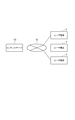
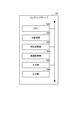
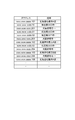
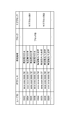
- FIG. 1 It is a figure which shows the whole structure of the system containing the content server which concerns on embodiment. It is a block diagram which shows the function structure of the content server shown in FIG. It is a figure which shows the hardware constitutions of the content server shown in FIG. It is a figure which shows an example of the address information which concerns on embodiment. It is a figure which shows another example of the address information which concerns on embodiment. It is a figure which shows the example of the member information used as the basis of the address information shown in FIG. It is a figure which shows the example of the input information used as the basis of the address information shown in FIG. It is a figure which shows the example of the content data linked
- the content server 10 is a computer system that delivers a web page to the user terminal T in response to a request signal sent from the user terminal T.
- the content server 10 is connected to a plurality of user terminals T via a communication network N.
- the user terminal T include a personal computer, a personal digital assistant (PDA), a mobile phone, and the like.
- PDA personal digital assistant
- the type of the terminal is not limited and may be anything as long as it has a function of receiving and displaying content.
- the content server 10 includes an address storage unit 11, an address information storage unit 12, a content storage unit 13, a reception unit 14, an acquisition unit 15, a determination unit 16, and a transmission unit 17 as functional components. ing.
- the content server 10 includes a CPU 101 that executes an operating system, application programs, and the like, a main storage unit 102 that includes a ROM and a RAM, and an auxiliary storage unit 103 that includes a hard disk and the like.
- the communication control unit 104 includes a network card, an input unit 105 such as a keyboard and a mouse, and an output unit 106 such as a monitor.
- Each function shown in FIG. 2 reads predetermined software on the CPU 101 or the main storage unit 102, operates the communication control unit 104, the input unit 105, the output unit 106, and the like under the control of the CPU 101. This is realized by reading and writing data in 102 and the auxiliary storage unit 103. Data and databases necessary for processing are stored in the main storage unit 102 and the auxiliary storage unit 103.
- FIG. 3 shows that the content server 10 is configured by one computer, the functions of the content server 10 may be distributed to a plurality of computers.
- the content server 10 may be configured by a computer having a database function (address storage unit 11 and content storage unit 13) and a computer having other functions.
- the address storage unit 11 stores address information in which the registered user's location area set based on the registered user's address is associated with the IP address assigned to the registered user's terminal. It is means to do.
- the “registered user” in the present specification is a user whose address is already known, that is, a known user, and is not limited to a user who is registered as a member of a website.
- the address information shown in FIG. 4 is information formed by associating a user ID that uniquely identifies a registered user, an IP address assigned to the registered user's terminal, and a registered user's location.
- the address information shown in FIG. 5 is information in which the user ID is omitted and the IP address of the registered user's terminal is associated with the registered user's location.
- the address information is information including at least the IP address and location area of the registered user.
- the address information storage unit 12 is a means for generating address information and storing it in the address storage unit 11.
- the address information storage unit 12 generates the address information shown in FIG. 4 or 5 from member information on a predetermined website (for example, a website realized by the content server 10), and the address information is stored in the address storage unit. 11.
- the member information is information related to a user registered as a member of the website, and is input via a web page at the time of member registration on the website. As shown in FIG. 6, the member information includes a user ID, an IP address, and a user address recorded at the time of member registration.
- the address information storage unit 12 divides the user's address into a certain range such as a municipality or a ward and sets it as a location area. For example, the address information storage unit 12 categorizes an individual address such as “Sakai City, X-machi 1-chome” or “Osaka Prefecture Sakai City, Y-machi 3-chome” as a location area called “Osaka Prefecture Sakai City”. Then, the address information storage unit 12 rearranges the member information in ascending order or descending order of the IP addresses, and groups the information into blocks each indicating a predetermined address range. The setting method of this block is not limited.
- the address information storage unit 12 may set a block for each range of IP addresses managed by one DHCP server, or may set a block for each range where IP addresses are substantially continuous. . 4 and 5, three blocks indicated by block information “blocks A, B, and C” are shown.
- the address information storage unit 12 receives a large amount received on a predetermined website (for example, a website realized by the content server 10). Can also be used.
- the input information is information input by a user who accesses the website through a web page for procedures such as product purchase and accommodation reservation, and thus may be information of a user who is not a member of the website. .
- the input information includes the IP address extracted from the request signal from the user terminal and the input address of the user.
- the address information storage unit 12 generates address information from a large amount of accumulated input information and stores the address information in the address storage unit 11 in the same manner as when generating address information from member information.
- the reason for setting the range (block) of the IP address of each region from the information of the individual IP address as described above is because there are many providers that assign a group of consecutive IP addresses for each region (for example, for each prefecture). .
- telecommunications carriers for which inter-prefecture communication is regulated based on the law adopt a form of establishing an IP network for each prefecture and connecting to the provider.
- An IP address will be prepared. Therefore, such a provider installs a DHCP server for assigning an IP address to each user terminal for each predetermined area, and prepares a predetermined range of IP addresses for each DHCP server. Therefore, it is possible to associate the region with the range (block) of the IP address.
- the user terminal may access the provider in any way.
- the user terminal may access the provider via FTTH, wireless LAN (for example, Wi-Fi), ADSL, or the like.
- a large amount of address information is efficiently collected by generating address information from the IP address of the terminal of the registered user who has accessed the web page and the address of the registered user input on the web page. be able to.
- address information it is sufficient if only the IP address and the address are known, and personal information other than the address (for example, name and date of birth) is unnecessary.
- the content storage unit 13 is a means for storing region information indicating a geographical region and content data distributed to the region in association with each other. As shown in FIG. 8, the content storage unit 13 stores content data “content A” distributed to user terminals T in Hokkaido, content data “content B” distributed to user terminals T in Saitama Prefecture, and the like.
- the area information in the example of FIG. 8 indicates a geographical range including the location area defined in the address information, but the setting of the area information is not limited to this.
- the area information indicating the location area itself may be associated with the content data.
- the regional information indicates the prefecture, but regional information indicating the country or the municipality may be used.
- Examples of content stored in the content storage unit 13 include content constituting a part of a predetermined web page (for example, content indicating local weather, advertisement for a specific region, etc.), one web page The whole (for example, a portal page set for each country). However, the content may be arbitrarily determined.
- the receiving unit 14 is a means for receiving a request signal indicating a request for content from the user terminal T.
- the reception unit 14 outputs the request signal to the acquisition unit 15.
- the user terminal T is a terminal of a user whose address is unknown (for example, a user who is not a member of the website or a user who has accessed the website for the first time). Therefore, the IP address of the user terminal T and the user of the terminal T Address information does not exist.
- the obtaining unit 15 is a means for obtaining the IP address assigned to the user terminal T that has transmitted the signal, that is, the request source terminal, by analyzing the input request signal.
- the acquisition unit 15 outputs the acquired IP address to the determination unit 16.
- the determining unit 16 is means for determining the location area of the user of the request source terminal (hereinafter also referred to as “request user”) by referring to the address storage unit 11 based on the input IP address. Specifically, the determination unit 16 compares the input IP address with an address range corresponding to each block in the address storage unit 11 to identify a block including the input IP address. Subsequently, the determination unit 16 sets the location area having the highest number of appearances in the identified block (the most frequent location area) as the location area of the block, and the requesting user corresponding to the input IP address is set in the location area. Is determined to exist. And the determination part 16 outputs the location area to the transmission part 17 as a determination result.
- the determination unit 16 identifies “block A” from the address information shown in FIG. If the most frequent location area in “Block A” is “Hokkaido Sapporo City A Ward”, the determination unit 16 determines that the request user's location area is “Hokkaido Sapporo City A Ward”.
- the transmission unit 17 is means for reading out content data corresponding to the location area determined by the determination unit 16 from the content storage unit 13 and transmitting the content data to the request source terminal.
- the transmission unit 17 specifies area information corresponding to the location area of the requesting user indicated by the input determination result from the content storage unit 13. Subsequently, the transmission unit 17 reads out the content data corresponding to the specified area information from the content storage unit 13, and transmits the content data to the user terminal T that has sent the request signal. Assuming that the content data is prepared as shown in FIG. 8, for example, if the location area is “Sakai City, Osaka Prefecture”, the transmission unit 17 specifies the regional information “Osaka Prefecture” and the content data “content C”. Send.
- the receiving unit 14 receives the signal (step S11, receiving step), and the acquiring unit 15 determines the IP address of the requesting terminal from the signal. Obtain (step S12, obtaining step). Subsequently, the determination unit 16 determines the location area of the requesting user by referring to the address storage unit 11 based on the IP address (step S13, determination step). Then, the transmission unit 17 reads out the content data corresponding to the location area of the requesting user from the content storage unit 13 and transmits it to the request source terminal (step S14). Thereby, the requesting user can see the content related to the location.
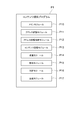
- the content providing program P1 includes a main module P10, an address storage module P11, an address information storage module P12, a content storage module P13, a reception module P14, an acquisition module P15, a determination module P16, and a transmission module P17.
- the main module P10 is a part that comprehensively controls the area specifying function and the content providing function.
- the functions realized by executing the address storage module P11, the address information storage module P12, the content storage module P13, the reception module P14, the acquisition module P15, the determination module P16, and the transmission module P17 are respectively the address storage unit 11 described above.
- the functions of the address information storage unit 12, the content storage unit 13, the reception unit 14, the acquisition unit 15, the determination unit 16, and the transmission unit 17 are the same.
- the content providing program P1 is provided in a form recorded on a recording medium such as a CD-ROM or DVD-ROM or a semiconductor memory, for example.
- the content providing program P1 may be provided via a communication network as a computer data signal superimposed on a carrier wave.
- address information in which the location area based on the address of the registered user (known user) and the IP address of the terminal of the registered user are prepared in advance. Then, when a request signal is sent from the request source terminal that requests the content, the IP address of the request source terminal is acquired from the request signal, and the user (unknown) of the terminal is based on the IP address and address information. The user's location is determined. As described above, the address information of the registered user is prepared using the address of the registered user, and the location of the user of the terminal is determined based on the IP address of the request source terminal and the address information. The area can be easily identified.
- the address information is grouped by the concept of block, and the most frequent location area is set as the location area of the block in each block. Then, the location area of the block including the IP address of the requesting terminal is set as the location area of the requesting user. Therefore, even when a plurality of location areas are mixed in one block, the location area of an unknown user can be accurately determined with high probability.
- the method for determining the location of the requesting user is not limited to the example of the above embodiment, and the method described below may be used.
- the address storage unit 11 is configured as shown in FIG. 11, and the address information is grouped using not only blocks but also sub-blocks.
- the block setting method is the same as in the above embodiment.
- the sub-block is a concept for further grouping address information in one block.
- a sub-block is a grouping of a plurality of pieces of address information having a common location area in one block and consecutively arranged on the assumption that IP addresses are arranged in ascending or descending order. .
- the address area is “Kawaguchi City, Saitama Prefecture”, and four pieces of address information (the least significant bits of the IP address are 50 to 53) arranged continuously are subblock B1. Grouped.
- the address area is “Saitama City, Saitama Prefecture”, and four pieces of address information (the least significant bits of the IP address are 54 to 60) arranged in series are grouped as a sub-block B2.
- the determination unit 16 identifies the subblock including the input IP address by comparing the input IP address with the address range corresponding to each subblock in the address storage unit 11. Then, the determination unit 16 determines that the location area corresponding to the identified sub-block is the location area of the requesting user. For example, if the input IP address is “xxxx.xxxx.bbbb.56”, the determination unit 16 identifies “subblock B2” from the address information shown in FIG. Then, the determination unit 16 determines that the location area of the requesting user is “Saitama City, Saitama Prefecture”. By determining in this way, the location area of the requesting user can be accurately determined.
- the address information includes the user ID, but this user ID may be omitted as in the example of FIG.
- the address storage unit 11 and the content storage unit 13 may be provided on a server different from the content server 10.
- the content server 10 may access each storage unit via the communication network N.
- the address information storage unit 12 may be provided on a server different from the content server 10.
- the area specifying server according to one embodiment of the present invention is applied to the content server 10, but the area specifying server may be used for purposes other than the purpose of content distribution.
- an area specifying server may be used to accumulate data on the determined user's location area. In this case, the function of transmitting content data to the request source terminal can be omitted.
- DESCRIPTION OF SYMBOLS 10 ... Content server, 11 ... Address storage part, 12 ... Address information storage part, 13 ... Content storage part, 14 ... Receiving part, 15 ... Acquisition part, 16 ... Determination part, 17 ... Transmission part, P1 ... Content provision program, P10 ... main module, P11 ... address storage module, P12 ... address information storage module, P13 ... content storage module, P14 ... reception module, P15 ... acquisition module, P16 ... determination module, P17 ... transmission module, T ... user terminal.
Landscapes
- Engineering & Computer Science (AREA)
- Theoretical Computer Science (AREA)
- Software Systems (AREA)
- Technology Law (AREA)
- Computer Hardware Design (AREA)
- Computer Security & Cryptography (AREA)
- Physics & Mathematics (AREA)
- General Engineering & Computer Science (AREA)
- General Physics & Mathematics (AREA)
- Multimedia (AREA)
- Computer Networks & Wireless Communication (AREA)
- Signal Processing (AREA)
- Information Transfer Between Computers (AREA)
Abstract
Description
受信ステップにおいて受信されたリクエスト信号から、要求元端末に割り当てられたIPアドレスを取得する取得ステップと、取得ステップにおいて取得されたIPアドレスに基づいてアドレス記憶部を参照することで、要求元端末のユーザの所在地域を判定する判定ステップであって、該アドレス記憶部が、登録ユーザの住所に基づいて設定された該登録ユーザの所在地域と、該登録ユーザの端末に割り当てられたIPアドレスとが関連付けられたアドレス情報を記憶している、該判定ステップとを含む。
Claims (8)
- リクエスト信号を要求元端末から受信する受信部と、
前記受信部により受信されたリクエスト信号から、前記要求元端末に割り当てられたIPアドレスを取得する取得部と、
前記取得部により取得されたIPアドレスに基づいてアドレス記憶部を参照することで、前記要求元端末のユーザの所在地域を判定する判定部であって、該アドレス記憶部が、登録ユーザの住所に基づいて設定された該登録ユーザの所在地域と、該登録ユーザの端末に割り当てられたIPアドレスとが関連付けられたアドレス情報を記憶している、該判定部と
を備える地域特定サーバ。 - 前記アドレス記憶部に記憶されたアドレス情報が、IPアドレスの昇順又は降順に並べられた上で、所定のアドレス範囲を示すブロック単位にグループ分けされ、各ブロックにおいて、出現回数が最も多い所在地域が該ブロックの所在地域として設定され、
前記判定部が、前記取得されたIPアドレスが含まれる前記ブロックに対応付けられた所在地域が、前記要求元端末のユーザの所在地域であると判定する、
請求項1に記載の地域特定サーバ。 - 前記アドレス記憶部に記憶されたアドレス情報が、IPアドレスの昇順又は降順に並べられた上で、所定のアドレス範囲を示すブロック単位にグループ分けされ、
各ブロックにおいて、所在地域が共通し且つ連続して並んでいる複数のアドレス情報が一つのサブブロックとしてグループ分けされ、
前記判定部が、前記取得されたIPアドレスが含まれる前記サブブロックに対応付けられた所在地域が、前記要求元端末のユーザの所在地域であると判定する、
請求項1に記載の地域特定サーバ。 - 前記アドレス情報が、前記登録ユーザの端末から受信したリクエスト信号に含まれる該端末のIPアドレスと、該リクエスト信号に対応するウェブページにおいて入力された該登録ユーザの住所とに基づいて生成された情報である、
請求項1~3のいずれか一項に記載の地域特定サーバ。 - 地理的な地域を示す地域情報と該地域向けに配信するコンテンツデータとを関連付けて記憶するコンテンツ記憶部から、前記判定部により判定された所在地域に対応するコンテンツデータを読み出し、読み出したコンテンツデータを前記要求元端末に送信する送信部を更に備える請求項1~4のいずれか一項に記載の地域特定サーバ。
- 地域特定サーバにより実行される地域特定方法であって、
リクエスト信号を要求元端末から受信する受信ステップと、
前記受信ステップにおいて受信されたリクエスト信号から、前記要求元端末に割り当てられたIPアドレスを取得する取得ステップと、
前記取得ステップにおいて取得されたIPアドレスに基づいてアドレス記憶部を参照することで、前記要求元端末のユーザの所在地域を判定する判定ステップであって、該アドレス記憶部が、登録ユーザの住所に基づいて設定された該登録ユーザの所在地域と、該登録ユーザの端末に割り当てられたIPアドレスとが関連付けられたアドレス情報を記憶している、該判定ステップと
を含む地域特定方法。 - リクエスト信号を要求元端末から受信する受信部と、
前記受信部により受信されたリクエスト信号から、前記要求元端末に割り当てられたIPアドレスを取得する取得部と、
前記取得部により取得されたIPアドレスに基づいてアドレス記憶部を参照することで、前記要求元端末のユーザの所在地域を判定する判定部であって、該アドレス記憶部が、登録ユーザの住所に基づいて設定された該登録ユーザの所在地域と、該登録ユーザの端末に割り当てられたIPアドレスとが関連付けられたアドレス情報を記憶している、該判定部と
をコンピュータに実行させる地域特定プログラム。 - リクエスト信号を要求元端末から受信する受信部と、
前記受信部により受信されたリクエスト信号から、前記要求元端末に割り当てられたIPアドレスを取得する取得部と、
前記取得部により取得されたIPアドレスに基づいてアドレス記憶部を参照することで、前記要求元端末のユーザの所在地域を判定する判定部であって、該アドレス記憶部が、登録ユーザの住所に基づいて設定された該登録ユーザの所在地域と、該登録ユーザの端末に割り当てられたIPアドレスとが関連付けられたアドレス情報を記憶している、該判定部と
をコンピュータに実行させる地域特定プログラムを記録したコンピュータ読み取り可能な記録媒体。
Priority Applications (2)
| Application Number | Priority Date | Filing Date | Title |
|---|---|---|---|
| JP2012536573A JP5608239B2 (ja) | 2010-09-30 | 2011-09-29 | 地域特定サーバ、地域特定方法、地域特定プログラム、及びそのプログラムを記憶するコンピュータ読み取り可能な記録媒体 |
| US13/877,081 US9503531B2 (en) | 2010-09-30 | 2011-09-29 | Region identification server, region identification method, region identification program, and computer readable recording medium storing the program |
Applications Claiming Priority (2)
| Application Number | Priority Date | Filing Date | Title |
|---|---|---|---|
| JP2010-221963 | 2010-09-30 | ||
| JP2010221963 | 2010-09-30 |
Publications (1)
| Publication Number | Publication Date |
|---|---|
| WO2012043768A1 true WO2012043768A1 (ja) | 2012-04-05 |
Family
ID=45893205
Family Applications (1)
| Application Number | Title | Priority Date | Filing Date |
|---|---|---|---|
| PCT/JP2011/072470 Ceased WO2012043768A1 (ja) | 2010-09-30 | 2011-09-29 | 地域特定サーバ、地域特定方法、地域特定プログラム、及びそのプログラムを記憶するコンピュータ読み取り可能な記録媒体 |
Country Status (3)
| Country | Link |
|---|---|
| US (1) | US9503531B2 (ja) |
| JP (1) | JP5608239B2 (ja) |
| WO (1) | WO2012043768A1 (ja) |
Families Citing this family (2)
| Publication number | Priority date | Publication date | Assignee | Title |
|---|---|---|---|---|
| CN104935676A (zh) * | 2014-03-17 | 2015-09-23 | 阿里巴巴集团控股有限公司 | 确定ip地址段及其对应的经纬度的方法及装置 |
| US11824827B1 (en) | 2016-04-13 | 2023-11-21 | 8X8, Inc. | Region-based network address translation |
Citations (3)
| Publication number | Priority date | Publication date | Assignee | Title |
|---|---|---|---|---|
| JP2002176444A (ja) * | 2000-12-08 | 2002-06-21 | Seiko Epson Corp | 位置情報に基づく通信アドレスの割付方法及びこれを使用した情報通信方法 |
| JP2007226789A (ja) * | 2006-02-22 | 2007-09-06 | Nhn Corp | 広告領域の動的調整を用いたリスト生成方法およびリスト生成システム |
| WO2009017942A1 (en) * | 2007-07-31 | 2009-02-05 | Yahoo! Inc. | System and method for merging internet protocol address to location data from multiple sources |
Family Cites Families (10)
| Publication number | Priority date | Publication date | Assignee | Title |
|---|---|---|---|---|
| JP3254422B2 (ja) | 1998-06-26 | 2002-02-04 | 株式会社ジェイ・キャスト | ウェブページ閲覧方法およびこの方法を用いた装置 |
| US6757740B1 (en) * | 1999-05-03 | 2004-06-29 | Digital Envoy, Inc. | Systems and methods for determining collecting and using geographic locations of internet users |
| US6823364B1 (en) * | 1999-12-21 | 2004-11-23 | Nortel Networks Limited | Distribution of location information in IP networks by intelligent endpoints |
| US7062572B1 (en) * | 2001-03-19 | 2006-06-13 | Microsoft Corporation | Method and system to determine the geographic location of a network user |
| US7310686B2 (en) * | 2002-10-27 | 2007-12-18 | Paxfire, Inc. | Apparatus and method for transparent selection of an Internet server based on geographic location of a user |
| KR100854087B1 (ko) * | 2006-08-21 | 2008-08-25 | 삼성전자주식회사 | 원격 관리장치 및 그 주소 설정방법 |
| US8812012B2 (en) * | 2008-12-16 | 2014-08-19 | The Nielsen Company (Us), Llc | Methods and apparatus for associating media devices with a demographic composition of a geographic area |
| US8553646B2 (en) * | 2009-08-10 | 2013-10-08 | At&T Intellectual Property I, L.P. | Employing physical location geo-spatial co-ordinate of communication device as part of internet protocol |
| US8443107B2 (en) * | 2009-11-11 | 2013-05-14 | Digital Envoy, Inc. | Method, computer program product and electronic device for hyper-local geo-targeting |
| US8615605B2 (en) * | 2010-10-22 | 2013-12-24 | Microsoft Corporation | Automatic identification of travel and non-travel network addresses |
-
2011
- 2011-09-29 JP JP2012536573A patent/JP5608239B2/ja active Active
- 2011-09-29 US US13/877,081 patent/US9503531B2/en active Active
- 2011-09-29 WO PCT/JP2011/072470 patent/WO2012043768A1/ja not_active Ceased
Patent Citations (3)
| Publication number | Priority date | Publication date | Assignee | Title |
|---|---|---|---|---|
| JP2002176444A (ja) * | 2000-12-08 | 2002-06-21 | Seiko Epson Corp | 位置情報に基づく通信アドレスの割付方法及びこれを使用した情報通信方法 |
| JP2007226789A (ja) * | 2006-02-22 | 2007-09-06 | Nhn Corp | 広告領域の動的調整を用いたリスト生成方法およびリスト生成システム |
| WO2009017942A1 (en) * | 2007-07-31 | 2009-02-05 | Yahoo! Inc. | System and method for merging internet protocol address to location data from multiple sources |
Also Published As
| Publication number | Publication date |
|---|---|
| JPWO2012043768A1 (ja) | 2014-02-24 |
| JP5608239B2 (ja) | 2014-10-15 |
| US20130297782A1 (en) | 2013-11-07 |
| US9503531B2 (en) | 2016-11-22 |
Similar Documents
| Publication | Publication Date | Title |
|---|---|---|
| US8938433B2 (en) | Information management apparatus, information management method, and information control program | |
| JP5065470B2 (ja) | サーバ、情報管理方法、情報管理プログラム、及びそのプログラムを記録するコンピュータ読み取り可能な記録媒体 | |
| US20170017480A1 (en) | Method and apparatus for updating an application in a user terminal | |
| US8984226B2 (en) | Load balancing based upon data usage | |
| WO2011043429A1 (ja) | 情報管理装置、そのデータ処理方法、およびコンピュータプログラム | |
| US9483623B2 (en) | Displaying targeted website content based on social user profile data | |
| US10951593B2 (en) | Programmatic control channel for automated data distribution | |
| JP6484767B1 (ja) | Ipアドレスに基づくユーザ属性推定システム | |
| JP5952852B2 (ja) | 情報生成装置及び受信装置を備えたシステム | |
| JP5608239B2 (ja) | 地域特定サーバ、地域特定方法、地域特定プログラム、及びそのプログラムを記憶するコンピュータ読み取り可能な記録媒体 | |
| CN109302406B (zh) | 一种分布式网页取证的方法及系统 | |
| TW202147214A (zh) | Id核對伺服器、id核對方法及程式 | |
| US20070150448A1 (en) | Method and apparatus for optimizing large data set retrieval | |
| US9373145B2 (en) | Social network reports | |
| KR20210000041A (ko) | 로그 데이터의 실시간 분석 방법 및 그 장치 | |
| CN110874433A (zh) | 信息处理方法及其系统、计算机系统及计算机可读介质 | |
| US9330185B2 (en) | POI related information processing system and method, and apparatus for supporting the same | |
| JP5502021B2 (ja) | ディレクトリ情報提供装置、情報処理システム、ディレクトリ情報提供方法及びプログラム | |
| JP2008250941A (ja) | 文書収集方法、文書収集プログラム及び文書収集装置 | |
| US8510286B1 (en) | Method, architecture and platform for content takedown on the internet | |
| JP6342717B2 (ja) | プライバシーポリシー生成装置、プライバシーポリシー生成方法、およびプログラム | |
| CN113129025A (zh) | 基于标识的数据资源注册及交易管理方法、装置 | |
| KR100792837B1 (ko) | 실시간 상세 정보 제공 방법 및 시스템 | |
| WO2026096043A1 (en) | Mobile identifier validation for permissioned cross-app tracking and targeting | |
| JP2023173866A (ja) | 情報処理装置、情報取得装置、情報処理システム、情報処理方法、情報取得方法、及び、プログラム |
Legal Events
| Date | Code | Title | Description |
|---|---|---|---|
| 121 | Ep: the epo has been informed by wipo that ep was designated in this application |
Ref document number: 11829321 Country of ref document: EP Kind code of ref document: A1 |
|
| WWE | Wipo information: entry into national phase |
Ref document number: 2012536573 Country of ref document: JP |
|
| NENP | Non-entry into the national phase |
Ref country code: DE |
|
| WWE | Wipo information: entry into national phase |
Ref document number: 13877081 Country of ref document: US |
|
| 122 | Ep: pct application non-entry in european phase |
Ref document number: 11829321 Country of ref document: EP Kind code of ref document: A1 |