WO2012018489A2 - Nematode resistant crops - Google Patents

Nematode resistant crops Download PDF

Info

Publication number
WO2012018489A2
WO2012018489A2 PCT/US2011/043882 US2011043882W WO2012018489A2 WO 2012018489 A2 WO2012018489 A2 WO 2012018489A2 US 2011043882 W US2011043882 W US 2011043882W WO 2012018489 A2 WO2012018489 A2 WO 2012018489A2
Authority
WO
WIPO (PCT)
Prior art keywords
plant
seq
gene
nem
soybean
Prior art date
Legal status (The legal status is an assumption and is not a legal conclusion. Google has not performed a legal analysis and makes no representation as to the accuracy of the status listed.)
Ceased
Application number
PCT/US2011/043882
Other languages
French (fr)
Other versions
WO2012018489A3 (en
Inventor
Melissa G. Mitchum
Amy Replogle
Jianying Wang
Xiaohong Wang
Shiyan Chen
Ping LANG
Eric L. Davis
Thomas J. Baum
Richard S. Hussey
Current Assignee (The listed assignees may be inaccurate. Google has not performed a legal analysis and makes no representation or warranty as to the accuracy of the list.)
University of Georgia
North Carolina State University
University of Georgia Research Foundation Inc
Cornell Research Foundation Inc
Iowa State University Research Foundation Inc ISURF
University of Missouri Columbia
University of Missouri St Louis
Original Assignee
University of Georgia
North Carolina State University
University of Georgia Research Foundation Inc
Cornell Research Foundation Inc
Iowa State University Research Foundation Inc ISURF
University of Missouri Columbia
University of Missouri St Louis
Priority date (The priority date is an assumption and is not a legal conclusion. Google has not performed a legal analysis and makes no representation as to the accuracy of the date listed.)
Filing date
Publication date
Application filed by University of Georgia, North Carolina State University, University of Georgia Research Foundation Inc, Cornell Research Foundation Inc, Iowa State University Research Foundation Inc ISURF, University of Missouri Columbia, University of Missouri St Louis filed Critical University of Georgia
Priority to US13/814,591 priority Critical patent/US10231383B2/en
Priority to AU2011286320A priority patent/AU2011286320A1/en
Publication of WO2012018489A2 publication Critical patent/WO2012018489A2/en
Publication of WO2012018489A3 publication Critical patent/WO2012018489A3/en
Anticipated expiration legal-status Critical
Ceased legal-status Critical Current

Links

Classifications

    • AHUMAN NECESSITIES
    • A01AGRICULTURE; FORESTRY; ANIMAL HUSBANDRY; HUNTING; TRAPPING; FISHING
    • A01DHARVESTING; MOWING
    • A01D91/00Methods for harvesting agricultural products
    • CCHEMISTRY; METALLURGY
    • C07ORGANIC CHEMISTRY
    • C07KPEPTIDES
    • C07K14/00Peptides having more than 20 amino acids; Gastrins; Somatostatins; Melanotropins; Derivatives thereof
    • C07K14/415Peptides having more than 20 amino acids; Gastrins; Somatostatins; Melanotropins; Derivatives thereof from plants
    • CCHEMISTRY; METALLURGY
    • C12BIOCHEMISTRY; BEER; SPIRITS; WINE; VINEGAR; MICROBIOLOGY; ENZYMOLOGY; MUTATION OR GENETIC ENGINEERING
    • C12NMICROORGANISMS OR ENZYMES; COMPOSITIONS THEREOF; PROPAGATING, PRESERVING, OR MAINTAINING MICROORGANISMS; MUTATION OR GENETIC ENGINEERING; CULTURE MEDIA
    • C12N15/00Mutation or genetic engineering; DNA or RNA concerning genetic engineering, vectors, e.g. plasmids, or their isolation, preparation or purification; Use of hosts therefor
    • C12N15/09Recombinant DNA-technology
    • C12N15/63Introduction of foreign genetic material using vectors; Vectors; Use of hosts therefor; Regulation of expression
    • C12N15/79Vectors or expression systems specially adapted for eukaryotic hosts
    • C12N15/82Vectors or expression systems specially adapted for eukaryotic hosts for plant cells, e.g. plant artificial chromosomes (PACs)
    • C12N15/8241Phenotypically and genetically modified plants via recombinant DNA technology
    • C12N15/8261Phenotypically and genetically modified plants via recombinant DNA technology with agronomic (input) traits, e.g. crop yield
    • C12N15/8271Phenotypically and genetically modified plants via recombinant DNA technology with agronomic (input) traits, e.g. crop yield for stress resistance, e.g. heavy metal resistance
    • C12N15/8279Phenotypically and genetically modified plants via recombinant DNA technology with agronomic (input) traits, e.g. crop yield for stress resistance, e.g. heavy metal resistance for biotic stress resistance, pathogen resistance, disease resistance
    • C12N15/8285Phenotypically and genetically modified plants via recombinant DNA technology with agronomic (input) traits, e.g. crop yield for stress resistance, e.g. heavy metal resistance for biotic stress resistance, pathogen resistance, disease resistance for nematode resistance
    • YGENERAL TAGGING OF NEW TECHNOLOGICAL DEVELOPMENTS; GENERAL TAGGING OF CROSS-SECTIONAL TECHNOLOGIES SPANNING OVER SEVERAL SECTIONS OF THE IPC; TECHNICAL SUBJECTS COVERED BY FORMER USPC CROSS-REFERENCE ART COLLECTIONS [XRACs] AND DIGESTS
    • Y02TECHNOLOGIES OR APPLICATIONS FOR MITIGATION OR ADAPTATION AGAINST CLIMATE CHANGE
    • Y02ATECHNOLOGIES FOR ADAPTATION TO CLIMATE CHANGE
    • Y02A40/00Adaptation technologies in agriculture, forestry, livestock or agroalimentary production
    • Y02A40/10Adaptation technologies in agriculture, forestry, livestock or agroalimentary production in agriculture
    • Y02A40/146Genetically Modified [GMO] plants, e.g. transgenic plants

Definitions

  • Obligate biotrophs are pathogens that establish intimate parasitic relationships with the host that they infect. Often tim es these relationships involve som e kind of m odification or reprogram m ing of the host cell(s) to accommodate the pathogen's subsequent growth and developm ent.
  • Plant-parasitic nem atodes are obligate biotrophs that m ainly attack the roots of plants and cause over $100 billion in crop dam age annually (Sasser and Freckm an, 1987).
  • the m ost econom ically important plant-parasitic nematodes include the cyst form ing nem atodes of Heterodera and Globodera spp.
  • sedentary endoparasitic nem atodes form intimate parasitic relationships with their hosts by penetrating the root as m otile juveniles and m igrating intracellularly until they reach the root vasculature where they select a single cell to initiate a feeding site.
  • the initial syncytial cell undergoes developm ental changes to re- differentiate into a syncytium to support subsequent nem atode growth and development in later sedentary stages (Davis et al., 2004).
  • the syncytium form s when neighboring cells fuse as a result of partial cell wall degradation (Endo, 1964), creating a perm anent feeding cell that shares characteristics with plant cell types including meristematic cells, endosperm cells, transfer cells, and developing xylem (Mitchum et al., 2008). It has been proposed that the development and m aintenance of the syncytium is dependent on the secretory effector proteins originating in the esophageal gland cells and delivered into the host root through the stylet of plant-parasitic nem atodes (Davis et al., 2008).
  • cyst nem atode secreted CLAVATA3/ESR(CLE)-like effector proteins have been shown to act as ligand m im ics of plant CLE peptides, and are required for successful nem atode infection (Wang et al., 2005; Patel et al., 2008; Lu et al., 2009; Wang et al., 2010a; Wang et al, 2010b).
  • Plant CLEs are sm all peptide ligands involved in regulating a population of specialized cells, called stem cells, which allow postem bryonic organogenesis to occur (Sim on and Stahl 2006). These stem cell pools can be found in the shoot apical m eristem (SAM), the root apical m eristem (RAM), and the vascular cam bium . Whether or not these stem s cells rem ain in an undifferentiated state or differentiate into new plant tissues is tightly controlled by CLE signaling pathways.
  • the population of stem cells which resides in the organizing center (OC) of the SAM is m aintained by the expression of the transcription factor WUSCHEL (WUS) (Laux et al., 1996).
  • WUSCHEL transcription factor WUSCHEL
  • Differentiation of those stem s cells is promoted when the ligand-receptor pair of CLAVATA3 (CLV3), a sm all extracellular peptide ligand in the CLE fam ily (Fletcher et al., 1999; Rojo et al, 2002), binds to CLV1 (Ogawa et al., 2008), a leucine-rich-repeat receptor like kinase (LRR-RLK) and
  • CLV1 downregulates WUS.
  • Previous models have suggested that CLV1 form s a receptor complex with the LRR-receptor like protein (RLP) CLV2 (Clark et al., 1993; Kayes and Clark, 1998; Jeong et al., 1999; Trotochaud et al., 1999). More recently, it has been suggested that CLV1 acts in parallel or together with the heterodimer receptor complex of CLV2 and CORYNE (CRN) (Miwa et al., 2008; Muller, 2008; Bleckm ann et al, 2010; Zhu et al., 2010). In comparison to the SAM, m uch less is known about the regulation of the stem cells in the RAM.
  • RLP LRR-receptor like protein
  • the quiescent center is the equivalent to the OC in the SAM.
  • the cells surrounding the QC are maintained as stem cells.
  • stem cells are differentiated in both proxim al and distal directions. This indicates that there is a signaling ligand involved in cell-cell communication to maintain the cells surrounding the QC as stem cells, and a signal to promote differentiation (Sarkar et al., 2007; Stahl et al., 2009).
  • WOX5 WUS-related hom eobox 5
  • CLE40 the closest hom olog to CLV3
  • WOX5 the closest hom olog to CLV3
  • the WOX5/CLE40 signaling pathway appears to only control the distal stem cell pool, indicating that other CLE signaling pathways m ay exist to control the proximal stem cell pool.
  • CLE-like genes from nem atodes have been reported in the soybean cyst nematode (SCN, H. glycines) (Wang et al., 2005; Wang et al, 2010a), the beet cyst nem atode (BCN, H. schachtii) (Patel et al., 2008; Wang et al., 2010b), and the potato cyst nematode (PCN, G. rostochiensis) (Lu et al., 2009). BCN CLEs have been detected in the dorsal gland ampulla indicating they are likely secreted from the stylet into host cells (Patel et al., 2008).
  • nematode CLEs can trigger plant CLE signaling pathways (Wang et al., 2005; Lu et al, 2009; Wang et al., 2010a; Wang et al., 2010b), but the identity of the receptors and downstream signaling pathways that are activated to initiate developmental cascades required for the re- differentiation of root cells to form syncytia, are currently unknown.
  • This invention provides for methods of inhibiting plant parasitic nematodes, m ethods of obtaining transgenic plants useful for inhibiting such nem atodes, m ethods for expressing genes at plant parasitic nematode feeding sites, and transgenic plants that are resistant to plant parasitic nem atodes. Also provided are prom oters including, but not lim ited to a BAMl prom oter, that are useful for expressing genes in nem atode feeding sites as well as transgenic plants and nematode resistant transgenic plants comprising the same.
  • BAMl and other promoters provided herewith can in certain em bodim ents be operably linked to genes that provide for inhibition of plant parasitic nem atodes when introduced into transgenic plants and for plants that display such inhibition.
  • genes that provide for inhibition of plant parasitic nem atodes that can be used with the promoters provided herewith are disclosed in US Patent Application 20090012029, which is specifically incorporated herein by reference in its entirety.
  • a method for inhibiting plant parasitic nematode damage to a plant comprising growing a plant comprising a mutation or a transgene that provides for inhibition of at least one endogenous plant gene encoding a receptor for a nem atode CLE peptide in the presence of plant parasitic nem atodes is provided.
  • the plant gene encoding a receptor for a nem atode CLE peptide is selected from the group consisting of a CLVl-like gene, a CLV2-like gene, a BAMl -like gene, a BAM2-like gene, a CRN-like gene, a ACR4-like gene, an ER-like gene, and an ERL2 -like gene.
  • CLVl-like gene, said CLV2-like gene, BAMl -like gene, a BAM2-like gene, a CRN-like gene, a ACR4-like gene, an ER-like gene, or an ERL2 -like gene is an ortholog of a corresponding Arabidopsis, soybean, or potato CLV1, CLV2, BAMl, BAM2, CRN, ACR4, ER, or ERL2 gene.
  • the m ethods can further com prise the step of harvesting a product of said plant.
  • the harvested product is a leaf, stem , flower, seed, root, or tuber.
  • the yield and/or quality of said product is increased relative to a control plant that is grown in presence of plant parasitic nem atodes and that lacks said mutation or said transgene that provides for inhibition of at least one endogenous plant gene encoding a receptor for a nematode CLE peptide.
  • the transgene comprises: i) an siRNA directed against said plant gene; ii) an artificial m icroRNA targeting said plant gene; iii) a dom inant negative form of said plant gene; iv) an antisense or sense form of said plant gene; or v) a genom ic insertion that disrupts said plant gene.
  • a m ethod for obtaining a transgenic plant that exhibits resistance to a plant parasitic nem atode comprising the steps of: a) introducing a transgene that provides for inhibition of at least one endogenous plant gene encoding a receptor for a nem atode CLE peptide into a plant cell or a transgene that provides for inhibition of at least one CLVl-like, a CLV2-like, a BAMl-like, a BAM2-like, a CRN-like, a ACR4-like, an ER- like, and/or an ERL2 -like gene; and b) selecting a transgenic plant obtained from said plant cell, wherein said selected transgenic plant comprises said transgene and exhibits resistance to a plant nem atode is provided.
  • CLVl-like gene is an ortholog of a corresponding Arabidopsis, soybean, or potato CLV1, CLV2, BAM1, BAM2, CRN, ACR4, ER, or ERL2 gene.
  • a m ethod for obtaining a transgenic plant expressing a gene product at a plant parasitic nematode feeding site com prising the steps of: a) introducing a transgene wherein a CRN, CLV, or BAM prom oter is operably linked to a gene encoding said gene product into a plant cell; and, b) selecting a transgenic plant obtained from said plant cell, wherein said selected transgenic plant comprises said transgene and exhibits expression of said gene product at said nematode feeding site is provided.
  • the gene product is inhibitory to the plant parasitic nem atode.
  • the inhibitory gene product is a siRNA directed against a plant parasitic nem atode gene.
  • an ACR4, BAM1, BAM2, CLV1, CLV2, CRN, ER or ERL2 promoter is operably linked to a gene encoding the gene product.
  • an ACR4, BAM1, BAM2, CLV1, CLV2, CRN, ER, or ERL2 promoter is operably linked to a gene product that is inhibitory to a plant parasitic nematode.
  • the inhibitory gene product is an amiRNA directed against a plant parasitic nematode gene.
  • the plant nematode is a cyst nem atode.
  • the cyst nem atode is a Heterodera or Globodera spp.
  • the Heterodera spp. is H. avenae, H. bifenestra, H. cajani. H. carotae, H. ciceri, H. cruciferae, H. cynodontis, H. cyperi, H. davert, H. elachista, H. fii, H. galeopsidis, H. goettingiana, H. graminis, H. hordecalis, H. humuli, H.
  • the Globodera spp. is G. achilleae, G. artemisiae, G. hypolysi, G. leptonepia, G. mali, G. pallida, G.
  • obtaining a transgenic plant that exhibits resistance to a plant parasitic nematode, or obtaining a transgenic plant expressing a gene product at a plant parasitic nem atode feeding site the plant is a m onocot or dicot plant, or is selected from the group consisting of a tobacco, cereal, sugar beet, cotton, fruit, fiber, oilseed, potato, rice, corn, soybean, vegetable, and wheat plant.
  • the endogenous plant gene encoding a receptor for a nematode CLE is a potato StCLVl, StCLV2, StBAMl, StBAM2, StCR , StACR4, StER, or StERL2 gene and the plant is a potato plant.
  • the plant parasitic nem atode is G rostochiensis or G. pallida.
  • the endogenous plant gene encoding a receptor for a nematode CLE is selected from the group consisting of soybean genes provided in Table 3 of Example 2 and said plant is a soybean plant.
  • the plant parasitic nem atode is Heterodera glycines or H. schachtii.
  • a plant parasitic nem atode resistant transgenic plant comprising a transgene that provides for inhibition of at least one endogenous plant gene encoding a receptor for a nematode CLE peptide.
  • the transgene comprises: i) an siRNA directed against said plant gene; ii) an artificial m icroRNA targeting said plant gene; iii) a dominant negative form of said plant gene; iv) an antisense or sense form of said plant gene; or v) a genom ic insertion that disrupts said plant gene.
  • the endogenous plant gene encoding a receptor for a nem atode CLE is selected from the group consisting of soybean genes of provided in Table 3 of Example 2 and the plant is a soybean plant.
  • the endogenous plant gene encoding a receptor for a nematode CLE is a potato StCLVl, StCLV2, StBAMl, StBAM2, StCRN, StACR4, StER, or StERL2 gene and the plant is a potato plant.
  • a plant parasitic nematode resistant transgenic plant comprising a transgene wherein a CRN, CLV, or BAM promoter is operably linked to a gene encoding a gene product that is inhibitory to a plant parasitic nem atode is provided.
  • the gene product is an siRNA directed against a plant parasitic nematode gene.
  • the CRN, CLV, or BAM promoter is the CRN1, CLV2, or BAMl prom oter sequence provided in Example 3.
  • an ACR4, BAMl, BAM2, CLV1, CLV2, CRN, ER, or ERL2 prom oter is operably linked to a gene product that is inhibitory to a plant parasitic nematode.
  • the gene product is a siRNA or an amiRNA directed against a plant parasitic nematode gene.
  • a recom binant DNA construct comprising a BAMl prom oter that is operably linked to a heterologous gene, wherein said BAMl promoter comprises any one of : i) the BAMl promoter sequence provided in Example 3; ii) a prom oter that has at least 70%, 85%, 90%, 95%, or 99% sequence identity to the BAMl prom oter sequence provided in Exam ple 3; or ii) a prom oter comprising a deletion of about up to about 10, 50, 100, 200, 500, 700, 1000, or 1500 nucleotides of the 5' nucleotides of the BAMl prom oter sequence provided in Example 3 is provided.
  • the BAM prom oter is operably linked to a gene encoding a gene product that is inhibitory to a plant parasitic nematode.
  • GUS expression during nem atode infection (a)-(c) GUS expression in uninfected Arabidopsis root tips (a), m iddle of the root (b), and older part of the root towards the hypocotyl (c). (d)-(g) CRN. GUS expression in response to H. schachtii; early parasitic J2 (d), late parasitic J2 (e), J3 parasitic (f), J4 parasitic (g). Abbreviations: nem atode, N; Syn, Syncytium. (Scale bar, 50 um).
  • FIG. 3 Confocal im ages of CLV2:H2B-mCherry expression during nem atode infection, (a) J2 parasitic with DIC. (b) J2 parasitic with m Cherry fluorescence, (c) J3 parasitic with DIC. (d) J3 parasitic with m Cherry fluorescence. Abbreviations: nem atode, N; Syn, Syncytium . (Scale bars, 50 ⁇ ).
  • Figure 4 Effect of clv2-l and crn-1 m utant alleles on H. schachtii infection.
  • Figure 5 Response of wild-type (Utr) and sol2-l seedlings to the synthetic 12-aa nematode CLE peptide.
  • Figure 7 Effect of sol2-l mutant allele on Heterodera schachtii infection.
  • Figure 8 Effect of Heterodera glycines (HgCle) and Heterodera schachtii (HsCLE) nem atode CLE peptides on receptor m utants.
  • Figure 9 Effect of Globodera rostochiensis (GrCLE) nematode CLE peptides on receptor m utants.
  • Figure 10 Effect of receptor mutant alleles on H. schachtii infection.
  • CRN GUS expression during nem atode infection.
  • FIG. 13 BAM1:GUS expression in Arabidopsis in response to nematode infection.
  • Figure 16 shows the expression of a pCLVl prom oter fusion to a GUS gene in the vasculature of plants and upregulation at sites of H. schachtii in transgenic Arabidopsis.
  • Figure 17 shows a StCLV2 Potato Promoter:GUS transgenic plant line and activity of this promoter in G. rostochiensis-m ' d ced feeding sites.
  • Figure 18 shows a StCRN Potato Promoter:GUS transgenic plant line and activity of this prom oter in G. rostochiensis-ind ced feeding sites.
  • Figure 19 A shows expression levels of the endogenous StCLV2 gene in transgenic potato plants expressing an artificial m iRNA (amiRNA) directed against the StCLV2 gene (3d#29 and 4d#9) and wild type (Wt) control plants that lack the amiRNA.
  • amiRNA artificial m iRNA
  • Figure 19 B shows the num ber of G. rostochiensis cysts in transgenic potato plants expressing an artificial m iRNA (amiRNA) directed against the StCLV2 gene (3d#29 and 4d#9) and wild type (Wt) control plants that lack the am iRNA.
  • amiRNA artificial m iRNA
  • Plant-parasitic cyst nematodes secrete CL A VAT A3 (CLV3)/ESR(CLE)-like effector proteins. These proteins have been shown to act as ligand m im ics of plant CLE peptides and are required for successful nem atode infection; however, the receptors for nem atode CLE- like peptides have not been identified.
  • CLV2 and CORYNE members of the receptor kinase family, are required for nematode CLE signaling.
  • Exogenous peptide assays and overexpression of nem atode CLEs in Arabidopsis showed that CLV2 and CRN are required for nem atode CLE perception.
  • a variety of plant nematode CLE peptide receptor genes (hereinafter referred to as "PNCLEPRG") that provide for inhibition of plant parasitic nem atode infections are provided herewith, along with associated m ethods of use, and plants comprising transgenes or m utations wherein expression of the PNCLEPRG are inhibited.
  • PNCLEPRG plant nematode CLE peptide receptor genes
  • Reductions in expression of the endogenous PNCLEPRG can be effected by any m ethod that at least provides for reductions in the amount or activity of the PNCLEPRG at the site of nematode infection in the plant.
  • sites of infection are comm only the plant roots, but can also comprise other plant parts such as tubers.
  • transgenes include, but are not lim ited to, transgenes that: i) produce an siRNA directed against the PNCLEPRG; ii) produce an artificial m icroRNA targeting the PNCLEPRG; iii) produce a dominant negative form of the protein product of the PNCLEPRG; iv) produce an antisense or sense form of the PNCLEPRG; or v) com prise a genom ic insertion that disrupts the endogenous PNCLEPRG.
  • Exem plary vector system s that can provide for production of siRNA in plants include, but are not lim ited to, vectors disclosed by Dafny-Yelin, et al. (Plant Physiology, 2007, Vol. 145, pp. 1272-1281), Wesley et al. 2001, Plant J. 27: 581-590, and Miki and Shim am oto, (2004) Plant Physiol 138: 1903-1913. Vectors for producing an siRNA are also described in U.S. Pat. No. 6,635,805, incorporated herein by reference in its entirety.
  • Exemplary vector system s that can provide for production of artificial m iRNA in plants include, but are not limited to, vectors disclosed by Warthmann et al. (2008) PLoS ONE 3(3): el829. doi:10.1371/journal.pone.0001829; and Alvarez et al. (2006) Plant Cell 18: 1134—1151.
  • Vectors for effecting efficient inhibition of endogenous plant genes by expression of hairpin RNAs are also disclosed in U.S. Patent Application Nos. 20050164394, 20050160490, and 20040231016, each of which is incorporated herein by reference in their entirety.
  • Exem plary dom inant negative m utations that can provide for inhibition endogenous PNCLEPRG include , but are not lim ited, m utations m odeled after dominant negative m utations in other Leucine Rich Repeat-Receptor Like Kinase (LRR-RLK) proteins.
  • LRR-RLK Leucine Rich Repeat-Receptor Like Kinase
  • the dominant negative mutation can comprise a deletion or other loss-of-function mutation in the kinase dom ain.
  • Such m utations have been disclosed for plant LRR-RLK proteins (Shpak et al., Plant Cell, Vol. 15, 1095-1110, 2003).
  • T-DNA of Agrobacterium is also an insertional m utagen that can be used as an agent to reduce expression of an endogenous PNCLEPRG.
  • T-DNA m utagenesis has been described in Arabidopsis (Krysan et al, Plant Cell, 1999, 1: 2283-2290) and rice (Jeon et al., Plant J. June 2000;22(6):561-70).
  • Transposons such as those in the Ac/Ds (Activator-Disassociation) fam ily and the Enhancer-inhibitor system can also be used to effect m utagenesis of an endogenous PNCLEPRG.
  • Transposon mutagenesis schemes have been described (Speulm an et al. Plant Cell, Vol. 11, 1853-1866, October 1999; Das, L., and Martienssen, R, 1995, Plant Cell 7:287-294).
  • TILLING Targeting Induced Local Lesions in Genom es
  • the TILLING technique comprises the induction of m utations across the genom e followed by the identification and isolation of plants with m utations in desired genes (McCallum , Plant Physiology, 2000, Vol. 123, pp. 439-44).
  • PNCLEPRG target genes useful in the methods and plants of this invention include, but are not lim ited to, the ACR4, CLV1, CLV2, CRN, BAM1, BAM2, ER, and ERL2 genes of Arabidopsis and the orthologous ACR4, CLV1, CLV2, CRN, BAM1, BAM2, ER, and ERL2 genes of crop and ornamental plants subject to nematode infestation.
  • orthologous genes are referred to herein as "ACR4-like, CLVl-like, CLV2-like, CRN-like, BAMl-like, BAM2-like, ER-like, and ERL2-like" genes.
  • the terms "orthologous” and “- like” (when appended to a gene) thus refer to genes that at least have a sim ilar role in plant nem atode CLE peptide signal transduction in their respective plant species of origin.
  • the PNCLEPRG target genes are obtained from a plant that is a m onocot or dicot plant, or that is a crop plant such as a tobacco, cereal, sugar beet, cotton, fruit, fiber, oilseed, potato, rice, corn, soybean, vegetable, and wheat plant.
  • Exemplary vegetable plants include, but are not limited to, carrot, pepper, cucurbit, and tom ato plants.
  • the PNCLEPRG target genes are derived from the plant that will be used (i.e. protected from nem atode infection).
  • a PNCLEPRG of a given plant specie can be used in a distinct plant species when it has sufficient hom ology to the orthologous PNCLEPRG of a distinct plant species.
  • "sufficient hom ology” is that am ount of homology necessary to provide for transgene-m ediated inhibition of the orthologous gene.
  • a PNCLEPRG sequence of about is 23 nucleotides or longer with least 80%, 85%, 90%, 95%, 98% , 99% or 100% identity to the target orthologous sequence can be used.
  • a hairpin RNA m ay comprise a 5' sequence of roughly 19-24 nucleotides of sense strand target gene sequence with 100% identity followed by a spacer nucleotide of about 8-10 nucleotides followed by a sequence of roughly 19-24 nucleotides of antisense sequence that is capable of base pairing with the preceding sense strand sequence.
  • a 19-24 base region of a PNCLEPRG that exhibits 100% identity over 19-24 nucleotides to an orthologous PNCLEPRG can also be used to inhibit that orthologous gene.
  • an Arabidopsis PNCLEPRG can be used to obtain nem atode resistant plants, where the plants are Arabidopsis or other plants that com prise orthologous PNCLEPRGs that can be inhibited by the Arabidopsis PNCLEPRG.
  • PNCLEPRG include, but are not lim ited to, the ACR4, CLV1, CLV2, CRN, BAM1, BAM2, ER, and ERL2 can in certain embodiments be used to control plant parasitic nem atode infections of cruciferous plants that include, but are not limited to, arugula, cauliflower, cabbage, cress, bok choy, broccoli, radish, canola, turnip, watercress, and the like.
  • a potato PNCLEPRG can be used to obtain nem atode resistant plants, where the plants are potato plants or other plants that comprise orthologous PNCLEPRGs that can be inhibited by the potato PNCLEPRG.
  • Potato PNCLEPRG provided herein include, but are not limited to, stCRN (SEQ ID NO:6), stBAMl (SEQ ID NO:7), stBAM2 (SEQ ID NO:8), stER (SEQ ID NO:9), stCLVl (SEQ ID NO: 10), stCLV2 (SEQ ID NO:l 1), stACR4 (SEQ ID NO:12), and stERL2 (SEQ ID NO:13).
  • Also provided herewith are related sequences with at least 70%, 80%, 85%, 90%, 95%, 97%, 98%, or 99% identity to stCRN (SEQ ID NO:6), stBAMl (SEQ ID NO:7), stBAM2 (SEQ ID NO:8), stER (SEQ ID NO:9), stCLVl (SEQ ID NO:10), stCLV2 (SEQ ID NO:l 1), stACR4 (SEQ ID NO:12), and stERL2 (SEQ ID NO: 13) as well as methods of using such sequences to control plant nem atodes.
  • inhibition of the plant PNCLEPRG can be lim ited to inhibition in roots or limited to inhibition at the site of nem atode infection by use of root-specific and/or nem atode inducible promoters, respectively.
  • a soybean PNCLEPRG can be used to obtain nematode resistant plants, where the plants are soybean plants or other plants that comprise orthologous PNCLEPRGs that can be inhibited by the soybean PNCLEPRG.
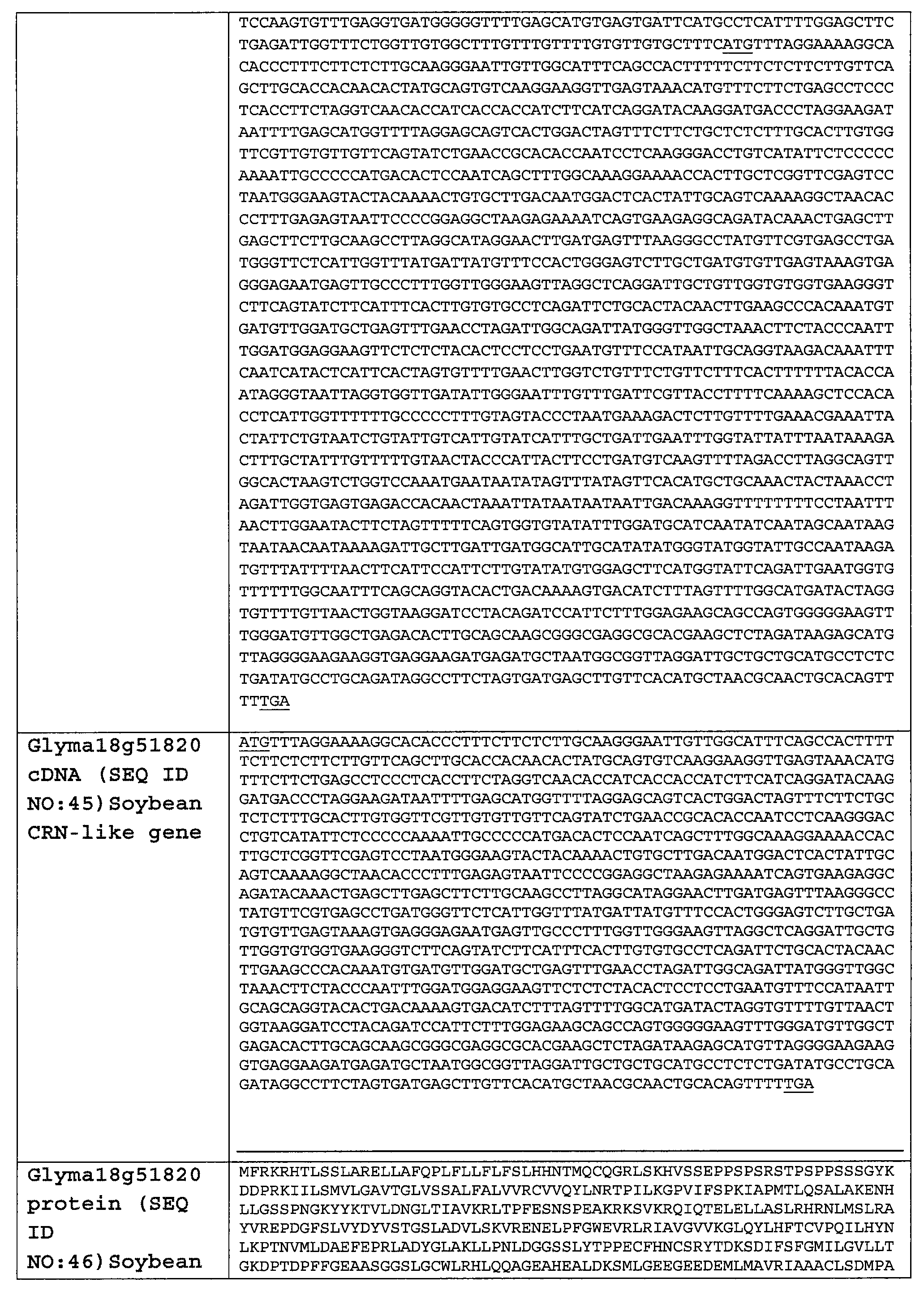
  • Soybean PNCLEPRG provided herein include, but are not limited to, soybean CRN (SEQ ID NO:44, 45, 47, and 48), BAM1 (SEQ ID NO:23, 24, 26, 27), BAM2 (SEQ ID NO:29, 30, 32, 33), CLV1 (SEQ ID NO:38,39,41,42), and CLV2 (SEQ ID NO:35,36, 50, 51) orthologs.
  • Also provided herewith are related sequences with at least 70%, 80%, 85%, 90%, 95%, 97%, 98%, or 99% identity to soybean CRN (SEQ ID NO:44, 45, 47, 48), BAM1 (SEQ ID NO:23, 24, 26, 27), BAM2 (SEQ ID NO:29, 30, 32, 33), CLV1 (SEQ ID NO:38,39,41,42), and CLV2 (SEQ ID NO: 35,36, 50, 51) orthologs as well as methods of using such sequences to control plant nematodes.
  • soybean PNCLEPRGs and related sequences to control plant nematodes, and particularly, plant cyst nematode infections, in leguminous plants including, but not limited to , alfalfa, clover, peas, beans, lentils, lupins, mesquite, carob, soybean, and peanuts, is provided.
  • the use of such soybean PNCLEPRGs and related sequences to control Heterodera glycine infections of soybean plants is provided.
  • inhibition of the plant PNCLEPRG can be limited to inhibition in roots or limited to inhibition at the site of nematode infection by use of root-specific and/or nematode inducible promoters, respectively.
  • combinations of two or more a plant PNCLEPRG are inhibited in a plant to provide resistance to plant parasitic nematode infections.
  • Plants wherein combinations of two or more PNCLEPRG selected from the group of CRN, BAM1, BAM2, ER, CLV 1 , CLV2, ACR4, and ERL2 genes or orthologs thereof are inhibited can be used to provide resistance to plant parasitic nematode infections.
  • a plant CLV2-like and a plant BAM 1 -like gene are both inhibited in parallel to reduce nematode infections in the plant.
  • a plant CRN- 1 -like and a plant BAM 1 -like gene are both inhibited in parallel to reduce nematode infections in the plant.
  • combinations of two or more of a soybean CRN SEQ ID NO:44, 45, 47, and 48
  • BAM1 SEQ ID NO:23, 24, 26, 27
  • BAM2 SEQ ID NO:29, 30, 32
  • CLV1 SEQ ID NO:38,39,41,42
  • CLV2 SEQ ID NO:
  • the instant invention also provides for parts of those plants and plant cells.
  • Plant parts provided herein include, but are not limited to, seeds, tubers, roots, leaves, stalks, lint, and the like.
  • processed products of the nematode resistant plants include, but are not limited to, a ground meal, a feed, a cake, and the like. In certain embodiments, such processed product would comprise a detectable amount of a transgene used to inhibit the PNCLEPRG.
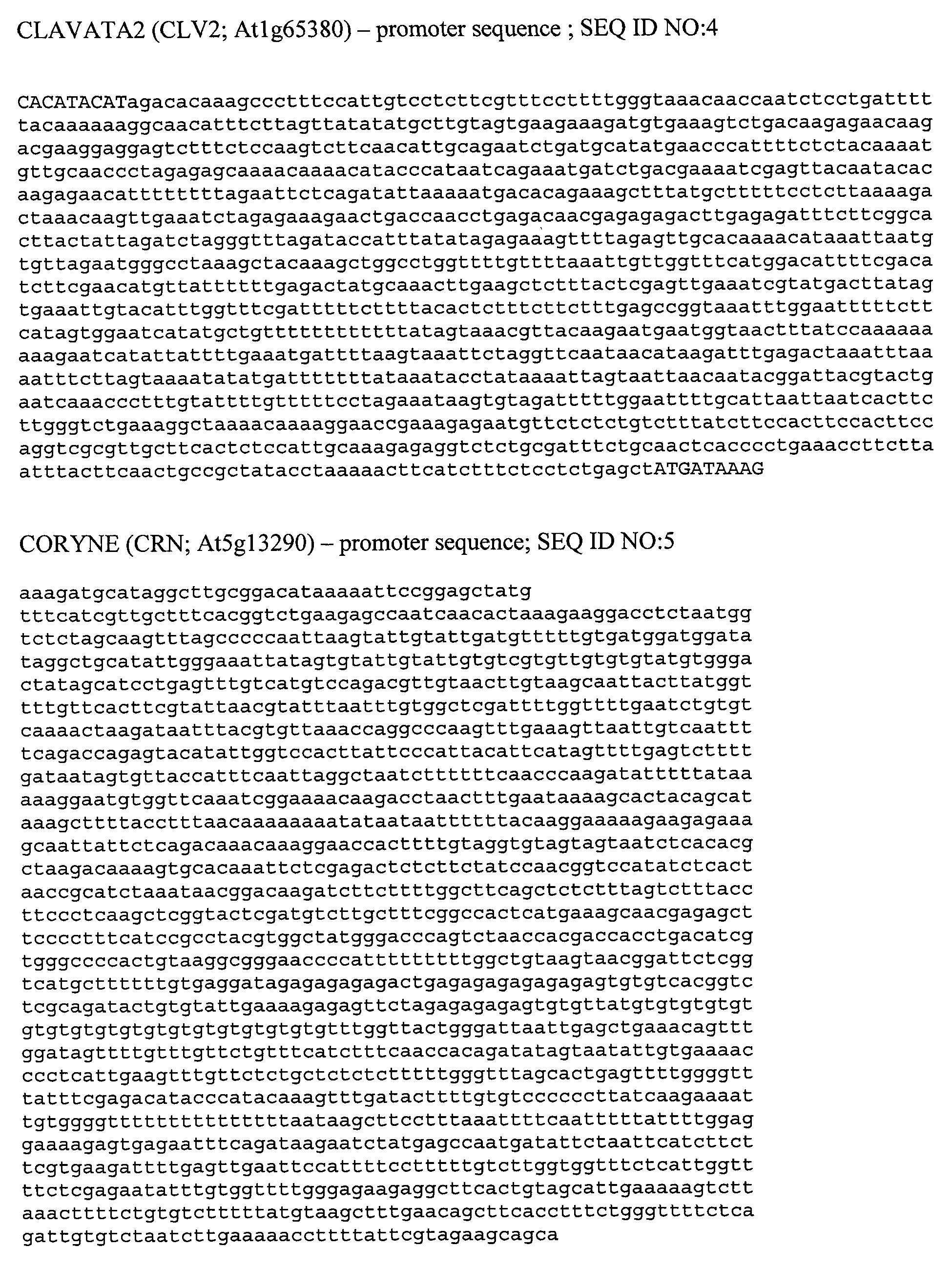
  • Prom oters from PNCLEPRG and recombinant DNA constructs providing such prom oters that are useful for expressing genes of interest in plant cells where the nematodes feed are provided.
  • Such prom oters are particularly useful for expressing nucleic acid and/or protein sequences that are inhibitory to plant parasitic nematodes.
  • Particular advantages of the prom oters include, but are not lim ited to, providing for expression of the operably linked nucleic acid sequences at nem atode feeding sites within the plant while lim iting expression of the gene in other parts of the plant where such expression is not required or desired.
  • sequence of interest encodes a protein
  • expression of that protein is desired
  • linkage of the prom oter to the coding sequence is a transcriptional fusion and expression of the encoded protein is desired, the linkage is m ade so that the first translational initiation codon in the resulting transcript is the initiation codon of the coding sequence.
  • the linkage of the promoter to the coding sequence is a translational fusion and expression of the encoded protein is desired, the linkage is m ade so that the first translational initiation codon contained in the 5' untranslated sequence associated with the prom oter and is linked such that the resulting translation product is in frame with the translational open reading fram e that encodes the protein desired.
  • a variety of recom binant DNA m olecules com prising prom oters of the invention that are operably linked to heterologous genes or nucleic acids of interest are provided.
  • Heterologous genes or nucleic acids that provide for inhibition of plant parasitic nem atodes can be operably linked to the PNCLEPRG promoters.
  • the heterologous genes or nucleic acids of interest provide for inhibition of a plant parasitic nematode gene or function.
  • Such plant parasitic nematode genes or functions include, but are not lim ited to, nem atode genes that are essential or required for nem atode viability or nem atode genes involved in any aspect of plant host parasitism .
  • the prom oters are used to drive expression of heterologous genes or nucleic acids that are inhibitory to nem atode genes disclosed in US Patent Application publication
  • the prom oters are used to drive expression of genes or nucleic acids that inhibit form ation and/or m aintenance of the plant cells of the nem atode feeding site.
  • the prom oters are thus used to: i) drive expression of heterologous genes or nucleic acids that are inhibitory to endogenous plant genes involved in form ation and/or maintenance of the plant cells of the nem atode feeding site; and/or, ii) drive expression of heterologous genes that comprise endogenous plant genes that are
  • Endogenous plant genes involved in form ation and/or m aintenance of the plant cells of the nem atode feeding site that include, but are not lim ited to, genes involved in the cell wall architectural modifications during feeding site formation/m aintenance, genes involved in sugar or carbohydrate, metal ion, and amino acid transport, and genes involved in plant phytohormone signaling and biosynthesis.
  • a variety of soybean plant genes suitable for use with the prom oters of the invention are disclosed in Ithal et al., Molec. Plant. Microb. Interact. Vol. 20, No. 5, 2007, pp.
  • PNCLEPRG prom oters useful in the m ethods and plants of this invention include, but are not lim ited to, the ACR4, CLV1, CLV2, CRN, BAM1, BAM2, ER, and ERL2 prom oters of Arabidopsis and the orthologous ACR4, CLV1, CLV2, CRN, BAM1, BAM2, ER, and ERL2 prom oters of crop and ornam ental plants subject to nem atode infestation.
  • orthologous prom oters are referred to herein as "ACR4-like, CLVl-like, CLV2-like, CRN-like, BAM1- like, BAM2-like, ER-like, and ERL2-like" prom oters.
  • ACR4-like, CLVl-like, CLV2-like, CRN-like, BAM1- like, BAM2-like, ER-like, and ERL2-like prom oters.
  • the PNCLEPRG promoters are obtained from a plant that is a monocot or dicot plant, or that is a crop plant such as a tobacco, cereal, sugar beet, cotton, fruit, fiber, oilseed, potato, rice, corn, soybean, vegetable, and wheat plant.
  • Exemplary vegetable plants include, but are not lim ited to, carrot, pepper, cucurbit, and tomato plants.
  • a recombinant DNA construct comprising a PNCLEPRG prom oter that is operably linked to a heterologous gene, or a plant, plant cell, plant part, or processed plant product comprising the sam e, is provided.
  • the PNCLEPRG prom oter comprises any one of : i) a potato ACR4 prom oter (SEQ ID NO: 15), an Arabidopsis (SEQ ID NO: 14), potato (SEQ ID NO: 16), or soybean (SEQ ID NO: 38 or 41) CLV1 prom oter; ii) a Arabidopsis (SEQ ID NO:4), potato (SEQ ID NO: 17), or soybean (SEQ ID NO:35 or 50) CLV2 promoter; iii) an Arabidopsis (SEQ ID NO:5), potato (SEQ ID NO: 18), or soybean (SEQ ID NO: 44 or 47) CRN promoter; iv) an Arabidopsis (SEQ ID NO:3), potato (SEQ ID NO: 19), or soybean (SEQ ID NO: 23 or 26) BAM1 prom oter; v) a potato (SEQ ID 20), or soybean (SEQ ID NO: 29 or 32) BAM1 prom oter; v)
  • recom binant DNA constructs comprising a variant PNCLEPRG promoter that has at least 70%, 85%, 90%, 95%, or 99% sequence identity to any one of : i) a potato ACR4 prom oter (SEQ ID NO:15), an Arabidopsis (SEQ ID NO:14), potato (SEQ ID NO:16), or soybean (SEQ ID NO: 38 or 41) CLV1 prom oter; ii) an Arabidopsis (SEQ ID NO:4), potato (SEQ ID NO: 17), or soybean (SEQ ID NO:35 or 50) CLV2 prom oter; iii) an Arabidopsis (SEQ ID NO:5), potato (SEQ ID NO: 18), or soybean (SEQ ID NO: 44 or 47) CRN prom oter; iv) an Arabidopsis (SEQ ID NO:3), potato (SEQ ID NO: 19), or soybean (SEQ ID NO: 23 or 26) BAM1 prom oter; v)
  • recom binant DNA constructs com prising a PNCLEPRG prom oter comprising a deletion of about up to about 10, 50, 100, 200, 500, 700, 1000, or 1500 nucleotides of the 5' nucleotides of any one of: : i) a potato ACR4 prom oter (SEQ ID NO:15), an Arabidopsis (SEQ ID NO:14), potato (SEQ ID NO:16), or soybean (SEQ ID NO: 38 or 41) CLV1 prom oter; ii) an Arabidopsis (SEQ ID NO:4), potato (SEQ ID NO:17), or soybean (SEQ ID NO:35 or 50) CLV2 prom oter; iii) an Arabidopsis (SEQ ID NO:5), potato (SEQ ID NO: 18), or soybean (SEQ ID NO: 44 or 47) CRN prom oter; iv) an Arabidopsis (SEQ ID NO:15), an Arabidopsis (SEQ
  • PNCLEPRG provided herewith as genomic sequences in association with the coding regions can be dissociated from those coding regions and operably linked to heterologous nucleic acids or genes by transcriptional or translational fusions.
  • the soybean PNCLEPRG prom oters and 5'UT of Table 5 (SEQ ID NO: 23, 26, 29, 32, 35, 38, 41, 44, 47, and 50) thus comprise the nucleic acid sequences located 5' to the start codon of those genom ic sequences.
  • variants of any of the aforementioned PNCLEPRG prom oters comprising at least about 300, 500, 800, 900, 1,000, 1,500, 2,500, or 3,000 nucleotides of the nucleic acid sequence located 5' to the start codon or located 5' to m RNA 5' cap site of the endogenous gene associated with said prom oter are provided. Also provided are recombinant DNA constructs wherein any of the aforementioned prom oters is operably linked to a gene encoding a gene product that is inhibitory to a plant parasitic nem atode.
  • the instant invention also provides for parts of those plants and plant cells.
  • Plant parts provided herein include, but are not lim ited to, seeds, tubers, roots, leaves, stalks, lint, and the like.
  • processed products of the nematode resistant plants include, but are not limited to, a ground meal, a feed, a cake, and the like.
  • such processed product would comprise a detectable amount of a recombinant DNA comprising a PNCLEPRG prom oter that is operably linked to a heterologous gene.
  • Seeds from primary Arabidopsis transformants were selected on 0.5X MS m edia [MS basal nutrients salts (Caisson Laboratories), 2% sucrose, 0.8% Type A agar (Sigm a), pH 5.7] containing 50 ⁇ g/m L tim entin (GlaxoSmithKline) to control Agrobacterium
  • CRN CRN. GUS as been previously described and characterized (Muller et al, 2008).
  • vector pMDC99 (Curtis and Grossniklaus, 2003) was m odified by introducing the CDS of chim eric construct m Cherry-H2B at the 3' site of the gateway cassette using the unique Pad restriction site to give pAB149.
  • CLV2 1252 bp of the 5' region and 9 bp of the CDS was am plified using the prim ers AB_CLV2_Pro_F ( 5' CACCAGACACAAAGCCCTTTCCATTGTC 3'; SEQ ID NO:l) and AB_CLV2_Pro_R (5' CTTTATCATAGCTCAGAGGA 3'; SEQ ID NO:2) to give a CACC-TOPO containing amplicon, which was cloned into pENTR/D-TOPO
  • BCN beet cyst nematode
  • BCN eggs were isolated and hatched as previously described (Mitchum et al, 2004).
  • J2 second stage juveniles
  • Sterilized seeds were grown on m odified Knop's medium (Brunschwig Chem ie) (Sijm ons et al, 1991).
  • Ten days after germination seedlings were inoculated with 20 sterilized J2/root.
  • GUS tissues were infiltrated with GUS substrate buffer (0.5 m M 5-brom o-4chloro-3-indolyl glucuronide, 100 m M Tris, pH 7.0, 50 mM NaCl, 0.06% Triton X-100, 3 m M potassium ferricyanide) and incubated overnight at 37°C (Jefferson et al, 1987). Stained roots were placed in glass Petri dishes and visualized with a Nikon Eclipse TS 100 inverted m icroscope.
  • GUS substrate buffer 0.5 m M 5-brom o-4chloro-3-indolyl glucuronide, 100 m M Tris, pH 7.0, 50 mM NaCl, 0.06% Triton X-100, 3 m M potassium ferricyanide
  • CLV2:H2B-mCherry seed was sterilized, grown, and inoculated with nematodes as described above. At the indicated tim epoints, infected roots were m ounted on glass slides and visualized with a 510 META confocal scanning microscope (Carl Zeiss, Thornwood, NY, USA) excited at 543 nm.
  • Sterilized receptor mutants were plated in 12-well Falcon tissue culture plates (BD Biosciences) containing m odified Knop's m edium with 0.8% Daishin agar in a random ized block design. Plants were grown at 24°C with a 12 hour photoperiod. Fourteen days after germination, seedlings were inoculated with 200 surface-sterilized BCN J2. J4 fem ales were counted at 14 days post-inoculation (dpi) and adult fem ales were counted at 30 dpi. The average values were calculated and significant differences were determined by using
  • CLV2 and CRN are required for nem atode CLE perception
  • CLV2 form s a complex with CRN and can transmit the signal from CLV3 binding in a CLV1 -independent manner (Miwa et al., 2008; Muller, 2008; Bleckmann et al., 2010; Zhu et al., 2010).
  • CLV2 and CRN m ight play a role in cyst nem atode CLE perception
  • To determ ine whether or not CLV2 and CRN m ight play a role in cyst nem atode CLE perception we screened the Arabidopsis clv2-l null mutant and the crn-1 am orphic allele for resistance to the HgCLE, HsCLEl, and HsCLE2 12-aa peptides.
  • Seeds were grown on vertical plates in the absence of exogenous peptide or in the presence of 1 ⁇ HgCLE or 10 ⁇ of the HsCLEs and roots were m easured 9 days after germ ination. Wild-type seedlings (Landsberg erecta [Ler]) had significantly shorter roots when grown on plates with any of the CLE peptides in comparison to the no peptide control ( Figure la). In contrast, clv2-land crn-1 root growth was relatively
  • Nem atode CLEs function in planta through a CLV2- and CRN-dependent pathway
  • Overexpression of HgCLE2, HsCLEl, and HsCLE2 in wild-type Arabidopsis has been shown to cause wus-like phenotypes similar to other plant CLEs (Strabala et al, 2006; Meng et al., 2010; Wang et al., 2005; Wang et al., 2010a; Wang et al., 2010b). If CLV2 and/or CRN are involved in nem atode CLE perception then we would expect the phenotypes to be dim inished or abolished when overexpressed in clv2-l and/or crn-1.
  • Each of the nematode CLE genes was cloned into an overexpression vector and transform ed into the m utant backgrounds. Transgenic seedlings in the Tl generation were screened and characterized in soil. In contrast to the overexpression phenotypes seen in wild-type Arabidopsis where a high percentage of wus-like phenotypes were observed (Wang et al., 2010a; Wang et al., 2010b), no wus-'-like phenotypes were observed when HgCLE2, HsCLEl, and HsCLE2 were overexpressed in clv2-l or crn-1 (Table 1). These results dem onstrate that m utations in CRN and CLV2 suppress nematode CLE overexpression phenotypes.
  • Cyst nematodes enter the root near the zone of elongation, m igrate through root cortical cells using their stylet to puncture through cell walls, and begin feeding from a single cell near the vascular cylinder. Once cyst nem atodes initiate a feeding site the dorsal esophageal gland cell becom es active and the secreted CLE peptides are delivered to the host root cells (Wang et al., 2010a). In order for CLV2 and CRN to be able to perceive the nematode CLE as a ligand m imic they must be expressed in the correct spatial and temporal context.
  • H2B Histone 2B
  • CLV2:H2B- m Cherry fluorescence was detected throughout the root vasculature with the strongest expression detected in lateral root primordia and the zone of elongation extending down to the root apical m eristem (A. Bleckmann and R. Sim on, unpublished).
  • CLV2:H2B-mCherry fluorescence was detected in the nuclei of syncytia fed upon by parasitic J2s ( Figure 3a-b).
  • CLV2:H2B- m Cherry continued to be specifically expressed within feeding sites ( Figure 3c-d). No fluorescence was detected in nuclei of syncytia fed upon by parasitic J2s in wild-type plants ( Figure 6a-b).
  • RNAi approach targeting nematode CLE genes
  • previous reports have shown that nem atode CLE peptides are important for successful infection of host plants roots (Bakhetia et al., 2007; Patel et al., 2008).
  • root infection assays with nem atodes were perform ed on the clv2-l and crn-1 single m utants, and the crn-1 clv2-l double mutant. According to Muller et al.
  • crn-1 clv2-l is m orphologically indistinguishable from either of the single m utants, indicating that they act in the same pathway.
  • the m utant alleles and the wild-type Ler were randomized in 12- well plates and grown on modified Knop's medium.
  • Nem atode CLE genes have been found to be upregulated in the dorsal esophageal gland cell at the onset of parasitism and rem ain on through the adult fem ale life stage. CLE genes are turned off in adult males that are no longer feeding (Wang et al., 2005; Patel et al., 2008; Lu et al., 2009; Wang et al., 2010a).
  • variable dom ain of SCN CLEs is then able to redirect the proteins into the apoplast where they can act as plant CLE ligand m im ics by interacting with extracellular m embrane bound plant CLE receptors.
  • host plant receptors that perceive nematode CLE signals have not been identified.
  • CRN a new member of the receptor kinase family, forms a heterodim er with CLV2 and is required for proper localization of the CLV2/CRN complex to the plasm a m embrane.
  • CRN has been found to be widely expressed in both shoot and root tissues suggesting dual roles in shoot and root developm ent (Muller et al., 2008).
  • CLV2 has been found to be expressed in shoot tissues (Jeong et al., 1999), but less is known about its expression in the root.
  • CLV2 and CRN would m ost likely need to be expressed in feeding cell initials as well as the developing feeding sites.
  • prom oter-reporter lines we confirm ed that both CLV2 and CRN were expressed in nem atode-induced feeding sites ( Figure 2 and 3), consistent with a role in nematode CLE perception.
  • nematode CLE receptors are expressed in the cells adjacent to the expanding syncytium . As the nem atode CLEs are redirected to the host root apoplast, extracellular receptors of the adjacent cells that are prim ed for
  • m ain target for nem atode CLEs is a signaling pathway which allows developmental programming of root cells for syncytium form ation to occur and that suppression of plant defense responses is just an added benefit to the nem atode.
  • the nem atode m ay require suppression of plant defense responses through plant CLE signaling in order for the syncytium to form properly. Further studies will need to be perform ed to investigate this possibility.
  • PCN CLEs have m ultiple CLE m otifs that m ay be sim ultaneously processed to release different CLE peptides (Lu et al., 2009). This leaves the possibility that nematode CLE peptides m ay activate multiple plant CLE signaling pathways concurrently to function in an antagonistic or synergistic fashion as reported for plant CLEs (Whitford et al., 2008). The current plant CLV3 signaling pathway in the shoot indicates that there are parallel signaling pathways. Genetic evidence indicates that CLV1 acts in a separate pathway from the CLV2/CR pathway (Muller et al., 2008).
  • CLV1 -related Barely Any Meristem (BAM) 1 and BAM2 have been shown to act redundantly in the SAM and are widely expressed throughout the plant, including root tissues (De Young et al., 2006; Deyoung and Clark, 2008).
  • BAM Barely Any Meristem
  • bam l is also resistant to exogenous application of synthetic nematode CLE peptides (A. Replogle, S. Chen, X. Wang and M.G. Mitchum , unpublished data).
  • CLAVATA1 The CLAVATA1 gene encodes a putative receptor kinase that controls shoot and floral m eristem size in Arabidopsis. Cell, 89, 575-585.
  • Fiers M., Golemiec, E., Xu, J., van der Geest, L., Heidstra, R., Stiekem a, W. and Liu, CM. (2005)
  • the 14-am ino acid CLV3, CLE 19, and CLE40 peptides trigger consum ption of the root m eristem in Arabidopsis through a CLAVATA2-dependent pathway. Plant Cell, 17, 2542-2553.
  • Plant receptor m utants exhibiting resistance to exogenous treatm ent of nem atode CLE peptides include CLAVATA2 (CLV2; Atlg65380), CORYNE (CRN;
  • At5gl3290 BARELY ANY MER1STEM (BAM1; At5g65700), and ERECTA-LIKE2 (ERL2; (At5g07180) ( Figures 8 and 9).
  • BAM1 At5g65700
  • ERECTA-LIKE2 ERECTA-LIKE2
  • Figures 8 and 9 Overexpression of nematode CLEs in the clv2 and cm mutant background abolished all phenotypes (Table 2) that are observed when nem atode CLEs are overexpressed in wild type plants (Wang et al., 2005; 2010: Lu et al., 2009).
  • nematode infection is significantly reduced on several of the receptor m utants including clvl, clv2, and cm ( Figure 10).
  • Expression of receptors in nem atode feeding cells was confirm ed by infection of transgenic plants containing prom oter-reporter fusions ( Figures 11-13) and upregulation of candidate soybean and potato receptor genes in H.
  • Nem atode control can thus be obtained by inhibiting receptor proteins that interact with any nem atode CLE peptide.
  • Endogenous plant gene encoding a receptor for a nematode CLE peptide that can be inhibited to provide include functional or structural orthologs of the receptor proteins in any plant species, including but not lim ited to receptor genes from monocot or dicot plant, or receptor genes selected from the group consisting of a tobacco, cereal, sugar beet, cotton, fruit, fiber, oilseed, potato, rice, corn, soybean, vegetable, and wheat plant.
  • soybase.org or soybase.org/gbrowse/cgi-bin/gbrowse/gm axl.01/
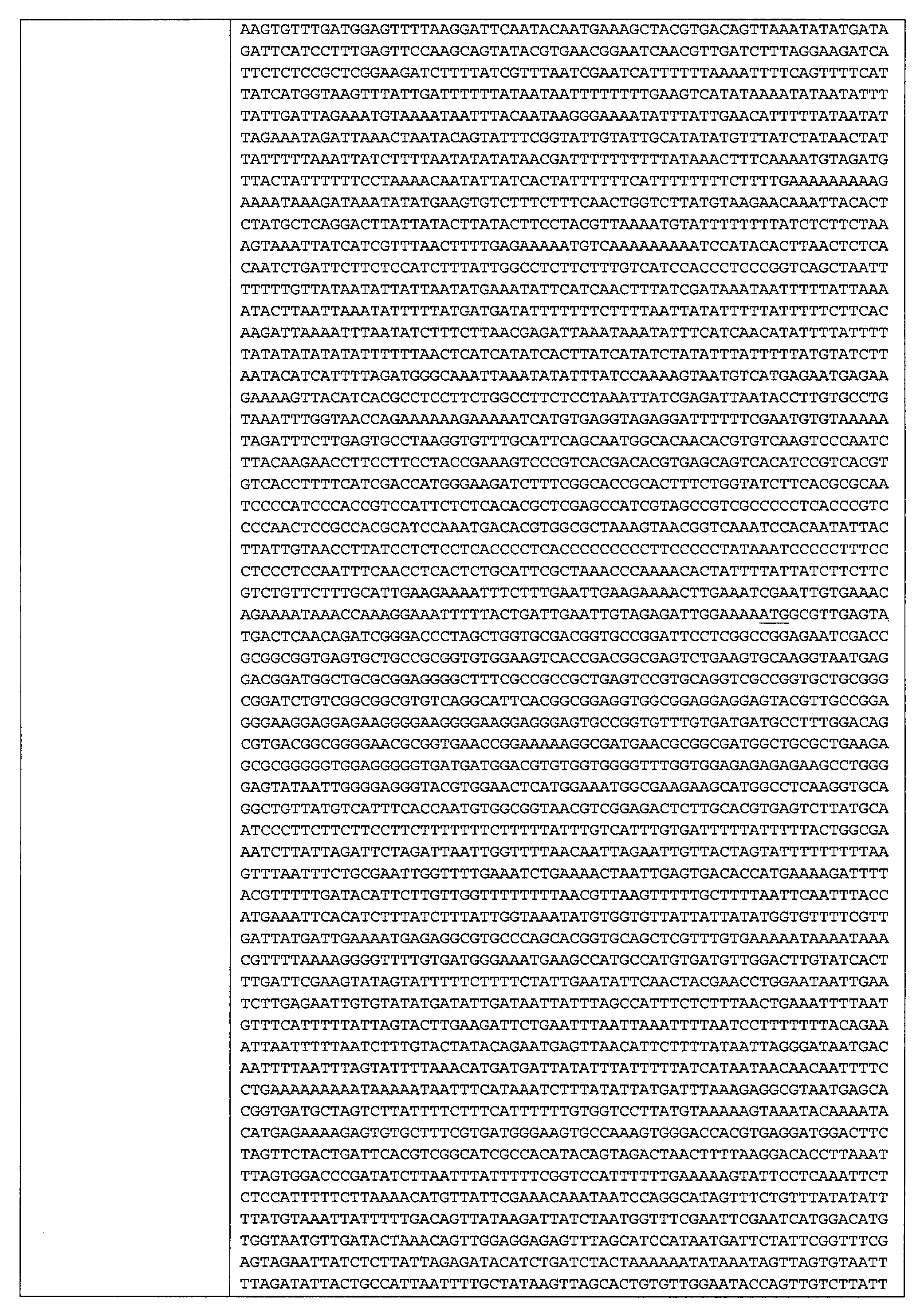
  • Prom oters associated with any of the potato genes provided below in Example 4 are also provided herewith.
  • use of the prom oter associated with the StCLVl gene provided below in any of the methods of this invention is provided.
  • Exam ple 4 Sequences of various candidate potato nematode CLE receptor genes are provided.
  • Sequences correspond to potato genes analyzed in Figure 14 and as described in the claim s and Exam ple 2.
  • the ATG start codon and TGA stop codon are underlined.
  • Example 5 Inhibition of Plant Responses to Nematode CLE Peptides and Inhibition of Nematode Infections by Inhibition of a Plant CLV2, CRN1, and /or BAM1 Gene
  • Mutant Arabidopsis plants i) hom ozygous for the recessive baml-3 m utation; ii) hom ozygous for the recessive clv2-6 mutation; iii) hom ozygous for the recessive crn-1 m utation; iv) hom ozygous for both the recessive clv2-6 and baml-3 m utations; and v) hom ozygous for both the recessive crn-1 and baml-3 mutations were exposed to the cyst nem atode Heterodera schachtii and assayed for a response as described in Exam ple 1.
  • sterilized receptor m utants were plated in 12-well Falcon tissue culture plates (BD Biosciences) containing modified Knop's m edium with 0.8% Daishin agar in a random ized block design. Plants were grown at 24°C with a 12 hour photoperiod. Fourteen days after germination, seedlings were inoculated with 200 surface-sterilized BCN (Beet Cyst Nem atodes; i.e. Heterodera schachtii ) J2. J4 fem ales were counted at 14 days post- inoculation (dpi) and adult fem ales were counted at 30 dpi.
  • BCN Beet Cyst Nem atodes
  • dpi post- inoculation
  • adult fem ales were counted at 30 dpi.
  • the prom oter for the Solarium tuberosum CRN and CLV2 genes was operably linked to a beta-glucuronidase gene (GUS) and introduced into transgenic Arabidopsis plants. The transgenic plants were then infected with BCN and expression of the GUS observed. It was determined that the StCRN and StCLV2 prom oters can provide for expression in the root vasculature uninfected plants as well as upregulation of expression at sites of BCN infection in plant roots ( Figures 17 and 18, respectively). The sequence of these and other nematode inducible potato promoters that can be used in the m ethods of this invention are provided in Table 5.
  • Example 8 Inhibition of Nem atode Infection in Transgenic Potato Plants Expressing m iRNA directed against the StCLV2 gene
  • Transgenic potato plants that expressed an artificial m iRNA (amiRNA) directed against the endogenous potato StCLV2 gene (SEQ ID NO:l 1) were generated and assayed for both expression of StCLV2 and for resistance to G. rostochiensis infection.
  • amiRNA artificial m iRNA directed against the endogenous potato StCLV2 gene
  • Two independent transgenic potato lines tested exhibited both reductions in expression of the endogenous StCLV2 gene and reductions in the numbers of G. rostochiensis ( Figure 19 A and B).
  • Genom ic DNA sequences Genom ic DNA sequences, cDNA sequences, and protein sequences

Landscapes

  • Health & Medical Sciences (AREA)
  • Life Sciences & Earth Sciences (AREA)
  • Genetics & Genomics (AREA)
  • Chemical & Material Sciences (AREA)
  • Organic Chemistry (AREA)
  • Engineering & Computer Science (AREA)
  • Molecular Biology (AREA)
  • General Engineering & Computer Science (AREA)
  • Bioinformatics & Cheminformatics (AREA)
  • Biotechnology (AREA)
  • Wood Science & Technology (AREA)
  • Biomedical Technology (AREA)
  • Zoology (AREA)
  • General Health & Medical Sciences (AREA)
  • Biochemistry (AREA)
  • Biophysics (AREA)
  • Plant Pathology (AREA)
  • Physics & Mathematics (AREA)
  • Microbiology (AREA)
  • Cell Biology (AREA)
  • Proteomics, Peptides & Aminoacids (AREA)
  • Medicinal Chemistry (AREA)
  • Gastroenterology & Hepatology (AREA)
  • Botany (AREA)
  • Environmental Sciences (AREA)
  • Breeding Of Plants And Reproduction By Means Of Culturing (AREA)
  • Peptides Or Proteins (AREA)
  • Catching Or Destruction (AREA)

Abstract

Methods of inhibiting plant parasitic nematodes, methods of obtaining transgenic plants useful for inhibiting such nematodes, and transgenic plants that are resistant to plant parasitic nematodes through inhibition of plant nematode CLE peptide receptor genes are provided. Methods for expressing genes at plant parasitic nematode feeding sites with plant nematode CLE peptide receptor gene promoters are also provided, along with nematode CLE peptide receptor gene promoters that are useful for expressing genes in nematode feeding sites as well as transgenic plants and nematode resistant transgenic plants comprising the promoters.

Description

PCT PATENT APPLICATION
For
Nem atode Resistant Crops CROSS REFERENCE TO RELATED APPLICATIONS
[0001] This application claims benefit under 35 USC § 119(e) of U.S. provisional application Serial No. 61/371,619, filed August 6, 2010, and incorporated herein by reference in its entirety.
STATEMENT REGARDING GOVERNMENTAL SUPPORT
[0002] This invention was m ade with Governm ent support under Grant Numbers 2007- 35607-17790, 2008-34113-19420, 2009-35302-0534, all awarded by the USDA-NRI. The government has certain rights to this invention.
INCORPORATION OF SEQUENCE LISTING
[0003] The sequence listing that is contained in the file nam ed
"52553_97808_ST25.txt", which is 312332 bytes in size (m easured in operating system MS- Windows), created on July 13, 2011, is filed herewith by electronic subm ission and incorporated herein by reference in its entirety.
BACKGROUND
[0004] Obligate biotrophs are pathogens that establish intimate parasitic relationships with the host that they infect. Often tim es these relationships involve som e kind of m odification or reprogram m ing of the host cell(s) to accommodate the pathogen's subsequent growth and developm ent. Plant-parasitic nem atodes are obligate biotrophs that m ainly attack the roots of plants and cause over $100 billion in crop dam age annually (Sasser and Freckm an, 1987). The m ost econom ically important plant-parasitic nematodes include the cyst form ing nem atodes of Heterodera and Globodera spp. These sedentary endoparasitic nem atodes form intimate parasitic relationships with their hosts by penetrating the root as m otile juveniles and m igrating intracellularly until they reach the root vasculature where they select a single cell to initiate a feeding site. The initial syncytial cell undergoes developm ental changes to re- differentiate into a syncytium to support subsequent nem atode growth and development in later sedentary stages (Davis et al., 2004). The syncytium form s when neighboring cells fuse as a result of partial cell wall degradation (Endo, 1964), creating a perm anent feeding cell that shares characteristics with plant cell types including meristematic cells, endosperm cells, transfer cells, and developing xylem (Mitchum et al., 2008). It has been proposed that the development and m aintenance of the syncytium is dependent on the secretory effector proteins originating in the esophageal gland cells and delivered into the host root through the stylet of plant-parasitic nem atodes (Davis et al., 2008). Recently, the cyst nem atode secreted CLAVATA3/ESR(CLE)-like effector proteins have been shown to act as ligand m im ics of plant CLE peptides, and are required for successful nem atode infection (Wang et al., 2005; Patel et al., 2008; Lu et al., 2009; Wang et al., 2010a; Wang et al, 2010b).
[0005] Plant CLEs are sm all peptide ligands involved in regulating a population of specialized cells, called stem cells, which allow postem bryonic organogenesis to occur (Sim on and Stahl 2006). These stem cell pools can be found in the shoot apical m eristem (SAM), the root apical m eristem (RAM), and the vascular cam bium . Whether or not these stem s cells rem ain in an undifferentiated state or differentiate into new plant tissues is tightly controlled by CLE signaling pathways. In Arabidopsis, the population of stem cells which resides in the organizing center (OC) of the SAM is m aintained by the expression of the transcription factor WUSCHEL (WUS) (Laux et al., 1996). Differentiation of those stem s cells is promoted when the ligand-receptor pair of CLAVATA3 (CLV3), a sm all extracellular peptide ligand in the CLE fam ily (Fletcher et al., 1999; Rojo et al, 2002), binds to CLV1 (Ogawa et al., 2008), a leucine-rich-repeat receptor like kinase (LRR-RLK) and
downregulates WUS. Previous models have suggested that CLV1 form s a receptor complex with the LRR-receptor like protein (RLP) CLV2 (Clark et al., 1993; Kayes and Clark, 1998; Jeong et al., 1999; Trotochaud et al., 1999). More recently, it has been suggested that CLV1 acts in parallel or together with the heterodimer receptor complex of CLV2 and CORYNE (CRN) (Miwa et al., 2008; Muller, 2008; Bleckm ann et al, 2010; Zhu et al., 2010). In comparison to the SAM, m uch less is known about the regulation of the stem cells in the RAM. The quiescent center (QC) is the equivalent to the OC in the SAM. However, there are significant differences between the OC and the QC. In contrast to the OC, the cells surrounding the QC are maintained as stem cells. In addition, stem cells are differentiated in both proxim al and distal directions. This indicates that there is a signaling ligand involved in cell-cell communication to maintain the cells surrounding the QC as stem cells, and a signal to promote differentiation (Sarkar et al., 2007; Stahl et al., 2009). Previous reports have identified that the WUS-related hom eobox 5 (WOX5) transcription factor is expressed in the QC of the RAM and is required to m aintain the distal stem cell pool (Sarkar et al., 2007). Recently it has been shown that CLE40, the closest hom olog to CLV3, is expressed in the colum ella cells and regulates expression of WOX5 (Stahl et al., 2009). The WOX5/CLE40 signaling pathway appears to only control the distal stem cell pool, indicating that other CLE signaling pathways m ay exist to control the proximal stem cell pool. Consistent with these observations, a num ber of Arabidopsis CLEs are expressed in roots (Sharm a et al., 2003), and when som e of these CLEs are overexpressed they have been shown to cause prem ature term ination of the primary root meristem (Fiers et al., 2004; Strabala et al., 2006; Meng et al., 2010). In addition, the short root phenotype has been shown to be dependent on CLV2 and CRN perception (Casamitj ana-Martinez et al., 2003; Fiers et al., 2005; Miwa et al., 2008; Meng et al., 2010). Taken together this indicates that a CLV-like and CLE-controlled signaling pathway can act in the root.
[0006] CLE-like genes from nem atodes have been reported in the soybean cyst nematode (SCN, H. glycines) (Wang et al., 2005; Wang et al, 2010a), the beet cyst nem atode (BCN, H. schachtii) (Patel et al., 2008; Wang et al., 2010b), and the potato cyst nematode (PCN, G. rostochiensis) (Lu et al., 2009). BCN CLEs have been detected in the dorsal gland ampulla indicating they are likely secreted from the stylet into host cells (Patel et al., 2008). More recently, SCN CLEs have been shown to be secreted directly to the syncytial cytoplasm where the variable domain is thought to redirect the nematode CLE peptides to the apoplast (Wang et al., 2010a). These findings suggest that when delivered to the apoplast, nem atode CLEs would be available to interact with extracellular receptors to function as ligand mim ics of plant CLE signaling pathways. Overexpression studies have shown that nematode CLEs can trigger plant CLE signaling pathways (Wang et al., 2005; Lu et al, 2009; Wang et al., 2010a; Wang et al., 2010b), but the identity of the receptors and downstream signaling pathways that are activated to initiate developmental cascades required for the re- differentiation of root cells to form syncytia, are currently unknown.
[0007] US Patent Applications 20090077687 and 20090012029, identified nematode parasitism (effector) genes and described potential m echanisms to disrupt their expression and the function of their products to inhibit nem atode parasitism of plants.
SUMMARY OF INVENTION
[0008] This invention provides for methods of inhibiting plant parasitic nematodes, m ethods of obtaining transgenic plants useful for inhibiting such nem atodes, m ethods for expressing genes at plant parasitic nematode feeding sites, and transgenic plants that are resistant to plant parasitic nem atodes. Also provided are prom oters including, but not lim ited to a BAMl prom oter, that are useful for expressing genes in nem atode feeding sites as well as transgenic plants and nematode resistant transgenic plants comprising the same. It is anticipated that the BAMl and other promoters provided herewith can in certain em bodim ents be operably linked to genes that provide for inhibition of plant parasitic nem atodes when introduced into transgenic plants and for plants that display such inhibition. Such genes that provide for inhibition of plant parasitic nem atodes that can be used with the promoters provided herewith are disclosed in US Patent Application 20090012029, which is specifically incorporated herein by reference in its entirety.
[0009] In certain em bodiments, a method for inhibiting plant parasitic nematode damage to a plant comprising growing a plant comprising a mutation or a transgene that provides for inhibition of at least one endogenous plant gene encoding a receptor for a nem atode CLE peptide in the presence of plant parasitic nem atodes is provided. In certain em bodim ents of these m ethods, the plant gene encoding a receptor for a nem atode CLE peptide is selected from the group consisting of a CLVl-like gene, a CLV2-like gene, a BAMl -like gene, a BAM2-like gene, a CRN-like gene, a ACR4-like gene, an ER-like gene, and an ERL2 -like gene. In certain embodim ents of these methods, CLVl-like gene, said CLV2-like gene, BAMl -like gene, a BAM2-like gene, a CRN-like gene, a ACR4-like gene, an ER-like gene, or an ERL2 -like gene is an ortholog of a corresponding Arabidopsis, soybean, or potato CLV1, CLV2, BAMl, BAM2, CRN, ACR4, ER, or ERL2 gene. In certain em bodim ents of these m ethods, the m ethods can further com prise the step of harvesting a product of said plant. In certain em bodim ents of these m ethods, the harvested product is a leaf, stem , flower, seed, root, or tuber. In certain em bodim ents of these m ethods, the yield and/or quality of said product is increased relative to a control plant that is grown in presence of plant parasitic nem atodes and that lacks said mutation or said transgene that provides for inhibition of at least one endogenous plant gene encoding a receptor for a nematode CLE peptide. In certain em bodim ents of these m ethods, the transgene comprises: i) an siRNA directed against said plant gene; ii) an artificial m icroRNA targeting said plant gene; iii) a dom inant negative form of said plant gene; iv) an antisense or sense form of said plant gene; or v) a genom ic insertion that disrupts said plant gene.
[0010] In certain em bodiments, a m ethod for obtaining a transgenic plant that exhibits resistance to a plant parasitic nem atode comprising the steps of: a) introducing a transgene that provides for inhibition of at least one endogenous plant gene encoding a receptor for a nem atode CLE peptide into a plant cell or a transgene that provides for inhibition of at least one CLVl-like, a CLV2-like, a BAMl-like, a BAM2-like, a CRN-like, a ACR4-like, an ER- like, and/or an ERL2 -like gene; and b) selecting a transgenic plant obtained from said plant cell, wherein said selected transgenic plant comprises said transgene and exhibits resistance to a plant nem atode is provided. In certain embodim ents of these methods, CLVl-like gene, said CLV2-like gene, BAMl-like gene, a BAM2-like gene, a CRN-like gene, a ACR4-like gene, an ER-like gene, or an ERL2 -like gene is an ortholog of a corresponding Arabidopsis, soybean, or potato CLV1, CLV2, BAM1, BAM2, CRN, ACR4, ER, or ERL2 gene.
[0011] In certain em bodim ents, a m ethod for obtaining a transgenic plant expressing a gene product at a plant parasitic nematode feeding site, com prising the steps of: a) introducing a transgene wherein a CRN, CLV, or BAM prom oter is operably linked to a gene encoding said gene product into a plant cell; and, b) selecting a transgenic plant obtained from said plant cell, wherein said selected transgenic plant comprises said transgene and exhibits expression of said gene product at said nematode feeding site is provided. In certain em bodim ents of these m ethods, the gene product is inhibitory to the plant parasitic nem atode. In certain embodiments of these m ethods, the inhibitory gene product is a siRNA directed against a plant parasitic nem atode gene. In certain em bodim ents of these aforem entioned m ethods, an ACR4, BAM1, BAM2, CLV1, CLV2, CRN, ER or ERL2 promoter is operably linked to a gene encoding the gene product. In certain embodim ents of these aforem entioned m ethods, an ACR4, BAM1, BAM2, CLV1, CLV2, CRN, ER, or ERL2 promoter is operably linked to a gene product that is inhibitory to a plant parasitic nematode. In certain em bodim ents of these m ethods, the inhibitory gene product is an amiRNA directed against a plant parasitic nematode gene.
[0012] In certain em bodiments of any of the aforementioned m ethods of inhibiting plant parasitic nem atode damage, obtaining a transgenic plant that exhibits resistance to a plant parasitic nem atode, or obtaining a transgenic plant expressing a gene product at a plant parasitic nem atode feeding site, the plant nematode is a cyst nem atode. In certain
em bodim ents of these m ethods, the cyst nem atode is a Heterodera or Globodera spp. In certain em bodiments of these m ethods, the Heterodera spp. is H. avenae, H. bifenestra, H. cajani. H. carotae, H. ciceri, H. cruciferae, H. cynodontis, H. cyperi, H. davert, H. elachista, H. fii, H. galeopsidis, H. goettingiana, H. graminis, H. hordecalis, H. humuli, H. iri, H. latipons, H. lespedeza, H. leucilyma, H. Iongicaudata, H. mani, H. maydis, H. medicaginis, H. oryzae, H. oryzicola, H. sacchari, H. salixophila, H. schachtii, H. sorghii, H. trifoii, H. urticae, H. vigna, or H. zeae. In certain em bodim ents of these methods, the Globodera spp. is G. achilleae, G. artemisiae, G. hypolysi, G. leptonepia, G. mali, G. pallida, G.
rostochiensis, G. tabacum, or G. zeylandica.
[0013] In certain em bodim ents of any of the aforem entioned m ethods of inhibiting plant parasitic nematode damage, obtaining a transgenic plant that exhibits resistance to a plant parasitic nematode, or obtaining a transgenic plant expressing a gene product at a plant parasitic nem atode feeding site, the plant is a m onocot or dicot plant, or is selected from the group consisting of a tobacco, cereal, sugar beet, cotton, fruit, fiber, oilseed, potato, rice, corn, soybean, vegetable, and wheat plant.
[0014] In certain em bodim ents of any of the aforem entioned m ethods of inhibiting plant parasitic nem atode damage or obtaining a transgenic plant that exhibits resistance to a plant parasitic nem atode, the endogenous plant gene encoding a receptor for a nematode CLE is a potato StCLVl, StCLV2, StBAMl, StBAM2, StCR , StACR4, StER, or StERL2 gene and the plant is a potato plant. In certain em bodim ents of these m ethods, the plant parasitic nem atode is G rostochiensis or G. pallida.
[0015] In certain em bodim ents of any of the aforem entioned m ethods of inhibiting plant parasitic nem atode dam age or obtaining a transgenic plant that exhibits resistance to a plant parasitic nematode, the endogenous plant gene encoding a receptor for a nematode CLE is selected from the group consisting of soybean genes provided in Table 3 of Example 2 and said plant is a soybean plant. In certain embodiments of any of the aforem entioned methods of inhibiting plant parasitic nem atode dam age, the plant parasitic nem atode is Heterodera glycines or H. schachtii.
[0016] In certain em bodim ents, a plant parasitic nem atode resistant transgenic plant comprising a transgene that provides for inhibition of at least one endogenous plant gene encoding a receptor for a nematode CLE peptide is provided. In certain em bodim ents, the transgene comprises: i) an siRNA directed against said plant gene; ii) an artificial m icroRNA targeting said plant gene; iii) a dominant negative form of said plant gene; iv) an antisense or sense form of said plant gene; or v) a genom ic insertion that disrupts said plant gene. In certain em bodim ents of any of the aforem entioned transgenic plants, the endogenous plant gene encoding a receptor for a nem atode CLE is selected from the group consisting of soybean genes of provided in Table 3 of Example 2 and the plant is a soybean plant. In certain em bodim ents of any of the aforem entioned transgenic plants, the endogenous plant gene encoding a receptor for a nematode CLE is a potato StCLVl, StCLV2, StBAMl, StBAM2, StCRN, StACR4, StER, or StERL2 gene and the plant is a potato plant.
[0017] In certain embodim ents, a plant parasitic nematode resistant transgenic plant comprising a transgene wherein a CRN, CLV, or BAM promoter is operably linked to a gene encoding a gene product that is inhibitory to a plant parasitic nem atode is provided. In certain embodiments, the gene product is an siRNA directed against a plant parasitic nematode gene. In certain embodim ents of any of the aforementioned plants, the CRN, CLV, or BAM promoter is the CRN1, CLV2, or BAMl prom oter sequence provided in Example 3. In certain em bodim ents of these aforem entioned methods, an ACR4, BAMl, BAM2, CLV1, CLV2, CRN, ER, or ERL2 prom oter is operably linked to a gene product that is inhibitory to a plant parasitic nematode. In certain em bodim ents, the gene product is a siRNA or an amiRNA directed against a plant parasitic nematode gene.
[0018] In certain embodiments, a recom binant DNA construct comprising a BAMl prom oter that is operably linked to a heterologous gene, wherein said BAMl promoter comprises any one of : i) the BAMl promoter sequence provided in Example 3; ii) a prom oter that has at least 70%, 85%, 90%, 95%, or 99% sequence identity to the BAMl prom oter sequence provided in Exam ple 3; or ii) a prom oter comprising a deletion of about up to about 10, 50, 100, 200, 500, 700, 1000, or 1500 nucleotides of the 5' nucleotides of the BAMl prom oter sequence provided in Example 3 is provided. In certain embodiments, the BAM prom oter is operably linked to a gene encoding a gene product that is inhibitory to a plant parasitic nematode.
DESCRIPTIONS OF THE FIGURES FIGURE LEGENDS
[0019] Figure 1. Effect of cyst nematode CLE peptides on receptor m utants,
(a) Average root length wild-type Ler), clv2-l, and crn-1 seedlings grown for 9 days on m edia with or without the synthetic nem atode dodecapeptide CLE m otif. Data represent the m ean ± SE, n = 10. (b)-(d) Representative roots tips of seedlings grown on m edia with or without synthetic CLE peptides for 10 days and visualized with differential interference m icroscopy, (b) No peptide, (c) Sensitive to peptide, and (d) Resistant to peptide. (Scale bar, 50 μιτι). [0020] Figure 2. CRN. GUS expression during nem atode infection, (a)-(c) GUS expression in uninfected Arabidopsis root tips (a), m iddle of the root (b), and older part of the root towards the hypocotyl (c). (d)-(g) CRN. GUS expression in response to H. schachtii; early parasitic J2 (d), late parasitic J2 (e), J3 parasitic (f), J4 parasitic (g). Abbreviations: nem atode, N; Syn, Syncytium. (Scale bar, 50 um).
[0021] Figure 3. Confocal im ages of CLV2:H2B-mCherry expression during nem atode infection, (a) J2 parasitic with DIC. (b) J2 parasitic with m Cherry fluorescence, (c) J3 parasitic with DIC. (d) J3 parasitic with m Cherry fluorescence. Abbreviations: nem atode, N; Syn, Syncytium . (Scale bars, 50 μπι).
[0022] Figure 4. Effect of clv2-l and crn-1 m utant alleles on H. schachtii infection.
(a) J4 females were counted at 14 dpi and adult fem ales were counted at 30 dpi. Data represent m ean ± SE, n = 35 for Ler, 32 for crn-1, 34 for clv2-l, and 29 for crn-1 clv2-l. Data are representative of three independent experim ents.
(b) Seedlings were grown on vertical square plates for 10 days and inoculated with 10 J2s/root. At 14 dpi, syncytia that fed only one nem atode and appeared translucent were m icroscopically examined and their area was determ ined. Data represent m ean ± SE, n = 11 for Ler and crn-1, 14 for clv2-l, and 12 for crn-1 clv2-l.
Asterisks indicate statistically significant differences compared to Ler by Student's t test (P < 0.05)
[0023] Figure 5. Response of wild-type (Utr) and sol2-l seedlings to the synthetic 12-aa nematode CLE peptide.
[0024] Figure 6. Confocal im ages of nem atode autofluorescence in wild-type roots
[0025] Figure 7. Effect of sol2-l mutant allele on Heterodera schachtii infection.
[0026] Figure 8. Effect of Heterodera glycines (HgCle) and Heterodera schachtii (HsCLE) nem atode CLE peptides on receptor m utants.
[0027] Figure 9. Effect of Globodera rostochiensis (GrCLE) nematode CLE peptides on receptor m utants.
[0028] Figure 10. Effect of receptor mutant alleles on H. schachtii infection.
[0029] Figure 11. CRN: GUS expression during nem atode infection.
[0030] Figure 12. CLV2:GUS expression during nem atode infection.
[0031] Figure 13. BAM1:GUS expression in Arabidopsis in response to nematode infection.
[0032] Figure 14 Differential expression of candidate potato CLE receptor genes in G.
rostochiensis-infected potato roots. [0033] Figure 15. Effect of crn-1, clv2-6, bamJ-3 mutant alleles and combinations thereof on H. schachtii infection in Arabidopsis.
[0034] Figure 16 shows the expression of a pCLVl prom oter fusion to a GUS gene in the vasculature of plants and upregulation at sites of H. schachtii in transgenic Arabidopsis.
[0035] Figure 17 shows a StCLV2 Potato Promoter:GUS transgenic plant line and activity of this promoter in G. rostochiensis-m' d ced feeding sites.
[0036] Figure 18 shows a StCRN Potato Promoter:GUS transgenic plant line and activity of this prom oter in G. rostochiensis-ind ced feeding sites.
[0037] Figure 19 A shows expression levels of the endogenous StCLV2 gene in transgenic potato plants expressing an artificial m iRNA (amiRNA) directed against the StCLV2 gene (3d#29 and 4d#9) and wild type (Wt) control plants that lack the amiRNA.
[0038] Figure 19 B shows the num ber of G. rostochiensis cysts in transgenic potato plants expressing an artificial m iRNA (amiRNA) directed against the StCLV2 gene (3d#29 and 4d#9) and wild type (Wt) control plants that lack the am iRNA.
DESCRIPTION OF THE INVENTION
[0039] We describe the use of synthetic CLE peptides, nematode CLE overexpression lines, prom oter-reporter lines, and nematode infection assays of receptor mutants to investigate a role for CLV2 and CRN in nematode CLE signaling. Our results indicate that the CLV2/CRN signaling pathway is required for successful nem atode infection and syncytium developm ent.
[0040] Plant-parasitic cyst nematodes secrete CL A VAT A3 (CLV3)/ESR(CLE)-like effector proteins. These proteins have been shown to act as ligand m im ics of plant CLE peptides and are required for successful nem atode infection; however, the receptors for nem atode CLE- like peptides have not been identified. Here we dem onstrate that CLV2 and CORYNE (CRN), members of the receptor kinase family, are required for nematode CLE signaling. Exogenous peptide assays and overexpression of nem atode CLEs in Arabidopsis showed that CLV2 and CRN are required for nem atode CLE perception. In addition, prom oter-reporter assays showed that both receptors are expressed in nem atode-induced syncytia. Lastly, infection assays with receptor m utants revealed a decrease in both nem atode infection and syncytia size. Taken together, our results indicate that nem atode CLE perception by CLV2 and CRN is not only required for successful nematode infection, but is also involved in the form ation or m aintenance of nem atode-induced syncytia. Plant nem atode CLE receptor genes that can be used to obtain nem atode resistant plants and m ethods of use
[0041] A variety of plant nematode CLE peptide receptor genes (hereinafter referred to as "PNCLEPRG") that provide for inhibition of plant parasitic nem atode infections are provided herewith, along with associated m ethods of use, and plants comprising transgenes or m utations wherein expression of the PNCLEPRG are inhibited. Reduced expression of the PNCLEPRG in plants inhibits infection of the plants by nematodes. Such reductions in nem atode infection result in improved plant yield and plant product quality.
[0042] Reductions in expression of the endogenous PNCLEPRG can be effected by any m ethod that at least provides for reductions in the amount or activity of the PNCLEPRG at the site of nematode infection in the plant. Such sites of infection are comm only the plant roots, but can also comprise other plant parts such as tubers.
[0043] In certain em bodim ents, inhibition of PNCLEPRG expression in a plant can be effected by transgenes. Such transgenes include, but are not lim ited to, transgenes that: i) produce an siRNA directed against the PNCLEPRG; ii) produce an artificial m icroRNA targeting the PNCLEPRG; iii) produce a dominant negative form of the protein product of the PNCLEPRG; iv) produce an antisense or sense form of the PNCLEPRG; or v) com prise a genom ic insertion that disrupts the endogenous PNCLEPRG.
[0044] Exem plary vector system s that can provide for production of siRNA in plants include, but are not lim ited to, vectors disclosed by Dafny-Yelin, et al. (Plant Physiology, 2007, Vol. 145, pp. 1272-1281), Wesley et al. 2001, Plant J. 27: 581-590, and Miki and Shim am oto, (2004) Plant Physiol 138: 1903-1913. Vectors for producing an siRNA are also described in U.S. Pat. No. 6,635,805, incorporated herein by reference in its entirety.
[0045] Exemplary vector system s that can provide for production of artificial m iRNA in plants include, but are not limited to, vectors disclosed by Warthmann et al. (2008) PLoS ONE 3(3): el829. doi:10.1371/journal.pone.0001829; and Alvarez et al. (2006) Plant Cell 18: 1134—1151. Vectors for effecting efficient inhibition of endogenous plant genes by expression of hairpin RNAs are also disclosed in U.S. Patent Application Nos. 20050164394, 20050160490, and 20040231016, each of which is incorporated herein by reference in their entirety. Exem plary dom inant negative m utations that can provide for inhibition endogenous PNCLEPRG include , but are not lim ited, m utations m odeled after dominant negative m utations in other Leucine Rich Repeat-Receptor Like Kinase (LRR-RLK) proteins. [0046] In one em bodiment, the dominant negative mutation can comprise a deletion or other loss-of-function mutation in the kinase dom ain. Such m utations have been disclosed for plant LRR-RLK proteins (Shpak et al., Plant Cell, Vol. 15, 1095-1110, 2003). Methods of identifying transgene insertions into specific genom ic loci have also been disclosed. T-DNA of Agrobacterium is also an insertional m utagen that can be used as an agent to reduce expression of an endogenous PNCLEPRG. T-DNA m utagenesis has been described in Arabidopsis (Krysan et al, Plant Cell, 1999, 1: 2283-2290) and rice (Jeon et al., Plant J. June 2000;22(6):561-70). Transposons such as those in the Ac/Ds (Activator-Disassociation) fam ily and the Enhancer-inhibitor system can also be used to effect m utagenesis of an endogenous PNCLEPRG. Transposon mutagenesis schemes have been described (Speulm an et al. Plant Cell, Vol. 11, 1853-1866, October 1999; Das, L., and Martienssen, R, 1995, Plant Cell 7:287-294).
[0047] Plants wherein expression of the endogenous PNCLEPRG is inhibited by a m utation and the use of such plants is also provided. Methods of identifying plants com prising mutations in PNCLEPRG include, but are not lim ited to, "TILLING" (Targeting Induced Local Lesions in Genom es). The TILLING technique comprises the induction of m utations across the genom e followed by the identification and isolation of plants with m utations in desired genes (McCallum , Plant Physiology, 2000, Vol. 123, pp. 439-44).
[0048] PNCLEPRG target genes useful in the methods and plants of this invention include, but are not lim ited to, the ACR4, CLV1, CLV2, CRN, BAM1, BAM2, ER, and ERL2 genes of Arabidopsis and the orthologous ACR4, CLV1, CLV2, CRN, BAM1, BAM2, ER, and ERL2 genes of crop and ornamental plants subject to nematode infestation. Such orthologous genes are referred to herein as "ACR4-like, CLVl-like, CLV2-like, CRN-like, BAMl-like, BAM2-like, ER-like, and ERL2-like" genes. As used herein, the terms "orthologous" and "- like" (when appended to a gene) thus refer to genes that at least have a sim ilar role in plant nem atode CLE peptide signal transduction in their respective plant species of origin. In certain em bodiments, the PNCLEPRG target genes are obtained from a plant that is a m onocot or dicot plant, or that is a crop plant such as a tobacco, cereal, sugar beet, cotton, fruit, fiber, oilseed, potato, rice, corn, soybean, vegetable, and wheat plant. Exemplary vegetable plants include, but are not limited to, carrot, pepper, cucurbit, and tom ato plants.
[0049] In certain em bodim ents, the PNCLEPRG target genes are derived from the plant that will be used (i.e. protected from nem atode infection). However, a PNCLEPRG of a given plant specie can be used in a distinct plant species when it has sufficient hom ology to the orthologous PNCLEPRG of a distinct plant species. In this context, "sufficient hom ology" is that am ount of homology necessary to provide for transgene-m ediated inhibition of the orthologous gene. For certain transgene-mediated gene inhibition methods, a PNCLEPRG sequence of about is 23 nucleotides or longer with least 80%, 85%, 90%, 95%, 98% , 99% or 100% identity to the target orthologous sequence can be used. In certain em bodim ents, a hairpin RNA m ay comprise a 5' sequence of roughly 19-24 nucleotides of sense strand target gene sequence with 100% identity followed by a spacer nucleotide of about 8-10 nucleotides followed by a sequence of roughly 19-24 nucleotides of antisense sequence that is capable of base pairing with the preceding sense strand sequence. In certain embodim ents, a 19-24 base region of a PNCLEPRG that exhibits 100% identity over 19-24 nucleotides to an orthologous PNCLEPRG can also be used to inhibit that orthologous gene.
[0050] In certain em bodim ents, an Arabidopsis PNCLEPRG can be used to obtain nem atode resistant plants, where the plants are Arabidopsis or other plants that com prise orthologous PNCLEPRGs that can be inhibited by the Arabidopsis PNCLEPRG. Arabidopsis
PNCLEPRG include, but are not lim ited to, the ACR4, CLV1, CLV2, CRN, BAM1, BAM2, ER, and ERL2 can in certain embodiments be used to control plant parasitic nem atode infections of cruciferous plants that include, but are not limited to, arugula, cauliflower, cabbage, cress, bok choy, broccoli, radish, canola, turnip, watercress, and the like.
[0051] In certain em bodiments, a potato PNCLEPRG can be used to obtain nem atode resistant plants, where the plants are potato plants or other plants that comprise orthologous PNCLEPRGs that can be inhibited by the potato PNCLEPRG. Potato PNCLEPRG provided herein include, but are not limited to, stCRN (SEQ ID NO:6), stBAMl (SEQ ID NO:7), stBAM2 (SEQ ID NO:8), stER (SEQ ID NO:9), stCLVl (SEQ ID NO: 10), stCLV2 (SEQ ID NO:l 1), stACR4 (SEQ ID NO:12), and stERL2 (SEQ ID NO:13). Also provided herewith are related sequences with at least 70%, 80%, 85%, 90%, 95%, 97%, 98%, or 99% identity to stCRN (SEQ ID NO:6), stBAMl (SEQ ID NO:7), stBAM2 (SEQ ID NO:8), stER (SEQ ID NO:9), stCLVl (SEQ ID NO:10), stCLV2 (SEQ ID NO:l 1), stACR4 (SEQ ID NO:12), and stERL2 (SEQ ID NO: 13) as well as methods of using such sequences to control plant nem atodes.
[0052] In certain em bodim ents, the use of such potato PNCLEPRGs and related sequences to control plant nematode, and particularly, plant cyst nematode infections, in solanaceous plants including, but not limited to, eggplant, tobacco, potato, and tom ato is provided. In certain embodim ents, the use of such potato PNCLEPRGs and related sequences to control Globedera sp. infections of potato plants is provided. In any of the aforem entioned embodim ents, inhibition of the plant PNCLEPRG can be lim ited to inhibition in roots or limited to inhibition at the site of nem atode infection by use of root-specific and/or nem atode inducible promoters, respectively.
[0053] In certain embodiments, a soybean PNCLEPRG can be used to obtain nematode resistant plants, where the plants are soybean plants or other plants that comprise orthologous PNCLEPRGs that can be inhibited by the soybean PNCLEPRG. Soybean PNCLEPRG provided herein include, but are not limited to, soybean CRN (SEQ ID NO:44, 45, 47, and 48), BAM1 (SEQ ID NO:23, 24, 26, 27), BAM2 (SEQ ID NO:29, 30, 32, 33), CLV1 (SEQ ID NO:38,39,41,42), and CLV2 (SEQ ID NO:35,36, 50, 51) orthologs. Also provided herewith are related sequences with at least 70%, 80%, 85%, 90%, 95%, 97%, 98%, or 99% identity to soybean CRN (SEQ ID NO:44, 45, 47, 48), BAM1 (SEQ ID NO:23, 24, 26, 27), BAM2 (SEQ ID NO:29, 30, 32, 33), CLV1 (SEQ ID NO:38,39,41,42), and CLV2 (SEQ ID NO: 35,36, 50, 51) orthologs as well as methods of using such sequences to control plant nematodes. In certain embodiments, the use of such soybean PNCLEPRGs and related sequences to control plant nematodes, and particularly, plant cyst nematode infections, in leguminous plants including, but not limited to , alfalfa, clover, peas, beans, lentils, lupins, mesquite, carob, soybean, and peanuts, is provided. In certain embodiments, the use of such soybean PNCLEPRGs and related sequences to control Heterodera glycine infections of soybean plants is provided. In any of the aforementioned embodiments, inhibition of the plant PNCLEPRG can be limited to inhibition in roots or limited to inhibition at the site of nematode infection by use of root-specific and/or nematode inducible promoters, respectively.
[0054] In certain embodiments of the invention, combinations of two or more a plant PNCLEPRG are inhibited in a plant to provide resistance to plant parasitic nematode infections. Plants wherein combinations of two or more PNCLEPRG selected from the group of CRN, BAM1, BAM2, ER, CLV 1 , CLV2, ACR4, and ERL2 genes or orthologs thereof are inhibited can be used to provide resistance to plant parasitic nematode infections. In certain embodiments, a plant CLV2-like and a plant BAM 1 -like gene are both inhibited in parallel to reduce nematode infections in the plant. In certain embodiments of the invention, a plant CRN- 1 -like and a plant BAM 1 -like gene are both inhibited in parallel to reduce nematode infections in the plant. In certain embodiments, combinations of two or more of a soybean CRN (SEQ ID NO:44, 45, 47, and 48), BAM1 (SEQ ID NO:23, 24, 26, 27), BAM2 (SEQ ID NO:29, 30, 32), CLV1 (SEQ ID NO:38,39,41,42), and CLV2 (SEQ ID
NO:35,36, 50, 51) orthologs or a related sequence are inhibited in a soybean or other plant to provide resistance to plant parasitic nematode infections. In certain embodiments, combinations of two or more of a potato stCRN (SEQ ID NO:6), stBAMl (SEQ ID NO:7), stBAM2 (SEQ ID NO:8), stER (SEQ ID NO:9), stCLVl (SEQ ID NO: 10), stCLV2 (SEQ ID NO:l 1), stACR4 (SEQ ID NO: 12), and stERL2 (SEQ ID NO: 13) are inhibited in a potato or other plant to provide resistance to plant parasitic nematode infections. In any of the aforementioned embodiments, inhibition of the plant PNCLEPRG can be limited to inhibition in roots or limited to inhibition at the site of nematode infection by use of root-specific and/or nematode inducible promoters, respectively.
[0055] In addition to nematode resistant plants, the instant invention also provides for parts of those plants and plant cells. Plant parts provided herein include, but are not limited to, seeds, tubers, roots, leaves, stalks, lint, and the like. Also provided herein are processed products of the nematode resistant plants. Such processed plant products include, but are not limited to, a ground meal, a feed, a cake, and the like. In certain embodiments, such processed product would comprise a detectable amount of a transgene used to inhibit the PNCLEPRG.
Prom oters from Plant nem atode CLE receptor genes and m ethods of use
[0056] Prom oters from PNCLEPRG and recombinant DNA constructs providing such prom oters that are useful for expressing genes of interest in plant cells where the nematodes feed are provided. Such prom oters are particularly useful for expressing nucleic acid and/or protein sequences that are inhibitory to plant parasitic nematodes. Particular advantages of the prom oters include, but are not lim ited to, providing for expression of the operably linked nucleic acid sequences at nem atode feeding sites within the plant while lim iting expression of the gene in other parts of the plant where such expression is not required or desired. .As used herein in the context of a promoter, the term "operably linked" m eans that a prom oter is connected to a sequence of interest such that the transcription of that sequence of interest is controlled and regulated by that promoter. When the sequence of interest encodes a protein and when expression of that protein is desired, "operably linked" m eans that the prom oter is linked to the sequence in such a way that the resulting transcript will be efficiently translated. If the linkage of the prom oter to the coding sequence is a transcriptional fusion and expression of the encoded protein is desired, the linkage is m ade so that the first translational initiation codon in the resulting transcript is the initiation codon of the coding sequence. Alternatively, if the linkage of the promoter to the coding sequence is a translational fusion and expression of the encoded protein is desired, the linkage is m ade so that the first translational initiation codon contained in the 5' untranslated sequence associated with the prom oter and is linked such that the resulting translation product is in frame with the translational open reading fram e that encodes the protein desired.
[0057] A variety of recom binant DNA m olecules com prising prom oters of the invention that are operably linked to heterologous genes or nucleic acids of interest are provided.
Heterologous genes or nucleic acids that provide for inhibition of plant parasitic nem atodes can be operably linked to the PNCLEPRG promoters. In certain em bodim ents, the heterologous genes or nucleic acids of interest provide for inhibition of a plant parasitic nematode gene or function. Such plant parasitic nematode genes or functions include, but are not lim ited to, nem atode genes that are essential or required for nem atode viability or nem atode genes involved in any aspect of plant host parasitism . In certain em bodim ents, the prom oters are used to drive expression of heterologous genes or nucleic acids that are inhibitory to nem atode genes disclosed in US Patent Application publication
US20090012029, which discloses inhibitory nucleic acid specific for one or m ore cyst nematode esophageal gland cell proteins and which is incorporated herein by reference in its entirety.
[0058] In certain embodim ents, the prom oters are used to drive expression of genes or nucleic acids that inhibit form ation and/or m aintenance of the plant cells of the nem atode feeding site. In certain embodim ents, the prom oters are thus used to: i) drive expression of heterologous genes or nucleic acids that are inhibitory to endogenous plant genes involved in form ation and/or maintenance of the plant cells of the nem atode feeding site; and/or, ii) drive expression of heterologous genes that comprise endogenous plant genes that are
downregulated during the form ation and/or m aintenance of the plant cells of the nem atode feeding site. Endogenous plant genes involved in form ation and/or m aintenance of the plant cells of the nem atode feeding site that include, but are not lim ited to, genes involved in the cell wall architectural modifications during feeding site formation/m aintenance, genes involved in sugar or carbohydrate, metal ion, and amino acid transport, and genes involved in plant phytohormone signaling and biosynthesis. A variety of soybean plant genes suitable for use with the prom oters of the invention are disclosed in Ithal et al., Molec. Plant. Microb. Interact. Vol. 20, No. 5, 2007, pp. 510-525, incorporated herein by reference in its entirety. PNCLEPRG prom oters useful in the m ethods and plants of this invention include, but are not lim ited to, the ACR4, CLV1, CLV2, CRN, BAM1, BAM2, ER, and ERL2 prom oters of Arabidopsis and the orthologous ACR4, CLV1, CLV2, CRN, BAM1, BAM2, ER, and ERL2 prom oters of crop and ornam ental plants subject to nem atode infestation. Such orthologous prom oters are referred to herein as "ACR4-like, CLVl-like, CLV2-like, CRN-like, BAM1- like, BAM2-like, ER-like, and ERL2-like" prom oters. As used herein, the terms
"orthologous" and "-like" (when appended to a prom oter) thus refer to prom oters that at least have a sim ilar role or expression pattern in plant nematode CLE peptide signal transduction in their respective plant species of origin. In certain em bodiments, the PNCLEPRG promoters are obtained from a plant that is a monocot or dicot plant, or that is a crop plant such as a tobacco, cereal, sugar beet, cotton, fruit, fiber, oilseed, potato, rice, corn, soybean, vegetable, and wheat plant. Exemplary vegetable plants include, but are not lim ited to, carrot, pepper, cucurbit, and tomato plants.
[0059] In certain em bodim ents, a recombinant DNA construct comprising a PNCLEPRG prom oter that is operably linked to a heterologous gene, or a plant, plant cell, plant part, or processed plant product comprising the sam e, is provided. In certain em bodim ents, the PNCLEPRG prom oter comprises any one of : i) a potato ACR4 prom oter (SEQ ID NO: 15), an Arabidopsis (SEQ ID NO: 14), potato (SEQ ID NO: 16), or soybean (SEQ ID NO: 38 or 41) CLV1 prom oter; ii) a Arabidopsis (SEQ ID NO:4), potato (SEQ ID NO: 17), or soybean (SEQ ID NO:35 or 50) CLV2 promoter; iii) an Arabidopsis (SEQ ID NO:5), potato (SEQ ID NO: 18), or soybean (SEQ ID NO: 44 or 47) CRN promoter; iv) an Arabidopsis (SEQ ID NO:3), potato (SEQ ID NO: 19), or soybean (SEQ ID NO: 23 or 26) BAM1 prom oter; v) a potato (SEQ ID 20), or soybean (SEQ ID NO: 29 or 32) BAM2 prom oter ; vi) a potato ER prom oter (SEQ ID NO:21); vii) or a potato ERL2 promoter (SEQ ID NO:22). Also provided are recom binant DNA constructs comprising a variant PNCLEPRG promoter that has at least 70%, 85%, 90%, 95%, or 99% sequence identity to any one of : i) a potato ACR4 prom oter (SEQ ID NO:15), an Arabidopsis (SEQ ID NO:14), potato (SEQ ID NO:16), or soybean (SEQ ID NO: 38 or 41) CLV1 prom oter; ii) an Arabidopsis (SEQ ID NO:4), potato (SEQ ID NO: 17), or soybean (SEQ ID NO:35 or 50) CLV2 prom oter; iii) an Arabidopsis (SEQ ID NO:5), potato (SEQ ID NO: 18), or soybean (SEQ ID NO: 44 or 47) CRN prom oter; iv) an Arabidopsis (SEQ ID NO:3), potato (SEQ ID NO: 19), or soybean (SEQ ID NO: 23 or 26) BAM1 prom oter; v) a potato (SEQ ID 20), or soybean (SEQ ID NO: 29 or 32) BAM2 prom oter ; vi) a potato ER promoter (SEQ ID NO:21); vii) or a potato ERL2 prom oter (SEQ ID NO:22).
[0060] In certain em bodim ents, recom binant DNA constructs com prising a PNCLEPRG prom oter comprising a deletion of about up to about 10, 50, 100, 200, 500, 700, 1000, or 1500 nucleotides of the 5' nucleotides of any one of: : i) a potato ACR4 prom oter (SEQ ID NO:15), an Arabidopsis (SEQ ID NO:14), potato (SEQ ID NO:16), or soybean (SEQ ID NO: 38 or 41) CLV1 prom oter; ii) an Arabidopsis (SEQ ID NO:4), potato (SEQ ID NO:17), or soybean (SEQ ID NO:35 or 50) CLV2 prom oter; iii) an Arabidopsis (SEQ ID NO:5), potato (SEQ ID NO: 18), or soybean (SEQ ID NO: 44 or 47) CRN prom oter; iv) an Arabidopsis (SEQ ID NO:3), potato (SEQ ID NO:19), or soybean (SEQ ID NO: 23 or 26) BAM1 prom oter; v) a potato (SEQ ID 20), or soybean (SEQ ID NO: 29 or 32) BAM2 prom oter ; vi) a potato ER prom oter (SEQ ID NO:21); vii) or a potato ERL2 prom oter (SEQ ID NO:22) is provided. Those skilled in the art will appreciate that prom oter and 5'UT regions of
PNCLEPRG provided herewith as genomic sequences in association with the coding regions can be dissociated from those coding regions and operably linked to heterologous nucleic acids or genes by transcriptional or translational fusions. In certain embodiments, the soybean PNCLEPRG prom oters and 5'UT of Table 5 (SEQ ID NO: 23, 26, 29, 32, 35, 38, 41, 44, 47, and 50) thus comprise the nucleic acid sequences located 5' to the start codon of those genom ic sequences.
[0061] In certain embodim ents, variants of any of the aforementioned PNCLEPRG prom oters comprising at least about 300, 500, 800, 900, 1,000, 1,500, 2,500, or 3,000 nucleotides of the nucleic acid sequence located 5' to the start codon or located 5' to m RNA 5' cap site of the endogenous gene associated with said prom oter are provided. Also provided are recombinant DNA constructs wherein any of the aforementioned prom oters is operably linked to a gene encoding a gene product that is inhibitory to a plant parasitic nem atode.
[0062] In addition to nematode resistant plants comprising the recom binant DNA constructs of the aforementioned PNCLEPRG prom oters, the instant invention also provides for parts of those plants and plant cells. Plant parts provided herein include, but are not lim ited to, seeds, tubers, roots, leaves, stalks, lint, and the like. Also provided herein are processed products of the nematode resistant plants. Such processed products include, but are not limited to, a ground meal, a feed, a cake, and the like.
[0063] In certain em bodim ents, such processed product would comprise a detectable amount of a recombinant DNA comprising a PNCLEPRG prom oter that is operably linked to a heterologous gene.
EXAMPLES
[0064] The disclosed em bodiments are m erely representative of the invention, which m ay be em bodied in various forms. Thus, specific structural and functional details disclosed herein are not to be interpreted as limiting.
Example 1.
EXPERIMENTAL PROCEDURES Peptide assays [0065] Arabidopsis seeds were sterilized using the chlorine gas m ethod (Wang et al, 2010b). Sterilized seeds were germ inated on vertical plates in a growth chamber at 22°C under long- day conditions (16h light/8h dark) containing synthetic peptides (Sigm a-Genosys) as previously described (Wang et al, 2010b). The clv2-l mutant in the er background
(Koomneef et al, 1983) was obtained from the Arabidopsis Biological Resource Center. The crn-1 m utant in the Ler background (Muller, 2008) and the sol2-l m utant in the Utr background (Miwa et al, 2008) have been described previously. The HgCLEp, HsCLElp, and HsCLE2p peptides used in this study were as described (Wang et al, 2010b). Two days after germ ination, root length was m arked each day for nine days. Plates were scanned using an Epson Perfection V200 PHOTO scanner and total root length was determined using Scion Im age. Prim ary root tips of Arabidopsis were m ounted on glass slides and visualized with an Olym pus Vanox AHBT3 m icroscope equipped with Nomarski optics.
Overexpression in m utant backgrounds
[0066] The CLE gene sequences from the soybean cyst nematode (HgCLE2ΔSP) and the beet cyst nem atode (HsCLEJ and HsCLET) used to generate the overexpression constructs were previously described (Wang et al, 2010a; Wang et al, 2010b). Constructs were transform ed into the mutant backgrounds using the Arabidopsis floral dip method (Clough and Bent, 1998). Seeds from primary Arabidopsis transformants (Tl) were selected on 0.5X MS m edia [MS basal nutrients salts (Caisson Laboratories), 2% sucrose, 0.8% Type A agar (Sigm a), pH 5.7] containing 50μg/m L tim entin (GlaxoSmithKline) to control Agrobacterium
contamination, and 50μg/m L kanamycin and grown under the sam e conditions as above. Seedlings resistant to kanam ycin were transplanted to soil seven days after germ ination. Two weeks after transplanting to soil the shoot phenotypes were observed.
Prom oter-reporter lines
[0067] CRN. GUS as been previously described and characterized (Muller et al, 2008). To generate CLV2:H2B-mCherry, vector pMDC99 (Curtis and Grossniklaus, 2003) was m odified by introducing the CDS of chim eric construct m Cherry-H2B at the 3' site of the gateway cassette using the unique Pad restriction site to give pAB149. To analyze the expression of CLV2 1252 bp of the 5' region and 9 bp of the CDS was am plified using the prim ers AB_CLV2_Pro_F ( 5' CACCAGACACAAAGCCCTTTCCATTGTC 3'; SEQ ID NO:l) and AB_CLV2_Pro_R (5' CTTTATCATAGCTCAGAGGA 3'; SEQ ID NO:2) to give a CACC-TOPO containing amplicon, which was cloned into pENTR/D-TOPO
(Invitrogen™). This entry clone was used in a LR reaction with pAB149 to give pAB183 (CLV2:H2B-mCherry). Expression of CLV2 under the control of the endogenous prom oter, using 1252 bp of the CLV2 5' region was sufficient to rescue the clv2-l m utant in all isolated lines (N=20).
Nem atode infection of promoter-reporter lines
[0068] The beet cyst nematode (BCN) Heterodera schachtii was propagated on greenhouse- grown sugar beets {Beta vulgaris cv Monohi). BCN eggs were isolated and hatched as previously described (Mitchum et al, 2004). After 2 days, second stage juveniles (J2) were collected and surfaced sterilized according to Wang et al, (2007) except 0.004% m ercuric chloride, 0.004% sodium azide, and 0.002% Triton X-100 were used. Sterilized seeds were grown on m odified Knop's medium (Brunschwig Chem ie) (Sijm ons et al, 1991). Ten days after germination seedlings were inoculated with 20 sterilized J2/root.
Histochemical β-glucuronidase (GUS) assays
[0069] At the indicated timepoints, freshly excised CRN. GUS tissues were infiltrated with GUS substrate buffer (0.5 m M 5-brom o-4chloro-3-indolyl glucuronide, 100 m M Tris, pH 7.0, 50 mM NaCl, 0.06% Triton X-100, 3 m M potassium ferricyanide) and incubated overnight at 37°C (Jefferson et al, 1987). Stained roots were placed in glass Petri dishes and visualized with a Nikon Eclipse TS 100 inverted m icroscope.
Confocal m icroscopy
[0070] CLV2:H2B-mCherry seed was sterilized, grown, and inoculated with nematodes as described above. At the indicated tim epoints, infected roots were m ounted on glass slides and visualized with a 510 META confocal scanning microscope (Carl Zeiss, Thornwood, NY, USA) excited at 543 nm.
Infection assay with receptor m utants
[0071] Sterilized receptor mutants were plated in 12-well Falcon tissue culture plates (BD Biosciences) containing m odified Knop's m edium with 0.8% Daishin agar in a random ized block design. Plants were grown at 24°C with a 12 hour photoperiod. Fourteen days after germination, seedlings were inoculated with 200 surface-sterilized BCN J2. J4 fem ales were counted at 14 days post-inoculation (dpi) and adult fem ales were counted at 30 dpi. The average values were calculated and significant differences were determined by using
Student's t test (P < 0.05). To m easure syncytia size, receptor m utants were germ inated on m odified Knop's medium in vertical square plates and inoculated at 10 days after
germ ination with 10 surface-sterilized BCN J2. At 14 dpi, syncytia that were transparent and only fed upon by only one nematode were visualized with a Nikon Eclipse TS100 inverted m icroscope. Area of syncytia was m easured using Adobe Photoshop CS5 and significant differences were determ ined by using Student's t test (P < 0.05).
RESULTS
CLV2 and CRN are required for nem atode CLE perception
[0072] We have previously shown that exogenously applied 12-aa peptides corresponding to the CLE m otifs of the SCN (HgCLEs) and the BCN (HsCLEs) CLEs can function as plant CLE peptide m im ics causing termination of the prim ary root meristem in a concentration dependent manner (Wang et al., 2010b). In Arabidopsis, it has been shown that the short root phenotype caused by overexpression or exogenous application of some plant CLE peptides is dependent on CLV2 signaling (Fiers et al, 2005; Miwa et al., 2008; Muller, 2008; Meng et al., 2010). More recent evidence indicates that CLV2 form s a complex with CRN and can transmit the signal from CLV3 binding in a CLV1 -independent manner (Miwa et al., 2008; Muller, 2008; Bleckmann et al., 2010; Zhu et al., 2010). To determ ine whether or not CLV2 and CRN m ight play a role in cyst nem atode CLE perception we screened the Arabidopsis clv2-l null mutant and the crn-1 am orphic allele for resistance to the HgCLE, HsCLEl, and HsCLE2 12-aa peptides. Seeds were grown on vertical plates in the absence of exogenous peptide or in the presence of 1 μΜ HgCLE or 10 μΜ of the HsCLEs and roots were m easured 9 days after germ ination. Wild-type seedlings (Landsberg erecta [Ler]) had significantly shorter roots when grown on plates with any of the CLE peptides in comparison to the no peptide control (Figure la). In contrast, clv2-land crn-1 root growth was relatively
unim paired in the presence of the different CLE peptides (Figure la). The same observation was m ade with sol2-l, another mutant allele of CRN (Miwa et al., 2008) (Figure 5). Previous reports have indicated that the short root phenotype can be attributed to a decrease in the num ber of m eristem atic cells (Fiers et al., 2005). Using Nom arski optics we confirm ed that clv2-l and crn-1 were insensitive to peptide application resulting in root m eristem s that were indistinguishable from the no peptide control (Figure lb-d).
[0073] Nem atode CLEs function in planta through a CLV2- and CRN-dependent pathway Overexpression of HgCLE2, HsCLEl, and HsCLE2 in wild-type Arabidopsis has been shown to cause wus-like phenotypes similar to other plant CLEs (Strabala et al, 2006; Meng et al., 2010; Wang et al., 2005; Wang et al., 2010a; Wang et al., 2010b). If CLV2 and/or CRN are involved in nem atode CLE perception then we would expect the phenotypes to be dim inished or abolished when overexpressed in clv2-l and/or crn-1. Each of the nematode CLE genes was cloned into an overexpression vector and transform ed into the m utant backgrounds. Transgenic seedlings in the Tl generation were screened and characterized in soil. In contrast to the overexpression phenotypes seen in wild-type Arabidopsis where a high percentage of wus-like phenotypes were observed (Wang et al., 2010a; Wang et al., 2010b), no wus-'-like phenotypes were observed when HgCLE2, HsCLEl, and HsCLE2 were overexpressed in clv2-l or crn-1 (Table 1). These results dem onstrate that m utations in CRN and CLV2 suppress nematode CLE overexpression phenotypes.
Figure imgf000023_0001
[0075] Spatial and temporal relationship between CLV2, CRN, and nem atode feeding sites Cyst nematodes enter the root near the zone of elongation, m igrate through root cortical cells using their stylet to puncture through cell walls, and begin feeding from a single cell near the vascular cylinder. Once cyst nem atodes initiate a feeding site the dorsal esophageal gland cell becom es active and the secreted CLE peptides are delivered to the host root cells (Wang et al., 2010a). In order for CLV2 and CRN to be able to perceive the nematode CLE as a ligand m imic they must be expressed in the correct spatial and temporal context.
[0076] Using a CRN:GUS transgene in Arabidopsis, CRN expression was previously shown to be expressed throughout the root including the vasculature where the nem atode initiates feeding (Figure 2a-c; Muller et al, 2008). To confirm whether CRN is expressed in nem atode feeding sites, transgenic Arabidopsis seedlings expressing CRN:GUS were infected with BCN and m onitored during nematode developm ent. GUS expression was detected in feeding sites as soon as early second-stage juveniles (J2) began to feed. (Figure 2d). GUS expression reached its peak once nem atodes reached late J2 parasitic stages, but rem ained detectable in the feeding sites of third stage juvenile (J3) parasitic nem atodes (Figure 2e and f). By the tim e the nem atodes reached the fourth stage juvenile (J4) life stage, GUS expression was either weak or absent in feeding sites (Figure 2g). [0077] Sim ilar to CRN, CLV2 is expressed in m any different vegetative tissues (Jeong et al., 1999). However little is known about the expression pattern of CLV2 in roots. To visualize CLV2 expression in roots and nem atode feeding sites, m Cherry was fused to the C-term inus of the Arabidopsis Histone 2B (H2B) gene and placed under the transcriptional control of the CLV2 promoter. The H2B protein has been shown to be a valid marker for chrom atin organization in plant nuclei and has been used to describe developm ent of the syncytial endosperm in Arabidopsis (Boisnard-Lorig et al., 2001). In uninfected roots, CLV2:H2B- m Cherry fluorescence was detected throughout the root vasculature with the strongest expression detected in lateral root primordia and the zone of elongation extending down to the root apical m eristem (A. Bleckmann and R. Sim on, unpublished). Upon nem atode infection, increased expression of CLV2:H2B-mCherry fluorescence was detected in the nuclei of syncytia fed upon by parasitic J2s (Figure 3a-b). At the J3 life stage CLV2:H2B- m Cherry continued to be specifically expressed within feeding sites (Figure 3c-d). No fluorescence was detected in nuclei of syncytia fed upon by parasitic J2s in wild-type plants (Figure 6a-b).
[0078] Mutant alleles of CLV2 and CRN cause a reduction in nematode infection and defects in syncytial size.
[0079] By using an RNAi approach targeting nematode CLE genes, previous reports have shown that nem atode CLE peptides are important for successful infection of host plants roots (Bakhetia et al., 2007; Patel et al., 2008). To determine if nem atode CLE perception by CLV2 or CRN is required, root infection assays with nem atodes were perform ed on the clv2-l and crn-1 single m utants, and the crn-1 clv2-l double mutant. According to Muller et al. (2008), crn-1 clv2-l is m orphologically indistinguishable from either of the single m utants, indicating that they act in the same pathway. The m utant alleles and the wild-type Ler were randomized in 12- well plates and grown on modified Knop's medium.
[0080] Two weeks after germ ination seedlings were inoculated with infective J2s. J4 fem ales were counted at 14 days post-inoculation (dpi) and adult fem ales were counted at 30 dpi. Both the single and double m utants showed a statistically significant reduction in nem atode infection with the exception of crn-1 at 14 dpi (Figure 4a). At 30 dpi nem atode infection was reduced by approximately 25% in all receptor m utants tested. A sim ilar reduction in nem atode infection across all m utant lines supports the hypothesis that CLV2 and CRN are acting in the same signaling pathway. Using sol2-l, we observed a 40% reduction in nem atode infection (Figure 7a). Since the establishment of a feeding site is required for nematode development and reproduction, the above observations m otivated us to determ ine if there were any defects in syncytial size between the receptor m utants and wild-type.
[0081] The m utant alleles and the wild-type Ler were grown on vertical square plates and inoculated with infective J2s. At 14 dpi, syncytia that were transparent and fed upon by only one nematode were m easured. The average area of wild-type (Ler) syncytia was 1402 ± 147 μιη2 (Figure 4b). In contrast, the syncytia of the receptor m utant alleles were reduced by approxim ately 40%. The average area of crn-1, clv2-l, and crn-1 clv2-l was 797 ± 89 μπι2, 745 ± 61 μηι2, and 808 ± 57 μιη2, respectively (Figure 4b). The sam e reduction in syncytia size was seen in the sol2-l m utant allele (Figure 7b).
[0082] Nem atode CLE genes have been found to be upregulated in the dorsal esophageal gland cell at the onset of parasitism and rem ain on through the adult fem ale life stage. CLE genes are turned off in adult males that are no longer feeding (Wang et al., 2005; Patel et al., 2008; Lu et al., 2009; Wang et al., 2010a). In SCN and BCN, immunolocalization studies have localized nematode CLEs along the dorsal gland extension and in the ampulla at the base of the nem atode stylet indicating they are secreted into host plant roots via the stylet (Wang et al, 2005; Patel et al., 2008; Wang et al., 2010a). Consistent with these results an immunofluorescence study found that SCN CLEs are secreted directly into host plant root cytoplasm (Wang et al., 2010a). The variable dom ain of SCN CLEs is then able to redirect the proteins into the apoplast where they can act as plant CLE ligand m im ics by interacting with extracellular m embrane bound plant CLE receptors. However, thus far, host plant receptors that perceive nematode CLE signals have not been identified.
[0083] Many studies have used synthetic CLE peptides to help determ ine the roles that plant CLE peptides play in plant growth and developm ent. Previous studies have shown that nem atode CLE peptides cause root growth phenotypes similar to other plant CLEs (Lu et al., 2009; Wang et al, 2010a; Wang et al., 2010b). Other studies have also shown that these peptide screens can identify receptors that m ay be involved in certain CLE signaling pathways by utilizing receptor mutants (Fiers et al., 2005; Stahl et al., 2009; Meng et al., 2010).
[0084] To identify potential nem atode CLE receptors we tested plant CLE receptors implicated in CLE signaling in the RAM for a role in nem atode CLE perception. In the root, exogenous peptide assays and overexpression studies have shown that CLV2 is required for proper proxim al m eristem function (Stahl et al., 2009; Meng et al., 2010). [0085] It has also been shown that a new member of the receptor kinase family, CRN, forms a heterodim er with CLV2 and is required for proper localization of the CLV2/CRN complex to the plasm a m embrane (Bleckm ann et al., 2010; Zhu et al., 2010). In Arabidopsis, CRN has been found to be widely expressed in both shoot and root tissues suggesting dual roles in shoot and root developm ent (Muller et al., 2008). CLV2 has been found to be expressed in shoot tissues (Jeong et al., 1999), but less is known about its expression in the root. In this paper we screened a null mutant allele of CLV2 and an amorphic m utant allele of CRN for resistance to the nematode CLE peptides. Both clv2-l and crn-1 were resistant to HgCLEp, HsCLElp, and HsCLE2p (Figures 1 and 5). Sim ilar to synthetic peptide assays,
overexpression of HgCLE, HsCLEl, and HsCLE2 in the clv2-l and crn-1 m utant
backgrounds abolished the wus-like phenotypes seen when the nem atode CLEs are overexpressed in wild-type backgrounds (Wang et al., 2005; Wang et al., 2010a; Wang et al., 2010b). Taken together, the peptide assays and overexpression data indicate that CLV2 and CRN are required for nem atode CLE perception.
[0086] In order to serve as a receptor complex for nem atode CLE peptides, CLV2 and CRN would m ost likely need to be expressed in feeding cell initials as well as the developing feeding sites. With the use of prom oter-reporter lines we confirm ed that both CLV2 and CRN were expressed in nem atode-induced feeding sites (Figure 2 and 3), consistent with a role in nematode CLE perception. It is also possible that nematode CLE receptors are expressed in the cells adjacent to the expanding syncytium . As the nem atode CLEs are redirected to the host root apoplast, extracellular receptors of the adjacent cells that are prim ed for
incorporation could trigger plant CLE signaling pathways needed to fully form the syncytium. In the future it will be interesting to m ore precisely localize the CLV2 and CRN proteins within syncytia using im m unofluorescence techniques. This will aid in determ ining whether or not these nem atode CLE receptors are expressed within the cell wall openings that occur during syncytium formation or if they are expressed on the outer plasm a m em brane of the syncytium and/or adjacent cells.
[0087] Previous reports have dem onstrated that SCN and BCN CLEs are important for nem atode parasitism by showing a reduction in nem atode infection after knocking down CLE expression in the worm using RNAi approaches (Bakhetia et al., 2007; Patel et al., 2008). To directly test for a role of CLV2/CRN in nem atode CLE perception we perform ed infection assays on the receptor m utants. [0088] We showed that a reduction in nem atode infection occurs on the receptor m utants (Figure 4a and 6). Concurrently, we also saw a reduction in syncytium size in the receptor mutants (Figure 4b and 7). The fact that we saw a sim ilar reduction in both nematode infection and syncytia size in both the single and double m utants is consistent with genetic and biochem ical data that CLV2 and CRN are acting in the same pathway (Muller et al., 2008; Bleckmann et al., 2010; Zhu et al., 2010). These data indicate that not only is nem atode CLE perception by CLV2 and CRN important for successful nematode infection, but demonstrates that CLE signaling also plays a role feeding cell form ation.
[0089] The involvem ent of CRN in nem atode CLE signaling also opens up the interesting possibility that nem atode CLE signaling m ay be directly or indirectly suppressing host plant defense responses. It has been reported that in root tips of sol2-l, another m utant allele of CRN, plant disease resistance-related and stress responsive genes were upregulated (Miwa et al., 2008). Therefore, when nem atode CLEs are secreted they could activate the CLV2/CRN signaling pathway leading to a suppression of plant disease resistance-related and plant stress responsive genes. One might speculate that the m ain target for nem atode CLEs is a signaling pathway which allows developmental programming of root cells for syncytium form ation to occur and that suppression of plant defense responses is just an added benefit to the nem atode. Alternatively, the nem atode m ay require suppression of plant defense responses through plant CLE signaling in order for the syncytium to form properly. Further studies will need to be perform ed to investigate this possibility.
[0090] Several possibilities exist for why we only see a partial reduction in nem atode numbers and syncytia size in the clv2-l and crn-1 m utant backgrounds. First, besides CLEs, nem atodes secrete m any different effectors that likely play an important role in feeding cell form ation (Wang et al., 2001; Gao et al., 2003).
[0091] For example, when BCN CLEs were targeted with RNAi a sim ilar partial reduction in nem atode infection was observed (Patel et al., 2008), either as a consequence of limited reductions in transcript levels or an indication that the other effectors still active in the nem atode allow infection to proceed. A second possibility for the partial reduction in the receptor mutants is that there could be m ultiple nem atode CLE receptors. So far, the nematode CLEs reported belong to gene families (Lu et al., 2009; Wang et al., 2010a; Wang et al., 2010b). In addition, PCN CLEs have m ultiple CLE m otifs that m ay be sim ultaneously processed to release different CLE peptides (Lu et al., 2009). This leaves the possibility that nematode CLE peptides m ay activate multiple plant CLE signaling pathways concurrently to function in an antagonistic or synergistic fashion as reported for plant CLEs (Whitford et al., 2008). The current plant CLV3 signaling pathway in the shoot indicates that there are parallel signaling pathways. Genetic evidence indicates that CLV1 acts in a separate pathway from the CLV2/CR pathway (Muller et al., 2008). In support of the genetic data, recent reports using luciferase complem entation assays and FRET analysis have shown that CLV1 form s a hom odim er and that CLV2 and CRN form a heterodim er without CLV3 stim ulation
(Bleckm ann et al., 2010; Zhu et al., 2010).
[0092] These reports also found evidence for CLV1 interacting with the CLV2/CRN complex leading to the possibility that different signaling pathways could be activated depending on which receptor in the complex interacts with the CLE ligand (Bleckmann et al., 2010; Zhu et al., 2010). Thus it is possible that in the crn-1 clv2-l double mutants, nem atodes are still able to signal through other receptors in the roots. Unlike CLV2, which has a broad expression pattern in plants, CLV1 expression is thought to be restricted to the center of the SAM and its function is thought to be confined to stem cell specification in the shoot (Clark et al., 1997; Fletcher et al., 1999). Therefore, in order to utilize CLV1 as a receptor, nem atodes would have to activate CLV1 expression in the roots. Recently, CLV1 -related Barely Any Meristem (BAM) 1 and BAM2 have been shown to act redundantly in the SAM and are widely expressed throughout the plant, including root tissues (De Young et al., 2006; Deyoung and Clark, 2008). We have found that bam l is also resistant to exogenous application of synthetic nematode CLE peptides (A. Replogle, S. Chen, X. Wang and M.G. Mitchum , unpublished data). Moreover, there are over 200 LRR-RLKs in Arabidopsis and only a few receptor-CLE ligand pairs have been identified (Shiu and Bleecker, 2001). Thus, further studies using a combination of m utants will need to be perform ed to investigate the possible involvement of other host plant receptors in nem atode CLE signaling.
[0093] It is shown here that nem atode CLE signaling through the CLV2/CRN receptor complex is im portant for proper syncytium formation and ultimately successful nem atode infection. These findings open the door for identifying the downstream signaling components regulated by CLV2/CRN to uncover the role nem atode CLE signaling plays in syncytium form ation. REFERENCES
[0094] Bakhetia, M., Urwin, P.E. and Atkinson, H.J. (2007) qPCR analysis and RNAi define pharyngeal gland cell-expressed genes of Heterodera glycines required for initial interactions with the host. Mol. Plant Microbe Interact. 20, 306-312.
[0095] Bleckmann, A., Weidtkamp-Peters, S., Seidel, C.A. and Simon, R. (2010) Stem cell signaling in Arabidopsis requires CRN to localize CLV2 to the plasm a m em brane. Plant Physiol. 152, 166-176.
[0096] Boisnard-Lorig, C, Colon-Carm ona, A., Bauch, M., Hodge, S., Doerner, P., Bancharel, E., Dum as, C, Haseloff, J. and Berger, F. (2001) Dynam ic analyses of the expression of the HISTONE::YFP fusion protein in Arabidopsis show that syncytial endosperm is divided in mitotic dom ains. Plant Cell, 13, 495-509.
[0097] Casamitjana-Martinez, E., Hofhuis, H.F., Xu, J., Liu, CM., Heidstra, R. and Scheres, B. (2003) Root-specific CLE19 overexpression and the soll/2 suppressors im plicate a CLV-like pathway in the control of Arabidopsis root m eristem m aintenance. Curr. Biol. 13, 1435-1441.
[0098] Clark, S.E., Running, M.P. and Meyerowitz, E.M. (1993) CL AV ATA 1, a regulator of meristem and flower developm ent in Arabidopsis. Development, 119, 397-418.
[0099] Clark, S.E., William s, R.W. and Meyerowitz, E.M. (1997) The CLAVATA1 gene encodes a putative receptor kinase that controls shoot and floral m eristem size in Arabidopsis. Cell, 89, 575-585.
[00100] Clough, S.J. and Bent, A.F. (1998) Floral dip: a simplified m ethod for
Agrobacterium-mQdiatQd transform ation of Arabidopsis thaliana. Plant J. 16, 735-743.
[00101] Curtis, M.D. and Grossniklaus, U. (2003) A gateway cloning vector set for high- throughput functional analysis of genes in planta. Plant Physiol. 133, 462-469.
[00102] Davis, E.L., Hussey, R.S. and Baum, T.J. (2004) Getting to the roots of parasitism by nem atodes. Trends Parasitol. 20, 134-141.
[00103] Davis, E.L., Hussey, R.S., Mitchum , M.G. and Baum , T.J. (2008) Parasitism proteins in nem atode-plant interactions. Curr. Opin. Plant Biol. 11, 360-366.
[00104] DeYoung, B.J., Bickle, K.L., Schrage, K.J., Muskett, P., Patel, K. and Clark, S.E. (2006) The CLAVATA1 -related BAM1, BAM2 and BAM3 receptor kinase-like proteins are required for m eristem function in Arabidopsis. Plant J. 45, 1-16. [00105] Deyoung, B.J. and Clark, S.E. (2008) BAM receptors regulate stem cell
specification and organ developm ent through com plex interactions with CLAVATA signaling. Genetics, 180, 895-904.
[00106] Endo, B.Y. (1964) Penetration and developm ent of Heterodera glycines in soybean roots and related anatom ical changes. Phytopathology, 54, 79-88.
[00107] Fiers, M., Hause, G., Boutilier, K., Casam itjana-Martinez, E., Weijers, D., Offringa, R., van der Geest, L., van Lookeren Cam pagne, M. and Liu, CM. (2004) Mis- expression of the CLV3/ESR-like gene CLE 19 in Arabidopsis leads to a consum ption of root m eristem . Gene, 327, 37-49.
[00108] Fiers, M., Golemiec, E., Xu, J., van der Geest, L., Heidstra, R., Stiekem a, W. and Liu, CM. (2005) The 14-am ino acid CLV3, CLE 19, and CLE40 peptides trigger consum ption of the root m eristem in Arabidopsis through a CLAVATA2-dependent pathway. Plant Cell, 17, 2542-2553.
[00109] Fletcher, L.C, Brand, U., Running, M.P., Sim on, R. and Meyerowitz, E.M.
(1999) Signaling of cell fate decisions by CLAVATA3 in Arabidopsis shoot m eristem s. Science, 283, 1911-1914.
[00110] Gao, B., Allen, R., Maier, T., Davis, E.L., Baum , T.J. and Hussey, R.S. (2003) The parasitom e of the phytonem atode Heterodera glycines. Mol. Plant Microbe Interact. 16, 720-726.
[00111] Jefferson, R.A., Kavanagh, T.A. and Bevan, M.W. (1987) GUS fusions: β- glucuronidase as a sensitive and versatile gene fusion m arker in higher
plants. EMBO J, 6, 3901-3907.
[00112] Jeong, S., Trotochaud, A.E. and Clark, S.E. (1999) The Arabidopsis CLAVATA2 gene encodes a receptor-like protein required for the stability of the CLAVATA 1 receptorlike kinase. Plant Cell, 11, 1925-1934.
[00113] Kayes, J.M. and Clark, S.E. (1998) CLAVATA2, a regulator of m eristem and organ developm ent in Arabidopsis. Development, 125, 3843-38 1.
[00114] Koornneef, M., Van Eden, J., Hanhart, C.J., Stam , P., Braaksm a, F.J. and Feenstra, W.J. (1983) Linkage Map of Arabidopsis thaliana. J. Hered. 74, 265-272.
[00115] Laux, T., Mayer, K.F.X., Berger, J. and Jurgens, G. (1996) The WUSCHEL gene is required for shoot and floral meristem integrity in Arabidopsis. Development, 122, 87-96. [00116] Lu, S.W., Chen, S., Wang, J., Yu, H., Chronis, D., Mitchum , M.G. and Wang,
X. (2009) Structural and functional diversity of CLAVATA3/ESR (CLE)-like genes from the potato cyst nematode Globodera rostochiensis. Mol. Plant Microbe Interact. 22, 1128-1142.
[00117] Meng, L., Ruth, K.C., Fletcher, J.C. and Feldman, L. (2010) The roles of different CLE domains in Arabidopsis CLE polypeptide activity and functional specificity. Mol. Plant, doi:10.1093/mp/ssq021
[00118] Mitchum , M.G., Sukno, S., Wang, X., Shani, Z., Tsabaiy, G., Shoseyov, O. and Davis, E.L. (2004) The promoter of the Arabidopsis thaliana Cell endo-l,4-beta glucanase gene is differentially expressed in plant feeding cells induced by root-knot and cyst nematodes. Mol. Plant Pathol. 5, 175-181.
[00119] Mitchum, M.G., Wang, X.H. and Davis, E.L. (2008) Diverse and conserved roles of CLE peptides. Curr. Opin in Plant Biol. 11, 75-81.
[00120] Miwa, H., Betsuyaku, S., Iwam oto, K., Kinoshita, A., Fukuda, H. and Sawa, S.
(2008) The receptor-like kinase SOL2 m ediates CLE signaling in Arabidopsis. Plant Cell Physiol. 49, 1752-1757.
[00121] Muller, R., Bleckm ann, A. and Sim on, R. (2008) The receptor kinase CORYNE of Arabidopsis transm its the stem cell-lim iting signal CLAVATA3 independently of CLAVATA1. Plant Cell, 20, 934-946.
[00122] Ogawa, M., Shinohara, H., Sakagami, Y. and Matsubayashi, Y. (2008)
Arabidopsis CLV3 peptide directly binds CLV1 ectodomain. Science, 319, 294.
[00123] Patel, N., Hamamouch, N., Chunying, L., Hussey, R., Mitchum , M., Baum , T., Wang, X. and Davis, E.L. (2008) Similarity and functional analyses of expressed parasitism genes in Heterodera schachtii and Heterodera glycines. J. Nematol. 40, 299-310.
[00124] Rojo, E., Sharm a, V.K., Kovaleva, V., Raikhel, N.V. and Fletcher, J.C. (2002) CLV3 is localized to the extracellular space, where it activates the Arabidopsis CLAVATA stem cell signaling pathway. Plant Cell, 14, 969-977.
[00125] Sarkar, A.K., Luijten, M., Miyashima, S., Lenhard, M., Hashimoto, T., Nakajima, K., Scheres, B., Heidstra, R. and Laux, T. (2007) Conserved factors regulate signaling in Arabidopsis thaliana shoot and root stem cell organizers. Nature, 446, 811-814.
[00126] Sasser, J.N. and Freckm an, D.W. (1987) A world perspective on Nem atology: the role of the society. Vistas on nematology. Veech, J.A. and Dickson, D.W., Hyatssville, MD, USA: Society of Nematologists. [00127] Sharm a, V.K., Ram irez, J. and Fletcher, J.C. (2003) The Arabidopsis CZ Mike (CLE) genes are expressed in diverse tissues and encode secreted proteins. Plant Mol. Biol. 51, 415-425.
[00128] Shiu, S.H. and Bleecker, A.B. (2001) Plant receptor-like kinase gene fam ily:
diversity, function, and signaling. Sci STKE, 2001, re22.
[00129] Sijm ons, P.C., Grundler, F.M.W., Von Mende, N., Burrows, P.R. and Wyss, U. (1991) Arabidopsis thaliana as a new model host for plant parasitic nem atodes. Plant J. 1, 245-254.
[00130] Simon, R. and Stahl, T. (2006) Plant Cells CLEave Their Way to Differentiation. Science, 313, 773-774.
[00131] Stahl, Y., Wink, R.H., Ingram , G.C. and Sim on, R. (2009) A signaling m odule controlling the stem cell niche in Arabidopsis root m eristem s. Curr. Biol. 19, 909-914.
[00132] Strabala, T.J., O'Donnell, P.J., Sm it, A.M., Ampom ah-Dwamena, C, Martin, E.J., Netzler, N., Nieuwenhuizen, N.J., Quinn, B.D., Foote, H.C.C. and Hudson, K.R.
(2006) Gain-of-function phenotypes of m any CLAVATA3/ESR genes, including four new fam ily m em bers, correlate with tandem variations in the conserved CLAVATA3/ESR dom ain. Plant Physiol. 140, 1331-1344.
[00133] Trotochaud, A.E., Hao, T., Wu, G., Yang, Z. and Clark, S.E. (1999) The CLAVATA1 receptor-like kinase requires CLAVATA3 for its assem bly into a signaling complex that includes KAPP and a Rho-related protein. Plant Cell, 11, 393-406.
[00134] Wang, J., Lee, C, Replogle, A., Joshi, S., Korkin, D., Hussey, R., Baum, T.J., Davis, E.L., Wang, X. and Mitchum, M.G. (2010a) Dual roles for the variable dom ain in protein trafficking and host-specific recognition of Heterodera glycines CLE effector proteins. New Phytol. 10.111 l/j.l469-8137.2010.03300.x
[00135] Wang, J., Replogle, A., Hussey, R., Baum, T., Wang, X., Davis, E.L. and Mitchum, M.G. (2010b) Identification of potential host plant mim ics of CLV3/ESR (CLE)- like peptides from the plant-parasitic nematode Heterodera schachtii. Mol. Plant Pathol. (under review).
[00136] Wang, X., Allen, R., Ding, X., Goellner, M., Maier, T., de Boer, J.M., Baum , T.J., Hussey, R.S. and Davis, E.L. (2001) Signal peptide-selection of cDNA cloned directly from the esophageal gland cells of the soybean cyst nem atode Heterodera glycines. Mol. Plant Microbe Interact. 14, 536-544. [00137] Wang, X., Mitchum , M.G., Gao, B., Li, C, Diab, H., Baum , T.J., Hussey, R.S. and Davis, E.L. (2005) A parasitism gene from a plant-parasitic nem atode with function sim ilar to CLAVATA3/ESR (CLE) of Arabidopsis thaliana. Mol. Plant Pathol. 6, 187-191.
[00138] Wang, X., Replogle, A., Davis, E.L. and Mitchum , M.G. (2007) The tobacco Cel7 gene prom oter is auxin-responsive and locally induced in nem atode feeding sites of heterologous plants. Mol. Plant Pathol. 8, 423-436.
[00139] Whitford, R., Fernandez, A., De Groodt, R., Ortega, E. and Hilson, P. (2008) Plant CLE peptides from two distinct functional classes synergistically induce division of vascular cells. Proc. Natl Acad. Sci. USA, 105, 18625-18630.
[00140] Zhu, Y., Wang, Y., Li, R., Song, X., Wang, Q., Huang, S., Jin, J.B., Liu, CM. and Lin, J. (2010) Analysis of interactions am ong the CL A VAT A3 receptors reveals a direct interaction between CLAVATA2 and CORYNE in Arabidopsis. Plant J. 61, 223-233.
Example 2.
[00141] Screening of plant CLE receptor mutants for resistance to nem atode CLE peptides, overexpression of the nematode CLEs in the receptor mutant background, and infection assays of plant receptor mutants, has identified several receptors involved in nematode CLE peptide signaling. Plant receptor m utants exhibiting resistance to exogenous treatm ent of nem atode CLE peptides include CLAVATA2 (CLV2; Atlg65380), CORYNE (CRN;
At5gl3290), BARELY ANY MER1STEM (BAM1; At5g65700), and ERECTA-LIKE2 (ERL2; (At5g07180) (Figures 8 and 9). Overexpression of nematode CLEs in the clv2 and cm mutant background abolished all phenotypes (Table 2) that are observed when nem atode CLEs are overexpressed in wild type plants (Wang et al., 2005; 2010: Lu et al., 2009).
Additionally, nematode infection is significantly reduced on several of the receptor m utants including clvl, clv2, and cm (Figure 10). Expression of receptors in nem atode feeding cells was confirm ed by infection of transgenic plants containing prom oter-reporter fusions (Figures 11-13) and upregulation of candidate soybean and potato receptor genes in H.
glycines-induced syncytia and G. rostochiensis-infected potato roots were revealed by m icroarray analysis of laser-captured syncytia (Table 2, 5% FDR; Ithal et al., 2007) and qRT- PCR analysis (Figure 14). Thus, the disruption or m odulation of the host plant receptor proteins that perceive the nematode CLE peptides can be used to develop a novel
m anagement tactic to reduce cyst nematode parasitism in crop plants including, but not lim ited to potato or soybean. Nem atode control can thus be obtained by inhibiting receptor proteins that interact with any nem atode CLE peptide. Endogenous plant gene encoding a receptor for a nematode CLE peptide that can be inhibited to provide include functional or structural orthologs of the receptor proteins in any plant species, including but not lim ited to receptor genes from monocot or dicot plant, or receptor genes selected from the group consisting of a tobacco, cereal, sugar beet, cotton, fruit, fiber, oilseed, potato, rice, corn, soybean, vegetable, and wheat plant.
[00142] Table 2.
Figure imgf000034_0001
[00143] Table 3. Putative Soybean Receptors Upregulated in Soybean Cyst Nem atode Induced Syncytia (5% FDR, LCM W82)
Sequences corresponding to the genes provided below can be obtained from the world wide web (internet) using the identifiers provided in Table 3 from the following internet locations:
1) "soybase.org" or soybase.org/gbrowse/cgi-bin/gbrowse/gm axl.01/
2) "www.phytozom e.net" or www.phytozome.net/cgi-bin/gbrowse/soybean ?nam e=Gm 09
3) "www.plantgdb.org" or www.plantgdb.org/Gm GDB/ (Assem bly version Glyrnal.170 (Apr 2009)
4) www.ncbi .nlm .nih. gov/ sites/ entrez
Figure imgf000036_0001
Example 3. Promoter sequences useful in the practice of the Invention
[00144] BARELY ANY MERISTEM (BAM1; At5g65700) - promoter sequence ; SEQ ID
NO:3
Figure imgf000036_0002
Figure imgf000037_0001
[00145] Prom oters associated with any of the potato genes provided below in Example 4 are also provided herewith. In particular, use of the prom oter associated with the StCLVl gene provided below in any of the methods of this invention is provided. Exam ple 4. Sequences of various candidate potato nematode CLE receptor genes are provided.
[00146] Sequences correspond to potato genes analyzed in Figure 14 and as described in the claim s and Exam ple 2. The ATG start codon and TGA stop codon are underlined.
Figure imgf000038_0001
Figure imgf000039_0001
Figure imgf000040_0001
Figure imgf000041_0001
Figure imgf000042_0001
Figure imgf000043_0001
Example 5. Inhibition of Plant Responses to Nematode CLE Peptides and Inhibition of Nematode Infections by Inhibition of a Plant CLV2, CRN1, and /or BAM1 Gene
[00147] Mutant Arabidopsis plants i) hom ozygous for the recessive baml-3 m utation; ii) hom ozygous for the recessive clv2-6 mutation; iii) hom ozygous for the recessive crn-1 m utation; iv) hom ozygous for both the recessive clv2-6 and baml-3 m utations; and v) hom ozygous for both the recessive crn-1 and baml-3 mutations were exposed to the cyst nem atode Heterodera schachtii and assayed for a response as described in Exam ple 1. More specifically, sterilized receptor m utants were plated in 12-well Falcon tissue culture plates (BD Biosciences) containing modified Knop's m edium with 0.8% Daishin agar in a random ized block design. Plants were grown at 24°C with a 12 hour photoperiod. Fourteen days after germination, seedlings were inoculated with 200 surface-sterilized BCN (Beet Cyst Nem atodes; i.e. Heterodera schachtii ) J2. J4 fem ales were counted at 14 days post- inoculation (dpi) and adult fem ales were counted at 30 dpi. The average values were calculated and significant differences were determ ined by using Student's t test (P < 0.05). To m easure syncytia size, receptor mutants were germinated on m odified Knop's m edium in vertical square plates and inoculated at 10 days after germ ination with 10 surface-sterilized BCN J2. At 14 dpi (days post infection) and 30 dpi, syncytia that were transparent and only fed upon by only one nem atode were visualized with a Nikon Eclipse TS100 inverted m icroscope. Area of syncytia was m easured using Adobe Photoshop CS5 and significant differences were determined by using Student's t test (P < 0.05). In these experim ents, the bam 1-3 m utant exhibited a 25% reduction in nem atode infection that was sim ilar to reductions obtained with clv2-6 m utants. The clv2-6, bam 1-3 double m utant and the crn-1, baml-3 double mutant showed a 35% and 50% reduction in nematode infection respectively (Figure 15).
Exam ple 6. Use of a pCLVl prom oter to drive expression of heterologous genes in nematode infected roots.
[001 8] The prom oter for the Arabidopsis CLV1 gene was operably linked to a beta- glucuronidase gene (GUS) and introduced into transgenic Arabidopsis plants. The transgenic plants were then infected with BCN and expression of the GUS observed. It was determ ined that the pCLVl promoter can provide for expression in the root vasculature uninfected plants as well as upregulation of expression at sites of BCN infection in plant roots (Figure 16). The sequence of the pCLVl promoter is provided in Table 4.
[00149] Table 4.
Figure imgf000044_0001
Figure imgf000045_0001
Figure imgf000046_0002
Exam ple 7. Nematode-Inducible Expression of the Potato CRN and CLV2 Promoters
[00150] The prom oter for the Solarium tuberosum CRN and CLV2 genes was operably linked to a beta-glucuronidase gene (GUS) and introduced into transgenic Arabidopsis plants. The transgenic plants were then infected with BCN and expression of the GUS observed. It was determined that the StCRN and StCLV2 prom oters can provide for expression in the root vasculature uninfected plants as well as upregulation of expression at sites of BCN infection in plant roots (Figures 17 and 18, respectively). The sequence of these and other nematode inducible potato promoters that can be used in the m ethods of this invention are provided in Table 5.
[00151] Table 5
Figure imgf000046_0001
Figure imgf000047_0001
Figure imgf000048_0001
Figure imgf000049_0001
Figure imgf000050_0001
Figure imgf000051_0001
Figure imgf000052_0002
Example 8. Inhibition of Nem atode Infection in Transgenic Potato Plants Expressing m iRNA directed against the StCLV2 gene
[00152] Transgenic potato plants that expressed an artificial m iRNA (amiRNA) directed against the endogenous potato StCLV2 gene (SEQ ID NO:l 1) were generated and assayed for both expression of StCLV2 and for resistance to G. rostochiensis infection. Two independent transgenic potato lines tested exhibited both reductions in expression of the endogenous StCLV2 gene and reductions in the numbers of G. rostochiensis (Figure 19 A and B).
Exam ple 9. Soybean nematode CLE Receptor Genes
[00153] Sequences of various candidate soybean nematode CLE receptor genes are provided in Table 5. Inhibition of the expression of such genes is anticipated to be useful in the control of nem atode infections in transgenic plants. It is further anticipated that promoter sequences associated with these soybean genes will be useful in providing nem atode inducible expression of operably linked sequences. Start and stop codons are underlined in the genomic and cDNA sequences provided. The soybean PNCLEPRG prom oters and 5'UT of Table 5 (SEQ ID NO: 23, 26, 29, 32, 35, 38, 41, 44, 47, and 50) thus comprise the nucleic acid sequences located 5' to the start codon of those genomic sequences.Table 5. Soybean
Genom ic DNA sequences, cDNA sequences, and protein sequences
Figure imgf000052_0001
Figure imgf000053_0001
Figure imgf000054_0001
Figure imgf000055_0001
Figure imgf000056_0001
Figure imgf000057_0001
Figure imgf000058_0001
Figure imgf000059_0001
Figure imgf000060_0001
Figure imgf000061_0001
Figure imgf000062_0001
Figure imgf000063_0001
Figure imgf000064_0001
Figure imgf000065_0001
Figure imgf000066_0001
Figure imgf000067_0001
Figure imgf000068_0001
Figure imgf000069_0001
Figure imgf000070_0001
Figure imgf000071_0001
Figure imgf000072_0001
Figure imgf000073_0001
Figure imgf000074_0001
Figure imgf000075_0001
Figure imgf000076_0001
[00154] Having illustrated and described the principles of the present invention, it should be apparent to persons skilled in the art that the invention can be m odified in arrangem ent and detail without departing from such principles. Although the m aterials and methods of this invention have been described in term s of various em bodim ents and illustrative examples, it will be apparent to those of skill in the art that variations can be applied to the m aterials and m ethods described herein without departing from the concept, spirit and scope of the invention. All such similar substitutes and m odifications apparent to those skilled in the art are deem ed to be within the spirit, scope and concept of the invention as defined by the appended claim s.

Claims

What is claim ed is:
1. A m ethod for inhibiting plant parasitic nematode damage to a plant comprising growing a plant comprising a m utation or a transgene that provides for inhibition of at least one endogenous plant gene encoding a receptor for a nem atode CLE peptide in the presence of plant parasitic nem atodes.
2. The m ethod of claim 1, wherein said plant gene encoding a receptor for a nem atode CLE peptide is selected from the group consisting of a CLVl-like gene, a CLV2-like gene, a BAM 1 -like gene, a BAM2-like gene, a CRN-like gene, a ACR4-like gene, an ER-like gene, and an ERL2 -like gene.
3. The m ethod of claim 1 or 2, further comprising the step of harvesting a product of said plant.
4. The m ethod of claim 3, wherein said product is a leaf, stem, flower, seed, root, or tuber.
5. The m ethod of any one of claim s 3-4, wherein the yield and/or quality of said product is increased relative to a control plant that is grown in presence of plant parasitic nematodes and that lacks said m utation or said transgene that provides for inhibition of at least one endogenous plant gene encoding a receptor for a nem atode CLE peptide.
6. The m ethod of any one of claims 1-5, wherein said transgene comprises: i) an siRNA directed against said plant gene; ii) an artificial m icroRNA targeting said plant gene; iii) a dom inant negative form of said plant gene; iv) an antisense or sense form of said plant gene; or v) a genom ic insertion that disrupts said plant gene.
7. A m ethod for obtaining a transgenic plant that exhibits resistance to a plant parasitic nematode com prising the steps of:
a) introducing a transgene that provides for inhibition of at least one endogenous plant gene encoding a receptor for a nematode CLE peptide into a plant cell or a transgene that provides for inhibition of at least one CLVl-like, a CLV2-like, a BAM 1 -like, a BAM2- like, a CRN-like, a ACR4-like, an ER-like, and/or an ERL2 -like gene; and b) selecting a transgenic plant obtained from said plant cell, wherein said selected transgenic plant comprises said transgene and exhibits resistance to a plant nematode.
8. A method for obtaining a transgenic plant expressing a gene product at a plant parasitic nem atode feeding site, comprising the steps of:
a) introducing a transgene wherein a ACR4, BAM1, BAM2, CLV1, CLV2, CRN, ER or ERL2 prom oter is operably linked to a gene encoding said gene product into a plant cell; and,
b) selecting a transgenic plant obtained from said plant cell, wherein said selected transgenic plant com prises said transgene and exhibits expression of said gene product at said nem atode feeding site.
9. The m ethod of claim 8, wherein said gene product is inhibitory to said plant parasitic nem atode.
10. The m ethod of claim 9, wherein said inhibitory gene product is an siRNA or an am iRNA directed against a plant parasitic nem atode gene.
11. The m ethod of any one of claim s 1-10, wherein said plant nematode is a cyst nematode.
12. The m ethod of claim 11, wherein said cyst nem atode is a Heterodera or Globodera spp.
13. The m ethod of claim 12, wherein said Heterodera spp. is H. avenae, H. bifenestra, H. cajani. H. carotae, H. ciceri, H. cruciferae, H. cynodontis, H. cyperi, H. davert, H. elachista, H. fii, H. galeopsidis, H. goettingiana, H. graminis, H. hordecalis, H. hamuli, H. iri, H. latipons, H. lespedeza, H. leucilyma, H. longicaudata, H. mani, H. maydis, H. medicaginis, H. oryzae, H. oryzicola, H. sacchari, H. salixophila, H. schachtii, H. sorghii, H. trifoii, H. urticae, H. vigna, or H. zeae.
14. The m ethod of claim 12, wherein said Globodera spp. is G. achilleae, G artemisiae, G. hypolysi, G. leptonepia, G. mali, G. pallida, G. rostochiensis, G. tabacum, or G. zeylandica.
15. The method of any one of claims 1-10, wherein said plant is a monocot or dicot plant, or is selected from the group consisting of a tobacco, cereal, sugar beet, cotton, fruit, fiber, oilseed, potato, rice, corn, soybean, vegetable, and wheat plant.
16. The method of any one of claim s 2 or 7, wherein said CLVl-like gene, said CLV2-like gene, BAM 1 -like gene, a BAM2-like gene, a CRN-like gene, a ACR4-like gene, an ER-like gene, or an ERL2 -like gene is an ortholog of a corresponding Arabidopsis, soybean, or potato CLV1, CLV2, BAM1, BAM2, CRN, ACR4, ER, or ERL2 gene.
17. The m ethod of anyone of claim s 1-7, wherein said endogenous plant gene encoding a receptor for a nematode CLE is a potato StCLVl, StCLV2, StBAMl, StBAM2, StCRN, StACR4, StER, or StERL2 gene and the plant is a potato plant.
18. The m ethod of claim 17, wherein said plant parasitic nem atode is G. rostochiensis or G. pallida.
19. The m ethod of any one of claim s 1-7, wherein said endogenous plant gene encoding a receptor for a nem atode CLE is selected from the group consisting of soybean genes of SEQ ID NO:23, SEQ ID NO:26, SEQ ID NO:29, SEQ ID NO:32, SEQ ID NO:35, SEQ ID NO:38, SEQ ID NO:41, SEQ ID NO:44, SEQ ID NO:47, and SEQ ID NO:50, and wherein said plant is a soybean plant.
20. The m ethod of claim 19, wherein said plant parasitic nematode is Heterodera glycines or H. schachtii.
21. A plant parasitic nem atode resistant transgenic plant com prising a transgene that provides for inhibition of at least one endogenous plant gene encoding a receptor for a nematode CLE peptide.
22. The transgenic plant of claim 21, wherein said transgene com prises: i) an siR A directed against said plant gene; ii) an artificial microRNA targeting said plant gene; iii) a dom inant negative form of said plant gene; iv) an antisense or sense form of said plant gene; or v) a genom ic insertion that disrupts said plant gene.
23. The transgenic plant of claim 21 or 22, wherein said endogenous plant gene encoding a receptor for a nematode CLE is selected from the group consisting of soybean genes of soybean genes of SEQ ID NO:23, SEQ ID NO:26, SEQ ID NO:29, SEQ ID NO:32, SEQ ID NO:35, SEQ ID NO:38, SEQ ID NO:41, SEQ ID NO:44, SEQ ID NO:47, and SEQ ID NO: 50, and said plant is a soybean plant.
24. The transgenic plant of claim 21 or 22, wherein said endogenous plant gene encoding a receptor for a nematode CLE is a potato StCLVl, StCLV2, StBAMl, StBAM2, StCRN, StACR4, StER, or StERL2 gene and the plant is a potato plant.
25. A plant parasitic nem atode resistant transgenic plant comprising a transgene wherein an ACR4, BAM1, BAM2, CLV1, CLV2, CRN, ER or ERL2 promoter is operably linked to a gene encoding a gene product that is inhibitory to a plant parasitic nem atode.
26. The transgenic plant of claim 25, wherein said gene product is a siRNA or an am iRNA directed against a plant parasitic nem atode gene.
27. The transgenic plant of claim 25 or 26, wherein said prom oter com prises a prom oter selected from the group consisting of an ACR4 prom oter (SEQ ID NO: 15), an Arabidopis CLV1 prom oter (SEQ ID NO:14), a potato (SEQ ID NO:16) CLV1 prom oter, a soybean CLV1 prom oter of SEQ ID NO:38, a soybean CLV1 prom oter of SEQ ID NO: 41, an
Arabidopsis CLV2 promoter (SEQ ID NO:4), a potato (SEQ ID NO: 17) CLV2 prom oter, a soybean CLV2 prom oter of SEQ ID NO:35, a soybean CLV2 prom oter of SEQ ID NO:50, an Arabidopsis CRN prom oter (SEQ ID NO:5), a potato CRN prom oter (SEQ ID NO: 18), a soybean CRN prom oter of SEQ ID NO:44, a soybean CRN prom oter of SEQ ID NO: 47, an Arabidopsis BAM1 prom oter (SEQ ID NO:3), a potato BAM1 prom oter (SEQ ID NO: 19), a soybean BAM1 prom oter of SEQ ID NO: 23 , a soybean BAM1 prom oter of SEQ ID NO: 26, a potato BAM2 promoter (SEQ ID 20), a soybean BAM2 prom oter of SEQ ID NO: 29, a soybean BAM2 prom oter of SEQ ID NO: 29, a potato ER prom oter (SEQ ID NO:21), a potato ERL2 prom oter (SEQ ID NO:22), a variant thereof that has at least 70% sequence identity to said prom oter, and a variant thereof comprising at least about 500 nucleotides of the nucleic acid sequence located 5' to the start codon or m RNA 5' cap site of the endogenous gene associated with said promoter.
28. A recom binant DNA construct comprising a plant nem atode CLE receptor gene prom oter that is operably linked to a heterologous gene, wherein said prom oter comprises a prom oter selected from the group consisting of an ACR4 promoter (SEQ ID NO: 15), a potato (SEQ ID NO:16) CLV1 prom oter, a soybean CLV1 prom oter of SEQ ID NO:38, a soybean CLV1 promoter of SEQ ID NO: 41, a potato (SEQ ID NO: 17) CLV2 prom oter, a soybean CLV2 promoter of SEQ ID NO:35, a soybean CLV2 promoter of SEQ ID NO:50, a potato CRN prom oter (SEQ ID NO: 18), a soybean CRN promoter of SEQ ID NO:44, a soybean CRN prom oter of SEQ ID NO: 47, an Arabidopsis BAM1 prom oter (SEQ ID NO:3), a potato BAM1 prom oter (SEQ ID NO: 19), a soybean BAM1 promoter of SEQ ID NO: 23 , a soybean BAM1 prom oter of SEQ ID NO: 26, a potato BAM2 promoter (SEQ ID 20),a soybean BAM2 prom oter of SEQ ID NO: 29, a soybean BAM2 promoter of SEQ ID NO: 29, a potato ER prom oter (SEQ ID NO:21), a potato ERL2 prom oter (SEQ ID NO:22), a variant thereof that has at least 70% sequence identity to said prom oter, and a variant thereof comprising at least about 500 nucleotides of the nucleic acid sequence located 5' to the start codon or mRNA 5' cap site of the endogenous gene associated with said prom oter.
29. The recom binant DNA construct of claim 27, wherein said prom oter is operably linked to a gene encoding a gene product that is inhibitory to a plant parasitic nematode.
PCT/US2011/043882 2010-08-06 2011-07-13 Nematode resistant crops Ceased WO2012018489A2 (en)

Priority Applications (2)

Application Number Priority Date Filing Date Title
US13/814,591 US10231383B2 (en) 2010-08-06 2011-07-13 Nematode resistant crops
AU2011286320A AU2011286320A1 (en) 2010-08-06 2011-07-13 Nematode resistant crops

Applications Claiming Priority (2)

Application Number Priority Date Filing Date Title
US37161910P 2010-08-06 2010-08-06
US61/371,619 2010-08-06

Publications (2)

Publication Number Publication Date
WO2012018489A2 true WO2012018489A2 (en) 2012-02-09
WO2012018489A3 WO2012018489A3 (en) 2012-05-31

Family

ID=45559965

Family Applications (1)

Application Number Title Priority Date Filing Date
PCT/US2011/043882 Ceased WO2012018489A2 (en) 2010-08-06 2011-07-13 Nematode resistant crops

Country Status (3)

Country Link
US (1) US10231383B2 (en)
AU (1) AU2011286320A1 (en)
WO (1) WO2012018489A2 (en)

Cited By (2)

* Cited by examiner, † Cited by third party
Publication number Priority date Publication date Assignee Title
WO2012094529A3 (en) * 2011-01-05 2012-11-22 The Curators Of The University Of Missouri Genes implicated in resistance to soybean cyst nematode infection and methods of their use
WO2014090765A1 (en) 2012-12-12 2014-06-19 Bayer Cropscience Ag Use of 1-[2-fluoro-4-methyl-5-(2,2,2-trifluoroethylsulfinyl)phenyl]-5-amino-3-trifluoromethyl)-1 h-1,2,4 tfia zole for controlling nematodes in nematode-resistant crops

Families Citing this family (3)

* Cited by examiner, † Cited by third party
Publication number Priority date Publication date Assignee Title
WO2012018489A2 (en) 2010-08-06 2012-02-09 The Curators Of The University Of Missouri Nematode resistant crops
WO2013010064A1 (en) 2011-07-13 2013-01-17 The Curators Of The University Of Missouri Crop resistance to nematodes
WO2026010858A1 (en) * 2024-07-01 2026-01-08 Inari Agriculture Technology, Inc. Increased seeds per pod in modified soybean

Family Cites Families (14)

* Cited by examiner, † Cited by third party
Publication number Priority date Publication date Assignee Title
US20020092041A1 (en) 1997-08-13 2002-07-11 Pamela C. Ronald Procedures and materials for conferring disease resistance in plants
US7154021B2 (en) 2000-01-07 2006-12-26 Monsanto Technology Llc Nucleic acid molecules and other molecules associated with soybean cyst nematode resistance
US20040067506A1 (en) * 2000-12-04 2004-04-08 Ben Scheres Novel root specific promoter driving the expression of a novel lrr receptor-like kinase
US20060162019A1 (en) 2002-11-27 2006-07-20 Tapio Palva Novel plant receptor-like kinases
US20040216190A1 (en) 2003-04-28 2004-10-28 Kovalic David K. Nucleic acid molecules and other molecules associated with plants and uses thereof for plant improvement
EP1799029B1 (en) 2004-10-13 2012-05-16 University Of Georgia Research Foundation, Inc. Nematode resistant transgenic plants
BRPI0706368A2 (en) 2006-01-06 2011-03-22 Univ Georgia composition, vector, method for providing resistance to a plant's nematode cyst, fusion protein, method for inhibiting biological activity, isolated nucleic acid
CN103103199A (en) * 2006-05-30 2013-05-15 克罗普迪塞恩股份有限公司 Plants with modulated expression of extensin receptor-like kinase having enhanced yield-related traits and a method for making the same
GB0714241D0 (en) 2007-07-20 2007-08-29 Univ Wageningen Light blight resistances genes and methods
US9029636B2 (en) * 2008-02-05 2015-05-12 Monsanto Technology Llc Isolated novel nucleic acid and protein molecules from soy and methods of using those molecules to generate transgenic plants with enhanced agronomic traits
US8569578B1 (en) * 2009-07-31 2013-10-29 The United States Of America, As Represented By The Secretary Of Agriculture Generating transgenic potatoes with novel resistance to potato cyst nematodes by silencing nematode parasitism genes of CLE -1 and CLE-4s
WO2012018489A2 (en) 2010-08-06 2012-02-09 The Curators Of The University Of Missouri Nematode resistant crops
US20120192315A1 (en) 2011-01-13 2012-07-26 Southern Illinois University Carbondale Resistance genes and proteins active against fusarium root rots, cyst nematodes and soybean sudden death syndrome and methods employing same
WO2013010064A1 (en) 2011-07-13 2013-01-17 The Curators Of The University Of Missouri Crop resistance to nematodes

Cited By (3)

* Cited by examiner, † Cited by third party
Publication number Priority date Publication date Assignee Title
WO2012094529A3 (en) * 2011-01-05 2012-11-22 The Curators Of The University Of Missouri Genes implicated in resistance to soybean cyst nematode infection and methods of their use
US9371541B2 (en) 2011-01-05 2016-06-21 The Curators Of The University Of Missouri Genes implicated in resistance to soybean cyst nematode infection and methods of their use
WO2014090765A1 (en) 2012-12-12 2014-06-19 Bayer Cropscience Ag Use of 1-[2-fluoro-4-methyl-5-(2,2,2-trifluoroethylsulfinyl)phenyl]-5-amino-3-trifluoromethyl)-1 h-1,2,4 tfia zole for controlling nematodes in nematode-resistant crops

Also Published As

Publication number Publication date
US10231383B2 (en) 2019-03-19
US20130326736A1 (en) 2013-12-05
AU2011286320A1 (en) 2013-02-28
WO2012018489A3 (en) 2012-05-31

Similar Documents

Publication Publication Date Title
Replogle et al. Nematode CLE signaling in Arabidopsis requires CLAVATA2 and CORYNE
AU2005299492B2 (en) Methods and materials for conferring resistance to pests and pathogens of plants
Doyle et al. Meloidogyne javanica chorismate mutase 1 alters plant cell development
Lilley et al. Effective delivery of a nematode‐repellent peptide using a root‐cap‐specific promoter
Punja Transgenic carrots expressing a thaumatin-like protein display enhanced resistance to several fungal pathogens
US10246722B2 (en) Crop resistance to nematodes
WO2008139334A2 (en) Method for increasing the resistance of a plant to endoparasitic nematodes
US10231383B2 (en) Nematode resistant crops
Thorat et al. A nematode-inducible promoter can effectively drives RNAi construct to confer Meloidogyne incognita resistance in tomato
CN102046796B (en) Methods and compositions for plant pest control
US20060037100A1 (en) Fungal resistant transgenic pepper plants and their production method
AU2002222940A1 (en) Lipoxygenase genes, promoters, transit peptides and proteins thereof
EP1088091A2 (en) Plant pathogen inducible control sequences operably linked to cell cycle genes and the uses thereof
US11845944B2 (en) Fungal rust-inducible promoter
Castagnaro Enhanced resistance to Botrytis cinerea mediated by the transgenic expression of the chitinase gene ch5B in strawberry

Legal Events

Date Code Title Description
121 Ep: the epo has been informed by wipo that ep was designated in this application
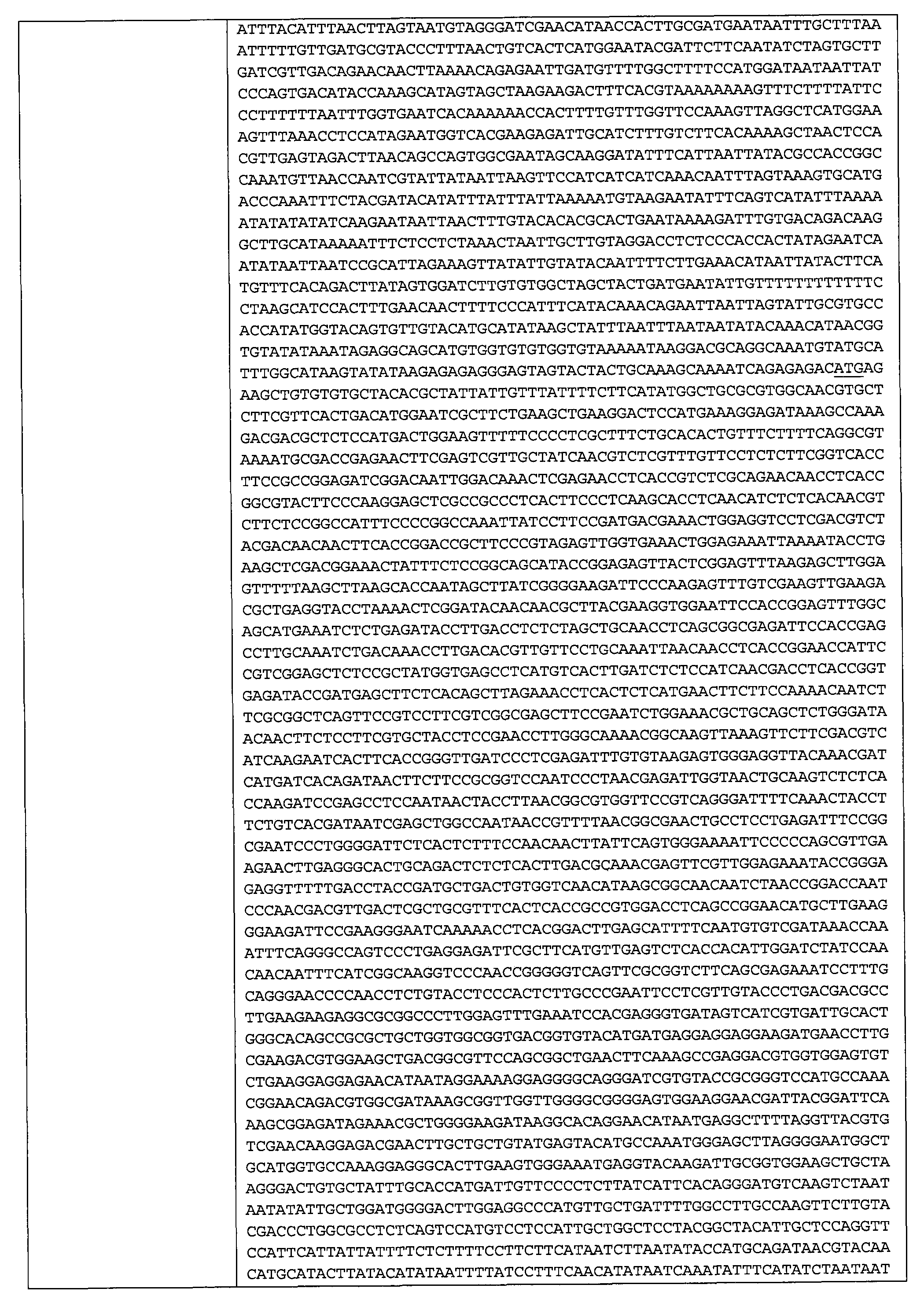
Ref document number: 11814980

Country of ref document: EP

Kind code of ref document: A2

NENP Non-entry into the national phase

Ref country code: DE

ENP Entry into the national phase

Ref document number: 2011286320

Country of ref document: AU

Date of ref document: 20110713

Kind code of ref document: A

WWE Wipo information: entry into national phase

Ref document number: 13814591

Country of ref document: US

122 Ep: pct application non-entry in european phase

Ref document number: 11814980

Country of ref document: EP

Kind code of ref document: A2