WO2012011407A1 - てんかん波を伴う疾患治療剤 - Google Patents
てんかん波を伴う疾患治療剤 Download PDFInfo
- Publication number
- WO2012011407A1 WO2012011407A1 PCT/JP2011/065845 JP2011065845W WO2012011407A1 WO 2012011407 A1 WO2012011407 A1 WO 2012011407A1 JP 2011065845 W JP2011065845 W JP 2011065845W WO 2012011407 A1 WO2012011407 A1 WO 2012011407A1
- Authority
- WO
- WIPO (PCT)
- Prior art keywords
- carbon dioxide
- epilepsy
- concentration
- blood
- therapeutic agent
- Prior art date
- Legal status (The legal status is an assumption and is not a legal conclusion. Google has not performed a legal analysis and makes no representation as to the accuracy of the status listed.)
- Ceased
Links
Images






Classifications
-
- A—HUMAN NECESSITIES
- A61—MEDICAL OR VETERINARY SCIENCE; HYGIENE
- A61K—PREPARATIONS FOR MEDICAL, DENTAL OR TOILETRY PURPOSES
- A61K33/00—Medicinal preparations containing inorganic active ingredients
-
- A—HUMAN NECESSITIES
- A61—MEDICAL OR VETERINARY SCIENCE; HYGIENE
- A61K—PREPARATIONS FOR MEDICAL, DENTAL OR TOILETRY PURPOSES
- A61K9/00—Medicinal preparations characterised by special physical form
- A61K9/0012—Galenical forms characterised by the site of application
- A61K9/007—Pulmonary tract; Aromatherapy
-
- A—HUMAN NECESSITIES
- A61—MEDICAL OR VETERINARY SCIENCE; HYGIENE
- A61K—PREPARATIONS FOR MEDICAL, DENTAL OR TOILETRY PURPOSES
- A61K9/00—Medicinal preparations characterised by special physical form
- A61K9/0012—Galenical forms characterised by the site of application
- A61K9/007—Pulmonary tract; Aromatherapy
- A61K9/0073—Sprays or powders for inhalation; Aerolised or nebulised preparations generated by other means than thermal energy
-
- A—HUMAN NECESSITIES
- A61—MEDICAL OR VETERINARY SCIENCE; HYGIENE
- A61M—DEVICES FOR INTRODUCING MEDIA INTO, OR ONTO, THE BODY; DEVICES FOR TRANSDUCING BODY MEDIA OR FOR TAKING MEDIA FROM THE BODY; DEVICES FOR PRODUCING OR ENDING SLEEP OR STUPOR
- A61M15/00—Inhalators
-
- A—HUMAN NECESSITIES
- A61—MEDICAL OR VETERINARY SCIENCE; HYGIENE
- A61M—DEVICES FOR INTRODUCING MEDIA INTO, OR ONTO, THE BODY; DEVICES FOR TRANSDUCING BODY MEDIA OR FOR TAKING MEDIA FROM THE BODY; DEVICES FOR PRODUCING OR ENDING SLEEP OR STUPOR
- A61M16/00—Devices for influencing the respiratory system of patients by gas treatment, e.g. ventilators; Tracheal tubes
- A61M16/0045—Means for re-breathing exhaled gases, e.g. for hyperventilation treatment
-
- A—HUMAN NECESSITIES
- A61—MEDICAL OR VETERINARY SCIENCE; HYGIENE
- A61P—SPECIFIC THERAPEUTIC ACTIVITY OF CHEMICAL COMPOUNDS OR MEDICINAL PREPARATIONS
- A61P25/00—Drugs for disorders of the nervous system
- A61P25/08—Antiepileptics; Anticonvulsants
-
- A—HUMAN NECESSITIES
- A61—MEDICAL OR VETERINARY SCIENCE; HYGIENE
- A61M—DEVICES FOR INTRODUCING MEDIA INTO, OR ONTO, THE BODY; DEVICES FOR TRANSDUCING BODY MEDIA OR FOR TAKING MEDIA FROM THE BODY; DEVICES FOR PRODUCING OR ENDING SLEEP OR STUPOR
- A61M2202/00—Special media to be introduced, removed or treated
- A61M2202/02—Gases
- A61M2202/0225—Carbon oxides, e.g. Carbon dioxide
Definitions
- the present invention relates to a therapeutic agent for diseases associated with epilepsy waves, characterized by containing carbon dioxide as an active ingredient. Moreover, it is related with the medical device for administering the disease therapeutic agent accompanying an epileptic wave containing a carbon dioxide as an active ingredient.
- Epilepsy is a recurrent seizure that occurs due to sudden abnormal excitation of nerve cells in the brain, abnormalities in paroxysmal and repetitive movements, consciousness, perception, behavior, and autonomic nervous system. It is characterized by.
- an epileptic wave is often detected by an electroencephalogram, but an epileptic wave may not always be detected, such as when no seizure occurs.
- epilepsy may not always be diagnosed.
- epilepsy The prevalence of epilepsy is about 8 to 10 people per 1000 people, which is a frequent disease among neurological diseases.
- the main symptoms of epilepsy include convulsions (involuntary movements such as tonicity or clonicity) and absence seizures without convulsions (loss of consciousness).
- convulsions involuntary movements such as tonicity or clonicity
- absence seizures without convulsions loss of consciousness
- the cause of epilepsy has been identified by the development of molecular genetics research.
- the relationship between epilepsy and various channel genes has been clarified, and some epilepsy syndromes have been considered as so-called channelopathy, which is caused by mutations in the channel gene.
- mutations such as voltage-dependent Ca 2+ channels, voltage-dependent Na + channels, and K + channels have been detected in epileptic patients.
- Acetazolamide (AZA) is known as an antiepileptic drug that can be used when the effect of other epilepsy drugs is insufficient (Non-patent Document 1).
- Acetazolamide is a carbonic anhydrase inhibitor and inhibits carbonic anhydrase in the process of producing water and carbon dioxide from carbonic acid. As a result, it is known to cause metabolic acidosis by increasing the excretion of sodium bicarbonate.
- acetazolamide is an internal medicine, it is not immediately effective for sudden attacks outside hospitals. In addition, there is a risk that blood pH will be lowered too much by administration.
- acetazolamide Another problem with acetazolamide is that it takes too much time for the effect to appear.
- Non-patent Document 2 Non-patent Document 2
- Non-patent Document 2 there are no reports examining the effect of carbon dioxide on epilepsy.
- genetic factors, the degree of fever, and the nervousness of the nerves are complicatedly involved as factors causing febrile seizures, but this report (Non-patent Document 2) occupies the largest specific gravity. Genetic factors are not considered.
- An object of the present invention is to provide a therapeutic agent that is easy to handle, has low side effects, and is immediately effective as a therapeutic agent for epilepsy waves.
- the present inventors have conducted extensive studies using an epilepsy model rat, and as a result, the model rat is made to suck carbon dioxide and control the concentration of carbon dioxide in the inspiratory fluid.
- the present invention was completed by successfully changing the pH of the solution to the acidic side and suppressing epileptic waves.
- this invention consists of the following.
- a therapeutic agent for diseases associated with epilepsy waves comprising carbon dioxide as an active ingredient.
- the disease therapeutic agent according to claim 1, wherein the disease associated with epilepsy waves is epilepsy.
- a gas cylinder for treating a disease associated with epileptic waves characterized in that the disease therapeutic agent according to any one of claims 1 to 4 is filled in a medical gas cylinder. 6).
- spikes spine waves
- epilepsy waves the duration of spikes (spine waves) caused by epileptic waves was suppressed according to the disease therapeutic agent associated with epilepsy waves containing carbon dioxide as an active ingredient of the present invention.
- the epilepsy wave can be suppressed and effectively acted by sucking carbon dioxide against a disease associated with the epileptic wave.
- the following effects are expected from the development of the gas cylinder or the suction gas device using the therapeutic agent for diseases associated with epilepsy according to the present invention.
- the seizure suppression effect is immediate.
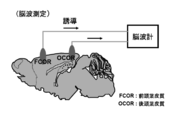
- Example 1 It is a figure which shows the brain which embedded the electrode for measuring the electroencephalogram of the epilepsy model rat in this invention.
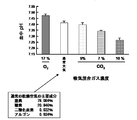
- Example 1 It is a figure which shows blood pH when an epilepsy model rat (GRY rat) is left still in the gas containing carbon dioxide or oxygen of each concentration.
- Example 1 It is explanatory drawing which shows the spike index in this invention.
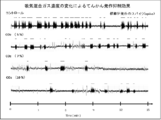
- Example 1 It is a figure which shows the change of the electroencephalogram (spike) of the epilepsy model rat (GRY rat) by the change of the inhalation mixed gas (carbon dioxide) density
- Example 1 It is a figure which shows the result of the spike index of the electroencephalogram (spike) of an epilepsy model rat (GRY rat) by the change of inhalation mixed gas (carbon dioxide) density
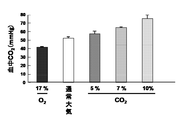
- Example 1 It is a figure which shows the blood carbon dioxide density
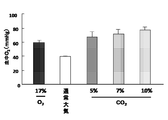
- Example 2 It is a figure which shows the blood oxygen concentration when an epileptic model rat (GRY rat) is left still in the inhalation mixed gas containing the carbon dioxide or oxygen of each density
- Example 2 It is a figure which shows the blood bicarbonate ion density
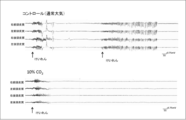
- Example 3 It is an electroencephalogram for 5 minutes before administration of 10% carbon dioxide and for 5 minutes from 25 seconds after administration start.
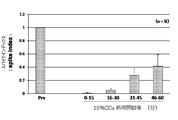
- Example 4 It is a figure which shows the result of the spike index for every 15 minutes before and behind 10% carbon dioxide administration.
- Example 4 It is a figure which shows the blood concentration and blood pH when an acetazolamide is administered to an epilepsy model rat (GRY rat).
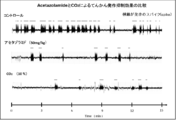
- Comparative Example 1 It is a figure which shows the change of the electroencephalogram (spike) of an epilepsy model rat (GRY rat) by administration of acetazolamide.
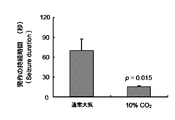
- Comparative Example 1 It is a figure which shows the blood pH of the epilepsy model rat (Kyo811 rat) before and after the seizure of febrile seizure, and after inhalation mixed gas (carbon dioxide) treatment.
- the present invention relates to a therapeutic agent for diseases associated with epilepsy waves, characterized by containing carbon dioxide as an active ingredient.
- the disease associated with epilepsy waves is not limited to epilepsy, but refers to any disease associated with epilepsy waves.
- the epilepsy wave refers to a spike wave, a spike wave, a spike wave connection, a sharp wave, a sharp wave connection, and the like.
- diseases associated with epilepsy waves specifically include epilepsy, cerebrovascular disorders and metabolic abnormalities (hypoglycemia, electrolyte abnormalities), etc., but febrile seizures not related to epilepsy (epilepsy) ( febrile seizures) is excluded from the scope of the present invention.
- the disease associated with epilepsy waves is preferably epilepsy.
- epilepsy The difference between epilepsy and febrile seizures is that febrile seizures are benign diseases that develop during fever, while epilepsy develops when there is no heat, and the symptoms, duration, and prognosis tend to be severe.
- the disease therapeutic agent associated with epileptic waves of the present invention contains carbon dioxide as an active ingredient.
- carbon dioxide is used for temporarily lowering the blood pH to a value lower than 7.4 and not causing any abnormalities in life. Specifically, it is sufficient that the blood pH can be temporarily lowered to 7.25 to 7.40, preferably 7.30 to 7.35.
- carbon dioxide gas can be inhaled and used.
- the disease therapeutic agent of the present invention can be a therapeutic agent for inhalation containing carbon dioxide as an active ingredient.
- the present invention further extends to a medical gas cylinder or a medical suction gas device for treating diseases associated with epilepsy waves.
- the therapeutic agent for diseases associated with epileptic waves containing carbon dioxide as an active ingredient may be filled in a medical gas cylinder, or the medical gas cylinder may be connected to a medical suction gas device.
- the concentration of carbon dioxide filled in such a therapeutic agent for inhalation, a medical gas cylinder or a medical suction gas device is 1 to 10% (v / v). Preferably, it is contained in an amount of 3 to 10% (v / v), more preferably 5 to 10% (v / v).
- the concentration of carbon dioxide gas in the atmosphere is usually 1 to 2% (v / v), causing discomfort, and 3 to 4% (v / v) stimulating the respiratory center, increasing breathing, increasing pulse, Symptoms such as headache and dizziness occur, and it is said that 6-7% (v / v) becomes difficult to breathe, and 7-10% (v / v) becomes unconscious in a few minutes. Therefore, the carbon dioxide concentration used in the present invention may be a concentration that can temporarily lower the blood pH when aspirated and that does not cause any abnormalities in life.
- Carbon dioxide is a colorless and odorless gas at normal temperature and pressure, and sublimates at -79 ° C to become a solid (dry ice). It dissolves relatively well in water and the aqueous solution (carbonic acid) is weakly acidic.
- aqueous solutions and solids of alkali metal and alkaline earth metal hydroxides absorb carbon dioxide to form carbonates or bicarbonates.
- carbon dioxide liquefies.
- the critical point 31.1 ° C., 7.4 MPa
- Carbon dioxide in these states is called compressed carbon dioxide or high density carbon dioxide.
- the carbon dioxide contained in the inhalation therapeutic agent, medical gas cylinder or medical suction gas apparatus of the present invention may be a gas at the time of inhalation, and the source of carbon dioxide gas may be gas, liquid, or dry. It may be a solid such as ice.
- the therapeutic agent for diseases associated with epileptic waves of the present invention can contain normal atmospheric components (nitrogen, oxygen, argon) in addition to carbon dioxide. Further, a gas component that basically does not adversely affect the living body, such as helium, may be included.
- the present invention uses the above-described disease therapeutic agent associated with epilepsy waves, a disease treatment gas cylinder and a disease treatment suction gas device, as well as a disease treatment gas cylinder associated with epilepsy waves or a disease treatment suction gas device associated with epilepsy waves. Further, the present invention extends to a method for treating a disease associated with epilepsy waves, which comprises aspirating the disease therapeutic agent.
- a therapeutic agent containing carbon dioxide as an active ingredient from a cylinder specifically, the concentration of carbon dioxide in the aspirated gas is 1 to 10% (v / v), preferably 3 to 10% (v / v), more preferably By sucking carbon dioxide gas contained so as to be 5 to 10% (v / v), symptoms such as seizures associated with diseases can be easily reduced.
- Example 1 Administration of carbon dioxide to epilepsy model rats
- GRY rats are used to administer various concentrations of carbon dioxide, blood pH measurement, blood carbon dioxide concentration measurement, electroencephalogram measurement, video.
- the system of simultaneous EEG recording technology was established, and the index of seizure evaluation, spike index was measured.
- GRY rats (groggy rats, Cacna1a) were used as epilepsy model rats. Since the GRY rat is in a normal state and exhibits seizures at all times, it is an excellent system for evaluating seizures after treatment.
- the GRY rat is a rat having a mutation in the ⁇ 1 subunit gene Cacna1a of the P / Q-type voltage-gated calcium channel Cav2.1, and is an epilepsy model rat mainly having ataxia and absence seizure. Take an autosomal recessive mode of inheritance.
- the nucleotide “T” at position 752 of the Cacna1a gene has been mutated to “A”.
- [CO2 concentration control] In order to control the carbon dioxide concentration, a multi-gas incubator (MCO-5M; Sanyo Electric Co., Ltd.) was used as a multi-gas concentration control device, and the concentration of carbon dioxide in the incubator was adjusted. For comparison, the oxygen concentration was also adjusted.
- the main components of ordinary dry air are carbon dioxide 0.032% (v / v), oxygen 20.946% (v / v), nitrogen 78.084% (v / v). Therefore, using the multi-gas concentration control device described above, the carbon dioxide concentration is 5% (v / v), 7% (v / v), 10% (v / v), or the oxygen concentration is 17% (v / v). Set to v).
- Blood pH and carbon dioxide concentration Blood was collected from the tail vein of a rat placed in the multi-gas concentration control apparatus, and the blood pH and the blood pH were measured using an ice-tatt analyzer (Fuso Pharmaceutical Co., Ltd.). The blood carbon dioxide concentration was measured.
- the most important pH buffer system for blood and body fluid is a bicarbonate-carbon dioxide (HCO 3 ⁇ / CO 2 ) buffer system. Carbon dioxide reacts with water molecules in the body to produce bicarbonate. CO 2 + H 2 O ⁇ ⁇ HCO 3 - + H + [CO 2] by breathing, [HCO 3 -] it is regulated by the liver and kidneys. Therefore, it is considered that the disease therapeutic agent associated with epileptic waves of the present invention causes respiratory acidosis by increasing the inspiratory carbon dioxide concentration by carbon dioxide contained as an active ingredient, and suppresses epilepsy waves.
- the brain waves of the frontal cortex and the occipital cortex of the rat were measured using an electroencephalograph (Neurofax EEG-1200, Nihon Kohden).
- the spike index was used as an index of seizure evaluation.
- the spike index represents the ratio of the duration of spikes (spine waves) in the measurement time (15 minutes).
- a spike wave refers to a waveform indicating that the potential has suddenly changed in a short time (see FIG. 3).
- Fig. 4 shows the electroencephalogram due to the change in the intake gas mixture concentration
- Fig. 5 shows the result of the spike index.
- Example 2 Administration of carbon dioxide to an epilepsy model rat 2
- carbon dioxide concentration 5% (v / v), 7% (v / v), 10% (v / v), or oxygen concentration 17% in the same manner as in Example 1. It was allowed to stand for 1 hour in a multi-gas concentration controller adjusted to (v / v) (6 animals each).
- FIGS. 7 and 8 show the blood oxygen concentration and blood bicarbonate ion concentration under the same conditions.
- Example 3 Administration of carbon dioxide to an epilepsy model rat 3
- GRY rats were administered 10% (v / v) carbon dioxide or 17% (v / v) oxygen at different administration times, blood pH, blood carbon dioxide concentration, blood Medium oxygen concentration and blood carbonate ion concentration were measured.
- Example 1 Material and method Model animals and carbon dioxide concentration control were performed in the same manner as in Example 1. By allowing the rat to stand for 15 minutes, 30 minutes, 45 minutes, or 60 minutes in a multi-gas concentration controller adjusted to a carbon dioxide concentration of 10% (v / v) or an oxygen concentration of 17% (v / v), Rats were administered carbon dioxide or oxygen (5-6 animals each). As a control, rats that were allowed to stand in a multi-gas concentration control apparatus that was normally adjusted to the atmospheric concentration were used. For these rats, blood pH, carbon dioxide, oxygen, and bicarbonate ion concentrations were measured by the same method as in Example 1 or 2.
- Example 4 Administration of carbon dioxide to an epilepsy model rat 4
- simultaneous recording of video electroencephalogram when 10% (v / v) carbon dioxide was administered to GRY rats and measurement of the epileptic seizure suppression effect (spike index) were performed.
- the results of spike index every 15 minutes before and after 10% (v / v) carbon dioxide administration were shown (FIG. 11). If the spike index for 15 minutes before carbon dioxide administration is 1, the average spike index for the first 15 minutes (0 to 15 minutes) is 0.0074, and the subsequent 15 minutes (16 to 30 minutes) is 0.054. The subsequent 15 minutes (31-45 minutes) was 0.275 and the subsequent 15 minutes (46-60 minutes) was 0.416.
- the therapeutic agent of the present invention (10% (v / v) carbon dioxide) can almost completely suppress seizures within 15 minutes of administration, and this seizure inhibiting effect can be sustained for at least 30 minutes. It was confirmed that the suppression effect gradually decreases thereafter.
- Example 3 during the 1 hour after carbon dioxide administration, the blood carbon dioxide concentration and blood pH did not show much fluctuation, but 31 minutes after administration of 10% (v / v) carbon dioxide. It was shown that the seizure suppression effect gradually declined at 45 minutes and 46 minutes to 60 minutes. This is considered to be that the seizure suppression effect gradually declined for some reason even though the blood pH remained lowered from 31 minutes to 60 minutes after carbon dioxide administration.
- Comparative example 1 Comparative example using acetazolamide
- Acetazolamide (Acetazolamide, trade name "Diamox (R) ""Acetamox (R) ") is a carbonic anhydrase inhibitor, a process in which water and carbon dioxide are produced from carbonic acid Inhibits carbonic anhydrase.
- metabolic acidosis is caused by increasing the excretion of sodium bicarbonate.
- acetazolamide 50 mg / kg was intraperitoneally administered to male GRY rats, and blood was collected from the tail vein before administration, 15 minutes, 30 minutes, 45 minutes and 60 minutes before administration, and blood acetazolamide concentration, blood pH and bicarbonate Ions were measured.
- physiological saline was administered (each 8 animals).
- Blood acetazolamide was subjected to concentration measurement by outsourcing to SRL, Inc. (SRL). The pH was measured by the same method as in Example 1.
- the blood acetazolamide concentration after administration of acetazolamide was highest after 15 minutes, and decreased with time (FIG. 12).
- the acetazolamide administration group showed a significant decrease (acidic side) 15 minutes, 30 minutes, 45 minutes and 60 minutes after administration (FIG. 12).
- blood bicarbonate ions also showed a significant decrease in the acetazolamide administration group 15 minutes, 30 minutes, 45 minutes, and 60 minutes after administration compared to the control group. Under these conditions, it was found that blood pH became acidic due to non-respiratory (metabolic) acidosis within 60 minutes after administration of acetazolamide.
- an electroencephalogram was measured.
- a 9-week-old GRY rat was fixed to a stereotaxic apparatus under pentobarbital anesthesia, and a chronic electrode for electroencephalogram measurement was embedded in the frontal cortex and occipital cortex by the same method as in Example 1 (see FIG. 1).
- acetazolamide 50 mg / kg was intraperitoneally administered, and electroencephalogram measurement was started (10 administration groups, 10 non-administration groups).
- the measurement of the electroencephalogram and the calculation of the spike index were performed by the same method as in Example 1.
- acetazolamide was found to significantly reduce (shorten) the spike duration of seizures (FIG. 13).
- the elapsed time of action correlated with changes in blood pH and bicarbonate ion.
- Kyo811 rats were obtained by introducing a mutagen (N-nitro-N-ethylurea; ENU) into the peritoneal cavity of male F344 rats, introducing artificial mutations into sperm DNA, and then squeezing sperm It was prepared as a rat having a mutation in the voltage-dependent sodium channel Scn1a gene by the technique of artificial insemination (intracytoplasmic sperm injection) into the egg of a female rat (Reference 5).
- ENU N-nitro-N-ethylurea
- the 4251st nucleotide “A” of the Scn1a gene was mutated to “C”, and as a result, the asparagine (AAT), which is the 1417th amino acid, was changed to histidine (CAT). (N1417H).
- AAT asparagine
- CAT histidine
- N1417H The 1417th asparagine is located in the pore formation region involved in the ion permeation of the third domain of the sodium ion channel.
- the N1417H mutant sodium ion channel has an abnormal channel function. It became clear that it was easy to cause convulsion.
- This mutant homozygous rat is a very useful rat as a model model of thermal convulsions caused by a warm bath load because it causes thermal convulsions after about 3 to 4 minutes when placed in a 45 ° C. warm bath.
- This model rat was distributed from the animal experiment facility attached to the Kyoto University graduate School of Medicine.
- Example 5 Seizure evaluation The brain waves of the frontal cortex and occipital cortex of the rat were measured by the same method as in Example 1. An example of the data is shown. As a result, it was confirmed that by setting the carbon dioxide concentration to 10% (v / v), the duration of epilepsy waves, that is, spikes, can be significantly suppressed (FIG. 15). The results of seizure duration (seconds) are shown (FIG. 16). It was confirmed that seizures can be significantly suppressed by setting the carbon dioxide concentration to 10% (v / v).
- a symptom such as a seizure associated with a disease can be easily reduced by aspirating a therapeutic agent containing carbon dioxide as an active ingredient, specifically carbon dioxide gas, from a cylinder.
- the following effects are expected by the development of the gas cylinder or the gas apparatus for suction using the therapeutic agent for diseases associated with epilepsy according to the present invention.
- the seizure suppression effect is immediate.
- ⁇ / RTI> it is possible to respond immediately at the time of a seizure, and an immediate effect treatment can be expected as compared with conventional therapeutic drug use.
- an immediate effect treatment can be expected as compared with conventional therapeutic drug use.
- many epilepsy patients are children, it is expected to create a system that can carry a simple suction gas (cylinder) to each household and respond instantaneously at the time of an attack.
- cylinder simple suction gas
Landscapes
- Health & Medical Sciences (AREA)
- Veterinary Medicine (AREA)
- Public Health (AREA)
- General Health & Medical Sciences (AREA)
- Animal Behavior & Ethology (AREA)
- Life Sciences & Earth Sciences (AREA)
- Pulmonology (AREA)
- Engineering & Computer Science (AREA)
- Medicinal Chemistry (AREA)
- Pharmacology & Pharmacy (AREA)
- Chemical & Material Sciences (AREA)
- Epidemiology (AREA)
- Biomedical Technology (AREA)
- Bioinformatics & Cheminformatics (AREA)
- Hematology (AREA)
- Heart & Thoracic Surgery (AREA)
- Anesthesiology (AREA)
- Inorganic Chemistry (AREA)
- Emergency Medicine (AREA)
- Otolaryngology (AREA)
- General Chemical & Material Sciences (AREA)
- Nuclear Medicine, Radiotherapy & Molecular Imaging (AREA)
- Organic Chemistry (AREA)
- Neurology (AREA)
- Chemical Kinetics & Catalysis (AREA)
- Pain & Pain Management (AREA)
- Neurosurgery (AREA)
- Pharmaceuticals Containing Other Organic And Inorganic Compounds (AREA)
- Medicinal Preparation (AREA)
- Filling Or Discharging Of Gas Storage Vessels (AREA)
- Medical Preparation Storing Or Oral Administration Devices (AREA)
Abstract
Description
1.二酸化炭素を有効成分として含む、てんかん波に伴う疾患治療剤。
2.てんかん波に伴う疾患が、てんかんである請求項1に記載の疾患治療剤。
3.疾患治療剤が吸入用治療剤である、請求項1又は2に記載の疾患治療剤。
4.吸入の際の吸入される気体の二酸化炭素の濃度が、1~10%(v/v)となるように含まれる、請求項3に記載の疾患治療剤。
5.請求項1~4のいずれか1に記載の疾患治療剤が、医療用ガスボンベに充填されていることを特徴とする、てんかん波に伴う疾患治療用ガスボンベ。
6.請求項5に記載の疾患治療用ガスボンベが、医療用吸引ガス装置に接続されていることを特徴とする、てんかん波に伴う疾患治療用吸引ガス装置。
7.てんかん波に伴う疾患治療用ガスボンベを用いて、請求項1~4のいずれか1に記載の疾患治療剤を吸引することを特徴とするてんかん波に伴う疾患の処置方法。
(1)発作抑止効果は即効性である。
(2)各家庭などでの急な発作時に、周囲の者(家族等)が容易に対応可能である。
(3)使用が簡便である。
(4)安価である。
(5)てんかん重積では静脈への薬物投与が必要だが、静脈ラインの確保が難しい患者(小児など)に、即効性の治療が可能となる。
(6)従来の薬物では抑制困難なてんかん症候群や、集中治療室でてんかん重積を治療するとき、呼吸を完全にコントロールしながら発作抑制が可能となる。
本実施例では、GRYラットを用いて、各濃度の二酸化炭素を投与し、血中pH測定、血中二酸化炭素濃度測定、脳波測定、ビデオ脳波同時記録技術のシステムの確立及び発作評価の指標、スパイクインデックス(spike index)の計測を行った。
[てんかんモデルラット]
本実施例では、てんかんモデルラットとしてGRY ラット(groggy rat, Cacna1a)を使用した。GRYラットは通常の状態で、常時てんかん発作を呈しているため、治療を施して発作評価を行うには非常に優れた系である。GRYラットはP/Q-型電位依存性カルシウムチャネルCav2.1のα1サブユニット遺伝子Cacna1aの変異を持つラットで、運動失調及び欠神発作を主症状とするてんかんモデルラットである。常染色体劣性遺伝様式をとる。Cacna1a遺伝子の第752位のヌクレオチド「T」が「A」に変異しており、その結果、第251位のアミノ酸であるメチオニンを指定するコドン「ATG」が、リジンを指定するコドン「AAG」に変異している(M251K)。本変異はカルシウムチャネルドメイン1のポアを形成するp-loop の細胞外領域に位置しており、当該変異(M251K)によって、ラットの電位依存性カルシウムイオンチャネルCav2.1の機能が異常になることが報告されている(参考文献1、2)。後肢の伸展異常、歩行異常及び運動失調を特徴とし、生後6-8週齢より脳波上に7-8Hzの棘徐波(spike and wave discharges)を伴う発作の症状が現れる。本モデルラットは、京都大学医学研究科附属動物実験施設より分与された。
雄のGRYラットを、ペントバルビタールナトリウム(ネンブタール、大日本住友製薬)35mg/kg腹腔内投与により麻酔し、脳定位固定装置(SR-5M、成茂科学器械研究所)に固定した。頭部の毛を刈り、皮膚を正中線に沿って切開し頭蓋骨を露出させた。両側の前頭葉皮質及び後頭葉皮質に歯科用ドリル(FALCON、モリタ)で小孔を開け、直径0.2mmのステンレス線(エム・ティ技研)を接続した直径0.9mm、長さ1.7mmのステンレス製ネジ電極(フクオカ精密)を埋め込んだ(図1参照)。また、Z電極として鼻根部に、不関電極として小脳にネジ電極を埋め込んだ。各電極は、コネクターソケット(ヒロセ電機)に接続し、頭蓋骨に歯科用セメント(ユニファストII、ジーシーデンタルプロダクツ)で固定した。
二酸化炭素濃度制御のために、マルチガス濃度制御装置としてマルチガスインキュベータ(MCO-5M;三洋電気株式会社)を用い、インキュベータ内の二酸化炭素の濃度を調節した。また、比較のために酸素濃度についても調節を行なった。普段の乾燥空気の主要成分は、二酸化炭素0.032%(v/v)、酸素20.946%(v/v)、窒素78.084%(v/v)である。そこで、上述のマルチガス濃度制御装置を用い、二酸化炭素濃度を5%(v/v)、7%(v/v)、10%(v/v)、又は、酸素濃度を17%(v/v)に設定した。二酸化炭素の濃度を調節する際は、装置に接続した炭酸ガスボンベから供給した二酸化炭素ガスを外気の空気で希釈するため、二酸化炭素=10%(v/v)、酸素=約18.85%(v/v)、窒素=約70.28%(v/v)となる。酸素を17%(v/v)にする際は、同様に、装置に接続した窒素ガスボンベから供給した窒素ガスで調節するため、二酸化炭素=0.026%(v/v)、酸素=約17%(v/v)、窒素=約82.974%(v/v)となる。設定条件下のインキュベータ内の各濃度が正しいことはガスアナライザAGA-2008(アステック社)を用いて確認した。
雄のGRYラット(9週齢)8匹について、上記脳波測定のための電極埋め込み手術を行い、1週間の回復期間の後、二酸化炭素濃度5%(v/v)、7%(v/v)、10%(v/v)、又は酸素濃度17%(v/v)に調節したマルチガス濃度制御装置内に1時間静置した。
上記マルチガス濃度制御装置内に静置したラットの尾静脈から採血し、血液ガス分析装置であるアイスタットアナライザー(扶桑薬品工業)を用いて、血中pHと血中二酸化炭素濃度を測定した。
pH = pKa + log[HCO3 -]/[CO2] (pKa=6.1)
血液や体液のpH緩衝系として最も重要なものは、重炭酸-二酸化炭素(HCO3 -/CO2)緩衝系である。二酸化炭素は体内で水分子と反応して重炭酸を生じる。
CO2+H2O ←→HCO3 -+H+
[CO2]は呼吸により、[HCO3 -]は肝臓と腎臓により調節されている。よって、本発明のてんかん波に伴う疾患治療剤は、有効成分として含まれる二酸化炭素により、吸気二酸化炭素濃度を上昇させることにより呼吸性アシドーシスを生じさせ、てんかん波を抑制すると考えられる。
上記二酸化炭素濃度5%(v/v)、7%(v/v)、10%(v/v)に調節したマルチガス濃度制御装置内に静置したラットについて、ビデオ脳波同時記録を行った。コントロールは、大気内に静置したラットとした。
雄のGRYラット(9週齢)について、実施例1と同手法により二酸化炭素濃度5%(v/v)、7%(v/v)、10%(v/v)、又は酸素濃度17%(v/v)に調節したマルチガス濃度制御装置内に1時間静置した(各6匹)。
本実施例では、GRYラットに10%(v/v)二酸化炭素、又は17%(v/v)酸素を、投与時間を変えて投与した場合について、血中pH、血中二酸化炭素濃度、血中酸素濃度、血中炭酸イオン濃度の計測を行った。
モデル動物、及び二酸化炭素濃度制御については実施例1と同手法により行った。ラットを二酸化炭素濃度10%(v/v)又は酸素濃度17%(v/v)に調節したマルチガス濃度制御装置内に15分、30分、45分、又は60分静置することで、ラットに二酸化炭素又は酸素を投与した(各5-6匹)。対照として、通常大気濃度に調節したマルチガス濃度制御装置内に静置したラットを用いた。これらのラットについて、血中pH、二酸化炭素、酸素、重炭酸イオン濃度は実施例1又は2と同手法により測定した。
上記各ラットにおける血中pH、血中二酸化炭素濃度、血中酸素濃度、血中炭酸イオン濃度の計測結果を図9に示した。10%(v/v)二酸化炭素を投与すると、15分から60分の間、血中二酸化炭素濃度が上昇を示し、血中pHが低下することが確認された。
本実施例では、GRYラットに10%(v/v)二酸化炭素投与したときのビデオ脳波同時記録、てんかん発作抑制効果(スパイクインデックス)の計測を行った。
モデル動物、脳波測定のための電極埋め込み手術、二酸化炭素濃度制御、脳波測定については実施例1と同手法により行った。ラットを二酸化炭素濃度10%(v/v)に調節したマルチガス濃度制御装置内に静置することで、ラットに二酸化炭素を投与した(9匹)。
上記マルチガス濃度制御装置内に静置することで10%(v/v)二酸化炭素を投与したラットについて、実施例1と同手法により前頭葉皮質及び後頭葉皮質の脳波を測定した結果を図10に示した。10%(v/v)二酸化炭素を投与する前の5分間と、投与開始25秒後からの5分間の脳波図である。その結果、本発明からなる治療剤(10%(v/v)二酸化炭素)を投与することで、てんかん波、すなわちスパイクの持続時間を有意に抑制しうることが確認された。
上記マルチガス濃度制御装置内に静置することで10%(v/v)二酸化炭素を投与したラットについて、15分毎のビデオ脳波同時記録を1時間行い、二酸化炭素投与前と後のてんかん発作抑制効果(スパイクインデックス)の計測を行った。
アセタゾラミド (Acetazolamide、商品名「ダイアモックス(R)」「アセタモックス(R)」) は、炭酸脱水酵素阻害薬であり、炭酸から水と二酸化炭素が生成する過程において炭酸脱水酵素を阻害する。その結果、重炭酸ナトリウムの排泄を増加させることにより代謝性のアシドーシスを引き起こす。
本参考例では、Kyo811ラットを用いて、10%(v/v)の二酸化炭素を投与し、血中pH測定、脳波測定、ビデオ脳波同時記録及び発作の持続時間(Seizure duration)の計測を行った。
[てんかんモデルラット]
てんかんの中でも、難治性のDravet症候群(以前は乳児重症ミオクロニーてんかんSevere Myoclonic Epilepsy in Infancy: SMEIと呼ばれていた)患者の約80%、良性の全般てんかん熱性けいれんプラス(generalized epilepsy with febrile seizure plus: GEFS+)患者の約5~10%には電位依存性ナトリウムチャネルαサブニット1型(SCN1A)遺伝子のミスセンス変異を持っていることより、SCN1A遺伝子の変異が熱性けいれん発症に関わっていると考えられている(参考文献3、4)。本参考例では、遺伝的要因としてScn1a遺伝子に変異を持つKyo811ラットを用いて、二酸化炭素によるけいれんの抑制効果の検討を行った。このラットは温熱負荷により熱性けいれんを誘発する熱性けいれんモデルラットであり、GEFS+モデルラットである。
実施例1と同手法により行なった。
実施例1と同手法により行なった。
雄のKyo811 ラット(5週齢)各5匹を実施例1と同手法により脳波測定用の慢性電極を埋め込み、1週間の回復期間の後、45℃の温浴に約3~4分間つけることにより、熱性けいれんを誘発させ、脳波測定を行なった。
けいれん誘発直後に、二酸化炭素濃度10%(v/v)、又は通常大気濃度に調節したマルチガス濃度制御装置内に静置し、脳波測定を継続しながら発作状況を観察した。
上記マルチガス濃度制御装置内に静置したラットの発作が終結次第、実施例1と同手法により尾静脈から採血し、血液ガス分析装置であるアイスタットアナライザーを用いて、血中pHを測定した(各5匹)。対照として、熱性けいれん誘発前のラット(10匹)の血中pHを測定した。その結果、二酸化炭素濃度を10%(v/v)に上昇させると、ラットの血中pHが低下することが確認された(図14)。
上記ラットの前頭葉皮質及び後頭葉皮質の脳波を、実施例1と同手法により測定した。そのデータの一例を示す。その結果、二酸化炭素濃度を10%(v/v)にすることで、てんかん波、すなわちスパイクの持続時間を有意に抑制しうることが確認された(図15)。発作の持続時間(Seizure duration (秒))の結果を示した(図16)。二酸化炭素濃度を10%(v/v)にすることで、発作を有意に抑制しうることが確認された。
上記の結果、より重篤なてんかんモデルであるKyo811 ラットについても、二酸化炭素の投与により、血中pHが低下し、脳波が改善することが確認された。
Tokuda S, Kuramoto T, Tanaka K, Kaneko S, Takeuchi IK, Sasa M, Serikawa T. The ataxic groggy rat has a missense mutation in the P/Q-type voltage-gated Ca2+ channel alpha1A subunit gene and exhibits absence seizures. BRAINRESEARCH 1133 (2007) 168-177
(参考文献2)
Tanaka K, Shirakawa H, Okada K, Konno M, Nakagawa T, Serikawa T, Kaneko S. Increased Ca2+ channel currents in cerebellar Purkinje cells of the ataxic groggy rat. Neuroscience Letters 426 (2007) 75-80
(参考文献3)
Ohmori I, Ouchida M, Ohtsuka Y, Oka E, Shimizu K. Significant correlation of the SCN1A mutations and severe myoclonic epilepsy in infancy. Biochem Biophys Res Commun. 295(1), 17-23 (2002).
(参考文献4)
Escagy A, Heils A, MacDonald BT, Haug K, Sander T, Meisler MH. A novel SCN1A mutation associated with generalized epilepsy with febrile seizure plus -and prevalence of variants in patients with epeilpsy. Am J Hum Genet 68: 866-873 (2001).
(参考文献5)
Mashimo T, Ohmori I, Ouchida M, Ohno Y, Tsurumi T, Miki T, Wakamori M, Ishihara S, Yoshida T, Takizawa A, Kato M, Hirabayashi M, Sasa M, Mori Y, Serikawa T. A missense mutation of the gene encoding voltage-dependent sodium channel (Nav1.1) confers susceptibility to febrile seizures in rats. J Neurosci. 30(16):5744-5753 (2010).
(1)発作抑止効果は即効性である。
(2)各家庭などでの急な発作時に、周囲の者(家族等)が容易に対応可能である。
(3)使用が簡便である。
(4)安価である。
(5)てんかん重積では静脈内への薬物投与が必要だが、静脈ラインの確保が難しい患者(小児など)に、即効性の治療が可能となる。
(6)従来の薬物では抑制困難なてんかん症候群や、集中治療室でてんかん重積を治療するとき、呼吸を完全にコントロールしながら発作抑制が可能となる。
Claims (7)
- 二酸化炭素を有効成分として含む、てんかん波に伴う疾患治療剤。
- てんかん波に伴う疾患が、てんかんである請求項1に記載の疾患治療剤。
- 疾患治療剤が吸入用治療剤である、請求項1又は2に記載の疾患治療剤。
- 吸入の際の吸入される気体の二酸化炭素の濃度が、1~10%(v/v)となるように含まれる、請求項3に記載の疾患治療剤。
- 請求項1~4のいずれか1に記載の疾患治療剤が、医療用ガスボンベに充填されていることを特徴とする、てんかん波に伴う疾患治療用ガスボンベ。
- 請求項5に記載の疾患治療用ガスボンベが、医療用吸引ガス装置に接続されていることを特徴とする、てんかん波に伴う疾患治療用吸引ガス装置。
- てんかん波に伴う疾患治療用ガスボンベ又はてんかん波に伴う疾患治療用吸引ガス装置を用いて、請求項1~4のいずれか1に記載の疾患治療剤を吸引することを特徴とするてんかん波に伴う疾患の処置方法。
Priority Applications (3)
| Application Number | Priority Date | Filing Date | Title |
|---|---|---|---|
| JP2012525374A JP5791604B2 (ja) | 2010-07-22 | 2011-07-12 | てんかん波を伴う疾患治療剤 |
| US14/772,473 US20160166605A1 (en) | 2010-07-22 | 2011-07-12 | Therapeutic agent for a disease accompanied by epileptiform discharges |
| US16/265,173 US20190160093A1 (en) | 2010-07-22 | 2019-02-01 | Therapeutic agent for disease accompanied by epileptic waves |
Applications Claiming Priority (2)
| Application Number | Priority Date | Filing Date | Title |
|---|---|---|---|
| JP2010-164770 | 2010-07-22 | ||
| JP2010164770 | 2010-07-22 |
Related Child Applications (2)
| Application Number | Title | Priority Date | Filing Date |
|---|---|---|---|
| US14/772,473 A-371-Of-International US20160166605A1 (en) | 2010-07-22 | 2011-07-12 | Therapeutic agent for a disease accompanied by epileptiform discharges |
| US16/265,173 Continuation US20190160093A1 (en) | 2010-07-22 | 2019-02-01 | Therapeutic agent for disease accompanied by epileptic waves |
Publications (1)
| Publication Number | Publication Date |
|---|---|
| WO2012011407A1 true WO2012011407A1 (ja) | 2012-01-26 |
Family
ID=45496834
Family Applications (1)
| Application Number | Title | Priority Date | Filing Date |
|---|---|---|---|
| PCT/JP2011/065845 Ceased WO2012011407A1 (ja) | 2010-07-22 | 2011-07-12 | てんかん波を伴う疾患治療剤 |
Country Status (3)
| Country | Link |
|---|---|
| US (2) | US20160166605A1 (ja) |
| JP (2) | JP5791604B2 (ja) |
| WO (1) | WO2012011407A1 (ja) |
Family Cites Families (1)
| Publication number | Priority date | Publication date | Assignee | Title |
|---|---|---|---|---|
| GB1261343A (en) * | 1968-02-15 | 1972-01-26 | British Petroleum Co | Apparatus for delivering a gas into the lungs of a patient |
-
2011
- 2011-07-12 JP JP2012525374A patent/JP5791604B2/ja not_active Expired - Fee Related
- 2011-07-12 WO PCT/JP2011/065845 patent/WO2012011407A1/ja not_active Ceased
- 2011-07-12 US US14/772,473 patent/US20160166605A1/en not_active Abandoned
-
2015
- 2015-08-04 JP JP2015154053A patent/JP6158868B2/ja not_active Expired - Fee Related
-
2019
- 2019-02-01 US US16/265,173 patent/US20190160093A1/en not_active Abandoned
Non-Patent Citations (5)
| Title |
|---|
| ADAM E. ZIEMANN ET AL.: "Seizure Termination by Acidosis Depends on ASICIa", NAT NEUROSCI., vol. 11, no. 7, 2008, pages 816 - 822 * |
| KEN'ICHI OTSUGURO: "Nisankatanso no Yakuri Sayo", JAPANESE SOCIETY OF VETERIANY SCIENCE GAKUJUTSU SHUKAI KOEN YOSHISHU, 2008, pages 136 * |
| MATSUDA M. ET AL.: "Effects of carbon dioxide on onsets of seizures in mice induced by antagonists of vitamin B6", BIOCHEMICAL PHARMACOLOGY, vol. 36, no. 12, 1987, pages 2040 - 2042 * |
| SEBASTIAN SCHUCHMANN ET AL.: "Experimental febrile seizures are precipitated by a hyperthermia-induced respiratory alkalosis", NATURE MEDICINE, vol. 12, no. 7, 2006, pages 817 - 823 * |
| SEBASTIAN SCHUCHMANN ET AL.: "Neurobiological and physiological mechanisms of feber-related epileptiform syndromes", BRAIN & DEVELOPMENT, vol. 31, 2009, pages 378 - 382, XP026053269, DOI: doi:10.1016/j.braindev.2008.11.011 * |
Also Published As
| Publication number | Publication date |
|---|---|
| JP6158868B2 (ja) | 2017-07-05 |
| JP5791604B2 (ja) | 2015-10-07 |
| JPWO2012011407A1 (ja) | 2013-09-09 |
| US20190160093A1 (en) | 2019-05-30 |
| JP2015227365A (ja) | 2015-12-17 |
| US20160166605A1 (en) | 2016-06-16 |
Similar Documents
| Publication | Publication Date | Title |
|---|---|---|
| Kim et al. | Severe peri-ictal respiratory dysfunction is common in Dravet syndrome | |
| Abdala et al. | Effect of Sarizotan, a 5-HT1a and D2-like receptor agonist, on respiration in three mouse models of Rett syndrome | |
| ES2666098T3 (es) | Combinación de fármacos | |
| US20120101073A1 (en) | Novel Method For Treating Breathing Disorders or Diseases | |
| Gorman et al. | A comparison of sodium bicarbonate and sodium lactate infusion in the induction of panic attacks | |
| JP7519359B2 (ja) | レシニフェラトキシンを投与することによってパーキンソン病を処置するための方法 | |
| Bahar et al. | Spinal anaesthesia induced by intrathecal magnesium sulphate An experimental study in a rat model | |
| Sarton et al. | Influence of acute pain induced by activation of cutaneous nociceptors on ventilatory control | |
| Bourne et al. | Preparation for the in vivo recording of neuronal responses in the visual cortex of anaesthetised marmosets (Callithrix jacchus) | |
| Jaeckle et al. | Central neurogenic hyperventilation: pharmacologic intervention with morphine sulfate and correlative analysis of respiratory, sleep, and ocular motor dysfunction | |
| EKSTRÖM et al. | Electroencephalography of Detomidine‐Ketamine‐Halothane and Detomidine‐Ketamine‐lsoflurane Anesthetized Horses During Orthopedic Surgery A Comparison | |
| JP6158868B2 (ja) | てんかん波を伴う疾患治療剤 | |
| Ohmori et al. | Inhalation of 10% carbon dioxide rapidly terminates Scn1a mutation-related hyperthermia-induced seizures | |
| Haga et al. | Inhibition and facilitation of nociceptively evoked muscular activity by fentanyl or dexmedetomidine in isoflurane-anaesthetized pigs | |
| Salena | Chronic cough and the use of captopril: unmasking asthma | |
| Happe | The role of alpha-2-agonist dexmedetomidine in subcortical regulation of consciousness–electrophysiological evidence of an engagement in a NREMS pathway | |
| US20200061103A1 (en) | Inhibition of neurological disease | |
| Bitterman et al. | The effect of sodium phenytoin on central nervous system oxygen toxicity | |
| Shinner et al. | Effect of bolus doses of alfentanil on the arousal response to intubation, as assessed by the auditory evoked response | |
| DeWolf et al. | Enflurane-induced grand mal seizures during otic microsurgery | |
| Tari et al. | Conscious sedation and pain control in dental surgery with nitrous oxide: Clinical protocol | |
| Gaudy et al. | Effect of a new analeptic drug, almitrine, on fentanyl-induced respiratory depression and analgesia in man | |
| Torbey et al. | Less common causes of quadriparesis and respiratory failure | |
| Paul et al. | Comparison of nasal cannulas and the OxyArm in patients requiring chronic domiciliary oxygen therapy | |
| Lioy et al. | Effect of sarizotan, a 5-HT1a and D2-like receptor agonist, on respiration in three mouse models of Rett syndrome |
Legal Events
| Date | Code | Title | Description |
|---|---|---|---|
| 121 | Ep: the epo has been informed by wipo that ep was designated in this application |
Ref document number: 11809581 Country of ref document: EP Kind code of ref document: A1 |
|
| DPE1 | Request for preliminary examination filed after expiration of 19th month from priority date (pct application filed from 20040101) | ||
| WWE | Wipo information: entry into national phase |
Ref document number: 2012525374 Country of ref document: JP |
|
| NENP | Non-entry into the national phase |
Ref country code: DE |
|
| 122 | Ep: pct application non-entry in european phase |
Ref document number: 11809581 Country of ref document: EP Kind code of ref document: A1 |
|
| WWE | Wipo information: entry into national phase |
Ref document number: 14772473 Country of ref document: US |