WO2011095772A2 - Novel iminosugar therapeutics - Google Patents
Novel iminosugar therapeutics Download PDFInfo
- Publication number
- WO2011095772A2 WO2011095772A2 PCT/GB2011/000139 GB2011000139W WO2011095772A2 WO 2011095772 A2 WO2011095772 A2 WO 2011095772A2 GB 2011000139 W GB2011000139 W GB 2011000139W WO 2011095772 A2 WO2011095772 A2 WO 2011095772A2
- Authority
- WO
- WIPO (PCT)
- Prior art keywords
- compound
- disease
- composition
- alkyl
- dnj
- Prior art date
- Legal status (The legal status is an assumption and is not a legal conclusion. Google has not performed a legal analysis and makes no representation as to the accuracy of the status listed.)
- Ceased
Links
Classifications
-
- C—CHEMISTRY; METALLURGY
- C07—ORGANIC CHEMISTRY
- C07D—HETEROCYCLIC COMPOUNDS
- C07D207/00—Heterocyclic compounds containing five-membered rings not condensed with other rings, with one nitrogen atom as the only ring hetero atom
- C07D207/02—Heterocyclic compounds containing five-membered rings not condensed with other rings, with one nitrogen atom as the only ring hetero atom with only hydrogen or carbon atoms directly attached to the ring nitrogen atom
- C07D207/04—Heterocyclic compounds containing five-membered rings not condensed with other rings, with one nitrogen atom as the only ring hetero atom with only hydrogen or carbon atoms directly attached to the ring nitrogen atom having no double bonds between ring members or between ring members and non-ring members
- C07D207/10—Heterocyclic compounds containing five-membered rings not condensed with other rings, with one nitrogen atom as the only ring hetero atom with only hydrogen or carbon atoms directly attached to the ring nitrogen atom having no double bonds between ring members or between ring members and non-ring members with hetero atoms or with carbon atoms having three bonds to hetero atoms with at the most one bond to halogen, e.g. ester or nitrile radicals, directly attached to ring carbon atoms
- C07D207/12—Oxygen or sulfur atoms
-
- A—HUMAN NECESSITIES
- A61—MEDICAL OR VETERINARY SCIENCE; HYGIENE
- A61P—SPECIFIC THERAPEUTIC ACTIVITY OF CHEMICAL COMPOUNDS OR MEDICINAL PREPARATIONS
- A61P31/00—Antiinfectives, i.e. antibiotics, antiseptics, chemotherapeutics
-
- C—CHEMISTRY; METALLURGY
- C07—ORGANIC CHEMISTRY
- C07D—HETEROCYCLIC COMPOUNDS
- C07D205/00—Heterocyclic compounds containing four-membered rings with one nitrogen atom as the only ring hetero atom
- C07D205/02—Heterocyclic compounds containing four-membered rings with one nitrogen atom as the only ring hetero atom not condensed with other rings
- C07D205/04—Heterocyclic compounds containing four-membered rings with one nitrogen atom as the only ring hetero atom not condensed with other rings having no double bonds between ring members or between ring members and non-ring members
Definitions
- the present invention relates to carbon-branched iminosugars, to compositions (including pharmaceutical compositions) containing them and to methods of treatment and prophylaxis using the compounds and compositions.
- N-alkyl derivatives of deoxynojirimycin are drugs and have potential for the treatment of a number of diseases.
- N-butyl-DNJ miat, Zavesca®, ⁇ / ⁇ - DNJ partially rescues the defective F508del-CFTR function in CF-KM4 cells and is therefore of interests for the chemotherapeutic treatment of cystic fibrosis.
- the present inventors have developed an efficient synthesis of various carbon-branched iminosugars, including carbon-branched azetidine and pyrrolidine iminosugars such as the carbon-branched pyrrolidine iminosugar isoDAB [1 ,4-dideoxy-2-hydroxymethyl-1 ,4-imino- D-threitol].
- IsoDAB is a potent and specific inhibitor of a number of a-glucosidases and provides the first example of a carbon branched iminosugar pyrrolidine showing significant glycosidase inhibition.
- DAB is an excellent inhibitor of glycogen phosphorylase and a moderate inhibitor of glycoprotein processing glucosidases, but isoDAB showed no inhibition of these enzymes.
- the combination of potency and specificity of isoDAB finds application in various methods of treatment, and in particular isoDAB and related carbon-branched iminosugar pyrrolidines are likely to exhibit an improved protective/therapeutic index compared with known pyrrolidine iminosugar therapeutics.
- X is selected from H; OH and F;
- Y is selected from H and CH 2 X;
- R 1 is selected from H; linear or branched, substituted or unsubstituted alkyl, alkenyl, alkynyl and aralkyi and wherein the optional substitution may be with one or more groups independently selected from: -OH; -F; -CI; -Br; -I; -NH 2 ; alkylamino;
- dialkylamino linear or branched alkyl, alkenyl, alkynyl and aralkyi; aryl; heteroaryl; linear or branched alkoxy; aryloxy; aralkoxy; -(alkylene)oxy(alkyl); -CN; -N0 2 ; - COOH; -COO(alkyl); -COO(aryl); -C(0)NH(alkyl); -C(0)NH(aryl); sulfonyl;
- alkylsulfonyl arylsulfonyl; sulfamoyl; alkylsulfamoyl; alkylthio; alkylsulfonamide; arylsulfonamide; -NHNH 2 ; and -NHOH; or a bioisostere, pharmaceutically acceptable salt or derivative thereof.
- R 1 is selected from H, C 1-18 alkyl (for example, d -9 alkyl, e.g. d. 6 alkyl), C 2 . 18 alkenyl (for example, C 2 -g alkenyl, e.g. C 2-6 alkenyl) and C 2 . 18 alkynyl (for example, C 2 . 9 alkynyl, e.g. C 2 . 6 alkynyl).
- R may be -H and R 1 selected from C 1-18 alkyl (for example, C 1-g alkyl, e.g. C 1-6 alkyl), C 2-18 alkenyl (for example, C 2 . g alkenyl, e.g.
- R 1 represents H; C1-15 alkyl, C1-15 alkenyl or C1 -15 alkynyl, optionally substituted with one or more R 2 ; oxygen or an oxygen containing group such that the compound is an N-oxide; C(0)OR 3 ; C(0)NR 3 R 4 ; S0 2 NR 3 ; OH, OR 3 , or formyl.
- R 1 may represent C1-9 alkyl, optionally substituted with up to 6 OH, NR 3 R 4 , aryl, 0-C1-3 alkyl, 0-C1-3 alkenyl, C0 2 H, NH(NH)NH 2 , CONR 3 R 4 ; C(0)OR 3 ;
- “comprising,” are to be read to indicate the inclusion of any recited integer (e.g. a feature, element, characteristic, property, method/process step or limitation) or group of integers (e.g. features, element, characteristics, properties, method/process steps or limitations) but not the exclusion of any other integer or group of integers.
- the term “comprising” is inclusive or open-ended and does not exclude additional, unrecited integers or method/process steps.
- the term “treatment” or “treating” refers to an intervention (e.g. the administration of an agent to a subject) which cures, ameliorates or lessens the symptoms of a disease or removes (or lessens the impact of) its cause(s).
- treatment refers to an intervention (e.g. the administration of an agent to a subject) which prevents or delays the onset or progression of a disease or reduces (or eradicates) its incidence within a treated population.
- treatment is used synonymously with the term “prophylaxis”.
- subject (which is to be read to include “individual”, “animal”, “patient” or
- mammalian where context permits defines any subject, particularly a mammalian subject, for whom treatment is indicated.
- Mammalian subjects include, but are not limited to, humans, primates, domestic animals, farm animals, pet animals and rodents such as mice, rats, hamsters and guinea pigs.
- the subject is a human.
- proteostatic disease is a term of art used to define a set of diseases mediated, at least in part, by deficiencies in proteostasis. The term therefore covers aggregative and misfolding proteostatic diseases, including in particular neurodegenerative disorders (e.g. Parkinson's disease, Alzheimer's disease and Huntington's disease), lysosomal storage disorders, diabetes, emphysema, cancer and cystic fibrosis.
- neurodegenerative disorders e.g. Parkinson's disease, Alzheimer's disease and Huntington's disease
- lysosomal storage disorders e.g. Parkinson's disease, Alzheimer's disease and Huntington's disease
- diabetes emphysema
- cystic fibrosis e.g., cystic fibrosis.
- metabolic syndrome is used herein to define conditions characterized by the presence of three or more of the following symptoms: central obesity (waist measurement of more than 40 inches for men and more than 35 inches for women); high levels of triglycerides (150 mg/dL or higher); low levels of HDL (below 40 mg/dL for men and below 50 mg/dL for women) and high blood pressure (130/85 mm Hg or higher).
- the term therefore includes conditions defined in accordance with the definition of metabolic syndrome by the World Health Organization: (a) fasting plasma glucose above 6.1 mmol/L; (b) blood pressure above140/90 mm Hg; and (c) one or more of the following: (i) plasma triglycerides above 1.7mmol/L; (ii) HDL below 0.9 and 1.0 mmol/L (for men and women, respectively); (iii) a body mass index above 30 kg/m 2 .
- references herein to the treatment of metabolic syndrome are to be interpreted to include the treatment of any or all of the disorders associated with metabolic syndrome, including in particular obesity (e.g. central obesity) and elevated serum triglycerides.
- references herein to the treatment of type 1 or type 2 diabetes are to be interpreted to include the treatment of type 1 and type 2 diabetes per se as well as pre-diabetes (incipient diabetes) and insulin resistance.
- pre-diabetes or "incipient diabetes” defines conditions in which elevated levels of glucose or glycosylated haemoglobin are present in the absence of diabetes.
- pharmacoperone is a term of art (from “pharmacological chaperone") used to define a class of biologically active small molecules (sometimes also referred to in the art as “chemical chaperones”) that serve as molecular scaffolds, causing otherwise misfolded mutant proteins to fold and route correctly within the cell.
- ⁇ / ⁇ -DNJ is used sensu stricto to cover N-butyldeoxynojirimycin (a.k.a.
- Miglustat, ⁇ / ⁇ -DNJ and Zavesca® as well as its pharmaceutically acceptable salts and derivatives.
- the term is also used sensu lato to cover various derivatives and analogues of deoxynojirimycin (DNJ) which can restore CFTR function, including for example those described in WO2005/046672 and WO2007/123403 (the disclosure of which relating to the structure of the DNJ derivatives is hereby incorporated by reference).
- DNJ derivatives may have glucosidase inhibitory activity.
- an effective amount of a compound or composition defines an amount that can be administered to a subject without excessive toxicity, irritation, allergic response, or other problem or complication, commensurate with a reasonable benefit/risk ratio, but one that is sufficient to provide the desired effect, e.g. the treatment or prophylaxis manifested by a permanent or temporary improvement in the subject's condition.
- the amount will vary from subject to subject, depending on the age and general condition of the individual, mode of administration and other factors. Thus, while it is not possible to specify an exact effective amount, those skilled in the art will be able to determine an appropriate "effective" amount in any individual case using routine experimentation and background general knowledge.
- a therapeutic result in this context includes eradication or lessening of symptoms, reduced pain or discomfort, prolonged survival, improved mobility and other markers of clinical improvement. A therapeutic result need not be a complete cure.
- association of the two or more compounds/agents in a combination may be physical or non-physical.
- Examples of physically associated combined compounds/agents include:
- compositions e.g. unitary formulations comprising the two or more
- compositions comprising material in which the two or more compounds/agents are chemically/physicochemically linked (for example by crosslinking, molecular agglomeration or binding to a common vehicle moiety);
- compositions comprising material in which the two or more compounds/agents are chemically/physicochemically co-packaged (for example, disposed on or within lipid vesicles, particles (e.g. micro- or nanoparticles) or emulsion droplets);
- non-physically associated combined compounds/agents examples include:
- material e.g. a non-unitary formulation
- material comprising at least one of the two or more compounds/agents together with instructions for the extemporaneous association of the at least one compound/agent to form a physical association of the two or more compounds/agents
- material e.g. a non-unitary formulation
- material comprising at least one of the two or more compounds/agents together with instructions for combination therapy with the two or more compounds/agents
- material comprising at least one of the two or more compounds/agents together with instructions for administration to a patient population in which the other(s) of the two or more compounds/agents have been (or are being) administered;
- combination therapy is intended to define therapies which comprise the use of a combination of two or more compounds/agents (as defined above).
- compounds/agents "in combination" in this application may refer to compounds/agents that are administered as part of the same overall treatment regimen. As such, the posology of each of the two or more compounds/agents may differ: each may be administered at the same time or at different times. It will therefore be appreciated that the compounds/agents of the combination may be administered sequentially (e.g. before or after) or
- combination therapy may also differ with respect to the route of administration.
- the term "pharmaceutical kit” defines an array of one or more unit doses of a pharmaceutical composition together with dosing means (e.g. measuring device) and/or delivery means (e.g. inhaler or syringe), optionally all contained within common outer packaging.
- dosing means e.g. measuring device
- delivery means e.g. inhaler or syringe
- the individual compounds/agents may unitary or non-unitary formulations.
- the unit dose(s) may be contained within a blister pack.
- the pharmaceutical kit may optionally further comprise instructions for use.
- the term "pharmaceutical pack" defines an array of one or more unit doses of a pharmaceutical composition, optionally contained within common outer packaging.
- pharmaceutical packs comprising a combination of two or more compounds/agents
- the individual compounds/agents may unitary or non-unitary formulations.
- the unit dose(s) may be contained within a blister pack.
- the pharmaceutical pack may optionally further comprise instructions for use.
- the present invention contemplates all optical isomers, racemic forms and diastereoisomers of the compounds described herein.
- the compounds may be produced in optically active and racemic forms. If a chiral centre or another form of isomeric centre is present in a compound of the present invention, all forms of such isomer or isomers, including enantiomers and diastereoisomers, are intended to be covered herein.
- Compounds of the invention containing a chiral centre may be used as a racemic mixture, an enantiomerically enriched mixture, or the racemic mixture may be separated using well-known techniques and an individual enantiomer may be used alone.
- references to the compounds (e.g. iminosugars) of the present invention encompass the products as a mixture of diastereoisomers, as individual diastereoisomers, as a mixture of enantiomers as well as in the form of individual enantiomers.
- the present invention contemplates all optical isomers and racemic forms thereof of the compounds of the invention, and unless indicated otherwise (e.g. by use of dash-wedge structural formulae) the compounds shown herein are intended to encompass all possible optical isomers of the compounds so depicted. In cases where the
- the invention contemplates use of an isolated eutomer.
- bioisostere (or simply isostere) is a term of art used to define drug analogues in which one or more atoms (or groups of atoms) have been substituted with replacement atoms (or groups of atoms) having similar steric and/or electronic features to those atoms which they replace.
- the substitution of a hydrogen atom or a hydroxyl group with a fluorine atom is a commonly employed bioisosteric replacement.
- Sila-substitution (C/Si-exchange) is a relatively recent technique for producing isosteres.
- sila-substituted isosteres may exhibit improved pharmacological properties, and may for example be better tolerated, have a longer half-life or exhibit increased potency (see for example Englebienne (2005) Med. Chem., 1 (3): 215-226).
- replacement of an atom by one of its isotopes, for example hydrogen by deuterium may also lead to improved pharmacological properties, for example leading to longer half-life (see for example Kushner et al (1999) Can J Physiol Pharmacol.
- the present invention contemplates all bioisosteres (and specifically, all silicon bioisosteres) of the compounds of the invention.
- pharmaceutically acceptable derivative as applied to the compounds of the invention define compounds which are obtained (or obtainable) by chemical derivatization of the parent compounds of the invention.
- the pharmaceutically acceptable derivatives are therefore suitable for administration to or use in contact with mammalian tissues without undue toxicity, irritation or allergic response (i.e. commensurate with a reasonable benefit/risk ratio).
- Preferred derivatives are those obtained (or obtainable) by alkylation, esterification or acylation of the parent compounds of the invention.
- the derivatives may be active per se, or may be inactive until processed in vivo.
- the derivatives of the invention act as prodrugs.
- Particularly preferred prodrugs are ester derivatives which are esterified at one or more of the free hydroxyls and which are activated by hydrolysis in vivo.
- Other preferred prodrugs are covalently bonded compounds which release the active parent drug according to general formula (I) after cleavage of the covalent bond(s) in vivo.
- pharmaceutically acceptable salt as applied to the inhibitors of the invention defines any non-toxic organic or inorganic acid addition salt of the free base which are suitable for use in contact with the tissues of humans and lower animals without undue toxicity, irritation, allergic response and which are commensurate with a reasonable benefit/risk ratio. Suitable pharmaceutically acceptable salts are well known in the art.
- Examples are the salts with inorganic acids (for example hydrochloric, hydrobromic, sulphuric and phosphoric acids), organic carboxylic acids (for example acetic, propionic, glycolic, lactic, pyruvic, malonic, succinic, fumaric, malic, tartaric, citric, ascorbic, maleic, hydroxymaleic, dihydroxymaleic, benzoic, phenylacetic, 4-aminobenzoic, 4- hydroxybenzoic, anthranilic, cinnamic, salicylic, 2-phenoxybenzoic, 2-acetoxybenzoic and mandelic acid) and organic sulfonic acids (for example methanesulfonic acid and p- toluenesulfonic acid).
- organic carboxylic acids for example acetic, propionic, glycolic, lactic, pyruvic, malonic, succinic, fumaric, malic, tartaric, citric, ascorbic, maleic, hydroxymaleic
- compositions containing the compounds of the invention defines compositions in which the compound of the invention is at least 90% pure, preferably at least 95% pure and most preferably at least 99% pure.
- alkyl defines a straight or branched saturated hydrocarbon chain.
- Ci-C 6 alkyl refers to a straight or branched saturated hydrocarbon chain having one to six carbon atoms. Examples include methyl, ethyl, n- propyl, isopropyl, t-butyl, n-hexyl.
- d-Cg alkyl refers to a straight or branched saturated hydrocarbon chain having one to nine carbon atoms.
- Ci-C 15 alkyl refers to a straight or branched saturated hydrocarbon chain having one to fifteen carbon atoms.
- the alkyl groups of the invention may be optionally substituted by one or more halogen atoms.
- alkyl may define the radical of saturated aliphatic groups, including straight-chain alkyl groups, branched-chain alkyl groups, cycloalkyl groups, alkyl substituted cycloalkyl groups and cycloalkyl substituted alkyl groups.
- a straight chain or branched chain alkyl has 30 or fewer carbon atoms in its backbone (e.g., C Cso for straight chain, C 3 -C 30 for branched chain), and more preferably up to 20, 15, 12, 10, 8 or 6.
- preferred cycloalkyls have from 3-10 carbon atoms in their ring structure, and more preferably have 5, 6 or 7 carbons in the ring structure.
- aralkyl defines an alkyl group substituted with an aryl group (e.g., an aromatic or heteroaromatic group).
- aryl group e.g., an aromatic or heteroaromatic group.
- Ci-C 4 alkyl has a similar meaning except that it contains from one to four carbon atoms.
- C 2 -C 6 alkenyl refers to a straight or branched hydrocarbon chain having from two to six carbon atoms and containing at least one carbon-carbon double bond. Examples include ethenyl, 2-propenyl, and 3-hexenyl.
- C C 6 haloalkyl refers to a C ⁇ e alkyl group as defined above substituted by one or more halogen atoms.
- alkenyl defines a straight or branched hydrocarbon chain having containing at least one carbon-carbon double bond.
- Ci-C 6 alkenyl refers to a straight or branched unsaturated hydrocarbon chain having one to six carbon atoms.
- C C 9 alkenyl refers to a straight or branched unsaturated hydrocarbon chain having one to nine carbon atoms.
- C C 5 alkenyl refers to a straight or branched unsaturated hydrocarbon chain having one to fifteen carbon atoms.
- alkenyl groups of the invention may be optionally substituted by one or more halogen atoms.
- alkynyl defines a straight or branched hydrocarbon chain having containing at least one carbon-carbon triple bond.
- C C 6 alkynyl refers to a straight or branched unsaturated hydrocarbon chain having one to six carbon atoms.
- Ci-C 9 alkynyl refers to a straight or branched unsaturated hydrocarbon chain having one to nine carbon atoms.
- C1-C15 alkynyl refers to a straight or branched unsaturated hydrocarbon chain having one to fifteen carbon atoms.
- Preferred is C C 6 alkynyl. Examples include ethynyl, 2-propynyl, and 3-hexynyl.
- the alkynyl groups of the invention may be optionally substituted by one or more halogen atoms.
- heterocyclyl defines a saturated or partially saturated 3 to 14 membered ring system (except when alternative numbers of ring atoms are specified) similar to cycloalkyl but in which at least one of the carbon atoms has been replaced by N, O, S, SO or S0 2 .
- Examples include piperidine, piperazine, morpholine, tetrahydrofuran and pyrrolidine.
- carbocyclyl means a mono- or polycyclic residue containing 3 or more (e.g. 3-14, 3-10 or 3-8) carbon atoms.
- the carbocyclyl residues of the invention may be optionally substituted by one or more halogen atoms.
- Mono- and bicyclic carbocyclyl residues are preferred.
- the carbocyclyl residues can be saturated or partially unsaturated and include fused bicyclic or tricyclic systems. Examples of such groups include cyclopropyl, cyclobutyl, cyclopentyl, cyclohexyl, cyclohexenyl and also bridged systems such as norbornyl and adamantyl.
- cycloalkyls Saturated carbocyclyl residues are preferred and are referred to herein as "cycloalkyls" and the term “cycloalkyl” is used herein to define a saturated 3 to 14 membered carbocyclic ring including fused bicyclic or tricyclic systems. Examples of such groups include cyclopropyl, cyclobutyl, cyclopentyl, cyclohexyl and also bridged systems such as norbornyl and adamantyl.
- the cycloalkyl residues of the invention may be optionally substituted by one or more halogen atoms.
- aryl defines a 5-14 (e.g. 5-10) membered aromatic mono-, bi- or tricyclic group at least one ring of which is aromatic.
- bicyclic aryl groups may contain only one aromatic ring.
- aromatic moieties are benzene, naphthalene, imidazole and pyridine.
- the term also includes bicyclic or tricyclic systems in which one or more of the rings has aromatic character. Indane is an example of this type of system.
- heteroaryl are aryl moieties as defined above which contain heteroatoms (e.g. nitrogen, sulphur and/or oxygen).
- heteroatoms e.g. nitrogen, sulphur and/or oxygen.
- the term also includes systems in which a ring having aromatic character is fused to a saturated or partially saturated ring. Examples include pyridine, pyrimidine, furan, thiophene, indole, isoindole, indoline, benzofuran, benzimidazole, benzimidazoline quinoline, isoquinoline,
- aryl is to be interpreted to include heteroaryl groups as defined above.
- aryl and heteroaryl groups of the invention may optionally be substituted by one or more halogen atoms.
- halo refers to fluoro, chloro, bromo or iodo.
- N-alkyl derivates of the compounds of formula la and lb may be prepared by techniques known to those skilled in the art. Typical approaches involve: (a) reductive amination by hydrogenantion of the amine in the presence of palladium with an aldehyde; (b) reductive amination by sodium cyanoborohydride of the amine with an aldehyde; (c) reductive amination by sodium triacetoxyborohydride of the amine with an aldehyde; and (d) N- alkylation of the amine with an akyl halide or other leaving group such as a tosylate, etc. (all of the preceding in water, alcohols or other suitable solvents).
- Preferred compounds of the invention are able to rescue mutant CFTR activity.
- the ability of the compounds of the invention to rescue mutant CFTR activity may be determined by routine assays known to those skilled in the art (an example of which is described in the Exemplification section (Example 3), below).
- preferred compounds of the invention are CFTR pharmacoperones. Such compounds find application in the treatment of CF.
- the compounds may act as an indirect chaperone of CFTR via a chaperone effect attendant on binding to a protein (e.g. enzyme) which itself acts as a chaperone or co- chaperone of CFTR.
- a protein e.g. enzyme
- the compounds of the invention may bind to (or otherwise inhibit) chaperone proteins such as calnexin and so influence protein trafficking through the Golgi apparatus.
- chaperone proteins such as calnexin and so influence protein trafficking through the Golgi apparatus.
- compounds of the invention may prevent the interaction of mutant CFTR polypeptides (e.g. the AF508 CFTR polypeptide) to the chaperone calnexin.
- preferred compounds of the invention inhibit the interaction of calnexin with CFTR polypeptide. Glycosidase inhibition
- glycosidase inhibitors i.e. compounds which inhibit one or more glycosidase enzymes.
- specific inhibitors of a- glucosidases i.e. compounds which inhibit one or more a-glucosidase enzymes but which are inactive against members of other classes of glycosidases.
- the compounds of the present invention can be administered by oral or parenteral routes, including intravenous, intramuscular, intraperitoneal, subcutaneous, transdermal, airway (aerosol), nasal, rectal, vaginal and topical (including buccal and sublingual) administration. Preferred is oral administration.
- the amount of the compound administered can vary widely according to the particular dosage unit employed, the period of treatment, the age and sex of the patient treated, the nature and extent of the disorder treated, and the particular compound selected.
- the desired dose is preferably presented as a single dose for daily administration.
- sub-doses administered at appropriate intervals throughout the day may also be employed. These sub-doses may be employed.
- unit dosage forms for example, containing 0.001 to 100 mg, preferably 0.01 to 10 mg, and most preferably 0.5 to 1.0 mg of active ingredient per unit dosage form.
- a number of factors are considered by the attending physician, including, but not limited to, the potency and duration of action of the inhibitors used, the nature and severity of the illness to be treated, as well as the sex, age, weight, general health and individual responsiveness of the patient to be treated, and other relevant circumstances.
- dosages can also be determined with guidance from Goodman & Goldman's The Pharmacological Basis of Therapeutics, Ninth Edition (1996), Appendix II, pp. 1707-1711.
- the effectiveness of a particular dosage of the compound of the invention can be determined by monitoring the effect of a given dosage on the progression of the disease or its prevention.
- compositions of the invention may be delivered to the respiratory tract and lungs by inhalation. They may be delivered systemically by oral administration.
- Illustrative pharmaceutically acceptable salts are prepared from formic, acetic, propionic, succinic, glycolic, gluconic, lactic, malic, tartaric, citric, ascorbic, glucuronic, maleic, fumaric, pyruvic, aspartic, glutamic, benzoic, anthranilic, mesylic, stearic, salicylic, p- hydroxybenzoic, phenylacetic, mandelic, embonic (pamoic), methanesulfonic,
- ethanesulfonic benzenesulfonic, pantothenic, toluenesulfonic, 2-hydroxyethanesulfonic, sulfanilic, cyclohexylaminosulfonic, algenic, b-hydroxybutyric, galactaric and galacturonic acids.
- Suitable pharmaceutically-acceptable base addition salts include metallic ion salts and organic ion salts.
- Metallic ion salts include, but are not limited to, appropriate alkali metal (group la) salts, alkaline earth metal (group I la) salts and other physiologically acceptable metal ions.
- Such salts can be made from the ions of aluminium, calcium, lithium, magnesium, potassium, sodium and zinc.
- Organic salts can be made from tertiary amines and quaternary ammonium salts, including in part, trimethylamine, diethylamine, N, N'- dibenzylethylenediamine, chloroprocaine, choline, diethanolamine, ethylenediamine, meglumine (N-methylglucamine) and procaine. All of the above salts can be prepared by those skilled in the art by conventional means from the corresponding compound.
- compositions can include stabilizers, antioxidants, colorants and diluents.
- Pharmaceutically acceptable carriers and additives are chosen such that side effects from the pharmaceutical compound are minimized and the performance of the compound is not compromised to such an extent that treatment is ineffective.
- the compound of the invention can be administered parenterally, for example
- sterile injectable aqueous or oleaginous suspensions Such suspensions can be formulated according to known art using suitable dispersing or wetting agents and suspending agents such as those mentioned above or other acceptable agents.
- a sterile injectable preparation can be a sterile injectable solution or suspension in a non-toxic parenterally acceptable diluent or solvent, for example a solution in 1 ,3- butanediol.
- acceptable vehicles and solvents that can be employed are water, Ringer's solution and isotonic sodium chloride solution.
- sterile fixed oils are conventionally employed as a solvent or suspending medium.
- any bland fixed oil may be employed, including synthetic mono-or diglycerides.
- omega-3 polyunsaturated fatty acids can find use in preparation of injectables. Administration can also be by inhalation, in the form of aerosols or solutions for nebulizers, or rectally, in the form of suppositories prepared by mixing the drug with a suitable non-irritating excipient which is solid at ordinary
- buccal and sub-lingual administration including administration in the form of lozenges, pastilles or a chewable gum comprising the inhibitors set forth herein.
- the inhibitors can be deposited in a flavoured base, usually sucrose, and acacia or tragacanth.
- Preservatives are optionally employed to prevent microbial growth prior to or during use. Suitable preservatives include polyquaternium-1 , benzalkonium chloride, thimerosal, chlorobutanol, methylparaben, propylparaben, phenylethyl alcohol, edetate disodium, sorbic acid, or other agents known to those skilled in the art. Typically, such preservatives are employed at a level of about 0.001% to about 1.0% by weight of a pharmaceutical composition.
- Solubility of components of the present compositions can be enhanced by a surfactant or other appropriate cosolvent in the composition.
- cosolvents include polysorbates 20,60 and 80, polyoxyethylene/polyoxypropylene surfactants (e. g., Pluronic F-68, F-84 and P-103), cyclodextrin, or other agents known to those skilled in the art.
- cosolvents are employed at a level of about 0.01 % to about 2% by weight of a
- compositions and carriers encompass all the foregoing and the like.
- the above considerations concerning effective formulations and administration procedures are well known in the art and are described in standard textbooks. See for example Remington: The Science and Practice of Pharmacy, 20th Edition (Lippincott, Williams and Wilkins), 2000; Lieberman et al., ed. , Pharmaceutical Dosage Forms, Marcel Decker, New York, N. Y. (1980) and Kibbe et al., ed. , Handbook of Pharmaceutical Excipients (3rd Edition), American Pharmaceutical Association, Washington (1999).
- compositions of the invention are preferably formulated for oral delivery in tablet form.
- Formulations for delivery to the respiratory tract are preferably formulated for oral delivery in tablet form.
- the compounds of the invention can be formulated into a solution and/or a suspension of particles in a carrier appropriate for inhalation into the respiratory tract and the lungs.
- powders, mists or aerosols with particle sizes of 0.5 to 1 micron may be delivered to the respiratory tract.
- particle size ranges are commonly achieved by micronisation or spray drying and such delivery methods are described for example in Remington: The Science and Practice of Pharmacy, 20th Edition (Lippincott, Williams and Wilkins), 2000; Lieberman et al., ed. , Pharmaceutical Dosage Forms, Marcel Decker, New York, N. Y. (1980) and Kibbe et a/., ed. , Handbook of Pharmaceutical Excipients (3rd Edition), American Pharmaceutical Association, Washington (1999).
- the compound of the invention forms part of a powdered composition within a gelatin capsule, blister pack and a multi-dose metering device.
- the capsule or blister is ruptured within the device enabling the powder to be inhaled.
- Powdered compositions typically comprise the compounds of the invention blended or mixed with an inert carrier.
- the inert carrier has a mean particle size substantially larger than that of the drug. This provides, among other advantages, an improvement in the flow properties and dispensing accuracy of the composition.
- Suitable carriers include calcium carbonate and sugars.
- the compound of the invention is formulated as an aerosol, for example by preparing a suspension of the compound as a finely divided powder in a liquefied propellant gas.
- a solution can be prepared which may contain solubilizers and co-solvents.
- Pressurized metered dose inhalers pMDI are normally used to dispense such formulations to a patient.
- Suitable propellents include
- chlorofluorocarbons fluorocarbons and hydrofluoroalkanes.
- Inhalation devices such as inhalers (including dry powder inhaler and metered dose inhalers (MDIs)) and nebulizers (also known as atomizers) may be used to deliver the compounds of the invention to the respiratory tract and/or lungs.
- Metered dose inhalers are designed to deliver a fixed unit dosage of medicament per actuation.
- Exemplary nebulizers for delivering an aerosolized solution include the AERxTM (Aradigm), the
- Ultravent® (Mallinkrodt), the Pari LC PlusTM or the Pari LC StarTM (Pari GmbH, Germany), the DeVilbiss Pulmo-Aide, and the Acorn II® (Marquest Medical Products).
- 1D isoDAB 16L 1SL 14 Scheme 1 (i) CH 2 0, K 2 C0 3 , MeOH, H 2 0 (ii) NaBH 4 , H 2 0 (iii) Nal0 4 , MeOH, H 2 0, 84% (from 9) (iv) Br 2 , BaC0 3 , H 2 0, 0 ° C to RT, 90% (v) (CF 3 S0 2 ) 2 0, pyridine, CH 2 CI 2 , -30 ° C; then NaN 3> DMF, 67% (vi) DIBALH, CH 2 CI 2 , -78 ° C, 93% (vii) Dowex (50W-X8 hT form) H 2 0:1 ,4-dioxane, 4:1 , 75 °C, 100% (viii) Pd/C (10%), H 2 , H 2 0:AcOH, 9: 1 , 71 %.
- IsoDAB was synthesized from D-ribose [Scheme 1].
- the protected azido-L-apiose 15L was the key intermediate for the synthesis of isoDAB 1 D.
- Reaction of the D-ribose acetonide 9 with formaldehyde and potassium in the presence of potassium carbonate introduced the branching hydroxymethyl group via a Ho crossed aldol reaction gave a mixture of the protected D-hamamelose 10 together with the tetraol 11 , resulting from a crossed Cannizzaro reaction; the mixture was treated by sodium borohydride in water to afford pure 11.
- Triflouromethanesulfonic anhydride (1 .75 mL, 10.3 mmol) was added dropwise to a solution of 2, 3-0-isopropylidene-L-apiono-1 ,4-lactone (1.29 g, 6.86 mmol) in DCM (30 mL) and pyridine (1.66 mL, 20.6 mmol) at -30°C.
- TLC analysis (1 :1 EtOAc/cyclohexane) after 1 h showed the complete consumption of starting material (R f 0.70) and formation of a major product (R f 0.77).
- Diisobutylaluminium hydride solution (1.5M in toluene, 5.0 mL, 7.5 mmol) was added dropwise to a solution of 3-C-azidomethyl-2,3-0-isopropylidene-L-erythrono-1 ,4-lactone (1.28 g, 6.01 mmol) in DCM (10 mL) at -78°C and stirred for 1 h.
- TLC analysis (1 :1 EtOAc/cyclohexane) showed the complete consumption of starting material (R f 0.77) and formation of a major product (R f 0.70).
- Excess diisobutylaluminium hydride was quenched with methanol, and the mixture allowed to warm to RT.
- isoDAB can also be prepared by routes from other sugars.
- suitable starting monosaccharides include (but are not restricted to) L-TAGATOSE L- lyxose, D-psicose, L-mannose, L-fructose and D-sorbose, , D-ribonolactone, D-gulose, L- lyxonolactone, D-gulonolactone, L-mannonolactone, and suitably protected derivatives of any of the foregoing.
- protection may be of cis-1 ,2-diols by acetone to acetonides, or any suitable ketone (such as cyclohexanone, pentan-3-one or other ketones) to its corresponding ketal.
- the key intermediate 4 can also be accessed by the initial preparation of the tosylate 10 which is prepared via direct tosylation of the dithioacetal and then acetonation.
- compound 12 is formed from 1 by a triflate azide reaction; dedprotection of 12 by TBAF and subsequent tosylation gives 13 which on hydrogenation forms 14.
- isoDMDP 1 12 11 Scheme 1 (i) Ph 2 CN 2 , toluene (ii) DIBALH, CH 2 CI 2 (Hi) CH 2 0, Na 2 C0 3 , H 2 0 (iv) Br 2 , BaC0 3 , H 2 0 (v) (CF 3 S0 2 ) 2 0, pyridine, CH 2 CI 2 , -30 ° C; then NaN 3 , DMF (vi) LiBH 4 , THF (vii) TBDMSCI, imidazole (viii) (CH 3 S0 2 ) 2 0, pyridine (ix) CF 3 COOH, H 2 0 (x) Pd/C (10%), H 2 , Et 3 N or AcONa (xi) (CF 3 S0 2 ) 2 0, pyridine, CH 2 CI 2
- the 2,3-acetonide of L-lyxonolactone 1 is the starting material for the synthesis of isoDMDP.
- the primary alcohol in 1 was protected as the benzhydryl ether by heating with diphenyldiazomethane in toluene to give the full protected lactone 2 which was reduced with DIBALH to afford the lactol 3.
- a crossed aldol reaction of 3 with formaldehyde and sodium carbonate gave the branched sugar 4 which was oxidized to the corresponding lactone 5 with bromine water in the presence of barium carbonate. Esterification of the alcohol in 5 with triflic anhydride in the presence of pyridine afforded the corresponding trilfate which on treatment with sodium azide in DMF gave 6.
- the human tracheal gland serous epithelial cell line CF-KM4 is derived from a CF patient homozygous for the AF508 mutation. The details of the generation, characterization, and routine propagation have been described elsewhere (Kammouni et al. (1999) Resp. Cell Mol. Biol. 20(4): 684-91 ).
- CFTR ion channel functions can be assessed by single-cell fluorescence imaging, using the potential-sensitive probe bis-(1 ,3-diethylthiobarbituric acid)trimethine oxonol
- Fluorescence intensity is recorded by confocal laser scanning microscopy using Bio-Rad MRC 1024 equipped with 15 mW Ar/Kr gas laser (Hemel Hempstead, UK). Maximal resolution is obtained with Olympus plan apo X60 oil, 1.4 NA, objective lens. Fluorescence signal collection can be performed through the control software Lasersharp 3.2 (Hemel Hempstead, UK). The resolution time is 30 s.
- Bis-oxonol slowly distributes across biological membrane according to the membrane potential and binds to hydrophobic cell components; since the quantum yield of the dye increases impressively upon the binding, the fluorescence of cells incubated in a medium containing bis-oxonol increases upon depolarization and, conversely, decreases with hyperpolarization (Dall'Asta et al. (1997) Exp. Cell Res. 231 : 260-268).
- CFTR-dependent current was stimulated by application of Forskolin + Genistein (Fsk+Gst), inducing a depolarization characterized by an increase of the fluorescence, while CFTR-dependent current is inhibited by application of CFTR in h-1 2 characterized by a decrease of the fluorescence.
- the CF-KM4 cells are treated 2 hours with 100 ⁇ of test compound and then CFTR proteins stimulated by a cocktail of forskolin (Fsk) + genistein (Gst).
- Fsk forskolin + genistein
- isoDAB is a potent and specific a-glucosidase inhibitor. Further tests (data not shown) have established that it does not inhibit any cellular ER processing glucosidases. It constitutes the first example of a carbon branched iminosugar pyrrolidine showing significant glycosidase inhibition. It was also determined (data not shown) that isoDAB does not inhibit glycogen phosphorylase (unlike DAB, which is a potent inhibitor). Previous studies with the compounds IE and IG (see above) have indicated that these compounds also have no glycosidase inhibitory activity (Bols et al. (1996) Tetrahedron Letters 37: 2097-2 00).
Landscapes
- Chemical & Material Sciences (AREA)
- Organic Chemistry (AREA)
- Health & Medical Sciences (AREA)
- Chemical Kinetics & Catalysis (AREA)
- Life Sciences & Earth Sciences (AREA)
- General Chemical & Material Sciences (AREA)
- Medicinal Chemistry (AREA)
- Nuclear Medicine, Radiotherapy & Molecular Imaging (AREA)
- Communicable Diseases (AREA)
- Pharmacology & Pharmacy (AREA)
- Oncology (AREA)
- Animal Behavior & Ethology (AREA)
- General Health & Medical Sciences (AREA)
- Public Health (AREA)
- Veterinary Medicine (AREA)
- Pharmaceuticals Containing Other Organic And Inorganic Compounds (AREA)
- Peptides Or Proteins (AREA)
- Medicines That Contain Protein Lipid Enzymes And Other Medicines (AREA)
Abstract
Compounds of formula (Ia) or (Ib) find application in treating or preventing: (a) infection; (b) immune disorders; (c) neoplasia; (d) an energy utilization disease; (e) a proteostatic disease; or (f) a lysosomal storage disorder.
Description
NOVEL IMINOSUGAR THERAPEUTICS
Field of the Invention The present invention relates to carbon-branched iminosugars, to compositions (including pharmaceutical compositions) containing them and to methods of treatment and prophylaxis using the compounds and compositions.
Background to the Invention
Around 200 natural products are known that may be described as carbohydrate mimics in which the ring oxygen of a sugar is replaced by nitrogen - but all of them has a linear carbon chain. The pyrrolidine iminosugar DAB, isolated from Arachniodes standishii and Angylocalyx boutiqueanus, shows strong inhibition of a-glucosidases and weaker inhibition of several other glycosidases. Synthetic enantiomers of iminosugars are frequently powerful glycosidase inhibitors; the unnatural enantiomer of DAB (LAB) is a more potent and more specific inhibitor of α-glucosidases. Two N-alkyl derivatives of deoxynojirimycin (DNJ), a naturally occurring a-glucosidase inhibitor, are drugs and have potential for the treatment of a number of diseases. In particular, N-butyl-DNJ (miglustat, Zavesca®, Λ/Β- DNJ partially rescues the defective F508del-CFTR function in CF-KM4 cells and is therefore of interests for the chemotherapeutic treatment of cystic fibrosis.
Carbon branching of iminosugars usually removes the glycosidase inhibition properties; an exception is that a C6 methyl group branch in L-swainsonine which increases the inhibition of naringinase by an order of magnitude in comparison to the parent indolizidine, L- swainsonine (Hakansson et al. (2008) Tetrahedron Lett. 49: 179-184). In contrast to the a- glucosidase inhibition by DNJ and its alkyl derivatives, the branched analogue isofagomine 7 is a potent β-glucosidase inhibitor (Jesperson et al. (1994) Angew. Chem. Int. Ed. 33: 1778-1779; lchikawa et al. (1998) J. Am. Chem. Soc. 120: 3007-3018; Li ef al. (2009) Tetrahedron 65: 3717-3727; Liu et al. (2004) J. Carbohydr. Chem. 23: 223-238.) whereas the ga/acfo-analogue 8 inhibits β-galactosidases (lchikawa et al. (1995) Tetrahedron Lett. 36: 4585-4586; Sohoel et al. (2001 ) J. Chem. Soc, Perkin Trans. 1 : 1584-1585).

7
8
Summary of the Invention
The present inventors have developed an efficient synthesis of various carbon-branched iminosugars, including carbon-branched azetidine and pyrrolidine iminosugars such as the carbon-branched pyrrolidine iminosugar isoDAB [1 ,4-dideoxy-2-hydroxymethyl-1 ,4-imino- D-threitol].
IsoDAB is a potent and specific inhibitor of a number of a-glucosidases and provides the first example of a carbon branched iminosugar pyrrolidine showing significant glycosidase inhibition. DAB is an excellent inhibitor of glycogen phosphorylase and a moderate inhibitor of glycoprotein processing glucosidases, but isoDAB showed no inhibition of these enzymes. The combination of potency and specificity of isoDAB finds application in various methods of treatment, and in particular isoDAB and related carbon-branched iminosugar pyrrolidines are likely to exhibit an improved protective/therapeutic index compared with known pyrrolidine iminosugar therapeutics.
Therefore, in a first aspect of the present invention, there is provided a compound of formula la or lb:

la
 wherein n is 0 or 1 ; p is 0 or 1 ;
X is selected from H; OH and F;
Y is selected from H and CH2X;
R1 is selected from H; linear or branched, substituted or unsubstituted alkyl, alkenyl, alkynyl and aralkyi and wherein the optional substitution may be with one or more groups independently selected from: -OH; -F; -CI; -Br; -I; -NH2; alkylamino;
dialkylamino; linear or branched alkyl, alkenyl, alkynyl and aralkyi; aryl; heteroaryl; linear or branched alkoxy; aryloxy; aralkoxy; -(alkylene)oxy(alkyl); -CN; -N02; - COOH; -COO(alkyl); -COO(aryl); -C(0)NH(alkyl); -C(0)NH(aryl); sulfonyl;
alkylsulfonyl; arylsulfonyl; sulfamoyl; alkylsulfamoyl; alkylthio; alkylsulfonamide; arylsulfonamide; -NHNH2; and -NHOH; or a bioisostere, pharmaceutically acceptable salt or derivative thereof.
In preferred embodiments, R1 is selected from H, C1-18 alkyl (for example, d-9 alkyl, e.g. d. 6 alkyl), C2.18 alkenyl (for example, C2-g alkenyl, e.g. C2-6 alkenyl) and C2.18 alkynyl (for example, C2.9 alkynyl, e.g. C2.6 alkynyl). For example, R may be -H and R1 selected from C1-18 alkyl (for example, C1-g alkyl, e.g. C1-6 alkyl), C2-18 alkenyl (for example, C2.g alkenyl, e.g. C2-6 alkenyl) and C2-18 alkynyl (for example, C2-9 alkynyl, e.g. C2-6 alkynyl).
In preferred embodiments, R1 represents H; C1-15 alkyl, C1-15 alkenyl or C1 -15 alkynyl, optionally substituted with one or more R2; oxygen or an oxygen containing group such that the compound is an N-oxide; C(0)OR3; C(0)NR3R4; S02NR3; OH, OR3, or formyl. In other embodiments, R1 may represent C1-9 alkyl, optionally substituted with up to 6 OH, NR3R4, aryl, 0-C1-3 alkyl, 0-C1-3 alkenyl, C02H, NH(NH)NH2, CONR3R4; C(0)OR3;
C(0)NR3R4; or S02NR3.
The compounds of formula IE and IG (below) have been described by Bols et al. (1996) Tetrahedron Letters 37: 2097-2100:

Other aspects of the invention are as defined in the claims attached hereto. Detailed Description of the Invention
Definitions and general preferences
Where used herein and unless specifically indicated otherwise, the following terms are intended to have the following meanings in addition to any broader (or narrower) meanings the terms might enjoy in the art:
Unless otherwise required by context, the use herein of the singular is to be read to include the plural and vice versa. The term "a" or "an" used in relation to an entity is to be read to refer to one or more of that entity. As such, the terms "a" (or "an"), "one or more," and "at least one" are used interchangeably herein.
As used herein, the term "comprise," or variations thereof such as "comprises" or
"comprising," are to be read to indicate the inclusion of any recited integer (e.g. a feature, element, characteristic, property, method/process step or limitation) or group of integers (e.g. features, element, characteristics, properties, method/process steps or limitations) but
not the exclusion of any other integer or group of integers. Thus, as used herein the term "comprising" is inclusive or open-ended and does not exclude additional, unrecited integers or method/process steps. As used herein, the term "treatment" or "treating" refers to an intervention (e.g. the administration of an agent to a subject) which cures, ameliorates or lessens the symptoms of a disease or removes (or lessens the impact of) its cause(s). In this case, the term is used synonymously with the term "therapy". Additionally, the terms "treatment" or "treating" refers to an intervention (e.g. the administration of an agent to a subject) which prevents or delays the onset or progression of a disease or reduces (or eradicates) its incidence within a treated population. In this case, the term treatment is used synonymously with the term "prophylaxis". The term "subject" (which is to be read to include "individual", "animal", "patient" or
"mammal" where context permits) defines any subject, particularly a mammalian subject, for whom treatment is indicated. Mammalian subjects include, but are not limited to, humans, primates, domestic animals, farm animals, pet animals and rodents such as mice, rats, hamsters and guinea pigs. In preferred embodiments, the subject is a human.
The term "proteostatic disease" is a term of art used to define a set of diseases mediated, at least in part, by deficiencies in proteostasis. The term therefore covers aggregative and misfolding proteostatic diseases, including in particular neurodegenerative disorders (e.g. Parkinson's disease, Alzheimer's disease and Huntington's disease), lysosomal storage disorders, diabetes, emphysema, cancer and cystic fibrosis.
The term "metabolic syndrome" is used herein to define conditions characterized by the presence of three or more of the following symptoms: central obesity (waist measurement of more than 40 inches for men and more than 35 inches for women); high levels of triglycerides (150 mg/dL or higher); low levels of HDL (below 40 mg/dL for men and below 50 mg/dL for women) and high blood pressure (130/85 mm Hg or higher).
The term therefore includes conditions defined in accordance with the definition of metabolic syndrome by the World Health Organization: (a) fasting plasma glucose above 6.1 mmol/L; (b) blood pressure above140/90 mm Hg; and (c) one or more of the following:
(i) plasma triglycerides above 1.7mmol/L; (ii) HDL below 0.9 and 1.0 mmol/L (for men and women, respectively); (iii) a body mass index above 30 kg/m2.
References herein to the treatment of metabolic syndrome are to be interpreted to include the treatment of any or all of the disorders associated with metabolic syndrome, including in particular obesity (e.g. central obesity) and elevated serum triglycerides.
References herein to the treatment of type 1 or type 2 diabetes are to be interpreted to include the treatment of type 1 and type 2 diabetes per se as well as pre-diabetes (incipient diabetes) and insulin resistance.
The term "pre-diabetes" or "incipient diabetes" defines conditions in which elevated levels of glucose or glycosylated haemoglobin are present in the absence of diabetes. The term pharmacoperone is a term of art (from "pharmacological chaperone") used to define a class of biologically active small molecules (sometimes also referred to in the art as "chemical chaperones") that serve as molecular scaffolds, causing otherwise misfolded mutant proteins to fold and route correctly within the cell. As used herein, the term Λ/Β-DNJ is used sensu stricto to cover N-butyldeoxynojirimycin (a.k.a. Miglustat, Λ/Β-DNJ and Zavesca®), as well as its pharmaceutically acceptable salts and derivatives. However, the term is also used sensu lato to cover various derivatives and analogues of deoxynojirimycin (DNJ) which can restore CFTR function, including for example those described in WO2005/046672 and WO2007/123403 (the disclosure of which relating to the structure of the DNJ derivatives is hereby incorporated by reference). Such DNJ derivatives may have glucosidase inhibitory activity.
As used herein, an effective amount of a compound or composition defines an amount that can be administered to a subject without excessive toxicity, irritation, allergic response, or other problem or complication, commensurate with a reasonable benefit/risk ratio, but one that is sufficient to provide the desired effect, e.g. the treatment or prophylaxis manifested by a permanent or temporary improvement in the subject's condition. The amount will vary from subject to subject, depending on the age and general condition of the individual, mode of administration and other factors. Thus, while it is not possible to specify an exact effective amount, those skilled in the art will be able to determine an appropriate "effective"
amount in any individual case using routine experimentation and background general knowledge. A therapeutic result in this context includes eradication or lessening of symptoms, reduced pain or discomfort, prolonged survival, improved mobility and other markers of clinical improvement. A therapeutic result need not be a complete cure.
As used herein, the term "combination", as applied to two or more compounds and/or agents (also referred to herein as the components), is intended to define material in which the two or more compounds/agents are associated. The terms "combined" and
"combining" in this context are to be interpreted accordingly.
The association of the two or more compounds/agents in a combination may be physical or non-physical. Examples of physically associated combined compounds/agents include:
• compositions (e.g. unitary formulations) comprising the two or more
compounds/agents in admixture (for example within the same unit dose);
• compositions comprising material in which the two or more compounds/agents are chemically/physicochemically linked (for example by crosslinking, molecular agglomeration or binding to a common vehicle moiety);
• compositions comprising material in which the two or more compounds/agents are chemically/physicochemically co-packaged (for example, disposed on or within lipid vesicles, particles (e.g. micro- or nanoparticles) or emulsion droplets);
• pharmaceutical kits, pharmaceutical packs or patient packs in which the two or more compounds/agents are co-packaged or co-presented (e.g. as part of an array of unit doses);
Examples of non-physically associated combined compounds/agents include:
• material (e.g. a non-unitary formulation) comprising at least one of the two or more compounds/agents together with instructions for the extemporaneous association of the at least one compound/agent to form a physical association of the two or more compounds/agents;
• material (e.g. a non-unitary formulation) comprising at least one of the two or more compounds/agents together with instructions for combination therapy with the two or more compounds/agents;
• material comprising at least one of the two or more compounds/agents together with instructions for administration to a patient population in which the other(s) of the two or more compounds/agents have been (or are being) administered;
• material comprising at least one of the two or more compounds/agents in an
amount or in a form which is specifically adapted for use in combination with the other(s) of the two or more compounds/agents.
As used herein, the term "combination therapy" is intended to define therapies which comprise the use of a combination of two or more compounds/agents (as defined above). Thus, references to "combination therapy", "combinations" and the use of
compounds/agents "in combination" in this application may refer to compounds/agents that are administered as part of the same overall treatment regimen. As such, the posology of each of the two or more compounds/agents may differ: each may be administered at the same time or at different times. It will therefore be appreciated that the compounds/agents of the combination may be administered sequentially (e.g. before or after) or
simultaneously, either in the same pharmaceutical formulation (i.e. together), or in different pharmaceutical formulations (i.e. separately). Simultaneously in the same formulation is as a unitary formulation whereas simultaneously in different pharmaceutical formulations is non-unitary. The posologies of each of the two or more compounds/agents in a
combination therapy may also differ with respect to the route of administration.
As used herein, the term "pharmaceutical kit" defines an array of one or more unit doses of a pharmaceutical composition together with dosing means (e.g. measuring device) and/or delivery means (e.g. inhaler or syringe), optionally all contained within common outer packaging. In pharmaceutical kits comprising a combination of two or more
compounds/agents, the individual compounds/agents may unitary or non-unitary formulations. The unit dose(s) may be contained within a blister pack. The pharmaceutical kit may optionally further comprise instructions for use. As used herein, the term "pharmaceutical pack" defines an array of one or more unit doses of a pharmaceutical composition, optionally contained within common outer packaging. In pharmaceutical packs comprising a combination of two or more compounds/agents, the individual compounds/agents may unitary or non-unitary formulations. The unit dose(s) may be contained within a blister pack. The pharmaceutical pack may optionally further comprise instructions for use.
In its broadest aspect, the present invention contemplates all optical isomers, racemic forms and diastereoisomers of the compounds described herein. Those skilled in the art will appreciate that, owing to the asymmetrically substituted carbon atoms present in the compounds of the invention, the compounds may be produced in optically active and racemic forms. If a chiral centre or another form of isomeric centre is present in a compound of the present invention, all forms of such isomer or isomers, including enantiomers and diastereoisomers, are intended to be covered herein. Compounds of the invention containing a chiral centre (or multiple chiral centres) may be used as a racemic mixture, an enantiomerically enriched mixture, or the racemic mixture may be separated using well-known techniques and an individual enantiomer may be used alone. Thus, references to the compounds (e.g. iminosugars) of the present invention encompass the products as a mixture of diastereoisomers, as individual diastereoisomers, as a mixture of enantiomers as well as in the form of individual enantiomers.
Therefore, the present invention contemplates all optical isomers and racemic forms thereof of the compounds of the invention, and unless indicated otherwise (e.g. by use of dash-wedge structural formulae) the compounds shown herein are intended to encompass all possible optical isomers of the compounds so depicted. In cases where the
stereochemical form of the compound is important for pharmaceutical utility, the invention contemplates use of an isolated eutomer.
The term bioisostere (or simply isostere) is a term of art used to define drug analogues in which one or more atoms (or groups of atoms) have been substituted with replacement atoms (or groups of atoms) having similar steric and/or electronic features to those atoms which they replace. The substitution of a hydrogen atom or a hydroxyl group with a fluorine atom is a commonly employed bioisosteric replacement. Sila-substitution (C/Si-exchange) is a relatively recent technique for producing isosteres. This approach involves the replacement of one or more specific carbon atoms in a compound with silicon (for a review, see Tacke and Zilch (1986) Endeavour, New Series 10: 191 -197). The sila-substituted isosteres (silicon isosteres) may exhibit improved pharmacological properties, and may for example be better tolerated, have a longer half-life or exhibit increased potency (see for example Englebienne (2005) Med. Chem., 1 (3): 215-226). Similarly, replacement of an atom by one of its isotopes, for example hydrogen by deuterium, may also lead to improved pharmacological properties, for example leading to longer half-life (see for
example Kushner et al (1999) Can J Physiol Pharmacol. 77(2):79-88). In its broadest aspect, the present invention contemplates all bioisosteres (and specifically, all silicon bioisosteres) of the compounds of the invention. The term pharmaceutically acceptable derivative as applied to the compounds of the invention define compounds which are obtained (or obtainable) by chemical derivatization of the parent compounds of the invention. The pharmaceutically acceptable derivatives are therefore suitable for administration to or use in contact with mammalian tissues without undue toxicity, irritation or allergic response (i.e. commensurate with a reasonable benefit/risk ratio). Preferred derivatives are those obtained (or obtainable) by alkylation, esterification or acylation of the parent compounds of the invention. The derivatives may be active per se, or may be inactive until processed in vivo. In the latter case, the derivatives of the invention act as prodrugs. Particularly preferred prodrugs are ester derivatives which are esterified at one or more of the free hydroxyls and which are activated by hydrolysis in vivo. Other preferred prodrugs are covalently bonded compounds which release the active parent drug according to general formula (I) after cleavage of the covalent bond(s) in vivo.
The term pharmaceutically acceptable salt as applied to the inhibitors of the invention defines any non-toxic organic or inorganic acid addition salt of the free base which are suitable for use in contact with the tissues of humans and lower animals without undue toxicity, irritation, allergic response and which are commensurate with a reasonable benefit/risk ratio. Suitable pharmaceutically acceptable salts are well known in the art. Examples are the salts with inorganic acids (for example hydrochloric, hydrobromic, sulphuric and phosphoric acids), organic carboxylic acids (for example acetic, propionic, glycolic, lactic, pyruvic, malonic, succinic, fumaric, malic, tartaric, citric, ascorbic, maleic, hydroxymaleic, dihydroxymaleic, benzoic, phenylacetic, 4-aminobenzoic, 4- hydroxybenzoic, anthranilic, cinnamic, salicylic, 2-phenoxybenzoic, 2-acetoxybenzoic and mandelic acid) and organic sulfonic acids (for example methanesulfonic acid and p- toluenesulfonic acid).
The term substantially pure as applied to compositions containing the compounds of the invention defines compositions in which the compound of the invention is at least 90% pure, preferably at least 95% pure and most preferably at least 99% pure.
In the present specification the term "alkyl" defines a straight or branched saturated hydrocarbon chain. The term "Ci-C6 alkyl" refers to a straight or branched saturated hydrocarbon chain having one to six carbon atoms. Examples include methyl, ethyl, n- propyl, isopropyl, t-butyl, n-hexyl. The term "d-Cg alkyl" refers to a straight or branched saturated hydrocarbon chain having one to nine carbon atoms. The term "Ci-C15 alkyl" refers to a straight or branched saturated hydrocarbon chain having one to fifteen carbon atoms. The alkyl groups of the invention may be optionally substituted by one or more halogen atoms. Thus, the term alkyl may define the radical of saturated aliphatic groups, including straight-chain alkyl groups, branched-chain alkyl groups, cycloalkyl groups, alkyl substituted cycloalkyl groups and cycloalkyl substituted alkyl groups. In preferred embodiments, a straight chain or branched chain alkyl has 30 or fewer carbon atoms in its backbone (e.g., C Cso for straight chain, C3-C30 for branched chain), and more preferably up to 20, 15, 12, 10, 8 or 6. Likewise, preferred cycloalkyls have from 3-10 carbon atoms in their ring structure, and more preferably have 5, 6 or 7 carbons in the ring structure.
The term aralkyl defines an alkyl group substituted with an aryl group (e.g., an aromatic or heteroaromatic group). uCi-C4 alkyl" has a similar meaning except that it contains from one to four carbon atoms.
"C2-C6 alkenyl" refers to a straight or branched hydrocarbon chain having from two to six carbon atoms and containing at least one carbon-carbon double bond. Examples include ethenyl, 2-propenyl, and 3-hexenyl. The term "C C6 haloalkyl" refers to a C^e alkyl group as defined above substituted by one or more halogen atoms.
In the present specification the term "alkenyl" defines a straight or branched hydrocarbon chain having containing at least one carbon-carbon double bond. The term "Ci-C6 alkenyl" refers to a straight or branched unsaturated hydrocarbon chain having one to six carbon atoms. The term "C C9 alkenyl" refers to a straight or branched unsaturated hydrocarbon chain having one to nine carbon atoms. The term "C C 5 alkenyl" refers to a straight or branched unsaturated hydrocarbon chain having one to fifteen carbon atoms. Preferred is C C6 alkenyl. Examples include ethenyl, 2-propenyl, and 3-hexenyl. The alkenyl groups of the invention may be optionally substituted by one or more halogen atoms.
In the present specification the term "alkynyl" defines a straight or branched hydrocarbon chain having containing at least one carbon-carbon triple bond. The term "C C6 alkynyl" refers to a straight or branched unsaturated hydrocarbon chain having one to six carbon atoms. The term "Ci-C9 alkynyl" refers to a straight or branched unsaturated hydrocarbon chain having one to nine carbon atoms. The term "C1-C15 alkynyl" refers to a straight or branched unsaturated hydrocarbon chain having one to fifteen carbon atoms. Preferred is C C6 alkynyl. Examples include ethynyl, 2-propynyl, and 3-hexynyl. The alkynyl groups of the invention may be optionally substituted by one or more halogen atoms.
The term "heterocyclyl" defines a saturated or partially saturated 3 to 14 membered ring system (except when alternative numbers of ring atoms are specified) similar to cycloalkyl but in which at least one of the carbon atoms has been replaced by N, O, S, SO or S02. Examples include piperidine, piperazine, morpholine, tetrahydrofuran and pyrrolidine.
As used herein, the term "carbocyclyl" means a mono- or polycyclic residue containing 3 or more (e.g. 3-14, 3-10 or 3-8) carbon atoms. The carbocyclyl residues of the invention may be optionally substituted by one or more halogen atoms. Mono- and bicyclic carbocyclyl residues are preferred. The carbocyclyl residues can be saturated or partially unsaturated and include fused bicyclic or tricyclic systems. Examples of such groups include cyclopropyl, cyclobutyl, cyclopentyl, cyclohexyl, cyclohexenyl and also bridged systems such as norbornyl and adamantyl.
Saturated carbocyclyl residues are preferred and are referred to herein as "cycloalkyls" and the term "cycloalkyl" is used herein to define a saturated 3 to 14 membered carbocyclic ring including fused bicyclic or tricyclic systems. Examples of such groups include cyclopropyl, cyclobutyl, cyclopentyl, cyclohexyl and also bridged systems such as norbornyl and adamantyl. The cycloalkyl residues of the invention may be optionally substituted by one or more halogen atoms.
In the present specification the term "aryl" defines a 5-14 (e.g. 5-10) membered aromatic mono-, bi- or tricyclic group at least one ring of which is aromatic. Thus, bicyclic aryl groups may contain only one aromatic ring. Examples of aromatic moieties are benzene, naphthalene, imidazole and pyridine. The term also includes bicyclic or tricyclic systems in
which one or more of the rings has aromatic character. Indane is an example of this type of system.
As used herein, the term "heteroaryl" are aryl moieties as defined above which contain heteroatoms (e.g. nitrogen, sulphur and/or oxygen). The term also includes systems in which a ring having aromatic character is fused to a saturated or partially saturated ring. Examples include pyridine, pyrimidine, furan, thiophene, indole, isoindole, indoline, benzofuran, benzimidazole, benzimidazoline quinoline, isoquinoline,
tetrahydroisoquinoline, quinazoline, thiazole, benzthiazole, benzoxazole, indazole and imidazole ring systems. Unless otherwise indicated, the term "aryl" is to be interpreted to include heteroaryl groups as defined above.
The aryl and heteroaryl groups of the invention may optionally be substituted by one or more halogen atoms. In the present specification, "halo" refers to fluoro, chloro, bromo or iodo.
N-alkylation
N-alkyl derivates of the compounds of formula la and lb may be prepared by techniques known to those skilled in the art. Typical approaches involve: (a) reductive amination by hydrogenantion of the amine in the presence of palladium with an aldehyde; (b) reductive amination by sodium cyanoborohydride of the amine with an aldehyde; (c) reductive amination by sodium triacetoxyborohydride of the amine with an aldehyde; and (d) N- alkylation of the amine with an akyl halide or other leaving group such as a tosylate, etc. (all of the preceding in water, alcohols or other suitable solvents).
Exemplary techniques and reaction schemes which may be adapted for use in the synthesis of compounds of formula (I) are described for example in: (a) Rawlings et al. (2009) Chembiochem 10: 1101-1105; (b) Mellor et al. (2002) Biochem. J. 366: 225-233; (c) WO2001/010429; and (d) Butters et al. (2000) Tetrahedron Asymm. 11 : 113-125.
CFTR protein rescue
Preferred compounds of the invention are able to rescue mutant CFTR activity.
The ability of the compounds of the invention to rescue mutant CFTR activity may be determined by routine assays known to those skilled in the art (an example of which is described in the Exemplification section (Example 3), below). Preferred are compounds which can rescue the activity of the mutant AF508 CFTR polypeptide.
Without wishing to be bound by any theory, it is thought that the compounds of the invention act as CFTR pharmacoperones, restoring mutant CFTR function via a
pharmacological chaperone mechanism. Thus, preferred compounds of the invention are CFTR pharmacoperones. Such compounds find application in the treatment of CF.
Some or all of the observed CFTR rescue activity may arise from other mechanisms. For example, the compounds may act as an indirect chaperone of CFTR via a chaperone effect attendant on binding to a protein (e.g. enzyme) which itself acts as a chaperone or co- chaperone of CFTR. For example, the compounds of the invention may bind to (or otherwise inhibit) chaperone proteins such as calnexin and so influence protein trafficking through the Golgi apparatus. Thus, compounds of the invention may prevent the interaction of mutant CFTR polypeptides (e.g. the AF508 CFTR polypeptide) to the chaperone calnexin.
Thus, preferred compounds of the invention inhibit the interaction of calnexin with CFTR polypeptide. Glycosidase inhibition
The ability to inhibit various glycosidases underpins the therapeutic utility of a number of known iminosugar therapeutics (see for example Cox et al. (2007) Medicinal use of iminosugars, in Iminosugars From Synthesis to Therapeutic Applications: Compain, Philippe / Martin, Olivier R. (eds.) ISBN-13: 978-0-470-03391 -3 - John Wiley & Sons, pages 318-319); Asano, N. (2009) Cell. Mol. Life Sci. 66: 1479-1492).
Thus, preferred compounds of the invention are glycosidase inhibitors (i.e. compounds which inhibit one or more glycosidase enzymes). Preferred are specific inhibitors of a-
glucosidases (i.e. compounds which inhibit one or more a-glucosidase enzymes but which are inactive against members of other classes of glycosidases).
Posology
The compounds of the present invention can be administered by oral or parenteral routes, including intravenous, intramuscular, intraperitoneal, subcutaneous, transdermal, airway (aerosol), nasal, rectal, vaginal and topical (including buccal and sublingual) administration. Preferred is oral administration.
The amount of the compound administered can vary widely according to the particular dosage unit employed, the period of treatment, the age and sex of the patient treated, the nature and extent of the disorder treated, and the particular compound selected. The desired dose is preferably presented as a single dose for daily administration.
However, two, three, four, five or six or more sub-doses administered at appropriate intervals throughout the day may also be employed. These sub-doses may be
administered in unit dosage forms, for example, containing 0.001 to 100 mg, preferably 0.01 to 10 mg, and most preferably 0.5 to 1.0 mg of active ingredient per unit dosage form.
In determining an effective amount or dose, a number of factors are considered by the attending physician, including, but not limited to, the potency and duration of action of the inhibitors used, the nature and severity of the illness to be treated, as well as the sex, age, weight, general health and individual responsiveness of the patient to be treated, and other relevant circumstances. Those skilled in the art will appreciate that dosages can also be determined with guidance from Goodman & Goldman's The Pharmacological Basis of Therapeutics, Ninth Edition (1996), Appendix II, pp. 1707-1711.
The effectiveness of a particular dosage of the compound of the invention can be determined by monitoring the effect of a given dosage on the progression of the disease or its prevention.
Compositions of the invention may be delivered to the respiratory tract and lungs by inhalation. They may be delivered systemically by oral administration.
Formulation
Illustrative pharmaceutically acceptable salts are prepared from formic, acetic, propionic, succinic, glycolic, gluconic, lactic, malic, tartaric, citric, ascorbic, glucuronic, maleic, fumaric, pyruvic, aspartic, glutamic, benzoic, anthranilic, mesylic, stearic, salicylic, p- hydroxybenzoic, phenylacetic, mandelic, embonic (pamoic), methanesulfonic,
ethanesulfonic, benzenesulfonic, pantothenic, toluenesulfonic, 2-hydroxyethanesulfonic, sulfanilic, cyclohexylaminosulfonic, algenic, b-hydroxybutyric, galactaric and galacturonic acids.
Suitable pharmaceutically-acceptable base addition salts include metallic ion salts and organic ion salts. Metallic ion salts include, but are not limited to, appropriate alkali metal (group la) salts, alkaline earth metal (group I la) salts and other physiologically acceptable metal ions. Such salts can be made from the ions of aluminium, calcium, lithium, magnesium, potassium, sodium and zinc. Organic salts can be made from tertiary amines and quaternary ammonium salts, including in part, trimethylamine, diethylamine, N, N'- dibenzylethylenediamine, chloroprocaine, choline, diethanolamine, ethylenediamine, meglumine (N-methylglucamine) and procaine. All of the above salts can be prepared by those skilled in the art by conventional means from the corresponding compound.
Pharmaceutical compositions can include stabilizers, antioxidants, colorants and diluents. Pharmaceutically acceptable carriers and additives are chosen such that side effects from the pharmaceutical compound are minimized and the performance of the compound is not compromised to such an extent that treatment is ineffective.
The compound of the invention can be administered parenterally, for example
subcutaneously, intravenously, or intramuscularly, or by infusion techniques, in the form of sterile injectable aqueous or oleaginous suspensions. Such suspensions can be formulated according to known art using suitable dispersing or wetting agents and suspending agents such as those mentioned above or other acceptable agents. A sterile injectable preparation can be a sterile injectable solution or suspension in a non-toxic parenterally acceptable diluent or solvent, for example a solution in 1 ,3- butanediol. Among acceptable vehicles and solvents that can be employed are water, Ringer's solution and isotonic sodium chloride solution. In addition, sterile fixed oils are conventionally employed as a solvent or suspending medium. For this purpose, any bland fixed oil may be employed, including
synthetic mono-or diglycerides. In addition, omega-3 polyunsaturated fatty acids can find use in preparation of injectables. Administration can also be by inhalation, in the form of aerosols or solutions for nebulizers, or rectally, in the form of suppositories prepared by mixing the drug with a suitable non-irritating excipient which is solid at ordinary
temperature, but liquid at rectal temperature and will therefore, melt in the rectum to release the drug. Such materials are cocoa butter and polyethylene glycols. Also encompassed by the present invention is buccal and sub-lingual administration, including administration in the form of lozenges, pastilles or a chewable gum comprising the inhibitors set forth herein. The inhibitors can be deposited in a flavoured base, usually sucrose, and acacia or tragacanth.
Preservatives are optionally employed to prevent microbial growth prior to or during use. Suitable preservatives include polyquaternium-1 , benzalkonium chloride, thimerosal, chlorobutanol, methylparaben, propylparaben, phenylethyl alcohol, edetate disodium, sorbic acid, or other agents known to those skilled in the art. Typically, such preservatives are employed at a level of about 0.001% to about 1.0% by weight of a pharmaceutical composition.
Solubility of components of the present compositions can be enhanced by a surfactant or other appropriate cosolvent in the composition. Such cosolvents include polysorbates 20,60 and 80, polyoxyethylene/polyoxypropylene surfactants (e. g., Pluronic F-68, F-84 and P-103), cyclodextrin, or other agents known to those skilled in the art. Typically, such cosolvents are employed at a level of about 0.01 % to about 2% by weight of a
pharmaceutical composition.
Pharmaceutically acceptable excipients and carriers encompass all the foregoing and the like. The above considerations concerning effective formulations and administration procedures are well known in the art and are described in standard textbooks. See for example Remington: The Science and Practice of Pharmacy, 20th Edition (Lippincott, Williams and Wilkins), 2000; Lieberman et al., ed. , Pharmaceutical Dosage Forms, Marcel Decker, New York, N. Y. (1980) and Kibbe et al., ed. , Handbook of Pharmaceutical Excipients (3rd Edition), American Pharmaceutical Association, Washington (1999).
The compounds and compositions of the invention are preferably formulated for oral delivery in tablet form.
Formulations for delivery to the respiratory tract
The compounds of the invention can be formulated into a solution and/or a suspension of particles in a carrier appropriate for inhalation into the respiratory tract and the lungs.
A wide range of suitable carriers are known to those skilled in the art. In general, powders, mists or aerosols with particle sizes of 0.5 to 1 micron may be delivered to the respiratory tract. Such particle size ranges are commonly achieved by micronisation or spray drying and such delivery methods are described for example in Remington: The Science and Practice of Pharmacy, 20th Edition (Lippincott, Williams and Wilkins), 2000; Lieberman et al., ed. , Pharmaceutical Dosage Forms, Marcel Decker, New York, N. Y. (1980) and Kibbe et a/., ed. , Handbook of Pharmaceutical Excipients (3rd Edition), American Pharmaceutical Association, Washington (1999).
In a preferred formulation for inhalation, the compound of the invention forms part of a powdered composition within a gelatin capsule, blister pack and a multi-dose metering device. The capsule or blister is ruptured within the device enabling the powder to be inhaled.
Powdered compositions typically comprise the compounds of the invention blended or mixed with an inert carrier. Usually the inert carrier has a mean particle size substantially larger than that of the drug. This provides, among other advantages, an improvement in the flow properties and dispensing accuracy of the composition. Suitable carriers include calcium carbonate and sugars.
In other embodiments, the compound of the invention is formulated as an aerosol, for example by preparing a suspension of the compound as a finely divided powder in a liquefied propellant gas. Alternatively, a solution can be prepared which may contain solubilizers and co-solvents. Pressurized metered dose inhalers (pMDI) are normally used to dispense such formulations to a patient. Suitable propellents include
chlorofluorocarbons, fluorocarbons and hydrofluoroalkanes.
Inhalation devices, such as inhalers (including dry powder inhaler and metered dose inhalers (MDIs)) and nebulizers (also known as atomizers) may be used to deliver the
compounds of the invention to the respiratory tract and/or lungs. Metered dose inhalers are designed to deliver a fixed unit dosage of medicament per actuation. Exemplary nebulizers for delivering an aerosolized solution include the AERx™ (Aradigm), the
Ultravent® (Mallinkrodt), the Pari LC Plus™ or the Pari LC Star™ (Pari GmbH, Germany), the DeVilbiss Pulmo-Aide, and the Acorn II® (Marquest Medical Products).
Exemplification
The invention will now be described with reference to specific Examples. These are merely exemplary and for illustrative purposes only: they are not intended to be limiting in any way to the scope of the monopoly claimed or to the invention described. These examples constitute the best mode currently contemplated for practicing the invention.
Example 1 : Preparation of isoDAB
Reaction scheme summary

1D isoDAB 16L 1SL 14 Scheme 1 : (i) CH20, K2C03, MeOH, H20 (ii) NaBH4, H20 (iii) Nal04, MeOH, H20, 84% (from 9) (iv) Br2, BaC03, H20, 0°C to RT, 90% (v) (CF3S02)20, pyridine, CH2CI2, -30 °C; then NaN3> DMF, 67% (vi) DIBALH, CH2CI2, -78 °C, 93% (vii) Dowex (50W-X8 hT form) H20:1 ,4-dioxane, 4:1 , 75 °C, 100% (viii) Pd/C (10%), H2, H20:AcOH, 9: 1 , 71 %. IsoDAB was synthesized from D-ribose [Scheme 1]. The protected azido-L-apiose 15L was the key intermediate for the synthesis of isoDAB 1 D. Reaction of the D-ribose acetonide 9 with formaldehyde and potassium in the presence of potassium carbonate introduced the branching hydroxymethyl group via a Ho crossed aldol reaction gave a mixture of the protected D-hamamelose 10 together with the tetraol 11 , resulting from a
crossed Cannizzaro reaction; the mixture was treated by sodium borohydride in water to afford pure 11. Oxidation of the tetraol 11 with sodium periodate which cleaved the 1 ,2-diol to afford the L-apiose acetonide 12 [mp. 70-72 °C; [a]D +37.8 (c, 1.29). mp. 74 °C; [a]D +39 (c, 1.7)] in 84% yield from 9. The only chromatography was the final purification of 12, which may conveniently be prepared from 9 on a multi gram scale. Treatment of the lactol 12 with bromine water gave the L-apionolactone 13 [mp. 90-92 °C; [a]D +70.5 (c, 0.95)] in 90% yield. Esterification of the free alcohol in 13 with triflic (trifluoromethanesulfonic) anhydride in dichloromethane in the presence of pyridine gave the corresponding triflate which on reaction with sodium azide in DMF gave the L-azidolactone 14 [mp. 62-64 "C; [a]D +104.5 (c, 1.3)] in 67% yield. Reduction of the lactone 14 with diisobutylaluminum hydride (DIBALH) in dichloromethane afford the L-azidolactol 15L [oil; [a]D +109.9 (c, 0.94)] in 97% yield. The isopropylidene protecting group in 15L was removed quantitatively by hydrolysis by Dowex acid ion exchange resin to give 3-C-azidomethyl-L-erythrose 16L [oil [a]D -1.9 (c 1.37, MeOH)] as a mixture of furanose anomers. Hydrogenation of the azidolactol 16L in the presence of palladium (10% on carbon) caused reduction of the azide to the corresponding amine followed by an intramolecular reductive amination to give the target isoDAB 1D [oil, [cc]D -39.7 (c 0.17, H20)] in 71 % yield. The overall yield of isoDAB 1D from the acetonide 9 was 37% over eight steps. 2,3-O-lsopropylidene-L-apiose
A solution of 2,3-O-isopropylidine-D-ribose (9.68 g, 50.9 mmol) in methanol (100 mL) was stirred with potassium carbonate (7.74 g, 56.0 mmol) and 39.5% formaldehyde solution (50 mL) at reflux for 6 h. TLC analysis (EtOAc) showed the complete consumption of starting material (Rf 0.64) and the formation of major (Rf 0.33) and minor products (Rf 0.10). The reaction mixture was cooled to RT, neutralised with 2M HCI, filtered through Celite® and concentrated under reduced pressure to afford crude 2,3-O-isopropylidene-D-hamamelose (11.2 g). Without further purification, the mixture was dissolved in water (400 mL) and stirred with sodium borohydride (3.86 g, 102 mmol) at RT. TLC analysis (EtOAc) after 80 min showed the complete consumption of the hamamelose derivative (Rf 0.33). The solution was neutralised with glacial acetic acid, and stirred with sodium metaperiodate (13.4 g, 56.0 mmol) at RT for 1 h, after which TLC analysis (EtOAc) showed the formation of a major product (Rf 0.62). The solution was then concentrated to dryness under reduced pressure and triturated exhaustively with EtOAc. The organic extracts were concentrated under reduced pressure and purified by flash column chromatography (1 :1 to 4:1
EtOAc/cyclohexane) to afford 2,3-O-isopropylidene-L-apiose (8.09 g, 84%) as a white crystalline solid, in a 7:1 ratio of anomers .
HRMS (ESI +ve): found 213.0725; (M+Na+) requires 213.0733; [a]D 19 +37.8 (c 1.70, CHCI3) [a]D T +39 (c 1.7, CHCI3)]; m.p. 70-72°C [m.p. 74°C]; vmax (thin film): 3423 (s, br, OH); δΗ (CDCI3, 400 MHz): 1.40, 1.49 (2 x 3H, s, CH3 A), 1.47, 1.57 (2 x 3H, s, CH3 B), 2.48 (1 H, t, OH3,B, JOH3', 3· 6.1 ), 2.84 (1 H, t, OH3,A, J0H3\ 3. 5.6), 3.56, 3.90 (2 x 1 H, d, H4B, JGEM 10.6), 3.72 (2H, d, H3,B, J3.,0H3' 6.3), 3.81 (2H, d, H3'A, J3 ,0H3' 5.3), 3.84 (1 H, d, OH1A, J0HI,I 4.3), 3.97, 4.04 (2 x 1 H, d, H4A, JGEM 10.1 ), 4.08 (1 H, d, OH1 B, 0HI ,I 11 4), 4.35 (1 H, s, H2A), 4.37 (1 H, d, H2B, J2 3.5), 5.07 (1 H, dd, H1 B, J1i0Hi 11.2, J 2 3.3), 5.41 (1 H, d, H1A, 1i0Hi 4.0); δ0 (CDCI3, 100 MHz): 27.3, 27.5 (C(CH3)2 A), 27.6, 27.8 (C(CH3)2 B), 63.6 (C3'B), 64.1 (C3,A), 70.5 (C4B), 74.2 (C4A), 81.1 (C2B), 86.8 (C2A), 91.6 (C3A), 91.7 (C3B), 97.8 (C1 B), 101.5 (C1A), 113.4 (C(CH3)2 A), 114.8 (C(CH3)2 B); m/z (ESI -ve): 249 (100% M+AcO ).
2,3-0-lsopropylidene-L-apiono-1 ,4-lactone
To a suspension of barium carbonate (3.02 g, 15.3 mmol) in aqueous 2,3-O- isopropylidene-L-apiose (1.92 g, 10.2 mmol in 25 mL) was added bromine (0.79 mL, 15.3 mmol) dropwise at 0°C in a covered flask. The mixture was stirred at 0°C for 1 h and then at RT for a further 2 h. TLC analysis (EtOAc) showed the complete consumption of starting material (Rf 0.62) and formation of a major product (Rf 0.70). The reaction was quenched with saturated sodium thiosulfate solution and the aqueous extracted with EtOAc (6 x 25 mL). The combined organic fractions were concentrated under reduced pressure. Purification of the crude by flash column chromatography (1 :1 EtOAc/cyclohexane) afforded 2, 3-0-isopropylidene-L-apiono-1 ,4-lactone (1.72 g, 90%) as a white crystalline solid.
Found: C, 50.79, H, 6.33; C8H1205 requires: C, 51.06, H, 6.43; HRMS (ESI +ve): found 211.0576 (M+Na+); C8H1205Na requires 211.0577; [a]D 22 +70.5 (c 0.95, CHCI3); m.p. 90- 92°C; vmax (thin film): 3500 (br, s, OH), 1774 (s, C=0); δΗ (CDCI3, 400 MHz): 1.49, 1.44 (2 x 3H, s, CH3), 2.53 (1 H, br, s, OH), 3.75 (1 H, d, H3'a, Jgem 11.4), 3.80 (1 H, d, H3'b, Jgem 11.4), 4.42 (1H, d, H4a, Jgem 10.6), 4.48 (1 H, d, H4b, Jgem 10.6), 4.69 (1 H, s, H2); 5C (CDCI3, 100 MHz): 27.4, 28.1 (C(CH3)2), 62.9 (C3'), 73.3 (C4), 76.4 (C2), 86.4 (C3), 114.6 (C(CH3)2), 174.7 (C1 ); m/z (ESI +ve): 211 (100% M+Na+).
3-C-Azidomethyl-2,3-0-isopropylidene-L-erythrono-1 ,4-lactone
Triflouromethanesulfonic anhydride (1 .75 mL, 10.3 mmol) was added dropwise to a solution of 2, 3-0-isopropylidene-L-apiono-1 ,4-lactone (1.29 g, 6.86 mmol) in DCM (30 mL)
and pyridine (1.66 mL, 20.6 mmol) at -30°C. TLC analysis (1 :1 EtOAc/cyclohexane) after 1 h showed the complete consumption of starting material (Rf 0.70) and formation of a major product (Rf 0.77). The crude mixture was partitioned between 2 M aqueous HCI (60 mL) and DCM (60 mL), and the aqueous layer extracted with DCM (3 x 60 mL). The combined organic fractions were concentrated under reduced pressure to yield the triflate derivative which was dissolved in DMF (15 mL) without further purification and stirred with sodium azide (670 mg, 10.3 mmol) at RT for 24 h. TLC analysis (1 : 1 EtOAc/cyclohexane) showed a major product (Rf 0.77). The reaction mixture was concentrated under reduced pressure, partitioned between water (60 mL) and EtOAc (60 mL), and the aqueous extracted with EtOAc. The combined organic fractions were dried (MgS04), filtered and concentrated under reduced pressure. Purification of the crude by flash column chromatography (1 :4 EtOAc/cyclohexane) afforded 3-C-azidomethyl-2,3-0-isopropylidene-L-erythrono-1 ,4- lactone (982 mg, 67%) as a white crystalline solid.
HRMS (ESI -ve): found 230.0774 (M+OH ); C8H12N3Os requires 230.0771 ; [a]D 17 +104.5 (c 1.18, CHCI3); m.p. 62-64°C; vmaK (thin film): 2103 (s, N3), 1778 (s, C=0); δΗ (CDCI3, 400 MHz): 1.44, 1.53 (2 x 3H, s, CH3), 3.56 (1 H, d, H3'a, Jgem 12.9), 3.60 (1 H, d, H3'b, Jgem 12.9), 4.33 (1 H, d, H4a, Jgem 10.6), 4.45 (1 H, d, H4b, JgerT1 10.9), 4.62 (1 H, s, H2); δ0 (CDCI3, 100 MHz): 27.4, 28.0 (C(CH3)2), 53.7 (C31), 73.4 (C4), 76.8 (C2), 85.4 (C3), 115.2 (C(CH3)2), 173.6 (C1); m/z (ESI -ve): 230 (100% M+OH').
3-C-Azidomethyl-2,3-0-isopropylidene-L-erythrose
Diisobutylaluminium hydride solution (1.5M in toluene, 5.0 mL, 7.5 mmol) was added dropwise to a solution of 3-C-azidomethyl-2,3-0-isopropylidene-L-erythrono-1 ,4-lactone (1.28 g, 6.01 mmol) in DCM (10 mL) at -78°C and stirred for 1 h. TLC analysis (1 :1 EtOAc/cyclohexane) showed the complete consumption of starting material (Rf 0.77) and formation of a major product (Rf 0.70). Excess diisobutylaluminium hydride was quenched with methanol, and the mixture allowed to warm to RT. DCM (10 mL) and saturated aqueous potassium sodium tartrate solution (20 mL) were added, and the mixture stirred until a biphasic system was obtained (4 h). The organic phase was collected and the aqueous layer extracted with DCM (2 x 20 mL). The combined organic fractions were dried (MgS04), filtered and concentrated under reduced pressure. Purification by flash column chromatography (1 :4 - 1 :2 EtOAc/cyclohexane) afforded 3-C-azidomethyl-2,3-0- isopropylidene-L-erythrose (1.21 g, 93%) in a 10:1 ratio of anomers, as a colourless oil. HRMS (ESI -ve): found 214.0817 [M-H]"; C8H12N304 requires 214.0822; [c ]D 21 +109.9 (c 0.94, CHCI3); vmax (thin film): 3425 (br, w, OH), 2106 (s, N3); δΗ (CDCI3> 400 MHz) major
anomer only: 1.47, 1.50 (2 x 3H, s, C(CH3)2), 2.78 (1 H, d, OH1 , J0HI .I 3.0), 3.54 (1 H, d, H3'a Jgem 12.9), 3.62 (1 H, d, H3'b, Jgem 12.9), 3.98 (1 H, d, H4a, Jgem 10.1), 4.04 (1H, d, H4b, Jgem 9.9), 4.34 (1 H, s, H2), 5.44 (1 H, d, H1 , J1 0H1 3.0); 6C (CDCI3, 100 MHz) major anomer only: 27.3, 27.6 (C(CH3)2), 55.0 (C3'), 75.0 (C4), 87.1 (C2), 97.6 (C3), 101.8 (C1), 114.2 (C(CH3)2); m/z (ESI -ve): 214 (100% [M-HV).
3-C-Azidomethyl-L-erythrose
Dowex® (50W-X8, H+) (5 g) was added to a solution of 3-C-azidomethyl-2,3-0- isopropylidene-L-erythrose (1.21 g, 5.63 mmol) in 4.1 water: 1 ,4-dioxane (10 mL) and stirred at 75°C. TLC analysis (1 :1 EtOAc/cyclohexane) after 5 h showed the absence of starting material (Rf 0.70), and a single product (Rf 0.17). The crude mixture was filtered and concentrated under reduced pressure to afford 3-C-azidomethyl-L-erythrose (980 mg, quant.) as a pale yellow oil, in a 2:1 ratio of anomers.
HRMS (ESI +ve): found 198.0483 (M+Na+); C5H9N304Na requires 198.0485; [a]D 18 -1.9 (c 1.37, MeOH); vmax (thin film, Ge): 3384 (s, br, OH), 2111 (s, N3); δΗ ((CD3)2CO, 400 MHz): 3.36 (1 H, d, H3'aB, Jgem 10.6), 3.43 (1 H, d, H3'bB, Jgem 10.9), 3.46 (2H, s, H3,A), 3.74 (1H, d, H4aA, Jgem 9.6), 3.76-3.78 (1 H, m, H2A), 3.79 (1 H, d, H4aB, Jgem9.6), 3.81-3.84 (1 H, m, H2B), 3.85 (1H, d, H4bA, Jgem 9.6), 3.94 (1H, d, H4bB, Jgem 9.6), 4.25 (1H, s, OH3B), 4.29 (1H, s, OH3A), 4.34 (1 H, d, OH2B, JOH2,2 6.8), 4.88 (1 H, d, OH2A, J0H22 5.6), 5.20 (1 H, dd, H1A, ^,ΟΗ14.6, Ji,22.3), 5.25 (1 H, dd, H1B, ^,0Ηι 6.1 , ,23.5), 5.40 (1 H, d, OH1 B, om.1 6.3), 5.50 (1 H, d, OH1A, JOHI,I 4.6); 6C ((CD3)2CO, 100 MHz): 56.5 (C3,B), 56.6 (C3,A), 73.1 (C2B), 73.5 (C4B), 74.2 (C4A), 78.2 (C3B), 78.6 (C2A), 79.4 (C3A), 97.0 (C1B), 103.7 (C1A); m/z (ESI - ve): 214 (100% M-H+). 1,4-Dideoxy-2-C-hydroxymethyl-1,4-imino-D-threitol (iso-DAB)
Pd (10% on C, 100 mg) was added to a solution of 3-C-azidomethyl-L-erythrose (980 mg, 5.60 mmol) in 9:1 water/AcOH (30 mL) and the vessel purged and charged with hydrogen. The reaction mixture was stirred under hydrogen at RT for 24 h after which TLC analysis (EtOAc) showed the complete consumption of starting material (Rf 0.48). The reaction mixture was filtered through Celite®, concentrated to approx. 5 mL under reduced pressure and absorbed onto a column of Dowex® (50W-X8, H+). The resin was washed with water before liberation of the amine with 2M aqueous ammonia. The ammoniacal fractions were concentrated under reduced pressure to afford 1 ,4-dideoxy-2-C-hydroxymethyl-1 ,4-imino- D-threitol (530 mg, 71%) as a brown oil.
HRMS (ESI +ve): found 134.0808 (M+H+); C5H12N03 requires 134.0812; [a]D 25 -39.7 (c 0.17, H20); vmax (thin film, Ge): 3332 (s, br, OH); δΗ (D20, 400 MHz): 2.84 (1 H, d, H4a, Jgern 12.8), 2.85 (1 H, d, M a, Jgem 12.5), 2.95 (1 H, d, M b, Jgem 12.5), 3.38 (1 H, dd, H4b, Jgem 12.8, J4,3 4.7), 3.70 (1 H, d, H2'a, gem 12.0), 3.82 (1 H, d, H2'b, Jgem 12.0), 4.09 (1 H, d, H3, J3.4 4.7); 6c (D20, 100 MHz): 53.1 (C4), 53.3 (C1), 63.3 (C2'), 76.9 (C3), 83.8 (C2); m/z (ESI +ve): 192 (100% M+HCI+Na+).
The above exemplified synthesis starts from D-ribose, but those skilled in the art will recognize that isoDAB can also be prepared by routes from other sugars. Examples of the many suitable starting monosaccharides include (but are not restricted to) L-TAGATOSE L- lyxose, D-psicose, L-mannose, L-fructose and D-sorbose, , D-ribonolactone, D-gulose, L- lyxonolactone, D-gulonolactone, L-mannonolactone, and suitably protected derivatives of any of the foregoing. In the latter case, protection may be of cis-1 ,2-diols by acetone to acetonides, or any suitable ketone (such as cyclohexanone, pentan-3-one or other ketones) to its corresponding ketal.
Example 2: Syntheses of azetidine iminosuqars of formula lb from arabinose and glucose Reaction scheme 1

Scheme 1 : (i) EtSH, HCI, H20; then fert-BuPh2SiCI, imidazole; then Me2CO, anhydr.
CuS04 (ii) TBAF, THF (iii) (CF3S02)20, pyridine, CH2CI2, -30°C (iv) BnNH2 (v) Et20:BF3,
Ac20 (vi) NaBH4, eOH (vii) Pd/C (10%), H2, H20 (viii) Nal04, AcOH; then NaBH4, MeOH (ix) EtSH, HCI, H20; then tosyl chloride, pyridine; then Me2CO, anhydr. CuS04 (x)
(CF3S02)20, pyridine, CH2CI2, -30*C; then NaN3, DMF If D-arabinose is converted to its crystalline dithioacetal, terf-butyldiphenylsilyl chloride protects the primary alcohol and reaction with acetone and anhydrous copper sulfate give the furanoside acetal 1 (J Chem. Soc, Perkin Trans. 1 1989, 1065; Tetrahedron 1995, 51, 959-974). Removal of the silyl either in 1 by TBAF gives the diol 2. Esterification of the alcohol in 2 with triflic anhydride in the presence of pyridine affords the corresponding ditriflate 3 which with benzylamine displaces the primary triflate first and then cyclizes to the azetidine 4.
The key intermediate 4 can also be accessed by the initial preparation of the tosylate 10 which is prepared via direct tosylation of the dithioacetal and then acetonation.
Esterification of the secondary alcohol in 10 with triflic anhydride in the presence of pyridine gives the triflate-tosylate 3 ; again benzylamine affords the same azetidine intermediate 4. Acetolysis of 4 gives the diacetate 5 which on borohydride reduction forms the /V-benzyl imino sugar 6 from which the benzyl group can be removed by
hydrogenolysis to give 1 ,3-dideoxy-1 ,3-imino-D-arabinitol 7. The enantiomer of 7 would be formed from L-arabinose. This route allows degradation of the side side to give the D- threitol analogues 8 and 9.
As an alternative to ring closure by benzylamine, compound 12 is formed from 1 by a triflate azide reaction; dedprotection of 12 by TBAF and subsequent tosylation gives 13 which on hydrogenation forms 14.
Reaction scheme 2

A similar approach from diacetone glucose 15 is shown in Scheme 2. PCC oxidation of 15 followed by reduction of the resulting ketone with sodium borohydride give diacetone allose 16. Introduction of an azide by a triflate-azide sequence gives the gr/i/co-azide 17.
Hydrolysis of the terminal acetonide in 17 followed by borohydride reduction and tosylation gives 18. Hydrogenation of 18 gives cyclizations and subsequent benzylation gives the azetidine 19. A quicker approach to 19 involves the side chain adjustment to 16 to give the ribose 1 ,2- acetonide 20. Ditriflation to 21 followed by benzylamine forms 19. The approach to 22 and thus to 23 and 24 is the same as in scheme 1. Since L-glucose is readily available both enantiomers can be synthesised enantiospecifically.
Example 3: Syntheses of isoDMDP
Scheme 1 OH2C OHjC

I

isoDMDP 1 12 11
Scheme 1 : (i) Ph2CN2, toluene (ii) DIBALH, CH2CI2 (Hi) CH20, Na2C03, H20 (iv) Br2, BaC03, H20 (v) (CF3S02)20, pyridine, CH2CI2, -30°C; then NaN3, DMF (vi) LiBH4, THF (vii) TBDMSCI, imidazole (viii) (CH3S02)20, pyridine (ix) CF3COOH, H20 (x) Pd/C (10%), H2, Et3N or AcONa (xi) (CF3S02)20, pyridine, CH2CI2
The 2,3-acetonide of L-lyxonolactone 1 is the starting material for the synthesis of isoDMDP. The primary alcohol in 1 was protected as the benzhydryl ether by heating with diphenyldiazomethane in toluene to give the full protected lactone 2 which was reduced with DIBALH to afford the lactol 3. A crossed aldol reaction of 3 with formaldehyde and sodium carbonate gave the branched sugar 4 which was oxidized to the corresponding lactone 5 with bromine water in the presence of barium carbonate. Esterification of the alcohol in 5 with triflic anhydride in the presence of pyridine afforded the corresponding trilfate which on treatment with sodium azide in DMF gave 6. Reduction of 6 to 7 by lithium borohydride followed by protection of the primary alcohol with TBDMS chloride gave 8. Reaction of 8 with mesyl chloride in pyridine gave 9 from which all the protecting groups were removed by aqueous trifluoroacetic acid to give the azido mesylate 10.
Hydrogenation of 10 in the presence of 10% palladium on carbon, followed by treatment with sodium acetate, gave the target isoDMDP. Alternatively treatment of 8 with triflic anhydride gave 11 which on hydrogenation formed the frans-acetonide 12. Deprotection of 12 with trifluoroacetic acid gave isoDMDP. The enantiomer isoL-DMDP may be formed using the enantiomeric D-lyxonolactone as starting material. Scheme 2

Scheme 3: (i) PhCH2Br, NaH, DMF (ii) MeCOOH, H20; then Nal04, AcOH (iii) CH20, Na2C03, H20 (iv) CH3S02CI, pyridine; then NaN3, DMF (v) PhCH2Br, NaH, DMF (vi) CF3C02H, H20; then Br2, BaC03, H20 (vii) (CF3S02)20, pyridine, CH2CI2, -30°C; then Pd/C (10%), H2, AcONa (viii) LiBH4l THF (ix) Pd/C (10%), H2, HCI, H20
An alternative approach to isoDMDP from diacetone glucose 13 is shown in Scheme 2. Benzylation of 13 with benzyl bromide and sodium hydride in DMF gave 14; hydrolysis of the primary acetonide in 14 gave the diol which with sodium periodate gave the aldehyde 15. Reaction of 15 with formaldehyde in the presence of sodium hydroxide gave a crossed aldol reaction followed by a cross Cannizarro reaction to afford 16; protection of the C3 in 15 is necessary to ensure there is no epimerization at C3 by a reversible aldol reaction. Activation of the least hindered primary alcohol on 16 by mesyl chloride, followed by displacement by azide in DMF gave the azide 17; again the C3 benzyl ether prevents oxetane formation. The remaining hydroxyl group in 17 was then protected as the benzyl ether 18. Acid hydrolysis of 18 to the lactol followed by bromine oxidation gave the lactone 19 in which only the C2 alcohol is unprotected. Estrification of the alcohol 19 with triflic anhydride, followed by hydrogenation of the azide afforded the corresponding amine which underwent spontaneous cyclizations to give the lactone 20. Reduction of 20 with sodium borohydride to give 21 , followed by removal of the benzyl ether groups by hydrogenolysis, gave isoDMDP.
It should be noted that hydrolysis of 18 followed by periodate cleavage and hydrogenation would also be a route isoDAB. Those skilled in the art will appreciate that the above schemes provide intermediates that can be used for the synthesis of other stereoisomers and afford many opportunities for making analogues.
Example 4: CFTR rescue activity
Materials and methods
Cell culture
The human tracheal gland serous epithelial cell line CF-KM4 is derived from a CF patient homozygous for the AF508 mutation. The details of the generation, characterization, and routine propagation have been described elsewhere (Kammouni et al. (1999) Resp. Cell Mol. Biol. 20(4): 684-91 ).
Functional analysis of CFTR activity
CFTR ion channel functions can be assessed by single-cell fluorescence imaging, using the potential-sensitive probe bis-(1 ,3-diethylthiobarbituric acid)trimethine oxonol
(DiSBAC2(3); Molecular Probes, Eugene, OR), as previously reported (see Norez et al.
(2009) Am. J. Respir. Cell Mol. Biol. 41 (2): 217-225). Fluorescence intensity is recorded by
confocal laser scanning microscopy using Bio-Rad MRC 1024 equipped with 15 mW Ar/Kr gas laser (Hemel Hempstead, UK). Maximal resolution is obtained with Olympus plan apo X60 oil, 1.4 NA, objective lens. Fluorescence signal collection can be performed through the control software Lasersharp 3.2 (Hemel Hempstead, UK). The resolution time is 30 s. Bis-oxonol slowly distributes across biological membrane according to the membrane potential and binds to hydrophobic cell components; since the quantum yield of the dye increases impressively upon the binding, the fluorescence of cells incubated in a medium containing bis-oxonol increases upon depolarization and, conversely, decreases with hyperpolarization (Dall'Asta et al. (1997) Exp. Cell Res. 231 : 260-268). CFTR-dependent current was stimulated by application of Forskolin + Genistein (Fsk+Gst), inducing a depolarization characterized by an increase of the fluorescence, while CFTR-dependent current is inhibited by application of CFTRinh-1 2 characterized by a decrease of the fluorescence.
The CF-KM4 cells are treated 2 hours with 100μΜ of test compound and then CFTR proteins stimulated by a cocktail of forskolin (Fsk) + genistein (Gst).
Example 5: Glycosidase inhibitory profile
The CFTR-resuing activity of /VB-DNJ has been ascribed (at least in part) to its a- glucosidase inhibitory activity (Norez er al. (2006) FEBS Lett. 580: 2081-2086). Assays of compounds of the invention with various glycosidases were conducted to evaluate their glycosidase inhibitory profile (see Table 1 , below).

a- cQa d3se
250 {Κί a 14) 41<Ki o 4)
Yeast 0.15 Nl'
Rat intestinal mates 2 (Κί*δμΜ)
Rat intestine! isoroaitase 6.8 20
Rat intestinal sucrase 16 IS
IVGIuDosidasa
Almond 2S0 Nl
636 Nl
Ret intestinal cellobias* 7SS Ml
a-Gaiactosidsse
Coffee eans l Nl
Human (ysesome Nl Nl
p-Galaciosidase
Bo -ίη# live? Nl Nl
Rat intestinal lactase 323 Ml
-Wanno5idase
Jarfc beans 320 Nl
lM.lsnn$sida¾e
Snail Nl Nl

Nl
-L-Fuco¾idase
Bovine epididymis m Nl
Trehslase
Rat intestinal trehalase 61 Nl
*NJ : No iWwbition (^sthan 50H inhSbitioi* at 1030 μΜ).
The results show that isoDAB is a potent and specific a-glucosidase inhibitor. Further tests (data not shown) have established that it does not inhibit any cellular ER processing
glucosidases. It constitutes the first example of a carbon branched iminosugar pyrrolidine showing significant glycosidase inhibition. It was also determined (data not shown) that isoDAB does not inhibit glycogen phosphorylase (unlike DAB, which is a potent inhibitor). Previous studies with the compounds IE and IG (see above) have indicated that these compounds also have no glycosidase inhibitory activity (Bols et al. (1996) Tetrahedron Letters 37: 2097-2 00).
Equivalents
The foregoing description details presently preferred embodiments of the present invention. Numerous modifications and variations in practice thereof are expected to occur to those skilled in the art upon consideration of these descriptions. Those modifications and variations are intended to be encompassed within the claims appended hereto.
Claims
CLAIMS:
1. A compound of formula la or lb:

la

X is selected from H; OH and F;
Y is selected from H and CH2X;
R1 is selected from H; linear or branched, substituted or unsubstituted alkyl, alkenyl, alkynyl and aralkyi and wherein the optional substitution may be with one or more groups independently selected from: -OH; -F; -CI; -Br; -I; -NH2; alkylamino;
diaikylamino; linear or branched alkyl, alkenyl, alkynyl and aralkyi; aryl; heteroaryl; linear or branched alkoxy; aryloxy; aralkoxy; -(alkylene)oxy(alkyl); -CN; -N02; - COOH; -COO(alkyl); -COO(aryl); -C(0)NH(alkyl); -C(0)NH(aryl); sulfonyl;
alkylsulfonyl; arylsulfonyl; sulfamoyl; alkylsulfamoyl; alkylthio; alkylsulfonamide; arylsulfonamide; -NHNH2; and -NHOH;
or a bioisostere, pharmaceutically acceptable salt or derivative thereof.
2. The compound of claim 1 of formula la wherein p is 0, having the formula: v OH
CH2OH
I
R or a bioisostere, pharmaceutically acceptable salt or derivative thereof. 3. The compound of claim 2 wherein X is OH, having the formula:
HO 0H
CH2OH
I
R1 or a bioisostere, pharmaceutically acceptable salt or derivative thereof. 4. The compound of claim 3 having a formula selected from:

5. The compound of claim 1 of formula la wherein p is 1 , n is 0 and X is OH, having the formula:
HO 0H
CHjOH
HOHiC
I
R1 or a bioisostere, pharmaceutically acceptable salt or derivative thereof. 6. The compound of claim 5 having a formula selected from:

The compound of claim 1 of formula lb wherein Y is CH2OH having the formula:
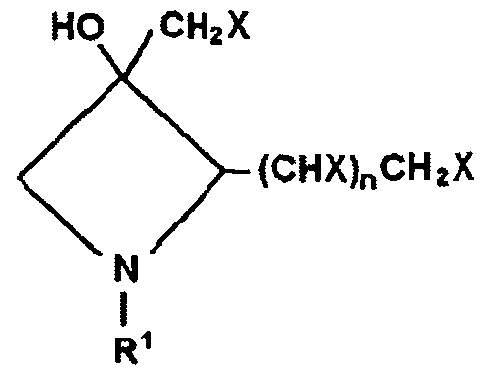
8. The compound of any one of the preceding claims wherein R1 is selected from H, CM8 alkyl (for example, Ci-g alkyl, e.g. Ci-6 alkyl), C2.is alkenyl (for example, C2-9 alkenyl, e.g. C2. 6 alkenyl) and C2-i8 alkynyl (for example, C2.9 alkynyl, e.g. C2.6 alkynyl). For example, R1 may be -H and R1 selected from C1-18 alkyl (for example, C1-9 alkyl, e.g. d-6 alkyl), C2.18 alkenyl (for example, C2-9 alkenyl, e.g. C2-6 alkenyl) and C2.i8 alkynyl (for example, C2-9 alkynyl, e.g. C2-e alkynyl).
9. The compound of any one of claims 1 to 7 wherein R1 is selected from H; C1-15 alkyl, C1-15 alkenyl or C1-15 alkynyl, optionally substituted with one or more R2; oxygen or an oxygen containing group such that the compound is an N-oxide; C(0)OR3; C(0)NR3R4; S02NR3; OH, OR3, or formyl.
10. The compound of any one of claims 1 to 7 wherein R1 is selected from C1-9 alkyl, optionally substituted with up to 6 OH, NR3R4, aryl, 0-C1-3 alkyl, 0-C1-3 alkenyl, C02H, NH(NH)NH2, C0NR3R4; C(0)OR3; C(0)NR3R4; or S02NR3. 11. The compound of any one of claims 1 to 7 wherein R1 is H.
12. The compound of any one of the preceding claims which: (a) is an an a-glucosidase inhibitor; or (b) is not an α-glucosidase inhibitor. 13. The compound of any one of the preceding claims which is not an a-glucosidase inhibitor.
14. The compound of any one of the preceding claims which does not inhibit cellular ER processing glucosidases.
15. The compound of any one of the preceding claims which exhibits less than 50% inhibition of cellular ER processing glucosidases at 1000 μΜ.
16. The compound of any one of the preceding claims which does not inhibit glucosylceramide synthase.
17. The compound of any one of the preceding claims which exhibits less than 50% inhibition of glucosylceramide synthase at 1000 μΜ. 18. The compound of any one of the preceding claims which does not inhibit disaccharidases, for example sucrase and/or maltase.
19. The compound of any one of the preceding claims which exhibits less than 50% inhibition of disaccharidases, for example sucrase and/or maltase, at 1000 μΜ.
20. The compound of any one of the preceding claims which does not inhibit lysosomal and/or non-lysosomal glucocerebrosidase.
21. The compound of any one of the preceding claims which exhibits less than 50% inhibition of lysosomal and/or non-lysosomal glucocerebrosidase at 1000 μΜ.
22. The compound of any one of the preceding claims which does not inhibit a- glucosidase I and/or II. 23. The compound of any one of the preceding claims which exhibits less than 50% inhibition of a-glucosidase I and/or II at 1000 μΜ.
24. The compound of any one of the preceding claims which does not exhibit inhibition of glycosidase activity sufficient to elicit gastric toxicity in humans.
25. The compound of any one of the preceding claims which does not inhibit the glycosidase enzymes listed in Table 1 herein.
26. The compound of any one of the preceding claims which exhibits less than 50% inhibition at 1000 μΜ of each of the glycosidase enzymes listed in Table 1 herein.
27. The compound of any one of the preceding claims which rescues mutant CFTR activity. 28. The compound of claim 13 which rescues AF508 CFTR activity.
29. The compound of any one of the preceding claims which is a CFTR pharmacoperone.
30. A composition comprising the compound of any one of the preceding claims.
The composition of claim 30 wherein the compound is substantially pure.
32. The composition of claims 30 or claim 31 which is a pharmaceutical composition.
33. The composition of claim 32 which further comprises a pharmaceutically acceptable excipient.
34. The composition of any one of claims 30 to 33 which is formulated for oral delivery.
35. The composition of any one of claims 30 to 34 which is formulated for delivery to the lung.
36. An inhalation device comprising the compound of any one of claims 1 to 29 or the composition of any one of claims 30 to 35.
37. The inhalation device of claim 36 wherein the compound or composition is present in the form of a solution, a suspension or a powder. 38. The inhalation device of claim 36 or 37 which is an MDI or nebulizer.
39. A composition comprising a compound of any one of claims 1 to 29 in combination with Λ Β-DNJ. 40. A pharmaceutical composition comprising a compound as defined in any one of claims 1 to 29 in combination with Λ/Β-DNJ.
41. A compound as defined in any one of claims 1 to 29 for use in combination therapy with Λ/Β-DNJ.
42. A combination comprising a compound as defined in any one of claims 1 to 29 and Λ/Β-DNJ.
43. The combination of claim 42 wherein the iminosugar and Λ/Β-DN J are physically associated.
44. The combination of claim 43 wherein the iminosugar and Λ/Β-DNJ are: (a) in admixture (for example within the same unit dose); (b) chemically/physicochemically linked (for example by crosslinking, molecular agglomeration or binding to a common vehicle moiety); (c) chemically/physicochemically co-packaged (for example, disposed on or within lipid
vesicles, particles (e.g. micro- or nanoparticles) or emulsion droplets); or (d) unmixed but co-packaged or co-presented (e.g. as part of an array of unit doses).
45. The combination of claim 42 wherein the compound and Λ/Β-DNJ are non-physically associated.
46. The combination of claim 45 wherein the combination comprises: (a) at least one of the compound and Λ/Β-DNJ together with instructions for their extemporaneous association to form a physical association; or (b) at least one of the compound and Λ/Β-DNJ together with instructions for combination therapy with the compound and M3-DNJ; or (c) at least one of the compound and Λ/Β-DNJ together with instructions for administration to a patient population in which either the compound and Λ/Β-DNJ have been (or are being) administered; or (d) at least one of the compound and Λ/Β-DNJ in an amount or in a form which is specifically adapted for use in combination.
47. The combination as defined in any one of claims 42 to 46: (a) in the form of a pharmaceutical pack, kit or patient pack; (b) in a pharmaceutical excipient; or (c) in unit dosage form. 48. A pharmaceutical composition comprising the combination as defined in any one of claims 42 to 46.
49. The compound, composition or device of any one of the preceding claims for use in therapy or prophylaxis.
50. The compound, composition or device of claim 49 for use in a method of treating or preventing: (a) infection; (b) immune disorders; (c) neoplasia; (d) an energy utilization disease; (e) a proteostatic disease; or (f) a lysosomal storage disorder. 51. The compound, composition or device of claim 26(a) wherein the infection is selected from: (a) a viral infection; (b) a bacterial infection; (c) a fungal infection; or (d) a protozoal infection.
52. The compound, composition or device of claim 51(a) wherein the viral infection is selected from: (a) a flaviviral infection (for example, HCV infection); (b) a retroviral infection (for example, HIV) or (c) an influenza infection. 53. The compound, composition or device of claim 50(c) wherein the neoplasia is selected from benign, pre-cancerous and malignant neoplasia, hyperlasia, metaplasia and dysplasia.
54. The invention of claim 53 wherein the malignant neoplasia is: (I) selected from: (a) carcinoma; (b) blastoma; (c) leukemia; (d) lymphoma; (e) myeloma; (f) sarcoma and (g) cancers of mixed type; or (II) is a carcinoma selected from carcinoma of the: bladder, breast (e.g. primary breast tumours, node-negative breast cancer, invasive duct adenocarcinomas of the breast and non-endometrioid breast cancers), colon (e.g.
colorectal carcinomas such as colon adenocarcinoma and colon adenoma), kidney, epidermis (e.g. malignant melanoma), liver, lung (e.g. adenocarcinoma, adrenocortical, nasopharyngeal, small cell lung cancer and non-small cell lung carcinomas), oesophagus, gall bladder, ovary, pancreas (e.g. exocrine pancreatic carcinoma), stomach, cervix, thyroid, prostate, gastrointestinal system (e.g. gastrointestinal stromal tumours) or skin (e.g. squamous cell carcinoma).
55. The compound, composition or device of claim 50(d) wherein the energy utilization disease is selected from: (a) disorders of homeostasis; (b) metabolic diseases; (c) dysfunction of sugar metabolism; (d) appetite disorders; (e) insulin resistance; (f) diabetes (e.g. type 1 or type 2 diabetes); (g) pre-diabetes; (h) metabolic syndrome; (i) obesity; (j) wasting syndromes (for example, cancer associated cachexia); (k) myopathies; (I) gastrointestinal disease; (m) growth retardation; (n) hypercholesterolemia; (o)
atherosclerosis; (p) age-associated metabolic dysfunction; (q) hyperglycaemia; (r) glucose intolerance; (s) hyperinsulinaemia; (t) glucosuria; (u) metabolic acidosis; (v) cataracts; (w) diabetic neuropathy; (x) diabetic nephropathy; (y) diabetic retinopathy; (z) macular degeneration; (aa) glomerulosclerosis; (bb) diabetic cardiomyopathy; (cc) impaired glucose metabolism; (dd) arthritis; (ee) hypertension; (ff) hyperlipidemia; (gg) osteoporosis; (hh) osteopenia; (ii) bone loss; (jj) brittle bone syndromes; (kk) acute coronary syndrome; (II) infertility; (mm) short bowel syndrome; (nn) chronic fatigue; (oo) eating disorders; (pp) intestinal motility dysfunction; (qq) sugar metabolism dysfunction; (rr) fatty liver; (ss) polycystic ovarian syndrome; (tt) hemochromatosis; and (uu) acanthosis nigricans.
56. The compound, composition or device of claim 50(e) wherein the proteostatic disease is cystic fibrosis. 57. The compound, composition or device of claim 50(f) wherein the lysosomal storage disorder is selected from: (a) Pompe disease (including infantile and late-onset forms); (b) Gaucher disease (including Type 1 , Type 2 and Type 3 Gaucher disease); (c) Fabry disease; (d) GMI-gangliosidosis; (e) Tay-Sachs disease; (f) Sandhoff disease; (g)
Niemann-Pick disease; (h) Krabbe disease:; (i) Farber disease; (j) Metachromatic leukodystrophy; (k) Hurler-Scheie disease; (I) Hunter disease; (m) Sanfilippo disease A, B, C or D; (n) Morquio disease A or B; (o) Maroteaux-Lamy disease; (p) Sly disease; (q) alpha-Mannosidosis; (r) beta-Mannosidosis; (s) Fucosidosis; (t) Sialidosis; and (u)
Schindler-Kanzaki disease. 58. A method of treating a disease or disorder as defined in any one of claims 50 to 57 (for example, cystic fibrosis) comprising administering an effective amount of the compound as defined in any one of claims 1 to 15 or composition as defined in any one of claims 16 to 21 to a subject in need thereof. 59. A method of treating a disease or disorder as defined in any one of claims 50 to 57 (for example, cystic fibrosis) comprising administering an effective amount of the compound as defined in any one of claims 1 to 29 or the composition of any one of claims 30 to 35 to a subject in need thereof.
Applications Claiming Priority (4)
| Application Number | Priority Date | Filing Date | Title |
|---|---|---|---|
| GB1001809.1 | 2010-02-04 | ||
| GBGB1001809.1A GB201001809D0 (en) | 2010-02-04 | 2010-02-04 | Novel iminosugar therapeutics |
| GBGB1006431.9A GB201006431D0 (en) | 2010-04-19 | 2010-04-19 | Novel iminosugar therapeutics |
| GB1006431.9 | 2010-04-19 |
Publications (2)
| Publication Number | Publication Date |
|---|---|
| WO2011095772A2 true WO2011095772A2 (en) | 2011-08-11 |
| WO2011095772A3 WO2011095772A3 (en) | 2011-10-20 |
Family
ID=43768884
Family Applications (1)
| Application Number | Title | Priority Date | Filing Date |
|---|---|---|---|
| PCT/GB2011/000139 Ceased WO2011095772A2 (en) | 2010-02-04 | 2011-02-03 | Novel iminosugar therapeutics |
Country Status (1)
| Country | Link |
|---|---|
| WO (1) | WO2011095772A2 (en) |
Cited By (2)
| Publication number | Priority date | Publication date | Assignee | Title |
|---|---|---|---|---|
| EP3318277A1 (en) | 2016-11-04 | 2018-05-09 | Institut du Cerveau et de la Moelle Epiniere-ICM | Inhibitors of glucosylceramide synthase for the treatment of motor neuron diseases |
| US11576924B2 (en) | 2017-05-12 | 2023-02-14 | Galectin Sciences, Llc | Compounds for the prevention and treatment of diseases and the use thereof |
Citations (3)
| Publication number | Priority date | Publication date | Assignee | Title |
|---|---|---|---|---|
| WO2001010429A2 (en) | 1999-08-10 | 2001-02-15 | The Chancellor, Masters, And Scholars Of The University Of Oxford | Long chain n-alkyl compounds and oxa-derivatives thereof and use as antiviral compositions |
| WO2005046672A2 (en) | 2003-11-07 | 2005-05-26 | Centre National De La Recherche Scientifique | Use of glucosidase inhibitors for therapy of mucovisidosis |
| WO2007123403A1 (en) | 2006-04-24 | 2007-11-01 | Academisch Medisch Centrum | Improved treatment of cystic fibrosis |
Family Cites Families (1)
| Publication number | Priority date | Publication date | Assignee | Title |
|---|---|---|---|---|
| US6515013B2 (en) * | 2000-07-13 | 2003-02-04 | Abbott Laboratories | 1,3-disubstituted and 1,3,3-trisubstituted pyrrolidines as histamine-3 receptor ligands and their therapeutic applications |
-
2011
- 2011-02-03 WO PCT/GB2011/000139 patent/WO2011095772A2/en not_active Ceased
Patent Citations (3)
| Publication number | Priority date | Publication date | Assignee | Title |
|---|---|---|---|---|
| WO2001010429A2 (en) | 1999-08-10 | 2001-02-15 | The Chancellor, Masters, And Scholars Of The University Of Oxford | Long chain n-alkyl compounds and oxa-derivatives thereof and use as antiviral compositions |
| WO2005046672A2 (en) | 2003-11-07 | 2005-05-26 | Centre National De La Recherche Scientifique | Use of glucosidase inhibitors for therapy of mucovisidosis |
| WO2007123403A1 (en) | 2006-04-24 | 2007-11-01 | Academisch Medisch Centrum | Improved treatment of cystic fibrosis |
Non-Patent Citations (28)
| Title |
|---|
| "Goodman & Goldman's The Pharmacological Basis of Therapeutics", 1996, APPENDIX, pages: 1707 - 1711 |
| "Handbook of Pharmaceutical Excipients", 1999, AMERICAN PHARMACEUTICAL ASSOCIATION |
| "Pharmaceutical Dosage Forms", 1980, MARCEL DECKER |
| "Remington: The Science and Practice of Pharmacy", 2000, LIPPINCOTT, WILLIAMS AND WILKINS |
| ASANO, N., CELL. MOL. LIFE SCI., vol. 66, 2009, pages 1479 - 1492 |
| BOIS ET AL., TETRAHEDRON LETTERS, vol. 37, 1996, pages 2097 - 2100 |
| BOLS ET AL., TETRAHEDRON LETTERS, vol. 37, 1996, pages 2097 - 2100 |
| BUTTERS ET AL., TETRAHEDRON ASYMM., vol. 11, 2000, pages 113 - 125 |
| COX ET AL.: "Iminosugars From Synthesis to Therapeutic Applications", 2007, JOHN WILEY & SONS, article "Medicinal use of iminosugars", pages: 318 - 319 |
| DALL'ASTA ET AL., EXP. CELL RES., vol. 231, 1997, pages 260 - 268 |
| ENGLEBIENNE, MED. CHEM., vol. 1, no. 3, 2005, pages 215 - 226 |
| HAKANSSON ET AL., TETRAHEDRON LETT., vol. 49, 2008, pages 179 - 184 |
| ICHIKAWA ET AL., J. AM. CHEM. SOC., vol. 120, 1998, pages 3007 - 3018 |
| ICHIKAWA ET AL., TETRAHEDRON LETT., vol. 36, 1995, pages 4585 - 4586 |
| J. CHEM. SOC., PERKIN TRANS., vol. 1, 1989, pages 1065 |
| JESPERSON ET AL., ANGEW. CHEM. INT. ED., vol. 33, 1994, pages 1778 - 1779 |
| KAMMOUNI ET AL., RESP. CELL MOL. BIOL., vol. 20, no. 4, 1999, pages 684 - 91 |
| KIBBE ET AL.: "Handbook of Pharmaceutical Excipients", 1999, AMERICAN PHARMACEUTICAL ASSOCIATION |
| KUSHNER ET AL., CAN J PHYSIOL PHARMACOL., vol. 77, no. 2, 1999, pages 79 - 88 |
| LI, TETRAHEDRON, vol. 65, 2009, pages 3717 - 3727 |
| LIU ET AL., J. CARBOHYDR. CHEM., vol. 23, 2004, pages 223 - 238 |
| MELLOR ET AL., BIOCHEM. J., vol. 366, 2002, pages 225 - 233 |
| NOREZ ET AL., AM. J. RESPIR. CELL MOL. BIOL., vol. 41, no. 2, 2009, pages 217 - 225 |
| NOREZ ET AL., FEBS LETT., vol. 580, 2006, pages 2081 - 2086 |
| RAWLINGS ET AL., CHEMBIOCHEM, vol. 10, 2009, pages 1101 - 1105 |
| SOHOEL ET AL., J. CHEM. SOC., PERKIN TRANS., vol. 1, 2001, pages 1584 - 1585 |
| TACKE; ZILCH, ENDEAVOUR, NEW SERIES, vol. 10, 1986, pages 191 - 197 |
| TETRAHEDRON, vol. 51, 1995, pages 959 - 974 |
Cited By (4)
| Publication number | Priority date | Publication date | Assignee | Title |
|---|---|---|---|---|
| EP3318277A1 (en) | 2016-11-04 | 2018-05-09 | Institut du Cerveau et de la Moelle Epiniere-ICM | Inhibitors of glucosylceramide synthase for the treatment of motor neuron diseases |
| WO2018083223A1 (en) | 2016-11-04 | 2018-05-11 | Icm (Institut Du Cerveau Et De La Moelle Épinière) | Inhibitors of gangliosides metabolism for the treatment of motor neuron diseases |
| US11065238B2 (en) | 2016-11-04 | 2021-07-20 | Icm (Institut Du Cerveau Et De La Moelle Épinière) | Inhibitors of gangliosides metabolism for the treatment of motor neuron diseases |
| US11576924B2 (en) | 2017-05-12 | 2023-02-14 | Galectin Sciences, Llc | Compounds for the prevention and treatment of diseases and the use thereof |
Also Published As
| Publication number | Publication date |
|---|---|
| WO2011095772A3 (en) | 2011-10-20 |
Similar Documents
| Publication | Publication Date | Title |
|---|---|---|
| EP3440057B1 (en) | Silicone atoms containing ivacaftor analogues | |
| EP3691638B1 (en) | Compounds, compositions and methods for increasing cftr activity | |
| EP3472156B1 (en) | Compounds, compositions, and methods for increasing cftr activity | |
| KR102677444B1 (en) | Compounds, compositions, and methods for increasing cftr activity | |
| CN1910150A (en) | Piperidine derivatives as GCS inhibitors | |
| Lahiri et al. | Synthesis of isofagomine–pyrrolidine hybrid sugars and analogues of (−)-steviamine and (+)-hyacinthacine C5 using 1, 3-dipolar cycloaddition reactions | |
| US12428373B2 (en) | Dopamine D2 receptor ligands | |
| Li et al. | Gem-difluoromethylated and trifluoromethylated derivatives of DMDP-related iminosugars: Synthesis and glycosidase inhibition | |
| CN100422149C (en) | 2-(Hydroxymethyl)-3,4,5-trihydroxy-1-benzoylpiperidine derivatives as glucosylceramide inhibitors | |
| BRPI0616111A2 (en) | carboxamide compound, its use, combinations and intermediates | |
| WO2011095772A2 (en) | Novel iminosugar therapeutics | |
| KR20100017879A (en) | New method for preparing isofagomine and its derivatives | |
| EP2590985B1 (en) | Novel spiroheterocyclic compounds as mglu5 antagonists | |
| CN104860847B (en) | Dimer of rivastigmine, caffeic acid and ferulic acid, preparation method and pharmaceutical composition thereof | |
| WO2011131926A1 (en) | Novel iminosugar combinations | |
| WO2011086347A1 (en) | Pyrrolidine iminosugars used in the treatment of cystic fibrosis | |
| CN110128315A (en) | Compound and its preparation method and application, glycosidase inhibitor | |
| CN101141959B (en) | 2, 5-disubstituted benzophenone derivatives as glycine transporter 1(GlyT-1) inhibitors for the treatment of neurological and neuropsychiatric disorders | |
| US20140296288A1 (en) | Imino-sugar c-glycosides, preparation and use thereof | |
| KR20060052909A (en) | Benzylamine derivatives | |
| US20250092069A1 (en) | Silyl-lipid cannabinoids with enhanced biological activity | |
| HK40004165B (en) | Silicone atoms containing ivacaftor analogues | |
| HK40003229A (en) | Substituted ureas and methods of making and using same | |
| HK40003229B (en) | Substituted ureas and methods of making and using same | |
| NZ622539A (en) | Diphenoxyphenyl derivative |
Legal Events
| Date | Code | Title | Description |
|---|---|---|---|
| 121 | Ep: the epo has been informed by wipo that ep was designated in this application |
Ref document number: 11706301 Country of ref document: EP Kind code of ref document: A1 |
|
| NENP | Non-entry into the national phase |
Ref country code: DE |
|
| 122 | Ep: pct application non-entry in european phase |
Ref document number: 11706301 Country of ref document: EP Kind code of ref document: A2 |