WO2011028094A1 - Linear atomic quantum coupler - Google Patents
Linear atomic quantum coupler Download PDFInfo
- Publication number
- WO2011028094A1 WO2011028094A1 PCT/MY2010/000158 MY2010000158W WO2011028094A1 WO 2011028094 A1 WO2011028094 A1 WO 2011028094A1 MY 2010000158 W MY2010000158 W MY 2010000158W WO 2011028094 A1 WO2011028094 A1 WO 2011028094A1
- Authority
- WO
- WIPO (PCT)
- Prior art keywords
- waveguides
- modes
- coupler
- linear atomic
- atomic quantum
- Prior art date
- Legal status (The legal status is an assumption and is not a legal conclusion. Google has not performed a legal analysis and makes no representation as to the accuracy of the status listed.)
- Ceased
Links
Classifications
-
- G—PHYSICS
- G02—OPTICS
- G02F—OPTICAL DEVICES OR ARRANGEMENTS FOR THE CONTROL OF LIGHT BY MODIFICATION OF THE OPTICAL PROPERTIES OF THE MEDIA OF THE ELEMENTS INVOLVED THEREIN; NON-LINEAR OPTICS; FREQUENCY-CHANGING OF LIGHT; OPTICAL LOGIC ELEMENTS; OPTICAL ANALOGUE/DIGITAL CONVERTERS
- G02F3/00—Optical logic elements; Optical bistable devices
-
- G—PHYSICS
- G02—OPTICS
- G02B—OPTICAL ELEMENTS, SYSTEMS OR APPARATUS
- G02B6/00—Light guides; Structural details of arrangements comprising light guides and other optical elements, e.g. couplings
- G02B6/24—Coupling light guides
- G02B6/26—Optical coupling means
- G02B6/28—Optical coupling means having data bus means, i.e. plural waveguides interconnected and providing an inherently bidirectional system by mixing and splitting signals
- G02B6/2804—Optical coupling means having data bus means, i.e. plural waveguides interconnected and providing an inherently bidirectional system by mixing and splitting signals forming multipart couplers without wavelength selective elements, e.g. "T" couplers, star couplers
- G02B6/2821—Optical coupling means having data bus means, i.e. plural waveguides interconnected and providing an inherently bidirectional system by mixing and splitting signals forming multipart couplers without wavelength selective elements, e.g. "T" couplers, star couplers using lateral coupling between contiguous fibres to split or combine optical signals
-
- G—PHYSICS
- G02—OPTICS
- G02B—OPTICAL ELEMENTS, SYSTEMS OR APPARATUS
- G02B6/00—Light guides; Structural details of arrangements comprising light guides and other optical elements, e.g. couplings
- G02B6/24—Coupling light guides
- G02B6/42—Coupling light guides with opto-electronic elements
- G02B6/43—Arrangements comprising a plurality of opto-electronic elements and associated optical interconnections
-
- G—PHYSICS
- G02—OPTICS
- G02F—OPTICAL DEVICES OR ARRANGEMENTS FOR THE CONTROL OF LIGHT BY MODIFICATION OF THE OPTICAL PROPERTIES OF THE MEDIA OF THE ELEMENTS INVOLVED THEREIN; NON-LINEAR OPTICS; FREQUENCY-CHANGING OF LIGHT; OPTICAL LOGIC ELEMENTS; OPTICAL ANALOGUE/DIGITAL CONVERTERS
- G02F1/00—Devices or arrangements for the control of the intensity, colour, phase, polarisation or direction of light arriving from an independent light source, e.g. switching, gating or modulating; Non-linear optics
- G02F1/01—Devices or arrangements for the control of the intensity, colour, phase, polarisation or direction of light arriving from an independent light source, e.g. switching, gating or modulating; Non-linear optics for the control of the intensity, phase, polarisation or colour
- G02F1/011—Devices or arrangements for the control of the intensity, colour, phase, polarisation or direction of light arriving from an independent light source, e.g. switching, gating or modulating; Non-linear optics for the control of the intensity, phase, polarisation or colour in optical waveguides, not otherwise provided for in this subclass
- G02F1/0115—Devices or arrangements for the control of the intensity, colour, phase, polarisation or direction of light arriving from an independent light source, e.g. switching, gating or modulating; Non-linear optics for the control of the intensity, phase, polarisation or colour in optical waveguides, not otherwise provided for in this subclass in optical fibres
- G02F1/0118—Devices or arrangements for the control of the intensity, colour, phase, polarisation or direction of light arriving from an independent light source, e.g. switching, gating or modulating; Non-linear optics for the control of the intensity, phase, polarisation or colour in optical waveguides, not otherwise provided for in this subclass in optical fibres by controlling the evanescent coupling of light from a fibre into an active, e.g. electro-optic, overlay
-
- G—PHYSICS
- G02—OPTICS
- G02F—OPTICAL DEVICES OR ARRANGEMENTS FOR THE CONTROL OF LIGHT BY MODIFICATION OF THE OPTICAL PROPERTIES OF THE MEDIA OF THE ELEMENTS INVOLVED THEREIN; NON-LINEAR OPTICS; FREQUENCY-CHANGING OF LIGHT; OPTICAL LOGIC ELEMENTS; OPTICAL ANALOGUE/DIGITAL CONVERTERS
- G02F1/00—Devices or arrangements for the control of the intensity, colour, phase, polarisation or direction of light arriving from an independent light source, e.g. switching, gating or modulating; Non-linear optics
- G02F1/29—Devices or arrangements for the control of the intensity, colour, phase, polarisation or direction of light arriving from an independent light source, e.g. switching, gating or modulating; Non-linear optics for the control of the position or the direction of light beams, i.e. deflection
- G02F1/31—Digital deflection, i.e. optical switching
- G02F1/313—Digital deflection, i.e. optical switching in an optical waveguide structure
- G02F1/3137—Digital deflection, i.e. optical switching in an optical waveguide structure with intersecting or branching waveguides, e.g. X-switches and Y-junctions
Definitions
- the present invention relates to a device and method to develop a linear atomic quantum coupler.
- Quantum couplers have attracted much attention in the framework of the optics communication and quantum computing networks, which require data transmission and ultra-high-speed data processing. Furthermore, directional couplers have been experimentally implemented, e.g. in planar structures, dual optical fibres and certain organic polymers.
- JCM The interaction between radiation field and matter (i.e. atom), namely, Jaynes-Cummings model (JCM), is important in quantum optics and quantum information theories.
- the simplest form of the JCM is the two-level atom interacting with the single-mode of the radiation field.
- the JCM is a rich source for the nonclassical effects, e.g. the revival-collapse phenomenon (RCP), sub-Poissonian statistics and squeezing.
- RCP revival-collapse phenomenon
- sub-Poissonian statistics sub-Poissonian statistics and squeezing.
- the JCM has been experimentally implemented by various means, e.g. one-atom mazer, the NMR refocusing, a Rydberg atom in a superconducting cavity, the trapped ion and the micromaser.
- Various extensions to the JCM have been reported including the two two-level atoms interacting with the radiation field(s).
- the trapped atoms or molecules are promising systems for quantum information processing and communications. They can serve as convenient and robust quantum memories for photons, providing thereby an interface between static and flying qubits.
- the subject of coupling cold atoms to the radiation field sustained by an optical waveguide has already appeared in various contexts.
- hollow optical glass fibers were used to guide atoms over long distances, especially, employing red detuned light field filling out the hollow core.
- Substrate based atom waveguide can also be realized by using guided two-color evanescent light fields.
- the coupling of atomic dipoles to the evanescent field of tapered optical fibers has been previously demonstrated.
- the optical nanofibers can manipulate and probe singleatom fluorescence.
- the optical fiber carries a red-detuned light and a blue-detuned light, with both modes far from resonance.
- both input light fields are circularly polarized, a set of trapping minima of the total potential in the transverse plane appears as a ring around the fiber. This design allows confinement of atoms to a cylindrical shell around the fiber.
- sub-wavelength diameter optical fibers can be used to detect, spectroscopically investigate, and mechanically manipulate extremely small samples of cold atoms.
- on resonance as little as two atoms on average, coupled to the evanescent field surrounding the fiber, already absorbed the total power transmitted through the fiber.
- By optically trapping one or more atoms around such fibers it should become possible to deterministically couple the atoms to the guided fiber mode and to even mediate a coupling between two simultaneously trapped atoms. This leads to a number of applications, e.g., in the context of quantum information processing, high precision measurements, single-photon generation in optical fiber or EIT-based parametric four-wave mixing using a few atoms around optical nanofibers.
- the present invention is a device for a linear atomic quantum coupler.
- the device comprises a plurality of mode sources and a plurality of waveguides, characterized in that the plurality of waveguides are placed in close proximity to allow exchanging of energy via evanescent waves and the plurality of waveguides comprises at least one localized and/or trapped atom, wherein the plurality of mode sources comprises means for generating a plurality of modes, and the plurality of waveguides comprises means for propagating the plurality of modes through the plurality of waveguides.
- the present invention is a method for constructing a linear atomic quantum coupler.
- the method comprises generating a plurality of modes, placing a plurality of waveguides in close proximity to allow exchanging of energy via evanescent waves, localizing and/or trapping at least one atom in the plurality of waveguides and propagating the plurality of modes through the plurality of waveguides.
- FIG. 1 illustrates a flowchart of a method for constructing a linear atomic quantum coupler.
- FIG. 2 illustrates a device for a linear atomic quantum coupler.
- FIG. 3 illustrates the evolution of the against the interaction time
- FIG. 4 illustrates the evolution of the single-mode second order correlation function as indicated against the interaction time with (a), (1 , 0.6) (b), (2, 3) (c)-
- the present invention relates to a device and method for a linear atomic quantum coupler.
- this specification will describe the present invention according to the preferred embodiments of the present invention.
- limiting the description to the preferred embodiments of the invention is merely to facilitate discussion of the present invention and it is envisioned that those skilled in the art may devise various modifications and equivalents without departing from the scope of the appended claims.
- FIG. 1 illustrates a flowchart of the method for constructing the linear atomic quantum coupler.
- FIG. 2 illustrates the device for the linear atomic quantum coupler.
- the device (200) for a linear atomic quantum coupler comprises a plurality of mode sources and a plurality of waveguides, characterized in that the plurality of waveguides are placed in close proximity to allow exchanging of energy via evanescent waves and the plurality of waveguides comprises at least one localized and/or trapped atom, wherein the plurality of mode sources comprises means for generating a plurality of modes, and the plurality of waveguides comprises means for propagating the plurality of modes through the plurality of waveguides.
- the method (100) for constructing a linear atomic quantum coupler comprises generating a plurality of modes (102), placing a plurality of waveguides in close proximity (104) to allow exchanging of energy via evanescent waves, localizing and/or trapping at least one atom in the plurality of waveguides (106) and propagating the plurality of modes through the plurality of waveguides (108).
- the description and illustration herein is provided such that the plurality of mode sources further comprises at least two mode sources (202, 204) and the plurality of waveguides further comprises at least two waveguides (206, 208) for ease of explanation.
- the linear atomic quantum coupler of the present invention consists of two waveguides (206, 208), each of which includes a localized and/or a trapped atom (210, 212).
- the wavegudies (206, 208) are placed close enough to each other to allow interchanging energy between them.
- one mode propagates along and interacts with the atom inside in a standard way as the Jaynes-Cummings model (JCM).
- JCM Jaynes-Cummings model
- the atom-mode in each waveguide interacts with the other one via the evanescent wave.
- the waveguides are placed in close proximity to allow exchanging of energy via evanescent waves and the rate of the exchanging of energy is controlled by a flux intensity of the mode sources.
- ⁇ is the atom-field coupling constant in the first (second) waveguide.
- the interaction between the modes in the two waveguides occurs through the evanescent wave with the coupling constant .
- This constant is responsible for the switching mechanism between the waveguides and hence it plays an essential role in the behavior of the linear atomic quantum coupler.
- the switching term is obtained by applying the RWA in each individual waveguide.
- the device for the linear atomic quantum coupler of the present invention further comprises a plurality of detectors (214, 216) comprising means for measuring output field from the plurality of modes propagating through the plurality of waveguides.
- the fields exited from the coupler can be examined as single or compound modes by means of homodyne detection to observe the squeezing of vacuum fluctuations, or by means a set of photodetectors (214, 216) to measure photon antibunchibng and sub-Poissonian photon statistics in the standard ways.
- the linear atomic quantum coupler of the present invention generates nonclassical effect and reduces noise in the output field.
- the wave function for the Hamiltonian (1 ) is further evaluated. According to one embodiment of the present invention, the description herein is provided such that the two modes and atoms are initially prepared in the coherent states and in the excited atomic states
- the dynamical wave function describing the device can be expressed as:
- the atoms are initially prepared in
- e,,e 2 ) , and in this case the device reduces to the dark state, where Him e,,e 2 ) 0 . These states do not evolve in time. This property has been exploited in the quantum clock synchronization.
- the atoms are initially prepared in
- the device exhibits atomic trapping, i.e.
- the device is able to generate nonclassical effects, in particular, in the quantities, which depend on the off-diagonal elements of the density matrix such as squeezing.
- the linear atomic quantum coupler of the present invention is able to switch the nonclassical effects from one waveguide to another based on the values of the interaction parameters. This is remarkable from (12), where the mean-photon number in the second waveguide c an ⁇ ⁇ RCP even though the second mode is initially in vacuum state.
- the density matrix of the second mode takes the form of:
- ⁇ C 2n ⁇ 2 is the photon-number distribution of the even coherent sate. From (11), squeezing cannot be switched to the second mode. Nevertheless, if the second mode is prepared in the coherent state, it can exhibit squeezing. In this case, the source of the nonclassical effects could be the switching mechanism between the waveguides or the nature of the atom-field interaction.
- FIG. 3 illustrates the evolution of the 0> ⁇
- FIG. 4 illustrates the evolution of the single-mode second order correlation function as indicated against the interaction time T (a), (1, 0.6) (b), (2, 3) (c)-(d).
- Atomic inversion of the standard JCM is well known in quantum optics by exhibiting RCP.
- the RCP has a nonclassical origin and reflects the nature of the statistics of the radiation field.
- the evolution of the atomic inversion has been realized via, e.g., the one-atom mazer and using technique similar to that of the NMR refocusing.
- the behavior of the linear atomic quantum coupler is further investigated by studying the evolution of the atomic inversions and the second-order correlation functions.
- the device includes two atoms, there will be two types of the atomic inversion, namely,
- the inversions reduce to that of the standard JCM (see FIG. 3(a)).
- the revival patterns occur in the atomic inversion over certain period of the interaction time, afterward they interfere providing chaotic behavior. Additionally, the revival time is connected with the amplitude ⁇ through the relation
- FIG. 3(b)-(d) Three cases are considered based on the relationship between the strength of the switching mechanisms in and between the waveguides, namely, Comparisons between FIGs. 3(b)-(d) and FIG. 3(a) are instructive. From FIG. 3(b) it can be observed that the atomic inversion, after the zero and first revival patterns, exhibits long series of the subsidiary-revival patterns (see the inset in FIG. 3(b)). This behavior is completely different from that of the JCM. This indicates that the nonclassical effects generated by the linear atomic quantum coupler of the present invention can sustain for an interaction time longer than that of the JCM.
- the subsidiary-revival patterns have been observed for the JCM against the squeezed coherent state. This has been explained in relation to the photon-number distribution of the initial states. More illustratively, the photon-number distributions of the squeezed states exhibit many peaks structure, each of which gives its own revival patterns in the evolution of the atomic inversion. These patterns interfere with each other to produce these subsidiary- revival patterns. Nevertheless, for the device under consideration the occurrence of these patterns is related to the switching mechanism between the waveguides (compare FIGs. 3(a) and (b)). This mechanism reflects itself in very complicated Rabi oscillations ⁇ ⁇ as well as in the double summations in the atomic inversions formulae (12). FIG. 3(c) presents the case when the coupling constants are different. It is obvious that the RCP is still remarkable and the subsidiary revivals are smoothly washed out compared to those in FIG. 3(b).
- FIG. 3(d) This indicates that the switching mechanism between the waveguides plays an important role in the behavior of the the linear atomic quantum coupler of the present invention.
- the second-order correlation functions for the single-mode case is defined as:
- the second-order correlation function can be measured by a set of two detectors, e.g. the standard Hanbury Brown-Twiss coincidence arrangement. For the device under consideration, this quantity is plotted in FIG. 4 for the given values of the interaction parameters. From FIG. 4 it is obvious that the linear atomic quantum coupler of the present invention is able to generate long-lived sub-Piossonian effects, i.e.
- FIG. 4(a) presents the well-known shape of the second-order function of the standard JCM.
- the long RCP is dominant in the evolution of the .
- the shape of this phenomenon is quite different from that in the corresponding atomic inversion (compare FIG. 3(b) to FIG. 4(b)).
- the revival times in the two quantities are different.
- the number of the subsidiary revivals in the atomic inversion is greater than that in the corresponding g
- the linear atomic quantum coupler of the present invention can generate nonclassical effects. Nevertheless, the switching mechanism in the former is more effective than that in the latter. Furthermore, the behavior of the linear atomic quantum coupler of the present invention is sensitive to the types of the initial atomic states. The device of the linear atomic quantum coupler of the present invention is able to produce the results of the two-mode JCM under certain conditions. Additionally, the evolution of the atomic inversions and second-order correlation functions exhibits RCP, long RCP and long subsidiary-revival patterns based on the values of the coupling constants. Second-order correlation function can exhibit long-lived nonclassical effects.
Landscapes
- Physics & Mathematics (AREA)
- General Physics & Mathematics (AREA)
- Nonlinear Science (AREA)
- Optics & Photonics (AREA)
- Optical Modulation, Optical Deflection, Nonlinear Optics, Optical Demodulation, Optical Logic Elements (AREA)
- Optical Integrated Circuits (AREA)
Abstract
A device (200) and method (100) to develop a linear atomic quantum coupler comprising a plurality of mode sources and a plurality of waveguides, characterized in that the plurality of waveguides are placed in close proximity to allow exchanging of energy via evanescent waves and the plurality of waveguides comprises at least one localized and/or trapped atom, wherein the plurality of mode sources comprises means for generating a plurality of modes, and the plurality of waveguides comprises means for propagating the plurality of modes through the plurality of waveguides.
Description
LINEAR ATOMIC QUANTUM COUPLER
FIELD OF INVENTION The present invention relates to a device and method to develop a linear atomic quantum coupler.
BACKGROUND ART Quantum couplers have attracted much attention in the framework of the optics communication and quantum computing networks, which require data transmission and ultra-high-speed data processing. Furthermore, directional couplers have been experimentally implemented, e.g. in planar structures, dual optical fibres and certain organic polymers.
The interaction between radiation field and matter (i.e. atom), namely, Jaynes-Cummings model (JCM), is important in quantum optics and quantum information theories. The simplest form of the JCM is the two-level atom interacting with the single-mode of the radiation field. The JCM is a rich source for the nonclassical effects, e.g. the revival-collapse phenomenon (RCP), sub-Poissonian statistics and squeezing. Furthermore, the JCM has been experimentally implemented by various means, e.g. one-atom mazer, the NMR refocusing, a Rydberg atom in a superconducting cavity, the trapped ion and the micromaser. Various extensions to the JCM have been reported including the two two-level atoms interacting with the radiation field(s).
The trapped atoms or molecules are promising systems for quantum information processing and communications. They can serve as convenient and robust quantum memories for
photons, providing thereby an interface between static and flying qubits. The subject of coupling cold atoms to the radiation field sustained by an optical waveguide has already appeared in various contexts. For example, hollow optical glass fibers were used to guide atoms over long distances, especially, employing red detuned light field filling out the hollow core. Substrate based atom waveguide can also be realized by using guided two-color evanescent light fields.
Moreover, the coupling of atomic dipoles to the evanescent field of tapered optical fibers has been previously demonstrated. In this respect the optical nanofibers can manipulate and probe singleatom fluorescence. Moreover, it has been suggested that using a two-color evanescent light field around a subwavelength-diameter fiber traps and guides atoms. The optical fiber carries a red-detuned light and a blue-detuned light, with both modes far from resonance. When both input light fields are circularly polarized, a set of trapping minima of the total potential in the transverse plane appears as a ring around the fiber. This design allows confinement of atoms to a cylindrical shell around the fiber.
Additionally, it has been shown that sub-wavelength diameter optical fibers can be used to detect, spectroscopically investigate, and mechanically manipulate extremely small samples of cold atoms. In particular, on resonance, as little as two atoms on average, coupled to the evanescent field surrounding the fiber, already absorbed the total power transmitted through the fiber. By optically trapping one or more atoms around such fibers, it should become possible to deterministically couple the atoms to the guided fiber mode and to even mediate a coupling between two simultaneously trapped atoms. This leads to a number of applications, e.g., in the context of quantum information processing, high precision measurements, single-photon generation in optical fiber or EIT-based parametric four-wave mixing using a few atoms around optical nanofibers.
SUMMARY OF INVENTION
In one embodiment of the present invention is a device for a linear atomic quantum coupler. The device comprises a plurality of mode sources and a plurality of waveguides, characterized in that the plurality of waveguides are placed in close proximity to allow exchanging of energy via evanescent waves and the plurality of waveguides comprises at least one localized and/or trapped atom, wherein the plurality of mode sources comprises means for generating a plurality of modes, and the plurality of waveguides comprises means for propagating the plurality of modes through the plurality of waveguides.
In another embodiment of the present invention is a method for constructing a linear atomic quantum coupler. The method comprises generating a plurality of modes, placing a plurality of waveguides in close proximity to allow exchanging of energy via evanescent waves, localizing and/or trapping at least one atom in the plurality of waveguides and propagating the plurality of modes through the plurality of waveguides.
The present invention consists of features and a combination of parts hereinafter fully described and illustrated in the accompanying drawings, it being understood that various changes in the details may be made without departing from the scope of the invention or sacrificing any of the advantages of the present invention.
BRIEF DESCRIPTION OF THE ACCOMPANYING DRAWINGS
To further clarify various aspects of some embodiments of the present invention, a more particular description of the invention will be rendered by references to specific embodiments thereof, which are illustrated, in the appended drawings. It is appreciated that these drawings depict only typical embodiments of the invention and are therefore not to be considered limiting of its scope. The invention will be described and explained with additional specificity and detail through the accompanying drawings in which: FIG. 1 illustrates a flowchart of a method for constructing a linear atomic quantum coupler.
FIG. 2 illustrates a device for a linear atomic quantum coupler.
FIG. 3 illustrates the evolution of the against the interaction time with


FIG. 4 illustrates the evolution of the single-mode second order correlation function as indicated against the interaction time with (a), (1 , 0.6) (b), (2, 3) (c)-


(d).
DETAILED DESCRIPTION OF THE PREFERRED EMBODIMENTS
The present invention relates to a device and method for a linear atomic quantum coupler. Hereinafter, this specification will describe the present invention according to the preferred embodiments of the present invention. However, it is to be understood that limiting the description to the preferred embodiments of the invention is merely to facilitate discussion of the present invention and it is envisioned that those skilled in the art may devise various modifications and equivalents without departing from the scope of the appended claims.
Reference is first made to FIGs. 1 and 2 collectively. FIG. 1 illustrates a flowchart of the method for constructing the linear atomic quantum coupler. FIG. 2 illustrates the device for the linear atomic quantum coupler.
The device (200) for a linear atomic quantum coupler comprises a plurality of mode sources and a plurality of waveguides, characterized in that the plurality of waveguides are placed in close proximity to allow exchanging of energy via evanescent waves and the plurality of waveguides comprises at least one localized and/or trapped atom, wherein the plurality of mode sources comprises means for generating a plurality of modes, and the plurality of waveguides comprises means for propagating the plurality of modes through the plurality of waveguides.
The method (100) for constructing a linear atomic quantum coupler according to the embodiments of the present invention comprises generating a plurality of modes (102), placing a plurality of waveguides in close proximity (104) to allow exchanging of energy via evanescent waves, localizing and/or trapping at least one atom in the plurality of waveguides (106) and propagating the plurality of modes through the plurality of waveguides (108).
The description and illustration herein is provided such that the plurality of mode sources further comprises at least two mode sources (202, 204) and the plurality of waveguides further comprises at least two waveguides (206, 208) for ease of explanation. The linear atomic quantum coupler of the present invention consists of two waveguides (206, 208), each of which includes a localized and/or a trapped atom (210, 212). The wavegudies (206, 208) are placed close enough to each other to allow interchanging energy between them. In each waveguide one mode propagates along and interacts with the atom inside in a standard way as the Jaynes-Cummings model (JCM). The atom-mode in each waveguide interacts with the other one via the evanescent wave.
According to the embodiments of the present invention, the waveguides are placed in close proximity to allow exchanging of energy via evanescent waves and the rate of the exchanging of energy is controlled by a flux intensity of the mode sources.
In the framework of the rotating wave approximation (RWA) the Hamiltonian describing the linear atomic quantum coupler can be expressed as:

where and are the free and interaction parts of the Hamiltonian, and are


 the Pauli spin operators of the yth atom is the annihilation (creation)

operator of the y'th-mode with the frequency a>} and ωα is the atomic transition frequency
(considering that the frequencies of the two atoms are equal) and

Furthermore, the switching term is obtained by applying the RWA in each individual waveguide. In other words, such type of js non.COnservative

and then it is cancelled out. Finally, when the atoms (fields) are treated classically the Hamiltonian (1 ) tends to that of the linear directional coupler (two-atom interaction).
The device for the linear atomic quantum coupler of the present invention further comprises a plurality of detectors (214, 216) comprising means for measuring output field from the plurality of modes propagating through the plurality of waveguides. The fields exited from the coupler can be examined as single or compound modes by means of homodyne detection to observe the squeezing of vacuum fluctuations, or by means a set of photodetectors (214, 216) to measure photon antibunchibng and sub-Poissonian photon statistics in the standard ways. The linear atomic quantum coupler of the present invention generates nonclassical effect and reduces noise in the output field. The wave function for the Hamiltonian (1 ) is further evaluated. According to one embodiment of the present invention, the description herein is provided such that the two modes and atoms are initially prepared in the coherent states and in the excited atomic states

respectively for ease of explanation. For resonance case 2 Ά can easily

 proven that
Under these conditions, the dynamical wave function describing the device can be expressed as:


where |g) stands for atomic ground state. From the Schrodinger equation we obtain the following system of differential equations:


From (4) it can be easily obtained that:

This equation can be easily solved. By means of the initial conditions stated above the exact forms of the coefficients Xj can be expressed as:

w

It is obvious that the Rabi oscillation in the linear atomic quantum coupler is more complicated than that of the JCM. From the solution (6) different limits can be checked. For instance, when (Α2, λ3)→ (0, 0) (λ3→ 0) tne coefficients (6) reduce to those of the standard JCM (two decoupled JCM). Moreover, when (^1' ^2) → (°' °) the device reduces to a simple form, which is in good correspondence with the conventional coupler. Nevertheless, the linear atomic quantum coupler of the present invention, in this case, is a rich source for the nonclassical effects, which depend on the types of initial atomic states.
According to other embodiments of the present invention, further three cases of the two modes and atoms are discussed herein. Firstly, the atoms are initially prepared in |e,,e2) , and in this case the device reduces to the dark state, where Him e,,e2) = 0 . These states do not evolve in time. This property has been exploited in the quantum clock synchronization.
Secondly, the atoms are initially prepared in |ej, 2) , wherein the dynamical state of the device takes the form of:


that of the two-mode single-atom JCM.
Finally, when the two atoms are initially in the Bell state the

wavefunction takes the form of:

It is evident that the device exhibits atomic trapping, i.e.
Furthermore, the device is able to generate nonclassical effects, in particular, in the quantities, which depend on the off-diagonal elements of the density matrix such as squeezing.
The switching mechanism in the linear atomic quantum coupler of the present invention is discussed herein. Assume, β = 0 is substitute in relations (2)-(6) and the mean-photon numbers are computed as:


the standard JCM.
The linear atomic quantum coupler of the present invention is able to switch the nonclassical effects from one waveguide to another based on the values of the interaction parameters. This is remarkable from (12), where the mean-photon number in the second waveguide can Θχπ^ RCP even though the second mode is initially in vacuum state.

On the other hand, assuming that the mode in the first waveguide is initially prepared in the even coherent state, which exhibits squeezing, while the second mode is still in vacuum state, the density matrix of the second mode takes the form of:

where \C2n\2 is the photon-number distribution of the even coherent sate. From (11), squeezing cannot be switched to the second mode. Nevertheless, if the second mode is prepared in the coherent state, it can exhibit squeezing. In this case, the source of the nonclassical effects could be the switching mechanism between the waveguides or the nature of the atom-field interaction.
Reference is now made to FIGs. 3 and 4 collectively. FIG. 3 illustrates the evolution of the 0> \
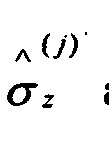
( σζ (t) ) against the interaction time with for


As the device includes two atoms, there will be two types of the atomic inversion, namely,
. , # . . . . . . c ,„λ single atomic inversion and total atomic inversion From (2)

the following expressions can be obtained:

The conventional directional coupler cannot exhibit RCP in the evolution of the mean-photon numbers. Nevertheless, the standard JCM can exhibit RCP provided that the photon-number distribution of the initial field has a smooth envelope. Similar conclusion has been reported to the two-atom single-mode JCM.
According to the embodiments of the linear atomic quantum coupler of the present invention, it is found that when a = β and Xj≠0 the different types of the atomic inversions (12) provide quite similar behaviors. The contributions of the coherence coefficients X2, X3 are comparable. Moreover, it can be easily proven when and λ the atomic


inversions reduce to that of the standard JCM (see FIG. 3(a)). For the standard JCM the revival patterns occur in the atomic inversion over certain period of the interaction time, afterward they interfere providing chaotic behavior. Additionally, the revival time is connected with the amplitude α through the relation


is restricted to the atomic inversion of the first atom (see FIGs. 3(b)-(d) for the given values of the interaction parameters). Three cases are considered based on the relationship between the strength of the switching mechanisms in and between the waveguides, namely,
 Comparisons between FIGs. 3(b)-(d) and FIG. 3(a) are instructive. From FIG. 3(b) it can be observed that the atomic inversion, after the zero and first revival patterns, exhibits long series of the subsidiary-revival patterns (see the inset in FIG. 3(b)). This behavior is completely different from that of the JCM. This indicates that the nonclassical effects generated by the linear atomic quantum coupler of the present invention can sustain for an interaction time longer than that of the JCM.
The subsidiary-revival patterns have been observed for the JCM against the squeezed coherent state. This has been explained in relation to the photon-number distribution of the initial states. More illustratively, the photon-number distributions of the squeezed states exhibit many peaks structure, each of which gives its own revival patterns in the evolution of the atomic inversion. These patterns interfere with each other to produce these subsidiary- revival patterns. Nevertheless, for the device under consideration the occurrence of these
patterns is related to the switching mechanism between the waveguides (compare FIGs. 3(a) and (b)). This mechanism reflects itself in very complicated Rabi oscillations Ω± as well as in the double summations in the atomic inversions formulae (12). FIG. 3(c) presents the case when the coupling constants are different. It is obvious that the RCP is still remarkable and the subsidiary revivals are smoothly washed out compared to those in FIG. 3(b).
Generally, it is found that when the atomic inversion exhibits long RCP (see

FIG. 3(d)). This indicates that the switching mechanism between the waveguides plays an important role in the behavior of the the linear atomic quantum coupler of the present invention.
The second-order correlation functions for the single-mode case is defined as:

where
 for Poissonian statistics (standard case), for sub-Poissonian

statistics (nonclassical effects) and for super-Poissonian statistics (classical

effects).
The second-order correlation function can be measured by a set of two detectors, e.g. the standard Hanbury Brown-Twiss coincidence arrangement. For the device under consideration, this quantity is plotted in FIG. 4 for the given values of the interaction parameters. From FIG. 4 it is obvious that the linear atomic quantum coupler of the present invention is able to generate long-lived sub-Piossonian effects, i.e.

Furthermore, the basic features of the dynamics are still similar to those of the atomic inversion. FIG. 4(a) presents the well-known shape of the second-order function of the
standard JCM. When the switching mechanism between the waveguides is involved, the long RCP is dominant in the evolution of the . Nevertheless, the shape of this phenomenon is quite different from that in the corresponding atomic inversion (compare FIG. 3(b) to FIG. 4(b)).
For instance, the revival times in the two quantities are different. Also, the number of the subsidiary revivals in the atomic inversion is greater than that in the corresponding g

In contrast to the atomic inversions, and can provide different behavior for the


same values of the interaction parameters. This fact can be realized by comparing FIG. 4(c) to (d).
In contrast to the conventional coupler, the linear atomic quantum coupler of the present invention can generate nonclassical effects. Nevertheless, the switching mechanism in the former is more effective than that in the latter. Furthermore, the behavior of the linear atomic quantum coupler of the present invention is sensitive to the types of the initial atomic states. The device of the linear atomic quantum coupler of the present invention is able to produce the results of the two-mode JCM under certain conditions. Additionally, the evolution of the atomic inversions and second-order correlation functions exhibits RCP, long RCP and long subsidiary-revival patterns based on the values of the coupling constants. Second-order correlation function can exhibit long-lived nonclassical effects.
Claims
A device (200) for a linear atomic quantum coupler, the device (200) comprises a plurality of mode sources; and a plurality of waveguides;
characterized in that the plurality of waveguides are placed in close proximity to allow exchanging of energy via evanescent waves; and the plurality of waveguides comprises at least one localized and/or trapped atom; wherein the plurality of mode sources comprises means for generating a plurality of modes; and the plurality of waveguides comprises means for propagating the plurality of modes through the plurality of waveguides.
The device (200) according to claim 1 , wherein the device further comprises a plurality of detectors (214, 216) comprising means for measuring output field from the plurality of modes propagating through the plurality of waveguides.
The device (200) according to claim 1 , wherein the plurality of mode sources further comprises at least two mode sources (202, 204).
The device (200) according to claims 1 , wherein the plurality of waveguides further comprises at least two waveguides (206, 208).
The device (200) according to claim 1 , wherein rate of the exchanging of energy is controlled by a flux intensity of the plurality of mode sources.
The device (200) according to claim 1 , wherein the linear atomic quantum coupler generates nonclassical effect in the output field.
7. The device (200) according to claim 1 , wherein the linear atomic quantum coupler reduces noise in the output field.
8. A method (100) for constructing a linear atomic quantum coupler, the method (100) comprises
generating a plurality of modes ( 02);
placing a plurality of waveguides in close proximity (104) to allow exchanging of energy via evanescent waves;
localizing and/or trapping at least one atom in the plurality of waveguides (106); and
propagating the plurality of modes through the plurality of waveguides (108).
9. The method (100) according to claim 8, wherein the method further comprises measuring output field from the plurality of modes propagating through the plurality of waveguides (110).
10. The method (100) according to claim 8, wherein generating the plurality of modes (102) further comprises generating at least two modes.
11. The method (100) according to claim 8, wherein propagating the plurality of modes through the plurality of waveguides (108) further comprises propagating at least two modes through at least two waveguides.
12. The method (100) according to claim 8, wherein rate of the exchanging of energy is controlled by a flux intensity of the plurality of modes.
13. The method (100) according to claim 8, wherein the linear atomic quantum coupler generates nonclassical effect in the output field.
14. The method (100) according to claim 8, wherein the linear atomic quantum coupler reduces noise in the output field.
Applications Claiming Priority (2)
| Application Number | Priority Date | Filing Date | Title |
|---|---|---|---|
| MYPI20093706 | 2009-09-07 | ||
| MYPI20093706A MY175288A (en) | 2009-09-07 | 2009-09-07 | Linear atomic quantum coupler |
Publications (1)
| Publication Number | Publication Date |
|---|---|
| WO2011028094A1 true WO2011028094A1 (en) | 2011-03-10 |
Family
ID=43838271
Family Applications (1)
| Application Number | Title | Priority Date | Filing Date |
|---|---|---|---|
| PCT/MY2010/000158 Ceased WO2011028094A1 (en) | 2009-09-07 | 2010-09-02 | Linear atomic quantum coupler |
Country Status (2)
| Country | Link |
|---|---|
| MY (1) | MY175288A (en) |
| WO (1) | WO2011028094A1 (en) |
Cited By (1)
| Publication number | Priority date | Publication date | Assignee | Title |
|---|---|---|---|---|
| US20230204863A1 (en) * | 2020-07-09 | 2023-06-29 | Waseda University | Quantum computing unit, single photon source, quantum computing device, and quantum computing method |
Citations (1)
| Publication number | Priority date | Publication date | Assignee | Title |
|---|---|---|---|---|
| US20040156407A1 (en) * | 2003-02-11 | 2004-08-12 | Beausoleil Raymond G. | Quantum information processing using electromagnetically induced transparency |
-
2009
- 2009-09-07 MY MYPI20093706A patent/MY175288A/en unknown
-
2010
- 2010-09-02 WO PCT/MY2010/000158 patent/WO2011028094A1/en not_active Ceased
Patent Citations (1)
| Publication number | Priority date | Publication date | Assignee | Title |
|---|---|---|---|---|
| US20040156407A1 (en) * | 2003-02-11 | 2004-08-12 | Beausoleil Raymond G. | Quantum information processing using electromagnetically induced transparency |
Non-Patent Citations (3)
| Title |
|---|
| F.A.A. EL-ORANY ET AL.: "A linear atomic quantum coupler", JOURNAL OF PHYSICS B:ATOMIC MOLECULAR AND OPTICAL PHYSICS, vol. 43, 23 March 2010 (2010-03-23), pages 1 - 3 * |
| G. SAGUE ET AL.: "Cold-Atom Physics Using Ultrathin Optical Fibers: Light-Induced Dipole Forces and Surface Interactions", PHYSICAL REVIEW LETTERS, vol. 99, 2007 * |
| J.D. FRANSON ET AL.: "Zeno logic gates using microcavities", JOURNAL OF THE OPTICAL SOCIETY OF AMERICA B, vol. 24, February 2007 (2007-02-01), pages 209 - 213 * |
Cited By (1)
| Publication number | Priority date | Publication date | Assignee | Title |
|---|---|---|---|---|
| US20230204863A1 (en) * | 2020-07-09 | 2023-06-29 | Waseda University | Quantum computing unit, single photon source, quantum computing device, and quantum computing method |
Also Published As
| Publication number | Publication date |
|---|---|
| MY175288A (en) | 2020-06-18 |
Similar Documents
| Publication | Publication Date | Title |
|---|---|---|
| Larsen et al. | Integrated photonic source of Gottesman–Kitaev–Preskill qubits | |
| Wallucks et al. | A quantum memory at telecom wavelengths | |
| Zhang et al. | Spontaneous parametric down‐conversion sources for multiphoton experiments | |
| Nayak et al. | Nanofiber quantum photonics | |
| Warner et al. | Coherent control of a superconducting qubit using light | |
| Peng et al. | Tuneable on-demand single-photon source in the microwave range | |
| Mitsch et al. | Quantum state-controlled directional spontaneous emission of photons into a nanophotonic waveguide | |
| Glancy et al. | Methods for producing optical coherent state superpositions | |
| Zhou et al. | Coupling single atoms to a nanophotonic whispering-gallery-mode resonator via optical guiding | |
| Rai et al. | Transport and quantum walk of nonclassical light in coupled waveguides | |
| Santagati et al. | Silicon photonic processor of two-qubit entangling quantum logic | |
| Mookherjea et al. | Electronic control of optical Anderson localization modes | |
| Roberts et al. | Topological supermodes in photonic crystal fiber | |
| Rephaeli et al. | Few-photon transport in a waveguide coupled to a pair of colocated two-level atoms | |
| Tsoi et al. | Single-photon scattering on Λ-type three-level atoms in a one-dimensional waveguide | |
| US20040156407A1 (en) | Quantum information processing using electromagnetically induced transparency | |
| Li et al. | Transmission of photonic quantum polarization entanglement in a nanoscale hybrid plasmonic waveguide | |
| Reinke et al. | Nonlinear finite-difference time-domain method for the simulation of anisotropic,/spl chi//sup (2)/, and/spl chi//sup (3)/optical effects | |
| Leong et al. | Large array of Schrödinger cat states facilitated by an optical waveguide | |
| Zhang et al. | Optical quantum states based on hot atomic ensembles and their applications | |
| Lin et al. | Deterministic loading of microwaves onto an artificial atom using a time-reversed waveform | |
| Savasta et al. | Entangled photon pairs from the optical decay of biexcitons | |
| Rodriguez Echarri et al. | Direct generation of entangled photon pairs in nonlinear optical waveguides | |
| Bose et al. | Observation of strong coupling through transmission modification of a cavity-coupled photonic crystal waveguide | |
| Feng et al. | On-chip multiphoton entangled states by path identity |
Legal Events
| Date | Code | Title | Description |
|---|---|---|---|
| 121 | Ep: the epo has been informed by wipo that ep was designated in this application |
Ref document number: 10813997 Country of ref document: EP Kind code of ref document: A1 |
|
| NENP | Non-entry into the national phase |
Ref country code: DE |
|
| 122 | Ep: pct application non-entry in european phase |
Ref document number: 10813997 Country of ref document: EP Kind code of ref document: A1 |