WO2011000824A2 - Compositions suitable as a flavour and to the use of these compositions to evoke or enhance koku perception - Google Patents
Compositions suitable as a flavour and to the use of these compositions to evoke or enhance koku perception Download PDFInfo
- Publication number
- WO2011000824A2 WO2011000824A2 PCT/EP2010/059198 EP2010059198W WO2011000824A2 WO 2011000824 A2 WO2011000824 A2 WO 2011000824A2 EP 2010059198 W EP2010059198 W EP 2010059198W WO 2011000824 A2 WO2011000824 A2 WO 2011000824A2
- Authority
- WO
- WIPO (PCT)
- Prior art keywords
- yeast
- composition
- flavour
- vinasse
- koku
- Prior art date
- Legal status (The legal status is an assumption and is not a legal conclusion. Google has not performed a legal analysis and makes no representation as to the accuracy of the status listed.)
- Ceased
Links
Classifications
-
- A—HUMAN NECESSITIES
- A23—FOODS OR FOODSTUFFS; TREATMENT THEREOF, NOT COVERED BY OTHER CLASSES
- A23L—FOODS, FOODSTUFFS OR NON-ALCOHOLIC BEVERAGES, NOT OTHERWISE PROVIDED FOR; PREPARATION OR TREATMENT THEREOF
- A23L23/00—Soups; Sauces; Preparation or treatment thereof
-
- A—HUMAN NECESSITIES
- A23—FOODS OR FOODSTUFFS; TREATMENT THEREOF, NOT COVERED BY OTHER CLASSES
- A23L—FOODS, FOODSTUFFS OR NON-ALCOHOLIC BEVERAGES, NOT OTHERWISE PROVIDED FOR; PREPARATION OR TREATMENT THEREOF
- A23L27/00—Spices; Flavouring agents or condiments; Artificial sweetening agents; Table salts; Dietetic salt substitutes; Preparation or treatment thereof
- A23L27/20—Synthetic spices, flavouring agents or condiments
- A23L27/24—Synthetic spices, flavouring agents or condiments prepared by fermentation
-
- A—HUMAN NECESSITIES
- A23—FOODS OR FOODSTUFFS; TREATMENT THEREOF, NOT COVERED BY OTHER CLASSES
- A23L—FOODS, FOODSTUFFS OR NON-ALCOHOLIC BEVERAGES, NOT OTHERWISE PROVIDED FOR; PREPARATION OR TREATMENT THEREOF
- A23L27/00—Spices; Flavouring agents or condiments; Artificial sweetening agents; Table salts; Dietetic salt substitutes; Preparation or treatment thereof
- A23L27/20—Synthetic spices, flavouring agents or condiments
- A23L27/26—Meat flavours
-
- A—HUMAN NECESSITIES
- A23—FOODS OR FOODSTUFFS; TREATMENT THEREOF, NOT COVERED BY OTHER CLASSES
- A23L—FOODS, FOODSTUFFS OR NON-ALCOHOLIC BEVERAGES, NOT OTHERWISE PROVIDED FOR; PREPARATION OR TREATMENT THEREOF
- A23L33/00—Modifying nutritive qualities of foods; Dietetic products; Preparation or treatment thereof
- A23L33/10—Modifying nutritive qualities of foods; Dietetic products; Preparation or treatment thereof using additives
- A23L33/14—Yeasts or derivatives thereof
Definitions
- This invention relates to compositions suitable as a flavour and to the use of these compositions to evoke or enhance koku perception.
- a disadvantage of a generating the sensory perception of traditional simmered meat foods is that it is time and energy consuming due to the long simmering times required.
- a taste potentiator is sensory-specific, i.e. it contributes to a single taste attribute
- WO2008/068155 is described the use of a yeast extract to improve the taste of low-sodium cereal products with reduced sodium content.
- WO2008/074770 is described the use of a yeast extract to improve the taste of low-sodium dairy products with reduced sodium content.
- flavour enhancers contribute to a broader spectrum of sensory attributes and are often used to establish the natural sensory perception of e.g. fried meat.
- many industrial flavour enhancers only provide flavour modulation, i.e. only provide taste and aroma, but do not cover the complete sensory perception as obtained from traditionally prepared "real" food.
- meat-free drink bouillons made from industrial flavours or flavour enhancers such as chicken drink bouillon do not have the sensory perception of traditional simmered meat foods.
- the invention provides the use of a composition comprising vinasse to evoke or enhance koku perception in a food application.
- "koku-perception” is defined as the sensory perception of taste, aroma, and mouthfeel which is elicited by food comprising fried meat such as for example chicken, turkey, pheasant, goose, swan, and duck, or beef, lamb, sheep, goat, horse, and pork, whereby said food has been exposed to thermal processing, i.e. processing at elevated temperature for a certain time.
- thermal processing i.e. processing at elevated temperature for a certain time.
- thermal processing are boiling, braising, cooking, grilling, roasting, smoking, frying, simmering, and baking.
- Examples of such food, i.e. food comprising fried meat which has been exposed to lengthy thermal processing are stews, haggis, and meat broths.
- Vinasse is herein defined as the waste liquor after harvesting of the yeast cells at the end of a fermentation. It can be obtained as the supernatant after removal of microbial cells from a microbial fermention liquid. Vinasse is also sometimes referred to as spent fermentation liquid or spent fermentation media. The supernatant may for example be obtained by centrifugation or filtration. The supernatant may be obtained during the microbial fermentation process, or near or at the end of the microbial fermentation process, preferably at the end of the fermentation process. The end of the microbial fermentation process may for example be when the microbial cells stop growing.
- the microbial cells are preferably yeast cells, in particular cells from yeast strains belonging to the genera Saccharomyces, Kluyveromyces or Candida.
- the microbial fermentation media preferably comprises molasses, particularly at the start of the fermentation.
- Molasses is the sugar-rich, viscous byproduct of the processing of sugar cane or sugar beets into sugar, and is often add to the fermentation media.
- molasses may be converted into vinasse by the growing microbial cells.
- the microbial fermentation process comprises molasses at the start of the fermentation process and vinasse at the end of the fermentation process.
- Vinasse is regarded as a waste product and it is often discarded or used as a fertilizer in agriculture.
- vinasse currently has a low economical value.
- the applicants have surprisingly found that a composition comprising vinasse may be used to evoke or enhance koku perception in a food application. This application may advantageously result in vinasse having a greater economical value.
- composition in the use according to the first aspect of the invention may for example be in a liquid form or in a dry or solid form, for example as a powder.
- the composition preferably comprises water.
- composition in the use of the first aspect of the invention further comprises a compound selected from the group consisting of monosodium glutamate, 5'-ribonucleotides, protein, amino acids, polysacchararides, glycoproteins, a yeast autolysate, yeast cell walls, and fat.
- compositions comprising vinasse and further comprising a compound selected from the group consisting of monosodium glutamate, 5'-ribonucleotides, protein, amino acids, polysacchararides, glycoproteins, yeast autolysate, yeast cell walls, and fat may result in a better koku perception, or it may be possible to enhance or evoke koku perception using less of the compound of the composition (as in weight of compound added to the food relative to the amound of food) as compared to only vinasse.
- a compound selected from the group consisting of monosodium glutamate, 5'-ribonucleotides, protein, amino acids, polysacchararides, glycoproteins, yeast autolysate, yeast cell walls, and fat may result in a better koku perception, or it may be possible to enhance or evoke koku perception using less of the compound of the composition (as in weight of compound added to the food relative to the amound of food) as compared to only vinasse.
- composition in the use of the first aspect of the invention further comprises a compound selected from the group consisting of monosodium glutamate, 5'-ribonucleotides, protein, and amino acids and a compound selected from the group consisting of polysacchararides, glycoproteins, and fat.
- monosodium glutamate is understood to include the free acid form, i.e. glutamic acid, as well as any salt thereof, regardless of the source or context. Glutamate and glutamic acid present in yeast extracts and autoylsate are also within the scope of the context.
- a composition comprising vinasse and further comprising monosodium glutamate may give a koku perception which is indistinguishable from real simmered meat and therefore highly desired.
- the amount of monosodium glutamate in the composition in the use of the first aspect of the invention is preferably at least 1% w/w, more preferably at least 1.5% w/w, even more preferably at least 2% w/w.
- amino acids is defined as “free amino acids", i.e. not part of a polypeptide.
- Amino acids include any of the 20 natural amino acids as well as non-natural amino acids.
- the free amino acids are natural.
- the amount of amino acids in the composition in the use of the first aspect of the invention is preferably at least 5% w/w, more preferably at least 8% w/w, 10% w/w, more preferably at least 12% w/w, most preferably at least , preferably less than 45% w/w, more preferably less than 33% w/w.
- a composition comprising vinasse and further comprising amino acids may give a koku perception which is indistinguishable from real simmered meat and therefore highly desired.
- fat is understood to include “oil”.
- the amount of fat in the composition in the use of the first aspect of the invention is preferably at least 0.1 % w/w, more preferably at least 0.15% w/w, 0.2% w/w, 0.25% w/w, more preferably at least 0.3% w/w, 0.35% w/w, even more preferably at least 0.4% w/w, at least 0.5% w/w, at least 0.6% w/w, most preferably at least 1 % w/w fat.
- the amount of 5'-ribonucleotides in composition in the use of the first aspect of the invention is preferably at least 1% w/w, more preferably at least 5%, and preferably less than 25% w/w. Too little 5'-ribonucleotides (i.e. less than 1% w/w) may result in too little koku-evoking or enhancing effect.
- glycoprotein is mannoprotein.
- Mannoprotein may be isolated from yeast cell walls.
- polysaccharides examples include dextrans, maltodextrines, and mannans, which are inexpensive and widely used in the food industry.
- yeast cell walls in the composition in the use of the first aspect of the invention may give a fuller, fattier taste or flavour or mouthfeel in the koku perception.
- Yeast cell walls are considered as waste and are usually discarded or fed as animal feed, and thus have little economical value.
- Using yeast cell walls to enhance or evoke koku perception may be advantageous in that it may create more value.
- the koku perception may be evoked or enhanced when the composition in the use of the first aspect of the invention is added to the food application or when food is prepared in the presence of the composition in the use of the first aspect of the invention.
- suitable food applications are bouillon, broth, stew, sauces, noodles, seasonings, chips/crisps, snacks, and nuts.
- the food application may be a meat application or a vegetable application.
- enhancing koku perception is meant that the food application in which the composition of the first aspect of the invention is used already by itself evokes koku perception before the composition of the first aspect of the invention is added, and that said koku perception is enhanced after adding said composition.
- a food application evoking koku perception already by itself may for example comprise fried meat.
- the koku perception of such food applications may not be acceptable to the consumer, for instance because said koku perception is judged too weak.
- the use of the composition of the first aspect of the invention in said food applications may advantageously shorten the time period of thermal processing required for the food application to evoke koku perception to an extent which is acceptable to the consumer.
- the food application comprises salt.
- the compound selected from the group consisting of monosodium glutamate, 5'- ribonucleotides, protein, amino acids, polysacchararides, glycoproteins, yeast autolysate, yeast cell walls, and fat are preferably from a non-animal source, which advantageously may give no rise to safety of health issues such as mad cow disease, scrappy, or swine fever.
- the compounds are obtained from yeast, more preferably from Saccharomyces, most preferably from Saccharomyces cerevisiae.
- yeast has been long known to be safe in use and has GRAS status (generally regareded as safe).
- Yeast compounds may be simple to obtain.
- the composition in the use of the first aspect of the invention further comprises NaCI, preferably at least ⁇ 12% w/w NaCI, more preferably at least 15% w/w NaCI, 20% w/w NaCI, even more preferably at least 25% w/w NaCI, most preferably at least 28% w/w NaCI, preferably less than 90% w/w NaCI, more preferably less than 80% w/w NaCI.
- NaCI preferably at least ⁇ 12% w/w NaCI, more preferably at least 15% w/w NaCI, 20% w/w NaCI, even more preferably at least 25% w/w NaCI, most preferably at least 28% w/w NaCI, preferably less than 90% w/w NaCI, more preferably less than 80% w/w NaCI.
- the presence of NaCI may be important to evoke or enhance koku. However, too much NaCI (i.e. more than 80%) may give the composition a undesired, too salty taste.
- the compounds are preferably suitable for consumption. They are preferably food grade. Compounds that can only be evaluated using the so-called sip-and split method but are not food grade or can not be made food grade and are not within the scope of the invention. Food grade criteria for many products are for example listed in the Food Chemical codex. One criterium for a food grade product concern the materials that are used in the production chain of the product of interest.
- the use according the first aspect of the invention is preferably suitable on industrial scale and is preferably inexpensive and practical.
- the compounds are preferable commercially available. When the compounds are not commercially available, they are preferably prepared in a simple and inexpensive way, involving simple process steps, and using starting material or starting materials which are inexpensive, food grade, and/or commercially available. Said compounds are preferably available, and/or can preferably be purchased in bulk, preferably in quantities of at least 50 kg, more preferably at least 100 kg, 200 kg, more preferably at least 1000 kg, 2000 kg, most preferably at least 5000 kg.
- Examples of simple preparation steps are heating, cooling, extraction, filtration, and/or centrifugation.
- Examples of non-simple preparation steps are chromatography, and freeze-drying. The obligatory use of dionized water is not practible for commercial use. A process including any of these non-simple preparation steps may be expensive and time consuming, and can often only be obtained only in minute, lab scale quantities, and are therefore suitable to be employed on industrial scale.
- the koku perception is evoked or enhanced by evoking or enhancing a taste attribute and/or an aftertaste attribute and/or an afterfeel attribute and/or a flavour attribute and/or mouthfeel attribute and/or an aroma attribute of the group consisting of umami taste, salty taste, salty aftertaste, soy aroma, soy sauce flavour, fullness, fatty mouthfeel, sweet taste, sweet aroma, roasted flavour, meat flavour, meat aftertaste, boiled beef flavour, cooked onion flavour, allium flavour, sour taste, bitter taste, and astringent afterfeel.
- Umami taste is defined herewith as the taste of mono sodium glutamate.
- “Fullness” is defined herewith as the degree in which the product gives a full mouthfeel.
- “Fatty mouthfeel” is defined herewith as the degree in which a food gives a fatty feeling in the mouth.
- “Sweet aroma” is defined herewith as the aroma associated with cotton candy or roasted sugar.
- “Roasted flavour” is defined herewith as taste & aroma from roasted meat (using crackers and roasted cereals as reference).
- the food application is a chicken application or a beef application, mpre preferably a beef application.
- the use of the composition in the use of the first aspect of the invention may evoke or enhance koku perception by evoking or enhancing umami taste, salty taste and aftertaste, soy flavour, soy sauce aroma, curry aroma, herbs flavour, sweet taste, sweet aroma, roasted taste and roasted flavour, friedness flavour, fullness mouthfeel, bitter taste, sour taste, astringent afterfeel and/or.
- the use of the composition in the use of the first aspect of the invention may evoke or enhance koku perception by evoking or enhancing umami taste, salty taste, soy sauce aroma, sauce flavour, fullness mouthfeel, fatty afterfeel, sweet taste, sweet aroma, meat flavour, meat aftertaste, boiled beef flavour, cooked onion flavour, and allium flavour, sour taste, bitter taste.
- the composition in the use of the first aspect of the invention preferably comprises a yeast autolysate.
- the Food Chemical Codex defines "autolysed yeast” as "the concentrated, nonextracted, partially soluble digest obtained from food-grade yeast. Solubilization is accomplished by enzyme hydrolysis or autolysis of yeast cells. Food-grade salts and enzymes may be added.
- Yeast, autolyzed, contains both soluble and insoluble components derived from the whole yeast cell. It is composed primarily of amino acids, peptides, carbohydrates, fats, and salts".
- yeast autolysate is not the same as a “yeast extract” as can be deduced from the same Food Chemical Codex which defines a “yeast extract” as follows: "Yeast Extract comprises the water soluble components of the yeast cell, the composition of which is primarily amino-acids, peptides, carbohydrates and salts. Yeast extract is produced through the hydrolysis of peptide bonds by the naturally occurring enzymes present in edible yeast or by the addition of food-grade enzymes”. The yeast autolysate therefore differs from the "yeast extract” because the yeast autolysate, in addition to all the interesting components present in yeast extracts, also contains interesting cell wall components which are not separated from the soluble fraction. Normally, yeast autolysates are produced starting from a cream yeast.
- a cream yeast is obtained by removing the waste liquor after harvesting of the yeast cells at the end of a fermentation, i.e. by removing the vinasse.
- a yeast autolysate may also be produced starting from a fermentation broth, in which case vinasse may not be removed and may be contained by the yeast autolysate.
- Such a yeast autolysate is a yeast autolysate comprising vinasse.
- the composition in the use of the first aspect of the invention preferably comprises a yeast autolysate comprising vinasse.
- a yeast autolysate comprising vinasse is for example a yeast autolysate made from broth. It will be obvious that the use of a yeast autolysate comprising vinasse to evoke or enhance koku perception in a food application also falls within the scope of the invention and is also claimed.
- a yeast autolysate comprising vinasse may be very effective in evoking or enhancing mouthfeel attributes such as fattiness and fullness or taste attributes or flavour attributes which may evoke or enhance koku perception.
- the yeast autolysate has a dry solids ratio between 50 and 95%.
- a process to produce a yeast autolysate comprising vinasse with a dry solid ratio between 50% and 95% is described in WO2009/007424.
- the composition in the use of the first aspect of the invention comprises a yeast extract.
- yeast extract is defined according to the Food Chemical Codex as "the water soluble components of the yeast cell, the composition of which is primarily amino-acids, peptides, carbohydrates and salts.
- Yeast extract is produced through the hydrolysis of peptide bonds by the naturally occurring enzymes present in edible yeast or by the addition of food-grade enzymes".
- the yeast extract may be produced from any type of food-grade yeast, for example baker's yeast, beer yeast or wine yeast.
- the yeast extract is produced from a yeast strain belonging to the genera Saccharomyces, Kluyveromyces, Candida or Torula.
- the yeast extract is produced from a yeast strain belonging to the genus Saccharomyces, i.e. Saccharomyces cerevisiae.
- a yeast extract must contain at least 42% protein based on total dry weight.
- the yeast extract comprises a total amount of 5'-GMP plus 5'-IMP of at least 15% w/w on the basis of sodium chloride free dry matter whereby the weight percentage of 5'-ribonucleotides in the yeast extract (%w/w) is based on the weight of the NaCI free dry matter of the yeast extract and is calculated as disodium salt heptahydrate (2Na.7Aq) of 5'-ribonucleotide.
- NaCI free does not mean that the yeast extract does not or cannot contain NaCI, but instead means that NaCI is excluded from the yeast extract for the calculation of %w/w. The latter calculation can be performed by methods known to those skilled in the art.
- composition in the use of the first aspect of the invention comprises a yeast autolysate comprising vinasse and a yeast extract.
- a composition comprising a yeast extract and a yeast autolysate comprising vinasse may be very efficient in evoking or improving koku perception.
- composition in the use of the first aspect of the invention comprises 5'-IMP and 5'-GMP.
- the 5'-ribonucleotides 5'-IMP and 5'-GMP are known to reinforce umami taste.
- koku perception may be enhanced or evoked even without the use of meat. This may make it suitable for vegetable or vegetarian food applications.
- Food comprising composition in the use of the first aspect of the invention may be perceived as being more authentic and traditional than food without said composition.
- the preparation of foods by using a composition of the first aspect of the invention may evoke or enhance koku perception without prolonged simmering, which may make it time and cost efficient as compared to preparing food without using said composition.
- the invention provides a composition comprising a yeast autolysate comprising vinasse and a yeast extract.
- the composition of the second aspect of the invention is preferably suitable for the use according to the first aspect of the invention and may be specifically adapted to said use. It has been surprisingly found that a composition comprising a yeast autolysate comprising vinasse and a yeast extract may be very effective in the use according to the first aspect of the invention.
- the amount of yeast autolysate comprising vinasse in the composition of the second aspect of the invention may be anywhere between 0 and 100% w/w based on total weight of the composition.
- the amount of yeast autolysate comprising vinasse is between 20 and 90%, more preferably between 40 and 80% w/w based on total weight of the composition of the second aspect of the invention.
- the amount of yeast extract in the composition of the second aspect of the invention may be anywhere between 0 and 100% w/w based on total weight of the composition.
- the amount of yeast extract in the composition of the second aspect of the invention is between 10 and 90%, more preferably between 20 and 70%, even more preferably between 30 and 50% w/w based on total weight of the composition of the second aspect of the invention.
- the invention provides a process to prepare the composition of the second aspect of the invention, said process comprising adding a yeast extract to a yeast autolysate comprising vinasse, or comprising adding a yeast extract and vinasse to a yeast autolysate.
- Weight percentages of 5'-IMP and 5'-GMP are based on the weight of the
- the amount of glutamate in the composition is calculated as glutamic acid percentage (%w/w), i.e. the weight of free glutamic acid per weight of NaCI free dry matter of the composition.
- Total protein is calculated as nitrogen Kjeldahl using a conversion factor of 6.25.
- Pearsons correlation measure for the correlation between 2 variables (from -1 to +1 ), minus, negatively correlated; positive, positively correlated; 0, no correlation; as computed in SAS (SAS, Naarden, the Netherlands.
- QDA Quantitative Descriptive Analysis
- Method of quantitative descriptive analysis based on the principle of a panelist's ability to verbalize perceptions of a product in a reliable manner.
- the method embodies a formal screening and training procedure, development and use of a sensory language, and the scoring of products on repeated trials to obtain a complete, quantitative description.
- Glycoproteins were recovered from yeast extract (Maxarome ® , DSM Food Specialties) by filtration and subsequent washing of the retentate approximately 5-fold with water by means of ultrafiltration (UF) over a 4 kDa Nadir ® polyethersulfone hydrophilic membrane (Microdyn-Nadir, Germany) until a concentration of 10% w/v).
- Yeast autolysate was prepared by heating 1 liter of fermentation broth of Saccharomyces cerevisiae at 95°C for 5 minutes and subsequently cooling down to 50 0 C.
- 2 ml Alcalase ® Sigma Aldrich, containing protease from Bacillus licheniformis
- 5' phosphodiesterase was added and the mixture was incubated for 6 hours without pH adjustment.
- the mixture was treated with 5' phosphodiesterase for 15 hours at pH 5.3 and 65 0 C to hydrolyse the RNA.
- the mixture was treated with deaminase (Amano) for 5 hours at pH 5.1 and 55°C to convert the 5'-AMP into 5'- IMP.
- the autolysate contained vinasse and further contained 1.3% (w/w) 5'-GMP, 1.4% 5'-IMP, 2.2% (w/w) glutamate, and 44% (w/w) protein calculated as nitrogen Kjeldahl using a conversion factor of 6.25, all based on total salt-free dry matter.
- This yeast extract is a yeast autolysate comprising vinasse.
- Yeast autolysate comprising vinasse without cell walls
- yeast autolysate comprising vinasse without cell walls was obtained as the supernatant after centrifugation of the yeast autolysate prepared as described above. This is not a true yeast autolysate in the context of the invention since according to the invention a yeast autolysate contains both soluble and insoluble components derived from the whole yeast cell. However, the skilled person will understand the meaning of the term "yeast autolysate comprising vinasse without cell walls". It may be defined as the product which is obtained by removing the cell walls from a yeast autolysate comprising vinasse.
- Yeast extract-1 available from DSM Food Specialties, Delft, the Netherlands, contained 20% NaCI, 56% total protein, 28% 5'-ribonucleotides, 14% (5'-IMP + 5'-GMP), and 4 to 4.5% glutamate, all based on total salt-free dry matter.
- Yeast extract-2 available from DSM Food Specialties, Delft, the Netherlands, contained 20% NaCI, 56% total protein, 28% 5'-ribonucleotides, 14% (5'-IMP + 5'-GMP), and 4 to 4.5% glutamate, all based on total salt-free dry matter.
- Yeast extract-2 available from DSM Food Specialties, Delft, the Netherlands, contained 20% NaCI, 56% total protein, 28% 5'-ribonucleotides, 14% (5'-IMP + 5'-GMP), and 4 to 4.5% glutamate, all based on total salt-free dry matter.
- Yeast extract-2 available from DSM Food Specialties, Delft, the Netherlands,
- Yeast extract-2 available from DSM Food Specialties, Delft, the Netherlands, contained 1 % NaCI, 59% total protein, 1 % 5'-ribonucleotides, 0.5% (5'-IMP + 5'-GMP), and 9% glutamate, all based on total salt-free dry matter.
- Super Yeast is a yeast extract available from Ajinomoto Foodstechnik GMBH, Stubbenhuk 3, D-20459 Hamburg, Germany. Superyeast is claimed by Ajinomoto as a kokumi flavour enhancer. Aromild U-15
- Aromild U-15 (Hithion) is available from Kohjin, Kohjin Co. Ltd., 1-21 Nihombashi- Muromachi-4-chome, Chuo-ku, Tokyo, 103-0022, Japan.
- Vinasse was obtained as the liquid fraction after centrifugation of a fermentation media of Saccharomyces cerevisiae at the end of fermentation.
- the fermentation media at the end of fermentation, including the yeast cells, is also referred to as "broth".
- yeast extract-1 (1 g/l) + yeast extract-2 (0.7 g/l) + glycoproteins (4g/l) + carrageenan (0.5 g/l) + acetic acid (0.5 g/l)
- Yeast extract Gistex standard, DSM Food Specialties, Delft, the Netherlands
- Yeast extract Gistex standard, DSM Food Specialties, Delft, the Netherlands
- a composition comprising a yeast extract and a yeast autolysate comprising vinasse has excellent koku enhancing or evoking properties and are better than yeast extracts known in the art. The effect is even better when the yeast autolysate comprises yeast cell walls.
- Example 1 The same panel (i.e. consisting of the same persons) as employed in Example 1 was used for QDA analysis. Sensory attributes as listed in Table 9 and 10 were used to quantify the sensory perception. The 12 samples were evaluated in 5 sessions (including familiarization & training). Each assessor evaluated 6 products per session (+ replicate) with sufficient relaxation time (more than 5 minutes) between the servings.
- Non-sodium topping Premium cracker (Yamasaki-Nabisco Co., Ltd., Tokyo, Japan) and mineral water was used for palette cleansing. Results of the QDA analyses are in Tables 11 and 12.
Landscapes
- Life Sciences & Earth Sciences (AREA)
- Engineering & Computer Science (AREA)
- Health & Medical Sciences (AREA)
- Nutrition Science (AREA)
- Chemical & Material Sciences (AREA)
- Food Science & Technology (AREA)
- Polymers & Plastics (AREA)
- Mycology (AREA)
- Biotechnology (AREA)
- Microbiology (AREA)
- Fats And Perfumes (AREA)
- Coloring Foods And Improving Nutritive Qualities (AREA)
Abstract
The present invention describes compositions suitable as a flavour and to the use of these compositions to evoke or enhance koku perception. The use of said composition may be time and cost efficient.
Description
COMPOSITIONS SUITABLE AS A FLAVOUR AND TO THE USE OF THESE COMPOSITIONS TO EVOKE OR ENHANCE KOKU PERCEPTION
Field of the invention
This invention relates to compositions suitable as a flavour and to the use of these compositions to evoke or enhance koku perception.
Background of the invention
The sensory perception of traditional simmered meat foods such as meat broths and stews is driven by a complex and specific combination of taste, aroma, and/or mouthfeel. These foods are known to the consumer as "traditionally prepared foods" or "traditional simmered meat foods" and are usually described by consumers with richness, fullness, complexity, impact, balance, and/or roundness. The sensory perception of traditional simmered meat foods plays an important role in the Japanese kitchen. "Koku" is a Japanese word meaning "delicious" and is associated by Japanese consumers and cooks with traditionally simmered or fermented foods.
In addition to the term "koku", the term "Kokumi" is also used. There is no principle difference between koku and kokumi.
A disadvantage of a generating the sensory perception of traditional simmered meat foods is that it is time and energy consuming due to the long simmering times required.
Due to the cost and microbiological safety issues of meat the food industry continually searches for alternatives of meat which evoke the same combined sensory perception as those of traditional simmered meat foods. These alternatives can be divided in two group: taste potentiators and flavour enhancers.
A taste potentiator is sensory-specific, i.e. it contributes to a single taste attribute
(salt, sweet, bitter, sour, or umami). Taste potentiators are often used to amplify the effect of a reduced tastant, for example salt, to maintain its effect. WO2008/068155 is described the use of a yeast extract to improve the taste of low-sodium cereal products
with reduced sodium content. In WO2008/074770 is described the use of a yeast extract to improve the taste of low-sodium dairy products with reduced sodium content.
In contrast, flavour enhancers contribute to a broader spectrum of sensory attributes and are often used to establish the natural sensory perception of e.g. fried meat. However, many industrial flavour enhancers only provide flavour modulation, i.e. only provide taste and aroma, but do not cover the complete sensory perception as obtained from traditionally prepared "real" food. For example, meat-free drink bouillons made from industrial flavours or flavour enhancers such as chicken drink bouillon do not have the sensory perception of traditional simmered meat foods.
Detailed description of the invention
In a first aspect the invention provides the use of a composition comprising vinasse to evoke or enhance koku perception in a food application.
In the context of this invention, "koku-perception" is defined as the sensory perception of taste, aroma, and mouthfeel which is elicited by food comprising fried meat such as for example chicken, turkey, pheasant, goose, swan, and duck, or beef, lamb, sheep, goat, horse, and pork, whereby said food has been exposed to thermal processing, i.e. processing at elevated temperature for a certain time. Examples of thermal processing are boiling, braising, cooking, grilling, roasting, smoking, frying, simmering, and baking. Examples of such food, i.e. food comprising fried meat which has been exposed to lengthy thermal processing, are stews, haggis, and meat broths.
Vinasse is herein defined as the waste liquor after harvesting of the yeast cells at the end of a fermentation. It can be obtained as the supernatant after removal of microbial cells from a microbial fermention liquid. Vinasse is also sometimes referred to as spent fermentation liquid or spent fermentation media. The supernatant may for example be obtained by centrifugation or filtration. The supernatant may be obtained during the microbial fermentation process, or near or at the end of the microbial fermentation process, preferably at the end of the fermentation process. The end of the microbial fermentation process may for example be when the microbial cells stop growing. The microbial cells are preferably yeast cells, in particular cells from yeast strains belonging to the genera Saccharomyces, Kluyveromyces or Candida. Yeast strains belonging to the genus Saccharomyces, for example Saccharomyces cerevisiae are preferred. The microbial fermentation media preferably comprises molasses, particularly at the start of the fermentation. Molasses is the sugar-rich, viscous byproduct
of the processing of sugar cane or sugar beets into sugar, and is often add to the fermentation media. During the fermentation, molasses may be converted into vinasse by the growing microbial cells. In an embodiment, the microbial fermentation process comprises molasses at the start of the fermentation process and vinasse at the end of the fermentation process. Vinasse is regarded as a waste product and it is often discarded or used as a fertilizer in agriculture. As such, vinasse currently has a low economical value. The applicants have surprisingly found that a composition comprising vinasse may be used to evoke or enhance koku perception in a food application. This application may advantageously result in vinasse having a greater economical value.
The composition in the use according to the first aspect of the invention may for example be in a liquid form or in a dry or solid form, for example as a powder. When in a liquid form, the composition preferably comprises water.
In a preferred embodiment the composition in the use of the first aspect of the invention further comprises a compound selected from the group consisting of monosodium glutamate, 5'-ribonucleotides, protein, amino acids, polysacchararides, glycoproteins, a yeast autolysate, yeast cell walls, and fat. The use of a composition comprising vinasse and further comprising a compound selected from the group consisting of monosodium glutamate, 5'-ribonucleotides, protein, amino acids, polysacchararides, glycoproteins, yeast autolysate, yeast cell walls, and fat may result in a better koku perception, or it may be possible to enhance or evoke koku perception using less of the compound of the composition (as in weight of compound added to the food relative to the amound of food) as compared to only vinasse.
In an embodiment the composition in the use of the first aspect of the invention further comprises a compound selected from the group consisting of monosodium glutamate, 5'-ribonucleotides, protein, and amino acids and a compound selected from the group consisting of polysacchararides, glycoproteins, and fat.
In the context of the invention "monosodium glutamate" is understood to include the free acid form, i.e. glutamic acid, as well as any salt thereof, regardless of the source or context. Glutamate and glutamic acid present in yeast extracts and autoylsate are also within the scope of the context. A composition comprising vinasse and further comprising monosodium glutamate may give a koku perception which is indistinguishable from real simmered meat and therefore highly desired. The amount of monosodium glutamate in the composition in the use of the first aspect of the invention is preferably at least 1% w/w, more preferably at least 1.5% w/w, even more preferably at least 2% w/w.
In the context of the invention "amino acids" is defined as "free amino acids", i.e. not part of a polypeptide. Amino acids include any of the 20 natural amino acids as well as non-natural amino acids. Preferably the free amino acids are natural. The amount of amino acids in the composition in the use of the first aspect of the invention is preferably at least 5% w/w, more preferably at least 8% w/w, 10% w/w, more preferably at least 12% w/w, most preferably at least , preferably less than 45% w/w, more preferably less than 33% w/w. A composition comprising vinasse and further comprising amino acids may give a koku perception which is indistinguishable from real simmered meat and therefore highly desired.
In the context of the invention "fat" is understood to include "oil". The amount of fat in the composition in the use of the first aspect of the invention is preferably at least 0.1 % w/w, more preferably at least 0.15% w/w, 0.2% w/w, 0.25% w/w, more preferably at least 0.3% w/w, 0.35% w/w, even more preferably at least 0.4% w/w, at least 0.5% w/w, at least 0.6% w/w, most preferably at least 1 % w/w fat.
The amount of 5'-ribonucleotides in composition in the use of the first aspect of the invention is preferably at least 1% w/w, more preferably at least 5%, and preferably less than 25% w/w. Too little 5'-ribonucleotides (i.e. less than 1% w/w) may result in too little koku-evoking or enhancing effect.
An example of glycoprotein is mannoprotein. Mannoprotein may be isolated from yeast cell walls.
Examples of polysaccharides are dextrans, maltodextrines, and mannans, which are inexpensive and widely used in the food industry.
The presence of yeast cell walls in the composition in the use of the first aspect of the invention may give a fuller, fattier taste or flavour or mouthfeel in the koku perception. Yeast cell walls are considered as waste and are usually discarded or fed as animal feed, and thus have little economical value. Using yeast cell walls to enhance or evoke koku perception may be advantageous in that it may create more value.
The koku perception may be evoked or enhanced when the composition in the use of the first aspect of the invention is added to the food application or when food is prepared in the presence of the composition in the use of the first aspect of the invention. Examples of suitable food applications are bouillon, broth, stew, sauces, noodles, seasonings, chips/crisps, snacks, and nuts. The food application may be a meat application or a vegetable application. With enhancing koku perception is meant that the food application in which the composition of the first aspect of the invention is used already by itself evokes
koku perception before the composition of the first aspect of the invention is added, and that said koku perception is enhanced after adding said composition. A food application evoking koku perception already by itself may for example comprise fried meat. The koku perception of such food applications may not be acceptable to the consumer, for instance because said koku perception is judged too weak. The use of the composition of the first aspect of the invention in said food applications may advantageously shorten the time period of thermal processing required for the food application to evoke koku perception to an extent which is acceptable to the consumer. Preferably the food application comprises salt.
The compound selected from the group consisting of monosodium glutamate, 5'- ribonucleotides, protein, amino acids, polysacchararides, glycoproteins, yeast autolysate, yeast cell walls, and fat, the compound selected from the group consisting of monosodium glutamate, 5'-ribonucleotides, protein, and amino acids, and/or the compound selected from the group consisting of polysacchararides, glycoproteins, and fat (hereafter referred to as "the compounds") are preferably from a non-animal source, which advantageously may give no rise to safety of health issues such as mad cow disease, scrappy, or swine fever. More preferably the compounds are obtained from yeast, more preferably from Saccharomyces, most preferably from Saccharomyces cerevisiae. Yeast has been long known to be safe in use and has GRAS status (generally regareded as safe). Yeast compounds may be simple to obtain.
In a preferred embodiment the composition in the use of the first aspect of the invention further comprises NaCI, preferably at least≥ 12% w/w NaCI, more preferably at least 15% w/w NaCI, 20% w/w NaCI, even more preferably at least 25% w/w NaCI, most preferably at least 28% w/w NaCI, preferably less than 90% w/w NaCI, more preferably less than 80% w/w NaCI. The presence of NaCI may be important to evoke or enhance koku. However, too much NaCI (i.e. more than 80%) may give the composition a undesired, too salty taste.
The compounds are preferably suitable for consumption. They are preferably food grade. Compounds that can only be evaluated using the so-called sip-and split method but are not food grade or can not be made food grade and are not within the scope of the invention. Food grade criteria for many products are for example listed in the Food Chemical codex. One criterium for a food grade product concern the materials that are used in the production chain of the product of interest.
The use according the first aspect of the invention is preferably suitable on industrial scale and is preferably inexpensive and practical. The compounds are
preferable commercially available. When the compounds are not commercially available, they are preferably prepared in a simple and inexpensive way, involving simple process steps, and using starting material or starting materials which are inexpensive, food grade, and/or commercially available. Said compounds are preferably available, and/or can preferably be purchased in bulk, preferably in quantities of at least 50 kg, more preferably at least 100 kg, 200 kg, more preferably at least 1000 kg, 2000 kg, most preferably at least 5000 kg.
Examples of simple preparation steps are heating, cooling, extraction, filtration, and/or centrifugation. Examples of non-simple preparation steps are chromatography, and freeze-drying. The obligatory use of dionized water is not practible for commercial use. A process including any of these non-simple preparation steps may be expensive and time consuming, and can often only be obtained only in minute, lab scale quantities, and are therefore suitable to be employed on industrial scale.
In a preferred embodiment the koku perception is evoked or enhanced by evoking or enhancing a taste attribute and/or an aftertaste attribute and/or an afterfeel attribute and/or a flavour attribute and/or mouthfeel attribute and/or an aroma attribute of the group consisting of umami taste, salty taste, salty aftertaste, soy aroma, soy sauce flavour, fullness, fatty mouthfeel, sweet taste, sweet aroma, roasted flavour, meat flavour, meat aftertaste, boiled beef flavour, cooked onion flavour, allium flavour, sour taste, bitter taste, and astringent afterfeel. "Umami taste" is defined herewith as the taste of mono sodium glutamate. "Fullness" is defined herewith as the degree in which the product gives a full mouthfeel. "Fatty mouthfeel" is defined herewith as the degree in which a food gives a fatty feeling in the mouth. "Sweet aroma" is defined herewith as the aroma associated with cotton candy or roasted sugar. "Roasted flavour" is defined herewith as taste & aroma from roasted meat (using crackers and roasted cereals as reference).
Preferably the food application is a chicken application or a beef application, mpre preferably a beef application.
In chicken food applications (also referred to as chicken applications) the use of the composition in the use of the first aspect of the invention may evoke or enhance koku perception by evoking or enhancing umami taste, salty taste and aftertaste, soy flavour, soy sauce aroma, curry aroma, herbs flavour, sweet taste, sweet aroma, roasted taste and roasted flavour, friedness flavour, fullness mouthfeel, bitter taste, sour taste, astringent afterfeel and/or.
In beef food applications (also referred to as beef applications) the use of the composition in the use of the first aspect of the invention may evoke or enhance koku perception by evoking or enhancing umami taste, salty taste, soy sauce aroma, sauce flavour, fullness mouthfeel, fatty afterfeel, sweet taste, sweet aroma, meat flavour, meat aftertaste, boiled beef flavour, cooked onion flavour, and allium flavour, sour taste, bitter taste.
The composition in the use of the first aspect of the invention preferably comprises a yeast autolysate. The Food Chemical Codex defines "autolysed yeast" as "the concentrated, nonextracted, partially soluble digest obtained from food-grade yeast. Solubilization is accomplished by enzyme hydrolysis or autolysis of yeast cells. Food-grade salts and enzymes may be added. Yeast, autolyzed, contains both soluble and insoluble components derived from the whole yeast cell. It is composed primarily of amino acids, peptides, carbohydrates, fats, and salts". A "yeast autolysate" is not the same as a "yeast extract" as can be deduced from the same Food Chemical Codex which defines a "yeast extract" as follows: "Yeast Extract comprises the water soluble components of the yeast cell, the composition of which is primarily amino-acids, peptides, carbohydrates and salts. Yeast extract is produced through the hydrolysis of peptide bonds by the naturally occurring enzymes present in edible yeast or by the addition of food-grade enzymes". The yeast autolysate therefore differs from the "yeast extract" because the yeast autolysate, in addition to all the interesting components present in yeast extracts, also contains interesting cell wall components which are not separated from the soluble fraction. Normally, yeast autolysates are produced starting from a cream yeast. A cream yeast is obtained by removing the waste liquor after harvesting of the yeast cells at the end of a fermentation, i.e. by removing the vinasse. However, a yeast autolysate may also be produced starting from a fermentation broth, in which case vinasse may not be removed and may be contained by the yeast autolysate. Such a yeast autolysate is a yeast autolysate comprising vinasse. The composition in the use of the first aspect of the invention preferably comprises a yeast autolysate comprising vinasse. A yeast autolysate comprising vinasse is for example a yeast autolysate made from broth. It will be obvious that the use of a yeast autolysate comprising vinasse to evoke or enhance koku perception in a food application also falls within the scope of the invention and is also claimed.
A yeast autolysate comprising vinasse may be very effective in evoking or enhancing mouthfeel attributes such as fattiness and fullness or taste attributes or flavour attributes which may evoke or enhance koku perception. Preferably the yeast autolysate
has a dry solids ratio between 50 and 95%. A process to produce a yeast autolysate comprising vinasse with a dry solid ratio between 50% and 95% is described in WO2009/007424.
In another preferred embodiment the composition in the use of the first aspect of the invention comprises a yeast extract. In the context of the invention "yeast extract" is defined according to the Food Chemical Codex as "the water soluble components of the yeast cell, the composition of which is primarily amino-acids, peptides, carbohydrates and salts. Yeast extract is produced through the hydrolysis of peptide bonds by the naturally occurring enzymes present in edible yeast or by the addition of food-grade enzymes". The yeast extract may be produced from any type of food-grade yeast, for example baker's yeast, beer yeast or wine yeast. Preferably the yeast extract is produced from a yeast strain belonging to the genera Saccharomyces, Kluyveromyces, Candida or Torula. In a preferred embodiment the yeast extract is produced from a yeast strain belonging to the genus Saccharomyces, i.e. Saccharomyces cerevisiae. According to the Food Chemical Codex a yeast extract must contain at least 42% protein based on total dry weight. Preferably the yeast extract comprises a total amount of 5'-GMP plus 5'-IMP of at least 15% w/w on the basis of sodium chloride free dry matter whereby the weight percentage of 5'-ribonucleotides in the yeast extract (%w/w) is based on the weight of the NaCI free dry matter of the yeast extract and is calculated as disodium salt heptahydrate (2Na.7Aq) of 5'-ribonucleotide. NaCI free does not mean that the yeast extract does not or cannot contain NaCI, but instead means that NaCI is excluded from the yeast extract for the calculation of %w/w. The latter calculation can be performed by methods known to those skilled in the art.
In a highly preferred embodiment the composition in the use of the first aspect of the invention comprises a yeast autolysate comprising vinasse and a yeast extract. A composition comprising a yeast extract and a yeast autolysate comprising vinasse may be very efficient in evoking or improving koku perception.
In another embodiment the composition in the use of the first aspect of the invention comprises 5'-IMP and 5'-GMP. The 5'-ribonucleotides 5'-IMP and 5'-GMP are known to reinforce umami taste.
By using a composition of the first aspect of the invention, koku perception may be enhanced or evoked even without the use of meat. This may make it suitable for vegetable or vegetarian food applications. Food comprising composition in the use of the first aspect of the invention may be perceived as being more authentic and traditional than food without
said composition. The preparation of foods by using a composition of the first aspect of the invention may evoke or enhance koku perception without prolonged simmering, which may make it time and cost efficient as compared to preparing food without using said composition.
In a second aspect, the invention provides a composition comprising a yeast autolysate comprising vinasse and a yeast extract. The composition of the second aspect of the invention is preferably suitable for the use according to the first aspect of the invention and may be specifically adapted to said use. It has been surprisingly found that a composition comprising a yeast autolysate comprising vinasse and a yeast extract may be very effective in the use according to the first aspect of the invention. The amount of yeast autolysate comprising vinasse in the composition of the second aspect of the invention may be anywhere between 0 and 100% w/w based on total weight of the composition. Preferably the amount of yeast autolysate comprising vinasse is between 20 and 90%, more preferably between 40 and 80% w/w based on total weight of the composition of the second aspect of the invention. The amount of yeast extract in the composition of the second aspect of the invention may be anywhere between 0 and 100% w/w based on total weight of the composition. Preferably, the amount of yeast extract in the composition of the second aspect of the invention is between 10 and 90%, more preferably between 20 and 70%, even more preferably between 30 and 50% w/w based on total weight of the composition of the second aspect of the invention.
In a third aspect the invention provides a process to prepare the composition of the second aspect of the invention, said process comprising adding a yeast extract to a yeast autolysate comprising vinasse, or comprising adding a yeast extract and vinasse to a yeast autolysate.
EXAMPLES Materials and methods Calculations
Weight percentages of 5'-IMP and 5'-GMP (%w/w) are based on the weight of the
NaCI free dry matter of the composition and is calculated as disodium salt heptahydrate
(2Na.7Aq) of 5'-ribonucelotide. NaCI free does not mean that the composition of the invention cannot contain NaCI, but means that NaCI is excluded from the composition for the calculation of %w/w.
The amount of glutamate in the composition is calculated as glutamic acid percentage (%w/w), i.e. the weight of free glutamic acid per weight of NaCI free dry matter of the composition.
Total protein is calculated as nitrogen Kjeldahl using a conversion factor of 6.25.
Statistical parameters
Lower CL. (confidence limit) and upper C. L., lower and upper confident limits around the estimated mean (i.e. koku scores), as computed by the mixed models methodology in SAS (SAS, Naarden, the Netherlands).
Multiple comparisons, multiple paired comparisons based on t-tests and corrected for multiple testing, as computed in SAS (SAS, Naarden, the Netherlands). Formulations that share a alpha numerical character (a through f) are not sigificantly different.
Pearsons correlation, measure for the correlation between 2 variables (from -1 to +1 ), minus, negatively correlated; positive, positively correlated; 0, no correlation; as computed in SAS (SAS, Naarden, the Netherlands.
Koku scores, intensity of the koku perception; higher scores mean more intense koku perception.
QDA, Quantitative Descriptive Analysis (Tragon Corp. & Davis University California (Stone et. al, 1974)), method of quantitative descriptive analysis (QDA) based on the principle of a panelist's ability to verbalize perceptions of a product in a reliable manner. The method embodies a formal screening and training procedure, development and use of a sensory language, and the scoring of products on repeated trials to obtain a complete, quantitative description.
Glycoproteins
Glycoproteins were recovered from yeast extract (Maxarome®, DSM Food Specialties) by filtration and subsequent washing of the retentate approximately 5-fold with water by means of ultrafiltration (UF) over a 4 kDa Nadir® polyethersulfone hydrophilic membrane (Microdyn-Nadir, Germany) until a concentration of 10% w/v).
Yeast autolysate comprising vinasse
Yeast autolysate was prepared by heating 1 liter of fermentation broth of Saccharomyces cerevisiae at 95°C for 5 minutes and subsequently cooling down to 500C. Next, 2 ml Alcalase® (Sigma Aldrich, containing protease from Bacillus licheniformis) was added and the mixture was incubated for 6 hours without pH adjustment. After this incubation, the mixture was treated with 5' phosphodiesterase for 15 hours at pH 5.3 and 65 0C to hydrolyse the RNA. After this, the mixture was treated with deaminase (Amano) for 5 hours at pH 5.1 and 55°C to convert the 5'-AMP into 5'- IMP. Solid sodium chloride was added so as to give a final yeast autolysate with 40 wt% salt after concentration and drying. Finally, the salt containing reaction mixture was concentrated by evaporation and spray-dried. The autolysate contained vinasse and further contained 1.3% (w/w) 5'-GMP, 1.4% 5'-IMP, 2.2% (w/w) glutamate, and 44% (w/w) protein calculated as nitrogen Kjeldahl using a conversion factor of 6.25, all based on total salt-free dry matter. This yeast extract is a yeast autolysate comprising vinasse.
Yeast autolysate comprising vinasse without cell walls
Yeast autolysate comprising vinasse without cell walls was obtained as the supernatant after centrifugation of the yeast autolysate prepared as described above. This is not a true yeast autolysate in the context of the invention since according to the invention a yeast autolysate contains both soluble and insoluble components derived from the whole yeast cell. However, the skilled person will understand the meaning of the term "yeast autolysate comprising vinasse without cell walls". It may be defined as the product which is obtained by removing the cell walls from a yeast autolysate comprising vinasse.
Yeast extract-1
Yeast extract-1 , available from DSM Food Specialties, Delft, the Netherlands, contained 20% NaCI, 56% total protein, 28% 5'-ribonucleotides, 14% (5'-IMP + 5'-GMP), and 4 to 4.5% glutamate, all based on total salt-free dry matter. Yeast extract-2
Yeast extract-2, available from DSM Food Specialties, Delft, the Netherlands, contained 1 % NaCI, 59% total protein, 1 % 5'-ribonucleotides, 0.5% (5'-IMP + 5'-GMP), and 9% glutamate, all based on total salt-free dry matter. Super Yeast
Super Yeast is a yeast extract available from Ajinomoto Foods Deutschland GMBH, Stubbenhuk 3, D-20459 Hamburg, Germany. Superyeast is claimed by Ajinomoto as a kokumi flavour enhancer. Aromild U-15
Aromild U-15 (Hithion) is available from Kohjin, Kohjin Co. Ltd., 1-21 Nihombashi- Muromachi-4-chome, Chuo-ku, Tokyo, 103-0022, Japan.
Vinasse
Vinasse was obtained as the liquid fraction after centrifugation of a fermentation media of Saccharomyces cerevisiae at the end of fermentation. The fermentation media at the end of fermentation, including the yeast cells, is also referred to as "broth".
Example 1
Koku scoring of meat bouillon formulations
Twelve beef bouillon formulations (Table 1 ) and 12 chicken bouillon formulations (Table 2) were made using a standard industrial base for beef bouillon (Table 3) or chicken bouillon (Table 4), respectively, and scored for Koku by Tetsuo Aishima's Chemometrics & Sensometrics Laboratory, Japan.
Table 1. Beef bouillon formulations
1 Control: Beef bouillon (BB) (16g/l)
12 Control: BB (16g/l)
BB + yeast extract- 1 (1g/l)
BB + yeast extract-1 (1g/l) + yeast autolysate without cell walls (3 g/l)
BB + yeast extract-1 (1g/l) + yeast autolysate (3 g/l)
BB + yeast extract-1 (1g/l) + yeast extract-2 (0.7 g/l)
BB + yeast extract-1 (1 g/l) + yeast extract-2 (0.7 g/l) + glycoproteins (4g/l) BB + yeast extract-1 (1 g/l) + yeast extract-2 (0.7 g/l) + glycoproteins (4g/l) + carrageenan (0.5 g/l)
BB + yeast extract-1 (1 g/l) + yeast extract-2 (0.7 g/l) + glycoproteins (4g/l) + carrageenan (0.5 g/l) + acetic acid (0.5 g/l)
BB + yeast extract-1 (1 g/l) + glycoproteins (4g/l)
10 BB + Aromild (2g/l)
11 BB + Superyeast (1 g/l)
Table 2. Chicken bouillon formulations
1 Control: Chicken bouillon (CB) (16g/l)
12 Control: CB (16g/l)
CB + yeast extract-1 (1 g/l)
CB + yeast extract-2 (0.7 g/l)
CB + yeast extract-1 (1 g/l) + yeast extract-2 (0.7 g/l)
CB + yeast autolysate without cell walls (3 g/l)
CB + yeast autolysate (3 g/l)
CB + yeast extract-1 (1 g/l) + yeast autolysate without cell walls (3 g/l)
CB + yeast extract-1 (1 g/l) + yeast autolysate 3 (g/l)
CB + Aromild U-15 (2g/l)
10 CB + Superyeast (1 g/I)
11 CB + Superyeast (1 g/I)
Table 3. Composition of the beef bouillon (BB) (% w/v)


Yeast extract: Gistex standard, DSM Food Specialties, Delft, the Netherlands
Table 4. Composition of the chicken bouillon (CC) (% w/v)

Yeast extract: Gistex standard, DSM Food Specialties, Delft, the Netherlands
Results
Table 5. Estimated koku scores for the beef bouillon formulations


Table 7. Estimated koku scores for the chicken bouillon formulations

Table 8. Multiple comparisons for the chicken bouillon formulations

These results show that, particularly for the beef applications, a composition comprising a yeast extract and a yeast autolysate comprising vinasse has excellent koku enhancing or evoking properties and are better than yeast extracts known in the art. The effect is even better when the yeast autolysate comprises yeast cell walls.
Example 2
QDA analysis (A)
The same panel (i.e. consisting of the same persons) as employed in Example 1 was used for QDA analysis. Sensory attributes as listed in Table 9 and 10 were used to quantify the sensory perception. The 12 samples were evaluated in 5 sessions (including familiarization & training). Each assessor evaluated 6 products per session (+ replicate) with sufficient relaxation time (more than 5 minutes) between the servings.
Table 9. Attributes for the beef bouillon formulations
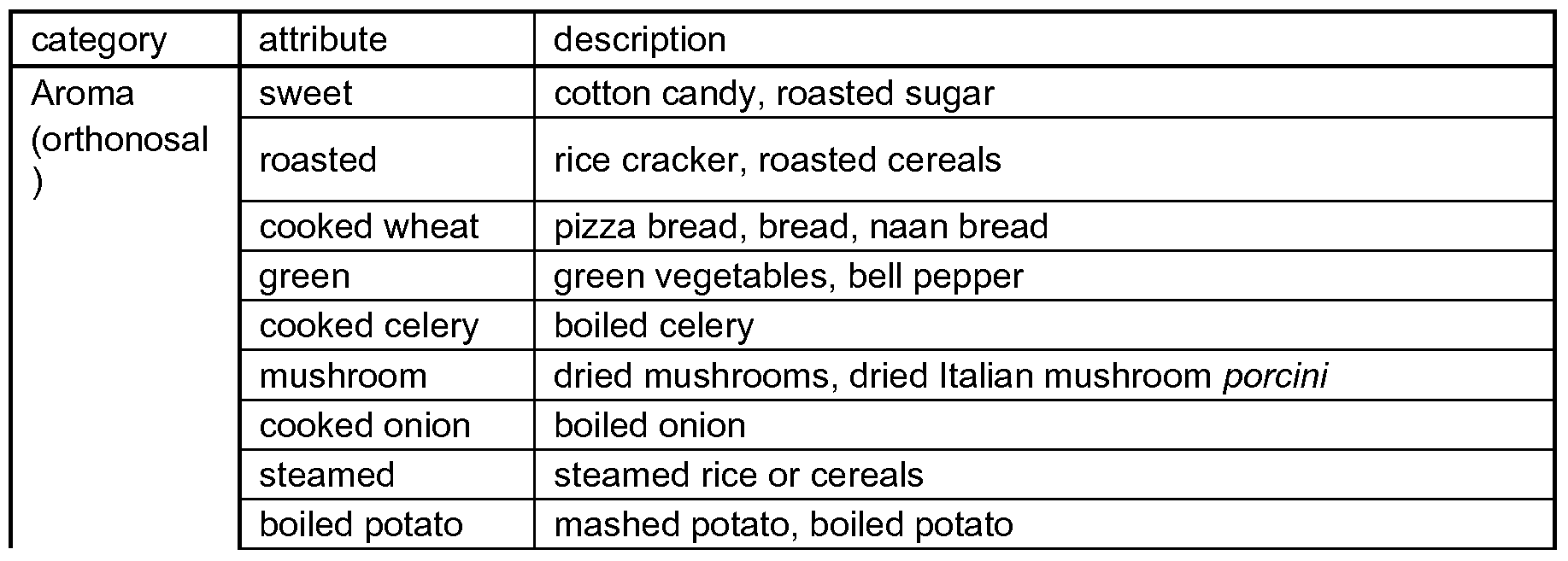

Table 10. Attributes for the chicken bouillon formulations


Non-sodium topping Premium cracker (Yamasaki-Nabisco Co., Ltd., Tokyo, Japan) and mineral water was used for palette cleansing. Results of the QDA analyses are in Tables 11 and 12.
Table 11. Pearson correlation of koku with the sensory attributes for the chicken bouillon application.


Table 12. Pearson correlation of koku with the sensory attributes for the beef bouillon application.

Example 3
QDA analysis (B)
A panel of DFS Food Specialties, Delft, the Netherlands consisting of 14 professionally trained panelists with at least 4 years experience in savoury food applications was used for QDA analysis. Thirty-three sensory attributes listed in Table 13 were used to quantify the sensory perception for odour, taste, aftertaste, mouthfeel and afterfeel. The samples were evaluated in 4 QDA sessions. Each panelist evaluated 6 products per session plus replicates with sufficient relaxation time between the serving (> 5 minutes). Tasteless crackers (Lu) and mineral water were used for palette cleansing. Results of the QDA analyses are shown in Tables 14 and 15.
Table 13. Attributes for the chicken and beef bouillon application


Table 14. QDA attribute list for the chicken bouillon.
 I Fatty afterfeel -0.42 I 0.17 I
Table 15. QDA attribute list for the beef bouillon application.

Claims
1. Use of a composition comprising vinasse to evoke or enhance koku perception in a food application.
2. Use according to claim 1 wherein the composition further comprises a compound selected from the group consisting of monosodium glutamate, 5'-ribonucleotides, protein, amino acids, polysacchararides, glycoproteins, yeast autolysate, yeast cell walls, and fat.
3. Use according to claim 1 or 2 wherein the composition further comprises a compound selected from the group consisting of monosodium glutamate, 5'- ribonucleotides, protein, and amino acids and a compound selected from the group consisting of polysacchararides, glycoproteins, and fat.
4. Use according to any one of claim 1-3 wherein the koku perception is evoked or enhanced by evoking or enhancing a taste attribute and/or an aftertaste attribute and/or an afterfeel attribute and/or a flavour attribute and/or mouthfeel attribute and/or an aroma attribute of the group consisting of umami taste, salty taste, salty aftertaste, soy aroma, soy sauce flavour, fullness, fatty mouthfeel, sweet taste, sweet aroma, roasted flavour, meat flavour, meat aftertaste, boiled beef flavour, cooked onion flavour, allium flavour, sour taste, bitter taste, and astringent afterfeel.
5. Use according to any one of claim 1-4 wherein the food application is a beef application.
6. Use according to any one of claim 1-5 wherein the yeast autolysate comprises vinasse.
7. Use according to any one of claim 1-6 wherein the yeast autolysate has a dry solids ratio between 50% and 95%.
8. Use according to any one of claim 1-7 wherein the composition further comprises a yeast extract.
9. Composition comprising a yeast autolysate comprising vinasse and a yeast extract.
10. Composition according to claim 9 wherein the amount of yeast extract is between 30 and 50% w/w based on the total weight of the composition.
11. Composition according to claim 9 or 10 wherein the amount of yeast autolysate comprising vinasse is between 40 and 80% w/w based on total weight of the composition.
12. Process to prepare the composition of any one of claim 9-1 1 comprising adding a yeast extract to a yeast autolysate comprising vinasse, or comprising adding a yeast extract and vinasse to a yeast autolysate.
Applications Claiming Priority (4)
| Application Number | Priority Date | Filing Date | Title |
|---|---|---|---|
| EP09008680.2 | 2009-07-02 | ||
| EP09008680 | 2009-07-02 | ||
| EP09176592.5 | 2009-11-20 | ||
| EP09176592 | 2009-11-20 |
Publications (2)
| Publication Number | Publication Date |
|---|---|
| WO2011000824A2 true WO2011000824A2 (en) | 2011-01-06 |
| WO2011000824A3 WO2011000824A3 (en) | 2011-02-24 |
Family
ID=43244961
Family Applications (1)
| Application Number | Title | Priority Date | Filing Date |
|---|---|---|---|
| PCT/EP2010/059198 Ceased WO2011000824A2 (en) | 2009-07-02 | 2010-06-29 | Compositions suitable as a flavour and to the use of these compositions to evoke or enhance koku perception |
Country Status (1)
| Country | Link |
|---|---|
| WO (1) | WO2011000824A2 (en) |
Cited By (4)
| Publication number | Priority date | Publication date | Assignee | Title |
|---|---|---|---|---|
| US9169474B2 (en) * | 2006-12-22 | 2015-10-27 | Novozymes A/S | Method for producing a yeast extract |
| WO2017174322A1 (en) * | 2016-04-08 | 2017-10-12 | Nestec S.A. | Dehydrated na2-imp as anti-caking agent |
| WO2021209582A1 (en) * | 2020-04-16 | 2021-10-21 | Dsm Ip Assets B.V. | Dark yeast extract |
| IE20210068A3 (en) * | 2020-03-31 | 2022-01-05 | Inroads Int Ltd | Supplementary Feed |
Citations (3)
| Publication number | Priority date | Publication date | Assignee | Title |
|---|---|---|---|---|
| WO2008068155A1 (en) | 2006-12-07 | 2008-06-12 | Dsm Ip Assets B.V. | Low salt food with improved taste |
| WO2008074770A1 (en) | 2006-12-19 | 2008-06-26 | Dsm Ip Assets B.V. | Reduced-salt dairy product with improved taste |
| WO2009007424A1 (en) | 2007-07-10 | 2009-01-15 | Dsm Ip Assets B.V. | Yeast autolysates |
Family Cites Families (10)
| Publication number | Priority date | Publication date | Assignee | Title |
|---|---|---|---|---|
| US3320070A (en) * | 1963-05-27 | 1967-05-16 | Worthington Foods Inc | Vegetable base high protein food product |
| EP0672354B1 (en) * | 1994-03-18 | 2000-07-12 | Ajinomoto Co., Inc. | Proteinaceous material for enhancing food taste quality |
| EP0794246B1 (en) * | 1996-03-08 | 2002-10-23 | Dsm N.V. | Process for recovering valuable compounds from vinasse produced during fermentation |
| WO2002060263A2 (en) * | 2001-01-31 | 2002-08-08 | Dsm Ip Assets B.V. | Vinasse in baking |
| WO2003051139A1 (en) * | 2001-12-19 | 2003-06-26 | Dsm Ip Assets B.V. | Compositions with a chicken flavour, use and production thereof |
| JP4458288B2 (en) * | 2003-04-25 | 2010-04-28 | 味の素株式会社 | NOVEL GLYCOPEPTIDE AND PEPTIDE HAVING KOKUMI EATING FUNCTION, AND METHOD OF IMPROVING KOKUMI OF FOOD |
| WO2005013723A1 (en) * | 2003-07-16 | 2005-02-17 | Dsm Ip Assets B.V. | Method to improve taste of food or beverage with a reduced amount of total fat by addition of yeast extract and food or beverage thereof |
| WO2005067734A2 (en) * | 2004-01-09 | 2005-07-28 | Dsm Ip Assets B.V. | Process for the production of compositions containing ribonucleotides and their use as flavouring agents |
| US20060188625A1 (en) * | 2004-07-12 | 2006-08-24 | Jan Gerrit Kortes | Method to improve taste of food or beverage with a reduced amount of total fat by addition of yeast extract and food or beverage thereof |
| RS57272B2 (en) * | 2005-12-28 | 2020-08-31 | Dsm Ip Assets Bv | Process flavours with low acrylamide |
-
2010
- 2010-06-29 WO PCT/EP2010/059198 patent/WO2011000824A2/en not_active Ceased
Patent Citations (3)
| Publication number | Priority date | Publication date | Assignee | Title |
|---|---|---|---|---|
| WO2008068155A1 (en) | 2006-12-07 | 2008-06-12 | Dsm Ip Assets B.V. | Low salt food with improved taste |
| WO2008074770A1 (en) | 2006-12-19 | 2008-06-26 | Dsm Ip Assets B.V. | Reduced-salt dairy product with improved taste |
| WO2009007424A1 (en) | 2007-07-10 | 2009-01-15 | Dsm Ip Assets B.V. | Yeast autolysates |
Non-Patent Citations (1)
| Title |
|---|
| STONE, TRAGON CORP. & DAVIS, 1974 |
Cited By (11)
| Publication number | Priority date | Publication date | Assignee | Title |
|---|---|---|---|---|
| US9169474B2 (en) * | 2006-12-22 | 2015-10-27 | Novozymes A/S | Method for producing a yeast extract |
| WO2017174322A1 (en) * | 2016-04-08 | 2017-10-12 | Nestec S.A. | Dehydrated na2-imp as anti-caking agent |
| CN108699100A (en) * | 2016-04-08 | 2018-10-23 | 雀巢产品技术援助有限公司 | Dehydration NA2-IMP as anti-caking agent |
| JP2019518710A (en) * | 2016-04-08 | 2019-07-04 | ネステク ソシエテ アノニム | Dewatered NA2-IMP as anti-caking agent |
| AU2017247466B2 (en) * | 2016-04-08 | 2021-03-18 | Société des Produits Nestlé S.A. | Dehydrated Na2-IMP as anti-caking agent |
| IL260602B (en) * | 2016-04-08 | 2022-10-01 | Nestle Sa | Dehydrated na2-imp as anti-caking agent |
| IL260602B2 (en) * | 2016-04-08 | 2023-02-01 | Nestle Sa | Dried Na2–imp as an anticoagulant |
| IE20210068A3 (en) * | 2020-03-31 | 2022-01-05 | Inroads Int Ltd | Supplementary Feed |
| GB2599749A (en) | 2020-03-31 | 2022-04-13 | Inroads International Ltd | Supplementary feed |
| GB2599749B (en) * | 2020-03-31 | 2024-10-30 | Inroads International Ltd | Supplementary feed |
| WO2021209582A1 (en) * | 2020-04-16 | 2021-10-21 | Dsm Ip Assets B.V. | Dark yeast extract |
Also Published As
| Publication number | Publication date |
|---|---|
| WO2011000824A3 (en) | 2011-02-24 |
Similar Documents
| Publication | Publication Date | Title |
|---|---|---|
| US11096408B2 (en) | Yeast extract having taste-enhancing effect | |
| JP6970226B2 (en) | New fermented seasoning composition | |
| RU2456347C2 (en) | Yeast extract containing inosinate disodium salt and guanylate disodium salt, extract production method | |
| JP5593641B2 (en) | Low salt food and beverage composition | |
| CN101873805B (en) | fermented ingredients | |
| CN101600362B (en) | Sweet-type seasoning compositions containing high proportion of amino acid and yeast for obtaining the same | |
| JP4115453B2 (en) | Yeast extract and production method thereof | |
| AU2010305418B2 (en) | Vegetable flavour | |
| WO2011000824A2 (en) | Compositions suitable as a flavour and to the use of these compositions to evoke or enhance koku perception | |
| US20180303141A1 (en) | Flavor composition for food products | |
| KR20120099274A (en) | Flavor-improving agent | |
| WO2010050429A1 (en) | Agent for enhancing flavor of stewed vegetables | |
| JP6983007B2 (en) | Isoamyl alcohol-rich seasoning composition and its manufacturing method | |
| JP2010220520A (en) | Method for producing meat flavor or egg flavor-like seasoning | |
| JP6992805B2 (en) | How to make oyster sauce | |
| JP7850326B1 (en) | Flavor improving composition | |
| US20240016194A1 (en) | Meat flavor-imparting agent | |
| WO2021209355A1 (en) | Spiciness enhancement | |
| JP2025026145A (en) | Yeast composition with high hydrophobic amino acid content | |
| JP2011092066A (en) | Reduced-salt food flavor improver, method for improving flavor of reduced-salt food, and savory reduced-salt food | |
| HK1170260A (en) | Arginine-rich yeast extract and process for production thereof | |
| HK1137302A1 (en) | Flavor-improving agent | |
| HK1137302B (en) | Flavor-improving agent | |
| CN106307415A (en) | Beef bone essence |
Legal Events
| Date | Code | Title | Description |
|---|---|---|---|
| 121 | Ep: the epo has been informed by wipo that ep was designated in this application |
Ref document number: 10726516 Country of ref document: EP Kind code of ref document: A2 |
|
| NENP | Non-entry into the national phase |
Ref country code: DE |
|
| 122 | Ep: pct application non-entry in european phase |
Ref document number: 10726516 Country of ref document: EP Kind code of ref document: A2 |