WO2010146831A1 - Prenatal milk-derived composition for preventing the risk of low birthweight of newborns - Google Patents
Prenatal milk-derived composition for preventing the risk of low birthweight of newborns Download PDFInfo
- Publication number
- WO2010146831A1 WO2010146831A1 PCT/JP2010/003959 JP2010003959W WO2010146831A1 WO 2010146831 A1 WO2010146831 A1 WO 2010146831A1 JP 2010003959 W JP2010003959 W JP 2010003959W WO 2010146831 A1 WO2010146831 A1 WO 2010146831A1
- Authority
- WO
- WIPO (PCT)
- Prior art keywords
- prenatal
- milk
- newborns
- food
- low
- Prior art date
- Legal status (The legal status is an assumption and is not a legal conclusion. Google has not performed a legal analysis and makes no representation as to the accuracy of the status listed.)
- Ceased
Links
Images

Classifications
-
- A—HUMAN NECESSITIES
- A61—MEDICAL OR VETERINARY SCIENCE; HYGIENE
- A61K—PREPARATIONS FOR MEDICAL, DENTAL OR TOILETRY PURPOSES
- A61K31/00—Medicinal preparations containing organic active ingredients
- A61K31/66—Phosphorus compounds
- A61K31/683—Diesters of a phosphorus acid with two hydroxy compounds, e.g. phosphatidylinositols
- A61K31/688—Diesters of a phosphorus acid with two hydroxy compounds, e.g. phosphatidylinositols both hydroxy compounds having nitrogen atoms, e.g. sphingomyelins
-
- A—HUMAN NECESSITIES
- A23—FOODS OR FOODSTUFFS; TREATMENT THEREOF, NOT COVERED BY OTHER CLASSES
- A23L—FOODS, FOODSTUFFS OR NON-ALCOHOLIC BEVERAGES, NOT OTHERWISE PROVIDED FOR; PREPARATION OR TREATMENT THEREOF
- A23L33/00—Modifying nutritive qualities of foods; Dietetic products; Preparation or treatment thereof
- A23L33/10—Modifying nutritive qualities of foods; Dietetic products; Preparation or treatment thereof using additives
- A23L33/115—Fatty acids or derivatives thereof; Fats or oils
-
- A—HUMAN NECESSITIES
- A23—FOODS OR FOODSTUFFS; TREATMENT THEREOF, NOT COVERED BY OTHER CLASSES
- A23L—FOODS, FOODSTUFFS OR NON-ALCOHOLIC BEVERAGES, NOT OTHERWISE PROVIDED FOR; PREPARATION OR TREATMENT THEREOF
- A23L33/00—Modifying nutritive qualities of foods; Dietetic products; Preparation or treatment thereof
- A23L33/40—Complete food formulations for specific consumer groups or specific purposes, e.g. infant formula
-
- A—HUMAN NECESSITIES
- A61—MEDICAL OR VETERINARY SCIENCE; HYGIENE
- A61K—PREPARATIONS FOR MEDICAL, DENTAL OR TOILETRY PURPOSES
- A61K31/00—Medicinal preparations containing organic active ingredients
- A61K31/66—Phosphorus compounds
- A61K31/683—Diesters of a phosphorus acid with two hydroxy compounds, e.g. phosphatidylinositols
- A61K31/685—Diesters of a phosphorus acid with two hydroxy compounds, e.g. phosphatidylinositols one of the hydroxy compounds having nitrogen atoms, e.g. phosphatidylserine, lecithin
-
- A—HUMAN NECESSITIES
- A61—MEDICAL OR VETERINARY SCIENCE; HYGIENE
- A61P—SPECIFIC THERAPEUTIC ACTIVITY OF CHEMICAL COMPOUNDS OR MEDICINAL PREPARATIONS
- A61P3/00—Drugs for disorders of the metabolism
-
- A—HUMAN NECESSITIES
- A61—MEDICAL OR VETERINARY SCIENCE; HYGIENE
- A61P—SPECIFIC THERAPEUTIC ACTIVITY OF CHEMICAL COMPOUNDS OR MEDICINAL PREPARATIONS
- A61P3/00—Drugs for disorders of the metabolism
- A61P3/02—Nutrients, e.g. vitamins, minerals
-
- A—HUMAN NECESSITIES
- A61—MEDICAL OR VETERINARY SCIENCE; HYGIENE
- A61P—SPECIFIC THERAPEUTIC ACTIVITY OF CHEMICAL COMPOUNDS OR MEDICINAL PREPARATIONS
- A61P43/00—Drugs for specific purposes, not provided for in groups A61P1/00-A61P41/00
Definitions
- the present invention relates to the technical field of health foods and more specifically relates to the technical field of food compositions for preventing the risk of low birthweight of newborns.
- Non-patent literature 1 Non-patent literature 1
- Low body weights of newborns at birth are said to be related to diseases such as diabetes mellitus, hypertension, and coronary artery disease (Non Patent Literature 2) and are also said to be related to metabolic syndrome. Also, the respiratory functions of low birthweight infants are often immature, such that about 25% of such infants develop premature apnea. The resulting risk of the onset of a disorder in the brain or other organs has been suggested.
- Non Patent Literature 3 a method for predicting and diagnosing low-bodyweight newborns at birth is reported in Patent literature 1, for example.
- Non Patent Literature 4 the relationship between vitamin B12 or folic acid deficiency in pregnant women and the low body weight of newborns at birth has also been suggested (Non Patent Literature 5).
- the first object of the present invention is to develop a pharmaceutical composition or a food composition for ameliorating the low birthweight of newborns so as to prevent the birthweight from decreasing to a level below the average birthweight of newborns (hereinafter, also referred to as the low birthweight of newborns) by improving nutrition during pregnancy.
- a second object of the present invention is to develop a pharmaceutical or food composition for preventing the low birthweight of newborns, which is intended for pregnant women at an increased risk of having low-birthweight newborns because of lack of nutritional balance (thought to be a background condition to the recent increases in the number of low body weight infants) due to the intake of snack food as a staple food and vitamin deficiencies.
- Folic acid which has been prescribed as a nutrient for pregnant women during pregnancy, is a water-soluble vitamin and known to be weak against light, acid, alkali, heat, and the like. Beverages (e.g., milk) containing folic acid and the like have been suggested to be problematic in that decreased folic acid concentrations are observed during lengthy storage, for example (Nihon Chikusan Gakkaiho 2009, Vol. 80, p. 41-45). Hence, it has been desired to provide a pharmaceutical product, a prenatal food for special dietary uses, or a prenatal nutritional supplementary food other than folic acid that provides safe and sure nutrition for pregnancy and is easier to preserve.
- Milk phospholipids are safe food ingredients, excellent in thermal stability and preservation quality. Successful prevention of the low birthweight of newborns through the intake of milk phospholipids contributes highly to the health of pregnant women and newborns.
- the present inventors have administered milk phospholipids to vitamin-B-deficient rats during pregnancy, and then evaluated the effects of vitamin Bs on the pregnant rats and the effects of vitamin Bs on rats in the fetal period based on body weights, body lengths, and organ weights of rats (babies) immediately after birth.
- the present inventors have discovered that rat babies are born with lower body weights in the case of vitamin-B-deficient pregnant rats (pregnant females), while lower body weights of rat babies can be prevented through administration of milk phospholipids to vitamin-B-deficient pregnant rats (pregnant females).
- the present inventors have completed the present invention.
- the present invention exerts an extremely good effect such that the low birthweight of newborns can be prevented with the use of a safe ingredient (milk phospholipids) ingested as a food. Furthermore, in general, fat-soluble vitamins are decomposed with more difficulty compared with water-soluble vitamins. Accordingly, it is thought that fat-soluble milk phospholipids are excellent in long-term preservation quality (do not decompose).
- Fig. 1 shows the results of opening the abdominal cavity on day 20 of pregnancy, extracting fetuses, and then measuring the number and the body weight thereof.
- the present invention encompasses an agent for preventing low birthweight comprising a milk phospholipid as an active ingredient, by which the low birthweight of newborns can be prevented.
- the present invention further encompasses an agent for reducing the risk of low birthweight comprising a milk phospholipid as an active ingredient, by which the risk of the low birthweight of newborns can be reduced.
- the present invention further encompasses an agent for preventing low birthweight comprising milk phospholipids as an active ingredient, by which the low birthweight of newborns due to the vitamin B deficiencies of pregnant women can be prevented.
- the present invention encompasses an agent for reducing the risk of low birthweight comprising a milk phospholipid as an active ingredient, by which the risk of the low birthweight of newborns due to vitamin B deficiencies of pregnant woman can be reduced.
- the present invention encompasses a prenatal medicine for reducing the risk for a newborn to have diabetes mellitus, hypertension, or coronary artery disease associated with the low birthweight of newborns after the growth of the newborns through administration thereof to their mother.
- a prenatal medicine for reducing the risk for a newborn to have diabetes mellitus, hypertension, or coronary artery disease associated with the low birthweight of newborns after the growth of the newborns through administration thereof to their mother.
- composition of the present invention for preventing the low birthweight of newborns comprises milk phospholipids as an active ingredient and encompasses: (1) an agent for preventing low birthweight, by which the low birthweight of newborns can be prevented; (2) an agent for reducing the risk of the low birthweight, by which the risk of low birthweight of newborns can be reduced; (3) an agent for preventing low birthweight, by which the low birthweight of newborns due to vitamin B deficiencies of a pregnant woman can be prevented; and (4) an agent for reducing the risk of low birthweight, by which the risk of the low birthweight of newborns due to vitamin B deficiencies of a pregnant woman can be reduced. 1-1.
- composition for preventing the low birthweight of newborns an example of an active ingredient of the composition for preventing low birthweight of newborns is a milk phospholipid.
- An example of a milk phospholipid is obtained by extraction of a lipid ingredient from milk using ethanol or the like, followed by extraction of the milk phospholipid using acetone.
- a milk-derived phospholipid can be prepared by a known method as disclosed in JP Patent Publication (Kokai) No. 2002-226394 A.
- the milk-derived phospholipid can be prepared by solvent extraction according to a known method ⁇ "Lipid Chemistry (Shishitsu no Kagaku) (Seikagaku Jikken Koza (Biochemical Experimental Lecture Series) 3)," Ed., The Japanese Biochemical Society, p. 23, TOKYO KAGAKU DOZIN CO., LTD, 1974; "lipid II phospholipid (New Seikagaku Jikken Koza (New Biochemical Experimental Lecture Series) 4)," Ed., The Japanese Biochemical Society, p.
- the milk-derived phospholipid can be prepared by fractionation of the extract (obtained by the aforementioned solvent extraction) using various types of chromatography.
- the milk-derived phospholipid can also be obtained as an insoluble fraction of acetone (solvent) from cream or butter, or butter serum, which is a byproduct of butter oil production.
- Butter serum is also used in the field of market milk and thus is available (e.g., New Zealand, Tatua). Butter serum has a high content of MFGM, in which phospholipids are localized, and thus is suitable as a raw material for extraction of phospholipids.
- the property of phospholipids being insoluble in acetone is used.
- an acetone-soluble fraction containing neutral lipids is removed and then an acetone-insoluble fraction containing concentrated phospholipids is obtained.
- the acetone-insoluble fraction is subjected to vacuum concentration to remove acetone and then the concentrate is subjected to freeze drying after sterilization.
- the dried product is pulverized, so that a milk-derived phospholipid fraction is obtained.
- the composition of the thus obtained phospholipid fraction contains 85% (% by weight) phospholipids.
- an ingredient containing cholines such as phosphatidyl choline and sphingomyelin is present.
- milk phospholipid concentrate containing about 5% by weight choline; 85% by weight lipids, 10% by weight ash content, 4% by weight carbohydrate, and 1% by weight moisture
- Hohoemi smile
- dairy product containing milk phospholipids can also be used.
- the medicine of the present invention is: (1) a prenatal medicine for preventing the low birthweight of newborns (agent for preventing low birthweight) or (2) a prenatal medicine for reducing the risk of the low birthweight of newborns (agent for reducing the risk of low birthweight); or (3) a prenatal medicine for reducing the risk for a newborn to have a disease associated with the low birthweight of newborns after growth through administration of the prenatal medicine to a pregnant woman who is the mother of the newborn.
- Examples of the medicine of the present invention comprising milk phospholipids as an active ingredient include (1) a prenatal medicine (agent for preventing low birthweight) for preventing the low birthweight of newborns, (2) a prenatal medicine (agent for reducing the risk of low birthweight) for reducing the risk of the low birthweight of newborns, and (3) a prenatal medicine for reducing the risk for a newborn to have a disease associated with the low birthweight of newborns after growth through administration of the prenatal medicine to a pregnant woman who is the mother of the newborn.
- the medicine of the present invention can be formulated into appropriate dosage forms such as powders, granules, tablets, capsules, and solutions.
- auxiliary agents that are generally used for formulation may be added, such as an excipient, a binder, a disintegrator, and a lubricant.
- excipient include starch, lactose, saccharose, methylcellulose, carboxymethylcellulose, sodium alginate, calcium hydrogen phosphate, synthetic aluminum silicate, microcrystalline cellulose, polyvinylpyrrolidone (PVP), and hydroxypropyl starch (HPS).
- examples of a binder include starch, microcrystalline cellulose, sodium carboxymethylcellulose, polyvinylpyrrolidone (PVP), powdered acacia, gelatin, dextrose, and an aqueous solution of saccharose or the like, or aqueous solutions or ethanol solutions thereof.
- examples of a disintegrator include starch, carboxylmethylcellulose, carboxylmethylcellulose calcium, microcrystalline cellulose, hydroxypropyl starch, and calcium phosphate.
- examples of a lubricant include carnauba wax, light anhydrous silicic acid, synthetic aluminum silicate, natural aluminum silicate, synthetic magnesium silicate, hardened oil, a derivative of hydrogenated vegetable oil (Sterotex HM), sesame oil, white beeswax, titanium oxide, dry aluminium hydroxide-gel stearic acid, calcium stearate, magnesium stearate, talc, calcium hydrogen phosphate, and sodium lauryl sulfate. 2-1.
- Dosage form of the medicine of the present invention which is specifically (1) a prenatal medicine for preventing the low birthweight of newborns, (2) a prenatal medicine for reducing the risk of the low birthweight of newborns, or (3) a prenatal medicine for reducing the risk for a newborn to have a disease associated with the low birthweight of newborns after growth through administration of the prenatal medicine to a pregnant woman who is the mother of the newborn, can be administered orally or parenterally and can be preferably administered orally.
- the dosage of choline desirably ranges from 60 mg/day to 3.5 g/day, preferably ranges from 100 mg/day to 3.5 g/day, more preferably ranges from 200 mg/day to 3.5 g/day, and further preferably ranges from 350 mg/day to 3.5 g/day.
- the dosage of a "milk phospholipid concentrate" desirably ranges from 1.4 g/day to 75 g/day, preferably ranges from 2.4 g/day to 75 g/day, more preferably ranges from 4.8 g/day to 75 g/day, and further preferably ranges from 7.5 g/day to 75 g/day (e.g., American Journal of Clinical Nutrition 2005, 82, p. 111-117; American Journal of Clinical Nutrition 2006, Vol. 83, p. 905-911; European Journal of Nutrition, 2007, Vol. 46, p. 300-306, Dietary Reference Intakes, p. 411).
- the intake of a prenatal medicine for preventing the low birthweight of newborns is desirably initiated before pregnancy. It is desired to intake the prenatal medicine at least once throughout pregnancy, and preferably to intake the same continuously throughout pregnancy (e.g., everyday). 2-2.
- the medicine of the present invention which is specifically (1) a prenatal medicine (agent for preventing low birthweight) for preventing the low birthweight of newborns, (2) a prenatal medicine (agent for reducing the risk of low birthweight) for reducing the risk of low birthweight of newborns, or (3) a prenatal medicine for reducing the risk for a newborn to have a disease associated with the low birthweight of newborns after growth through administration of the prenatal medicine to a pregnant woman who is the mother of the newborn, can be administered to all pregnant women.
- the medicine of the present invention can be administered particularly to pregnant women who have an unbalanced intake of nutrients.
- vitamin B deficiencies refers to folic acid deficiency, vitamin B2 deficiency, vitamin B6 deficiency, and vitamin B12 deficiency.
- the food for special dietary uses or the nutritional supplementary food of the present invention is (1) a prenatal food for special dietary uses or a prenatal nutritional supplementary food for preventing the low birthweight of newborns, (2) a prenatal food for special dietary uses or a prenatal nutritional supplementary food for reducing the risk of the low birthweight of newborns, or (3) a prenatal food for special dietary uses or a prenatal nutritional supplementary food for reducing the risk for a newborn to have a disease associated with the low birthweight of newborns after the growth through administration of the prenatal food or the prenatal nutritional supplementary food to a pregnant woman who is the mother of the newborn.
- the food for special dietary uses or the nutritional supplementary food of the present invention comprises a milk phospholipid as an active ingredient and may be in any form of solid (e.g., powders and granules), paste, liquid, or suspension.
- a milk phospholipid as an active ingredient
- an additive such as a sweetener, an acidulant, a vitamin preparation, and others that are generally used for production of drinkable preparations may also be added.
- the food for special dietary uses or the nutritional supplementary food of the present invention can be formulated into a supplement in an appropriate dosage form such as powders, granules, tablets, capsules, or solutions.
- the food for special dietary uses or the nutritional supplementary food of the present invention may be in the form of a food additive comprising a phospholipid as an active ingredient for preparation of a prenatal food for special dietary uses or a prenatal nutritional supplementary food.
- the intake of choline desirably ranges from 60 mg/day to 3.5 g/day, preferably ranges from 100 mg/day to 3.5 g/day, more preferably ranges from 200 mg/day to 3.5 g/day, and further preferably ranges from 350 mg/day to 3.5 g/day
- the intake of a "milk phospholipid concentrate" (containing about 5% by weight choline, 85% by weight lipids, 10% by weight ash content, 4% by weight carbohydrates, and 1% by weight moisture) desirably ranges from 1.4 g/day to 75 g/day, preferably ranges from 2.4 g/day to 75 g/day, more preferably ranges from 4.8 g/day to 75 g/day, and further preferably ranges from 7.5 g/day to 75 g/day (e.g., American Journal of Clinical Nutrition 2005, 82, p. 111-117; American
- Example 1 Effect of milk phospholipid intake during pregnancy Experimental method This experiment was conducted by dividing rats into 4 groups and using 8 rats for each instance of breeding in total of 4 instances of breeding.
- the rat body weight ranged from 155 g to 165 g at the beginning of the experiment and ranged from 240 g to 290 g at the completion of the experiment (duration of pregnancy). At this time, no significant differences were present in the body weights of each group.
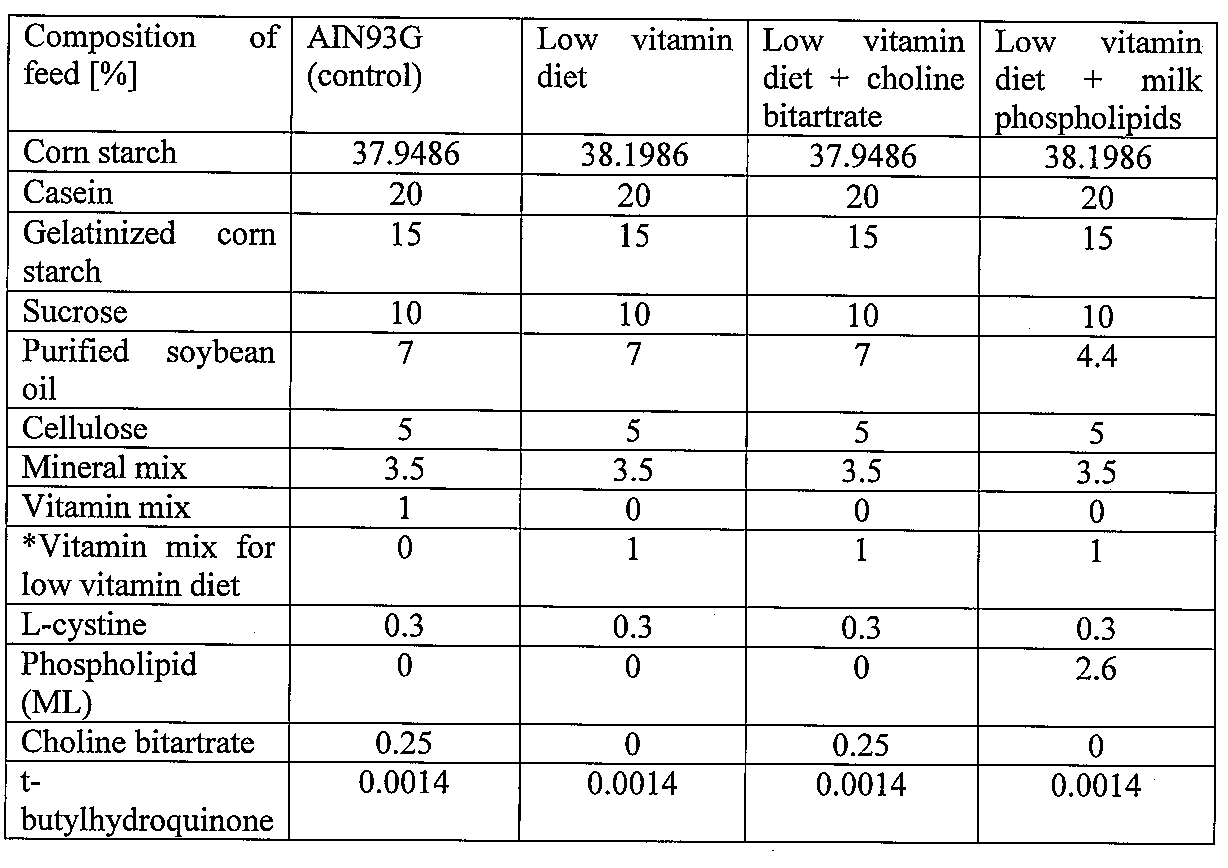
- 9-week-old female Wistar rats were fed ad libitum with a low vitamin diet (low vitamin diet: feed prepared by removing vitamin B2, folic acid, vitamin B12, and choline bitartrate from AIN93G vitamin mix) or a control diet (control group: AIN93G) for 1 week.
- a low vitamin diet low vitamin diet: feed prepared by removing vitamin B2, folic acid, vitamin B12, and choline bitartrate from AIN93G vitamin mix
- control group AIN93G
- vitamin mix for low vitamin diet refers to a vitamin mix prepared by removing vitamin B2, vitamin B12, and folic acid from the AIN93G vitamin mix.
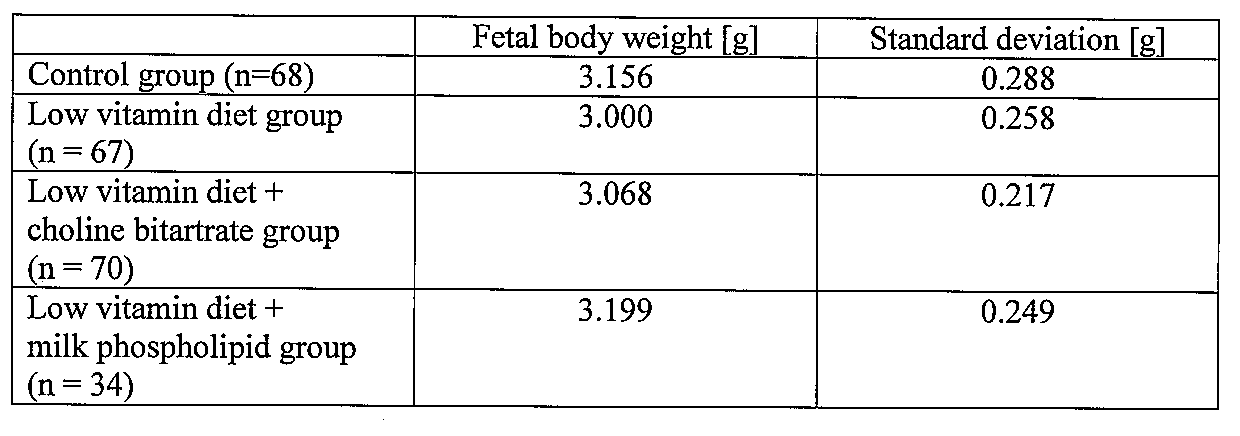
- Experimental result Because of the intake of the low vitamin diet, fetal body weights were lowered (Fig. 1). However, because of the intake of the low-vitamin diet supplemented with milk phospholipids, fetal body weights were improved such that they were on the increase (Fig. 1 and Table 2).
- the prenatal medicine, the food for special dietary uses, or the nutritional supplementary food of the present invention exerts excellent effects such that low birthweight of newborns can be prevented.
- the prenatal medicine, the food for special dietary uses, or the nutritional supplementary food can be used in the pharmaceutical or food production industries.
Landscapes
- Health & Medical Sciences (AREA)
- Life Sciences & Earth Sciences (AREA)
- Chemical & Material Sciences (AREA)
- Veterinary Medicine (AREA)
- Public Health (AREA)
- General Health & Medical Sciences (AREA)
- Medicinal Chemistry (AREA)
- Engineering & Computer Science (AREA)
- Animal Behavior & Ethology (AREA)
- Pharmacology & Pharmacy (AREA)
- Nuclear Medicine, Radiotherapy & Molecular Imaging (AREA)
- Organic Chemistry (AREA)
- General Chemical & Material Sciences (AREA)
- Chemical Kinetics & Catalysis (AREA)
- Bioinformatics & Cheminformatics (AREA)
- Nutrition Science (AREA)
- Epidemiology (AREA)
- Hematology (AREA)
- Obesity (AREA)
- Diabetes (AREA)
- Mycology (AREA)
- Food Science & Technology (AREA)
- Polymers & Plastics (AREA)
- Pediatric Medicine (AREA)
- Oil, Petroleum & Natural Gas (AREA)
- Pharmaceuticals Containing Other Organic And Inorganic Compounds (AREA)
- Medicines Containing Material From Animals Or Micro-Organisms (AREA)
- Coloring Foods And Improving Nutritive Qualities (AREA)
- Seeds, Soups, And Other Foods (AREA)
Abstract
Description
1. Prevention of low birthweight of newborns
Intake of a vitamin-B-deficient diet (deficiencies in vitamin Bs) during pregnancy is highly likely to result in the low birthweight of newborns of the relevant pregnant woman. Surprisingly, the present inventors have discovered that through administration of milk phospholipids to such a pregnant woman who has a vitamin-B-deficient diet, low birthweight of a newborn can be significantly suppressed or prevented.
(1) an agent for preventing low birthweight, by which the low birthweight of newborns can be prevented;
(2) an agent for reducing the risk of the low birthweight, by which the risk of low birthweight of newborns can be reduced;
(3) an agent for preventing low birthweight, by which the low birthweight of newborns due to vitamin B deficiencies of a pregnant woman can be prevented; and
(4) an agent for reducing the risk of low birthweight, by which the risk of the low birthweight of newborns due to vitamin B deficiencies of a pregnant woman can be reduced.
1-1. Composition for preventing the low birthweight of newborns
In the present invention, an example of an active ingredient of the composition for preventing low birthweight of newborns is a milk phospholipid. An example of a milk phospholipid is obtained by extraction of a lipid ingredient from milk using ethanol or the like, followed by extraction of the milk phospholipid using acetone.
2. Prenatal medicine
The medicine of the present invention is:
(1) a prenatal medicine for preventing the low birthweight of newborns (agent for preventing low birthweight) or (2) a prenatal medicine for reducing the risk of the low birthweight of newborns (agent for reducing the risk of low birthweight); or
(3) a prenatal medicine for reducing the risk for a newborn to have a disease associated with the low birthweight of newborns after growth through administration of the prenatal medicine to a pregnant woman who is the mother of the newborn.
2-1. Dosage form of the medicine of the present invention
The medicine of the present invention, which is specifically (1) a prenatal medicine for preventing the low birthweight of newborns, (2) a prenatal medicine for reducing the risk of the low birthweight of newborns, or (3) a prenatal medicine for reducing the risk for a newborn to have a disease associated with the low birthweight of newborns after growth through administration of the prenatal medicine to a pregnant woman who is the mother of the newborn, can be administered orally or parenterally and can be preferably administered orally.
2-2. Subjects for administration of the medicine of the present invention
The medicine of the present invention, which is specifically (1) a prenatal medicine (agent for preventing low birthweight) for preventing the low birthweight of newborns, (2) a prenatal medicine (agent for reducing the risk of low birthweight) for reducing the risk of low birthweight of newborns, or (3) a prenatal medicine for reducing the risk for a newborn to have a disease associated with the low birthweight of newborns after growth through administration of the prenatal medicine to a pregnant woman who is the mother of the newborn, can be administered to all pregnant women. The medicine of the present invention can be administered particularly to pregnant women who have an unbalanced intake of nutrients. Specific examples of such pregnant women include pregnant women with vitamin deficiencies and further specific examples thereof include pregnant women who are vegetarians and pregnant women with vitamin B deficiencies. Here, the term "vitamin B deficiencies" refers to folic acid deficiency, vitamin B2 deficiency, vitamin B6 deficiency, and vitamin B12 deficiency.
3. Prenatal food for special dietary uses or prenatal nutritional supplementary food
The food for special dietary uses or the nutritional supplementary food of the present invention is (1) a prenatal food for special dietary uses or a prenatal nutritional supplementary food for preventing the low birthweight of newborns, (2) a prenatal food for special dietary uses or a prenatal nutritional supplementary food for reducing the risk of the low birthweight of newborns, or (3) a prenatal food for special dietary uses or a prenatal nutritional supplementary food for reducing the risk for a newborn to have a disease associated with the low birthweight of newborns after the growth through administration of the prenatal food or the prenatal nutritional supplementary food to a pregnant woman who is the mother of the newborn.
Experimental method
This experiment was conducted by dividing rats into 4 groups and using 8 rats for each instance of breeding in total of 4 instances of breeding. The rat body weight ranged from 155 g to 165 g at the beginning of the experiment and ranged from 240 g to 290 g at the completion of the experiment (duration of pregnancy). At this time, no significant differences were present in the body weights of each group.
(1) 9-week-old female Wistar rats were fed ad libitum with a low vitamin diet (low vitamin diet: feed prepared by removing vitamin B2, folic acid, vitamin B12, and choline bitartrate from AIN93G vitamin mix) or a control diet (control group: AIN93G) for 1 week. (Table 1)
(2) 10-week-old female Wistar rats were crossed.
(3) The day on which crossing (plug) had been confirmed was designated
(4) On day 20 of gestation, about 0.3 ml of blood was collected via a vein, laparotomy was performed, fetuses were extracted, and then their body weight was measured. In addition, the general number of litters was determined to be 12 +/- 3 (rats beyond such number were excluded) and then the groups were compared with each other. For statistical analysis, a multiple comparison (Post-hoc: Scheffe) test was conducted using one-way analysis of variance of Statview (SAS).
Experimental result
Because of the intake of the low vitamin diet, fetal body weights were lowered (Fig. 1). However, because of the intake of the low-vitamin diet supplemented with milk phospholipids, fetal body weights were improved such that they were on the increase (Fig. 1 and Table 2).
Claims (10)
- A prenatal medicine comprising a milk-derived phospholipid as an active ingredient, by which the low birthweight of a newborn from a pregnant woman is prevented.
- A prenatal medicine comprising a milk-derived phospholipid as an active ingredient, by which the risk of low birthweight of a newborn from a pregnant woman is prevented.
- The medicine according to claim 1 or 2, which is a medicine for a pregnant woman whose intake of vitamin B and folic acid is insufficient.
- The medicine according to any one of claims 1 to 3, wherein the milk-derived phospholipids include sphingomyelin and/or phosphatidyl choline.
- The medicine according to any one of claims 1 to 4, wherein the choline content is at least 60 mg/day.
- A prenatal food for special dietary uses or a prenatal nutritional supplementary food comprising milk-derived phospholipids as an active ingredient, by which the risk of the low birthweight of a newborn from a pregnant woman is prevented.
- The prenatal food for special dietary uses or the prenatal nutritional supplementary food according to claim 6, which is used for a pregnant woman whose intake of vitamin B and folic acid is insufficient.
- The prenatal food for special dietary uses or the prenatal nutritional supplementary food according to claim 6 or 7, wherein the milk-derived phospholipids include sphingomyelin and/or phosphatidyl choline.
- The prenatal food for special dietary uses or the prenatal nutritional supplementary food according to any one of claims 6 to 8, wherein the choline content is at least 60 mg/day.
- A food additive for preparation of a prenatal food for special dietary uses or a prenatal nutritional supplementary food preventing the risk of the low birthweight of a newborn, comprising a milk-derived phospholipid as an active ingredient.
Priority Applications (3)
| Application Number | Priority Date | Filing Date | Title |
|---|---|---|---|
| JP2011548707A JP6043064B2 (en) | 2009-06-16 | 2010-06-15 | A milk-derived composition for pregnant women that prevents the risk of reduced birth weight in babies |
| HK13103020.3A HK1175665B (en) | 2009-06-16 | 2010-06-15 | Prenatal milk-derived composition for preventing the risk of low birthweight of newborns |
| CN201080026600.5A CN102802442B (en) | 2009-06-16 | 2010-06-15 | Prenatal milk-derived composition for preventing the risk of low birthweight of newborns |
Applications Claiming Priority (2)
| Application Number | Priority Date | Filing Date | Title |
|---|---|---|---|
| JP2009143615 | 2009-06-16 | ||
| JP2009-143615 | 2009-06-16 |
Publications (1)
| Publication Number | Publication Date |
|---|---|
| WO2010146831A1 true WO2010146831A1 (en) | 2010-12-23 |
Family
ID=42953864
Family Applications (1)
| Application Number | Title | Priority Date | Filing Date |
|---|---|---|---|
| PCT/JP2010/003959 Ceased WO2010146831A1 (en) | 2009-06-16 | 2010-06-15 | Prenatal milk-derived composition for preventing the risk of low birthweight of newborns |
Country Status (4)
| Country | Link |
|---|---|
| JP (2) | JP6043064B2 (en) |
| CN (1) | CN102802442B (en) |
| TW (1) | TWI528904B (en) |
| WO (1) | WO2010146831A1 (en) |
Families Citing this family (2)
| Publication number | Priority date | Publication date | Assignee | Title |
|---|---|---|---|---|
| MX2016003207A (en) * | 2013-10-21 | 2016-08-11 | Enzymotec Ltd | Compositions comprising choline and derivatives thereof, uses thereof and processes for their preparation. |
| CN108057134B (en) * | 2017-12-26 | 2020-12-01 | 湖北回盛生物科技有限公司 | Dairy cow midwifery lubricant and preparation method thereof |
Citations (4)
| Publication number | Priority date | Publication date | Assignee | Title |
|---|---|---|---|---|
| JP2002512047A (en) | 1998-04-21 | 2002-04-23 | インターリューキン ジェネティックス インコーポレイテッド | Fetal testing to predict low birth weight |
| JP2002226394A (en) | 2001-02-01 | 2002-08-14 | Meiji Milk Prod Co Ltd | Lipid metabolism improving composition |
| WO2008081934A1 (en) * | 2006-12-28 | 2008-07-10 | Meiji Dairies Corporation | Agent for facilitating the development of brain in infant comprising milk-derived phospholipid and food composition comprising the same |
| JP2009143615A (en) | 2007-12-17 | 2009-07-02 | Oji Paper Co Ltd | Powder detergent packaging container |
Family Cites Families (3)
| Publication number | Priority date | Publication date | Assignee | Title |
|---|---|---|---|---|
| JP3195594B2 (en) * | 1999-11-02 | 2001-08-06 | 明治乳業株式会社 | A food composition containing a milk-derived phospholipid. |
| JP5300186B2 (en) * | 2006-08-23 | 2013-09-25 | 株式会社明治 | Milk-derived composition for pregnant women that suppresses increase in homocysteine concentration in blood |
| CN101313717A (en) * | 2008-07-09 | 2008-12-03 | 内蒙古蒙牛乳业(集团)股份有限公司 | Liquid milk with additive vitamin suitable for pregnant woman drink and preparation method thereof |
-
2010
- 2010-06-15 CN CN201080026600.5A patent/CN102802442B/en active Active
- 2010-06-15 JP JP2011548707A patent/JP6043064B2/en active Active
- 2010-06-15 TW TW099119530A patent/TWI528904B/en active
- 2010-06-15 WO PCT/JP2010/003959 patent/WO2010146831A1/en not_active Ceased
-
2016
- 2016-07-19 JP JP2016141636A patent/JP6147900B2/en active Active
Patent Citations (4)
| Publication number | Priority date | Publication date | Assignee | Title |
|---|---|---|---|---|
| JP2002512047A (en) | 1998-04-21 | 2002-04-23 | インターリューキン ジェネティックス インコーポレイテッド | Fetal testing to predict low birth weight |
| JP2002226394A (en) | 2001-02-01 | 2002-08-14 | Meiji Milk Prod Co Ltd | Lipid metabolism improving composition |
| WO2008081934A1 (en) * | 2006-12-28 | 2008-07-10 | Meiji Dairies Corporation | Agent for facilitating the development of brain in infant comprising milk-derived phospholipid and food composition comprising the same |
| JP2009143615A (en) | 2007-12-17 | 2009-07-02 | Oji Paper Co Ltd | Powder detergent packaging container |
Non-Patent Citations (12)
| Title |
|---|
| AMERICAN JOURNAL OF CLINICAL NUTRITION, vol. 82, 2005, pages 111 - 117 |
| AMERICAN JOURNAL OF CLINICAL NUTRITION, vol. 83, 2006, pages 905 - 911 |
| ASIA PAC JOURNAL OF CLINICAL NUTRITION, vol. 15, 2006, pages 538 - 543 |
| DIETARY REFERENCE INTAKES, pages 411 |
| EUROPEAN JOURNAL OF NUTRITION, vol. 46, 2007, pages 300 - 306 |
| GOSSELL-WILLIAMS MAXINE ET AL: "Unexpected depletion in plasma choline and phosphatidylcholine concentrations in a pregnant woman with bipolar affective disorder being treated with lithuim, haloperidol and benztropine: a case report", JOURNAL OF MEDICAL CASE REPORTS, BIOMED CENTRAL LTD, LO, vol. 2, no. 1, 20 February 2008 (2008-02-20), pages 55, XP021040521, ISSN: 1752-1947 * |
| HABERG ET AL: "Folic Acid Supplements in Pregnancy and Respiratory Health in Early Childhood", JOURNAL OF ALLERGY AND CLINICAL IMMUNOLOGY, MOSBY, INC, US LNKD- DOI:10.1016/J.JACI.2008.12.083, vol. 123, no. 2, 1 February 2009 (2009-02-01), pages S18, XP025998222, ISSN: 0091-6749, [retrieved on 20090201] * |
| ILCOL Y O ET AL: "Choline status in newborns, infants, children, breast-feeding women, breast-fed infants and human breast milk", JOURNAL OF NUTRITIONAL BIOCHEMISTRY, BUTTERWORTH PUBLISHERS, STONEHAM, GB LNKD- DOI:10.1016/J.JNUTBIO.2005.01.011, vol. 16, no. 8, 1 August 2005 (2005-08-01), pages 489 - 499, XP004988884, ISSN: 0955-2863 * |
| LANCET, vol. 353, no. 9166, 1999, pages 1789 - 1792 |
| NIHON CHIKUSAN GAKKAIHO, vol. 80, 2009, pages 41 - 45 |
| SMUTS C M ET AL: "The effect of parenteral nutrition with lipovenous or intralipid on the fatty acid composition of plasma and erythrocyte membrane lipids in very-low-birthweight infants", SOUTH AFRICAN MEDICAL JOURNAL 1999 ZA, vol. 89, no. 6, 1999, pages 687 - 694, XP000974221, ISSN: 0038-2469 * |
| THOMAS J D ET AL: "Prenatal choline supplementation mitigates the adverse effects of prenatal alcohol exposure on development in rats", NEUROTOXICOLOGY AND TERATOLOGY, PERGAMON, ELMSFORD, NY, US LNKD- DOI:10.1016/J.NTT.2009.07.002, vol. 31, no. 5, 1 September 2009 (2009-09-01), pages 303 - 311, XP026715127, ISSN: 0892-0362, [retrieved on 20090716] * |
Also Published As
| Publication number | Publication date |
|---|---|
| TW201103443A (en) | 2011-02-01 |
| JP2012530046A (en) | 2012-11-29 |
| TWI528904B (en) | 2016-04-11 |
| JP2016185985A (en) | 2016-10-27 |
| CN102802442B (en) | 2014-05-07 |
| JP6043064B2 (en) | 2016-12-14 |
| CN102802442A (en) | 2012-11-28 |
| JP6147900B2 (en) | 2017-06-14 |
| HK1175665A1 (en) | 2013-07-12 |
Similar Documents
| Publication | Publication Date | Title |
|---|---|---|
| CN104159592B (en) | Uses of casein compositions | |
| TW201320992A (en) | Pharmaceutical composition comprising myo-inositol and D-chiro-inositol | |
| US20240122935A1 (en) | Maternal vitamin b2 administration for the prevention of increased adiposity, overweight or obesity in the offspring | |
| US6468556B1 (en) | Liver fat accumulation inhibitory composition, food additive for liver fat accumulation, inhibition, and method of inhibiting liver fat accumulation | |
| CN112533494A (en) | Treatment or prevention of gestational diabetes using polar lipids | |
| CN106604651A (en) | Nutritional composition for treating or preventing pregnancy-related conditions | |
| JP6147900B2 (en) | A milk-derived composition for pregnant women that prevents the risk of reduced birth weight in babies | |
| US9049884B2 (en) | Methods of modulating inflammation in preterm infants using carotenoids | |
| PT2908828T (en) | Galactagogue compositions based on phosphatidylserine | |
| US20240245636A1 (en) | Composition for increasing muscle mass | |
| JP5300186B2 (en) | Milk-derived composition for pregnant women that suppresses increase in homocysteine concentration in blood | |
| WO2005094854A1 (en) | Modified nutraceutical composition | |
| CN107921010A (en) | Prevention of high blood pressure and cardiovascular disease | |
| HK1175665B (en) | Prenatal milk-derived composition for preventing the risk of low birthweight of newborns | |
| WO2021038035A1 (en) | Scyllo-inositol and b-cell mediated disorders | |
| JP5870181B1 (en) | Serum cholesterol level and / or blood lipid level improver | |
| CN118354679A (en) | Prenatal supplement composition for improving micronutrient levels in breast milk | |
| TW202327559A (en) | Prenatal supplement compositions for increasing breastmilk micronutrient levels | |
| TW201924713A (en) | Composition for relieving chronic inflammation | |
| US20160317565A1 (en) | Maternal vitamin b12 administration for the prevention of increased adiposity, overweight or obesity in the offspring especially offspring overweight and/or obese mothers | |
| WO2020128876A1 (en) | Composition comprising iodine; selenium, vitamin d3 and lycopene for the prevention and treatment of hypothyroidism | |
| Rawal et al. | ZINC IN CHILD HEALTH: A MINERAL THAT MEANS A LOT! | |
| primrose Oil | THERAPEUTIC APPLICATIONS | |
| Jeenani | Clinical study of sooul quinya ba wajahe quillate faulad dorane hamal (iron deficiency anaemia during pregnancy) with unani formulation | |
| CN108601761A (en) | Including the composition of 3 '-O- methyl -5-O- sulfate epicatechins and the therapeutical uses of such composition |
Legal Events
| Date | Code | Title | Description |
|---|---|---|---|
| WWE | Wipo information: entry into national phase |
Ref document number: 201080026600.5 Country of ref document: CN |
|
| 121 | Ep: the epo has been informed by wipo that ep was designated in this application |
Ref document number: 10728909 Country of ref document: EP Kind code of ref document: A1 |
|
| WWE | Wipo information: entry into national phase |
Ref document number: 2011548707 Country of ref document: JP |
|
| NENP | Non-entry into the national phase |
Ref country code: DE |
|
| WWE | Wipo information: entry into national phase |
Ref document number: 423/CHENP/2012 Country of ref document: IN |
|
| 122 | Ep: pct application non-entry in european phase |
Ref document number: 10728909 Country of ref document: EP Kind code of ref document: A1 |