WO2010132992A1 - Compounds for the inhibition of herpesviruses - Google Patents
Compounds for the inhibition of herpesviruses Download PDFInfo
- Publication number
- WO2010132992A1 WO2010132992A1 PCT/CA2010/000762 CA2010000762W WO2010132992A1 WO 2010132992 A1 WO2010132992 A1 WO 2010132992A1 CA 2010000762 W CA2010000762 W CA 2010000762W WO 2010132992 A1 WO2010132992 A1 WO 2010132992A1
- Authority
- WO
- WIPO (PCT)
- Prior art keywords
- group
- compound
- formula
- naphthamide
- oxoethyl
- Prior art date
- Legal status (The legal status is an assumption and is not a legal conclusion. Google has not performed a legal analysis and makes no representation as to the accuracy of the status listed.)
- Ceased
Links
- 0 *1C=CC=C*1 Chemical compound *1C=CC=C*1 0.000 description 2
- ULYCUPBFNAISRF-SSDVNMTOSA-N C=CCc1cccc(/C=N/NC(CNC(c2cccc(Cl)c2)=O)=O)c1O Chemical compound C=CCc1cccc(/C=N/NC(CNC(c2cccc(Cl)c2)=O)=O)c1O ULYCUPBFNAISRF-SSDVNMTOSA-N 0.000 description 1
- ZTMADXFOCUXMJE-UHFFFAOYSA-N Cc(c(O)ccc1)c1O Chemical compound Cc(c(O)ccc1)c1O ZTMADXFOCUXMJE-UHFFFAOYSA-N 0.000 description 1
- AQSRRZGQRFFFGS-UHFFFAOYSA-N Cc(nccc1)c1O Chemical compound Cc(nccc1)c1O AQSRRZGQRFFFGS-UHFFFAOYSA-N 0.000 description 1
- GKQDDKKGDIVDAG-UHFFFAOYSA-N Cc1cc(F)ccc1O Chemical compound Cc1cc(F)ccc1O GKQDDKKGDIVDAG-UHFFFAOYSA-N 0.000 description 1
- BSKHPKMHTQYZBB-UHFFFAOYSA-N Cc1ccccn1 Chemical compound Cc1ccccn1 BSKHPKMHTQYZBB-UHFFFAOYSA-N 0.000 description 1
- FKNQCJSGGFJEIZ-UHFFFAOYSA-N Cc1ccncc1 Chemical compound Cc1ccncc1 FKNQCJSGGFJEIZ-UHFFFAOYSA-N 0.000 description 1
- ITQTTZVARXURQS-UHFFFAOYSA-N Cc1cnccc1 Chemical compound Cc1cnccc1 ITQTTZVARXURQS-UHFFFAOYSA-N 0.000 description 1
- LNJMHEJAYSYZKK-UHFFFAOYSA-N Cc1ncccn1 Chemical compound Cc1ncccn1 LNJMHEJAYSYZKK-UHFFFAOYSA-N 0.000 description 1
- LVILGAOSPDLNRM-UHFFFAOYSA-N Cc1ncncc1 Chemical compound Cc1ncncc1 LVILGAOSPDLNRM-UHFFFAOYSA-N 0.000 description 1
Classifications
-
- C—CHEMISTRY; METALLURGY
- C07—ORGANIC CHEMISTRY
- C07C—ACYCLIC OR CARBOCYCLIC COMPOUNDS
- C07C251/00—Compounds containing nitrogen atoms doubly-bound to a carbon skeleton
- C07C251/72—Hydrazones
- C07C251/86—Hydrazones having doubly-bound carbon atoms of hydrazone groups bound to carbon atoms of six-membered aromatic rings
-
- A—HUMAN NECESSITIES
- A61—MEDICAL OR VETERINARY SCIENCE; HYGIENE
- A61P—SPECIFIC THERAPEUTIC ACTIVITY OF CHEMICAL COMPOUNDS OR MEDICINAL PREPARATIONS
- A61P31/00—Antiinfectives, i.e. antibiotics, antiseptics, chemotherapeutics
- A61P31/12—Antivirals
- A61P31/20—Antivirals for DNA viruses
- A61P31/22—Antivirals for DNA viruses for herpes viruses
-
- C—CHEMISTRY; METALLURGY
- C07—ORGANIC CHEMISTRY
- C07C—ACYCLIC OR CARBOCYCLIC COMPOUNDS
- C07C243/00—Compounds containing chains of nitrogen atoms singly-bound to each other, e.g. hydrazines, triazanes
- C07C243/24—Hydrazines having nitrogen atoms of hydrazine groups acylated by carboxylic acids
- C07C243/26—Hydrazines having nitrogen atoms of hydrazine groups acylated by carboxylic acids with acylating carboxyl groups bound to hydrogen atoms or to acyclic carbon atoms
- C07C243/28—Hydrazines having nitrogen atoms of hydrazine groups acylated by carboxylic acids with acylating carboxyl groups bound to hydrogen atoms or to acyclic carbon atoms to hydrogen atoms or to carbon atoms of a saturated carbon skeleton
Definitions
- TITLE Compounds for the Inhibition of Herpesviruses
- Figure 17 is a scheme representing the chemical synthesis of compound 2 and derivative compounds C2.05, C2.11, and C2.20, and;
- X may be OH and Y may be F.
- Ri may be, for example, H.
- X may be OH while Y may be F.
- R may be, for example, a substituted or unsubstituted (wherein X is H) pyridine of formula:
- the compound of the present invention may be selected from those of formula IB wherein X is of H, -OR], NH 2 , F, Cl, Br, I, an alkyl group of 1 to
- the compounds listed below or listed in Figure 2 may be included, while in other aspects (compounds per se) these compounds may, if desired, be excluded from the invention: i. N-(2-(2-(2-hydroxybenzylidene) hydrazino)-2- oxoethyl)-l- naphthamide; ii. N-(2-(2-(2-hydroxy-5-methoxybenzylidene) hydrazino)-2- oxoethyl)-l- naphthamide, or iii. N-(2-(2-(3- allyl -2- hydroxybenzylidene) hydrazino)-2- oxoethyl)- 1- naphthamide.
- Some of the compounds described herein may be suitable for interfering with the replication of herpesvirus such as herpes simplex 1, herpes simplex 2, cytomegalovirus and/or varicella zoster virus.
- herpesvirus such as herpes simplex 1, herpes simplex 2, cytomegalovirus and/or varicella zoster virus.
- Some compounds of formula IA or their pharmaceutically acceptable salts have also been found suitable for inhibiting the replication of herpesviruses that are characterized as being resistant to a nucleoside analogue and/or a pyrophosphate analogue.
- some compounds of formula IB or their pharmaceutically acceptable salts may be capable of impairing the replication of viruses that are otherwise resistant to a nucleoside analogue and/or a pyrophosphate analogue.
- the present invention provides a method of treating or preventing a herpesvirus infection.
- the method may comprise administering a compound or a pharmaceutically acceptable salt thereof of formula IA or IB or any other compounds described herein to a mammal in need.
- the method may also be carried out by contacting a cell infected or susceptible to being infected with a cytomegalovirus, with a compound of formula IB. Such method may be carried out for viruses that are resistant to ganciclovir and/or foscarnet.
- the present invention relates to a method for interfering with herpesviruses replication from (in) a cell.
- the method may comprise contacting a cell infected by the herpesvirus with a compound of formula IA or IB or a compound selected from the group consisting of:
- Yet further aspects of the invention encompass the use of the compounds of formula IA 1 and IA 2 in the manufacture of a herpesvirus DNA polymerase ligand or in the manufacture of a herpesvirus inhibitor, especially inhibitors of herpes simplex 1, herpes simplex 2, varicella zoster virus or cytomegalovirus.
- Compounds of formulas IA 1 or IA 2 may be used for the manufacture of a compound of formula IA.
- ChemScore ⁇ Gbmding+Pclash + C m ternal P internal + (Pcovalent C covalent + P constraint) with AGbm ⁇ ng S/ ⁇ 0 + where S hbond , S m eiai, and S/, po are scores for hydrogen bonding, acceptor-metal, and lipophilic interactions, respectively.
- H ro[ represents the loss of conformational entropy of the ligand upon binding to the protein [H].
- Virtual Screening A free public database "ZINC 6" [12] was selected for virtual screening. A subset of 128 000 compounds with drug-like properties satisfying the Lipinski rules of 5 [13] was selected. The database was used for virtual screening into the selected docking site and the compounds were scored according to ChemScore function [H]. In the docking simulation with HSV-I DNA pol, compounds were ranked according to the ChemScore and hydrogen bonding potential.
- HFFs Human foreskin fibroblasts
- Vero African green monkey kidney cells
- HFFs were used for propagation of viral strains and susceptibility assays for HSV- l/HSV-2 and VZV/CMV, respectively.
- HSV-2 HBV-2
- P-920056 HSV-2
- VZV GB2000VZV
- Antiviral activity of compounds 1 to 8 was first tested at two concentrations (1 ⁇ M and 10 ⁇ M) along with currently-available first-line drugs (ACV for HSV/VZV and GCV for CMV) using a standard PRA.
- the relative activity (% viral plaques relative to control with no antiviral) for compounds 1 to 8 against HSV-I, HSV-2, VZV and CMV representative strains is presented in Figures 7A and 7B.
- New chemical entity derivatives of compounds 2 and 3 with binding potential to the HSV-I DNA polymerase pocket were synthetized and tested for antiviral activity in cell cultures.
- Compound C2.20 retained excellent activity against HSV-I, HSV-2 and VZV like the parental compound, including against strains resistant to current antiviral agents.
- Compound 2 derivatives listed in Figure 4C having a Chemscore rank closed to that of compound 2 are likely to have a similar or better activity than the parent compound. This suggests that the new compounds bind to the viral DNA pol at a different site than nucleoside or pyrophosphate analogues probably through interactions with residues Tyr884, Val715, Lys939, Tyr722 and the two Mg 2+ atoms.
- Step b Preparation of N-(2-hydrazinyl-2-oxoethyl)-3-chlorophenyl-l- carboxamide (7a)
- the present description refers to a number of documents, the content of which is h heerreeiinn i innccoorrnpoorraatteedd b bvy r reeffeerreennccee i inn t thheeiirr e ennttiirreettyy..
Landscapes
- Chemical & Material Sciences (AREA)
- Organic Chemistry (AREA)
- Health & Medical Sciences (AREA)
- Life Sciences & Earth Sciences (AREA)
- Virology (AREA)
- General Chemical & Material Sciences (AREA)
- Nuclear Medicine, Radiotherapy & Molecular Imaging (AREA)
- Oncology (AREA)
- Molecular Biology (AREA)
- Chemical Kinetics & Catalysis (AREA)
- Biotechnology (AREA)
- Medicinal Chemistry (AREA)
- Communicable Diseases (AREA)
- Engineering & Computer Science (AREA)
- Pharmacology & Pharmacy (AREA)
- Animal Behavior & Ethology (AREA)
- General Health & Medical Sciences (AREA)
- Public Health (AREA)
- Veterinary Medicine (AREA)
- Pharmaceuticals Containing Other Organic And Inorganic Compounds (AREA)
Abstract
3D protein modeling and virtual screening of commercially-available compounds were performed to identify new inhibitors of the herpesvirus DNA polymerase, a key enzyme in the viral replication cycle. Two compounds (Nos 2 and 9) were particularly active against HSV-1 and HSV-2 strains and one compound (No 3) inhibited specifically cytomegalovirus (CMV) strains (overall hit rate of 25%). Some of the tested compounds inhibited wild-type viruses and strains resistant to current antiviral agents. New chemical entity derivatives of compound 2 with binding potential to the DNA polymerase retained an excellent activity against HSV-1, HSV-2 and VZV like the parental compound, as well as against strains resistant to current antiviral agents. These non-nucleosidic herpesvirus DNA polymerase inhibitors with in vitro activity against drug-resistant clinical isolates warrant further pre-clinical studies.
Description
TITLE: Compounds for the Inhibition of Herpesviruses
FIELD OF THE INVENTION
The present invention relates to compounds and their use in impairing the replication of herpesviruses. These compounds are particularly active against the herpes simplex viruses (HSV) types -1 and -2, the cytomegalovirus (CMV) and the varicella-zoster virus (VZV) and may be used to inhibit wild-type viruses or strains resistant to current antiviral agents.
BACKGROUND OF THE INVENTION
Herpesviruses are DNA-containing enveloped viruses belonging to the Herpesviridae family. Among these viruses, HSV-I and HSV -2 are responsible for recurrent oro- labial and genital infections, VZV is responsible for chickenpox and shingles and
CMV is associated with disseminated infections such as pneumonitis, colitis and retinitis in immunocompromised individuals. All herpesviruses establish lifelong latent infections in humans with periodic symptomatic and asymptomatic reactivations.
Antiviral agents are commonly used to treat frequent HSV reactivations (mainly genital infections) in immunocompetent individuals, VZV reactivation (shingles or zoster) in elderly subjects and severe HSV, VZV and CMV infections in immunocompromised hosts such as HIV-infected patients, transplant recipients and subjects with neoplasia. Active compounds currently available for the treatment of herpesvirus infections include the nucleoside analogues acyclovir (ACV and its prodrug valacyclovir or VACV), penciclovir (PCV and its prodrug famciclovir), and ganciclovir (GCV and its prodrug valganciclovir or VGCV) as well as the nucleotide analogue cidofovir (CDV) and the pyrophosphate analogue foscarnet (FOS). All these compounds interfere with viral DNA synthesis by inhibiting the viral DNA polymerase (pol). The nucleoside and nucleotide analogues must be phosphorylated to exert their antiviral effect whereas the pyrophosphate analogue FOS directly inhibits viral DNA pol. The nucleoside analogues ACV and GCV are considered the first-line drugs against HSV/VZV and CMV diseases, respectively, whereas CDV and FOS are considered second-line drugs due to their important toxicity (nephrotoxicity and electrolyte imbalances) and lack of oral formulations.
The emergence of herpesvirus drug resistance is frequent in immunocompromised subjects and only surpassed by that of HIV resistance [I]. For instance, HSV resistance to ACV, the first-line drug, varies from 4 to 14% among various immunocompromised groups, although it is infrequent in immunocompetent subjects [I]. The rate of CMV resistance to the gold Standard GCV is also substantial with 7% resistance after 6 months of treatment in HIV-infected patients [2] and up to 30% in lung transplant recipients [3]. Due to less frequent use, fewer data on CMV resistance to CDV and FOS have been reported. Some CMV studies reported resistance rate to FOS and CDV similar or higher to that observed with GCV [4,5]. Resistance to the nucleoside analogues can be conferred by alterations in the viral activating gene (HSV/VZV thymidine kinase or CMV UL97 protein kinase) or in the target gene, i.e. the viral DNA pol. Resistance to CDV and FOS arises from mutations in the viral DNA pol gene only. Notably, some mutations in the viral DNA pol gene can confer resistance to all currently-available antiviral agents [6,7]. Thus, there is an urgent need to develop other non-toxic and highly effective compounds with different mechanisms of action to inhibit herpesvirus replication.
The aim of this project was to identify compounds with high binding potential to the DNA pol of HSV-I by using a strategy that combines 3D modeling and virtual screening of a large bank of compounds. The antiviral activity and toxicity of the top leading compounds were examined in vitro against HSV-I, HSV -2, VZV and CMV. Recombinant and clinical isolates suceptible and/or resistant to current antivirals prescribed for the treatment of herpesvirus infections were used to determine the antiviral potential of these new compounds.
SUMMARY OF THE INVENTION
The present invention relates to compounds, pharmaceutical compositions comprising these compounds and their use in impairing or inhibiting (e.g., interfering) herpesvirus replication. Some of the compounds of the present are readily available to the public while others are new chemical entities.
The present invention especially contemplates compounds that are new chemical entities. However, both new chemical entities and known compounds may be used in pharmaceutical compositions and in methods of inhibiting herpesvirus replication.
Compounds of formula IA and IB that are described herein may be suitable for impairing herpesvirus replication. Some compounds of formula IA have been found particularly suitable for interfering with the replication of herpes simplex 1 and herpes simplex 2 while some compounds of formula IB have been found particularly suitable for interfering with the replication of cytomegaloviruses. Both compounds of formula IA and IB have also the ability to interfere with the replication of varicella zoster virus.
Some of the compounds described herein may even be used to interfere with the replication of herpesviruses that show resistance to other antivirals including, acyclovir, ganciclovir and/or foscarnet.
The invention also provides chemical intermediates of formula IA1, IA2, IB1 and IB2 that may be used in the manufacture of compounds of formula IA or IB.
Methods for identifying a ligand capable of interacting with a herpesvirus DNA polymerase are also encompassed herewith. The method entails using computer- generated models of a putative ligand and of a HSV-I DNA polymerase pocket that is located near its active site. Putative compounds that fit into the pocket may be selected according to an estimation of the free energy of ligand binding and hydrogen bonding potential of the ligand with the DNA polymerase.
The pocket of interest is delimited by residues Val715, Asp717, Ser720, Arg785, Lys81 1, Asn815, Tyr884 and Lys939. Selected compounds may be tested for their ability to interfere with the activity of the DNA polymerase (accession No.
CAA32323). For example, the putative ligand may be obtained and tested for in vitro inhibition of replication of a herpesvirus using a method described herein.The present invention thus also relates to compounds that are selected by this method and that are capable of inhibiting viral replication.
BRIEF DESCRIPTION OF THE DRAWINGS
In drawings which illustrates non-limitative exemplary embodiments of the present invention,
Figure 1 is a schematic representation of the structure of HSV-I DNA polymerase
docking cleft used in virtual screening experiments delimited by residues Val715, Asp717, Ser720, Arg785, Lys81 1, Asn815, Tyr884, Lys939;
Figure 2 is a table representing the high ranking compounds selected from virtual screening of the HSV-I DNA polymerase active site near Mg2+;
Figure 3 is a table showing the chemical structure of compounds having a high affinity with the viral DNA polymerase active site near Mg2+;
Figure 4A represents the structure of compound 2 derivatives;
Figure 4B represents the name of compound 2 derivatives;
Figure 4C is a table representing the result of the docking simulation of chemical compounds derived from compound 2 on HSV-I DNA polymerase. Docking was done with GOLD v.3.2 software and compounds were ranked with ChemScore function;
Figure 5 represents the chemical structure of selected derivatives of compounds 2 and
3;
Figure 6 shows histograms describing the toxicity of the most potent compounds 2 and 3 on Vero (A) and HFF (B) cells using a MTS assay.
Figure 7A Screening activity of compounds 1 to 8 against representative HSV-I (A) and HSV-2 (B) strains;
Figure 7B Screening activity of compounds 1 to 8 against representative VZV (C) and CMV (D) strains;
Figure 8 is a table representing the IC5O values for the most potent compounds 2, 3 and 9 against herpesvirus reference strains;
Figure 9 is a table representing the antiviral activity of compound 2 against wild-type and drug-resistant HSV-I clinical isolates and recombinant viruses;
Figure 10 is a table representing the antiviral activity of compound 2 against wild- type and drug-resistant HSV-2 clinical isolates;
Figure 11 is a table representing the antiviral activity of compound 2 against a wild- type VZV strain and a drug-resistant VZV clinical isolate;
Figure 12 is a table representing the antiviral activity of compound 3 against wild- type and drug-resistant CMV clinical isolates;
Figure 13 is a table representing the results of Parrallel Artificial Membrane Permeability Assays (PAMPA) for compounds 2 and 3;
Figure 14 is a table representing the results of microsomal stability of compounds 2 and 3 using male rat liver microsomes;
Figure 15 is a table representing the antiviral activity of compounds 2 and 3 derivatives against herpesvirus strains;
Figure 16 is a table representing the toxicity of compounds 2 and 3 and their derivatives for Vero cells and HFFs;
Figure 17 is a scheme representing the chemical synthesis of compound 2 and derivative compounds C2.05, C2.11, and C2.20, and;
Figure 18 is a scheme representing the chemical synthesis of compound 3 and derivative compounds C3-1 and C3-2.
DETAILED DESCRIPTION OF THE INVENTION
The present invention relates to compounds, pharmaceutical compositions comprising these compounds and their use in impairing or inhibiting herpesvirus replication. Some of the compounds of the present are readily available to the public while others are new chemical entities.
The present invention especially contemplates compounds that are new chemical entities. However, both new chemical entities and known compounds may be used in pharmaceutical compositions and in methods and uses for inhibiting herpesvirus replication.
In an aspect, the present invention relates to a compound of formula IA or formula IB or a pharmaceutically acceptable salt thereof as well as pharmaceutical compositions
comprising such compounds and a pharmaceutically acceptable carrier;

Formula IB
where R may be selected, for example, from the group consisting of :
a) unsubstituted benzyl or a substituted benzyl of formula II

b) an unsubstituted pyridine or a substituted pyridine selected from the group consisting of:

c) a pyrimidine selected from the group consisting of
and
X and Y may each independently be selected from the group consisting of H, -OR], NH2, F, Cl, Br, I, an alkyl group of 1 to 3 carbon atoms and an allyl group, and;
Ri may be selected from the group consisting of H and an alkyl group of 1 to 3 carbon atoms.
In accordance with the present invention, the compound may be, for example, a compound of formula IA, wherein R may be selected, for example, from the group consisting of unsubstituted benzyl or a substituted benzyl of formula II:

II ; and,
an unsubstituted pyridine or a substituted pyridine of formula:

wherein X and Y each may independently be selected from the group consisting of H, -ORi, NH2, F, Cl, Br, I, an alkyl group of 1 to 3 carbon atoms and an allyl group and wherein Ri may be selected from the group consisting of H and an alkyl group of 1 to 3 carbon atoms.
In accordance with an embodiment of the invention R may be a substituted benzyl of formula II, where X may be ORi and Y may be either F, ORi or H.
In accordance with a specific embodiment of the invention, X may be OH and Y may be F.
In accordance with another specific embodiment of the invention, X may be OH and Y may be H.
In accordance with yet another specific embodiment of the invention, X may be ORi and Y may be OH. In such instance Ri may be, for example H or methyl.
Also in accordance with the present invention, the compound may be, for example, a compound of formula IA, where R may be a substituted pyridine of formula

and where X is ORi.
In accordance with a specific embodiment of the invention, Ri may be, for example, H.
In an exemplary embodiment, the compound of the present invention may be selected from those of formula IA, wherein R is a substituted benzyl of formula II:

wherein X may be H or ORi and wherein Y is OH.
In accordance with a specific embodiment of the invention, X may be ORi while Y may be OH. In accordance with another specific embodiment of the invention, X may be H while Y may be OH. In accordance with yet another exemplary embodiment, X may be OMe while Y may be OH.
In another exemplary embodiment, the compound of the present invention is selected from those of formula IA, wherein R may be for example, a hydroxy-substituted benzyl of formula:

In accordance with a particular embodiment of the invention, R may be for instance, a
hydroxy-substituted benzyl of formula:

In accordance with another particular embodiment of the invention, R may be for instance a substituted benzyl of formula:

In an exemplary embodiment, the compound of the present invention may be selected from those of formula IA, wherein R is a substituted benzyl of formula II:

and wherein X and Y are both OH.
In accordance with an exemplary embodiment of the invention R may be a hydroxy- substituted benzyl of formula:

In accordance with a specific embodiment of the invention R may be for example, a hydroxy-substituted benzyl of formula,

In a further exemplary embodiment, the compound of the present invention may be selected from those of formula IA, wherein R is a substituted benzyl of formula II:

wherein X may be H or OH and wherein Y may be F, Cl, Br or I.
In accordance with a particular embodiment of the invention X may be OH while Y may be F.
In accordance with an exemplary embodiment of the invention R may be, for example a substituted benzyl of formula:

In an additional embodiment, the compound of the present invention may be selected from those of formula IA, wherein R is a substituted pyridine selected from the group consisting of:

In an exemplary embodiment of the invention, R may be, for example, a substituted pyridine group of formula:

In accordance with the invention, X may be OH. The substituted pyridine group may thus be, for instance:

In another exemplary embodiment of the invention, R may be, for example, a substituted or unsubstituted (wherein X is H) pyridine of formula:

In yet another exemplary embodiment of the invention, R may be, for example, a pyrimidine group of formula:

In a further embodiment, the compound of the present invention may be selected from those of formula IB wherein X is of H, -OR], NH2, F, Cl, Br, I, an alkyl group of 1 to
3 carbon atoms and an allyl group and; wherein Ri is selected from the group consisting of H and an alkyl group of 1 to 3 carbon atoms. In a particular
embodiment, X may be, for example, F, Cl, Br or I. In a more specific embodiment X may be Cl.
In accordance with an embodiment of the invention, the compound of formula IB may have the following formula:

In some aspect of the invention including for example, pharmaceutical compositions, uses and methods, the compounds listed below or listed in Figure 2 may be included, while in other aspects (compounds per se) these compounds may, if desired, be excluded from the invention: i. N-(2-(2-(2-hydroxybenzylidene) hydrazino)-2- oxoethyl)-l- naphthamide; ii. N-(2-(2-(2-hydroxy-5-methoxybenzylidene) hydrazino)-2- oxoethyl)-l- naphthamide, or iii. N-(2-(2-(3- allyl -2- hydroxybenzylidene) hydrazino)-2- oxoethyl)- 1- naphthamide.
In another aspect the present invention provides a compound of formula IA or a pharmaceutically acceptable salt thereof,

wherein R may be selected, for example, from the group consisting of:

In accordance with an embodiment of the invention, R may be more particularly selected from the group consisting of

In accordance with a specific embodiment of the invention, R may be more
particularly selected from the group consisting of:

In accordance with another specific embodiment of the invention, R may be more particularly selected from the group consisting of:

In a further aspect, the present invention relates to the use of the compounds of formula IA and/or formula IB or other compounds as described herein for interfering with (e.g., treating, preventing) a herpesvirus replication. Compounds of the present invention may found particular use in the inhibition of herpesvirus replication, thereby reducing the viral load. The compounds of formula IA and/or IB described herein may be capable of interacting with the DNA polymerase of some herpesviruses and thereby impairing the activity of the DNA polymerase.
Some of the compounds described herein may be suitable for interfering with the replication of herpesvirus such as herpes simplex 1, herpes simplex 2, cytomegalovirus and/or varicella zoster virus.
For instance, some compounds of formula IA or pharmaceutically acceptable salts have a better activity against herpes simplex 1 and/or herpes simplex 2 and may thus be particularly suitable to inhibit the replication of these herpesviruses.
Some compounds of formula IA or their pharmaceutically acceptable salts have also been found suitable for inhibiting the replication of herpesviruses that are
characterized as being resistant to a nucleoside analogue and/or a pyrophosphate analogue.
For example, some compounds of formula IA or their pharmaceutically acceptable salts have also been found suitable for inhibiting the replication of herpesviruses that are characterized as being resistant to foscarnet or resistant to a nucleoside analogueacyclovir and/or foscarnet. as well as to foscarnet.
Compounds of formula IB or pharmaceutically acceptable salts have a better activity against cytomegalovirus and may thus be particularly suitable to inhibit the replication of this herpesvirus.
It has also been found that some compounds of formula IB or their pharmaceutically acceptable salts may be capable of impairing the replication of viruses that are otherwise resistant to a nucleoside analogue and/or a pyrophosphate analogue.
For example, some compounds of formula IB or their pharmaceutically acceptable salts have been found suitable for inhibiting the replication of herpesviruses that are resistant to ganciclovir and/or foscarnet.
In an additional aspect, the present invention provides a pharmaceutical composition comprising a compound or a pharmaceutically acceptable salt thereof of formula IA or IB or any other compounds described herein and a pharmaceutically acceptable carrier.
Such pharmaceutical composition may be used for interfering with herpesvirus replication. The herpesviruses that are more specifically targeted are for example, herpes simplex 1, herpes simplex 2, cytomegalovirus and varicella-zoster. However, other herpesviruses may be targeted such as herpesvirus type 6, 7 and 8 as well as Epstein Barr virus.
Pharmaceutical composition comprising compounds of formula IA may be suitable for impairing the replication of herpes simplex 1 or herpes simplex 2 as well as varicella-zoster virus. Such pharmaceutical composition may also be suitable for impairing the replication of herpesviruses (e.g., HSV-I, HSV-2, VZV) that are characterized as being resistant to acyclovir and/or foscarnet.
Pharmaceutical composition comprising compounds of formula IB may be suitable for impairing the replication of cytomegalovirus. Such pharmaceutical composition may also be suitable for impairing the replication of cytomegaloviruses that are characterized as being resistant to ganciclovir and/or foscarnet.
In a further aspect, the present invention provides a method of treating or preventing a herpesvirus infection. The method may comprise administering a compound or a pharmaceutically acceptable salt thereof of formula IA or IB or any other compounds described herein to a mammal in need.
In accordance with the invention, the mammal in need may be immunocompetent or may be immunocompromised.
For example, immunocompromised individuals who may benefit from such treatment are those who suffer from HIV-infection or neoplasia or transplant recipients.
The method of the present invention may be particularly useful for treating or preventing infections in mammals which are infected with herpesviruses including those who suffer from chickenpox or shingles associated with varicella-zoster virus, oro-labial or genital infection associated with HSV-I or HSV-2 or pneumonitis, colitis or retinitis associated with cytomegalovirus.
In accordance with the present invention, the mammal may be infected with or is suffering from an infection caused by herpes simplex 1, herpes simplex 2, cytomegalovirus or varicella-zoster virus.
Methods of treatment of the present invention entail administering, for example, a compound of formula IA or a pharmaceutically acceptable salt to a mammal suffering from an infection with herpes simplex 1 or herpes simplex 2. Methods of treatment with compounds of formula IA may be particularly suitable for treating a mammal having a virus that is resistant to treatment with acyclovir or acyclovir prodrug and/or foscarnet.
Other methods of treatment of the present invention entail administering, for example, a compound of formula IB or a pharmaceutically acceptable salt to a mammal suffering from an infection with cytomegalovirus. Methods of treatment with
compounds of formula IB may be particularly suitable for treating a mammal having a virus that is resistant to treatment with ganciclovir or a ganciclovir prodrug and/or foscarnet.
In yet a further aspect, the present invention provides a method for interfering with the replication of a herpesvirus from a cell. The method may comprise contacting a cell infected by the herpesvirus (or susceptible to being infected by the herpesvirus) with a compound of formula IA or IB or a pharmaceutically acceptable salt thereof as defined herein. Again, such method is particularly beneficial for interfering with the replication of herpes simplex 1, herpes simplex 2, cytomegalovirus and varicella zoster virus.
The method may be carried out by contacting a cell infected or susceptible to being infected with herpes simplex 1 or herpes simplex 2, with a compound of formula IA. Such method may be carried out for viruses that are resistant to acyclovir and/or foscarnet.
The method may also be carried out by contacting a cell infected or susceptible to being infected with a cytomegalovirus, with a compound of formula IB. Such method may be carried out for viruses that are resistant to ganciclovir and/or foscarnet.
In yet a further aspect, the present invention provides a method for identifying a ligand capable of interfering with the replication of herpesvirus. The method may comprise docking a computer-generated model of a putative ligand onto a computer- generated model of a pocket located near the active site of a HSV-I DNA polymerase (in a non-replicating state), and selecting compounds according to an estimation of a ChemScore. Ligands with lowest free binding energy and higher hydrogen bonding potential to the DNA polymerase are selected for in vitro tests.
The pocket is delimited by residues Val715, Asp717, Ser720, Arg785, Lysδl l, Asn815, Tyr884 and Lys939 and therefore compounds that can fit into this pocket may be identified as putative ligand of the DNA polymerase and may also potentially interfere with the activity of this enzyme.
The putative ligand may be obtained and tested for in vitro inhibition of herpesvirus replication using a method described herein.
Other aspects of the invention relates to a ligand obtained by the method described herein. Such ligand may potentially be used for inhibiting herpesvirus replication.
In another aspect, the present invention relates to a pharmaceutical composition comprising a compound selected, for example, from the group consisting of:
N-(2-(2-(2-hydroxy-5-methoxybenzylidene) hydrazino)-2-oxoethyl)-3-methyl- benzamide;
N-(2-(2-(2-hydroxybenzylidene) hydrazino)-2- oxoethyl)- 1 -naphthamide; N-(2-(2-(3-allyl-2- hydroxybenzylidene) hydrazino)-2-v)-3-chlorobenzamide; N-[2-(4-methoxyphenyl)ethyl]-2-[(l-phenyl-lH-tetrazol-5-yl)thio]acetamide; 1 -(2-chloro-5-nitrophenyliminomethyl)-2-naphthol;
N-lH-tetrazol-5-yl-4-biphenylcarboxamide; 9-anthracenecarbaldehyde 1 H-tetrazol-5-ylhydrazone;
N-{[(2-methyl-2H-tetrazol-5-yl) amino]carbonothioyl}-2- thiophenecarboxamide; N-(2-(2-(2-hydroxy-5-methoxybenzylidene)hydrazino)-2-oxoethyl)-l - naphthamide;
N-(2-(2-(3- allyl -2- hydroxybenzylidene) hydrazino)-2-oxoethyl)-2- chlorobenzamide;
N-(2-(2-(3- allyl -2- hydroxybenzylidene) hydrazino)-2-oxoethyl)-4- chlorobenzamide;
N-(2-(2-(3- allyl -2- hydroxybenzylidene) hydrazino)-2- oxoethyl)- 1- naphthamide;
(E)-N-(2-(2-(2-hydroxybenzylidene)hydrazinyl)-2-oxoethyl)-l -naphthamide;
(E)-N-(2-(2-(3-hydroxybenzylidene)hydrazinyl)-2-oxoethyl)-l -naphthamide; (E)-N-(2-(2-(4-hydroxybenzylidene)hydrazinyl)-2-oxoethyl)-l -naphthamide;
(E)-N-(2-(2-(3,4-dihydroxybenzylidene)hydrazinyl)-2-oxoethyl)-l- naphthamide;
(E)-N-(2-(2-(2,4-dihydroxybenzylidene)hydrazinyl)-2-oxoethyl)-l- naphthamide; (E)-N-(2-(2-(2,6-dihydroxybenzylidene)hydrazinyl)-2-oxoethyl)- 1 - naphthamide;
(E)-N-(2-oxo-2-(2-(pyrimidin-4-ylmethylene)hydrazinyl)ethyl)-l- naphthamide;
(E)-N-(2-oxo-2-(2-(pyridin-2-ylmethylene)hydrazinyl)ethyl)-l-naphthamide;
(E)-N-(2-oxo-2-(2-(pyridin-4-ylmethylene)hydrazinyl)ethyl)-l-naphthamide; (E)-N-(2-oxo-2-(2-(pyridin-3-ylmethylene)hydrazinyl)ethyl)-l-naphthamide;
(E)-N-(2-oxo-2-(2-(pyrimidin-2-ylmethylene)hydrazinyl)ethyl)-l- naphthamide;
(E)-N-(2-(2-((3-hydroxypyridin-2-yl)methylene)hydrazinyl)-2-oxoethyl)-l- naphthamide; (E)-N-(2-(2-((3-hydroxypyridin-4-yl)methylene)hydrazinyl)-2-oxoethyl)-l- naphthamide;
(E)-N-(2-(2-((2-hydroxypyridin-3 -y l)methylene)hydrazinyl)-2-oxoethy I)- 1 - naphthamide;
(E)-N-(2-(2-(2-aminobenzylidene)hydrazinyl)-2-oxoethyl)-l-naphthamide; (E)-N-(2-(2-(3-aminobenzylidene)hydrazinyl)-2-oxoethyl)-l -naphthamide;
(E)-N-(2-(2-(4-aminobenzylidene)hydrazinyl)-2-oxoethyl)-l -naphthamide; (E)-N-(2-(2-(2-fluorobenzyl idene)hydrazinyl)-2-oxoethyl)- 1 -naphthamide; (E)-N-(2-(2-(3-fluorobenzylidene)hydrazinyl)-2-oxoethyl)-l -naphthamide; (E)-N-(2-(2-(4-fluorobenzylidene)hydrazinyl)-2-oxoethyl)-l -naphthamide; (E)-N-(2-(2-(5-fluoro-2-hydroxybenzylidene)hydrazinyl)-2-oxoethyl)- 1 - naphthamide, and;
(E)-N-(2-(2-(2-hydroxy-5-methoxybenzylidene)hydrazinyl)-2-oxoethyl)-l- naphthamide and a pharmaceutically acceptable carrier. Such pharmaceutical compositions may be used, for example, for interfering with the replication of herpesvirus as described herein.
In yet another aspect, the present invention relates to the use of a compound of formula IA or IB for interfering with herpesviruses replication or the use of such compound in the manufacture of a medicament for interfering with herpesviruses replication. In exemplary embodiments of the invention, the compound comprises formula IA or IB or may be selected, for example, from the group consisting of:
N-(2-(2-(2-hydroxy-5-methoxybenzylidene) hydrazino)-2-oxoethyl)-3-methyl- benzamide;
N-(2-(2-(2-hydroxybenzylidene) hydrazino)-2- oxoethyl)- 1 -naphthamide; N-(2-(2-(3-allyl-2- hydroxybenzylidene) hydrazino)-2-v)-3-chlorobenzamide; N-[2-(4-methoxyphenyl)ethyl]-2-[(l-phenyl-lH-tetrazol-5-yl)thio]acetamide; l-(2-chloro-5-nitrophenyliminomethyl)-2-naphthol; N-lH-tetrazol-5-yl-4-biphenylcarboxamide; 9-anthracenecarbaldehyde lH-tetrazol-5-ylhydrazone;
N-{[(2-methyl-2H-tetrazol-5-yl) amino]carbonothioyl}-2- thiophenecarboxamide;
N-(2-(2-(2-hydroxy-5-methoxybenzylidene)hydrazino)-2-oxoethyl)-l- naphthamide;
N-(2-(2-(3- allyl -2- hydroxybenzylidene) hydrazino)-2-oxoethyl)-2- chlorobenzamide; N-(2-(2-(3- allyl -2- hydroxybenzylidene) hydrazino)-2-oxoethyl)-4- chlorobenzamide;
N-(2-(2-(3- allyl -2- hydroxybenzylidene) hydrazino)-2- oxoethyl)-l- naphthamide;
(E)-N-(2-(2-(2-hydroxybenzylidene)hydrazinyl)-2-oxoethyl)-l -naphthamide; (E)-N-(2-(2-(3-hydroxybenzylidene)hydrazinyl)-2-oxoethyl)-l -naphthamide;
(E)-N-(2-(2-(4-hydroxybenzylidene)hydrazinyl)-2-oxoethyl)-l -naphthamide;
(E)-N-(2-(2-(3,4-dihydroxybenzylidene)hydrazinyl)-2-oxoethyl)-l- naphthamide;
(E)-N-(2-(2-(2,4-dihydroxybenzylidene)hydrazinyl)-2 -oxoethyl)- 1- naphthamide;
(E)-N-(2-(2-(2,6-dihydroxybenzylidene)hydrazinyl)-2-oxoethyl)-l- naphthamide;
(E)-N-(2-oxo-2-(2-(pyrimidin-4-ylmethylene)hydrazinyl)ethyl)-l- naphthamide; (E)-N-(2-oxo-2-(2-(pyridin-2-ylmethylene)hydrazinyl)ethyl)-l -naphthamide;
(E)-N-(2-oxo-2-(2-(pyridin-4-ylrnethylene)hydrazinyl)ethyl)-l -naphthamide; (E)-N-(2-oxo-2-(2-(pyridin-3-ylmethylene)hydrazinyl)ethyl)-l -naphthamide;
(E)-N-(2-oxo-2-(2-(pyrimidin-2-ylmethylene)hydrazinyl)ethyl)-l- naphthamide;
(E)-N-(2-(2-((3-hydroxypyridin-2-yl)methylene)hydrazinyl)-2-oxoethyl)-l- naphthamide; (E)-N-(2-(2-((3-hydroxypyridin-4-yl)methylene)hydrazinyl)-2-oxoethyl)-l- naphthamide;
(E)-N-(2-(2-((2-hydroxypyridin-3-yl)methylene)hydrazinyl)-2-oxoethyl)-l - naphthamide;
(E)-N-(2-(2-(2-aminobenzylidene)hydrazinyl)-2-oxoethyl)-l-naphthamide; (E)-N-(2-(2-(3-aminobenzylidene)hydrazinyl)-2-oxoethyl)-l-naphthamide;
(E)-N-(2-(2-(4-aminobenzylidene)hydrazinyl)-2-oxoethyl)-l-naphthamide; (E)-N-(2-(2-(2-fluorobenzylidene)hydrazinyl)-2-oxoethyl)-l-naphthamide; (E)-N-(2-(2-(3-fluorobenzylidene)hydrazinyl)-2-oxoethyl)-l-naphthamide; (E)-N-(2-(2-(4-fIuorobenzylidene)hydrazinyl)-2-oxoethyl)-l-naphthamide; (E)-N-(2-(2-(5-fluoro-2-hydroxybenzylidene)hydrazinyl)-2-oxoethyl)- 1 - naphthamide, and;
(E)-N-(2-(2-(2-hydroxy-5-methoxybenzylidene)hydrazinyl)-2-oxoethyl)-l- naphthamide.
In another aspect, the present invention relates to a method for interfering with herpesviruses replication from (in) a cell. The method may comprise contacting a cell infected by the herpesvirus with a compound of formula IA or IB or a compound selected from the group consisting of:
N-(2-(2-(2-hydroxy-5-methoxybenzylidene) hydrazino)-2-oxoethyl)-3-methyl- benzamide; N-(2-(2-(2-hydroxybenzylidene) hydrazino)-2- oxoethyl)-l -naphthamide;
N-(2-(2-(3-allyl-2- hydroxybenzylidene) hydrazino)-2-v)-3-chlorobenzamide;
N-[2-(4-methoxyphenyl)ethyl]-2-[(l-phenyl-lH-tetrazol-5-yl)thio]acetamide; l -(2-chloro-5-nitrophenyliminornethyl)-2-naphthol;
N-lH-tetrazol-5-yl-4-biphenylcarboxamide; 9-anthracenecarbaldehyde lH-tetrazol-5-ylhydrazone;
N-{[(2-methyl-2H-tetrazol-5-yl) amino]carbonothioyl}-2- thiophenecarboxamide ;
N-(2-(2-(2-hydroxy-5-methoxybenzylidene)hydrazino)-2-oxoethyl)-l- naphthamide; N-(2-(2-(3- allyl -2- hydroxybenzylidene) hydrazino)-2-oxoethyl)-2- chlorobenzamide;
N-(2-(2-(3- allyl -2- hydroxybenzylidene) hydrazino)-2-oxoethyl)-4- chlorobenzamide;
N-(2-(2-(3- allyl -2- hydroxybenzylidene) hydrazino)-2- oxoethyl)-l - naphthamide;
(E)-N-(2-(2-(2-hydroxybenzylidene)hydrazinyl)-2-oxoethyl)-l-naphthamide; (E)-N-(2-(2-(3-hydroxybenzylidene)hydrazinyl)-2-oxoethyl)-l -naphthamide; (E)-N-(2-(2-(4-hydroxybenzylidene)hydrazinyl)-2-oxoethyl)-l -naphthamide;
(E)-N-(2-(2-(3,4-dihydroxybenzylidene)hydrazinyl)-2-oxoethyl)-l - naphthamide;
(E)-N-(2-(2-(2,4-dihydroxybenzylidene)hydrazinyl)-2-oxoethyl)-l - naphthamide;
(E)-N-(2-(2-(2,6-dihydroxybenzylidene)hydrazinyl)-2-oxoethyl)-l- naphthamide; (E)-N-(2-oxo-2-(2-(pyrimidin-4-ylmethylene)hydrazinyl)ethyl)- 1 - naphthamide;
(E)-N-(2-oxo-2-(2-(pyridin-2-ylmethylene)hydrazinyl)ethyl)-l -naphthamide; (E)-N-(2-oxo-2-(2-(pyridin-4-ylmethylene)hydrazinyl)ethyl)-l -naphthamide; (E)-N-(2-oxo-2-(2-(pyridin-3-ylmethylene)hydrazinyl)ethyl)-l -naphthamide; (E)-N-(2-oxo-2-(2-(pyrimidin-2-ylmethylene)hydrazinyl)ethyl)-l- naphthamide;
(E)-N-(2-(2-((3-hydroxypyridin-2-yl)methylene)hydrazinyl)-2-oxoethyl)-l - naphthamide;
(E)-N-(2-(2-((3-hydroxypyridin-4-yl)methylene)hydrazinyl)-2-oxoethyl)-l - naphthamide;
(E)-N-(2-(2-((2-hydroxypyridin-3-yl)methylene)hydrazinyl)-2-oxoethyl)-l- naphthamide;
(E)-N-(2-(2-(2-aminobenzylidene)hydrazinyl)-2-oxoethyl)-l -naphthamide;
(E)-N-(2-(2-(3-aminobenzylidene)hydrazinyl)-2-oxoethyl)-l-naphthamide; (E)-N-(2-(2-(4-aminobenzylidene)hydrazinyl)-2-oxoethyl)-l-naphthamide; (E)-N-(2-(2-(2-fluorobenzylidene)hydrazinyl)-2-oxoethyl)-l-naphthamide; (E)-N-(2-(2-(3-fluorobenzylidene)hydrazinyl)-2-oxoethyl)-l-naphthamide; (E)-N-(2-(2-(4-fluorobenzylidene)hydrazinyl)-2-oxoethyl)- 1 -naphthamide;
(E)-N-(2-(2-(5-fluoro-2-hydroxybenzylidene)hydrazinyl)-2-oxoethyl)-l- naphthamide, and;
(E)-N-(2-(2-(2-hydroxy-5-methoxybenzylidene)hydrazinyl)-2-oxoethyl)-l- naphthamide. In yet another aspect, the present invention provides a method of treating herpesvirus infection. The method may comprise administering a compound or a pharmaceutically acceptable salt thereof to a mammal in need. The compound or salt may comprise formula IA or IB or may be selected from the group consisting of :
N-(2-(2-(2-hydroxy-5-methoxybenzylidene) hydrazino)-2-oxoethyl)-3-methyl- benzamide;
N-(2-(2-(2-hydroxybenzylidene) hydrazino)-2- oxoethyl)- 1 -naphthamide; N-(2-(2-(3-allyl-2- hydroxybenzylidene) hydrazino)-2-v)-3-chlorobenzamide; N-[2-(4-methoxyphenyl)ethyl]-2-[(l-phenyl-lH-tetrazol-5-yl)thio]acetamide; 1 -(2-chloro-5 -nitropheny 1 im inomethy l)-2-naphthol ; N-lH-tetrazol-5-yl-4-biphenylcarboxamide;
9-anthracenecarbaldehyde 1 H-tetrazol-5-ylhydrazone;
N-{[(2-methyl-2H-tetrazol-5-yl) amino]carbonothioyl}-2- thiophenecarboxamide;
N-(2-(2-(2-hydroxy-5-methoxybenzylidene)hydrazino)-2-oxoethyl)-l- naphthamide;
N-(2-(2-(3- allyl -2- hydroxybenzylidene) hydrazino)-2-oxoethyl)-2- chlorobenzamide;
N-(2-(2-(3- allyl -2- hydroxybenzylidene) hydrazino)-2-oxoethyl)-4- chlorobenzamide; N-(2-(2-(3- allyl -2- hydroxybenzylidene) hydrazino)-2- oxoethyl)-l - naphthamide;
(E)-N-(2-(2-(2-hydroxybenzylidene)hydrazinyl)-2-oxoethyl)-l-naphthamide; (E)-N-(2-(2-(3-hydroxybenzylidene)hydrazinyl)-2-oxoethyl)-l-naphthamide; (E)-N-(2-(2-(4-hydroxybenzylidene)hydrazinyl)-2-oxoethyl)-l-naphthamide;
(E)-N-(2-(2-(3,4-dihydroxybenzylidene)hydrazinyl)-2-oxoethyl)-l - naphthamide;
(E)-N-(2-(2-(2,4-dihydroxybenzylidene)hydrazinyl)-2-oxoethyl)-l- naphthamide;
(E)-N-(2-(2-(2,6-dihydroxybenzylidene)hydrazinyl)-2-oxoethyl)-l- naphthamide; (E)-N-(2-oxo-2-(2-(pyrimidin-4-ylmethylene)hydrazinyl)ethy I)- 1 - naphthamide;
(E)-N-(2-oxo-2-(2-(pyridin-2-ylmethylene)hydrazinyl)ethyl)-l -naphthamide; (E)-N-(2-oxo-2-(2-(pyridin-4-ylmethylene)hydrazinyl)ethyl)-l -naphthamide; (E)-N-(2-oxo-2-(2-(pyridin-3-ylmethylene)hydrazinyl)ethyl)-l -naphthamide; (E)-N-(2-oxo-2-(2-(pyrimidin-2-ylmethylene)hydrazinyl)ethyl)- 1 - naphthamide;
(E)-N-(2-(2-((3-hydroxypyridin-2-yl)methylene)hydrazinyl)-2-oxoethyl)-l- naphthamide;
(E)-N-(2-(2-((3-hydroxypyridin-4-yl)methylene)hydrazinyl)-2-oxoethyl)-l- naphthamide;
(E)-N-(2-(2-((2-hydroxypyridin-3-yl)methylene)hydrazinyl)-2-oxoethyl)-l - naphthamide;
(E)-N-(2-(2-(2-aminobenzylidene)hydrazinyl)-2-oxoethyl)-l -naphthamide; (E)-N-(2-(2-(3-aminobenzylidene)hydrazinyl)-2-oxoethyl)-l -naphthamide; (E)-N-(2-(2-(4-aminobenzylidene)hydrazinyl)-2-oxoethyl)-l -naphthamide;
(E)-N-(2-(2-(2-fluorobenzylidene)hydrazinyl)-2-oxoethyl)-l -naphthamide; (E)-N-(2-(2-(3-fluorobenzylidene)hydrazinyl)-2-oxoethyl)-l -naphthamide; (E)-N-(2-(2-(4-fluorobenzylidene)hydrazinyl)-2-oxoethyl)-l -naphthamide;
(E)-N-(2-(2-(5-fluoro-2-hydroxybenzylidene)hydrazinyl)-2-oxoethyl)-l- naphthamide, and;
(E)-N-(2-(2-(2-hydroxy-5-methoxybenzylidene)hydrazinyl)-2-oxoethyl)-l - naphthamide.
Further aspects of the invention relates to compounds that may be useful in the manufacture of the compounds of formula IA described herein. Such compounds may have, for example, formula IA1 or IA2 :


where R2 and R3 may independently be H or an alkyl group of 1 to 6 carbon atoms and;
where R4 may be, for example H or an alkyl group of 1 to 6 carbon atoms.
Yet further aspects of the invention encompass the use of the compounds of formula IA1 and IA2 in the manufacture of a herpesvirus DNA polymerase ligand or in the manufacture of a herpesvirus inhibitor, especially inhibitors of herpes simplex 1, herpes simplex 2, varicella zoster virus or cytomegalovirus. Compounds of formulas IA1 or IA2 may be used for the manufacture of a compound of formula IA.
Further aspects of the invention relates to compounds that may be useful in the manufacture of the compounds of formula IB. Such compounds may have, for example, formula IB1 or IB2 :


where R2 and R3 may independently be H or an alkyl group of 1 to 6 carbon atoms;
wherein R4 may be, for example H or an alkyl group of 1 to 6 carbon atoms;
where X may be selected, for example, from the group consisting of H, -OR], NH2, F, Cl, Br, I, an alkyl group of 1 to 3 carbon atoms and an allyl group and;
where R] may be selected from the group consisting of H or an alkyl group of 1 to 3 carbon atoms.
Yet further aspects of the invention encompass the use of the compounds of formula IB and IB2 in the manufacture of a herpesvirus DNA polymerase ligand or in the manufacture of a herpesvirus inhibitor, especially inhibitors of herpes simplex 1, herpes simplex 2, varicella zoster virus or cytomegalovirus. Compounds of formulas IB1 or IB2 may be used for the manufacture of a compound of formula IB.
In an additional aspect, the present invention relates to the use of a compound of formula IA or IB in the manufacture of a herpesvirus DNA polymerase ligand or a herpesvirus inhibitor.
As used herein, the term "lower alkyl" can be straight-chain or branched having from 1 to 6 carbon atoms.
It is to be understood herein that a "straight alkyl group of 1 to 6 carbon atoms" includes for example, methyl, ethyl, propyl, butyl, pentyl, hexyl.
It is to be understood herein that a "branched alkyl group of 3 to 6 carbon atoms" includes for example, without limitation, wo-butyl, tert-buty\, 2-pentyl, 3-pentyl, etc.
It is to be understood herein, that a "cycloalkyl group having 3 to 6 carbon" includes for example, without limitation, cyclopropyl, cyclobutyl, cyclopentyl, cyclohexyl (i.e., C6H11).
Salts derived from appropriate bases include alkali metal (e.g., sodium), alkaline earth metal (e.g., magnesium), ammonium and N - (C1-4 alkyl)/ salts.
The compounds of this invention contain one or more asymmetric carbon atoms and thus may occur as racemates and racemic mixtures, single enantiomer, diastereomeric mixtures and individual diastereoisomers. All such isomeric forms of these compounds are expressly included in the present invention. Each stereogenic carbon may be of the R or S configuration.
Pharmaceutically acceptable salts of the compounds of this invention include those derived from pharmaceutically acceptable inorganic and organic acids and bases. Examples of such acid salts include: acetate, adipate, alginate, aspartate, benzoate, benzenesulfonate, bisulfate, butyrate, citrate, camphorate, camphorsulfonate, cyclopentanepropionate, digluconate, dodecylhydrogensulfate, dodecylsulfate, ethanesulfonate, formate, fumarate, glucoheptanoate, glycerophosphate, glycollate, hemisulfate, heptanoate, hexanoate, hydrochloride, hydrobromide, hydroiodide, 2- hydroxyethanesulfonate, lactate, maleate, malonate, methanesulfonate, 2- naphthylsulfonate, nicotinate, nitrate, oxalate, pamoate, pectinate, perchlorate, persulfate, 3-phenylpropionate, phosphate, picrate, pivalate, propionate, salicylate, succinate, sulfate, tartrate, thiocyanate, tosylate, and undecanoate.
Examples of base addition salts include but are not limited to alkali metal salts and alkaline earth metal salts. Non-limiting examples of alkali metal salts include lithium, sodium and potassium salts. Non-limiting examples of alkaline earth metal salts include magnesium and calcium salts.
This invention also envisions the quaternization of any basic nitrogen containing groups of the compounds disclosed herein. The basic nitrogen may be quaternized with any agents known to those of ordinary skill in the art including, for example, lower alkyl halides, such as methyl, ethyl, propyl and butyl chlorides, bromides and iodides; dialkyl sulfates including dimethyl, diethyl, dibutyl and diamyl sulfates; long chain halides such as decyl, lauryl, myristyl and stearyl chlorides, bromides and
iodides, and aralkyl halides including benzyl and phenethyl bromides. Water or oil- soluble or dispersible products may be obtained by such quaternization.
Pharmaceutically acceptable carrier includes for example and without limitation alumina, aluminum stearate, lecithin, serum proteins, such as human serum albumin, buffer substances such as phosphates, glycine, sorbic acid, potassium sorbate, water, salts or electrolytes, such as protamine sulfate, disodium hydrogen phosphate, potassium hydrogen phosphate, sodium chloride, zinc salts, colloidal silica, magnesium trisilicate, polyvinyl pyrrolidone, cellulose-based substances, polyethyleneglycol, sodium carboxymethylcellulose, polyacrylates, waxes, polyoxyethylene-polyoxypropylene-block copolymers, and polyethylene glycol.
EXEMPLE 1
Materials and Methods
To discover new viral DNA polymerase inhibitors, we used a rational approach called structure-based inhibitor design.
Docking site selection and pre-docking preparation: The recently-determined 3D model of CMV DNA pol determined by our group [8] and the recent crystal structure of HSV-I DNA polymerase (pdb id 2GV9) [9] served as receptors for docking. Hydrophobic pockets on the crystal structure of the HSV-I DNA polymerase in non replicating state (pdb 2GV9) [9] were calculated with the Site Finder application under Molecular Application Environment (MOE) program (Chemical Computing Group, Montreal, Canada), and ranked according to their hydrophobic contacts and their location. Two magnesium atoms that were missing in the crystal structure coordinates of HSVl DNA polymerase (2GV9) were modeled in the catalytic site. Water molecules were removed and hydrogen atoms were added, and the protein was inspected visually for accuracy in the χ2 dihedral angle of Asn and His residues and the χ3 angle of GIn, and rotated by 180 degree when needed to maximize hydrogen bonding. The proper His tautomer was also manually selected to maximize hydrogen bonding. All Asp, GIu, Arg and Lys were usually left in their charged state.
Ligand docking in the DNA pol selected docking site was carried out with the GOLD version 3.2 [10]. Ligand and side-chain flexibility was allowed during docking. The
ChemScore function estimates the free energy of ligand binding to a protein as follows: ChemScore = ΔGbmding+Pclash +Cmternal P internal + (Pcovalent C covalent + P constraint) with AGbmώng
 S/φ0 + where Shbond, Smeiai, and S/,po are scores for hydrogen bonding, acceptor-metal, and lipophilic interactions, respectively. Hro[ represents the loss of conformational entropy of the ligand upon binding to the protein [H].
Virtual Screening: A free public database "ZINC 6" [12] was selected for virtual screening. A subset of 128 000 compounds with drug-like properties satisfying the Lipinski rules of 5 [13] was selected. The database was used for virtual screening into the selected docking site and the compounds were scored according to ChemScore function [H]. In the docking simulation with HSV-I DNA pol, compounds were ranked according to the ChemScore and hydrogen bonding potential.
Antiviral compounds: Top leading compounds were purchased from Sigma-Aldrich or ChemBridge for in vitro testing. On the day of the assay, compounds were prepared in DMSO at a concentration of 10 mM. Stock solutions were then diluted in Eagle's minimal essential medium (MEM) to the appropriate concentrations. ACV, GCV and FOS (prepared in MEM) were used as comparators for susceptible and resistant recombinant viruses and clinical isolates.
Cells and viruses: Human foreskin fibroblasts (HFFs) and African green monkey kidney cells (Vero) were grown in MEM supplemented with 10% fetal bovine serum.
Cells were maintained at 37°C in a humidified 5% CO2 atmosphere. Vero cells and
HFFs were used for propagation of viral strains and susceptibility assays for HSV- l/HSV-2 and VZV/CMV, respectively. Clinical strains H25 (HSV-I), HSV22 (HSV-
2) as well as laboratory strains KOS (HSV-I), Ellen (VZV) and ADl 69 (CMV) were used as wild-type susceptible reference isolates. Clinical strains Cl 19629 (HSV-I),
Cl 14093 (HSV-I), C80249 (HSV-I), L920062 (HSV-I), MS2 (HSV-2), C75134
(HSV-2), W-940012 (HSV-2), C72984 (HSV-2), D-900180 (HSV-2), M-890546
(HSV-2), P-920056 (HSV-2) and GB2000VZV (VZV) as well as laboratory strains
Xbaf (CMV) and VQA3 (CMV) were used as drug (ACV/GCV/FOS)- resistant isolates [14-16]. All clinical strains starting with the letter C originated from the
Quebec City clinical virology laboratory.
Cytotoxicity assays: Toxicity of compounds 1 to 8 as well as derivatives of compounds 2 and 3 was assessed on Vero cells and HFFs using the CellTiter 96 Aqueous Non-Radioactive Cell Proliferation Assay protocol (Promega, Madison, Wis). This assay is based on the use of solutions of a tetrazolium salt (3-(4,5- dimethylthiazol-2-yl)-5-(3-carboxymethoxyphenyl)-2-(4-sulphophenyl)-2H- tetrazolium, inner salt; MTS) and an electron coupling reagent (phenazine methosulfate; PMS). The tetrazolium salt is reduced by living cells to yield a formazan product that can be assayed colorimetrically. Briefly, HFFs and Vero cells were seeded in 96-well plates. After 24 h, media was aspirated and 100 μl of compounds diluted in MEM at concentrations up to 100 μM were added to wells in quaduplicate. After incubation at 37°C for 3 days, 10 μl of a solution of MTS and PMS were added to each well. The plates were incubated at 37°C for 2 h. The absorbance of the supernatant was read at a wavelength of 492 nm to measure cell viability compared to no-drug control wells. The drug concentration was plotted against the optical density of each sample and cellular toxicity (CC50) was calculated using GraphPad Prism version 5.0 (GraphPad Inc., La Jolla, CA, USA).
Antiviral assays: Antiviral activity of compounds 1 to 8 was first tested at two concentrations, i.e. 1 μM and 10 μM, along with currently-available first-line drugs (ACV for HSV/VZV and GCV for CMV). Then, 50% inhibitory concentration (IC50) values were determined for the top leading compounds in comparison with ACV, GCV and FOS using a standard plaque reduction assay (PRA) [17]. Briefly, Vero cells or HFFs seeded in 24-well plates were inoculated with 40 plaque forming units (PFUs) of recombinant viruses or clinical isolates. Infected cells were incubated with serial drug concentrations for appropriate periods of time. Cells were fixed and stained. The number of plaques was counted in each well and expressed in percentage of the PFUs in no-drug control wells. Recombinant and clinical viral strains were considered resistant to a drug if their IC50 values were at least 2.5 times greater than that of the representative wild-type strains.
Microsomal stability: Sprague-Dawley rat liver microsomes (concentration 1 mg/ml) were incubated at 370C with 2 μM of compounds 2 or 3 in PBS containing 5 mM
MgCl2 and 1 mM NADPH. The antihypertensive drug reserpine was used as a reference compound. Aliquots of 50 μl were withdrawn at different time intervals and
placed in 96-well plates containing 50 μL of acetonitrile on ice. Samples were then mixed and centrifuged at 3000 rpm and 10 μL were injected in a liquid chromatography system (Agilent 1 100 Binary Pumps). The aliquots from liquid chromatography were subjected to mass spectrometry analysis on SCIEX API4000 with TurboIonSpray ionization source to determine the remaining percentage of the parent compound. Intrinsic clearance (Clmt) estimates were determined using the rate of parent compound disappearance. The slope (-&) was determined by linear regression analysis from the linear portion of the natural logarithm of the test compound concentration versus time plot. The elimination rate constant (ti/2) was calculated according to £ = In 2/t\a- The microsomal Cl11n can be derived from the equation Cl,m = kVβi (mL/min/mg protein) where βi is the unbound fraction and V is the volume of the incubation expressed in milliliters per mg of microsomal protein. As^/u is not known for the tested compounds, the calculation was performed with /u=l (V). The dim was also extrapolated to the whole liver protein.
Membrane permeability measurement: Passive membrane permeability was determined using Parallel Artificial Membrane Permeability Assay (PAMPA) [18]. Initial concentrations of compounds 2 and 3 used for this assay were 37 and 2.5 μM, respectively. Membrane area was 0.3 cm2. After a 5 h incubation, fractions were taken on both sides of the membrane and compound concentrations were determined by LC- MS/MS. The apparent permeability coefficient (Papp) was calculated using the equation Papp = (dQ/dtAco), where dQ/άt is the appearance rate of compound in the acceptor compartment, A is the surface area of the transwell membrane, and Co is the initial concentration in the donor compartment.
EXEMPLE 2
Virtual screening and molecular modeling: To discover new viral DNA pol inhibitors, we used a rational approach called structure-based inhibitor design. The recently-determined 3D model of CMV DNA pol determined by our group and the recent crystal structure of HSV-I DNA pol (pdb id 2GV9) served as receptors for docking. Two Mg2+ atoms were modeled in the active site of the HSV-I crystal structure to complete the catalytic site. A docking site, was selected from a number of potential sites suggested by the Site Finder utility of the program MOE. Other potential sites were not considered because they were too far (> 15 A) from the DNA
binding site. The selected site is located in the vicinity of the active site in a pocket close to the Mg2+ atoms and delimited by residues Val715, Asp717, Ser720, Arg785, Lysδl l, Asn815, Tyr884, Lys939 (Figure 1). Virtual screening of a large database of commercially-available compounds was performed inside a sphere delimited by 10 A radius around Val715 CB atom, which is located near the center of the selected pocket. The top 50 ranking compounds were selected and their location in the active site was inspected. Furter selection left only 12 compounds that have a predicted binding location close to the Mg2+ atoms. Selected compounds were purchased and tested for antiviral activity (see Figure 2 for list of compounds and Figure 3 for chemical structure of lead compounds). Twenty new chemical entity derivatives of lead compound 2 with substitution on the hydroxyl benzyldiene group were also designed (Figure 4A and 4B) and docked to evaluate their binding energy. Many compound derivatives have better predicted binding energy than lead compound 2 (Figure 4C). New derivatives of compound 2 (i.e. compounds C2.05, C2.l l and C2.20) and two derivatives of compound 3 (i.e. compounds C3-1 and C3-2) (Figure 5), which are all new chemical entities, were selected for chemical synthesis.
Toxicity of compounds: Toxicity of compounds 1 to 8 was evaluated on HFFs and Vero cells using a MTS assay. Compounds 1 to 8 were not toxic on both cell lines at the highest concentration tested (i.e. 100 μM) after an incubation period of 3 days (see Figure 6 for cell toxicity of lead compounds 2 and 3).
Activity of compounds: Antiviral activity of compounds 1 to 8 was first tested at two concentrations (1 μM and 10 μM) along with currently-available first-line drugs (ACV for HSV/VZV and GCV for CMV) using a standard PRA. The relative activity (% viral plaques relative to control with no antiviral) for compounds 1 to 8 against HSV-I, HSV-2, VZV and CMV representative strains is presented in Figures 7A and 7B.
ICso values were determined for compounds 2, 3 and 9 (most active drugs) along with commercial compounds against a panel of wild-type HSV-I, HSV-2, VZV and CMV strains (Figure 8). Compound 2 was slightly less active than ACV (by a factor of 2 to 3-fold) against representative strains of HSV and VZV while compound 3 was also slightly less active than GCV (by a factor of 2-fold) against CMV reference strain. Compound 9 was also less active than ACV (by a factor of 3 to 4-fold) against
representative strains of HSV.
Antiviral activity of compound 2 against drug-resistant HSV-I and HSV-2 strains: A more detailed evaluation of the activity of compound 2 against a series of wild-type as well as ACV- and/or FOS- resistant HSV clinical isolates and recombinant strains was performed in Vero cells using a standard PRA (see Figures 9 and 10 for HSV-I and HSV-2, respectively). Compound 2 retained full antiviral activity against ACV- and/or FOS- resistant HSV-I and HSV-2 strains with IC50 value increases of 0.7 to 1.7-fold compared to the representative wild-type strains.
Antiviral activity of compound 2 against wild-type and drug-resistant VZV strains: Antiviral activity of compound 2 against a wild-type VZV strain and an ACV-resistant clinical isolate was evaluated in HFF cells using a standard PRA (Figure 1 1). This compound retained full antiviral activity against ACV-resistant VZV strain with an IC50 value increase of 0.6 compared to the reference drug-susceptible strain.
Antiviral activity of compound 3 against drug-resistant CMV strains: Evaluation of antiviral activity of compound 3 against wild-type as well as GCV- and/or FOS- resistant CMV clinical isolates and recombinant strains was also performed in HFF cells using a standard PRA (Figure 12). Compound 3 retained activity against GCV- and/or FOS- resistant CMV strains with IC50 value increases of 1 to 2-fold compared to the representative wild-type strain.
Membrane permeability: PAMPA assesses passive diffusion of a molecule, the most common pathway for drug absorption and uptake by target tissues. In this assay, permeability of compounds can be classified as low (PΑpp (x 10"6 cm/s) < 1), intermediate (1 < Papp < 10), or high (Papp >10). PAMPA was used to predict membrane permeability for lead compounds 2 and 3. Compound 2 shows high permeability with PΑpp= H -3 ± 1.17 x 10"6 cm/s in = 4) while compound 3 has intermediate permeability with Papp = 3.4 ± 0.45 x 10~6 cm/s {n = 4) (Figure 13).
Microsomal stability: Metabolic stability of compounds 2 and 3 was evaluated using rat liver microsomes. Samples were taken at defined time points and the percentage of unmetabolized parent compound was determined by LC-MS/MS. Half-life and intrinsic clearance were evaluated and compared to the reference compound reserpine
(Figure 14). Half-life (Un) values of 33 and 22 min as well as intrinsic clearance (Cl.nt) extrapolated to whole rat liver of 37 and 62 ml/min/kg proteins were obtained for compounds 2 and 3, respectively. In comparison, ti/2 and Cl,nt were 43 min and 28 ml/min/kg for reserpine.
Antiviral activity of compounds 2 and 3 derivatives against herpesviruses strains: Three derivatives of compound 2 (i.e., compounds C2.05, C2.1 1 and C2.20) and two derivatives of compound 3 (C3-1 and C3-2), which are new chemical entities selected for synthesis, were evaluated against HSV-I, HSV-2, VZV and CMV strains by PRA (Figure 15). Derivative C2.20 was as active against wild-type HSV-I and HSV-2 as well as ACV-resistant VZV strains as compound 2. Derivative C2.l l was also active against wild-type HSV-2 and ACV-resistant VZV strains, but not against HSV-I . Derivative C2.05 was active against wild-type HSV-2 only. Compound 2 derivatives C2.05, C2.l l and C2.20 were not active against the wild-type CMV isolate. Compound 3 derivatives C3-1 and C3-2 were not active against any herpesvirus strains at the concentrations tested.
Cellular toxicity of compounds 2 and 3 and their derivatives: Toxicity of compound 2, compound 3 and their derivatives along with ACV, GCV and FOS was assessed on Vero cells and HFFs using a MTS cell proliferation assay and the concentration which inhibited 50% of cell viability (CC50) was calculated (Figure 16). In both cell lines, compound 2, compound 3 and their derivatives were somewhat more toxic than ACV, GCV and FOS. Nevertheless, the therapeutic index values (CC50/IC50) of compound 2 and C2.20 were 19.3 and 9.6, respectively, for Vero cells using the IC50 values of the HSV-I reference strain (H25) whereas the therapeutic index of compound 3 was 6.6 for HFFs using the IC50 value of the CMV reference strain (AD 169).
Infections by herpesviruses such as HSV, VZV and CMV are associated with significant morbidity in immunocompetent subjects and even mortality in severely immunocompromised hosts. Except for VZV, there are currently no vaccines commercially-available for preventing herpesvirus infections. Furthermore, because of the establishment of viral latency in immune-preserved sites, infected individuals are subjected to lifelong recurrent infections. Antiviral agents remain the best strategy to treat and also prevent clinical viral reactivations. However, as for all antivirals,
drug resistance is now a significant problem in immunocompromised patients exposed to prolonged antiviral therapy. Thus, there is an urgent and unmet need for developing anti-herpesvirus agents with different mechanisms of action.
In the present study, virtual screening of a drug-like compound library was done against a newly-described HSV-I DNA polymerase pocket near the active site. Twelve non-nucleoside compounds were selected from screening and tested in vitro. Compound 2 was identified as a highly active inhibitor against HSV-I, -2 and VZV and to a lesser extent against CMV. Compound 3 was also highly active against CMV. The in vitro activity of these two compounds was almost comparable (2 to 3- fold higher IC50 values) than conventional drugs, such as ACV and GCV against wild- type isolates. Remarkably, these two compounds were also active against drug- resistant strains isolated from patients or generated in vitro. Of note, both compounds displayed good cell permeability, low cell toxicity and good metabolic stability. New chemical entity derivatives of compounds 2 and 3 with binding potential to the HSV-I DNA polymerase pocket (based on Chem Score) were synthetized and tested for antiviral activity in cell cultures. Compound C2.20 retained excellent activity against HSV-I, HSV-2 and VZV like the parental compound, including against strains resistant to current antiviral agents. Compound 2 derivatives listed in Figure 4C having a Chemscore rank closed to that of compound 2 are likely to have a similar or better activity than the parent compound. This suggests that the new compounds bind to the viral DNA pol at a different site than nucleoside or pyrophosphate analogues probably through interactions with residues Tyr884, Val715, Lys939, Tyr722 and the two Mg2+ atoms.
EXEMPLE 3
Chemical synthesis:
The method of preparation of compounds 2 and 3 and selected derivatives is illustrated in Figures 17 and 18 respectively.
Procedures for the preparation of naphthalene-hydrazide derivatives (Scheme synthesis of compound 2 and derivatives )
Step a: Preparation of methyl-N-(naphthalen-l-ylcarbonyl)glycinate (2a)
To a suspension of methylglycinate hydrochloride (3.3 g, 26 mmol) in THF (100 mL) was added at 00C triethylamine (1 1 mL, 78 mmol). After stirring for 5 min, 1- naphthaloylchloride (4.5 mL, 31.5 mmol) was added dropwise and the resulting mixture was stirred overnight at room temperature. 10% HCl was added and the aqueous phase extracted with EtOAc. The combined organic phases were washed with 10% NaOH, brine and concentrated under vacuum. The crude compound was purified by flash chromatography using DCM/EtOAc (98:2) as eluent to give the compound 2a (5 g, 79%). 1H NMR (acetone-d6) δ 3.76 (s, 3H, OMe), 4.24 (d, J= 6.0 Hz, 2H, CH2), 7.52-7.58 (m, 3H, Ar), 7.72 (dd, J= 1.1 and 7.0 Hz, IH, Ar), 7.90 (m, IH, Ar), 8.01 (d, J = 8.3 Hz, 2H, Ar), 8.46 (m, IH, NH); 13C NMR (acetone-d6) δ 41.91 (CH2), 52.22 (OMe), 125.67, 126.07, 126.66, 127.09, 127.49, 128.99, 131.09, 131.22, 134.57, 135.36, 170.12 (CO), 171.13 (CO).
Step b: Preparation of N-(2-hydrazinyl-2-oxoethyl)napthalene-l-carboxamide
(3a)
The above compound 2a (3.3 g, 13.1 mmol) was heated at 600C with hydrazine hydrate (3.5 mL, 65 mmol) in EtOH (30 mL) for 2 hours. After cooling at room temperature, water (10 mL) was added. The resulting white precipitate was filtered and dried under vacuum to give hydrazide derivative 3a (2.6 g, 79%). 1H NMR (acetone-d6) δ 3.91 (d, J= 5.9 Hz, 2H, CH2), 7.55-7.58 (m, 3H, Ar), 7.68 (dd, J= 1.1 and 7.0 Hz, IH, Ar), 7.98 (d, J = 8.0 Hz, IH, Ar), 8.02 (d, J = 8.3 Hz, 2H, Ar), 8.35 (m, IH, NH), 8.74 (t, J= 6.3 Hz, IH, NH), 9.31 (bs, IH, NH); 13C NMR (acetone-d6) δ 41.08 (CH2), 124.88, 124.92, 125.13, 125.72, 126.12, 126.56, 128.07, 129.67, 129.80, 129.83, 133.08, 134.46, 168.34 (CO), 168.91 (CO).
Step c: General Procedure for preparation of benzylidene-hydrazides
Aldehyde (1 mmol) was added to a stirred suspension of hydrazide 3a (1 mmol) in ethanol (10 mL) and refluxed for 1 hour. For compound C2.20, the resulting white solid was filtered and recrystallized from EtOH (50 mL). For compounds C2.ll and C2.05, the crude mixture was concentrated under vacuum and triturated in acetone.
N-(2-{(2£)-2-[(3-hydroxypyridin-2-yI)methylidene)hydrazinyl}-2-
oxoethyl)naphthalene-l-carboxamide (C2.ll)
Compound C2.ll was obtained as a yellow solid (237 mg, 64%) from 3- hydroxypyridine-2-carboxaldehyde. HPLC (Luna Phenyl-Hexyl column 75 x 4.6 mm, 3 μm) tr4.84 min, purity 100%; IR (KBr)v 3485, 31 19, 3031, 1702, 1644, 1601, 1580, 1544; 1H NMR (DMSOd6) (mixture of conformers) δ 4.12 and 4.47 (2d, J = 5.5 Hz, 2H, CH2), 7.34-7.49 (m, 2H, Ar), 7.59 (m, 3H, Ar), 7.70 (d, J= 6.6 Hz, IH, Ar), 7.99 (d, J= 6.5 Hz, IH, Ar), 8.04 (d, J= 8.0 Hz, IH, Ar), 8.21 (s, IH, Ar), 8.35 and 8.45 (2s, IH, CH=NH), 8.36 (d, J = 7.9 Hz, I H, Ar), 8.77 and 8.97 (2bt, IH, NH) 10.30 and 1 1.50 (2s, IH, OH), 1 1.76 and 12.22 (2s, I H, NH); 13C NMR (DMSOd6) (mixture of conformers) δ 41.07, 42.15, 124.28, 124.56, 125.44, 125.79, 125.88, 125.98, 126.08, 126.16, 126.74, 127.12, 127.20, 128.62, 130.28, 130.37, 130.51, 133.59, 134.62, 134.98, 137.12, 138.26, 141.67, 144.82, 149.49, 154.02, 154.99, 166.32, 169.63, 169.71, 170.37; HRMS (ESI) m/z calcd for C19Hn N4O3[M + H]+: 349.1295; found: 349.1301.
N-{2-[(21s)-2-(2,6-dihydroxybenzylidene)hydrazinyl]-2-oxoethyl}naphthalene-l- carboxamide (C2.05)
Compound C2.05 was obtained as a white solid (181 mg, 50%) from 2,6- hydroxybenzaldehyde1. HPLC (Luna Phenyl-Hexyl column 75 x 4.6 mm, 3 μm) tr 6.64 min, purity 99.7%; IR (KBr) v 3317, 3313, 3051, 1634, 1601, 1535; 1H NMR (DMSO-d6) (mixture of conformers) δ 4.07 and 4.37 (2d, J = 5.7 Hz, 2H, CH2), 6.36- 6.41 (m, 2H, Ar), 7.10 (t, J= 8.2 Hz, IH, Ar), 7.56-7.59 (m, 3H, Ar), 7.70 (d, J = 6.5 Hz, IH, Ar), 7.98 (d, J= 5.9 Hz, I H, Ar), 8.03 (d, J = 8.2 Hz, IH, Ar), 8.36 (m, IH, Ar), 8.58 and 8.75 (2s, IH, CH=N), 8.79 and 8.91 (2t, J = 5.7 Hz, IH, NH), 10.47 and 1 1.02 (2s, 2H, 2OH), 1 1.62 and 1 1.88 (2s, IH, NH); 13C NMR (DMSO-d6) (mixture of conformers) δ 41.62, 106.03, 106.12, 106.53, 106.66, 124.97, 125.32, 125.43, 125.67, 126.27, 126.66, 126.72, 128.15, 129.83, 129.92, 130.02, 132.23, 132.31, 133.13, 134.22, 134.51, 138.99, 143.42, 145.30, 157.98, 158.29, 165.17, 168.84, 169.19; HRMS (ESI) m/z calcd for C20H18N3O4 [M + H]+: 364.1292; found: 364.1295.
N-{2-[(2£)-2-(4-fluoro-2-hydroxybenzylidene)hydrazinyl]-2- oxoethyl}naphthalene-l-carboxamide (C2.20)
Compound C2.20 was obtained as a white solid (264 mg, 72%) from 5-fluoro-2- hydroxybenzaldehyde. HPLC (Luna Phenyl-Hexyl column 75 x 4.6 mm, 3 μm) tr6.94 min, purity 99.1%; IR (KBr) v 3264, 3062, 1685, 1636, 1541, 1282; 1H NMR (DMSOd6) (mixture of conformers) δ 4.09 and 4.49 (2d, J= 5.8 Hz, 2H, CH2), 6.92- 6.96 (m, IH, Ar), 7.08-7.15 (m, IH, Ar), 7.45-7.59 (m, 4H, Ar), 7.69 (d, J = 6.3 Hz, IH, Ar), 7.98-8.04 (m, 2H, Ar), 8.32 and 8.45 (2s, IH, CH=N), 8.36-8.42 (m, IH, Ar), 8.75 and 8.93 (2t, J= 5.8 Hz, IH, NH), 10.09 and 10.88 (2s, IH, OH), 11.57 and 1 1.93 (2s, IH, NH); 13C NMR (DMSOd6) (mixture of conformersjδ 41.28, 42.15, 1 11.49, 1 11.73, 114.07, 1 14.30, 1 17.83, 1 17.91, 1 18.00, 118.07, 1 18.24, 118.30, 1 18.53, 120.23, 120.31, 121.82, 121.90, 125.46, 125.69, 125.82, 126.13, 126.21, 126.69, 126.72, 127.07, 127.16, 128.58, 130.30, 130.44, 133.59, 134.76, 135.18, 139.80, 145.41, 153.13, 153.91, 154.65, 154.94, 156.98, 157.27, 166.08, 169.60, 169.67, 170.65; HRMS (ESI) m/z calcd for C20Hn FN3O3 [M + H]+: 366.1250; found: 366.1248.
N-{2-[(2£)-2-(2-hydroxybenzylidene)hydrazinyl]-2-oxoethyl}naphthalene-l- carboxamide (compound 2)
Compound 2 was obtained starting with 2-hydroxybenzaIdehyde giving a solid (g, %). The crude compound was purified by flash chromatography using EtOAc/hexanes as eluent to give pure compound 2 (g, %). IR (film); 1H NMR (CDCl3); 13C NMR (CDCl3); LRMS for CxHyON [M + H]+: m/z.
Procedures for the preparation of 3-chlorobenzene-hydrazide derivatives (Scheme synthesis of compound 3 and derivatives)
Step a: Preparation of methyl-N-(3-chlorophenyl-l-ylcarbonyl)glycinate (6a)
Compound 6a was obtained using procedure described for preparation of amide 2a starting with methylglycinate hydrochloride (5 g, 39 mmol) and 3-chlorobenzoyl chloride reagent (5.6 mL, 44 mmol). The crude compound was purified by flash chromatography using DCM/EtOAc (98:2) as eluent to give pure compound 6a (4.1 g,
54%). 1H NMR (acetone-d6) δ 3.70 (s, 3H, OMe), 4.15 (d, J = 6 Hz, 2H, CH2), 7.52
(t, J = 7.8 Hz, IH, Ar), 7.59 (d, J = 8.0 Hz, IH, Ar), 7.87 (d, J = 7.7 Hz, IH, Ar), 7.92 (s, IH, Ar), 7.93 (bs, IH, NH); 13C NMR (acetone-d^δ 41.99 (CH2), 52.17
(OMe), 126.54, 128.15, 131.09, 132.17, 134.85, 137.07, 166.38 (CO), 170.10 (CO).
Step b: Preparation of N-(2-hydrazinyl-2-oxoethyl)-3-chlorophenyl-l- carboxamide (7a)
Following the procedure described for the preparation of naphthyl analog 3a, we obtained hydrazide 7a (2.6 g, 87%) from ester 6a (3 g, 12.5 mmol). 1H NMR (acetone-d6) δ 3.84 (d, J= 6.0 Hz, 2H, CH2), 7.51 (t, J= 7.8 Hz, IH, Ar), 7.61 (d, J = 8 Hz, IH, Ar), 7.82 (d, J = 7.7 Hz, IH, Ar), 7.94 (s, IH, Ar), 7.93 (t, J =5.8 Hz, IH, NH), 9.16 (bs, IH, NH); 13C NMR (acetone-d6) δ 41.49 (CH2), 125.96, 126.13, 127.10, 130.25, 131.10, 133.09, 136.08, 165.13 (CO), 168.08 (CO)..
Step c: General procedure for preparation of benzylidene-hydrazides C3.1-2
Hydrazide 7a (1 mmol) was converted by condensation with aldehyde (1 mmol) into the corresponding derivatives C3.1-2 as described for the preparation of the naphthyl analogs C2-#.
3-chloro-N-(2-{2-[(E)-2-(2-hydroxy-3-methylphenyl)ethenyl]hydrazinyl}-2- oxoethyl)benzamide (C3-1)
Compound 3-1 was obtained as a white solid (338 mg, 76 %) from 2-hydroxy-3- methylbenzaldehyde. HPLC (Luna Phenyl-Hexyl column 75 x 4.6 mm, 3 μm) tr 8.36 min, purity 100%; IR (KBr) v 3420, 3215, 3068, 1716, 1630, 1568, 1527; 1H NMR (DMSOd6) (mixture of conformers) δ 2.19 and 2.20 (2s, 3H, Me), 4.03 and 4.38 (2d, J = 6.2 Hz, 2H, CH2), 6.82-6.88 (m, I H, Ar), 7.20 (d, J = 7.9 Hz, I H, Ar), 7.27 and 7.34 ( d, J= 7.4 Hz, I H, Ar), 7.55 (t, J = 7.9 Hz, IH, Ar), 7.65 (d, J = 8 Hz, IH, Ar), 7.87 (d, J = 7.8 Hz, Ar), 7.97 (s, IH, Ar), 8.24 and 8.39 (s, IH, CH=N), 8.93 and 9.10 (t, J = 5.6 Hz, IH, NH), 10.16 and 1 1.72 (2s, IH, OH), 1 1.64 and 1 1.86 (2s, IH, NH); 13C NMR (DMSOd6) (mixture of conformers,) δ 15.89, 16.12, 40.37, 117.55, 1 18.74, 1 19.34, 119.96,125.41, 125.56, 126.53, 126.61, 127.63, 127.73, 129.1 1, 130.85, 131.78, 132.86, 133.69, 136.21, 136.41, 146.08, 149.78, 155.32, 156.31, 165.80, 169.63; HRMS (ESI) m/z calcd for Ci7Hi7ClN3O3 [M + H]+: 346.0953; found: 346.0954.
3-chloro-N-(2-{2-[(E)-2-(l-hydroxynaphthalen-2-yl)ethenyl]hydrazinyl}-2- oxoethyl)benzamide (C3-2)
Compound C3-2 was obtained as a yellow solid (327 mg, 82%) from l-hydroxy-2- naphthaldehyde. HPLC (Luna Phenyl-Hexyl column 75 x 4.6 mm, 3 μm) tr 10.81 min, purity 99.9%; IR (KBrjv 3260, 3064, 1675, 1634, 1564, 1537; 1H NMR (DMSOd6) (mixture of conformersjδ 4.06 and 4.47 (2d, J = 5.7 Hz, 2H, CH2), 7.44-7.68 (m, 6H, Ar), 7.88 (t, J = 6.80 Hz, 2H, Ar), 7.98 (s, IH, Ar), 8.28 (d, J= 8.0 Hz, IH) 8.46 and 8.55 (s, I H, CH=N), 8.95 and 9.12 (t, J = 5.6 Hz, IH, NH), 10.80 and 12.71 (2s, IH, OH), 1 1.68 and 1 1.96 (2s, IH, NH); 13C NMR (DMSOd6) (mixture of conformers) δ 41.18, 42.44, 1 1 1.79, 1 14.08, 1 19.24, 120.15, 122.88, 123.05, 124.75, 125.20, 125.48, 126.16, 126.24, 126.54, 126.63, 127.15, 127.63, 127.73, 128.02, 128.1 1, 128.21, 128.42, 130.89, 131.72, 131.80, 133.69, 134.93, 135.08, 136.24, 136.46, 144.85, 149.64, 153.63, 155.24, 165.73, 165.81, 169.79; HRMS (ESI) m/z calcd for C20H17ClN3O3 [M + H]+: 382.0956; found: 382.0953.
3-chloro-7V-(2-{(2£)-2-[2-hydroxy-3-(prop-2-en-l-yl)benzylidene]hydrazinyl}-2- oxoethyl)benzamide (compound 3)
Compound 3 was obtained starting with 2-hydroxy-3-(prop-2-en-lyl)benzaldehyde. The crude compound was purified by flash chromatography using EtOAc/hexanes as eluent to give pure compound 3 (g, %). IR (film); 1H NMR (CDCl3); 13C NMR (CDCl3); LRMS for CxHyON [M + H]+: m/z.
The present description refers to a number of documents, the content of which is h heerreeiinn i innccoorrnpoorraatteedd b bvy r reeffeerreennccee i inn t thheeiirr e ennttiirreettyy..
It is to be understood that the invention is not limited in its application to the details of construction and parts as described hereinabove. The invention is capable of other embodiments and of being practiced in various ways. It is also understood that the phraseology or terminology used herein is for the purpose of description and not limitation. Hence, although the present invention has been described hereinabove by way of illustrative embodiments thereof, it can be modified, without departing from the spirit, scope and nature of the subject invention as defined in the appended claims.
REFERENCES
1. Gilbert C, Bestman-Smith J and Boivin G. Resistance of herpesvirus to antiviral drugs: clinical impacts and molecular mechanisms. Drug Resist Updat. 2002 Apr;5(2):88-114. 2. Boivin G, Gilbert C, Gaudreau A et a Rate of emergence of cytomegalovirus (CMV) mutations in leukocytes of patients with acquired immunodeficiency syndrome who are receiving valganciclovir as induction and maintenance therapy for CMV retinitis. J Infect Dis. 2001 Dec 15;184(12): 1598-602.
3. Limaye AP, Corey L and Koelle DM et a Emergence of ganciclovir-resistant cytomegalovirus disease among recipients of solid-organ transplants. Lancet.
2000 Aug 19;356(9230):645-9.
4. Jabs DA, Enger C, Forman M et a Incidence of foscarnet resistance and cidofovir resistance in patients treated for cytomegalovirus retinitis. The Cytomegalovirus Retinitis and Viral Resistance Study Group. Antimicrob Agents Chemother. 1998 Sep;42(9):2240-4.
5. Weinberg A, Jabs DA, Chou S et a Mutations conferring foscarnet resistance in a cohort of patients with acquired immunodeficiency syndrome and cytomegalovirus retinitis. J Infect Dis. 2003 Mar l;187(5):777-84.
6. Cihlar T, Fuller MD, Mulato AS et a A point mutation in the human cytomegalovirus DNA polymerase gene selected in vitro by cidofovir confers a slow replication phenotype in cell culture. Virology. 1998 Sep l ;248(2):382-93.
7. Chou S, Lurain NS, Thompson KD et a Viral DNA polymerase mutations associated with drug resistance in human cytomegalovirus. J Infect Dis. 2003 JuI l ;188(l):32-9. 8. Shi R, Azzi A, Gilbert C et a Three-dimensional modeling of cytomegalovirus DNA polymerase and preliminary analysis of drug resistance. Proteins. 2006 Aug l ;64(2):301-7.
9. Liu S, Knafels JD, Chang JS et a Crystal structure of the herpes simplex virus 1 DNA polymerase. J Biol Chem. 2006 Jun 30;281(26): 18193-200.
10. Jones G, Willett P and Glen RC. Molecular recognition of receptor sites using a genetic algorithm with a description of desolvation J. MoI. Biol. 1995;245:43-53.
1 1. Eldridge MD, Murray CD, Auton TR et al. Empirical scoring functions: I. The development of a fast empirical scoring function to estimate the binding affinity of ligands in receptor complexes. Journal of Computer-Aided Molecular Design
1997; 1 1 :425-445.
12. Irwin and Shoichet. ZINC— a free database of commercially available compounds for virtual screening. J. Chem. Inf. Model. 2005;45(l): 177-82.
13. Lipinski A, Lombardo F, Dominy BW et al. Experimental and computational approaches to estimate solubility and permeability in drug discovery and development settings. Adv Drug Del Rev. 1997;23:3-25.
14. Schmit I and Boivin G. Characterization of the DNA polymerase and thymidine kinase genes of herpes simplex virus isolates from AIDS patients in whom acyclovir and foscarnet therapy sequentially failed. J Infect Dis. 1999 Aug;180(2):487-90.
15. McSharry JJ, Lurain NS, Drusano GL et al. Rapid ganciclovir susceptibility assay using flow cytometry for human cytomegalovirus clinical isolates. Antimicrob Agents Chemother. 1998 Sep;42(9):2326-31.
16. Talarico CL, Burnette TC, Miller WH et al. Acyclovir is phosphorylated by the human cytomegalovirus UL97 protein. Antimicrob Agents Chemother. 1999
Aug;43(8): 1941-6.
17. Landry ML, Stanat S, Biron K et al A standardized plaque reduction assay for determination of drug susceptibilities of cytomegalovirus clinical isolates. Antimicrob Agents Chemother. 2000 Mar;44(3):688-92. 18. Avdeef A, Strafford M, Block E et al. Drug absorption in vitro model: filter- immobilized artificial membranes. 2. Studies of the permeability properties of lactones in Piper methysticum Forst. Eur J Pharm Sci 2001 ;14:271-80.
Claims
1. A pharmaceutical composition comprising a compound of formula IA or formula IB or a pharmaceutically acceptable salt thereof and a pharmaceutically acceptable carrier:

Formula IB
wherein R is selected from the group consisting of unsubstituted benzyl or a substituted benzyl of formula II:

an unsubstituted pyridine or a substituted pyridine selected from the group consisting of:

a pyrimidine selected from the group consisting of : 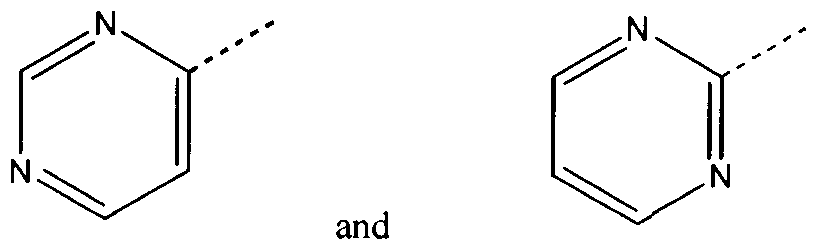
wherein X and Y each are independently selected from the group consisting of H, -ORi, NH2, F, Cl, Br, I, an alkyl group of 1 to 3 carbon atoms and an allyl group;
and wherein Ri is selected from the group consisting of H and an alkyl group of 1 to 3 carbon atoms.
2. The pharmaceutical composition of claim 1, wherein R is selected from the group consisting of unsubstituted benzyl or a substituted benzyl of formula II:

II; and,
an unsubstituted pyridine or a substituted pyridine of formula:

wherein X and Y each are independently selected from the group consisting of H, -ORi, NH2, F, Cl, Br, I, an alkyl group of 1 to 3 carbon atoms and an allyl group;
and wherein Ri is selected from the group consisting of H and an alkyl group of 1 to 3 carbon atoms.
3. The pharmaceutical composition of claim 2, wherein R is a substituted benzyl of formula II and wherein X is ORi and Y is F, ORi or H.
4. The pharmaceutical composition of claim 3, wherein X is OH and Y is F.
5. The pharmaceutical composition of claim 3, wherein X is OH and Y is H.
6. The pharmaceutical composition of claim 3, wherein X is ORi and Y is OH.
7. The pharmaceutical composition of claim 6, wherein Ri is H.
8. The pharmaceutical composition of claim 6, wherein Ri is methyl.
9. The pharmaceutical composition of claim 2, wherein R is a substituted pyridine of formula

and wherein X is ORK
10. The pharmaceutical composition of claim 9, wherein R) is H
1 1. The pharmaceutical composition as defined in claim 1,
wherein R is selected from the group consisting of:


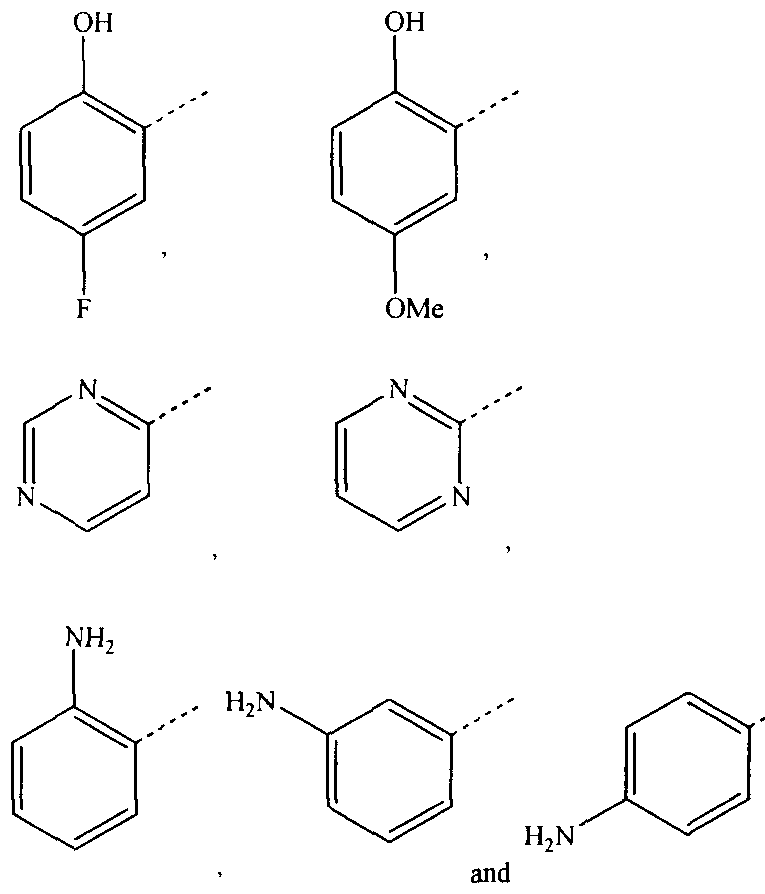
12. The pharmaceutical composition of claim 1 1, wherein R is selected from the group consisting of

13. The pharmaceutical composition of claim 1 1, wherein R is 
14 The pharmaceutical composition of claim 13, wherein R is 
15. The pharmaceutical composition of claim 1, wherein the compound is a compound of formula IB and wherein X is Cl.
16. The pharmaceutical composition of claim 15, wherein the compound is a compound of formula:

17. A pharmaceutical composition comprising: a. a compound selected from the group consisting of: i. N-(2-(2-(2-hydroxy-5-methoxybenzylidene) hydrazino)-2- oxoethyl)-3-methyl-benzamide; ii. N-(2-(2-(2-hydroxybenzylidene) hydrazino)-2- oxoethyl)-l - naphthamide; iii. N-(2-(2-(3-allyl-2- hydroxybenzylidene) hydrazino)-2-oxoethyl)-3- chlorobenzamide; iv. N-[2-(4-methoxyphenyl)ethyl]-2-[(l-phenyl-lH-tetrazol-5- yl)thio]acetamide; v. 1 -(2-chloro-5-nitrophenyliminornethyl)-2-naphthol; vi. N-lH-tetrazol-S-yM-biphenylcarboxamide; vii. 9-anthracenecarbaldehyde lH-tetrazol-5-ylhydrazone; viii. N-{[(2-methyl-2H-tetrazol-5-yl) amino]carbonothioyl} -2- thiophenecarboxamide; ix. N-(2-(2-(2-hydroxy-5-methoxybenzylidene) hydrazino)-2- oxoethyl)-l- naphthamide; x. N-(2-(2-(3- allyl -2- hydroxybenzylidene) hydrazino)-2- oxoethyl)- 2- chlorobenzamide; xi. N-(2-(2-(3- allyl -2- hydroxybenzylidene) hydrazino)-2- oxoethyl)- 4- chlorobenzamide; xii. N-(2-(2-(3- allyl -2- hydroxybenzylidene) hydrazino)-2- oxoethyl)- 1- naphthamide; xiii. (E)-N-(2-(2-(3-hydroxybenzylidene)hydrazinyl)-2-oxoethyl)-l- naphthamide; xiv. (E)-N-(2-(2-(4-hydroxybenzylidene)hydrazinyl)-2-oxoethyl)- 1 - naphthamide; xv. (E)-N-(2-(2-(3,4-dihydroxybenzylidene)hydrazinyl)-2-oxoethyl)-l - naphthamide; xvi. (E)-N-(2-(2-(2,4-dihydroxybenzylidene)hydraziny l)-2-oxoethyl)- 1 - naphthamide; xvii. (E)-N-(2-(2-(2,6-dihydroxybenzylidene)hydrazinyl)-2-oxoethyl)-l- naphthamide; xviii. (E)-N-(2-oxo-2-(2-(pyrimidin-4-ylmethylene)hydrazinyl)ethyl)-l- naphthamide; xix. (E)-N-(2-oxo-2-(2-(pyridin-2-ylmethylene)hydrazinyl)ethyl)-l- naphthamide; xx. (E)-N-(2-oxo-2-(2-(pyridin-4-ylmethylene)hydrazinyl)ethyl)- 1 - naphthamide; xxi. (E)-N-(2-oxo-2-(2-(pyridin-3-ylmethylene)hydrazinyl)ethyl)-l- naphthamide; xxii. (E)-N-(2-oxo-2-(2-(pyrimidin-2-ylmethylene)hydrazinyl)ethyl)-l- naphthamide; xxiii. (E)-N-(2-(2-((3-hydroxypyridin-2-yl)rnethylene)hydrazinyl)-2- oxoethyl)- 1 -naphthamide; xxiv. (E)-N-(2-(2-((3-hydroxypyridin-4-yl)methylene)hydrazinyl)-2- oxoethyl)- 1 -naphthamide; xxv. (E)-N-(2-(2-((2-hydroxypyridin-3-yl)methylene)hydrazinyl)-2- oxoethyl)-l -naphthamide; xxvi. (E)-N-(2-(2-(2-aminobenzylidene)hydrazinyl)-2-oxoethyl)-l- naphthamide; xxvii. (E)-N-(2-(2-(3-aminobenzylidene)hydrazinyl)-2-oxoethyl)-l- naphthamide; xxviii. (E)-N-(2-(2-(4-aminobenzylidene)hydrazinyl)-2-oxoethyl)-l- naphthamide; xxix. (E)-N-(2-(2-(2-fluorobenzylidene)hydrazinyl)-2-oxoethyl)- 1 - naphthamide; xxx. (E)-N-(2-(2-(3-fluorobenzylidene)hydrazinyl)-2-oxoethyl)-l- naphthamide; xxxi. (E)-N-(2-(2-(4-fluorobenzylidene)hydrazinyl)-2-oxoethyl)-l- naphthamide, and; xxxii. (E)-N-(2-(2-(5-fluoro-2-hydroxybenzylidene)hydrazinyl)-2- oxoethyl)- 1 -naphthamide, b. and a pharmaceutically acceptable carrier.
18. The pharmaceutical composition of any one of claims 1 to 17, for use in interfering with herpesvirus replication.
19. The pharmaceutical composition of claim 18, wherein the herpesvirus is selected from the group consisting of herpes simplex 1 , herpes simplex 2, cytomegalovirus and varicella zoster virus.
20. The pharmaceutical composition of claim 19, wherein the herpesvirus is characterized as being resistant to a pyrophosphate analogue, to a nucleoside analogue or to a prodrug or derivative thereof.
21. The pharmaceutical composition of claim 19, wherein the herpesvirus is characterized as being resistant to acyclovir, ganciclovir and/or foscarnet.
22. A compound of formula IA or a pharmaceutically acceptable salt thereof:

wherein R is selected from the group consisting of unsubstituted benzyl or a substituted benzyl of formula II:

an unsubstituted pyridine or a substituted pyridine selected from the group consisting of:

a pyrimidine selected from the group consisting of : 
wherein X and Y each are independently selected from the group consisting of H, - ORi, NH2, F, Cl, Br, I, an alkyl group of 1 to 3 carbon atoms and an allyl group;
and wherein Ri is selected from the group consisting of H and an alkyl group of 1 to 3 carbon atoms
provided that the compound is not: i. N-(2-(2-(2-hydroxybenzylidene) hydrazino)-2- oxoethyl)-l- naphthamide; ii. N-(2-(2-(2-hydroxy-5-methoxybenzylidene) hydrazino)-2- oxoethyl)-l - naphthamide, or iii. N-(2-(2-(3- allyl -2- hydroxybenzylidene) hydrazino)-2- oxoethyl)- 1- naphthamide.
23. The compound of claim 22, wherein R is selected from the group consisting of unsubstituted benzyl or a substituted benzyl of formula II:

an unsubstituted pyridine or a substituted pyridine of formula:

wherein X and Y each are independently selected from the group consisting of H, - ORi, NH2, F, Cl, Br, I, an alkyl group of 1 to 3 carbon atoms and an allyl group;
and wherein Ri is selected from the group consisting of H and an alkyl group of 1 to 3 carbon atoms.
24. The compound of claim 23, wherein R is a substituted benzyl of formula II and wherein X is OR, and Y is F, ORi or H.
25. The compound of claim 24, wherein X is OH and Y is F.
26. The compound of claim 24, wherein X is OH and Y is H.
27. The compound of claim 24, wherein X is OR] and Y is OH.
28. The compound of claim 27, wherein Ri is H.
29. The compound of claim 27, wherein Ri is methyl.
30. The compound of claim 23, wherein R is a substituted pyridine of formula  and wherein X is ORi .
31. The compound of claim 30, wherein R] is H.
32. The compound of claim 22, wherein R is selected from the group consisting of:

33. The compound of claim 32, wherein R is
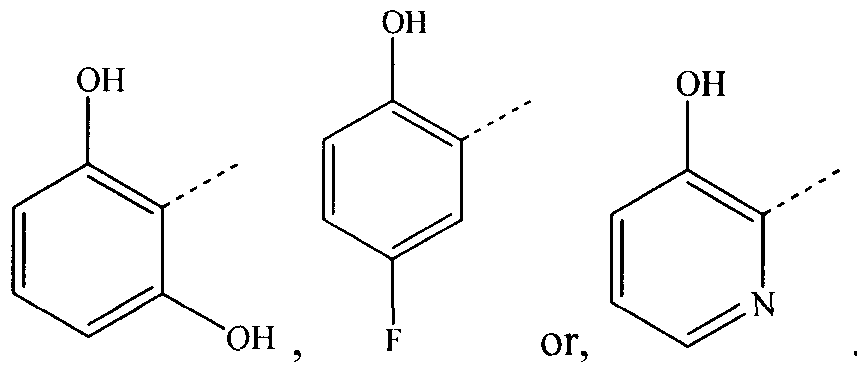
34. Use of a compound of formula IA or formula IB for interfering with herpesvirus replication:

Formula IB
wherein R is selected from the group consisting of unsubstituted benzyl or a substituted benzyl of formula II:
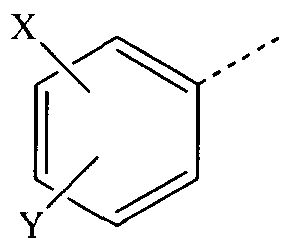
an unsubstituted pyridine or a substituted pyridine selected from the group consisting of:  and and;
a pyrimidine selected from the group consisting of :

wherein X and Y each are independently selected from the group consisting of H, - ORi, NH2, F, Cl, Br, I, an alkyl group of 1 to 3 carbon atoms and an allyl group;
and wherein Ri is selected from the group consisting of H and an alkyl group of 1 to 3 carbon atoms.
35. The use as defined in claim 34, wherein R is selected from the group consisting of unsubstituted benzyl or a substituted benzyl of formula II:

II ; and,
an unsubstituted pyridine or a substituted pyridine of formula:

wherein X and Y each are independently selected from the group consisting of H, - ORi, NH2, F, Cl, Br, I, an alkyl group of 1 to 3 carbon atoms and an allyl group;
and wherein Ri is selected from the group consisting of H and an alkyl group of 1 to 3 carbon atoms.
36. The use as defined in claim 35, wherein R is a substituted benzyl of formula II and wherein X is OR, and Y is F, ORi or H.
37. The use as defined in claim 36, wherein X is OH and Y is F.
38. The use as defined in claim 36, wherein X is OH and Y is H.
39. The use as defined in claim 36, wherein X is ORi and Y is OH.
40. The use as defined in claim 39, wherein R1 is H.
41. The use as defined in claim 39 wherein R) is methyl.
42. The use as defined in claim 35, wherein R is a substituted pyridine of formula

43. The use as defined in claim 42, wherein Ri is H.
44. The use as defined in claim 34, wherein R is
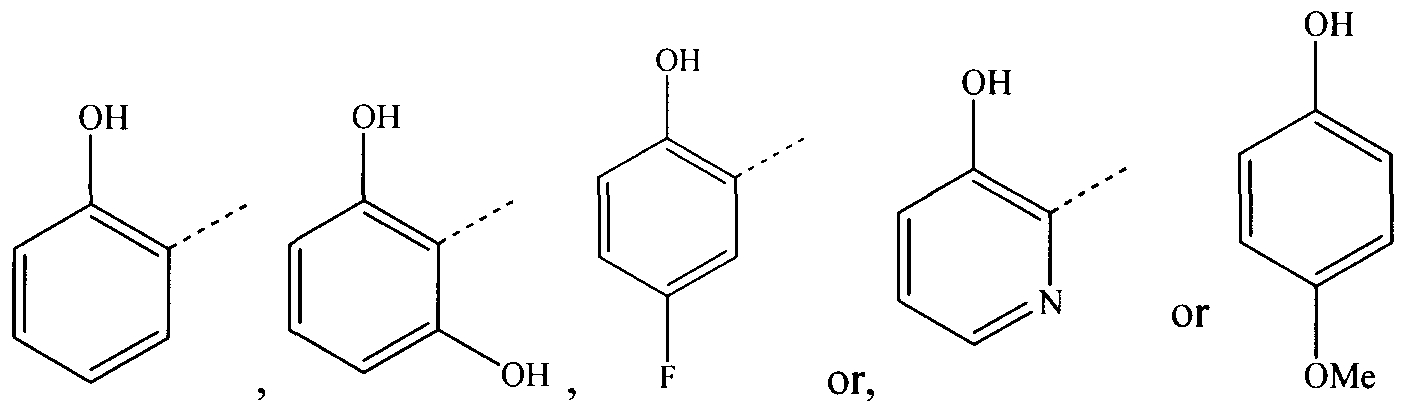
45. The use as defined in claim 44, wherein R is

46. The use as defined in claim 34, wherein the compound is a compound of formula IB and wherein X is Cl.
47. The use as defined in claim 46, wherein the compound is a compound of formula:

49. The use as defined in claim 48, wherein the herpesvirus is characterized as being resistant to a pyrophosphate analogue, a nucleoside analogue or to a prodrug or derivative thereof.
50. The use as defined in claim 48, wherein the herpesvirus is characterized as being resistant to acyclovir, ganciclovir and/or foscarnet.
51. The use as defined in claim 50, wherein the herpesvirus is a herpes simplex 1, herpes simplex 2 or varicella zoster virus that is characterized as being resistant to acyclovir and/or foscarnet.
52. The use as defined in claim 50, wherein the herpesvirus is a cytomegalovirus that is characterized as being resistant to ganciclovir and/or foscarnet.
53. A method of treating or preventing a herpesvirus infection, the method comprising administering a compound of formula IA or formula IB to a mammal in need:


Formula IB
wherein R is selected from the group consisting of unsubstituted benzyl or a substituted benzyl of formula II:

an unsubstituted pyridine or a substituted pyridine selected from the group consisting of:

a pyrimidine selected from the group consisting of :
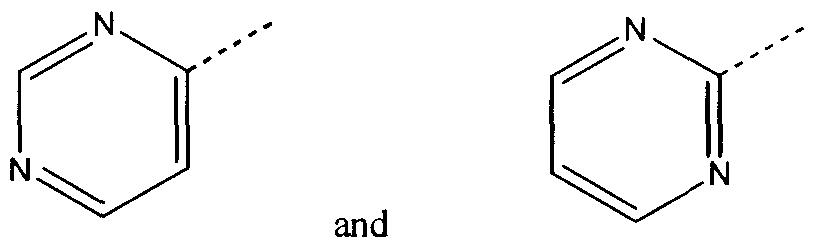
wherein X and Y each are independently selected from the group consisting of H, - OR], NH2, F, Cl, Br, I, an alkyl group of 1 to 3 carbon atoms and an allyl group;
and wherein Ri is selected from the group consisting of H and an alkyl group of 1 to 3 carbon atoms.
54. The method of claim 53, wherein R is selected from the group consisting of unsubstituted benzyl or a substituted benzyl of formula II: 
II ; and,
an unsubstituted pyridine or a substituted pyridine of formula:

wherein X and Y each are independently selected from the group consisting of H, - ORi, NH2, F, Cl, Br, I, an alkyl group of 1 to 3 carbon atoms and an allyl group;
and wherein R] is selected from the group consisting of H and an alkyl group of 1 to 3 carbon atoms.
55. The method of claim 54, wherein R is a substituted benzyl of formula II and wherein X is OR1 and Y is F, ORi or H.
56. The method of claim 55, wherein X is OH and Y is F.
57. The method of claim 55, wherein X is OH and Y is H.
58. The method of claim 55, wherein X is ORi and Y is OH.
59. The method of claim 58, wherein Ri is H.
60. The method of claim 58, wherein R] is methyl.
61. The method of claim 54, wherein R is a substituted pyridine of formula

and wherein X is ORi.
62. The method of claim 61, wherein Ri is H.
63. The method of claim 53, wherein R is

64. The method of claim 63, wherein R is

65. The method of claim 53, wherein the compound is a compound of formula IB and wherein X is Cl.
66. The method of claim 65, wherein the compound is a compound of formula:

67. The method of any one of claims 53 to 66, wherein the mammal in need is immunocompetent.
68. The method of any one of claims 53 to 66, wherein the mammal in need is an immunocompromised individual.
69. The method of claim 68, wherein the immunocompromised individual suffers from HIV-infection or neoplasia.
70. The method of claim 68, wherein the immunocompromised individual is a transplant recipient.
71. The method of any one of claims 53 to 70, wherein the mammal in need suffers from chickenpox or shingles associated with varicella zoster virus.
72. The method of any one of claims 53 to 70, wherein the mammal in need has an oro-labial or genital infection associated with HSV-I or HSV-2.
73. The method of any one of claims 53 to 70, wherein the mammal in need suffers from pneumonitis, colitis or retinitis associated with cytomegalovirus.
74. The method of any one of claims 53 to 70, wherein the herpesvirus infection is associated with a herpesvirus selected from the group consisting of herpes simplex 1, herpes simplex 2, cytomegalovirus and varicella zoster.
75. The method of claim 74, wherein the herpesvirus is characterized as being resistant to a pyrophosphate analogue, a nucleoside analogue or to a prodrug or derivative thereof.
76. The method of claim 74, wherein the herpesvirus is characterized as being resistant to acyclovir, ganciclovir and/or foscarnet.
77. The method of claim 76, wherein the herpesvirus is a herpes simplex 1, herpes simplex 2 or varicella zoster virus that is characterized as being resistant to acyclovir and/or foscarnet.
78. The method of claim 76, wherein the herpesvirus is a cytomegalovirus that is characterized as being resistant to ganciclovir and/or foscarnet
79. A method for identifying a ligand capable of interfering with the replication of herpesvirus, the method comprising, selection of a pocket near the active site, docking a computer-generated model of a putative ligand onto a computer- generated model of a pocket located near the active site of a HSV-I DNA polymerase in a non-replicating state, and selecting compounds according to an estimation of the free energy of ligand binding to the polymerase and hydrogen bonding potential of the ligand with the polymerase.
80. The method of claim 79, wherein said pocket is delimited by residues Val715, Asp717, Ser720, Arg785, Lys81 1, Asn815, Tyr884 and Lys939.
81. The method of claims 79 or 80, wherein the putative ligand is obtained and tested for in vitro inhibition of replication of herpesvirus.
82. A ligand obtained by the method of any one of claims 79 to 81, wherein said ligand is capable of inhibiting the replication of herpesvirus.
83. A compound of formula IA1 or IA2:


wherein R2 and R3 are independently H or an alkyl group of 1 to 6 carbon atoms and;
wherein R4 is H or an alkyl group of 1 to 6 carbon atoms.
84. The use of at least one of the compound of claim 83, in the manufacture of a herpesvirus DNA polymerase ligand or a herpesvirus inhibitor.
85. A compound of formula IB1 or IB2:


wherein R4 is H or an alkyl group of 1 to 6 carbon atoms;
wherein X is selected from the group consisting of H, -ORi, NH2, F, Cl, Br, I, an alkyl group of 1 to 3 carbon atoms and an allyl group and;
wherein Ri is selected from the group consisting of H and an alkyl group of 1 to 3 carbon atoms.
86. The use of at least one of the compound of claim 85, in the manufacture of a herpesvirus DNA polymerase ligand or a herpesvirus inhibitor.
87. The use of at least one of the compound of claim 22, in the manufacture of a herpesvirus DNA polymerase ligand or a herpesvirus inhibitor.
Priority Applications (1)
| Application Number | Priority Date | Filing Date | Title |
|---|---|---|---|
| US13/321,377 US8791299B2 (en) | 2009-05-20 | 2010-05-19 | Compounds for the inhibition of herpes viruses |
Applications Claiming Priority (2)
| Application Number | Priority Date | Filing Date | Title |
|---|---|---|---|
| US21324009P | 2009-05-20 | 2009-05-20 | |
| US61/213,240 | 2009-05-20 |
Publications (1)
| Publication Number | Publication Date |
|---|---|
| WO2010132992A1 true WO2010132992A1 (en) | 2010-11-25 |
Family
ID=43125695
Family Applications (1)
| Application Number | Title | Priority Date | Filing Date |
|---|---|---|---|
| PCT/CA2010/000762 Ceased WO2010132992A1 (en) | 2009-05-20 | 2010-05-19 | Compounds for the inhibition of herpesviruses |
Country Status (2)
| Country | Link |
|---|---|
| US (1) | US8791299B2 (en) |
| WO (1) | WO2010132992A1 (en) |
Cited By (3)
| Publication number | Priority date | Publication date | Assignee | Title |
|---|---|---|---|---|
| CN104736530A (en) * | 2012-08-23 | 2015-06-24 | 艾丽奥斯生物制药有限公司 | Compounds for the treatment of paramoxyvirus viral infections |
| CN105636936A (en) * | 2013-08-21 | 2016-06-01 | 艾丽奥斯生物制药有限公司 | Antiviral compounds |
| US10358453B2 (en) | 2015-02-25 | 2019-07-23 | Alios Biopharma, Inc. | Antiviral compounds |
Citations (1)
| Publication number | Priority date | Publication date | Assignee | Title |
|---|---|---|---|---|
| WO2009088975A2 (en) * | 2008-01-04 | 2009-07-16 | Biotrofix, Inc. | Methods and compositions for non-covalently enhanced receptor binding |
-
2010
- 2010-05-19 WO PCT/CA2010/000762 patent/WO2010132992A1/en not_active Ceased
- 2010-05-19 US US13/321,377 patent/US8791299B2/en not_active Expired - Fee Related
Patent Citations (1)
| Publication number | Priority date | Publication date | Assignee | Title |
|---|---|---|---|---|
| WO2009088975A2 (en) * | 2008-01-04 | 2009-07-16 | Biotrofix, Inc. | Methods and compositions for non-covalently enhanced receptor binding |
Non-Patent Citations (6)
| Title |
|---|
| DATABASE REGISRY "RN 391883- 55-9, 391883-53-7, 391883-49-1, 765273-27-6, 880069-85-2, 880064-70-0, 880048-87-3, 880046-14-0, 880044-10-0, 880042-27-3, 880030-97-7, 880029-42-5, 883790-72-5", Database accession no. 391883-57-1 * |
| DATABASE REGISTRY "RN: 391893-50-8, 391893-49-5, 39189348-4, 391893-47-3, 391883-69-5, 391883-67-3, 391883-65-1, 391883-64-0, 391883-63- 9, 391883-62-8, 391883-61-7, 391883-60-6, 391883-59-3", Database accession no. 391893-51-9 * |
| DATABASE REGISTRY 14 February 2002 (2002-02-14), accession no. STN Database accession no. 392247-16-4 * |
| DATABASE REGISTRY 2 September 2002 (2002-09-02), accession no. STN Database accession no. 737773-98-7 * |
| DATABASE REGISTRY 2010, accession no. STN Database accession no. 391893-54-2 * |
| DATABASE REGISTRY 6 April 2001 (2001-04-06), "RN 330470-60-5, 140181-28-8, 90872-07-4, 6063-98-5, 2443-68-7, 21568-89-8, 330470-69-4", Database accession no. 330470-70-7 * |
Cited By (11)
| Publication number | Priority date | Publication date | Assignee | Title |
|---|---|---|---|---|
| CN104736530A (en) * | 2012-08-23 | 2015-06-24 | 艾丽奥斯生物制药有限公司 | Compounds for the treatment of paramoxyvirus viral infections |
| JP2015531769A (en) * | 2012-08-23 | 2015-11-05 | アリオス バイオファーマ インク. | Compounds for treating paramyxovirus infection |
| EP2888240A4 (en) * | 2012-08-23 | 2016-04-27 | Alios Biopharma Inc | COMPOUNDS FOR THE TREATMENT OF PARAMYXOVIRUS VIRAL INFECTIONS |
| US9724351B2 (en) | 2012-08-23 | 2017-08-08 | Alios Biopharma, Inc. | Compounds for the treatment of paramoxyvirus viral infections |
| US11014935B2 (en) | 2012-08-23 | 2021-05-25 | Janssen Biopharma, Inc. | Compounds for the treatment of paramyxovirus viral infections |
| CN105636936A (en) * | 2013-08-21 | 2016-06-01 | 艾丽奥斯生物制药有限公司 | Antiviral compounds |
| TWI646080B (en) * | 2013-08-21 | 2019-01-01 | 美商艾洛斯生物製藥公司 | Antiviral compound |
| US11021444B2 (en) | 2013-08-21 | 2021-06-01 | Janssen Biopharma, Inc. | Antiviral compounds |
| CN105636936B (en) * | 2013-08-21 | 2022-04-05 | 詹森生物制药有限公司 | Antiviral compounds |
| CN114716426A (en) * | 2013-08-21 | 2022-07-08 | 詹森生物制药有限公司 | antiviral compound |
| US10358453B2 (en) | 2015-02-25 | 2019-07-23 | Alios Biopharma, Inc. | Antiviral compounds |
Also Published As
| Publication number | Publication date |
|---|---|
| US20120157538A1 (en) | 2012-06-21 |
| US8791299B2 (en) | 2014-07-29 |
Similar Documents
| Publication | Publication Date | Title |
|---|---|---|
| EP0767793B1 (en) | N-substituted-(dihydroxyboryl)alkyl purine, indole and pyrimidine derivatives, useful as inhibitors of inflammatory cytokines | |
| KR100443850B1 (en) | Use of heterocyclic compounds as dopamine-d3 ligans | |
| JP5349309B2 (en) | Aniline derivatives having anti-DNA viral activity | |
| WO2010094009A2 (en) | Methods and compositions for the treatment of ras associated disorders | |
| US5777115A (en) | Acetal-and ketal-substituted pyrimidine compounds | |
| JP2019507774A (en) | Elimination of hepatitis B virus by antiviral agents | |
| KR20150063170A (en) | Solid forms of 3-(6-(1-(2,2-difluorobenzo[d][1,3]dioxol-5-yl)cyclopropanecarboxamido)-3-methylpyridin-2-yl)benzoic acid | |
| US20130289000A1 (en) | Boron-containing small molecules | |
| JP3990061B2 (en) | Purine derivatives and adenosine A2 receptor antagonists as preventive and therapeutic agents for diabetes | |
| US20070225302A1 (en) | 2-Amino-9-[(2-hydroxymethyl) cyclopropylidenemethyl] purines as antiviral agents | |
| US5770595A (en) | Oxime substituted therapeutic compounds | |
| CA2366624C (en) | 2-hydroxy methylcyclopro pylidenemethyl purines and -pyrimidines as antiviral agents | |
| US8791299B2 (en) | Compounds for the inhibition of herpes viruses | |
| JPS59186985A (en) | Dimethylaminomethylenated antiherpes compound | |
| JP2008515994A5 (en) | ||
| Hostetler et al. | In vitro and in vivo activity of 1-O-hexadecylpropane-diol-3-phospho-ganciclovir and 1-O-hexadecylpropanediol-3-phospho-penciclovir in cytomegalovirus and Herpes simplex Virus Infections | |
| EP1673346A1 (en) | Quinazoline derivatives for the treatment of herpesviral infections | |
| WO2019196369A1 (en) | Thiazolo-pyrimidine hiv-1 reverse transcriptase inhibitor, preparation method therefor, and uses thereof | |
| WO1998030563A1 (en) | 2-hydroxymethylcyclopropyli- denemethylpurines and -pyrimidines as antiviral agents | |
| EP4284371A1 (en) | Selective cyclin-dependent kinase inhibitors and methods of therapeutic use thereof | |
| Babkov et al. | 2-(2, 4-Dioxy-1, 2, 3, 4-Tetrahydropyrimidin-1-yl)-n-(4-phenoxyphenyl)-acetamides as a novel class of cytomegalovirus replication inhibitors | |
| RU2824598C1 (en) | Novel benzotriazole derivative having ectonucleotide pyrophosphatase-phosphodiesterase inhibitory activity, and use thereof | |
| CN115572297B (en) | A pyrazolopyrimidine-containing o-phenylenediamine derivative and its preparation method and application | |
| CN108586471A (en) | Furans simultaneously [3,2-d] miazines HIV-1 inhibitor and the preparation method and application thereof | |
| WO2021164053A1 (en) | Pyrido[2,3-d]pyrimidine hiv-1 reverse transcriptase inhibitor, preparation method therefor and application thereof |
Legal Events
| Date | Code | Title | Description |
|---|---|---|---|
| 121 | Ep: the epo has been informed by wipo that ep was designated in this application |
Ref document number: 10777272 Country of ref document: EP Kind code of ref document: A1 |
|
| DPE1 | Request for preliminary examination filed after expiration of 19th month from priority date (pct application filed from 20040101) | ||
| NENP | Non-entry into the national phase |
Ref country code: DE |
|
| WWE | Wipo information: entry into national phase |
Ref document number: 13321377 Country of ref document: US |
|
| 122 | Ep: pct application non-entry in european phase |
Ref document number: 10777272 Country of ref document: EP Kind code of ref document: A1 |