WO2010108856A1 - Leukotriene b4 inhibitors - Google Patents
Leukotriene b4 inhibitors Download PDFInfo
- Publication number
- WO2010108856A1 WO2010108856A1 PCT/EP2010/053580 EP2010053580W WO2010108856A1 WO 2010108856 A1 WO2010108856 A1 WO 2010108856A1 EP 2010053580 W EP2010053580 W EP 2010053580W WO 2010108856 A1 WO2010108856 A1 WO 2010108856A1
- Authority
- WO
- WIPO (PCT)
- Prior art keywords
- phenoxy
- ethyl
- hexyl
- carboxy
- butyric acid
- Prior art date
- Legal status (The legal status is an assumption and is not a legal conclusion. Google has not performed a legal analysis and makes no representation as to the accuracy of the status listed.)
- Ceased
Links
- 0 *c1cc(*)cc(OCCCCCCc2c(CCC(O)=O)c(OCCCC(O)=O)ccc2)c1 Chemical compound *c1cc(*)cc(OCCCCCCc2c(CCC(O)=O)c(OCCCC(O)=O)ccc2)c1 0.000 description 1
- XODOTQGALYBKDY-WAMNKQTNSA-N CCC(C)/C(/CCCCN=O)=C\c1cccc(OCCCC(OCC)=O)c1/C=C/C(OCC)=O Chemical compound CCC(C)/C(/CCCCN=O)=C\c1cccc(OCCCC(OCC)=O)c1/C=C/C(OCC)=O XODOTQGALYBKDY-WAMNKQTNSA-N 0.000 description 1
- CGSHHIFVWDGTQL-UHFFFAOYSA-N CCOC(CCCOc1cccc(C)c1C)=O Chemical compound CCOC(CCCOc1cccc(C)c1C)=O CGSHHIFVWDGTQL-UHFFFAOYSA-N 0.000 description 1
- NAPGBNHYJZCFOG-UHFFFAOYSA-N CCOC(CCCOc1cccc(CCCCCCOc2cc(-c(cc3)cc4c3[s]cn4)cc(OCC)c2)c1CCC(OCC)=O)=O Chemical compound CCOC(CCCOc1cccc(CCCCCCOc2cc(-c(cc3)cc4c3[s]cn4)cc(OCC)c2)c1CCC(OCC)=O)=O NAPGBNHYJZCFOG-UHFFFAOYSA-N 0.000 description 1
- YBZANSFCKXEOEE-UHFFFAOYSA-N CCOC(CCCOc1cccc(CCCCCCOc2cc(Br)cc(COS(C)(=O)=O)c2)c1CCC(OCC)=O)=O Chemical compound CCOC(CCCOc1cccc(CCCCCCOc2cc(Br)cc(COS(C)(=O)=O)c2)c1CCC(OCC)=O)=O YBZANSFCKXEOEE-UHFFFAOYSA-N 0.000 description 1
- QTNBCFZBIIIGMS-UHFFFAOYSA-N CCOC(CCCOc1cccc(CCCCCCOc2cc(OCC)cc(-c(cc3)cc4c3OCO4)c2)c1CCC(OCC)=O)=O Chemical compound CCOC(CCCOc1cccc(CCCCCCOc2cc(OCC)cc(-c(cc3)cc4c3OCO4)c2)c1CCC(OCC)=O)=O QTNBCFZBIIIGMS-UHFFFAOYSA-N 0.000 description 1
- YGTSERMKTAXKFR-UHFFFAOYSA-N CCOC(CCCOc1cccc(CCCCCCOc2cc(OCc3ccccc3)cc(-c3ccccc3)c2)c1CCC(OCC)=O)=O Chemical compound CCOC(CCCOc1cccc(CCCCCCOc2cc(OCc3ccccc3)cc(-c3ccccc3)c2)c1CCC(OCC)=O)=O YGTSERMKTAXKFR-UHFFFAOYSA-N 0.000 description 1
- IVXAYAWOFIBNAU-UHFFFAOYSA-N CCOc1cc(-c(cc2)ccc2F)cc(OCCCCCCc2c(CCC(O)=O)c(OCCCC(O)=O)ccc2)c1 Chemical compound CCOc1cc(-c(cc2)ccc2F)cc(OCCCCCCc2c(CCC(O)=O)c(OCCCC(O)=O)ccc2)c1 IVXAYAWOFIBNAU-UHFFFAOYSA-N 0.000 description 1
- YKAOOTIKBKPPAP-UHFFFAOYSA-N CCOc1cc(-c2cncnc2)cc(OCCCCCCc2c(CCC(O)=O)c(OCCCC(O)=O)ccc2)c1 Chemical compound CCOc1cc(-c2cncnc2)cc(OCCCCCCc2c(CCC(O)=O)c(OCCCC(O)=O)ccc2)c1 YKAOOTIKBKPPAP-UHFFFAOYSA-N 0.000 description 1
- RPINFHCLIWCCNK-UHFFFAOYSA-N CCOc1cc(OCCCCCCc2c(CCC(O)=O)c(OCCCC(O)=O)ccc2)cc(-c(cc2)cc(O3)c2OC3(F)F)c1 Chemical compound CCOc1cc(OCCCCCCc2c(CCC(O)=O)c(OCCCC(O)=O)ccc2)cc(-c(cc2)cc(O3)c2OC3(F)F)c1 RPINFHCLIWCCNK-UHFFFAOYSA-N 0.000 description 1
- IWWJPZWZUXFCBC-UHFFFAOYSA-N CCOc1cc(OCCCCCCc2c(CCC(O)=O)c(OCCCC(O)=O)ccc2)cc(-c(cc2)ccc2Cl)c1 Chemical compound CCOc1cc(OCCCCCCc2c(CCC(O)=O)c(OCCCC(O)=O)ccc2)cc(-c(cc2)ccc2Cl)c1 IWWJPZWZUXFCBC-UHFFFAOYSA-N 0.000 description 1
- CPXKYRPEGNJEBA-UHFFFAOYSA-N COCc1cc(-c(cc2)ccc2S(C)(=O)=O)cc(OCCCCCCc2cccc(OCCCC(O)=O)c2CCC(O)=O)c1 Chemical compound COCc1cc(-c(cc2)ccc2S(C)(=O)=O)cc(OCCCCCCc2cccc(OCCCC(O)=O)c2CCC(O)=O)c1 CPXKYRPEGNJEBA-UHFFFAOYSA-N 0.000 description 1
- BMSGTAOIGZMAHU-UHFFFAOYSA-N COCc1cc(OCCCCCCc2c(CCC(O)=O)c(OCCCC(O)=O)ccc2)cc(-c2ccc(C(F)(F)F)cc2)c1 Chemical compound COCc1cc(OCCCCCCc2c(CCC(O)=O)c(OCCCC(O)=O)ccc2)cc(-c2ccc(C(F)(F)F)cc2)c1 BMSGTAOIGZMAHU-UHFFFAOYSA-N 0.000 description 1
- QMBBGCLINHISLC-UHFFFAOYSA-N COc1ccc(COc2cc(Br)cc(C#N)c2)cc1 Chemical compound COc1ccc(COc2cc(Br)cc(C#N)c2)cc1 QMBBGCLINHISLC-UHFFFAOYSA-N 0.000 description 1
- UIKRHGZHHJDSHI-UHFFFAOYSA-N COc1ccc(COc2cc(C#N)cc(-c(cc3)cc4c3OCO4)c2)cc1 Chemical compound COc1ccc(COc2cc(C#N)cc(-c(cc3)cc4c3OCO4)c2)cc1 UIKRHGZHHJDSHI-UHFFFAOYSA-N 0.000 description 1
- COLMEXKNQNKNBM-UHFFFAOYSA-N Cc1c[s]cc1-c1cc(COC)cc(OCCCCCCc2c(CCC(O)=O)c(OCCCC(O)=O)ccc2)c1 Chemical compound Cc1c[s]cc1-c1cc(COC)cc(OCCCCCCc2c(CCC(O)=O)c(OCCCC(O)=O)ccc2)c1 COLMEXKNQNKNBM-UHFFFAOYSA-N 0.000 description 1
- ZNTLKAOJUHKHQD-UHFFFAOYSA-N OCc1cc(OCCCCCCc2c(CCC(O)=O)c(OCCCC(O)=O)ccc2)cc(-c2ccccc2)c1 Chemical compound OCc1cc(OCCCCCCc2c(CCC(O)=O)c(OCCCC(O)=O)ccc2)cc(-c2ccccc2)c1 ZNTLKAOJUHKHQD-UHFFFAOYSA-N 0.000 description 1
Classifications
-
- C—CHEMISTRY; METALLURGY
- C07—ORGANIC CHEMISTRY
- C07C—ACYCLIC OR CARBOCYCLIC COMPOUNDS
- C07C59/00—Compounds having carboxyl groups bound to acyclic carbon atoms and containing any of the groups OH, O—metal, —CHO, keto, ether, groups, groups, or groups
- C07C59/40—Unsaturated compounds
- C07C59/58—Unsaturated compounds containing ether groups, groups, groups, or groups
- C07C59/64—Unsaturated compounds containing ether groups, groups, groups, or groups containing six-membered aromatic rings
- C07C59/66—Unsaturated compounds containing ether groups, groups, groups, or groups containing six-membered aromatic rings the non-carboxylic part of the ether containing six-membered aromatic rings
- C07C59/68—Unsaturated compounds containing ether groups, groups, groups, or groups containing six-membered aromatic rings the non-carboxylic part of the ether containing six-membered aromatic rings the oxygen atom of the ether group being bound to a non-condensed six-membered aromatic ring
-
- A—HUMAN NECESSITIES
- A61—MEDICAL OR VETERINARY SCIENCE; HYGIENE
- A61P—SPECIFIC THERAPEUTIC ACTIVITY OF CHEMICAL COMPOUNDS OR MEDICINAL PREPARATIONS
- A61P11/00—Drugs for disorders of the respiratory system
-
- A—HUMAN NECESSITIES
- A61—MEDICAL OR VETERINARY SCIENCE; HYGIENE
- A61P—SPECIFIC THERAPEUTIC ACTIVITY OF CHEMICAL COMPOUNDS OR MEDICINAL PREPARATIONS
- A61P11/00—Drugs for disorders of the respiratory system
- A61P11/06—Antiasthmatics
-
- A—HUMAN NECESSITIES
- A61—MEDICAL OR VETERINARY SCIENCE; HYGIENE
- A61P—SPECIFIC THERAPEUTIC ACTIVITY OF CHEMICAL COMPOUNDS OR MEDICINAL PREPARATIONS
- A61P11/00—Drugs for disorders of the respiratory system
- A61P11/08—Bronchodilators
-
- A—HUMAN NECESSITIES
- A61—MEDICAL OR VETERINARY SCIENCE; HYGIENE
- A61P—SPECIFIC THERAPEUTIC ACTIVITY OF CHEMICAL COMPOUNDS OR MEDICINAL PREPARATIONS
- A61P29/00—Non-central analgesic, antipyretic or antiinflammatory agents, e.g. antirheumatic agents; Non-steroidal antiinflammatory drugs [NSAID]
-
- A—HUMAN NECESSITIES
- A61—MEDICAL OR VETERINARY SCIENCE; HYGIENE
- A61P—SPECIFIC THERAPEUTIC ACTIVITY OF CHEMICAL COMPOUNDS OR MEDICINAL PREPARATIONS
- A61P37/00—Drugs for immunological or allergic disorders
- A61P37/08—Antiallergic agents
-
- C—CHEMISTRY; METALLURGY
- C07—ORGANIC CHEMISTRY
- C07C—ACYCLIC OR CARBOCYCLIC COMPOUNDS
- C07C59/00—Compounds having carboxyl groups bound to acyclic carbon atoms and containing any of the groups OH, O—metal, —CHO, keto, ether, groups, groups, or groups
- C07C59/40—Unsaturated compounds
- C07C59/76—Unsaturated compounds containing keto groups
- C07C59/90—Unsaturated compounds containing keto groups containing singly bound oxygen-containing groups
-
- C—CHEMISTRY; METALLURGY
- C07—ORGANIC CHEMISTRY
- C07D—HETEROCYCLIC COMPOUNDS
- C07D209/00—Heterocyclic compounds containing five-membered rings, condensed with other rings, with one nitrogen atom as the only ring hetero atom
- C07D209/02—Heterocyclic compounds containing five-membered rings, condensed with other rings, with one nitrogen atom as the only ring hetero atom condensed with one carbocyclic ring
- C07D209/04—Indoles; Hydrogenated indoles
- C07D209/08—Indoles; Hydrogenated indoles with only hydrogen atoms or radicals containing only hydrogen and carbon atoms, directly attached to carbon atoms of the hetero ring
-
- C—CHEMISTRY; METALLURGY
- C07—ORGANIC CHEMISTRY
- C07D—HETEROCYCLIC COMPOUNDS
- C07D213/00—Heterocyclic compounds containing six-membered rings, not condensed with other rings, with one nitrogen atom as the only ring hetero atom and three or more double bonds between ring members or between ring members and non-ring members
- C07D213/02—Heterocyclic compounds containing six-membered rings, not condensed with other rings, with one nitrogen atom as the only ring hetero atom and three or more double bonds between ring members or between ring members and non-ring members having three double bonds between ring members or between ring members and non-ring members
- C07D213/04—Heterocyclic compounds containing six-membered rings, not condensed with other rings, with one nitrogen atom as the only ring hetero atom and three or more double bonds between ring members or between ring members and non-ring members having three double bonds between ring members or between ring members and non-ring members having no bond between the ring nitrogen atom and a non-ring member or having only hydrogen or carbon atoms directly attached to the ring nitrogen atom
- C07D213/24—Heterocyclic compounds containing six-membered rings, not condensed with other rings, with one nitrogen atom as the only ring hetero atom and three or more double bonds between ring members or between ring members and non-ring members having three double bonds between ring members or between ring members and non-ring members having no bond between the ring nitrogen atom and a non-ring member or having only hydrogen or carbon atoms directly attached to the ring nitrogen atom with substituted hydrocarbon radicals attached to ring carbon atoms
- C07D213/36—Radicals substituted by singly-bound nitrogen atoms
- C07D213/38—Radicals substituted by singly-bound nitrogen atoms having only hydrogen or hydrocarbon radicals attached to the substituent nitrogen atom
-
- C—CHEMISTRY; METALLURGY
- C07—ORGANIC CHEMISTRY
- C07D—HETEROCYCLIC COMPOUNDS
- C07D213/00—Heterocyclic compounds containing six-membered rings, not condensed with other rings, with one nitrogen atom as the only ring hetero atom and three or more double bonds between ring members or between ring members and non-ring members
- C07D213/02—Heterocyclic compounds containing six-membered rings, not condensed with other rings, with one nitrogen atom as the only ring hetero atom and three or more double bonds between ring members or between ring members and non-ring members having three double bonds between ring members or between ring members and non-ring members
- C07D213/04—Heterocyclic compounds containing six-membered rings, not condensed with other rings, with one nitrogen atom as the only ring hetero atom and three or more double bonds between ring members or between ring members and non-ring members having three double bonds between ring members or between ring members and non-ring members having no bond between the ring nitrogen atom and a non-ring member or having only hydrogen or carbon atoms directly attached to the ring nitrogen atom
- C07D213/60—Heterocyclic compounds containing six-membered rings, not condensed with other rings, with one nitrogen atom as the only ring hetero atom and three or more double bonds between ring members or between ring members and non-ring members having three double bonds between ring members or between ring members and non-ring members having no bond between the ring nitrogen atom and a non-ring member or having only hydrogen or carbon atoms directly attached to the ring nitrogen atom with hetero atoms or with carbon atoms having three bonds to hetero atoms with at the most one bond to halogen, e.g. ester or nitrile radicals, directly attached to ring carbon atoms
- C07D213/61—Halogen atoms or nitro radicals
-
- C—CHEMISTRY; METALLURGY
- C07—ORGANIC CHEMISTRY
- C07D—HETEROCYCLIC COMPOUNDS
- C07D239/00—Heterocyclic compounds containing 1,3-diazine or hydrogenated 1,3-diazine rings
- C07D239/02—Heterocyclic compounds containing 1,3-diazine or hydrogenated 1,3-diazine rings not condensed with other rings
- C07D239/24—Heterocyclic compounds containing 1,3-diazine or hydrogenated 1,3-diazine rings not condensed with other rings having three or more double bonds between ring members or between ring members and non-ring members
- C07D239/26—Heterocyclic compounds containing 1,3-diazine or hydrogenated 1,3-diazine rings not condensed with other rings having three or more double bonds between ring members or between ring members and non-ring members with only hydrogen atoms, hydrocarbon or substituted hydrocarbon radicals, directly attached to ring carbon atoms
-
- C—CHEMISTRY; METALLURGY
- C07—ORGANIC CHEMISTRY
- C07D—HETEROCYCLIC COMPOUNDS
- C07D277/00—Heterocyclic compounds containing 1,3-thiazole or hydrogenated 1,3-thiazole rings
- C07D277/02—Heterocyclic compounds containing 1,3-thiazole or hydrogenated 1,3-thiazole rings not condensed with other rings
- C07D277/20—Heterocyclic compounds containing 1,3-thiazole or hydrogenated 1,3-thiazole rings not condensed with other rings having two or three double bonds between ring members or between ring members and non-ring members
- C07D277/22—Heterocyclic compounds containing 1,3-thiazole or hydrogenated 1,3-thiazole rings not condensed with other rings having two or three double bonds between ring members or between ring members and non-ring members with only hydrogen atoms, hydrocarbon or substituted hydrocarbon radicals, directly attached to ring carbon atoms
- C07D277/24—Radicals substituted by oxygen atoms
-
- C—CHEMISTRY; METALLURGY
- C07—ORGANIC CHEMISTRY
- C07D—HETEROCYCLIC COMPOUNDS
- C07D317/00—Heterocyclic compounds containing five-membered rings having two oxygen atoms as the only ring hetero atoms
- C07D317/08—Heterocyclic compounds containing five-membered rings having two oxygen atoms as the only ring hetero atoms having the hetero atoms in positions 1 and 3
- C07D317/44—Heterocyclic compounds containing five-membered rings having two oxygen atoms as the only ring hetero atoms having the hetero atoms in positions 1 and 3 ortho- or peri-condensed with carbocyclic rings or ring systems
- C07D317/46—Heterocyclic compounds containing five-membered rings having two oxygen atoms as the only ring hetero atoms having the hetero atoms in positions 1 and 3 ortho- or peri-condensed with carbocyclic rings or ring systems condensed with one six-membered ring
- C07D317/48—Methylenedioxybenzenes or hydrogenated methylenedioxybenzenes, unsubstituted on the hetero ring
- C07D317/50—Methylenedioxybenzenes or hydrogenated methylenedioxybenzenes, unsubstituted on the hetero ring with only hydrogen atoms, hydrocarbon or substituted hydrocarbon radicals, directly attached to atoms of the carbocyclic ring
- C07D317/54—Radicals substituted by oxygen atoms
-
- C—CHEMISTRY; METALLURGY
- C07—ORGANIC CHEMISTRY
- C07D—HETEROCYCLIC COMPOUNDS
- C07D317/00—Heterocyclic compounds containing five-membered rings having two oxygen atoms as the only ring hetero atoms
- C07D317/08—Heterocyclic compounds containing five-membered rings having two oxygen atoms as the only ring hetero atoms having the hetero atoms in positions 1 and 3
- C07D317/44—Heterocyclic compounds containing five-membered rings having two oxygen atoms as the only ring hetero atoms having the hetero atoms in positions 1 and 3 ortho- or peri-condensed with carbocyclic rings or ring systems
- C07D317/46—Heterocyclic compounds containing five-membered rings having two oxygen atoms as the only ring hetero atoms having the hetero atoms in positions 1 and 3 ortho- or peri-condensed with carbocyclic rings or ring systems condensed with one six-membered ring
- C07D317/48—Methylenedioxybenzenes or hydrogenated methylenedioxybenzenes, unsubstituted on the hetero ring
- C07D317/50—Methylenedioxybenzenes or hydrogenated methylenedioxybenzenes, unsubstituted on the hetero ring with only hydrogen atoms, hydrocarbon or substituted hydrocarbon radicals, directly attached to atoms of the carbocyclic ring
- C07D317/58—Radicals substituted by nitrogen atoms
-
- C—CHEMISTRY; METALLURGY
- C07—ORGANIC CHEMISTRY
- C07D—HETEROCYCLIC COMPOUNDS
- C07D319/00—Heterocyclic compounds containing six-membered rings having two oxygen atoms as the only ring hetero atoms
- C07D319/10—1,4-Dioxanes; Hydrogenated 1,4-dioxanes
- C07D319/14—1,4-Dioxanes; Hydrogenated 1,4-dioxanes condensed with carbocyclic rings or ring systems
- C07D319/16—1,4-Dioxanes; Hydrogenated 1,4-dioxanes condensed with carbocyclic rings or ring systems condensed with one six-membered ring
- C07D319/18—Ethylenedioxybenzenes, not substituted on the hetero ring
-
- C—CHEMISTRY; METALLURGY
- C07—ORGANIC CHEMISTRY
- C07D—HETEROCYCLIC COMPOUNDS
- C07D333/00—Heterocyclic compounds containing five-membered rings having one sulfur atom as the only ring hetero atom
- C07D333/02—Heterocyclic compounds containing five-membered rings having one sulfur atom as the only ring hetero atom not condensed with other rings
- C07D333/04—Heterocyclic compounds containing five-membered rings having one sulfur atom as the only ring hetero atom not condensed with other rings not substituted on the ring sulphur atom
- C07D333/06—Heterocyclic compounds containing five-membered rings having one sulfur atom as the only ring hetero atom not condensed with other rings not substituted on the ring sulphur atom with only hydrogen atoms, hydrocarbon or substituted hydrocarbon radicals, directly attached to the ring carbon atoms
- C07D333/14—Radicals substituted by singly bound hetero atoms other than halogen
- C07D333/16—Radicals substituted by singly bound hetero atoms other than halogen by oxygen atoms
-
- C—CHEMISTRY; METALLURGY
- C07—ORGANIC CHEMISTRY
- C07D—HETEROCYCLIC COMPOUNDS
- C07D333/00—Heterocyclic compounds containing five-membered rings having one sulfur atom as the only ring hetero atom
- C07D333/02—Heterocyclic compounds containing five-membered rings having one sulfur atom as the only ring hetero atom not condensed with other rings
- C07D333/04—Heterocyclic compounds containing five-membered rings having one sulfur atom as the only ring hetero atom not condensed with other rings not substituted on the ring sulphur atom
- C07D333/06—Heterocyclic compounds containing five-membered rings having one sulfur atom as the only ring hetero atom not condensed with other rings not substituted on the ring sulphur atom with only hydrogen atoms, hydrocarbon or substituted hydrocarbon radicals, directly attached to the ring carbon atoms
- C07D333/14—Radicals substituted by singly bound hetero atoms other than halogen
- C07D333/20—Radicals substituted by singly bound hetero atoms other than halogen by nitrogen atoms
-
- C—CHEMISTRY; METALLURGY
- C07—ORGANIC CHEMISTRY
- C07D—HETEROCYCLIC COMPOUNDS
- C07D333/00—Heterocyclic compounds containing five-membered rings having one sulfur atom as the only ring hetero atom
- C07D333/02—Heterocyclic compounds containing five-membered rings having one sulfur atom as the only ring hetero atom not condensed with other rings
- C07D333/04—Heterocyclic compounds containing five-membered rings having one sulfur atom as the only ring hetero atom not condensed with other rings not substituted on the ring sulphur atom
- C07D333/06—Heterocyclic compounds containing five-membered rings having one sulfur atom as the only ring hetero atom not condensed with other rings not substituted on the ring sulphur atom with only hydrogen atoms, hydrocarbon or substituted hydrocarbon radicals, directly attached to the ring carbon atoms
- C07D333/24—Radicals substituted by carbon atoms having three bonds to hetero atoms with at the most one bond to halogen, e.g. ester or nitrile radicals
Definitions
- the invention is directed to compounds of formula (I):
- LTB 4 leukotriene B 4
- COPD chronic obstructive pulmonary disease
- LTB 4 is a potent pro-inflammatory lipid mediator derived from arachidonic acid through the 5-lipoxygenase signaling pathway.
- LTB 4 is produced by multiple cell types such as neutrophils, monocytes, macrophages, keratinocytes, lymphocytes and mast cells. It functions as a chemoattractant and as an activator of neutrophil cells. It has been shown that LTB 4 effects its action through the agonism of G- protein coupled receptors BLT-1 and BLT-2. (Prostaglandins, Leukotrienes and Essential Fatty Acids 69, 2003, 123-134.)
- LTB 4 is considered to be an important mediator of acute and chronic inflammatory diseases. Increased levels of LTB 4 have been detected in the lungs of patients with severe asthma and COPD. Thus, it is anticipated that an effective inhibitor of - J - the action of LTB 4 and BLT-1 and -2 would provide effective therapy for the treatment of inflammatory conditions such as asthma and COPD.
- LTB 4 inhibitors that have efficacy for the treatment of diseases such as COPD.
- the present invention pertains to inhibitors of LTB 4 .
- the invention provides for pharmaceutical compounds of the formula (I):
- R1 is lower alkyl, alkoxy, alkoyl, dimethylaminomethyl, cyanomethyl, benzyloxy, cyclopentylmethoxy, cyclopropanecarbonyl or cyclopentanecarbonyl;
- R2 is benzo[1 ,3]dioxol, dihydro-benzo[1 ,4]dioxin, benzo[1 ,4]dioxin, benzothiazole, difluoro-benzo[1 ,3]dioxole, cycloalkyl, aryl, unsubstituted or mono-, di- or tri- substituted with halogen, hydroxy, alkoxy, lower alkyl, -CF 3 , -OCF 3 or methanesulfonyl, heteroaryl, unsubstituted or mono-, di- or tri-substituted with lower alkyl, halogen or hydroxy, N-aryl or indole, unsubstituted or substituted with lower alkyl,
- R1 is lower alkyl, alkoxy, alkoyl, dimethylaminomethyl, cyanomethyl, benzyloxy, cyclopentylmethoxy, cyclopropanecarbonyl or cyclopentanecarbonyl;
- R2 is benzo[1 ,3]dioxol, benzo[1 ,4]dioxin, benzothiazole, difluoro-benzo[1 ,3]dioxole, cycloalkyl, aryl, unsubstituted or mono-, di- or tri-substituted with halogen, hydroxy, alkoxy, lower alkyl, -CF 3 , -OCF 3 or methanesulfonyl, heteroaryl, unsubstituted or mono-, di- or tri-substituted with lower alkyl, halogen or hydroxy, N-aryl or indole, unsubstituted or substituted with lower alkyl,
- a pharmaceutical composition comprising a therapeutically effective amount of a compound according to claim 1 or a pharmaceutically acceptable salt thereof and a pharmaceutically acceptable carrier.
- R1 is lower alkyl, alkoxy or alkoyl and R2 is benzo[1 ,3]dioxol, dihydrobenzo[1 ,4]dioxin, benzo[1 ,4]dioxin, benzothiazole, difluoro-benzo[1 ,3]dioxole, cycloalkyl, aryl, unsubstituted or mono-, di- or tri- - A - substituted with halogen, hydroxy, alkoxy, lower alkyl, -CF 3 , -OCF 3 or methanesulfonyl, heteroaryl, unsubstituted or mono-, di- or tri-substituted with lower alkyl, halogen or hydroxy, N-aryl or indole, unsubstituted or substituted with lower alkyl.
- R1 is lower alkyl, alkoxy or alkoyl and R2 is benzo[1 ,3]dioxol, benzo[1 ,4]dioxin, benzothiazole, difluoro-benzo[1 ,3]dioxole, cycloalkyl, aryl, unsubstituted or mono-, di- or tri-substituted with halogen, hydroxy, alkoxy, lower alkyl, -CF 3 , -OCF 3 or methanesulfonyl, heteroaryl, unsubstituted or mono-, di- or tri-substituted with lower alkyl, halogen or hydroxy, N-aryl or indole, unsubstituted or substituted with lower alkyl.
- R1 is dimethylaminomethyl, cyanomethyl, benzyloxy, cyclopentylmethoxy, cyclopropanecarbonyl or cyclopentanecarbonyl and R2 is benzo[1 ,3]dioxol, dihydro-benzo[1 ,4]dioxin, benzo[1 ,4]dioxin, benzothiazole, difluoro-benzo[1 ,3]dioxole, cycloalkyl, aryl, unsubstituted or mono-, di- or tri- substituted with halogen, hydroxy, alkoxy, lower alkyl, -CF 3 , -OCF 3 or methanesulfonyl, heteroaryl, unsubstituted or mono-, di- or tri-substituted with lower alkyl, halogen or hydroxy, N-aryl or indole, unsubstituted or substituted with
- R1 is dimethylaminomethyl, cyanomethyl, benzyloxy, cyclopentylmethoxy, cyclopropanecarbonyl or cyclopentanecarbonyl and R2 is benzo[1 ,3]dioxol, benzo[1 ,4]dioxin, benzothiazole, difluoro- benzo[1 ,3]dioxole, cycloalkyl, aryl, unsubstituted or mono-, di- or tri-substituted with halogen, hydroxy, alkoxy, lower alkyl, -CF 3 , -OCF 3 or methanesulfonyl, heteroaryl, unsubstituted or mono-, di- or tri-substituted with lower alkyl, halogen or hydroxy, N-aryl or indole, unsubstituted or substituted with lower alkyl.
- R1 is hydroxymethyl, methoxymethyl, ethoxy, ethoxymethyl, benzyloxy, acetyl or propionyl.
- R1 is dimethylaminomethyl, cyanomethyl, benzyloxy, cyclopentylmethoxy, cyclopropanecarbonyl or cyclopentanecarbonyl.
- R2 is phenyl, unsubstituted or mono-, di- or tri-substituted with halogen, hydroxy, alkoxy, lower alkyl, -CF3, -OCF3 or methanesulfonyl.
- R2 is thiophene, pyrimidine or pyridine, unsubstituted or mono-, di- or tri-substituted with lower alkyl, halogen or hydroxy.
- alkyl refers to a branched or straight-chain monovalent saturated aliphatic hydrocarbon radical of one to twenty carbon atoms, preferably one to sixteen carbon atoms, more preferably one to ten carbon atoms.
- cycloalkyl refers to a monovalent carbocyclic radical of three to seven, preferably three to six carbon atoms. This term is further exemplified by radicals such as cyclopropyl, cyclobutyl, cyclopentyl and cyclohexyl.
- the "cycloalkyl” moieties can optionally be substituted with one, two, three or four substituents, wherein each substituent is independently, for example, hydroxy, alkyl, alkoxy, halogen or amino, unless otherwise specifically indicated.
- cycloalkyl moieties include, but are not limited to, optionally substituted cyclopropyl, optionally substituted cyclobutyl, optionally substituted cyclopentyl, optionally substituted cyclopentenyl, optionally substituted cyclohexyl, optionally substituted cyclohexylene, optionally substituted cycloheptyl, and the like or those which are specifically exemplified herein.
- heterocycloalkyl denotes a cyclic alkyl ring, wherein one, two or three of the carbon ring atoms is replaced by a heteroatom such as N, O or S.
- heterocycloalkyl groups include, but are not limited to, morpholine, thiomorpholine, piperazine, piperidine and the like. The heterocycloalkyl groups may be unsubstituted or substituted.
- lower alkyl refers to a branched or straight-chain monovalent alkyl radical of one to six carbon atoms, preferably one to four carbon atoms. This term is further exemplified by radicals such as methyl, ethyl, n-propyl, isopropyl, n-butyl, s-butyl, isobutyl, t-butyl, n-pentyl, 3-methylbutyl, n-hexyl, 2-ethylbutyl and the like.
- aryl refers to an aromatic monovalent mono- or polycarbocyclic radical, such as phenyl or naphthyl, preferably phenyl.
- heteroaryl alone or in combination with other groups, means a monocyclic or bicyclic radical of 5 to 12 ring atoms having at least one aromatic ring containing one, two, or three ring heteroatoms selected from N, O, and S, the remaining ring atoms being C.
- heteroaryl includes, but is not limited to, pyridinyl, furanyl, thienyl, thiazolyl, isothiazolyl, triazolyl, imidazolyl, isoxazolyl, pyrrolyl, pyrimidinyl, pyrazolyl, pyrazinyl, pyrimidinyl, benzofuranyl, tetrahydrobenzofuranyl, isobenzofuranyl, benzothiazolyl, benzoisothiazolyl, benzotriazolyl, indolyl, isoindolyl, benzoxazolyl, quinolyl, tetrahydroquinolinyl, isoquinolyl, benzimidazolyl, benzisoxazolyl or benzothienyl, imidazo[1 ,2-a]-pyhdinyl, imidazo[2,1-b]thiazolyl, and the derivatives thereof.
- Preferred heterocycle groups include, but are not limited to, thiophene, pyhmidine and pyridine.
- One or two ring carbon atoms of the heteroaryl group may be replaced with a carbonyl group.
- the heteroaryl group described above may be substituted independently with one, two, or three substituents, preferably one or two substituents such as, for example, halogen, hydroxy, Ci -6 alkyl, halo Ci -6 alkyl, Ci -6 alkoxy, Ci -6 alkyl sulfonyl, Ci -6 alkyl sulfinyl, Ci -6 alkylthio, amino, amino Ci -6 alkyl, mono- or di-substituted amino- Ci -6 alkyl, nitro, cyano, acyl, carbamoyl, mono- or di-substituted amino, aminocarbonyl, mono- or di-substituted amino-carbonyl, aminocarbonyl Ci -6 alkoxy
- alkyl and aryl groups may be substituted or unsubstituted. Where substituted, there will generally be, for example, 1 to 3 substituents present, preferably 1 substituent.
- Substituents may include, for example: carbon-containing groups such as alkyl, aryl, arylalkyl (e.g. substituted and unsubstituted phenyl, substituted and unsubstituted benzyl); halogen atoms and halogen-containing groups such as haloalkyl (e.g. thfluoromethyl); oxygen-containing groups such as alcohols (e.g. hydroxyl, hydroxyalkyl, aryl(hydroxyl)alkyl), ethers (e.g.
- alkoxy, aryloxy, alkoxyalkyl, aryloxyalkyl aldehydes (e.g. carboxaldehyde), ketones (e.g. alkylcarbonyl, alkylcarbonylalkyl, arylcarbonyl, arylalkylcarbonyl, arycarbonylalkyl), acids (e.g. carboxy, carboxyalkyl), acid derivatives such as esters(e.g. alkoxycarbonyl, alkoxycarbonylalkyl, alkylcarbonyloxy, alkylcarbonyloxyalkyl), amides (e.g.
- aminocarbonyl mono- or di-alkylaminocarbonyl, aminocarbonylalkyl, mono-or di- alkylaminocarbonylalkyl, arylaminocarbonyl
- carbamates e.g. alkoxycarbonylamino, ahoxycarbonylamino, aminocarbonyloxy, mono-or di- alkylaminocarbonyloxy, arylminocarbonloxy
- ureas e.g. mono- or di- alkylaminocarbonylamino or arylaminocarbonylamino
- nitrogen-containing groups such as amines (e.g.
- the lower alkyl groups may be substituted or unsubstituted. Where substituted, there will generally be, for example, 1 to 3 substitutents present, preferably 1 substituent.
- the substituents include those that are noted for the alkyl group, supra, such as, for example, hydroxyl.
- alkoxy means alkyl-O-; and "alkoyl” means alkyl-CO-. Alkoxy or alkoyl groups may be substituted by, for example, one or more alkyl groups.
- halogen means a fluorine, chlorine, bromine or iodine radical, preferably a fluorine, chlorine or bromine radical, and more preferably a fluorine or chlorine radical.
- Compounds of formula I can have one or more asymmetric carbon atoms and can exist in the form of optically pure enantiomers, mixtures of enantiomers such as, for example, racemates, optically pure diastereoisomers, mixtures of diastereoisomers, diastereoisomeric racemates or mixtures of diastereoisomehc racemates.
- the optically active forms can be obtained for example by resolution of the racemates, by asymmetric synthesis or asymmetric chromatography (chromatography with a chiral adsorbents or eluant). The invention embraces all of these forms.
- salts may be prepared from pharmaceutically acceptable non-toxic acids and bases including inorganic and organic acids and bases.
- acids include, for example, acetic, benzenesulfonic, benzoic, camphorsulfonic, citric, ethenesulfonic, dichloroacetic, formic, fumaric, gluconic, glutamic, hippuric, hydrobromic, hydrochloric, isethionic, lactic, maleic, malic, mandelic, methanesulfonic, mucic, nitric, oxalic, pamoic, pantothenic, phosphoric, succinic, sulfuric, tartaric, oxalic, p-toluenesulfonic and the like.
- Acceptable base salts include alkali metal (e.g. sodium, potassium), alkaline earth metal (e.g. calcium, magnesium) and aluminium salts.
- an effective amount of any one of the compounds of this invention or a combination of any of the compounds of this invention or a pharmaceutically acceptable salt thereof is administered via any of the usual and acceptable methods known in the art, either singly or in combination.
- the compounds or compositions can thus be administered orally (e.g., buccal cavity), sublingually, parenterally (e.g., intramuscularly, intravenously, or subcutaneously), rectally (e.g., by suppositories or washings), transdermal ⁇ (e.g., skin electroporation) or by inhalation (e.g., by aerosol), and in the form or solid, liquid or gaseous dosages, including tablets and suspensions.
- buccal cavity e.g., buccal cavity
- parenterally e.g., intramuscularly, intravenously, or subcutaneously
- rectally e.g., by suppositories or washings
- transdermal ⁇ e.g., skin electroporation
- the administration can be conducted in a single unit dosage form with continuous therapy or in a single dose therapy ad libitum.
- the therapeutic composition can also be in the form of an oil emulsion or dispersion in conjunction with a lipophilic salt such as pamoic acid, or in the form of a biodegradable sustained-release composition for subcutaneous or intramuscular administration.
- Useful pharmaceutical carriers for the preparation of the compositions hereof can be solids, liquids or gases; thus, the compositions can take the form of tablets, pills, capsules, suppositories, powders, enterically coated or other protected formulations (e.g. binding on ion-exchange resins or packaging in lipid-protein vesicles), sustained release formulations, solutions, suspensions, elixirs, aerosols, and the like.
- the carrier can be selected from the various oils including those of petroleum, animal, vegetable or synthetic origin, e.g., peanut oil, soybean oil, mineral oil, sesame oil, and the like.
- formulations for intravenous administration comprise sterile aqueous solutions of the active ingredient(s) which are prepared by dissolving solid active ingredient(s) in water to produce an aqueous solution, and rendering the solution sterile.
- Suitable pharmaceutical excipients include starch, cellulose, talc, glucose, lactose, talc, gelatin, malt, rice, flour, chalk, silica, magnesium stearate, sodium stearate, glycerol monostearate, sodium chloride, dried skim milk, glycerol, propylene glycol, water, ethanol, and the like.
- the compositions may be subjected to conventional pharmaceutical additives such as preservatives, stabilizing agents, wetting or emulsifying agents, salts for adjusting osmotic pressure, buffers and the like.
- Suitable pharmaceutical carriers and their formulation are described in Remington's Pharmaceutical Sciences by E. W. Martin. Such compositions will, in any event, contain an effective amount of the active compound together with a suitable carrier so as to prepare the proper dosage form for proper administration to the recipient.
- the dose of a compound of the present invention depends on a number of factors, such as, for example, the manner of administration, the age and the body weight of the subject, and the condition of the subject to be treated, and ultimately will be decided by the attending physician or veterinarian.
- Such an amount of the active compound as determined by the attending physician or veterinarian is referred to herein, and in the claims, as a "therapeutically effective amount".
- the dose of a compound of the present invention is typically in the range of about 1 to about 1000 mg per day.
- the therapeutically effective amount is in an amount of from about 1 mg to about 500 mg per day
- the compounds of general formula I in this invention may be derivatized at functional groups to provide derivatives which are capable of conversion back to the parent compound in vivo.
- Physiologically acceptable and metabolically labile derivatives, which are capable of producing the parent compounds of general formula I in vivo are also within the scope of this invention.
- the compounds of the present invention can be prepared by any conventional means. Suitable processes for synthesizing these compounds are provided in the Examples. Generally, compounds of formula I can be prepared according to the Schemes described below. The sources of the starting materials for these reactions are also described.
- the compounds contained within this invention can be synthesized according to the following general synthetic strategies as shown below in Scheme 1.
- Functional groups represented by symbol R1 being halogen, nitro, and amino group and can be transformed to an aryl, aryl ether, or amine moiety before or after coupling to 3 according to chemistry described in this invention.
- Functional groups represented by symbol R2 being hydroxy methyl, alkylated hydroxy methyl, cyano methyl, dimethyl amino methyl, ethers or ketones.
- 2,3-dimethylphenol 4 is reacted with 4-bromo butyric acid ester 5 in presence of a base, preferably lithium hydride in aprotic solvent, preferably dimethylsulfoxide to obtain the dimethyl intermediate, 6.
- a base preferably lithium hydride in aprotic solvent, preferably dimethylsulfoxide
- the more reactive methyl group at 2-position of 6 is selectively oxidized to the corresponding aldehyde 7 using a oxidizing conditions, such as copper(ll)sulfate pentahydrate and potassium persulfate in a mixed solvent systems, preferably water and acetonithle.
- the two carbon chain ester moiety can be selectively introduced by a modified Horner-Emmons condensation conditions from aldehyde 7 and triethylphosphonoacetate 8 in the presence of a base such as sodium ethoxide in a protic solvents, preferably ethanol. Then, the benzylic bromination of 9 is effected with N-bromosuccinimide in the presence of 2,2'-azobisisobutyronitrile (AIBN) in an aprotic solvents such as carbon tetrachloride or chlorobenzene or benzene.
- AIBN 2,2'-azobisisobutyronitrile
- the hydroxy protected 5-carbon chain aldehyde 12 can be obtained by oxidation of a mono protected pentane-1 ,5-diol with any suitable oxidation conditions such as Swern oxidation or TEMPO oxidation, reactions well known to those skilled in the art.
- the protecting group on 11 and 12 can be any suitable protecting group for primary alcohols, for example t-butyldimethylsilyl group. Use and removal of protecting groups is well presented in the literature. For a leading reference, see P. G. M. Wuts and T. W. Greene in Green's Protective Groups in Organic Synthesis, Wiley and Sons, 2007.
- a one-pot Wittig condensation reaction is conducted first by making in situ Wittig salt from the benzylic bromide 10 and triphenylphosphine in acetonithle and then the reaction of the resulting Wittig salt with the protected aldehyde 12 in 1 ,2-epoxybutane to obtain the olefinic intermediate 13 in a cis to trans ratio of ⁇ 1 :3.
- the mixture of cis and trans compounds can be converted to the corresponding alkyl bromide intermediate 16 by removal of the protecting group, using for example tetrabutyl ammonium fluoride for the case wherein the protecting group is a t-butyldimethylsilyl group, hydrogenation of the double bonds, and conversion of the hydroxyl group to the bromide.
- the protecting group is a t-butyldimethylsilyl group
- hydrogenation of the double bonds and conversion of the hydroxyl group to the bromide.
- Target molecule (I) where R2 is CH 2 OH can be synthesized using the Method A described in Scheme 4 starting from commercially available 3-bromo-5-iodo- benzoic acid.
- the first step consists in the selective displacement of the iodo group by the hydroxide ion using aqueous sodium hydroxide in the presence of catalytic amount of cuprous oxide at a temperature about 100 0 C (as described in Organic Process Research & Development 2002, 6, 591-596).
- Reduction of the carboxylic group to benzylic alcohol 19 could be accomplished using a common reducing agent such as lithium aluminium hydride.
- the coupling reaction between 19 and 16 is regioselective and only the most nucleophilic alcohol functionality reacts to form the desired intermediate 20.
- the coupling is achieved in a mixture of acetone and N,N-dimethylformamide at a temperature about 75 0 C in the presence of a base such as potassium carbonate or cesium carbonate.
- the ester hydrolysis can be conveniently effected by treating the compound 20 with several equivalents of an alkali metal hydroxide, such as sodium hydroxide, potassium hydroxide or lithium hydroxide, in a suitable solvent such as a mixture of alcohol and water or tetrahydrofuran and water.
- the reaction can be carried out at a temperature ranging from 0 0 C to 70 0 C.
- Suzuki coupling reactions are carried out in the presence of a transition metal catalyst such as a palladium catalyst utilizing and a weak inorganic base.
- a transition metal catalyst such as a palladium catalyst
- the weak inorganic base can be a carbonate or bicarbonate, such as potassium carbonate or cesium carbonate or phosphate such as potassium phosphate.
- the reaction can also be done in anhydrous conditions or an aqueous solution of the base can be used.
- the source of palladium can be palladium(O) complex (e.g. tetrakis(triphenylphosphine)palladium(0)) or a compound which can be reduced in situ to give palladium(O) (for example palladium acetate(ll) or bis(triphenylphosphine)palladium(ll) chloride or [1 ,1'bis(diphenylphosphino) ferrocene] dichloropalladium(ll).
- palladium(O) complex e.g. tetrakis(triphenylphosphine)palladium(0)
- a compound which can be reduced in situ to give palladium(O) (for example palladium acetate(ll) or bis(triphenylphosphine)palladium(ll) chloride or [1 ,1'bis(diphenylphosphino)
- Target molecule (I) where R2 equals CH 2 OMe and CH 2 OEt can be prepared as described in Scheme 5 starting from intermediate 20.
- a strong base such as sodium hydride
- alkylation of the benzylic alcohol could be accomplished in DMF using alkyl halides such as methyl iodide and ethyl iodide.
- This reaction also known as the Williamson reaction is a very general method allowing the preparation of various unsymmethcal ethers. All the remaining steps leading to preparation of compounds of formula (I) have been described in Methods A.
- 3-N,N-dimethylaminomethyl-5-aryl analogues and 3- cyanomethyl-5-aryl analogues having a structure such as (I) can be prepared using Method C.
- the desired methanesulfonate 25 can be obtained from 3- hydroxymethyl analogue 20 by treatment with methanesulfonyl chloride, thethyl amine in dichloromethane and using a catalytic amount of N 1 N- dimethylaminopyridine.
- the 3-N,N-dimethylaminomethyl-5-bromo analogue 26 was accomplished via a nucleophilic substitution reaction by treatment of 25 with N,N-dimethylamine in acetonitrile at room temperature.
- 3-alkoxy-5-aryl analogues having a structure such as (I) can be prepared using Method D.
- the desired diol 29 can be obtained from commercially available 3,5-dimethoxy bromobenzene 28 by treatment with any dealkylating agent, such as trimethylchlorosilane and sodium iodide or tribromoborane in a solvent like acetonitrile or dichloromethane at reflux or room temperature. Then, the monoalkylation of one hydroxy of the diol 29 was accomplished by using lithium hydride and one equivalent of 16 in DMSO to give the desired compound 30.
- dealkylating agent such as trimethylchlorosilane and sodium iodide or tribromoborane in a solvent like acetonitrile or dichloromethane at reflux or room temperature.
- the second alkylation was accomplished by treatment of 30 with a lower alkyl iodide in the presence of a base such as potassium carbonate or cesium carbonate in a mixture of acetone and N, N- dimethylformamide at a temperature of about 75 °C.
- a base such as potassium carbonate or cesium carbonate in a mixture of acetone and N, N- dimethylformamide at a temperature of about 75 °C.
- Suzuki coupling with arylboronic acids and hydrolysis of the ethyl ester were followed as described in the previous schemes to obtain the final compounds such as (I).
- the target 3-acyl-5-aryl analogues (I) can be synthesized according to the Scheme 8, Method E.
- the desired 3-acyl-5-bromophenol 33 can be prepared from commercially available 3-bromo-5-iodobenzoic acid 17 in three steps. First, the 3- bromo-5-iodobenzoic acid 17 was converted to the corresponding acid chloride by treatment with oxalyl chloride in dichloromethane in the presence of a catalytic amount of N,N-dimethylformamide at O °C to room temperature.
- Compounds of Formula 40 can be conveniently prepared starting from 3,5- dibromobenzonithle 35.
- the hydroxyl group can be introduced via a nucleophilic displacement of a bromine by an alkoxide, preferably para-methoxybenzyloxide, followed by ether cleavage to give a phenol.
- para-methoxybenzyl group can be removed by refluxing in glacial acetic acid.
- Aryl group can be incorporated in a Suzuki coupling reaction between an appropriately substituted haloarene, preferably bromo- or iodoarene, and a boronic acid or a boronic acid equivalent (ester or anhydride) using a palladium catalyst.
- Nitrile group can be easily converted to ketone using a Grignard reagent and catalytic amount of cuprous bromide as described by Weiberth in J. Org. Chem. 1987, 52, 3901-3904.
- Compounds of Formula 47 can be prepared starting from 3,5- dimethoxybenzonitrile 42. Nitrile group can be easily converted to ketone using a Grignard reagent and catalytic amount of cuprous bromide as described by Weiberth in J. Org. Chem. 1987, 52, 3901-3904.
- the methoxy ether can be cleaved by methods known to those skilled in the art, preferably using boron tribromide yielding intermediate 44.
- Dihydroxy derivative 44 can be converted to monotriflate 46 in a two-step procedure: (i) conversion to the corresponding ditriflate 45 (Tf2 ⁇ , DIEA, CH2CI2) and (ii) cleavage of one of the two sulfonyl groups by treatment with cesium carbonate in 1 ,2-dimethoxyethane as described by Hamura in Helvetica Chimica Acta 2002, 85, 3589-3605.
- Aryl group can be incorporated in a Suzuki coupling reaction between an appropriately substituted aromatic triflate and a boronic acid or a boronic acid equivalent using a palladium catalyst.
- Aryl boronic acids and aryl boronic esters are formed by treatment of aryl halides 48 with an organometallic reagent such as n-butyl lithium followed by treatment with boron triisopropoxide or 4,4,4',4',5,5,5',5'-octamethyl-2,2'-bi-1 ,3,2-dioxaborolane followed by acidic work-up as is well known to those skilled in the art (For example in the literature, see Org. Process Res. Dev. 2004, 8, 201 ).
- organometallic reagent such as n-butyl lithium
- boronic acids used in this procedure are listed below.
- the Available Chemicals Database (ACD) indicates the availability of greater than seven hundred commercially available aryl boronic acids. Some boronic acids useful for the preparation of compounds of the invention are listed below. Table 1 : Commercially available boronic acids
- an effective amount of any one of the compounds of this invention or a combination of any of the compounds of this invention or a pharmaceutically acceptable salt thereof is administered via any of the usual and acceptable methods known in the art, either singly or in combination.
- the compounds or compositions can thus be administered orally (e.g., buccal cavity), sublingually, parenterally (e.g., intramuscularly, intravenously, or subcutaneously), rectally (e.g., by suppositories or washings), transdermal ⁇ (e.g., skin electroporation) or by inhalation (e.g., by aerosol), and in the form or solid, liquid or gaseous dosages, including tablets and suspensions.
- buccal cavity e.g., buccal cavity
- parenterally e.g., intramuscularly, intravenously, or subcutaneously
- rectally e.g., by suppositories or washings
- transdermal ⁇ e.g., skin electroporation
- the administration can be conducted in a single unit dosage form with continuous therapy or in a single dose therapy ad lithium.
- the therapeutic composition can also be in the form of an oil emulsion or dispersion in conjunction with a lipophilic salt such as pamoic acid, or in the form of a biodegradable sustained-release composition for subcutaneous or intramuscular administration.
- Useful pharmaceutical carriers for the preparation of the compositions hereof can be solids, liquids or gases; thus, the compositions can take the form of tablets, pills, capsules, suppositories, powders, enterically coated or other protected formulations (e.g. binding on ion-exchange resins or packaging in lipid-protein vesicles), sustained release formulations, solutions, suspensions, elixirs, aerosols, and the like.
- the carrier can be selected from the various oils including those of petroleum, animal, vegetable or synthetic origin, e.g., peanut oil, soybean oil, mineral oil, sesame oil, and the like.
- formulations for intravenous administration comprise sterile aqueous solutions of the active ingredient(s) which are prepared by dissolving solid active ingredient(s) in water to produce an aqueous solution, and rendering the solution sterile.
- suitable pharmaceutical excipients include starch, cellulose, talc, glucose, lactose, gelatin, malt, rice, flour, chalk, silica, magnesium stearate, sodium stearate, glycerol monostearate, sodium chloride, dried skim milk, glycerol, propylene glycol, water, ethanol, and the like.
- compositions may be subjected to conventional pharmaceutical additives such as preservatives, stabilizing agents, wetting or emulsifying agents, salts for adjusting osmotic pressure, buffers and the like.
- suitable pharmaceutical carriers and their formulation are described in Remington's Pharmaceutical Sciences by E. W. Martin. Such compositions will, in any event, contain an effective amount of the active compound together with a suitable carrier so as to prepare the proper dosage form for proper administration to the recipient.
- the dose of a compound of the present invention depends on a number of factors, such as, for example, the manner of administration, the age and the body weight of the subject, and the condition of the subject to be treated, and ultimately will be decided by the attending physician or veterinarian.
- Such an amount of the active compound as determined by the attending physician or veterinarian is referred to herein, and in the claims, as an "effective amount".
- the dose of a compound of the present invention is typically in the range of about 1 to about 1000 mg per day.
- Reagents were purchased from Aldrich, Sigma, Maybhdge, Advanced ChemTech, and Lancaster or other suppliers as indicated below and used without further purification. Reactions using microwave irradiation for heating were conducted using either a Personal Chemistry Emrys Optimizer System or a CEM Discovery System.
- the purification of multi-milligram to multi-gram scale was conducted by methods known know to those skilled in the art such as elution of silica gel flash column; preparative flash column purifications were also effected in some cases by use of disposal pre-packed multigram silica gel columns (RediSep) eluted with a CombiFlash system. BiotageTM and ISCOTM are also flash column instruments that may have been used in this invention for purification of intermediates.
- LC/MS liquid chromatography/mass spectroscopy
- mass spectra were recorded using the following system.
- the system consists of a Micromass Platform Il spectrometer: ES Ionization in positive mode (mass range: 150 -1200 amu).
- the simultaneous chromatographic separation was achieved with the following HPLC system: ES Industries Chromegabond WR C-18 3u 120A (3.2 x 30mm) column cartridge; Mobile Phase A: Water (0.02% TFA) and Phase B: Acetonitrile (0.02% TFA); gradient 10% B to 90% B in 3 minutes; equilibration time of 1 minute; flow rate of 2 mL/minute.
- ammonium acetate at 20 millimolar concentration was used as a modifier for effective ionization during preparative HPLC. In such cases, the ammonium salt was isolated.
- super critical fluid chromatography For some separations, the use of super critical fluid chromatography may also be useful.
- Super critical fluid chromatography separations were performed using a Mettler-Toledo Minigram system with the following typical conditions: 100 bar, 30 °C, 2.0 mL/min eluting a 12 mm AD column with 40% MeOH in super critical fluid CO2. In the case of analytes with basic amino groups, 0.2% isopropyl amine was added to the methanol modifier.
- H-CubeTM (produced by Thales Nanotechnology) is a continuous-flow hydrogenation reactor equipped with in situ hydrogen generation and a disposable catalyst cartridge CatCartTM.
- the reaction mixture can be heated and pressurized up to 100 0 C and 100 bar (1450 psi) respectively.
- Reaction scale can be varied from
- the resulting brown solution was stirred for 2 days at room temperature. Then, the reaction mixture was diluted with water (150 ml_) and stirred for 1 h. Then, the organic compound was extracted into hexanes (3 x 100 ml_). The combined organic extracts were washed with brine solution (150 ml_) and the organic solution was dried over anhydrous magnesium sulfate. Filtration of the drying agent and the removal of the solvent gave a light yellow oil. The crude oil was dissolved in hexanes (-50 ml_) and treated with charcoal and heated gently with a heat gun.
- Step 3 4-[3-[6-(3-Bromo-5-hydroxymethyl-phenoxy)-hexyl]-2-(2- ethoxycarbonyl-ethyl)-phenoxy]-butyric acid ethyl ester
- Step 4 4-[3-[6-(3-Bromo-5-hydroxymethyl-phenoxy)-hexyl]-2-(2-carboxy- ethyl)-phenoxy]-butyric acid
- Step 1 4- ⁇ 2-(2-Ethoxycarbonyl-ethyl)-3-[6-(5-hydroxymethyl-4'- methanesulfonyl-biphenyl-3-yloxy)-hexyl]-phenoxy ⁇ -butyric acid ethyl ester
- the resulting brown reaction mixture was heated to 96 °C and stirred for 15 h at which time the TLC analysis of the reaction mixture indicated the absence of starting material. Then, the reaction mixture was cooled to room temperature and diluted with water and ethyl acetate. The two layers were separated and the aqueous layer was extracted with ethyl acetate and the combined organic extracts were washed with water and brine solution.
- Step 2 4-[2-(2-Carboxy-ethyl)-3-[6-(5-hydroxymethyl-4'-methanesulfonyl- biphenyl-3-yloxy)-hexyl]-phenoxy]-butyric acid
- reaction mixture was concentrated and the residue was diluted with water (20 ml_) and extracted with diethyl ether (30 ml_) to remove any neutral impurities.
- the aqueous layer was acidified with 1.0 N hydrochloric acid and the precipitated white organic compound was extracted into ethyl acetate (2 x 30 ml_).
- the combined ethyl acetate extracts were washed with brine solution (50 ml_) and the organic layers were dried over anhydrous magnesium sulfate.
- the mixture was diluted with 1.0N hydrochloric acid (50 ml_) and the organic compound was extracted into ethyl acetate (2 x 50 ml_). The combined extracts were washed with brine solution (100 ml_) and dried over anhydrous magnesium sulfate.
- Step 2 4-[3-[6-(3-Bromo-5-methoxymethyl-phenoxy)-hexyl]-2-(2-carboxy- ethyl)-phenoxy]-butyric acid
- reaction mixture was cooled to room temperature and diluted with water (50 mL) and ethyl acetate (50 mL). The two layers were separated and the aqueous layer was extracted with ethyl acetate (50 mL) and the combined organic extracts were washed with water (50 mL) and brine solution (50 mL). The organic layer was dried over anhydrous magnesium sulfate and filtration of the drying agent and removal of the solvent under vacuum gave the colored residue which was purified by using an ISCO 40 column, eluting with 0-25% ethyl acetate in hexanes to obtain the desired product.
- Example 12 4-(2-(2-Carboxy-ethyl)-3- ⁇ 6-[3-(2,3-dihydro-benzo[1,4]dioxin-6-yl)-5-methoxy methyl-phenoxy]-hexyl ⁇ -phenoxy)-butyric acid
- Example 14 4- ⁇ 2-(2-Carboxy-ethyl)-3-[6-(3'-fluoro-5-methoxymethyl-biphenyl-3-yloxy)- hexyl]-phenoxy ⁇ -butyric acid
- Example 17 4- ⁇ 2-(2-Carboxy-ethyl)-3-[6-(5-methoxymethyl-4'-trifluoromethyl-biphenyl -3-yloxy)-hexyl]-phenoxy ⁇ -butyric acid
- Example 18 4- ⁇ 2-(2-Carboxy-ethyl)-3-[6-(3'-chloro-5-methoxymethyl-biphenyl-3- yloxy)-hexyl]-phenoxy ⁇ -butyric acid
- step 3 A similar procedure as described in step 3, method B was used, starting from 4-[3- [6-(3-bromo-5-methoxymethyl-phenoxy)-hexyl]-2-(2-carboxy-ethyl)-phenoxy]- butyric acid (209 mg, 0.38 mmol), 5-pyhmidinylboronic acid (94 mg, 0.76 mmol), [1 ,1 '-bis(diphenylphosphino)ferrocene]dichloropalladium(ll) (51 mg, 0.07 mmol), and cesium carbonate (492 mg, 1.51 mmol) to obtain 4-[2-(2-carboxy-ethyl)-3-[6- (3-methoxymethyl-5-pyhmidin-5-yl-phenoxy)-hexyl]-phenoxy]-butyhc acid (146 mg, 70%) as a light brown paste: ES(+)-HRMS m/e calcd for C 3 IH 38 N 2 O 7
- step 3 A similar procedure as described in step 3, method B was used, starting from 4-[3- [6-(3-bromo-5-methoxymethyl-phenoxy)-hexyl]-2-(2-carboxy-ethyl)-phenoxy]- butyric acid (175 mg, 0.31 mmol), 5-indoleboronic acid (104 mg, 0.64 mmol), [1 ,1 '- bis(diphenylphosphino)ferrocene]dichloropalladium(ll) (51 mg, 0.07 mmol), and cesium carbonate (417 mg, 1.28 mmol) to obtain 4-[2-(2-carboxy-ethyl)-3- ⁇ 6-[3- (1/-/-indol-5-yl)-5-methoxymethyl-phenoxy]-hexyl ⁇ -phenoxy]-butyhc acid (125 mg, 69%) as a light brown solid: ES(+)-HRMS m/e calcd for C 35 H 41 NO
- Example 24 4-[2-(2-Carboxy-ethyl)-3-[6-(4'-methanesulfonyl-5-methoxymethyl -biphenyl-3- yloxy)-hexyl]-phenoxy]-butyric acid
- Step 1 4- ⁇ 2-(2-Ethoxycarbonyl-ethyl)-3-[6-(4'-methanesulfonyl-5- methoxymethyl-biphenyl-3-yloxy)-hexyl]-phenoxy ⁇ -butyric acid ethyl ester
- the mixture was diluted with 1.0N hydrochloric acid (25 ml_) and the organic compound was extracted into ethyl acetate (2 x 25 ml_). The combined extracts were washed with brine solution (50 ml_) and dried over anhydrous magnesium sulfate.
- Step 2 4-[2-(2-Carboxy-ethyl)-3-[6-(-4'-methanesulfonyl-5-methoxymethyl- biphenyl-3-yloxy)-hexyl]-phenoxy]-butyric acid
- reaction mixture was concentrated and the residue was diluted with water (20 ml_) and extracted with diethyl ether (30 ml_) to remove any neutral impurities.
- the aqueous layer was acidified with 1.0 N hydrochloric acid and the precipitated white organic compound was extracted into ethyl acetate (2 x 30 ml_).
- the combined ethyl acetate extracts were washed with brine solution (50 ml_) and the organic layers were dried over anhydrous magnesium sulfate.
- Step 1 4-[3-[6-(3-Bromo-5-ethoxymethyl-phenoxy)-hexyl]-2-(2- ethoxycarbonyl-ethyl)-phenoxy]-butyric acid ethyl ester
- Step 2 General Procedure for Suzuki reaction and saponification
- a solution of 4-[3-[6-(3-Bromo-5-ethoxymethyl-phenoxy)-hexyl]-2-(2- ethoxycarbonyl-ethyl)-phenoxy]-butyric acid ethyl ester 100 mg, 0.16 mmol
- cesium carbonate 207 mg, 0.64 mmol
- boronic acid 0.32 mmol
- DME 4 ml_
- Pd(PPh 3 ) 4 9 mg, 5 mol%).
- the reaction mixture was heated at 90 0 C for 12 h, cooled down to room temperature then diluted with EtOAc.
- the resulting solution was washed with 10% aq.
- Example 29 4-[2-(2-Carboxy-ethyl)-3-[6-(5-ethoxymethyl-4'-methanesulfonyl-biphenyl-3- yloxy)-hexyl]-phenoxy]-butyric acid
- Step 1 4- ⁇ 2-(2-Ethoxycarbonyl-ethyl)-3-[6-(5-ethoxymethyl-4'- methanesulfonyl-biphenyl-3-yloxy)-hexyl]-phenoxy ⁇ -butyric acid ethyl ester
- step 1 A similar procedure as described in Example 24, step 1 was used, starting from 4- ⁇ 2-(2-ethoxycarbonyl-ethyl)-3-[6-(5-hydroxymethyl-4'-methanesulfonyl-biphenyl-3- yloxy)-hexyl]-phenoxy ⁇ -butyric acid ethyl ester (250 mg, 0.37 mmol), sodium hydride (29.9 mg, 0.75 mmol), and iodoethane (116.7 mg, 0.75 mmol) to obtain 4- ⁇ 2-(2-ethoxycarbonyl-ethyl)-3-[6-(5-ethoxymethyl-4'-methanesulfonyl-biphenyl-3- yloxy)-hexyl]-phenoxy ⁇ -butyric acid ethyl ester (110 mg, 42%) as a light brown oil: ES(+)-HRMS m/e calcd for C 39 H 52 O 9 S (
- Step 2 4-[2-(2-Carboxy-ethyl)-3-[6-(5-ethoxymethyl-4'-methanesulfonyl- biphenyl-3-yloxy)-hexyl]-phenoxy]-butyric acid
- step 2 A similar procedure as described in Example 24, step 2 was used, starting from 4- ⁇ 2-(2-ethoxycarbonyl-ethyl)-3-[6-(5-ethoxymethyl-4'-methanesulfonyl-biphenyl-3- yloxy)-hexyl]-phenoxy ⁇ -butyric acid ethyl ester (101 mg, 0.145 mmol) and 1.0 N aqueous sodium hydroxide (1.5 ml_) to afford 4-[2-(2-carboxy-ethyl)-3-[6-(5- ethoxymethyl-4'-methanesulfonyl-biphenyl-3-yloxy)-hexyl]-phenoxy]-butyhc acid (90 mg, 97%) as a white solid: ES(+)-HRMS m/e calcd for C 3 SH 44 O 9 S (M+Na) + 663.2598, found 663.2594.
- Step 1 4-[3-[6-(3-Bromo-5-methanesulfonyloxymethyl-phenoxy)-hexyl]-2-(2- ethoxycarbonyl-ethyl)-phenoxy]-butyric acid ethyl ester
- Step 2 4-[3-[6-(3-Bromo-5-dimethylaminomethyl-phenoxy)-hexyl]-2-(2- ethoxycarbonyl-ethyl)-phenoxy]-butyric acid ethyl ester
- Step 3 4-[3-[6-(3-Bromo-5-cyanomethyl-phenoxy)-hexyl]-2-(2-ethoxy carbonylethyl)-phenoxy]-butyric acid ethyl ester
- Step 4 General Procedure for Suzuki reaction and saponification
- Example 40 4- ⁇ 2-(2-Carboxy-ethyl)-3-[6-(3-dimethylaminomethyl-5-pyridin-4-yl-phenoxy)- hexyl]-phenoxy ⁇ -butyric acid
- Example 41 4- ⁇ 2-(2-Carboxy-ethyl)-3-[6-(3-cyanomethyl-5-thiophen-3-yl-phenoxy)-hexyl]- phenoxyj-butyric acid
- the organic compound was extracted into ethyl acetate (2 x 150 ml_) and the combined ethyl acetate extracts were washed with saturated sodium thiosulfate solution (300 ml_) to remove the iodine color and was also washed with brine solution (300 ml_). Then, the organic layer was dried over anhydrous magnesium sulfate, filtered, and concentrated in vacuo.
- Step 2 4-[3-[6-(3-Bromo-5-hydroxy-phenoxy)-hexyl]-2-(2-ethoxycarbonyl- ethyl)-phenoxy]-butyric acid ethyl ester
- Step 3 4-[3-[6-(3-Bromo-5-ethoxy-phenoxy)-hexyl]-2-(2-ethoxycarbonyl- ethyl)-phenoxy]-butyric acid ethyl ester
- Step 4 4-[3-[6-(3-Benzo[1 ,3]dioxol-5-yl-5-ethoxy-phenoxy)-hexyl]-2-(2- ethoxycarbonyl-ethylj-phenoxyl-butyric acid ethyl ester
- the resulting brown reaction mixture was heated to 96 °C and stirred for 15 h at which time the TLC analysis of the reaction mixture indicated the absence of starting material. Then, the reaction mixture was cooled to room temperature and diluted with water (50 ml_) and ethyl acetate (50 ml_). The two layers were separated and the aqueous layer was extracted with ethyl acetate (50 ml_) and the combined organic extracts were washed with water (50 ml_) and brine solution (50 ml_).
- Step 5 4-[3-[6-(3-Benzo[1 ,3]dioxol-5-yl-5-ethoxy-phenoxy)-hexyl]-2-(2- carboxy-ethyl)-phenoxy]-butyric acid
- reaction mixture was concentrated and the residue was diluted with water (20 mL) and extracted with diethyl ether (30 mL) to remove any neutral impurities.
- the aqueous layer was acidified with 1.0 N hydrochloric acid and the precipitated white organic compound was extracted into ethyl acetate (2 x 30 ml_).
- the combined ethyl acetate extracts were washed with brine solution (50 ml_) and the organic layers were dried over anhydrous magnesium sulfate.
- step 2 A similar procedure as described in Example 43, step 2 was used, starting from 5- bromo-benzene-1 ,3-diol (9.2 g, 48.67 mmol), iodoethane (8.13 g, 51.1 mmol), and lithium hydride (720 mg, 97.34 mmol) to afford 3-bromo-5-ethoxy-phenol (3.38 g, 32%) as a light yellow oil: ES(+)-HRMS m/e calcd for C 8 H 9 BrO 2 (M+Na) + 217, found 217.
- Step 2 4-[3-[6-(3-Bromo-5-ethoxy-phenoxy)-hexyl]-2-(2-ethoxycarbonyl- ethyl)-phenoxy]-butyric acid ethyl ester
- step 3 A similar procedure as described in Example 43, step 3 was used, starting from 4- [3-(6-bromo-hexyl)-2-(2-ethoxycarbonyl-ethyl)-phenoxy]-butyhc acid ethyl ester (8.07 g, 17.13 mmol), 3-bromo-5-ethoxy-phenol (3.38 g, 15.57 mmol), and potassium carbonate (4.3 g, 31.14 mmol) to obtain 4-[3-[6-(3-bromo-5-ethoxy- phenoxy)-hexyl]-2-(2-ethoxycarbonyl-ethyl)-phenoxy]-butyric acid ethyl ester (7.77 g, 82%) as a colorless oil: ES(+)-HRMS m/e calcd for C 3 iH 43 BrO 7 (M+H) + 607.2265, found 607.2270.
- Step 3 4-[3-[6-(5-Ethoxy-biphenyl-3-yloxy)-hexyl]-2-(2-ethoxycarbonyl-ethyl)- phenoxy]-butyric acid ethyl ester
- the resulting brown reaction mixture was heated to 120 °C in a microwave for 30 minutes.
- the reaction mixture was diluted with ethyl acetate (50 ml_) and the undissolved residue was filtered off and washed with water (50 ml_). Then, the two layers of filtrate were separated and the aqueous layer was extracted with ethyl acetate (20 ml_). The combined organic extracts were washed with water (50 ml_) and brine solution (50 ml_).
- Step 4 4-[2-(2-Carboxy-ethyl)-3-[6-(5-ethoxy-biphenyl-3-yloxy)-hexyl]- phenoxy]-butyric acid
- step 5 A similar procedure as described in Example 43, step 5 was used, starting from 4- [3-[6-(5-ethoxy-biphenyl-3-yloxy)-hexyl]-2-(2-ethoxycarbonyl-ethyl)-phenoxy]- butyric acid ethyl ester (240 mg, 0.4 mmol) and 1.0 N aqueous sodium hydroxide (4 ml_) to afford 4-[2-(2-carboxy-ethyl)-3-[6-(5-ethoxy-biphenyl-3-yloxy)-hexyl]- phenoxy]-butyric acid (210 mg, 96%) as a light brown waxy solid: ES(+)-HRMS m/e calcd for C 33 H 40 O 7 (M+Na) + 571.2666, found 571.2665.
- Step 1 4-[2-(2-Ethoxycarbonyl-ethyl)-3-[6-(3-ethoxy-5-thiophen-3-yl- phenoxy)-hexyl]-phenoxy]-butyric acid ethyl ester
- step 3 A similar procedure as described in Example 44, step 3 was used, starting from 4- [3-[6-(3-bromo-5-ethoxy-phenoxy)-hexyl]-2-(2-ethoxycarbonyl-ethyl)-phenoxy]- butyric acid ethyl ester (305 mg, 0.5 mmol), 3-thiophenylboronic acid (131 mg, 1.0 mmol), [1 ,1 '-bis(diphenylphosphino)ferrocene]dichloropalladium(ll) (55 mg, 0.075 mmol), and cesium carbonate (331 mg, 1.0 mmol) to obtain 4-[2-(2-ethoxycarbonyl- ethyl)-3-[6-(3-ethoxy-5-thiophen-3-yl-phenoxy)-hexyl]-phenoxy]-butyhc acid ethyl ester (160 mg, 52%) as a colorless viscous oil: ES(+
- Step 2 4-[2-(2-Carboxy-ethyl)-3-[6-(3-ethoxy-5-thiophen-3-yl-phenoxy)- hexyl]-phenoxy]-butyric acid
- step 5 A similar procedure as described in Example 43, step 5 was used, starting from 4- [2-(2-ethoxycarbonyl-ethyl)-3-[6-(3-ethoxy-5-thiophen-3-yl-phenoxy)-hexyl]- phenoxy]-butyric acid ethyl ester (150 mg, 0.25 mmol) and 1.0 N aqueous sodium hydroxide (2.5 ml_) to afford 4-[2-(2-carboxy-ethyl)-3-[6-(3-ethoxy-5-thiophen-3-yl- phenoxy)-hexyl]-phenoxy]-butyric acid (136 mg, 99%) as a light brown waxy solid: ES(+)-HRMS m/e calcd for C 3 i H 38 O 7 S (M+H) + 555.2411 , found 555.2410.
- Step 1 4-[3- ⁇ 6-[3-(2,3-Dihydro-benzo[1 ,4]dioxin-6-yl)-5-ethoxy-phenoxy]- hexyl ⁇ -2-(2-ethoxycarbonyl-ethyl)-phenoxy]-butyric acid ethyl ester
- step 3 A similar procedure as described in Example 44, step 3 was used, starting from 4- [3-[6-(3-bromo-5-ethoxy-phenoxy)-hexyl]-2-(2-ethoxycarbonyl-ethyl)-phenoxy]- butyric acid ethyl ester (305 mg, 0.5 mmol), 1 ,4-benzodioxane-6-boronic acid (184 mg, 1.0 mmol), [1 ,1 '-bis(diphenylphosphino)ferrocene]dichloropalladium(ll) (55 mg, 0.075 mmol), and cesium carbonate (331 mg, 1.0 mmol) to obtain 4-[3- ⁇ 6-[3-(2,3- dihydro-benzo[1 ,4]dioxin-6-yl)-5-ethoxy-phenoxy]-hexyl ⁇ -2-(2-ethoxycarbonyl- ethyl)-phenoxy]-butyric acid
- Step 2 4-[2-(2-Carboxy-ethyl)-3- ⁇ 6-[3-(2,3-dihydro-benzo[1 ,4]dioxin-6-yl)-5- ethoxy-phenoxy]-hexyl ⁇ -phenoxy]-butyric acid
- step 5 A similar procedure as described in Example 43, step 5 was used, starting from 4- [3- ⁇ 6-[3-(2,3-dihydro-benzo[1 ,4]dioxin-6-yl)-5-ethoxy-phenoxy]-hexyl ⁇ -2-(2- ethoxycarbonyl-ethyl)-phenoxy]-butyric acid ethyl ester (70 mg, 0.1 mmol) and 1.0 N aqueous sodium hydroxide (1 ml_) to afford 4-[2-(2-carboxy-ethyl)-3- ⁇ 6-[3-(2,3- dihydro-benzo[1 ,4]dioxin-6-yl)-5-ethoxy-phenoxy]-hexyl ⁇ -phenoxy]-butyric acid (62 mg, 99%) as a light brown waxy solid: ES(+)-HRMS m/e calcd for C 35 H 42 O 9 (M+Na) + 629.2721
- Step 1 4-[2-(2-Ethoxycarbonyl-ethyl)-3-[6-(5-ethoxy-3'-fluoro-biphenyl-3- yloxy)-hexyl]-phenoxy]-butyric acid ethyl ester
- step 3 A similar procedure as described in Example 44, step 3 was used, starting from 4- [3-[6-(3-bromo-5-ethoxy-phenoxy)-hexyl]-2-(2-ethoxycarbonyl-ethyl)-phenoxy]- butyric acid ethyl ester (305 mg, 0.5 mmol), 3-fluoro-phenylboronic acid (142 mg, 1.0 mmol), [1 ,1 '-bis(diphenylphosphino)ferrocene]dichloropalladium(ll) (55 mg, 0.075 mmol), and cesium carbonate (331 mg, 1.0 mmol) to obtain 4-[2-(2- ethoxycarbonyl-ethyl)-3-[6-(5-ethoxy-3'-fluoro-biphenyl-3-yloxy)-hexyl]-phenoxy]- butyric acid ethyl ester (220 mg, 70%) as a colorless viscous
- Step 2 4-[2-(2-Carboxy-ethyl)-3-[6-(5-ethoxy-3'-fluoro-biphenyl-3-yloxy)- hexyl]-phenoxy]-butyric acid
- step 5 A similar procedure as described in Example 43, step 5 was used, starting from 4- [2-(2-ethoxycarbonyl-ethyl)-3-[6-(5-ethoxy-3'-fluoro-biphenyl-3-yloxy)-hexyl]- phenoxy]-butyric acid ethyl ester (210 mg, 0.34 mmol) and 1.0 N aqueous sodium hydroxide (3.4 ml_) to afford 4-[2-(2-carboxy-ethyl)-3-[6-(5-ethoxy-3'-fluoro- biphenyl-3-yloxy)-hexyl]-phenoxy]-butyhc acid (190 mg, 99%) as a light brown waxy solid: ES(+)-HRMS m/e calcd for C 33 H 39 FO 7 (M+Na) + 589.2572, found 589.2573.
- Step 1 4-[2-(2-Ethoxycarbonyl-ethyl)-3-[6-(5-ethoxy-4'-fluoro-biphenyl-3- yloxy)-hexyl]-phenoxy]-butyric acid ethyl ester
- step 3 A similar procedure as described in Example 44, step 3 was used, starting from 4- [3-[6-(3-bromo-5-ethoxy-phenoxy)-hexyl]-2-(2-ethoxycarbonyl-ethyl)-phenoxy]- butyric acid ethyl ester (305 mg, 0.5 mmol), 4-fluoro-phenylboronic acid (141 mg, 1.0 mmol), [1 ,1 '-bis(diphenylphosphino)ferrocene]dichloropalladium(ll) (55 mg,
- Step 2 4-[2-(2-Carboxy-ethyl)-3-[6-(5-ethoxy-4'-fluoro-biphenyl-3-yloxy)- hexyl]-phenoxy]-butyric acid
- step 5 A similar procedure as described in Example 43, step 5 was used, starting from 4- [2-(2-ethoxycarbonyl-ethyl)-3-[6-(5-ethoxy-4'-fluoro-biphenyl-3-yloxy)-hexyl]- phenoxy]-butyric acid ethyl ester (150 mg, 0.24 mmol) and 1.0 N aqueous sodium hydroxide (2.4 ml_) to afford 4-[2-(2-carboxy-ethyl)-3-[6-(5-ethoxy-4'-fluoro- biphenyl-3-yloxy)-hexyl]-phenoxy]-butyhc acid (135 mg, 99%) as a light brown waxy solid: ES(+)-HRMS m/e calcd for C 33 H 39 FO 7 (M+Na) + 589.2572, found 589.2573.
- Step 1 4-[3-[6-(4'-Chloro-5-ethoxy-biphenyl-3-yloxy)-hexyl]-2-(2- ethoxycarbonyl-ethyl)-phenoxy]-butyric acid ethyl ester
- step 3 A similar procedure as described in Example 44, step 3 was used, starting from 4- [3-[6-(3-bromo-5-ethoxy-phenoxy)-hexyl]-2-(2-ethoxycarbonyl-ethyl)-phenoxy]- butyric acid ethyl ester (305 mg, 0.5 mmol), 4-chloro-phenylboronic acid (165 mg, 1.0 mmol), [1 ,1 '-bis(diphenylphosphino)ferrocene]dichloropalladium(ll) (55 mg, 0.075 mmol), and cesium carbonate (331 mg, 1.0 mmol) to obtain 4-[3-[6-(4'- chloro-5-ethoxy-biphenyl-3-yloxy)-hexyl]-2-(2-ethoxycarbonyl-ethyl)-phenoxy]- butyric acid ethyl ester (231 mg, 72%) as a colorless viscous oil
- Step 2 4-[2-(2-Carboxy-ethyl)-3-[6-(4'-chloro-5-ethoxy-biphenyl-3-yloxy)- hexyl]-phenoxy]-butyric acid
- step 5 A similar procedure as described in Example 43, step 5 was used, starting from 4- [3-[6-(4'-chloro-5-ethoxy-biphenyl-3-yloxy)-hexyl]-2-(2-ethoxycarbonyl-ethyl)- phenoxy]-butyric acid ethyl ester (150 mg, 0.24 mmol) and 1.0 N aqueous sodium hydroxide (2.4 ml_) to afford 4-[2-(2-carboxy-ethyl)-3-[6-(4'-chloro-5-ethoxy- biphenyl-3-yloxy)-hexyl]-phenoxy]-butyhc acid (200 mg, 98%) as a light brown waxy solid: ES(+)-HRMS m/e calcd for C 33 H 39 CIO 7 (M+Na) + 605.2276, found 605.2278.
- Step 1 4-[2-(2-Ethoxycarbonyl-ethyl)-3-[6-(3',4'-difluoro-5-ethoxy-biphenyl-3- yloxy)-hexyl]-phenoxy]-butyric acid ethyl ester
- step 3 A similar procedure as described in Example 44, step 3 was used, starting from 4- [3-[6-(3-bromo-5-ethoxy-phenoxy)-hexyl]-2-(2-ethoxycarbonyl-ethyl)-phenoxy]- butyric acid ethyl ester (305 mg, 0.5 mmol), 3,4-difluoro-phenylboronic acid (164 mg, 1.0 mmol), [1 ,1 '-bis(diphenylphosphino)ferrocene]dichloropalladium(ll) (55 mg, 0.075 mmol), and cesium carbonate (331 mg, 1.0 mmol) to obtain 4-[2-(2- ethoxycarbonyl-ethyl)-3-[6-(3',4'-difluoro-5-ethoxy-biphenyl-3-yloxy)-hexyl]- phenoxy]-butyric acid ethyl ester (75 mg,
- Step 2 4-[2-(2-Carboxy-ethyl)-3-[6-(3',4'-difluoro-5-ethoxy-biphenyl-3-yloxy)- hexyl]-phenoxy]-butyric acid
- step 5 A similar procedure as described in Example 43, step 5 was used, starting from 4- [2-(2-ethoxycarbonyl-ethyl)-3-[6-(3',4'-difluoro-5-ethoxy-biphenyl-3-yloxy)-hexyl]- phenoxy]-butyric acid ethyl ester (65 mg, 0.1 mmol) and 1.0 N aqueous sodium hydroxide (1.0 ml_) to afford 4-[2-(2-carboxy-ethyl)-3-[6-(3',4'-difluoro-5-ethoxy- biphenyl-3-yloxy)-hexyl]-phenoxy]-butyric acid (58 mg, 98%) as a light brown waxy solid: ES(+)-HRMS m/e calcd for C 33 H 38 F 2 O 7 (M+Na) + 607.2478, found 607.2481.
- Step 1 4-[2-(2-Ethoxycarbonyl-ethyl)-3-[6-(5-ethoxy-4'-methanesulfonyl- biphenyl-3-yloxy)-hexyl]-phenoxy]-butyric acid ethyl ester
- step 3 A similar procedure as described in Example 44, step 3 was used, starting from 4- [3-[6-(3-bromo-5-ethoxy-phenoxy)-hexyl]-2-(2-ethoxycarbonyl-ethyl)-phenoxy]- butyric acid ethyl ester (305 mg, 0.5 mmol), 4-methanesulfonyl-phenylboronic acid (207 mg, 1.0 mmol), [1 ,1 '-bis(diphenylphosphino)ferrocene]dichloropalladium(ll) (55 mg, 0.075 mmol), and cesium carbonate (331 mg, 1.0 mmol) to obtain 4-[2-(2- ethoxycarbonyl-ethyl)-3-[6-(5-ethoxy-4'-methanesulfonyl-biphenyl-3-yloxy)-hexyl]- phenoxy]-butyric acid ethyl ester (
- Step 2 4-[2-(2-Carboxy-ethyl)-3-[6-(5-ethoxy-4'-methanesulfonyl-biphenyl-3- yloxy)-hexyl]-phenoxy]-butyric acid
- step 5 A similar procedure as described in Example 43, step 5 was used, starting from 4- [2-(2-ethoxycarbonyl-ethyl)-3-[6-(5-ethoxy-4'-methanesulfonyl-biphenyl-3-yloxy)- hexyl]-phenoxy]-butyric acid ethyl ester (52 mg, 0.076 mmol) and 1.0 N aqueous sodium hydroxide (1.0 ml_) to afford 4-[2-(2-carboxy-ethyl)-3-[6-(5-ethoxy-4'- methanesulfonyl-biphenyl-3-yloxy)-hexyl]-phenoxy]-butyhc acid (44 mg, 91 %) as a light brown solid: ES(+)-HRMS m/e calcd for C 34 H 42 O 9 S (M+Na) + 649.2442, found 649.2442.
- Step 1 4-[3- ⁇ 6-[3-(2-Chloro-pyridin-4-yl)-5-ethoxy-phenoxy]-hexyl ⁇ -2-(2- ethoxycarbonyl-ethyl)-phenoxy]-butyric acid ethyl ester
- step 3 A similar procedure as described in Example 44, step 3 was used, starting from 4- [3-[6-(3-bromo-5-ethoxy-phenoxy)-hexyl]-2-(2-ethoxycarbonyl-ethyl)-phenoxy]- butyric acid ethyl ester (305 mg, 0.5 mmol), 2-chloro-pyhdin-4-ylboronic acid (161 mg, 1.0 mmol), [1 ,1 '-bis(diphenylphosphino)ferrocene]dichloropalladium(ll) (55 mg,
- Step 2 4-[2-(2-Carboxy-ethyl)-3-[6-[3-(2-chloro-pyridin-4-yl)-5-ethoxy- phenoxy]-hexyl]-phenoxy]-butyric acid
- step 5 A similar procedure as described in Example 43, step 5 was used, starting from 4- [3- ⁇ 6-[3-(2-chloro-pyhdin-4-yl)-5-ethoxy-phenoxy]-hexyl ⁇ -2-(2-ethoxycarbonyl- ethyl)-phenoxy]-butyric acid ethyl ester (105 mg, 0.16 mmol) and 1.0 N aqueous sodium hydroxide (1.6 ml_) to afford 4-[2-(2-carboxy-ethyl)-3-[6-[3-(2-chloro-pyhdin- 4-yl)-5-ethoxy-phenoxy]-hexyl]-phenoxy]-butyhc acid (92 mg, 96%) as a light brown solid: ES(+)-HRMS m/e calcd for C 32 H 38 CINO 7 (M+H) + 584.2410, found 584.2412.
- Step 1 4-[2-(2-Ethoxycarbonyl-ethyl)-3-[6-(3-ethoxy-5-pyrimidin-5-yl- phenoxy)-hexyl]-phenoxy]-butyric acid ethyl ester
- step 3 A similar procedure as described in Example 44, step 3 was used, starting from 4- [3-[6-(3-bromo-5-ethoxy-phenoxy)-hexyl]-2-(2-ethoxycarbonyl-ethyl)-phenoxy]- butyric acid ethyl ester (305 mg, 0.5 mmol), pyrimidin-5-ylboronic acid (124 mg, 1.0 mmol), [1 ,1 '-bis(diphenylphosphino)ferrocene]dichloropalladium(ll) (55 mg, 0.075 mmol), and cesium carbonate (331 mg, 1.0 mmol) to obtain 4-[2-(2-ethoxycarbonyl- ethyl)-3-[6-(3-ethoxy-5-pyhmidin-5-yl-phenoxy)-hexyl]-phenoxy]-butyric acid ethyl ester (94 mg, 31 %) as a light brown oil: ES(
- Step 2 4-[2-(2-Carboxy-ethyl)-3-[6-(3-ethoxy-5-pyrimidin-5-yl-phenoxy)- hexyl]-phenoxy]-butyric acid
- step 5 A similar procedure as described in Example 43, step 5 was used, starting from 4- [2-(2-ethoxycarbonyl-ethyl)-3-[6-(3-ethoxy-5-pyhmidin-5-yl-phenoxy)-hexyl]- phenoxy]-butyric acid ethyl ester (76 mg, 0.13 mmol) and 1.0 N aqueous sodium hydroxide (1.3 ml_) to afford 4-[2-(2-carboxy-ethyl)-3-[6-(3-ethoxy-5-pyrimidin-5-yl- phenoxy)-hexyl]-phenoxy]-butyric acid (63 mg, 92%) as a light brown solid: ES(+)- HRMS m/e calcd for C 3 IH 38 N 2 O 7 (M+H) + 551.2752, found 551.2750.
- Step 1 4-[2-(2-Ethoxycarbonyl-ethyl)-3- ⁇ 6-[3-ethoxy-5-(1H-indol-5-yl)- phenoxy]-hexyl ⁇ -phenoxy]-butyric acid ethyl ester
- step 3 A similar procedure as described in Example 44, step 3 was used, starting from 4- [3-[6-(3-bromo-5-ethoxy-phenoxy)-hexyl]-2-(2-ethoxycarbonyl-ethyl)-phenoxy]- butyric acid ethyl ester (305 mg, 0.5 mmol), 5-indolineboronic acid (170 mg, 1.0 mmol), [1 ,1 '-bis(diphenylphosphino)ferrocene]dichloropalladium(ll) (55 mg, 0.075 mmol), and cesium carbonate (331 mg, 1.0 mmol) to obtain 4-[2-(2-ethoxycarbonyl- ethyl)-3- ⁇ 6-[3-ethoxy-5-(1 /-/-indol-5-yl)-phenoxy]-hexyl ⁇ -phenoxy]-butyhc acid ethyl ester (25 mg, 8%) as a light yellow
- Step 2 4-[2-(2-Carboxy-ethyl)-3- ⁇ 6-[3-ethoxy-5-(1 H-indol-5-yl)-phenoxy]- hexyl ⁇ -phenoxy]-butyric acid
- step 5 A similar procedure as described in Example 43, step 5 was used, starting from 4- [2-(2-ethoxycarbonyl-ethyl)-3- ⁇ 6-[3-ethoxy-5-(1 /-/-indol-5-yl)-phenoxy]-hexyl ⁇ - phenoxy]-butyric acid ethyl ester (24 mg, 0.04 mmol) and 1.0 N aqueous sodium hydroxide (0.4 ml_) to afford 4-[2-(2-carboxy-ethyl)-3- ⁇ 6-[3-ethoxy-5-(1H-indol-5-yl)- phenoxy]-hexyl ⁇ -phenoxy]-butyric acid (20 mg, 91 %) as a light brown solid: ES(+)- HRMS m/e calcd for C 35 H 4 INO 7 (M+Na) + 610.2775, found 610.2773.
- Step 1 4-[2-(2-Ethoxycarbonyl-ethyl)-3- ⁇ 6-[3-ethoxy-5-(1H-indol-6-yl)- phenoxy]-hexyl ⁇ -phenoxy]-butyric acid ethyl ester
- step 3 A similar procedure as described in Example 44, step 3 was used, starting from 4- [3-[6-(3-bromo-5-ethoxy-phenoxy)-hexyl]-2-(2-ethoxycarbonyl-ethyl)-phenoxy]- butyric acid ethyl ester (305 mg, 0.5 mmol), 6-indolineboronic acid (170 mg, 1.0 mmol), [1 ,1 '-bis(diphenylphosphino)ferrocene]dichloropalladium(ll) (55 mg, 0.075 mmol), and cesium carbonate (331 mg, 1.0 mmol) to obtain 4-[2-(2-ethoxycarbonyl- ethyl)-3- ⁇ 6-[3-ethoxy-5-(1 /-/-indol-6-yl)-phenoxy]-hexyl ⁇ -phenoxy]-butyhc acid ethyl ester (125 mg, 39%) as a light yellow oil
- Step 2 4-[2-(2-Carboxy-ethyl)-3- ⁇ 6-[3-ethoxy-5-(1 H-indol-6-yl)-phenoxy]- hexyl ⁇ -phenoxy]-butyric acid
- step 5 A similar procedure as described in Example 43, step 5 was used, starting from 4- [2-(2-ethoxycarbonyl-ethyl)-3- ⁇ 6-[3-ethoxy-5-(1 H-indol-6-yl)-phenoxy]-hexyl ⁇ - phenoxy]-butyric acid ethyl ester (111 mg, 0.17 mmol) and 1.0 N aqueous sodium hydroxide (1.7 ml_) to afford 4-[2-(2-carboxy-ethyl)-3- ⁇ 6-[3-ethoxy-5-(1H-indol-6-yl)- phenoxy]-hexyl ⁇ -phenoxy]-butyric acid (79 mg, 78%) as a light brown solid: ES(+)- HRMS m/e calcd for C 35 H 4 INO 7 (M+Na) + 610.2775, found 610.2774.
- Example 56 4-[3- ⁇ 6-[3-Benzothiazol-5-yl-5-ethoxy-phenoxy]-hexyl ⁇ -2-(2-carboxy-ethyl)- phenoxy]-butyric acid
- Step 1 4-[3- ⁇ 6-(3-Benzothiazol-5-yl-5-ethoxy-phenoxy)-hexyl ⁇ -2-(2- ethoxycarbonyl-ethyl)-phenoxy]-butyric acid ethyl ester
- the resulting mixure was heated to 100 °C for 2 h. Then, the reaction mixture was cooled to room temperature and diluted with water (50 ml_) and ethyl acetate (50 ml_). The two layers were separated and the aqueous layer was extracted with ethyl acetate (50 ml_) and the combined organic extracts were washed with water (50 ml_) and brine solution (50 ml_).
- Step 2 4-[3- ⁇ 6-[3-Benzothiazol-5-yl-5-ethoxy-phenoxy]-hexyl ⁇ -2-(2-carboxy- ethyl)-phenoxy]-butyric acid
- step 5 A similar procedure as described in Example 43, step 5 was used, starting from 4- [3- ⁇ 6-(3-benzothiazol-5-yl-5-ethoxy-phenoxy)-hexyl ⁇ -2-(2-ethoxycarbonyl-ethyl)- phenoxy]-butyric acid ethyl ester (61 mg, 0.17 mmol) and 1.0 N aqueous sodium hydroxide (1.0 ml_) to afford 4-[3- ⁇ 6-[3-benzothiazol-5-yl-5-ethoxy-phenoxy]-hexyl ⁇ - 2-(2-carboxy-ethyl)-phenoxy]-butyhc acid (9.2 mg, 17%) as a light brown solid: ES(+)-HRMS m/e calcd for C 34 H 39 NO 7 S (M+H) + 606.2520, found 606.2523.
- Example 57 4-(2-(2-Carboxy-ethyl)-3- ⁇ 6-[3-(2,2-difluoro-benzo[1,3]dioxol-5-yl)-5-ethoxy- phenoxy]-hexyl ⁇ -phenoxy)-butyric acid
- Step 1 2,2-Difluoro-benzo[1,3]dioxole-5-boronic acid: n-BuLi in hexanes (2.5 M solution, 46 ml_) was added to anhydrous THF (250 ml_) cooled in acetone-dry ice bath under the flow of nitrogen. After 10 min 5-bromo- 2,2-difluoro-1 ,3-benzodioxole (25.0 g) was added dropwise and the resulting solution was stirred for 30 min. Then, boron isopropoxide (30 ml_) was added dropwise and the reaction mixture was allowed to reach room temperature over a period of 3 h.
- Step 2 4-[3- ⁇ 6-[3-(2,2-Difluoro-benzo[1 ,3]dioxol-5-yl)-5-ethoxy-phenoxy)- hexyl ⁇ -2-(2-ethoxycarbonyl-ethyl)-phenoxy]-butyric acid ethyl ester
- step 3 A similar procedure as described in Example 44, step 3 was used, starting from 4- [3-[6-(3-bromo-5-ethoxy-phenoxy)-hexyl]-2-(2-ethoxycarbonyl-ethyl)-phenoxy]- butyric acid ethyl ester (577 mg, 0.95 mmol), 2,2-difluoro-benzo[1 ,3]dioxo-5- ylboronic acid trimer (524 mg, 0.95 mmol), [1 ,1 '- bis(diphenylphosphino)ferrocene]dichloropalladium(ll) (104 mg, 0.14 mmol), and cesium carbonate (625 mg, 1.9 mmol) to obtain 4-[3- ⁇ 6-[3-(2,2-difluoro- benzo[1 ,3]dioxol-5-yl)-5-ethoxy-phenoxy)-hexyl ⁇ -2-(2-ethoxycarbonyl-
- Step 3 4-(2-(2-Carboxy-ethyl)-3- ⁇ 6-[3-(2,2-difluoro-benzo[1 ,3]dioxol-5-yl)-5- ethoxy-phenoxy]-hexyl ⁇ -phenoxy)-butyric acid
- step 5 A similar procedure as described in Example 43, step 5 was used, starting from 4- [3- ⁇ 6-[3-(2,2-difluoro-benzo[1 ,3]dioxol-5-yl)-5-ethoxy-phenoxy)-hexyl ⁇ -2-(2- ethoxycarbonyl-ethyl)-phenoxy]-butyric acid ethyl ester (395 mg, 0.58 mmol) and 1.0 N aqueous sodium hydroxide (5.8 ml_) to afford 4-(2-(2-carboxy-ethyl)-3- ⁇ 6-[3- (2,2-difluoro-benzo[1 ,3]dioxol-5-yl)-5-ethoxy-phenoxy]-hexyl ⁇ -phenoxy)-butyhc acid (260 mg, 72%) as a light yellow solid: ES(+)-HRMS m/e calcd for C 34 H 38 F 2 O 9 (M+Na)
- Example 58 4-[3-[6-(5-Benzyloxy-biphenyl-3-yloxy)-hexyl]-2-(2-carboxy-ethyl)-phenoxy]- butyric acid
- Step 1 4-[3-[6-(3-Benzyloxy-5-bromo-phenoxy)-hexyl]-2-(2-ethoxycarbonyl- ethyl)-phenoxy]-butyric acid ethyl ester
- step 3 A similar procedure as described in Example 43, step 3 was used, starting from 4- [3-[6-(3-bromo-5-hydroxy-phenoxy)-hexyl]-2-(2-ethoxycarbonyl-ethyl)-phenoxy]- butyric acid ethyl ester (930 mg, 1.6 mmol), benzyl bromide (343 mg, 2.0 mmol), and potassium carbonate (553 mg, 4.0 mmol) to afford 4-[3-[6-(3-benzyloxy-5- bromo-phenoxy)-hexyl]-2-(2-ethoxycarbonyl-ethyl)-phenoxy]-butyric acid ethyl ester (1.06 g, 98%) as a colorless viscous oil: ES(+)-HRMS m/e calcd for C 3 SH 45 BrO 7 (M+Na) + 691.2241 , found 691.2238.
- Step 2 4-[3-[6-(5-Benzyloxy-biphenyl-3-yloxy)-hexyl]-2-(2-ethoxycarbonyl- ethyl)-phenoxy]-butyric acid ethyl ester
- step 4 A similar procedure as described in Example 43, step 4 was used, starting from 4- [3-[6-(3-benzyloxy-5-bromo-phenoxy)-hexyl]-2-(2-ethoxycarbonyl-ethyl)-phenoxy]- butyric acid ethyl ester (260 mg, 0.39 mmol), phenylboronic acid (95 mg, 0.78 mmol), [1 ,1 '-bis(diphenylphosphino)ferrocene]dichloropalladium(ll) (73 mg, 0.1 mmol), and cesium carbonate (253 mg, 0.78 mmol) to obtain 4-[3-[6-(5-benzyloxy- biphenyl-3-yloxy)-hexyl]-2-(2-ethoxycarbonyl-ethyl)-phenoxy]-butyhc acid ethyl ester (230 mg, 89%) as a colorless viscous oil: ES(+)-
- Step 3 4-[3-[6-(5-Benzyloxy-biphenyl-3-yloxy)-hexyl]-2-(2-carboxy-ethyl)- phenoxy]-butyric acid
- step 5 A similar procedure as described in Example 43, step 5 was used, starting from 4- [3-[6-(5-benzyloxy-biphenyl-3-yloxy)-hexyl]-2-(2-ethoxycarbonyl-ethyl)-phenoxy]- butyric acid ethyl ester (224 mg, 0.34 mmol) and 1.0 N aqueous sodium hydroxide (5 ml_) to afford 4-[3-[6-(5-benzyloxy-biphenyl-3-yloxy)-hexyl]-2-(2-carboxy-ethyl)- phenoxy]-butyric acid (165 mg, 80%) as an amorphous white solid: ES(+)-HRMS m/e calcd for C 38 H 42 O 7 (M+Na) + 633.2823, found 633.2820.
- Step 1 4-[3-[6-(5-Benzyloxy-3'-fluoro-biphenyl-3-yloxy)-hexyl]-2-(2- ethoxycarbonyl-ethyl)-phenoxy]-butyric acid ethyl ester
- step 4 A similar procedure as described in Example 43, step 4 was used, starting from 4- [3-[6-(3-benzyloxy-5-bromo-phenoxy)-hexyl]-2-(2-ethoxycarbonyl-ethyl)-phenoxy]- butyric acid ethyl ester (260 mg, 0.39 mmol), 3-fluoro-phenylboronic acid (109 mg, 0.78 mmol), [1 ,1 '-bis(diphenylphosphino)ferrocene]dichloropalladium(ll) (73 mg, 0.1 mmol), and cesium carbonate (253 mg, 0.78 mmol) to obtain 4-[3-[6-(5- benzyloxy-3'-fluoro-biphenyl-3-yloxy)-hexyl]-2-(2-ethoxycarbonyl-ethyl)-phenoxy]- butyric acid ethyl ester (244 mg, 92%) as a colorless
- Step 2 4-[3-[6-(5-Benzyloxy-3'-fluoro-biphenyl-3-yloxy)-hexyl]-2-(2-carboxy- ethyl)-phenoxy]-butyric acid
- step 5 A similar procedure as described in Example 43, step 5 was used, starting from 4- [3-[6-(5-benzyloxy-3'-fluoro-biphenyl-3-yloxy)-hexyl]-2-(2-ethoxycarbonyl-ethyl)- phenoxy]-butyric acid ethyl ester (229 mg, 0.34 mmol) and 1.0 N aqueous sodium hydroxide (5 ml_) to afford 4-[3-[6-(5-benzyloxy-3'-fluoro-biphenyl-3-yloxy)-hexyl]-2- (2-carboxy-ethyl)-phenoxy]-butyric acid (163 mg, 78%) as an amorphous white solid: ES(+)-HRMS m/e calcd for C 38 H 4 IFO 7 (M+Na) + 651.2728, found 651.2729.
- Example 60 4-[3-[6-(3-Benzo[1 ,3]dioxol-5-yl-5-benzyloxy-phenoxy)-hexyl]-2-(2-carboxy- ethyl)-phenoxy]-butyric acid
- Step 1 4-[3-[6-(3-Benzo[1,3]dioxol-5-yl-5-benzyloxy-phenoxy)-hexyl]-2-(2- ethoxycarbonyl-ethyl)-phenoxy]-butyric acid ethyl ester
- step 4 A similar procedure as described in Example 43, step 4 was used, starting from 4- [3-[6-(3-benzyloxy-5-bromo-phenoxy)-hexyl]-2-(2-ethoxycarbonyl-ethyl)-phenoxy]- butyric acid ethyl ester (260 mg, 0.39 mmol), 3,4-methylenedioxyphenylboronic acid (127 mg, 0.78 mmol), [1 ,1 '- bis(diphenylphosphino)ferrocene]dichloropalladium(ll) (73 mg, 0.1 mmol), and cesium carbonate (253 mg, 0.78 mmol) to obtain 4-[3-[6-(3-benzo[1 ,3]dioxol-5-yl-5- benzyloxy-phenoxy)-hexyl]-2-(2-ethoxycarbonyl-ethyl)-phenoxy]-butyhc acid ethyl ester (260 mg
- Step 2 4-[3-[6-(3-Benzo[1 ,3]dioxol-5-yl-5-benzyloxy-phenoxy)-hexyl]-2-(2- carboxy-ethyl)-phenoxy]-butyric acid
- step 5 A similar procedure as described in Example 43, step 5 was used, starting from 4- [3-[6-(3-benzo[1 ,3]dioxol-5-yl-5-benzyloxy-phenoxy)-hexyl]-2-(2-ethoxycarbonyl- ethyl)-phenoxy]-butyric acid ethyl ester (254 mg, 0.36 mmol) and 1.0 N aqueous sodium hydroxide (5 ml_) to afford 4-[3-[6-(3-benzo[1 ,3]dioxol-5-yl-5-benzyloxy- phenoxy)-hexyl]-2-(2-carboxy-ethyl)-phenoxy]-butyhc acid (107 mg, 46%) as an amorphous off-white solid: ES(+)-HRMS m/e calcd for C 3 J)H 42 O 9 (M+Na) + 677.2721 , found 677.2718
- Step 1 4-[3-[6-(3-Benzyloxy-5-thiophen-3-yl-phenoxy)-hexyl]-2-(2- ethoxycarbonyl-ethyl)-phenoxy]-butyric acid ethyl ester
- step 4 A similar procedure as described in Example 43, step 4 was used, starting from 4- [3-[6-(3-benzyloxy-5-bromo-phenoxy)-hexyl]-2-(2-ethoxycarbonyl-ethyl)-phenoxy]- butyric acid ethyl ester (260 mg, 0.39 mmol), 3-thiophenylboronic acid (99 mg, 0.78 mmol), [1 ,1 '-bis(diphenylphosphino)ferrocene]dichloropalladium(ll) (73 mg, 0.1 mmol), and cesium carbonate (253 mg, 0.78 mmol) to obtain 4-[3-[6-(3-benzyloxy- 5-thiophen-3-yl-phenoxy)-hexyl]-2-(2-ethoxycarbonyl-ethyl)-phenoxy]-butyhc acid ethyl ester (165 mg, 67%) as a colorless viscous oil: ES
- Step 2 4-[3-[6-(3-Benzyloxy-5-thiophen-3-yl-phenoxy)-hexyl]-2-(2-carboxy- ethyl)-phenoxy]-butyric acid
- step 5 A similar procedure as described in Example 43, step 5 was used, starting from 4- [3-[6-(3-benzyloxy-5-thiophen-3-yl-phenoxy)-hexyl]-2-(2-ethoxycarbonyl-ethyl)- phenoxy]-butyric acid ethyl ester (160 mg, 0.24 mmol) and 1.0 N aqueous sodium hydroxide (5 ml_) to afford 4-[3-[6-(3-benzyloxy-5-thiophen-3-yl-phenoxy)-hexyl]-2- (2-carboxy-ethyl)-phenoxy]-butyhc acid (129 mg, 88%) as a light brown waxy solid: ES(+)-HRMS m/e calcd for C 36 H 40 O 7 S (M+Na) + 639.2387, found 639.2386.
- Example 62 Example 62:
- Step 1 4-[3-[6-(3-Bromo-5-cyclopentylmethoxy-phenoxy)-hexyl]-2-(2- ethoxycarbonyl-ethylj-phenoxyl-butyric acid ethyl ester
- step 3 A similar procedure as described in Example 43, step 3 was used, starting from 4- [3-[6-(3-bromo-5-hydroxy-phenoxy)-hexyl]-2-(2-ethoxycarbonyl-ethyl)-phenoxy]- butyric acid ethyl ester (600 mg, 1.03 mmol), iodomethylcyclopentane (260 mg, 1.24 mmol), and potassium carbonate (356 mg, 2.57 mmol) to afford 4-[3-[6-(3- bromo-5-cyclopentylmethoxy-phenoxy)-hexyl]-2-(2-ethoxycarbonyl-ethyl)-phenoxy]- butyric acid ethyl ester (487g, 73%) as a colorless viscous oil: EI(+)-LRMS m/e calcd for C 35 H 49 BrO 7 (M+H) + 663.45, found 663.5.
- Step 2 4-[3-[6-(3-Cyclopentylmethoxy-5-thiophen-3-yl-phenoxy)-hexyl]-2-(2- ethoxycarbonyl-ethyl)-phenoxy]-butyric acid ethyl ester
- step 4 A similar procedure as described in Example 43, step 4 was used, starting from 4- [3-[6-(3-bromo-5-cyclopentylmethoxy-phenoxy)-hexyl]-2-(2-ethoxycarbonyl-ethyl)- phenoxy]-butyric acid ethyl ester (136 mg, 0.2 mmol), 3-thiophenylboronic acid (53 mg, 0.41 mmol), [1 ,1 '-bis(diphenylphosphino)ferrocene]dichloropalladium(ll) (73 mg, 0.1 mmol), and cesium carbonate (134 mg, 0.41 mmol) to obtain 4-[3-[6-(3- cyclopentylmethoxy-5-thiophen-3-yl-phenoxy)-hexyl]-2-(2-ethoxycarbonyl-ethyl)- phenoxy]-butyric acid ethyl ester (129 mg, 95%) as a
- Step 3 4-[2-(2-Carboxy-ethyl)-3-[6-(3-cyclopentylmethoxy-5-thiophen-3-yl- phenoxy)-hexyl]-phenoxy]-butyric acid
- step 5 A similar procedure as described in Example 43, step 5 was used, starting from 4- [3-[6-(3-cyclopentylmethoxy-5-thiophen-3-yl-phenoxy)-hexyl]-2-(2-ethoxycarbonyl- ethyl)-phenoxy]-butyric acid ethyl ester (117 mg, 0.17 mmol) and 1.0 N aqueous sodium hydroxide (5 ml_) to afford 4-[2-(2-carboxy-ethyl)-3-[6-(3- cyclopentylmethoxy-5-thiophen-3-yl-phenoxy)-hexyl]-phenoxy]-butyhc acid (104 mg, 98%) as a off-white waxy solid: ES(+)-HRMS m/e calcd for C 35 H 44 O 7 S (M+H) + 609.2881 , found 609.2881.
- Example 63 Example 63:
- Step 1 4-[3-[6-(5-Cyclopentylmethoxy-3'-fluoro-biphenyl-3-yloxy)-hexyl]-2-(2- ethoxycarbonyl-ethyl)-phenoxy]-butyric acid ethyl ester
- step 4 A similar procedure as described in Example 43, step 4 was used, starting from 4- [3-[6-(3-bromo-5-cyclopentylmethoxy-phenoxy)-hexyl]-2-(2-ethoxycarbonyl-ethyl)- phenoxy]-butyric acid ethyl ester (152 mg, 0.23 mmol), 3-fluorophenylboronic acid (65 mg, 0.46 mmol), [1 ,1 '-bis(diphenylphosphino)ferrocene]dichloropalladium(ll) (73 mg, 0.1 mmol), and cesium carbonate (150 mg, 0.46 mmol) to obtain 4-[3-[6-(5- cyclopentylmethoxy-3'-fluoro-biphenyl-3-yloxy)-hexyl]-2-(2-ethoxycarbonyl-ethyl)- phenoxy]-butyric acid ethyl ester (114 mg
- Step 2 4-[2-(2-Carboxy-ethyl)-3-[6-(5-cyclopentylmethoxy-3'-fluoro-biphenyl- 3-yloxy)-hexyl]-phenoxy]-butyric acid
- step 5 A similar procedure as described in Example 43, step 5 was used, starting from 4- [3-[6-(5-cyclopentylmethoxy-3'-fluoro-biphenyl-3-yloxy)-hexyl]-2-(2-ethoxycarbonyl- ethyl)-phenoxy]-butyric acid ethyl ester (104 mg, 0.15 mmol) and 1.0 N aqueous sodium hydroxide (5 ml_) to afford 4-[2-(2-carboxy-ethyl)-3-[6-(5- cyclopentylmethoxy-3'-fluoro-biphenyl-3-yloxy)-hexyl]-phenoxy]-butyric acid (92 mg, 97%) as a off-white waxy solid: ES(+)-HRMS m/e calcd for C 3 7H 45 FO 7 (M+H) + 621.3222, found 621.3222.
- Step 1 1-(3-Bromo-5-iodo-phenyl)-ethanone
- the resulting clear reaction mixture was again cooled back to -70 °C and then slowly treated with a solution of the above prepared substituted benzoyl chloride (15 mmol) in tetrahydrofuran (40 ml_). After addition, the reaction mixture was allowed to warm to -20 °C and stirred for 15 h. The reaction mixture was then poured into a solution consisting of a saturated aqueous ammonium chloride solution (100 ml_) and ammonium hydroxide (20 ml_) and the organic compound was extracted into ethyl acetate (2 x 100 ml_) and the combined ethyl acetate extracts were washed with brine solution (300 ml_).
- the organic compound was extracted into ethyl acetate (3 x 100 ml_) and the combined organic extracts were washed with 1 N hydrochloric acid (200 ml_) and brine solution (200 ml_).
- the organic layers were dried over anhydrous magnesium sulfate and filtration of the drying agent and concentration of the solvent under vacuum gave the crude dark brown solid which was tried to dissolve in acetonitrile (50 ml_) at reflux, but it did not dissolve completely. Then, it was diluted with ethyl acetate (-10 ml_) and hexanes (-15 ml_). The dark suspension was stored in the refrigerator.
- Step 3 4-[3-[6-(3-Acetyl-5-bromo-phenoxy)-hexyl]-2-(2-ethoxycarbonyl-ethyl)- phenoxy]-butyric acid ethyl ester
- step 3 A similar procedure as described in Example 43, step 3 was used, starting from 4- [3-[6-bromo-hexyl]-2-(2-ethoxycarbonyl-ethyl)-phenoxy]-butyhc acid ethyl ester (2.36 g, 5.0 mmol), 1 -(3-bromo-5-hydroxy-phenyl)-ethanone (965 mg, 4.48 mmol), and potassium carbonate (1.38 g, 10 mmol) to afford 4-[3-[6-(3-acetyl-5-bromo- phenoxy)-hexyl]-2-(2-ethoxycarbonyl-ethyl)-phenoxy]-butyric acid ethyl ester (2.15 g, 79%) as a colorless viscous oil: EI(+)-HRMS m/e calcd for C 3 i H 41 BrO 7 (M+Na) + 627.1928, found 627.1925.
- Step 4 4-[3-[6-(3-Acetyl-5-benzo[1 ,3]-dioxol-5-yl-phenoxy)-hexyl]-2-(2- ethoxycarbonyl-ethyl)-phenoxy]-butyric acid ethyl ester
- step 4 A similar procedure as described in Example 43, step 4 was used, starting from 4- [3-[6-(3-acetyl-5-bromo-phenoxy)-hexyl]-2-(2-ethoxycarbonyl-ethyl)-phenoxy]- butyric acid ethyl ester (303 mg, 0.5 mmol), 3,4-methylenedioxyphenylboronic acid (166 mg, 1.0 mmol), [1 ,1 '-bis(diphenylphosphino)ferrocene]dichloropalladium(ll) (73 mg, 0.1 mmol), and cesium carbonate (326 mg, 1.0 mmol) to obtain 4-[3-[6-(3- acetyl-5-benzo[1 ,3]-dioxol-5-yl-phenoxy)-hexyl]-2-(2-ethoxycarbonyl-ethyl)- phenoxy]-butyric acid ethyl ester (235
- Step 5 4-[3-[6-(3-Acetyl-5-benzo[1 ,3]dioxol-5-yl-phenoxy)-hexyl]-2-(2- carboxy-ethyl)-phenoxy]-butyric acid
- step 5 A similar procedure as described in Example 43, step 5 was used, starting from 4- [3-[6-(3-acetyl-5-benzo[1 ,3]-dioxol-5-yl-phenoxy)-hexyl]-2-(2-ethoxycarbonyl-ethyl)- phenoxy]-butyric acid ethyl ester (230 mg, 0.36 mmol) and 1.0 N aqueous sodium hydroxide (8 ml_) to afford 4-[3-[6-(3-acetyl-5-benzo[1 ,3]dioxol-5-yl-phenoxy)- hexyl]-2-(2-carboxy-ethyl)-phenoxy]-butyhc acid (192 mg, 92%) as a white solid: ES(+)-HRMS m/e calcd for C 34 H 38 O 9 (M+Na) + 613.2408, found 613.2407.
- Step 1 4-[3-[6-(3-Acetyl-5-(2,3-dihydro-benzo[1,4]-dioxin-6-yl-phenoxy)- hexyl]-2-(2-ethoxycarbonyl-ethyl)-phenoxy]-butyric acid ethyl ester
- step 4 A similar procedure as described in Example 43, step 4 was used, starting from 4- [3-[6-(3-acetyl-5-bromo-phenoxy)-hexyl]-2-(2-ethoxycarbonyl-ethyl)-phenoxy]- butyric acid ethyl ester (303 mg, 0.5 mmol), 1 ,4-benzodioxane-6-boronic acid (180 mg, 1.0 mmol), [1 ,1 '-bis(diphenylphosphino)ferrocene]dichloropalladium(ll) (73 mg, 0.1 mmol), and cesium carbonate (326 mg, 1.0 mmol) to obtain 4-[3-[6-(3-acetyl-5- (2,3-dihydro-benzo[1 ,4]-dioxin-6-yl-phenoxy)-hexyl]-2-(2-ethoxycarbonyl-ethyl)- phenoxy]-buty
- Step 2 4-[3-[6-(3-Acetyl-5-(2,3-dihydro-benzo[1,4]dioxin-6-yl-phenoxy)-hexyl]- 2-(2-carboxy-ethyl)-phenoxy]-butyric acid
- step 5 A similar procedure as described in Example 43, step 5 was used, starting from 4- [3-[6-(3-acetyl-5-(2,3-dihydro-benzo[1 ,4]-dioxin-6-yl-phenoxy)-hexyl]-2-(2- ethoxycarbonyl-ethyl)-phenoxy]-buty ⁇ c acid ethyl ester (330 mg, 0.5 mmol) and 1.0 N aqueous sodium hydroxide (10 ml_) to afford 4-[3-[6-(3-acetyl-5-(2,3-dihydro- benzo[1 ,4]dioxin-6-yl-phenoxy)-hexyl]-2-(2-carboxy-ethyl)-phenoxy]-butyric acid (200 mg, 61 %) as a off-white solid: ES(+)-HRMS m/e calcd for C 3 SH 40 O 9 (M+Na) + 627
- Step 1 4-[3-[6-(5-Acetyl-biphenyl-3-yloxy)-hexyl]-2-(2-ethoxycarbonyl-ethyl)- phenoxy]-butyric acid ethyl ester
- step 4 A similar procedure as described in Example 43, step 4 was used, starting from 4- [3-[6-(3-acetyl-5-bromo-phenoxy)-hexyl]-2-(2-ethoxycarbonyl-ethyl)-phenoxy]- butyric acid ethyl ester (303 mg, 0.5 mmol), phenylboronic acid (122 mg, 1.0 mmol), [1 ,1 '-bis(diphenylphosphino)ferrocene]dichloropalladium(ll) (73 mg, 0.1 mmol), and cesium carbonate (326 mg, 1.0 mmol) to obtain 4-[3-[6-(5-acetyl-biphenyl-3-yloxy)- hexyl]-2-(2-ethoxycarbonyl-ethyl)-phenoxy]-butyric acid ethyl ester (288 mg, 96%) as a colorless oil: ES(+)-HRMS
- Step 2 4-[3-[6-(5-Acetyl-biphenyl-3-yloxy)-hexyl]-2-(2-carboxy-ethyl)- phenoxy]-butyric acid
- step 5 A similar procedure as described in Example 43, step 5 was used, starting from 4- [3-[6-(5-acetyl-biphenyl-3-yloxy)-hexyl]-2-(2-ethoxycarbonyl-ethyl)-phenoxy]-butyric acid ethyl ester (282 mg, 0.47 mmol) and 1.0 N aqueous sodium hydroxide (10 ml_) to afford 4-[3-[6-(5-acetyl-biphenyl-3-yloxy)-hexyl]-2-(2-carboxy-ethyl)-phenoxy]- butyric acid (168 mg, 66%) as a white solid: ES(+)-HRMS m/e calcd for C33H38O7 (M+Na) + 569.2510, found 569.2508.
- Step 1 4-[3-[6-(5-Acetyl-3'-fluoro-biphenyl-3-yloxy)-hexyl]-2-(2- ethoxycarbonyl-ethyl)-phenoxy]-butyric acid ethyl ester
- step 4 A similar procedure as described in Example 43, step 4 was used, starting from 4- [3-[6-(3-acetyl-5-bromo-phenoxy)-hexyl]-2-(2-ethoxycarbonyl-ethyl)-phenoxy]- butyric acid ethyl ester (303 mg, 0.5 mmol), 3-fluoro-phenylboronic acid (140 mg, 1.0 mmol), [1 ,1 '-bis(diphenylphosphino)ferrocene]dichloropalladium(ll) (73 mg, 0.1 mmol), and cesium carbonate (326 mg, 1.0 mmol) to obtain 4-[3-[6-(5-acetyl-3'- fluoro-biphenyl-3-yloxy)-hexyl]-2-(2-ethoxycarbonyl-ethyl)-phenoxy]-butyhc acid ethyl ester (288 mg, 93%) as a colorless
- Step 2 4-[3-[6-(5-Acetyl-3'-fluoro-biphenyl-3-yloxy)-hexyl]-2-(2-carboxy- ethyl)-phenoxy]-butyric acid
- step 5 A similar procedure as described in Example 43, step 5 was used, starting from 4- [3-[6-(5-acetyl-3'-fluoro-biphenyl-3-yloxy)-hexyl]-2-(2-ethoxycarbonyl-ethyl)- phenoxy]-butyric acid ethyl ester (275 mg, 0.44 mmol) and 1.0 N aqueous sodium hydroxide (10 ml_) to afford 4-[3-[6-(5-acetyl-3'-fluoro-biphenyl-3-yloxy)-hexyl]-2-(2- carboxy-ethyl)-phenoxy]-butyric acid (165 mg, 66%) as a white solid: ES(+)-HRMS m/e calcd for C 33 H 37 FO 7 (M+Na) + 587.2415, found 587.2415.
- Step 1 4-[3-[6-(3-Acetyl-5-thiophen-3-yl-phenoxy)-hexyl]-2-(2-ethoxycarbonyl- ethyl)-phenoxy]-butyric acid ethyl ester
- step 4 A similar procedure as described in Example 43, step 4 was used, starting from 4- [3-[6-(3-acetyl-5-bromo-phenoxy)-hexyl]-2-(2-ethoxycarbonyl-ethyl)-phenoxy]- butyric acid ethyl ester (303 mg, 0.5 mmol), 3-thiopheneboronic acid (128 mg, 1.0 mmol), [1 ,1 '-bis(diphenylphosphino)ferrocene]dichloropalladium(ll) (73 mg, 0.1 mmol), and cesium carbonate (326 mg, 1.0 mmol) to obtain 4-[3-[6-(3-acetyl-5- thiophen-3-yl-phenoxy)-hexyl]-2-(2-ethoxycarbonyl-ethyl)-phenoxy]-butyric acid ethyl ester (285 mg, 94%) as a light brown oil: ES(+)-
- Step 2 4-[3-[6-(3-Acetyl-5-thiophen-3-yl-phenoxy)-hexyl]-2-(2-carboxy-ethyl)- phenoxy]-butyric acid
- step 5 A similar procedure as described in Example 43, step 5 was used, starting from 4- [3-[6-(3-acetyl-5-thiophen-3-yl-phenoxy)-hexyl]-2-(2-ethoxycarbonyl-ethyl)- phenoxy]-butyric acid ethyl ester (272 mg, 0.44 mmol) and 1.0 N aqueous sodium hydroxide (10 ml_) to afford 4-[3-[6-(3-acetyl-5-thiophen-3-yl-phenoxy)-hexyl]-2-(2- carboxy-ethyl)-phenoxy]-butyric acid (163 mg, 66%) as a light brown solid: ES(+)- HRMS m/e calcd for C 3 i H 36 O 7 S (M+Na) + 575.2074, found 575.2074.
- Step 1 Trifluoro-methanesulfonic acid 3-acetyl-5- trifluoromethanesulfonyloxy-phenyl ester
- Trifluoro-methanesulfonic acid 3-acetyl-5-thfluoromethanesulfonyloxy-phenyl ester (9.9 g) was dissolved in 1 ,2-dimethoxyethane (80 ml_), followed by addition of cesium carbonate (11.6 g). The resulting suspension was stirred at 80 0 C for 3 h and then quenched with saturated solution of ammonium chloride. The solution was then extracted with diethyl ether and combined etherate extracts were washed with brine, dried over anhydrous sodium sulfate, and filtered through a silica pad.
- Step 3 4-[3-[6-(3-Acetyl-5-trifluoromethanesulfonyloxy-phenoxy)-hexyl]-2-(2- ethoxycarbonyl-ethyl)-phenoxy]-butyric acid ethyl ester
- Step 4 4-[3- ⁇ 6-[3-Acetyl-5-(2,2-difluoro-benzo[1 ,3]dioxol-5-yl)- phenoxy]hexyl ⁇ -2-(2-ethoxycarbonyl-ethyl)-phenoxy]-butyric acid ethyl ester
- Step 5 4-[3- ⁇ 6-[3-Acetyl-5-(2,2-difluoro-benzo[1,3]dioxol-5-yl)-phenoxy]- hexyl ⁇ -2-(2-carboxy-ethyl)-phenoxy]-butyric acid
- Step 2 3-Benzo[1 ,3]dioxol-5-yl-5-(4-methoxy-benzyloxy)-benzonitrile
- Step 3 1 -[3-Benzo[1 ,3]dioxol-5-yl-5-(4-methoxy-benzyloxy)-phenyl]-2-methyl- propan-1-one
- Step 5 4-[3-[6-(3-Benzo[1 ,3]dioxol-5-yl-5-isobutyryl-phenoxy)-hexyl]-2-(2- ethoxycarbonyl-ethyl)-phenoxy]-butyric acid ethyl ester
- Step 1 1 -[3-Benzo[1 ,3]dioxol-5-yl-5-(4-methoxy-benzyloxy)-phenyl]-propan-1 - one
- Step 2 1 -(3-Benzo[1 ,3]dioxol-5-yl-5-hydroxy-phenyl)-propan-1 -one
- Step 3 4-[3-[6-(3-Benzo[1 ,3]dioxol-5-yl-5-propionyl-phenoxy)-hexyl]-2-(2- ethoxycarbonyl-ethyl)-phenoxy]-butyric acid ethyl ester
- Step 4 4-[3-[6-(3-Benzo[1 ,3]dioxol-5-yl-5-propionyl-phenoxy)-hexyl]-2-(2- carboxy-ethyl)-phenoxy]-butyric acid
- Step 1 [3-Benzo[1,3]dioxol-5-yl-5-(4-methoxy-benzyloxy)-phenyl]- cyclopropyl-methanone
- Step 2 (3-Benzo[1 ,3]dioxol-5-yl-5-hydroxy-phenyl)-cyclopropyl-methanone
- Step 3 4-[3-[6-(3-Benzo[1 ,3]dioxol-5-yl-5-cyclopropanecarbonyl-phenoxy)- hexyl]-2-(2-ethoxycarbonyl-ethyl)-phenoxy]-butyric acid ethyl ester
- the title compound was prepared by the same method described in Example 70, Step 6. Starting with 70 mg of 4-[3-[6-(3-benzo[1 ,3]dioxol-5-yl-5- cyclopropanecarbonyl-phenoxy)-hexyl]-2-(2-ethoxycarbonyl-ethyl)-phenoxy]-butyhc acid ethyl ester, 48 mg (71 % yield) of the title compound were obtained. HRMS calcd for C 36 H 40 O 9 [M+H] + 617.2745, observed 617.2745.
- Step 1 Cyclopentyl-(3,5-dimethoxy-phenyl)-methanone
- Step 3 Trifluoro-methanesulfonic acid S-cyclopentanecarbonyl- ⁇ -trifluoro methanesulfonyloxy-phenyl ester
- Cyclopentyl-(3,5-dihydroxy-phenyl)-methanone (1.9 g) was suspended in 40 ml_ of dichloromethane and then pyridine (3.0 ml_) was added. The resulting clear solution was cooled to 0 0 C and 3.2 ml_ of triflic anhydride were added dropwise. After addition was completed, the cooling bath was removed and the reaction mixture was stirred at room temperature for 1 h and then quenched with 1 N hydrochloric acid. The organic solution was separated and washed with saturated sodium bicarbonate solution and brine and dried over anhydrous sodium sulfate.
- Step 4 Trifluoro-methanesulfonic acid S-cyclopentanecarbonyl- ⁇ -hydroxy- phenyl ester
- Trifluoro-methanesulfonic acid 3-cyclopentanecarbonyl-5- trifluoromethanesulfonyloxy-phenyl ester (1.5 g) was dissolved in 1 ,2- dimethoxyethane (30 ml_), followed by addition of cesium carbonate (1.5 g). The resulting suspension was stirred at 8O 0 C for 3 h and then quenched with saturated solution of ammonium chloride. The solution was then extracted with diethyl ether and combined etherate extracts were washed with brine and dried over anhydrous sodium sulfate.
- Step 5 (S-BenzoII.Sldioxol-S-yl-S-hydroxy-phenyO-cyclopentyl-methanone
- Step 6 4-[3-[6-(3-Benzo[1 ,3]dioxol-5-yl-5-cyclopentanecarbonyl-phenoxy)- hexyl]-2-(2-ethoxycarbonyl-ethyl)-phenoxy]-butyric acid ethyl ester
- Step 7 4-[3-[6-(3-Benzo[1,3]dioxol-5-yl-5-cyclopentanecarbonyl-phenoxy)- hexyl]-2-(2-carboxy-ethyl)-phenoxy]-butyric acid
- Example 70 The title compound was prepared by the same method desciribed in Example 70, Step 6. Starting with 97 mg of 4-[3-[6-(3-benzo[1 ,3]dioxol-5-yl-5- cyclopentanecarbonyl-phenoxy)-hexyl]-2-(2-ethoxycarbonyl-ethyl)-phenoxy]-butyhc acid ethyl ester, 3.9 mg (4% yield) of the title compound were obtained. HRMS calcd for C 38 H 44 O 9 [M+H] + 645.3058, observed 645.3056.
- Example 74 Assay of compounds for inhibition of LTB 4 activity.
- Human leukemia HL-60 cells endogenously expressing BLT1 and BLT2 receptors were cultured in RPMI-1640 medium supplemented with 20% fetal bovine serum, 2 mM glutamine, 100U/ml penicillin and 100ug/ml streptomycin.
- loading buffer (Calcium-3 Assay Kit, Molecular Devices) was prepared by dissolving the contents of one vial (Express Kit) into 500 ml Hank's Balanced Salt Solution containing 20 mM HEPES and 5 mM probenecid. Equal volume of the loading buffer was mixed with the replacement buffer (Hank's Balanced Salt Solution containing 20 mM HEPES, 0.05%BSA and 5mM probenecid). Retinoic Acid induced HL-60 cells were counted using ViaCount reagent, centrifuged and resuspended at 2.0x10 6 cells /ml density with the loading buffer/replacement buffer, dispensed into 384 well black/clear microplates
- test compounds were prepared at 6X the desired concentration in HBSS/20mM HEPES/0.05%BSA as well as LTB4 (Biomol) was prepared at 2.2X concentration in HBSS/20mM HEPES/0.5%BSA buffer.
- both the cell and compound plates were brought to the FLIPR and 5 ⁇ l of the diluted compounds were transferred to the cell plates by the FLIPR. Plates were then incubated for 30 min at room temperature. After the !4 hour incubation, plates were returned to the FLIPR and 25 ⁇ l of 2.2X LTB4 was added to the cell plates.
- fluorescence readings were taken simultaneously from all 384 wells of the cell plate every 1.5 seconds. Five readings were taken to establish a stable baseline, then 25 ⁇ l (LTB4) of sample was rapidly and simultaneously added to each well of the cell plate. The fluorescence was continuously monitored before, during and after sample addition for a total elapsed time of 100 seconds.
Landscapes
- Chemical & Material Sciences (AREA)
- Organic Chemistry (AREA)
- Health & Medical Sciences (AREA)
- Life Sciences & Earth Sciences (AREA)
- General Health & Medical Sciences (AREA)
- Veterinary Medicine (AREA)
- Chemical Kinetics & Catalysis (AREA)
- General Chemical & Material Sciences (AREA)
- Medicinal Chemistry (AREA)
- Nuclear Medicine, Radiotherapy & Molecular Imaging (AREA)
- Public Health (AREA)
- Pharmacology & Pharmacy (AREA)
- Pulmonology (AREA)
- Animal Behavior & Ethology (AREA)
- Engineering & Computer Science (AREA)
- Bioinformatics & Cheminformatics (AREA)
- Immunology (AREA)
- Pain & Pain Management (AREA)
- Rheumatology (AREA)
- Pharmaceuticals Containing Other Organic And Inorganic Compounds (AREA)
- Acyclic And Carbocyclic Compounds In Medicinal Compositions (AREA)
- Indole Compounds (AREA)
- Organic Low-Molecular-Weight Compounds And Preparation Thereof (AREA)
- Heterocyclic Compounds That Contain Two Or More Ring Oxygen Atoms (AREA)
- Heterocyclic Compounds Containing Sulfur Atoms (AREA)
- Pyridine Compounds (AREA)
Abstract
Description


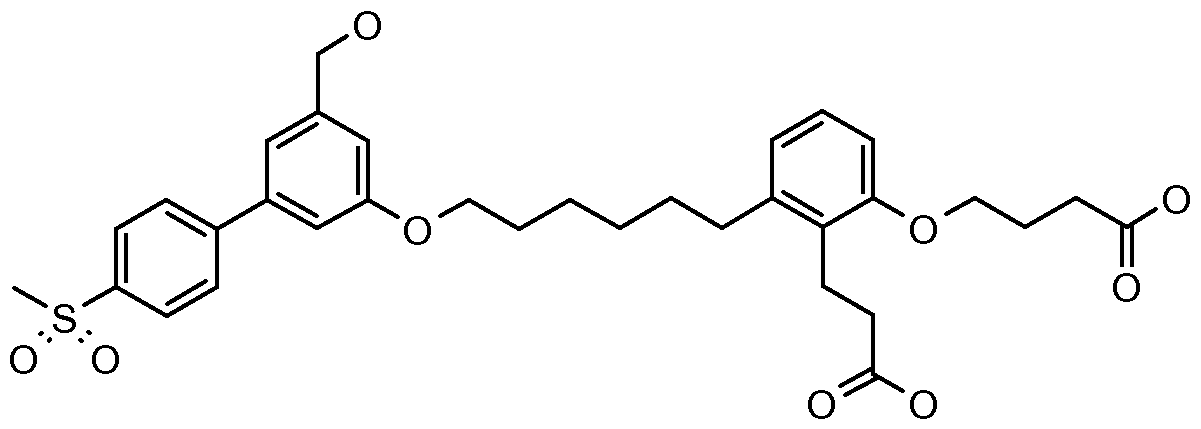


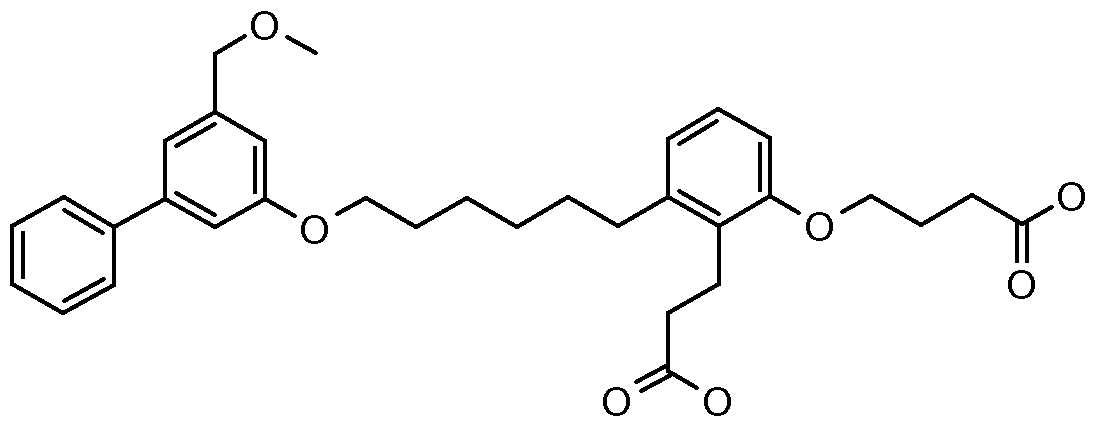


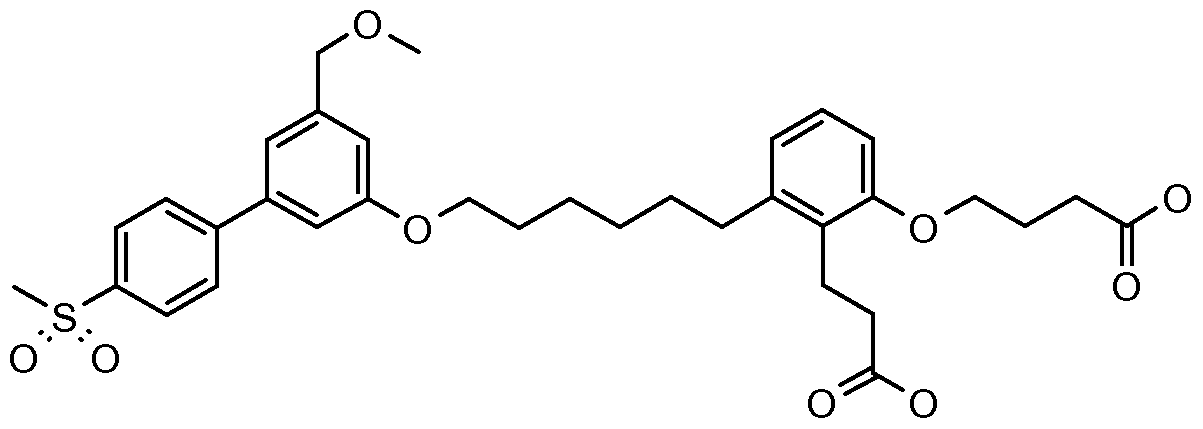
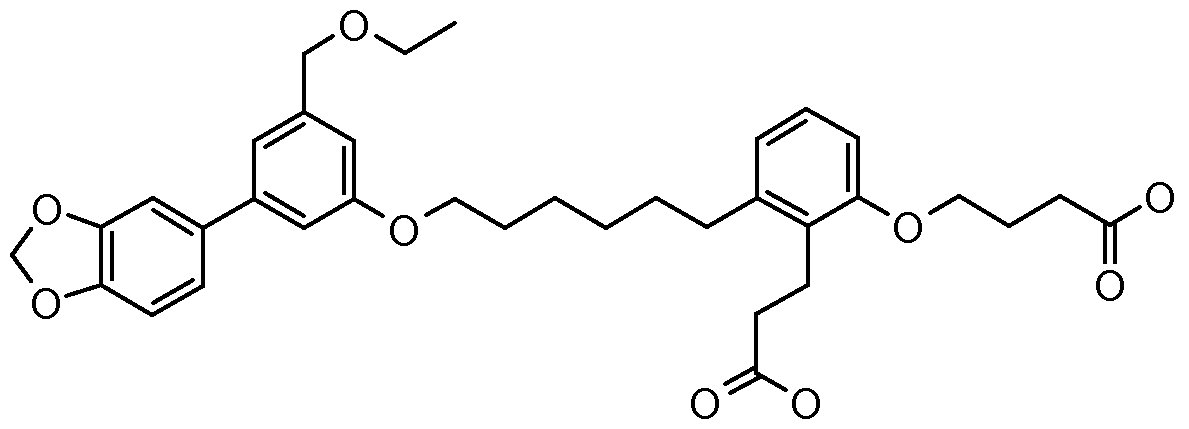


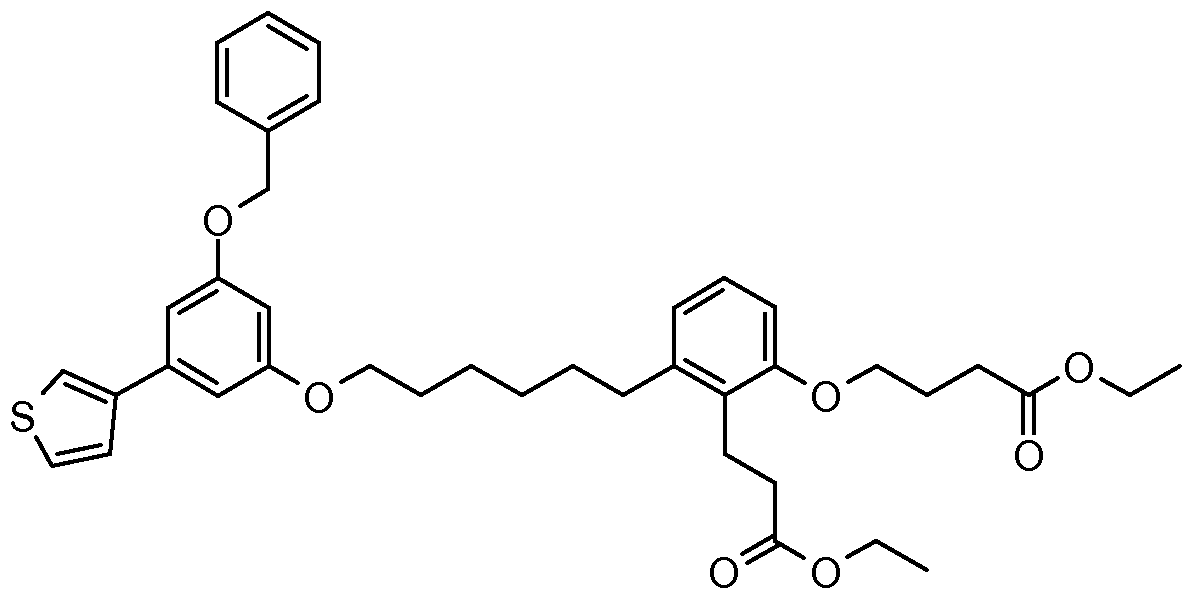


Claims

Priority Applications (5)
| Application Number | Priority Date | Filing Date | Title |
|---|---|---|---|
| SG2011068921A SG174535A1 (en) | 2009-03-23 | 2010-03-19 | Leukotriene b4 inhibitors |
| CA2747327A CA2747327A1 (en) | 2009-03-23 | 2010-03-19 | Leukotriene b4 inhibitors |
| EP10709838A EP2411358A1 (en) | 2009-03-23 | 2010-03-19 | Leukotriene b4 inhibitors |
| CN2010800112755A CN102348674A (en) | 2009-03-23 | 2010-03-19 | Leukotriene B4 Inhibitors |
| JP2012501256A JP2012521384A (en) | 2009-03-23 | 2010-03-19 | Leukotriene B4 inhibitor |
Applications Claiming Priority (2)
| Application Number | Priority Date | Filing Date | Title |
|---|---|---|---|
| US16235209P | 2009-03-23 | 2009-03-23 | |
| US61/162,352 | 2009-03-23 |
Publications (2)
| Publication Number | Publication Date |
|---|---|
| WO2010108856A1 true WO2010108856A1 (en) | 2010-09-30 |
| WO2010108856A8 WO2010108856A8 (en) | 2011-08-04 |
Family
ID=42236448
Family Applications (1)
| Application Number | Title | Priority Date | Filing Date |
|---|---|---|---|
| PCT/EP2010/053580 Ceased WO2010108856A1 (en) | 2009-03-23 | 2010-03-19 | Leukotriene b4 inhibitors |
Country Status (7)
| Country | Link |
|---|---|
| US (1) | US8088936B2 (en) |
| EP (1) | EP2411358A1 (en) |
| JP (1) | JP2012521384A (en) |
| CN (1) | CN102348674A (en) |
| CA (1) | CA2747327A1 (en) |
| SG (1) | SG174535A1 (en) |
| WO (1) | WO2010108856A1 (en) |
Cited By (1)
| Publication number | Priority date | Publication date | Assignee | Title |
|---|---|---|---|---|
| JP2015509509A (en) * | 2012-03-06 | 2015-03-30 | ベイジン ウェイフオン イーミーン バイオ−テクノロジー リミティドカンパニー | Use of lupatadine for the manufacture of a pharmaceutical composition for the treatment of chronic obstructive disease |
Citations (1)
| Publication number | Priority date | Publication date | Assignee | Title |
|---|---|---|---|---|
| WO2009024492A1 (en) * | 2007-08-21 | 2009-02-26 | F. Hoffmann-La Roche Ag | Leukotriene b4 inhibitors |
Family Cites Families (4)
| Publication number | Priority date | Publication date | Assignee | Title |
|---|---|---|---|---|
| CZ276694A3 (en) * | 1991-11-25 | 1995-11-15 | Lilly Co Eli | Process for preparing diphenyl derivative |
| DE4228201A1 (en) * | 1992-08-25 | 1994-03-03 | Schering Ag | New leukotriene B¶4¶ antagonists, processes for their preparation and their use as medicines |
| US7989454B2 (en) * | 2007-12-17 | 2011-08-02 | Hoffmann-La Roche Inc. | Leukotriene B4 inhibitors |
| US8093253B2 (en) * | 2008-03-06 | 2012-01-10 | Hoffmann-La Roche Inc. | Leukotriene B4 inhibitors |
-
2010
- 2010-03-10 US US12/720,822 patent/US8088936B2/en not_active Expired - Fee Related
- 2010-03-19 CA CA2747327A patent/CA2747327A1/en not_active Abandoned
- 2010-03-19 CN CN2010800112755A patent/CN102348674A/en active Pending
- 2010-03-19 SG SG2011068921A patent/SG174535A1/en unknown
- 2010-03-19 WO PCT/EP2010/053580 patent/WO2010108856A1/en not_active Ceased
- 2010-03-19 EP EP10709838A patent/EP2411358A1/en not_active Withdrawn
- 2010-03-19 JP JP2012501256A patent/JP2012521384A/en active Pending
Patent Citations (1)
| Publication number | Priority date | Publication date | Assignee | Title |
|---|---|---|---|---|
| WO2009024492A1 (en) * | 2007-08-21 | 2009-02-26 | F. Hoffmann-La Roche Ag | Leukotriene b4 inhibitors |
Non-Patent Citations (10)
| Title |
|---|
| A. SUZUKI: "The Suzuki reaction with arylboron compounds in arene chemistry", MODERN ARENE CHEMISTRY, 2002, pages 53 - 106 |
| BIOORGANIC & MEDICINAL CHEMISTRY LETTERS, vol. 4, no. 24, 1994, pages 2883 - 8 |
| HAMURA, HELVETICA CHIMICA ACTA, vol. 85, 2002, pages 3589 - 3605 |
| ORG. PROCESS RES. DEV., vol. 8, 2004, pages 201 |
| ORGANIC PROCESS RESEARCH & DEVELOPMENT, vol. 6, 2002, pages 591 - 596 |
| P.G. M. WUTS; T. W. GREENE: "Green's Protective Groups in Organic Synthesis", 2007, WILEY AND SONS |
| PROSTAGLANDINS, LEUKOTRIENES AND ESSENTIAL FATTY ACIDS, vol. 69, 2003, pages 123 - 134 |
| ROBERT D. SINGER, CHEM. REV., vol. 93, 1993, pages 2117 - 2188 |
| TETRAHEDRON, vol. 58, 2002, pages 9633 - 9695 |
| WEIBERTH, J. ORG. CHEM., vol. 52, 1987, pages 3901 - 3904 |
Cited By (1)
| Publication number | Priority date | Publication date | Assignee | Title |
|---|---|---|---|---|
| JP2015509509A (en) * | 2012-03-06 | 2015-03-30 | ベイジン ウェイフオン イーミーン バイオ−テクノロジー リミティドカンパニー | Use of lupatadine for the manufacture of a pharmaceutical composition for the treatment of chronic obstructive disease |
Also Published As
| Publication number | Publication date |
|---|---|
| CN102348674A (en) | 2012-02-08 |
| SG174535A1 (en) | 2011-10-28 |
| US20100240678A1 (en) | 2010-09-23 |
| CA2747327A1 (en) | 2010-09-30 |
| JP2012521384A (en) | 2012-09-13 |
| EP2411358A1 (en) | 2012-02-01 |
| WO2010108856A8 (en) | 2011-08-04 |
| US8088936B2 (en) | 2012-01-03 |
Similar Documents
| Publication | Publication Date | Title |
|---|---|---|
| US7989454B2 (en) | Leukotriene B4 inhibitors | |
| US6627656B2 (en) | Method of treatment using phenyl and biaryl derivatives as prostaglandin E inhibitors and compounds useful therefore | |
| US7598266B2 (en) | Fused heterocyclic derivatives as PPAR modulators | |
| US8093253B2 (en) | Leukotriene B4 inhibitors | |
| US7544707B2 (en) | Bicyclic derivatives as PPAR modulators | |
| JP2006517199A5 (en) | ||
| JPWO2004007439A1 (en) | Biaryl derivatives | |
| WO2008120818A1 (en) | Indole derivative having cpla2 inhibitory activity, use of the same and method for producing the same | |
| US20090176863A1 (en) | Thiophene derivative ppar modulators | |
| US8093385B2 (en) | Leukotriene B4 inhibitors | |
| US20100240642A1 (en) | 1H-Indole-2-Carboxylic Acid Derivatives Useful As PPAR Modulators | |
| WO2010108856A1 (en) | Leukotriene b4 inhibitors | |
| EP1742927B1 (en) | Butanoic acid derivatives, processes for the preparation thereof, pharmaceutical compositions comprising them, and therapeutic applications threreof | |
| WO2005100301A1 (en) | 2-aryloxyethyl glycine derivatives and their use as glycine transport inhibitors | |
| Hamri et al. | Convenient approach for the synthesis of ONO-LB-457, a potent leukotriene B4 receptor antagonist | |
| Lukin et al. | Gram-scale synthesis of a novel core building block for the new GPR40 agonist design |
Legal Events
| Date | Code | Title | Description |
|---|---|---|---|
| WWE | Wipo information: entry into national phase |
Ref document number: 201080011275.5 Country of ref document: CN |
|
| 121 | Ep: the epo has been informed by wipo that ep was designated in this application |
Ref document number: 10709838 Country of ref document: EP Kind code of ref document: A1 |
|
| WWE | Wipo information: entry into national phase |
Ref document number: 2010709838 Country of ref document: EP |
|
| WWE | Wipo information: entry into national phase |
Ref document number: 2747327 Country of ref document: CA |
|
| WWE | Wipo information: entry into national phase |
Ref document number: 2012501256 Country of ref document: JP |
|
| NENP | Non-entry into the national phase |
Ref country code: DE |
|
| WWE | Wipo information: entry into national phase |
Ref document number: 6998/CHENP/2011 Country of ref document: IN |