WO2010108843A1 - Use of nitrooxyderivative of paracetamol for the treatment of muscular dystrophies - Google Patents
Use of nitrooxyderivative of paracetamol for the treatment of muscular dystrophies Download PDFInfo
- Publication number
- WO2010108843A1 WO2010108843A1 PCT/EP2010/053521 EP2010053521W WO2010108843A1 WO 2010108843 A1 WO2010108843 A1 WO 2010108843A1 EP 2010053521 W EP2010053521 W EP 2010053521W WO 2010108843 A1 WO2010108843 A1 WO 2010108843A1
- Authority
- WO
- WIPO (PCT)
- Prior art keywords
- acetylamino
- phenyl ester
- integer
- formula
- linear
- Prior art date
- Legal status (The legal status is an assumption and is not a legal conclusion. Google has not performed a legal analysis and makes no representation as to the accuracy of the status listed.)
- Ceased
Links
- 0 CC(Nc(cc1)ccc1OC(c1ccc(C*)cc1)=O)=O Chemical compound CC(Nc(cc1)ccc1OC(c1ccc(C*)cc1)=O)=O 0.000 description 1
Classifications
-
- A—HUMAN NECESSITIES
- A61—MEDICAL OR VETERINARY SCIENCE; HYGIENE
- A61K—PREPARATIONS FOR MEDICAL, DENTAL OR TOILETRY PURPOSES
- A61K31/00—Medicinal preparations containing organic active ingredients
- A61K31/16—Amides, e.g. hydroxamic acids
- A61K31/165—Amides, e.g. hydroxamic acids having aromatic rings, e.g. colchicine, atenolol, progabide
- A61K31/167—Amides, e.g. hydroxamic acids having aromatic rings, e.g. colchicine, atenolol, progabide having the nitrogen of a carboxamide group directly attached to the aromatic ring, e.g. lidocaine, paracetamol
-
- A—HUMAN NECESSITIES
- A61—MEDICAL OR VETERINARY SCIENCE; HYGIENE
- A61P—SPECIFIC THERAPEUTIC ACTIVITY OF CHEMICAL COMPOUNDS OR MEDICINAL PREPARATIONS
- A61P21/00—Drugs for disorders of the muscular or neuromuscular system
Definitions
- the present invention relates to the use of nitric oxide releasing compounds for retarding or reversing muscular dystrophies including Duchenne and Becker dystrophies .
- Muscular dystrophies are caused by progressive degeneration of skeletal muscle fibres. Lack of one of several proteins located either at the plasma membrane or within internal membranes, increases the probability of damage during contraction, and eventually leads to fibre degeneration, accompanied by severe local inflammation with infiltration of immune-competent cells.
- Muscular dystrophies encompass a group of inherited, progressive muscle disorders, distinguished clinically by the selective distribution of skeletal muscle weakness.
- the two most common forms of muscle dystrophy are Duchenne and Becker dystrophies, each resulting from the inheritance of a mutation in the dystrophin gene, which is located at the Xp21 locus.
- Other dystrophies include, but are not limited to, limb-girdle muscular dystrophy, fascioscapulohumeral (Landouzy-Dej erine) muscular dystrophy, congenital muscular dystrophy, myotonic dystrophy, and Emery-Dreifuss muscular dystrophy.
- Duchenne muscular dystrophy In the most severe form, such as Duchenne muscular dystrophy, regeneration is exhausted and skeletal muscle is progressively replaced by fat and fibrous tissue. This condition leads to patient showing a progressive weakness and eventually death by respiratory and/or cardiac failure.
- the symptoms of Duchenne muscular dystrophy occur almost exclusively in males, and start at about 3-7 years of age with most patients confined to a wheelchair by 10-12 years and many die at about 20 years of age due to respiratory complications.
- corticosteroids such as prednisone, prednisolone and deflazacort have shown potential for providing temporary improvement. This improvement results mainly from slowing the rate of progression or stabilizing muscle strength and function. Corticosteroid therapy also leads to side effects; as yet there is no consensus regarding their use as standard treatment. Corticosteroids, such as prednisone, are believed to act by blocking the immune cell activation and infiltration which are precipitated by muscle fibre damage resulting from the disease.
- the long-term therapies with corticosteroids for the treatment of muscular dystrophy are associated with adverse effects such as osteoporosis, hypertension and Cushing syndrome, weight gain, cataracts, short stature, gastrointestinal symptoms, behavioural changes in case of the prednisolone and weight gain and cataracts as for deflazacort.
- nitric oxide (NO) generated by muscular NO synthase which is structurally and functionally linked to the dystrophin complex at the sarcolemma, participates to physiological development and function of skeletal muscle by regulating vasodilation and thus supply oxygen during exercise, by increasing glucose uptake in the myofibres and by regulating the enzymes activity relevant to cell energy metabolism.
- EP 1252133 relates to nitrooxy derivatives of drugs to be used in oxidative stress and endothelial dysfunctions of moderate intensity. Nitrooxy derivatives of paracetamol are disclosed in particular.
- EP 1339665 discloses the use of nitroderivatives of paracetamol, among other anti-inflammatory drugs, in the treatment of pre-cancer or cancer diseases on an inflammatory basis.
- WO 00/53191 discloses the use of nitric oxide (NO), NO donors, inhibitors of NO activity or regulators of NO production, for the treatment of muscle diseases, which include Duchenne dystrophy, Becker dystrophy, limb-girdle muscular dystrophy, fascioscapulohumeral (Landouzy- Dejerine) muscular dystrophy, congenital muscular dystrophy, myotonic dystrophy, and Emery-Dreifuss muscular dystrophy.
- muscle diseases which include Duchenne dystrophy, Becker dystrophy, limb-girdle muscular dystrophy, fascioscapulohumeral (Landouzy- Dejerine) muscular dystrophy, congenital muscular dystrophy, myotonic dystrophy, and Emery-Dreifuss muscular dystrophy.
- the document discloses the results of a study of mdx dystrophic mice treated with deflazacort, deflazacort plus L-NAME (a NOS enzymes inhibitor
- WO 2007/088123 discloses the use of nitric oxide releasing derivatives of NSAIDs and statins for retarding or reversing muscular dystrophies. Said derivatives combine the known anti-inflammatory efficacy of NSAIDs and statins to the biological properties of NO, leading to a persistent amelioration of the dystrophic phenotype in the ⁇ - sarcoglycan null mouse model.
- nitric oxide releasing derivatives of paracetamol a known analgesic and antipyretic drug that does not show antiinflammatory activity
- They have the advantage that they induce fewer adverse side effects, they are well tolerated by the patients and therefore they can be used in long term therapies.
- paracetamol is commonly used in children; thus, this compound may be perspectively used in young patients.
- T BI (CO) or (X) wherein X is O, S, NR 10 , Ric is H or a linear or branched alkyl having from 1 to 5 carbon atoms;
- Y is a bivalent linking group selected from the following:
- nIX is an integer in the range 0-3; nIIX is an integer in the range 1-3; R-TiX/ R-Tixv RTIIX/ RTIIX' are H; Y 3 is selected from:
- R' is a linear or branched C1-C20, optionally substituted with one or more of the following groups -NHCOR 3 wherein R 3 is a linear or branched Ci-C 5 alkyl, -NH 2 or -OH;
- n3 is an integer from 0 to 3 ed n3 ' is an integer from 1 to 3;
- R2 is a linear or branched C2-C10 alkenylene which can contain one or more double bonds;
- R I f is a linear or branched C2-C10 alkenylene which can contain one or more double bonds;
- W Y T 0 wherein Y ⁇ has the same meanings of Y and Y ⁇ in the compound of formula (I) is equal to or different from Y; p is an integer equal to 1 or 0.
- Another preferred embodiment of the invention comprises the use of a nitric oxide-releasing drug of formula (I) for treatment of muscular dystrophies, wherein said drug is selected from the group consisting of: 4- (nitrooxy) butanoic acid 4- (N-acetylamino) phenyl ester (1),
- a specific embodiment of the present invention comprises the use of the nitric oxide releasing drug 4- (nitrooxy) butanoic acid 4- (N-acetylamino) phenyl ester of formula (1) ,
- the doses to be administered are determined depending upon, for example, age, body weight, symptom, the desired therapeutic effect, the route of administration, and the duration of the treatment.
- the doses per person at a time are generally from 1 mg to 1000 mg, by oral administration, up to several times per day, and from 1 mg to 100 mg, by parenteral administration (preferably intravenous administration) , up to several times per day, or continuous administration for from 1 to 24 hours.
- the doses to be used depend upon various conditions. Therefore, there are cases wherein doses lower than or greater than the ranges specified above may be used.
- the compounds of the present invention may be administered in the form of, for example, solid compositions, liquid compositions or other compositions for oral administration, injections, liniments or suppositories for parenteral administration.
- nitric oxide releasing paracetamol derivatives as well as the methods for their preparation are disclosed in WO 02/30866.
- Paracetamol is also known as acetaminophen.
- ⁇ -sarcoglycan null mouse ( ⁇ -SG null C57BL/6 x 129/Sv mouse) : this is a well-known model of muscle dystrophies (Brunelli et al . , PNAS, 2007; 104(1): 264-269). Time frame: 1-9 months.
- the tested compounds are:
- Creatine kinase an enzyme released by damaged or necrotic fibres, is commonly used as biomarker of the severity of muscular dystrophies. Muscle function was evaluated by using the running-wheel and the treadmill tests, which measure animal voluntary motility and muscle endurance, respectively. ⁇ -SG null mice were treated with the diet containing 4- (nitrooxy) butanoic acid 4- (N-acetylamino) phenyl ester (187 mg/kg/die) to test the efficacy as a therapeutic treatment for muscular dystrophy.
- Locomotor activity (Mobility) :
- Running-wheel activity voluntary wheel running was used as the exercise paradigm to avoid any physiological changes that may occur due to the stress of forced treadmill running. Mice were housed individually in cages (9 x 22 x 9 cm check) equipped with a running wheel (20-cm in diameter; Trixie, Tarp, Germany) . Each wheel revolution was registered through a magnetic switch, which was connected to a counter. The number of revolutions was recorded daily for 6 days .
- Exhaustion treadmill the analyses were carried out using a six-lane motorized treadmill (Exer 3/6 Treadmill; Columbus Instruments, Columbus, OH) supplied with shocker plates. The treadmill was run at an inclination of 0° at 12 m/min for 30 minutes. The test was stopped when the mouse remained on the shocker plate for more than 20 sec without attempting to re-engage the treadmill. The time to exhaustion was determined from the beginning of the test. Three tests were performed at the 7 th month on the same animal, 7 days after creatine kinase assay. Values obtained were averaged, providing a single value per animal. Values shown are the result of experiments on 3 animals per group ⁇ SEM (Table II) .
- the tested compound (1) was effective in reducing the functional and biochemical alterations, which typically occur in these animals.
- the tested compound (1) was more effective in reducing the plasma levels of creatine kinase, a hallmark of muscle damage, in treated animals (Table I) vs both the untreated control (control) and paracetamol (para) ; consistently, treated animals performed significantly better on both free-wheel running test and treadmill test
Landscapes
- Health & Medical Sciences (AREA)
- Public Health (AREA)
- Veterinary Medicine (AREA)
- Chemical & Material Sciences (AREA)
- Medicinal Chemistry (AREA)
- Pharmacology & Pharmacy (AREA)
- Life Sciences & Earth Sciences (AREA)
- Animal Behavior & Ethology (AREA)
- General Health & Medical Sciences (AREA)
- Epidemiology (AREA)
- Pain & Pain Management (AREA)
- Engineering & Computer Science (AREA)
- Bioinformatics & Cheminformatics (AREA)
- Neurology (AREA)
- Orthopedic Medicine & Surgery (AREA)
- Physical Education & Sports Medicine (AREA)
- Chemical Kinetics & Catalysis (AREA)
- General Chemical & Material Sciences (AREA)
- Nuclear Medicine, Radiotherapy & Molecular Imaging (AREA)
- Organic Chemistry (AREA)
- Acyclic And Carbocyclic Compounds In Medicinal Compositions (AREA)
Abstract
The present invention relates to the use of nitric oxide releasing derivatives of paracetamol for retarding or reversing muscular dystrophies such as Duchenne and Becker dystrophies.
Description
Use of nitrooxyderivative of paracetamol for the treatment of muscular dystrophies.
The present invention relates to the use of nitric oxide releasing compounds for retarding or reversing muscular dystrophies including Duchenne and Becker dystrophies . Muscular dystrophies are caused by progressive degeneration of skeletal muscle fibres. Lack of one of several proteins located either at the plasma membrane or within internal membranes, increases the probability of damage during contraction, and eventually leads to fibre degeneration, accompanied by severe local inflammation with infiltration of immune-competent cells.
Muscular dystrophies encompass a group of inherited, progressive muscle disorders, distinguished clinically by the selective distribution of skeletal muscle weakness. The two most common forms of muscle dystrophy are Duchenne and Becker dystrophies, each resulting from the inheritance of a mutation in the dystrophin gene, which is located at the Xp21 locus. Other dystrophies include, but are not limited to, limb-girdle muscular dystrophy, fascioscapulohumeral (Landouzy-Dej erine) muscular dystrophy, congenital muscular dystrophy, myotonic dystrophy, and Emery-Dreifuss muscular dystrophy.
In the most severe form, such as Duchenne muscular dystrophy, regeneration is exhausted and skeletal muscle is progressively replaced by fat and fibrous tissue. This condition leads to patient showing a progressive weakness and eventually death by respiratory and/or cardiac failure.
The symptoms of Duchenne muscular dystrophy occur almost exclusively in males, and start at about 3-7 years of age with most patients confined to a wheelchair by 10-12 years and many die at about 20 years of age due to respiratory complications.
Of the different medications that have been tried as potential treatments for Duchenne muscular dystrophy, only the corticosteroids such as prednisone, prednisolone and deflazacort have shown potential for providing temporary improvement. This improvement results mainly from slowing the rate of progression or stabilizing muscle strength and function. Corticosteroid therapy also leads to side effects; as yet there is no consensus regarding their use as standard treatment. Corticosteroids, such as prednisone, are believed to act by blocking the immune cell activation and infiltration which are precipitated by muscle fibre damage resulting from the disease.
The long-term therapies with corticosteroids for the treatment of muscular dystrophy, are associated with adverse effects such as osteoporosis, hypertension and Cushing syndrome, weight gain, cataracts, short stature, gastrointestinal symptoms, behavioural changes in case of the prednisolone and weight gain and cataracts as for deflazacort.
Bredt D. S. in Proc. Natl. Acad. Sci . USA 95 (1998), 14592-14593 reports that nitric oxide (NO) generated by muscular NO synthase, which is structurally and functionally linked to the dystrophin complex at the sarcolemma, participates to physiological development and function of skeletal muscle by regulating vasodilation and thus supply oxygen during exercise, by increasing glucose
uptake in the myofibres and by regulating the enzymes activity relevant to cell energy metabolism.
EP 1252133 relates to nitrooxy derivatives of drugs to be used in oxidative stress and endothelial dysfunctions of moderate intensity. Nitrooxy derivatives of paracetamol are disclosed in particular.
EP 1339665 discloses the use of nitroderivatives of paracetamol, among other anti-inflammatory drugs, in the treatment of pre-cancer or cancer diseases on an inflammatory basis.
These documents do not report that these compounds are active for the treatment of muscular degenerative diseases.
WO 00/53191 discloses the use of nitric oxide (NO), NO donors, inhibitors of NO activity or regulators of NO production, for the treatment of muscle diseases, which include Duchenne dystrophy, Becker dystrophy, limb-girdle muscular dystrophy, fascioscapulohumeral (Landouzy- Dejerine) muscular dystrophy, congenital muscular dystrophy, myotonic dystrophy, and Emery-Dreifuss muscular dystrophy. In particular the document discloses the results of a study of mdx dystrophic mice treated with deflazacort, deflazacort plus L-NAME (a NOS enzymes inhibitor) or deflazacort plus L-arginine (a NO donor) . In the experiment, muscle tissues of tibialis anterior muscle and diaphragm were collected from the treated animal and the central nucleation index (CNI) , which is a useful measure of muscle damage index, was assessed. The results show that the addition of the NO donor L-arginine to deflazacort did not improve the status of muscles in mdx mice, while L-NAME augmented the beneficial effects of deflazacort on diaphragm. The author concluded that the results show that L-NAME or other NOS inhibitors can be used for improving the effects of steroid when applied in situ.
WO 2007/088123 discloses the use of nitric oxide releasing derivatives of NSAIDs and statins for retarding or reversing muscular dystrophies. Said derivatives combine the known anti-inflammatory efficacy of NSAIDs and statins to the biological properties of NO, leading to a persistent amelioration of the dystrophic phenotype in the α- sarcoglycan null mouse model.
There is a need to identify therapeutic agents that slow the muscle fibres damage and delay the onset of disability in patients with muscular dystrophies, but cause a lesser degree of skeletal muscle atrophy than current therapies .
Quite surprisingly and unexpectedly, it was found that nitric oxide releasing derivatives of paracetamol, a known analgesic and antipyretic drug that does not show antiinflammatory activity, are effective for retarding and reducing muscle damage and have long lasting therapeutic efficacy by slowing the process of muscular dystrophy. They have the advantage that they induce fewer adverse side effects, they are well tolerated by the patients and therefore they can be used in long term therapies.
Moreover, paracetamol is commonly used in children; thus, this compound may be perspectively used in young patients.
It is an object of the present invention the use for the treatment of muscular dystrophies of (NO) -donor paracetamol derivatives of formula (I) and pharmaceutically acceptable salts or stereoisomers thereof:


TBI = (CO) or (X) wherein X is O, S, NR10, Ric is H or a linear or branched alkyl having from 1 to 5 carbon atoms;
Y is a bivalent linking group selected from the following:

(H) wherein : nIX is an integer in the range 0-3; nIIX is an integer in the range 1-3; R-TiX/ R-Tixv RTIIX/ RTIIX' are H; Y3 is selected from:

(Yl) (Y2: (Y3: (Y4: (Y5) (Y6)


(III) wherein n3 is an integer from 0 to 3 ed n3 ' is an integer from 1 to 3;

:iv) wherein n3 and n3 ' have the above reported meaning,

(V) wherein R4 is hydroxy, hydrogen, R5O- wherein R5 is a linear or branched C1-C10 alkyl group;
R2 is a linear or branched C2-C10 alkenylene which can contain one or more double bonds;
R I f
- CH-CH2- ( 0-CH-CH2 ) n7
R \1L f
(VI )

(VI I ) wherein Rif = H, CH3 and nf is an integer from 0 to 6; L = covalent bond or L = X, X being as above defined, or L = C(O) ;
W = YT0 wherein Yτ has the same meanings of Y and Yτ in the compound of formula (I) is equal to or different from Y; p is an integer equal to 1 or 0.
Another preferred embodiment of the invention comprises the use of a nitric oxide-releasing drug of formula (I) for treatment of muscular dystrophies, wherein said drug is selected from the group consisting of: 4- (nitrooxy) butanoic acid 4- (N-acetylamino) phenyl ester (1),

(D
4- (nitrooxymethyl) -benzoic acid 4- (N-acetylamino) phenyl ester (2)

(2:
3- (nitrooxymethyl) -benzoic acid 4- (N-acetylamino) phenyl
ester (3)

!3)
2- (nitrooxymethyl) -benzoic acid 4- (N-acetylamino) phenyl ester (4)

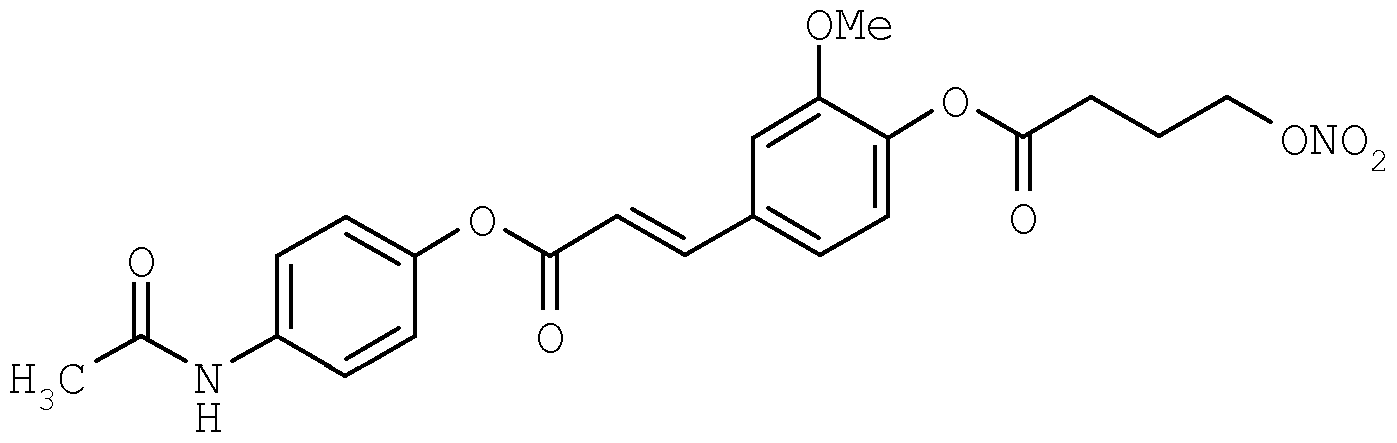
A) trans-3- [4- (4' -nitrooxybutyryloxy) -3-methoxyphenyl] -2- propenoic acid 4- (N-acetylamino) phenyl ester (5)
(5;
2-acetylamino- (4-nitrooxybutyryl) -3-mercaptopropionic acid 4- (N-acetylamino) phenyl ester (6)

:6)
3- [ (2-nitrooxy) ethyloxy] propanoic acid 4- (N-
acetylamino) phenyl ester (7]

[I)
A specific embodiment of the present invention comprises the use of the nitric oxide releasing drug 4- (nitrooxy) butanoic acid 4- (N-acetylamino) phenyl ester of formula (1) ,

(D for the treatment of muscular dystrophies.
The doses to be administered are determined depending upon, for example, age, body weight, symptom, the desired therapeutic effect, the route of administration, and the duration of the treatment. In the human adult, the doses per person at a time are generally from 1 mg to 1000 mg, by oral administration, up to several times per day, and from 1 mg to 100 mg, by parenteral administration (preferably
intravenous administration) , up to several times per day, or continuous administration for from 1 to 24 hours.
As mentioned above, the doses to be used depend upon various conditions. Therefore, there are cases wherein doses lower than or greater than the ranges specified above may be used.
The compounds of the present invention may be administered in the form of, for example, solid compositions, liquid compositions or other compositions for oral administration, injections, liniments or suppositories for parenteral administration.
The nitric oxide releasing paracetamol derivatives as well as the methods for their preparation are disclosed in WO 02/30866. Paracetamol is also known as acetaminophen.
Experimental part:
Animal model: α-sarcoglycan null mouse (α-SG null C57BL/6 x 129/Sv mouse) : this is a well-known model of muscle dystrophies (Brunelli et al . , PNAS, 2007; 104(1): 264-269). Time frame: 1-9 months.
Animals were treated with the drugs starting at 1.5 months of age.
The tested compounds are:
4- (nitrooxy) butanoic acid 4- (N-acetylamino) phenyl ester
- paracetamol (para) as reference To assess muscle function and structure, creatine kinase blood concentrations and resistance to fatigue were evaluated. Creatine kinase, an enzyme released by damaged or necrotic fibres, is commonly used as biomarker of the
severity of muscular dystrophies. Muscle function was evaluated by using the running-wheel and the treadmill tests, which measure animal voluntary motility and muscle endurance, respectively. α-SG null mice were treated with the diet containing 4- (nitrooxy) butanoic acid 4- (N-acetylamino) phenyl ester (187 mg/kg/die) to test the efficacy as a therapeutic treatment for muscular dystrophy.
Untreated controls (NT) and animals receiving only paracetamol (para) (100 mg/kg/die, administered daily in the diet starting at 1 month from weaning for up to 9 months) had been set in parallel as controls.
Experimental tests: - Creatine kinase activity measurements: quantitative and kinetic determination of creatine kinase activity in serum of control and drug treated-animals was measured using creatine kinase reagent (Sigma colorimetric assay) , according to the manufacturer' s instructions. Blood was collected from the tail vein and serum obtained after centrifugation at 13,000 rpm for 10 minutes was stored at -800C before measurements. The data are reported in Table I. Values shown are the result of experiments on 3 animals per group ± SEM.
Locomotor activity (Mobility) :
Running-wheel activity: voluntary wheel running was used as the exercise paradigm to avoid any physiological changes that may occur due to the stress of forced treadmill running. Mice were housed individually in cages (9 x 22 x 9 cm check) equipped with a running wheel (20-cm in diameter; Trixie, Tarp, Germany) . Each wheel revolution was registered through
a magnetic switch, which was connected to a counter. The number of revolutions was recorded daily for 6 days .
The free wheel values, reported as distance in km covered in 24 hours, were measured after 5 months of treatment of α-SG null mice. Values shown are the result of experiments on 3 animals per group ± SEM
(Table II) .
Exhaustion treadmill : the analyses were carried out using a six-lane motorized treadmill (Exer 3/6 Treadmill; Columbus Instruments, Columbus, OH) supplied with shocker plates. The treadmill was run at an inclination of 0° at 12 m/min for 30 minutes. The test was stopped when the mouse remained on the shocker plate for more than 20 sec without attempting to re-engage the treadmill. The time to exhaustion was determined from the beginning of the test. Three tests were performed at the 7th month on the same animal, 7 days after creatine kinase assay. Values obtained were averaged, providing a single value per animal. Values shown are the result of experiments on 3 animals per group ± SEM (Table II) .
The results show that the tested compound (1) was effective in reducing the functional and biochemical alterations, which typically occur in these animals. In particular, the tested compound (1) was more effective in reducing the plasma levels of creatine kinase, a hallmark of muscle damage, in treated animals (Table I) vs both the untreated control (control) and paracetamol (para) ; consistently, treated animals performed significantly better on both free-wheel running test and treadmill test
(Table II) .
Altogether, the data show that the compounds of the present invention have a better profile as compared to paracetamol .
Table I:

p< 0.05 vs NT
Table II:

Claims
1. A nitric oxide releasing compound of formula (I)
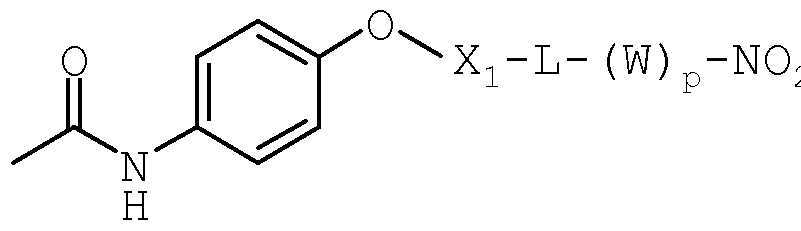

TBI = (CO) or (X) wherein X is 0, S, NR10, Ric is H or a linear or branched alkyl having from 1 to 5 carbon atoms;
Y is a bivalent linking group selected from the following:

(H) wherein : nIX is an integer in the range 0-3; nIIX is an integer in the range 1-3;
R-TiX/ R-Tixv RTIIX/ RTIIX' are H; Y3 is selected from:


(Y7: (Y8: (Y9: (γio: (YIl

(Y12) (Y13) (Y14) (Y15) an alkylene group R' wherein R' is a linear or branched C1-C20, optionally substituted with one or more of the following groups -NHCOR3 wherein R3 is a linear or branched Ci-C5 alkyl, -NH2 or -OH;

(III) wherein n3 is an integer from 0 to 3 ed n3 ' is an integer from 1 to 3;

(IV) wherein n3 and n3 ' have the above reported meaning, 
(V) wherein
R4 is hydroxy, hydrogen, R5O- wherein R5 is a linear or branched C1-C10 alkyl group;
R2 is a linear or branched C2-C10 alkenylene which can contain one or more double bonds;
R If
-CH-CH2- (0-CH-CH2) nγ
Rif (VI)

(VII) wherein Rif = H, CH3 and nf is an integer from 0 to 6; L = covalent bond or L = X, X being as above defined, or
L = C(O) ;
W = YT0 wherein Yτ has the same meanings of Y and Yτ in the compound of formula (I) is equal to or different from Y; p is an integer equal to 1 or 0
use in the treatment of muscular dystrophies.
2. A compound of formula (I) selected from the group consisting of:
4- (nitrooxy) butanoic acid 4- (N-acetylamino) phenyl ester
(D,

(D
4- (nitrooxymethyl) -benzoic acid 4- (N-acetylamino) phenyl ester (2)

(2:
3- (nitrooxymethyl) -benzoic acid 4- (N-acetylamino) phenyl
ester (3)


(4; trans-3- [4- (4' -nitrooxybutyryloxy) -3-methoxyphenyl] -2- propenoic acid 4- (N-acetylamino) phenyl ester (5)

(5)
2-acetylamino- (4-nitrooxybutyryl) -3-mercaptopropionic acid 4- (N-acetylamino) phenyl ester (6)

:6)
3- [ (2-nitrooxy) ethyloxy] propanoic acid 4- (N- acetylamino) phenyl ester (7)

'J) for use in the treatment of muscular dystrophies.
3. A compound of formula (I) which is 4- (nitrooxy) butanoic acid 4- (N-acetylamino) phenyl ester of formula (1)

(D for use in the treatment of muscular dystrophies.
Applications Claiming Priority (2)
| Application Number | Priority Date | Filing Date | Title |
|---|---|---|---|
| US16417509P | 2009-03-27 | 2009-03-27 | |
| US61/164,175 | 2009-03-27 |
Publications (1)
| Publication Number | Publication Date |
|---|---|
| WO2010108843A1 true WO2010108843A1 (en) | 2010-09-30 |
Family
ID=42115601
Family Applications (1)
| Application Number | Title | Priority Date | Filing Date |
|---|---|---|---|
| PCT/EP2010/053521 Ceased WO2010108843A1 (en) | 2009-03-27 | 2010-03-18 | Use of nitrooxyderivative of paracetamol for the treatment of muscular dystrophies |
Country Status (1)
| Country | Link |
|---|---|
| WO (1) | WO2010108843A1 (en) |
Citations (6)
| Publication number | Priority date | Publication date | Assignee | Title |
|---|---|---|---|---|
| WO2000053191A2 (en) | 1999-03-11 | 2000-09-14 | The University Of Manitoba | Modulation of skeletal muscle precursor cell activation |
| WO2002030866A1 (en) | 2000-10-12 | 2002-04-18 | Nicox S.A. | Nitroderivatives as drugs for diseases having an inflammatory basis |
| EP1252133A2 (en) | 1999-08-12 | 2002-10-30 | Nicox S.A. | Pharmaceutical compounds |
| WO2005054175A2 (en) * | 2003-11-20 | 2005-06-16 | Nicox S.A. | New process for the preparation of nitrooxyderivatives of paracetamol |
| WO2007088123A2 (en) | 2006-02-03 | 2007-08-09 | Nicox S.A. | Use of nitrooxyderivative of drug for the treatment of muscular dystrophies |
| WO2009087005A2 (en) * | 2008-01-10 | 2009-07-16 | Nicox S.A. | Composition comprising a nitrooxyderivative of acetaminophen and a anticonvulsant drug for the treatment of neuropathic pain |
-
2010
- 2010-03-18 WO PCT/EP2010/053521 patent/WO2010108843A1/en not_active Ceased
Patent Citations (8)
| Publication number | Priority date | Publication date | Assignee | Title |
|---|---|---|---|---|
| WO2000053191A2 (en) | 1999-03-11 | 2000-09-14 | The University Of Manitoba | Modulation of skeletal muscle precursor cell activation |
| EP1252133A2 (en) | 1999-08-12 | 2002-10-30 | Nicox S.A. | Pharmaceutical compounds |
| WO2002030866A1 (en) | 2000-10-12 | 2002-04-18 | Nicox S.A. | Nitroderivatives as drugs for diseases having an inflammatory basis |
| EP1339665A1 (en) | 2000-10-12 | 2003-09-03 | Nicox S.A. | Nitroderivatives as drugs for diseases having an inflammatory basis |
| US20080194651A1 (en) * | 2000-10-12 | 2008-08-14 | Nicox S.A. | Nitroderivatives as drugs for diseases having an inflammatory basis |
| WO2005054175A2 (en) * | 2003-11-20 | 2005-06-16 | Nicox S.A. | New process for the preparation of nitrooxyderivatives of paracetamol |
| WO2007088123A2 (en) | 2006-02-03 | 2007-08-09 | Nicox S.A. | Use of nitrooxyderivative of drug for the treatment of muscular dystrophies |
| WO2009087005A2 (en) * | 2008-01-10 | 2009-07-16 | Nicox S.A. | Composition comprising a nitrooxyderivative of acetaminophen and a anticonvulsant drug for the treatment of neuropathic pain |
Non-Patent Citations (4)
| Title |
|---|
| BREDT D. S., PROC. NATL. ACAD. SCI. USA, vol. 95, 1998, pages 14592 - 14593 |
| BRUNELLI ET AL., PNAS, vol. 104, no. 1, 2007, pages 264 - 269 |
| BRUNELLI SILVIA ET AL: "Nitric oxide release combined with nonsteroidal anti inflammatory activity prevents muscular dystrophy pathology and enhances stem cell therapy", PROCEEDINGS OF THE NATIONAL ACADEMY OF SCIENCES OF THE UNITED STATES (PNAS), NATIONAL ACADEMY OF SCIENCE, US LNKD- DOI:10.1073/PNAS.0608277104, vol. 104, no. 1, 2 January 2007 (2007-01-02), pages 264 - 269, XP002445669, ISSN: 0027-8424 * |
| SCIORATI C ET AL: "Therapeutic efficacy and mechanism of action of nitric oxide-releasing non steroidal anti-inflamatory drugs in muscular dystrophy", INTERNET CITATION, 1 January 2008 (2008-01-01), pages 1PP, XP009133106, Retrieved from the Internet <URL:http://www.myology2008.org/assets/files/PDF/PW%2025.pdf> [retrieved on 20100504] * |
Similar Documents
| Publication | Publication Date | Title |
|---|---|---|
| US8575222B2 (en) | Use of nitrooxyderivatives of drug for the treatment of muscular dystrophies | |
| JP6387010B2 (en) | Compositions, methods and uses for the treatment of diabetes and related conditions by controlling blood glucose levels | |
| EP3465335B1 (en) | Medium chain fatty acid esters of beta-hydroxybutyrate and butanediol and compositions and methods for using same | |
| EP2355810B1 (en) | Compound for the treatment of psoriasis | |
| PT2211846E (en) | New therapeutic approaches for treating cmt and related disorders | |
| Ramli et al. | A mechanistic review on toxicity effects of methamphetamine | |
| WO2021237193A1 (en) | Use of nad+ precursors, sting inhibitors, and fxr agonists for inhibiting sars-cov-2 (covid-19)-induced cytokine release | |
| CN102178670B (en) | Nitrate esters and their use for the treatment of muscle and muscle related diseases | |
| WO2010108843A1 (en) | Use of nitrooxyderivative of paracetamol for the treatment of muscular dystrophies | |
| US20060004096A1 (en) | Method of Treating Endothelial Dysfunction, Oxidative Stress and Related Diseases | |
| US20080262071A1 (en) | Pindolol for the Treating Premenstrual Syndrome and Premenstrual Dysphoric Disorder | |
| US20130137765A1 (en) | Use of nitrooxyderivative of drug for the treatment of muscular dystrophies | |
| US20210085676A1 (en) | Treatment for age- and oxidative stress-associated muscle atrophy and weakness | |
| EP4021430A1 (en) | Treatment of obesity and related conditions | |
| US9452117B2 (en) | Nitrate esters and their use for the treatment of muscle and muscle related diseases | |
| EP1793818A2 (en) | Pindolol for treating premenstrual syndrome and premenstrual dysphoric disorder | |
| EP4580612A1 (en) | Use of nrf2 activators for the treatment of cerebral small vessel disease | |
| Norton | Fullerene carbon-70 derivatives dampen anaphylaxis and allergic asthma pathogenesis in mice | |
| JPWO2018221291A1 (en) | Agent for preventing or treating overactive bladder | |
| Uetani et al. | Session Title: Clinical Hypertension | |
| HK40014264B (en) | Prophylactic or therapeutic agent for hyperactive bladder | |
| WO2014059499A1 (en) | Preparation method and composition of a pharmaceutical drug from quenodeoxicholate linked to a natural, d-fructose-analogue, sulfamate-derived monosaccharide (topiramate) and to a phenylketone (bupropion) for the treatment of obesity and plurimetabolic syndromes |
Legal Events
| Date | Code | Title | Description |
|---|---|---|---|
| 121 | Ep: the epo has been informed by wipo that ep was designated in this application |
Ref document number: 10709019 Country of ref document: EP Kind code of ref document: A1 |
|
| NENP | Non-entry into the national phase |
Ref country code: DE |
|
| 122 | Ep: pct application non-entry in european phase |
Ref document number: 10709019 Country of ref document: EP Kind code of ref document: A1 |