WO2010074925A1 - In-situ catalyst and moisture generation for crosslinking of silane-functionalized polyolefins - Google Patents
In-situ catalyst and moisture generation for crosslinking of silane-functionalized polyolefins Download PDFInfo
- Publication number
- WO2010074925A1 WO2010074925A1 PCT/US2009/066724 US2009066724W WO2010074925A1 WO 2010074925 A1 WO2010074925 A1 WO 2010074925A1 US 2009066724 W US2009066724 W US 2009066724W WO 2010074925 A1 WO2010074925 A1 WO 2010074925A1
- Authority
- WO
- WIPO (PCT)
- Prior art keywords
- ethylene
- polymer
- catalyst
- silane
- composition
- Prior art date
- Legal status (The legal status is an assumption and is not a legal conclusion. Google has not performed a legal analysis and makes no representation as to the accuracy of the status listed.)
- Ceased
Links
Classifications
-
- C—CHEMISTRY; METALLURGY
- C08—ORGANIC MACROMOLECULAR COMPOUNDS; THEIR PREPARATION OR CHEMICAL WORKING-UP; COMPOSITIONS BASED THEREON
- C08K—Use of inorganic or non-macromolecular organic substances as compounding ingredients
- C08K5/00—Use of organic ingredients
- C08K5/04—Oxygen-containing compounds
- C08K5/09—Carboxylic acids; Metal salts thereof; Anhydrides thereof
-
- C—CHEMISTRY; METALLURGY
- C08—ORGANIC MACROMOLECULAR COMPOUNDS; THEIR PREPARATION OR CHEMICAL WORKING-UP; COMPOSITIONS BASED THEREON
- C08K—Use of inorganic or non-macromolecular organic substances as compounding ingredients
- C08K5/00—Use of organic ingredients
- C08K5/56—Organo-metallic compounds, i.e. organic compounds containing a metal-to-carbon bond
- C08K5/57—Organo-tin compounds
Definitions
- This invention relates to ethylene-vinylsilane copolymers.
- the invention relates to the moisture cure of ethylene-vinylsilane copolymers while in another aspect, the invention relates to such a cure using a synergistic combination of a Lewis acid and carboxylic acid.
- the polymeric compositions from which these articles are made are often melt blended. These compositions often comprise silane-functionalized resins and a catalyst, and these resins undergo crosslinking through their silane functionalities upon exposure to moisture at either ambient or elevated temperature. Moisture-cured resins represent a significant portion of the market for crosslinked polyolefms in cable insulation today. They are generally restricted to articles of thin construction because the crosslinking chemistry requires the polymer to absorb moisture from the environment while below the melting point, and diffusion of water through semicrystalline, hydrophobic polymer is very slow.
- Tin-based catalyst systems e.g., dibutyltin dilaurate (DBTDL)
- DBTDL dibutyltin dilaurate
- Typical ambient cure catalysts are sulfonic acids, and these are relatively more expensive than tin catalysts.
- the invention is a process for crosslinking an ethylene-vinyl silane polymer.
- the process comprises the step of contacting the ethylene-vinylsilane polymer with a pre-catalyst mixture comprising an organotin oxide and a carboxylic acid under conditions sufficient such that the organotin oxide and carboxylic acid react to form products that catalyze the crosslinking of the polymer to produce, i.e., they react to form (A) an adduct of the organotin oxide and carboxylic acid, and (B) water.
- the ethylene- vinylsilane polymer and pre-catalyst mixture typically form a composition that is extruded or otherwise shaped into an article, e.g., a cable insulation covering, and the conditions of this extrusion or other shaping are typically such, e.g., a temperature generally in excess of 100 0 C, that the organotin oxide and carboxylic acid react with one another to form an adduct and water.
- the ethylene-vinylsilane copolymer is then moisture-cured under ambient conditions using a pre-catalyst mixture of an organotin, e.g., dibutyltin oxide (DBTO) and a carboxylic acid, e.g., stearic acid.
- DBTO dibutyltin oxide
- carboxylic acid e.g., stearic acid.
- This invention is particularly favorable for fabricating wire and cable articles in which the catalyst and water are formed in-situ during extrusion of the copolymer.
- the catalyst After extrusion the catalyst is able to cure the fabricated article under ambient or elevated (e.g., 9O 0 C or greater) temperature conditions.
- the organotin and the carboxylic acid are typically present in the mixture at least at a stoichiometric molar ratio, but preferably with the carboxylic acid present in a molar excess.
- Other articles that can be formed from the practice of this invention include fibers, ribbons, sheets, tapes, tubes, pipes, weather-stripping, seals, gaskets, foams, footwear and bellows.
- Figure 1 is a moving die rheometer (MDR) graph that reports the crosslinking dynamics of an ethylene-vinyltrimethoxysilane copolymer at a temperature of 150 0 C using either stearic acid alone or a catalyst system comprising dibutyltin oxide (DBTO) and stearic acid.
- MDR moving die rheometer
- Figure 2 is an MDR graph that reports the crosslinking dynamics of an ethylene- vinyltrimethoxysilane copolymer at a temperature of 18O 0 C using either stearic acid alone or a catalyst system comprising DBTO and stearic acid.
- Figure 3 is an MDR graph that reports the crosslinking dynamics of an ethylene- vinyltrimethoxysilane copolymer at a temperature of 200 0 C using either stearic acid alone or a catalyst system comprising DBTO and stearic acid.
- the numerical ranges in this disclosure are approximate, and thus may include values outside of the range unless otherwise indicated. Numerical ranges include all values from and including the lower and the upper values, in increments of one unit, provided that there is a separation of at least two units between any lower value and any higher value. As an example, if a compositional, physical or other property, such as, for example, molecular weight, viscosity, melt index, etc., is from 100 to 1,000, it is intended that all individual values, such as 100, 101, 102, etc., and sub ranges, such as 100 to 144, 155 to 170, 197 to
- WHD/6826I871 Pag ⁇ 3 of 19 200, etc. are expressly enumerated.
- ranges containing values which are less than one or containing fractional numbers greater than one e.g., 1.1, 1.5, etc.
- one unit is considered to be 0.0001, 0.001, 0.01 or 0.1, as appropriate.
- ranges containing single digit numbers less than ten e.g., 1 to 5
- one unit is typically considered to be 0.1.
- Cable and like terms mean at least one wire or optical fiber within a protective insulation, jacket or sheath.
- a cable is two or more wires or optical fibers bound together, typically in a common protective insulation, jacket or sheath.
- the individual wires or fibers inside the jacket may be bare, covered or insulated.
- Combination cables may contain both electrical wires and optical fibers.
- the cable, etc. can be designed for low, medium and high voltage applications. Typical cable designs are illustrated in
- Polymer means a compound prepared by reacting (i.e., polymerizing) monomers, whether of the same or a different type.
- the generic term polymer thus embraces the term “homopolymer”, usually employed to refer to polymers prepared from only one type of monomer, and the term “interpolymer” as defined below.
- Interpolymer and "copolymer” mean a polymer prepared by the polymerization of at least two different types of monomers. These generic terms include both classical copolymers, i.e., polymers prepared from two different types of monomers, and polymers prepared from more than two different types of monomers, e.g., terpolymers, tetrapolymers, etc.
- Ethylene polymer means a polymer containing units derived from ethylene. Ethylene polymers typically comprise at least 50 mole percent
- Ethylene-vinylsilane polymer and like terms mean an ethylene polymer comprising silane functionality.
- the silane functionality can be the result of either polymerizing ethylene with, e.g., a vinyl trialkoxy silane comonomer, or, grafting such a
- Such a blend may or may not be miscible. Such a blend may or may not be phase separated.
- Such a blend may or may not contain one or more domain configurations, as determined from transmission electron spectroscopy, light scattering, x-ray scattering, and any other method known in the art.
- composition and like terms mean a mixture or blend of two or more components.
- a composition would include at least one ethylene polymer, at least one vinyl silane, and at least one free radical initiator.
- a composition would include an ethylene-vinylsilane copolymer, a catalyst cure system and any desired additives such as lubricant, fillers, anti-oxidants and the like.
- Pre-catalyst mixture and like terms means a composition comprising at least one organotin and at least one carboxylic acid that will react with one another under reaction conditions to form water and a catalyst that will promote the cure of an ethylene-vinylsilane copolymer under ambient conditions.
- Ambient conditions and like terms means a temperature of 23 0 C and atmospheric pressure.
- Catalytic amount means an amount of catalyst necessary to promote the crosslinking of an ethylene-vinylsilane polymer at a detectable level, preferably at a commercially acceptable level.
- Crosslinked means that the polymer, before or after it is shaped into an article, was subjected or exposed to a treatment which induced crosslinking and has xylene or decalene extractables of less than or equal to 90 weight percent (i.e., greater than or equal to 10 weight percent gel content).
- Crosslinkable means that the polymer, before or after shaped into an article, is not cured or crosslinked and has not been subjected or exposed to treatment that has induced substantial crosslinking although the polymer comprises additive(s) or functionality which will cause or promote substantial crosslinking upon subjection or exposure to such treatment (e.g., exposure to water).
- the polyethylenes used in the practice of this invention can be produced using conventional polyethylene polymerization technology, e.g., high-pressure, Ziegler-Natta, metallocene or constrained geometry catalysis.
- the polyethylene is made using a high pressure process.
- the polyethylene is made using a mono- or bis-cyclopentadienyl, indenyl, or fluorenyl transition metal (preferably Group 4) catalysts or constrained geometry catalysts (CGC) in combination with an activator, in a solution, slurry, or gas phase polymerization process.
- the catalyst is preferably mono-cyclopentadienyl, mono-indenyl or mono-fluorenyl CGC.
- the solution process is preferred.
- USP 5,064,802, WO93/19104 and WO95/00526 disclose constrained geometry metal complexes and methods for their preparation.
- Variously substituted indenyl containing metal complexes are taught in WO95/14024 and WO98/49212.
- polymerization can be accomplished at conditions well-known in the art for Ziegler-Natta or Kaminsky-Sinn type polymerization reactions, that is, at temperatures from 0-250°C, preferably 30-200°C, and pressures from atmospheric to 10,000 atmospheres (1013 megaPascal (MPa)).
- the catalyst can be supported or unsupported, and the composition of the support can vary widely.
- Silica, alumina or a polymer (especially poly(tetrafluoroethylene) or a polyolefin) are representative supports, and desirably a support is employed when the catalyst is used in a gas phase polymerization process.
- the support is preferably employed in an amount sufficient to provide a weight ratio of catalyst (based on metal) to support within a range of from 1 : 100,000 to 1 : 10, more preferably from 1 :50,000 to 1 :20, and most preferably from 1 : 10,000 to 1 :30.
- the molar ratio of catalyst to polymerizable compounds employed is from 10-12:1 to 10-1 :1, more preferably from 10 "9 :l to 10 "5 : 1.
- Inert liquids serve as suitable solvents for polymerization. Examples include straight and branched-chain hydrocarbons such as isobutane, butane, pentane, hexane, heptane, octane, and mixtures thereof; cyclic and alicyclic hydrocarbons such as cyclohexane, cycloheptane, methylcyclohexane, methylcycloheptane, and mixtures thereof;
- ethylene polymers useful in the practice of this invention include ethylene/ ⁇ -olefm interpolymers having a ⁇ -olefin content of between about 15, preferably at least about 20 and even more preferably at least about 25, wt% based on the weight of the interpolymer.
- interpolymers typically have an ⁇ -olefin content of less than about 50, preferably less than about 45, more preferably less than about 40 and even more preferably less than about 35, wt% based on the weight of the interpolymer.
- the ⁇ -olefin content is measured by 13 C nuclear magnetic resonance (NMR) spectroscopy using the procedure described in Randall (Rev. Macromol. Chem. Phys. , C29 (2&3)).
- NMR nuclear magnetic resonance
- the ⁇ -olefin is preferably a C 3-20 linear, branched or cyclic ⁇ -olefin.
- C 3-20 ⁇ -olefins include propene, 1-butene, 4-methyl-l-pentene, 1-hexene, 1-octene, 1-decene, 1-dodecene, 1 -tetradecene, 1-hexadecene, and 1-octadecene.
- the ⁇ -olefins also can contain a cyclic structure such as cyclohexane or cyclopentane, resulting in an ⁇ -olefin such as 3 -cyclohexyl-1 -propene (allyl cyclohexane) and vinyl cyclohexane.
- a cyclic structure such as cyclohexane or cyclopentane
- an ⁇ -olefin such as 3 -cyclohexyl-1 -propene (allyl cyclohexane) and vinyl cyclohexane.
- cyclic olefins such as norbornene and related olefins, particularly 5-ethylidene-2-norbornene, are ⁇ -olefins and can be used in place of some or all of the ⁇ -olefins described above.
- styrene and its related olefins are ⁇ -olefins for purposes of this invention.
- Illustrative ethylene polymers include ethylene/propylene, ethylene/butene, ethylene/ 1-hexene, ethylene/ 1-octene, ethylene/styrene, and the like.
- Illustrative terpolymers include ethylene/propylene/ 1-octene, ethylene/propylene/butene, ethylene/butene/ 1-octene, ethylene/propylene/diene monomer (EPDM) and ethylene/butene/styrene.
- the copolymers can be random or blocky.
- the ethylene polymers used in the practice of this invention can be used alone or in combination with one or more other ethylene polymers, e.g., a blend of two or more ethylene polymers that differ from one another by monomer composition and content,
- the ethylene polymer is a blend of two or more ethylene polymers
- the ethylene polymer can be blended by any in-reactor or post- reactor process.
- the in-reactor blending processes are preferred to the post-reactor blending processes, and the processes using multiple reactors connected in series are the preferred in- reactor blending processes.
- These reactors can be charged with the same catalyst but operated at different conditions, e.g., different reactant concentrations, temperatures, pressures, etc, or operated at the same conditions but charged with different catalysts.
- Examples of ethylene polymers made with high pressure processes include (but are not limited to) low density polyethylene (LDPE), ethylene silane reactor copolymer (such as SiLINK® made by The Dow Chemical Company), ethylene vinyl acetate copolymer (EVA), ethylene ethyl acrylate copolymer (EEA), and ethylene silane acrylate terpolymers.
- LDPE low density polyethylene
- ethylene silane reactor copolymer such as SiLINK® made by The Dow Chemical Company
- EVA ethylene vinyl acetate copolymer
- EAA ethylene ethyl acrylate copolymer
- ethylene silane acrylate terpolymers examples include (but are not limited to) low density polyethylene (LDPE), ethylene silane reactor copolymer (such as SiLINK® made by The Dow Chemical Company), ethylene vinyl acetate copolymer (EVA), ethylene ethyl acrylate copolymer (EEA), and ethylene silane acrylate terpol
- VLDPE very low density polyethylene
- FLEXOMER® ethylene/ 1-hexene polyethylene made by The Dow Chemical Company
- homogeneously branched, linear ethylene/ ⁇ -olefin copolymers e.g., TAFMER® by Mitsui Petrochemicals Company Limited and EXACT® by Exxon Chemical Company
- homogeneously branched, substantially linear ethylene/ ⁇ -olefm polymers e.g., AFFINITY® and ENGAGE® polyethylene available from The Dow Chemical Company
- ethylene block copolymers e.g., INFUSE® polyethylene available from The Dow Chemical Company
- the more preferred ethylene polymers are the homogeneously branched linear and substantially linear ethylene copolymers.
- the substantially linear ethylene copolymers are especially preferred, and are more fully described in USP 5,272,236, 5,278,272 and 5,986,028.
- silane that will effectively copolymerize with ethylene, or graft to and crosslink an ethylene polymer, can be used in the practice of this invention, and those described by the following formula are exemplary:
- R 1 is a hydrogen atom or methyl group
- x and y are 0 or 1 with the proviso that when x is 1, y is 1
- n is an integer from 1 to 12 inclusive, preferably 1 to 4, and each R"
- Page 8 of 19 independently is a hydrolyzable organic group such as an alkoxy group having from 1 to 12 carbon atoms (e.g. methoxy, ethoxy, butoxy), aryloxy group (e.g. phenoxy), araloxy group (e.g. benzyloxy), aliphatic acyloxy group having from 1 to 12 carbon atoms (e.g. formyloxy, acetyloxy, propanoyloxy), amino or substituted amino groups (alkylamino, arylamino), or a lower alkyl group having 1 to 6 carbon atoms inclusive, with the proviso that not more than one of the three R groups is an alkyl.
- an alkoxy group having from 1 to 12 carbon atoms e.g. methoxy, ethoxy, butoxy
- aryloxy group e.g. phenoxy
- araloxy group e.g. benzyloxy
- Such silanes may be copolymerized with ethylene in a reactor, such as a high pressure process. Such silanes may also be grafted to a suitable ethylene polymer by the use of a suitable quantity of organic peroxide, either before or during a shaping or molding operation. Additional ingredients such as heat and light stabilizers, pigments, etc., also may be included in the formulation.
- the crosslinking reaction typically takes place following the shaping or molding step by moisture-induced reaction between the grafted or copolymerized silane groups, the water permeating into the bulk polymer from the atmosphere or from a water bath or "sauna".
- Suitable silanes include unsaturated silanes that comprise an ethylenically unsaturated hydrocarbyl group, such as a vinyl, allyl, isopropenyl, butenyl, cyclohexenyl or gamma-(meth)acryloxy allyl group, and a hydrolyzable group, such as, for example, a hydrocarbyloxy, hydrocarbonyloxy, or hydrocarbylamino group.
- hydrolyzable groups examples include methoxy, ethoxy, formyloxy, acetoxy, proprionyloxy, and alkyl or arylamino groups.
- Preferred silanes are the unsaturated alkoxy silanes which can be grafted onto the polymer or copolymerized in-reactor with other monomers (such as ethylene and acrylates). These silanes and their method of preparation are more fully described in USP 5,266,627 to Meverden, et al.
- Vinyl trimethoxy silane (VTMS), vinyl triethoxy silane, vinyl triacetoxy silane, gamma-(meth)acryloxy propyl trimethoxy silane and mixtures of these silanes are the preferred silane crosslinkers for use in this invention. If filler is present, then preferably the crosslinker includes vinyl trialkoxy silane.
- the amount of silane crosslinker used in the practice of this invention can vary widely depending upon the nature of the polymer, the silane, the processing or reactor conditions, the grafting or copolymerization efficiency, the ultimate application, and similar factors, but typically at least 0.5, preferably at least 0.7, weight percent is used.
- the silane crosslinker is grafted to the polymer by any conventional method, typically in the presence of a free radical initiator, e.g. peroxides and azo compounds, or by ionizing radiation, etc.
- a free radical initiator e.g. peroxides and azo compounds
- Organic initiators are preferred, such as any one of the peroxide initiators, for example, dicumyl peroxide, di-tert-butyl peroxide, t-butyl perbenzoate, benzoyl peroxide, cumene hydroperoxide, t-butyl peroctoate, methyl ethyl ketone peroxide, 2,5-dimethyl-2,5-di(t-butyl peroxy)hexane, lauryl peroxide, and tert-butyl peracetate.
- a suitable azo compound is 2,2-azobisisobutyronitrile.
- the amount of initiator can vary, but it is typically present in an amount of at least 0.04, preferably at least 0.06, parts per hundred resin (phr). Typically, the initiator does not exceed 0.15, preferably it does not exceed about 0.10, phr.
- the weight ratio of silane crosslinker to initiator also can vary widely, but the typical crosslinke ⁇ initiator weight ratio is between 10:1 to 500:1, preferably between 18: 1 and 250: 1. As used in parts per hundred resin or phr, "resin" means the olefinic polymer.
- any conventional method can be used to graft the silane crosslinker to the polyolefin polymer
- one preferred method is blending the two with the initiator in the first stage of a reactor extruder, such as a Buss kneader.
- the grafting conditions can vary, but the melt temperatures are typically between 160 and 260 0 C, preferably between 190 and 23O 0 C, depending upon the residence time and the half life of the initiator.
- Copolymerization of vinyl trialkoxysilane crosslinkers with ethylene and other monomers may be done in a high-pressure reactor that is used in the manufacture of ethylene homopolymers and copolymers with vinyl acetate and acrylates.
- the pre-catalyst mixture used in the practice of this invention comprises a Lewis acid, preferably an organotin oxide, component and a carboxylic acid component.
- Organotin oxides are well known in the art and include the mono-, di-, tri- and tetra-organotin oxides. These compounds typically comprise a single atom of tin bonded to one or more hydrocarbyl or an inertly-substituted hydrocarbyl groups.
- “Hydrocarbyl” refers to univalent groups of hydrogen and carbon and typically containing 1 to 40 carbon atoms, more typically 1 to 30
- Representative hydrocarbyl groups include alkyl groups, cycloalkyl groups, aryl groups, aralkyl groups, and the like.
- "Inertly- substituted hydrocarbyl” refers to hydrocarbyl substituted with one or more substituent groups that are inert to the cure process reagents at the cure process parameters. Typical inert substituents include ethylenic unsaturation, ester, amide, ether, nitrile, halogen, and the like.
- each hydrocarbyl group is free of substituents, inert or otherwise.
- Suitable alkyl groups include, for example, methyl, ethyl, n-propyl, isopropyl, 2-propenyl (or allyl), vinyl, n-butyl, t-butyl, i-butyl (or 2-methylpropyl), etc.
- alkyl groups have between 1 and 40 carbon atoms, between 1 and 30 carbon atoms or between 1 and 25 carbon atoms.
- Suitable cycloalkyl groups include, for example, cyclopentyl, cyclohexyl, cyclooctenyl, bicyclooctyl, etc.
- cycloalkyls have between 3 and 40 carbon atoms, between 3 and 30 carbon atoms or between 3 and 25 carbon atoms.
- aryl refers to an aromatic substituent which may be a single aromatic ring or multiple aromatic rings which are fused together, linked covalently, or linked to a common group such as a methylene or ethylene moiety.
- the aromatic ring(s) may include phenyl, naphthyl, anthracenyl, and biphenyl, among others.
- aryls have between 6 and 40 carbon atoms, between 6 and 30 carbon atoms or between 6 and 25 carbon atoms.
- aralkyl refers to an aryl substituent bearing one or more alkyl or other aliphatic groups or to an alkyl or other aliphatic substituent bearing one or more aryl groups.
- Representative aralkyl groups include tolyl, xylyl, mesitylyl, ethylbenzyl, cumenyl and the like.
- Organotin oxides that can be used in the practice of this invention include monoalkyltin oxides such as monobutyl tin oxide, monomethyl tin oxide, monoethyl tin oxide; dialkyltin oxides such as dibutyl tin oxide, dimethyl tin oxide, diethyl tin oxide; trialkyltin oxides such as tributyl tin oxide, trimethyl tin oxide, triethyl tin oxide; tetraalkyltin oxides such as tetrabutyl tin oxide, tetramethyl tin oxide, tetraethyl tin oxide; the various dicycloalkyl and substituted dicycloalkyl tin oxides described in USP 4,886,725.
- monoalkyltin oxides such as monobutyl tin oxide, monomethyl tin oxide, monoethyl tin oxide
- dialkyltin oxides such as dibutyl
- Carboxylic acids are also well known in the art, and the carboxylic acids useful in the practice of this invention include aliphatic and aromatic carboxylic acids, and the mono- and polycarboxylic acids.
- Representative carboxylic acids include, without limitation,
- Preferred carboxylic acids include the fatty acids, particularly those with a total carbon content of at
- the pre-catalyst mixture used in the practice of this invention comprises an organotin oxide and a carboxylic acid. Under reaction conditions, e.g., at a temperature of 30 to 200, preferably of 100 to 200 and more preferably of 120 to 180, 0 C, the carboxylic acid will react with the organotin oxide to produce (A) an adduct of an acid-substituted organo tin compound, and (B) water. The water is then available for curing the ethylene-vinylsilane copolymer under ambient or other conditions.
- the pre-catalyst mixture is preferably homogeneously distributed throughout the polymer, water for cure is available throughout the polymer, and thus cure is not dependent upon the migration of moisture from the environment into the interior of the polymer bulk. This is particularly useful for the manufacture of thicker wall articles, e.g., cable insulation. Under an elevated temperature and/or pressure, the reaction between the organotin oxide and carboxylic acid is typically accelerated.
- the molar ratio of organotin oxide to carboxylic acid is typically at least stoichiometric, e.g., for stearic acid and dibutyltin oxide, two carboxylic acid molecules for every organotin oxide molecule.
- the minimum amount of pre-catalyst mixture used in the practice of this invention is a catalytic amount. Typically this amount is at least 0.01, preferably at least 0.02 and more preferably at least 0.03, weight percent (wt%) of the combined weight of ethylene-vinylsilane polymer and pre-catalyst mixture.
- pre-catalyst mixture in the ethylene polymer is that imposed by economics and practicality (e.g., diminishing returns), but typically a general maximum comprises less than 5, preferably less than 3 and more preferably less than 2, wt% of the combined weight of ethylene polymer and pre-catalyst mixture.
- composition from which the cable sheathing, e.g., insulation layer, protective jacket, etc., or other article of manufacture, e.g., seal, gasket, shoe sole, etc., is made can be filled or unfilled. If filled, then the amount of filler present should preferably not exceed an amount that would cause unacceptably large degradation of the electrical and/or mechanical properties of the silane-crosslinked, ethylene polymer. Typically, the amount of filler present is between 2 and 80, preferably between 5 and 70, weight percent (wt%) based on the weight of the polymer.
- Representative fillers include kaolin clay, magnesium hydroxide, silica, calcium carbonate. The filler may or may not have flame retardant properties.
- the filler is coated with a material that will prevent or retard any tendency that the filler might otherwise have to interfere with the silane cure reaction.
- Stearic acid is illustrative of such a filler coating.
- Filler and catalyst are selected to avoid any undesired interactions and reactions, and this selection is well within the skill of the ordinary artisan.
- compositions of this invention can contain other additives such as, for example, antioxidants (e.g., hindered phenols such as, for example, IRGANOXTM 1010 a registered trademark of Ciba Specialty Chemicals), phosphites (e.g., IRGAFOSTM 168 a registered trademark of Ciba Specialty Chemicals), UV stabilizers, cling additives, light stabilizers (such as hindered amines), plasticizers (such as dioctylphthalate or epoxidized soy bean oil), thermal stabilizers, mold release agents, tackifiers (such as hydrocarbon tackifiers), waxes (such as polyethylene waxes), processing aids (such as oils, organic acids such as stearic acid, metal salts of organic acids), colorants or pigments to the extent that they do not interfere with desired physical or mechanical properties of the compositions of the present invention.
- antioxidants e.g., hindered phenols such as, for example, IR
- Compounding of the silane-functionalized ethylene polymer, pre-catalyst mixture and additives, if any, can be performed by standard means known to those skilled in the art.
- compounding equipment are internal batch mixers, such as a Banbury or Boiling internal mixer.
- continuous single or twin screw mixers can be used, such as a Farrel continuous mixer, a Werner and Pfleiderer twin screw mixer, or a Buss kneading continuous extruder.
- wHD/6826187.1 Page 13 of 19 mixer will affect properties of the composition such as viscosity, volume resistivity, and extruded surface smoothness.
- the components of the composition are typically mixed at a temperature and for a length of time sufficient to fully homogenize the mixture but insufficient to cause the material to gel.
- the pre-catalyst mixture is typically added to ethylene-vinylsilane polymer, but it can be added before, with or after the additives, if any.
- the components of the pre- catalyst mix can be added either separately in any order, or at the same time, or as a previously formed mixture.
- the components are mixed together in a melt-mixing device. The mixture is then shaped into the final article.
- the temperature of compounding and article fabrication should be above the melting point of the ethylene-vinylsilane polymer but below about 250°C.
- either or both of the pre-catalyst mixture and the additives are added as a pre-mixed masterbatch.
- masterbatches are commonly formed by dispersing the pre-catalyst components, either separately or together, and/or additives into an inert plastic resin, e.g., a low density polyethylene. Masterbatches are conveniently formed by melt compounding methods.
- both the organotin oxide and the carboxylic acid components can be added separately to the mixing device, e.g., extruder, either neat or compounded in a masterbatch, with or without additives.
- the catalyst components are blended with one another in-situ.
- the polymer composition of this invention can be applied as a covering to a cable, e.g., like a sheath or insulation layer, in known amounts and by known methods (for example, with the equipment and methods described in USP 5,246,783 and
- the polymer composition is prepared in a reactor-extruder equipped with a cable-coating die and after the components of the composition are formulated, the composition is extruded over the cable as the cable is drawn through the die. Cure may begin in the reactor-extruder.
- the formed article is then typically subjected to a cure period which takes place at temperatures from ambient up to but below the melting point of the polymer until the article has reached the desired degree of crosslinking. Because of the in-situ formed water that
- Page 14 of 19 results from the reaction between the organotin oxide and carboxylic acid, cure of the ethylene-vinylsilane polymer occurs without water augmentation.
- the cure is augmented by externally supplied water permeating into the bulk polymer from the atmosphere or from a water bath or "sauna". Generally, such a cure may take place at ambient or elevated temperature but the temperature of the cure should be above
- Other articles of manufacture that can be prepared from the polymer compositions of this invention, particularly under high pressure and/or elevated moisture conditions, include fibers, ribbons, sheets, tapes, tubes, pipes, weather-stripping, seals, gaskets, foams, footwear and bellows. These articles can be manufactured using known equipment and techniques.
- a pre-catalyst mixture masterbatch is made by mixing 94.23 grams (g) of a low density polyethylene (LDPE) made in a high pressure process with 2.57 g of stearic acid (STA), 3.00 g of dibutyltin oxide (DBTO) and 0.20 g of LOWINOX® 22IB46 in a Brabender mixer at 30 revolutions per minute (rpm) for 5 minutes at 125°C.
- STA stearic acid
- DBTO dibutyltin oxide
- LOWINOX® 22IB46 0.20 g of LOWINOX® 22IB46
- Pelletized masterbatch (12.50 g) is mixed with 237.50 g of ethylene- vinyltrimethoxysilane copolymer (SI-LINK® DFDA-5451 copolymer available from The Dow Chemical Company) in a Brabender mixer at 30 rpm for 6 minutes at 125°C. Sample is taken out and allowed to cool to room temperature. Plaques (30 mil thickness) are made from this material in a hot press at 16O 0 C. The plaques are cured at different conditions from which dog-bones are cut and hot-creep experiments (ICEA Publication T-28-562-1995) are performed.
- SI-LINK® DFDA-5451 copolymer available from The Dow Chemical Company
- a pre-catalyst mixture masterbatch is made by mixing 96.80 grams (g) of the LDPE used in Example 1 with 3.00 g of STA and 0.20 g of LOWINOX® 22IB46 in a Brabender mixer at 30 rpm for 5 minutes at 125°C. The masterbatch is taken out and allowed to cool to room temperature after which it is pelletized.
- Pelletized masterbatch (12.50 g) is mixed with 237.50 g of the ethylene- vinyltrimethoxysilane copolymer used in Example 1 in a Brabender mixer at 30 rpm for 6 minutes at 125 0 C. Sample is taken out and allowed to cool to room temperature. Plaques (30 mil thickness) are made from this material in a hot press at 16O 0 C. The plaques are cured at different conditions from which dog-bones are cut and hot-creep experiments (ICEA Publication T-28-562-1995) are performed. The crosslinking dynamics are investigated using MDR at temperatures 150, 180 and 200°C as reported in Figures 1-3. Samples (4-6 g) are compressed into a disk between two sheets of non-interacting film, analyzed by oscillatory rheometry at 100 rpm and 0.5° arc at set temperatures, and the results are reported in the Table.
- DBTO is a solid and incapable of crosslinking silane copolymers by itself and shows no catalytic activity.
- STA is an organic acid and as is evident from Figures 1-3, some increase in torque is achieved by adding STA. This may be due, however, to the fact that it is a solid and mildly active. It shows nearly the same level of activity at 150°C, 180 0 C and
- the DBTO/STA mixture behaves very differently.
- the torque trace at 15O 0 C shows little difference between the mixture and STA. This may be due to the fact that appreciable amounts of active catalyst may not be formed at this temperature. However at higher temperatures (18O 0 C and 200 0 C) which are more representative of extrusion conditions, significant differences in torque values is seen.
Landscapes
- Chemical & Material Sciences (AREA)
- Health & Medical Sciences (AREA)
- Chemical Kinetics & Catalysis (AREA)
- Medicinal Chemistry (AREA)
- Polymers & Plastics (AREA)
- Organic Chemistry (AREA)
- Compositions Of Macromolecular Compounds (AREA)
- Processes Of Treating Macromolecular Substances (AREA)
Abstract
Ethylene-vinylsilane polymers are cured under ambient conditions using a pre-catalyst mixture of an organotin, e.g., dibutyltin oxide (DBTO), and a carboxylic acid, e.g., stearic acid. The mixture generates a catalyst in-situ as well as water, and thus minimizes or eliminates the requirement for diffusion of moisture from the environment into the bulk polymer.
Description
IN-SITU CATALYST AND MOISTURE GENERATION FOR CROSSLINKING OF SILANE-FUNCTIONALIZED POLYOLEFINS
CROSS-REFERENCE TO RELATED APPLICATIONS
The present application claims priority to U.S. patent application serial 61/140,186, filed on December 23, 2008, the entire content of which is incorporated by reference herein.
STATEMENT REGARDING FEDERALLY SPONSORED RESEARCH OR DEVELOPMENT
None
FIELD OF THE INVENTION
[0001] This invention relates to ethylene-vinylsilane copolymers. In one aspect, the invention relates to the moisture cure of ethylene-vinylsilane copolymers while in another aspect, the invention relates to such a cure using a synergistic combination of a Lewis acid and carboxylic acid.
BACKGROUND OF THE INVENTION
[0002] In the fabrication of articles such as cables, pipes, footwear, foams and the like, the polymeric compositions from which these articles are made are often melt blended. These compositions often comprise silane-functionalized resins and a catalyst, and these resins undergo crosslinking through their silane functionalities upon exposure to moisture at either ambient or elevated temperature. Moisture-cured resins represent a significant portion of the market for crosslinked polyolefms in cable insulation today. They are generally restricted to articles of thin construction because the crosslinking chemistry requires the polymer to absorb moisture from the environment while below the melting point, and diffusion of water through semicrystalline, hydrophobic polymer is very slow. [0003] Various catalysts are known to initiate and facilitate the moisture-cure of ethylene-vinylsilane copolymers. Tin-based catalyst systems, e.g., dibutyltin dilaurate (DBTDL), are often used to complete crosslinking at elevated temperatures (900C) in saunas or water baths. Typical ambient cure catalysts are sulfonic acids, and these are relatively more expensive than tin catalysts. With all catalysts diffusion of moisture into the
wHD/6826187.1 Page l of l9
composition is required to promote crosslinking. The diffusion time scales with the square of the part thickness, resulting in prolonged cure times for thick constructions. [0004] The formulation of a cost-effective catalyst system which will enable effective curing under ambient conditions for thin as well as thick parts remains a desirable goal of the cable industry.
SUMMARY OF THE INVENTION
[0005] In one embodiment the invention is a process for crosslinking an ethylene-vinyl silane polymer. The process comprises the step of contacting the ethylene-vinylsilane polymer with a pre-catalyst mixture comprising an organotin oxide and a carboxylic acid under conditions sufficient such that the organotin oxide and carboxylic acid react to form products that catalyze the crosslinking of the polymer to produce, i.e., they react to form (A) an adduct of the organotin oxide and carboxylic acid, and (B) water. The ethylene- vinylsilane polymer and pre-catalyst mixture typically form a composition that is extruded or otherwise shaped into an article, e.g., a cable insulation covering, and the conditions of this extrusion or other shaping are typically such, e.g., a temperature generally in excess of 1000C, that the organotin oxide and carboxylic acid react with one another to form an adduct and water.
[0006] The ethylene-vinylsilane copolymer is then moisture-cured under ambient conditions using a pre-catalyst mixture of an organotin, e.g., dibutyltin oxide (DBTO) and a carboxylic acid, e.g., stearic acid. The mixture generates a catalyst in-situ as well as water, and thus minimizes or eliminates the requirement for diffusion of moisture from the environment into the bulk copolymer. This invention is particularly favorable for fabricating wire and cable articles in which the catalyst and water are formed in-situ during extrusion of the copolymer. After extrusion the catalyst is able to cure the fabricated article under ambient or elevated (e.g., 9O0C or greater) temperature conditions. The organotin and the carboxylic acid are typically present in the mixture at least at a stoichiometric molar ratio, but preferably with the carboxylic acid present in a molar excess. Other articles that can be formed from the practice of this invention include fibers, ribbons, sheets, tapes, tubes, pipes, weather-stripping, seals, gaskets, foams, footwear and bellows.
wHD/6826187.1 Page 2 of 19
BRIEF DESCRIPTION OF THE DRAWINGS
[0007] Figure 1 is a moving die rheometer (MDR) graph that reports the crosslinking dynamics of an ethylene-vinyltrimethoxysilane copolymer at a temperature of 1500C using either stearic acid alone or a catalyst system comprising dibutyltin oxide (DBTO) and stearic acid.
[0008] Figure 2 is an MDR graph that reports the crosslinking dynamics of an ethylene- vinyltrimethoxysilane copolymer at a temperature of 18O0C using either stearic acid alone or a catalyst system comprising DBTO and stearic acid.
[0009] Figure 3 is an MDR graph that reports the crosslinking dynamics of an ethylene- vinyltrimethoxysilane copolymer at a temperature of 2000C using either stearic acid alone or a catalyst system comprising DBTO and stearic acid.
DETAILED DESCRIPTION OF THE PREFERRED EMBODIMENT [0010] All references to the Periodic Table of the Elements refer to the Periodic Table of the Elements published and copyrighted by CRC Press, Inc., 2003. Also, any references to a Group or Groups shall be to the Group or Groups reflected in this Periodic Table of the Elements using the IUPAC system for numbering groups. Unless stated to the contrary, implicit from the context, or customary in the art, all parts and percents are based on weight and all test methods are current as of the filing date of this disclosure. For purposes of United States patent practice, the contents of any referenced patent, patent application or publication are incorporated by reference in their entirety (or its equivalent US version is so incorporated by reference) especially with respect to the disclosure of synthetic techniques, definitions (to the extent not inconsistent with any definitions specifically provided in this disclosure), and general knowledge in the art.
[0011] , The numerical ranges in this disclosure are approximate, and thus may include values outside of the range unless otherwise indicated. Numerical ranges include all values from and including the lower and the upper values, in increments of one unit, provided that there is a separation of at least two units between any lower value and any higher value. As an example, if a compositional, physical or other property, such as, for example, molecular weight, viscosity, melt index, etc., is from 100 to 1,000, it is intended that all individual values, such as 100, 101, 102, etc., and sub ranges, such as 100 to 144, 155 to 170, 197 to
WHD/6826I871 Pagβ 3 of 19
200, etc., are expressly enumerated. For ranges containing values which are less than one or containing fractional numbers greater than one (e.g., 1.1, 1.5, etc.), one unit is considered to be 0.0001, 0.001, 0.01 or 0.1, as appropriate. For ranges containing single digit numbers less than ten (e.g., 1 to 5), one unit is typically considered to be 0.1. These are only examples of what is specifically intended, and all possible combinations of numerical values between the lowest value and the highest value enumerated, are to be considered to be expressly stated in this disclosure. Numerical ranges are provided within this disclosure for, among other things, the relative amount of organotin and carboxylic acid in the pre-catalyst mixture, and various temperatures and other process ranges.
[0012] "Cable" and like terms mean at least one wire or optical fiber within a protective insulation, jacket or sheath. Typically, a cable is two or more wires or optical fibers bound together, typically in a common protective insulation, jacket or sheath. The individual wires or fibers inside the jacket may be bare, covered or insulated. Combination cables may contain both electrical wires and optical fibers. The cable, etc. can be designed for low, medium and high voltage applications. Typical cable designs are illustrated in
USP 5,246,783, 6,496,629 and 6,714,707.
[0013] "Polymer" means a compound prepared by reacting (i.e., polymerizing) monomers, whether of the same or a different type. The generic term polymer thus embraces the term "homopolymer", usually employed to refer to polymers prepared from only one type of monomer, and the term "interpolymer" as defined below.
[0014] "Interpolymer" and "copolymer" mean a polymer prepared by the polymerization of at least two different types of monomers. These generic terms include both classical copolymers, i.e., polymers prepared from two different types of monomers, and polymers prepared from more than two different types of monomers, e.g., terpolymers, tetrapolymers, etc.
[0015] "Ethylene polymer", "polyethylene" and like terms mean a polymer containing units derived from ethylene. Ethylene polymers typically comprise at least 50 mole percent
(mol%) units derived from ethylene.
[0016] "Ethylene-vinylsilane polymer" and like terms mean an ethylene polymer comprising silane functionality. The silane functionality can be the result of either polymerizing ethylene with, e.g., a vinyl trialkoxy silane comonomer, or, grafting such a
wHD/6826187.1 Page 4 of 19
comonomer onto an ethylene polymer backbone as described, for example, in USP 3,646,155 or 6,048,935.
[0017] "Blend," "polymer blend" and like terms mean a blend of two or more polymers.
Such a blend may or may not be miscible. Such a blend may or may not be phase separated.
Such a blend may or may not contain one or more domain configurations, as determined from transmission electron spectroscopy, light scattering, x-ray scattering, and any other method known in the art.
[0018] "Composition" and like terms mean a mixture or blend of two or more components. For example, in the context of preparing a silane-grafted ethylene polymer, a composition would include at least one ethylene polymer, at least one vinyl silane, and at least one free radical initiator. In the context of preparing a cable sheath or other article of manufacture, a composition would include an ethylene-vinylsilane copolymer, a catalyst cure system and any desired additives such as lubricant, fillers, anti-oxidants and the like.
[0019] "Pre-catalyst mixture" and like terms means a composition comprising at least one organotin and at least one carboxylic acid that will react with one another under reaction conditions to form water and a catalyst that will promote the cure of an ethylene-vinylsilane copolymer under ambient conditions.
[0020] "Ambient conditions" and like terms means a temperature of 230C and atmospheric pressure.
[0021] "Catalytic amount" means an amount of catalyst necessary to promote the crosslinking of an ethylene-vinylsilane polymer at a detectable level, preferably at a commercially acceptable level.
[0022] "Crosslinked", "cured" and similar terms mean that the polymer, before or after it is shaped into an article, was subjected or exposed to a treatment which induced crosslinking and has xylene or decalene extractables of less than or equal to 90 weight percent (i.e., greater than or equal to 10 weight percent gel content).
[0023] "Crosslinkable", "curable" and like terms means that the polymer, before or after shaped into an article, is not cured or crosslinked and has not been subjected or exposed to treatment that has induced substantial crosslinking although the polymer comprises additive(s) or functionality which will cause or promote substantial crosslinking upon subjection or exposure to such treatment (e.g., exposure to water).
wHD/6826i87.i Page 5 of 19
Ethylene Polymers
[0024] The polyethylenes used in the practice of this invention, i.e., the polyethylenes that contain copolymerized silane functionality or are subsequently grafted with a silane, can be produced using conventional polyethylene polymerization technology, e.g., high-pressure, Ziegler-Natta, metallocene or constrained geometry catalysis. In one embodiment, the polyethylene is made using a high pressure process. In another embodiment, the polyethylene is made using a mono- or bis-cyclopentadienyl, indenyl, or fluorenyl transition metal (preferably Group 4) catalysts or constrained geometry catalysts (CGC) in combination with an activator, in a solution, slurry, or gas phase polymerization process. The catalyst is preferably mono-cyclopentadienyl, mono-indenyl or mono-fluorenyl CGC. The solution process is preferred. USP 5,064,802, WO93/19104 and WO95/00526 disclose constrained geometry metal complexes and methods for their preparation. Variously substituted indenyl containing metal complexes are taught in WO95/14024 and WO98/49212. [0025] In general, polymerization can be accomplished at conditions well-known in the art for Ziegler-Natta or Kaminsky-Sinn type polymerization reactions, that is, at temperatures from 0-250°C, preferably 30-200°C, and pressures from atmospheric to 10,000 atmospheres (1013 megaPascal (MPa)). Suspension, solution, slurry, gas phase, solid state powder polymerization or other process conditions may be employed if desired. The catalyst can be supported or unsupported, and the composition of the support can vary widely. Silica, alumina or a polymer (especially poly(tetrafluoroethylene) or a polyolefin) are representative supports, and desirably a support is employed when the catalyst is used in a gas phase polymerization process. The support is preferably employed in an amount sufficient to provide a weight ratio of catalyst (based on metal) to support within a range of from 1 : 100,000 to 1 : 10, more preferably from 1 :50,000 to 1 :20, and most preferably from 1 : 10,000 to 1 :30. In most polymerization reactions, the molar ratio of catalyst to polymerizable compounds employed is from 10-12:1 to 10-1 :1, more preferably from 10"9:l to 10"5: 1. [0026] Inert liquids serve as suitable solvents for polymerization. Examples include straight and branched-chain hydrocarbons such as isobutane, butane, pentane, hexane, heptane, octane, and mixtures thereof; cyclic and alicyclic hydrocarbons such as cyclohexane, cycloheptane, methylcyclohexane, methylcycloheptane, and mixtures thereof;
wHD/6826187 1 Page 6 of 19
perfluorinated hydrocarbons such as perfluorinated C4-I0 alkanes; and aromatic and alkyl- substituted aromatic compounds such as benzene, toluene, xylene, and ethylbenzene. [0027] The ethylene polymers useful in the practice of this invention include ethylene/α-olefm interpolymers having a α-olefin content of between about 15, preferably at least about 20 and even more preferably at least about 25, wt% based on the weight of the interpolymer. These interpolymers typically have an α-olefin content of less than about 50, preferably less than about 45, more preferably less than about 40 and even more preferably less than about 35, wt% based on the weight of the interpolymer. The α-olefin content is measured by 13C nuclear magnetic resonance (NMR) spectroscopy using the procedure described in Randall (Rev. Macromol. Chem. Phys. , C29 (2&3)). Generally, the greater the α-olefin content of the interpolymer, the lower the density and the more amorphous the interpolymer, and this translates into desirable physical and chemical properties for the protective insulation layer.
[0028] The α-olefin is preferably a C3-20 linear, branched or cyclic α-olefin. Examples of C3-20 α-olefins include propene, 1-butene, 4-methyl-l-pentene, 1-hexene, 1-octene, 1-decene, 1-dodecene, 1 -tetradecene, 1-hexadecene, and 1-octadecene. The α-olefins also can contain a cyclic structure such as cyclohexane or cyclopentane, resulting in an α-olefin such as 3 -cyclohexyl-1 -propene (allyl cyclohexane) and vinyl cyclohexane. Although not α-olefins in the classical sense of the term, for purposes of this invention certain cyclic olefins, such as norbornene and related olefins, particularly 5-ethylidene-2-norbornene, are α-olefins and can be used in place of some or all of the α-olefins described above. Similarly, styrene and its related olefins (for example, α-methylstyrene, etc.) are α-olefins for purposes of this invention. Illustrative ethylene polymers include ethylene/propylene, ethylene/butene, ethylene/ 1-hexene, ethylene/ 1-octene, ethylene/styrene, and the like. Illustrative terpolymers include ethylene/propylene/ 1-octene, ethylene/propylene/butene, ethylene/butene/ 1-octene, ethylene/propylene/diene monomer (EPDM) and ethylene/butene/styrene. The copolymers can be random or blocky.
[0029] The ethylene polymers used in the practice of this invention can be used alone or in combination with one or more other ethylene polymers, e.g., a blend of two or more ethylene polymers that differ from one another by monomer composition and content,
wHD/6826187 1 Page 7 of 19
catalytic method of preparation, etc. If the ethylene polymer is a blend of two or more ethylene polymers, then the ethylene polymer can be blended by any in-reactor or post- reactor process. The in-reactor blending processes are preferred to the post-reactor blending processes, and the processes using multiple reactors connected in series are the preferred in- reactor blending processes. These reactors can be charged with the same catalyst but operated at different conditions, e.g., different reactant concentrations, temperatures, pressures, etc, or operated at the same conditions but charged with different catalysts. [0030] Examples of ethylene polymers made with high pressure processes include (but are not limited to) low density polyethylene (LDPE), ethylene silane reactor copolymer (such as SiLINK® made by The Dow Chemical Company), ethylene vinyl acetate copolymer (EVA), ethylene ethyl acrylate copolymer (EEA), and ethylene silane acrylate terpolymers. [0031] Examples of ethylene polymers that can be grafted with silane functionality include very low density polyethylene (VLDPE) (e.g., FLEXOMER® ethylene/ 1-hexene polyethylene made by The Dow Chemical Company), homogeneously branched, linear ethylene/α-olefin copolymers (e.g., TAFMER® by Mitsui Petrochemicals Company Limited and EXACT® by Exxon Chemical Company), homogeneously branched, substantially linear ethylene/α-olefm polymers (e.g., AFFINITY® and ENGAGE® polyethylene available from The Dow Chemical Company), and ethylene block copolymers (e.g., INFUSE® polyethylene available from The Dow Chemical Company). The more preferred ethylene polymers are the homogeneously branched linear and substantially linear ethylene copolymers. The substantially linear ethylene copolymers are especially preferred, and are more fully described in USP 5,272,236, 5,278,272 and 5,986,028.
Silane Functionality
[0032] Any silane that will effectively copolymerize with ethylene, or graft to and crosslink an ethylene polymer, can be used in the practice of this invention, and those described by the following formula are exemplary:
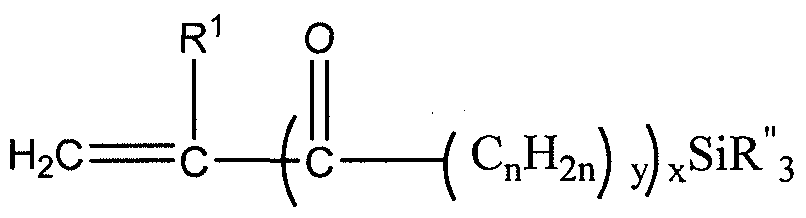
wHD/6826187.1 Page 8 of 19
independently is a hydrolyzable organic group such as an alkoxy group having from 1 to 12 carbon atoms (e.g. methoxy, ethoxy, butoxy), aryloxy group (e.g. phenoxy), araloxy group (e.g. benzyloxy), aliphatic acyloxy group having from 1 to 12 carbon atoms (e.g. formyloxy, acetyloxy, propanoyloxy), amino or substituted amino groups (alkylamino, arylamino), or a lower alkyl group having 1 to 6 carbon atoms inclusive, with the proviso that not more than one of the three R groups is an alkyl. Such silanes may be copolymerized with ethylene in a reactor, such as a high pressure process. Such silanes may also be grafted to a suitable ethylene polymer by the use of a suitable quantity of organic peroxide, either before or during a shaping or molding operation. Additional ingredients such as heat and light stabilizers, pigments, etc., also may be included in the formulation. In any case, the crosslinking reaction typically takes place following the shaping or molding step by moisture-induced reaction between the grafted or copolymerized silane groups, the water permeating into the bulk polymer from the atmosphere or from a water bath or "sauna". The phase of the process during which the crosslinks are created is commonly referred to as the "cure phase" and the process itself is commonly referred to as "curing". [0033] Suitable silanes include unsaturated silanes that comprise an ethylenically unsaturated hydrocarbyl group, such as a vinyl, allyl, isopropenyl, butenyl, cyclohexenyl or gamma-(meth)acryloxy allyl group, and a hydrolyzable group, such as, for example, a hydrocarbyloxy, hydrocarbonyloxy, or hydrocarbylamino group. Examples of hydrolyzable groups include methoxy, ethoxy, formyloxy, acetoxy, proprionyloxy, and alkyl or arylamino groups. Preferred silanes are the unsaturated alkoxy silanes which can be grafted onto the polymer or copolymerized in-reactor with other monomers (such as ethylene and acrylates). These silanes and their method of preparation are more fully described in USP 5,266,627 to Meverden, et al. Vinyl trimethoxy silane (VTMS), vinyl triethoxy silane, vinyl triacetoxy silane, gamma-(meth)acryloxy propyl trimethoxy silane and mixtures of these silanes are the preferred silane crosslinkers for use in this invention. If filler is present, then preferably the crosslinker includes vinyl trialkoxy silane.
[0034] The amount of silane crosslinker used in the practice of this invention can vary widely depending upon the nature of the polymer, the silane, the processing or reactor conditions, the grafting or copolymerization efficiency, the ultimate application, and similar factors, but typically at least 0.5, preferably at least 0.7, weight percent is used.
wHD/6826187.1 Page 9 of 19
Considerations of convenience and economy are two of the principal limitations on the maximum amount of silane crosslinker used in the practice of this invention, and typically the maximum amount of silane crosslinker does not exceed 5, preferably it does not exceed 3, weight percent.
[0035] The silane crosslinker is grafted to the polymer by any conventional method, typically in the presence of a free radical initiator, e.g. peroxides and azo compounds, or by ionizing radiation, etc. Organic initiators are preferred, such as any one of the peroxide initiators, for example, dicumyl peroxide, di-tert-butyl peroxide, t-butyl perbenzoate, benzoyl peroxide, cumene hydroperoxide, t-butyl peroctoate, methyl ethyl ketone peroxide, 2,5-dimethyl-2,5-di(t-butyl peroxy)hexane, lauryl peroxide, and tert-butyl peracetate. A suitable azo compound is 2,2-azobisisobutyronitrile. The amount of initiator can vary, but it is typically present in an amount of at least 0.04, preferably at least 0.06, parts per hundred resin (phr). Typically, the initiator does not exceed 0.15, preferably it does not exceed about 0.10, phr. The weight ratio of silane crosslinker to initiator also can vary widely, but the typical crosslinkeπinitiator weight ratio is between 10:1 to 500:1, preferably between 18: 1 and 250: 1. As used in parts per hundred resin or phr, "resin" means the olefinic polymer. [0036] While any conventional method can be used to graft the silane crosslinker to the polyolefin polymer, one preferred method is blending the two with the initiator in the first stage of a reactor extruder, such as a Buss kneader. The grafting conditions can vary, but the melt temperatures are typically between 160 and 2600C, preferably between 190 and 23O0C, depending upon the residence time and the half life of the initiator.
[0037] Copolymerization of vinyl trialkoxysilane crosslinkers with ethylene and other monomers may be done in a high-pressure reactor that is used in the manufacture of ethylene homopolymers and copolymers with vinyl acetate and acrylates.
Pre-Catalyst Mixture
[0038] The pre-catalyst mixture used in the practice of this invention comprises a Lewis acid, preferably an organotin oxide, component and a carboxylic acid component. Organotin oxides are well known in the art and include the mono-, di-, tri- and tetra-organotin oxides. These compounds typically comprise a single atom of tin bonded to one or more hydrocarbyl or an inertly-substituted hydrocarbyl groups. "Hydrocarbyl" refers to univalent groups of hydrogen and carbon and typically containing 1 to 40 carbon atoms, more typically 1 to 30
wHD/6826187.1 Page 10 of 19
carbon atoms and even more typically 1 to 25 carbon atoms, including branched or unbranched and saturated or unsaturated species. Representative hydrocarbyl groups include alkyl groups, cycloalkyl groups, aryl groups, aralkyl groups, and the like. "Inertly- substituted hydrocarbyl" refers to hydrocarbyl substituted with one or more substituent groups that are inert to the cure process reagents at the cure process parameters. Typical inert substituents include ethylenic unsaturation, ester, amide, ether, nitrile, halogen, and the like. Preferably, each hydrocarbyl group is free of substituents, inert or otherwise. [0039] Suitable alkyl groups include, for example, methyl, ethyl, n-propyl, isopropyl, 2-propenyl (or allyl), vinyl, n-butyl, t-butyl, i-butyl (or 2-methylpropyl), etc. In particular embodiments, alkyl groups have between 1 and 40 carbon atoms, between 1 and 30 carbon atoms or between 1 and 25 carbon atoms. Suitable cycloalkyl groups include, for example, cyclopentyl, cyclohexyl, cyclooctenyl, bicyclooctyl, etc. In particular embodiments, cycloalkyls have between 3 and 40 carbon atoms, between 3 and 30 carbon atoms or between 3 and 25 carbon atoms. The term "aryl" refers to an aromatic substituent which may be a single aromatic ring or multiple aromatic rings which are fused together, linked covalently, or linked to a common group such as a methylene or ethylene moiety. The aromatic ring(s) may include phenyl, naphthyl, anthracenyl, and biphenyl, among others. In particular embodiments, aryls have between 6 and 40 carbon atoms, between 6 and 30 carbon atoms or between 6 and 25 carbon atoms. The term "aralkyl" refers to an aryl substituent bearing one or more alkyl or other aliphatic groups or to an alkyl or other aliphatic substituent bearing one or more aryl groups. Representative aralkyl groups include tolyl, xylyl, mesitylyl, ethylbenzyl, cumenyl and the like.
[0040] Organotin oxides that can be used in the practice of this invention include monoalkyltin oxides such as monobutyl tin oxide, monomethyl tin oxide, monoethyl tin oxide; dialkyltin oxides such as dibutyl tin oxide, dimethyl tin oxide, diethyl tin oxide; trialkyltin oxides such as tributyl tin oxide, trimethyl tin oxide, triethyl tin oxide; tetraalkyltin oxides such as tetrabutyl tin oxide, tetramethyl tin oxide, tetraethyl tin oxide; the various dicycloalkyl and substituted dicycloalkyl tin oxides described in USP 4,886,725. [0041] Carboxylic acids are also well known in the art, and the carboxylic acids useful in the practice of this invention include aliphatic and aromatic carboxylic acids, and the mono- and polycarboxylic acids. Representative carboxylic acids include, without limitation,
wHD/6826187.1 Page 1 1 of 19
methanoic (formic), ethanoic (acetic), propanoic (propionoic), butanoic (butyric), pentanoic (valeric), hexanoic (caproic), propenoic (acrylic), cyclopentanecarboxylic, cyclohexanecarboxylic, benzenecarboxylic (benzoic), ethanedioic (oxalic), propanedioic (malonic), butenedioic (succinic), pentanedioic (glutaric), hexanedioic (adipic), m-butenedioic (maleic), trans-butenodioic (fumaric), lauric, myristic, palmitic, stearic, arachidic, oleic and the like. Preferred carboxylic acids include the fatty acids, particularly those with a total carbon content of at least 10, preferably at least 12 and more preferably at least 14, carbon atoms.
[0042] The pre-catalyst mixture used in the practice of this invention comprises an organotin oxide and a carboxylic acid. Under reaction conditions, e.g., at a temperature of 30 to 200, preferably of 100 to 200 and more preferably of 120 to 180, 0C, the carboxylic acid will react with the organotin oxide to produce (A) an adduct of an acid-substituted organo tin compound, and (B) water. The water is then available for curing the ethylene-vinylsilane copolymer under ambient or other conditions. Since the pre-catalyst mixture is preferably homogeneously distributed throughout the polymer, water for cure is available throughout the polymer, and thus cure is not dependent upon the migration of moisture from the environment into the interior of the polymer bulk. This is particularly useful for the manufacture of thicker wall articles, e.g., cable insulation. Under an elevated temperature and/or pressure, the reaction between the organotin oxide and carboxylic acid is typically accelerated.
[0043] The molar ratio of organotin oxide to carboxylic acid is typically at least stoichiometric, e.g., for stearic acid and dibutyltin oxide, two carboxylic acid molecules for every organotin oxide molecule. The minimum amount of pre-catalyst mixture used in the practice of this invention is a catalytic amount. Typically this amount is at least 0.01, preferably at least 0.02 and more preferably at least 0.03, weight percent (wt%) of the combined weight of ethylene-vinylsilane polymer and pre-catalyst mixture. The only limit on the maximum amount of pre-catalyst mixture in the ethylene polymer is that imposed by economics and practicality (e.g., diminishing returns), but typically a general maximum comprises less than 5, preferably less than 3 and more preferably less than 2, wt% of the combined weight of ethylene polymer and pre-catalyst mixture.
wHD/6826187 1 Page 12 of 19
Additives
[0044] The composition from which the cable sheathing, e.g., insulation layer, protective jacket, etc., or other article of manufacture, e.g., seal, gasket, shoe sole, etc., is made can be filled or unfilled. If filled, then the amount of filler present should preferably not exceed an amount that would cause unacceptably large degradation of the electrical and/or mechanical properties of the silane-crosslinked, ethylene polymer. Typically, the amount of filler present is between 2 and 80, preferably between 5 and 70, weight percent (wt%) based on the weight of the polymer. Representative fillers include kaolin clay, magnesium hydroxide, silica, calcium carbonate. The filler may or may not have flame retardant properties. In a preferred embodiment of this invention in which a filler is present, the filler is coated with a material that will prevent or retard any tendency that the filler might otherwise have to interfere with the silane cure reaction. Stearic acid is illustrative of such a filler coating. Filler and catalyst are selected to avoid any undesired interactions and reactions, and this selection is well within the skill of the ordinary artisan.
[0045] The compositions of this invention can contain other additives such as, for example, antioxidants (e.g., hindered phenols such as, for example, IRGANOX™ 1010 a registered trademark of Ciba Specialty Chemicals), phosphites (e.g., IRGAFOS™ 168 a registered trademark of Ciba Specialty Chemicals), UV stabilizers, cling additives, light stabilizers (such as hindered amines), plasticizers (such as dioctylphthalate or epoxidized soy bean oil), thermal stabilizers, mold release agents, tackifiers (such as hydrocarbon tackifiers), waxes (such as polyethylene waxes), processing aids (such as oils, organic acids such as stearic acid, metal salts of organic acids), colorants or pigments to the extent that they do not interfere with desired physical or mechanical properties of the compositions of the present invention. These additives are used in known amounts and in known ways.
Compounding/Fabrication
[0046] Compounding of the silane-functionalized ethylene polymer, pre-catalyst mixture and additives, if any, can be performed by standard means known to those skilled in the art. Examples of compounding equipment are internal batch mixers, such as a Banbury or Boiling internal mixer. Alternatively, continuous single or twin screw mixers can be used, such as a Farrel continuous mixer, a Werner and Pfleiderer twin screw mixer, or a Buss kneading continuous extruder. The type of mixer utilized, and the operating conditions of the
wHD/6826187.1 Page 13 of 19
mixer, will affect properties of the composition such as viscosity, volume resistivity, and extruded surface smoothness.
[0047] The components of the composition are typically mixed at a temperature and for a length of time sufficient to fully homogenize the mixture but insufficient to cause the material to gel. The pre-catalyst mixture is typically added to ethylene-vinylsilane polymer, but it can be added before, with or after the additives, if any. The components of the pre- catalyst mix can be added either separately in any order, or at the same time, or as a previously formed mixture. Typically, the components are mixed together in a melt-mixing device. The mixture is then shaped into the final article. The temperature of compounding and article fabrication should be above the melting point of the ethylene-vinylsilane polymer but below about 250°C.
[0048] In some embodiments, either or both of the pre-catalyst mixture and the additives are added as a pre-mixed masterbatch. Such masterbatches are commonly formed by dispersing the pre-catalyst components, either separately or together, and/or additives into an inert plastic resin, e.g., a low density polyethylene. Masterbatches are conveniently formed by melt compounding methods.
[0049] Alternatively, both the organotin oxide and the carboxylic acid components can be added separately to the mixing device, e.g., extruder, either neat or compounded in a masterbatch, with or without additives. In this embodiment the catalyst components are blended with one another in-situ.
Articles of Manufacture
[0050] In one embodiment, the polymer composition of this invention can be applied as a covering to a cable, e.g., like a sheath or insulation layer, in known amounts and by known methods (for example, with the equipment and methods described in USP 5,246,783 and
4,144,202). Typically, the polymer composition is prepared in a reactor-extruder equipped with a cable-coating die and after the components of the composition are formulated, the composition is extruded over the cable as the cable is drawn through the die. Cure may begin in the reactor-extruder.
[0051] The formed article is then typically subjected to a cure period which takes place at temperatures from ambient up to but below the melting point of the polymer until the article has reached the desired degree of crosslinking. Because of the in-situ formed water that
wHD/6826187.1 Page 14 of 19
results from the reaction between the organotin oxide and carboxylic acid, cure of the ethylene-vinylsilane polymer occurs without water augmentation. However, in one embodiment the cure is augmented by externally supplied water permeating into the bulk polymer from the atmosphere or from a water bath or "sauna". Generally, such a cure may take place at ambient or elevated temperature but the temperature of the cure should be above
0°C.
[0052] Other articles of manufacture that can be prepared from the polymer compositions of this invention, particularly under high pressure and/or elevated moisture conditions, include fibers, ribbons, sheets, tapes, tubes, pipes, weather-stripping, seals, gaskets, foams, footwear and bellows. These articles can be manufactured using known equipment and techniques.
[0053] The invention is described more fully through the following examples. Unless otherwise noted, all parts and percentages are by weight.
SPECIFIC EMBODIMENTS Example 1
[0054] A pre-catalyst mixture masterbatch is made by mixing 94.23 grams (g) of a low density polyethylene (LDPE) made in a high pressure process with 2.57 g of stearic acid (STA), 3.00 g of dibutyltin oxide (DBTO) and 0.20 g of LOWINOX® 22IB46 in a Brabender mixer at 30 revolutions per minute (rpm) for 5 minutes at 125°C. The masterbatch is taken out and allowed to cool to room temperature after which it is pelletized. [0055] Pelletized masterbatch (12.50 g) is mixed with 237.50 g of ethylene- vinyltrimethoxysilane copolymer (SI-LINK® DFDA-5451 copolymer available from The Dow Chemical Company) in a Brabender mixer at 30 rpm for 6 minutes at 125°C. Sample is taken out and allowed to cool to room temperature. Plaques (30 mil thickness) are made from this material in a hot press at 16O0C. The plaques are cured at different conditions from which dog-bones are cut and hot-creep experiments (ICEA Publication T-28-562-1995) are performed. The crosslinking dynamics are investigated using moving die rheometer (MDR) at temperatures 150, 180 and 200°C as reported in Figures 1-3. Samples (4-6 g) are compressed into a disk between two sheets of non-interacting film, analyzed by oscillatory rheometry at 100 rpm and 0.5° arc at set temperatures, and the results are reported in the Table.
WHO/6826187 i Page 15 of 19
Comparative Example IA
[0056] A pre-catalyst mixture masterbatch is made by mixing 96.80 grams (g) of the LDPE used in Example 1 with 3.00 g of STA and 0.20 g of LOWINOX® 22IB46 in a Brabender mixer at 30 rpm for 5 minutes at 125°C. The masterbatch is taken out and allowed to cool to room temperature after which it is pelletized.
[0057] Pelletized masterbatch (12.50 g) is mixed with 237.50 g of the ethylene- vinyltrimethoxysilane copolymer used in Example 1 in a Brabender mixer at 30 rpm for 6 minutes at 1250C. Sample is taken out and allowed to cool to room temperature. Plaques (30 mil thickness) are made from this material in a hot press at 16O0C. The plaques are cured at different conditions from which dog-bones are cut and hot-creep experiments (ICEA Publication T-28-562-1995) are performed. The crosslinking dynamics are investigated using MDR at temperatures 150, 180 and 200°C as reported in Figures 1-3. Samples (4-6 g) are compressed into a disk between two sheets of non-interacting film, analyzed by oscillatory rheometry at 100 rpm and 0.5° arc at set temperatures, and the results are reported in the Table.
Comparative Example IB
[0058] The same silane copolymer (249.13 g) as used in Example 1 is added to a Brabender mixer with setpoints of 12O0C at 30 rpm and fluxed for 3 minutes. DBTO (0.35 g) is added and mixed for an additional 3 min at 12O0C. Sample is taken out and allowed to cool to room temperature. Plaques (30 mil thickness) of this material are cured at different conditions from which dog-bones are cut and hot-creep experiments (ICEA Publication T- 28-562-1995) are performed. Samples (4-6 g) are compressed into a disk between two sheets of non-interacting film, analyzed by oscillatory rheometry at 100 rpm and 0.5° arc at set temperatures, and the results are reported in the Table.
wHD/6826187.1 Page 16 of 19
TABLE
Percent Elongation of 30 mil Plaques Cured at 230C and 70% Relative Humidity and Tested at 15O0C at 0.2 MPa for 15 Minutes

Discussion
[0059] DBTO is a solid and incapable of crosslinking silane copolymers by itself and shows no catalytic activity. STA is an organic acid and as is evident from Figures 1-3, some increase in torque is achieved by adding STA. This may be due, however, to the fact that it is a solid and mildly active. It shows nearly the same level of activity at 150°C, 1800C and
2000C.
[0060] The DBTO/STA mixture behaves very differently. The torque trace at 15O0C shows little difference between the mixture and STA. This may be due to the fact that appreciable amounts of active catalyst may not be formed at this temperature. However at higher temperatures (18O0C and 2000C) which are more representative of extrusion conditions, significant differences in torque values is seen.
[0061] The cure data of these plaques are presented in Table-1. The mixture of DBTO and STA clearly cures silane copolymers under ambient conditions within 24 hours while the individual components are not able to crosslink the silane functionalized material. This fact points to the formation of an active catalyst under extrusion conditions.
[0062] Although the invention has been described with certain detail through the preceding specific embodiments, this detail is for the primary purpose of illustration. Many variations and modifications can be made by one skilled in the art without departing from the spirit and scope of the invention as described in the following claims.
WHD/6826187.1 Page 17 of 19
Claims
1. A crosslinkable composition comprising an ethylene-vinyl silane polymer and a pre-catalyst cure mixture comprising an organotin oxide and a carboxylic acid.
2. The composition of Claim 1 in which the pre-catalyst mixture comprises a dialkyltin oxide and a fatty acid.
3. The composition of Claim 2 in which the dialkyltin oxide and carboxylic acid are present in a molar ratio of at least 1 :2.
4. The composition of Claim 3 in which the pre-catalyst mixture is present in an amount between 0.01 and 5 weight percent based on the combined weight of the polymer and the pre-catalyst mixture.
5. The composition of Claim 4 in which the polymer comprises unit derived from ethylene and a vinyl trialkoxy silane.
6. The composition of Claim 1 in which the organotin oxide is dibutyltin oxide and the carboxylic acid is stearic acid.
7. An article made from the composition of Claim 1.
8. A process for crosslinking an ethylene-vinyl silane polymer, the process comprising the step of contacting the ethylene-vinylsilane polymer with a pre-catalyst mixture comprising an organotin oxide and a carboxylic acid under conditions sufficient such that the organotin oxide and carboxylic acid react to form products that catalyze the crosslinking of the polymer.
9. The process of Claim 8 in which the pre-catalyst mixture comprises a dialkyltin oxide and a fatty acid.
10. The process of Claim 9 in which the pre-catalyst mixture is present in an amount between 0.01 and 5 weight percent based on the combined weight of the polymer and the pre-catalyst mixture.
wHD/6826187.1 Page 18 of 19
Applications Claiming Priority (2)
| Application Number | Priority Date | Filing Date | Title |
|---|---|---|---|
| US14018608P | 2008-12-23 | 2008-12-23 | |
| US61/140,186 | 2008-12-23 |
Publications (1)
| Publication Number | Publication Date |
|---|---|
| WO2010074925A1 true WO2010074925A1 (en) | 2010-07-01 |
Family
ID=41716483
Family Applications (1)
| Application Number | Title | Priority Date | Filing Date |
|---|---|---|---|
| PCT/US2009/066724 Ceased WO2010074925A1 (en) | 2008-12-23 | 2009-12-04 | In-situ catalyst and moisture generation for crosslinking of silane-functionalized polyolefins |
Country Status (1)
| Country | Link |
|---|---|
| WO (1) | WO2010074925A1 (en) |
Cited By (1)
| Publication number | Priority date | Publication date | Assignee | Title |
|---|---|---|---|---|
| US8470441B2 (en) | 2005-09-13 | 2013-06-25 | Dow Global Technologies Llc | Cable wire prepared using distannoxane catalysts |
Citations (1)
| Publication number | Priority date | Publication date | Assignee | Title |
|---|---|---|---|---|
| EP0401540A2 (en) * | 1989-05-12 | 1990-12-12 | Union Carbide Chemicals And Plastics Company, Inc. | Process for crosslinking hydrolyzable copolymers |
-
2009
- 2009-12-04 WO PCT/US2009/066724 patent/WO2010074925A1/en not_active Ceased
Patent Citations (1)
| Publication number | Priority date | Publication date | Assignee | Title |
|---|---|---|---|---|
| EP0401540A2 (en) * | 1989-05-12 | 1990-12-12 | Union Carbide Chemicals And Plastics Company, Inc. | Process for crosslinking hydrolyzable copolymers |
Cited By (1)
| Publication number | Priority date | Publication date | Assignee | Title |
|---|---|---|---|---|
| US8470441B2 (en) | 2005-09-13 | 2013-06-25 | Dow Global Technologies Llc | Cable wire prepared using distannoxane catalysts |
Similar Documents
| Publication | Publication Date | Title |
|---|---|---|
| EP2478042B1 (en) | Crosslinked, melt-shaped articles and compositions for producing same | |
| JP5334981B2 (en) | In-situ moisture generation and use of multifunctional alcohols for crosslinking of silane functional resins | |
| JP5331900B2 (en) | Moisture curing catalyst system for ethylene-vinylsilane copolymer | |
| US11319425B2 (en) | Compositions comprising a tin-based catalyst and titanium dioxide for moisture cure of silane-functionalized ethylenic polymers | |
| WO2010074925A1 (en) | In-situ catalyst and moisture generation for crosslinking of silane-functionalized polyolefins | |
| EP3784721B1 (en) | Non-foam polyolefin compositions for wire and cable coating |
Legal Events
| Date | Code | Title | Description |
|---|---|---|---|
| 121 | Ep: the epo has been informed by wipo that ep was designated in this application |
Ref document number: 09764974 Country of ref document: EP Kind code of ref document: A1 |
|
| NENP | Non-entry into the national phase |
Ref country code: DE |
|
| 122 | Ep: pct application non-entry in european phase |
Ref document number: 09764974 Country of ref document: EP Kind code of ref document: A1 |