WO2010052672A2 - Allyl-containing precursors for the deposition of metal-containing films - Google Patents
Allyl-containing precursors for the deposition of metal-containing films Download PDFInfo
- Publication number
- WO2010052672A2 WO2010052672A2 PCT/IB2009/054947 IB2009054947W WO2010052672A2 WO 2010052672 A2 WO2010052672 A2 WO 2010052672A2 IB 2009054947 W IB2009054947 W IB 2009054947W WO 2010052672 A2 WO2010052672 A2 WO 2010052672A2
- Authority
- WO
- WIPO (PCT)
- Prior art keywords
- palladium
- penten
- alkyl group
- methylallyl
- independently
- Prior art date
- Legal status (The legal status is an assumption and is not a legal conclusion. Google has not performed a legal analysis and makes no representation as to the accuracy of the status listed.)
- Ceased
Links
- 0 CNC(*)=C(*)C(*)=O Chemical compound CNC(*)=C(*)C(*)=O 0.000 description 2
Classifications
-
- C—CHEMISTRY; METALLURGY
- C07—ORGANIC CHEMISTRY
- C07F—ACYCLIC, CARBOCYCLIC OR HETEROCYCLIC COMPOUNDS CONTAINING ELEMENTS OTHER THAN CARBON, HYDROGEN, HALOGEN, OXYGEN, NITROGEN, SULFUR, SELENIUM OR TELLURIUM
- C07F15/00—Compounds containing elements of Groups 8, 9, 10 or 18 of the Periodic Table
- C07F15/0006—Compounds containing elements of Groups 8, 9, 10 or 18 of the Periodic Table compounds of the platinum group
- C07F15/0046—Ruthenium compounds
-
- C—CHEMISTRY; METALLURGY
- C07—ORGANIC CHEMISTRY
- C07F—ACYCLIC, CARBOCYCLIC OR HETEROCYCLIC COMPOUNDS CONTAINING ELEMENTS OTHER THAN CARBON, HYDROGEN, HALOGEN, OXYGEN, NITROGEN, SULFUR, SELENIUM OR TELLURIUM
- C07F15/00—Compounds containing elements of Groups 8, 9, 10 or 18 of the Periodic Table
- C07F15/0006—Compounds containing elements of Groups 8, 9, 10 or 18 of the Periodic Table compounds of the platinum group
- C07F15/006—Palladium compounds
-
- C—CHEMISTRY; METALLURGY
- C07—ORGANIC CHEMISTRY
- C07F—ACYCLIC, CARBOCYCLIC OR HETEROCYCLIC COMPOUNDS CONTAINING ELEMENTS OTHER THAN CARBON, HYDROGEN, HALOGEN, OXYGEN, NITROGEN, SULFUR, SELENIUM OR TELLURIUM
- C07F15/00—Compounds containing elements of Groups 8, 9, 10 or 18 of the Periodic Table
- C07F15/0006—Compounds containing elements of Groups 8, 9, 10 or 18 of the Periodic Table compounds of the platinum group
- C07F15/0086—Platinum compounds
-
- C—CHEMISTRY; METALLURGY
- C07—ORGANIC CHEMISTRY
- C07F—ACYCLIC, CARBOCYCLIC OR HETEROCYCLIC COMPOUNDS CONTAINING ELEMENTS OTHER THAN CARBON, HYDROGEN, HALOGEN, OXYGEN, NITROGEN, SULFUR, SELENIUM OR TELLURIUM
- C07F15/00—Compounds containing elements of Groups 8, 9, 10 or 18 of the Periodic Table
- C07F15/04—Nickel compounds
-
- C—CHEMISTRY; METALLURGY
- C23—COATING METALLIC MATERIAL; COATING MATERIAL WITH METALLIC MATERIAL; CHEMICAL SURFACE TREATMENT; DIFFUSION TREATMENT OF METALLIC MATERIAL; COATING BY VACUUM EVAPORATION, BY SPUTTERING, BY ION IMPLANTATION OR BY CHEMICAL VAPOUR DEPOSITION, IN GENERAL; INHIBITING CORROSION OF METALLIC MATERIAL OR INCRUSTATION IN GENERAL
- C23C—COATING METALLIC MATERIAL; COATING MATERIAL WITH METALLIC MATERIAL; SURFACE TREATMENT OF METALLIC MATERIAL BY DIFFUSION INTO THE SURFACE, BY CHEMICAL CONVERSION OR SUBSTITUTION; COATING BY VACUUM EVAPORATION, BY SPUTTERING, BY ION IMPLANTATION OR BY CHEMICAL VAPOUR DEPOSITION, IN GENERAL
- C23C16/00—Chemical coating by decomposition of gaseous compounds, without leaving reaction products of surface material in the coating, i.e. chemical vapour deposition [CVD] processes
- C23C16/06—Chemical coating by decomposition of gaseous compounds, without leaving reaction products of surface material in the coating, i.e. chemical vapour deposition [CVD] processes characterised by the deposition of metallic material
- C23C16/18—Chemical coating by decomposition of gaseous compounds, without leaving reaction products of surface material in the coating, i.e. chemical vapour deposition [CVD] processes characterised by the deposition of metallic material from metallo-organic compounds
-
- C—CHEMISTRY; METALLURGY
- C23—COATING METALLIC MATERIAL; COATING MATERIAL WITH METALLIC MATERIAL; CHEMICAL SURFACE TREATMENT; DIFFUSION TREATMENT OF METALLIC MATERIAL; COATING BY VACUUM EVAPORATION, BY SPUTTERING, BY ION IMPLANTATION OR BY CHEMICAL VAPOUR DEPOSITION, IN GENERAL; INHIBITING CORROSION OF METALLIC MATERIAL OR INCRUSTATION IN GENERAL
- C23C—COATING METALLIC MATERIAL; COATING MATERIAL WITH METALLIC MATERIAL; SURFACE TREATMENT OF METALLIC MATERIAL BY DIFFUSION INTO THE SURFACE, BY CHEMICAL CONVERSION OR SUBSTITUTION; COATING BY VACUUM EVAPORATION, BY SPUTTERING, BY ION IMPLANTATION OR BY CHEMICAL VAPOUR DEPOSITION, IN GENERAL
- C23C16/00—Chemical coating by decomposition of gaseous compounds, without leaving reaction products of surface material in the coating, i.e. chemical vapour deposition [CVD] processes
- C23C16/44—Chemical coating by decomposition of gaseous compounds, without leaving reaction products of surface material in the coating, i.e. chemical vapour deposition [CVD] processes characterised by the method of coating
- C23C16/455—Chemical coating by decomposition of gaseous compounds, without leaving reaction products of surface material in the coating, i.e. chemical vapour deposition [CVD] processes characterised by the method of coating characterised by the method used for introducing gases into reaction chamber or for modifying gas flows in reaction chamber
- C23C16/45523—Pulsed gas flow or change of composition over time
- C23C16/45525—Atomic layer deposition [ALD]
- C23C16/45553—Atomic layer deposition [ALD] characterized by the use of precursors specially adapted for ALD
Definitions
- This invention relates generally to compositions, methods and apparatus used for use in the manufacture of semiconductor, photovoltaic, LCF-TFT, or flat panel type devices. More specifically, the invention relates to allyl containing precursors, and their synthesis.
- CVD and ALD are the main gas phase chemical process used to control deposition at the atomic scale and create extremely thin and conformal coatings.
- the wafer is exposed to one or more volatile precursors, which react and/or decompose on the substrate surface to produce the desired deposit.
- ALD process are based on sequential and saturating surface reactions of alternatively applied metal precursor, separated by inert gas purging.
- Palladium and Platinum are used as doping agents (5-10 at.%) in nickel suicide (NiSi) in source, drain, and gate of CMOS devices in order to improve thermal stability of the suicide.
- Palladium and platinum overcome the agglomeration though the suppression of NiSi 2 nucleation.
- Physical vapor deposition (PVD) such as vacuum sputtering and electroplating have been used a lot in industry to form palladium films, but CVD/ALD techniques would be much preferred for industrialization reasons.
- the known precursors for Palladium include Pd( ⁇ 3 -allyl) 2 and derivatives such as Pd( ⁇ 3 -
- CH 2 CHCHMe 2 which have low melting point 20-23 °C but with low decomposition temperature. These are excellent precursors for high-purity palladium thin films by thermal CVD, but they have low thermal stability and are sensitive to both oxygen and moisture.
- the complex Pd( ⁇ 3 -allyl)Cp has similar physical properties with higher thermal stability, but give films containing carbon impurities. Dimethylpalladium complexes, CiS-(PdMe 2 L 2 ) where or PEt ⁇ , also give either carbon or phosphorus impurities in the palladium film.
- Mixed complexes Pd( ⁇ 3 - allyl)(diketonate) have also shown to give pure palladium films under mild condition by thermal CVD using either hydrogen or oxygen as co-reactant gas.
- Embodiments of the present invention provide novel methods and compositions useful for the deposition of a film on a substrate.
- the disclosed compositions and methods utilize a mixed alkyl-(diketonate, enaminoketonate, diketiminate, amidinate or cyclopentadienyl) transition metal precursor.
- a method for depositing a film on a substrate comprises providing a reactor with at least one substrate disposed in the reactor.
- a metal containing precursor is introduced into the reactor, wherein the precursor has the general formula: L 1 -M-L 2 wherein M is a metal selected from among the elements Ni, Ru, Pd, and Pt.
- L 1 is either a ⁇ 3 type ally! ligand of the general formula: or Li is a ⁇ 3 type cylcopentene ligand of the general formula:
- R1 , R2, R3, R4, R5, RV 1 R2', R3', R4', R5 ⁇ and R6' are independently selected from H, a C1-C5 alkyl group, and Si(R') 3 , where R' is independently selected from H and a C1-C5 alkyl group.
- L 2 is either an amidinate or guanidine ligand of the general formula:
- H (IV) or l_2 is a diketonate ligand of the general formula:
- L 2 is a beta-enaminoketonate ligand of the general formula:
- L 2 is a beta-diketiminate ligand of the general formula:
- L 2 is a cyclopentadienyl ligand of the general formula:
- R5, R6, R8, R9, R10, R11 , R12, R13, R14, R15, R16, R17, R18, R19, R20, R21 , R22, R23, and R24 are independently selected from H, a C1- C5 alkyl group, and Si(R') 3 , where R' is independently selected from H and a C1-C5 alkyl group.
- R7 is independently selected from H, a C1-C5 alkyl group, and NR'R", where R' and R" are independently selected from the C1-C5 alkyl groups.
- the reactor is maintained at a temperature of at least about 100°C; and the precursor is contacted with the substrate to deposit or form a metal containing film on the substrate.
- a metal precursor which may be a mixed alkyl-(diketonate, enaminoketonate, diketiminate, amidinate, or cyclopentadienyl) transition metal precursor is synthesized through at least one synthesis reaction.
- the precursor has the general formula:
- M is a metal selected from among the elements Ni, Ru, Pd, and Pt.
- Li is either a ⁇ 3 type allyl ligand of the general formula:
- R 5 (II) or l_i is a ⁇ 3 type cylcopentene ligand of the general formula:
- R1 , R2, R3, R4, R5, R1 ', R2', R3 ⁇ R4 ⁇ R5 ⁇ and R6' are independently selected from H, a C1-C5 alkyl group, and Si(R') 3 , where R' is independently selected from H and a C1-C5 alkyl group.
- l_ 2 is either an amidinate or guanidine ligand of the general formula:
- R 7 R-N A N ' Re H (IV) or l_ 2 is a diketonate ligand of the general formula: R s
- O OH (V) or L 2 is a beta-enaminoketonate ligand of the general formula:
- (Vl) or L 2 is a beta-diketiminate ligand of the general formula:
- L 2 is a cyclopentadienyl ligand of the general formula:
- R5, R6, R8, R9, R10, R11 , R12, R13, R14, R15, R16, R17, R18, R19, R20, R21 , R22, R23, and R24 are independently selected from H, a C1- C5 alkyl group, and Si(R') 3 , where R' is independently selected from H and a C1-C5 alkyl group.
- R7 is independently selected from H, a C1 -C5 alkyl group, and NR'R", where R' and R" are independently selected from the C1 -C5 alkyl groups.
- M is palladium
- Li is a cyclopentene ligand of the general formula:
- alkyl group refers to saturated functional groups containing exclusively carbon and hydrogen atoms.
- alkyl group may refer to linear, branched, or cyclic alkyl groups. Examples of linear alkyl groups include without limitation, methyl groups, ethyl groups, propyl groups, butyl groups, etc. Examples of branched alkyls groups include without limitation, f-butyl. Examples of cyclic alkyl groups include without limitation, cyclopropyl groups, cyclopentyl groups, cyclohexyl groups, etc.
- ⁇ 3 -allyl transition metal precursor refers to a transition metal being coordinated to the 3 carbon atoms of an allyl ligand.
- R groups independently selected relative to other R groups bearing the same or different subscripts or superscripts, but is also independently selected relative to any additional species of that same R group.
- the two or three R 1 groups may, but need not be identical to each other or to R 2 or to R 3 .
- values of R groups are independent of each other when used in different formulas.
- Figure 2 illustrates 1 H NMR data for a precursor, according to another embodiment of the current invention
- Embodiments of the present invention provide novel methods and compositions useful for the deposition of a film on a substrate. Methods to synthesize these compositions are also provided. In general, the disclosed compositions and methods utilize a ⁇ 3 -allyl transition metal precursor.
- the transition metal precursor has the general formula:
- L 1 -M-L 2 wherein M is a transition metal with +2 oxidation state selected from Ni, Ru, Pd, Pt , and preferably M is Pd.
- L2 is a ligand from amongst amidinate ligands, guanidine ligands, diketonate ligands, beta-enaminoketonate ligands, beta-diketiminate ligands, and cylcopentadienyl ligands selected from H, C1-C5 alkyl chain, SiR 3 and their combinations.
- the precursor may be one of the precursors listed, and shown schematically, below: (IX) ( ⁇ 3 -allyl)-(4N-methylamino-3-penten-2N-methyliminato) Palladium(ll) (X) ( ⁇ 3 -allyl)-(4N-ethylamino-3-penten-2N-ethyliminato) Palladium(ll) (Xl) ( ⁇ 3 -allyl)-(4N-npropylamino-3-penten-2N-npropyliminato) Palladium(ll)
- Some embodiments of the present invention describe the synthesis of a transition metal precursor with the general formula: L 1 -M-L 2 wherein M is a transition metal with +2 oxidation state selected from Ni, Ru, Pd, Pt , and preferably M is Pd.
- Li is a ⁇ 3 -ligand selected from amongst allyl ligands, and cyclopentene ligands.
- L 2 is a ligand from amongst amidinate ligands, guanidine ligands, diketonate ligands, beta-enaminoketonate ligands, beta-diketiminate ligands, and cylcopentadienyl ligands selected from H, C1-C5 alkyl chain, SiR 3 and their combinations.
- synthesis of these compounds may be carried out according to method A or B:
- the precursor can be delivered in neat form or in a blend with a suitable solvent.
- suitable solvent is preferably selected from, but without limitation, Ethyl benzene, Xylenes, Mesitylene, Decane, Dodecane in different concentrations.
- the disclosed precursors may be deposited to form a thin film using any deposition methods known to those of skill in the art.
- suitable deposition methods include without limitation, conventional CVD, low pressure chemical vapor deposition (LPCVD), plasma enhanced chemical vapor depositions (PECVD), atomic layer deposition (ALD), pulsed chemical vapor deposition (P-CVD), plasma enhanced atomic layer deposition (PE-ALD), or combinations thereof.
- the first precursor is introduced into a reactor in vapor form.
- the precursor in vapor form may be produced by vaporizing a liquid precursor solution, through a conventional vaporization step such as direct vaporization, distillation, or by bubbling an inert gas (e.g. N 2 , He, Ar, etc.) into the precursor solution and providing the inert gas plus precursor mixture as a precursor vapor solution to the reactor. Bubbling with an inert gas may also remove any dissolved oxygen present in the precursor solution.
- an inert gas e.g. N 2 , He, Ar, etc.
- the reactor may be any enclosure or chamber within a device in which deposition methods take place such as without limitation, a cold-wall type reactor, a hot-wall type reactor, a single-wafer reactor, a multi-wafer reactor, or other types of deposition systems under conditions suitable to cause the precursors to react and form the layers.
- the reactor contains one or more substrates on to which the thin films will be deposited.
- the one or more substrates may be any suitable substrate used in semiconductor, photovoltaic, flat panel, or LCD-TFT device manufacturing.
- suitable substrates include without limitation, silicon substrates, silica substrates, silicon nitride substrates, silicon oxy nitride substrates, tungsten substrates, or combinations thereof. Additionally, substrates comprising tungsten or noble metals (e.g. platinum, palladium, rhodium, or gold) may be used.
- the substrate may also have one or more layers of differing materials already deposited upon it from a previous manufacturing step.
- a reactant gas may also be introduced into the reactor.
- the reactant gas may be an oxidizing gas such as one of oxygen, ozone, water, hydrogen peroxide, nitric oxide, nitrogen dioxide, carboxylic acid; radical species of these, as well as mixtures of any two or more of these.
- the reactant gas may be a reducing gas such as one of hydrogen, ammonia, a silane (e.g. SiH 4 ; Si 2 H 6I Si 3 H 8 ), SiH 2 Me 2 ; SiH 2 Et 2 ; N(SiH 3 ) 3 ; radical species of these, as well as mixtures of any two or more of these.
- a second precursor may be introduced into the reactor.
- the second precursor comprises another metal source, such as copper, praseodymium, manganese, ruthenium, titanium, tantalum, bismuth, zirconium, hafnium, lead, niobium, magnesium, aluminum, lanthanum, or mixtures of these.
- the resultant film deposited on the substrate may contain at least two different metal types.
- the first precursor and any optional reactants or precursors may be introduced sequentially (as in ALD) or simultaneously (as in CVD) into the reaction chamber.
- the reaction chamber is purged with an inert gas between the introduction of the precursor and the introduction of the reactant.
- the reactant and the precursor may be mixed together to form a reactant/precursor mixture, and then introduced to the reactor in mixture form.
- the reactant may be treated by a plasma, in order to decompose the reactant into its radical form.
- the plasma may generally be at a location removed from the reaction chamber, for instance, in a remotely located plasma system. In other embodiments, the plasma may be generated or present within the reactor itself.
- One of skill in the art would generally recognize methods and apparatus suitable for such plasma treatment.
- deposition may take place for a varying length of time. Generally, deposition may be allowed to continue as long as desired or necessary to produce a film with the necessary properties.
- Typical film thicknesses may vary from several hundred angstroms to several hundreds of microns, depending on the specific deposition process. The deposition process may also be performed as many times as necessary to obtain the desired film.
- the temperature and the pressure within the reactor are held at conditions suitable for ALD or CVD depositions.
- the pressure in the reactor may be held between about 1 Pa and about 10 5 Pa, or preferably between about 25 Pa and 10 3 Pa, as required per the deposition parameters.
- the temperature in the reactor may be held between about 100° C and about 500° C, preferably between about 150° C and about 350° C.
- the precursor vapor solution and the reaction gas may be pulsed sequentially or simultaneously (e.g. pulsed CVD) into the reactor. Each pulse of precursor may last for a time period ranging from about 0.01 seconds to about 10 seconds, alternatively from about 0.3 seconds to about 3 seconds, alternatively from about 0.5 seconds to about 2 seconds.
- reaction gas may also be pulsed into the reactor.
- the pulse of each gas may last for a time period ranging from about 0.01 seconds to about 10 seconds, alternatively from about 0.3 seconds to about 3 seconds, alternatively from about 0.5 seconds to about 2 seconds.
- FIGURE 1 A 1 H NMR of the resulting ( ⁇ 3 -allyl)-(4N-ethylamino-3- penten-2N-ethyliminato) Palladium(ll) is shown as FIGURE 1.
- FIGURE 2 A 1 H NMR of the resulting ( ⁇ 3 -allyi)-(4N-isobutylamino-3-penten-2N- isobutyliminato) Palladium(ll) is shown as FIGURE 2.
- a second set of deposition tests using (( ⁇ 3 -allyl)-(4N-ethylamino-3-penten-2N- ethyliminato) Palladium(ll) performed in ALD conditions to grow good films whose quality could be assessed by AES.
- ALD consist of alternating exposure of the substrate to the vapor of the precursor until saturation, purge the chamber with N 2 , expose the substrate to a co-reactant such as Hydrogen, then purge the reactor with a N 2 . This sequence cycle could be repeated multiple times at various substrate temperatures (ranging from 150 up to 350C).
Landscapes
- Chemical & Material Sciences (AREA)
- Organic Chemistry (AREA)
- General Chemical & Material Sciences (AREA)
- Chemical Kinetics & Catalysis (AREA)
- Engineering & Computer Science (AREA)
- Materials Engineering (AREA)
- Mechanical Engineering (AREA)
- Metallurgy (AREA)
- Chemical Vapour Deposition (AREA)
Abstract
Methods and compositions for depositing a film on one or more substrates include providing a reactor with at least one substrate disposed in the reactor. At least one metal precursor is provided and at least partially deposited on the substrate to form a metal containing film.
Description
ALLYL-CONTAINING PRECURSORS FOR THE DEPOSITION OF METAL- CONTAINING FILMS
Background
Field of the Invention
This invention relates generally to compositions, methods and apparatus used for use in the manufacture of semiconductor, photovoltaic, LCF-TFT, or flat panel type devices. More specifically, the invention relates to allyl containing precursors, and their synthesis.
Background of the Invention
In the semiconductor industry, there is an ongoing interest in the development of volatile metal precursor for the growth of thin metal films by Chemical Vapor
Deposition ("CVD") and Atomic Layer Deposition ("ALD") for various applications. CVD and ALD are the main gas phase chemical process used to control deposition at the atomic scale and create extremely thin and conformal coatings. In a typical CVD process, the wafer is exposed to one or more volatile precursors, which react and/or decompose on the substrate surface to produce the desired deposit. ALD process are based on sequential and saturating surface reactions of alternatively applied metal precursor, separated by inert gas purging.
Thin films of palladium or platinum have important applications as electrical contacts (replacing gold which had been used previously), multilayer magneto- optical data storage materials, gas or infrared sensors, multilayer chip capacitor, electrode coating materials, doping agent, catalysts, etc. For instance, Palladium and Platinum are used as doping agents (5-10 at.%) in nickel suicide (NiSi) in source, drain, and gate of CMOS devices in order to improve thermal stability of the suicide. Palladium and platinum overcome the agglomeration though the suppression of NiSi2 nucleation.
Physical vapor deposition (PVD) such as vacuum sputtering and electroplating have been used a lot in industry to form palladium films, but CVD/ALD techniques would be much preferred for industrialization reasons. The known precursors for Palladium include Pd(η3-allyl)2 and derivatives such as Pd(η3-
CH2CHCHMe)2 which have low melting point 20-23 °C but with low decomposition temperature. These are excellent precursors for high-purity palladium thin films by thermal CVD, but they have low thermal stability and are sensitive to both oxygen and moisture. The complex Pd(η3-allyl)Cp has similar physical properties with higher thermal stability, but give films containing carbon impurities. Dimethylpalladium complexes, CiS-(PdMe2L2) where
 or PEtβ, also give either carbon or phosphorus impurities in the palladium film. The most widely used precursor for palladium films are the beta-diketonato complexes Pd(RC(O)CH(O)CR)2 where R=Me, CF3. Mixed complexes Pd(η3- allyl)(diketonate) have also shown to give pure palladium films under mild condition by thermal CVD using either hydrogen or oxygen as co-reactant gas.
Consequently, there exists a need for precursors suitable for deposition via typical CVD and ALD techniques.
Brief Summary
Embodiments of the present invention provide novel methods and compositions useful for the deposition of a film on a substrate. In general, the disclosed compositions and methods utilize a mixed alkyl-(diketonate, enaminoketonate, diketiminate, amidinate or cyclopentadienyl) transition metal precursor.
In an embodiment, a method for depositing a film on a substrate comprises providing a reactor with at least one substrate disposed in the reactor. A metal containing precursor is introduced into the reactor, wherein the precursor has the general formula: L1-M-L2 wherein M is a metal selected from among the elements Ni, Ru, Pd, and Pt. L1 is either a η3 type ally! ligand of the general formula:
 or Li is a η3 type cylcopentene ligand of the general formula:
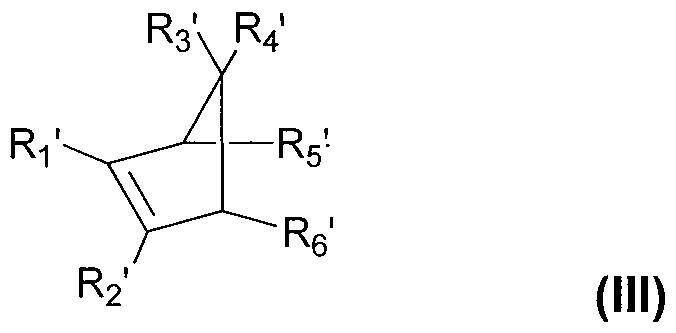
R7
H (IV) or l_2 is a diketonate ligand of the general formula:


In an embodiment, a metal precursor, which may be a mixed alkyl-(diketonate, enaminoketonate, diketiminate, amidinate, or cyclopentadienyl) transition metal precursor is synthesized through at least one synthesis reaction. The precursor has the general formula:
L1-M-L2 wherein M is a metal selected from among the elements Ni, Ru, Pd, and Pt.
Li is either a η3 type allyl ligand of the general formula:
2 T 4
R5 (II) or l_i is a η3 type cylcopentene ligand of the general formula:

R7 R-NAN' Re H (IV) or l_2 is a diketonate ligand of the general formula:
Rs
Rs ,R 10
O OH (V) or L2 is a beta-enaminoketonate ligand of the general formula:


Other embodiments of the current invention may include, without limitation, one or more of the following features: M is palladium; Li is a cyclopentene ligand of the general formula:

Palladium(ll);
(η3-allyl)-(4N-ethylamino-3-penten-2N-ethyliminato) Palladium(ll);
(η3-allyl)-(4N-npropylamino-3-penten-2N-npropyliminato) Palladium(ll);
(η3-allyl)-(4N-ipropylamino-3-penten-2N-ipropyliminato)
Palladium(ll);
(η3-allyl)-(4N-nbuthylamino-3-penten-2N-nbuthyliminato)
Palladium(ll); (η3-allyl)-(4N-ibuthylamino-3-penten-2N-ibuthyliminato)
Palladium(ll);
(η3-allyl)-(4N-secbuthylamino-3-penten-2N-secbuthyliminato)
Palladium(ll);
(η3-2-methylallyl)-(4N-mθthylamino-3-penten-2N-methyliminato) Palladium(ll);
(η3-2-methyla!lyl)-(4N-ethylamino-3-penten-2N-ethyliminato)
Palladium(ll);
(η3-2-methylallyl)-(4N-npropylamino-3-penten-2N-npropyliminato)
Palladium(ll); (η3-2-methylallyl)-(4N-ipropylamino-3-penten-2N-ipropyliminato)
Palladium(ll);
(η3-2-methylallyl)-(4N-nbuthylamino-3-penten-2N-nbuthyliminato)
Palladium(ll);
(η3-2-methylallyl)-(4N-ibuthylamino-3-penten-2N-ibuthyliminato) Palladium(ll);
(η3-2-methylallyl)-(4N-secbuthylamino-3-penten-2N- secbuthyliminato) Palladium(ll);
(η3-1-methylallyl)-(4N-methylamino-3-penten-2N-methyliminato)
Palladium(ll); (η3-1 -methylallyl)-(4N-ethylamino-3-penten-2N-ethyliminato)
Palladium(ll);
(η3-2-methylallyl)-(4N-npropylamino-3-penten-2N-npropyliminato) Palladium(ll);
(η3-1-methylallyl)-(4N-ipropylamino-3-penten-2N-ipropyliminato) Palladium(ll); (η3-1-methylallyl)-(4N-nbuthylamino-3-penten-2N-nbuthyliminato)
Palladium(ll);
(η3-1-methylallyl)-(4N-ibuthylamino-3-penten-2N-ibuthyliminato) Palladium(ll); and
(η3-1-methylallyl)-(4N-secbuthylamino-3-penten-2N- secbuthyliminato) Palladium(ll).
The foregoing has outlined rather broadly the features and technical advantages of the present invention in order that the detailed description of the invention that follows may be better understood. Additional features and advantages of the invention will be described hereinafter that form the subject of the claims of the invention. It should be appreciated by those skilled in the art that the conception and the specific embodiments disclosed may be readily utilized as a basis for modifying or designing other structures for carrying out the same purposes of the present invention. It should also be realized by those skilled in the art that such equivalent constructions do not depart from the spirit and scope of the invention as set forth in the appended claims.
Notation and Nomenclature
Certain terms are used throughout the following description and claims to refer to various components and constituents. This document does not intend to distinguish between components that differ in name but not function. As used herein, the term "alkyl group" refers to saturated functional groups containing exclusively carbon and hydrogen atoms. Further, the term "alkyl group" may refer to linear, branched, or cyclic alkyl groups. Examples of linear alkyl groups include without limitation, methyl groups, ethyl groups, propyl groups, butyl groups, etc. Examples of branched alkyls groups include without
limitation, f-butyl. Examples of cyclic alkyl groups include without limitation, cyclopropyl groups, cyclopentyl groups, cyclohexyl groups, etc.
As used herein, the term "allyl ligand" or "allyl group" refers to ligands containing the group allyl (e.g. containing a vinyl group, -CH2=CH-, attached to a methylene -CH2- (-CH2=CH-CH2-)). As used herein, the term "η3 -allyl transition metal precursor" refers to a transition metal being coordinated to the 3 carbon atoms of an allyl ligand.
As used herein, the abbreviation, "Me," refers to a methyl group; the abbreviation, "Et," refers to an ethyl group; the abbreviation, "n-Bu" or "nBu" refers to the n-butyl group; the abbreviation, "i-Bu" or "iBu" refers to the isobutyl group; the abbreviation, "sec-Bu" or "secBu" refers to the sec-butyl group; the abbreviation, "t-Bu," or "tBu" refers to a tert-butyl group; the abbreviation, "nPr" refers to the n-propyl group; the abbreviation "iPr", refers to an isopropyl group;; and the abbreviation "Cp" refers to a cyclopentadienyl group.
As used herein, the term "independently" when used in the context of describing R groups should be understood to denote that the subject R group is not only independently selected relative to other R groups bearing the same or different subscripts or superscripts, but is also independently selected relative to any additional species of that same R group. For example in the formula MR1 X (NR2R3)(4-X), where x is 2 or 3, the two or three R1 groups may, but need not be identical to each other or to R2 or to R3. Further, it should be understood that unless specifically stated otherwise, values of R groups are independent of each other when used in different formulas.
Brief Description of the Drawings
For a further understanding of the nature and objects for the present invention, reference should be made to the following detailed description, taken in conjunction with the accompanying drawings, in which like elements are given the same or analogous reference numbers and wherein:
• Figure 1 illustrates 1H NMR data for a precursor, according to one embodiment of the current invention;
• Figure 2 illustrates 1H NMR data for a precursor, according to another embodiment of the current invention;
Description of Preferred Embodiments
Embodiments of the present invention provide novel methods and compositions useful for the deposition of a film on a substrate. Methods to synthesize these compositions are also provided. In general, the disclosed compositions and methods utilize a η3 -allyl transition metal precursor.
In some embodiments, the transition metal precursor has the general formula:
L1-M-L2 wherein M is a transition metal with +2 oxidation state selected from Ni, Ru, Pd, Pt , and preferably M is Pd. L1 is a η3-ligand selected from amongst allyl ligands, and cyclopentene ligands. In some embodiments the cyclopentene ligand may be bridged (between two of its substitution groups, (i.e. -R-R- = - CH2-CH2-). L2 is a ligand from amongst amidinate ligands, guanidine ligands, diketonate ligands, beta-enaminoketonate ligands, beta-diketiminate ligands, and cylcopentadienyl ligands selected from H, C1-C5 alkyl chain, SiR3 and their combinations. In some embodiments, the precursor may be one of the precursors listed, and shown schematically, below: (IX) (η3-allyl)-(4N-methylamino-3-penten-2N-methyliminato) Palladium(ll) (X) (η3-allyl)-(4N-ethylamino-3-penten-2N-ethyliminato) Palladium(ll) (Xl) (η3-allyl)-(4N-npropylamino-3-penten-2N-npropyliminato) Palladium(ll)
(XII) (η3-allyl)-(4N-ipropylamino-3-penten-2N-ipropyliminato) Palladium(ll)
(XIII) (η3-allyl)-(4N-nbuthylamino-3-penten-2N-nbuthyliminato) Palladium(ll)
(XIV) (η3-allyl)-(4N-ibuthylamino-3-penten-2N-ibuthyliminato) Palladium(ll) (XV) (η3-allyl)-(4N-secbuthylamino-3-penten-2N-secbuthyliminato) Palladium(ll) (XVI) (η3-2-methylallyl)-(4N-methylamino-3-penten-2N-methyliminato)
Palladium(ll) (XVII) (η3-2-methylallyl)-(4N-ethylamino-3-penten-2N-ethyliminato) Palladium(ll)
(XVIII) (η3-2-methylallyl)-(4N-npropylamino-3-penten-2N-npropyliminato) Palladium(ll)
(XIX) (η3-2-methylallyl)-(4N-ipropylamino-3-penten-2N-ipropyliminato) Palladium(ll) (XX) (η3-2-methylallyl)-(4N-nbuthylamino-3-penten-2N-nbuthyliminato)
Palladium(ll)
(XXI) (η3-2-methylallyl)-(4N-ibuthylamino-3-penten-2N-ibuthylinninato) Palladium(ll)
(XXII) (η3-2-methylallyl)-(4N-secbuthylamino-3-penten-2N-secbuthyliminato) Palladium(ll)
(XXIII) (η3-1-methylallyl)-(4N-methylamino-3-penten-2N-methyliminato) Palladium(ll)
(XXIV) (η3-1-methylallyl)-(4N-ethylamino-3-penten-2N-ethyliminato) Palladium(ll) (XXV) (η3-2-methylallyl)-(4N-npropylamino-3-penten-2N-npropyliminato)
Palladium(ll)
(XXVI) (η3-1-methylallyl)-(4N-ipropylamino-3-penten-2N-ipropyliminato) Palladium(ll)
(XXVII) (η3-1-methylallyl)-(4N-nbuthylamino-3-penten-2N-nbuthyliminato) Palladium(ll)
(XXVIII) (η3-1-methylallyl)-(4N-ibuthylamino-3-penten-2N-ibuthylinninato) Palladium(ll)
(XXIX) (η3-1-methylallyl)-(4N-secbuthylamino-3-penten-2N-secbuthyliminato) Palladium(ll)

Some embodiments of the present invention describe the synthesis of a transition metal precursor with the general formula:
L1-M-L2 wherein M is a transition metal with +2 oxidation state selected from Ni, Ru, Pd, Pt , and preferably M is Pd. Li is a η3-ligand selected from amongst allyl ligands, and cyclopentene ligands. In some embodiments the cyclopentene ligand may be bridged (between two of its substitution groups, (i.e. -R-R- = -
CH2-CH2-). L2 is a ligand from amongst amidinate ligands, guanidine ligands, diketonate ligands, beta-enaminoketonate ligands, beta-diketiminate ligands, and cylcopentadienyl ligands selected from H, C1-C5 alkyl chain, SiR3 and their combinations.
In some embodiments, synthesis of these compounds may be carried out according to method A or B:
Method A: By reacting MX2 (where M= Ni, Ru, Pd or Pt and X = Cl, Br or I) with 1 equivalents of Z-L2 either in first or second step (shown below as Scheme-1 ) (where Z = Li, Na, K and L2=amidine, diketonate, enaminoketonate, diketiminate or cyclopentadienyl) and then with LrMg-Br (L-ι=allyl or cyclopentene) in either first or second step.
Scheme"1
1- L1-MgBr 1- L2-Z ,
2- L2-Z Or 2- L1-MgBr '
MX, I
L-
Method B:
By reacting bis-allyl-palladium-dichloride dimer with 1 equivalents Of Z-L2 (Scheme-2) (where Z = Li, Na, K, Tl and L2=amidine, diketonate, enaminoketonate, diketiminate or cyclopentadienyl)
Scheme-2

In some embodiments, the precursor can be delivered in neat form or in a blend with a suitable solvent. Suitable solvent is preferably selected from, but without limitation, Ethyl benzene, Xylenes, Mesitylene, Decane, Dodecane in different concentrations.
The disclosed precursors may be deposited to form a thin film using any deposition methods known to those of skill in the art. Examples of suitable deposition methods include without limitation, conventional CVD, low pressure chemical vapor deposition (LPCVD), plasma enhanced chemical vapor depositions (PECVD), atomic layer deposition (ALD), pulsed chemical vapor deposition (P-CVD), plasma enhanced atomic layer deposition (PE-ALD), or combinations thereof.
In an embodiment, the first precursor is introduced into a reactor in vapor form. The precursor in vapor form may be produced by vaporizing a liquid precursor solution, through a conventional vaporization step such as direct vaporization, distillation, or by bubbling an inert gas (e.g. N2, He, Ar, etc.) into the precursor solution and providing the inert gas plus precursor mixture as a precursor vapor solution to the reactor. Bubbling with an inert gas may also remove any dissolved oxygen present in the precursor solution.
The reactor may be any enclosure or chamber within a device in which deposition methods take place such as without limitation, a cold-wall type
reactor, a hot-wall type reactor, a single-wafer reactor, a multi-wafer reactor, or other types of deposition systems under conditions suitable to cause the precursors to react and form the layers.
Generally, the reactor contains one or more substrates on to which the thin films will be deposited. The one or more substrates may be any suitable substrate used in semiconductor, photovoltaic, flat panel, or LCD-TFT device manufacturing. Examples of suitable substrates include without limitation, silicon substrates, silica substrates, silicon nitride substrates, silicon oxy nitride substrates, tungsten substrates, or combinations thereof. Additionally, substrates comprising tungsten or noble metals (e.g. platinum, palladium, rhodium, or gold) may be used. The substrate may also have one or more layers of differing materials already deposited upon it from a previous manufacturing step.
In some embodiments, in addition to the first precursor, a reactant gas may also be introduced into the reactor. In some of these embodiments, the reactant gas may be an oxidizing gas such as one of oxygen, ozone, water, hydrogen peroxide, nitric oxide, nitrogen dioxide, carboxylic acid; radical species of these, as well as mixtures of any two or more of these. In some other of these embodiments, the reactant gas may be a reducing gas such as one of hydrogen, ammonia, a silane (e.g. SiH4; Si2H6I Si3H8), SiH2Me2; SiH2Et2; N(SiH3)3; radical species of these, as well as mixtures of any two or more of these.
In some embodiments, and depending on what type of film is desired to be deposited, a second precursor may be introduced into the reactor. The second precursor comprises another metal source, such as copper, praseodymium, manganese, ruthenium, titanium, tantalum, bismuth, zirconium, hafnium, lead, niobium, magnesium, aluminum, lanthanum, or mixtures of these. In embodiments where a second metal containing precursor is utilized, the
resultant film deposited on the substrate may contain at least two different metal types.
The first precursor and any optional reactants or precursors may be introduced sequentially (as in ALD) or simultaneously (as in CVD) into the reaction chamber. In some embodiments, the reaction chamber is purged with an inert gas between the introduction of the precursor and the introduction of the reactant. In one embodiment, the reactant and the precursor may be mixed together to form a reactant/precursor mixture, and then introduced to the reactor in mixture form. In some embodiments, the reactant may be treated by a plasma, in order to decompose the reactant into its radical form. In some of these embodiments, the plasma may generally be at a location removed from the reaction chamber, for instance, in a remotely located plasma system. In other embodiments, the plasma may be generated or present within the reactor itself. One of skill in the art would generally recognize methods and apparatus suitable for such plasma treatment.
Depending on the particular process parameters, deposition may take place for a varying length of time. Generally, deposition may be allowed to continue as long as desired or necessary to produce a film with the necessary properties.
Typical film thicknesses may vary from several hundred angstroms to several hundreds of microns, depending on the specific deposition process. The deposition process may also be performed as many times as necessary to obtain the desired film.
In some embodiments, the temperature and the pressure within the reactor are held at conditions suitable for ALD or CVD depositions. For instance, the pressure in the reactor may be held between about 1 Pa and about 105 Pa, or preferably between about 25 Pa and 103 Pa, as required per the deposition parameters. Likewise, the temperature in the reactor may be held between about 100° C and about 500° C, preferably between about 150° C and about 350° C.
In some embodiments, the precursor vapor solution and the reaction gas, may be pulsed sequentially or simultaneously (e.g. pulsed CVD) into the reactor. Each pulse of precursor may last for a time period ranging from about 0.01 seconds to about 10 seconds, alternatively from about 0.3 seconds to about 3 seconds, alternatively from about 0.5 seconds to about 2 seconds. In another embodiment, the reaction gas, may also be pulsed into the reactor. In such embodiments, the pulse of each gas may last for a time period ranging from about 0.01 seconds to about 10 seconds, alternatively from about 0.3 seconds to about 3 seconds, alternatively from about 0.5 seconds to about 2 seconds.
Examples
The following non-limiting examples are provided to further illustrate embodiments of the invention. However, the examples are not intended to be all inclusive and are not intended to limit the scope of the inventions described herein.
Example 1
Synthesis of (η3-allyl)-(4N-ethylamino-3-penten-2N-ethyliminato) Palladium(ll)

After 1 night at room temperature the mixture was filtered over celite and the solvent removed under vacuum to give a yellow-brown liquid.
It was distillated at 1200C @ 20 mTorr to give a yellow liquid, 1.06 g / 3.51 mmol / 65 % yield. A 1H NMR of the resulting (η3-allyl)-(4N-ethylamino-3- penten-2N-ethyliminato) Palladium(ll) is shown as FIGURE 1.
Example 2
Synthesis of (η3-allyl)-(4N-isobutylamino-3-penten-2N-isobutyliminato) Palladium(ll)

In a 100 mL schlenk flask 2.7 mmol (1.0 g) of palladium allyl chloride dimmer were introduced with diethyl ether (10 mL). To this mixture was added 5.4 mmol of lithium 4N-isobutylamino-3-penten-2N-isobutyliminato at low temperature (-78 0C), freshly prepared from 4N-isobutylamino-3-penten-2N- isobutylimine with MeLi in diethyl ether at low temperature (-78 0C). Reaction mixture shifted to darker color and some precipitate were formed (LiCI). After 1 night at room temperature the mixture was filtered over celite and the solvent removed under vacuum to give a dark yellow liquid.
It was distillated at 130 0C @ 20 mTorr to give a yellow-green liquid, 1.1 g / 3.08 mmol / 57 % yield.
A 1H NMR of the resulting (η3-allyi)-(4N-isobutylamino-3-penten-2N- isobutyliminato) Palladium(ll) is shown as FIGURE 2.
Prophetic Example 3 In deposition tests performed using ((η 3-allyl)-(4N-ethylamino-3-penten-2N- ethyliminato) Palladium(ll) precursors are expected to deposit good films quality, the quality of the film being determined by Auger Electron Spectroscopy (AES). Various substrates could be used, for instance Si and Si with native
oxide. LPCVD tests could be performed under Hydrogen or Ammonia atmospheres during 1 hour at different temperatures ranging from 150 to 350C.
A second set of deposition tests using ((η 3-allyl)-(4N-ethylamino-3-penten-2N- ethyliminato) Palladium(ll) performed in ALD conditions to grow good films whose quality could be assessed by AES. ALD consist of alternating exposure of the substrate to the vapor of the precursor until saturation, purge the chamber with N2, expose the substrate to a co-reactant such as Hydrogen, then purge the reactor with a N2. This sequence cycle could be repeated multiple times at various substrate temperatures (ranging from 150 up to 350C).
While embodiments of this invention have been shown and described, modifications thereof can be made by one skilled in the art without departing from the spirit or teaching of this invention. The embodiments described herein are exemplary only and not limiting. Many variations and modifications of the composition and method are possible and within the scope of the invention. Accordingly the scope of protection is not limited to the embodiments described herein, but is only limited by the claims which follow, the scope of which shall include all equivalents of the subject matter of the claims.
Claims
1. A method of synthesizing a η3 -allyl transition metal precursor, comprising performing at least one reaction to form a metal containing precursor, wherein the metal containing precursor comprises a precursor of the general formula:
L1-M-L2 (I) wherein: a) M is at least one member selected from the group consisting of: Ni, Ru, Pd, and Pt; b) Li is at least one η3 type ligand selected form the group consisting of:
1 ) an allyl ligand of the general formula:

2) a cyclopentene ligand of the general formula:

1 ) an amidinate or guanidine ligand of the general formula: R7
R-NAN'Re
H (IV) wherein R5 and R6 are independently selected from among: H; a C1-C5 alkyl group; Si(R')3, where R' is independently, selected from H, and a C1-C5 alkyl group; and combinations thereof; wherein R7 is independently selected from among: H; a C1-C5 alkyl group; and NR'R", where R' and R" are independently selected from the C1-C5 alkyl groups; 2) a diketonate ligand of the general formula:
R9
O OH (V) wherein R8, R9, and R10 are independently selected from among: H; a C1-C5 alkyl group; Si(R')3, where R' is independently, selected from H, and a C1-C5 alkyl group; and combinations thereof;
3) a beta-enaminoketonate ligand of the general formula:


2. The method of claim 1 , wherein Li is a cyclopentene ligand of the general formula:

3. The method of claim 1 , wherein M is palladium.
4. The method of claim 1 , wherein the precursor is formed according to the synthesis reaction: 1- L2-Z Li
MX2 2- Li'MgBr . M
L2 wherein:
MX2 is reacted with 1 equivalents of L2-Z in a first step, and then the resultant is reacted with L1-MgBr in a second step; - X is at least one member selected from the group consisting of:
Cl, Br, and I; and
Z is at least one member selected from the group consisting of: Li, Na, and K.
5. The method of claim 1 , wherein the precursor is formed according to the synthesis reaction:
1- L1-MgBr ,
MX2 2- L2-Z „ M I'
L2 wherein:
MX2 is reacted with 1 equivalents of LrMgBr in a first step, and then the resultant is reacted with L2-Z in a second step;
X is at least one member selected from the group consisting of: Cl, Br, and I; and
Z is at least one member selected from the group consisting of: Li, Na, and K.
6. The method of claim 1 , wherein the precursor is formed according to the synthesis reaction:  wherein:
1 equivalent of Z-L2 is reacted with bis-(R1 , R2, R3, R4, R5-allyl)- palladium-dichloride dimer; - Z is at least one member selected from the group consisting of:
Li, Na, and K; and
R1 , R2, R3, R4, and R5 are independently selected from among: H; a C1-C5 alkyl group; Si(R')3, where R' is independently, selected from H, and a C1-C5 alkyl group; and combinations thereof.
7. The method of claim 1 , wherein the precursor can be delivered in neat form or in a solvent blend.
8. The method of claim 1 , wherein the solvent is at least one member selected from the group consisting of: ethyl benzene; a xylene; mesitylene; decane; dodecane; and combinations thereof.
9. The method of claim 1 , wherein the precursor comprises at least one member selected from the group consisting of:
(η3-allyl)-(4N-methylamino-3-penten-2N-methyliminato) Palladium(ll);
(η3-allyl)-(4N-ethylamino-3-penten-2N-ethyliminato) Palladium(ll);
(η3-allyl)-(4N-npropylamino-3-penten-2N-npropyliminato) Palladium(ll);
(η3-allyl)-(4N-ipropylamino-3-penten-2N-ipropyliminato) Palladium(ll); (η3-allyl)-(4N-nbuthylamino-3-penten-2N-nbuthyliminato) Palladium(ll);
(η3-allyl)-(4N-ibuthylamino-3-penten-2N-ibuthyliminato) Palladium(ll); (η3-allyl)-(4N-secbuthylamino-3-penten-2N-secbuthyliminato) Palladium(ll);
(η3-2-methylallyl)-(4N-methylamino-3-penten-2N-methyliminato) Palladium(ll);
(η3-2-methylallyl)-(4N-ethylamino-3-penten-2N-ethyliminato) Palladium(ll);
(η3-2-methylallyl)-(4N-npropylamino-3-penten-2N-npropyliminato) Palladium(ll); (η3-2-methylallyl)-(4N-ipropylamino-3-penten-2N-ipropyliminato) Palladium(ll);
(η3-2-methylallyl)-(4N-nbuthylamino-3-penten-2N-nbuthyliminato) Palladium(ll);
(η3-2-methylallyl)-(4N-ibuthylamino-3-penten-2N-ibuthylinninato) Palladium(ll);
(η3-2-methylallyl)-(4N-secbuthylamino-3-penten-2N-secbuthyliminato)
Palladium(ll); (η3-1-methylallyl)-(4N-methylamino-3-penten-2N-nnethyliminato) Palladium(ll);
(η3-1-methylallyl)-(4N-ethylamino-3-penten-2N-ethylinninato) Palladium(ll);
(η3-2-methylallyl)-(4N-npropylamino-3-penten-2N-npropyliminato) Palladium(ll);
(η3-1-methylallyl)-(4N-ipropylamino-3-penten-2N-ipropyliminato) Palladium(ll);
(η3-1-methylallyl)-(4N-nbuthylannino-3-penten-2N-nbuthyliminato) Palladium(ll); (η3-1-methylallyl)-(4N-ibuthylamino-3-penten-2N-ibuthyliminato) Palladium(ll); and
(η3-1-methylallyl)-(4N-secbuthylamino-3-penten-2N-secbuthyliminato)
Palladium(ll).
10. A method of forming a metal-containing film on a substrate, comprising: a) providing a reactor and at least one substrate disposed therein; b) introducing a metal containing precursor into the reactor, wherein the metal containing precursor comprises a precursor of the general formula: L1-M-L2 (I) wherein:
1 ) M is at least one member selected from the group consisting of: Ni, Ru, Pd, and Pt;
2) l_i is at least one η3 type ligand selected form the group consisting of: i) an allyl ligand of the general formula:  wherein Ri, R2, R3, R4, and R5 are independently selected from among: H; a C1-C5 alkyl group; Si(R')3, where R' is independently, selected from H, and a C1-C5 alkyl group; and combinations thereof; and ii) a cyclopentene ligand of the general formula:

3) L2 is at least one ligand selected from the group consisting of: i) an amidinate or guanidine ligand of the general formula:
R7
R-NAN' Re
H (IV) wherein R5 and R6 are independently selected from among: H; a C1-C5 alkyl group; Si(R')3, where R' is independently, selected from H, and a C1-C5 alkyl group; and combinations thereof; wherein R7 is independently selected from among: H; a C1-C5 alkyl group; and NR'R", where R' and R" are independently selected from the C1-C5 alkyl groups; ii) a diketonate ligand of the general formula:

5 wherein R8, R9, and R10 are independently selected from among: H; a C1-C5 alkyl group; Si(R')3, where R' is independently, selected from H, and a C1-C5 alkyl group; and combinations thereof; iii) a beta-enaminoketonate ligand of the general 10 formula:

15 and a C1-C5 alkyl group; and combinations thereof; iv) a beta-diketiminate ligand of the general formula:

20 alkyl group; Si(R')3, where R' is independently, selected from H, and a C1 -C5 alkyl group; and combinations thereof; and iv) a cyclopentadienyl ligand of the general formula:  wherein R20, R21 , R22, R23 and R4 are independently selected from among: H; a C1-C5 alkyl group; Si(R')3, where R' is independently, selected from H, and a C1-C5 alkyl group; and combinations thereof; and c) maintaining the reactor at a temperature of at least 1000C; and d) contacting the precursor with the substrate to form a metal- containing film.
11. The method of claim 10, wherein L1 is a cyclopentene ligand of the general formula:

CH2-).
12. The method of claim 10, wherein M is palladium.
13. The method of claim 10, further comprising maintaining the reactor at a temperature between about 1000C to about 5000C.
14. The method of claim 13, further comprising maintaining the reactor at a temperature between about 15O0C and about 3500C.
15. The method of claim 10, further comprising maintaining the reactor at a pressure between about 1 Pa and about 105 Pa.
16. The method of claim 15, further comprising maintaining the reactor at a pressure between about 25 Pa and about 103 Pa.
17. The method of claim 10, further comprising introducing at least one reducing gas into the reactor, wherein the reducing gas comprises at least one member selected from the group consisting of H2; NH3; SiH4; Si2He; SisHs; SiH2Me2, SiH2Et2, N(SiHs)3, hydrogen radicals; and mixtures thereof.
18. The method of claim 17, wherein the metal-containing precursor and the reducing gas are introduced into the chamber substantially simultaneously, and the chamber is configured for chemical vapor deposition.
19. The method of claim 17, wherein the metal-containing precursor and the reducing gas are introduced into the chamber substantially simultaneously, and the chamber is configured for plasma enhanced chemical vapor deposition.
20. The method of claim 17, wherein the metal-containing precursor and the reducing gas are introduced into the chamber sequentially, and the chamber is configured for atomic layer deposition.
21. The method of claim 17, wherein the metal-containing precursor and the reducing gas are introduced into the chamber sequentially, and the chamber is configured for plasma enhanced atomic layer deposition.
22. The method of claim 10, further comprising introducing at least one oxidizing gas into the reactor, wherein the oxidizing gas comprises at least one member selected from the group consisting of: O2; O3; H2O; NO; carboxylic acid; oxygen radicals; and mixtures thereof.
23. The method of claim 22, wherein the metal-containing precursor and the oxidizing gas are introduced into the chamber substantially simultaneously, and the chamber is configured for chemical vapor deposition.
24. The method of claim 22, wherein the metal-containing precursor and the oxidizing gas are introduced into the chamber substantially simultaneously, and the chamber is configured for plasma enhanced chemical vapor deposition.
25. The method of claim 22, wherein the first metal-containing precursor and the oxidizing gas are introduced into the chamber sequentially, and the chamber is configured for atomic layer deposition.
26. The method of claim 22, wherein the first metal-containing precursor and the oxidizing gas are introduced into the chamber sequentially, and the chamber is configured for plasma enhanced atomic layer deposition.
27. The method of claim 10, wherein the wherein the precursor comprises at least one member selected from the group consisting of:
(η3-allyl)-(4N-methylamino-3-penten-2N-methyliminato) Palladium(ll);
(η3-allyl)-(4N-ethylamino-3-penten-2N-ethyliminato) Palladium(ll);
(η3-allyl)-(4N-npropylamino-3-penten-2N-npropyliminato) Palladium(ll); (η3-allyl)-(4N-ipropylamino-3-penten-2N-ipropyliminato) Palladium(ll);
(η3-allyl)-(4N-nbuthylamino-3-penten-2N-nbuthyliminato) Palladium(ll);
(η3-allyl)-(4N-ibuthylamino-3-penten-2N-ibuthyliminato) Palladium(ll);
(η3-allyl)-(4N-secbuthylamino-3-penten-2N-secbuthyliminato) Palladium(ll);
(η3-2-methylallyl)-(4N-methylamino-3-penten-2N-methyliminato) Palladium(ll); (η3-2-methylallyl)-(4N-ethylamino-3-penten-2N-ethyliminato) Palladium(ll);
(η3-2-methylallyl)-(4N-npropylamino-3-penten-2N-npropyliminato) Palladium(ll); (η3-2-methylallyl)-(4N-ipropylamino-3-penten-2N-ipropyliminato) Palladium(ll); (η3-2-methylallyl)-(4N-nbuthylamino-3-penten-2N-nbuthyliminato) Palladium(ll); (η3-2-methylallyl)-(4N-ibuthylamino-3-penten-2N-ibuthyliminato) Palladium(ll); (η3-2-methylallyl)-(4N-secbuthylamino-3-penten-2N-secbuthyliminato) Palladium(ll);
(η3-1-methylallyl)-(4N-methylamino-3-penten-2N-methyliminato) Palladium(II); (η3-1-methylallyl)-(4N-ethylamino-3-penten-2N-ethyliminato) Palladium(ll); (η3-2-methylallyl)-(4N-npropylamino-3-penten-2N-npropyliminato) Palladium(ll); (η3-1-methylallyl)-(4N-ipropylamino-3-penten-2N-ipropyliminato) Palladium(II); (η3-1-methylallyl)-(4N-nbuthylamino-3-penten-2N-nbuthyliminato) Palladium(ll);
(η3-1-methylallyl)-(4N-ibuthylamino-3-penten-2N-ibuthylinninato) Palladium(ll); and
(η3-1-methylallyl)-(4N-secbuthylamino-3-penten-2N-secbuthyliminato) Palladium(ll).
28. A metal containing thin film coated substrate comprising the product of the method of claim 10.
Applications Claiming Priority (4)
| Application Number | Priority Date | Filing Date | Title |
|---|---|---|---|
| US11248508P | 2008-11-07 | 2008-11-07 | |
| US61/112,485 | 2008-11-07 | ||
| US12/613,732 | 2009-11-06 | ||
| US12/613,732 US20100119406A1 (en) | 2008-11-07 | 2009-11-06 | Allyl-containing precursors for the deposition of metal-containing films |
Publications (2)
| Publication Number | Publication Date |
|---|---|
| WO2010052672A2 true WO2010052672A2 (en) | 2010-05-14 |
| WO2010052672A3 WO2010052672A3 (en) | 2010-08-26 |
Family
ID=41531666
Family Applications (1)
| Application Number | Title | Priority Date | Filing Date |
|---|---|---|---|
| PCT/IB2009/054947 Ceased WO2010052672A2 (en) | 2008-11-07 | 2009-11-06 | Allyl-containing precursors for the deposition of metal-containing films |
Country Status (2)
| Country | Link |
|---|---|
| US (1) | US20100119406A1 (en) |
| WO (1) | WO2010052672A2 (en) |
Cited By (3)
| Publication number | Priority date | Publication date | Assignee | Title |
|---|---|---|---|---|
| JP2015510031A (en) * | 2011-12-29 | 2015-04-02 | レール・リキード−ソシエテ・アノニム・プール・レテュード・エ・レクスプロワタシオン・デ・プロセデ・ジョルジュ・クロード | Nickel allyl amidinate precursor for nickel-containing film deposition |
| WO2019021836A1 (en) * | 2017-07-25 | 2019-01-31 | 田中貴金属工業株式会社 | Vapor deposition raw material comprising organoplatinum compound, and vapor deposition method using said vapor deposition raw material |
| US12703913B2 (en) | 2021-11-30 | 2026-08-11 | L'Air Liquide, Société Anonyme pour l'Etude et l'Exploitation des Procédés Georges Claude | Deposition of noble metal islets or thin films for its use for electrochemical catalysts with improved catalytic activity |
Families Citing this family (3)
| Publication number | Priority date | Publication date | Assignee | Title |
|---|---|---|---|---|
| WO2013015947A2 (en) * | 2011-07-22 | 2013-01-31 | L'air Liquide, Societe Anonyme Pour L'etude Et L'exploitation Des Procedes Georges Claude | Heteroleptic (allyl)(pyrroles-2-aldiminate) metal-containing precursors, their synthesis and vapor deposition thereof to deposit metal-containing films |
| TWI551708B (en) | 2011-07-22 | 2016-10-01 | 應用材料股份有限公司 | Method of atomic layer deposition using metal precursors |
| US8691985B2 (en) | 2011-07-22 | 2014-04-08 | American Air Liquide, Inc. | Heteroleptic pyrrolecarbaldimine precursors |
Family Cites Families (5)
| Publication number | Priority date | Publication date | Assignee | Title |
|---|---|---|---|---|
| DE19827844A1 (en) * | 1998-06-23 | 1999-12-30 | Aventis Res & Tech Gmbh & Co | Production of shell catalysts useful in e.g. hydrogenation and oxidation, especially gas phase production of vinyl acetate |
| US7220312B2 (en) * | 2002-03-13 | 2007-05-22 | Micron Technology, Inc. | Methods for treating semiconductor substrates |
| KR100474072B1 (en) * | 2002-09-17 | 2005-03-10 | 주식회사 하이닉스반도체 | Method for forming noble metal films |
| US20070259111A1 (en) * | 2006-05-05 | 2007-11-08 | Singh Kaushal K | Method and apparatus for photo-excitation of chemicals for atomic layer deposition of dielectric film |
| US7531458B2 (en) * | 2006-07-31 | 2009-05-12 | Rohm And Haas Electronics Materials Llp | Organometallic compounds |
-
2009
- 2009-11-06 US US12/613,732 patent/US20100119406A1/en not_active Abandoned
- 2009-11-06 WO PCT/IB2009/054947 patent/WO2010052672A2/en not_active Ceased
Cited By (7)
| Publication number | Priority date | Publication date | Assignee | Title |
|---|---|---|---|---|
| JP2015510031A (en) * | 2011-12-29 | 2015-04-02 | レール・リキード−ソシエテ・アノニム・プール・レテュード・エ・レクスプロワタシオン・デ・プロセデ・ジョルジュ・クロード | Nickel allyl amidinate precursor for nickel-containing film deposition |
| WO2019021836A1 (en) * | 2017-07-25 | 2019-01-31 | 田中貴金属工業株式会社 | Vapor deposition raw material comprising organoplatinum compound, and vapor deposition method using said vapor deposition raw material |
| JP2019023336A (en) * | 2017-07-25 | 2019-02-14 | 田中貴金属工業株式会社 | Vapor deposition material comprising organic platinum compound and vapor deposition method using the vapor deposition material |
| KR20200013712A (en) * | 2017-07-25 | 2020-02-07 | 다나카 기킨조쿠 고교 가부시키가이샤 | Vapor deposition method using a vapor deposition raw material containing an organic platinum compound and the vapor deposition raw material |
| US11149045B2 (en) | 2017-07-25 | 2021-10-19 | Tanaka Kikinzoku Kogyo K.K. | Raw material for vapor deposition including organoplatinum compound and vapor deposition method using the raw material for vapor deposition |
| KR102351888B1 (en) | 2017-07-25 | 2022-01-18 | 다나카 기킨조쿠 고교 가부시키가이샤 | A raw material for vapor deposition containing an organic platinum compound and a vapor deposition method using the raw material for vapor deposition |
| US12703913B2 (en) | 2021-11-30 | 2026-08-11 | L'Air Liquide, Société Anonyme pour l'Etude et l'Exploitation des Procédés Georges Claude | Deposition of noble metal islets or thin films for its use for electrochemical catalysts with improved catalytic activity |
Also Published As
| Publication number | Publication date |
|---|---|
| US20100119406A1 (en) | 2010-05-13 |
| WO2010052672A3 (en) | 2010-08-26 |
Similar Documents
| Publication | Publication Date | Title |
|---|---|---|
| EP2307589B1 (en) | Method for deposition of transition metal-containing films using heteroleptic cyclopentadienyl transition metal precursors | |
| US8636845B2 (en) | Metal heterocyclic compounds for deposition of thin films | |
| EP3063157B1 (en) | Metal complexes containing amidoimine ligands | |
| US9593133B2 (en) | Organosilane precursors for ALD/CVD silicon-containing film applications | |
| KR20120042971A (en) | Deposition of group iv metal-containing films at high temperature | |
| US20140235054A1 (en) | Tungsten diazabutadiene precursors, their synthesis, and their use for tungsten containing film depositions | |
| EP2734533B1 (en) | Heteroleptic pyrrolecarbaldimine precursors | |
| US20130168614A1 (en) | Nickel allyl amidinate precursors for deposition of nickel-containing films | |
| WO2011006064A1 (en) | Metal-containing precursors for deposition of metal-containing films | |
| US9034761B2 (en) | Heteroleptic (allyl)(pyrroles-2-aldiminate) metal-containing precursors, their synthesis and vapor deposition thereof to deposit metal-containing films | |
| US20100119406A1 (en) | Allyl-containing precursors for the deposition of metal-containing films | |
| US20090104375A1 (en) | Neutral ligand containing precursors and methods for deposition of a metal containing film | |
| US20130337192A1 (en) | Bis-pyrroles-2-aldiminate manganese precursors for deposition of manganese containing films | |
| US20100256405A1 (en) | Synthesis of allyl-containing precursors for the deposition of metal-containing films | |
| US8431719B1 (en) | Heteroleptic pyrrolecarbaldimine precursors |
Legal Events
| Date | Code | Title | Description |
|---|---|---|---|
| 121 | Ep: the epo has been informed by wipo that ep was designated in this application |
Ref document number: 09759812 Country of ref document: EP Kind code of ref document: A2 |
|
| NENP | Non-entry into the national phase |
Ref country code: DE |
|
| 122 | Ep: pct application non-entry in european phase |
Ref document number: 09759812 Country of ref document: EP Kind code of ref document: A2 |