WO2010019701A2 - Diaryl urea derivatives - Google Patents
Diaryl urea derivatives Download PDFInfo
- Publication number
- WO2010019701A2 WO2010019701A2 PCT/US2009/053595 US2009053595W WO2010019701A2 WO 2010019701 A2 WO2010019701 A2 WO 2010019701A2 US 2009053595 W US2009053595 W US 2009053595W WO 2010019701 A2 WO2010019701 A2 WO 2010019701A2
- Authority
- WO
- WIPO (PCT)
- Prior art keywords
- composition
- compound
- disease
- condition
- conjunction
- Prior art date
- Legal status (The legal status is an assumption and is not a legal conclusion. Google has not performed a legal analysis and makes no representation as to the accuracy of the status listed.)
- Ceased
Links
Classifications
-
- C—CHEMISTRY; METALLURGY
- C07—ORGANIC CHEMISTRY
- C07D—HETEROCYCLIC COMPOUNDS
- C07D213/00—Heterocyclic compounds containing six-membered rings, not condensed with other rings, with one nitrogen atom as the only ring hetero atom and three or more double bonds between ring members or between ring members and non-ring members
- C07D213/02—Heterocyclic compounds containing six-membered rings, not condensed with other rings, with one nitrogen atom as the only ring hetero atom and three or more double bonds between ring members or between ring members and non-ring members having three double bonds between ring members or between ring members and non-ring members
- C07D213/04—Heterocyclic compounds containing six-membered rings, not condensed with other rings, with one nitrogen atom as the only ring hetero atom and three or more double bonds between ring members or between ring members and non-ring members having three double bonds between ring members or between ring members and non-ring members having no bond between the ring nitrogen atom and a non-ring member or having only hydrogen or carbon atoms directly attached to the ring nitrogen atom
- C07D213/60—Heterocyclic compounds containing six-membered rings, not condensed with other rings, with one nitrogen atom as the only ring hetero atom and three or more double bonds between ring members or between ring members and non-ring members having three double bonds between ring members or between ring members and non-ring members having no bond between the ring nitrogen atom and a non-ring member or having only hydrogen or carbon atoms directly attached to the ring nitrogen atom with hetero atoms or with carbon atoms having three bonds to hetero atoms with at the most one bond to halogen, e.g. ester or nitrile radicals, directly attached to ring carbon atoms
- C07D213/78—Carbon atoms having three bonds to hetero atoms, with at the most one bond to halogen, e.g. ester or nitrile radicals
- C07D213/81—Amides; Imides
-
- A—HUMAN NECESSITIES
- A61—MEDICAL OR VETERINARY SCIENCE; HYGIENE
- A61P—SPECIFIC THERAPEUTIC ACTIVITY OF CHEMICAL COMPOUNDS OR MEDICINAL PREPARATIONS
- A61P35/00—Antineoplastic agents
Definitions
- This invention relates to novel diaryl urea compounds, their derivatives, and pharmaceutically acceptable salts thereof. More specifically, this invention relates to novel diaryl urea compounds that are derivatives of sorafenib. This invention also provides compositions comprising a compound of this invention and the use of such compositions in methods of treating diseases and conditions that are beneficially treated by administering multikinase inhibitors, such as sorafenib.
- Sorafenib also known as 4-[4-[3-[4-Chloro-3-
- Sorafenib is currently approved for the treatment of patients with renal cell carcinoma and for the treatment of patients with hepatocellular carcinoma. Sorafenib is also in clinical trials for the treatment of various cancers including non- small cell lung, lung, small cell lung, breast, ovarian, fallopian tube, peritoneal cavity, pancreatic, bladder, metastatic prostate, thyroid, uterine, gastrointestinal stromal, metastatic melanoma, prostate adenocarcinoma, soft tissue sarcoma, mesothelioma, glioblastoma multiforme, acute myeloid leukemia, non-Hodgkin's lymphoma, multiple myeloma, glioblastoma, lymphoma, anaplastic astrocytoma, solid tumor, colorectal, squamous cell head and neck carcinoma, and oligodendroglioma, Sorafenib is also under clinical evaluation for pulmonary hypertension.
- Sorafenib is metabolized primarily in the liver via oxidation or glucuronidation.
- Adverse events reported In at least 10% of patients treated with sorafenib include, but are not limited to, hypertension, fatigue, weight loss, rash, hand-foot skin reaction, alopecia, pruritis, diarrhea, nausea, vomiting, constipation, hemorrhage, sensory neuropathy, joint pain, and headache. (See product label: http://www.fda.gov/eder/foi/label/2005/0219231bl.pdf),
- Figure 1 depicts chromatograms from the phosphate-buffered saline (PBS) side of a dialysis of a) Compound 1 14 with human plasma; and b) sorafenib with human plasma.
- PBS phosphate-buffered saline
- treat includes both therapeutic treatment and prophylactic treatment (reducing the likelihood of development) means decrease, suppress, attenuate, diminish, arrest, or stabilize the development or progression of a disease
- a disease or disorder delineated herein e.g., a disease or disorder delineated herein
- lessen the severity of the disease or improve the symptoms associated with the disease e.g., a disease or disorder delineated herein
- Disease means any condition or disorder that damages or interferes with the normal function of a cell, tissue, or organ.
- Disease means any condition or disorder that damages or interferes with the normal function of a cell, tissue, or organ.
- isotopic enrichment factor means the ratio between the isotopic abundance the naturally occurring abundance of a specified isotope.
- a compound of this invention has an isotopic enrichment factor for each deuterium present at a site designated as a potential site of deuteration on the compound of at least 3500 (52.5% deuterium incorporation), at least 4000 (60% deuterium incorporation), at least 4500 (67.5% deuterium incorporation), at least 5000 (75% deuterium), at least 5500 (82.5% deuterium incorporation), at least 6000 (90% deuterium incorporation), at least 6333.3 (95% deuterium incorporation), at least 6466.7 (97% deuterium incorporation), at least 6600 (99% deuterium incorporation), or at least 6633.3 (99.5% deuterium incorporation).
- the isotopic enrichment factor of each deuterium present at a site designated as a site of deuteration is independent of other deuterated sites. For example, if there are two sites of deuteration on a compound one site could be deuterated at 52.5% while the other could be dettterated at 75%. The resulting compound would be considered to be a compound wherein the isotopic enrichment factor is at least 3500 (52.5%).
- isotopologue refers to a species that differs from a specific compound of this invention only in the isotopic composition thereof. Isotopotogues can differ in the level of isotopic enrichment at one or more positions and/or in the positions(s) of isotopic enrichment.
- compound when referring to compounds of the invention, refers to a collection of molecules having an identical chemical structure, except that there may be isotopic variation among the constituent atoms of the molecules.
- a compound represented by a particular chemical structure containing indicated deuterium atoms will also contain lesser amounts of isotopologues having hydrogen atoms at one or more of the designated deuterium positions in that structure.
- the relative amount of such isotopologues in a compound of this invention will depend upon a number of factors including the isotopic purity of deuterated reagents used to make the compound and the efficiency of incorporation of deuterium in the various synthesis steps used to prepare the compound. However, as set forth above the relative amount of such isotopologues in toto will be less than 49.9% of the compound.
- the relative amount of such isotopologues in tola will be less than 47.5%, less than 40%, less than 32,5%, less than 25%, less than 17.5%, less than 10%, less than 5%, less than 3%, less than 1%, or less than 0.5% of the compound.
- the invention also provides salts of the compounds of the invention. 119] A salt of a compound of this invention is formed between an acid and a basic group of the compound, such as an amino functional group, or a base and an acidic group of the compound, such as a carboxyl functional group. According to another embodiment, the compound is a pharmaceutically acceptable acid addition salt.
- pharmaceutically acceptable refers to a component that is, within the scope of sound medical judgment, suitable for use in contact with the tissues of humans and other mammals without undue toxicity, irritation, allergic response and the like, and are commensurate with a reasonable benefit/risk ratio.
- pharmaceutically acceptable salt means any non-toxic salt that, upon administration to a recipient, is capable of providing, either directly or indirectly, a compound of this invention,
- pharmaceutically acceptable couiiterion is an ionic portion of a salt that is not toxic when released from the salt upon administration to a recipient.
- Acids commonly employed to form pharmaceutically acceptable salts include inorganic acids such as hydrogen bisulfide, hydrochloric acid, hydrobromic acid, hydroiodic acid, sulfuric acid and phosphoric acid, as well as organic acids such as para-toluetiesulfonic acid, salicylic acid, tartaric acid, bitartaric acid, ascorbic acid, maleic acid, besylic acid, fiimaric acid, gluconic acid, glucuronic acid, formic acid, glutamic acid, melhanesulfooic acid, ethanesulfonic acid, benzenesulfonic acid, lactic acid, oxalic acid, para-bromophenylsulfonic acid, carbonic acid, succinic acid, citric acid, benzoic acid and acetic acid, as well as related inorganic and organic acids.
- inorganic acids such as hydrogen bisulfide, hydrochloric acid, hydrobromic acid, hydroiodic acid, sulfuric acid and
- Such pharmaceutically acceptable salts thus include sulfate, pyrosulfate, bisulfate, sulfite, bisulfite, phosphate, monohydrogenphosphate, dihydrogetiphosphate, metaphosphate, pyrophosphate, chloride, bromide, iodide, acetate, propionate, decanoate, caprylate, acrylate, formate, isobutyrate, caprate, heptanoate, propiolate, oxalate, malonate, succiaate, suberate, sebacate, fiimarate, nialeate, butyne-l,4-dioate, hexyne-l,6-dioate, benzoate, chlorobcnzoate, methylbenzoate, dinitrobenzoate, hydroxybenzoate, methoxybenzoate, phthalate, terephthalate, sulfonate, xylene sulfonate, pheny
- pharmaceutically acceptable acid addition salts include those formed with mineral acids such as hydrochloric acid and hydrobrornic acid, and especially those formed with organic acids such as maleic acid, f22J
- stable compounds refers to compounds which possess stability sufficient to allow for their manufacture and which maintain the integrity of the compound for a sufficient period of time to be useful for the purposes detailed herein (e.g., formulation into therapeutic products, intermediates for use in production of therapeutic compounds, isolatable or storable intermediate compounds, treating a disease or condition responsive to therapeutic agents).
- D refers to deuterium.
- Tet and “t-” each refer to tertiary.
- US refers to the United States of America.
- FDA refers to Food and Drug Administration.
- NDA refers to New Drug Application
- variable may be referred to generally (e.g., "each R") or may be referred to specifically (e.g., R 1 , R", R 3 , etc.). Unless otherwise indicated, when a variable is referred to generally, it is meant to include all specific embodiments of that particular variable.
- X is selected from N and N + -O " ;
- R 1 is selected from CHj, CH 2 D, CHD 2 and CD 3 ; each of R 2 , R 3 , R 4 , R 5 , R 6 , R 7 , R 8 , R 9 , R 10 and R 11 is independently selected from H and D; and at least one R group comprises a deuterium atom.
- R 1 is selected from CH 2 D, and CHD 2 .
- Other embodiments of Formula I include a compound wherein: a) X is N: b) R 2 , R 10 and R 1 ' are the same; c) R 3 , R 4 , R s and R 9 are the same; d) R 5 , R 6 and R 7 are the same; or e) R 1 is selected from CH 3 and CD 3 .
- a compound of Formula I includes two or more of the features set forth in a) through e), above.
- R 2 , R 10 and R 11 are the same; X is N and R 3 , R 4 , R 8 and R 9 are the same; X is N and R 5 , R 6 and R 7 are the same; X is N and R 1 is selected from CH 3 and CD 3 ; X is N, R 2 , R 10 and R 11 are the same and R 3 , R 4 , R 8 and R 9 are the same; X is N, R 2 , R 10 and R 1 ' are the same and R 5 , R 6 and R 7 are the same; X is N, R 2 , R 10 and R 11 are the same and and R 1 Is selected from CH 3 and CD 3 ; X is N, R 3 , R 4 , R 8 and R 9 are the same and R 5 , R 6 and R 7 are the same; X is N, R 3 , R 4 , R 8 and R 9 are the same and R 1 is selected from CH 3 and CD 3 ; X is N, R 3 , R 4 , R 8
- X is N, R 2 , R 10 and R 11 are the same, R 3 , R 4 , R s and R 9 are the same and R 1 Is selected from CH 3 and CD 3 ;
- X is N, R a , R l ⁇ and R ⁇ are the same, R 5 , R 6 and R 7 are the same and R ! is selected from CH 3 and CD 3 ; and
- X is N, R 3 , R 4 , R 8 and R 9 are the same, R 5 , R 6 and R 7 are the same and R ! is selected from CH 3 and CD- 5 .
- R 1 is selected from CH 3 and CDs , R 5 and R 7 are the same; R 2 , R 10 and R ⁇ are the same; and R 3 , R 4 , R 8 and R 9 are the same,
- R 5 and R 7 are deuterium; R 6 is hydrogen; and X is N.
- X is N
- any atom not designated as deuterium in any of the embodiments set forth above is present at its natural isotopic abundance.
- f35J The synthesis of compounds of Formula I can be readily achieved by synthetic chemists of ordinary skill. Relevant procedures and intermediates are disclosed, for instance in PCT publications WO 2000041698 and WO 2000042012; and in Sorbera, LA et al, Drags Fut, 2002, 27(12):1141; and Bankston, D et al., Org Process Res Dev, 2002, 6(6): 777.
- Such methods can be carried out utilizing corresponding deuterated and optionally, other isotope-containing reagents and/or intermediates to synthesize the compounds delineated herein, or invoking standard synthetic protocols known in the art for introducing isotopic atoms to a chemical structure.
- Certain intermediates can be used with or without purification (e.g., filtration, distillation, sublimation, crystallization, trituration, solid phase extraction, and chromatography).
- N-oxide forms of a compound of Formula I are synthesized by oxidizing the pyridine ring nitrogen using an oxidant such as meta-chloroperoxybenzoic acid (m-
- the invention also provides pyrogen-free compositions comprising an effective amount of a compound of Formula I (e.g., including any of the formulae herein), or a pharmaceutically acceptable salt of said compound; and an acceptable carrier.
- a composition of this invention is formulated for pharmaceutical use ("a pharmaceutical composition"), wherein the carrier is a pharmaceutically acceptable carrier.
- the carrier(s) are "acceptable” in the sense of being compatible with the other ingredients of the formulation and, in the case of a pharmaceutically acceptable carrier, not deleterious to the recipient thereof in an amount used in the medicament.
- Pharmaceutically acceptable carriers, adjuvants and vehicles that may be used in the pharmaceutical compositions of this invention include, but are not limited to, ion exchangers, alumina, aluminum stearate, lecithin, serum proteins, such as human serum albumin, buffer substances such as phosphates, glycine, sorbic acid, potassium sorbate, partial glyceride mixtures of saturated vegetable fatty acids, water, salts or electrolytes, such as protamine sulfate, d ⁇ s ⁇ dium hydrogen phosphate, potassium hydrogen phosphate, sodium chloride, zinc salts, colloidal silica, magnesium trisilicate, polyvinyl pyrrolidone, cellulose-based substances, polyethylene glycol, sodium carboxymethylcellulose, polyacrylates, waxes.
- ion exchangers alumina, aluminum stearate, lecithin
- serum proteins such as human serum albumin
- buffer substances such as phosphates, glycine, sorbic acid, potassium sorbate, partial
- compositions of the invention include those suitable for oral, rectal, nasal, topical (including buccal and sublingual), vaginal or parenteral (including subcutaneous, intramuscular, intravenous and intradermal) administration.
- the compound of the formulae herein is administered transdermal ⁇ y (e.g., using a transdermal patch or iontophoretic techniques).
- Other formulations may conveniently be presented in unit dosage form, e.g., tablets, sustained release capsules, and in liposomes, and may be prepared by any methods well known in the art of pharmacy.
- Such preparative methods include the step of bringing into association with the molecule to be administered ingredients such as the carrier that constitutes one or more accessory ingredients.
- the compositions are prepared by uniformly and intimately bringing into association the active ingredients with liquid carriers, liposomes or finely divided solid carriers, or both, and then, if necessary, shaping the product.
- compositions of the present invention suitable for oral administration may be presented as discrete units such as capsules, sachets, or tablets each containing a predetermined amount of the active ingredient; a powder or granules; a solution or a suspension in an aqueous liquid or a non-aqueous liquid; an oil-in-water liquid emulsion; a water-in-oil liquid emulsion; packed in liposomes; or as a bolus, etc.
- Soft gelatin capsules can be usefal for containing such suspensions, which may beneficially increase the rate of compound absorption,
- carriers that are commonly used include lactose and com starch.
- Lubricating agents such as magnesium stearate, are also typically added.
- useful diluents include lactose and dried cornstarch.
- compositions suitable for oral administration include lozenges comprising the ingredients in a flavored basis, usually sucrose and acacia or tragacanth; and pastilles comprising the active ingredient in an inert basis such as gelatin and glycerin, or sucrose and acacia.
- compositions suitable for parenteral administration include aqueous and non-aqueous sterile injection solutions which may contain anti-oxidants, buffers, bacteriostats and solutes which render the formulation isotonic with the blood of the intended recipient; and aqueous and non-aqueous sterile suspensions which may include suspending agents and thickening agents.
- the formulations may be presented in unit-dose or multi-dose containers, for example, sealed ampules and vials, and may be stored in a freeze dried (lyopMllzed) condition requiring only the addition of the sterile liquid carrier, for example water for injections, immediately prior to use.
- Extemporaneous injection solutions and suspensions may be prepared from sterile powders, granules and tablets,
- Such injection solutions may be in the form, for example, of a sterile injectable aqueous or oleaginous suspension.
- This suspension may be formulated according to techniques known in the art using suitable dispersing or wetting agents (such as, for example, Tween 80) and suspending agents.
- suitable dispersing or wetting agents such as, for example, Tween 80
- the sterile injectable preparation may also be a sterile injectable solution or suspension in a non-toxic pareiiterally-acceptable diluent or solvent, for example, as a solution in 1,3- butanediol.
- Suitable vehicles and solvents that may be employed are mannitol, water, Ringer's solution and isotonic sodium chloride solution, in addition, sterile, fixed oils are conventionally employed as a solvent or suspending medium.
- any bland fixed oil may be employed including synthetic mono- or d ⁇ glycerides.
- Fatty acids, such as oleic acid and its glyceride derivatives are useful in the preparation of injectables, as are natural pharmaceutical Iy- acceptable oils, such as olive oil or castor oil, especially in their polyoxyethylated versions.
- These oil solutions or suspensions may also contain a long-chain alcohol diluent or dispersant,
- compositions of this invention may be administered in the form of suppositories for rectal administration.
- These compositioiis can be prepared by mixing a compound of this invention with a suitable non-irritating excipient which is solid at room temperature " but liquid at the rectal temperature and therefore will melt in the rectum to release the active components.
- suitable non-irritating excipient include, but are not limited to, cocoa butter, beeswax and polyethylene glycols.
- the pharmaceutical compositions of this invention may be administered by nasal aerosol or inhalation.
- compositions are prepared according to techniques well-known in the art of pharmaceutical formulation and may be prepared as solutions in saline, employing benzyl alcohol or other suitable preservatives, absorption promoters to enhance bioavailability, fluorocarbons, and/or other solubilizing or dispersing agents known in the art. See, e.g.: Rabinowitz JD and Zaffaroni AC 5 US Patent 6,803,031, assigned to Alexza Molecular Delivery Corporation.
- Topical administration of the pharmaceutical compositions of this invention is especially useful when the desired treatment involves areas or organs readily accessible by topical application.
- the pharmaceutical composition should be formulated with a suitable ointment containing the active components suspended or dissolved in a carrier.
- Carriers for topical administration of the compounds of this invention include, but are not limited to, mineral oil, liquid petroleum, white petroleum, propylene glycol, polyoxyethylene polyoxypropylene compound, emulsifying wax, and water.
- the pharmaceutical composition can be formulated with a suitable lotion or cream containing the active compound suspended or dissolved in a carrier.
- Suitable carriers include, but are not limited to, mineral oil, sorbitan monostearate, polysorbate 60, cetyl esters wax, cetearyl alcohol, 2-octyldodecanol, benzyl alcohol, and water.
- the pharmaceutical compositions of this invention may also be topically applied to the lower intestinal tract by rectal suppository formulation or in a suitable enema formulation. Topically-transdermal patches and iontophoretic administration are also included in this invention.
- Application of the subject therapeutics may be local, so as to be administered at the site of interest.
- Various techniques can be used for providing the subject compositions at the site of interest, such as injection, use of catheters, trocars, projectiles, pluronic gel, stents, sustained drug release polymers or other device which provides for internal access.
- the compounds of this invention may be incorporated into compositions for coating an implantable medical device, such as prostheses, artificial valves, vascular grafts, stents, or catheters.
- an implantable medical device such as prostheses, artificial valves, vascular grafts, stents, or catheters.
- Suitable coatings and the general preparation of coated implantable devices are known in the art and are exemplified in US Patents 6,099,562; 5,886,026; and 5,304,121.
- the coatings arc typically biocompatible polymeric materials such as a hydrogel polymer, polymethyldisiloxane, polycaprolactone, polyethylene glycol, polylactic acid, ethylene vinyl acetate, and mixtures thereof.
- the coatings may optionally be further covered by a suitable topcoat of fluorosilicone, polysaccharides, polyethylene glycol, phospholipids or combinations thereof to impart controlled release characteristics in the composition.
- Coatings for invasive devices are to be included within the definition of pharmaceutically acceptable carrier, adjuvant or vehicle, as those terms are used herein.
- the invention provides a method of coating an implantable medical device comprising the step of contacting said device with the coating composition described above. It will be obvious to those skilled in the art that the coating of the device will occur prior to implantation into a mammal.
- the invention provides a method of impregnating an implantable drug release device comprising the step of contacting said drag release device with a compound or composition of this invention.
- Implantable drug release devices include, but are not limited to, biodegradable polymer capsules or bullets, non-degradable, diffusible polymer capsules and biodegradable polymer wafers.
- the invention provides an implantable medical device coated with a compound or a composition comprising a compound of this invention, such that said compound is therapeutically active.
- the invention provides an implantable drag release device impregnated with or containing a compound or a composition comprising a compound of this invention, such that said compound is released from said device and is therapeutically active.
- a composition of this invention may be painted onto the organ, or a composition of this invention may be applied in any other convenient way.
- a composition of this invention further comprises a second therapeutic agent.
- the second therapeutic agent may be selected from any compound or therapeutic agent known to have or that demonstrates advantageous properties when administered with a compound having the same mechanism of action as sorafenib.
- the second therapeutic agent is an agent useful in the treatment or prevention of a disease or condition selected from cancer, viral infections, inflammatory skin, eye and/or car diseases, diabetic neuropathy, pulmonary hypertension, arterial restenosis and transplant rejection.
- the second therapeutic agent is selected from doxorubicin, dacarbazine, temozolomide, anastrozole, gemcitabinc, topotecan, bicalutamide, RADOOl, AMG 386, taxotere, bevacizumab, temsirolimus, erlotinib, tipifarnib, perifosine, pemetrexed, cetuximab, recombinant IL-21, paclitaxcl, irinotecaii hydrochloride, everolimus, abraxane, mitoxantrone, prednisone, eioposide, and carboplatin.
- the invention provides separate dosage forms of a compound of this invention and one or more of any of the above-described second therapeutic agents, wherein the compound and second therapeutic agent are associated with one another.
- associated with one another means that the separate dosage forms are packaged together or otherwise attached to one another such that it is readily apparent that the separate dosage forms are intended to be sold and administered together (within less than 24 hours of one another, consecutively or simultaneously).
- the compound of the present invention is present in an effective amount
- the term "effective amount” refers to an amount which, when administered in a proper dosing regimen, is sufficient to treat (therapeutically or prophylactically) the target disorder. For example, and effective amount is sufficient to reduce or ameliorate the severity, deration or progression of the disorder being treated, prevent the advancement of the disorder being treated, cause the regression of the disorder being treated, or enhance or improve the prophylactic or therapeutic effect(s) of another therapy.
- the interrelationship of dosages for animals and humans is described in Freireich et al., (1966) Cancer Chemother. Rep 50: 219. Body surface area may be approximately determined from height and weight of the patient. See, e.g., Scientific Tables, Geigy Pharmaceuticals, Ardsley, N. Y., 1970, 537. 47»
- an effective amount of a compound of this invention can range from about 0.5 to 6000 mg per treatment. In more specific embodiments the range is from about 5 to 3000 mg, or 10 to 1200 ing, or most specifically from about 50 to 600 mg per treatment. Treatment typically is administered from about twice daily to once per week.
- Effective doses will also vary, as recognized by those skilled in the art, depending on the diseases treated, the severity of the disease, the route of administration, the sex, age and general health condition of the patient, excipient usage, the possibility of co-usage with other therapeutic treatments such as use of other agents and the judgment of the treating physician. For example, guidance for selecting an effective dose can be determined by reference to the prescribing information for Sorafenib.
- an effective amount of the second therapeutic agent is between about 20% and 100% of the dosage normally utilized in a monotherapy regime using just that agent.
- an effective amount is between about 70% and 100% of the normal monotherapeutic dose.
- the normal monotherapeut ⁇ c dosages of these second therapeutic agents are well known in the art. See, e.g., Wells et al., eds., Pharmacotherapy Handbook, 2nd Edition, Appleton and Lange, Stamford, Conn. (2000); PDR Pharmacopoeia, Tarascoii Pocket Pharmacopoeia 2000, Deluxe Edition, Tarascon Publishing, Loma Linda, Calif. (2000), each of which references are incorporated herein by reference in their entirety.
- the invention provides a method of inhibiting multiple kinases in a cell, comprising contacting a cell with one or more compounds of Formula I herein or pharmaceutically acceptable salts thereof, (78]
- the invention provides a method of treating a disease that is beneficially treated by sorafenib comprising the step of administering to a patient in need thereof an effective amount of a compound or a composition of this invention.
- Such diseases are well known in the art and are disclosed in, but not limited to the following patents and published applications: WO 2005000284, WO 2007068383, WO 2007068381 , WO 2007053573, WO 2007054302, and WO 2007054215,
- diseases include, but are not limited to, cancer, viral infections, inflammatory skin, eye and/or ear diseases, diabetic neuropathy, pulmonary hypertension, arterial restenosis and transplant rejection.
- the method of this invention is used to treat a disease or condition selected from renal cell carcinoma and other cancers including liver, non-small cell lung, lung, breast, ovarian, fallopian tube, peritoneal cavity, pancreatic, bladder, prostate metastatic, thyroid, uterine, gastrointestinal stromal, metastatic melanoma, prostate adenocarcinoma, soft tissue sarcoma, mesothelioma, glioblastoma multiforme, acute myeloid leukemia, non-Hodgkin's lymphoma, multiple myeloma, glioblastoma, lymphoma, anaplastic astrocytoma, squamous cell head and neck carcinoma, oligodendroglioma, solid tumor, and colorectal cancers, and pulmonary hypertension.
- a disease or condition selected from renal cell carcinoma and other cancers including liver, non-small cell lung, lung, breast, ovarian, fallopian tube, peritoneal cavity, pan
- the method of this invention is used to treat renal cell carcinoma
- Methods delineated herein also include those wherein the patient is identified as in need of a particular stated treatment. Identifying a patient in need of such treatment can be in the judgment of a patient or a health care professional and can be subjective (e.g. opinion) or objective (e.g. measurable by a test or diagnostic method).
- any of the above methods of treatment comprises the further step of co-administering to the patient one or more second therapeutic agents.
- the choice of second therapeutic agent may be made from any second therapeutic agent known to be useful for co-administration with sorafenib.
- the choice of second therapeutic agent is also dependent upon the particular disease or condition to be treated. Examples of second therapeutic agents that may be employed in the methods of this invention are those set forth above for use in combination compositions comprising a compound of this invention and a second therapeutic agent,
- the combination therapies of this invention include treatment of the following conditions by co-administering to a patient in need thereof a compound of Formula I or a pharmaceutically acceptable salt thereof and the particular second therapeutic agent indicated in parentheses; renal cell carcinoma (AMG 386, recombinant IL-21, perifosine, and RADOOl); hepatocellular carcinoma (doxorubicin); breast cancer (anastrozole); bladder cancer (gemcitabine, and carboplatin); pancreatic cancer (gemcitabine); small cell lung cancer (topotccan); non-small cell lung cancer (pemetrexed, carboplatin, gemcitabine, cisplatin, and etoposide); prostate adenocarcinoma (bicalutamide); kidney cancer (RADOOl, bevacizumab, and temsirolimus); prostate cancer (taxotere, mitoxantrone, and prednisone); brain and central nervous system tumors (erlotinib, tip
- co-administered means that the second therapeutic agent may be administered together with a compound of this invention as part of a single dosage form (such as a composition of this invention comprising a compound of the invention and an second therapeutic agent as described above) or as separate, multiple dosage forms. Alternatively, the additional agent may be administered prior to, consecutively with, or following the administration of a compound of this invention. In such combination therapy treatment, both the compounds of this invention and the second therapeutic agent(s) are administered by conventional methods.
- composition of this invention comprising both a compound of the invention and a second therapeutic agent, to a patient does not preclude the separate administration of that same therapeutic agent, any other second therapeutic agent or any compound of this invention to said patient at another time during a course of treatment,
- the effective amount of the compound of this invention is less than its effective amount would be where the second therapeutic agent is not administered, In another embodiment, the effective amount of the second therapeutic agent is less than its effective amount would be where the compound of this invention is not administered. In this way, undesired side effects associated with high doses of either agent may be minimized.
- Other potential advantages including without limitation improved dosing regimens and/or reduced drug cost
- the invention provides the use of a compound of Formula I alone or together with one or more of the above-described second therapeutic agents in the manufacture of a medicament, either as a single composition or as separate dosage forms, for treatment or prevention in a patient of a disease, disorder or symptom set forth above.
- Another aspect of the invention is a compound of Formula I for use in the treatment or prevention in a patient of a disease, disorder or symptom thereof delineated herein.
- the composition is for use in treating a disease or condition selected from cancer, viral infections, inflammatory skin, eye and/or ear diseases, diabetic neuropathy, pulmonary hypertension, arterial restenosis and transplant rejection.
- a disease or condition selected from cancer, viral infections, inflammatory skin, eye and/or ear diseases, diabetic neuropathy, pulmonary hypertension, arterial restenosis and transplant rejection.
- the composition is for use in treating renal cell carcinoma, liver cancer, non-small cell lung cancer, other lung cancers, breast cancer, ovarian cancer, fallopian tube cancer, peritoneal cavity cancer, pancreatic cancer, bladder cancer, metastatic prostate cancer, thyroid cancer, uterine cancer, gastrointestinal stromal cancer, metastatic melanoma, prostate adenocarcinoma, soft tissue sarcoma, mesothelioma, glioblastoma multiforme, acute myeloid leukemia, n ⁇ n-H ⁇ dgkin's lymphoma, multiple myeloma, glioblasto
- the composition is for use in treating renal cell carcinoma; and the composition is used in conjunction with a second therapeutic reagent selected from AMG 386, recombinant IL-21, perifosine, and RADOOl ,
- composition is for use in treating hepatocellular carcinoma; and the composition is used in conjunction with doxorubicin;
- composition is for use in treating breast cancer; and the composition is used in conjunction with anastrozole.
- the composition is for use in treating bladder cancer; and the composition is used in conjunction with a second therapeutic reagent selected from gemcitabine and carboplatin.
- composition is for use in treating pancreatic cancer; and the composition is used in conjunction with gemcitabine,
- the composition is for use in treating small cell lung cancer; and the composition is used in conjunction with topotecan.
- the composition is for use in treating non-small cell lung cancer; and the composition is used in conjunction with a second therapeutic reagent selected from pemetrexed, carboplatin, gemcitabine, cisplatin, and etoposide.
- a second therapeutic reagent selected from pemetrexed, carboplatin, gemcitabine, cisplatin, and etoposide.
- the composition is for use in treating prostate adenocarcinoma; and the composition is used in conjunction with bicalutamide.
- the composition is for use in treating kidney cancer; and the composition is used in conjunction with a second therapeutic reagent selected from RADOOl, bevacizumab, and temsirolimus.
- the composition is for use in treating prostate cancer; and the composition is used in conjunction with a second therapeutic reagent selected from taxotere, mitoxantrone, and prednisone.
- the composition is for use in treating brain and central nervous system tumors; and the composition is used in conjunction with a second therapeutic reagent selected from erlotinib, tipifaraib, and temsirolimus.
- a second therapeutic reagent selected from erlotinib, tipifaraib, and temsirolimus.
- the composition is for use in treating colorectal cancer; and the composition is used in conjunction with a second therapeutic reagent selected from cetuximab, and irinotecan hydrochloride.
- the composition is for use in treating intraocular melanoma; and the composition is used in conjunction with a second therapeutic reagent selected from paclitaxel, and carboplatin.
- composition is for use in treating solid tumors; composition is used in conjunction with a second therapeutic reagent selected from temsirolimus, erlotinib, and bevacizumab.
- the composition is for use in treating melanoma; and the composition is used in conjunction with a second therapeutic reagent selected from temsirolimus, abraxane, carboplatin, dacarbazine, and temozolomide.
- a second therapeutic reagent selected from temsirolimus, abraxane, carboplatin, dacarbazine, and temozolomide.
- composition is for use in treating lymphoma or multiple myeloma; and the composition is used in conjunction with everolimus.
- kits for use to treat renal cell carcinoma and other cancers including liver, non-small cell lung, lung, breast, ovarian, fallopian tube, peritoneal cavity, pancreatic, bladder, prostate metastatic, thyroid, uterine, gastrointestinal stromal, metastatic melanoma, prostate adenocarcinoma, soft tissue sarcoma, mesothelioma, glioblastoma multiforme, acute myeloid leukemia, non- Hodgkin's lymphoma, multiple myeloma, glioblastoma, lymphoma, anaplastic astrocytoma, squamous cell head and neck carcinoma, oligodendroglioma, solid tumor, and colorectal cancers, as well as for pulmonary hypertension.
- renal cell carcinoma and other cancers including liver, non-small cell lung, lung, breast, ovarian, fallopian tube, peritoneal cavity, pancreatic, bladder, prostate metastatic, thyroid, uterine,
- kits comprise (a) a pharmaceutical composition comprising a compound of Formula I or a salt thereof, wherein said pharmaceutical composition is in a container; and (b) instructions describing a method of using the pharmaceutical composition to treat renal cell carcinoma and other cancers including liver, non-small cell lung, lung, breast, ovarian, fallopian tube, peritoneal cavity, pancreatic, bladder, prostate metastatic, thyroid, uterine, gastrointestinal stromal, metastatic melanoma, prostate adenocarcinoma, soft tissue sarcoma, mesothelioma, glioblastoma multiforme, acute myeloid leukemia, non-Hodgkin's lymphoma, multiple myeloma, glioblastoma, lymphoma, anaplastic astrocytoma, squamous cell head and neck carcinoma, oligodendroglioma, solid tumor, and colorectal cancers, as well as for pulmonary hypertension.
- a pharmaceutical composition compris
- the container may be any vessel or other sealed or scalable apparatus that can hold said pharmaceutical composition.
- Examples include bottles, ampules, divided or multi-chambered holders bottles, wherein each division or chamber comprises a single dose of said composition, a divided foil packet wherein each division comprises a single dose of said composition, or a dispenser that dispenses single doses of said composition.
- the container can be in any conventional shape or form as known in the art which is made of a pharmaceutically acceptable material, for example a paper or cardboard box, a glass or plastic bottle or jar, a re-sealable bag (for example, to hold a "refill" of tablets for placement Into a different container), or a blister pack with individual closes for pressing out of the pack according to a therapeutic schedule.
- kits of this invention may also comprise a device to administer or to measure out a unit dose of the pharmaceutical composition.
- Such device may include an inhaler if said composition is an inhalable composition; a syringe and needle if said composition is an injectable composition; a syringe, spoon, pump, or a vessel with or without volume markings if said composition is an oral liquid composition; or any other measuring or delivery device appropriate to the dosage formulation of the composition present in the kit.
- kits of this invention may comprise in a separate vessel of container a pharmaceutical composition comprising a second therapeutic agent, such as one of those listed above for use for co-administration with a compound of this invention.
- the combined organic layers were dried (Na 2 SO 4 ) and concentrated to dryness.
- the unpiirified material thus obtained was subjected to two more cycles of heating to 160 0 C, cooling, washing and drying. The second heating was for 48 h. The third heating was for 16 h.
- the unpurified material obtained after the third cycle was added to a microwave tube, followed by D 2 O (1 niL), and DCl (35 wt% in D 2 O, 0.32 niL, 7,24 mmol) under N 2 .
- the mixture was heated by microwave irradiation at 200 0 C for 2 h 5 minutes (min) and then submitted to the work-up procedure described above.
- Microsomes The metabolic stability of compounds of the invention is tested using pooled liver microsomal incubations. Full scan LC-MS analysis is then performed to detect major metabolites. Samples of the test compounds, exposed to pooled human liver microsomes, are analyzed using HPLC-MS (or MS/MS) detection. For determining metabolic stability, multiple reaction monitoring (MRM) is used to measure the disappearance of the test compounds. For metabolite detection, Ql full scans are used as survey scans to detect the major metabolites. [120] Experimental Procedures. Human liver microsomes ("HLM"; 20 mg/mL) were obtained from Xenotech, LLC (Lenexa, KS).
- ⁇ -nicotinamide adenine dinucleotidc phosphate, reduced form (NADPH), magnesium chloride (MgCl 2 ), and dimethyl sulfoxide (DMSO) were purchased from Sigma- Aldrich, [121]
- Stock solutions of Compound 114 and sorafenib (7.5 mM) were separately prepared in DMSO.
- the 7.5 mM stock solutions were diluted to 50 ⁇ M in acet ⁇ nltrile (ACN).
- the 20 mg/mL human liver microsomes were diluted to 0.625 mg/mL in 0.1 M potassium phosphate buffer, pH 7,4, containing 3 mM MgCl 2 .
- the diluted microsomes (375 ⁇ L) were added to wells of a 96-well deep-well polypropylene plate in triplicate. Ten ⁇ L of the 50 ⁇ M test compound solution was added to the microsomes and the mixture was pre-warmed for 10 minutes. Reactions were initiated by addition of 125 ⁇ L of pre-warmed NADPH solution (8 mM NADPH in 0.1M potassium phosphate buffer, pH 7.4, containing 3 mM MgCl 2 ). The final reaction volume was 0.5 ⁇ iL and contains 0.5 mg/mL human liver microsomes, 1 ⁇ M test compound, and 2 mM NADPH in 0.1 M potassium phosphate buffer, pH 7.4, and 3 mM MgCIa.
- reaction mixtures were incubated at 37°C ? and 50 ⁇ L aliquots were removed at O 5 5, 10, 20, and 30 minutes and added to shallow-well 96-well plates which contain 50 ⁇ L of ice-cold ACN with internal standard to stop the reactions.
- the plates were stored at 4 0 C for 20 minutes after which 100 ⁇ L of water was added to the wells of the plate before centrifugation to pellet precipitated proteins.
- Supematants were transferred to another 96-well plate and analyzed for amounts of parent remaining by LC-MS/MS using an Applied Bio- systems API 4000 mass spectrometer.
- Example 4 Comparison of Plasma Protein Binding of Compound 114 and Sorafenlb.
- Compound 1 14 and sorafenib were each analyzed for their ability to be bound by plasma proteins using the assay described in Banker, MJ et al, J Pharm Sci 2003, 92:967.
- the compound to be tested was added to human plasma and the mixture was then dialyzed in a REDTM Device (Pierce) against PBS according to the manufacturer's instructions. Following dialysis, an aliquot from both the plasma side and the PBS side of the dialysis were collected.
- the plasma was diluted with an equal volume of fresh plasma and the plasma was diluted with an equal volume of PBS.
- Three volumes of methanol with haloperidol IS were added to each sample to precipitate the proteins and release the teat compounds.
- the supematants were analyzed by LC/MS/MS using either an Agilent 6410 mass spectrometer coupled with an Agilent 1200 HPLC and a CTC PAL chilled autosampler, all controlled by
- MassHunter software (Agilent), or an AB ⁇ 2000 mass spectrometer coupled with an Agilent 1100 HPLC and a CTC PAL chilled autosampler, all controlled by Analyst software (ABI). After separation on a Cl 8 reverse phase HPLC column (Agilent, Waters, or equivalent) using an acetonitrile-water gradient system, peaks were analyzed by mass spectrometry (MS) using ESI ionization in MRM mode. 1125] Chromatograms from the PBS side of each dialysis representing unbound compound are shown in Figure 1. As can be seen from Figure 1, Compound 114 can be detected in the PBS side, but sorafenib cannot (see arrow labelled "peak location" in Figure 1).
Landscapes
- Organic Chemistry (AREA)
- Chemical & Material Sciences (AREA)
- Health & Medical Sciences (AREA)
- Life Sciences & Earth Sciences (AREA)
- Medicinal Chemistry (AREA)
- Nuclear Medicine, Radiotherapy & Molecular Imaging (AREA)
- General Chemical & Material Sciences (AREA)
- Pharmacology & Pharmacy (AREA)
- Chemical Kinetics & Catalysis (AREA)
- Animal Behavior & Ethology (AREA)
- General Health & Medical Sciences (AREA)
- Public Health (AREA)
- Veterinary Medicine (AREA)
- Acyclic And Carbocyclic Compounds In Medicinal Compositions (AREA)
- Pharmaceuticals Containing Other Organic And Inorganic Compounds (AREA)
- Organic Low-Molecular-Weight Compounds And Preparation Thereof (AREA)
Abstract
This invention relates to novel diaryl urea compounds, their derivatives, and pharmaceutically acceptable salts thereof. More specifically, this invention relates to novel diaryl urea compounds that are derivatives of sorafenib. This invention also provides compositions comprising a compound of this invention and the use of such compositions in methods of treating diseases and conditions that are beneficially treated by administering multikinase inhibitors, such as sorafenib.
Description
DIARYL UREA DERIVATIVES
RELATED APPLICATIONS
[IJ This application claims the benefit of U.S. Provisional Patent Application No, 61/188,927, filed August 14, 2008 and U.S. Provisional Patent Application No. 61/203,578, filed December 23, 2008. The above applications are incorporated herein by reference in their entirety.
BACKGROUND OF THE INVENTION
[2] This invention relates to novel diaryl urea compounds, their derivatives, and pharmaceutically acceptable salts thereof. More specifically, this invention relates to novel diaryl urea compounds that are derivatives of sorafenib. This invention also provides compositions comprising a compound of this invention and the use of such compositions in methods of treating diseases and conditions that are beneficially treated by administering multikinase inhibitors, such as sorafenib. [3] Sorafenib, also known as 4-[4-[3-[4-Chloro-3-
(triflιιoromethyl)ρhenyl]ureido]phenoxy3-N-methylpyridine-2-carboxai"nide, acts as a multikinase inhibitor, targeting serine/threonine and receptor tyrosine kinases in tumor cells and tumor vasculature.
14] Sorafenib is currently approved for the treatment of patients with renal cell carcinoma and for the treatment of patients with hepatocellular carcinoma. Sorafenib is also in clinical trials for the treatment of various cancers including non- small cell lung, lung, small cell lung, breast, ovarian, fallopian tube, peritoneal cavity, pancreatic, bladder, metastatic prostate, thyroid, uterine, gastrointestinal stromal, metastatic melanoma, prostate adenocarcinoma, soft tissue sarcoma, mesothelioma, glioblastoma multiforme, acute myeloid leukemia, non-Hodgkin's lymphoma, multiple myeloma, glioblastoma, lymphoma, anaplastic astrocytoma, solid tumor, colorectal, squamous cell head and neck carcinoma, and oligodendroglioma, Sorafenib is also under clinical evaluation for pulmonary hypertension. (See http://clinicaltrials.gov/ct/search?term=sorafenib).
[5] Sorafenib is metabolized primarily in the liver via oxidation or glucuronidation. The main circulating metabolite of sorafenib in plasma, the pyridine N -oxide (accounting for approximately 9-16% of circulating analytes at steady-state), shows in vitro potency similar to that of sorafenib. (See product label: http://www.fda.gov/cder/foi/label/2005/0219231bl.pdf).
[6] Adverse events reported In at least 10% of patients treated with sorafenib Include, but are not limited to, hypertension, fatigue, weight loss, rash, hand-foot skin reaction, alopecia, pruritis, diarrhea, nausea, vomiting, constipation, hemorrhage, sensory neuropathy, joint pain, and headache. (See product label: http://www.fda.gov/eder/foi/label/2005/0219231bl.pdf),
(7] Despite the beneficial activities of sorafenib, there is a continuing need for new compounds to treat the aforementioned diseases and conditions.
BRIEF DESCRIPTION OF THE DRAWINGS
[8] Figure 1 depicts chromatograms from the phosphate-buffered saline (PBS) side of a dialysis of a) Compound 1 14 with human plasma; and b) sorafenib with human plasma.
DETAILED DESCRIPTION OF THE INVENTION
[9] A description of example embodiments of the invention follows.
[10] The term "treat" includes both therapeutic treatment and prophylactic treatment (reducing the likelihood of development) means decrease, suppress, attenuate, diminish, arrest, or stabilize the development or progression of a disease
(e.g., a disease or disorder delineated herein), lessen the severity of the disease or improve the symptoms associated with the disease.
[11] "Disease" means any condition or disorder that damages or interferes with the normal function of a cell, tissue, or organ. f 12] It will be recognized that some variation of natural isotopic abundance occurs in a synthesized compound depending upon the origin of chemical materials used in the synthesis. Thus, a preparation of sorafenib will inherently contain small amounts of deuterated isotopologues. The concentration of naturally abundant stable hydrogen and carbon isotopes, notwithstanding this variation, is small and
immaterial as compared to the degree of stable isotoplc substitution of compounds of this invention. See, for instance, Wada E et al., Seikagaku 1994, 66:15; Cannes LZ et al., Comp Biochem Physiol MoI Integr Physiol 1998, 1 19:725. [13] Unless otherwise stated, when a position is designated specifically as "H" or "hydrogen", the position is understood to have hydrogen at its natural abundance isotopic composition. Also unless otherwise stated, when a position Is designated specifically as "D" or "deuterium", the position is understood to have deuterium at an abundance that is at least 3340 times greater than the natural abundance of deuterium, which is 0.015% (i.e., at least 50.1% incorporation of deuterium). [14] The term "isotopic enrichment factor" as used herein means the ratio between the isotopic abundance the naturally occurring abundance of a specified isotope.
(15] In other embodiments, a compound of this invention has an isotopic enrichment factor for each deuterium present at a site designated as a potential site of deuteration on the compound of at least 3500 (52.5% deuterium incorporation), at least 4000 (60% deuterium incorporation), at least 4500 (67.5% deuterium incorporation), at least 5000 (75% deuterium), at least 5500 (82.5% deuterium incorporation), at least 6000 (90% deuterium incorporation), at least 6333.3 (95% deuterium incorporation), at least 6466.7 (97% deuterium incorporation), at least 6600 (99% deuterium incorporation), or at least 6633.3 (99.5% deuterium incorporation). It is understood that the isotopic enrichment factor of each deuterium present at a site designated as a site of deuteration is independent of other deuterated sites. For example, if there are two sites of deuteration on a compound one site could be deuterated at 52.5% while the other could be dettterated at 75%. The resulting compound would be considered to be a compound wherein the isotopic enrichment factor is at least 3500 (52.5%).
[16) The term "isotopologue" refers to a species that differs from a specific compound of this invention only in the isotopic composition thereof. Isotopotogues can differ in the level of isotopic enrichment at one or more positions and/or in the positions(s) of isotopic enrichment.
[17J The term "compound," when referring to compounds of the invention, refers to a collection of molecules having an identical chemical structure, except that there may be isotopic variation among the constituent atoms of the molecules. Thus, it will be clear to those of skill in the art that a compound represented by a particular chemical structure containing indicated deuterium atoms, will also contain lesser amounts of isotopologues having hydrogen atoms at one or more of the designated deuterium positions in that structure. The relative amount of such isotopologues in a compound of this invention will depend upon a number of factors including the isotopic purity of deuterated reagents used to make the compound and the efficiency of incorporation of deuterium in the various synthesis steps used to prepare the compound. However, as set forth above the relative amount of such isotopologues in toto will be less than 49.9% of the compound. Ia other embodiments, the relative amount of such isotopologues in tola will be less than 47.5%, less than 40%, less than 32,5%, less than 25%, less than 17.5%, less than 10%, less than 5%, less than 3%, less than 1%, or less than 0.5% of the compound. 1181 The invention also provides salts of the compounds of the invention. 119] A salt of a compound of this invention is formed between an acid and a basic group of the compound, such as an amino functional group, or a base and an acidic group of the compound, such as a carboxyl functional group. According to another embodiment, the compound is a pharmaceutically acceptable acid addition salt. |2§] The term "pharmaceutically acceptable," as used herein, refers to a component that is, within the scope of sound medical judgment, suitable for use in contact with the tissues of humans and other mammals without undue toxicity, irritation, allergic response and the like, and are commensurate with a reasonable benefit/risk ratio. A "pharmaceutically acceptable salt" means any non-toxic salt that, upon administration to a recipient, is capable of providing, either directly or indirectly, a compound of this invention, A "pharmaceutically acceptable couiiterion" is an ionic portion of a salt that is not toxic when released from the salt upon administration to a recipient.
(21] Acids commonly employed to form pharmaceutically acceptable salts include inorganic acids such as hydrogen bisulfide, hydrochloric acid, hydrobromic acid, hydroiodic acid, sulfuric acid and phosphoric acid, as well as organic acids
such as para-toluetiesulfonic acid, salicylic acid, tartaric acid, bitartaric acid, ascorbic acid, maleic acid, besylic acid, fiimaric acid, gluconic acid, glucuronic acid, formic acid, glutamic acid, melhanesulfooic acid, ethanesulfonic acid, benzenesulfonic acid, lactic acid, oxalic acid, para-bromophenylsulfonic acid, carbonic acid, succinic acid, citric acid, benzoic acid and acetic acid, as well as related inorganic and organic acids. Such pharmaceutically acceptable salts thus include sulfate, pyrosulfate, bisulfate, sulfite, bisulfite, phosphate, monohydrogenphosphate, dihydrogetiphosphate, metaphosphate, pyrophosphate, chloride, bromide, iodide, acetate, propionate, decanoate, caprylate, acrylate, formate, isobutyrate, caprate, heptanoate, propiolate, oxalate, malonate, succiaate, suberate, sebacate, fiimarate, nialeate, butyne-l,4-dioate, hexyne-l,6-dioate, benzoate, chlorobcnzoate, methylbenzoate, dinitrobenzoate, hydroxybenzoate, methoxybenzoate, phthalate, terephthalate, sulfonate, xylene sulfonate, phenyl acetate, phenylpropionate, phenylbutyrate, citrate, lactate, β-hydroxybutyrate, glycolate, maleate, tartrate, methanesul fonate, propanesulfonate, naphthalene- 1 -sulfonate, naphthalene-2- sulfonate, mandelate and other salts. In one embodiment, pharmaceutically acceptable acid addition salts include those formed with mineral acids such as hydrochloric acid and hydrobrornic acid, and especially those formed with organic acids such as maleic acid, f22J The term "stable compounds," as used herein, refers to compounds which possess stability sufficient to allow for their manufacture and which maintain the integrity of the compound for a sufficient period of time to be useful for the purposes detailed herein (e.g., formulation into therapeutic products, intermediates for use in production of therapeutic compounds, isolatable or storable intermediate compounds, treating a disease or condition responsive to therapeutic agents). [23J "D" refers to deuterium. "Tert" and "t-" each refer to tertiary. "US" refers to the United States of America. "FDA" refers to Food and Drug Administration. "NDA" refers to New Drug Application,
[24] Throughout this speeificatioa, a variable may be referred to generally (e.g., "each R") or may be referred to specifically (e.g., R1, R", R3, etc.). Unless otherwise indicated, when a variable is referred to generally, it is meant to include all specific embodiments of that particular variable.
THERAPEUTIC COMPOUNDS
125] The present invention provides a compound of Formula I:

X is selected from N and N+-O";
R1 is selected from CHj, CH2D, CHD2 and CD3; each of R2, R3, R4, R5, R6, R7, R8, R9, R10 and R11 is independently selected from H and D; and at least one R group comprises a deuterium atom.
126] In one embodiment, when each of R2 5 R3, R4, R5, R6, R7, R8, R9, R!0 and R1 ' is H, then R1 is selected from CH2D, and CHD2. [27] Other embodiments of Formula I include a compound wherein: a) X is N: b) R2, R10 and R1 ' are the same; c) R3, R4, Rs and R9 are the same; d) R5, R6 and R7 are the same; or e) R1 is selected from CH3 and CD3.
[28] In still another embodiment, a compound of Formula I includes two or more of the features set forth in a) through e), above.
[29| Other embodiments of Formula I include a compound wherein: X is N and
R2, R10 and R11 are the same; X is N and R3, R4, R8 and R9 are the same; X is N and R5, R6 and R7 are the same; X is N and R1 is selected from CH3 and CD3; X is N, R2, R10 and R11 are the same and R3, R4, R8 and R9 are the same; X is N, R2, R10 and R1 ' are the same and R5, R6 and R7 are the same; X is N, R2, R10 and R11 are the same and and R1 Is selected from CH3 and CD3; X is N, R3, R4, R8 and R9 are the same and R5, R6 and R7 are the same; X is N, R3, R4, R8 and R9 are the same and R1 is selected from CH3 and CD3; X Is N, R5, R6 and R7 are the same and R1 Is selected from CH3 and CD3; X Is N5 R2, R10 and R11 are the same, R3, R4, R8 and R9
are the same and R5, R6 aid R7 are the same;
X is N, R2, R10 and R11 are the same, R3, R4, Rs and R9 are the same and R1 Is selected from CH3 and CD3; X is N, Ra, Rlϋ and Rπ are the same, R5, R6 and R7 are the same and R! is selected from CH3 and CD3; and X is N, R3, R4, R8 and R9 are the same, R5, R6 and R7 are the same and R! is selected from CH3 and CD-5.
[30] In another embodiment, R1 is selected from CH3 and CDs, R5 and R7 are the same; R2, R10 and Rπ are the same; and R3, R4, R8 and R9 are the same, In one aspect of this embodiment, R5 and R7 are deuterium; R6 is hydrogen; and X is N.
[31] In yet another embodiment, X is N, and the compound Is selected from any one of the compounds (Cmpd) set forth in the Table (below):
Table 1 : Exemplary Embodiments of Formula I

[32] In yet another embodiment, the compound of this invention is


{34] In another set of embodiments, any atom not designated as deuterium in any of the embodiments set forth above is present at its natural isotopic abundance. f35J The synthesis of compounds of Formula I can be readily achieved by synthetic chemists of ordinary skill. Relevant procedures and intermediates are disclosed, for instance in PCT publications WO 2000041698 and WO 2000042012; and in Sorbera, LA et al, Drags Fut, 2002, 27(12):1141; and Bankston, D et al., Org Process Res Dev, 2002, 6(6): 777.
[36J Such methods can be carried out utilizing corresponding deuterated and optionally, other isotope-containing reagents and/or intermediates to synthesize the compounds delineated herein, or invoking standard synthetic protocols known in the art for introducing isotopic atoms to a chemical structure. Certain intermediates can be used with or without purification (e.g., filtration, distillation, sublimation, crystallization, trituration, solid phase extraction, and chromatography).
EXEMPLARY SYNTHESIS

Formula 1
J).
(3S] A convenient method for synthesizing compounds of Formula I is depicted in Scheme 1, above, where the use of appropriately deuterated intermediates and reagents results in the production of various compounds of Formula I wherein R2, R °, and R11 are deuterium, As a note, the slashes in Scheme 1 (e.g. OH/OD in 13) indicate that either of the reagents may be used depending upon the deuteration desired. Thus, commercially available picolinic-cfo acid 10 is converted to the acid chloride 11 under conventional conditions. Treatment of compound 11 with a primary amine provides amide 12, which can subsequently be converted to diphenyl ether 14 using compound 13 in the presence of base. Coupling of compound 14 to compound 15 using CDI (l,r-carbonyldiimidazole) then provides a compound of Formula I
[39] In another example, commercially available 4-aminophenol-<i7 can be used as reagent 13 to produce a compound of Formula 1 wherein R3, R4, R8, and R9 are deuterium.

{41 j Scheme 2 above depicts the synthesis of a perdeuterated variant of compound 15. Thus, commercially available chlotobenzene-iis 20 is converted to compound 21 following the general procedure disclosed in United States patent 5,233,104, or in Cowell, AB et al., J Fluorine Chem, 1981, 17(4): 345-56. The deuterated aryl chloride 21 is subsequently nitrated to afford deuterated nitroaryl compound 22 following the general procedure of Filler, R et al., J Org Chem, 1961, 26: 2707-10. Compound 22 is then reduced to deuterated aniline tS-d3 via the general procedure of Zhou, X et al,, Huaxue Xuebao, 1988, 46(4): 375-8. The use of
15-./3 in Scheme 1 results in a compound of Formula I wherein R5, R6, and R7 are deuterium.
(42] The use of commercially available deuterated methyl amine in Scheme 1 in the conversion of 11 to 12 produces a compound of Formula I, wherein R1 is CD3,
143] The use of two or more deuterated intermediates or reagents described above produce additional compounds of Formula I containing additional sites of deuteration.
[44] N-oxide forms of a compound of Formula I are synthesized by oxidizing the pyridine ring nitrogen using an oxidant such as meta-chloroperoxybenzoic acid (m-
CPBA) or hydrogen peroxide.
[45] The specific approaches and compounds shown above are not intended to be limiting. The chemical structures in the schemes herein depict variables that are hereby defined eommensiitately with chemical group definitions (moieties, atoms, etc.) of the corresponding position in the compound formulae herein, whether identified by the same variable name (i.e., R , R2, R3, etc.) or not. The suitability of a chemical group in a compound structure for use in the synthesis of another compound is within the knowledge of one of ordinary skill in the art.
[46f Additional methods of synthesizing compounds of Formula I and their synthetic precursors, including those within routes not explicitly shown in schemes herein, are within the means of chemists of ordinary skill in the art. Synthetic chemistry transformations and protecting group methodologies (protection and deprotection) useful in synthesizing the applicable compounds are known in the art and include, for example, those described in Larock R, Comprehensive Organic
Transformations, VCH Publishers (1989); Greene TW et al., Protective Groups in
Organic Synthesis, 3r Ed., John Wiley and Sons (1999); Pieser L et al., Fieser and
Fieser's Reagents for Organic Synthesis, John Wiley and Sons (1994); and Paquette
L, ed., Encyclopedia of Reagents for Organic Synthesis, John Wiley and Sons
(1995) and subsequent editions thereof.
147] Combinations of substituents and variables envisioned by this invention are only those that result in the formation of stable compounds.
-U-
COMPOS1TIONS
[48] The invention also provides pyrogen-free compositions comprising an effective amount of a compound of Formula I (e.g., including any of the formulae herein), or a pharmaceutically acceptable salt of said compound; and an acceptable carrier. Preferably, a composition of this invention is formulated for pharmaceutical use ("a pharmaceutical composition"), wherein the carrier is a pharmaceutically acceptable carrier. The carrier(s) are "acceptable" in the sense of being compatible with the other ingredients of the formulation and, in the case of a pharmaceutically acceptable carrier, not deleterious to the recipient thereof in an amount used in the medicament.
[49] Pharmaceutically acceptable carriers, adjuvants and vehicles that may be used in the pharmaceutical compositions of this invention include, but are not limited to, ion exchangers, alumina, aluminum stearate, lecithin, serum proteins, such as human serum albumin, buffer substances such as phosphates, glycine, sorbic acid, potassium sorbate, partial glyceride mixtures of saturated vegetable fatty acids, water, salts or electrolytes, such as protamine sulfate, dϊsødium hydrogen phosphate, potassium hydrogen phosphate, sodium chloride, zinc salts, colloidal silica, magnesium trisilicate, polyvinyl pyrrolidone, cellulose-based substances, polyethylene glycol, sodium carboxymethylcellulose, polyacrylates, waxes. polyethylcne-polyoxypropylene-block polymers, polyethylene glycol and wool fat. [50] The pharmaceutical compositions of the invention include those suitable for oral, rectal, nasal, topical (including buccal and sublingual), vaginal or parenteral (including subcutaneous, intramuscular, intravenous and intradermal) administration. In certain embodiments, the compound of the formulae herein is administered transdermalϊy (e.g., using a transdermal patch or iontophoretic techniques). Other formulations may conveniently be presented in unit dosage form, e.g., tablets, sustained release capsules, and in liposomes, and may be prepared by any methods well known in the art of pharmacy. See, for example, Remington; The Science and Practice of Pharmacy, Iipplncott Williams & Wilkins, Baltimore, MD (20th cd. 2000).
151] Such preparative methods include the step of bringing into association with the molecule to be administered ingredients such as the carrier that constitutes one or more accessory ingredients. In general, the compositions are prepared by uniformly and intimately bringing into association the active ingredients with liquid carriers, liposomes or finely divided solid carriers, or both, and then, if necessary, shaping the product.
[52] In certain embodiments, the compound is administered orally. Compositions of the present invention suitable for oral administration may be presented as discrete units such as capsules, sachets, or tablets each containing a predetermined amount of the active ingredient; a powder or granules; a solution or a suspension in an aqueous liquid or a non-aqueous liquid; an oil-in-water liquid emulsion; a water-in-oil liquid emulsion; packed in liposomes; or as a bolus, etc. Soft gelatin capsules can be usefal for containing such suspensions, which may beneficially increase the rate of compound absorption,
(53] In the case of tablets for oral use, carriers that are commonly used include lactose and com starch. Lubricating agents, such as magnesium stearate, are also typically added. For oral administration in a capsule form, useful diluents include lactose and dried cornstarch. When aqueous suspensions are administered orally, the active ingredient is combined with emulsifying and suspending agents. If desired, certain sweetening and/or flavoring and/or coloring agents may be added, [54] Compositions suitable for oral administration include lozenges comprising the ingredients in a flavored basis, usually sucrose and acacia or tragacanth; and pastilles comprising the active ingredient in an inert basis such as gelatin and glycerin, or sucrose and acacia.
[551 Compositions suitable for parenteral administration include aqueous and non-aqueous sterile injection solutions which may contain anti-oxidants, buffers, bacteriostats and solutes which render the formulation isotonic with the blood of the intended recipient; and aqueous and non-aqueous sterile suspensions which may include suspending agents and thickening agents. The formulations may be presented in unit-dose or multi-dose containers, for example, sealed ampules and vials, and may be stored in a freeze dried (lyopMllzed) condition requiring only the addition of the sterile liquid carrier, for example water for injections, immediately
prior to use. Extemporaneous injection solutions and suspensions may be prepared from sterile powders, granules and tablets,
156] Such injection solutions may be in the form, for example, of a sterile injectable aqueous or oleaginous suspension. This suspension may be formulated according to techniques known in the art using suitable dispersing or wetting agents (such as, for example, Tween 80) and suspending agents. The sterile injectable preparation may also be a sterile injectable solution or suspension in a non-toxic pareiiterally-acceptable diluent or solvent, for example, as a solution in 1,3- butanediol. Among the acceptable vehicles and solvents that may be employed are mannitol, water, Ringer's solution and isotonic sodium chloride solution, in addition, sterile, fixed oils are conventionally employed as a solvent or suspending medium. For this purpose, any bland fixed oil may be employed including synthetic mono- or dϊglycerides. Fatty acids, such as oleic acid and its glyceride derivatives are useful in the preparation of injectables, as are natural pharmaceutical Iy- acceptable oils, such as olive oil or castor oil, especially in their polyoxyethylated versions. These oil solutions or suspensions may also contain a long-chain alcohol diluent or dispersant,
[57 J The pharmaceutical compositions of this invention may be administered in the form of suppositories for rectal administration. These compositioiis can be prepared by mixing a compound of this invention with a suitable non-irritating excipient which is solid at room temperature "but liquid at the rectal temperature and therefore will melt in the rectum to release the active components. Such materials include, but are not limited to, cocoa butter, beeswax and polyethylene glycols, [58] The pharmaceutical compositions of this invention may be administered by nasal aerosol or inhalation. Such compositions are prepared according to techniques well-known in the art of pharmaceutical formulation and may be prepared as solutions in saline, employing benzyl alcohol or other suitable preservatives, absorption promoters to enhance bioavailability, fluorocarbons, and/or other solubilizing or dispersing agents known in the art. See, e.g.: Rabinowitz JD and Zaffaroni AC5 US Patent 6,803,031, assigned to Alexza Molecular Delivery Corporation.
[59] Topical administration of the pharmaceutical compositions of this invention is especially useful when the desired treatment involves areas or organs readily accessible by topical application. For topical application topically to the skin, the pharmaceutical composition should be formulated with a suitable ointment containing the active components suspended or dissolved in a carrier. Carriers for topical administration of the compounds of this invention include, but are not limited to, mineral oil, liquid petroleum, white petroleum, propylene glycol, polyoxyethylene polyoxypropylene compound, emulsifying wax, and water. Alternatively, the pharmaceutical composition can be formulated with a suitable lotion or cream containing the active compound suspended or dissolved in a carrier. Suitable carriers include, but are not limited to, mineral oil, sorbitan monostearate, polysorbate 60, cetyl esters wax, cetearyl alcohol, 2-octyldodecanol, benzyl alcohol, and water. The pharmaceutical compositions of this invention may also be topically applied to the lower intestinal tract by rectal suppository formulation or in a suitable enema formulation. Topically-transdermal patches and iontophoretic administration are also included in this invention.
[60] Application of the subject therapeutics may be local, so as to be administered at the site of interest. Various techniques can be used for providing the subject compositions at the site of interest, such as injection, use of catheters, trocars, projectiles, pluronic gel, stents, sustained drug release polymers or other device which provides for internal access.
[6 IJ Thus, according to yet another embodiment, the compounds of this invention may be incorporated into compositions for coating an implantable medical device, such as prostheses, artificial valves, vascular grafts, stents, or catheters. Suitable coatings and the general preparation of coated implantable devices are known in the art and are exemplified in US Patents 6,099,562; 5,886,026; and 5,304,121. The coatings arc typically biocompatible polymeric materials such as a hydrogel polymer, polymethyldisiloxane, polycaprolactone, polyethylene glycol, polylactic acid, ethylene vinyl acetate, and mixtures thereof. The coatings may optionally be further covered by a suitable topcoat of fluorosilicone, polysaccharides, polyethylene glycol, phospholipids or combinations thereof to impart controlled release characteristics in the composition. Coatings for invasive devices are to be
included within the definition of pharmaceutically acceptable carrier, adjuvant or vehicle, as those terms are used herein.
162] According to another embodiment, the invention provides a method of coating an implantable medical device comprising the step of contacting said device with the coating composition described above. It will be obvious to those skilled in the art that the coating of the device will occur prior to implantation into a mammal. [63] According to another embodiment, the invention provides a method of impregnating an implantable drug release device comprising the step of contacting said drag release device with a compound or composition of this invention. Implantable drug release devices include, but are not limited to, biodegradable polymer capsules or bullets, non-degradable, diffusible polymer capsules and biodegradable polymer wafers.
[64] According to another embodiment, the invention provides an implantable medical device coated with a compound or a composition comprising a compound of this invention, such that said compound is therapeutically active. fδSJ According to another embodiment, the invention provides an implantable drag release device impregnated with or containing a compound or a composition comprising a compound of this invention, such that said compound is released from said device and is therapeutically active.
[66] Where an organ or tissue is accessible because of removal from the patient, such organ or tissue may be bathed in a medium containing a composition of this invention, a composition of this invention may be painted onto the organ, or a composition of this invention may be applied in any other convenient way. [67J In another embodiment, a composition of this invention further comprises a second therapeutic agent. The second therapeutic agent may be selected from any compound or therapeutic agent known to have or that demonstrates advantageous properties when administered with a compound having the same mechanism of action as sorafenib. Such agents include those indicated as being useful in combination with sorafenib, including but not limited to, those described in WO 2003047579, WO 2005094830, WO 2006089150, WO 2006125539, WO 2006057998 and WO 2007053574.
|68| Preferably, the second therapeutic agent is an agent useful in the treatment or prevention of a disease or condition selected from cancer, viral infections, inflammatory skin, eye and/or car diseases, diabetic neuropathy, pulmonary hypertension, arterial restenosis and transplant rejection. [69] In one embodiment, the second therapeutic agent is selected from doxorubicin, dacarbazine, temozolomide, anastrozole, gemcitabinc, topotecan, bicalutamide, RADOOl, AMG 386, taxotere, bevacizumab, temsirolimus, erlotinib, tipifarnib, perifosine, pemetrexed, cetuximab, recombinant IL-21, paclitaxcl, irinotecaii hydrochloride, everolimus, abraxane, mitoxantrone, prednisone, eioposide, and carboplatin.
|7§J In another embodiment, the invention provides separate dosage forms of a compound of this invention and one or more of any of the above-described second therapeutic agents, wherein the compound and second therapeutic agent are associated with one another. The term "associated with one another" as used herein means that the separate dosage forms are packaged together or otherwise attached to one another such that it is readily apparent that the separate dosage forms are intended to be sold and administered together (within less than 24 hours of one another, consecutively or simultaneously).
[71] In the pharmaceutical compositions of the invention, the compound of the present invention is present in an effective amount, As used herein, the term "effective amount" refers to an amount which, when administered in a proper dosing regimen, is sufficient to treat (therapeutically or prophylactically) the target disorder. For example, and effective amount is sufficient to reduce or ameliorate the severity, deration or progression of the disorder being treated, prevent the advancement of the disorder being treated, cause the regression of the disorder being treated, or enhance or improve the prophylactic or therapeutic effect(s) of another therapy. 172] The interrelationship of dosages for animals and humans (based on milligrams per meter squared of body surface) is described in Freireich et al., (1966) Cancer Chemother. Rep 50: 219. Body surface area may be approximately determined from height and weight of the patient. See, e.g., Scientific Tables, Geigy Pharmaceuticals, Ardsley, N. Y., 1970, 537.
47»
[73J In one embodiment, an effective amount of a compound of this invention can range from about 0.5 to 6000 mg per treatment. In more specific embodiments the range is from about 5 to 3000 mg, or 10 to 1200 ing, or most specifically from about 50 to 600 mg per treatment. Treatment typically is administered from about twice daily to once per week.
(74J Effective doses will also vary, as recognized by those skilled in the art, depending on the diseases treated, the severity of the disease, the route of administration, the sex, age and general health condition of the patient, excipient usage, the possibility of co-usage with other therapeutic treatments such as use of other agents and the judgment of the treating physician. For example, guidance for selecting an effective dose can be determined by reference to the prescribing information for Sorafenib.
[75] For pharmaceutical compositions that comprise a second therapeutic agent, an effective amount of the second therapeutic agent is between about 20% and 100% of the dosage normally utilized in a monotherapy regime using just that agent. Preferably, an effective amount is between about 70% and 100% of the normal monotherapeutic dose. The normal monotherapeutϊc dosages of these second therapeutic agents are well known in the art. See, e.g., Wells et al., eds., Pharmacotherapy Handbook, 2nd Edition, Appleton and Lange, Stamford, Conn. (2000); PDR Pharmacopoeia, Tarascoii Pocket Pharmacopoeia 2000, Deluxe Edition, Tarascon Publishing, Loma Linda, Calif. (2000), each of which references are incorporated herein by reference in their entirety.
[76] It is expected that some of the second therapeutic agents referenced above will act synergist! cally with the compounds of this invention. When this occurs, it will allow the effective dosage of the second therapeutic agent and/or the compound of this invention to be reduced from that required in a monotherapy. This has the advantage of minimizing toxic side effects of either the second therapeutic agent of a compound of this invention, synergistic improvements in efficacy, improved ease of administration or use and/or reduced overall expense of compound preparation or formulation.
METHODS OF TREATMENT f 771 In another embodiment, the invention provides a method of inhibiting multiple kinases in a cell, comprising contacting a cell with one or more compounds of Formula I herein or pharmaceutically acceptable salts thereof, (78] According to another embodiment, the invention provides a method of treating a disease that is beneficially treated by sorafenib comprising the step of administering to a patient in need thereof an effective amount of a compound or a composition of this invention. Such diseases are well known in the art and are disclosed in, but not limited to the following patents and published applications: WO 2005000284, WO 2007068383, WO 2007068381 , WO 2007053573, WO 2007054302, and WO 2007054215, Such diseases include, but are not limited to, cancer, viral infections, inflammatory skin, eye and/or ear diseases, diabetic neuropathy, pulmonary hypertension, arterial restenosis and transplant rejection. [79] In one particular embodiment, the method of this invention is used to treat a disease or condition selected from renal cell carcinoma and other cancers including liver, non-small cell lung, lung, breast, ovarian, fallopian tube, peritoneal cavity, pancreatic, bladder, prostate metastatic, thyroid, uterine, gastrointestinal stromal, metastatic melanoma, prostate adenocarcinoma, soft tissue sarcoma, mesothelioma, glioblastoma multiforme, acute myeloid leukemia, non-Hodgkin's lymphoma, multiple myeloma, glioblastoma, lymphoma, anaplastic astrocytoma, squamous cell head and neck carcinoma, oligodendroglioma, solid tumor, and colorectal cancers, and pulmonary hypertension.
[80] In another particular embodiment, the method of this invention is used to treat renal cell carcinoma,
[81] Methods delineated herein also include those wherein the patient is identified as in need of a particular stated treatment. Identifying a patient in need of such treatment can be in the judgment of a patient or a health care professional and can be subjective (e.g. opinion) or objective (e.g. measurable by a test or diagnostic method).
|82] In another embodiment, any of the above methods of treatment comprises the further step of co-administering to the patient one or more second therapeutic agents. The choice of second therapeutic agent may be made from any second therapeutic
agent known to be useful for co-administration with sorafenib. The choice of second therapeutic agent is also dependent upon the particular disease or condition to be treated. Examples of second therapeutic agents that may be employed in the methods of this invention are those set forth above for use in combination compositions comprising a compound of this invention and a second therapeutic agent,
{83} In particular, the combination therapies of this invention include treatment of the following conditions by co-administering to a patient in need thereof a compound of Formula I or a pharmaceutically acceptable salt thereof and the particular second therapeutic agent indicated in parentheses; renal cell carcinoma (AMG 386, recombinant IL-21, perifosine, and RADOOl); hepatocellular carcinoma (doxorubicin); breast cancer (anastrozole); bladder cancer (gemcitabine, and carboplatin); pancreatic cancer (gemcitabine); small cell lung cancer (topotccan); non-small cell lung cancer (pemetrexed, carboplatin, gemcitabine, cisplatin, and etoposide); prostate adenocarcinoma (bicalutamide); kidney cancer (RADOOl, bevacizumab, and temsirolimus); prostate cancer (taxotere, mitoxantrone, and prednisone); brain and central nervous system tumors (erlotinib, tipifarnib, and lemsirolimus); colorectal cancer (cetuximab, and irinotecan hydrochloride); intraocular melanoma (paclitaxcl, and carboplatin); solid tumors (temsirolimus, erlotinib, and bevacizumab); melanoma (temsirolimus, abraxane, carboplatin, dacarbazine, and temozolomide); and lymphoma or multiple myeloma (everolimus). [84] The term "co-administered" as used herein means that the second therapeutic agent may be administered together with a compound of this invention as part of a single dosage form (such as a composition of this invention comprising a compound of the invention and an second therapeutic agent as described above) or as separate, multiple dosage forms. Alternatively, the additional agent may be administered prior to, consecutively with, or following the administration of a compound of this invention. In such combination therapy treatment, both the compounds of this invention and the second therapeutic agent(s) are administered by conventional methods. The administration of a composition of this invention, comprising both a compound of the invention and a second therapeutic agent, to a patient does not preclude the separate administration of that same therapeutic agent, any other second
therapeutic agent or any compound of this invention to said patient at another time during a course of treatment,
[85J Effective amounts of these second therapeutic agents are well known to those skilled in the art and guidance for dosing may be found in patents and published patent applications referenced herein, as well as in Wells et al., eds., Pharmacotherapy Handbook, 2nd Edition, Appleton and Lange, Stamford, Coim. (2000); PDR Pharmacopoeia, Tarascon Pocket Pharmacopoeia 2000, Deluxe Edition, Tarascon Publishing, Loma Linda, Calif. (2000), and other medical texts. However, it is well within the skilled artisan's purview to determine the second therapeutic agent's optimal effective-amount range.
(8§J In one embodiment of the invention, where a second therapeutic agent is administered to a subject, the effective amount of the compound of this invention is less than its effective amount would be where the second therapeutic agent is not administered, In another embodiment, the effective amount of the second therapeutic agent is less than its effective amount would be where the compound of this invention is not administered. In this way, undesired side effects associated with high doses of either agent may be minimized. Other potential advantages (including without limitation improved dosing regimens and/or reduced drug cost) will be apparent to those of skill in the art,
187J In yet another aspect, the invention provides the use of a compound of Formula I alone or together with one or more of the above-described second therapeutic agents in the manufacture of a medicament, either as a single composition or as separate dosage forms, for treatment or prevention in a patient of a disease, disorder or symptom set forth above. Another aspect of the invention is a compound of Formula I for use in the treatment or prevention in a patient of a disease, disorder or symptom thereof delineated herein.
|88j In one aspect, the composition is for use in treating a disease or condition selected from cancer, viral infections, inflammatory skin, eye and/or ear diseases, diabetic neuropathy, pulmonary hypertension, arterial restenosis and transplant rejection.
[89] Ia a more specific aspect, the composition is for use in treating renal cell carcinoma, liver cancer, non-small cell lung cancer, other lung cancers, breast cancer, ovarian cancer, fallopian tube cancer, peritoneal cavity cancer, pancreatic cancer, bladder cancer, metastatic prostate cancer, thyroid cancer, uterine cancer, gastrointestinal stromal cancer, metastatic melanoma, prostate adenocarcinoma, soft tissue sarcoma, mesothelioma, glioblastoma multiforme, acute myeloid leukemia, nøn-Hødgkin's lymphoma, multiple myeloma, glioblastoma, lymphoma, anaplastic astrocytoma, squamous cell head and neck carcinoma, oligodendroglioma, solid tumor, colorectal cancers, or pulmonary hypertension. In an even more specific aspect the composition is for use in treating renal cell carcinoma.
[90] In yet another aspect, the composition is for use in treating renal cell carcinoma; and the composition is used in conjunction with a second therapeutic reagent selected from AMG 386, recombinant IL-21, perifosine, and RADOOl ,
[91] In another aspect, the composition is for use in treating hepatocellular carcinoma; and the composition is used in conjunction with doxorubicin;
[92] In still another aspect, the composition is for use in treating breast cancer; and the composition is used in conjunction with anastrozole.
[93 J In yet another aspect, the composition is for use in treating bladder cancer; and the composition is used in conjunction with a second therapeutic reagent selected from gemcitabine and carboplatin.
194] In another aspect, the composition is for use in treating pancreatic cancer; and the composition is used in conjunction with gemcitabine,
[95] In a further aspect, the composition is for use in treating small cell lung cancer; and the composition is used in conjunction with topotecan.
[96J In yet another aspect, the composition is for use in treating non-small cell lung cancer; and the composition is used in conjunction with a second therapeutic reagent selected from pemetrexed, carboplatin, gemcitabine, cisplatin, and etoposide.
[97J In another aspect, the composition is for use in treating prostate adenocarcinoma; and the composition is used in conjunction with bicalutamide.
[98] In another aspect, the composition is for use in treating kidney cancer; and the composition is used in conjunction with a second therapeutic reagent selected from RADOOl, bevacizumab, and temsirolimus.
[99J In yet another aspect, the composition is for use in treating prostate cancer; and the composition is used in conjunction with a second therapeutic reagent selected from taxotere, mitoxantrone, and prednisone.
[100] In yet another aspect, the composition is for use in treating brain and central nervous system tumors; and the composition is used in conjunction with a second therapeutic reagent selected from erlotinib, tipifaraib, and temsirolimus. f IDlJ In another aspect, the composition is for use in treating colorectal cancer; and the composition is used in conjunction with a second therapeutic reagent selected from cetuximab, and irinotecan hydrochloride.
[102] In another aspect, the composition is for use in treating intraocular melanoma; and the composition is used in conjunction with a second therapeutic reagent selected from paclitaxel, and carboplatin.
[103] In still another aspect, the composition is for use in treating solid tumors; composition is used in conjunction with a second therapeutic reagent selected from temsirolimus, erlotinib, and bevacizumab.
[104] In an alternate aspect, the composition is for use in treating melanoma; and the composition is used in conjunction with a second therapeutic reagent selected from temsirolimus, abraxane, carboplatin, dacarbazine, and temozolomide.
[105] In another aspect, the composition is for use in treating lymphoma or multiple myeloma; and the composition is used in conjunction with everolimus.
[106] The term "used in conjunction with" as used herein means administered simultaneously with, or administered within 24 hours of the subject composition.
PHARMACUETICAL KITS
[107] The present invention also provides kits for use to treat renal cell carcinoma and other cancers including liver, non-small cell lung, lung, breast, ovarian, fallopian tube, peritoneal cavity, pancreatic, bladder, prostate metastatic, thyroid, uterine, gastrointestinal stromal, metastatic melanoma, prostate adenocarcinoma, soft tissue sarcoma, mesothelioma, glioblastoma multiforme, acute myeloid leukemia, non-
Hodgkin's lymphoma, multiple myeloma, glioblastoma, lymphoma, anaplastic astrocytoma, squamous cell head and neck carcinoma, oligodendroglioma, solid tumor, and colorectal cancers, as well as for pulmonary hypertension. These kits comprise (a) a pharmaceutical composition comprising a compound of Formula I or a salt thereof, wherein said pharmaceutical composition is in a container; and (b) instructions describing a method of using the pharmaceutical composition to treat renal cell carcinoma and other cancers including liver, non-small cell lung, lung, breast, ovarian, fallopian tube, peritoneal cavity, pancreatic, bladder, prostate metastatic, thyroid, uterine, gastrointestinal stromal, metastatic melanoma, prostate adenocarcinoma, soft tissue sarcoma, mesothelioma, glioblastoma multiforme, acute myeloid leukemia, non-Hodgkin's lymphoma, multiple myeloma, glioblastoma, lymphoma, anaplastic astrocytoma, squamous cell head and neck carcinoma, oligodendroglioma, solid tumor, and colorectal cancers, as well as for pulmonary hypertension.
[108] The container may be any vessel or other sealed or scalable apparatus that can hold said pharmaceutical composition. Examples Include bottles, ampules, divided or multi-chambered holders bottles, wherein each division or chamber comprises a single dose of said composition, a divided foil packet wherein each division comprises a single dose of said composition, or a dispenser that dispenses single doses of said composition. The container can be in any conventional shape or form as known in the art which is made of a pharmaceutically acceptable material, for example a paper or cardboard box, a glass or plastic bottle or jar, a re-sealable bag (for example, to hold a "refill" of tablets for placement Into a different container), or a blister pack with individual closes for pressing out of the pack according to a therapeutic schedule. The container employed can depend on the exact dosage form Involved, for example a conventional cardboard box would not generally be used to hold a liquid suspension. It is feasible that more than one container can be used together in a single package to market a single dosage form. For example, tablets may be contained in a bottle, which is In turn contained within a box. In one embodiment, the container is a blister pack.
[109] The kits of this invention may also comprise a device to administer or to measure out a unit dose of the pharmaceutical composition. Such device may include an inhaler if said composition is an inhalable composition; a syringe and needle if said composition is an injectable composition; a syringe, spoon, pump, or a vessel with or without volume markings if said composition is an oral liquid composition; or any other measuring or delivery device appropriate to the dosage formulation of the composition present in the kit.
[HOJ In certain embodiment, the kits of this invention may comprise in a separate vessel of container a pharmaceutical composition comprising a second therapeutic agent, such as one of those listed above for use for co-administration with a compound of this invention.
[Ill] EXAMPLES
{1121 Example 1. Synthesis of 4-Chloro-2,6-d?,-3-(trifluoromethyl)aniline |15-
d2).

[113} To a pressure tube were added 4-chloro-3-(trifluoromethyl)aniline (1.08 g,
5.52 mmol), D2O (1 oiL; 99,9 atom % D deuterium oxide (Cambridge Isotopes)), and DCl (35 wt% in D2O, 0,268 niL, 6.06 mmol; 99 atom % D DCl in D2O (Sigma- Aldrich)) under Na. The tube was sealed and heated at 160 "C for 16 hours (h). The mixture was then cooled to room temperature (rt), and the resulting solid was treated with IN NaOH and EtOAc and stirred manually until a biphasic homogeneous solution resulted. The layers were separated and the organic layer was washed once with IN NaOH. The combined aqueous solutions were washed once with EtOAc. The combined organic layers were dried (Na2SO4) and concentrated to dryness. The unpiirified material thus obtained was subjected to two more cycles of heating to 160 0C, cooling, washing and drying. The second heating was for 48 h. The third heating was for 16 h. The unpurified material obtained after the third cycle was added to a microwave tube, followed by D2O (1 niL), and DCl (35 wt% in D2O, 0.32 niL, 7,24 mmol) under N2. The mixture was heated by microwave irradiation at 200
0C for 2 h 5 minutes (min) and then submitted to the work-up procedure described above. Purification on an ISCO Instrument (40 g SIO2, 0 to 30% EtOAc in hexanes) afforded 487 mg (49%) of 15-d2 as a pale yellow solid. The percentage of material undeuterated at the 2 and 6 positions was calculated to be 9% by 1H NMR analysis. MS (M + H): 197.9.
 (trifluoromethyl)plienyl)iireIdo)-(phenoxy-(i4))-355,6-d3-N-(methyl-cli)picolinamide (CojTiβoundLiJMrJL Compound 114 was synthesized according to Scheme 1 and as
described below._
 Compound
114
(ilSJ Synthesis of 4-chloro-3,5»6-d3-pIcollnoyI chloride hydrochloride (Il-d3).
To a round-bottom flask was added 2,3,4,5-d4-picolinic-acid (10-d4; 400 mg, 3.15 mmol; CDN), thionyl chloride (4.0 mL), sodium bromide (96 mg, 0.933 mmol) and DMF (0.080 mL). The mixture was heated at reflux for 72 h. Upon cooling to room temperature, the reaction was diluted with toluene and concentrated in vacuo. The work-up was repeated one more time and then the crude material was placed under high vacuum for several hours to afford 11 -d3 as a brown solid. MS (M + MeOH- Cl): 174,9.
[116] Synthesis of 4-chloro-3,5,6-d3-N-(methyI-d3)picolinamide (12-d6). To a solution of sodium carbonate (3.33 g, 31.4 mmol) in water (10 mL) at 0 0C was added d3-methylamine hydrochloride (1.77 g, 25.1 mmol; 98 atom % D methyl amine hydrochloride (Cambridge Isotopes Laboratories)). The resulting solution was added via cannula to a solution of 11 -d3 ( approximately 3.15 mmol) in methylene chloride (10 mL) at 0 0C. The resulting mixture was allowed to warm to rt. After stirring overnight, the reaction was diluted with EtOAc and saturated aqueous sodium bicarbonate. The organic layer was washed twice with saturated aqueous sodium bicarbonate and the combined aqueous solutions were back- extracted once with EtOAc. The combined organic solutions were dried over Na2SO4, filtered and concentrated in vacuo. Purification via column
chromatograpfay on an ISCO instrument (0% to 30% EtOAc in hexane) provided
2,58 g (46%) of 12-d6. MS (M + H): 176.9.
[117] Synthesis of 4-(4-amino(phenoxy-d4))-3,5,6-d3-N-(methyl- dslpicollnaniide (14-dlO). To a solution of d7-4-aminophenol (13-d7; 222 mg,
1.91 mmol; 97 atom % D (CDN Isotopes)) in DMF (2.0 mL) was added potassium iert-butoxide (222 mg, 1.98 mmol). The reaction was stirred for 1 h, whereupon a solution of 12-d6 (305 mg, 1.73 mmol) in DMF (0.6 mL) was added via cannula, followed by a 0,6 mL DMF rinse. K2CO3 (129 mg, 0.935 mmol) was added and the mixture was heated to 80 0C for 12 h. The reaction was then cooled to ft, diluted with EtOAc, and poured into a separatory fennel containing EtOAc and brine. The organic layer was washed twice with brine. The combined aqueous solutions were washed once with EtOAc, and the combined organic solutions were dried over NE2SG4, filtered and concentrated in vacuo. Purification on an ISCO instrument (0% to 90% EtOAc in hexanes) afforded 381 mg (87%) of 14-dlO. MS (M + H): 254.0.
(118] Synthesis of 4-(4-(3-(4-chloro-2,6-d2-3-(trifluoromethyl)phenyl)ureido)- (phenoxy-d4))-3,5,6-d3-N-(methyI-d3)picolinamide (Compound 114). To a solution of 15-d2 (316 mg, 1.60 mmol) in CH2Cl2 (2.5 mL) was added 1 ,1 '- carbonyldiimidazole, CDI (271 mg, 1.67 mmol). The mixture was stirred overnight, and then a solution of 14-dlO (381 mg, 1.50 mmol) in CH2Cl2 (1.62 mL) was added, followed by a 2.15 mL CHaCl2 rinse. After 3.5 h, the reaction was diluted with EtOAc, washed with saturated aqueous NaHCOs, dried (Na2SO4), filtered and concentrated in vacuo. Purification via column chromatography on an ISCO instrument (0% to 60% EtOAc in hexane) provided 402 mg (56%) of Compound 114. 1H NMR (CDCl3): δ 8,57 (s, IH), 8.40 (s, IH), 8.27 (s, IH), 7.35 (s, IH). MS (M + H): 477.2,

Microsomes. The metabolic stability of compounds of the invention is tested using pooled liver microsomal incubations. Full scan LC-MS analysis is then performed to detect major metabolites. Samples of the test compounds, exposed to pooled human liver microsomes, are analyzed using HPLC-MS (or MS/MS) detection. For determining metabolic stability, multiple reaction monitoring (MRM) is used to
measure the disappearance of the test compounds. For metabolite detection, Ql full scans are used as survey scans to detect the major metabolites. [120] Experimental Procedures. Human liver microsomes ("HLM"; 20 mg/mL) were obtained from Xenotech, LLC (Lenexa, KS). β-nicotinamide adenine dinucleotidc phosphate, reduced form (NADPH), magnesium chloride (MgCl2), and dimethyl sulfoxide (DMSO) were purchased from Sigma- Aldrich, [121] Stock solutions of Compound 114 and sorafenib (7.5 mM) were separately prepared in DMSO. The 7.5 mM stock solutions were diluted to 50 μM in acetønltrile (ACN). The 20 mg/mL human liver microsomes were diluted to 0.625 mg/mL in 0.1 M potassium phosphate buffer, pH 7,4, containing 3 mM MgCl2. The diluted microsomes (375 μL) were added to wells of a 96-well deep-well polypropylene plate in triplicate. Ten μL of the 50 μM test compound solution was added to the microsomes and the mixture was pre-warmed for 10 minutes. Reactions were initiated by addition of 125 μL of pre-warmed NADPH solution (8 mM NADPH in 0.1M potassium phosphate buffer, pH 7.4, containing 3 mM MgCl2). The final reaction volume was 0.5 πiL and contains 0.5 mg/mL human liver microsomes, 1 μM test compound, and 2 mM NADPH in 0.1 M potassium phosphate buffer, pH 7.4, and 3 mM MgCIa. The reaction mixtures were incubated at 37°C? and 50 μL aliquots were removed at O5 5, 10, 20, and 30 minutes and added to shallow-well 96-well plates which contain 50 μL of ice-cold ACN with internal standard to stop the reactions. The plates were stored at 40C for 20 minutes after which 100 μL of water was added to the wells of the plate before centrifugation to pellet precipitated proteins. Supematants were transferred to another 96-well plate and analyzed for amounts of parent remaining by LC-MS/MS using an Applied Bio- systems API 4000 mass spectrometer.
[122] The in vitro ti/2s for test compounds were calculated from the slopes of the linear regression of % parent remaining (In) vs incubation time relationship, in vitro t </2 = 0.693/k, where k = -[slope of linear regression of % parent remaining(ln) vs incubation time]. Data analysis was performed using Microsoft Excel Software.
{123J The experiment demonstrated that neither sorafenib, nor Compound 114 was significantly metabolized in HLM over the time course of the experiment.
[124] Example 4. Comparison of Plasma Protein Binding of Compound 114 and Sorafenlb. Compound 1 14 and sorafenib were each analyzed for their ability to be bound by plasma proteins using the assay described in Banker, MJ et al, J Pharm Sci 2003, 92:967. The compound to be tested was added to human plasma and the mixture was then dialyzed in a RED™ Device (Pierce) against PBS according to the manufacturer's instructions. Following dialysis, an aliquot from both the plasma side and the PBS side of the dialysis were collected. The plasma was diluted with an equal volume of fresh plasma and the plasma was diluted with an equal volume of PBS. Three volumes of methanol with haloperidol IS were added to each sample to precipitate the proteins and release the teat compounds. After centrifugation, the supematants were analyzed by LC/MS/MS using either an Agilent 6410 mass spectrometer coupled with an Agilent 1200 HPLC and a CTC PAL chilled autosampler, all controlled by
MassHunter software (Agilent), or an ABΪ2000 mass spectrometer coupled with an Agilent 1100 HPLC and a CTC PAL chilled autosampler, all controlled by Analyst software (ABI). After separation on a Cl 8 reverse phase HPLC column (Agilent, Waters, or equivalent) using an acetonitrile-water gradient system, peaks were analyzed by mass spectrometry (MS) using ESI ionization in MRM mode. 1125] Chromatograms from the PBS side of each dialysis representing unbound compound are shown in Figure 1. As can be seen from Figure 1, Compound 114 can be detected in the PBS side, but sorafenib cannot (see arrow labelled "peak location" in Figure 1). The mean fraction of free Compound 114 was calculated to be 0.122%, while the mean fraction of free sorafenib is 0.00G%.Without further description, it is believed that one of ordinary skill in the art can, using the preceding description and the illustrative examples, make and utilize the compounds of the present invention and practice the claimed methods. It should be understood that the foregoing discussion and examples merely present a detailed description of certain preferred embodiments. It will be apparent to those of ordinary skill in the art that various modifications and equivalents can be made without departing from the spirit and scope of the invention.
Claims
1. A compound of Formula I:

X is selected from N and N+-O";
R1 is selected from CH2D, and CHD2; and when at least one of R2, R3, R4, R5, R6, R7, R8, R9, R10 and R11 Is D, R! Is additionally selected from CH3 and CD3; each ofR2, R3, R4, R5 5 R6, R7, R8, R9, R10 and R1 ! is Independently selected from H and D.
2. The compound of claim 1» wherein X is N.
3. The compound of claim 1 or 2, wherein R2, R10 and R11 are the same,
4. The compound of any one of claims 1 to 3, wherein R3, R4, R8 and R9 are the same.
5. The compound of any one of claims 1 to 4, wherein R5, R6 and R are the same.
6. The compound of any one of claims 1 to 5, wherein R is selected from CH3 and CD3.
7. The compound of claim 2, selected from any one of the compounds set forth in the table below:

or a pharmaceutically acceptable salt thereof.
8, The compound of claim 2, represented by the following structural formula:

9. The compound of claim 2, represented by the following structural formula:

10. The compound of any one of claims 1 to 9, wherein any atom not designated as deuterium is present at its natural isotopic abundance.
-Si¬
l l . A pyrogen- free pharmaceutical composition comprising: a. a compound of Formula I:

X is selected from N and N+-O";
R1 is selected from CH3, CH2D, CHD2, and CD3; each ofR2, R3, R4, R5, R6, R7, R8, R9, R10 and R1 1 is independently selected from H and D; and at least one R group comprises a deuterium atom; and b. a pharmaceutically acceptable carrier.
12, The composition of claim 11 , wherein the compound Is represented by the following structural formula::
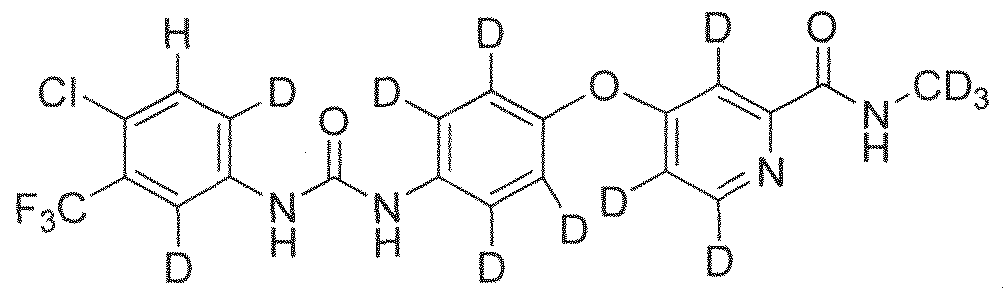
13 , The composition of claim 1 1 , wherein the compound is represented by the
following
 Compound 1 15, or a pharmaceutically acceptable salt thereof.
, The composition of claim 11, 12 or 13, additionally comprising a second therapeutic agent useful in the treatment or prevention of a disease or condition selected from cancer, viral infections, inflammatory skin, eye and/or ear diseases, diabetic neuropathy, pulmonary hypertension, arterial restenosis and transplant rejection. , The composition of claim 14, wherein the second therapeutic agent is selected from doxorubicin, dacarbazine, temozolomide, anastrozole, gemcitabine, topotecan, bicalutamide, RADOOl, AMG 386, taxotere, bevacizumab, temsirolimus, erløtinib, tipifarnib, perifosine, pemetrexed, cetuximab, recombinant IL-21, paclitaxel, irinotecan hydrochloride, everolimus, abraxane, mitoxantrone, prednisone, etoposide, and carboplatin, , The composition of any one of claims 12 to 15 for use in treating a disease or condition selected from cancer, viral infections, inflammatory skin, eye and/or ear diseases, diabetic neuropathy, pulmonary hypertension, arterial restenosis and transplant rejection, , The composition of claim 16, wherein the disease or condition is selected from renal cell carcinoma and other cancers including liver, non-small cell lung, lung, breast, ovarian, fallopian tube, peritoneal cavity, pancreatic, bladder, prostate metastatic, thyroid, uterine, gastrointestinal stromal, metastatic melanoma, prostate adenocarcinoma, soft tissue sarcoma, mesothelioma, glioblastoma multiforme, acute myeloid leukemia, non- Hodgkin's lymphoma, multiple myeloma, glioblastoma, lymphoma, anaplastic astrocytoma, squamous cell head and neck carcinoma, oligodendroglioma, solid tumor, and colorectal cancers, and pulmonary hypertension. , The composition of claim 17, wherein the disease or condition is renal cell carcinoma.
Compound 1 15, or a pharmaceutically acceptable salt thereof.
, The composition of claim 11, 12 or 13, additionally comprising a second therapeutic agent useful in the treatment or prevention of a disease or condition selected from cancer, viral infections, inflammatory skin, eye and/or ear diseases, diabetic neuropathy, pulmonary hypertension, arterial restenosis and transplant rejection. , The composition of claim 14, wherein the second therapeutic agent is selected from doxorubicin, dacarbazine, temozolomide, anastrozole, gemcitabine, topotecan, bicalutamide, RADOOl, AMG 386, taxotere, bevacizumab, temsirolimus, erløtinib, tipifarnib, perifosine, pemetrexed, cetuximab, recombinant IL-21, paclitaxel, irinotecan hydrochloride, everolimus, abraxane, mitoxantrone, prednisone, etoposide, and carboplatin, , The composition of any one of claims 12 to 15 for use in treating a disease or condition selected from cancer, viral infections, inflammatory skin, eye and/or ear diseases, diabetic neuropathy, pulmonary hypertension, arterial restenosis and transplant rejection, , The composition of claim 16, wherein the disease or condition is selected from renal cell carcinoma and other cancers including liver, non-small cell lung, lung, breast, ovarian, fallopian tube, peritoneal cavity, pancreatic, bladder, prostate metastatic, thyroid, uterine, gastrointestinal stromal, metastatic melanoma, prostate adenocarcinoma, soft tissue sarcoma, mesothelioma, glioblastoma multiforme, acute myeloid leukemia, non- Hodgkin's lymphoma, multiple myeloma, glioblastoma, lymphoma, anaplastic astrocytoma, squamous cell head and neck carcinoma, oligodendroglioma, solid tumor, and colorectal cancers, and pulmonary hypertension. , The composition of claim 17, wherein the disease or condition is renal cell carcinoma.
19, The composition of claims 17 or 18, wherein the composition is used in conjunction with a second therapeutic agent useful in the treatment of a disease or condition selected from cancer, viral infections, inflammatory skin, eye and/or ear diseases, diabetic neuropathy, pulmonary hypertension, arterial restenosis and transplant rejection,
20. The composition of claim 19, wherein: c. the disease or condition is renal cell carcinoma; and the composition is used in conjunction with a second therapeutic reagent selected from AMG 386, recombinant IL-21, perifosine, and RADOOl; d. the disease or condition is hepatocellular carcinoma; and the composition is used in conjunction with doxorubicin; e. the disease or condition is breast cancer; and the composition is used in conjunction with aiiastrozole; f. the disease or condition is bladder cancer; and the composition is used in conjunction with a second therapeutic reagent selected from gemcitabine, and carboplatln; g. the disease or condition is pancreatic cancer; and the composition is used in conjunction with gemcitabine; h. the disease or condition is small cell lung cancer; and the composition is used in conjunction with topotecan; i. the disease or condition is non-small cell lung cancer; and the composition is used in conjunction with a second therapeutic reagent selected from pemetrexed, carboplatin, gemcitabine, cisplatin, and etoposide; j. the disease or condition is prostate adenocarcinoma; and the composition is used in conjunction with bicalutamide; k. the disease or condition is kidney cancer; and the composition is used in conjunction with a second therapeutic reagent selected from RADOOl, bevacizumab. and temsirolimus;
1. the disease or condition is prostate cancer; and the composition is used in conjunction with a second therapeutic reagent selected from taxotere, mitoxantrone, and prednisone;
m. the disease or condition Is brain and central nervous system tumors; and the composition is used in conjunction with a second therapeutic reagent selected from erlotinib, tipifamib, and temsirolimus; n. the disease or condition is colorectal cancer; and the composition is used in conjunction with a second therapeutic reagent selected from cetuxiniab, and irinotecan hydrochloride; o. the disease or condition is intraocular melanoma; and the composition is used in conjunction with a second therapeutic reagent selected from paclitaxel, and carboplatin; p. the disease or condition is solid tumors; composition is used in conjunction with a second therapeutic reagent selected from temsirolimus, erlotinib, and bevacizumab; q. the disease or condition is melanoma; and the composition is used in conjunction with a second therapeutic reagent selected from temsirolimus, abraxane, carboplatin, dacarbazine, and temozolomide; or r, the disease or condition is lymphoma or multiple myeloma; and the composition is used in conjunction with everolimus.
Applications Claiming Priority (4)
| Application Number | Priority Date | Filing Date | Title |
|---|---|---|---|
| US18892708P | 2008-08-14 | 2008-08-14 | |
| US61/188,927 | 2008-08-14 | ||
| US20357808P | 2008-12-23 | 2008-12-23 | |
| US61/203,578 | 2008-12-23 |
Publications (2)
| Publication Number | Publication Date |
|---|---|
| WO2010019701A2 true WO2010019701A2 (en) | 2010-02-18 |
| WO2010019701A3 WO2010019701A3 (en) | 2010-08-26 |
Family
ID=41508104
Family Applications (1)
| Application Number | Title | Priority Date | Filing Date |
|---|---|---|---|
| PCT/US2009/053595 Ceased WO2010019701A2 (en) | 2008-08-14 | 2009-08-12 | Diaryl urea derivatives |
Country Status (1)
| Country | Link |
|---|---|
| WO (1) | WO2010019701A2 (en) |
Cited By (7)
| Publication number | Priority date | Publication date | Assignee | Title |
|---|---|---|---|---|
| WO2010135579A1 (en) * | 2009-05-22 | 2010-11-25 | Concert Pharmaceuticals, Inc. | Fluorinated diaryl urea derivatives |
| WO2011113370A1 (en) * | 2010-03-18 | 2011-09-22 | 苏州泽璟生物制药有限公司 | Deuterium-substituted omega-diphenylurea and derivatives thereof and pharmaceutical compositions comprising these compounds |
| CN102803221A (en) * | 2010-03-18 | 2012-11-28 | 苏州泽璟生物制药有限公司 | Deuterium-substituted omega-diphenylurea and derivatives thereof and pharmaceutical compositions comprising these compounds |
| JP2013522243A (en) * | 2010-03-18 | 2013-06-13 | ▲蘇▼州▲澤▼▲ジン▼生物制▲薬▼有限公司 | Methods and processes for the synthesis and production of deuterated ω-diphenylurea |
| US9145390B2 (en) | 2011-03-03 | 2015-09-29 | Concert Pharmaceuticals, Inc. | Derivatives of pyrazole-substituted amino-heteroaryl compounds |
| CN105348186A (en) * | 2015-10-15 | 2016-02-24 | 青岛海洋生物医药研究院股份有限公司 | Deuterated bisarylurea compound and preparation method thereof, and application of compound in preparation of antitumor drug |
| US10568965B2 (en) | 2009-06-09 | 2020-02-25 | Auspex Pharmaceuticals, Inc. | Aminopyrimidine inhibitors of tyrosine kinase |
Family Cites Families (3)
| Publication number | Priority date | Publication date | Assignee | Title |
|---|---|---|---|---|
| EP1663978B1 (en) * | 2003-07-23 | 2007-11-28 | Bayer Pharmaceuticals Corporation | Fluoro substituted omega-carboxyaryl diphenyl urea for the treatment and prevention of diseases and conditions |
| WO2007059155A1 (en) * | 2005-11-14 | 2007-05-24 | Bayer Pharmaceuticals Corporation | Treatment of cancers having resistance to chemotherapeutic agents |
| JP2009515978A (en) * | 2005-11-14 | 2009-04-16 | バイエル ヘルスケア エルエルシー | Treatment of cancer with acquired resistance to KIT inhibitors |
-
2009
- 2009-08-12 WO PCT/US2009/053595 patent/WO2010019701A2/en not_active Ceased
Cited By (15)
| Publication number | Priority date | Publication date | Assignee | Title |
|---|---|---|---|---|
| US8410082B2 (en) | 2009-05-22 | 2013-04-02 | Concert Pharmaceuticals, Inc. | Fluorinated diaryl urea derivatives |
| WO2010135579A1 (en) * | 2009-05-22 | 2010-11-25 | Concert Pharmaceuticals, Inc. | Fluorinated diaryl urea derivatives |
| US10568965B2 (en) | 2009-06-09 | 2020-02-25 | Auspex Pharmaceuticals, Inc. | Aminopyrimidine inhibitors of tyrosine kinase |
| JP2013522244A (en) * | 2010-03-18 | 2013-06-13 | ▲蘇▼州▲澤▼▲ジン▼生物制▲薬▼有限公司 | Method for producing a fluorine-containing deuterated diphenylurea |
| CN102803221A (en) * | 2010-03-18 | 2012-11-28 | 苏州泽璟生物制药有限公司 | Deuterium-substituted omega-diphenylurea and derivatives thereof and pharmaceutical compositions comprising these compounds |
| JP2013522243A (en) * | 2010-03-18 | 2013-06-13 | ▲蘇▼州▲澤▼▲ジン▼生物制▲薬▼有限公司 | Methods and processes for the synthesis and production of deuterated ω-diphenylurea |
| WO2011113203A1 (en) * | 2010-03-18 | 2011-09-22 | 苏州泽璟生物制药有限公司 | Deuterium-substituted omega-diphenylurea and derivatives thereof and pharmaceutical compositions comprising the compounds |
| CN102803221B (en) * | 2010-03-18 | 2014-09-10 | 苏州泽璟生物制药有限公司 | Deuterated ω-diphenylurea and its derivatives and pharmaceutical composition comprising the compound |
| JP2015091845A (en) * | 2010-03-18 | 2015-05-14 | ▲蘇▼州▲澤▼▲ジン▼生物制▲薬▼有限公司 | P- of 4- (4- (3- (4-chloro-3- (trifluoromethyl) phenyl) ureido) -phenoxy) -N- (1 ′, 1 ′, 1′-triduteromethyl) picolinamide Toluenesulfonate (CM4307 · TsOH), method for producing CM4307 · TsOH, and pharmaceutical composition containing CM4307 · TsOH |
| EP2548868A4 (en) * | 2010-03-18 | 2015-07-08 | Suzhou Zelgen Biopharmaceutical Co Ltd | METHOD AND PROCESSES FOR THE PREPARATION AND PRODUCTION OF DETERIED DIPHENYLUREA |
| WO2011113370A1 (en) * | 2010-03-18 | 2011-09-22 | 苏州泽璟生物制药有限公司 | Deuterium-substituted omega-diphenylurea and derivatives thereof and pharmaceutical compositions comprising these compounds |
| US9145390B2 (en) | 2011-03-03 | 2015-09-29 | Concert Pharmaceuticals, Inc. | Derivatives of pyrazole-substituted amino-heteroaryl compounds |
| US9707218B2 (en) | 2011-03-03 | 2017-07-18 | Concert Pharmaceuticals, Inc. | Derivatives of pyrazole-substituted amino-heteroaryl compounds |
| CN105348186A (en) * | 2015-10-15 | 2016-02-24 | 青岛海洋生物医药研究院股份有限公司 | Deuterated bisarylurea compound and preparation method thereof, and application of compound in preparation of antitumor drug |
| CN105348186B (en) * | 2015-10-15 | 2018-05-22 | 青岛海洋生物医药研究院股份有限公司 | Deuterated substituted bisarylurea compound and preparation method thereof and the application in anti-tumor drug is prepared |
Also Published As
| Publication number | Publication date |
|---|---|
| WO2010019701A3 (en) | 2010-08-26 |
Similar Documents
| Publication | Publication Date | Title |
|---|---|---|
| EP2212298B1 (en) | Deuterated etravirine | |
| KR101761427B1 (en) | Morphinan compounds | |
| US8003646B2 (en) | Substituted triazolo-pyridazine derivatives | |
| US20110059046A1 (en) | Derivatives of gefitinib | |
| US8609673B2 (en) | Vandetanib derivatives | |
| WO2010019701A2 (en) | Diaryl urea derivatives | |
| WO2012151361A1 (en) | Carbamoylpyridone derivatives | |
| WO2011116066A1 (en) | Derivatives of dimethylcurcumin | |
| US20110313004A1 (en) | Deuterated pyridinones | |
| US20090269354A1 (en) | Quinazoline derivatives and methods of treatment | |
| EP2872159A2 (en) | Deuterated carfilzomib | |
| US8410082B2 (en) | Fluorinated diaryl urea derivatives | |
| EP2197847B1 (en) | Deuterated 4 -oxoquinoline derivative for the treatment of hiv infection | |
| WO2011091035A1 (en) | Aminoquinoline derivatives | |
| WO2015031741A1 (en) | Deuterated derivatives of a thienotriazolodiazapine bromodomain-containing protein inhibitor | |
| US20100260674A1 (en) | Quinazoline derivatives and methods of treatment | |
| WO2014150043A1 (en) | Inhibitors of the enzyme udp-glucose: n-acyl-sphingosine glucosyltransferase | |
| WO2009140279A2 (en) | Sulfonyl urea compounds | |
| US20110301113A1 (en) | Pyridineamine derivatives | |
| WO2009099620A1 (en) | 3-(dihydro-1h-pyrazolo[4,3-d]pyrimidin-5-yl)-4-propoxybenzenesulfonamide derivatives and methods of use | |
| WO2011159920A1 (en) | [5,6]-dihydro-2h-pyran-2-one derivatives | |
| WO2010045551A1 (en) | Xanthenone-4-acetic acid derivatives | |
| WO2009151613A1 (en) | Oxybutynin derivatives | |
| WO2014008417A1 (en) | Deuterated vercirnon |
Legal Events
| Date | Code | Title | Description |
|---|---|---|---|
| 121 | Ep: the epo has been informed by wipo that ep was designated in this application |
Ref document number: 09791438 Country of ref document: EP Kind code of ref document: A2 |
|
| NENP | Non-entry into the national phase |
Ref country code: DE |
|
| 122 | Ep: pct application non-entry in european phase |
Ref document number: 09791438 Country of ref document: EP Kind code of ref document: A2 |