WO2009153992A1 - Cdca1 epitope peptides and vaccines containing the same - Google Patents
Cdca1 epitope peptides and vaccines containing the same Download PDFInfo
- Publication number
- WO2009153992A1 WO2009153992A1 PCT/JP2009/002771 JP2009002771W WO2009153992A1 WO 2009153992 A1 WO2009153992 A1 WO 2009153992A1 JP 2009002771 W JP2009002771 W JP 2009002771W WO 2009153992 A1 WO2009153992 A1 WO 2009153992A1
- Authority
- WO
- WIPO (PCT)
- Prior art keywords
- peptide
- peptides
- present
- antigen
- set forth
- Prior art date
- Legal status (The legal status is an assumption and is not a legal conclusion. Google has not performed a legal analysis and makes no representation as to the accuracy of the status listed.)
- Ceased
Links
Images

Classifications
-
- C—CHEMISTRY; METALLURGY
- C07—ORGANIC CHEMISTRY
- C07K—PEPTIDES
- C07K7/00—Peptides having 5 to 20 amino acids in a fully defined sequence; Derivatives thereof
- C07K7/04—Linear peptides containing only normal peptide links
- C07K7/06—Linear peptides containing only normal peptide links having 5 to 11 amino acids
-
- C—CHEMISTRY; METALLURGY
- C07—ORGANIC CHEMISTRY
- C07K—PEPTIDES
- C07K14/00—Peptides having more than 20 amino acids; Gastrins; Somatostatins; Melanotropins; Derivatives thereof
- C07K14/435—Peptides having more than 20 amino acids; Gastrins; Somatostatins; Melanotropins; Derivatives thereof from animals; from humans
- C07K14/46—Peptides having more than 20 amino acids; Gastrins; Somatostatins; Melanotropins; Derivatives thereof from animals; from humans from vertebrates
- C07K14/47—Peptides having more than 20 amino acids; Gastrins; Somatostatins; Melanotropins; Derivatives thereof from animals; from humans from vertebrates from mammals
- C07K14/4701—Peptides having more than 20 amino acids; Gastrins; Somatostatins; Melanotropins; Derivatives thereof from animals; from humans from vertebrates from mammals not used
- C07K14/4748—Tumour specific antigens; Tumour rejection antigen precursors [TRAP], e.g. MAGE
-
- A—HUMAN NECESSITIES
- A61—MEDICAL OR VETERINARY SCIENCE; HYGIENE
- A61K—PREPARATIONS FOR MEDICAL, DENTAL OR TOILETRY PURPOSES
- A61K38/00—Medicinal preparations containing peptides
- A61K38/04—Peptides having up to 20 amino acids in a fully defined sequence; Derivatives thereof
- A61K38/08—Peptides having 5 to 11 amino acids
-
- A—HUMAN NECESSITIES
- A61—MEDICAL OR VETERINARY SCIENCE; HYGIENE
- A61K—PREPARATIONS FOR MEDICAL, DENTAL OR TOILETRY PURPOSES
- A61K39/00—Medicinal preparations containing antigens or antibodies
- A61K39/0005—Vertebrate antigens
- A61K39/0011—Cancer antigens
-
- A—HUMAN NECESSITIES
- A61—MEDICAL OR VETERINARY SCIENCE; HYGIENE
- A61P—SPECIFIC THERAPEUTIC ACTIVITY OF CHEMICAL COMPOUNDS OR MEDICINAL PREPARATIONS
- A61P35/00—Antineoplastic agents
-
- A—HUMAN NECESSITIES
- A61—MEDICAL OR VETERINARY SCIENCE; HYGIENE
- A61P—SPECIFIC THERAPEUTIC ACTIVITY OF CHEMICAL COMPOUNDS OR MEDICINAL PREPARATIONS
- A61P37/00—Drugs for immunological or allergic disorders
- A61P37/02—Immunomodulators
- A61P37/04—Immunostimulants
-
- A—HUMAN NECESSITIES
- A61—MEDICAL OR VETERINARY SCIENCE; HYGIENE
- A61P—SPECIFIC THERAPEUTIC ACTIVITY OF CHEMICAL COMPOUNDS OR MEDICINAL PREPARATIONS
- A61P43/00—Drugs for specific purposes, not provided for in groups A61P1/00-A61P41/00
-
- C—CHEMISTRY; METALLURGY
- C07—ORGANIC CHEMISTRY
- C07K—PEPTIDES
- C07K14/00—Peptides having more than 20 amino acids; Gastrins; Somatostatins; Melanotropins; Derivatives thereof
- C07K14/435—Peptides having more than 20 amino acids; Gastrins; Somatostatins; Melanotropins; Derivatives thereof from animals; from humans
- C07K14/46—Peptides having more than 20 amino acids; Gastrins; Somatostatins; Melanotropins; Derivatives thereof from animals; from humans from vertebrates
- C07K14/47—Peptides having more than 20 amino acids; Gastrins; Somatostatins; Melanotropins; Derivatives thereof from animals; from humans from vertebrates from mammals
-
- C—CHEMISTRY; METALLURGY
- C07—ORGANIC CHEMISTRY
- C07K—PEPTIDES
- C07K16/00—Immunoglobulins [IG], e.g. monoclonal or polyclonal antibodies
- C07K16/44—Immunoglobulins [IG], e.g. monoclonal or polyclonal antibodies against material not provided for elsewhere, e.g. haptens, metals, DNA, RNA, amino acids
-
- C—CHEMISTRY; METALLURGY
- C12—BIOCHEMISTRY; BEER; SPIRITS; WINE; VINEGAR; MICROBIOLOGY; ENZYMOLOGY; MUTATION OR GENETIC ENGINEERING
- C12N—MICROORGANISMS OR ENZYMES; COMPOSITIONS THEREOF; PROPAGATING, PRESERVING, OR MAINTAINING MICROORGANISMS; MUTATION OR GENETIC ENGINEERING; CULTURE MEDIA
- C12N5/00—Undifferentiated human, animal or plant cells, e.g. cell lines; Tissues; Cultivation or maintenance thereof; Culture media therefor
- C12N5/06—Animal cells or tissues; Human cells or tissues
- C12N5/0602—Vertebrate cells
- C12N5/0634—Cells from the blood or the immune system
- C12N5/0636—T lymphocytes
- C12N5/0638—Cytotoxic T lymphocytes [CTL] or lymphokine activated killer cells [LAK]
-
- A—HUMAN NECESSITIES
- A61—MEDICAL OR VETERINARY SCIENCE; HYGIENE
- A61K—PREPARATIONS FOR MEDICAL, DENTAL OR TOILETRY PURPOSES
- A61K39/00—Medicinal preparations containing antigens or antibodies
- A61K2039/51—Medicinal preparations containing antigens or antibodies comprising whole cells, viruses or DNA/RNA
- A61K2039/515—Animal cells
- A61K2039/5154—Antigen presenting cells [APCs], e.g. dendritic cells or macrophages
-
- A—HUMAN NECESSITIES
- A61—MEDICAL OR VETERINARY SCIENCE; HYGIENE
- A61K—PREPARATIONS FOR MEDICAL, DENTAL OR TOILETRY PURPOSES
- A61K39/00—Medicinal preparations containing antigens or antibodies
- A61K2039/51—Medicinal preparations containing antigens or antibodies comprising whole cells, viruses or DNA/RNA
- A61K2039/53—DNA (RNA) vaccination
-
- A—HUMAN NECESSITIES
- A61—MEDICAL OR VETERINARY SCIENCE; HYGIENE
- A61K—PREPARATIONS FOR MEDICAL, DENTAL OR TOILETRY PURPOSES
- A61K39/00—Medicinal preparations containing antigens or antibodies
- A61K2039/57—Medicinal preparations containing antigens or antibodies characterised by the type of response, e.g. Th1, Th2
- A61K2039/572—Medicinal preparations containing antigens or antibodies characterised by the type of response, e.g. Th1, Th2 cytotoxic response
-
- A—HUMAN NECESSITIES
- A61—MEDICAL OR VETERINARY SCIENCE; HYGIENE
- A61K—PREPARATIONS FOR MEDICAL, DENTAL OR TOILETRY PURPOSES
- A61K39/00—Medicinal preparations containing antigens or antibodies
- A61K2039/57—Medicinal preparations containing antigens or antibodies characterised by the type of response, e.g. Th1, Th2
- A61K2039/575—Medicinal preparations containing antigens or antibodies characterised by the type of response, e.g. Th1, Th2 humoral response
-
- A—HUMAN NECESSITIES
- A61—MEDICAL OR VETERINARY SCIENCE; HYGIENE
- A61K—PREPARATIONS FOR MEDICAL, DENTAL OR TOILETRY PURPOSES
- A61K38/00—Medicinal preparations containing peptides
-
- A—HUMAN NECESSITIES
- A61—MEDICAL OR VETERINARY SCIENCE; HYGIENE
- A61K—PREPARATIONS FOR MEDICAL, DENTAL OR TOILETRY PURPOSES
- A61K39/00—Medicinal preparations containing antigens or antibodies
Definitions
- the present invention relates to the field of biological science, more specifically to the field of cancer therapy.
- the present invention relates to novel peptides that are extremely effective as cancer vaccines, and drugs for treating and preventing tumors.
- TTLs CD8 positive cytotoxic T lymphocytes
- TAAs tumor-associated antigens
- MHC major histocompatibility complex
- TAAs tumor-associated antigens
- MAGE major histocompatibility complex
- TAAs which are indispensable for proliferation and survival of cancer cells are valiant as targets for immunotherapy, because the use of such TAAs may minimize the well-described risk of immune escape of cancer cells attributable to deletion, mutation, or down-regulation of TAAs as a consequence of therapeutically driven immune selection.
- CDCA1 cell division cycle associated 1, was identified as a member of a class of genes that are coexpressed with cell cycle genes, such as CDC2, cyclin, topoisomerase II and the others (Walker et al., Curr Cancer Drug Targets 2001 May;1(1):73-83). CDCA1 in particular was found to be associated with centromeres of mitotic HeLa cells and was therefore considered a functional homologue of yeast Nuf2 (J Cell Biol 2001 Jan 22; 152(2):349-60).
- CDCA1 has also been identified as a novel molecule up-regulated in breast cancer (WO2005/028676), bladder cancer (WO2006/085684), esophageal cancer (WO2007/013671), small cell lung cancer (SCLC) (WO2007/013665) and non-small cell lung cancer (NSCLC) (WO2005/089735), the contents of such disclosure being incorporated by reference herein.
- Expression of CDCA1 was particularly up-regulated in SCLC, NSCLC and tumor cell lines, though no expression was detected except testis among 23 normal tissues.
- down-regulation of CDCA1 expression by siRNA caused cell growth suppression in CDCA1 expressing lung cancer cell lines (WO2005/089735).
- CDCA1 is a novel, potentially universal oncoantigen. Accordingly, epitope peptides derived from CDCA1 may be applicable as cancer immunotherapeutics for the treatment of a wide array of cancers.
- the present invention is based in part on the discovery of the suitable epitope peptides that may serve as targets of immunotherapy. Recognizing that CDCA1 are up-regulated in a number of cancer types, including breast cancer, bladder cancer, non-small cell lung cancer, small cell lung cancer and esophageal cancer, the present invention targets this cell division cycle associated 1 (CDCA1) (SEQ ID NO: 35 encoded by the gene of GenBank Accession No. NM_145697 (SEQ ID NO: 34)) for further analysis. In particular,CDCA1 gene products containing epitope peptides that elicit CTLs specific to the corresponding molecules were selected.
- CDCA1 cell division cycle associated 1
- PBMCs Peripheral blood mononuclear cells obtained from a healthy donor were stimulated using HLA-A*2402 binding candidate peptides derived from CDCA1. CTLs that specifically recognize HLA-A24 positive target cells pulsed with the respective candidate peptides were established, and HLA-A24 restricted epitope peptides that can induce potent and specific immune responses against CDCA1 were identified. These results demonstrate that CDCA1 is strongly immunogenic and the epitopes thereof are effective targets for tumor immunotherapy.
- the present invention provides peptides having CTL inducibility as well as an amino acid sequence selected from among SEQ ID NOs: 3, 4, 11, 14, 22 and 23.
- the present invention contemplates modified peptides, having an amino acid sequence of SEQ ID NOs: 3, 4, 11, 14, 22 or 23, wherein one, two or more amino acids are substituted, incorporated, deleted or added, so long as the modified peptides retain the original CTL inducibility.
- the present peptides When administered to a subject, the present peptides are presented on the surface of antigen-presenting cells or exosomes and then induce CTLs targeting the respective peptides. Therefore, it is an object of the present invention to provide antigen-presenting cells and exosomes presenting any of the present peptides, as well as methods for inducing antigen-presenting cells.
- An anti-tumor immune response is induced by the administration of the present CDCA1 polypeptides or polynucleotide encoding the polypeptides, as well as exosomes and antigen-presenting cells which present the CDCA1 polypeptides. Therefore, it is an object of the present invention to provide pharmaceutical agents containing the polypeptides of the present invention or polynucleotides encoding them, as well as the exosomes and antigen-presenting cells containing such as their active ingredients.
- the pharmaceutical agents of the present invention find particular utility as vaccines.
- the CTLs of the invention also find use as vaccines against cancer. Examples of cancers contemplated by the present invention include, but are not limited to breast cancer, bladder cancer, esophageal cancer, small cell lung cancer (SCLC) and non-small cell lung cancer (NSCLC).
- Figure 1 is composed of a series of photographs, (a) to (g), depicting the results of an IFN-gamma ELISPOT assay on CTLs that were induced with peptides derived from CDCA1.
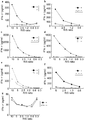
- Figure 2 is composed of a series of line graphs, (a) to (g), representing the results of an IFN-gamma ELISA assay on CTL lines established with CDCA1-A24-10-119 (SEQ ID NO: 3) (a), CDCA1-A24-10-335 (SEQ ID NO: 4) (b), CDCA1-A24-10-48 (SEQ ID NO: 11) (c), CDCA1-A24-10-5 (SEQ ID NO: 14) (d), CDCA1-A24-9-8 (SEQ ID NO: 22) (e) and CDCA1-A24-9-56 (SEQ ID NO: 23) (f) in the above IFN-gamma ELISA assay.
- CDCA1-A24-10-119 SEQ ID NO: 3
- CDCA1-A24-10-335 SEQ ID NO: 4
- CDCA1-A24-10-48 SEQ ID NO: 11
- CDCA1-A24-10-5 SEQ ID NO: 14
- CDCA1-A24-9-8
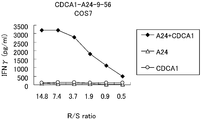
- FIG. 4 is a line graph depicting the specific CTL activity against the target cells that exogenously express CDCA1 and HLA-A*2402.
- the CTL clone established with CDCA1-A24-9-56 (SEQ ID NO: 23) showed high specific CTL activity against COS7 cells transfected with both CDCA1 and HLA-A*2402 (lozenge). In contrast, no significant specific CTL activity was detected against target cells expressing either HLA-A*2402 (triangle) or CDCA1 (circle).
- polypeptide peptide
- protein protein
- amino acid polymers in which one or more amino acid residue is a modified residue, or a non-naturally occurring residue, such as an artificial chemical mimetic of a corresponding naturally occurring amino acid, as well as to naturally occurring amino acid polymers.
- amino acid refers to naturally occurring and synthetic amino acids, as well as amino acid analogs and amino acid mimetics that similarly function to the naturally occurring amino acids.
- Naturally occurring amino acids are those encoded by the genetic code, as well as those modified after translation in cells (e.g., hydroxyproline, gamma-carboxyglutamate, and O-phosphoserine).
- amino acid analog refers to compounds that have the same basic chemical structure (an alpha carbon bound to a hydrogen, a carboxy group, an amino group, and an R group) as a naturally occurring amino acid but have a modified R group or modified backbones (e.g., homoserine, norleucine, methionine, sulfoxide, methionine methyl sulfonium).
- modified R group or modified backbones e.g., homoserine, norleucine, methionine, sulfoxide, methionine methyl sulfonium.
- amino acid mimetic refers to chemical compounds that have different structures but similar functions to general amino acids.
- Amino acids may be referred to herein by their commonly known three letter symbols or the one-letter symbols recommended by the IUPAC-IUB Biochemical Nomenclature Commission.
- cancer refers to cancers overexpressing CDCA1 gene, including, for example, breast cancer, bladder cancer, esophageal cancer, small cell lung cancer (SCLC) and non-small cell lung cancer (NSCLC).
- SCLC small cell lung cancer
- NSCLC non-small cell lung cancer
- cytotoxic T lymphocyte refers to a sub-group of T lymphocytes that are capable of recognizing non-self cells (e.g., tumor cells, virus-infected cells) and inducing the death of such cells.
- non-self cells e.g., tumor cells, virus-infected cells
- peptides derived from CDCA1 function as an antigen recognized by cytotoxic T lymphocytes (CTLs)
- CTLs cytotoxic T lymphocytes
- peptides derived from CDCA1 SEQ ID NO: 35 were analyzed to determine whether they were antigen epitopes restricted by HLA-A24 which are commonly encountered HLA alleles (Date Y et al., Tissue Antigens 47: 93-101, 1996; Kondo A et al., J Immunol 155: 4307-12, 1995; Kubo RT et al., J Immunol 152: 3913-24, 1994).
- Candidates of HLA-A24 binding peptides derived from CDCA1 were identified based on their binding affinities to HLA-A24.
- CDCA1-A24-10-119 SEQ ID NO: 3
- CDCA1-A24-10-335 SEQ ID NO: 4
- CDCA1-A24-10-48 SEQ ID NO: 11
- CDCA1-A24-10-5 SEQ ID NO: 14
- CDCA1-A24-9-8 SEQ ID NO: 22
- CDCA1-A24-9-56 SEQ ID NO: 23
- CDCA1 is an antigen recognized by CTLs and that the peptides are epitope peptides of CDCA1 restricted by HLA-A24.
- the present invention provides nonapeptides (peptides consisting of nine amino acid residues) and decapeptides (peptides consisting of ten amino acid residues) corresponding to CTL-recognized epitopes of CDCA1.
- nonapeptides and decapeptides of the present invention include those peptides consisting of the amino acid sequence selected from among SEQ ID NOs: 3, 4, 11, 14, 22 and 23.
- binding affinity with HLA antigens can be measured as described, for example, in Parker KC et al., J Immunol 1994 Jan 1, 152(1): 163-75; and Kuzushima K et al., Blood 2001, 98(6): 1872-81.
- the methods for determining binding affinity is described, for example, in the Journal of Immunological Methods, 1995, 185: 181-190 and Protein Science, 2000, 9: 1838-1846.
- the present invention encompasses peptides of CDCA1which are determined to bind with HLA antigens identified using such known programs.
- the nonapeptides and decapeptides of the present invention can be optionally flanked with additional amino acid residues so long as the peptide retains its CTL inducibility.
- Such peptides having CTL inducibility are typically, less than about 40 amino acids, often less than about 20 amino acids, usually less than about 15 amino acids.
- the particular amino acid sequence(s) flanking the peptides consisting of the amino acid sequence selected from among SEQ ID NOs: 3, 4, 11, 14, 22 and 23 are not limited and can be composed of any kind of amino acids, so long as it does not impair the CTL inducibility of the original peptide.
- the present invention also provides peptides having CTL inducibility and an amino acid sequence selected from among SEQ ID NOs: 3, 4, 11, 14, 22 and 23.
- modified peptides i.e., peptides composed of an amino acid sequence in which one, two or several amino acid residues have been modified (i.e., substituted, added, deleted or inserted) as compared to an original reference sequence
- modified peptides have been known to retain the biological activity of the original peptide (Mark et al., Proc Natl Acad Sci USA 1984, 81: 5662-6; Zoller and Smith, Nucleic Acids Res 1982, 10: 6487-500; Dalbadie-McFarland et al., Proc Natl Acad Sci USA 1982, 79: 6409-13).
- the peptides of the present invention may have both CTL inducibility and an amino acid sequence selected from among SEQ ID NO: 3, 4, 11, 14, 22 and 23, wherein one, two or even more amino acids are added, inserted, deleted and/or substituted.
- amino acid side chains examples include hydrophobic amino acids (A, I, L, M, F, P, W, Y, V), hydrophilic amino acids (R, D, N, C, E, Q, G, H, K, S, T), and side chains having the following functional groups or characteristics in common: an aliphatic side-chain (G, A, V, L, I, P); a hydroxyl group containing side-chain (S, T, Y); a sulfur atom containing side-chain (C, M); a carboxylic acid and amide containing side-chain (D, N, E, Q); a base containing side-chain (R, K, H); and an aromatic containing side-chain (H, F, Y, W).
- A, I, L, M, F, P, W, Y, V hydrophilic amino acids
- R, D, N, C, E, Q amino acids
- G, A, V, L, I, P a hydroxyl group containing side-chain
- the following eight groups each contain amino acids that are conservative substitutions for one another: 1) Alanine (A), Glycine (G); 2) Aspartic acid (D), Glutamic acid (E); 3) Aspargine (N), Glutamine (Q); 4) Arginine (R), Lysine (K); 5) Isoleucine (I), Leucine (L), Methionine (M), Valine (V); 6) Phenylalanine (F), Tyrosine (Y), Tryptophan (W); 7) Serine (S), Threonine (T); and 8) Cysteine (C), Methionine (M) (see, e.g., Creighton, Proteins 1984).
- Such conservatively modified peptides are also considered to be peptides of the present invention.
- peptides of the present invention are not restricted thereto and can include non-conservative modifications, so long as the modified peptide retains the CTL inducibility of the original peptide.
- modified peptides should not exclude CTL inducible peptides of polymorphic variants, interspecies homologues, and alleles of CDCA1.
- a small number for example, 1, 2 or several
- a small percentage of amino acids for example, 1, 2 or several
- the term “several” means 5 or fewer amino acids, for example, 3 or fewer.
- the percentage of amino acids to be modified is preferably 20% or less, more preferably, 15% of less, even more preferably 10% or less or 1 to 5%.
- CDCA1-A24-10-119 SEQ ID NO: 3
- CDCA1-A24-10-335 SEQ ID NO: 4
- CDCA1-A24-10-48 SEQ ID NO: 11
- CDCA1-A24-10-5 SEQ ID NO: 14
- CDCA1-A24-9-8 SEQ ID NO: 22
- CDCA1-A24-9-56 SEQ ID NO: 23
- the peptides of the present invention When used in the context of immunotherapy, the peptides of the present invention should be presented on the surface of a cell or exosome, preferably as a complex with an HLA antigen. Therefore, it is preferable to select peptides that not only induce CTLs but also possess high binding affinity to the HLA antigen. To that end, the peptides can be modified by substitution, insertion, deletion and/or addition of the amino acid residues to yield a modified peptide having improved binding affinity.
- amino acid substitutions in a peptide can be equal to or better than the original, for example CAP1, p53 (264-272), Her-2/neu (369-377) or gp100 (209-217) (Zaremba et al. Cancer Res. 57, 4570-4577, 1997, T. K. Hoffmann et al. J Immunol. (2002) Feb 1;168(3):1338-47., S. O. Dionne et al. Cancer Immunol immunother. (2003) 52: 199-206 and S. O. Dionne et al. Cancer Immunology, Immunotherapy (2004) 53, 307-314).
- the present invention also contemplates the addition of one to two amino acids to the N and/or C-terminus of the described peptides.
- modified peptides having high HLA antigen binding affinity and retained CTL inducibility are also included in the present invention.
- the peptide sequence is identical to a portion of the amino acid sequence of an endogenous or exogenous protein having a different function, side effects such as autoimmune disorders and/or allergic symptoms against specific substances may be induced. Therefore, it is preferable to first perform homology searches using available databases to avoid situations in which the sequence of the peptide matches the amino acid sequence of another protein.
- the objective peptide can be modified in order to increase its binding affinity with HLA antigens, and/or increase its CTL inducibility without any danger of such side effects.
- CTL inducibility indicates the ability of the peptide to induce cytotoxic T lymphocytes (CTLs) when presented on antigen-presenting cells.
- CTL inducibility includes the ability of the peptide to induce CTL activation, CTL proliferation, promote CTL lysis of target cells, and to increase CTL IFN-gamma production.
- Confirmation of CTL inducibility is accomplished by inducing antigen-presenting cells carrying human MHC antigens (for example, B-lymphocytes, macrophages, and dendritic cells (DCs)), or more specifically DCs derived from human peripheral blood mononuclear leukocytes, and after stimulation with the peptides, mixing with CD8-positive cells, and then measuring the IFN-gamma produced and released by CTL against the target cells.
- human MHC antigens for example, B-lymphocytes, macrophages, and dendritic cells (DCs)
- DCs dendritic cells
- transgenic animals that have been produced to express a human HLA antigen (for example, those described in BenMohamed L, Krishnan R, Longmate J, Auge C, Low L, Primus J, Diamond DJ, Hum Immunol 2000 Aug, 61(8): 764-79, Related Articles, Books, Linkout Induction of CTL response by a minimal epitope vaccine in HLA A*0201/DR1 transgenic mice: dependence on HLA class II restricted T(H) response) can be used.
- the target cells can be radiolabeled with 51 Cr and such, and cytotoxic activity can be calculated from radioactivity released from the target cells.
- CTL inducibility can be assessed by measuring IFN-gamma produced and released by CTL in the presence of antigen-presenting cells (APCs) that carry immobilized peptides, and visualizing the inhibition zone on the media using anti-IFN-gamma monoclonal antibodies.
- APCs antigen-presenting cells
- the peptides of the present invention can also be linked to other substances, so long as the resulting linked peptide retains the CTL inducibility of the original peptide.
- suitable substances include, for example: peptides, lipids, sugar and sugar chains, acetyl groups, natural and synthetic polymers, etc.
- the peptides can contain modifications such as glycosylation, side chain oxidation, or phosphorylation, etc., provided the modifications do not destroy the biological activity of the original peptide . These kinds of modifications can be performed to confer additional functions (e.g., targeting function, and delivery function) or to stabilize the polypeptide.
- polypeptides For example, to increase the in vivo stability of a polypeptide, it is known in the art to introduce D-amino acids, amino acid mimetics or unnatural amino acids; this concept can also be adapted to the present polypeptides.
- the stability of a polypeptide can be assayed in a number of ways. For instance, peptidases and various biological media, such as human plasma and serum, can be used to test stability (see, e.g., Verhoef et al., Eur J Drug Metab Pharmacokin 1986, 11: 291-302).
- the peptides of the present invention are presented on the surface of a cell (e.g. antigen presenting cell) or an exosome as complexes in combination with HLA antigens and then induce CTLs. Therefore, the peptides forming complexes with HLA antigens on the surface of a cell or an exsosomes are also included in the present invention.
- exosomes can be prepared, for example using the methods detailed in Japanese Patent Application Kohyo Publications Nos. Hei 11-510507 and WO99/03499, and can be prepared using APCs obtained from patients who are subject to treatment and/or prevention.
- the exosomes or cells presenting the peptides of the present invention can be inoculated as vaccines.
- HLA-A24 particularly HLA-A2402
- A24 type that is highly expressed among the Japanese and Caucasian
- subtypes such as A2402
- the type of HLA antigen of the patient requiring treatment is investigated in advance, which enables the appropriate selection of peptides having high levels of binding affinity to the particular antigen, or having CTL inducibility by antigen presentation.
- the peptides having the amino acid sequence selected from among SEQ ID NO: 3, 4, 11, 14, 22 and 23 are preferably used.
- peptides of the present invention can also be described as “CDCA1 peptide(s)” or “CDCA1 polypeptide(s)”.
- the peptides of the invention can be prepared using well known techniques. For example, the peptides can be prepared synthetically, using recombinant DNA technology or chemical synthesis. Peptide of the invention can be synthesized individually or as longer polypeptides composed of two or more peptides. The peptides can be then be isolated, i.e., purified, so as to be substantially free of other naturally occurring host cell proteins and fragments thereof, or any other chemical substances.
- a peptide of the present invention can be obtained through chemical synthesis based on the selected amino acid sequence.
- Examples of conventional peptide synthesis methods that can be adapted for the synthesis include: (i) Peptide Synthesis, Interscience, New York, 1966; (ii) The Proteins, Vol. 2, Academic Press, New York, 1976; (iii) Peptide Synthesis (in Japanese), Maruzen Co., 1975; (iv) Basics and Experiment of Peptide Synthesis (in Japanese), Maruzen Co., 1985; (v) Development of Pharmaceuticals (second volume) (in Japanese), Vol. 14 (peptide synthesis), Hirokawa, 1991; (vi) WO99/67288; and (vii) Barany G. & Merrifield R.B., Peptides Vol. 2, "Solid Phase Peptide Synthesis", Academic Press, New York, 1980, 100-118.
- the present peptides can be obtained adapting any known genetic engineering method for producing peptides (e.g., Morrison J, J Bacteriology 1977, 132: 349-51; Clark-Curtiss & Curtiss, Methods in Enzymology (eds. Wu et al.) 1983, 101: 347-62).
- a suitable vector harboring a polynucleotide encoding the objective peptide in an expressible form e.g., downstream of a regulatory sequence corresponding to a promoter sequence
- the host cell is then cultured to produce the peptide of interest.
- the peptide can also be produced in vitro adopting an in vitro translation system.
- polynucleotides which encodes any of the aforementioned peptides of the present invention. These include polynucleotides derived from the natural occurring CDCA1 gene (GenBank Accession No. NM_145697 (SEQ ID NO: 34)) as well as those having a conservatively modified nucleotide sequence thereof.
- CDCA1 GeneBank Accession No. NM_145697 (SEQ ID NO: 34)
- conservatively modified nucleotide sequence refers to sequences which encode identical or essentially identical amino acid sequences. Due to the degeneracy of the genetic code, a large number of functionally identical nucleic acids encode any given protein.
- the codons GCA, GCC, GCG, and GCU all encode the amino acid alanine.
- the codon can be altered to any of the corresponding codons described without altering the encoded polypeptide.
- Such nucleic acid variations are "silent variations," which are one species of conservatively modified variations. Every nucleic acid sequence herein which encodes a peptide also describes every possible silent variation of the nucleic acid.
- each codon in a nucleic acid can be modified to yield a functionally identical molecule. Accordingly, each silent variation of a nucleic acid that encodes a peptide is implicitly described in each disclosed sequence.
- the polynucleotide of the present invention can be composed of DNA, RNA, and derivatives thereof.
- a DNA is suitably composed of bases such as A, T, C, and G, and T is replaced by U in an RNA.
- the polynucleotide of the present invention can encode multiple peptides of the present invention with or without intervening amino acid sequences in between.
- the intervening amino acid sequence can provide a cleavage site (e.g., enzyme recognition sequence) of the polynucleotide or the translated peptides.
- the polynucleotide can include any additional sequences to the coding sequence encoding the peptide of the present invention.
- the polynucleotide can be a recombinant polynucleotide that includes regulatory sequences required for the expression of the peptide or can be an expression vector (plasmid) with marker genes and such.
- such recombinant polynucleotides can be prepared by the manipulation of polynucleotides through conventional recombinant techniques using, for example, polymerases and endonucleases.
- a polynucleotide can be produced by insertion into an appropriate vector, which can be expressed when transfected into a competent cell.
- a polynucleotide can be amplified using PCR techniques or expression in suitable hosts (see, e.g., Sambrook et al., Molecular Cloning: A Laboratory Manual, Cold Spring Harbor Laboratory, New York, 1989).
- a polynucleotide can be synthesized using the solid phase techniques, as described in Beaucage SL & Iyer RP, Tetrahedron 1992, 48: 2223-311; Matthes et al., EMBO J 1984, 3: 801-5.
- the present invention also provides antigen-presenting cells (APCs) that present complexes formed between HLA antigens and the peptides of the present invention on its surface.
- the APCs that are obtained by contacting the peptides of the present invention, or introducing the nucleotides encoding the peptides of the present invention in an expressible form can be derived from patients who are subject to treatment and/or prevention, and can be administered as vaccines by themselves or in combination with other drugs including the peptides of the present invention, exosomes, or cytotoxic T cells.
- the APCs are not limited to a particular kind of cells and include dendritic cells (DCs), Langerhans cells, macrophages, B cells, and activated T cells, which are known to present proteinaceous antigens on their cell surface so as to be recognized by lymphocytes. Since DC is a representative APC having the strongest CTL inducing action among APCs, DCs find use as the APCs of the present invention.
- DCs dendritic cells
- Langerhans cells macrophages
- B cells and activated T cells, which are known to present proteinaceous antigens on their cell surface so as to be recognized by lymphocytes. Since DC is a representative APC having the strongest CTL inducing action among APCs, DCs find use as the APCs of the present invention.
- an APC can be obtained by inducing DCs from peripheral blood monocytes and then contacting (stimulating) them with the peptides of the present invention in vitro, ex vivo or in vivo.
- APCs that present the peptides of the present invention are induced in the body of the subject.
- the phrase "inducing APC" includes contacting (stimulating) a cell with the peptides of the present invention, or nucleotides encoding the peptides of the present invention to present complexes formed between HLA antigens and the peptides of the present invention on cell's surface.
- the APCs can be administered to the subject as a vaccine.
- the ex vivo administration can include steps of: a: collecting APCs from a first subject:, b: contacting with the APCs of step a, with the peptide and c: administering the peptide-loaded APCs to a second subject.
- the first subject and the second subject may be the same individual, or can be different individuals.
- use of the peptides of the present invention for manufacturing a pharmaceutical composition inducing antigen-presenting cells is provided.
- the present invention provides a method or process for manufacturing a pharmaceutical composition inducing antigen-presenting cells, wherein the method comprises the step for admixing or formulating the peptide of the present invention with a pharmaceutically acceptable carrier.
- the present invention also provides the peptides of the present invention for inducing antigen-presenting cells.
- the APCs obtained by step (b) can be administered to the subject as a vaccine.
- the APCs have a high level of CTL inducibility.
- high level of CTL inducibility the high level is relative to the level of that by APC contacting with no peptide or peptides which can not induce the CTL.
- Such APCs having a high level of CTL inducibility can be prepared by a method which includes the step of transferring genes containing polynucleotides that encode the peptides of the present invention to APCs in vitro.
- the introduced genes can be in the form of DNAs or RNAs. Examples of methods for introduction include, without particular limitations, various methods conventionally performed in this field, such as lipofection, electroporation, and calcium phosphate method can be used.
- Cytotoxic T cells A cytotoxic T cell induced against any of the peptides of the present invention strengthens the immune response targeting cancer cells in vivo and thus can be used as vaccines, in a fashion similar to the peptides per se. Thus, the present invention also provides isolated cytotoxic T cells that are specifically induced or activated by any of the present peptides.
- Such cytotoxic T cells can be obtained by (1) administering the peptides of the present invention to a subject, collecting cytotoxic T cells from the subject or (2) contacting (stimulating) subject-derived APCs and CD8-positive cells, or peripheral blood mononuclear leukocytes in vitro with the peptides of the present invention and then isolating cytotoxic T cells.
- the cytotoxic T cells which have been induced by stimulation with APCs that present the peptides of the present invention, can be derived from patients who are subject to treatment and/or prevention, and can be administered by themselves or in combination with other drugs including the peptides of this invention or exosomes for the purpose of regulating effects.
- the obtained cytotoxic T cells act specifically against target cells presenting the peptides of the present invention, for example, the same peptides used for induction.
- the target cells can be cells that endogenously express CDCA1, or cells that are transfected with the CDCA1 gene; and cells that present a peptide of the present invention on the cell surface due to stimulation by the peptide can also serve as targets of activated CTL attack.
- T cell receptor The present invention also provides a composition containing nucleic acids encoding polypeptides that are capable of forming a subunit of a T cell receptor (TCR), and methods of using the same.
- the TCR subunits have the ability to form TCRs that confer specificity to T cells against tumor cells presenting CDCA1.
- the nucleic acids of alpha- and beta- chains as the TCR subunits of the CTL induced with one or more peptides of the present invention can be identified (WO2007/032255 and Morgan et al., J Immunol, 171, 3288 (2003)).
- the derivative TCRs can bind target cells displaying the CDCA1 peptide with high avidity, and optionally mediate efficient killing of target cells presenting the CDCA1 peptide in vivo and in vitro.
- the nucleic acids encoding the TCR subunits can be incorporated into suitable vectors e.g. retroviral vectors. These vectors are well known in the art.
- the nucleic acids or the vectors containing them usefully can be transferred into a T cell, for example, a T cell from a patient.
- the invention provides an off-the-shelf composition allowing rapid modification of a patient's own T cells (or those of another mammal) to rapidly and easily produce modified T cells having excellent cancer cell killing properties.
- the present invention provides CTLs which are prepared by transduction with the nucleic acids encoding the TCR subunits polypeptides that bind to the CDCA1 peptide e.g. SEQ ID NOs: 3, 4, 11, 14, 22 and 23 in the context of HLA-A24.
- the transduced CTLs are capable of homing to cancer cells in vivo, and can be expanded by well known culturing methods in vitro (e.g., Kawakami et al., J Immunol., 142, 3452-3461 (1989)).
- the T cells of the invention can be used to form an immunogenic composition useful in treating or the prevention of cancer in a patient in need of therapy or protection (WO2006/031221).
- Prevention and prophylaxis include any activity which reduces the burden of mortality or morbidity from disease. Prevention and prophylaxis can occur "at primary, secondary and tertiary prevention levels.” While primary prevention and prophylaxis avoid the development of a disease, secondary and tertiary levels of prevention and prophylaxis encompass activities aimed at the prevention and prophylaxis of the progression of a disease and the emergence of symptoms as well as reducing the negative impact of an already established disease by restoring function and reducing disease-related complications. Alternatively, prevention and prophylaxis include a wide range of prophylactic therapies aimed at alleviating the severity of the particular disorder, e.g. reducing the proliferation and metastasis of tumors, reducing angiogenesis.
- Treating and/or for the prophylaxis of cancer or , and/or the prevention of postoperative recurrence thereof includes any of the following steps, such as surgical removal of cancer cells, inhibition of the growth of cancerous cells, involution or regression of a tumor, induction of remission and suppression of occurrence of cancer, tumor regression, and reduction or inhibition of metastasis.
- Effectively treating and/or the prophylaxis of cancer decreases mortality and improves the prognosis of individuals having cancer, decreases the levels of tumor markers in the blood, and alleviates detectable symptoms accompanying cancer.
- reduction or improvement of symptoms constitutes effectively treating and/or the prophylaxis include 10%, 20%, 30% or more reduction, or stable disease.
- CDCA1 expression is specifically elevated in several cancer types, including breast cancer, bladder cancer, esophageal cancer, small cell lung cancer (SCLC) and non-small cell lung cancer (NSCLC) as compared with normal tissue (Cancer Res 2006 Nov 1; 66(21):10339-48, WO2005/028676, WO2005/089735, WO2006/085684, WO2007/013665, WO2007/013671), the peptides of the present invention or polynucleotides encoding the peptides can be used for the treatment and/or prophylaxis of cancer or tumor, and/or for the prevention of postoperative recurrence thereof.
- SCLC small cell lung cancer
- NSCLC non-small cell lung cancer
- the present invention provides a pharmaceutical agent or a composition for treating and/or for the prophylaxis of cancer or tumor, and/or prevention of postoperative recurrence thereof, which comprises one or more of the peptides of the present invention, or polynucleotides encoding the peptides as an active ingredient.
- the present peptides can be expressed on the surface of any of the foregoing exosomes or cells, such as APCs for the use as pharmaceutical agents or compositions.
- the aforementioned cytotoxic T cells which target any of the peptides of the invention can also be used as the active ingredient of the present pharmaceutical agents or compositions.
- the present invention also provides the use of an active ingredient selected from among: (a) a peptide of the present invention, (b) a nucleic acid encoding such a peptide as disclosed herein in an expressible form, (c) an APC or an exosome presenting a peptide of the present invention on its surface, and (d) a cytotoxic T cell of the present invention in manufacturing a pharmaceutical composition or agent for treating cancer or tumor.
- an active ingredient selected from among: (a) a peptide of the present invention, (b) a nucleic acid encoding such a peptide as disclosed herein in an expressible form, (c) an APC or an exosome presenting a peptide of the present invention on its surface, and (d) a cytotoxic T cell of the present invention in manufacturing a pharmaceutical composition or agent for treating cancer or tumor.
- the present invention further provides an active ingredient selected from among: (a) a peptide of the present invention, (b) a nucleic acid encoding such a peptide as disclosed herein in an expressible form, (c) an APC or an exosome presenting a peptide of the present invention on its surface, and (d) a cytotoxic T cells of the present invention for use in for treating cancer or tumor.
- an active ingredient selected from among: (a) a peptide of the present invention, (b) a nucleic acid encoding such a peptide as disclosed herein in an expressible form, (c) an APC or an exosome presenting a peptide of the present invention on its surface, and (d) a cytotoxic T cells of the present invention for use in for treating cancer or tumor.
- the present invention further provides a method or process for manufacturing a pharmaceutical composition or agent for treating cancer or tumor, wherein the method or process includes the step of formulating a pharmaceutically or physiologically acceptable carrier with an active ingredient selected from among: (a) a peptide of the present invention, (b) a nucleic acid encoding such a peptide as disclosed herein in an expressible form, (c) an APC or an exosome presenting a peptide of the present invention on its surface, and (d) a cytotoxic T cells of the present invention as active ingredients.
- a pharmaceutically or physiologically acceptable carrier with an active ingredient selected from among: (a) a peptide of the present invention, (b) a nucleic acid encoding such a peptide as disclosed herein in an expressible form, (c) an APC or an exosome presenting a peptide of the present invention on its surface, and (d) a cytotoxic T cells of the present invention as active ingredients.
- the present invention also provides a method or process for manufacturing a pharmaceutical composition or agent for treating cancer or tumor, wherein the method or process includes the step of admixing an active ingredient with a pharmaceutically or physiologically acceptable carrier, wherein the active ingredient is selected from among: (a) a peptide of the present invention, (b) a nucleic acid encoding such a peptide as disclosed herein in an expressible form, (c) an APC or an exosome presenting a peptide of the present invention on its surface, and (d) a cytotoxic T cells of the present invention.
- composition or agent of the present invention may be used for either or both the prophylaxis of cancer or tumor and prevention of postoperative recurrence thereof.
- the present pharmaceutical agents or compositions find use as a vaccine.
- the phrase "vaccine” also referred to as an immunogenic composition refers to a substance that has the function to induce anti-tumor immunity upon inoculation into animals.
- the pharmaceutical agents or compositions of the present invention can be used to treat and/or prevent cancers or tumors, and/or prevention of postoperative recurrence thereof in subjects or patients including human and any other mammal including, but not limited to, mouse, rat, guinea-pig, rabbit, cat, dog, sheep, goat, pig, cattle, horse, monkey, baboon, and chimpanzee, particularly a commercially important animal or a domesticated animal.
- polypeptides having an amino acid sequence selected from among SEQ ID NO: 3, 4, 11, 14, 22 and 23 have been found to be HLA-A24 restricted epitope peptides or candidates that can induce potent and specific immune response. Therefore, the present pharmaceutical agents which include any of these polypeptides having the amino acid sequences of SEQ ID NOs: 3, 4, 11, 14, 22 and 23 are particularly suited for the administration to subjects whose HLA antigen is HLA-A24. The same applies to pharmaceutical agents or compositions which contain polynucleotides encoding any of these polypeptides.
- Cancers or tumors to be treated by the pharmaceutical agents or compositions of the present invention are not limited and include all kinds of cancers or tumors wherein CDCA1 is involved, including for example, breast cancer, bladder cancer, esophageal cancer, small cell lung cancer (SCLC) and non-small cell lung cancer (NSCLC).
- CDCA1 is involved, including for example, breast cancer, bladder cancer, esophageal cancer, small cell lung cancer (SCLC) and non-small cell lung cancer (NSCLC).
- the present pharmaceutical agents or compositions can contain in addition to the aforementioned active ingredients, other peptides which have the ability to induce CTLs against cancerous cells, other polynucleotides encoding the other peptides, other cells that present the other peptides, or such.
- the other peptides that have the ability to induce CTLs against cancerous cells are exemplified by cancer specific antigens (e.g., identified TAAs), but are not limited thereto.
- the pharmaceutical agents or compositions of the present invention can optionally include other therapeutic substances as an active ingredient, so long as the substance does not inhibit the antitumoral effect of the active ingredient, e.g., any of the present peptides.
- formulations can include anti-inflammatory agents, pain killers, chemotherapeutics, and the like.
- the medicaments of the present invention can also be administered sequentially or concurrently with the one or more other pharmacologic agents.
- the amounts of medicament and pharmacologic agent depend, for example, on what type of pharmacologic agent(s) is/are used, the disease being treated, and the scheduling and routes of administration.
- compositions of the present invention can include other agents conventional in the art having regard to the type of formulation in question.
- the present pharmaceutical agents or compositions can be included in articles of manufacture and kits containing materials useful for treating the pathological conditions of the disease to be treated, e.g, cancer.
- the article of manufacture can include a container of any of the present pharmaceutical agents or compositions with a label. Suitable containers include bottles, vials, and test tubes. The containers can be formed from a variety of materials, such as glass or plastic.
- the label on the container should indicate the agent is used for treating or prevention of one or more conditions of the disease.
- the label can also indicate directions for administration and so on.
- kits including a pharmaceutical agent or composition of the present invention can optionally further include a second container housing a pharmaceutically-acceptable diluent. It can further include other materials desirable from a commercial and user standpoint, including other buffers, diluents, filters, needles, syringes, and package inserts with instructions for use.
- the pharmaceutical agents or compositions can, if desired, be presented in a pack or dispenser device which can contain one or more unit dosage forms containing the active ingredient.
- the pack can, for example, include metal or plastic foil, such as a blister pack.
- the pack or dispenser device can be accompanied by instructions for administration.
- compositions containing the peptides as the active ingredient can be administered directly as a pharmaceutical agent or composition, or if necessary, that has been formulated by conventional formulation methods.
- carriers, excipients, and such that are ordinarily used for drugs can be included as appropriate without particular limitations. Examples of such carriers are sterilized water, physiological saline, phosphate buffer, culture fluid and such.
- the pharmaceutical agents or compositions can contain as necessary, stabilizers, suspensions, preservatives, surfactants and such.
- the pharmaceutical agents or compositions of the present invention can be used for anticancer purposes.
- the peptides of the present invention can be prepared in a combination, composed of two or more of peptides of the present invention to induce CTLs in vivo.
- the peptide combination can take the form of a cocktail or can be conjugated to each other using standard techniques.
- the peptides can be chemically linked or expressed as a single fusion polypeptide sequence.
- the peptides in the combination can be the same or different.
- the peptides of the present invention By administering the peptides of the present invention, the peptides are presented at a high density by the HLA antigens on APCs, then CTLs that specifically react toward the complex formed between the displayed peptide and the HLA antigen are induced.
- APCs that present any of the peptides of the present invention on their cell surface which may be obtained by stimulating APCs (e.g., DCs) derived from a subject with the peptides of the present invention, may be administered to the subject, and as a result, CTLs are induced in the subject and aggressiveness towards the cancer cells can be increased.
- APCs e.g., DCs
- the pharmaceutical agents or compositions for the treatment and/or prevention of cancer or tumor which include a peptide of the present invention as the active ingredient, can also include an adjuvant known to effectively establish cellular immunity.
- the pharmaceutical agents or compositions can be administered with other active ingredients or can be administered by formulation into granules.
- An adjuvant refers to a compound that enhances the immune response against the protein when administered together (or successively) with the protein having immunological activity.
- Adjuvants contemplated herein include those described in the literature (Clin Microbiol Rev 1994, 7: 277-89). Examples of suitable adjuvants include, but are not limited to, aluminum phosphate, aluminum hydroxide, alum, cholera toxin, salmonella toxin, and the like.
- liposome formulations may be conveniently used.
- granular formulations in which the peptide is bound to few-micrometers diameter beads, and formulations in which a lipid is bound to the peptide may be conveniently used.
- the pharmaceutical agents or compositions of the present invention may further include a component which primes CTLs.
- Lipids have been identified as agents capable of priming CTLs in vivo against viral antigens.
- palmitic acid residues can be attached to the epsilon- and alpha-amino groups of a lysine residue and then linked to a peptide of the present invention.
- the lipidated peptide can then be administered either directly in a micelle or particle, incorporated into a liposome, or emulsified in an adjuvant.
- lipid priming of CTL responses E.
- coli lipoproteins such as tripalmitoyl-S-glycerylcysteinlyseryl- serine (P3CSS) can be used to prime CTLs when covalently attached to an appropriate peptide (see, e.g., Deres et al., Nature 1989, 342: 561-4).
- P3CSS tripalmitoyl-S-glycerylcysteinlyseryl- serine
- the method of administration can be oral, intradermal, subcutaneous, intravenous injection, or such, and systemic administration or local administration to the vicinity of the targeted sites.
- the administration can be performed by single administration or boosted by multiple administrations.
- the dose of the peptides of the present invention can be adjusted appropriately according to the disease to be treated, age of the patient, weight, method of administration, and such, and is ordinarily 0.001 mg to 1000 mg, for example, 0.001 mg to 1000 mg, for example, 0.1 mg to 10 mg, and can be administered once in a few days to few months.
- One skilled in the art can appropriately select a suitable dose.
- compositions containing polynucleotides as the active ingredient can also contain nucleic acids encoding the peptides disclosed herein in an expressible form.
- the phrase "in an expressible form” means that the polynucleotide, when introduced into a cell, will be expressed in vivo as a polypeptide that induces anti-tumor immunity.
- the nucleic acid sequence of the polynucleotide of interest includes regulatory elements necessary for expression of the polynucleotide.
- the polynucleotide(s) can be equipped so to achieve stable insertion into the genome of the target cell (see, e.g., Thomas KR & Capecchi MR, Cell 1987, 51: 503-12 for a description of homologous recombination cassette vectors). See, e.g., Wolff et al., Science 1990, 247: 1465-8; U.S. Patent Nos. 5,580,859; 5,589,466; 5,804,566; 5,739,118; 5,736,524; 5,679,647; and WO 98/04720.
- DNA-based delivery technologies include "naked DNA”, facilitated (bupivacaine, polymers, peptide-mediated) delivery, cationic lipid complexes, and particle-mediated (“gene gun”) or pressure-mediated delivery (see, e.g., U.S. Patent No. 5,922,687).
- the peptides of the present invention can also be expressed by viral or bacterial vectors.
- expression vectors include attenuated viral hosts, such as vaccinia or fowlpox. This approach involves the use of vaccinia virus, e.g., as a vector to express nucleotide sequences that encode the peptide. Upon introduction into a host, the recombinant vaccinia virus expresses the immunogenic peptide, and thereby elicits an immune response.
- Vaccinia vectors and methods useful in immunization protocols are described in, e.g., U.S. Patent No. 4,722,848. Another vector is BCG (Bacille Calmette Guerin).
- BCG vectors are described in Stover et al., Nature 1991, 351: 456-60.
- a wide variety of other vectors useful for therapeutic administration or immunization e.g., adeno and adeno-associated virus vectors, retroviral vectors, Salmonella typhi vectors, detoxified anthrax toxin vectors, and the like, will be apparent. See, e.g., Shata et al., Mol Med Today 2000, 6: 66-71; Shedlock et al., J Leukoc Biol 2000, 68: 793-806; Hipp et al., In Vivo 2000, 14: 571-85.
- Delivery of a polynucleotide into a subject can be either direct, in which case the subject is directly exposed to a polynucleotide-carrying vector, or indirect, in which case, cells are first transformed with the polynucleotide of interest in vitro, then the cells are transplanted into the subject.
- direct in which case the subject is directly exposed to a polynucleotide-carrying vector
- indirect in which case, cells are first transformed with the polynucleotide of interest in vitro, then the cells are transplanted into the subject.
- the method of administration can be oral, intradermal, subcutaneous, intravenous injection, or such, and systemic administration or local administration to the vicinity of the targeted sites finds use.
- the administration can be performed by single administration or boosted by multiple administrations.
- the dose of the polynucleotide in the suitable carrier or cells transformed with the polynucleotide encoding the peptides of the present invention can be adjusted appropriately according to the disease to be treated, age of the patient, weight, method of administration, and such, and is ordinarily 0.001 mg to 1000 mg, for example, 0.001 mg to 1000 mg, for example, 0.1 mg to 10 mg, and can be administered once every a few days to once every few months.
- One skilled in the art can appropriately select the suitable dose.
- the peptides of the present invention and polynucleotides encoding such peptides can be used for inducing APCs and CTLs.
- the exosomes and APCs of the present invention can be also used for inducing CTLs.
- the peptides, polynucleotides, exosomes and APCs can be used in combination with any other compounds so long as the compounds do not inhibit their CTL inducibility.
- any of the aforementioned pharmaceutical agents or compositions of the present invention can be used for inducing CTLs, and in addition thereto, those including the peptides and polynucleotides can be also be used for inducing APCs as discussed below.
- the present invention provides methods of inducing APCs using the peptides of the present invention or polynulceotides encoding the peptides.
- the induction of APCs can be performed as described above in section "VI. Antigen-presenting cells”.
- the present invention also provides a method for inducing APCs having a high level of CTL inducibility, the induction of which has been also mentioned under the item of "VI. Antigen-presenting cells", supra.
- the present invention provides methods for inducing CTLs using the peptides of the present invention, polynucleotides encoding the peptides, exosomes or APCs presenting the peptides.
- the present invention also provides methods for inducing CTLs using a polynucleotide encoding a polypeptide that is capable of forming a T cell receptor (TCR) subunit recognizing a complex of the peptides of the present invention and HLA antigens.
- TCR T cell receptor
- the methods for inducing CTLs comprise at least one step selected from the group consisting of: a: contacting a CD8-positive T cell with an antigen-presenting cell and/or an exosome that presents on its surface a complex of an HLA antigen and the peptide of the present invention, and b: introducing a polynucleotide encoding a polypeptide that is capable of forming a TCR subunit recognizing a complex of the peptide of the present invention and an HLA antigen into a CD8 positive T cell.
- the peptides of the present invention When the peptides of the present invention are administered to a subject, CTLs are induced in the body of the subject, and the strength of the immune response targeting the cancer cells is enhanced.
- the peptides and polynucleotides encoding the peptides can be used for an ex vivo therapeutic method, in which subject-derived APCs and CD8 -positive cells, or peripheral blood mononuclear leukocytes are contacted (stimulated) with the peptides of the present invention in vitro, and after inducing CTLs, the activated CTL cells are returned to the subject.
- the method can include the steps of: a: collecting APCs from subject:, b: contacting with the APCs of step a, with the peptide:, c: mixing the APCs of step b with CD 8+ T cells, and co-culturing for inducing CTLs: and d: collecting CD 8+ T cells from the co-culture of step c.
- the present invention provides a method or process for manufacturing a pharmaceutical agent or composition inducing CTLs, wherein the method comprises the step for admixing or formulating the peptide of the present invention with a pharmaceutically acceptable carrier. Further, the present invention also provides the peptide of the present invention for inducing CTLs.
- the CD 8+ T cells having cytotoxic activity obtained by step d can be administered to the subject as a vaccine.
- the APCs to be mixed with the CD 8+ T cells in above step c can also be prepared by transferring genes coding for the present peptides into the APCs as detailed above in section "VI. Antigen-presenting cells"; but are not limited thereto. Accordingly, any APCs or exosomes which effectively presents the present peptides to the T cells can be used for the present method.
- A24 lymphoblastoid cell line (A24LCL) cells were established by transformation with Epstein-bar virus into HLA-A24 positive human B lymphocyte.
- DCs In vitro CTL Induction Monocyte-derived dendritic cells (DCs) were used as antigen-presenting cells (APCs) to induce cytotoxic T lymphocyte (CTL) responses against peptides presented on human leukocyte antigen (HLA). DCs were generated in vitro as described elsewhere (Nakahara S et al., Cancer Res 2003 Jul 15, 63(14): 4112-8). Specifically, peripheral blood mononuclear cells (PBMCs) isolated from a normal volunteer (HLA-A*2402 positive) by Ficoll-Plaque (Pharmacia) solution were separated by adherence to a plastic tissue culture dish (Becton Dickinson) so as to enrich them as the monocyte fraction.
- PBMCs peripheral blood mononuclear cells isolated from a normal volunteer (HLA-A*2402 positive) by Ficoll-Plaque (Pharmacia) solution were separated by adherence to a plastic tissue culture dish (Becton Dickinson) so as to enrich them as the mon
- the monocyte-enriched population was cultured in the presence of 1000 U/ml of granulocyte-macrophage colony-stimulating factor (GM-CSF) (R&D System) and 1000 U/ml of interleukin (IL)-4 (R&D System) in AIM-V Medium (Invitrogen) containing 2% heat-inactivated autologous serum (AS). After 7 days of culture, the cytokine-induced DCs were pulsed with 20 micro g/ml of each of the synthesized peptides in the presence of 3 micro g/ml of beta 2-microglobulin for 3 hr at 37 degrees C in AIM-V Medium.
- GM-CSF granulocyte-macrophage colony-stimulating factor
- IL interleukin-4
- AS heat-inactivated autologous serum
- the generated cells appeared to express DC-associated molecules, such as CD80, CD83, CD86 and HLA class II, on their cell surfaces (data not shown).
- DC-associated molecules such as CD80, CD83, CD86 and HLA class II
- MMC Mitomycin C
- CD8 Positive Isolation Kit CD8 Positive Isolation Kit
- These cultures were set up in 48-well plates (Corning); each well contained 1.5 x 10 4 peptide-pulsed DCs, 3 x 10 5 CD8+ T cells and 10 ng/ml of IL-7 (R&D System) in 0.5 ml of AIM-V/2% AS medium.
- CTL Expansion Procedure CTLs were expanded in culture using the method similar to the one described by Riddell et al. (Walter EA et al., N Engl J Med 1995 Oct 19, 333(16): 1038-44; Riddell SR et al., Nat Med 1996 Feb, 2(2): 216-23). A total of 5 x 10 4 CTLs were suspended in 25 ml of AIM-V/5% AS medium with 2 kinds of human B-lymphoblastoid cell lines, inactivated by MMC, in the presence of 40 ng/ml of anti-CD3 monoclonal antibody (Pharmingen). One day after initiating the cultures, 120 IU/ml of IL-2 were added to the cultures.
- CTL clones The dilutions were made to have 0.3, 1, and 3 CTLs/ well in 96 round-bottomed micro titer plate (Nalge Nunc International). CTLs were cultured with 1 x 10 4 cells/ well of 2 kinds of human B-lymphoblastoid cell lines, 30ng/ml of anti-CD3 antibody, and 125 U/ml of IL-2 in a total of 150 micro l/ well of AIM-V Medium containing 5%AS. 50 micro l / well of IL-2 were added to the medium 10 days later so to reach a final concentration of 125 U/ml IL-2.
- CTL activity was tested on the 14th day, and CTL clones were expanded using the same method as described above (Uchida N et al., Clin Cancer Res 2004 Dec 15, 10(24): 8577-86; Suda T et al., Cancer Sci 2006 May, 97(5): 411-9; Watanabe T et al., Cancer Sci 2005 Aug, 96(8): 498-506).
- interferon (IFN)-gamma enzyme-linked immunospot (ELISPOT) assay and IFN-gamma enzyme-linked immunosorbent assay (ELISA) were performed. Specifically, peptide-pulsed A24LCL (1 x 10 4 /well) was prepared as stimulator cells. Cultured cells in 48 wells were used as responder cells. IFN-gamma ELISPOT assay and IFN-gamma ELISA assay were performed under manufacture procedure.
- the cDNA encoding an open reading frame of target genes or HLA-A24 was amplified by PCR.
- the PCR-amplified product was cloned into pCAGGS vector.
- the plasmids were transfected into COS7, which is the target genes and HLA-A24-null cell line, using lipofectamine 2000 (Invitrogen) according to the manufacturer's recommended procedures. After 2days from transfection, the transfected cells were harvested with versene (Invitrogen) and used as the target cells (5 x 10 4 cells/ well) for CTL activity assay.
- Table 1 shows the HLA-A*2402 binding peptides of CDCA1 in order of highest binding affinity. A total of 40 peptides having potential HLA-A24 binding ability were selected and examined to determine the epitope peptides.
- Start position indicates the number of amino acid residue from the N-terminal of CDCA1. Binding score is derived from "BIMAS”.
- CDCA1-A24-10-119 SEQ ID NO: 3
- CDCA1-A24-10-335 SEQ ID NO: 4
- CDCA1-A24-10-48 SEQ ID NO: 11
- CDCA1-A24-10-5 SEQ ID NO: 14
- CDCA1-A24-9-8 SEQ ID NO: 22
- CDCA1-A24-9-56 SEQ ID NO: 23
- the cells in the positive well number #8 stimulated with CDCA1-A24-10-119 (SEQ ID NO: 3), #1 with CDCA1-A24-10-335 (SEQ ID NO: 4), #1 with CDCA1-A24-10-48 (SEQ ID NO: 11), #4 with CDCA1-A24-10-5 (SEQ ID NO: 14), #2 with CDCA1-A24-9-8 (SEQ ID NO: 22) and #2 with CDCA1-A24-9-56 (SEQ ID NO: 23) were expanded and established CTL lines.
- CTL activity of those CTL lines was determined by IFN-gamma ELISA assay ( Figure 2a-f).
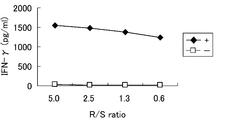
- CTL clones were established by limiting dilution from CTL lines as described in "Materials and Methods", and IFN-gamma production from CTL clones against target cells pulsed peptide were determined by IFN-gamma ELISA assay. Potent IFN-gamma productions were determined from CTL clones stimulated with SEQ ID NO: 23 in Figure 3.
- Specific CTL activity against target cells exogenously expressing CDCA1 and HLA-A*2402 The established CTL lines raised against these peptides were examined for their ability to recognize target cells that exogenously express CDCA1 and HLA-A*2402 molecule.
- Specific CTL activity against COS7 cells which transfected with both the full length of CDCA1 and HLA-A*2402 molecule gene was tested using the CTL lines raised by corresponding peptide as the effecter cells.
- COS7 cells transfected with either full length of CDCA1 genes or HLA-A* 2402 were prepared as control.
- CDCA1-A24-10-119 SEQ ID NO: 3
- CDCA1-A24-10-335 SEQ ID NO: 4
- CDCA1-A24-10-48 SEQ ID NO: 11
- CDCA1-A24-10-5 SEQ ID NO: 14
- CDCA1-A24-9-8 SEQ ID NO: 22
- CDCA1-A24-9-56 SEQ ID NO: 23
- CDCA1-A24-10-119 SEQ ID NO: 3
- CDCA1-A24-10-335 SEQ ID NO: 4
- CDCA1-A24-10-48 SEQ ID NO: 11
- CDCA1-A24-10-5 SEQ ID NO: 14
- CDCA1-A24-9-8 SEQ ID NO: 22
- CDCA1-A24-9-56 SEQ ID NO: 23
- the present invention describes new TAAs, particularly those derived from CDCA1 which induce potent and specific anti-tumor immune responses and have applicability to a wide array of cancer types.
- TAAs warrant further development as peptide vaccines against diseases associated with CDCA1, e.g. cancers, more particularly, testicular tumor, pancreatic cancer, bladder cancer, non-small cell lung cancer, small cell lung cancer and esophageal cancer.
Landscapes
- Health & Medical Sciences (AREA)
- Chemical & Material Sciences (AREA)
- Life Sciences & Earth Sciences (AREA)
- Organic Chemistry (AREA)
- Immunology (AREA)
- General Health & Medical Sciences (AREA)
- Medicinal Chemistry (AREA)
- Engineering & Computer Science (AREA)
- Genetics & Genomics (AREA)
- Veterinary Medicine (AREA)
- Pharmacology & Pharmacy (AREA)
- Public Health (AREA)
- Animal Behavior & Ethology (AREA)
- Biochemistry (AREA)
- Zoology (AREA)
- Bioinformatics & Cheminformatics (AREA)
- Proteomics, Peptides & Aminoacids (AREA)
- Biomedical Technology (AREA)
- Biophysics (AREA)
- Molecular Biology (AREA)
- Microbiology (AREA)
- Gastroenterology & Hepatology (AREA)
- Wood Science & Technology (AREA)
- Biotechnology (AREA)
- Epidemiology (AREA)
- Chemical Kinetics & Catalysis (AREA)
- Nuclear Medicine, Radiotherapy & Molecular Imaging (AREA)
- General Chemical & Material Sciences (AREA)
- Toxicology (AREA)
- Oncology (AREA)
- Mycology (AREA)
- General Engineering & Computer Science (AREA)
- Cell Biology (AREA)
- Hematology (AREA)
- Medicines Containing Antibodies Or Antigens For Use As Internal Diagnostic Agents (AREA)
- Peptides Or Proteins (AREA)
- Medicines That Contain Protein Lipid Enzymes And Other Medicines (AREA)
- Micro-Organisms Or Cultivation Processes Thereof (AREA)
- Pharmaceuticals Containing Other Organic And Inorganic Compounds (AREA)
- Medicines Containing Material From Animals Or Micro-Organisms (AREA)
Abstract
Description
Unless otherwise defined, all technical and scientific terms used herein have the same meaning as commonly understood by one of ordinary skill in the art to which the present invention belongs. However, in case of conflict, the present specification, including definitions, will control.
The words "a", "an", and "the" as used herein mean "at least one" unless otherwise specifically indicated.
To demonstrate that peptides derived from CDCA1 function as an antigen recognized by cytotoxic T lymphocytes (CTLs), peptides derived from CDCA1 (SEQ ID NO: 35) were analyzed to determine whether they were antigen epitopes restricted by HLA-A24 which are commonly encountered HLA alleles (Date Y et al., Tissue Antigens 47: 93-101, 1996; Kondo A et al., J Immunol 155: 4307-12, 1995; Kubo RT et al., J Immunol 152: 3913-24, 1994). Candidates of HLA-A24 binding peptides derived from CDCA1 were identified based on their binding affinities to HLA-A24. After in vitro stimulation of T-cells by dendritic cells (DCs) loaded with these peptides, CTLs were successfully established using each of the following peptides:
CDCA1-A24-10-119 (SEQ ID NO: 3),
CDCA1-A24-10-335 (SEQ ID NO: 4),
CDCA1-A24-10-48 (SEQ ID NO: 11),
CDCA1-A24-10-5 (SEQ ID NO: 14),
CDCA1-A24-9-8 (SEQ ID NO: 22),
and
CDCA1-A24-9-56 (SEQ ID NO: 23).
1) Alanine (A), Glycine (G);
2) Aspartic acid (D), Glutamic acid (E);
3) Aspargine (N), Glutamine (Q);
4) Arginine (R), Lysine (K);
5) Isoleucine (I), Leucine (L), Methionine (M), Valine (V);
6) Phenylalanine (F), Tyrosine (Y), Tryptophan (W);
7) Serine (S), Threonine (T); and
8) Cysteine (C), Methionine (M) (see, e.g., Creighton, Proteins 1984).
The peptides of the invention can be prepared using well known techniques. For example, the peptides can be prepared synthetically, using recombinant DNA technology or chemical synthesis. Peptide of the invention can be synthesized individually or as longer polypeptides composed of two or more peptides. The peptides can be then be isolated, i.e., purified, so as to be substantially free of other naturally occurring host cell proteins and fragments thereof, or any other chemical substances.
(i) Peptide Synthesis, Interscience, New York, 1966;
(ii) The Proteins, Vol. 2, Academic Press, New York, 1976;
(iii) Peptide Synthesis (in Japanese), Maruzen Co., 1975;
(iv) Basics and Experiment of Peptide Synthesis (in Japanese), Maruzen Co., 1985;
(v) Development of Pharmaceuticals (second volume) (in Japanese), Vol. 14 (peptide synthesis), Hirokawa, 1991;
(vi) WO99/67288; and
(vii) Barany G. & Merrifield R.B., Peptides Vol. 2, "Solid Phase Peptide Synthesis", Academic Press, New York, 1980, 100-118.
The present invention also provides a polynucleotide which encodes any of the aforementioned peptides of the present invention. These include polynucleotides derived from the natural occurring CDCA1 gene (GenBank Accession No. NM_145697 (SEQ ID NO: 34)) as well as those having a conservatively modified nucleotide sequence thereof. Herein, the phrase "conservatively modified nucleotide sequence" refers to sequences which encode identical or essentially identical amino acid sequences. Due to the degeneracy of the genetic code, a large number of functionally identical nucleic acids encode any given protein. For instance, the codons GCA, GCC, GCG, and GCU all encode the amino acid alanine. Thus, at every position where an alanine is specified by a codon, the codon can be altered to any of the corresponding codons described without altering the encoded polypeptide. Such nucleic acid variations are "silent variations," which are one species of conservatively modified variations. Every nucleic acid sequence herein which encodes a peptide also describes every possible silent variation of the nucleic acid. One of ordinary skill will recognize that each codon in a nucleic acid (except AUG, which is ordinarily the only codon for methionine, and TGG, which is ordinarily the only codon for tryptophan) can be modified to yield a functionally identical molecule. Accordingly, each silent variation of a nucleic acid that encodes a peptide is implicitly described in each disclosed sequence.
The present invention also provides antigen-presenting cells (APCs) that present complexes formed between HLA antigens and the peptides of the present invention on its surface. The APCs that are obtained by contacting the peptides of the present invention, or introducing the nucleotides encoding the peptides of the present invention in an expressible form can be derived from patients who are subject to treatment and/or prevention, and can be administered as vaccines by themselves or in combination with other drugs including the peptides of the present invention, exosomes, or cytotoxic T cells.
a: collecting APCs from a first subject:,
b: contacting with the APCs of step a, with the peptide and
c: administering the peptide-loaded APCs to a second subject.
A cytotoxic T cell induced against any of the peptides of the present invention strengthens the immune response targeting cancer cells in vivo and thus can be used as vaccines, in a fashion similar to the peptides per se. Thus, the present invention also provides isolated cytotoxic T cells that are specifically induced or activated by any of the present peptides.
The present invention also provides a composition containing nucleic acids encoding polypeptides that are capable of forming a subunit of a T cell receptor (TCR), and methods of using the same. The TCR subunits have the ability to form TCRs that confer specificity to T cells against tumor cells presenting CDCA1. By using the known methods in the art, the nucleic acids of alpha- and beta- chains as the TCR subunits of the CTL induced with one or more peptides of the present invention can be identified (WO2007/032255 and Morgan et al., J Immunol, 171, 3288 (2003)). The derivative TCRs can bind target cells displaying the CDCA1 peptide with high avidity, and optionally mediate efficient killing of target cells presenting the CDCA1 peptide in vivo and in vitro.
Since CDCA1 expression is specifically elevated in several cancer types, including breast cancer, bladder cancer, esophageal cancer, small cell lung cancer (SCLC) and non-small cell lung cancer (NSCLC) as compared with normal tissue (Cancer Res 2006 Nov 1; 66(21):10339-48, WO2005/028676, WO2005/089735, WO2006/085684, WO2007/013665, WO2007/013671), the peptides of the present invention or polynucleotides encoding the peptides can be used for the treatment and/or prophylaxis of cancer or tumor, and/or for the prevention of postoperative recurrence thereof. Thus, the present invention provides a pharmaceutical agent or a composition for treating and/or for the prophylaxis of cancer or tumor, and/or prevention of postoperative recurrence thereof, which comprises one or more of the peptides of the present invention, or polynucleotides encoding the peptides as an active ingredient. Alternatively, the present peptides can be expressed on the surface of any of the foregoing exosomes or cells, such as APCs for the use as pharmaceutical agents or compositions. In addition, the aforementioned cytotoxic T cells which target any of the peptides of the invention can also be used as the active ingredient of the present pharmaceutical agents or compositions.
(a) a peptide of the present invention,
(b) a nucleic acid encoding such a peptide as disclosed herein in an expressible form,
(c) an APC or an exosome presenting a peptide of the present invention on its surface, and
(d) a cytotoxic T cell of the present invention
in manufacturing a pharmaceutical composition or agent for treating cancer or tumor.
(a) a peptide of the present invention,
(b) a nucleic acid encoding such a peptide as disclosed herein in an expressible form,
(c) an APC or an exosome presenting a peptide of the present invention on its surface, and
(d) a cytotoxic T cells of the present invention
for use in for treating cancer or tumor.
(a) a peptide of the present invention,
(b) a nucleic acid encoding such a peptide as disclosed herein in an expressible form,
(c) an APC or an exosome presenting a peptide of the present invention on its surface, and
(d) a cytotoxic T cells of the present invention
as active ingredients.
(a) a peptide of the present invention,
(b) a nucleic acid encoding such a peptide as disclosed herein in an expressible form,
(c) an APC or an exosome presenting a peptide of the present invention on its surface, and
(d) a cytotoxic T cells of the present invention.
The peptide of the present invention can be administered directly as a pharmaceutical agent or composition, or if necessary, that has been formulated by conventional formulation methods. In the latter case, in addition to the peptides of the present invention, carriers, excipients, and such that are ordinarily used for drugs can be included as appropriate without particular limitations. Examples of such carriers are sterilized water, physiological saline, phosphate buffer, culture fluid and such. Furthermore, the pharmaceutical agents or compositions can contain as necessary, stabilizers, suspensions, preservatives, surfactants and such. The pharmaceutical agents or compositions of the present invention can be used for anticancer purposes.
The pharmaceutical agents or compositions of the present invention can also contain nucleic acids encoding the peptides disclosed herein in an expressible form. Herein, the phrase "in an expressible form" means that the polynucleotide, when introduced into a cell, will be expressed in vivo as a polypeptide that induces anti-tumor immunity. In an exemplified embodiment, the nucleic acid sequence of the polynucleotide of interest includes regulatory elements necessary for expression of the polynucleotide. The polynucleotide(s) can be equipped so to achieve stable insertion into the genome of the target cell (see, e.g., Thomas KR & Capecchi MR, Cell 1987, 51: 503-12 for a description of homologous recombination cassette vectors). See, e.g., Wolff et al., Science 1990, 247: 1465-8; U.S. Patent Nos. 5,580,859; 5,589,466; 5,804,566; 5,739,118; 5,736,524; 5,679,647; and WO 98/04720. Examples of DNA-based delivery technologies include "naked DNA", facilitated (bupivacaine, polymers, peptide-mediated) delivery, cationic lipid complexes, and particle-mediated ("gene gun") or pressure-mediated delivery (see, e.g., U.S. Patent No. 5,922,687).
The peptides of the present invention and polynucleotides encoding such peptides can be used for inducing APCs and CTLs. The exosomes and APCs of the present invention can be also used for inducing CTLs. The peptides, polynucleotides, exosomes and APCs can be used in combination with any other compounds so long as the compounds do not inhibit their CTL inducibility. Thus, any of the aforementioned pharmaceutical agents or compositions of the present invention can be used for inducing CTLs, and in addition thereto, those including the peptides and polynucleotides can be also be used for inducing APCs as discussed below.
The present invention provides methods of inducing APCs using the peptides of the present invention or polynulceotides encoding the peptides. The induction of APCs can be performed as described above in section "VI. Antigen-presenting cells". The present invention also provides a method for inducing APCs having a high level of CTL inducibility, the induction of which has been also mentioned under the item of "VI. Antigen-presenting cells", supra.
Furthermore, the present invention provides methods for inducing CTLs using the peptides of the present invention, polynucleotides encoding the peptides, exosomes or APCs presenting the peptides. The present invention also provides methods for inducing CTLs using a polynucleotide encoding a polypeptide that is capable of forming a T cell receptor (TCR) subunit recognizing a complex of the peptides of the present invention and HLA antigens. Preferably, the methods for inducing CTLs comprise at least one step selected from the group consisting of:
a: contacting a CD8-positive T cell with an antigen-presenting cell and/or an exosome that presents on its surface a complex of an HLA antigen and the peptide of the present invention, and
b: introducing a polynucleotide encoding a polypeptide that is capable of forming a TCR subunit recognizing a complex of the peptide of the present invention and an HLA antigen into a CD8 positive T cell.
a: collecting APCs from subject:,
b: contacting with the APCs of step a, with the peptide:,
c: mixing the APCs of step b with CD8+ T cells, and co-culturing for inducing CTLs: and
d: collecting CD8+ T cells from the co-culture of step c.
Cell lines
A24 lymphoblastoid cell line (A24LCL) cells were established by transformation with Epstein-bar virus into HLA-A24 positive human B lymphocyte.
9-mer and 10-mer peptides derived from CDCA1 that bind to HLA-A*2402 were predicted using binding prediction software "BIMAS" (http://www-bimas.cit.nih.gov/molbio/hla_bind), which algorithms had been described by Parker KC et al.(J Immunol 1994, 152(1): 163-75) and Kuzushima K et al.(Blood 2001, 98(6): 1872-81). These peptides were synthesized by American Peptide Company Inc. (Sunnyvale, CA) according to a standard solid phase synthesis method and purified by reversed phase high performance liquid chromatography (HPLC). The purity (>90%) and the identity of the peptides were determined by analytical HPLC and mass spectrometry analysis, respectively. Peptides were dissolved in dimethylsulfoxide (DMSO) at 20 mg/ml and stored at -80 degrees C.
Monocyte-derived dendritic cells (DCs) were used as antigen-presenting cells (APCs) to induce cytotoxic T lymphocyte (CTL) responses against peptides presented on human leukocyte antigen (HLA). DCs were generated in vitro as described elsewhere (Nakahara S et al., Cancer Res 2003 Jul 15, 63(14): 4112-8). Specifically, peripheral blood mononuclear cells (PBMCs) isolated from a normal volunteer (HLA-A*2402 positive) by Ficoll-Plaque (Pharmacia) solution were separated by adherence to a plastic tissue culture dish (Becton Dickinson) so as to enrich them as the monocyte fraction. The monocyte-enriched population was cultured in the presence of 1000 U/ml of granulocyte-macrophage colony-stimulating factor (GM-CSF) (R&D System) and 1000 U/ml of interleukin (IL)-4 (R&D System) in AIM-V Medium (Invitrogen) containing 2% heat-inactivated autologous serum (AS). After 7 days of culture, the cytokine-induced DCs were pulsed with 20 micro g/ml of each of the synthesized peptides in the presence of 3 micro g/ml of beta 2-microglobulin for 3 hr at 37 degrees C in AIM-V Medium. The generated cells appeared to express DC-associated molecules, such as CD80, CD83, CD86 and HLA class II, on their cell surfaces (data not shown). These peptide-pulsed DCs were then inactivated by Mitomycin C (MMC) (30 micro g/ml for 30 min) and mixed at a 1:20 ratio with autologous CD8+ T cells, obtained by positive selection with CD8 Positive Isolation Kit (Dynal). These cultures were set up in 48-well plates (Corning); each well contained 1.5 x 10⁴ peptide-pulsed DCs, 3 x 10⁵ CD8+ T cells and 10 ng/ml of IL-7 (R&D System) in 0.5 ml of AIM-V/2% AS medium. Three days later, these cultures were supplemented with IL-2 (CHIRON) to a final concentration of 20 IU/ml. On
CTLs were expanded in culture using the method similar to the one described by Riddell et al. (Walter EA et al., N Engl J Med 1995 Oct 19, 333(16): 1038-44; Riddell SR et al., Nat Med 1996 Feb, 2(2): 216-23). A total of 5 x 10⁴ CTLs were suspended in 25 ml of AIM-V/5% AS medium with 2 kinds of human B-lymphoblastoid cell lines, inactivated by MMC, in the presence of 40 ng/ml of anti-CD3 monoclonal antibody (Pharmingen). One day after initiating the cultures, 120 IU/ml of IL-2 were added to the cultures. The cultures were fed with fresh AIM-V/5% AS medium containing 30 IU/ml of IL-2 on
The dilutions were made to have 0.3, 1, and 3 CTLs/ well in 96 round-bottomed micro titer plate (Nalge Nunc International). CTLs were cultured with 1 x 10⁴ cells/ well of 2 kinds of human B-lymphoblastoid cell lines, 30ng/ml of anti-CD3 antibody, and 125 U/ml of IL-2 in a total of 150 micro l/ well of AIM-V Medium containing 5%AS. 50 micro l / well of IL-2 were added to the medium 10 days later so to reach a final concentration of 125 U/ml IL-2. CTL activity was tested on the 14th day, and CTL clones were expanded using the same method as described above (Uchida N et al., Clin Cancer Res 2004 Dec 15, 10(24): 8577-86; Suda T et al., Cancer Sci 2006 May, 97(5): 411-9; Watanabe T et al., Cancer Sci 2005 Aug, 96(8): 498-506).
To examine specific CTL activity, interferon (IFN)-gamma enzyme-linked immunospot (ELISPOT) assay and IFN-gamma enzyme-linked immunosorbent assay (ELISA) were performed. Specifically, peptide-pulsed A24LCL (1 x 10⁴/well) was prepared as stimulator cells. Cultured cells in 48 wells were used as responder cells. IFN-gamma ELISPOT assay and IFN-gamma ELISA assay were performed under manufacture procedure.
The cDNA encoding an open reading frame of target genes or HLA-A24 was amplified by PCR. The PCR-amplified product was cloned into pCAGGS vector. The plasmids were transfected into COS7, which is the target genes and HLA-A24-null cell line, using lipofectamine 2000 (Invitrogen) according to the manufacturer's recommended procedures. After 2days from transfection, the transfected cells were harvested with versene (Invitrogen) and used as the target cells (5 x 10⁴ cells/ well) for CTL activity assay.
Prediction of HLA-A24 binding peptides derived from CDCA1
Table 1 shows the HLA-A*2402 binding peptides of CDCA1 in order of highest binding affinity. A total of 40 peptides having potential HLA-A24 binding ability were selected and examined to determine the epitope peptides.

Binding score is derived from "BIMAS".
CTLs for those peptides derived from CDCA1 were generated according to the protocols as described in "Materials and Methods". Peptide specific CTL activity was determined by IFN-gamma ELISPOT assay (Figure 1a-f). It showed that CDCA1-A24-10-119 (SEQ ID NO: 3), CDCA1-A24-10-335 (SEQ ID NO: 4), CDCA1-A24-10-48 (SEQ ID NO: 11), CDCA1-A24-10-5 (SEQ ID NO: 14), CDCA1-A24-9-8 (SEQ ID NO: 22) and CDCA1-A24-9-56 (SEQ ID NO: 23) demonstrated potent IFN-gamma production as compared to the control wells. Furthermore, the cells in the positive well number #8 stimulated with CDCA1-A24-10-119 (SEQ ID NO: 3), #1 with CDCA1-A24-10-335 (SEQ ID NO: 4), #1 with CDCA1-A24-10-48 (SEQ ID NO: 11), #4 with CDCA1-A24-10-5 (SEQ ID NO: 14), #2 with CDCA1-A24-9-8 (SEQ ID NO: 22) and #2 with CDCA1-A24-9-56 (SEQ ID NO: 23) were expanded and established CTL lines. CTL activity of those CTL lines was determined by IFN-gamma ELISA assay (Figure 2a-f). It showed that all CTL lines demonstrated potent IFN-gamma production against the target cells pulsed with corresponding peptide as compared to target cells without peptide pulse. On the other hand, no CTL lines could be established by stimulation with other peptides, despite the peptides had possible binding activity with HLA-A*2402. For example, typical negative data of CTL response stimulated with CDCA1-A24-10-74 (SEQ ID NO: 2) was shown in Figure 1g and Figure 2g. The results herein indicate that six peptides derived from CDCA1 have ability to induce potent CTL lines.
CTL clones were established by limiting dilution from CTL lines as described in "Materials and Methods", and IFN-gamma production from CTL clones against target cells pulsed peptide were determined by IFN-gamma ELISA assay. Potent IFN-gamma productions were determined from CTL clones stimulated with SEQ ID NO: 23 in Figure 3.
The established CTL lines raised against these peptides were examined for their ability to recognize target cells that exogenously express CDCA1 and HLA-A*2402 molecule. Specific CTL activity against COS7 cells which transfected with both the full length of CDCA1 and HLA-A*2402 molecule gene (a specific model for the target cells that exogenously express CDCA1 and HLA-A*2402 gene) was tested using the CTL lines raised by corresponding peptide as the effecter cells. COS7 cells transfected with either full length of CDCA1 genes or HLA-A* 2402 were prepared as control. In Figure 4, the CTLs stimulated with SEQ ID NO: 23 showed potent CTL activity against COS7 cells expressing both CDCA1 and HLA-A* 2402. On the other hand, no significant specific CTL activity was detected against the controls. Thus, these data clearly demonstrate that the peptide having the amino acid sequence of SEQ ID NO: 23 is naturally presented on the target cells with HLA-A*2402 molecule and is recognized by the CTLs. The results indicate that this peptide derived from CDCA1 may be applicable for cancer immunotherapy, particularly as a cancer vaccine for patients with CDCA1 expressing tumors.
The CTLs stimulated with CDCA1-A24-10-119 (SEQ ID NO: 3), CDCA1-A24-10-335 (SEQ ID NO: 4), CDCA1-A24-10-48 (SEQ ID NO: 11), CDCA1-A24-10-5 (SEQ ID NO: 14), CDCA1-A24-9-8 (SEQ ID NO: 22) and CDCA1-A24-9-56 (SEQ ID NO: 23)showed significant and specific CTL activity. This result may be due to the fact that the sequences of CDCA1-A24-10-119 (SEQ ID NO: 3), CDCA1-A24-10-335 (SEQ ID NO: 4), CDCA1-A24-10-48 (SEQ ID NO: 11), CDCA1-A24-10-5 (SEQ ID NO: 14), CDCA1-A24-9-8 (SEQ ID NO: 22) and CDCA1-A24-9-56 (SEQ ID NO: 23) are homologous to peptides derived from other molecules that are known to sensitize the human immune system. To exclude this possibility, homology analyses were performed for these peptide sequences using as queries the BLAST algorithm (http://www.ncbi.nlm.nih.gov/blast/blast.cgi) which revealed no sequences with significant homology. The results of homology analyses indicate that the sequences of CDCA1-A24-10-119 (SEQ ID NO: 3), CDCA1-A24-10-335 (SEQ ID NO: 4), CDCA1-A24-10-48 (SEQ ID NO: 11), CDCA1-A24-10-5 (SEQ ID NO: 14), CDCA1-A24-9-8 (SEQ ID NO: 22) and CDCA1-A24-9-56 (SEQ ID NO: 23) are unique and thus, there is little possibility that these molecules raise unintended immunologic responses to some unrelated molecules.
Claims (19)
- An isolated peptide having cytotoxic T lymphocyte (CTL) inducibility, wherein the peptide comprises the amino acid sequence of SEQ ID NO: 35 or fragment thereof.
- The isolated peptide of claim 1, wherein the peptide is nonapeptide or decapeptide.
- The isolated peptide of claim 1 or 2, wherein the peptide comprises an amino acid sequence selected from the group consisting of:
(a) SEQ ID NO: 3, 4, 11, 14, 22 and 23; and
(b) SEQ ID NO: 3, 4, 11, 14, 22 and 23, wherein 1, 2, or several amino acids are substituted, inserted, deleted or added. - The isolated peptide of claim 1 to 3 having one or both of the following characteristics:
(a) the second amino acid from the N-terminus of the amino acid sequence of said SEQ ID NOs is or is modified to be an amino acid selected from the group consisting of phenylalanine, tyrosine, methionine and tryptophan, and
(b) the C-terminal amino acid of the amino acid sequence of said SEQ ID NOs is or is modified to be selected from the group consisting of phenylalanine, leucine, isoleucine, tryptophan and methionine. - An isolated polynucleotide encoding a peptide of any one of claims 1 to 4.
- A method for inducing an antigen-presenting cell with high CTL inducibility by using a peptide as set forth in any one of claims 1 to 4, and/or a polynucleotide as set forth in claim 5.
- The method of claim 6, wherein said method comprises one or both of the following steps:
(a) contacting an antigen-presenting cell with a peptide as set forth in any one of claims 1 to 4, and
(b) introducing a polynucleotide as set forth in claim 5 into an antigen-presenting cell. - An isolated antigen-presenting cell that presents a peptide of any one as set forth in claims 1 to 4 on its surface.
- The antigen-presenting cell of claim 8, wherein said cell is induced by the method of claim 6 or 7.
- A method for inducing a CTL by using:
(a) a peptide as set forth in any one of claims 1 to 4;
(b) a polynucleotide as set forth in claim 5;
(c) an antigen-presenting cell and/or an exosome that presents a peptide of any one as set forth in claims 1 to 4 on its surface;
(d) a polynucleotide encoding a polypeptide that is capable of forming a T cell receptor (TCR) subunit recognizing a complex of a peptide as set forth in any one of claim 1 to 4 and an HLA antigen; or
(e) combinations thereof. - The method of claim 10, wherein said method comprises at least one step selected from the group consisting of:
(a) contacting a CD8-positive T cell with an antigen-presenting cell and/or an exosome that presents a peptide as set forth in any one of claims 1 to 4 on its surface, and
(b) introducing a polynucleotide encoding a polypeptide that is capable of forming a T cell receptor (TCR) subunit recognizing a complex of a peptide as set forth in any one of claim 1 to 4 and an HLA antigen into a CD8-positive T cell. - An agent for inducing a CTL, wherein said agent comprises an active ingredient selected from the group consisting of:
(a) a peptide as set forth in any one of claims 1 to 4;
(b) a polynucleotide as set forth in claim 5;
(c) an antigen-presenting cell and/or an exosome that presents a peptide as set forth in any one of claims 1 to 4 on its surface; and
(d) combinations thereof. - An isolated CTL which targets any one of the peptides of claims 1 to 4.
- An isolated CTL that is induced by using the method of claims 10 or 11.
- A pharmaceutical agent comprising an active ingredient selected from the group consisting of:
(a) at least one peptide as set forth in any one of claims 1 to 4;
(b) at least one polynucleotide as set forth in claim 5;
(c) an antigen-presenting cell and/or an exosome that presents at least one peptide as set forth in any one of claims 1 to 4 on its surface;
(d) a CTL as set fort in claim 13 or 14; and
(e) combinations thereof,
in combination with a pharmacologically acceptable carrier formulated for a purpose selected from the group consisting of:
(i) treatment of a cancer;
(ii) prophylaxis of a cancer;
(iii) prevention of postoperative recurrence of a cancer; and
(iv) combinations thereof. - A method of inducing an immune response against cancer in a subject, said method comprising the step of administering to said subject:
(a) a peptide as set forth in any one of claims 1 to 4;
(b) a polynucleotide as set forth in claim 5;
(c) an antigen-presenting cell and/or an exosome that presents a peptide as set forth in any one of claims 1 to 4 on its surface;
(d) a CTL as set fort in claim 13 or 14; or
(e) combinations thereof. - A vaccine for inducing anti tumor immunity in a subject, said vaccine comprising an active ingredient selected from the group consisting of:
(a) a peptide as set forth in any one of claims 1 to 4;
(b) a polynucleotide as set forth in claim 5;
(c) an antigen-presenting cell and/or an exosome that presents a peptide as set forth in any one of claims 1 to 4 on its surface;
(d) a CTL as set fort in claim 13 or 14; and
(e) combinations thereof. - The pharmaceutical agent of claim 15 or the vaccine of claim 17, which is formulated for the administration to a subject whose HLA antigen is HLA-A24.
- The method of claim 16, wherein the HLA antigen of the subject is HLA-A24.
Priority Applications (15)
| Application Number | Priority Date | Filing Date | Title |
|---|---|---|---|
| RU2011101709/10A RU2502740C2 (en) | 2008-06-19 | 2009-06-18 | Cdca1 epitope peptides and vaccines containing same |
| JP2010549745A JP5640262B2 (en) | 2008-06-19 | 2009-06-18 | CDCA1 epitope peptide and vaccine containing the same |
| US12/999,051 US9387238B2 (en) | 2008-06-19 | 2009-06-18 | CDCA1 epitope peptides and vaccines containing the same |
| CN200980131202.7A CN102119171B (en) | 2008-06-19 | 2009-06-18 | CDCA1 epitope peptides and vaccines containing the same |
| AU2009261382A AU2009261382B2 (en) | 2008-06-19 | 2009-06-18 | CDCA1 epitope peptides and vaccines containing the same |
| ES09766440.3T ES2658842T3 (en) | 2008-06-19 | 2009-06-18 | CDCA1 epitope peptides and vaccines containing them |
| KR1020117000740A KR101705011B1 (en) | 2008-06-19 | 2009-06-18 | Cdca1 epitope peptides and vaccines containing the same |
| MX2010014044A MX2010014044A (en) | 2008-06-19 | 2009-06-18 | Cdca1 epitope peptides and vaccines containing the same. |
| CA2728268A CA2728268C (en) | 2008-06-19 | 2009-06-18 | Cdca1 epitope peptides and vaccines containing the same |
| DK09766440.3T DK2303912T3 (en) | 2008-06-19 | 2009-06-18 | CDCA1 EPITOPPEPTIDES AND VACCINES CONTAINING THESE |
| BRPI0914782-9A BRPI0914782B1 (en) | 2008-06-19 | 2009-06-18 | IN VITRO METHODS FOR INDUCTION OF A CYTOTOXIC T ANTIGEN AND LYMPHOCYTE PRESENTING CELL, INDUCTION AGENT, PHARMACEUTICAL AGENT, VACCINE AND USE |
| EP09766440.3A EP2303912B1 (en) | 2008-06-19 | 2009-06-18 | Cdca1 epitope peptides and vaccines containing the same |
| KR1020167027024A KR20160119264A (en) | 2008-06-19 | 2009-06-18 | Cdca1 epitope peptides and vaccines containing the same |
| IL209967A IL209967A (en) | 2008-06-19 | 2010-12-13 | Peptides having an ability to induce a cytotoxic t lymphocyte (ctl), pharmaceutical compositions and their uses and in vitro methods for inducing ctl |
| US15/176,444 US10711047B2 (en) | 2008-06-19 | 2016-06-08 | CDCA1 epitope peptides and vaccines containing the same |
Applications Claiming Priority (4)
| Application Number | Priority Date | Filing Date | Title |
|---|---|---|---|
| US7406208P | 2008-06-19 | 2008-06-19 | |
| US61/074,062 | 2008-06-19 | ||
| US19759908P | 2008-10-28 | 2008-10-28 | |
| US61/197,599 | 2008-10-28 |
Related Child Applications (2)
| Application Number | Title | Priority Date | Filing Date |
|---|---|---|---|
| US12/999,051 A-371-Of-International US9387238B2 (en) | 2008-06-19 | 2009-06-18 | CDCA1 epitope peptides and vaccines containing the same |
| US15/176,444 Division US10711047B2 (en) | 2008-06-19 | 2016-06-08 | CDCA1 epitope peptides and vaccines containing the same |
Publications (1)
| Publication Number | Publication Date |
|---|---|
| WO2009153992A1 true WO2009153992A1 (en) | 2009-12-23 |
Family
ID=41433910
Family Applications (1)
| Application Number | Title | Priority Date | Filing Date |
|---|---|---|---|
| PCT/JP2009/002771 Ceased WO2009153992A1 (en) | 2008-06-19 | 2009-06-18 | Cdca1 epitope peptides and vaccines containing the same |
Country Status (16)
| Country | Link |
|---|---|
| US (2) | US9387238B2 (en) |
| EP (1) | EP2303912B1 (en) |
| JP (1) | JP5640262B2 (en) |
| KR (2) | KR101705011B1 (en) |
| CN (1) | CN102119171B (en) |
| AU (1) | AU2009261382B2 (en) |
| BR (1) | BRPI0914782B1 (en) |
| CA (1) | CA2728268C (en) |
| DK (1) | DK2303912T3 (en) |
| ES (1) | ES2658842T3 (en) |
| IL (1) | IL209967A (en) |
| MX (1) | MX2010014044A (en) |
| RU (1) | RU2502740C2 (en) |
| SG (1) | SG191680A1 (en) |
| TW (1) | TWI526219B (en) |
| WO (1) | WO2009153992A1 (en) |
Cited By (11)
| Publication number | Priority date | Publication date | Assignee | Title |
|---|---|---|---|---|
| US20130045191A1 (en) * | 2010-03-19 | 2013-02-21 | Immatics Biotechnologies Gmbh | Novel immunotherapy against several tumors including gastrointestinal and gastric cancer |
| WO2013133405A1 (en) | 2012-03-09 | 2013-09-12 | オンコセラピー・サイエンス株式会社 | Pharmaceutical composition containing peptide |
| US8598125B2 (en) | 2007-08-20 | 2013-12-03 | Onco Therapy Science, Inc. | CDCA1 peptide and pharmaceutical agent comprising the same |
| WO2014010229A1 (en) * | 2012-07-10 | 2014-01-16 | Oncotherapy Science, Inc. | Cdca1 epitope peptides for th1 cells and vaccines containing the same |
| WO2015018805A1 (en) * | 2013-08-05 | 2015-02-12 | Immatics Biotechnologies Gmbh | Novel immunotherapy against several tumors, such as lung cancer, including nsclc |
| WO2016021508A1 (en) * | 2014-08-04 | 2016-02-11 | オンコセラピー・サイエンス株式会社 | Cdca1-derived peptide and vaccine containing same |
| US9387238B2 (en) | 2008-06-19 | 2016-07-12 | Oncotherapy Science, Inc. | CDCA1 epitope peptides and vaccines containing the same |
| US10160786B1 (en) | 2013-08-05 | 2018-12-25 | Immatics Biotechnologies Gmbh | Immunotherapy against several tumors, such as lung cancer, including NSCLC |
| WO2020027239A1 (en) | 2018-08-02 | 2020-02-06 | オンコセラピー・サイエンス株式会社 | Cdca1-derived peptide and vaccine containing same |
| US12466867B2 (en) | 2018-02-21 | 2025-11-11 | Board Of Regents, The University Of Texas System | Methods for activation and expansion of natural killer cells and uses thereof |
| US12491229B2 (en) | 2014-11-18 | 2025-12-09 | Shionogi & Co., Ltd. | Stabilized peptide composition |
Families Citing this family (3)
| Publication number | Priority date | Publication date | Assignee | Title |
|---|---|---|---|---|
| EP2311985A1 (en) | 2005-07-27 | 2011-04-20 | Oncotherapy Science, Inc. | Sirna for treating esophageal cancer |
| GB201004575D0 (en) * | 2010-03-19 | 2010-05-05 | Immatics Biotechnologies Gmbh | Composition of tumor associated peptides and related anti cancer vaccine for the treatment of gastric cancer and other cancers |
| CN104080797A (en) * | 2011-11-11 | 2014-10-01 | 弗雷德哈钦森癌症研究中心 | T cell immunotherapy targeting cyclin A1 against cancer |
Citations (5)
| Publication number | Priority date | Publication date | Assignee | Title |
|---|---|---|---|---|
| WO1999003499A1 (en) | 1997-07-16 | 1999-01-28 | Institut National De La Sante Et De La Recherche Medicale | Cellular vesicle called ''exosome'', preparation and use thereof in immune stimulation |
| JPH11510507A (en) | 1995-08-03 | 1999-09-14 | リュークスウニベルジテート トゥ ライデン | Cell-derived antigen-presenting vesicles |
| WO1999067288A1 (en) | 1998-06-25 | 1999-12-29 | Sumitomo Pharmaceuticals Company, Limited | Tumor antigen peptides originating in cyclophilin b |
| WO2004024766A1 (en) * | 2002-09-12 | 2004-03-25 | Oncotherapy Science, Inc. | Kdr peptides and vaccines containing the same |
| WO2009025117A1 (en) * | 2007-08-20 | 2009-02-26 | Oncotherapy Science, Inc. | Cdca1 peptide and pharmaceutical agent comprising the same |
Family Cites Families (33)
| Publication number | Priority date | Publication date | Assignee | Title |
|---|---|---|---|---|
| WO1998053071A1 (en) | 1997-05-23 | 1998-11-26 | Biogen, Inc. | Modulators of tissue regeneration |
| US6800744B1 (en) | 1997-07-02 | 2004-10-05 | Genome Therapeutics Corporation | Nucleic acid and amino acid sequences relating to Streptococcus pneumoniae for diagnostics and therapeutics |
| US7157091B1 (en) * | 1999-06-18 | 2007-01-02 | Ludwig Institute For Cancer Research | MAGE-A1 peptides presented by HLA class II molecules |
| JP2004500029A (en) | 1999-06-30 | 2004-01-08 | コリクサ コーポレイション | Compositions and methods for treatment and diagnosis of lung cancer |
| US20020172952A1 (en) | 1999-06-30 | 2002-11-21 | Corixa Corporation | Compositions and methods for the therapy and diagnosis of lung cancer |
| US20030170255A1 (en) * | 1999-06-30 | 2003-09-11 | Corixa Corporation | Compositions and methods for the therapy and diagnosis of lung cancer |
| US20030211510A1 (en) | 1999-06-30 | 2003-11-13 | Corixa Corporation | Compositions and methods for the therapy and diagnosis of lung cancer |
| US6858204B2 (en) | 1999-06-30 | 2005-02-22 | Corxia Corporation | Compositions and methods for the therapy and diagnosis of lung cancer |
| CA2384713A1 (en) | 1999-09-29 | 2001-04-05 | Human Genome Sciences, Inc. | Colon and colon cancer associated polynucleotides and polypeptides |
| US6432966B2 (en) | 1999-10-29 | 2002-08-13 | Smithkline Beecham Corporation | Antiviral combinations |
| US7026443B1 (en) * | 1999-12-10 | 2006-04-11 | Epimmune Inc. | Inducing cellular immune responses to human Papillomavirus using peptide and nucleic acid compositions |
| WO2002004514A2 (en) | 2000-07-11 | 2002-01-17 | Corixa Corporation | Compositions and methods for the therapy and diagnosis of lung cancer |
| US7214786B2 (en) | 2000-12-14 | 2007-05-08 | Kovalic David K | Nucleic acid molecules and other molecules associated with plants and uses thereof for plant improvement |
| US6867283B2 (en) | 2001-05-16 | 2005-03-15 | Technion Research & Development Foundation Ltd. | Peptides capable of binding to MHC molecules, cells presenting such peptides, and pharmaceutical compositions comprising such peptides and/or cells |
| WO2003025010A2 (en) | 2001-09-17 | 2003-03-27 | Eirx Therapeutics Limited | Human delta-n p73 molecules and uses thereof |
| US7892559B2 (en) | 2002-01-30 | 2011-02-22 | Survac Aps | Survivin-derived peptides and use thereof |
| AU2003250831A1 (en) | 2002-06-12 | 2003-12-31 | Max-Planck-Gesellschaft Zur Forderung Der Wissenschaften E.V. | Use of hec1 antagonists in the treatment of proliferative disorders and cancer |
| US20060024692A1 (en) | 2002-09-30 | 2006-02-02 | Oncotherapy Science, Inc. | Method for diagnosing non-small cell lung cancers |
| TW200413725A (en) | 2002-09-30 | 2004-08-01 | Oncotherapy Science Inc | Method for diagnosing non-small cell lung cancers |
| CA2500982A1 (en) | 2002-09-30 | 2004-04-15 | Oncotherapy Science, Inc. | Method for diagnosing testicular seminomas |
| CA2500521A1 (en) | 2002-10-02 | 2004-09-23 | Nuvelo, Inc. | Novel nucleic acids and polypeptides |
| AU2003300680A1 (en) | 2002-12-10 | 2004-07-09 | Centre National De La Recherche Scientifique Cnrs | Thap proteins as nuclear receptors for chemokines and roles in transcriptional regulation, cell proliferation and cell differentiation |
| WO2005029067A2 (en) | 2003-09-24 | 2005-03-31 | Oncotherapy Science, Inc. | Method of diagnosing breast cancer |
| EP2336778A1 (en) | 2004-03-24 | 2011-06-22 | Oncotherapy Science, Inc. | Compositions and methods for treating lung cancer |
| CN101175862A (en) | 2005-02-10 | 2008-05-07 | 肿瘤疗法科学股份有限公司 | Ways to Diagnose Bladder Cancer |
| EP2311985A1 (en) | 2005-07-27 | 2011-04-20 | Oncotherapy Science, Inc. | Sirna for treating esophageal cancer |
| EP2295570A1 (en) | 2005-07-27 | 2011-03-16 | Oncotherapy Science, Inc. | Method of diagnosing small cell lung cancer |
| EP1915622A2 (en) | 2005-07-29 | 2008-04-30 | Oncotherapy Science, Inc. | Screening and therapeutic method for nsclc targeting cdca1-kntc2 complex |
| US7776341B2 (en) | 2006-08-10 | 2010-08-17 | Colorado State University Research Foundation | Biomarkers of tuberculosis that distinguish disease categories: use as serodiagnostic antigens |
| CN101827936B (en) | 2007-08-20 | 2014-12-10 | 肿瘤疗法科学股份有限公司 | CDH3 peptide and agent containing CDH3 peptide |
| TWI526219B (en) | 2008-06-19 | 2016-03-21 | 腫瘤療法 科學股份有限公司 | Cdca1 epitope peptides and vaccines containing the same |
| WO2011030329A1 (en) | 2009-09-10 | 2011-03-17 | Yissum Research Development Company Of The Hebrew University Of Jerusalem Ltd. | Method of treating tumors |
| EP2872532A4 (en) * | 2012-07-10 | 2016-04-13 | Oncotherapy Science Inc | PEPTIDES EPITAOPES OF CDCA1 FOR TH1 CELLS AND VACCINES CONTAINING THEM |
-
2009
- 2009-06-17 TW TW098120220A patent/TWI526219B/en active
- 2009-06-18 CN CN200980131202.7A patent/CN102119171B/en active Active
- 2009-06-18 ES ES09766440.3T patent/ES2658842T3/en active Active
- 2009-06-18 CA CA2728268A patent/CA2728268C/en active Active
- 2009-06-18 SG SG2013046503A patent/SG191680A1/en unknown
- 2009-06-18 RU RU2011101709/10A patent/RU2502740C2/en active
- 2009-06-18 JP JP2010549745A patent/JP5640262B2/en active Active
- 2009-06-18 KR KR1020117000740A patent/KR101705011B1/en active Active
- 2009-06-18 BR BRPI0914782-9A patent/BRPI0914782B1/en active IP Right Grant
- 2009-06-18 US US12/999,051 patent/US9387238B2/en active Active
- 2009-06-18 DK DK09766440.3T patent/DK2303912T3/en active
- 2009-06-18 AU AU2009261382A patent/AU2009261382B2/en active Active
- 2009-06-18 KR KR1020167027024A patent/KR20160119264A/en not_active Ceased
- 2009-06-18 EP EP09766440.3A patent/EP2303912B1/en active Active
- 2009-06-18 WO PCT/JP2009/002771 patent/WO2009153992A1/en not_active Ceased
- 2009-06-18 MX MX2010014044A patent/MX2010014044A/en active IP Right Grant
-
2010
- 2010-12-13 IL IL209967A patent/IL209967A/en active IP Right Grant
-
2016
- 2016-06-08 US US15/176,444 patent/US10711047B2/en active Active
Patent Citations (5)
| Publication number | Priority date | Publication date | Assignee | Title |
|---|---|---|---|---|
| JPH11510507A (en) | 1995-08-03 | 1999-09-14 | リュークスウニベルジテート トゥ ライデン | Cell-derived antigen-presenting vesicles |
| WO1999003499A1 (en) | 1997-07-16 | 1999-01-28 | Institut National De La Sante Et De La Recherche Medicale | Cellular vesicle called ''exosome'', preparation and use thereof in immune stimulation |
| WO1999067288A1 (en) | 1998-06-25 | 1999-12-29 | Sumitomo Pharmaceuticals Company, Limited | Tumor antigen peptides originating in cyclophilin b |
| WO2004024766A1 (en) * | 2002-09-12 | 2004-03-25 | Oncotherapy Science, Inc. | Kdr peptides and vaccines containing the same |
| WO2009025117A1 (en) * | 2007-08-20 | 2009-02-26 | Oncotherapy Science, Inc. | Cdca1 peptide and pharmaceutical agent comprising the same |
Non-Patent Citations (37)
| Title |
|---|
| "Abstract of the 66th Annual Meeting of the Japanese Cancer Association, 2007", article HARAO, MICHIKO ET AL.: "CDCA1, a novel cancer-testis antigen useful for immunotherapy of lung cancer", pages: 163 - 164P-294, XP008143000 * |
| "Basics and Experiment of Peptide Synthesis", 1985, MARUZEN CO. |
| "Development of Pharmaceuticals", vol. 14, 1991, HIROKAWA, article "peptide synthesis" |
| "Peptide Synthesis", 1966, INTERSCIENCE |
| "Peptide Synthesis", 1975, MARUZEN CO. |
| "The Proteins", vol. 2, 1976, ACADEMIC PRESS |
| BARANY G.; MERRIFIELD R.B.: "Peptides", vol. 2, 1980, ACADEMIC PRESS, article "Solid Phase Peptide Synthesis", pages: 100 - 118 |
| BELLI F ET AL., J CLIN ONCOL, vol. 20, no. 20, 15 October 2002 (2002-10-15), pages 4169 - 80 |
| BENMOHAMED L; KRISHNAN R; LONGMATE J; AUGE C; LOW L; PRIMUS J; DIAMOND DJ, HUM IMM NOL, vol. 61, no. 8, August 2000 (2000-08-01), pages 764 - 79 |
| BOON T, INT J CANCER, vol. 54, no. 2, 8 May 1993 (1993-05-08), pages 177 - 80 |
| BOON T; VAN DER BRUGGEN P, J EXP MED, vol. 183, no. 3, 1 March 1996 (1996-03-01), pages 725 - 9 |
| BUTTERFIELD LH ET AL., CANCER RES, vol. 59, no. 13, 1 July 1999 (1999-07-01), pages 3134 - 42 |
| CLARK-CURTISS; CURTISS ET AL.: "Methods in Enzymology", vol. 101, 1983 |
| COULIE PG ET AL., IMMUNOL REV, vol. 8, 18 October 2002 (2002-10-18), pages 33 - 42 |
| FUJIE T ET AL., INT J CANCER, vol. 80, no. 2, 18 January 1999 (1999-01-18), pages 169 - 72 |
| HARAO, MICHIKO ET AL.: "Abstract of the 12th Annual Meeting of the Society for Fundamental Cancer Immunology", 13 June 2008, article "CDCA1, a novel cancer-testis antigen useful for immunotherapy of lung cancer", pages: 34, XP008141154 * |
| HARAO, MICHIKO ET AL.: "CDCA1, a novel cancer-testis antigen useful for immunotherapy of lung cancer", J. JAPAN SURGICAL SOCIETY, vol. 109, no. SUPP.2, 25 April 2008 (2008-04-25), pages 282, XP008141138 * |
| HARAO, MICHIKO ET AL.: "HLA-A2-restricted CTL epitopes of a novel lung cancer-associated cancer testis antigen, cell division cycle associated 1, can induce tumor-reactive CTL", INT. J. CANCER., vol. 123, no. 11, December 2008 (2008-12-01), pages 2616 - 2625, XP002602450 * |
| HARAO, MICHIKO: "Cell division cycle associated 1, an ideal lung cancer antigen for immunotherapy, identified using cDNA microarray analysis", DOCTOR'S THESIS, GRADUATE SCHOOL OF MEDICAL SCIENCES, March 2008 (2008-03-01), KUMAMOTO UNIVERSITY, KUMAMOTO, JAPAN, XP008141127, Retrieved from the Internet <URL:http://www.medic.kumamoto-u.ac.jp/dept/immunoge/frame/Thesis%20harao.pdf> [retrieved on 20080421] * |
| HARRIS CC, J NATL CANCER INST, vol. 88, no. 20, 16 October 1996 (1996-10-16), pages 1442 - 55 |
| KIKUCHI M ET AL., INT J CANCER, vol. 81, no. 3, 5 May 1999 (1999-05-05), pages 459 - 66 |
| KUZUSHIMA K ET AL., BLOOD, vol. 98, no. 6, 2001, pages 1872 - 81 |
| MORRISON J, J BACTERIOLOGY, vol. 132, 1977, pages 349 - 51 |
| OISO M ET AL., INT J CANCER, vol. 81, no. 3, 5 May 1999 (1999-05-05), pages 387 - 94 |
| PARKER KC ET AL., J IMMUNOL, vol. 152, no. 1, 1 January 1994 (1994-01-01), pages 163 - 75 |
| PROTEIN SCIENCE, vol. 9, 2000, pages 1838 - 1846 |
| ROSENBERG SA ET AL., NAT MED, vol. 10, no. 9, September 2004 (2004-09-01), pages 909 - 15 |
| S. O. DIONNE ET AL., CANCER IMMUNOL IM-MUNOTHER., vol. 52, 2003, pages 199 - 206 |
| S. O. DIONNE ET AL., CANCER IMMUNOLOGY, IMMUNOTHERAPY, vol. 53, pages 307 - 314 |
| See also references of EP2303912A4 |
| T. K. HOFFMANN ET AL., J IMMUNOL., vol. 168, no. 3, 1 February 2002 (2002-02-01), pages 1338 - 47 |
| TANAKA F ET AL., CANCER RES, vol. 57, no. 20, 15 October 1997 (1997-10-15), pages 4465 - 8 |
| THE JOURNAL OF IMMUNOLOGICAL METHODS, vol. 185, 1995, pages 181 - 190 |
| VAN DER BURG SH ET AL., J IMMUNOL, vol. 156, no. 9, 1 May 1996 (1996-05-01), pages 3308 - 14 |
| VERHOEF ET AL., EUR J DRUG METAB PHARMACOKIN, vol. 11, 1986, pages 291 - 302 |
| VISSERS JL ET AL., CANCER RES, vol. 59, no. 21, 1 November 1999 (1999-11-01), pages 5554 - 9 |
| ZAREMBA ET AL., CANCER RES., vol. 57, 1997, pages 4570 - 4577 |
Cited By (83)
| Publication number | Priority date | Publication date | Assignee | Title |
|---|---|---|---|---|
| US8598125B2 (en) | 2007-08-20 | 2013-12-03 | Onco Therapy Science, Inc. | CDCA1 peptide and pharmaceutical agent comprising the same |
| US10711047B2 (en) | 2008-06-19 | 2020-07-14 | Oncotherapy Science, Inc. | CDCA1 epitope peptides and vaccines containing the same |
| US9387238B2 (en) | 2008-06-19 | 2016-07-12 | Oncotherapy Science, Inc. | CDCA1 epitope peptides and vaccines containing the same |
| US11839643B2 (en) | 2010-03-19 | 2023-12-12 | Immatics Biotechnologies Gmbh | Immunotherapy against several tumors including gastrointestinal and gastric cancer |
| US12064465B2 (en) | 2010-03-19 | 2024-08-20 | Immatics Biotechnologies Gmbh | Immunotherapy against several tumors including gastrointestinal and gastric cancer |
| US20130045191A1 (en) * | 2010-03-19 | 2013-02-21 | Immatics Biotechnologies Gmbh | Novel immunotherapy against several tumors including gastrointestinal and gastric cancer |
| US11850274B2 (en) | 2010-03-19 | 2023-12-26 | Immatics Biotechnologies Gmbh | Immunotherapy against several tumors including gastrointestinal and gastric cancer |
| US11975042B2 (en) | 2010-03-19 | 2024-05-07 | Immatics Biotechnologies Gmbh | Immunotherapy against several tumors including gastrointestinal and gastric cancer |
| US11969455B2 (en) | 2010-03-19 | 2024-04-30 | Immatics Biotechnologies Gmbh | Immunotherapy against several tumors including gastrointestinal and gastric cancer |
| US11957730B2 (en) | 2010-03-19 | 2024-04-16 | Immatics Biotechnologies Gmbh | Immunotherapy against several tumors including gastrointestinal and gastric cancer |
| US10064913B2 (en) * | 2010-03-19 | 2018-09-04 | Immatics Biotechnologies Gmbh | Immunotherapy against several tumors including gastrointestinal and gastric cancer |
| US11883462B2 (en) | 2010-03-19 | 2024-01-30 | Immatics Biotechnologies Gmbh | Immunotherapy against several tumors including gastrointestinal and gastric cancer |
| WO2013133405A1 (en) | 2012-03-09 | 2013-09-12 | オンコセラピー・サイエンス株式会社 | Pharmaceutical composition containing peptide |
| US20150190490A1 (en) * | 2012-07-10 | 2015-07-09 | Oncotherapy Science, Inc. | Cdca1 epitope peptides for th1 cells and vaccines containing the same |
| TWI624475B (en) * | 2012-07-10 | 2018-05-21 | 腫瘤療法 科學股份有限公司 | CDCA1 epitope peptide of TH1 cells and vaccine containing the same |
| TWI627183B (en) * | 2012-07-10 | 2018-06-21 | 腫瘤療法 科學股份有限公司 | CDCA1 epitope peptide of TH1 cells and vaccine containing the same |
| US9687538B2 (en) | 2012-07-10 | 2017-06-27 | Oncotherapy Science, Inc. | CDCA1 epitope peptides for Th1 cells and vaccines containing the same |
| JP2015529629A (en) * | 2012-07-10 | 2015-10-08 | オンコセラピー・サイエンス株式会社 | CD1 epitope peptide of Th1 cells and vaccine containing the same |
| US10206989B2 (en) | 2012-07-10 | 2019-02-19 | Oncotherapy Science, Inc. | CDCA1 epitope peptides for Th1 cells and vaccines containing the same |
| WO2014010229A1 (en) * | 2012-07-10 | 2014-01-16 | Oncotherapy Science, Inc. | Cdca1 epitope peptides for th1 cells and vaccines containing the same |
| EA035362B1 (en) * | 2013-08-05 | 2020-06-02 | Имматикс Байотекнолоджиз Гмбх | Novel immunotherapy against several tumors, such as lung cancer, including nsclc |
| AU2020220043B2 (en) * | 2013-08-05 | 2021-11-25 | Immatics Biotechnologies Gmbh | Novel immunotherapy against several tumors, such as lung cancer, including nsclc |
| US10316063B1 (en) | 2013-08-05 | 2019-06-11 | Immatics Biotechnologies Gmbh | Immunotherapy against several tumors, such as lung cancer, including NSCLC |
| US10316062B1 (en) | 2013-08-05 | 2019-06-11 | Immatics Biotechnologies Gmbh | Immunotherapy against several tumors, such as lung cancer, including NSCLC |
| US10323065B1 (en) | 2013-08-05 | 2019-06-18 | Immatics Biotechnologies Gmbh | Immunotherapy against several tumors, such as lung cancer, including NSCLC |
| EP3030255B1 (en) * | 2013-08-05 | 2019-10-09 | immatics biotechnologies GmbH | Novel immunotherapy against several tumors, such as lung cancer, including nsclc |
| US10479818B2 (en) | 2013-08-05 | 2019-11-19 | Immatics Biotechnologies Gmbh | Immunotherapy against several tumors, such as lung cancer, including NSCLC |
| US10487116B2 (en) | 2013-08-05 | 2019-11-26 | Immatics Biotechnologies Gmbh | Immunotherapy against several tumors, such as lung cancer, including NSCLC |
| EP3578196A1 (en) * | 2013-08-05 | 2019-12-11 | Immatics Biotechnologies GmbH | Novel immunotherapy against several tumors, such as lung cancer, including nsclc |
| WO2015018805A1 (en) * | 2013-08-05 | 2015-02-12 | Immatics Biotechnologies Gmbh | Novel immunotherapy against several tumors, such as lung cancer, including nsclc |
| EP3613427A1 (en) * | 2013-08-05 | 2020-02-26 | Immatics Biotechnologies GmbH | Novel immunotherapy against several tumors, such as lung cancer including nsclc |
| EP3616710A1 (en) * | 2013-08-05 | 2020-03-04 | Immatics Biotechnologies GmbH | Novel immunotherapy against several tumors, such as lung cancer including nsclc |
| EP3616709A1 (en) * | 2013-08-05 | 2020-03-04 | Immatics Biotechnologies GmbH | Novel immunotherapy against several tumors, such as lung cancer including nsclc |
| EP3616707A1 (en) * | 2013-08-05 | 2020-03-04 | Immatics Biotechnologies GmbH | Novel immunotherapy against several tumors, such as lung cancer including nsclc |
| EP3616708A1 (en) * | 2013-08-05 | 2020-03-04 | Immatics Biotechnologies GmbH | Novel immunotherapy against several tumors, such as lung cancer including nsclc |
| EP3616711A1 (en) * | 2013-08-05 | 2020-03-04 | Immatics Biotechnologies GmbH | Novel immunotherapy against several tumors, such as lung cancer including nsclc |
| EP3616712A1 (en) * | 2013-08-05 | 2020-03-04 | Immatics Biotechnologies GmbH | Novel immunotherapy against several tumors, such as lung cancer including nsclc |
| US11939401B2 (en) | 2013-08-05 | 2024-03-26 | Immatics Biotechnologies Gmbh | Immunotherapy against several tumors including lung cancer |
| US11939400B2 (en) | 2013-08-05 | 2024-03-26 | Immatics Biotechnologies Gmbh | Immunotherapy against several tumors including lung cancer |
| IL262509A (en) * | 2013-08-05 | 2018-12-31 | Immatics Biotechnologies Gmbh | Novel immunotherapy against several tumors, such as lung cancer, including nsclc |
| AU2014304544B2 (en) * | 2013-08-05 | 2017-10-26 | Immatics Biotechnologies Gmbh | Novel immunotherapy against several tumors, such as lung cancer, including NSCLC |
| US10160786B1 (en) | 2013-08-05 | 2018-12-25 | Immatics Biotechnologies Gmbh | Immunotherapy against several tumors, such as lung cancer, including NSCLC |
| US10793602B2 (en) | 2013-08-05 | 2020-10-06 | Immatics Biotechnologies Gmbh | Immunotherapy against several tumors, such as lung cancer, including NSCLC |
| US11866517B2 (en) | 2013-08-05 | 2024-01-09 | Immatics Biotechnologies Gmbh | Immunotherapy against several tumors including lung cancer |
| US11161880B2 (en) | 2013-08-05 | 2021-11-02 | Immatics Biotechnologies Gmbh | Immunotherapy against several tumors, such as lung cancer, including NSCLC |
| US11161878B2 (en) | 2013-08-05 | 2021-11-02 | Immatics Biotechnologies Gmbh | Immunotherapy against several tumors including lung cancer |
| US11161879B2 (en) | 2013-08-05 | 2021-11-02 | Immatics Biotechnologies Gmbh | Immunotherapy against several tumors, such as lung cancer, including NSCLC |
| US11161877B2 (en) | 2013-08-05 | 2021-11-02 | Immatics Biotechnologies Gmbh | Immunotherapy against several tumors including lung cancer |
| AU2020220038B2 (en) * | 2013-08-05 | 2021-11-25 | Immatics Biotechnologies Gmbh | Novel immunotherapy against several tumors, such as lung cancer, including nsclc |
| AU2020220040B2 (en) * | 2013-08-05 | 2021-11-25 | Immatics Biotechnologies Gmbh | Novel immunotherapy against several tumors, such as lung cancer, including nsclc |
| AU2020220042B2 (en) * | 2013-08-05 | 2021-11-25 | Immatics Biotechnologies Gmbh | Novel immunotherapy against several tumors, such as lung cancer, including nsclc |
| EP3456339A3 (en) * | 2013-08-05 | 2019-03-27 | immatics biotechnologies GmbH | Novel immunotherapy against several tumors, such as lung cancer including nsclc |
| AU2020220044B2 (en) * | 2013-08-05 | 2021-11-25 | Immatics Biotechnologies Gmbh | Novel immunotherapy against several tumors, such as lung cancer, including nsclc |
| AU2020220041B2 (en) * | 2013-08-05 | 2021-11-25 | Immatics Biotechnologies Gmbh | Novel immunotherapy against several tumors, such as lung cancer, including nsclc |
| AU2020220045B2 (en) * | 2013-08-05 | 2021-11-25 | Immatics Biotechnologies Gmbh | Novel immunotherapy against several tumors, such as lung cancer, including nsclc |
| US11859017B2 (en) | 2013-08-05 | 2024-01-02 | Immatics Biotechnologies Gmbh | Immunotherapy against several tumors including lung cancer |
| US9943579B2 (en) | 2013-08-05 | 2018-04-17 | Immatics Biotechnologies Gmbh | Immunotherapy against several tumors, such as lung cancer, including NSCLC |
| TWI775117B (en) * | 2013-08-05 | 2022-08-21 | 德商伊瑪提克斯生物科技有限公司 | Novel peptides, cells, and their use against several tumors, methods for production thereof and pharmaceutical composition comprising the same |
| TWI776192B (en) * | 2013-08-05 | 2022-09-01 | 德商伊瑪提克斯生物科技有限公司 | Novel peptides, cells, and their use against several tumors, methods for production thereof and pharmaceutical composition comprising the same |
| TWI777195B (en) * | 2013-08-05 | 2022-09-11 | 德商伊瑪提克斯生物科技有限公司 | Novel peptides, cells, and their use against several tumors, methods for production thereof and pharmaceutical composition comprising the same |
| TWI777198B (en) * | 2013-08-05 | 2022-09-11 | 德商伊瑪提克斯生物科技有限公司 | Novel peptides, cells, and their use against several tumors, methods for production thereof and pharmaceutical composition comprising the same |
| TWI777197B (en) * | 2013-08-05 | 2022-09-11 | 德商伊瑪提克斯生物科技有限公司 | Novel peptides, cells, and their use against several tumors, methods for production thereof and pharmaceutical composition comprising the same |
| US10071148B2 (en) | 2013-08-05 | 2018-09-11 | Immatics Biotechnologies Gmbh | Immunotherapy against several tumors, such as lung cancer, including NSCLC |
| US11814446B2 (en) | 2013-08-05 | 2023-11-14 | Immatics Biotechnologies Gmbh | Immunotherapy against several tumors including lung cancer |
| TWI819228B (en) * | 2013-08-05 | 2023-10-21 | 德商伊瑪提克斯生物科技有限公司 | Novel peptides, cells, and their use against several tumors, methods for production thereof and pharmaceutical composition comprising the same |
| AU2015300258B2 (en) * | 2014-08-04 | 2020-03-12 | Oncotherapy Science, Inc. | CDCA1-derived peptide and vaccine containing same |
| JP2020062031A (en) * | 2014-08-04 | 2020-04-23 | オンコセラピー・サイエンス株式会社 | Peptide derived from cdca1 and vaccine containing the same |
| WO2016021508A1 (en) * | 2014-08-04 | 2016-02-11 | オンコセラピー・サイエンス株式会社 | Cdca1-derived peptide and vaccine containing same |
| JP2022050382A (en) * | 2014-08-04 | 2022-03-30 | オンコセラピー・サイエンス株式会社 | CDCA1-derived peptide and vaccine containing it |
| JP6999185B2 (en) | 2014-08-04 | 2022-02-04 | オンコセラピー・サイエンス株式会社 | CDCA1-derived peptide and vaccine containing it |
| JP7266318B2 (en) | 2014-08-04 | 2023-04-28 | オンコセラピー・サイエンス株式会社 | CDCA1-derived peptide and vaccine containing the same |
| US10676514B2 (en) | 2014-08-04 | 2020-06-09 | Oncotherapy Science, Inc. | CDCA1-derived peptide and vaccine containing same |
| KR20170040315A (en) | 2014-08-04 | 2017-04-12 | 온코세라피 사이언스 가부시키가이샤 | Cdca1-derived peptide and vaccine containing same |
| EP4282883A2 (en) | 2014-08-04 | 2023-11-29 | OncoTherapy Science, Inc. | Cdca1-derived peptide and vaccine containing same |
| EP4282883A3 (en) * | 2014-08-04 | 2024-04-24 | OncoTherapy Science, Inc. | Cdca1-derived peptide and vaccine containing same |
| JPWO2016021508A1 (en) * | 2014-08-04 | 2017-05-18 | オンコセラピー・サイエンス株式会社 | CDCA1-derived peptide and vaccine containing the same |
| US12491229B2 (en) | 2014-11-18 | 2025-12-09 | Shionogi & Co., Ltd. | Stabilized peptide composition |
| US12466867B2 (en) | 2018-02-21 | 2025-11-11 | Board Of Regents, The University Of Texas System | Methods for activation and expansion of natural killer cells and uses thereof |
| US12473336B2 (en) | 2018-02-21 | 2025-11-18 | Board Of Regents, The University Of Texas System | Methods for activation and expansion of natural killer cells and uses thereof |
| KR20210040106A (en) | 2018-08-02 | 2021-04-12 | 온코세라피 사이언스 가부시키가이샤 | CDCA1-derived peptide and vaccine containing the same |
| US12195559B2 (en) | 2018-08-02 | 2025-01-14 | Oncotherapy Science, Inc. | CDCA1-derived peptide and vaccine containing same |
| WO2020027239A1 (en) | 2018-08-02 | 2020-02-06 | オンコセラピー・サイエンス株式会社 | Cdca1-derived peptide and vaccine containing same |
| EP3831943A4 (en) * | 2018-08-02 | 2022-12-21 | OncoTherapy Science, Inc. | PEPTIDE DERIVED FROM CDCA1 AND VACCINE CONTAINING IT |
Also Published As
| Publication number | Publication date |
|---|---|
| SG191680A1 (en) | 2013-07-31 |
| US9387238B2 (en) | 2016-07-12 |
| EP2303912B1 (en) | 2018-01-03 |
| IL209967A (en) | 2015-09-24 |
| CA2728268A1 (en) | 2009-12-23 |
| AU2009261382A1 (en) | 2009-12-23 |
| TW201000120A (en) | 2010-01-01 |
| CN102119171A (en) | 2011-07-06 |
| BRPI0914782B1 (en) | 2021-08-31 |
| ES2658842T3 (en) | 2018-03-12 |
| EP2303912A4 (en) | 2012-08-29 |
| US10711047B2 (en) | 2020-07-14 |
| MX2010014044A (en) | 2011-03-03 |
| CA2728268C (en) | 2017-11-07 |
| CN102119171B (en) | 2014-08-06 |
| KR20160119264A (en) | 2016-10-12 |
| IL209967A0 (en) | 2011-02-28 |
| US20110189214A1 (en) | 2011-08-04 |
| TWI526219B (en) | 2016-03-21 |
| EP2303912A1 (en) | 2011-04-06 |
| JP2011524737A (en) | 2011-09-08 |
| RU2502740C2 (en) | 2013-12-27 |
| DK2303912T3 (en) | 2018-03-12 |
| KR20110031314A (en) | 2011-03-25 |
| BRPI0914782A2 (en) | 2016-07-26 |
| US20160272692A1 (en) | 2016-09-22 |
| KR101705011B1 (en) | 2017-02-23 |
| RU2011101709A (en) | 2012-07-27 |
| JP5640262B2 (en) | 2014-12-17 |
| AU2009261382B2 (en) | 2013-08-15 |
Similar Documents
| Publication | Publication Date | Title |
|---|---|---|
| US10711047B2 (en) | CDCA1 epitope peptides and vaccines containing the same | |
| US20110280898A1 (en) | Inhbb epitope peptides and vaccines containing the same | |
| US8367799B2 (en) | TEM8 peptides and vaccines comprising the same | |
| US9119800B2 (en) | HIG2 and URLC10 epitope peptide and vaccines containing the same | |
| US9675680B2 (en) | MELK epitope peptides and vaccines containing the same | |
| WO2009150835A1 (en) | Iqgap3 epitope peptides and vaccines containing the same | |
| AU2009258775B2 (en) | MYBL2 epitope peptides and vaccines containing the same | |
| HK1155757A (en) | Cdca1 epitope peptides and vaccines containing the same | |
| HK1155757B (en) | Cdca1 epitope peptides and vaccines containing the same | |
| HK1156341B (en) | Melk epitope peptides and vaccines containing the same |
Legal Events
| Date | Code | Title | Description |
|---|---|---|---|
| WWE | Wipo information: entry into national phase |
Ref document number: 200980131202.7 Country of ref document: CN |
|
| 121 | Ep: the epo has been informed by wipo that ep was designated in this application |
Ref document number: 09766440 Country of ref document: EP Kind code of ref document: A1 |
|
| WWE | Wipo information: entry into national phase |
Ref document number: 2009261382 Country of ref document: AU |
|
| WWE | Wipo information: entry into national phase |
Ref document number: 209967 Country of ref document: IL |
|
| ENP | Entry into the national phase |
Ref document number: 2010549745 Country of ref document: JP Kind code of ref document: A |
|
| WWE | Wipo information: entry into national phase |
Ref document number: 2728268 Country of ref document: CA Ref document number: MX/A/2010/014044 Country of ref document: MX |
|
| NENP | Non-entry into the national phase |
Ref country code: DE |
|
| ENP | Entry into the national phase |
Ref document number: 2009261382 Country of ref document: AU Date of ref document: 20090618 Kind code of ref document: A |
|
| ENP | Entry into the national phase |
Ref document number: 20117000740 Country of ref document: KR Kind code of ref document: A |
|
| WWE | Wipo information: entry into national phase |
Ref document number: 307/CHENP/2011 Country of ref document: IN |
|
| WWE | Wipo information: entry into national phase |
Ref document number: 2011101709 Country of ref document: RU Ref document number: 2009766440 Country of ref document: EP |
|
| WWE | Wipo information: entry into national phase |
Ref document number: 12999051 Country of ref document: US |
|
| ENP | Entry into the national phase |
Ref document number: PI0914782 Country of ref document: BR Kind code of ref document: A2 Effective date: 20101215 |