WO2008136805A2 - Sensor of species including toxins and chemical warfare agents - Google Patents
Sensor of species including toxins and chemical warfare agents Download PDFInfo
- Publication number
- WO2008136805A2 WO2008136805A2 PCT/US2007/022670 US2007022670W WO2008136805A2 WO 2008136805 A2 WO2008136805 A2 WO 2008136805A2 US 2007022670 W US2007022670 W US 2007022670W WO 2008136805 A2 WO2008136805 A2 WO 2008136805A2
- Authority
- WO
- WIPO (PCT)
- Prior art keywords
- emission
- analyte
- wavelength
- metal complex
- metal
- Prior art date
- Legal status (The legal status is an assumption and is not a legal conclusion. Google has not performed a legal analysis and makes no representation as to the accuracy of the status listed.)
- Ceased
Links
Classifications
-
- G—PHYSICS
- G01—MEASURING; TESTING
- G01N—INVESTIGATING OR ANALYSING MATERIALS BY DETERMINING THEIR CHEMICAL OR PHYSICAL PROPERTIES
- G01N21/00—Investigating or analysing materials by the use of optical means, i.e. using sub-millimetre waves, infrared, visible or ultraviolet light
- G01N21/75—Systems in which material is subjected to a chemical reaction, the progress or the result of the reaction being investigated
- G01N21/76—Chemiluminescence; Bioluminescence
-
- C—CHEMISTRY; METALLURGY
- C07—ORGANIC CHEMISTRY
- C07F—ACYCLIC, CARBOCYCLIC OR HETEROCYCLIC COMPOUNDS CONTAINING ELEMENTS OTHER THAN CARBON, HYDROGEN, HALOGEN, OXYGEN, NITROGEN, SULFUR, SELENIUM OR TELLURIUM
- C07F15/00—Compounds containing elements of Groups 8, 9, 10 or 18 of the Periodic Table
- C07F15/0006—Compounds containing elements of Groups 8, 9, 10 or 18 of the Periodic Table compounds of the platinum group
- C07F15/0086—Platinum compounds
-
- C—CHEMISTRY; METALLURGY
- C09—DYES; PAINTS; POLISHES; NATURAL RESINS; ADHESIVES; COMPOSITIONS NOT OTHERWISE PROVIDED FOR; APPLICATIONS OF MATERIALS NOT OTHERWISE PROVIDED FOR
- C09K—MATERIALS FOR MISCELLANEOUS APPLICATIONS, NOT PROVIDED FOR ELSEWHERE
- C09K11/00—Luminescent materials, e.g. electroluminescent or chemiluminescent
- C09K11/06—Luminescent materials, e.g. electroluminescent or chemiluminescent containing organic luminescent materials
-
- G—PHYSICS
- G01—MEASURING; TESTING
- G01N—INVESTIGATING OR ANALYSING MATERIALS BY DETERMINING THEIR CHEMICAL OR PHYSICAL PROPERTIES
- G01N21/00—Investigating or analysing materials by the use of optical means, i.e. using sub-millimetre waves, infrared, visible or ultraviolet light
- G01N21/62—Systems in which the material investigated is excited whereby it emits light or causes a change in wavelength of the incident light
- G01N21/63—Systems in which the material investigated is excited whereby it emits light or causes a change in wavelength of the incident light optically excited
- G01N21/64—Fluorescence; Phosphorescence
-
- G—PHYSICS
- G01—MEASURING; TESTING
- G01N—INVESTIGATING OR ANALYSING MATERIALS BY DETERMINING THEIR CHEMICAL OR PHYSICAL PROPERTIES
- G01N33/00—Investigating or analysing materials by specific methods not covered by groups G01N1/00 - G01N31/00
- G01N33/0004—Gaseous mixtures, e.g. polluted air
- G01N33/0009—General constructional details of gas analysers, e.g. portable test equipment
- G01N33/0027—General constructional details of gas analysers, e.g. portable test equipment concerning the detector
- G01N33/0036—General constructional details of gas analysers, e.g. portable test equipment concerning the detector specially adapted to detect a particular component
- G01N33/0057—Warfare agents or explosives
-
- C—CHEMISTRY; METALLURGY
- C09—DYES; PAINTS; POLISHES; NATURAL RESINS; ADHESIVES; COMPOSITIONS NOT OTHERWISE PROVIDED FOR; APPLICATIONS OF MATERIALS NOT OTHERWISE PROVIDED FOR
- C09K—MATERIALS FOR MISCELLANEOUS APPLICATIONS, NOT PROVIDED FOR ELSEWHERE
- C09K2211/00—Chemical nature of organic luminescent or tenebrescent compounds
- C09K2211/10—Non-macromolecular compounds
- C09K2211/1003—Carbocyclic compounds
- C09K2211/1007—Non-condensed systems
-
- C—CHEMISTRY; METALLURGY
- C09—DYES; PAINTS; POLISHES; NATURAL RESINS; ADHESIVES; COMPOSITIONS NOT OTHERWISE PROVIDED FOR; APPLICATIONS OF MATERIALS NOT OTHERWISE PROVIDED FOR
- C09K—MATERIALS FOR MISCELLANEOUS APPLICATIONS, NOT PROVIDED FOR ELSEWHERE
- C09K2211/00—Chemical nature of organic luminescent or tenebrescent compounds
- C09K2211/10—Non-macromolecular compounds
- C09K2211/1003—Carbocyclic compounds
- C09K2211/1011—Condensed systems
-
- C—CHEMISTRY; METALLURGY
- C09—DYES; PAINTS; POLISHES; NATURAL RESINS; ADHESIVES; COMPOSITIONS NOT OTHERWISE PROVIDED FOR; APPLICATIONS OF MATERIALS NOT OTHERWISE PROVIDED FOR
- C09K—MATERIALS FOR MISCELLANEOUS APPLICATIONS, NOT PROVIDED FOR ELSEWHERE
- C09K2211/00—Chemical nature of organic luminescent or tenebrescent compounds
- C09K2211/10—Non-macromolecular compounds
- C09K2211/1018—Heterocyclic compounds
- C09K2211/1025—Heterocyclic compounds characterised by ligands
- C09K2211/1029—Heterocyclic compounds characterised by ligands containing one nitrogen atom as the heteroatom
-
- C—CHEMISTRY; METALLURGY
- C09—DYES; PAINTS; POLISHES; NATURAL RESINS; ADHESIVES; COMPOSITIONS NOT OTHERWISE PROVIDED FOR; APPLICATIONS OF MATERIALS NOT OTHERWISE PROVIDED FOR
- C09K—MATERIALS FOR MISCELLANEOUS APPLICATIONS, NOT PROVIDED FOR ELSEWHERE
- C09K2211/00—Chemical nature of organic luminescent or tenebrescent compounds
- C09K2211/10—Non-macromolecular compounds
- C09K2211/1018—Heterocyclic compounds
- C09K2211/1025—Heterocyclic compounds characterised by ligands
- C09K2211/1092—Heterocyclic compounds characterised by ligands containing sulfur as the only heteroatom
-
- C—CHEMISTRY; METALLURGY
- C09—DYES; PAINTS; POLISHES; NATURAL RESINS; ADHESIVES; COMPOSITIONS NOT OTHERWISE PROVIDED FOR; APPLICATIONS OF MATERIALS NOT OTHERWISE PROVIDED FOR
- C09K—MATERIALS FOR MISCELLANEOUS APPLICATIONS, NOT PROVIDED FOR ELSEWHERE
- C09K2211/00—Chemical nature of organic luminescent or tenebrescent compounds
- C09K2211/18—Metal complexes
- C09K2211/185—Metal complexes of the platinum group, i.e. Os, Ir, Pt, Ru, Rh or Pd
-
- G—PHYSICS
- G01—MEASURING; TESTING
- G01N—INVESTIGATING OR ANALYSING MATERIALS BY DETERMINING THEIR CHEMICAL OR PHYSICAL PROPERTIES
- G01N2201/00—Features of devices classified in G01N21/00
- G01N2201/06—Illumination; Optics
- G01N2201/061—Sources
- G01N2201/06113—Coherent sources; lasers
-
- Y—GENERAL TAGGING OF NEW TECHNOLOGICAL DEVELOPMENTS; GENERAL TAGGING OF CROSS-SECTIONAL TECHNOLOGIES SPANNING OVER SEVERAL SECTIONS OF THE IPC; TECHNICAL SUBJECTS COVERED BY FORMER USPC CROSS-REFERENCE ART COLLECTIONS [XRACs] AND DIGESTS
- Y10—TECHNICAL SUBJECTS COVERED BY FORMER USPC
- Y10T—TECHNICAL SUBJECTS COVERED BY FORMER US CLASSIFICATION
- Y10T436/00—Chemistry: analytical and immunological testing
- Y10T436/17—Nitrogen containing
- Y10T436/172307—Cyanide or isocyanide
-
- Y—GENERAL TAGGING OF NEW TECHNOLOGICAL DEVELOPMENTS; GENERAL TAGGING OF CROSS-SECTIONAL TECHNOLOGIES SPANNING OVER SEVERAL SECTIONS OF THE IPC; TECHNICAL SUBJECTS COVERED BY FORMER USPC CROSS-REFERENCE ART COLLECTIONS [XRACs] AND DIGESTS
- Y10—TECHNICAL SUBJECTS COVERED BY FORMER USPC
- Y10T—TECHNICAL SUBJECTS COVERED BY FORMER US CLASSIFICATION
- Y10T436/00—Chemistry: analytical and immunological testing
- Y10T436/19—Halogen containing
- Y10T436/196666—Carbon containing compound [e.g., vinylchloride, etc.]
Definitions
- the present invention relates to luminescent materials, including metal complexes, and related methods.
- Phosphorescent, heavy metal complexes have been shown to form triplet state excitons upon electron-hole recombination.
- the phosphors may harness the energy of such triplet excitons and convert them into useful light output, which can often be more efficient then fluorescence-based output.
- many heavy metal complexes have been used in phosphorescence-based organic light emitting devices (OLEDs).
- OLEDs organic light emitting devices
- the most popular classes of heavy metal complexes used in phosphorescent OLEDs are those that are cyclometallated with bidentate ligands, such as 2-phenylpyridine.
- these complexes are often highly emissive in solution due to the large ligand field induced by the metal-carbon bond, which raises the energy of the non- emissive d-d metal centered transitions above the triplet energy of the cyclometalated ligand.
- the presence of the heavy metal can serve to increase the intersystem crossing rate through spin-orbit coupling and reduce the forbidden character of emission from the triplet state of the ligand.
- these complexes display ligand-centered based phosphorescence ( 3 LC).
- the structures of the ligands can be varied to enhance emission intensity and color purity.
- the present invention provides methods for determination of an analyte comprising exposing a metal complex having a luminescence emission to a sample suspected of containing an analyte, wherein the analyte, if present, interacts with the metal complex via an oxidative addition reaction to produce a change in the luminescence emission of the metal complex; and determining the change in luminescence emission of the metal complex, thereby determining the analyte.
- the present invention also provides methods for determination of an analyte comprising exposing a metal complex having a luminescence emission to a sample suspected of containing an analyte, wherein the analyte, if present, interacts with the metal complex to produce a change in the luminescence emission of the metal complex, wherein the metal complex has the structure, L 1 -M-L 2 , wherein M is a metal, and L 1 and L 2 can be the same or different and, when bound to the metal, L 1 and L 2 are bidentate cyclometallated ligands; and determining the change in luminescence emission of the complex, thereby determining the analyte.
- the present invention also relates to sensors comprising a metal complex having the structure, iJ-M-L 2 , wherein M is a metal, and L 1 and L 2 can be the same or different and, when bound to the metal, L 1 and L 2 are bidentate cyclometallated ligands, a source of energy applicable to the metal complex to cause an emission of radiation, and an emission detector positioned to detect the emission.
- a metal complex having the structure, iJ-M-L 2 , wherein M is a metal, and L 1 and L 2 can be the same or different and, when bound to the metal, L 1 and L 2 are bidentate cyclometallated ligands, a source of energy applicable to the metal complex to cause an emission of radiation, and an emission detector positioned to detect the emission.
- the present invention also relates to compositions of matter comprising a compound having the following structure,
- L 1 -M-L 2 wherein M is a metal, and L 1 and L 2 can be the same or different and each is a bidentate ligand having the structure,
- Ar 1 and Ar 2 can be the same or different and are aryl or heteroaryl, optionally substituted, or Ar 1 and Ar 2 together form a fused polycyclic aromatic group, optionally substituted, provided that when L 1 and L 2 are the same, L 1 and L 2 are not phenylthiophene, thienylpyridine, benzoquinoline, 1 -phenylpyrazole, or 2- thienylpyrazole.
- the present invention also provides methods of synthesizing a bis- cyclometallated metal complex comprising halogenating at least one bidentate ligand having the structure, to form a halogenated bidentate ligand, wherein Ar 1 and Ar 2 can be the same or different and are aryl or heteroaryl, optionally substituted, or Ar 1 and Ar 2 together form a fused polycyclic aromatic group, optionally substituted; and forming a metal complex between the halogenated bidentate ligand and a metal.
- the present invention also provides methods for determination of an analyte comprising providing a luminescent material having a first emission at a wavelength; exposing the luminescent material to a sample suspected of containing an analyte, wherein the analyte, if present, interacts with the luminescent material to produce a second emission at said wavelength, wherein the luminescence intensity of the second emission is at least 10 times greater than the luminescence intensity of the first emission; and determining the second emission, thereby determining the analyte.
- FIG. 1 shows a schematic illustration of a blue-shifting transduction event giving a significant dark-field turn-on signal.
- FIG. 2 shows examples of oxidative addition of bis-cyclometallated metal complexes to phenyl bromide and ethyl bromide.
- FIGS. 3A-B show the syntheses of thienylpyridine ligands, according to some embodiments of the invention.
- FIGS. 4A-C show the syntheses of bis-cyclometalated Pt(II) complexes, according to some embodiments of the invention.
- FIG. 5 shows the normalized UV/vis spectra of (a) complex 3a, (b) complex 3b, (c) complex 3c, and (d) complex 3d, in THF.
- FIG. 6 shows the normalized UV/vis spectra of (a) complex 3e, (b) complex 3f, (c) complex 4a, and (d) complex 5, in THF.
- FIG. 7 shows the emission spectra of (a) complex 3a, (b) complex 3b, (c) complex 3c, at room temperature in THF.
- FIG. 8 shows the emission spectra of (a) complex 3a, (b) complex 3b, (c) complex 3 c, at room temperature in THF.
- FIG. 9A shows the X-ray crystal determination for complex 3b.
- FIG. 9B shows the X-ray crystal determination for complex 3f.
- FIG. 10 shows the UV/vis spectra of complex 3b during its reaction with 1.0 M
- FIG. 11 shows a pseudo-first order rate plot for complex 3b in 1.0 Mel/benzene.
- FIG. 12 shows the plot of conversion versus time as determined by UV/vis, for the reaction between complex 3a and (a) MeI or (b) BrCN, in benzene.
- FIG. 13 shows the UV/vis spectra of complex 3b during its reaction with 0.00013 M BrCN in benzene.
- FIG. 14 shows the first-order kinetic plot for the reaction of complex 3b with BrCN (2.4E-4 M) in benzene.
- FIG. 15 shows the percentage conversion of complex 3 a in (a) toluene or (b) benzene, in the presence of 0.00024 M BrCN.
- FIG. 16 shows the conversion percentages of (a) complex 3a, (b) complex 3b, (c) complex 3e, (d) complex 3f, (e) complex 4a, and (f) complex 5, as a function of time in 0.00013 M BrCN/benzene.
- FIG. 17 shows the normalized emission spectra of complex 3a in (a) degassed
- FIG. 18A shows a photograph of a PMMA film containing complex 3a.
- FIG. 18B shows a photograph of a PMMA film containing complex 3 a that has been exposed to saturated BrCN vapor for 15 seconds.
- FIG. 18C shows a photograph of a PMMA film containing complex 4a.
- FIG. 19 shows the PMMA film emission spectra of complex 3a (a) before and (b) after exposure to BrCN vapor for 15 seconds.
- FIG. 20 shows the PMMA film emission spectra of complex 4a (a) before and (b) after exposure to BrCN vapor for 15 seconds.
- the present invention generally relates to emissive materials, devices, and related methods, such as synthetic methods and methods for determination of analytes.
- the present invention provides sensors and methods for the determination of analytes, wherein the analytes may be determined by monitoring, for example, a change in an optical signal of an emissive material upon exposure to an analyte.
- the analyte and the emissive material may interact via a chemical reaction, or other chemical, biochemical or biological interaction (e.g., recognition), to form a new emissive species.
- the present invention may be useful in the detection of a wide variety of analytes, such as toxins, chemical warfare agents, and explosives.
- Materials, devices, and methods of the invention may be particularly advantageous in that, in the presence of an analyte, a new signal (e.g., emission) may be generated and/or identified with little or substantially no background noise.
- a new signal e.g., emission
- an emissive material may generate a new luminescence emission signal at a wavelength having substantially no signal in the absence of the analyte.
- a material may have an emission signal A in the absence of analyte.
- emission signal B may be generated by the material, wherein at least a portion of emission signal B does not overlap with emission signal A (e.g., area C).
- emission signal A may be more readily distinguished from emission signal B via determination of the signal at area C.
- the ability to determine a signal with essentially no background noise may allow for more reliable determination of the analyte and may be advantageous in the determination of small quantities of analyte (e.g., parts-per-million or "trace" amounts).
- the present invention may advantageously comprise a blue-shifted change in the wavelength of a luminescence emission.
- a blue-shifted change” or “blue-shift” occurs when the wavelength of an emission shifts to a relatively shorter wavelength of emission
- a “red-shifted change” or “red-shift” occurs when the wavelength of an emission shifts to a relatively longer wavelength of emission.
- a luminescence emission may undergo a blue-shift, e.g., may shift to a shorter wavelength.
- a blue-shifted signal transduction event illustrated schematically in FIG. 1 , wherein emission signal A shifts to emission signal B, can allow for monitoring of a large portion (e.g., area C) of the desired signal with substantially no background emission.
- methods of the invention may comprise exposure of a metal complex having a luminescence emission (e.g., a phosphorescence emission) to a sample suspected of containing an analyte, and, if present, the analyte interacts with the metal complex to cause a change in the emission of the metal complex. Determination of the change in the emission may then determine the analyte.
- the change comprises a decrease or increase in luminescence intensity, and/or a change in the wavelength of the luminescence emission, such as a blue-shifted change.
- the term “determining” generally refers to the analysis of a species or signal, for example, quantitatively or qualitatively, and/or the detection of the presence or absence of the species or signals. “Determining” may also refer to the analysis of an interaction between two or more species or signals, for example, quantitatively or qualitatively, and/or by detecting the presence or absence of the interaction.
- the interaction between the metal complex and the analyte may comprise a chemical reaction, which may produce a species having an emission (e.g., luminescence emission) that is different from the metal complex.
- the metal complex in the absence of analyte, may have a first emission, and, upon exposure to the analyte, the analyte interacts with the metal complex to produce a second emission.
- the wavelength of the first emission is separated from the wavelength of the second emission by at least 30 nm, or, in some embodiments, at least 50 nm, at least 100 nm, at least 150 nm, or greater.
- the term "metal complex” refers to a species formed by the association between a metal atom and at least one chemical moiety coordinated to the metal atom.
- the association may comprise formation of a covalent bond, and can also comprise the formation of other types of bonds, including ionic bonds, hydrogen bonds (e.g., between hydroxyl, amine, carboxyl, thiol and/or similar functional groups, for example), dative bonds (e.g. complexation or chelation between metal ions and monodentate or multidentate ligands), or the like, and/or other types of interactions between chemical moieties wherein electrons are shared.
- the metal complex comprises a metal atom coordinated by at least two bidentate ligands.
- the interaction between the metal complex and the analyte comprises an oxidative addition reaction.
- oxidative addition is given its ordinary meaning in the art and refers to the addition of a species to a metal complex, wherein the metal center is oxidized by two electrons (e.g., the metal goes from an "x" oxidation state to an "x+2" oxidation state).
- Scheme 1 shows the oxidative addition of a species A-B to metal complex M ⁇ L n to form a product, A- M (x+2) L n -B.
- the metal complex and the analyte may interact via an oxidative addition reaction such that at least one bond is formed therebetween.
- the metal complexes may undergo oxidative addition with electrophilic species, such as alkyl halides or cyanogen halides, via thermal activation, photochemical activation, or the like.
- electrophilic species refers to a chemical moiety which can accept a pair of electrons from a nucleophile or other species capable of donating a pair of electrons.
- the metal complexes may undergo oxidative addition with a species under ambient conditions.
- the oxidative addition reaction may proceed via a radical mechanism.
- the oxidative addition reaction may proceed via an S ⁇ -type mechanism.
- a Pt(II) complex comprising two bis-cyclometallated thienylpyridine ligands undergoes oxidative addition with a species, such as benzyl bromide or ethyl bromide.
- a species such as benzyl bromide or ethyl bromide.
- the oxidative addition of A-B to a metal, M may depend on the relative strengths of the A-B, M-A and M-B bonds. For example, oxidative addition of an alkyl halide may occur more readily than oxidative addition of an alkyl group.
- the oxidative addition reaction may produce a change in certain properties of the metal complex, such as geometric configuration, optical properties, and the like.
- the oxidative addition of an analyte to a metal complex may produce a change in the optical properties (e.g., phosphorescence) of the metal complex.
- the optical properties of the material exposed to the analyte may be distinct from those of the material in the absence of the analyte.
- metal(II) complexes having two bis-cyclometallated ligands can be highly reactive via oxidative addition to give the corresponding metal(IV) complexes.
- the metal(II) complex may have a luminescence emission, wherein, upon oxidative addition of an analyte to produce a metal(IV) complex, the metal(IV) metal complex may have a luminescence emission that is blue-shifted relative to the metal(II) complex.
- a Pt(II) complex may undergo oxidative addition with an electrophilic species to form a Pt(IV) complexes, wherein the Pt(IV) complex has an emission that is blue- shifted relative to the emission of the Pt(II) complex.
- the shift in emission may be attributed to the fact that the contribution from a metal-to-ligand charge transfer (MLCT) state in the Pt(II) complexes may be larger than with the Pt(IV) complexes, which may have largely ligand-centered emission.
- the oxidative addition reaction may also produce a change in the geometric configuration of the metal complex.
- the metal complex in the absence of analyte, may have a substantially square planar geometry. Upon exposure of the metal complex to an analyte, the analyte may interact with the metal complex to produce a change in the substantially square planar geometry of the metal complex.
- a metal complex having an octahedral geometry may be formed.
- the conversion of a square planar complex to an octahedral complex is described herein by way of example only, and it should be understood that, in some cases, other geometrical changes occurring upon oxidative addition of a species to a metal complex may be encompassed within the scope of the invention.
- the present invention also provides methods for determination of an analyte, wherein, in the presence of analyte, a new emission signal is generated at a wavelength having substantially no emission signal in the absence of the analyte.
- the method may comprise providing a luminescent material having a first emission at a wavelength, wherein the first emission may have little or substantially no luminescence intensity at said wavelength.
- the analyte Upon exposure of the luminescent material to a sample suspected of containing an analyte, the analyte, if present, may interact with the luminescent material to produce a second emission at said wavelength, wherein the luminescence intensity of the second emission is larger than the luminescence intensity of the first emission. Determination of the second emission may thereby determine the analyte.
- the first emission In the absence of analyte, the first emission may have substantially no luminescence intensity at said wavelength. In some cases, the luminescence intensity of the second emission is at least 10 times greater than the luminescence intensity of the first emission.
- the luminescence intensity of the second emission is at least 10 2 , 10 3 , 10 4 , 10 5 , 10 6 , 10 7 , 10 8 , 10 9 , or 10 10 times greater than the luminescence intensity of the first emission.
- methods of the invention comprise determining a change in the wavelength of an emission signal.
- the interaction between the analyte and the metal complex may cause a shift in the wavelength of the luminescence intensity of the metal complex, as described herein.
- the change comprises a blue- shifted change in the wavelength of the luminescence emission.
- the wavelength of the emission of the luminescent material in the presence of analyte may be separated from the wavelength of the emission of the luminescent material in the absence of analyte by at least 30 ran, at least 50 nm, at least 100 nm, at least 150 nm, or greater.
- the wavelength of an emission signal refers to the wavelength at which the peak maximum of the emission signal occurs in an emission spectrum.
- the emission signal may be a particular peak having the largest intensity in an emission spectrum (e.g. a fluorescence spectrum), or, alternatively, the emission signal may be a peak in an emission spectrum that has at least a defined maximum, but has a smaller intensity relative to other peaks in the emission spectrum.
- the second emission signal upon exposure to the analyte, may be generated at a wavelength having substantially no emission signal in the absence of analyte (e.g., "dark-field").
- the second emission signal may be red-shifted, i.e., may occur at a longer wavelength, relative to the first emission.
- the second emission signal may be blue-shifted, i.e., may occur at a shorter wavelength, relative to the first emission.
- methods of the invention may also comprise determining a change in the luminescence intensity of an emission signal.
- the change in luminescence intensity may occur for an emission signal with substantially no shift in the wavelength of the luminescence (e.g., emission), wherein the intensity of the emission signal changes but the wavelength remains essentially unchanged.
- the change in luminescence intensity may occur for an emission signal in combination with a shift in the wavelength of the luminescence (e.g., emission).
- an emission signal may simultaneously undergo a shift in wavelength in addition to an increase or decrease in luminescence intensity.
- the change may comprise two emission signals occurring at two different wavelengths, wherein each of the two emission signals undergoes a change in luminescence intensity.
- the two emission signals may undergo changes in luminescence intensity independent of one another. In some cases, the two emission signals may undergo changes in luminescence intensity, wherein the two emission signals are associated with one another, for example, via an energy transfer mechanism, as described more fully below. Methods of the present invention may also comprise determining a change in luminescence intensity in combination with a change in the luminescence wavelength, upon exposure of the metal complex to an analyte. For example, the relative luminescence intensities of a first emission signal and a second emission signal associated with the first emission signal may be modulated using the methods described herein.
- the first emission signal and the second emission signal may be associated with (e.g., interact with) one another via an energy transfer mechanism, such as fluorescence resonance energy transfer, for example.
- an energy transfer mechanism such as fluorescence resonance energy transfer, for example.
- fluorescence resonance energy transfer or “FRET” is known in the art and refers to the transfer of excitation energy from an excited state species (i.e., FRET donor) to an acceptor species (i.e., FRET acceptor), wherein an emission is observed from the acceptor species.
- a first luminescent species may act as FRET donor and a second luminescent species may act as a FRET acceptor, wherein the first portion and the second portion each have different emission wavelengths.
- the first luminescent species may be associated with a quenching molecule and exist in a "quenched" state, wherein, upon exposure of the first portion to electromagnetic radiation, the quenching molecule absorbs the excitation energy and substantially no emission is observed.
- the analyte may interact with the first luminescent species and/or quenching molecule to "un-quench" the first luminescent species.
- exposure of the first luminescent species to electromagnetic radiation produces an excited-state, wherein the first luminescent species may transfer excitation energy to the second luminescent species, and emission signal from the second luminescent species is observed.
- the emission may also be visible by sight, e.g., the metal complex may emit visible light.
- the metal complex in the absence of analyte, may have a first color, and, upon exposure to an analyte and irradiation by a source of energy, the metal complex may have a second color, wherein the change in color may determine the analyte.
- L 1 -M-L 2 5 wherein M is a metal, and L 1 and L 2 can be the same or different and each is a bidentate ligand (e.g., bidentate cyclometallated ligand) having the structure,
- a bidentate ligand e.g., bidentate cyclometallated ligand
- Ar 1 and Ar 2 can be the same or different and are aryl or heteroaryl, optionally substituted, or Ar 1 and Ar 2 together form a fused polycyclic aromatic group, optionally substituted, provided that when L 1 and L 2 are the same, L 1 and L 2 are not phenylthiophene, thienylpyridine, benzoquinoline, 1 -phenylpyrazole, or 2- thienylpyrazole.
- L 1 and L 2 are independently phenylthiophene, thienylpyridine, thianapthylpyridine, or substituted derivatives thereof.
- M is platinum, iridium, or palladium. In some embodiments, M is platinum.
- M is a metal
- L 1 and L 2 can be the same or different and, when bound to the metal, L 1 and L 2 are bidentate cyclometallated ligands.
- Such metal complexes may be used in sensors and methods as described herein.
- the compound has the structure,
- the compound has the structure,
- the compound has the structure,
- the compound has the structure,
- the compound has the structure,
- the compound has the structure,
- the compound has the structure,
- the present invention also provides methods for synthesizing a bis- cyclometallated metal complexes, comprising halogenating at least one bidentate ligand having the follow structure,
- Ar 1 Ar 1
- Ar 2 Ar 1 and Ar 2 can be the same or different and are aryl or heteroaryl, optionally substituted, or Ar 1 and Ar 2 together form a fused polycyclic aromatic group, optionally substituted.
- the metal complex may then be formed between the halogenated bidentate ligand and a metal.
- the method further comprises lithiating the halogenated bidentate ligand, prior to forming the metal complex.
- the introduction of a halide to the bidentate ligand, optionally followed by lithiation of the halogenated bidentate ligand, may facilitate and/or direct coordination of the ligand to the metal center to product the desired product.
- a lithium reagent may be more reactive towards a carbon-halogen bond relative to a carbon-hydrogen bond, and, thus, halogenation of a bidentate ligand at a particular desired position, followed by selective lithiation of the carbon-halogen bond, may allow for the metal to coordinate at the particular position.
- halogenating is given its ordinary meaning in the art and refers to substituting an atom, such as hydrogen, of a molecule with a halogen atom.
- a hydrogen of an aromatic group may be substituted with a halogen.
- the halogenating step comprises exposure to bromine (Br 2 ), N-bromosuccinimide (NBS), or the like, either alone or in combination with other reagents including Pd(OAc) 2 and Hg(OAc) 2 .
- the halogenating step may comprise exposure to NBS and Pd(OAc) 2 , or, Br 2 and Hg(OAc) 2 .
- Those of ordinary skill in the art would be able to select the appropriate reagents to achieve a particular halogenated product.
- the halogenated bidentate ligand may be combined with a metal or metal-containing compound to form the metal complex.
- the metal may be, for example, platinum, indium, or palladium. In one embodiment, the metal is platinum.
- each bidentate ligand can be the same or different and can be phenylthiophene, thienylpyridine, thianapthylpyridine, benzoquinoline, or a substituted derivative thereof.
- FIGS. 3A-B show the syntheses of thienylpyridine ligands, according to some embodiments of the invention.
- Bi- or tricyclic ligands may be readily synthesized by, for example, palladium-catalyzed cross- coupling methods.
- a Suzuki coupling between thiophene 2-boronic acid and 2-bromopyridine may produce thienylpyridine (ligand Ia), while Stille couplings with the appropriately substituted reactants, either commercially available or readily prepared, may produce ligands Ib-If (FIG. 3A).
- Benzothiophene-based ligands 2a and 2b may be prepared from commercially available thianapthene boronic acid and 2- bromopyridine by Suzuki coupling (FIG. 3B).
- FIGS. 4A-C show the syntheses of bis-cyclometalated Pt(II) complexes.
- homoleptic complexes may be synthesized by lithiation of the ligand with t-butyllithium in a THF/Et 2 O mixture, followed by metallation (FIGS. 4A-B).
- the lithiated ligand may be metallated with Cl 2 Pt(SEt 2 ) 2 .
- heteroleptic complexes may be prepared by cracking a halide-bridged ligand dimer. As shown in FIG.
- the present invention also relates to sensors for the determination of analytes, wherein the sensors comprise metal complexes, as described herein, which may be capable of undergoing an oxidative addition reaction with an analyte.
- the metal complex may be in solution (e.g., benzene solution, toluene solution, tetrahydrofuran solution, or the like) or in solid form.
- the sensor may further comprise a solid support material, wherein the metal complex is dispersed within the support material.
- the support material may be a polymer, such as poly(methyl methacrylate).
- the metal complex may be bonded to the support material via covalent bonds or non-covalent bonds.
- the metal complex may be covalently bonded to the support material, such as a polymer. In some cases, the metal complex may be covalently bonded to a polymer backbone via a pendant side group. In some cases, the metal complex may be positioned within a polymer backbone. In some embodiments, the metal complex may be dispersed within the support material (e.g., non-covalently dispersed). In some cases, the solution or support material may comprise at least 1 wt% of metal complex, or, in some embodiments, at least 5 wt% of metal complex, at least 10 wt% of metal complex, at least 25 wt% of metal complex. In one embodiment, the solution or support material comprises 10 wt% of metal complex.
- the sensor may further comprise at least one source of energy applicable to the metal complex.
- the source of energy when applied to the metal complex, may cause an emission of radiation from the metal complex.
- the source of energy may be an electric, magnetic, optical, acoustic, electromagnetic, or mechanical field.
- the source of energy is electromagnetic radiation.
- the sensor may further comprise an emission detector positioned to detect the emission.
- the source of energy can be provided in combination with the metal complex and/or sensor in a variety of ways, such as being integrally and/or functionally connected to the metal complex/sensor (for example, by providing a compartment or other assembly supporting both the metal complex/sensor and the energy source), or in combination such that the metal complex/sensor and energy source can be used together (e.g., packaged together, or otherwise provided together and with the ability to arrange each, with respect to the other, for use as described herein).
- the emission detector can be provided in combination with the metal complex and/or sensor, in a manner as described above with respect to the energy source.
- sensors of the invention may comprise an inlet for intake of a sample (e.g., vapor sample, solution sample), a sample cell comprising the metal complex, the sample cell constructed and arranged to receive the sample, and a detection mechanism in optical communication with the sample cell.
- a sample e.g., vapor sample, solution sample
- a sample cell comprising the metal complex
- the sample cell constructed and arranged to receive the sample
- a detection mechanism in optical communication with the sample cell.
- a sample cell “constructed and arranged” refers to a sample cell provided in a manner to direct the passage of a sample, such as a sample comprising a cyanogen halide, from the inlet into the sample cell, such that the vapor sample contacts the metal complex.
- Optical communication may refer to the ability of the detection mechanism to receive and detect an optical signal (e.g., light emission) from the sample cell.
- Methods for synthesizing sensors as described herein may comprise forming a fluid mixture comprising the metal complex and a support material or support material precursor, and solidifying the fluid mixture to produce a solid composition that is emissive upon exposure to a source of energy, such as electromagnetic radiation.
- forming the fluid mixture may comprise providing the support material or support material precursor as a fluid, and dissolving or suspending the metal complex in the fluid support material precursor.
- forming the fluid mixture may comprise providing the support material as a solid, and suspending (i.e., immersing) the support material in the fluid mixture.
- forming the fluid mixture may comprise dissolving or suspending the metal complex and support material or support material precursor in an auxiliary fluid.
- the auxiliary fluid is a solvent, such that forming the fluid mixture comprises dissolving the metal complex and support material or support material precursor in the solvent.
- a catalyst, acid, base, buffer, and/or other additives e.g., plasticizers, etc.
- Solidification of the fluid mixture may comprise, in cases where a solvent is employed as an auxiliary fluid, removal of a solvent by, for example, evaporation or filtration.
- Solidification of the fluid mixture may also comprise, in cases where the support material precursor is provided as a fluid, conversion of the support material precursor to a support material (e.g., a solid support material).
- an emitted radiation or “emission” may be luminescence emission, in which "luminescence” is defined as an emission of ultraviolet or visible radiation.
- luminescence includes fluorescence, phosphorescence, chemiluminescence, electrochemiluminescence, other types of luminescence, and the like.
- the emission may be phosphorescence emission.
- metal complexes of the invention comprise a metal center.
- Metals e.g., metal centers
- Metals which are suitable for use in the invention include metals which are capable of coordinating ligands as described herein, as well as those which are capable of undergoing an oxidative addition reaction.
- metal centers that are not in their highest oxidation state may undergo oxidative addition reactions.
- the oxidative addition reaction may proceed more readily if the starting and final oxidation states of the metal center are relatively stable.
- the metal center may also be selected such that it forms a metal complex capable of generating an emission, such as a phosphorescence emission, upon exposure to a source of energy.
- the metal center is a transition metal, such as a heavy metal.
- Transition metals may include transition metals (e.g., Groups 3-12), lathanides, and actinides.
- the metal is a transition metal from Groups 8-12.
- the metal is a transition metal from Groups 8-10.
- the metal may be iron, ruthenium, osmium, cobalt, rhodium, indium, nickel, palladium, or platinum.
- the metal is palladium, platinum, or iridium.
- the metal is platinum.
- metal complexes of the invention may comprise a bidentate ligand which, when bound to a metal center, forms a metallacycle structure with the metal center.
- bidentate ligands when bound to a metal center, may also be referred to as "bidentate cyclometallated ligands.”
- Bidentate ligands suitable for use in the present invention include species which have at least two sites capable of binding to a metal center.
- the bidentate ligand may comprise at least two heteroatoms that coordinate the metal center, or a heteroatom and an anionic carbon atom that coordinate the metal center.
- the bidentate ligand may be chiral and may be provided as a racemic mixture or a purified stereoisomer.
- Examples of bidentate ligands suitable for use in the invention include, but are not limited to, aryl and heteroaryl groups (e.g,. bis-aryl, heteroaryl-substituted aryl), substituted derivatives there of, and the like.
- the metal complex has two bidentate ligands coordinating the metal center to form a substantially square planar metal complex.
- the support material may be any material capable of supporting (e.g., containing) the components (e.g., the metal complex) of the systems described herein.
- the support material may be selected to have a particular surface area wherein the support material may absorb or otherwise contact a sufficient amount of analyte to allow interaction between the analyte and, for example, the metal complex.
- the support material has a high surface area.
- the support material has a surface area of at least 50 mm 2 , at least 100 mm 2 , at least 200 mm 2 , at least 300 mm 2 , at least 400 mm 2 , or, more preferably, at least 500 mm 2 .
- the support material may preferably have a low background signal, substantially no background signal, or a background signal which does not substantially interfere with the signal generated by the metal complex, either in the presence or in the absence of analyte.
- the support material may have a preferred pH to prevent undesirable reactions with, for example, an acid.
- the support material may be soluble, swellable, or otherwise have sufficient permeability in systems of the invention to permit, for example, intercalation of the metal complex and other components of the system within the support material.
- the support material may be hydrophobic, such that a hydrophobic solution containing the metal complex may diffuse or permeate the support material.
- the support material may preferably permit efficient contact between the sample (e.g., analyte) to be determined and the metal complex.
- a vapor comprising an analyte may permeate the support material to interact with the metal complex via an oxidative addition reaction.
- the permeability of certain support materials described herein are known in the art, allowing for the selection of a particular support material having a desired diffusion. The choice of support material may also affect the intensity and duration of light emission from the system.
- support materials include polymers, copolymers, gels, and other solid adsorbent materials.
- the support material may be a finely divided powder, particles, molded shapes such as films, bottles, spheres, tubes, strips, tapes, and the like.
- the system may have a shape or be formed into a shape (for example, by casting, molding, extruding, and the like).
- the support material may be a polymer.
- polymers suitable for use as a support material include, but are not limited to, poly(methyl methacrylate), polyethylene, polypropylene, poly(vinyl chloride), poly(vinyl benzoate), poly(vinyl acetate), cellulose, corn starch, poly(vinyl pyrrolidinone)s, polyacrylamides, epoxys, silicones, poly(vinyl butyral)s, polyurethanes, nylons, polacetals, polycarbonates, polyesters and polyethers, polybutadiene copolymers, crosslinked polymers, combinations thereof, and the like.
- the polymer is poly(methylmethacrylate), poly(vinylpyrrolidinone), or poly(4-vinylpyridine).
- the polymer is poly(methyl methacrylate).
- the combination of support material and solvent may have a desired diffusion rate, controlling the intensity and duration of light emission.
- the permeability of a particular polymer is known in the art.
- Analytes that may be determined by devices and methods of the invention include those which are capable of undergoing oxidative addition reactions with metal complexes as described herein.
- the analyte may be an electrophilic species, such as alkyl halides or cyanogen halides.
- Some examples of analytes include reactive species such as methyl iodine or benzyl bromide, relatively less reactive molecules, such as chloroform, dichloromethane, or ethyl bromide, or the like.
- the analyte is a cyanogen halide, such as cyanogen chloride, cyanogen bromide, cyanogen iodide, and the like.
- cyanogen halides e.g., X-CN, wherein X is a halide
- X is a halide
- Cyanogen chloride a gas under ambient conditions, is a military chemical weapon.
- aryl refers to an aromatic carbocyclic group having a single ring (e.g., phenyl), multiple rings (e.g., biphenyl), or multiple condensed rings in which at least one is aromatic (e.g., naphthalene, anthracene, or phenanthrene, 1,2,3,4- tetrahydronaphthene, etc.).
- Aryls groups may ring atoms which are carbon atoms.
- heteroaryl refers to aryl groups which comprise at least one heteroatom as a ring atom, with the remainder of the ring atoms being carbon atoms. Suitable heteroatoms include oxygen, sulfur, nitrogen, phosphorus, and the like. Examples of heteroaryl groups include, but are not limited to, furan, thiophene, pyridine, pyrrole, pyrimidine, pyrazine, imidazole, indole, and the like, all optionally substituted.
- fused polycyclic aromatic group refers to structures with two or more rings (e.g., cycloalkyls, cycloalkenyls, cycloalkynyls, aryls and/or heterocyclyls) in which two or more atoms are common to two adjoining rings, e.g., the rings are "fused rings.” In some cases, two rings share two common atoms which are adjacent to one another. Rings that are joined through non-adjacent atoms, e.g., three or more atoms are common to both rings, are "bridged" rings. Examples of fused polycyclic aromatic groups include naphthalene, phenanthrene, and the like.
- substituted is contemplated to include all permissible substituents of organic compounds, “permissible” being in the context of the chemical rules of valence known to those of ordinary skill in the art.
- substituted may generally refer to replacement of a hydrogen with a substituent as described herein.
- substituted does not encompass replacement and/or alteration of a key functional group by which a molecule is identified, e.g., such that the "substituted" functional group becomes, through substitution, a different functional group.
- a "substituted thiophene” must still comprise the thiophene moiety and can not be modified or replaced to become, e.g., a furan moiety.
- the permissible substituents include acyclic and cyclic, branched and unbranched, carbocyclic and heterocyclic, aromatic and nonaromatic substituents of organic compounds.
- Illustrative substituents include, for example, those described herein.
- the permissible substituents can be one or more and the same or different for appropriate organic compounds.
- the heteroatoms such as nitrogen may have hydrogen substituents and/or any permissible substituents of organic compounds described herein which satisfy the valencies of the heteroatoms. This invention is not intended to be limited in any manner by the permissible substituents of organic compounds.
- substituents include, but are not limited to, lower alkyl, lower aryl, lower aralkyl, lower cyclic alkyl, lower heterocycloalkyl, hydroxy, lower alkoxy, lower aryloxy, perhaloalkoxy, aralkoxy, lower heteroaryl, lower heteroaryloxy, lower heteroarylalkyl, lower heteroaralkoxy, azido, amino, halogen, lower alkylthio, oxo, lower acylalkyl, lower carboxy esters, carboxyl, -carboxamido, nitro, lower acyloxy, lower aminoalkyl, lower alkylaminoaryl, lower alkylaryl, lower alkylaminoalkyl, lower alkoxyaryl, lower arylamino, lower aralkylamino, lower alkylsulfonyl, lower
- UV/vis spectra were recorded on an Agilent 8453 diode-array spectrophotometer and corrected for background signal with either a solvent-filled cuvette (for solution measurements) or a clean glass cover slip (for thin film measurements).
- Emission spectra were acquired on a SPEX Fluorolog- ⁇ 3 fluorimeter (model FL-321, 450 W Xenon lamp) using either right angle detection (solution measurements) or front face detection (thin film measurements). All room temperature solution samples for emission spectra were degassed by at least three freeze-pump-thaw cycles in an anaerobic cuvette and were repressurized with Ar following each cycle. 77K emission spectra were acquired in frozen 2-methyltetrahydrofuran glass. Quantum yields of phosphorescence were determined by comparison to Ru(bpy) 3 in deoxygenated water and are corrected for solvent refractive index and absorption differences at the excitation wavelength.
- Phosphorescence lifetimes were determined by time-resolved phosphorescence spectroscopy.
- the irradiation source was an Oriel nitrogen laser (Model 79111) with a 5 ns pulsewidth operating at approximately 25 Hz.
- the emitted light was dispersed in an Oriel MS-260i spectrograph with a 300 lines/mm grating.
- the detector was an Andor Technologies Intensified CCD camera (1024 x 128 pixels) with an onboard delay generator and a minimum gate width of 5 ns operating in full vertical binning mode and triggered by a TTL prepulse from the nitrogen laser.
- Data taken of 77K glasses were subjected to no horizontal binning, while solution data was acquired with a horizontal binning of 2 or 3.
- Example 2 Ligand Ib was synthesized according to the following procedure. 2- Bromopyridine (1.48 g, 0.89 mL, 9.4 mmol), 2-methyl-5-(tributylstannyl)thiophene (4.0 g, 10.3 mmol), Pd(PPh 3 ) 4 (0.54 g, 0.47 mmol) and CsF (3.12 g, 20.6 mmol) were weighed into a Schlenk tube and 60 mL of dioxane was added. The reaction mixture was sparged for 15 minutes with argon. The reaction mixture was heated at 100 °C for 36 hours. The reaction mixture was cooled down and was passed through a silica gel plug to remove the solids.
- Example 4 Ligand Id was synthesized according to the procedure described in Example 2. 2-Bromo-4-methylpyridine (1.5 g, 0.97 mL, 8.7 mmol), 2-(tributylstannyl)thiophene (3.9 g, 3.3 mL, 10. mmol), Pd(PPh 3 ) 4 (0.50 g, 0.43 mmol), CsF (1.52 g, 10 mmol). Yield was 1.04 g (68%) using dichloromethane/hexane (3:1 v/v) as the eluant.
- Ligand Ie was synthesized according to the procedure described in Example 2. 2-Bromo-5-methylpyridine (1.7 g, 10. mmol), 2-(tributylstannyl)thiophene (3.7 g, 10. mmol), Pd(PPh 3 ) 4 (0.1 g, 0.2 mmol), CsF (2.9 g, 19 mmol). Yield was 500 mg (29%) using dichloromethane/hexane (2:1 v/v) and after 2 recrystallizations from hexanes at - 78 0 C.
- Ligand 2a was synthesized according to the following procedure. A 50 mL Schlenk tube was charged with 2.14 g (12 mmol) of thianapthene-2-boronic acid, 0.10 g Pd(PPh 3 ) 4 (0.1 mmol). Dimethoxyethane (20 mL) and 5 mL 2M aqueous sodium carbonate were added, and the tube was purged with argon gas with 5 evacuate/refill cycles. 2-Bromo-pyridine (1.58 g, 10.0 mmol) of was added as a neat liquid. The tube was sealed and heated at 90 °C with very vigorous stirring for 2 days.
- Ligand 2b was synthesized according to the following procedure. A 50 mL Schlenk tube was charged with 2.14 g (12 mmol) of thianapthene-2-boronic acid, 0.10 g Pd(PPh 3 ) 4 (0.1 mmol). 20 mL dimethoxyethane and 5 mL 2M aqueous sodium carbonate were added, and the tube was purged with argon gas with 5 evacuate/refill cycles. 2-Bromo-6-methylpyridine (1.72 g, 10.0 mmol) was added as a neat liquid. The tube was sealed and heated at 90 0 C with very vigorous stirring for 2 days.
- Example 9 Complex 3a was synthesized according to the following procedure.
- Example 1 1 Complex 3c was synthesized according to the following procedure.
- Example 13 Complex 3e was synthesized according to the following procedure.
- Example 14 Complex 3f was synthesized according to the following procedure. Trans- PtCl 2 (Et 2 S) 2 (0.28 g, 0.64 mmol) in diethylether and THF was added dropwise to a stirred solution of lithiated If [from ligand If (0.45 g, 2.5 mmol) and 1.6 M /-BuIi (3.2 mL, 5.1 mmol) at -78 0 C]. Chromatography on silica gel (2:1 dichloromethane/hexane) gave 0.11 g of 3f (32%).
- FIG. 5 shows the normalized UV/vis spectra of (a) complex 3a, (b) complex 3b, (c) complex 3c, and (d) complex 3d, in THF
- FIG. 6 shows the normalized UV/vis spectra of (a) complex 3e, (b) complex 3f, (c) complex 4a, and (d) complex 5, in THF.
- FIG. 7 shows the emission spectra of (a) complex 3a, (b) complex 3b, (c) complex 3c, at room temperature in THF
- FIG. 8 shows the emission spectra of (a) complex 3a, (b) complex 3b, (c) complex 3c, at room temperature in THF.
- Most of the Pt(II) complexes displayed moderate to strong phosphorescence intensity (with quantum yields of emission between 0.05 and 0.30) in room temperature, deoxygenated fluid solution.
- the emissive complexes were observed to phosphoresce in the orange or red region of the visible spectrum with lifetimes on the timescale of 5-15 microseconds at ambient temperature.
- the lower quantum yield and biexponential character of complex 5 may be due to the presence of a competing, non-emissive state involving the phenylpyridine ligand
- the Pt(II) complexes showed only weak solvatochromism in their phosphorescence energy.
- the rigidochromic effect on the emission of these complexes is a small value of 9 ⁇ 3 nm upon freezing the sample in a 2-methyltetrahydrofuran glass.
- the rigid glass did not allow reorganization of solvent dipoles upon generation of an excited state, and gave a strongly blue-shifted spectrum of complexes that emit from a charge-transfer state.
- such trends coupled with the vibronic structure observed in the room temperature phosphorescence spectra, suggest that the emissive state of the complexes may be an admixture of an MLCT state and an intraligand pi-pi* state. This behavior was similar to other Pt(II) cyclometalated complexes.
- Complexes 3f and 4a exhibited phosphorescence quantum yields of less than 1 percent. As demonstrated with complex 3f, the addition of a methyl group on the pyridine ring almost completely eliminated phosphorescence.
- the relatively small effect of including a more powerful donor (e.g., methoxy group) in complex 3c suggested that phosphorescence attenuation may be due to steric congestion of the square plane around the metal center.
- the strong room temperature emission of complexes 3d and 3e also support the hypothesis that steric congestion may be the reason for the very weak emission of complexes 3f and 4a.
- Complex 3f displayed similar behavior to complexes3d and 3e, the only difference being that the methyl groups meta or para to the pyridine nitrogen were not expected to have repulsive interactions in the square plane. Complexes 3f and 4a also gave broadened MLCT absorbance bands, suggesting that there may be more conformational variation in these non-emissive complexes.
- FIG. 9 A shows the ORTEP diagram of the crystal structures of complex 3b
- FIG. 9B shows the ORTEP diagram of the crystal structures of complex 3f.
- Thermal ellipsoids are at 50% probability, and hydrogen atoms were omitted for clarity.
- complex 3b is only slightly distorted out of a square planar geometry, while 3f, on the other hand, is severely distorted away from ideal square plane geometry because of the steric repulsion between the methyl groups ortho to the nitrogen on the pyridine ring (FIG. 9B).
- FIG. 10 shows the shows the progress of a reaction with 3b with 1.0 M methyl iodide under pseudo-first order conditions in benzene as followed by absorbance spectroscopy. Times elapsed, in seconds, are 15, 30, 45, 60, 90, 120, 180, 240, and 300.
- FIG. 11 shows a pseudo-first order rate plot for 3b in 1.0 Mel/benzene, wherein the calculated bimolecular rate constant was 0.0081 M -1 S "1 .
- the isosbestic points shown in FIG. 10 and the pseudo-first order kinetics shown in FIG. 11 illustrate the clean oxidative addition of complex 3b to methyl iodide.
- the reaction rate displays strong solvent dependence, which may be indicative of a highly polar transition state and an S N 2-type mechanism.
- FIG. 12 shows percent conversion as a function of reaction time for (a) methyl iodide (1.0 M) and (b) cyanogen bromide (0.00013 M) with complex 3a.
- FIG. 13 shows the UV/vis spectra of 3b during the reaction with 0.00013 M BrCN in benzene, where the times elapsed are in 20 second intervals. The cyanogen bromide reaction proceeded to completion much faster than the reaction with MeI, even though the relative concentration of BrCN was almost 10 4 times smaller.
- the non-polar solvent benzene was used to more effectively mimic a solid-state environment, which would be used for sensing purposes, than a more polar solvent.
- the UV/vis profiles of these reactions also showed clean (e.g., "well- behaved") isosbestic points, disappearance of the Pt(II) MLCT band, and growth of an absorbance at approximately 350 nm, characteristic of bis-cyclometalated Pt(IV) complexes.
- the kinetic profiles of these reactions with CNBr were not seen to follow a simple kinetic model.
- FIG. 14 shows the pseudo-first order rate plot for the reaction of complex 3b with 0.00024 M CNBr in benzene.
- reaction was observed to accelerate very quickly following an initial induction period, indicating that a different mechanism may be taking place, rather than the S N 2 type invoked for the oxidative addition with methyl iodide.
- a third difference observed between the reactions with CNBr and MeI was the lack of strong solvent polarity dependence on rate of reaction of the Pt(II) complexes and CNBr. Upon switching from toluene to acetone, the initial reaction rate only increased by approximately 50%.
- the key differences in the CNBr reactions may be indicative of a radical, potentially chain, mechanism operating in this reaction. This may be further supported by the observation that the reaction proceeds to completion much faster in benzene than in toluene, as shown by the percentage conversion of complex 3a in (a) toluene or (b) benzene, in the presence of 0.00024 M BrCN. (FIG. 15) This suggests that an intermediate, radicals may abstract a benzylic hydrogen atoms from toluene, thereby inhibiting the reaction.
- FIG. 16 shows the conversion percentages of (a) complex 3 a, (b) complex 3 b, (c) complex 3e, (d) complex 3f, (e) complex 4a, and (f) complex 5, as a function of time in 0.00013 M BrCN/benzene.
- the transition state for S N 2 type oxidative addition to these complexes exacerbated the preexisting steric congestion, possibly by forcing the complex into a square-pyramidal geometry, whereas the transition state for the reaction with BrCN relieved the unfavorable interactions.
- This difference may be particularly useful for sensing, as it could impart additional selectivity for cyanogen halides over interferents that react by the S ⁇ 2-type mechanism.
- FIG. 17 shows the normalized emission spectra of complex 3a in (a) degassed
- FIG. 18A shows a picture of a PMMA film containing 3 a
- FIG. 18B shows a picture of a PMMA film containing 3a that has been exposed to saturated BrCN vapor for 15 seconds.
- FIG. 18C shows a picture of a PMMA film containing 4a
- FIG. 18D shows a picture of a PMMA film containing 4a that has been exposed to saturated BrCN vapor for 15 seconds.
- FIG. 19 shows the PMMA film emission spectra of 3a (a) before and (b) after exposure to BrCN vapor for 15 seconds.
- FIG. 20 shows the PMMA film emission spectra of 4a (a) before and (b) after exposure to BrCN vapor for 15 seconds.
- the spectra in FIG. 19-20 illustrate how using a strong spectral blue-shift as the sensing signal gives a turn-on signal with virtually no background ("dark-field"). This feature may be desirable in any sensing system for maximum sensitivity to trace quantities of analyte. Preliminary experiments demonstrating trace (part-per-million) sensitivity to the cyanogen halides have shown modest sensitivity to 10 ppm BrCN vapor.
- a reference to "A and/or B", when used in conjunction with open-ended language such as “comprising” can refer, in one embodiment, to A without B (optionally including elements other than B); in another embodiment, to B without A (optionally including elements other than A); in yet another embodiment, to both A and B (optionally including other elements); etc.
- “or” should be understood to have the same meaning as “and/or” as defined above.
- the phrase "at least one,” in reference to a list of one or more elements, should be understood to mean at least one element selected from any one or more of the elements in the list of elements, but not necessarily including at least one of each and every element specifically listed within the list of elements and not excluding any combinations of elements in the list of elements.
- This definition also allows that elements may optionally be present other than the elements specifically identified within the list of elements to which the phrase "at least one" refers, whether related or unrelated to those elements specifically identified.
- At least one of A and B can refer, in one embodiment, to at least one, optionally including more than one, A, with no B present (and optionally including elements other than B); in another embodiment, to at least one, optionally including more than one, B, with no A present (and optionally including elements other than A); in yet another embodiment, to at least one, optionally including more than one, A, and at least one, optionally including more than one, B (and optionally including other elements); etc.
Landscapes
- Chemical & Material Sciences (AREA)
- Health & Medical Sciences (AREA)
- Engineering & Computer Science (AREA)
- Life Sciences & Earth Sciences (AREA)
- Physics & Mathematics (AREA)
- Organic Chemistry (AREA)
- Immunology (AREA)
- Biochemistry (AREA)
- General Health & Medical Sciences (AREA)
- General Physics & Mathematics (AREA)
- Analytical Chemistry (AREA)
- Pathology (AREA)
- Medicinal Chemistry (AREA)
- Food Science & Technology (AREA)
- Chemical Kinetics & Catalysis (AREA)
- Plasma & Fusion (AREA)
- Materials Engineering (AREA)
- Combustion & Propulsion (AREA)
- Nuclear Medicine, Radiotherapy & Molecular Imaging (AREA)
- Investigating, Analyzing Materials By Fluorescence Or Luminescence (AREA)
- Investigating Or Analysing Materials By The Use Of Chemical Reactions (AREA)
- Investigating Or Analyzing Materials By The Use Of Fluid Adsorption Or Reactions (AREA)
Abstract
The present invention generally relates to emissive materials, devices, and related methods. In some cases, the present invention provides sensors and methods for the determination of analytes, wherein the analytes may be determined by monitoring, for example, a change in an optical signal of an emissive material upon exposure to an analyte. The analyte and the emissive material may interact via a chemical reaction, such as an oxidative addition reaction, or other chemical, biochemical or biological interaction (e.g., recognition), to form a new emissive species. In some cases, the present invention may be useful in the detection of a wide variety of analytes, such as toxins, chemical warfare agents, and explosives. The present invention also provides emissive compounds, and related methods, including metal complexes that are capable of interacting with an analyte to produce a change in the emission of the compound. Some advantages of the present invention include the determination of analytes with high specificity and sensitivity and the ability to fabricate simplified and highly portable devices.
Description
SENSOR OF SPECIES INCLUDING TOXINS AND CHEMICAL WARFARE
AGENTS
Field of the Invention The present invention relates to luminescent materials, including metal complexes, and related methods.
Background of the Invention Phosphorescent, heavy metal complexes have been shown to form triplet state excitons upon electron-hole recombination. The phosphors may harness the energy of such triplet excitons and convert them into useful light output, which can often be more efficient then fluorescence-based output. As a result, many heavy metal complexes have been used in phosphorescence-based organic light emitting devices (OLEDs). Among the most popular classes of heavy metal complexes used in phosphorescent OLEDs are those that are cyclometallated with bidentate ligands, such as 2-phenylpyridine. In the absence of oxygen, these complexes are often highly emissive in solution due to the large ligand field induced by the metal-carbon bond, which raises the energy of the non- emissive d-d metal centered transitions above the triplet energy of the cyclometalated ligand. The presence of the heavy metal can serve to increase the intersystem crossing rate through spin-orbit coupling and reduce the forbidden character of emission from the triplet state of the ligand. Most often, these complexes display ligand-centered based phosphorescence (3LC). The structures of the ligands can be varied to enhance emission intensity and color purity.
Summary of the Invention The present invention provides methods for determination of an analyte comprising exposing a metal complex having a luminescence emission to a sample suspected of containing an analyte, wherein the analyte, if present, interacts with the metal complex via an oxidative addition reaction to produce a change in the luminescence emission of the metal complex; and determining the change in luminescence emission of the metal complex, thereby determining the analyte.
The present invention also provides methods for determination of an analyte comprising exposing a metal complex having a luminescence emission to a sample
suspected of containing an analyte, wherein the analyte, if present, interacts with the metal complex to produce a change in the luminescence emission of the metal complex, wherein the metal complex has the structure, L1-M-L2, wherein M is a metal, and L1 and L2 can be the same or different and, when bound to the metal, L1 and L2 are bidentate cyclometallated ligands; and determining the change in luminescence emission of the complex, thereby determining the analyte.
The present invention also relates to sensors comprising a metal complex having the structure, iJ-M-L2, wherein M is a metal, and L1 and L2 can be the same or different and, when bound to the metal, L1 and L2 are bidentate cyclometallated ligands, a source of energy applicable to the metal complex to cause an emission of radiation, and an emission detector positioned to detect the emission.
The present invention also relates to compositions of matter comprising a compound having the following structure,
L1-M-L2, wherein M is a metal, and L1 and L2 can be the same or different and each is a bidentate ligand having the structure,

The present invention also provides methods of synthesizing a bis- cyclometallated metal complex comprising halogenating at least one bidentate ligand having the structure,
 to form a halogenated bidentate ligand, wherein Ar1 and Ar2 can be the same or different and are aryl or heteroaryl, optionally substituted, or Ar1 and Ar2 together form a fused polycyclic aromatic group, optionally substituted; and forming a metal complex between the halogenated bidentate ligand and a metal.
The present invention also provides methods for determination of an analyte comprising providing a luminescent material having a first emission at a wavelength; exposing the luminescent material to a sample suspected of containing an analyte, wherein the analyte, if present, interacts with the luminescent material to produce a second emission at said wavelength, wherein the luminescence intensity of the second emission is at least 10 times greater than the luminescence intensity of the first emission; and determining the second emission, thereby determining the analyte.
Brief Description of the Drawings
FIG. 1 shows a schematic illustration of a blue-shifting transduction event giving a significant dark-field turn-on signal.
FIG. 2 shows examples of oxidative addition of bis-cyclometallated metal complexes to phenyl bromide and ethyl bromide.
FIGS. 3A-B show the syntheses of thienylpyridine ligands, according to some embodiments of the invention. FIGS. 4A-C show the syntheses of bis-cyclometalated Pt(II) complexes, according to some embodiments of the invention.
FIG. 5 shows the normalized UV/vis spectra of (a) complex 3a, (b) complex 3b, (c) complex 3c, and (d) complex 3d, in THF.
FIG. 6 shows the normalized UV/vis spectra of (a) complex 3e, (b) complex 3f, (c) complex 4a, and (d) complex 5, in THF.
FIG. 7 shows the emission spectra of (a) complex 3a, (b) complex 3b, (c) complex 3c, at room temperature in THF.
FIG. 8 shows the emission spectra of (a) complex 3a, (b) complex 3b, (c) complex 3 c, at room temperature in THF. FIG. 9A shows the X-ray crystal determination for complex 3b.
FIG. 9B shows the X-ray crystal determination for complex 3f.
FIG. 10 shows the UV/vis spectra of complex 3b during its reaction with 1.0 M
MeI in benzene.
FIG. 11 shows a pseudo-first order rate plot for complex 3b in 1.0 Mel/benzene. FIG. 12 shows the plot of conversion versus time as determined by UV/vis, for the reaction between complex 3a and (a) MeI or (b) BrCN, in benzene.
FIG. 13 shows the UV/vis spectra of complex 3b during its reaction with 0.00013 M BrCN in benzene.
FIG. 14 shows the first-order kinetic plot for the reaction of complex 3b with BrCN (2.4E-4 M) in benzene. FIG. 15 shows the percentage conversion of complex 3 a in (a) toluene or (b) benzene, in the presence of 0.00024 M BrCN.
FIG. 16 shows the conversion percentages of (a) complex 3a, (b) complex 3b, (c) complex 3e, (d) complex 3f, (e) complex 4a, and (f) complex 5, as a function of time in 0.00013 M BrCN/benzene. FIG. 17 shows the normalized emission spectra of complex 3a in (a) degassed
THF solution and (b) doped into PMMA films (10% w/w).
FIG. 18A shows a photograph of a PMMA film containing complex 3a. FIG. 18B shows a photograph of a PMMA film containing complex 3 a that has been exposed to saturated BrCN vapor for 15 seconds. FIG. 18C shows a photograph of a PMMA film containing complex 4a.
FIG. 18D shows a photograph of a PMMA film containing complex 4a that has been exposed to saturated BrCN vapor for 15 seconds.
FIG. 19 shows the PMMA film emission spectra of complex 3a (a) before and (b) after exposure to BrCN vapor for 15 seconds. FIG. 20 shows the PMMA film emission spectra of complex 4a (a) before and (b) after exposure to BrCN vapor for 15 seconds.
Detailed Description
The present invention generally relates to emissive materials, devices, and related methods, such as synthetic methods and methods for determination of analytes. In some cases, the present invention provides sensors and methods for the determination of analytes, wherein the analytes may be determined by monitoring, for example, a change in an optical signal of an emissive material upon exposure to an analyte. The analyte and the emissive material may interact via a chemical reaction, or
other chemical, biochemical or biological interaction (e.g., recognition), to form a new emissive species. In some cases, the present invention may be useful in the detection of a wide variety of analytes, such as toxins, chemical warfare agents, and explosives. The present invention also provides emissive compounds including metal complexes that are capable of interacting with an analyte to produce a change in the emission of the compound. Some advantages of the present invention include the determination of analytes with high specificity and sensitivity and the ability to fabricate simplified and highly portable devices.
Materials, devices, and methods of the invention may be particularly advantageous in that, in the presence of an analyte, a new signal (e.g., emission) may be generated and/or identified with little or substantially no background noise. For example, in the presence of an analyte, an emissive material may generate a new luminescence emission signal at a wavelength having substantially no signal in the absence of the analyte. In the illustrative embodiment shown in FIG. 1, a material may have an emission signal A in the absence of analyte. In the presence of analyte, emission signal B may be generated by the material, wherein at least a portion of emission signal B does not overlap with emission signal A (e.g., area C). Thus, emission signal A may be more readily distinguished from emission signal B via determination of the signal at area C. The ability to determine a signal with essentially no background noise may allow for more reliable determination of the analyte and may be advantageous in the determination of small quantities of analyte (e.g., parts-per-million or "trace" amounts).
In some cases, in the presence of an analyte, the present invention may advantageously comprise a blue-shifted change in the wavelength of a luminescence emission. As used herein, a "blue-shifted change" or "blue-shift" occurs when the wavelength of an emission shifts to a relatively shorter wavelength of emission, and a "red-shifted change" or "red-shift" occurs when the wavelength of an emission shifts to a relatively longer wavelength of emission. For example, upon exposure to an analyte, a luminescence emission may undergo a blue-shift, e.g., may shift to a shorter wavelength. This may be advantageous over emission-based detection schemes involving a red- shifting of the emission for signal transduction, often by the Forster energy transfer mechanism, since the lower energy vibronic bands of the donor chromophores may often overlap with the acceptor emission, limiting the maximum observable signal-to-noise and decreasing the sensitivity of the measurement. In contrast, a blue-shifted signal
transduction event, illustrated schematically in FIG. 1 , wherein emission signal A shifts to emission signal B, can allow for monitoring of a large portion (e.g., area C) of the desired signal with substantially no background emission.
In some cases, methods of the invention may comprise exposure of a metal complex having a luminescence emission (e.g., a phosphorescence emission) to a sample suspected of containing an analyte, and, if present, the analyte interacts with the metal complex to cause a change in the emission of the metal complex. Determination of the change in the emission may then determine the analyte. In some cases, the change comprises a decrease or increase in luminescence intensity, and/or a change in the wavelength of the luminescence emission, such as a blue-shifted change. As used herein, the term "determining" generally refers to the analysis of a species or signal, for example, quantitatively or qualitatively, and/or the detection of the presence or absence of the species or signals. "Determining" may also refer to the analysis of an interaction between two or more species or signals, for example, quantitatively or qualitatively, and/or by detecting the presence or absence of the interaction. In some embodiments, the interaction between the metal complex and the analyte may comprise a chemical reaction, which may produce a species having an emission (e.g., luminescence emission) that is different from the metal complex. For example, in the absence of analyte, the metal complex may have a first emission, and, upon exposure to the analyte, the analyte interacts with the metal complex to produce a second emission. In some cases, the wavelength of the first emission is separated from the wavelength of the second emission by at least 30 nm, or, in some embodiments, at least 50 nm, at least 100 nm, at least 150 nm, or greater.
As used herein, the term "metal complex" refers to a species formed by the association between a metal atom and at least one chemical moiety coordinated to the metal atom. The association may comprise formation of a covalent bond, and can also comprise the formation of other types of bonds, including ionic bonds, hydrogen bonds (e.g., between hydroxyl, amine, carboxyl, thiol and/or similar functional groups, for example), dative bonds (e.g. complexation or chelation between metal ions and monodentate or multidentate ligands), or the like, and/or other types of interactions between chemical moieties wherein electrons are shared. In some embodiments, the metal complex comprises a metal atom coordinated by at least two bidentate ligands.
In some embodiments, the interaction between the metal complex and the analyte comprises an oxidative addition reaction. As used herein, the term "oxidative addition" is given its ordinary meaning in the art and refers to the addition of a species to a metal complex, wherein the metal center is oxidized by two electrons (e.g., the metal goes from an "x" oxidation state to an "x+2" oxidation state). For example, Scheme 1 shows the oxidative addition of a species A-B to metal complex M^Ln to form a product, A- M(x+2)Ln-B. In some embodiments, the metal complex and the analyte may interact via an oxidative addition reaction such that at least one bond is formed therebetween. The metal complexes may undergo oxidative addition with electrophilic species, such as alkyl halides or cyanogen halides, via thermal activation, photochemical activation, or the like. As used herein, an "electrophilic species" refers to a chemical moiety which can accept a pair of electrons from a nucleophile or other species capable of donating a pair of electrons. In some cases, the metal complexes may undergo oxidative addition with a species under ambient conditions. In some cases, the oxidative addition reaction may proceed via a radical mechanism. In some cases, the oxidative addition reaction may proceed via an S^-type mechanism. FIG. 2 shows an illustrative embodiment wherein a Pt(II) complex comprising two bis-cyclometallated thienylpyridine ligands undergoes oxidative addition with a species, such as benzyl bromide or ethyl bromide. The oxidative addition of A-B to a metal, M, may depend on the relative strengths of the A-B, M-A and M-B bonds. For example, oxidative addition of an alkyl halide may occur more readily than oxidative addition of an alkyl group.
Scheme 1

The oxidative addition reaction may produce a change in certain properties of the metal complex, such as geometric configuration, optical properties, and the like. In some cases, the oxidative addition of an analyte to a metal complex may produce a change in the optical properties (e.g., phosphorescence) of the metal complex. In some cases, the optical properties of the material exposed to the analyte may be distinct from those of the material in the absence of the analyte. As an illustrative embodiment, metal(II) complexes having two bis-cyclometallated ligands can be highly reactive via oxidative addition to give the corresponding metal(IV) complexes. In the absence of analyte, the
metal(II) complex may have a luminescence emission, wherein, upon oxidative addition of an analyte to produce a metal(IV) complex, the metal(IV) metal complex may have a luminescence emission that is blue-shifted relative to the metal(II) complex. For example, a Pt(II) complex may undergo oxidative addition with an electrophilic species to form a Pt(IV) complexes, wherein the Pt(IV) complex has an emission that is blue- shifted relative to the emission of the Pt(II) complex. Without wishing to be bound by theory, the shift in emission may be attributed to the fact that the contribution from a metal-to-ligand charge transfer (MLCT) state in the Pt(II) complexes may be larger than with the Pt(IV) complexes, which may have largely ligand-centered emission. In some cases, the oxidative addition reaction may also produce a change in the geometric configuration of the metal complex. For example, in the absence of analyte, the metal complex may have a substantially square planar geometry. Upon exposure of the metal complex to an analyte, the analyte may interact with the metal complex to produce a change in the substantially square planar geometry of the metal complex. In some cases, a metal complex having an octahedral geometry may be formed. The conversion of a square planar complex to an octahedral complex is described herein by way of example only, and it should be understood that, in some cases, other geometrical changes occurring upon oxidative addition of a species to a metal complex may be encompassed within the scope of the invention. The present invention also provides methods for determination of an analyte, wherein, in the presence of analyte, a new emission signal is generated at a wavelength having substantially no emission signal in the absence of the analyte. The method may comprise providing a luminescent material having a first emission at a wavelength, wherein the first emission may have little or substantially no luminescence intensity at said wavelength. Upon exposure of the luminescent material to a sample suspected of containing an analyte, the analyte, if present, may interact with the luminescent material to produce a second emission at said wavelength, wherein the luminescence intensity of the second emission is larger than the luminescence intensity of the first emission. Determination of the second emission may thereby determine the analyte. In the absence of analyte, the first emission may have substantially no luminescence intensity at said wavelength. In some cases, the luminescence intensity of the second emission is at least 10 times greater than the luminescence intensity of the first emission. In some embodiments, the luminescence intensity of the second emission is at least 102, 103, 104,
105, 106, 107, 108, 109, or 1010 times greater than the luminescence intensity of the first emission.
In some cases, methods of the invention comprise determining a change in the wavelength of an emission signal. For example, the interaction between the analyte and the metal complex may cause a shift in the wavelength of the luminescence intensity of the metal complex, as described herein. In some cases, the change comprises a blue- shifted change in the wavelength of the luminescence emission. The wavelength of the emission of the luminescent material in the presence of analyte may be separated from the wavelength of the emission of the luminescent material in the absence of analyte by at least 30 ran, at least 50 nm, at least 100 nm, at least 150 nm, or greater. The wavelength of an emission signal refers to the wavelength at which the peak maximum of the emission signal occurs in an emission spectrum. The emission signal may be a particular peak having the largest intensity in an emission spectrum (e.g. a fluorescence spectrum), or, alternatively, the emission signal may be a peak in an emission spectrum that has at least a defined maximum, but has a smaller intensity relative to other peaks in the emission spectrum. In some cases, upon exposure to the analyte, the second emission signal may be generated at a wavelength having substantially no emission signal in the absence of analyte (e.g., "dark-field"). In some cases, the second emission signal may be red-shifted, i.e., may occur at a longer wavelength, relative to the first emission. In some cases, the second emission signal may be blue-shifted, i.e., may occur at a shorter wavelength, relative to the first emission.
In some embodiments, methods of the invention may also comprise determining a change in the luminescence intensity of an emission signal. The change in luminescence intensity may occur for an emission signal with substantially no shift in the wavelength of the luminescence (e.g., emission), wherein the intensity of the emission signal changes but the wavelength remains essentially unchanged. In other embodiments, the change in luminescence intensity may occur for an emission signal in combination with a shift in the wavelength of the luminescence (e.g., emission). For example, an emission signal may simultaneously undergo a shift in wavelength in addition to an increase or decrease in luminescence intensity. In another embodiment, the change may comprise two emission signals occurring at two different wavelengths, wherein each of the two emission signals undergoes a change in luminescence intensity. In some cases, the two emission signals may undergo changes in luminescence intensity
independent of one another. In some cases, the two emission signals may undergo changes in luminescence intensity, wherein the two emission signals are associated with one another, for example, via an energy transfer mechanism, as described more fully below. Methods of the present invention may also comprise determining a change in luminescence intensity in combination with a change in the luminescence wavelength, upon exposure of the metal complex to an analyte. For example, the relative luminescence intensities of a first emission signal and a second emission signal associated with the first emission signal may be modulated using the methods described herein. In some cases, the first emission signal and the second emission signal may be associated with (e.g., interact with) one another via an energy transfer mechanism, such as fluorescence resonance energy transfer, for example. The term "fluorescence resonance energy transfer" or "FRET" is known in the art and refers to the transfer of excitation energy from an excited state species (i.e., FRET donor) to an acceptor species (i.e., FRET acceptor), wherein an emission is observed from the acceptor species.
In one embodiment, a first luminescent species may act as FRET donor and a second luminescent species may act as a FRET acceptor, wherein the first portion and the second portion each have different emission wavelengths. The first luminescent species may be associated with a quenching molecule and exist in a "quenched" state, wherein, upon exposure of the first portion to electromagnetic radiation, the quenching molecule absorbs the excitation energy and substantially no emission is observed. Upon exposure to an analyte, the analyte may interact with the first luminescent species and/or quenching molecule to "un-quench" the first luminescent species. As a result, exposure of the first luminescent species to electromagnetic radiation produces an excited-state, wherein the first luminescent species may transfer excitation energy to the second luminescent species, and emission signal from the second luminescent species is observed.
In some cases, the emission may also be visible by sight, e.g., the metal complex may emit visible light. This may allow for the determination of analytes via a colorimetric change. For example, the metal complex, in the absence of analyte, may have a first color, and, upon exposure to an analyte and irradiation by a source of energy, the metal complex may have a second color, wherein the change in color may determine the analyte.
Some embodiments of the invention provide compositions of matter comprising a metal complex having the following structure,
L1-M-L2 5 wherein M is a metal, and L1 and L2 can be the same or different and each is a bidentate ligand (e.g., bidentate cyclometallated ligand) having the structure,


In another embodiment, the compound has the structure,

In another embodiment, the compound has the structure,

In another embodiment, the compound has the structure,
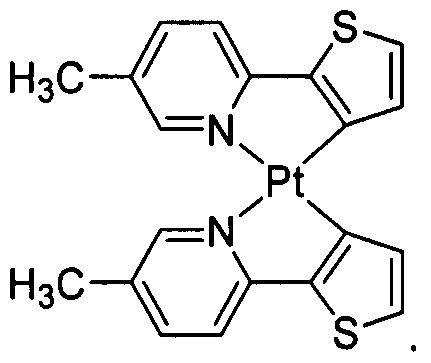
In another embodiment, the compound has the structure,

In another embodiment, the compound has the structure,

In another embodiment, the compound has the structure,
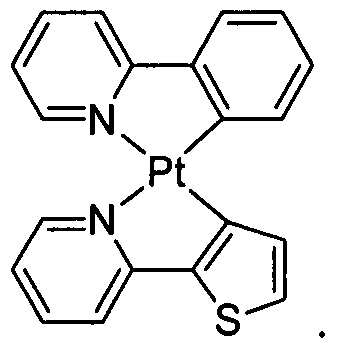
(Ar1)
to form a halogenated bidentate ligand, wherein Ar1 and Ar2 can be the same or different and are aryl or heteroaryl, optionally substituted, or Ar1 and Ar2 together form a fused polycyclic aromatic group, optionally substituted. The metal complex may then be formed between the halogenated bidentate ligand and a metal. In some embodiments, the method further comprises lithiating the halogenated bidentate ligand, prior to forming the metal complex. The introduction of a halide to the bidentate ligand, optionally followed by lithiation of the halogenated bidentate ligand, may facilitate and/or direct coordination of the ligand to the metal center to product the desired product. For example, a lithium reagent may be more reactive towards a carbon-halogen bond relative to a carbon-hydrogen bond, and, thus, halogenation of a bidentate ligand at a particular desired position, followed by selective lithiation of the carbon-halogen bond, may allow for the metal to coordinate at the particular position. As used herein, the term "halogenating" is given its ordinary meaning in the art and refers to substituting an atom, such as hydrogen, of a molecule with a halogen atom. For example, a hydrogen of an aromatic group may be substituted with a halogen. In some cases, the halogenating step comprises exposure to bromine (Br2), N-bromosuccinimide (NBS), or the like, either alone or in combination with other reagents including Pd(OAc)2 and Hg(OAc)2. For example, the halogenating step may comprise exposure to NBS and Pd(OAc)2, or, Br2 and Hg(OAc)2. Those of ordinary skill in the art would be able to select the appropriate reagents to achieve a particular halogenated product.
In some embodiments, the halogenated bidentate ligand may be combined with a metal or metal-containing compound to form the metal complex. The metal may be, for example, platinum, indium, or palladium. In one embodiment, the metal is platinum. In some cases, each bidentate ligand can be the same or different and can be phenylthiophene, thienylpyridine, thianapthylpyridine, benzoquinoline, or a substituted derivative thereof.
The illustrative embodiments shown in FIGS. 3A-B show the syntheses of thienylpyridine ligands, according to some embodiments of the invention. Bi- or tricyclic ligands may be readily synthesized by, for example, palladium-catalyzed cross- coupling methods. For example, a Suzuki coupling between thiophene 2-boronic acid and 2-bromopyridine may produce thienylpyridine (ligand Ia), while Stille couplings with the appropriately substituted reactants, either commercially available or readily prepared, may produce ligands Ib-If (FIG. 3A). Benzothiophene-based ligands 2a and
2b may be prepared from commercially available thianapthene boronic acid and 2- bromopyridine by Suzuki coupling (FIG. 3B).
FIGS. 4A-C show the syntheses of bis-cyclometalated Pt(II) complexes. In some embodiments, homoleptic complexes may be synthesized by lithiation of the ligand with t-butyllithium in a THF/Et2O mixture, followed by metallation (FIGS. 4A-B). For example, the lithiated ligand may be metallated with Cl2Pt(SEt2)2. In some embodiments, heteroleptic complexes may be prepared by cracking a halide-bridged ligand dimer. As shown in FIG. 4C, a chloro-bridged/?/?y-ligated dimer intermediate was cracked with diethyl sulfide, followed by reaction with the lithiated thpy ligand. The metal complexes may be purified via chromatography under ambient conditions on silica gel and isolated as single stereoisomers.
The present invention also relates to sensors for the determination of analytes, wherein the sensors comprise metal complexes, as described herein, which may be capable of undergoing an oxidative addition reaction with an analyte. The metal complex may be in solution (e.g., benzene solution, toluene solution, tetrahydrofuran solution, or the like) or in solid form. For example, the sensor may further comprise a solid support material, wherein the metal complex is dispersed within the support material. In some cases, the support material may be a polymer, such as poly(methyl methacrylate). The metal complex may be bonded to the support material via covalent bonds or non-covalent bonds. In some cases, the metal complex may be covalently bonded to the support material, such as a polymer. In some cases, the metal complex may be covalently bonded to a polymer backbone via a pendant side group. In some cases, the metal complex may be positioned within a polymer backbone. In some embodiments, the metal complex may be dispersed within the support material (e.g., non-covalently dispersed). In some cases, the solution or support material may comprise at least 1 wt% of metal complex, or, in some embodiments, at least 5 wt% of metal complex, at least 10 wt% of metal complex, at least 25 wt% of metal complex. In one embodiment, the solution or support material comprises 10 wt% of metal complex.
The sensor may further comprise at least one source of energy applicable to the metal complex. In some cases, the source of energy, when applied to the metal complex, may cause an emission of radiation from the metal complex. The source of energy may be an electric, magnetic, optical, acoustic, electromagnetic, or mechanical field. In some embodiments, the source of energy is electromagnetic radiation. The sensor may further
comprise an emission detector positioned to detect the emission. The source of energy can be provided in combination with the metal complex and/or sensor in a variety of ways, such as being integrally and/or functionally connected to the metal complex/sensor (for example, by providing a compartment or other assembly supporting both the metal complex/sensor and the energy source), or in combination such that the metal complex/sensor and energy source can be used together (e.g., packaged together, or otherwise provided together and with the ability to arrange each, with respect to the other, for use as described herein). The emission detector can be provided in combination with the metal complex and/or sensor, in a manner as described above with respect to the energy source. Where the energy source and emission detector are both provided in combination with the metal complex /sensor, they can be provided in essentially identical or similar structural relation to the metal complex/sensor (e.g., both attached to a common housing or framework, to which the metal complex/sensor is also attached), or their relationship to the metal complex/sensor can differ. In some embodiments, sensors of the invention may comprise an inlet for intake of a sample (e.g., vapor sample, solution sample), a sample cell comprising the metal complex, the sample cell constructed and arranged to receive the sample, and a detection mechanism in optical communication with the sample cell. Systems such as this may be useful in the determination of, for example, electrophilic analytes such as a cyanogen halide. As used herein, a sample cell "constructed and arranged" refers to a sample cell provided in a manner to direct the passage of a sample, such as a sample comprising a cyanogen halide, from the inlet into the sample cell, such that the vapor sample contacts the metal complex. "Optical communication" may refer to the ability of the detection mechanism to receive and detect an optical signal (e.g., light emission) from the sample cell.
Methods for synthesizing sensors as described herein may comprise forming a fluid mixture comprising the metal complex and a support material or support material precursor, and solidifying the fluid mixture to produce a solid composition that is emissive upon exposure to a source of energy, such as electromagnetic radiation. In certain cases, forming the fluid mixture may comprise providing the support material or support material precursor as a fluid, and dissolving or suspending the metal complex in the fluid support material precursor. In some embodiments, forming the fluid mixture
may comprise providing the support material as a solid, and suspending (i.e., immersing) the support material in the fluid mixture.
In some embodiments, forming the fluid mixture may comprise dissolving or suspending the metal complex and support material or support material precursor in an auxiliary fluid. In some embodiments, the auxiliary fluid is a solvent, such that forming the fluid mixture comprises dissolving the metal complex and support material or support material precursor in the solvent. Optionally, a catalyst, acid, base, buffer, and/or other additives (e.g., plasticizers, etc.) may be added to the fluid mixture. Solidification of the fluid mixture may comprise, in cases where a solvent is employed as an auxiliary fluid, removal of a solvent by, for example, evaporation or filtration. Solidification of the fluid mixture may also comprise, in cases where the support material precursor is provided as a fluid, conversion of the support material precursor to a support material (e.g., a solid support material).
As used herein, an emitted radiation or "emission" may be luminescence emission, in which "luminescence" is defined as an emission of ultraviolet or visible radiation. Specific types of luminescence include fluorescence, phosphorescence, chemiluminescence, electrochemiluminescence, other types of luminescence, and the like. In some cases, the emission may be phosphorescence emission.
As described herein, metal complexes of the invention comprise a metal center. Metals (e.g., metal centers) which are suitable for use in the invention include metals which are capable of coordinating ligands as described herein, as well as those which are capable of undergoing an oxidative addition reaction. For example, metal centers that are not in their highest oxidation state may undergo oxidative addition reactions. In some cases, the oxidative addition reaction may proceed more readily if the starting and final oxidation states of the metal center are relatively stable. The metal center may also be selected such that it forms a metal complex capable of generating an emission, such as a phosphorescence emission, upon exposure to a source of energy. In some cases, the metal center is a transition metal, such as a heavy metal. Transition metals may include transition metals (e.g., Groups 3-12), lathanides, and actinides. In some cases, the metal is a transition metal from Groups 8-12. In some cases, the metal is a transition metal from Groups 8-10. For example, the metal may be iron, ruthenium, osmium, cobalt, rhodium, indium, nickel, palladium, or platinum. In some embodiments, the metal is palladium, platinum, or iridium. In a particular embodiment, the metal is platinum.
In some embodiments, metal complexes of the invention may comprise a bidentate ligand which, when bound to a metal center, forms a metallacycle structure with the metal center. Such bidentate ligands, when bound to a metal center, may also be referred to as "bidentate cyclometallated ligands." Bidentate ligands suitable for use in the present invention include species which have at least two sites capable of binding to a metal center. For example, the bidentate ligand may comprise at least two heteroatoms that coordinate the metal center, or a heteroatom and an anionic carbon atom that coordinate the metal center. In some embodiments, the bidentate ligand may be chiral and may be provided as a racemic mixture or a purified stereoisomer. Examples of bidentate ligands suitable for use in the invention include, but are not limited to, aryl and heteroaryl groups (e.g,. bis-aryl, heteroaryl-substituted aryl), substituted derivatives there of, and the like.
In some embodiments, the metal complex has two bidentate ligands coordinating the metal center to form a substantially square planar metal complex. The support material may be any material capable of supporting (e.g., containing) the components (e.g., the metal complex) of the systems described herein. For example, the support material may be selected to have a particular surface area wherein the support material may absorb or otherwise contact a sufficient amount of analyte to allow interaction between the analyte and, for example, the metal complex. In some embodiments, the support material has a high surface area. In some cases, the support material has a surface area of at least 50 mm2, at least 100 mm2, at least 200 mm2, at least 300 mm2, at least 400 mm2, or, more preferably, at least 500 mm2.
In some embodiments, the support material may preferably have a low background signal, substantially no background signal, or a background signal which does not substantially interfere with the signal generated by the metal complex, either in the presence or in the absence of analyte. In some cases, the support material may have a preferred pH to prevent undesirable reactions with, for example, an acid. The support material may be soluble, swellable, or otherwise have sufficient permeability in systems of the invention to permit, for example, intercalation of the metal complex and other components of the system within the support material. In one embodiment, the support material may be hydrophobic, such that a hydrophobic solution containing the metal complex may diffuse or permeate the support material. Additionally, the support material may preferably permit efficient contact between the sample (e.g., analyte) to be
determined and the metal complex. For example, in one embodiment, a vapor comprising an analyte may permeate the support material to interact with the metal complex via an oxidative addition reaction. The permeability of certain support materials described herein are known in the art, allowing for the selection of a particular support material having a desired diffusion. The choice of support material may also affect the intensity and duration of light emission from the system.
Examples of support materials include polymers, copolymers, gels, and other solid adsorbent materials. In some embodiments, the support material may be a finely divided powder, particles, molded shapes such as films, bottles, spheres, tubes, strips, tapes, and the like. In some embodiments, the system may have a shape or be formed into a shape (for example, by casting, molding, extruding, and the like). In some embodiments, the support material may be a polymer. Examples of polymers suitable for use as a support material include, but are not limited to, poly(methyl methacrylate), polyethylene, polypropylene, poly(vinyl chloride), poly(vinyl benzoate), poly(vinyl acetate), cellulose, corn starch, poly(vinyl pyrrolidinone)s, polyacrylamides, epoxys, silicones, poly(vinyl butyral)s, polyurethanes, nylons, polacetals, polycarbonates, polyesters and polyethers, polybutadiene copolymers, crosslinked polymers, combinations thereof, and the like. In some cases, the polymer is poly(methylmethacrylate), poly(vinylpyrrolidinone), or poly(4-vinylpyridine). In a particular embodiment, the polymer is poly(methyl methacrylate).
The combination of support material and solvent may have a desired diffusion rate, controlling the intensity and duration of light emission. The permeability of a particular polymer is known in the art.
Analytes that may be determined by devices and methods of the invention include those which are capable of undergoing oxidative addition reactions with metal complexes as described herein. For example, the analyte may be an electrophilic species, such as alkyl halides or cyanogen halides. Some examples of analytes include reactive species such as methyl iodine or benzyl bromide, relatively less reactive molecules, such as chloroform, dichloromethane, or ethyl bromide, or the like. In some cases, the analyte is a cyanogen halide, such as cyanogen chloride, cyanogen bromide, cyanogen iodide, and the like. For example, cyanogen halides (e.g., X-CN, wherein X is a halide) may be highly toxic blood agents that affect the human body in a manner similar to that of
hydrogen cyanide. Cyanogen chloride, a gas under ambient conditions, is a military chemical weapon.
As used herein, the term "aryl" refers to an aromatic carbocyclic group having a single ring (e.g., phenyl), multiple rings (e.g., biphenyl), or multiple condensed rings in which at least one is aromatic (e.g., naphthalene, anthracene, or phenanthrene, 1,2,3,4- tetrahydronaphthene, etc.). Aryls groups may ring atoms which are carbon atoms.
The term "heteroaryl" refers to aryl groups which comprise at least one heteroatom as a ring atom, with the remainder of the ring atoms being carbon atoms. Suitable heteroatoms include oxygen, sulfur, nitrogen, phosphorus, and the like. Examples of heteroaryl groups include, but are not limited to, furan, thiophene, pyridine, pyrrole, pyrimidine, pyrazine, imidazole, indole, and the like, all optionally substituted.
The term "fused polycyclic aromatic group" refers to structures with two or more rings (e.g., cycloalkyls, cycloalkenyls, cycloalkynyls, aryls and/or heterocyclyls) in which two or more atoms are common to two adjoining rings, e.g., the rings are "fused rings." In some cases, two rings share two common atoms which are adjacent to one another. Rings that are joined through non-adjacent atoms, e.g., three or more atoms are common to both rings, are "bridged" rings. Examples of fused polycyclic aromatic groups include naphthalene, phenanthrene, and the like.
As used herein, the term "substituted" is contemplated to include all permissible substituents of organic compounds, "permissible" being in the context of the chemical rules of valence known to those of ordinary skill in the art. In some cases, "substituted" may generally refer to replacement of a hydrogen with a substituent as described herein. However, "substituted," as used herein, does not encompass replacement and/or alteration of a key functional group by which a molecule is identified, e.g., such that the "substituted" functional group becomes, through substitution, a different functional group. For example, a "substituted thiophene" must still comprise the thiophene moiety and can not be modified or replaced to become, e.g., a furan moiety. In a broad aspect, the permissible substituents include acyclic and cyclic, branched and unbranched, carbocyclic and heterocyclic, aromatic and nonaromatic substituents of organic compounds. Illustrative substituents include, for example, those described herein. The permissible substituents can be one or more and the same or different for appropriate organic compounds. For purposes of this invention, the heteroatoms such as nitrogen may have hydrogen substituents and/or any permissible substituents of organic
compounds described herein which satisfy the valencies of the heteroatoms. This invention is not intended to be limited in any manner by the permissible substituents of organic compounds.
Examples of substituents include, but are not limited to, lower alkyl, lower aryl, lower aralkyl, lower cyclic alkyl, lower heterocycloalkyl, hydroxy, lower alkoxy, lower aryloxy, perhaloalkoxy, aralkoxy, lower heteroaryl, lower heteroaryloxy, lower heteroarylalkyl, lower heteroaralkoxy, azido, amino, halogen, lower alkylthio, oxo, lower acylalkyl, lower carboxy esters, carboxyl, -carboxamido, nitro, lower acyloxy, lower aminoalkyl, lower alkylaminoaryl, lower alkylaryl, lower alkylaminoalkyl, lower alkoxyaryl, lower arylamino, lower aralkylamino, lower alkylsulfonyl, lower
-carboxamidoalkylaryl, lower -carboxamidoaryl, lower hydroxyalkyl, lower haloalkyl, lower alkylaminoalkylcarboxy-, lower aminocarboxamidoalkyl-, cyano, lower alkoxyalkyl, lower perhaloalkyl, lower arylalkyloxyalkyl, and the like.
EXAMPLES Example 1
The following general experimental methods were used in the syntheses and studies described herein. All synthetic manipulations were performed under an argon atmosphere using standard Schlenk techniques unless otherwise noted. NMR (1H and 13C ) spectra were recorded on either a Varian Mercury 300 MHz or a Varian INOVA 500 MHz spectrometer. NMR chemical shifts are referenced to residual protonated solvent. High-resolution mass spectra (HRMS) were obtained at the MIT Department of Chemistry Instrumentation Facility using a peak-matching protocol to determine the mass and error range of the molecular ion, using either electron impact or electrospray as the ionization technique. UV/vis spectra were recorded on an Agilent 8453 diode-array spectrophotometer and corrected for background signal with either a solvent-filled cuvette (for solution measurements) or a clean glass cover slip (for thin film measurements). Emission spectra were acquired on a SPEX Fluorolog-τ3 fluorimeter (model FL-321, 450 W Xenon lamp) using either right angle detection (solution measurements) or front face detection (thin film measurements). All room temperature solution samples for emission spectra were degassed by at least three freeze-pump-thaw cycles in an anaerobic cuvette and were repressurized with Ar following each cycle. 77K emission spectra were acquired in frozen 2-methyltetrahydrofuran glass. Quantum yields of phosphorescence
were determined by comparison to Ru(bpy)3 in deoxygenated water and are corrected for solvent refractive index and absorption differences at the excitation wavelength.
Phosphorescence lifetimes were determined by time-resolved phosphorescence spectroscopy. The irradiation source was an Oriel nitrogen laser (Model 79111) with a 5 ns pulsewidth operating at approximately 25 Hz. The emitted light was dispersed in an Oriel MS-260i spectrograph with a 300 lines/mm grating. The detector was an Andor Technologies Intensified CCD camera (1024 x 128 pixels) with an onboard delay generator and a minimum gate width of 5 ns operating in full vertical binning mode and triggered by a TTL prepulse from the nitrogen laser. Data taken of 77K glasses were subjected to no horizontal binning, while solution data was acquired with a horizontal binning of 2 or 3. 10-15 spectra at different delay times after the laser pulse were taken per lifetime measurement, the integrated intensities of which were fit to a single-exponential function. The detector was calibrated with a Hg(Ar)pencil-style calibration lamp. X-ray crystal structures were determined with a Siemens Platform three-circle diffractometer coupled to a Bruker-AXS Smart Apex CCD detector with graphite- monochromated Mo Ka radiation (λ = 0.71073 A), performing φ- and ω-scans. All structures were solved by direct methods using SHELXS [Sheldrick, G. M., Acta Cryst. Sect. A (1990), 46, 467.] and refined against F2 on all data by full-matrix least squares with SHELXL-97 [Sheldrick, G. M. SHELXL 91, Universtitat Gottingen, Gδttingen, Germany, 1997]. All non-hydrogen atoms were refined anisotropically.
Example 2 Ligand Ib was synthesized according to the following procedure. 2- Bromopyridine (1.48 g, 0.89 mL, 9.4 mmol), 2-methyl-5-(tributylstannyl)thiophene (4.0 g, 10.3 mmol), Pd(PPh3)4 (0.54 g, 0.47 mmol) and CsF (3.12 g, 20.6 mmol) were weighed into a Schlenk tube and 60 mL of dioxane was added. The reaction mixture was sparged for 15 minutes with argon. The reaction mixture was heated at 100 °C for 36 hours. The reaction mixture was cooled down and was passed through a silica gel plug to remove the solids. The silica plug was eluted with 25O mL of ethyl acetate. The combined organic fractions were evaporated to yield an oily residue, which was chromatographed on silica gel with dichloromethane/hexane (2:1 v/v) as the eluant to yield 1.59 g (97%) of Ib as a white solid. 1H NMR (500 MHz, CDCl3): δ 8.53 (d, IH),
7.64 (t, IH), 7.58 (d, IH), 7.38 (d, IH), 7.10 (t, IH), 6.76 (d, IH), 2.53 (s, 3H). 13C
NMR (125 MHz, CDCl3) δ 153.0, 149.6, 142.7, 137.7, 126.5, 124.8, 122.6, 118.5, 15.9. HRMS calcd. for C10HI0NS (M+H)+, 176.0529; found, 176.0530. mp = 77-78 0C.
Example 3 Ligand Ic was synthesized according to the procedure described in Example 2.
2-Bromopyridine (1.63 g, 0.98 mL, 10. mmol), 2-methoxy-5-(tributylstannyl)thiophene (6.0 g, 15 mmol), Pd(PPh3)4 (0.60 g, 0.51 mmol), CsF (3.4 g, 23 mmol). Yield was 1.82 g (93%) using dichloromethane/hexane (2: 1 v/v) as the eluant. 1H NMR (500 MHz, CDCl3) δ 8.51 (d, IH), 7.63 (t, IH), 7.55 (d, IH), 7.26 (d, IH), 7.08 (t, IH), 6.24 (s, IH), 3.97 (s, 2H). 13C NMR (125 MHz, CDCl3) δ 168.7, 153.1, 149.5, 136.5, 130.8, 122.9, 121.1, 117.6, 105.2, 60.3. HRMS calc. for Ci0H10NOS (M)+, 192.0478; found, 192.0478. mp = 45-46 0C.
Example 4 Ligand Id was synthesized according to the procedure described in Example 2. 2-Bromo-4-methylpyridine (1.5 g, 0.97 mL, 8.7 mmol), 2-(tributylstannyl)thiophene (3.9 g, 3.3 mL, 10. mmol), Pd(PPh3)4 (0.50 g, 0.43 mmol), CsF (1.52 g, 10 mmol). Yield was 1.04 g (68%) using dichloromethane/hexane (3:1 v/v) as the eluant. 1H NMR (500 MHz, CDCl3) δ 8.43 9d, IH), 7.57 (d, IH), 7.48 (s, IH), 7.11 (d, IH), 6.97 (d, IH), 2.38 (s, 3H). 13C NMR (125 MHz, CDCl3) δ 152.3, 149.4, 147.9, 145.1, 128.1, 127.5, 124.4, 123.2, 119.8, 21.3. HRMS calc. for Ci0H9NS (M)+, 175.0450; found, 175.0445. mp = 39-41 °C.
Example 5
Ligand Ie was synthesized according to the procedure described in Example 2. 2-Bromo-5-methylpyridine (1.7 g, 10. mmol), 2-(tributylstannyl)thiophene (3.7 g, 10. mmol), Pd(PPh3)4 (0.1 g, 0.2 mmol), CsF (2.9 g, 19 mmol). Yield was 500 mg (29%) using dichloromethane/hexane (2:1 v/v) and after 2 recrystallizations from hexanes at - 78 0C. 1H NMR (300 MHz, CDCl3) δ 8.37 (s, IH), 7.45 (m, 3H), 7.33 (d, IH), 7.07 (t, IH), 2.30 (s, 3H). 13C NMR (75 MHz, CDCl3) δ 150.0, 149.8, 145.0, 137.3, 131.6, 128.0, 126.9, 123.9, 118.4, 18.3.. HRMS calc. for Ci0H9NS (M+), 175.0450; found, 175.0448. mp = 61-63 0C.
Example 6
Ligand If was synthesized according to the procedure described in Example 2. 2-Bromo-6-methylpyridine (1.15 g, 1.0 mL, 6.69 mmol), 2-(tributylstannyl)thiophene (2.5 g, 2.12 mL, 6.69 mmol), Pd(PPh3)4 (0.386 g, 0.33 mmol), CsF (1.52g, 10 mmol). Yield was 1.04 g (96%) using dichloromethane/hexane (2:1 v/v) as the eluant. 1H NMR (300 MHz, CDCl3) δ 7.58 (m, 2H), 7.44 (d, IH), 7.37 (d, IH), 7.11 (t, IH), 6.98 (d, IH), 2.59 (s, 3H). 13C NMR (75 MHz, CDCl3) δ 158.4, 151.9, 145.3, 136.8, 128.0, 127.3, 124.4, 121.5, 115.9, 24.6. HRMS calc. for Ci0H10NS (M+H)+, 176.0529; found, 176.0530. mp = 38-39 0C. Example 7
Ligand 2a was synthesized according to the following procedure. A 50 mL Schlenk tube was charged with 2.14 g (12 mmol) of thianapthene-2-boronic acid, 0.10 g Pd(PPh3)4 (0.1 mmol). Dimethoxyethane (20 mL) and 5 mL 2M aqueous sodium carbonate were added, and the tube was purged with argon gas with 5 evacuate/refill cycles. 2-Bromo-pyridine (1.58 g, 10.0 mmol) of was added as a neat liquid. The tube was sealed and heated at 90 °C with very vigorous stirring for 2 days. Upon cooling to ambient temperature, the organics were extracted into dichloromethane (3 x 50 mL) from 50 mL water. The combined organics were washed with water (1 x 50 mL) and brine (1 x 50 mL), dried over magnesium sulfate, filtered and dried in vacuo. The crude product was pre-adsorbed onto silica gel and chromatographed (silica gel, 2:1 dichloromethane/hexanes) to give 1.15 g (55%) of 2a as a colorless powder. 1H NMR (300 MHz, CDCl3) δ 8.65 (m, IH), 7.8-7.9 (m, 4H)5 7.75 (td, IH), 7.37 (m, 2H), 7.22 (m, IH). 13C NMR (125 MHz, CDCl3) δ 152.7, 149.9, 145.0, 140.8, 140.6, 136.8, 125.2, 124.7, 124.3, 122.8, 122.8, 121.3, 119.8. HRMS calc. for C13Hi0NS (M+H)+, 212.0529; found, 212.0534. mp = 125-126 °C.
Example 8
Ligand 2b was synthesized according to the following procedure. A 50 mL Schlenk tube was charged with 2.14 g (12 mmol) of thianapthene-2-boronic acid, 0.10 g Pd(PPh3)4 (0.1 mmol). 20 mL dimethoxyethane and 5 mL 2M aqueous sodium carbonate were added, and the tube was purged with argon gas with 5 evacuate/refill cycles. 2-Bromo-6-methylpyridine (1.72 g, 10.0 mmol) was added as a neat liquid. The tube was sealed and heated at 90 0C with very vigorous stirring for 2 days. Upon cooling to ambient temperature, the organics were extracted into dichloromethane (3 x 50 mL)
from 50 mL water. The combined organics were washed with water (1 x 50 mL) and brine (1 x 50 mL), dried over magnesium sulfate, filtered and dried in vacuo. The crude product was pre-adsorbed onto silica gel and chromatographed (silica gel, hexanes to 1 :1 dichloromethane/hexanes gradient elution) to give 1.15 g (51%) of 2b as a colorless powder. 1H NMR (300 MHz, CDCl3) δ 7.8-7.9 (m, 3H), 7.60 (m, 2H), 7.47 (m, 2H), 7.07 (m, IH), 2.64 (s, 3H). 13C NMR (75 MHz, CDCl3) δ 140.7, 140.7, 136.9, 125.0, 124.5, 124.2, 122.7, 122.4, 121.0, 116.8, 24.7. HRMS calc. for Ci4Hi2NS (M+H)+, 226.0685; found, 212.0676. mp = 116-1 17 0C.
Example 9 Complex 3a was synthesized according to the following procedure. A solution of trans-PtCl2(Et2S)2 (0.5 g, 1.12 mmol) in diethyl ether and THF was added dropwise to a stirred solution of 4-(2-(2-thienyl)pyridinyl)lithium [from 2-thienylpyridine (0.9g, 5.6mmol) and 1.6 M f-Buli (6.56 mL, 1 1.2 mmol) in ether at -78 0C] in ether at -78 0C. After the solution was stirred for 30 min at -780C, the temperature was allowed to rise slowly to 0 0C. The reaction mixture was hydrolyzed (H2O) at 0 °C. The organic phase was washed with NaCl solution and the aqueous phase extracted with dichloromethane. The combined extracts were dried (MgSO4). The organic layer was evaporated to yield a red oily residue. The residue was chromatographed on silica gel with dichloromethane :hexane (3:2) as the eluant to give 0.30 g (52%) of 3a as a red solid. Example 10
Complex 3b was synthesized according to the following procedure. Trans- PtCl2(Et2S)2 (0.50 g, 1.1 mmol) in diethyl ether and THF was added dropwise to a stirred solution of Iithiatedl9b [from Ib (0.91 g, 5.6 mmol) and 1.6 M t-Buli (6.6 ml, 1 1 mmol) at -78 0C]. Chromatography on silica gel (2: 1 dichloromethane/hexanes) gave 0.31 g of l ib (51%). 1H NMR (500 MHz, CDCl3): δ 8.57 (d, 2H), 7.70 (t, 2H), 7.33 (m, 4H), 7.05 (t, 2H), 2.63 (s, 6H). 13C NMR (125 MHz, CDCl3): δ 162.1, 149.2, 147.8, 143.9, 140.3, 138.7, 134.7, 1 19.0, 1 17.6, 16.1. HRMS calc. for C20Hi6N2PtS2 (M)+, 543.0392; found, 543.0384.
Example 1 1 Complex 3c was synthesized according to the following procedure. Trans-
PtCl2(Et2S)2 (0.50 g, 1.1 mmol) in diethyl ether and THF was added dropwise to a stirred solution of lithiated Ic [from ligand Ic (1.06 g, 5.6 mmol) and 1.6 M t-BuLi (6.58mL, 1 1.2mmol) at -78 0C]. Chromatography on silica gel (2: 1 dichloromethane/hexane) gave
0.36 g of 3c (56%). 1H NMR (500 MHz, CDCl3): δ 8.49 (d, 2H), 7.67 (t, 2H), 7.20 (d, 2H), 7.00 (t, 2H), 6.77 (s, 2H), 4.01 (s, 6H). 13C NMR (125 MHz, CDCl3): δ 170.3, 162.8, 149.3, 147.8, 138.7, 118.1, 116.4, 113.2, 60.7. HRMS calc. for C20Hi6O2N2PtS2 (M)+, 575.0290; found, 543.0312. Example 12
Complex 3d was synthesized according to the following procedure. Trans- PtCl2(Et2S)2 (0.22 g, 0.50 mmol) in diethylether and THF was added dropwise to a stirred solution of lithiated Id [from ligand Id (0.35 g, 2.0 mmol) and 1.6 M t-BuLi (2.5 mL, 4.0 mmol) at -78 0C]. Chromatography on silica gel (2:1 dichloromethane/hexane) gave 0.03 g of 3d (12%). 1H NMR (500 MHz, CDCl3): δ 8.45 (d, 2H), 7.68 (d, 2H), 7.44 (d, 2H), 7.27 (s, 2H), 6.91 (d, 2H), 2.38 (s, 6H). 13C NMR (125 MHz, CDCl3): δ 161.5, 160.6, 147.3, 147.2, 142.6, 135.7, 127.6, 121.0, 118.7, 21.6. HRMS calc. for C20Hi6N2PtS2 (M)+, 543.0392; found, 543.0403.
Example 13 Complex 3e was synthesized according to the following procedure. Trans-
PtCl2(Et2S)2 (0.22 g, 0.50 mmol) in diethylether and THF was added dropwise to a stirred solution of lithiated Ie [from ligand Ie (0.35 g, 2.0 mmol) and 1.6 M t-Buli (2.5 mL, 4.0 mmol) at -78 0C]. Chromatography on silica gel (2: 1 dichloromethane /hexane) gave 0.11 g of 3e (40%). 1H NMR (500 MHz, CDCl3): δ 8.47 (s, 2H), 7.68 (d, 2H), 7.60 (d, 2H), 7.42 (m, 4H), 2.41 (s, 6H). 13C NMR (125 MHz, CDCl3): δ 159.5, 147.9, 146.0, 139.5, 135.7, 129.5, 127.2, 117.7, 18.6. HRMS calc. for C20Hi6N2PtS2 (M)+, 543.0392; found, 543.0397.
Example 14 Complex 3f was synthesized according to the following procedure. Trans- PtCl2(Et2S)2 (0.28 g, 0.64 mmol) in diethylether and THF was added dropwise to a stirred solution of lithiated If [from ligand If (0.45 g, 2.5 mmol) and 1.6 M /-BuIi (3.2 mL, 5.1 mmol) at -78 0C]. Chromatography on silica gel (2:1 dichloromethane/hexane) gave 0.11 g of 3f (32%). 1H NMR (500 MHz, CDCl3): δ 7.65 (d, 2H), 7.56 (t, 2H), 7.40 (d, 2H), 7.26 (d, 2H), 6.91 (d, 2H), 2.61 (s, 6H). 13C NMR (125 MHz, CDCl3): δ 161.2, 160.1, 146.3, 142.9, 138.5, 135.1, 127.5, 119.9, 114.6, 25.5. HRMS calc. for C20Hi6N2PtS2 (M)+, 543.0392; found, 543.0400.
Example 15
Complex 4a was synthesized according to the following procedure. A solution of trans-PtCl2(Et2S)2 (0.25 g, 0.55 mmol) in diethylether and THF was added dropwise to a stirred solution of lithiated 2a [from ligand 2a (0.50 g, 2.2 mmol) and 1.7 M n-BuLi (1.7 mL, 2.2 mmol) in THF at -5O0C] in THF at -780C. After the solution was stirred for 30 min at -780C, the temperature was allowed to rise slowly to O0C. The reaction mixture was hydrolyzed (H2O) at O0C. The organic phase was washed with NaCl solution and the aqueous phase extracted with dichloromethane. The combined extracts were dried (MgSO4). The organic layer was evaporated to yield a red oily residue. The residue was chromatographed on silica gel with 2:1 dichloromethane/hexane as the eluant to give 0.16 g (48%) of 4a. 1H NMR (500 MHz, CDCl3): δ 8.77 (d, 2H), 7.94 (td, 2H), 7.85 (d, 2H), 7.65 (m, 4H), 7.27 (td, 2H), 7.23 (td, 2H), 6.92 (td, 2H). 13C NMR (125 MHz, CDCl3): δ 147.7, 138.7, 131.3, 125.6, 123.3, 122.3, 121.0, 119.6. HRMS calc. for C26Hi6N2PtS2 (M)+, 615.0393; found, 615.0420. Example 16
Complex 5 was synthesized according to the following procedure. K2PtCl4 (1.0 g, 2.4 mmol) and 2-phenylpyridine (0.68 mL, 4.8 mmol) in a 3:1 mixture of 2- ethoxyethanol (45mL) and water (15mL) was heated under argon for 16 hours at 800C. The reaction mixture was cooled down and poured into 200 mL water to yield a yellow precipitate. The precipitate was filtered, extracted with dichloromethane and dried over Na2SO4. The organic layer was evaporated to yield the 1.27 g (69%) Pt(II) μ-dichloro- bridged dimer as a yellow powder.
The Pt(II) μ-dichloro-bridged dimer (1.25 g, 1.62 mmol) and Et2S (5.0 mL, 46 mmol) in dry chloroform was stirred at 50 0C for 12 hours. The reaction mixture was cooled down and evaporated to yield an oily yellow residue. The yellow residue was chromatographed on silica gel with dichloromethane to yield 0.56 g (72%) of PtCl(phpy)(Et2S) as a yellow powder.
A solution of lithiated Ia [from 2-thienylpyridine (0.084g, 0.526mmol) and 1.6 M t-Buli (0.65 mL, 1.1 mmol) in ether at -78 0C] in ether at -78 °C was added dropwise to a stirred solution of PtCl(phpy)(Et2S) (0.25Og, 0.526 mmol) in diethylether and THF at - 78 °C. After the solution was stirred for 30 min at -78 0C, the temperature was allowed to rise slowly to 0 0C. The reaction mixture was hydrolyzed (H2O) at 0 °C. The organic phase was washed with NaCl solution and the aqueous phase extracted with
dichloromethane. The combined extracts were dried (MgSO4) and evaporated to yield a red oily residue. The residue was chromatographed on silica gel using dichloromethane/hexane (3:2) as the eluant to give 0.125 g (47%) of 5 as a red powder. 1H NMR (500 MHz, CDCl3): δ 8.76 (d, IH), 8.61 (d, IH), 8.26 (td, IH), 7.86 (m, 2H), 7.20 (m, 2H), 7.62 (d, IH), 7.50 (m, 2H), 7.27 (m, 2H), 7.13 (m, 2H). HRMS calc. for C20Hi4N2PtS (M)+, 509.0516; found, 509.0503.
Example 17
The photophysical properties of the platinum (II) complexes were investigated in deoxygenated, room-temperature fluid solution and in 77K 2-methyltetrahydrofuran glasses. Table 1 summarizes the photophysical properties of the platinum (II) complexes. FIG. 5 shows the normalized UV/vis spectra of (a) complex 3a, (b) complex 3b, (c) complex 3c, and (d) complex 3d, in THF, and FIG. 6 shows the normalized UV/vis spectra of (a) complex 3e, (b) complex 3f, (c) complex 4a, and (d) complex 5, in THF. Several of the complexes investigated showed sharp and distinct MLCT transitions with extinction coefficients of approximately 10 , as is characteristic for the parent Pt(thpy)2 complex (3a). These bands also showed moderate negative solvatochromism, in that more polar solvents gave blue-shifted MLCT bands. For example, complex 3 a exhibited an MLCT maximum at 419 nm in acetone, but, in toluene, was red-shifted to 430 nm. Also, increasing the electron density (3 b, 3 c) or the conjugation lengths (4a) of the ligands tended to cause a red shift in the absorbance bands.
FIG. 7 shows the emission spectra of (a) complex 3a, (b) complex 3b, (c) complex 3c, at room temperature in THF, and FIG. 8 shows the emission spectra of (a) complex 3a, (b) complex 3b, (c) complex 3c, at room temperature in THF. Most of the Pt(II) complexes displayed moderate to strong phosphorescence intensity (with quantum yields of emission between 0.05 and 0.30) in room temperature, deoxygenated fluid solution. The emissive complexes were observed to phosphoresce in the orange or red region of the visible spectrum with lifetimes on the timescale of 5-15 microseconds at ambient temperature. The lower quantum yield and biexponential character of complex 5 may be due to the presence of a competing, non-emissive state involving the phenylpyridine ligand
The Pt(II) complexes showed only weak solvatochromism in their phosphorescence energy. The rigidochromic effect on the emission of these complexes
is a small value of 9±3 nm upon freezing the sample in a 2-methyltetrahydrofuran glass.
The rigid glass did not allow reorganization of solvent dipoles upon generation of an excited state, and gave a strongly blue-shifted spectrum of complexes that emit from a charge-transfer state. Without wishing to be bound by theory, such trends, coupled with the vibronic structure observed in the room temperature phosphorescence spectra, suggest that the emissive state of the complexes may be an admixture of an MLCT state and an intraligand pi-pi* state. This behavior was similar to other Pt(II) cyclometalated complexes.
Not all of the complexes, however, exhibited strong emission at room temperature. Complexes 3f and 4a exhibited phosphorescence quantum yields of less than 1 percent. As demonstrated with complex 3f, the addition of a methyl group on the pyridine ring almost completely eliminated phosphorescence. The relatively small effect of including a more powerful donor (e.g., methoxy group) in complex 3c suggested that phosphorescence attenuation may be due to steric congestion of the square plane around the metal center. The strong room temperature emission of complexes 3d and 3e also support the hypothesis that steric congestion may be the reason for the very weak emission of complexes 3f and 4a. Complex 3f displayed similar behavior to complexes3d and 3e, the only difference being that the methyl groups meta or para to the pyridine nitrogen were not expected to have repulsive interactions in the square plane. Complexes 3f and 4a also gave broadened MLCT absorbance bands, suggesting that there may be more conformational variation in these non-emissive complexes.
Table 1. Photophysical parameters of Pt(II) complexes 3-5, where (a) the first maximum is ligand-centered absorption and the second maximum is MLCT, (b) photophysical parameters were not determined due to weak signal, and (c) multi-exponential decay occurred.


Example 18
In order to directly observe the effects of interligand steric congestion around the platinum metal center, single crystal x-ray structures were obtained for complexes 3b, 3f, and 5, , with the crystallographic parameters shown in Table 2. FIG. 9 A shows the ORTEP diagram of the crystal structures of complex 3b, and FIG. 9B shows the ORTEP diagram of the crystal structures of complex 3f. Thermal ellipsoids are at 50% probability, and hydrogen atoms were omitted for clarity. As shown in FIG. 9A, complex 3b is only slightly distorted out of a square planar geometry, while 3f, on the other hand, is severely distorted away from ideal square plane geometry because of the steric repulsion between the methyl groups ortho to the nitrogen on the pyridine ring (FIG. 9B).
While suitable crystals from the benzthiophene-substituted complexes were unable to be grown, simple molecular mechanics modeling indicated that the aryl hydrogen atoms in the 4-position of the thianapthene ring system in complex 4a were predicted to have similar steric interactions in a square planar geometry, forcing the complex into a highly distorted conformation. Certain quinoline-substituted bis- cyclometalated heavy metal group 1O d complexes have been shown to have a severely twisted geometry for similar reasons. Such intramolecular repulsions may lead to enhanced non-radiative relaxation of the excited state through additional twisting and vibration.
Table 2. Crystallo ra h Parameters.


1 Rl = Σ(F0 - Fc) / ∑F0 ; / > 2σ(/); wR2 = {∑w(F0 2 - Fc 2) / ∑w(F0 2) }
Example 19
The metal complexes were evaluated for their ability to undergo oxidative addition with an electrophile in solution. All of the synthesized complexes were observed to participate in oxidative addition reactions under ambient conditions. FIG. 10 shows the shows the progress of a reaction with 3b with 1.0 M methyl iodide under pseudo-first order conditions in benzene as followed by absorbance spectroscopy. Times elapsed, in seconds, are 15, 30, 45, 60, 90, 120, 180, 240, and 300. FIG. 11 shows a pseudo-first order rate plot for 3b in 1.0 Mel/benzene, wherein the calculated bimolecular rate constant was 0.0081 M-1S"1. The isosbestic points shown in FIG. 10 and the pseudo-first order kinetics shown in FIG. 11 illustrate the clean oxidative addition of complex 3b to methyl iodide. The reaction rate displays strong solvent dependence, which may be indicative of a highly polar transition state and an SN2-type mechanism.
Upon adding cyanogen bromide to these complexes under similar conditions, several important differences were apparent. First, the reaction with cyanogen bromide was observed to proceed much faster than that with methyl iodide. FIG. 12 shows
percent conversion as a function of reaction time for (a) methyl iodide (1.0 M) and (b) cyanogen bromide (0.00013 M) with complex 3a. FIG. 13 shows the UV/vis spectra of 3b during the reaction with 0.00013 M BrCN in benzene, where the times elapsed are in 20 second intervals. The cyanogen bromide reaction proceeded to completion much faster than the reaction with MeI, even though the relative concentration of BrCN was almost 104 times smaller. The non-polar solvent benzene was used to more effectively mimic a solid-state environment, which would be used for sensing purposes, than a more polar solvent. The UV/vis profiles of these reactions also showed clean (e.g., "well- behaved") isosbestic points, disappearance of the Pt(II) MLCT band, and growth of an absorbance at approximately 350 nm, characteristic of bis-cyclometalated Pt(IV) complexes. Second, in addition to a much faster reaction rate in solution, the kinetic profiles of these reactions with CNBr were not seen to follow a simple kinetic model. FIG. 14 shows the pseudo-first order rate plot for the reaction of complex 3b with 0.00024 M CNBr in benzene. The reaction was observed to accelerate very quickly following an initial induction period, indicating that a different mechanism may be taking place, rather than the SN2 type invoked for the oxidative addition with methyl iodide. A third difference observed between the reactions with CNBr and MeI was the lack of strong solvent polarity dependence on rate of reaction of the Pt(II) complexes and CNBr. Upon switching from toluene to acetone, the initial reaction rate only increased by approximately 50%.
Without wishing to be bound by theory, the key differences in the CNBr reactions may be indicative of a radical, potentially chain, mechanism operating in this reaction. This may be further supported by the observation that the reaction proceeds to completion much faster in benzene than in toluene, as shown by the percentage conversion of complex 3a in (a) toluene or (b) benzene, in the presence of 0.00024 M BrCN. (FIG. 15) This suggests that an intermediate, radicals may abstract a benzylic hydrogen atoms from toluene, thereby inhibiting the reaction.
To ensure that oxidative addition, and not complex decomposition, was occurring, the reaction between complex 3a and BrCN was performed on a preparative (~30 mg) scale. Upon mixing the two in THF, a colorless product immediately precipitated. The major product (of 2 by TLC) was isolated by filtration and washing with dichloromethane. Mass analysis of the isolated product showed the desired molecular ion for Pt(thpy)2(Br)(CN) with the expected fragmentation pattern. NMR
analysis was unable to be performed due to limited solubility of the complex. No free ligand was observed upon addition of BrCN. Although the product was not emissive in room temperature fluid solution, it was strongly emissive at 77K with photophysical parameters consistent with a bis-cyclometalated Pt(IV) complex. This included a highly structured emission spectrum with a maximum in the green region of the visible spectrum and an excited state lifetime of about 400 microseconds.
Example 21
Structure-reactivity trends between different Pt(II) complexes and BrCN were analyzed. The trends were found to yield similar results to the study of photophysical properties. The most reactive complexes were those that incorporated interligand steric congestion into the square plane of the complex (e.g., complexes 3f, 4a) even at stoichiometric concentrations of BrCN. FIG. 16 shows the conversion percentages of (a) complex 3 a, (b) complex 3 b, (c) complex 3e, (d) complex 3f, (e) complex 4a, and (f) complex 5, as a function of time in 0.00013 M BrCN/benzene. The increase in the energy of the sterically crowded complexes was shown to decrease the activation barrier for oxidative addition, increasing the rate at which these heavily distorted complexes are converted to octahedral products. The fact that the least emissive Pt(II) complexes are the most reactive towards oxidative addition with BrCN may be advantageous for "turn- on" phosphorescence-based sensing schemes, since excessive phosphorescence from the starting "off state may increase the background signal on top of which the measurement must be made. Interestingly, the heteroleptic complex 5 also proceeds to completion faster than the parent homoleptic complex 3 a.
In contrast to the structure-reactivity trend with BrCN, the more sterically hindered complexes (e.g., complexes 3f, 4a) exhibited bimolecular rate constants with methyl iodide (in benzene) that were approximately 4-10 times smaller than the unstrained systems (Table 3). This was likely not due to an electronic effect because complexes 3d and 3e, which have methyl groups in different positions on the pyridine ring, did not show behavior similar to that of 3f. Rather, the smaller bimolecular rate constants suggested that the transition state for SN2 type oxidative addition to these complexes exacerbated the preexisting steric congestion, possibly by forcing the complex into a square-pyramidal geometry, whereas the transition state for the reaction with BrCN relieved the unfavorable interactions. This difference may be particularly useful for
sensing, as it could impart additional selectivity for cyanogen halides over interferents that react by the Sκ2-type mechanism.
Table 3. Bimolecular rate constants of platinum complexes with MeI in benzene.

Example 21
Films of the metal complexes were then made and their photophysical properties were investigated. The platinum complexes were doped into a polymer matrix in order to create a substance with desirable material properties that could be readily cast into films. Each film was prepared by spin-casting a dichloromethane solution containing a mixture of poly(methyl methacrylate) (PMMA) and the desired Pt(II) complex (10% w/w relative to PMMA). Transparent, glassy, highly phosphorescent thin films were obtained, many of which were highly emissive even under ambient conditions. The glassy PMMA excluded enough oxygen to allow radiative decay of the triplet excited states to be kinetically competitive with oxygen-induced quenching. FIG. 17 shows the normalized emission spectra of complex 3a in (a) degassed
THF solution and (b) doped into PMMA films (10% w/w). As illustrated in FIG. 17, the films exhibited emission spectra having similar shapes to the emission spectra of the complexes obtained in solution. This indicates that, at 10% loading, the amount of intermolecular communication between the metal complexes was negligible. In addition, complexes 3f and 4a, which were not emissive in room temperature solution but were
emissive at 77 K, showed phosphorescence spectra in the PMMA films that were in the same spectral region as the emission spectra of the complexes at 77K in solution. This may be attributed to the rigid PMMA matrix, which may inhibit intramolecular conformational changes that lead to non-radiative deactivation of the excited states of these strained molecules.
Example 22
The solid-state phosphorescence sensing ability of the metal complexes was investigated. Upon exposing the doped PMMA films (described in Example 21) to saturated BrCN vapor, complete conversion to the corresponding platinum (IV) complexes occurred within seconds. The blue-shifted emission of the product was apparent, both spectroscopically and visually. The spectral features of the products in the solid state were consistent with the characteristic ligand-centered platinum (IV) emission, both in spectral position and the relative intensities of the vibronic bands. FIG. 18A shows a picture of a PMMA film containing 3 a and FIG. 18B shows a picture of a PMMA film containing 3a that has been exposed to saturated BrCN vapor for 15 seconds. FIG. 18C shows a picture of a PMMA film containing 4a and FIG. 18D shows a picture of a PMMA film containing 4a that has been exposed to saturated BrCN vapor for 15 seconds. FIG. 19 shows the PMMA film emission spectra of 3a (a) before and (b) after exposure to BrCN vapor for 15 seconds. FIG. 20 shows the PMMA film emission spectra of 4a (a) before and (b) after exposure to BrCN vapor for 15 seconds. The spectra in FIG. 19-20 illustrate how using a strong spectral blue-shift as the sensing signal gives a turn-on signal with virtually no background ("dark-field"). This feature may be desirable in any sensing system for maximum sensitivity to trace quantities of analyte. Preliminary experiments demonstrating trace (part-per-million) sensitivity to the cyanogen halides have shown modest sensitivity to 10 ppm BrCN vapor.
While several embodiments of the present invention have been described and illustrated herein, those of ordinary skill in the art will readily envision a variety of other means and/or structures for performing the functions and/or obtaining the results and/or one or more of the advantages described herein, and each of such variations and/or modifications is deemed to be within the scope of the present invention. More generally, those skilled in the art will readily appreciate that all parameters, dimensions, materials, and configurations described herein are meant to be exemplary and that the actual parameters, dimensions, materials, and/or configurations will depend upon the specific
application or applications for which the teachings of the present invention is/are used.
Those skilled in the art will recognize, or be able to ascertain using no more than routine experimentation, many equivalents to the specific embodiments of the invention described herein. It is, therefore, to be understood that the foregoing embodiments are presented by way of example only and that, within the scope of the appended claims and equivalents thereto, the invention may be practiced otherwise than as specifically described and claimed. The present invention is directed to each individual feature, system, article, material, kit, and/or method described herein. In addition, any combination of two or more such features, systems, articles, materials, kits, and/or methods, if such features, systems, articles, materials, kits, and/or methods are not mutually inconsistent, is included within the scope of the present invention.
The indefinite articles "a" and "an," as used herein in the specification and in the claims, unless clearly indicated to the contrary, should be understood to mean "at least one." The phrase "and/or," as used herein in the specification and in the claims, should be understood to mean "either or both" of the elements so conjoined, i.e., elements that are conjunctively present in some cases and disjunctively present in other cases. Other elements may optionally be present other than the elements specifically identified by the "and/or" clause, whether related or unrelated to those elements specifically identified unless clearly indicated to the contrary. Thus, as a non-limiting example, a reference to "A and/or B", when used in conjunction with open-ended language such as "comprising" can refer, in one embodiment, to A without B (optionally including elements other than B); in another embodiment, to B without A (optionally including elements other than A); in yet another embodiment, to both A and B (optionally including other elements); etc. As used herein in the specification and in the claims, "or" should be understood to have the same meaning as "and/or" as defined above. For example, when separating items in a list, "or" or "and/or" shall be interpreted as being inclusive, i.e., the inclusion of at least one, but also including more than one, of a number or list of elements, and, optionally, additional unlisted items. Only terms clearly indicated to the contrary, such as "only one of or "exactly one of," or, when used in the claims, "consisting of," will refer to the inclusion of exactly one element of a number or list of elements. In general, the term "or" as used herein shall only be interpreted as indicating exclusive alternatives (i.e. "one or the other but not both") when preceded by terms of exclusivity, such as
"either," "one of," "only one of," or "exactly one of." "Consisting essentially of, when used in the claims, shall have its ordinary meaning as used in the field of patent law.
As used herein in the specification and in the claims, the phrase "at least one," in reference to a list of one or more elements, should be understood to mean at least one element selected from any one or more of the elements in the list of elements, but not necessarily including at least one of each and every element specifically listed within the list of elements and not excluding any combinations of elements in the list of elements. This definition also allows that elements may optionally be present other than the elements specifically identified within the list of elements to which the phrase "at least one" refers, whether related or unrelated to those elements specifically identified. Thus, as a non-limiting example, "at least one of A and B" (or, equivalently, "at least one of A or B," or, equivalently "at least one of A and/or B") can refer, in one embodiment, to at least one, optionally including more than one, A, with no B present (and optionally including elements other than B); in another embodiment, to at least one, optionally including more than one, B, with no A present (and optionally including elements other than A); in yet another embodiment, to at least one, optionally including more than one, A, and at least one, optionally including more than one, B (and optionally including other elements); etc.
In the claims, as well as in the specification above, all transitional phrases such as "comprising," "including," "carrying," "having," "containing," "involving," "holding," and the like are to be understood to be open-ended, i.e., to mean including but not limited to. Only the transitional phrases "consisting of and "consisting essentially of shall be closed or semi-closed transitional phrases, respectively, as set forth in the United States Patent Office Manual of Patent Examining Procedures, Section 2111.03.
What is claimed:
Claims
1. A method for determination of an analyte, comprising: exposing a metal complex having a luminescence emission to a sample suspected of containing an analyte, wherein the analyte, if present, interacts with the metal complex via an oxidative addition reaction to produce a change in the luminescence emission of the metal complex; and determining the change in luminescence emission of the metal complex, thereby determining the analyte.
2. A method as in claim 1, wherein, in the absence of analyte, the metal complex has a substantially square planar geometry, and wherein the analyte, if present, interacts with the metal complex to produce a change in the substantially square planar geometry of the metal complex.
3. A method as in claim 2, wherein the change in the substantially square planar geometry of the metal complex comprises formation of a substantially octahedral geometry of the metal complex.
4. A method as in claim 1 , wherein the metal complex has the structure,
L1-M-L2 5 wherein M is a metal, and L1 and L2 can be the same or different and, when bound to the metal, L1 and L2 are bidentate cyclometallated ligands.
5. A method as in claim 4, wherein M is platinum, iridium, or palladium.
6. A method as in claim 4, wherein M is platinum.
7. A method as in claim 4, wherein the bidentate cyclometallated ligand has the structure,

8. A method as in claim 4, wherein L1 and L2 can be the same or different and are phenylthiophene, thienylpyridine, thianapthylpyridine, or substituted derivatives thereof.
9. A method as in claim 1, wherein the luminescence emission is phosphorescence emission.
10. A method as in claim 1 , wherein the change comprises a change in the wavelength of the luminescence emission.
11. A method as in claim 10, wherein the change comprises a blue-shifted change in the wavelength of the luminescence emission.
12. A method as in claim 1, wherein the change comprises a decrease in luminescence intensity.
13. A method as in claim 1 , wherein the change comprises an increase in luminescence intensity.
14. A method as in claim 1, wherein the analyte is an electrophilic species.
15. A method as in claim 1 , wherein the analyte is an alkyl halide or cyanogen halide.
16. A method as in claim 1, wherein the analyte is cyanogen bromide, cyanogen chloride, benzyl bromide, ethyl bromide, methyl iodide, chloroform, or dichloromethane.
17. A method as in claim 1 , wherein, in the absence of analyte, the metal complex has a first emission, and wherein the analyte, if present, interacts with the metal complex to produce a second emission such that the wavelength of the first emission is separated from the wavelength of the second emission by at least 30 nm.
18. A method as in claim 17, wherein the wavelength of the first emission is separated from the wavelength of the second emission by at least 50 nm.
19. A method as in claim 17, wherein the wavelength of the first emission is separated from the wavelength of the second emission by at least 100 nm.
20. A method as in claim 17, wherein the wavelength of the first emission is separated from the wavelength of the second emission by at least 150 nm.
21. A method for determination of an analyte, comprising: exposing a metal complex having a luminescence emission to a sample suspected of containing an analyte, wherein the analyte, if present, interacts with the metal complex to produce a change in the luminescence emission of the metal complex, wherein the metal complex has the structure,
L1-M-L2 5 wherein M is a metal, and L1 and L2 can be the same or different and, when bound to the metal, L1 and L2 are bidentate cyclometallated ligands; and determining the change in luminescence emission of the complex, thereby determining the analyte.
22. A method as in claim 21 , wherein, in the absence of analyte, the metal complex has a substantially square planar geometry, and wherein the analyte, if present, interacts with the metal complex to produce a change in the substantially square planar geometry of the metal complex.
23. A method as in claim 22, wherein the change in the substantially square planar geometry of the metal complex comprises formation of a substantially octahedral geometry of the metal complex.
24. A method as in claim 21, wherein the metal complex has the structure,
L1-M-L2 wherein M is a metal, and L and L can b Dee tthhee s same or different and, when bound to the metal, L1 and L2 are bidentate cyclometallated ligands.
25. A method as in claim 24, wherein M is platinum, iridium, or palladium.
26. A method as in claim 24, wherein M is platinum.
27. A method as in claim 24, wherein the bidentate cyclometallated ligand has the structure,

28. A method as in claim 24, wherein L1 and L2 can be the same or different and are phenylthiophene, thienylpyridine, thianapthylpyridine, or substituted derivatives thereof.
29. A method as in claim 21, wherein the luminescence emission is phosphorescence emission.
30. A method as in claim 21 , wherein the change comprises a change in the wavelength of the luminescence emission.
31. A method as in claim 21 , wherein the change comprises a blue-shifted change in the wavelength of the luminescence emission.
32. A method as in claim 21, wherein the change comprises a decrease in luminescence intensity.
33. A method as in claim 21, wherein the change comprises an increase in luminescence intensity.
34. A method as in claim 21, wherein the analyte is an electrophilic species.
35. A method as in claim 21, wherein the analyte is an alkyl halide or cyanogen halide.
36. A method as in claim 21 , wherein the analyte is cyanogen bromide, cyanogen chloride, benzyl bromide, ethyl bromide, methyl iodide, chloroform, or dichloromethane.
37. A method as in claim 21, wherein, in the absence of analyte, the luminescent material has a first emission, and wherein the analyte, if present, interacts with the luminescent material to produce a second emission such that the wavelength of the first emission is separated from the wavelength of the second emission by at least 30 nm.
38. A method as in claim 37, wherein the wavelength of the first emission is separated from the wavelength of the second emission by at least 50 nm.
39. A method as in claim 37, wherein the wavelength of the first emission is separated from the wavelength of the second emission by at least 100 nm.
40. A method as in claim 37, wherein the wavelength of the first emission is separated from the wavelength of the second emission by at least 150 nm.
41. A sensor, comprising: a metal complex having the structure,
L1-M-L2 wherein M is a metal, and L1 and L2 can be the same or different and, when bound to the metal, L1 and L2 are bidentate cyclometallated ligands; a source of energy applicable to the metal complex to cause an emission of radiation; and an emission detector positioned to detect the emission.
42. A sensor as in claim 41 , wherein the bidentate cyclometallated ligand has the structure,

43. A sensor as in claim 41, wherein M is platinum, iridium, or palladium.
44. A sensor as in claim 41, wherein M is platinum.
45. A sensor as in claim 41, wherein L1 and L2 can be the same or different and are phenylthiophene, thienylpyridine, thianapthylpyridine, or substituted derivatives thereof.
46. A sensor as in claim 41, wherein the metal complex is in solution.
47. A sensor as in claim 41, further comprising a support material.
48. A sensor as in claim 47, wherein the metal complex is dispersed within the support material.
49. A sensor as in claim 47, wherein the metal complex is bonded to the support material.
50. A sensor as in claim 47, wherein the support material is a polymer.
51. A sensor as in claim 50, wherein the polymer is poly(methyl methacrylate), polyethylene, polypropylene, poly(vinyl chloride), poly(vinyl benzoate), poly(vinyl acetate), cellulose, corn starch, poly( vinyl pyrrolidinone), polyacrylamide, epoxy, silicone, poly(vinyl butyral), polyurethane, nylon, polacetal, polycarbonate, polyester, polyether, polybutadiene, or combinations thereof.
52. A sensor as in claim 50, wherein the polymer is poly(methylmethacrylate), poly(vinylpyrrolidinone), or poly(4-vinylpyridine).
53. A sensor as in claim 50, wherein the polymer is poly (methylmethacry late).
54. A sensor as in claim 41, wherein the source of energy is an electric, magnetic, optical, acoustic, electromagnetic, or mechanical field.
55. A sensor as in claim 41, wherein the source of energy is electromagnetic radiation.
56. A sensor as in claim 41, wherein the emission is phosphorescence emission.
57. A composition of matter, comprising: a compound having the following structure,
L1-M-L2, wherein M is a metal, and L1 and L2 can be the same or different and each is a bidentate ligand having the structure,

58. A composition of matter as in claim 57, wherein M is platinum, iridium, or palladium.
59. A composition of matter as in claim 57, wherein M is platinum.
60. A composition of matter as in claim 57, wherein L1 and L2 can be the same or different and are phenylthiophene, thienylpyridine, thianapthylpyridine, or substituted derivatives thereof.
61. A composition of matter as in claim 57, wherein the compound has the structure,

62. A composition of matter as in claim 57, wherein the compound has the structure,

63. A composition of matter as in claim 57, wherein the compound has the structure,

64. A composition of matter as in claim 57, wherein the compound has the structure,

65. A composition of matter as in claim 57, wherein the compound has the structure, 
66. A composition of matter as in claim 57, wherein the compound has the structure,

67. A composition of matter as in claim 57, wherein the compound has the structure,

68. A method of synthesizing a bis-cyclometallated metal complex, comprising: halogenating at least one bidentate ligand having the structure,

69. A method as in claim 68, wherein halogenating comprises exposure to bromine or N-bromosuccinimide (NBS).
70. A method as in claim 68, further comprising lithiating the halogenated bidentate ligand.
71. A method as in claim 68, wherein the metal is platinum, iridium, or palladium.
72. A method as in claim 68, wherein the metal is platinum.
73. A method as in claim 68, wherein each bidentate ligand can be the same or different and can be phenylthiophene, thienylpyridine, thianapthylpyridine, benzoquinoline, or a substituted derivative thereof.
74. A method for determination of an analyte, comprising: providing a luminescent material having a first emission at a wavelength; exposing the luminescent material to a sample suspected of containing an analyte, wherein the analyte, if present, interacts with the luminescent material to produce a second emission at said wavelength, wherein the luminescence intensity of the second emission is at least 10 times greater than the luminescence intensity of the first emission; and determining the second emission, thereby determining the analyte.
75. A method as in claim 74, wherein, in the absence of analyte, the first emission has substantially no luminescence intensity at said wavelength.
76. A method as in claim 74, wherein the luminescence intensity of the second emission is at least 102 times greater than the luminescence intensity of the first emission at said wavelength.
77. A method as in claim 74, wherein the luminescence intensity of the second emission is at least 103 times greater than the luminescence intensity of the first emission at said wavelength.
78. A method as in claim 74, wherein the luminescence intensity of the second emission is at least 104 times greater than the luminescence intensity of the first emission at said wavelength.
79. A method as in claim 74, wherein the luminescence intensity of the second emission is at least 105 times greater than the luminescence intensity of the first emission at said wavelength.
80. A method as in claim 74, wherein the luminescence intensity of the second emission is at least 10 times greater than the luminescence intensity of the first emission at said wavelength.
81. A method as in claim 74, wherein the luminescence emission is phosphorescence emission.
82. A method as in claim 74, wherein the analyte, if present, interacts with the luminescent material to produce a change in the wavelength of the luminescence emission.
83. A method as in claim 82, wherein the change comprises a blue-shifted change in the wavelength of the luminescence emission.
84. A method as in claim 74, wherein the wavelength of the emission of the luminescent material in the presence of analyte is separated from the wavelength of the emission of the luminescent material in the absence of analyte by at least 30 nm.
85. A method as in claim 74, wherein the wavelength of the emission of the luminescent material in the presence of analyte is separated from the wavelength of the emission of the luminescent material in the absence of analyte by at least 50 nm.
86. A method as in claim 74, wherein the wavelength of the emission of the luminescent material in the presence of analyte is separated from the wavelength of the emission of the luminescent material in the absence of analyte by at least 100 nm.
87. A method as in claim 74, wherein the wavelength of the emission of the luminescent material in the presence of analyte is separated from the wavelength of the emission of the luminescent material in the absence of analyte by at least 150 nm.
88. A method as in claim 74, wherein the luminescent material is a metal complex having the structure,
L1-M-L2 5 wherein M is a metal, and L1 and L2 can be the same or different and, when bound to the metal, L1 and L2 are bidentate cyclometallated ligands.
89. A method as in claim 74, wherein the interaction between the metal complex and the analyte comprises an oxidative addition reaction.
90. A method as in claim 74, wherein the analyte is an electrophilic species.
91. A method as in claim 74, wherein the analyte is an alkyl halide or cyanogen halide.
92. A method as in claim 74, wherein the analyte is cyanogen bromide, cyanogen chloride, benzyl bromide, ethyl bromide, methyl iodide, chloroform, or dichloromethane.
Applications Claiming Priority (2)
| Application Number | Priority Date | Filing Date | Title |
|---|---|---|---|
| US11/588,881 US20090215189A1 (en) | 2006-10-27 | 2006-10-27 | Sensor of species including toxins and chemical warfare agents |
| US11/588,881 | 2006-10-27 |
Publications (2)
| Publication Number | Publication Date |
|---|---|
| WO2008136805A2 true WO2008136805A2 (en) | 2008-11-13 |
| WO2008136805A3 WO2008136805A3 (en) | 2008-12-24 |
Family
ID=39828995
Family Applications (1)
| Application Number | Title | Priority Date | Filing Date |
|---|---|---|---|
| PCT/US2007/022670 Ceased WO2008136805A2 (en) | 2006-10-27 | 2007-10-26 | Sensor of species including toxins and chemical warfare agents |
Country Status (2)
| Country | Link |
|---|---|
| US (2) | US20090215189A1 (en) |
| WO (1) | WO2008136805A2 (en) |
Cited By (8)
| Publication number | Priority date | Publication date | Assignee | Title |
|---|---|---|---|---|
| US8283423B2 (en) | 2006-09-29 | 2012-10-09 | Massachusetts Institute Of Technology | Polymer synthetic technique |
| US8367001B2 (en) | 1998-05-05 | 2013-02-05 | Massachusetts Institute Of Technology | Emissive sensors and devices incorporating these sensors |
| US8617819B2 (en) | 2004-09-17 | 2013-12-31 | Massachusetts Institute Of Technology | Polymers for analyte detection |
| US8802447B2 (en) | 2006-10-05 | 2014-08-12 | Massachusetts Institute Of Technology | Emissive compositions with internal standard and related techniques |
| US9429522B2 (en) | 2006-10-27 | 2016-08-30 | Massachusetts Institute Of Technology | Sensor of species including toxins and chemical warfare agents |
| CN109580516A (en) * | 2019-01-14 | 2019-04-05 | 广州城市职业学院 | A kind of detection method of polyacrylamide |
| US20230024427A1 (en) * | 2019-12-16 | 2023-01-26 | Guangdong Aglaia Optoelectronic Materials Co., Ltd | Platinum metal complex and use thereof in organic electroluminescent device |
| US20230183279A1 (en) * | 2021-10-26 | 2023-06-15 | Korea Advanced Institute Of Science And Technology | Organometallic complex, light emitting diode, and electronic device |
Families Citing this family (8)
| Publication number | Priority date | Publication date | Assignee | Title |
|---|---|---|---|---|
| DE69939629D1 (en) | 1998-05-05 | 2008-11-06 | Massachusetts Inst Technology | Emitting polymers and devices containing these polymers |
| US9134238B2 (en) * | 2010-12-01 | 2015-09-15 | Nalco Company | Method for determination of system parameters for reducing crude unit corrosion |
| US8435797B2 (en) | 2010-12-07 | 2013-05-07 | The United States Of America As Represented By The Secretary Of The Army | Electroluminescent diode sensor |
| US10571445B2 (en) * | 2017-05-15 | 2020-02-25 | Hamilton Sundstrand Corporation | Fielded chemical threat detectors |
| US11345717B2 (en) * | 2017-08-03 | 2022-05-31 | The University Of Queensland | Detection method |
| US10775258B2 (en) * | 2018-03-13 | 2020-09-15 | International Business Machines Corporation | Heuristic based analytics for gas leak source identification |
| US11788981B2 (en) * | 2019-03-11 | 2023-10-17 | Carrier Corporation | Sensor for detecting gas analyte |
| US12024530B2 (en) * | 2019-03-11 | 2024-07-02 | Carrier Corporation | Sensor for detecting gas analyte |
Family Cites Families (153)
| Publication number | Priority date | Publication date | Assignee | Title |
|---|---|---|---|---|
| US3242186A (en) | 1960-07-13 | 1966-03-22 | Polaroid Corp | 2, 5-dihydroxytriptycyl compounds and processes for their syntheses |
| US3785813A (en) | 1972-01-03 | 1974-01-15 | Polaroid Corp | Polycyclic hydropyrimidine development restrainers |
| US4049616A (en) | 1974-11-18 | 1977-09-20 | The Goodyear Tire & Rubber Company | Preparation of graft, block and crosslinked unsaturated polymers and copolymers by olefin metathesis |
| US4356429A (en) * | 1980-07-17 | 1982-10-26 | Eastman Kodak Company | Organic electroluminescent cell |
| US4839112A (en) | 1982-12-20 | 1989-06-13 | Northwestern University | Methods for fabricating a low dimensionally electroconductive article |
| US4539507A (en) | 1983-03-25 | 1985-09-03 | Eastman Kodak Company | Organic electroluminescent devices having improved power conversion efficiencies |
| US4687732A (en) * | 1983-06-10 | 1987-08-18 | Yale University | Visualization polymers and their application to diagnostic medicine |
| US4513078A (en) | 1983-10-13 | 1985-04-23 | General Electric Company | Film-based dual energy radiography |
| US4894443A (en) | 1984-02-08 | 1990-01-16 | Cetus Corporation | Toxin conjugates |
| US4992302A (en) * | 1985-10-10 | 1991-02-12 | Quantex Corporation | Process for making photoluminescent materials |
| JPS62180263A (en) | 1986-02-04 | 1987-08-07 | Terumo Corp | Oxygen sensor |
| US4868103A (en) | 1986-02-19 | 1989-09-19 | Enzo Biochem, Inc. | Analyte detection by means of energy transfer |
| US4861727A (en) * | 1986-09-08 | 1989-08-29 | C. R. Bard, Inc. | Luminescent oxygen sensor based on a lanthanide complex |
| US4752588A (en) * | 1987-03-30 | 1988-06-21 | Minnesota Mining And Manufacturing Company | Luminescent chemical sensor for gases |
| WO1989000593A1 (en) | 1987-07-16 | 1989-01-26 | Memtec Limited | Porous membranes of interpenetrating polymer networks |
| US4883608A (en) | 1987-11-18 | 1989-11-28 | Southwest Research Institute | Polymeric decontamination composition |
| US4841099A (en) | 1988-05-02 | 1989-06-20 | Xerox Corporation | Electrically insulating polymer matrix with conductive path formed in situ |
| US4927768A (en) * | 1988-06-29 | 1990-05-22 | Uop | Grown crystalline sensor and method for sensing |
| US5217715A (en) | 1988-08-01 | 1993-06-08 | The United States Of America As Represented By The Department Of Health And Human Services | Carbohydrate receptor for bacteria and method for use thereof |
| US4946890A (en) * | 1988-08-11 | 1990-08-07 | The United States Of America As Represented By The Administrator, National Aeronautics And Space Administration | Novel ladder polymers for use as high temperature stable resins or coatings |
| US5091502A (en) | 1988-09-23 | 1992-02-25 | General Petrochemical Industries Ltd | Tetraketone porphyrin monomers and the porphyrin-based polymers thereof |
| US4992244A (en) | 1988-09-27 | 1991-02-12 | The United States Of America As Represented By The Secretary Of The Navy | Films of dithiolene complexes in gas-detecting microsensors |
| US5252743A (en) * | 1989-11-13 | 1993-10-12 | Affymax Technologies N.V. | Spatially-addressable immobilization of anti-ligands on surfaces |
| DK0429907T3 (en) * | 1989-11-21 | 1994-10-03 | Bayer Ag | Optical biosensor |
| FI91573C (en) | 1990-01-04 | 1994-07-11 | Neste Oy | Ways of producing electronic and electro-optical components and circuits |
| US5274113A (en) | 1991-11-01 | 1993-12-28 | Molecular Probes, Inc. | Long wavelength chemically reactive dipyrrometheneboron difluoride dyes and conjugates |
| US5723218A (en) * | 1990-04-16 | 1998-03-03 | Molecular Probes, Inc. | Dipyrrometheneboron difluoride labeled flourescent microparticles |
| US5250439A (en) | 1990-07-19 | 1993-10-05 | Miles Inc. | Use of conductive sensors in diagnostic assays |
| US5157261A (en) * | 1990-08-08 | 1992-10-20 | Eg&G Idaho, Inc. | Detection device for high explosives |
| US5244813A (en) * | 1991-01-25 | 1993-09-14 | Trustees Of Tufts College | Fiber optic sensor, apparatus, and methods for detecting an organic analyte in a fluid or vapor sample |
| US5238729A (en) | 1991-04-05 | 1993-08-24 | Minnesota Mining And Manufacturing Company | Sensors based on nanosstructured composite films |
| DE4121138A1 (en) | 1991-06-26 | 1993-01-07 | Hoechst Ag | POLYARYLENETHER AND THEIR USE |
| US5254633A (en) * | 1991-07-10 | 1993-10-19 | Allied Signal Inc. | Process for the preparation of conductive polymer blends |
| US5869592A (en) * | 1991-08-19 | 1999-02-09 | Maxdem Incorporated | Macromonomers having reactive side groups |
| US5155149A (en) * | 1991-10-10 | 1992-10-13 | Boc Health Care, Inc. | Silicone polyurethane copolymers containing oxygen sensitive phosphorescent dye compounds |
| JP3509859B2 (en) * | 1991-11-07 | 2004-03-22 | ナノトロニクス,インコーポレイテッド | Hybridization of chromophore and fluorophore conjugated polynucleotides to create donor-donor energy transfer systems |
| US5323309A (en) | 1992-01-30 | 1994-06-21 | Siemens Industrial Automation, Inc. | Algorithm for optimizing data sampling in a discrete periodic system with a bounded rate of change for the discrete system periods |
| JP3455217B2 (en) * | 1992-02-13 | 2003-10-14 | バイオ−メトリック システムズ インコーポレイテッド | Immobilization of chemical species in crosslinked matrix |
| US5607864A (en) * | 1992-04-07 | 1997-03-04 | Societe Prolabo | Fluorescent latices having very low detection thresholds for fluorescent emission |
| US5236808A (en) * | 1992-04-13 | 1993-08-17 | E. I. Du Pont De Nemours And Company | Visible photosensitizers for photopolymerizable compositions |
| US5580527A (en) * | 1992-05-18 | 1996-12-03 | Moltech Corporation | Polymeric luminophores for sensing of oxygen |
| US5237582A (en) | 1992-06-26 | 1993-08-17 | The Regents Of The University Of California | Conductive polymer dye laser and diode and method of use |
| EP0581058A1 (en) | 1992-07-08 | 1994-02-02 | Hoechst Aktiengesellschaft | Polyaryl ether films |
| ATE162892T1 (en) * | 1992-07-31 | 1998-02-15 | Behringwerke Ag | PHOTOACTIVABLE CHEMILUMINIZING MATRICES |
| US5493017A (en) | 1992-08-14 | 1996-02-20 | The Trustees Of The University Of Pennsylvania | Ring-metalated porphyrins |
| US5674698A (en) | 1992-09-14 | 1997-10-07 | Sri International | Up-converting reporters for biological and other assays using laser excitation techniques |
| US5312896A (en) | 1992-10-09 | 1994-05-17 | Sri International | Metal ion porphyrin-containing poly(imide) |
| DE9215344U1 (en) * | 1992-11-11 | 1994-03-24 | A.W. Faber-Castell Unternehmensverwaltung GmbH & Co, 90547 Stein | Solid mine |
| US5414069A (en) * | 1993-02-01 | 1995-05-09 | Polaroid Corporation | Electroluminescent polymers, processes for their use, and electroluminescent devices containing these polymers |
| BE1007071A3 (en) * | 1993-04-28 | 1995-03-07 | Philips Electronics Nv | Optical systems. |
| JP3198365B2 (en) | 1993-05-14 | 2001-08-13 | 隆一 山本 | Linear poly (phenylene-ethynylene-biphenylene-ethynylene) polymer |
| US5364797A (en) * | 1993-05-20 | 1994-11-15 | Mobil Oil Corp. | Sensor device containing mesoporous crystalline material |
| US5512635A (en) | 1993-05-27 | 1996-04-30 | Amoco Corporation | Process for preparing linear monofunctional and telechelic difunctional polymers and compositions obtained thereby |
| JP3534445B2 (en) * | 1993-09-09 | 2004-06-07 | 隆一 山本 | EL device using polythiophene |
| US5556706A (en) * | 1993-10-06 | 1996-09-17 | Matsushita Electric Industrial Co., Ltd. | Conductive layered product and method of manufacturing the same |
| US5597890A (en) * | 1993-11-01 | 1997-01-28 | Research Corporation Technologies, Inc. | Conjugated polymer exciplexes and applications thereof |
| US5700696A (en) * | 1993-11-08 | 1997-12-23 | Lucent Technologies Inc. | Method for preparation of conjugated arylene or heteroarylene vinylene polymer and device including same |
| US5925517A (en) * | 1993-11-12 | 1999-07-20 | The Public Health Research Institute Of The City Of New York, Inc. | Detectably labeled dual conformation oligonucleotide probes, assays and kits |
| US5591578A (en) * | 1993-12-10 | 1997-01-07 | California Institute Of Technology | Nucleic acid mediated electron transfer |
| WO1995016681A1 (en) | 1993-12-14 | 1995-06-22 | The Trustees Of The University Of Pennsylvania | Derivatized polythiophenes and devices comprising same |
| US5549851A (en) | 1994-01-25 | 1996-08-27 | Shin-Etsu Chemical Co., Ltd. | Conductive polymer composition |
| FI95574C (en) * | 1994-02-16 | 1996-02-26 | Valtion Teknillinen | Electron-conducting molecular preparations |
| US5511547A (en) * | 1994-02-16 | 1996-04-30 | Biomedical Sensors, Ltd. | Solid state sensors |
| US5679773A (en) * | 1995-01-17 | 1997-10-21 | Affymax Technologies N.V | Reagants and methods for immobilized polymer synthesis and display |
| DE4424817A1 (en) * | 1994-07-14 | 1996-01-18 | Basf Ag | Cross-linked polymer particles with fluorescent dye |
| US5512490A (en) * | 1994-08-11 | 1996-04-30 | Trustees Of Tufts College | Optical sensor, optical sensing apparatus, and methods for detecting an analyte of interest using spectral recognition patterns |
| US5506420A (en) * | 1994-09-14 | 1996-04-09 | The Regents Of The University Of California | Semiconductor bio-electronic devices incorporating biochemical stabilization layers |
| US5675001A (en) | 1995-03-14 | 1997-10-07 | Hoffman/Barrett, L.L.C. | Heteroatom-functionalized porphyrazines and multimetallic complexes and polymers derived therefrom |
| US5629353A (en) * | 1995-05-22 | 1997-05-13 | The Regents Of The University Of California | Highly cross-linked nanoporous polymers |
| US5602228A (en) | 1995-06-06 | 1997-02-11 | Maxdem Incorporated | Nickel phosphate catalysts |
| IL118469A (en) | 1995-06-15 | 2000-08-13 | Tanabe Seiyaku Co | Naphthalene derivatives their preparation and intermediates thereof |
| US5567622A (en) | 1995-07-05 | 1996-10-22 | The Aerospace Corporation | Sensor for detection of nitrogen dioxide and nitrogen tetroxide |
| US6623870B1 (en) | 1996-08-02 | 2003-09-23 | The Ohio State University | Electroluminescence in light emitting polymers featuring deaggregated polymers |
| US6020426A (en) * | 1996-11-01 | 2000-02-01 | Fuji Xerox Co., Ltd. | Charge-transporting copolymer, method of forming charge-transporting copolymer, electrophotographic photosensitive body, and electrophotographic device |
| US5998204A (en) | 1997-03-14 | 1999-12-07 | The Regents Of The University Of California | Fluorescent protein sensors for detection of analytes |
| US6328932B1 (en) | 1997-05-08 | 2001-12-11 | Eltron Research, Inc. | Devices and methods for the detection of basic gases |
| AT409306B (en) * | 1997-10-03 | 2002-07-25 | Hoffmann La Roche | OPTICAL CHEMICAL SENSOR |
| DE19744792A1 (en) | 1997-10-10 | 1999-04-15 | Hoechst Ag | Triptycene derivatives for use in electroluminescent devices |
| US6323309B1 (en) | 1997-12-01 | 2001-11-27 | Massachusetts Institute Of Technology | Conducting polymer transition metal hybrid materials and sensors |
| US6124421A (en) | 1997-12-12 | 2000-09-26 | Alliedsignal Inc. | Poly(arylene ether) compositions and methods of manufacture thereof |
| US6303733B1 (en) | 1997-12-12 | 2001-10-16 | Alliedsignal Inc. | Poly(arylene ether) homopolymer compositions and methods of manufacture thereof |
| US5942638A (en) | 1998-01-05 | 1999-08-24 | The United States Of America As Represented By The Secretary Of The Air Force | Method of functionalizing polycyclic silicones and the resulting compounds |
| US7088757B1 (en) | 1998-02-04 | 2006-08-08 | Semiconductors Gmbh | Use of spiro compounds as laser dyes |
| DE19806037A1 (en) | 1998-02-13 | 1999-08-19 | Aventis Res & Tech Gmbh & Co | Electroluminescent polymers and copolymers of triptycene structure |
| US8198096B2 (en) | 1998-05-05 | 2012-06-12 | Massachusetts Institute Of Technology | Emissive polymers and devices incorporating these polymers |
| DE69939629D1 (en) | 1998-05-05 | 2008-11-06 | Massachusetts Inst Technology | Emitting polymers and devices containing these polymers |
| US20050147534A1 (en) | 1998-05-05 | 2005-07-07 | Massachusetts Institute Of Technology | Emissive sensors and devices incorporating these sensors |
| GB9811483D0 (en) | 1998-05-29 | 1998-07-29 | Photonic Research Systems Limi | Luminescence assay using cyclical excitation wavelength sequence |
| US6361901B1 (en) | 1998-07-23 | 2002-03-26 | Massachusetts Institute Of Technology | Self-doped microphase separated block copolymer electrolyte |
| US6259277B1 (en) * | 1998-07-27 | 2001-07-10 | University Of South Carolina | Use of molecular electrostatic potential to process electronic signals |
| US6610848B1 (en) * | 1998-07-27 | 2003-08-26 | Lumet Llc | Platinum complex dioxygen sensors |
| US6830828B2 (en) * | 1998-09-14 | 2004-12-14 | The Trustees Of Princeton University | Organometallic complexes as phosphorescent emitters in organic LEDs |
| DE69841627D1 (en) | 1998-12-15 | 2010-06-02 | Max Planck Inst Fuer Polymerfo | Functional material-containing polyimide layer, device using it, and method of making this device |
| US7001536B2 (en) * | 1999-03-23 | 2006-02-21 | The Trustees Of Princeton University | Organometallic complexes as phosphorescent emitters in organic LEDs |
| AU782254B2 (en) * | 1999-05-05 | 2005-07-14 | Regents Of The University Of California, The | Method for detecting biological agents |
| DE19933104A1 (en) | 1999-07-15 | 2001-01-18 | Ingo Klimant | Phosphorescent micro- and nanoparticles as reference standards and phosphorescence markers |
| CA2401782A1 (en) * | 2000-01-31 | 2001-08-02 | John T. Mcdevitt | Portable sensor array system |
| EP1263887A1 (en) | 2000-02-04 | 2002-12-11 | Massachusetts Institute Of Technology | Insulated nanoscopic pathways, compositions and devices of the same |
| CA2409512A1 (en) * | 2000-05-08 | 2001-11-15 | Qtl Biosystems Llc | Improvements to the fluorescent polymer-qtl approach to biosensing |
| CA2413852C (en) | 2000-06-23 | 2012-06-05 | California Institute Of Technology | Synthesis of functionalized and unfunctionalized olefins via cross and ring-closing metathesis |
| US7075102B2 (en) * | 2000-06-30 | 2006-07-11 | E.I. Du Pont De Nemours And Company | Electroluminescent iridium compounds with fluorinated phenylpyridines, phenylpyrimidines, and phenylquinolines and devices made with such compounds |
| US6670645B2 (en) * | 2000-06-30 | 2003-12-30 | E. I. Du Pont De Nemours And Company | Electroluminescent iridium compounds with fluorinated phenylpyridines, phenylpyrimidines, and phenylquinolines and devices made with such compounds |
| US6469123B1 (en) | 2000-07-19 | 2002-10-22 | Honeywell International Inc. | Compositions and methods for thermosetting molecules in organic compositions |
| DE10037390A1 (en) | 2000-08-01 | 2002-02-14 | Covion Organic Semiconductors | Process for the preparation of olefin-substituted aromatics or heteroaromatics |
| DE60138196D1 (en) | 2000-08-21 | 2009-05-14 | Massachusetts Inst Technology | COMPOSITION INCLUDING IPTYCEN POLYMERS WITH LARGE FREE INTERNAL VOLUME |
| US20020177136A1 (en) * | 2000-08-23 | 2002-11-28 | Mcbranch Duncan W. | Peptide nucleic acid based molecular sensors for nucleic acids |
| GB0021440D0 (en) * | 2000-08-31 | 2000-11-01 | Cit Alcatel | An optical signal processor |
| AU2001296775A1 (en) | 2000-10-06 | 2002-04-15 | Kansas State University Research Foundation | Triptycene analogs |
| US6558626B1 (en) * | 2000-10-17 | 2003-05-06 | Nomadics, Inc. | Vapor sensing instrument for ultra trace chemical detection |
| US6939721B2 (en) | 2000-12-18 | 2005-09-06 | Agilent Technologies, Inc. | Fluorescence immunoassays using organo-metallic complexes for energy transfer |
| AU2002255771B2 (en) | 2001-03-16 | 2007-10-18 | Qtl Biosystems, Llc | Fluorescent polymer superquenching-based bioassays |
| US6737279B1 (en) | 2001-03-28 | 2004-05-18 | The Regents Of The University Of California | Tuning the properties of conjugated polyelectrolytes and application in a biosensor platform |
| US6444479B1 (en) | 2001-04-18 | 2002-09-03 | Hynix Semiconductor Inc. | Method for forming capacitor of semiconductor device |
| US6664111B2 (en) * | 2001-08-22 | 2003-12-16 | 3M Innovative Properties Company | Fluorescence based oxygen sensor systems |
| CA2458405A1 (en) * | 2001-08-23 | 2003-03-06 | Qtl Biosystems, Llc | Bio-sensing platforms for detection and quantitation of biological molecules |
| DE10153450A1 (en) | 2001-10-30 | 2003-05-22 | Covion Organic Semiconductors | Process for the production of arylamines |
| US7250512B2 (en) * | 2001-11-07 | 2007-07-31 | E. I. Du Pont De Nemours And Company | Electroluminescent iridium compounds having red-orange or red emission and devices made with such compounds |
| US7320833B2 (en) * | 2001-11-07 | 2008-01-22 | E.I. Du Pont De Nemours And Company | Electroluminescent platinum compounds and devices made with such compounds |
| US7462325B2 (en) | 2001-11-30 | 2008-12-09 | Nomadics, Inc. | Luminescent polymer particles |
| DE10159946A1 (en) | 2001-12-06 | 2003-06-18 | Covion Organic Semiconductors | Process for the production of aryl-aryl coupled compounds |
| US20040034223A1 (en) | 2002-02-07 | 2004-02-19 | Covalent Partners, Llc. | Amphiphilic molecular modules and constructs based thereon |
| US6919139B2 (en) * | 2002-02-14 | 2005-07-19 | E. I. Du Pont De Nemours And Company | Electroluminescent iridium compounds with phosphinoalkoxides and phenylpyridines or phenylpyrimidines and devices made with such compounds |
| US7144950B2 (en) | 2003-09-17 | 2006-12-05 | The Regents Of The University Of California | Conformationally flexible cationic conjugated polymers |
| AU2003269913A1 (en) | 2002-07-15 | 2004-02-02 | Massachusetts Institute Of Technology | Emissive, high charge transport polymers |
| US6660820B1 (en) | 2002-07-24 | 2003-12-09 | International Business Machines Corporation | Low dielectric constant polymer and monomers used in their formation |
| US7098060B2 (en) * | 2002-09-06 | 2006-08-29 | E.I. Du Pont De Nemours And Company | Methods for producing full-color organic electroluminescent devices |
| DE10241814A1 (en) | 2002-09-06 | 2004-03-25 | Covion Organic Semiconductors Gmbh | Process for the preparation of aryl-aryl coupled compounds |
| US20040106741A1 (en) | 2002-09-17 | 2004-06-03 | Kriesel Joshua W. | Nanofilm compositions with polymeric components |
| WO2004046687A2 (en) * | 2002-11-14 | 2004-06-03 | Qtl Biosystems, Llc | Methods of biosensing using fluorescent polymers and quencher-tether-ligand bioconjugates |
| US20040121337A1 (en) * | 2002-12-19 | 2004-06-24 | Nomadics, Inc. | Luminescent polymers and methods of use thereof |
| US7029765B2 (en) * | 2003-04-22 | 2006-04-18 | Universal Display Corporation | Organic light emitting devices having reduced pixel shrinkage |
| US7291503B2 (en) * | 2003-05-21 | 2007-11-06 | Massachusetts Institute Of Technology | Reversible resistivity-based sensors |
| US20050014160A1 (en) * | 2003-07-18 | 2005-01-20 | Sriram Kumaraswamy | Assays for protease enzyme activity |
| US7368570B2 (en) * | 2003-08-07 | 2008-05-06 | University Of Southern California | Organometallic complexes as singlet oxygen sensitizers |
| US6917159B2 (en) * | 2003-08-14 | 2005-07-12 | Eastman Kodak Company | Microcavity OLED device |
| DE10344690A1 (en) | 2003-09-25 | 2005-04-14 | Basf Ag | Process for the preparation of 1,7-octadiene and its use |
| WO2005073338A2 (en) | 2003-12-04 | 2005-08-11 | Massachusetts Institute Of Technology | Fluorescent, semi-conductive polymers, and devices comprising them |
| US6835835B1 (en) * | 2003-12-05 | 2004-12-28 | Eastman Kodak Company | Synthesis for organometallic cyclometallated transition metal complexes |
| US7759127B2 (en) | 2003-12-05 | 2010-07-20 | Massachusetts Institute Of Technology | Organic materials able to detect analytes |
| JP4492847B2 (en) | 2003-12-25 | 2010-06-30 | 株式会社ニデック | Eye refractive power measuring device |
| US20050220714A1 (en) | 2004-04-01 | 2005-10-06 | Susan Kauzlarich | Agents for use in magnetic resonance and optical imaging |
| US8617819B2 (en) | 2004-09-17 | 2013-12-31 | Massachusetts Institute Of Technology | Polymers for analyte detection |
| US7417146B2 (en) * | 2004-12-17 | 2008-08-26 | Eastman Kodak Company | Facial tris-cyclometallated group 9 complex synthesis |
| US7700040B2 (en) | 2005-01-25 | 2010-04-20 | Ndsu-Research Foundation | Neurotoxin sensor based on chromophoric polymers |
| US8101697B2 (en) | 2005-02-01 | 2012-01-24 | Bridgestone Corporation | Multi-functionalized high-trans elastomeric polymers |
| EP3228624A3 (en) | 2005-02-10 | 2017-11-01 | Yeda Research And Development Co., Ltd. | Redox-active chromophore molecules and devices utilizing the same |
| US7671166B2 (en) | 2005-11-22 | 2010-03-02 | Massachusetts Institute Of Technology | High internal free volume compositions for low-k dielectric and other applications |
| US7521232B2 (en) | 2006-05-31 | 2009-04-21 | Icx Nomadics, Inc. | Emissive species for clinical imaging |
| WO2008019086A2 (en) | 2006-08-04 | 2008-02-14 | Massachusetts Institute Of Technology | Detection of explosives, toxins and other compositions |
| BRPI0714523A2 (en) | 2006-08-25 | 2013-04-24 | Dow Global Technologies Inc | process for preparing a product mixture comprising ethylenically unsaturated telechelic polymers, process for preparing a product mixture comprising functionalized telechelic polymers, telechelic polymer comprised of ethylenic unsaturation or polyol functionality, and process for preparing a polyurethane composition by reacting a diisocyanate compound with a polyol |
| WO2008042289A2 (en) | 2006-09-29 | 2008-04-10 | Massachusetts Institute Of Technology | Polymer synthetic technique |
| US8802447B2 (en) | 2006-10-05 | 2014-08-12 | Massachusetts Institute Of Technology | Emissive compositions with internal standard and related techniques |
| US20090215189A1 (en) | 2006-10-27 | 2009-08-27 | Massachusetts Institute Of Technology | Sensor of species including toxins and chemical warfare agents |
-
2006
- 2006-10-27 US US11/588,881 patent/US20090215189A1/en not_active Abandoned
-
2007
- 2007-10-26 WO PCT/US2007/022670 patent/WO2008136805A2/en not_active Ceased
-
2014
- 2014-07-15 US US14/332,231 patent/US9429522B2/en active Active
Cited By (10)
| Publication number | Priority date | Publication date | Assignee | Title |
|---|---|---|---|---|
| US8367001B2 (en) | 1998-05-05 | 2013-02-05 | Massachusetts Institute Of Technology | Emissive sensors and devices incorporating these sensors |
| US8617819B2 (en) | 2004-09-17 | 2013-12-31 | Massachusetts Institute Of Technology | Polymers for analyte detection |
| US8283423B2 (en) | 2006-09-29 | 2012-10-09 | Massachusetts Institute Of Technology | Polymer synthetic technique |
| US8802447B2 (en) | 2006-10-05 | 2014-08-12 | Massachusetts Institute Of Technology | Emissive compositions with internal standard and related techniques |
| US9429522B2 (en) | 2006-10-27 | 2016-08-30 | Massachusetts Institute Of Technology | Sensor of species including toxins and chemical warfare agents |
| CN109580516A (en) * | 2019-01-14 | 2019-04-05 | 广州城市职业学院 | A kind of detection method of polyacrylamide |
| US20230024427A1 (en) * | 2019-12-16 | 2023-01-26 | Guangdong Aglaia Optoelectronic Materials Co., Ltd | Platinum metal complex and use thereof in organic electroluminescent device |
| US12378271B2 (en) * | 2019-12-16 | 2025-08-05 | Guangdong Aglaia Optoelectronic Materials Co., Ltd | Platinum metal complex and use thereof in organic electroluminescent device |
| US20230183279A1 (en) * | 2021-10-26 | 2023-06-15 | Korea Advanced Institute Of Science And Technology | Organometallic complex, light emitting diode, and electronic device |
| US12509480B2 (en) * | 2021-10-26 | 2025-12-30 | Korea Advanced Institute Of Science And Technology | Organometallic complex, light emitting diode, and electronic device |
Also Published As
| Publication number | Publication date |
|---|---|
| WO2008136805A3 (en) | 2008-12-24 |
| US20090215189A1 (en) | 2009-08-27 |
| US20150247805A1 (en) | 2015-09-03 |
| US9429522B2 (en) | 2016-08-30 |
Similar Documents
| Publication | Publication Date | Title |
|---|---|---|
| US9429522B2 (en) | Sensor of species including toxins and chemical warfare agents | |
| Thomas et al. | Dark-field oxidative addition-based chemosensing: New bis-cyclometalated Pt (II) complexes and phosphorescent detection of cyanogen halides | |
| Albano et al. | Photoinduced processes in 4′-(9-anthryl)-2, 2′: 6′, 2 ″-terpyridine, its protonated forms and Zn (II), Ru (II) and Os (II) complexes | |
| Craig et al. | Photophysical investigation of palladium (II) ortho-metalated complexes | |
| Kalsani et al. | Novel phenanthroline ligands and their kinetically locked copper (I) complexes with unexpected photophysical properties | |
| Zhao et al. | Highly Emissive Diborylphenylene‐Containing Bis (phenylethynyl) benzenes: Structure–Photophysical Property Correlations and Fluoride Ion Sensing | |
| Liu et al. | Multiresponsive tetradentate phosphorescent metal complexes as highly sensitive and robust luminescent oxygen sensors: Pd (II) versus Pt (II) and 1, 2, 3-triazolyl versus 1, 2, 4-triazolyl | |
| Cárdenas et al. | Synthesis, X-ray structure, and electrochemical and excited-state properties of multicomponent complexes made of a [Ru (tpy) 2] 2+ unit covalently linked to a [2]-catenate moiety. Controlling the energy-transfer direction by changing the catenate metal ion | |
| Ohno et al. | Chromism of tartrate-bridged clamshell-like platinum (II) complex: intramolecular Pt–Pt interaction-induced luminescence vapochromism and intermolecular interactions-triggered thermochromism | |
| Liu et al. | Binuclear and Starburst Organoplatinum (II) Complexes of 2, 2 ‘-Dipyridylamino Derivative Ligands: Structures, Fluxionality, and Luminescence | |
| Huo et al. | Novel phosphorescent tetradentate bis-cyclometalated C^ C∗ N^ N-coordinated platinum complexes: Structure, photophysics, and a synthetic adventure | |
| Ghosh et al. | Synthesis, structure and photophysical properties of a highly luminescent terpyridine-diphenylacetylene hybrid fluorophore and its metal complexes | |
| CA2816432A1 (en) | Compounds and methods for enhancing metal luminescence that can be selectively turned off | |
| Pan et al. | An anionic Cd-based coordination polymer exhibiting ion-exchange behavior for photoluminescence and selective dye adsorption | |
| Lin et al. | Synthesis, characterization, and properties of binuclear gold (I) phosphine alkynyl complexes | |
| US20100217023A1 (en) | Emissive monomeric metal complexes | |
| Jia et al. | A three-coordinate cuprous complex exhibiting both photochromic and fluorescent sensing properties, and some TD-DFT calculations | |
| Li et al. | Sensitized Eu III luminescence through energy transfer from PtM 2 (M= Ag or Au) alkynyl chromophores in PtM 2 Eu 2 heteropentanuclear complexes | |
| Gan et al. | Synthesis, structures and photophysical properties of polynuclear copper (I) iodide complexes containing phosphine and 4, 4′-bipyridine ligands | |
| Xu et al. | Modulation of Pt→ Ln energy transfer in PtLn2 (Ln= Nd, Er, Yb) complexes with 2, 2′-bipyridyl/2, 2′: 6′ 2′′-terpyridyl ethynyl ligands | |
| Shin et al. | Dinuclear Iridium (III) Complexes Linked by a Bis (β‐diketonato) Bridging Ligand: Energy Convergence versus Aggregation‐Induced Emission | |
| Sun et al. | N, N′-bis (salicylidene) propane-1, 2-diamine lanthanide (III) coordination polymers: Synthesis, crystal structure and luminescence properties | |
| Lin et al. | Synthesis, characterization, and properties of some bisacetylide and binuclear acetylide gold (I) compounds based on the photochromic dithienylethene unit | |
| Ding et al. | Detection of picric acid by terpy‐based metallo‐supramolecular fluorescent coordination polymers in aqueous media | |
| Dienes et al. | Synthesis and optoelectronic properties of transition metal complexes incorporating dithieno [3, 2-b: 2′, 3′-d] phosphole ligands |
Legal Events
| Date | Code | Title | Description |
|---|---|---|---|
| 121 | Ep: the epo has been informed by wipo that ep was designated in this application |
Ref document number: 07874090 Country of ref document: EP Kind code of ref document: A2 |
|
| NENP | Non-entry into the national phase |
Ref country code: DE |
|
| 122 | Ep: pct application non-entry in european phase |
Ref document number: 07874090 Country of ref document: EP Kind code of ref document: A2 |