WO2008093971A1 - Crosslinked polyimide film and process for preparation thereof - Google Patents
Crosslinked polyimide film and process for preparation thereof Download PDFInfo
- Publication number
- WO2008093971A1 WO2008093971A1 PCT/KR2008/000504 KR2008000504W WO2008093971A1 WO 2008093971 A1 WO2008093971 A1 WO 2008093971A1 KR 2008000504 W KR2008000504 W KR 2008000504W WO 2008093971 A1 WO2008093971 A1 WO 2008093971A1
- Authority
- WO
- WIPO (PCT)
- Prior art keywords
- polyimide film
- crosslinked
- polyamic acid
- acid
- film
- Prior art date
- Legal status (The legal status is an assumption and is not a legal conclusion. Google has not performed a legal analysis and makes no representation as to the accuracy of the status listed.)
- Ceased
Links
Classifications
-
- C—CHEMISTRY; METALLURGY
- C08—ORGANIC MACROMOLECULAR COMPOUNDS; THEIR PREPARATION OR CHEMICAL WORKING-UP; COMPOSITIONS BASED THEREON
- C08J—WORKING-UP; GENERAL PROCESSES OF COMPOUNDING; AFTER-TREATMENT NOT COVERED BY SUBCLASSES C08B, C08C, C08F, C08G or C08H
- C08J5/00—Manufacture of articles or shaped materials containing macromolecular substances
- C08J5/18—Manufacture of films or sheets
-
- C—CHEMISTRY; METALLURGY
- C08—ORGANIC MACROMOLECULAR COMPOUNDS; THEIR PREPARATION OR CHEMICAL WORKING-UP; COMPOSITIONS BASED THEREON
- C08G—MACROMOLECULAR COMPOUNDS OBTAINED OTHERWISE THAN BY REACTIONS ONLY INVOLVING UNSATURATED CARBON-TO-CARBON BONDS
- C08G73/00—Macromolecular compounds obtained by reactions forming a linkage containing nitrogen with or without oxygen or carbon in the main chain of the macromolecule, not provided for in groups C08G12/00 - C08G71/00
- C08G73/06—Polycondensates having nitrogen-containing heterocyclic rings in the main chain of the macromolecule
- C08G73/10—Polyimides; Polyester-imides; Polyamide-imides; Polyamide acids or similar polyimide precursors
-
- C—CHEMISTRY; METALLURGY
- C08—ORGANIC MACROMOLECULAR COMPOUNDS; THEIR PREPARATION OR CHEMICAL WORKING-UP; COMPOSITIONS BASED THEREON
- C08G—MACROMOLECULAR COMPOUNDS OBTAINED OTHERWISE THAN BY REACTIONS ONLY INVOLVING UNSATURATED CARBON-TO-CARBON BONDS
- C08G73/00—Macromolecular compounds obtained by reactions forming a linkage containing nitrogen with or without oxygen or carbon in the main chain of the macromolecule, not provided for in groups C08G12/00 - C08G71/00
- C08G73/06—Polycondensates having nitrogen-containing heterocyclic rings in the main chain of the macromolecule
- C08G73/10—Polyimides; Polyester-imides; Polyamide-imides; Polyamide acids or similar polyimide precursors
- C08G73/1075—Partially aromatic polyimides
-
- C—CHEMISTRY; METALLURGY
- C08—ORGANIC MACROMOLECULAR COMPOUNDS; THEIR PREPARATION OR CHEMICAL WORKING-UP; COMPOSITIONS BASED THEREON
- C08K—Use of inorganic or non-macromolecular organic substances as compounding ingredients
- C08K5/00—Use of organic ingredients
- C08K5/36—Sulfur-, selenium-, or tellurium-containing compounds
- C08K5/41—Compounds containing sulfur bound to oxygen
- C08K5/42—Sulfonic acids; Derivatives thereof
-
- C—CHEMISTRY; METALLURGY
- C08—ORGANIC MACROMOLECULAR COMPOUNDS; THEIR PREPARATION OR CHEMICAL WORKING-UP; COMPOSITIONS BASED THEREON
- C08L—COMPOSITIONS OF MACROMOLECULAR COMPOUNDS
- C08L79/00—Compositions of macromolecular compounds obtained by reactions forming in the main chain of the macromolecule a linkage containing nitrogen with or without oxygen or carbon only, not provided for in groups C08L61/00 - C08L77/00
- C08L79/04—Polycondensates having nitrogen-containing heterocyclic rings in the main chain; Polyhydrazides; Polyamide acids or similar polyimide precursors
- C08L79/08—Polyimides; Polyester-imides; Polyamide-imides; Polyamide acids or similar polyimide precursors
-
- H—ELECTRICITY
- H05—ELECTRIC TECHNIQUES NOT OTHERWISE PROVIDED FOR
- H05K—PRINTED CIRCUITS; CASINGS OR CONSTRUCTIONAL DETAILS OF ELECTRIC APPARATUS; MANUFACTURE OF ASSEMBLAGES OF ELECTRICAL COMPONENTS
- H05K1/00—Printed circuits
- H05K1/02—Details
- H05K1/03—Use of materials for the substrate
- H05K1/0313—Organic insulating material
- H05K1/032—Organic insulating material consisting of one material
- H05K1/0346—Organic insulating material consisting of one material containing N
-
- C—CHEMISTRY; METALLURGY
- C08—ORGANIC MACROMOLECULAR COMPOUNDS; THEIR PREPARATION OR CHEMICAL WORKING-UP; COMPOSITIONS BASED THEREON
- C08J—WORKING-UP; GENERAL PROCESSES OF COMPOUNDING; AFTER-TREATMENT NOT COVERED BY SUBCLASSES C08B, C08C, C08F, C08G or C08H
- C08J2379/00—Characterised by the use of macromolecular compounds obtained by reactions forming in the main chain of the macromolecule a linkage containing nitrogen with or without oxygen, or carbon only, not provided for in groups C08J2361/00 - C08J2377/00
- C08J2379/04—Polycondensates having nitrogen-containing heterocyclic rings in the main chain; Polyhydrazides; Polyamide acids or similar polyimide precursors
- C08J2379/08—Polyimides; Polyester-imides; Polyamide-imides; Polyamide acids or similar polyimide precursors
-
- C—CHEMISTRY; METALLURGY
- C08—ORGANIC MACROMOLECULAR COMPOUNDS; THEIR PREPARATION OR CHEMICAL WORKING-UP; COMPOSITIONS BASED THEREON
- C08L—COMPOSITIONS OF MACROMOLECULAR COMPOUNDS
- C08L2203/00—Applications
- C08L2203/16—Applications used for films
-
- C—CHEMISTRY; METALLURGY
- C08—ORGANIC MACROMOLECULAR COMPOUNDS; THEIR PREPARATION OR CHEMICAL WORKING-UP; COMPOSITIONS BASED THEREON
- C08L—COMPOSITIONS OF MACROMOLECULAR COMPOUNDS
- C08L2666/00—Composition of polymers characterized by a further compound in the blend, being organic macromolecular compounds, natural resins, waxes or and bituminous materials, non-macromolecular organic substances, inorganic substances or characterized by their function in the composition
- C08L2666/66—Substances characterised by their function in the composition
Definitions
- the present invention relates to a crosslinked polyimide film useful as an electronic material and a process for the preparation thereof.
- Polyimide films have generally been widely employed in special applications such as covering a circuit or wiring of automobiles exposed to a high temperature/high humidity condition and covering aircraft wiring that must endure large temperature variations. Also, with ever increasing demand for scaling down of electronic devices, the wiring of a flexible wiring plates employed therein has undergone extensively miniaturization, and there has arisen a need for a polyimide film having good dimensional stability under high temperature, high tensile stress conditions encountered by much wirings.
- Japanese Patent Laid-open Publication Nos. 1999-54862 and 2001-72781 disclose a method for reducing the moisture absorbability and the moisture expansion coefficient of a polyimide by using para-phenylene bis(trimellitic acid monoester anhydride) as a long chain monomer.
- the resulting polyimide film exhibits poor dimensional stability and a poor adhesion strength to a metal.
- Japanese Patent Laid-open Publication No. 1997-328544 discloses a method for preparing a polyimide from pyromellitic acid dianhydride or 3, 3', 4,4'- benzophenonetetracarboxylic acid as an acid component, but the polyimide film thus obtained has a high moisture absorbability of 2.62 to 3.69 % and a high thermal expansion coefficient of 16.8 to 29.8 ppm/ ° C .
- Japanese Patent Laid-open Publication No. 1997-235373 discloses a polyimide film prepared by using biphenyltetracarboxylic acid dianhydride, pyromellitic acid dianhydride, para-phenylenediamine and 4,4'-diaminodiphenylether, but the polyimide film has the problem of a high thermal expansion coefficient at a high temperature.
- a crosslinked polyimide film of Formula I whose main repeating unit is derived from a crosslinked polyamic acid:
- Ai, A 2 , A 3 and A 4 are each independently a moiety derived from an aromatic acid dianhydride
- Ari and Ar 3 are each independently a moiety derived from an aromatic diamine having one or more functional groups selected from -CO- and -O-,
- Ar 2 and Ar 4 are each independently a moiety derived from an aromatic diamine
- B is a moiety derived from a sulphonic acid derivative having two or more functional groups selected from -CO- and -O-
- x and x' are each independently an integer in the range of 2 to 20
- y and y' are each independently an integer in the range of 2 to 30.
- a process for the preparation of the crosslinked polyimide film of Formula I comprising (a) copolymerizing an aromatic acid dianhydride with an aromatic diamine in the presence of an organic polar solvent to obtain a polyamic acid; (b) crosslinking the polyamic acid with a sulphonic acid derivative having two or more functional groups selected from -CO- and -O- as a crosslinker to obtain a crosslinked polyamic acid, and (c) applying the crosslinked polyamic acid on a substrate to obtain a film, and drying and heating to cure the film.
- a crosslinked polyimide film according to the present invention is obtained by crosslinking a polyamic acid with a crosslinker having a sulphonic acid group, and it has a low heat shrinkage at a high temperature, e.g., 300 ° C, a low thermal expansion coefficient, a low moisture absorbability, a low moisture expansion coefficient, and a high elastic modulus. Therefore, the polyimide film of the present invention can be effectively used as an electronic material, for example for a flexible circuit board, a base film of chip-on-films (COFs), a tape for tape automated bonding (TAB), a base film of a high density recording medium, and Digital Versatile Disc (PVD) 2-layer laminate.
- COFs chip-on-films
- TAB tape for tape automated bonding
- PVD Digital Versatile Disc
- the polyamic acid can be obtained by copolymerizing an aromatic acid dianhydride and an aromatic diamine.
- the inventive polyimide film has a crosslinked structure, the main repeating units thereof being crosslinked using a sulphonic acid group.
- the present invention provides a crosslinked polyimide film of Formula I, wherein Ai, A 2 , A 3 , A 4 , Ai ⁇ , Ar 2 , Ar 3 , and Ar 4 are each independently a moiety having one or more C 6-10 aromatic rings optionally substituted with hydroxyl, Ci -I0 alkyl, C 1-I0 alkoxy or halogen, with the proviso that when said moiety comprises two or more aromatic rings, one or more bonds selected from -S-, -O-, -NH-, -C 1-4 alkylene-, -CH(OH)-, -CO-, -SO 2 - and -C(O)NH- intervene between the aromatic rings.
- a 1 , A 2 , A 3 or A 4 are those represented by formulas below:
- Arj or Ar 3 are those represented by formulas below:
- examples OfAr 2 or Ar 4 are those represented by formulas below:
- examples of B include those represented by formulas below:
- the content of B derived from a sulphonic acid derivative in the crosslmked polyimide film is in the range of 0.01 to 0.15 wt%, based on the total weight of the polymer.
- the polyamic acid, a precursor of the polyimide of the present invention may be prepared by the following processes:
- An aromatic acid dianhydride is allowed to react with a less than equivalent amount of an aromatic diamine in the presence of a polar organic solvent to obtain a prepolymer having acid anhydride groups at its both ends, and the prepolymer is further polymerized with a suitable amount of the aromatic diamine so that the total amount of the aromatic diamine used;
- An aromatic acid dianhydride is reacted with a higher than equivalent amount of an aromatic diamine in the presence of a polar organic solvent to obtain a prepolymer having amino groups at its both ends, and the prepolymer is further polymerized with a suitable amount of the aromatic acid dianhydride so that the total molar amounts of the aromatic acid dianhydride used becomes equivalent to the aromatic diamine;
- An aromatic acid dianhydride is dissolved and/or dispersed in a polar organic solvent, and is then polymerized with a substantially equivalent amount of an aromatic diamine; or
- a mixture of substantially molar equivalent amounts of an aromatic acid dianhydride and an aromatic diamine is polymerized in a polar organic solvent.
- the polar organic solvent that can be used in the synthesis of a polyamic acid includes an amide-based solvent, e.g., N,N-dimethylformamide, N-methyl-2-pyrrolidone, N,N-dimethylacetamide or a combination thereof.
- the reaction of the aromatic diamine with the aromatic acid dianhydride for the preparation of the polyamic acid may be conducted at 0 to 60 ° C , preferably 5 to 50 °C .
- the reaction is preferably conducted at a temperature below 30 ° C, more preferably below 10 ° C .
- the reaction time is less than 10 hours, preferably less than 5 hours, and more preferably less than 3 hours.
- a sulphonic acid derivative having two or more -CO- or -O- functional groups is added as a crosslinker to the polyamic acid solution obtained by one of above processes, to obtain a crosslinked polyamic acid.
- the crosslinker may be preferably used in an amount of 0.01 to 0.15 wt% based on the total amount of polyamic acid.
- the crosslinking reaction may be conducted at 0 to 60 0 C , preferably at 10 to 50 ° C, for 1 to 5 hours.
- a catalyst may be used for the crosslinking reaction.
- l-[3-(dimethylamino)propyl]-3-ethyl carbodiimide hydrochloride EDC
- EDC ether bond-type crosslinking
- NaH or PPh 3 NaH or PPh 3
- the crosslinker include N,N-bis(2-hydroxyethyl)-2- aminoethanesulphonic acid (BES), N,N-bis(2-hydroxyethyl)-3-amino-2- hydroxypropanesulphonic acid, and a combination thereof.
- a crosslinked polyamic acid may be obtained by subjecting an aromatic diamine having one or more -CO- or -O- groups to a reactor with a sulphonic acid derivative having two or more -CO- or -O- groups in a polar organic solvent, and then, by copolymerizing the resulting product with an aromatic acid dianhydride to obtain a crosslinked polyamic acid.
- the crosslinked polyamic acid thus abtanied may be incorporated into another polyamic acid obtained separately.
- the crosslinked polyamic acid resulting from the above mentioned processes may be kept in the form of a solution comprising 5 to 35wt%, preferably 10 to 30 wt%, more preferably 15 to 25 wt% of the polyamic acid.
- the number average molecular weight (Mn) of the crosslinked polyamic acid is in the range of 10,000 to 1,000,000 and the viscosity of the crosslinked polyamic acid is in the range of 1,500 to 3,500 poises, which is measured with a Brookfield viscometer.
- the crosslinked polyamic acid thus obtained may be imidized into a crosslinked polyimide by a conventional method, e.g., a thermal or chemical curing method.
- a thermal curing method imidization may be achieved by heat treatment in the absence of a dehydrating agent or an imidization catalyst.
- a dehydrating agent, an imidization catalyst or both may be added to a solution of the crosslinked polyamic acid in an organic solvent.
- the polyamic acid solution may be applied on a substrate such as a support plate, heating drum, or endless belt and the applied layer may be dried preferably at a temperature of less than about 150 ° C for about 10 to 60 minutes to obtain a self-supporting gel film. Subsequently, the gel film is fixed on a support plate and heated at 150 to 600 ° C, preferably at 250 to 500 ° C to completely imidize the residual polyamic acid into a polyimide film.
- the polyamic acid solution is mixed with a dehydrating agent and/or a imidization catalyst, and the resultant mixture is applied or cast on a substrate such as a support plate, heating drum or endless belt, and heated at 50 to 200 ° C, preferably at 70 to 150 ° C, to induce partial curing and drying by activating the dehydrating agent and/or the imidization catalyst, to obtain a self-supporting gel film.
- the gel film is fixed on a support plate, and, heated at 200 to 600 ° C for 3 to 30 minutes to completely imidize the residual polyamic acid into polyimide through dehydration and ring-closing reactions. If the heating temperature is higher than 600 ° C or the heating time is longer than 30 minutes, film degradation may occur. Conversely, if the heating temperature is lower than 200 " C or the heating time is shorter than 3 minutes, the desired effect may not be achieved.
- the dehydrating agent includes an aliphatic anhydride, an aromatic acid anhydride, an N,N'-dialkylcarbodiimide, a lower aliphatic halide, a halogenated lower aliphatic compound and a combination thereof, preferably an aliphatic acid anhydride.
- the aliphatic acid anhydride include acetic acid anhydride, propionic acid anhydride, butyric acid anhydride, or a combination thereof.
- the dehydrating agent may be used in an amount of 1 to 10 mole eq., preferably 1.5 to 8 molar eq., more preferably 2 to 5 molar eq. If the amount of the dehydrating agent is out of the above range, sufficient imidization may not be achieved or the imidized film has a poor releasing property from the substrate.
- the imidization may be effectively conducted in the presence of both of the dehydrating agent and the imidization catalyst.
- exemplary imidization catalyst is a tertiary amine, such as aliphatic tertiary amine, aromatic tertiary amine, and heterocyclic tertiary amine, and a heterocyclic tertiary amine is preferred.
- the heterocyclic tertiary amine include quinoline, isoquinoline, J ⁇ -picoline, and pyridine.
- the imidization catalyst may be used in an amount of 0.1 to 2 molar eq., preferably 0.2 to 1.8 molar eq., more preferably 0.3 to 1.5 molar eq., based on the amount of the polyamic acid.
- the polyimide film thus obtained typically has an average thickness of 7.5 to 125 ⁇ m-
- the crosslinked polyimide film of the present invention has an elastic modulus of 500 to 800 kg/ mm 2 , preferably 500 to 700 kg/mm 2 . If the elastic modulus of the polyimide film is less than 500 kg/mm 2 , the film may become loose when the film is heated to laminate IC or LIS on a flexible circuit board having metal wirings.
- the polyimide film of the present invention has an average thermal expansion coefficient in the mechanical direction (MD) and the transverse direction (TD) of 1 to 30 ppm/ ° C, preferably 5 to 20 ppm/ ° C at 100 to 200 ° C .
- MD mechanical direction
- TD transverse direction
- the thermal expansion coefficient is higher than 30 ppm/ ° C, the gap between the metal wirings may increase, lowering the adhesiveness.
- the polyimide film of the present invention has an average heat shrinkage ratio in MD and TD of -0.1 to 1.0% at 300 ° C .
- the shrinkage ratio of the film can be controlled into the desired range.
- the polyimide film of the present invention has a moisture absorbability of less than 3.0%, preferably less than 2.0%, more preferably less than 1.8 %, most preferably less than 1.5%, and the moisture expansion coefficient is preferably 2 to 20 ppm/% RH. If the moisture expansion coefficient satisfies the above-mentioned ranges, adhesion problem can be prevented when electronic parts such as IC or LSI are mounted on a metal wiring on the polyimide film. However, if the moisture expansion coefficient is higher than 20 ppm/% RH, the component absorbed in the polyimide film can be discharged when the film is immersed in a soldering bath, and therefore, the film- shrinkage may happen, causing short-circuit of the metal wirings.
- the polyimide film of the present invention has a low moisture expansion coefficient and a low thermal expansion coefficient.
- the crosslinked polyimide film according to the present invention has an improved dimensional stability, a low thermal expansion ratio, a low moisture absorbability, a low moisture expansion coefficient, a high elastic modulus, and an excellent adhesiveness. Therefore, the polyimide film of the present invention can be beneficially used as an electronic material, for a flexible circuit board, a base film of COF, a tape for TAB, a base film of a high density recording medium, and PVD 2-layer laminate.
- a reactor equipped with a detachable stainless steel flask and two paddle blades positioned in the flask as a stirrer was used in combination with a cooler having cooling capability of 20.9 kJ/minute, to prepare a crosslinked polyamic acid.
- dehydrated nitrogen gas was passed through the polymerization reactor at 0.05L/minute to exclude moisture therefrom.
- Dimethylformamide (DMF) was introduced into the flask, and equivalent amounts of pyromellitic acid (PMDA) and 4,4-diaminodiphenylether (ODA) were added thereto to abtain a solution containing 18.5wt% of the corresponding polyamic acid.
- PMDA pyromellitic acid
- ODA 4,4-diaminodiphenylether
- BES N,N-bis(2-hydroxyethyl)-2-aminoethanesulphonic acid
- BES was dissolved in dimethylformamide (DMF) in an amount that corresponds to 0.1 wt% based on the polyamic acid which was slowly added to the 18.5wt% polyamic acid solution and the resulting mixture was subjected to a crossliking reaction at 40 ° C for 2 hours.
- the crosslinked polyamic acid solution thus obtained was mixed with 5 molar eq. of acetic acid anhydride (AA) and 1 molar eq. of isoquinoline (IQ), based on the amount of the crosslinked polyamic acid, and the resulting mixture was uniformly coated on an aluminum plate, and dried stepwisely at 90 ° C for 42 seconds, 110 ° C for 2 minutes, and 130 ° C for 3minutes 12 seconds.
- AA acetic acid anhydride
- IQ isoquinoline
- the polyamic acid film (gel film) thus obtained was released from the aluminum plate and was fixed on a supporting flame with a pin, followed by heating at 250 ° C for 5 minutes and then at 450 " C for 5 minute, to induce the dehydration and ring- closing reaction, to obtain a crosslinked polyimide film with a thickness of 25 ⁇ m.
- Example 1 The procedure of Example 1 was repeated except that the amount of N,N-bis(2- hydroxyethyl)-2-aminoethanesulphonic acid (BES) used was 0.05 wt% based on the weight of the polyamic acid, to obtain a crosslinked polyimide film.
- BES N,N-bis(2- hydroxyethyl)-2-aminoethanesulphonic acid
- Example 1 The procedure of Example 1 was repeated except that the amount of N,N-bis(2- hydroxyethyl)-2-aminoethanesulphonic acid (BES) used was 0.03 wt% based on the weight of the polyamic acid, to obtain a crosslinked polyimide film.
- BES N,N-bis(2- hydroxyethyl)-2-aminoethanesulphonic acid
- Example 1 The procedure of Example 1 was repeated except that pyromellitic acid dianhydride (PMDA), 4,4-diaminodiphenylether (ODA), and para-phenylenediamine (PPD) were used at 4:3:1 molar ratio, to obtain a crosslinked polyimide film.
- PMDA pyromellitic acid dianhydride
- ODA 4,4-diaminodiphenylether
- PPD para-phenylenediamine
- Example 6 The procedure of Example 4 was repeated except that the amount of N,N-bis(2- hydroxyethyl)-2-aminoethanesulphonic acid (BES) used was 0.05wt% based on the weight of the polyamic acid, to obtain a crosslinked polyimide film.
- BES N,N-bis(2- hydroxyethyl)-2-aminoethanesulphonic acid
- Example 4 The procedure of Example 4 was repeated except that the amount of N,N-bis(2- hydroxyethyl)-2-aminoethanesulphonic acid (BES) used was 0.03 wt% based on the weight of the polyamic acid, to obtain a crosslinked polyimide film.
- BES N,N-bis(2- hydroxyethyl)-2-aminoethanesulphonic acid
- Example 1 The procedure of Example 1 was repeated except that pyromellitic acid dianhydride (PMDA), biphenyl tetracarboxylic acid dianhydride (BPDA), 4,4- diaminodiphenylether (ODA) and para-phenylenediamine (PPD) were used at 3:1:3:1 molar ratio, to obtain a crosslinked polyimide film.
- PMDA pyromellitic acid dianhydride
- BPDA biphenyl tetracarboxylic acid dianhydride
- ODA 4,4- diaminodiphenylether
- PPD para-phenylenediamine
- Example 7 The procedure of Example 7 was repeated except that the amount of 0.05 wt% of N,N-bis(2-hydroxyethyl)-2-aminoethanesulphonic acid (BES) used was 0.05 wt% based on the weight of the polyamic acid, to obtain a crosslinked polyimide film.
- BES N,N-bis(2-hydroxyethyl)-2-aminoethanesulphonic acid
- Example 7 The procedure of Example 7 was repeated except that the amount of N,N-bis(2- hydroxyethyl)-2-aminoethanesulphonic acid (BES) used was 0.03 wt% based on the weight of the polyamic acid used was 0.03wt%, to obtain a crosslinked polyimide film.
- BES N,N-bis(2- hydroxyethyl)-2-aminoethanesulphonic acid
- Example 1 The procedure of Example 1 was repeated except that pyromellitic acid dianhydride (PMDA), biphenyl tetracarboxylic acid dianhydride (BPDA), bisaminophenoxyphenylsulphone (BAPS) and para-phenylenediamine (PPD) were used at 3:1 :3:1 molar ratio, to obtain a crosslinked polyimide film.
- PMDA pyromellitic acid dianhydride
- BPDA biphenyl tetracarboxylic acid dianhydride
- BAPS bisaminophenoxyphenylsulphone
- PPD para-phenylenediamine
- Example 12 The procedure of Example 10 was repeated except that the amount of N,N-bis(2- hydroxyethyl)-2-aminoethanesulphonic acid (BES) used was 0.05 wt% based on the weight of the polyamic acid, to obtain a crosslinked polyimide film.
- BES N,N-bis(2- hydroxyethyl)-2-aminoethanesulphonic acid
- Example 10 The procedure of Example 10 was repeated except that the amount of N,N-bis(2- hydroxyethyl)-2-aminoethanesulphonic acid (BES) powder used was 0.03 wt% based on the weight of the polyamic acid, to obtain a crosslinked polyimide film.
- BES N,N-bis(2- hydroxyethyl)-2-aminoethanesulphonic acid
- Example 1 The procedure of Example 1 was repeated except that the amount of N,N-bis(2- hydroxyethyl)-2-aminoethanesulphonic acid (BES) used was 0.2 wt% based on the weight of the polyamic acid, to obtain a crosslinked polyimide film.
- BES N,N-bis(2- hydroxyethyl)-2-aminoethanesulphonic acid
- Example 4 The procedure of Example 4 was repeated except that N,N-bis(2-hydroxyethyl)- 2-aminoethanesulphonic acid (BES) was not used, i.e., the crosslinking reaction was not conducted, to obtain a crosslinked polyimide film.
- BES N,N-bis(2-hydroxyethyl)- 2-aminoethanesulphonic acid
- Example 4 The procedure of Example 4 was repeated except that the amount of N,N-bis(2- hydroxyethyl)-2-aminoethanesulphonic acid (BES) powder used was 0.2 wt% based on the weight of the polyamic acid, to obtain a crosslinked polyimide film.
- BES N,N-bis(2- hydroxyethyl)-2-aminoethanesulphonic acid
- Example 7 The procedure of Example 7 was repeated except that N,N-bis(2-hydroxyethyl)- 2-aminoethanesulphonic acid (BES) was not used, i.e., the crosslinking reaction was not conducted, to obtain a crosslinked polyimide film.
- BES N,N-bis(2-hydroxyethyl)- 2-aminoethanesulphonic acid
- Example 7 The procedure of Example 7 was repeated except that the amount of N,N-bis(2- hydroxyethyl)-2-aminoethanesulphonic acid (BES) used was 0.2 wt% based on the weight of the polyamic acid, to obtain a crosslinked polyimide film.
- BES N,N-bis(2- hydroxyethyl)-2-aminoethanesulphonic acid
- Example 10 The procedure of Example 10 was repeated except that N,N-bis(2- hydroxyethyl)-2-aminoethanesulphonic acid (BES) was not used, i.e., the crosslinking reaction was not conducted, to obtain a crosslinked polyimide film.
- BES N,N-bis(2- hydroxyethyl)-2-aminoethanesulphonic acid
- Example 10 The procedure of Example 10 was repeated except that the amount of N,N-bis(2- hydroxyethyl)-2-aminoethanesulphonic acid (BES) used was 0.2 wt% based on the weight of the polyamic acid, to obtain a crosslinked polyimide film.
- BES N,N-bis(2- hydroxyethyl)-2-aminoethanesulphonic acid
- Moisture expansion coefficient (ppm/%RH) [(L1-L2) / Ll] /(80-30) x 10 6 ]
- a polyimide film sample was dried at 150 ° C for 30 minutes and weighed (Wl). Then, after the film was immersed in a distilled water for 24 hours, the film surface was wiped to remove adsorbed water and the film was weighed again (W2).
- the moisture absorbability was calculated by the following equation:
- Moisture absorbability(%) (W2-W1)/W1 x 100
- the film sample was kept under the above-mentioned conditions, the lengths of the four edges of the film were measured (the lengths in TD: TDl, TD2, the lengths in MD: MDl, MD2).
- the film was covered with an aluminum coil, and heated at 300 ° C for 2 hours. After heating, the film sample was kept under the condition of 20 ° C and 60%RH for 30minutes, followed by measuring the lengths of four edges of the film again (the lengths in TD: TDl', TD2', the lengths in MD: MDl', MD2').
- the heat shrinkage ratio was calculated by averaging the values obtained using the following equations:
- the crosslinked polyimide films of the Examples 1 to 12 had a thermal expansion coefficient at 100 to 200 ° C of 5 to 20 ppm/ ° C , a heat shrinkage at 300 ° C of -0.1 to 1.0 %, an elastic modulus of 500 to 700 kg/, a moisture absorbability of less than 3.0 %, and a moisture expansion coefficient of 2 to 20 ppm/% RH. Accordingly, the polyimide film of the present invention has physical properties superior to those of the films prepared in the Comparative examples 1 to 8.
- the crosslinked polyimide film of the present invention can be effectively used as the electronic materials, which can be applied to, e.g a flexible circuit board, without the problem of twisting or curving caused by the change in temperature or other process conditions.
Landscapes
- Chemical & Material Sciences (AREA)
- Health & Medical Sciences (AREA)
- Chemical Kinetics & Catalysis (AREA)
- Medicinal Chemistry (AREA)
- Polymers & Plastics (AREA)
- Organic Chemistry (AREA)
- Engineering & Computer Science (AREA)
- Manufacturing & Machinery (AREA)
- Materials Engineering (AREA)
- Microelectronics & Electronic Packaging (AREA)
- Manufacture Of Macromolecular Shaped Articles (AREA)
- Macromolecular Compounds Obtained By Forming Nitrogen-Containing Linkages In General (AREA)
Abstract
The present invention is directed to a crosslinked polyimide film whose main repeating units is derived from a polyamic acid crosslinked with a sulphonic acid having two or more functional groups selected from -CO- and -O-, and a process for the preparation thereof. The crosslinked polyimide film according to the present invention is excellent in thermal dimensional stability and heat resistance, and has a low moisture absorbability and moisture expansion coefficient, and a high elastic modulus. Therefore, the crosslinked polyimide film of the present invention can be effectively used as an electronic material, for example for a flexible circuit board.
Description
CROSSLINKED POLYIMIDE FILM AND PROCESS FOR PREPARATION THEREOF
FIELD OF THE INVENTION
The present invention relates to a crosslinked polyimide film useful as an electronic material and a process for the preparation thereof.
BACKGROUND OF THE INVENTION
Polyimide films have generally been widely employed in special applications such as covering a circuit or wiring of automobiles exposed to a high temperature/high humidity condition and covering aircraft wiring that must endure large temperature variations. Also, with ever increasing demand for scaling down of electronic devices, the wiring of a flexible wiring plates employed therein has undergone extensively miniaturization, and there has arisen a need for a polyimide film having good dimensional stability under high temperature, high tensile stress conditions encountered by much wirings.
In order to provide such a polyimide film having a high elastic modulus and a low thermal expansion coefficient, the use of a rigid and linear monomer, e.g., pyromellitic acid dianhydride or para-phenylene diamine, has been attempted. However, the polyimide film obtained therewith was not useful for the preparation of a flexible wiring plate due to its poor flexibility, a high moisture absorbability and a high moisture expansion coefficient.
Therefore, in order to provide a polyimide film having a low moisture absorbability and a low moisture expansion coefficient, in addition to a low thermal expansion coefficient and a high elastic modulus, the use of a monomer having a long chain and a decreased content of an imide moiety has been studied. For example, Japanese Patent Laid-open Publication Nos. 1999-54862 and 2001-72781 disclose a method for reducing the moisture absorbability and the moisture expansion coefficient of a polyimide by using para-phenylene bis(trimellitic acid monoester anhydride) as a long chain monomer. However, the resulting polyimide film exhibits poor dimensional stability and a poor adhesion strength to a metal.
Further, Japanese Patent Laid-open Publication No. 1997-328544 discloses a method for preparing a polyimide from pyromellitic acid dianhydride or 3, 3', 4,4'- benzophenonetetracarboxylic acid as an acid component, but the polyimide film thus obtained has a high moisture absorbability of 2.62 to 3.69 % and a high thermal
expansion coefficient of 16.8 to 29.8 ppm/°C .
Further, Japanese Patent Laid-open Publication No. 1997-235373 discloses a polyimide film prepared by using biphenyltetracarboxylic acid dianhydride, pyromellitic acid dianhydride, para-phenylenediamine and 4,4'-diaminodiphenylether, but the polyimide film has the problem of a high thermal expansion coefficient at a high temperature.
SUMMARY OF THE INVENTION
Accordingly, it is an object of the present invention to provide a polyimide film having improved dimensional stability, a low moisture absorbability, a low moisture expansion coefficient, and a high elastic modulus.
The above and other objects and features of the present invention will become apparent from the following description of the invention.
In accordance with one aspect of the present invention, there is provided a crosslinked polyimide film of Formula I, whose main repeating unit is derived from a crosslinked polyamic acid:
<Formula I>

wherein
Ai, A2, A3 and A4 are each independently a moiety derived from an aromatic acid dianhydride,
Ari and Ar3 are each independently a moiety derived from an aromatic diamine having one or more functional groups selected from -CO- and -O-,
Ar2 and Ar4 are each independently a moiety derived from an aromatic diamine,
B is a moiety derived from a sulphonic acid derivative having two or more functional groups selected from -CO- and -O-, x and x' are each independently an integer in the range of 2 to 20, and y and y' are each independently an integer in the range of 2 to 30.
Further, in accordance with another aspect of the present invention, there is provided a process for the preparation of the crosslinked polyimide film of Formula I, comprising (a) copolymerizing an aromatic acid dianhydride with an aromatic diamine in the presence of an organic polar solvent to obtain a polyamic acid; (b) crosslinking the polyamic acid with a sulphonic acid derivative having two or more functional groups selected from -CO- and -O- as a crosslinker to obtain a crosslinked polyamic acid, and (c) applying the crosslinked polyamic acid on a substrate to obtain a film, and drying and heating to cure the film.
DETAILED DESCRIPTION OF THE INVENTION
A crosslinked polyimide film according to the present invention is obtained by crosslinking a polyamic acid with a crosslinker having a sulphonic acid group, and it has a low heat shrinkage at a high temperature, e.g., 300 °C, a low thermal expansion coefficient, a low moisture absorbability, a low moisture expansion coefficient, and a high elastic modulus. Therefore, the polyimide film of the present invention can be effectively used as an electronic material, for example for a flexible circuit board, a base film of chip-on-films (COFs), a tape for tape automated bonding (TAB), a base film of a high density recording medium, and Digital Versatile Disc (PVD) 2-layer laminate.
In the preparation of the polyimide film according to the present invention, the polyamic acid can be obtained by copolymerizing an aromatic acid dianhydride and an aromatic diamine.
The inventive polyimide film has a crosslinked structure, the main repeating units thereof being crosslinked using a sulphonic acid group. Preferably, the present invention provides a crosslinked polyimide film of Formula I, wherein Ai, A2, A3, A4, Ai\, Ar2, Ar3, and Ar4 are each independently a moiety having one or more C6-10 aromatic rings optionally substituted with hydroxyl, Ci-I0 alkyl, C1-I0 alkoxy or halogen, with the proviso that when said moiety comprises two or more aromatic rings, one or more bonds selected from -S-, -O-, -NH-, -C1-4 alkylene-, -CH(OH)-, -CO-, -SO2- and -C(O)NH- intervene between the aromatic rings.
Examples OfA1, A2, A3 or A4 are those represented by formulas below:


Examples of Arj or Ar3 are those represented by formulas below:

Further, examples OfAr2 or Ar4 are those represented by formulas below:


Also, examples of B include those represented by formulas below:
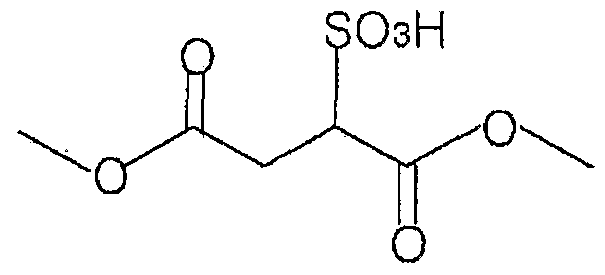


The content of B derived from a sulphonic acid derivative in the crosslmked polyimide film is in the range of 0.01 to 0.15 wt%, based on the total weight of the polymer.
The polyamic acid, a precursor of the polyimide of the present invention, may be prepared by the following processes:
(1) An aromatic acid dianhydride is allowed to react with a less than equivalent amount of an aromatic diamine in the presence of a polar organic solvent to obtain a prepolymer having acid anhydride groups at its both ends, and the prepolymer is further polymerized with a suitable amount of the aromatic diamine so that the total amount of the aromatic diamine used; (2) An aromatic acid dianhydride is reacted with a higher than equivalent amount of an aromatic diamine in the presence of a polar organic solvent to obtain a prepolymer having amino groups at its both ends, and the prepolymer is further polymerized with a suitable amount of the aromatic acid dianhydride so that the total molar amounts of the aromatic acid dianhydride used becomes equivalent to the aromatic diamine;
(3) An aromatic diamine is dissolved in a polar organic solvent, and is then polymerized with a substantially equivalent amount of an aromatic acid dianhydride;
(4) An aromatic acid dianhydride is dissolved and/or dispersed in a polar organic solvent, and is then polymerized with a substantially equivalent amount of an aromatic diamine; or
(5) A mixture of substantially molar equivalent amounts of an aromatic acid dianhydride and an aromatic diamine is polymerized in a polar organic solvent. The polar organic solvent that can be used in the synthesis of a polyamic acid includes an amide-based solvent, e.g., N,N-dimethylformamide, N-methyl-2-pyrrolidone, N,N-dimethylacetamide or a combination thereof.
The reaction of the aromatic diamine with the aromatic acid dianhydride for the preparation of the polyamic acid may be conducted at 0 to 60 °C , preferably 5 to 50 °C . However, when the polyamic acid prepolymer having acid anhydride end groups is used as an intermediate, as described above in process (1), the reaction is preferably conducted at a temperature below 30°C, more preferably below 10°C . Further, the reaction time is less than 10 hours, preferably less than 5 hours, and more preferably less than 3 hours.
Subsequently, a sulphonic acid derivative having two or more -CO- or -O- functional groups is added as a crosslinker to the polyamic acid solution obtained by one of above processes, to obtain a crosslinked polyamic acid. In this step, the crosslinker may be preferably used in an amount of 0.01 to 0.15 wt% based on the total amount of polyamic acid. The crosslinking reaction may be conducted at 0 to 60 0C , preferably at 10 to 50 °C, for 1 to 5 hours. A catalyst may be used for the crosslinking reaction. When ester bond-type crosslinking is desired, l-[3-(dimethylamino)propyl]-3-ethyl carbodiimide hydrochloride (EDC) can be used as a catalyst, while when ether bond-type crosslinking is desired, NaH or PPh3 may be used as the catalyst.
Examples of the crosslinker include N,N-bis(2-hydroxyethyl)-2- aminoethanesulphonic acid (BES), N,N-bis(2-hydroxyethyl)-3-amino-2- hydroxypropanesulphonic acid, and a combination thereof.
Alternatively, a crosslinked polyamic acid may be obtained by subjecting an aromatic diamine having one or more -CO- or -O- groups to a reactor with a sulphonic acid derivative having two or more -CO- or -O- groups in a polar organic solvent, and then, by copolymerizing the resulting product with an aromatic acid dianhydride to obtain a crosslinked polyamic acid. If desired, the crosslinked polyamic acid thus abtanied may be incorporated into another polyamic acid obtained separately. The crosslinked polyamic acid resulting from the above mentioned processes may be kept in the form of a solution comprising 5 to 35wt%, preferably 10 to 30 wt%, more preferably 15 to 25 wt% of the polyamic acid. Further, the number average molecular weight (Mn) of the crosslinked polyamic acid is in the range of 10,000 to 1,000,000 and the viscosity of the crosslinked polyamic acid is in the range of 1,500 to 3,500 poises, which is measured with a Brookfield viscometer.
Then, the crosslinked polyamic acid thus obtained may be imidized into a crosslinked polyimide by a conventional method, e.g., a thermal or chemical curing method. According to the thermal curing method, imidization may be achieved by heat treatment in the absence of a dehydrating agent or an imidization catalyst. According to the chemical curing method, a dehydrating agent, an imidization catalyst or both may be added to a solution of the crosslinked polyamic acid in an organic solvent.
In case of thermal curing, the polyamic acid solution may be applied on a substrate such as a support plate, heating drum, or endless belt and the applied layer may be dried preferably at a temperature of less than about 150°C for about 10 to 60 minutes to obtain a self-supporting gel film. Subsequently, the gel film is fixed on a support plate and heated at 150 to 600 °C, preferably at 250 to 500 °C to completely imidize the residual polyamic acid into a polyimide film.
In case of chemically curing, the polyamic acid solution is mixed with a dehydrating agent and/or a imidization catalyst, and the resultant mixture is applied or cast on a substrate such as a support plate, heating drum or endless belt, and heated at 50 to 200 °C, preferably at 70 to 150°C, to induce partial curing and drying by activating the dehydrating agent and/or the imidization catalyst, to obtain a self-supporting gel film. Subsequently, the gel film is fixed on a support plate, and, heated at 200 to 600 °C for 3 to 30 minutes to completely imidize the residual polyamic acid into polyimide through dehydration and ring-closing reactions. If the heating temperature is higher than 600 °C or the heating time is longer than 30 minutes, film degradation may occur. Conversely, if the heating temperature is lower than 200 "C or the heating time is shorter than 3
minutes, the desired effect may not be achieved.
The dehydrating agent includes an aliphatic anhydride, an aromatic acid anhydride, an N,N'-dialkylcarbodiimide, a lower aliphatic halide, a halogenated lower aliphatic compound and a combination thereof, preferably an aliphatic acid anhydride. Examples of the aliphatic acid anhydride include acetic acid anhydride, propionic acid anhydride, butyric acid anhydride, or a combination thereof. The dehydrating agent may be used in an amount of 1 to 10 mole eq., preferably 1.5 to 8 molar eq., more preferably 2 to 5 molar eq. If the amount of the dehydrating agent is out of the above range, sufficient imidization may not be achieved or the imidized film has a poor releasing property from the substrate.
The imidization may be effectively conducted in the presence of both of the dehydrating agent and the imidization catalyst. Exemplary imidization catalyst is a tertiary amine, such as aliphatic tertiary amine, aromatic tertiary amine, and heterocyclic tertiary amine, and a heterocyclic tertiary amine is preferred. Examples of the heterocyclic tertiary amine include quinoline, isoquinoline, Jβ -picoline, and pyridine. The imidization catalyst may be used in an amount of 0.1 to 2 molar eq., preferably 0.2 to 1.8 molar eq., more preferably 0.3 to 1.5 molar eq., based on the amount of the polyamic acid.
The polyimide film thus obtained typically has an average thickness of 7.5 to 125 μm-
The crosslinked polyimide film of the present invention has an elastic modulus of 500 to 800 kg/ mm2, preferably 500 to 700 kg/mm2. If the elastic modulus of the polyimide film is less than 500 kg/mm2, the film may become loose when the film is heated to laminate IC or LIS on a flexible circuit board having metal wirings.
Further, the polyimide film of the present invention has an average thermal expansion coefficient in the mechanical direction (MD) and the transverse direction (TD) of 1 to 30 ppm/°C, preferably 5 to 20 ppm/°C at 100 to 200 °C . In the above mentioned range, even when an alkaline-etching of the polyimide film on the metal laminate is carried out at a high temperature, the disarrangement of an alkaline etching mask caused by thermal expansion and soaking of the etchant can be prevented. However, if the thermal expansion coefficient is higher than 30 ppm/°C, the gap between the metal wirings may increase, lowering the adhesiveness.
The polyimide film of the present invention has an average heat shrinkage ratio in MD and TD of -0.1 to 1.0% at 300 °C . In the above average heat shrinkage ratio range, even if the film is heated for mounting electronic parts such as IC or LSI on the small wirings, the shrinkage ratio of the film can be controlled into the desired range.
Further, the polyimide film of the present invention has a moisture absorbability
of less than 3.0%, preferably less than 2.0%, more preferably less than 1.8 %, most preferably less than 1.5%, and the moisture expansion coefficient is preferably 2 to 20 ppm/% RH. If the moisture expansion coefficient satisfies the above-mentioned ranges, adhesion problem can be prevented when electronic parts such as IC or LSI are mounted on a metal wiring on the polyimide film. However, if the moisture expansion coefficient is higher than 20 ppm/% RH, the component absorbed in the polyimide film can be discharged when the film is immersed in a soldering bath, and therefore, the film- shrinkage may happen, causing short-circuit of the metal wirings.
In connection with the improvement of the pattern density and reliability, the dimensional change in the course of heating to form the film, etching of a laminate with copper, cleaning, and drying, must be controlled and it is preferable that the polyimide film of the present invention has a low moisture expansion coefficient and a low thermal expansion coefficient.
As mentioned previously, the crosslinked polyimide film according to the present invention has an improved dimensional stability, a low thermal expansion ratio, a low moisture absorbability, a low moisture expansion coefficient, a high elastic modulus, and an excellent adhesiveness. Therefore, the polyimide film of the present invention can be beneficially used as an electronic material, for a flexible circuit board, a base film of COF, a tape for TAB, a base film of a high density recording medium, and PVD 2-layer laminate.
The following Examples are intended to further illustrate the present invention without limiting its scope.
Examples
Example 1
A reactor equipped with a detachable stainless steel flask and two paddle blades positioned in the flask as a stirrer was used in combination with a cooler having cooling capability of 20.9 kJ/minute, to prepare a crosslinked polyamic acid. During the polymerization reaction, dehydrated nitrogen gas was passed through the polymerization reactor at 0.05L/minute to exclude moisture therefrom.
Dimethylformamide (DMF) was introduced into the flask, and equivalent amounts of pyromellitic acid (PMDA) and 4,4-diaminodiphenylether (ODA) were added thereto to abtain a solution containing 18.5wt% of the corresponding polyamic acid. N,N-bis(2-hydroxyethyl)-2-aminoethanesulphonic acid (BES) was dissolved in
dimethylformamide (DMF) in an amount that corresponds to 0.1 wt% based on the polyamic acid which was slowly added to the 18.5wt% polyamic acid solution and the resulting mixture was subjected to a crossliking reaction at 40 °C for 2 hours.
The crosslinked polyamic acid solution thus obtained was mixed with 5 molar eq. of acetic acid anhydride (AA) and 1 molar eq. of isoquinoline (IQ), based on the amount of the crosslinked polyamic acid, and the resulting mixture was uniformly coated on an aluminum plate, and dried stepwisely at 90 °C for 42 seconds, 110°C for 2 minutes, and 130°C for 3minutes 12 seconds.
Then, the polyamic acid film (gel film) thus obtained was released from the aluminum plate and was fixed on a supporting flame with a pin, followed by heating at 250 °C for 5 minutes and then at 450 "C for 5 minute, to induce the dehydration and ring- closing reaction, to obtain a crosslinked polyimide film with a thickness of 25 μm.
Example 2
The procedure of Example 1 was repeated except that the amount of N,N-bis(2- hydroxyethyl)-2-aminoethanesulphonic acid (BES) used was 0.05 wt% based on the weight of the polyamic acid, to obtain a crosslinked polyimide film.
Example 3
The procedure of Example 1 was repeated except that the amount of N,N-bis(2- hydroxyethyl)-2-aminoethanesulphonic acid (BES) used was 0.03 wt% based on the weight of the polyamic acid, to obtain a crosslinked polyimide film.
Example 4
The procedure of Example 1 was repeated except that pyromellitic acid dianhydride (PMDA), 4,4-diaminodiphenylether (ODA), and para-phenylenediamine (PPD) were used at 4:3:1 molar ratio, to obtain a crosslinked polyimide film.
Example 5
The procedure of Example 4 was repeated except that the amount of N,N-bis(2- hydroxyethyl)-2-aminoethanesulphonic acid (BES) used was 0.05wt% based on the weight of the polyamic acid, to obtain a crosslinked polyimide film.
Example 6
The procedure of Example 4 was repeated except that the amount of N,N-bis(2- hydroxyethyl)-2-aminoethanesulphonic acid (BES) used was 0.03 wt% based on the weight of the polyamic acid, to obtain a crosslinked polyimide film.
Example 7
The procedure of Example 1 was repeated except that pyromellitic acid dianhydride (PMDA), biphenyl tetracarboxylic acid dianhydride (BPDA), 4,4- diaminodiphenylether (ODA) and para-phenylenediamine (PPD) were used at 3:1:3:1 molar ratio, to obtain a crosslinked polyimide film.
Example δ
The procedure of Example 7 was repeated except that the amount of 0.05 wt% of N,N-bis(2-hydroxyethyl)-2-aminoethanesulphonic acid (BES) used was 0.05 wt% based on the weight of the polyamic acid, to obtain a crosslinked polyimide film.
Example 9
The procedure of Example 7 was repeated except that the amount of N,N-bis(2- hydroxyethyl)-2-aminoethanesulphonic acid (BES) used was 0.03 wt% based on the weight of the polyamic acid used was 0.03wt%, to obtain a crosslinked polyimide film.
Example 10
The procedure of Example 1 was repeated except that pyromellitic acid dianhydride (PMDA), biphenyl tetracarboxylic acid dianhydride (BPDA), bisaminophenoxyphenylsulphone (BAPS) and para-phenylenediamine (PPD) were used at 3:1 :3:1 molar ratio, to obtain a crosslinked polyimide film.
Example 11
The procedure of Example 10 was repeated except that the amount of N,N-bis(2- hydroxyethyl)-2-aminoethanesulphonic acid (BES) used was 0.05 wt% based on the weight of the polyamic acid, to obtain a crosslinked polyimide film.
Example 12
The procedure of Example 10 was repeated except that the amount of N,N-bis(2- hydroxyethyl)-2-aminoethanesulphonic acid (BES) powder used was 0.03 wt% based on the weight of the polyamic acid, to obtain a crosslinked polyimide film.
Comparative Example 1
The procedure of Example 1 was repeated except that N,N-bis(2-hydroxyethyl)-
2-aminoethanesulphonic acid (BES) was not used, i.e.,the crosslinking reaction was not conducted, to obtain a crosslinked polyimide film.
Comparative Example 2
The procedure of Example 1 was repeated except that the amount of N,N-bis(2- hydroxyethyl)-2-aminoethanesulphonic acid (BES) used was 0.2 wt% based on the weight of the polyamic acid, to obtain a crosslinked polyimide film.
Comparative Example 3
The procedure of Example 4 was repeated except that N,N-bis(2-hydroxyethyl)- 2-aminoethanesulphonic acid (BES) was not used, i.e., the crosslinking reaction was not conducted, to obtain a crosslinked polyimide film.
Comparative Example 4
The procedure of Example 4 was repeated except that the amount of N,N-bis(2- hydroxyethyl)-2-aminoethanesulphonic acid (BES) powder used was 0.2 wt% based on the weight of the polyamic acid, to obtain a crosslinked polyimide film.
Comparative Example 5
The procedure of Example 7 was repeated except that N,N-bis(2-hydroxyethyl)- 2-aminoethanesulphonic acid (BES) was not used, i.e., the crosslinking reaction was not conducted, to obtain a crosslinked polyimide film.
Comparative Example 6
The procedure of Example 7 was repeated except that the amount of N,N-bis(2- hydroxyethyl)-2-aminoethanesulphonic acid (BES) used was 0.2 wt% based on the weight of the polyamic acid, to obtain a crosslinked polyimide film.
Comparative Example 7
The procedure of Example 10 was repeated except that N,N-bis(2- hydroxyethyl)-2-aminoethanesulphonic acid (BES) was not used, i.e., the crosslinking reaction was not conducted, to obtain a crosslinked polyimide film.
Comparative Example 8
The procedure of Example 10 was repeated except that the amount of N,N-bis(2- hydroxyethyl)-2-aminoethanesulphonic acid (BES) used was 0.2 wt% based on the weight of the polyamic acid, to obtain a crosslinked polyimide film.
Experimental Example
The polyimide films prepared in Examples 1 to 12 and Comparative Examples 1 to 8 were evaluated for the following properties, and the results are summarized in Table 1 below.
(1) Thermal expansion coefficient (ppm/°C)
Equipment: TMA-2940 (TA Co., Ltd.) Temperature profile: 20 to 400 °C Heating rate: 10 °C /minute Sample size: 5 x 20 mm
Loading: 3 g
(2) Moisture expansion coefficient defined by the following equation:
Moisture expansion coefficient (ppm/%RH) = [(L1-L2) / Ll] /(80-30) x 106]
Film dimension (Ll)
Standing temperature: 50 °C Relative humidity: 30 %RH Standing time: 24 hours
Film dimension (L2) Standing temperature: 50 °C Relative humidity: 80 %RH Standing time: 24 hours
Sample size: 5 mm X 20 mm
Added loading: 3 g
(3) Moisture absorbability
A polyimide film sample was dried at 150°C for 30 minutes and weighed (Wl). Then, after the film was immersed in a distilled water for 24 hours, the film surface was wiped to remove adsorbed water and the film was weighed again (W2). The moisture absorbability was calculated by the following equation:
Moisture absorbability(%) = (W2-W1)/W1 x 100
(4) Tensile properties (tensile strength, tensile elongation, and elastic modulus): ASTM D882
(5) Heat shrinkage ratio
Sample size: 15 cm (TD: transverse direction, i.e., film width direction) x 25 cm (MD: mechanical direction, i.e., film length direction) Standing temperature: 20 °C Standing humidity: 60 %RH
Standing time: 24 hours
The film sample was kept under the above-mentioned conditions, the lengths of the four edges of the film were measured (the lengths in TD: TDl, TD2, the lengths in MD: MDl, MD2). Next, the film was covered with an aluminum coil, and heated at 300 °C for 2 hours. After heating, the film sample was kept under the condition of 20 °C and 60%RH for 30minutes, followed by measuring the lengths of four edges of the film
again (the lengths in TD: TDl', TD2', the lengths in MD: MDl', MD2'). The heat shrinkage ratio was calculated by averaging the values obtained using the following equations:
Heat shrinkage ratio in TD (%)
= [(TDl-TDl ')/TDl+(TD2-TD2')/TD2]/2 x 100
Heat shrinkage ratio in MD (%)
= [(MDl-MDl ')/MDl+(MD2-MD2')/MD2]/2 x 100
Table 1

As shown in Table 1, the crosslinked polyimide films of the Examples 1 to 12 had a thermal expansion coefficient at 100 to 200 °C of 5 to 20 ppm/°C , a heat shrinkage at 300 °C of -0.1 to 1.0 %, an elastic modulus of 500 to 700 kg/, a moisture absorbability of
less than 3.0 %, and a moisture expansion coefficient of 2 to 20 ppm/% RH. Accordingly, the polyimide film of the present invention has physical properties superior to those of the films prepared in the Comparative examples 1 to 8.
Therefore, the crosslinked polyimide film of the present invention can be effectively used as the electronic materials, which can be applied to, e.g a flexible circuit board, without the problem of twisting or curving caused by the change in temperature or other process conditions.
Claims
1. A crosslinked polyimide film of Formula I5 whose main repeating unit is derived from a crosslinked polyamic acid:
Formula I

A1, A2, A3 and A4 are each independently a moiety derived from an aromatic acid dianhydride,
Ar1 and Ar3 are each independently a moiety derived from an aromatic diamine having one or more functional groups selected from -CO- and -O-,
Ar2 and Ar4 are each independently a moiety derived from an aromatic diamine,
B is a moiety derived from a sulphonic acid derivative having two or more functional groups selected from -CO- and -O-, x and x' are each independently an integer in the range of 2 to 20, and y and y' are each independently an integer in the range of 2 to 30.
2. The crosslinked polyimide film of claim I5 wherein A1, A2, A3, A4, Aη, Ar2, Ar3 and Ar4 are each independently a moiety having one or more C6-10 aromatic rings optionally substituted with hydroxyl, C1-I0 alkyl, CMO alkoxy or halogen, with the proviso that when said moiety comprises two or more aromatic rings, one or more bonds selected from -S-, -O-, -NH-, -C1-4 alkylene-, -CH(OH)-, -CO-, -SO2- and -C(O)NH- intervene between the aromatic rings.
3. The crosslinked polyimide film of claim 2, wherein Aj5 A2, A3 and A4 have each independently a structure selected from the structures shown below:

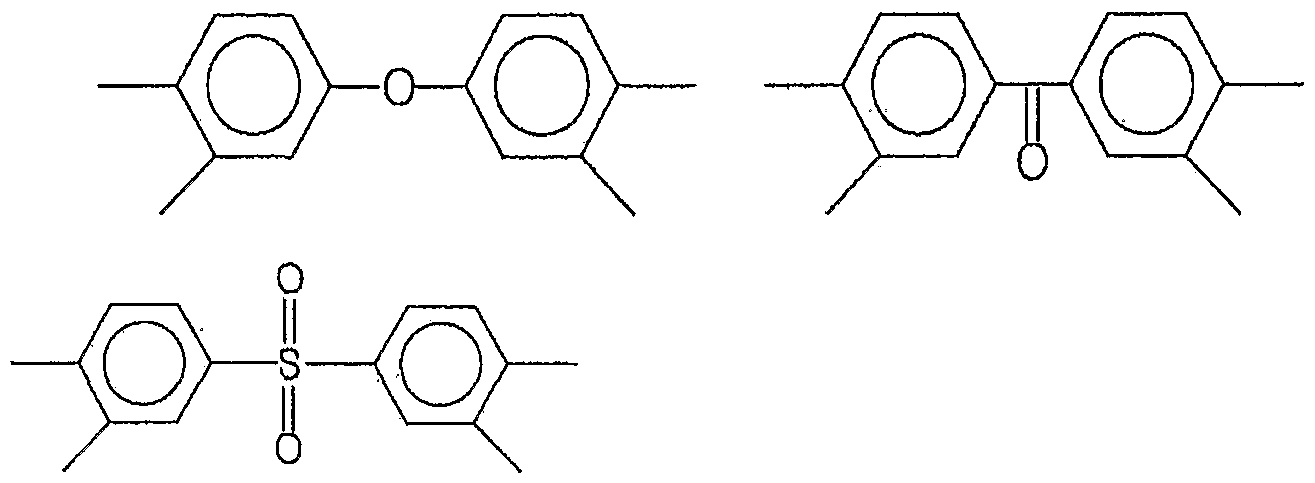
4. The crosslinked polyimide film of claim 2, wherein Ar1 and Ar3 have each independently a structure selected from the structures shown below:

5. The crosslinked polyimide film of claim 2, wherein Ar2 and Ar4 have each independently a structure selected from the structures shown below:


6. The crosslinked polyimide film of claim 2, wherein B has a structure selected from the structures shown below:

7. The crosslinked polyimide film of claim 1, wherein the content of B is 0.01 to 0.15 wt%, based on the total amount of the crosslinked polyimide film.
8. The crosslinked polyimide film of claim 1, wherein the crosslinked polyamic acid is obtained using a 5 to 35wt% polyamic acid solution.
9. The crosslinked polyimide film of claim 1, the crosslinked polyamic acid has number average molecular weight (Mn) of 10,000 to 1,000,000, and a viscosity of 1,500 to 3,500 poises measured with a Brookfield viscometer.
10. The crosslinked polyimide film of claim 1, wherein the average value of the thermal expansion coefficients in the mechanical direction (MD) and the transverse direction (TD) of the film at 100 to 200 °C is 5 to 20 ppm/°C, and the average value of the heat shrinkage ratios in the MD and the TD at 300 °C is -0.1 to 1.0%.
11. The crosslinked polyimide film of claim 1 , wherein the film has an elastic modulus of 500 to 700 kg/mm2.
12. The crosslinked polyimide film of claim 1, wherein the film has a moisture absorbability of not more than 3.0 %, and a moisture expansion coefficient of 2 to 20 ppm/%RH.
13. A process for the preparation of the crosslinked polyimide film of Formula I according to claim 1, comprising (a) copolymerizing an aromatic acid dianhydride with an aromatic diamine in the presence of an organic polar solvent to obtain a polyamic acid; (b) crosslinking the polyamic acid with a sulphonic acid derivative having two or more functional groups selected from -CO- and -O- as a crosslinker, to obtain a crosslinked polyamic acid, and (c) applying the crosslinked polyamic acid on a substrate to obtain a film, followed by drying and heating to cure the film.
14. The process of claim 13, wherein the crosslinker is added in an amount of 0.01 to 0.15 wt% based on the total amount of the polyamic acid.
15. The process of claim 13, wherein the crosslinking reaction is conducted at 0 to 60 °C for 1 to 5 hours.
16. The process of claim 13, wherein the crosslinker is selected from N,N-bis(2- hydroxyethyl)-2-aminoethanesulphonic acid (BES), N,N-bis(2-hydroxyethyl)-3-amino- 2-hydroxypropanesulphonic acid, and a mixture thereof.
17. The process of claim 13, wherein the crosslinked polyamic acid is chemically cured in the presence of a dehydrating agent, an imidization catalyst or a combination thereof, or thermally cured.
Applications Claiming Priority (2)
| Application Number | Priority Date | Filing Date | Title |
|---|---|---|---|
| KR1020070008810A KR20080070924A (en) | 2007-01-29 | 2007-01-29 | Crosslinked polyimide film and method for preparing same |
| KR10-2007-0008810 | 2007-01-29 |
Publications (1)
| Publication Number | Publication Date |
|---|---|
| WO2008093971A1 true WO2008093971A1 (en) | 2008-08-07 |
Family
ID=39674235
Family Applications (1)
| Application Number | Title | Priority Date | Filing Date |
|---|---|---|---|
| PCT/KR2008/000504 Ceased WO2008093971A1 (en) | 2007-01-29 | 2008-01-28 | Crosslinked polyimide film and process for preparation thereof |
Country Status (2)
| Country | Link |
|---|---|
| KR (1) | KR20080070924A (en) |
| WO (1) | WO2008093971A1 (en) |
Cited By (2)
| Publication number | Priority date | Publication date | Assignee | Title |
|---|---|---|---|---|
| US10815343B2 (en) | 2017-06-23 | 2020-10-27 | Samsung Electronics Co., Ltd. | Composition for preparing polyimide or poly(imide-amide) copolymer, polyimide or poly(imide-amide) copolymer, article including polyimide or poly(imide-amide) copolymer, and display device including the article |
| CN112530993A (en) * | 2019-09-18 | 2021-03-19 | 三星显示有限公司 | Display device |
Families Citing this family (2)
| Publication number | Priority date | Publication date | Assignee | Title |
|---|---|---|---|---|
| KR101384967B1 (en) * | 2012-04-10 | 2014-04-15 | 한국화학연구원 | Aromatic polyimide resins crosslinked by allyl or vinyl side chain |
| KR20240100752A (en) * | 2022-12-23 | 2024-07-02 | 주식회사 엘지화학 | Positive type photosensitive resin composition and electronic device comprising same |
Citations (2)
| Publication number | Priority date | Publication date | Assignee | Title |
|---|---|---|---|---|
| WO2003018669A1 (en) * | 2001-08-22 | 2003-03-06 | Hanyang Hak Won Co., Ltd. | Crosslinked sulfonated plymide films |
| WO2004015803A1 (en) * | 2002-08-02 | 2004-02-19 | Pemeas Gmbh | Proton-conducting polymer membrane comprising a polymer with sulphonic acid groups and use thereof in fuel cells |
-
2007
- 2007-01-29 KR KR1020070008810A patent/KR20080070924A/en not_active Ceased
-
2008
- 2008-01-28 WO PCT/KR2008/000504 patent/WO2008093971A1/en not_active Ceased
Patent Citations (2)
| Publication number | Priority date | Publication date | Assignee | Title |
|---|---|---|---|---|
| WO2003018669A1 (en) * | 2001-08-22 | 2003-03-06 | Hanyang Hak Won Co., Ltd. | Crosslinked sulfonated plymide films |
| WO2004015803A1 (en) * | 2002-08-02 | 2004-02-19 | Pemeas Gmbh | Proton-conducting polymer membrane comprising a polymer with sulphonic acid groups and use thereof in fuel cells |
Non-Patent Citations (4)
| Title |
|---|
| LEE C.H. ET AL.: "Water Sorption, Proton Conduction and Methanol Premeation Properties of Sulfonated Polyimide Membranes Cross-Linked with N,N-Bis(2-hydroxyethyl)-2-aminoethanesulfonic acid(BES)", MACROMOLECULES, vol. 39, no. 2, 2006, pages 755 - 764, XP003022246 * |
| LEE C.H. ET AL.: "Water-stable crosslinked sulfonated polyimide-silica nanocomposite containing interpenetrating polymer network", JOURNAL OF POWER SOURCES, vol. 163, 2006, pages 339 - 348, XP005738350 * |
| PARK H.B. ET AL.: "Effect of crosslinked chain length in sulfonated polyimide membranes on water sorption, proton production and methanol permeation properties", JOURNAL OF MEMBRANE SCIENCE, vol. 285, 2006, pages 432 - 443, XP005712756 * |
| SYSEL P. ET AL.: "Preparation and characterization of crosslinked polyimide-poly(dimethylsiloxane)s", POLYMER, vol. 42, 2001, pages 10079 - 10085, XP004308193 * |
Cited By (2)
| Publication number | Priority date | Publication date | Assignee | Title |
|---|---|---|---|---|
| US10815343B2 (en) | 2017-06-23 | 2020-10-27 | Samsung Electronics Co., Ltd. | Composition for preparing polyimide or poly(imide-amide) copolymer, polyimide or poly(imide-amide) copolymer, article including polyimide or poly(imide-amide) copolymer, and display device including the article |
| CN112530993A (en) * | 2019-09-18 | 2021-03-19 | 三星显示有限公司 | Display device |
Also Published As
| Publication number | Publication date |
|---|---|
| KR20080070924A (en) | 2008-08-01 |
Similar Documents
| Publication | Publication Date | Title |
|---|---|---|
| EP0459809B1 (en) | Polyimidosiloxane resin and composition thereof and method of applying same | |
| EP0879839B1 (en) | Polyimide copolymer, polyimide copolymer resin molded products and their preparation | |
| EP0271736B1 (en) | Resins of low thermal expansivity | |
| KR100494632B1 (en) | Novel polyimide and circuit substrate comprising the same | |
| US5494991A (en) | Polyimides and processes for preparing the same | |
| KR20210122142A (en) | Resin film, metal-clad laminate and circuit board | |
| KR20160094551A (en) | Polyamic acid composition and polyimide substrate | |
| JPH1036506A (en) | Novel polyimide composition and polyimide film | |
| WO2008093971A1 (en) | Crosslinked polyimide film and process for preparation thereof | |
| JP3048690B2 (en) | Method for producing polyimide film | |
| KR100573214B1 (en) | Novel Polyimide Copolymers | |
| JP3048703B2 (en) | Polyamic acid copolymer and polyimide film comprising the same | |
| JP2004285364A (en) | Base film for flexible printed circuit board, polyimide film usable for carrier tape for tab | |
| JPH08157597A (en) | Polyimide copolymer and method for producing the same | |
| US5478914A (en) | Polyimides and processes for preparaing the same | |
| JP2810661B2 (en) | Method for producing polyamic acid copolymer | |
| JPH0796618B2 (en) | Low thermal expansion resin | |
| JPS60203638A (en) | Polyimide film | |
| JP4017034B2 (en) | New polyimide film | |
| JPH08217877A (en) | Polyimide resin and polyimide film | |
| JP2910796B2 (en) | Polyamic acid copolymer, polyimide film comprising the same, and methods for producing them | |
| JP3596556B2 (en) | Flexible printed circuit board materials | |
| JP3339205B2 (en) | Method for producing polyimide copolymer | |
| JP3299777B2 (en) | Polyimide film and method for producing the same | |
| JP3375346B2 (en) | Polyamic acid and polyimide film and their production method |
Legal Events
| Date | Code | Title | Description |
|---|---|---|---|
| 121 | Ep: the epo has been informed by wipo that ep was designated in this application |
Ref document number: 08704979 Country of ref document: EP Kind code of ref document: A1 |
|
| NENP | Non-entry into the national phase |
Ref country code: DE |
|
| 122 | Ep: pct application non-entry in european phase |
Ref document number: 08704979 Country of ref document: EP Kind code of ref document: A1 |