WO2007124479A2 - Avian influenza viruses, vaccines, compositions, formulations, and methods - Google Patents
Avian influenza viruses, vaccines, compositions, formulations, and methods Download PDFInfo
- Publication number
- WO2007124479A2 WO2007124479A2 PCT/US2007/067205 US2007067205W WO2007124479A2 WO 2007124479 A2 WO2007124479 A2 WO 2007124479A2 US 2007067205 W US2007067205 W US 2007067205W WO 2007124479 A2 WO2007124479 A2 WO 2007124479A2
- Authority
- WO
- WIPO (PCT)
- Prior art keywords
- virus
- vaccine
- avian influenza
- derived
- challenge
- Prior art date
- Legal status (The legal status is an assumption and is not a legal conclusion. Google has not performed a legal analysis and makes no representation as to the accuracy of the status listed.)
- Ceased
Links
Classifications
-
- A—HUMAN NECESSITIES
- A61—MEDICAL OR VETERINARY SCIENCE; HYGIENE
- A61K—PREPARATIONS FOR MEDICAL, DENTAL OR TOILETRY PURPOSES
- A61K39/00—Medicinal preparations containing antigens or antibodies
- A61K39/12—Viral antigens
- A61K39/145—Orthomyxoviridae, e.g. influenza virus
-
- A—HUMAN NECESSITIES
- A61—MEDICAL OR VETERINARY SCIENCE; HYGIENE
- A61K—PREPARATIONS FOR MEDICAL, DENTAL OR TOILETRY PURPOSES
- A61K35/00—Medicinal preparations containing materials or reaction products thereof with undetermined constitution
- A61K35/12—Materials from mammals; Compositions comprising non-specified tissues or cells; Compositions comprising non-embryonic stem cells; Genetically modified cells
-
- A—HUMAN NECESSITIES
- A61—MEDICAL OR VETERINARY SCIENCE; HYGIENE
- A61K—PREPARATIONS FOR MEDICAL, DENTAL OR TOILETRY PURPOSES
- A61K39/00—Medicinal preparations containing antigens or antibodies
- A61K39/12—Viral antigens
-
- A—HUMAN NECESSITIES
- A61—MEDICAL OR VETERINARY SCIENCE; HYGIENE
- A61K—PREPARATIONS FOR MEDICAL, DENTAL OR TOILETRY PURPOSES
- A61K39/00—Medicinal preparations containing antigens or antibodies
- A61K39/39—Medicinal preparations containing antigens or antibodies characterised by the immunostimulating additives, e.g. chemical adjuvants
-
- A—HUMAN NECESSITIES
- A61—MEDICAL OR VETERINARY SCIENCE; HYGIENE
- A61K—PREPARATIONS FOR MEDICAL, DENTAL OR TOILETRY PURPOSES
- A61K49/00—Preparations for testing in vivo
- A61K49/0004—Screening or testing of compounds for diagnosis of disorders, assessment of conditions, e.g. renal clearance, gastric emptying, testing for diabetes, allergy, rheuma, pancreas functions
-
- C—CHEMISTRY; METALLURGY
- C07—ORGANIC CHEMISTRY
- C07K—PEPTIDES
- C07K14/00—Peptides having more than 20 amino acids; Gastrins; Somatostatins; Melanotropins; Derivatives thereof
- C07K14/005—Peptides having more than 20 amino acids; Gastrins; Somatostatins; Melanotropins; Derivatives thereof from viruses
-
- A—HUMAN NECESSITIES
- A61—MEDICAL OR VETERINARY SCIENCE; HYGIENE
- A61K—PREPARATIONS FOR MEDICAL, DENTAL OR TOILETRY PURPOSES
- A61K39/00—Medicinal preparations containing antigens or antibodies
- A61K2039/51—Medicinal preparations containing antigens or antibodies comprising whole cells, viruses or DNA/RNA
- A61K2039/525—Virus
- A61K2039/5252—Virus inactivated (killed)
-
- A—HUMAN NECESSITIES
- A61—MEDICAL OR VETERINARY SCIENCE; HYGIENE
- A61K—PREPARATIONS FOR MEDICAL, DENTAL OR TOILETRY PURPOSES
- A61K39/00—Medicinal preparations containing antigens or antibodies
- A61K2039/55—Medicinal preparations containing antigens or antibodies characterised by the host/recipient, e.g. newborn with maternal antibodies
- A61K2039/552—Veterinary vaccine
-
- A—HUMAN NECESSITIES
- A61—MEDICAL OR VETERINARY SCIENCE; HYGIENE
- A61K—PREPARATIONS FOR MEDICAL, DENTAL OR TOILETRY PURPOSES
- A61K39/00—Medicinal preparations containing antigens or antibodies
- A61K2039/555—Medicinal preparations containing antigens or antibodies characterised by a specific combination antigen/adjuvant
- A61K2039/55511—Organic adjuvants
- A61K2039/55566—Emulsions, e.g. Freund's adjuvant, MF59
-
- A—HUMAN NECESSITIES
- A61—MEDICAL OR VETERINARY SCIENCE; HYGIENE
- A61K—PREPARATIONS FOR MEDICAL, DENTAL OR TOILETRY PURPOSES
- A61K39/00—Medicinal preparations containing antigens or antibodies
- A61K2039/70—Multivalent vaccine
-
- C—CHEMISTRY; METALLURGY
- C12—BIOCHEMISTRY; BEER; SPIRITS; WINE; VINEGAR; MICROBIOLOGY; ENZYMOLOGY; MUTATION OR GENETIC ENGINEERING
- C12N—MICROORGANISMS OR ENZYMES; COMPOSITIONS THEREOF; PROPAGATING, PRESERVING, OR MAINTAINING MICROORGANISMS; MUTATION OR GENETIC ENGINEERING; CULTURE MEDIA
- C12N2760/00—MICROORGANISMS OR ENZYMES; COMPOSITIONS THEREOF; PROPAGATING, PRESERVING, OR MAINTAINING MICROORGANISMS; MUTATION OR GENETIC ENGINEERING; CULTURE MEDIA ssRNA viruses negative-sense
- C12N2760/00011—Details
- C12N2760/16011—Orthomyxoviridae
- C12N2760/16111—Influenzavirus A, i.e. influenza A virus
- C12N2760/16134—Use of virus or viral component as vaccine, e.g. live-attenuated or inactivated virus, VLP, viral protein
Definitions
- the present invention relates generally to influenza vaccines, more specifically to avian influenza vaccines and formulations thereof useful for vaccinating susceptible avian species.
- the invention also relates to new methods for preventing or ameliorating avian influenza viral disease in poultry.
- Influenza viruses most notably particular strains of A and B virus, are a serious cause of morbidity and mortality throughout the world, resulting in annual disease outbreaks. Periodically but at irregular intervals pandemics occur and result in particularly high levels of illness and death. Pandemics are historically the result of novel virus subtypes of influenza A, created by reassortment of the segmented genome (antigenic shift), whereas annual epidemics are generally the result of evolution of the surface antigens of influenza A and B virus (antigenic drift). Human influenza viruses often originate from avian strains of influenza virus so that influenza infection is at its basis a zoonosis.
- Avian Influenza also called “AI” is an acute and highly contagious viral infection of chickens and other fowl.
- AI hemagglutinin
- NA neuraminidase
- HA hemagglutinin
- NA neuraminidase
- the strains used for vaccine preparation often do not reproduce under manufacturing conditions at a very fast rate, so that waiting for an appearance of a particular strain, and then manufacturing the correct vaccine to protect against the strain does not provide a viable option.
- the epidemic of the particular strain will last for several months, and then perhaps disappear for several years.
- Influenza viruses are classified into various A, B, and C topologies, according to the virus' group antigen. Influenza viruses of the A, B, and C types are distinguishable on the basis of antigenic differences in viral nucleocapsid (NP) and matrix (M) proteins.
- A-type influenza viruses are classified into subtypes on the basis of such differences in hemagglutinin (HA) and neuraminidase (NA).
- NA 1 to NA 9 Nine subtypes of the neuraminidase NA proteins, designated NA 1 to NA 9, and fifteen different subtypes of the serum hemagglutinin HA proteins, designated HA 1 to HA 15, have been identified.
- viruses carrying each of the various HA (or H) and NA (or N) subtypes have been isolated.
- Influenza A, B and C, of the family Orthomyxoviridae all have a segmented negative strand RNA genome that is replicated in the nucleus of the infected cell, has a combined coding capacity of about 13 kb, and contains the genetic information for ten viral proteins.
- influenza viruses have eight negative- sense RNA (nsRNA) gene segments that encode at least 10 polypeptides, including RNA-directed RNA polymerase proteins (PB2, PBl and PA), nucleoprotein (NP), neuraminidase (NA), hemagglutinin (HA, which after enzymatic cleavage is made up of the association of subunits HAl and HA2), the matrix proteins (Ml and M2) and the non-structural proteins (NSl and NS2) (Krug et al, In The Influenza Viruses, R.M. Krug, ed., Plenum Press, New York, 1989, pp. 89-152).
- PB2 RNA-directed RNA polymerase proteins
- NP nucleoprotein
- NA neuraminidase
- HA hemagglutinin
- Ml and M2 matrix proteins
- NSl and NS2 non-structural proteins
- the virus particle of the influenza virus has a size of about 125 nm and consists of a core of negative sense viral RNA associated with the nucleoprotein, surrounded by a viral envelope with a lipid bilayer structure.
- the inner layer of the viral envelope is composed predominantly of matrix proteins and the outer layer contains most of the host-derived lipid material.
- the so- called "surface proteins”, neuraminidase (NA) and hemagglutinin (HA) appear as spikes on the surface of the viral body. Infectivity of novel influenza viruses depends on the cleavage of HA by specific host proteases, whereas NA is involved in the release of progeny virions from the cell surface and prevents clumping of newly formed virus.
- the HA and NA proteins embedded in the viral envelope are the primary antigenic determinants of the influenza virus (Air et al., Structure, Function, and Genetics, 1989, 6:341- 356; Wharton et al., In The Influenza Viruses, R. M. Krug, ed., Plenum Press, New York, 1989, pp. 153-174). Due to reassortment of influenza segmented genome, new HA and NA variants are constantly created for which a newly infected organism has no anamnestic immune response. HA glycoprotein is the major antigen for neutralizing antibodies and is involved in the binding of virus particles to receptors on host cells.
- HA molecules from different virus strains show significant sequence similarity at both the nucleic acid and amino acid levels. This level of similarity varies when strains of different subtypes are compared, with some strains clearly displaying higher levels of similarity than others (Air, Proc. Natl. Acad. Sci. USA, 1981, 78:7643).
- the levels of amino acid similarity vary between virus strains of one subtype and virus strains of other subtypes (Air, Proc. Natl. Acad. Sci. USA, 1981, 78:7643). This variation is sufficient to establish discrete subtypes and the evolutionary lineage of the different strains, but the DNA and amino acid sequences of different strains are still readily aligned using conventional bioinformatics techniques (Air, Proc. Natl. Acad. Sci. USA, 1981, 78:7643; Suzuki and Nei, MoI. Biol. Evol. 2002, 19:501).
- HA is a viral surface glycoprotein comprising approximately 560 amino acids and representing 25% of the total virus protein. It is chiefly responsible of adhesion of the viral particle to and its penetration into a host cell in the early stages of infection.
- viral proteins hemagglutinin is most subject to post- translational rearrangement. After synthesis of hemagglutinin has been completed, the molecule follows the exocytotic pathway of the host cell, in the course of which HA is folded, assembled in trimers and glycosylated. Finally, HA is cleaved into two subunits Hi and H2; which activates the molecule and promotes the virion's infective capacity.
- NA Neuraminidase
- NA is a second membrane glycoprotein of the influenza A viruses.
- NA is a 413 amino acid protein encoded by a gene of 1413 nucleotides.
- NA participates in the destruction of the cellular receptor for the viral hemagglutinin by cleaving between the sialic acid molecule and the hemagglutinin itself. In this way it believed to be possible to ease liberation of viral progeny by preventing newly formed viral particles from accumulating along the cell membrane as well as by promoting transportation of the virus through the mucus present on the mucosal surface.
- NA is an important antigenic determinant that is subject to antigenic variations.
- influenza vaccines currently licensed by public health authorities for use in the United States and Europe are inactivated influenza vaccines as well as the live attenuated FLUMIST vaccine in the United States.
- Viruses presenting epidemiologically important influenza A and influenza B strains are grown in embryonated chicken eggs and the virus particles are subsequently purified and inactivated by chemical means to form vaccine stocks.
- Each year the WHO selects subtypes which most likely will circulate for that year for vaccine development.
- influenza vaccines have been in use since the early 1940's for human vaccination and since the late 1960's for equine vaccination, the existence of extensive animal reservoirs, combined with the threat of emergence of a novel influenza virus capable of causing a pandemic, has spurred research into novel therapies with which to fight the virus.
- Several important advances in the field of influenza have occurred in the last few years (reviewed in Cox and Subbarao, Lancet 1999, 354:1277-82).
- an experimental live, attenuated, intranasally administered trivalent influenza vaccine was shown to be highly effective in protecting young children against influenza A H3N2 and influenza B.
- Serum antibody titer methods are the accepted surrogate measures of immune protection after vaccination or viral infection.
- the predominantly used serum antibody titer methods are virus neutralization titer assays and hemagglutinin inhibition (HI) titer assays. These assays are based on the ability of influenza antibodies from human serum to cross react with antigens under in vitro conditions. Assays are selected for a given situation based not only on their ability to provide consistent and applicable results but also based on their ease of use and the facility requirements for each type of assay. Briefly stated, the virus neutralization assay examines the ability of antibodies from a serum sample to block the infection of cultured cells by influenza virus.
- the assay is carried out by creating serial dilutions (titers) of a serum sample and combining each of these dilutions with a standard amount of infectious virus. Each dilution mixture is then presented to a defined cell culture and the resulting infection rates assayed.
- the virus neutralization titer assay is considered to be an extremely useful and reliable test to examine the level of immunoprotective antibodies present in a given individual. It is, however, dependent on specialized cell culture facilities and therefore is not universally available. The methodology is also laborious and time consuming hence poorly suited to screening large numbers of samples.
- the hemagglutinin inhibition (HI) assay similarly examines the ability of antibodies from a serum sample to bind with a standardized reference virus.
- the basis for this assay is the fact that influenza viruses will bind to and agglutinate erythrocytes.
- serial dilutions of serum sample are mixed with standard amounts of reference virus and after a set incubation period added to erythrocytes. The association between reference viruses and erythrocytes into complexes is then detected visually. The highest dilution of serum that inhibits hemagglutinin is read as the hemagglutinin inhibition titer.
- the HI assay is widely employed due to its relatively simple technology and laboratory requirements.
- the current Asian H5N1 highly pathogenic avian influenza has spread over much of Asia and into Europe and Africa. As well as affecting village and commercial chicken operations in many South East Asian countries, it differs from past H5 avian influenzas in that it causes morbidity and mortalities in other domesticated birds, such as ducks and turkeys and in wild waterbirds. Effective vaccines that can prevent infection, as well as disease, and be used in a variety of avian species are needed for field use.
- HPAI highly pathogenic avian influenza
- the Asian H5N1 virus cannot be grown to high titer in eggs, which is the traditional method of virus production for human and avian influenza vaccines. Thus, alternatives to homologous virus vaccines are being developed. Live vectored vaccines can provide additional safety and the ability to differentiate between infected and vaccinated birds.
- Fowlpox virus (Qiao et al., Avian Path. 32:25-31 (2003), infectious laryngotracheitis virus (Luschow et al., Vaccine 1 ⁇ :4249-4259 (2001) and adenovirus (Gao et al., J. Virol. 80:1959-1964 (2006)) vectors expressing H5 have all been assessed and shown to have protective efficacy, with reduction, but not complete elimination, of virus shedding.
- Other influenza strains particularly those that share the H5 hemagglutinin type, but with a different neuraminidase, have been shown to have some efficacy in the field (Ellis et al., Avian Path.
- Reverse genetics has been used to create influenza virus reassortants with the hemagglutinin and neuraminidase genes from either the human H5N1 isolate, A/HK/491/97 (Subbarao et al, Virol. 305:192-200 (2003)), or the avian H5N1 isolate, A/Goose/Guangdong/96 (Tian et al, Virol. 341:153-162 (2005).
- Both of these reassortants are apathogenic in chickens and the reassortant virus with H5 and Nl from A/Goose/Guangdong/96 has been tested as a formalin inactivated preparation for protective efficacy against the parent HPAI H5N1 in specific pathogen free (SPF) chickens, and in non-SPF geese and ducks.
- SPF pathogen free
- a reassortant virus with H5 from A/Goose/Hong Kong/437-4/99 and N3 from A/Duck/Germany/1215/73 has been constructed (Liu et al, Virol. 314:580-590 (2003)).
- the vaccine When formulated as an oil emulsion, the vaccine was able to protect SPF chickens against mortality following challenge with HPAI H5N1 virus. At appropriate doses of the vaccine, there was no challenge viruses detected in the birds.
- Reverse genetics influenza vaccines have been postulated to be utilizable in these "DIVA" methods, where a vaccine is administered having an N different from the viral strain against which the bird is being vaccinated thereby facilitating the differentiation of vaccinated animals from infected birds.
- Published PCT WO 03/086453 which is incorporated by reference in its entirety herein, describes the DIVA technology, and some representative vaccines utilizable in the methods thereof.
- Reverse genetics vaccines offer a number of obvious advantages over conventional vaccines prepared from naturally occurring virus strains. Through reverse genetics technology, specific genes from virus A may be replaced with the corresponding gene from virus B. Additionally, these genes may be modified to reduce viral pathogenicity while retaining the resulting vaccine's protective properties.
- Vaccines based on the current Asian H5N1 strain and which overcome these problems and for use in a variety of poultry species are urgently needed that provide an alternative to eradication of infected flocks.
- a requirement of such avian influenza virus vaccines is that they (a) elicit a rapid immune response in the vaccinated avian and (b) enable differentiation of vaccinated birds from infected birds.
- avian influenza vaccines which not only invoke a rapid immune response, and a higher titer response, but which also produce a sterilizing effect, preventing the growth, shedding and transmission of a challenge virus to other susceptible species.
- the present invention fulfills these and other related needs by providing reassorted avian influenza viruses and avian influenza vaccines, compositions comprising one or more avian virus and/or vaccine, formulations thereof, and methods for the use of inventive avian viruses and/or vaccines, compositions, and/or formulations, wherein the viruses and vaccines comprise an HA gene derived from a highly pathogenic avian influenza virus, an NA gene derived from a low pathogenicity avian influenza virus, and a viral backbone comprising the remaining avian influenza virus genes from a low pathogenicity avian influenza virus.
- Low pathogenicity avian influenza viruses and vaccines disclosed herein are effective in preventing or ameliorating avian influenza, and provide the additional benefit that they prevent the growth, shedding and/or transmission of the challenge influenza virus to other species.
- low pathogenicity avian influenza viruses and vaccines of the present invention comprise an HA portion derived from a first highly pathogenic strain of H5 avian influenza, an NA portion derived from a second low pathogenic strain which has an N subtype different from that of the virus from which the HA portion is derived, and the remaining viral genome selected from a low pathogenic virus which may be the same or different than the virus from which the N portion is derived.
- the HA portion is derived from a highly pathogenic strain of H5 avian influenza exemplified herein by the Asian strain of H5N1 designated A/chicken/Vietnam/C58/04.
- the NA portion is derived from a second low pathogenic strain which has an NA subtype different from that of the virus from which the HA portion is derived.
- the NA subtype is from a European or American lineage strain having an N3, N5 or N9 subtype.
- Exemplified herein are reassortant H5N3 avian influenza viruses wherein the N3 gene is derived from the low pathogenic H2N3 avian influenza strain designated A/DK/Germany/1215/73.
- the remaining viral genome is selected from a low pathogenic virus exemplified herein by the low pathogenic avian influenza virus designated A/Puerto Rico/8/34 HlNl.
- H5N3 avian influenza viruses and vaccines comprising an HA H5 gene from the recent pathogenic Asian outbreak strain A/Ck/Vietnam/C58/04 (H5N1); an NA N3 gene from the low pathogenicity strain A/DK/Germany/1215/73 (H2N3), which facilitates differentiation from the wild type infection (Nl); and an avian influenza backbone from the low pathogenicity strain A/Puerto Rico/8/34 (HlNl), which is a well-characterized and safe virus having no pathogenic effects in either humans or animals.
- H5N3 reverse genetics virus is described in detail in Published PCT WO 01/083794, which disclosure is incorporated herein by reference in its entirety.
- H5N3 avian viral vaccine construct described herein provides a sterilizing effect when a vaccinated subject is challenged by a pathogenic influenza virus thereby preventing the pathogenic virus from growing in susceptible tissues and being shed into the subject's environment.
- This surprising feature of the present invention is particularly advantageous over existing vaccines available in the art because it reduces or eliminates disease transmission via a pathogenic virus that may otherwise be transmitted from an immunized subject to a non-immunized, susceptible subject.
- the present invention is directed to vaccine compositions that are effective in preventing and/or ameliorating avian influenza and that, additionally, are capable of preventing the growth, shedding, and transmission of a pathogenic challenge influenza virus from an infected subject to an uninfected subject, such as, for example, from an infected bird to an uninfected bird.
- this invention is directed to a vaccine composition
- a vaccine composition comprising a reverse genetics virus, said reverse genetics virus comprising: (i) an HA portion derived from a first highly pathogenic H5 avian influenza strain, (ii) an N portion derived from a second low pathogenic strain of avian influenza that has an N subtype distinct from the N subtype of the first highly pathogenic H5 avian influenza strain, and (iii) a backbone avian influenza viral genome from a third low pathogenic virus.
- the second low pathogenic strain and the third low pathogenic strain are from the same avian influenza virus isolates.
- the second low pathogenic strain and the third low pathogenic strain are from distinct avian influenza virus isolates.
- avian influenza vaccine compositions and formulations that are effective in preventing or ameliorating an avian influenza virus infection.
- inventive formulation comprises a reverse genetics strain of an avian influenza virus, typically an inactivated form of a reverse genetics strain of an avian influenza virus and, optionally, one or more surfactant comprising a sorbitan oleate esters.
- the avian influenza virus vaccine comprises a hemagglutinin (HA) total that is at least about 75 HA/dose of the vaccine formulation.
- HA hemagglutinin
- a vaccine composition that is effective in preventing or ameliorating Avian influenza virus infection, which comprises reverse genetics virus consisting of an HA portion derived from a highly pathogenic strain of H5 avian influenza, a N portion derived from a second low pathogenic strain which has an N subtype different from that of the virus from which the HA portion is derived, and the remaining viral genome selected from a low pathogenic virus which may be the same or different than the virus from which the N portion is derived, adjuvanted with a biologically acceptable adjuvant material, wherein the hemagglutinin (HA) total is at least about 75 HA/dose, or at least about 125 HA/dose, or about 250 HA/dose of said vaccine composition.
- HA hemagglutinin
- vaccine compositions and/or formulations may, optionally, further comprise one or more surfactants such as, for example, one or more sorbitan oleate ester and/or one or more ethylene oxide/propylene oxide block copolymer(s).
- the sorbitan oleate esters are TWEEN® 80 and/or sorbitan sesquioleate ester.
- vaccine compositions and/or formulations may comprise an inventive avian influenza virus that is adjuvanted in a water-in-oil emulsion.
- vaccine compositions wherein the backbone viral genome is derived from the HlNl avian influenza virus designated A/Puerto Rico/8/34 (aka PR8). This low pathogenic strain is particularly advantageous in applications requiring an influenza vaccine that is safe across two or more different species.
- the present invention further provides vaccine compositions comprising at least two strains of avian influenza wherein the HA/dose is typically greater than about 75 HA/dose, more typically greater than about 128 HA/dose, or greater than about 200 HA/dose, or greater than about 250-300 HA/dose.
- the particular avian influenza strains selected to derive the reverse genetics influenza virus vaccine of the present invention dependent upon the particular strain prevalent in the given geographical region in which the vaccine is to be administered with the provisos that (a) the HA subtype is typically the same as the HA subtype of the prevalent or challenge strain and (b) the NA subtype is distinct from the NA subtype of the prevalent or challenge strain so as to enable reliance upon the DIVA technology.
- hemagglutinin (HA) total is at least about 75 HA/dose of the vaccine composition.
- the present invention provides methods for preventing or ameliorating an outbreak of Avian Influenza virus infection, which methods comprise the step of administering to a poultry member a virus or vaccine composition as disclosed herein.
- the virus or vaccine composition may, for example, be administered via drinking water or via spraying.
- the suitable dose is within the range of between about 1 ng and about 1 ⁇ g, or between about 5 ng and about 250 ng, or between about 20 ng and about 125 ng, or between about 50 ng and about 100 ng.
- Effective doses may, generally, be administered at about 0.25 mL to 2.0 mL per poultry member.
- the virus and/or vaccine may be administered as a single dose, or may be administered repeatedly in two or more doses.
- Figure 1 is an alignment of goose HK 437 H5 and chicken VN C58 H5.
- SEQ ID NO: 1 is the amino acid sequence of goose HK 437 H5 (dqicigyhannsteqvdtimeknvtvthaqdilekthngklcdldgvkplilrdcsvagwllgnpmcdefinvpewsyivekaspan dlcypgdfnnyeelkhllsrtnhfekiqiipksswsnhdassgvssacpyhgkssffrnvvwlikknsayptikrsynntnqedllvlw gihhpndaaeqtklyqnpttyisvgtstlnqrlvpeiatrpkvngqsgrmeffwtilkpndainfesngnfiapeyaykivkkgdsaim kseleygncntkcqtpmgainssmpfhn
- SEQ ID NO: 2 is the amino acid sequence of chicken VN C58 H5 (DQICIGYHANNSTEQ VDTIMEKNVTVTHAQDILEKTHNGKLCDLDGVKPLILRDCSVAG WLLGNPMCDEFINVPEWSYIVEKANPVNDLCYPGDFND YEELKHLLSRINHFEKIQIIPKS SWSSHEASLGVSSACPYQGKSSFFRNVVWLIKKNSTYPTIKRSYNNTNQEDLLVLWGIH HPNDAAEQTKLYQNPTTYISVGTSTLNQRLVPRIATRSKVNGQSGRMEFFWTILRPNDAI
- the present invention is based upon the unexpected discovery that reverse genetics technology may be suitably employed to generate low pathogenicity avian influenza viruses from highly pathogenic virus while maintaining the protective capacity derived from a high pathogenicity virus.
- the monovalent low pathogenicity avian influenza virus vaccines disclosed herein are provide effective protection, with no evidence of shedding of the challenge virus.
- influenza virus is used herein to define a viral species of which pathogenic strains cause the disease known as influenza or flu.
- master strain virus refers to a viral strain that provide a backbone that is used in the construction of a low pathogenicity influenza virus vaccine strain by the reverse genetics approach as described herein. These master strains typically contribute six or seven gene segments to the vaccine virus (PBl, PB2, PA, NP, M, NS, and, optionally, NA). That is, the master strain virus may optionally be used to as a source for the NA gene.
- the "master strain virus” contributing the backbone genes is the HlNl avian viral isolate designated A/Peurto Rico/8/34.
- polypeptide refers to a polymer of amino acids and does not refer to a specific length of the product; thus, peptides, oligopeptides, and proteins are included within the definition of polypeptide. This term also does not refer to, or exclude, post-translational modifications of the polypeptide, for example, glycosylations, acetylations, phosphorylations, and the like.
- infectious refers to the ability of a virus to replicate in a cell and produce viral particles. Infectivity can be evaluated either by detecting virus, i.e., viral load, or by observing disease progression in the animal.
- an “individual” or “subject” or “animal”, as used herein, refers to vertebrates that support a negative strand RNA virus infection, specifically influenza virus infection, including, but not limited to, birds (such as water fowl and chickens) and members of the mammalian species, such as canine, feline, lupine, mustela, rodent (racine, and murine, etc.), equine, bovine, ovine, caprine, porcine species, and primates, the latter including humans.
- immunogenic means that the virus or polypeptide is capable of eliciting a humoral or cellular immune response, and preferably both.
- An immunogenic entity is also antigenic.
- An immunogenic composition is a composition that elicits a humoral or cellular immune response, or both, when administered to an animal.
- a molecule is "antigenic” when it is capable of specifically interacting with an antigen recognition molecule of the immune system, such as an immunoglobulin (antibody) or T cell antigen receptor.
- An antigenic polypeptide contains an "epitope" of at least about five, and preferably at least about 10, amino acids.
- An antigenic portion of a polypeptide, also called herein the "epitope" can be that portion that is immunodominant for antibody or T cell receptor recognition, or it can be a portion used to generate an antibody to the molecule by conjugating the antigenic portion to a carrier polypeptide for immunization.
- a molecule that is antigenic need not be itself immunogenic, i.e., capable of eliciting an immune response without a carrier.
- amino acid substitution refers to the presence of an amino acid at a particular location in the amino acid sequence of that molecule.
- the amino acid substitution occurs relative to any other amino acid that could have occupied that location.
- the polypeptide that results from the amino acid sequence change may include changes in post-translational modifications such as glycosylations, acetylations, phosphorylations or any other amino acid modifications as well as the amino acid substitution.
- reverse genetics system refers to methods of generating influenza virus particles, polypeptides, virons or nucleic acids by genetic engineering methods. These methods include but are not limited to the "plasmid system” as described by Hoffmann (Hoffmann et al, Vaccine 20:3165 (2002); U.S. Patent Publication No. 2002/0164770A1, filed Nov. 7, 2002, which is hereby incorporated by reference in its entirety.
- reverse genetics systems allow for the creation of virus particles, polypeptides, and/or nucleic acids with specific sequences by genetic engineering methods known to those of skill in the art. These systems are also described in greater detail below.
- the term "receptor binding site” refers to the portion of the HA molecule where the receptor of interest, such as sialic acid receptor on a red blood cell, binds.
- the structures of the H5 molecules of goose HK 437 H5 and chicken VN C58 H5 are disclosed herein as SEQ ID NOs; 1 and 2 and are shown in alignment for display of sequence divergence in Figure 1.
- the structure of the H5 molecule of A/duck/Singapore, and the location of the receptor binding site for hemagglutinin of this H5 subtype, is described I Ha et al. , Proc. Natl. Acad. ScL U.S.A. 98:11181 (2001).
- diagnostic reference virus refers to a virus with enhanced HA antigenicity. Such a diagnostic reference virus can be used in an immunoassay, e.g., the hemagglutinin inhibition assay.
- exposure virus refers to a virus to which an individual animal has been exposed. This exposure can be in the course of daily activities, such as contact with an infected subject, e.g., leading to exposure of a human to an infectious influenza virus. The exposure can also be due to a specific clinical challenge, such as in a laboratory testing situation where a laboratory animal is intentionally exposed to a virus. Such exposure can be expressly generated through immunization with an influenza vaccine.
- pharmaceutically acceptable refers to molecular entities and compositions that are physiologically tolerable and do not typically produce an allergic or similar untoward reaction, such as gastric upset, dizziness and the like, when administered to a human.
- the term "pharmaceutically acceptable” means approved by a regulatory agency of the Federal or a state government or listed in the U.S. Pharmacopeia or other generally recognized pharmacopeia for use in animals, and more particularly in humans.
- carrier refers to a diluent, adjuvant, excipient, or vehicle with which the compound is administered.
- Such pharmaceutical carriers can be sterile liquids, such as water and oils, including those of petroleum, animal, vegetable or synthetic origin, such as peanut oil, soybean oil, mineral oil, sesame oil and the like.
- Water or aqueous solution saline solutions and aqueous dextrose and glycerol solutions are preferably employed as carriers, particularly for injectable solutions. Suitable pharmaceutical carriers are described in "Remington's Pharmaceutical Sciences” by E. W. Martin, 18 th Edition.
- adjuvant refers to a compound or mixture that enhances the immune response to an antigen.
- An adjuvant can serve as a tissue depot that slowly releases the antigen and also as a lymphoid system activator that non-specific ally enhances the immune response (Hood, et al, Immunology, Second Ed., Menlo Park, CA: Benjamin/Cummings, 1984. p. 384).
- a primary challenge with an antigen alone, in the absence of an adjuvant will fail to elicit a humoral or cellular immune response.
- Adjuvants include, but are not limited to, complete Freund's adjuvant, incomplete Freund's adjuvant, saponin, mineral gels such as aluminum hydroxide, surface active substances such as lysolecithin, pluronic polyols, polyanions, peptides, oil or hydrocarbon emulsions, keyhole limpet hemocyanins, and potentially useful human adjuvants such as N-acetyl-muramyl-L-threonyl-D-isoglutamine (thr-MDP), N- acetyl-nor-muramyl-L-alanyl-D-isoglutamine, N-acetylmuramyl-L-alanyl-D-isoglutaminyl-L- alanine-2-(l'-2'-dipalmitoyl-sn-glycero-3-hydroxyphosphoryloxy)-ethylamine, BCG (bacille Calmette-Guerin) and Corynebacterium
- the adjuvant is pharmaceutically acceptable.
- isolated means that the referenced material is removed from its native environment, e.g., a cell or virus.
- an isolated biological material can be free of some or all cellular components, i.e., components of the cells in which the native material occurs naturally (e.g., cytoplasmic or membrane component).
- a material shall be deemed isolated if it is present in a cell extract or supernatant.
- nucleic acid molecules includes a PCR product, an isolated mRNA, a cDNA, or a restriction fragment.
- an isolated nucleic acid is preferably excised from the chromosome in which it may be found, and more preferably is no longer joined or proximal to non-coding regions (but may be joined to its native regulatory regions or portions thereof), or to other genes, located upstream or downstream of the gene contained by the isolated nucleic acid molecule when found in the chromosome.
- the isolated nucleic acid lacks one or more introns. Isolated nucleic acid molecules include sequences inserted into plasmids, cosmids, artificial chromosomes, and the like, i.e., when it forms part of a chimeric recombinant nucleic acid construct.
- a recombinant nucleic acid is an isolated nucleic acid.
- An isolated protein may be associated with other proteins or nucleic acids, or both, with which it associates in the cell, or with cellular membranes if it is a membrane- associated protein.
- An isolated organelle, cell, or tissue is removed from the anatomical site in which it is found in an organism.
- An isolated material may be, but need not be, purified.
- purified refers to material that has been isolated under conditions that reduce or eliminate the presence of unrelated materials, i.e., contaminants, including native materials from which the material is obtained.
- a purified virion is preferably substantially free of host cell or culture components, including tissue culture or egg proteins, non-specific pathogens, and the like.
- substantially free is used operationally, in the context of analytical testing of the material.
- purified material substantially free of contaminants is at least 50% pure; more preferably, at least 90% pure, and more preferably still at least 99% pure. Purity can be evaluated by chromatography, gel electrophoresis, immunoassay, composition analysis, biological assay, and other methods known in the art.
- Viral particles can be purified by ultrafiltration or ultracentrifugation, preferably continuous centrifugation ⁇ see Furminger, supra). Other purification methods are possible and contemplated herein.
- a purified material may contain less than about 50%, preferably less than about 75%, and most preferably less than about 90%, of the cellular components, media, proteins, or other nondesirable components or impurities (as context requires), with which it was originally associated.
- the term "substantially pure” indicates the highest degree of purity which can be achieved using conventional purification techniques known in the art.
- the term “about” or “approximately” means within a statistically meaningful range of a value. Such a range can be within an order of magnitude, preferably within 50%, more preferably within 20%, more preferably still within 10%, and even more preferably within 5% of a given value or range.
- the allowable variation encompassed by the term “about” or “approximately” depends on the particular system under study, and can be readily appreciated by one of ordinary skill in the art.
- a low pathogenicity reassortant avian influenza virus is constructed by combining an HA gene from a first high pathogenicity avian influenza virus and an NA gene from a second low pathogenicity avian influenza virus into a backbone from a second or third low pathogenicity avian influenza virus, which comprises the remaining avian influenza viral genes.
- the exemplary low pathogenicity reassortant avian influenza virus disclosed and exemplified herein was constructed by combining an HA gene from the A/Ck/Vietnam/C58/04 isolate (H5N1) and an NA gene from the A/DK/Germany/1215/73 isolate (H2N3) into the A/Puerto Rico/8/34 backbone to generate an H5N3 virus.
- a HA molecule containing a desired substitution may be part of a recombinant influenza virus.
- the recombinant influenza virus may be made by any means known to those of skill in the art, including through a genetic engineering method such as the "plasmid only" system (Hoffmann et al., Vaccine 2002, 20:3165).
- the recombinant influenza virus may be derived from a H5N1 virus.
- the recombinant virus may have the genetic background of a HlNl virus used in vaccine development such as A/PR/8/34 virus or any influenza A virus, including cold-adapted strains of A/Leningrad/134/17/57, A/Leningrad/I 34/47/57 and A/Ann Arbor/6/60.
- the nucleic acid corresponding to the HA molecule sequence may be isolated from the virus and sequenced.
- the present low pathogenicity avian influenza virus vaccines are exemplified herein by a reassortant H5N3 virus generated by combining the H5 gene from the highly pathogenic Asian outbreak strain A/Ck/Vietnam/C58/04 (H5N1), the N3 gene from the low pathogenic avian influenza strain A/DK/Germany/1215/73 (H2N3), into the low pathogenic avian influenza virus backbone A/Puerto Rico/8/34 (HlNl; PR8).
- Low pathogenicity avian influenza viruses of the present invention ensure optimum protection against otherwise highly pathogenic avian influenza viruses.
- the avian influenza isolates useful for the derivation of the vaccines of the present invention may be isolated using techniques available in the art. For example, tissue or serum from infected chickens may be obtained from a commercial broiler flock. The virus may then be passaged in tissue or other suitable media to establish a master seed virus. Further characterization by the skilled artisan may also be undertaken using available methods. The viruses may be inactivated using available methods, such as heat and chemical treatment, for example.
- vaccine formulations comprising one or more low pathogenicity avian influenza virus vaccine of the present invention in combination with an adjuvant and/or emulsion preparation.
- Such formulations disclosed herein exhibit improved efficacy with reduced concentrations of HA units as compared to concentrations of HA units previously described.
- low pathogenicity avian influenza virus vaccines are effective in the inventive formulations at HA units between about 10 ng and about 1 ⁇ g, more typically between about 20 ng and about 500 ng, still more typically between about 50 ng and about 250 ng, or between about 75 ng and about 200ng, most typically about 100 ng, about 125 ng, about 150 ng, or about 175 ng.
- the vaccine composition of the invention may be formulated using available techniques, preferably with a pharmacologically acceptable carrier.
- a pharmacologically acceptable carrier for example, in one embodiment an aqueous formulation is contemplated. Such formulations utilize water, saline, or phosphate or other suitable buffers.
- the vaccine composition is preferably a water-in-oil or oil-in-water emulsion. Also contemplated are double emulsions, often characterized as water- in-oil-in- water emulsions.
- the oil may help to stabilize the formulation and further function as an adjuvant or enhancer. Suitable oils include, without limitation, white oil, Drakeoil, squalane or squalene, as well as other animal, vegetable or mineral oils, whether naturally-derived or synthetic in origin.
- a modified virus containing an increased antigenicity HA molecule itself is more immunogenic, which in turn provides for a stronger immune response and better vaccine potential.
- the vaccine composition may contain other suitable adjuvants available in the art. These can include aluminum hydroxide and aluminum phosphate, for example, as well as other metal salts.
- Additional excipients may also be included in the vaccine composition, such as surfactants or other wetting agents or formulation aids.
- Surfactants can include the sorbitan mono-oleate esters (TWEEN® series), as well as the ethylene oxide/propylene oxide block copolymers (PLURONIC® series), as well as others available in the art.
- Other compounds recognized as stabilizers or preservatives may also be included in the vaccine. These compounds include, without limitation, carbohydrates such as sorbitol, mannitol, starch, sucrose, dextrin or glucose and the like, as well the preservative formalin, for example.
- the vaccine composition may also be formulated as a dry powder, substantially free of exogenous water, which may then be reconstituted by an end user prior to administration.
- the vaccine composition may, optionally, be formulated utilizing killed or inactivated virus.
- the vaccine composition of the invention will preferably contain a minimum of about 200 HA total from its influenza viral components.
- the vaccine will contain about 128 HA/dose from each strain, and even more preferably about 192 HA/dose from each strain.
- poultry antigens against other diseases may also be included and administered with the vaccine composition of the invention.
- vaccine antigens against chicken herpes virus, chicken anemia virus (CAV), Newcastle Disease virus and Infectious Bronchitis (IB) virus may be included as part of the vaccine composition of the invention.
- CAV chicken anemia virus
- IB Infectious Bronchitis
- reovirus antigens may be included as part of the vaccine composition of the invention.
- One or more reovirus antigens may be particularly preferred as part of the vaccine composition of the invention.
- the present invention also provides methods for inducing protection against infection from an avian influenza virus.
- Methods disclosed herein involve administering to a poultry animal a vaccine and/or formulation thereof comprising at one or more low pathogenicity avian viral vaccine(s) described above wherein the one or more low pathogenicity avian viral vaccine(s) comprise a combined HA content of greater than about 75 HA/dose, more typically greater than about 125 HA/dose, or greater than about 200 HA/dose, or between about 250 HA/dose and about 300 HA/dose.
- vaccine compositions may be administered to post-hatch, young (few days to several weeks old) chicks via drinking water, spraying or eye drops.
- ovo administration is contemplated herein.
- embryos may be inoculated, usually at about day 18-19.
- Other methods wherein the vaccine composition of the invention is administered parenterally, subcutaneously, peritoneally, orally, intranasally, or by other available means, preferably parenterally, more preferably intramuscularly, in effective amounts according to a schedule which may be determined according to the time of anticipated potential exposure to a carrier of the disease-causing Avian Influenza Virus, are also within the scope of the invention.
- a dose is typically within the range of about 0.25 mL to about 2.0 mL per poultry animal, more preferably about 0.5 mL to about 1.0 mL per animal. Thus, one, two or more doses are contemplated herein, with as few as possible being particularly preferred.
- the invention is directed to novel avian influenza vaccine compositions and methods for use thereof poultry.
- poultry is intended to encompass, without limitation, all commercially-bred poultry animals, including chickens, ducks, geese, turkeys, peafowl, bantam fowl, and the like.
- Various means known in the art for detecting immuno specific binding of an antibody to an antigen can be used to detect the binding and increased antigenicity in accordance with the present invention.
- An early method of detecting interaction between an antigen and an antibody involved detection and analysis of the complex by precipitation in gels.
- a further method of detecting an analyte-detector antibody binding pair includes the use of radioiodinated detector antibodies or a radioiodinated protein which is reactive with IgG, such as Protein A.
- More current immunoassays utilize a double antibody method for detecting the presence of an analyte. These techniques are also reviewed in the above referenced volume of Methods in Enzymology. Therefore, according to one embodiment of the present invention, the presence of the individual markers is determined using a pair of antibodies for each of the markers to be detected. One of said pairs of antibodies is referred to herein as a "detector antibody” and the other of said pair of antibodies is referred to herein as a "capture antibody”.
- One embodiment of the present invention thus uses the double antibody sandwich method for detecting an analyte in a sample of biological fluid.
- the analyte is sandwiched between the detector antibody and the capture antibody, the capture antibody being irreversibly immobilized onto a solid support.
- the detector antibody would contain a detectable label, in order to identify the presence of the antibody- analyte sandwich and thus the presence of the analyte.
- Solid supports include plates, tubes or beads of polystyrene, all of which are well known in the field of radioimmunoassay and enzyme immunoassay. More recently, a number of porous materials such as nylon, nitrocellulose, cellulose acetate, glass fibers, and other porous polymers have been employed as solid supports. Various techniques and corresponding sensor devices may be used. Automated assay apparatuses include continuous/random access assay apparatus. Examples of such systems include OPUSTM of PB Diagnostic System, Inc. and the IMXTM Analyzer introduced by Abbott Laboratories of North Chicago, 111. The automated assay instruments of PB Diagnostic Systems, Inc. are described in U.S. Pat. Nos. 5,051,237; 5,138,868; 5,141,871 and 5,147,609.
- optical immunosensor systems are optical immunosensor systems.
- an optical immunosensor is a device that uses optical principles quantitatively to convert chemical or biochemical concentrations or activities of interest into electrical signals.
- These systems can be grouped into four major categories: reflection techniques; surface plasmon resonance; fiber optic techniques and integrated optic devices.
- Reflection techniques include ellipsometry, multiple integral reflection spectroscopy, and fluorescent capillary fill devices.
- Fiber-optic techniques include evanescent field fluorescence, optical fiber capillary tube, and fiber optic fluorescence sensors.
- Integrated optic devices include planer evanescent field fluorescence, input grading coupler immunosensor, Mach-Zehnder interferometer, Hartman interferometer and difference interferometer sensors.
- Holographic detection of binding reactions is accomplished detecting the presence of a holographic image that is generated at a predetermined image location when one reactant of a binding pair binds to an immobilized second reactant of the binding pair (see U.S. Pat. No. 5,352,582, issued Oct. 4, 1994 to Lichtenwalter et al).
- Examples of optical immunosensors are described in general in a review article by G. A. Robins, Advances in Biosensors 1991, 1:229-256. More specific descriptions of these devices are found for example in U.S. Pat. Nos. 4,810,658; 4,978,503; and 5,186,897; R. A. Brady et al. (Phil. Trans. R. Soc. Land. B. 1987, 316:143-160) and G. A. Robinson et al. (in Sensors and Actuators, Elsevier 1992).
- hemagglutinin inhibition (HI) assay is widely used due to its minimal laboratory requirements and ease of use. It is contemplated that the invention will improve the applicability of the HI assay by increasing its sensitivity.
- the HI assay may also be used to show the antigenicity of the modified HA molecule, and assist in the characterization of the modified HA molecule as more or less antigenic than non-modified molecules.
- the HI assay determines the ability of antibodies from a serum sample to bind with a standardized reference.
- serial dilutions (titers) of serum sample are mixed with standard amounts of erythrocytes and their association into complexes is detected visually.
- the lowest level of titered serum that results in a visible complex is the assay result.
- the present invention provides for improved production and validation of vaccines for treating or preventing influenza viral infections.
- the instant invention is applicable to vaccines made using reverse genetic techniques. It is contemplated that the invention will be of use in the validation and verification of the immune response after vaccination.
- the invention provides for the enhanced detection of antibodies after an individual has been exposed to an influenza virus because of the enhance antigenicity of the modified HA molecule. This enhanced antigenicity is reflected in the increased sensitivity of the assay used to detect the immune response, such as the HI assay.
- Influenza viruses A/PR/8/34 (HlNl), A/Chicken/Vietnam/C58/04 (H5N1), and A/DK/Germany/1215/73 (H2N3) may be obtained from the repository of St. Jude Children's Research Hospital.
- A/Muscovy Duck/Vietnam/453/2004 H5N1 may be obtained from the Regional Animal Health Centre, Ho Chi Minh City, Vietnam. RT-PCR and Construction of Plasmids
- RNA is isolated from the A/Chicken/Vietnam/c58/04 (H5N1), A/PR/8/34 (HlNl), and A/DK,Germany/1215/73 (H2N3) influenza viruses using the RNeasy kit (Qiagen).
- RNA is reverse-transcribed to cDNA by using the Uni 12-primer (AGC AAA AGC AGG; SEQ ID NO:
- the resulting cDNA is then amplified using segment-specific primers described in Hoffmann et al. (2001) Arch. Virol. 146: 2275-2289, which is herein incorporated by reference.
- segment-specific primers may be used as described in Table 1:
- the 5' end of the primers has recognition sequences for the restriction endonucleases BsmBI (Bm) or Bsal (Ba).
- Plasmids encoding the PBl, PB2, PA, NP, M and NS genes of influenza A/PR/8/34 may be constructed as described in Hoffmann et al. (2002) Vaccine 20: 3165-3170, which is herein incorporated by reference.
- the PB2, PBl, PA, NP, M and NS influenza genes may be amplified from A/PR/8/34 (HlNl) cDNA using the primers listed in Table 1.
- PBl, PB2, PA, NP, M and NS genes are cloned by digesting the PCR fragments with either BsmBI (PBl, PA, NP, M and NS) or Bsal (PB2) and ligating them into the cloning vector pHW2000 (also cut with either BsmBI or Bsal).
- BsmBI PBl, PA, NP, M and NS
- PB2 Bsal vector
- the NA gene is amplified from A/DK/Germany/1215/73 (H2N3) cDNA.
- the NA gene is amplified by PCR using the NA specific primers described in Table 1 (SEQ ID NO: 16 and SEQ ID NO: 17).
- the PCR fragment is digested with Bsal and ligated into the vector pHW2000.
- the HA gene is amplified from A/Chicken/Vietnam/c58/04 (H5N1) cDNA by PCR using the HA specific primers described in Table 1 (SEQ ID NO: 10 and SEQ ID NO: 11). The PCR fragment is digested with BsmBI and ligated into the vector pHW2000. The HA gene from A/Chicken/Vietnam/C58/04 (H5N1) is then modified by deletion of a polybasic amino acid region at the cleavage site between HAl and HA2. A plasmid containing the modified HA gene is derived by PCR amplification of two fragments of the plasmid encoding the unmodified HA.
- the primers used for amplification of the two fragments are listed in Table 1 (SEQ ID NO: 10 and SEQ ID NO: 12; SEQ ID NO: 13 and SEQ ID NO: 11).
- the fragments are digested with BsmBI and ligated into pHW2000-BsmBI by a three-fragment ligation reaction.
- the cloned viral cDNAs are sequenced.
- Recombinant viruses may be generated by DNA transfection as described in Hoffman et al. (2002) Vaccine 20: 3165-3170, which is herein incorporated by reference.
- 293T and MDCK cells may be co-cultured (0.2 to 1 x 10 6 cells of each cell line) and used for the transfection experiments.
- the co-cultured cells may be transfected with a DNA-lipid complex containing 1 ug of each plasmid, 18 ul of transit LTl (Pan vera, WI) in a final volume of 1 ml of OPTIMEM-I (Gibco, NY). Transfection may be carried out for 6 hours, at which time the DNA- lipid complexes may be removed and replaced with fresh medium.
- the cells may be incubated for an additional 24 hours, and 0.5 ug/ml of TPCK-treated trypsin (Worthington) may be added. After 72 hours, the supernatant may be taken from the cells, and 100 ul may be injected into 10- day-old embryonated chicken eggs.
- TPCK-treated trypsin Worthington
- Viruses may be propagated in the allantoic cavities of 10- to 11-day-old embryonated chicken eggs at 35 degrees Celsius for 48 hours. Allantoic fluid may be harvested, and virus may be inactivated by adding beta-propiolactone (BPL) at a ratio of 1:2000 (vol/vol) and allowing the fluid to remain at room temperature for 4 hours and then remaining at 4 degrees Celsius for 24 hours. Inactivation may be confirmed by the absence of detectable infectivity after two blind passages of the treated allantoic fluid in embryonated eggs.
- BPL beta-propiolactone
- Inactivated viruses in allantoic fluid may be clarified by centrifugation at 5000 rpm for 15 minutes.
- the supernatant allantoic fluid may be concentrated to 1/10 of its original volume by use of an Amicon concentrator ultrafiltration apparatus.
- the concentrated viruses may be purified by ultracentrifugation through a 25 and 70% sucrose cushion and then pelleted at 27,000 rpm at 4 degrees Celsius for one hour.
- the pellet may be resuspended in STE buffer, sonicated for 2 minutes, and then centrifuged on a 25 to 70% sucrose continuous gradient with a SW28 rotor at 24,000 rpm for 2.5 hours.
- Virus bands may be removed by syringe, diluted in STE, and then pelleted as described above.
- the pellets may be resuspended and sonicated in appropriate volumes of STE, and sodium azide may be added at 200 ppm final concentration.
- the content of hemagglutinin protein in the allantoic fluid, Amicon-concentrated vaccine, and purified vaccine may be standardized by the single radial immunodiffusion technique as described in Wood et al. (1985) Avian Dis. 29: 867-872, which is herein incorporated by reference.
- the efficacy of graded doses of an inactivated avian influenza H5N3 vaccine was tested.
- the avian influenza H5N3 vaccine was prepared essentially as described in Example 1.
- Four vaccines were prepared, one of which was a placebo vaccine containing virus-free allantoic fluid.
- the three remaining vaccines contained inactivated avian influenza viral stock to derive final formulations containing 1.2 ug HA protein (307 HAU) per 0.6 mL volume dose, 0.5 ug HA protein (128 HAU) per 0.5 mL volume dose or 0.25 ug HA protein (64 HAU) per 0.5 mL volume dose of antigen as measured by a radial immunodiffusion (or hemagglutination inhibition) assay of the virus stock formulated.
- the associated dose levels of the vaccines in terms of hemagglutinating units (HAU) were 64, 128 and 307 HAU/dose respectively.
- Inactivated antigen stock was prepared by one passage in Vero cells during construction of the reassortant virus, followed by six SPF egg passages.
- Vaccines were formulated into a water-in-oil emulsion (60:40 oil:aqueous ratio) with mineral oil as the carrier and Tween 80 and Arlacel 83 as emulsifiers.
- the Tween and antigen components were mixed separately from the Drakeol and Arlacel 83, and the aqueous phase was added slowly to the oil phase while stirring to form a pre-emulsion.
- the pre-emulsion was then mechanically homogenized using a fixed-head Silverson L4R Homogenizer.
- the vaccines were administered intramuscularly in the breast to groups of 25 SPF White Leghorn chickens (Gallus domesticus; from Charles Ri ver/S PAFAS). Table 2 summarizes the vaccination protocol. Groups 1-3 were vaccinated with 0.5 ml of vaccine, while Group 4 was vaccinated with 0.6 ml of vaccine (see Table 2) using a 3 mL sterile disposable syringe fitted to a 20-gauge, 1 A"- 3 A" needle. Chickens in Group 5 remained nonvaccinated at two and five weeks of age. An antigen free placebo vaccine was similarly administered intramuscularly to a group of 25 hatchmates and an additional 25 hatchmates were left as nonvaccinated controls. Primary vaccination occurred when the chickens were 2 weeks of age, with a booster vaccination administered in the same manner when the birds were 5 weeks of age.
- avian influenza antibody titers were obtained from the chickens for determination of avian influenza antibody titers by hemagglutination inhibition (HI) assay. Pre-bleed serum samples were all negative.
- HI hemagglutination inhibition
- Challenge was conducted when the chickens reached 8 weeks of age. Chickens were administered the challenge virus A/chicken/Vietnam/c58/04 at a dilution of 1:1054 to yield 30 CLD 50 per chicken when administered by intranasal/intratracheal instillation in a volume of 1.0 mL. All chickens were observed daily for mortality for 14 days post-challenge.
- Blood samples were collected from all birds at 2, 5, 8 and 10-11 weeks of age. The blood was placed at 37 degrees C for 30 minutes, then moved to 4 degrees Celsius overnight and allowed to clot. The serum was aseptically removed into separate sterile tubes for serologic analysis by hemagglutination inhibition assay. Sera samples were stored at -30 degrees Celsius or colder pending analysis.
- tracheal and cloacal swabs were obtained from living birds for virus re-isolation in SPF eggs.
- Swabs were placed in tubes containing 1 mL viral transport medium consisting of a 1:1 mix of PBS/Glycerol with 2xlO 6 Units/L penicillin, 2 x 10 6 units/L polymixin B, 250 mg/L gentamicin, 0.5 x 10 6 units/L nystatin, 60 mg/L ofloxacin HCL and 0.2 gm/L sulfamethoxazole.
- Swabs were stored frozen at -70 degrees C or colder pending analysis.
- Serum samples from all birds collected pre-vaccination were free of avian influenza specific antibody detectable by hemagglutination inhibition assay.
- the placebo vaccinated control chickens (Group 1) and nonvaccinated chicken (Group 5) remained free of antibody, while the groups vaccinated with the inactivated prototypes (Groups 2-4) responded with geometric mean titer levels of 254, 320 and 446 respectively.
- the nonvaccinated control chickens (Group 5) remained free of detectable antibody to avian influenza.
- One bird in the placebo vaccinated group (bird #6, Pen 9) was found to have a titer of 1280, while all other placebo vaccinated birds remained seronegative.
- the nonvaccinated pen-mate of bird #6 remained seronegative, inadvertant exposure of the pen to avian influenza is ruled out.
- the only possible explanation for the antibody response in bird #6 is that during the booster vaccination it mistakenly received a dose of inactivated prototype vaccine rather than placebo vacine. As such, it is most appropriate to remove the bird from further consideration in calculations of the results of serology or challenge.
- Virus reisolation data is summarized in Table 5 for trachea swabs and in Table 6 for cloacal swabs.
- administered vaccine at the lowest antigen level tested in the study (0.25 ug, 64 HAU/dose)
- virus was reisolated from the trachea of one of the 25 birds tested at days 3 and 5 post-challenge. Thereafter, and for all other birds in Group 2, there was no reisolation from trachea or cloaca swabs through the end of the study.
- administered vaccine formulated to contain an intermediate antigen level 0.5 ug, 128 HAU/dose
- virus was reisolated from the tracheas of two birds of the 25 tested, at one sampling point each (one bird at 3 days post-challenge, and the other at 5 days post- challenge). All other samplings for these two birds, and all samplings for all other birds in Group 3 were negative for virus reisolation.
- the vaccines afforded 100% protection against mortality.
- Challenge virus reisolation from tracheal and cloacal swabs obtained from all living birds at various timepoints after challenge was minimal. It is concluded that two vaccinations with a water-in-oil adjuvanted emulsion, containing the H5N3 reassortant virus at no less than 0.25 ug (64 HAU) per dose, is highly efficacious in preventing mortality induced by the H5N1 Vietnam virulent field isolate, and is also likely to be effective in preventing shed of virulent H5N1.
- Example 1 Five vaccines were prepared essentially as described in Example 1. The vaccines were formulated to contain the virus content per dose as listed in Table 7 (Table of Treatments). Virus concentrations in terms of HAU and EID 50 measurements were based on pre-inactivation titration of the virus stock. Antigen concentrations as listed for ug H5 protein were based on post-inactivation measurement of the antigen stock using standardized single radial immunodiffusion (SRID). Based on these measurements of the stock antigen, and the percent antigen fluids formulated, the listed antigen quantities per dose were calculated.
- Table 7 Table of Treatments.
- Virus concentrations in terms of HAU and EID 50 measurements were based on pre-inactivation titration of the virus stock.
- Antigen concentrations as listed for ug H5 protein were based on post-inactivation measurement of the antigen stock using standardized single radial immunodiffusion (SRID). Based on these measurements of the stock antigen, and the percent antigen fluids formulated, the listed anti
- Vaccines were formulated as water-in-oil emulsions (60:40 oil:aqueous ratio) with mineral oil as the carrier and Tween 80 and Arlacel 83 as emulsifiers.
- the Tween and antigen components were mixed separately from the Drakeol and Arlacel 83, and the aqueous phase was added slowly to the oil phase while stirring to form a pre-emulsion.
- the pre-emulsion was then mechanically homogenized using a fixed-head Silverson L4R Homogenizer. Table 7 Table of Treatments
- CLD chicken-lethal-doses
- the back-titration of the H5N3 antigen stock/dilution used in the HI assay confirmed the use of 8 HA units of antigen per 50 uL.
- the homologous H5N3 serum pool established for use as a positive control sample demonstrated HI activity to a dilution of 1:320 or 1:640.
- PBS control wells failed to demonstrate HI activity and the 25 nonvaccinated control sera failed to demonstrate HI activity at 1:10 dilution.
- SO #309 these results indicated the HI assay and potency test in general were validly performed.
- Antibody response for groups vaccinated with the experimental prototype vaccines (and nonvaccinated control group), as measured by the valid HI assay, is summarized in Table 8 and individual bird results are reported in Tables 9-14.
- the groups vaccinated with the inactivated prototypes responded with geometric mean titer levels of 109, 174, 199, 527, and 328 respectively when results from all birds tested are considered. A number of birds had no measurable response, indicating they were misvaccinated or simply nonresponsive to vaccination. If those birds are removed from consideration, geometric mean titers for Groups 1-5 are 195, 533, 403, 640 and 640, respectively. Note that in calculation of geometric mean titers, a bird with no measurable response ( ⁇ l:10, the lowest dilution tested) was analyzed as a titer of 5.
- Virus reisolation from trachea and cloaca was also performed on swabs obtained from surviving chickens at four days post-challenge. As previously observed, post-challenge mortality in the nonvaccinated chickens was 100% such that it was not possible to determine reisolation in the control group, and therefore not possible to perform statistical assessment of protection against reisolation.
- HAI potency test titer
- the prevented fraction for mortality for birds with measurable titer (>l:10) compared to birds without measurable titer ( ⁇ l:10) was 100% (95% CI 94.6, 100).
- the prevented fraction for mortality for birds with a titer >l:40 compared to birds with a titer ⁇ l:10 was 100% (95% CI 94.2, 100).
- a threshold value of 1:40 or greater in the vaccination/serology release assay would appear to be conservatively placed to ensure adequate confirmation of batch potency.
- vaccines were prepared, one of which was a placebo vaccine containing virus- free allantoic fluid. All remaining vaccines contained inactivated avian influenza viral stock prepared essentially as described in Example 1 and are described in Table 17. Inactivated antigen stock was prepared by one passage in Vero cells during construction of the reassortant virus, followed by six SPF egg passages.
- Vaccines were formulated into a water-in-oil emulsion (60:40 oil:aqueous ratio) with mineral oil as the carrier and Tween 80 and Arlacel 83 as emulsifiers.
- the Tween and antigen components were mixed separately from the Drakeol and Arlacel 83, and the aqueous phase was added slowly to the oil phase whilst stirring to form a pre-emulsion.
- the pre-emulsion was then mechanically homogenized using a fixed-head Silverson L4R Homogenizer.
- Ducks (Anas platyrhynchos; from Ideal Poultry, Cameron, Texas) were leg-banded prior to vaccination with records kept of assignment to treatment groups and pens. Ducks were vaccinated as indicated in Tables 18-20. Ducks in Experiment 1 were vaccinated intramuscularly in the breast, with 0.5 mL (Groups 1-3) or 0.6 mL (Group 4) using a 3 mL sterile disposable syringe fitted to a 20-gauge, Vi"- 3 A" needle. Ducks in Group 5 remained nonvaccinated. Primary vaccination occurred when the ducks were 2 weeks of age, with a booster vaccination administered in the same manner when the birds were 5 weeks of age.
- Blood samples were collected from all birds at various time-points after vaccination and challenge. The blood was placed at 37 degrees C for 30 minutes, then moved to 4 degrees C. overnight and allowed to clot. The serum was aseptically removed into separate sterile tubes for serologic analysis by hemagglutination inhibition assay. Sera samples were stored at -30 degrees Celsius or colder pending analysis.
- tracheal and cloacal swabs were obtained from living birds for virus re-isolation in SPF chicken eggs. Swabs were placed in tubes containing 1 mL viral transport medium consisting of a 1:1 mix of PBS/Glycerol with 2xlO 6 Units/L penicillin, 2 x 10 6 units/L polymixin B, 250 mg/L gentamicin, 0.5 x 10 6 units/L nystatin, 60 mg/L ofloxacin HCL and 0.2 gm/L sulfamethoxazole. Swabs were stored frozen at -70 degrees Celsius or colder pending analysis. Efficacy of Vaccine in Experiment 1
- Each of the doses of vaccine (1.2 ug, 0.5 ug and 0.25 ug) induced measurable levels of antibody as detected by HI; geometric mean titers at 21 days after primary vaccination were 52, 45, and 72 respectively. After revaccination, titers rose to 220, 151 and 290, respectively. Meanwhile, the placebo group had no detectable antibody after primary or secondary vaccination. After challenge, there was a considerable rise in antibody titer in the placebo- vaccinated group, while antibody titers in the antigen vaccinated groups were unchanged.
- Vaccine efficacy in preventing virus isolation from tracheal swabs was 100% (95% CI, 76.43%-100%), 100% (95% CI, 73.06%-100%) and 100% (95% CI, 74.86%-100%) for vaccine doses of 0.25, 0.5 and 1.2 respectively.
- Vaccine efficacy for preventing virus isolation from cloacal swabs was 100% (95% CI, 75.07%-100%), 100% (95% CI, 71.47%-100%), and 100% (95% CI, 73.39%-100%) for vaccine doses 0.25, 0.5 and 1.2 respectively.
- the first two experiments used a prime-and-boost regimen, and all antigen levels tested induced protection against viral shed. Thus in the third experiment, a single vaccination with further reduced antigen content vaccines was tested.
- Pre-challenge antibody titers ranged from ⁇ 10 (0.015 ug HA) to 101 (0.5 ug HA).
- the HI titer of antibody to challenge virus did not increase after challenge in the vaccinated groups of ducks, but did increase in the placebo-control group, indicating the challenge virus did not replicate in vaccinated ducks.
- the vaccine efficacy for prevention of mortality in pens of ducks administered the 0.125 and 0.25 ug doses of vaccine was 100% (95% CI, 38.63%-100%) as compared to controls.
- the vaccine efficacy for the prevention of mortality in pens of ducks administered the 0.5 ug dose of vaccine was 100% (95% CI, 22.03%-100%) compared to controls.
- Experiment 1 all dose levels were protective after two vaccinations, and Experiment 2 evaluated the use of lower dose levels in an effort to define a minimum dose necessary for protection. However, two vaccinations with even reduced antigen content vaccines were completely protective against viral shed after challenge. This yielded the study design for Experiment 3 in which single doses of vaccines, including one at yet further reduced antigen content, were evaluated, and a Thai isolate known to cause duck mortality was used for challenge.
- Experiment 3 represents the most rigorous testing conducted, in that ducks were administered a single dose of vaccine at one week of age, and were challenged at 8-9 weeks of age with an isolate highly pathogenic for waterfowl.
- a single vaccination with as little as 4 HAUof avian influenza antigen 1/2 volume dose of serial 2228-51 was demonstrated to be efficacious in preventing mortality and viral shed from trachea and cloaca.
- This experiment also demonstrated a duration of immunity of at least 7 weeks after administration of a single dose of vaccine.
- the recommended vaccination regimen for this vaccine will incorporate the results of the experiments described in this report, an experiment conducted at CS IRO/ AAHL (Australia), along with considerations appropriate to the epidemiology of avian influenza and common husbandry procedures for commercial duck production. That recommended regimen will be for a vaccine containing 256 HAU/0.5 mL (an antigen content well in excess of that demonstrated protective in this current report, and far less than that being used in safety studies), to be administered subcutaneously as a reduced volume day-of-age dose, followed by a full volume booster dose at 3 weeks of age (a regimen demonstrated effective in the referenced CSIRO study).
- ducks may derive the benefit of an early vaccination, with a booster vaccination administered to convert any birds which may have been misvaccinated at day of age and/or boost the immune response to very high levels.
- Infected allantoic fluid (passed twice in SPF chicken eggs) was diluted in sterile PBSA to provide a dose of the order of 10 1 5 duck infectious dosesso (DID 50 ) or 10 47 egg infectious dosesso (EID 50 ) per 0.5 ml.
- DID 50 duck infectious dosesso
- EID 50 egg infectious dosesso
- Group A was vaccinated (Inactivated H5 vaccine Poulvac i-AI H5N9, H7N1) at 1 day old and 3 weeks old and then challenged at 6 weeks old by the intra-nasal (0.2 ml), intraocular (0.1 ml) and oral (0.2 ml) routes with 0.5 ml of a viral suspension H5N1 containing 10 1 5 DID 50 (10 47 EID 50 ).
- Group B was vaccinated (Inactivated H5 vaccine Poulvac i-AI H5N3) at 1 day old and 3 weeks old and then challenged at 6 weeks old by the intra-nasal (0.2 ml), intraocular (0.1 ml) and oral (0.2 ml) routes with 0.5 ml of a viral suspension H5N1 containing 10 1 5 DID 50 (10 47 EID 50 ).
- Group C was challenged at 6 weeks old by the intra-nasal (0.2 ml), intraocular (0.1ml) and ora al (0.2 ml) routes with 0.5 ml of a viral suspension H5N1 containing 10 1 5 DID 50 (10 47 EID 50 ).
- Day old vaccination was administered as a 0.2 ml dose given subcutaneously high on the neck.
- Revaccination at 3 weeks old was administered by subcutaneous vaccination of a 0.5 ml dose high on the neck.
- the 5 surviving control birds in Group C clearly seroconverted to the challenge with day 11 titres ranging from 1:32 and 1:256 and day 14 titres ranging from 1:64 to 1:128.
- Group A bivalent vaccine
- Group A bivalent vaccine
- Two birds which had detectable pre-challenge HI titres were one doubling dilution away from seroconversion by day 14. This suggests that viral replication within these 2 animals might have been inhibited to a slightly greater degree than other members of the cohort, and that seroconversion might be taking place a few days later than in non-immunized birds. Seroloby at a later time post-challenge would have been necessary to confirm this.
- Tracheal and cloacal swabs from each challenged bird were obtained on days 4, 5, 6, and 7 post-challenge. After collecting tracheal and cloacal samples, samples were placed in isotonic phosphate buffered saline (PBS), pH 1.0-1 A, containing antibiotics. Suspensions were stored at -80 degrees Celsius prior to egg inoculation.
- PBS isotonic phosphate buffered saline
- Virus isolation was performed in SPF embryonated fowl eggs except were indicated.
- the supernatant fluids of the samples collected on days 4 and 7 post-challenge were inoculated into the allantoic sac of at least three embryonated fowl eggs of 9-11 days incubation.
- the eggs were incubated at 35-37 degrees Celsius up to 5 days.
- Allantoic fluids from eggs containing dead or dying embryos as they arose, and all eggs remaining at the end of the incubation period were tested for haemaggrutination (HA) activity. All allantoic fluids with haemaggrutination activity were considered positive for the presence of the administered AI virus.
- HA haemaggrutination
- Group C Avian influenza virus was reisolated from the trachea swab of each control bird on either day 4 or day 7 following challenge, and from the cloacal swab of 2 of these on day 4. These observations are consistent with those found in ducks administered the equivalent challenge dose in a previous titration study.
- Group A Avian influenza virus was reisolated on day 4 from the trachea of 2 birds vaccinated with the bivalent vaccine, and from the cloacal swab of one of these also on day 4. Virus was not reisolated from any bird in this group on day 7 following challenge.
- Group B Avian influenza virus was not reisolated from the trachea of cloacal swabs of any bird vaccinated with the reverse genetics H5N3 vaccine on either day 4 or day 7 following challenge.
- Vaccination with the bivalent inactivated H5 vaccine Poulvac i-AI H5N9, H7N1 did not lead to seroconversion of most ducks in the group to the Vietnamese H5, but did protect ducks from development of disease signs attributable to avian influenza. Most ducks seroconverted to the H5 following challenge, suggesting that viral replication had occurred in this group of birds. This interpretation of the serology is supported by reisolation of AI virus from some of these birds.
- the adjuvant was chosen based on the well-established immunostimulating effect of mineral oil emulsions, formulated as water in oil (W/O) emulsions.
- a pharmaceutical grade light mineral oil (NF) Drakeoil 5 may be used in the formulation.
- surfactants may be used.
- the surfactants Sorbitan Sesquioleate (vegetable), a hydrophobic surfactant, and Polysorbate 80 (vegetable), a hydrophilic surfactant, are chosen because of their emulsifying properties. The use of a combination of these surfactants has now been shown to result in a stable emulsion.
- Arlacel 83V Sorbitan sesquioleate, an equimolar mixture of monoesters and diesters;
- CAS number 8007-43-9. It is used in the preparations of creams, emulsions and ointments.
- CAS number 9005-65-6. It is used in the preparation of stable oil-in-water emulsions.
- Sorbitan esters like Arlacel 83V produce stable W/O emulsions but are frequently used in combination with varying proportions of a polysorbate like Tween 80V to produce a W/O emulsion.
- Both the Arlacel 83V and Tween 80V used to formulate the product are of vegetable origin.
- the adjuvant was chosen based on the well-established immunostimulating effect of mineral oil emulsions, formulated as water in oil (W/O) emulsion.
- a pharmaceutical grade light mineral oil (NF) Drakeoil 5 is used in the formulation.
- surfactants Sorbitan Sesquioleate (vegetable), a hydrophobic surfactant, and Polysorbate 80 (vegetable), a hydrophilic surfactant, were chosen because of their emulsifying properties. The use of a combination of these surfactants has now been shown to result in a stable emulsion.
- Arlacel 83V Sorbitan sesquioleate, an equimolar mixture of monoesters and diesters;
- CAS number 8007-43-9. It is used in the preparations of creams, emulsions and ointments.
- CAS number 9005-65-6. It is used in the preparation of stable oil-in-water emulsions.
- Sorbitan esters like Arlacel 83V produce stable W/O emulsions but are frequently used in combination with varying proportions of a polysorbate like Tween 80V to produce a W/O emulsion.
- Both the Arlacel 83V and Tween 80V used to formulate the product are of vegetable origin.
- the dose volume of 0.5 ml is common for use in the poultry industry.
- HAU hemagglutinating units
- avian influenza antibody titers were obtained from the chickens for determination of avian influenza antibody titers by hemagglutination inhibition (HI) assay. Pre-bleed serum samples were all negative. Serum samples from all vaccinated groups obtained at 21 days post-primary vaccination and 21 days after booster vaccination contained high levels of antibody. At three weeks after the booster vaccination, the chickens were challenged with a highly pathogenic H5N1 avian influenza isolate from Vietnam. The vaccines afforded 100% protection against mortality. Challenge virus reisolation from tracheal and cloacal swabs obtained from all living birds at various timepoints after challenge was minimal.
- HI hemagglutination inhibition
- Chickens were wing-banded prior to vaccination and the wing-bands were randomized for assignment to treatment groups and pens. Chickens were vaccinated intramuscularly in the breast. Primary vaccination occurred when the chickens were 2 weeks of age, with a booster vaccination administered in the same manner when the birds were 5 weeks of age.
- Challenge was conducted when the chickens reached 8 weeks of age. Chickens were administered the challenge virus A/chicken/Vietnam/c58/04, by intranasal/intratracheal instillation in a volume of 1.0 mL.
- Blood samples were collected from all birds at 2, 5, 8 and 10-11 weeks of age. At 3, 5, 7, 10 and 14 days post challenge, tracheal and cloacal swabs were obtained from living birds for virus re-isolation in SPF eggs.
Landscapes
- Health & Medical Sciences (AREA)
- Life Sciences & Earth Sciences (AREA)
- Chemical & Material Sciences (AREA)
- General Health & Medical Sciences (AREA)
- Virology (AREA)
- Epidemiology (AREA)
- Medicinal Chemistry (AREA)
- Veterinary Medicine (AREA)
- Public Health (AREA)
- Animal Behavior & Ethology (AREA)
- Pharmacology & Pharmacy (AREA)
- Immunology (AREA)
- Microbiology (AREA)
- Mycology (AREA)
- Gastroenterology & Hepatology (AREA)
- Organic Chemistry (AREA)
- Biomedical Technology (AREA)
- Engineering & Computer Science (AREA)
- Pulmonology (AREA)
- Urology & Nephrology (AREA)
- Developmental Biology & Embryology (AREA)
- Zoology (AREA)
- Cell Biology (AREA)
- Biotechnology (AREA)
- Toxicology (AREA)
- Chemical Kinetics & Catalysis (AREA)
- General Chemical & Material Sciences (AREA)
- Rheumatology (AREA)
- Pathology (AREA)
- Biochemistry (AREA)
- Biophysics (AREA)
- Genetics & Genomics (AREA)
- Molecular Biology (AREA)
- Proteomics, Peptides & Aminoacids (AREA)
- Endocrinology (AREA)
- Diabetes (AREA)
- Medicines Containing Antibodies Or Antigens For Use As Internal Diagnostic Agents (AREA)
Abstract
Description


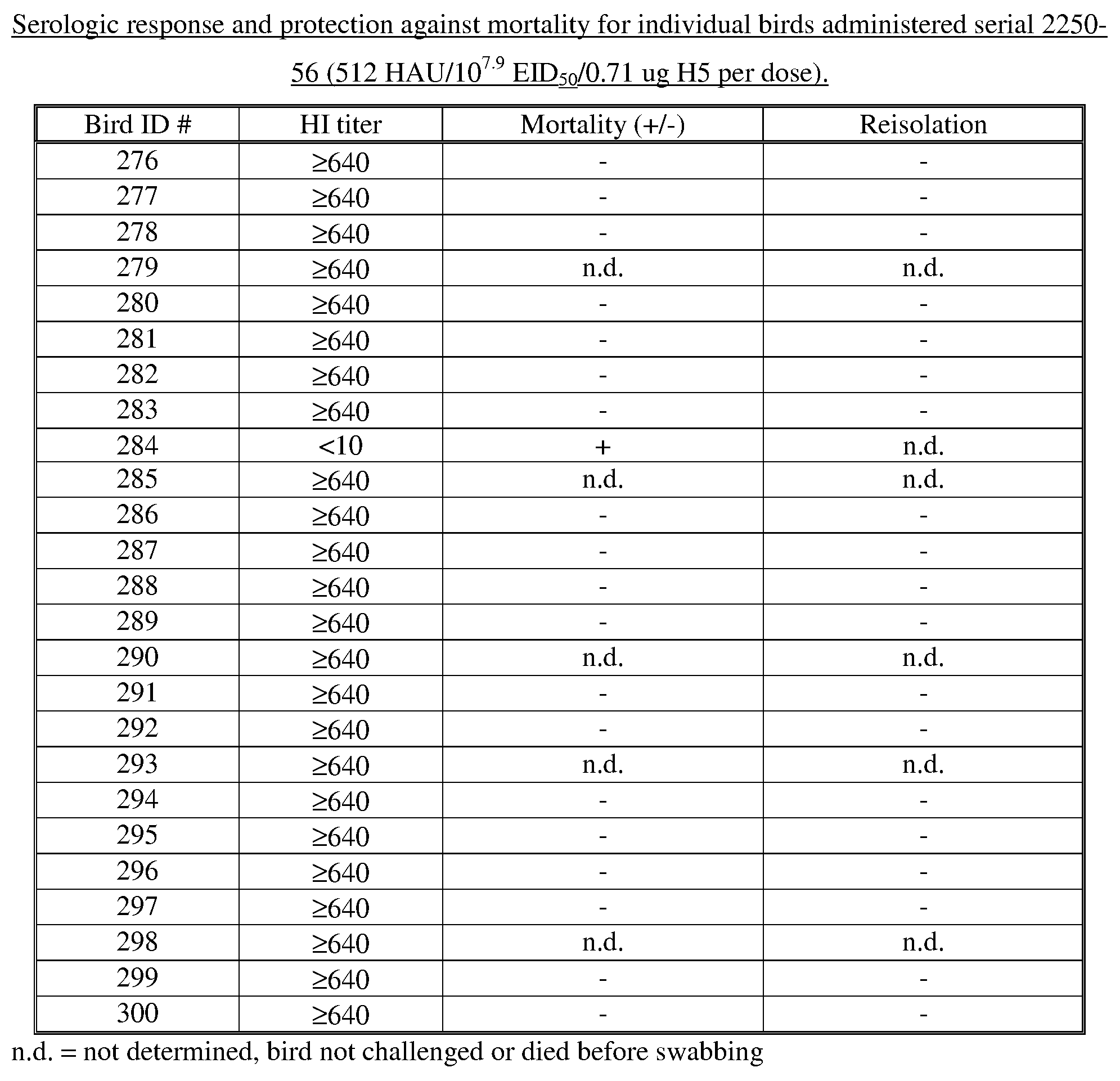


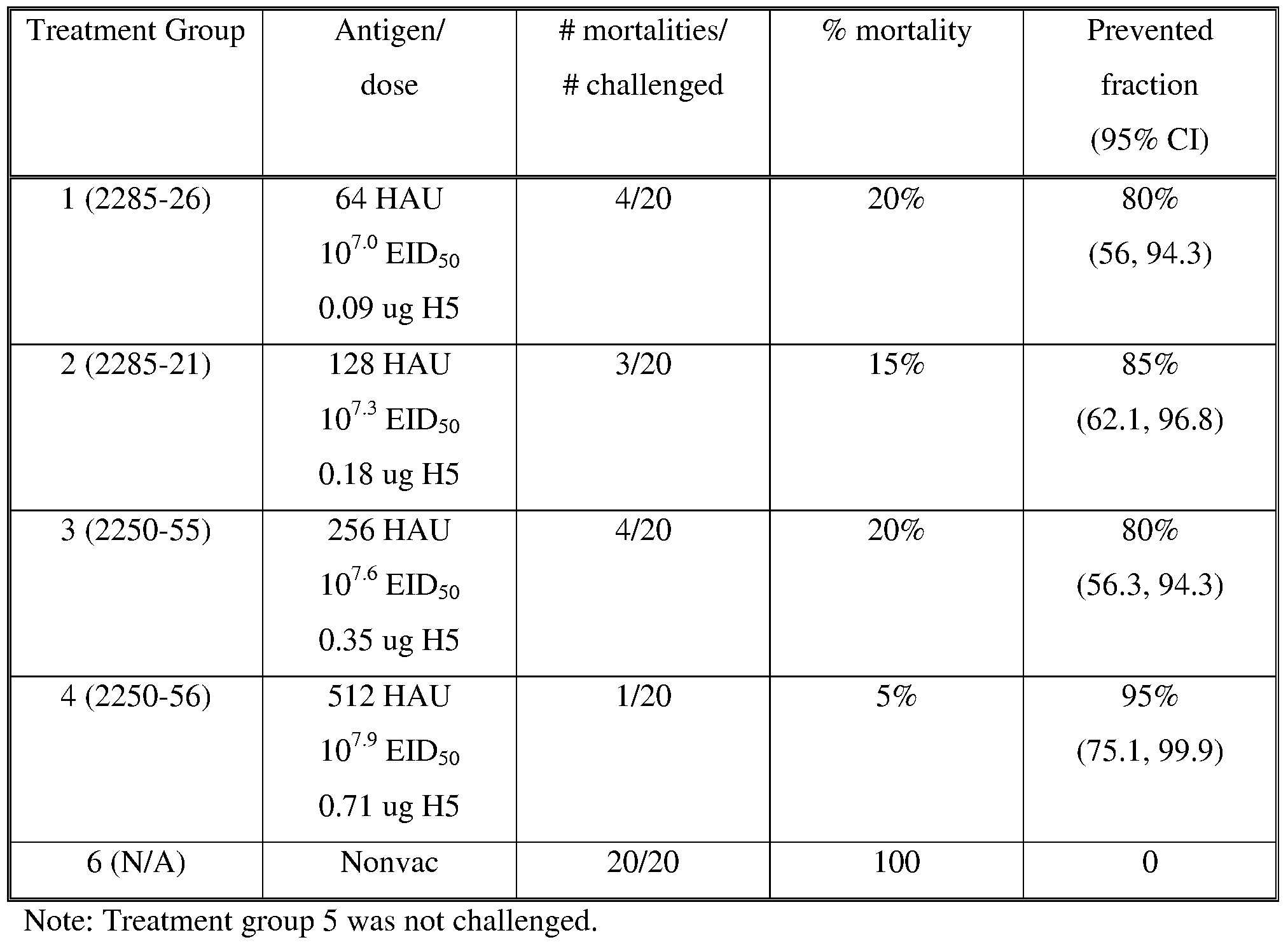


Claims
Priority Applications (3)
| Application Number | Priority Date | Filing Date | Title |
|---|---|---|---|
| CN2007800178318A CN101448520B (en) | 2006-04-21 | 2007-04-23 | Avian influenza viruses, vaccines, compositions, formulations, and methods |
| AP2008004625A AP3031A (en) | 2006-04-21 | 2007-04-23 | Avian influenza viruses, compositions, formulations, and methods |
| HK09107545.6A HK1129570B (en) | 2006-04-21 | 2007-04-23 | Avian influenza viruses, vaccines, compositions, formulations, and methods |
Applications Claiming Priority (4)
| Application Number | Priority Date | Filing Date | Title |
|---|---|---|---|
| US79405406P | 2006-04-21 | 2006-04-21 | |
| US60/794,054 | 2006-04-21 | ||
| US11/737,104 US9072701B2 (en) | 2006-04-21 | 2007-04-18 | Avian influenza viruses, vaccines, compositions, formulations, and methods |
| US11/737,104 | 2007-04-18 |
Publications (2)
| Publication Number | Publication Date |
|---|---|
| WO2007124479A2 true WO2007124479A2 (en) | 2007-11-01 |
| WO2007124479A3 WO2007124479A3 (en) | 2007-12-27 |
Family
ID=38625803
Family Applications (1)
| Application Number | Title | Priority Date | Filing Date |
|---|---|---|---|
| PCT/US2007/067205 Ceased WO2007124479A2 (en) | 2006-04-21 | 2007-04-23 | Avian influenza viruses, vaccines, compositions, formulations, and methods |
Country Status (4)
| Country | Link |
|---|---|
| US (1) | US9072701B2 (en) |
| CN (1) | CN101448520B (en) |
| AP (1) | AP3031A (en) |
| WO (1) | WO2007124479A2 (en) |
Families Citing this family (21)
| Publication number | Priority date | Publication date | Assignee | Title |
|---|---|---|---|---|
| US20060177468A1 (en) * | 2005-01-05 | 2006-08-10 | Philadelphia Health and Education Corporation (d/b/a Drexel University College of Medicine | Delivery vehicles, bioactive substances and viral vaccines |
| US8084443B2 (en) | 2007-10-01 | 2011-12-27 | Longhorn Vaccines & Diagnostics Llc | Biological specimen collection and transport system and methods of use |
| US8080645B2 (en) * | 2007-10-01 | 2011-12-20 | Longhorn Vaccines & Diagnostics Llc | Biological specimen collection/transport compositions and methods |
| US8652782B2 (en) | 2006-09-12 | 2014-02-18 | Longhorn Vaccines & Diagnostics, Llc | Compositions and methods for detecting, identifying and quantitating mycobacterial-specific nucleic acids |
| US9481912B2 (en) | 2006-09-12 | 2016-11-01 | Longhorn Vaccines And Diagnostics, Llc | Compositions and methods for detecting and identifying nucleic acid sequences in biological samples |
| US8097419B2 (en) | 2006-09-12 | 2012-01-17 | Longhorn Vaccines & Diagnostics Llc | Compositions and method for rapid, real-time detection of influenza A virus (H1N1) swine 2009 |
| US9683256B2 (en) | 2007-10-01 | 2017-06-20 | Longhorn Vaccines And Diagnostics, Llc | Biological specimen collection and transport system |
| US11041215B2 (en) | 2007-08-24 | 2021-06-22 | Longhorn Vaccines And Diagnostics, Llc | PCR ready compositions and methods for detecting and identifying nucleic acid sequences |
| EP2772267B1 (en) | 2007-08-27 | 2016-04-27 | Longhorn Vaccines and Diagnostics, LLC | Immunogenic compositions and methods |
| US10004799B2 (en) | 2007-08-27 | 2018-06-26 | Longhorn Vaccines And Diagnostics, Llc | Composite antigenic sequences and vaccines |
| US11041216B2 (en) | 2007-10-01 | 2021-06-22 | Longhorn Vaccines And Diagnostics, Llc | Compositions and methods for detecting and quantifying nucleic acid sequences in blood samples |
| US8883995B2 (en) | 2009-03-06 | 2014-11-11 | Icahn School Of Medicine At Mount Sinai | Live attenuated influenza virus vaccines comprising microRNA response elements |
| PH12012501712A1 (en) * | 2010-03-05 | 2019-07-03 | Agricultural Res Development Agency Public Organization | Vaccines and vaccine compositions, and methods for the manufacture thereof |
| EP3494989B1 (en) | 2012-01-26 | 2025-07-16 | Longhorn Vaccines and Diagnostics, LLC | Composite antigenic sequences and vaccines |
| US9981034B2 (en) * | 2015-04-17 | 2018-05-29 | South Dakota Board Of Regents | Compositions and methods for vaccination against influenza A virus |
| EP3294448A4 (en) | 2015-05-14 | 2018-12-12 | Longhorn Vaccines and Diagnostics, LLC | Rapid methods for the extraction of nucleic acids from biological samples |
| KR101857863B1 (en) | 2016-06-17 | 2018-05-14 | 건국대학교 산학협력단 | Novel H5N9 recombinant influenza virus and vaccine composition comprising the same |
| CN108103084B (en) * | 2017-11-21 | 2020-06-26 | 浙江迪福润丝生物科技有限公司 | Distinguish between immunized and infected animals H5 subtype avian influenza vaccine strain and its preparation method and application |
| US12485166B2 (en) | 2020-02-06 | 2025-12-02 | Longhorn Vaccines And Diagnostics, Llc | Vaccines for the treatment and prevention of zoonotic infections |
| IE20210235A1 (en) | 2020-10-20 | 2023-08-16 | Longhorn Vaccines & Diagnostics Llc | Immunogenic antigens |
| CN118345053B (en) * | 2023-01-13 | 2025-09-02 | 中科南京生命健康高等研究院 | Method for preparing high-titer recombinant influenza virus using pseudovirus model and its application |
Family Cites Families (8)
| Publication number | Priority date | Publication date | Assignee | Title |
|---|---|---|---|---|
| GB9923176D0 (en) * | 1999-09-30 | 1999-12-01 | Smithkline Beecham Biolog | Novel composition |
| ES2319864T3 (en) | 2000-04-28 | 2009-05-14 | St. Jude Children's Research Hospital | DNA TRANSFECTION SYSTEM FOR THE GENERATION OF NEGATIVE CHAIN RNA INFECTIOUS VIRUSES. |
| US20060121447A1 (en) | 2002-04-12 | 2006-06-08 | Ilaria Capua | Purified subfragment codifying for neuroaminidase, recombinant neuroaminidase and its use in zooprophylaxis |
| DK1499348T3 (en) | 2002-04-26 | 2015-01-05 | Medimmune Llc | PROCEDURE FOR PREPARING INFECTIOUS INFLUENZA B-VIRA IN CELL CULTURE |
| US7037707B2 (en) | 2003-09-04 | 2006-05-02 | St. Jude Children's Research Hospital | Method for generating influenza viruses and vaccines |
| CA2551489C (en) | 2003-12-23 | 2013-09-03 | Gregory Duke | Multi plasmid system for the production of influenza virus |
| TWI365074B (en) | 2004-10-07 | 2012-06-01 | Wyeth Corp | Multivalent avian influenza vaccines |
| CA2647985C (en) * | 2006-03-31 | 2014-12-30 | Warf-Wisconsin Alumni Research Foundation | High titer recombinant influenza viruses for vaccines |
-
2007
- 2007-04-18 US US11/737,104 patent/US9072701B2/en active Active
- 2007-04-23 WO PCT/US2007/067205 patent/WO2007124479A2/en not_active Ceased
- 2007-04-23 CN CN2007800178318A patent/CN101448520B/en active Active
- 2007-04-23 AP AP2008004625A patent/AP3031A/en active
Also Published As
| Publication number | Publication date |
|---|---|
| US9072701B2 (en) | 2015-07-07 |
| HK1129570A1 (en) | 2009-12-04 |
| CN101448520B (en) | 2013-12-25 |
| CN101448520A (en) | 2009-06-03 |
| WO2007124479A3 (en) | 2007-12-27 |
| AP3031A (en) | 2014-11-30 |
| AP2008004625A0 (en) | 2008-10-31 |
| US20080118531A1 (en) | 2008-05-22 |
Similar Documents
| Publication | Publication Date | Title |
|---|---|---|
| US9072701B2 (en) | Avian influenza viruses, vaccines, compositions, formulations, and methods | |
| US8293247B2 (en) | Modified influenza virus for monitoring and improving vaccine efficiency | |
| Subbarao et al. | Scientific barriers to developing vaccines against avian influenza viruses | |
| Subbarao* et al. | Avian influenza viruses infecting humans | |
| Liu et al. | Preparation of a standardized, efficacious agricultural H5N3 vaccine by reverse genetics | |
| Lee et al. | Avian influenza virus: prospects for prevention and control by vaccination | |
| US20090035325A1 (en) | Canine influenza virus and related compositions and methods of use | |
| Webster et al. | Immunity to Mexican H5N2 avian influenza viruses induced by a fowl pox-H5 recombinant | |
| US20090104228A1 (en) | Influenza Virus Vaccine | |
| BRPI0621886B1 (en) | MONOVALENT INFLUENZA VACCINE COMPOSITION, KIT, METHOD FOR THE PRODUCTION OF AN INFLUENZA VACCINE COMPOSITION FOR A PANDEMIC SITUATION OR A PRE-PANDEMIC SITUATION, AND USES OF AN INFLUENZA VIRUS ANTIGEN OR AN ANTIGENE DOCUMENT PREPARATION IN OIL-IN-WATER EMULSION OF A PANDEMIC INFLUENZA VIRUS ANTIGEN OR ANTIGEN PREPARATION OF THE INFLUENZA VIRUS HEMAGLUTININ ANTIGEN AND AN OIL-IN-WATER EMULSION ADJUVANT AND A PRIMARY ANTIGEN OR ANTIGEN PREPARATION INFLUENZA | |
| Niqueux et al. | Evaluation of three hemagglutinin-based vaccines for the experimental control of a panzootic clade 2.3. 4.4 b A (H5N8) high pathogenicity avian influenza virus in mule ducks | |
| Xu et al. | Hemagglutinin amino acids related to receptor specificity could affect the protection efficacy of H5N1 and H7N9 avian influenza virus vaccines in mice | |
| OA18166A (en) | Avian influenza viruses, vaccines, compositions, formulations, and methods | |
| Han et al. | Efficacy of A/H1N1/2009 split inactivated influenza A vaccine (GC1115) in mice and ferrets | |
| HK1129570B (en) | Avian influenza viruses, vaccines, compositions, formulations, and methods | |
| Heiden | Evaluation of Self-Adjuvanting M2e Vaccine Efficacy in Response to Influenza A Virus Challenge | |
| US20150174236A1 (en) | Viral vaccine and process for preparing the same | |
| Yang | A novel method to produce an avian influenza vaccine bearing membrane-bound cytokines | |
| Reis | Avian influenza viruses in poultry: evaluation of environmental samples and a DIVA strategy based on N1 and N2 ELISAS |
Legal Events
| Date | Code | Title | Description |
|---|---|---|---|
| WWE | Wipo information: entry into national phase |
Ref document number: 200780017831.8 Country of ref document: CN |
|
| 121 | Ep: the epo has been informed by wipo that ep was designated in this application |
Ref document number: 07761111 Country of ref document: EP Kind code of ref document: A2 |
|
| WWE | Wipo information: entry into national phase |
Ref document number: 2008101706 Country of ref document: EG |
|
| NENP | Non-entry into the national phase |
Ref country code: DE |
|
| 122 | Ep: pct application non-entry in european phase |
Ref document number: 07761111 Country of ref document: EP Kind code of ref document: A2 |