WO2006090377A1 - One-pot non-symmetric heterobifunctional coupling of organic molecules through malonic acid derivatives - Google Patents
One-pot non-symmetric heterobifunctional coupling of organic molecules through malonic acid derivatives Download PDFInfo
- Publication number
- WO2006090377A1 WO2006090377A1 PCT/IL2006/000237 IL2006000237W WO2006090377A1 WO 2006090377 A1 WO2006090377 A1 WO 2006090377A1 IL 2006000237 W IL2006000237 W IL 2006000237W WO 2006090377 A1 WO2006090377 A1 WO 2006090377A1
- Authority
- WO
- WIPO (PCT)
- Prior art keywords
- nucleophile
- amine
- formula
- group
- compound
- Prior art date
- Legal status (The legal status is an assumption and is not a legal conclusion. Google has not performed a legal analysis and makes no representation as to the accuracy of the status listed.)
- Ceased
Links
Classifications
-
- C—CHEMISTRY; METALLURGY
- C07—ORGANIC CHEMISTRY
- C07C—ACYCLIC OR CARBOCYCLIC COMPOUNDS
- C07C67/00—Preparation of carboxylic acid esters
- C07C67/08—Preparation of carboxylic acid esters by reacting carboxylic acids or symmetrical anhydrides with the hydroxy or O-metal group of organic compounds
-
- C—CHEMISTRY; METALLURGY
- C07—ORGANIC CHEMISTRY
- C07C—ACYCLIC OR CARBOCYCLIC COMPOUNDS
- C07C67/00—Preparation of carboxylic acid esters
- C07C67/30—Preparation of carboxylic acid esters by modifying the acid moiety of the ester, such modification not being an introduction of an ester group
-
- C—CHEMISTRY; METALLURGY
- C07—ORGANIC CHEMISTRY
- C07D—HETEROCYCLIC COMPOUNDS
- C07D303/00—Compounds containing three-membered rings having one oxygen atom as the only ring hetero atom
- C07D303/02—Compounds containing oxirane rings
- C07D303/12—Compounds containing oxirane rings with hydrocarbon radicals, substituted by singly or doubly bound oxygen atoms
- C07D303/16—Compounds containing oxirane rings with hydrocarbon radicals, substituted by singly or doubly bound oxygen atoms by esterified hydroxyl radicals
-
- C—CHEMISTRY; METALLURGY
- C07—ORGANIC CHEMISTRY
- C07D—HETEROCYCLIC COMPOUNDS
- C07D317/00—Heterocyclic compounds containing five-membered rings having two oxygen atoms as the only ring hetero atoms
- C07D317/08—Heterocyclic compounds containing five-membered rings having two oxygen atoms as the only ring hetero atoms having the hetero atoms in positions 1 and 3
- C07D317/10—Heterocyclic compounds containing five-membered rings having two oxygen atoms as the only ring hetero atoms having the hetero atoms in positions 1 and 3 not condensed with other rings
- C07D317/14—Heterocyclic compounds containing five-membered rings having two oxygen atoms as the only ring hetero atoms having the hetero atoms in positions 1 and 3 not condensed with other rings with substituted hydrocarbon radicals attached to ring carbon atoms
- C07D317/18—Radicals substituted by singly bound oxygen or sulfur atoms
- C07D317/24—Radicals substituted by singly bound oxygen or sulfur atoms esterified
-
- C—CHEMISTRY; METALLURGY
- C07—ORGANIC CHEMISTRY
- C07C—ACYCLIC OR CARBOCYCLIC COMPOUNDS
- C07C2603/00—Systems containing at least three condensed rings
- C07C2603/56—Ring systems containing bridged rings
- C07C2603/58—Ring systems containing bridged rings containing three rings
- C07C2603/70—Ring systems containing bridged rings containing three rings containing only six-membered rings
- C07C2603/74—Adamantanes
-
- Y—GENERAL TAGGING OF NEW TECHNOLOGICAL DEVELOPMENTS; GENERAL TAGGING OF CROSS-SECTIONAL TECHNOLOGIES SPANNING OVER SEVERAL SECTIONS OF THE IPC; TECHNICAL SUBJECTS COVERED BY FORMER USPC CROSS-REFERENCE ART COLLECTIONS [XRACs] AND DIGESTS
- Y02—TECHNOLOGIES OR APPLICATIONS FOR MITIGATION OR ADAPTATION AGAINST CLIMATE CHANGE
- Y02P—CLIMATE CHANGE MITIGATION TECHNOLOGIES IN THE PRODUCTION OR PROCESSING OF GOODS
- Y02P20/00—Technologies relating to chemical industry
- Y02P20/50—Improvements relating to the production of bulk chemicals
- Y02P20/55—Design of synthesis routes, e.g. reducing the use of auxiliary or protecting groups
Definitions
- the present invention relates to a method for one-pot chemoselective asymmetrical coupling of organic molecules involving two sequential couplings to a tethering molecule such as a monoprotected dicarboxylic acid with intermediate deprotection.
- Nahmany and Melman disclose tethering of two identical molecules possessing a hydroxyl group through direct esterification of malonic acid with two equivalents of an alcohol and a carbodiimide (Shelkov, R.; Nahmany, M.; Melman, A. J Org. Chem. 2002, 67, 8975-8982).
- the present invention relates to a one-pot method for the chemoselective asymmetrical coupling of two different organic molecules.
- the method involves a one-pot sequential coupling of two different organic nucleophilic molecules to a tethering molecule, e.g., a dicarboxylic acid such as malonic acid or a 2-substituted derivative thereof.
- a tethering molecule e.g., a dicarboxylic acid such as malonic acid or a 2-substituted derivative thereof.
- the method involves coupling of a silyl-monoprotected malonic acid or a 2-substituted derivative thereof, e.g., t ⁇ rt-butyldiphenylsilylmalonate and a first nucleophilic organic molecule in the presence of a first coupling reagent such as a carbodiimide, deprotection of the silyl protecting group, and coupling with a second nucleophilic organic molecule in the presence of a second coupling reagent, thereby providing asymmetrical products in high yield.
- a first coupling reagent such as a carbodiimide, deprotection of the silyl protecting group
- the reaction is conducted in one-pot thereby avoiding labor-intensive and yield-lowering purification steps of reaction intermediates.
- the process of the invention overcomes the drawbacks of prior art methods, by including the ability to conjugate sterically hindered hydroxyl and amino groups which typically react at a lower reaction rate, using equimolar amounts of nucleophilic reagents, eliminating the need for difficult and labor-intensive purification methods and providing pure products in higher yields.
- the applicants of the present invention have unexpectedly found a highly efficient method of acylating sterically hindered nucleophiles such as alcohols and amines, through the reaction with carboxylic acids that are capable of forming ketenes in reaction with carbodiimides.
- the reaction is conducted in "one-pot", thus eliminating the need for purification of the intermediates fonned.
- the asymmetrical coupling process through asymmetric derivatives provides a number of important advantages including the ability to asymmetrically conjugate different nucleophiles in high yield, the ability to conjugate sterically hindered molecules containing hydroxyl and amino functional groups, short reaction time, equimolecular amounts of tethering reagents and the absence of laborious intermediate purification stages.
- Silicon-based protective groups for alcohols have found extensive use in organic synthesis because of their ability for selective removal by fluoride anions. In contrast, the protection of carboxyl group as silyl esters is much less common due to their high reactivity toward nucleophilic reagents, resulting in fast hydrolysis during chromatographic purification.
- the limited hydrolytic stability of silyl esters is a particular problem for silyl monoesters of dicarboxylic acids, such as malonic acid, since their preparation always yields silyl diesters as byproducts.
- the applicants of the present invention have now unexpectedly found that silicon-based protective groups are sufficiently stable and compatible as carboxylic acid protecting groups, and can advantageously be used as protecting groups in the methods of the present invention.
- tert- butyldiphenylsilylmalonate is stable enough for subsequent isolation as an individual compound, and is a preferred compound to be used as a protecting group in the asymmetrical coupling methods of the present invention.
- Silyl protecting groups were found to be superior to other protecting groups such as fert-butyl and F-moc protecting groups, since the deprotecting methods of the latter two are not compatible with most polyfunctional derivatives, whereas silicon protecting groups are deprotected under mild conditions. It is therefore an object of present invention to provide a novel process for chemoselective asymmetrical coupling of organic molecules.
- the method comprises the following steps: a) reacting a silyl-monoprotected malonic acid or a 2-substituted derivative thereof, with a first nucleophile in the presence of a first coupling reagent; b) deprotecting the silyl protecting group; and c) reacting the product of step (b) with a second nucleophile which is different from the first nucleophile, in the presence of a second coupling reagent.
- the process of the invention comprises the steps of: a) reacting a monoprotected malonic acid derivative of formula 2
- R 1 is selected from the group consisting of hydrogen, alkyl, alkenyl, alkynyl, cycloalkyl, heterocycloalkyl, aryl, heteroaryl, halogen, haloalkyl, alkylamino, dialkylamino, arylamino, diarylamino, alkylarylamino, alkoxy, aryloxy, arylalkyloxy, carboxyalkyl, carboxyaryl, carboxyarylalkyl, alkylthio, arylthio, arylalkylthio, cyano, nitro, alkylcarbonyl, arylcarbonyl, arylalkylcarbonyl, alkanoyl, sulfonyl, alkylsulfonyl, arylsulfonyl and arylakylsulfonyl; and
- PG is a silyl protecting group; with a first nucleophile of formula A-H, the first nucleophile selected from the group consisting of an alcohol and an amine, in the presence of a first coupling reagent, to form a compound of formula 3,
- the monoprotected malonic acid derivative of formula 2 is obtained by monoprotecting malonic acid or a 2-substituted derivative thereof of formula 1,
- R 1 is selected from the group consisting of hydrogen, alkyl, alkenyl, alkynyl, cycloalkyl, heterocycloalkyl, aryl, heteroaryl, halogen, haloalkyl, alkylamino, dialkylamino, arylamino, diary lamino, alkylarylamino, alkoxy, aryloxy, arylalkyloxy, carboxyalkyl, carboxyaryl, carboxyarylalkyl, alkylthio, arylthio, arylalkylthio, cyano, nitro, alkylcarbonyl, arylcarbonyl, arylalkylcarbonyl, alkanoyl, sulfonyl, alkylsulfonyl, arylsulfonyl and arylakylsulfonyl; with a silyl protecting group.
- the compound of formula 1 is a 2-substituted malonic acid derivative. In a preferred embodiment the compound of formula 1 is malonic acid.
- the deprotection of the silyl protecting group is carried out by a fluoride deprotecting reagent.
- the deprotecting reagent is triethylamine-hydrogen fluoride complex (Et 3 N3HF). In another more preferred embodiment, the deprotecting reagent is anhydrous triethylamine-hydrogen fluoride complex (Et 3 NSHF).
- the silyl protecting group is tert- butyldiphenylsilyl.
- the first nucleophile, A-H is selected from the group consisting of an alcohol and an amine.
- the second nucleophile, B-H is selected from the group consisting of an alcohol and an amine.
- at least one of the first nucleophile and the second nucleophile is an alcohol.
- at least one of the first nucleophile and the second nucleophile is an amine, which can be a primary amine or a secondary amine.
- At least one of the first nucleophile and the second nucleophile is an alcohol and the other is an amine.
- at least one of the first nucleophile and second nucleophile is selected from the group consisting of geraniol, adamantol, (-)-menthol, 2-phenyl-2-propanol, prop-2-yn-l-ol, tert- butanol, mercaptoethanol, diacetone-D-glucose, 4-hydroxybenzylalcohol, diisopropylamine, glycidol, benzhydrol, octanol, 2,3-isopropylidene glycerol and 4-aminophenol.
- the first nucleophile is geraniol and the second nucleophile is tert-butanol.
- the first nucleophile is geraniol and the second nucleophile is diacetone-D-glucose.
- the first nucleophile is benzhydrol and the second nucleophile is geraniol.
- the first nucleophile is geraniol and the second nucleophile is adamantol.
- the first nucleophile is (-)-menthol and the second nucleophile is 4-hydroxybenzylalcohol.
- the first nucleophile is adamantol and the second nucleophile is mercaptoethanol.
- the first nucleophile is mercaptoethanol and the second nucleophile is 2,3-isopropylidene glycerol.
- the first nucleophile is 2-phenyl-2- propanol and the second nucleophile is diisopropylamine. In another currently preferred embodiment, the first nucleophile is octanol and the second nucleophile is 4-aminophenol.
- the first nucleophile is prop-2-yn-l-ol and the second nucleophile is glycidol.
- the first coupling reagent is a carbodiimide.
- the second coupling reagent is a carbodiimide.
- the carbodiimide is dicyclohexylcarbodiimide (DCC).
- DCC dicyclohexylcarbodiimide
- the first coupling reagent can be the same or different from the second coupling reagent.
- a variety of coupling reagents other than carbodiimides can also be used such as, for example, acyl halides, phosphoryl halides and sulfonyl halides Further embodiments and the full scope of applicability of the present invention will become apparent from the detailed description given hereinafter. However, it should be understood that the detailed description and specific examples, while indicating preferred embodiments of the invention, are given by way of illustration only, since various changes and modifications within the spirit and scope of the invention will become apparent to those skilled in the art from this detailed description.
- the present invention relates to a one-pot method for the chemoselective asymmetrical coupling of two different organic molecules.
- the method involves a one-pot sequential coupling of two different organic nucleophilic molecules to a tethering molecule, e.g., a dicarboxylic acid such as malonic acid or a 2-substituted derivative thereof.
- a tethering molecule e.g., a dicarboxylic acid such as malonic acid or a 2-substituted derivative thereof.
- the method involves coupling of a silyl-monoprotected malonic acid or a 2-substituted derivative thereof, e.g., tert-butyldiphenylsilylmalonate and a first nucleophilic organic molecule in the presence of a first coupling reagent such as a carbodiimide, deprotection of the silyl protecting group, and coupling with a second nucleophilic organic molecule in the presence of a second coupling reagent, thereby providing asymmetrical products in high yield.
- a first coupling reagent such as a carbodiimide, deprotection of the silyl protecting group
- the reaction is conducted in one-pot thereby avoiding labor-intensive and yield-lowering purification steps of reaction intermediates.
- the method comprises the following steps: a) reacting a silyl-monoprotected malonic acid or a 2-substituted derivative thereof with a first nucleophile in the presence of a first coupling reagent; b) deprotecting the silyl protecting group; and c) reacting the product of step (b) with a second nucleophile which is different from the first nucleophile, in the presence of a second coupling reagent.
- the process of the invention comprises the steps of: a) reacting a monoprotected malonic acid derivative of formula 2,
- R 1 is defined below and PG is a silyl protecting group; with a first nucleophile of formula A-H, the first nucleophile selected from the group consisting of an alcohol and an amine, in the presence of a first coupling reagent, to form a compound of formula 3,
- R 1 can be hydrogen or any organic substituent which is linked via a carbon atom or a heteroatom such as oxygen, sulfur, nitrogen and the like. It should be apparent to a person of skill in the art that R 1 can be any substituent, so long as the substituent does not interfere with the coupling reaction.
- R 1 groups include, but are not limited to, hydrogen, alkyl, alkenyl, alkynyl, cycloalkyl, heterocycloalkyl, aryl, heteroaryl, halogen, haloalkyl, alkylamino, dialkylamino, arylamino, diarylamino, alkylarylamino, alkoxy, aryloxy, arylalkyloxy, carboxyalkyl, carboxyaryl, carboxyarylalkyl, alkyltbio, arylthio, arylalkylthio, cyano, nitro, alkylcarbonyl, arylcarbonyl, arylalkylcarbonyl, alkanoyl, sulfonyl, alkylsulfonyl, arylsulfonyl and arylakylsulfonyl.
- the overall reaction is presented in the following scheme:
- silyl-monoprotected malonic acid or 2-substituted derivative thereof is obtained by monoprotecting malonic acid or a 2-substituted derivative thereof of fo ⁇ nula 1,
- R 1 is selected from the group consisting of hydrogen, alkyl, alkenyl, alkynyl, cycloalkyl, heterocycloalkyl, aryl, heteroaryl, halogen, haloalkyl, alkylamino, dialkylamino, arylamino, diarylamino, alkylarylamino, alkoxy, aryloxy, arylalkyloxy, carboxyalkyl, carboxyaryl, carboxyarylalkyl, alkylthio, arylthio, arylalkylthio, cyano, nitro, alkylcarbonyl, arylcarbonyl, arylalkylcarbonyl, alkanoyl, sulfonyl, alkylsulfonyl, arylsulfonyl and arylakylsulfonyl; with a protecting group, PG, to obtain the compound of formula 2,
- the compound of formula 1 is a 2-substituted malonic acid derivative. In a preferred embodiment the compound of formula 1 is malonic acid.
- carboxylic acids that are capable of forming ketenes (e.g., ethylmalonate) upon treatment with carbiodiimides such as DCC, preferably acylate aliphatic hydroxyl groups in the presence of aromatic ones.
- the compound of formula 2 can react with the first nucleophile as such, without further purification, or it can be purified prior to being used in the coupling process of the invention.
- Purification methods are well known to a person of skill in the art, and include crystallization, column chromatography, flash chromatography, extraction, distillation, evaporation, filtration, centrifugation, membrane separation, ion-exchange chromatography, and the like.
- tert-butyldiphenylsilyl as an exemplary protecting group, the applicants have found that a mixture of mono- and di-tert-butyldiphenylsilylmalonates is obtained in the reaction of malonic acid with fert-butyldiphenylsilylchloride and triethylamine. While this mixture can be easily separated by flash chromatography, decomposition of mono-tert-butyldiphenylsilylmalonate on silica gel was observed, resulting in its low but constant contamination with di-fert-butyldiphenylsilylmalonate.
- the applicants identified an alternative method of purification of mono-fert- butyldiphenylsilylmalonate by crystallization, preferably from an organic solvent or solvent mixtures such as ethyl acetate-hexane and ethyl acetate-petroleum ether.
- organic solvent or solvent mixtures such as ethyl acetate-hexane and ethyl acetate-petroleum ether.
- tert-butyl-diphenylsilylmalonate can be isolated as a reasonably stable crystalline solid.
- the nucleophilic reagents e.g., the compounds of formula A-H and B-H are each independently selected from an alcohol and an amine.
- at least one of the first nucleophile and the second nucleophile is an alcohol.
- Any type of alcohol is suitable for use in the methods of the present invention.
- sterically hindered alcohols can be used.
- the alcohol can be aliphatic (which can be linear, branched, saturated or unsaturated, substituted or unsubstituted), or aromatic (which can be unsubstituted or substituted).
- alcohols include but are not limited to geraniol, adamantol, (-)-menthol, 2-phenyl-2-propanol, prop-2-yn-l-ol, tert-butanol, mercaptoethanol, diacetone-D-glucose, 4-hydroxybenzylalcohol, glycidol, benzhydrol, octanol, 2,3-isopropylidene glycerol and 4-aminophenol.
- alcohols include but are not limited to saturated aliphatic alcohols such as methanol, ethanol, n-propanol, isopropanol, n-butanol, isobutyl alcohol, sec-butanol, tert-butanol, n-pentanol, isoamyl alcohol, n-octanol; unsaturated aliphatic alcohols such as 2-methyl-3-butyn-2 ol, (E)-2-dodecen-l-ol, (Z)-5-octen-l-ol; aromatic alcohols such as phenol; and araliphatic alcohols such as benzyl alcohol, 3-phenyl-2-propen-l-ol, and the like.
- saturated aliphatic alcohols such as methanol, ethanol, n-propanol, isopropanol, n-butanol, isobutyl alcohol, sec-butanol, tert-butanol
- At least one of the first nucleophile and the second nucleophile is an amine.
- the amine can be aliphatic (which can be linear, branched, saturated or unsaturated, substituted or unsubstituted aliphatic), or aromatic (which can be unsubstituted or substituted).
- the amine can be a primary amine or a secondary amine and can advantageously be a sterically hindered amine.
- preferred amines include diisopropylamine and 4-aminophenol.
- amines include but are not limited to methylamine, dimethylamine, ethylamine, diethyl amine, ethylmethylamine, n- propylamine, di-n-propylamine and the like.
- the amine can also be a mono or di substituted amine, where each substituent is, independently from the other, chosen from the group consisting of phenyl, substituted phenyl, Ci to Ci 2 alkyl, Ci to Ci 2 substituted alkyl, C 2 to Ci 2 alkenyl, C 2 to Ci 2 substituted alkenyl, C 2 to C 12 alkynyl, C 2 to Cj 2 substituted alkynyl, C 7 to Ci 8 phenylalkyl, C 7 to Ci 8 substituted phenylalkyl, heterocyclic ring, substituted heterocyclic ring, Ci to Ci 2 heterocycloalkyl and Ci to Cj 2 substituted heterocycloalkyl.
- At least one of the first nucleophile and the second nucleophile is an alcohol and the other is an amine.
- at least one of the first nucleophile and second nucleophile is selected from the group consisting of geraniol, adamantol, (-)-menthol, 2-phenyl-2-propanol, prop-2-yn-l-ol, tert-butanol, mercaptoethanol, diacetone-D-glucose, 4-hydroxybenzylalcohol, diisopropylamine, glycidol, benzhydrol, octanol, 2,3-isopropylidene glycerol and 4-aminophenol.
- the first nucleophile is geraniol and the second nucleophile is t-BuOH.
- the first nucleophile is geraniol and the second nucleophile is diacetone-D-glucose. In another currently preferred embodiment, the first nucleophile is benzhydrol and the second nucleophile is geraniol. 0237
- the first nucleophile is geraniol and the second nucleophile is adamantol.
- the first nucleophile is (-)-menthol and the second nucleophile is 4-hydroxybenzylalcohol.
- the first nucleophile is adamantol and the second nucleophile is mercaptoethanol.
- the first nucleophile is mercaptoethanol and the second nucleophile is 2,3-isopropylidene glycerol.
- the first nucleophile is 2-phenyl-2- propanol and the second nucleophile is diisopropylamine.
- the first nucleophile is octanol and the second nucleophile is 4-aminophenol.
- the first nucleophile is prop-2-yn-l-ol and the second nucleophile is glycidol.
- the first and/or second nucleophilic reagent can also be a polyfunctional molecule i.e., a molecule containing more than one nucleophilic atom or nucleophilic group.
- the polyfunctional nucleophile can contain two alcohol functionalities, two amine functionalities, or a combination of an amine and an alcohol (i.e., aminoalcohol).
- the chemoselectivity of the reaction will depend on the nucleophilic group present, the carboxylic acid linking molecule and the reaction conditions, and can be determined by a person of skill in the art.
- acylation of thiols is much slower than that of alcohols. This is an advantage, since unprotected thiols, such as mercapto alcohols, can be selectively acylated on the hydroxy groups, as shown in the experimental section. It is to be understood, however, that the present invention also contemplates asymmetrical coupling of two thiol functionalities.
- the thiol can be aliphatic (which can be linear, branched, saturated or unsaturated, substituted or unsubstituted), or aromatic (which can be unsubstituted or substituted).
- thiols include but are not limited to aliphatic thiols such as methanethiol, propanethiol, isopropanethiol, butanethiol, isobutanethiol and the like; or other substituted thiols, where the substituent is chosen from the group consisting of phenyl, substituted phenyl, Ci to Cj 2 alkyl, C 1 to Ci 2 substituted alkyl, C 2 to Cj 2 alkenyl, C 2 to Ci 2 substituted alkenyl, C 2 to C 12 alkynyl, C 2 to C 12 substituted alkynyl, C 7 to Cj 8 phenylalkyl, C 7 to C 18 substituted phenylalkyl, heterocyclic ring, substituted heterocyclic ring, C 1 to Ci 2 heterocycloalkyl and Ci to Ci 2 substituted heterocycloalkyl and the like.
- the first coupling reagent is a carbodiimide.
- the second coupling reagent is a carbodiimide.
- the carbodiimide is dicyclohexylcarbodiimide (DCC).
- DCC dicyclohexylcarbodiimide
- Other useful carbodiimide coupling reagents include but are not limited to 1,3-diisopropylcarbodiimide (DIC) and l-(3-dimethylaminopropyl)-3-ethyl-carbodiimide hydrochloride (EDCL).
- a carbodiimide mediated coupling of monoprotected malonic acid derivatives such as tert-butyldiphenylsilylmalonate with alcohols and amines proceeds with practically quantitative yields under very mild conditions.
- the quantitative yield of acylation is important for all the reported methodology since further steps are to be carried out without any separation of resulting silyl malonates of formula 3 from the reaction mixture.
- the first coupling reagent can be the same or different from the second coupling reagent.
- the present invention is not limited to the use of carbodiimide coupling reagents.
- acyl halides such as acetyl chloride and the like
- phosphoryl halides such as phosphoryl chloride and the like
- sulfonyl halides such as ⁇ -toluenesulfonylchloride and the like, may also be used.
- the protecting group of the present invention is preferably a silyl-protecting group.
- Silicon-based protective groups for alcohols have found extensive use in organic synthesis because of their ability for selective removal by fluoride anions. In contrast, the protection of carboxyl group as silyl esters is much less common due to their high reactivity toward nucleophilic reagents.
- Silyl protecting groups were found to be superior to other protecting groups such as tert-butyl and F-moc protecting groups, since the deprotecting methods of the latter two are not compatible with most polyfunctional derivatives, whereas silicon protecting groups are deprotected under mild conditions.
- silyl protecting groups known to a person of skill in the art can be used in the methods of the present invention.
- the silyl protecting group is tert-butyldiphenylsilyl (TBDPS).
- TDPS tri-organo-silyl
- phenyl di-Ci -6 alkyl silyl phenyl di-Ci -6 alkyl silyl
- diphenyl mono Ci -6 alkyl silyl including trimethylsilyl (TMS), triethylsilyl, tert-butyldimethylsilyl (TBDMS), triisopropylsilyl, hexyldimethylsilyl and isopropyldimethylsilyl, tert-butyldimethylsilyl, trifluoromethanesulphonate, diisopropyldichlorosilane and the like.
- TMS trimethylsilyl
- TDMS triethylsilyl
- tert-butyl diphenylsilyl ester protective group from the compounds of formula 3 can be easily carried out using a fluoride deprotection reagent.
- a fluoride deprotection reagent For example, equimolar amounts of commercially available tetra-n-butyl ammonium fluoride can be utilized.
- all commercially available sources OfBu 4 NF contain at least three equivalents of water and attempts to produce dry Bu 4 NF results in highly basic reagent that is prone to decomposition.
- anhydrous triethylamine-hydrogen fluoride complex (Et 3 NSHF) is used.
- the residual triethylamine-hydrogen fluoride does not interfere with the subsequent carbodiimide coupling. It is possible, therefore, to conduct the second coupling of the compounds of formula 4 with the second nucleophile in one pot, without any purification of intermediate products.
- the final purification of resultant non- symmetric compounds of formula 5 can be carried out by any method known to a person of skill in the art, such as crystallization, flash chromatography, column chromatography, extraction, distillation, evaporation, filtration, centrifugation, membrane separation, ion- exchange chromatography and the like. No appreciable amount of symmetric malonate derivatives such as (A-OCO) 2 CH 2 or (B-OCO) 2 CH 2 were observed in the reaction.
- the present invention is not limited to the use of the aforementioned deprotecting groups, and that other fluoride deprotecting reagents can be used, including but not limited to hydrogen fluoride, hydrogen fluoride-pyridine complex, potassium fluoride/alumina, and KF in the presence of an appropriate crown ether.
- fluoride deprotecting reagents including but not limited to hydrogen fluoride, hydrogen fluoride-pyridine complex, potassium fluoride/alumina, and KF in the presence of an appropriate crown ether.
- suitable protecting groups for the compounds of the present invention will be recognized from the present application taking into account the level of skill in the art, and with reference to standard textbooks, such as Greene, T. W. et al. Protective Groups in Organic Synthesis Wiley, New York (1991). Definitions:
- chemoselectivity refers to the preferential reaction of a chemical reagent with one of two or more functional groups.
- Coupled refers to chemically linking one molecule to another molecule.
- a "one pot” process means the ability to perform the entire reaction in one vessel without the need for any purification of intermediate products.
- nucleophile refers to a chemical compound or group that is attracted to nuclei and tends to donate or share electrons. Examples of nucleophiles are alcohols and amines.
- nucleophilic atom refers to an atom or a group that tends to donate or share electrons. Examples include oxygen (i.e., hydroxyl groups) and nitrogen (e.g., amino groups). Sulfur atoms (i.e., thiol groups) are also nucleophilic groups.
- a “heteroatom” is any atom that is not carbon or hydrogen, typically, but not exclusively, nitrogen, oxygen, sulfur, phosphorous or boron.
- alkyl denotes saturated linear or branched, unsaturated or saturated groups, preferably containing from 1 to 12 carbon atoms (designed herein "C 1 -C 12 alkyl”). Examples of alkyl groups include but are not limited to methyl, ethyl, n-propyl, isopropyl, n-butyl, iso-butyl, sec-butyl, tert-butyl, amyl, tert-amyl, hexyl and the like.
- the alkyl group can be unsubstituted or substituted through available atoms by one or more of the groups selected from halo for example F, Br, Cl or I, haloalkyl such as CF 3 , alkyl, alkoxy, haloalkoxy, trifluoromethoxy, alkenyl, alkynyl, cycloalkyl, cycloalkylalkyl, cycloheteroalkyl, cycloheteroalkylalkyl, cycloalkenyl, cycloalkenylalkyl, cycloalkynyl, cycloalkynylalkyl, aryl, heteroaryl, arylalkyl, aryloxy., aryloxyalkyl, aryloxyaryl, aryloxyaryl, arylalkyloxy, arylalkenyl, arylalkynyl, arylazo, heteroarylalkyl, heteroarylalken
- alkenyl refers to straight or branched chain radicals of 2 to 20 carbons, preferably 2 to 12 carbons, and more preferably 1 to 8 carbons in the normal chain, which include one to six double bonds in the normal chain, such as vinyl, 2-propenyl, 3-butenyl, 2-butenyl, 4-pentenyl, 3-pentenyl, 2- hexenyl, 3-hexenyl, 2-heptenyl, 3-heptenyl, 4-heptenyl, 3-octenyl, 3-nonenyl, 4-decenyl, 3- undecenyl, 4-dodecenyl and the like, and which may be optionally substituted with any one or more groups defined hereinabove for alkyl.
- alkynyl refers to straight or branched chain radicals of 2 to 20 carbons, preferably 2 to 12 carbons and more preferably 2 to 8 carbons in the normal chain, which include one triple bond in the normal chain, such as 2-propynyl, 3-butynyl, 2-butynyl, 4-pentynyl, 3-pentynyl, 2-hexynyl, 3- hexynyl, 2-heptynyl, 3-heptynyl, 4-heptynyl, 3-octynyl, 3-nonynyl, 4-dodecynyl and the like, and which may be optionally substituted with any one or more groups defined hereinabove for alkyl.
- alkyl, alkenyl and alkynyl groups as defined above have single bonds for attachment at two different carbon atoms, they are termed “alkylene groups, “alkenylene groups” and “alkynylene groups”, respectively, and may optionally be substituted as defined above for “alkenyl” and “alkynyl”.
- cycloalkyl as used herein, alone or as part of another group refers to a saturated or partially unsaturated (containing 1, 2 or more double bonds), cyclic hydrocarbon ring system containing 1 to 3 rings, including monocyclicalkyl, bicyclicalkyl and tricyclicalkyl and the like, containing a total of 3 to 20 carbons forming the rings, preferably 3 to 10 carbons.
- Nonlimiting examples of cycloalkyl groups include cyclopropyl, cyclobutyl, cyclopentyl, cyclohexyl, cycloheptyl, cyclooctyl, cyclodecyl, cyclododecyl, cyclohexenyl, and the like.
- the cycloalkyl group can be unsubstituted or substituted through available carbon atoms with one or more groups defined hereinabove for alkyl.
- aryl as used herein, alone or as part of another group, denotes an aromatic ring system containing from 6-14 ring carbon atoms.
- the aryl ring can be a monocyclic, bicyclic, tricyclic and the like.
- Non-limiting examples of aryl groups are phenyl, naphthyl including 1-naphthyl and 2-naphthyl, and the like.
- the aryl group can be unsubtituted or substituted through available carbon atoms with one or more groups defined hereinabove for alkyl.
- heteroaryl denotes a heteroaromatic system containing at least one heteroatom ring atom selected from nitrogen, sulfur and oxygen.
- the heteroaryl contains 5 or more ring atoms.
- the heteroaryl group can be monocyclic, bicyclic, tricyclic and the like. Also included in this expression are the benzoheterocyclic rings. If nitrogen is a ring atom, the present invention also contemplates the N-oxides of the nitrogen containing heteroaryls.
- heteroaryls include thienyl, benzothienyl, 1-naphthothienyl, thianthrenyl, furyl, benzofuryl, pyrrolyl, imidazolyl, pyrazolyl, pyridyl, pyrazinyl, pyrimidinyl, pyridazinyl, indolyl, isoindolyl, indazolyl, purinyl, quinolyl (e.g.
- heterocyclic ring or “heterocycloalkyl”, as used herein, alone or as part of another group, denotes a five-membered to eight-membered rings that have 1 to 4 heteroatoms, such as oxygen, sulfur and/or nitrogen, in particular nitrogen, either alone or in conjunction with sulfur or oxygen ring atoms.
- heteroatoms such as oxygen, sulfur and/or nitrogen, in particular nitrogen, either alone or in conjunction with sulfur or oxygen ring atoms.
- These five-membered to eight-membered rings can be saturated, fully unsaturated or partially unsaturated, with fully saturated rings being preferred.
- Preferred heterocyclic rings include piperidinyl, piperidinyl, pyrrolidinyl pyrrolinyl, pyrazolinyl, pyrazolidinyl, piperidinyl, morpholinyl, thiomorpholinyl, pyranyl, thiopyranyl, piperazinyl, indolinyl, dihydrofuranyl, tetrahydrofuranyl, dihydrothiophenyl, tetrahydrothiophenyl, dihydropyranyl, tetrahydropyranyl and the like.
- the heterocyclyl group can be unsubtituted or substituted through available atoms with one or more groups defined hereinabove for alkyl.
- halogen or halo, as used herein, alone or as part of another group, refers to chlorine, bromine, fluorine and iodine.
- a “hydroxyl” group indicates the presence of the functional group (- OH). Such groups are found in aliphatic alcohols, as well as aromatic alcohols such as phenols.
- An "amine” or “amino” group refers to any of a group of organic compounds of nitrogen that may be considered ammonia derivatives in which one or more hydrogen atoms have been replaced by one or more hydrocarbon radicals.
- the amine is a primary amine (R-NH 2 ), or a secondary amine (RR 5 NH 2 ) wherein R and R' are each independently from the other an organic residue.
- a "thiol” group is a compound that contains the functional group -SH.
- This functional group is referred to either as a thiol group or a sulfhydryl group. More traditionally, thiols have been referred to as mercaptans.
- alkylthio alkylthio
- arylthio arylalkylthio
- arylalkylthio as used herein alone or as part of another group refer to any of the above alkyl, arylalkyl or aryl groups linked to a sulfur atom.
- alkoxy", “aryloxy”, “arylalkyloxy” or “heteroaryloxy”, as used herein, alone or as part of another group, includes any of the above alkyl, aryl or heteroaryl groups linked to an oxygen atom.
- Nonlimiting examples of an alkoxy group is methoxy, ethoxy, n- propoxy, isopropoxy, n-butoxy, t-butoxy and like groups.
- An example of an aryloxy group is phenyloxy (phenoxy).
- the alkoxy, aryloxy, arylalkyloxy or heteroaryloxy groups can be unsubstituted or substituted with any one or more of the substituents defined above for alkyl.
- Carboxy as used herein, alone or as part of another group, refers to a COO group.
- sulfonyl as used herein alone or as part of another group refers to -S(O) 2 -.
- cyano as used herein, alone or as part of another group, refers to a CN group.
- nitro as used herein, alone or as part of another group, refers to an NO 2 group.
- a solution containing te/t-butyldiphenylsilylmalonate (1 mmol of a IM solution in dichloromethane) and a solution of DCC (1 mmol of a IM solution in dichloromethane) are added to ImI of a 1 M geraniol solution in dichloromethane.
- the reaction mixture is stirred for 10 minutes.
- a solution of Et 3 N3HF complex (1 mmol of a IM solution in dichloromethane) is added.
- the reaction mixture is stirred for an additional 10 minutes.
- Entry (b) is an example of a straightforward formation of acid-stable linkage with carbohydrate derivatives.
- Reactions with polyfunctional substrates (entries e-g) demonstrate a high chemoselectivity of the method.
- the acylation selectively proceeded on the aliphatic hydroxyl group and no appreciable amounts of acylation of thiol or phenol functional groups were detected. It should be mentioned that these chemoselectivities are completely opposite to conventional carbodiimide esterifications (Shelkov. R.; Nahmany. M.; Melman, A. Org. Biomol Chem. 2004, 2, 397-401).
Landscapes
- Chemical & Material Sciences (AREA)
- Organic Chemistry (AREA)
- Organic Low-Molecular-Weight Compounds And Preparation Thereof (AREA)
Abstract
The present invention relates to a one-pot method for the chemoselective non-symmetrical coupling of two different organic molecules. The method involves coupling of a silyl-monoprotected dicarboxylic acid such as tert-butyldiphenylsilylmalonate and a first nucleophilic organic molecule in the presence of a coupling reagent such as a carbodiimide, deprotection of the silyl protecting group, and coupling with a second nucleophile in the presence of a second coupling reagent. The method is advantageously practiced in one pot, without the need to isolate and purify reaction intermediates.
Description
ONE-POT NON-SYMMETRIC HETEROBIFUNCTIONAL COUPLING OF ORGANIC MOLECULES THROUGH MALONIC ACID DERIVATIVES
FIELD OF THE INVENTION The present invention relates to a method for one-pot chemoselective asymmetrical coupling of organic molecules involving two sequential couplings to a tethering molecule such as a monoprotected dicarboxylic acid with intermediate deprotection.
BACKGROUND OFTHE INVENTION Heterobifunctional cross-linking of organic molecules has found extensive use in solid phase synthesis, preparation of prodrugs, targeted delivery of biologically active compounds, and many others applications. Numerous methodologies of permanent tethering have been suggested and many others are under development (Hermanson, G. T., Bioconjugate Techniques Academic Press, 1996, San Diego). While a variety of different cross-linkers have been proposed, the most commonly used method of permanent tethering of organic molecules relies on the formation of amide bonds between amino or carboxylic groups ((a) Sayre, L.M.; Larson, D.L.; Takemori, A.E.; Portoghese, P. S., J. Med. Chem. 1984, 27(10), 1325-1335; (b) McKenzie, J.A.; Raison, R.L.; Rivett, E.E., J. Protein Chem. 1988, 7(5), 581-592; (c) Fujiwara, K.; et al. J. Immunol. Methods 1988, 112, 77-83). While amide bonds are highly stable and easily formed, molecules containing amino or carboxyl groups are of interest too. Organic compounds possessing functional groups such as hydroxyls are substantially less reactive than amines and their acylation is often complicated, especially if substrates are sterically hindered, ((a) Macias, F. A.; Aguilar, J. M.; Molinillo, J. M. G.; Massanet, G. M.; Fronczek, F. R. Tetrahedron 1994, 50, 5439-5450; (b) Kim, M. H.; Patel, D. V. Tetrahedron Lett. 1994, 35, 5603-5606; (c) Baldwin, J. E.; Farthing, C. N.; Russel, A. T.; Schoffield, C. J.; Spivey, A. C. Tetrahedron Lett. 1996, 37, 3761-3764) and is often accompanied with the acylation of other functions such as primary and secondary amides, phenols, and thiols. As a consequence, in many cases alcohols have to be derivatized into carboxylic acids or amines through additional derivatization steps. Additional derivatization steps are very inconvenient and are simply unacceptable for chemically sensitive substrates.
Recently, ketenes were found to provide a viable alternative to the commonly used acylating agents. Some of the applicants of the present invention have reported on a highly efficient acylation of sterically hindered alcohols through reaction with carboxylic acids capable of forming ketenes in the reaction with carbodiimides (Nahmany, M.; Melman, A. Org. Lett. 2001, 3, 3733-3735). Further, Nahmany and Melman disclose tethering of two identical molecules possessing a hydroxyl group through direct esterification of malonic acid with two equivalents of an alcohol and a carbodiimide (Shelkov, R.; Nahmany, M.; Melman, A. J Org. Chem. 2002, 67, 8975-8982).
There is a great need in the art to develop methodologies for efficient covalent tethering of substrates possessing hydroxyl (including sterically hindered alcohols), thiol and amino (including secondary amines) functional groups or two different hydroxyl functional groups in high yield and chemoselectively under mild reaction conditions. In addition, there is a need in the art to generate a new method that can provide efficient chemoselective asymmetrical tethering of polyfunctional compounds, which can be conducted in one pot without any intermediate purifications steps.
SUMMARY OF THE INVENTION
The present invention relates to a one-pot method for the chemoselective asymmetrical coupling of two different organic molecules. The method involves a one-pot sequential coupling of two different organic nucleophilic molecules to a tethering molecule, e.g., a dicarboxylic acid such as malonic acid or a 2-substituted derivative thereof. In a preferred embodiment, the method involves coupling of a silyl-monoprotected malonic acid or a 2-substituted derivative thereof, e.g., tørt-butyldiphenylsilylmalonate and a first nucleophilic organic molecule in the presence of a first coupling reagent such as a carbodiimide, deprotection of the silyl protecting group, and coupling with a second nucleophilic organic molecule in the presence of a second coupling reagent, thereby providing asymmetrical products in high yield. Advantageously, the reaction is conducted in one-pot thereby avoiding labor-intensive and yield-lowering purification steps of reaction intermediates. The process of the invention overcomes the drawbacks of prior art methods, by including the ability to conjugate sterically hindered hydroxyl and amino groups which
typically react at a lower reaction rate, using equimolar amounts of nucleophilic reagents, eliminating the need for difficult and labor-intensive purification methods and providing pure products in higher yields.
As contemplated herein, the applicants of the present invention have unexpectedly found a highly efficient method of acylating sterically hindered nucleophiles such as alcohols and amines, through the reaction with carboxylic acids that are capable of forming ketenes in reaction with carbodiimides. The reaction is conducted in "one-pot", thus eliminating the need for purification of the intermediates fonned. The asymmetrical coupling process through asymmetric derivatives provides a number of important advantages including the ability to asymmetrically conjugate different nucleophiles in high yield, the ability to conjugate sterically hindered molecules containing hydroxyl and amino functional groups, short reaction time, equimolecular amounts of tethering reagents and the absence of laborious intermediate purification stages.
Silicon-based protective groups for alcohols have found extensive use in organic synthesis because of their ability for selective removal by fluoride anions. In contrast, the protection of carboxyl group as silyl esters is much less common due to their high reactivity toward nucleophilic reagents, resulting in fast hydrolysis during chromatographic purification. The limited hydrolytic stability of silyl esters is a particular problem for silyl monoesters of dicarboxylic acids, such as malonic acid, since their preparation always yields silyl diesters as byproducts. The applicants of the present invention have now unexpectedly found that silicon-based protective groups are sufficiently stable and compatible as carboxylic acid protecting groups, and can advantageously be used as protecting groups in the methods of the present invention. In particular, the applicants discovered that tert- butyldiphenylsilylmalonate is stable enough for subsequent isolation as an individual compound, and is a preferred compound to be used as a protecting group in the asymmetrical coupling methods of the present invention.
Silyl protecting groups were found to be superior to other protecting groups such as fert-butyl and F-moc protecting groups, since the deprotecting methods of the latter two are not compatible with most polyfunctional derivatives, whereas silicon protecting groups are deprotected under mild conditions.
It is therefore an object of present invention to provide a novel process for chemoselective asymmetrical coupling of organic molecules. The method comprises the following steps: a) reacting a silyl-monoprotected malonic acid or a 2-substituted derivative thereof, with a first nucleophile in the presence of a first coupling reagent; b) deprotecting the silyl protecting group; and c) reacting the product of step (b) with a second nucleophile which is different from the first nucleophile, in the presence of a second coupling reagent. In one embodiment, the process of the invention comprises the steps of: a) reacting a monoprotected malonic acid derivative of formula 2

2 wherein
R1 is selected from the group consisting of hydrogen, alkyl, alkenyl, alkynyl, cycloalkyl, heterocycloalkyl, aryl, heteroaryl, halogen, haloalkyl, alkylamino, dialkylamino, arylamino, diarylamino, alkylarylamino, alkoxy, aryloxy, arylalkyloxy, carboxyalkyl, carboxyaryl, carboxyarylalkyl, alkylthio, arylthio, arylalkylthio, cyano, nitro, alkylcarbonyl, arylcarbonyl, arylalkylcarbonyl, alkanoyl, sulfonyl, alkylsulfonyl, arylsulfonyl and arylakylsulfonyl; and
PG is a silyl protecting group; with a first nucleophile of formula A-H, the first nucleophile selected from the group consisting of an alcohol and an amine, in the presence of a first coupling reagent, to form a compound of formula 3,


; and c) reacting a compound of formula 4 with a second nucleophile of formula B-H, the second nucleophile selected from the group consisting of an alcohol and an amine, in the presence of a second coupling reagent, to form a compound of formula 5,

5 wherein A is different from B.
In one embodiment, the monoprotected malonic acid derivative of formula 2 is obtained by monoprotecting malonic acid or a 2-substituted derivative thereof of formula 1,

1 wherein R1 is selected from the group consisting of hydrogen, alkyl, alkenyl, alkynyl, cycloalkyl, heterocycloalkyl, aryl, heteroaryl, halogen, haloalkyl, alkylamino, dialkylamino, arylamino, diary lamino, alkylarylamino, alkoxy, aryloxy, arylalkyloxy, carboxyalkyl, carboxyaryl, carboxyarylalkyl, alkylthio, arylthio, arylalkylthio, cyano, nitro, alkylcarbonyl, arylcarbonyl, arylalkylcarbonyl, alkanoyl, sulfonyl, alkylsulfonyl, arylsulfonyl and arylakylsulfonyl; with a silyl protecting group. In one embodiment the compound of formula 1 is a 2-substituted malonic acid derivative. In a preferred embodiment the compound of formula 1 is malonic acid.
In one embodiment, the deprotection of the silyl protecting group is carried out by a fluoride deprotecting reagent. In one currently preferred embodiment, the deprotecting reagent is triethylamine-hydrogen fluoride complex (Et3N3HF). In another more preferred embodiment, the deprotecting reagent is anhydrous triethylamine-hydrogen fluoride complex (Et3NSHF).
In a currently preferred embodiment, the silyl protecting group is tert- butyldiphenylsilyl.
In one embodiment, the first nucleophile, A-H, is selected from the group consisting of an alcohol and an amine. In another embodiment, the second nucleophile, B-H, is selected from the group consisting of an alcohol and an amine. In another embodiment, at least one of the first nucleophile and the second nucleophile is an alcohol. In another embodiment, at least one of the first nucleophile and the second nucleophile is an amine, which can be a primary amine or a secondary amine.
In another currently preferred embodiment, at least one of the first nucleophile and the second nucleophile is an alcohol and the other is an amine. In a preferred embodiment, at least one of the first nucleophile and second nucleophile is selected from the group consisting of geraniol, adamantol, (-)-menthol, 2-phenyl-2-propanol, prop-2-yn-l-ol, tert- butanol, mercaptoethanol, diacetone-D-glucose, 4-hydroxybenzylalcohol, diisopropylamine, glycidol, benzhydrol, octanol, 2,3-isopropylidene glycerol and 4-aminophenol. In one currently preferred embodiment, the first nucleophile is geraniol and the second nucleophile is tert-butanol.
In another currently preferred embodiment, the first nucleophile is geraniol and the second nucleophile is diacetone-D-glucose.
In another currently preferred embodiment, the first nucleophile is benzhydrol and the second nucleophile is geraniol.
In another currently preferred embodiment, the first nucleophile is geraniol and the second nucleophile is adamantol.
In another currently preferred embodiment, the first nucleophile is (-)-menthol and the second nucleophile is 4-hydroxybenzylalcohol. In another currently preferred embodiment, the first nucleophile is adamantol and the second nucleophile is mercaptoethanol.
In another currently preferred embodiment, the first nucleophile is mercaptoethanol and the second nucleophile is 2,3-isopropylidene glycerol.
In another currently preferred embodiment, the first nucleophile is 2-phenyl-2- propanol and the second nucleophile is diisopropylamine. In another currently preferred embodiment, the first nucleophile is octanol and the second nucleophile is 4-aminophenol.
In another currently preferred embodiment, the first nucleophile is prop-2-yn-l-ol and the second nucleophile is glycidol.
In one embodiment, the first coupling reagent is a carbodiimide. In another embodiment, the second coupling reagent is a carbodiimide. In a currently preferred embodiment, the carbodiimide is dicyclohexylcarbodiimide (DCC). It is understood that the first coupling reagent can be the same or different from the second coupling reagent. It is further understood that a variety of coupling reagents other than carbodiimides can also be used such as, for example, acyl halides, phosphoryl halides and sulfonyl halides Further embodiments and the full scope of applicability of the present invention will become apparent from the detailed description given hereinafter. However, it should be understood that the detailed description and specific examples, while indicating preferred embodiments of the invention, are given by way of illustration only, since various changes and modifications within the spirit and scope of the invention will become apparent to those skilled in the art from this detailed description.
DETAILED DESCRIPTION OF THE INVENTION
The present invention relates to a one-pot method for the chemoselective asymmetrical coupling of two different organic molecules. The method involves a one-pot sequential coupling of two different organic nucleophilic molecules to a tethering molecule, e.g., a dicarboxylic acid such as malonic acid or a 2-substituted derivative thereof. In a preferred embodiment, the method involves coupling of a silyl-monoprotected malonic acid or a 2-substituted derivative thereof, e.g., tert-butyldiphenylsilylmalonate and a first nucleophilic organic molecule in the presence of a first coupling reagent such as a carbodiimide, deprotection of the silyl protecting group, and coupling with a second nucleophilic organic molecule in the presence of a second coupling reagent, thereby
providing asymmetrical products in high yield. Advantageously, the reaction is conducted in one-pot thereby avoiding labor-intensive and yield-lowering purification steps of reaction intermediates.
It is therefore an object of present invention to provide a novel process for chemoselective asymmetrical coupling of organic molecules. The method comprises the following steps: a) reacting a silyl-monoprotected malonic acid or a 2-substituted derivative thereof with a first nucleophile in the presence of a first coupling reagent; b) deprotecting the silyl protecting group; and c) reacting the product of step (b) with a second nucleophile which is different from the first nucleophile, in the presence of a second coupling reagent. In one embodiment, the process of the invention comprises the steps of: a) reacting a monoprotected malonic acid derivative of formula 2,

2 wherein R1 is defined below and PG is a silyl protecting group; with a first nucleophile of formula A-H, the first nucleophile selected from the group consisting of an alcohol and an amine, in the presence of a first coupling reagent, to form a compound of formula 3,

b) removing the silyl protecting group PG to form a compound of formula 4,
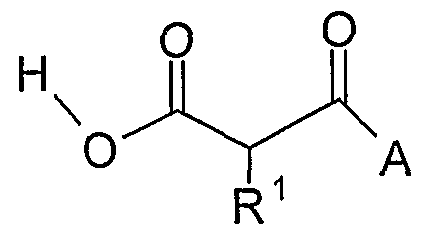
; and
c) reacting a compound of formula 4 with a second nucleophile of formula B-H, the second nucleophile selected from the group consisting of an alcohol and an amine, in the presence of a second coupling reagent, to form a compound of formulas,

In the above formulae, R1 can be hydrogen or any organic substituent which is linked via a carbon atom or a heteroatom such as oxygen, sulfur, nitrogen and the like. It should be apparent to a person of skill in the art that R1 can be any substituent, so long as the substituent does not interfere with the coupling reaction. Examples of suitable R1 groups include, but are not limited to, hydrogen, alkyl, alkenyl, alkynyl, cycloalkyl, heterocycloalkyl, aryl, heteroaryl, halogen, haloalkyl, alkylamino, dialkylamino, arylamino, diarylamino, alkylarylamino, alkoxy, aryloxy, arylalkyloxy, carboxyalkyl, carboxyaryl, carboxyarylalkyl, alkyltbio, arylthio, arylalkylthio, cyano, nitro, alkylcarbonyl, arylcarbonyl, arylalkylcarbonyl, alkanoyl, sulfonyl, alkylsulfonyl, arylsulfonyl and arylakylsulfonyl. The overall reaction is presented in the following scheme:

B-H coupling agent


X wherein R1 is selected from the group consisting of hydrogen, alkyl, alkenyl, alkynyl, cycloalkyl, heterocycloalkyl, aryl, heteroaryl, halogen, haloalkyl, alkylamino, dialkylamino, arylamino, diarylamino, alkylarylamino, alkoxy, aryloxy, arylalkyloxy, carboxyalkyl, carboxyaryl, carboxyarylalkyl, alkylthio, arylthio, arylalkylthio, cyano, nitro, alkylcarbonyl, arylcarbonyl, arylalkylcarbonyl, alkanoyl, sulfonyl, alkylsulfonyl, arylsulfonyl and arylakylsulfonyl; with a protecting group, PG, to obtain the compound of formula 2,

In one embodiment the compound of formula 1 is a 2-substituted malonic acid derivative. In a preferred embodiment the compound of formula 1 is malonic acid.
It has been observed by the applicants of the present invention that carboxylic acids that are capable of forming ketenes (e.g., ethylmalonate) upon treatment with carbiodiimides such as DCC, preferably acylate aliphatic hydroxyl groups in the presence of aromatic ones.
Without wishing to be bound by any particular mechanism or theory, it is believed that this is due to the lower reaction rate that aromatic molecules have than do aliphatic alcohols.
Therefore, in a mixture of aliphatic alcohols, even sterically hindered ones, and phenols, the
chemoselectivity is favorable towards the aliphatic alcohols. However, the presence of electron withdrawing groups in the phenols results in a dramatic increase in their acylation rates. In addition, it has been observed that carboxylic acids possessing alkyl or aryl groups in the α position provide the opposite chemoselectivity, namely acylation of the aromatic molecule over the aliphatic alcohol. (Shelkov. R.; Nahmany. M.; Melman, A. Org. Biomol. Chem. 2004, 2, 397-401).
The compound of formula 2 can react with the first nucleophile as such, without further purification, or it can be purified prior to being used in the coupling process of the invention. Purification methods are well known to a person of skill in the art, and include crystallization, column chromatography, flash chromatography, extraction, distillation, evaporation, filtration, centrifugation, membrane separation, ion-exchange chromatography, and the like. For example, using tert-butyldiphenylsilyl as an exemplary protecting group, the applicants have found that a mixture of mono- and di-tert-butyldiphenylsilylmalonates is obtained in the reaction of malonic acid with fert-butyldiphenylsilylchloride and triethylamine. While this mixture can be easily separated by flash chromatography, decomposition of mono-tert-butyldiphenylsilylmalonate on silica gel was observed, resulting in its low but constant contamination with di-fert-butyldiphenylsilylmalonate. Surprisingly, the applicants identified an alternative method of purification of mono-fert- butyldiphenylsilylmalonate by crystallization, preferably from an organic solvent or solvent mixtures such as ethyl acetate-hexane and ethyl acetate-petroleum ether. The applicants have further found that tert-butyl-diphenylsilylmalonate can be isolated as a reasonably stable crystalline solid.
The nucleophilic reagents, e.g., the compounds of formula A-H and B-H are each independently selected from an alcohol and an amine. In one embodiment, at least one of the first nucleophile and the second nucleophile is an alcohol. Any type of alcohol is suitable for use in the methods of the present invention. Advantageously, sterically hindered alcohols can be used. The alcohol can be aliphatic (which can be linear, branched, saturated or unsaturated, substituted or unsubstituted), or aromatic (which can be unsubstituted or substituted). Currently preferred alcohols include but are not limited to geraniol, adamantol, (-)-menthol, 2-phenyl-2-propanol, prop-2-yn-l-ol, tert-butanol, mercaptoethanol, diacetone-D-glucose, 4-hydroxybenzylalcohol, glycidol,
benzhydrol, octanol, 2,3-isopropylidene glycerol and 4-aminophenol. Other examples of alcohols include but are not limited to saturated aliphatic alcohols such as methanol, ethanol, n-propanol, isopropanol, n-butanol, isobutyl alcohol, sec-butanol, tert-butanol, n-pentanol, isoamyl alcohol, n-octanol; unsaturated aliphatic alcohols such as 2-methyl-3-butyn-2 ol, (E)-2-dodecen-l-ol, (Z)-5-octen-l-ol; aromatic alcohols such as phenol; and araliphatic alcohols such as benzyl alcohol, 3-phenyl-2-propen-l-ol, and the like.
In another embodiment, at least one of the first nucleophile and the second nucleophile is an amine. The amine can be aliphatic (which can be linear, branched, saturated or unsaturated, substituted or unsubstituted aliphatic), or aromatic (which can be unsubstituted or substituted). The amine can be a primary amine or a secondary amine and can advantageously be a sterically hindered amine. Currently preferred amines include diisopropylamine and 4-aminophenol. Other examples of amines include but are not limited to methylamine, dimethylamine, ethylamine, diethyl amine, ethylmethylamine, n- propylamine, di-n-propylamine and the like. The amine can also be a mono or di substituted amine, where each substituent is, independently from the other, chosen from the group consisting of phenyl, substituted phenyl, Ci to Ci2 alkyl, Ci to Ci2 substituted alkyl, C2 to Ci2 alkenyl, C2 to Ci2 substituted alkenyl, C2 to C12 alkynyl, C2 to Cj2 substituted alkynyl, C7to Ci 8 phenylalkyl, C7 to Ci8 substituted phenylalkyl, heterocyclic ring, substituted heterocyclic ring, Ci to Ci2 heterocycloalkyl and Ci to Cj2 substituted heterocycloalkyl. In another embodiment, at least one of the first nucleophile and the second nucleophile is an alcohol and the other is an amine. In a preferred embodiment, at least one of the first nucleophile and second nucleophile is selected from the group consisting of geraniol, adamantol, (-)-menthol, 2-phenyl-2-propanol, prop-2-yn-l-ol, tert-butanol, mercaptoethanol, diacetone-D-glucose, 4-hydroxybenzylalcohol, diisopropylamine, glycidol, benzhydrol, octanol, 2,3-isopropylidene glycerol and 4-aminophenol.
In a currently preferred embodiment, the first nucleophile is geraniol and the second nucleophile is t-BuOH.
In another currently preferred embodiment, the first nucleophile is geraniol and the second nucleophile is diacetone-D-glucose. In another currently preferred embodiment, the first nucleophile is benzhydrol and the second nucleophile is geraniol.
0237
In another currently preferred embodiment, the first nucleophile is geraniol and the second nucleophile is adamantol.
In another currently preferred embodiment, the first nucleophile is (-)-menthol and the second nucleophile is 4-hydroxybenzylalcohol. In another currently preferred embodiment, the first nucleophile is adamantol and the second nucleophile is mercaptoethanol.
In another currently preferred embodiment, the first nucleophile is mercaptoethanol and the second nucleophile is 2,3-isopropylidene glycerol.
In another currently preferred embodiment, the first nucleophile is 2-phenyl-2- propanol and the second nucleophile is diisopropylamine.
In another currently preferred embodiment, the first nucleophile is octanol and the second nucleophile is 4-aminophenol.
In another currently preferred embodiment, the first nucleophile is prop-2-yn-l-ol and the second nucleophile is glycidol. It is understood that the first and/or second nucleophilic reagent can also be a polyfunctional molecule i.e., a molecule containing more than one nucleophilic atom or nucleophilic group. For example, the polyfunctional nucleophile can contain two alcohol functionalities, two amine functionalities, or a combination of an amine and an alcohol (i.e., aminoalcohol). The chemoselectivity of the reaction will depend on the nucleophilic group present, the carboxylic acid linking molecule and the reaction conditions, and can be determined by a person of skill in the art.
It should be noted that acylation of thiols is much slower than that of alcohols. This is an advantage, since unprotected thiols, such as mercapto alcohols, can be selectively acylated on the hydroxy groups, as shown in the experimental section. It is to be understood, however, that the present invention also contemplates asymmetrical coupling of two thiol functionalities. The thiol can be aliphatic (which can be linear, branched, saturated or unsaturated, substituted or unsubstituted), or aromatic (which can be unsubstituted or substituted). Examples of thiols include but are not limited to aliphatic thiols such as methanethiol, propanethiol, isopropanethiol, butanethiol, isobutanethiol and the like; or other substituted thiols, where the substituent is chosen from the group consisting of phenyl, substituted phenyl, Ci to Cj2 alkyl, C1 to Ci2 substituted alkyl, C2 to Cj2 alkenyl, C2 to Ci2
substituted alkenyl, C2 to C12 alkynyl, C2 to C12 substituted alkynyl, C7to Cj8 phenylalkyl, C7 to C18 substituted phenylalkyl, heterocyclic ring, substituted heterocyclic ring, C1 to Ci2 heterocycloalkyl and Ci to Ci2 substituted heterocycloalkyl and the like.
In one embodiment, the first coupling reagent is a carbodiimide. In another embodiment, the second coupling reagent is a carbodiimide. In a currently preferred embodiment, the carbodiimide is dicyclohexylcarbodiimide (DCC). Other useful carbodiimide coupling reagents include but are not limited to 1,3-diisopropylcarbodiimide (DIC) and l-(3-dimethylaminopropyl)-3-ethyl-carbodiimide hydrochloride (EDCL). Like other malonate monoesters, a carbodiimide mediated coupling of monoprotected malonic acid derivatives such as tert-butyldiphenylsilylmalonate with alcohols and amines proceeds with practically quantitative yields under very mild conditions. The quantitative yield of acylation is important for all the reported methodology since further steps are to be carried out without any separation of resulting silyl malonates of formula 3 from the reaction mixture. It is understood that the first coupling reagent can be the same or different from the second coupling reagent. In addition, it is understood that the present invention is not limited to the use of carbodiimide coupling reagents. Other coupling reagents known to a person skilled in the art include but are not limited to benzotriazole-1-yl-oxy-tris- (dimethylamino)-phosphonium hexafluorophosphate (BOP), 1,3- N5N- diisopropylethylamine (DIEA), di-t-butyl dicarbonate (DIBOC), 4-dimethylaminopyridine (DMAP), 2-( 1 H-benzotriazole- 1 -yl)- 1 , 1 ,3 ,3-tetramethyluronium hexafluorophosphate (HBTU), 1-hydroxybenzotriazole (HOBt), N-hydroxysuccinimide, benzotriazole-1-yl-oxy- tris-pyrroHdino-phosphonium hexafluorophosphate, piperidine, 2-( 1 H-benzotriazole- 1 -yl)- 1,1,3,3-tetramethyluronium tetrafluoroborate (TBTU) and fluoro-N,N,N",N"- tetramethylformamidinium hexafluorophosphate (TFFH). Other coupling reagents include acyl halides, such as acetyl chloride and the like; phosphoryl halides, such as phosphoryl chloride and the like; and sulfonyl halides, such as α-toluenesulfonylchloride and the like, may also be used.
The protecting group of the present invention is preferably a silyl-protecting group. Silicon-based protective groups for alcohols have found extensive use in organic synthesis because of their ability for selective removal by fluoride anions. In contrast, the protection
of carboxyl group as silyl esters is much less common due to their high reactivity toward nucleophilic reagents. Silyl protecting groups were found to be superior to other protecting groups such as tert-butyl and F-moc protecting groups, since the deprotecting methods of the latter two are not compatible with most polyfunctional derivatives, whereas silicon protecting groups are deprotected under mild conditions.
Any silyl protecting groups known to a person of skill in the art can be used in the methods of the present invention. In a preferred embodiment, the silyl protecting group is tert-butyldiphenylsilyl (TBDPS). However, it is understood that other silyl protecting groups can be used, including but not limited to tri-organo-silyl, including tri-Ci-6 alkyl silyl, phenyl di-Ci-6 alkyl silyl, and diphenyl mono Ci-6 alkyl silyl including trimethylsilyl (TMS), triethylsilyl, tert-butyldimethylsilyl (TBDMS), triisopropylsilyl, hexyldimethylsilyl and isopropyldimethylsilyl, tert-butyldimethylsilyl, trifluoromethanesulphonate, diisopropyldichlorosilane and the like.
The subsequent removal of tert-butyl diphenylsilyl ester protective group from the compounds of formula 3 can be easily carried out using a fluoride deprotection reagent. For example, equimolar amounts of commercially available tetra-n-butyl ammonium fluoride can be utilized. However, all commercially available sources OfBu4NF contain at least three equivalents of water and attempts to produce dry Bu4NF results in highly basic reagent that is prone to decomposition. After searching for alternative fluoride anion sources, surprisingly, the applicants found that equimolar amounts of commercially available anhydrous and neutral triethylamine-hydrogen fluoride complex, Et3N3HF, easily deprotects silyl malonates of formula 3, thus providing malonate derivatives of formula 4. In a currently preferred embodiment, anhydrous triethylamine-hydrogen fluoride complex (Et3NSHF) is used. In addition, the residual triethylamine-hydrogen fluoride, surprisingly, does not interfere with the subsequent carbodiimide coupling. It is possible, therefore, to conduct the second coupling of the compounds of formula 4 with the second nucleophile in one pot, without any purification of intermediate products. The final purification of resultant non- symmetric compounds of formula 5 can be carried out by any method known to a person of skill in the art, such as crystallization, flash chromatography, column chromatography, extraction, distillation, evaporation, filtration, centrifugation, membrane separation, ion-
exchange chromatography and the like. No appreciable amount of symmetric malonate derivatives such as (A-OCO)2CH2 or (B-OCO)2CH2 were observed in the reaction.
It is understood that the present invention is not limited to the use of the aforementioned deprotecting groups, and that other fluoride deprotecting reagents can be used, including but not limited to hydrogen fluoride, hydrogen fluoride-pyridine complex, potassium fluoride/alumina, and KF in the presence of an appropriate crown ether. Other suitable protecting groups for the compounds of the present invention will be recognized from the present application taking into account the level of skill in the art, and with reference to standard textbooks, such as Greene, T. W. et al. Protective Groups in Organic Synthesis Wiley, New York (1991). Definitions:
The term "chemoselectivity", as used herein, refers to the preferential reaction of a chemical reagent with one of two or more functional groups.
The term "coupling", as used herein interchangeably with the term "tethering", refers to chemically linking one molecule to another molecule.
A "one pot" process, as used herein, means the ability to perform the entire reaction in one vessel without the need for any purification of intermediate products.
When a group is termed "protected", this means that the group is in modified form to preclude undesired side reactions at the protected site. The term "dicarboxylic acid", as used herein, refers to an organic compound containing two carboxylic acid functional groups (COOH).
The term "nucleophile", as used herein, refers to a chemical compound or group that is attracted to nuclei and tends to donate or share electrons. Examples of nucleophiles are alcohols and amines. The terms "nucleophilic atom", "nucleophilic group" or "nucleophilic moiety", as used herein, refers to an atom or a group that tends to donate or share electrons. Examples include oxygen (i.e., hydroxyl groups) and nitrogen (e.g., amino groups). Sulfur atoms (i.e., thiol groups) are also nucleophilic groups.
A "heteroatom" is any atom that is not carbon or hydrogen, typically, but not exclusively, nitrogen, oxygen, sulfur, phosphorous or boron. The term "alkyl", as used herein, alone or as part of another group, denotes saturated linear or branched, unsaturated or saturated groups, preferably containing from 1 to 12
carbon atoms (designed herein "C1-C12 alkyl"). Examples of alkyl groups include but are not limited to methyl, ethyl, n-propyl, isopropyl, n-butyl, iso-butyl, sec-butyl, tert-butyl, amyl, tert-amyl, hexyl and the like. The alkyl group can be unsubstituted or substituted through available atoms by one or more of the groups selected from halo for example F, Br, Cl or I, haloalkyl such as CF3, alkyl, alkoxy, haloalkoxy, trifluoromethoxy, alkenyl, alkynyl, cycloalkyl, cycloalkylalkyl, cycloheteroalkyl, cycloheteroalkylalkyl, cycloalkenyl, cycloalkenylalkyl, cycloalkynyl, cycloalkynylalkyl, aryl, heteroaryl, arylalkyl, aryloxy., aryloxyalkyl, aryloxyaryl, arylalkyloxy, arylalkenyl, arylalkynyl, arylazo, heteroarylalkyl, heteroarylalkenyl, heteroarylheteroaryl, heteroaryloxy, hydroxy, hydroxyalkyl, nitro, cyano, amino, alkanoyl, aroyl, alkylamino, dialkylamino, arylamino, diarylamino, thio, alkylthio, arylthio, arylalkylthio, heteroarylthio, alkoxyarylthio, acyl, alkylcarbonyl, arylcarbonyl, alkyl-aminocarbonyl, arylaminocarbonyl, alkoxycarbonyl, aryloxycarbonyl, alkoxycarbonyloxy, aminocarbonyl, alkylaminocarbonyl, arylaminocarbonyl, alkylcarbonyloxy, arylcarbonyloxy, alkylamido, alkanoylamino, alkylcarbonylamino, arylcarbonylamino, sulfonyl, alkylsulfonyl, arylsulfonyl, aminosulfinyl, sulfonyl, alkylsulfinyl, arylsulfinyl, aminosulfinyl, arylsulfinylalkyl, arylsulfonylamino and aminocarbonyl.
The term "alkenyl", as used herein, alone or as part of another group, refers to straight or branched chain radicals of 2 to 20 carbons, preferably 2 to 12 carbons, and more preferably 1 to 8 carbons in the normal chain, which include one to six double bonds in the normal chain, such as vinyl, 2-propenyl, 3-butenyl, 2-butenyl, 4-pentenyl, 3-pentenyl, 2- hexenyl, 3-hexenyl, 2-heptenyl, 3-heptenyl, 4-heptenyl, 3-octenyl, 3-nonenyl, 4-decenyl, 3- undecenyl, 4-dodecenyl and the like, and which may be optionally substituted with any one or more groups defined hereinabove for alkyl. The term "alkynyl", as used herein, alone or as part of another group refers to straight or branched chain radicals of 2 to 20 carbons, preferably 2 to 12 carbons and more preferably 2 to 8 carbons in the normal chain, which include one triple bond in the normal chain, such as 2-propynyl, 3-butynyl, 2-butynyl, 4-pentynyl, 3-pentynyl, 2-hexynyl, 3- hexynyl, 2-heptynyl, 3-heptynyl, 4-heptynyl, 3-octynyl, 3-nonynyl, 4-dodecynyl and the like, and which may be optionally substituted with any one or more groups defined hereinabove for alkyl.
Where alkyl, alkenyl and alkynyl groups as defined above have single bonds for attachment at two different carbon atoms, they are termed "alkylene groups, "alkenylene groups" and "alkynylene groups", respectively, and may optionally be substituted as defined above for "alkenyl" and "alkynyl". The term "cycloalkyl", as used herein, alone or as part of another group refers to a saturated or partially unsaturated (containing 1, 2 or more double bonds), cyclic hydrocarbon ring system containing 1 to 3 rings, including monocyclicalkyl, bicyclicalkyl and tricyclicalkyl and the like, containing a total of 3 to 20 carbons forming the rings, preferably 3 to 10 carbons. Nonlimiting examples of cycloalkyl groups include cyclopropyl, cyclobutyl, cyclopentyl, cyclohexyl, cycloheptyl, cyclooctyl, cyclodecyl, cyclododecyl, cyclohexenyl, and the like. The cycloalkyl group can be unsubstituted or substituted through available carbon atoms with one or more groups defined hereinabove for alkyl.
The term "aryl", as used herein, alone or as part of another group, denotes an aromatic ring system containing from 6-14 ring carbon atoms. The aryl ring can be a monocyclic, bicyclic, tricyclic and the like. Non-limiting examples of aryl groups are phenyl, naphthyl including 1-naphthyl and 2-naphthyl, and the like. The aryl group can be unsubtituted or substituted through available carbon atoms with one or more groups defined hereinabove for alkyl. The term "heteroaryl", as used herein, alone or as part of another group, denotes a heteroaromatic system containing at least one heteroatom ring atom selected from nitrogen, sulfur and oxygen. The heteroaryl contains 5 or more ring atoms. The heteroaryl group can be monocyclic, bicyclic, tricyclic and the like. Also included in this expression are the benzoheterocyclic rings. If nitrogen is a ring atom, the present invention also contemplates the N-oxides of the nitrogen containing heteroaryls. Nonlimiting examples of heteroaryls include thienyl, benzothienyl, 1-naphthothienyl, thianthrenyl, furyl, benzofuryl, pyrrolyl, imidazolyl, pyrazolyl, pyridyl, pyrazinyl, pyrimidinyl, pyridazinyl, indolyl, isoindolyl, indazolyl, purinyl, quinolyl (e.g. 1-quinolinyl, 2-quinolinyl, 3-quinolinyl, 4-quinolinyl, 5- quinolinyl, 6-quinolinyl, 7-quinolinyl and 8-quinolinyl), isoquinolinyl (e.g., 1-isoquinolinyl, 2-isoquinolinyl, 3-isoquinolinyl, 4-isoquinolinyl, 5 -isoquinolinyl, 6-isoquinolinyl, 7- isoquinolinyl and 8-isoquinolinyl); naphthyridinyl (e.g., 1-naphthyridinyl, 2-
naphthyridinyl), quinoxalinyl, quinazolinyl, cinnolinyl, pteridinyl, carbolinyl, thiazolyl, oxazolyl, isothiazolyl, isoxazolyl and the like. The heteroaryl group can be unsubtituted or substituted through available atoms with one or more groups defined hereinabove for alkyl.
The term "heterocyclic ring" or "heterocycloalkyl", as used herein, alone or as part of another group, denotes a five-membered to eight-membered rings that have 1 to 4 heteroatoms, such as oxygen, sulfur and/or nitrogen, in particular nitrogen, either alone or in conjunction with sulfur or oxygen ring atoms. These five-membered to eight-membered rings can be saturated, fully unsaturated or partially unsaturated, with fully saturated rings being preferred. Preferred heterocyclic rings include piperidinyl, piperidinyl, pyrrolidinyl pyrrolinyl, pyrazolinyl, pyrazolidinyl, piperidinyl, morpholinyl, thiomorpholinyl, pyranyl, thiopyranyl, piperazinyl, indolinyl, dihydrofuranyl, tetrahydrofuranyl, dihydrothiophenyl, tetrahydrothiophenyl, dihydropyranyl, tetrahydropyranyl and the like. The heterocyclyl group can be unsubtituted or substituted through available atoms with one or more groups defined hereinabove for alkyl. The term "halogen" or "halo", as used herein, alone or as part of another group, refers to chlorine, bromine, fluorine and iodine.
A "hydroxyl" group, as used herein, indicates the presence of the functional group (- OH). Such groups are found in aliphatic alcohols, as well as aromatic alcohols such as phenols. An "amine" or "amino" group, as used herein, refers to any of a group of organic compounds of nitrogen that may be considered ammonia derivatives in which one or more hydrogen atoms have been replaced by one or more hydrocarbon radicals. Preferably, the amine is a primary amine (R-NH2), or a secondary amine (RR5NH2) wherein R and R' are each independently from the other an organic residue. A "thiol" group is a compound that contains the functional group -SH. This functional group is referred to either as a thiol group or a sulfhydryl group. More traditionally, thiols have been referred to as mercaptans. The terms "alkylthio", "arylthio" or "arylalkylthio" as used herein alone or as part of another group refer to any of the above alkyl, arylalkyl or aryl groups linked to a sulfur atom. The terms "alkoxy", "aryloxy", "arylalkyloxy" or "heteroaryloxy", as used herein, alone or as part of another group, includes any of the above alkyl, aryl or heteroaryl groups
linked to an oxygen atom. Nonlimiting examples of an alkoxy group is methoxy, ethoxy, n- propoxy, isopropoxy, n-butoxy, t-butoxy and like groups. An example of an aryloxy group is phenyloxy (phenoxy). The alkoxy, aryloxy, arylalkyloxy or heteroaryloxy groups can be unsubstituted or substituted with any one or more of the substituents defined above for alkyl.
The term "carboxy", as used herein, alone or as part of another group, refers to a COO group.
The term "sulfonyl", as used herein alone or as part of another group refers to -S(O)2-. The term "cyano", as used herein, alone or as part of another group, refers to a CN group. The term "nitro", as used herein, alone or as part of another group, refers to an NO2 group.
The following examples are presented in order to more fully illustrate certain embodiments of the invention. They should in no way, however, be construed as limiting the broad scope of the invention. One skilled in the art can readily devise many variations and modifications of the principles disclosed herein without departing from the spirit and scope of the invention.
Experimental section
General information
Unless otherwise stated, all reagents used are from commercially available sources. Solvents for reactions were purified by standard procedures. Flash chromatography was performed on Merck Si 60 silica gel (230-400 mesh) using ethylacetate -40-60 petroleum ether mixtures as the eluent.
General procedure for the synthesis of unsymmetric malonates
A solution containing te/t-butyldiphenylsilylmalonate (1 mmol of a IM solution in dichloromethane) and a solution of DCC (1 mmol of a IM solution in dichloromethane) are added to ImI of a 1 M geraniol solution in dichloromethane. The reaction mixture is stirred for 10 minutes. Subsequently, a solution of Et3N3HF complex (1 mmol of a IM solution in dichloromethane) is added. The reaction mixture is stirred for an additional 10 minutes. A solution of tert-butanol, (1 mmol of a IM solution in dichloromethane) and a solution of DCC (1 mmol of a IM solution in dichloromethane) are consequently added. The reaction mixture is stirred for a further 10 minutes, filtered, and evaporated. The residue is then
purified by flash chromatography (0-10% ethylacetate-petrol ether mixture or 0-10% ethylacetate-hexane mixture) to give the corresponding non-symmetric malonate of formula 5 (1.17 g, 91%).
The following examples in the table 1 demonstrate the versatility of this method. Sterically hindered alcohols provided asymmetrical malonates of formula 5 in excellent non- optimized yields. Table 1: Isolated ield of as mmetrical malonates of formula 4 after three sta es

Entry (b) is an example of a straightforward formation of acid-stable linkage with carbohydrate derivatives. Reactions with polyfunctional substrates (entries e-g) demonstrate a high chemoselectivity of the method. In all these entries the acylation selectively proceeded on the aliphatic hydroxyl group and no appreciable amounts of acylation of thiol or phenol functional groups were detected. It should be mentioned that these chemoselectivities are completely opposite to conventional carbodiimide esterifications (Shelkov. R.; Nahmany. M.; Melman, A. Org. Biomol Chem. 2004, 2, 397-401).
Formation of the malonamide linkage by the current procedure was somewhat slow and only moderate yields were achieved (entry h). Reaction with 4-aminophenol was the only case where low chemoselectivity was observed, thus providing mainly products of N- acylation (49%) with a substantial amount of the O-acylation product (26%).
Preparation of mono-terf-butyldiphenylsilyl malonate
7ert-butylchlorodiphenylsilane (4.0 g, 14.6 mmol) is added to a solution of malonic acid (3.03 g, 29.1 mmol) and triethylamine (2.95 g, 29.1 mmol) in CH2Cl2 (20 ml). The reaction mixture is stirred overnight at room temperature. Afterward, the reaction mixture is evaporated and dissolved in ethyl acetate-petroleum ether or ethylacetate-hexane 1:1 mixture (100 ml) to give a clear solution that is washed with cold water (three 50 ml portions). The organic layer is then dried over Na2SO4 and evaporated. The residue is dissolved in EtOAc (5 ml) and the resultant solution is diluted with 100 ml of petroleum ether or hexane and kept at -34° C overnight for crystallization. Subsequent warming of the reaction mixture to room temperature and filtering afforded mono tert- butyldiphenylsilylmalonate (2.0 g, 5.54 mmol, 38%). This product is a crystalline solid, which is stable for weeks at -180C and may be purified by recrystallization from ethylacetate-petroleum ether or ethylacetate-hexane. It will be appreciated by persons skilled in the art that the present invention is not limited by what has been particularly shown and described herein above. Rather the scope of the invention is defined by the claims that follow:
Claims
What is claimed is:
I. A one-pot process for asymmetrical coupling of organic molecules, comprising the steps of: a) reacting a silyl-monoprotected malonic acid or a 2-substituted derivative thereof with a first nucleophile in the presence of a first coupling reagent; b) deprotecting the silyl protecting group; and c) reacting the product of step (b) with a second nucleophile which is different from said first nucleophile, in the presence of a second coupling reagent. 2. The process of claim 1, wherein the first nucleophile is an amine or an alcohol.
3. The process of claim 1 , wherein the second nucleophile is an amine or an alcohol.
4. The process of claim 1, wherein at least one of the first nucleophile and the second nucleophile is an alcohol.
5. The process of claim 1, wherein at least one of the first nucleophile and the second nucleophile is an amine.
6. The process of claim 5, wherein the amine is a primary amine.
7. The process of claim 5, wherein the amine is a secondary amine.
8. The process of claim 1, wherein one of the first nucleophile and the second nucleophile is an alcohol and the other is an amine. 9. The process of claim 1, wherein at least one of the first nucleophile and second nucleophile is selected from the group consisting of geraniol, adamantol, (-)- menthol, 2-phenyl-2-propanol, prop-2-yn-l-ol, tert-butanol, mercaptoethanol, diacetone-D-glucose, 4-hydroxybenzylalcohol, diisopropylamine, glycidol, benzhydrol, octanol, 2,3-isopropylidene glycerol and 4-aminophenol. 10. The process of claim 1, wherein the first nucleophile is geraniol and the second nucleophile is tert-butanol.
I I. The process of claim 1, wherein the first nucleophile is geraniol and the second nucleophile is diacetone-D-glucose.
12. The process of claim 1, wherein the first nucleophile is benzhydrol and the second nucleophile is geraniol.
13. The process of claim 1, wherein the first nucleophile is geraniol and the second nucleophile is adamantol.
14. The process of claim 1, wherein the first nucleophile is (-)-menthol and the second nucleophile is 4-hydroxyberi2ylalcohol. 15. The process of claim 1, wherein the first nucleophile is adamantol and the second nucleophile is mercaptoethanol.
16. The process of claim 1, wherein the first nucleophile is mercaptoethanol and the second nucleophile is 2,3-isopropylidene glycerol.
17. The process of claim 1, wherein the first nucleophile is 2-phenyl-2-propanol and the second nucleophile is diisopropylamine.
18. The process of claim 1, wherein the first nucleophile is octanol and the second nucleophile is 4-aminophenol.
19. The process of claim 1, wherein the first nucleophile is prop-2-yn-l-ol and the second nucleophile is glycidol. 20. The process of claim 1, wherein the first coupling reagent is a carbodiimide.
21. The process of claim 1, wherein the second coupling reagent is a carbodiimide.
22. The process of claim 20 or 21, wherein the carbodiimide is dicyclohexylcarbodiimide (DCC).
23. The process of claim 1, wherein the silyl protecting group is tert-butyl diphenyl silyl. 24. The process of claim 1, wherein the silyl protecting group is removed with a fluoride deprotecting reagent.
25. The process of claim 24, wherein the deprotecting reagent is triethylamine-hydrogen fluoride complex (Et3N' 3HF).
26. The process of claim 25, wherein the deprotecting reagent is anhydrous triethylamine-hydrogen fluoride complex (Et3NSHF).
27. The process of claim 1, wherein the silyl-monoprotected malonic acid or 2- substituted derivative thereof is obtained by monoprotecting malonic acid or a 2- substituted derivative thereof with a silyl protecting group.
28. A one-pot process for asymmetrical coupling of organic molecules, comprising the steps of: a) reacting a monoprotected malonic acid derivative of formula 2,

2 wherein
R1 is selected from the group consisting of hydrogen, alkyl, alkenyl, alkynyl, cycloalkyl, heterocycloalkyl, aryl, heteroaryl, halogen, haloalkyl, alkylamino, dialkylamino, arylamino, diarylamino, alkylarylamino, alkoxy, aryloxy, arylalkyloxy, carboxyalkyl, carboxyaryl, carboxyarylalkyl, alkylthio, arylthio, arylalkylthio, cyano, nitro, alkylcarbonyl, arylcarbonyl, arylalkylcarbonyl, alkanoyl, sulfonyl, alkylsulfonyl, arylsulfonyl and arylakylsulfonyl; and PG is a silyl protecting group; with a first nucleophile of formula A-H, said first nucleophile selected from the group consisting of an alcohol and an amine in the presence of a first coupling reagent, to form a compound of formula 3,

b) removing the silyl protecting group PG to form a compound of formula 4,

4 ; and c) reacting a compound of formula 4 with a second nucleophile of formula B-H, said second nucleophile selected from the group consisting of an alcohol and
an amine, in the presence of a second coupling reagent, to form a compound of formula 5,

5 wherein A is different from B. 29. The process of claim 28, wherein A-H is an amine or an alcohol.
30. The process of claim 28, wherein B-H is an amine or an alcohol.
31. The process of claim 28, wherein at least one of A-H and B-H is an alcohol.
32. The process of claim 28, wherein at least one of A-H and B-H is an amine.
33. The process of claim 32, wherein the amine is aprimary amine. 34. The process of claim 32, wherein the amine is a secondary amine.
35. The process of claim 28, wherein one of A-H and B-H is an alcohol and the other is an amine.
36. The process of claim 28, wherein at least one of A-H and B-H is selected from the group consisting of geraniol, adamantol, (-)-menthol, 2-phenyl-2-propanol, prop-2- yn-l-ol, tert-butanol, mercaptoethanol, diacetone-D-glucose, 4- hydroxybenzylalcohol, diisopropylamine, glycidol, benzhydrol, octanol, 2,3- isopropylidene glycerol and 4-aminophenol.
37. The process of claim 28, wherein one of A-H and B-H is geraniol and the other is tert-butanol. 38. The process of claim 28, wherein one of A-H and B-H is geraniol and the other is diacetone-D-glucose.
39. The process of claim 28, wherein one of A-H and B-H is benzhydrol and the other is geraniol.
40. The process of claim 28, wherein one of A-H and B-H is geraniol and the other is adamantol.
41. The process of claim 28, wherein one of A-H and B-H is (-)-menthol and the other is 4-hydroxybenzylalcohol.
42. The process of claim 28, wherein one of A-H and B-H is adamantol and the other is mercaptoethanol.
43. The process of claim 28, wherein one of A-H and B-H is mercaptoethanol and the other is 2,3-isopropylidene glycerol. 44. The process of claim 28, wherein one of A-H and B-H is 2-phenyl-2-propanol and the other is diisopropylamine.
45. The process of claim 28, wherein one of A-H and B-H is octanol and the other is 4- aminophenol.
46. The process of claim 28, wherein one of A-H and B-H is prop-2-yn-l-ol and the other is glycidol.
47. The process of claim 28, wherein the first coupling reagent is a carbodiimide.
48. The process of claim 28, wherein the second coupling reagent is a carbodiimide.
49. The process of claim 47 or 48, wherein the carbodiimide is dicyclohexylcarbodiimide (DCC). 50. The process of claim 28, wherein the silyl protecting group, PG, is tert-butyl diphenyl silyl.
51. The process of claim 28, wherein the silyl protecting group is removed with a fluoride deprotecting reagent.
52. The process of claim 51, wherein the deprotecting reagent is triethylamine-hydrogen fluoride complex (Et3NSHF).
53. The process of claim 52, wherein the deprotecting reagent is anhydrous triethylamine-hydrogen fluoride complex (Et3NSHF).
54. The process of claim 28, wherein the compound of formula 2 is obtained by monoprotecting a malonic acid derivative of formula 1 with a silyl protecting group

1 wherein R1 is as defined above.
55. The process of claim 54, wherein the compound of formula 1 is malonic acid.
56. The process of claim 54, wherein the compound of formula 1 is a 2-substituted malonic acid derivative.
57. A process for asymmetrical coupling of organic molecules, comprising the steps of: a) providing a malonic acid derivative represented by the structure of formula 1,

1 wherein R1 is selected from the group consisting of hydrogen, alkyl, alkenyl, alkynyl, cycloalkyl, heterocycloalkyl, aryl, heteroaryl, halogen, haloalkyl, alkylamino, dialkylamino, arylamino, diarylamino, alkylarylamino, alkoxy, aryloxy, arylalkyloxy, carboxyalkyl, carboxyaryl, carboxyarylalkyl, alkylthio, arylthio, arylalkylthio, cyano, nitro, alkylcarbonyl, arylcarbonyl, arylalkylcarbonyl, alkanoyl, sulfonyl, alkylsulfonyl, arylsulfonyl and arylakylsulfonyl; b) monoprotecting the malonic acid derivative with a silyl protecting group to form a compound of formula 2,

where R1 is as defined above and PG is a silyl protecting group; c) reacting the monoprotected compound of formula 2 with a first nucleophile
A-H, said first nucleophile selected from the group consisting of an alcohol and an amine in the presence of a coupling reagent, to form a compound of formula 3,

d) removing the silyl protecting group PG to form a compound of formula 4,

4 ; and e) reacting a compound of formula 4 with a second nucleophile of formula B-H, said second nucleophile selected from the group consisting of an alcohol and an amine, in the presence of a coupling reagent, to form a compound of formula 5,

5 wherein A is different from B.
58. The process of claim 57, wherein steps (c)-(e) are performed in one pot.
Applications Claiming Priority (2)
| Application Number | Priority Date | Filing Date | Title |
|---|---|---|---|
| US65447705P | 2005-02-22 | 2005-02-22 | |
| US60/654,477 | 2005-02-22 |
Publications (1)
| Publication Number | Publication Date |
|---|---|
| WO2006090377A1 true WO2006090377A1 (en) | 2006-08-31 |
Family
ID=36624049
Family Applications (1)
| Application Number | Title | Priority Date | Filing Date |
|---|---|---|---|
| PCT/IL2006/000237 Ceased WO2006090377A1 (en) | 2005-02-22 | 2006-02-22 | One-pot non-symmetric heterobifunctional coupling of organic molecules through malonic acid derivatives |
Country Status (1)
| Country | Link |
|---|---|
| WO (1) | WO2006090377A1 (en) |
Cited By (1)
| Publication number | Priority date | Publication date | Assignee | Title |
|---|---|---|---|---|
| JP2011079953A (en) * | 2009-10-07 | 2011-04-21 | Takasago Internatl Corp | Cooling sensation agent composition, sensory stimulation agent composition and use of the same |
Citations (2)
| Publication number | Priority date | Publication date | Assignee | Title |
|---|---|---|---|---|
| JPH0687806A (en) * | 1992-09-04 | 1994-03-29 | Japan Tobacco Inc | New 2-amino-2-ethynylmalonic ester derivative |
| EP1127886A1 (en) * | 2000-02-04 | 2001-08-29 | F. Hoffmann-La Roche Ag | Synthesis of 3,6-dialkyl-5,6-dihydro-4-hydroxy-2H-pyran-2one |
-
2006
- 2006-02-22 WO PCT/IL2006/000237 patent/WO2006090377A1/en not_active Ceased
Patent Citations (2)
| Publication number | Priority date | Publication date | Assignee | Title |
|---|---|---|---|---|
| JPH0687806A (en) * | 1992-09-04 | 1994-03-29 | Japan Tobacco Inc | New 2-amino-2-ethynylmalonic ester derivative |
| EP1127886A1 (en) * | 2000-02-04 | 2001-08-29 | F. Hoffmann-La Roche Ag | Synthesis of 3,6-dialkyl-5,6-dihydro-4-hydroxy-2H-pyran-2one |
Non-Patent Citations (2)
| Title |
|---|
| PATENT ABSTRACTS OF JAPAN vol. 018, no. 347 (C - 1219) 30 June 1994 (1994-06-30) * |
| R. SHELKOV ET.AL.: "Acylation through ketene intermediates", J. ORG. CHEM., vol. 67, 2002, pages 8975 - 8982, XP002389552 * |
Cited By (2)
| Publication number | Priority date | Publication date | Assignee | Title |
|---|---|---|---|---|
| JP2011079953A (en) * | 2009-10-07 | 2011-04-21 | Takasago Internatl Corp | Cooling sensation agent composition, sensory stimulation agent composition and use of the same |
| US20130131169A1 (en) * | 2009-10-07 | 2013-05-23 | Takasago International Corporation | Cooling sensation agent composition, sensory stimulation agent composition and use of the same |
Similar Documents
| Publication | Publication Date | Title |
|---|---|---|
| EP3481201B1 (en) | Processes for the preparation of 4-alkoxy-3-(acyl or alkyl)oxypicolinamides | |
| CA2828829A1 (en) | Regioselective acylation of rapamycin at the c-42 position | |
| CN107735398A (en) | Method for synthesizing rapamycin derivatives | |
| KR101216885B1 (en) | Semisynthesis process for the preparation of 10-deacetyl-n-debenzoyl-paclitaxel | |
| EP1999106B1 (en) | A hydride reduction process for preparing quinolone intermediates | |
| US9296780B2 (en) | Process for alkynylating 16-substituted-17-keto steroids | |
| WO2006090377A1 (en) | One-pot non-symmetric heterobifunctional coupling of organic molecules through malonic acid derivatives | |
| EP3986400B1 (en) | Processes and intermediates for producing diazaspiro lactam compounds | |
| AU2010300788A1 (en) | Process for preparing biphenyl imidazole compounds | |
| US7470810B2 (en) | Alkyl and aryl-thiotrifluoroacetates and process | |
| WO2003087079A1 (en) | Conversion of taxane molecules | |
| JP5704763B2 (en) | Production of trans-4-aminocyclopent-2-ene-1-carboxylic acid derivative | |
| US7094912B2 (en) | Process for the preparation of 4-oxytetrahydropyran-2-ones | |
| KR101407353B1 (en) | A novel process for preparing cabazitaxel from 10-deacetyl-baccatin iii with high yield and a novel intermediate for the same | |
| MX2012004685A (en) | Processes for preparing a polymeric compound. | |
| ES2233850T3 (en) | IMPROVED SYNTHESIS OF RAMIFIED ACICLIC NUCLEOSIDS. | |
| KR100841044B1 (en) | Process for preparing cephalosporin compound | |
| US20030162957A1 (en) | Protected deoxyadenosines and deoxyguanosines | |
| EP1990334B1 (en) | Usage of poly-3-hydroxyalkanoates in preparation of beta-lactam compounds | |
| EP3596097A1 (en) | A process for preparing ketolide compounds | |
| ITMI20131820A1 (en) | PROCEDURE FOR THE PREPARATION OF OLOPATADIN | |
| CA2209102A1 (en) | Production method of optically active trans-vinylsulfide alcohol | |
| JP2001199993A (en) | Hydroxynucleoside derivatives |
Legal Events
| Date | Code | Title | Description |
|---|---|---|---|
| 121 | Ep: the epo has been informed by wipo that ep was designated in this application | ||
| NENP | Non-entry into the national phase |
Ref country code: DE |
|
| 122 | Ep: pct application non-entry in european phase |
Ref document number: 06711219 Country of ref document: EP Kind code of ref document: A1 |
|
| WWW | Wipo information: withdrawn in national office |
Ref document number: 6711219 Country of ref document: EP |