WO2006074129A2 - Agents for therapy efficacy monitoring and deep tissue imaging - Google Patents
Agents for therapy efficacy monitoring and deep tissue imaging Download PDFInfo
- Publication number
- WO2006074129A2 WO2006074129A2 PCT/US2006/000027 US2006000027W WO2006074129A2 WO 2006074129 A2 WO2006074129 A2 WO 2006074129A2 US 2006000027 W US2006000027 W US 2006000027W WO 2006074129 A2 WO2006074129 A2 WO 2006074129A2
- Authority
- WO
- WIPO (PCT)
- Prior art keywords
- compound
- conjugate
- following formula
- disease state
- sample
- Prior art date
- Legal status (The legal status is an assumption and is not a legal conclusion. Google has not performed a legal analysis and makes no representation as to the accuracy of the status listed.)
- Ceased
Links
- 0 CCN(CC)c(cc1O2)ccc1C(c(c(S(O)(=O)=O)c1)ccc1S(*)(=O)=O)=C(C=C1)C2=CC1=[N+](CC)CC Chemical compound CCN(CC)c(cc1O2)ccc1C(c(c(S(O)(=O)=O)c1)ccc1S(*)(=O)=O)=C(C=C1)C2=CC1=[N+](CC)CC 0.000 description 4
- MFOWQIMCJSTKPF-UHFFFAOYSA-N CC(CC(N[O]=C)=C1)C(Oc2ccccc2)=C1N(Cc1cc(OC)ccc1NCCCCCCN)C(C)=O Chemical compound CC(CC(N[O]=C)=C1)C(Oc2ccccc2)=C1N(Cc1cc(OC)ccc1NCCCCCCN)C(C)=O MFOWQIMCJSTKPF-UHFFFAOYSA-N 0.000 description 1
- HPBYTOFDSULWOO-UHFFFAOYSA-N CC(Nc(cc(cc1)F)c1Oc1ccccc1)=O Chemical compound CC(Nc(cc(cc1)F)c1Oc1ccccc1)=O HPBYTOFDSULWOO-UHFFFAOYSA-N 0.000 description 1
Classifications
-
- A—HUMAN NECESSITIES
- A61—MEDICAL OR VETERINARY SCIENCE; HYGIENE
- A61K—PREPARATIONS FOR MEDICAL, DENTAL OR TOILETRY PURPOSES
- A61K49/00—Preparations for testing in vivo
-
- A—HUMAN NECESSITIES
- A61—MEDICAL OR VETERINARY SCIENCE; HYGIENE
- A61B—DIAGNOSIS; SURGERY; IDENTIFICATION
- A61B5/00—Measuring for diagnostic purposes; Identification of persons
- A61B5/0059—Measuring for diagnostic purposes; Identification of persons using light, e.g. diagnosis by transillumination, diascopy, fluorescence
-
- A—HUMAN NECESSITIES
- A61—MEDICAL OR VETERINARY SCIENCE; HYGIENE
- A61K—PREPARATIONS FOR MEDICAL, DENTAL OR TOILETRY PURPOSES
- A61K47/00—Medicinal preparations characterised by the non-active ingredients used, e.g. carriers or inert additives; Targeting or modifying agents chemically bound to the active ingredient
- A61K47/50—Medicinal preparations characterised by the non-active ingredients used, e.g. carriers or inert additives; Targeting or modifying agents chemically bound to the active ingredient the non-active ingredient being chemically bound to the active ingredient, e.g. polymer-drug conjugates
- A61K47/51—Medicinal preparations characterised by the non-active ingredients used, e.g. carriers or inert additives; Targeting or modifying agents chemically bound to the active ingredient the non-active ingredient being chemically bound to the active ingredient, e.g. polymer-drug conjugates the non-active ingredient being a modifying agent
- A61K47/54—Medicinal preparations characterised by the non-active ingredients used, e.g. carriers or inert additives; Targeting or modifying agents chemically bound to the active ingredient the non-active ingredient being chemically bound to the active ingredient, e.g. polymer-drug conjugates the non-active ingredient being a modifying agent the modifying agent being an organic compound
-
- A—HUMAN NECESSITIES
- A61—MEDICAL OR VETERINARY SCIENCE; HYGIENE
- A61K—PREPARATIONS FOR MEDICAL, DENTAL OR TOILETRY PURPOSES
- A61K49/00—Preparations for testing in vivo
- A61K49/0004—Screening or testing of compounds for diagnosis of disorders, assessment of conditions, e.g. renal clearance, gastric emptying, testing for diabetes, allergy, rheuma, pancreas functions
-
- A—HUMAN NECESSITIES
- A61—MEDICAL OR VETERINARY SCIENCE; HYGIENE
- A61K—PREPARATIONS FOR MEDICAL, DENTAL OR TOILETRY PURPOSES
- A61K49/00—Preparations for testing in vivo
- A61K49/001—Preparation for luminescence or biological staining
- A61K49/0013—Luminescence
- A61K49/0017—Fluorescence in vivo
- A61K49/0019—Fluorescence in vivo characterised by the fluorescent group, e.g. oligomeric, polymeric or dendritic molecules
- A61K49/0021—Fluorescence in vivo characterised by the fluorescent group, e.g. oligomeric, polymeric or dendritic molecules the fluorescent group being a small organic molecule
- A61K49/0032—Methine dyes, e.g. cyanine dyes
-
- A—HUMAN NECESSITIES
- A61—MEDICAL OR VETERINARY SCIENCE; HYGIENE
- A61K—PREPARATIONS FOR MEDICAL, DENTAL OR TOILETRY PURPOSES
- A61K49/00—Preparations for testing in vivo
- A61K49/001—Preparation for luminescence or biological staining
- A61K49/0013—Luminescence
- A61K49/0017—Fluorescence in vivo
- A61K49/0019—Fluorescence in vivo characterised by the fluorescent group, e.g. oligomeric, polymeric or dendritic molecules
- A61K49/0021—Fluorescence in vivo characterised by the fluorescent group, e.g. oligomeric, polymeric or dendritic molecules the fluorescent group being a small organic molecule
- A61K49/0041—Xanthene dyes, used in vivo, e.g. administered to a mice, e.g. rhodamines, rose Bengal
-
- A—HUMAN NECESSITIES
- A61—MEDICAL OR VETERINARY SCIENCE; HYGIENE
- A61K—PREPARATIONS FOR MEDICAL, DENTAL OR TOILETRY PURPOSES
- A61K49/00—Preparations for testing in vivo
- A61K49/001—Preparation for luminescence or biological staining
- A61K49/0013—Luminescence
- A61K49/0017—Fluorescence in vivo
- A61K49/005—Fluorescence in vivo characterised by the carrier molecule carrying the fluorescent agent
- A61K49/0052—Small organic molecules
-
- A—HUMAN NECESSITIES
- A61—MEDICAL OR VETERINARY SCIENCE; HYGIENE
- A61P—SPECIFIC THERAPEUTIC ACTIVITY OF CHEMICAL COMPOUNDS OR MEDICINAL PREPARATIONS
- A61P35/00—Antineoplastic agents
-
- G—PHYSICS
- G01—MEASURING; TESTING
- G01N—INVESTIGATING OR ANALYSING MATERIALS BY DETERMINING THEIR CHEMICAL OR PHYSICAL PROPERTIES
- G01N21/00—Investigating or analysing materials by the use of optical means, i.e. using sub-millimetre waves, infrared, visible or ultraviolet light
- G01N21/62—Systems in which the material investigated is excited whereby it emits light or causes a change in wavelength of the incident light
- G01N21/63—Systems in which the material investigated is excited whereby it emits light or causes a change in wavelength of the incident light optically excited
- G01N21/64—Fluorescence; Phosphorescence
- G01N21/6486—Measuring fluorescence of biological material, e.g. DNA, RNA, cells
-
- G—PHYSICS
- G01—MEASURING; TESTING
- G01N—INVESTIGATING OR ANALYSING MATERIALS BY DETERMINING THEIR CHEMICAL OR PHYSICAL PROPERTIES
- G01N33/00—Investigating or analysing materials by specific methods not covered by groups G01N1/00 - G01N31/00
- G01N33/48—Biological material, e.g. blood, urine; Haemocytometers
- G01N33/50—Chemical analysis of biological material, e.g. blood, urine; Testing involving biospecific ligand binding methods; Immunological testing
- G01N33/58—Chemical analysis of biological material, e.g. blood, urine; Testing involving biospecific ligand binding methods; Immunological testing involving labelled substances
-
- G—PHYSICS
- G01—MEASURING; TESTING
- G01N—INVESTIGATING OR ANALYSING MATERIALS BY DETERMINING THEIR CHEMICAL OR PHYSICAL PROPERTIES
- G01N33/00—Investigating or analysing materials by specific methods not covered by groups G01N1/00 - G01N31/00
- G01N33/48—Biological material, e.g. blood, urine; Haemocytometers
- G01N33/50—Chemical analysis of biological material, e.g. blood, urine; Testing involving biospecific ligand binding methods; Immunological testing
- G01N33/58—Chemical analysis of biological material, e.g. blood, urine; Testing involving biospecific ligand binding methods; Immunological testing involving labelled substances
- G01N33/582—Chemical analysis of biological material, e.g. blood, urine; Testing involving biospecific ligand binding methods; Immunological testing involving labelled substances with fluorescent label
-
- A—HUMAN NECESSITIES
- A61—MEDICAL OR VETERINARY SCIENCE; HYGIENE
- A61B—DIAGNOSIS; SURGERY; IDENTIFICATION
- A61B5/00—Measuring for diagnostic purposes; Identification of persons
- A61B5/145—Measuring characteristics of blood in vivo, e.g. gas concentration or pH-value ; Measuring characteristics of body fluids or tissues, e.g. interstitial fluid or cerebral tissue
- A61B5/14532—Measuring characteristics of blood in vivo, e.g. gas concentration or pH-value ; Measuring characteristics of body fluids or tissues, e.g. interstitial fluid or cerebral tissue for measuring glucose, e.g. by tissue impedance measurement
-
- A—HUMAN NECESSITIES
- A61—MEDICAL OR VETERINARY SCIENCE; HYGIENE
- A61B—DIAGNOSIS; SURGERY; IDENTIFICATION
- A61B5/00—Measuring for diagnostic purposes; Identification of persons
- A61B5/41—Detecting, measuring or recording for evaluating the immune or lymphatic systems
- A61B5/414—Evaluating particular organs or parts of the immune or lymphatic systems
- A61B5/415—Evaluating particular organs or parts of the immune or lymphatic systems the glands, e.g. tonsils, adenoids or thymus
-
- G—PHYSICS
- G01—MEASURING; TESTING
- G01N—INVESTIGATING OR ANALYSING MATERIALS BY DETERMINING THEIR CHEMICAL OR PHYSICAL PROPERTIES
- G01N2800/00—Detection or diagnosis of diseases
- G01N2800/52—Predicting or monitoring the response to treatment, e.g. for selection of therapy based on assay results in personalised medicine; Prognosis
Definitions
- This invention relates generally to the field of molecular imaging, and more specifically to the field of functional imaging, including glucose transporters, thymidine kinase activity, and peripheral benzodiazepine receptors as targeted agents that incorporate near- infrared fluorophores as signaling agents.
- MI agents commonly consist of a signaling moiety (fluorophore, radioisotope or Gd 3+ ion) and a targeting functionality such as an antibody or peptide, sugar or a peripheral benzodiazepine receptor (PBR) ligand.
- PBR peripheral benzodiazepine receptor
- NTR molecular imaging agents are particularly attractive due to the inherently low water and tissue absorption in the NIR spectral region. Additionally, the low scattering cross-section and lack of autofluorescence background in the near infrared (NIR) region facilitate deep penetration and high-resolution images from small interrogated volumes.
- temporal cortex obtained from Alzheimer's patients showed an increase in PBR, and correlations with Huntington's disease, multiple sclerosis and gliosis have been demonstrated.
- Breast cancer generally demonstrates increased PBR expression and represents another potentially attractive target, especially in the NIR.
- high affinity ligands for PBR such as, for example, PK-11195, Ro5-4864, DAAl 106, and DAAl 107) has made noninvasive imaging modalities more suitable.
- FDG glucose transporter
- PET positron emission tomography
- Modest functionalization of glucose at the C-2 position does not hinder sugar uptake but does prevent cellular metabolism, therefore glucose agents can accumulate intracellularly. Since tumor cells metabolize glucose a higher rate than normal cells, the accumulation of glucose mimics (i.e. FDG and similar agents) can facilitate discrimination of tissues based on their metabolic status. While FDG imaging certainly has demonstrated utility to the clinical oncologist, the requirement of a cyclotron and a PET scanner somewhat limit its use.
- FDG new probes for cellular proliferation imaging have been developed.
- TKl thymidine kinase 1
- FLT [ 18 F]3'-deoxy- 3'fluorothymidine
- FLT is not fully metabolized by cells and accumulates in target tissues, making it a promising imaging agent for rapidly proliferating tissues.
- clinical imaging of diseased tissue has the ability to be highly sensitive and specific.
- NTR emitting Ln-Chelates can be prepared opening the avenue to complexes with spectral properties more compatible with biological imaging such as visible absorption, NTR emission and microsecond-long emission lifetimes. These complexes have high molar absorptivity and have luminescent lifetimes in the microsecond regime allowing temporal rejection of noise.
- PKl 1195 and Gd-PKl 1195 Others have prepared PKl 1195 as a PET agent for use in humans.
- a NIR Pyropheophorbide agent has been reported for imaging glucose transporters, however this agent was not spectroscopically optimized for deep tissue in-vivo imaging (ex. 679nm, em. 720nm). At present, the authors are unaware of any NTR imaging agents based on thymidine imaging.
- PBR peripheral benzodiazepine receptor
- NIR near-infrared
- aspects of the present invention include the synthesis of NTR- metabolic and proliferation probes.
- the authors report a sacharide agent suitable for metabolic imaging in similar fashion to 18 FDG and a NTR-thymidine probe suitable for imaging cellular proliferation (DNA synthesis).
- the NIR contrast agents disclosed herein are suitable for optical imaging using spectral and time-gated detection approaches to maximize the signal-to- background ratio.
- High molar extinction dyes that absorb and emit in the NTR 3 such as IRdye800CWTM (available from LiCOR) and CY7 (Amersham), as well as NTR Lanthanide chelates are demonstrated. Since thymidine, PKl 1195 and other PBR ligands have been suggested as therapeutic agents, the molecules demonstrated here could also be useful therapeutics which also offers direct monitoring of dose delivery and therapeutic efficacy.
- one aspect of the present invention is a method of imaging a molecular event in a sample, the method steps comprising administering to the sample a probe having an affinity for a target.
- the probe has at least one of a ligand/signaling agent combination, or conjugable form of a ligand/signaling agent combination.
- a signal from the probe may be detected.
- the sample can be at least one of cells, tissue, cellular tissue, serum, cell extract, bodily fluids.
- the bodily fluids may be, for example, breast milk, sputum, vaginal fluids, urine.
- Another aspect of the present invention is a method of measuring glucose uptake.
- This embodiment comprises the steps of administering to a sample a conjugate, the conjugate comprising a conjugable glucosamine compound and a signaling agent; and then detecting a signal from said conjugate.
- the sample is at least one of cells, tissue, cellular tissue, serum, cell extract, bodily fluids.
- Another aspect of the present invention is a method of quantifying the progression of a disease state progression that includes the steps of (a) administering to a first sample a conjugate that comprises a conjugable deoxythymidine compound and a signaling agent; (b) detecting a signal from the conjugate; (c) after a period of time from step (b), administering to a second sample a conjugate, (d) detecting a second signal; and (e) comparing the first signal with the second signal to determine the progress of a disease state.
- the sample are at least one of cells, tissue, cellular tissue, serum, cell extract, bodily fluids.
- conjugate includes a peripheral benzodiazepine affinity ligand or conjugable form thereof and a signaling agent.
- Another aspect of the present invention is the above method, where the conjugate includes a glucosamine compound and a signaling agent.
- the administration step is in vivo or in vitro.
- Figure 1 is a photograph that shows white light and fluorescence pictures of dosed cells and un-dosed cells in accordance with the present invention, and is further discussed in Example 6, below.
- Picture A is a white light picture of dosed cells
- Picture B is a fluorescence picture of dosed cells
- Picture C is a white light picture of un-dosed cells
- Picture D is a fluorescence picture of un-dosed cells.
- Figure 2 is a photograph that shows white light and fluorescence pictures of dosed cells and un-dosed cells in accordance with the present invention, and is further discussed in Example 7, below.
- Picture A is a white light picture of dosed cells
- Picture B is a fluorescence picture of dosed cells
- Picture C is a white light picture of un-dosed cells
- Picture D is a fluorescence picture of un-dosed cells.
- Figure 3 is a photograph that shows in vivo cancer imaging of a small laboratory animal.
- Figure 4 is a photograph that shows in vivo neurodegenerative imaging of a small laboratory animal.
- Embodiments of the present invention include NIR agents for the PBR based on
- NIR dyes including Lanthanide chelates. Additionally, complimentary imaging agents are disclosed using a novel NIR sacharide and NIR thymidine agent. Aspects of the present invention include both being used separately, as well as where the agents are used together as a cocktail whereby both PBR expression and metabolic and or cellular proliferation status could be simultaneously monitored in- vivo.
- PBR ligands such as PKl 1195 have been suggested as therapeutic agents.
- the agents reported here are unique in that they facilitate in- vivo monitoring of therapeutic delivery and efficacy.
- aspects of the present invention include methods of imaging a molecular event, in a sample, the method steps comprising administering to the sample a probe having an affinity for a target.
- the probe has at least one of a ligand/ signaling agent combination, or conjugable form of a ligand/signaling agent combination.
- One such ligand/signaling agent combination comprises PBR ligands, or conjugable forms thereof.
- PBR ligands of the present invention include conjugable forms, or conjugable analogs of the following compounds:
- analog encompases isomers, homologs, or other compounds sufficiently resembling the base compound in terms of structure and do not destroy activity.
- Conjugable forms “conjugable compounds,” and similar terms describe a form of the compound that can readily form a covalent form a covalent bond with a signaling agent such as an IR dye.
- conjugable forms of PKl 1195 include at least the following compounds, and/or analogs or derivatives thereof:
- R is H or alkyl
- n is 0-10
- halo is fluorine, chlorine, bromine, iodine. In other embodiments of the present invention, halo is chlorine.
- halo or halogen
- radio isotopes of halogen compounds such as I 121 and F 19 .
- conjugable forms of Ro5-4864 include the following and/or analogs or derivatives thereof: wherein the variables are defined above.
- halo is chlorine.
- conjugable forms of DAAl 106 include the following and/or analogs or derivatives thereof:
- halo is chlorine or fluorine.
- conjugable forms of SSRl 80575 include the following and/or analogs or derivatives thereof:
- halo is chlorine
- PBR ligands and signaling moieties include the following compounds:
- R 1 is a signaling moiety; "halo" is fluorine, chlorine, bromine, iodine; and n is 0-10.
- the signaling moiety is a dye, such as a cyanine dye.
- NIR-sacharide agents suitable for metabolic imaging in similar fashion to 18 FDG Given the ubiquitous clinical use of 18 FDG, 2-deoxyglucose derivatives have been extensively biologically characterized. See Czernin, J.; Phelps, M. E. Annu Rev Med 2002, 53, 89-112. These derivatives are useful metabolic imaging agents given the overexpression of glucose transporters and increased hexokinase activity in tumors. See Medina, R. A.; Owen, G. I. Biol Res 2002, 35, 9-26. 2-deoxyglucose imaging agents are incorporated into cells via the glucose transporter and are subsequently phosphorylated by hexokinase.
- NIR-thymidine probe for monitoring cellular proliferation, similar in fashion to [ 18 F]3'-deoxy- 3'fluorothymidine (FLT).
- FLT has been used clinically and extensively compared to FDG. See Craigr et al. General Thoracic Surgery 2004, 127, 1093-1099 and Francis et al. Eur JNucl Med MoI Imaging 2003, 30, 988-994.
- FLT metabolism takes place within the anabolic arm of the DNA salvage pathway.
- TKl controls entry into the salvage pathway and converts FLT to the mono-phosphate species.
- the agent is further phosphorylated, but can not be incorporated into DNA due to its lack of a hydroxyl group at 3'.
- embodiments include near infrared signaling agents. Also includes are dyes, such as, for example, near-infrared fluorophores/fluorescent dyes. Examples include cyanine dyes which have been used to label various biomolecules. See US 5,268,486, which discloses fluorescent arylsulfonated cyanine dyes having large extinction coefficients and quantum yields for the purpose of detection and quantification of labeled components.
- Lissamme-Rhodamine abs/em 560 ⁇ m, 590nm .
- Additional examples include dyes available from Li-Cor, such as IR Dye
- examples of dyes for use in connection with the present invention include those disclosed in US Patent Application Publication Number 2004/0014981, the contents of which are incorporated herein by reference.
- US Patent Application Publication Number 2004/0014981 additionally discloses the following dyes, all of which, when joined with a probe, are embodiments of the present invention:
- Z is a heteroatom having at least one lone pair of electrons.
- Z is O, S, or N 35 , wherein R 35 is H or alkyl.
- Z is of such a structure that only one atom is in the direct linkage between the benzene ring bonded to Z and to the polyene chain of: ⁇ , bonded to Z. Side chains on the linkage between the benzene ring and the polyene chain are acceptable. In those embodiments having side chains, lower alkyl side chains may be used.
- R 1 -R 5 are each independently H, alkyl, halo, carboxyl, amino, or SO 3 -Cat + , wherein Cat + is a cation and at least one OfR 1 -R 5 is SO 3 -Cat + .
- R 3 is SO 3 -Cat + .
- Cat + is H + or an alkali metal ion such as Na + .
- R 6 and R 7 are each H, alkyl, or optionally, together with the - ⁇ group to which they are bonded, form a ring. In embodiments, R 6 and R 7 together with the atoms to which they are bonded form a ring. These rings may have 4 to 10 member atoms, more preferably 5 or 6 member atoms. In one embodiment, the ring including R 6 and R 7 is substituted, with, for example, a sulfonato radical.
- the integers m and n are each independently integers from 0 to 5. In embodiments, both the sum of m and n is two. Additionally, the sum of m and n may be one. In other embodiments, both m and n are zero. As the sum of m and n rises, so too does the wavelength of the dye. Generally, the addition of each double bond in the polyene chain can increase the wavelength by about 40 to 120 nm. For the absorption changes accompanied with trimethine to pentamethine or pentamethine to heptamethine, there is a typically a bathochromic shift (red shift) of about 100 nm.
- the wavelength of the preferred dye is about 770 nm.
- the wavelength of the preferred dye is about 950 nm.
- the most preferred dyes operate in the MR spectrum (600- 1000 nm).
- X and Y are each independently O, S, Se, or CR 19 R 2 0, wherein R 1 9 and R 20 are each independently alkyl, or optionally form a ring together with the carbon atom to which they are bonded.
- R 1 9 and R 20 are each independently alkyl, or optionally form a ring together with the carbon atom to which they are bonded.
- X and Y are a heteroatom such as O, S, and Se.
- Ri9 and R20 may be both lower alkyl, including methyl.
- Rg and R B are each independently alkyl, (CH 2 XR 2 S or (CH 2 ) r Ri9; wherein at least one of Rg and R 13 is (CH2) r Ri8 and wherein r is an integer from 1 to 50, and R25 is a functional group that does not directly react with a carboxyl, hydroxyl, amino, or a thiol group, and Ri g is a functional group that can react with a carboxyl, hydroxyl, amino, or thiol group.
- one of R 8 and R 13 is (CH 2 ) r Ris and the other is (CH2) r R 2 5-
- one of Rs and R 13 reacts with a biomolecule to form a bond to that biomolecule, and that the other does not react.
- the R 18 group must be able to covalently bond with the biomolecule being labeled.
- R 18 groups include mercapto, carboxyl, amino, haloalkyl, phosphoramidityl, N- hydroxy succinimidyl ester, sulfo N-hydroxy succinimidyl ester, isothiocyanato, iodoacetamidyl, and maleimidyl.
- R 25 groups include hydroxyl, thioacetyl, and sulfonato.
- Rj)-R 12 and R 14 -Ri 7 are each independently H, alkyl, halo, amino, sulfonato,
- Rn and R 16 is sulfonato.
- the ring is substituted in at least one position with a sulfonato group.
- R 16 and R 17 together with the atoms to which they are bonded form an aromatic ring the ring is substituted in at least one position with a sulfonato group, a halo group, an alkyl substituent, or an amino substituent.
- Another cyanine dye that can be used with the present invention is of the following formula:
- Cat is a cation.
- Cat is H ⁇ + or a metal ion. More preferably,
- Cat + is an alkali metal ion, most preferably Na + .
- X and Y are each independently O, S, Se, or (CH 3 ) 2 C.
- R 8 and R 13 are each independently alkyl, (CH 2 ) r R 25 or (CH 2 ) r R] .9 ; wherein at least one of R 8 and R 13 is (CH 2 XR 18 and wherein r is an integer from 1 to 50, and R25 is a functional group that does not directly react with a carboxyl, hydroxyl, amino, or a thiol group, and R 18 is a functional group that can react with a carboxyl, hydroxyl, amino, or thiol group.
- one of R 8 and R 13 is (CH 2 ) r Ri8 and the other is (CH 2 XR-S- In other words, one ofR 8 and R 13 reacts with a bio molecule to form a bond to that biomolecule, and that the other does not react.
- the R 18 group must be able to covalently bond with the biomolecule being labeled.
- R 18 groups include mercapto, carboxyl, amino, haloalkyl, phosphoramidityl, N- hydroxy succinimidyl ester, sulfo N-hydroxy succinimidyl ester, isothiocyanato, iodoacetamidyl, and maleimidyl.
- R25 groups include hydroxyl, thioacetyl, and sulfonato.
- R 11 and R 12 are either H, sulfonato, or together with the atoms to which they are bonded form an aromatic ring.
- R ⁇ is sulfonato.
- the ring is substituted in at least one position with a sulfonato group.
- R 16 and R 17 are either H, sulfonato, or together with the atoms to which they are bonded form an aromatic ring.
- R 16 is sulfonato.
- the ring is substituted in at least one position with a sulfonato group.
- cyanine dyes that can be used in connection with the present invention are those cyanine dyes that can be excited efficiently by commercially available equipment purchasable through companies such as Toshiba, Phillips, Blue Sky Research, and NEC.
- cyanine dyes disclosed herein are prepared using methods that are well known in the art. Generally, cyanine dyes are prepared according to the procedures taught in Hamer, F. M., Cyanine Dyes and Related Compounds, Weissberger, M. A., ed. Wiley Interscience, N. Y. 1964. Further, U.S. Pat. Nos. 4,337,063; 4,404,289 and 4,405,711, incorporated herein by reference, describe a synthesis for a variety of cyanine dyes having N- hydroxysuccinimide active ester groups. U.S. Pat. No.
- 6,048,982 incorporated herein by reference, discloses methods for making cyanine dyes having a reactive group selected from the group consisting of isothiocyanate, isocyanate, phosphoramidite, monochlorotriazine, dichlorotriazine, mono- or di-halogen substituted pyridine, mono- or di-halogen substituted diazine, aziridine, sulfonyl halide, acid halide, hydroxysuccinimide ester, hydroxy sulfosuccinimide ester, imido ester, glyoxal and aldehyde.
- a reactive group selected from the group consisting of isothiocyanate, isocyanate, phosphoramidite, monochlorotriazine, dichlorotriazine, mono- or di-halogen substituted pyridine, mono- or di-halogen substituted diazine, aziridine, sulfonyl halide, acid halide
- the dye is N-(6-hydroxyhexyl)N'-(4-sulfonatobutyl)-
- the dye is N-(5-carboxypentyl)N'-(4- sulfonatobutyl)3,3,3', 3'-tetramethylbenz(e)indodicarbocyanine, which has the formula:
- These two dyes are embodiments because they have commercially available precursors for the linking groups: 6-bromohexanol, 6-bromohexanoic acid and 1,4-butane sultone (all available from Aldrich Chemical Co., Milwaukee, Wis.).
- the linking groups provide adequate distance between the dye and the biomolecule for efficient attachment without imparting excessive hydrophobicity.
- the resulting labeled biomolecules retain their solubility in water and are well-accepted by enzymes.
- the dyes also can be prepared with an amine or isothiocyanate terminating group
- N-(omega -amino-alkyl)-l,l,2-trimethyl-lH-benz(e)indolenium bromide hydrobromide (synthesized as in N Narayanan and G Patonay, J Org Chem 60 2391-5 (1995)) can be reacted to form dyes of formula 1 wherein R is -NH 2 Salts of these amino dyes can be converted to the corresponding isothiocyanates by treatment at room temperature with thiophosgene in an organic solvent such as chloroform and aqueous sodium carbonate
- These dyes have a maximum light absorption which occurs near 680 nm They thus can be excited efficiently by commercially available laser diodes that are compact, reliable and inexpensive and emit light at this wavelength Suitable commercially available lasers include, for example, Toshiba TOLD9225, TOLD9140 and TOLD9150, Phillips CQL806D, Blue Sky Research PS 015-00 and NEC NDL 3230SU This near infrared/far red wavelength also is advantageous in that the background fluorescence in this region normally is low in biological systems and high sensitivity can be achieved
- the hydroxyl, carboxyl and isothiocyanate groups of the dyes provide linking groups for attachment to a wide variety of biologically important molecules, including proteins, peptides, enzyme substrates, hormones, antibodies, antigens, haptens, avidin, streptavidin, carbohydrates, oligosaccharides, polysaccharides, nucleic acids, deoxy nucleic acids, fragments of DNA or RNA, cells and synthetic combinations of biological fragments such as peptide nucleic acids (PNAs).
- PNAs peptide nucleic acids
- the ligands of the present invention may be conjugated to a lissamine dye, such as lissamine rhodamine B sulfonyl chloride.
- a conjugable form of DAAl 106 may be conjugated with lissamine rhodamine B sulfonyl chloride to form a compound of the present invention.
- Lissamine dyes are typically inexpensive dyes with attractive spectral properties. For example, examples have a molar extinction coefficient of 88,000 CmT 1 M "1 and good quantum efficient of about 95%. It absorbs at about 568 nm and emits at about 583 nm (in methanol) with a decent stokes shift and thus bright fluorescence.
- Coupling procedures for the PBR ligands and Glucosamine proceed via standard methods and will be recognized by those skilled in the art.
- the nucleophilic N terminus of the targeting moieties are reactive towards activated carbonyls, for example an NHS (N-hydroxysuccinimide ester), sulfonyl chlorides, or other electrophile bearing species.
- Solvent of choice for coupling reactions can be dye specific, but include dimethyl sulfoxide (DMSO), chloroform, and/or phosphate buffered saline (PBS buffer).
- DMSO dimethyl sulfoxide
- PBS buffer phosphate buffered saline
- the resulting conjugates, amides, sulfonamides, etc. resist hydrolysis under physiological conditions, and are thus useful for in-vivo and in-vitro application.
- ng are examples of dyes in conjugable form
- n and x are integers from 1 to 10.
- the compounds of the present invention can be employed as signaling agents in NIR imaging.
- the resulting signal may be used to image a molecular event.
- specific molecular events associated with the present invention include at least one of peripheral benzodiazepine expression, cell proliferation, glucose uptake, epidermal growth factor receptor expression, coronary disease.
- the resulting signal may be used to diagnose a disease state such as, for example, cancer, neurodegenerative disease, multiple sclerosis, epilepsy, coronary disease, etc.
- a disease state such as, for example, cancer, neurodegenerative disease, multiple sclerosis, epilepsy, coronary disease, etc.
- brain cancer and breast cancer are two cancers that may be diagnosed with the compounds and methods of the present invention.
- Two additional examples are non-Hodgkin's lymphoma and colon cancer.
- Another embodiment of the present invention is a method of measuring glucose uptake.
- This method comprises, comprises administering to a sample a conjugate, the conjugate comprising a co ⁇ jugable glucosamine compound and a signaling agent; and detecting a signal from said conjugate.
- the sample is at least one of cells, tissue, cellular tissue, serum or cell extract.
- An example of a conjugable glucosamine includes the following compound and conjugable analog thereof:
- the administration step may be in vivo administration or in vitro administration.
- the in vivo administration step further comprises at least one time course imaging determination, and in other embodiments, the in vivo administration step further comprises at least one bio distribution determination.
- conjugable compounds associated with this glucosamine method specifically including the following:
- R 1 is a signaling moiety
- This example demonstrates the conjugation of a NIR dye of the present invention and a conjugable analog or conjugable form of PKl 1195 for deep tissue imaging.
- IRDye800CW LiCOR
- conjugable PKl 1195 is coupled to conjugable PKl 1195.
- This example shows a synthetic pathway yielding a conjugable Ro5-4864 of the present invention, and conjugation to an imaging agent, such as Lanthanide chelate or NER- dye.
- Lanthanide chelate (with carboxylic acid group) or dye ⁇ OOcw (a N-hydroxysuccinimide ester) can then react with compound 7 in basic solution to produce a compound in the form of compound 8.
- the chlorine on the signaling part will react with N-H group in compound 5 to produce the final imaging agent (compound 9).
- the product can be further chelated by adding lanthanide chloride solution (LnCl 3 , EuCl 3 etc) into product solution with pH 6.5.
- the synthetic pathway for lanthanide chelate has been reported. See Griffin JMM, Skwierawska AM, Manning HC, Marx JN, Bornhop DJ. Simple, high yielding synthesis of trifunctional fluorescent lanthanide chelates. Tetrahedron Letters 2001;42:3823-3825. 2006/000027
- DAAl 106 of the present invention which cnathen be conjugated to an imaging agent.
- Compound 2 will be obtained by reaction of compound 1 with phenol in DMF. Compound 2 will then be reduced by PtO2 under hydrogen flow in methanol. Compound 3 can react with acetyl chloride in pyridine to produce compound 4 after the reaction refluxes for 2 hours. The hydroxyl group in compound 5 will be substituted by bromide to produce compound 6. One hydroxyl group in compound 6 will be deprotected in DMF by Sodium ethanethiolate to produce compound 7. Compound 4 and 7 will then react in DMF with the presence of sodium hydride. After compound 8 is obtained, the hydroxyl group will be brominated to form compound 9.
- Conjugable DAAl 106 (compound 10) is prepared by treatment of compound 9 with hexane-1, 6-diamine. The conjugation position on DAAl 106 is determined according to another conjugation that has been done on DAAl 106 which did not affect the biological activity of DAAl 106. See Zhang MR 3 Maeda J, Furutsuka K, Yoshida Y, Ogawa M, Suhara T, et al. [F-18]FMDAA1106 and [F-18]FEDAA11O6: Two positron-emitter labeled ligands for peripheral benzodiazepine receptor (PBR). Bioorganic & Medicinal Chemistry Letters 2003; 13:201 -204.
- the product should be conjugable to lanthanide chelator in water/DMF/dioxane/TEA mixture.
- the conjugate will be further chelated by adding Lanthanide chloride solution (LnCl 3 , EuCl 3 etc) into pH 6.5 product solution.
- This example shows an example of the synthesis, characterization, and preliminary cell study for an embodiment of the present invention, a dye800cw-DAA1106 conjugation, as well as the conjugation of the PBR ligand DAAl 106 to a NTR dye, followed by cell uptake.
- UV spectrum was scanned from 190 nm to 900nm with sampling rate of 1 nm.
- Cuvette path length was 1 cm.
- Fluorescence sample was excited at 797 nm.
- Spectrum was collected from 700 nm to 900 nm with scan rate 1 nm/second.
- Slit width was set to 1.5.
- Photo multiplier tube (PMT) voltage was at 75 watts.
- Dye800CW-DAAl 106 has maximum absorption at 779nm and fluorescence at 801nm in methanol. Absorption and fluorescence ofIRDye800cw-DAA1106
- C6 glioma cell lines are a widely used cell line in neurobiological research that has high PBR expression.
- C6 cells were incubated with 10 ⁇ M dye800CW-DAAl 106 in culture media for half hour and then rinsed and re-incubated with saline before imaging.
- Figure 1 shows white light and fluorescence pictures of dosed and un- dosed cells.
- Instrument used is Nikon epifluorescence microscope equipped with Ludl Qimaging camera, Nikon S fluor 20x/0.75 objective, mercury lamp and ICG filter set.
- Picture B shows cell take-up of dye800CW-DAA1106, while un-dosed cell (picture D) does not show any significant fluorescence.
- This example shows the synthesis, characterization and preliminary cell study of a lissamine-DAAl 106 conjugation.
- An example of a lissamine dye has a molar extinction coefficient of 88,000 Cm -1 M "1 and good quantum efficient of about 95%. It absorbs at 568 nm and emits at 583 nm (in methanol) with a decent stokes shift and thus bright fluorescence.
- Lissamine rhodamine B sulfonyl chloride (4 mg, 6.9 ⁇ mol), conjugable
- C6 cells were incubated with 10 ⁇ M lissamine-DAAl 106 in culture media for half hour and then rinsed and re-incubated with saline before imaging.
- Figure 2 shows white light and fluorescence pictures of dosed and un-dosed cells. Instrument used was Nikon epifluorescence microscope equipped with Ludl Qimaging camera, Nikon S fluor 20x/0.75 objective, mercury lamp and Texas red filter set. Picture B shows cell take-up of lissami ⁇ e- DAAl 106 at perinuclear location. This observation was expected since PBR is a mitochondrial protein. Un-dosed cells (picture D) exhibited no fluorescence.
- This example shows an example of a synthetic pathway yielding a conjugable form of a SSRl 80575 compound of the present invention.
- Example 9 demonstrates specific, in vivo tumor labeling using a method of the present invention.
- a NIR-PK 11195 deep tissue imaging agent was made as shown in Example 1.
- Tumor bearing Smad3 gene knockout mice and control animals were injected with 10 nmoles of the imaging agent and imaged about 14 hours following injection.
- Specific labeling was observed in the abdominal region of tumor animals and clearance in the control animals. This selective uptake is shown in Figure 3.
- a post-imaging autopsy confirmed localization of the imaging agent in the SMAD3 animal. 2006/000027
- This Example shows NIR-PK 11195 imaging in connection with neurodegenerative processes in experimental autoimmune encephalomyelitis (EAE), the animal model of multiple sclerosis. Additionally, this Example shows the use of the present invention to monitor the- progression of a disease state.
- a conjugated imaging agent NIR-PK 11195 was made in accordance with Example 1.
- An EAE induced and control animals were injected with NIR-PK 11195 and imaged. EAE animals demonstrate strong fluorescence along the spinal column indicating activated T cell and macrophage response which signal the onset of the demylenation processes characteristic to EAE.
- the EAE/treated mouse was treated with a curcumin composition.
- Figure 3 shows images associated with this example that confirm insignificant uptake of the imaging agent in the control, but indicate full onset of a disease state in the EAE mice. Subsequent imaging shows the progression of the disease after a disease state treatment is administered.
- PBR Peripheral-type benzodiazepine receptor
Landscapes
- Health & Medical Sciences (AREA)
- Life Sciences & Earth Sciences (AREA)
- Engineering & Computer Science (AREA)
- General Health & Medical Sciences (AREA)
- Biomedical Technology (AREA)
- Animal Behavior & Ethology (AREA)
- Public Health (AREA)
- Veterinary Medicine (AREA)
- Chemical & Material Sciences (AREA)
- Epidemiology (AREA)
- Molecular Biology (AREA)
- Urology & Nephrology (AREA)
- Pathology (AREA)
- Immunology (AREA)
- Hematology (AREA)
- Physics & Mathematics (AREA)
- Medicinal Chemistry (AREA)
- General Physics & Mathematics (AREA)
- Biochemistry (AREA)
- Analytical Chemistry (AREA)
- Food Science & Technology (AREA)
- Cell Biology (AREA)
- Biotechnology (AREA)
- Microbiology (AREA)
- Pharmacology & Pharmacy (AREA)
- Nuclear Medicine, Radiotherapy & Molecular Imaging (AREA)
- Toxicology (AREA)
- Heart & Thoracic Surgery (AREA)
- Endocrinology (AREA)
- Gastroenterology & Hepatology (AREA)
- Rheumatology (AREA)
- Bioinformatics & Cheminformatics (AREA)
- Surgery (AREA)
- Medical Informatics (AREA)
- Diabetes (AREA)
- Biophysics (AREA)
- Organic Chemistry (AREA)
- General Chemical & Material Sciences (AREA)
- Chemical Kinetics & Catalysis (AREA)
- Medicines Containing Antibodies Or Antigens For Use As Internal Diagnostic Agents (AREA)
Abstract
Compounds and methods related to NIR molecular imaging, in-vitro and in-vivo functional imaging, therapy/efficacy monitoring, and cancer and metastatic activity imaging. Compounds and methods demonstrated pertain to the field of peripheral benzodiazepine receptor imaging, metabolic imaging, cellular respiration imaging, cellular proliferation imaging as targeted agents that incorporate signaling agents.
Description
AGENTS FOR THERAPY EFFICACY MONITORING
AND DEEP TISSUE IMAGING Priority Information
[01] This application claims priority to US Patent Application No. 60/641,091, filed
January 3, 2005, the contents of which are incorporated herein by reference.
Field of the Invention
[02] This invention relates generally to the field of molecular imaging, and more specifically to the field of functional imaging, including glucose transporters, thymidine kinase activity, and peripheral benzodiazepine receptors as targeted agents that incorporate near- infrared fluorophores as signaling agents.
Background of the Invention
[03] Current state-of-the-art detection and surgical resection tools used in cancer treatment are insufficient. Early stage disease can be missed, resection can be incomplete and these two factors alone are major contributors to morbidity and mortality. Outcomes are intrinsically linked to disease detection and treatment efficacy. Therefore, improvement in the detection of early cellular changes, as well as enhanced visualization of diseased tissue, is of paramount importance.
[04] Optical methods continue to provide a powerful means for studying cell and tissue function. Recent discoveries in Molecular Imaging (MI) are certain to play a vital role in the early detection, diagnosis, and treatment of disease. MI will also aid in the study of biological and biochemical mechanisms, immunology, and neuroscience. MI agents commonly consist of a signaling moiety (fluorophore, radioisotope or Gd3+ ion) and a targeting functionality such as an antibody or peptide, sugar or a peripheral benzodiazepine receptor (PBR) ligand. NTR molecular imaging agents are particularly attractive due to the inherently low water and tissue absorption in the NIR spectral region. Additionally, the low scattering cross-section and lack of autofluorescence background in the near infrared (NIR) region facilitate deep penetration and high-resolution images from small interrogated volumes.
[05] While glandular and secretory tissues are normally rich in PBR, other quiescent tissue ordinarily express PBR at relatively low levels. Primarily spanning the bi-layered
mitochondrial membrane, the PBR is expressed almost ubiquitously and thought to be associated with many biological functions including the regulation of cellular proliferation, immunomodulation, porphyrin transport, heme biosynthesis, anion transport, regulation of steroidogenesis and apoptosis. Given the importance of PBR toward regulating mitochondrial function, it is not surprising that PBR density changes have been observed in acute and chronic neurodegenerative states in humans, as well as numerous forms of cancer. For example, temporal cortex obtained from Alzheimer's patients showed an increase in PBR, and correlations with Huntington's disease, multiple sclerosis and gliosis have been demonstrated. Breast cancer generally demonstrates increased PBR expression and represents another potentially attractive target, especially in the NIR. The development of high affinity ligands for PBR (such as, for example, PK-11195, Ro5-4864, DAAl 106, and DAAl 107) has made noninvasive imaging modalities more suitable.
[06] Other functional imaging targets include the glucose transporter and thymidine kinase 1. By targeting the glucose transporter, [18F]-fluoro-deoxyglucose (FDG) has been successfully employed as a positron emission tomography (PET) agent to determine the metabolic statues (cellular respiration) of suspect tissues. Modest functionalization of glucose at the C-2 position does not hinder sugar uptake but does prevent cellular metabolism, therefore glucose agents can accumulate intracellularly. Since tumor cells metabolize glucose a higher rate than normal cells, the accumulation of glucose mimics (i.e. FDG and similar agents) can facilitate discrimination of tissues based on their metabolic status. While FDG imaging certainly has demonstrated utility to the clinical oncologist, the requirement of a cyclotron and a PET scanner somewhat limit its use.
[07] Recently, in effort to improve the specificity of functional imaging agents like
FDG, new probes for cellular proliferation imaging have been developed. Targeting the enzyme thymidine kinase 1 (TKl), an enzyme responsible for DNA replication, [18F]3'-deoxy- 3'fluorothymidine (FLT) has been shown to be an attractive complement to FDG imaging. Similar to FDG, FLT is not fully metabolized by cells and accumulates in target tissues, making it a promising imaging agent for rapidly proliferating tissues. When used in combination with FDG, clinical imaging of diseased tissue has the ability to be highly sensitive and specific.
[08] It has been shown that NTR emitting Ln-Chelates can be prepared opening the avenue to complexes with spectral properties more compatible with biological imaging such as visible absorption, NTR emission and microsecond-long emission lifetimes. These complexes
have high molar absorptivity and have luminescent lifetimes in the microsecond regime allowing temporal rejection of noise.
[09] The present inventors have demonstrated the synthesis and utility of Eu-
PKl 1195 and Gd-PKl 1195. Others have prepared PKl 1195 as a PET agent for use in humans. A NIR Pyropheophorbide agent has been reported for imaging glucose transporters, however this agent was not spectroscopically optimized for deep tissue in-vivo imaging (ex. 679nm, em. 720nm). At present, the authors are unaware of any NTR imaging agents based on thymidine imaging.
Summary of the Invention
[010] The peripheral benzodiazepine receptor (PBR) has been shown an attractive target for contrast-enhanced imaging of disease. See Publication No. 2003/0129579, incorporated herein by reference. Embodiments of the present invention include PBR targeted agents which incorporate near-infrared (NIR) fluorophores as signaling agents. Aspects of the present invention include a previously unknown class of NIR absorbing/emitting PBR targeted contrast agents which utilize a conjugable form of PKl 1195 as a targeting moiety.
[011] Additionally, aspects of the present invention include the synthesis of NTR- metabolic and proliferation probes. The authors report a sacharide agent suitable for metabolic imaging in similar fashion to 18FDG and a NTR-thymidine probe suitable for imaging cellular proliferation (DNA synthesis). The NIR contrast agents disclosed herein are suitable for optical imaging using spectral and time-gated detection approaches to maximize the signal-to- background ratio. High molar extinction dyes that absorb and emit in the NTR3 such as IRdye800CW™ (available from LiCOR) and CY7 (Amersham), as well as NTR Lanthanide chelates are demonstrated. Since thymidine, PKl 1195 and other PBR ligands have been suggested as therapeutic agents, the molecules demonstrated here could also be useful therapeutics which also offers direct monitoring of dose delivery and therapeutic efficacy.
[012] With absorption and emission closer to the tissue transparency window (780nm,
830nm respectively), the dyes reported here are much more suited for in-vivo imaging. Additionally, no one has demonstrated NIR PBR ligands for imaging PBR expression and/or therapy.
[013] Thus, one aspect of the present invention is a method of imaging a molecular event in a sample, the method steps comprising administering to the sample a probe having an affinity for a target. The probe has at least one of a ligand/signaling agent combination, or
conjugable form of a ligand/signaling agent combination. After the probe is administered, a signal from the probe may be detected. In embodiments of the present invention, the sample can be at least one of cells, tissue, cellular tissue, serum, cell extract, bodily fluids. The bodily fluids may be, for example, breast milk, sputum, vaginal fluids, urine.
[014] Another aspect of the present invention is a method of measuring glucose uptake. This embodiment comprises the steps of administering to a sample a conjugate, the conjugate comprising a conjugable glucosamine compound and a signaling agent; and then detecting a signal from said conjugate. In embodiments of the present invention, the sample is at least one of cells, tissue, cellular tissue, serum, cell extract, bodily fluids.
[015] Another aspect of the present invention is a method of quantifying the progression of a disease state progression that includes the steps of (a) administering to a first sample a conjugate that comprises a conjugable deoxythymidine compound and a signaling agent; (b) detecting a signal from the conjugate; (c) after a period of time from step (b), administering to a second sample a conjugate, (d) detecting a second signal; and (e) comparing the first signal with the second signal to determine the progress of a disease state. Again examples of the sample are at least one of cells, tissue, cellular tissue, serum, cell extract, bodily fluids.
[016] Another aspect of the present invention is the above method, where the conjugate includes a peripheral benzodiazepine affinity ligand or conjugable form thereof and a signaling agent.
[017] Another aspect of the present invention is the above method, where the conjugate includes a glucosamine compound and a signaling agent.
[018] In the above embodiments and other embodiments of the present invention, the administration step is in vivo or in vitro.
Brief Description of the Drawings
[019] Figure 1 is a photograph that shows white light and fluorescence pictures of dosed cells and un-dosed cells in accordance with the present invention, and is further discussed in Example 6, below. Picture A is a white light picture of dosed cells, Picture B is a fluorescence picture of dosed cells, Picture C is a white light picture of un-dosed cells, and Picture D is a fluorescence picture of un-dosed cells.
[020] Figure 2 is a photograph that shows white light and fluorescence pictures of dosed cells and un-dosed cells in accordance with the present invention, and is further discussed in Example 7, below. Picture A is a white light picture of dosed cells, Picture B is a fluorescence picture of dosed cells, Picture C is a white light picture of un-dosed cells, and Picture D is a fluorescence picture of un-dosed cells.
[021] Figure 3 is a photograph that shows in vivo cancer imaging of a small laboratory animal.
[022] Figure 4 is a photograph that shows in vivo neurodegenerative imaging of a small laboratory animal.
Description of the Invention
[023] Embodiments of the present invention include NIR agents for the PBR based on
NIR dyes, including Lanthanide chelates. Additionally, complimentary imaging agents are disclosed using a novel NIR sacharide and NIR thymidine agent. Aspects of the present invention include both being used separately, as well as where the agents are used together as a cocktail whereby both PBR expression and metabolic and or cellular proliferation status could be simultaneously monitored in- vivo.
[024] PBR ligands such as PKl 1195 have been suggested as therapeutic agents.
Mitochondria localized anti-death proteins of the Bcl-2 family play a central role in inhibiting apoptosis and therefore present therapeutic targets. PBR shares a close physical association with the permeability transition pore complex (PTPC) and binding of PKl 1195 has been shown to cause Bcl-2 resistant generation of oxidative stress. The agents reported here are unique in that they facilitate in- vivo monitoring of therapeutic delivery and efficacy.
[025] As stated above, aspects of the present invention include methods of imaging a molecular event, in a sample, the method steps comprising administering to the sample a probe having an affinity for a target. The probe has at least one of a ligand/ signaling agent combination, or conjugable form of a ligand/signaling agent combination. One such ligand/signaling agent combination comprises PBR ligands, or conjugable forms thereof.
[026] Examples of the PBR ligands of the present invention include conjugable forms, or conjugable analogs of the following compounds:
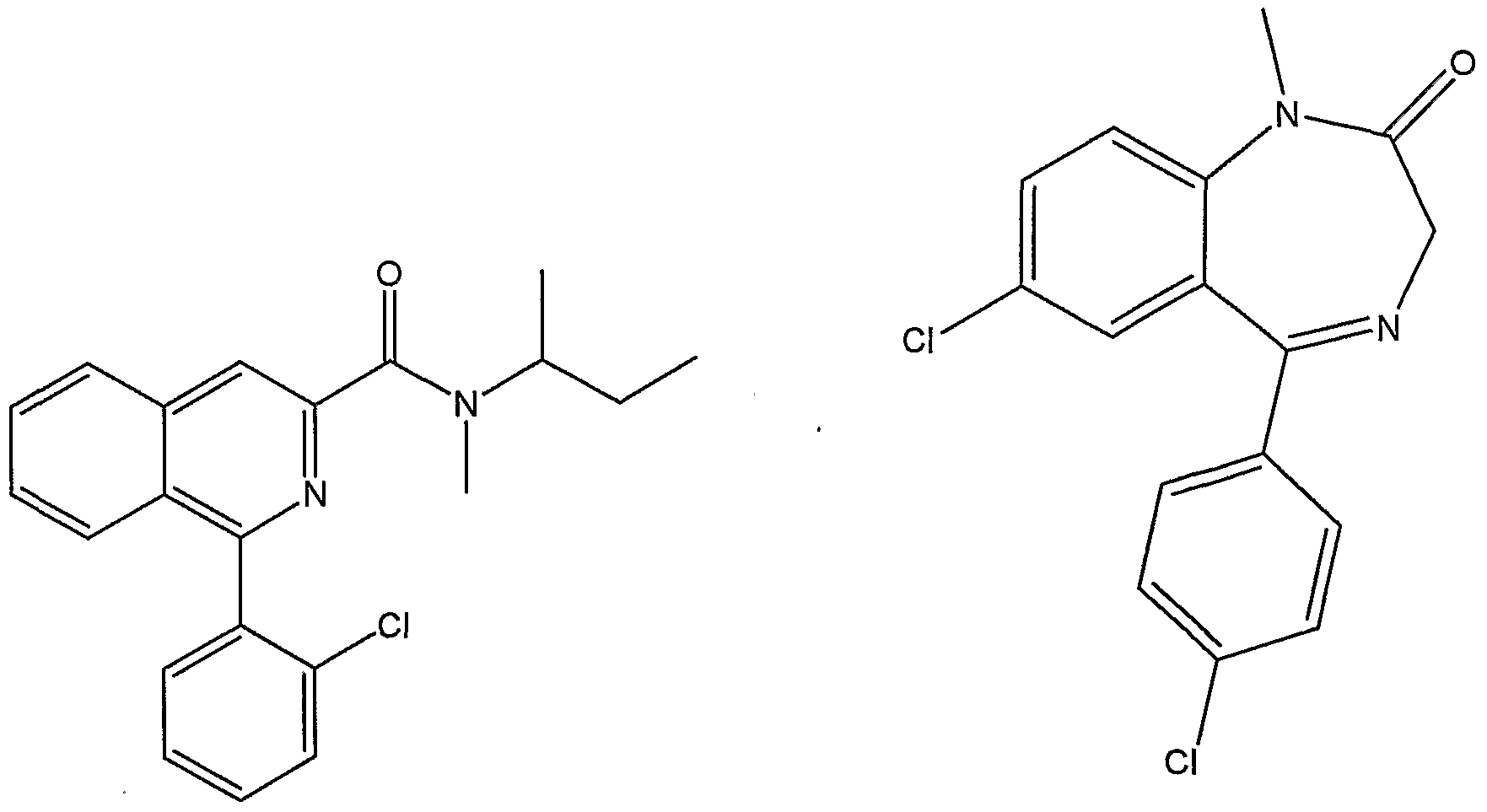
PKl 1195 Ro5-4864

Alpidem DAAl 106
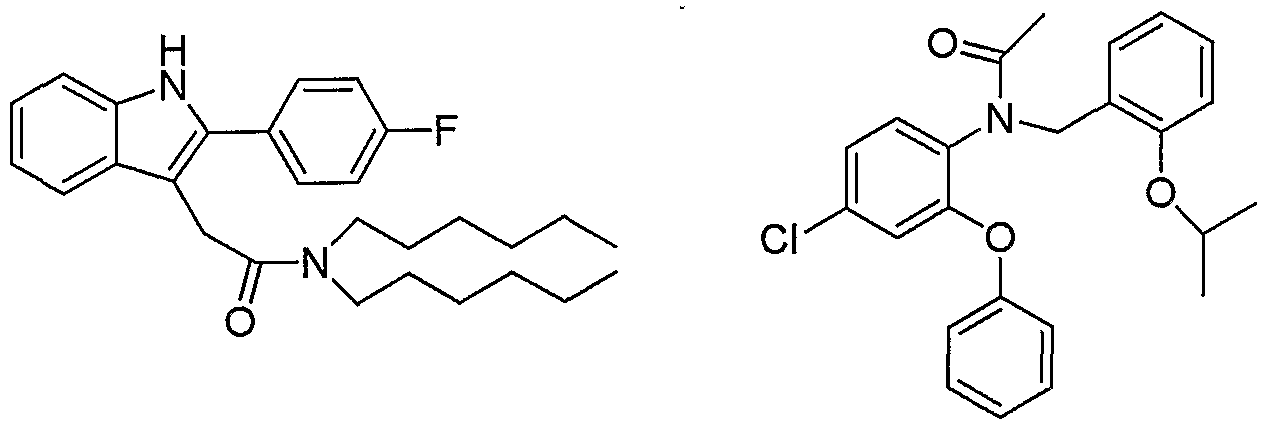
FGIN-1 DAA1097

[027] For the purposes of the present invention, the term analog encompases isomers, homologs, or other compounds sufficiently resembling the base compound in terms of structure and do not destroy activity. "Conjugable forms," "conjugable compounds," and similar terms describe a form of the compound that can readily form a covalent form a covalent bond with a signaling agent such as an IR dye.
[028] For exemplary purposes, conjugable forms of PKl 1195, above, include at least the following compounds, and/or analogs or derivatives thereof:
wherein R is H or alkyl, n is 0-10, and "halo" is fluorine, chlorine, bromine, iodine. In other embodiments of the present invention, halo is chlorine.
[029] The term "halo" or "halogen," as used herein, includes radio isotopes of halogen compounds, such as I121 and F19.
[030] Additionally, for exemplary purposes, conjugable forms of Ro5-4864 include the following and/or analogs or derivatives thereof:
 wherein the variables are defined above. In other embodiments of the present invention, halo is chlorine.
[031] Additionally, for exemplary purposes, conjugable forms of DAAl 106 include the following and/or analogs or derivatives thereof:

wherein the variables are defined above, and:

[032] In other embodiments of the present invention, halo is chlorine or fluorine.
[033] Additionally, for exemplary purposes, conjugable forms of SSRl 80575 include the following and/or analogs or derivatives thereof:

wherein the variables are defined above. In other embodiments of the present invention, halo is chlorine.
[034] Non-limited examples of PBR ligands and signaling moieties include the following compounds:


[035] Preferably, in the above examples, the signaling moiety is a dye, such as a cyanine dye.
[036] Additionally, other aspects of the present invention include NIR-sacharide agents suitable for metabolic imaging in similar fashion to 18FDG. Given the ubiquitous clinical use of 18FDG, 2-deoxyglucose derivatives have been extensively biologically characterized. See Czernin, J.; Phelps, M. E. Annu Rev Med 2002, 53, 89-112. These derivatives are useful metabolic imaging agents given the overexpression of glucose transporters and increased hexokinase activity in tumors. See Medina, R. A.; Owen, G. I. Biol Res 2002, 35, 9-26. 2-deoxyglucose imaging agents are incorporated into cells via the glucose transporter and are subsequently phosphorylated by hexokinase. In phosphorylating the probe, the neutral1 molecule becomes anionic and membrane impermeable. Functionalization at the 2- position prevents further metabolism, and thus the probe is trapped in the cells, with further uptake leading to significant accumulation. See Zhang, M.; Zhang, Z. H.; Blessington, D.; Li, H.; Busch, T. M.; Madrak, V.; Miles, J.; Chance, B.; Glickson, J. D.; Zheng, G. Bioconjugate Chem 2003, 14, 709-714.
[037] Additionally, other aspects of the present invention include a NIR-thymidine probe for monitoring cellular proliferation, similar in fashion to [18F]3'-deoxy- 3'fluorothymidine (FLT). FLT has been used clinically and extensively compared to FDG. See Halter et al. General Thoracic Surgery 2004, 127, 1093-1099 and Francis et al. Eur JNucl Med MoI Imaging 2003, 30, 988-994. In proliferating cells, FLT metabolism takes place within the anabolic arm of the DNA salvage pathway. TKl controls entry into the salvage pathway and converts FLT to the mono-phosphate species. The agent is further phosphorylated, but can not be incorporated into DNA due to its lack of a hydroxyl group at 3'.
[038] With respect to the signaling agents used in connection with the present invention, embodiments include near infrared signaling agents. Also includes are dyes, such as, for example, near-infrared fluorophores/fluorescent dyes. Examples include cyanine dyes which have been used to label various biomolecules. See US 5,268,486, which discloses fluorescent arylsulfonated cyanine dyes having large extinction coefficients and quantum yields for the purpose of detection and quantification of labeled components.
[039] Additional examples include compounds of the following formulas:

■ . - Dh W - u i con cnn Carboxynaphthofluorescein abs/em = 580nm, 690nm
Lissamme-Rhodamine abs/em = 560πm, 590nm .

General Cyanine dye

CY-Family of dyes
and analogs thereof.
[040] Additional examples include dyes available from Li-Cor, such as IR Dye
800CW™, available from Li-Cor.
[041] Thus, examples of dyes for use in connection with the present invention include those disclosed in US Patent Application Publication Number 2004/0014981, the contents of which are incorporated herein by reference.
[042] The following dye is a specific example:

[043] US Patent Application Publication Number 2004/0014981 additionally discloses the following dyes, all of which, when joined with a probe, are embodiments of the present invention:

[044] wherein, Z is a heteroatom having at least one lone pair of electrons. In one embodiment, Z is O, S, or N35, wherein R35 is H or alkyl. In embodiments, Z is of such a structure that only one atom is in the direct linkage between the benzene ring bonded to Z and to the polyene chain of: <^^~ , bonded to Z. Side chains on the linkage between the benzene ring and the polyene chain are acceptable. In those embodiments having side chains, lower alkyl side chains may be used.
[045] R1-R5 are each independently H, alkyl, halo, carboxyl, amino, or SO3-Cat+, wherein Cat+ is a cation and at least one OfR1-R5 is SO3-Cat+. In embodiments, R3 is SO3-Cat+. In other embodiments, Cat+ is H+ or an alkali metal ion such as Na+ .
[046] R6 and R7 are each H, alkyl, or optionally, together with the -^^ group to which they are bonded, form a ring. In embodiments, R6 and R7 together with the atoms to
which they are bonded form a ring. These rings may have 4 to 10 member atoms, more preferably 5 or 6 member atoms. In one embodiment, the ring including R6 and R7 is substituted, with, for example, a sulfonato radical.
[047] The integers m and n are each independently integers from 0 to 5. In embodiments, both the sum of m and n is two. Additionally, the sum of m and n may be one. In other embodiments, both m and n are zero. As the sum of m and n rises, so too does the wavelength of the dye. Generally, the addition of each double bond in the polyene chain can increase the wavelength by about 40 to 120 nm. For the absorption changes accompanied with trimethine to pentamethine or pentamethine to heptamethine, there is a typically a bathochromic shift (red shift) of about 100 nm. For example, when m and n are both 0, the wavelength of the preferred dye is about 770 nm. When m and n are both 1, the wavelength of the preferred dye is about 950 nm. The most preferred dyes operate in the MR spectrum (600- 1000 nm).
[048] X and Y are each independently O, S, Se, or CR19R20, wherein R19 and R20 are each independently alkyl, or optionally form a ring together with the carbon atom to which they are bonded. In embodiments, X and Y are a heteroatom such as O, S, and Se. When X or Y is CR19R20, both Ri9 and R20 may be both lower alkyl, including methyl.
[049] Rg and RB are each independently alkyl, (CH2XR2S or (CH2)rRi9; wherein at least one of Rg and R13 is (CH2)rRi8 and wherein r is an integer from 1 to 50, and R25 is a functional group that does not directly react with a carboxyl, hydroxyl, amino, or a thiol group, and Ri g is a functional group that can react with a carboxyl, hydroxyl, amino, or thiol group. In one embodiment, one of R8 and R13 is (CH2)rRis and the other is (CH2)rR25- In other words, one of Rs and R13 reacts with a biomolecule to form a bond to that biomolecule, and that the other does not react. The R18 group must be able to covalently bond with the biomolecule being labeled. R18 groups include mercapto, carboxyl, amino, haloalkyl, phosphoramidityl, N- hydroxy succinimidyl ester, sulfo N-hydroxy succinimidyl ester, isothiocyanato, iodoacetamidyl, and maleimidyl. R25 groups include hydroxyl, thioacetyl, and sulfonato.
[050] Rj)-R12 and R14-Ri7 are each independently H, alkyl, halo, amino, sulfonato,
R21COOH, R2i0R22, R2iSR22, or R2iCOOR22 wherein R21 is a bond or alkylene and R22 is alkyl, or optionally Rn and Ri2 together with the atoms to which they are bonded form an aromatic ring, or optionally Ri6 and R17 together with the atoms to which they are bonded form an aromatic ring. In one embodiment, one or both of Rn and R16 is sulfonato. In another embodiment, when Ri1 and R12 together with the atoms to which they are bonded form an aromatic ring, the ring is substituted in at least one position with a sulfonato group. In another
embodiment, when R16 and R17 together with the atoms to which they are bonded form an aromatic ring, the ring is substituted in at least one position with a sulfonato group, a halo group, an alkyl substituent, or an amino substituent.
[051] Another cyanine dye that can be used with the present invention is of the following formula:

[052] Cat is a cation. In embodiments, Cat is H τ+ or a metal ion. More preferably,
Cat+ is an alkali metal ion, most preferably Na+ . X and Y are each independently O, S, Se, or (CH3)2C.
[053] R8 and R13 are each independently alkyl, (CH2)rR25 or (CH2)rR].9; wherein at least one of R8 and R13 is (CH2XR18 and wherein r is an integer from 1 to 50, and R25 is a functional group that does not directly react with a carboxyl, hydroxyl, amino, or a thiol group, and R18 is a functional group that can react with a carboxyl, hydroxyl, amino, or thiol group. In one embodiment, one of R8 and R13 is (CH2)rRi8 and the other is (CH2XR-S- In other words, one ofR8 and R13 reacts with a bio molecule to form a bond to that biomolecule, and that the other does not react. The R18 group must be able to covalently bond with the biomolecule being labeled. R18 groups include mercapto, carboxyl, amino, haloalkyl, phosphoramidityl, N- hydroxy succinimidyl ester, sulfo N-hydroxy succinimidyl ester, isothiocyanato, iodoacetamidyl, and maleimidyl. R25 groups include hydroxyl, thioacetyl, and sulfonato.
[054] R11 and R12 are either H, sulfonato, or together with the atoms to which they are bonded form an aromatic ring. In a preferred embodiment, Rπis sulfonato. In another preferred embodiment, when Rπand R12 together with the atoms to which they are bonded form an aromatic ring, the ring is substituted in at least one position with a sulfonato group.
[055] R16 and R17 are either H, sulfonato, or together with the atoms to which they are bonded form an aromatic ring. In a preferred embodiment, R16 is sulfonato. In another
preferred embodiment, when R16 and R17 together with the atoms to which they are bonded form an aromatic ring, the ring is substituted in at least one position with a sulfonato group.
[056] Further examples of cyanine dyes that can be used in connection with the present invention are those cyanine dyes that can be excited efficiently by commercially available equipment purchasable through companies such as Toshiba, Phillips, Blue Sky Research, and NEC.
[057] Examples of how the above cyanine dyes may be prepared are shown in US
2004/0014981. That is, the cyanine dyes disclosed herein are prepared using methods that are well known in the art. Generally, cyanine dyes are prepared according to the procedures taught in Hamer, F. M., Cyanine Dyes and Related Compounds, Weissberger, M. A., ed. Wiley Interscience, N. Y. 1964. Further, U.S. Pat. Nos. 4,337,063; 4,404,289 and 4,405,711, incorporated herein by reference, describe a synthesis for a variety of cyanine dyes having N- hydroxysuccinimide active ester groups. U.S. Pat. No. 4,981,977, incorporated herein by reference, describes a synthesis for cyanine dyes having carboxylic acid groups. U.S. Pat. No. 5,268,486, incorporated herein by reference, discloses a method for making arylsulfonate cyanine dyes. U.S. Pat. No. 6,027,709, discussed below, and incorporated herein by reference, discloses methods for making cyanine dyes having phosphoramidite groups. U.S. Pat. No. 6,048,982, incorporated herein by reference, discloses methods for making cyanine dyes having a reactive group selected from the group consisting of isothiocyanate, isocyanate, phosphoramidite, monochlorotriazine, dichlorotriazine, mono- or di-halogen substituted pyridine, mono- or di-halogen substituted diazine, aziridine, sulfonyl halide, acid halide, hydroxysuccinimide ester, hydroxy sulfosuccinimide ester, imido ester, glyoxal and aldehyde.
[058] Additional dyes that can be used with the present invention are the following:


[059] Even further examples include the dyes disclosed in US 6,027,709. [060] US '709 discloses dyes which have the following general formula:
 wherein R is -OH, -CO2H, -NH2, or -NCS and each of x and y, independently, is an integer selected from 1 to about 10. In preferred embodiments, each of x and y, independently, is an integer between about 2 and 6.
[061] In one embodiment, the dye is N-(6-hydroxyhexyl)N'-(4-sulfonatobutyl)-
3,3,3',3'-tetramnethylbenz(e)indod icarbocyanine, which has the formula:

[062] In a second embodiment, the dye is N-(5-carboxypentyl)N'-(4- sulfonatobutyl)3,3,3', 3'-tetramethylbenz(e)indodicarbocyanine, which has the formula:

[063] These two dyes are embodiments because they have commercially available precursors for the linking groups: 6-bromohexanol, 6-bromohexanoic acid and 1,4-butane sultone (all available from Aldrich Chemical Co., Milwaukee, Wis.). The linking groups provide adequate distance between the dye and the biomolecule for efficient attachment without imparting excessive hydrophobicity. The resulting labeled biomolecules retain their solubility in water and are well-accepted by enzymes.
[064] These dyes, wherein R is -CO2 H or -OH can be synthesized, as set forth in detail in the US '709 patent, by reacting the appropriate N-(carboxyalkyl)- or N- (hydroxyalkyl)-l,l,2-trimethyl-lH-benz(e)indolinium halide, preferably bromide, with sulfonatobutyl-l,l,2-trimethyl-lH-benz(e)indole at a relative molar ratio of about 0 9 1 to about 1 0 9, preferably 1 1 in an organic solvent, such as pyridine, and heated to reflux, followed by the addition of 1,3,3-trimethoxypropene in a relative molar ratio of about 1 1 to about 3 1 to the reaction product and continued reflux The mixture subsequently is cooled and poured into an organic solvent such as ether The resulting solid or semi-solid can be purified by chromatography on a silica gel column using a series of methanol/chloroform solvents
[065] As an alternative, two-step, synthesis procedure, also detailed in U S '709, N-4- sulfonatobutyl-l,l,2-trimethyl-lH-benz(e)indole and malonaldehyde bis(phenylimine)- monohydrochloride in a 1 1 molar ratio can be dissolved in acetic anhydride and the mixture heated The acetic anhydride is removed under high vacuum and the residue washed with an organic solvent such as ether The residual solid obtained is dried and subsequently mixed with the appropriate N-(carboxyalkyl)- or N-(hydroxyalkyl)-l,l,2-trimethyl-lH-benz(e)indolinium halide in the presence of an organic solvent, such as pyridine The reaction mixture is heated, then the solvent is removed under vacuum, leaving the crude desired dye compound The procedure was adapted from the two step procedure set forth in Ernst, L A , et al , Cytometry 10 3-10 (1989)
[066] The dyes also can be prepared with an amine or isothiocyanate terminating group For example, N-(omega -amino-alkyl)-l,l,2-trimethyl-lH-benz(e)indolenium bromide hydrobromide (synthesized as in N Narayanan and G Patonay, J Org Chem 60 2391-5 (1995)) can be reacted to form dyes of formula 1 wherein R is -NH2 Salts of these amino dyes can be converted to the corresponding isothiocyanates by treatment at room temperature with thiophosgene in an organic solvent such as chloroform and aqueous sodium carbonate
[067] These dyes have a maximum light absorption which occurs near 680 nm They thus can be excited efficiently by commercially available laser diodes that are compact, reliable and inexpensive and emit light at this wavelength Suitable commercially available lasers include, for example, Toshiba TOLD9225, TOLD9140 and TOLD9150, Phillips CQL806D, Blue Sky Research PS 015-00 and NEC NDL 3230SU This near infrared/far red wavelength also is advantageous in that the background fluorescence in this region normally is low in biological systems and high sensitivity can be achieved
[068] The hydroxyl, carboxyl and isothiocyanate groups of the dyes provide linking groups for attachment to a wide variety of biologically important molecules, including
proteins, peptides, enzyme substrates, hormones, antibodies, antigens, haptens, avidin, streptavidin, carbohydrates, oligosaccharides, polysaccharides, nucleic acids, deoxy nucleic acids, fragments of DNA or RNA, cells and synthetic combinations of biological fragments such as peptide nucleic acids (PNAs).
[069] In another embodiment of the present invention, the ligands of the present invention may be conjugated to a lissamine dye, such as lissamine rhodamine B sulfonyl chloride. For example, a conjugable form of DAAl 106 may be conjugated with lissamine rhodamine B sulfonyl chloride to form a compound of the present invention.
[070] Lissamine dyes are typically inexpensive dyes with attractive spectral properties. For example, examples have a molar extinction coefficient of 88,000 CmT1M"1 and good quantum efficient of about 95%. It absorbs at about 568 nm and emits at about 583 nm (in methanol) with a decent stokes shift and thus bright fluorescence.
[071] Coupling procedures for the PBR ligands and Glucosamine proceed via standard methods and will be recognized by those skilled in the art. In general, the nucleophilic N terminus of the targeting moieties are reactive towards activated carbonyls, for example an NHS (N-hydroxysuccinimide ester), sulfonyl chlorides, or other electrophile bearing species. Solvent of choice for coupling reactions can be dye specific, but include dimethyl sulfoxide (DMSO), chloroform, and/or phosphate buffered saline (PBS buffer). The resulting conjugates, amides, sulfonamides, etc. resist hydrolysis under physiological conditions, and are thus useful for in-vivo and in-vitro application.
[072] The following are examples of compounds of the present invention:


ng are examples of dyes in conjugable form

NIR-820: X Conjugation Site
[074] The following compound is an example of one of the coupled compounds described above:

[075] The following is an additional example of a compound of the present invention, comprising a probe and a signaling moiety conjugated thereto:

[077] Thus, the resulting signal may be used to diagnose a disease state such as, for example, cancer, neurodegenerative disease, multiple sclerosis, epilepsy, coronary disease, etc. Specifically, brain cancer and breast cancer are two cancers that may be diagnosed with the compounds and methods of the present invention. Two additional examples are non-Hodgkin's lymphoma and colon cancer.
[078] Another embodiment of the present invention is a method of measuring glucose uptake. This method comprises, comprises administering to a sample a conjugate, the conjugate comprising a coηjugable glucosamine compound and a signaling agent; and detecting a signal from said conjugate. As in the other methods, the sample is at least one of cells, tissue, cellular tissue, serum or cell extract. An example of a conjugable glucosamine includes the following compound and conjugable analog thereof:

[079] The administration step may be in vivo administration or in vitro administration.
The in vivo administration step further comprises at least one time course imaging determination, and in other embodiments, the in vivo administration step further comprises at least one bio distribution determination.
[080] Other embodiments of the present invention include conjugable compounds associated with this glucosamine method, specifically including the following:


Examples
[081] The following examples are presented purely for exemplary purposes, and as such the material in this section should be considered as embodiments of the present invention and not to be limiting thereof.
Example 1
[082] This example demonstrates the conjugation of a NIR dye of the present invention and a conjugable analog or conjugable form of PKl 1195 for deep tissue imaging. In this example, IRDye800CW (LiCOR) is coupled to conjugable PKl 1195.
[083] Dye800CW-PK11195 (Scheme I)- To a 1OmL round bottom flask, about
196.5μL of a lmg/ml conjugable PKl 1195 solution (DMSO) is mixed with about 300 μL of an about lmg/mL DyeSOOCW (DMSO). The reaction proceeds under nitrogen flow for about 1 hour at RT. Reaction progress is monitored via HPLC and ESI MS.


Scheme 1- Conjugation of Succinimidyl Dye to conjugable PKl 1195
[084] Yield is about 99% and requires no further purification.
Example 2
[085] This example demonstrates an example of the formulation of a NIR- glucosamine conjugate of the present invention.
[086] Dye800CW-glucosamme (Scheme 2)- To a 1OmL round bottom flask, about
9.3mg sodium methoxide and about 37mg D-glucosamine hydrochloride are reacted in about 2mL DMSO. The solution is stirred under nitrogen for about 3 hours at RT. Next, about 3μL of the resulting solution are mixed with about 150 μL of an about lmg/mL Dye800CW/DMSO solution in a separate 1OmL flask. The mixture is stirred under nitrogen for another 1.5 hours at RT.
 Scheme 2- Conjugation of Succinimidyl Dye to glucosamine
[087] Reaction progress was monitored via BDPLC and ESI MS and the reaction yielded 98% pure conjugate.
Example 3
[088] This example demonstrates the use of compounds of the present invention in
ESI (Electrospray Ionization) mass spectra.
[089] Initially, about 20μL of the reaction solution of Example 1 is diluted to about
180 μL using 5mM ammonium acetate aqueous solution containing about 0.05% acetic acid. The sample is injected the sample immediately into a Mariner ESI mass spectrometer. Some major instrument settings are: spray tip at about 3.4kv, nozzle potential at about 20Ov, quadrupole temperature at about 150 0C and nozzle temperature at about 150 °C. Spectra is collected every 100 seconds. In spectrum for Dye800W-glucosamine complex, the expected molecular peak is observed at 1164Da. In the spectrum for Dye800CW-PKl 1195 complex, the expected molecular peak is observed at 1365.9Da.
Example 4
[090] This example shows a synthetic pathway yielding a conjugable Ro5-4864 of the present invention, and conjugation to an imaging agent, such as Lanthanide chelate or NER- dye.
US2006/000027
sulfate
R

Scheme 3 —Conjugation of Ro5-4864 to Lanthanide Chelator or DYE
[091] A conjugable form of compounds similar to Ro5-4864 has been previously reported (see US Patent No. 5,901,381) and a synthetic procedure in Scheme 3 will be used to synthesize a conjugable form of Ro5-4864. A solution of KOH in methanol will be treated with a solution of 4- chlorophenyl-acetonitrile 1 and 4-chloronitro-benzene 2 in benzene. The mixture will be stirred for 3 hours and then poured to ammonium chloride solution. Compound 3 will then precipitate out. Compound 4 will be produced by stirring compound 3 and dimethyl sulfate for 5 hours, followed by being treated with ethanol, water, iron fillings and hydrochloric acid. See Vejdelek Z, Polivka Z, Protiva M. Synthesis of 7-Chloro-5-(4- Chlorophenyl)- 1 -Methyl- 1 ,3 -Dihydro- 1 ,4-Benzodiazepin-2-One. Collection of Czechoslovak Chemical Communications 1985;50: 1064-1069. Compound 4 and semicarbazide, after heated to 21O0C, will produce compound 5. Compound 7 will be used as a linker to combine compound 5 and lanthanide chelate/dyeδOOcw. Compound 7 can be synthesized by the reaction between compound 6 and thionyl chloride. Lanthanide chelate (with carboxylic acid group) or dyeδOOcw (a N-hydroxysuccinimide ester) can then react with compound 7 in basic solution to produce a compound in the form of compound 8. The chlorine on the signaling part will react with N-H group in compound 5 to produce the final imaging agent (compound 9). The product can be further chelated by adding lanthanide chloride solution (LnCl3, EuCl3 etc) into product solution with pH 6.5. The synthetic pathway for lanthanide chelate has been reported. See Griffin JMM, Skwierawska AM, Manning HC, Marx JN, Bornhop DJ. Simple, high yielding synthesis of trifunctional fluorescent lanthanide chelates. Tetrahedron Letters 2001;42:3823-3825.
2006/000027
Example 5
[092] This Example shows a scheme for the synthesis of a conjugable form of
DAAl 106 of the present invention, which cnathen be conjugated to an imaging agent.
reflux ■


Scheme 4 - Synthesis of conjugatable DAAl 106
[093] The synthetic pathway for conjugable DAAl 106 is shown in Scheme 4.
Compound 2 will be obtained by reaction of compound 1 with phenol in DMF. Compound 2 will then be reduced by PtO2 under hydrogen flow in methanol. Compound 3 can react with acetyl chloride in pyridine to produce compound 4 after the reaction refluxes for 2 hours. The hydroxyl group in compound 5 will be substituted by bromide to produce compound 6. One hydroxyl group in compound 6 will be deprotected in DMF by Sodium ethanethiolate to produce compound 7. Compound 4 and 7 will then react in DMF with the presence of sodium hydride. After compound 8 is obtained, the hydroxyl group will be brominated to form compound 9. Conjugable DAAl 106 (compound 10) is prepared by treatment of compound 9 with hexane-1, 6-diamine. The conjugation position on DAAl 106 is determined according to another conjugation that has been done on DAAl 106 which did not affect the biological activity of DAAl 106. See Zhang MR3 Maeda J, Furutsuka K, Yoshida Y, Ogawa M, Suhara T, et al. [F-18]FMDAA1106 and [F-18]FEDAA11O6: Two positron-emitter labeled ligands for peripheral benzodiazepine receptor (PBR). Bioorganic & Medicinal Chemistry Letters 2003; 13:201 -204. The product should be conjugable to lanthanide chelator in
water/DMF/dioxane/TEA mixture. The conjugate will be further chelated by adding Lanthanide chloride solution (LnCl3, EuCl3 etc) into pH 6.5 product solution.
Example 6
[094] This example shows an example of the synthesis, characterization, and preliminary cell study for an embodiment of the present invention, a dye800cw-DAA1106 conjugation, as well as the conjugation of the PBR ligand DAAl 106 to a NTR dye, followed by cell uptake.
[095] In this example, dye800CW (5 mg, 4.3 μmol) and conjugable DAAl 106 (5 mg,
10 μmol) is mixed in DMSO (1 mL) in a 10 mL round bottom flask. The solution is stirred under argon flow for 10 hours. The reaction scheme is shown in Scheme 5, below. Product is purified through neutral alumina column using 0.1 M triethyl ammonium acetate in 80/20 acetonitrile/water solution.

Scheme 5. Reaction scheme for dye800CW-DAA1106
[096] Upon preparing dye800CW-DAAl 106, absorption and emission spectra (Table
1) are obtained at room temperature with a Shimadzu 1700 UV- vis spectrophotometer and ISS PCI spectrofluorometer respectively. The same sample (2 μM) is used for taking both UV and fluorescence spectrum. UV spectrum was scanned from 190 nm to 900nm with sampling rate of 1 nm. Cuvette path length was 1 cm. Fluorescence sample was excited at 797 nm. Spectrum was collected from 700 nm to 900 nm with scan rate 1 nm/second. Slit width was set to 1.5. Photo multiplier tube (PMT) voltage was at 75 watts. Dye800CW-DAAl 106 has maximum absorption at 779nm and fluorescence at 801nm in methanol.
Absorption and fluorescence ofIRDye800cw-DAA1106

600 700 800 900 wavelength {run)
Table 1. Absorption and fluorescence of dye800CW-D AAl 106. Absorption
 λmax=801 nm
[097] Regarding cell uptake, C6 glioma cell lines are a widely used cell line in neurobiological research that has high PBR expression. C6 cells were incubated with 10 μM dye800CW-DAAl 106 in culture media for half hour and then rinsed and re-incubated with saline before imaging. Figure 1 shows white light and fluorescence pictures of dosed and un- dosed cells. Instrument used is Nikon epifluorescence microscope equipped with Ludl Qimaging camera, Nikon S fluor 20x/0.75 objective, mercury lamp and ICG filter set. Picture B shows cell take-up of dye800CW-DAA1106, while un-dosed cell (picture D) does not show any significant fluorescence.
Example 7
[098] This example shows the synthesis, characterization and preliminary cell study of a lissamine-DAAl 106 conjugation. An example of a lissamine dye has a molar extinction coefficient of 88,000 Cm-1M"1 and good quantum efficient of about 95%. It absorbs at 568 nm and emits at 583 nm (in methanol) with a decent stokes shift and thus bright fluorescence. [099] Lissamine rhodamine B sulfonyl chloride (4 mg, 6.9 μmol), conjugable
DAAl 106 (5 mg, 10 μmol) and tri-ethylamine (10 μL) was mixed in dichloromethane (0.8 mL) in a 1OmL round bottom flask. The solution was stirred under argon flow for 3 hours. The reaction scheme is shown in Scheme 6. Product was purified through column chromatography (silica gel) using 19/1 dichloromemane/methanol solution.
7

Scheme 6. Lissamine-DAAllOβ reaction scheme
[0100] Upon preparing lissamine-DAAl 106, absorption and emission spectra (Table 2) was obtained with a Shimadzu 1700 UV-vis spectrophotometer and ISS PTI spectrofluorometer at room temperature. The same sample (2 μM) was used for taking both UV and fluorescence spectrum. UV spectrum was scanned from 190 nm to 900nm with sampling rate of 1 nm. Cuvette path length was 1 cm. Fluorescence sample was excited at 561 nm. Spectrum was collected from 700 nm to 900 nm with scan rate 1 nm/second. Slit width was set to 1.5. Photo multiplier tube (PMT) voltage was at 75 watts. Lissamine-DAAl 106 has maximum absorption at 561 nm and fluorescence at 579 nm in methanol.
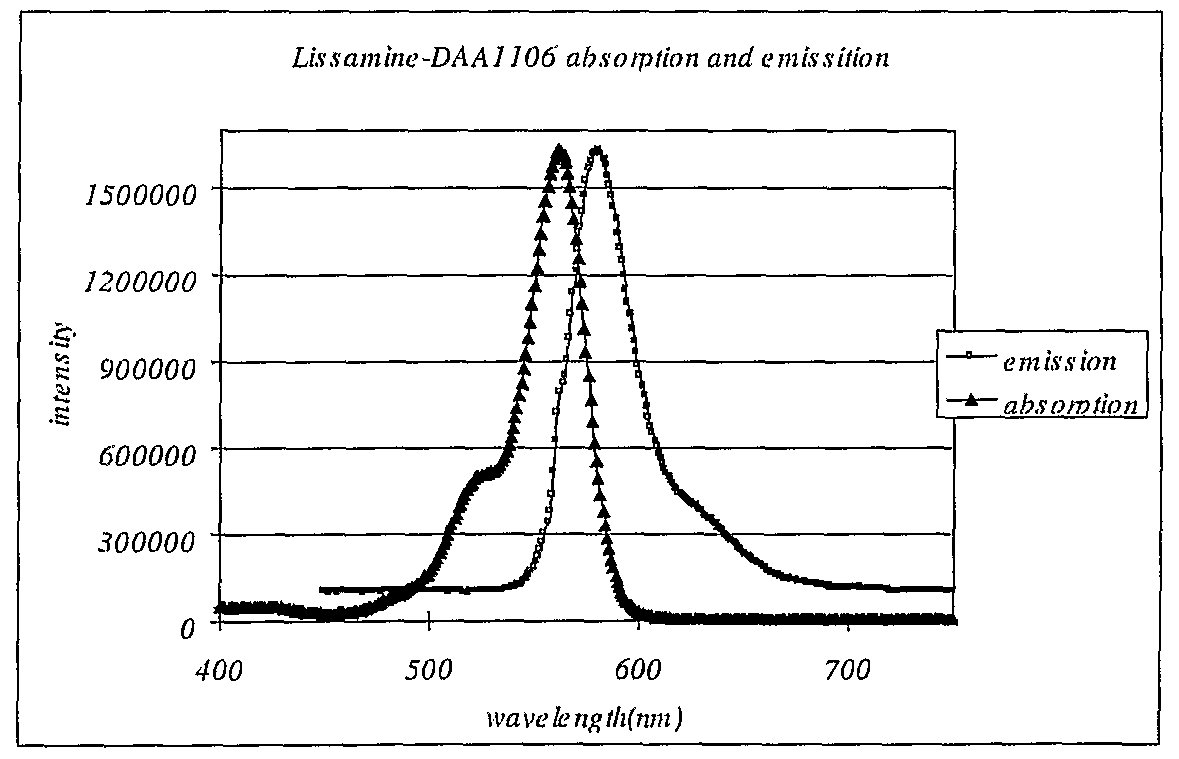
Table 2. Lissamine-DAAllOβ absorption and fluorescenceAbsorption λmaχ-561 nm and fluorescence
 nm
nm
[0101] C6 cells were incubated with 10 μM lissamine-DAAl 106 in culture media for half hour and then rinsed and re-incubated with saline before imaging. Figure 2 shows white light and fluorescence pictures of dosed and un-dosed cells. Instrument used was Nikon
epifluorescence microscope equipped with Ludl Qimaging camera, Nikon S fluor 20x/0.75 objective, mercury lamp and Texas red filter set. Picture B shows cell take-up of lissamiαe- DAAl 106 at perinuclear location. This observation was expected since PBR is a mitochondrial protein. Un-dosed cells (picture D) exhibited no fluorescence.
Example 8
[0102] This example shows an example of a synthetic pathway yielding a conjugable form of a SSRl 80575 compound of the present invention.
[0103] Starting from m - chloroaniline, which was diazotised and coupled with ethyl α
- methylacetoacetate, the azo - ester was converted into ethyl pyruvate m - chlorophenylhydrazone 1 (the Japp - Klingeman reaction). Polyphosphoric acid facilitated the conversion to molecule 2. Next, N - methylation with dimethylcarbonate in presence K2CO3 yielded the ester 3 and was treated with hydrazine and converted into hydrazide 4. The ring was closed in the presence OfPOCl3 and compound 5 was obtained. N - phenylation with using PhI and CuI (as catalyst) provide compound 6. Mild hydrolysis with dilute KOH in EtOH yield acid 7. To conjugated mono - N - BOC protected N - methyl - 1,6 - hexanediamine to 7 used BOP. Removal of protecting group with TFA in CH2Cl2 is yields 8.

Example 9
[0104] Example 9 demonstrates specific, in vivo tumor labeling using a method of the present invention. A NIR-PK 11195 deep tissue imaging agent was made as shown in Example 1. Tumor bearing Smad3 gene knockout mice and control animals were injected with 10 nmoles of the imaging agent and imaged about 14 hours following injection. Specific labeling was observed in the abdominal region of tumor animals and clearance in the control animals. This selective uptake is shown in Figure 3. A post-imaging autopsy confirmed localization of the imaging agent in the SMAD3 animal.
2006/000027
Example 10
[0105] This Example shows NIR-PK 11195 imaging in connection with neurodegenerative processes in experimental autoimmune encephalomyelitis (EAE), the animal model of multiple sclerosis. Additionally, this Example shows the use of the present invention to monitor the- progression of a disease state. A conjugated imaging agent NIR-PK 11195 was made in accordance with Example 1. An EAE induced and control animals were injected with NIR-PK 11195 and imaged. EAE animals demonstrate strong fluorescence along the spinal column indicating activated T cell and macrophage response which signal the onset of the demylenation processes characteristic to EAE. The EAE/treated mouse was treated with a curcumin composition.
[0106] Figure 3 shows images associated with this example that confirm insignificant uptake of the imaging agent in the control, but indicate full onset of a disease state in the EAE mice. Subsequent imaging shows the progression of the disease after a disease state treatment is administered.
References
[0107] Throughout this application, various publications are referenced. All such publications, specifically including the publications listed below, are incorporated herein by " reference in their entirety.
1. Manning HC, Goebel, T.S. Thompson, R.C., and Bornhop, D.J. A PBR Targeted Molecular Imaging Agent for Cellular-Scale Bi-modal Imaging. Bioconjugate Chemistry 2003; Bioconjugate Chem 2004, 75, 1488-1495.
2. Broaddus WC, Bennett JP, Jr., Department of Neurosurgery Uo VHSCC. Peripheral- type benzodiazepine receptors in human glioblastomas: pharmacologic characterization and photoaffinity labeling of ligand recognition site. Brain research. 1990;518(l-2):199-208.
3. Zhang MR, Maeda J, Furutsuka K, Yoshida Y, Ogawa M, Suhara T, et al. [F- 18JFMDAA1106 and [F-18]FED AAl 106: Two positron-emitter labeled ligands for peripheral benzodiazepine receptor (PBR). Bioorganic & Medicinal Chemistry Letters 2003;13:201-204.
4. Kozikowski AP, Kotoula M, Ma D, Boujrad N, Tueckmantel W, Papadopoulos V. Synthesis and Biology of a 7-Nitro-2,l,3-benzoxadiazol-4-yl Derivative of 2-Phenylindole-3- acetamide: A Fluorescent Probe for the Peripheral-Type Benzodiazepine Receptor. Journal of Medicinal Chemistry 1997;40:2435-2439.
5. Starosta-Rubinstein S, Ciliax JtJ, Penney J, McKeever P, Young A. Imaging of a glioma using peripheral benzodiazepine receptor ligands. proceedings of the national academy of sciences of the United States of America 1987;84:891-5.
6. Black KL, Ikezaki K, Toga AW. Imaging of Brain-Tumors Using Peripheral Benzodiazepine Receptor Ligands. Journal of Neurosurgery 1989;71:113-118.
7. Sutter AP, Maaser K, Heopfner M, Barthel B, Grabowski P, Faiss S, et al. Specific ligands of the peripheral benzodiazepine receptor induce apoptosis and cell cycle arrest in human esophageal cancer cells. International journal of cancer. Journal international du cancer. 2002;102(4):318-27.
8. Jakubikova J, Duraj J, Hunakova L, Chorvath B, Sedlak J. PKl 1195, an isoquinoline carboxamide ligand of the mitochondrial benzodiazepine receptor, increased drug uptake and facilitated drug-induced apoptosis in human multidrug-resistant leukemia cells in vitro. Neoplasma 2002;49:231-236.
9. Okaro AC, Fennell DA, Corbo M, Davidson BR, Cotter FE. PkI 1195, a mitochondrial benzodiazepine receptor antagonist, reduces apoptosis threshold in BcI-X-L and McI-I expressing human cholangiocarcinoma cells. Gut 2002;51 :556-561.
10. Okaro MC, Fennel DA, Corbo M, Cotter FE, Davidson BR, Winslet MC. In vivo reversal of apoptosis resistance by the mitochondrial benzodiazepine receptor antagonist, PKl 1195 in cholangiocarcinoma cells. Gut 2000;46:A47-A47.
11. Okaro MC, Fennell DA, Cotter FE, Davidson BR. PkI 1195, a mitochondrial benzodiazepine receptor antagonist radiosensitizes bcl-x(L) and mcl-1 expressing cholangiocarcinoma to apoptosis. British Journal of Cancer 2000;83:22-22.
12. Maaser K, Heopfner M, Jansen A, Weisinger G, Gavish M, Kozikowski AP, et al. Specific ligands of the peripheral benzodiazepine receptor induce apoptosis and cell cycle arrest in human colorectal cancer cells. British journal of cancer. 2001;85(l l):1771-80.
13. Fennell DA, Corbo M, Pallaska A, Cotter FE. Bcl-2 resistant mitochondrial toxicity mediated by the isoquinoline carboxamide PKl 1195 involves de novo generation of reactive oxygen species. British Journal of Cancer 2001;84: 1397-1404.
14. Ntziachristos V, Chance B. Probing physiology and molecular function using optical imaging: applications to breast cancer. Breast Cancer Research 2001;3:41-46.
15. Licha K, Riefke B, Ntziachristos V, Becker A, Chance B, Semmler W. Hydrophilic cyanine dyes as contrast agents for near-infrared tumor imaging: Synthesis, photophysical properties and spectroscopic in vivo characterization. Photochemistry and Photobiology 2000;72:392-398.
16. Hawrysz DJ, Sevick-Muraca EM. Developments toward diagnostic breast cancer imaging using near-infrared optical measurements and fluorescent contrast agents. Neoplasia 2000;2:388-417.
17. Weissleder R, Mahmood U. Molecular imaging. Radiology 2001;219:316-333.
18. Gaietta G, Deerinck TJ, Adams SR, Bouwer J, Tour O, Laird DW, et al. Multicolor and electron microscopic imaging of connexin trafficking. Science 2002;296:503-507.
19. Louie AY, Huber MM, Ahrens ET, Rothbacher U, Moats R, Jacobs RE, et al. In vivo visualization of gene expression using magnetic resonance imaging. Nature Biotechnology 2000;18:321-325.
20. Wolfe HR, Mendizabal M, Lleong E, Cuthbertson A, Desai V, Pullan S, et al. In vivo imaging of human colon cancer xenografts in immunodeficient mice using a guanylyl cyclase C-specific ligand. Journal of Nuclear Medicine 2002;43:392-399.
21. Lemieux GA, Yarema KJ, Jacobs CL, Bertozzi CR. Exploiting differences in sialoside expression for selective targeting of MRI contrast reagents. Journal of the American Chemical Society 1999;121:4278-4279.
22. Casellas P, Galiegue S, Basile AS. Peripheral benzodiazepine receptors and mitochondrial function. Neurochemistry International 2002;40:475-486.
23. Hardwick M, Fertikh D, Culty M, Li H, Vidic B, Papadopoulos V. Peripheral-type benzodiazepine receptor (PBR) in human breast cancer: Correlation of breast cancer cell aggressive phenotype with PBR expression, nuclear localization, and PBR-mediated cell proliferation and nuclear transport of cholesterol. Cancer Research 1999;59:831-842.
24. Papadopoulos V. Peripheral-Type Benzodiazepine Diazepam Binding Inhibitor Receptor - Biological Role in Steroidogenic Cell-Function. Endocrine Reviews 1993;14:222- 240.
25. Alho H, Varga V, Krueger KE. Expression of Mitochondrial Benzodiazepine Receptor and Its Putative Endogenous Ligand in Cultured Primary Astrocytes and C-6 Cells - Relation to Cell-Growth. Cell Growth & Differentiation 1994;5: 1005-1014.
26. Diorio D, Welner SA, Butterworth RF, Meaney MJ, Suranyicadotte BE. Peripheral Benzodiazepine Binding-Sites in Alzheimers-Disease Frontal and Temporal Cortex. Neurobiology of Aging 1991;12:255-258.
27. Messmer K, Reynolds GP. Increased peripheral benzodiazepine binding sites in the brain of patients with Huntington's disease. Neuroscience Letters 1998;241:53-56.
28. Vowinckel E, Reutens D, Becher B, Verge G, Evans A, Owens T, et al. PKl 1195 binding to the peripheral benzodiazepine receptor as a marker of microglia activation in
multiple sclerosis and experimental autoimmune encephalomyelitis. Journal of Neuroscience Research 1997;50:345-353.
29. Benavides J, Cornu P, Dennis T, Dubois A, Hauw JJ, Mackenzie ET, et al. Imaging of Human-Brain Lesions with an Omega-3 Site Radioligand. Annals of Neurology 1988;24:708- 712.
30. Cornu P, Benavides J, Scatton B, Hauw JJ, Philippon J. Increase in Omega-3 (Peripheral-Type Benzodiazepine) Binding-Site Densities in Different Types of Human Brain- Tumors - a Quantitative Autoradiography Study. Acta Neurochirurgica 1992; 119: 146-152.
31. Shavaleev NM, Pope SJA, Bell ZR, Faulkner S, Ward MD. Visible-light sensitisation of near-infrared luminescence from Yb(III), Nd(III) and Er(III) complexes of 3,6-bis(2- pyridyl)tetrazine. Dalton Transactions 2003:808-814.
32. Werts MHV, Verhoeven JW, Hofstraat JW. Efficient visible light sensitisation of water-soluble near-infrared luminescent lanthanide complexes. Journal of the Chemical Society-Perkin Transactions 2 2000:433-439.
33. Werts MHV, Hofstraat JW, Geurts FAJ, Verhoeven JW. Fluorescein and eosin as sensitizing chromophores in near-infrared luminescent ytterbium(III), neodymium(III) and erbium(III) chelates. Chemical Physics Letters 1997;276:196-201.
34. Faulkner S, Pope SJA. Lanthanide-sensitized lanthanide luminescence: Terbium- sensitized ytterbium luminescence in a trinuclear complex. Journal of the American Chemical Society 2003;125: 10526-10527.
35. Bromiley A, Welch A, Chilcott F, Waikar S, McCallum S, Dodd M, et al. Attenuation correction in PET using consistency conditions and a three-dimensional template. Ieee Transactions on Nuclear Science 2001;48: 1371-1377.
36. Couper GW, McAteer D, Wallis R, Welch A, Norton M, Park KGM. Quantification of FDG-PET scans in patients with oesophageal and gastric cancer. A study of 40 patients. British Journal of Surgery 2002;89:64-64.
37. Couper GW, Wallis F, Welch A, Sharp PF, Park KGM, Cassidy J. The role of FDG- PET in the early detection of response of colorectal liver metastases to chemotherapy. Gut 2002;50:A107-A107.
38. . Dehdashti F, Flanagan FL, Mortimer JE, Katzenellenbogen JA, Welch MJ, Siegel BA. Positron emission tomographic assessment of "metabolic flare" to predict response of metastatic breast cancer to antiestrogen therapy. European Journal of Nuclear Medicine 1999;26:51-56.
39. Oyama N5 Kim J, Jones LA, Mercer NM, Engelbach JA, Sharp TL, et al. MicroPET assessment of androgenic control of glucose and acetate uptake in the rat prostate and a prostate cancer tumor model. Nuclear Medicine and Biology 2002,29:783-790.
40. Oyama N, Miller TR, Dehdashti F, Siegel BA, Fischer KC, Michalski JM3 et al. C-11- acetate PET imaging of prostate cancer: Detection of recurrent disease at PSA relapse. Journal of Nuclear Medicine 2003,44:549-555.
41. Smith IC, Welch A, Chilcott F, Soloviev D, Waikar S, Hutcheon AW, et al. F-18-FDG PET may predict the pathological response of breast cancer to primary chemotherapy. Journal of Nuclear Medicine 1999;40:137p-137p.
42. Smith IC, Welch AE, Hutcheon AW, Miller ID, Payne S, Chilcott F, et al. Positron emission tomography using [F-18]-fluorodeoxy-D-glucose to predict the pathologic response of breast cancer to primary chemotherapy. Journal of Clinical Oncology 2000,18:1676-1688.
43. Manning HC, Goebel T, Marx JN, Bornhop DJ. Facile, efficient conjugation of a trifunctional lanthanide chelate to a peripheral benzodiazepine receptor ligand. Organic Letters 2002,4:1075-1078.
44. Zhang M, Zhang ZH, Blessington D, Li H, Busch TM, Madrak V, et al. Pyropheophorbide 2-deoxyglucosamide: A new photosensitizer targeting glucose transporters. Bioconjugate Chemistry 2003; 14:709-714.
[0108] It will be apparent to those skilled in the art that various modifications and variations can be made in the present invention without departing from the scope or spirit of the invention. Other embodiments of the invention will be apparent to those skilled in the art from consideration of the specification and practice of the invention disclosed herein. It is intended that the Specification and Example be considered as exemplary only, and not intended to limit the scope and spirit of the invention.
[0109] Unless otherwise indicated, all numbers expressing quantities of ingredients, properties such as reaction conditions, and so forth used in the Specification and Claims are to be understood as being modified in all instances by the term "about." Accordingly, unless indicated to the contrary, the numerical parameters set forth in the Specification and Claims are approximations that may vary depending upon the desired properties sought to be determined by the present invention.
[0110] Notwithstanding that the numerical ranges and parameters setting forth the broad scope of the invention are approximations, the numerical values set forth in the experimental or example sections are reported as precisely as possible. Any numerical value,
00027 however, inherently contain certain errors necessarily resulting from the standard deviation found in their respective testing measurements.
Claims
We claim:
1. A method of imaging a molecular event in a sample, comprising:
(a) administering to said sample a probe having an affinity for a target, the probe comprising at least one of a ligand/signaling agent combination, or conjugable form of a ligand/signaling agent combination; and
(b) detecting a signal from said probe.
2. The method of claim 1, wherein said sample is at least one of cells, tissue, cellular tissue, serum, cell extract, bodily fluids.
3. The method of claim 2, wherein the bodily fluids are breast secretion, sputum, vaginal fluids, urine.
4. The method of claim 1, wherein the administering step is in vivo or in vitro.
5. The method of claim 1, wherein said molecular event is at least one of peripheral benzodiazepine receptor expression, cell proliferation, glucose uptake, epidermal growth factor receptor expression, microglial activation, apoptosis, matrix metalloproteinase activation.
6. The method of claim 1, wherein said signaling agent is a near infrared signaling agent.
7. The method of claim 1, wherein said detecting step comprises near infrared detection.
8. The method of claim 8, wherein the near infrared detection included near infrared imaging.
9. The method of claim 1, further comprising the step of: analyzing said signal to diagnose a disease state.
10. The method of claim 7, wherein the disease state is cancer, neurodegenerative disease, cancer, multiple sclerosis, epilepsy.
11. The method of claim 9, wherein the disease state is brain cancer or breast cancer.
12. The method of claim 1, wherein the signaling agent is a cyanine dye.
13. The method of claim 1, wherein the signaling agent is a compound of the following formula:

14. The method of claim 1, wherein said probe comprises a peripheral benzodiazepine affinity ligand or a conjugable form thereof.
15. The method of claim 14, wherein the peripheral benzodiazepine affinity ligand or conjugable form thereof is at least one of the following compounds:

PKl 1195 Ro5-4864

FGIN-1 DAA1097


DAA1106 SSRl 80575
or a conjugable analog thereof.
16. The method of claim 14, wherein the peripheral benzodiazepine affinity ligand is a compound of the following formula:

or an analog thereof, wherein R is H or alkyl; "halo" is fluorine, chlorine, bromine, iodine; and n is 0-10.
17. The method of claim 14, wherein the peripheral benzodiazepine affinity ligand is a compound of the following formula:

18. The method of claim 14, wherein the peripheral benzodiazepine affinity ligand is a compound of the following formula:
or an analog thereof, wherein R is H or alkyl; "halo" is fluorine, chlorine, bromine, iodine; and n is 0-10.
19. The method of claim 14, wherein the peripheral benzodiazepine affinity ligand is a compound of the following formula:

or an analog thereof, wherein R is H or alkyl; "halo" is fluorine, chlorine, bromine, iodine; and n is 0-10.
20. The method of claim 1, wherein the signaling agent is a compound of the formula:
27

21. A compound of the formula:

or an analog thereof, wherein R1 is a signaling moiety; "halo" is fluorine, chlorine, bromine, iodine; and n is 0-10.
22. The compound of claim 21, wherein the signaling moiety is a dye.
23. A compound of the following formula:

or an analog thereof, wherein R1 is a signaling moiety; "halo" is fluorine, chlorine, bromine, iodine; and n is 0-10.
24. The compound of claim 23, wherein the signaling moiety is a dye.
25. A compound of the following formula:

or an analog thereof, wherein R1 is a signaling moiety, "halo" is fluorine, chlorine, bromine, iodine; and n is 0-10.
26. The compound of claim 25, wherein the signaling moiety is a dye.
27. A compound of the following formula:

or an analog thereof, wherein R1 is a signaling moiety; "halo" is fluorine, chlorine, bromine, iodine; and n is 0-10.
28. The compound of claim 27, wherein the signaling moiety is a dye.
29. A compound of the formula:

30. A method of measuring glucose uptake, comprising:
(a) administering to a sample a conjugate, the conjugate comprising a conjugable glucosamine compound and a signaling agent; and
(b) detecting a signal from said conjugate.
31. The method of claim 30, wherein the sample is at least one of cells, tissue, cellular tissue, serum or cell extract.
32. The method of claim 30, wherein the bodily fluids are breast milk, sputum, vaginal fluids, urine.
33. The method of claim 30, wherein the signaling agent is a near infrared signaling agent.
34. The method of claim 30, wherein the administration step is in vivo or in vitro.
35. The method of claim 34, wherein the in vivo administration step further comprises at least one time course imaging determination.
36. The method of claim 34, wherein the in vivo administration step further comprises at least one bio distribution determination.
37. The method of claim 30, wherein the detecting step comprising near infrared imaging.
38. The method of claim 30, wherein the conjugable compound is of the following formula:


where R1 is a signaling moiety.
40. The method of claim 39, wherein the signaling moiety is a dye.
41. The method of claim 30, further comprising the step of: analyzing said signal to diagnose a disease state.
42. The method of claim 41, wherein the disease state is cancer, neurodegenerative disease, coronary disease.
43. The method of claim 41, wherein the disease state is brain cancer or breast cancer.
44. A compound of the following formula:

45. The compound of claim 44, wherein the signaling moiety is a dye.
46. The compound of claim 44, of the following formula:

47. A method of quantifying the progression of a disease state in a subject, comprising:
(a) administering to a first sample of the subject a conjugate, the conjugate comprising a conjugable deoxythymidine compound and a signaling agent;
(b) detecting a signal from said conjugate;
(c) after a period of time from step (b), administering to a second sample of the subject a conjugate, the conjugate comprising a conjugable deoxythymidine compound and a signaling agent;
(d) detecting a second signal; and
(e) comparing the first signal with the second signal to determine the progress of a disease state.
48. The method of claim 47, wherein said sample is at least one of cells, tissue, cellular tissue, serum, cell extract, bodily fluid.
49. The method of claim 48, wherein the bodily fluid is selected from breast milk, urine, vaginal fluids, sputum.
50. The method of claim 47, wherein the conjugable compound is of the following formula:

and analogs thereof.
51. The method of claim 47, wherein the disease state is cancer, neurodegenerative disease, coronary disease.
52. The method of claim 47, wherein the disease state is breast cancer, non-Hodgkin's lymphoma, or colon cancer.
53. The method of claim 47, wherein the conjugable compound of the following formula:

54. The method of claim 47, wherein the period of time between step (b) and the administering to a second sample step, includes a treatment step for said disease state.
55. A method of quantifying the progression of a disease state in a subject, comprising:
(a) administering to a first sample of the subject a conjugate, the conjugate comprising a peripheral benzodiazepine affinity ligand or conjugable form thereof, and a signaling agent;
(b) detecting a signal from said conjugate;
(c) after a period of time from step (b), administering to a second sample of the subject a conjugate, the conjugate comprising a peripheral benzodiazepine affinity ligand or conjugable form thereof and a signaling agent;
(d) detecting a second signal; and
(e) comparing the first signal with the second signal to determine the progress of a disease state.
56. The method of claim 55, wherein the comparing step includes a determination of the efficacy of a treatment for said disease state.
57. The method of claim 55, wherein said sample is at least one of cells, tissue, cellular tissue, serum, cell extract, bodily fluids.
58. The method of claim 57, wherein the bodily fluids are selected from vaginal fluid, breast milk, urine, sputum.
59. The method of claim 55, wherein the disease state is at least one of cancer, neurodegenerative disease, cancer, multiple sclerosis, epilepsy, coronary disease.
60. The method of claim 55, where in the disease state is breast cancer, non-Hodgkin's lymphoma, colon cancer.
61. The method of claim 55, wherein the peripheral benzodiazepine affinity ligand is a compound of the following formula:

62. The method of claim 55, wherein the period of time between step (b) and the administering to a second sample step, includes a treatment step for said disease state.
63. A method of quantifying the progression of a disease state, comprising:
(a) administering to a first sample a conjugate, the conjugate comprising a glucosamine compound, and a signaling agent;
(b) detecting a signal from said conjugate;
(c) after a period of time from step (b), administering to a second sample a conjugate, the conjugate comprising a glucosamine compound and a signaling agent;
(d) detecting a second signal; and
(e) comparing the first signal with the second signal to determine the progress of a disease state.
64. The method of claim 63, wherein the comparing step includes a determination of the efficacy of a treatment for said disease state.
65. The method of claim 63, wherein said sample is at least one of cells, tissue, cellular tissue, serum, cell extract, bodily fluids.
66. The method of claim 65, where the bodily fluids include breast milk, urine, vaginal fluids, sputum.
67. The method of claim 63, wherein the disease state is at least one of cancer, neurodegenerative disease, cancer, multiple sclerosis, epilepsy, coronary disease.
68. The method of claim 63, where in the disease state is breast cancer, non-Hodgkin's lymphoma, or colon cancer.
US2006/000027
69. The method of claim 63, wherein the conjugate is a compound of the following formula:

I 70. A method of imaging a molecular event, comprising:
(a) administering a probe having an affinity for a target, the probe comprising a compound of the following formulae:


71. The method of claim 70, wherein the dye is a cyanine dye.
72. The method of claim 70, wherein the dye is selected from the following formula:

NIR-820: X Conjugation Site
73. A compound of the following formula:


NIR-820: X Conjugation Site , wherein n is an integer from 1 to , and R1-X is the conjugation site.
. A compound of claim 73, of the following formula:

75. A compound of claim 73, of the following formula:

Priority Applications (2)
| Application Number | Priority Date | Filing Date | Title |
|---|---|---|---|
| EP06717252A EP1841466A4 (en) | 2005-01-03 | 2006-01-03 | AGENTS FOR MONITORING THE THERAPEUTIC EFFICIENCY AND IMAGING OF THE DEEP TISSUES |
| BRPI0606171-0A BRPI0606171A2 (en) | 2005-01-03 | 2006-01-03 | agents for monitoring therapy efficacy and deep tissue imaging |
Applications Claiming Priority (2)
| Application Number | Priority Date | Filing Date | Title |
|---|---|---|---|
| US64109105P | 2005-01-03 | 2005-01-03 | |
| US60/641,091 | 2005-01-03 |
Publications (2)
| Publication Number | Publication Date |
|---|---|
| WO2006074129A2 true WO2006074129A2 (en) | 2006-07-13 |
| WO2006074129A3 WO2006074129A3 (en) | 2006-09-08 |
Family
ID=36648088
Family Applications (1)
| Application Number | Title | Priority Date | Filing Date |
|---|---|---|---|
| PCT/US2006/000027 Ceased WO2006074129A2 (en) | 2005-01-03 | 2006-01-03 | Agents for therapy efficacy monitoring and deep tissue imaging |
Country Status (4)
| Country | Link |
|---|---|
| US (3) | US7754884B2 (en) |
| EP (1) | EP1841466A4 (en) |
| BR (1) | BRPI0606171A2 (en) |
| WO (1) | WO2006074129A2 (en) |
Cited By (7)
| Publication number | Priority date | Publication date | Assignee | Title |
|---|---|---|---|---|
| JP2009298725A (en) * | 2008-06-12 | 2009-12-24 | Natl Inst Of Radiological Sciences | Fluorescent labeled phenyloxyaniline derivative and fluorescent labeled probe |
| US8188116B2 (en) | 2002-09-04 | 2012-05-29 | Vanderbilt University | Agents for therapy efficacy monitoring and deep tissue imaging |
| US8323621B2 (en) | 2001-09-04 | 2012-12-04 | Vanderbilt University | Multi-use multimodal imaging chelates |
| US8367714B2 (en) | 2007-08-28 | 2013-02-05 | Vanderbilt University | Cannabinoid receptor targeted agent |
| US8372868B2 (en) | 2005-01-03 | 2013-02-12 | Vanderbilt University | Targeted, NIR imaging agents for therapy efficacy monitoring, deep tissue disease demarcation and deep tissue imaging |
| AU2008327709B2 (en) * | 2007-11-20 | 2015-01-22 | Sterix Limited | Inhibitors of 17beta-hydroxysteroid dehydrogenase |
| WO2016061142A1 (en) | 2014-10-14 | 2016-04-21 | Novartis Ag | Antibody molecules to pd-l1 and uses thereof |
Families Citing this family (34)
| Publication number | Priority date | Publication date | Assignee | Title |
|---|---|---|---|---|
| US7129061B1 (en) * | 1996-08-07 | 2006-10-31 | Biogen Idec Ma Inc. | Tumor necrosis factor related ligand |
| US7754500B2 (en) * | 2003-11-21 | 2010-07-13 | Anp Technologies, Inc. | Asymmetrically branched polymer conjugates and microarray assays |
| US20090124993A1 (en) | 2005-02-17 | 2009-05-14 | Burkly Linda C | Treating neurological disorders |
| EP2208998A3 (en) | 2005-05-02 | 2011-03-16 | ANP Technologies, Inc. | Polymer conjugate enhanced bioassays |
| WO2006122187A2 (en) | 2005-05-10 | 2006-11-16 | Biogen Idec Ma Inc. | Treating and evaluating inflammatory disorders |
| US20100284933A1 (en) * | 2006-10-16 | 2010-11-11 | Biogen Idec Ma Inc. | Biomarkers of Multiple Sclerosis |
| WO2008060833A2 (en) | 2006-10-24 | 2008-05-22 | The Research Foundation Of State University Of New York | Composition, method, system, and kit for optical electrophysiology |
| US20100324130A1 (en) * | 2006-12-05 | 2010-12-23 | Bornhop Darryl J | Daa peripheral benzodiazepine receptor ligand for cancer imaging and treatment |
| US20100055036A1 (en) * | 2007-03-12 | 2010-03-04 | National Institute of Radiolotgical Sciences | Pet visualization of amyloid-associated neuroinflammation in the brain |
| US8445217B2 (en) | 2007-09-20 | 2013-05-21 | Vanderbilt University | Free solution measurement of molecular interactions by backscattering interferometry |
| US20100082438A1 (en) * | 2008-10-01 | 2010-04-01 | Ronnie Jack Garmon | Methods and systems for customer performance scoring |
| US8841305B2 (en) * | 2008-10-09 | 2014-09-23 | The United States Of America, As Represented By The Secretary, Department Of Health And Human Services | Activators of the human pyruvate kinase M2 receptor |
| WO2010075003A1 (en) * | 2008-12-16 | 2010-07-01 | The University Of Akron | Lanthanide ion complexes and imaging method |
| US10493169B2 (en) | 2009-02-06 | 2019-12-03 | Beth Israel Deaconess Medical Center | Use of charge-balanced imaging agents for determining renal function |
| US9023611B2 (en) * | 2009-02-06 | 2015-05-05 | Beth Israel Deaconess Medical Center | Charged-balanced imaging agents |
| US8221753B2 (en) | 2009-09-30 | 2012-07-17 | Tracon Pharmaceuticals, Inc. | Endoglin antibodies |
| US9638632B2 (en) | 2010-06-11 | 2017-05-02 | Vanderbilt University | Multiplexed interferometric detection system and method |
| US9562853B2 (en) | 2011-02-22 | 2017-02-07 | Vanderbilt University | Nonaqueous backscattering interferometric methods |
| EP2686385B1 (en) | 2011-03-15 | 2019-01-16 | Ramot at Tel Aviv University, Ltd. | Activatable fluorogenic compounds and uses thereof as near infrared probes |
| US9273949B2 (en) | 2012-05-11 | 2016-03-01 | Vanderbilt University | Backscattering interferometric methods |
| UA115789C2 (en) | 2012-09-05 | 2017-12-26 | Трейкон Фармасутікалз, Інк. | Antibody formulations and uses thereof |
| US9259648B2 (en) * | 2013-02-15 | 2016-02-16 | Disney Enterprises, Inc. | Initiate events through hidden interactions |
| EP2968503B1 (en) | 2013-03-15 | 2018-08-15 | Intrinsic LifeSciences LLC | Anti-hepcidin antibodies and uses thereof |
| CN105744935B (en) * | 2013-11-27 | 2022-09-30 | 雷德伍德生物科技股份有限公司 | Hydrazino-pyrrolo compounds and methods for forming conjugates |
| CN103983933B (en) * | 2014-05-08 | 2017-09-19 | 工业和信息化部电子第五研究所 | Plate level RF current probe frequency demarcating method and system and device |
| WO2016049036A1 (en) | 2014-09-22 | 2016-03-31 | Intrinsic Lifesciences Llc | Humanized anti-hepcidin antibodies and uses thereof |
| US9926375B2 (en) | 2014-11-12 | 2018-03-27 | Tracon Pharmaceuticals, Inc. | Anti-endoglin antibodies and uses thereof |
| WO2016077451A1 (en) | 2014-11-12 | 2016-05-19 | Tracon Pharmaceuticals, Inc. | Anti-endoglin antibodies and uses thereof |
| WO2016118812A1 (en) | 2015-01-23 | 2016-07-28 | Vanderbilt University | A robust interferometer and methods of using same |
| US11027027B2 (en) | 2015-01-30 | 2021-06-08 | Vanderbilt University | Pyridazinoindole compounds and methods for PET imaging |
| US9890187B2 (en) | 2015-06-26 | 2018-02-13 | Epos-Iasis Research And Development, Ltd. | Prototype systems of theranostic biomarkers for in vivo molecular management of cancer |
| ES2908470T3 (en) | 2015-11-09 | 2022-04-29 | Scherer Technologies Llc R P | Anti-CD22-maytansine antibody conjugates and methods of using the same |
| US10627396B2 (en) | 2016-01-29 | 2020-04-21 | Vanderbilt University | Free-solution response function interferometry |
| CN105585872B (en) * | 2016-03-09 | 2017-04-19 | 清华大学 | Asymmetric near-infrared cyanine dye and preparing method and application thereof |
Family Cites Families (14)
| Publication number | Priority date | Publication date | Assignee | Title |
|---|---|---|---|---|
| US5268486A (en) * | 1986-04-18 | 1993-12-07 | Carnegie-Mellon Unversity | Method for labeling and detecting materials employing arylsulfonate cyanine dyes |
| US5091381A (en) * | 1991-04-12 | 1992-02-25 | Biomeasure, Inc. | 2H-1,3,4-benzotriazepin-2-ones |
| US7549424B2 (en) * | 1991-10-18 | 2009-06-23 | Pro Surg, Inc. | Method and apparatus for tissue treatment with laser and electromagnetic radiation |
| KR20000010533A (en) * | 1996-04-19 | 2000-02-15 | 텍사스 테크 유니버시티 | Fluorescent chelates as visual tissue specific imaging agents |
| US6027709A (en) * | 1997-01-10 | 2000-02-22 | Li-Cor Inc. | Fluorescent cyanine dyes |
| AU7474998A (en) * | 1997-05-07 | 1998-11-27 | Emory University | Haloisoquinoline carboxamide |
| AUPP278498A0 (en) * | 1998-04-03 | 1998-04-30 | Australian Nuclear Science & Technology Organisation | Peripheral benzodiazepine receptor binding agents |
| JP2004529188A (en) * | 2001-05-23 | 2004-09-24 | スローン − ケッタリング インスティチュート フォー キャンサー リサーチ | Treatment of cancer associated with elevation |
| AU2002323528C1 (en) | 2001-09-04 | 2009-11-12 | Texas Tech University | Multi-use multimodal imaging chelates |
| WO2003059149A2 (en) * | 2001-12-21 | 2003-07-24 | Threshold Pharmaceuticals, Inc. | Methods for cancer imaging |
| US7754884B2 (en) | 2005-01-03 | 2010-07-13 | Vanderbilt University | Targeted, NIR imaging agents for therapy efficacy monitoring, deep tissue disease demarcation and deep tissue imaging |
| US8188116B2 (en) * | 2002-09-04 | 2012-05-29 | Vanderbilt University | Agents for therapy efficacy monitoring and deep tissue imaging |
| US20100324130A1 (en) * | 2006-12-05 | 2010-12-23 | Bornhop Darryl J | Daa peripheral benzodiazepine receptor ligand for cancer imaging and treatment |
| US8367714B2 (en) * | 2007-08-28 | 2013-02-05 | Vanderbilt University | Cannabinoid receptor targeted agent |
-
2005
- 2005-06-10 US US11/149,602 patent/US7754884B2/en not_active Expired - Fee Related
-
2006
- 2006-01-03 EP EP06717252A patent/EP1841466A4/en not_active Withdrawn
- 2006-01-03 WO PCT/US2006/000027 patent/WO2006074129A2/en not_active Ceased
- 2006-01-03 BR BRPI0606171-0A patent/BRPI0606171A2/en not_active IP Right Cessation
-
2010
- 2010-07-13 US US12/835,448 patent/US8372868B2/en not_active Expired - Fee Related
-
2013
- 2013-02-12 US US13/765,453 patent/US8841320B2/en not_active Expired - Fee Related
Non-Patent Citations (1)
| Title |
|---|
| See references of EP1841466A4 * |
Cited By (9)
| Publication number | Priority date | Publication date | Assignee | Title |
|---|---|---|---|---|
| US8323621B2 (en) | 2001-09-04 | 2012-12-04 | Vanderbilt University | Multi-use multimodal imaging chelates |
| US8188116B2 (en) | 2002-09-04 | 2012-05-29 | Vanderbilt University | Agents for therapy efficacy monitoring and deep tissue imaging |
| US8372868B2 (en) | 2005-01-03 | 2013-02-12 | Vanderbilt University | Targeted, NIR imaging agents for therapy efficacy monitoring, deep tissue disease demarcation and deep tissue imaging |
| US8841320B2 (en) | 2005-01-03 | 2014-09-23 | Vanderbilt University | Targeted, NIR imaging agents for therapy efficacy monitoring, deep tissue disease demarcation and deep tissue imaging |
| US8367714B2 (en) | 2007-08-28 | 2013-02-05 | Vanderbilt University | Cannabinoid receptor targeted agent |
| AU2008327709B2 (en) * | 2007-11-20 | 2015-01-22 | Sterix Limited | Inhibitors of 17beta-hydroxysteroid dehydrogenase |
| JP2009298725A (en) * | 2008-06-12 | 2009-12-24 | Natl Inst Of Radiological Sciences | Fluorescent labeled phenyloxyaniline derivative and fluorescent labeled probe |
| WO2016061142A1 (en) | 2014-10-14 | 2016-04-21 | Novartis Ag | Antibody molecules to pd-l1 and uses thereof |
| EP4245376A2 (en) | 2014-10-14 | 2023-09-20 | Novartis AG | Antibody molecules to pd-l1 and uses thereof |
Also Published As
| Publication number | Publication date |
|---|---|
| US8372868B2 (en) | 2013-02-12 |
| US20100278739A1 (en) | 2010-11-04 |
| US20060147379A1 (en) | 2006-07-06 |
| EP1841466A2 (en) | 2007-10-10 |
| US7754884B2 (en) | 2010-07-13 |
| US20130177502A1 (en) | 2013-07-11 |
| WO2006074129A3 (en) | 2006-09-08 |
| US8841320B2 (en) | 2014-09-23 |
| BRPI0606171A2 (en) | 2009-06-02 |
| EP1841466A4 (en) | 2012-11-07 |
Similar Documents
| Publication | Publication Date | Title |
|---|---|---|
| US8841320B2 (en) | Targeted, NIR imaging agents for therapy efficacy monitoring, deep tissue disease demarcation and deep tissue imaging | |
| Usama et al. | Hows and whys of tumor-seeking dyes | |
| US20250009696A1 (en) | Methods of cancer treatment via regulated ferroptosis | |
| US8188116B2 (en) | Agents for therapy efficacy monitoring and deep tissue imaging | |
| US20170314056A1 (en) | Method of using near infrared fluorescent dyes for imaging and targeting cancers | |
| Sun et al. | A turn-on optoacoustic probe for imaging metformin-induced upregulation of hepatic hydrogen sulfide and subsequent liver injury | |
| US9649389B2 (en) | Substituted silaxanthenium red to near-infrared fluorochromes for in vitro and in vivo imaging and detection | |
| RU2475266C2 (en) | Optical agents of visualisation | |
| De Jesus et al. | Comparison of folate receptor targeted optical contrast agents for intraoperative molecular imaging | |
| RU2484111C2 (en) | Optical visualisation agents | |
| Pal et al. | First clinical results of fluorescence lifetime-enhanced tumor imaging using receptor-targeted fluorescent probes | |
| Liu et al. | Molecular engineering of activatable NIR-II hemicyanine reporters for early diagnosis and prognostic assessment of inflammatory bowel disease | |
| Song et al. | Polyamine-targeting gefitinib prodrug and its near-infrared fluorescent theranostic derivative for monitoring drug delivery and lung cancer therapy | |
| Luo et al. | Activatable fluorescent probes for imaging and diagnosis of rheumatoid arthritis | |
| US7947256B2 (en) | Biocompatible fluorescent imaging agents | |
| Wang et al. | Far-red and near-infrared seminaphthofluorophores for targeted pancreatic cancer imaging | |
| Song et al. | Tumor-targetable magnetoluminescent silica nanoparticles for bimodal time-gated luminescence/magnetic resonance imaging of cancer cells in vitro and in vivo | |
| Hernandez Vargas et al. | High-contrast detection of somatostatin receptor subtype-2 for fluorescence-guided surgery | |
| Yao et al. | Dual-mode reversible imaging of the hypoxia status of acute and chronic hepatic injury | |
| US20110286933A1 (en) | Monofunctional carbocyanine dyes for in vivo and in vitro imaging | |
| US9289515B2 (en) | Multivalent fluorescent probes | |
| Liu et al. | A merocyanine dye-based superoxide anion fluorescent probe with second-level response agility enables evaluating interstitial cystitis via two-photon excitation imaging | |
| Zhang et al. | An NIR-II Probe with High PSMA Affinity Demonstrates an Unexpected Excellent Bone Imaging Ability | |
| Li | Structural Optimization of Heptamethine Cyanine Dyes | |
| Linders et al. | Real-Time Detection of Colorectal Cancer Using Topical Application of a pH-Activatable Fluorophore |
Legal Events
| Date | Code | Title | Description |
|---|---|---|---|
| 121 | Ep: the epo has been informed by wipo that ep was designated in this application | ||
| NENP | Non-entry into the national phase |
Ref country code: DE |
|
| WWE | Wipo information: entry into national phase |
Ref document number: 5432/DELNP/2007 Country of ref document: IN |
|
| WWE | Wipo information: entry into national phase |
Ref document number: 2006717252 Country of ref document: EP |
|
| ENP | Entry into the national phase |
Ref document number: PI0606171 Country of ref document: BR Kind code of ref document: A2 |