WO2006037982A2 - Modulators of crth2 receptor activity for the treatment of prostaglandin d2 mediated diseases - Google Patents

Modulators of crth2 receptor activity for the treatment of prostaglandin d2 mediated diseases Download PDF

Info

Publication number
WO2006037982A2
WO2006037982A2 PCT/GB2005/003794 GB2005003794W WO2006037982A2 WO 2006037982 A2 WO2006037982 A2 WO 2006037982A2 GB 2005003794 W GB2005003794 W GB 2005003794W WO 2006037982 A2 WO2006037982 A2 WO 2006037982A2
Authority
WO
WIPO (PCT)
Prior art keywords
trifluoromethyl
chloro
acetic acid
acid
propanoic acid
Prior art date
Legal status (The legal status is an assumption and is not a legal conclusion. Google has not performed a legal analysis and makes no representation as to the accuracy of the status listed.)
Ceased
Application number
PCT/GB2005/003794
Other languages
French (fr)
Other versions
WO2006037982A3 (en
Inventor
Roger Victor Bonnert
Timothy Jon Luker
Garry Pairaudeau
Stephen Thom
Current Assignee (The listed assignees may be inaccurate. Google has not performed a legal analysis and makes no representation or warranty as to the accuracy of the list.)
AstraZeneca UK Ltd
AstraZeneca AB
Original Assignee
AstraZeneca UK Ltd
AstraZeneca AB
Priority date (The priority date is an assumption and is not a legal conclusion. Google has not performed a legal analysis and makes no representation as to the accuracy of the date listed.)
Filing date
Publication date
Application filed by AstraZeneca UK Ltd, AstraZeneca AB filed Critical AstraZeneca UK Ltd
Priority to EP05787334A priority Critical patent/EP1799658A2/en
Priority to US11/576,372 priority patent/US20070249686A1/en
Priority to JP2007535229A priority patent/JP2008515866A/en
Publication of WO2006037982A2 publication Critical patent/WO2006037982A2/en
Publication of WO2006037982A3 publication Critical patent/WO2006037982A3/en
Anticipated expiration legal-status Critical
Ceased legal-status Critical Current

Links

Classifications

    • CCHEMISTRY; METALLURGY
    • C07ORGANIC CHEMISTRY
    • C07DHETEROCYCLIC COMPOUNDS
    • C07D213/00Heterocyclic compounds containing six-membered rings, not condensed with other rings, with one nitrogen atom as the only ring hetero atom and three or more double bonds between ring members or between ring members and non-ring members
    • C07D213/02Heterocyclic compounds containing six-membered rings, not condensed with other rings, with one nitrogen atom as the only ring hetero atom and three or more double bonds between ring members or between ring members and non-ring members having three double bonds between ring members or between ring members and non-ring members
    • C07D213/04Heterocyclic compounds containing six-membered rings, not condensed with other rings, with one nitrogen atom as the only ring hetero atom and three or more double bonds between ring members or between ring members and non-ring members having three double bonds between ring members or between ring members and non-ring members having no bond between the ring nitrogen atom and a non-ring member or having only hydrogen or carbon atoms directly attached to the ring nitrogen atom
    • C07D213/60Heterocyclic compounds containing six-membered rings, not condensed with other rings, with one nitrogen atom as the only ring hetero atom and three or more double bonds between ring members or between ring members and non-ring members having three double bonds between ring members or between ring members and non-ring members having no bond between the ring nitrogen atom and a non-ring member or having only hydrogen or carbon atoms directly attached to the ring nitrogen atom with hetero atoms or with carbon atoms having three bonds to hetero atoms with at the most one bond to halogen, e.g. ester or nitrile radicals, directly attached to ring carbon atoms
    • C07D213/72Nitrogen atoms
    • C07D213/73Unsubstituted amino or imino radicals
    • AHUMAN NECESSITIES
    • A61MEDICAL OR VETERINARY SCIENCE; HYGIENE
    • A61PSPECIFIC THERAPEUTIC ACTIVITY OF CHEMICAL COMPOUNDS OR MEDICINAL PREPARATIONS
    • A61P1/00Drugs for disorders of the alimentary tract or the digestive system
    • AHUMAN NECESSITIES
    • A61MEDICAL OR VETERINARY SCIENCE; HYGIENE
    • A61PSPECIFIC THERAPEUTIC ACTIVITY OF CHEMICAL COMPOUNDS OR MEDICINAL PREPARATIONS
    • A61P1/00Drugs for disorders of the alimentary tract or the digestive system
    • A61P1/02Stomatological preparations, e.g. drugs for caries, aphtae, periodontitis
    • AHUMAN NECESSITIES
    • A61MEDICAL OR VETERINARY SCIENCE; HYGIENE
    • A61PSPECIFIC THERAPEUTIC ACTIVITY OF CHEMICAL COMPOUNDS OR MEDICINAL PREPARATIONS
    • A61P1/00Drugs for disorders of the alimentary tract or the digestive system
    • A61P1/04Drugs for disorders of the alimentary tract or the digestive system for ulcers, gastritis or reflux esophagitis, e.g. antacids, inhibitors of acid secretion, mucosal protectants
    • AHUMAN NECESSITIES
    • A61MEDICAL OR VETERINARY SCIENCE; HYGIENE
    • A61PSPECIFIC THERAPEUTIC ACTIVITY OF CHEMICAL COMPOUNDS OR MEDICINAL PREPARATIONS
    • A61P1/00Drugs for disorders of the alimentary tract or the digestive system
    • A61P1/16Drugs for disorders of the alimentary tract or the digestive system for liver or gallbladder disorders, e.g. hepatoprotective agents, cholagogues, litholytics
    • AHUMAN NECESSITIES
    • A61MEDICAL OR VETERINARY SCIENCE; HYGIENE
    • A61PSPECIFIC THERAPEUTIC ACTIVITY OF CHEMICAL COMPOUNDS OR MEDICINAL PREPARATIONS
    • A61P1/00Drugs for disorders of the alimentary tract or the digestive system
    • A61P1/18Drugs for disorders of the alimentary tract or the digestive system for pancreatic disorders, e.g. pancreatic enzymes
    • AHUMAN NECESSITIES
    • A61MEDICAL OR VETERINARY SCIENCE; HYGIENE
    • A61PSPECIFIC THERAPEUTIC ACTIVITY OF CHEMICAL COMPOUNDS OR MEDICINAL PREPARATIONS
    • A61P11/00Drugs for disorders of the respiratory system
    • AHUMAN NECESSITIES
    • A61MEDICAL OR VETERINARY SCIENCE; HYGIENE
    • A61PSPECIFIC THERAPEUTIC ACTIVITY OF CHEMICAL COMPOUNDS OR MEDICINAL PREPARATIONS
    • A61P11/00Drugs for disorders of the respiratory system
    • A61P11/06Antiasthmatics
    • AHUMAN NECESSITIES
    • A61MEDICAL OR VETERINARY SCIENCE; HYGIENE
    • A61PSPECIFIC THERAPEUTIC ACTIVITY OF CHEMICAL COMPOUNDS OR MEDICINAL PREPARATIONS
    • A61P11/00Drugs for disorders of the respiratory system
    • A61P11/08Bronchodilators
    • AHUMAN NECESSITIES
    • A61MEDICAL OR VETERINARY SCIENCE; HYGIENE
    • A61PSPECIFIC THERAPEUTIC ACTIVITY OF CHEMICAL COMPOUNDS OR MEDICINAL PREPARATIONS
    • A61P13/00Drugs for disorders of the urinary system
    • A61P13/02Drugs for disorders of the urinary system of urine or of the urinary tract, e.g. urine acidifiers
    • AHUMAN NECESSITIES
    • A61MEDICAL OR VETERINARY SCIENCE; HYGIENE
    • A61PSPECIFIC THERAPEUTIC ACTIVITY OF CHEMICAL COMPOUNDS OR MEDICINAL PREPARATIONS
    • A61P13/00Drugs for disorders of the urinary system
    • A61P13/08Drugs for disorders of the urinary system of the prostate
    • AHUMAN NECESSITIES
    • A61MEDICAL OR VETERINARY SCIENCE; HYGIENE
    • A61PSPECIFIC THERAPEUTIC ACTIVITY OF CHEMICAL COMPOUNDS OR MEDICINAL PREPARATIONS
    • A61P13/00Drugs for disorders of the urinary system
    • A61P13/12Drugs for disorders of the urinary system of the kidneys
    • AHUMAN NECESSITIES
    • A61MEDICAL OR VETERINARY SCIENCE; HYGIENE
    • A61PSPECIFIC THERAPEUTIC ACTIVITY OF CHEMICAL COMPOUNDS OR MEDICINAL PREPARATIONS
    • A61P15/00Drugs for genital or sexual disorders; Contraceptives
    • A61P15/08Drugs for genital or sexual disorders; Contraceptives for gonadal disorders or for enhancing fertility, e.g. inducers of ovulation or of spermatogenesis
    • AHUMAN NECESSITIES
    • A61MEDICAL OR VETERINARY SCIENCE; HYGIENE
    • A61PSPECIFIC THERAPEUTIC ACTIVITY OF CHEMICAL COMPOUNDS OR MEDICINAL PREPARATIONS
    • A61P17/00Drugs for dermatological disorders
    • AHUMAN NECESSITIES
    • A61MEDICAL OR VETERINARY SCIENCE; HYGIENE
    • A61PSPECIFIC THERAPEUTIC ACTIVITY OF CHEMICAL COMPOUNDS OR MEDICINAL PREPARATIONS
    • A61P17/00Drugs for dermatological disorders
    • A61P17/06Antipsoriatics
    • AHUMAN NECESSITIES
    • A61MEDICAL OR VETERINARY SCIENCE; HYGIENE
    • A61PSPECIFIC THERAPEUTIC ACTIVITY OF CHEMICAL COMPOUNDS OR MEDICINAL PREPARATIONS
    • A61P17/00Drugs for dermatological disorders
    • A61P17/14Drugs for dermatological disorders for baldness or alopecia
    • AHUMAN NECESSITIES
    • A61MEDICAL OR VETERINARY SCIENCE; HYGIENE
    • A61PSPECIFIC THERAPEUTIC ACTIVITY OF CHEMICAL COMPOUNDS OR MEDICINAL PREPARATIONS
    • A61P19/00Drugs for skeletal disorders
    • A61P19/02Drugs for skeletal disorders for joint disorders, e.g. arthritis, arthrosis
    • AHUMAN NECESSITIES
    • A61MEDICAL OR VETERINARY SCIENCE; HYGIENE
    • A61PSPECIFIC THERAPEUTIC ACTIVITY OF CHEMICAL COMPOUNDS OR MEDICINAL PREPARATIONS
    • A61P19/00Drugs for skeletal disorders
    • A61P19/06Antigout agents, e.g. antihyperuricemic or uricosuric agents
    • AHUMAN NECESSITIES
    • A61MEDICAL OR VETERINARY SCIENCE; HYGIENE
    • A61PSPECIFIC THERAPEUTIC ACTIVITY OF CHEMICAL COMPOUNDS OR MEDICINAL PREPARATIONS
    • A61P19/00Drugs for skeletal disorders
    • A61P19/08Drugs for skeletal disorders for bone diseases, e.g. rachitism, Paget's disease
    • AHUMAN NECESSITIES
    • A61MEDICAL OR VETERINARY SCIENCE; HYGIENE
    • A61PSPECIFIC THERAPEUTIC ACTIVITY OF CHEMICAL COMPOUNDS OR MEDICINAL PREPARATIONS
    • A61P19/00Drugs for skeletal disorders
    • A61P19/08Drugs for skeletal disorders for bone diseases, e.g. rachitism, Paget's disease
    • A61P19/10Drugs for skeletal disorders for bone diseases, e.g. rachitism, Paget's disease for osteoporosis
    • AHUMAN NECESSITIES
    • A61MEDICAL OR VETERINARY SCIENCE; HYGIENE
    • A61PSPECIFIC THERAPEUTIC ACTIVITY OF CHEMICAL COMPOUNDS OR MEDICINAL PREPARATIONS
    • A61P21/00Drugs for disorders of the muscular or neuromuscular system
    • AHUMAN NECESSITIES
    • A61MEDICAL OR VETERINARY SCIENCE; HYGIENE
    • A61PSPECIFIC THERAPEUTIC ACTIVITY OF CHEMICAL COMPOUNDS OR MEDICINAL PREPARATIONS
    • A61P25/00Drugs for disorders of the nervous system
    • AHUMAN NECESSITIES
    • A61MEDICAL OR VETERINARY SCIENCE; HYGIENE
    • A61PSPECIFIC THERAPEUTIC ACTIVITY OF CHEMICAL COMPOUNDS OR MEDICINAL PREPARATIONS
    • A61P25/00Drugs for disorders of the nervous system
    • A61P25/06Antimigraine agents
    • AHUMAN NECESSITIES
    • A61MEDICAL OR VETERINARY SCIENCE; HYGIENE
    • A61PSPECIFIC THERAPEUTIC ACTIVITY OF CHEMICAL COMPOUNDS OR MEDICINAL PREPARATIONS
    • A61P25/00Drugs for disorders of the nervous system
    • A61P25/28Drugs for disorders of the nervous system for treating neurodegenerative disorders of the central nervous system, e.g. nootropic agents, cognition enhancers, drugs for treating Alzheimer's disease or other forms of dementia
    • AHUMAN NECESSITIES
    • A61MEDICAL OR VETERINARY SCIENCE; HYGIENE
    • A61PSPECIFIC THERAPEUTIC ACTIVITY OF CHEMICAL COMPOUNDS OR MEDICINAL PREPARATIONS
    • A61P27/00Drugs for disorders of the senses
    • A61P27/02Ophthalmic agents
    • AHUMAN NECESSITIES
    • A61MEDICAL OR VETERINARY SCIENCE; HYGIENE
    • A61PSPECIFIC THERAPEUTIC ACTIVITY OF CHEMICAL COMPOUNDS OR MEDICINAL PREPARATIONS
    • A61P27/00Drugs for disorders of the senses
    • A61P27/16Otologicals
    • AHUMAN NECESSITIES
    • A61MEDICAL OR VETERINARY SCIENCE; HYGIENE
    • A61PSPECIFIC THERAPEUTIC ACTIVITY OF CHEMICAL COMPOUNDS OR MEDICINAL PREPARATIONS
    • A61P29/00Non-central analgesic, antipyretic or antiinflammatory agents, e.g. antirheumatic agents; Non-steroidal antiinflammatory drugs [NSAID]
    • AHUMAN NECESSITIES
    • A61MEDICAL OR VETERINARY SCIENCE; HYGIENE
    • A61PSPECIFIC THERAPEUTIC ACTIVITY OF CHEMICAL COMPOUNDS OR MEDICINAL PREPARATIONS
    • A61P3/00Drugs for disorders of the metabolism
    • A61P3/04Anorexiants; Antiobesity agents
    • AHUMAN NECESSITIES
    • A61MEDICAL OR VETERINARY SCIENCE; HYGIENE
    • A61PSPECIFIC THERAPEUTIC ACTIVITY OF CHEMICAL COMPOUNDS OR MEDICINAL PREPARATIONS
    • A61P3/00Drugs for disorders of the metabolism
    • A61P3/08Drugs for disorders of the metabolism for glucose homeostasis
    • A61P3/10Drugs for disorders of the metabolism for glucose homeostasis for hyperglycaemia, e.g. antidiabetics
    • AHUMAN NECESSITIES
    • A61MEDICAL OR VETERINARY SCIENCE; HYGIENE
    • A61PSPECIFIC THERAPEUTIC ACTIVITY OF CHEMICAL COMPOUNDS OR MEDICINAL PREPARATIONS
    • A61P31/00Antiinfectives, i.e. antibiotics, antiseptics, chemotherapeutics
    • A61P31/04Antibacterial agents
    • AHUMAN NECESSITIES
    • A61MEDICAL OR VETERINARY SCIENCE; HYGIENE
    • A61PSPECIFIC THERAPEUTIC ACTIVITY OF CHEMICAL COMPOUNDS OR MEDICINAL PREPARATIONS
    • A61P31/00Antiinfectives, i.e. antibiotics, antiseptics, chemotherapeutics
    • A61P31/10Antimycotics
    • AHUMAN NECESSITIES
    • A61MEDICAL OR VETERINARY SCIENCE; HYGIENE
    • A61PSPECIFIC THERAPEUTIC ACTIVITY OF CHEMICAL COMPOUNDS OR MEDICINAL PREPARATIONS
    • A61P31/00Antiinfectives, i.e. antibiotics, antiseptics, chemotherapeutics
    • A61P31/12Antivirals
    • AHUMAN NECESSITIES
    • A61MEDICAL OR VETERINARY SCIENCE; HYGIENE
    • A61PSPECIFIC THERAPEUTIC ACTIVITY OF CHEMICAL COMPOUNDS OR MEDICINAL PREPARATIONS
    • A61P35/00Antineoplastic agents
    • AHUMAN NECESSITIES
    • A61MEDICAL OR VETERINARY SCIENCE; HYGIENE
    • A61PSPECIFIC THERAPEUTIC ACTIVITY OF CHEMICAL COMPOUNDS OR MEDICINAL PREPARATIONS
    • A61P37/00Drugs for immunological or allergic disorders
    • A61P37/08Antiallergic agents
    • AHUMAN NECESSITIES
    • A61MEDICAL OR VETERINARY SCIENCE; HYGIENE
    • A61PSPECIFIC THERAPEUTIC ACTIVITY OF CHEMICAL COMPOUNDS OR MEDICINAL PREPARATIONS
    • A61P43/00Drugs for specific purposes, not provided for in groups A61P1/00-A61P41/00
    • AHUMAN NECESSITIES
    • A61MEDICAL OR VETERINARY SCIENCE; HYGIENE
    • A61PSPECIFIC THERAPEUTIC ACTIVITY OF CHEMICAL COMPOUNDS OR MEDICINAL PREPARATIONS
    • A61P5/00Drugs for disorders of the endocrine system
    • A61P5/14Drugs for disorders of the endocrine system of the thyroid hormones, e.g. T3, T4
    • AHUMAN NECESSITIES
    • A61MEDICAL OR VETERINARY SCIENCE; HYGIENE
    • A61PSPECIFIC THERAPEUTIC ACTIVITY OF CHEMICAL COMPOUNDS OR MEDICINAL PREPARATIONS
    • A61P7/00Drugs for disorders of the blood or the extracellular fluid
    • A61P7/02Antithrombotic agents; Anticoagulants; Platelet aggregation inhibitors
    • AHUMAN NECESSITIES
    • A61MEDICAL OR VETERINARY SCIENCE; HYGIENE
    • A61PSPECIFIC THERAPEUTIC ACTIVITY OF CHEMICAL COMPOUNDS OR MEDICINAL PREPARATIONS
    • A61P7/00Drugs for disorders of the blood or the extracellular fluid
    • A61P7/04Antihaemorrhagics; Procoagulants; Haemostatic agents; Antifibrinolytic agents
    • AHUMAN NECESSITIES
    • A61MEDICAL OR VETERINARY SCIENCE; HYGIENE
    • A61PSPECIFIC THERAPEUTIC ACTIVITY OF CHEMICAL COMPOUNDS OR MEDICINAL PREPARATIONS
    • A61P9/00Drugs for disorders of the cardiovascular system
    • A61P9/10Drugs for disorders of the cardiovascular system for treating ischaemic or atherosclerotic diseases, e.g. antianginal drugs, coronary vasodilators, drugs for myocardial infarction, retinopathy, cerebrovascula insufficiency, renal arteriosclerosis
    • AHUMAN NECESSITIES
    • A61MEDICAL OR VETERINARY SCIENCE; HYGIENE
    • A61PSPECIFIC THERAPEUTIC ACTIVITY OF CHEMICAL COMPOUNDS OR MEDICINAL PREPARATIONS
    • A61P9/00Drugs for disorders of the cardiovascular system
    • A61P9/12Antihypertensives
    • CCHEMISTRY; METALLURGY
    • C07ORGANIC CHEMISTRY
    • C07CACYCLIC OR CARBOCYCLIC COMPOUNDS
    • C07C57/00Unsaturated compounds having carboxyl groups bound to acyclic carbon atoms
    • C07C57/52Unsaturated compounds having carboxyl groups bound to acyclic carbon atoms containing halogen
    • C07C57/58Unsaturated compounds having carboxyl groups bound to acyclic carbon atoms containing halogen containing six-membered aromatic rings
    • CCHEMISTRY; METALLURGY
    • C07ORGANIC CHEMISTRY
    • C07CACYCLIC OR CARBOCYCLIC COMPOUNDS
    • C07C57/00Unsaturated compounds having carboxyl groups bound to acyclic carbon atoms
    • C07C57/52Unsaturated compounds having carboxyl groups bound to acyclic carbon atoms containing halogen
    • C07C57/58Unsaturated compounds having carboxyl groups bound to acyclic carbon atoms containing halogen containing six-membered aromatic rings
    • C07C57/60Unsaturated compounds having carboxyl groups bound to acyclic carbon atoms containing halogen containing six-membered aromatic rings having unsaturation outside the rings
    • CCHEMISTRY; METALLURGY
    • C07ORGANIC CHEMISTRY
    • C07DHETEROCYCLIC COMPOUNDS
    • C07D209/00Heterocyclic compounds containing five-membered rings, condensed with other rings, with one nitrogen atom as the only ring hetero atom
    • C07D209/02Heterocyclic compounds containing five-membered rings, condensed with other rings, with one nitrogen atom as the only ring hetero atom condensed with one carbocyclic ring
    • C07D209/04Indoles; Hydrogenated indoles
    • C07D209/08Indoles; Hydrogenated indoles with only hydrogen atoms or radicals containing only hydrogen and carbon atoms, directly attached to carbon atoms of the hetero ring
    • CCHEMISTRY; METALLURGY
    • C07ORGANIC CHEMISTRY
    • C07DHETEROCYCLIC COMPOUNDS
    • C07D213/00Heterocyclic compounds containing six-membered rings, not condensed with other rings, with one nitrogen atom as the only ring hetero atom and three or more double bonds between ring members or between ring members and non-ring members
    • C07D213/02Heterocyclic compounds containing six-membered rings, not condensed with other rings, with one nitrogen atom as the only ring hetero atom and three or more double bonds between ring members or between ring members and non-ring members having three double bonds between ring members or between ring members and non-ring members
    • C07D213/04Heterocyclic compounds containing six-membered rings, not condensed with other rings, with one nitrogen atom as the only ring hetero atom and three or more double bonds between ring members or between ring members and non-ring members having three double bonds between ring members or between ring members and non-ring members having no bond between the ring nitrogen atom and a non-ring member or having only hydrogen or carbon atoms directly attached to the ring nitrogen atom
    • C07D213/60Heterocyclic compounds containing six-membered rings, not condensed with other rings, with one nitrogen atom as the only ring hetero atom and three or more double bonds between ring members or between ring members and non-ring members having three double bonds between ring members or between ring members and non-ring members having no bond between the ring nitrogen atom and a non-ring member or having only hydrogen or carbon atoms directly attached to the ring nitrogen atom with hetero atoms or with carbon atoms having three bonds to hetero atoms with at the most one bond to halogen, e.g. ester or nitrile radicals, directly attached to ring carbon atoms
    • C07D213/62Oxygen or sulfur atoms
    • C07D213/63One oxygen atom
    • C07D213/65One oxygen atom attached in position 3 or 5
    • CCHEMISTRY; METALLURGY
    • C07ORGANIC CHEMISTRY
    • C07DHETEROCYCLIC COMPOUNDS
    • C07D231/00Heterocyclic compounds containing 1,2-diazole or hydrogenated 1,2-diazole rings
    • C07D231/02Heterocyclic compounds containing 1,2-diazole or hydrogenated 1,2-diazole rings not condensed with other rings
    • C07D231/10Heterocyclic compounds containing 1,2-diazole or hydrogenated 1,2-diazole rings not condensed with other rings having two or three double bonds between ring members or between ring members and non-ring members
    • C07D231/12Heterocyclic compounds containing 1,2-diazole or hydrogenated 1,2-diazole rings not condensed with other rings having two or three double bonds between ring members or between ring members and non-ring members with only hydrogen atoms, hydrocarbon or substituted hydrocarbon radicals, directly attached to ring carbon atoms
    • CCHEMISTRY; METALLURGY
    • C07ORGANIC CHEMISTRY
    • C07DHETEROCYCLIC COMPOUNDS
    • C07D261/00Heterocyclic compounds containing 1,2-oxazole or hydrogenated 1,2-oxazole rings
    • C07D261/02Heterocyclic compounds containing 1,2-oxazole or hydrogenated 1,2-oxazole rings not condensed with other rings
    • C07D261/06Heterocyclic compounds containing 1,2-oxazole or hydrogenated 1,2-oxazole rings not condensed with other rings having two or more double bonds between ring members or between ring members and non-ring members
    • C07D261/08Heterocyclic compounds containing 1,2-oxazole or hydrogenated 1,2-oxazole rings not condensed with other rings having two or more double bonds between ring members or between ring members and non-ring members with only hydrogen atoms, hydrocarbon or substituted hydrocarbon radicals, directly attached to ring carbon atoms
    • CCHEMISTRY; METALLURGY
    • C07ORGANIC CHEMISTRY
    • C07DHETEROCYCLIC COMPOUNDS
    • C07D295/00Heterocyclic compounds containing polymethylene-imine rings with at least five ring members, 3-azabicyclo [3.2.2] nonane, piperazine, morpholine or thiomorpholine rings, having only hydrogen atoms directly attached to the ring carbon atoms
    • C07D295/16Heterocyclic compounds containing polymethylene-imine rings with at least five ring members, 3-azabicyclo [3.2.2] nonane, piperazine, morpholine or thiomorpholine rings, having only hydrogen atoms directly attached to the ring carbon atoms acylated on ring nitrogen atoms
    • C07D295/18Heterocyclic compounds containing polymethylene-imine rings with at least five ring members, 3-azabicyclo [3.2.2] nonane, piperazine, morpholine or thiomorpholine rings, having only hydrogen atoms directly attached to the ring carbon atoms acylated on ring nitrogen atoms by radicals derived from carboxylic acids, or sulfur or nitrogen analogues thereof
    • C07D295/182Radicals derived from carboxylic acids
    • C07D295/192Radicals derived from carboxylic acids from aromatic carboxylic acids
    • CCHEMISTRY; METALLURGY
    • C07ORGANIC CHEMISTRY
    • C07DHETEROCYCLIC COMPOUNDS
    • C07D307/00Heterocyclic compounds containing five-membered rings having one oxygen atom as the only ring hetero atom
    • C07D307/02Heterocyclic compounds containing five-membered rings having one oxygen atom as the only ring hetero atom not condensed with other rings
    • C07D307/34Heterocyclic compounds containing five-membered rings having one oxygen atom as the only ring hetero atom not condensed with other rings having two or three double bonds between ring members or between ring members and non-ring members
    • C07D307/38Heterocyclic compounds containing five-membered rings having one oxygen atom as the only ring hetero atom not condensed with other rings having two or three double bonds between ring members or between ring members and non-ring members with substituted hydrocarbon radicals attached to ring carbon atoms
    • C07D307/40Radicals substituted by oxygen atoms
    • C07D307/42Singly bound oxygen atoms
    • CCHEMISTRY; METALLURGY
    • C07ORGANIC CHEMISTRY
    • C07DHETEROCYCLIC COMPOUNDS
    • C07D333/00Heterocyclic compounds containing five-membered rings having one sulfur atom as the only ring hetero atom
    • C07D333/02Heterocyclic compounds containing five-membered rings having one sulfur atom as the only ring hetero atom not condensed with other rings
    • C07D333/04Heterocyclic compounds containing five-membered rings having one sulfur atom as the only ring hetero atom not condensed with other rings not substituted on the ring sulphur atom
    • C07D333/06Heterocyclic compounds containing five-membered rings having one sulfur atom as the only ring hetero atom not condensed with other rings not substituted on the ring sulphur atom with only hydrogen atoms, hydrocarbon or substituted hydrocarbon radicals, directly attached to the ring carbon atoms
    • C07D333/14Radicals substituted by singly bound hetero atoms other than halogen
    • C07D333/16Radicals substituted by singly bound hetero atoms other than halogen by oxygen atoms
    • CCHEMISTRY; METALLURGY
    • C07ORGANIC CHEMISTRY
    • C07DHETEROCYCLIC COMPOUNDS
    • C07D333/00Heterocyclic compounds containing five-membered rings having one sulfur atom as the only ring hetero atom
    • C07D333/02Heterocyclic compounds containing five-membered rings having one sulfur atom as the only ring hetero atom not condensed with other rings
    • C07D333/04Heterocyclic compounds containing five-membered rings having one sulfur atom as the only ring hetero atom not condensed with other rings not substituted on the ring sulphur atom
    • C07D333/06Heterocyclic compounds containing five-membered rings having one sulfur atom as the only ring hetero atom not condensed with other rings not substituted on the ring sulphur atom with only hydrogen atoms, hydrocarbon or substituted hydrocarbon radicals, directly attached to the ring carbon atoms
    • C07D333/22Radicals substituted by doubly bound hetero atoms, or by two hetero atoms other than halogen singly bound to the same carbon atom
    • CCHEMISTRY; METALLURGY
    • C07ORGANIC CHEMISTRY
    • C07DHETEROCYCLIC COMPOUNDS
    • C07D333/00Heterocyclic compounds containing five-membered rings having one sulfur atom as the only ring hetero atom
    • C07D333/02Heterocyclic compounds containing five-membered rings having one sulfur atom as the only ring hetero atom not condensed with other rings
    • C07D333/04Heterocyclic compounds containing five-membered rings having one sulfur atom as the only ring hetero atom not condensed with other rings not substituted on the ring sulphur atom
    • C07D333/26Heterocyclic compounds containing five-membered rings having one sulfur atom as the only ring hetero atom not condensed with other rings not substituted on the ring sulphur atom with hetero atoms or with carbon atoms having three bonds to hetero atoms with at the most one bond to halogen, e.g. ester or nitrile radicals, directly attached to ring carbon atoms
    • C07D333/28Halogen atoms
    • CCHEMISTRY; METALLURGY
    • C07ORGANIC CHEMISTRY
    • C07DHETEROCYCLIC COMPOUNDS
    • C07D333/00Heterocyclic compounds containing five-membered rings having one sulfur atom as the only ring hetero atom
    • C07D333/02Heterocyclic compounds containing five-membered rings having one sulfur atom as the only ring hetero atom not condensed with other rings
    • C07D333/04Heterocyclic compounds containing five-membered rings having one sulfur atom as the only ring hetero atom not condensed with other rings not substituted on the ring sulphur atom
    • C07D333/26Heterocyclic compounds containing five-membered rings having one sulfur atom as the only ring hetero atom not condensed with other rings not substituted on the ring sulphur atom with hetero atoms or with carbon atoms having three bonds to hetero atoms with at the most one bond to halogen, e.g. ester or nitrile radicals, directly attached to ring carbon atoms
    • C07D333/38Carbon atoms having three bonds to hetero atoms with at the most one bond to halogen, e.g. ester or nitrile radicals

Definitions

  • the present invention relates to substituted acids as useful pharmaceutical compounds for treating respiratory disorders, pharmaceutical compositions containing them, and 5 processes for their preparation.
  • EPA 1 170 594 discloses methods for the identification of compounds useful for the treatment of disease states mediated by prostaglandin D2, a ligand for orphan receptor CRTH2.
  • GB 1356834 discloses a series of compounds said to possess anti-inflammatory, analgesic and antipyretic activity. It has been found that certain acids are active at the Q CRTH2 receptor, and as a consequence axe expected to be potentially useful for the treatment of various respiratory diseases, including asthma and COPD.
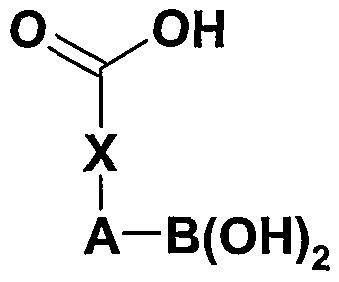
  • the invention therefore provides a compound of formula (I) or a pharmaceutically acceptable salt or solvate thereof:
  • A is aryl or heteroaryl, optionally substituted by one or more substituents independently selected from hydrogen, halogen, CN, OH, SH, nitro, S(O) n R 5 (where n is 0, 1 or 2), OR 5 , NR 6 R 7 or C 1-6 alkyl, the latter group being optionally substituted by one or more 5 halogen atoms.
  • B is aryl or heteroaryl, optionally substituted by one or more substituents independently selected from from hydrogen, halogen, CN, OH, SH, nitro, CO 2 R 6 , COR 6 , SO 2 R 8 , OR 8 , SR 8 , SOR 8 , SO 2 NR 9 R 10 , CONR 9 R 10 , NR 9 R 10 , NHSO 2 R 8 , NR 8 SO 2 R 8 , NR 8 CO 2 R 8 , NHCOR 8 , NR 8 COR 8 , NR 6 CONR 6 R 7 , NR 6 SO 2 NR 6 R 7 , aryl, heteroaryl, C 2 -C 6 alkenyl, C 2 -C 6 alkynyl, C 3 -C 7 cycloalkyl or C 1-6 alkyl, the latter four groups being optionally substituted by one or more substituents independently selected from halogen, C 3 -C 7 cycloalkyl, OR 6 , NR 6 R 7
  • Y is a bond, O, S(O) n (where n is 0, 1 or 2), NR 3 or CR 1 R 2 ;
  • R 1 and R 2 independently represent a hydrogen atom, halogen, C 2 -C 6 alkenyl, C 2 -C 6 alkynyl, C 3 -C 7 cycloalkyl or a C 1-6 alkyl group, the latter four groups being optionally substituted by one or more substituents independently selected from halogen, C 3 -C 7 cycloalkyl, NR 3 R 4 , OR 3 , S(O) n R 5 (where n is O, 1 or 2); or
  • R 1 and R 2 together can form a 3-8 membered ring optionally contai n ing one or more atoms selected from O, S, NR 11 and itself optionally substituted by one or more C 1 -C 3 alkyl or halogen;
  • R 5 is C 1-6 alkyl or C 3 -C 7 cycloalkyl, optionally substituted by one or more halogen atoms
  • R and R independently represents a hydrogen atom, C 1 -C 6 alkyl or C 3 -C 7 cycloalkyl, optionally substituted by one or more halogen atoms
  • R 11 represents a hydrogen atom, Ci. 6 alkyl, C 3 -C 7 cycloalkyl, SO 2 R 5 or COCi-C 4 alkyl, provided that:
  • B is not aryl or a six membered heterocyclic aromatic ring containing one or more nitrogen atoms or a 6,6 or 6,5 fused bicycle containing one or more O, N, S atoms, and
  • aryl examples include phenyl and naphthyl.
  • Heteroaryl is defined as a 5-7 member aromatic ring or can be 6,6- or 6,5-fused bicyclic ring optionally containing one or more heteroatoms selected from N, S, O.
  • the bicyclic ring may be linked through carbon or nitrogen and may be attached through the 5 or 6 membered ring and can be fully or partially saturated.
  • Examples include pyridine, pyrimidine, thiazole, oxazole, pyrazole, imidazole, furan, isoxazole, pyrrole, isothiazole and azulene, naphthyl, indene, quinoline, isoquinoline, indole, indolizine, benzo[b] furan, benzo[b]thiophene, lH-indazole, benzimidazole, benzthiazole, benzoxazole, purine, 4H-quinolizine, cinnoline, phthalazine, quinazoline, quinoxaline, 1,8- naphthyridine, pteridine and quinolone.
  • Aryl or heteroaryl groups can be optionally substituted by one or more substituents independently selected from hydrogen, halogen, CN, OH, SH, nitro, CO 2 R 6 , SO 2 R 8 , OR 8 , SR 8 , SOR 8 , SO 2 NR 9 R 10 , CONR 9 R 10 , NR 9 R 10 , NHSO 2 R 8 , NR 8 SO 2 R 8 , NR 8 CO 2 R 8 , NHCOR 8 , NR 8 COR 8 , NR 6 CONR 6 R 7 , NR 6 SO 2 NR 6 R 7 , aryl, heteroaryl, C 2 -C 6 alkenyl, C 2 -C 6 alkynyl, C 3 - C 7 cycloalkyl or Ci -6 alkyl, the latter four groups being optionally substituted by one or more substituents independently selected from halogen, C 3 -C 7 cycloalkyl, OR 6 , NR 6 R 7 , S(O) n
  • an alkyl or alkenyl group or an alkyl or alkenyl moiety in a substituent group may be linear or branched.
  • Heterocyclic rings as defined for R 1 , R 2 and R 9 and R 10 means saturated heterocycles, examples include morpholine, azetidine, pyrrolidine, piperidine and piperazine.
  • X is YCR 1 R 2 .
  • X is CH 2 CH 2 , CH 2 S, CH 2 NH,
  • A is phenyl or a six membered heterocyclic aromatic ring containing one or more nitrogen atoms, in particular pyridyl, substituted in the para position to the acid with halogen, trifluoromethyl, cyano, amino or C 1-3 alkyl.
  • B is isoxazolyl, phenyl, thienyl, furyl, pyrazolyl or indolyl, each optionally substituted as defined above.
  • R 1 and R 2 are independently hydrogen or C 1-3 alkyl.
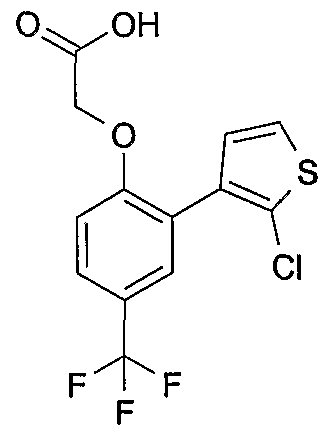
  • Preferred compounds of the invention include:
  • Certain compounds of formula (I) are capable of existing in stereoisomer ⁇ forms. It will be understood that the invention encompasses all geometric and optical isomers of the compounds of formula (I) and mixtures thereof including racemates. Tautomers and mixtures thereof also form an aspect of the present invention.
  • the compound of formula (I) above may be converted to a pharmaceutically acceptable salt or solvate thereof, preferably a basic addition salt such as sodium, potassium, calcium, aluminium, lithium, magnesium, zinc, benzathine, chloroprocaine, choline, diethanolamine, ethanolamine, ethyldiamine, meglumine, tromethamine or procaine, or an acid addition salt such as a hydrochloride, hydrobromide, phosphate, acetate, ramarate, maleate, tartrate, citrate, oxalate, methanesulphonate or/>-toluenesulphonate.
  • a basic addition salt such as sodium, potassium, calcium, aluminium, lithium, magnesium, zinc, benzathine, chloroprocaine, choline, diethanolamine, ethanolamine, ethyldiamine, meglumine, tromethamine or procaine
  • an acid addition salt such as a hydrochloride, hydrobromide, phosphat
  • R 12 is H or C 1 -C 10 alkyl group and L is a leaving group, and optionally thereafter in any order:
  • the reaction can be carried out in a suitable solvent such as DMF using a base such as potassium carbonate or the like.
  • Suitable groups R 12 include C 1-6 alkyl groups such as methyl, ethyl or tert-butyl.
  • Suitable L is a leaving group such as halo, in particular chlorine or bromine. L may also be hydroxy so that a Mitsunobu reaction may be performed with compound (II) using for example triphenylphosphine and diethyl azodicarboxylate.
  • Hydrolysis of the ester group R 12 can be carried out using routine procedures, for example treatment of methyl and ethyl esters with aqueous sodium hydroxide, and treatment of tert- butyl esters with, acids such as trifluoroacetic acid.
  • A, B and X are as defined in formula (T) or are protected derivatives thereof and D is a boronic acid or ester when E is a halogen, mesylate or triflate or alternatively D is a halogen, mesylate or triflate when E is a boronic acid or ester.
  • the reaction can be carried out in a suitable solvent such as dioxane using a palladium catalyst such as [l,l-bis(diphenylphosphino)ferrocene]dichloropalladium and abase such as cesium fluoride, preferably at elevated temperatures.
  • a compound of formula (VII) may be prepared by method A or B
  • the acid was first converted to the acid chloride, using for example oxalylchloride in DCM at RT, then reacted with 3-methyl-3-oxetanemethanol in the presence of a base such as triethylamine to give the ester.
  • a base such as triethylamine
  • the oxetane ester is then rearranged to the OBO ester using boron trifluoride diethyletherate in DCM at -78°C to RT.
  • Deprotonation with a base such as sec —butyl lithium at low temperature followed by quenching with trimethylborate gave the protected diacid which was then deprotected using HCl then sodium hydroxide
  • a compound of formula (VIII) and pinacol can be stirred at RT in a suitable solvent such as diethylether to give the boronate ester.
  • the benzyl group may be removed by hydrogenation at RT using palladium on carbon as catalyst then alkylated with a compound of formula (III) using a base or mitsunobu conditions. Treatment with acid such as HCl or trifluoroacetic acid then removes the protecting groups.
  • L is a leaving group.
  • the formyl group can then be reduced to the alcohol using a suitable reducing agent such as sodium borohydride in ethanol.
  • the alcohol can be converted into a leaving group such as a mesylate, using methanesulphonyl chloride and triethylamine and then displaced with cyanide.
  • the nitrile can be hydrolysed to the acid under basic conditions , for example potassium hydroxide, at elevated temperatures
  • the present invention provides the use of a compound of formula (I), pharmaceutically acceptable salt or solvate thereof for use in therapy.
  • the compounds of formula (I) have activity as pharmaceuticals, in particular as modulators of CRTh2 receptor activity, and may be used in the treatment (therapeutic or prophylactic) of conditions/diseases in human and non-human animals which are exacerbated or caused by excessive or unregulated production OfPGD 2 and its metabolites. Examples of such conditions/diseases include:
  • obstructive diseases of the airways including: asthma, including bronchial, allergic, intrinsic, extrinsic, exercise-induced, drug-induced (including aspirin and NSAID-induced) and dust-induced asthma, both, intermittent and persistent and of all severities, and other causes of airway hyper-responsiveness; chronic obstructive pulmonary disease (COPD); bronchitis, including infectious and eosinophilic bronchitis; emphysema;
  • COPD chronic obstructive pulmonary disease
  • lung fibrosis including cryptogenic fibrosing alveolitis, idiopathic interstitial pneumonias, fibrosis complicating anti-neoplastic therapy and chronic infection, including tuberculosis and aspergillosis and other fungal infections; complications of lung transplantation; vasculitic and thrombotic disorders of the lung vasculature, and pulmonary hypertension; antitussive activity including treatment of chronic cough associated with inflammatory and secretory conditions of the airways, and iatrogenic cough; acute and chronic rhinitis including rhinitis medicamentosa, and vasomotor rhinitis; perennial and seasonal allergic rhinitis including rhinitis nervosa (hay fever); nasal polyposis; acute viral infection including the common cold, and infection due to respiratory syncytial virus, influenza, coronavirus (
  • osteoarthritides associated with or including osteoarthritis/osteoarthrosis both primary and secondary to, for example, congenital hip dysplasia; cervical and lumbar spondylitis, and low back and neck pain; rheumatoid arthritis and Still's disease; seronegative spondyloarthropathies including ankylosing spondylitis, psoriatic arthritis, reactive arthritis and undifferentiated spondarthropathy; septic arthritis and other infection-related arthopathies and bone disorders such as tuberculosis, including Potts' disease and Poncet's syndrome; acute and chronic crystal-induced synovitis including urate gout, calcium pyrophosphate deposition disease, and calcium apatite related tendon, bursal and.
  • musculoskeletal disorders due to injury [for example sports injury] or disease: arthitides (for example rheumatoid arthritis, osteoarthritis, gout or crystal arthropathy), other joint disease (such as intervertebral disc degeneration or temporomandibular joint degeneration), bone remodelling disease (such as osteoporosis, Paget's disease or osteonecrosis), polychondritits, scleroderma, mixed connective tissue disorder, spondyloarthropathies or periodontal disease (such as periodontitis);
  • arthitides for example rheumatoid arthritis, osteoarthritis, gout or crystal arthropathy
  • other joint disease such as intervertebral disc degeneration or temporomandibular joint degeneration
  • bone remodelling disease such as osteoporosis, Paget's disease or osteonecrosis
  • polychondritits scleroderma
  • mixed connective tissue disorder spondylo
  • skin psoriasis, atopic dermatitis, contact dermatitis or other eczematous dermatoses, 5 and delayed-type hypersensitivity reactions; phyto- and photodermatitis; seborrhoeic dermatitis, dermatitis he ⁇ etiformis, lichen planus, lichen sclerosus et atrophica, pyoderma gangrenosum, skin sarcoid, discoid lupus erythematosus, pemphigus, pemphigoid, epidermolysis bullosa, urticaria, angioedema, vasculitides, toxic erythemas, cutaneous eosinophilias, alopecia areata, male-pattern baldness, Sweet's syndrome, Weber-Cl ⁇ ristian io syndrome, erythema multiforme; cellulitis, both infective and non-infective; panniculitis;
  • eyes blepharitis; conjunctivitis, including perennial and vernal allergic conjunctivitis; ulceris; anterior and posterior uveitis; choroiditis; autoimmune; degenerative or inflammatory is disorders affecting the retina; ophthalmitis including sympathetic ophthalmitis; sarcoidosis; infections including viral , fungal, and bacterial;
  • gastrointestinal tract glossitis, gingivitis, periodontitis; oesophagitis, including reflux; eosinophilic gastro-enteritis, mastocytosis, Crohn's disease, colitis including ulcerative colitis, proctitis, pruritis ani; coeliac disease, irritable bowel syndrome, and food-r ⁇ lp.ted allergies
  • abdominal hepatitis, including autoimmune, alcoholic and viral; fibrosis and cirrhosis of the liver; cholecystitis; pancreatitis, both acute and chronic;
  • nephritis including interstitial and glomerulonephritis; nephrotic syndrome; cystitis including acute and chronic (interstitial) cystitis and Hunner's ixlcer; acute
  • allograft rejection acute and chronic following, for example, transplantation of kidney, heart, liver, lung, bone marrow, skin or cornea or following blood transfusion; or chronic graft versus host disease;
  • CNS Alzheimer's disease and other dementing disorders including CJD and nvCJD; amyloidosis; multiple sclerosis and other demyelinating syndromes; cerebral atherosclerosis and vasculitis; temporal arteritis; myasthenia gravis; acute and chronic pain (acute, intermittent or persistent, whether of central or peripheral origin) including visceral pain, headache, migraine, trigeminal neuralgia, atypical facial pain, joint and bone pain, pain arising from cancer and tumor invasion, neuropathic pain syndromes including diabetic, post- herpetic, and HFV-associated neuropathies; neurosarcoidosis; central and peripheral nervous system complications of malignant, infectious or autoimmune processes; 11.
  • cardiovascular atherosclerosis, affecting the coronary and peripheral circulation; pericarditis; myocarditis , inflammatory and auto-immune cardiomyopathies including myocardial sarcoid; ischaemic reperfusion injuries; endocarditis, valvulitis, and aortitis including infective (for example syphilitic); vasculitides; disorders of the proximal and peripheral veins including phlebitis and thrombosis, including deep vein thrombosis and complications of varicose veins;
  • oncology treatment of common cancers including prostate, breast, lung, ovarian, pancreatic, bowel and colon, stomach, skin and brain tumors and malignancies affecting the bone marrow (including the leukaemias) and lymphoproliferative systems, such as Hodgkin's and non-Hodgkin's lymphoma; including the prevention and treatment of metastatic disease and tumour recurrences, and paraneoplastic syndromes; and,
  • gastrointestinal tract Coeliac disease, proctitis, eosinopilic gastro-enteritis, mastocytosis, Crohn's disease, ulcerative colitis, microscopic colitis, indeterminant colitis, irritable bowel disorder, irritable bowel syndrome, non-inflammatory diarrhea, food-related allergies which have effects remote from the gut, e.g., migraine, rhinitis and eczema.
  • the present invention provides a compound of formula (I), or a pharmaceutically-acceptable salt or solvate thereof, as hereinbefore defined for use in therapy.
  • the compounds of the invention are used to treat diseases in which the chemokine receptor belongs to the CRTh2 receptor subfamily.
  • Particular conditions which can be treated with the compounds of the invention are asthma, rhinitis and other diseases in which raised levels of PGD 2 or its metabolites. It is preferred that the compounds of the invention are used to treat asthma.
  • the present invention provides the use of a compound of formula
  • the invention further relates to combination therapies wherein a compound of the invention, or a pharmaceutically acceptable salt thereof, or a pharmaceutical composition or formulation comprising a compound of the invention, is administered concurrently or sequentially or as a combined preparation with another therapeutic agent or agents, for the treatment of one or more of the conditions listed.
  • the compounds of the invention may be combined with agents listed below.
  • Non-steroidal anti-inflammatory agents including non-selective cyclo-oxygenase COX-I / COX-2 inhibitors whether applied topically or systemically (such as piroxicam, diclofenac, propionic acids such as naproxen, flurbiprofen, fenoprofen, ketoprofen and ibuprofen, fenamates such as mefenamic acid, indomethacin, sulindac, azapropazone, pyrazolones such as phenylbutazone, salicylates such as aspirin); selective
  • COX-2 inhibitors such as meloxicam, celecoxib, rofecoxib, valdecoxib, lumarocoxib, parecoxib and etoricoxib
  • COX-2 inhibitors such as meloxicam, celecoxib, rofecoxib, valdecoxib, lumarocoxib, parecoxib and etoricoxib
  • CINODs nitric oxide donors
  • glucocorticosteroids whether administered by topical, oral, intramuscular, intravenous, or intra-articular routes
  • methotrexate leflunomide
  • hydroxychloroquine d-penicillamine
  • analgesics diacerein
  • intra-articular therapies such as hyaluronic acid derivatives
  • nutritional supplements such as glucosamine.
  • the present invention still further relates to the combination of a compound of the invention, or a pharmaceutically acceptable salt thereof, together with a cytokine or agonist or antagonist of cytokine function, (including agents which act on cytokine signalling pathways such as modulators of the SOCS system) including alpha-, beta-, and gamma-interferons; insulin-like growth factor type I (IGF-I); interleukins (IL) including ILl to 17, and interleukin antagonists or inhibitors such as anakinra; tumour necrosis factor alpha (TNF- ⁇ ) inhibitors such as anti-TNF monoclonal antibodies (for example infliximab; adalimumab, and CDP-870) and TNF receptor antagonists including immunoglobulin molecules (such as etanercept) and low-molecular-weight agents such as pentoxyfylline.
  • a cytokine or agonist or antagonist of cytokine function including agents which act on cytokine signal
  • the invention relates to a combination of a compound of the invention, or a pharmaceutically acceptable salt thereof, with a monoclonal antibody targe.
  • B- Lymphocytes such as CD20 (rituximab), MRA-aIL16R and T-Lymphocytes, CTLA4-Ig,
  • the present invention still further relates to the combination of a compound of the invention, or a pharmaceutically acceptable salt thereof, with a modulator of chemokine receptor function such as an antagonist of CCRl, CCR2, CCR2A, CCR2B, CCR3, CCR4, CCR5, CCR6, CCR7, CCR8, CCR9, CCRlO and CCRl 1 (for the C-C family); CXCRl ,
  • CXCR2, CXCR3, CXCR4 and CXCR5 for the C-X-C family
  • CX 3 CRl for the C-X 3 -C family.
  • the present invention further relates to the combination of a compound of the invention, or a pharmaceutically acceptable salt thereof, with an inhibitor of matrix metalloprotease (MMPs), i.e., the stromelysins, the collagenases, and the gelatinases, as well as aggrecanase; especially collagenase-1 (MMP-I), collagenase-2 (MMP-8), collagenase-3 (MMP-13), stromelysin-1 (MMP-3), stromelysin-2 (MMP-IO), and stromelysin-3 (MMP-Il) and MMP-9 and MMP- 12, including agents such as doxycycline.
  • MMPs matrix metalloprotease
  • the present invention still further relates to the combination of a compound of the invention, or a pharmaceutically acceptable salt thereof, and a leukotriene biosynthesis inhibitor, 5 -lipoxygenase (5-LO) inhibitor or 5-lipoxygenase activating protein (FLAP) antagonist such as; zileuton; ABT-761; fenleuton; tepoxalin; Abbott-79175; Abbott-85761; a N-(5-substituted)-thiophene-2-alkylsulfonamide; 2,6-di-tert-butyl ⁇ henolhydrazones; a methoxytetrahydropyrans such as Zeneca ZD-2138; the compound SB-210661; a pyridinyl- substituted 2-cyanonaphthalene compound such as L-739,010; a 2-cyanoquinoline compound such as L-746,530; or an indole or quinoline compound such as MK-591, MK-886
  • the present invention further relates to the combination of a compound of the invention, or a pharmaceutically acceptable salt thereof, and a receptor antagonist for leukotrienes (LT) B4, LTC4, LTD4, and LTE4.
  • a receptor antagonist for leukotrienes (LT) B4, LTC4, LTD4, and LTE4 selected from the group consisting of the phenothiazin-3-ls such as L-651,392; amidino compounds such as CGS-25019c; benzoxalamines such as ontazolast; benzenecarboximidamides such as BIIL 284/260; and compounds such as zafirlukast, ablukast, montelukast, pranlukast, verlukast (MK-679), RG- 12525, Ro-245913, iralukast (CGP 45715A), and BAY x 7195.
  • the present invention still further relates to the combination of a compound of the invention, or a pharmaceutically acceptable salt thereof, and a phosphodiesterase (PDE) inhibitor such as a methylxanthanine including theophylline and aminophylline; a selective PDE isoenzyme inhibitor including a PDE4 inhibitor an inhibitor of the isoform PDE4D, or an inhibitor of PDE5.
  • PDE phosphodiesterase
  • the present invention further relates to the combination of a compound of the invention, or a pharmaceutically acceptable salt thereof, and a histamine type 1 receptor antagonist such as cetirizine, loratadine, desloratadine, fexofenadine, acrivastine, terfenadine, astemizole, azelastine, levocabastine, chlorpheniramine, promethazine, cyclizine, or mizolastine; applied orally, topically or parenterally.
  • the present invention still further relates to the combination of a compound of the invention, or a pharmaceutically acceptable salt thereof, and a proton pump inhibitor (such as omeprazole) or a gastroprotective histamine type 2 receptor antagonist.
  • the present invention further relates to the combination of a compound of the invention, or a pharmaceutically acceptable salt thereof, and an antagonist of the histamine type 4 receptor.
  • the present invention still further relates to the combination of a compound of the invention, or a pharmaceutically acceptable salt thereof, and an alpha- l/alpha-2 adrenoceptor agonist vasoconstrictor sympathomimetic agent, such as propylhexedrine, phenylephrine, phenylpropanolamine, ephedrine, pseudoephedrine, naphazoline hydrochloride, oxymetazoline hydrochloride, tetrahydrozoline hydrochloride, xylometazoline hydrochloride, tramazoline hydrochloride or ethylnorepinephrine hydrochloride.
  • an alpha- l/alpha-2 adrenoceptor agonist vasoconstrictor sympathomimetic agent such as propylhexedrine, phenylephrine, phenylpropanolamine, ephedrine, pseudoephedrine, naphazoline hydrochlor
  • the present invention further relates to the combination of a compound of the invention, or a pharmaceutically acceptable salt thereof, and an anticholinergic agents including muscarinic receptor (Ml, M2, and M3) antagonist such as atropine, hyoscine, glycopyrrrolate, ipratropium bromide, tiotropium bromide, oxitropium bromide, pirenzepine 5 or telenzepine.
  • Ml, M2, and M3 antagonist such as atropine, hyoscine, glycopyrrrolate, ipratropium bromide, tiotropium bromide, oxitropium bromide, pirenzepine 5 or telenzepine.
  • the present invention still further relates to the combination of a compound of the invention, or a pharmaceutically acceptable salt thereof, and a beta-adrenoceptor agonist (including beta receptor subtypes 1-4) such as isoprenaline, salbutamol, formoterol, salmeterol, terbutaline, orciprenaline, bitolterol mesylate, or pirbuterol, or a chiral enantiomer Q thereof.
  • a beta-adrenoceptor agonist including beta receptor subtypes 1-4
  • the present invention further relates to the combination of a compound of the invention, or a pharmaceutically acceptable salt thereof, and a chromone, such as sodium cromoglycate or nedocromil sodium.
  • a chromone such as sodium cromoglycate or nedocromil sodium.
  • the present invention still further relates to the combination of a compound of the s invention, or a pharmaceutically acceptable salt thereof, with a glucocorticoid, such as flunisolide, triamcinolone acetonide, beclomethasone dipropionate, budesonide, fluticasone propionate, ciclesonide or mometasone furoate.
  • a glucocorticoid such as flunisolide, triamcinolone acetonide, beclomethasone dipropionate, budesonide, fluticasone propionate, ciclesonide or mometasone furoate.
  • the present invention further relates to the combination of a compound of the invention, or a pharmaceutically acceptable salt thereof, with an agent that modulates a Q nuclear hormone receptor such as PPARs.
  • the present invention still further relates to the combination of a compound of the invention, or a pharmaceutically acceptable salt thereof, together with an immunoglobulin (Ig) or Ig preparation or an antagonist or antibody modulating Ig function such as anti-IgE (for example omalizumab).
  • an immunoglobulin (Ig) or Ig preparation or an antagonist or antibody modulating Ig function such as anti-IgE (for example omalizumab).
  • the present invention further relates to the combination of a compound of the invention, or a pharmaceutically acceptable salt thereof, and another systemic or topically- applied anti-inflammatory agent, such as thalidomide or a derivative thereof, a retinoid, dithranol or calcipotriol.
  • the present invention still further relates to the combination of a compound of the 0 invention, or a pharmaceutically acceptable salt thereof, and combinations of aminosalicylates and sulfapyridine such as sulfasalazine, mesalazine, balsalazide, and olsalazine; and immunomodulatory agents such as the thiopurines, and corticosteroids such as budesonide.
  • aminosalicylates and sulfapyridine such as sulfasalazine, mesalazine, balsalazide, and olsalazine
  • immunomodulatory agents such as the thiopurines, and corticosteroids such as budesonide.
  • the present invention further relates to the combination of a compound of the invention, or a pharmaceutically acceptable salt thereof, together with an antibacterial agent such as a penicillin derivative, a tetracycline, a macrolide, a beta-lactam, a fluoroquinolone, metronidazole, an inhaled aminoglycoside; an antiviral agent including acyclovir, famciclovir, valaciclovir, ganciclovir, cidofovir, amantadine, rimantadine, ribavirin, zanamavir and oseltarnavir; a protease inhibitor such as indinavir, nelfinavir, ritonavir, and saquinavir; a nucleoside reverse transcriptase inhibitor such as didanosine, lamivudine, stavudine, zalcitabine or zidovudine; or a non-nucleoside reverse transcript
  • the present invention still further relates to the combination of a compound of the invention, or a pharmaceutically acceptable salt thereof, and a cardiovascular agent such as a calcium channel blocker, a beta-adrenoceptor blocker, an angiotensin-converting enzyme (ACE) inhibitor, an angiotensin-2 receptor antagonist; a lipid lowering agent such as a statin or a ffbrate; a modulator of blood cell morphology such as pentoxyfylline; thrombolytic, or an anticoagulant such as a platelet aggregation inhibitor.
  • a cardiovascular agent such as a calcium channel blocker, a beta-adrenoceptor blocker, an angiotensin-converting enzyme (ACE) inhibitor, an angiotensin-2 receptor antagonist
  • ACE angiotensin-converting enzyme
  • angiotensin-2 receptor antagonist angiotensin-2 receptor antagonist
  • a lipid lowering agent such as a statin or a ffbrate
  • the present invention further relates to the combination of a compound of the invention, or a pharmaceutically acceptable salt thereof, and a CNS agent such as an antidepressant (such as sertraline), an anti-Parkinsonian drug (such as deprenyl, L-dopa, ropinirole, pramipexole, a MAOB inhibitor such as selegine and rasagiline, a comP inhibitor such as tasmar, an A-2 inhibitor, a dopamine reuptake inhibitor, an NMDA antagonist, a nicotine agonist, a dopamine agonist or an inhibitor of neuronal nitric oxide synthase), or an anti- Alzheimer's drug such as donepezil, rivastigmine, tacrine, a COX-2 inhibitor, propentofylline or metrifonate.
  • a CNS agent such as an antidepressant (such as sertraline), an anti-Parkinsonian drug (such as deprenyl, L-dop
  • the present invention still further relates to the combination of a compound of the invention, or a pharmaceutically acceptable salt thereof, and an agent for the treatment of acute or chronic pain, such as a centrally or peripherally-acting analgesic (for example an opioid or derivative thereof), carbamazepine, phenytoin, sodium valproate, amitryptiline or other anti-depressant agent-s, paracetamol, or a non-steroidal anti-inflammatory agent.
  • the present invention further relates to the combination of a compound of the invention, or a pharmaceutically acceptable salt thereof, together with a parenterally or topically-applied (including inhaled) local anaesthetic agent such as lignocaine or a derivative thereof.
  • a compound of the present invention, or a pharmaceutically acceptable salt thereof can also be used in combination with an anti-osteoporosis agent including a hormonal agent such as raloxifene, or a " biphosphonate such as alendronate.
  • the present invention still further relates to the combination of a compound of the invention, or a pharmaceutically acceptable salt thereof, together with a: (i) tryptase inhibitor; (ii) platelet activating factor (PAF) antagonist; (iii) interleukin converting enzyme (ICE) inhibitor; (iv) IMPDH inhibitor; (v) adhesion molecule inhibitors including VLA-4 antagonist; (vi) cathepsin; (vii) kinase inhibitor such as an inhibitor of tyrosine kinase (such as Btk, Itk, Jak3 or MAP, for example Gefitinib or Imatinib mesylate), a serine / threonine kinase (such as an inhibitor of a MAP kinase such as p38, JNK, protein kinase A, B or C, or IKK), or a kinase involved in cell cycle regulation (such as a cylin dependent kinase);
  • - or B.sub2. -receptor antagonist for example colchicine;
  • anti-gout agent for example colchicine;
  • xanthine oxidase inhibitor for example allopurinol;
  • uricosuric agent for example probenecid, sulfinpyrazone or benzbromarone;
  • growth hormone secretagogue for example transforming growth factor (TGF ⁇ );
  • PDGF platelet-derived growth factor
  • PDGF platelet-derived growth factor
  • fibroblast growth factor for example basic fibroblast growth factor (bFGF);
  • GM-CSF granulocyte macrophage colony stimulating factor
  • capsaicin cream for example tachykinin NK.
  • NKP-608C sub 1. or NK.sub3.
  • receptor antagonist such as NKP-608C, SB-233412 (tahietant) or D-4418;
  • elastase inhibitor such as UT-77 or ZD-0892;
  • TACE TNF-alpha converting enzyme inhibitor
  • iNOS induced nitric oxide synthase
  • chemoattractant receptor- homologous molecule expressed on TH2 cells such as a CRTH2 antagonist
  • inhibitor of P38 agent modulating the function of Toll-like receptors (TLR),
  • agent modulating the activity of purinergic receptors such as P2X7; or
  • inhibitor of transcription factor activation such as NFkB, API, or STATS.
  • a compound of the invention, or a pharmaceutically acceptable salt thereof, can also be used in combination with an existing therapeutic agent for the treatment of cancer, for example suitable agents include: (i) an antiproliferative/antineoplastic dnxg or a combination thereof, as used in medical
  • an alkylating agent for example cis-platin, carboplatin, cyclophosphamide, nitrogen mustard, melphalan, chlorambucil, busulphan or a nitrosourea
  • an antimetabolite for example an antifolate such as a fluoropyrimidine like 5-fluorouracil or tegafur, raltitrexed, methotrexate, cytosine arabinoside, hydroxyurea, gemcitabine or paclitaxel
  • an antitumour antibiotic for example an anthracycline such as adriamycin, bleomycin, o doxorubicin, daunomycin, epirubicin, idarubicin, mitomycin-C, dactinomycin or mithramycin
  • an antimitotic agent for example a vinca alkaloid such as vincristine, vinblastine, vindesine or vinorelbine, or a taxo
  • an agent which inhibits cancer cell invasion for example a metalloproteinase inhibitor like marimastat or an inhibitor of urokinase plasminogen activator receptor function
  • an inhibitor of growth factor function for example: a growth factor antibody (for example 5 the anti-erbb2 antibody trastuzumab, or the anti-erbbl antibody cetuximab [C225]), a farnesyl transferase inhibitor, a tyrosine kinase inhibitor or a serine/threonine kinase inhibitor, an inhibitor of the epidermal growth factor family (for example an EGFR family tyrosine kinase inhibitor such as N-(3-chloro-4-fluorophenyl)-7-methoxy-6-(3- morpholinopropoxy)quinazolin-4-amine (gefitinib, AZD1839), N-(3-ethynylphenyl)-6,7-
  • a growth factor antibody for example
  • an antiangiogenic agent such as one which inhibits the effects of vascular endothelial growth factor (for example the anti-vascular endothelial cell growth factor antibody bevacizumab, a compound disclosed in WO 97/22596, WO 97/30035, WO 97/32856 or WO
  • 98/13354 a compound that works by another mechanism (for example linomide, an inhibitor of integrin ⁇ v ⁇ 3 function or an angiostatin) ;
  • vascular damaging agent such as combretastatin A4, or a compound disclosed in WO
  • an agent used in antisense therapy for example one directed to one of the targets listed above, such as ISIS 2503, an anti-ras antisense;
  • an agent used in a gene therapy approach for example approaches to replace aberrant genes such as aberrant p53 or aberrant BRCAl or BRC A2, GDEPT (gene-directed enzyme pro-drug therapy) approaches such as those using cytosine deaminase, thymidine kinase or a bacterial nitroreductase enzyme and approaches to increase patient tolerance to chemotherapy or radiotherapy such as multi-drug resistance gene tbierapy; or
  • an agent used in an immunotherapeutic approach for example ex- vivo and in-vivo approaches to increase the immunogenicity of patient tumour cells, such as transfection with cytokines such as interleukin 2, interleukin 4 or gran ⁇ ulocyte-macrophage colony stimulating factor, approaches to decrease T-cell anergy, approaches using transfected immune cells such as cytokine-transfected dendritic cells, approaches using cytokine-transfected tumour cell lines and approaches using anti-idiotypic antibodies.
  • cytokines such as interleukin 2, interleukin 4 or gran ⁇ ulocyte-macrophage colony stimulating factor
  • the present invention provides the use of a compound of formula (I), or a pharmaceutically acceptable salt or solvate thereof, as hereinbefore defined in the manufacture of a medicament for the treatment of human diseases or conditions in which modulation of CRTh2 receptor activity is beneficial.
  • a compound of formula (I) or a pharmaceutically acceptable salt or solvate thereof, as hereinbefore defined in the manufacture of a medicament for the treatment of human diseases or conditions in which modulation of CRTh2 receptor activity is beneficial.
  • the invention still further provides a method of treating diseases mediated by PGD2 or its metabolites wherein the prostanoid binds to its receptor (especially CRTh2) receptor, which comprises administering to a patient a therapeutically effective amount of a compound of formula (I), or a pharmaceutically acceptable salt, solvate or prodrug thereof, as hereinbefore defined.
  • the invention also provides a method of treating an inflammatory disease, especially psoriasis, in a patient suffering from, or at risk of, said disease, which comprises administering to the patient a therapeutically effective amount of a compound of formula (I), or a pharmaceutically acceptable salt or solvate thereof, as hereinbefore defined.
  • the dosage administered will, of course, vary with the compound employed, the mode of administration, the treatment desired and the disorder indicated.
  • the compound of formula (I), prodrugs and pharmaceutically acceptable salts and solvates thereof may be used on their own but will generally be administered in the form of a pharmaceutical composition in which the formula (I) compound/salt/solvate (active ingredient) is in association with a pharmaceutically acceptable adjuvant, diluent or carrier.
  • the pharmaceutical composition will preferably comprise from 0.05 to 99 %w (per cent by weight), more preferably from 0.05 to 80 %w, still more preferably from 0.10 to 70 %w, and even more preferably from 0.10 to 50 %w, of active ingredient, all percentages by weight being based on total composition.
  • the present invention also provides a pharmaceutical composition
  • a pharmaceutical composition comprising a compound of formula (T), or a pharmaceutically acceptable salt or sorvate thereof, as herein before defined, in association with a pharmaceutically acceptable adjuvant, diluent or carrier.
  • the pharmaceutical compositions may be administered topically (e.g. to the lung and/or airways or to the skin) in the form of solutions, suspensions, heptafluoroalkane aerosols and dry powder formulations; or systemically, e.g. by oral administration in the form of tablets, capsules, syrups, powders or granules, or by parenteral administration in the form of solutions or suspensions, or by subcutaneous administration or by rectal administration in the form of suppositories or transdermally.
  • the compound of the invention is administered orally.
  • mass spectra generally only ions which indicate the parent mass are reported, and unless otherwise stated the mass ion quoted is the positive mass ion - (M+H) + ;
  • the subtitle compound was prepared by the method of example 2 step (i) using 4- (ethylthio)benzeneboronic acid MS: ESI(+ve) 264
  • step (i) (Ig), 4,4,5,5-tetramethyl-l,3,2-dioxaborolane (1.94ml), triethylamine (2.4ml) and [l,r-bis(diphenylphosphino)ferrocene]palladium(II) chloride 1:1 complex with DCM (0.16g) in dioxane (20ml) was heated at 85°C for 1Oh. The mixture was quenched with aqueous ammonium chloride solution and extracted with diethylether. The organic s were dried, evaporated under reduced pressure and the residue purified by chromatography on silica eluting with 50% dichloromethane/isohexane, yield 0.7g.
  • step (v) ⁇ [5-Chloro-4'-(ethylthio)biphenyl-2-yl]thio ⁇ acetic acid
  • ethanol 10ml
  • water 10ml
  • the mixture was acidified with 2M hydrochloric acid and extracted with ethyl acetate, the organics were dried and evaporated under reduced presure.
  • the residue was dissolved in DCM (10ml), MCPBA (0.215g) was added and the mixture stirred at RT for Ih then evaporated under reduced fissure.
  • the residue was purified by RPHPLC, yield 0.03 g.
  • the subtitle compound was prepared by the method of example 8 step (ii) using 4- (ethylthio)benzeneboronic acid and 2-iodo-4-trifluoromethylaniline.
  • the subtitle compound was prepared by the method of example 8 step (ii) using the product from step (i).
  • Benzyl bromide (7.44ml) was added to a mixture of 2-bromo-4-trifluoromethylphenol (16.75g) and potassium carbonate (9.6g) in acetonitrile (250ml). After stirring at RT overnight the solvent was removed under reduced pressure and the residue partitioned between isohexane/water. The organic layer was separated, washed with IM sodium hydroxide solution, brine, dried and evaporated under reduced pressure to give an oil. Piperidine (2ml) was added to the oil then the mixture was partitioned between diethylether/2M hydrochloric acid, the organics separated, washed with brine, dried and evaporated under reduced pressure, yield 15.6g.
  • the subtitle compound was prepared by the method of example 23 step (ii), using the product from step (i) and 6-iodo-2-picolin-5-ol. Yield 0.4g
  • Trifluoroacetic acid (0.26ml) was added to a solution of the product from example 24 step (ii) (0.447g) in DCM (20ml). After 5min, mcpba (0.77g) was added and the mixture stirred at RT overnight then washed with aqueous sodium hydrogencarbonate solution, brine, dried and 5 evaporated under reduced pressure, yield 0.3 g.
  • the subtitle compound was prepared by the method of example 23 step (ii), using 6-bromo- 5-methoxy-2-pyridinamine and 3-cyanophenylboronic acid, yield 0.3g
  • step (i) (14.4g) was heated at 130°C for 2h then cooled to room temperature. s Methanol (250ml) was added followed by trimethylsilyl chloride (30ml) and the mixture stirred for 18h at room temperature. The solvent was evaporated under reduced pressure and the residue was purified by chromatography on silica eluting with 5% ethyl acetate/isohexane, yield 9.84g.
  • 1 H NMR CDCl 3 ⁇ 7.8 (IH, s), 7.26 (IH, d), 7.17 (IH, d), 3.68 (3H, s), 3.02 (2H, t), 2.61 (2H, 0 t).
  • the subtitle compound was prepared by the method of example 8 step (iv) using the product of step (ii) and 3-cyano phenylboronic acid.
  • 5 1 H NMR CDCl 3 ⁇ 7.71-7.68 (IH, m), 7.63-7.52 (3H, m), 7.32 (IH, d), 7.24 (IH, d), 7.18 (IH, s), 3.61 (3H, s), 2.84 (2H, t), 2.41 (2H, t).
  • the subtitle compound was prepared by the method of example 9 step (ii) using the product of step (i)
  • step (ii) (280mg), the product of step (ii) (290mg), [1,1'- bis(diphenylphosphino)ferrocene]palladium(Ii) chloride (33mg), sodium carbonate (190mg) and dioxane (10ml) were charged to a flask and heated at 90°C for 16h.
  • the reaction mixture was diluted with 2M HCl, extracted with ethyl acetate, dried and the solvents evaporated under reduced pressure. The residue was purified by reverse phase HPLC to give the title compound, yield 30 mg.
  • the title compound was prepared by the method of example 8 step (iv) and the method of example 9 step (iv) using the product of example 10 step (ii) and (3-cyanophenyl)boronic acid.
  • the subtitle compound was prepared by the method of example 39 step (ii) using the product of step (i).
  • step (iii) 3-[5-Chloro-4'-(pyridin-2-ylsulfonyl)biphenyl-2-yl]pro>panoic acid
  • step (ii) 0.6g
  • tetraldspalladiumtriphenylphosphine(O) (0.23g)
  • bis(pinacolato)diboron Ig
  • potassium acetate 0.88g
  • DMF 20ml
  • [ 3 H]PGD 2 was purchased from Perkin Elmer Life Sciences with a specific activity of
  • HEK cells expressing rhCRTh2 / G ⁇ l6 were routinely maintained in DMEM containing 10% Foetal Bovine Serum (HyClone), lmg/ml geneticin, 2mM L-glutarnine and 1% non-essential amino acids.
  • Foetal Bovine Serum HyClone
  • lmg/ml geneticin lmg/ml geneticin
  • 2mM L-glutarnine 1% non-essential amino acids.
  • the adherent transfected HEKcells were grown to confluence in two layer tissue culture factories (Fisher, catalogue
  • Each assay contained 20 ⁇ l of 6.25nM [ 3 H]PGD 2 , 20 ⁇ l membrane saturated SPA beads both in assay buffer and lO ⁇ l of compound solution or 13,14-dihydro-15-keto prostaglandin D 2 (DK-PGD 2 , for determination of non-specific binding, Cayman chemical company).
  • DK-PGD 2 13,14-dihydro-15-keto prostaglandin D 2
  • Assay buffer was added to give a final concentration of 10% DMSO (compounds were now at 1Ox the required final concentration) and this was the solution added to the assay plate.
  • Compounds of formula (I) have an IC50 value of less than ( ⁇ ) lO ⁇ M.

Landscapes

  • Health & Medical Sciences (AREA)
  • Organic Chemistry (AREA)
  • Chemical & Material Sciences (AREA)
  • Life Sciences & Earth Sciences (AREA)
  • Animal Behavior & Ethology (AREA)
  • Veterinary Medicine (AREA)
  • Chemical Kinetics & Catalysis (AREA)
  • General Chemical & Material Sciences (AREA)
  • Medicinal Chemistry (AREA)
  • Nuclear Medicine, Radiotherapy & Molecular Imaging (AREA)
  • Pharmacology & Pharmacy (AREA)
  • Public Health (AREA)
  • General Health & Medical Sciences (AREA)
  • Bioinformatics & Cheminformatics (AREA)
  • Engineering & Computer Science (AREA)
  • Physical Education & Sports Medicine (AREA)
  • Diabetes (AREA)
  • Rheumatology (AREA)
  • Orthopedic Medicine & Surgery (AREA)
  • Pulmonology (AREA)
  • Neurology (AREA)
  • Neurosurgery (AREA)
  • Hematology (AREA)
  • Biomedical Technology (AREA)
  • Urology & Nephrology (AREA)
  • Pain & Pain Management (AREA)
  • Oncology (AREA)
  • Communicable Diseases (AREA)
  • Dermatology (AREA)
  • Endocrinology (AREA)
  • Reproductive Health (AREA)
  • Heart & Thoracic Surgery (AREA)
  • Cardiology (AREA)
  • Obesity (AREA)
  • Immunology (AREA)
  • Ophthalmology & Optometry (AREA)
  • Emergency Medicine (AREA)
  • Psychiatry (AREA)
  • Virology (AREA)
  • Vascular Medicine (AREA)

Abstract

The invention relates to substituted acids as useful pharmaceutical compounds for treating respiratory disorders as asthma, pharmaceutical compositions containing them, and processes for their preparation.

Description

NOVEL COMPOUNDS
The present invention relates to substituted acids as useful pharmaceutical compounds for treating respiratory disorders, pharmaceutical compositions containing them, and 5 processes for their preparation.
EPA 1 170 594 discloses methods for the identification of compounds useful for the treatment of disease states mediated by prostaglandin D2, a ligand for orphan receptor CRTH2. GB 1356834 discloses a series of compounds said to possess anti-inflammatory, analgesic and antipyretic activity. It has been found that certain acids are active at the Q CRTH2 receptor, and as a consequence axe expected to be potentially useful for the treatment of various respiratory diseases, including asthma and COPD.
In a first aspect the invention therefore provides a compound of formula (I) or a pharmaceutically acceptable salt or solvate thereof:
CO2H
X
A"6
(I)
in which:
Q X is YCR1R2 or CR3=CR4,
A is aryl or heteroaryl, optionally substituted by one or more substituents independently selected from hydrogen, halogen, CN, OH, SH, nitro, S(O)nR5 (where n is 0, 1 or 2), OR5, NR6R7 or C1-6alkyl, the latter group being optionally substituted by one or more 5 halogen atoms.
B is aryl or heteroaryl, optionally substituted by one or more substituents independently selected from from hydrogen, halogen, CN, OH, SH, nitro, CO2R6, COR6, SO2R8, OR8, SR8, SOR8, SO2NR9R10, CONR9R10, NR9R10, NHSO2R8, NR8SO2R8, NR8CO2R8, NHCOR8, NR8COR8, NR6CONR6R7, NR6SO2NR6R7, aryl, heteroaryl, C2-C6 alkenyl, C2-C6 alkynyl, C3-C7 cycloalkyl or C1-6alkyl, the latter four groups being optionally substituted by one or more substituents independently selected from halogen, C3-C7 cycloalkyl, OR6, NR6R7, S(O)nR5 (where n is 0, 1 or 2), CONR6R7, NR6COR7, SO2NR6R7 and NR6SO2R5; X and B are attached to the the aryl or heteroaryl ring ortho relative to each other
Y is a bond, O, S(O)n (where n is 0, 1 or 2), NR3 or CR1R2; R1 and R2 independently represent a hydrogen atom, halogen, C2-C6 alkenyl, C2-C6 alkynyl, C3-C7 cycloalkyl or a C1-6alkyl group, the latter four groups being optionally substituted by one or more substituents independently selected from halogen, C3-C7 cycloalkyl, NR3R4, OR3, S(O)nR5 (where n is O, 1 or 2); or
R1 and R2 together can form a 3-8 membered ring optionally containing one or more atoms selected from O, S, NR11 and itself optionally substituted by one or more C1-C3 alkyl or halogen; R3 and R4 independently represent hydrogen, or C1-6alkyl
R5 is C1-6alkyl or C3-C7 cycloalkyl, optionally substituted by one or more halogen atoms
R and R independently represents a hydrogen atom, C1-C6 alkyl or C3-C7 cycloalkyl, optionally substituted by one or more halogen atoms R represents aryl, heteroaryl, C3-C7 cycloalkyl or C1-6alkyl, the latter two groups may be optionally substituted by one or more substituents independently selected from halogen, C3-C7 cycloalkyl, aryl, heteroaryl OR6 and NR6R7, S(O)nR5 (where n = 0, 1 or 2), CONR6R7, NR6COR7, SO2NR6R7 and NR6SO2R5;
R9 and R10 independently represent aryl or heteroaryl, hydrogen, C3-C7 cycloalkyl or C1-6alkyl, the latter two groups being optionally substituted by one or more substituents independently selected from halogen, C3-C7 cycloalkyl, aryl, heteroaryl, OR6 and NR6R7, S(O)nR5 (where n = 0, 1 or 2), CONR6R7, NR6COR7, SO2NR6R7 and NR6SO2R7; or
R9 and R10 together with the nitrogen atom to which they are attached can form a 3-8 membered saturated heterocylic ring optionally containing one or more atoms selected from O, S(O)n (where n = 0, 1 or 2), NR11, and itself optionally substituted by halogen or Ci-C3 alkyl; and
R11 represents a hydrogen atom, Ci.6alkyl, C3-C7 cycloalkyl, SO2R5 or COCi-C4 alkyl, provided that:
• When Y is O and A = phenyl, then B is not aryl or a six membered heterocyclic aromatic ring containing one or more nitrogen atoms or a 6,6 or 6,5 fused bicycle containing one or more O, N, S atoms, and
• When Y is O and B is phenyl or a 6,6 or 6,5 fused bicycle containing one or more O, N, S atoms, then A is not aryl.
Examples of aryl include phenyl and naphthyl.
Heteroaryl is defined as a 5-7 member aromatic ring or can be 6,6- or 6,5-fused bicyclic ring optionally containing one or more heteroatoms selected from N, S, O. The bicyclic ring may be linked through carbon or nitrogen and may be attached through the 5 or 6 membered ring and can be fully or partially saturated.
Examples include pyridine, pyrimidine, thiazole, oxazole, pyrazole, imidazole, furan, isoxazole, pyrrole, isothiazole and azulene, naphthyl, indene, quinoline, isoquinoline, indole, indolizine, benzo[b] furan, benzo[b]thiophene, lH-indazole, benzimidazole, benzthiazole, benzoxazole, purine, 4H-quinolizine, cinnoline, phthalazine, quinazoline, quinoxaline, 1,8- naphthyridine, pteridine and quinolone.
Aryl or heteroaryl groups can be optionally substituted by one or more substituents independently selected from hydrogen, halogen, CN, OH, SH, nitro, CO2R6, SO2R8, OR8, SR8, SOR8, SO2NR9R10, CONR9R10, NR9R10, NHSO2R8, NR8SO2R8, NR8CO2R8, NHCOR8, NR8COR8, NR6CONR6R7, NR6SO2NR6R7, aryl, heteroaryl, C2-C6 alkenyl, C2-C6 alkynyl, C3- C7 cycloalkyl or Ci-6alkyl, the latter four groups being optionally substituted by one or more substituents independently selected from halogen, C3-C7 cycloalkyl, OR6, NR6R7, S(O)nR5 (where n is 0, 1 or 2), CONR6R7, NR6COR7, SO2NR6R7 and NR6SO2R5.
In the context of the present specification, unless otherwise indicated, an alkyl or alkenyl group or an alkyl or alkenyl moiety in a substituent group may be linear or branched. Heterocyclic rings as defined for R1, R2 and R9 and R10 means saturated heterocycles, examples include morpholine, azetidine, pyrrolidine, piperidine and piperazine. In a preferred embodiment X is YCR1R2. Preferably X is CH2CH2, CH2S, CH2NH,
CH2NMe, CH2O, CH2, CH=CH or CHCH3O. In one embodiment of the invention X is
CH2CH2, CH2S, CH2NH, CH2NMe, CH2, CH=CH.
Preferably A is phenyl or a six membered heterocyclic aromatic ring containing one or more nitrogen atoms, in particular pyridyl, substituted in the para position to the acid with halogen, trifluoromethyl, cyano, amino or C1-3 alkyl.
Preferably B is isoxazolyl, phenyl, thienyl, furyl, pyrazolyl or indolyl, each optionally substituted as defined above.
Preferred substiruents for A and B groups are those of the examples herein. Preferably R1 and R2 are independently hydrogen or C1-3 alkyl.
Preferred compounds of the invention include:
(4-Chloro-2-isoxazol-5-ylphenoxy)acetic acid
N-(5-Chlorobiphenyl-2-yl)glycine
3 -(5 -Chlorobiphenyl-2-yl)propanoic acid (2E)-3-(5-Chlorobiphenyl-2-yl)acrylic acid
N-(5-Chlorobiphenyl-2-yl)-N-methylglycine
(5 -Chlorobiphenyl-2-yl)acetic acid
{[5-Chloro-4'-(ethylthio)biphenyl-2-yl]thio}acetic acid
[5-Chloro-4'-(ethylsulfonyl)-2'-methylbiphenyl-2-yl]acetic acid N-[4'-(Ethylsulfonyl)-5-(trifluoromethyl)biphenyl-2-yl]glycine
3-[4l-(Ethylsulfonyl)-2l-methyl-5-(trifluoromethyl)biphenyl-2-yl]propanoic acid
({2-[4-(Ethylsulfonyl)-2-methylphenyl]-6-methylpyridin-3-yl}oxy)acetic acid
[2-(2-Cyano-3 -thienyl)-4-(trifluoromethyl)phenoxy] acetic acid
[2-(2-Furyl)-4-(trifluoromethyl)phenoxy] acetic acid [2-(2-Chloro-3-thienyl)-4-(trifluoromethyl)phenoxy] acetic acid
[2-(2,5-Dichloro-3-thienyl)-4-(trifluoromethyl)phenoxy]acetic acid
[2-(2-Thienyl)-4-(trifluoromethyl)phenoxy] acetic acid
[2-(3 -Thienyl)-4-(trifluoromethyl)phenoxy] acetic acid
[2-(5 - Acetyl-2-thienyl)-4-(trifluoromethyl)phenoxy] acetic acid [(5-Chloro-3'-cyanobiphenyl-2-yl)thio]acetic acid (2S)-2-[2-[l-Methyl-3-(trifluoromethyl)-lH-pyrazol-5-yl]-4-(trifluoromethyl)phenoxy] propanoic acid
(2S)-2-[4-(Trifluoromethyl)-2-(l,3,5-trimethyl-lH-pyrazol-4-yl)phenoxy]propanoic acid
(2S)-2-[2-[l-Methyl-5-(trifluoromethyl)-lH-ρyrazol-3-yl]-4-(trifluoromethyl)phenoxy] propanoic acid
(2S)-2-[2-{l-[(Dimethylamino)sulfonyl]-3-methyl-lH-pyrazol-4-yl}-4-(trifluoromethyl) phenoxyjpropanoic acid
N- [4-Chloro-2-(5 -methoxy- 1 H-indol- 1 -yl)phenyl] glycine
N-[4-Chloro-2-(5-cyano-lH-indol-l-yl)phenyl]glycine ({2-[2-Chloro-4-(methylsulfonyl)phenyl]-6-methylpyridin-3-yl}oxy)acetic acid
{[2-(3-Cyanophenyl)pyridin-3-yl]oxy} acetic acid
(2S)-2-( {2-[2-Chloro-4-(methylsulfonyl)phenyl] -6-methylpyridin-3 -yl} oxy)propanoic acid
{ [6- Amino-2-(3 -cyanophenyl)pyridin-3 -yl] oxy} acetic acid
N-{4-Chloro-2-[5-(methylsulfonyl)-lH-indol-l-yl]phenyl} glycine, 3-[4'-(Methylsulfonyl)-3',5-bis(trifluoromethyl)biphenyl-2-yl]propanoic acid
3-(5-Chloro-3'-cyanobiphenyl-2-yl)propanoic acid
3-[2',5-Dichloro-4'-(methylsulfonyl)biphenyl-2-yl]propanoic acid
3-[3'-Fluoro-4'-(pyrrolidin-l-ylcarbonyl)-5-(trifluoromethyl)biphenyl-2-yl]propanoic acid
3-[2'-Chloro-4l-(methylsulfonyl)-5-(trifluoromethyl)biphenyl-2-yl]propanoic acid 3-[4'-(Ethylsulfonyl)-3',5-bis(trifluoromethyl)biphenyl-2-yl]propanoic acid
3-[3'-Cyano-5l-fluoro-5-(trifluoromethyl)biphenyl-2-yl]propanoic acid
3-[3'-Cyano-5-(trifluoromethyl)biphenyl-2-yl]propanoic acid
3-[5-Chloro-3'-fluoro-4'-(phenylsulfonyl)biphenyl-2-yl]propanoic acid
3-[5-Chloro-4'-(pyridin-2-ylsulfonyl)biplienyl-2-yl]propanoic acid and pharmaceutically acceptable salts thereof.
Certain compounds of formula (I) are capable of existing in stereoisomer^ forms. It will be understood that the invention encompasses all geometric and optical isomers of the compounds of formula (I) and mixtures thereof including racemates. Tautomers and mixtures thereof also form an aspect of the present invention. The compound of formula (I) above may be converted to a pharmaceutically acceptable salt or solvate thereof, preferably a basic addition salt such as sodium, potassium, calcium, aluminium, lithium, magnesium, zinc, benzathine, chloroprocaine, choline, diethanolamine, ethanolamine, ethyldiamine, meglumine, tromethamine or procaine, or an acid addition salt such as a hydrochloride, hydrobromide, phosphate, acetate, ramarate, maleate, tartrate, citrate, oxalate, methanesulphonate or/>-toluenesulphonate. It will be appreciated by those skilled in the art that in the processes of the present invention certain functional groups in the starting reagents or intermediate compound may need to be protected by protecting groups. Thus, the preparation of the compound of formula (I) may involve, at an appropriate stage, the removal of one or more protecting groups. The protection and deprotection of functional groups is fully described in 'Protective Groups in Organic Chemistry', edited by J. W. F. McOmie, Plenum Press (1973), and 'Protective Groups in Organic Synthesis', 3rd edition, T. W. Greene & P. G. M. Wuts, Wiley- Interscience (1999).
Compounds of formula (T) can be prepared by reaction of a compound of formula (II):
H
Y
I
(H)
in which Y =O, S or NR3 and A and B are as defined in formula (I) or are protected derivatives thereof, with a compound of formula (III): L-CR1R2CO2R12 (III)
Where R1 and R2 are as defined in formula (T) or are protected derivatives thereof, R12 is H or C1-C10 alkyl group and L is a leaving group, and optionally thereafter in any order:
• removing any protecting group
• hydrolysing the ester group R12 to the corresponding acid • oxidation of sulphides to sulphoxides or sulphones
• forming a pharmaceutically acceptable salt.
The reaction can be carried out in a suitable solvent such as DMF using a base such as potassium carbonate or the like. Suitable groups R12 include C1-6 alkyl groups such as methyl, ethyl or tert-butyl. Suitable L is a leaving group such as halo, in particular chlorine or bromine. L may also be hydroxy so that a Mitsunobu reaction may be performed with compound (II) using for example triphenylphosphine and diethyl azodicarboxylate. Hydrolysis of the ester group R12 can be carried out using routine procedures, for example treatment of methyl and ethyl esters with aqueous sodium hydroxide, and treatment of tert- butyl esters with, acids such as trifluoroacetic acid.
Compounds of formula (I) can be prepared by a Suzuki reaction of a compound of formula (IV) with a compound of formula (V) followed by removal of any protecting groups:
Figure imgf000008_0001
(IV) (V) (VI)
in which A, B and X are as defined in formula (T) or are protected derivatives thereof and D is a boronic acid or ester when E is a halogen, mesylate or triflate or alternatively D is a halogen, mesylate or triflate when E is a boronic acid or ester. The reaction can be carried out in a suitable solvent such as dioxane using a palladium catalyst such as [l,l-bis(diphenylphosphino)ferrocene]dichloropalladium and abase such as cesium fluoride, preferably at elevated temperatures.
Similarly a compound of formula (II) can be prepared via a suzuki reaction using a compound of formula (VI), where P= hydrogen or a protecting group. A compound of formula (VII) may be prepared by method A or B
Figure imgf000008_0002
(VII)
Method A
Figure imgf000009_0001
The acid was first converted to the acid chloride, using for example oxalylchloride in DCM at RT, then reacted with 3-methyl-3-oxetanemethanol in the presence of a base such as triethylamine to give the ester. The oxetane ester is then rearranged to the OBO ester using boron trifluoride diethyletherate in DCM at -78°C to RT. Deprotonation with a base such as sec —butyl lithium at low temperature followed by quenching with trimethylborate gave the protected diacid which was then deprotected using HCl then sodium hydroxide
Method B
Figure imgf000009_0002
(VIII)
A compound of formula (VIII) and pinacol can be stirred at RT in a suitable solvent such as diethylether to give the boronate ester. The benzyl group may be removed by hydrogenation at RT using palladium on carbon as catalyst then alkylated with a compound of formula (III) using a base or mitsunobu conditions. Treatment with acid such as HCl or trifluoroacetic acid then removes the protecting groups.
Compounds of formula (I), where Y = bond, may be prepared using the general route A:
CHO reduction CH2OH CH2L i. NaCN CH2CO2H A~B " A~B " A-B ϋ. base * A"B
Route A in which L is a leaving group. The formyl group can then be reduced to the alcohol using a suitable reducing agent such as sodium borohydride in ethanol. The alcohol can be converted into a leaving group such as a mesylate, using methanesulphonyl chloride and triethylamine and then displaced with cyanide. The nitrile can be hydrolysed to the acid under basic conditions , for example potassium hydroxide, at elevated temperatures
Compounds of formula (I), where Y = CR1R2 and X= CR3=CR4, may be prepared 5 using the general route B:
Figure imgf000010_0001
Route B
Alternatively compounds of formula (I) where Y = CR1R2 maybe prepared using the I0 general route B (i):
Figure imgf000010_0002
Route B (i) hi a further aspect, the present invention provides the use of a compound of formula (I), pharmaceutically acceptable salt or solvate thereof for use in therapy. is The compounds of formula (I) have activity as pharmaceuticals, in particular as modulators of CRTh2 receptor activity, and may be used in the treatment (therapeutic or prophylactic) of conditions/diseases in human and non-human animals which are exacerbated or caused by excessive or unregulated production OfPGD2 and its metabolites. Examples of such conditions/diseases include:
20 1. respiratory tract: obstructive diseases of the airways including: asthma, including bronchial, allergic, intrinsic, extrinsic, exercise-induced, drug-induced (including aspirin and NSAID-induced) and dust-induced asthma, both, intermittent and persistent and of all severities, and other causes of airway hyper-responsiveness; chronic obstructive pulmonary disease (COPD); bronchitis, including infectious and eosinophilic bronchitis; emphysema;
25 bronchiectasis; cystic fibrosis; sarcoidosis; farmer's lung and related diseases; hypersensitivity pneumonitis; lung fibrosis, including cryptogenic fibrosing alveolitis, idiopathic interstitial pneumonias, fibrosis complicating anti-neoplastic therapy and chronic infection, including tuberculosis and aspergillosis and other fungal infections; complications of lung transplantation; vasculitic and thrombotic disorders of the lung vasculature, and pulmonary hypertension; antitussive activity including treatment of chronic cough associated with inflammatory and secretory conditions of the airways, and iatrogenic cough; acute and chronic rhinitis including rhinitis medicamentosa, and vasomotor rhinitis; perennial and seasonal allergic rhinitis including rhinitis nervosa (hay fever); nasal polyposis; acute viral infection including the common cold, and infection due to respiratory syncytial virus, influenza, coronavirus (including SARS) and adenovirus; 2. bone and joints: arthritides associated with or including osteoarthritis/osteoarthrosis, both primary and secondary to, for example, congenital hip dysplasia; cervical and lumbar spondylitis, and low back and neck pain; rheumatoid arthritis and Still's disease; seronegative spondyloarthropathies including ankylosing spondylitis, psoriatic arthritis, reactive arthritis and undifferentiated spondarthropathy; septic arthritis and other infection-related arthopathies and bone disorders such as tuberculosis, including Potts' disease and Poncet's syndrome; acute and chronic crystal-induced synovitis including urate gout, calcium pyrophosphate deposition disease, and calcium apatite related tendon, bursal and. synovial inflammation; Behcet's disease; primary and secondary Sjogren's syndrome; systemic sclerosis and limited scleroderma; systemic lupus erythematosus, mixed connective tissue disease, and undifferentiated connective tissue disease; inflammatory myopathies including dermatomyositits and polymyositis; polymalgia rheumatica; juvenile arthritis including idiopathic inflammatory arthritides of whatever joint distribution and associated syndromes, and rheumatic fever and its systemic complications; vasculitides including giant cell arteritis, Takayasu's arteritis, Churg-Strauss syndrome, polyarteritis nodosa, microscopic polyarteritis, and vasculitides associated with viral infection, hypersensitivity reactions, cryoglobulins, and paraproteins; low back pain; Familial Mediterranean fever, Muclcle- Wells syndrome, and Familial Hibernian Fever, Kikuchi disease; drug-induced arthalgias, tendonititides, and myopathies; 3. pain and connective tissue remodelling of musculoskeletal disorders due to injury [for example sports injury] or disease: arthitides (for example rheumatoid arthritis, osteoarthritis, gout or crystal arthropathy), other joint disease (such as intervertebral disc degeneration or temporomandibular joint degeneration), bone remodelling disease (such as osteoporosis, Paget's disease or osteonecrosis), polychondritits, scleroderma, mixed connective tissue disorder, spondyloarthropathies or periodontal disease (such as periodontitis);
4. skin: psoriasis, atopic dermatitis, contact dermatitis or other eczematous dermatoses, 5 and delayed-type hypersensitivity reactions; phyto- and photodermatitis; seborrhoeic dermatitis, dermatitis heφetiformis, lichen planus, lichen sclerosus et atrophica, pyoderma gangrenosum, skin sarcoid, discoid lupus erythematosus, pemphigus, pemphigoid, epidermolysis bullosa, urticaria, angioedema, vasculitides, toxic erythemas, cutaneous eosinophilias, alopecia areata, male-pattern baldness, Sweet's syndrome, Weber-Clαristian io syndrome, erythema multiforme; cellulitis, both infective and non-infective; panniculitis;cutaneous lymphomas, non-melanoma skin cancer and other dysplastic lesions; drug-induced disorders including fixed drug eruptions;
5. eyes: blepharitis; conjunctivitis, including perennial and vernal allergic conjunctivitis; iritis; anterior and posterior uveitis; choroiditis; autoimmune; degenerative or inflammatory is disorders affecting the retina; ophthalmitis including sympathetic ophthalmitis; sarcoidosis; infections including viral , fungal, and bacterial;
6. gastrointestinal tract: glossitis, gingivitis, periodontitis; oesophagitis, including reflux; eosinophilic gastro-enteritis, mastocytosis, Crohn's disease, colitis including ulcerative colitis, proctitis, pruritis ani; coeliac disease, irritable bowel syndrome, and food-r^lp.ted allergies
20 which may have effects remote from the gut (for example migraine, rhinitis or eczema);
7. abdominal: hepatitis, including autoimmune, alcoholic and viral; fibrosis and cirrhosis of the liver; cholecystitis; pancreatitis, both acute and chronic;
8. genitourinary: nephritis including interstitial and glomerulonephritis; nephrotic syndrome; cystitis including acute and chronic (interstitial) cystitis and Hunner's ixlcer; acute
25 and chronic urethritis, prostatitis, epididymitis, oophoritis and salpingitis; vulvo-vaginitis; Peyronie's disease; erectile dysfunction (both male and female);
9. allograft rejection: acute and chronic following, for example, transplantation of kidney, heart, liver, lung, bone marrow, skin or cornea or following blood transfusion; or chronic graft versus host disease;
30 10. CNS: Alzheimer's disease and other dementing disorders including CJD and nvCJD; amyloidosis; multiple sclerosis and other demyelinating syndromes; cerebral atherosclerosis and vasculitis; temporal arteritis; myasthenia gravis; acute and chronic pain (acute, intermittent or persistent, whether of central or peripheral origin) including visceral pain, headache, migraine, trigeminal neuralgia, atypical facial pain, joint and bone pain, pain arising from cancer and tumor invasion, neuropathic pain syndromes including diabetic, post- herpetic, and HFV-associated neuropathies; neurosarcoidosis; central and peripheral nervous system complications of malignant, infectious or autoimmune processes; 11. other auto-immune and allergic disorders including Hashimoto's thyroiditis, Graves' disease, Addison's disease, diabetes mellitus, idiopathic thrombocytopaenic purpura, eosinophilic fasciitis, hyper-IgE syndrome, antiphospholipid syndrome; 12. other disorders with an inflammatory or immunological component; including acquired immune deficiency syndrome (AIDS), leprosy, Sezary syndrome, and paraneoplastic syndromes;
13. cardiovascular: atherosclerosis, affecting the coronary and peripheral circulation; pericarditis; myocarditis , inflammatory and auto-immune cardiomyopathies including myocardial sarcoid; ischaemic reperfusion injuries; endocarditis, valvulitis, and aortitis including infective (for example syphilitic); vasculitides; disorders of the proximal and peripheral veins including phlebitis and thrombosis, including deep vein thrombosis and complications of varicose veins;
14. oncology: treatment of common cancers including prostate, breast, lung, ovarian, pancreatic, bowel and colon, stomach, skin and brain tumors and malignancies affecting the bone marrow (including the leukaemias) and lymphoproliferative systems, such as Hodgkin's and non-Hodgkin's lymphoma; including the prevention and treatment of metastatic disease and tumour recurrences, and paraneoplastic syndromes; and,
15. gastrointestinal tract: Coeliac disease, proctitis, eosinopilic gastro-enteritis, mastocytosis, Crohn's disease, ulcerative colitis, microscopic colitis, indeterminant colitis, irritable bowel disorder, irritable bowel syndrome, non-inflammatory diarrhea, food-related allergies which have effects remote from the gut, e.g., migraine, rhinitis and eczema.
16. Diseases associated with raised levels of PGD2 or its metabolites. Thus, the present invention provides a compound of formula (I), or a pharmaceutically-acceptable salt or solvate thereof, as hereinbefore defined for use in therapy. Preferably the compounds of the invention are used to treat diseases in which the chemokine receptor belongs to the CRTh2 receptor subfamily.
Particular conditions which can be treated with the compounds of the invention are asthma, rhinitis and other diseases in which raised levels of PGD2 or its metabolites. It is preferred that the compounds of the invention are used to treat asthma.
In a further aspect, the present invention provides the use of a compound of formula
(I), or a pharmaceutically acceptable salt or solvate thereof, as hereinbefore defined in the manufacture of a medicament for use in therapy.
The invention further relates to combination therapies wherein a compound of the invention, or a pharmaceutically acceptable salt thereof, or a pharmaceutical composition or formulation comprising a compound of the invention, is administered concurrently or sequentially or as a combined preparation with another therapeutic agent or agents, for the treatment of one or more of the conditions listed.
In particular, for the treatment of the inflammatory diseases such as (but not restricted to) rheumatoid arthritis, osteoarthritis, asthma, allergic rhinitis, chronic obstructive pulmonary disease (COPD), psoriasis, and inflammatory bowel disease, the compounds of the invention may be combined with agents listed below.
Non-steroidal anti-inflammatory agents (hereinafter NSAIDs) including non-selective cyclo-oxygenase COX-I / COX-2 inhibitors whether applied topically or systemically (such as piroxicam, diclofenac, propionic acids such as naproxen, flurbiprofen, fenoprofen, ketoprofen and ibuprofen, fenamates such as mefenamic acid, indomethacin, sulindac, azapropazone, pyrazolones such as phenylbutazone, salicylates such as aspirin); selective
COX-2 inhibitors (such as meloxicam, celecoxib, rofecoxib, valdecoxib, lumarocoxib, parecoxib and etoricoxib); cyclo-oxygenase inhibiting nitric oxide donors (CINODs); glucocorticosteroids (whether administered by topical, oral, intramuscular, intravenous, or intra-articular routes); methotrexate; leflunomide; hydroxychloroquine; d-penicillamine; auranofin or other parenteral or oral gold preparations; analgesics; diacerein; intra-articular therapies such as hyaluronic acid derivatives; and nutritional supplements such as glucosamine. The present invention still further relates to the combination of a compound of the invention, or a pharmaceutically acceptable salt thereof, together with a cytokine or agonist or antagonist of cytokine function, (including agents which act on cytokine signalling pathways such as modulators of the SOCS system) including alpha-, beta-, and gamma-interferons; insulin-like growth factor type I (IGF-I); interleukins (IL) including ILl to 17, and interleukin antagonists or inhibitors such as anakinra; tumour necrosis factor alpha (TNF-α) inhibitors such as anti-TNF monoclonal antibodies (for example infliximab; adalimumab, and CDP-870) and TNF receptor antagonists including immunoglobulin molecules (such as etanercept) and low-molecular-weight agents such as pentoxyfylline.
In addition the invention relates to a combination of a compound of the invention, or a pharmaceutically acceptable salt thereof, with a monoclonal antibody targe.ing B- Lymphocytes (such as CD20 (rituximab), MRA-aIL16R and T-Lymphocytes, CTLA4-Ig,
HuMax 11-15).
The present invention still further relates to the combination of a compound of the invention, or a pharmaceutically acceptable salt thereof, with a modulator of chemokine receptor function such as an antagonist of CCRl, CCR2, CCR2A, CCR2B, CCR3, CCR4, CCR5, CCR6, CCR7, CCR8, CCR9, CCRlO and CCRl 1 (for the C-C family); CXCRl ,
CXCR2, CXCR3, CXCR4 and CXCR5 (for the C-X-C family) and CX3CRl for the C-X3-C family.
The present invention further relates to the combination of a compound of the invention, or a pharmaceutically acceptable salt thereof, with an inhibitor of matrix metalloprotease (MMPs), i.e., the stromelysins, the collagenases, and the gelatinases, as well as aggrecanase; especially collagenase-1 (MMP-I), collagenase-2 (MMP-8), collagenase-3 (MMP-13), stromelysin-1 (MMP-3), stromelysin-2 (MMP-IO), and stromelysin-3 (MMP-Il) and MMP-9 and MMP- 12, including agents such as doxycycline.
The present invention still further relates to the combination of a compound of the invention, or a pharmaceutically acceptable salt thereof, and a leukotriene biosynthesis inhibitor, 5 -lipoxygenase (5-LO) inhibitor or 5-lipoxygenase activating protein (FLAP) antagonist such as; zileuton; ABT-761; fenleuton; tepoxalin; Abbott-79175; Abbott-85761; a N-(5-substituted)-thiophene-2-alkylsulfonamide; 2,6-di-tert-butylρhenolhydrazones; a methoxytetrahydropyrans such as Zeneca ZD-2138; the compound SB-210661; a pyridinyl- substituted 2-cyanonaphthalene compound such as L-739,010; a 2-cyanoquinoline compound such as L-746,530; or an indole or quinoline compound such as MK-591, MK-886, and BAY x 1005.
The present invention further relates to the combination of a compound of the invention, or a pharmaceutically acceptable salt thereof, and a receptor antagonist for leukotrienes (LT) B4, LTC4, LTD4, and LTE4. selected from the group consisting of the phenothiazin-3-ls such as L-651,392; amidino compounds such as CGS-25019c; benzoxalamines such as ontazolast; benzenecarboximidamides such as BIIL 284/260; and compounds such as zafirlukast, ablukast, montelukast, pranlukast, verlukast (MK-679), RG- 12525, Ro-245913, iralukast (CGP 45715A), and BAY x 7195. The present invention still further relates to the combination of a compound of the invention, or a pharmaceutically acceptable salt thereof, and a phosphodiesterase (PDE) inhibitor such as a methylxanthanine including theophylline and aminophylline; a selective PDE isoenzyme inhibitor including a PDE4 inhibitor an inhibitor of the isoform PDE4D, or an inhibitor of PDE5. The present invention further relates to the combination of a compound of the invention, or a pharmaceutically acceptable salt thereof, and a histamine type 1 receptor antagonist such as cetirizine, loratadine, desloratadine, fexofenadine, acrivastine, terfenadine, astemizole, azelastine, levocabastine, chlorpheniramine, promethazine, cyclizine, or mizolastine; applied orally, topically or parenterally. The present invention still further relates to the combination of a compound of the invention, or a pharmaceutically acceptable salt thereof, and a proton pump inhibitor (such as omeprazole) or a gastroprotective histamine type 2 receptor antagonist.
The present invention further relates to the combination of a compound of the invention, or a pharmaceutically acceptable salt thereof, and an antagonist of the histamine type 4 receptor.
The present invention still further relates to the combination of a compound of the invention, or a pharmaceutically acceptable salt thereof, and an alpha- l/alpha-2 adrenoceptor agonist vasoconstrictor sympathomimetic agent, such as propylhexedrine, phenylephrine, phenylpropanolamine, ephedrine, pseudoephedrine, naphazoline hydrochloride, oxymetazoline hydrochloride, tetrahydrozoline hydrochloride, xylometazoline hydrochloride, tramazoline hydrochloride or ethylnorepinephrine hydrochloride. The present invention further relates to the combination of a compound of the invention, or a pharmaceutically acceptable salt thereof, and an anticholinergic agents including muscarinic receptor (Ml, M2, and M3) antagonist such as atropine, hyoscine, glycopyrrrolate, ipratropium bromide, tiotropium bromide, oxitropium bromide, pirenzepine 5 or telenzepine.
The present invention still further relates to the combination of a compound of the invention, or a pharmaceutically acceptable salt thereof, and a beta-adrenoceptor agonist (including beta receptor subtypes 1-4) such as isoprenaline, salbutamol, formoterol, salmeterol, terbutaline, orciprenaline, bitolterol mesylate, or pirbuterol, or a chiral enantiomer Q thereof.
The present invention further relates to the combination of a compound of the invention, or a pharmaceutically acceptable salt thereof, and a chromone, such as sodium cromoglycate or nedocromil sodium.
The present invention still further relates to the combination of a compound of the s invention, or a pharmaceutically acceptable salt thereof, with a glucocorticoid, such as flunisolide, triamcinolone acetonide, beclomethasone dipropionate, budesonide, fluticasone propionate, ciclesonide or mometasone furoate.
The present invention further relates to the combination of a compound of the invention, or a pharmaceutically acceptable salt thereof, with an agent that modulates a Q nuclear hormone receptor such as PPARs.
The present invention still further relates to the combination of a compound of the invention, or a pharmaceutically acceptable salt thereof, together with an immunoglobulin (Ig) or Ig preparation or an antagonist or antibody modulating Ig function such as anti-IgE (for example omalizumab). 5 The present invention further relates to the combination of a compound of the invention, or a pharmaceutically acceptable salt thereof, and another systemic or topically- applied anti-inflammatory agent, such as thalidomide or a derivative thereof, a retinoid, dithranol or calcipotriol.
The present invention still further relates to the combination of a compound of the 0 invention, or a pharmaceutically acceptable salt thereof, and combinations of aminosalicylates and sulfapyridine such as sulfasalazine, mesalazine, balsalazide, and olsalazine; and immunomodulatory agents such as the thiopurines, and corticosteroids such as budesonide.
The present invention further relates to the combination of a compound of the invention, or a pharmaceutically acceptable salt thereof, together with an antibacterial agent such as a penicillin derivative, a tetracycline, a macrolide, a beta-lactam, a fluoroquinolone, metronidazole, an inhaled aminoglycoside; an antiviral agent including acyclovir, famciclovir, valaciclovir, ganciclovir, cidofovir, amantadine, rimantadine, ribavirin, zanamavir and oseltarnavir; a protease inhibitor such as indinavir, nelfinavir, ritonavir, and saquinavir; a nucleoside reverse transcriptase inhibitor such as didanosine, lamivudine, stavudine, zalcitabine or zidovudine; or a non-nucleoside reverse transcriptase inhibitor such as nevirapine or efavirenz.
The present invention still further relates to the combination of a compound of the invention, or a pharmaceutically acceptable salt thereof, and a cardiovascular agent such as a calcium channel blocker, a beta-adrenoceptor blocker, an angiotensin-converting enzyme (ACE) inhibitor, an angiotensin-2 receptor antagonist; a lipid lowering agent such as a statin or a ffbrate; a modulator of blood cell morphology such as pentoxyfylline; thrombolytic, or an anticoagulant such as a platelet aggregation inhibitor.
The present invention further relates to the combination of a compound of the invention, or a pharmaceutically acceptable salt thereof, and a CNS agent such as an antidepressant (such as sertraline), an anti-Parkinsonian drug (such as deprenyl, L-dopa, ropinirole, pramipexole, a MAOB inhibitor such as selegine and rasagiline, a comP inhibitor such as tasmar, an A-2 inhibitor, a dopamine reuptake inhibitor, an NMDA antagonist, a nicotine agonist, a dopamine agonist or an inhibitor of neuronal nitric oxide synthase), or an anti- Alzheimer's drug such as donepezil, rivastigmine, tacrine, a COX-2 inhibitor, propentofylline or metrifonate.
The present invention still further relates to the combination of a compound of the invention, or a pharmaceutically acceptable salt thereof, and an agent for the treatment of acute or chronic pain, such as a centrally or peripherally-acting analgesic (for example an opioid or derivative thereof), carbamazepine, phenytoin, sodium valproate, amitryptiline or other anti-depressant agent-s, paracetamol, or a non-steroidal anti-inflammatory agent. The present invention further relates to the combination of a compound of the invention, or a pharmaceutically acceptable salt thereof, together with a parenterally or topically-applied (including inhaled) local anaesthetic agent such as lignocaine or a derivative thereof. A compound of the present invention, or a pharmaceutically acceptable salt thereof, can also be used in combination with an anti-osteoporosis agent including a hormonal agent such as raloxifene, or a "biphosphonate such as alendronate.
The present invention still further relates to the combination of a compound of the invention, or a pharmaceutically acceptable salt thereof, together with a: (i) tryptase inhibitor; (ii) platelet activating factor (PAF) antagonist; (iii) interleukin converting enzyme (ICE) inhibitor; (iv) IMPDH inhibitor; (v) adhesion molecule inhibitors including VLA-4 antagonist; (vi) cathepsin; (vii) kinase inhibitor such as an inhibitor of tyrosine kinase (such as Btk, Itk, Jak3 or MAP, for example Gefitinib or Imatinib mesylate), a serine / threonine kinase (such as an inhibitor of a MAP kinase such as p38, JNK, protein kinase A, B or C, or IKK), or a kinase involved in cell cycle regulation (such as a cylin dependent kinase); (viii) glucose-6 phosphate dehydrogenase inhibitor; (ix) kinin-B.subl. - or B.sub2. -receptor antagonist; (x) anti-gout agent, for example colchicine; (xi) xanthine oxidase inhibitor, for example allopurinol; (xii) uricosuric agent, for example probenecid, sulfinpyrazone or benzbromarone; (xiii) growth hormone secretagogue; (xiv) transforming growth factor (TGFβ); (xv) platelet-derived growth factor (PDGF); (xvi) fibroblast growth factor for example basic fibroblast growth factor (bFGF); (xvii) granulocyte macrophage colony stimulating factor (GM-CSF); (xviii) capsaicin cream; (xix) tachykinin NK. sub 1. or NK.sub3. receptor antagonist such as NKP-608C, SB-233412 (tahietant) or D-4418; (xx) elastase inhibitor such as UT-77 or ZD-0892; (xxi) TNF-alpha converting enzyme inhibitor (TACE); (xxii) induced nitric oxide synthase (iNOS) inhibitor; (xxiii) chemoattractant receptor- homologous molecule expressed on TH2 cells, (such as a CRTH2 antagonist); (xxiv) inhibitor of P38; (xxv) agent modulating the function of Toll-like receptors (TLR), (xxvi) agent modulating the activity of purinergic receptors such as P2X7; or (xxvii) inhibitor of transcription factor activation such as NFkB, API, or STATS. A compound of the invention, or a pharmaceutically acceptable salt thereof, can also be used in combination with an existing therapeutic agent for the treatment of cancer, for example suitable agents include: (i) an antiproliferative/antineoplastic dnxg or a combination thereof, as used in medical
5 oncology, such as an alkylating agent (for example cis-platin, carboplatin, cyclophosphamide, nitrogen mustard, melphalan, chlorambucil, busulphan or a nitrosourea); an antimetabolite (for example an antifolate such as a fluoropyrimidine like 5-fluorouracil or tegafur, raltitrexed, methotrexate, cytosine arabinoside, hydroxyurea, gemcitabine or paclitaxel); an antitumour antibiotic (for example an anthracycline such as adriamycin, bleomycin, o doxorubicin, daunomycin, epirubicin, idarubicin, mitomycin-C, dactinomycin or mithramycin); an antimitotic agent (for example a vinca alkaloid such as vincristine, vinblastine, vindesine or vinorelbine, or a taxoid such as taxol or taxotere); or a topoisomerase inhibitor (for example an epipodophyllo toxin such as etoposide, teniposide, amsacrine, topotecan or a camptothecin); s (ii) a cytostatic agent such as an antioestrogen (for example tamoxifen, toremifene, raloxifene, droloxifene or iodoxyfene), an oestrogen receptor down regulator (for example fulvestrant), an antiandrogen (for example bicalutamide, flutamide, nilutamide or cyproterone acetate), a LHRH antagonist or LHRH agonist (for example goserelin, leuprorelin or buserelin), a progestogen (for example megestrol acetate), an aromatase inhibitor (for example as 0 anastrozole, letrozole, vorazole or exemestane) or an inhibitor of 5α-reductase such as finasteride;
(iii) an agent which inhibits cancer cell invasion (for example a metalloproteinase inhibitor like marimastat or an inhibitor of urokinase plasminogen activator receptor function); (iv) an inhibitor of growth factor function, for example: a growth factor antibody (for example 5 the anti-erbb2 antibody trastuzumab, or the anti-erbbl antibody cetuximab [C225]), a farnesyl transferase inhibitor, a tyrosine kinase inhibitor or a serine/threonine kinase inhibitor, an inhibitor of the epidermal growth factor family (for example an EGFR family tyrosine kinase inhibitor such as N-(3-chloro-4-fluorophenyl)-7-methoxy-6-(3- morpholinopropoxy)quinazolin-4-amine (gefitinib, AZD1839), N-(3-ethynylphenyl)-6,7- o bis(2-methoxyethoxy)quinazolin-4-amine (erlotinib, OSI-774) or 6-acrylamido-N-(3-chloro- 4-fluorophenyl)-7-(3-morpholinopropoxy)quinazolm-4-amine (CI 1033)), άii inhibitor of the platelet-derived growth factor family, or an inhibitor of the hepatocyte growth factor family;
(v) an antiangiogenic agent such as one which inhibits the effects of vascular endothelial growth factor (for example the anti-vascular endothelial cell growth factor antibody bevacizumab, a compound disclosed in WO 97/22596, WO 97/30035, WO 97/32856 or WO
98/13354), or a compound that works by another mechanism (for example linomide, an inhibitor of integrin αvβ3 function or an angiostatin) ;
(vi) a vascular damaging agent such as combretastatin A4, or a compound disclosed in WO
99/02166, WO 00/40529, WO 00/41669, WO 01/92224, WO 02/04434 or WO 02/08213; (vii) an agent used in antisense therapy, for example one directed to one of the targets listed above, such as ISIS 2503, an anti-ras antisense;
(viii) an agent used in a gene therapy approach, for example approaches to replace aberrant genes such as aberrant p53 or aberrant BRCAl or BRC A2, GDEPT (gene-directed enzyme pro-drug therapy) approaches such as those using cytosine deaminase, thymidine kinase or a bacterial nitroreductase enzyme and approaches to increase patient tolerance to chemotherapy or radiotherapy such as multi-drug resistance gene tbierapy; or
(ix) an agent used in an immunotherapeutic approach, for example ex- vivo and in-vivo approaches to increase the immunogenicity of patient tumour cells, such as transfection with cytokines such as interleukin 2, interleukin 4 or gran~ulocyte-macrophage colony stimulating factor, approaches to decrease T-cell anergy, approaches using transfected immune cells such as cytokine-transfected dendritic cells, approaches using cytokine-transfected tumour cell lines and approaches using anti-idiotypic antibodies.
In a still further aspect, the present invention provides the use of a compound of formula (I), or a pharmaceutically acceptable salt or solvate thereof, as hereinbefore defined in the manufacture of a medicament for the treatment of human diseases or conditions in which modulation of CRTh2 receptor activity is beneficial. hi the context of the present specification, the term "therapy" also includes
"prophylaxis" unless there are specific indications to> the contrary. The terms "therapeutic" and "therapeutically" should be construed accordingly. The invention still further provides a method of treating diseases mediated by PGD2 or its metabolites wherein the prostanoid binds to its receptor (especially CRTh2) receptor, which comprises administering to a patient a therapeutically effective amount of a compound of formula (I), or a pharmaceutically acceptable salt, solvate or prodrug thereof, as hereinbefore defined.
The invention also provides a method of treating an inflammatory disease, especially psoriasis, in a patient suffering from, or at risk of, said disease, which comprises administering to the patient a therapeutically effective amount of a compound of formula (I), or a pharmaceutically acceptable salt or solvate thereof, as hereinbefore defined.
For the above-mentioned therapeutic uses the dosage administered will, of course, vary with the compound employed, the mode of administration, the treatment desired and the disorder indicated.
For the above-mentioned therapeutic uses the dosage administered will, of course, vary with the compound employed, the mode of administration, the treatment desired and the disorder indicated. J
The compound of formula (I), prodrugs and pharmaceutically acceptable salts and solvates thereof may be used on their own but will generally be administered in the form of a pharmaceutical composition in which the formula (I) compound/salt/solvate (active ingredient) is in association with a pharmaceutically acceptable adjuvant, diluent or carrier. Depending on the mode of administration, the pharmaceutical composition will preferably comprise from 0.05 to 99 %w (per cent by weight), more preferably from 0.05 to 80 %w, still more preferably from 0.10 to 70 %w, and even more preferably from 0.10 to 50 %w, of active ingredient, all percentages by weight being based on total composition.
The present invention also provides a pharmaceutical composition comprising a compound of formula (T), or a pharmaceutically acceptable salt or sorvate thereof, as herein before defined, in association with a pharmaceutically acceptable adjuvant, diluent or carrier. The pharmaceutical compositions may be administered topically (e.g. to the lung and/or airways or to the skin) in the form of solutions, suspensions, heptafluoroalkane aerosols and dry powder formulations; or systemically, e.g. by oral administration in the form of tablets, capsules, syrups, powders or granules, or by parenteral administration in the form of solutions or suspensions, or by subcutaneous administration or by rectal administration in the form of suppositories or transdermally. Preferably the compound of the invention is administered orally. The invention will now be illustrated by the following non-limiting examples in which, unless stated otherwise:
(i) when given, 1H NMR data is quoted in the form of delta values for major diagnostic protons, given in parts per million (ppm) relative to tetramethylsilane (TMS) as an internal 5 standard;
(ii) mass spectra (MS): generally only ions which indicate the parent mass are reported, and unless otherwise stated the mass ion quoted is the positive mass ion - (M+H)+;
(iii) the title compounds of the examples and methods were named using the ACD/name
(version 6.0) from Advanced Chemical Development Inc, Canada; io (iv) unless stated otherwise, reverse phase HPLC was conducted using a Symmetry, NovaPak or Ex-Terra reverse phase silica column;
(v) solvents were dried with MgSO4 or Na2SO4
(vi) the following abbreviations are used:
I5 EtOAc Ethyl acetate
DCM Dichloromethane
NMP N-methylpyrrolidine
DMF N,N-dimethylformamide
THF tetrahydrofuran
20 MCPBA 3-chloroperoxybenzoic acid (Aldrich 77% max)
Pd(dppf)Cl2 [1,1'-
Bis(diphenylphosphino)ferrocene] dichloropalladium(II), complex with dichloromethane
RT room temperature
2S RPHPLC reverse phase HPLC wt weight
30 Example 1
(4-Chloro-2-isoxazol-5-ylphenoxy)acetic acid
Figure imgf000024_0001
4-Chloro-2-(5-isoxazolyl)phenol (0.43g), potassium carbonate (0.304g) and tert-butyl bromoacetate (0.43g) in DMF (8ml) was vigorously stirred at RT for 18h. The mixture was partitioned between ethyl acetate and water, the organic layer was washed with water, dried, and the solvent evaporated under reduced pressure. The residue was dissolved in a mixture of
DCM (5ml) and trifluoroacetic acid (5ml), left for 2h then evaporated under reduced pressure.
The residue was triturated with diethylether and filtered. Yield 0.29g. lH NMR DMSO-dβ: δ 13.27 (IH, s), 8.73 (IH, s), 7.87 (IH, d), 7.55-7.52 (IH, m), 7.29 (IH, d), 7.21 (IH, d), 4.91 (2H, s). MS: APCI (-ve) 252 (M-I)
Example 2 N-(5-Chlorobiphenyl-2-yl)glycine
Figure imgf000024_0002
(i) 5-Chlorobiρhenyl-2-amine
A mixture of 2-bromo-4-chloroaniline (4g), sodium carbonate (6.Ig) phenylboronic acid (2.93g) and tetrakis(triphenylphosphine)palladium(0) (0.5g) in dioxane (30ml) was heated under reflux for 48h then cooled. The mixture was partitioned between ethyl acetate and water, the organic layer was washed with water, dried, and the solvent evaporated under reduced pressure. The residue was purified by chromatography on silica eluting with 5-10% ethyl acetate/isohexane, yield 0.99g. MS: APCI (+ve) 204/6
(ii) tert-Butyl N-(5-chlorobiphenyl-2-yl)glycinate A mixture of the product from step (i) (0.94g), sodium acetate (0.5g) and tert- butylbromoacetate (0.6ml) in ethanol (20ml) was heated under reflux for 5h. A further porton of sodium acetate (Ig) and tert-butylbromoacetate( 1.2ml) was added and the mixture heated under reflux overnight. The solvent was evaporated under reduced pressure and the residue partitioned between ethyl acetate and water, the organic layer was washed with water, dried, and the solvent evaporated under reduced pressure. The residue was purified by chromatography on silica eluting with 5% ethyl acetate/isohexane, yield 0.775g. MS: APCI (-ve) 260 (M-l-tBu)
(iii) N-(5-Chlorobiphenyl-2-yl)glycine
A solution of the product from step (ii) (OJIg) in DCM (20ml) and trifluoroacetic acid (10ml) was stirred at RT for 4h then evaporated under reduced pressure. The residue was partitioned between 2M sodium hydroxide solution and diethylether, the aqueous layer was acidified to pH4 and extracted with ethyl acetate. The ethyl acetate layer was washed with water, dried and evaporated under reduced pressure. The residue was purified by RPHPLC, yield 0.048g. IH NMR: DMSO-d6: δ 12.70 (IH, s), 7.52-7.39 (5H, m), 7.19 (IH, dd), 7.01 (IH, d), 6.57 (IH, d), 5.02 (IH, bra), 3.83 (2H, s). MS: APCI (+ve) 262
Example 3
3-(5-Chlorobiphenyl-2-yl)propanoic acid
Figure imgf000025_0001
(i) 5-Chlorobiphenyl-2-carbaldehyde The subtitle compound was prepared by the method of example 2 step (i) using 4-chloro-2- iodobenzaldehyde. IH NMR CDCl3: δ 9.92 (IH, s), 7.97 (IH, d), 7.51-7.35 (7H, m). (ii) tert-Butyl (2E)-3-(5-chlorobiphenyl-2-yl)acrylate
Sodium hydride (60% wt. disp. oil, 0.2g) was added to a solution of tert-butyl-P,P- dimethylphosphonoacetate (l.lθg) in dry DMF (20ml) at 0-5°C. After 30min, a solution of the product from step (i) (0.93g) in DMF (5ml) was added, and the mixture warmed to RT. After 3h the mixture was quenched with water and extracted with diethylether. The organic layer was washed with water, dried, and the solvent evaporated under reduced pressure. The residue was purified by chromatography on silica eluting with 5% ethyl acetate/ isohexane, yield 1.22g. MS: APCI (+ve) 259 (M+l-tBu)
(iii) 3-(5-Chlorobiphenyl-2-yl)propanoic acid
The product from step (ii) (0.35g) and 10% Pd/C (0.05g) in ethanol (10ml) and ethyl acetate (10ml) was hydrogenated at 2bar for 8h then filtered through celite. The solvent was removed under reduced pressure and the residue dissolved in a mixture of DCM (10ml) and trifluoroacetic acid (3ml) and stirred at RT for 5h. The solvent was removed under reduced pressure and the residue triturated with diethylether/isohexane then filtered, yield 0.045g. IH NMR CDCl3: δ 7.45-7.20 (8H, m), 2.88 (2H, t), 2.41 (2H, t). MS: APCI (-ve) 259/261
Example 4
(2E)-3-(5-Chlorobiphenyl-2-yl)acrylic acid
Figure imgf000026_0001
The product from example 3 step (ii) (0.25g) was dissolved in DCM (10ml) and trifluoroacetic acid (3ml), stirred at RT for 4h then evaporated under reduced pressure. The residue was triturated with diethylether/isohexane then filtered, yield 0.061g. IH NMR CDCl3: δ 7.72 (IH, d), 7.65 (IH, d), 7.48-7.28 (7H, m), 6.36 (IH, d). MS: APCI (-ve) 257/9 Example 5 N-(5-Chlorobiphenyl-2-yI)-N-methyIglycine
Figure imgf000027_0001
The product from example 2 step (ii) (1.2g) and sodium hydrogencarbonate (0.77g) in dimethylsulphate (5ml) was heated at 900C for 2h. The mixture was acidified with 2M hydrochloric acid, extracted with ethyl acetate, the organics were dried and evaporated under reduced pressure. The residue was purified by RPHPLC. IH NMR DMSO-d6: δ 7.54-7.27 (6H, m), 7.13-7.06 (2H, m), 3.46 (2H, s), 2.66 (3H, s). MS: ESI (-ve) 274
Example 6 (5-ChIorobiphenyl-2-yI)acetic acid
Figure imgf000027_0002
(i) 5 -Chloro-2-(chloromethyl)biphenyl
Sodium borohydride (0.2Ig) was added to a solution of the product from example 3 step (i) (1.15g) in methanol (20ml) and stirred at RT for 2h. The mixture was quenched with water, extracted with diethylether, the organics dried and evaporated under, reduced pressure. The residue was dissolved in DCM (20ml) then thionyl chloride (0.45ml) added and stirred at RT for 2h. The solvent was removed under reduced pressure and the residue partitioned between diethylether and water. The organics were dried and evaporated under reduced pressure to give an oil, yield 1.5g. (ii) (5-Chlorobiphenyl-2-yl)acetic acid
The product from step (i) (1.5g), sodium cyanide (0.32g) and 18-crown-6 (catalytic) in acetonitrile (20ml) were heated under reflux for 5h. The mixture was partitioned between ethyl acetate and water, the organic layer dried, and the solvent evaporated under reduced pressure. The residue was dissolved in ethanol (5ml) then potasium hydroxide (0.3g) and water (15ml) added and the mixture heated under reflux for 1Oh. The mixture was acidified with 2M hydrochloric acid and extracted with ethyl acetate, the organics dried and evaporated under reduced pressure. The residue was purified by RPHPLC, yield 0.08g. IH NMR DMSO-d6: δ 12.32 (IH, bs), 7.48-7.26 (8H, m), 3.32 (2H, s). MS: ESI(-ve) 245 (M-I)
Example 7
{ [5-Chloro-4'-(ethylthio)biphenyl-2-yl]thio}acetic acid
Figure imgf000028_0001
(i) 5-Chloro-4'-(ethylthio)biphenyl-2-amine
The subtitle compound was prepared by the method of example 2 step (i) using 4- (ethylthio)benzeneboronic acid MS: ESI(+ve) 264
(ii) {[5-Chloro-4'-(ethylthio)biphenyl-2-yl]thio}acetic acid
A solution of sodium nitrite (0.735g) in water (5ml) was added to the product from step (i) (2.8g) in cone, hydrochloric acid (12ml) and water (30ml) at 50C. The mixture was stirred for 15min then thioglycolic acid (0.74ml) was added, followed by a solution of sodium hydrogencarbonate (2.25g) in water (25ml). The mixture was heated at 100°C for Ih, diluted with water and extracted with diethylether. The aqueous layer was acidified with 2M hydrochloric acid, extracted with ethyl acetate and the organic layer dried and evaporated under reduced pressure. The residue was purified by RPHPLC, yield 0.025g. IH NMR DMSO-dό: δ 7.45-7.26 (7H, m), 3.74 (2H, s), 3.07-3.00 (2H, q), 1.30-1.27 (3H, t). MS: ESI(-ve) 337 (M-I)
Example δ {[5-Chloro-4'-(ethylthio)biphenyl-2-yl]thio}acetic acid
Figure imgf000029_0001
(i) 4-Bromo-3-methylphenyl ethyl sulfide
Bromine (2.2ml) was added to a solution of l-(ethylthio)-3-methylbenzene (6.6g) in acetic acid (3OmI) at 0°C. The mixture was stirred at RT for 2h then evaporated under reduced pressure. The residue was purified by chromatography on silica eluting with dichloromethane, yield 6.6g. IHNMR CDCl3: δ 7.43-6.97 (3H5 m), 2.97-2.87 (2H, q), 2.36 (3H, s), 1.40-1.27 (3H, t).
Cii) 2-[4-(Ethylthio)-2-methylphenyl]-4,4,5,5-tetramethyl-l,3,2-dioxaborolane
The product from step (i) (Ig), 4,4,5,5-tetramethyl-l,3,2-dioxaborolane (1.94ml), triethylamine (2.4ml) and [l,r-bis(diphenylphosphino)ferrocene]palladium(II) chloride 1:1 complex with DCM (0.16g) in dioxane (20ml) was heated at 85°C for 1Oh. The mixture was quenched with aqueous ammonium chloride solution and extracted with diethylether. The organic s were dried, evaporated under reduced pressure and the residue purified by chromatography on silica eluting with 50% dichloromethane/isohexane, yield 0.7g. IHNMR CDCl3: δ 7.67-7.65 (IH, d), 7.08-7.05 (2H, m), 2.94-2.92 (2H, q), 2.50 (3H, s), 1.43-1.27 (15H, m).
(iii) (4-Chloro-2-iodophenyl)acetonitrile
4-Chloro-2-iodobenzylchloride (4g), sodium cyanide (0.672g) and 18-crown-6 (catalytic) in acetonitrile (40ml) were heated under reflux for 2Oh. The mixture was partitioned between diethylether and water, the organic layer dried, and the solvent evaporated under reduced pressure. The residue was purified by chromatography on silica eluting with diethylether/isohexane (1 :5), yield 2g.
IH NMR CDCl3: δ 7.88-7.33 (3H, m), 3.79 (2H, s).
(iv) [5-Chloro-4'-(ethylthio)-2'-methylbiphenyl-2-yl]acetonitrile
The product from step (ii) (0.6g), the product from step (iii) (0.59g), cesiur. fluoride (0.69g), [l,r-bis(diphenylphosphino)ferrocene]palladium(II) chloride 1:1 complex with DCM (0.08g) in dioxane (20ml) was heated at 900C for 2Oh. The mixture was partitioned between ethyl acetate and water, the organic layer dried, and the solvent evaporated under reduced pressure. The residue was purified by chromatography on silica eluting with 25% diethylether/isohexane, yield 0.6g. MS: ESI(-ve) 300 (M-I)
(v) {[5-Chloro-4'-(ethylthio)biphenyl-2-yl]thio} acetic acid The product from step (iv) (0.6g) and potassium hydoxide (0.135g) in ethanol (10ml) and water (10ml) was heated under reflux for 72h. The mixture was acidified with 2M hydrochloric acid and extracted with ethyl acetate, the organics were dried and evaporated under reduced presure. The residue was dissolved in DCM (10ml), MCPBA (0.215g) was added and the mixture stirred at RT for Ih then evaporated under reduced fissure. The residue was purified by RPHPLC, yield 0.03 g. lH NMR DMSO-dό: δ 7.84-7.25 (6H, m), 3.53-3.16 (4H, m), 2.10 (3H, s), 1.15-1.09 (3H, t). MS: ESI(-ve) 351 (M-I)
Example 9 N-[4'-(EthyIsulfonyl)-5-(trifluoromethyl)biphenyl-2-yl]glycine
Figure imgf000031_0001
(i) 4'-(Ethylthio)-5-(trifluorometliyl)biphenyl-2-ainine
The subtitle compound was prepared by the method of example 8 step (ii) using 4- (ethylthio)benzeneboronic acid and 2-iodo-4-trifluoromethylaniline. MS: ESI(-ve) 272 (M-I)
(ii) 4'-(Ethylsulfonyl)-5-(trifluoromethyl)biphenyl-2-amine
MCPBA (18.8g) was added to a solution of the product from step (i) (13g) in DCM (100ml) and stirred at RT overnight. The mixture was partitioned between DCM/aq. sodium metabisulphite solution, the organics washed with aq. sodium hydrogencarbonate solution, water, dried and evaporated under reduced pressure. Yield 9.Og
IH NMR CDCl3: δ 8.03-7.35 (6H, m), 6.83-6.80 (IH, d), 4.15-4.04 (2H, bs), 3.21-3.14 (2H, q), 1.36-1.31 (3H, t).
(iii) Ethyl N-[4'-(ethylsulfonyl)-5-(rrifluoromethyl)biphenyl-2-yl]glycmate
A solution of titanium tetrachloride (IM in DCM) (1.51ml) was added to a mixture of the product from step (ii) (0.5g), ethyl glyoxalate solution (0.3ml) and triethylamine (0.21ml) in DCM (10ml) and stirred at RT for Ih. The mixture was washed with water, dried and evaporated under reduced pressure. The residue was purified by chromatography on silica eluting with 80% diethylether/isohexane, yield 0.35g.
IH NMR CDCl3: δ 8.04-6.60 (7H, m), 4.77-4.73 (IH, t), 4.25-4.18 (2H, q), 3.93-3.91 (2H, d), 3.22-3.14 (2H, q), 1.37-1.23 (6H, 2xt).
(iv) N-[4'-(Ethylsulfonyl)-5-(trifluoromethyl)biphenyl-2-yl]glycine A solution of sodium hydroxide (0.033g) in water (10ml) was added to a solution of the product from step (iii) (0.35g) in methanol (10ml) and stirred at RT overnight. The mixture was acidified with 2M hydrochloric acid and extracted with ethyl acetate. The organics were dried, evaporated under reduced pressure and the residue purified by RPHPLC, yield 0.13g. IH NMR DMSO-d6: δ 7.99-7.29 (6H, m), 6.69-6.67 (IH, d), 5.78 (IH, t), 3.69 (2H, m), 3.41- 3.32 (2H, q), 1.17-1.14 (3H, t). MS: ESI(-ve) 386 (M-I)
5 Example 10
S-^'-OEthylsulfony^-Z'-methyl-S-CtrifluoromethyObiphenyl^-ylJpropanoic acid
Figure imgf000032_0001
(i) Methyl 3-[2-bromo-4-(trifluoromethyl)phenyl]propanoate
I0 3-[2-Bromo-4-(trifluoromethyl)phenyl]propanoic acid (2 -04g) was added to a preformed solution of acetyl chloride (0.48ml) in methanol (30ml) and stirred at RT for 2h. The solvent was evaporated under reduced pressure, yield 1.8g. IH NMR CDCl3: δ 7.80-7.26 (3H, m), 3.69-3.68 (3H, s), 3.15-3.10 (2H, t), 2.70-2.65 (2H, t).
15 (ii) Methyl 3-[4'-(ethylthio)-2'-methyl-5-(trifluoromethyl)biphenyl-2-yl]propanoate
The subtitle compound was prepared by the method of example 8 step (ii) using the product from step (i).
IH NMR CDCl3: δ 7.81-7.01 (6H, m), 3.60 (3H, s), 3.02-2.96 (2H, q), 2.85-2.65 (2H, t), 2.42- 2.38 (2H5 1), 2.01 (3H, s), 1.38-1.20 (3H, t).
20
(iii) 3-[4'-(Ethylsulfonyl)-2'-methyl-5-(trifluoromLethyl)biphenyl-2-yl]propanoic acid The title compound was prepared by the method of example 9 steps (ii) and (iv) using the product from step (ii). Yield 0.186g lH NMR DMSO-d6: δ 7.87-7.37 (6H, m), 3.38-3.31 (2H, q), 2.63-2.46 (IH, m), 2.09 (3H, s), 25 2.04-1.96 (2H, t), 1.54-1.24 (IH, m), 1.21-1.05 (3H, t). MS: ESI(-ve) 399 (M-I)
Example 11 ({2-[4-(Ethylsulfonyl)-2-methylphenyl]-6-methylpyridin-3-yI}oxy)acetic acid
Figure imgf000033_0001
(i) tert-Butyl [(2-iodo-6-methylpyridin-3-yl)oxy]acetate 6-Iodo-2-picolin-5-ol (0.25g), potassium carbonate (0.15g) and tert-butyl bromoacetate (0.17ml) in DMF (2ml) was stirred at RT overnight. The reaction was quenched with water and extracted with ethyl acetate, the organics were dried and evaporated under reduced pressure, yield 0.28g.
(ii) ({2-[4-(Ethylsulfonyl)-2-methylphenyl]-6-methylpyridin-3-yl}oxy)acetic acid
The title compound was prepared by the methods of example 8 step (iv), example 9 step (ii) and example 4 using the product from step (i). Yield 0.175g
1H NMR CDCl3: δ 7.80-7.73 (2H, m ),7.53 (IH, d), 7.42 (IH, d), 7.28 (IH, d), 4.73 (2H, s),
3.32 (2H, q), 2.48(3H, s), 2.13 (3H, s), 1.17 (3H, s) . MS: APCI(+ve) 350.
Example 12 [2-(2-Thienyl)-4-(trifluoromethyl)phenoxy] acetic acid
Figure imgf000034_0001
(iii) [4-(Trifluoromethyl)phenoxy]- acetic acid
Sodium hydride (2.96g, 60% disp. in oil) was added to a stirred solution of 4-hydroxybenzo- trifiuoride (1Og) in tetrahydrofuran (150ml) at -78°C. The cooling bath was removed, the mixture stirred for Ih then methyl bromoacetate (7ml) added. After Ih, water was added, the tetrahydrofuran evaporated off under reduced pressure and the residue partitioned between ethyl acetate/2M hydrochloric acid. The organic layer was evaporated under reduced pressure and the residue dissolved in tetrahydrofuran (120ml). Methanol (30ml), water (30ml) and cone, sodium hydroxide solution (6ml) was added and the mixture stirred εl RT overnight. The organics were removed under reduced pressure and the residue partitioned between ettiyl acetate and 2M hydrochloric acid. The organics were separated, dried and evaporated under reduced pressure, yield 12.42g
1H NMR DMSOdO: δ 13.13 (IH, s), 7.65 (2H5 d), 7.10 (2H, d), 4.80 (2H, s). MS: APCI (-ve) 219 (M-I)
(i) [4-(Trifluoromethyl)phenoxy]- acetic acid, (3-methyl-3-oxetanyl)methyl ester Oxalyl chloride (14ml) was added to a solution of the product from step (i) (12.42g) and NT5N- dimethylformamide (2 drops) in dichloromethane (100ml), and stirred at RT for 72h. Ttie mixture was evaporated under reduced pressure, the residue dissolved in dichloromethane (100ml) then triethylamine (20ml) and 3-methyl-3-oxetanemethanol (17ml) added. After 2h the mixture was washed with water, evaporated under reduced pressure and the residue purified by chromatography on silica eluting with dichloromethane, yield 14.2g. 1H NMR DMSO-d6: δ 7.66 (2H5 d); 7.14 (2H5 d); 4.98 (2H, s), 4.34 (2H, d); 4.24 (2H5 s); 4.19 (2H, d), 1.21 (3H, s).
(ii) 4-Methyl-l-[[4-(trifluoromethyl)ρhenoxy]methyl]- 2,6,7- trioxabicyclo[2.2.2]octane Boron trifluoride diethyl etherate (1.48ml) was added to a solution of the product from step (ii) (14.2g) in dichloromethane at -78°C. The cooling bath was removed, the mixture stirred for 3h then triethylamine (6.2ml) added. The mixture was reduced to half the volume under reduced pressure then filtered. The filtrate was evaporated under reduced pressure then the 5 residue purified by chromatography on silica (pre-eluted with one column volume of neat triethylamine) eluting with dichloromethane, yield 1 l.lg.
1H NMR DMSO-d6: δ 7.62 ( 2H, d); 7.14 (2H, d); 4.04 (2H, s); 3.91 (6H, s); 0.77 (3H, s). MS: APCI (+ve) 305 (M+l)
o (ii) [2-Borono-4-(trifluoromethyl)phenoxy]- acetic acid
A solution of sec-butyllithium (66ml, 1.4M in cyclohexane) was added dropwise over lOmin to a stirred solution of the product from step (iii) (9.44g) in THF (100ml) at -78°C. After 3h the mixture was warmed to -40°C for 5min, then cooled to -780C. Trimethylborate (14.1ml) was added, then after lOmin the reaction quenched with 2M hydrochloric acid. The mixture s was warmed to RT and the organic phase separated. The aqueous layer was extracted with ethyl acetate, the organics combined and evaporated under reduced pressure. The residue was dissolved in methanol (500ml) then bondelut-NH2 resin(180g) added and the mixture swirled for 0.5h then filtered. The resin was washed with 10% acetic acid Λnethanol, the washings then evaporated under reduced pressure and dried under high vacuum. The residue 0 was dissolved in methanol(50ml), tetrahydrofuran (50ml) and saturated aqueous sodium hydroxide solution (2ml), left for 30min then 2M hydrochloric acid (50ml) added and the organics evaporated under reduced pressure. The residual aqueous layer was extracted with ethyl acetate, the organics separated, dried and evaporated under reduced pressure, yield 5.05g. s 1H NMR DMSO-d6: δ 8.07 (IH, s); 7.89 (2H, d); 7.75 (2H, dd); 7.14 (IH, d); 4.85 (2H, s). MS: APCI (-ve) 263 (M-I)
(ii) [2-(2-Thienyl)-4-(trifluoromethyl)phenoxy] acetic acid A mixture of the product from step (iv) (O.lg), 2-bromothiophene (0.12g), tetrakis 0 (triphenylphosphine)palladium(O) (0.046g) and sodium carbonate (0.12g) in methanol (2ml) was heated in a CEM microwave (variable wattage up to 150W) at 1000C ftr lOmin. The mixture was loaded onto SCX resin (sulphonic acid resin), flushed with methanol then the product eluted with methanol/ammonia. The methanol/ammonia filtrate was evaporated under reduced pressure then loaded onto bondelut-NH2 resin. The resin was flushed with methanol then the product eluted with methanol/acetic acid. The methanol/acetic acid filtrate was evaporated and the residue purified by RPHPLC. Yield 0.039g
1H NMRDMSOdO: δ 7.96 (IH, d), 7.83 (IH, d), 7.64 (IH, d), 7.64 (IH, s), 7.23 (IH, d), 7.16 (IH, dd), 4.97 (2H, s) MS: APCI (-ve) 301 (M-I)
Example 13-18
The following compounds were synthesised in an analogous method to example 12
Example 13
[2-(2-Cy ano-3-thienyl)-4-(trifluoromethyl)phenoxy] acetic acid
Figure imgf000036_0001
1H NMR DMSO-d6: δ 8.08 (IH, d), 7.60 (IH, d), 7.47 (IH, s), 7.65 (IH, d), 7.19 (IH, d), 4.59, (2H, s)
Example 14
[2-(2-Chloro-3-thienyl)-4-(trifluoromethyl)phenoxy] acetic acid
Figure imgf000037_0001
1H NMR DMSO-d6: δ 7.77 (IH, d), 7.65 (IH, s), 7.49 (IH, d), 7.31 (IH, d), 7.11 (IH, d),
4.52 (2H, s)
MS: APCI (+ve) 335 (M+ 1)
Example 15 [2-(2,5-Dichloro-3-thienyl)-4-(trifluoromethyl)phenoxy]acetic acid
Figure imgf000037_0002
1H NMR DMSO-d6: δ 7.70 (IH, d), 7.64 (IH, s), 7.41 (IH, s), 7.16 (IH, d), 4.62 (2H, s)
Example 16 [2-(3-Thienyl)-4-(trifluoromethyl)phenoxy] acetic acid
Figure imgf000037_0003
1H NMR DMSO-d6: δ 8.13 (IH, s), 7.87 (IH, s), 7.63 (2H, d), 7.61 (IH, d), 7.19 (IH, d),
4.86 (2H, s)
MS: APCI (-ve) 301 (M-I) Example 17 [2-(5-Acetyl-2-thienyl)-4-(trifluoromethyl)phenoxy] acetic acid
Figure imgf000038_0001
1H NMR DMSO-d6: δ 8.33 (IH, d), 7.92 (IH, d), 7.57 (IH, s), 7.59 (IH, d), 7.28 (IH, d), 4.72 (2H, s), 2.50 (3H, s) (under DMSO) MS: APCI (-ve) 343 (M-I)
Example 18
[2-(2-Furyl)-4-(trifluoromethyl)phenoxy] acetic acid
Figure imgf000038_0002
1H NMR DMSO-d6: δ 8.92 (s, IH), 7.90 (s, IH), 7.74 - 7.71 (m, IH), 7.52 (d, J= 8.5 Hz, IH), 7.25 - 7.21 (m, IH), 7.09 (d, J= 8.7 Hz, IH), 4.42 (s, 2H) MS: APCI (-ve) 285 (M-I)
Example 19 (2S)-2-[4-(Trifluoromethyl)-2-(l,3,5-trimethyl-lH-pyrazol-4-yl)pIienoxy]propanoic acid
Figure imgf000039_0001
(i) Benzyl 2-bromo-4-(trifluoromethyl)phenyl ether
Benzyl bromide (7.44ml) was added to a mixture of 2-bromo-4-trifluoromethylphenol (16.75g) and potassium carbonate (9.6g) in acetonitrile (250ml). After stirring at RT overnight the solvent was removed under reduced pressure and the residue partitioned between isohexane/water. The organic layer was separated, washed with IM sodium hydroxide solution, brine, dried and evaporated under reduced pressure to give an oil. Piperidine (2ml) was added to the oil then the mixture was partitioned between diethylether/2M hydrochloric acid, the organics separated, washed with brine, dried and evaporated under reduced pressure, yield 15.6g.
1H NMR CDCl3: δ 7.83 (IH, d ) ; 7.53-7.30 (6H, m) ; 6.98 (IH, d) ; 5.22 (2H, s)
(ii) [2-(Benzyloxy)-5-(trifluoromethyl)phenyl]boronic acid A solution of the product from step (i) (1Og in 15ml THF, 5ml), was added to a mixture of magnesium turnings in THF (10ml). When the reaction had initiated the remainder of the solution was added at such a rate to keep the temperature at 5O0C. After Ih the solution was added to a solution of trimethylborate (6.8ml) in THF (15ml) at 0°C. The mixture was warmed to RT, stirred for 2h then poured into water. The precipitate was filtered off and purified by chromatography on silica eluting with 20% ethyl acetate/isohexane, yield 4.5g. 1H NMR DMSO-d6: δ 8.02 (2H, s), 7.76 (IH, d), 7.70 (IH, m), 7.50 (2H, d), 7.41 (2H, m), 7.34 (IH, m), 7.21 (IH, d), 5.25 (2H, S)
(iii) 4,4,5,5-Tetramethyl-2-[2-(phenyhnethoxy)-5-(trifluoromethyl)phenyl]-l,3,2- dioxaborolane Pinacol (1.82g) was added to a solution of the product from step (ii) (4.54g) in diethylether (40ml) and stirred at RT for 2Oh. The reaction was diluted with diethylether (100ml), washed with brine, dried (MgSO4) and evaporated under reduced pressure. Yield 5.7g. 1H NMR DMSO-(IO: δ 7.82 (d, IH), 7.79 (d, IH), 7.6 (d, 2H), 7.4 (t, 2H), 7.32 (d, IH), 7.27 (d, IH), 5.24 (s, 2H), 1.32 (s, 12H)
(iv) 2-(4,4,5,5-Tetramethyl-l,3,2-dioxaborolan-2-yl)-4-(trifluoromethy1)phenol 10% Pd/C (0.5g) was added to a solution of the product from step (iii) in EtOAc (80ml) and hydrogenated at RT and 1 bar for Ih, and for a further 3h at 3 bar. The catalyst was removed by filtration and the filtrate evaporated to leave a solid product. Yield 4.2g. 1HNMRDMSO^: δ 9.99 (d, IH), 7.72 (s, IH), 7.63 (d, IH), 6.99 (d, IH), 1.3 (d, 12H)
(v) 2-[2-(4,4,5,5-Tetramethyl-l,3,2-dioxaborolan-2-yl)-4-(trifluoromethyl) phenoxy]-
(2S)-propanoic acid, 1,1-dimethylethyl ester
Diethyl azodicarboxylate (1.97ml) was added to a stirred solution of the product from step (iv) (2.86g), tert-butyl-R-lactate (1.46g) and triphenylphosphine (2.62g) in THF (50ml) at 0°C. Tlie mixture was warmed to RT, stirred at RT overnight then the solvent evaporated under reduced pressure. The residue was purified by chromatography on silica eluting with ethyl acetate/iso-hexane. Yield 4.Og
(vi) 2-[2-Borono-4-(trifluoromethyl)phenoxy]-(2S)-propanoic acid TFA (1 OmI) was added to a solution of the product from step (v) (4.Og) in DCM (100ml) and stirred for 30min. The solvent was evaporated and the residue dissolved in a mixture of IM hydrochloric acid (30ml) and acetonitrile (30ml) After Ih the mixture was evaporated to dryness, dissolved in IM sodium hydroxide, washed with ether and adjusted to pH 2 with concentrated hydrochloric acid. The aqueous was then extracted with diethylether, the diethylether layer washed with brine, dried (MgSO4) and evaporated under reduced pessure. Yield 2.0g. The crude material was carried forward to step (vii).
(vii) (2S)-2-[4-(Trifluoromethyl)-2-(l,3,5-trimethyl-lH-pyrazol-4-yl)phenoxy] propanoic acid
A mixture of the product from step (vi) (O.lg), 4-bromo-l,3,5-trimethyl-lH-pyrazole (0.068g), tetrakis(triphenylphosphine)palladium(0) (0.05g), potassium carbonate (0.2g) in dioxane (2ml) was heated in a CEM microwave (variable wattage up to 150W) at 100°C for 20min. The solvent was evaporated and the residue purified by RPHPLC. Yield 0.005g 1H NMR DMSO-UO: δ 7.52 (IH, dd), 7.30 (IH, d), 6.95 (IH, d), 4.55 (IH, q), 3.68 (3H, s), 2.15 (3H, s), 2.04 (3H, s), 1.35 (3H, d) MS: APCI (-ve) 341 (M-I)
Example 20
(2S)-2-[2-[l-MethyI-3-(trifluoromethyI)-lH-pyrazoI-5-yl]-4-(trifluoromethyI)phenoxy] propanoic acid
Figure imgf000041_0001
(i) 1 -Methyl-3 - (trifluoromethyl)- 1 H-pyrazol-5 -yl trifluoromethanesulfonate Trifluoromethanesulfonic anhydride (1.15ml) was added dropwise to a stirred solution of 1- methyl-4-(trifluorometliyl)-lH-pyrazole-3-ol (1.14g) and triethylamine (0.50ml) in DCM (25ml) at 0°C. After 2h, a further portion of trifluoromethanesulfonic anhydride (0.5ml) was added, the DCM layer was washed with water, dried and evaporated under reduced pressure. Yield 2g 1H NMR CDCl3: δ 6.43 (IH, s), 3.90 (3H, s)
(ii) (2S)-2-[2-[l -Methyl-3-(trifluoromethyl)-lH-pyrazol-5-yl]-4-(trifluoromethyl) phenoxy]propanoic acid
The title compound was prepared by the method of example 19, using the product from step
(i). Yield 0.015g
1H NMR DMSO-CIO: S 7.78 (IH, d), 7.64 (IH, d), 7.11 (IH, d), 6.86 (IH, s), 4.77 (IH, q), 3.88 (3H, s), 1.39 (3H, d)
MS: APCI (-ve) 381 (M-I) Example 21
(2S)-2-[2-[l-Methyl-5-(trifluoromethyl)-lH-pyrazoI-3-yl]-4-(trifluoromethyl)phenoxy] propanoic acid
Figure imgf000042_0001
The title compound was prepared by the method of example 20, yield 0.03g
1H NMR DMSO-d6: δ 8.17 (IH, d), 7.64 (IH, dd), 7.53 (IH, s), 7.16 (IH, d), 4.99 (IH, q), 4.05 (3H, s), 1.54 (3H, d) MS: APCI (-ve) 381 (M-I)
Example 22
(2S)-2-[2-{l-[(Dimethylamino)sulfonyl]-3-methyl-lH-pyrazol-4-yl}-4- (trifluoroniethyl)phenoxy]propanoic acid
Figure imgf000042_0002
(i) 4-Bromo-N,N,3-trimethyl-lH-pyrazole-l-sulfonamide
A solution of potassium tert-butoxide (IM in THF, 18ml) was added to a solution of 4-bromo- 3-methylpyrazole (2.9Ig) in THF (20ml). The mixture was stirred at RT for 20min then dimethylsulfamoyl chloride (1.94ml) was added and stirred overnight. The solvent was evaporated under reduced pressure and the residue purified by chromatography on silica eluting with 20% ethyl acetate/isohexane.
1 H NMR DMSO-d6: δ 8.47 (IH, s), 2.85 (6H, s), 2.23 (3H, s) (ii) (2S)-2-[2- { 1 -[(Dimethylamino)sulfonyl]-3-rnethyl- lH-pyrazol-4-yl} -A- (trifluoromethyl)phenoxy]propanoic acid
The title compound was prepared by the method of example 19, using the product from step (i). Yield 0.05g 1H NMR DMSO-d6: δ 8.40 (IH, s), 7.64 - 7.60 (2H, in), 7.07 (IH, d), 4.83 (IH, q), 2.87 (6H), 2.31 (3H, s), 1.42 (3H, d) MS: APCI (-ve) 420 (M-I)
Example 23 {[2-(3-CyanophenyI)pyridin-3-yl]oxy} acetic acid
Figure imgf000043_0001
(i) Ethyl [(2-bromopyridin-3-yl)oxy] acetate
A mixture of 2-bromo-3-hydroxypyridine (Ig), potassrum carbonate (0.873g) and ethylbromoacetate (0.64ml) in DMF (10ml) was stirred at RT overnight then poured into water. The mixture was extracted with diethylether, trie organics washed with brine, dried and evaporated under reduced pressure. Yield 1.4g
1H NMR DMSOdO: δ 8.00 (IH, dd), 7.46 (IH, dd), 7.38 (IH, dd), 4.99 (2H, s), 4.17 (2H, q),
1.21 (3H, t) (ii) {[2-(3-Cyanophenyl)pyridin-3-yl]oxy} acetic acid
A mixture of the product from step (i) (0.7g), 3-cyanobenzeneboronic acid (0.39g), tetrakis
(triphenylphosphine)palladium(O), 2M sodium carbonate solution (8ml) in ethanol (8ml) and toluene (16ml) was heated at 80°C for 24h. The mixture was partitioned between ethyl acetate/brine, the organics separated, dried and evaporated under reduced pressure. The residue was purified by RPHPLC.
1H NMRDMSOdO: δ 8.45 (IH, dd), 8.36 - 8.31 (2H, m), 7.87 (IH, dt), 7.67 (IH, dt), 7.59
(IH, dd), 7.43 (IH, dd), 4.90 (2H, s)
MS: ESI (-ve) 253 Example 24 ({2-[2-ChIoro-4-(methylsulfonyl)phenyl]-6-methylpyridin-3-yl}oxy) acetic acid
Figure imgf000044_0001
(i) [2-Chloro-4-(methylthio)phenyl]boronic acid
A solution of n-butyllithium (2.5M in hexanes, 390ml) was added dropΛvise over 2.5h to a solution of 4-bromo-3-chloromethylthiophenol (232g) and tri-isopropylborate (224ml) in THF (750ml) and toluene (IL) at -70°C. After stirring for Ih, the mixture was allowed to io warm to -3O0C then quenched with 2M hydrochloric acid (IL). The mixture was stirred for 68h, the organic layer separated and the aqueous layer extracted with tert-butylmethylether. The organics were combined washed with water, dried and evaporated under reduced pressure to give a solid which was triturated with 2% tert-butylmethylether in isohexane. Yield 149g 1H NMR CDCl3: δ 7.80 (IH, d) ; 7.16 (IH, s) ; 7.13 (IH, d) ; 6.35 (2H, s ) ; 2.49 (3H, s)
I5
(ii) 2-[2-Chloro-4-(methylthio)phenyl]-6-methylpyridin-3-ol
The subtitle compound was prepared by the method of example 23 step (ii), using the product from step (i) and 6-iodo-2-picolin-5-ol. Yield 0.4g
1H NMR DMSOdO: δ 9.64 (IH, s), 7.34 (IH, d), 7.26 (2H, d), 7.18 (IH, d), 7.09 (IH, d), 20 2.37 (3H, s), 2.54 (3H, s)
(iii) Ethyl ({2-[2-chloro-4-(methylthio)phenyl]-6-methylpyridin-3-yl}oxy)acetate The subtitle compound was prepared by the method of example 23 step (i), using the product from step (ii), yield 0.25g
25
(iv) ( {2-[2-Chloro-4-(methylsulfonyl)phenyl]-6-methylpyridin-3-yl} oxy)acetic acid A solution of the product from step (iii) (0.25g) and mcpba (0.28g) in DCM (5ml) was stirred at RT overnight, then the solvent removed under reduced pressure. The residue was dissolved in IM aqueous sodium hydroxide solution (ImI) and THF and the mixture stirred at RT for 72h. The mixture was purified by RPHPLC, yield 0.03g.
1H NMR DMSOdO: δ 8.04 (IH, d), 7.93 (IH, dd), 7.75 (IH3 d), 7.33 (IH, d), 7.25 (IH, d), 4.45 (2H, s), 3.34 (3H, s), 2.42 (3H, s) s MS: APCI (-ve) 354 (M-I)
Example 25
(2S)-2-({2-[2-Chloro-4-(methyIsulfonyI)phenyl]-6-methylpyridin-3-yI}oxy)propanoic acid
Figure imgf000045_0001
(i) 2- [2-Chloro-4-(methylsulfonyl)phenyl] -6-methylpyridin-3 -ol
Trifluoroacetic acid (0.26ml) was added to a solution of the product from example 24 step (ii) (0.447g) in DCM (20ml). After 5min, mcpba (0.77g) was added and the mixture stirred at RT overnight then washed with aqueous sodium hydrogencarbonate solution, brine, dried and 5 evaporated under reduced pressure, yield 0.3 g.
1H NMR DMSOdO: δ 9.91 (IH, s), 8.04 (IH, d), 7.92 (IH, dd), 7.64 (IH, d), 7.25 (IH, d), 7.17 (IH, d), 3.34 (3H, s), 2.39 (3H, s)
(ii) (2S)-2-({2-[2-Chloro-4-(methylsulfonyl)phenyl]-6-methylρyridin-3- 0 yl}oxy)propanoic acid
The title compound was prepared by the method of example 19 steps (v)-(vi), using the product from step (i), yield 0.26g
1H NMR DMSO-d6: δ 8.07 (IH, d), 7.96 (IH, dd), 7.73 (IH, d), 7.41 (IH, d), 7.33 (IH, d), 4.92 (IH, q), 3.35 (3H, s), 2.44 (3H, s), 1.38 (3H, d) s MS: APCI (-ve) 368 (M-I)
Example 26
{[6- Amino-2-(3-cyanophenyI)pyridin-3-yI]oxy} acetic acid
(i) 3 -(6- Amino-3 -methoxypyridin-2-yl)benzonitrile
The subtitle compound was prepared by the method of example 23 step (ii), using 6-bromo- 5-methoxy-2-pyridinamine and 3-cyanophenylboronic acid, yield 0.3g
1H NMR DMSO-d6: δ 8.25 (IH, m), 8.23 (IH, ddt), 7.79 (IH, dt), 7.62 (IH, td), 7.41 (IH, d), 6.53 (IH, d), 5.68 (2H, s), 3.74 (3H, s)
(ii) 3-(6-Amino-3-hydroxypyridin-2-yl)benzonitrile Boron tribromide (IM in DCM, 4.6ml) was added to a solution of the product from step (i)
(0.26g) in DCM (10ml) at 0°C, warmed to RT, stirred for 5days then heated under reflux for
3h, cooled and quenched with ice. The precipitate formed was filtered off and dried, yield
0.14g.
1H NMR DMSOdO: δ 9.25 (IH, s), 8.42 - 8.37 (2H, m), 7.74 (IH, dt), 7.60 (IH, td), 7.14 (IH, d), 6.44 (IH, d), 5.47 (2H, s)
(iii) {[6-Amino-2-(3-cyanophenyl)pyridin-3-yl]oxy} acetic acid
The title compound was prepared by the method of example 19 steps (v)-(vi), using the product from step (ii). 1H NMR DMSO-d6: δ 8.36 (IH, t), 8.24 (IH, dt), 7.89 (IH, dt), 7.72 - 7.6G (2H, m), 6.73 (IH, d), 4.72 (2H, s)
Example 27 N-[4-Chloro-2-(5-methoxy-lH-indol-l-yl)phenyl]glycine
Figure imgf000047_0001
(i) 1 -(5-Chloro-2-nitrophenyl)-5-methoxy- lH-indole
A mixture of 4-chloro-2-fluoro-nitrobenzene (1.19g), 5-methoxyindole (Ig) and potassium carbonate (0.94g) in NMP (7ml) was heated at 60°C for 4h then 700C for 16h. The mixture was partitioned between diethylether/water, the organics separated, washed with water, 2M sodium hydroxide solution, brine, dried and evaporated under reduced pressure. Yield 1.48g 1H NMR DMSO-d6: δ 8.22 (IH, d), 7.93 (IH, d), 7.80 (IH, dd), 7.49 (IH, d), 7.16 (IH, d), 7.02 (IH, d), 6.80 (IH, dd), 6.65 (IH, d), 3.78 (3H, s).
(ii) 4-Chloro-2-(5-methoxy-lH-indol-l-yl)aniline
The product from step (i) (1.48g) and iron powder (1.5g) in acetic acid was stirred at RT for 16h then filtered through celite and the solvent removed under reduced pressure. The residue was partitioned between ethyl acetate/aqueous potassium carbonate solution, the organics separated, dried and evaporated under reduced pressure, yield 0.838g. 1H NMR DMSOdO: δ 7.36 (IH, d), 7.21 (IH, dd), 7.15 (IH, d), 7.10 (IH, d), 6.92 (2H, m), 6.79 (IH, dd), 6.59 (IH, d), 4.91 (2H, s), 3.77 (3H, s).
(iii) Ethyl N-[4-chloro-2-(5-methoxy-lH-indol-l-yl)phenyl]glycinate The product from step (ii) (0.838g), sodium acetate (0.76g) and ethylbromoacetate (0.51ml) in ethanol (6ml) was heated under reflux for 24h. The mixture was partitioned between ethyl acetate/water, the organics separated, washed with brine, dried and evaporated under reduced pressure. The residue was purified by chromatography on silica eluting with 10-20% ethyl acetate/isohexane. 1H NMR DMSO-d6: δ 7.38 (IH, d), 7.34 (IH, dd), 7.17 (2H, m), 7.00 (IH, d), 6.80 (IH, dd), 6.76 (IH, d), 6.65 (IH, d), 4.99 (IH, t), 4.09 (2H5 q), 3.92 (2H, d), 3.79 (3K, s), 1.18 (3H, t).
(iv) N-[4-Chloro-2-(5 -methoxy- 1 H-indol- 1 -yl)phenyl] glycine The product from step (iii) in THF (3ml) and 2M aqueous sodium hydroxide (4ml) was stirred at RT for 3h then partitioned between diethylether/water. The aqueous layer was acidified and extracted with ethyl acetate, the organic extract was dried and evaporated under reduced pressure. The residue was purified by RPHPLC, yield 0.13g.
5 1H NMR DMSO^O: δ 7.39 (IH, d), 7.34 (IH, dd), 7.18 (IH, d), 7.17 (IH, d), 7.01 (IH, d), 6.79 (IH, dd), 6.76 (IH, d), 6.65 (IH, dd), 4.86 (IH, t), 3.84 (2H, d), 3.79 (3H, s). MS: APCI (-ve) 329 (M-I)
Example 28 i Q N- [4-Chloro-2-(5-cyano-lH-indol-l -yl)phenyl] glycine
Figure imgf000048_0001
The title compound was prepared by the method of example 27, yield 0.102g. 1H NMR DMSO^O: δ 8.22 (IH, d), 7.66 (IH, d), 7.48 (IH, dd), 7.35 (IH, dd), 7.22 (IH, d), is 7.18 (IH, d), 6.86 (IH, dd), 6.70 (IH, d), 4.85 (IH, s), 3.29 (2H, s). MS: APCI (-ve) 324 (M-I)
Example 29 N-{4-Chloro-2-[5-(methylsulfonyl)-lH-mdol-l-yl]phenyl}glycine
20
Figure imgf000048_0002
The title compound was prepared by the method of example 27, yield 0.12g. 1H NMR DMSO^O: δ 12.65 (IH, s), 8.28 (IH, d), 7.66 (IH, m), 7.65 (IH, d), 7.38 (IH, dd), 7.29 (IH, d), 7.23 (IH, d), 6.95 (IH, dd), 6.78 (IH, d), 5.06 (IH, t), 3.81 (2H, d), 3.18 (3H, s). MS: APCI (-ve) 377 (M-I)
Example 30
[(5-Chloro-3 '-cy an obiphenyl-2-yl)thio] acetic acid
Figure imgf000049_0001
(i) [(2-Bromo-4-chlorophenyl)thio] acetic acid
Thioglycolic acid (0.43ml) was added dropwise to a mixture of sodium hydride (60% in oil, 0.5g) in DMSO (5ml), after 30min 2-bromo-4-chloro-l-fluorobenzene (0.58ml) was added and the mixture heated at 100°C for 3h. After cooling, water was added and the mixture extracted with diethylether. The organics were dried and evaporated under reduced pressure, yield 0.957g. 1H NMR DMSOdO: δ 7.76 (IH, d), 7.48 (IH, dd), 7.31 (IH, d), 3.93 (2H5 s).
(ii) Methyl [(2-bromo-4-chlorophenyl)thio] acetate
(Trimethylsilyl)diazomethane (2M in diethylether, 2ml) was added to a solution of the product from step (i) (0.68g) in methanol (5ml) and stirred at RT for lOmin. The solvent was removed under reduced pressure to give an oil, yield 0.64g. 1H NMR DMSO-d6: δ 7.77 (IH, d), 7.47 (IH, d), 7.33 (IH, dd), 4.05 (2H, s), 3.66 (3H, s).
(iii) [(5-Chloro-3'-cyanobiphenyl-2-yl)thio]acetic acid
The title compound was prepared by the method of example 8 step (ii) and example 27 step (iv) using the product from step (ii) and 3-cyano phenylboronic acid, yield 0.028g. 1H NMR DMSO-d6: δ 12.82 (IH, bs), 7.90 (2H, m), 7.76 (IH, dt), 7.67 (IH, t), 7.49 (2H, d), 7.38 (IH, t), 3.77 (2H, s). MS: APCI (-ve) 302 (M-I) Example 31 S-^'-^ethylsulfony^-S'^-bis^rifluoromethy^biphenyl-l-yllpropanoic acid
Figure imgf000050_0001
(i) Methyl 3-[4'-(methylthio)-3',5-bis(trifluoromethyl)biphenyl-2-yl]propanoate The subtitle compound was prepared by the methods of example 8 step (ii) and example 9 step (ii) using the product of example 10 step (ii) and 4,4,5, 5-Tetramethyl-2-[4-(methylthio)- 3-(trifluoromethyl)phenyl]-l,3,2-dioxaborolane [WO2004089885Al]. 1H NMR CDCl3: δ 8.42 (IH, d), 7.86 (IH, s), 7.75 (IH, d), 7.67 (IH, d), 7.49 (IH, d), 7.45 (IH, s), 3.63 (3H, s), 3.27 (3H, s), 2.93 (2H, t), 2.52 (2H, t)
(ii) 3-[4'-(Methylsulfonyl)-3',5-bis(trifluoromethyl)biphenyl-2-yl]propanoic acid The title compound was prepared by the method of example 9 step (iv) using the product of step (i).
1H NMR DMSO-d6: δ 12.16 (IH, s), 8.32 (2H, d), 8.05 (IH, s), 8.01 (IH, d), 7.79 (IH, d), 7.68 (IH, d), 3.38 (3H, s), 2.82 (2H, t), 2.52 (2H, t). MS: APCI (-ve) 439 (M-I)
Example 32
3-(5-Chloro-3 '-cy anobiphenyl-2-yl)propanoic acid
Figure imgf000050_0002
(i) (4-Chloro-2-iodobenzyl)malonic acid
4-chloro-2-iodotoluene (16.5g), N-Bromosuccinimide (12.5g), benzoyl peroxide (0.5g) and ethyl acetate (300ml) were charged to a flask and irradiated with a halogen lamp for 4h, cooled and the solvent removed under reduced pressure. Iso-haxane (300 ml) was added and the resulting solid was filtered. The filtrate was evaporated under reduced pressure. DMF (20ml) was added and the solution added to a mixture of dimethylmalonate sodium salt [prepared from dimethylmalonate (10.7 ml) added drop wise to sodium hydride (60% weight, 2.8g) in DMF (80 ml), stirred Ih]. After stirring for Ih the mixture was quenched with 2M s HCl and partitioned between ether and water. The organics were separated, washed with water and evaporated under reduced pressure. The residue was dissolved in methanol (40ml)/THF (40ml) then 2M sodium hydroxide (100ml) and stirred overnight, then stirred at reflux for 6h. The solvent was evaporated under reduced pressure and the residue was extracted with ether. The aqueous layer was acidified 2M HCl and extracted with ethyl o acetate. The organics were dried and evaporated under reduced pressure, yield 14.4g. MS: ESI (-ve) 353 (M-I)
(ii) 3-(4-Chloro-2-iodophenyl)propanoic acid, methyl ester
The product of step (i) (14.4g) was heated at 130°C for 2h then cooled to room temperature. s Methanol (250ml) was added followed by trimethylsilyl chloride (30ml) and the mixture stirred for 18h at room temperature. The solvent was evaporated under reduced pressure and the residue was purified by chromatography on silica eluting with 5% ethyl acetate/isohexane, yield 9.84g. 1H NMR CDCl3: δ 7.8 (IH, s), 7.26 (IH, d), 7.17 (IH, d), 3.68 (3H, s), 3.02 (2H, t), 2.61 (2H, 0 t).
(iii) Methyl 3-(5-chloro-3'-cyanobiphenyl-2-yl)propanoate
The subtitle compound was prepared by the method of example 8 step (iv) using the product of step (ii) and 3-cyano phenylboronic acid. 5 1H NMR CDCl3: δ 7.71-7.68 (IH, m), 7.63-7.52 (3H, m), 7.32 (IH, d), 7.24 (IH, d), 7.18 (IH, s), 3.61 (3H, s), 2.84 (2H, t), 2.41 (2H, t).
(iv) 3-(5-Chloro-3'-cyanobiphenyl-2-yl)propanoic acid
The title compound was prepared by the method of example 9 step (iv) using the product of 0 step (iii). 1H KMR DMSO-d6: δ 12.10 (IH, s), 7.91-7.86 (2H, m), 7.73-7.64 (2H, m), 7.46-7.4 (2H, m), 7.28 (IH, s), 2.72 (2H, m), 2.38 (2H, t). MS : APCI (-ve) 439 (M-I)
Example 33
3-[2',5-Dichloro-4'-(methylsulfonyl)biphenyl-2-yl]propanoic acid
Figure imgf000052_0001
(i) Methyl 3-[2',5-dichloro-4'-(nietliylthio)biphenyl-2-yl]propanoate The subtitle compound was prepared by the method of example 8 step (ii) using the product of example 32 step (iii) and [2-chloro-4-(methylthio)phenyl]boronic acid [WO2004089885A1].
1H NMR CDCl3: δ 7.32-7.29 (2H, m), 7.25 (IH, d), 7.21 (IH, d), 7.17 (IH, s), 7.13-7.11 (IH, m), 3.6 (3H, s), 2.82-2.65 (2H, m), 2.53 (3H, s), 2.41 (2H, t).
(ii) Methyl 3-[2',5-dichloro-4'-(methylsulfonyl)biphenyl-2-yl]propanoate
The subtitle compound was prepared by the method of example 9 step (ii) using the product of step (i)
MS : ESI (+ve) 357 (M-OMe)
(iii) 3-[2',5-Dichloro-4'-(methylsulfonyl)biphenyl-2-yl]propanoic acid
The title compound was prepared by the method of example 9 step (iv) using the product of step (ii).
1H ISIMR DMSO-d6: δ 12.12 (IH, s), 8.14 (IH, s), 7.98 (IH, d), 7.66 (IH, d), 7.5-7.44 (2H, m), 7.24 (IH, s), 3.37 (3H, s), 2.68-2.35 (4H, m). MS: APCI (-ve) 371 (M-I)
Example 34 3-[3'-Fluoro-4'-(pyrrolidin-l-ylcarbonyl)-5-(trifluoromethyl)biphenyl-2-yl]propanoic acid
Figure imgf000053_0001
(i) 1 -(4-Brorαo-2-fluorobenzoyl)pyrrolidine Oxalyl chloride (0.65ml) was added to a solution of 4-bromo-2-fluorobenzoic acid (1.5g) in DCM (20ml), followed by DMF (catalytic amount). The mixture was stirred for Ih, then added toluene and evaporated under reduced pressure. The residue was redissolved in DCM (20ml) and pyrrolidine (1.2ml) was added and then stirred overnight. The mixture was partitioned between water and DCM, dried and the solvents evaporated to give the subtitle compound, yield 2g.
(ii) 2-Fluoro-4-(4,4,5,5-tetramethyl-l ,3,2-dioxaborolan-2-yl)benzoic acid Tricyclohexylphosphine (2.2Ig), tris(dibenzylideneacetone)palladium (0) (0.34g) and dioxan (30ml) were charged to a flask and stirred for 30min. Bis(pinacolato)diborane (1.96g), the product from step (i) and potassium acetate (1.12g) were added and the mixture stirred for 16h. The mixture was partitioned between water and ethyl acetate, dried and the solvents evaporated. The residue was purified by chromatography on silica eluting with 50% ethyl acetate/isohexane, yield 9.84g. MS: ESI (+ve) 320 (M+l)
(iii) 3-[3l-Fluoro-4'-(pyrrolidin-l-ylcarbonyl)-5-(trifluoromethyl)biphenyl-2-yl]propanoic acid
The product of example 10 step (ii) (280mg), the product of step (ii) (290mg), [1,1'- bis(diphenylphosphino)ferrocene]palladium(Ii) chloride (33mg), sodium carbonate (190mg) and dioxane (10ml) were charged to a flask and heated at 90°C for 16h. The reaction mixture was diluted with 2M HCl, extracted with ethyl acetate, dried and the solvents evaporated under reduced pressure. The residue was purified by reverse phase HPLC to give the title compound, yield 30 mg.
1H NMR DMSO^O: δ 7.78-7.26 (6H, m), 3.52-3.48 (2H, t), 2.88-2.83 (2H, t), 3.25-3.17 (2H, t), 2.44-2.38 (2H, t), 1.99-1.82 (4H, m). MS: APCI (-ve) 408 (M-I)
Example 35 3-[2'-Chloro-4'-(methylsulfonyl)-5-(trifluoromethyl)biphenyl-2-yl]propanoic acid
Figure imgf000054_0001
The title compound was prepared by the method of example 8 step (iv) and the method of example 9 step (iv) using the product of example 10 step (ii) and [2-chloro-4-
(methylthio)phenyl]boronic acid [WO2004089885A1].
1H NMR DMSO^O: δ 12.31 (IH, s), 8.165-8.16 (IH, s), 8.0 (IH, d), 7.8-7.66 (3H, m), 7.52
(IH, s), 3.37 (3H, s), 2.76-2.55 (2H, m), 2.46-2.32 (2H, t). MS: APCI (-ve) 405 (M-I)
Example 36
3- [4 '-(Ethylsulf onyl)-3 ' ,5-bis(trifluoromethyl)biphenyl-2-yl] propanoic acid
Figure imgf000054_0002
(i) 4-Bromo-l-(ethylthio)-2-(trifluoromethyl)-benzene
A mixture of sodium thioethoxide (3.64g) and 5-bromo-2-fluorobenzotrifluoride (7.7Ig) in DMF (15ml) was heated at 50°C for 1.5h then poured into water and extracted with ether. The organics were dried and evaporated under reduced pressure. Yield 6.78g 1H NMR DMS0-d6: δ 7.52 (IH, d) ; 7.34 (IH, dd) ; 7.11 (IH, d) ; 2.93 (2H, q), 1.33 (3H, t).
(ii) [4-(Ethylthio)-3-(trifluoromethyl)phenyl]-boronic acid n-BuLi (10ml, 1.9M in hexane) was added drop wise to the product of step (i) (6.65g) and tri-isopropyl borate (6ml) in THF (20ml) at -78°C. Stirred for Ih, then quenched with aqueous HCl (16ml) and extracted with diethyl ether. The organic layers were dried and concentrated under reduced pressure. The residue was purified by chromatography on silica eluting with 50% petrol/ether, yield 1.76g. 1H NMR DMSO-d6: δ 8.17 (IH, s), 7.89-7.69 (2H, m), 3.04 (2H, q), 1.03 (3H, t).
(iii) 3-[4'-(Ethylsulfonyl)-3',5-bis(trifluoromethyl)biphenyl-2-yl]propanoic acid The title compound was prepared by the method of example 8 step (iv) and the method of example 9 step (iv) using the product of example 10 step (ii) and the product of step (ii). 1H NMR DMSO-d6: δ 8.26-8.24 (IH, d), 8.06 (2H, t), 7.72-7.58 (3H, m), 3.46-3.41 (2H, t), 2.74-2.67 (2H, t), 2.12-2.08 (2H, t), 1.23-1.19 (3 H, t). MS: APCI (-ve) 453 (M-I)
Example 37 S-β'-Cyano-S'-fluoro-S-Ctrifluoromethy^biphenyl-l-ylJpropanoic acid
Figure imgf000055_0001
The title compound was prepared by the method of example 8 step (iv) and the method of example 9 step (iv) using the product of example 10 step (ii) and (3-cyano-5- fluorophenyl)boronic acid. 1H NMR DMSO-d6: δ 12.31 (IH, s), 8.06-8.00 (2H, m), 7.79-7.77 (IH5 d), 7.67-7.58 (3H, m), 2.7-2.66 (2H, t), 2.45-2.42 (2H, t). MS: APCI (-ve) 336 (M-I) Example 38 3-[3'-Cyano-5-(trifluoromethyl)biphenyI-2-yl]propanoic acid
Figure imgf000056_0001
The title compound was prepared by the method of example 8 step (iv) and the method of example 9 step (iv) using the product of example 10 step (ii) and (3-cyanophenyl)boronic acid.
1H NMR DMSOdO: δ 12.32 (IH, s), 7.91-7.89 (2H, m), 7.75-7.54 (4H, m), 7.53 (IH5 s), 2.7-
2.83-2.79 (2H, t), 2.44-2.33 (2H, t). MS: APCI (-ve) 318 (M-I)
Example 39 3-[5-Chloro-3'-fluoro-4'-(phenylsulfonyl)biphenyl-2-yl]propanoic acid
Figure imgf000056_0002
(i) 4-Bromo-2-fluoro-l-(phenylthio)benzene
Isoamylnitrite (2.02ml) was added to a mixture of 4-fluoro-2-chloroaniline (2g), diphenyldisulfide (2.22g) in acetonitrile (30ml), stirred at 600C for 2h. The reaction mixture was concentrated to give the subtitle compound, yield 1.04g. 1H NMR CDCl3: δ 7.5-7.38 (4H, m), 7.26-7.21 (3H5 m), 7.08-6.9 (IH, m).
(ii) 4-Bromo-2-fluoro- 1 -(phenylsulfonyl)benzene
MCPBA (4.17g) was added to a solution of the product from step i) (1.04g) in dichloromethane (20ml) and stirred for 2h. The reaction mixture was washed with a solution of aqueous sodium metabisulfite, then aqueous sodium hydrogen carbonate. The organic layer was dried then concentrated under reduced pressure to give trxe subtitle compound, yield
1.15g
1H NMR CDCl3: 8 7.5-7.38 (4H, m), 7.26-7.20 (3H, m), 7.02 (IH, m).
(iii) 3-[5-Chloro-3'-fluoro-4'-(phenylsulfonyl)biphenyl-2-yl] propanoic acid
The title compound was prepared by the method of example 8 step (iv) and the method of example 9 step (iv) using the product of example 32 step (ii) and the product of step (ii). 1H NMR DMSO-d6: δ 8.12-8.06 (IH, t), 8.01-7.93 (2H, m), 7.8-7.62 (3H, m), 7.51-7.29 (4H, m), 7.14-7.13 (IH, s), 2.73-2.69 (2H, t), 2.40-2.63 (2H, t). MS: APCI (-ve) 417 (M-I).
Example 40 3-[5-ChIoro-4'-(pyridin-2-ylsulfonyl)biphenyl-2-yl]propanoic acid
Figure imgf000057_0001
(i) 2-[(4-Bromophenyl)thio]pyridine
Sodium hydride (60% wt. 0.21Ig) was added to 4-bromobenzenethύol (Ig) in DMF (20ml) and stirred for 30min, and then 2-chloropyridine (0.5ml) was added. The reaction mixture was stirred for 2Oh at 80°C. The reaction mixture was diluted with. 2M sodium hydroxide, extracted with ethyl acetate, and then the organics were dried and evaporated under reduced pressure. The residue was purified by chromatography on silica ebuting with 50% ether/isohexane, yield Ig.
(ii) 2- [(4-Bromophenyl)sulfonyl]pyridine
The subtitle compound was prepared by the method of example 39 step (ii) using the product of step (i).
MS: ESI (+ve) 299 (M+H).
(iii) 3-[5-Chloro-4'-(pyridin-2-ylsulfonyl)biphenyl-2-yl]pro>panoic acid The product of step (ii) (0.6g), tetraldspalladiumtriphenylphosphine(O) (0.23g), bis(pinacolato)diboron (Ig), potassium acetate (0.88g) and DMF (20ml) were charged to a flask and stirred at 90°C for 4h. The product of example 9 step (iv) (0.6g) and cesium fluoride (1 molar equivalent) were added and stirred at 90°C for 8h. The reaction was cooled
5 and diluted with water, then extracted with ethyl acetate, dried and evaporated under reduced pressure. The residue was purified by chromatography on silica eluting with diethylether. The product of which was dissolved in 6N HCl (20ml) and heated at 800C for 4h and then quenched with sodium hydrogencarbonate solution. Extracted with ethyl acetate, dried and evaporated. The residue was purified by reverse phase HPLC to give the title compound, io yield 0. Ig.
1H NMR DMSOdO: δ 8.74-8.72 (IH, m), 8.27-8.24 (IH, d), 8.19-8.15 (IH, t), 8.04-8.01 (2H, d), 7.69-7.63 (IH, m), 7.61 (2H, d), 7.44-7.43 (2H, m), 7.41 (IH, s), 2.71-2.65 (2H, t), 2.37-2.32 (2H, t). MS: APCI (-ve) 400 (M-I). is
Pharmacological Data
Ligand Binding Assay
[3H]PGD2 was purchased from Perkin Elmer Life Sciences with a specific activity of
20 100-21 OCi/mmol. AU other chemicals were of analytical grade.
HEK cells expressing rhCRTh2 / Gαl6 were routinely maintained in DMEM containing 10% Foetal Bovine Serum (HyClone), lmg/ml geneticin, 2mM L-glutarnine and 1% non-essential amino acids. For the preparation of membranes, the adherent transfected HEKcells were grown to confluence in two layer tissue culture factories (Fisher, catalogue
25 number TKT- 170-07 OE). Maximal levels of receptor expression were induced by addition of 50OmM sodium butyrate for the last 18 hours of culture. The adherent cells were washed once with phosphate buffered saline (PBS, 50ml per cell factory) and detached by the addition of 50ml per cell factory of ice-cold membrane homogenisation buffer [2OmM HEPES (pH 7.4), 0.ImM dithiothreitol, ImM EDTA, O.lmM phenyl methyl sulphonyl fluoride and lOOμg/ml
30 bacitracin]. Cells were pelleted by centrifugation at 220xg for 10 minutes at 4°C, re- suspended in half the original volume of fresh membrane homogenisation buffer axid disrupted using a Polytron homogeniser for 2 x 20 second bursts keeping the tube in ice at all times. Unbroken cells were removed by centrifugation at 220xg for 10 minutes at 4°C and the membrane fraction pelleted by centrifugation at 90000xg for 30 minutes at 4°C. The final pellet was re-suspended in 4 ml of membrane homogenisation buffer per cell factory used and the protein content determined. Membranes were stored at -80°C in suitable aliquots.
All assays were performed in Corning clear bottomed, white 96-well NBS plates (Fisher). Prior to assay, the HEK cells membranes containing CRTh2 were coated onto SPA
5 PVT WGA beads (Amersham). For coating membranes were incubated with beads at typically 25 μg membrane protein per mg beads at 4°C with constant agitation overnight. (The optimum coating concentrations were determined for each batch of membranes) The beads were pelleted by centrifugation (800xg for 7minutes at 4°C), washed once with assay buffer (5OmM HEPES pH 7.4 containing 5mM magnesium chloride) and finally re-suspended in i Q assay buffer at a bead concentration of 1 Omg/ml.
Each assay contained 20μl of 6.25nM [3H]PGD2, 20μl membrane saturated SPA beads both in assay buffer and lOμl of compound solution or 13,14-dihydro-15-keto prostaglandin D2 (DK-PGD2, for determination of non-specific binding, Cayman chemical company). Compounds and DK-PGD2 were dissolved in DMSO and diluted in the same solvent to 10Ox is the required final concentration. Assay buffer was added to give a final concentration of 10% DMSO (compounds were now at 1Ox the required final concentration) and this was the solution added to the assay plate. The assay plate was incubated at room temperature for 2 hours and counted on a Wallac Microbeta liquid scintillation counter (1 minute per well). Compounds of formula (I) have an IC50 value of less than (<) lOμM.
20 Specifically, example 11 has a pICso = 7.2, example 22 has a pIC50 = 8.0, and example 31 has a PlC50 = 7.4.

Claims

1. A compound of formula (I) or a pharmaceutically acceptable salt or solvate thereof:
5
CO2H
X
A-B
(I)
in which:
I0
X is YCR1R2 or CR3=CR4,
A is aryl or heteroaryl, optionally substituted by one or more substituents independently selected from hydrogen, halogen, CN, OH, SH, nitro, S(O)nR5 (where n is 0, 1 is or 2), OR5, NR6R7 or C1-6alkyl, the latter group being optionally substituted by one or more halogen atoms.
B is aryl or heteroaryl, optionally substituted by one or more substituents independently selected from from hydrogen, halogen, CN, OH, SH, nitro, CO2R6, COR6, SO2R8, OR8, SR8, SOR8, SO2NR9R10, CONR9R10, NR9R10, NHSO2R8, NR8SO2R8, 20 NR8CO2R8, NHCOR8, NR8COR8, NR6CONR6R7, NR6SO2NR6R7, aryl, heieroaryl, C2-C6 alkenyl, C2-C6 alkynyl, C3-C7 cycloalkyl or C1-6alkyl, the latter four groups being optionally substituted by one or more substituents independently selected from halogen, C3-C7 cycloalkyl, OR6, NR6R7, S(O)nR5 (where n is 0, 1 or 2), CONR6R7, NR6COR7, SO2NR6R7 and NR6SO2R5;
25 X and B are attached to the the aryl or heteroaryl ring ortho relative to each other
Y is a bond, O, S(O)n (where n is 0, 1 or 2), NR3 or CR1R2; R1 and R2 independently represent a hydrogen atom, halogen, C2-C6 alkenyl, C2-C6 alkynyl, C3-C7 cycloalkyl or a C1-6alkyl group, the latter four groups being optionally substituted by one or more substituents independently selected from halogen, C3-C7 so cycloalkyl, NR3R4, OR3, S(O)nR5 (where n is 0, 1 or 2); or
R1 and R2 together can form a 3-8 membered ring optionally containing one or more atoms selected from O, S, NR11 and itself optionally substituted by one or more C1-C3 alkyl or halogen; R3 and R4 independently represent hydrogen, or C1-6alkyl
R5 is C1-6alkyl or C3-C7 cycloalkyl, optionally substituted by one or more halogen atoms
R6 and R7 independently represents a hydrogen atom, C1-C6 alkyl or C3-C7 cycloalkyl, optionally substituted by one or more halogen atoms R8 represents aryl, heteroaryl, C3-C7 cycloalkyl or C1-6alkyl, the latter two groups may be optionally substituted by one or more substituents independently selected from halogen, C3-C7 cycloalkyl, aryl, heteroaryl OR6 and NR6R7, S(O)nR5 (where n - 0, 1 or 2), CONR6R7, NR6COR7, SO2NR6R7 and NR6SO2R5;
R9 and R10 independently represent aryl or heteroaryl, hydrogen, C3-C7 cycloalkyl or C1-6alkyl, the latter two groups being optionally substituted by one or more substituents independently selected from halogen, C3-C7 cycloalkyl, aryl, heteroaryl, OR6 and NR6R7, S(O)nR5 (where n = 0, 1 or 2), CONR6R7, NR6COR7, SO2NR6R7 and NR6SO2R7; or
R9 and R10 together with the nitrogen atom to which they are attached can form a 3-8 membered saturated heterocylic ring optionally containing one or more atoms selected from O, S(O)n (where n = 0, 1 or 2), NR11, and itself optionally substituted by halogen or C1-C3 alkyl; and
R11 represents a hydrogen atom, C1-6alkyl, C3-C7 cycloalkyl, SO2R5 or COC1-C4 alkyl, provided that: • When Y is O and A = phenyl, then B is not aryl or a six membered heterocyclic aromatic ring containing one or more nitrogen atoms or a 6,6 or 6,5 fused bicycle containing one or more O, N, S atoms.
• When Y is O and B is phenyl or a 6,6 or 6,5 fused bicycle containing one or more O, N, S atoms, then A is not aryl.
2. A compound according to claim 1 in which A is phenyl or a six membered heterocyclic aromatic ring containing one or more nitrogen atoms substituted in the para position to the acid with halogen, trifluoromethyl, cyano, amino or C1-3 alkyl.
3. A compound according to claim 1 in which A is phenyl or pyridyl substituted in the para position to the acid with halogen, trifluoromethyl, cyano, amino or Ci ; alkyl
4. A compound according to any one of claims 1 to 3 in which X is CH2CH2, CH2S, CH2NH, CH2NMe, CH2O, CH2, CH=CH or CHCH3O.
5. A compound according to any one of claims 1 to 3 in which X is CH2CH2, CH2S, CH2NH, CH2NMe, CH2, CH-CH.
6. A compound according to any one of claims 1 to 5 in which B is phenyl, pyrazole, thienyl, furyl or indolyl, each optionally substituited as defined in claim 1.
7. A compound according to claim 1 selected from: (4-Chloro-2-isoxazol-5-ylphenoxy)acetic acid N-(5-Chlorobiphenyl-2-yl)glycine 3-(5-Chlorobiphenyl-2-yl)propanoic acid
(2E)-3-(5-Chlorobiphenyl-2-yl)acrylic acid
N-(5-Chlorobiphenyl-2-yl)-N-methylglycine
(5-Chlorobiphenyl-2-yl)acetic acid
{ [5-Chloro-4'-(ethylthio)biphenyl-2-yl]thio} acetic acid [5 -Chloro-4'-(ethylsulfonyl)-2'-methylbiphenyl-2-yl] acetic acid
N-[4'-(Ethylsulfonyl)-5-(trifluoromethyl)biphenyl-2-yl]glycine
3-[4'-(Ethylsulfonyl)-2l-methyl-5-(trifluoromethyl)biphenyl-2-yl]propanoic acid
({2-[4-(Ethylsulfonyl)-2-methylphenyl]-6-methylpyridin-3-yl}oxy)acetic acid
[2-(2-Cyano-3 -thienyl)-4-(trifluoromethyl)phenoxy] acetic acid [2-(2-Furyl)-4-(trifluoromethyl)phenoxy] acetic acid
[2-(2-Chloro-3-thienyl)-4-(trifluoromethyl)phenoxy]acetic acid
[2-(2,5-Dichloro-3-thienyl)-4-(trifluoromethyl)phenoxy]acetic acid
[2-(2-Thienyl)-4-(trifluoromethyl)phenoxy] acetic acid [2-(3 -Thienyl)-4-(trifluoromethyl)phenoxy] acetic acid
[2-(5-Acetyl-2-thienyl)-4-(trifluoromethyl)phenoxy]acetic acid
[(5-Chloro-3'-cyanobiphenyl-2-yl)thio]acetic acid
(2S)-2-[2-[l-Methyl-3-(trifluoromethyl)-lH-pyrazol-5-yl]-4-(trifluoromethyl)phenoxy] 5 propanoic acid
(2S)-2-[4-(Trifluoromethyl)-2-(l,3,5-trimethyl-lH-pyrazol-4-yl)phenoxy]propanoic acid
(2S)-2-[2-[l-Methyl-5-(trifluoromethyl)-lH-pyrazol-3-yl]-4-(trifluoromethyl)plienoxy] propanoic acid
(2S)-2-[2-{l-[(Dimethylamino)sulfonyl]-3-methyl-lH-pyrazol-4-yl}-4-(trifluoromethyl) o phenoxy]propanoic acid
N-[4-Chloro-2-(5-methoxy-lH-indol-l-yl)phenyl]glycme
N- [4-Chloro-2-(5 -cyano- 1 H-indol- 1 -yl)phenyl] glycine
({2-[2-Chloro-4-(methylsulfonyl)phenyl]-6-metliylpyridin-3-yl}oxy)acetic acid
{ [2-(3 -Cyanophenyl)pyridin-3 -yl] oxy } acetic acid s (2S)-2-({2-[2-Chloro-4-(methylsulfonyl)phenyl]-6-methylpyridin-3-yl}oxy)propanoic acid
{ [6-Amino-2-(3 -cyanophenyl)pyridin-3 -yl] oxy} acetic acid
N-{4-Chloro-2-[5-(metliylsulfonyl)-lH-indol-l-yl]phenyl}glycme
3-[4'-(Methylsulfonyl)-3',5-bis(trifluorometliyl)biphenyl-2-yl]propanoic acid
3-(5-Chloro-3l-cyanobiphenyl-2-yl)propanoic acid 0 3-[2',5-Dichloro-4l-(methylsulfonyl)biphenyl-2-yl]propanoic acid
3-[3'-Fluoro-4'-(pyrrolidin-l-ylcarbonyl)-5-(trifluorometliyl)biphenyl-2-yl]propanoic acid
3-[2'-Chloro-4'-(methylsulfonyl)-5-(trifluoromethyl)biplienyl-2-yl]propanoic acid
3-[4'-(Ethylsulfonyl)-3',5-bis(trifluoromethyl)biphenyl-2-yl]propanoic acid
3-[3'-Cyano-5'-fluoro-5-(trifluoromethyl)biphenyl-2-yl]propanoic acid s 3-[3'-Cyano-5-(trifluoromethyl)biphenyl-2-yl]propanoic acid
3-[5-Chloro-3'-fluoro-4'-(phenylsulfonyl)biphenyl-2-yl]propanoic acid
3-[5-Chloro-4'-(pyridin-2-ylsulfonyl)biphenyl-2-yl]propanoic acid and pharmaceutically acceptable salts thereof.
0 8. A compound according to any one of claims 1 to 7 for use in therapy.
9. A method of treating a disease mediated by prostaglandin D2, which comprises administering to a patient a therapeutically effective amount of a compound of formula (I), or a pharmaceutically acceptable salt as defined in claims 1 to 7.
10. A method of treating a respiratory disease, such as asthma and rhinitis, in a patient suffering from, or at risk of, said disease, which comprises administering to the patient a therapeutically effective amount of a compound of formula (I), or a pharmaceutically acceptable salt or solvate thereof, as defined in claims 1 to 7.
PCT/GB2005/003794 2004-10-05 2005-10-03 Modulators of crth2 receptor activity for the treatment of prostaglandin d2 mediated diseases Ceased WO2006037982A2 (en)

Priority Applications (3)

Application Number Priority Date Filing Date Title
EP05787334A EP1799658A2 (en) 2004-10-05 2005-10-03 Modulators of crth2 rezeptor activity for the treatment of prostaglandin d2 mediated diseases
US11/576,372 US20070249686A1 (en) 2004-10-05 2005-10-03 Modulators of Crth-2 Receptor Activity for the Treatment of Prostaglandin D2 Mediated Diseases
JP2007535229A JP2008515866A (en) 2004-10-05 2005-10-03 CRTh2 receptor modulators for treating diseases mediated by prostaglandin D2

Applications Claiming Priority (2)

Application Number Priority Date Filing Date Title
GB0422057.0 2004-10-05
GBGB0422057.0A GB0422057D0 (en) 2004-10-05 2004-10-05 Novel compounds

Publications (2)

Publication Number Publication Date
WO2006037982A2 true WO2006037982A2 (en) 2006-04-13
WO2006037982A3 WO2006037982A3 (en) 2006-08-17

Family

ID=33428074

Family Applications (1)

Application Number Title Priority Date Filing Date
PCT/GB2005/003794 Ceased WO2006037982A2 (en) 2004-10-05 2005-10-03 Modulators of crth2 receptor activity for the treatment of prostaglandin d2 mediated diseases

Country Status (6)

Country Link
US (1) US20070249686A1 (en)
EP (1) EP1799658A2 (en)
JP (1) JP2008515866A (en)
CN (1) CN101035774A (en)
GB (1) GB0422057D0 (en)
WO (1) WO2006037982A2 (en)

Cited By (44)

* Cited by examiner, † Cited by third party
Publication number Priority date Publication date Assignee Title
US20080293775A1 (en) * 2005-12-15 2008-11-27 Astrazeneca Ab Substituted Diphenylethers, -Amines, -Sulfides and -Methanes for the Treatment of Respiratory Disease
GB2463788A (en) * 2008-09-29 2010-03-31 Amira Pharmaceuticals Inc Pyridinyl antagonists of prostaglandin D2 receptors
US7737135B2 (en) 2004-08-24 2010-06-15 Astrazeneca Ab Biphenyloxyacetic acid derivatives for the treatment of respiratory disease
US8003703B2 (en) 2003-08-21 2011-08-23 Astrazeneca Ab Phenoxiacetic acid derivatives
US8008350B2 (en) 2005-10-06 2011-08-30 Astrazeneca Ab Biphenyloxyacetic acid derivatives for the treatment of respiratory disease
US8022248B2 (en) 2004-07-08 2011-09-20 Astrazeneca Ab Substituted acids for the treatment of respiratory diseases
WO2011125756A1 (en) 2010-03-31 2011-10-13 富士フイルム株式会社 Organic electric-field light-emitting device material, organic electric-field light-emitting device formed of same, and method for manufacturing organic electric-field light-emitting device
US8067445B2 (en) 2008-02-01 2011-11-29 Panmira Pharmaceuticals, Llc N,N-disubstituted aminoalkylbiphenyl antagonists of prostaglandin D2 receptors
EP2245022A4 (en) * 2008-02-25 2012-02-22 Panmira Pharmaceuticals Llc Antagonists of prostaglandin d2 receptors
US8148572B2 (en) 2005-10-06 2012-04-03 Astrazeneca Ab Compounds
WO2011159840A3 (en) * 2010-06-16 2012-04-05 Ardea Biosciences, Inc. Phenylthioacetate compounds, compositions and methods of use
JP2012508270A (en) * 2008-11-17 2012-04-05 エフ.ホフマン−ラ ロシュ アーゲー Naphthyl acetic acid used as CRTH2 antagonist or partial agonist
US8158820B2 (en) 2003-04-07 2012-04-17 Astrazeneca Ab Compounds
EP2457900A1 (en) 2010-11-25 2012-05-30 Almirall, S.A. New pyrazole derivatives having CRTh2 antagonistic behaviour
US8242145B2 (en) 2008-02-14 2012-08-14 Panmira Pharmaceuticals, Llc Cyclic diaryl ether compounds as antagonists of prostaglandin D2 receptors
WO2012132796A1 (en) 2011-03-25 2012-10-04 Jnc株式会社 Ortho ester derivative, liquid crystal composition, and liquid crystal display element
US8378107B2 (en) 2008-10-01 2013-02-19 Panmira Pharmaceuticals, Llc Heteroaryl antagonists of prostaglandin D2 receptors
US8383654B2 (en) 2008-11-17 2013-02-26 Panmira Pharmaceuticals, Llc Heterocyclic antagonists of prostaglandin D2 receptors
US8426449B2 (en) 2008-04-02 2013-04-23 Panmira Pharmaceuticals, Llc Aminoalkylphenyl antagonists of prostaglandin D2 receptors
WO2013088109A1 (en) 2011-12-16 2013-06-20 Oxagen Limited Combination of crth2 antagonist and a proton pump inhibitor for the treatment of eosinophilic esophagitis
US8507544B2 (en) 2007-07-05 2013-08-13 Astrazeneca Ab Bi-aryl amide compounds as CRTh2 receptor modulators
US8524715B2 (en) 2004-11-23 2013-09-03 Astrazeneca Ab Phenoxyacetic acid derivatives useful for treating respiratory diseases
US8524748B2 (en) 2008-10-08 2013-09-03 Panmira Pharmaceuticals, Llc Heteroalkyl biphenyl antagonists of prostaglandin D2 receptors
US8541589B2 (en) 2010-06-16 2013-09-24 Ardea Biosciences, Inc. Thioacetate compounds, compositions and methods of use
US8575158B2 (en) 2010-07-05 2013-11-05 Actelion Pharmaceuticals Ltd. 1-phenyl-substituted heterocyclyl derivatives and their use as prostaglandin D2 receptor modulators
US8785393B2 (en) 2009-07-31 2014-07-22 Panmira Pharmaceuticals, Llc Ophthalmic pharmaceutical compositions of DP2 receptor antagonists
US8802721B2 (en) 2005-01-25 2014-08-12 Synta Pharmaceuticals Corp. Thiophene compounds for inflammation and immune-related uses
US8815917B2 (en) 2009-08-05 2014-08-26 Panmira Pharmaceuticals, Llc DP2 antagonist and uses thereof
US9155727B2 (en) 2013-05-28 2015-10-13 Astrazeneca Ab Chemical compounds
US9169270B2 (en) 2012-07-05 2015-10-27 Actelion Pharmaceuticals Ltd. 1-phenyl-substituted heterocyclyl derivatives and their use as prostaglandin D2 receptor modulators
US10047050B2 (en) 2011-11-03 2018-08-14 Ardea Biosciences, Inc. 3,4-di-substituted pyridine compound, methods of using and compositions comprising the same
US10221138B2 (en) 2013-06-27 2019-03-05 Lg Chem, Ltd. Biaryl derivatives as GPR120 agonists
WO2019115781A1 (en) 2017-12-14 2019-06-20 Nmd Pharma A/S Compounds for the treatment of neuromuscular disorders
WO2019115780A1 (en) 2017-12-14 2019-06-20 Nmd Pharma A/S Phenoxy acids for the treatment of neuromuscular disorders
WO2019115777A1 (en) 2017-12-14 2019-06-20 Nmd Pharma A/S Phenoxy acids for the treatment of neuromuscular disorders
US10385028B2 (en) 2017-12-14 2019-08-20 Nmd Pharma A/S Compounds for the treatment of neuromuscular disorders
US10934244B2 (en) 2015-06-15 2021-03-02 Nmd Pharma A/S Compounds for use in treating neuromuscular disorders
US11147788B2 (en) 2017-12-14 2021-10-19 Nmd Pharma A/S Compounds for the treatment of neuromuscular disorders
US11261186B2 (en) 2014-12-24 2022-03-01 Lg Chem. Ltd. Biaryl derivative as GPR120 agonist
US11591284B2 (en) 2017-12-14 2023-02-28 Nmd Pharma A/S Compounds for the treatment of neuromuscular disorders
US11730714B2 (en) 2017-12-14 2023-08-22 Nmd Pharma A/S Compounds for the treatment of neuromuscular disorders
TWI849152B (en) * 2019-06-19 2024-07-21 丹麥商Nmd製藥股份有限公司 Process for the preparation of clc-1 chloride channel inhibitors
US12415771B2 (en) 2019-06-19 2025-09-16 Nmd Pharma A/S Compounds for the treatment of neuromuscular disorders
US12440477B2 (en) 2017-12-14 2025-10-14 Nmd Pharma A/S Compounds for the treatment of neuromuscular disorders

Families Citing this family (12)

* Cited by examiner, † Cited by third party
Publication number Priority date Publication date Assignee Title
SE0301009D0 (en) * 2003-04-07 2003-04-07 Astrazeneca Ab Novel compounds
EP1948630A2 (en) * 2005-11-05 2008-07-30 AstraZeneca AB Novel compounds
US20110092554A1 (en) * 2007-11-19 2011-04-21 Richard Chesworth 1,3,5 tri-subtituted benzenes for treatment of alzheimer's disease and other disorders
ME01294B (en) 2007-11-27 2013-06-20 Ardea Biosciences Inc Novel compounds and compositions and methods of use
WO2009086277A1 (en) 2007-12-20 2009-07-09 Envivo Pharmaceuticals, Inc. Tetrasubstituted benzenes
WO2009151910A2 (en) * 2008-05-25 2009-12-17 Wyeth Combination product of receptor tyrosine kinase inhibitor and fatty acid synthase inhibitor for treating cancer
US8242154B2 (en) 2008-09-04 2012-08-14 Ardea Biosciences, Inc. Compounds, compositions and methods of using same for modulating uric acid levels
TW201022192A (en) * 2008-11-04 2010-06-16 Herbalscience Group Llc Tryptase enzyme inhibiting aminothiophenols
TW201331179A (en) 2011-12-21 2013-08-01 Actelion Pharmaceuticals Ltd Heterocyclyl derivatives and their use as prostaglandin D2 receptor modulators
ES2690782T3 (en) 2012-10-24 2018-11-22 Nyu Winthrop Hospital Non-invasive biomarker to identify subjects at risk of preterm birth
CA3075688A1 (en) 2017-09-13 2019-03-21 Progenity, Inc. Preeclampsia biomarkers and related systems and methods
EP4070113A4 (en) 2019-12-04 2023-12-20 Biora Therapeutics, Inc. Assessment of preeclampsia using assays for free and dissociated placental growth factor

Family Cites Families (42)

* Cited by examiner, † Cited by third party
Publication number Priority date Publication date Assignee Title
US3278524A (en) * 1962-03-13 1966-10-11 Beecham Group Ltd Penicillins and their production
JPS5239888B2 (en) * 1973-05-28 1977-10-07
US3954852A (en) * 1973-10-19 1976-05-04 Merck & Co., Inc. Indenylacetic acid compounds
US4670566A (en) * 1979-07-12 1987-06-02 A. H. Robins Company, Incorporated 3-methyl-hio-4-(5-, 6-, or 7-)phenylindolindolin-2-ones
EP0089426B1 (en) * 1979-07-12 1986-06-11 A.H. Robins Company, Incorporated 2-amino-6-biphenylacetic acids
US5006542A (en) * 1988-10-31 1991-04-09 E. R. Squibb & Sons, Inc. Arylthioalkylphenyl carboxylic acids, derivatives thereof, compositions containing same and method of use
US5145790A (en) * 1990-05-04 1992-09-08 Abbott Laboratories Reagents and method for detecting polychlorinated biphenyls
CA2090283A1 (en) * 1992-02-28 1993-08-29 Nobuyuki Hamanaka Phenoxyacetic acid derivatives
EP0607536B1 (en) * 1992-12-08 2001-01-24 Ss Pharmaceutical Co., Ltd. Arylamide derivatives
JPH06313995A (en) * 1993-04-28 1994-11-08 Hodogaya Chem Co Ltd Toner for developing electrostatic charge image
DE19544828A1 (en) * 1995-12-01 1997-06-05 Hoechst Ag High molecular copolymers
FR2763588B1 (en) * 1997-05-23 1999-07-09 Cird Galderma TRIAROMATIC COMPOUNDS, COMPOSITIONS CONTAINING THEM, AND USES
CA2301742C (en) * 1997-09-12 2004-05-18 Richard Friesen 2,3,5-trisubstituted pyridines as inhibitors of cyclooxygenase-2
US6376546B1 (en) * 1997-10-14 2002-04-23 Asahi Kasei Kabushiki Kaisha Biphenyl-5-alkanoic acid derivatives and use thereof
PT1133474E (en) * 1998-12-04 2007-04-30 Bristol Myers Squibb Co 3-substituted-4-arylquinolin-2-one derivatives as potassium channel modulators
US6417212B1 (en) * 1999-08-27 2002-07-09 Eli Lilly & Company Modulators of peroxisome proliferator activated receptors
GB9930698D0 (en) * 1999-12-24 2000-02-16 Rhone Poulenc Rorer Ltd Chemical compounds
AU2001230537A1 (en) * 2000-02-01 2001-08-14 Daiichi Pharmaceutical Co., Ltd. Pyridoxazine derivatives
WO2001081312A2 (en) * 2000-04-24 2001-11-01 Merck Frosst Canada & Co. Method of treatment using phenyl and biaryl derivatives as prostaglandin e inhibitors and compounds useful therefore
JP2004501191A (en) * 2000-06-28 2004-01-15 テバ ファーマシューティカル インダストリーズ リミティド Carvedilol
US20040097555A1 (en) * 2000-12-26 2004-05-20 Shinegori Ohkawa Concomitant drugs
FR2824826B1 (en) * 2001-05-17 2003-11-07 Fournier Lab Sa NOVEL 5-CYANO-1H-INDOLE DERIVATIVES INTERLEUKIN-8 RECEPTOR ANTAGONISTS
EP1395257A1 (en) * 2001-06-12 2004-03-10 Elan Pharmaceuticals, Inc. Macrocycles useful in the treatment of alzheimer's disease
SE0200411D0 (en) * 2002-02-05 2002-02-05 Astrazeneca Ab Novel use
WO2003066629A2 (en) * 2002-02-06 2003-08-14 Vertex Pharmaceuticals Incorporated Heteroaryl compounds useful as inhibitors of gsk-3
CA2479338A1 (en) * 2002-03-20 2003-10-02 Metabolex, Inc. Substituted phenylacetic acids
PL377314A1 (en) * 2002-12-20 2006-01-23 Amgen Inc. Asthma and allergic inflammation modulators
DK1581535T5 (en) * 2003-01-09 2009-12-21 Astellas Pharma Inc pyrrolopyridazine
EP2295433A3 (en) * 2003-03-06 2011-07-06 Eisai R&D Management Co., Ltd. JNK inhibitors
SE0301010D0 (en) * 2003-04-07 2003-04-07 Astrazeneca Ab Novel compounds
SE0301009D0 (en) * 2003-04-07 2003-04-07 Astrazeneca Ab Novel compounds
SA04250253B1 (en) * 2003-08-21 2009-11-10 استرازينيكا ايه بي Substiuted phenoxacetic as pharmaceutced compunds for treating respiratory diseases such as asthma and copd
US7166738B2 (en) * 2004-04-23 2007-01-23 Roche Palo Alto Llc Non-nucleoside reverse transcriptase inhibitors
EP1758579A1 (en) * 2004-05-29 2007-03-07 7TM Pharma A/S Crth2 receptor ligands for medicinal uses
GB0415320D0 (en) * 2004-07-08 2004-08-11 Astrazeneca Ab Novel compounds
GB0418830D0 (en) * 2004-08-24 2004-09-22 Astrazeneca Ab Novel compounds
UY29223A1 (en) * 2004-11-23 2006-06-30 Astrazeneca Ab PHENOXYACETIC ACIDS REPLACED, PHARMACEUTICAL COMPOSITIONS CONTAINING THEM AND PROCESSES FOR THEIR PREPARATION
EP1937632A1 (en) * 2005-10-06 2008-07-02 Astra Zeneca AB Novel compounds
TW200745003A (en) * 2005-10-06 2007-12-16 Astrazeneca Ab Novel compounds
EP1948630A2 (en) * 2005-11-05 2008-07-30 AstraZeneca AB Novel compounds
TW200732296A (en) * 2005-12-15 2007-09-01 Astrazeneca Ab Novel compounds
UA100983C2 (en) * 2007-07-05 2013-02-25 Астразенека Аб Biphenyloxypropanoic acid as crth2 modulator and intermediates

Cited By (70)

* Cited by examiner, † Cited by third party
Publication number Priority date Publication date Assignee Title
US8158820B2 (en) 2003-04-07 2012-04-17 Astrazeneca Ab Compounds
US8394986B2 (en) 2003-08-21 2013-03-12 Astrazeneca Ab Phenoxiacetic acid derivatives
US8003703B2 (en) 2003-08-21 2011-08-23 Astrazeneca Ab Phenoxiacetic acid derivatives
US8022248B2 (en) 2004-07-08 2011-09-20 Astrazeneca Ab Substituted acids for the treatment of respiratory diseases
US7737135B2 (en) 2004-08-24 2010-06-15 Astrazeneca Ab Biphenyloxyacetic acid derivatives for the treatment of respiratory disease
US8722741B2 (en) 2004-08-24 2014-05-13 Astrazeneca Ab Biphenyloxyacetic acid derivatives for the treatment of respiratory disease
US8163727B2 (en) 2004-08-24 2012-04-24 Astrazeneca Ab Biphenyloxyacetic acid derivatives for the treatment of respiratory disease
US8524715B2 (en) 2004-11-23 2013-09-03 Astrazeneca Ab Phenoxyacetic acid derivatives useful for treating respiratory diseases
US8802721B2 (en) 2005-01-25 2014-08-12 Synta Pharmaceuticals Corp. Thiophene compounds for inflammation and immune-related uses
US8008350B2 (en) 2005-10-06 2011-08-30 Astrazeneca Ab Biphenyloxyacetic acid derivatives for the treatment of respiratory disease
US8148572B2 (en) 2005-10-06 2012-04-03 Astrazeneca Ab Compounds
US8415394B2 (en) 2005-10-06 2013-04-09 Astrazeneca Ab Biphenyloxyacetic acid derivatives for the treatment of respiratory disease
US8349897B2 (en) 2005-10-06 2013-01-08 Astrazeneca Ab Biphenyloxyacetic acid derivatives for the treatment of respiratory disease
US20080293775A1 (en) * 2005-12-15 2008-11-27 Astrazeneca Ab Substituted Diphenylethers, -Amines, -Sulfides and -Methanes for the Treatment of Respiratory Disease
US8507544B2 (en) 2007-07-05 2013-08-13 Astrazeneca Ab Bi-aryl amide compounds as CRTh2 receptor modulators
US8168678B2 (en) 2008-02-01 2012-05-01 Panmira Pharmaceuticals, Inc. N,N-disubstituted aminoalkylbiphenyl antagonists of prostaglandin D2 receptors
US8362044B2 (en) 2008-02-01 2013-01-29 Panmira Pharmaceuticals, Llc N,N-disubstituted aminoalkylbiphenyl antagonists of prostaglandin D2 receptors
US8338484B2 (en) 2008-02-01 2012-12-25 Panmira Pharmaceuticals, Llc N,N-disubstituted aminoalkylbiphenyl antagonists of prostaglandin D2 receptors
US8067445B2 (en) 2008-02-01 2011-11-29 Panmira Pharmaceuticals, Llc N,N-disubstituted aminoalkylbiphenyl antagonists of prostaglandin D2 receptors
US8242145B2 (en) 2008-02-14 2012-08-14 Panmira Pharmaceuticals, Llc Cyclic diaryl ether compounds as antagonists of prostaglandin D2 receptors
EP2245022A4 (en) * 2008-02-25 2012-02-22 Panmira Pharmaceuticals Llc Antagonists of prostaglandin d2 receptors
US8497381B2 (en) 2008-02-25 2013-07-30 Panmira Pharmaceuticals, Llc Antagonists of prostaglandin D2 receptors
US8426449B2 (en) 2008-04-02 2013-04-23 Panmira Pharmaceuticals, Llc Aminoalkylphenyl antagonists of prostaglandin D2 receptors
US8049015B2 (en) 2008-09-29 2011-11-01 Panmira Pharmaceuticals, Llc Heteroaryl antagonists of prostaglandin D2 receptors
GB2463788B (en) * 2008-09-29 2010-12-15 Amira Pharmaceuticals Inc Heteroaryl antagonists of prostaglandin D2 receptors
GB2463788A (en) * 2008-09-29 2010-03-31 Amira Pharmaceuticals Inc Pyridinyl antagonists of prostaglandin D2 receptors
US8378107B2 (en) 2008-10-01 2013-02-19 Panmira Pharmaceuticals, Llc Heteroaryl antagonists of prostaglandin D2 receptors
US8524748B2 (en) 2008-10-08 2013-09-03 Panmira Pharmaceuticals, Llc Heteroalkyl biphenyl antagonists of prostaglandin D2 receptors
US8383654B2 (en) 2008-11-17 2013-02-26 Panmira Pharmaceuticals, Llc Heterocyclic antagonists of prostaglandin D2 receptors
JP2012508270A (en) * 2008-11-17 2012-04-05 エフ.ホフマン−ラ ロシュ アーゲー Naphthyl acetic acid used as CRTH2 antagonist or partial agonist
US8785393B2 (en) 2009-07-31 2014-07-22 Panmira Pharmaceuticals, Llc Ophthalmic pharmaceutical compositions of DP2 receptor antagonists
US8815917B2 (en) 2009-08-05 2014-08-26 Panmira Pharmaceuticals, Llc DP2 antagonist and uses thereof
WO2011125756A1 (en) 2010-03-31 2011-10-13 富士フイルム株式会社 Organic electric-field light-emitting device material, organic electric-field light-emitting device formed of same, and method for manufacturing organic electric-field light-emitting device
US10266493B2 (en) 2010-06-16 2019-04-23 Ardea Biosciences, Inc. Thioacetate compounds, compositions and methods of use
US9212135B2 (en) 2010-06-16 2015-12-15 Ardea Biosciences, Inc. Phenylthioacetate compounds, compositions and methods of use
US8541589B2 (en) 2010-06-16 2013-09-24 Ardea Biosciences, Inc. Thioacetate compounds, compositions and methods of use
US8629278B2 (en) 2010-06-16 2014-01-14 Ardea Biosciences, Inc. Thioacetate compounds, compositions and methods of use
CN102939279A (en) * 2010-06-16 2013-02-20 亚德生化公司 Phenylthioacetate compounds, compositions and methods of use
US10919858B2 (en) 2010-06-16 2021-02-16 Ardea Biosciences, Inc Thioacetate compounds, compositions and methods of use
CN102939279B (en) * 2010-06-16 2014-07-16 亚德生化公司 Phenylthioacetate compounds, compositions and methods of use
WO2011159840A3 (en) * 2010-06-16 2012-04-05 Ardea Biosciences, Inc. Phenylthioacetate compounds, compositions and methods of use
US8575158B2 (en) 2010-07-05 2013-11-05 Actelion Pharmaceuticals Ltd. 1-phenyl-substituted heterocyclyl derivatives and their use as prostaglandin D2 receptor modulators
EP2457900A1 (en) 2010-11-25 2012-05-30 Almirall, S.A. New pyrazole derivatives having CRTh2 antagonistic behaviour
WO2012069175A1 (en) 2010-11-25 2012-05-31 Almirall, S.A. New pyrazole derivatives having crth2 antagonistic behaviour
US9605207B2 (en) 2011-03-25 2017-03-28 Jnc Corporation Orthoester derivative, liquid crystal composition and liquid crystal display device
KR20140014177A (en) 2011-03-25 2014-02-05 제이엔씨 주식회사 Ortho ester derivative, liquid crystal composition, and liquid crystal display element
WO2012132796A1 (en) 2011-03-25 2012-10-04 Jnc株式会社 Ortho ester derivative, liquid crystal composition, and liquid crystal display element
US10047050B2 (en) 2011-11-03 2018-08-14 Ardea Biosciences, Inc. 3,4-di-substituted pyridine compound, methods of using and compositions comprising the same
US10570095B2 (en) 2011-11-03 2020-02-25 Ardea Biosciences, Inc. 3,4-di-substituted pyridine compound, methods of using and compositions comprising the same
WO2013088109A1 (en) 2011-12-16 2013-06-20 Oxagen Limited Combination of crth2 antagonist and a proton pump inhibitor for the treatment of eosinophilic esophagitis
US9169270B2 (en) 2012-07-05 2015-10-27 Actelion Pharmaceuticals Ltd. 1-phenyl-substituted heterocyclyl derivatives and their use as prostaglandin D2 receptor modulators
US9616050B2 (en) 2013-05-28 2017-04-11 Astrazeneca Ab Chemical compounds
US10130617B2 (en) 2013-05-28 2018-11-20 Astrazeneca Ab Chemical compounds
US9155727B2 (en) 2013-05-28 2015-10-13 Astrazeneca Ab Chemical compounds
US10221138B2 (en) 2013-06-27 2019-03-05 Lg Chem, Ltd. Biaryl derivatives as GPR120 agonists
US11261186B2 (en) 2014-12-24 2022-03-01 Lg Chem. Ltd. Biaryl derivative as GPR120 agonist
US10934244B2 (en) 2015-06-15 2021-03-02 Nmd Pharma A/S Compounds for use in treating neuromuscular disorders
WO2019115777A1 (en) 2017-12-14 2019-06-20 Nmd Pharma A/S Phenoxy acids for the treatment of neuromuscular disorders
KR20200115468A (en) * 2017-12-14 2020-10-07 엔엠디 파마 에이/에스 Compounds for treatment of neuromuscular disorders
US10385028B2 (en) 2017-12-14 2019-08-20 Nmd Pharma A/S Compounds for the treatment of neuromuscular disorders
WO2019115780A1 (en) 2017-12-14 2019-06-20 Nmd Pharma A/S Phenoxy acids for the treatment of neuromuscular disorders
US11147788B2 (en) 2017-12-14 2021-10-19 Nmd Pharma A/S Compounds for the treatment of neuromuscular disorders
WO2019115781A1 (en) 2017-12-14 2019-06-20 Nmd Pharma A/S Compounds for the treatment of neuromuscular disorders
US11591284B2 (en) 2017-12-14 2023-02-28 Nmd Pharma A/S Compounds for the treatment of neuromuscular disorders
US11730714B2 (en) 2017-12-14 2023-08-22 Nmd Pharma A/S Compounds for the treatment of neuromuscular disorders
AU2018383006B2 (en) * 2017-12-14 2023-09-07 Nmd Pharma A/S Compounds for the treatment of neuromuscular disorders
KR102667838B1 (en) 2017-12-14 2024-05-29 엔엠디 파마 에이/에스 Compounds for the treatment of neuromuscular disorders
US12440477B2 (en) 2017-12-14 2025-10-14 Nmd Pharma A/S Compounds for the treatment of neuromuscular disorders
TWI849152B (en) * 2019-06-19 2024-07-21 丹麥商Nmd製藥股份有限公司 Process for the preparation of clc-1 chloride channel inhibitors
US12415771B2 (en) 2019-06-19 2025-09-16 Nmd Pharma A/S Compounds for the treatment of neuromuscular disorders

Also Published As

Publication number Publication date
GB0422057D0 (en) 2004-11-03
CN101035774A (en) 2007-09-12
US20070249686A1 (en) 2007-10-25
JP2008515866A (en) 2008-05-15
EP1799658A2 (en) 2007-06-27
WO2006037982A3 (en) 2006-08-17

Similar Documents

Publication Publication Date Title
EP1799658A2 (en) Modulators of crth2 rezeptor activity for the treatment of prostaglandin d2 mediated diseases
AU2004228599B2 (en) Novel compounds
EP1765768B1 (en) Substituted acids for the treatment of respiratory diseases
US8148572B2 (en) Compounds
US8722741B2 (en) Biphenyloxyacetic acid derivatives for the treatment of respiratory disease
EP1636175B1 (en) Phenoxyacetic acid derivatives for treating respiratory disorders
US8415394B2 (en) Biphenyloxyacetic acid derivatives for the treatment of respiratory disease
EP1963259B1 (en) Substituted diphenylethers, -amines, -sulfides and -methanes for the treatment of respiratory disease

Legal Events

Date Code Title Description
AK Designated states

Kind code of ref document: A2

Designated state(s): AE AG AL AM AT AU AZ BA BB BG BR BW BY BZ CA CH CN CO CR CU CZ DE DK DM DZ EC EE EG ES FI GB GD GE GH GM HR HU ID IL IN IS JP KE KG KM KP KR KZ LC LK LR LS LT LU LV LY MA MD MG MK MN MW MX MZ NA NG NI NO NZ OM PG PH PL PT RO RU SC SD SE SG SK SL SM SY TJ TM TN TR TT TZ UA UG US UZ VC VN YU ZA ZM ZW

AL Designated countries for regional patents

Kind code of ref document: A2

Designated state(s): BW GH GM KE LS MW MZ NA SD SL SZ TZ UG ZM ZW AM AZ BY KG KZ MD RU TJ TM AT BE BG CH CY CZ DE DK EE ES FI FR GB GR HU IE IS IT LT LU LV MC NL PL PT RO SE SI SK TR BF BJ CF CG CI CM GA GN GQ GW ML MR NE SN TD TG

121 Ep: the epo has been informed by wipo that ep was designated in this application
WWE Wipo information: entry into national phase

Ref document number: 11576372

Country of ref document: US

WWE Wipo information: entry into national phase

Ref document number: 2007535229

Country of ref document: JP

WWE Wipo information: entry into national phase

Ref document number: 200580034029.0

Country of ref document: CN

NENP Non-entry into the national phase

Ref country code: DE

WWE Wipo information: entry into national phase

Ref document number: 2005787334

Country of ref document: EP

WWE Wipo information: entry into national phase

Ref document number: 2768/DELNP/2007

Country of ref document: IN

WWP Wipo information: published in national office
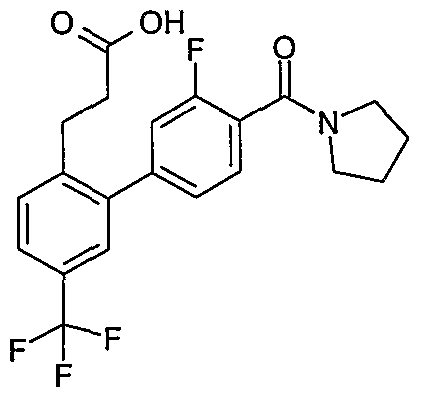
Ref document number: 2005787334

Country of ref document: EP

WWP Wipo information: published in national office

Ref document number: 11576372

Country of ref document: US