WO2006024862A2 - Desymmetrisation process for the preparation of chiral phosphines - Google Patents

Desymmetrisation process for the preparation of chiral phosphines Download PDF

Info

Publication number
WO2006024862A2
WO2006024862A2 PCT/GB2005/003389 GB2005003389W WO2006024862A2 WO 2006024862 A2 WO2006024862 A2 WO 2006024862A2 GB 2005003389 W GB2005003389 W GB 2005003389W WO 2006024862 A2 WO2006024862 A2 WO 2006024862A2
Authority
WO
WIPO (PCT)
Prior art keywords
substituted
unsubstituted
formula
group
alkyl
Prior art date
Legal status (The legal status is an assumption and is not a legal conclusion. Google has not performed a legal analysis and makes no representation as to the accuracy of the status listed.)
Ceased
Application number
PCT/GB2005/003389
Other languages
French (fr)
Other versions
WO2006024862A3 (en
Inventor
Veronique Gouverneur
Fabrice Bisaro
Current Assignee (The listed assignees may be inaccurate. Google has not performed a legal analysis and makes no representation or warranty as to the accuracy of the list.)
Oxford University Innovation Ltd
Original Assignee
Oxford University Innovation Ltd
Priority date (The priority date is an assumption and is not a legal conclusion. Google has not performed a legal analysis and makes no representation as to the accuracy of the date listed.)
Filing date
Publication date
Application filed by Oxford University Innovation Ltd filed Critical Oxford University Innovation Ltd
Publication of WO2006024862A2 publication Critical patent/WO2006024862A2/en
Publication of WO2006024862A3 publication Critical patent/WO2006024862A3/en
Anticipated expiration legal-status Critical
Ceased legal-status Critical Current

Links

Classifications

    • CCHEMISTRY; METALLURGY
    • C07ORGANIC CHEMISTRY
    • C07FACYCLIC, CARBOCYCLIC OR HETEROCYCLIC COMPOUNDS CONTAINING ELEMENTS OTHER THAN CARBON, HYDROGEN, HALOGEN, OXYGEN, NITROGEN, SULFUR, SELENIUM OR TELLURIUM
    • C07F9/00Compounds containing elements of Groups 5 or 15 of the Periodic Table
    • C07F9/02Phosphorus compounds
    • C07F9/28Phosphorus compounds with one or more P—C bonds
    • C07F9/30Phosphinic acids [R2P(=O)(OH)]; Thiophosphinic acids ; [R2P(=X1)(X2H) (X1, X2 are each independently O, S or Se)]
    • C07F9/32Esters thereof
    • C07F9/3205Esters thereof the acid moiety containing a substituent or a structure which is considered as characteristic
    • C07F9/3217Esters of acyclic unsaturated acids
    • CCHEMISTRY; METALLURGY
    • C07ORGANIC CHEMISTRY
    • C07FACYCLIC, CARBOCYCLIC OR HETEROCYCLIC COMPOUNDS CONTAINING ELEMENTS OTHER THAN CARBON, HYDROGEN, HALOGEN, OXYGEN, NITROGEN, SULFUR, SELENIUM OR TELLURIUM
    • C07F9/00Compounds containing elements of Groups 5 or 15 of the Periodic Table
    • C07F9/02Phosphorus compounds
    • C07F9/28Phosphorus compounds with one or more P—C bonds
    • C07F9/50Organo-phosphines
    • C07F9/5013Acyclic unsaturated phosphines
    • CCHEMISTRY; METALLURGY
    • C07ORGANIC CHEMISTRY
    • C07FACYCLIC, CARBOCYCLIC OR HETEROCYCLIC COMPOUNDS CONTAINING ELEMENTS OTHER THAN CARBON, HYDROGEN, HALOGEN, OXYGEN, NITROGEN, SULFUR, SELENIUM OR TELLURIUM
    • C07F9/00Compounds containing elements of Groups 5 or 15 of the Periodic Table
    • C07F9/02Phosphorus compounds
    • C07F9/28Phosphorus compounds with one or more P—C bonds
    • C07F9/50Organo-phosphines
    • C07F9/53Organo-phosphine oxides; Organo-phosphine thioxides
    • C07F9/5316Unsaturated acyclic phosphine oxides or thioxides

Definitions

  • the present invention relates to a process for producing P-chiral phosphine compounds. It also relates to phosphine compounds produced by this process.
  • Chiral phosphines are among the most versatile ligands, because they can co-ordinate to a wide range of transition metals. Chiral phosphine ligands are therefore desirable precursors to such catalysts. Chiral phosphines may possess a stereogenic centre on a side chain or on the phosphorus atom itself. However, chiral phosphines having a stereogenic centre on the phosphorus atom are less common than those in which the stereogenic centre is on an adjacent carbon atom.
  • Ring closing metathesis reactions have been widely used in organic synthesis, but until recently intermolecular olefin metathesis has received less attention due to issues with product and olefin stereoisomer selectivity.
  • Ring closing metathesis of pseudo-C 2 -symmetric phosphorus compounds in the production of phosphorus-chiral phosphonamides and phosphonates is described by Stoianova and Hanson in Organic Letters (2000) vol.2, 1, 1769-1772.
  • Intermolecular-, or cross-, metathesis of olefins has been demonstrated with vinyl and allyl phosphine oxides by Bisaro and Gouvemeur in Tet. Lett.
  • a P-prochiral phosphine oxide or P- prochiral borane-protected phosphine can be desymmetrised by olefin cross- metathesis to generate a P-chiral phosphine compound.
  • the process provides a tool for synthesising vinylphosphine oxides and vinylphosphine boranes with P- stereogenic centres which cannot be reached, or which are difficult to synthesise, by known methodologies.
  • the present invention provides a process for producing a P- chiral phosphine compound, which process comprises (a) submitting a P-prochiral phosphine substrate of formula (II):
  • -X 0 or ⁇ BR 4 R 5 R 6
  • R 4 , R 5 and R 6 are each independently selected from hydrogen, halogen, alkyl which is unsubstituted or substituted, carbocyclyl which is unsubstituted or substituted and cyano groups, or two of R 4 , R 5 and R 6 form, together with the B atom to which they are attached, a boron-containing ring system;
  • R 1 is selected from alkoxy, hydroxy, amino, an amino acid or amino acid derivative, aryl which is unsubstituted or substituted, aralkyl which is unsubstituted or substituted, alkyl which is unsubstituted or substituted, CO 2 H, CO 2 -alkyl, carbocyclyl which is unsubstituted or substituted, heterocyclyl which is unsubstituted or substituted and heteroaryl which is unsubstituted or substituted, a vinyl group of formula (III):
  • R a , R b and R c are each independently selected from hydrogen, halogen, alkoxy, hydroxy, amino, aryl which is unsubstituted or substituted, aralkyl which is unsubstituted or substituted, alkyl which is unsubstituted or substituted, alkenyl which is unsubstituted or substituted, CO 2 H, CO 2 -alkyl, carbocyclyl which is unsubstituted or substituted, heterocyclyl which is unsubstituted or substituted and heteroaryl which is unsubstituted or substituted; or R b and R c , or R a and R c , together with the carbon atoms to which they are attached form a carbocyclyl group which is unsubstituted or substituted, and an alkynyl group of formula (Ilia):
  • n and R are as defined above; and each R 2 , which are the same, is selected from a vinyl group of formula (IV):
  • R a is as defined above and R d and R e are each independently selected from the groups defined above for R b and R c ; or R d and R e , or R a and R e , together with the carbon atoms to which they are attached form a carbocyclyl group which is unsubstituted or substituted or a heterocyclyl group which is unsubstituted or substituted, and an alkynyl group of formula (IVa): wherein R d is as defined above; to cross-metathesis coupling with an unsaturated partner compound selected
  • R f , R ⁇ , R h and R 1 are each selected from the groups defined above for R b and R c ; or R h and R', or R f and R s , or R h and R f , or R' and R s , together with the carbon atoms to which they are attached form a carbocyclyl group which is unsubstituted or substituted; or R f is a group PXR ] 2 or PXR 1 R 2 , wherein each R 1 is the same or different and R 1 and R 2 and X are as defined above, and
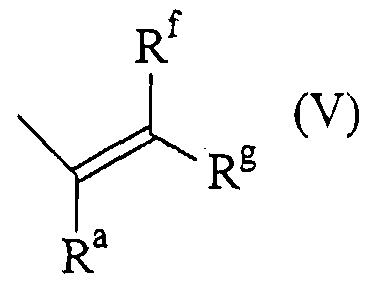
  • R 2/ V wherein X, R 1 and R 2 are as defined above and R 3 is selected from a vinyl group of formula (V): wherein R a , R f and R ⁇ are each selected from the groups defined above for R a , or is an alkynyl group of formula (Va):
  • R f is as defined above; and R 1 , R 2 and R 3 are different from each other.
  • the P-chiral phosphine compound of formula (I) may be separated, if necessary, from starting materials and side products by silica gel chromatography under conventional conditions.
  • the P-prochiral phosphine compound of formula (I) may be purified by any suitable method, such as chromatography, for example silica gel chromatography, or crystallisation, under conventional conditions.
  • the P-chiral phosphine compound of formula (I) produced by the process of the invention as defined above can be converted into another desired P-chiral phosphine compound by a subsequent cross-metathesis reaction.
  • the process of the present invention as defined above further comprises converting the resulting P-chiral phosphine compound of formula (I) into another P- chiral phosphine compound of formula (I) by cross-metathesis coupling with a suitable unsaturated partner compound in the presence of a cross-metathesis catalyst.
  • alkyl group is a straight or branched chain saturated hydrocarbon radical.
  • C 1 -C 20 alkyl for instance Ci-Cio alkyl, such as CpC 6 alkyl.
  • C 1 -C 4 alkyl for example methyl, ethyl, i-propyl, n-propyl, t-butyl, s-butyl or n- butyl. It may also be pentyl, hexyl, heptyl, octyl and the various branched chain isomers thereof, where two alkyl moieties are present in a group, the alkyl moieties may be the same or different.
  • alkyl group When an alkyl group is substituted it typically bears one or more substiruents selected from halogen, unsubstituted alkyl, unsubstituted alkenyl, alkanoyl, alkanoyloxy, aryloyloxy, aralkyloxy, silyl, silyloxy, hydroxy, alkoxy, alkylthio, haloalkyl, haloalkoxy, nitro, cyano, amino, phosphinyl, -CO 2 R, -CONRR, -S(O)R, - S(O) 2 R, -S(O)NR 2 , -S(O)R 2 , -OS(O) 2 R, -NH-S(O) 2 R or -NH-CO-R, wherein each R is independently hydrogen, Ci-C 6 alkyl, Ci-C 6 alkenyl, aryl or Cj-C 6 aralkyl.
  • Preferred substiruents include bromine, alkyl, acetyl, acetoxy, trimethylsilyl, perfluoroalkyl, carboxy and alkoxycarbonyl (-CO 2 R wherein R is C]-C 6 alkyl) such as methoxycarbonyl.
  • alkenyl group is a straight or branched chain hydrocarbon radical having one or more double bonds. Typically it is C 2 -CiO alkenyl, for instance C 2 -C 6 alkenyl, such as vinyl, allyl, butenyl, butadienyl, pentenyl or hexenyl. Where there are two or more carbon-carbon double bonds in a given compound, preferably two or more of the carbon-carbon double bonds are conjugated.
  • An alkenyl group is unsubstituted or substituted, as specified above for alkyl.
  • An alkyny] group is a straight or branched chain hydrocarbon radical having one or more triple bonds. Typically it is C 2 -Ci 0 alkynyl, for instance C 2 -C 6 alkynyl, such as ethynyl, propynyl or butynyl.
  • An alkynyl group is unsubstituted or substituted, for instance as specified above for alkyl.
  • a halogen is chlorine, fluorine, bromine or iodine. It is typically chlorine, flourine or bromine, preferably bromine.
  • An alkoxy group is typically Ci-C 6 alkoxy, preferably C 1 -C 4 alkoxy, for example methoxy, ethoxy, i-propoxy, n-propoxy, t-butoxy, n-butoxy or s-butoxy. It is unsubstituted or substituted, for instance as specified above for alkyl.
  • alkylthio group is typically Ci-C 6 alkylthio, preferably CpC 4 alkylthio, for example methylthio, ethylthio, i-propylthio, n-propylthio, t-butylthio, n-butylthio or s-butylthio. It is unsubstituted or substituted, for instance as specified above for alkyl.
  • a haloalkyl group is an alkyl group as defined above, substituted by one or more halogen atoms as defined above. It can be a perhaloalkyl group, for instance trifluoromethyl or perfluorohexyl.
  • a haloalkoxy group is an alkoxy group as defined above, substituted by one or more halogen atoms as defined above. It can be a perhaloalkoxy group, for instance trifluoromethoxy.
  • An alkanoyl group is CpC 8 alkanoyl, for instance Ci-C 6 alkanoyl, such as formyl, acetyl, propionyl or butyryl.
  • Ci-C 6 alkanoyl such as formyl, acetyl, propionyl or butyryl.
  • C)-C 6 alkanoyl is preferably acetyl.
  • An aryloyl group is a moiety ArC(O)-, wherein Ar is an aryl group as defined below.
  • Ar is an aryl group as defined below.
  • An example is benzoyl.
  • An aryloyl group is unsubstituted or substituted, for instance as specified below for aryl.
  • An alkanoyloxy group is Ci-C 8 alkanoyloxy, for instance Ci-C 6 alkanoyloxy, such as formyloxy, acetoxy or propanoyloxy.
  • An aryloyloxy group is a moiety ArC(O)O-, wherein Ar is an aryl group as defined below.
  • Ar is an aryl group as defined below.
  • An example is benzoyloxy.
  • An aryloyloxy group is unsubstituted or substituted on the aryl group, for instance as specified below for aryl.
  • a phosphinyl group is a moiety -PR 2 , wherein each R is independently H, unsubstituted or substituted alkyl, unsubstituted or substituted alkenyl, unsubstituted or substituted alkynyl, unsubstituted or substituted aryl, unsubstituted or substituted carbocyclyl, unsubstituted or substituted heteroaryl, or unsubstituted or substituted heterocyclyl.
  • each R is H or a group selected from alkyl and aryl, both of which are unsubstituted or substituted.
  • An amino group is a group NR 2 , wherein each R is the same or different and is hydrogen or an alkyl group as defined above.
  • amino acid or amino acid derivative is any known amino acid or derivative thereof. Typically it is a moiety of formula -N(R)-Y-C(R' )(R")- Y- C(O)OR or -OC(O)- Y-C(R')(R")-Y-NR2 , or a derivative thereof, wherein R, R' and R" are each independently selected from H, unsubstituted or substituted alkyl, unsubstituted or substituted alkenyl, unsubstituted or substituted alkynyl, unsubstituted or substituted aryl, unsubstituted or substituted heteroaryl, unsubstituted or substituted carbocyclyl and unsubstituted or substituted heterocyclyl; and each Y is independently selected from a single bond and a linker group, the linker group comprising one, two or three groups selected from C 1 -C 4 alkylene, C 2 -C 4 alkenylene, aryl
  • each of R, R', R" and R'" is independently H or unsubstituted or substituted alkyl or unsubstituted or substituted aryl.
  • one of R' and R" is H and the other of R' and R" is other than H, such that the C atom to which they are both attached is a stereogenic centre.
  • the carbon stereogenic centre may be either R or S according to the Cahn Ingold Prelog system of stereochemical assignment.
  • C(R')(R")- Y-C(O)OR or -OC(O)- Y-C(R')(R")- Y " NR 2 may be a non-racemic amino acid or amino acid derivative.
  • each may be a naturally occurring ⁇ - amino acid, such as proline, glycine, alanine, valine, leucine, phenylalanine, isoleucine, serine, threonine, cysteine, methionine, aspartic acid, asparagine, glutamic acid, glutamine, arginine, lysine, histidine, tyrosine or tryptophan.
  • an amino acid derivative includes a compound derived from any of the above compounds by derivatization of the amino acid side chain, R' or R", or of the terminal carboxy or amino functionality.
  • derivatized groups include those which have been derivatized to form amine hydrochlorides, p-toluene sulfonyl groups, carbobenzoxy groups, t-butyloxycarbonyl groups, chloroacetyl groups and formyl groups.
  • Free carboxyl groups may be derivatized to form salts, methyl and ethyl esters or other types of esters or hydrazides.
  • Free hydroxyl groups may be derivatized to form O-acyl or O-alkyl derivatives.
  • the imidazole nitrogen of histidine may be derivatized to form N-im- benzylhistidine.
  • An aryl group is a monocyclic, bicyclic or tricylic aromatic group which typically contains from 6 to 14 carbon atoms, preferably from 6 to 10 carbon atoms, in the ring portion. Examples include phenyl, naphthyl, indenyl and indanyl groups. An aryl group is unsubstituted or substituted, for instance as specified above for alkyl.
  • Aryl which is unsubstituted or substituted is typically phenyl which is unsubstituted or substituted, for instance as specified above for alkyl.
  • Phenyl which is substituted is preferably phenyl substituted by C]-C 6 alkyl, Cj-C 6 alkoxy (for instance methoxy), nitro, halogen, haloalkyl, alkanoyl or alkanoyloxy.
  • a substituted aryl group carries 1 , 2 or 3 substituents, for instance 1 or 2.
  • An aralkyl group is an alkyl group as defined above which is substituted by one or more aryl groups as defined above.
  • An aralkyl group is unsubstituted or substituted, either on the aryl moiety or the alkyl moiety, for instance as specified above for alkyl.
  • Examples of an aralkyl group include benzyl, triphenylmethyl and phenethyl groups.
  • Axalkyl is preferably benzyl.
  • An aralkyloxy group is an aralkyl group as defined above that is bonded to an oxygen atom through which it is linked to the reminder of the molecule.
  • Examples of aralkyloxy groups are benzyloxy, triphenylmethyloxy and phenethyloxy groups.
  • a carbocyclyl group is a non-aromatic saturated or unsaturated monocyclic hydrocarbon ring, typically having from 3 to 10 carbon atoms.
  • It may be a C 3 -C 8 cycloalkyl group, or C 5 -C] 0 cycloalkyl group, for instance cyclopropyl, cyclobutyl, cyclopentyl, cyclohexyl, cycloheptyl or cyclooctyl.
  • it may be a cycloalkenyl group, typically C 4 -C 8 cycloalkenyl, for instance cylcopentenyl, cyclohexenyl, cyclohexadienyl, cycloheptenyl, cyclohepadienyl, cyclooctenyl or cyclooctadienyl.
  • a carbocyclyl group may be unsubstituted or substituted, for instance by oxo or as specified above for alkyl.
  • a carbocyclyl group may be bridged, for example by a bridgehead heteroatom or by an alkylene group which is optionally interrupted by a heteroatom. Typical heteroatoms in a bridgehead group are O, N and S. Examples of bridged carbocyclyl groups include norbornenyl and 8- oxa-bicyclo[3.2.1]oct-6-en-only groups.
  • a heterocyclyl group is a non-aromatic saturated or unsaturated heterocyclic ring having from 5 to 10 carbon atoms, typically 3 to 7 carbon atoms, which contains at least one heteroatom selected from N, O, S, P, Se and Si, typically O, N and S, and which is optionally fused to a second 5- or 6-membered, saturated or unsaturated heterocyclic ring or to an aryl group as defined above. Saturated heterocyclyl groups are preferred.
  • Examples include tetrahydrofuranyl, tetrahydrothienyl, pyrrolidinyl, imidazolidinyl, pyrazolidinyl, dioxolanyl, thiazolidinyl, tetrahydropyranyl, piperidinyl, dioxanyl, piperazinyl, morpholinyl, thiomorpholinyl, thioxanyl, dithiolanyl, oxazolidinyl, tetrahydrothiopyranyl and dithianyl.
  • a heterocyclyl group may be unsubstituted or substituted, for instance by oxo or as specified above for alkyl. Typically it carries 0, 1 or 2 substituents.
  • a heteroaryl group is typically a 5- to 10 membered mono- or bicyclic heteroaromatic ring. It is generally a 5- or 6-membered ring, containing at least one heteroatom selected from O, S, N, P, Se and Si. It may contain, for example, 1, 2 or 3 heteroatoms.
  • heteroaryl groups include pyridyl, pyrazinyl, pyrimidinyl, pyridazinyl, furanyl, thienyl, pyrazolidinyl, pyrrolyl, oxazolyl, oxadiazolyl, isoxazolyl, thiadiazolyl, thiazolyl, isothiazolyl, imidazolyl, pyrazolyl, quinolyl and isoquinolyl.
  • a heteroaryl group may be unsubstituted or substituted, for instance, as specified above for alkyl. Typically it carries 0, 1, 2 or 3 substituents.
  • a silyl group is a group -SiRR'R" in which R, R' and R" are the same or different and each is hydrogen, or an alkyl, alkoxy, aryl or aryloxy group as defined above. Typically it is a trialkylsilyl group, for instance a trimethylsilyl group.
  • a silyloxy group is a group -OSiRR'R" in which R, R' and R" are as specified above for a silyl group. Examples are tertiaryarylbutyldiphenylsilyloxy and tertiarybutyldimethylsilyloxy.
  • R 4 , R 5 and R 6 are typically independently selected from hydrogen, halogen, cyano, isopinocampheyl, unsubstituted alkyl and alkyl substituted by one or more halogens.
  • R 4 , R 5 and R 6 are typically not identical.
  • no two of R 4 , R 5 and R 6 are identical, such that the boron atom to which they are attached is chiral.
  • Examples of borane groups of the formula BR 4 R 5 R 6 are BH 3 , IpcBH 2 , IpC 2 BH and IpcB(CN)H, where Ipc is isopinocampheyl.
  • one of R 4 , R 5 and R 6 carries one or more halogen atoms, for example F.
  • R 1 is typically aryl, hydroxy, CpC 6 alkoxy, amino, Ci-C 6 alkyl which is unsubstituted or substituted, or a vinyl group of formula (III) as defined above.
  • R 1 is phenyl, benzyl, Ci-C 6 alkoxy, hydroxy, amino or a vinyl group of formula (III) as defined above.
  • R a , R b and R ⁇ are the same or different. They are typically each selected from H, alkyl which is unsubstituted or substituted or aryl which is unsubstituted or substituted. In general at least one of R a , R b and R c in formula (III) is H.
  • R a is H and R b and R c are each H or alkyl which is unsubstituted or substituted; or one of R b and R c is H, the other is H or alkyl which is unsubstituted or substituted, and R a is H or alkyl which is unsubstituted or substituted.
  • R b is typically H or alkyl which is unsubstituted or substituted.
  • R a in formula (PV) is as defined in formula (IU).
  • R d and R e are the same or different. They are typically each selected from H, alkyl which is unsubstituted or substituted and aryl which is substituted or substituted. In general as least one of R ⁇ R d and R € in formula (IV) is H. For instance: R a is H and
  • R d and R e are each H or alkyl which is unsubstituted or substituted; or one of R d and
  • R e is H, the other is H or alkyl which is unsubstituted or substituted, and R a is H or alkyl which is unsubstituted or substituted.
  • R d is typically H or alkyl which is unsubstituted or substituted.
  • R a in formula (V) is as defined in formula (III).
  • R a , R f and R e are the same or different. They are typically each selected from H, alkyl which is unsubstituted or substituted and aryl which is unsubstituted or substituted.
  • R a is H and R f and R ⁇ are each H or alkyl which is unsubstituted or substituted; or one of R f and
  • R s is H, the other is H or alkyl which is unsubstituted or substituted, and R a is H or alkyl which is unsubstituted or substituted.
  • R f , R h , R h and R 1 are the same or different. They are typically each selected from H, alkyl which is unsubstituted or substituted and aryl which is unsubstituted or substituted, or R f is a group PXR 1 R 2 wherein R 1 and R 2 are identical to R 1 and R 2 , respectively, of the P-prochiral phosphine substrate of formula (II). Suitable further examples of olefins of formula
  • R f and R h are the same or different.
  • They are typically each selected from H, alkyl which is unsubstituted or substituted and aryl which is unsubstituted or substituted.
  • any of R a to R s is alkyl which is substituted, it is typically Ci-C 6 alkyl substituted by unsubstituted Ci-C 6 alkyl, haloalkyl, aralkyl, aralkyloxy, halogen, Ci-
  • Ci-C 6 alkanoyloxy Ci-C 6 alkanoyloxy, -COOR wherein R is H or Ci-C 6 alkyl, or trialkylsilyl such as trimethylsilyl.
  • the P-chiral phosphine compound of formula (I) is a P-chiral diphosphine compound.
  • R f is a group PXR 1 R 2 , wherein R 1 and R 2 are identical to R 1 and R 2 , respectively, of the P-prochiral phosphine of formula (JI)
  • the P-chiral phosphine compound of formula (I) is a homodimer of the P-prochiral phosphine of formula (II).
  • the process of the present invention is a homodimerization reaction.
  • Certain P-chiral phosphine compounds produced by the process of the invention are novel. Accordingly the present invention further provides a compound which is a P-chiral trivinylphosphine compound of formula (Ia):
  • R 1 is a vinyl group of formula (III) as defined above; and R 1 , R 2 and R 3 are different from each other.
  • novel trivinylphosphine is of formula (Ia'):
  • n 0 or 1
  • X 0 or ->BR 4 R 5 R 6 wherein R 4 , R 5 and R 6 are each independently selected from hydrogen, halogen, alkyl which is unsubstituted or substituted, carbocyclyl which is unsubstituted or substituted and cyano groups, or two of R 4 , R 5 and R 6 form, together with the B atom to which they are attached, a boron-containing ring system; and
  • R a to R 8 are each selected from H, alkyl which is unsubstituted or substituted and aryl which is unsubstituted or substituted.
  • at least one of R a , R b and R c is H; at least one of R ⁇ R d and R e is H; and at least one of R a , R f and R s is H.
  • the other substituents are typically H or alkyl which is unsubstituted or substituted.
  • each R a in formula (Ia') is H and each of R b to R g is H or alkyl which is unsubstituted or substituted.
  • the process of the invention as defined above is typically carried out by contacting the P-prochiral substrate of formula (II) with the partner olef ⁇ nic compound of formula (VI) or partner alkyne of formula (Via) and adding the catalyst portionwise over time, for instance over a period of 24 hours.
  • the reaction conditions are standard for the particular catalyst being used.
  • the catalyst used in the present invention is a cross-metathesis catalyst. Typically this is a Grubbs-, Hoveyda- or Schrock-type catalysts. Preferably it is a Grubbs, Hoveyda or Schrock catalyst. These are ruthenium or molybdenum catalysts, suitable examples of which are shown below:
  • the cross-metathesis catalyst may be racemic or homochiral (chiral non-racemic) homochiral molybdenum and ruthenium catalysts are particularly preferred, for instance those shown below:
  • the appropriate conditions for the process of the present invention are selected according to the particular catalyst being used.
  • the catalyst is generally used in an amount of from 2 mol % to 8 mol %, for instance from 2 mol % to 6 mol %, preferably in an amount of 5 mol %.
  • the catalyst is catalyst 1 or catalyst 2 as shown above.
  • the process of the present invention is generally carried out in an aprotic solvent.
  • solvents include dimethylsulfoxide, dimethylformamide and chlorinated hydrocarbons, for example dichloromethane.
  • Dichloromethane is a preferred solvent.
  • the reaction is carried out in dichloromethane at reflux.
  • the reaction is preferably carried out in an inert atmosphere due to the air sensitivity of the catalysts employed.
  • the reaction is carried out under nitrogen or argon.
  • olefins have been categorised into types I, II, III and FV based on their ability to homodimerize and their reactivity towards cross-metathesis with other olefins.
  • Type I olefins are those able to undergo rapid homodimerization and whose homodimers can participate in cross-metathesis as well as their terminal olefin counterpart.
  • Type II olefins homodimerize slowly and, unlike Type I olefins, their homodimers can only be sparingly consumed in subsequent metathesis reactions.
  • Type III olefins are essentially unable to undergo homodimerization, but are still able to undergo cross-metathesis with olefins of type I and type II.
  • Type IV olefins are not able to participate in cross-metathesis with a particular catalyst but do not inhibit catalyst activity toward other olefins. Outside these categories are olefins that deactivate the catalyst.
  • a reactivity gradient exists from the most active type (type I) to the least active type (type IV), with sterically unhindered, electron- rich olefins categorized as type I and increasingly sterically hindered and/or electron- deficient olefins falling into types I to FV.
  • the olefins of formulae (IV), (V) and (VI) as defined above may be of types I, ⁇ or III.
  • the olefin of formula (IU) as defined above may be any one of types I, II, III or rv. Selection of the type of olefin used in the process of the present invention can affect the rate of reaction and product mixture achieved.
  • the olefin of formula (FV) is of type I or type II, homodimerization of the compound formula (FI) may occur.
  • the homodimerization of P-prochiral phosphine substrates of formula (II) is encompassed by the present invention, as noted above.
  • the process of the present invention it may be necessary or desirable to control the selectivity of the reaction at different levels.
  • the aim overall is to achieve a high yield of the desired cross-metathesis product with minimal amounts of the competing self-metathesis product.
  • the formation of the product resulting from a single cross-metathesis reaction should generally be favoured, minimising as far as possible the formation of a multi-functionalised product.
  • E/Z selectivity may also be an important issue, particularly if the newly formed double bond requires further stereoselective manipulation.
  • the P-chiral phosphine oxide or P-chiral borane-protected phosphine of formula (I) is a triene when R 1 is a vinyl group of formula (III).
  • the starting P-prochiral substrate of formula (II) is also a triene, which can itself be produced by a cross-metathesis reaction from a symmetric triene.
  • the process of the present invention as defined above further comprises producing the P-prochiral phosphine compound of formula (U), in which R 1 is a vinyl group of formula (III), by a process which comprises submitting a symmetric trivinylphosphine compound of formula (VII):
  • each R 2 is the same and is as defined above, to cross-metathesis with an olefinic partner of the following formula (VIII):
  • a stereogenic centre may be incorporated into the starting P-prochiral substrate, the olefin partner of formula (VI) or the alkyne partner of formula (Via).
  • the stereogenic centre may be a C atom or a heteratom, such as B or P.
  • a chiral auxiliary is typically part of the group R 1 in the compound of formula (II); for instance, R 1 may be an alkoxy group, an amino group or, in particular, an amino acid or amino acid derivative which possesses a chiral centre.
  • the chiral auxiliary may alternatively be on the borane group ⁇ BR 4 R 5 R 6 .
  • the sterogenic centre could be on the boron atom in the group ⁇ BR 4 R 5 R 6 when each of R 4 , R 5 and R 6 is different, or could be on any one of R 4 , R 5 and R 6 .
  • the option wherein the borane group is a chiral auxiliary is particularly elegant since the borane functionality is serving both to protect the P atom and to influence the stereoselectivity of the reaction.
  • a chiral borane phosphine may favour cross-metathesis reaction at one group R 2 over the other group R 2 .
  • R 2 possess a stereogenic centre it may favour reaction of the phosphine compound at one group R 2 over the other.
  • the process of the present invention yields a P-chiral phosphine oxide or a borane-protected P-chiral phosphine. Both of these may, if desired, be converted to the corresponding free P-chiral phosphine by techniques known in the art. Examples of such techniques are described in "A Guide to Organophosphorus Chemistry" by Louis D. Quin, John Wiley & Sons, pp 300-303.
  • a phosphine oxide may be reduced to the free phosphine by reduction using a methylating agent and LiAlH 4 .
  • Substantially complete inversion of the stereochemistry of a chiral phosphorus atom can be achieved by choosing the correct methylating agent and optimising the reaction conditions, for example by reducing the temperature.
  • Suitable methylating agents include trifluoromethanesulfonate, methyl iodide, methyl methanesulfonate and methyl methylbenzenesulfonate.
  • P-chiral phosphine oxides may be reduced to the free P-chiral phosphine, with retention of stereochemistry at the chiral phosphorus atom, by treatment with triethoxysilane, or polymethylhydrosiloxane and a catalytic amount of titanium (FV) isopropoxide.
  • Conversion of a phosphine oxide to a phosphine borane may be achieved by reduction under the conditions described above, followed by treatment of the reaction mixture with a borane in tetrahydrofuran.
  • a borane-protected phosphine may be deprotected to the corresponding free phosphine compound by treatment with trichlorosilane in toluene, or by treatment with 1 ,4-diazabicyclo-2,2-octane in tetrahydrofuran.
  • R a to R g are as defined above for formula (Ia').
  • the vinyl and alkynyl groups in the P-chiral compound produced by the process of the invention are useful building blocks for further reaction. Each functional group of the vinyl and alkynyl substituent groups may undergo further chemical modification.
  • the vinyl functional groups may, if desired, be converted into other functional groups by further reaction steps. For instance, the vinyl functional groups may be hydrogenated to the corresponding saturated alkyl groups by standard hydrogenation techniques. Examples of such techniques are described in Vogel's "Textbook of Practical Organic Chemistry", 5 th edition, Prentice Hall. Such techniques are also described in Adv. Synth. Catal. (2003), 345, 79-101.
  • the starting P-prochiral substrate of formula (II) may be produced by techniques known in the art or by analogy with such techniques. Examples of suitable procedures for producing the starting substrate are illustrated below:
  • the olefin of formula (VI) and the alkyne of formula (Via) may each be produced by techniques known in the art or by analogy with such techniques.
  • the process of the present invention provides a "one-pot" synthesis of a P-chiral di- or tri-vinylphosphine by cross-metathesis as described above with more than one unsaturated partner compound.
  • the starting vinylphosphine compound may be P-prochiral or P-proprochiral.
  • P-chiral phosphines are useful as ligands for catalysts for enantioselective syntheses.
  • a P-chiral phosphine compound produced by the process of the present invention may therefore be converted, optionally after removal of the oxide or borane functionality, into a catalyst by known techniques.
  • the P-chiral phosphine compound is typically deprotected to the corresponding phosphine and then complex ed to a metal to yield a catalyst.
  • Preferred metals in this context include transition metals, for instance platinum and palladium.
  • Catalysts produced from P-chiral phosphine compounds of the present invention may be used to catalyse numerous types of asymmetric transformation, for example palladium-mediated allylation, palladium-catalysed hydrosilylation of olefins, palladium-catalysed asymmetric hydroboration, asymmetric hydrogenation, asymmetric conjugate addition and asymmetric hydro formylati on. Examples of such uses are well documented in textbooks and in the literature, for instance in Tetrahedron Asymmetry (2004) vol. 15, issue 14, and Accounts of Chemical Research (2000) 33, 345.
  • the percentage yield of product A and product B are shown in Table 1.
  • the stereoselectivity of the reaction was at least 95% E isomer in each case, except for that Of AcO(CHa) 4 CHCH 2 -, which give a ration of 4: 1 of E:Z isomers.
  • Example 2 The method of Example 1 was carried out using triethenylphosphine oxide in place of phenyldiethenylphosphine oxide. The product and percentage yield of each reaction is shown in Table 2.
  • Example 1 The method of Example 1 was carried out using ethoxydiethenylphosphine oxide in place of phenyldiethenylphosphine oxide. The yields of each of the products are shown in the reaction scheme below.
  • Example 1 The method of Example 1 was carried out using phenyldiethenylphosphine borane in place of phenyldiethenylphosphine oxide. The yields of each of the products are shown in the reaction scheme below.
  • Phenyldivinylphosphinoxide was coupled by cross-metathesis with the following partner olefins: dodecene, p-methoxystyrene, trimethylallylsilane, and 6- bromohexene.
  • the reaction in each case was conducted under reflux in dichloromethane with up to 5 mol% of catalyst 1 or catalyst 2 shown below.
  • the following table shows the stoichiometry of each reaction and the yields of desired P- chiral cross-metathesis product (5) and the undesired (non-chiral) product (6).
  • the desired P-prochiral triene 9a was recovered in 75% yield as a single E-isomer.
  • Subsequent cross-metathesis coupling of 9a with styrene (R' phenyl) under the above conditions gave the desired P-chiral triene 10a as the sole E-isomer in 87% yield, with only traces of the compound resulting from a double cross-metathesis reaction.
  • the desired product was also obtained when the order of the two cross- metathesis reactions was reversed; thus the coupling of trivinylphosphinoxide with styrene gave the P-prochiral triene 9b, which underwent cross-metathesis with dodecene to give the P-chiral triene 10a.
  • the P-chiral triene 10a was converted to another P-chiral triene bearing three different E-alkenyl groups by a subsequent cross-metathesis coupling with 3 phenyl propene (R"-CH 2 - ⁇ henyl) as the olefinic partner.

Landscapes

  • Chemical & Material Sciences (AREA)
  • Organic Chemistry (AREA)
  • Health & Medical Sciences (AREA)
  • Life Sciences & Earth Sciences (AREA)
  • Biochemistry (AREA)
  • General Health & Medical Sciences (AREA)
  • Molecular Biology (AREA)
  • Organic Low-Molecular-Weight Compounds And Preparation Thereof (AREA)

Abstract

Provided is a process for producing a P-chiral phosphine compound using a cross-metathesis coupling reaction between a non-chiral phosphine and an olefin or an alkyne. The P-chiral phosphine compounds produced by this process are also disclosed.

Description

DESYMMETRISATION PROCESS
Field of the Invention The present invention relates to a process for producing P-chiral phosphine compounds. It also relates to phosphine compounds produced by this process.
Background of the Invention
The development of new chiral ligands for asymmetric organometallic catalysts is an important area of research within organic chemistry. Phosphines are among the most versatile ligands, because they can co-ordinate to a wide range of transition metals. Chiral phosphine ligands are therefore desirable precursors to such catalysts. Chiral phosphines may possess a stereogenic centre on a side chain or on the phosphorus atom itself. However, chiral phosphines having a stereogenic centre on the phosphorus atom are less common than those in which the stereogenic centre is on an adjacent carbon atom. Indeed, only a limited number of P-chiral phosphines have been reported due to the difficulties associated with the synthesis of homochiral phosphines. Phosphines are sensitive to oxidation and are prone to racemisation if the phosphorus atom is chiral. Olefin metathesis has recently gained prominence in synthetic organic chemistry. The ruthenium benzylidene catalysts developed by Grubbs and Hoveyda, and the molybdenum alkoxyimide alkylidene catalysts developed by Schrock, are commercially available. This makes olefin metathesis a practical synthetic reaction for small molecule synthesis. Ring closing metathesis reactions have been widely used in organic synthesis, but until recently intermolecular olefin metathesis has received less attention due to issues with product and olefin stereoisomer selectivity. Ring closing metathesis of pseudo-C2-symmetric phosphorus compounds in the production of phosphorus-chiral phosphonamides and phosphonates is described by Stoianova and Hanson in Organic Letters (2000) vol.2, 1, 1769-1772. Intermolecular-, or cross-, metathesis of olefins has been demonstrated with vinyl and allyl phosphine oxides by Bisaro and Gouvemeur in Tet. Lett. 44 (2003) 7133- 7135 and by Demchuk et al in Organic Letters, (2003) vol.5, 1, 3217-3220. Cross- metathesis of an olefin with an alkyne is reported by Lee et al in Organic Letters (2003) vol. 5, 11, 1855-1858, and cross-metathesis between two alkynes is described by Fϋrstner and Mathes in Organic Letters (2001), 3, 221.
Summary of the Invention
It has now been surprisingly found that a P-prochiral phosphine oxide or P- prochiral borane-protected phosphine can be desymmetrised by olefin cross- metathesis to generate a P-chiral phosphine compound. The process provides a tool for synthesising vinylphosphine oxides and vinylphosphine boranes with P- stereogenic centres which cannot be reached, or which are difficult to synthesise, by known methodologies. The compounds produced can be readily functionalised and/or deprotected to yield P-chiral phosphines and phosphine oxides that are valuable in organic chemistry, particularly as enantiopure P-chiral ligands for transition metal catalysts useful in enantioselective syntheses. Accordingly, the present invention provides a process for producing a P- chiral phosphine compound, which process comprises (a) submitting a P-prochiral phosphine substrate of formula (II):
V (ID R2/ V
wherein
-X is =0 or →BR4R5R6 wherein R4, R5 and R6 are each independently selected from hydrogen, halogen, alkyl which is unsubstituted or substituted, carbocyclyl which is unsubstituted or substituted and cyano groups, or two of R4, R5 and R6 form, together with the B atom to which they are attached, a boron-containing ring system;
R1 is selected from alkoxy, hydroxy, amino, an amino acid or amino acid derivative, aryl which is unsubstituted or substituted, aralkyl which is unsubstituted or substituted, alkyl which is unsubstituted or substituted, CO2H, CO2-alkyl, carbocyclyl which is unsubstituted or substituted, heterocyclyl which is unsubstituted or substituted and heteroaryl which is unsubstituted or substituted, a vinyl group of formula (III):
Figure imgf000004_0001
wherein n is 0 or 1 and Ra, Rb and Rc are each independently selected from hydrogen, halogen, alkoxy, hydroxy, amino, aryl which is unsubstituted or substituted, aralkyl which is unsubstituted or substituted, alkyl which is unsubstituted or substituted, alkenyl which is unsubstituted or substituted, CO2H, CO2-alkyl, carbocyclyl which is unsubstituted or substituted, heterocyclyl which is unsubstituted or substituted and heteroaryl which is unsubstituted or substituted; or Rb and Rc, or Ra and Rc, together with the carbon atoms to which they are attached form a carbocyclyl group which is unsubstituted or substituted, and an alkynyl group of formula (Ilia):
Figure imgf000004_0002
wherein n and R are as defined above; and each R2, which are the same, is selected from a vinyl group of formula (IV):
Figure imgf000004_0003
wherein Ra is as defined above and Rd and Re are each independently selected from the groups defined above for Rb and Rc; or Rd and Re, or Ra and Re, together with the carbon atoms to which they are attached form a carbocyclyl group which is unsubstituted or substituted or a heterocyclyl group which is unsubstituted or substituted, and an alkynyl group of formula (IVa):
Figure imgf000005_0001
wherein Rd is as defined above; to cross-metathesis coupling with an unsaturated partner compound selected
(i) an olefin of formula (VI):
Figure imgf000005_0002
wherein Rf , Rε, Rh and R1 are each selected from the groups defined above for Rb and Rc; or Rh and R', or Rf and Rs , or Rh and Rf, or R' and Rs, together with the carbon atoms to which they are attached form a carbocyclyl group which is unsubstituted or substituted; or Rf is a group PXR] 2 or PXR1R2, wherein each R1 is the same or different and R1 and R2 and X are as defined above, and
(ii) an alkyne of formula (Via):
Figure imgf000005_0003
wherein Rf and Rh are as defined above; in the presence of a cross-metathesis catalyst; and (b) recovering the P-chiral phosphine compound of formula (I):
R1V X
P!' (I)
R2/ V wherein X, R1 and R2 are as defined above and R3 is selected from a vinyl group of formula (V):
Figure imgf000006_0001
wherein Ra, Rf and Rε are each selected from the groups defined above for Ra, or is an alkynyl group of formula (Va):
Figure imgf000006_0002
wherein Rf is as defined above; and R1, R2 and R3 are different from each other.
The P-chiral phosphine compound of formula (I) may be separated, if necessary, from starting materials and side products by silica gel chromatography under conventional conditions. The P-prochiral phosphine compound of formula (I) may be purified by any suitable method, such as chromatography, for example silica gel chromatography, or crystallisation, under conventional conditions.
Compounds of formula (I) which are E/Z isomers may be separated by chromatographic techniques, for example high performance liquid chromatography (HPLC).
The P-chiral phosphine compound of formula (I) produced by the process of the invention as defined above can be converted into another desired P-chiral phosphine compound by a subsequent cross-metathesis reaction. In another aspect, therefore, the process of the present invention as defined above further comprises converting the resulting P-chiral phosphine compound of formula (I) into another P- chiral phosphine compound of formula (I) by cross-metathesis coupling with a suitable unsaturated partner compound in the presence of a cross-metathesis catalyst.
Detailed description of the Invention An alkyl group is a straight or branched chain saturated hydrocarbon radical.
Typically it is C1-C20 alkyl, for instance Ci-Cio alkyl, such as CpC6 alkyl. Preferably it is C1-C4 alkyl, for example methyl, ethyl, i-propyl, n-propyl, t-butyl, s-butyl or n- butyl. It may also be pentyl, hexyl, heptyl, octyl and the various branched chain isomers thereof, where two alkyl moieties are present in a group, the alkyl moieties may be the same or different.
When an alkyl group is substituted it typically bears one or more substiruents selected from halogen, unsubstituted alkyl, unsubstituted alkenyl, alkanoyl, alkanoyloxy, aryloyloxy, aralkyloxy, silyl, silyloxy, hydroxy, alkoxy, alkylthio, haloalkyl, haloalkoxy, nitro, cyano, amino, phosphinyl, -CO2R, -CONRR, -S(O)R, - S(O)2R, -S(O)NR2, -S(O)R2, -OS(O)2R, -NH-S(O)2R or -NH-CO-R, wherein each R is independently hydrogen, Ci-C6 alkyl, Ci-C6 alkenyl, aryl or Cj-C6 aralkyl. Preferred substiruents include bromine, alkyl, acetyl, acetoxy, trimethylsilyl, perfluoroalkyl, carboxy and alkoxycarbonyl (-CO2R wherein R is C]-C6 alkyl) such as methoxycarbonyl.
An alkenyl group is a straight or branched chain hydrocarbon radical having one or more double bonds. Typically it is C2-CiO alkenyl, for instance C2-C6 alkenyl, such as vinyl, allyl, butenyl, butadienyl, pentenyl or hexenyl. Where there are two or more carbon-carbon double bonds in a given compound, preferably two or more of the carbon-carbon double bonds are conjugated. An alkenyl group is unsubstituted or substituted, as specified above for alkyl.
An alkyny] group is a straight or branched chain hydrocarbon radical having one or more triple bonds. Typically it is C2-Ci0 alkynyl, for instance C2-C6 alkynyl, such as ethynyl, propynyl or butynyl. An alkynyl group is unsubstituted or substituted, for instance as specified above for alkyl.
A halogen is chlorine, fluorine, bromine or iodine. It is typically chlorine, flourine or bromine, preferably bromine.
An alkoxy group is typically Ci-C6 alkoxy, preferably C1-C4 alkoxy, for example methoxy, ethoxy, i-propoxy, n-propoxy, t-butoxy, n-butoxy or s-butoxy. It is unsubstituted or substituted, for instance as specified above for alkyl.
An alkylthio group is typically Ci-C6 alkylthio, preferably CpC4 alkylthio, for example methylthio, ethylthio, i-propylthio, n-propylthio, t-butylthio, n-butylthio or s-butylthio. It is unsubstituted or substituted, for instance as specified above for alkyl.
A haloalkyl group is an alkyl group as defined above, substituted by one or more halogen atoms as defined above. It can be a perhaloalkyl group, for instance trifluoromethyl or perfluorohexyl. A haloalkoxy group is an alkoxy group as defined above, substituted by one or more halogen atoms as defined above. It can be a perhaloalkoxy group, for instance trifluoromethoxy.
An alkanoyl group is CpC8 alkanoyl, for instance Ci-C6 alkanoyl, such as formyl, acetyl, propionyl or butyryl. C)-C6 alkanoyl is preferably acetyl.
An aryloyl group is a moiety ArC(O)-, wherein Ar is an aryl group as defined below. An example is benzoyl. An aryloyl group is unsubstituted or substituted, for instance as specified below for aryl.
An alkanoyloxy group is Ci-C8 alkanoyloxy, for instance Ci-C6 alkanoyloxy, such as formyloxy, acetoxy or propanoyloxy.
An aryloyloxy group is a moiety ArC(O)O-, wherein Ar is an aryl group as defined below. An example is benzoyloxy. An aryloyloxy group is unsubstituted or substituted on the aryl group, for instance as specified below for aryl.
A phosphinyl group is a moiety -PR2, wherein each R is independently H, unsubstituted or substituted alkyl, unsubstituted or substituted alkenyl, unsubstituted or substituted alkynyl, unsubstituted or substituted aryl, unsubstituted or substituted carbocyclyl, unsubstituted or substituted heteroaryl, or unsubstituted or substituted heterocyclyl. Preferably each R is H or a group selected from alkyl and aryl, both of which are unsubstituted or substituted. An amino group is a group NR2, wherein each R is the same or different and is hydrogen or an alkyl group as defined above.
An amino acid or amino acid derivative is any known amino acid or derivative thereof. Typically it is a moiety of formula -N(R)-Y-C(R' )(R")- Y- C(O)OR or -OC(O)- Y-C(R')(R")-Y-NR2 , or a derivative thereof, wherein R, R' and R" are each independently selected from H, unsubstituted or substituted alkyl, unsubstituted or substituted alkenyl, unsubstituted or substituted alkynyl, unsubstituted or substituted aryl, unsubstituted or substituted heteroaryl, unsubstituted or substituted carbocyclyl and unsubstituted or substituted heterocyclyl; and each Y is independently selected from a single bond and a linker group, the linker group comprising one, two or three groups selected from C1-C4 alkylene, C2-C4 alkenylene, aryl, heteroaryl, carbocyclyl, heterocyclyl, O, S and NR'", wherein R'" is H, Ci-C4 alkyl or C2-C4 alkenyl. Typically each of R, R', R" and R'" is independently H or unsubstituted or substituted alkyl or unsubstituted or substituted aryl. Preferably, one of R' and R" is H and the other of R' and R" is other than H, such that the C atom to which they are both attached is a stereogenic centre. The carbon stereogenic centre may be either R or S according to the Cahn Ingold Prelog system of stereochemical assignment. Thus the group -N(R)-Y-
C(R')(R")- Y-C(O)OR or -OC(O)- Y-C(R')(R")- Y"NR2 may be a non-racemic amino acid or amino acid derivative. For example, each may be a naturally occurring α- amino acid, such as proline, glycine, alanine, valine, leucine, phenylalanine, isoleucine, serine, threonine, cysteine, methionine, aspartic acid, asparagine, glutamic acid, glutamine, arginine, lysine, histidine, tyrosine or tryptophan.
Typically it is phenylalanine. As used herein, an amino acid derivative includes a compound derived from any of the above compounds by derivatization of the amino acid side chain, R' or R", or of the terminal carboxy or amino functionality. Such derivatized groups include those which have been derivatized to form amine hydrochlorides, p-toluene sulfonyl groups, carbobenzoxy groups, t-butyloxycarbonyl groups, chloroacetyl groups and formyl groups. Free carboxyl groups may be derivatized to form salts, methyl and ethyl esters or other types of esters or hydrazides. Free hydroxyl groups may be derivatized to form O-acyl or O-alkyl derivatives. The imidazole nitrogen of histidine may be derivatized to form N-im- benzylhistidine.
An aryl group is a monocyclic, bicyclic or tricylic aromatic group which typically contains from 6 to 14 carbon atoms, preferably from 6 to 10 carbon atoms, in the ring portion. Examples include phenyl, naphthyl, indenyl and indanyl groups. An aryl group is unsubstituted or substituted, for instance as specified above for alkyl.
Aryl which is unsubstituted or substituted is typically phenyl which is unsubstituted or substituted, for instance as specified above for alkyl. Phenyl which is substituted is preferably phenyl substituted by C]-C6 alkyl, Cj-C6 alkoxy (for instance methoxy), nitro, halogen, haloalkyl, alkanoyl or alkanoyloxy. Typically a substituted aryl group carries 1 , 2 or 3 substituents, for instance 1 or 2.
An aralkyl group is an alkyl group as defined above which is substituted by one or more aryl groups as defined above. An aralkyl group is unsubstituted or substituted, either on the aryl moiety or the alkyl moiety, for instance as specified above for alkyl. Examples of an aralkyl group include benzyl, triphenylmethyl and phenethyl groups. Axalkyl is preferably benzyl.
An aralkyloxy group is an aralkyl group as defined above that is bonded to an oxygen atom through which it is linked to the reminder of the molecule. Examples of aralkyloxy groups are benzyloxy, triphenylmethyloxy and phenethyloxy groups. A carbocyclyl group is a non-aromatic saturated or unsaturated monocyclic hydrocarbon ring, typically having from 3 to 10 carbon atoms. It may be a C3-C8 cycloalkyl group, or C5-C]0 cycloalkyl group, for instance cyclopropyl, cyclobutyl, cyclopentyl, cyclohexyl, cycloheptyl or cyclooctyl. Alternatively it may be a cycloalkenyl group, typically C4-C8 cycloalkenyl, for instance cylcopentenyl, cyclohexenyl, cyclohexadienyl, cycloheptenyl, cyclohepadienyl, cyclooctenyl or cyclooctadienyl. A carbocyclyl group may be unsubstituted or substituted, for instance by oxo or as specified above for alkyl. A carbocyclyl group may be bridged, for example by a bridgehead heteroatom or by an alkylene group which is optionally interrupted by a heteroatom. Typical heteroatoms in a bridgehead group are O, N and S. Examples of bridged carbocyclyl groups include norbornenyl and 8- oxa-bicyclo[3.2.1]oct-6-en-only groups.
A heterocyclyl group is a non-aromatic saturated or unsaturated heterocyclic ring having from 5 to 10 carbon atoms, typically 3 to 7 carbon atoms, which contains at least one heteroatom selected from N, O, S, P, Se and Si, typically O, N and S, and which is optionally fused to a second 5- or 6-membered, saturated or unsaturated heterocyclic ring or to an aryl group as defined above. Saturated heterocyclyl groups are preferred. Examples include tetrahydrofuranyl, tetrahydrothienyl, pyrrolidinyl, imidazolidinyl, pyrazolidinyl, dioxolanyl, thiazolidinyl, tetrahydropyranyl, piperidinyl, dioxanyl, piperazinyl, morpholinyl, thiomorpholinyl, thioxanyl, dithiolanyl, oxazolidinyl, tetrahydrothiopyranyl and dithianyl. A heterocyclyl group may be unsubstituted or substituted, for instance by oxo or as specified above for alkyl. Typically it carries 0, 1 or 2 substituents. A heteroaryl group is typically a 5- to 10 membered mono- or bicyclic heteroaromatic ring. It is generally a 5- or 6-membered ring, containing at least one heteroatom selected from O, S, N, P, Se and Si. It may contain, for example, 1, 2 or 3 heteroatoms. Examples of heteroaryl groups include pyridyl, pyrazinyl, pyrimidinyl, pyridazinyl, furanyl, thienyl, pyrazolidinyl, pyrrolyl, oxazolyl, oxadiazolyl, isoxazolyl, thiadiazolyl, thiazolyl, isothiazolyl, imidazolyl, pyrazolyl, quinolyl and isoquinolyl. A heteroaryl group may be unsubstituted or substituted, for instance, as specified above for alkyl. Typically it carries 0, 1, 2 or 3 substituents.
A silyl group is a group -SiRR'R" in which R, R' and R" are the same or different and each is hydrogen, or an alkyl, alkoxy, aryl or aryloxy group as defined above. Typically it is a trialkylsilyl group, for instance a trimethylsilyl group. A silyloxy group is a group -OSiRR'R" in which R, R' and R" are as specified above for a silyl group. Examples are tertiaryarylbutyldiphenylsilyloxy and tertiarybutyldimethylsilyloxy.
In the borane group, R4, R5 and R6 are typically independently selected from hydrogen, halogen, cyano, isopinocampheyl, unsubstituted alkyl and alkyl substituted by one or more halogens. R4, R5 and R6 are typically not identical. Preferably no two of R4, R5 and R6 are identical, such that the boron atom to which they are attached is chiral. Examples of borane groups of the formula BR4R5R6 are BH3, IpcBH2, IpC2BH and IpcB(CN)H, where Ipc is isopinocampheyl. Typically one of R4, R5 and R6 carries one or more halogen atoms, for example F.
R1 is typically aryl, hydroxy, CpC 6 alkoxy, amino, Ci-C6 alkyl which is unsubstituted or substituted, or a vinyl group of formula (III) as defined above.
Preferably R1 is phenyl, benzyl, Ci-C6 alkoxy, hydroxy, amino or a vinyl group of formula (III) as defined above. In the vinyl group of formula (III) Ra, Rb and Rς are the same or different. They are typically each selected from H, alkyl which is unsubstituted or substituted or aryl which is unsubstituted or substituted. In general at least one of Ra, Rb and Rc in formula (III) is H. For instance: Ra is H and Rb and Rc are each H or alkyl which is unsubstituted or substituted; or one of Rb and Rc is H, the other is H or alkyl which is unsubstituted or substituted, and Ra is H or alkyl which is unsubstituted or substituted. In the alkynyl group of formula (ITIa), Rb is typically H or alkyl which is unsubstituted or substituted. In the definition of R2, Ra in formula (PV) is as defined in formula (IU). Ra,
Rd and Re are the same or different. They are typically each selected from H, alkyl which is unsubstituted or substituted and aryl which is substituted or substituted. In general as least one of R\ Rd and R in formula (IV) is H. For instance: Ra is H and
Rd and Re are each H or alkyl which is unsubstituted or substituted; or one of Rd and
Re is H, the other is H or alkyl which is unsubstituted or substituted, and Ra is H or alkyl which is unsubstituted or substituted. In the alkynyl group of formula (FVa), Rd is typically H or alkyl which is unsubstituted or substituted.
In the definition of R3, Ra in formula (V) is as defined in formula (III). Ra, Rf and Re are the same or different. They are typically each selected from H, alkyl which is unsubstituted or substituted and aryl which is unsubstituted or substituted.
In general at least one of Ra, Rf and Rg in formula (V) is H. For instance: Ra is H and Rf and Rε are each H or alkyl which is unsubstituted or substituted; or one of Rf and
Rs is H, the other is H or alkyl which is unsubstituted or substituted, and Ra is H or alkyl which is unsubstituted or substituted.
In the olefinic partner of formula (VI) Rf, Rh, Rh and R1 are the same or different. They are typically each selected from H, alkyl which is unsubstituted or substituted and aryl which is unsubstituted or substituted, or Rf is a group PXR1R2 wherein R1 and R2 are identical to R1 and R2, respectively, of the P-prochiral phosphine substrate of formula (II). Suitable further examples of olefins of formula
(VI) are described in the literature, for instance in Organic Letters (2001) vol. 3, 26,
4275-4277 and Organic Letters (2003) vol. 4, 1, 67-70. In the alkyne partner of formula (Via), Rf and Rh are the same or different.
They are typically each selected from H, alkyl which is unsubstituted or substituted and aryl which is unsubstituted or substituted.
When, in the formulae (III), (Ilia), (IV), (IVa), (V), (VI) and (Via) as defined above any of Ra to Rs is alkyl which is substituted, it is typically Ci-C6 alkyl substituted by unsubstituted Ci-C6 alkyl, haloalkyl, aralkyl, aralkyloxy, halogen, Ci-
C6 alkanoyl, Ci-C6 alkanoyloxy, -COOR wherein R is H or Ci-C6 alkyl, or trialkylsilyl such as trimethylsilyl.
When Rf is a group PXR^ or PXR1R2, the P-chiral phosphine compound of formula (I) is a P-chiral diphosphine compound. When Rf is a group PXR1R2 , wherein R1 and R2 are identical to R1 and R2, respectively, of the P-prochiral phosphine of formula (JI), the P-chiral phosphine compound of formula (I) is a homodimer of the P-prochiral phosphine of formula (II). Thus, in one embodiment, the process of the present invention is a homodimerization reaction.
Certain P-chiral phosphine compounds produced by the process of the invention are novel. Accordingly the present invention further provides a compound which is a P-chiral trivinylphosphine compound of formula (Ia):
Figure imgf000013_0001
wherein X, R2 and R3 are as defined above; R1 is a vinyl group of formula (III) as defined above; and R1, R2 and R3 are different from each other.
In one aspect of the invention the novel trivinylphosphine is of formula (Ia'):
Figure imgf000013_0002
wherein n is 0 or 1;
X is =0 or ->BR4R5R6 wherein R4, R5 and R6 are each independently selected from hydrogen, halogen, alkyl which is unsubstituted or substituted, carbocyclyl which is unsubstituted or substituted and cyano groups, or two of R4, R5 and R6 form, together with the B atom to which they are attached, a boron-containing ring system; and
Ra to Rε are independently selected from hydrogen, alkoxy, hydroxy, amino, aryl which is unsubstituted or substituted, aralkyl which is unsubstituted or substituted, alkyl which is unsubstituted or substituted, CO2H, CO2-alkyl, carbocyclyl which is unsubstituted or substituted, heterocyclyl which is unsubstituted or substituted and heteroaryl which is unsubstituted or substituted, or one or more of the substiruents or selected from the pairs: Ra and Rb, Rb and Rc, Ra and Re, Rd and Re, Ra and Rg, and Rf and Rg, together with the carbon atoms to which they are attached form a carbocyclyl group which is unsubstituted or substituted, provided that the functionalities -(CH2)nCRa=CRbRc, -CRa=CRdRe and -CRa=CRfRg are different from each other.
In one embodiment of formula (Ia') Ra to R8 are each selected from H, alkyl which is unsubstituted or substituted and aryl which is unsubstituted or substituted. In general at least one of Ra, Rb and Rc is H; at least one of R\ Rd and Re is H; and at least one of Ra, Rf and Rs is H. In each case the other substituents are typically H or alkyl which is unsubstituted or substituted. Preferably each Ra in formula (Ia') is H and each of Rb to Rg is H or alkyl which is unsubstituted or substituted.
The process of the invention as defined above is typically carried out by contacting the P-prochiral substrate of formula (II) with the partner olefϊnic compound of formula (VI) or partner alkyne of formula (Via) and adding the catalyst portionwise over time, for instance over a period of 24 hours. The reaction conditions are standard for the particular catalyst being used.
The catalyst used in the present invention is a cross-metathesis catalyst. Typically this is a Grubbs-, Hoveyda- or Schrock-type catalysts. Preferably it is a Grubbs, Hoveyda or Schrock catalyst. These are ruthenium or molybdenum catalysts, suitable examples of which are shown below:
Figure imgf000014_0001
Catalyst 3 (Hoveyda)
Figure imgf000014_0002
Catalyst 4 (Schrock) Catalyst 5 (Schrock) Catalyst 6 (Grubbs) The cross-metathesis catalyst may be racemic or homochiral (chiral non-racemic) homochiral molybdenum and ruthenium catalysts are particularly preferred, for instance those shown below:
Figure imgf000015_0001
Ar = IAo-(1Pr)3C6H2 R = 1Bu R = CHPh2
R = 1Pr, R1 = Ph R = Me, R' = Ph R = Mes
Figure imgf000015_0002
R = 'Pr, R1 = Ph R = 1Pr, R1 = Ph R = Me, R1 = Ph R = Me1 R1 = Ph R = Cl, R' = Me R = Cl, R' = Me Reactions employing Grubbs catalysts are typically conducted under reflux, while reactions employing Hoveyda catalysts typically take place at room temperature. The appropriate conditions for the process of the present invention are selected according to the particular catalyst being used. The catalyst is generally used in an amount of from 2 mol % to 8 mol %, for instance from 2 mol % to 6 mol %, preferably in an amount of 5 mol %. Preferably the catalyst is catalyst 1 or catalyst 2 as shown above.
The process of the present invention is generally carried out in an aprotic solvent. Examples of such solvents include dimethylsulfoxide, dimethylformamide and chlorinated hydrocarbons, for example dichloromethane. Dichloromethane is a preferred solvent. Preferably the reaction is carried out in dichloromethane at reflux. The reaction is preferably carried out in an inert atmosphere due to the air sensitivity of the catalysts employed. Typically the reaction is carried out under nitrogen or argon.
As described by Chatterjee et al in J.Am.Chem.Soc (2003), 125, 11360- 11370, olefins have been categorised into types I, II, III and FV based on their ability to homodimerize and their reactivity towards cross-metathesis with other olefins. Type I olefins are those able to undergo rapid homodimerization and whose homodimers can participate in cross-metathesis as well as their terminal olefin counterpart. Type II olefins homodimerize slowly and, unlike Type I olefins, their homodimers can only be sparingly consumed in subsequent metathesis reactions.
Type III olefins are essentially unable to undergo homodimerization, but are still able to undergo cross-metathesis with olefins of type I and type II. Type IV olefins are not able to participate in cross-metathesis with a particular catalyst but do not inhibit catalyst activity toward other olefins. Outside these categories are olefins that deactivate the catalyst. In general, a reactivity gradient exists from the most active type (type I) to the least active type (type IV), with sterically unhindered, electron- rich olefins categorized as type I and increasingly sterically hindered and/or electron- deficient olefins falling into types I to FV.
The olefins of formulae (IV), (V) and (VI) as defined above may be of types I, π or III. The olefin of formula (IU) as defined above may be any one of types I, II, III or rv. Selection of the type of olefin used in the process of the present invention can affect the rate of reaction and product mixture achieved. When the olefin of formula (FV) is of type I or type II, homodimerization of the compound formula (FI) may occur. The homodimerization of P-prochiral phosphine substrates of formula (II) is encompassed by the present invention, as noted above.
In the process of the present invention it may be necessary or desirable to control the selectivity of the reaction at different levels. The aim overall is to achieve a high yield of the desired cross-metathesis product with minimal amounts of the competing self-metathesis product. In addition, the formation of the product resulting from a single cross-metathesis reaction should generally be favoured, minimising as far as possible the formation of a multi-functionalised product. E/Z selectivity may also be an important issue, particularly if the newly formed double bond requires further stereoselective manipulation.
Manipulation of the stoichiometry has been found to control the selectivity of the reaction, allowing the yield of the desired P-chiral compound to be optimised. The best selectivity is achieved if the P-prochiral substrate of formula (II) is used in an excess. Generally, therefore, the ratio of the P-prochiral substrate to the unsaturated partner compound of formula (VI) or (Via) is >1 :1, typically from >1:1 to 5:1, preferably about 3:1 to 5:1, more preferably about 3:1. Table 1 in Example 5 which follows shows the relative yields of the desired cross-product and the undesired achiral product resulting from a double cross-metathesis reaction that are achieved by conducting the process of the invention under different conditions.
The P-chiral phosphine oxide or P-chiral borane-protected phosphine of formula (I) is a triene when R1 is a vinyl group of formula (III). In this case the starting P-prochiral substrate of formula (II) is also a triene, which can itself be produced by a cross-metathesis reaction from a symmetric triene. In one aspect, therefore, the process of the present invention as defined above further comprises producing the P-prochiral phosphine compound of formula (U), in which R1 is a vinyl group of formula (III), by a process which comprises submitting a symmetric trivinylphosphine compound of formula (VII):
Figure imgf000017_0001
wherein each R2 is the same and is as defined above, to cross-metathesis with an olefinic partner of the following formula (VIII):
Figure imgf000017_0002
wherein Rb, Rc, Rh and R1 are as defined above, in the presence of a cross- metathesis catalyst. Example 7 which follows illustrates this step; a symmetric triene is first converted to a P-prochiral triene intermediate, which is subsequently submitted to cross-metathesis coupling to yield a desired P-chiral product.
It is possible to direct the stereoselectivity of the desymmetrisation process of the present invention through the use of reagents having stereogenic centres, including those having a stereogenic centre on a chiral auxiliary. A stereogenic centre may be incorporated into the starting P-prochiral substrate, the olefin partner of formula (VI) or the alkyne partner of formula (Via). The stereogenic centre may be a C atom or a heteratom, such as B or P. A chiral auxiliary is typically part of the group R1 in the compound of formula (II); for instance, R1 may be an alkoxy group, an amino group or, in particular, an amino acid or amino acid derivative which possesses a chiral centre. The chiral auxiliary may alternatively be on the borane group →BR4R5R6. In this case the sterogenic centre could be on the boron atom in the group →BR4R5R6 when each of R4, R5 and R6 is different, or could be on any one of R4, R5 and R6. The option wherein the borane group is a chiral auxiliary is particularly elegant since the borane functionality is serving both to protect the P atom and to influence the stereoselectivity of the reaction. Thus a chiral borane phosphine may favour cross-metathesis reaction at one group R2 over the other group R2. Similarly, should R2 possess a stereogenic centre, it may favour reaction of the phosphine compound at one group R2 over the other. When a stereogenic centre is present, as described above, an excess of one stereochemical product over the other typically results.
The process of the present invention yields a P-chiral phosphine oxide or a borane-protected P-chiral phosphine. Both of these may, if desired, be converted to the corresponding free P-chiral phosphine by techniques known in the art. Examples of such techniques are described in "A Guide to Organophosphorus Chemistry" by Louis D. Quin, John Wiley & Sons, pp 300-303. For example, a phosphine oxide may be reduced to the free phosphine by reduction using a methylating agent and LiAlH4. Substantially complete inversion of the stereochemistry of a chiral phosphorus atom can be achieved by choosing the correct methylating agent and optimising the reaction conditions, for example by reducing the temperature.
Examples of suitable methylating agents include trifluoromethanesulfonate, methyl iodide, methyl methanesulfonate and methyl methylbenzenesulfonate. P-chiral phosphine oxides may be reduced to the free P-chiral phosphine, with retention of stereochemistry at the chiral phosphorus atom, by treatment with triethoxysilane, or polymethylhydrosiloxane and a catalytic amount of titanium (FV) isopropoxide. Conversion of a phosphine oxide to a phosphine borane may be achieved by reduction under the conditions described above, followed by treatment of the reaction mixture with a borane in tetrahydrofuran.
A borane-protected phosphine may be deprotected to the corresponding free phosphine compound by treatment with trichlorosilane in toluene, or by treatment with 1 ,4-diazabicyclo-2,2-octane in tetrahydrofuran.
These techniques may be used to convert the novel trienes of formula (Ia) as defined above to the corresponding free phosphine compounds. Accordingly the invention further provides a P-chiral phosphine of formula (Ib):
R \ R3
(Ib)
R2
wherein R1 , R2 and R3 are as defined above and are different from each other. When the triene is of formula (Ia') as defmed above, the corresponding deprotected P-chiral phosphine is of formula (Ib'):
Figure imgf000019_0001
wherein Ra to Rg are as defined above for formula (Ia'). The vinyl and alkynyl groups in the P-chiral compound produced by the process of the invention are useful building blocks for further reaction. Each functional group of the vinyl and alkynyl substituent groups may undergo further chemical modification. The vinyl functional groups may, if desired, be converted into other functional groups by further reaction steps. For instance, the vinyl functional groups may be hydrogenated to the corresponding saturated alkyl groups by standard hydrogenation techniques. Examples of such techniques are described in Vogel's "Textbook of Practical Organic Chemistry", 5th edition, Prentice Hall. Such techniques are also described in Adv. Synth. Catal. (2003), 345, 79-101. A further example of such a hydrogenation is described in Tetrahedron (1989) 45(1), 337-48. This two-step procedure comprises treatment with bromine in dichloromethane followed by treatment with hydrogen in the presence of Pd in methanol. This step is particularly useful when the P-chiral vinylphosphine compound is an asymmetric triene, in which the P atom is bonded to three different vinyl groups, since the resulting hydrogenated P-chiral trialkylphosphine is otherwise difficult to obtain by known methodologies. The vinyl groups may alternatively be submitted to addition reactions, for instance Michael additions, or other reactions that are characteristic of a carbon- carbon double bond, to give different functionalities.
The starting P-prochiral substrate of formula (II) may be produced by techniques known in the art or by analogy with such techniques. Examples of suitable procedures for producing the starting substrate are illustrated below:
70% yield
70% yield
Figure imgf000020_0001
The olefin of formula (VI) and the alkyne of formula (Via) may each be produced by techniques known in the art or by analogy with such techniques. In one embodiment the process of the present invention provides a "one-pot" synthesis of a P-chiral di- or tri-vinylphosphine by cross-metathesis as described above with more than one unsaturated partner compound. The starting vinylphosphine compound may be P-prochiral or P-proprochiral. P-chiral phosphines are useful as ligands for catalysts for enantioselective syntheses. A P-chiral phosphine compound produced by the process of the present invention may therefore be converted, optionally after removal of the oxide or borane functionality, into a catalyst by known techniques. For instance, the P-chiral phosphine compound is typically deprotected to the corresponding phosphine and then complex ed to a metal to yield a catalyst. Preferred metals in this context include transition metals, for instance platinum and palladium. There are many examples in the literature of the formation of such catalysts; for instance, Gavrilov et al describe the formation of a palladium catalyst having a monodentate P-chiral ligand in Chem.Soc.Rev. (2002) 31, 259. Catalysts produced from P-chiral phosphine compounds of the present invention may be used to catalyse numerous types of asymmetric transformation, for example palladium-mediated allylation, palladium-catalysed hydrosilylation of olefins, palladium-catalysed asymmetric hydroboration, asymmetric hydrogenation, asymmetric conjugate addition and asymmetric hydro formylati on. Examples of such uses are well documented in textbooks and in the literature, for instance in Tetrahedron Asymmetry (2004) vol. 15, issue 14, and Accounts of Chemical Research (2000) 33, 345.
The present invention will be further illustrated in the Examples which follow:
Example 1
To a mixture of 1.5 mmol phenyldiethenylphosphine oxide and 0.5 mmol vinyl compound in 5 ml dichloromethane was added, portion wise over 24 - 48 hours, 5 mol % of solid catalyst 2. The resulting mixture was stirred under reflux for 48 hours. The product was purified by column chromatography in
CHCl3/Ac0Et/Me0H:98/l/l or AcOEt/MeOH:98/2. The mixture was concentrated under reduced pressure. .Ph
Figure imgf000022_0001
D
The percentage yield of product A and product B are shown in Table 1. The stereoselectivity of the reaction was at least 95% E isomer in each case, except for that Of AcO(CHa)4CHCH2-, which give a ration of 4: 1 of E:Z isomers.
Figure imgf000022_0002
Figure imgf000022_0003
*r\Λ%^ 86 <10
TMS/ ^^ 72 <10
Figure imgf000022_0004
Example 2 The method of Example 1 was carried out using triethenylphosphine oxide in place of phenyldiethenylphosphine oxide. The product and percentage yield of each reaction is shown in Table 2.
Table 2 Phosphine Cross metathesis partner Product Isolated oxide yield (E Z)
Figure imgf000023_0001
Example 3
The method of Example 1 was carried out using ethoxydiethenylphosphine oxide in place of phenyldiethenylphosphine oxide. The yields of each of the products are shown in the reaction scheme below.
Figure imgf000023_0002
Example 4
The method of Example 1 was carried out using phenyldiethenylphosphine borane in place of phenyldiethenylphosphine oxide. The yields of each of the products are shown in the reaction scheme below.
Figure imgf000023_0003
l eq eq, 0 3 M 22% 30% Example 5
Phenyldivinylphosphinoxide was coupled by cross-metathesis with the following partner olefins: dodecene, p-methoxystyrene, trimethylallylsilane, and 6- bromohexene. The reaction in each case was conducted under reflux in dichloromethane with up to 5 mol% of catalyst 1 or catalyst 2 shown below. The following table shows the stoichiometry of each reaction and the yields of desired P- chiral cross-metathesis product (5) and the undesired (non-chiral) product (6).
Table 1. Desymmetrisation of 3 by CM with various olefϊnic partners
VPh
6a R= -(CH2J9CH3
6b R = - -(p-MeOPh) 3 6c R = = -CH2Si(CH3)3
Figure imgf000024_0001
6d R = - -(CH2J4Br
Entry Conditions Yield 5 (1 /o) Yield 6 (%)
1 1 eq. 3, 1 eq. dodecene, 2 mol% 1 , 24h 5a 47 6a 46
2 3 eq. 3, 1 eq. dodecene, 2 mol% 1, 24h 5a 79 6a 14
3 3 eq. 3, (P-CH3O)-Ph)CH=CH2, 2 mol% 1 , 24h 5b 68 6b --a
4 3 eq. 3, CH2=CHCH2Si(CH3)3, 2 mol% 1 , 24h 5c 72 6c --a
5 3 eq. 3, CH2=CH(CH2)4Br, 2 mol% 1 , 24h 5d 86 6d -a a: less then 10% of this isomer was detected in the crude mixture.
The results show that the best product distribution was obtained using one equivalent of the olefinic partner and three equivalents of the diene (0.3M) Under these conditions, the crude mixture revealed the presence of products 5a and 6a in a 3:1 ratio with the exclusive formation of £.-isomers. No trace of product resulting from a homodimerisation process of the diene 3 was detected in the reaction mixture, confirming that the combination of olefinic partners of type I and type III led to selective cross-metathesis reaction. The use of an excess of the diene appeared to minimize the formation of the undesired product 6a resulting from a double cross- metathesis reaction and consequently, the desired desymmetrised P-chiral phosphine oxide 5a was isolated in 77% yield. The excess diene was recovered after purification for recycling. Cross Metathesis catalysts 1 and 2
Figure imgf000025_0001
Mes = C6H2-2,4,6-(CH3)3
Example 6
Compound 5a, produced as described in Example 5, was further functionahsed by cross-metathesis with styrene in the presence of 5mol% of catalyst 1, shown in Example 5, to give P-chiral (E5E)- 7.
Figure imgf000025_0002
Reaction conditions Ratio 5a:7:8:6a:3 Isolated yield 7 (%)
1 eq 5a, 3 eq styrene 04049 11 0 36
1 eq 5a, 1 eq styrene 0 54 24 22 0 47
1 eq 5a, 1 eq styrene 38 30 5 17 10 59
3 eq 5a, 1 eq styrene 45 25 3 14 13 69
The best yield of the desired product was obtained using an excess of 5a. If an excess of styrene was used instead, 7 was obtained in a mixture with 8 and 6a with isolated chemical yields of 36%, 45% and 10%, respectively.
Example 7
As shown in the reaction scheme below, trivinylphosphinoxide (4, 3 equivalents) was submitted to cross-metathesis coupling with dodecene (R = -(CH2^CH3, 1 equivalent) in dichloromethane under reflux with 5 mol% of catalyst 1 or catalyst 2 shown in Example 5 above. The desired P-prochiral triene 9a was recovered in 75% yield as a single E-isomer. Subsequent cross-metathesis coupling of 9a with styrene (R' = phenyl) under the above conditions gave the desired P-chiral triene 10a as the sole E-isomer in 87% yield, with only traces of the compound resulting from a double cross-metathesis reaction.
The desired product was also obtained when the order of the two cross- metathesis reactions was reversed; thus the coupling of trivinylphosphinoxide with styrene gave the P-prochiral triene 9b, which underwent cross-metathesis with dodecene to give the P-chiral triene 10a.
The P-chiral triene 10a was converted to another P-chiral triene bearing three different E-alkenyl groups by a subsequent cross-metathesis coupling with 3 phenyl propene (R"-CH2-ρhenyl) as the olefinic partner.
Figure imgf000026_0001
Entry Reaction conditions Triene (3eq.) Olefin (1 eq.) Product Yield (%)
1 4 mol % 1, DCM reflux, 48h 4 dodecene 9a 75 2 4 mol % 1, DCM reflux, 48h 9a styrene 10a 87 3 4 mol % 1, DCM reflux, 24h 10a 3-phenylpropene 11 65 4 4 mol % 1, DCM reflux, 24h 4 styrene 9b 68 5 4 mol % 1 , DCM reflux, 48h 9b dodecene 10a 71

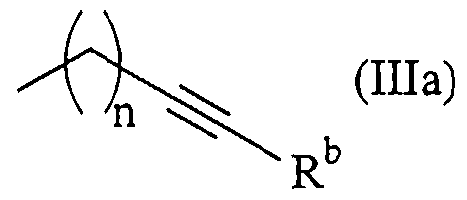
Claims

1. A process for producing a P-chiral phosphine compound, which process comprises (a) submitting a P-prochiral phosphine substrate of formula (II):
RVX (II)
R2/ V
wherein -X is =0 or →BR4R5R6 wherein R4, R5 and R6 are each independently selected from hydrogen, halogen, alkyl which is unsubstituted or substituted, carbocyclyl which is unsubstituted or substituted and cyano groups, or two of R4, R5 and R6 form, together with the B atom to which they are attached, a boron-containing ring system; R1 is selected from alkoxy, hydroxy, amino, an amino acid or amino acid derivative, aryl which is unsubstituted or substituted, aralkyl which is unsubstituted or substituted, alkyl which is unsubstituted or substituted, CO2H, CC^-alkyl, carbocyclyl which is unsubstituted or substituted, heterocyclyl which is unsubstituted or substituted and heteroaryl which is unsubstituted or substituted, a vinyl group of formula (III):
Figure imgf000027_0001
wherein n is 0 or 1 and Ra, Rb and Rc are each independently selected from hydrogen, halogen, alkoxy, hydroxy, amino, aryl which is unsubstituted or substituted, aralkyl which is unsubstituted or substituted, alkyl which is unsubstituted or substituted, alkenyl which is unsubstituted or substituted, CO2H, Cθ2-alkyl, carbocyclyl which is unsubstituted or substituted, heterocyclyl which is unsubstituted or substituted and heteroaryl which is unsubstituted or substituted; or Rb and Rc, or Ra and Rc, together with the carbon atoms to which they are attached, form a carbocyclyl group which is unsubstituted or substituted, and an alkynyl group of formula (Ilia):
Figure imgf000028_0001
wherein n and Rb are as defined above; and each R2, which are the same, is selected from a vinyl group of formula (IV):
Figure imgf000028_0002
wherein Ra is as defined above and Rd and Re are each independently selected from the groups defined above for Rb and Rc; or Rd and Re, or Ra and Re, together with the carbon atoms to which they are attached form a carbocyclyl group which is unsubstituted or substituted or a heterocyclyl group which is unsubstituted or substituted, and an alkynyl group of formula (FVa):
Figure imgf000028_0003
wherein Rd is as defined above; to cross-metathesis coupling with an unsaturated partner compound selected from
(i) an olefin of formula (VI):
Figure imgf000028_0004
wherein Rf , Rg, Rh and R1 are each selected from the groups defined above for Rb and Rc; or Rh and R\ or Rf and Rg , or Rh and Rf, or R' and Rg, together with the carbon atoms to which they are attached form a carbocyclyl group which is unsubstituted or substituted; or Rf is a group PXR^ or PXR1R2 wherein each R1 is the same or different and R1, R2 and X are as defined above, and (ii) an alkyne of formula (Via):
Figure imgf000029_0001
wherein Rf and Rh are as defined above; in the presence of a cross-metathesis catalyst; and
(b) recovering the P-chiral phosphine compound of formula (I):
Figure imgf000029_0002
wherein X, R1 and R2 are as defined above and R3 is selected from a vinyl group of formula (V):
Figure imgf000029_0003
wherein Ra, Rf and Rg are each selected from the groups defined above for Ra, or is an alkynyl group of formula (Va):
Figure imgf000029_0004
wherein Rf is as defined above; and R1, R2 and R3 are different from each other.
2. A process according to claim 1, wherein the P-prochiral phosphine substrate of formula (II), in which R1 is a vinyl group of formula (III), is produced by submitting a triene of formula (VII):
Rl X
V (VII) R2/ V wherein each R2 is the same and is as defined in claim 1 ; to cross-metathesis with an olefϊnic partner of the following formula (VIII):
Figure imgf000030_0001
wherein Rb, Rc, Rh and R1 are as defined in claim 1 ; in the presence of a cross- metathesis catalyst.
3. A process according to claim 1 or 2 which further comprises converting the resulting P-chiral phosphine compound of formula (I) into another P-chiral phosphine compound of formula (I) as defined in claim 1 by cross-metathesis coupling with a suitable unsaturated partner compound in the presence of a cross- metathesis catalyst.
4. A process according to any one of the preceding claims wherein the ratio of the P-prochiral phosphine substrate of formula (II) to the unsaturated partner compound of formula (VI) or (Via) is from greater than 1 :1 to 5:1.
5. A process according to any one of the preceding claims wherein the ratio of the P-prochiral phosphine substrate of formula (II) to the unsaturated partner compound of formula (VI) or (Via) is about 3:1.
6. A process according to any one of the preceding claims wherein the catalyst is a Grubbs, Hoveyda or Schrock catalyst.
7. A process according to any one of the preceding claims wherein the catalyst is used in an amount of about 5 mol %.
8. A process according to any one of the preceding claims wherein R1 is phenyl, benzyl, CrC6 alkoxy, hydroxy, amino or a vinyl group of formula (III) as defined in claim 1.
9. A process according to any one of the preceding claims wherein R2 is a vinyl group of formula (IV) in which Ra, Rd and Re are the same or different and are selected from H and alkyl which is unsubstituted or substituted.
10. A process according to any one of the preceding claims wherein, the unsaturated partner compound is an the olefin of formula (VI), wherein Rf and Rs are the same or different and are each selected from H and alkyl which is unsubstituted or substituted.
11. A process according to any one of claims 1 to 9, wherein the unsaturated partner compound is an olefin of formula (VI) wherein Rf is a group PXR1R2, wherein R1 and R2 are identical to R1 and R2, respectively, of the P-prochiral phosphine of formula (II).
12. A compound which is a P-chiral trivinylphosphine compound of formula (Ia):
R\ X
V (H) R2/ V
wherein X, R2 and R3 are as defined in claim 1 ; R1 is a vinyl group of formula
(III) as defined in claim 1 ; and R1, R2 and R3 are different from each other.
13. A compound according to claim 12 wherein the trivinylphosphine is of formula (Iaf):
Figure imgf000032_0001
wherein n is 0, 1 or 2; X is =0 or →BR4R5R6 wherein R4, R5 and R6 are each independently selected from hydrogen, alkyl which is unsubstituted or substituted, carbocyclyl which is unsubstituted or substituted and cyano groups, or two of R4, R5 and R6 form, together with the B atom to which they are attached, a boron-containing ring system; and Ra to Rε are independently selected from hydrogen, alkoxy, hydroxy, amino, . aryl which is unsubstituted or substituted, aralkyl which is unsubstituted or substituted, alkyl which is unsubstituted or substituted, CO2H, CO-alkyl, carbocyclyl which is unsubstituted or substituted, heterocyclyl which is unsubstituted or substituted and heteroaryl which is unsubstituted or substituted, provided that the functionalities =CRbRc, =CRdRe and =CRfRs are different from each other.
14. A P-chiral phosphine of formula (Ib):
R R!N R R3
(Ib)
R2
wherein R 1 1 , r R> 2 and j r R> 3 are as defined in claim 1 and are different from each other.
PCT/GB2005/003389 2004-09-03 2005-09-02 Desymmetrisation process for the preparation of chiral phosphines Ceased WO2006024862A2 (en)

Applications Claiming Priority (2)

Application Number Priority Date Filing Date Title
GB0419604A GB0419604D0 (en) 2004-09-03 2004-09-03 Desymmetrisation process
GB0419604.4 2004-09-03

Publications (2)

Publication Number Publication Date
WO2006024862A2 true WO2006024862A2 (en) 2006-03-09
WO2006024862A3 WO2006024862A3 (en) 2006-04-27

Family

ID=33155990

Family Applications (1)

Application Number Title Priority Date Filing Date
PCT/GB2005/003389 Ceased WO2006024862A2 (en) 2004-09-03 2005-09-02 Desymmetrisation process for the preparation of chiral phosphines

Country Status (2)

Country Link
GB (1) GB0419604D0 (en)
WO (1) WO2006024862A2 (en)

Cited By (1)

* Cited by examiner, † Cited by third party
Publication number Priority date Publication date Assignee Title
WO2007057690A1 (en) * 2005-11-18 2007-05-24 Isis Innovation Limited Desymmetrisation process for the production of cyclic phosphines used as ligands in enantioselective synthesis catalysts

Non-Patent Citations (6)

* Cited by examiner, † Cited by third party
Title
BAILLIE C ET AL: "Catalytic synthesis of phosphines and related compounds" CURRENT ORGANIC CHEMISTRY, no. 7, 2003, pages 477-514, XP009060918 ISSN: 1385-2728 *
BISARO F ET AL: "Cross-metathesis, a versatile synthetic methodology for the construction of alkenyl phosphine oxides and bis-phosphine oxides" TETRAHEDRON LETTERS, vol. 44, no. 38, 15 September 2003 (2003-09-15), pages 7133-7135, XP004448592 ISSN: 0040-4039 cited in the application *
BISARO F ET AL: "Desymmetrization by direct cross-metathesis producing hitherto unreachable P-stereogenic phosphine oxides" TETRAHEDRON, vol. 61, no. 9, 28 February 2005 (2005-02-28), pages 2395-2400, XP004748551 ISSN: 0040-4020 *
DEMCHUK OLEG M ET AL: "Synthesis of substituted p-stereogenic vinylphosphine oxides by olefin cross-metathesis." ORGANIC LETTERS, vol. 5, no. 18, 4 September 2003 (2003-09-04), pages 3217-3220, XP009060869 ISSN: 1523-7060 cited in the application *
SCHUMANN M ET AL: "Novel synthesis of borane complexes of cyclic phosphanes using ruthenium-catalysed olefin metathesis" ANGEWANDTE CHEMIE INTERNATIONAL EDITION, vol. 39, no. 14, 2000, pages 2491-2493, XP009060917 ISSN: 1433-7851 *
SLINN C A ET AL: "Synthesis of unprotected and borane-protected cyclic phosphines using Ru- and Mo- based olefin metathesis catalysts." ORGANIC & BIOMOLECULAR CHEMISTRY, vol. 1, no. 21, 7 November 2003 (2003-11-07), pages 3820-3825, XP009060913 ISSN: 1477-0520 *

Cited By (1)

* Cited by examiner, † Cited by third party
Publication number Priority date Publication date Assignee Title
WO2007057690A1 (en) * 2005-11-18 2007-05-24 Isis Innovation Limited Desymmetrisation process for the production of cyclic phosphines used as ligands in enantioselective synthesis catalysts

Also Published As

Publication number Publication date
GB0419604D0 (en) 2004-10-06
WO2006024862A3 (en) 2006-04-27

Similar Documents

Publication Publication Date Title
Gladiali et al. Optically active phenanthrolines in asymmetric catalysis. III. Highly efficient enantioselective transfer hydrogenation of acetophenone by chiral rhodium/3-alkyl phenanthroline catalysts.
KR100341258B1 (en) New bisphosphine for asymmetric hydrogenation catalyst
Burgess et al. Stereochemically matched (and mismatched) bisphosphine ligands: DIOP-DIPAMP hybrids
JPH0641171A (en) Ferrocenyldiphosphine as ligand of homogeneous catalyst
Gladiali et al. Optically active phenanthrolines in asymmetric catalysis. IV. Enantioselective hydrosilylation of acetophenone by rhodium/chiral alkyl phenanthroline catalysts.
Carmona et al. Chiral ruthenium complexes as catalysts in enantioselective Diels–Alder reactions. Crystal structure of the Lewis acid–dienophile adduct
Chung et al. Nickel (0)-catalysed asymmetric cross-coupling reactions of allylic compounds with Grignard reagents using optically active oxazolinylferrocenylphosphines as ligands
Faure et al. Reactions of a Transient Carbonyl (chloro)(hydrido) ruthenium (ii) Complex with Ethylene, Alkynes, and CO; Chemistry of the New Anion [Ru2 (CO) 4Cl5]−
O'Mahony et al. On the Counterion Dependence of the Rhodium (I)-Catalysed [4+ 2] Cycloaddition-A Remarkable Accelerating Effect of the Hexafluoroantimonate Anion
Oh et al. Cycloreductions via alkylpalladium intermediates: An important mechanistic clue for palladium-catalyzed enediyne cyclizations
Liu et al. Ruthenium (II)/acetate catalyzed intermolecular dehydrogenative ortho C–H silylation of 2-aryl N-containing heterocycles
Bellachioma et al. Reactivity of Fe (CO) 4 (H) MPh3 (M= Si, Ge) and mechanism of substitution by two-electron-donor ligands: implications for the mechanism of hydrosilylation of olefins catalyzed by iron pentacarbonyl
WO2006024862A2 (en) Desymmetrisation process for the preparation of chiral phosphines
Adrio et al. The Phenylsulfonyl Group as an endo Stereochemical Controller in Intramolecular Pauson–Khand Reactions of 3‐Oxygenated 1, 6‐Enynes
Torres et al. Evidence for a Dinuclear Mechanism in Alkyne Hydrogenations Catalyzed by Pyrazolate‐Bridged Diiridium Complexes
Le Paih et al. Ruthenium-catalysed multiple component transformations: one-step stereoselective synthesis of functional dienes from alkynes and carboxylic acids
Segundo et al. Reactions of alkynols with (alkynylalkoxycarbene) metal complexes (metal= chromium, tungsten)
Bretzke et al. Modular synthesis of the pyrimidine core of the manzacidins by divergent Tsuji–Trost coupling
US6476250B1 (en) Optically active fluorinated binaphthol derivative
US20030220512A1 (en) Novel transition metal complexes and their use in transition metal-catalysed reactions
Akiyama et al. Pd (II)-catalyzed enantioselective intramolecular Heck-type reaction to construct chiral sulfonamide rings
CN1061970C (en) Asymmetrical hydrogenation of ketoisophorone derivatives
US20090227805A1 (en) Axially Asymmetric Phosphorus Compound and Production Method Thereof
JP4416466B2 (en) Method for producing benzene derivatives
Becerra et al. Half-sandwich rhodium and iridium complexes containing homochiral imidazolyl-imine ligands: synthesis, characterization and catalytic applications

Legal Events

Date Code Title Description
AK Designated states

Kind code of ref document: A2

Designated state(s): AE AG AL AM AT AU AZ BA BB BG BR BW BY BZ CA CH CN CO CR CU CZ DE DK DM DZ EC EE EG ES FI GB GD GE GH GM HR HU ID IL IN IS JP KE KG KM KP KR KZ LC LK LR LS LT LU LV MA MD MG MK MN MW MX MZ NA NG NI NO NZ OM PG PH PL PT RO RU SC SD SE SG SK SL SM SY TJ TM TN TR TT TZ UA UG US UZ VC VN YU ZA ZM ZW

AL Designated countries for regional patents

Kind code of ref document: A2

Designated state(s): GM KE LS MW MZ NA SD SL SZ TZ UG ZM ZW AM AZ BY KG KZ MD RU TJ TM AT BE BG CH CY CZ DE DK EE ES FI FR GB GR HU IE IS IT LT LU LV MC NL PL PT RO SE SI SK TR BF BJ CF CG CI CM GA GN GQ GW ML MR NE SN TD TG

121 Ep: the epo has been informed by wipo that ep was designated in this application
NENP Non-entry into the national phase in:

Ref country code: DE

122 Ep: pct application non-entry in european phase