COMPOUNDS FOR CONTROL OF APPETITE
Statement Regarding Federally Sponsored Research
The U.S. Government has a paid-up license in this invention and the
right in limited circumstances to require the patent owner to license others on
reasonable terms as provided for by the terms of Grant/Contract No. 3R01 GM47122-
0851 awarded by the National Institutes of Health.
Cross-Reference to Related Applications
This application claims the benefit of U.S. Provisional Application No.
60/589,199, filed on July 19, 2004, the disclosure of which is hereby incorporated by
reference herein in its entirety.
Background of the Invention
This invention relates generally to peptides including tripeptides, and to methods for pharmaceutical treatment of mammals using such peptides and analogs thereof. More specifically, the invention relates to O-glycosylated and extended
tripeptides and their analogs, as well as to peptide YY (PYY) analogs, to
pharmaceutical compositions containing such tripeptides and PYY analogs, and to
methods of treatment of mammals using such tripeptides and PYY analogs. In
addition, the invention relates to methods of treatment of mammals using such
tripeptides and PYY analogs for control of appetite, blood pressure, cardiovascular
response, libido, and circadian rhythm.
1. Appetite and obesity
Obesity is a major disorder affecting as much as one third of the North
American population. Several studies have shown that such individuals are at
increased risk in developing cardiovascular disease (hypertension and
hypercholesterolemia), diabetes and several types of cancer. The effective treatment
of obesity, however, remains a largely unachieved goal. Existing
pharmacotherapeutic approaches to weight loss involve the use of amphetamine-based
agents such as amphetamine, diethylpropion, mazindol and fenfluramine which act
directly on the CNS to lower food intake by modulating dopaminergic, adrenergic
and/or serotonergic mechanisms. Although weight loss can be achieved with such
agents, their use is restricted due to CNS side-effects, potential addiction liability and the production of tolerance to their actions, with chronic administration leading to
potential depression, vestibular disturbances, hallucinations and addiction, as well as
interference with the actions other drugs such as MAO inhibitors and
antihypertensives. There is also a subpopulation of obese patients that is refractory to
present anorectic drug treatments. The medical need is high for an effective anorectic
agent which overcomes the above disadvantages of existing therapies. Of particular
need are agents which act by alternative mechanisms to modulate food intake and/or metabolism.
2. Neuropeptide Y ("NPY")
Throughout this application, various publications are referenced. The
disclosure of these publications is hereby incorporated by reference into this
application to describe more fully the art to which this invention pertains.
Neuropeptides are small peptides originating from large precursor
proteins synthesized by peptidergic neurons and endocrine/paracrine cells. They hold
promise for treatment of neurological, psychiatric, and endocrine disorders (De Wied,
D. In: Neuropeptides: Basics and Perspectives (Elsevier, Amsterdam-New York-
Oxford), 1990.). Often the precursors contain multiple biologically active peptides.
There is great diversity of neuropeptides in the brain caused by alternative splicing of
primary gene transcripts and differential precursor processing. The neuropeptide
receptors serve to discriminate between ligands and to activate the appropriate signals.
Thus, it is expected that the receptors for neuropeptides consist of a large number of
members.
Neuropeptide Y (NPY), a 36-amino acid peptide, is the most abundant
neuropeptide to be identified in mammalian brain. NPY is an important regulator in
both the central and peripheral nervous systems (Heilig, M. and E. Widerlov.
Neuropeptide Y: an overview of central distribution, functional aspects, and possible
involvement of neuropsychiatric illnesses. Acta Psychiatr. Scand. 82:95-114 (1990).)
and influences a diverse range of physiological parameters, including effects on
psychomotor activity, food intake, central endocrine secretion, and vasoactivity in the cardiovascular system. High concentrations of NPY are found in the sympathetic
nerves supplying the coronary, cerebral, and renal vasculature and has contributed to
vasoconstriction. NPY binding sites have been identified in a variety of tissues,
including spleen (Lundberg, J. M., A. Hemsen, O. Larsson, A. Rudehill, A. Sana, and
B. Fredholm. Neuropeptide Y receptor in pig spleen: binding characteristics,
reduction of cyclic AMP formation and calcium antagonist inhibition of
vasoconstriction. Eur. J. Pharmacol. 145:21-29 (1988)), intestinal membranes, brain
(Hinson, J., C. Rauh, and J. Coupet. Neuropeptide Y stimulates inositol phospholipid
hydrolysis in rat brain microprisms. Brain RESPONSE. 446:379-382 (1988)), aortic
smooth muscle (Mihara, S., Y. Shigeri, and M. Fujimoto. Neuropeptide Y-induced
intracellular Ca2+ increase in vascular smooth muscle cells. FEBS Lett. 259: 79-82
(1989)), kidney, testis, and placenta (Dumont, Y., J.C. Mattel, A. Fournier, S. St-
Pierre, and R. Quiron. Neuropeptide Y and neuropeptide Y receptor subtypes in brain
and peripheral tissues. Prog. Neurobiol. 38:125-167 (1992)). In addition, binding
sites have been reported in a number of rat and human cell lines (e.g. Yl in SK-N-
MC, MC-IXC, CHP-212, and PC12 cells; Y2 in SK-N-Be(2), CHP-234, and SMS-
MSN)(Grundemar, L., S. P. Sheikh, and C. Wahlestedt, In: The Biology of
Neuropeptide Y and Related Peptides. (Humana Press, Inc., Totawa, New Jersey), (1992)).
NPY forms a family (called the pancreatic polypeptide family) together with pancreatic polypeptide (PP) and peptide YY (PYY) which all consist of 36
amino acids and have a common tertiary structure, the so-called PP-fold (Glover, I.
D., D. J. Barlow, J. E. Pitts, S. P. Wood, I. J. Tickle, T. L. Blundell, K. Tatemoto, J.
R. Kimmel, A. Wollmer, W. Strassburger, and Y.-S. Zhang. Conformational studies
of the pancreatic polypeptide hormone family. Eur. J. Biochem. 142:379-385 (1985)).
Specific features of this family include a polyproline helix in residues 1 through 8,
beta -turn in residues 9 through 14, an alpha -helix in residues 15 through 30, an outward-projecting C-terminus in residues 30 through 36, and a carboxy terminal
amide which appears to be critical for biological activity (Schwartz, T. W., J.
Fuhlendorff, L. L. Kj ems, M. S. Kristensen, M. Vervelde, M. O 'Hare, J. L.
Krstenansky, and B. Bjomholm. Signal epitopes in the three-dimensional structure of
neuropeptide Y. Ann. N.Y. Acad. Sci. 611:35-47 (1990)). The C-terminal amidated
residue of these peptides is essential for biological activity (Wahlestedt et ah, 1986).
Studies with peptide fragments of NPY have indicated that multiple NPY receptor
subtypes exist (Wahlestedt, C, N. Yanaihara, and R. Hakanson. Evidence for
different pre- and postjunctional receptors for neuropeptide Y and related peptides.
Regul. Pept. 13:307-318 (1986)). Specifically, six receptor subtypes, denoted as Yl,
Y2, Y3, Y4, Y5, and Y6, are understood to mediate the actions of NPY with each to-
date, except for Y3, having been cloned.
The Yl, Y2, and Y5 receptors have been proposed to regulate feeding
behavior, i.e. food intake, in subjects. A key pharmacological feature which
distinguishes Yl and Y2 is the fact that the Yl receptor (and not the Y2 receptor)
responds to an analog of NPY modified at residues 31 and 34 ([Leu31,Pro34]NPY),
whereas the Y2 receptor (and not the Yl receptor) has high affinity for the NPY
peptide carboxyl-terminal fragment NPY-(13-36)(Fuhlendorff, J., U. Gether, L.
Aakerlund, N. Langeland-Johansen, H. Thogersen, S. G. Melberg, U. B. Olsen, O.
Thastrup, and T. W. Schwartz. [Leu31,Pro34]Neuropeptide Y: A specific Yl receptor
agonist. Proc. Natl. Acad. Sci. USA 87:182-186 (1990)).
One major drawback in designing NPY based drugs to target the Yl
and Y5 receptors, such as to regulate food intake, involves a difficulty in passing the drug through the blood brain barrier (BBB) on peripheral administration. The
delivery of therapeutic proteins across the BBB is limited to size and biochemical
properties of the respective proteins. Generally, diffusion of bioactive peptides is
restricted to short (<6 amino acids) and highly lipophilic peptides.
Notably, it has been reported by the inventor that O-glycosylation of
peptides, e.g. tripeptides, can promote BBB permeability, as well as increase
proteolytic stability, enhance solubility, and may contribute to the stabilization of
peptide structures (Gangadhar, B. P., S. D. S. Jois, and A. Balasubramaniam.
Convenient high yield and stereoselective synthesis of O-glycopeptides using N-α-
Fmoc-Tyr/Ser[β-D-Glc(OAc)4]OPfp generated in solution. Tetrahedron Letters
45:355-358 (2004)). As such, O-glycosylation of NPY analogs, specifically tripeptide
analogs, such as those disclosed in U.S. Pat. Nos. 6,013,633 and 6,235,718 to
Balasubramaniam et ah, herein incorporated by reference, is expected to promote
BBB entry of these novel tripeptides, and be useful in regulating appetite and in the
treatment of weight problems (e.g. obesity, diabetes), eating disorders, and such.
In addition, it has been reported that the 11 -amino acid human
immunodeficiency virus (HIV) TAT protein transduction domain is able to cross the
BBB, even when coupled with larger peptides (Kilic, U., E. Kilic, G. Dietz, and M.
Bahr. Intravenous TAT-GDNF is protectvie after focal cerebral Ischemia in Mice.
Stroke 34:1304-1310 (2003) and Schwarze S.R., A. Ho, B.A.Vocero-Akbani, and S.F.
Dowdy. In vivo protein transduction: delivery of a biologically active protein into the
mouse. Science 285: 1569-1572 (1999) ). Notably, the inventor has extended certain tripeptides, such as those disclosed in U.S. Pat. Nos. 6,013,633 and 6,235,718 to
Balasubramaniam et al, herein incorporated by reference, by conjugating them to the
11 -amino acid TAT peptide, H-Tyr-Gly-Arg-Lys-Lys-Arg-Arg-Gln-Arg-Arg-Arg-
(SEQ. ID. NO. 1), via a linker, to promote BBB entry of these novel peptides wherein
they similarly are useful in regulating appetite and in the treatment of weight problems
(e.g. obesity, diabetes), eating disorders, and such.
Experimental and clinical observations also have supported the concept
that neuropeptides play central roles in neurotransmission as well as the regulation of
secretory functions of adenohypophysial, pancreatic, adrenalcortical and gut cells.
Among the thirty or so neuropeptides that have been implicated in neuronal function
in the mammalian central nervous system, several have also been suggested to
function as neurotransmitters or neuromodulators primarily in afferent neurons.
An additional action of NPY is to decrease cardiac contractility
(inotropy). This is an extremely important action of NPY, because it is known that,
under many circumstances in which inotropy is decreased, diseases of life-threatening
importance, e.g. congestive heart failure and cardiogenic shock, are associated with
probable increased release of NPY into the blood. Prevention of NPY release, using a
presynaptic NPY agonist, or NPY' s action, using a postsynaptic NPY antagonist, may
be beneficial in these disease states.
NPY has also been reported to produce coronary artery
vasoconstriction and thereby may decrease myocardial blood flow resulting in
myocardial ischemia. Such a circumstance can result in angina pectoris or, under
more severe circumstances, may result in myocardial infarction and death. In recent
years, several classes of drugs have proven effective in dilating coronary arteries to
prevent such events. The use of analogs of NPY are expected to prove useful in
treatment of such problems. U.S. Pat. No. 4,297,346 to Rips et al. discloses therapeutic agents
referred to as 'pseudopeptides' being formed from at least one peptide radical
connected by a peptide bond to a therapeutically active molecule or derivative of a
therapeutically active molecule. The therapeutic agents of the invention may be in the
form of derivatives such as salts, esters and amides. The basis of action of the agents
of the invention is the ability of the agents of the invention to cross bodily biological
barriers because of the basically peptide structure of the agents. The invention also
includes the preparation of the agents of the invention.
U.S. Pat. No. 5,328,899 to Boublik et al, issued Jul.l2, 1994, discloses
NPY peptide analogs. Human Neuropeptide Y (NPY) has the formula: H-Tyr-Pro-
Ser-Lys-Pro-Asp-Asn-Pro-Gly-Glu- Asp-Ala-Pro- Ala-Glu- Asp-Met- Ala- Arg-Tyr-
Tyr-Ser-Ala-Leu-Arg-His-Tyr-Ile-Asn-Leu-Ile- Thr-Arg-Gln-Arg -Tyr-NH2 (SEQ.
ID. NO. 2). Porcine and rat NPY have the same sequence except for Leu instead of
Met in the 17-position (SEQ. ID. NO. 3). Porcine PYY is homologous having 11
different residues. NPY analogs and N-terminally-shortened fragments, e.g. NPY(18-
36), which contain one or more specific D-isomer substitutions for the naturally
occurring residues (as well as pharmaceutically acceptable salts thereof), dispersed in
a pharmaceutically acceptable liquid or solid carrier, can be administered to mammals,
including humans, to substantially lower blood pressure over an extended period of
time or to counteract hypertension.
U.S. Pat. No. 4,839,343 to Waeber et al, issued Jun. 13, 1989,
discloses a preparation containing hexatriacontapeptides suitable for intravenous administration to human or other animal subjects which are effective in treating life-
threatening hypotension as encountered in bacteremic, anaphylactic or cardiogenic
shock.
Several references have disclosed CCK agonists or analogs of CCK-8.
For example, U.S. Pat. No. 4,490,364 to Rivier, issued Dec. 25, 1984, discloses
heptapeptide, octapeptide and nonapeptide analogs of CCK-8 as CCK agonists for
stimulating gallbladder contractions, arresting the secretion of gastric acid and treating
convulsions. J. D. Rosamond in European Patent Application EP381,340, published
Aug. 8, 1990, and in European Patent Application EP268,297, published May 25,
1988, discloses hepta- and octapeptides with sulfate ester groups which are useful for
treating obesity.
U.S. Pat. No. 5,270,302 to Shiosaki et al., issued Dec. 14, 1993,
discloses derivatives of tetrapeptides as CCK agonists which are selective and potent
Type-A CCK receptor agonists useful in the treatment of gastrointestinal disorders
(including gallbladder disorders), central nervous system disorders, insulin-related
disorders and pain, as well as in appetite regulation.
None of these references individually or collectively teach or suggest
the present invention.
3. Peptide YY ("PYY")
Peptide YY (PYY) is a 36-residue peptide amide isolated originally
from porcine intestine, and localized in the endocrine cells of the gastrointestinal tract
and pancreas (Tatemoto et al. Proc. Natl. Acad. Sci. 79:2514, 1982). Peptide YY has
N-terminal and C-terminal tyrosine amides; accordingly, these two tyrosines give
PYY its name (Y represents the amino acid tyrosine in peptide nomenclature). In
addition, PYY shares a number of central and peripheral regulatory roles with its
homologous peptide Neuropeptide Y (NPY), which was originally isolated from porcine brain (Tatemoto, Proc. Natl. Acad. Sd. 79:5485, 1982). PYY is localized in
intestinal cells; NPY, in contrast, is present in the submucous and myenteric neurons
which innervate the mucosal and smooth muscle layers, respectively (Ekblad et al.
Neuroscience 20:169, 1987). Both PYY and NPY are believed to inhibit gut motility
and blood flow (Laburthe, Trends Endocrinol. Metab. 1:168, 1990), and they are also
thought to attenuate basal (Cox et al. Br. J. Pharmacol. 101 :247, 1990; Cox et al. J.
Physiol. 398:65, 1988; Cox et al. Peptides 12:323, 1991; Friel et al. Br. J. Pharmacol.
88:425, 1986) and secretatogue-induced intestinal secretion in rats (Lundberg et al.
Proc. Natl. Acad. Sd USA 79:4471, 1982; Playford et al. Lancet 335: 1555, 1990) and
humans (Playford et al., supra), as well as stimulate net absorption (MacFadyen et al.
Neuropeptides 7:219, 1986). Elevated plasma PYY levels have been reported in
individuals suffering from several conditions that cause diarrhea (Adrian et al.
Gastroenterology 89:1070, 1985). Taken together, these observations suggest that
PYY and NPY are released into the circulation after a meal (Adrian et al.
Gastroenterology 89:1070, 1985: Balasubramaniam et al. Neuropeptides 14:209,
1989), and, thus may play a physiological role in regulating intestinal secretion and
absorption, serving as natural inhibitors of diarrhea.
A high affinity PYY receptor system which exhibits a slightly higher
affinity for PYY than NPY has been characterized in rat intestinal epithelia (Laburthe et al. Endocrinology 118:1910, 1986; Laburthe, Trends Endocrinol. Metabl. supra)
and shown to be negatively coupled to adenylate cyclase (Servin et al. Endocrinology
124:692, 1989). Consistently, PYY exhibited greater antisecretory potency than NPY in voltage clamped preparations of rat small intestine (Cox et al. J Physiol, supra),
while C-terminal fragments of NPY were found to be less effective in their
antisecretory potency than PYY (Cox et al. Br. J. Pharmacol, supra). Structure-
activity studies using several partial sequences have led to the identification of
PYY(22-36) as the active site for interacting with intestinal PYY receptors (Balasumbramaniam et al. Pept. Res. 1:32, 1988). This intestinal PYY-preferring
receptor has now been cloned and shown to be identical to the Y2 receptors cloned
from the brain (Goumain et al. MoI Pharmacol 60:124-134, 2001).
In addition, PYY has been implicated in a number of physiological
activities including nutrient uptake (see, e.g., Bilcheik et al. Digestive Disease Week
506:623, 1993), cell proliferation (see, e.g., Laburthe, Trends Endocrinol. Metab.
1:168, 1990; Voisin et al. J. Bio. Chem, 1993), lipolysis (see, e.g., Valet et al. J. Clin.
Invest. 85:291, 1990), and vasoconstriction (see, e.g., Lundberg et al., Proc. Natl.
Acad. Sd, USA 79:4471, 1982).
The amino acid sequences of porcine and human PYY are as follows:
porcine PYY: YPAKPEAPGEDASPEELSRYYASLRHYLNLVTRQRY,
(SEQ. ID. NO. 4)
human PYY: YPIKPEAPGEDASPEELNRYYASLRHYLNLVTRQRY,
(SEQ. ID. NO. 5). The amino acid sequences for dog PYY and for RAT PYY are the
same as that of porcine YYY.
With respect to PYY, it has been reported previously that peripheral
administration of PYY(3-36), a NPY Y2-preferring ligand, can on peripheral
administration attenuate food intake in normal and fasted mice and rats as well as in normal and obese humans (Nature 418:650-654; 2002, N Engl J Med 349:941-948;
2003). Accordingly, one advantage of using Y2 selective ligands is that they can
suppress the food intake on peripheral administration, whereas Yl and Y5 selective ligands, as described above, have to penetrate the BBB to modulate food intake.
In addition to interacting with the Y2 ligand, the PYY(3-36) can
potently activate Y4 and Y5 receptors. Notably, the inventor has previously
developed Y2 receptor selective agonists that are based on PYY(22-36) and PYY(25-
36) (See U.S. Patent Nos. 5,604,203, and 6,046,167 to Balasubramaniam) which are
devoid of activities at the other NPY receptors including Yl , Y4, and Y5 at concentrations up to 20,000 nM. Most notably, the inventor recently tested the
PYY(25-36) analogs N-α-Ac-[Trp30]PYY(25-36)-NH2 (SEQ. ID. NO. 6) and N-α-
Ac-[Trp27, ψ35/36]PYY(25-36)-NH2, (SEQ. ID. NO. 7), and the PYY(22-36) analog N-
α-Ac[Nle24-28, Trp30, Nva31, ψ35/36]PYY(22-36)-NH2 (SEQ. ID. NO. 8) [wherein ψ in
the foregoing formulas is -CH2-NH-] and unexpectedly found that these analogs
could be used to control food intake in animals and humans. As such, it is expected
that the PYY analogs and their deletion peptides, as disclosed in U.S. Patent Nos.
5,604,203, and 6,046,167 to Balasubramaniam, which are herein incorporated by
reference, could be used in an unexpected way to control food intake in animals and
humans, and are expected to prove useful in the treatment of weight problems (e.g.
obesity, diabetes), eating disorders, and such.
Summary of the Invention
This invention relates generally to peptides including tripeptides and to
methods for pharmaceutical treatment of mammals using such tripeptides and analogs
thereof. More specifically, the invention is directed to neuropeptide Y ("NPY") receptor antagonists and agonists including O-glycosylated tripeptides, i.e. O-
glycopeptides, and extended tripeptides, and their analogs, as well as to PYY analogs,
to pharmaceutical compositions containing such tripeptides and PYY analogs, and to
methods of treatment of mammals using such tripeptides and PYY analogs. In
addition, the invention relates to methods of treatment of mammals using such
tripeptides and PYY analogs for control of appetite, blood pressure, cardiovascular
response, libido, and circadian rhythm.
In one aspect, the present invention features an O-glycosylated
compound, i.e. O-glycopeptide, having the formula:
Rl I
A1-[R6]-A2-A3-[R6]-W (I)
I
R2 wherein: each Rl and R2, independently, is H, C1-C12 alkyl {e.g., methyl), C6-C18 aryl (e.g.,
phenyl), Cl-Cl 8 acyl (e.g., formyl, acetyl, and myristoyl), C7-C18 aralkyl (e.g.,
benzyl), C7-C18 alkaryl (e.g., p-methylphenyl) or a dihydrotrigonellinate group;
Al is a D or L-amino acid selected from Cys, Leu, Dap, Trp, GIn, a tethered amino
acid with an indole ring (e.g., N-Me-Trp), Phe, Hyp, any Trp derivative (e.g., 2
chlorotroptophan, or Tec); CαMe-Trp, CoMe-GIn, Des-amino-Trp, Pyr, Bth, NaI,
Tec, Asn, Nva, Abu, Ser, Tyr, N-Me-Tyr, CαMe-Tyr, Tic-OH, des-carboxylic-Tyr
(tyramine), Phe, Tip, and Dip; A2 is a D or L-amino acid selected from GIy, Cys, Trp, Arg, N-Me- Arg, CcMe- Arg,
Orn, Cit, liArg(R)2 [where R is selected from hydrogen, alkyl, aryl, aralkyl, or
alkylaryl], Lys-ε-NH-R [where R is selected from hydrogen, alkyl, aryl, aralkyl, or
alkylaryl];
A3 is a D or L-amino acid selected from Ala, GIu, Tyr, N-Me-Tyr, CαMe-Tyr, Tic-
OH, Tic, Dip, Trp, Phe, des-carboxylic-Tyr (tyramine), and Tyr-(R) [where R is
hydrogen or a lipophilic group, e.g., myristoyl, cholesteryl, t.Bu, etc.];
One R6 is an acetlyated or nonacetlyated monosaccharide (e.g. glucose, fructose), or
an acetylated or nonacetlyated disaccharide (e.g. lactose, sucrose, maltose) with
the other R6 being deleted;
W is -OH, -N-R3R4, or OR5 (where R3, R4, and R5, independently, is H, C1-C12
alkyl (e.g., methyl), C6-C18 aryl (e-g-, phenyl), Cl-C 12 acyl (e.g., formyl, acetyl,
and myristoyl), C7-C 18 aralkyl (e.g. , benzyl), or C7-C 18 alkaryl (e.g. , p-
methylphenyl); or a pharmaceutically acceptable salt thereof; and each bond between two amino acids or amino acid derivatives, represented by a dash
("-"), can be either a peptide bond or a pseudopeptide bond or a pharmaceutically
acceptable salt thereof.
A preferred compound of formula (I) includes N-α-Ac-Tφ-Arg-Tyr-
[P-D-GIc]-NH2, referred to as BG-7.
In another aspect, the invention features a compound having the formula:
Cyclo[Al(R6)-A2-A3(R6)], (II)
Cyclo[Al(R6)-A2-A3-Al(R6)-A2-A3(R6)], or (III)
Cyclo[Al(R6)-A2-A3(R6)-A3(R6)]-A2-Al(R6)]. (IV)
In another aspect, the invention features a compound having the
formula:
Ac-[Al(R6)-A2-A3(R6)]n -NH2 (V)
(n = 1, 2, or 3) (A Tandem Peptide)
With respect to compounds (H-V), R6 is an acetlyated or nonacetlyated
monosaccharide (e.g. glucose, fructose), or an acetylated or nonacetlyated
disaccharide (e.g. lactose, sucrose, maltose) with no greater than two R6's, i.e. only
one or two, being present in the compound. Al, A2, and A3 may be defined the same
as Al, A2, and A3 of formula (I).
The novel extended tripeptides and their analogs, of the present
invention, are produced by the coupling, via a linker or spacer, to, for example, the
11 -amino acid TAT peptide H-Tyr-Gly-Arg-Lys-Lys-Arg-Arg-Gln-Arg-Arg-Arg-
(SEQ. ID. NO. 1). In addition, the below identified extended tripeptides may include
O-glycopeptides. Accordingly, in another aspect, the invention features a compound
having the formula:
R8-linker-[Al-A2-A3]n-W (VI)
(n= 1, 2, or 3)
R8 is H-Tyr-Gly-Arg-Lys-Lys-Arg-Arg-Gln-Arg-Arg-Arg- (i.e. the TAT peptide), H-
[X(Y)Jn- [where X is Ser, Thr, or Tyr, Y is β-D-Glc or β-D-Gal, and n is I5 2,
or 3], H-Cys-Leu-Ser-Ser-Arg-Leu-Asp-Ala-Cys, Ac-Arg-Tyr-Arg-Gly-Asp-
Leu-Gly-Leu-Gly-Arg-Arg, or Ac-Cys-Arg-Tyr-Arg-Gly-Asp-Leu-Gly-Leu-
Gly-Arg-Arg-Cys;
Al is a D or L-amino acid selected from Cys, Leu, Dap, Tip, GIn, a tethered amino
acid with an indole ring (e.g., N-Me-Trp), Phe, Hyp, any Trp derivative (e.g., 2
chlorotroptophan, or Tec); CαMe-Trp, CαMe-Gln, Des-amino-Trp, Pyr, Bth,
NaI, Tec, Asn, Nva, Abu, Ser, Tyr, Tic-OH, Phe, Tip, and Dip;
Linker is a compound that forms a peptide bond with Al and forms one of either a
peptide or ester bond with R8;
A2 is a D or L-amino acid selected from GIy, Cys, Trp, Arg, N-Me- Arg, CcMe- Arg,
Om, Cit, hArg(R)2 [where R is selected from hydrogen, alkyl, aryl, aralkyl, or
alkylaryl], Lys-ε-NH-R [where R is selected from hydrogen, alkyl, aryl,
aralkyl, or alkylaryl];
A3 is a D or L-amino acid selected from GIu, Tyr, N-Me-Tyr, CoMe-Tyr, Tic-OH,
Tic, Dip, Trp, Phe, des-carboxylic-Tyr (tyramine), and Tyr-(R) [where R is
hydrogen or a lipophilic group, e.g., myristoyl, cholesteryl, t.Bu, etc.];
W is -OH, -N-R3R4, or OR5 (where R3, R4, and R5 , independently, is H, Cl -C 12
alkyl (e.g. , methyl), C6-C18 aryl (e-g-, phenyl), C1-C12 acyl (e.g. , formyl,
acetyl, and myristoyl), C7-C18 aralkyl (e.g., benzyl), or C7-C18 alkaryl (e.g.,
p-methylphenyl); or a pharmaceutically acceptable salt thereof; and
each bond between two amino acids or amino acid derivatives, represented by a dash
("-"), can be either a peptide bond or a pseudopeptide bond or a
pharmaceutically acceptable salt thereof.
Preferred compounds of formula (VI) include H-Tyr-Gly-Arg-Lys-Lys-
Arg-Arg-Gln-Arg-Arg-Arg-NH-CH2-CH2-CO-Trp-Arg-Tyr-NH2 (SEQ. ID. NO. 9),
referred to as BG-116, H-Tyr-Gly-Arg-Lys-Lys-Arg-Arg-Gln-Arg-Arg-Arg-NH-C^-
CH2-CO-[Trp-Arg-Tyr]2-NH2 (SEQ. ID. NO. 10), referred to as BG-117, and H-Tyr-
Gly-Arg-Lys-Lys-Arg-Arg-Gln-Arg-Arg-Arg-O-CH2-CO-Trρ-Arg-Tyr-NH2 (SEQ.
ID. NO. 11), referred to as BG-120, as well as H-[Tyr(β-D-Glc)]-NH-CH2-CH2-CO-
Trρ-Arg-Tyr-HN2 (SEQ. ID. NO. 12), H-Cys-Leu-Ser-Ser-Arg-Leu-Asp-Ala-Cys-
NH-CH2-CH2-CO-Trp-Arg-Tyr-HN2 (SEQ. ID. NO. 13); Ac-Arg-Tyr-Arg-Gly-Asp-
Leu-Gly-Leu-Gly-Arg-Arg-NH-CH2-CH2-CO-Trp-Arg-Tyr-HN2 (SEQ. ID. NO. 14),
and Ac-Cys-Arg-Tyr-Arg-Gly-Asp-Leu-Gly-Leu-Gly-Arg-Arg-Cys-NH-C^-CHj-
CO-Trp-Arg-Tyr-HN2 (SEQ. ID. NO. 15).
With respect to compound (VI), the linker advantageously is NH2-CH2-
CH2-COOH (β-Ala), HO-(CH2)n-COOH (n = 1-5), or a D or L-amino acid including,
but not limited to, Asp, Ala, Arg, Asn, Cys, GIy, GIu, GIn, His, He, Leu, Lys, Met,
Phe, Pro, Ser, Thr, Trp, Tyr, and VaI, and most advantageously β-Ala, wherein the
linker forms a peptide bond with the di- or tripeptide moiety and forms one of either a
peptide or ester bond with the TAT peptide moiety.
In another aspect, the invention features dimers of compounds having the formula (I -VI). Dimers may be prepared by dimerizing compounds of formula (I- X) with dicarboxylic acids (e.g., succinic acid), cystine, or diarninodicarboxylic acid (e.g., 2,6-diaminopinielic acid).
The PYY analogs of U.S. Patent Nos. 5,604,203, and 6,046,167 to Balasubramaniam, hereby incorporated herein by reference, are further discussed
below. Notably, the analogs of at least the following formulas (VII- VIII) optionally include at least one pseudopeptide bond between amino acids residues. By "psuedopeptide bond" is meant that the carbon atom participating in the bond between two residues is reduced from a carbonyl carbon to a methylene carbon, i.e., CH2-NH; or less preferably that of CO-NH is replaced with any of CH2-S, CH2-CH2, CH2-O, or CH2-CO. A psuedopeptide peptide bond is symbolized herein by "ψ". Preferably, the psuedopeptide bonds are located between one or more amino acid residues. In addition, such psuedopeptide bond analogs can be used to form dimeric analogs. A detailed discussion of psuedopeptide bonds is given in Coy et al. (1998) Tetrahedon 44:835-841.
Accordingly, in another aspect, the invention features a compound, having the formula:
R1 R3
I I R2-X-A22-A23-A24-A25-A26-A27-A28-A29-A30-A31-A32-Y-R4 (VII)
wherein:
X is a chain of 0-5 amino acids, inclusive, where the N-terminal amino acid is bonded to R1 and R2 by the side chain of the N-terminal amino acid or by the nitrogen of the amino group of the N-terminal amino acid; Y is a chain of 0-4 amino acids, inclusive, where the C-terminal amino acid has a carboxyl amide group, which is independently bonded to R3 and R4, e.g.,
R3
-NH-CH(R)-CO-N-R
4; R
1 and R
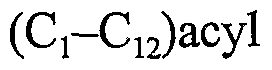
2 are each independently bonded to the amino group of the N-terminal amino acid and selected from H, (Ci-C
]2)alkyl {e.g. methyl), (C
6-C
18)aryl {e.g.
phenyl, napthaleneacetyl),
(formyl, acetyl, and myristoyl), C
7-C
18 aralkyl (e.g. benzyl), and C
7-C
18 alkaryl (e.g. p-methlyphenyl); R
3 and R
4 are each independently bonded to the amide group of the C-terminus amino acid, e.g. -NH-CH(R)-CON-R
4 (where R denotes the side chain group of the amino acid, e.g. R = H in GIy, etc.), and selected from H, (C
1~C
12)alkyl (e.g. methyl), (Cg-C
18)aryl (e.g. phenyl, napthaleneacetyl), (C
1-C
12)acyl (formyl, acetyl, and myristoyl), C
7-C
18 aralkyl (e.g. benzyl), and C
7-C
18 alkaryl (e.g. p- methlyphenyl);
A22 is an aromatic amino acid, Ala, Aib, Anb, N-Me-AIa or is deleted; A23 is Ser, Thr, Ala, Aib, N-Me-Ser, N-Me-Thr, N-Me-AIa or is deleted; A24 is Leu, lie, NIe, VaI, Trp, GIy, Nva, Aib, Anb, N-Me-Leu or is deleted; A25 is Arg, Lys, homo-Arg, diethyl-homo-Arg, Lys-pe-NH-R (where R is H, a branched or straight chain C1-C10 alkyl group, or an aryl group), Orn or is deleted; A26 is Ala, His, Thr, 3-Me-His, 1-Me-His, β-pyrazolylalaline, N-Me-His, Arg, Lys, homo-Arg, diethyl-homo-Arg, Lys-e—NH-R (where R is H, a branched or straight chain C1-C10 alkyl group, an aryl group, or a pharmaceutically acceptable salt therof), Orn or is deleted; A27 is an aromatic amino acid; A28 is Leu, He, NIe, VaI, Trp, Aib, Anb or N-Me-Leu; A29 is Asn, Ala, GIn, GIy, Trp or N-Me-Asn; A30 is Leu, He, NIe, Nva, FIa, VaI, Trp, Aib, Anb or N-Me-Leu; A31 is VaI, Leu, NIe, Nva, He, Trp, Aib, Anb or N-Me-VaI; and A32 is Thr, Ser, D-Trp, N-Me-Ser or N-Me-Thr. hi preferred embodiments, Y is A33-A34-A35-A36 wherein
A33 is Arg, Lys, homo-Arg, diethyl-homo-Arg, Lys-e-NH-R (where R is H5 a branched or straight chain C1-C10 alkyl group, or an aryl group), Cys, or Orn A34 is Cys, Gb, Asn, Ala, GIy, N-Me-GIn, Aib, or Anb; A35 is Arg, Lys, homo-Arg, diethyl-homo-Arg, Lys-e-NH-R (where R is H, a branched or straight chain C1-C10 alkyl group, or an aryl group), Cys, or Orn; and A36 is an aromatic amino acid, Cys, or a pharmaceutically acceptable salt thereof.
Most preferably, the compound of formula (VII) includes N-α- Ac[NIe24'28, Trp30, Nva31, ψ35/36]PYY(22-3 O)-NH2 (SEQ. ID. NO. 8), referred to as BT- 48, wherein ψ is -CH2-NH-.
In another aspect, the invention features a compound having the formula:
R1 R3
R2-A25-A26-A27-A28-A29-A30-A31-A32-Y-R4 (VIII) wherein: the N-terminal amino acid is bonded to R1 and R2; Y is a chain of 0-4 amino acids, inclusive, where the C-terminal amino acid is bonded to R3 and R4 by the side chain of the C-terminal amino acid or by the carbon of the carboxyl group of the C-terminal amino acid;
R1 and R2 are each independently bonded to the amino group of the N-terminal amino acid and selected from H, (C1-C12)alkyl (e.g. methyl), (C6-C18)aryl (e.g. phenyl, napthaleneacetyl), (C1-C12)acyl (formyl, acetyl, and myristoyl), C7-C18 aralkyl (e.g. benzyl), and C7-C18 alkaryl (e.g. p-methlyphenyl); R3 and R4 are each independently bonded to the amide group of the C-terminus amino
^R3 acid, e.g. -NH-CH(R)-CON-R4 (where R denotes the side chain group of the amino acid, e.g. R = H in GIy, etc.), and selected from H, (Q-C^alkyl (e.g.
methyl), (Cg-C^aryl (e.g. phenyl, napthaleneacetyl), (C1-C12)ECyI (formyl, acetyl, and myristoyl), C7-C18 aralkyl (e.g. benzyl), and C7-C18 alkaryl (e.g. p- methlyphenyl);
A25 is Arg, Lys, homo-Arg, diethyl-homo-Arg, lys-e-NH-R (where R is H, a branched or straight chain C1-C10 alkyl group, or an aryl group), Orn or is deleted;
A26 is Ala, His, Thr, 3-Me-His, 1-Me-His, β-pyrozolylalanin, N-Me-His, Arg, Lys, homo-Arg, diethyl-homo-Arg, Lys-e-NH-R (where R is H, a branched or straight chain C1-C10 alkyl group, or an aryl group), Orn or is deleted; A27 is an aromatic amino acid: A28 is Leu, He, VaI, Trp NIe, Nva, Aib, Anb, or N-Me-Leu; A29 is Asn, Ala, Gin, Fly, Trp, or N-Me- Asn; A30 is Leu, He, VaI, Trp, NIe, Nva, Aib, Anb, or N-Me-Leu; A31 is VaI5 He, Trp, Nva, Aib, Anb, or N-Me-VaI; and A32 is Thr, Ser, N-Me-Ser, N-Me-Thr, or D-Trp. In preferred embodiments Y is A33-A34-A35-A3δ wherein
A33 is Arg, Lys, homo-Arg, diethyl-homo-Arg, Lys-e-NH-R (where R is H, a branched or straight chain C1-C10 alkyl group, or C6-C18 aryl group), Cys, or Orn A34 is GIn, Asn, Ala, GIy, N-Me-Gin, Aib, Cys, or Anb; A35 is Arg, Lys, homo-Arg, diethyl-homo-Arg, Lys-e-NH-R (where R is H, a branched or straight chain C1-C10 alkyl group, or C6-C18 aryl group), Cys, or Orn; and
A36 is an aromatic amino acid, Cys, or a pharmaceutically acceptable salt thereof.
Most preferably, the compound of formula (VTS) includes N-α- Ac[Trp27, ψ35/36]PYY(25-36)-NH2 (SEQ. ID. NO. 7), referred to as BT-56, andN-α- Ac[Trp30]PYY(25-36)-NH2 (SEQ. ID. NO. 6); referred to as BWX-115, wherein ψ in the foregoing formulas is -CH2-NH— .
In other preferred embodiments, a compound of formula (I- VIII) may have one or more pseudopeptide bonds.
In another aspect, the invention features a compound having the formula of (I- VIII) conjugated to carriers. In another aspect, the invention features a method of controlling the food intake, i.e. appetite, of a subject comprising administering to said subject the compound of formula (I- VIII).
In another aspect, the invention features a method of controlling the blood pressure of a subject experiencing hypertension. In another aspect, the invention features a method of controlling a NPY physiological response in the cardiovascular system, including blood pressure, of a subject.
In other preferred embodiments, a therapeutically effective amount of a compound of formula ( I- VIII) and a pharmaceutically acceptable carrier substance together form a therapeutic composition capable of suppressing an NPY mediated physiological response.
Brief Description of the Figures
Figure 1. A graph representing the feeding patterns of animals treated with an extended tripeptide by intraperitoneal injection. The compounds tested include control (saline) and BG-116 (H-Tyr-Gly-Arg-Lys-Lys-Arg-Arg-Gln-Arg-Arg- Arg-β-Ala-Trp-Arg-Tyr-NH2) (SEQ. ID. NO. 9).
Figure 2. A graph representing the feeding patterns of animals treated with an O-glycosylated tripeptide by intraperitoneal injection. The compounds tested include control (saline) and BG-7 (N-α-Ac-Trρ-Arg-Tyr-[β-D-Glc]-NH2).
Figure 3. A graph representing the feeding patterns of animals treated with a PYY analog by intraperitoneal injection. The compounds tested include control (saline) and N-α- Ac[NIe24'28, Trp30, Nva31, ψ35/36]PYY(22-36)-NH2 (BT-48) (SEQ. ID. NO. 8) wherein ψ is -CH2-NH-. Figure 4. A graph representing the feeding patterns of animals treated with a PYY analog by intraperitoneal injection. The compounds tested include control (saline) and N-α-Ac-[Trp27, ψ35/36]PYY(25-36)-NH2 (BT-56) (SEQ. ID. NO. 7) wherein ψ is -CH2-NH-.
Figure 5. A graph representing the feeding patterns of animals treated with a PYY analog by intraperitoneal injection. The compounds tested include control (saline) andN-α-Ac-[Trp30]PYY(25-36)-NH2 (BWX-115) (SEQ. ID. NO. 6) wherein ψ is -CH2-NH-.
Detailed Description of the Invention
The present invention is directed to neuropeptide Y ("NPY") receptor antagonists and agonists including O-glycosylated tripeptides, i.e. O-glycopeptides, and extended tripeptides, and their analogs, as well as PYY analogs.
O-glycosylation of peptides, e.g. tripeptides, can promote BBB
permeability, as well as increase proteolytic stability, enhance solubility, and may
contribute to the stabilization of peptide structures (Gangadhar, B. P., S. D. S. Jois,
and A. Balasubramaniam. Convenient high yield and stereoselective synthesis of O-
glycopeptides using N-α-Fmoc-Tyr/Ser[β-D-Glc(OAc)4]OPfp generated in solution.
Tetrahedron Letters 45:355-358 (2004)). As such, O-glycosylation of NPY analogs,
specifically tripeptide analogs, such as those disclosed in U.S. Pat. Nos. 6,013,633 and
6,235,718 to Balasubramaniam et al, herein incorporated by reference, is expected to
promote BBB entry of these novel tripeptides, and be useful in regulating appetite and in the treatment of weight problems (e.g. obesity, diabetes), eating disorders, and
such.
Accordingly, in one aspect, the present invention features an O-
glycosylated compound having the formula:
Rl
A1-[R6]-A2-A3-[R6]-W (I)
wherein: each Rl and R2, independently, is H, Cl -C 12 alkyl (e.g., methyl), C6-C18 aryl (e.g.,
phenyl), C1-C18 acyl (e.g., formyl, acetyl, and myristoyl), C7-C18 aralkyl (e.g.,
benzyl), C7-C18 alkaryl (e.g., p-methylphenyl) or a dihydrotrigonellinate group;
Al is a D or L-amino acid selected from Cys, Leu, Dap, Trp, GIn, a tethered amino
acid with an indole ring (e.g., N-Me-Trp), Phe, Hyp, any Trp derivative (e.g., 2
chlorotroptophan, or Tec); CαMe-Trp, CαMe-Gln, Des-amino-Trp, Pyr, Bth, NaI,
Tec, Asn, Nva, Abu, Ser, Tyr, N-Me-Tyr, CαMe-Tyr, Tic-OH, des-carboxylic-Tyr
(tyramine), Phe, Tip, and Dip;
A2 is a D or L-amino acid selected from GIy, Cys, Trp, Arg, N-Me- Arg, CoMe- Arg,
Orn, Cit, hArg(R)2 [where R is selected from hydrogen, alkyl, aryl, aralkyl, or
alkylaryl], Lys-ε-NH-R [where R is selected from hydrogen, alkyl, aryl, aralkyl, or
alkylaryl];
A3 is a D or L-amino acid selected from Ala, GIu, Tyr, N-Me-Tyr, CoMe-Tyr, Tic-
OH, Tic, Dip, Trp, Phe, des-carboxylic-Tyr (tyramine), and Tyr-(R) [where R is
hydrogen or a lipophilic group, e.g., myristoyl, cholesteryl, t.Bu, etc.];
One R6 is an acetlyated or nonacetlyated monosaccharide (e.g. glucose, fructose), or
an acetylated or nonacetlyated disaccharide (e.g. lactose, sucrose, maltose) with the other R6 being deleted;
W is -OH, -N-R3R4, or OR5 (where R3, R4, and R5 , independently, is H, C1-C12
alkyl (e.g., methyl), C6-C18 aryl (e-g-, phenyl), C1-C12 acyl (e.g., formyl, acetyl,
and myristoyl), C7-C18 aralkyl (e.g., benzyl), or C7-C18 alkaryl (e.g., p-
methylphenyl); or a pharmaceutically acceptable salt thereof; and each bond between two amino acids or amino acid derivatives, represented by a dash
("-"), can be either a peptide bond or a pseudopeptide bond or a pharmaceutically
acceptable salt thereof.
A preferred compound of formula (I) includes N-α-Ac-Trp-Arg-Tyr-[β-D- GIc]-NH2, referred to as BG-7.
In another aspect, the invention features a compound having the
formula:
Cyclo[Al(R6)-A2-A3(R6)], (II)
Cyclo[Al(R6)-A2-A3-Al(R6)-A2-A3(R6)], or (III)
Cyclo[Al(R6)-A2-A3(R6)-A3(R6)]-A2-Al(R6)]. (IV)
In another aspect, the invention features a compound having the
formula:
Ac-[Al(R6)-A2-A3(R6)]n -NH2 (V)
(n = 1, 2, or 3) (A Tandem Peptide)
With respect to compounds (H-V), R6 is an acetlyated or nonacetlyated monosaccharide (e.g. glucose, fructose), or an acetylated or nonacetlyated
disaccharide (e.g. lactose, sucrose, maltose) with no greater than two R6's, i.e. only
T/US2005/025407
one or two, being present in the compound. Al, A2, and A3 may be defined the same
as Al, A2, and A3 of formula (I).
In addition, it has been reported that the 11 -amino acid human
immunodeficiency virus (HTV) TAT protein transduction domain is able to cross the
BBB, even when coupled with larger peptides (Kilic, U., E. Kilic, G. Dietz, and M.
Bahr. Intravenous TAT-GDNF is protectvie after focal cerebral Ischemia in Mice.
Stroke 34:1304-1310 (2003) and Schwarze S.R., A. Ho, B.A.Vocero-Akbani, and S.F.
Dowdy. In vivo protein transduction: delivery of a biologically active protein into the
mouse. Science 285: 1569-1572 (1999) ). The inventor has extended certain
tripeptides (and their analogs), such as those disclosed in U.S. Pat. Nos. 6,013,633 and
6,235,718 to Balasubramaniam et al, herein incorporated by reference, by conjugating
them to the 11 -amino acid TAT peptide, H-Tyr-Gly-Arg-Lys-Lys-Arg-Arg-Gln-Arg-
Arg-Arg- (SEQ. ID. NO. 1), via a linker or spacer, to promote BBB entry of these novel peptides wherein they are useful in regulating appetite and in the treatment of
weight problems (e.g. obesity, diabetes), eating disorders, and such. In addition, the
below identified extended tripeptides may include O-glycopeptides.
Accordingly, in another aspect, the invention features a compound
having the formula:
R8-linker-[Al-A2-A3]n-W (VI)
(n= 1, 2, or 3)
R8 is H-Tyr-Gly-Arg-Lys-Lys-Arg-Arg-Ghi-Arg-Arg-Arg- {i.e. the TAT peptide), H-
[X(Y)]n- [where X is Ser, Thr, or Tyr, Y is β-D-Glc or β-D-Gal, and n is 1, 2,
or 3], H-Cys-Leu-Ser-Ser-Arg-Leu-Asp-Ala-Cys, Ac-Arg-Tyr-Arg-Gly-Asp-
Leu-Gly-Leu-Gly-Arg-Arg, or Ac-Cys-Arg-Tyr-Arg-Gly-Asp-Leu-Gly-Leu-
Gly-Arg-Arg-Cys;
Al is a D or L-amino acid selected from Cys, Leu, Dap, Trp, GIn, a tethered amino
acid with an indole ring (e.g., N-Me-Trp), Phe, Hyp, any Trp derivative (e.g., 2
chlorotroptophan, or Tec); CαMe-Trp, CαMe-Gln, Des-amino-Trp, Pyr, Bth,
NaI, Tec, Asn, Nva, Abu, Ser, Tyr, Tic-OH, Phe, Tip, and Dip;
Linker is a compound that forms a peptide bond with Al and forms one of either a
peptide or ester bond with R8;
A2 is a D or L-amino acid selected from GIy, Cys, Trp, Arg, N-Me- Arg, CcMe- Arg,
Orn, Cit, hArg(R)2 [where R is selected from hydrogen, alkyl, aryl, aralkyl, or
alkylaryl], Lys-ε-NH-R [where R is selected from hydrogen, alkyl, aryl,
aralkyl, or alkylaryl];
A3 is a D or L-amino acid selected from GIu, Tyr, N-Me-Tyr, CαMe-Tyr, Tic-OH,
Tic, Dip, Trp, Phe, des-carboxylic-Tyr (tyramine), and Tyr-(R) [where R is
hydrogen or a lipophilic group, e.g., myristoyl, cholesteryl, t.Bu, etc.];
W is -OH, -N-R3R4, or OR5 (where R3, R4, and R5 , independently, is H, C1-C12
alkyl (e.g., methyl), C6-C18 aryl (e-g-, phenyl), C1-C12 acyl (e.g., formyl,
acetyl, and myristoyl), C7-C18 aralkyl (e.g., benzyl), or C7-C18 alkaryl (e.g.,
p-methylphenyl); or a pharmaceutically acceptable salt thereof; and
each bond between two amino acids or amino acid derivatives, represented by a dash
("-"), can be either a peptide bond or a pseudopeptide bond or a
pharmaceutically acceptable salt thereof.
Preferred compounds of formula (VI) include H-Tyr-Gly-Arg-Lys-Lys-
Arg-Arg-Gm-Arg-Arg-Arg-NH-C^-CHz-CO-Trp-Arg-Tyr-NHz (SEQ. ID. NO. 9),
referred to as BG-116, H-Tvr-Gly-Arg-Lys-Lys-Arg-Arg-Gm-Arg-Arg-Arg-NH-CH2-
CH2-CO-[Trp-Arg-Tyr]2-NH2 (SEQ. ID. NO. 10), referred to as BG-117, and H-Tyr-
Gly-Arg-Lys-Lys-Arg-Arg-Gln-Arg-Arg-Arg-O-CH2-CO-Trp-Arg-Tyr-NH2 (SEQ. ID. NO. 11), referred to as BG-120, as well as H-[Tyr(β-D-Glc)]-NH-CH2-CH2-CO-Trp- i « Arg-Tyr-HN2 (SEQ. ID. NO. 12), H-Cys-Leu-Ser-Ser-Arg-Leu-Asp-Ala-Cys-NH-
CH2-CH2-CO-Trp-Arg-Tyr-HN2 (SEQ. ID. NO. 13); Ac-Arg-Tyr-Arg-Gly-Asp-Leu-
GIy-LeU-GIy-ATg-ATg-NH-CH2-CH2-CO-TrP-ATg-TyT-HN2 (SEQ. ID. NO. 14), and
Ac-Cys-Arg-Tvr-Arg-Gly-Asp-Leu-Gly-Leu-Gly-Arg-Arg-Cys-NH-CHj-C^-CO- Tφ-Arg-Tyr-HN2 (SEQ. ID. NO. 15).
With respect to compound (VI), the linker advantageously is NH2-CH2-
CH2-COOH (β-Ala), HO-(CH2)n-COOH (n = 1-5) (e.g., HO-CH2-COOH (glycolic
acid)), or a D or L-amino acid including, but not limited to, Asp, Ala, Arg, Asn, Cys,
GIy, GIu, GIn, His, He, Leu, Lys, Met, Phe, Pro, Ser, Thr, Trp, Tyr, and VaI, and most
advantageously β-Ala, wherein the linker forms a peptide bond with the di- or
tripeptide moiety and forms one of either a peptide or ester bond with the TAT
peptide moiety.
The PYY analogs of U.S. Patent Nos. 5,604,203, and 6,046,167 to Balasubramaniam, are hereby incorporated herein by reference, and further discussed below. Notably, the analogs of at least the following formulas (I- VI) optionally include at least one pseudopeptide bond between amino acids residues. By
"psuedopeptide bond" is meant that the carbon atom participating in the bond between two residues is reduced from a carbonyl carbon to a methylene carbon, i.e., CH2-NH; or less preferably that of CO-NH is replaced with any of CH2-S, CH2-CH2, CH2-O5 or CH2-CO. A psuedopeptide peptide bond is symbolized herein by "ψ". Preferably, the
psuedopeptide bonds are located between one or more amino acid residues. In addition, such psuedopeptide bond analogs can be used to form dimeric analogs. A detailed discussion of psuedopeptide bonds is given in Coy et al. (1998) Tetrahedon 44:835-841. Accordingly, in another aspect, the invention features a compound having the formula:
R1 R3
I I
R2-X-A22-A23-A24-A25-A26-A27-A28-A29-A30-A31-A32-Y-R4 (VH)
wherein
X is a chain of 0-5 amino acids, inclusive, where the N-terminal amino acid is bonded to R1 and R2 by the side chain of the N-terminal amino acid or by the nitrogen of the amino group of the N-terminal amino acid;
Y is a chain of 0-4 amino acids, inclusive, where the C-terminal amino acid has a carboxyl amide group, which is independently bonded to R3 and R4, e.g.,
R3
-NH-CH(R)-CO-N-R4;
R1 and R2 are each independently bonded to the amino group of the N-terminal amino and selected from H, (C1-C12)alkyl (e.g. methyl), (C6-C18)aryl (e.g. phenyl, napthaleneacetyl), (C1-C12)acyl (formyl, acetyl, and myristoyl), C7-C18 aralkyl (e.g. benzyl), and C7-C18 alkaryl (e.g. p-methlyphenyl);
R3 and R4 are each independently bonded to the amide group of the C-terminus amino
✓R3 acid, e.g. -NH-CH(R)-CON-R4 (where R denotes the side chain group of the amino acid, e.g. R = H in GIy, etc.), and selected from H, (C1-C12)alkyl (e.g. methyl), (C6-C18)aryl (e.g. phenyl, napthaleneacetyl), (C1-C12)acyl (formyl,
acetyl, and myristoyl), C7-C18 aralkyl {e.g. benzyl), and C7-C18 alkaryl {e.g. p- methlyphenyl);
A22 is an aromatic amino acid, Ala, Aib, Anb, N-Me-AIa or is deleted; A23 is Ser, Thr, Ala, Aib, N-Me-Ser, N-Me-Thr, N-Me-AIa or is deleted; A24 is Leu, He, NIe, VaI, Trp, GIy, Nva, Aib, Anb, N-Me-Leu or is deleted; A25 is Arg, Lys, homo-Arg, diethyl-homo-Arg, Lys-pe-NH-R (where R is H, a branched or straight chain C1-C10 alkyl group, or an aryl group), Orn or is deleted;
A26 is Ala, His, Thr, 3-Me-His, 1-Me-His, β-pyrazolylalaline, N-Me-His, Arg, Lys, homo-Arg, diethyl-homo-Arg, Lys-e— NH-R (where R is H, a branched or straight chain C1-C10 alkyl group, an aryl group, or a pharmaceutically acceptable salt therof), Orn or is deleted; A27 is an aromatic amino acid; A28 is Leu, He, NIe, VaI, Trp, Aib, Anb or N-Me-Leu; A29 is Asn, Ala, GIn, GIy, Trp or N-Me- Asn;
A30 is Leu, lie, NIe, Nva, FIa, VaI, Trp, Aib, Anb or N-Me-Leu; A31 is VaI, Leu, NIe, Nva, lie, Trp, Aib, Anb or N-Me-VaI; and A32 is Thr, Ser, D-Trp, N-Me-Ser or N-Me-Thr.
In preferred embodiments, Y is A
33-A
34-A
35-A
36 wherein A
33 is Arg, Lys, homo-Arg, diethyl-homo-Arg, Lys-e-NH-R (where R is H, a branched or straight chain C
1-C
10 alkyl group, or an aryl group), Cys, or Orn A
34 is Cys, GIn, Asn, Ala, GIy, N-Me-GIn, Aib, or Anb; A
35 is Arg, Lys, homo-Arg, diethyl-homo-Arg, Lys-e-NH-R (where R is H, a branched or straight chain C
1-C
10 alkyl group, or an aryl group), Cys, or Orn; and A
36 is an aromatic amino acid, Cys, or a pharmaceutically acceptable salt thereof.
Most preferably, the compound of formula (VII) includes N-α- Ac[NIe
24'
28, Trp
30, Nva
31, ψ
35/36]PYY(22-36)-NH
2 (SEQ. ID. NO.
referred to as BT- 48, wherein ψ is -CH2-NH-.
In another aspect, the invention features a compound having the formula:
R1 R3
I I
R2-A25-A26-A27-A28-A29-A30-A31-A32-Y-R4 (VIII) wherein: the N-terminal amino acid is bonded to R1 and R2; Y is a chain of 0-4 amino acids, inclusive, where the C-terminal amino acid is bonded to R3 and R4 by the side chain of the C-terminal amino acid or by the carbon of the carboxyl group of the C-terminal amino acid;
R
1 and R
2 are each independently bonded to the amino group of the N-terminal amino and selected from H, (C
1-C
12)alkyl (e.g. methyl), (C
6-C
18)aryl (e.g. phenyl, napthaleneacetyl),
(formyl, acetyl, and myristoyl), C
7-C
18 aralkyl
(e.g. benzyl), and C7-C18 alkaryl (e.g. p-methlyphenyl);
R3 and R4 are each independently bonded to the amide group of the C-terminus amino
✓R3 acid, e.g. -NH-CH(R)-CON-R4 (where R denotes the side chain group of the amino acid, e.g. R = H in GIy, etc.), and selected from H, (C1-C12)alkyl (e.g. methyl), (C6-Clg)aryl (e.g. phenyl, napthaleneacetyl), (C1-C12)acyl (formyl, acetyl, and myristoyl), C7-C18 aralkyl (e.g. benzyl), and C7-C18 alkaryl (e.g. p- methlyphenyl); A25 is Arg, Lys, homo-Arg, diethyl-homo-Arg, lys-e-NH-R (where R is H, a branched or straight chain C1-C10 alkyl group, or an aryl group), Orn or is deleted;
A26 is Ala, His, Thr, 3-Me-His, 1-Me-His, β-pyrozolylalanin, N-Me-His, Arg, Lys, homo-Arg, diethyl-homo-Arg, Lys-e-NH-R (where R is H, a branched or straight chain C1-C10 alkyl group, or an aryl group), Orn or is deleted; A27 is an aromatic amino acid: A28 is Leu, He, VaI, Trp Me, Nva, Aib, Anb, or N-Me-Leu; A29 is Asn, Ala, Gin, Fly, Trp, or N-Me- Asn; A30 is Leu, He, VaI, Trp, NIe, Nva, Aib, Anb, or N-Me-Leu; A31 is VaI, He, Trp, Nva, Aib, Anb, or N-Me-VaI; A32 is Thr, Ser, N-Me-Ser, N-Me-Thr, or D-Trp; In preferred embodiments Y is A33-A34-A35-A36 wherein
A33 is Arg, Lys, homo-Arg, diethyl-homo-Arg, Lys-e-NH-R (where R is H, a branched or straight chain C1-C10 alkyl group, or C6-C18 aryl group), Cys, or Orn A34 is GIn, Asn, Ala, GIy, N-Me-Gin, Aib, Cys, or Anb; A35 is Arg, Lys, homo-Arg, diethyl-homo-Arg, Lys-e-NH-R (where R is H, a branched or straight chain C1-C10 alkyl group, or C6-C18 aryl group), Cys, or Orn; and
A36 is an aromatic amino acid, Cys, or a pharmaceutically acceptable salt thereof.
Most preferably, the compound of formula (VHI) includes N-α- Ac[Trp27, ψ35/36]PYY(25-36)-NH2 (SEQ. ID. NO. 7), referred to as BT-56, and N-α- Ac[Trp30]PYY(25-36)-NH2 (SEQ. ID. NO. 6\ referred to as BWX-115, wherein ψ in the foregoing formulas is -CH2-NH-.
In another aspect, the invention features dimers of compounds having the formula (I- VIII) prepared by dimerizing the compound with at least dicarboxylic acids (e.g., succinic acid), cystine, or diaminodicarboxylic acid (e.g., 2,6- diaminopimelic acid).
In other preferred embodiments, a compound of formula (I- VIII) may have one or more pseudopeptide bonds.
In another aspect, the invention features a compound having the formula of (I- VIII) could be conjugated to carriers, e.g., cationized albumin (Endocrinology 126:977-984 (1990); J. Pharmacol Exp. Therao. 268:791-796 (1994), incorporated herein by reference in their entirety) or polylysine, e.g., MAP.
In another aspect, the invention features a method of controlling the food intake, i.e. appetite, of a subject comprising administering to said subject the compound of formula (I- VIII). In other preferred embodiments, a therapeutically effective amount of a compound of formula (I- VIII) and a pharmaceutically acceptable carrier substance, e.g., magnesium carbonate or lactose, together form a therapeutic composition capable of suppressing an NPY mediated physiological response. This composition can be in the form a pill, tablet, capsule, liquid, or sustained released tablet for oral administration; or a liquid for nasal administration as drops or spray; or a liquid for intravenous, subcutaneous, parenteral, or intraperitoneal administration.
Another preferred form for administration includes a biodegradable sustained-release composition for intramuscular administration to a subject in need of the composition. Preferably, the composition includes a lipophilic salt and is suitable for administration in the form of an oil emulsion or dispersion to a subject in need of the composition.
In yet another aspect, the invention features methods for controlling an NPY mediated physiological response in a subject; such methods involve administering one or more of the above mentioned compounds to a subject in a dosage effective to control blood pressure, the appetite, the libido, cardiovascular function, and circadian rhythm.
The symbol Al, A2, A3, and the like; and Tyr, Lys or the like, as found in a peptide sequence herein stands for an amino acid residue, e.g., =N-CH(R)-CO- when it is at the N-terminus, or -NH-CH(R)-CO- when it is at any other position, where R denotes the side chain (or identifying group) of an amino acid or its residue. For example, R is CH2COOH for Asp, R is -H for GIy, R is -CH2OH for Ser, R is - CH3 for Ala and R is -CH2CH2CH2CH2NH2 for Lys.
As set forth above and for convenience in describing this invention, the conventional and nonconventional abbreviations for the various amino acids are used. They are familiar to those skilled in the art; but for clarity are listed below. All peptide sequences mentioned herein are written according to the usual convention whereby the N terminal amino acid is on the left and the C-terminal amino acid is on the right. A short line between two amino acid residues indicates a peptide bond. Abbreviations (common):
Asp = D = Aspartic Acid
AIa = A = Alanine
Arg ^ R = Arginine
Asn = N = Asparagine
Cys = C = Cysteine
GIy = G = Glycine GIu = E = Glutamic Acid
GIn = Q = Glutamine
His = H = Histidine
He = I = Isoleucine Leu = L = Leucine
Lys = K = Lysine
Met = M = Methionine Phe = F = Phenylalanine Pro = P = Proline
Ser = S = Serine
Thr = T = Threonine
Trp = W = Tryptophan
Tyr = Y = Tyrosine
VaI = V = Valine
Abbreviations (uncommon): Aoc = 8-aminooctanoic acid
Orn = Ornithine
NaI = 2-napthylalanine
Thi = 2-thienylalanine
Pep = 4-chlorophenylalanine
Bth = 3-benzothienyalanine
Bip = 4,4'-biphenylalanine
Tic = tetrahydroisoquinolme-3-carboxylic acid
Aib = aminoisobutyric acid
Anb = alpha-aminonormalbutyric acid
Ac6C = 1-aminocyclohexanecarboxylic acid
D-PaI = beta-(3-pyridyl)alanine;
Tec = tetrahydrocarbolenecarboxylic acid
Abu = α-aminonormalbutyric acid
hArg(Pr)2 = N,N'-guanidino-(dipropyl)-homoarginine
Tic-OH = 1,2,3,4 tetrahydroisoqumoline-T-hydroxy-S-carboxylic acid
Dip = 3,3-diphenylalanine
2-Nal = 3(2-naphthylalanine)
Tfp = Paratrifluoromethyl phenylalanine
FIa = 3-(9-Fluorenyl)alanine
FIg = 9-Fluorenylglycine
Cit - Citraline
Adp = 2,5-diaminoadipic acid
Pim = 2,6-diaminopimelicacid
Sub = 2,7-diaminosuberic acid
NIe= Norleucine
Nva= Norvaline
Thz= 4-Thiazolylalanine
Dpr=Dap= 2,3-diaminopropionic acid
PyF= Pyroglutamic acid
Tip= l,2,3,4-tetrahydronorharman-3-carboxylic acid
Other Abbreviations:
GIc = Glucose Lac = Lactose
Gal = Galactose Fmoc = N-(9-fluorenyl)methoxycarbonyl
The compounds of the invention are useful in treating any number of
illnesses that involve eating disorders, cardiovascular function, alterations in sexual
function, as well as disorders of sleep and circadian rhythms (see, e.g., Harrison 's
Principles of Internal Medicine, McGraw-Hill Inc., New York, 12th ed.).
Other features and advantages of the invention will be apparent from
the following description of the preferred embodiments thereof, and from the claims.
The present invention is also directed to pharmaceutical compositions
comprising a therapeutically-effective amount of a compound of formula (I- VIII) and
a pharmaceutically-acceptable carrier or diluent, as well as to a method of regulating appetite in humans and lower mammals, by administration of a compound of formula
(I-VIII). The terms "C2-C4-alkenyl" and "C2-C6-alkenyl" as used herein refer
to a 2 to 4 to 6 straight- or branched-chain of carbon atoms which contains a carbon-
carbon double bond, such as allyl, propenyl, butanol, isoprenyl and the like.
The terms "Cl-C18-alkyl" as used herein refer to straight or branched
chain alkyl radicals having from 1 to 18 carbon atoms including, but not limited to,
methyl, ethyl, propyl, isopropyl, butyl, isobutyl, sec-butyl, pentyl, neopentyl hexyl,
and the like.
The term "C6-C18-aryl" as used herein refers to phenyl or to a
"bicyclic carbocyclic" group or "bicyclic carbocycle" having two fused carbocyclic
rings, each ring having 5, 6 or 7 carbon atoms, and each ring being fully saturated,
partially saturated or aromatic. Bicyclic carbocyclic groups include, but are not
limited to, naphthyl, tetrahydronaphthyl, decalin, indanyl, indenyl and the like.
The term "C7-C18-arylalkyl" as used herein refers to an aryl group
appended to a Cl-C4-alkyl radical including, but not limited to, benzyl, phenethyl,
naphthylmethyl and the like.
The term "bicyclic heterocycle" as used herein refers to a group having
two fused rings, one or both of which are heterocyclic rings as defined herein. When
both rings are not heterocyclic, the other ring is carbocyclic and is saturated, partially
saturated or aromatic, preferably a benzene ring. Bicyclic heterocyclic groups can be unsubstituted or monosubstituted or disubstituted with substituents independently
selected from hydroxy, halo, oxo (=0), amino, Cl-C4-alkylamino, di-(Cl-C4)-
alkylamino, Cl-C4-alkoxy, thio-Cl-C4-alkoxy, carboxy, Cl-C4-aIkoxycarbonyl, Cl-
C4-alkyl, C3-C8-cycloalkyl, -OSO3H and halo-Cl-C4-alkyl. Examples of bicyclic
heterocycles include indole, 5-hydroxyindole, quinoline, isoquinoline,
tetrahydroisoquinoline, quinoxaline, benzimidazole, benzofuran, and the like.
The term "cyclo-C3-C10-alkyl" as used herein refers to an aliphatic
monocyclic of 3 to 10 or bicyclic group having 6 to 10 carbon atoms including, but
not limited to, cyclopropyl, cyclobutyl, cyclopentyl, cyclohexyl, cyclooctyl,
adamantyl, and the like. The term "halo" or "halogen" as used herein refers to chloro, bromo,
iodo or fluoro.
The term "halo-Cl-C4-alkyl" as used herein refers to a lower alkyl
radical in which one to three hydrogen atoms have been replaced by a halogen
including, but not limited to, chloromethyl, 2-fluoroethyl, trifluoromethyl and the like.
The term "monocyclic heterocyclic group" or "monocyclic
heterocycle" as used herein refers to any 3- or 4-membered ring containing a
heteroatom selected from oxygen, nitrogen and sulfur, or a 5- or 6-membered ring
containing carbon atoms and one, two or three nitrogen atoms; one nitrogen and one
sulfur atom; or one nitrogen and one oxygen atom; wherein the 5-membered ring has
0-2 double bonds and the 6-membered ring has 0-3 double bonds; wherein the
nitrogen and sulfur heteroatoms may optionally be oxidized; and wherein the nitrogen
heteroatom may optionally be quaternized. Heterocycles include, but are not limited
to, pyridyl, imidazolyl, furyl, thienyl, pyrazinyl, pyrrolyl, pyrimidyl and the like.
Heterocyclics may be unsubstituted or mono- or disubstiruted with substituents
independently selected from hydroxy, halo, oxo (=O), amino, Cl-C4-alkylarnino, (Cl-
C4)2-alkylamino, Cl-C4-alkoxy, thio-Cl-C4-alkoxy, carboxy, C1-C4-
alkoxycarbonyl, Cl-C4-alkyl, C3-C8-cycloalkyl, -OSO3H and halo-Cl-C4-alkyl.
The term "O-glycopeptide" as used herein refers to a compound
consisting of a carbohydrate, i.e. a saccharide, such as a mono- or disaccharide, linked
to a peptide, advantageously a di- or tripeptide, composed of L- and/or D-amino acids
including derivatives thereof, via a glycosyl linkage (O-) to an amino acid.
The term "monosaccharide" as used herein refers to any straight or
branched-chain, or cyclic, i.e. ring-structured, simple sugar having the general formula
(CH2O)x where n can be 3-7, and further refers to any configurational isomers
including enantiomers, diastereomers, and anomers, which account for the α or β, and
D or L designations, as well as derivatives thereof. Of preference are the 6-carbon
ring structures, such as glucose, more preferably β-D-glucose.
The term "dissaccharide" as used herein refers to a compound made up
of two, ring-structured monosaccharide residues connected via a glycosidic bond. Of
preference is lactose.
The term "peptide bond" as used herein refers to the chemical bond
between carbon and nitrogen in the bivalent group CONH that unites amino acid
residues in a peptide.
The term "ester bond" as used herein refers to the chemical bond between the carbon at the C-terminus of the TAT peptide and the oxygen of the linker
compound wherein the coupled compounds can be represented generally by the
formula RCOOR' with RCO representing the TAT peptide moeity and OR'
representing the linker.
In addition, the above compounds may contain two or more
asymmetric carbon atoms and thus can exist as pure diastereomers, mixtures of
diastereomers, diastereomeric racemates or mixtures of diastereomeric racemates. As
such, the present invention includes within its scope all of the isomeric forms. In
keeping with standard peptide nomenclature, J. Biol. Chem., 1969, 243:3557-59,
abbreviations for amino acid residues are used herein.
It is noted that all amino acid residue sequences are represented herein
by formulae whose left to right orientation is in the conventional direction of amino-
terminus to carboxy-terminus.
Administration
The amount of active ingredient that may be combined with the carrier
materials to produce a single dosage form will vary depending upon the host treated,
the particular treatment and the particular mode of administration.
It will be understood, however, that the specific dose level for any
particular patient will depend upon a variety of factors including the activity of the
specific compound employed, the age, body weight, general health, sex, diet, time of
administration, rate of excretion, drug combination, and the severity of the particular
disease undergoing therapy.
However, generally speaking the following guidelines will suffice.
When a compound of formula (I) is used as an agonist of NPY in a human subject, the
total daily dose administered in single or divided doses may be in amounts, for
example, from 0.001 to 1000 mg a day and more usually 1 to 1000 mg. Dosage unit compositions may contain such amounts of submultiples thereof to make up the daily
dose.
The compounds useful in the present inventive method may be
administered by any suitable means. One skilled in the art will appreciate that many
suitable methods of administering the compounds to an animal in the context of the
present invention, in particular a human, are available, and, although more than one
route may be used to administer a particular compounds, a particular route of
administration may provide a more immediate and more effective reaction than
another route.
The composition according to the present invention may be formulated
for administration by any suitable route such as the oral, rectal, nasal, topical (dermal)
or parenteral administration route. Thus, the composition may be in the form of
tablets, capsules, suspensions, emulsions, solutions, injectables, suppositories, sprays,
aerosols and in other suitable form.
Formulations for oral use include tablets which contain the active
ingredient in admixture with non-toxic pharmaceutically acceptable excipients. These
excipients may be, for example, inert diluents, such as calcium carbonate, sodium
chloride, lactose, calcium phosphate or sodium phosphate; granulating and disintegrating agents, for example, potato starch or alginic acid; binding agents, for
example, starch, gelatin or acacia; and lubricating agents, for example, magnesium
5 025407
stearate, stearic acid or talc. Other pharmaceutically acceptable excipients can be
colorants, flavoring agents, plasticizers, humectants etc. The tablets may be uncoated or they may be coated by known techniques, optionally to delay disintegration and
absorption in the gastrointestinal tract and thereby provide a sustained action over a
longer period. For example, a time delay material such as glyceryl monostearate or
glyceryl distearate may be employed.
Formulations for oral use may also be presented as chewing tablets, or as hard gelatin capsules wherein the active ingredient is mixed with an inert solid
diluent, for example, calcium carbonate, calcium phosphate or kaolin, or as soft
gelatin capsules wherein the active ingredient is mixed with water or an oil medium,
for example, peanut oil, liquid paraffin, or olive oil.
Powders, dispersible powders or granules suitable for preparation of an
aqueous suspension by addition of water are also convenient dosage forms of the
present invention. Formulation as a suspension provide the active ingredient in
admixture with a dispersing or wetting agent, suspending agent and one or more
preservatives. Suitable dispersing or wetting agents are, for example, naturally-
occurring phosphatides, as e.g. lecithin, or condensation products of ethylene oxide
with e.g. a fatty acid, a long chain aliphatic alcohol or a partial ester derived from
fatty acids and a hexitol or a hexitol anhydrides, for example, polyoxyethylene
stearate, polyoxyethylene sorbitol monooleate, polyoxyethylene sorbitan monooleate
etc. Suitable suspending agents are, for example, sodium carboxymethylcellulose,
methylcellulose, sodium alginate etc.
The present agents can also be administered in the form of liposomes.
As is known in the art, liposomes are generally derived from phospholipids or other
lipid substances. Liposomes are formed by mono- or multi-lamellar hydrated liquid
crystals that are dispersed in an aqueous medium. Any non-toxic, physiologically
acceptable and metabolizable lipid capable of forming liposomes can be used. The
present compositions in liposome form can contain, in addition to the tetrapeptide of the present invention, stabilizers, preservatives, excipients, and the like. The
preferred lipids are the phospholipids and the phosphatidyl cholines (lecithins), both
natural and synthetic.
Methods to form liposomes are known in the art. See, for example,
Prescott, Ed., Methods in Cell Biology, Volume XIV, Academic Press, New York,
N.Y. (1976), p. 33 et seq.
The pharmaceutical formulation may also be administered parenterally
(intravenous, intramuscular, subcutaneous or the like) in dosage forms or formulations
containing conventional, non-toxic pharmaceutically acceptable carriers and
adjuvants. The formulation and preparation of such compositions is well-known to
those skilled in the art of pharmaceutical formulation.
For parenteral use, the pharmaceutical compositions according to the
invention may comprise the thermogenic compounds in the form of a sterile injection.
To prepare such a composition, the compounds are dissolved or suspended in a
parenterally acceptable liquid vehicle. Among acceptable vehicles and solvents that
may be employed are water, water adjusted to a suitable pH by addition of an
appropriate amount of hydrochloric acid, sodium hydroxide or a suitable buffer, 1,3-
butanediol, Ringer's solution and isotonic sodium chloride solution. The aqueous formulation may also contain one or more preservatives, for example, methyl, ethyl or
n-propyl p-hydroxybenzoate.
For the rectal application, suitable dosage forms for a composition
according to the present invention include suppositories (emulsion or suspension
type), and rectal gelatin capsules (solutions or suspensions). In a typical suppository
formulation, the compounds are combined with an appropriate pharmaceutically
acceptable suppository base such as cocoa butter, esterified fatty acids, glycerinated
gelatin, and various water-soluble or dispersible bases like polyethylene glycols and
polyoxyethylene sorbitan fatty acid esters. Various additives like e.g. enhancers or surfactants may be incorporated.
For the nasal application typical dosage forms for a composition
according to the present invention include nasal sprays and aerosols for inhalation. In
a typically nasal formulation, the active ingredients are dissolved or dispersed in a
suitable vehicle. The pharmaceutically acceptable vehicles and excipients and
optionally other pharmaceutically acceptable materials present in the composition
such as diluents, enhances, flavoring agents, preservatives, etc., are all selected in
accordance with conventional pharmaceutical practice in a manner understood by the
persons skilled in the art of formulating pharmaceuticals.
The pharmaceutical compositions according to the invention may also
be administered topically on the skin for percutaneous absorption in dosage forms or
formulations containing conventionally non-toxic pharmaceutically acceptable carriers
and excipients including microspheres and liposomes. The formulations include
creams, ointments, lotions, liniments, gels, hydrogels, solutions, suspensions, pastes,
plasters and other kinds of transdermal drug delivery systems. The pharmaceutically
acceptable carriers or excipients may include emulsifying agents, antioxidants,
buffering agents, preservatives, humectants, penetration enhancers, chelating agents,
gelforming agents, ointment bases, perfumes and skin protective agents.
Examples of emulsifying agents are naturally occurring gums, e.g.,
gum acacia or gum tragacanth, naturally occurring phosphatides, e.g., soybean lecithin
and sorbitan monooleate derivatives.
Examples of antioxidants are butylated hydroxy anisole (BHA),
ascorbic acid and derivatives thereof, tocopherol and derivatives thereof and cysteine.
Examples of preservatives are parabens and benzalkonium chloride.
Examples of humectants are glycerin, propylene glycol, sorbitol and
urea.
Examples of penetration enhancers are propylene glycol, DMSO9
triethanoiamine, N,N-dimethylacetamide, N,N-dimethylformamide, 2-pyrrolidone and
derivatives thereof, tetrahydrofurfuryl alcohol and AZONE®.
Examples of chelating agents are sodium EDTA, citric acid and
phosporic acid.
Examples of gel forming agents are Carbopol, cellulose derivatives,
bentonit, alginates, gelatin and PVP.
Examples of ointment bases are beeswax, paraffin, cetyl palmitate,
vegetable oil, sorbitan esters of fatty acids (Span), polyethyleneglycols, and condensation products between sorbitan esters of fatty acids and ethylene oxide, e.g.,
poly oxy ethylene sorbitan monooleate (T ween).
The formulation and preparation of the above-mentioned compositions
is well-known to those skilled in the art of pharmaceutical formulation. Specific
formulation can be found in "Remington's Pharmaceutical Sciences" incorporated
herein by reference.
In one aspect the present invention relates to a method for treatment of
overweight or obesity in individuals, in particular in humans or for reducing the adipose tissue mass/lean mass body mass ratio of an individual, in particular a human
or a domestic animal.
In the present context the term "overweight" is used as an indication of
a body with a weight exceeding the "desirable weight", whereas the term "obesity" is
used when the body weight is 20% or more above the "desirable weight". Desirable
weights for humans are given by the Council on Scientific Affairs (1) defining the
desirable weights for humans according to Metropolitan Height and Weight Tables as
the midpoint of the range of the medium-frame individuals.
In another aspect, the present invention relates to a method for the
treatment of diseases which are complications to overweight or obesity. These
diseases or conditions include diabetes mellitus type II, hypercholesterolemia,
hypertriglyceridaemia and hypertension.
In another aspect, the present invention also relates to a method of
reducing adipose tissue mass/lean body mass ratio or treating overweight or obesity or
complications thereof by means of subjecting the individuals to a diet regimen. The
diet regimen into which the individuals may be subjected in connection with the
administration of the composition may include a low carbohydrate, a low fat and a
low energy regimen, e.g., a diet of from 800-2500 kcal/day.
Veterinary Use
The compositions according to the invention can also be administered
to domestic animals in order to improve the performance of the animal (daily weight
gain and feed utilization) or to improve carcass quality or both. Carcass quality is
generally improved when the fat tissue mass/lean mass body mass ratio is decreased,
i.e., when the body content of meat is increased e.g., at the expense of the body content of fat.
The improvements in performance and carcass quality are suggested to
be caused by a reduced fat accretion and/or by an increased skeletal muscle accretion.
In growing animals, the amount of lipid present is suggested to be governed by the
relative rates of lipolysis and lipogenesis. Stimulation of lipolysis and/or inhibition of
lipogenesis in fat tissue may lead to a reduced fat accretion. In vivo and in vitro
studies with both pigs and ruminants may indicate that certain beta agonists stimulate
lipolysis and inhibit lipogenesis in fat tissue leading to a reduced fat accretion.
Administration to an animal of the compositions according to the
present invention may be useful in order to increase the lean body mass at the expense
of body fat, particularly in domestic animals like pigs, hogs, cattle, sheep and poultry.
The composition may be given in admixture with the feed in a suitable dose
corresponding to the size of the animal.
Peptide Synthesis
The peptides of the present invention, such as the extended tripeptides
and their analogs (e.g. BG-116, BG-117 and BG-120), can be synthesized by any
suitable method, such as by exclusively solid-phase techniques, by partial solid-phase
techniques, by fragment condensation or by classical solution addition. A detailed
description of these methods is contained in "The Peptides, Vol. 1", Gross and
Meinenhofer, Eds., Academic Press, New York, 1979. Coupling methods employed include the carbodiimide method (1,3-dicyclohexylcarbodiiniide [DCC], l-(3-
dimethylaminopropyl-3-ethylcarbodiimide hydrochloride [EDCl]) with the option of
racemization preventing additives (1-hydroxybenzotriazole [HOBT]), the mixed
anhydride method, the azide method, the acid chloride method, the symmetrical
anhydride method, the use of bis(2-oxo-3-oxazolidinyl)phosphinic chloride (BOP-Cl), and the active ester method (N-hydroxysuccinimide esters, 4-nitrophenol esters, 2,4,5-
trichlorophenol esters, and the like). Notably, the synthesis of the PYY analogs of
Patent Nos. 5,604,203, and 6,046,167 to Balasubramaniam is fully disclosed therein,
which is hereby incorporated by reference herein, and further is generally discussed
below. With respect to certain of the extended tripeptides, also see Pasqualini R,
Ruoslahti, E. Organ targeting in vivo using phage display peptide libraries. Nature
380:364-366 (1996) and Ivanenkov VV, Menon, AG. Peptide mediated transcytosis
of phage display vectors in MDCK cells. Biochem Biphys Res Communication
276:251-257 (2000).
For example, the techniques of exclusively solid-phase synthesis are
set forth in the textbook "Solid-Phase Peptide Synthesis" Stewart & Young, Freeman
& Co., San Francisco, 1969, and are exemplified by the disclosure of U.S. Pat. No.
4,105,603, issued Aug. 8, 1978 to Vale et al. The fragment condensation method of
synthesis is exemplified in U.S. Pat. No. 3,972,859 (Aug. 3, 1976). Other available
syntheses are exemplified by U.S. Pat. No. 3,842,067 (Oct. 15, 1974) and U.S. Pat.
No. 3,862,925 (Jan. 28, 1975). All of the above references are incorporated herein by
reference.
Synthesis by the use of recombinant DNA techniques, for purposes of
this application, should be understood to include the suitable employment of a
structural gene coding for all of the tripeptide to transform a microorganism, using an
expression vector including a promoter and operator together with such structural
gene, and causing such transformed microorganism to express the peptide or such a
synthetic peptide fragment. A non-human animal may also be used to produce the
peptide by gene-farming using such a structural gene in the microinjection of embryos
as described in U.S. Pat. No. 4,870,009 issued Sep. 26, 1989, incorporated herein by
reference.
When the peptides are not prepared using recombinant DNA
technology, they are preferably prepared using solid phase synthesis, such as that
described by Merrifield, J. Am. Chem. Soc, 85, p 2149 (1964), although other
equivalent chemical syntheses known in the art can also be used as previously
mentioned. Solid-phase synthesis is commenced from the C-terminus of the peptide
by coupling a protected alpha-amino acid to a suitable resin as generally set forth in
U.S. Pat. No. 4,244,946 issued Jan. 21, 1981 to Rivier et al, the disclosure of which
is incorporated herein by reference. Such a starting material for NPY analogs can, for
example, be prepared by attaching alpha-amino- and side-chain-protected Tyr to a
BHA resin.
The compounds of the invention may be prepared by stepwise coupling
of the amino acids or by coupling together fragments of dipeptide length or greater.
Thus, the free carboxylic acid moiety from one amino acid or peptide fragment is
activated and allowed to condense with the free nitrogen group of the second amino
acid or peptide fragment. The coupling reactions are conducted in solvents such as
methylene chloride (CH2Cl2), tetrahydrofuran (THF), dimethylformamide (DMF) or
other such solvents. During the coupling process, the non-participating carboxylic acids or
amines on the reacting set of amino acids or peptide fragments are protected by a
protecting group which can be selectively removed at a later time if desired. A
detailed description of these groups and their selection and chemistry is contained in
"The Peptides, Vol. 3", Gross and Meinenhofer, Eds., Academic Press, New York,
1981, incorporated herein in its entirety by reference. Thus, useful protective groups for the amino group are benzyloxycarbonyl (Cbz), t-butyloxycarbonyl (t-BOC), 2,2,2-
trichloroethoxycarbonyl (Troc), t-amyloxycarbonyl, 4-methoxybenzyloxycarbonyl, 2-
(trichlorosilyl)ethoxycarbonyl, 9-fluorenylmethoxycarbonyl (Fmoc), phthaloyl, acetyl
(Ac), formyl, trifluoroacetyl, and the like.
Examples of useful protective groups for the carboxylic acid include
esters, such as methyl, ethyl, benzyl, t-butyl, 2,2,2-trichloroethyl, allyl, 4-nitrobenzyl,
and the like. Removal of these protecting groups may be accomplished selectively by
employing various acid or base catalyzed hydrolytic, hydrogenolytic, thermal or
dissolving metal conditions. Generally, peptides will be synthesized by stepwise solid phase
methodology developed by using an automated Applied Biosystem Model 430A
peptide synthesizer. Tertiary butyloxy-carbonyl (Boc) amino acids with benzyl or
halobenzyl based side chain protecting groups (Asp & GIu with OBzI; Ser & Thr with
BzI: Cys with pMeBzl; Tyr with 2BrZ; Lys with 2ClZ; Arg with Tos; His with Bom;
Trp with CHO) will be used in conjunction with phenylacetarnidomethyl (PAM)
resin. In the case of the synthesis of peptide amides, benzyldrylamine (BHA) or
paramethylbenzylhydrylarnine (MBHA) will be used instead of PAM resin.
Boc-aminoacid-PAM-resin, using Boc-aminoacyloxy-methyl- phenylacetic acid and aminoniethyl resin, is available commercially. The Boc-
aminoacid-PAM-resin thus prepared eliminates the possibility of chain termination by
tri-fiuoroacetylation. Attachment to BHA or MBHA resin will be performed by way
of preformed symmetrical anhydride.
Coupling and deprotection functions are generally carried out
automatically by the instrument. The standard program provided by the
manufacturers are modified to incorporate a double coupling procedure, first in DMF
and then in CH2Cl2. Altering the polarity of the solvents improves the coupling. All
amino acids, except Asn, GIn and Arg, will generally be coupled as preformed
symmetrical anhydrides. Asn, GIn and Arg are double coupled as preformed 1-
hydroxy-benzotriazole esters to avoid side reactions. Resin samples taken during
these reactions may be assayed by quantitative procedure to determine the degree of
coupling. Other standard cleaving reagents and conditions for removal of specific
alpha-amino protecting groups may be used as described in Schroder & Lubke, "The
Peptides" Vol. 1, pp 72-75 (Academic Press 1965), incorporated herein in its entirety
by reference.
In the case of coupling unusual amino acids, suitable conditions
(solubility, coupling times) will be first developed before using in automated mode. In some cases these couplings will be carried out manually (eg: pseudopeptides, N-Me-
amino acids). Pseudopeptide bonds will be incorporated by the methods described
earlier. The t-Boc-amino acid aldehyde will be obtained by reducing N-methoxy-N-
methylamide derivatives of Boc-amino acids with LiAlH4. The aldehyde obtained
will be reacted immediately with the a-amino group of the peptide attached to the
resin in DMF containing 1.0% HOAC in the presence of an equivalent amount of
NaBH3CN. At the end of the reaction, the presence of secondary amine is tested for
with ninhydrin (wine-red color). The secondary amine formed will then be blocked
by reacting with 2 equivalents of Z(2-C1)OSU, 2 equivalents of HOBT, and 4
equivalents of diisopropylethyamine until ninhydrin gives a yellow color. This way
the formation of branched peptide is prevented. Coupling of sterically hindered amino
acids (eg: N-Me-arnino acids, CαMeLeu, Aib) will be effected by a HOAT or HATU
which has been shown to be superior to BOP/HOBT.
For the final cleavage, the N-α-Boc group and the Nin-CHO will be
first removed with 50% TFA/CH2C12 and 20% piperidine-DMF from the protected
peptide resin before detaching the target peptide using HF containing p. cresol (5%).
If Cy s and Met are present, p. thicresol (2.5%) will also be added to the HF reaction
mixture. If problems are encountered during the standard HF method, then the
"low/high" HF procedure will be used.
The materials are then purified. After initial fractionation on Sephadex
G-25, the peptide material will be subjected to reversed phase high performance liquid
chromatography (RPLC) on Cis Vydac columns. However, peptides may be first
subjected to ion exchange chromatography before RPLC, depending upon the
heterogeneity of the crude peptide. The homogeneity of the purified product may be
confirmed by analytical RPLC using two different solvent systems, amino acid
ananysis, complete sequencing, and mass spectral analysis.
For analysis, the peptide resins are hydrolyxed using 12N
HCl/HOAc/phenol (2:1:1) for 24 hours at 1100C. The free peptides are hydrolyzed for 24 hours in 6N HCl containing 0.1% phenol or 4N methane sulfonic acid at HO0C
and are quantified on a Waters Pico Tag system. Peptide hormones and fragments are then subjected to complete sequencing on an automated gas phase sequencer (Applied
Biosystem, Model 470A).
For the production of a compound of the invention where any one or
several of the constituent amino acids bear an N-alkyl group, specifically methyl, the corresponding N-alkyl amino acid can be prepared via the method described by
Benoiton {Can. J. Chem., 1977, 55:906) or Shuman ("Peptides: Proceedings of the 7th
American Peptide Symposium", D. Rich, E. Gross, Eds., Pierce Chemical Co.,
Rockford, 111. 1981, p 617), wherein the t-BOC- or Cbz-protected amino acid is
treated with a base in the presence of a chelating agent such as a crown ether and then
quenched with methyl iodide. An alternative method described by Freidinger (J. Org.
Chem., 1983, 48:77), in which triethylsilane reduction of the oxazolidinone of an
amino acid directly produces the N-methyl derivative may also be utilized.
The reduced carbonyl amide bond surrogates can be prepared in a
manner similar to that described by Martinez (J. Med. Chem. 1987, 30:1366). The N-
alpha -t-BOC protected amino acid (with appropriate protection of side chain
functional groups) is converted to the 3,5-dimethylpyrazolide, which is then reduced
with lithium aluminum hydride. The resulting aldehyde is then allowed to condense
with an amino acid or peptide bearing a free amino terminus. Reduction of the Schiff
base which is formed as a result of the condensation is accomplished using sodium
cyanoborohydride to yield the desired compound having a reduced amide bond.
Functionalization of the epsilon-amino group of the lysine (Lys) or
homologous {e.g., Orn) residue is achieved via activation of the acid fragment as the active ester (N-hydroxysuccinimide, 2,4,5-tiichlorophenol, etc.) or, if no other free
carboxylic acid function is present on the peptide, coupling using any of the methods
mentioned above is applicable. In addition, the functionalization of the epsilon - amino group may be accomplished by reaction with various alkyl and aryl isocyanates,
as well as alkyl and aryl isothiocyanates.
The sulfuric acid esterification of the phenolic residues may be
conducted using a variety of known reagents such as the pyridine-sulfuric anhydride
or the pyridine-sulfur trioxide complex. Use of pyridinium acetyl sulfate as described
by Penke and Rivier ("Proceedings of the 8th American Peptide Symposium", V.
Hruby, D. Rich, Eds., Pierce Chemical Company, Rockford, IL; 1983; p. 119), may
also be applied to prepare the sulfuric acid ester derivative of the tetrapeptides.
The O-glycosylated tripeptides, i.e. the O-glycopeptides, and their
analogs of the present invention generally may be synthesized as described by
Gangadhar et al. {Tetrahedron Letters, 2004, 45:355-358), incorporated herein by
reference, wherein Fmoc-AA-OPfp (AA = Tyr or Ser) (1 equiv) is reacted with
gylcosylpentaacetate, (3-D-GIc(OAc)5 (6 equiv) in the presence of glycosylating
agents such as BF3.Et20 (6 equiv) in CH2Cl2 at room temperature for 2 hours. The
resulting glycosylation mixture, Fmoc-AA-[β-D-Glc(OAc)4]OPfp, is used directly to
couple to an amino acid group of a peptide resin, via a peptide synthesizer, without
isolation and purification of the glycosylation mixture. The OAc protecting groups of
the monosaccharide, e.g. glucose, may be removed just prior to releasing the peptide
form the resin using 6 niM NaOMe in 85% DMF-MeOH. Advantageously, the
tripeptides and their analogs as disclosed in U.S. Pat. Nos. 6,013,633 and 6,235,718 to
Balasubramanium et al, incorporated herein by reference, may be O-glycosylated
according to the aforementioned procedure. Most preferably, the tripeptide analog, N-
α-Ac-Trp-Arg-NH2 (BT-54), may be O-glycosylated, as further specifically described
below, to produce the novel compound N-α-Ac-Trp-Arg-Tyr-[β-D-Glc]-NH2 (BG-I) which can inhibit feeding in subjects. In addition, while AA is indicated as being Tyr
or Ser, any aromatic hydroxy amino acid may be utilized such as Thr and derivatives
thereof, N-Me-Tyr, CαMe-Tyr, Tic-OH, descarboxylic tyrosine (tyramine), etc.
The compounds of the present invention can be used in the form of
salts derived from inorganic or organic acids. These salts include but are not limited
to the following: acetate, adipate, alginate, citrate, aspartate, benzoate,
benzenesulfonate, bisulfate, butyrate, camphorate, camphorsulfonate, digluconate,
cyclopentanepropionate, dodecylsulfate, ethanesulfonate, glucoheptonate,
glycerophosphate, hemisulfate, heptonate, hexanoate, fumarate, hydrochloride,
hydrobromide, hydroiodide, 2-hydroxy-ethanesulfonate, lactate, maleate,
methanesulfonate, nicotinate, 2-naphthalenesulfonate, oxalate, pamoate, pectinate,
persulfate, 3-phenylpropionate, picrate, pivalate, propionate, succinate, tartrate,
thiocyanate, tosylate, and undecanoate. Also, the basic nitrogen-containing groups
can be quaternized with such agents as loweralkyl halides, such as methyl, ethyl,
propyl, and butyl chloride, bromides, and iodides; dialkyl sulfates like dimethyl,
diethyl, dibutyl, and diamyl sulfates, long chain halides such as decyl, lauryl, myristyl
and stearyl chlorides, bromides and iodides, aralkyl halides like benzyl and phenethyl
bromides, and others. Water or oil-soluble or dispersible products are thereby obtained.
The pharmaceutically acceptable salts of the present invention can be
synthesized which contain a basic or acidic moiety by conventional chemical methods. Generally, the salts are prepared by reacting the free base or acid with stoichiometric amounts or with an excess of the desired salt forming inorganic or organic acid or
base in a suitable solvent or various combinations of solvents.
Examples of preferred salts are those with therapeutically acceptable
organic acids, e.g., acetic, lactic, maleic, citirc, malic, ascorbic, succinic, benzoic, or
pamoic acid, as wells as polymeric acids and salts with inorganic acids such as the
hydrohalic acids, e.g., hydrocholoric and sulfuric acids.
In addition, pseudopeptide bonds may, if desired, may be introduced at
various positions, e.g., between amino acid residues A1-A2 or between residues A2-
A3. Optically pure Boc- AA-CHO can be obtained in good yields and coupled directly
to the -NH2 group of the peptide resin by published methods (Sasaki et ah, Peptides
8:119-121, 1987; Fehrentz et al, Synthesis ρp.676-678, 1983). The secondary amine
in the pseudopeptide bond is capped with Z(2-C1). This is introduced by reacting the
peptide resin with Z(2-C1)-OSU (2 equiv.), HOBT (2 equiv.) and DIEA (4 equiv.) for
10-60 min. The red wine color of ninhydrin with secondary amine turns yellow at the
end of capping.
Exemplary compounds of the present invention include:
1. N-α-Ac-Trp-Arg-Tyr-[β-D-Glc]-NH2
2. N-α-Ac-Trp-Arg-Tyr-[β-D-Glc(OAc)4]-NH2
3. H-Ser(β-D-Glc)-Gly-Ala-NH2
4. H-Ser[β-D-Glc(OAc)4]-Gly-Ala-NH2
5. H-Tyr(β-D-Glc)-Gly-Ala-NH2
6. H-Tyr(β-D-Lac)-Gly-Ala-NH2
7. H-Tyr[β-D-Glc(OAc)4]-Gly-Ala-NH2
8. H-Tyr-Gly-Arg-Lys-Lys-Arg-Arg-Gln-Arg-Arg-Arg-NH-C^-C^-CO-Trp-
Arg-Tyr-NH2 (SEQ. ID. NO. 9)
9. H-Tyr-Gly-Arg-Lys-Lys-Arg-Arg-Gln-Arg-Arg-Arg-NH-CH.-C^-CO-tTrp-
Arg-Tyr]2-NH2 (SEQ. ID. NO. 10)
10. H-Tyr-Gly-Arg-Lys-Lys-Arg-Arg-Gln-Arg-Arg-Arg-O-CHz-CO-Trp-Arg-Tyr-
NH2 (SEQ. ID. NO. il) 11. N-α-Ac-[Trp27, ψ35/36]PYY(25-36)-NH2] wherein ψ is -CH2-NH-
(SEQ. ID. NO. 7)
12. N-α-Ac-[Trp30]PYY(25-36)-NH2; wherein ψ is -CH2-NH- (SEQ. ID. NO. 6)
13. N-α-Ac[Nle24'28, Tφ30, Nva31, ψ35/36]PYY(22-36)-NH2, wherein ψ is
-CH2-NH- (SEQ. ID. NO. 8) 14. H-[Tyr(β-D-Glc)]-NH-CH2-CH2-CO-Trp-Arg-Tyr-HN2 (SEQ. ID. NO. 12)
15. H-Cys-Leu-Ser-Ser- ATg-LeU-ASp-AIa-CyS-NH-CH2-CH2-CO-TrP-ATg-TyT-
HN2 (SEQ. ID. NO. 13)
16. Ac-Arg-Tyr-Arg-Gly-Asp-Leu-Gly-Leu-Gly-Arg- ATg-NH-CH2-CH2-CO-TrP-
Arg-Tyr-HN2 (SEQ. ID. NO. 14) 17. Ac-Cys-Arg-Tyr-Arg-Gly-Asp-Leu-Gly-Leu-Gly-Arg-Arg-Cys-NH-CH2-CH2-
CO-Trp-Arg-Tyr-HN2 (SEQ. ID. NO. 15).
Other analogs of the invention can be prepared as above and tested for
their biological activity effectiveness as antagonists or agonists using the methods
described below and those commonly known in the art.
FUNCTIONAL ASSAYS
Animals. Cell Lines and Cultures, and Reagents
Any suitable in vivo or in vitro system may be utilized to assay and test
the effectiveness of the compounds of the invention. Such assays may employ in vivo
methods for evaluating physiological responses, e.g., blood pressure, renovascular
function, feeding behavior, or circadian rhythm, or in vivo biochemical systems
evaluating receptor binding in a suitable cell line, e.g., SK-N-MC (ATCC HBT 10) or SK-N-BE(2) (Barnes et al. In Vitro, 17: 619 631, 1981); or in isolated cells, e.g., cells
isolated from the spleen, kidney, heart or brain. A number of in vivo and in vitro
biochemical systems known to those skilled in the art are available for testing
antagonists to hypothalamic NPY receptors, e.g. the Y-I, Y-2, and Y-3 receptor
categories. Described below are assay methods which can be utilized with cell lines
such as SK-N-MC and SK-N-BE2 or isolated cardiac membranes which possess the
high-affinity hypothalamic NPY receptor sites. Other systems are also known for
evaluating NPY antagonists to the hypothalamic NPY receptor, e.g. VSM cells
(Sheikh et al, Am. J. Physiol. 260: G250 G257, 1991) and HEL cells (Motulsky et al
Amer. J. Physiol. 255: E880-E885, 1988); Y-2 receptor, e.g., kidney (Sheikh et al, Am. J. Physiol 26:F978-F984), spleen (Lunberg et al, Eur. J. Pharmal. 145:21-29,
1988), dorsal root ganglion (Bleakman et al, Br. J. Pharmal. 103:1781-1789, 1991)
and hippocampal cells (Sheikh et al, J. Biol. Chem. 265:8304 8310, 1990); and Y-3
receptors, e.g., in cardiac ventricular membranes (Balasubramaniam et al, Peptides
11: 545-550, 1990), chromaffin cells, rat gastric mucosa (Michel, M.C., Trends in Pharmol ScL 12: 389-394, 1991) and brain stem.
In Vitro Biochemical Assays
The ability of the compounds of the invention to act as antagonists of NPY can be demonstrated by any number of methods known in the art. For example,
the compounds can be shown to compete with iodinated neuropeptide Y for receptors
using the methods described by Lundberg et al (Eur. J. Pharmol. 145: 21-29, 1988); Gordon et al. (J. Neurochemistry 55:506-513, 1990); Walker et al. (MoI. Pharmacol.
34:779 792, 1988); Balasubramaniam e£ α/. (Peptides 10:1283-1286, 1989).
In one example demonstrating antagonists to hypothalamic NPY
receptors, rat hypothalmus was isolated and the membranes were prepared for binding
and adenylate cyclase studies according to standard methods (Unden et al. 1984. Eur.
J. Biochem 145: 525-530; Westlind-Danielsson et al, Neurosci. Lett. IA: 237-242
(1987)). Displacement studies are performed in a total volume of 0.25 ml 20 mM
HEPES buffer, pH 7.4, containing 1% bovine serum albumin, 0.1% bacitracin, 300
μm PMSF and 5 KIU/ml aprotinin. In a standard assay, 100 μg of membrane/tube is
incubated in a shaking water bath at 24°C for 45 min with [125I-Tyr]-NPY (20,000
CPM) as described by Balasubramaniam et al, (Peptides 11: 545-550, 1990), in the
presence of increasing concentrations of NPY (10 μOsM). At the end of incubation,
1.0 ml of iced cold buffer is added, centrifuged at 10,000 x g for 10 min, and the
supernatant removed by aspiration. The tube containing the pellet is counted for
bound radioactivity in a micromedic gamma counter.
An example of assaying adenylate cyclase activity of hypothalamic and
cerebral cortex membranes is now described.
Adenlyate cyclase activity of the hypothalamic and cerebral cortex
mebranes is determined by incubating 50 μg of membranes in a total volume of 0.20
ml Tris-HCμ 30 mM pH 7.4 buffer containinig 150 niM NaCl, 8.25 mM MgC12, 0.75
mM EGTA, 1.5 theophylline, 20 μg/ml aprotinin, 100 μg/ml bacitracin, 1 mg/ml
bovine serume albumin, 1 mM ATP, 20 mM creatine phosphate, 1 mg/ml
phosphocreatine kinase, 10 μM isopreternol, 10 μM GTP, and various concentrations of peptides (0-10 μM). After incubating the mixture at 350C for 15 min in a shaking
water bath, the reaction is arrested by the addition of 100 μM EDTA and boiling for 3
min. cAMP is extracted and quantitated by radioimmunoassay. All the points in the
binding and adenlyate cyclase are the means of at least three parallel experiments
performed in duplicate.
In Vivo Assays
Any suitable in vivo model system can be used to evaluate the
antagonistic properties of the compounds of the invention. Such models, without
limitation, include those used to evaluate feeding and memory behavior (Flood et al,
Peptides 10:963-966), and vasoconstiction and hypertension (Balasubramaniam et al.
Biochemm et Biophys Acta 997: 176-188, (1989)).
Thus, in one example, feeding studies are performed using Spraque
Dawley rats (350-450 g) with paraventricular hypothalmic cannulae to investigate
effects of NPY analogs (Chance et al, Peptides 10: 1283, 1286 (1989)).
The following Examples set forth preferred methods for synthesizing
tripeptides, such as the extended tripeptides of the present invention, by the solid-
phase technique and generally is in accordance with the procedure set forth in U.S.
Pat. No. 4,415,558 to Vale, et al, issued Nov. 15, 1983, the disclosure of which is
incorporated herein by reference.
Additional Examples further set forth preferred methods for synthesizing O-glycosylated tripeptides by the technique generally in accordance with
the procedure set forth in Gangadhar et al. {Tetrahedron Letters, 2004, 45:355-358),
the disclosure of which is incorporated herein by reference.
EXAMPLES Example I
The extended tripeptide H-Tyr-Gly-Arg-Lys-Lys-Arg-Arg-Gln-Arg-
Arg-Arg-β-Ala-Trp-Arg-Tyr-NH2 (BG-116) (SEQ. ID. NO. 9) is synthesized in a
stepwise manner, i.e. amino acid by amino acid in a direction from tripeptide moiety
to linker to TAT peptide moiety, on a methylbenzhydrylamine hydrochloride resin,
such as available from Bachem, Inc., having a substitution range of about 0.1 to 0.5
mmoles/g resin. The synthesis is performed on an automatic Applied Biosystems,
Model 430A, peptide synthesizer using the program supplied by the manufacturer.
The amino acids are coupled using 4.4 equivalents of preformed 1-
hyrdroxybenzotriazole esters. At the end of the synthesis, the TAT alpha-amino group
is hydrogenated and the extended tripeptide detached, purified, and characterized.
Example II
To study the feeding patterns of animals treated with the extended
tripeptide BG-116, eight week old 129/J male mice are individually housed under 12-
hour light/dark cycles with free access to water and standard chow. After
acclimatizing for two weeks, mice are fasted 24 hours before the experiment. Saline
(0.1 ml) or peptide (2mg/mice) in saline (0.1ml) is injected intraperitoneally, and the
food intake during the next 4, 6, and 24 hours is monitored and quantified. The
results are shown in Fig. 1.
Example III
The O-glycosylation of the tripeptide N-α~ Ac-Try- Arg-Tyr-NH2 (BT-
54) to produce N-α-Ac-Trp-Arg-Tyr-[β-D-Glc]-NH2 (BG-7) is conducted as follows:
Synthesis of ^-Fmoc-Tyrrβ-D-GlcfOAc^l-OPfp: Fmoc-Tyr-OPfp
(0.5 mmol, 1 equiv), β-D-Glc(OAc)5 (1.17 g, 3 mmol, 6 equiv) and CH2Cl2 (10 ml) is
placed in a round bottom flask and N2 gas is bubbled for 5 min. BF3-Et2O ( 390 μl, 3
mmol, 6 equiv) is then added and N2 gas bubbling continued for another 5 min. The
flask is stoppered and stirred for 2 hr at room temp. Completion of the reaction is
checked by TLC. (TLC plates are developed with ethylacetate-petroleum ether (1 :2)
and the amino acid spots are visualized using UV light. Rf , 0.64 (Fmoc-Tyr-OPfp),
0.35 {Fmoc-Tyr[Glc(OAc)4]-OPfp}). The reaction mixture is then diluted with
CH2Cl2 (40 ml), washed with water (2 X 20 ml), dried over anhydrous Na2SO4,
evaporated and the residues are dissolved in DMF (10 ml) and used in the next step
without further purification.
Solid Phase synthesis of the O-glycosylated tripeptide: N-α-Fmoc-
Tyr[β -D-GIc(OAc)4] -OPfp (2 equvi) generated as described above is manually
coupled to NH2-Knorr-MBHA RESIN in the presence of HOBT (2 equivi) and
disisopropyl amine (4 equivi) in a round bottom flask. When the reaction is completed
as judged by ninhydrin test, the N-α-Fmoc-Tyr[β-D-Glc(OAc)4]-NH-Knorr-MBHA-
RESIN is introduced into the reaction vessel of an ABI 43 IA peptide synthesizer, and
the protected amino acids are sequentially coupled using the program provided by the
manufacturers. At the end of the synthesis N-α-Fmoc group is removed automatically
and the α-amino group is acylated with Ac2O. Then the O Ac-protecting group of the
glucose is removed with 6 mM NaOMe in 85% DMF-MeOH, and free peptide
obtained the treating peptide resin with Reagent K, which is trifluoroacetic acid (TFA)
containing 5% thioanisole, 5% phenol, 5% water & 2.5% ethanedithiol.
Example IV
To study the feeding patterns of animals treated with the O-
glycosylated tripeptide, eight week old 129/J male mice are individually housed under
12-hour light/dark cycles with free access to water and standard chow. After
acclimatizing for two weeks, mice are fasted 24 hours before the experiment. Saline
(0.1 ml) or peptide (2mg/mice) in saline (0.1ml) is injected intraperitoneally, and the
food intake during the next 4 and 6 hours is monitored and quantified. The results are
shown in Fig. 2. The following PYY analogs, in Examples V-VII, were studied and
unexpectedly yielded results indicating that they could be used to control food intake
in animals and humans. Accordingly, PYY(22-36) and PYY(25-36), and their
deletion peptides, as disclosed in Patent Nos. 5,604,203, and 6,046,167 to
Balasubramaniam, are expected to prove useful in at least controlling appetite and the
treatment of weight problems (e.g. obesity, diabetes), eating disorders, and such.
Example V
To study the feeding patterns of animals treated with BT-48 or N-α-
Ac[NIe24'28, Trp30, Nva31, ψ35/36]PYY(22-36)-NH2 wherein ψ is -CH2-NH- (SEQ. ID.
NO. 8), eight week old 129/J male mice are individually housed under 12-hour
light/dark cycles with free access to water and standard chow. After acclimatizing for two weeks, mice are fasted 24 hours before the experiment. Saline (0.1 ml) or peptide
(100 μg/mice) in saline (0.1ml) is injected intraperitoneally, and the food intake
during the next 4 and 6 hours is monitored and quantified. The results are shown in
Fig. 3.
Example VI
To study the feeding patterns of animals treated with the BT-56 or N-α-Ac-
[Trp27, ψ35/36]PYY(25-36)-NH2 wherein ψ is -CH2-NH- (SEQ. ID. NO. 7), eight
week old 129/J male mice are individually housed under 12-hour light/dark cycles
with free access to water and standard chow. After acclimatizing for two weeks, mice
are fasted 24 hours before the experiment. Saline (0.1 ml) or peptide (100 μg/mice) in
saline (0.1ml) is injected intraperitoneally, and the food intake during the next 4 hours
is monitored and quantified. The results are shown in Fig. 4.
Example VII
To study the feeding patterns of animals treated with BWX-115 or N-α-Ac-
[Trp30]PYY(25-36)-NH2 wherein ψ is -CH2-NH- (SEQ. ID. NO. 6), eight week old 129/J male mice are individually housed under 12-hour light/dark cycles with free
access to water and standard chow. After acclimatizing for two weeks, mice are
fasted 24 hours before the experiment. Saline (0.1 ml) or peptide (20 μg/mice) in
saline (0.1ml) is injected intraperitoneally, and the food intake during the next 4 and
24 hours is monitored and quantified. The results are shown in Fig. 5.
While the present invention has been illustrated by the description of the
various embodiments thereof, and while the embodiments have been described in
considerable detail, it is not intended to restrict or in any way limit the scope of the
appended claims to such detail. Additional advantages and modifications will readily
appear to those skilled in the art. The invention in its broader aspects is therefore not limited to the specific details, representative apparatus and methods and illustrative
examples shown and described. Accordingly, departures may be made from such
details without departing from the scope of Applicants' general inventive concept.
Various features of the invention are emphasized in the claims which follow.
What is claimed is: