New Aminoglycoside Compounds and Derivatives thereof
The present invention relates to glycosides and derivatives thereof. The compounds of the present invention are especially useful as antibiotics, antiviral agents and as agents for preventing premature stop codon arrest of protein synthesis. The invention further provides use of glycosides as probes in identifying regions of conformational space that are not populated by natural antibacterial or antiviral products and thus represent new targets for therapy.
Background to the Invention
Small molecules that bind sequence-specifically to RNA molecules have the potential to act as antibiotics, antiviral agents or as regulators of gene expression. For example one class of antibiotics, the β-lactams inhibit bacterial peptidoglycan in the bacterial cell wall. Another class of antibiotics is the aminoglycoside antibiotics which are naturally occurring ligands that bind tightly to biologically important RNAs including the A-site of the prokaryotic ribosome, the Rev responsive element (RRE) of HIV-1 mRNA and the transactivation responsive region (TAR) of the HIV genome and proteins such as the anthrax lethal factor, for example. Examples of such aminoglycoside antibiotics include neomycin and kanamycin. These antibiotics are commonly used to treat urinary tract infections and have the potential to treat genetic disorders in which protein synthesis is terminated prematurely by the introduction of a stop codon into an essential gene.
Aminoglycoside antibiotics
The first antibiotics were prescribed in the late 1930s and within 4 years of penicillin being introduced onto the market resistant infections were being reported. By the 1970s penicillin resistant strains of one of the most common causes of pneumonia, Streptococcus pneumoniae, as well as of many venereal diseases, spread around the world.
Bacterial resistance to aminoglycosides typically involves enzymatic modification of the aminoglycoside. For instance, Enterococcus faecium produce a chromosomally
encoded 6'-/V-aminoglycoside acetyltransferase which confers low level resistance to aminoglycosides like kanamycin, neomycin, and amikacin.
It is a recognised problem associated with modern medicine that many strains of bacteria have developed resistance to existing antibiotics. There is therefore an urgent requirement to develop not only novel antibacterial agents in order to overcome the resistance endemic in bacterial populations but to identify new target areas for antibiotic drug design.
Statement of the Invention
The invention provides aminoglycosides and aminoglycoside derivatives (AGDs). In one aspect of the present invention, a library of such compounds has been prepared, comprising compounds based on conserved ring features of natural compounds and which maybe stereo-differentiated from naturally occurring compounds. The invention includes the library and each compound and compound sub-class of the library. The diversity of this library is a result of the variation of configuration and substitution of the sugar rings, and the linkage to, and the nature of, a cyclic core. A class of compounds of the present invention advantageously retains a three-dimensional array of ammonium ions, which is a 'charmed' structural feature for the tight and sequence-selective recognition of RNA or proteins. Compounds of the disclosure can be used to provide not only information on how substitution of a basic structure can be used to modulate biological activity but also are aoie to proDe regions oτ conτormatιonaι space structure wnicn are not populated by natural products and therefore may be used to bind to different sequences of RNA or diverse protein or other bio-molecular targets.
It will be appreciated that the ability of stereoisomeric aminoglycosides and aminoglycoside derivatives to populate previously unexplored regions of conformational space means that they may target entirely different sequences of RNA and thus provide a new generation of designer antibiotics to which bacteria are not resistant.
Compounds of the disclosure may be described by formula I which may include salts and prodrugs thereof as well as to the aforesaid when attached to a label or code:
wherein:
A and B are cyclic structures, each independently comprising 5, 6 or 7 membered monocyclic or 8, 9, 10, 11 or 12 membered bicyclic rings.
The cyclic structures are each independently saturated or wholly or partially unsaturated and are independently carbocyclic and/or heterocyclic.
X and Y are each independently a covalent bond or linker group independently comprising C, N, O or S as in-chain atoms. X and Y may contain e.g. 1 , 2, 3 or 4 in- chain atoms. Often they contain a single N, O or S atom and 0, 1 , 2, 3 or 4 carbon atoms. More particularly, each X and Y, where present, is O.
Each R is independently a cyclic structure as hereinbefore defined, or is one of more substituents substituting the cyclic structures A and B, the substituents each being-independently-selected-from-HrOHralkyl alkoxy acylr-NI-l2rNHRcrN(Rc)2r- Sug, SH, alkenyl, alkynyl, cyclohydrocarbyl, heterocyclyl, heterocycylalkyl, amino, acylamino, acyloxy, mercapto, guanidino, aryl, aryloxy, S-alkyl, O-Si(aikyl)3, NO2, CF3, OCF3, halo, alkyl-S-alkyl, aryl, C(Xa)-alkyl, SOsAr, P(O)(OH)2, P(O)(O-alkyl)2> C(NH2)=C(CN)2ι NH(CH2)pAr, NH(CH2)pOH, (CH2)pO-alkyl, NHNH2, NHC(O)NH2, NHC(O)-alkoxy, N-morpholino and N-pyrrolidino.
Xa is selected from O,S, NH and N-alkyl.
Ar is an aromatic or heteroaromatic group and may be unsubstituted or substituted.
Each Rc may be each independently selected from H, OH, alkyl, alkoxy, NH2, alkenyl, cyclohydrocarbyl, heterocyclyl, heterocyclyl, mercapto, guanidino, aryl, aryloxy, CF3, NRdN(Rd)2 or Sug. In a preferred class of compounds, Rc is H or methyl.
Rd is hydrogen, hydroxy or alkyl, e.g. 1C to 4C alkyl.
Where Rc is alkyl, it may have 1 , 2, 3, 4, 5 or 6 carbons, e.g. 1 , 2, 3 or 4.
In a class of formula I compounds, the compounds include at least one Sug groups, e.g. 1, 2 or 3 Sug groups.
The substituent Sug, or as termed above Sug groups, may be as hereinafter defined, for example under the section entitled "Definitions" below.
Unless otherwise specified, organic moieties described herein may have from 1 to 6 carbon atoms in non-cyclic structures e.g. 1, 2, 3 or 4 and from 5 to 12 in-ring atoms in cyclic structures.
Definitions
Sug is a sugar or aminosugar, e.g. amino derivative of a pentose or a hexose, for example glucose, galactose, fructose or ribose. The amino group may be any moiety e.g. -NTH2 or mono dFalRyl aminorThelh-ring oxygen atoTtrrnay_be eprcTce"d" with another heteroatom, for example N.
Sug, therefore, is a sugar or a sugar in which at least one hydroxy group has been replaced by an amino group. The sugar is preferably a monosaccharide and in certain compounds is a disaccharide; the mono- and di-saccharides may have at least one hydroxy group replaced by an amino group. Other sugars are not excluded. A preferred class of Sug moieties have at least one amino group. The invention includes compounds in which Sug has 1 , 2 or 3 amino groups; sometimes all the hydroxy groups are replaced by amino groups but often there is at least one hydroxy group. Deoxysaccharides are included, e.g. aminodeoxysaccharides.
Monosaccharide moieties may have 4, 5 or 6 carbon atoms, e.g. 6. In one preferred class of compounds, Sug is an aldose, e.g. an aldopentose or aldohexose. In another class of compounds, Sug is a ketose, e.g. a ketohexose or ketopentose. It will be understood that these aldoses and pentoses may have at least one hydroxy group replaced by an amino group. Exemplary compounds are therefore mono- aminoaldoses and mono-aminoketoses, e.g. pentoses or hexoses.
The saccharides may be of D- or L- configuration. One class of Sug moieties are L- or D-aldopentoses, e.g. mono-amino-D-aldopentoses. Another class of Sug moieties are L- or D-aldohexoses, which like their aldopentose counterparts may have at least one hydroxy group replaced by an amino group, e.g. the aldopentoses and aldohexoses may have 1 , 2, 3, 4 or 5 amino groups. Exemplary sugars are ribose, arabinose, xylose, lyxose, allose, altrose, glucose, gulose, mannose, idose, galactose and talose. Also to be mentioned are mannose, galactose and fructose.
D-aldohexoses, notably glucose, form one particular class of Sug moieties.
In one particular class of compounds the Sug moiety is glucose. In this class of compounds, the glucose is preferably D-glucose, although it may be L-glucose. In a further sub-class the glucose is linked via an α linkage.
Particularly preferred Sug moieties are α-D-, β-D, α-L and β-L gluco-configured sugars.
A particularly preferred Sug moiety is α-D-glucose.
A particular class of aminomonosaccharides, e.g. aldohexoses, notably D- aldohexoses, are 6-aminosugars. Also to be mentioned are 2-amino and 3-amino compounds. In many of the amino-sugars described in this paragraph there is a single amino group but in others there are two or three amino groups, for example. Thus, 2,6-, 2,3- and 2,4-diaminosugars as well as 2,3,6-, 3,4,6- and 2,3,4- triaminosugars are included.
Sug moieties may be joined to other structures through an oxygen atom of Sug. Included also are Sug moieties joined o other structures through a nitrogen atom of Sug.
A class of Sug moieties is of the formula:
Where T can be OH, N(RC)2, Rb-OH, R -N(RC)2, G-OH or G-N(RC)2; Xt may be N, O or S and [X] may be a glucosyl linker.
where G is -C=O or -NRC ; and
where Rb is a linker having one or more carbon atoms, for example, Rb is alkyl
and where Rc may be each independently selected from H, OH, alkyl, alkoxy, NH2, alkenyl, cyclohydrocarbyl, heterocyclyl, heterocyclyl, mercapto, guanidino, aryl, aryloxy, CF3, NRdN(Rd)2 or Sug.
In a preferred class of compounds, Rc is H or methyl.
Typically, Ru is lower alkyl, for example methyl or ethyl, i.e. C^ or C2.
In a preferred class of compounds Rb-OH, Rb-N(RC)2 may be CH2-OH or CH2-N(RC)2, for example CH2-NH2 respectively.
In particular, at least one substituent T is selected from Rb-OH or Rb-N(RC)2. Particularly preferably, at least one T substituent is CH2-OH or CH2-NH2.
Where [X] is O, the moiety may be a glycoside e.g. a derivative of a pentose or a hexose, for example derivatives of glucose, galactose, fructose or ribose.
Preferably, the pentose or hexose derivative is substituted by functional groups such as T as hereinbefore described. The functional groups numbering more than one are preferably OH or N(RC)2 e.g. NH2.
The term cyclohydrocarbyl includes saturated or unsaturated, substituted or non- substituted, cyclic hydrocarbyl groups (e.g aryl, notably phenyl, or cycloalkyl, notably cyclohexyl). Such hydrocarbyls are, for example, cyclopentene, cyclohexene, cyclopropyl, cyclobutyl, cyclopentyl and cyclohexyl. Cyclohydrocarbyl is preferably cyclohexyl. Some cyclohydrocarbyl groups are monocyclic but bicyclic fused rings are included, for example. Monocyclic rings have, e.g. 5, 6 or 7 carbon atoms, notably 6. Fused rings may be made out of 5, 6 or 7 membered individual rings, for example. Examples of substituents are OH, SH, Sug, NH2, NMeH, NMe2, -CH3, fluorinated -CH3 (e.g. -CF3), -CH2NH2, CH2-OH.
The term heterocyclyl includes a saturated or unsaturated, substituted or non substituted, non-aromatic group having a single ring or multiple condensed rings from 1-12 carbon atoms and optionally from 1-4 heteroatoms selected from N, O or S. Such heterocycles are, for example, tetrahydrofuran, morpholine, piperidine, pyrrolidine, and so on. These cyclic hydrocarbons can be single- or multi-ring structures. Examples of substituents are OH, SH, Sug, NH2, NMeH, NMe2, -CH3, fluorinated -CH3 (e.g. -CF3), -CH2NH2.
Unless otherwise specified, the term alkyl includes branched or unbranched, substituted or unsubstituted, hydrocarbon radicals, generally having from about 1- 10 carbons, e.g. 1 , 2, 3, 4, 5 or 6 carbons, such as 1 , 2, 3 or 4 carbons. Suitable alkyl radicals include, for example, methyl, ethyl, n-propyl, n-pentyl and n-hexyl and other such n-alkyl groups. Branched structures may be i-propyl, t-butyl, i-butyl, 2- ethylpropyl, and so on. The alkyl groups may be substituted by functional and/or non-functional substituents.
Substituents on alkyl may be one or more of, for example, aryl, acyl, halogen (i.e., to form haloalkyl, e.g., CF3), hydroxy, amino, alkoxy, alkylamino, acylamino, thioamido, guanidino, acyloxy, aryloxy, aryloxyalkyl, mercapto, Sug, saturated and unsaturated cyclic hydrocarbons or heterocycles and the like. These groups may be attached to any carbon or substituent of the alkyl moiety.
The term halogen herein includes reference to F, CI, Br and I, of which F is often preferred.
The term aryl is used herein to refer to an aromatic moiety, which may be a single aromatic ring or multiple aromatic rings which are fused together or linked covalently. The aromatic ring(s) may include phenyl, naphthyl, biphenyl, and benzophenone among others. The aryl groups may be optionally substituted with one or more of alkyl, acyl, halogen, haloaklyl (e.g. CF3), hydroxy, amino, alkoxy, alkylamino, acylamino, acyloxy, phenoxy, mercapto, guanidino, Sug and both saturated and unsaturated cyclic hydrocarbons which may be fused to the aromatic ring(s) or linked covalently.
The term alkoxy is used herein to refer to the — OR group, where R is alkyl, or substituted alkyl. As described previously, the alkyl moiety may be 1 to 10 carbons, e.g. having 1 , 2, 3, 4, 5 or 6 carbons, such as 1 , 2, 3 or 4 carbons, for example. Suitable alkoxy radicals include, for example, methoxy, ethoxy and t-butoxy. Substituted alkoxy groups may be benzyloxy, phenethyloxy and so on.
As used herein, the term aryloxy denotes the moiety aryl-O-. Exemplary aryloxy moieties include phenoxy, substituted phenoxy and so on.
As used herein, the term mercapto defines moieties of the general structure — S — Re wherein Re is H, alkyl, aryl, cyclohydrocarbyl or heterocyclyl as described herein.
As used herein, the term guanidino defines moieties of the general structure -NHR-C(NH)NH2 and derivatives thereof, in particular, where hydrogen is replaced by alkyl, e.g. methyl or ethyl.
As used herein, the term amidino defines moieties of the general structure -C(NH)NH2 and derivatives thereof, in particular, where hydrogen is replaced by alkyl, e.g. methyl or ethyl.
The term heteroaryl refers to aromatic rings in which one or more carbon atoms of the aromatic ring(s) are replaced by a heteroatom such as nitrogen, oxygen or sulfur. Heteroaryl refers to structures that may be a single aromatic ring which may be 5 or 6 membered or multiple aromatic ring(s) which may be fused systems containing 5 and/or 6 membered rings. Examples of heteroaryl rings are thiophene, pyridine, isoxazole, phthalimide, pyrazole, indole, furan and so on, or benzo-fused analogues thereof. The heteroaryl rings are optionally substituted. Examples of substituents are OH, SH, Sug, NH2, NMeH, NMe2, -CH3, fluorinated -CH3 (e.g. - CF3), -CH2NH2. Thus, substituted analogues of heteroaromatic rings such as thiophene, pyridine, isoxazole, phthalimide, pyrazole, indole, furan or benzo-fused analogues thereof are also contemplated.
The term amino used herein includes NH2, NHRC, N(RC)2 and X-N(RC)2, where X is alkyl or O-alkyl. As previously described, Rc may be each independently selected from H, OH, alkyl, alkoxy, NH2, SH, alkenyl, cyclohydrocarbyl, heterocyclyl, heterocyclyl, mercapto, guanidino, aryl, aryloxy, CF3, halo, NRdN(Rd)2 or Sug.
Rd is hydrogen, hydroxy or alkyl.
Examples of formulae of N(RC)2 are NH2, NRkOH, NRkC(NRk)H (e.g. NHC(NH)H), NRkC(NRk)NRkOH (e.g. NHC(NH)NHOH), NRkC(NRk)NRkCN, (e.g. NHC(NH)NHCN), NRkC(NRk)NRkCORk, (e.g. NHC(NH)NHCORk), NRkC(NRk)NRkR2, (e.g. NHC(NH)NHRk), N(COORk)C(NH2)=NCOORk, (e.g.
N(COORk)C(NH2)=NCOORk).
Examples of formulae of X-N(RC)2 are C(NRk)NRkRt, (e.g. C(NH)NHRk), C(NRk)NRkNRkCORk, (e.g. C(NH)NHNHCORk), C(NRk)NRkC(NRk)NRkR2, (e.g. C(NH)NHC(NH)NH2), C(NRk)NRkCORk, (e.g. C(NH)NHCORk), NRkC(O)Rk, (e.g. NHC(O)Rk), OC(O)NRkRt (e.g. -OC(O)NHRk), OC(O)NRkC(O)Rk, (e.g. - OC(O)NHC(O)Rk), C(O)ONRkR2, N(Rk)COORk, (e.g. -CON(Rk)COORk).
Most preferably X-N(RC)2 is C(NRk)NRkR', (e.g. C(NH)NHRk), C(NRk)NRkNRkCORk, (e.g. C(NH)NHNHCORk), C(NRk)NRkC(NRk)NRkR2, (e.g. C(NH)NHC(NH)NH2).
Most preferably N(RC)2 is NH2, NROH, NRkC(NRk)H (e.g. NHC(NH)H), NRkC(NRk)NRkOH (e.g. NHC(NH)NHOH), NRkC(NRk)NRkR2, (e.g. NHC(NH)NHRk).
Rk and Rl are usually selected from H, alkyl (e.g. methyl or ethyl) or cyclohexyl.
Most preferably, N(RC)2 or X- N(RC)2 is protonatable (an amide is not protonatable), e.g. is NH2, NMeH, NMe2, C(NH)(NH2).
As exemplary N(RC)2 groups there may be mentioned -NH2, -NHalkyl, -NHCH2- carboxyalkyl, -N(alkyl)2 and moieties of the following structure:
NH R'" is (i) alkyl; — ^ (ii) NHCO-alkyl; NHR"' (i») aryl-
Reverting now to formula I:
Where R is OH, it is understood that this may also encompass a group which may be hydrolysed (e.g. in vivo) to form -OH, especially alkoxy or the residue of a diol.
R may be Sug.
Either of rings A and B of formula I may be Sug.
In a preferred class of compounds of the present invention, at least one of rings A and B is a sugar or sugar derivative, typically a glucose or a glucose derivative. The sugar or sugar derivative is preferably α-D-, β-D, α-C- or β-L-gluco configures. The sugar derivative is preferably of α-D-gluco-configuration.
In particular, sugar derivatives, for example glucose derivatives are aminosugars.
One particular class of compounds contains a Sug moiety derived from a glucose molecule where at least one OH group replaced with, for example, one amino group. In particular, a Sug moiety may have two or more OH groups replaced with an amino group, for example.
The amino group may be any hereinbefore defined. In particular, the amino group is N(Rc)2, for example NH2.
Still with reference to formula I, it is also contemplated that R may be a functional group for providing further reaction, exemplary functional groups being:
• carboxyl groups and various derivatives thereof including, but not limited to, N-hydroxysuccinimide esters, N-hydroxybenztriazole esters, acid halides, acyl imidazoles, thioesters, p-nitrophenyl esters, alkyl, alkenyl, alkynyl and aromatic esters; • hydroxyl groups, which can later be converted to esters, ethers, aldehydes, etc. • halo or haloalkyl groups, wherein the halide can be later displaced with a nucleophilic group such as, for example, an amine, a carboxylate anion, thiol anion, carbanion, or an alkoxide ion, thereby resulting in the covalent attachment of a new group at the site of the halogen atom; • dienophile groups, which are capable of participating in Diels-Alder reactions such as, for example, maleimido groups; • aldehyde or ketone groups, such that subsequent derivatization is possible via formation of carbonyl derivatives such as, for example, imines, hydrazones, semicarbazones or oximes, or via such mechanisms as Grignard addition or alkyllithium addition; • sulfonyl halide groups for subsequent reaction with amines, for example, to form sulfonamides; • thiol groups, which can be, for example, converted to disulfides or reacted with acyl halides; • amine or sulfhydryl groups, which can be, for example, acylated, alkylated or oxidized; • alkenes, which can undergo, for example, cycloadditions, acylation, Michael addition;
• epoxides, which can react with, for example, amines and hydroxyl compounds; and • phosphoramidites and other standard functional groups useful in nucleic acid synthesis.
As mentioned hereinbefore, the compounds of the present invention comprise a "charmed" structural feature. This "charmed" feature arises from the presence of both amino and hydroxy groups within the compound. The formation of a "charmed" structure arises from the ionisation of groups, such as amino.
The term ionisation particularly means protonation. For example, it is particularly preferred that the "charmed structure" is protonated at at least one position, for example more than two positions. In a preferred class of compounds all of the amino groups are protonated.
Preferably, the aforementioned at least one position is protonated at physiological pH.
In a particular class of compounds of the present invention the compounds comprise at least four amino groups. In particular, a preferred class of compounds comprise at least four amino groups in addition to one or more hydroxy groups.
The formation of the "charmed" structure may increase the binding affinity of the compounds of the present invention towards RNA binding targets. In particular, the compounds of the present invention having "charmed" structures have a greater binding affinity towards RNA binding targets than compounds in which the "charmed" structure is absent.
An example of compounds in which the "charmed" structure is absent may be compounds where the number of amino groups is less than four.
It is therefore hypothesised that the compounds of the present invention having both a combination of amino and hydroxy groups produce a special effect which provides them with higher binding affinity to targets such as RNA.
The compounds of the present invention exclude naturally occurring moieties, such as neamine, Neomycin, Tobramycin, Kanamycin, Paromomycin.
In a particular class of compounds of the present invention the compounds exclude any derivative which may be prepared by derivatisation of an aminoglycoside natural product with a minimal structure consisting of two rings, for example, a structure comprising two or three rings. Structures that are included in this class are, for example, the above-mentioned naturally occurring moieties, for example neamine and such simple derivatives, e.g. amino derivatives.
Also excluded are aminoglycoside derivatives in which all sugar moieties are α-D- configured and the central core has the configuration of 2-deoxystreptamine.
The present invention includes compounds of formula I:
wherein:
A and B are cyclic structures, each independently comprising 5, 6 or 7 membered monocyclic or 8, 9, 10, 11 or 12 membered bicyclic rings, the cyclic structures each being independently saturated or wholly or partially unsaturated and each containing 0, 1, 2 or 3 heteroatoms selected from O, N and S, provided that at least one of A and B contains at least one heteroatom;
X and Y are each independently a covalent bond or a linker containing 1 , 2, 3 or 4 in-chain atoms, typically selected from C, N, O and S. The Y groups may be the same or different. In some compounds X is O or N, e.g. is O;
n and m are the same or different and are each an integer of at least 1 , e.g. 1 , 2, 3, 4, 5 or 6; and
each R is independently selected from Sug, OH, alkyl, alkoxy, acyl, NH2, NHRC, N(RC)2, SH, alkenyl, alkynyl, cyclohydrocarbyl, heterocyclyl, heterocyclicalkyl, amino, acylamino, acyloxy, mercapto, guanidino, aryl, aryloxy, S-alkyl, 0-Si(aIkyl)3, N02, CF3, OCF3, halo, alkyl-S-alkyl, aryl, C(Xa)-alkyl, SOsAr, P(0)(0H)2, P(O)(O-alkyl)2, C(NH2)=C(CN)2, NH(CH2)pAr, NH(CH2)pOH, (CH2)pO-aIkyl, NHNH2, NHC(O)NH2, NHC(O)-alkoxy, N-morpholino and N-pyrrolidino; where Sug is preferably
Where T can be OH, N(RC)2, Rb-OH, R -N(RC)2, G-OH or G-N(RC)2; Xt may be N, O or S and [X] may be a glucosyl linker.
where G is -C=O or -NRC; and
where Rb is a linker having one or more carbon atoms, for example, R is alkyl.
Typically, Rb is lower alkyl, for example methyl or ethyl, i.e. C-i or C2.
In a preferred class of compounds Rb-OH, Rb-N(RC)2 may be CH2-OH or CH2-N(RC)2, for example CH2NH2.
Rc is as herein defined.
In particular, at least one substituent T is selected from Rb-OH or R -N(RC)2. Particularly preferably, at least one T substituent is CH2-OH or CH2NH2.
The present invention therefore includes classes of compounds where Sug is an aminosugar.
Preferred Sug are α-D, β-D, α-L or β-L gluco-configured.
In a particular class of compounds, Sug is of D configuration. In a further class of compounds, Sug is linked by an α bond. In other words, the linker X or Y may be present in the α position.
Ar is an aromatic or heteroaromatic group and may be unsubstituted or substituted;
each Rc may be each independently selected from H, OH, alkyl, alkoxy, NH2, alkenyl, cyclohydrocarbyl, heterocyclyl, heterocyclyl, mercapto, guanidino, aryl, aryloxy, CF3, NRdN(Rd)2 or Sug; where Rd is hydrogen, hydroxy or alkyl;
Xa is selected from O, S, NH and N-alkyl; and
wherein the compounds contain at least one Sug.
In the compounds of the preceding formula, alkyl moieties and the alkyl part of alkoxy preferably have 1 , 2, 3 or 4 carbons. Similarly, alkenyl is preferably 2C-4C alkenyl.
In one class, Rc is selected from H, OH, 1C-4C alkyl, 1C-4C alkoxy, NH2, SH, S- (1C-4C)-alkyl, guanidine, amidino, CF3, halo, NRdN(Rd)2 or Sug.
One or both of [R-Y]n-A and [R-Y]m-B, which may be the same or different, may be selected from the following structures:
where W is O, N or S; and
where R
2 = [Y-R]
n 0r m. where n is more than 1 and Y is as defined above, n is often 1, 2, 3 or 4. In one class of compounds, each ring-forming atom has no more than one substituent R
2 group. In some compounds there are 1 or 2 ring-forming atoms which are not substituted by an R
2 group; generally each other in-ring atom has one substituent R
2 group.
In preferred compounds of the present invention, R2 may be selected from H, Me, OH, Rb-OH, Rb-N(RC)2, G-OH or G-N(RC)2 or N(RC)2, where G and Rb are as hereinbefore defined.
Preferably, Y is a covalent bond and X is O or N, e.g. X is O.
Some preferred moieties [R-Y]n-A have the formula:
, where W is N or O, preferably O.
Particularly preferably moiety [R-Y]n-A-X has the formula
, where W is N or O, particularly preferably O. X is as previously defined, e.g. is O.
Preferably moiety [R-Y]m-B has the formula:
, where R
2 may be selected from H, Me, OH, R -OH, R -N(R
C)
2, G- OH or G-N(R
C)
2 or N(R
C)
2, where G and Rb are as hereinbefore defined and where at least one valency is taken by the linker group X.
Particularly preferably, moiety [R-Y]
m-B-X has the formula
, where NR
2 is most preferably NH
2 but may be N(R
C)
2 and X is as hereinbefore defined, preferably, e.g. O.
,2
In the above structures, [R-Y]n-A and [R-Y]m-B, R may be selected from H, Me, OH, Rb-OH, Rb-N(RC)2, G-OH or G-N(RC)2 or N(RC)2, where G and Rb are as hereinbefore defined.
The number of R2 substituents may be up to the maximum number of valencies available one the in-ring atoms.
For Ring A, preferably each in-ring atoms is substituted by at least one R2 group that is not H. In a particular class of compounds, at least one in-ring atom is substituted by Rb-OH or Rb-N(RC)2, where Rb is as hereinbefore defined and is, for example -CH2-.
For ring B, preferably one in-ring atom is not substituted. In other words, in at least one in-ring atom, those valencies not taken up by the ring-bonds are taken by hydrogen, for example to produce the moiety -CH2-.
Each R2 is independent of any other R2.
It should be noted that the above formula [R-Y]m-B-X is non-limiting and represents a formula where only one ring substituent is present via the X atom. In other words, the above defined formula [R-Y]m-B-X is a two-ring compound, for example.
Where a ring-forming atom of A or B is substituted by two R2 substituents other than hydrogen, it is preferred that the second substituent is selected from hydroxy, amino or alkyl. In preferred compounds, in-ring atoms of A and B are monosubstituted or unsubstituted. Often there are 0, 1 or 2 unsubstituted in-ring atoms. Where an in- ring atom is substituted by an R2 moiety other than OH or N(RC)2, it is preferred that, where Ring A or B is cyclohexyl or cyclopentyl structures, at least one R2 is hydrogen or is Sug linked to the remainder of the molecule through an oxygen of the Sug residue, where Sug is a glycoside e.g. a derivative of a pentose or a
hexose, for example glucose, galactose, fructose or ribose. Preferably, the pentose or hexose derivative is substituted by functional groups, the functional groups being preferably OH or N(RC)2, most preferably NH2 and the like.
In another aspect, the invention includes compounds of the formula (II):
wherein: A, B and Q are cyclic structures, each independently comprising 5, 6 or 7 membered monocyclic or 8, 9, 10, 11 or 12 membered bicyclic rings the cyclic structures each being independently saturated or wholly or partially unsaturated and each containing 0, 1 , 2 or 3 heteroatoms selected form O, N and S, provided that at least one of A and B contains at least one heteroatom;
The X groups may be the same or different.
The Y groups may be the same or different.
X and Y are each independently a covalent bond or linker group independently comprising C, N, O or S as in-chain atoms. X and Y may contain e.g. 1 , 2, 3 or 4 in- chain atoms. Often they contain a single N, O or S atom and 0, 1 , 2, 3 or 4 carbon atoms. Preferably Y is a covalent bond.
each R is independently selected from Sug, OH, alkyl, alkoxy, NH2, NHRC, N(RC)2, SH, alkenyl, alkynyl, cyclohydrocarbyl, heterocyclyl, heterocyclicalkyl, amino, acylamino, acyloxy, mercapto, guanidino, aryl, aryloxy, S-alkyl, O-Si(alkyl)3, NO2, CF3, OCF3, halo, alkyl-S-alkyl, aryl, C(Xa)-alkyl, SOsAr, P(O)(OH)2, P(O)(O-aIkyl)2, C(NH2)=C(CN)2, NH(CH2)pAr, NH(CH2)pOH, (CH2)pO-alkyl, NHNH2, NHC(O)NH2, NHC(O)-alkoxy, N-morpholino and N-pyrrolidino; where Sug is preferably
Where T can be OH, N(RC)2, R -OH, R -N(RC)2, G-OH or G-N(RC)2; Xt may be N, O or S and [X] may be a glucosyl linker.
where G is -C=O or -NRC ; and
where Rb is a linker having one or more carbon atoms, for example, Rb is alkyl.
Typically, R is lower alkyl, for example methyl or ethyl, i.e. C1 or C2.
In a preferred class of compounds Rb-OH and Rb-N(RC)2 may be -CH2-OH and -CH2-NH2 respectively.
In particular, at least one substituent T is selected from Rb-OH or Rb-N(RC)2. Particularly preferably, at least one T substituent is CH2-OH or CH2NH2.
Ar is an aromatic or heteroaromatic group and may be unsubstituted or substituted;
each Rc is independently selected from H, OH, alkyl, alkoxy, NH2, alkenyl, cyclohydrocarbyl, heterocyclyl, heterocyclyl, mercapto, guanidino, aryl, aryloxy, CF3, NR N(Rd)2 or Sug; where
Rd is hydrogen, hydroxy or alkyl.
Xa is selected from O, S, NH and N-alkyl; and
wherein the compounds contain at least two Sug moieties.
In a preferred class of compounds, at least one of the Sug moieties is an aminosugar. In other words, the Sug moiety contains at least one amino group.
The amino group may, for example, be in place of an OH group. Typically, an aminosugar contains at least two amino groups. Therefore, in a particularly preferred class of compounds, the compounds comprise at least one and preferably more than one amino group, for example 3 or more amino groups.
In a further class of compounds, at least two Sug moieties are aminosugars. In yet a further class of compounds, all of the Sug moieties are aminosugars.
In the compounds of the preceding formula, alkyl moieties and the alkyl part of alkoxy preferably have 1 , 2, 3 or 4 carbons. Similarly, alkenyl if preferably 2C-4C alkenyl. In one class, Rc is selected from H, OH, 1C-4C alkyl, 1C-4C alkoxy, NH2, SH, S-(1C-4C)-alkyl, quanidino, CF3, halo, NRdN(Rd)2 or Sug.
Moiety [R-Y]p-Q may be selected from:
where R2 = [R-Y]p, H, Me, OH, Rb-OH, Rb-N(RC)2, G-OH or G-N(RC)2 or N(RC)2, where G and Rb are as hereinbefore defined; and where p is more than one and Y and R are as defined above, p is often 1, 2, 3, 4 or 5. In some compounds there are one or two ring-forming atoms that are not substituted by an R group. W is preferably O, but may be selected from N, O or S.
For cyclic structure Q, a most preferred formula is where R2= OH and N(RC)2, particularly preferred is at least one R2= NH2, NHMe or NMe2
Preferably, the moiety [R-Y]
p-Q has the formula:
, where W is N or O, particularly preferably O.
Particularly preferably [R-Y]p-Q has the formula
In the above structures of [R-Y]p-Q, R2 may be selected from H, Me, OH, R -OH, Rb-N(RC)2, G-OH or G-N(RC)2 or N(RC)2, where G and Rb are as hereinbefore defined.
A preferred structure of [R-Y]m-B is where B is hexacyclic.
Regioisomeric examples of [R-Y]m-B substituted by one or more X groups are shown below:
where R2 may be selected from [R-Y]m, H, Me, OH, Rb-OH, Rb-N(RC)2, G-OH or G- N(RC)2 or N(Rc)2, where G and Rb are as hereinbefore defined; and X is selected from N, O or S, most preferably X is O.
Preferably each R2is independently selected from H, OH and NH2.
Preferably, X is a glucosyl linking group.
Particularly preferably, X is and α-glucosyl linker.
Where X is a e.g. glucosyl, linker, it links ring B to one of rings A or Q.
Where a ring-forming atom of Q is substituted by two R2 substituents, it is preferred that the second substituent is selected from hydroxy, amino or alkyl. In preferrred compounds, in-ring atoms are monosubstituted or unsubstituted. Often there are 0, 1 or 2 unsubstituted in-ring atoms. Where an in-ring atom is substituted by an R2 moiety other than OH or N(RC)2, it is preferred that at least one R2 is hydrogen or Sug, Sug often being linked to the remainder of the molecule via an oxygen atom of the Sug residue; in such compounds, Ring Q may be cyclohexyl or cyclopentyl structures
In a most preferred embodiment of the present invention, the compounds contain at least one protonatable nitrogen group; examples of protonatable nitrogen groups are NHR", and NR"2, where R" is hydrogen, alkyl, NH2 or a short chain alkyl, e.g. d. 4. It is further preferred that there are two, three, four or five protonatable nitrogen groups in the compounds of the present invention. In fact, it should be understood that every substituent on a ring (other than another moiety comprising a ring) may be a protonatable nitrogen group. To this end, it is preferred that substituent N(RC)2 is protonatable.
By the term protonatable, it is understood that this means the ability to accept a proton, or at least the ability to form hydrogen bonds. Included therefore are R groups, e.g. T groups, having the ability to form a local positive charge, for example NH3 +.
In particular, protonatable groups are those having a pka of about 8.0 to 9.0, typically about 8.5. Prontanatable groups are ionised at physiological pH.
A preferred class of compounds according to the present invention has an overall pka of about 8.5 or more.
It will be understood that the protonatable groups increase the binding affinity of the compounds disclosed herein and provide a locus for binding to the target molecules. In effect, the charged groups, e.g. NH3 +, provide a desired three- dimensional arrangement of cations relative to the ring structures to which they are attached for binding to the target molecules.
It will be further understood that there may already exist a degree of affinity to the target molecule of the pre-substituted moieties (of protonatable groups), which may be enhanced by providing them with the protonatable groups of the present invention.
In preferred embodiments of the present invention, the compounds comprise a central 6-membered ring, notably cyclohexane, optionally substituted with functional groups as hereinbefore defined and exemplified by the definition of e.g. R (e.g. OH, NH2, NHMe, NMe2, CH2OH or Sug). This may be exemplified where the 6- membered ring is substituted with two hexose-derived moieties via either an α- or β- linkage and the compound contains at least two, preferably at least three and more preferably at least four protonatable nitrogen groups.
Where individual atoms comprising the cyclic structures are substituted by more than one R2 substituent, it is preferred that the second substituent is selected form hydrogen, hydroxy, amino or alkyl. Particularly preferably, when R2 on any one atom is OH or N(RC)2, the second substituent is H or Cι-3 alkyl. Most preferred is hydrogen.
In a particularly preferred aspect of the present invention, the compounds of the present invention include compounds of the formula (III):
where
Ring B is a carbocyclic 5 or 6 membered ring;
Rings A and Q are cyclic structures, each independently comprising 5 or 6 membered monocyclic rings containing one heteroatom selected from O, N and S;
each X is independently a covalent bond or a linker containing one or two in-chain atoms selected from C, N, O and S;
g+h is at least 1 ;
f is an integer of at least 1 up to the maximum number of valencies available;
each Z is independently selected from Sug, OH, alkyl, alkoxy, acyl, NH2, NHRC, N(RC)2, SH, alkenyl, alkynyl, cyclohydrocarbyl, heterocyclyl, heterocyclicalkyl, amino, acylamino, acyloxy, mercapto, guanidino, aryl, aryloxy, S-alkyl, 0-Si(alkyl)3, N02, CF3, OCF3) halo, alkyl-S-alkyl, aryl, C(Xa)-alkyl, SOsAr, P(0)(OH)2, P(0)(0-alkyI)2, C(NH2)=C(CN)2, NH(CH2)pAr, NH(CH2)pOH, (CH2)pO-alkyl, NHNH2, NHC(0)NH2, NHC(0)-alkoxy, N-morpholino and N-pyrrolidino; where Sug is preferably
where T can be OH, N(R
C)
2, R
b-OH, R
b-N(R
C)
2, G-OH or G-N(R
C)
2; Xt may be N, O or S and [X] may be a glucosyl linker.
where G is -C=O or -NRC ; and
where Rb is a linker having one or more carbon atoms, for example, Rb is alkyl, and
where each Rc is each independently selected from H, OH, alkyl, alkoxy, NH2, alkenyl, cyclohydrocarbyl, heterocyclyl, heterocyclyl, mercapto, guanidino, aryl, aryloxy, CF3, NRdN(Rd)2 or Sug. In a preferred class of compounds, Rc is H or methyl.
Typically, Rb is lower alkyl, for example methyl or ethyl, i.e. C or C2.
In a preferred class of compounds Rb-OH, R -N(RC)2 may be CH2-OH or CH2-N(RC)2, for example CH2NH2.
In particular, at least one substituent T is selected from Rb-OH or Rb-N(RC)2. Particularly preferably, at least one T substituent is CH2-OH or CH2NH2.
Preferably, ring B is a 6 membered ring.
Preferably, rings A and Q, if present, are 6 membered rings and contain 1 heteroatom, typically O.
The substituent Z is preferably selected from H, Me, OH, CH2OH, CH2NH2 or N(RC)2.
The linker X is preferably O or N, typically O.
Ring B is a hydroxyl and/or amino substituted cyclohexane ring.
Compounds of the invention, and particularly those of Formula (III), include all the compounds which may be prepared by derivatisation of an aminoglycoside natural product consisting of two or more rings.
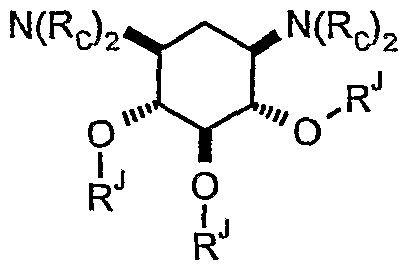
The ring B may have any of the following configurations, for example:
where the substituent -ORJ may be OH, O-alkyl or O-(Ring A) or O-(Ring Q), for example, provided that at least one -ORJ is one of O-(Ring A) or (O-Ring Q); and
N(RC)2 is as hereinbefore defined. N(RC)2 is typically NH2.
Therefore, particular examples of Ring B are shown below:
where each RG is independently selected from Ring A or Ring Q.
The rings A and Q, if present, may have any of the following configurations, for example:
where RGB represents Ring B and wwhheerree tthhee ssuubbssttiittuueenntt --OORRJJ mmaayy bbee OH, O-alkyl or O-(Ring A) or O-(Ring Q), for example, provided that at least one -ORJ is one of O-(Ring A) or (O-Ring Q); and
N(RC)2 is as hereinbefore defined. N(RC)2 is typically NH2.
Therefore particular examples of Ring A or Ring Q are shown below:
s mentioned hereinbefore, the compounds of the present invention exclude natural products. As such when ring B is of the formula
The substituent RJ is not a natural sugar. In particular, the substituent RJ is not D- glucose, i.e. Ring A or Ring Q is not
In a particular class of compounds of the present invention, the compound comprises a carbocyclic ring. In a particular class of these compounds, the carbocyclic ring is 6-membered. In a further class of compounds the carbocyclic 6- membered ring is amino and hydroxyl-substituted, for example 2, 4 or 6 amino substituted or 2, 6 or 4, 6 diamino substituted. Other substituents may be OH.
The substituent Sug is, in a preferred class of compounds, based on, or derived from, a glucose molecule. In particular, the moiety Sug is derived from any combination of α and β, D- and L- forms of glucose. In other words, the moiety Sug may be any of α and β, D- and L- gluco-configured.
Regio-isomers of cyclic structures of the present invention are shown below:
III
where R is preferably hydrogen, alkyl, hydroxyalkyl e.g. CH2OH, CH2NH2, N(RC)2 or OH. Of course, the rings containing an in-ring oxygen are usually a Sug moiety.
Regio isomer (ii) is preferred, where X is O, where it forms an acetal.
Although only one substituent R is shown on each carbon atom, it is of course contemplated that two substituents may exist, provided that one of the substituents is one of hydrogen or alkyl.
It is preferred that at least one of the cyclic structures A and B (and in the case that R is a cyclic structure, R) is an aldose or ketose, for example glucose, galactose, fructose or ribose, or such a sugar in which one or more hydroxy groups are replaced by an amino group.
It is preferred that the cyclic structures A and B are substituted by at least one amino group, at least two amino groups or at least at least 3 amino groups, preferably at least four amino groups.
In a particular class of compounds of the present invention the compounds exclude any derivative which may be prepared by derivatisation of an aminoglycoside natural product with a minimal structure consisting of two rings, for example, a structure comprising two or three rings. For example, compounds which are simple derivative of naturally occurring products are not included within the scope of the invention. Derivatives of natural products may be considered to be products that maintain the same stereochemistry as their natural product from which they are derived and/or maintain the vast majority of functional and non-functional groups with only a few substituent changes. For example, a substitution of an NH2 for an OH or an OH for an NH2 on a naturally occurring product would be considered to fall within the definition of derivatisation or derivative.
Essentially, the compounds of the present invention do not have identical configuration to natural products having the same substituents thereon. Moreover, the compounds of the present invention are not derived from natural products.
Structures that are included in this class are, for example, the above-mentioned naturally occurring moieties, for example neamine and such simple derivatives, e.g. amino derivatives.
Also excluded are aminoglycoside derivatives in which all sugar moieties are α-D- configured and the central core has the configuration of 2-deoxystreptamine.
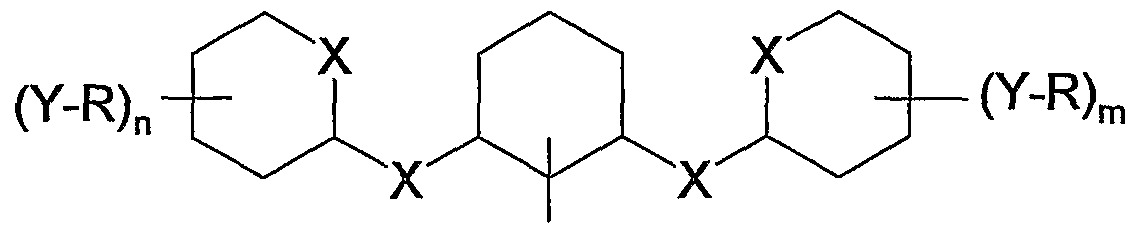
In an embodiment of formula I, the compounds are of the formula:
where X may be independently selected from N, O or S, e.g. is O, and (Y-R)n and (Y-R)m are as hereinbefore defined and are for example OH, N(RC)2 (where each Rc is e.g. independently H, Me or Et), CH2OH, CH2NH2 or Sug, Sug often being linked to the remainder of the molecule via an oxygen atom of the Sug residue.
Further examples of the compounds of the present invention are:
where Rb is OH, N(RC)2 NR2 is N(RC)2 R is Rc
Ra is Rb or CH2-Rb
In a class of compounds having the formula III, the compounds contain the structural conformation as shown below:
2; R = NH2, OH, NHR' or NR"2 2'; R = NH2, OH, NHR' or NR"2
7; R = NH2> OH, NHR' or NR'2 T; R = NH2, OH, NHR' or NR'2
R may also be hydrogen.
R1 is selected from OH or C1- alkyl.
Specific compounds of the present invention having a two-ring system are shown below:
where the following nomenclature applies:
A = 6- NH2, D-Glucose, α-linkage
B = 6- NH2, D-Glucose, β -linkage C = 3- NH2, D-Glucose, α-linkage D = 3- NH2, D-Glucose, β -linkage E = 2- NH2, D-Glucose, α-linkage F = 2- NH2, D-Glucose, β -linkage G = no - NH2, D-Glucose, β -linkage
A is 6-amino-6-dioxy-α-D-glucosyl B is 6-amino-6-dioxy-β-D-glucosyl C is 3-amino-3-dioxy-α-D-glucosyl D is 3-amino-3-dioxy-β-D-glucosyl E is 2-amino-2~dioxy-α-D-g!ucosyl F is 2-amino-2-dioxy-β-D-glucosyl G is 2, 6-diamino-2,6-dioxy-α-D-glucosyl
Also may be mentioned β-D-glucosyl
A and A' are enantiomeric ring systems. B and B' are enantiomeric ring systems. C and C are enantiomeric ring systems. D and D' are enantiomeric ring systems. E and E' are enantiomeric ring systems. F and F are enantiomeric ring systems. G and G' are enantiomeric ring systems.
Further two-ring systems of the present invention are shown below:
As an example to the use of the present invention to determine the binding affinity of enantiomeric compounds with enantiomeric RNA, from the results of the compounds of binding affinity to L-RNA, the binding affinity for D-RNA may be determined from the compounds below, which are enantiomers of these compounds:
Regio isomers of compounds of, e.g. formula II of the present invention are shown below:
where R3 is equivalent to R as hereinbefore described. Preferably, R3 is H, N(RC)2 e.g. NH2l NHMe or NMe2, OH, CH2OH, CH2NH2, or Sug, where Sug is often linked to the remainder of the molecule via an oxygen atom of the Sug residue.
Although only one substituent R is shown on each carbon atom, it is of course contemplated that two substituents may exist, provided in most cases that one of the substituents is alkyl, e.g. methyl.
Whereas isomers i, ii and iii all show the acetal forms, this is not intended to be limiting and the hemiacetal isomers of the above formulae are also contemplated, although isomers i, ii and iii are preferred, in particular, isomer ii is preferred.
In an embodiment of formula II, there are provided compounds of the formula:
Where each X is independently selected from N, O or S, e.g. O, and (Y-R)n and (Y- R)m are as hereinbefore defined and are for example NH2, OH, N(RC)2 e.g. NH2, NHMe or NMe2, or Sug, e.g. Sug linked to the remainder of the molecule via an oxygen of the Sug residue.
Further examples of compound structures according to the present invention are:
where Rb is OH, N(RC)2 R is Ro
Ra is Rb or CH2-Rb
Examples of compounds of the present invention having a structure of formulae I to III are shown below, where the confirmation and regio-substitution of the central ring B is shown:
3"; R = NH
2, OH, NHR' or NR'
2 4; R = NH
2, OH, NHR' or NR'- 1 ; R = NH
2, OH, NHR
1 or NR'
2
5'; R = NH
2, OH, NHR' or NR'
2 R = NH
2, OH, NHR' or NR'
2 Ψ»Ψ
6; R = NH
2, OH, NHR' or NR'
2
6"; R = NH
2, OH, NHR' or NR'-
R may also be hydrogen. R' is selected from OH or C1- alkyl.
It is preferred that at least two, preferably at least three and more preferably at least 4 R groups are one of NH2, NHR' or NR'2.
Specific examples of compound having a 3 rings are shown below:
1A'A' 1AA'
1FA' 1F'A
Other compounds of the present invention are disclosed below:
where the following nomenclature applies:
A is 6-amino-6-dioxy-α-D-glucosyl B is 6-amino-6-dioxy-β-D-glucosyl C is 3-amino-3-dioxy-α-D-glucosyl D is 3-amino-3-dioxy-β-D-glucosyl E is 2-amino-2-dioxy-α-D-gIucosyl F is 2-amino-2-dioxy-β-D-glucosyl G is 2, 6-diamino-2,6-diosy-α-D-g!ucosyl Also may be mentined β-D-glucosyl
A = 6-NH2, D-Glucose, α-linkage B = 6- NH2, D-Glucose, β -linkage
C = 3- NH2, D-Glucose, α-linkage D = 3- NH2, D-Glucose, β -linkage E = 2- NH2, D-Glucose, α-linkage F = 2- NH2, D-Glucose, β -linkage G = no - NH2, D-Glucose, β -linkage
A and A' are enantiomeric ring systems. B and B' are enantiomeric ring systems. C and C are enantiomeric ring systems. D and D' are enantiomeric ring systems. E and E' are enantiomeric ring systems. F and F are enantiomeric ring systems. G and G' are enantiomeric ring systems.
As a further example to the use of the present invention to determine the binding affinity of enantiomeric compounds with enantiomeric RNA, from the results of the compounds binding affinity to L-RNA, the binding affinity for D-RNA may be determined from the compounds below, which are enantiomers of these compounds:
The structures of the compounds disclosed herein are not limited to particular stereo configurations and it is contemplated that the substituents R make take either of the equatorial or axial positions on the rings. It is therefore contemplated that all diastereoisomers of the compounds disclosed herein are included and that the compounds are not limited to any specified α or β linkages or configurations.
It is however preferred that the functional groups of the compounds lie in the equatorial plane.
The affinity for RNA sequences of compounds of the present invention may be determined by measuring the affinity of the enantiomeric compound for the enantiomeric RNA.
The invention also includes pharmaceutically-acceptable salts of the disclosed compounds wherein the parent compound is modified by making acid or base salts thereof, for example the conventional non-toxic salts or the quaternary ammonium salts which are formed, e.g., from inorganic or organic acids or bases. Examples of such acid addition salts include acetate, adipate, alginate, aspartate, benzoate, benzenesulfonate, bisulfate, butyrate, citrate, camphorate, camphorsulfonate, cyclopentanepropionate, digluconate, dodecylsulfate, ethanesulfonate, fumarate, glucoheptanoate, glycerophosphate, hemisulfate, heptanoate, hexanoate, hydrochloride, hydrobromide, hydroiodide, 2-hydroxyethanesulfonate, lactate, maleate, methanesulfonate, 2-naphthalenesulfonate, nicotinate, oxalate, pamoate, pectinate, persulfate, 3-phenylpropionate, picrate, pivalate, propionate, succinate, tartrate, thiocyanate, tosylate, and undecanoate. Base salts include ammonium salts, alkali metal salts such as sodium and potassium salts, alkaline earth metal salts such as calcium and magnesium salts, salts with organic bases such as dicyclohexylamine salts, N-methyl-D-glucamine, and salts with amino acids such as arginine, lysine, and so forth. Also, the basic nitrogen-containing groups may be quaternized with such agents as lower alkyl halides, such as methyl, ethyl, propyl, and butyl chloride, bromides and iodides; dialkyl sulfates like dimethyl, diethyl, dibutyl; and diamyl sulfates, long chain halides such as decyl, Iauryl, myristyl and stearyl chlorides, bromides and iodides, aralkyl halides like benzyl and phenethyl bromides and others.
Illustrative organic acids that form suitable salts include mono-, di-, and tricarboxylic acids such as glycolic, lactic, pyruvic, malonic, succinic, glutaric, fumaric, malic, tartaric, citric, ascorbic, maleic, benzoic, phenylacetic, cinnamic and salicylic acids, as well as sulfonic acids such as p-toluene sulfonic and methanesulfonic acids. Either the mono or di-acid salts can be formed, and such salts may exist in either a hydrated, solvated or substantially anhydrous form.
Included also are prodrugs of the described compounds.
The phrase pharmaceutically acceptable may refer to those compounds, materials, compositions, and/or dosage forms which are, within the scope of sound medical judgment, suitable for use in contact with the tissues of human beings or animals without excessive toxicity, irritation, allergic response, or other problem or complication, commensurate with a reasonable benefit/risk ratio.
Similarly, groups referred to or featured herein (especially those containing heteroatoms and conjugated bonds) may exist in tautomeric forms and all these tautomers are included in the scope of the invention.
Where compounds of the present invention contain one or more asymmetric centres, they will exhibit optical and/or diastereoisomerism. All diastereoisomers may be separated using conventional techniques, e.g. chromatography or fractional crystallisation. The various stereoisomers may be isolated by separation of a racemic or other mixture of the compounds using conventional, e.g. fractional crystallisation or HPLC, techniques. Alternatively the desired optical isomers may be made by reaction of the appropriate optically active starting materials under conditions which will not cause racemisation or epimerisation, or by derivatisation, for example with a homochiral acid followed by separation of the diastereomeric derivatives by conventional means (e.g. HPLC, chromatography over silica). All stereoisomers are included within the scope of the invention.
Regioisomers may also exist in the compounds of the present invention. The present invention contemplates the various regio isomers and mixtures thereof resulting from the arrangement of substituents around the plane of a cyclic structure and designates such isomers as α- and β- forms, in particular α- and β- linkages to or between sugar molecules or derivatives of sugar molecules, which are incorporated into the scope and concept of the present invention.
The invention therefore includes all variant forms of the defined compounds, for example any tautomers or diastereoisomers. In addition, any pharmaceutically acceptable salt, ester, acid or other variant of the defined compounds and their
tautomers as well as substances which, upon administration, of e.g. pharmaceutical formulations, are capable of providing directly or indirectly a compound as defined above or providing a species which is capable of existing in equilibrium with such a compound.
It will be understood that the invention specifically includes variants of preferred or exemplary compounds in which one or more moieties have been replaced by alternatives described in this application.
Throughout the description and claims of this specification, the words "comprise" and "contain" and variations of the words, for example "comprising" and "comprises", means "including but not limited to", and is not intended to (and does not) exclude other moieties, additives, components, integers or steps.
The present invention provides new aminoglycoside-type compounds that inhibit bacterial growth, and preferably inhibit bacteria that are resistant to current aminoglycoside antibiotics.
According to a yet further aspect of the invention there is provided a method of inhibiting growth of a bacterium or yeast comprising contacting a compound of the disclosure with the bacterium or yeast. For effective treatment, the compound is used in an amount effective to inhibit such growth.
It will be appreciated that the diversity of the compounds of the present invention may in effect be doubled by studying their interactions with both natural and enantiomeric models of RNA binding sites. Symmetry demands that, should a compound bind to a non-natural enantiomeric RNA sequence, its enantiomer will bind with the same affinity to the natural RNA sequence. It is therefore a contemplated that the compounds described herein may be used to determine the binding affinities of their enantiomers with respect to the enantiomeric RNA sequence.
According to a further aspect of the invention there is provided use of the compounds of the present invention in probing conformational structure of an RNA molecule which is not populated by natural products.
Reference herein to "populated" is intended to include a binding site that can be occupied by a binding partner or aptamer, so in the context above, the use of compounds of the present invention is in their population of, or binding to, sites that natural products are unable to interact with.
In this aspect of the invention it is envisaged that the compounds may be used as aptamers in a SELEX (Systematic Evolution of Ligands by EX-ponential Enrichment) method. The compounds may be used to identify a particular binding site of an RNA molecule or protein. It may then be possible to identify further binding sites to which the compounds bind, it is also envisaged that once having identified a binding target a chemical mirror image of the target can be created so that compounds to this mirror image can be identified. By selecting natural RNAs, based on D-ribose sugar units, against the non-natural enantiomer of the eventual target molecule, for example a peptide made of D-amino acids, a spiegelmer directed against the natural L-amino acid target can be created. Once tight binding aptamers to this target are isolated and sequenced, the Laws of Molecular Symmetry mean that RNAs synthesised chemically based on L-ribose sugars will bind the natural target, that is to say the mirror image of the selection target. This process is conveniently referred to as reflection-selection or mirror selection and the L-ribose species produced are significantly more stable in biological environments, are less susceptible to normal enzymatic cleavage and are nuclease resistant.
In this aspect of the invention the compounds may be used not only to identify new RNA and protein target binding sites or ligands but they may also be used as designer templates for further modification in antibacterial antiviral or anti-tumour drug design. They may also serve as refined tools for the manipulation of cellular gene expression.
The compounds of the present invention are potentially valuable tools for probing conformational space and for identifying novel ligands for RNAs which may, for example, be inert to evolved antibiotic mechanisms.
In the present invention we have determined the affinity of disclosed compounds for models and variants of three important known RNA binding sites for the natuarally occurring AGs, including the A-site of the prokaryotic ribosome, the Rev responsive
element (RRE) of HIV-1 mRNA and the transactivation responsive region (TAR) of the HIV genome. Crucially, the effective stereochemical diversity of the library can be doubled by studying the interaction of these analogues with both natural (D- ribose) and enantiomeric RNA molecules (L-ribose). Interactions with the library have been investigated by Surface Plasmon Resonance, Mass Spectrometry and Circular Dichroism Spectroscopy. Surprisingly, both natural and synthetic aminoglycosides appear to bind well to both enantiomers of all three targets. This unexpected observation indicates the possible therapeutic usage of enantiomeric drugs.
According to a further aspect of the invention there is provided use of the compounds of the present invention in an assay to detect one or more target binding sequences of an RNA molecule.
Preferably the RNA target binding sequence is a natural RNA fragment or it may be a non-natural enantiomeric fragment of RNA based on L-ribose.
According to a yet further aspect of the invention there is provided a pharmaceutical formulation comprising any one or more of the compounds of the present invention. The pharmaceutical formulation may include an excipient, carrier or diluent.
The invention includes prodrugs for the active pharmaceutical species of the invention, for example in which one or more functional groups are protected or derivatised but can be converted in vivo to the functional group, as in the case of protected nitrogens. The term "prodrug," as used herein, includes compounds which are rapidly transformed in vivo to the parent compound, for example, by hydrolysis in blood. A thorough discussion is provided in T. Higuchi and V. Stella, Pro-drugs as Novel Delivery Systems, Vol. 14 of the A.C.S. Symposium Series, Edward B. Roche, ed., Bioreversible Carriers in Drug Design, American Pharmaceutical Association and Pergamon Press, 1987, and Judkins, et al. Synthetic Communications, 26(23), 4351-4367 (1996), each of which is incorporated herein by reference.
The use of protecting groups is fully described in 'Protective Groups in Organic Chemistry', edited by J W F McOmie, Plenum Press (1973), and 'Protective Groups
in Organic Synthesis', 2nd edition, T W Greene & P G M Wutz, Wiley-lnterscience (1991).
Thus, it will be appreciated by those skilled in the art that, although protected derivatives of compounds of the invention may not possess pharmacological activity as such, they may be administered, for example parenterally or orally, and thereafter metabolised in the body to form compounds of the invention which are pharmacologically active. Such derivatives are therefore examples of "prodrugs". All prodrugs of the described compounds are included within the scope of the invention.
The pharmaceutically acceptable salts of the present invention can be synthesized from the parent compound which contains a basic or acidic moiety by conventional chemical methods. Generally, such salts can be prepared by reacting the free acid or base forms of these compounds with a stoichiometric amount of the appropriate base or acid in water or in an organic solvent, or in a mixture of the two; generally, non aqueous media like ether, ethyl acetate, ethanol, isopropanol, or acetonitrile are preferred. Lists of suitable salts are found in Remington's Pharmaceutical Sciences, 17th ed., Mack Publishing Company, Easton, Pa., US, 1985, p. 1418, the disclosure of which is hereby incorporated by reference.
In order to aid bioavailability, the compounds of the present invention may be attached to bioavailability-enhancing groups, such as poly-cations or nucleotides.
The antibacterial compounds of the invention may in pharmaceutical use normally be administered orally, intravenously, subcutaneously, buccally, rectally, dermally, nasally, tracheally, bronchially, by any other parenteral route, as an oral or nasal spray or via inhalation, The compounds may be administered in the form of pharmaceutical preparations comprising prodrug or active compound either as a free compound or, for example, a pharmaceutically acceptable non-toxic organic or inorganic acid or base addition salt, in a pharmaceutically acceptable dosage form. Depending upon the disorder and patient to be treated and the route of administration, the compositions may be administered at varying doses.
The antibacterial compounds of the invention may also be combined and/or co- administered with any another pharmaceutically active compound for example another antibacterial agent or other anti-infective agent.
Typically, therefore, the pharmaceutical compounds of the invention may be administered orally or parenterally ("parenterally" as used herein, refers to modes of administration which include intravenous, intramuscular, intraperitoneal, intrasternal, subcutaneous and intraarticular injection and infusion) to a host to obtain an protease-inhibitory effect. In the case of larger animals, such as humans, the compounds may be administered alone or as compositions in combination with pharmaceutically acceptable diluents, excipients or carriers.
Actual dosage levels of active ingredients in the pharmaceutical compositions of this invention may be varied so as to obtain an amount of the active compound(s) that is effective to achieve the desired therapeutic response for a particular patient, compositions, and mode of administration. The selected dosage level will depend upon the activity of the particular compound, the route of administration, the severity of the condition being treated and the condition and prior medical history of the patient being treated. However, it is within the skill of the art to start doses of the compound at levels lower than required for to achieve the desired therapeutic effect and to gradually increase the dosage until the desired effect is achieved.
Pharmaceutical compositions of this invention for parenteral injection suitably comprise pharmaceutically acceptable sterile aqueous or nonaqueous solutions, dispersions, suspensions or emulsions as well as sterile powders for reconstitution into sterile injectable solutions or dispersions just prior to use. Examples of suitable aqueous and nonaqueous carriers, diluents, solvents or vehicles include water, ethanol, polyols (such as glycerol, propylene glycol, polyethylene glycol and the like), and suitable mixtures thereof, vegetable oils (such as olive oil) and injectable organic esters such as ethyl oleate. Proper fluidity can be maintained, for example, by the use of coating materials such as lecithin, by the maintenance of the required particle size in the case of dispersions and by the use of surfactants.
These compositions may also contain adjuvants such as preservative, wetting agents, emulsifying agents and dispersing agents. Prevention of the action of
microorganisms may be ensured by the inclusion of various antibacterial and antifungal agents, for example, paraben, chlorobutanol or phenol sorbic acid. It may also be desirable to include isotonic agents such as sugars or sodium chloride, for example. Prolonged absorption of the injectable pharmaceutical form may be brought about by the inclusion of agents (for example aluminum monostearate and gelatin) which delay absorption.
In some cases, in order to prolong the effect of the drug, it is desirable to slow the absorption of the drug from subcutaneous or intramuscular injection. This may be accomplished by the use of a liquid suspension of crystalline or amorphous material with poor water solubility. The rate of absorption of the drug then depends upon its rate of dissolution which, in turn, may depend upon crystal size and crystalline form. Alternatively, delayed absorption of a parenterally administered drug form is accomplished by dissolving or suspending the drug in an oil vehicle.
Injectable depot forms are suitably made by forming microencapsule matrices of the drug in biodegradable polymers, for example polylactide-polyglycolide. Depending upon the ratio of drug to polymer and the nature of the particular polymer employed, the rate of drug release can be controlled. Examples of other biodegradable polymers include poly(orthoesters) and poly(anhydrides). Depot injectable formulations may also prepared by entrapping the drug in liposomes or microemulsions which are compatible with body tissues. The injectable formulations can be sterilized, for example, by filtration through a bacterial-retaining filter or by incorporating sterilizing, agents in the form of sterile solid compositions which can be dissolved or dispersed in sterile water or other sterile injectable media just prior to use.
Solid dosage forms for oral administration include capsules, tablets, pills, powders and granules. In such solid dosage forms, the active compound is typically mixed with at least one inert, pharmaceutically acceptable excipient or carrier such as sodium citrate or dicalcium phosphate and/or one or more: a) fillers or extenders such as starches, lactose, sucrose, glucose, mannitol and silicic acid; b) binders such as carboxymethylcellulose, alginates, gelatin, polyvinylpyrrolidone, sucrose and acacia; c) humectants such as glycerol; d) disintegrating agents such as agar- agar, calcium carbonate, potato or tapioca starch, alginic acid, certain silicates and
sodium carbonate; e) solution retarding agents such as paraffin; f) absorption accelerators such as quaternary ammonium compounds; g) wetting agents such as cetyl alcohol and glycerol monostearate; h) absorbents such as kaolin and bentonite clay and i) lubricants such as talc, calcium stearate, magnesium stearate, solid polyethylene glycols, sodium Iauryl sulfate and mixtures thereof. In the case of capsules, tablets and pills, the dosage form may also comprise buffering agents. Solid compositions of a similar type may also be employed as fillers in soft and hard-filled gelatin capsules using such excipients as lactose or milk sugar as well as high molecular weight polyethylene glycol, for example.
Suitably, oral formulations contain a dissolution aid. The dissolution aid is not limited as to its identity so long as it is pharmaceutically acceptable. Examples include nonionic surface active agents, such as sucrose fatty acid esters, glycerol fatty acid esters, sorbitan fatty acid esters (e.g., sorbitan trioleate), polyethylene glycol, polyoxyethylene hydrogenated castor oil, polyoxyethylene sorbitan fatty acid esters, polyoxyethylene alkyl ethers, methoxypolyoxyethylene alkyl ethers, polyoxyethylene alkylphenyl ethers, polyethylene glycol fatty acid esters, polyoxyethylene alkylamines, polyoxyethylene alkyl thioethers, polyoxyethylene polyoxypropylene copolymers, polyoxyethylene glycerol fatty acid esters, pentaerythritol fatty acid esters, propylene glycol monofatty acid esters, polyoxyethylene propylene glycol monofatty acid esters, polyoxyethylene sorbitol fatty acid esters, fatty acid alkylolamides, and alkylamine oxides; bile acid and salts thereof (e.g., chenodeoxycholic acid, cholic acid, deoxycholic acid, dehydrocholic acid and salts thereof, and glycine or taurine conjugate thereof); ionic surface active agents, such as sodium laurylsulfate, fatty acid soaps, alkylsulfonates, alkylphosphates, ether phosphates, fatty acid salts of basic amino acids; triethanolamine soap, and alkyl quaternary ammonium salts; and amphoteric surface active agents, such as betaines and aminocarboxylic acid salts.
The solid dosage forms of tablets, dragees, capsules, pills, and granules can be prepared with coatings and shells such as enteric coatings and other coatings well known in the pharmaceutical formulating art. They may optionally contain opacifying agents and may also be of a composition such that they release the active ingredient(s) only, or preferentially, in a certain part of the intestinal tract,
and/or in delayed fashion. Examples of embedding compositions which can be used include polymeric substances and waxes.
The active compounds may also be in micro-encapsulated form, if appropriate, with one or more of the above-mentioned excipients.
The active compounds may be in finely divided form, for example it may be micronised.
Liquid dosage forms for oral administration include pharmaceutically acceptable emulsions, solutions, suspensions, syrups and elixirs. In addition to the active compounds, the liquid dosage forms may contain inert diluents commonly used in the art such as water or other solvents, solubilizing agents and emulsifiers such as ethyl alcohol, isopropyl alcohol, ethyl carbonate, ethyl acetate, benzyl alcohol, benzyl benzoate, propylene glycol, 1,3-butylene glycol, dimethyl formamide, oils (in particular, cottonseed, groundnut, corn, germ, olive, castor, and sesame oils), glycerol, tetrahydrofurfuryl ajcohol, polyethylene glycols and fatty acid esters of sorbitan and mixtures thereof. Besides inert diluents, the oral compositions may also include adjuvants such as wetting agents, emulsifying and suspending agents, sweetening, flavouring and perfuming agents. Suspensions, in addition to the active compounds, may contain suspending agents such as ethoxylated isostearyl alcohols, polyoxyethylene sorbitol and sorbitan esters, microcrystalline cellulose, aluminum metahydroxide, bentonite, agar-agar, and tragacanth and mixtures thereof.
Compositions for rectal or vaginal administration are preferably suppositories which can be prepared by mixing the compounds of this invention with suitable non- irritating excipients or carriers such as cocoa butter, polyethylene glycol or a suppository wax which are solid at room temperature but liquid at body temperature and therefore melt in the rectum or vaginal cavity and release the active compound. Compounds of the present invention can also be administered in the form of liposomes. As is known in the art, liposomes are generally derived from phospholipids or other lipid substances. Liposomes are formed by mono- or multi- lamellar hydrated liquid crystals which are dispersed in an aqueous medium. Any non-toxic, physiologically acceptable and metabolisable lipid capable of forming
liposomes can be used. The present compositions in liposome form can contain, in addition to a compound of the present invention, stabilisers, preservatives, excipients and the like. The preferred lipids are the phospholipids and the phosphatidyl cholines (lecithins), both natural and synthetic. Methods to form liposomes are known in the art, for example, Prescott, Ed., Methods in Cell Biology, Volume XIV, Academic Press, New York, N.Y. (1976), p 33 et seq.
Dosage forms for topical administration of a compound of this invention include powders, sprays, ointments and inhalants. The active compound is mixed under sterile conditions with a pharmaceutically acceptable carrier and any needed preservatives, buffers or propellants which may be required. Ophthalmic formulations, eye ointments, powders and solutions are also contemplated as being within the scope of this invention.
Advantageously, the compounds of the invention are orally active, have rapid onset of activity and low toxicity.
The compounds of the invention have the advantage that they may be more efficacious, be less toxic, be longer acting, have a broader range of activity, be more potent, produce fewer side effects, be more easily absorbed than, or that they may have other useful pharmacological properties over, compounds known in the prior art.
According to a yet further aspect of the invention there is provided use of any one or more of the compounds of the present invention for the manufacture of an antibacterial medicament.
According to a yet further aspect of the invention there is provided a method of treating a bacterial infection comprising administering a therapeutically effective amount of any one or more of the compounds of the present invention to an individual suffering from a bacterial infection.
A selection of compounds of the present invention do not contain aza sugar residues, especially neamine, in either the D or L form.
The present invention enables the provision of compounds that comprise protonatable groups (e.g. NH2) in selected positions on at least one aldose or ketose sugar ring, e.g. glucose in place of the naturally present hydroxyl groups. In one group of compounds, the β -anomers, these hydroxyl groups are naturally located in the equatorial position (in the β-anomer of a sugar all the hydroxyl compounds are in the equatorial position and in the α-anomers one hydroxyl is axial); this provides a way of selectively providing protonatable groups on to the equatorial positions of the sugar moieties and therefore provides compounds that contain a selection of 1,2,3,4,5,6 or more protonatable groups in the equatorial positions of a sugar ring (where the sugar ring has thereby been modified to contain at least one protonatable group in place of a hydroxyl).
In other variants of the present invention, the protonatable groups are in the axial positions of the sugar ring, and are usually the result of a substitution of an existing hydroxyl group. To this end, for compounds requiring protonatable groups in the axial positions, it is preferred that the sugar (starting material) contains hydroxyl groups in the axial positions for substitution.
It is therefore conceivable that in order to obtain a desired geometric confirmation of protonatable groups for compounds of the present invention, whether they are equatorial or axial (or a mixture of both), it is desirable that a starting sugar moiety has hydroxyl groups positioned in the same desired geometric confirmation. Where the geometric structure is not the lowest energy state available, it is understood that existing techniques may be employed to bias one geometric form over another, for example the introduction of bulky (e.g. t-butyl) groups.
Included in the invention are compounds containing a carbocyclic ring, in particular a 5,6, or 7-membered carbocyclic ring, having coupled thereto an aminosugar, in particular a monosaccharide, having 1 ,2,3,4 or more hydroxyl groups replaced by an amino group. Two, three or four aminosugars may be coupled to the ring. See the previous description of amino-containing Sug moieties.
One use of the disclosed compounds is in assays, particularly multiplex assays. Accordingly, the invention includes a method of performing a multiplex assay
comprising the step of providing a plurality of compounds of the invention, each compound being distinguishable from the others.
The compounds may be spatially distinguishable, e.g. on the basis of their known or predetermined position in e.g. a multiwell plate. Additionally or alternatively the assay may be non-spatially dependent, for example using coded carriers, e.g. as described in WO 02/37944.
Further provided is a compound library comprising a plurality of compounds of the disclosure, e.g. 10 or more, 100 or more, 1,000 or more or 10,000 or more. The library may comprise a plurality of containers, each containing one compound. The containers may be in one group, e.g. in an outer housing, frame or container. The compounds may be labelled, as with a dye, an enzyme, antibody or other ligand or a radioactive label, for example. The compounds may be coded, e.g. associated with a coded carrier, for example coupled to a coded carrier. The compounds may be coupled to a label moiety or a code-providing entity through an oxygen or nitrogen atom derived form a hydroxy or amino group of the compound.
Included is an assay system comprising multiplex assay apparatus associated with a plurality of, or library of, compounds described herein, e.g. coded or labelled compounds, and/or spatially separated compounds, as in the case of each compound being in a respective container which is part of the apparatus; alternatively the containers may be for fluid communication with, or in fluid communication with, the apparatus. The apparatus may be multi-wall plate processing apparatus.
Also included are kits containing one or more of the compounds and one or more labelling reagents or code carriers.
The invention will now be described by way of example only with reference to the following Figures wherein:
Figure 1 shows the representative procedure for the synthesis of the aminoglycoside analogue 1AA.
Figure 2 shows a general procedure for phthalimide deprotection: Synthesis of 14F.
Figure 3 shown the 1H NMR of compound 1AA' prepared by the method described herein, showing it to the greater than 90% pure.
Figure 4 shows the 13C NMR of compound 1AA' prepared by the method described herein, showing it to the greater than 90% pure.
Materials and Methods
RNA synthesis
Automated solid phase oligonucleotide synthesis was carried out using an Applied Biosystems 391 DNA synthesiser using standard ABI reagents and a standard coupling protocol for 5'-DMT phosphoramidite chemistry. Synthesis of the wild type sequences and enantiomeric analogues of wild-type sequences was carried out on a 1 μmol scale whilst all variant sequences were synthesised on a 0.2 μmol scale (A-site: Biotin-3'-CCGCUGAAGUGGGCUUCCACACUGCGG-5' (SEQ ID NO:1); RRE: Biotin-3'-CCACAUGGCAGUCGGCUUCGACGCGGGUGG-5' (SEQ ID NO:2); TAR: Biotin-3'-CCGGUCUCUCGAGGGUCCGAGUCU AGACCGG-5' (SEQ ID NO:3); U1495A A-site variant: Biotin-3'-CCGCUG
AAGUGGGCUUCCACACAGCGG-5' (SEQ ID NO:4); U1406A A-site variant: Biotin-3'-CCGCAGAAGUGGGCUUCCACACUGCGG-5'(SEQ ID NO:5); U1495 U4 ^ A-site variant: Biotin-3'-CCGCUGAAGUGGGCUUCCACACU4 thioGCGG-5' (SEQ ID NO:6;). Enantiomeric RNA models were prepared using phosphoramidites derived from L-ribose. All syntheses were performed using 500 A DMT-N-t- butylbenzoyl-biotin succinate attached to lcaa CPG purchased from ChemGenes, Inc (USA). Standard 2'-O-f-butyldimethylsilyl-(D)-ribo-phos -phoramidites, 2'-0- - butyldimethylsi!y!-(L)-ribo-cytidine-phosphoramidite and 5'-DMT-4'-thiocyanoethyl-2'- 0-.-butyldimethylsilyl-(D)-uridine-phosphoramdite were purchased from ChemGenes, Inc (USA), all other 2'-O-f-butyldimethylsilyl-(L)-ribo- phosphoramidites were obtained from Dr. Chris Adams (University of Leeds). The exocyclic amino groups of adenine and cytosine were benzoyl protected while guanine was isobutyryl-protected.
After synthesis, the CPG-bound oligonucleotides were cleaved off the resin, and the exocyclic amino and cyanoether protecting groups were removed using freshly prepared methanolic ammonia at 30 °C for 30 h. After evaporation to dryness the TBDMS groups were removed at room temperature by dissolution in a 1:1 solution of DMSO and NEt3-3 HF (purchased from Aldrich) at room temperature overnight.
Purification
All deprotected oligonucleotides were purified (and partially desalted and concentrated) by two-step HPLC: 1. Anion exchange. Using a DNAPac™ PA-100 column and a Dionex DX 500 chromatography system, with H2O and 1 M NH4CI eluent. An elution profile of 0-»100% eluent over 30 minutes at 70 °C was used. 2. Reverse phase. Using a Merck LiChrospher® 100 column and a Beckman System Gold chromatography system, with 100 mM NH4OAc buffer and 1:1 (v/v) 100 mM NH OAc /acetonitrile eluent. An elution profile of 0-»100% eluent over 30 minutes at 60 °C was used.
For analytical runs the flow rate was 1 ml/min with UV detection set at a wavelength of 260 nm. For preparative runs the flow rate was 1 ml/min with UV detection set at a wavelength of 290 nm. Final desalting and concentration of the samples was done using MF centrifugal concentrators with a 1 K cut off.
The concentration of each of the RNA stock solutions (in water) was calculated from the measured absorbance at a wavelength of 260 nm and the μM extinction coefficient for each sequence. All absorbance measurements were made using a Perkin Elmer Lambda Bio 40 UV/Vis spectrophotometer. All extinction coefficients and expected molecular weights were derived using 'Expidite sequence editor' software. All sequences were characterised using negative ionisation electrospray mass spectrometry.
Table 1:
Sequence Molecular weight Molecular weight μM extinction expected found coefficient
A-site wt 9,076 9,076.3 248.9
Immobilisation of Biotinylated RNA Streptavidin-functionalised BIAcore sensorchips (Sensor chip SA) were purchased from Biacore AB. All immobilisation and subsequent interaction studies were performed using a BIAcore 3000 instrument. Prior to immobilisation, solutions of biotinylated RNA (30 pmol) in 240 μl of renaturing buffer (10 mM HEPES, 0.1 mM EDTA, 100 mM NaCl, pH 6.8) were renatured by heating to 80°C for 2 min followed by slow cooling to room temperature. Individual flow cells were functionalised by injecting 150 μl of RNA buffer using the INJECT command at a flow rate of 5 μl/min, followed by washing the IFC and injection needle. Three flow cells were used to immobilise RNA while the fourth remained unmodified to serve as a blank control for matrix affects. Levels of RNA capture were calculated by subtracting response units after injection from response units before injection, for each flow cell.
General Procedures for Surface Plasmon Resonance Binding Studies Analyte samples were prepared by serial dilutions from stock solutions in RNase free Falcon tubes. All buffers were autoclaved and filtered through sterile 0.2 μm nylon membranes (Nalgene) under vacuum. All procedures for binding were automated as methods using repetitive cycles of sample injection and regeneration. Typically, running buffer was injected in the first cycle to establish a stable baseline value. Samples were injected at a flowrate of 20 μl/min using the INJECT command. All aminoglycoside samples were injected from autoclaved 7 mm plastic vials (BIAcore) that were capped with pierceable plastic crimp caps to minimise carry-over and sample evaporation. Samples were injected in order of increasing concentration, in triplicate. Running buffer was injected for one cycle between each different concentration of the same analyte, and for two cycles between different analytes.
Binding studies with Aminoglycosides
Neomycin sulfate (Sigma), Paromomycin sulphate (Fluka), Kanamycin A monosulfate (Sigma) and Tobramycin sulfate salt (Sigma) were all used as received. Samples were prepared by dilution from 10 mM stock solutions in running buffer (10 mM HEPES, 3.4 mM EDTA, 150 mM NaCl, pH 7.4) and were spun at 14,000 rpm for 2 mins for degassing. Data points were taken over a 10 min association phase followed by a 10 min dissociation phase using the highest data collection rate setting. A 3 min regeneration pulse of 150 mM Na2SO4 in running buffer was used between injections.
Preparation of Specific AGDs • Intermediate 10A
The glycosyl donor 8A (242 mg, 1.2 eq., 0.43 mmol) and the acceptor 9 (100 mg, 1.0 eq., 0.34 mmol), both freshly dried azeotropically were dissolved in dry dichloromethane (2.6 mL) and transferred in a flame-dry round bottom flask containing activated 4 A molecular sieves. The reaction mixture was put at 0°C before ΛModosuccinimide (104 mg, 1.3 eq., 0.46 mmol) and silver trifate (9 mg, 0.1 eq., 0.03 mmol) were added simultaneously. After stirring at 0°C during 2h, the reaction mixture was quenched with Et3N (1 mL), then filtered under celite eluted with dichloromethane (15 mL) and extracted with a solution of 10% Na2S2O3 aqueous (2x10 mL) and brine (2x10 mL). The combined organics were dried over Na2SO4 and concentrated under reduced pressure. The residue was purified by flash chromatography on silica gel eluted with a gradient petrol-EtOAc 9:1 to 8:2 to provide the glycoside 10A (0:16 g, 65%) as a yellow oil.
• Intermediate 11 A
A catalytic amount of sodium methoxide (3 mg, 0.2 eq., 0.06 mmol) was added to a solution of the diacetylated glycoside 10A (165 mg, 0.22 mmol) dissolved in dry MeOH (1.4 mL). The reaction mixture was stirred at room temperature for 18h and concentrated under reduced pressure. The residue was pre-absorbed on silica and filtered through a short pad of silica, eluted with a gradient of EtOAc-MeOH 9:1 to 8:2. The filtrate was then concentrated under reduced pressure to provide the glycoside (67 mg, 65%) as a yellow oil
• Intermediate 12AA
The glycosyl donor 8A (67 mg, 1.2 eq., 0.12 mmol) and the acceptor 11A (66 mg, 1.0 eq., 0.10 mmol), both freshly dried azeotropically were dissolved in dry dichloromethane (0.8 mL) and transferred in a flame-dry round bottom flask containing activated molecular sieves. The reaction mixture was put at 0°C before N-iodosuccinimide (29 mg, 1.3 eq., 0.13 mmol) and silver trifate (3 mg, 0.1 eq., 0.01 mmol) were added simultaneously. After stirring at 0°C during 2h, the reaction mixture was quenched with Et3N (0.5 mL), then filtered under celite eluted with dichloromethane (10 mL) and extracted with a solution of 10% Na2S2O3 aqueous (2x5 mL) and brine (2x5 mL). The combined organics were dried over Na2SO4 and concentrated under reduced pressure.
The residue was purified by flash chromatography on silica gel eluted with petrol- EtOAc 9:1 to provide the glycoside 12AA (56 mg, 50%) as a yellow foam. • Analogue 1AA
Figure 1 shows the representative procedure for the synthesis of the aminoglycoside analogue 1AA. The perbenzylated azidoaminoglycoside 12AA (130 mg, 0.12 mmol) was dissolved in a solution of THF (3.6 mL), 0.1M NaOHaq (0.3 mL) and PMe3 (0.82 mL, 1M in THF, 6 eq., 0.82 mmol) were then added. The reaction mixture was stirred at 50°C for 2h and followed by TLC ; the product has a Rf of 0 when eluted with EtOAc-MeOH 9:1 and a Rf of 0.9 when eluted with /PrOH/NH4OH 2:1. The mixture was cooled to room temperature and loaded to a short column (5 cm of height) packed of 4 cm silica and 1 cm of celite and eluted with a gradient of THF-MeOH-NH4OH 1:0:0, 1:1:0, 0:1:0 to 0:2:1. The fractions containing desired product were analysed by TLC and collected, concentrated under reduced pressure. The purity of the perbenzylated aminoglycoside was checked by MS, then dissolved in a degassed solution of AcOH/H2O 1:1 (4 mL), Pd(OH)2/C (20% Degussa type) was then added. The reaction was stirred at room temperature under atmospheric H2 pressure. After 2 days, the reaction mixture was filtered under a short pad of celite and eluted with water. The filtrate was then concentrated under reduced pressure to give the aminoglycoside 1AA (66.8 mg, 77%) as a brown oil.
General procedure for phthalimide deprotection: Synthesis of 14F
Hydrazine acetate (0.187 g, 2 mmol) was added in one portion to a stirred solution of 13F (0.128 g, 0.1 mmol) in toluene (2 ml) and ethanol (3 ml) (Figure 2). The
reaction mixture was heated at reflux at 110 °C for 5 days. The reaction was allowed to cool to room temperature and the solvent was removed under reduced pressure. The resulting residue was redissolved in dichloromethane-ethanol (20 ml, 1:1) and washed with water (20 ml), and the aqueous layer was back-washed with dichloromethane-ethanol (10 ml, 1:1). The combined organic fractions were dried (Na2SO4) and the solvent removed under reduced pressure to give the crude product which was purified by column chromatography (gradient elution: 5 : 95 → 15 : 85 EtOAc-petrol) to yield 14F (0.052 g, 46%) as a colourless oil (Figure 2).
Alternative procedure for the deprotection of benzylated aminoglycosides
The perbenzylated azidoaminoglycoside (142.4 mg, 0.12 mmol) was dissolved in 1:1:1 EtOAcMeOHH2O (6 mL), Pd(OH)2/C (150 mg) was added and the reaction was stirred under an atmospheric pressure of hydrogen. After two days, the reaction mixture was filtered through a short pad of celite, eluting sequentially with ethyl acetate, methanol and water. The filtrate was concentrated under reduced pressure, redissolved in a degassed solution of 1:1 AcOH-H2O (4 mL), Pd(OH)2/C (20% Degussa type) added and the reaction mixture stirred under an atmospheric of hydrogen. After 2 days, the reaction mixture was filtered under a short pad of celite, eluting with water. The filtrate was concentrated under reduced pressure to give a crude product.
Determination of the minimum inhibitory concentration of novel compounds
A reference strain E. coli ATTCC 25922 was grown in overnight to give a culture with 3-4 O.D. at 600 nm. The culture was diluted 1000-fold by the same broth to get 106 cfu/mL. A series of 2-fold dilutions of each of the novel compounds in Muller- Hinton broth (0.2mM to 1.56 μM) was prepared. A 100 μl of each antibiotic dilution and 100 μl of the diluted culture was added to microplate wells, and the cultures were allowed to grow at 37 °C for 18-20h. Cultures without antibiotic were used as a control. Growth curvatures were detected with FluoroStar. MIC was considered to be as the lowest concentration of antibiotic at which there is no cell growth. The results for neomycin are within the ranges which are recently reported (Alper, P.B.; Hendrix, M.; Sears, P.; Wong C-H. J. Am. Chem. Soc. (1998), 120, 1965-1978; Fridman, M.; Belakhov, M.; Yron, S.;Baasov, T. Org.Lett(2003), 5, 3575-3578). EXAMPLE 1
With reference to the table below there is shown the affinity (KD / μM) of a variety of ADG compounds and known aminoglycosides for model RNA sequences (A-site of the prokaryotic ribosome, the Rev responsive element (RRE) of HIV-1 mRNA and the transactivation responsive region (TAR) of the HIV genome) as determined by surface plasmon resonance).
Table 2:
Not determined to date Determined by measuring the affinity of the enantiomeric compound for the enantiomeric RNA sequence.
The results show that binding affinity of AGD 7, AGD T and AGD 6G are comparable with known aminoglycosides.
EXAMPLE 2
With reference to the table below there is shown the minimum inhibitory concentrations of a selection of ADG novel compounds. Compound 6G appear to have the strongest inhibitory effect.
Table 3:
EXAMPLE 3
HIV-1 inhibition assay On day 1, a 96-well plate was seeded with 1.2 x 10⁴ cells/well in a 96 well plate and incubated at 37°C. The assay involved the use of Hela-P4 cells which carry the HIV- 1 receptors CD4, CCR5 and CXCR4 and a reporter construct consisting of a beta- gal gene under the control of the HIV-1 LTR promoter. On day 2, P3-lab, the cells were washed and infected with HIV-1 (30 μl virus stock + 70 μl medium), incubated for 2 hours, the cells washed, AGDs added (3 wells per AGD per concentration), and the cells incubated for 2 days at 37°C. On day 4, the cells were washed, lysed with 50 μl harvest buffer (2.5 ml glycerol, 1.25 ml MES-Tris, 25 μl 1M DTT, 250 μl 19% Triton X-100, H2O ad 25 ml), treated for 10 min on ice, and centrifuged at 1200 rpm, 10 min; add 33 μl reaction buffer (15 μl 1M MgCI2, 3 ml 0.5 M NaH2PO4/Na2HPO4, 150 μl Galacton 100x, ad 15 ml H2O). Cell lysate (3 μl) were added to microtitre plates, shaken for 45 min in the dark, add
25 μl amplifier (80 μl NaOH, 400 μl 10x Emerald, ad 4 ml H2O) added per well, and analysed in a luminometer.
EXAMPLE 4
Toxicity assay This assay is performed using the Vialight .TM HS kit from Cambrex in 96-well plate format. Table 4: Preliminary results from the antiviral and toxicity assays
EXAMPLE 5 SPR binding assays
AH SPR assays were carried out on a BIAcore 3000 instrument set at 20 °C. Commercial streptavidin-functionalised BIAcore sensorchips (Sensor chip SA) were prepared following the company's guidelines. All RNA immobilisation and subsequent aminoglycoside binding experiments were performed according to the methods described by Wong and coworkers (M. Hendrix, E. S. Priestley, G. F. Joyce, C.-H. Wong, J. Am. Chem. Soc. 1997, 119, 3641). Prior to immobilisation, solutions of biotinylated RNA (30 pmol) in 240 μl of renaturing buffer (10 mM HEPES, 0.1 mM EDTA, 100 mM NaCl, pH 6.8) were renatured by heating to 80 °C for 2 min followed by slow cooling to room temperature. Individual flow cells were functionalised by injecting 150 μl of RNA buffer using the INJECT command at a flow rate of 5 μl/min, followed by washing the Intergrated Fluidic Cartridge (IFC) and injection needle. Three flow cells were used to immobilise RNA while the fourth remained unmodified to serve as a control for matrix effects. Levels of RNA capture were calculated by subtracting the response units before and after injection, for each flow cell.
Samples were prepared by dilution from 10 mM stock solutions (in autoclaved MilliQ water) in running buffer (10 mM HEPES, 3.4 mM EDTA, 150 mM NaCl, pH 7.4) and were spun at 14,000 rpm for 2 min for degassing. Data points were taken over a 10 min association phase followed by a 10 min dissociation phase using the highest data collection rate setting. A 3 min regeneration pulse of 150 mM Na2SO4 in running buffer was used between injections. 200 μl samples were injected at a flow rate of 20 μl/min using the INJECT command. Compounds were assayed at five concentrations; 0.01 μM, 0.1 μM, 1 μM, 10 μM and 100 μM, in order of increasing concentration, in triplicate. Running buffer was injected for one cycle between each concentration of the same analyte, and for two cycles between different analytes.
A preliminary assessment of the binding of each AGD to the TAR, RRE and A-site RNA sequences was made by measuring the change in RU (ΔRU) observed with 1 μM ligand (Table 5). Compounds for which significant binding was observed (ΔRU > ca. 10) were characterised as follows (see Table 6). The binding data for the concentrations up to 1 μM were analysed using the Biabore 3.2 software assuming a Langmuir 1:1 model. The residual analysis suggested that this is a good approximation to the binding events in this concentration range (see Results). The
derived KD values compare well with previous SPR assays (Agnelli et al 2004, Angew. Chemie. Int Ed. 43, 1562-1566) which gave values for neomycin B of 0.2 (0.078) μM and neamine 10.0 (10.0) μM for binding to the A site RNA (our values are shown in brackets; see Table 1). Similarly, binding of neomycin B to an RRE model site assayed by fluorescence spectroscopy yielded a value of KD of 0.24 (0.25) μM (Lacourciere KA et al. 2000, Biochemistry, 39, 5630-5641), essentially identical to the value we derive here. The only major discrepancy with literature values being a measurement of neomycin B binding to a TAR site using an acoustic wave biosensor that yielded a value for KD of 12.4 (0.25) μM. It is not clear what the basis of this difference is, but the correspondence with other reports suggests that no more sophisticated analysis of the data are required to estimate relative affinities.
Table 5: ΔRU observed for the binding of the AGDs to RNA sequences
aThis compound was not prepared. Its affinity for RNA was determined indirectly by measuring the affinity of its enantiomer for the enantiomeric RNA sequence. Table 6: Affinities of AGSs for RNAs (K
D/μM). Data recorded in triplicate at 0.01, 0.1 and 1 μM, and fitted to a 1:1 binding model using the BIAevaluation 3.2 software. Errors ca. 15%.
Not determined. Determined using enantiomeric compound and L-RNA