WO2005013968A1 - Semi-solid formulations for the oral administration of taxoids - Google Patents
Semi-solid formulations for the oral administration of taxoids Download PDFInfo
- Publication number
- WO2005013968A1 WO2005013968A1 PCT/EP2004/008551 EP2004008551W WO2005013968A1 WO 2005013968 A1 WO2005013968 A1 WO 2005013968A1 EP 2004008551 W EP2004008551 W EP 2004008551W WO 2005013968 A1 WO2005013968 A1 WO 2005013968A1
- Authority
- WO
- WIPO (PCT)
- Prior art keywords
- taxoid
- semi
- formulations
- formulation
- formula
- Prior art date
- Legal status (The legal status is an assumption and is not a legal conclusion. Google has not performed a legal analysis and makes no representation as to the accuracy of the status listed.)
- Ceased
Links
Classifications
-
- A—HUMAN NECESSITIES
- A61—MEDICAL OR VETERINARY SCIENCE; HYGIENE
- A61K—PREPARATIONS FOR MEDICAL, DENTAL OR TOILETRY PURPOSES
- A61K9/00—Medicinal preparations characterised by special physical form
- A61K9/48—Preparations in capsules, e.g. of gelatin, of chocolate
- A61K9/4841—Filling excipients; Inactive ingredients
- A61K9/4858—Organic compounds
-
- A—HUMAN NECESSITIES
- A61—MEDICAL OR VETERINARY SCIENCE; HYGIENE
- A61K—PREPARATIONS FOR MEDICAL, DENTAL OR TOILETRY PURPOSES
- A61K31/00—Medicinal preparations containing organic active ingredients
- A61K31/33—Heterocyclic compounds
- A61K31/335—Heterocyclic compounds having oxygen as the only ring hetero atom, e.g. fungichromin
- A61K31/337—Heterocyclic compounds having oxygen as the only ring hetero atom, e.g. fungichromin having four-membered rings, e.g. taxol
-
- A—HUMAN NECESSITIES
- A61—MEDICAL OR VETERINARY SCIENCE; HYGIENE
- A61K—PREPARATIONS FOR MEDICAL, DENTAL OR TOILETRY PURPOSES
- A61K9/00—Medicinal preparations characterised by special physical form
- A61K9/10—Dispersions; Emulsions
- A61K9/107—Emulsions ; Emulsion preconcentrates; Micelles
-
- A—HUMAN NECESSITIES
- A61—MEDICAL OR VETERINARY SCIENCE; HYGIENE
- A61K—PREPARATIONS FOR MEDICAL, DENTAL OR TOILETRY PURPOSES
- A61K9/00—Medicinal preparations characterised by special physical form
- A61K9/48—Preparations in capsules, e.g. of gelatin, of chocolate
-
- A—HUMAN NECESSITIES
- A61—MEDICAL OR VETERINARY SCIENCE; HYGIENE
- A61P—SPECIFIC THERAPEUTIC ACTIVITY OF CHEMICAL COMPOUNDS OR MEDICINAL PREPARATIONS
- A61P35/00—Antineoplastic agents
-
- A—HUMAN NECESSITIES
- A61—MEDICAL OR VETERINARY SCIENCE; HYGIENE
- A61K—PREPARATIONS FOR MEDICAL, DENTAL OR TOILETRY PURPOSES
- A61K9/00—Medicinal preparations characterised by special physical form
- A61K9/10—Dispersions; Emulsions
- A61K9/107—Emulsions ; Emulsion preconcentrates; Micelles
- A61K9/1075—Microemulsions or submicron emulsions; Preconcentrates or solids thereof; Micelles, e.g. made of phospholipids or block copolymers
Definitions
- the present invention relates to oral formulations of taxoids.
- taxoids used in the formulations according to the invention are preferably of the general formula (I)
- Ri is H, acyl (C 2 -C 4 ), alkyl (C ⁇ -C 3 ).
- R 2 is OH, alkoxy or R and R 3 are methylene
- R 3 is CH 3 or R 2 and R 3 are methylene
- R 4 is OCOCH 3 or OCOOCH 3 ,
- R is phenyl or alkoxy (C 3 -C ) or alkenyloxy (C 3 -C 4 ), preferably phenyl or tert- butoxy,
- R is aryl, preferably phenyl, optionally substituted or alkyl (C 2 -C ) or alkylen (C 2 - C 4 ).
- taxoids used in the formulations according to the invention are for example the taxoids of formula (la) to (If) below Formula la : (Docetaxel)
- Taxoids of general formula (la) to (If) and their applications are known. These taxoids are particularly advantageous for their use as chemotherapeutic agents.
- taxoids are poorly water-soluble compounds.
- the molecules are slightly lipophilic with a relatively high molecular weight.
- taxoids are administered intravenously, in particular using formulations consisting of PS 80 or cremophor at high content. It was the aim of the current invention to develop taxoid formulations for oral administration.
- WO 95/24893 describes delivery systems for hydrophobic drugs.
- This application describes compositions comprising a digestible oil, a lipophilic surfactant and a hydrophilic surfactant that are intended for the formulation of hydrophobic active ingredients and for the enhancement of their bioavailability.
- WO 99/49848 describes pharmaceutical dosage forms for anticancer drugs, e.g. paclitaxel in which the active drug is formulated as stable self-emulsifying preconcentrate.
- WO 99/49848 describes compositions comprising an anticancer drug in a carrier system comprising at least one hydrophobic component selected from tri-, di- or monoglycerides, free fatty acids, fatty acid esters or derivatives thereof, and a hydrophilic component selected from hydroxyalkane, dihydroxyalkane or polyethylene glycol (PEG), and comprising at least one surfactant.
- a carrier system comprising at least one hydrophobic component selected from tri-, di- or monoglycerides, free fatty acids, fatty acid esters or derivatives thereof, and a hydrophilic component selected from hydroxyalkane, dihydroxyalkane or polyethylene glycol (PEG), and comprising at least one surfactant.
- PEG polyethylene glycol
- EP 0 152 945 Bl describes transparent multi-component systems for pharmaceutical application containing one or several active ingredients in a system composed of an oil component, surfactants, co-surfactant and optionally water.
- EP 0 670 715 Bl describes compositions for pharmaceutical use intended to be ingested, able to form a microemulsion, comprising at least an active ingredient, a lipophilic phase, a surfactant, a co-surfactant and a hydrophilic phase of special composition.
- EP 0 334 777 Bl describes a micro-emulsion with pharmaceutical use comprising a water-soluble phase and a lipidic phase, comprising at least one surface-active agent based on Polyethylenglycol and at least one co-surfactant based on polyglycerol.
- the present invention relates to a semi-solid formulation for the oral administration of taxoids comprising at least one taxoid and at least one polymeric material that is chosen among Nitamin E TPGS® and Gelucire
- the taxoid is of general formula (I) :
- Ri is H, acyl (C 2 -C 4 ), alkyl (C ⁇ -C 3 );
- R 2 is OH, alkoxy or R 2 and R 3 are methylene;
- R 3 is CH 3 or R 2 and R 3 are methylene;
- I is OCOCH 3 or OCOOCH 3 ;
- R is phenyl or alkoxy (C 3 -C 4 ) or alkenyloxy (C 3 -C ), preferably phenyl or tert- butoxy;
- R' is aryl, preferably phenyl, optionally substituted or alkyl (C 2 -C 4 ) or alkylen (C 2 - C 4 ).
- a more preferred taxoid is chosen among compounds of formula (la) to (If) :
- the semi-solid formulation of the invention is particularly suitable for taxoids of formula (lb) and (lc).
- a convenient semi-solid formulation according to the invention may contain up to 200 mg taxoid per g of polymeric material, more preferably between 50 and 200 mg taxoid per g of polymeric material.
- Suitable taxoid content may be adapted to the need of a patient, for example taxoid concentration within the polymeric material of e.g. 5 mg/g, 10 mg/g, 20 mg/g, 30 mg/g, 40 mg/g, 50 mg/g, 60 mg/g, 70 mg/g, 80 mg/g, 90 mg/g, 100 mg/g, 150 mg/g or 200 mg/g.
- the semi-solid formulations of the invention may optionally further contain at least one additional additive chosen from stabilizing agents, preservatives, agents which make it possible to adjust the viscosity, or agents that can modify the organoleptic properties.
- the invention concerns a process for preparing a formulation as defined above, wherein there is prepared, where appropriate, the mixture of principal excipients, after heating, for melting the semisolid excipients, and then, if necessary, the mixture with the additional additives, and then the taxoid and stirring is maintained in order to obtain a homogeneous mixture.
- the strategy has been to obtain a formulation able to enhance taxoid solubilisation in aqueous medium by using amphiphilic- and lipid-based formulations able to form a colloidal system (fine emulsion or micellar solution) in vivo.
- amphiphilic polymers (micelle or emulsion formation)
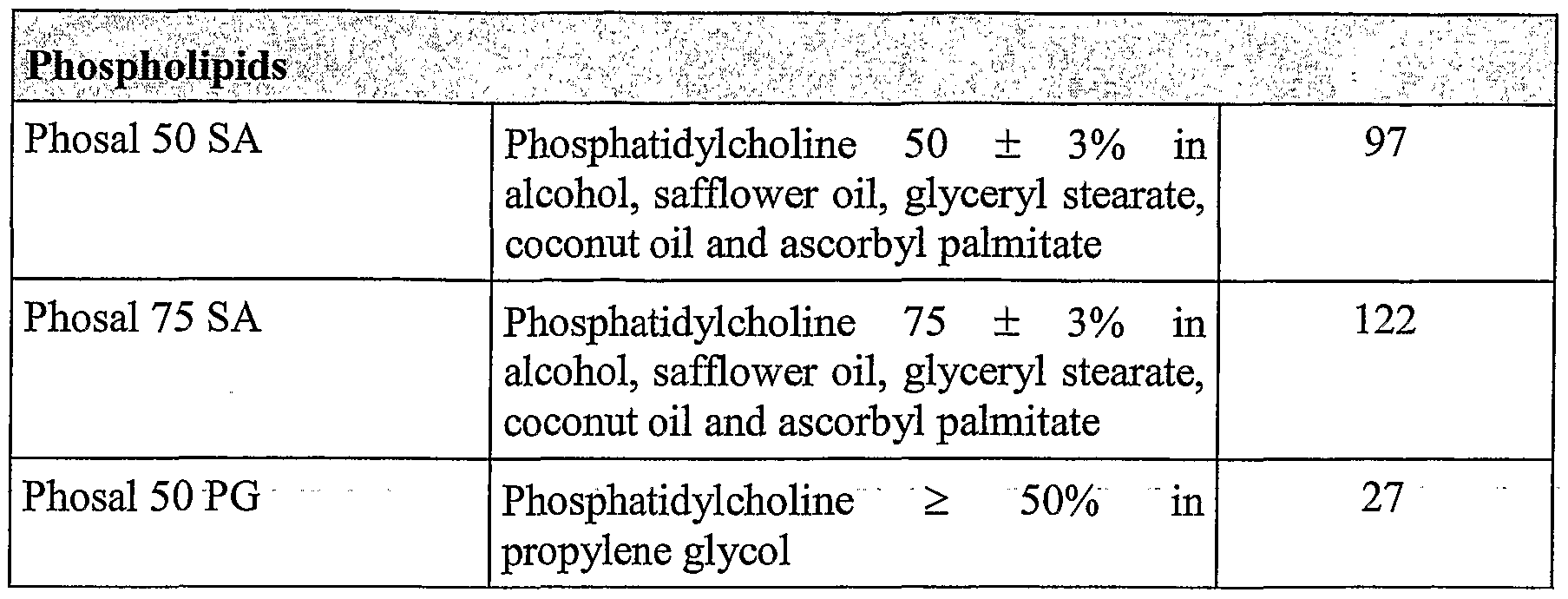
- Phospholipids lipidic vesicles formation
- SMES self-microemulsifying systems
- oil + surfactant + co-surfactant microemulsion formation
- the solubility of taxoids in the excipient was the first screening step for the choice of the excipient and the selection of the prototypes. Then, the prototypes (liquid or semi- solid) were manufactured, and characterized in terms of in vitro behaviour in simulated GI " media and chemical stability. Finally, the physical properties and stability of the semi-solid prototypes have been investigated.
- Oils (medium-chain triglycerides, fatty acids, ...)
- Amphiphilic surfactants with hydrophilic character (HLB>10) (PEO sorbitan fatty acids, castor oil ethoxylates, fatty acid ethoxylates.)
- Amphiphilic surfactants with lipophilic character (HLB ⁇ 10) (glycerides of fatty acids: glyceryl oleate/linoleate, oleoyl macrogol glycerides; derivatives of propylene glycol: PG caprylate/linoleate,)
- the solubility of taxoid of formula lb at room temperature has been determined by X ray diffraction. Taking into account the solubility of a taxoid of formula lb, for the 3 categories of drug delivery systems the following excipients were retained: Nitamin E TPGS for micelle formation Phosal 75SA and Phospholipon 90H for lipidic vesicle formation Labrasol and Gelucire 44/14 for emulsion formation Microemulsion formation: as surfactant Myrj 45, PS80, Cremophor EL, Labrasol; as co-surfactant: Maisine, Capryol 90, Peceol, Lauroglycol 90, Imwitor 988; as oil: Miglyol 812N, Edenor.
- the excipients were formulated as binary systems with the drug, at the following concentrations:
- Nitamin E TPGS 50, 100 mg/g formulation
- the ratio between the excipients in the retained formulations was as follow: ratio surfactant to co-surfactant 3:1 and with oil concentration of 20%.
- the dosage may vary according to the degree or the nature of the condition to be treated.
- the quantity of active product in a composition according to the invention will be determined such that a suitable dosage can be prescribed.
- the quantity of taxoids varies as a function of its solubility in the mixture and also as a function of the appropriate dosage for the treatment of patients.
- care should be taken not to load more than 10% w/w of taxoid drug so as to avoid microemulsion destabilization to occur.
- compositions are prepared such that a unit dose contains from 0.1 to 50 mg of active product.
- compositions may comprise 0.2 to 50 mg. However, this quantity may optionally be lower and may vary from 0.2 to 10 mg.
- composition further comprises certain additional additives
- the latter may be stabilizing agents, preservatives, agents which make it possible to adjust the viscosity, or agents that can modify, for example, the organoleptic properties.
- the stabilizing agents may be, for example, antioxidants chosen in particular from ⁇ -tocopherol, ascorbyl palmitate, BHT (butyl hydroxytoluene), BHA (butyl hydroxyanisole), propyl gallate or malic acid for example.
- the preservatives may, by way of example, be chosen from sodium metabisulfite, propylene glycol, ethanol or glycerin.
- agents capable of adjusting the viscosity there may be mentioned, for example, lecithins, phospholipids, propylene glycol alginate, sodium alginate or glycerin.
- the agents capable of modifying the organoleptic properties of the composition are, by way of example, malic acid, fumaric acid, glycerin, vanillin or menthol.
- the latter may constitute from 0.001% to 5% by weight of the total composition.
- the pharmaceutical composition may be obtained by mixing, where appropriate, the principal excipients (after heating for melting the semisolid excipients), and then, if necessary, mixing with the additional additives, followed by the addition of the taxoid and maintaining stirred in order to obtain a homogeneous mixture.
- the compositions according to the invention may be provided in the semipasty state.
- They are particularly suitable for presentation in the form of hard gelatin capsules or soft gelatin capsules, or in the form of an oral solution.
- compositions according to the invention are particularly advantageous because of their good stability, both physically and chemically, and the enhancement of the bioavailablity which they offer upon oral administration of taxoids.
- FIGURES Figure 1 Taxoid of formula lb relase profile of different formulations at 100 mg/g in simulated gastric medium
- Figure 2 Taxoid of formula lb relase profile of semi-solid formulations at 50 and 100 mg/g in simulated gastric medium
- Figure 3 Particle size of Taxoid of formula lb formulations in simulated gastric medium
- Figure 4 Particle size of Taxoid of formula lb formulations leading to droplets ⁇ 50 nm in simulated gastric medium
- Example 1 Preparation of Prototypes 1.1 Materials Taxoid of formula lb Miglyol 812N (Condea Vista Company, Cranford, NJ, USA ) Labrasol (Gattefosse, Saint Priest, F) Gelucire 44/14 (Gattefosse, Saint Priest, F) • Vitamin E TPGS (Eastman Chemical, Anglesey, UK) Cremophor EL (BASF AG, Ludwigshafen, DE) Capryol 90 (Gattefosse, Saint Priest, F) Lauroglycol 90 (Gattefosse, Saint Priest, F) • Peceol (Gattefosse, Saint Priest, F)
- the weighed drug was dispersed in the melted excipient, and then maintained under mechanical stirring at 50-60°C until dissolution.
- the mass was poured into a hard gelatine capsule (size 0) and kept refrigerated overnight. The gelatine shell was then removed to avoid compatibility issues at this step.
- the stability was evaluated by mean of the potency determined by HPLC, as well as evaluation of relative substances.
- the prototypes analysed for drug dosage and stability studies are showed in the table below.
- Table 4 Composition of the simulated gastro-intestinal media
- Fasted intestinal medium (Fassif) For 500 ml
- the formulations (100 mg drug/g formulation, 500 mg formulation in a hard gelatin capsule) were diluted 1:500 in the gastric medium (1 capsule/250 mL), than incubated 2 hours at 37°C under stirring (50 rpm) in a USP standard dissolution apparatus.
- Example 3 particle size analysis after incubation in gastric medium (USP)
- the aim of this part of the study was to evaluate, by particle size measurement, the colloidal stability and the self-emulsifying properties of the emulsion/microemulsion/micellar solution of taxoid of formula lb formulations after incubation in the gastric medium.
- the analyses are carried out on a Siemens-Bruker D5000 Matic diffractometer, using the parafocusing Bragg-Brentano ( ⁇ -2 ⁇ )- type geometry. If enough of the product is available, the powder is deposited on a concave aluminum sample holder. Otherwise a thin layer of the product is deposited on a single-crystalline silicon wafer, cut out according to the (510) crystallographic orientation that impedes any Bragg reflection (by ensuring the systematic extinction of the corresponding diffraction band).
- a 50 M multicanal Braun linear detector completes the setup. It has a 10°-wide detection window in angle 26. Diagrams were recorded in the following conditions: a 1.5 to 50.0 degree scan in angle 2 ⁇ , 10 to 30 seconds' counting time per degree in 2 ⁇ according to the amount of powder to be analysed, and ambient conditions of pressure, temperature and % relative humidity. 4.1.2 Physical characterization Taxoid of formula lb semi-solid formulations for this part of the study were manufactured and characterized by T.Borovac (DEA report «Conception et characterisation des matrices semi-solides cooperatees a unisme actif peu hydrosoluble et destine a la urgent orale», CRS meeting, July 19, 2003.
Landscapes
- Health & Medical Sciences (AREA)
- Chemical & Material Sciences (AREA)
- Veterinary Medicine (AREA)
- Medicinal Chemistry (AREA)
- Pharmacology & Pharmacy (AREA)
- Life Sciences & Earth Sciences (AREA)
- Animal Behavior & Ethology (AREA)
- General Health & Medical Sciences (AREA)
- Public Health (AREA)
- Epidemiology (AREA)
- Chemical Kinetics & Catalysis (AREA)
- General Chemical & Material Sciences (AREA)
- Nuclear Medicine, Radiotherapy & Molecular Imaging (AREA)
- Organic Chemistry (AREA)
- Dispersion Chemistry (AREA)
- Medicinal Preparation (AREA)
- Pharmaceuticals Containing Other Organic And Inorganic Compounds (AREA)
Abstract
Description




Claims


Priority Applications (12)
| Application Number | Priority Date | Filing Date | Title |
|---|---|---|---|
| AU2004262496A AU2004262496B2 (en) | 2003-07-18 | 2004-07-15 | Semi-solid formulations for the oral administration of taxoids |
| CN2004800207228A CN1826110B (en) | 2003-07-18 | 2004-07-15 | Semisolid formulations for oral administration of taxanes |
| EP04741331A EP1648440B1 (en) | 2003-07-18 | 2004-07-15 | Semi-solid formulations for the oral administration of taxoids |
| BRPI0412759-5A BRPI0412759A (en) | 2003-07-18 | 2004-07-15 | semi-solid formulations for oral administration of taxoids |
| MXPA06000636 MX260260B (en) | 2003-07-18 | 2004-07-15 | Semi-solid formulations for the oral administration of taxoids. |
| HK06112392.3A HK1091743B (en) | 2003-07-18 | 2004-07-15 | Semi-solid formulations for the oral administration of taxoids |
| CA002532667A CA2532667A1 (en) | 2003-07-18 | 2004-07-15 | Semi-solid formulations for the oral administration of taxoids |
| KR1020067001136A KR101143341B1 (en) | 2003-07-18 | 2004-07-15 | Semi-solid formulations for the oral administration of taxoids |
| DE602004012413T DE602004012413T2 (en) | 2003-07-18 | 2004-07-15 | HALF-RESISTANT FORMULATION FOR ORAL ADMINISTRATION OF TAXOL |
| JP2006519899A JP5116306B2 (en) | 2003-07-18 | 2004-07-15 | Semisolid formulation for oral administration of taxoids |
| DK04741331T DK1648440T3 (en) | 2003-07-18 | 2004-07-15 | Semi-solid formulations for the oral administration of taxoids |
| IL173110A IL173110A (en) | 2003-07-18 | 2006-01-12 | Semi-solid formulations for the oral administration of taxoids |
Applications Claiming Priority (2)
| Application Number | Priority Date | Filing Date | Title |
|---|---|---|---|
| EP03291795A EP1498120A1 (en) | 2003-07-18 | 2003-07-18 | Semi-solid formulations for the oral administration of taxoids |
| EP03291795.7 | 2003-07-18 |
Publications (1)
| Publication Number | Publication Date |
|---|---|
| WO2005013968A1 true WO2005013968A1 (en) | 2005-02-17 |
Family
ID=33462258
Family Applications (1)
| Application Number | Title | Priority Date | Filing Date |
|---|---|---|---|
| PCT/EP2004/008551 Ceased WO2005013968A1 (en) | 2003-07-18 | 2004-07-15 | Semi-solid formulations for the oral administration of taxoids |
Country Status (20)
| Country | Link |
|---|---|
| US (1) | US20050070496A1 (en) |
| EP (2) | EP1498120A1 (en) |
| JP (1) | JP5116306B2 (en) |
| KR (1) | KR101143341B1 (en) |
| CN (1) | CN1826110B (en) |
| AR (1) | AR045996A1 (en) |
| AT (1) | ATE388701T1 (en) |
| AU (1) | AU2004262496B2 (en) |
| BR (1) | BRPI0412759A (en) |
| CA (1) | CA2532667A1 (en) |
| DE (1) | DE602004012413T2 (en) |
| DK (1) | DK1648440T3 (en) |
| ES (1) | ES2303642T3 (en) |
| IL (1) | IL173110A (en) |
| IN (1) | IN229997B (en) |
| MX (1) | MX260260B (en) |
| MY (1) | MY137965A (en) |
| PT (1) | PT1648440E (en) |
| TW (1) | TWI342774B (en) |
| WO (1) | WO2005013968A1 (en) |
Cited By (1)
| Publication number | Priority date | Publication date | Assignee | Title |
|---|---|---|---|---|
| US8962552B2 (en) | 2007-11-27 | 2015-02-24 | Centre Nationale De Recherche Scientifique | Nanoparticles of therapeutic agents having low water solubility |
Families Citing this family (10)
| Publication number | Priority date | Publication date | Assignee | Title |
|---|---|---|---|---|
| EP1498143A1 (en) * | 2003-07-18 | 2005-01-19 | Aventis Pharma S.A. | Self-emulsifying and self-microemulsifying formulations for the oral administration of taxoids |
| EP2338488A1 (en) * | 2006-05-26 | 2011-06-29 | Bayer HealthCare, LLC | Drug combinations with substituted diaryl ureas for the treatment of cancer |
| FR2922107B1 (en) * | 2007-10-10 | 2010-02-26 | Aventis Pharma Sa | NEW TAXOID COMPOSITIONS |
| FR2931152B1 (en) * | 2008-05-16 | 2010-07-30 | Centre Nat Rech Scient | NEW NUCLEIC ACID TRANSFER SYSTEM |
| EP2493466B1 (en) | 2009-10-29 | 2021-03-10 | Sanofi Mature IP | Novel antitumoral use of cabazitaxel |
| JP5824511B2 (en) | 2010-05-03 | 2015-11-25 | テイコク ファーマ ユーエスエー インコーポレーテッド | Non-aqueous taxane proemulsion formulations and methods for preparing and using the same |
| JO3685B1 (en) | 2012-10-01 | 2020-08-27 | Teikoku Pharma Usa Inc | Non-aqueous taxane nanodispersion formulations and methods of using the same |
| CN103980232A (en) * | 2014-06-05 | 2014-08-13 | 北京诺普德医药科技有限公司 | 10-acetyldocetaxel and application thereof |
| KR101542364B1 (en) * | 2014-10-31 | 2015-08-07 | 대화제약 주식회사 | Pharmaceutical composition for oral administration comprising taxanes |
| CN113698369A (en) * | 2021-08-31 | 2021-11-26 | 无锡紫杉药业有限公司 | Method for removing specific single impurity in cabazitaxel |
Citations (5)
| Publication number | Priority date | Publication date | Assignee | Title |
|---|---|---|---|---|
| WO1999049848A1 (en) * | 1998-04-01 | 1999-10-07 | Rtp Pharma Inc. | Anticancer compositions |
| WO2001030319A1 (en) * | 1999-10-25 | 2001-05-03 | Supergen, Inc. | New and improved formulation for paclitaxel |
| WO2002064132A2 (en) * | 2001-01-18 | 2002-08-22 | Pharmacia & Upjohn Company | Chemotherapeutic microemulsion compositions of paclitaxel with improved oral bioavailability |
| WO2003045357A1 (en) * | 2001-11-27 | 2003-06-05 | Transform Pharmaceuticals, Inc. | Oral pharmaceutical formulations comprising paclitaxel, derivatives and methods of administration thereof |
| WO2003074027A2 (en) * | 2002-03-01 | 2003-09-12 | Novagali Pharma Sa | Self emulsifying drug delivery systems for poorly soluble drugs |
Family Cites Families (14)
| Publication number | Priority date | Publication date | Assignee | Title |
|---|---|---|---|---|
| DE3406497A1 (en) * | 1984-02-23 | 1985-09-05 | Mueller Bernhard Willi Werner | HIGHLY DISPERSAL PHARMACEUTICAL MULTI-COMPONENT SYSTEMS AND METHOD FOR THEIR PRODUCTION |
| US5272171A (en) * | 1992-02-13 | 1993-12-21 | Bristol-Myers Squibb Company | Phosphonooxy and carbonate derivatives of taxol |
| JP3208517B2 (en) * | 1992-07-01 | 2001-09-17 | ブリストル−マイヤーズ スクイブ カンパニー | 7,8-Cyclopropataxanes |
| US5294637A (en) * | 1992-07-01 | 1994-03-15 | Bristol-Myers Squibb Company | Fluoro taxols |
| US5254580A (en) * | 1993-01-19 | 1993-10-19 | Bristol-Myers Squibb Company | 7,8-cyclopropataxanes |
| US5478854A (en) * | 1992-10-01 | 1995-12-26 | Bristol-Myers Squibb Company | Deoxy taxols |
| US5973160A (en) * | 1992-12-23 | 1999-10-26 | Poss; Michael A. | Methods for the preparation of novel sidechain-bearing taxanes |
| US5646176A (en) * | 1992-12-24 | 1997-07-08 | Bristol-Myers Squibb Company | Phosphonooxymethyl ethers of taxane derivatives |
| US6054136A (en) * | 1993-09-30 | 2000-04-25 | Gattefosse S.A. | Orally administrable composition capable of providing enhanced bioavailability when ingested |
| US6458373B1 (en) * | 1997-01-07 | 2002-10-01 | Sonus Pharmaceuticals, Inc. | Emulsion vehicle for poorly soluble drugs |
| IL131217A0 (en) * | 1998-03-10 | 2001-01-28 | Napro Biotherapeutics Inc | Novel methods and compositions for delivery of taxanes |
| WO2000071163A1 (en) * | 1999-05-24 | 2000-11-30 | Sonus Pharmaceuticals, Inc. | Emulsion vehicle for poorly soluble drugs |
| EP1465618A2 (en) * | 2001-12-20 | 2004-10-13 | Bristol-Myers Squibb Company | Pharmaceutical compositions of orally active taxane derivatives having enhanced bioavailability |
| KR20090072980A (en) * | 2007-12-28 | 2009-07-02 | 서울옵토디바이스주식회사 | Light emitting diodes and manufacturing method |
-
2003
- 2003-07-18 EP EP03291795A patent/EP1498120A1/en not_active Ceased
-
2004
- 2004-07-15 PT PT04741331T patent/PT1648440E/en unknown
- 2004-07-15 KR KR1020067001136A patent/KR101143341B1/en not_active Expired - Fee Related
- 2004-07-15 ES ES04741331T patent/ES2303642T3/en not_active Expired - Lifetime
- 2004-07-15 MX MXPA06000636 patent/MX260260B/en active IP Right Grant
- 2004-07-15 WO PCT/EP2004/008551 patent/WO2005013968A1/en not_active Ceased
- 2004-07-15 IN IN198CH2006 patent/IN229997B/en unknown
- 2004-07-15 CA CA002532667A patent/CA2532667A1/en not_active Abandoned
- 2004-07-15 JP JP2006519899A patent/JP5116306B2/en not_active Expired - Fee Related
- 2004-07-15 CN CN2004800207228A patent/CN1826110B/en not_active Expired - Fee Related
- 2004-07-15 EP EP04741331A patent/EP1648440B1/en not_active Expired - Lifetime
- 2004-07-15 DK DK04741331T patent/DK1648440T3/en active
- 2004-07-15 AU AU2004262496A patent/AU2004262496B2/en not_active Ceased
- 2004-07-15 DE DE602004012413T patent/DE602004012413T2/en not_active Expired - Lifetime
- 2004-07-15 AT AT04741331T patent/ATE388701T1/en not_active IP Right Cessation
- 2004-07-15 AR ARP040102493A patent/AR045996A1/en not_active Application Discontinuation
- 2004-07-15 BR BRPI0412759-5A patent/BRPI0412759A/en not_active IP Right Cessation
- 2004-07-16 MY MYPI20042868A patent/MY137965A/en unknown
- 2004-07-16 TW TW093121233A patent/TWI342774B/en not_active IP Right Cessation
- 2004-07-19 US US10/894,163 patent/US20050070496A1/en not_active Abandoned
-
2006
- 2006-01-12 IL IL173110A patent/IL173110A/en not_active IP Right Cessation
Patent Citations (5)
| Publication number | Priority date | Publication date | Assignee | Title |
|---|---|---|---|---|
| WO1999049848A1 (en) * | 1998-04-01 | 1999-10-07 | Rtp Pharma Inc. | Anticancer compositions |
| WO2001030319A1 (en) * | 1999-10-25 | 2001-05-03 | Supergen, Inc. | New and improved formulation for paclitaxel |
| WO2002064132A2 (en) * | 2001-01-18 | 2002-08-22 | Pharmacia & Upjohn Company | Chemotherapeutic microemulsion compositions of paclitaxel with improved oral bioavailability |
| WO2003045357A1 (en) * | 2001-11-27 | 2003-06-05 | Transform Pharmaceuticals, Inc. | Oral pharmaceutical formulations comprising paclitaxel, derivatives and methods of administration thereof |
| WO2003074027A2 (en) * | 2002-03-01 | 2003-09-12 | Novagali Pharma Sa | Self emulsifying drug delivery systems for poorly soluble drugs |
Non-Patent Citations (2)
| Title |
|---|
| ADAMS M W: "D-ALPHA TOCOPHERYL POLYETHYLENE GLYCOL 1000 SUCCINATE (EASTMAN VITAMI E TPGS) AS AN EMULSIFIER AND BIOENHANCER FOR DRUGS AND LIPOPHILIC COMPOUNDS", INTERNATIONAL CONGRESS OF TECHNOLOGY AND PHARMACOLOGY, ASSOC. PHARM. GALENIQUE IND., CHATENAY MALABRY, FR, 1992, pages 254 - 262, XP000576964 * |
| MU L ET AL: "A novel controlled release formulation for the anticancer drug paclitaxel (Taxol<(>R)): PLGA nanoparticles containing vitamin E TPGS", JOURNAL OF CONTROLLED RELEASE, ELSEVIER SCIENCE PUBLISHERS B.V. AMSTERDAM, NL, vol. 86, no. 1, 9 January 2003 (2003-01-09), pages 33 - 48, XP004398997, ISSN: 0168-3659 * |
Cited By (1)
| Publication number | Priority date | Publication date | Assignee | Title |
|---|---|---|---|---|
| US8962552B2 (en) | 2007-11-27 | 2015-02-24 | Centre Nationale De Recherche Scientifique | Nanoparticles of therapeutic agents having low water solubility |
Also Published As
| Publication number | Publication date |
|---|---|
| US20050070496A1 (en) | 2005-03-31 |
| AU2004262496A1 (en) | 2005-02-17 |
| CN1826110A (en) | 2006-08-30 |
| DE602004012413T2 (en) | 2009-03-12 |
| AU2004262496B2 (en) | 2009-02-05 |
| TWI342774B (en) | 2011-06-01 |
| AR045996A1 (en) | 2005-11-23 |
| MY137965A (en) | 2009-04-30 |
| TW200517104A (en) | 2005-06-01 |
| IL173110A (en) | 2011-04-28 |
| EP1648440A1 (en) | 2006-04-26 |
| ES2303642T3 (en) | 2008-08-16 |
| EP1648440B1 (en) | 2008-03-12 |
| BRPI0412759A (en) | 2006-09-26 |
| HK1091743A1 (en) | 2007-01-26 |
| PT1648440E (en) | 2008-06-24 |
| DE602004012413D1 (en) | 2008-04-24 |
| IL173110A0 (en) | 2006-06-11 |
| CA2532667A1 (en) | 2005-02-17 |
| JP5116306B2 (en) | 2013-01-09 |
| EP1498120A1 (en) | 2005-01-19 |
| KR101143341B1 (en) | 2012-05-24 |
| DK1648440T3 (en) | 2008-07-14 |
| MX260260B (en) | 2008-09-04 |
| ATE388701T1 (en) | 2008-03-15 |
| CN1826110B (en) | 2010-05-12 |
| JP2009513558A (en) | 2009-04-02 |
| IN229997B (en) | 2009-03-27 |
| KR20060037370A (en) | 2006-05-03 |
| IN2006CH00198A (en) | 2007-06-08 |
| MXPA06000636A (en) | 2006-04-19 |
Similar Documents
| Publication | Publication Date | Title |
|---|---|---|
| US20090069411A1 (en) | Self-emulsifying and self-microemulsifying formulations for the oral administration of taxoids | |
| CA2760039C (en) | Self micro-emulsifying oral pharmaceutical composition of hydrophilic drug and preparation method thereof | |
| JP2002509877A (en) | Anticancer composition | |
| EP1267831B1 (en) | New self emulsifying drug delivery system | |
| EP0999833A1 (en) | Taxol emulsion | |
| EP1648440B1 (en) | Semi-solid formulations for the oral administration of taxoids | |
| RU2348615C2 (en) | Emulsifying systems containing azetidine derivatives | |
| EP1498122A1 (en) | Semi-solid systems containing azetidine derivatives | |
| HK1091743B (en) | Semi-solid formulations for the oral administration of taxoids | |
| HK1089951B (en) | Self-emulsifying and self-microemulsifying formulations for the oral administration of taxoids |
Legal Events
| Date | Code | Title | Description |
|---|---|---|---|
| WWE | Wipo information: entry into national phase |
Ref document number: 200480020722.8 Country of ref document: CN |
|
| AK | Designated states |
Kind code of ref document: A1 Designated state(s): AE AG AL AM AT AU AZ BA BB BG BR BW BY BZ CA CH CN CO CR CU CZ DE DK DM DZ EC EE EG ES FI GB GD GE GH GM HR HU ID IL IN IS JP KE KG KP KR KZ LC LK LR LS LT LU LV MA MD MG MK MN MW MX MZ NA NI NO NZ OM PG PH PL PT RO RU SC SD SE SG SK SL SY TJ TM TN TR TT TZ UA UG US UZ VC VN YU ZA ZM ZW |
|
| AL | Designated countries for regional patents |
Kind code of ref document: A1 Designated state(s): BW GH GM KE LS MW MZ NA SD SL SZ TZ UG ZM ZW AM AZ BY KG KZ MD RU TJ TM AT BE BG CH CY CZ DE DK EE ES FI FR GB GR HU IE IT LU MC NL PL PT RO SE SI SK TR BF BJ CF CG CI CM GA GN GQ GW ML MR NE SN TD TG |
|
| DPEN | Request for preliminary examination filed prior to expiration of 19th month from priority date (pct application filed from 20040101) | ||
| 121 | Ep: the epo has been informed by wipo that ep was designated in this application | ||
| WWE | Wipo information: entry into national phase |
Ref document number: 198/CHENP/2006 Country of ref document: IN |
|
| ENP | Entry into the national phase |
Ref document number: 2532667 Country of ref document: CA |
|
| WWE | Wipo information: entry into national phase |
Ref document number: 2006519899 Country of ref document: JP Ref document number: PA/a/2006/000636 Country of ref document: MX Ref document number: 1020067001136 Country of ref document: KR Ref document number: 2004262496 Country of ref document: AU |
|
| WWP | Wipo information: published in national office |
Ref document number: 2004262496 Country of ref document: AU |
|
| WWE | Wipo information: entry into national phase |
Ref document number: 2004741331 Country of ref document: EP |
|
| WWP | Wipo information: published in national office |
Ref document number: 2004741331 Country of ref document: EP |
|
| WWP | Wipo information: published in national office |
Ref document number: 1020067001136 Country of ref document: KR |
|
| ENP | Entry into the national phase |
Ref document number: PI0412759 Country of ref document: BR |
|
| WWG | Wipo information: grant in national office |
Ref document number: 2004741331 Country of ref document: EP |