Preparation of Glycosylated Amino Acids, Proteins and Peptides via Olefin Metathesis Reactions
The present application is concerned with reagents and methods for use in the gly cosy lation of proteins. The gly cosy lation of proteins plays a vital role in their biological behaviour and stability (R. Dwek, Chem. Rev. , 96:683-120 (1996)). For example, glycosylation plays a major role in essential biological processes such as cell signalling and regulation, development and immunity. The study of these events is made difficult by the fact that glycoproteins occur naturally as mixtures of so-called glycoforms that possess the same peptide backbone but differ in both the nature and the site of glycosylation. Furthermore, since protein glycosylation is not under direct genetic control, the expression of therapeutic glycoproteins in mammalian cell culture leads to heterogeneous mixtures of glycoforms. The ability to synthesise homogeneous glycoprotein glycoforms is therefore not only a prerequisite for accurate investigation purposes, but is of increasing importance when preparing therapeutic glycoproteins, which are currently marketed as multi-glycoform mixtures (e.g. eiythropoietin and interleukins). Other post translational modifications of proteins, such as phosphorylation and methylation, are also of importance. Controlling the degree and nature of such modification of a protein therefore allows the possibility of investigating and controlling its behaviour in biological systems (B.G. Davis, Science, Nol 303, p 480-482, 2004). A number of methods for the glycosylation of proteins are known, including chemical synthesis. Chemical synthesis of glycoproteins offers certain advantages, not least the possibility of access to pure glycoprotein glycoforms. One known synthetic method utilises thiol-selective carbohydrate reagents, glycosylmethane thiosulfonate reagents (glyco-MTS). Such glycosylmethane thiosulfonate reagents react with thiol groups in a protein to introduce a glycosyl residue linked to the protein via a disulfide bond (see for example WO00/01712). The introduction of a double bond into the side chain of an amino acid in a peptide or protein creates a non-natural chemical functionality that may be further selectively modified by olefin metathesis chemistry to link that side chain, and
hence the peptide or protein, to additional groups including carbohydrates. By controlling the site at which the double bond is introduced and the functionality that is used in the linking chemistry, site-selective modification of peptides or proteins can be achieved. Protected carbohydrate compounds containing a carbon-carbon double bond have previously been coupled to double bond containing amino acids using cross olefin metathesis in aprotic solvents (see for example R. Dominique et al, Synthesis, 2000, 862; A. Dondoni et al, J. Chem. Soc, Perkin Trans. 1, 2001. 2380, and K. Biswas et el, Tetrahedron Lett., 2002, 43, 6107). However, there is a need for further methods and reagents that allow the preparation of a wide range of glycoproteins under a range of different reaction conditions. In one aspect, the present invention therefore provides a method for the preparation of a glycosylated amino acid, protein or peptide, the method comprising reacting an unprotected carbohydrate compound containing a carbon-carbon double bond with an amino acid, a protein or a peptide containing a side-chain carbon- carbon double bond under conditions whereby olefin metathesis occurs. The reaction takes place in the presence of a suitable catalyst. Preferably, the reaction takes place in a protic solvent. The invention ftirther provides a method of chemically modifying a protein, peptide or amino acid containing a side-chain carbon-carbon double bond, the method comprising reacting said protein, peptide or amino acid with an unprotected carbohydrate compound containing a carbon-carbon double bond under conditions whereby olefin metathesis occurs. The reaction takes place in the presence of a suitable catalyst. Preferably, the reaction takes place in a protic solvent. The invention includes any and all possible combinations of any preferred features referred to herein, whether or not such combinations are specifically disclosed. As used herein, a side-chain double bond is a double bond in the side chain of an amino acid. The amino acid is preferably an α-amino acid. It may optionally be incorporated into a peptide or protein. The amino acid may be in the D- or L-form, preferably the L-form. As used herein, a peptide contains a minimum of two amino acid residues linked together via an amide bond. As used herein, alkyl preferably denotes a straight chain or branched saturated hydrocarbon group containing 1-10 carbon atoms, preferably 1-6 carbon
atoms. Straight chain al-kyl groups are preferred. As used herein, alkenyl preferably denotes a straight chain or branched hydrocarbon group comprising at least one carbon-carbon double bond, and containing 2-10 carbon atoms, preferably 2 -6 carbon atoms. Straight chain alkenyl groups are preferred. Terminal carbon -carbon double bonds are preferred. Preferred alkenyl groups include -(CH2)CH=CH2, -CH2CH2CH=CH2 and prenyl (-(CH2)CH=C(CH3)2). As used herein, an unprotected carbohydrate is a carbohydrate compound wherein none of the -OH functional groups are protected. Other functional groups in the carbohydrate (e.g. amino groups) may be protected or unprotected, and are preferably unprotected to aid solubility in the reaction medium. Suitable carbohydrate moieties include double bond containing derivatives of monosaccharides, oligosaccharides and polysaccharides, including derivatives of any carbohydrate moiety which is present in a naturally occurring glycoprotein or in biological systems. Preferred are glycosyl or glycoside derivatives, for example glucosyl or galactosyl derivatives. Glycosyl and glycoside groups include both α and β groups. Particularly preferred are C-glycosides, due to their potential hydrolytic stability (i.e. resistance to hydrolysis). Suitable carbohydrate moieties include carbon-carbon double bond containing derivatives of glucose, galactose, fucose, GlcNAc, GalNAc, sialic acid, and mannose, or oligosaccharides or polysaccharides comprising at least one glucose, galactose, fucose, GlcNAc, GalNAc, sialic acid, and/or mannose residue. Preferred are alpha and beta vinyl and allyl C-glycosides of all of the above sugars, and oligosaccharides containing such C-glycoside derivatives. Particularly preferred are allyl C-glyocsides. Particularly preferred carbohydrate moieties include allyl glycosides, including allyl-α-D-galactopyranoside, allyl-β-D-galactopyranoside, allyl-α-D- glucopyranoside and allyl-β-D-glucopyranoside, and glycosylalkenes including 3- (α-D-galactopyranosyl)propene, 3-(β-D-galactopyranosyl)propene, 3- (α-D- glucopyranosyl)propene and 3-(β-D-glucopyranosyl)propene. Preferably, any saccharide units making up the carbohydrate moiety which are derived from naturally occurring sugars will each be in the naturally occurring enantiomeric form, which may be either the D-form (e.g. D -glucose or D-galactose),
or the L-form (e.g. L-rhamnose or L -fucose). Any anomeric linkages may be α- or β- linkages. Highly preferably, the olefin metathesis reaction takes place in a protic solvent. Suitable protic solvents include water, and alcohols including methanol and ethanol. Preferably, the olefin metathesis reaction takes place under microwave heating. The olefin metathesis reaction takes place in the presence of a catalyst. Suitable catalysts include those known in the art for such reactions, including complexes of tungsten, molybdenum, rhenium and ruthenium, preferably ruthenium. A particularly preferred catalyst is the Grubbs-Hoveyda 3rd generation catalyst shown below:
This catalyst, and other suitable catalysts, are commercially available. A generalised reaction scheme for olefin metathesis of a protein is shown below:
wherein each R may be the same or different
The olefin metathesis reaction is an equilibrium reaction. The driving force for the reaction is the liberation of the alkene CR
2=CR
2 which displaces the equilibrium towards the desired product. Preferably, the alkene CR
2=CR
2 is a gaseous alkene such as ethene which is readily removed from the reaction mixture. The glycosylated amino acid, peptide or protein produced according to the methods of the invention comprises a carbohydrate moiety linked to the amino acid, peptide or protein via a linker which contains a carbon-carbon double bond. The carbon-carbon double bond may be cis or trans. The stereochemistry about the double bond may be influenced by choice of a suitable catalyst and reaction conditions for the olefin metathesis reaction. The linker is preferably a straight hydrocarbon chain, optionally comprising one or more heteroatoms in the chain, such as sulfur or oxygen atoms. Preferably the linker contains 2 to 10 atoms in the chain between the carbohydrate moiety and the backbone carbon atom of the amino acid to which it is linked (i.e. the α-carbon if the amino acid is an α-amino acid). The linker is preferably attached to an anomeric carbon in the carbohydrate moiety, preferably via a carbon-carbon bond. Preferably, the linker is of formula

wherein each n independently denotes 1 or 2. Another preferred linker is of formula -(CH
2)-α-S-S-CH
2CH=CH(CH )
n- wherein each n independently denotes 1 or 2. Preferred proteins for use in the methods according to the invention include enzymes, the selectivity of which may be modified by controlled glycosylation using the methods according to the invention, and therapeutic proteins. Other preferred proteins include serum albumins and other blood proteins, hormones, interferons, receptors, antibodies, interleukins and erythropoietin. The carbon-carbon double bond containing carbohydrate compound may be prepared by methods known in the art for the derivatisation of carbohydrates, in particular known methods for the formation of glycosylalkenes and alkenyl glycosides (see for example D.E. Levy & C. Tang, "Chemistry of the C-Glyosides", 1995, the disclosure of which is hereby incorporated by reference). Some such compounds are also commercially available. Suitable carbon-carbon double bond containing carbohydrate compounds based on D-glucose are shown below:
wherein n denotes 1 or 2; and R and R
1 independently denote hydrogen or an organic moiety, for example an alkyl group (e.g. a Cwo alkyl group). Each of the OH groups may be replaced by an -O-saccharide group. The carbon-carbon double bond containing amino acid, peptide or protein may be prepared by a variety of different methods. For example, an amino acid comprising a carbon-carbon double bond in the side chain may be incorporated into a protein or peptide structure using standard methods for the preparation of peptides and proteins. Methods for the preparation of amino acids with side chain double bonds are known in the art (see for example T.F. Woiwode and TJ. Wandless, J. Org. Chem., 1999, 64, 7670-7674, and references therein). A carbon-carbon double bond may be introduced into the side chain of methionine or selenomethionine by oxidation of the sulfur or selenium to the corresponding sulfoxide or selenoxide followed by an elimination reaction. Alternatively, homoselenocysteine (HSeCH
2CH
2CH(NH
2)COOH) may be converted into a selenide of formula R
1SeCH
2CH
2CH(NH
2)COOH, for example by reaction with a compound of formula R^L
1 wherein L
1 is a leaving group such as halo. The selenide may then be oxidised to the corresponding selenoxide followed by an elimination reaction to give a compound of formula CH2=CHCH(NH2)COOH. Suitable R
1 groups include alkyl groups (e.g. Cι-
10 alkyl) and phenyl, preferably phenyl. The oxidation reaction may utilise any suitable oxidising agent, for example hydrogen peroxide, sodium periodate, or 3-chloroperbenzoic acid (MCPBA). The elimination reaction may be carried out by heating, optionally under reduced
pressure. Any other functional groups in the amino acid, protein or peptide may be protected if necessary using protecting groups known in the art. The methionine, selenomethionine or homos elenocysteine may alternatively be incorporated into a protein or peptide prior to the oxidation/elimination reactions, providing that the reaction conditions required to introduce the double bond do not cause any undesirable damage to the protein or peptide. Use of selenium compounds is preferred, as selenoxides generally eliminate at lower temperatures and under more gentle reaction conditions than the corresponding sulfur compounds. For example, the reaction conditions required for the elimination reaction when selenomethionine is used as the starting material are generally gentler than those required when methionine is used, whilst even more gentle reaction conditions may be used for the elimination of phenyl selenoxides. A generalised reaction scheme is shown in Scheme 1:
Scheme 1 wherein Z denotes S or Se; each [p] independently denotes a protecting group, or an optionally protected amino acid, peptide or protein; and
R2 denotes alkyl, e.g. C O alkyl, preferably methyl, or R2 denotes phenyl. Both methionine and selenometMonine are commercially available. The amino and carboxyl groups should be protected, for example using protecting groups known in the art (see for example Greene et al, "Protecting groups in organic synthesis", 2nd Edition, Wiley, New York, 1991, the disclosure of which is hereby incorporated by reference). Suitable protecting groups for the amino group include acetyl, carbobenzoxy (Cbz) and tert-butoxycarbonly (Boc). Suitable protecting groups for the carboxyl group include esters such as methyl ester. Carbon-carbon double bonds may also be introduced into the side chain of an amino acid by alkylation of the enolate equivalent of the amino acid at the alpha-carbon with an allyl halide. Some such amino acid compounds are also commercially available, for example allylglycine (2-amino-4-pentenoic acid). A peptide or protein may naturally contain one or more met onine residues. -Alternatively, a methionine containing peptide or protein may be prepared via site-directed mutagenesis to introduce a methionine residue at a desired position. Site-directed mutagenesis is a known technique in the art (see for example WO00/01712 and J. Sambrook et al, Molecular Cloning: A Laboratory Manual, 3rd Edition, Cold Springs Harbour Laboratory Press, 2001, the disclosures of which are hereby incorporated by reference). A selenomethionine reside may be introduced by the use of SeMet culture medium for the expression of protein in xenotrophic E. Colt strains that require an external source of Met and hence replace Met with SeMet in the expressed protein structure, or through native chemical ligation (see Gerard Roelfes and Donald Hilvert, Angew. Chem. Int. Ed. 2003, 42, 2275-2277 the disclosure of which is hereby incorporated by reference). In an alternative method, an amino acid, peptide or protein which comprises a thiol group, for example due to the presence of one or more cysteine residues, may be reacted with a compound of formula I:
R -S-X-R4 wherein: X denotes Se or SO2; R3 denotes an alkenyl group, for example a C O alkenyl group; and
R4 denotes an optionally substituted alkyl group, an optionally substituted phenyl group, an optionally substituted pyridyl group or an optionally substituted naphthyl group. Reaction with the compound of formula I leads to introduction of the R3 group linked to the -amino acid, peptide or protein via a disulphide bond. A generalised reaction scheme is shown in Scheme 3:
Q — SH + R3— S— X— R4 Q — S-S— R3
Scheme 3 wherein Q denotes an optionally protected amino acid, peptide or protein. When R4 denotes an optionally substituted moiety, suitable substituents include any substituents which do not interfere with the formation of the compound of formula I or with the reaction with the amino acid, protein or peptide, for example -NO2, -SO3H, -CO2H, and -(CH2CH2O)qH wherein q denotes 1-100, preferably 1-50, more preferably 1 -20 and even more preferably 1-10. The R4 group may be independently substituted by 1-5, and preferably 1 or 2, substituents. A preferred R4 group is phenyl. It has been found that the compounds of formula I are normally thiol- selective, and hence that the presence of other functional groups in the amino acid, peptide or protein does not normally interfere with the reaction. However, any other functional groups may optionally be protected using any protecting groups known in the art which are stable under the reaction conditions (see for example, Greene et al, "Protecting groups in organic synthesis", 2nd Edition, Wiley, New York, 1991). The disulfide bond forming reaction is generally carried out in the presence of a buffer at neutral or basic pH (about pH 7 to about 9.5), with slightly basic pHs being preferred (about pH 8 to about 9). Suitable buffers include HEPES, CHES, MES and Tris. The pH should be such that little or no unwanted denaturation of a peptide or protein occurs during the reaction. Similarly, the reaction temperature should be selected to avoid unnecessary damage to any temperature sensitive compounds. For example, a reaction with a protein or peptide is preferably carried
out at ambient temperature or below to avoid unwanted denaturation. Aqueous or organic solvent systems may be used, with aqueous solvent systems being preferred to ensure dissolution of the amino acid, peptide or protein. The reaction is generally fairly quick, for example often taking less than 1 hour. In general, an excess of the compound of formula I will be used, for example 10-20 equivalents based on the thiol-containing compound. The compounds of fomiula I may be prepared by a number of different methods. Compounds wherein X denotes SO2 maybe prepared by reacting a compound of formula II:
M(SSO2R4)k II wherein: M denotes a metal, for example Li, Na, K, Cs, Ca, Mg, Zn, or Al, preferably Na or K; and k denotes 1, 2 or 3;
with a compound of formula III:
R3— L in wherein: R3 is as defined for the compounds of formula I and L denotes a leaving group. Any leaving group L may be utilised as long as the resultant anion L" does not interfere with the reaction in any way, for example by reacting with the product. Preferred leaving groups L include halo and sulfonates such as toluenesulfonate (tosylate), methanesulfonate (mesylate) and trifluoromethane sulfonate (triflate), in particular chloro and bromo. Compounds of formula m are commercially available or may be prepared using methods known in the art The reaction may be carried out in any solvent-system in which the compound of formula in is soluble. Preferably, the compound of formula II is also
at least partially soluble in the solvent system. Suitable solvents include alkanols such as ethanol and methanol, N,N-d-unethylfo--m----u-nide (DMF) and acetonitrile, with acetonitrile being particularly preferred. The compounds of formula II may be prepared by reacting the corresponding sulfinite salt (formula NQ) with sulfur, as shown in Scheme 4:
M(SO2R1) + S → M(SSO2R1)k Nπ π Scheme 4
Compounds of formula II which are crystalline are preferred for ease of purification, especially on a large scale. Sulfinite salts of formula Nπ are available commercially (for example sodium benzenesulfinite) or may be prepared by methods known in the art (see for example JP 61205249, andM. Uchino et al, Chemical & Pharmaceutical Bulletin, 1978, 26(6), 1837-45, the disclosures of which are hereby incorporated by reference). For example, the corresponding thiolate salt R S- may be prepared by deprotonation of the corresponding thiol compound R4SH using a suitable base, for example methyl lithium. The thiolate salt may then be oxidised to the corresponding sulfinite salt using a suitable oxidising agent, for example 2-(phenylsulfonyl)-3-phenyloxaziridine (the "Davis reagent") (Sandrinelli et al, Organic Letters (1999), 1(8), 1177-1180, the disclosure of which is hereby incorporated by reference). Alternatively, compounds of formula I in which X denotes SO2 may be prepared by reacting a disulfide of formula Niπ with a sulfinite anion R4SO2 " in the presence of silver ions, as shown in Scheme 5:
R
3— S— S-R
3 + R
4SO
2 " ► R
3— S — SO
2— R
4 Ag
Scheme 5
Disulfide compounds of formula NIH are commercially available or may be prepared using methods known in the art. Compounds of formula I wherein X denotes Se may be formed by reaction of a compound of formula N:
R — SH N wherein R3 is as defined for the compounds of formula I, with a compound of formula Nl:
R4SeL3 Nl wherein R4 is as defined for the compounds of foπnula I, and L3 denotes a leaving group, for example Br, Cl, CΝ, or I, preferably Br. Alternatively,
PhSe(OH)2 may be used instead of the compound of formula NL The reaction may be carried out in anhydrous dichloromethane and then quenched by the addition of triethylamine. The compounds of formula VI are commercially available (e.g. PhSeBr, PhSeCΝ, PhSeCl, 2-nitrophenyl selenocyante) or may be prepared by methods known in the art. For example, MeSeBr may be prepared according to the method of Hope, Eric G.; Kemmitt, Tim; andLevason, William, in Journal of the Chemical Society, Perkin Transactions 2: Physical Organic Chemistry (1972-1999) (1987), (4), 487-90, the disclosure of which is hereby incorporated by reference. The compounds of foimula N are commercially available or may be prepared by methods known in the art. In the reaction of the compounds of formula N with the compounds of formula VI, any other functional groups in the compound of formula N may be unprotected, or may be protected by protecting groups known in the art. The invention will be further illustrated by the following non-limiting
Examples.
Experimental
Glycosides
Example 1: Penta-O-pivaloyl-β-D-glucose
The title compound was made following a literature method (Mori, K.; Qian, Z-H.; Bull. Soc. Chim. Fr., 130, 382-387, 1993). Pivaloyl chloride (18.5, 0.151 mol) was added to a stirred mixture of pyridine (18 cm3, 0.223 mol) and chloroform (30 cm3). Anhydrous glucose (4.36, 0.024 mol) was added to the resulting solution in several portions over 10 min. Then the reaction mixture was refluxed for 4 h and stirred at room temperature for another 6 d. The solvent was removed under reduced pressure and the residue was taken up in diethyl ether (150 cm3). The organic layer was washed with 5% HC1 (70 cm3), saturated NaHCOs (50 cm3) and brine (30 cm3). The organic phase was dried (MgSO ) and concentrated under reduced pressure. The remaining white powder was recrystallized from ethanol to yield colourless needles ( 10.10 g). Another portion ( 1.98 g) of product was recovered from the mother liquor. Total yield: 83 %. 1H-NMR (400 MHz, CDC13) δ 1.11, 1.15, 1.17, 1.20, (each s, 45H, *Bu*5), 3.84-3.88 (m, IH, H-5), 4.15 (dd, J 12.4, 2.4 Hz, 2H, H-6a, H6b), 5.16 (t, J 9.7 Hz, IH, H-4), 5.21 (dd, J 9.5, 8.4 Hz, IH, H-2), 5.37 (t, J 9.4 Hz, IH, H-3), 5.69 (d, J 8.3 Hz, IH, H-l). MS m/z (ESI+): 623 .1 (100 %, M+Na+).
Example 2: 3-(2,3,4,6-tetra-O-pivaloyl-α-D-glucopyranosyl) propene
Penta-O-pivaloyl-β-D-glucose (4.52 g, 7.52 mmol) was suspended in dry nitromethane (25 cm3) under nitrogen. Allyl trimethylsilane (2.40 cm3, 15.04 mmol) and boron trifluoride etherate (1.85 cm3, 15.04 mmol) were added to the stirred suspension and the mixture was heated at 65 °C for 20 h. The solvent was then removed under reduced pressure and the residue was taken up in chloroform (75 cm3). The organic layer was washed with water (3x20 cm3) and saturated NaHCO3 (25 cm3) and then dried (MgSO ). The solvent was removed under reduced pressure and the remaining oil was purified by flash column chromatography on silica (petrolether 40/60: diethyl ether,'4: 1) to yield the desired product as a nearly colourless oil which crystallized on standing (2.54 g, 62 %) and recovered unchanged starting material (0.36 g, 8 %). 13C-NMR APT (100 MHz, CDC13) δ 27.0, 27.1. 27.1, 27.2 (4*(CH3)3), 29.0, 29.8, 35.5, 38.7 (4*quat. C(CH3)3), 62.2, 62.5 (C-3 and C-6'), 68.5, 68.8, 70.0, 70.6, 72.3 (5*CH), 117.2 (C-1), 133.1 (C-2), 176.6, 177.0, 177.2, 178.1 (4*C=O).
Example 3: 3-( -D-glucopyranosyl) propene
Method A: 3-(2',3',4',6'-tetra-O-pivaloyl-α-D-glucopyranosyl)propene (0.57g, 1.05 mmol) was dissolved in dry methanol (10 cm3) and sodium methoxide (0.34g, 6.32 mmol) was added to the vigorously stirred solution. The reaction mixture was stirred for 19 h at room temperature and then neutralized with acetic acid (0.5 cm3 ). The
solvent was removed under reduced pressure and the product was purified by flash column chromatography on silica (ethyl acetate:methanol, 9: 1) to yield a colourless oil which crystallized on standing (0.21 g, 98 %). 1H-NMR (400 MHz, D2O) δ 5.83 (ddt, H-2), 5.19 (d, -J1<2 17.4 Hz, H-lb), 5.13 (d, Jlj2 10.2, H-la), 4.07 (ddd, HI'), 3.79 (dd, J 12.3, 2.4, H-4'), 3.70 (ddd, H-2'), 3.65 (dd, J 9.9, 8.9, H -5'), 3.57 (ddd, J 9.9, 5.2, 2.4, H-3'), 3.36 (d, J5;6 8.9 Hz, H-6a'), 3.34(d, J 9.9 Hz, H-6b'), 2.45 (H3a+b); MS m/z (ESI-): 239.0 (100 %, M+Cl").
Method B: The title product was also synthesised in 72 % yield from the readily available starting material methyl α-D-glucopyranoside using trimethylsilyl groups as temporary protecting groups using a literature method (J. A. Bennek, G. R. Gray, Journal of Organic Chemistry 1987, 52, 892).
Example 4: 2,3,4,6-tetra-O-acetyl-β-D-glucopyranosyl bromide
β-D-Glucose pentaacetate (1.75 g, 4.5 mmol) was added to a solution of hydrogen bromide in acetic acid (30%, 10 cm
3) containing acetic anhydride (0.05 cm
3). The reaction mixture was stirred at room temperature for 5h, diluted with chloroform (20 cm
3), washed with ice water (4x10 cm
3) and brine (1x7 cm
3). The organic solution was dried (MgSO ), evaporated under reduced pressure and the residue was dissolved in anhydrous diethyl ether (10 cm
3). Petrol ether (60/80) was added close to turbidity and the solution was left standing at room temperature for lh and at -20°C for another lh. Colourless needles were obtained by filtration of the cold solution (1.13 g, 57 %). 1H-NMR (400 MHz, CDC1
3) δ 2.04 (s, 3H, CH3CO), 2.06 (s, 3H, CHsCO), 2.10 (s, 3H, CH3CO), 2.11 (s, 3H, CH3CO), 4.13 (dd, J 16.1, 5.1 Hz, IH, H-6a), 4.28-4.36 (m, 2H, H-5, H6b), 4.84 (dd, J 10.0, 4.0 Hz, IH, H-2), 5.17 (t, J 9.7 Hz, IH, H-4), 5.56 (t, J 9.7 Hz, IH, H-3), 6.62 (d, J 4.0 Hz, IH, H-l).
Example 5: (2',3
, 14',6'-tetra-O-acetyl-β-D-glucopyranosyl) ethene
The title product was prepared according to a literature method (Shulman, M.L.; Shiyan, S.D.; Khorlin, A.Y; Carbhydr. Res., 33, 229-235, 1974). A solution of 2,3,4,6-tetra-O-acetyl-β-D-glucopyranosyl bromide (1.12 g, 2.7 mmol) in THF (12 cm3) was added drop-wise to a stirred solution of vinyl magnesium bromide in THF (IM, 40 cm3, 40 mmol) at 40°C. After the addition was complete, the reaction mixture was stirred at 60°C for a further 6h. The reaction mixture was worked up by careful addition of water (10 cm3) followed by cone, hydrochloric acid (20 cm3 ). The aqueous layer was separated from the biphasic mixture and washed with diethyl ether (3x10 cm3). The aqueous phase was then evaporated under reduced pressure and the remaining residue was dried under high vacuum for 10 h. The residue was peracetylated by stirring with acetic anhydride (30 cm3) and sodium acetate (1.50 g) at 100°C for 5h. The black reaction mixture was then poured onto ice (50 cm3) and extracted with chloroform (3x20 cm3). The combined organic extracts were washed with cone, sodium hydrogen carbonate solution (3x25 cm3) and brine (1x15 cm3), dried (MgSO4) and evaporated under reduced pressure. The black residue was purified by flash column chromatography on silica using ethyl acetate/petrol ether (40/60) (1 : 1) to yield a slightly yellow solid (0.33g, 34 %). Further purification was achieved by recrystallisation from diethyl ether/petrol ether (40/60) to yield colourless needles (0.12 g). 13C-NMR APT (100 MHz, CDC13) δ 20.6, 20.6, 20.7, 20.7 (CH3CO*4), 62.2 (C-6'), 68.4, 71.1, 75.5, 79.4 (C-1 ', C-2', C-3', C-4', C-5'), 120.1 (C-1), 133.2 (C-2), 169.4, 169.5, 170.3, 170.7 (CfO*4)
Example 6: β-D-glucopyranosyl ethene
A 1.0 M sodium methoxide solution in dry methanol (0.02 cm3) was added to a stirred solution of (2,3,4,6-tetra-O-acetyl-β-D-glucopyranosyl) ethene (169 mg, 0.473 mmol) in dry methanol (5 cm3) and the mixture was stirred for 19 h. The solution was neutralised by addition of addition of washed ion exchange resin (Dowex 50®2-200, H* form) and then filtered. The filtrate was concentrated under reduced pressure and then purified by column chromatography on silica with ethyl acetate/methanol 9/1 as eluant. This yielded a colourless solid (79 mg, 88 %). 1H- NMR (400 MHz, D2O) δ 3.28 (dd, IH, J 9.6, 8.9 Hz, H-4), 3.37-3.46 (m,2H, H-6 and H-7), 3.50 (t, IH, J 8.9 Hz, H-5), 3.71 (dd, IH, J 12.3, 5.1 Hz, H-8a), 3.78 (dd, IH, J 8.9, 7.9 Hz, H-3), 3.87 (dd, IH, J 12.3, 2.0 Hz, H-8b), 5.40 (d, IH, J 10.2 Hz, H-lb), 5.45 (d, IH, J17.4 Hz, H-la), 5.85 (ddd, IH, J 17.4, 10.2, 7.5 Hz, H-2); MS m/z (ESI-): 378.9 (100 %, 2M-H+), 188.6 (50 %, M-H ).
Example 7: 2-Acetamido-2-deoxy-3,4,6-tri-O-acetyl- -D-glucopyranosyl chloride
N-Acetyl glucosamine (5.00 g, 22.6 mmol) was suspended under a dry nitrogen atmosphere in acetyl chloride (11.0 cm3). After the reaction had started sti-rring was continued for 16 h and the thick solution was then diluted with chloroform (50 cm3). The clear solution was then poured into ice water, the organic phase was separated immediately and was then run into concentrated ΝaHCO3 (40 cm3) solution, the neutralisation being completed in the separating funnel. The organic layer was then
washed with brine (15 cm3) and dried (MgSO4). The organic solution was then concentrated under reduced pressure to approximately 10 cm3 and anhydrous diethyl ether (50 cm3) was added. The product crystallised immediately from solution and crystallisation was allowed to complete at -20°C over night. Crude product (6.45g) was collected by filtration and a portion of this (4.75g) was purified by flash column chromatography on silica with ethyl acetate as eluant to yield the product as colourless foam (3.06 g, 50 %) along with an α/β mixture of glucosamine pentaacetate (0.76g, 12 %). 1H-NMR (200 MHz, CDC13) δ 1.89 (s, 3H, CH3CO), 1.94 (s, 6H, 2* CHsCO), 1.99 (s, 3H, CH3CO), 3.97-4.24 (m, 3H, H-6a, H-6b, H-5), 4.46 (ddd, J 10.6, 8.6, 3.5 Hz, IH, H-2), 5.09 (dd, J 9.4 Hz, IH, H-4), 5.26 (dd, J
10.6, 9.4 Hz, IH, H-3), 6.10 (d, J 3.5 Hz, IH, H-l), 6.34 (d, J 8.6, IH, NH); MS m/z (ESI+): 387.9 (25 %, M+Na+).
Example 8 : 3 -(2 ' -Acetamido-2 ' -deoxy-3 ' ,4 ' ,6 ' -tri-O-acetyl- -D-glucopyranosyl) propene
A solution of 2-acetamido-2-deoxy-3,4,6-tri-O-acetyl- -D-glucopyranosyl chloride (0.56 g, 1.5 mmol) was dissolved in degassed THF (5 cm
3). Allyl tributyltin (4.15 cm
3, 15.0 mmol) was added, followed by AIBN (0.08 g, 0.5 mmol). The mixture was then brought to reflux for 2.25 h. The solvent was removed under reduced pressure and the remaining liquid was diluted with acetonitrile (15 cm
3) and extracted with pentane (4x50 cm
3) to remove organotin compounds. The solution was then concentrated under diminished pressure and the remaining foam was purified by flash column chromatography on silica with petrol ether (40/60)/ethyl acetate gradient (2: 1 to 1:2) to yield a colourless oil which crystallised on standing (0.45 g, 79 %). Further purification could be achieved by recrystallisation from diethyl ether. 1H-NMR (200 MHz, CDC1
3) δl.94 (s, 3H, CH
3CO), 2.04 (s, 3H,
CH
3CO), 2.04 (s, 3H, CH
3CO), 2.05 (s, 3H, CH3CO), 2.33 (m, 2H,
3.86 (ddd, J 6.7 Hz, IH, H-5), 4.07 (dd, J 11.7, 3.5Hz, IH, H-6a), 4.13-4.33 (m, 3H, H-l, H-2, H-6b), 4.91 (app t, J 6.8 Hz, IH, H-4), 4.99-5.15 (m, 3H, H-3, CH
2CH=CH
2*2), 5.73 (m, IH, CH
2CH=CH
2), 6.00 (d, J 8.6 Hz, IH, NH); MS m/z (ESI+): 371.9 (80%, M+H-÷), 393.9 (100%, M+Na
+), 743.0 (30 %, 2M+Kf ) 765.0 (75%, 2M+Na
+).
Example 9: 3-(2'-Deoxy-2'-phthal-i-mido-3 ',4',6' -tri-O-acetyl-β-D-glucopyranosyl) propene
l,3,4,6-Tefra-O-acetyl-2-phth-d-i-mido-2-deoxy-α-glucopyranose (2.54g, 5.3 mmol) was dissolved in dichloromethane (11.5 cm3). 33% HBr in acetic acid (4.5 cm , 26.1 mmol) was added to the stirred solution and stirring was continued for a further 4.5h. The reaction was worked up by shaking with ice-water (25 cm3) and extraction of the aqueous phase with dichloromethane (2x30 cm3). The combined organic phases were washed with water (1x20 cm3), sat. NaHC03 (2x20 cm3), brine (1x20 cm3), dried (MgSO ) and the solvent was evaporated under reduced pressure to yield a beige foam (2.506 g, 95 %). The glycosyl bromide was used directly in the following step without further purification. Freshly prepared 3,4,6 -tri-O-acetyl-2- phthalimido-2-deoxy-α-glucopyranosyl bromide (2.506 g, 5.0 mmol) was dissolved in benzene (25 cm3) and allyl tributyltin (18.5 cm3, 60.4 mmol) was added to the stirred solution. The mixture was degassed with nitrogen for 0.5h and was brought to reflux under a nitrogen atmosphere. A portion of AIBN (85 mg, 0.5 mmol) was added and refluxing was continued for 3h. Then a second portion (85 mg, 0.5 mmol) was added and refluxing was continued for 1 lh. The reaction mixture was diluted with ether (25 cm3) and 10% aqueous F was added and the biphasic mixture stirred vigorously for 24h to decompose organotin compounds. The mixture was filtered to
remove a white solid wliich was washed with ether (350 cm3). The organic phase of the filtrate was separated and the aqueous phase was extracted with ether (2x100 cm3). The combined organics were washed with water (1x160 cm3), brine (1x100 cm3), dried (MgSO4) and the solvent was removed under reduced pressure. The residue was purified by flash column chromatography on silica first eluting with dichloromethane/petrol ether 40-60 (8/1) to elute remaining organotin reagent, then with petrol ether 40-60/ethyl acetate (3/1) to elute the product yielding a colourless solid (1.62 g, 70 %). This was recrystallised from petrol ether 40/60-diethyl ether to yield long colourless prisms (1.14 g, 49 %). 1H-NMR (400 MHz, CDC13) δ 1.83 (s, 3H, CH3CO), 2.02 (s, 3H, CH3CO), 2.11 (s, 3H, CH3CO), 2.26-2.29 (m, 2H, H -3*2), 3.82 (ddd, J 10.0, 4.9, 2.0, IH, H-5'), 4.13 (dd, J 12.3, 2.0, IH, H-6a'), 4.23 (app t, J 10.4, IH, H-2'), 4.29 (dd, J 12.3, 4.8, IH, H-6b'), 4.45 (m IH, HI'), 4.87-4.95 (m, 2H, Hla,Hlb), 5.13 (dd, J 10.0, 9.2, IH, H-4'), 5.69-5.81 (m, 2H, H-2, H-3'), 7.73 - 7.76 (m, 2H, Phth), 7.83-7.86 (m, 2H, Phth).
Example 10: 3 -(2 ' -Acetamido-2 ' -deoxy-3 ' ,4 ' ,6 ' -tri-O-acetyl-β-D-glucopyranosyl) propene
3-(2 ' -Deoxy-2 ' -phthalimido-3 ' ,4 ' ,6 ' -tri-O-acetyl-β-D-glucopyranosyl) propene (1.03 lg, 2.24 mmol) was dissolved in warm (50 ° C) 2-propanol (26 cm3) and water (4 cm3) was added to this solution. Sodium borohydride (0.32 g, 8.46 mmol) was added to the stirred solution, followed by a second portion (0.31 g, 8.19 mmol) after 2h. Then stirring was continued for another 5 h and acetic acid (4 cm3) was added followed by stirring at 80 °C for another 15 h. The mixture was evaporated under reduced pressure and the semi-solid residue was co-evaporated with methanol/toluene (1/1) (1x25 cm3) and toluene (2x25 cm3) to yield a white powder
which was used directly in the next acetylation step. The N-deprotected glycoside was suspended in pyridine (60 cm3) and acetic anhydride (15 cm3) was added followed by 4-dimethylamino pyridine (27.4 mg, 0.22 mmol). The mixture was stirred at room temperature under a nitrogen atmosphere for 22h. Then the volatiles were removed under reduced pressure and the remaining residue was partitioned between water (50 cm3) and ethyl acetate (80 cm3). The organic phase was washed with 1 N HC1 (2x50 cm3), sat. NaHCO3 (3x50 cm3), brine (1x30 cm3), dried (MgSO4) and the solvent removed under reduced pressure to yield an off-white residue (0.58 g). The residue was purified by flash column chromatography on silica using ethyl acetate/petrol ether 40-60 (20/1) as eluant to yield a white powder (0.329 g, 39 %). 1H-NMR (400 MHz, CDC13) δ 1.93 (s, 3H, CH3CO), 2.01 (s, 3H, CH3CO), 2.02 (s, 3H, CH3CO), 2.06 (s, 3H, CH3CO), 2.27-2.36 (m, 2H, H-3*2), 3.30-3.36 (m, IH, H-l'), 3.56-3.60 (m, IH, H-4'), 4.01 (t, J 9.9, IH, H -2'), 4.08 (dd, J 12.3, 2.4, IH, H-6a'), 4.22 (dd, J 12.3, 5.1, IH, H6b'), 4.98-5.09 (m, 4H, Hla, Hlb, H3', H5'), 5.57 (d, J 9.6, IH, NH), 5.78-5.88 (m, IH, H -2): MS m/z (ESI-): 372.0 (25 %, M+ H+), 394.0 (100 %, M+Na"1), 765.2 (10 %, 2M+Na+).
Example 11: 3-(2'-Acetamido-2'-deoxy-β-D-glucopyranosyl propene
The title compound was prepared by a literature method (Barbara A. Roe, Constantine G. Boojamra, Jennifer L. Griggs, and Carolyn R. Bertozzi; /. Org. Chem., 61 (18), 6442 -6445, 1996). 3-(2' -Acetamido-2'-deoxy-3',4',6'-tri-O- acetyl-β-D-glucopyranosyl) propene (319 mg, 0.86 mmol) was dissolved in dry methanol (4.5 cm3) and 1 M sodium methoxide solution in dry methanol (0.04 cm3 ) was added to the stirred mixture. The reaction mixture was stirred 1.5 h at room temperature and was then neutralised with strongly acidic DOWEX® 50WX8-200 exchange resin. The solution was filtered and the solvent was evaporated under reduced pressure. The residue was purified by flash column chromatography on silica eluting with ethyl acetate:methanol (10: 1) to yield a white powder (196 mg, 93
%). 1H-NMR (400 MHz, αVD2O) δ 1.96 (s, 3H, CH3CO), 2.17-2.24 (m, IH, H-3*l), 2.31-2.38 (m, IH, H-3*l), 3.30-3.47 (m, 4H, H-l', H3', H-4', H5'), 3.60 (t, J 9.9, IH, H-2'), 3.64 (dd, J 12.3, 5.5, IH, H-6a'), 3.84 (dd, J 12.6, 2.0, IH, H6b'), 5.03- 5.08 (m, 2H, Hla, Hlb), 5.78-5.88 (m, IH, H-2).
Example 12: 3-(2'-Acetamido-2'-deoxy-α-D-glucopyranosyl) propene
The title compound was synthesized from 3-(2'-Acetamido-2'-deoxy-3',4',6'-tri-O- acetyl-α-D-glucopyranosyl) propene (122.4 mg) following the same procedure as for the β-anomer (Example 11). Yield: 78.2 mg (97 %). 1H-NMR (400 MHz, d»- D2O) δ 1.96 (s, 3H, CH3CO), 2.24-2.30 (m, IH, H-3*l), 2.41-2.49 (m, IH, H-3*l), 3.38 (t, J 9.2, IH, H-4'), 3.51 -3.56 (m, IH, H-5'), 3.64-3.77 (m, 3H, H-3', H-6a', H- 6b'), 3.91 (dd, J 10.9, 5.8, IH, H2'), 4.06 -4.12 (m, IH, H-l'),5.07 (d, J 10.2, IH, Hla), 5.12 (d, J 17.4, IH, Hlb) 5.68 -5.78 (m, H, H-2); MS m/z (BSI-): 243.8 (100 %, M-H*), 279.8 (15 %, M+Cr), 489.2 (15 %, 2M-H+).
Amino acids and Peptides
Example 13: S-methionine methyl ester hydrochloride
Thionyl chloride (12.9 cm3, 177 mmol) was added dropwise to a stirred suspension of Z-methionine (21.42 g, 144 mmol) in methanol (150 cm3) on an ice-salt bath. During the addition the temperature was kept below 0°C. After complete addition the clear solution was stirred for another 0.5 h on the cooling bath and for 52.5 h at room temperature. The solution was then concentrated under reduced pressure and
the remaining white solid was co-evaporated with methanol (3x100 cm3). The solid was dissolved in methanol (50 cm3) and the solution was diluted with diethyl ether (50 cm3). A white solid precipitated which was filtered off, washed with diethyl ether (100 cm3) and dried (27.79 g, 97 %). 1H-NMR (200 MHz, D2O) δ 2.11 (s, 3H, CH3S), 2.18-2.33 (m, 2H, H-3*2), 2.69 (t, J 7.0, 2H, H-4*2), 3.85 (s, 3H, CH≤O), 4.31 (t, J 6.5, lH, H-2>
Example 14: N-Benzyloxycarbonyl-S-methionine methyl ester
Benzylchloroformate (20.6 cm3, 144 mmol) was added dropwise within 40 min to a stirred mixture of E-methionine methyl ester hydrochloride (27.19g3 136 mmol), potassium hydrogencarbonate (65.32 g, 652 mmol), water (180 cm3) and diethyl ether (180 cm3) on an ice-water bath keeping the internal temperature below 5°C. The biphasic mixture was stirred for another 4h after which glycine (1.97 g, 26 mmol) was added to scavenge excess benzyl chloroformate. The mixture was stirred for 19 h at room temperature and was then worked up. The organic layer was separated and the aqueous layer was extracted with diethyl ether (2x100 cm3). The combined organic layers were washed with 0.01 M HCl (2x125 cm3), water (1x100 cm3) and brine (1x100 cm3). The organic phase was dried (Νa2SO ), evaporated and dried under high vacuum to yield a nearly colourless oil (39.95 g, 99 %). 1H-NMR (400 MHz, CDCI3) δ 1.90-1.99 (m, IH, H-3*l), 2.06 (s, 3H, Clfc S), 2.10- 2.15 (m, IH, H-3*l), 2.50 (t, 2H, J 7.5, H-4*2), 3.72 (s, 3H, ClfeO), 4.46-4.51 (m, IH, H-2), 5.09 (s, 2H, CHgPh), 7.27 -7.34 (m, 5H, Ph).
Example 15: N-Benzyloxycarbonyl-S-methionine-(R/S)-sulfoxide methyl ester
A solution of sodium periodate (31.39 g, 147 mmol) in water (280 cm3 ) was added dropwise to a mechanically stirred solution of N-Benzyloxycarbonyl-S-methionine methyl ester (39.65 g, 133 mmol) in methanol (360 cm3) on an ice-water bath keeping the internal temperature below 5°C. A thick white precipitate formed during the addition. After complete addition the stirred suspension was allowed to warm up to room temperature from the cooling bath while being stirred for another 1 lh. The mixture was then filtered to remove most of the inorganic salts and the white solids were washed with methanol (50 cm3). Most of the methanol was removed from the filtrate under reduced pressure at 30 °C and the remaining solution was extracted with dichloromethane (6x100 cm3). The combined organic extracts were washed with water (1x100 cm3) and brine (1x150 cm3), dried (Νa2Sθ4), evaporated under reduced pressure and dried under high vacuum to yield an almost colourless viscous liquid (41.28 g, 99 %). 1H-NMR (400 MHz, CDC13) 52.09-2.16 (m, IH, H-4*l), 2.31-2.38 (m, IH, H-4*l), 2.52 (app d, 3H, S(O)CH3), 2.67-2.77 (m, 2H, H-3*2), 3.74 (s, 3H, OCH3), 4.45-4.48 (m, IH, H-2), 5.09 (s, 2H, CH2 -benzyl), 5.86 (d, J 5.7, 0.5H, NH), 5.92 (d, J 5.7, 0.5H, NH), 1.29-1.36 (m, 5H, Ph).
Example 16: N-Benzyloxycarbonyl-S-vinylglycine methyl ester
N-Benzylo-xycarbonyl-S-methionine-(R/S)-sulfoxide methyl ester (5.521 g, 17.6 mmol) and trimethyl phosphite (4.2 cm
3, 35.2 mmol) were dissolved in dry m-xylene (100 cm
3). The stirred solution was placed imder an argon atmosphere and was lowered in an oil-bath preheated at 160 °C. The mixture was refluxed for 42h and then evaporated under reduced pressure. The remaining colourless liquid was purified by flash column chromatography eluting with petrol ether 40/60: ethyl acetate (4: 1) to 100% ethyl acetate to 10% methanol in ethyl acetate gradient. The eliminated products obtained as a mixture of terminal alkene and isomeric α,β-unsaturated esters (3.640 g) were separated by careful flash column chromatography on silica eluting with petrol ether 40/60: ethyl acetate (7: 1) to yield the desired product as a colourless oil (2.553 g, 55 %). 1H-ΝMR (200 MHz, CDC1
3) δ 3.74 (s, 3H, OCH3), 4.91-4.97 (m, IH, H-2), 5.12 (s, 2H, CH
2 -benzyl), 5.26 (dd, J 10.2, 1.2, IH, H4a), 5.35 (dd, J 17.2, 1.6, IH, H -4b), 5.61 (d, J 7.4, IH, NH), 5.82- 5.99 (m, IH, H-3), 7.27-7.39 (m, 5H, Ph); [α]
D 23°c(MeOH, C=1.02): -12.5.
Example 17: N-Benzyloxycarbonyl-S-vinylglycine
N-Benzyloxycarbonyl-S-vinylglycine methyl ester (1.081g, 4.34 mmol) was dissolved in acetic acid (8.0 cm3) and IM HCl (8.0 cm3). The stirred mixture was heated at reflux for lh and the solution was then concentrated to approximately half the volume under reduced pressure which caused precipitation of a colourless solid. The mixture was diluted with ethyl acetate (40 cm3) and extracted with water (2x10cm3) and brine (lxlOcm3). The organic layer was dried (Νa2SO4) and evaporated under reduced pressure to yield a colourless oil which crystallized on standing (0.917 g, 90 %).
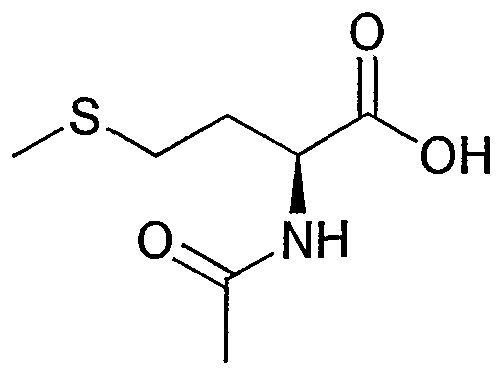
Example 18: N-Acetyl-(S)-memionine
(S)-Methionine (1.49 g, 0.010 mol) was suspended in glacial acetic acid (5.8 cm3 ). To this suspension acetic anhydride (1.5 cm3) was added and the mixture was stirred for 3 h. After this time all solids had dissolved and the solution was left standing overnight (13 h). Acetic acid and excess acetic anhydride were removed under reduced pressure. Residual solvent was removed by co-distillation with toluene and the yellowish solid was recrystallised from ethyl acetate/acetone (10/1) to yield yellowish crystals (1.22 g). From the mother liquors another portion of crystals (0.34 g) was recovered. Overall yield: 82 %. 1H-ΝMR (200 MHz, CDC13) 52.05 (s, 3H, Me), 2.10 (s, 3H, Me), 2.19 (dt, 2H, H-3), 2.56 (t, J 7.2, 2H, H -4), 4.67 (apparent q, J 5.1, IH, H-2), 6.42(d, J 7.3, IH, NH); 13C-NMR DEPT (50 MHz, D2O) δ 14.4, 21.9 (MeCO/MeS), 29.7, 30.1 (C-3/C-4), 52.0 (C-2); MS m/z (ESI-): 189.7 (100 %, M-H1").
Example 19: N-Acetyl-(S)-met onine methyl ester
Thionyl chloride (2.90 cm3, 0.040 mol) was added to dry methanol (14.0 cm3) while being stirred on an ice-salt bath. Then N-acetyl-(S)-memionine(6.33 g, 0.033 mol) was added in several portions. The cooling bath was removed and mixture was allowed to warm up to room temperature. All solids dissolved and the stirred
solution was heated to 40-50°C for 1 h. The solvent was removed under reduced pressure and the remaining oil was taken up in dichloromethane (60 cm3). This solution was washed with IN HCl (10 cm3), half concentrated sodium carbonate solution (10 cm3), brine (10 cm3) and then dried (MgSO ). The dichloromethane was removed under reduced pressure to yield a colourless oil (5.34 g, 79 %). 1H-NMR (200 MHz, CDC13) δ 2.02 (s, 3H, Me), 2.08 (s, 3H, Me), 2.09-2.14 (m, 2H, H-3), 2.49 (t, J 7.5, 2H, H-4), 3.74 (s, 3H, MeO), 4.70 (dt, IH, H-2), 6.15(d, IH, NH); 13C-NMR DEPT (50 MHz, D2O) δ 15.8 (MeS), 23.5 (MeCO), 30.3, 32.0 (C-3/C-4), 51.9, 52.9 (C-2/MeO); MS m/z (ESI-): 203.7 (100 %, M-H").
Example 20: N-Acetyl-(S)-methionine (R/S)-sulfoxide methyl ester
35% Hydrogen peroxide (2.69 cm3, 0.30 mol) was added to a stirred solution of N-acetyl-(-S)-me onine methyl ester (5.28 g, 0.026 mol) in glacial acetic acid (75 cm3) on an ice-bath at a rate which maintained the temperature below 20°C. The reaction mixture was stirred for another 3 h and then the solvent and excess hydrogen peroxide were removed under reduced pressure. The residue was dried in vacuo to yield a crude product as a colourless oil (7.85 g) which solidified on standing. MS m z (ESI+): 221.7 (100 %, M1 .
Example 21: Methyl 2(S)-acetamido-3-butenoate and methyl 2-acetamido-2- butenoate
Method A: Crude N-acetyl-(S)-methionine (R/S)-sulfoxide methyl ester from Example 20 (4.74 g) was pyrolysed using a Bϋchi Kugelrohr distillation apparatus. The pressure was decreased to approximately 10-11 mmHg using a water pump and the temperature was increased gradually to 300°C. The majority of the pyrolysate distilled over at 280-290°C (value taken from the scaling of the heat source). The smelly distillate was purified by flash column chromatography on silica with ethyl acetate/petrol ether (bp. 40-60°C) 4/1 as eluant. After repeated flash column chromatography the following products were obtained: methyl 2(S)-acetamido-3- butenoate (0.70 g) as a slightly yellow oil (R
f [ethyl acetate/petrol ether (bp. 40-
60°C) 4/1]: 0.40). 1H-ΝMR (400 MHz, CDC13) δ 2.08 (s, 3H, MeCO), 3.79 (s, 3H, MeO), 5.17 (dd, IH, H-2), 5.31 (dd, 2H, H-4), 5.90 (dt, IH, H-3), 6.18 (br s,lH, NH); MS m/z (ESI+): 180.3 (46 %, M+Na+); and methyl 2-acetamido-2-butenoate (0.65 g) as a slightly pink solid (Rf [ethyl acetate/petrol ether (bp. 40-60°C) 4/1]: 0.30). 1H-NMR (200 MHz, CDCI3) δ 1.74 (d, J 7.2, 3H, H-4), 2.10 (s, 3H, MeCO), 3.74 (s, 3H, MeO), 6.79 (q, J 7.2, IH, H -3), 6.93 (br s,lH, NH); 13C-NMR APT (100 MHz, CDC13) δ 14.4 (C-4), 23.1 (MeCO), 52.4 (MeO), 126.3, 134.3 (C-2/C-3), 165.1, 168.8 (C=O *2); MS m/z (ESI+): 180.2 (60 %, M+Na"1).
Method B: Synthesis from N-Benzyloxycarbonyl-S-vinylglycine methyl ester
Acetyl chloride (0.57cm3, 7.99 mmol) was added dropwise under argon to a stiired mixture of N-benzyloxycarbonyl-S-vinylglycine methyl ester (209.5 mg, 0.84 mmol) and sodium iodide (1246 mg, 8.31 mmol) in dry acetonitrile (15cm3). After complete addition the reaction mixture was stirred at 60°C for 14h. The brown mixture was cooled to room temperature and then poured onto ice-cold saturatedΝaHCO3(25 cm3). Then saturated NaHSO3 ( 10 cm3) was added and the
mixture was extracted with chloroform (4x50 cm3). The combined organics were washed with brine (1x50cm3), dried (MgSO4) and evaporated under reduced pressure. The remaining brownish residue was purified by flash column chromatography on silica eluting with petrol ether(40:60)/ethyl acetate [2/1] to afford a nearly colourless oil (69 mg, 52 %).
Example 22: N-Acetyl-(S)-selenometMonine
Method A: Acetic anhydride (0.15 cm3, 0.002 mol) was added slowly to a stirred suspension of (5)-Selenomethionine (0.20 g, 0.001 mol) in acetic acid (0.60 cm3). The mixture was stirred for 5.5 h after which time all solids had dissolved. Then the solvent and excess acetic anhydride were removed under reduced pressure and remaining solvent was evaporated by co-distillation with toluene. The resulting solid was recrystallised from ethyl acetate to yield orange crystals (0.19g, 78 %). 1H- ΝMR (200 MHz, αVMeOH) δ 2.03 (s, 6H, Me*2)3 2.05-2.21 (m, 2H, H-3), 2.60 (t, J 7.3, 2H, H-4), 3.36 (dt, stack w. solvent peak, IH, H-2), 4.56(dd, J, 1H,ΝH); 13C- NMR DEPT (50 MHz, d-t-MeOH) δ 2.6 (MeSe), 20.0 (C-4), 21.4 (MeCO), 32.3 (C- 3), 52.7 (C-2); [α]D 25°c(MeOH, C=0.58): -0.9; MS m/z (ESI-): 237.7 (100 %, M-H ).
Method B: The title compound was also prepared following a literature method (Utta singh, V.; Keller, D.A.; Anders, M.W. Chem. Res. Toxicol.lt (7), 800-809, 1998). (^-Selenomethionine (198 mg, 1.0 mmol) was suspended in DMF (3 cm3) and pentafluorophenyl acetate (686 mg, 3.0 mmol) was added to the stirred suspension in one portion. The reaction mixture was stirred for 20 h at room temperature and the solvent was then evaporated under reduced pressure. The oily residue was co-evaporated several times with toluene until a solid was obtained. This was recrystallized from diethyl ether/petrol ether (40/60) to yield slightly yellow prisms (125 mg, 52 %).
Example 23: S-selenomemionine methyl ester hydrochloride
Dry methanol (2.7 cm3) was cooled in an ice-salt bath and thionyl chloride (0.31 cm3) was added drop wise. Then S-selenomethionine (590 mg) was added in one portion and stirring was continued on the bath for another 10 min. After stnring for another 22h at room temperature the solvent was removed under reduced pressure. The remaining colourless residue was co-evaporated with methanol (15 cm3) and dried under high vacuum to yield a colourless solid (741 mg, 100 %). 1H-NMR (400 MHz, MeOH-d- δ 2.04 (s, 3H, CHjSe), 2.19-2.37 (m, 2H, H-3*2), 2.63-2.72(m, 2H, H-4*2), 3.89 (s, 3H, CH3O), 4.23 (t, J 6.4, IH, H-2).
Example 24: N-Aeetyl-selenomet onine benzylamide
N-Acetyl-selenomethionine (182 mg, 0.764 mmol) was dissolved in warm THF (4.0 cm3). EEDQ (213 mg, 0.861 mmol) and benzylamine (0.1 cm3, 0.952 mmol) were added to the stirred solution and the reaction mixture was stirred for 27 h. The solvent was evaporated under reduced pressure and the remaining residue was purified by flash column chromatography on silica with ethyl acetate as eluant. The product was obtained as white powder (70 mg, 28%). Rf (EtOAc): 0.19. 1H-ΝMR (200 MHz, CDCI3) δ 1.92 (s, 3H, MeCO or MeSe), 1.94(s, 3H, MeCO or MeSe), 1.90-2.13 (m, 2H, H-3), 2.43-2.54 (m, 2H, H-4), 4.38 (ddd, J 6.2 Hz, 2H, CH2,
benzyl), 4.60 (q, J 7.8 Hz, IH, H-2), 6.59 (bd, J 8.1 Hz, IH, NHCOCH3), 7.00 (bt, IH, NHCH2Ph), 7.20-7.34 (m, 5H, Ph); 13C-NMR APT (100 MHz, CDCI3) δ 4.1 (MeSe), 20.6 (C-4), 23.1 (MeCO), 32.9 (C-3), 43.5 (CH2, benzyl), 53.0 (C-2), 127.5, 127.6, 128.7 (CHPh*3), 137.7 (quatern. C Ph), 170.3, 171.1 (CO*3); MS m/z (ESI-): 326.8 (70 %, M-H"), (ESI+): 328.8 (55 %, M+ H
Example 25: Ac-Seleno-Met-Ser-Phe-OMe
Methanol (0.5 cm3) was cooled in an ice-NaCl bath and thionyl chloride (0.08 cm3) was added dropwise. H-Ser-Phe-OH (218 mg, 1.0 mmol) was added to the stirred, cold solution. 10 Min after the addition the ice-NaCl bath was removed and stirring was continued at room temperature for 4h. The solidified mixture was dried under high vacuum and the HCl salt was used in the following step without further purification. [α]D 25°C (MeOH, C=1.38): +12.5. Ser-Phe-OMe*HCl (105.8 mg, 0.35 mmol), N-acetyl-selenomethionine (83.0 mg, 0.35 mmol) and EEDQ (89.7 mg, 0.36 mmol) were dissolved in CH3CΝ/DMF (1/1, 1.7 cm3) while cooled on an ice-bath. N-Ethyl diisopropylamine (60.5 μl) was added to the stirred suspension and stirring on the ice-bath was continued for lh. The ice-bath was removed and the then clear solution was stirred for another 6.5h at room temperature. The solvent was removed under reduced pressure and the residue was purified by flash column chromatography on silica with ethyl acetate/methanol (9/1) as eluant. From this 35.1 mg uniform product was obtained. 1H-NMR (400 MHz, d4-MeOH): δ 2.00 (s, 7H, stack CH3CO, CH3Se and CH2*1), 2.09-2.16 (m, IH, CH2*1), 2.50-2.64 (m, 2H, CH2(Met)*2), 3.07 (dd, J 13.9, 8.2 Hz, IH, CH2 (benzylic)*l), 3.17 (dd, J 13.9, 5.8 Hz, IH, CH2 (benzylic)*l), 3.68 (s, 3H, OMe), 3.74 (dd, J 5.8, 4.8 Hz, 2H, CH2 (Ser)*2), 4.40-4.46 (m, 2H, stack CH*2(Ser,Met)), 4.67 (dd, J 8.8, 5.8 Hz, 1 H, CH(Phe)*l), 7.20-7.30 (m, 5H, Ph); 13C-NMR APT (100 MHz, CDCI3): δ 2.6 (H3CSe), 20.3 (SeCH2), 21.5 (MeCO), 32.3 (CH2CH(Met)), 37.3 (CH2Ph), 51.7
(OCH3), 54.3, 54.4, 55.8 (CH*3), 61.7 (CH2O-H) 126.9, 128.5, 129.3 (CHPh*3); MS m/z (ESI-): 486.0 (100%, M-ϊ ). In addition to that 78.5 mg of mixed fractions were obtained containing two spots: Rf (EtOAc/MeOH): 0.22 and 0.15. The 1H-NMR spectrum (400MHz) indicated presence of two epimers at Se-Met by the occurrence of two singlets (CH3CO*2) at 1.98 and 2.00 ppm.
Example 26: Ac SerPheOH
Pentafluorophenyl acetate (693 mg, 3.0 mmol) was added at room temperature to a stirred suspension of H-Ser-Phe-OH (255 mg, 1.0 mmol) in DMF (3.0 cm3). Stirring was continued for 4.5 h and the reaction mixture was then concentrated under reduced pressure. The remaining viscous liquid was co-evaporated with toluene and then dried under high vacuum. The obtained solid was suspended in ethyl acetate/petrol ether (40/60) (4 cm3) on the water bath at 50°C, filtered and washed with cold ethyl acetate (2 cm3) to yield a white powder (273 mg, 92 %). 1H-NMR (200 MHz, di-MeOH) 52.01 (s, 3H, CH3CO), 3.06 (dd, J 13.7, 7.8 Hz, IH, CH2Ph*l), 3.24 (dd, J 13.7, 5.1 Hz, IH, CH^Ph*l) 3.74 (d, J 2.4 Hz, IH, CHaOH*!), 3.77 (d, J 1.6 Hz, IH, CHgOH*!), 4.48 (t, J 5.7, IH, CHCHOH), 4.72 (dd, J 7.4, 5.5 Hz, IH, CHCH2Ph), 7.20-7.34 (m, 5H, Ph) ; MS m/z (ESI-): 293.1 (100%, M-H+); HRMS m/z (ESI-): Found 293.1131 (M-H*"), Cι Hι8N2O5 requires 293.1137.
Pentafluorophenyl acetate (1.188 g, 5.3 mmol) was added to a stirred suspension of H-Ser-Leu-OH (0.379g, 1.7 mmol) in dry DMF (5.5 cm3). The mixture was stirred for lOh at room temperature. The clear solution was then concentrated under reduced pressure and the residue was coevaporated with toluene (2x5 cm3). The remaining residue was suspended in ethyl acetate/petrol ether 40-60 (1/1) (10 cm3), filtered and washed with a small amount of the same solvent mixture. The remaining white powder was dried under high vacuum (0.411 g, 91 %). 1H-NMR (400 MHz, αV-MeOH) δθ.95 (d, J 6.5, 3H, CH^(Leu)*l), 0.98 (d, J 6.5, 3H, CH3_(Leu)*l), 1.66 (t, J7.3, 2H, CH^Leu)), 1.72-1.79 (m, IH, CHjLeu)), 2.03 (s, 3H, CH CO), 3.75- 3.83 (m, 2H, CH_(Ser)), 4.47-4.52 (m, 2H, CαH*l, CαH*l); MS m/z (ESI-): 259.1(100 %, M-Ε ); HRMS m/z (ESI-): Found 259.1302 (M-Ff"), CHH20N2O5 requires 259.1294.
Example 28: AcSerLeuSeMetOMe
AcSerLeuOH (361.7 mg, 1.39 mmol), MSetOMe*HCl (346.2 mg, 1.40 mmol) and 1 -hydroxy benzotriazole (95 %, 197.5 mg, 1.39 mmol) were suspended in a 1 : 1 mixture of dry DMF and dry acetonitrile (3.5 cm
3). Ethyl diisopropylamine (240 μl, 1.39 mmol) and dicyclohexyl carbodiimide (288.4 mg, 1.40 mmol) were added to the stirred suspension on an ice-water bath resulting in a clear solution. The reaction
mixture was stirred at 0°C for 12.5 h and was then filtered and the filter-cake washed with ice-cold DMF/acetonitrile (1/1) (8 cm
3). The filtrate was concentrated under reduced pressure and the oily residue was taken up in ethyl acetate (40 cm
3) and the resulting solution was stored on ice for 2h. A small amount of precipitate was removed by filtration and the filtrate was washed with water (2x15 cm
3), 10% acetic acid (1x25 cm
3), brine (1x20 cm
3) and then dried (MgSO
4). The solvent was evaporated under reduced pressure to yield a colourless oil which crystallized on standing. It was purified by flash column chromatography on silica with chloroform/ methanol (15/1) as eluant to yield a white powder (318 mg, 51 %). 1H-NMR (400 MHz, d-t-MeOH) δθ.95 (d, J 6.1, 3H, Cϊfe(Leα)*l), 0.98 (d, J 6.5, 3H, C@j£Leu)*l), 1.59-1.68 (m, 2H, CH^Leu)), 1.70-1.75 (m, IH, CKCH
3)
2), 1.99 (s, 3H, C-HsSe), 2.03 (s, 3H, CHaCO), 2.04 -2.11 (m, IH,
2.14-2.18 (m, IH, CHCH CH
2SeCH
3*l), 2.49-2.56 (m, IH, CHCH
2CH^SeCH
3*l), 2.60-2.66 (m, IH, CHCH
2CH SeCH
3*l), 3.73 (s, 3H, CH3O), 3.75 (dd, J 10.9, 5.8, IH, CH2_OH*l), 3.81 (dd, J 10.9, 5.8, IH, CH
2_OH*l), 4.45 (ap t, J 6.1, IH, CHCH
2OH), 4.48 (dd, J 10.2, 5.1, IH, CHCH
2CH
2SeCH3), 4.57 (dd, J 9.6, 4.8, IH, CHCH
2CH(CH
3)2); MS m/z (ESI-): 452.2 (100 %, M-H ); HRMS m/z (ESI-): Found 452.1316 (M-H), C
17H
31N
3O
6Se requires 452.1300.
Example 29: ZvGlySerPheOMe
N-Benzyloxycarbonyl-S-vinylglycine (58 mg, 0.25 mmol), HSerPheOMe*HCl (75 mg, 0.25 mmol) and IIDQ (85 mg, 0.28 mmol) were suspended in THF (1.0 cm3 ). Ethyl diisopropylamine (42.5 μl, 0.25 mmol) was added dropwise and the mixture was stirred for 24h at ambient temperature (18°C). The solvent was removed under reduced pressure and the residue was purified by flash column chromatography on
silica. The column was eluted with EtOAc/petrol ether (40:60) [4/1] to neat EtOAc to EtOAc/methanol [9/1]. The product was obtained as white-powder (76 mg, 64 %). 1H-NMR (400 MHz, d-4-MeOH)δ 3.03 (dd, J 13.9, 7.5, IH, CI^Ph*l[Phe]), 3.13 (dd, J 13.9, 6..1, IH, CH2Ph*l[Phe]), 3.68 (s, 3H, OCH3), 3.77 (app t, J 4.7, 2H, CH2OH), 4.45 (t, J 5.2, IH, CHCH2OH), 4.68-4.71(m, IH, CHCH2PhrPhe]),4.76 (d, J 6.3, IH, CHCH=CH2), 5.11 (s, 2H, CEbPh [Z]), 5.25 (d, J 10.4, IH, CH=C-Hb*l), 5.38 (d, J 16.9, IH, CH=CH^*1), 5.89-5.98 (m, IH, CH=CH2), 7.17N.37(m, 10H, Ph[Phe] andPh[Z]); MS m/z (ESI-): 482.3 (100 %, M-H ); HRMS m/z (ESI-): Found 482.1939 (M-H+), C25H28N3O7 requires 482.1927.
Example 30: ZvGlySerLeuOMe
HSerLeuOMe*HCl (43 mg), ZvGlyOH (39 mg) and IIDQ (54 mg) were suspended in dry THF (1.7 cm3). Ethyl diisopropylamine (28 μl) was added to the stirred suspension and stirring was continued at room temperature for 12h. The clear solution was evaporated and the remaining residue was worked up by flash column chromatography on silica with EtOAc:petrol ether 40/60 (4: 1) to EtOAc gradient. The product was obtained as colourless powder ( 8 mg, 67 %). 13C-NMR (100 MHz, dj-MeQH) 520.9 , 22.3 (CH3 [Leu]*2),24.8(CH(CH3)2 [Leu])40.5 (CH2[Leu]), 51.2 (CHCH2CH(CH3)2), 51.8(OCH3), 55.6(CHCH2OH), 58.1 (CHCH=CH2), 61.9 (CH2OH), 66.9(CH2Ph[Z]),117.8(CHCH=CH2),127.8, 128.1, 128.5(CH [Ph]*3), 133.3(CHCH=CH2), 171.1, 171.7, 173.5 (C=O*3).
Cross metathesis reactions
In the following Examples, Mes denotes mesityl (i.e. 1,3,5-trimethylbenzyl).
Example 31: Methyl 5-(oc-D-glucopyranosyl)-"(S)-acetamido-3-pentenoate
SUBSTITU
" SHEET (RULE 26)
Methyl 2(S)-acetamido-3-butenoate (30 mg, 0.19 mmol) and 3-(α-D- glucopyranosyl)propene (117 mg, 0.57 mmol) were dissolved in methanol (4 cm3 ) which had been degassed by bubbling through nitrogen for 0.5 h. Third generation Grubbs-Hoveyda catalyst (20 mg, 0.03 mmol, 17 %) was added in five portions, each addition followed by heating in a converted domestic microwave oven at 560 W for 2 min. The colour of the reaction mixture turned from green to brown on microwave heating and after the last cycle had been completed, the solvent was removed under reduced pressure. The dark brown residue was purified by flash column chromatography (gradient 10% petrol ether (40/60) in ethyl acetate to neat ethyl acetate to 20 % methanol in ethyl acetate) to recover unchanged methyl 2(S)-acetamido-3-butenoate (23 mg, 76 %) and 3-(α-D-glucopyranosyl)propene (79 mg, 68%) as well as the title compound (13 mg, 21 %) as a mixture of cis/trans isomers; 1H-NMR (400 MHz, D2O) δ 2.04 (s, 3H, Ac), 2.45 (t, J 4.8, IH, H-5b), 2.53 (dd, J 11.6, 8.2 Hz, IH, H-5a), 3.36 (m, 2H, 6a+b'), 3.52 (ddd, J 9.9, 5.5, 2.0 Hz, IH, H-3'), 3.64 (dd, J 9.9, 8.9Hz, IH, H-5'), 3.70 (ddd, IH, H-2'), 3.76 (s, OMe), 3.87 (dd, J 12.3Hz, IH, H-4'), 4.08 (ddd, IH, H-l'), 4.93 (dd, J 6.5,1H, H-2), 5.74 (dd, J3.4 15.0, J2j3 6.8 Hz, H-3), 5.84 (dt, J3;4 15.4, IH, H-4); MS m/z (ESI-): 367.9 (100 %, M+C1_), 332.2 (50 %, M-Jrt); (ESI+): 355.91(58 %, M+Na"1 ; HRMS m/z (ESI-): Found 332.1341(M-Ht"), Ci4H22NOsrequ.-res332.1345.
Example 32: Methyl 4-(β-D-glucopyranosyl)-2(S)-acetamido-3-butenoate
A solution of β-D-glucopyranosyl ethene (61 mg, 0.32 mmol) and methyl 2(S)- acetamido-3-butenoate (17 mg, 0.11 mmol) in methanol (2.5 cm3) was treated with 3rd generation Grubbs-Hoveyda catalyst in ten portions (10x3.4 mg, 0.05 mmol). After each addition the reaction mixture was irradiated in the microwave oven (525 W) for 2 min and the reaction was followed by TLC. The dark brown solution was then evaporated and worked up by flash column chromatography on silica using a ethyl acetate (100%) to ethyl acetate/acetonitrile to acetonitrile (100%) to acetonitrile/water (95/5) gradient. In this manner starting material β-D_glucopyranosyl ethene (27 mg, 44%), methyl 2(S)-acetamido-3-butenoate (10 mg, 61%) and desired product (26 mg) were isolated. The product fractions were still contaminated with silica and brown Ru-impurities. Further purification was achieved by dissolving the material in water (10 cm3) at 70°C, filtration through cotton wool and evaporation under reduced pressure to yield a slightly brown amorphous solid (16 mg). The 1H-NMR spectrum of the product still showed impurities from decomposition products of the catalyst; MS m/z (ESI-): 353.8 (100
%, M+cr).
Example 33: Cross metathesis on a peptide model system
Ninylglycine tripeptide (13.0 mg, 0.05 mmol) and 3-( -D-glucopyranosyl) propene (29.7 mg, 0.14 mmol) were suspended in methanol (1.5 cm
3). 3
rd Generation Grubbs-Hoveyda catalyst (17.4 mg, 0.02 mmol) was added directly prior to microwave heating for 1.25 min at 750 W and 4 min at 525 W. The dark brown reaction mixture was purified by evaporation under reduced pressure and flash column chromatography on silica using ethyl acetate/methanol (9/1) to ethyl acetate/methanol (4/1) gradient. A mixture of the tripeptide and C-glycoside starting materials (9.4 mg) was isolated as well as the desired cross-metathesis product in mixture with the C-glycoside homodimer by-product (9.8mg). Cross-metathesis product: MS m/z (ESI-): 602.1 (M+Cl
").
C-glucoside homodimer: MS m/z (ESI-): 415.0 (100 %,M+C1").
Example 34: Cross metathesis reactions typical procedure
Peptide (0.053 mmol) and C-glycoside (0.450 mmol) in methanol (5.0 cm3) were heated in a modified domestic microwave oven at 350 W (controlled by power switch on 700 W instrument, i.e. on-off cycle regulation) for 2min bringing the mixture to reflux to dissolve all starting materials. Catalyst (0.019mmol, 35%) was added to the reaction mixture in several portions. Each addition was followed by heating for 2min at 350 W. The clear yellow-brown solution was evaporated under reduced pressure and the residue was purified by flash column chromatography on silica. Elution with gradient: EtOAc: Petrol Ether (40/60) [4: 1]— >EtOAc— >5% MeOH in EtOAc— 20% MeOH in EtOAc.
Results:
3-(α-D-glucopyranosyl) propene with AcvGOMe
40 % catalyst (10 portions), lmin heating intervals: 53 % CM products
(predominantly allyl-linked)
MS m/z (ESI-): 368.2 (100 %, M+Cl"), 332.2 (50 %, M-H1") HRMS m/z (ESI-): Found 332.1341 (M-H4), C14H22ΝO8 requires 332.1345
3-(2'-Acetamido-2'-deoxy-α-D-glucopyranosyl) propene with ZvGSFOMe
35 % catalyst (7 portions), 2min heating intervals: 37 % CM products (predominantly homoallyl-linked) MS m/z (ESI-): 749.5 (100 %, M+Cl")
HRMS m/z (ESI-): Found 749.2806 (M+Cl"), CasH^OπClrequires 749.2801
3-(2'-Acetamido-2'-deoxy- -D-glucopyranosyl') propene with ZvGSLOMe 35 % catalyst (7 portions), 2min heating intervals: 37 % CM products (predominantly homoallyl-linked) MS m/z (ESI-): 715.5 (100 %, M+Cl") HRMS m/z (ESI-): Found 715.2986 (M+Cl"), C32H4sN4O12Clrequires 749.2997
3-(2'-Acetamido-2'-deoxy-α-D-glucopyranosyl) propene with AcSLvGOMe 35 % catalyst (7 portions), 2min heating intervals: 38 % CM products (predominantly allyl-linked) MS m/z (ESI-): 609.3 (100 %, M+Cl"), 573.5 (70 %, M-H*")
HRMS m/z (ESI-): Found 573.2772 (M-H4), C25H4ιN O11 requires 573.2772
3-(2'-Acetamido-2'-deoxy-β-D-glucopyranosyl) propene with ZvGSFOMe 35 % catalyst (10 portions), 2min heating intervals: 32 % CM products (predominantly homoallyl-linked)
MS m/z (ESI-): 749.5 (100 %, M+Cl")
HRMS m/z (ESI-): Found 749.2770 (M+Cl
"),
749.2801
Selenoxide elimination studies Example 35: Elimination in dimethyl sulf oxide
A solution of Ac-Seleno-Met-Ser-Phe-OMe (10.4 mg, 0.02 mmol) in α -MeOH was treated with 35% H2O2 (3.5 μl, 0.04 mmol) at room temperature and was then warmed to 31-34 °C for lh to ensure completion of the reaction. 1H-NMR at 400
MHz indicated quantitative conversion and no starting material was observed by mass spectrometry (ES-). The solvent was then removed under reduced pressure and the remaining film was taken up in de-DMSO (0.6 cm3). The stirred solution was heated at 44-47 °C for 12.5 h. The solvent was then removed on a freeze dryer after dilution with water (10 cm3). The remaining residue was purified by flash column chromatography on silica with ethyl acetate/methanol (9/1) as eluant to yield the product as white powder (3.6 mg, 46 %). 1H-NMR (400 MHz, c-U-MeOH): δ 2.03 (s, 3H, CH3CO), 3.07 (dd, J 13.9, 8.2 Hz, IH, CH2 (benzylic)*l), 3.17 (dd, J 13.9, 5.8 Hz, IH, CH2(benzylic)*l), 3.68 (s, 3H, OMe), 3.73 (d, J 5.6 Hz, 2H, CH2 (Ser)*2), 4.40 (t, IH, CH(Ser)*l), 4.67 (dd, J 8.8, 5.8 Hz, 1 H, CH(Phe)*l), 4.92 (t, J 6.8 Hz, IH, CH(vinyl)*l), 5.29 (dt, J 10.4, 1.1 Hz, IH, external vinyl* 1), 5.40(ddd, J 17.2, 1.5, 1.1 Hz, IH, external vinyl*l), 5.91-6.00 (m, IH, internal vinyl), 7.20-7.30 (m, 5H, Ph); MS m/z (ESI-): 390.0 (100%, M-H").
Example 36: Elimination in acetonitrile
AcSerPheSeMetOMe (384 mg, 0.79 mmol) was suspended in methanol (2.5 cm3) and treated with hydrogen peroxide 35% ( 101.4 μl, 1.18 mmol) for 15 min at room temperature during which time all solids dissolved. The solvent was removed under reduced pressure and the remaining film was taken up in dry acetonitrile (10.0 cm ). The stirred mixture was heated at 55 °C for 14 h and the solvent was then removed under reduced pressure. The residue was purified by flash column chromatography on silica eluting with chloroform:methanol (15: 1 → 14: 1) to yield
AcSerPheMSetOMe starting material (202 mg, 53 %) as well as AcSerPhevGlyOMe elimination product (51 mg, 17 %). 1H-NMR (400 MHz, dt-MeOH) 51.98 (s, 3H, CH3CO), 2.97(dd, J 14.0, 8.9,1H, CH2_Ph*l), 3.23 (dd, J 14.0, 8.9,1H, CHgPh*!), 3.70 (dd,J 6.1, 2.0, 2H, CHgOH), 3.74 (s, 3H, CH3 O), 4.40 (t, J 6.1, IH,
CHCH2OH), 4.74 (dd, J 8.9, 5.3, CHCH2Ph), 5.00 (d, J 6.1, IH, CHCH=CH2), 5.28 (dd, J 10.2, 1.7, IH, CHCH=CH2*1, cisoid proton), 5.36 (dd, J 17.1, 1.7, IH, CHCH=CH2*1, transoid proton), 7.21-7.31 (m, 5H, Ph); MS m/z (ESI-): 390.0 (100 %, M-H1"), 426.0 (25 %, M+Cl"); HRMS m z (ESI-): Found 390.1666 (M-E- ), C19H25N3O6 requires 390.1665.
Example 37: Elimination with diisopropyl amine as selenenic acid scavenger
AcSerPheSeMetOMe (55 mg, 0.11 mmol) was suspended in methanol (1.0 cm
3) and treated with hydrogen peroxide 35% (14.5 μl, 0.17 mmol) for 20 min at room temperature during which time all solids dissolved. The solvent was removed under reduced pressure and the residue was taken up in dry acetonitrile (5.0 cm
3). Diisopropyl amine (31.8 μl, 0.22 mmol) was added and the mixture was heated at 50 °C for 15 h. The solvent was then removed under reduced pressure and the remaining residue was purified by flash column chromatography on silica using chloroform:methanol (10: 1) as eluant to yield a colourless film (16 mg, 36 %) of the tripeptide containing the internal olefin as elimination product. 1H-NMR (400 MHz, d-4-MeOH) 51.69 (d, J 7.2, 3H,
1.98 (s, 3H, CH3CO), 3.02 (dd, J 14.0, 8.9, IH, Cϊ^Ph*l), 3.28 (dd, J 14.0, 5.5, IH, CH
2_Ph*l), 3.72 (app t, J 6.1, 2H, CH2OH), 3.75 (s, 3H, CH3O), 4.41 (t, J 6.1, IH, CHCH
2OH), 4.78 (dd, J 8.9, 5.5, IH, CHCH
2Ph), 6.81 (q, J 7.2, IH, CH
3CH=C), 7.21-7.31 (m, 5H, Ph); MS m/z (ESI-): 390.0 (100 %, M-H
4), 426.0 (15 %, M+Cl
"); HRMS m/z (ESI -): Found 390.1670 (M-H*), CΛsNjOe requires 390.1665.
Example 38-Elimination with pyridine as selenenic acid scavenger
AcSerPheSeMetOMe (83 mg, 0.17 mmol) was suspended in methanol (1.0 cm3) and treated with hydrogen peroxide 35% (21.9 μl, 0.26 mmol) for 20 min at room temperature. The clear solution was concentrated under reduced pressure and the residue was taken up in dry acetonitrile (20.0 cm3). Pyridine (55.1 μl, 0.68 mmol) was added and the mixture was heated at 45 °C for 20 h. The reaction -mixture was evaporated under reduced pressure and the residue was analysed by 1H-NMR spectroscopy (400 MHz). By integration a yield of 17.5 % of vinylglycine tripeptide product was determined. Also 16 % of selenoxide were still present along with selenide starting material.
Example 39: 1H-NMR studies on the selenoxide elimination of amino acid/peptide model systems
N-Acetyl-selenomethionine benzylamide (10 mg, 0.03 mmol) was dissolved in CD3CΝ/D2O (1/1) (1.0 cm3) and to this solution hydrogen peroxide (35%, 6.3 μl, 0.07 mmol) was added and the mixture was shaken thoroughly. The mixture was left 3.5 h at room temperature and was then observed by ^-NMR spectroscopy (200 MHz). The mixture was treated by the following heating cycles:
Cycle temperature time
1 40 °C 13.5h
2 50 °C 19h
3 60 °C 24.5h
4 70 °C 12h
5 70 °C 30 h
6 70 °C 22h
After each cycle the sample was analysed by 1H-NMR spectroscopy. 3.5 h after addition of 2.4 eq H2O2, the H3CSe signal had shifted from a singlet at 1.94 ppm to a doublet 2.55 ppm and the SeCH2 signal from a multiplet at 2.42-2.58 to two multiplets at 2.77-2.92 ppm and at 2.93-3.09 ppm. Presumably, this indicates the presence of diastereomeric selenoxides. First traces of the vinylglycine elimination
product were observed after the third heating cycle (60 °C, 24.5 h) by appearance of the signals of the vinylic protons at 5.28 ppm, 5.39 ppm and 5.90 ppm. After the fifth heating cycle, the selenoxide HsCSeO and SeOCH2 signals had strongly diminished. The yield of vinylglycine product as judged by integration of the signals at 5.28 and 5.39 ppm (with the Ph multiplet as reference) was 21 %.
To study the dependency of the selenoxide eli- ination on the reaction solvent the experiment was repeated, but after oxidation with H2O2 in CD3CN/D2O (1/1) the solvent was removed under reduced pressure at 40 °C. The remaining residue was dried under high vacuum and then dissolved in d6-DMSO and analysed by 1H-NMR spectroscopy (200 MHz): Again a downfield shift of the H3CSe and SeCH-> signals was observed. Then the following two heating cycles were applied:
Cycle temperature time
1 40 °C llh
2 40 °C 15h
After the second cycle, integration of the same vinylic protons at 5.22 and at 5.35 ppm in the ^-- MR spectrum recorded at 400 MHz indicated a 64 % yield of vinylglycine product.