D E S C R I P T I O N
PI PERI DYL DERIVATIVES
TECHNICAL FIELD
The present invention relates to new piperidyl derivatives and a salt thereof.
More particularly, it relates to new piperidyl derivatives and a salt thereof which have pharmacological activities such as Tachykinin antagonism, especially
Substance P antagonism, Neurokinin A antagonism, Neurokinin B antagonism, and the like, to a process for preparation thereof, to a pharmaceutical composition comprising the same, and to a use of the same as a medicament. Accordingly, one object of the present invention is to provide new and useful piperidyl derivatives and a salt thereof which have pharmacological activities such as Tachykinin antagonism, especially Substance P antagonism, Neurokinin A antagonism, Neurokinin B antagonism, and the like.
Another object of the present invention is to provide a process for the preparation of said piperidyl derivatives and a salt thereof.
A further object of the present invention is to provide a pharmaceutical composition comprising, as an active ingredient, said piperidyl derivatives and a pharmaceutically acceptable salt thereof.
Still further object of the present invention is to provide a use of said piperidyl derivatives or a pharmaceutically acceptable salt thereof as Tachykinin antagonist, especially Substance P antagonist, Neurokinin A antagonist or Neurokinin B antagonist, useful for treating or preventing Tachykinin-mediated diseases, for example, respiratory diseases such as asthma, bronchitis, rhinitis, cough, expectoration, and the like; ophthalmic diseases such
as conjunctivitis, vernal conjunctivitis, and the like; cutaneous diseases such as contact dermatitis, atopic dermatitis, urticaria, and other eczematoid dermatitis, and the like; inflammatory diseases such as rheumatoid arthritis, osteoarthritis, and the like; pains or aches (e.g., migraine, headache, toothache, cancerous pain, back pain, etc.); and the like in human being or animals.
BACKGROUND ART Some piperidyl derivatives have been known as described in, for example, WO 93/01170, WO 95/08549 and WO 96/29326.
DISCLOSURE OF INVENTION
The object compound of the present invention can be represented by the following general formula (I) :
-X- is -NH or -0-;
(in which R^, R^ and R^ are independently hydrogen, lower alkyl, mono (or di or tri) halo (lower) alkyl, cyclo (lower) alkyl, lower alkoxy, mono (or di or tri) halo (lower) alkoxy, cyclo (lower) alkyloxy or
■ tetrahydrofranyloxy; R
6, R
7 and R
17 are independently hydrogen or lower alkoxy; R
xz is lower alkoxy;
R^ is hydrogen or lower alkoxy;
R-1-^ is hydrogen or lower alkoxy (lower) alkoxy or carbamoyl (lower) alkoxy; R-*-^ is hydrogen or isopropoxy; R^" is hydrogen or mono (or di or tri) halo (lower) alkyl; and
R 1xRo is hydrogen or oxo) ;
RlI -Z- is bond or I ^CH^
(in which R-^ is hydrogen or lower alkyl) , R and R are independently hydrogen or lower alkyl, or join together to form oxo;
R8 is hydrogen, (5-oxo~4, 5-dihydro-lH-l, 2, 4-triazol-3- yl)methyl or an amino protective group; and
R" and R^-0 are independently hydrogen, halogen, lower alkyl or lower alkoxy, and
provided that when Y is (in which
R1^, R14 and R1^ are each as defined above, then
-Z- is ^11 (in which R-^ is as defined /CH \ above) ,
and a salt thereof.
It is to be noted that the object compound (I) may include one or more stereoisomers due to asymmetric carbon atom(s) and double bond, and all of such isomers and a mixture thereof are included within the scope of the present invention.
It is further to be noted that isomerization or rearrangement of the object compound (I) may occur due to the effect of the light, acid, base or the like, and the compound obtained as the result of said isomerization or rearrangement is also included within the scope of the • present invention.
It is also to be noted that the solvating form of the compound (I) (e.g. hydrate, etc.) and any form of the crystal' of the compound (I) are included within the scope of the present invention.
According to the present invention, the object compound (I) or a salt thereof can be prepared by processes which are illustrated in the following schemes.
Process 1
or its reactive derivative (Ia) at the amino group or a salt thereof or a salt thereof
Process 2
or its reactive derivative (Ib) at the amino group or a salt thereof or a salt thereof
Process 3
or its reactive derivative (Ic) at the amino group or a salt thereof or a salt thereof
Process 4
Elimination of the amino protective group
(Id) (Ie) or a- salt thereof or a salt thereof
wherein
X, Y, Z, R1, R2, R8, R9 and R10 are each as defined above, R| is an amino protective group, and W]_ is a leaving group.
As to the starting compounds (II), (III), (IV), (V) and (VI), some of them are novel and can be prepared by the procedures described in the Preparations and Examples mentioned later or similar manners thereto. Suitable salts of the starting and object compounds are conventional non-toxic and pharmaceutically acceptable salt and include an acid addition salt such as an organic acid salt (e.g. acetate, trifluoroacetate, fumarate, maleate, tartrate, methanesulfonate, benzenesulfonate, formate, toluenesulfonate, etc.), an inorganic acid salt (e.g. hydrochloride, hydrobromide, hydroiodide, sulfate, nitrate, phosphate, etc.), or a salt with an amino acid (e.g. arginine, aspartic acid, glutamic acid, etc.), or a metal salt such as an alkali metal salt (e.g. sodium salt, potassium salt, etc.) and an alkaline earth metal salt (e.g. calcium salt, magnesium salt, etc.), an ammonium salt, an organic base salt (e.g. trimethylamine salt, triethylamine' salt, pyridine salt, picoline salt, dicyclohexylamine salt, N, N' -dibenzylethylenediamine salt, etc.), or the like.
In the above and subsequent descriptions of the present specification, suitable examples and illustrations of the various definitions which the present invention intends to include within the scope thereof are explained in detail as follows.
The term "lower" is intended to mean 1 to 6, preferably 1 to 4, carbon atom(s), unless otherwise indicated.
Suitable "halogen" may include fluorine, chlorine, bromine and iodine.-
Suitable "lower alkyl" and "lower alkyl" moiety in the term of "mono (or di or tri) halo (lower) alkyl" may include straight or branched one having 1 to 6 carbon atom(s), such as methyl, ethyl, propyl, isopropyl, butyl, isobutyl, pentyl/ hexyl and the like, in which the preferred one is C-^-C^ alkyl and the most preferred one is methyl, ethyl, propyl or tert-butyl.
Suitable "mono (or di or tri) halo (lower) alkyl" may be fluoromethyl, difluoromethyl, trifluoromethyl, chloromethyl, dichloromethyl, trichloromethyl, bromomethyl, dibromomethyl, tribromomethyl, 1 or 2-fluoroethyl, 1 or 2-bromoethyl, 1 or 2-chloroethyl, -1, 1-difluoroethyl, 2, 2-difluoroethyl, 2,2,2- trifluoroethyl, and the like, in which the preferred one may be trifluromethyl . Suitable "cyclo (lower) alkyl" and "cyclo (lower) alkyl" moiety in the term of "cyclo (lower) alkyloxy" may include cyclopropyl, cyclobutyl, cyclopentyl, cyclohexyl, cycloheptyl and the like, in which the preferred One is cyclo (C3~Cg) alkyl and the most preferred one is cyclopropyl or cyclobutyl.
Suitable "lower alkoxy" and "lower alkoxy" moiety in the term of "mono (or di or tri) halo (lower) alkoxy" may include methoxy, ethoxy, propoxy, isopropoxy, butoxy, isobutoxy, tert-butoxy, pentyloxy, tert-pentyloxy, hexyloxy and the like, in which the preferred one is C^-C^ alkoxy and the most preferred one is methoxy, ethoxy, isopropoxy or tert-butoxy.
Suitable "mono (or di or tri) halo (lower) alkoxy" may include chloromethoxy, dichloromethoxy, trichloromethoxy, bromomethoxy, dibromomethoxy, tribromomethoxy, fluoromethoxy, difluoromethoxy, trifluoromethoxy, 1 or 2-chloroethoxy, 1 or 2-bromoethoxy, 1 or 2-fluoroethoxy, 1, 1-difluoroethoxy, .2,2- difluoroethoxy, 2, 2, 2-trifluoroethoxy, and the like, in which the preferred one may be 2, 2, 2-trifluoroethoxy. Suitable "leaving group" may include lower alkoxy (e.g.
methoxy, ethoxy, propoxy, isopropoxy, butoxy, isobutoxy, t-butoxy, pentoxy, etc.) , aryloxy (e.g., phenoxy, naphthoxy, etc.), an acid residue or the like.
Suitable "acid residue" may be halogen (e.g., chlorine, bromine, iodine, etc.), sulfonyloxy (e.g., methanesulfonyloxy, phenylsulfonyloxy, mesitylenesulfonyloxy, toluenesulfonyloxy, etc.) or the like.
Suitable example of "amino protective group" moiety may be common amino protective group such as acyl, for example, substituted or unsubstituted lower alkanoyl [e.g. formyl, acetyl, propionyl, trifluoroacetyl, etc.], phthaloyl, lower alkoxycarbonyl [e.g. tert-butoxycarbonyl, tert-amyloxy- carbonyl, etc.], substituted or unsubstituted aralkyloxy- carbonyl [e.g. benzyloxycarbonyl, p-nitrobenzyloxycarbonyl, etc.], substituted or unsubstituted arenesulfonyl [e.g. benzenesulfonyl, tosyl, etc. ] , nitrophenylsulfenyl, ar (lower) alkyl [e.g. trityl, benzyl, etc.], and the like, in which preferable one is tert-butoxycarbonyl.
Preferred embodiments of the object compound (I) are as follows:
-X- is -NH or -0-;
(in which R , R^ and R^ are independently hydrogen, lower alkyl, cyclo (lower) alkyl, lower alkoxy or cyclo (lower) alkoxy;
R" and R' are independently hydrogen or lower alkoxy;
R1^ is lower alkoxy; and
R-^ is hydrogen or lower alkoxy) ;
-Z- is bond;
R-"- and R^ are independently hydrogen or lower alkyl; R° is hydrogen; and
R° and R^^ are each hydrogen.
The Processes 1, 2, 3 and 4 for preparing the object compound (I) of the present invention are explained in detail in the following.
Process 1
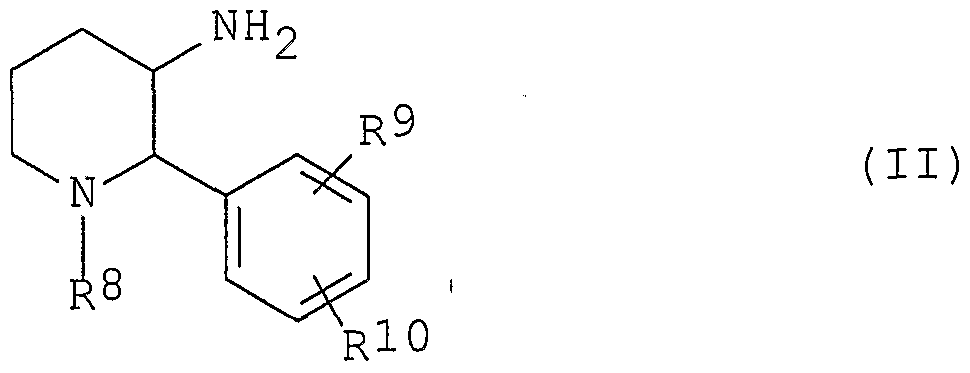
The object compound (Ia) or a salt thereof can be prepared by reacting the compound (II) or its reactive derivative at the amino group or a salt thereof with the compound (III) .
Suitable reactive derivative at the amino group of the compound (II) may include Schiff's base type imino or its tautomeric enamine type isomer formed by the reaction of the compound (II) with a carbonyl compound such as aldehyde, ketone or the like; a silyl derivative formed by the reaction of the compound (II) with a silyl compound such as bis (trimethylsilyl) acetamide, mono (trimethylsilyl) acetamide, bis (trimethylsilyl) urea or the like; a derivative formed by reaction of the compound (II) with phosphorus trichloride or phosgene and the like.
The reaction is usually carried out in a conventional solvent such as water, alcohol (e.g. methanol, ethanol, etc.), acetone, dioxane, acetonitrile, chloroform, methylene chloride, ethylene chloride, tetrahydrofuran, ethyl acetate, N, N-dimethylformamide, pyridine or any other organic solvent which does not adversely influence the reaction, or the mixture thereof.
The reaction may also be carried out in the presence of a reductive regent such as hydrides (e.g. hydrogen iodide,
hydrogen sulfide, lithium aluminum hydride, sodium borohydride, sodium cyanoborohydride, sodium triacetoxyborohydride, etc.), or the like.
The reaction temperature is not critical, and the reaction is usually carried out under cooling to heating.
Process 2
The object compound (Ib) or a salt thereof can be prepared by reacting the- compound (II) or its reactive derivative at the amino group or a salt thereof with the compound (IV) .
This reaction can be carried out in substantially the same manner as in Example 3.
Process 3
The object compound (Ic) or a salt thereof can be prepared by reacting the compound (Id) or its reactive derivative at the amino group or a salt thereof with the compound (VI) . This reaction can be carried out in substantially the same manner as in Example 4.
Process 4
The object compound (Ie) or a salt thereof can be prepared by elimination of the amino protective group of the compound (Id) or a salt thereof.
This reaction can be carried out in substantially the same manner as in Example 6.
The object compound (I) and a pharmaceutically acceptable salt thereof have pharmacological activities such as Tachykinin antagonism, especially Substance P antagonism, Neurokinin A antagonism or Neurokinin B antagonism, and therefore are useful for treating or preventing Tachykinin- mediated diseases, particularly Substance P-mediated
diseases, for example, respiratory diseases such as asthma, bronchitis (e.g. chronic bronchitis, acute bronchitis and diffuse panbronchiolitis, etc.), rhinitis, cough, expectoration, and the like; ophthalmic diseases such as conjunctivitis, vernal conjunctivitis, and the like; cutaneous diseases such as contact dermatitis, atopic dermatitis, urticaria, and other eczematoid dermatitis, and the like; inflammatory diseases such as rheumatoid arthritis, osteoarthritis, and the like; pains or aches (e.g. migraine, headache, cluster headache, toothache, cancerous pain, back pain, neuralgia, etc.); and the like.
Further, it is expected that the object compound (I) and a pharmaceutically acceptable salt thereof of the present invention are useful for treating or preventing ophthalmic diseases such as glaucoma, uveitis, and the like; gastrointestinal diseases such as ulcer, ulcerative colitis, irritable bowel syndrome, food allergy, and the like; inflammatory diseases such as nephritis, and the like; circulatory diseases such as hypertension, angina pectoris, cardiac failure, thrombosis, Raynaud's disease, and the like; epilepsy; ' spastic paralysis; overactive bladder such as nervous pollakiuria, neurogenic bladder dysfunction, nocturia, unstable bladder, cystospasm, chronic cystiris (e.g. interstitial ■ cystitis) , chronic prostatitis, prostatic hypertrophy, and the like; micturiation disorder such as stress incontinence, urge incontinence, mixed incontinence, functional incontinence, overflow incontinence, and the like; Parkinson diseases; dimentia; AIDS related dementia; Alzheimer's diseases; Down's syndrome; Huntington's chorea; carcinoid syndrome; disorders related to immune enhancement or suppression; disorders caused by Helicobacter pylori or another spiral urease-positive gram-negative bacterium; sunburn; angiogenesis or diseases caused by angiogenesis; and the like.
It is furthermore expected that the object compound (I) and a pharmaceutically acceptable salt thereof of the present invention are useful for treating or preventing chronic obstructive pulmonary diseases, particularly chronic pulmonary emphysema; iritis; proliferative vitreoretinopathy; psoriasis; inflammatory intestinal diseases, particularly Crohn's diseases; hepatitis; superficial pain on congelation, burn, herpes zoster or diabetic neuropathy; telalgia attended to hyperlipidemia; postoperative neuroma, particularly of mastectomy; vulvar vestibulitis; hemodialysis-associated itching; lichen planus; laryngopharyngitis; bronchiectasis; coniosis; whooping cough; pulmonary tuberculosis; cystic fibrosis; emesis (e.g., nausea, retching, vomiting, acute emesis, delayed emesis, anticipatory emesis, past operative nausea and vomiting (PONV) , acute and/or delayed emesis induced by drugs such as cancer chemotherapeutic agents, etc.); mental diseases, particularly anxiety disorders, stress-related disorders, affective disorders, psychological development disorders and schizophrenia; disorders of the central nervous system such as anxiety, depression, psychosis and schizophrenia; demyelinating diseases such as multiple sclerosis and amyotrophic lateral sclerosis; attenuation of morphine withdrawal; oedema, such as oedema caused by thermal injury; small cell carcinomas, particularly small cell lung cancer (SCLC) ; hypersensitivity disorders such as poison ivy; fibrosing and collagen diseases such as scleroderma and eosinophilic fascioliasis; reflex sympathetic dystrophy such as shoulder/hand syndrome; addiction disorders such as alcoholism; stress related somatic disorders; rheumatic diseases such as fibrositis; aggressive behaviour, optionally taking an antipsychotic agent together; mania or hypomania, optionally taking an antipsychotic agent together; symptoms associated with Premenstrual Syndrome (PMS) (PMS is also now referred to as
Late Luteal Phase Syndrome (LLS); psychosomatic disoredrs; psychoimmunologic disoredrs; attetion deficit disoredrs (ADD) with or without hyperactivity; and the like.
Furthermore, the object compound (I) and a pharmaceutically acceptable salt thereof of the present invention are Central Nervous System '(CNS) penetrant. For therapeutic purpose, the compound (I) and a pharmaceutically acceptable salt thereof of the present invention can be used in a form of pharmaceutical preparation containing one of said compounds, as an active ingredient, in admixture with a pharmaceutically acceptable carrier such as an organic or inorganic solid or liquid excipient suitable for oral, parenteral, external including topical, internal, intravenous, intramuscular, inhalant, nasal, intraarticular, intraspinal, transtracheal or transocular administration. The pharmaceutical preparations may be solid, semi-solid or solutions such as capsules, tablets, pellets, dragees, powders, granules, suppositories, ointments, creams, lotions, inhalants, injections, cataplasms, gels, tapes, eye drops, solution, syrups, aerosols, suspension, emulsion, or the like. If desired, there may be included in these preparations, auxiliary substances, stabilizing agents, wetting or emulsifying agents, buffers and other commonly used additives. While the dosage of the compound (I) will vary depending upon the age and condition of a patient, an average single dose of about 0.1 mg, 1 mg, 10 mg, 50 mg, 100 mg, 250 mg, 500 mg and 1000 mg of the compound (I) may be effective for treating Tachykinin-mediated diseases such as asthma and the like. In general, amounts between 0.1 mg/body and about 1,000 mg/body may be administered per day.
In order to show the utility of the object compound (I) and a pharmaceutically acceptable salt thereof, the pharmacological test data of some representative compounds
of the present invention is shown in the following.
A. Emesis in the dog
[I] Test Method
Individually housed adult female dogs (8 to 15 kg) were given an i.v. injection of a solution containing a test compound. 5 Min later the emetic responses (retching and vomiting) were induced by administration of subcutaneous apomorphine (0.1 mg/0.5 ml/kg) and observed for the next 60 min. The timing and number of retches and vomits observed were recorded for each animal. An individual animal was tested with at least 10 days between experiments.
[II] Test Result
The following Test Compound showed 100% inhibition rate of emesis in the dog at the dose of 1.0 mg/kg. Test compound: The object compound of the
Example 9- (21)
B. Effect on cystometric parameter after lower urinary tract irritation in anesthetized guinea pigs
[I] Test Method: Male Hartley guinea pigs (3-4 weeks old) were anesthetized with urethane (1.2 g/kg body weight, s.c), and the lower abdomen was opened along the midline to expose the urinary bladder. After performing a small dissection at the apex of the bladder, a catheter was inserted into the bladder. The catheter was connected through a three-way stopcock attached to a pressure transducer for measurement of intravesical pressure. A tube for drug administration was inserted into the jugular vein.
Acetic acid (0.1%) was infused at a rate of 0.3 ml/min for over 30 minutes. The micturition pressure, threshold
pressure and time to the micturition (bladder capacity) were measured. After confirmation of a stable response, the mean value from the three trials was taken as the value before drug administration. Also, after drug administration the mean value from the three trials for 30 minutes was taken as the value after administration. A test compound was administered intravenously at a dose of 0.1 mg/kg.
The data were analyzed by Dunnett's multiple comparison test following randomized block designed analysis of variance compared with the value before drug administration.
[II] Test Result
The following test compound significantly increased bladder capacity, but did not significantly change micturition pressure and threshold pressure.
Test compound: The object compound of Example 9- (24)
Some of the object compound (I) and a pharmaceutically acceptable salt thereof of the present invention are less subject to metabolism in human being or animals.
The following Preparations and Examples are given for the purpose of illustrating this invention.
Preparation 1
1- (2-Cyclopropyl-4-isopropoxy-6-methoxy-5- pyrimidinyl) ethanol
To a solution of 2-cyclopropyl-4-isopropoxy-6-methoxy- 5-pyrimidinecarbaldehyde (Ig) in tetrahydrofuran (20ml) was added methylmagnesium bromide (3M ethyl ether solution, 2.8 ml) dropwise with dryice acetone bath cooling and the mixture was stirred for 2h. Hydrochloric acid (IN, 10 ml) was added to the mixture with ice bath cooling and extracted with ethyl acetate, dried over magnesium sulfate, and
evaporated in vacuo. The residue was purified by column chromatography on silica gel with a mixture of hexane and ethyl acetate (10:1) as eluent to give the title compound (l.Olβg) as oil. IR (neat) : 1564, 1117 cm"1 MASS (ES+) : 275 (M+Na)+
Preparation 2
The following compound was obtained in substantially the same manner as that of Preparation 1.
1- (2-Ethoxy-4-isopropoxy-6-methoxy-5- pyrimidinyl) ethanol
MASS (ES+): 279 (M+Na)+ and 263 (M of CHO+Na)
This compound was obtained as a mixture of reactant and dehydroxylated compound and was used to the next reaction without purification.
Preparation 3
1- (2-Cyclopropyl-4-isopropoxy-6-methoxy-5-pyrimidinyl) - 1-ethanone
A suspension of 1- (2-cyclopropyl-4-isopropoxy-6- methoxy-5-pyrimidinyl) ethanol (O.lg), 4-methylmorpholine N- oxide (65mg) and powdered molecular sieves 4 A (0.2g) in dichloromethane (2ml) was stirred for 20min, and then tetrapropylammonium perruthenate (8.4mg) was added to the mixture with water bath cooling. The- mixture was stirred for 2h and was filtrated through silica gel (Ig), washed with dichloromethane. The combined filtrate and washings were evaporated in vacuo to give the title compound (96.7mg) as oil.
IR (neat) : 1705, 1695 cm"1 ' NMR (CDCl3, δ) : 0.95 - 1.20 (4H, m) , 1.33 (6H, d, J =
6.2 Hz), 1.94 - 2.14 (IH, m) , 2.46 (3H, s) , 3.94 (3H, s), 5.40 (IH, septet, J = 6.3 Hz) MASS (ES+) : 273 (M+Na)+
Preparation 4
The following compound was obtained in substantially the same manner as that of Preparation 3.
1- (2-Ethoxy-4-isopropoxy-6-methoxy-5-pyrimidinyl) - ethanone
IR (neat) : 1693, 1550 cm.'1
NMR (CDCl3, δ) : 1.37 (6H, d, J = 6.2 Hz), 1.43 (3H, d, J = 7.1 Hz), 2.45 (3H, s) , 3.98 (3H, s) , 4.42 (2H, q, J = 7.1 Hz), 5.43 (IH, septet, J = 6.2 Hz) MASS (ES+): 277 (M+Na)+
Preparation 5
2-Cyclopropyl-4-isopropoxy-6-methoxy-5- pyrimidinecarboxylic acid
To .a solution of 2-cyclopropyl-4-isopropoxy-6-methoxy- 5-pyrimidinecarbaldehyde (O.lg) in .a mixture of tert-butanol ■ (0.5ml) and water (0.25ml) was added sulfamic acid (43mg) . The resulting pale orange solution was added a solution of sodium chlorite (80%, 50mg) in water (0.2ml) with water bath cooling, and the mixture was stirred for 2.5h. Diisopropyl ether (2ml) and water (ImI) were added to the mixture and the organic layer was separated, extracted with saturated sodium hydrogen carbonate solution. The pH of the extract was made acidic with IN hydrochloric acid, and was extracted with ethyl acetate. The extract was washed with brine, dried over magnesium sulfate, and evaporated in vacuo to give the, title compound (96.8mg) as solid. mp: 120 - 121.5°C IR (KBr) : 1693, 1550, 1141, 1119 cm"1
NMR (CDCl3, δ) : 1.00 - 1.20 (4H, m) , 1.42 (6H, d, J = 6.1 Hz), 2.00 - 2.16 (IH, m) , 4.06 (3H, s) , 5.55 (IH, septet, J = 6.1 Hz) MASS (ES") : 251 (M-H)+
Preparation 6
4 , 6-Diisopropoxy-2-pyrimidinamine
Sodium hydride (5.6Ig) was washed with hexane twice and was added iso-propyl alcohol (100ml) with ice bath cooling. To the resulting suspension was added 4, 6-dichloro-2- pyrimidinamine (5g) and the mixture was stirred on 12O0C bath for 2h. After cooling, the solvent was removed by evaporation, and water and ethyl acetate were added to the residue. The organic layer was separated, washed with brine, dried over magnesium sulfate, and evaporated in vacuo to give the title compound (6.64g).
IR (neat): 1647, 1566, 1201, 1109 cm'1
NMR (CDCl3, δ) : 1.30 (12H, d, J = 6.1 Hz), 4.75 (2H, s) , 5.09 (2H, septet, J = 6.1 Hz), 5.37 (IH, s)
MASS (ES+): 234 (M+Na)+, 212 (M+H)+
Preparation 7
4, 6-Diisopropoxy-2-pyrimidinol
To a solution of 4, 6-diisopropoxy-2-pyrimidinamine (6.5g) in acetic acid (98ml) was added sodium nitrite (4.25g) portionwise at 20 to 28°C and the mixture was stirred at ambient temperature overnight. The mixture was evaporated in vacuo, and dichloromethane (100ml) , saturated sodium hydrogen carbonate solution (40ml), and 4N sodium hydroxide solution (27ml) were added successively to the residue (pH 8) . The organic layer was separated, washed with brine, dried over magnesium sulfate, and evaporated in vacuo. The residue was purified by column chromatography on
silica gel with a mixture of dichloromethane and methanol (100:1 to 30:1) as eluent to give the title compound (2.73g) as oil.
IR (neat): 3400, 1645, 1576, 1568, 1173, 1103 cm"1 NMR (CDCl3, δ) : 1.35 (12H, d, J = 6.2 Hz), 5.07 (2H, septet, J = 6.2 Hz), 5.16 (IH, s) MASS (ES+): 235 (M+Na)+, 213 (M+H) +
Preparation 8 The following compounds were obtained in substantially the same manner as that of Preparation 7.
(1) 4-Methoxy-6- [ (3S) -tetrahydro-3-furanyloxy] -2- pyrimidinol . mp: 183 - 185°C
IR (KBr): 1641, 1566, 1467, 1427, 1354, 1313, 1211,
1168, 1107, 1074 cm-1 NMR (DMSO-d6, δ) : 1.86 - 2.02 (IH, m) , 2.10 - 2.32 (IH, m) , 3.65 - 3.92 (4H, m) , 3.81 (3H, s), 5.37 (IH, m) , 5.51 (IH, s), 11.67 (IH, s)
MASS (ES+): 235 (M+Na)+, 213 (M+H) +
(2) 4-Methoxy-6- [ (3R) -tetrahydro-3-furanyloxy] -2- pyrimidinol mp: 183 - 185°C
IR (KBr): 1641, 1566, 1469, 1425, 1354, 1313, 1211,
1168, 1105, 1074 cm-1 NMR (DMSO-d6, δ) : 1.85 - 2.04 (IH, m) , 2.10 - 2.34 (IH, m) , 3.64 - 3.90 (4H, m) , 3.81 (3H, s) , 5.37 (IH, m) , 5.49 (IH, s), 11.67 (IH, s)
MASS (ES+) : 235 (M+Na)+
Preparation 9
4 , 6-Diisopropoxy-2-methoxypyrimidine
To a solution of 4, β-diisopropoxy-2-pyrimidinol (1.04g) in N,N-dimethylformamide (10ml) was added cesium fluoride (2.23g) and methyl iodide (1.53ml) and the mixture was stirred at ambient temperature for 1.5h. The mixture was ■ evaporated in vacuo and the residue was partitioned between water and diisopropyl ether. The organic layer was separated, washed with water, dried over magnesium sulfate, and evaporated in vacuo. The residue was purified by column • chromatagraphy on silica gel with a mixture of hexane and ethyl acetate (20:1) to give the title compound (0.3Ig) as oil.
IR (neat): 1593, 1577, 1365, 1176, 1105 cm"1
NMR (CDCl3, δ) : 1.33 (12H, d, J = 6.2 Hz), 3.93 (3H, s) ,
5.26 (2H, septet, J = 6.2 Hz), 5.59 (IH, s) MASS (ES+): 227 (M+H)+
Preparation 10
The following compounds were obtained in substantially the same manner as that of Preparation 9.
(1) 2-Ethoxy-4, β-diisopropoxypyrimidine
IR (neat) : 1589, 1572, 1176, 1103 cm"1
NMR (CDCl3, δ): 1.32 (12H, d, J = 6.1 Hz), 1.40 (3H, t, J = 7.1 Hz), 4.36 (2H, q, J = 7.1 Hz), 5.27 (2H, septet, J = 6.1 Hz), 5.58 (IH, s) MASS (ES+) : 241 (M+H)+
(2) 4, 6-Diisopropoxy-2- (2,2, 2-trifluoroethoxy) pyrimidine IR (neat) : 1603, 1564, 1140, 1105 cm"1
NMR (CDCl3, δ) : 1.33 (12H, d, J = 6.2 Hz), 4.72 (2H, q, J = 8.4 Hz), 5.26 (2H, septet, J = 6.1 Hz), 5.67 (IH, s)
MASS (ES+): 295 (M+H)+
(3) 2, 4-Dimethoxy-6- [ (3R) -tetrahydro-3-furanyloxy] - pyrimidine
IR (neat) : 1595, 1579, 1171 cm"1
NMR (CDCl3, δ) : 2.02 - 2.36 (2H, m) , 3.80 - 4.06 (4H, ■ m) , 3.93 (3H, s) , 3.96 (3H, s) , 5.50 - 5.62 (IH, m), 5.72 (IH, s) MASS (ES+) : 227 (M+H)+
(4) 2-Ethoxy-4-methoxy-6- [ (3R) -tetrahydro-3-furanyloxy] - pyrimidine
IR (neat): 1595, 1577, 1171 cm"1
NMR (CDCl3, δ) : 1.42 (3H, t, J = 7.1 Hz), 2.02 - 2.34 (2H, m) , 3.80 - 4.06 (4H, m) , 3.92 (3H, s) , 4.40 (2H, q, J = 7.1 Hz), 5.50 - 5.62 (IH, m) , 5.70 (IH, s) • .
MASS (ES+) : 241 (M+H) +
(5) 4-Methoxy-6-[ (3R) -tetrahydro-3-furanyloxy] -2- (2,2,2- trifluoroethoxy) pyrimidine IR (neat) : 1597, 1577, 1174 cm"1
NMR (CDCl3, δ) : 2.04 - 2.36 (2H, m) , 3.80 - 4.05 (4H, m) , 3.94 (3H, s), 4.75 (2H, q, J = 8.4 Hz), 5.50 - 5.62 (IH, m) , 5.80 (IH, s) MASS (ES+) : 295 (M+H)+
(6) 2, 4-Dimethoxy-6- [ (3S) -tetrahydro-3-furanyloxy] - pyrimidine
IR (neat) :...1599, 1583, 1238, 1167, 1103, 1082,
1057 cm"1 NMR (CDCl3, δ): 2.02 - 2.36 (2H, m) , 3.80 - 4.06 (4H, m) , 3.93 (3H, s) , 3.96 (3H, s), 5.50 - 5.62 (IH, m) , 5.72 (IH, s) MASS (ES+) : 227 (M+H) +
(7) 2-Ethoxy-4-methoxy-6- [ (3S) -tetrahydro-3-furanyloxy] -
pyriπύdine
IR (neat): 1587, 1275, 1238, 1165, 1101, 1084,
1059 cm"1
NMR (CDCl3, δ) : 1.42 (3H, t, J = 7.1 Hz), 2.02 - 2.34 (2H, m) , 3.80 - 4.06 (4H, m) , 3.92 (3H, s) , 4.38
(2H, q, J = 7.1 Hz), 5.50 - 5.62 (IH, m) , 5.70 (IH, s) MASS (ES+) : 241 (M+H) +
(8) 4-Methoxy-6-[ (3S) -tetrahydro-3-furanyloxy] -2- (2,2,2- trifluoroethoxy) pyrimidine
IR (neat): 1599, 1565, 1265, 1238, 1124, 1063 cm""1
NMR (CDCl3, δ) : 2.04 - 2.36 (2H, m) , 3.80 - 4.05 (4H, m) , 3.94 (3H, s) , 4.75 (2H, q, J = 8.4 Hz), 5.50 - 5.62 (IH, m) , 5.80 (IH, s)
MASS (ES+) : 295 (M+H)+
Preparation 11
4 , 6-Diisopropoxy-2-methoxy-5-pyrimidinecarbaldehyde
To a solution of 4 , 6-diisopropoxy-2-methoxypyrimidine (304mg) in N, N-dimethylformamide (1.8ml) was added phosphoryl chloride (0.21ml) with ice bath cooling under nitrogen atmosphere and the mixture was stirred at ambient temperature for 3Oh. Cold water (9ml) was added to the mixture and the pH of the mixture was adjusted to 8 with 4N sodium hydroxide solution, extracted with ethyl acetate, washed with brine, dried over magnesium sulfate, and evaporated in vacuo. The residue was purified by column chromatography on silica gel with a mixture of hexane and ethyl acetate (10:1) as eluent to give the title compound (281mg) .
NMR (CDCl3, δ) : 1.40 (12H, d, J = 6.2 Hz), 4.00 (3H, s) ,
5.47 (2H, septet, J = 6.2 Hz), 10.20 (IH, s) MASS (ES+): 277 (M+Na)+
Preparation 12
The following compounds were obtained in substantially the same manner as that of Preparation 11.
(1) 2-Ethoxy-4, β-diisopropoxy-5-pyrimidinecarbaldehyde
NMR (CDCl3, δ) : 1.40 (12H, d, J = 6.2 Hz), 1.43 (3H, t, J = 7.0 Hz), 4.43 (2H, q, J = 7.0 Hz), 5.47 (2H, septet, J = 6.2 Hz), 10.19 (IH, s) MASS (ES+): 291 (M+Na)+
(2) 4, 6-Diisopropoxy-2- (2,2, 2-trifluoroethoxy) -5- pyrimidinecarbaldehyde
NMR (CDCl3, δ) : 1.41 (12H, d, J = 6.2 Hz), 4.77 (2H, q, J = 8.3 Hz), 5.46 (2H, septet, J = 6.2 Hz), 10.21
(IH, s) MASS (ES+) : 345 (M+Na)+
(3) 2, 4-Dimethoxy-6- [ (3R) -tetrahydro-3-furanyloxy] -5- pyrimidinecarbaldehyde
IR (neat): 1691, 1581, 1493, 1377, 1234, 1140 cm"1 NMR (CDCl3, δ) : 2.16 - 2.34 (2H, m) , 3.90 - 4.16 (4H, m), 4.03 (3H, s), 4.09 (3H, s), 5.64 - 5.72 (IH, m) , 10.20 (IH, s) MASS (ES+): 277 (M+Na)+
(4 ) 2-Ethoxy-4-methoxy-6- [ (3R) -tetrahydro-3-furanyloxy] -5- pyrimidinecarbaldehyde
IR (neat): 1689, 1581, 1554, 1227, 1140 cm""1 NMR (CDCl3, δ) : 1.45 (3H, t, J = 7.0 Hz), 2.18 - 2.36 (2H, m) , 3.88 - 4.14 (4H, m) , 4.08 (3H, s) , 4.46 (2H, q, J = 7.0 Hz), 5.65 - 5.72 (IH, m) , 10.20 (IH, s)
MASS (ES+) : 291 (M+Na)+
(5) 4-Methoxy-6-[ (3R) -tetrahydro-3-furanyloxy] -2- (2, 2, 2- trifluoroethoxy) -5-pyrimidinecarbaldehyde
IR (neat) : 1693, 1579 cm"1
NMR (CDCl3, δ) : 2.14 - 2.44 (2H, m) , 3.86 - 4.20 (4H, m) , 4.10 (3H, s), 4.76 (2H, q, J = 8.2 Hz), 5.62
5.76 (IH, m) , 10.21 (IH, s) MASS (ES+) : 345 (M+Na)+
(6) 2, 4-Dimethoxy-6- [ (3S) -tetrahydro-3-furanyloxy] -5- pyrimidinecarbaldehyde
IR (neat): 1689, 1583, 1493, 1375, 1234, 1136 cm"1 NMR (CDCl3, δ) : 2.18 - 2.36 (2H, m) , 3.88 - 4.14 (4H, m) , 4.04 (3H, s) , 4.09 (3H, s) , 5.64 - 5.72 (IH, m) , 10.20 (IH, s) MASS (ES+): 277 (M+Na)+
(7) 2-Ethoxy-4-methoxy-6-[ (3S) -tetrahydro-3-furanyloxy] -5- pyrimidinecarbaldehyde
IR (neat): 1689, 1581, 1554, 1227, 1140 cm'1 NMR (CDCl3, δ) : 1.45 (3H, t, J = 7.1 Hz), 2.18 - 2.36 (2H, m) , 3.88 - 4.14 (4H, m) , 4.08 (3H, s), 4.46 (2H, q, J = 7.1 Hz), 5.65 - 5.72 (IH, m) , 10.20 (IH, s)
MASS (ES+) : 291 (M+Na)+
(8) 4-Methoxy-6- [ (3S) -tetrahydro-3-furanyloxy] -2- (2, 2, 2- trifluoroethoxy) -5-pyrimidinecarbaldehyde
IR (neat) : 1693, 1579 cm"1
NMR (CDCl3, δ) : 2.18 - 2.38 (2H, m) , 3.86 - 4.12 (4H7 m) , 4.10 (3H, s), 4.80 (2H, q, J = 8.2 Hz), 5.64
5.72 (IH, m) , 10.21 (IH, s) MASS (ES+) : 345 (M+Na) +
Preparation 13 2-Cyclopropyl-4, 6-diisopropoxypyrimidine
To a suspension of 2-cyclopropyl-4 , β-pyrimidinediol (Ig) in N, N-dimethylformamide (20ml) was added cesium fluoride (5.99g) and iso-propyl iodide (5.6g) and the mixture was stirred at 5O0C bath for 21h. After cooling, the mixture was poured into water (100ml) , extracted with diisopropyl ether, washed with water, dried over magnesium sulfate, and evaporated in vacuo. The residue was purified by column chromatography on silica gel with a mixture of hexane and ethyl" acetate (100:1) as eluent to give the title compound (1.466g).
IR (neat): 1581, 1566, 1417, 1171, 1107 cm"1
NMR (CDCl3, δ) : 0.88 - 1.10 (4H, m) , 1.31 (12H, d, J =
6.1 Hz), 2.00 (IH, m) , 5.20 (2H, q, J = 6.1 Hz), 5.68 (IH, s)
MASS (ES+): 259 (M+Na)+, 237 (M+H)+
Preparation 14
The following compound was obtained in substantially the same manner as that of Preparation 13.
2-Cyclopropyl-4, 6-bis (2,2, 2-trifluoroethoxy) pyrimidine IR (neat): 1587, 1423, 1275, 1161 cm"1
NMR (CDCl3, δ) : 0.96 - 1.15 (4H, m) , 2.05 (IH, m) , 4.72 (4H, q, J = 8.3 Hz), 6.05 (IH, s)
MASS (ES+) : 339 (M+Na)+
Preparation 15
4-Methoxy-6- [ (3S) -tetrahydro-3-furanyloxy] -2- pyrimidinamine
Sodium hydride (1.32g) was washed with hexane twice and was suspended in xylene (10ml) . To the suspension was added a solution of (3S) -tetrahydro-3-furanol (2.76g) in xylene (5ml) and the mixture was stirred for 5 min and then a
solution of 4-chloro-6-methoxy-2-pyrimidinamine (5g) in xylene (35ml) was added. The mixture was stirred at 15O0C bath for 19h and cooled. Water (150ml) was added to the mixture, extracted with dichloromethane, dried over magnesium sulfate, and evaporated in vacuo. The residue was triturated with a mixture of ethyl acetate and diisopropyl ether, collected by filtration, and dried to give the title compound (3.18g) as solid: mp: 148 - 150°C IR (KBr) : 1641, 1577, 1171, 1105, 1078 cm"1
NMR (DMSO-d6, δ) : 1.80 - 2.00 (IH, m) , 2.04 - 2.26 (IH, m) , 3.64 - 3.92 (4H, m) , 3.75 (3H, s), 5.34 (IH, s), 5.43 (IH, m) , 6.56 (2H, s) MASS (ES+) : 234 (M+Na)+
Preparation 16
The following compound was obtained in substantially the same manner as that of Preparation 15.
4-Methoxy~6- [ (3R) -tetrahydro-3-furanyloxy] -2- pyrimidinamine mp: 145 - 146°C
IR (KBr) : 1635, 1577, 1173, 1107, 1078 cm"1 NMR (DMSO-d6, δ) : 1.84 - 2.00 (IH, m) , 2.10 - 2.28 (IH, m) , 3.60 - 3.94 (4H, m) , 3.75 (3H, s), 5.34 (IH, s) , 5.40 (IH, m) , 6.56 (2H, s)
Preparation 17
(2-Cyclopropyl-4-isopropoxy-6-methoxy-5- pyrimidinyl) methanol
To a solution of 2-cyclopropyl-4-isopropoxy-6-methoxy- 5-pyrimidinecarbaldehyde (215mg) in methanol (ImI) was added sodium borohydride (17.2mg) with ice bath cooling and the mixture was stirred for lOmin. The solvent was removed by
evaporation and the residue was partitioned between ethyl acetate and IN hydrochloric acid. The organic layer was separated, washed with brine, dried over magnesium sulfate, and evaporated in vacuo to give the title compound (215mg) as oil.
IR (neat) : 3400, 1568, 1128 cm"1
NMR (CDCl3, δ) : 0.88 - 1.24 (4H, m) , 1.32 (6H, d, J = 6.1 Hz), 2.02 (IH,- in), 2.22 (IH, t, J = 6.1 Hz), 3.94 (3H, s), 4.59 (2H, d, J = 6.1 Hz), 5.36 (IH, septet, J = 6.1 Hz)
MASS (ES+) : 239 (M+H) +
Preparation 18
The following compound was obtained in substantially the same manner as that of Preparation 17.
(2-Ethoxy-4-isopropoxy-6-methoxy-5-pyrimidinyl) methanol IR (neat): 3396, 1568, 1138 cm"1
NMR (CDCl3, δ) : 1.35 (6H, d, J = 6.1 Hz), 1.41 (2H, t, J = 7.1 Hz), 2.08 (IH, brt, J = 5.9 Hz), 3.97 (3H, s), 4.37 (2H, q, J = 7.1 Hz), 4.58 (2H, d, J = 5.9
Hz), 5.37 (IH, septet, J = 6.1 Hz) MASS (ES+) : 243 (M+H)+
Preparation 19
5- (Chloromethyl) -2-cyclopropyl-4-isopropoxy-6- methoxypyrimidine
To a solution of (2-cyclopropyl-4-isopropoxy-6-methoxy- 5-pyrimidinyl) methanol (15.6mg) in dichloromethane (0.3ml) was added thionyl chloride (14.3μl) with ice bath cooling, and the mixture was stirred for 20min. The mixture was added saturated sodium hydrogen carbonate solution (0.5ml), extracted with ethyl acetate, washed with brine, dried over magnesium sulfate, and evaporated in vacuo to give the title
compound (13.6mg).
IR (neat) : 1566, 1190, li;i cm"1
NMR (CDCl3, δ) : 0.88 - 1.14 (4H, m) , 1.33 (6H, d, J =
6.2 Hz), 2.02 (IH, ra) , 3.95 (3H, s) , 4.56 (2H, s), 5.36 (IH, septet, J = 6.2 Hz)
Preparation 20
The following compound was obtained in substantially the same manner as that of Preparation 19.
5- (Chloromethyl) -2-ethoxy-4-isopropoxy-6- methoxypyrimidine
IR (neat): 1579, 1198, 1111 cm"1
NMR (CDCl3, δ) : 1.36 (6H, d, J = 6.2 Hz), 1.41 (3H, t, J = 7.1 Hz), 4.00 (3H, s) , 4.38 (2H, q, J = 7.1
Hz), 4.57 (2H, s), 5.41 (IH, septet, J = 6.2 Hz)
Preparation 21
5-Bromo-2-cyclopropyl-4, 6-bis (2,2, 2-trifluoroethoxy) - pyrimidine
To a solution of 2-cyclopropyl-4 , 6-bis (2, 2, 2- trifluoroethoxy) pyrimidine (1.26 g) in acetic acid (2.28 ml) was added N-bromosύccinimide (1.42 g) , and stirred for 1.5hr at 65°C. Acetic acid was removed in vacuo. To the residue was added saturated sodium hydrogen carbonate aqueous solution, extracted with dichloromethane, washed with brine, dried over magnesium sulfate and evaporated to give a crude yellow oil. Purification by chromatography (150ml silica gel, eluent; hexane only - hexane :AcOEt=20 : 1) gave the title compound (900 mg) as a white solid.
NMR (CDCl3, δ) : 1.08 (4H, d, J=6.3Hz), 2.06(1H, quint, J=6.4Hz), 4.82(4H, q, J=8.3Hz)
Preparation 22
The following compounds were obtained in substantially the same manner as that of Preparation 21.
(1) 5-Bromo-2-cyclopropyl-4, 6-diisopropoxypyrimidine
'5 NMR (CDCl3, δ) : 0.90-1.10 (4H, m) , 1.35(12H, d, J=β.2Hz),
1.90-2.10 (IH, m) , 5.34(2H, sept, J=β.2Hz) MASS(API-ES, Pos) : 315.2(M+H)+, 317.0(M+2)+
(2) 5-Bromo-4-isopropoxy-6-methoxy-2- (trifluoromethyl) - 0 pyrimidine
NMR (CDCl3, δ) : 1.41(6H, d, J=6.5Hz), 4.09(3H, s) , 5.43{1H, sept, J=6.1Hz)
(3) 2-tert-Butyl-4-isopropoxy-β-methoxypyrimidine 5 NMR (CDCl3, δ) : 1.34(9H, s), 1.34(βH, d, J=6.0Hz),
3.91(3H, s), 5.3O(1H, sept, J=6.3Hz), 5.77(1H, s)
(4 ) 4-Isopropoxy-6-methoxy-2-propylpyrimidine
NMR (CDCl3, δ) : 0.98(3H, t, J=7.5Hz), 1.33(6H, d, 0 J=6.5Hz), 1.69-1.91 (2H, m) , 2.70(2H, t, J=7.5Hz),
3.91(3H, s), 5.2β(lH, sept, J=β.3Hz), 5.8O(1H, s)
(5) 5-Bromo-2-ethyl-4-isopropoxy-β-methoxypyrimidine NMR (CDCl3, δ) : 1.29(3H, t, J=7.7Hz), 1.38(6H, d, 5 J=β.2Hz), 2.73(2H, q, J?=7.6Hz), 4.01(3H, s) ,
5.4O(1H, sept, J=5.7Hz)
(6) 5-Bromo-4-isopropoxy-6-methoxy-2-propylpyrimidine NMR (CDCl3, δ) : 0.98(3H, t, J=7.3Hz), 1.37(6H, d, 0 J=6.0Hz), 1.65-1.91(2H, m) , 2.68(2H, t, J=7.5Hz),
4.00(3H, s), 5.39(1H, sept, J=6.3Hz)
(7) 5-Bromo-2-tert-butyl-4-isopropoxy-6-methoxypyrimidine NMR (CDCl3, δ) : 1.33(9H, s), 1.38(6H, d, J=6.5Hz), 5 4.01(3H, s), 5.37(1H, sept, J=6.3Hz)
Preparation 23
2-Cyclopropyl-4, 6-bis (2, 2, 2-trifluoroethoxy) -5- pyrimidinecarbaldehyde
At below -7O0C, butyllithium (1.58M solution in hexane) (1.57ml) was dropwise added to 5-bromo-2-cyclopropyl- 4, 6-bis (2,2, 2-trifluoroethoxy) pyrimidine (888.7mg) in a mixture of ether (20ml) and tetrahydrofuran (4ml), and stirred for lhr at the same temperature. To the reaction mixture was added isopropyl formate (1.13ml) at one portion at -70°C. ' After stirred at the same temperature for 30 min, the resulting mixture was quenched with hydrochloric acid (IN, 2.6ml) and water (3.4ml), then stirred for 5 min at O0C, extracted with ethyl acetate, dried over magnesium sulfate, filtered and evaporated to give a crude yellow oil (842.8mg) Purification by chromatography (silica gel, eluent; AcOEt : hexane=l : 10) gave the title compound (452.7mg) as a white solid. NMR (CDCl3, δ) : 1.00-1.30 (4H, m) , 2.00-2.25(1H, m) ,
4.90(4H, q, J=8.2Hz), 10.30(1H, s) MASS (API-ES, Pos): 367.1(M+Na)+ (021115esip0041)
Preparation 24 The following compounds were obtained in substantially the same manner as that of Preparation 23.
(1) 2-Cyclopropyl-4, 6-diisopropoxy-5-pyrimidinecarbaldehyde NMR (CDCl3, δ) : 0.80-1.50 (16H, m) , 1.85-2.15 (IH, m) , 5.15-5.60(2H, m) , 1O.26(1H, s)
MASS (API-ES, Pos): 265.20 (M+H)+
(2) 4-Isopropoxy-6-methoxy-2- (trifluoromethyl) -5- pyrimidinecarbaldehyde NMR (CDCl3, δ) : 1.43(6H, d, J=β.0Hz), 4.15(3H, s),
•5.57(1H, sept, J=6.3Hz), 1O.35(1H, s] MASS (API-ES, Pos) : 287.2 (M+Na) +
( 3) 2-Ethyl-4-isopropoxy-6-methoxy-5-pyrimidinecarbaldehyde NMR (CDCl3, δ) : 1.31(3H, t, J=7.5Hz), 1.39(6H, d, J=β.0Hz), 2.78(2H, q, J=7.5Hz), 4.06(3H, s) , 5.53(1H, sept, J=6.1Hz), 1O.3(1H, s) MASS (API-ES, Pos): 247.2 (M+Na) +
(4) 4-Isopropo'xy-6-methoxy-2-propyl-5- pyrimidinecarbaldehyde NMR (CDCl3, δ) : 0.99(3H, t, J=7.5Hz), 1.39(6H, d,
J=β.0Hz), 1.70-1.93(2H, m) , 2.72(2H, t, J=7.5Hz), 4.06(3H, s), 5.52(1H, sept, J=6.1Hz), 1O.3(1H, s) MASS (API-ES, Pos): 261.20 (M+Na) +
(5) 2-tert-Butyl-4-isopropoxy-6-methoxy-5- pyrimidinecarbaldehyde
NMR (CDCl3, δ) : 1.34(9H, s), 1.41(6H, d, J=6.0), 4.06(3H, s), 5.5O(1H, sept, J=6.1Hz), 1O.3(1H, s)
MASS .(API-ES, Pos): 275.20 (M+Na) +
Preparation 25
4-Isopropoxy-6-methoxy-2- (trifluoromethyl) pyrimidine
To a solution of 6-methoxy-2- (trifluoromethyl) -4- pyrimidinol (123.1 mg) in N, N-dimethylformamide (14 ml) were added cesium fluoride (289.0 mg) and 2-iodopropane (0.187 ml), and stirred for overnight at 50°C. The reaction mixture was poured i'nto water, and extracted with dichloromethane (10 ml x 3) . The combined organic layer was washed with brine, dried over magnesium sulfate, and filtrated, and the solvent was evaporated. The residue was purified by PTLC (1mm, hexane:AcOEt=20: 1) to give the title compound (206 mg) as a colorless oil.
NMR (CDCl3 , δ ) : 1 . 36 ( 6H, d, J=β . 5Hz ) , 3 . 99 ( 3H, s ) , 5 . 35 ( 1H, sept , J=6 . 1Hz ) , 6 . 09 ( 1H, s )
Preparation 26 The following compound was obtained in substantially the same manner as that of Preparation 25.
2-Ethyl-4-isopropoxy-6-methoxypyrimidine NMR (CDCl3, δ) : 1.30(3H, t, J=7.5Hz), 1.33 (6H, d, J=β.0Hz), 2.75(2H, q, J=7.7Hz), 3.91(3H, s) ,
5.26(1H, sept, J=6.3Hz), 5.8O(1H, s)
Example 1
(2S, 3S) -N- [1- (2-Cyclopropyl-4-isopropoxy-β-methoxy-5- pyrimidinyl) ethyl] -2-phenyl-3-piperidinamine dihydrochloride
To a solution of (2S, 3S) -2-phenyl-3-piperidinamine (47mg) and 1- (2-cyclopropyl~4-isopropoxy-6-methoxy-5- pyrimidinyl) ethanone (67mg) in methanol (1.5ml) were added sodium cyanoborohydride (85mg) and acetic acid (1 drop). After stirring for 6 days, the mixture was evaporated in vacuo and a mixture of water and ethyl acetate was added. The organic layer was separated, washed with brine, dried over potassium carbonate, and evaporated in vacuo. The residue was purified by column chromatography on amino coated silica gel with dichloromethane as eluent to give (2S, 3S) -N- [1- (2-cyclopropyl-4-isopropoxy-β-methoxy-5- pyrimidinyl) ethyl] -2-phenyl-3-piperidinamine (47.2mg) as oil This compound was treated with 0.4N hydrogen chloride in ethyl acetate to give the title compound (46.6mg).
NMR (DMSO-dβ, δ) : 0.80 - 4.04 (26H, m) , 5.06 and 5.19 (IH, septet, J = 6.2 Hz, 1:1.8), 7.05 - 7.34 (5H, m)
MASS (ES+): 411 (M+H)+ free
Example 2
The following compound was obtained in substantially the same manner as that of Example 1.
(2S, 3S) -N- [1- (2-Ethoxy-4-isopropoxy-6-methoxy-5- pyrimidinyl) ethyl] -2-phenyl-3-piperidinamine dihydrochloride NMR (D2O, δ) : 1.10 - 4.95 (26H, m) , 5.21 and 5.34 (IH, septet, J = 6.2 Hz), 7.20 - 7.64 (5H, m) MASS (ES+): 415 (M+H)+ free
Example 3
2-Cyclopropyl-4-isopropoxy-6-methoxy-N- [ (2S, 3S) -2- phenyl-3-piperidinyl] -5-pyrimidinecarboxamide hydrochloride
To a mixture of 2-cyclopropyl-4-isopropoxy-6-methoxy-5- pyrimidinecarboxylic acid (27.5mg), l-[3-
(dimethylamino) propyl] -3-ethylcarbodiimide (25.4mg) and 1- hydroxybenzotriazole (14.7mg) in dichloromethane (ImI) was added a solution of (2S, 3S) -2-phenyl-3-piperidinamine (19.2mg) in dichloromethane (ImI) . After 0.5 h stirring, the mixture was evaporated in vacuo, and the residue was partitioned between water and ethyl acetate. The organic layer was separated, washed with brine, dried over magnesium sulfate, and evaporated in vacuo to give 2-cyclopropyl-4- isopropoxy-6-methoxy-N- [ (2S, 3S) -2-phenyl-3-piperidinyl] -5- pyrimidinecarboxamide (21mg) .
NMR (CDCl3, δ) : 0.90 - 1.12 (4H, m) , 1.30 (3H, d, J =
6.2 Hz), 1.35 (3H, d, J = 6.2 Hz), 1.50 - 1.60 (IH, m) , 1.62 - 1.88 (4H, m) , 1.95 - 2.08 (IH, m) , 2.20 . - 2.30 (IH, m) , 2.80 - 2.92 (IH, m) , 3.14 - 3.24 (IH, m) , 3.83 (3H, s) , 3.90 (IH, d, J = 1.8 Hz)', 4.30 - 4.38 (IH, m) , 5.40 (IH, septet, J = 6.2 Hz), 7.14 - 7.36 (5H, m)
This compound was treated with 0.4N hydrogen chloride
in ethyl acetate to give the title compound (23.0mg).
NMR (D2O, δ) : 1.00 - 4.96 (22H, m) , 5.31 (IH, septet, J
= 6.2 Hz) , 7.28 - 7.56 (5H, m) MASS (ES+): 411 (M+H) + free
Example 4 tert-Butyl (2S, 3S) -3- [ (2-cyclopropyl-4-isopropoxy-β- methoxy-5-pyrimidinyl) methoxy] -2-phenyl-l- piperidinecarboxylate
To a solution of tert-butyl (2S, 3S) -3-hydroxy-2-phenyl- 1-piperidinecarboxylate (lOmg) in N, N-dimethylformamide (0.3ml) was added sodium hydride (27.8mg) and stirred for 15min. Then, a solution of 5- (chloromethyl) -2-cyclopropyl- 4-isopropoxy-6-methoxypyrimidine (27.8mg) in N, N- dimethylformamide (0.3ml) and tetra-butylammonium iodide (lmg) were added to the mixture and the whole was stirred at 8O0C bath for 2Oh. After cooling, ethyl acetate and brine were added to the mixture, and the organic layer was separated, washed with brine, dried over magnesium sulfate, and evaporated in vacuo. The residue was purified by preparative thin layer choromatography on silica gel (hexane: ethyl acetate=10 : 1) to give the title compound (15.2mg) as oil. IR (neat): 1693, 1568, 1111 cm"1
NMR (CDCl3, δ) : 0.84 - 1.10 (4H, in) , 1.24 (3H, d, J = 6.2 Hz), 1.26 (3H, d, J = 6.2 Hz), 1.48 (9H, s), 1.54 - 2.10 (5H, m) , 2.56 - 2;76 (IH, m) , 3.72 - 3.96 (2H, m) , 3.89 (3H, s)', 4.49 (IH, d, J = 10.2 Hz), 4.63 (IH, d, J = 10.2 Hz), 5.31 (IH, septet,
J = 6.2 Hz), 5.70 (IH, brs), 7.10 - 7.60 (5H, m)
MASS (ES+) : 498 (M+H)+
MASS (ES+) : 520 (M+Na) +
Example 5
The following compound was obtained in substantially the same manner as that of Example 4.
tert-Butyl (2S, 3S) -3- [ (2-ethoxy-4-isopropoxy-6-methoxy- 5-pyrimidinyl ) methoxy] -2-phenyl-l-piperidinecarboxylate IR (neat) : 1693, 1577, 1144 cm"1 NMR (CDCl3, δ) : 1.28(6H, d, J = 6.2 Hz), 1.40 (3H, t, J
- 7.1 Hz), 1.49 (9H, s) , 1.52 - 1.96 (4H, m) , 2.62
- '2.74 (IH, m) , 3.76 - 4.00 (2H, m)', 3.91 (3H, s) , 4.37 (2H, q, J = 7.1 Hz), 4.49 (IH, d, J = 10.4
Hz), 4.62 (IH, d, J = 10.4 Hz), 5.33 (IH, septet, J = 6.2 Hz), 5.73 (IH, brs), 7.15 - 7.60 (5H, m) MASS (ES+) : 502 (M+H) +
Example 6
2-Cyclopropyl-4-isopropoxy-6-methoxy-5- [ [ [ (2S, 3S) -2- phenyl-3-piperidinyl] oxy] methyl] pyrimidine hydrochloride
Trifluoroacetic acid (2.2ml) was added to tert-butyl (2S, 3S) -3- [ (2-cyclopropyl-4-isopropoxy-6-methoxy-5- pyrimidinyl) methoxy] -2-pheny1-1-piperidinecarboxylate (143mg) and the resulting solution was stirred at 5O0C bath for 2h. After cooling, saturated sodium hydrogen carbonate solution and ethyl acetate were added to the mixture. The organic layer was separated, washed with brine, dried over magnesium sulfate, and evaporated in vacuo. The residue was purified by preparative thin layer choromatography on silica gel (dichloromethane : methanol :ammonia=12 : 1: 0.1) to give 2- cyclopropyl-4-isopropoxy-6-methoxy-5- [ [ [ (2S, 3S) -2-phenyl-3- piperidinyl] oxy] methyl] pyrimidine (82.6mg) as oil. This oil was treated with 0.4N hydrogen chloride in ethyl acetate to give its hydrochloride, and it was triturated with diisopropyl ether, filtrated, and dried to give the title compound (68.3mg). IR (KBr) : 1566, 1273, 1140, 1115 cm"1
NMR (D2O, δ) : 1.00 - 1.36 (1OH, m) , 1.74 - 5.22 (15H, m) , 7.06 - 7.56 (5H, m) MASS (ES+) : 398 (M+H) +
Example 7
The following compound was obtained in substantially the same manner as that of Example 6.
2-Ethoxy--4-isopropoxy-6-methoxy-5- [ [ [ (2S, 3S) -2-phenyl- 3-piperidinyl] oxy] methyl] pyrimidine
NMR (CDCl3, δ) : 1.28(6H, d, J = 6.2 Hz), 1.36 - 1.48
(IH, m) , 1.41 (3H, t, J = 7.1 Hz), 1.50 - 1.62 (IH, m) , 1.80 - 1.98 (IH, m) , 2.16 - 2.38 (IH, m) , 2.72 - 2.84 (IH, m) , 3.18 - 3.26 (IH, m) , 3.62 (IH, s), 3.68 (IH, s), 3.78 (3H, s) , 4.14 (IH, d, J = 11.0
Hz), 4.22 (IH, d, J = 11.0 Hz), 4.34 (2H, q, J = 7.1 Hz), 5.26, (IH, septet, J == 6.2 Hz), 7.10 - 7.38 (5H, m) MASS (ES+) : 402 (M+H) +
Example 8
(2S, 3S)-N-[ [2-Cyclopropyl-4, 6-bis (2,2,2- trifluoroethoxy) -5-pyrimidinyl] methyl] -2-phenyl-3- piperidinamine dihydrochloride
To a solution of (2S, 3S) -2-phenyl-3-piperidinamine in dichloromethane (24.9mg) was added 2-cyclopropyl-4, 6- bis (2, 2, 2-trifluoroethoxy) -5-pyrimidinecarbaldehyde (33.9mg) at ambient temperature, and stirred for 15min, then added sodium triacetoxyborohydride (44.9mg) and stirred for overnight at the same temperature. The reaction mixture was added 2ml of saturated sodium hydrogen carbonate aqueous solution, then extracted with dichloromethane (5mlx3) , dried over diatomaceous earth. The organic layer was evaporated under reduced pressure to give a crude yellow oil.
Purification by PLC (0.5mm, CH2Cl2 :MeOH:NH3aq. =20 : 1 : 01) gave colorless oil (44.3mg) . To a solution of the oil in 2ml of dichloromethane was added 0.5ml of 4N-HC1 in ethyl acetate at 0°C, then the volatiles were evaporated in vacuo to give the tiltle compound (51.2mg), as a white powder.
NMR (D2O, δ) : 1.05-1.19 (4H, m) , 1.85-2.14 (4H, m) , 2.20- 2.3K1H, bd, J=13.6Hz), 3.13-3.24(2H, m) , 3.53- 3.62(1H, bd, J=13.2Hz), 3.65(1H, d, J=14.3Hz), 3.74(1H, d, J=14.6Hz), 4.46-4.58 (2H, m) , 4.61(1H, d,J=2.9Hz), 4.73-5.00(2H, m) , 7.09(2H, d, J=7.3Hz),
7.35-7.48 (3H, m) • MASS (API-ES, Pos) : 505.3 (M+H)+
Example 9 The following compounds were obtained in substantially the same manner as that of Example 8.
(1) (2S, 3S) -N- [ (2-Cyclopropyl-4-isopropoxy-β-methoxy-5- pyrimidinyl) methyl] -2-phenyl-3-piperidinamine dihydrochloride
IR (KBr) : 2833 - 2158, 1566, 1552, 1140 cm"1 NMR (DMSO-d6, δ) : 0.85 - 1.10 (4H, m) , 1.25 (6H, brs), 1.64 -2.34 (5H, m) , 3.00 - 5.22 (7H, m) , 3.79 '(3H, s), 7.30 - 7.85 (5H, m) , 8.89 and 9.10 (IH, brs), 10.18 and 10.64 (IH, brs)
MASS (ES+) : 397 (M+H.) +
(2) (2S, 3S) -N- [ (2-Ethoxy-4-isopropoxy-6-methoxy-5- pyrimidinyl) methyl] -2-phenyl-3-piperidinamine dihydrochloride
IR (KBr): 2846 - 2187, 1564, 1550, 1146, 1107 cπT1 NMR (D2O, δ) : 1.29 (3H, d, J = 6.2 Hz), 1.32 (3H, d, J = 6.2 Hz), 1.39 (3H, t, J = 7.1 Hz), 2.00 - 2.52 (4H, m) , 3.20 - 3.34 (IH, m) , 3.60 - 3.74 (IH, m) , 3.73 (3H, s) , 3.96 (IH, d, J = 14.0 Hz), 4.03 (IH,
d, J = 14 . 0 Hz ) , 4 . 35 - 4 . 50 ( 2H, m) , 4 . 68 - 5 . 28 ( 3H, m) , 7 . 20 - 7 . 55 ( 5H, m) MASS ( ES+ ) : 401 (M+H) +
(3) (2S, 3S) -N- [ [2-Cyclopropyl-4-methoxy-β- (2,2,2- trifluoroethoxy) -5-pyrimidinyl] methyl] -2-phenyl-3- piperidinamine dihydrochloride IR (KBr) : 2868 - 2180, 1566, 1142 cm"1
NMR (D2O, δ) : 1.05 - 1.20 (4H, m) , 4.92 - 2.20 (4H, m) , 2.28 - 2.40 (IH, m) , 3.16 - 3.30 (IH, m) , 3.46 -
3.68 (3H, m) , 3.74 (3H, s) , 3.85 (IH, d, J = 14.2 Hz), 3.93 (IH, d, J = 14.2 Hz), 4.56 - 5.04 (3H, m) , 7.12 - 7.54 (5H, m) MASS (ES+) : 437 (M+H)+
(4) (2S,3S)-N-[ [2,4-Dimethoxy-6- (2, 2, 2-trifluoroethoxy) -5- pyrimidinyl] methyl] -2-phenyl-3-piperidinamine dihydrochloride
IR (KBr) : 2868 - 2171, 1579, 1387, 1144 cm'1 NMR (D2O, δ) : 1.98 - 2.26 (3H, m) , 2.44 - 2.48 (IH, m) ,
3.20 - 3.34 (IH, m) , 3.60 - 3.72 (2H, m) , 3.74 (3H, s), 3.96 (IH, d, J = 14.2 Hz), 4.00 (3H, s) , 4.02 (IH, d, J = 14.2 Hz), 4.66 - 5.10 (3H, m) , 7.20 - 7.58 (5H, m) MASS (ES+): 427 (M+H)+
(5) (2S,3S)-N-[ [2-Ethoxy-4-methoxy-6- (2,2,2- trifluoroethoxy) -5-pyrimidinyl] methyl] -2-phenyl-3- piperidinamine dihydrochloride IR (KBr): 2868 - 2187, 1579, 1144 cm"1
NMR (D2O, δ) : 1.39 (3H, t, J = 7.1 Hz), 1.95 - 2.24
(3H, m) , 2.32 - 2.46 (IH, m) , 3.20 - 3.30 (IH, m) , 3.60 - 3.70 (2H, m) , 3.72 (3H, s) , 4.38 - 4.54 (2H, m) , 4.64 - 5.05 (3H, m) , 7.16 - 7.56 (5H, m) MASS (ES+) : 441 (M+H) +
(6) (2S, 3S) -N- [ (4, 6-Diethoxy-2-methoxy-5- pyrimidinyl) methyl] -2-phenyl-3-piperidinamine dihydrochloride IR (KBr) : 2868 - 2046, 1566, 1147 cm"1
NMR (D2O, δ) : 1.29 (6H, t, J = 7.1 Hz), 2.20 - 2.56 (2H, m) , 3.20 - 3.36 (IH, m) , 3.60 - 3.85 (2H, m) , 3.98 (3H, s), 4.02 (IH, d, J = 14.0 Hz), 4.10 (IH, d, J = 14.0 Hz), 4.12 - 4.40 (4H, m) , 4.70 - 5.00 (3H, m) , 7.15 - 7.56 (5H, m)
MASS (ES+) : 387 (M+H)+
(7) (2S, 3S)-N- [ [2, 4-Dimethoxy-6- [ (3R) -tetrahydro-3- furanyloxy] -5-pyrimidinyl]methyl] -2-phenyl-3- • piperidinamine dihydrochloride
NMR (D2O, δ) : 1.95 - 2.24 (4H, m) , 2.28 - 2.48 (2H, m) ,
3.20 - 3.30 (IH, m) , 3.58 - 3.70 (2H, m) , 3.87 (3H, s), 3.85 - 4.00 (6H, m) , 3.98 (3H, s) , 4.85 (IH, m) , 5.48 - 5.56 (IH, m) , 7.18 - 7.28 (2H, m) , 7.42 - 7.56 (3H, m)
'MASS (ES+): 415 (M+H)+ free
(8) (2S,3S)-N-[ [2-Ethoxy-4-methoxy-6-[ (3R) -tetrahydro-3- furanyloxy] -5-pyrimidinyl]methyl] -2-phenyl-3- piperidinamine dihydrochloride
NMR (D2O, δ) : 1.39 (3H, t, J = 7.1 Hz), 1.98 - 2.50 (7H, m) , 3.20 - 3.32 (IH, m) , 3.60 - 3.80 (2H, m) , 3.76 (3H, s), 3.85 - 4.06 (6H, m) , 4.38 - 4.52 (2H, m) , 5.45 - 5.54 (IH, m) , 7.16 - 7.28 (2H, m) , 7.40 - 7.55 (3H, m)
MASS (ES+): 429 (M+H)+ free
(9) (2S, 3S) -N- [ [4-Methoxy-6- [ (3R) -tetrahydro-3-furanyloxy] - 2- (2, 2, 2-trifluoroethoxy) -5~pyrimidinyl]methyl] -2- phenyl-3-piperidinamine dihydrochloride
NMR (D2O, δ): 1.84 - 2.40 (6H, m) , 3.10 - 3.28 (IH, m) , 3.32 - 3.46 (IH, m) , 3.50 - 4.04 (1OH, m) , 4.58 - 5.00 (3H, m) , 5.40 - 5.52 (IH, m) , 7.10 - 7.26 (2H, m) , 7.34 - 7.52 (3H, m) MASS (ES+): 483 (M+H) + free
(10) (2S, 3S) -N- [ [2, 4-Dimethoxy-6- [ (3S) -tetrahydro-3- furanyloxy] -5-pyrimidinyl] methyl] -2-phenyl-3- piperidinamine dihydrochloride NMR (D2O, δ) : 1.95 - 2.48 (6H, m) , 3.18 - 3.30 (IH, m) ,
3.58 - 3.72 (2H, m) , 3.75 (3H, s) , 3.85 - 4.05 (9H, m) , 4.8(f (IH, m) , 5.44 - 5.54 (IH, m) , 7.16 - 7.28 (2H, m) , 7.40 - 7.58 (3H, m) MASS (ES+): 415 (M+H)+ free
(11) (2S, 3S) -N- [ [2-Ethoxy-4-methoxy-6- [ (3S) -tetrahydro-3- furanyloxy] -5-pyrimidinyl]methyl] -2-phenyl-3- piperidinamine dihydrochloride
NMR (D2O, δ) : 1.39 (3H, t, J = 7.1 Hz), 1.94 - 2.44 (7H, m) , 3.16 - 3.30 (IH, m) , 3.52 - 3.68 (2H, m) , 3.66
(3H7 s), 3.80 - 4.00 (6H, m) , 4.43 (2H, q, J = 7.1 Hz), 5.40 - 5.50 (IH, m) , 7.12 - 7.25 (2H, m) , 7.36 - 7.54 (3H, m) MASS (ES+): 429 (M+H)+ free
(12) (2S, 3S) -N- [ [4-Methoxy-6- [ (3S) -tetrahydro-3-furanyloxy] - 2- (2, 2, 2-trifluoroethoxy) -5-pyrimidinyl] methyl-2- phenyl-3-piperidinamine dihydrochloride
NMR (D2O, δ) : 1.90 - 2.42 (6H, m) , 3.16 - 3.28 (IH, m) , 3.42 - 3.66 (2H, m) , 3.75 (3H, s) , 3.72 - 4.00 (6H, m) , 4.66 - 5.02 (3H, m) , 5.42 - 5.50 (IH, m) , 7.12
- 7.24 (2H, m) , 7.40 - 7.52 (3H, m) MASS (ES+): 483 (M+H)+ free
(13) (2S,3S) -N- [ (4, 6-Diisopropoxy-2-methoxy-5-
pyrimidinyl) methyl] -2-phenyl-3-piperidinamine dihydrochloride
NMR (D2O, δ) : 1.27 (6H, d, J=6.2Hz), 1.30(6H, d,
J=6.2Hz), 2.00-2.16(2H, m) , 2.25-2.37 (IH, m) , 2.46-2.55(1H, m) , 3.22-3.38 (IH, m) , 3.65-3.74 (IH, bd, J=13.2Hz), 3.76(1H, d, J=3.7Hz), 3.98(3H, s), 4.00(1H, d, J=13.9Hz), 4.07(1H, d. J=13.9Hz), 4.92(IH, d, J=3.3Hz), 5.12(2H, sept, J=6.2Hz), 7.20(2H, 'd, J=7.3Hz), 7.40-7.54 (3H, m) MASS (API-ES, Pos): 415.3(M+H)+, Free
(14) (2S, 3S) -N- [ (2-Ethoxy-4, β-diisopropoxy-5- pyrimidinyl) methyl] -2-phenyl-3-piperidinamine dihydrochloride NMR (D2O, δ) : 1.26(6H, d, J=β.2Hz), 1.30(6H, d,
J=6.2Hz), 1.39(3H, t, J=7.0Hz), 2.02-2.14(2H, m) , 2.21-2.37 (IH, m) , 2.5O(1H, dd, J=2.9, 3.15Hz), 3.22-3.35(1H, m) , 3.64-3.78 (2H, m) , 3.98(1H, d, J=13.9Hz), 4.05(1H, d, J=13.9Hz), 4.37-4.51 (2H, m) , 4.9O(1H, d, J=3.3Hz), 5.10(2H, sept, J=6.1Hz),
7.19(2H, d, J=7.3Hz), 7.39-7.54 (3H, m) MASS (API-ES, Pos): 429.3(M+H)+, Free
(15) (2S, 3S) -N- [ (2-Cyclopropyl-4, β-diisopropoxy-5- pyrimidinyl) methyl] -2-phenyl-3-piperidinamine dihydrochloride
NMR (D2O, δ): 1.05-1.18 (-4H, m) , 1.24(6H, d, J=6.2Hz), 1.27(6H, d, J=β.2Hz), 1.96-2.12 (3H, m) , 2.19- 2.35(1H, m) , 2.49(1H, dd, J=3.1, 14.8Hz), 3.20- 3.35(1H, m) , 3.63-3.74 (2H, m) , 3.97(1H, d, J=13.5),
4.05(1H, d, J=13.5Hz), 4.87(1H, d, J=3.7Hz), 5.13(2H, sept, J=6.2Hz), 7.16(2H, d, J=7.3Hz), 7.39-7.54 (3H, m)
MASS (API-ES, Pos): 425.4 (M+H)+, Free
(16) (2S, 3S) -N- [ [4, 6-Diisopropoxy-2- (2, 2, 2-trifluoroethoxy) - 5-pyrimidinyl] methyl] -2-phenyl-3-piperidinamine dihydrochloride
NMR (D2O, δ) : 1.27 (6H, d, J=β.2Hz), 1.30(6H, d, J=β.2Hz), 1.99-2.17 (2H, m) , 2.20-2.38 (IH, m) ,
2.43-2.56(1H, m) , 3.20-3.36 (IH, m) , 3.63-3.79 (2H, m) , 3.98(1H, d, J=13.9Hz), 4.06(1H, d, J=13.9Hz), 4.85-5.05 (3H, m) , 5.12(2H, sept, J=6.1Hz), 7.20(2H, d, J=7.3Hz), 7.39-7.54 (3H, m) MASS (API-ES, Pos): 483.3(M+H)+, Free
(17) (2S, 3S) -N- [ [4, 6-bis (Cyclobutyloxy) -2-methoxy-5- pyrimidinyl] methyl] -2-phenyl-3-piperidinamine dihydrochloride NMR (D2O, δ) : 1.56-1.73 (2H, m) , 1.73-1.89 (2H, m) , 1.92- 2.60(12H, m) , 3.20-3.35 (IH, m) , 3.61-3.73 (2H, m) , 3.94(3H, s), 3.94(1H, d, J=13.5Hz)., 4.00-4.03(1H, d, J=13.9Hz), 4.74-4.91 (IH, m) , 4.99(2H, quint, J=7.1Hz), 7.20(2H, d, J=7.3Hz), 7.40-7.54 (3H, m) MASS (API-ES, Pos): 439.3(M+H)+, Free
(18) (2S, 3S) -N- [ [4, 6-bis (Cyclobutyloxy) -2-ethoxy-5- pyrimidinyl] methyl] -2-phenyl-3-piperidinamine dihydrochloride NMR (D2O, δ) : 1.37(3H, t, J=7.3Hz), 1.57-1.72 (2H, m) , 1.74-1.86 (2H, m) , 1.95-2.14 (6H, m) , 2.23-2.56 ( 6H, m) , 3.3O(1H, dt, J=7.7 , 12.7Hz), 3.66-3.74 (IH, bd, J=12.8Hz), 3.76(1H, d, J=3.7Hz), 4.02(1H, d, J=13.9Hz), 4.16(1H, d, J=13.9Hz), 4.36-4.46 (2H, m) , 4.9O(1H, d, J=3.7Hz), 4.98(2H, quint, J=7.3Hz),
7.20(2H, d, J=7.3Hz), 7.41-7.54 (3H, m) MASS (API-ES, Pos): 453.3(M+H)+, Free
(19) (2S, 3S) -N- [ [4-Isopropoxy-6-methoxy-2- (trifluoromethyl) - 5-pyrimidinyl]methyl] -2-phenyl-3-piperidinamine
dihydrochloride
NMR (D2O, δ) : 1.29(3H, d, J=6.2Hz), 1.31(3H, d,
J=β.2Hz), 1.90-2.23(3H, m) , 2.32-2.47 (IH, m) , ' 3.17-3.33(1H, m) , 3.56(1H, s) , 3.63(1H, d, J=12.8Hz), 3.82(3H, s) , 3.9O(1H, d, J=14.3Hz),
3.99(1H, d, J=14.3Hz), 4.55-5.07 (IH, m),5.30(lH, sept, J=6.1Hz), 7.24(2H, d, J=7.0Hz), 7.41-7.54 (3H, m)
MASS (API-ES, Pos) : 425.2(M+H)+, Free
(20) (2S,3S)-N-[ (2-Ethyl-4-isopr,opoxy-6-methoxy-5- pyrimidinyl) methyl] -2-phenyl-3-piperidinamine dihydrochloride
NMR (D2O, δ) : 1.28 (3H, t, J=7.7Hz), 1.28 (3H, d, J=6.2Hz), 1.3K3H, d, J=6.2Hz), 1.97-2.16 (2H, m) ,
2.17-2.30 (IH, m) , 2.40-2.52 (IH, m) , 2.74(2H, q, J=7.βHz), 3.19-3.35(1H, m) , 3.62-3.71 (2H, m) , 3.75(3H, s), 3.96(1H, d, J=13.9Hz), 4.08(1H, d, J=13.9Hz), 4.85(1H, d, J=3.3Hz), 5.22(1H, sept, J=6.2Hz), 7.21(2H, d, J=7.3Hz), 7.40-7.54 (3H, m)
MASS (API-ES, Pos): 385.13 (M+H) +, Free
(21) (2S, 3S) -N- [ (4-Isopropoxy-6-methoxy-2-propyl-5- pyrimidinyl ) methyl] -2-phenyl-3~piperidinamine dihydrochloride
NMR (D2O, δ) : 0.94(3H, tJ=7.5Hz), 1..25(3H, d, J=6.2Hz), 1.29(3H, d, J=6.2Hz), 1.69-1.81 (2H, m) , 1.87- 2.15(3H, m) , 2.29-2.43(1H, bd, J=9.5Hz), 2.68(2H, t, J=7.5Hz), 3.13-3.27 (IH, m) , 3.30-3.39 (IH, bs), 3.55-3.64 (IH, bd, J=12.1Hz), 3.70(3H, s) , 3.73(1H, d, J=13.9Hz), 3.85(1H, d, J=13.9Hz), 4.66(1H, d, J=2.9Hz), 5.16(1H, sept, J=6.2Hz), 7.16(2H, d, J=7.0Hz), 7.38-7.51(3H, m)
MASS (API-ES, Pos): 399.27 (M+H) +, Free
(22) (2S, 3S) -N- [ (2-tert-Butyl-4-isopropoxy-6-methoxy-5- pyrixnidinyl) methyl] -2 -phenyl -3 -piper idinamine dihydrochloride
-' NMR (D2O, δ) : 1.27(3H, d, J=6.2Hz), 1.31(3H, d, J=6.2Hz), 1.34(9H, s) , 1.99-2.32 (3H, m) , 2.41-
2.54(1H, m) , 3.21-3.33 ( IH, m) , 3.60-3.80 (5H, m) , 4.02(1H, d, J=13.9Hz), 4.1O(1H, d, J=13.9Hz), 4.73-4.93(1H, in) , 5.37(1H, sept, J=6.1Hz), 7.22(2H, d, J=7.7Hz), 7.43-7.56(3H, m) MASS (API-ES, Pos): 413.20 (M+H) +, Free
(23) (2S, 3S)-N- [2, 6-Dimethoxy-3- [5- (trifluoromethyl) -IH- tetrazol-1-yl] benzyl] -2-phenyl-3-piperidinamine dihydrochloride IR (KBr): 2868-2187, 1498, 1196, 1170 cra"1
NMR (DMSO-d6, δ) : 1.65-2.34 (4H, m) , 3.00-5.10 (12H, m) , 7.05 (IH, d, J=8.8Hz), 7.40-7.88 (6H, m) , 8.50- 11.00 (2H, brm) MASS (ES+): 463 (M+H)+, Free
(24) (2S, 3S) -N- [ [2-Methoxy-5- [5- (trifluoromethyl) -IH- tetrazol-1-yl] -3-pyridyl]methyl] -2-phenyl-3- piperidinamine dihydrochloride
NMR (D2O, δ) : 1.93-2.23 (3H, m) , 2.30-2.43 (IH, m) , 3.22-3.35 (IH, m) , 3.61-3.70 (IH, m) , 3.74 (IH, d,
J=3.3Hz), 3.79 (,3H, s) , 3.87 (IH, d, J=14.3Hz), 4.16 (IH, d, J=14.3Hz), 4.86 (IH, d, J=3.3Hz), 7.27-7.34 (2H, m) , 7.45-7.52 (3H, m) , 7.85 (IH, d, J=2.6Hz), 8.36 (IH, d, J=2.6Hz) MASS (API-ES, Pos): 434.2 (M+H)+, Free
Preparation 27
Methyl 2-hydroxy-6-methoxy-3- [ (trifluoroacetyl) amino] - benzoate
To a solution of methyl 2, 6-dimethoxy-3-
[ (trifluoroacetyl) amino] benzoate (0.2 g) in chlorobenzene (2 ml) was added a solution of boron tribromide in chlorobenzene (IM, 0.57 ml) and the whole was stirred at room temperature overnight. To the mixture were added saturated sodium bicarbonate solution and ethyl acetate. The organic layer was separated, washed with brine, dried over magnesium sulfate and evaporated in vacuo. The residue was purified by column chromatography on silica gel with a mixture of hexane and ethyl acetate (3:1) as eluent to give the title compound (48 mg) .
NMR (CDCl3, δ) : 3.88 (3H, s) , 3.99 (3H, s) , 6.47 (IH, d, J=9.2Hz), 8.41 (IH, d, J=9.2Hz), 8.48 (IH, br s) , 12.35 (IH, s) MASS (ES+) : 316 (M+Na)
Preparation 28
Benzyl [ (2S, 3S)-I- [ (5-oxo-4 , 5-dihydro-lH-l, 2, 4-triazol- 3-yl) methyl] -2-phenyl-3-piperidinyl] carbamate
To a solution of benzyl [ (2S, 3S) -2-phenyl-3- piperidinyl] carbamate (100 mg) in a mixture of N, N- dimethylformamide (0.66 ml) and water (0.01 ml) were added potassium carbonate (27 mg) and 5- (chloromethyl) -2, 4- dihydro-3H-l,2, 4-triazol-3-one (45 mg) , and the whole was stirred at room temperature for 1 hour. The mixture was poured into cold water (30 ml) and stirred for 10 minutes. The resulting precipitates was collected by filtration, washed with water, and dried to give the title compound (108 mg) .
MASS (ES+) : 408 (M+H)+
Preparation 29
Benzyl [ (2S, 3S) -l-acetyl-2-phenyl-3-piperidinyl] - carbamate
To a solution of benzyl [ (2S, 3S) -2-phenyl-3- piperidinyl] carbamate (40 mg) in pyridine (0.4 ml) was added acetic anhydride (61 μl) and the whole was stirred 1 hour. Cold water and ethyl acetate were added to the mixture, and the organic layer was separated, washed with IN hydrochloric acid and brine, dried over magnesium sulfate, and evaporated in vacuo to give the title compound (44.4 mg) .
NMR (CDCl3, δ) : 1.46-2.14 (7H, m) , 2.90-6.06 (6H, m) , 7.10-7.50 (1OH, m)
MASS (ES+) : 353 (M+H) +
Preparation 30
5- [ [ (2S,3S) -3-Amino-2-phenyl-l-piperidinyl]methyl]-2,4- dihydro-3H-l, 2, 4-triazol-3-one
To a solution of 5- [ [ (2S, 3S) -3-amino-2-phenyl-l- piperidinyl] methyl] -2, 4-dihydro-3H-l, 2, 4-triazol-3-one (105 mg) in methanol was hydrogenated over 10% palladium on carbon (50% wet, 7 mg) under 1 atmospheric pressure for 2 days, then the catalyst was removed by filtration and the filtrate was evaporated in vacuo to give the title compound (74 mg) .
MASS (ES+) : 274 (M+H)+
Preparation 31
The following compounds were obtained according to a similar manner to that of Preparation 30.
(1) (2S,3S) -l-Acetyl-2-phenyl-3-piperidinamine MASS (ES+) : 219 (M+H)+
(2) (2S, 3S) -2-Phenyl-l- (trifluoroacetyl) -3-piperidinamine hydrochloride MASS (ES+): 295 (M+Na)+, 273 (M+H)+
Preparation 32
Benzyl [ (2S, 3S) -2-phenyl-l- (trifluoroacetyl) -3- piperidinyl] carbamate
To a mixture of benzyl [ (2S, 3S) -2-phenyl-3- piperidinyl] carbamate (659 mg) and N, N-diisopropylethylamine (604 mg) in dichloroethane (6 ml) was added dropwise a .solution of trifluoroacetic anhydride (892 mg) in dichloromethane (1 ml) with ice salt bath cooling. After stirring at the same condition for 0.5 hour, cold water (10 ml) was added to the mixture. The organic layer was separated, washed with brine, dried over magnesium sulfate and evaporated in vacuo. The residue was purified by column chromatography on silica gel with a mixture of hexane and dichloromethane (1:1) as eluent to give the title compound (575 mg) .
NMR (CDCl3, δ) : 1.64-2.20 (4H, m) , 3.24-4.64 (4H, m) , 5.07 (2H, br s) , 5.29 and 5.89 (IH, d, J=6.2Hz), 7.22-7.48 (1OH, m)
' MASS (ES+): 429 (M+Na)+, 407 (M+H)+
Preparation 33
2,4, 6-Trimethoxyaniline
A suspension of 1, 3, 5-trimethoxynitrobenzene (509 mg) and 10% palladium on carbon (50% wet) in a mixture of methanol (15 ml) and ethyl acetate (3 ml) was stirred at room temperature under hydrogen atmosphere for 6 hours. The mixture was filtered, and the filtrate was evaporated under reduced pressure to give the title compound as a brown oil (440 mg) . This oil was used immediately in the next reaction because of the instability.
NMR (CDCl3, δ) : 3.77 (3H, s), 3.83 (6H, s), 6.17 (2H, s)
MAS S (APCI+ ) : 184 . 40 ( M+H ) +
Preparation 34
2,2, 2-Trifluoro-N- (2,4, 6-trimethoxyphenyl) acetamide
To a solution of 2 , 4 , β-trimethoxyaniline (440.2 mg) in dichloromethane (4 ml) was added N,N-diisopropylethylamine (1.17 ml) and trifluoroacetic anhydride (0.475 ml) at 0°C. After stirring at room temperature for 3.5 hours, the mixture was quenched with water, and extracted with ethyl acetate. The organic layer was washed with brine, dried over magnesium sulfate, and evaporated to give solid (610 mg) , which was purified with column chromatography (silica gel 50 ml, eluted with 10% ethyl acetate/hexane (200 ml),, 20% ethyl acetate/hexane (200 ml) , and 30% ethyl acetate/hexane (200 ml) ) to give the title compound as a solid (533 mg) .
NMR (CDCl3, δ) : 3.82 (9H, s) , 6.16 (2H, s)
MASS (ES+): 280.07 (M+H)+
Preparation 35
5- (Trifluoromethyl) -1- (2, 4, 6-trimethoxyphenyl) -IH- tetrazole
A solution of 2, 2 , 2-trifluoro-N- (2, 4 , 6- trimethoxyphenyl) acetamide (400 mg) and triphenylphosphine (1.26 g)- in carbon tetrachloride (4.4 ml) was stirred under reflux for 28 hours. After cooling to room temperature, the mixture was evaporated to give oil. Sodium azide (279 mg) was added to a solution of the oil in N,N-dimethylformamide (4.4 ml) at room temperature, and the mixture was stirred at room temperature overnight. The mixture was quenched with water and extracted with ethyl acetate (x 3) . The combined organic layers were washed with water and brine, dried over magnesium sulfate, and evaporated to give solid (2.0 g) ,
^
which was purified with column chromatography (silica gel 100 ml, eluted with 15% ethyl acetate/hexane (200 ml), 20% ethyl acetate/hexane (200 ml) , and 30% ethyl acetate/hexane (400 ml) ) to give the title compound as a yellow solid (306.9 mg) .
NMR (CDCl3, δ) : 3.75 (6H, s) , 3.89 (3H, s) , 6.21 (2H, s)
Preparation 36 2,4, 6-Trimethoxy-3- [5- (trifluoromethyl) -lH-tetrazol-1-^ yl]benzaldehyde
To a solution of 5- (trifluoromethyl) -1- (2, 4, 6- trimethoxyphenyl) -lH-tetrazole (342.1 mg) in trifluoroacetic acid (5.5 ml) was added hexamethylenetetramine (331 mg) at room temperature. After stirring under reflux for 4 hours, the mixture was quenched with water and extracted with ethyl acetate (x 3) . The organic layer was washed with IN- hydrogen chloride aqueous solution (x 2) , saturated sodium bicarbonate aqueous solution, and brine, respectively, dried over magnesium sulfate, and evaporated to give oil, which was purified with column chromatography (silica gel 100 ml, eluted with 20% ethyl acetate/hexane (100 ml), 30% ethyl acetate/hexane (100 ml), 40% ethyl acetate/hexane (100 ml)) to give the title compound (221.6 mg) . IR (KBr) : 1687, 1599 cm"1 NMR (CDCl3, δ) : 3.74 (3H, s) , 3.89 (3H, s) , 4.05 (3H, s), 6.39 (IH, s), 10.35 (IH, s) MASS (ESI+): 355.1 (M+Na)+
Preparation 37
2 , 3, 6-Trimethoxy-5-nitrobenzoic acid
To a solution of 1, 2 , 5-trimethoxybenzoic acid (2.55 g) in acetic acid (6 ml) was added dropwise a solution of
nitric acid (0.9 ml) in acetic acid (3 ml) at 15-20°C. After stirring at room temperature for 1 hour, the mixture was quenched with water (18 ml) . The mixture was stirred at room temperature for 30 minutes. The precipitate was filtered and washed with water (10 ml x 2) and dried at room temperature overnight to give the title compound as a solid (2.1879 g) .
NMR (CDCl3, δ) : 3.94 (3H, s) , 3.98 (3H, s) , 4.03 (3H, s), 7.62 (IH, s) MASS (ES+): 280.1 (M+Na)+
Preparation 38
Methyl 2, 3, β-trimethoxy-5-nitrobenzoate
To a solution of 2, 3, β-trimethoxy-5-nitrobenzoic acid
(2.36g) in N,N-dimethylformamide (24 ml) was added potassium carbonate (6.34 g) and methyl iodide (1.71 ml) at O0C. After stirring at room temperature for 3 hours, the mixture was quenched with water and extracted with a mixture of ethyl acetate and hexane (1:1) (200 ml x 3). The combined organic layers were washed with water and brine, dried over magnesium sulfate, and evaporated to give the title compound as an oil (2.842 g) .
NMR (CDCl3, δ) : 3.91 (3H, s), 3.92 (3H, s) , 3.96 (3H, s), 3.97 (3H, s), 7.57 (IH, s)
MASS (ES+): 294.1 (M+Na)+
Preparation 39
The following compound was obtained according to a similar manner to that of Preparation 33.
Methyl 3-amino-2, 5, 6-trimethoxybenzoate
NMR (CDCl3, δ) : 3.75 (3H, s) , 3.78 (3H, S)7 3.80 (3H, s), 3.93 (3H, s), 6.38 (IH, s) MASS (ESI+): 242.3 (M+H)+, 264.3 (M+Na)+
5 1 JP2004/008371
Preparation 40
The following compound was obtained according to a similar manner to that of Preparation 34.
Methyl 2,3, β-trimethoxy-5- [ (trifluoroacetyl) amino] - benzoate
NMR (CDCl3, δ) : 3.83 (3H, s) , 3.86 (3H, s) , 3.89 (3H, s), 3.96 (3H, s), 8.03 (IH, s), 8.39 (IH, br s) MASS (ESI+): 338.3 (M+H)+, 360.1 (M+Na)+
Preparation 41
The following compound was obtained according to a similar manner to that of Preparation 35.
Methyl 2, 3, 6-trimethoxy-5- [5- (trifluoromethyl) -IH- tetrazol-1-yl] benzoate
NMR (CDCl3, δ) : 3.56 (3H, s) , 3.88 (3H, s) , 3.97 (3H, s), 3.98 (3H, s), 6.94 (IH, s) MASS (ESI+): 385.2 (M+Na)+
Preparation 42
2,3, 6-Trimethoxy-5~ [5- (trifluoromethyl) -lH-tetrazol-1- yl] benzaldehyde
To a solution of methyl 2 , 3, 6-trimethoxy-5- [5- (trifluoromethyl) -lH-tetrazol-l-yl]benzoate (350 mg) in toluene (3.5 ml) was added dropwise diisobutylaluminum hydride (1.01M solution in toluene, 1.9 ml) under -600C. The mixture was stirred at the same temperature for 15 minutes, and then quenched with saturated ammonium chloride aqueous solution (5 ml) at -60°C. The whole mixture was warmed to O0C, and added ethyl acetate (5 ml) and 6N-hydrogen chloride aqueous solution (1.3 ml). After stirring for 10 minutes, the mixture was separated. The aqueous layer was extracted
with ethyl acetate. The combined organic layers were washed with 0. lN-hydrogen chloride aqueous solution and brine, dried over magnesium sulfate, and evaporated to give oil (291 mg) . A solution of the oil (291 mg) and manganese dioxide (1.47 g) in chloroform (3 ml) was stirred under reflux for 2 hours. Manganese dioxide (1.32 g) was added to the mixture, and the mixture was stirred under reflux for 3 hours. The whole mixture was filtered with celite. The filtrate was evaporated to give the title compound as a solid (232.6 mg) .
NMR (CDCl3, δ) : 3.62 (3H, s) , 3.92 (3H, s), 4.10 (3H, s), 7.11 (IH, s), 10.43 (IH, s) MASS (ESI+): 333.1 (M+H)+, 355.1 (M+Na)+
Preparation 43
2, 4-Dimethoxy-6~ (2-methoxyethoxy) benzaldehyde
A suspension of 2~hydroxy-4 , 6-dimethoxybenzaldehyde (200 mg) , l-chloro-2-methoxyethane (0.3 ml), potassium carbonate (455 mg) , and potassium iodide (545 mg) in N, N- dimethylformamide (2 ml) was stirred at 80°C for 4.5 hours. To the mixture was added l-chloro-2-methoxyethane (0.3 ml), potassium carbonate (455 mg) , and potassium iodide (545 mg) , and the whole mixture was stirred at 80°C for 4.5 hours. The mixture was quenched with saturated sodium bicarbonate aqueous solution, and extracted with ethyl acetate (x 2) . The combined organic layers were washed with water and brine, dried over magnesium sulfate and evaporated to give, which was purified with preparative TLC (1 mm) (solvent 50% ethyl acetate/hexane) to give the title compound as an oil (154.5 mg) .
NMR (CDCl3, δ) : 3.45 (3H, s), 3.68-3.81 (2H, m) , 3.86
(3H, s), 3.88 (3H, s), 4.10-4.20 (2H, m) , 6.10 (2H, s), 10.39 (IH, s) MASS (APCI+): 241.27 (M+H)+
Preparation 44
The following compound was obtained according to a similar manner to that of Preparation 43.
2- (2-Formyl-3, 5-dimethoxyphenoxy) acetamide NMR (DMSO-d6, δ): 3.87 (6H, s) , 4.51 (2H, s) , 6.25 (IH, d, J=2.0Hz), 6.32 (IH, d, J=2.0Hz), 7.63-7.73 (2H, m) , 10.23 (IH, s)
Preparation 45
8- (Hydroxymethyl) -7-methoxy-4- (2, 2, 2-trifluoroethyl) - 2H-1, 4-benzoxazin-3 (4H) -one
A mixture of methyl 2-hydroxy-6-methoxy-3-
[ (trifluoroacetyl) amino] benzoate (141 nag) and borane- tetrahydrofuran complex (IM solution) (7.21 ml) was refluxed for 3 hours. The reaction mixture was quenched with saturated sodium bicarbonate aqueous solution and extracted with ethyl acetate ' three times. The combined extracts were washed with brine, dried over magnesium sulfate, and concentrated in vacuo to give crude 2-hydroxy-3- hydroxymethyl-4-methoxy-N-trifluoroethylaniline (180.2 mg) . To a solution of the aniline in methyl isobutyl ketone (0.7 ml) was added sodium bicarbonate (97 mg, 2.4 eq) in water (0.7 ml) and the resulting mixture was cooled in ice-bath. To the mixture was added dropwise chloroacetyl chloride, then the reaction mixture was refluxed for 4 hours. After the mixture was cooled to 20°C, it was partitioned between ethyl acetate and saturated sodium bicarbonate aqueous solution. The organic phase was washed with brine, dried . over magnesium sulfate and evaporated to give a crude compound (175.3 mg) . Purification by column chromatography (silica gel: ethyl acetate:hexane=2 : 1) gave the title compound as a white powder (95.6 mg) .
NMR (CDCl3, δ) : 2.37 (IH, t, J=6.8Hz), 3.87 (3H, s) ,
4.56 (2H, q, J=8.5Hz), 4.69 (2H, s) , 4.78 (2H, d, J=6.5Hz), 6.61 (IH, d, J=9Hz) , 6.95 (IH, d, J=9Hz) MASS (API-ES, Pos) : 314.2 (M+Na)+
Preparation 46
7-Methoxy-3-oxo-4- (2, 2, 2-trifluoroethyl) -3, 4-dihydro- 2H-1, 4-benzoxazine-8-carbaldehyde
To a solution of 8- (hydroxymethyl) -7-methoxy-4- (2, 2, 2- trifluoroethyl) -2H-1, 4-benzoxazin-3 (4H)-one (95 mg) in dimethyl sulfoxide (1 ml) was added a mixture of sulfur trioxide pyridine complex (208 mg) and triethylamine (0.364 ml) in dimethyl sulfoxide (1 ml) , and stirred for 30 minutes at 20°C. The reaction mixture was quenched with saturated sodium bicarbonate aqueous solution and extracted with ethyl acetate three times. The combined extracts were washed with brine, dried over magnesium sulfate and evaporated in vacuo to give the title compound as a pale yellow solid (87.9 mg) , which was used for the next reaction without purification. NMR (CDCl3, δ) : 3.92 (3H, s) , 4.58 (2H, q, J=8.5Hz), 4.76 (2H, s), 6.68 (IH, d, J=9Hz) , 7.21 (IH, d, J=9Hz), 10.46 (IH, s) MASS (API-ES, Nega) : 288.0 (M-H)"
Preparation 47
6-Ethoxy-2, 3-dihydro-l, 4-benzodioxin-5-carbaldehyde
To a stirred solution of 6-ethoxy-2, 3-dihydro-l, 4- benzodioxin (628.6 mg) in tetrahydrofuran (17 ml) were added N, N, N' ,N' -tetramethylethylenediamine (3.16 ml) and 1.58M butyllithium in hexane (6.62 ml) at -50°C under a nitrogen atmosphere. The mixture was stirred at -5O0C for 2 hours, then N, N-dimethylformamide (1.35 ml) was added. The solution was stirred at -500C for 1 hour and allowed to warm
to 2O0C. After saturated ammonium chloride aqueous solution (37 ml) was added to the reaction mixture, the mixture was extracted with ethyl acetate, washed with brine, dried over magnesium sulfate and evaporated to give a crude orange oil. The crude products were purified by chromatography on silica gel (eluent, petroleum ether: diethyl ether=7 : 3-1 : 2) . The solvent was evaporated. The residue was washed with petroleum ether and collected by filtration to give the title compound as a yellow solid (286 mg) . NMR (CDCl3, δ) : 1.43 (3H, t, J=7Hz) , 4.07 (2H, q,
J=7Hz), 4.2-4.28 (2H, m) , 4.32-4.4 (2H, m) , 6.45 (IH, d, J=9Hz), 7.01 (IH, d, J=9Hz) , 10.48 (IH, s) MASS (API-ES, Pos) : 231.3 (M+Na)+
Preparation 48
2-Phenyl-N- [ (2S, 3S) -2-phenyl-3~piperidinyl] acetamide hydrochloride
To a solution of (2S, 3S) -2-phenyl-3-piperidinamine (39.9 mg) in dichloromethane (2 ml) were added N, N- diisopropylethylamine (0.0789 ml) and phenylacetyl chloride (0.0269 ml) at 0°C. The reaction mixture was stirred for 1 hour at 2O0C, then added saturated sodium bicarbonate aqueous solution, extracted with dichloromethane, dried over diatomaceous earth and evaporated to give a crude compound. Purification by preparative thin-layer chromatography (eluent; dichloromethane :methanol=30 : 1 x 2) gave a colorless oil (16.4 mg) . To a solution of the oil in 2 ml of dichloromethane was added 0.5 ml of 4N-hydrogen chloride in ethyl acetate at O0C, then the volatiles were evaporated in vacuo to give the title compound as a white powder (17.1 mg) NMR (D2O, δ) : 1.89-2.06 (3H, m) , 2.07-2.2 (IH, m) ,
3.19-3.34 (IH, m) , 3.45 (IH, d, J=15Hz) , 3.49 (IH, d, J=15Hz), 3.63 (IH, d, J=12.4Hz), 4.56-4.62 (IH, . m) , 4.68 (IH, d, J=3.3Hz), 6.98-7.05 (2H, m) ,
7.22-7.28 (2H, m) , 7.29-7.48 (6H, m) MASS (API-ES, Pos) : 295.3 (MHhH)+, 317.2 (M+Na)+ free
Preparation 49 ■ (2R)-2-Phenyl-N-[ (2S,3S) -2-phenyl-3-piperidinyl] - propanamide hydrochloride
To a solution of R- (-) -2-phenylpropionic acid (23.4 mg) in dichloromethane (1 ml) were added 1-hydroxybenzotriazole (21.7 mg) and 1- [3- (dimethylamino) propyl] -3- ethylcarbodiimide hydrochloride (0.0489 ml), and the mixture was stirred for 15 minutes at ambient temperature. The mixture was added to a solution of (2S, 3S) -2-phenyl-3- piperidinamine (31.6 mg) in dichloromethane (1 ml) at 0°C, then stirred for 1 hour at 20°C. The reaction mixture was added saturated sodium bicarbonate aqueous solution, extracted with dichloromethane, dried over diatomaceous earth and evaporated to give a crude compound. Purification by preparative thin-layer chromatography (eluent; dichloromethane :methanol=30 : 1 x 2) gave a white solid (29.5 mg) . To a solution of the oil in 2 ml of dichloromethane was added 4N-hydrogen chloride in ethyl acetate (0.5 ml) at 00C, then the volatiles were evaporated in vacuo to give the title compound as a white solid (31.8 mg) . NMR (D2O, δ) : 1.21 (3H, d, J=7Hz) , 1.76-1.99 (3H, m) , 2.02-2.16 (IH, m) , 3.25 (IH, dt, J=3.4, 12.6Hz), 3.57-3.69 (2H, m) , 4.56-4.63 (IH, m) , 4.7 (IH, d, J=3.3Hz), 7.13-7.19 (2H, m) , 7.28-7.4 (5H, ,m) , 7.44-7.53 (3H, m) MASS (API-ES, Pos): 309.4 (M+H)+ free
Preparation 50
The following compound was obtained according to a similar manner to that of Preparation 49.
(2S) -2-Phenyl-N- [ (2S, 3S) -2-phenyl-3-piperidinyl] - propanamide hydrochloride
NMR (D2O, δ): 1.31 (3H, d, J=7.3Hz), 1.86-2.06 (3H, m) ,
2.06-2.19 (IH, m) , 3.18-3.33 (IH-, m) , 3.57-3..71 (2H, m) , 4.58-4.66 (2H, m) , 6.99-7.07 (2H, m) ,
7.07-7.14 (2H, m) , 7.16-7.25 (2H, m) , 7.26-7.39 (4H, m) MASS (API-ES, Pos) : 309.4 (M+H)+'free
Example 10
The following compounds were obtained according to a similar manner to that of Example 8.
(1) (2S, 3S) -N- [2, 6-Dimethoxy-3- [5- (trifluoromethyl) -IH- tetrazol-1-yl] benzyl] -2-phenyl-3-piperidinamine dihydrochloride
NMR (DMSO-dβ and D2O, δ): 1.70-2.36 (4H, m) , 3.00-5.00 ■ (12H, m) , 7.04 (IH, d, J=9Hz) , 7.40-7.74 (5H, m) ,.
7.78 (IH, d, J=9Hz) MASS (ES+): 463 (M+H)+ free
(2) (2S, 3S) -N- [ (2-Ethoxy-4-isopropoxy-6-methoxy-5- pyrimidinyl) methyl] -2-phenyl-3-piperidinamine dihydrochloride NMR (DMSO-dβ, δ) : 1.12-1.40 (9H, m) , 1.66-2.34 (4H, m) ,
3.00-4.00 (8H, m) , 4.33 (2H, q, J=7.0Hz), 4.91 (IH, br s), 5.14 (IH, septet, J=6.2Hz), 7.30-7.74 (5H, m) MASS (ES+): 401 (M+H)+ free
(3) (2S, 3S) -1-Acetyl-N- [ (2~cyclopropyl-4-isopropoxy-6- methoxy-5-pyrimidinyl) methyl] -2-phenyl-3-piperidinamine NMR (CDCl3, δ) : 0.74-1.34 (7H, m) , 1.22 and 1.25 (6H, d,
J=6.2Hz)', 1.58-2.04 (5H, m) , 2.09 and 2.10 (3H, s) , 2.80-6.10 (5H, m) , 3.84 and 3.86 (3H, s), 7.20-
7 . 64 ( 5H , m) MASS ( ES+ ) : 4 61 ( M+Na ) + , 4 39 (M+H ) +
(4) 5- [ [ (2S, 3S) -3- [ [ (2-Cyclopropyl-4-isopropoxy-6-methoxy- 5-pyrimidinyl) methyl] amino] -2-phenyl-l-piperidinyl] - methyl] -2, 4-dihydro-3H-l, 2, 4-triazol-3-one MASS (ES+): 516 (M+Na)+, 494 (M+H)+
(5) 5- [ [ (2S, 3S) -3- [ [2, 6-Dimethoxy~3- [5- (trifluoromethyl) -. lH-tetrazol-1-yl] benzyl] amino] -2-phenyl-l-piperidinyl] - methyl] -2, 4-dihydro-3H-l, 2, 4-triazol-3-one NMR (CDCl3, δ) : 1.20-4.20 (14H, m) , 3.33 (3H, s) , 3.51 (3H, s), 6.51 (IH, d, J=8.8Hz), 7.15 (IH, d, J=8.8Hz), 7.20-7.70 (5H, m) , 11.88 (IH, br s) MASS (ES+): 582 (M+Na)+, 560 (M+H)+
(6) 7-Methoxy-8-[ [ (2S,3S) -2-phenyl-3-piperidinyl] amino] - methyl] -4- (2, 2, 2-trifluoroethyl) -2H-1, 4-benzoxazin-
3 (4H) -one dihydrochloride NMR-(D2O, δ) : 1.97-2.25 (3H, m) , 2.4-2.51 (IH, m) , 3.2- 3.32 (IH, m) , 3.59-3.74 (5H, m) , 4.14 (IH, d, J=13.5Hz), 4.25 (IH, d, J=13.5Hz), 4.46 (IH, d, J=15.4Hz), 4.63 (IH, d, J=15.4Hz), 4.69-4.88 (3H, • m) , 6.7 (IH, d, J=9.1Hz), 7.18-7.25 (2H, m) , 7.3 (IH, d, J=9.2Hz), 7.42-7.52 (3H, m)
MASS (API-ES, Pos) : 450.2 (M+H)+, 472.0 (M+Na)+ free
(7) (2S, 3S)-N- [ (2, 4-Dimethoxy-3-pyridyl) methyl] -2-phenyl-3- piperidinamine trihydrochloride NMR (D2O, δ) : 2.04-2.14 (2H, m) , 2.2-2.34 (IH, m) ,
2.45-2.56 (IH, m) , 3.25-3.36 (IH, m) , 3.68 (IH, d, J=13.2Hz), 3.73 (3H, s), 3.82 (3H, s), 3.88-3.94 (IH, m) , 4.18 (IH, d, J=13.6Hz), 4.27 (IH, d, J=13.5Hz), 4.94 (IH, d, J=4Hz) , 6.79 (IH, d, J=6.2Hz), 7.26 (2H, d, J=7.3Hz), 7.45-7.58 (3H, m) ,
8.03 (IH, d, J=β.2Hz) MASS (API-ES, Pos) : 328.3 (M+H)+ free
(8) (2S, 3S) -N- [2, 4-Dimethoxy-β- (2-methoxyethoxy) benzyl] -2- phenyl-3-piperidinamine dihydrochloride
NMR (D2O, δ) : 2-2.15 (2H, m) , 2.16-3.32 (IH, m) , 2.45- 2.56 (IH, m) , 3.2-3.35 (IH, m) , 3.44 (3H, s), 3.62 (3H, s), 3.63-3.7 (IH, m) , 3.71-3.83 (3H, m) , 3.87 (3H, s), 3.99-4.07 (IH, m) , 4.08-4.17 (2H, m) , 4.25 (IH, d, J=13.5Hz), 4.79-4.86 (IH, m) , 6.16
(IH, d, J=I.8Hz), 6.19 (IH, d, J=I.8Hz), 7.17 (2H, d, J=7.7Hz), 7.4-7.6 (3H, m) MASS (API-ES, Pos): 401.4 (M+H)+, 423.3 (M+Na)+ free
(9) 2-[3,5-Dimethoxy-2-[ [ [ (2S,3S)-2-phenyl-3- piperidinyl'] amino] methyl] phenoxy] acetamide dihydrochloride NMR (D2O, δ) : 2.02-2.17 (2H, m) , 2.21-2.33 (IH, m) ,
2.46-2.56 (IH, m) , 3.24-3.36 (IH, m) , 3.61-3.7 (4H, m) , 3.84 (3H, s), 3.92-3.99 (IH, m) , 4.23 (IH, d,
J=13.6Hz), 4.26 (IH, d, J=13.5Hz), 4.48 (IH, d, J=15.4Hz), 4.58 (IH, d, J=15.8Hz), 4.95 (IH, d, J=4Hz), 6.1 (IH, d, J=2.2Hz), 6.24 (IH, d, J=2.2Hz), 7.28 (2H, d, J=7.7Hz), 7.45-7.59 (3H, m) MASS (API-ES, Pos): 400.3 (M+H)+, 422.2 (M+Na)+ free
(10) (2S, 3S)-N- (4-Isopropoxy-2, 6-dimethoxybenzyl) -2-phenyl- 3-piperidinamine dihydrochloride
NMR (D2O, δ) : 1.36 (3H, d, J=5.9Hz), 1.37 (3H, d, J=5.5Hz), 2.02-2.12 (2H, m) , 2.16-2.31 (IH, m) ,
2.44-2.54 (IH, m) , 3.22-3.32 (IH, m) , 3.6-3.71 (7H, m) , 3.77-3.83 (IH, m) , 4.14 (IH, d, J=13.5Hz), 4.26 (IH, d, J=13.5Hz), 4.69-4.8 (IH, m) , 4.85 (IH, d, J=4Hz), 6.17 (2H, s) , 7.18 (2H, d, J=7.3Hz), 7.42-7.57 (3H, m)
MASS (API-ES, Pos) : 385.3 (M+H)+ free
(11) (2S, 3S) -2-Phenyl-N- [2, 4, β-trimethoxy-3- [5- (trifluoromethyl) -lH-terazol-1-yl] benzyl] -3- piperidinamine dihydrochloride
NMR (D2O, δ) : 1.96-2.33 (3H, m) , 2.39-2.51 (IH, m) ,
3.22-3.36 (IH, m) , 3.37-3.49 (3H, m) , 3.5-3.74 (4H, m) , 3.84 (3H, s), 3.87-4.26 (3H, m) , 4.87-4.96 (IH, m) , 6.47-6.52 (IH, m) , 7.2-7.41 (2H, m) , 7.48-7.61 (3H, m)
MASS (API-ES, Pos): 493.3 (M+H)+ free
(12) (2S,3S)-2-Phenyl-N-[2,3, 6-trimethoxy-5- [5- • ■ (trifluoromethyl) -lH-tetrazol-1-yl] benzyl] -3- piperidinamine dihydrochloride
NMR (D2O, δ) : 1.94-2.25 (3H, m) , 2.35-2.46 (IH, m) ,
3.22-3.35 (4H, m) , 3.6-3.72 (2H, m) , 3.75 (3H, s) , 3.85 (3H, s), 4 (IH, d, J=13.6Hz), 4.16 (IH, d, J=13.5Hz), 4.88 (IH, d, J=3.7Hz), 7.28-7.35 (3H, m) , 7.47-7.55 (3H, m)
MASS (API-ES, Pos): 493.3 (M+H) + free
(13) (2S, 3S) -N- (2-Isopropoxy-4, 6-dimethoxybenzyl) -2-phenyl- 3-piperidinamine dihydrochloride NMR (D2O, δ) : 1.25 (3H, d, J=6.2Hz), 1.29 (3H, d,
J=6.2Hz), 2.01-2.15 (2H, m) , 2.19-2.34 (IH, m) , 2.47-2.58 (IH, m) , 3.2-3.34 (IH, m) , 3.59 (3H, s) , '3.64-3.73 (IH, m) , 3.74-3.8 (IH, m) , 3.86 (3H7 s), 4.13 (IH, d, J=13.2Hz), 4.28 (IH, d, J=13.2Hz), 4.57 (IH, sept., J=6Hz) , 4.85 (IH, d, J=4Hz) , 6.12
(IH, d, J=I.8Hz), 6.23 (IH, d, J=2.2Hz), 7.12 (2H, d, J=7.7Hz), 7.4-7.55 (3H, m) MASS (API-ES, Pos): 385.3 (M+H) + free
(14) (2S,3S)-N-[ ( 6-Methoxy-2, 3-dihydro-l, 4-benzodioxin-5-
yl) methyl] -2-phenyl-3-piperidinamine dihydrochloride NMR (D2O, δ) : 1.96-2.25 (3H, m) , 2.42-2.53 (IH, m) ,
3.21-3.31 (IH, m) , 3.58 (3H, s) , 3.6-3.67 (IH, m) , 3.74-3.81 (IH, m) , 4.06-4.23 (6H,-m), 4.85 (IH, d, J=4Hz), 6".49 (IH, d, J=9.2Hz), 6.92 (IH, d,
J=9.2Hz), 7.27 (2H, d, J=7Hz) , 7.46-7.57 (3H, m) MASS (API-ES, Pos) : 355.3 (M+H)+ free
(15) (2S,3S) -N- [ (6-Ethoxy-2,3-dihydro-l,4-benzodioxin-5- yl ) methyl ] -2-phenyl-3-piperidinamine dihydrochloride NMR (D2O, δ) : 1.22 (3H, t, J=7Hz) , 1.86-2.13 (3H, m) ,
2.35-2.48 (IH, m) , 3.12-3.23 (IH, m) , 3.43-3.5 (IH, m) , 3.52-3.62 (IH, m) , 3.76-4.06 (5H, m) , 4.08- 4.22 (3H, m) , 4.64 (IH, d, J=3.3Hz), 6.49. (IH, d, J=9.1Hz), 6.86 (IH, d, J=8.8Hz), 7.16-7.26 (2H, m) ,
7.,42-7.52 (3H, m) MASS (API-ES, Pos): 369.2 (M+H) +, 391.3 (M+Na)+ free
Example 11 To a solution of cis-2-phenyl-3-piperidinamine (30 mg) in dichloromethane (0.7 ml) were added 2-cyclopropyl-4- isopropoxy-6-methoxy-5-pyrimidinecarbaldehyde (40 mg) and sodium triacetoxyborohydride (55 mg) , and the whole was stirred at room temperature overnight. To the mixture were added saturated sodium bicarbonate solution and ethyl acetate, the organic layer was separated and the aqueous layer was extracted with ethyl acetate. The combined organic layer was dried over potassium carbonate and evaporated in vacuo. The residue was purified by preparative thin layer chromatography
(dichloromethane :methanol : cone. ammόnia=12 : 1 : 0.1) to give cis-N- [ (2-cyclopropyl-4-isopropoxy-6-methoxy-5- pyrimidinyl) methyl] -2-phenyl-3-piperidinamine (63 mg) . A solution of this amine in methanol was added 4N-hydrogen chloride in ethyl acetate (0.15 ml) and evaporated in vacuo.
This process caused des-methylation of the methoxy group, so the salt was made free by saturated sodium bicarbonate and was again purified by column chromatography to give Compound 1 of cis-N- [ (2-cyclopropyl-4-isopropoxy-6-methoxy-5- pyrimidinyl) methyl] -2-phenyl~3-piperidinamine (30.4 mg) and Compound 2 of 2-cyclopropyl-β-isopropoxy-5- [.[ [cis-2-phenyl- 3-piperidinyl] amino] methyl] -4-pyrimidinol (27.6 mg) . The. obtained amines were converted into their dihydrochlorides each with 0.4N-hydrogen chloride in ethyl acetate. Dihydrochloride of Compound 1
NMR (DMSO-d6, δ): 0.85-1.10 (4H, m) , 1.30 (6H, br s), 1.70-2.30 (5H, m) , 3.10-5.20 (1OH, m) , 7.35-7.65 (5H, m)
MASS (ES+): 397 (M+H)+ free '
Dihydrochloride of Compound 2
NMR (DMSO-d6, δ): 0.90-1.60 (1OH, m) , 1.75-2-.30 (5H, m) ,
3.05-5.45 (7H, m) , 7.40-7.65 (5H, m) MASS (ES+): 383 (M+H)+ free
Example 12
The following compounds were obtained according to a similar manner to that of Example 3.
(1) 2-Cyclopropyl-4-isopropoxy-6-methoxy-N- [ (2S, 3S) -2- phenyl-1- (trifluoroacetyl) -3-piperidinyl] -5- pyrimidinecarboxamide mp: 164-1650C
NMR (CDCl3, δ) : 0.92-1.10 (4H, m) , 1.16 (6H, d, J=6.2Hz), 1.78-4.70 (HH, m) , 5.29 (IH, septet,
J=6.2Hz), 5.59 and 5.95 (IH, d, J=6.2Hz), 6.32 (IH, d, J=8.2Hz),, 7.30-7.58 (5H, m) MASS (ES+): 529 (M+Na)+, 507 (M+H) +
(2) 2-Cyclopropyl-4-isopropoxy-6-methoxy-N- [ (2S, 3S) -1- [ (5-
oxo-4, 5-dihydro-lH-l, 2, 4-triazol-3-yl)methyl] -2-phenyl- 3-piperidinyl] -5-pyrimidinecarboxamide MASS (ES+): 530 (M+Na)+, 508 (M+H)+
Example 13
2-Cyclopropyl-4-isopropoxy-6-methoxy-N- [ (2S, 3S) -2- phenyl-3-piperidinyl] -5-pyrimidinecarboxamide hydrochloride
To a solution of 2-cyclopropyl-4-isopropoxy-6-methoxy- N- [ (2S, 3S) -2-phenyl-l- (trifluoroacetyl) -3-piperidinyl] -5- pyrimidinecarboxamide (4.2 mg) in methanol (0.8 ml) was added 10% potassium carbonate solution (0.5 ml) and the whole was stirred at 4O0C bath for 1.5 hours. After cooling, the solvent was removed by evaporation and the residue was partitioned between ethyl acetate and brine. The organic layer was separated, washed with brine, dried over magnesium sulfate and evaporated in vacuo to give the title compound (3.0 mg) .
NMR (CDCl3, δ) : 0.90-1.12 (4H, m) , 1.30 (3H, d, J=6.2Hz), 1.35 (3H, d, J=β.2Hz), 1.50-1.60 (IH, m) ,
1.62-1.88 (4H, m) , 1.95-2.08 (IH, m) , 2.20-2.30 (IH, m) , 2.80-2.92 (IH, m) , 3.14-3.24 (IH, m) , 3.83 (3H, s), 3.90 (IH, d, J=I.8Hz), 4.30-4.38 (IH, m) , 5.40 (IH, septet, J=6.2Hz), 7.14-7.36 (5H, m)
Example 14 Compound A
(2S, 3S)-N- [ [3-Methoxy-6- [5- (trifluoromethyl) -IH- tetrazol-1-yl] -2-pyridyl]methyl] -2-phenyl-3-piperidinamine trihydrochloride
Compound B
(2S, 3S)-N, 1-bis [ [3-Methoxy-6- [5- (trifluoromethyl) -IH- tetrazol-l-ylj -2-pyridyl]methyl] -2-phenyl-3-piperidinamine tetrahydrochloride
Compound C
(2S, 3S) -1- [ [3-Methoxy-β- [5- (trifluoromethyl) -IH- tetrazol-1-yl] -2-pyridyl] methyl] -2-phenyl-3-piperidinamine trihydrochloride
To a solution of (2S, 3S) -2-phenyl-3-piperidinamine (27.1 mg) in dichloromethane (0.5 ml) was added 2- (bromomethyl) -3-methoxy-6- [5- (trifluoromethyl) -lH-tetrazol- 1-yl] pyridine (51.7 mg) and N, N-diisopropylethylamine (37.5 μl) at ambient temperature, then stirred for overnight at the same temperature. The reaction mixture was added saturated sodium bicarbonate aqueous solution (2 ml) , then extracted with dichloromethane (5 ml x 3) , and dried over diatomaceous earth. The organic layer was evaporated under reduced pressure to give a crude yellow oil. Purification by preparative thin-layer chromatography (eluent: dichloromethane: methanol: ammonia water=30 : 1 : 0.1) gave three compounds. To a solution of each compound in dichloromethane (2 ml) was added 4N-hydrogen chloride in ethyl acetate (0.5 ml) at 0°C,'then the volatiles were evaporated in vacuo to give each hydrochloride salt of the title compounds as a pale yellow solid (Compound A: 11.2 mg, Compound B: 26.2 mg, Compound C: 26.0 mg). Compound A
NMR (D2O, δ) : 1.91-2.03 (IH, m) , 2.03-2.22 (2H, m) , 2.32-2.44 (IH, m) , 3.22-3.33 (IH, m) , 3.57-3.67 (IH, m) , 3.7-3.78 (IH, m) , 3.85 (3H, s) , 4.04 (IH, d, J=15.7Hz), 4.25 (IH, d, J=15.7Hz), 4.85 (IH, d, J=3.6Hz), 7.3-7.37 (2H, m) , 7.4-7.46 (3H, m) , 7.65
(IH, d, J=8.8Hz), 7.81 (IH, d, J=8.8Hz) MASS (API-ES, Pos) : 434.4 (M+H)+ free
Compound B NMR (D2O, δ) : 1.78-2.25 (3H, m) , 2.27-2.43 (IH, m) ,
2.86-3.1 (IH, m) , 3.38-3.55 (IH, m) , 3.73-3.83 (IH, m) , 3.86 (3H, s), 3.88-3.99 (4H, m) , 4.13 (IH, d,
J=15Hz), 4.16 (IH, d, J=16.4Hz), 4.41 (IH, d, J=8.8Hz) MASS (API-ES, Pos) : 691.2 (M+H)+ free
Compound C
NMR (D2O, δ) : 1.75-1.97 (2H, m) , 2.02-2.25 (2H, m) ,
2.85 (IH, br s) , 3.41 (IH, d, J=12.1Hz), 3.74-3.83 (IH, m) , 3.83-3.94 (4H, m) , 4.19 (IH, d, J=16.1Hz),
• 4.39 (IH, br s) , 7.35-7.55 (5H, m) , 7.68 (IH, d,
J=8.8Hz), 7.81 (IH, d, J=8.8Hz) MASS (API-ES, Pos): 434.2 (M+H)+ free
Example 15
(2S, 3S) -N- [ (2-Ethoxy-4-isopropoxy-6-methoxy-5- pyrimidinyl) methyl] -2-phenyl-l- (trifluoroacetyl) -3- piperidinamine
' To a suspension of (2S, 3S) -2-phenyl-l-
(trifluoroacetyl) -3-piperidinamine hydrochloride (50 ml) in dichloromethane (10 ml) was added saturated sodium bicarbonate aqueous solution (10 ml), and stirred for 5 minutes. The organic layer was separated, washed with brine, dried over magnesium sulfate and evaporated to give a free amine (45 mg) . To a solution of the free amine (45 mg) in dichloromethane (0.5 ml) was added 2-ethoxy-4-isopropoxy-6- methoxy-5-pyrimidinecarbaldehyde (38.9 mg) at ambient temperature, and stirred for 15 minutes, then added sodium triacetoxyborohydride (51.5 mg) and stirred for overnight at the same temperature. The reaction mixture was added 2 ml of saturated sodium bicarbonate aqueous solution, then extracted with dichloromethane (5 ml x 3), and dried over diatomaceous earth. The organic layer was evaporated under reduced pressure to give a crude colorless oil (83.3 mg) .
Purification by preparative thin-layer chromatography (eluent: ethyl acetate :hexane=l : 2) gave the title compound (78.9 mg) .
NMR (CDCl3, δ) : 1.24 (3H, d, J=2.2Hz), 1.26 (3H, d, J=2.2Hz), 1.40 (3Hx4/5, t, J=7.1Hz), 1.41 (3Hxl/5, t, J=7.1Hz), 1.62-2.09 (4H, m) , 2.79-2.90 (lHxl/5, m) , 2.99-3.13 (IH, m) , 3.15-3.27 (1HX4/5, m) , 3.64-3.78 (2H+lHx4/5, m) , 3.87 (3Hx4/5, s), 3.89 (3Hxl/5, s), 4.28-4.4 (2H+lHxl/5, m) , 5.23-5.37 (lH+lHxl/5, m) , 5.94 (1HX4/5, d, J=5.5Hz), 7.25-
7.38 (3H, m) , 7.57 (2Hx4/5, d, J=7.3Hz), 7.69 (2Hxl/5, d, J=7.3Hz) MASS (API-ES, Pos) : 519.2 (M+Na)+
Example 16
(2S, 3S) -N- [ (2-Ethoxy-4-isopropoxy-6-methoxy-5- pyrimidinyl) methyl] -N-methyl-2-phenyl-l- (trifluoroacetyl) -3- piperidinamine
To a solution of (2S, 3S) -N- [ (2-ethoxy-4-isopropoxy-6- methoxy-5-pyrimidinyl) methyl] -2-phenyl-l- (trifluoroacetyl) - 3-piperidinamine (10 mg) in dichloromethane (0.2 ml) and methanol (0.02 ml) was added formaldehyde 37 wt% solution in water (7.5 μl) at 20°C, and stirred for 30 minutes at the same temperature, then added sodium triacetoxyborohydride (42.7 mg) at 00C and stirred for 1 hour at 2O0C. The reaction mixture was added with 2 ml of saturated sodium bicarbonate aqueous solution, then extracted with dichloromethane (5 ml x 3), dried over diatomaceous earth. The organic layer was evaporated under reduced pressure to give the title compound as a crude white foam (10.9 mg) , that was used crude in the next reaction.
NMR (CDCl3, δ) : 1.22 (3Hx3/10, d, J=5.9Hz), 1.26
(3Hx7/10, d, J=6.2Hz), 1.28 (3Hx3/10, d, J=6.2Hz), 1.31 (3Hx7/10, d, J=5.9Hz), 1.41 (3H, t, J=7.1Hz),
1.59-1.71 (IH, m) , 1.73-1.86 (IH, m) , 1.9-2.09 (IH, m) , 2.16 (3Hx3/10, s), 2.18 (3Hx7/10, s), 2.2-2.33 (IH, m) , 2.65-2.77 (IH, m) , 2.79-2.86 (1HX3/10, in), 2.93-3.05 (1HX7/10, m) , 3.45 (1HX3/10, d, J=12.4Hz), 3.49 (1HX7/10, d, J=12.8Hz), 3.54
(1HX3/10, d, J=12.4Hz), 3.59 (1HX7/10, d, J=12.8Hz), 3.71 (1HX7/10, d, J=14.2Hz), 3.77 (3Hx3/10, s), 3.82 (3Hx7/10, s), 4.27-4.35 (1HX3/10, m) , 4.36 (2H, q, J=7.1Hz), 5.33 (IH, sept., J=6.2Hz), 5.59 (1HX3/10, d, J=3.7Hz), 6.23
(1HX7/10, d, J=4.4Hz), 7.2-7.34 (3H, m) , 7.72 (2Hx7/10, d, J=8Hz), 7.78 (2Hx3/10, d, J=7.7Hz)
Example 17 (2S, 3S) -N- [ (2-Ethoxy-4-isopropoxy-6-methoxy-5- pyrimidinyl) methyl] -N-methyl-2-phenyl-3-piperidinamine dihydrochloride
To a solution of (2S, 3S) -N- [ (2-ethoxy-4-isopropoxy-6- methoxy-5-pyrimidinyl) methyl] -N-methyl-2-phenyl-l-
(trifluroacetyl) -3-piperidinamine (63.7 mg) in methanol (1.2 ml) was added 20% potassium carbonate aqueous solution (1.2 ml), and stirred for 10 hours at 6O0C. The reaction mixture was extracted with dichloromethane, dried over diatomaceous earth and evaporated to give a crude compound. Purification by preparative thin-layer chromatography (eluent: dichloromethane : methanol : ammonia water=20 : 10 : 1) gave free base as an oil. To a solution of the oil in 2 ml of dichloromethane was added 4N-hydrogen chloride in ethyl acetate (0.5 ml) at 00C, then the volatiles were evaporated in vacuo to give the title compound as a yellow solid (42.7 mg) .
NMR (D2O, δ) : 1.3 (3H, d, J=5.8Hz), 1.31 (3H, d,
J=5.9Hz), 1.35 (3H, t, J=7Hz) , 1.94-2.12 (IH, m) , 2.3-2.43 (IH, m) , 2.43-2.56 (IH, m) , 2.58-2.69 (IH,
m) , 2.73 (3H, s) , 3.23-3.35 (IH, m) , 3.39-3.52 (IH, m) , 3.76 (3H, s), 3.94 (IH, d, J=13.2Hz), 4-4.1 (IH, m) , 4.26 (IH, d, J=13.2Hz), 4.44 (2H, q, J=7.1Hz), 5.25 (IH, d, J=5.5Hz), 5.32 (IH, d, • J=6.2Hz), 7.6-7.72 (3H, m) , 7.78 (2H, d, J=6.9Hz) MASS (API-ES, Pos) : 415.5 (M+H)+ free