(_)-l-(4-SULFAMYLARYL)-3-SUBSTITUTED-5-HETEROARYL-2- PYRAZOLINES AS INHIBITORS OF CYCLOOXYGENASE-2
Cross-Reference to Related Application
The benefit of the filing date of U. S. Provisional Application Serial No. 60/459,415, filed March 31, 2003, is hereby claimed. The entire disclosure of the aforesaid application is incorporated herein by reference.
Field of the Invention The invention relates generally to anti-inflammatory drugs, and more particularly to novel compounds which inhibit the activity of cyclooxygenase-2.
Background of the Invention
The metabolites of arachidonic acid, such as prostaglandins, lipoxygenases and thromboxane products are produced in a wide variety of tissues and play a key role in several biological responses. Prostaglandins mediate both beneficial and undesirable biological reactions. The production of prostaglandins induces pain, swelling, heat and redness which are characteristic features of inflammation. The chronic inflammation associated with prostaglandin production leads to the breakdown of the injured tissue and angiogenesis. In pathologic chronic inflammation, normal tissues can be destroyed and the new blood vessel formation can support growth of abnormal tissue. Prostaglandins are also important for normal physiological processes in different organs. In the stomach, prostaglandins protect mucosa from acid. They also regulate blood flow and salt-water balance in the kidney. Prostaglandins are also important in platelet aggregation and participate in memory and other cognitive functions.
Prostaglandins are produced from cell membrane phospholipids by a cascade of enzymes. The enzymatic activities involve release of arachidonic acid
from the cell membrane by phospholipase A2, followed by the conversion of arachidonic acid to a common prostaglandin precursor, PGH2, by cyclooxygenase (also called prostaglandin H synthase). PGH2 is finally converted to various types of prostaglandins (PGEi, PGE2, PGI2 or prostacyclin, PGF2α and thromboxane) by cell- specific synthases.
Aspirin and other nonsteroidal anti-inflammatory drugs (NSAIDs) block the formation of prostaglandins by inhibiting cyclooxygenase activity. They have analgesic, antipyretic and anti-inflammatory activities. However, chronic treatment with the available NSAID's often leads to disruption of beneficial prostaglandin-mediated processes. The side effects associated with constant usage of NSAID's include gastrointestinal (GI) irritation and formation of life- threatening GI ulcers.
A dramatic advance in the field of inflammation research came with discovery of multiple enzymes for each step of the prostaglandin synthase cascade. The research suggested that in some situations, such as inflammation, cyclooxygenase was inducible. The cyclooxygenase known at the time, cyclooxygenase- 1 (COX-1), was clearly non-inducible or modulated by glucocorticoids. A second, inducible form of cyclooxygenase known as cyclooxygenase-2 (COX-2) was subsequently identified and cloned by several groups of investigators. COX-1 is the constitutive cyclooxygenase isoform and is mainly responsible for the synthesis of cytoprotective prostaglandins in the GI tract and the synthesis of thromboxane which triggers platelet aggregation in blood platelets. COX-2 is inducible and short lived except in the case of certain tumors where it is constitutively activated. COX-2 expression is stimulated in response to endotoxins, cytokines, hormones, growth factors and mitogens. These observations suggest that COX-1 and COX-2 serve different physiological and pathophysiological functions. Indeed, it has been suggested that COX-1 is responsible for endogenous basal release of prostaglandins and hence is important to the physiological functions of prostaglandins such as GI integrity and renal blood flow. On the other hand, it has been suggested that COX-2 is mainly responsible for the pathological effects of prostaglandins, where induction of the
enzyme occurs in response to inflammatory agents, hormones, growth factors and cytokines. See, U.S. Pat. 5,604,253, incorporated herein by reference, for a discussion of the advantages of selective COX-2 inhibition. Principally, a selective COX-2 inhibitor is expected to possess similar anti-inflammatory, antipyretic and analgesic properties to a conventional NSAID but with reduced potential for gastrointestinal toxicity, and a reduced potential for renal side effects.
The differential tissue distribution of COX-1 and COX-2 provides an approach to develop selective inhibitors for COX-2 with reduced effect on COX-1, thereby preventing gastric side effects. A number of selective COX-2 inhibitors have been reported. These include diaryl heterocyclics (Penning et al., J. Med. Chem, 40, 1347-1365 (1997); acetoxyphenyl alkyl sulfides (Kalgutkar et al, J. Med. Chem, 41, 4800-4818 (1998); methane sulfonanilides ( Li et al, J. Med. Chem, 38, 4897-4905 (1995); and tricyclic inhibitor classes (Wilkerson et al, J. Med. Chem., 38, 3895-3901 (1995). U.S. Pat. 5,604,253 discloses N-benzylindol-3-yl propanoic acid derivatives as cyclooxygenase inhibitors. Two COX-2 inhibitors, celocoxib and rofecoxib are approved by the FDA for osteoarthritis, rheumatoid arthritis in adults, acute pain in adults and primary dysmenorrhea
What is needed are additional COX-2 inhibitors, particularly compounds which selectively inhibit the cyclooxygenase activity of COX-2 over COX- 1.
Summary of the Invention
It is an object of the invention to provide optically-pure compounds and pharmaceutical compositions thereof for inhibiting the biological activity of COX- 2, in particular the cyclooxygenase activity of COX-2.
It is an object of the invention to provide for methods of treating disease conditions which are associated with undesired prostaglandin production and/or secretion.
It is an object of the invention to provide for the treatment of cyclooxygenase-mediated disorders.
It is an object of the invention to provide methods for synthesizing compounds of the invention and intermediates thereof.
These and other objects of the invention shall become apparent from the following disclosure.
Compounds of formula I:
and pharmaceutically acceptable salts thereof, are provided, wherein:
X is selected from the group consisting of trihalomethyl, preferably trifluoromethyl, trichloromethyl or fluorodichloromethyl; trihalomethyl(Cι- C6)alkyl, preferably 2,2,2-trifluoroethyl; gem-dihalo(Cι-C6)alkyl, preferably difluoromethyl, 1,1-difluoroethyl or 2,2-difluoroethyl; and perfluoro(C2-C6)alkyl, preferably pentafluoroethyl;
Z is selected from the group consisting of substituted and unsubstituted heteroaryl;
R5 is selected from the group consisting of (i), (ii) and (iii) below; o o
-NH, -N- -C- -N- -C- -R6 - + H
(i) (ϋ) (iii) wherein R is (Cι-C7)hydrocarbyl, preferably (Cι-C6)alkyl, more preferably (Ci C )alkyl, and M is Na, K or Li, preferably Na; C* is a chiral carbon; and
the bond designated by , ΛΛΛ' indicates that the absolute configuration about C* is fixed but unknown; said compound comprising the (-)-enantiomer substantially free of the corresponding (+)-enantiomer.
The compounds of the present invention are optically active due to the presence of a chiral carbon atom at position 5 of the pyrazoline nucleus:
The compounds of the invention are (-)-enantiomers of formula I, that is, they rotate plane-polarized light in a negative, i.e., counterclockwise direction.
Other chiral atoms may also be present in the compounds of the invention, which are understood to be within the scope of the present invention. In addition, chiral acids or bases may be used to generate diastereomeric salts.
The term "alkyl", by itself or as part of another substituent means, unless otherwise stated, a straight, branched or cyclic chain hydrocarbon radical, including di- and multi-radicals, having the number of carbon atoms designated (i.e. (Cι-C6) means one to six carbons). Examples include: methyl, ethyl, propyl, isopropyl, butyl, isobutyl, tert-butyl, pentyl, neopentyl, hexyl, cyclohexyl and cyclopropylmethyl. Preferred is (Cι-C )alkyl, particularly ethyl, methyl and isopropyl.
The term "alkoxy" employed alone or in combination with other terms means, unless otherwise stated, an alkyl group having the designated number of carbon atoms, as defined above, connected to the rest of the molecule via an oxygen atom, such as, for example, methoxy, ethoxy, 1-propoxy, 2-propoxy
(isopropoxy) and the higher homologs and isomers. Preferred are (Cι-C6)alkoxy, particularly ethoxy and methoxy.
The carbon chains in the alkyl and alkoxy groups which may occur in the compounds of the invention may be cyclic, straight or branched, with straight chain being preferred. The expression "(Cι-C )alkyl" thus extends to alkyl groups containing one, two, three, four, five or six carbons. The expression "(Ci- C6)alkoxy" thus extends to alkoxy groups containing one, two, three, four, five or six carbons.
The term "hydrocarbyl" refers to any moiety comprising only hydrogen and carbon atoms. The term includes, for example, alkyl, alkenyl, alkynyl, aryl and benzyl groups. Preferred are (Cι-C )hydrocarbyl. More preferred are (Cι-C6)alkyl.
The term "aromatic" refers to a carbocycle or heterocycle having one or more polyunsaturated rings having aromatic character (4n + 2) delocalized π (pi) electrons). The term "aromatic" is intended to include not only ring systems containing only carbon ring atoms but also systems containing one or more non- carbon atoms as ring atoms. Systems containing one or more non-carbon atoms may be known as "heteroaryl" or "heteroaromatic" systems. The term "aromatic" thus is deemed to include "aryl" and "heteroaryl" ring systems.
The term "aryl" employed alone or in combination with other terms, means, unless otherwise stated, a carbocyclic aromatic system containing one or more rings (typically one, two or three rings) wherein such rings may be attached together in a pendent manner, such as a biphenyl, or may be fused, such as naphthalene. Examples include phenyl; anthracyl; and naphthyl which may be substituted or unsubstituted. The term "heterocycle" or "heterocyclyl" or "heterocyclic" by itself or as part of another substituent means, unless otherwise stated, an unsubstituted or substituted, stable, mono- or multicyclic heterocyclic ring system which consists of carbon atoms and at least one heteroatom selected from the group consisting of N, O, and S, and wherein the nitrogen and sulfur heteroatoms may be optionally oxidized, and the nitrogen atom may be optionally quatemized. The heterocyclic
system may be attached, unless otherwise stated, at any heteroatom or carbon atom which affords a stable structure.
The term "heteroaryl" or "heteroaromatic" refers to a heterocycle having aromatic character, and includes both monocyclic heteroaryl groups and polycyclic heteroaryl groups. A polycyclic heteroaryl group may include one or more rings which are partially saturated.
Examples of heteroaryl groups include: Pyridyl; pyrazinyl; pyrimidinyl, particularly 2- and 5-pyrimidyl; pyridazinyl; thienyl; furyl; pyrrolyl, particularly 2- pyrrolyl and l-methyl-2-pyrrolyl; imidazolyl, particularly 2- and 4-imidazolyl; thiazolyl, particularly 2-thiazolyl; oxazolyl, particularly 2-oxazolyl; pyrazolyl, particularly 3- and 5-pyrazolyl, isothiazolyl, 1 ,2,3-triazolyl, 1 ,2,4-triazolyl, 1,3,4- triazolyl, tetrazolyl, 1,2,3-thiadiazolyl, 1,2,3-oxadiazolyl, 1,3,4-thiadiazolyl; and 1,3,4-oxadiazolyl.
Examples of polycyclic heterocycles include: Indolyl, particularly 2-,3-, 4-, 5-, 6- and 7-indolyl and N-methyl-2-indolinyl; indolinyl; quinolyl; tetrahydroquinolyl; isoquinolyl, particularly 1- and 5-isoquinolyl; 1,2,3,4- tetrahydroisoquinolyl; cinnolinyl; quinoxalinyl, particularly 2- and 5-quinoxalinyl; quinazolinyl; phthalazinyl; 1,8-naphthyridinyl; 1 ,5-naphthyridinyl; particularly, l,5-naphthyridin-3-yl and l,5-naphthyridin-4-yl; 1,4-benzodioxanyl; coumarinyl; dihydrocoumarinyl; benzofuryl, particularly 2- and 3-benzofuryl; 2,3- dihydrobenzofuryl; 1,2-benzisoxazolyl; benzothienyl, particularly 2-, 3-, 4-, 5-, 6- and 7-benzothienyl; benzoxazolyl, particularly 2-benzoxazolyl; benzthiazolyl, particularly 2-benzothiazolyl and 5-benzothiazolyl; purinyl; benzimidazolyl, particularly 2-benzimidazolyl; benztriazolyl; thioxanthinyl; carbazolyl; carbolinyl; acridinyl, particularly 6-acridinyl; pyrrolizidinyl; and quinolizidinyl.
The aforementioned listing of heteroaryl moieties is intended to be representative, not limiting.
Preferred heteroaryl groups are 2-, 3- and 4-pyridyl; pyrazinyl; 2- and 5- pyrimidinyl; 3-pyridazinyl; 2- and 3-thienyl; 2- and 3-furyl; pyrrolyl; particularly N-methylpyrrol-2-yl; 2- and 4-imidazolyl; 2-thiazolyl; 2-oxazolyl; pyrazolyl; particularly 3- and 5-pyrazolyl; isothiazolyl; 1 ,2,3-triazolyl; 1 ,2,4-triazolyl; 1,3,4-
triazolyl; tetrazolyl, 1,2,3-thiadiazolyl; 1,2,3-oxadiazolyl; 1,3,4-thiadiazolyl and 1,3,4-oxadiazolyl; indolyl, particularly 2-, 3-, 4-, 5-, 6- and 7-indolyl; indolinyl; tetrahydroquinolyl, particularly 1- and 5-isoquinolyl, 1,2,3,4-tetrahydroisoquinolyl; cinnolinyl; quinoxalinyl, particularly 2- and 5-quinoxalinyl; quinazolinyl, particularly 2-, 5-, 6-, 7- and 8-quinazolinyl; phthalazinyl; 1 ,8-naphthyridinyl; 1,5- naphthyridinyl, particularly l,5-naphthyridin-3-yl and l,5-naphthyridin-4-yl; 1,4- benzodioxanyl; coumarinyl; dihydrocoumarinyl; benzofuryl, particularly 2-, 3- 5-, 6- and 7 -benzofuryl; 2,3-dihydrobenzofuryl; 1 ,2-benzisoxazolyl; benzothienyl, particularly 2-, 3-, 4-, 5-, 6-, and 7-benzothienyl; benzoxazolyl; benzthiazolyl, particularly 2-benzothiazolyl and 5-benzothiazolyl; purinyl; benzimidazolyl, particularly 2-benzimidazolyl; benztriazolyl; thioxanthinyl; carbazolyl; carbolinyl; acridinyl, particularly 6-acridinyl; pyrrolizidinyl; and quinolizidinyl.
More preferred heteroaryl groups are 2, 3- and 4-pyridyl; 2- and 3-thienyl; 2- and 3-furyl; 2-pyrrolyl; 2-imidazolyl; 2-thiazolyl; 2-oxazolyl; 2- and 3-indolyl; 2- and 3-benzofuryl; 3-(l,2-benzisoxazolyl); 2- and 3-benzothienyl; 2- benzoxazolyl; 1- and 2-benzimidazolyl, 2-, 3- and 4-quinolyl; and 2- and 5- benzthiazolyl.
Most preferred heteroaryl groups are 2- and 3-indolyl; 2- and 3-benzofuryl; and 2- and 3-benzothienyl. The term "substituted" means that an atom or group of atoms has replaced hydrogen as the substituent attached to another group. For aryl and heteroaryl groups, the term "substituted" refers to any level of substitution, namely mono-, di- , tri-, tetra-, or penta-substitution, where such substitution is permitted. The substituents are independently selected, and substitution may be at any chemically accessible position.
The term "gem" when used in the name of a compound is an abbreviation of the term "geminal" designates that two substituents are bonded to the same atom. For example, a gem-difluoro(Cι-C6)alkyl group includes 2,2-difluoropropyl, 1,1-difluoroethyl and difluoromethyl. When Z is a substituted heteroaryl, substituents are preferably selected from the group consisting of halogen, particularly chlorine, fluorine and bromine;
hydroxyl; nitro; hydrocarbyl, preferably (Cι-C7)hydrocarbyl, more preferably (Ci- C6)alkyl, most preferably methyl; (Cι-C6)alkoxy, preferably C[-C3 alkoxy, most preferably methoxy; carboxy; (Cι-C6)trihaloalkyl, preferably trihalomethyl, most preferably trifluoromethyl; and cyano. Although mono-, di- and tri-substitution is preferred, full substitution is possible.
Representative preferred substituted heteroaryl groups include 6-methyl-2- pyridyl, 5-halo-2-thienyl, 5-methyl-2-thienyl, 5-halo-2-furyl, 5-halo-3-furyl, 4-(2- benzyloxazolyl N-methylpyrrol-2-yl, N-methylimidazol-2-yl, N-methylindol-2-yl,
N-methylindole-3-yl, 5-, 6-, and 7-haloindole-3-yl, N-methylbenzimidazol-2-yl, 2,5-dimethyl-3-thienyl and 2,5-dimethyl-3-furyl.
The invention is directed to isolated optical isomers, specifically, (-)- enantiomers of compounds according to formula I.
The expression "optically active" refers to a property whereby a material rotates the plane of plane-polarized light. A compound that is optically active is nonsuperimposable on its mirror image. The property of nonsuperimposablity of an object on its mirror image is called chirality.
The property of "chirality" in a molecule may arise from any structural feature that makes the molecule nonsuperimposable on its mirror image. The most common structural feature producing chirality is an asymmetric carbon atom, i.e., a carbon atom having four nonequivalent groups attached thereto.
The term "enantiomer" refers to each of the two nonsuperimposable isomers of a pure compound that is optically active. A (-)-enantiomer is the one compound of a pair of enantiomers that rotates the plane of plane-polarized light in a counterclockwise direction. Likewise, a (+)-enantiomer is the one compound of a pair of enantiomers that rotates the plane of plane polarized light in a clockwise direction
The term "racemate" or the expression "racemic mixture" refers to a 50-50 mixture of two enantiomers such that the mixture does not rotate plane-polarized light. The terms and expressions "isolated", "substantially isolated",
"substantially free of the other enantiomer", or the term "resolved" when used to
refer to an optically active compound of formula I, means that the (+)- and (-)- enantiomers of the compound have been separated such that the composition is 80% or more by weight a single enantiomer. A compound described as "comprising the (-)-enantiomer substantially free of the corresponding (+)- enantiomer", thus means that the (+)-enantiomer has been separated from the (-)- enantiomer such that the remaining compound is 80% or more by weight the (-)- enantiomer.
Thus, by a "(-)-l-(4-sulfamylaryl)-3-substituted-5-heteroaryl-2-pyrazoline substantially free of the (+)-enantiomer thereof is meant a l-(4-sulfamylaryl)-3- substituted-5-heteroaryl-2-pyrazoline that comprises 80% or more by weight of the
(-)-enantiomer, and likewise contains 20% or less of the (+)-enantiomer as a contaminant, by weight.
The compounds of the invention may be resolved from a racemic mixture of the desired (-)-enantiomer with its corresponding (+)-enantiomer. The racemic mixture is synthesized from an intermediate of formula IV:
A method for preparing a compound of formula IV comprises (a) reacting a ketone compound of the formula:
O
H
3C C X wherein X is trihalomethyl, trihalomethyl(Cι-C )alkyl, gem-difluoro(Cι- C
6)alkyl or perfluoro(C
2-C
6)alkyl, preferably 1,1,1-trihaloacetone, more preferably 1,1,1 -trifluoroacetone; with a compound of the formula:
wherein Z is selected from the group consisting of substituted and unsubstituted heteroaryl; and
(b) isolating a compound according to formula IV from the reaction products. According to a preferred embodiment, the reaction temperature is maintained in the range of from about 15° C to about 30° C, but higher temperatures are possible depending on the boiling points of the reactants.
One alternative method is provided for preparing the aforesaid intermediates of formula IV wherein X is trihalomethyl, preferably trifluoromethyl-, tribromomethyl-, or trichloromethyl. The method comprises:
(a) reacting diethyl methylphosphonate with an N-phenyltrihaloacetimidoyl chloride and a compound of the formula:
wherein Z is selected from the group consisting of substituted and unsubstituted heteroaryl; and
(b) isolating a compound according formula IV wherein X is trihalomethyl from the reaction products.
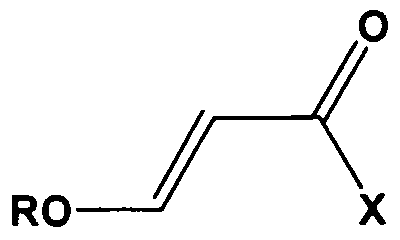
Another method for preparing a compound of formula IV comprises (a) reacting a vinylogous ester compound selected from the group consisting of
(i) 4-alkoxy-l,l,l-trihalo-3-buten-2-one, preferably 4-ethoxy- 1,1 ,1 - trifluoro-3-buten-2-one; and
(ii) a compound of the formula:
wherein X is trihalomethyl, trihalomethyl(Cι-C
6)alkyl, gem-difluoro(Cι- C
6)alkyl or perfluoro(C
2-C
6)alkyl, and R is alkyl, preferably (Cι-C
6)alkyl, with a heteroaryl compound having an unsubstituted position on the ring subject to electrophilic aromatic substitution; and (b) isolating a compound according formula IV from the reaction products, wherein X is as defined above.
One preferred heteroaryl compound as a reactant in step (a) is indole that is unsubstituted at the 3 -position
Methods are also provided for preparing compounds according to formula I.
One method of preparing a compound of formula I comprises:
(a) reacting the formula IV intermediate, wherein X and Z are defined as above, with 4-sulfamyl phenyl hydrazine or a salt thereof;
(b) isolating from the reaction products a racemic mixture of a compound according to formula I containing the (+)- and (-)-enantiomer thereof;
(c) resolving the racemic mixture of step (b) to yield the separate (+)- and (-)-enantiomers; and
(d) isolating the (-)-enantiomer of said formula I compound substantially free of the corresponding (+)-enantiomer. A method is also provided for preparing compounds of formula I wherein
R5 is selected from the group consisting of (ii) and (iii) below;
O O
-N C R6 N C R6 -M+
H
(ii) (iii) said method comprising:
(a) reacting the formula IV intermediate, wherein X and Z are defined as above, with a 4-sulfamyl phenyl hydrazine of the formula II:
or a salt thereof, wherein R
5 is as defined above;
(b) isolating from the reaction products a racemic mixture of a compound according to formula I containing the (+)- and (-)-enantiomer thereof;
(c) resolving the racemic mixture of step (b) to yield a compound comprising the (-)-enantiomer of said formula I compound substantially free of the corresponding (+)-enantiomer;
(d) reacting the (-)-enantiomer isolated in step (c) with a base to yield an enantiomerically pure sulfamyl anion;
(e) reacting the enantiomerically pure sulfamyl anion generated in step (d) with an electrophilic acyl compound; and
(f) isolating from the reaction products of step (e) the (-)-enantiomer of a compound according to formula I, wherein R5 is selected from the group consisting of (ii) and (iii) below:
O
-N- -c II -N- -C R6 M+ H
(ii) (iϋ)
The invention is also directed to a pharmaceutical composition of one or more compounds of formula I in combination with a pharmaceutically effective carrier.
According to yet another embodiment of the invention, a method for treating a cyclooxygenase-mediated disease is provided comprising administering an effective amount of a compound according to formula I to an animal in need of
such treatment. The expression "subject" includes animals, and is inclusive of human beings.
The invention is also directed to a use of a compound according to formula
I, or a pharmaceutically acceptable salt thereof, in medicine. In particular, the invention is directed to the use of a compound according to formula I, or a pharmaceutically acceptable salt thereof, for the preparation of a medicament for treating a cyclooxygenase-mediated disorder.
Description of the Figures Fig. 1 is a plot of data generated in an enzyme inhibition assay comparing the COX-2 inhibition activity of racemic l-(4-sulfamylphenyl)-3-trifluoro-methyl- 5-(3-indolyl)-2-pyrazoline, (-)-l-(4-sulfamylphenyl)-3-trifluoromethyl-5-(3- indolyl)-2-pyrazoline, (+)-l-(4-sulfamylphenyl)-3-trifluoromethyl-5-(3-indolyl)-2- pyrazoline, and celecoxib. Fig. 2 is a plot of data generated in an enzyme inhibition assay comparing the COX-2 inhibition activity of (+)-l-(4-sulfamylphenyl)-3-trifluoro-methyl-5-(7- chloroindol-3-yl)-2-pyrazoline to (-)- 1 -(4-sulfamylphenyl)-3-trifluoromethyl-5-(7- chloroindol-3-yl)-2-pyrazoline.
Detailed Description of the Invention
The compounds of formula I are potent inhibitors of COX-2. The dose- dependent COX-2 inhibitory activity of compounds of the invention was demonstrated by in vitro enzyme inhibition assay.
The compounds of the invention may be prepared via an intermediate of formula IV:
wherein X and Z are defined as above.
The compounds of formula I are prepared by reacting the intermediate of formula IV with sulfamyl phenyl hydrazine hydrochloride, followed by resolution of the racemic reaction product to isolate the (-)-enantiomer substantially free of the corresponding (+)-enantiomer.
According to another embodiment of the invention a compound according to formula I, wherein R5 is NH2, may be further reacted with an anhydride of the formula:
or an acylating compound of the formula:
wherein R
6 is (Ci-C
7)hydrocarbyl, and L is a leaving group, preferably a halogen selected from fluorine, chlorine and bromine, to form the corresponding sulfonamide, which is also a compound of formula I:
H and R
6 is defined as above. The corresponding alkali metal salt, that is, a compound where R is:
-N C R
6 M
+ and M is Na, K or Li, may be formed by reacting the above sulfonamide with an alkali metal hydride, or an alkali metal hydroxide, preferably selected from the group consisting of NaOH, KOH or LiOH.
The following General Procedures refer to the preparation of racemic mixtures of l-(4-sulfamylaryl)-3-substituted-5-heteroaryl-2-pyrazolines or intermediates thereof. The racemic products are subsequently separated using known methods of resolution to produce the (-)-l-(4-sulfamylaryl)-3-substituted-5- heteroaryl-2-pyrazolines of formula I.
General Procedure 1A: Synthesis of intermediates of formula IV: iyα/ιs-l-trihalomethyl-3-heteroaryl-2-propen-l-one, /rø«.s-l-trihalomethyl(Cι-C6)aIkyI-3-heteroaryI-2-propen-l-one, j'rα/ιs-l-gem-difIuoro(Cι-C6)alkyl-3-heteroaryl-2-propen-l-one and /rø/ιs-l-perfluoro(C2-C6)alkyl)-3-heteroaryl-2-propen-l-one .
To a solution of 10% sodium hydroxide in ethanol (25 mL), a ketone of the formula:
H3C— wherein X is trihalomethyl, trihalomethyl(Cι-C6)alkyl, gem-difluoro(Cι-C6)alkyl or perfluoro(C2-C6)alkyl (20mmol), is added and stirred at 15-20°C. To this solution is added a solution of an appropriate heteroaryl aldehyde (lOmmol):
where Z is defined as above. The resulting mixture is stirred vigorously for 4 hours. The temperature of the reaction is maintained at 15-20°C throughout the reaction. The solution is then poured into ice water and acidified with concentrated
hydrochloric acid. The resulting separated trans- 1 -(alkyl or optionally substituted aryl)-3-heteroaryl-2-propen-l-one of formula IV (X = trihalomethyl, trihalomethyl(Cι-C
6)alkyl, gem-difIuoro(Cι-C
6)alkyl, or perfluoro(C
2-C
6)alkyl) is extracted with ether and dried over anhydrous MgSO
4. Evaporation of the dried ethereal layer yields the tra - 1 -(trihalomethyl, trihalomethyl(Cι-C
6)alkyl, gem- difluoro(Cι-C )alkyl or perfluoro(C
2-C
6)alkyl)-3-heteroaryl-2-propen-l-one, which is purified by distillation or recrystallization.
General Procedure IB: Synthesis of frαws-l,l>l-trifluoro-4-heteroaryl-3- buten-2-one intermediate 1,1,1-Trifluoroacetone (lOmmol) is added to a solution of 10% sodium hydroxide in ethanol (25mL), and the resulting mixture is stirred at 15-20°C. To this a solution of the appropriate heteroaryl aldehyde (lOmmol):
wherein Z is defined as above, is added and stirred vigorously for 4 hrs. The temperature of the reaction is maintained at 15-20° C throughout the reaction. The solution is then poured into ice water and acidified with concentrated hydrochloric acid. The resulting separated trø/7s-l,l,l-trifluoro-4-heteroaryl-3-buten-2-one of formula IV (X = CF
3) is extracted with ether and dried over anhydrous MgSO
4. Evaporation of the dried ethereal layer yields the trans- 1,1,1 -trifluoro-4-heteroaryl- 3-buten-2-one which may subsequently be purified by recrystallization or preparative chromatography.
General Procedure 1C: Alternative synthesis of //•a«s-l,1 -trifluoro-4- heteroaryl-3-buten-2-one intermediate Diethyl methylphosphonate (5mmol) is added to a cooled solution of
(-70° C) lithium diisopropylamide (LDA) (lOmmol). The resulting mixture is stirred for 30 minutes at -70° C. N-phenyltrifluoroacetimidoyl chloride (5mmol) is
gradually added and stirring is continued at -70° C for 1 hour. The appropriate heteroaryl aldehyde (5mmol):
where Z is defined as above, is added dropwise over 10 minutes. The resulting mixture is warmed to room temperature over 2 hours and then stirred overnight. Then, dilute hydrochloric acid (20 mL) is added and stirred at room temperature for 4 hours. The solution is extracted with diethyl ether (3 x 20 mL) and washed successively with 5% sodium bicarbonate and brine until the pH of the solution is 6. The ethereal layer is separated, dried over anhydrous sodium sulfate and concentrated under reduced pressure to yield crude trans- 1,1,1 -trifluoromethyl -4- heteroaryl-3-buten-2-one. The product may be purified either by column chromatography or by recrystallization.
The appropriate 1,1,1-trihaloacetone can be substituted for 1,1,1- trifluoroacetone in General Procedure 1 to provide other trans- 1,1,1 -trihalomethyl- 4-heteroaryl-3-buten-2-one intermediates. Similarly, other N- phenyltrihaloacetimidoyl chlorides can be substituted for N- phenyltrifluoroacetimidoyl chloride in General Procedure 1A to produce other trans- 1,1,1 -trihalomethyl-4-heteroaryl-3-buten-2-one intermediates.
General Procedure ID: Another alternative synthesis of fra/w-l,l>l-trifluoro- 4-heteroaryl-3-buten-2-one intermediate
A solution is prepared containing a substituted or unsubstituted heteroaryl compound (10 mmol) and 4-ethoxy-l,l,l-trifluoro-3-buten-2-one (Sigma- Aldrich) (10 mmol) in dichloromethane (10 mL), wherein the heteroaryl compound has an unsubstituted position subject to electrophilic aromatic substitution. Zinc chloride (0.015 g, 1.5 mol%) is added to the solution. The reaction mixture is stirred for 3 h at 22° C. A precipitate is formed. The precipitate is separated by filtration, washed with dichloromethane(2 x 15 mL) and dried.
General Procedure 2A: Synthesis of: racemic l-(4-sulfamylaryl)-3-trihalomethyl-5-heteroaryl-2-pyrazoline; racemic l-(4-sulfamylaryl)-trihaIomethyl(Cι-C6)alkyl-5-heteroaryl-2- pyrazoline; racemic l-(4-sulfamylaryl)-gem-difluoro(Cι-C6)alkyl-5-heteroaryl-2- pyrazoline; or racemic l-(4-sulfamylaryl)-perfluoro(C2-C6)alkyl)-5-heteroaryl-2-pyrazoline. To a solution of a trans- 1 -trihalomethyl, trihalomethyl(Cι-C6)alkyl, gem- difluoro(C ι -C )alkyl or perfluoro(C2-C6)alkyl)-3 -heteroaryl-2-propen- 1 -one (5 mmol) of formula IV:
in absolute methanol is added 4-sulfamyl phenyl hydrazine hydrochloride (6 mmol). The resulting mixture is refluxed with stirring overnight. The solution is cooled and poured onto crushed ice and solid material is separated by filtration. Recrystallization of the solid material with appropriate solvent yields the pure racemic l-(4-sulfamylaryl)-3-trihalomethyl, trihalomethyl(Cι-C )alkyl, gem- difluoro(Cι-C
6)alkyl or perfluoro(C
2-C
6)alkyl)-5-heteroaryl-2-pyrazoline, wherein X is defined as in General Procedure IA.
General Procedure 2B: Preparation of racemic l-(4-sulfamylaryl)-3- trifluoromethyl-5-heteroaryl-2-pyrazoline (a compound of formula la).
To a solution of a trø/7£-l,l,l-trifluoro-4-heteroaryl-3-butene-2-one (5mmol) of formula IV (X = CF3) in absolute methanol is added 4-sulfamyl phenyl hydrazine hydrochloride (6 mmol). The resulting mixture is refluxed with stirring overnight. The solution is cooled and poured onto crushed ice and solid material is separated by filtration. The crude racemic l-(4-sulfamylaryl)-3-trifluoromethyl-5- heteroaryl-2-pyrazoline may be purified by recrystallization or by preparative chromatography.
General Procedure 3A: Synthesis of acyl sulfonamide derivatives of racemic 1- (4-sulfamylaryl)-3-trifluoromethyl-5-heteroaryl-2-pyrazoline.
To a solution of a l-(4-sulfamylphenyl)-3-trifluoromethyl-5-heteroaryl-2- pyrazoline (10 mmol) in tetrahydrofuran (40 mL), acetic anhydride (20 mmol), 4-dimethylaminopyridine (DMAP) (10 mmol) and triethylamine (TEA)(11 mmol) is added and stirred for 16 hours at room temperature. The reaction mixture is then poured into water (100 mL) and extracted with ethyl acetate. The ethyl acetate layer is separated, washed successively with water and brine, and then dried over anhydrous sodium sulfate. The dried organic layer is filtered and evaporated under reduced pressure to yield crude racemic N-[4-(5- heteroaryl-3-trifluromethyl-pyrazolin- 1 -yl)phenylsulfonyl] -acetamide.
Recrystallization from a mixed solvent yields a pure racemic mixture of (+) and (-) compounds. Acyl sulfonamide derivatives of racemic l-(4-sulfamylaryl)-3- trifluoromethyl-5-heteroaryl-2-pyrazoline include, for example, racemic N-[4-(5- heteroaryl-3-trifluoromethylpyrazolin-l-yl)phenylsulfonyl]-acetamide-N-({4-[5-(3- indolyl)-3-(trifluoromethyl)-2-pyrazolinyl]phenyl}sulfonyl)acetamide.
Other sulfonamides may be prepared according to General Procedure 3A by substituting an anhydride of the formula: o o
R6 U O U R 6
where R6 is (Cι-C7)hydrocarbyl, for acetic anhydride in General Procedure 3 A to yield racemates of compounds of the formula VI, wherein X is as defined above:
General Procedure 3B: Synthesis of acyl sulfonamide derivatives of racemic 1- (4-sulfamylaryl)-3-trifluoromethyl-5-heteroaryl-2-pyrazoline as alkali metal salts.
To a solution of racemic N-[4-(5-heteroaryl-3-trifluoromethyl-pyrazolin-l- yl) phenylsulfonyl]acetamide (5 mmol) in ethanol (100 mL), sodium hydroxide (5 mmol in 20 mL of water) is added and stirred for 5 hours. The solution is then concentrated in vacuo to give a solid hydrated sodium salt of racemic l-(4- sulfamylphenyl)-3-trifluoromethyl-5-heteroaryl-2-pyrazoline. Alkali metal salts of acyl sulfonamide derivatives of racemic l-(4-sulfamylaryl)-3-trifluoromethyl-5- heteroaryl-2-pyrazoline include, for example, racemic N-[4-(5-heteroaryl-3- trifluromethylpyrazolin- 1 -yl)phenylsulfonyl]-acetamide sodium salt.
Salts of other sulfonamides may be prepared in the same manner by substituting the appropriate amide according to formula VI as the starting compound. Other salts may be prepared in the same manner by substituting other alkali metal hydroxides for sodium hydroxide.
General Procedure 3C: Synthesis of acyl sulfonamide derivatives of: racemic l-(4-sulfamylaryl)-3-trihalomethyl-5-heteroaryl-2-pyrazoline, racemic l-(4-sulfamylaryl)-3-trihaIomethyl(Cι-C6)alkyl-5-heteroaryl-2- pyrazoline,
racemic l-(4-sulfamyIaryl)-3-gem-difluoro(Cι-C6)alkyl-5-heteroaryl-2- pyrazoline and racemic l-(4-sulfamylaryl)-3-perfluoro(C2-C6)alkyl)-5-heteroaryl-2- pyrazoline. Racemic acylsulfonamides according to formula VI are prepared from the above compounds (X = trihalomethyl, trihalomethyl(Cι-C6)alkyl, gem- difluoro(Cι-C6)alkyl or perfluoro(C2-C6)alkyl) according to General Procedure 3 A, substituting the appropriate compound listed above for racemic l-(4- sulfamylphenyl)-3-trifluoro-methyl-5-heteroaryl-2-pyrazoline as the starting material.
In similar fashion, additional acylsulfonamide derivatives (X = trihalomethyl, trihalomethyl(Ci-C6)alkyl, gem-difluoro(Cι-C6)alkyl or perfluoro(C2-C6)alkyl), may be prepared by substituting the appropriate anhydride for acetic anhydride in General Procedure 3A. These compounds may be converted to salts according to General Procedure 3B.
General Procedure 4A. Resolution of racemic l-(4-sulfamylaryl)-3- substituted-5-heteroaryl-2-pyrazolines to produce the (-)-enantiomers thereof.
The synthetic procedures shown above result in racemic 1 -(4-sulfamylaryl)- 3-substituted-5-heteroaryl-2-pyrazolines. The racemate must be resolved in order to isolate the desired (-)-enantiomer. Enantiomeric resolution may be achieved in several ways.
The racemate may be separated by differential adsorption on a chiral stationary phase of a chromatography column, particularly a preparative HPLC column. Chiral HPLC columns are commercially available with a variety of stationary phases to suit a broad range of applications.
According to one such method utilizing a chiral HPLC column, a racemic mixture of a compound having the structure of formula I, or chiral intermediate thereof, is separated into 99% wt./wt. pure optical isomers by HPLC using a suitable chiral column, such as a DAICEL CHIRALPAK AD column (Daicel
Chemical Industries, Ltd., Tokyo, Japan). This column contains a packing of
amylose tris(3,5-dimethylphenyι) carbamate coated on a lOμm silica-gel substrate. The column has a size of 250 x 4.6mm (L x I.D.). The column is operated according to the manufacturer's instructions. A flow rate should be maintained that will result in column pressures of less than 430 psi (30 kg/cm2). A typical flow rate is 1.0 mL/min. The operating temperature range is 0°C - 40°C. The maximum operating pressure is 1200 psi. Suitable mobile phase systems include hexane/2-propanol( 100/0 to 0/100 v/v) and hexane/ethanol( 100/0 to 0/100 v/v). Typical hexane/ethanol mobile phases include hexane/ethanol (90/10 v/v) and hexane/ethanol (80/20 v/v). Suitable mobile phase modifiers include TEA for a basic sample, and trifluoroacetic acid (TFA) for an acidic sample.
According to another such method utilizing a chiral HPLC column, a racemic mixture of a compound having the structure of formula I, or chiral intermediate thereof, is separated into 99% wt./wt. pure optical isomers by HPLC using a suitable chiral column, such as a DAICEL CHIRALPAK AD-H column (Daicel Chemical Industries, Ltd., Tokyo, Japan), having a size of 25 x 3.0 cm (L x I.D.) eluted with supercritical carbon dioxide in methanol. The column is operated according to the manufacturer's instructions. A flow rate should be maintained that will result in column pressures of about 120 bar. A typical flow rate is 140 mL/min. The operating temperature range is 0°C - 40°C.
General Procedure 4B. Preparation of acyl sulfonamide derivatives of (-)-l-(4-sulfamylaryl)-3-substituted-5-heteroaryl-2-pyrazolines and alkali metal salts thereof:
(-)-l-(4-Sulfamylaryl)-3-substituted-5-heteroaryl-2-pyrazolines prepared via the resolution protocols described in General Procedure 4A above may subsequently be derivatized as in General Procedures 3A, 3B and 3C above to generate the (-)-enantiomer of acyl sulfonamide derivatives and alkali metal salts thereof. Acyl sulfonamide derivatives of (-)-l-(4-sulfamylaryl)-3-substituted-5- heteroaryl-2-pyrazolines include, for example, (-)-N-[4-(5-(3-indolyl)-3-trifluoro- methylpyrazolin-1-yl) phenylsulfonyljacetamide.
The compounds of the invention are preferably characterized by a selectivity ratio for COX-2 inhibition over COX-1 inhibition of at least about 30, more preferably at least about 50, most preferably at least about 100. COX inhibition may be determined in vitro by enzyme assays well-known to those skilled in the art, such as the enzyme assay method described later herein.
The compounds of the present invention may take the form or pharmaceutically acceptable salts. The term "pharmaceutically acceptable salts", embraces salts commonly used to form alkali metal salts and to form addition salts of free acids or free bases. Where reference is made to "compound of formula I" or a "compound of the invention", it is understood that pharmaceutically acceptable salts are also included. The nature of the salt is not critical, provided that it is pharmaceutically-acceptable. Suitable pharmaceutically acceptable acid addition salts may be prepared from an inorganic acid or from an organic acid. Examples of such inorganic acids are hydrochloric, hydrobromic, hydroiodic, nitric, carbonic, sulfuric and phosphoric acid. Appropriate organic acids may be selected from aliphatic, cycloaliphatic, aromatic, araliphatic, heterocyclic, carboxylic and sulfonic classes of organic acids, example of which are formic, acetic, propionic, succinic, glycolic, gluconic, lactic, malic, tartaric, citric, ascorbic, glucuronic, maleic, fumaric, pyruvic, aspartic, glutamic, benzoic, anthranilic, mesylic, salicyclic, salicyclic, 4-hydroxybenzoic, phenyl acetic, mandelic, embonic (pamoic), methanesulfonic, ethanesulfonic, benzenesulfonic, pantothenic, 2- hydroxyethanesulfonic, toluenesulfonic, sulfanilic, cyclohexylaminosulfonic, stearic, algenic, beta-hydroxybutyric, salicyclic, galactaric and galacturonic acid. Suitable pharmaceutically acceptable base addition salts of compounds of formula I include metallic salts made from calcium, magnesium, potassium, sodium and zinc or organic salts made from N.N'-dibenzylethylenediamine, chloroprocaine, choline, diethanolamine, ethylenediamine, meglumine (N-methylglucamine) and procaine. All of these salts may be prepared by conventional means from the corresponding compound of formula I by reacting, for example, the appropriate acid or base with the compound of formula I.
The compounds of the present invention may be administered in the form of a pharmaceutical composition, in combination with a pharmaceutically acceptable carrier. The active ingredient in such formulations may comprise from 0.1 to 99.99 weight percent. By "pharmaceutically acceptable carrier" is meant any carrier, diluent or excipient which is compatible with the other ingredients of the formulation and to deleterious to the recipient.
The compounds of the invention may be administered to individuals (animals, most particularly mammals including humans) afflicted with any disorder characterized by undesirable prostaglandin production resulting from cyclooxygenase activity, particularly COX-2 activity ("cyclooxygenase-mediated disorder"). In particular, the compounds of the invention are believed useful in treating inflammation and inflammation-related disorders, by administering to a subject having or susceptible to such inflammation or inflammation-related disorder and effective amount of a compound according to formula I. Inflammation is associated with a variety of disease conditions. For a list of such disease conditions treatable by cyclooxygenase inhibitors, and COX-2 inhibitors in particular, see U.S. Patents 5,604,253 and 5,908,852, the entire disclosures of which are incorporated herein by reference. Such conditions include, for example, arthritis, including but not limited to rheumatoid arthritis, spondyloarthropathies, gouty arthritis, osteoarthritis, systemic lupus erythematosus and juvenile arthritis. Such conditions further include rheumatic fever, symptoms associated with influenza or other viral infections, common cold, low back and neck pain, dysmenorrhea, headache, toothache, sprains and strains, myositis, neuralgia, synovitis, gout and ankylosing spondylitis, bursitis, and following surgical and dental procedures. The compounds of the invention are believed useful as analgesics for treating or alleviating all forms of pain. The compounds are believed useful in the treatment of other disorders including asthma, bronchitis, tendinitis, bursitis; skin related conditions such as psoriasis, eczema, burns and dermatitis; gastrointestinal conditions such as inflammatory bowel disease, Crohn's disease, gastritis, irritable bowel syndrome and ulcerative colitis and for the prevention of colorectal cancer; the treatment of inflammation in such diseases
as vascular diseases, migraine headaches, periarteritis nodosa, thyroiditis, aplastic anemia, Hodgkin's disease, sclerodoma, type I diabetes, myasthenia gravis, sarcoidosis, nephrotic syndrome, Behcet's syndrome, polymyositis, gingivitis, hypersensitivity, conjunctivitis, swelling occurring after injury, myocardial ischemia, and the like. The compounds of the invention are believed useful as antipyretics for the treatment of fever.
In addition, compounds of the invention may inhibit cellular neoplastic transformations and metastatic tumor growth and hence can be used in the treatment of cancer. In particular, the present invention provides a method for treating or preventing a neoplasia that produces a prostaglandin in a subject in need of such treatment or prevention, the method comprises treating the subject with a therapeutically effective amount of a compound of formula I. The term "neoplasia" includes neoplasia that produce prostaglandins or express a cyclooxygenase, including both benign and cancerous tumors, growths and polyps. Neoplasias believed treatable with cyclooxygenase inhibitors are discussed in U. S. Pat. 5,972,986, the entire disclosure of which is incorporated herein by reference. The compounds may be used to inhibit the growth or an established neoplasm, i.e., to induce regression, or to prevent or delay the onset of the neoplasm.
According to U.S. Pat. 5,972,986, neoplasias that produce prostaglandins, and which are therefore believed treatable with the compounds of the invention, include brain cancer, bone cancer, epithelial cell-derived neoplasia (epithelial carcinoma) such as basal cell carcinoma, adenocarcinoma, gastrointestinal cancer such as lip cancer, mouth cancer, esophageal cancer, small bowel cancer and stomach cancer, colon cancer, liver cancer, bladder cancer, pancreas cancer, ovary cancer, cervical cancer, lung cancer, breast cancer and skin cancer, such as squamous cell and basal cell cancers, prostate cancer, renal cell carcinoma, and other known cancers that effect epithelial cells throughout the body.
The compounds of the invention may also be useful in the treatment of angiogenesis-mediated disorders. Thus, a method for treating, inhibiting or delaying the onset of an angiogenesis-mediated disorder in a subject is provided comprising administering to a subject in need of such treatment an effective
amount of a compound according to the present invention. Angiogenesis-mediated disorders which may be treatable with cyclooxygenase inhibitors are discussed in U. S. Pat. 6,025,353, the entire disclosure of which is incorporated herein by reference. According to U. S. Pat. 6,025,353, such disorders include, for example, metastasis, corneal graft rejection, ocular neovascularization, retinal neovascularization, diabetic retinopathy, retrolental fibroplasia, neovascular glaucoma, gastric ulcer, infantile hemaginomas, angiofibroma of the nasopharynx, avascular necrosis of bone, and endometriosis.
The compounds of the invention may also be useful in the treatment of disorders of the central nervous system including, for example, Alzheimer's Disease (AD), presenile dementia, schizophrenia, amyotrophic lateral sclerosis, Parkinson's disease and Huntington's disease. Thus, a method for treating, inhibiting or delaying the onset of Alzheimer's Disease (AD), presenile dementia, Parkinson's disease or Huntington's disease in a subject is provided comprising administering to a subject in need of such treatment an effective amount of a compound according to the present invention. Recent findings suggest a relationship between the neuronal expression of COX-2 and cell cycle markers, which may be involved early in AD pathology. See, Hoozemans et al., J. Neuropathol. Exp. Neurol. 2002 Aug.;61(8):678-88; the entire disclosure of which is incorporated herein by reference. Data from a murine model of AD neuropathology indicates that COX-2 overexpression causes alteration of neuronal cell cycle, thus providing a rational basis for targeting neuronal COX-2 in therapeutic research aimed at slowing the clinical progression of AD. See, Xiang et al., Neurobiol. Aging 2002 May-Jun; 23(3): 327-34; the entire disclosure of which is incorporated herein by reference.
The compounds of the invention may also be useful in the treatment of other disorders of the central nervous system including, for example, cerebral ischemia and stroke. Thus, a method for treating, inhibiting or delaying the onset of cerebral ischemia and stroke in a subject is provided comprising administering to a subject in need of such treatment an effective amount of a compound according to the present invention. COX-2-deficient mice have been shown to
demonstrate a significant reduction in the brain injury produced by occlusion of the middle cerebral artery (MCA). Thus, COX-2 is involved in pathogenic events occurring in both the early and late stages of cerebral ischemia and may be a valuable therapeutic target for treatment of human stroke. See, Iadecola et al., Proc. Nail. Acad. Sci. USA, 2001, Jan. 30; 98(3): 1294-9; the entire disclosure of which is incorporated herein by reference. One recent study investigated the effect of a selective COX-2 inhibitor on infarct volume and neurologic deficits in mice with experimentally-induced cerebral ischemia. The results showed the beneficial effect of a selective COX-2 inhibitor on reduction of infarct volume and improvement of neurologic deficits more than 24 h after the injection regardless of the administration timing, i.e. before or after induction of cerebral ischemia. See, Sugimoto et al., Brain Res. 2003 Jan. 17; 960(1-2): 273-6; the entire disclosure of which is incorporated herein by reference.
The compound may be administered for therapeutic effect by any route, for example enteral (e.g., oral, rectal, intranasal, etc.) and parenteral administration. Parenteral administration includes, for example, intravenous, intramuscular, intraarterial, intraperitoneal, intravaginal, intravesical (e.g., into the bladder), intradermal, topical or subcutaneous administration. Also contemplated within the scope of the invention is the instillation of drug in the body of the patient in a controlled formulation, with systemic or local release of the drug to occur at a later time. For administration in the therapy of chronic disorders, the compound may optionally be localized in a depot for controlled or sustained release to the circulation, or controlled or sustained release to a local site such as for example the gastrointestinal tract or a portion thereof. The active agent may be formulated into dosage forms according to standard practices in the field of pharmaceutical preparations. See Alphonso Gennaro, ed., Remington 's Pharmaceutical Sciences, 18th Ed., (1990) Mack Publishing Co., Easton, PA. Suitable dosage forms may comprise, for example, tablets, capsules, solutions, parenteral solutions, troches, suppositories, or suspensions.
For parenteral administration, the active agent may be mixed with a suitable carrier or diluent such as water, an oil, saline solution, aqueous dextrose (glucose) and related sugar solutions, or a glycol such as propylene glycol or polyethylene glycol. Solutions for parenteral administration preferably contain a water soluble salt of the active agent. Stabilizing agents, antioxidizing agents and preservatives may also be added. Suitable antioxidizing agents include sulfite, ascorbic acid, citric acid and its salts, and sodium EDTA. Suitable preservatives include benzalkonium chloride, methyl- or propyl-paraben, and chlorbutanol.
For oral administration, the active agent may be combined with one or more solid inactive ingredients for the preparation of tablets, capsules, or other suitable oral dosage forms. For example, the active agent may be combined with carboxymethylcellulose calcium, magnesium stearate, mannitol and starch, and then formed into tablets by conventional tableting methods.
The specific dose of compound according to the invention to obtain therapeutic benefit will, of course, be determined by the particular circumstances of the individual patient including, the size, weight, age and sex of the patient, the nature and stage of the disease, the aggressiveness of the disease, and the route of administration. For example, a daily dosage of from about 0.01 to about 150 mg/kg/day may be utilized. Higher or lower doses are also contemplated. The compositions useful in the methods of the present invention may also be formulated so as to provide slow or controlled-release of the active ingredient therein. In general, a controlled-release preparation is a composition capable of releasing the active ingredient at the required rate to maintain constant pharmacological activity for a desirable period of time. Such dosage forms may provide a supply of a drug to the body during a predetermined period of time and thus maintain drug levels in the therapeutic range for longer periods of time than other non-controlled formulations.
For example, U.S. Patent No. 5,674,533 discloses controlled-release compositions in liquid dosage forms for the administration of moguisteine, a potent peripheral antitussive. U.S. Patent No. 5,059,595 describes the controlled-release of active agents by the use of a gastro-resistant tablet for the therapy of organic
mental disturbances. U.S. Patent No. 5, 591,767 discloses a liquid reservoir transdermal patch for the controlled administration of ketorolac, a non-steroidal anti-inflammatory agent with potent analgesic properties. U.S. Patent No. 5,120,548 discloses a controlled-release drug delivery device comprised of swellable polymers. U.S. Patent No. 5,073,543 discloses controlled-release formulations containing a trophic factor entrapped by a ganglioside-liposome vehicle. U.S. Patent No. 5,639,476 discloses a stable solid controlled-release formulation having a coating derived from an aqueous dispersion of a hydrophobic acrylic polymer. The entire disclosures of the patents listed in this paragraph are incorporated herein by reference.
Biodegradable microparticles may be used in the controlled-release formulations of this invention. For example, U.S. Patent No. 5,354,566 discloses a controlled-release powder that contains the active ingredient. U.S. Patent No. 5,733,566 describes the use of polymeric microparticles that release antiparasitic compositions. The entire disclosures of these patents are incorporated herein by reference.
The controlled-release of the active ingredient may be stimulated by various inducers, for example pH, temperature, enzymes, water, or other physiological conditions or compounds. Various mechanisms of drug release exist. For example, in one embodiment, the controlled-release component can swell and form porous openings large enough to release the active ingredient after administration to a patient. The term "controlled-release component" in the context of the present invention is defined herein as a compound or compounds, such as polymers, polymer matrices, gels, permeable membranes, liposomes and/or microspheres, that facilitate the controlled-release of the compound of formula I in the pharmaceutical composition. In another embodiment, the controlled-release component may be biodegradable, induced by exposure to the aqueous environment, pH, temperature, or enzymes in the body. In another embodiment, sol-gels may be used, wherein the active ingredient is incorporated into a sol-gel matrix that is a solid at room temperature. This matrix is implanted into a patient, preferably a mammal, having a body temperature high enough to induce gel
formation of the sol-gel matrix, thereby releasing the active ingredient into the patient.
The practice of the invention is illustrated by the following non-limiting examples.
EXAMPLES
Preparative Example 1: Racemic-l-(4-sulfamylphenyl)-3-trifluoromethyl-5- (3-indolyl)-2-pyrazoline:
A. Trans- l,l,l-trifluoro-4-(3-indolyl)-3-buten-2-one was prepared according to General Procedure ID from 4-ethoxy-l,l,l-trifluoro-3-butene-2-one and indole.
B. A solution of trans- 1,1,1 -trifluoro-4-(3-indolyl)-3-buten-2-one (5mmol) and 4-sulfamylphenyl hydrazine hydrochloride (6mmol) was subjected to General Procedure 3B. The title compound was obtained in 82% yield, m.p. 138-140°C; Elemental (CHN) analysis (C16Hι4SO2N4F3):
Preparative Example 2: Racemic-l-(4-sulfamylphenyl)-3-trifluoromethyl-5- (7-chloroindol-3-yl)-2-pyrazoline: A. 7 α«5-l,l,l-trifluoro-4-(7-chloroindol-3-yl)-3-buten-2-one was prepared according to General Procedure ID from 4-ethoxy- 1,1,1 -trifluoro-3- butene-2-one and 7-chloroindole.
B. The title compound was obtained, as in Preparative Example 1 by reaction of a solution of trans- 1,1,1 -trifluoro-4-(7-chloroindol-3-yl)-3-buten-2-one (5 mmol) and 4-sulfamylphenyl hydrazine hydrochloride (6 mmol) according to
General Procedure 3B.
Example 1 : (-)-l-(4-sulfamylphenyl)-3-trifluoromethyl-5-(3-indolyl)-2- pyrazoline.
The separation of racemic l-(4-sulfamylphenyl)-3-trifluoromethyl-5-(3- indolyl)-2-pyrazoline was performed on a semipreparative scale on a Gilson high throughput HPLC system using a ChiralPak AD column (250 x 4.6mm), eluted with ethanol/hexane (20/80) at a flow rate of 1 mL/min. The effluent was monitored by a UV detector at 254nm. The racemate was injected in 750 μL injections of approximately 30 mg/mL. The average peak purity of the desired (-)-enantiomer was 99.0%>. After collecting the resolved material, solvents were removed using a rotary evaporator and the product was dried under vacuum for forty-eight hours. As a result of the separation, 908 mg of the first eluting peak and 855.1 mg of the second eluting peak were collected. Optical rotations were measured for the two separated enantiomers on a Perkin-Elmer 341 polarimeter. The material corresponding to the first eluted peak gave an optical rotation of: α(D) = (-)94.69° (C = 1.30 mg/mL in methanol). The material corresponding to the second eluted peak gave an optical rotation of: α(D) = (+)89.6° (C = 1.25 mg/mL in methanol).
HPLC analysis of the resolved enantiomers (injection of lOμL of a 2mg/mL solution) showed the desired (-)-enantiomer as having a retention time of 16.91- 16.93 minutes, and the (+)-enantiomer as having a retention time of 24.53-24.73 minutes. The first eluted peak (the desired (-)-enantiomer) was shown by analytical HPLC (same conditions as the semipreparative HPLC) to have a purity of 99%. The peak results for the HPLC analysis of the (-)-enantiomer are listed in Table 2 below.
Example 2: (-)-l-(4-sulfamylphenyl)-3-trifluoromethyl-5-(7-chloroindol-3-yl)- 2-pyrazoline.
The separation of racemic l-(4-sulfamylphenyl)-3-trifluoromethyl-5-(7- chloroindol-3-yl)-2-pyrazoline was performed using a ChiralPak AD-H column (25 x 3.0 cm), eluted with methanol/carbon dioxide (40/60) at a flow rate of 140 g/min at a temperature of 25° C and a pressure of 120 bar. The effluent was monitored by a UV detector at 300nm. The racemate was injected in 4 μL injections of approximately 40 mg/mL. As a result of the separation, 0.42 g (85% recovery, >99% e.e.) of the first eluting peak and 0.42 g (85% recovery, >99% e.e.) of the second eluting peak were collected. Optical rotations were measured for the two separated enantiomers on a Perkin-Elmer 341 polarimeter. The material corresponding to the first eluted peak gave an optical rotation of: α(D) = (-)70.769° (C = 0.26 mg/mL in methanol). The material corresponding to the second eluted peak gave an optical rotation of: α(D) = (+)70.816° (C = 0.49 mg/mL in methanol).
Example 3: In Vitro Cyclooxygenase Enzyme Inhibition Assay
A. (-Vl-(4-Sulfamylphenvπ-3-trifluoromethyl-5-(3-indolvπ-2-pyrazoline The dose-dependent COX-2 inhibitory activity of (-)-l-(4-sulfamylphenyl)- 3-trifluoromethyl-5-(3-indolyl)-2-pyrazoline was compared to the activity of the corresponding (+)-enantiomer, the racemic mixture of the same compound, and the COX-2 inhibitor celecoxib.
The assay monitored the conversion of arachidonic acid into prostaglandin E2 using a commercially available enzyme immunoassay (EIA) kit (Cayman Chemical, MI) according to the manufacturer's protocol. Briefly, purified COX-2 (10 units) was taken in a volume of 950 μl of reaction buffer containing 0.1M Tris- HCL (pH 7.4), lOmM EDTA, lmM reduced glutathione, 0.5mM phenol, and l μM hematin. The inhibitor was dissolved in dimethyl sulfoxide (DMSO). Different concentrations of inhibitor (0.00 lμM to lOOμM) were prepared in the dilution buffer provided by the manufacturer. The inhibitors were pre-incubated with the reaction mixture containing COX-2 but lacking the substrate for 2 minutes. The
reaction was initiated by the addition of 10 μl of arachidonic acid (final concentration: 20μM) dissolved in ethanol. After 2 minutes, the reaction was terminated by the addition of 50 μl of 1M HC1, which was followed by the addition of 100 μl of saturated stannous chloride solution. Inhibition was calculated as the percentage of cycloxygenase activity compared to the total activity of 1 unit of COX-2.
The results of the enzyme inhibition assay are presented in Figure 1. Racemic-l-(4-sulfamylphenyl)-3-trifluoromethyl-5-(3-indolyl)-2-pyrazoline demonstrated an IC50 in COX-2 of 1.4μM. The (-)-enantiomer demonstrated an IC5o of 0.85μM. The corresponding (+)-enantiomer demonstrated an IC50 of 12.5μM. Celecoxib demonstrated an ICso of 2.5μM. Thus, the (-)-enantiomer is shown to be predominantly responsible for the COX-2 inhibition activity of the racemic-l-(4-sulfamylphenyl)-3-trifluoromethyl-5-(3-indolyl)-2-pyrazoline.
B. (- -l-(4-SulfamylDhenvn-3-trifluoromethyl-5-(7-chloroindol-3-vn-2- pyrazoline.
The dose-dependent COX-2 inhibitory activity of (-)-l-(4-sulfamylphenyl)- 3-trifluoromethyl-5-(7-chloroindol-3-yl)-2-pyrazoline was compared to the activity of the corresponding (+)-enantiomer. The assay was performed according to the same protocol employed in Example 3A above.
The results of the enzyme inhibition assay are presented in Figure 2. The (-)-l-(4-sulfamylphenyl)-3-trifluoromethyl-5-(7-chloroindol-3-yl)-2-pyrazoline demonstrated an IC50 in COX-2 of 1.2 μM. The corresponding (-i-)-enantiomer was inactive in the assay. Thus, the (-)-enantiomer is shown to exhibit COX-2 inhibition activity while the corresponding (+)-enantiomer of l-(4- sulfamylphenyl)-3-trifluoromethyl-5-(7-chloroindol-3-yl)-2-pyrazoline is inactive under the conditions of the assay.
Example 4: Carrageenan Rat Paw Edema Model Groups of 6 male Sprague-Dawley (SD) rats (Zivic Miller; 180-200 g) were fasted for 16-18 hours before the oral administration of either vehicle (0.5%
carboxymethylcellulose; 0.40 mL/200 g) or test compound (20 mg/kg). One hour later, the volume of the right hindpaw (V0) was measured by a water displacement plethysometer (Ugo Basile). Each rat then received a subplantar injection of carrageenan (Viscarin, FMC Corporation) (0.10 mL of a 1% suspension in saline) into the right hindpaw. Three hours later, the paw volume (V3) was measured again, and the volume increase was calculated. The increase in paw volume was compared with that in the vehicle control group. The percent inhibition of paw volume increase was calculated according to the formula:
[1 - V3 (drug) - V0 (drug)]
% Inhibition = 77 -; . 7 — - * 1 0
[V3 (control) - VQ (control)
In the control group, the paw volume increased by 1.06 ± 0.1 lmL during the three hours after injection with carrageenan. The inhibition of carrageenan mediated edema is shown in Table 3 below.
Table 3:
Thus, the Rat Paw Edema model shows that the (-)-enantiomer of l-(4- sulfamylphenyl)-3-trifluoromethyl-5-(3-indolyl)-2-pyrazoline is substantially more active than the corresponding (+)-enantiomer at reducing an inflammatory response to carrageenan, a substance known to elicit a strong inflammatory response. All references cited herein are incorporated herein by reference.
The present invention may be embodied in other specific forms without departing from the spirit or essential attributes thereof and, accordingly, reference should be made to the appended claims, rather than to the foregoing specification, as indication the scope of the invention.