THERAPEUTIC GUANIDINES
FIELD OF THE INVENTION
[0001] The present invention is directed, in part, to guanidine derivatives and their use in the treatment of viral and other infections.
BACKGROUND OF THE INVENTION
[0002] The incidence of hepatitis C virus (HCN) infection is becoming an increasingly severe public health concern with up to 15% individuals infected worldwide. While primary infection with HCN is often asymptomatic, most HCN infections progress to a chronic state that can persist for decades. Of those with chronic HCN infections, it is believed that about up to half will eventually develop chronic liver disease (e.g. cirrhosis) and 20-30% of these cases will lead to liver failure or liver cancer. As the current HCN- infected population ages, the morbidity and mortality associated with HCN are expected to triple.
[0003] An approved treatment for HCN infection uses interferon (IFΝ) which indirectly effects HCN infection by stimulating the host antiviral response. IFΝ treatment is largely ineffective, however, as a sustained antiviral response is produced in less than 30%) of treated patients. Further, IFΝ treatment induces an array of side effects of varying severity in upwards of 90% of patients (eg: acute pancreatitis, depression, retinopathy, thyroiditis). Therapy with a combination of IFΝ and ribavirin has provided a slightly higher sustained response rate, but has not alleviated the IFΝ-induced side effects. [0004] HCN translation is believed to be mediated by an internal ribosome entry site (IRES) located within the 5' non-translated region. IRES elements were first reported in picornaviral mRΝAs which are naturally uncapped but nonetheless efficiently translated (Jang et al, J. Virol, 1988, 62, 2636). Recent studies have revealed that the HCN IRES recruits the cellular translation machinery in a distinct manner compared with cellular mRΝA strategies which is generally mediated by a "cap" at the 5' end of mRΝA upstream of the coding sequence. Picornaviruses, rhinovirus, HCN and others have been shown to possess an IRES which mediates translation in the absence of the cap structure at the 5' end of the messenger RΝA. This IRES region is typically at least 450 nucleotides long when it occurs in viruses and possesses, at its 3' end, a conserved UUUC motif followed by a polypyrimidine tract, a G-poor spacer and an AUG triplet. Agol et al, Cell, 1992, 68,
119. The IRES is located within the 5' untranslated (5* UTR) region, but downstream from the cap.
[0005] Generally, the IRES is difficult to identify by sequence homology. Known
IRES have been identified and defined functionally (Mountford et al, TIG, 1995, 77(5), 179). It is believed that the conformation of the IRES sequence enables the binding on the ribosome. RNA secondary structure appears to play an important role in viral IRES- mediated translation. For example, maintenance of a phylogenetically conserved stem- loop structure was found to be important for the ability of the HCN IRES to mediate translation (Honda, et al., J. Virol, 1999, 73, 1165).
[0006] It has been hypothesized that interference with IRES can block translation and potentially viral replication. Antisense molecules and catalytic enzymes have been studied as HCN translation inhibitors that interfere with IRES function (Jubin, Curr Opin Mol Ther., 2001, 3(3), 278).
[0007] While small molecule inhibitors of HCN translation are largely unknown, derivatives of guanidine have been reported as potential antiviral therapeutics. For example, Geluk et al, J. Med. Chem., 1969, 12, 712 report adamantyl disubstituted guanidines as possible antiviral agents and Eslager, et al., J. Med. Chem., 1974, 17, 75 report antimalarial guanidines. Guanidine derivatives as therapeutics are also reported in U.S. Pat. No. 3,270,054; 4,051,256; 4721785, 4743294, 4,772,609; 4797484, 4,851,423; 4,851,441, 4880932,; and 6,156,758, as well as EP 806205 and WO 90/04390. [0008] Other guanidine compounds are reported in the literature: HU 59567; U.S.
Pat. No. 4602938; Shuto et al., Agricultural and Biological Chemistry, 1979, 43, 2245; Shuto et al, Agricultural and Biological Chemistry, 1979, 43, 111; Shuto et al., Agricultural and Biological Chemistry, 1979, 43, 861; Shuto et al., Journal of the Faculty of Agriculture, Kyushu University, 1979, 23, 125; Paul et al., Indian Journal of Chemistry, Section B: Organic Chemistry Including Medicinal Chemistry, 1976, 14B, 887; Maekawa et al., Journal of the Faculty of Agriculture, Kyushu University, 1977, 21, 99; Shuto et al., Journal of the Faculty of Agriculture, Kyushu University, 191 A, 18, 221; Furukawa et al., Chemical & Pharmaceutical Bulletin, 1971, 19, 2284; Mamlis et al., J. Chem. Soc, Abstracts, 1962, 3915; Brus et al., Acta Parasitologica Polonica, 1967, 15, 81; Urbanski et al., J. Med. Chem., 1967, 10, 521; and Serafin et al, Nitro Compounds, Proceedings of the International Symposium, 1964, Volume Date 1963, 469-73. [0009] As evidenced above, current therapies for viral infections such as HCN are inadequate. Thus, there is an ongoing need for new and more effective treatments. The
guanidine compounds, compositions thereof, and methods of use thereof described herein help meet these and other needs.
SUMMARY OF THE INVENTION
[0010] The present invention provides, inter alia, guanidine derivatives of Formula
I:
I or pharmaceutically acceptable salt forms thereof, wherein: R1 is H or COORla;
Rla is H or C1-C10 alkyl, aryl, cycloalkyl, or aralkyl; R and R are each, independently, H, Ci-Cio alkyl, or C3-C cycloalkyl; A is N or CR4;
R4 is H, halo, Ci-Cβ alkyl, Ci-Qs haloalkyl, C3-C7 cycloalkyl, C2-C6 alkenyl, C2-C6 alkynyl, OH, alkoxy, aryloxy, aralkoxy, cycloalkyloxy, cycloalkylalkyloxy, heterocycloalkyloxy, heterocycloalkylalkyloxy, heteroaryloxy, heteroarylalkyloxy, cyano, nitro, hydroxy, mercapto, or O(CR aR4b)aNR4cR4d;
R ,4a and R ,4b are each, independently, H or C1-C4 alkyl;
R and R ,4d are each, independently, H, d-d), alkyl, C3-C cycloalkyl, d-C4 haloalkyl, aryl, C(O)-(C C6 alkyl), C(O)-aryl, C(O)-(C3-C7 cycloalkyl), C(O)O-(Cι-C6 alkyl), C(O)O-aryl, or C(O)O-(C3-C7 cycloalkyl), or R4c and R4d together with the N atom to which they are attached form a 5- or 6-membered heterocycle; a is 1, 2, 3, 4, 5, or 6; R5 is N(R5a)-Q;
R5a is H or Ci-Cβ alkyl;
Q is aryl, heteroaryl, cycloalkyl, or heterocycloalkyl, wherein Q is optionally substituted by one or more CrC10 alkyl, C -C10 alkenyl, C2-C10 alkynyl, alkoxy,
aryloxy, aralkoxy, aralkyl, OH, SH, thioalkoxy, halo, d-C10 haloalkyl, haloalkoxy,
COOH, C(O)-(d-C6 alkyl), C(O)-(C3-C7 cycloalkyl), C(O)-aryl, C(O)O-(d-C6 alkyl),
C(O)O-(C3-C7 cycloalkyl), C(O)O-aryl, C(O)NRQ1RQ2, NO2, CN, or NRQ3RQ4;
RQ1 and RQ2 are each, independently, H, d-C6 alkyl, C3-C6 cycloalkyl, aryl, or RQ1 and RQ2 together with the N atom to which they are attached form a 5- or 6-membered heterocycle;
Rφ and RQ4 are each, independently, H, d-C6 alkyl, aryl, C(O)-C
C6 alkyl, C(O)-(C3-C7 cycloalkyl), C(O)-aryl, C(O)O-(d-C6 alkyl), C(O)O-(C3-C7 cycloalkyl), C(O)O-aryl, or RQ1 and RQ2 together with the N atom to which they are attached form a 5- or 6-membered heterocycle; or R5 is phenyl, naphthyl, or heteroaryl, wherein said naphthyl or heteroaryl is substituted by one or more OH or O(CR8R9)pY and wherein said phenyl is substituted by one or more O(CR8R9)pY;
R and R are each, independently, H or d-C4 alkyl; p is 1, 2, 3, 4, 5, or 6;
Y is ^ or Y2;
Y1 is NR10Rn, C3-C cycloalkyl, heterocycloalkyl, or heteroaryl, wherein Y1 is optionally substituted by one or more halo, d-C6 alkyl, d-C6 haloalkyl, C -
C6 alkenyl, C2-C6 alkynyl, C -C cycloalkyl, aryl, heteroaryl, heterocycloalkyl, OH, SH,
CN, NO2, COOH, C(O)-(d-C6 alkyl), C(O)-(C3-C7 cycloalkyl), C(O)-aryl, C(O)O-(d-C6 alkyl), C(O)O-(C3-C7 cycloalkyl), C(O)O-aryl, NH2, NH(d-C4 alkyl), N(Cι-C4 alkyl)2,
NHC(O)O-(d-C6 alkyl), NHC(O)O-aryl or (CH2)qOH;
R10 and R11 are each, independently, H, (d-C6)alkyl, C(O)-
(d-C6 alkyl), C(O)-(C3-C7 cycloalkyl), C(O)-aryl, C(O)O-(C C6 alkyl), C(O)O-(C3-C7 cycloalkyl), C(O)O-aryl, aryl, heteroaryl, cycloalkyl, or heterocycloalkyl, or R10 and R11 together with the N atom to which they are attached form a 5- or 6- membered heterocycle; q is 0, 1, 2, or 3;
Y2 is OR12a or OSO2R12b;
R1 a is H, d-do alkyl, d-Cio alkenyl, d-C10 alkynyl, aryl, heteroaryl, C3-C cycloalkyl, or heterocycloalkyl;
R12b is H, d-C6 alkyl, aryl, or NH2; or R5 is cycloalkyl or heterocycloalkyl, wherein said cycloalkyl or heterocycloalkyl is optionally substituted by one or more halo, d-do alkyl, d-C10 haloalkyl, C2-C10
alkenyl, C2-do alkynyl, aryl, heteroaryl, cycloalkyl, heterocycloalkyl, alkoxy, aryloxy, aralkoxy, aralkyl, OH, SH, thioalkoxy, haloalkoxy, COOH, C(O)-(C C6 alkyl), C(O)-(C3- C7 cycloalkyl), C(O)-aryl, C(O)O-(d-C6 alkyl), C(O)O-(C3-C7 cycloalkyl), C(O)O-aryl, CONR5bR5c, NO2, CN, NR5dR5e, or O(CR8R9)pY;
R5b and R5° are each, independently, H, d-C6 alkyl, C3-C6 cycloalkyl, aryl, or R5b and R5c together with the N atom to which they are attached form a 5- or 6- membered heterocycle;
R5d and R5eare each, independently, H, Cι-C6 alkyl, aryl, C(O)-d-C6 alkyl, C(O)-(C3-C7 cycloalkyl), C(O)-aryl, C(O)O-(C1-C6 alkyl), C(O)O-(C3-C7 cycloalkyl), C(O)O-aryl, or R5d and R5e together with the N atom to which they are attached form a 5- or 6-membered heterocycle; or R5 is -(CR13R14)n-Z; n is 1, 2, 3, 4, 5, 6, 7, or 8;
R13 and R14 are each, independently, H or d-C6 alkyl, C2-C6 alkenyl, C -C6 alkynyl, OH, SH, aryl, or aralkyl, or R13 and R1 together form C3-C cycloalkyl, oxo, or sulfido;
Z is naphthyl, anthracenyl, heteroaryl, cycloalkyl, heterocycloalkyl, biaryl, biheteroaryl, arylheteroaryl, or heteroarylaryl, each of which is optionally substituted by one or more R , wherein when Z is morpholino, Z is substituted by at least one R ; or Z is phenyl optionally substituted by at least one R ;
R15 is halo, d-C10 alkyl, d-do haloalkyl, C2-do alkenyl, C2-C10 alkynyl, alkoxy, aryloxy, aralkoxy, aralkyl, OH, SH, guanidinyl, thioalkoxy, haloalkoxy, COOH, C(O)-(d-C6 alkyl), C(O)-(C3-C7 cycloalkyl), C(O)-aryl, C(O)O-(d-C6 alkyl), C(O)O-(C3-C7 cycloalkyl), C(O)O-aryl, CONR18aR19a, NO2, CN, (CH2)tNR18bR19b, heteroaryl, heterocycloalkyl, aryl, C3-C cycloalkyl, or O(CR20R21)rX;
R16 is halo, d-do alkyl, d-do haloalkyl, C2-C10 alkenyl, C -C10 alkynyl, alkoxy, aryloxy, aralkoxy, aralkyl, OH, SH, guanidinyl, thioalkoxy, haloalkoxy, COOH, C(O)-(d-C6 alkyl), C(O)-(C3-C7 cycloalkyl), C(O)-aryl, C(O)O-(d-C6 alkyl), C(O)O-(C3-C7 cycloalkyl), C(O)O-aryl, CONR18cR19c, NO2, CN, (CH2)tNR18dR19d, heteroaryl, heterocycloalkyl, aryl, C3-C7 cycloalkyl, or O(CR20R21)rX;
R1Sa and R19a are each, independently, H or d-C6 alkyl, or R18a and R19a together with the N atom to which they are attached form a 5- or 6-membered heterocycle;
R18b and R19b are each, independently, H, C C6 alkyl, aryl, C(O)- Ci-Cβ alkyl, C(O)-(C3-C7 cycloalkyl), C(O)-aryl, C(O)O-(d-C6 alkyl), C(O)O-(C3-C7 cycloalkyl), C(O)O-aryl, or R18b and R19b together with the N atom to which they are attached form a 5- or 6-membered heterocycle;
R18c and R19c are each, independently, H or d-C6 alkyl, or R18c and R19c together with the N atom to which they are attached form a heterocycle;
RI8d and R19d are each, independently, H, d-C6 alkyl, aryl, C(O d-C6 alkyl, C(O)-(C3-C7 cycloalkyl), C(O)-aryl, C(O)O-(d-C6 alkyl), C(O)O-(C3-C7 cycloalkyl), C(O)O-aryl, or R18d and R19d together with the N atom to which they are attached form a 5- or 6-membered heterocycle;
R20 and R21 are each, independently, H or d-Ce alkyl; r is 0, 1, 2, 3, 4, 5, or 6; t is O, l, or 2; X is XVx2;
X1 is NR22R23, C3-C7 cycloalkyl, aryl, heteroaryl, or heterocycloalkyl, wherein X1 is optionally substituted by one or more halo, d-C6 alkyl, C3-C7 cycloalkyl, d-C6 haloalkyl, aryl, heteroaryl, heterocycloalkyl, CN, NO2, OH, COOH, C(O)-d-C6 alkyl, C(O)-(C3-C7 cycloalkyl), C(O)-aryl, C(O)O-(d-C6 alkyl), C(O)O-(C3-C7 cycloalkyl), C(O)O-aryl, NH2, NH(d-C4 alkyl), N(C1-C4 alkyl)2, NHC(O)O-(d-C6 alkyl), NHC(O)O-aryl or (CH2)sOH;
R and R are each, independently, H, d-C6 alkyl, aryl, heteroaryl, heterocycloalkyl, cycloalkyl, C(O)-C1-C6 alkyl, C(O)-(C3-C cycloalkyl), C(O)-aryl, C(O)O-(d-C6 alkyl), C(O)O-(C3-C7 cycloalkyl), C(O)O-aryl, or R22 and R23 together with the N atom to which they are attached form a 5- or 6-membered heterocycle; s is 0, 1, 2, or 3; X2 is OH or OSO2R24;
R24 is H, d-C6 alkyl, aryl, or NH2; or R5 and R2 together with the N atom to which they are attached form heterocycloalkyl optionally substituted by halo, C1-C alkyl, OH, SH, alkoxy or aryloxy; and
R6 and R7 are each, independently, H, halo, d-C6 alkyl, d-C6 haloalkyl, C2-C6 alkenyl, C2-C6 alkynyl, alkoxy, aryloxy, or aralkoxy, or R6 and R7 together with the atoms to which they are attached form a fused cycloalkyl, heterocycloalkyl, aryl, or heteroaryl group.
[0011] In other embodiments, the present invention provides compounds of
Formula I, or pharmaceutically acceptable salt forms thereof, wherein: R1 is H or COORla;
Rla is H or d-do' alkyl, aryl, cycloalkyl, or aralkyl; R2 and R3 are each, independently, H, d-do alkyl, or C3-C cycloalkyl; A is CR4;
R4 is OH, alkoxy, aryloxy, aralkoxy, cycloalkyloxy, cycloalkylalkyloxy, heterocycloalkyloxy, heterocycloalkylalkyloxy, heteroaryloxy, heteroarylalkyloxy, or O(CR4aR4b)aNR4cR4d;
R4a and R4b are each, independently, H or d-C alkyl; R4c and R4d are each, independently, H, C1-C alkyl, C3-C cycloalkyl, d-C4 haloalkyl, aryl, C(O)-(C1-C6 alkyl), C(O)-aryl, C(O)-(C3-C7 cycloalkyl), C(O)O-(d-C6 alkyl), C(O)O-aryl, or C(O)O-(C3-C7 cycloalkyl), or R4c and R4d together with the N atom to which they are attached form a 5- or 6-membered heterocycle; a is 1, 2, 3, 4, 5, or 6; R5 is N(R5a)-Q;
R5a is H or d-C6 alkyl;
Q is aryl, heteroaryl, cycloalkyl, or heterocycloalkyl, wherein Q is optionally substituted by one or more d-do alkyl, C2-do alkenyl, C2-do alkynyl, alkoxy, aryloxy, aralkoxy, aralkyl, OH, SH, thioalkoxy, halo, d-do haloalkyl, haloalkoxy, COOH, C(O)-(d-C6 alkyl), C(O)-(C3-C7 cycloalkyl), C(O)-aryl, C(O)O-(C C6 alkyl), C(O)O-(C3-C7 cycloalkyl), C(O)O-aryl, C(O)NRQ1RQ2, N02, CN, or NR^RQ4;
RQ1 and RQ2 are each, independently, H, d-Cβ alkyl, C3-C6 cycloalkyl, aryl, or RQ1 and RQ2 together with the N atom to which they are attached form a 5- or 6-membered heterocycle;
RQ3 and RQ4 are each, independently, H, d-C6 alkyl, aryl, C(O)-C1- C6 alkyl, C(O)-(C3-C7 cycloalkyl), C(O)-aryl, C(O)O-(CrC6 alkyl), C(O)O-(C3-C7 cycloalkyl), C(O)O-aryl, or RQ1 and RQ2 together with the N atom to which they are attached form a 5- or 6-membered heterocycle; or R5 is aryl or heteroaryl, wherein said aryl or heteroaryl is optionally substituted by one or more OH or O(CR8R9)pY;
R8 and R9 are each, independently, H or d-C4 alkyl; is 1, 2, 3, 4, 5, or 6;
Y is Y^r Y2;
Y1 is NR10RU, C3-C7 cycloalkyl, heterocycloalkyl, or heteroaryl, wherein Y1 is optionally substituted by one or more halo, d-C6 alkyl, d-C6 haloalkyl, C2- C6 alkenyl, C2-C6 alkynyl, C3-C7 cycloalkyl, aryl, heteroaryl, heterocycloalkyl, OH, SH, CN, NO2, COOH, C(O)-(d-C6 alkyl), C(O)-(C3-C7 cycloalkyl), C(O)-aryl, C(O)O-(d-C6 alkyl), C(O)O-(C3-C7 cycloalkyl), C(O)O-aryl, NH2, NH(d-C4 alkyl), N(d-C4 alkyl)2, NHC(O)O-(C!-C6 alkyl), NHC(O)O-aryl or (CH2)qOH;
R10 and R11 are each, independently, H, (C1-C6)alkyl, C(O)- (d-C6 alkyl), C(O)-(C3-C7 cycloalkyl), C(O)-aryl, C(O)O-(d-C6 alkyl), C(O)O-(C3-C7 cycloalkyl), C(O)O-aryl, aryl, heteroaryl, cycloalkyl, or heterocycloalkyl, or R10 and R11 together with the N atom to which they are attached form a 5- or 6- membered heterocycle; q is 0, 1, 2, or 3; Y2 is OR12a or OSO2R12b;
R12a is H, d-do alkyl, d-C10 alkenyl, d-C10 alkynyl, aryl, heteroaryl, C3-C7 cycloalkyl, or heterocycloalkyl;
R12b is H, d-C6 alkyl, aryl, or NH2; or R5 is cycloalkyl or heterocycloalkyl, wherein said cycloalkyl or heterocycloalkyl is optionally substituted by one or more halo, d-do alkyl, d-do haloalkyl, C2-do alkenyl, C2-do alkynyl, aryl, heteroaryl, cycloalkyl, heterocycloalkyl, alkoxy, aryloxy, aralkoxy, aralkyl, OH, SH, thioalkoxy, haloalkoxy, COOH, C(O)-(d-C6 alkyl), C(O)-(C3- C7 cycloalkyl), C(O)-aryl, C(O)O-(d-C6 alkyl), C(O)O-(C3-C7 cycloalkyl), C(O)O-aryl, CONR5bR5c, NO2, CN, NR5dR5e, or O(CR8R9)pY;
R5b and R5c are each, independently, H, d-C6 alkyl, C3-C6 cycloalkyl, aryl, or R5b and R5c together with the N atom to which they are attached form a 5- or 6- membered heterocycle;
R5d and R5e are each, independently, H, d-C6 alkyl, aryl, C(O)-Cι-C6 alkyl, C(O)-(C3-C7 cycloalkyl), C(O)-aryl, C(O)O-(d-C6 alkyl), C(O)O-(C3-C7 cycloalkyl), C(O)O-aryl, or RSd and R5e together with the N atom to which they are attached form a 5- or 6-membered heterocycle; or R5 is -(CR13R14)n-Z; n is 1, 2, 3, 4, 5, 6, 7, or 8;
R13 and R14 are each, independently, H or d-C6 alkyl, C2-C6 alkenyl, C2-C6 alkynyl, OH, SH, aryl, or aralkyl, or R13 and R14 together form C3-C cycloalkyl, oxo, or sulfido;
Z is aryl, heteroaryl, cycloalkyl, heterocycloalkyl, biaryl, biheteroaryl, arylheteroaryl, or heteroarylaryl, each of which is optionally substituted by one or more R15;
R15 is halo, d-C10 alkyl, d-C10 haloalkyl, C2-C10 alkenyl, C2-C10 alkynyl, alkoxy, aryloxy, aralkoxy, aralkyl, OH, SH, guanidinyl, thioalkoxy, haloalkoxy, COOH, C(O)-(CrC6 alkyl), C(O)-(C3-C7 cycloalkyl), C(O)-aryl, C(O)O-(d-C6 alkyl), C(O)O-(C3-C7 cycloalkyl), C(O)O-aryl, CONR18aR19a, NO2, CN, (CH2)tNR18bR19b, heteroaryl, heterocycloalkyl, aryl, C3-C cycloalkyl, or O(CR20R21)rX;
R18a and R19a are each, independently, H or d-C6 alkyl, or R18a and R19a together with the N atom to which they are attached form a 5- or 6-membered heterocycle;
R18b and R19b are each, independently, H, C C6 alkyl, aryl, C(O)- d-C6 alkyl, C(O)-(C3-C7 cycloalkyl), C(O)-aryl, C(O)O-(C!-C6 alkyl), C(O)O-(C3-C7 cycloalkyl), C(O)O-aryl, or R18b and R19b together with the N atom to which they are attached fonn a 5- or 6-membered heterocycle;
R18c and R19c are each, independently, H or d-C6 alkyl, or R18c and R19c together with the N atom to which they are attached form a heterocycle;
R18d and R19d are each, independently, H, d-C6 alkyl, aryl, C(O)- d-C6 alkyl, C(O)-(C3-C7 cycloalkyl), C(O)-aryl, C(O)O-(d-C6 alkyl), C(O)O-(C3-C7 cycloalkyl), C(O)O-aryl, or R18d and R19d together with the N atom to which they are attached form a 5- or 6-membered heterocycle;
R20 and R21 are each, independently, H or d-C6 alkyl; r is 0, 1, 2, 3, 4, 5, or 6; t is 0, l, or 2;
X is XVx2;
X1 is NR22R23, C3-C7 cycloalkyl, aryl, heteroaryl, or heterocycloalkyl, wherein X1 is optionally substituted by one or more halo, d-C6 alkyl, C3-C7 cycloalkyl, d-C6 haloalkyl, aryl, heteroaryl, heterocycloalkyl, CN, NO2, OH, COOH, C(O)-C C6 alkyl, C(O)-(C3-C7 cycloalkyl), C(O)-aryl, C(O)O-(d-C6 alkyl), C(O)O-(C3-C7 cycloalkyl), C(O)O-aryl, NH2, NH(d-C alkyl), N(C1-C4 alkyl)2, NHC(O)O-(d-C6 alkyl), NHC(O)O-aryl or (CH2)sOH;
R22 and R23 are each, independently, H, d-C6 alkyl, aryl, heteroaryl, heterocycloalkyl, cycloalkyl, C(O)-Cι-C6 alkyl, C(O)-(C3-C7 cycloalkyl), C(O)-aryl, C(O)O-(C!-C6 alkyl), C(O)O-(C3-C7 cycloalkyl), C(O)O-aryl, or R22 and R23 together with the N atom to which they are attached form a 5- or 6-membered heterocycle; s is 0, 1, 2, or 3; X2 is OH or OSO2R24;
R24 is H, d-C6 alkyl, aryl, or NH2; or R5 and R2 together with the N atom to which they are attached form heterocycloalkyl optionally substituted by halo, d-C4 alkyl, OH, SH, alkoxy or aryloxy; and
R6 and R7 are each, independently, H, halo, d-C6 alkyl, d-C6 haloalkyl, C -C6 alkenyl, C2-C6 alkynyl, alkoxy, aryloxy, or aralkoxy, or R6 and R7 together with the atoms to which they are attached form a fused cycloalkyl, heterocycloalkyl, aryl, or heteroaryl group.
[0012] The present invention further provides methods of modulating activity of an infectious agent comprising contacting the infectious agent with a compound of Formula I, or pharmaceutically acceptable salt form thereof, wherein: R1 is H or COORla;
Rla is H or d-do alkyl, aryl, cycloalkyl, or aralkyl; R and R are each, independently, H, d-do alkyl, or C3-C cycloalkyl; A is N or CR4;
R4 is H, halo, d-C6 alkyl, d-C6 haloalkyl, C3-C7 cycloalkyl, C2-C6 alkenyl, C2-C6 alkynyl, OH, alkoxy, aryloxy, aralkoxy, cycloalkyloxy, cycloalkylalkyloxy, heterocycloalkyloxy, heterocycloalkylalkyloxy, heteroaryloxy, heteroarylalkyloxy, cyano, nitro, hydroxy, mercapto, or O(CR4aR4b)aNR4cR4d;
R4a and R4b are each, independently, H or d-C alkyl; R4c and R4d are each, independently, H, d-C4 alkyl, C3-C cycloalkyl, d-C4 haloalkyl, aryl, C(O)-(d-C6 alkyl), C(O)-aryl, C(O)-(C3-C7 cycloalkyl), C(O)O-(d-C6 alkyl), C(O)O-aryl, or C(O)O-(C3-C7 cycloalkyl), or R4c and R4d together with the N atom to which they are attached form a 5- or 6-membered heterocycle; a is 1, 2, 3, 4, 5, or 6; R5 is N(R5a)-Q;
R5a is H or d-C6 alkyl;
Q is aryl, heteroaryl, cycloalkyl, or heterocycloalkyl, wherein Q is optionally substituted by one or more d-C10 alkyl, C2-C10 alkenyl, C2-C10 alkynyl, alkoxy, aryloxy, aralkoxy, aralkyl, OH, SH, thioalkoxy, halo, d-do haloalkyl, haloalkoxy, COOH, C(O)-(Cι-C6 alkyl), C(O)-(C3-C7 cycloalkyl), C(O)-aryl, C(O)O-(d-C6 alkyl), C(O)O-(C3-C7 cycloalkyl), C(O)O-aryl, C(O)NRQ1RQ2, NO2, CN, or NRQ3RQ4;
RQ1 and RQ2 are each, independently, H, Ci-Cβ alkyl, C3-C6 cycloalkyl, aryl, or RQ1 and RQ2 together with the N atom to which they are attached form a 5- or 6-membered heterocycle;
RQ3 and RQ4 are each, independently, H, d-C6 alkyl, aryl, C(O)-d- C6 alkyl, C(O)-(C3-C7 cycloalkyl), C(O)-aryl, C(O)O-(C1-C6 alkyl), C(O)O-(C3-C7 cycloalkyl), C(O)O-aryl, or RQ1 and RQ2 together with the N atom to which they are attached form a 5- or 6-membered heterocycle; or R5 is aryl, heteroaryl, cycloalkyl, or heterocycloalkyl, wherein said aryl, heteroaryl, cycloalkyl, or heterocycloalkyl is optionally substituted by one or more halo, d-do alkyl, d-C10 haloalkyl, C2-C10 alkenyl, C2-C10 alkynyl, aryl, heteroaryl, cycloalkyl, heterocycloalkyl, alkoxy, aryloxy, aralkoxy, aralkyl, CN, NO2, OH, SH, thioalkoxy, haloalkoxy, COOH, C(O)-(d-C6 alkyl), C(O)-aryl, C(O)-(C3-C7 cycloalkyl), C(O)O-(d- C6 alkyl), C(O)O-aryl, or C(O)O-(C3-C7 cycloalkyl), CONR5bR5c, NR5dR5e, or O(CR8R9)pY;
R5b and R5c are each, independently, H, d-C6 alkyl, C3-C6 cycloalkyl, aryl, or R5b and R5c together with the N atom to which they are attached form a 5- or 6- membered heterocycle;
R5d and R5e are each, independently, H, C C6 alkyl, aryl, C(O)-C1-C6 alkyl, C(O)-(C3-C7 cycloalkyl), C(O)-aryl, C(O)O-(C!-C6 alkyl), C(O)O-(C3-C7 cycloalkyl), C(O)O-aryl, or R5d and R5e together with the N atom to which they are attached form a 5- or 6-membered heterocycle;
R8 and R9 are each, independently, H or d-C6 alkyl; p is 1, 2, 3,4,5, or 6;
Y is NR10Rn, OR12a, OSO2R12b, C3-C7 cycloalkyl, heterocycloalkyl, or heteroaryl, wherein Y is optionally substituted by one or more halo, d-C6 alkyl, d-C6 haloalkyl, C2-C6 alkenyl, C2-C6 alkynyl, C3-C cycloalkyl, aryl, heteroaryl, heterocycloalkyl, OH, SH, CN, NO2, COOH, C(O)-(d-C6 alkyl), C(O)-(C3-C7 cycloalkyl), C(O)-aryl, C(O)O-(d-C6 alkyl), C(O)O-(C3-C7 cycloalkyl), C(O)O-aryl,
NH2, NH(d-C4 alkyl), N(d-C4 alkyl)2, NHC(O)O-(d-C6 alkyl), NHC(O)O-aryl or
(CH2)qOH;
R10 and R11 are each, independently, H, (d-C6)alkyl, C(O)-
(d-C6 alkyl), C(O)-(C3-C7 cycloalkyl), C(O)-aryl, C(O)O-(C!-C6 alkyl), C(O)O-(C3-C7 cycloalkyl), C(O)O-aryl, aryl, heteroaryl, cycloalkyl, or heterocycloalkyl, or R10 and R11 together with the N atom to which they are attached form a 5- or 6- membered heterocycle; q is 0, 1, 2, or 3;
R12a is H, d-do alkyl, d-C10 alkenyl, d-C10 alkynyl, aryl, heteroaryl, C3-C cycloalkyl, or heterocycloalkyl;
R12b is H, d-C6 alkyl, aryl, orNH2; or R5 is -(CR13R1 )„-Z; n is 1, 2, 3, 4, 5, 6, 7, or 8;
R13 and R14 are each, independently, H, d-C6 alkyl, C2-C6 alkenyl, C2-C6 alkynyl, OH, aryl, or aralkyl, or R13 and R 4 together form cycloalkyl, oxo, or sulfido;
Z is aryl, heteroaryl, cycloalkyl, heterocycloalkyl, biaryl, biheteroaryl, arylheteroaryl, heteroarylaryl, each of which is optionally substituted by one or more R15,
R15 is halo, d-do alkyl, d-do haloalkyl, C2-C10 alkenyl, C2-C10 alkynyl, alkoxy, aryloxy, aralkoxy, aralkyl, OH, SH, guanidinyl, thioalkoxy, haloalkoxy,
COOH, C(O)-(d-C6 alkyl), C(O)-(C3-C7 cycloalkyl), C(O)-aryl, C(O)O-(d-C6 alkyl),
C(O)O-(C3-C7 cycloalkyl), C(O)O-aryl, CONR18aR19a, NO2, CN, (CH2)tNR18bR19b, heteroaryl, heterocycloalkyl, aryl, C3-C7 cycloalkyl, or O(CR 0R21)rX;
R18a and RI9a are each, independently, H or d-C6 alkyl, or
R18a and R19a together with the N atom to which they are attached form a 5- or 6- membered heterocycle;
R18b and R19b are each, independently, H, d-C6 alkyl, aryl,
C(O)-d-C6 alkyl, C(O)-(C3-C7 cycloalkyl), C(O)-aryl, C(O)O-(d-C6 alkyl), C(O)O-(C3-
C7 cycloalkyl), C(O)O-aryl, or R18b and R19b together with the N atom to which they are attached form a 5- or 6-membered heterocycle;
R20 and R21 are each, independently, H or d-C6 alkyl; r is 0, 1, 2, 3, 4, 5, or 6; t is 0, 1, or 2;
X is NR22R23, OH, NH2, OSO2R24, C3-C7 cycloalkyl, aryl, heteroaryl, or heterocycloalkyl, wherein X is optionally substituted by one or more halo,
d-C6 alkyl, C3-C cycloalkyl, d-C6 haloalkyl, aryl, heteroaryl, heterocycloalkyl, CN, NO2, OH, COOH, C(O)-d-C6 alkyl, C(O)-(C3-C7 cycloalkyl), C(O)-aryl, C(O)O-(d-C6 alkyl), C(O)O-(C3-C7 cycloalkyl), C(O)O-aryl, NH2, NH(Ci-C4 alkyl), N(d-C4 alkyl)2, NHC(O)O-(d-C6 alkyl), NHC(O)O-aryl or (CH2)sOH;
R22 and R23 are each, independently, H, d-C6 alkyl, aryl, heteroaryl, heterocycloalkyl, cycloalkyl, C(O)-C1-C6 alkyl, C(O)-(C3-C7 cycloalkyl), C(O)-aryl, C(O)O-(d-C6 alkyl), C(O)O-(C3-C7 cycloalkyl), C(O)O-aryl, or R22 and R23 together with the N atom to which they are attached form a 5- or 6-membered heterocycle; s is 0, 1, 2, or 3;
R24 is H, d-C6 alkyl, aryl, orNH2; or R5 and R2 together with the N atom to which they are attached form heterocycloalkyl optionally substituted by one or more halo, d-C alkyl, OH, SH, alkoxy or aryloxy; and
R and R are each, independently, H, halo, d-C6 alkyl, d-C6 haloalkyl, C2-C6 alkenyl, C -C6 alkynyl, alkoxy, aryloxy, or aralkoxy, or R and R together with the atoms to which they are attached form a fused cycloalkyl, heterocycloalkyl, aryl, or heteroaryl group.
[0013] The present invention further provides a method of treating a viral infection in a patient by administering to the patient a therapeutically effective amount of a compound of Foπnula I, or pharmaceutically acceptable salt form thereof. [0014] The present invention also provides a method of inhibiting translation of a nucleic acid wherein replication of the nucleic acid is mediated by an internal ribosome entry site (IRES), by contacting the nucleic acid with a compound of Formula I, or pharmaceutically acceptable salt form thereof.
DETAILED DESCRIPTION OF EMBODIMENTS OF THE INVENTION
[0010] The present invention provides, inter alia, guanidine derivatives of Formula
I or pharmaceutically acceptable salt forms thereof, wherein: R1 is H or COORla;
Rla is H or d-do alkyl, aryl, cycloalkyl, or aralkyl; R2 and R3 are each, independently, H, d-C10 alkyl, or C3-C cycloalkyl; A is N or CR4;
R4 is H, halo, d-C6 alkyl, d-C6 haloalkyl, C3-C7 cycloalkyl, C2-C6 alkenyl, C -C6 alkynyl, OH, alkoxy, aryloxy, aralkoxy, cycloalkyloxy, cycloalkylalkyloxy, heterocycloalkyloxy, heterocycloalkylalkyloxy, heteroaryloxy, heteroarylalkyloxy, cyano, nitro, hydroxy, mercapto, or O(CR4aR4b)aNR4cR4d;
R4a and R4 are each, independently, H or d-C alkyl;
R ,4c and R ,4d are each, independently, H, d-C alkyl, C3-C cycloalkyl, d-C4 haloalkyl, aryl, C(O)-(d-C6 alkyl), C(O)-aryl, C(O)-(C3-C7 cycloalkyl), C(O)O-(d-C6 alkyl), C(O)O-aryl, or C(O)O-(C3-C7 cycloalkyl), or R4c and R4d together with the N atom to which they are attached form a 5- or 6-membered heterocycle; a is 1, 2, 3, 4, 5, or 6; R5 is N(R5a)-Q;
R5a is H or d-C6 alkyl;
Q is aryl, heteroaryl, cycloalkyl, or heterocycloalkyl, wherein Q is optionally substituted by one or more d-C10 alkyl, C2-C10 alkenyl, C -C1o alkynyl, alkoxy, aryloxy, aralkoxy, aralkyl, OH, SH, thioalkoxy, halo, d-do haloalkyl, haloalkoxy, COOH, C(O)-(d-C6 alkyl), C(O)-(C3-C7 cycloalkyl), C(O)-aryl, C(O)O-(C C6 alkyl), C(O)O-(C3-C7 cycloalkyl), C(O)O-aryl, C(O)NRQ1RQ2, NO2, CN, orNRQ3RQ4;
RQ1 and RQ2 are each, independently, H, d-C6 alkyl, C3-C6 cycloalkyl, aryl, or RQ1 and RQ2 together with the N atom to which they are attached form a 5- or 6-membered heterocycle;
RQ3 and RQ4 are each, independently, H, d-C6 alkyl, aryl, C(O)-d- C6 alkyl, C(O)-(C3-C7 cycloalkyl), C(O)-aryl, C(O)O-(d-C6 alkyl), C(O)O-(C3-C7 cycloalkyl), C(O)O-aryl, or RQ1 and RQ2 together with the N atom to which they are attached form a 5- or 6-membered heterocycle; or R5 is phenyl, naphthyl, or heteroaryl, wherein said naphthyl or heteroaryl is substituted by one or more OH or O(CR8R9)pY and wherein said phenyl is substituted by one or more O(CR8R9)pY;
R8 and R9 are each, independently, H or d-C alkyl; p is 1, 2, 3, 4, 5, or 6; Y is Y1 or Y2;
Y1 is NR10Rn, C3-C7 cycloalkyl, heterocycloalkyl, or heteroaryl, wherein Y1 is optionally substituted by one or more halo, d-C6 alkyl, d-C6 haloalkyl, C2- C6 alkenyl, C2-C6 alkynyl, C3-C cycloalkyl, aryl, heteroaryl, heterocycloalkyl, OH, SH, CN, NO2, COOH, C(O)-(d-C6 alkyl), C(O)-(C3-C7 cycloalkyl), C(O)-aryl, C(O)O-(d-C6 alkyl), C(O)O-(C3-C7 cycloalkyl), C(O)O-aryl, NH2, NH(d-C4 alkyl), N(d-C4 alkyl)2, NHC(O)O-(Ci-C6 alkyl), NHC(O)O-aryl or (CH2)qOH;
R10 and R11 are each, independently, H, (d-C6)alkyl, C(O)- (d-C6 alkyl), C(O)-(C3-C7 cycloalkyl), C(O)-aryl, C(O)O-(d-C6 alkyl), C(O)O-(C3-C7 cycloalkyl), C(O)O-aryl, aryl, heteroaryl, cycloalkyl, or heterocycloalkyl, or R10 and R11 together with the N atom to which they are attached form a 5- or 6- membered heterocycle; q is O, 1, 2, or 3; Y2 is OR12a or OSO2R1 b;
R12a is H, d-do alkyl, d-C10 alkenyl, Ci-Cio alkynyl, aryl, heteroaryl, C3-C cycloalkyl, or heterocycloalkyl;
R12b is H, Ci-Cβ alkyl, aryl, orNH2; or R5 is cycloalkyl or heterocycloalkyl, wherein said cycloalkyl or heterocycloalkyl is optionally substituted by one or more halo, d-do alkyl, d-do haloalkyl, C2-C10 alkenyl, C2-do alkynyl, aryl, heteroaryl, cycloalkyl, heterocycloalkyl, alkoxy, aryloxy, aralkoxy, aralkyl, OH, SH, thioalkoxy, haloalkoxy, COOH, C(O)-(d-C6 alkyl), C(O)-(C3- C7 cycloalkyl), C(O)-aryl, C(O)O-(d-C6 alkyl), C(O)O-(C3-C7 cycloalkyl), C(O)O-aryl, CONR5bR5c, NO2, CN, NR5dR5e, or O(CRδR9)pY;
R5b and R5c are each, independently, H, d-C6 alkyl, C3-C6 cycloalkyl, aryl, or R5b and R5c together with the N atom to which they are attached form a 5- or 6- membered heterocycle;
R5d and R5eare each, independently, H, d-C6 alkyl, aryl, C(O)-d-C6 alkyl, C(O)-(C3-C7 cycloalkyl), C(O)-aryl, C(O)O-(d-C6 alkyl), C(O)O-(C3-C7 cycloalkyl), C(O)O-aryl, or R5d and R5e together with the N atom to which they are attached form a 5- or 6-membered heterocycle; or R5 is -(CR13R14)„-Z; n is 1, 2, 3, 4, 5, 6, 7, or 8;
R13 and R14 are each, independently, H or d-Cβ alkyl, C2-C6 alkenyl, C2-C6 alkynyl, OH, SH, aryl, or aralkyl, or R13 and R14 together form C3-C cycloalkyl, oxo, or sulfido;
Z is naphthyl, anthracenyl, heteroaryl, cycloalkyl, heterocycloalkyl, biaryl, biheteroaryl, arylheteroaryl, or heteroarylaryl, each of which is optionally substituted by one or more R15, wherein when Z is morpholino, Z is substituted by at least one R15; or Z is phenyl optionally substituted by at least one R16;
R15 is halo, d-C10 alkyl, d-C10 haloalkyl, C2-C10 alkenyl, C2-C10 alkynyl, alkoxy, aryloxy, aralkoxy, aralkyl, OH, SH, guanidinyl, thioalkoxy, haloalkoxy, COOH, C(O)-(d-C6 alkyl), C(O)-(C3-C7 cycloalkyl), C(O)-aryl, C(O)O-(d-C6 alkyl), C(O)O-(C3-C7 cycloalkyl), C(O)O-aryl, CONR18aR19a, NO2, CN, (CH2)tNR18bR19b, heteroaryl, heterocycloalkyl, aryl, C3-C7 cycloalkyl, or O(CR20R21)rX;
R16 is halo, d-C10 alkyl, d-Cio haloalkyl, C2-C10 alkenyl, C2-C10 alkynyl, alkoxy, aryloxy, aralkoxy, aralkyl, OH, SH, guanidinyl, thioalkoxy, haloalkoxy, COOH, C(O)-(d-C6 alkyl), C(O)-(C3-C7 cycloalkyl), C(O)-aryl, C(O)O-(d-C6 alkyl), C(O)O-(C3-C7 cycloalkyl), C(O)O-aryl, CONR18cR19c, NO2, CN, (CH2)tNR18dR19d, heteroaryl, heterocycloalkyl, aryl, C3-C7 cycloalkyl, or O(CR20R21)rX;
R18 and R19 are each, independently, H or C1-C6 alkyl, or R18a and
R19a together wwiitthh tthhee ' N. atom to which they are attached form a 5- or 6-membered heterocycle;
R18b and R19b are each, independently, H, d-C6 alkyl, aryl, C(O)- d-C6 alkyl, C(O)-(C3-C7 cycloalkyl), C(O)-aryl, C(O)O-(d-C6 alkyl), C(O)O-(C3-C7 cycloalkyl), C(O)O-aryl, or R18b and R19b together with the N atom to which they are attached form a 5- or 6-membered heterocycle;
R18c and R19c are each, independently, H or d-C6 alkyl, or R18c and R19c together with the N atom to which they are attached form a heterocycle;
R18d and R19d are each, independently, H, C C6 alkyl, aryl, C(O)- d-C6 alkyl, C(O)-(C3-C7 cycloalkyl), C(O)-aryl, C(O)O-(d-C6 alkyl), C(O)O-(C3-C7 cycloalkyl), C(O)O-aryl, or R18d and R19d together with the N atom to which they are attached form a 5- or 6-membered heterocycle;
R20 and R21 are each, independently, H or d-C6 alkyl; r is 0, 1, 2, 3, 4, 5, or 6; t is 0, l, or 2;
X is ^ or X2;
X1 is NR22R23, C3-C7 cycloalkyl, aryl, heteroaryl, or heterocycloalkyl, wherein X1 is optionally substituted by one or more halo, d-C6 alkyl, C3-C7 cycloalkyl, d-C6 haloalkyl, aryl, heteroaryl, heterocycloalkyl, CN, NO2, OH, COOH, C(O)-d-C6 alkyl, C(O)-(C3-C7 cycloalkyl), C(O)-aryl, C(O)O-(d-C6 alkyl), C(O)O-(C3-C7 cycloalkyl), C(O)O-aryl, NH2, NH(d-C4 alkyl), N(d-C4 alkyl)2, NHC(O)O-(d-C6 alkyl), NHC(O)O-aryl or (CH2)sOH;
R and R are each, independently, H, d-C6 alkyl, aryl, heteroaryl, heterocycloalkyl, cycloalkyl, C(O)-d-C6 alkyl, C(O)-(C3-C7 cycloalkyl), C(O)-aryl, C(O)O-(d-C6 alkyl), C(O)O-(C3-C7 cycloalkyl), C(O)O-aryl, or R22 and R23 together with the N atom to which they are attached form a 5- or 6-membered heterocycle; s is 0, 1, 2, or 3; X2 is OH or OSO2R24;
R24 is H, d-C6 alkyl, aryl, or NH2; or R5 and R2 together with the N atom to which they are attached form heterocycloalkyl optionally substituted by halo, d-C alkyl, OH, SH, alkoxy or aryloxy; and
R and R are each, independently, H, halo, d-C6 alkyl, d-C6 haloalkyl, C2-C6 alkenyl, C2-C6 alkynyl, alkoxy, aryloxy, or aralkoxy, or R6 and R7 together with the atoms to which they are attached form a fused cycloalkyl, heterocycloalkyl, aryl, or heteroaryl group.
[0011] In some embodiments, when R1 is COOR1A; R5 is not phenyl substituted by methyl;
[0012] In some embodiments, when R5 is cycloalkyl or heterocycloaalkyl, R5 is not piperidinyl, tetrahydrothiophenyl, pyrazol-3-one, or oxo or dioxo derivatives thereof,
[0013] In some embodiments, when R4 is OH, R6 and R7 are not both C alkyl;
[0014] In some embodiments, when R5 is -(CR13R14)n-Z and Z is phenyl substituted by at least one halo, n is greater than 1 ;
[0015] In some embodiments, when R5 is -(CR13R14)n-Z and Z is phenyl substituted by one d-C4 alkoxy, said C1-C alkoxy is located at the 2- or 3- position of said phenyl;
[0016] In some embodiments, when R5 is -(CR13R14)n-Z and Z is phenyl substituted by two d-C4 alkoxy, said two d-C4 alkoxy are located at the 2- and 4-, 2- and
5-, or 2- and 6-positions of said phenyl; and
[0017] In some embodiments, when R5 is -(CR13R14)n-Z and Z is unsubstituted phenyl, R4 is other than H and d-C6 alkyl or R13 is other than H.
[0018] In further embodiments, R1 is H-
[0019] In further embodiments, R2 and R3 are each H.
[0020] In further embodiments, A is CR4.
[0021] In further embodiments, R4 is H.
[0022] In further embodiments, R4 is C1-C alkyl such as methyl.
[0023] In further embodiments, R4 is OH.
[0024] In further embodiments, R4 is or O(CR4aR4b)aNR4cR4d.
[0025] In further embodiments, R and R are each d-C6 alkyl.
[0026] In further embodiments, at least one of R and R is d-C6 alkyl such as methyl.
[0027] In further embodiments, both R6 and R7 are methyl.
[0028] In further embodiments, R5 is -(CR13R14)n-Z. .
[0029] In further embodiments, Z is phenyl substituted by at least one
O(CR20R21)rX.
[0030] In further embodiments, n is 1 or 2.
[0031] In further embodiments, n is 2.
[0032] In further embodiments, R5 is -(CR13R14)n-Z and n is 1 or 2.
[0033] In further embodiments, R5 is phenyl substituted by at least one
O(CR8R9)pY.
[0034] In further embodiments, R5 is heteroaryl substituted by at least one
O(CR8R9)pY.
[0035] In further embodiments, R5 is substituted or unsubstituted cycloalkyl or heterocycloalkyl.
[0036] In further embodiments, R16 is C2-C10 alkyl, C2-C10 alkenyl, C2-C10 alkynyl,
C2-C10 alkoxy, aryloxy, aralkoxy, aralkyl, OH, SH, thioalkoxy, haloalkyl, haloalkoxy,
COOH, C(O)-(d-C6 alkyl), C(O)-(C3-C7 cycloalkyl), C(O)-aryl, C(O)O-(Cι-C6 alkyl),
C(O)O-(C3-C7 cycloalkyl), C(O)O-aryl, CONR18aR19a, NO2, CN, (CH2)tNR18bR19b, heteroaryl, heterocycloalkyl, aryl, C3-C cycloalkyl, or O(CR20R21)rX.
[0037] In further embodiments, R16 is C2-do alkenyl, C2-do alkynyl, C2-do alkoxy, aryloxy, aralkoxy, aralkyl, OH, SH, thioalkoxy, haloalkyl, haloalkoxy, COOH,
C(O)-(d-C6 alkyl), C(O)-(C3-C7 cycloalkyl), C(O)-aryl, C(O)O-(d-C6 alkyl), C(O)O-
(C3-C7 cycloalkyl), C(O)O-aryl, CONR18aR1 a, NO2, CN, (CH2)tNR18bR19b, heteroaryl, heterocycloalkyl, aryl, C3-C7 cycloalkyl, or O(CR20R21)rX.
[0038] In further embodiments, R5 is -(CR13R14)„-Z and Z is substituted or unsubstituted pyridinyl, prymidinyl, furanyl, thienyl, quinolinyl, isoquinolinyl, indolyl, benzo[l,3]dioxolyl, or benzoimidazolyl.
[0039] In further embodiments, R5 is -(CR13R14)n-Z and Z is furanyl, 2- methylfuranyl, 2,3-dimethylfuranyl, 2-phenylfuranyl, or benzofuranyl.
[0040] In further embodiments, R5 is -(CR13R14)n-Z and at least one of R13 and R14 is methyl or OH.
[0041] In further embodiments, R5 is -(CR13R14)„-Z and Z is phenyl substituted by at least one O(CR20R21)rX.
[0042] In further embodiments, R5 is -(CR13R14)„-Z and Z is substituted or unsubstituted biaryl, biheteroaryl, arylheteroaryl, or heteroarylaryl.
[0043] In further embodiments, the present invention provides compound of
Formula I wherein:
R5 is N(R5a)-Q; or R5 is phenyl, naphthyl, or heteroaryl, wherein said naphthyl or heteroaryl is substituted by one or more OH or O(CR8R9)pY and wherein said phenyl is substituted by one or more O(CR8R9)pY; or R5 is cycloalkyl or heterocycloalkyl, wherein said cycloalkyl or heterocycloalkyl is optionally substituted by one or more halo, d-do alkyl, d-do haloalkyl, C2-do alkenyl, C2-do alkynyl, alkoxy, aryloxy, aralkoxy, aralkyl, OH, SH, thioalkoxy, haloalkoxy, COOH, C(O)-(d-C6 alkyl), C(O)-(C3-C7 cycloalkyl), C(O)-aryl, C(O)O-(d-
C6 alkyl), C(O)O-(C3-C7 cycloalkyl), C(O)O-aryl, CONR5bR5°, NO2, CN, NR5dR5e, or
O(CR8R9)pY; or R5 is -(CR13R14)n-Z.
[0044] In further embodiments, the present invention provides compound of
Formula I wherein:
R5 is N(R5a)-Q; or R5 is phenyl, naphthyl, or heteroaryl, wherein said naphthyl or heteroaryl is substituted by one or more OH or O(CR8R9)pY and wherein said phenyl is substituted by one or more O(CR8R9)pY; or R5 is -(CR13R14)n-Z. [0045] In further embodiments, the present invention provides compound of
Formula I wherein:
R1 is H;
R2 and R3 are each, independently, H or d-C6 alkyl;
A is CR4;
R4 is H, C1-C4 alkyl, C1-C4 haloalkyl, C3-C7 cycloalkyl, d-C4 alkoxy, aryloxy, aralkoxy, hydroxy, or O(CH2)aNR4cR4d;
R c and R4d are each, independently, H, C1-C4 alkyl, or R4c and R4d together with the N atom to which they are attached form a 5- or 6-membered heterocycle; a is 1 or 2;
R5 is NH-Q;
Q is aryl, heteroaryl, cycloalkyl, or heterocycloalkyl, wherein Q is optionally substituted by one or more d-C10 alkyl, C -do alkenyl, C2-C10 alkynyl, alkoxy, aryloxy, aralkoxy, aralkyl, OH, SH, thioalkoxy, halo, d-do haloalkyl, haloalkoxy, COOH, C(O)-(d-C6 alkyl), C(O)-(C3-C7 cycloalkyl), C(O)-aryl, C(O)O-(d-C6 alkyl), C(O)O-(C3-C7 cycloalkyl), C(O)O-aryl, C(O)NRQ1RQ2, NO2, CN, orNRQ3RQ4;
RQ1 and RQ2 are each, independently, H, d-C6 alkyl, C3-C6 cycloalkyl, aryl, or RQ1 and RQ2 together with the N atom to which they are attached form a 5- or 6-membered heterocycle;
RQ3 and RQ4 are each, independently, H, d-C6 alkyl, aryl, C(O)-C C6 alkyl, C(O)-(C3-C7 cycloalkyl), C(O)-aryl, C(O)O-(d-C6 alkyl), C(O)O-(C3-C7 cycloalkyl), C(O)O-aryl, or RQ1 and RQ2 together with the N atom to which they are attached form a 5- or 6-membered heterocycle; or R5 is phenyl, naphthyl, or heteroaryl, wherein said naphthyl or heteroaryl is substituted by one or more OH or O(CR8R9)pY and wherein said phenyl is substituted by one or more O(CR8R9)pY;
R and R are each, independently, H or d-C4 alkyl;
p is 1, 2, or 3; Y is ^ or Y2;
Y' is NR^R11;
R10 and R11 are each, independently, H, d-C6 alkyl, C(O (d-Cβ alkyl), C(O)-(C3-C7 cycloalkyl), C(O)-aryl, C(O)O-(d-C6 alkyl), C(O)O-(C3-C7 cycloalkyl), C(O)O-aryl, aryl, heteroaryl, cycloalkyl, or heterocycloalkyl, or R10 and R11 together with the N atom to which they are attached form a 5- or 6- membered heterocycle;
Y2 is OR12a or OSO2R12b;
R12a is H, d-do alkyl, d-C10 alkenyl, d-C10 alkynyl, aryl, heteroaryl, C3-C7 cycloalkyl, or heterocycloalkyl;
R12b is H, d-C6 alkyl, aryl, or NH2; or R5 is cycloalkyl optionally substituted by one or more halo, d-do alkyl, d-do haloalkyl, C -do alkenyl, C2-do alkynyl, alkoxy, aryloxy, aralkoxy, aralkyl, OH, SH, thioalkoxy, haloalkoxy, COOH, C(O)-(d-C6 alkyl), C(O)-(C3-C7 cycloalkyl), C(O)-aryl, C(O)O-(Ci-C6 alkyl), C(O)O-(C3-C7 cycloalkyl), C(O)O-aryl, CONR5bR5c, NO2, CN, NR5dR5e, or O(CR8R9)pY;
R5b and R5c are each, independently, H, d-C6 alkyl, C3-C6 cycloalkyl, aryl, or R5 and R5c together with the N atom to which they are attached form a 5- or 6- membered heterocycle;
R5d and R5eare each, independently, H, d-C6 alkyl, aryl, C(O)-d-C6 alkyl, C(O)-(C3-C7 cycloalkyl), C(O)-aryl, C(O)O-(Ci-C6 alkyl), C(O)O-(C3-C7 cycloalkyl), C(O)O-aryl, or R5d and R5e together with the N atom to which they are attached form a 5- or 6-membered heterocycle; or R5 is -(CR13R14)n-Z; n is 1, 2, or 3;
R13 and R14 are each, independently, H or d-C4 alkyl; Z is naphthyl, anthracenyl, or heteroaryl, wherein said naphthyl, anthracenyl, or heteroaryl, is optionally substituted by one or more R15; or Z is phenyl optionally substituted by at least one R16;
R15 is halo, d-C10 alkyl, d-C10 haloalkyl, C2-C10 alkenyl, C2-C10 alkynyl, alkoxy, aryloxy, aralkoxy, aralkyl, OH, SH, thioalkoxy, haloalkoxy, COOH, C(O)-(d-C6 alkyl), C(O)-(C3-C7 cycloalkyl), C(O)-aryl, C(O)O-(d-C6 alkyl), C(O)O-
(C3-C7 cycloalkyl), C(O)O-aryl, CONR18aR19a, NO2, CN, (CH2)tNR18bR19b, heteroaryl, heterocycloalkyl, aryl, C3-C7 cycloalkyl, or O(CR20R21)rX;
R16 is C -C1o alkenyl, C2-do alkynyl, C2-C!o alkoxy, aryloxy, aralkoxy, aralkyl, OH, SH, thioalkoxy, haloalkyl, haloalkoxy, COOH, C(O)-(d-C6 alkyl), C(O)-(C3-C7 cycloalkyl), C(O)-aryl, C(O)O-(d-C6 alkyl), C(O)O-(C3-C7 cycloalkyl), C(O)O-aryl, CONR18aR19a, NO2, CN, (CH2)tNR18bR19b, heteroaryl, heterocycloalkyl, aryl, C3-C7 cycloalkyl, or O(CR20R21)rX;
R18a and R19a are each, independently, H or d-C6 alkyl, or R18 and R19a together with the N atom to which they are attached form a 5- or 6-membered heterocycle;
R18b and R19b are each, independently, H, d-C6 alkyl, aryl, C(O)- d-C6 alkyl, C(O)-(C3-C7 cycloalkyl), C(O)-aryl, C(O)O-(d-C6 alkyl), C(O)O-(C3-C7 cycloalkyl), C(O)O-aryl, or R18b and R19b together with the N atom to which they are attached form a 5- or 6-membered heterocycle;
R20 and R21 are each, independently, H or d-C4 alkyl; r is 0, l, or 2; t is 0, 1, or 2;
X is X^r X2;
X1 is NR22R23, C3-C7 cycloalkyl, aryl, heteroaryl, or heterocycloalkyl, wherein X1 is optionally substituted by one or more halo, d-C6 alkyl, C3-C cycloalkyl, d-C6 haloalkyl, aryl, heteroaryl, heterocycloalkyl, CN, NO2, OH, COOH, C(O)-d-C6 alkyl, C(O)-(C3-C7 cycloalkyl), C(O)-aryl, C(O)O-(d-C6 alkyl), C(O)O-(C3-C7 cycloalkyl), C(O)O-aryl, NH2, NH(d-C4 alkyl), N(d-C4 alkyl)2, NHC(O)O-(d-C6 alkyl), NHC(O)O-aryl or (CH2)sOH;
R22 and R23 are each, independently, H, d-C6 alkyl, aryl, heteroaryl, heterocycloalkyl, cycloalkyl, C(O)-C1-C6 alkyl, C(O)-(C3-C7 cycloalkyl), C(O)-aryl, C(O)O-(d-C6 alkyl), C(O)O-(C3-C7 cycloalkyl), C(O)O-aryl, or R22 and R23 together with the N atom to which they are attached form a 5- or 6-membered heterocycle; s is 0, 1, 2, or 3; X2 is OH, NH2, or OSO2R24;
R24 is H, d-C6 alkyl, aryl, or NH2; and
R and R are each, independently, H or Cι-C6 alkyl; with the proviso that when R5 is -(CR13R14)n-Z and Z is unsubstituted phenyl, R4 is other than H and d-C6 alkyl.
[0046] In further embodiments, the present invention provides compound of
Formula I wherein: R1 is H;
R and R are each H;
A is CH; and
R6 and R7 are each methyl. [0047] In further embodiments, the present invention provides compound of
Formula I wherein:
R1 is H;
R2 and R3 are each H;
A is CH;
R5 is -(CR13R14)„-Z; n is 1 or 2; and
R and R are each methyl. [0048] In further embodiments, the present invention provides compound of
Formula I wherein:
A is CR4;
R4 is hydroxy, alkoxy, cyloalkyloxy, aryloxy, heteroaryloxy, heterocycloalkyloxy, aralkoxy, cycloalkylalkyloxy, heteroarylalkyloxy, heterocycloalkylalkyloxy, or O(CR4aR4b)aNR4cR4d;
R4a and R4b are each, independently, H or d-C4 alkyl; R4c and R4d are each, independently, H, d-C4 alkyl, C3-C cycloalkyl, d-C4 haloalkyl, aryl, C(O)-(d-C6 alkyl), C(O)-aryl, C(O)-(C3-C7 cycloalkyl), C(O)O-(d-C6 alkyl), C(O)O-aryl, or C(O)O-(C3-C7 cycloalkyl), or R4c and R4d together with the N atom to which they are attached form a 5- or 6-membered heterocycle; and a is 1, 2, 3, 4, 5, or 6.
[0049] In further embodiments, the present invention provides compound of
Formula I wherein: A is CR4;
R4 is hydroxy, alkoxy, cyloalkyloxy, aryloxy, aralkoxy, heterocycloalkyloxy, heterocycloalkylalkyloxy, or O(CR4aR4b)aNR4cR4d;
R4a and R4b are each, independently, H or d-C alkyl;
R ,4c and R >4d are each, independently, H, d-C4 alkyl, C3-C cycloalkyl, d-C4 haloalkyl, aryl, C(O)-(d-C6 alkyl), C(O)-aryl, C(O)-(C3-C7 cycloalkyl), C(O)O-(d-C6 alkyl), C(O)O-aryl, or C(O)O-(C3-C7 cycloalkyl), or R4c and R4d together with the N atom to which they are attached form a 5- or 6-membered heterocycle; a is 1, 2, 3, 4, 5, or 6; and R6 and R7 are each, independently, H, halo, d-C3 alkyl, or Ci-C6 haloalky. [0050] In further embodiments, the present invention provides compound of
Formula I wherein:
R1, R2, and R3 are each H; A is CR4;
R4 is hydroxy, alkoxy, cyloalkyloxy, aryloxy, aralkoxy, heterocycloalkyloxy, heterocycloalkylalkyloxy, or O(CR4aR4b)aNR4cR4d;
R4a and R4b are each, independently, H or d-C4 alkyl;
R ,4c and R ,4d are each, independently, H, d-C4 alkyl, C3-C7 cycloalkyl, d-C4 haloalkyl, aryl, C(O)-(d-C6 alkyl), C(O)-aryl, C(O)-(C3-C7 cycloalkyl), C(O)O-(d-C6 alkyl), C(O)O-aryl, or C(O)O-(C3-C7 cycloalkyl), or R4c and R4d together with the N atom to which they are attached form a 5- or 6-membered heterocycle; a is 1, 2, 3, 4, 5, or 6; and
R and R are each, independently, H, halo, d- alkyl, or d-C6 haloalky. [0051] In further embodiments, the present invention provides compound of
Formula I having the Formula:
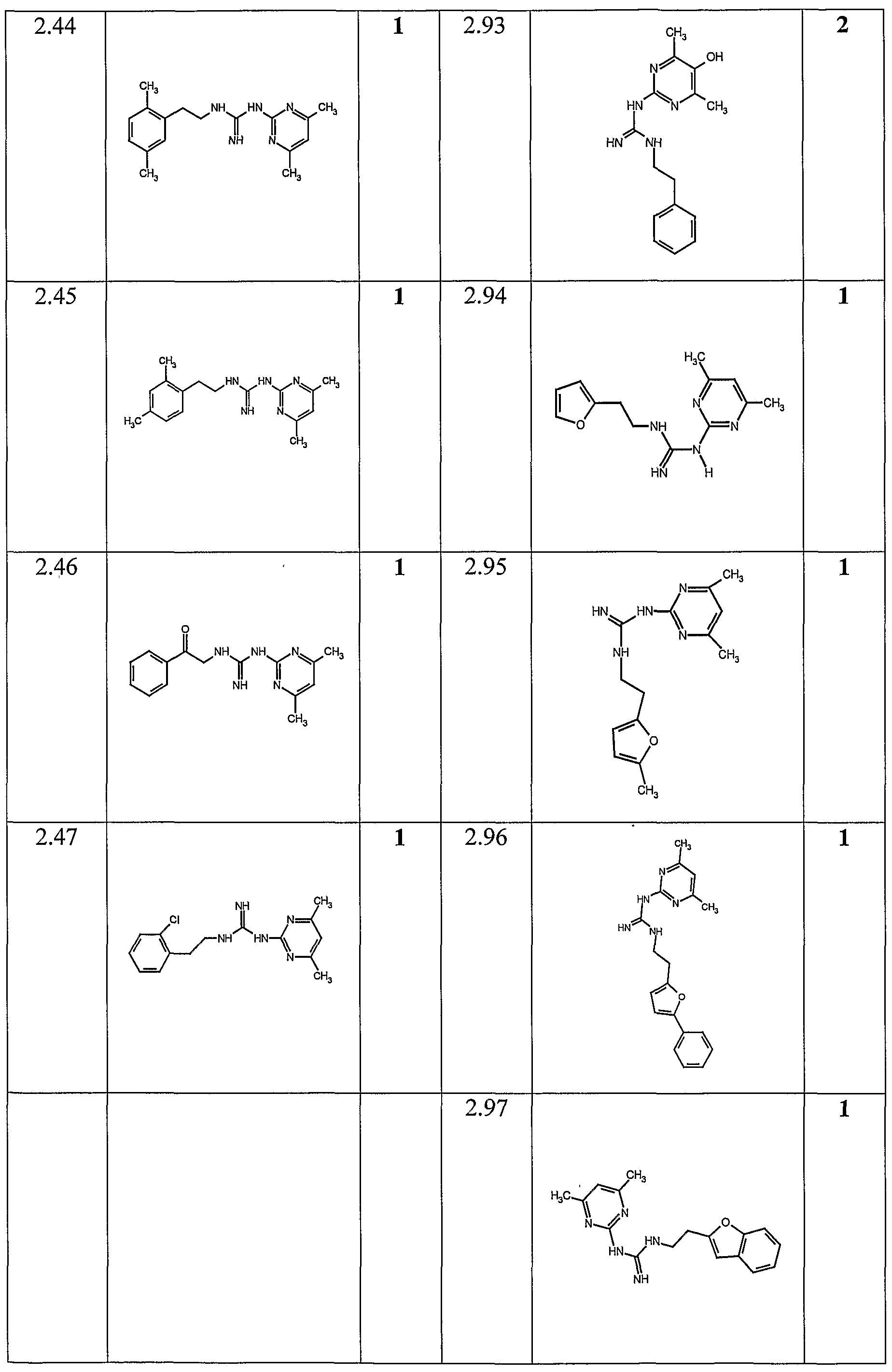
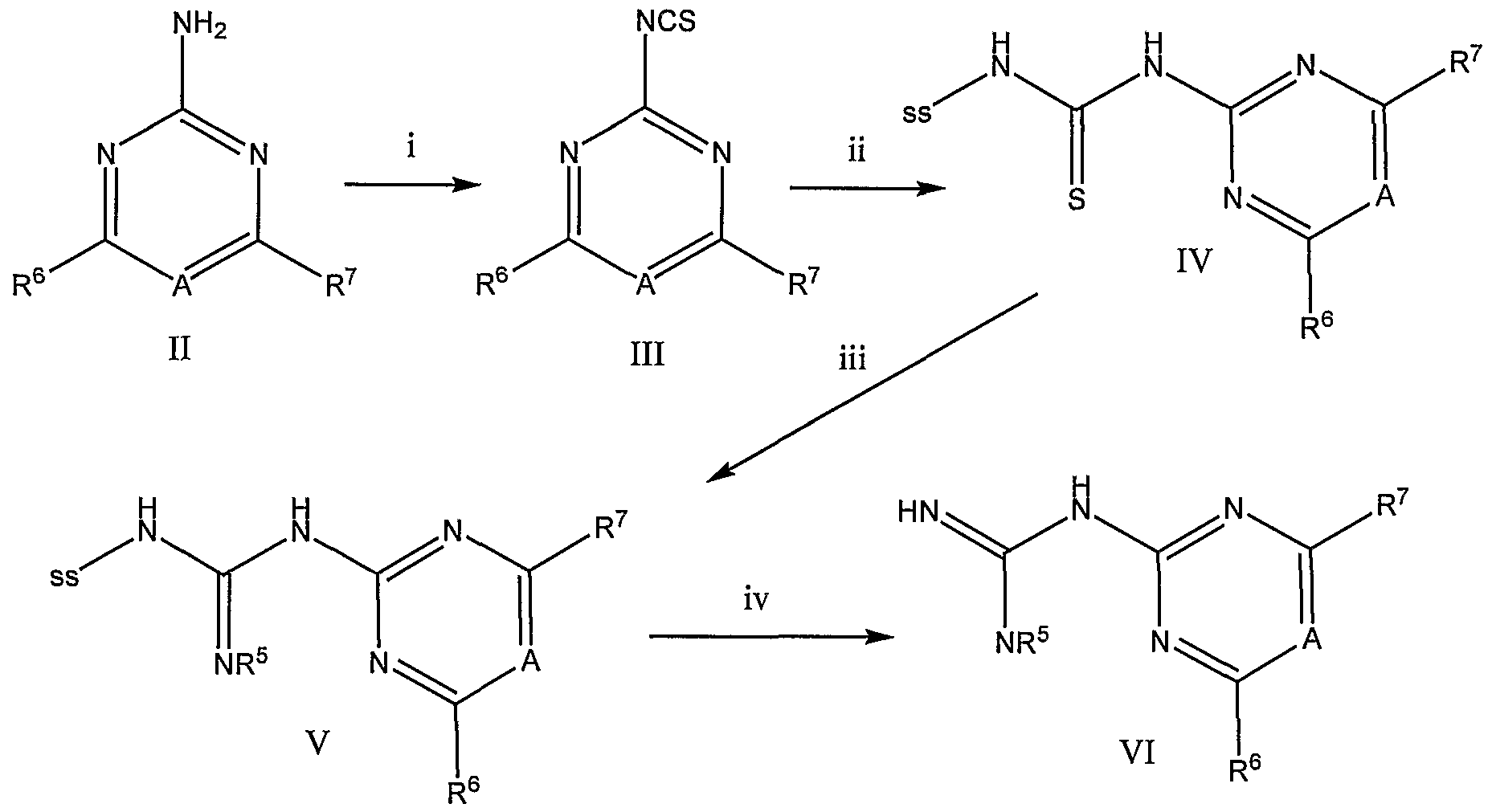
[0052] The present invention further provides compounds of Formula I:
I or pharmaceutically acceptable salt forms thereof, wherein: R1 is H or COORla;
Rla is H or d-do alkyl, aryl, cycloalkyl, or aralkyl;
9 "
R and R are each, independently, H, d-C10 alkyl, or C3-C cycloalkyl; A is CR4;
R4 is OH, alkoxy, aryloxy, aralkoxy, cycloalkyloxy, cycloalkylalkyloxy, heterocycloalkyloxy, heterocycloalkylalkyloxy, heteroaryloxy, heteroarylalkyloxy, or O(CR4aR4b)aNR4cR4d;
R4a and R4b are each, independently, H or d-C4 alkyl; R4c and R4d are each, independently, H, d-C alkyl, C3-C cycloalkyl, C C4 haloalkyl, aryl, C(O)-(d-C6 alkyl), C(O)-aryl, C(O)-(C3-C7 cycloalkyl), C(O)O-(d-C6 alkyl), C(O)O-aryl, or C(O)O-(C3-C7 cycloalkyl), or R4° and R4d together with the N atom to which they are attached form a 5- or 6-membered heterocycle; a is 1, 2, 3, 4, 5, or 6; R5 is N(R5a)-Q;
R5a is H or d-C6 alkyl;
Q is aryl, heteroaryl, cycloalkyl, or heterocycloalkyl, wherein Q is optionally substituted by one or more d-do alkyl, C2-C10 alkenyl, C2-C10 alkynyl, alkoxy, aryloxy, aralkoxy, aralkyl, OH, SH, thioalkoxy, halo, d-do haloalkyl, haloalkoxy, COOH, C(O)-(d-C6 alkyl), C(O)-(C3-C7 cycloalkyl), C(O)-aryl, C(O)O-(Cι-C6 alkyl), C(O)O-(C3-C7 cycloalkyl), C(O)O-aryl, C(O)NRQ1RQ2, NO2, CN, or NRQ3RQ4;
RQ1 and RQ2 are each, independently, H, d-C6 alkyl, C3-C6 cycloalkyl, aryl, or RQ1 and RQ2 together with the N atom to which they are attached form a 5- or 6-membered heterocycle;
RQ3 and RQ4 are each, independently, H, d-C6 alkyl, aryl, C(O)-d- C6 alkyl, C(O)-(C3-C7 cycloalkyl), C(O)-aryl, C(O)O-(d-C6 alkyl), C(O)O-(C3-C7 cycloalkyl), C(O)O-aryl, or RQ1 and RQ2 together with the N atom to which they are attached form a 5- or 6-membered heterocycle; or R5 is aryl or heteroaryl, wherein said aryl or heteroaryl is optionally substituted by one or more OH or O(CR8R9)pY;
R8 and R9 are each, independently, H or d-C4 alkyl; p is 1, 2, 3, 4, 5, or 6; Y is Y1 or Y2;
Y1 is NR10Rπ, C3-C7 cycloalkyl, heterocycloalkyl, or heteroaryl, wherein Y1 is optionally substituted by one or more halo, d-C6 alkyl, d-C6 haloalkyl, C2- C6 alkenyl, C2-C6 alkynyl, C3-C cycloalkyl, aryl, heteroaryl, heterocycloalkyl, OH, SH, CN, NO2, COOH, C(O)-(d-C6 alkyl), C(O)-(C3-C7 cycloalkyl), C(O)-aryl, C(O)O-(C C6 alkyl), C(O)O-(C3-C7 cycloalkyl), C(O)O-aryl, NH2, NH(d-C4 alkyl), N(d-C4 alkyl)2, NHC(O)O-(Ci-C6 alkyl), NHC(O)O-aryl or (CH2)qOH;
R10 and R11 are each, independently, H, (d-C6)alkyl, C(O)- (d-C6 alkyl), C(O)-(C3-C7 cycloalkyl), C(O)-aryl, C(O)O-(d-C6 alkyl), C(O)O-(C3-C7 cycloalkyl), C(O)O-aryl, aryl, heteroaryl, cycloalkyl, or heterocycloalkyl, or R10 and R11 together with the N atom to which they are attached form a 5- or 6- membered heterocycle; q is 0, 1, 2, or 3; Y2 is OR12a or OSO2R12b;
R12a is H, d-do alkyl, d-C10 alkenyl, -Cio alkynyl, aryl, heteroaryl, C3-C cycloalkyl, or heterocycloalkyl;
R12b is H, Cι-C6 alkyl, aryl, or NH2;
or R5 is cycloalkyl or heterocycloalkyl, wherein said cycloalkyl or heterocycloalkyl is optionally substituted by one or more halo, d-Cio alkyl, d-do haloalkyl, C2-Cιo alkenyl, C -do alkynyl, aryl, heteroaryl, cycloalkyl, heterocycloalkyl, alkoxy, aryloxy, aralkoxy, aralkyl, OH, SH, thioalkoxy, haloalkoxy, COOH, C(O)-(d-C6 alkyl), C(O)-(C3- C7 cycloalkyl), C(O)-aryl, C(O)O-(Cι-C6 alkyl), C(O)O-(C3-C7 cycloalkyl), C(O)O-aryl, CONR5bR5c, NO2, CN, NR5dR5e, or O(CR8R9)pY;
R5b and R5° are each, independently, H, d-C6 alkyl, C3-C6 cycloalkyl, aryl, or R5 and R5c together with the N atom to which they are attached form a 5- or 6- membered heterocycle;
R5d and R5e are each, independently, H, d-C6 alkyl, aryl, C(O)-Cι-C6 alkyl, C(O)-(C3-C7 cycloalkyl), C(O)-aryl, C(O)O-(Cι-C6 alkyl), C(O)O-(C3-C7 cycloalkyl), C(O)O-aryl, or R5d and R5e together with the N atom to which they are attached form a 5- or 6-membered heterocycle; or R5 is -(CR13R14)n-Z; n is 1, 2, 3, 4, 5, 6, 7, or 8;
R13 and R14 are each, independently, H or Cι-C6 alkyl, C2-C6 alkenyl, C2-C6 alkynyl, OH, SH, aryl, or aralkyl, or R13 and R14 together form C3-C7 cycloalkyl, oxo, or sulfido;
Z is aryl, heteroaryl, cycloalkyl, heterocycloalkyl, biaryl, biheteroaryl, arylheteroaryl, or heteroarylaryl, each of which is optionally substituted by one or more R15;
R15 is halo, Ci-Cio alkyl, Cι-C10 haloalkyl, C2-C10 alkenyl, C2-Cι0 alkynyl, alkoxy, aryloxy, aralkoxy, aralkyl, OH, SH, guanidinyl, thioalkoxy, haloalkoxy, COOH, C(O)-(d-C6 alkyl), C(O)-(C3-C7 cycloalkyl), C(O)-aryl, C(O)O-(Cι-C6 alkyl), C(O)O-(C3-C7 cycloalkyl), C(O)O-aryl, CONR18aR19a, NO2, CN, (CH2)tNR18bR19b, heteroaryl, heterocycloalkyl, aryl, C3-C7 cycloalkyl, or O(CR20R21)rX;
R18a and R19a are each, independently, H or d-C6 alkyl, or R18a and R19a together with the N atom to which they are attached form a 5- or 6-membered heterocycle;
R18b and R19b are each, independently, H, d-C6 alkyl, aryl, C(O)- Cι-C6 alkyl, C(O)-(C3-C7 cycloalkyl), C(O)-aryl, C(O)O-(Cι-C6 alkyl), C(O)O-(C3-C7 cycloalkyl), C(O)O-aryl, or R18b and R19b together with the N atom to which they are attached form a 5- or 6-membered heterocycle;
R18c and R19c are each, independently, H or d-C6 alkyl, or R18c and R19° together with the N atom to which they are attached form a heterocycle;
R18d and R19d are each, independently, H, d-C6 alkyl, aryl, C(O)- d-C6 alkyl, C(O)-(C3-C7 cycloalkyl), C(O)-aryl, C(O)O-(d-C6 alkyl), C(O)O-(C3-C7 cycloalkyl), C(O)O-aryl, or R18d and R19d together with the N atom to which they are attached form a 5- or 6-membered heterocycle;
R20 and R21 are each, independently, H or Cι-C6 alkyl; r is 0, 1, 2, 3, 4, 5, or 6; t is 0, 1, or 2; X is X^r X2;
X1 is NR22R23, C3-C7 cycloalkyl, aryl, heteroaryl, or heterocycloalkyl, wherein X1 is optionally substituted by one or more halo, Cι-C6 alkyl, C3-C7 cycloalkyl, Cι-C6 haloalkyl, aryl, heteroaryl, heterocycloalkyl, CN, NO2, OH, COOH, C(O)-d-C6 alkyl, C(O)-(C3-C7 cycloalkyl), C(O)-aryl, C(O)O-(Cι-C6 alkyl), C(O)O-(C3-C7 cycloalkyl), C(O)O-aryl, NH2, NH(Cι-C4 alkyl), N(d-C4 alkyl)2, NHC(O)O-(Cι-C6 alkyl), NHC(O)O-aryl or (CH2)sOH;
R22 and R23 are each, independently, H, Cι-C6 alkyl, aryl, heteroaryl, heterocycloalkyl, cycloalkyl, C(O)-Cι-C6 alkyl, C(O)-(C3-C7 cycloalkyl), C(O)-aryl, C(O)O-(Cι-C6 alkyl), C(O)O-(C3-C7 cycloalkyl), C(O)O-aryl, or R22 and R23 together with the N atom to which they are attached form a 5- or 6-membered heterocycle; s is 0, 1, 2, or 3; X2 is OH or OSO2R24;
R24 is H, d-C6 alkyl, aryl, orNH2; c 9 or R and R together with the N atom to which they are attached form heterocycloalkyl optionally substituted by halo, Cι-C4 alkyl, OH, SH, alkoxy or aryloxy; and
R6 and R7 are each, independently, H, halo, Ci-C6 alkyl, Cι-C6 haloalkyl, C2-C6 alkenyl, C2-C6 alkynyl, alkoxy, aryloxy, or aralkoxy, or R6 and R7 together with the atoms to which they are attached form a fused cycloalkyl, heterocycloalkyl, aryl, or heteroaryl group.
[0053] In some embodiments, R4 is OH, Cι-C6 alkoxy, or O(CR4aR4b)aNR4oR4d.
[0054] In further embodiments, R4 is OH or Cι-C6 alkoxy.
[0055] The present invention further provides methods of modulating activity of an infectious agent comprising contacting the infectious agent with a compound of Formula I:
I or pharmaceutically acceptable salt form thereof, wherein: R1 is H or COORla;
Rl is H or Ci-Cio alkyl, aryl, cycloalkyl, or aralkyl; R2 and R3 are each, independently, H, d-do alkyl, or C3-C7 cycloalkyl; A is N or CR4;
R4 is H, halo, Cι-C6 alkyl, d-C6 haloalkyl, C3-C7 cycloalkyl, C2-C6 alkenyl, C2-C6 alkynyl, OH, alkoxy, aryloxy, aralkoxy, cycloalkyloxy, cycloalkylalkyloxy, heterocycloalkyloxy, heterocycloalkylalkyloxy, heteroaryloxy, heteroarylalkyloxy, cyano, nitro, hydroxy, mercapto, or O(CR4aR4b)aNR4cR4d;
R ,4a and R ,4b are each, independently, H or C1-C4 alkyl;
R ,4c and R ,4d are each, independently, H, C1-C4 alkyl, C3-C cycloalkyl, C1-C4 haloalkyl, aryl, C(O)-(d-C6 alkyl), C(O)-aryl, C(O)-(C3-C7 cycloalkyl), C(O)O-(Cι-C6 alkyl), C(O)O-aryl, or C(O)O-(C3-C7 cycloalkyl), or R4c and R4d together with the N atom to which they are attached form a 5- or 6-membered heterocycle; a is 1, 2, 3, 4, 5, or 6; R5 is N(R5a)-Q;
R5a is H or Cι-C6 alkyl;
Q is aryl, heteroaryl, cycloalkyl, or heterocycloalkyl, wherein Q is optionally substituted by one or more Cι-C10 alkyl, C -Cιo alkenyl, C2-C10 alkynyl, alkoxy, aryloxy, aralkoxy, aralkyl, OH, SH, thioalkoxy, halo, d-do haloalkyl, haloalkoxy, COOH, C(O)-(d-C6 alkyl), C(O)-(C3-C7 cycloalkyl), C(O)-aryl, C(O)O-(Cι-C6 alkyl), C(O)O-(C3-C7 cycloalkyl), C(O)O-aryl, C(O)NRQ1RQ2, NO2, CN, or NRQ3RQ4;
RQ1 and RQ2 are each, independently, H, d-C6 alkyl, C3-C6 cycloalkyl, aryl, or RQ1 and RQ2 together with the N atom to which they are attached form a 5- or 6-membered heterocycle;
RQ3 and RQ4 are each, independently, H, Cι-C6 alkyl, aryl, C(O)-Cι- C6 alkyl, C(O)-(C3-C7 cycloalkyl), C(O)-aryl, C(O)O-(Cι-C6 alkyl), C(O)O-(C3-C7 cycloalkyl), C(O)O-aryl, or RQ1 and RQ2 together with the N atom to which they are attached form a 5- or 6-membered heterocycle; or R5 is aryl, heteroaryl, cycloalkyl, or heterocycloalkyl, wherein said aryl, heteroaryl, cycloalkyl, or heterocycloalkyl is optionally substituted by one or more halo, Ci-Cio alkyl, d-do haloalkyl, C2-C10 alkenyl, C2-do alkynyl, aryl, heteroaryl, cycloalkyl, heterocycloalkyl, alkoxy, aryloxy, aralkoxy, aralkyl, CN, NO2, OH, SH, thioalkoxy, haloalkoxy, COOH, C(O)-(Cι-C6 alkyl), C(O)-aryl, C(O)-(C3-C7 cycloalkyl), C(O)O-(d- C6 alkyl), C(O)O-aryl, or C(O)O-(C3-C7 cycloalkyl), CONR5bR5c, NR5dR5e, or O(CR8R9)pY;
R5b and R5c are each, independently, H, Cι-C6 alkyl, C3-C6 cycloalkyl, aryl, or R5b and R5c together with the N atom to which they are attached form a 5- or 6- membered heterocycle;
R5d and R5eare each, independently, H, Cι-C6 alkyl, aryl, C(O)-Cι-C6 alkyl, C(O)-(C3-C7 cycloalkyl), C(O)-aryl, C(O)O-(Cι-C6 alkyl), C(O)O-(C3-C7 cycloalkyl), C(O)O-aryl, or R5d and R5e together with the N atom to which they are attached form a 5- or 6-membered heterocycle;
R and R are each, independently, H or d-C6 alkyl; p is 1, 2, 3,4,5, or 6;
Y is NR10Rπ, OR12a, OSO2R12b, C3-C7 cycloalkyl, heterocycloalkyl, or heteroaryl, wherein Y is optionally substituted by one or more halo, d-C6 alkyl, Cι-C6 haloalkyl, C2-C6 alkenyl, C2-C6 alkynyl, C3-C cycloalkyl, aryl, heteroaryl, heterocycloalkyl, OH, SH, CN, NO2, COOH, C(O)-(Cι-C6 alkyl), C(O)-(C3-C7 cycloalkyl), C(O)-aryl, C(O)O-(d-C6 alkyl), C(O)O-(C3-C7 cycloalkyl), C(O)O-aryl, NH2, NH(C1-C4 alkyl), N(d-C4 alkyl)2, NHC(O)O-(d-C6 alkyl), NHC(O)O-aryl or (CH2)qOH;
R10 and R11 are each, independently, H, (Cι-C6)alkyl, C(O)- (Cι-C6 alkyl), C(O)-(C3-C7 cycloalkyl), C(O)-aryl, C(O)O-(Cι-C6 alkyl), C(O)O-(C3-C7 cycloalkyl), C(O)O-aryl, aryl, heteroaryl, cycloalkyl, or heterocycloalkyl, or R10 and R11
together with the N atom to which they are attached form a 5- or 6- membered heterocycle; q is O, 1, 2, or 3;
R12a is H, d-do alkyl, Ci-Cio alkenyl, d-Cio alkynyl, aryl, heteroaryl, C3-C7 cycloalkyl, or heterocycloalkyl;
R12b is H, Ci-Cβ alkyl, aryl, orNH2; or R5 is -(CR13R14)n-Z; n is 1, 2, 3, 4, 5, 6, 7, or 8;
R13 and R14 are each, independently, H, d-C6 alkyl, C2-C6 alkenyl, C -C6 alkynyl, OH, aryl, or aralkyl, or R13 and R14 together form cycloalkyl, oxo, or sulfido; Z is aryl, heteroaryl, cycloalkyl, heterocycloalkyl, biaryl, biheteroaryl, arylheteroaryl, heteroarylaryl, each of which is optionally substituted by one or more R15, R15 is halo, Ci-Cio alkyl, Ci-Cio haloalkyl, C2-C10 alkenyl, C2-Cι0 alkynyl, alkoxy, aryloxy, aralkoxy, aralkyl, OH, SH, guanidinyl, thioalkoxy, haloalkoxy, COOH, C(O)-(d-C6 alkyl), C(O)-(C3-C7 cycloalkyl), C(O)-aryl, C(O)O-(Cι-C6 alkyl), C(O)O-(C3-C7 cycloalkyl), C(O)O-aryl, CONR18aR19a, NO2, CN, (CH2)tNR18bR19b, heteroaryl, heterocycloalkyl, aryl, C3-C7 cycloalkyl, or O(CR20R21)rX;
R18a and R19a are each, independently, H or Cι-C6 alkyl, or R18a and R19 together with the N atom to which they are attached form a 5- or 6- membered heterocycle;
R and R are each, independently, H, d-C6 alkyl, aryl, C(O)-Cι-C6 alkyl, C(O)-(C3-C7 cycloalkyl), C(O)-aryl, C(O)O-(Cι-C6 alkyl), C(O)O-(C3- C cycloalkyl), C(O)O-aryl, or R18b and R19b together with the N atom to which they are attached form a 5- or 6-membered heterocycle;
R20 and R21 are each, independently, H or d-C6 alkyl; r is 0, 1, 2, 3, 4, 5, or 6; t is 0, 1, or 2;
X is NR22R23, OH, NH2, OSO2R24, C3-C7 cycloalkyl, aryl, heteroaryl, or heterocycloalkyl, wherein X is optionally substituted by one or more halo, Cι-C6 alkyl, C3-C cycloalkyl, d-C6 haloalkyl, aryl, heteroaryl, heterocycloalkyl, CN, NO2, OH, COOH, C(O)-Cι-C6 alkyl, C(O)-(C3-C7 cycloalkyl), C(O)-aryl, C(O)O-(d-C6 alkyl), C(O)O-(C3-C7 cycloalkyl), C(O)O-aryl, NH2, NH(Cι-C4 alkyl), N(Cι-C4 alkyl)2, NHC(O)O-(Cι-C6 alkyl), NHC(O)O-aryl or (CH2)sOH;
R22 and R23 are each, independently, H, Cι-C6 alkyl, aryl, heteroaryl, heterocycloalkyl, cycloalkyl, C(O)-C1-C6 alkyl, C(O)-(C3-C7 cycloalkyl), C(O)-aryl, C(O)O-(C C6 alkyl), C(O)O-(C3-C7 cycloalkyl), C(O)O-aryl, or R22 and R23 together with the N atom to which they are attached form a 5- or 6-membered heterocycle; s is O, 1, 2, or 3; R24 is H, Cι-C6 alkyl, aryl, or NH2; or R5 and R2 together with the N atom to which they are attached form heterocycloalkyl optionally substituted by one or more halo, d-C4 alkyl, OH, SH, alkoxy or aryloxy; and
R6 and R7 are each, independently, H, halo, Cι-C6 alkyl, Cι-C6 haloalkyl, C2-C6 alkenyl, C2-C6 alkynyl, alkoxy, aryloxy, or aralkoxy, or R6 and R7 together with the atoms to which they are attached form a fused cycloalkyl, heterocycloalkyl, aryl, or heteroaryl group.
[0056] In some embodiments, the infectious agent is a virus, such as a virus that can replicate by an IRES -mediated pathway. An example infectious agent is hepatitis C virus.
[0057] In some embodiments, modulating is inhibiting.
[0058] In further embodiments of methods of the present invention, R1 is H.
[0059] In further embodiments of methods of the present invention, R2 and R3 are each H.
[0060] In further embodiments of methods of the present invention, A is CR4.
[0061] In further embodiments of methods of the present invention, R4 is H.
[0062] In further embodiments of methods of the present invention, R4 is d-C4 alkyl such as methyl.
[0063] In further embodiments of methods of the present invention, R4 is OH, alkoxy, aryloxy, aralkoxy, cycloalkyloxy, cycloalkylalkyloxy, heterocycloalkyloxy, heterocycloalkylalkyloxy, heteroaryloxy, heteroarylalkyloxy, or O(CR4aR4b)aNR4cR4d. [0064] In further embodiments of methods of the present invention, R4 is OH, alkoxy, or O(CR4aR4b)aNR4cR4d.
[0065] In further embodiments of methods of the present invention, R4 is or
O(CR4aR4b)aNR4cR4d.
[0066] In further embodiments of methods of the present invention, R6 and R7 are each d-C6 alkyl.
[0067] In further embodiments of methods of the present invention, at least one of
R6 and R7 is d-C6 alkyl.
[0068] In further embodiments of methods of the present invention, at least one of
R and R7 is methyl.
[0069] In further embodiments of methods of the present invention, both R6 and R7 are methyl.
[0070] In further embodiments of methods of the present invention, R5 is -
(CR13R14)n-Z.
[0071] In further embodiments of methods of the present invention, Z is phenyl substituted by at least one O(CR20R21)rX.
[0072] In further embodiments of methods of the present invention, n is 1 or 2.
[0073] In further embodiments of methods of the present invention, n is 2.
[0074] In further embodiments of methods of the present invention, R5 is -
(CR13R14)n-Z and n is 1 or 2.
[0075] In further embodiments of methods of the present invention, R5 is phenyl substituted by at least one O(CR8R9)pY.
[0076] In further embodiments of methods of the present invention, R5 is heteroaryl substituted by at least one O(CR8R9)pY.
[0077] In further embodiments of methods of the present invention, R5 is substituted or unsubstituted cycloalkyl or heterocycloalkyl.
[0078] In further embodiments of methods of the present invention, R5 is
-(CR13R14)n-Z and Z is substituted or unsubstituted pyridinyl, prymidinyl, furanyl, thienyl, quinolinyl, isoquinolinyl, indolyl, benzo[l,3]dioxolyl, or benzoimidazolyl.
[0079] In further embodiments of methods of the present invention, R5 is
-(CR13R14)n-Z and Z is furanyl, 2-methylfuranyl, 2,3-dimethylfuranyl, 2-phenylfuranyl, or benzofuranyl.
[0080] In further embodiments of methods of the present invention, R5 is
-(CR13R14)n-Z and at least one of R13 and R14 is methyl or OH.
[0081] In further embodiments of methods of the present invention, R5 is
-(CR13R14)n-Z and Z is phenyl substituted by at least one O(CR20R21)rX.
[0082] In further embodiments of methods of the present invention, R5 is
-(CR13R14)n-Z and Z is substituted or unsubstituted biaryl, biheteroaryl, arylheteroaryl, or heteroarylaryl.
[0083] In further embodiments of methods of the present invention, R5 is N(R5a)-
Q.
[0084] In further embodiments of methods of the present invention, R5 is substituted or unsubstituted aryl, heteroaryl, cycloalkyl, or heterocycloalkyl. [0085] In further embodiments of methods of the present invention:
R5 is N(R5a)-Q; or R5 is aryl, heteroaryl, cycloalkyl, or heterocycloalkyl, wherein said aryl, heteroaryl, cycloalkyl, or heterocycloalkyl is optionally substituted by one or more halo, Ci-Cio alkyl, Ci-do haloalkyl, -Cio alkenyl, C2-Cιo alkynyl, alkoxy, aryloxy, aralkoxy, aralkyl, CN, NO2, OH, SH, thioalkoxy, haloalkoxy, COOH, C(O)-(Cι-C6 alkyl), C(O aryl, C(O)-(C3-C7 cycloalkyl), C(O)O-(Cι-C6 alkyl), C(O)O-aryl, or C(O)O-(C3-C7 cycloalkyl), CONR5bR5c, NR5dR5e, or O(CR8R9)pY; or R5 is -(CR13R14)„-Z. [0086] In further embodiments of methods of the present invention:
R1 is H;
R2 and R3 are each, independently, H, Cι-C6 alkyl;
A is CR4
R
4 is H, d-C
6 alkyl, Cι-C
6 haloalkyl, alkoxy,
R4a and R4b are each H;
R4c and R4d are each, independently, H, d-C4 alkyl, C3-C7 cycloalkyl, Cι-C4 haloalkyl, aryl, C(O)-(d-C6 alkyl), C(O)-aryl, C(O)-(C3-C7 cycloalkyl), C(O)O-(d-C6 alkyl), C(O)O-aryl, or C(O)O-(C3-C7 cycloalkyl), or R4c and R4d together with the N atom to which they are attached form a 5- or 6-membered heterocycle; a is 1, 2, or 3; R5 is NH-Q;
Q is aryl, heteroaryl, cycloalkyl, or heterocycloalkyl, wherein Q is optionally substituted by one or more d-Cio alkyl, C2-Cιo alkenyl, C2-do alkynyl, alkoxy, aryloxy, aralkoxy, aralkyl, OH, SH, thioalkoxy, halo, d-C10 haloalkyl, haloalkoxy, COOH, C(O)-(Cι-C6 alkyl), C(O)-(C3-C7 cycloalkyl), C(O)-aryl, C(O)O-(Cι-C6 alkyl), C(O)O-(C3-C7 cycloalkyl), C(O)O-aryl, C(O)NRQ1RQ2, NO2, CN, or NRQ3RQ4;
RQ1 and RQ2 are each, independently, H, Cι-C6 alkyl, C3-C6 cycloalkyl, aryl, or RQ1 and RQ2 together with the N atom to which they are attached form a 5- or 6-membered heterocycle;
RQ3 and RQ4 are each, independently, H, C C6 alkyl, aryl, C(O)-Cι- C6 alkyl, C(O)-(C3-C7 cycloalkyl), C(O)-aryl, C(O)O-(Cι-C6 alkyl), C(O)O-(C3-C7 cycloalkyl), C(O)O-aryl, or RQ1 and RQ2 together with the N atom to which they are attached form a 5- or 6-membered heterocycle; or R5 is aryl, heteroaryl, cycloalkyl, or heterocycloalkyl, wherein said aryl, heteroaryl, cycloalkyl, or heterocycloalkyl is optionally substituted by one or more halo, Cι-C10 alkyl, d-Cio haloalkyl, C2-Cι0 alkenyl, C2-Cι0 alkynyl, alkoxy, aryloxy, aralkoxy, aralkyl, CN, NO2, OH, SH, thioalkoxy, haloalkoxy, COOH, C(O)-(Cι-C6 alkyl), C(O)- aryl, C(O)-(C3-C7 cycloalkyl), C(O)O-(Cι-C6 alkyl), C(O)O-aryl, or C(O)O-(C3-C7 cycloalkyl), CONR5bR5c, NR5dR5e, or O(CR8R9)pY;
R5b and R5° are each, independently, H, Cι-C6 alkyl, C3-C6 cycloalkyl, aryl, or R5b and R5c together with the N atom to which they are attached form a 5- or 6- membered heterocycle;
R5d and R5eare each, independently, H, Cj-C6 alkyl, aryl, C(O)-Cι-C6 alkyl, C(O)-(C3-C7 cycloalkyl), C(O)-aryl, C(O)O-(Cι-C6 alkyl), C(O)O-(C3-C7 cycloalkyl), C(O)O-aryl, or R5d and R5e together with the N atom to which they are attached form a 5- or 6-membered heterocycle;
R8 and R9 are each, independently, H or Ci-Cg alkyl; p is 1 or 2;
Y is NR10Rn, OR12a, OSO2R12b , C3-C7 cycloalkyl, heterocycloalkyl, or heteroaryl, wherein Y is optionally substituted by one or more halo, d-C6 alkyl, d-C6 haloalkyl, C2-C6 alkenyl, C2-C6 alkynyl, C3-C cycloalkyl, aryl, heteroaryl, heterocycloalkyl, OH, SH, CN, NO2, COOH, C(O)-(d-C6 alkyl), C(O)-(C3-C7 cycloalkyl), C(O)-aryl, C(O)O-(Cι-C6 alkyl), C(O)O-(C3-C7 cycloalkyl), C(O)O-aryl,
NH2, NH(Cι-C4 alkyl), N(Cι-C alkyl)2, NHC(O)O-(Cι-C6 alkyl), NHC(O)O-aryl or
(CH2)qOH;
R10 and R11 are each, independently, H, d-C6 alkyl, C(O)-
(Cι-C6 alkyl), C(O)-(C3-C7 cycloalkyl), C(O)-aryl, C(O)O-(Cι-C6 alkyl), C(O)O-(C3-C7 cycloalkyl), C(O)O-aryl, aryl, heteroaryl, cycloalkyl, or heterocycloalkyl, or R10 and R11 together with the N atom to which they are attached form a 5- or 6- membered heterocycle; q is O, 1, 2, or 3;
R12a is H, d-Cio alkyl, Ci-do alkenyl, d-C10 alkynyl, aryl, heteroaryl, C3-C7 cycloalkyl, or heterocycloalkyl;
R12b is H, Cι-C6 alkyl, aryl, or NH2; or R5 is -(CR13R14)„-Z; n is 1, 2, or 3;
R13 and R14 are each, independently, H or C1-C4 alkyl;
Z is aryl, heteroaryl, cycloalkyl, or heterocycloalkyl, wherein said aryl, heteroaryl, cycloalkyl, or heterocycloalkyl is optionally substituted by one or more R15,
R15 is halo, Cι-C6 alkyl, Cι-C6 haloalkyl, C2-C6 alkenyl, C2-C6 alkynyl, alkoxy, aryloxy, aralkoxy, aralkyl, OH, SH, thioalkoxy, haloalkoxy, COOH,
C(O)-(Cι-C6 alkyl), C(O)-(C3-C7 cycloalkyl), C(O)-aryl, C(O)O-(Cι-C6 alkyl), C(O)O-
(C3-C7 cycloalkyl), C(O)O-aryl, CONR18aR19a, NO2, CN, (CH2)tNR18bR19b, heteroaryl, heterocycloalkyl, aryl, C3-C7 cycloalkyl, or O(CR20R21)rX;
R18a and R19a are each, independently, H or Cι-C6 alkyl, or
R18a and R19a together with the N atom to which they are attached form a 5- or 6- membered heterocycle;
R18b and R19b are each, independently, H, d-C6 alkyl, aryl,
C(O)-d-C6 alkyl, C(O)-(C3-C7 cycloalkyl), C(O)-aryl, C(O)O-(Cι-C6 alkyl), C(O)O-(C3-
C7 cycloalkyl), C(O)O-aryl, or R18b and R19b together with the N atom to which they are attached form a 5- or 6-membered heterocycle;
R20 and R21 are each, independently, H or d-C4 alkyl; r is 0, 1, 2, or 3; t is 0, 1, or 2;
X is NR22R23, OH, NH2, OSO2R24, C3-C7 cycloalkyl, aryl, heteroaryl, or heterocycloalkyl, wherein X is optionally substituted by one or more halo,
Cι-C6 alkyl, C3-C cycloalkyl, d-C6 haloalkyl, aryl, heteroaryl, heterocycloalkyl, CN,
NO2, OH, COOH, C(O)-Cι-C6 alkyl, C(O)-(C3-C7 cycloalkyl), C(O)-aryl, C(O)O-(Cι-C6 alkyl), C(O)O-(C3-C7 cycloalkyl), C(O)O-aryl, NH2, NH(Cι-C4 alkyl), N(Cι-C4 alkyl)2,
NHC(O)O-(Cι-C6 alkyl), NHC(O)O-aryl or (CH2)sOH;
R22 and R23 are each, independently, H, d-C6 alkyl, aryl, heteroaryl, heterocycloalkyl, cycloalkyl, C(O)-C1-C6 alkyl, C(O)-(C3-C7 cycloalkyl),
C(O)-aryl, C(O)O-(d-C6 alkyl), C(O)O-(C3-C7 cycloalkyl), C(O)O-aryl, or R22 and R23 together with the N atom to which they are attached form a 5- or 6-membered heterocycle; s is 0 or 1;
R24 is H, Cι-C6 alkyl, aryl, or NH2; and
R6 and R7 are each, independently, H, C1-C alkyl, Cι-C4 alkoxy.
[0087] In further embodiments of methods of the present invention:
R1 is H;
9 "
R and R are each H; A is CH; and
R and R7 are each methyl. [0088] In further embodiments of methods of the present invention:
R1 is H;
9
R and R are each H; A is CH;
R5 is -(CR13R14)n-Z; n is 1 or 2; and
R and R are each methyl. [0089] In further embodiments of methods of the present invention:
A is CR4; and
R is alkoxy, aryloxy, aralkoxy, cycloalkyloxy, cycloalkylalkyloxy, heterocycloalkyloxy, heterocycloalkylalkyloxy, heteroaryloxy, heteroarylalkyloxy, hydroxy, or O(CR4aR4b)aNR4cR4d. [0090] In further embodiments of methods of the present invention:
A is CR4;
R is alkoxy, aryloxy, aralkoxy, cycloalkyloxy, cycloalkylalkyloxy, heterocycloalkyloxy, heterocycloalkylalkyloxy, heteroaryloxy, heteroarylalkyloxy, hydroxy, or O(CR4aR4b)aNR4oR4d; and
R and R are each, independently, H, halo, d-C3 alkyl, or Cι-C6 haloalky. [0091] The present invention further provides methods of modulating activity of an infectious agent comprising contacting the infectious agent with any of the compounds listed in Tables I, II, or III, such as a compound of Formula:
[0092] The present invention further provides a method of treating a viral infection in a patient by administering to the patient a therapeutically effective amount of a compound of Formula I, or pharmaceutically acceptable salt form thereof, wherein:
R1 is H or COORla;
Rla is H or Ci-Ci0 alkyl, aryl, cycloalkyl, or aralkyl;
R2 and R3 are each, independently, H, Cι-C10 alkyl, or C3-C7 cycloalkyl;
A is N or CR4;
R4 is H, halo, Cι-C6 alkyl, Cι-C6 haloalkyl, C3-C cycloalkyl, C2-C6 alkenyl, C2-C6 alkynyl, OH, alkoxy, aryloxy, aralkoxy, cycloalkyloxy, cycloalkylalkyloxy, heterocycloalkyloxy, heterocycloalkylalkyloxy, heteroaryloxy, heteroarylalkyloxy, cyano, nitro, hydroxy, mercapto, or O(CR4aR4b)aNR4cR4d;
R >4a and R ,4b are each, independently, H or Cι-C4 alkyl;
R4Q and R are each, independently, H, d-C4 alkyl, C3-C7 cycloalkyl, C1-C4 haloalkyl, aryl, C(O)-(Cι-C6 alkyl), C(O)-aryl, C(O)-(C3-C7 cycloalkyl), C(O)O-(Cι-C6 alkyl), C(O)O-aryl, or C(O)O-(C3-C7 cycloalkyl), or R4c and R4d together with the N atom to which they are attached form a 5- or 6-membered heterocycle; a is 1, 2, 3, 4, 5, or 6; R5 is N(R5a)-Q;
R5a is H or Cι-C6 alkyl;
Q is aryl, heteroaryl, cycloalkyl, or heterocycloalkyl, wherein Q is optionally substituted by one or more C1-C10 alkyl, C2-Cιo alkenyl, -Cio alkynyl, alkoxy, aryloxy, aralkoxy, aralkyl, OH, SH, thioalkoxy, halo, C1-C10 haloalkyl, haloalkoxy, COOH, C(O)-(Cι-C6 alkyl), C(O)-(C3-C7 cycloalkyl), C(O)-aryl, C(O)O-(Cι-C6 alkyl), C(O)O-(C3-C7 cycloalkyl), C(O)O-aryl, C(O)NRQ1RQ2, NO2, CN, or NRQ3RQ4;
RQ1 and RQ2 are each, independently, H, Cι-C6 alkyl, C3-C6 cycloalkyl, aryl, or RQ1 and RQ2 together with the N atom to which they are attached form a 5- or 6-membered heterocycle;
RQ3 and RQ4 are each, independently, H, Cι-C6 alkyl, aryl, C(O)-Cι- C6 alkyl, C(O)-(C3-C7 cycloalkyl), C(O)-aryl, C(O)O-(Cι-C6 alkyl), C(O)O-(C3-C7 cycloalkyl), C(O)O-aryl, or RQ1 and RQ2 together with the N atom to which they are attached form a 5- or 6-membered heterocycle; or R5 is aryl, heteroaryl, cycloalkyl, or heterocycloalkyl, wherein said aryl, heteroaryl, cycloalkyl, or heterocycloalkyl is optionally substituted by one or more halo, C1-C10 alkyl, d-Cio haloalkyl, d-Cio alkenyl, C2-Cι0 alkynyl, aryl, heteroaryl, cycloalkyl, heterocycloalkyl, alkoxy, aryloxy, aralkoxy, aralkyl, CN, NO2, OH, SH, thioalkoxy, haloalkoxy, COOH, C(O)-(Cι-C6 alkyl), C(O)-aryl, C(O)-(C3-C7 cycloalkyl), C(O)O-(Cι- C6 alkyl), C(O)O-aryl, or C(O)O-(C3-C7 cycloalkyl), CONR5bR5°, NR5dR5e, or O(CR8R9)pY;
R5b and R5c are each, independently, H, d-C6 alkyl, C3-C6 cycloalkyl, aryl, or R5b and R5c together with the N atom to which they are attached form a 5- or 6- membered heterocycle;
R5d and R5eare each, independently, H, d-C6 alkyl, aryl, C(O)-Cι-C6 alkyl,
C(O)-(C3-C7 cycloalkyl), C(O)-aryl, C(O)O-(Cι-C6 alkyl), C(O)O-(C3-C7 cycloalkyl),
C(O)O-aryl, or R5d and R5e together with the N atom to which they are attached form a 5- or 6-membered heterocycle;
R and R are each, independently, H or Cι-C6 alkyl;
p is 1, 2, 3,4,5, or 6;
Y is NR10Rπ, OR12a, OSO2R1 b, C3-C7 cycloalkyl, heterocycloalkyl, or heteroaryl, wherein Y is optionally substituted by one or more halo, Cι-C6 alkyl, d-C6 haloalkyl, C2-C6 alkenyl, C2-C6 alkynyl, C3-C7 cycloalkyl, aryl, heteroaryl, heterocycloalkyl, OH, SH, CN, NO2, COOH, C(O)-(d-C6 alkyl), C(O)-(C3-C7 cycloalkyl), C(O)-aryl, C(O)O-(Cι-C6 alkyl), C(O)O-(C3-C7 cycloalkyl), C(O)O-aryl, NH2, NH(C C4 alkyl), N(Cι-C alkyl)2, NHC(O)O-(Cι-C6 alkyl), NHC(O)O-aryl or (CH2)qOH;
R10 and R11 are each, independently, H, (d-C6)alkyl, C(O (Cι-C6 alkyl), C(O)-(C3-C7 cycloalkyl), C(O)-aryl, C(O)O-(Cι-C6 alkyl), C(O)O-(C3-C7 cycloalkyl), C(O)O-aryl, aryl, heteroaryl, cycloalkyl, or heterocycloalkyl, or R10 and R11 together with the N atom to which they are attached form a 5- or 6- membered heterocycle; q is 0, 1, 2, or 3;
R12a is H, d-Cio alkyl, d-C10 alkenyl, Ci-Cio alkynyl, aryl, heteroaryl, C3-C cycloalkyl, or heterocycloalkyl;
R12b is H, Cι-C6 alkyl, aryl, orNH2; or R5 is -(CR13R14)n-Z; n is 1, 2, 3, 4, 5, 6, 7, or 8;
R13 and R14 are each, independently, H, d-C6 alkyl, C2-C6 alkenyl, C2-C6 alkynyl, OH, aryl, or aralkyl, or R13 and R14 together form cycloalkyl, oxo, or sulfido; Z is aryl, heteroaryl, cycloalkyl, heterocycloalkyl, biaryl, biheteroaryl, arylheteroaryl, heteroarylaryl, each of which is optionally substituted by one or more R15, R15 is halo, Ci-Cio alkyl, Ci-Cio haloalkyl, C2-do alkenyl, C2-Cιo alkynyl, alkoxy, aryloxy, aralkoxy, aralkyl, OH, SH, guanidinyl, thioalkoxy, haloalkoxy, COOH, C(O)-(Cι-C6 alkyl), C(O)-(C3-C7 cycloalkyl), C(O)-aryl, C(O)O-(d-C6 alkyl), C(O)O-(C3-C7 cycloalkyl), C(O)O-aryl, CONR18aR19a, NO2, CN, (CH2)tNR18bR19b, heteroaryl, heterocycloalkyl, aryl, C3-C7 cycloalkyl, or O(CR20R21)rX;
R18a and R19a are each, independently, H or Cι-C6 alkyl, or R18a and R19a together with the N atom to which they are attached form a 5- or 6- membered heterocycle;
R18b and R19b are each, independently, H, Cι-C6 alkyl, aryl, C(O)-Cι-C6 alkyl, C(O)-(C3-C7 cycloalkyl), C(O)-aryl, C(O)O-(d-C6 alkyl), C(O)O-(C3-
C7 cycloalkyl), C(O)O-aryl, or R18b and R19b together with the N atom to which they are attached form a 5- or 6-membered heterocycle;
R20 and R21 are each, independently, H or Cι-C6 alkyl; r is 0, 1, 2, 3, 4, 5, or 6; t is 0, 1, or 2;
X is NR 2R23, OH, NH2, OSO2R24, C3-C7 cycloalkyl, aryl, heteroaryl, or heterocycloalkyl, wherein X is optionally substituted by one or more halo, Cι-C6 alkyl, C3-C cycloalkyl, d-C6 haloalkyl, aryl, heteroaryl, heterocycloalkyl, CN, NO2, OH, COOH, C(O)-Cι-C6 alkyl, C(O)-(C3-C7 cycloalkyl), C(O)-aryl, C(O)O-(d-C6 alkyl), C(O)O-(C3-C7 cycloalkyl), C(O)O-aryl, NH2, NH(d-C4 alkyl), N(d-C4 alkyl)2, NHC(O)O-(Cι-C6 alkyl), NHC(O)O-aryl or (CH2)sOH;
R22 and R23 are each, independently, H, d-C6 alkyl, aryl, heteroaryl, heterocycloalkyl, cycloalkyl, C(O)-Cι-C6 alkyl, C(O)-(C3-C7 cycloalkyl), C(O)-aryl, C(O)O-(d-C6 alkyl), C(O)O-(C3-C7 cycloalkyl), C(O)O-aryl, or R22 and R23 together with the N atom to which they are attached form a 5- or 6-membered heterocycle; s is O, 1, 2, or 3;
R24 is H, d-C6 alkyl, aryl, or NH2; or R and R together with the N atom to which they are attached form heterocycloalkyl optionally substituted by one or more halo, d-C4 alkyl, OH, SH, alkoxy or aryloxy; and are each, independently, H, halo, Cι-C6 alkyl, d-C6 haloalkyl, C2-C6 alkenyl, C2-C6 alkynyl, alkoxy, aryloxy, or aralkoxy, or R6 and R7 together with the atoms to which they are attached form a fused cycloalkyl, heterocycloalkyl, aryl, or heteroaryl group.
[0093] In some embodiments, the viral infection is a hepatitis C viral infection.
[0094] The present invention also provides a method of inhibiting translation of a nucleic acid wherein replication of the nucleic acid is mediated by an internal ribosome entry site (IRES), by contacting the nucleic acid with a compound of Formula I, or pharmaceutically acceptable salt form thereof, wherein:
R1 is H or COORla;
Rla is H or Ci-Cio alkyl, aryl, cycloalkyl, or aralkyl;
R2 and R3 are each, independently, H, Ci-Cio alkyl, or C3-C7 cycloalkyl;
A is N or CR4;
R4 is H, halo, d-C6 alkyl, Cι-C6 haloalkyl, C3-C7 cycloalkyl, C2-C6 alkenyl, C2-C6 alkynyl, OH, alkoxy, aryloxy, aralkoxy, cycloalkyloxy, cycloalkylalkyloxy, heterocycloalkyloxy, heterocycloalkylalkyloxy, heteroaryloxy, heteroarylalkyloxy, cyano, nitro, hydroxy, mercapto, or O(CR4aR4b)aNR4cR4 ;
R4a and R4b are each, independently, H or Cι-C alkyl;
R4c and R4d are each, independently, H, C1-C4 alkyl, C3-C7 cycloalkyl, C1-C4 haloalkyl, aryl, C(O)-(Cι-C6 alkyl), C(O)-aryl, C(O)-(C3-C7 cycloalkyl), C(O)O-(Cι-C6 alkyl), C(O)O-aryl, or C(O)O-(C3-C7 cycloalkyl), or R4c and R4d together with the N atom to which they are attached form a 5- or 6-membered heterocycle; a is 1, 2, 3, 4, 5, or 6; R5 is N(R5a)-Q;
R5 is H or Cι-C6 alkyl;
Q is aryl, heteroaryl, cycloalkyl, or heterocycloalkyl, wherein Q is optionally substituted by one or more C1-C10 alkyl, C2-Cιo alkenyl, C2-Cιo alkynyl, alkoxy, aryloxy, aralkoxy, aralkyl, OH, SH, thioalkoxy, halo, Ci-do haloalkyl, haloalkoxy, COOH, C(O)-(Cι-C6 alkyl), C(O)-(C3-C7 cycloalkyl), C(O)-aryl, C(O)O-(d-C6 alkyl), C(O)O-(C3-C7 cycloalkyl), C(O)O-aryl, C(O)NRQ1RQ2, NO2, CN, or NRQ3RQ4;
RQ1 and RQ2 are each, independently, H, Cι-C6 alkyl, C3-C6 cycloalkyl, aryl, or RQ1 and RQ2 together with the N atom to which they are attached form a 5- or 6-membered heterocycle;
RQ3 and RQ4 are each, independently, H, Cι-C6 alkyl, aryl, C(O)-Cι-
C6 alkyl, C(O)-(C3-C7 cycloalkyl), C(O)-aryl, C(O)O-(d-C6 alkyl), C(O)O-(C3-C7 cycloalkyl), C(O)O-aryl, or RQ1 and RQ2 together with the N atom to which they are attached form a 5- or 6-membered heterocycle; or R5 is aryl, heteroaryl, cycloalkyl, or heterocycloalkyl, wherein said aryl, heteroaryl, cycloalkyl, or heterocycloalkyl is optionally substituted by one or more halo, d-C10 alkyl, Ci-do haloalkyl, -Cio alkenyl, C2-C10 alkynyl, aryl, heteroaryl, cycloalkyl, heterocycloalkyl, alkoxy, aryloxy, aralkoxy, aralkyl, CN, NO2, OH, SH, thioalkoxy, haloalkoxy, COOH, C(O)-(Cι-C6 alkyl), C(O)-aryl, C(O)-(C3-C7 cycloalkyl), C(O)O-(Cι-
C6 alkyl), C(O)O-aryl, or C(O)O-(C3-C7 cycloalkyl), CONR5bR5c, NR5dR5e, or
O(CR8R9)pY;
R5b and R5c are each, independently, H, Cι-C6 alkyl, C3-C6 cycloalkyl, aryl, or R5b and R5c together with the N atom to which they are attached form a 5- or 6- membered heterocycle;
R5d and R5eare each, independently, H, d-C6 alkyl, aryl, C(O)-Cι-C6 alkyl, C(O)-(C3-C7 cycloalkyl), C(O)-aryl, C(O)O-(d-C6 alkyl), C(O)O-(C3-C7 cycloalkyl), C(O)O-aryl, or R5d and R5e together with the N atom to which they are attached form a 5- or 6-membered heterocycle;
R8 and R9 are each, independently, H or Cι-C6 alkyl; p is 1, 2, 3,4,5, or 6;
Y is NR10Rn, OR12a, OSO2R12b, C3-C7 cycloalkyl, heterocycloalkyl, or heteroaryl, wherein Y is optionally substituted by one or more halo, Cι-C6 alkyl, Cι-C6 haloalkyl, C2-C6 alkenyl, C2-C6 alkynyl, C3-C cycloalkyl, aryl, heteroaryl, heterocycloalkyl, OH, SH, CN, NO2, COOH, C(O)-(Cι-C6 alkyl), C(O)-(C3-C7 cycloalkyl), C(O)-aryl, C(O)O-(d-C6 alkyl), C(O)O-(C3-C7 cycloalkyl), C(O)O-aryl, NH2, NH(d-C4 alkyl), N(Cι-C4 alkyl)2, NHC(O)O-(d-C6 alkyl), NHC(O)O-aryl or (CH2)qOH;
R10 and R11 are each, independently, H, (Cι-C6)alkyl, C(O)- (Cι-C6 alkyl), C(O)-(C3-C7 cycloalkyl), C(O)-aryl, C(O)O-(d-C6 alkyl), C(O)O-(C3-C7 cycloalkyl), C(O)O-aryl, aryl, heteroaryl, cycloalkyl, or heterocycloalkyl, or R10 and R11 together with the N atom to which they are attached form a 5- or 6- membered heterocycle; q is 0, 1, 2, or 3;
R12a is H, Ci-do alkyl, d-Cio alkenyl, Ci-Cio alkynyl, aryl, heteroaryl, C3-C7 cycloalkyl, or heterocycloalkyl;
R12b is H, Cι-C6 alkyl, aryl, or NH2; or R5 is -(CR13R14)n-Z; n is 1, 2, 3, 4, 5, 6, 7, or 8;
R13 and R14 are each, independently, H, Cι-C6 alkyl, C2-C6 alkenyl, C2-C6 alkynyl, OH, aryl, or aralkyl, or R13 and R14 together form cycloalkyl, oxo, or sulfido;
Z is aryl, heteroaryl, cycloalkyl, heterocycloalkyl, biaryl, biheteroaryl, arylheteroaryl, heteroarylaryl, each of which is optionally substituted by one or more R15, R15 is halo, d-C10 alkyl, d-C10 haloalkyl, -Cio alkenyl, C2-Cι0 alkynyl, alkoxy, aryloxy, aralkoxy, aralkyl, OH, SH, guanidinyl, thioalkoxy, haloalkoxy, COOH, C(O)-(Cι-C6 alkyl), C(O)-(C3-C7 cycloalkyl), C(O)-aryl, C(O)O-(Cι-C6 alkyl), C(O)O-(C3-C7 cycloalkyl), C(O)O-aryl, CONR18aR19a, NO2, CN, (CH2)tNR18bR19b, heteroaryl, heterocycloalkyl, aryl, C3-C7 cycloalkyl, or O(CR20R21)rX;
R18a and R19a are each, independently, H or Cι-C6 alkyl, or R18a and R19a together with the N atom to which they are attached form a 5- or 6- membered heterocycle;
R18b and R19b are each, independently, H, Cι-C6 alkyl, aryl, C(O)-d-C6 alkyl, C(O)-(C3-C7 cycloalkyl), C(O)-aryl, C(O)O-(Cι-C6 alkyl), C(O)O-(C3- C7 cycloalkyl), C(O)O-aryl, or R18b and R19b together with the N atom to which they are attached form a 5- or 6-membered heterocycle;
R20 and R21 are each, independently, H or Cι-C6 alkyl; r is O, 1, 2, 3, 4, 5, or 6; t is 0, 1, or 2;
X is NR22R23, OH, NH2, OSO2R24, C3-C7 cycloalkyl, aryl, heteroaryl, or heterocycloalkyl, wherein X is optionally substituted by one or more halo, d-C6 alkyl, d-C7 cycloalkyl, Cι-C6 haloalkyl, aryl, heteroaryl, heterocycloalkyl, CN, NO2, OH, COOH, C(O)-d-C6 alkyl, C(O)-(C3-C7 cycloalkyl), C(O)-aryl, C(O)O-(Cι-C6 alkyl), C(O)O-(C3-C7 cycloalkyl), C(O)O-aryl, NH2, NH(Cι-C4 alkyl), N(d-C4 alkyl)2, NHC(O)O-(d-C6 alkyl), NHC(O)O-aryl or (CH2)sOH;
R22 and R23 are each, independently, H, d-C6 alkyl, aryl, heteroaryl, heterocycloalkyl, cycloalkyl, C(O)-C1-C6 alkyl, C(O)-(d-C cycloalkyl), C(O)-aryl, C(O)O-(Cι-C6 alkyl), C(O)O-(C3-C7 cycloalkyl), C(O)O-aryl, or R22 and R23 together with the N atom to which they are attached form a 5- or 6-membered heterocycle; s is 0, 1, 2, or 3;
R24 is H, Cι-C6 alkyl, aryl, or NH2; or R and R together with the N atom to which they are attached form heterocycloalkyl optionally substituted by one or more halo, Cι-C4 alkyl, OH, SH, alkoxy or aryloxy; and are each, independently, H, halo, Cι-C6 alkyl, d-C6 haloalkyl, C2-C6 alkenyl, C2-C6 alkynyl, alkoxy, aryloxy, or aralkoxy, or R6 and R7 together with the atoms to which they are attached form a fused cycloalkyl, heterocycloalkyl, aryl, or heteroaryl group.
[0095] In some embodiments, the nucleic acid is derived from a virus such as hepatitis C virus.
[0096] Example compounds of the present invention have been prepared and are provided in Table 1 below.
Table 1
[0097] Further example compounds of the invention are provided in Table 2 below.
Table 2
[0098] It is appreciated that certain features of the invention, which are, for clarity, described in the context of separate embodiments, may also be provided in combination in a single embodiment. Conversely, various features of the invention which are, for brevity, described in the context of a single embodiment, may also be provided separately or in any suitable subcombination.
[0099] As used herein, the term "alkyl" is meant to refer to a saturated hydrocarbon group which is straight-chained or branched. Example alkyl groups include methyl (Me), ethyl (Et), propyl (e.g., n-propyl and isopropyl), butyl (e.g., n-butyl, isobutyl, t-butyl), pentyl (e.g., n-pentyl, isopentyl, neopentyl), and the like. An alkyl group can contain from 1 to about 20, from 2 to about 20, from 1 to about 10, from 1 to about 8, from 1 to about 6, from 1 to about 4, or from 1 to about 3 carbon atoms.
[0100] As used herein, "alkenyl" refers to an alkyl group having one or more double carbon-carbon bonds. Example alkenyl groups include ethenyl, propenyl, and the like.
[0101] As used herein, "alkynyl" refers to an alkyl group having one or more triple carbon-carbon bonds. Example alkynyl groups include ethynyl, propynyl, and the like. [0102] As used herein, "haloalkyl" refers to an alkyl group having one or more halogen substituents. Example haloalkyl groups include CF3, C2F5, CHF2, CC13, CHC12, C C15, and the like. An alkyl group in which all of the hydrogen atoms are replaced with halogen atoms can be referred to as "perhaloalkyl."
[0103] As used herein, "aryl" refers to monocyclic or polycyclic aromatic hydrocarbons such as, for example, phenyl, naphthyl, anthracenyl, phenanthrenyl, indanyl, indenyi, and the like. In some embodiments, aryl groups have from 6 to about 20 carbon atoms.
[0104] As used herein, "cycloalkyl" refers to non-aromatic hydrocarbons including cyclized alkyl, alkenyl, and alkynyl groups. Cycloalkyl group can include mono-, bi- or poly-cyclic ring systems. Example cycloalkyl groups include cyclopropyl, cyclobutyl, cyclopentyl, cyclohexyl, cycloheptyl, cyclopentenyl, cyclohexenyl, cyclohexadienyl, cycloheptatrienyl, norbornyl, norpinyl, norcarnyl, adamantyl, and the like. Also included in the definition of cycloalkyl are moieties that have one or more aromatic rings fused (i.e., having a bond in common with) to the cycloalkyl ring, for example, benzo derivatives of pentane, hexane, and the like. Cycloalkyl groups can have from 3 to 7, 3 to 6, 3 to 5, or 3 to 4 ring-forming carbon atoms.
[0105] As used herein, "heteroaryl" groups are monocyclic and polycyclic aromatic hydrocarbons that have at least one heteroatom ring member such as sulfur, oxygen, or nitrogen. Heteroaryl groups include, without limitation, pyridyl, pyrimidinyl, pyrazinyl, pyridazinyl, triazinyl, furyl (furanyl), quinolyl, isoquinolyl, thienyl, imidazolyl, thiazolyl, indolyl, pyrryl (pyrrolyl), oxazolyl, benzofuryl, benzothienyl, benzthiazolyl, isoxazolyl, pyrazolyl, triazolyl, tetrazolyl indazolyl, 1,2,4-thiadiazolyl, isothiazolyl, benzothienyl, purinyl, carbazolyl, benzimidazolyl, 2,3-dihydrobenzofuranyl, 2,3-dihydrobenzothienyl, 2,3-dihydrobenzothienyl-S-oxide,
2,3-dihydrobenzothienyl-S-dioxide, benzoxazolin-2-on-yl, indolinyl, benzodioxolanyl (benzo[l,3]dioxolyl), and the like. In some embodiments, heteroaryl groups can have from 1 to about 20 carbon atoms, and in further embodiments from about 3 to about 20
carbon atoms. In some embodiments, heteroaryl groups have 1 to about 4, 1 to about 3, or
1 to 2 heteroatoms.
[0106] As used herein, "heterocycloalkyl" refers to cycloalkyl groups wherein one or more of the ring-forming carbon atoms is replaced by a heteroatom such as an O, N, or
S atom. Also included in the definition of heterocycloalkyl are moieties that have one or more aromatic rings fused (i.e., having a bond in common with) to the nonaromatic heterocyclic ring, for example phthalimidyl, naphthalimidyl pyromellitic diimidyl, phthalanyl, and benzo derivatives of saturated heterocycles such as indolene and isoindolene groups.
[0107] As used herein, "biaryl" refers to aryl substituted by aryl. An example biaryl compound is biphenyl.
[0108] As used herein "biheteroaryl" refers to heteroaryl substituted by heteroaryl.
An example biheteroaryl is bypyridyl.
[0109] As used herein, "arylheteroaryl" refers to heteroaryl substituted by aryl. An example arylheteroaryl is phenylfuranyl.
[0110] As used herein, "heteroarylaryl" refers to aryl substituted by heteroaryl. An example heteroarylaryl is tetrazolylphenyl.
[0111] As used herein, "halo" or "halogen" includes fluoro, chloro, bromo, and iodo.
[0112] As used herein, "alkoxy" refers to an -O-alkyl group. Example alkoxy groups include methoxy, ethoxy, propoxy (e.g., n-propoxy and isopropoxy), t-butoxy, and the like. Alkoxy groups can have, for example, from 1 to about 10, 1 to about 8, 1 to about 6, 1 to about 4, or 1 to about 3 carbon atoms.
[0113] As used herein, "thioalkoxy" refers to an alkoxy group in which the O atom is replaced by an S atom.
[0114] As used herein, "aryloxy" refers to an -O-aryl group. An example aryloxy group is phenoxy.
[0115] As used herein, "thioaryloxy" refers to an aryloxy group in which the O atom is replaced by an S atom.
[0116] As used herein, "aralkyl" refers to an alkyl moiety substituted by an aryl group. Example aralkyl groups include benzyl and naphthylmethyl groups. In some embodiments, arylalkyl groups have from 7 to 11 carbon atoms.
[0117] As used herein, "aralkoxy" refers to and alkoxy group substituted by an aryl group.
[0118] As used herein, "mercapto" refers to SH.
[0119] As used herein, "substituted" indicates that at least one hydrogen atom of a chemical group is replaced by a non-hydrogen moiety. Example substituents include F, Cl,
Br, I, CrC6 alkyl, Cι-C6 alkenyl, CrC6, alkynyl, haloalkyl, NR'R", N3, NO2, CN, CNO,
CNS, C(=O)OR , R CO, R'C(=O)O, R'CONR', R'R 'NCO, ureido, OR , SR , SO2-alkyl,
SO2-aryl, and SO2-NRR , wherein R and R are each, independently, H or Cι-C6 alkyl.
Alternatively, R and R may be combined, with the nitrogen to which they are attached, to form a 5- to 7- membered heterocyclic ring, for example pyrrolidinyl, piperidinyl, morpholinyl, piperazinyl, and N-methylpiperazinyl. When a chemical group herein is
"substituted" it may have up to the full valance of substitution, provided the resulting compound is a stable compound or stable structure; for example, a methyl group may be substituted by 1, 2, or 3 substituents, a methylene group may be substituted by 1 or 2 substituents, a phenyl group may be substituted by 1, 2, 3, 4, or 5 substituents, and the like.
[0120] The compounds described herein can be asymmetric (e.g., having one or more stereocenters). All stereoisomers, such as enantiomers and diastereomers, are intended unless otherwise indicated. Compounds of the present invention that contain asymmetrically substituted carbon atoms can be isolated in optically active or racemic forms. Methods on how to prepare optically active forms from optically active starting materials are known in the art, such as by resolution of racemic mixtures or by stereoselective synthesis.
[0121] Compounds of the invention can also include tautomeric forms, such as keto-enol tautomers. Tautomeric forms can be in equilibrium or sterically locked into one form by appropriate substitution.
[0122] Compounds of the invention can also include all isotopes of atoms occurring in the intermediates or final compounds. Isotopes include those atoms having the same atomic number but different mass numbers. For example, isotopes of hydrogen include tritium and deuterium.
[0123] The present invention also includes pharmaceutically acceptable salts of the compounds described herein. As used herein, "pharmaceutically acceptable salts" refer to derivatives of the disclosed compounds wherein the parent compound is modified by converting an existing acid or base moiety to its salt form. Examples of pharmaceutically acceptable salts include, but are not limited to, mineral or organic acid salts of basic residues such as amines; alkali or organic salts of acidic residues such as carboxylic acids;
and the like. The pharmaceutically acceptable salts of the present invention can be synthesized by conventional chemical methods from the compounds of Formula I which contain a basic or acidic moiety. Generally, the salts can be prepared by reacting the free base or acid with stoichiometric amounts or with an excess of the desired salt-forming inorganic or organic acid or base in a suitable solvent or various combinations of solvents. Lists of suitable salts are found in Remington's Pharmaceutical Sciences, 17th ed., Mack Publishing Company, Easton, Pa., 1985, p. 1418, the disclosure of which is hereby incorporated by reference in its entirety.
Synthesis
[0124] Compounds of the invention, including salts and solvates thereof, can be prepared using known organic synthesis techniques and can be synthesized according to any of numerous possible synthetic routes.
[0125] The reactions for preparing compounds of the invention can be carried out in suitable solvents which can be readily selected by one of skill in the art of organic synthesis. Suitable solvents can be substantially nonreactive with the starting materials
(reactants), the intermediates, or products at the temperatures at which the reactions are carried out, i.e., temperatures which can range from the solvent's freezing temperature to the solvent's boiling temperature. A given reaction can be carried out in one solvent or a mixture of more than one solvent. Depending on the particular reaction step, suitable solvents for a particular reaction step can be selected.
[0126] Preparation of compounds of the invention can involve the protection and deprotection of various chemical groups. The need for protection and deprotection, and the selection of appropriate protecting groups can be readily determined by one skilled in the art. The chemistry of protecting groups can be found, for example, in T.W. Green and
P.G.M. Wuts, Protective Groups in Organic Synthesis, 3rd. Ed., Wiley & Sons, Inc., New
York (1999), which is incorporated herein by reference in its entirety.
[0127] Reactions can be monitored according to any suitable method known in the art. For example, product formation can be monitored by spectroscopic means, such as nuclear magnetic resonance spectroscopy (e.g., 1H or 13C) infrared spectroscopy, spectrophotometry (e.g., UN-visible), or mass spectrometry, or by chromatography such as high performance liquid chromatography (HPLC) or thin layer chromatography.
[0128] Compounds of the invention can be prepared by solid phase or solution methods such as shown in the Schemes below. According to Scheme 1, a pyrimidinyl or
triazinyl amine (II), available commercially or readily made by methods known in the art, can be converted to its corresponding isothiocyanate derivative (III) by reaction with, for example, a C=S donor (i) such as di-2-pyridylthionocarbonate. The isothiocyanate compound can be attached to solid support (ss) (ii) by means known in the art to form a thiourea linked pyrmidinyl or triazinyl compound (IN). An example solid support resin is Argogel-Rink-ΝH-Fmoc. A guanidinyl linkage can be formed from the thiourea linkage by reacting IN with a primary amine such as, for example, R5ΝH2 (iii). The resulting guanidinyl compound (N) can be cleaved from the resin by methods and reagents well known in the art. Typical cleaving reagents (iv) include acidic solutions such as, for example, 35% TFA/CH2C1 . The resulting guanidine NI can be further derivatized by methods known in the art and reactions described herein.
Scheme 1
[0129] Another suitable synthesis of guanidines is provided in Scheme 2 below. A pyrimidinyl or triazinyl amine (VII), available commercially or readily made by methods known in the art, can be converted to its corresponding thiourea (VIII) by reaction with an isothiocyanate (v) (or protected version thereof, e.g. Pr-isothiocycante where Pr is a protecting group such as Fmoc, benzoyl, benzyloxycarbonyl (Cbz), and the like). The thiourea VIII can be further reacted with a primary amine (vi) to produce the protected
guanidinyl compound IX which can be optionally deprotected by standard methods to yield guanidinyl compounds of Formula X. Suitable deprotecting agents (vii) include, for example, acids or bases such as PS-Trisamine or HCl. Other suitable deprotecting agents include reducing agents such as palladium (Pd/C and H2).
Scheme 2
IX X
[0130] Scheme 3 below illustrates the preparation of 5-substituted 2- aminopyrimidines useful as intermediates in the preparation of compounds of the invention. A 2-aminopyrimidine of Formula XI can be reacted with a halogenating reagent (viii) to prepare the 5-halo-2-aminopyrimidine of Formula XII. Suitable halogenating reagents are well known in the art and include, for example, Br . The halogen (X) can be replaced by a hydroxy group by reaction of a compound of Formula XII with a suitable hydroxylating reagent (ix) such as Ba(OH)2 to prepared the 5 -hydroxy compound depicted in Formula XIII. The 5-hydroxy compounds can be used according to the syntheses of Schemes 1 and 2 for the preparation of guanidinyl compounds of the invention.
[0131]
Scheme 3
[0132] Pyrimidinyl compounds of the invention can be further modified at the 5- position by methods provided in Scheme 4 below. 5-Hydroxy compounds of Formula XIV can be reacted, for example, with reagents of Formula X-G-OH (x), where X is halo and G is an alkylene group (e.g., -(CR4 R4b)n-) to prepare hydroxy compoimds of Formula XV. reagents of Formula X-G-OH can be obtained commercially or readily prepared according to methods known in the art. The resulting hydroxy compound of Formula XV can be converted to an amine of Formula XVI by reaction with a hydroxy activating group (xi) such as a mesyl or tosyl chloride followed by reaction with a primary or secondary amine of Formula NHR4cR4d (xii). The resulting amine compound of Formula XVI can then be deprotected by reaction with a deprotecting agent (xiii) according to standard methods and/or further derivatized to produce compounds of the present invention.
Scheme 4
XVI XVII
[0133] Scheme 5 below provides a general method for preparing further substituted guanidines of the present invention. A guanidinyl resin of Formula XNIII, where X is halo, can be converted to an aromatic substituted guanidinyl resin of Formula XIX using a Suzuki coupling reagent of Foπnula ArB(OH)2 (xiv) where Ar is an optionally substituted aromatic moiety. Conditions for Suzuki couplings are well known in the art. The resulting aromatic substituted guanidinyl can be cleaved from the resin using any of numerous cleaving reagents and conditions known in the art to produce compounds of the present invention.
Scheme 5
XNIII XIX
[0134] Scheme 6 below provides a general method for preparing further substituted guanidines of the present invention. A guanidinyl resin of Formula XX, where Ar is substituted or unsubstituted aromatic, can be converted to the guanidinyl resin of Formula XXI by reductive amination. The reductive amination reagent (xiv) can any of numerous reagents known in the art such as formaldehyde in the presence of NaBH3CN. The resulting guanidinyl moiety can be cleaved from the resin using any of numerous cleaving reagents and conditions known in the art to produce compounds of the present invention.
Scheme 6
XX XXI
[0135] Aromaticalkyleneamines as intermediates for preparing compounds of the present invention can be prepared, for example, by combining aromatic aldehyde (commercially available, e.g., benzaldehyde) with ammonium acetate in nitromethane to form a corresponding nitroalkene (e.g, Ph-CHCH-NO2). The nitroalkene can then be reduced with a reducing agent such as lithium aluminum hydride (LAH) to produce the corresponding aromaticalkyleneamine, which can be used in preparation of guanidinyl compounds of the invention according to, for example, Schemes 1 and 2. [0136] N-Alkylation of the guanidinyl moiety in compounds of the present invention can be carried out by any suitable alkylation method known in the art. Example alkylating reagents include methyl iodide, ethyl iodide, ethyl bromide, isopropyl iodide, hexyl iodide, benzyl bromide, allyl iodide, and the like.
Methods of Use
[0137] The compounds described herein can be useful in modulating the activity of an infectious agent, such as a virus or other disease-causing agent. Modulation refers to an ability to increase or decrease (inhibit) the activity of an infectious agent. In some embodiments, infectious activity is decreased or inhibited. Methods of measuring activity of infectious agents are well known in the art and include, for example, determination of virus titer levels in a medium, cell, or infected host and determination of relative levels of nucleic acids or proteins in a medium, cell, or host that are characteristic of infection by the infectious agent.
[0138] The present compounds can inhibit translation of nucleic acids, such as translation mediated by an internal ribosome entry site (IRES). Without being bound to theory, it is believed that binding of the present compounds to an IRES blocks IRES- mediated translation. Because numerous viral agents and other agent contain IRES, the present compounds are useful in inhibiting viral replication.
[0139] The compounds described herein can be useful in treating viral infections, such as infections caused by viruses that can replicate in a medium, cell, or host via a mechanism involving directly or indirectly an internal ribosome entry site (IRES).
Accordingly, administration of one or more compounds of the present invention to patients having a viral infection or prone to contracting a viral infection can result in prevention of infection by the viral agent, elimination of infection, or lessening of the severity of infection.
[0140] Example viruses that can undergo IRES-mediated replication include, for example, a variety of picornaviruses such as poliovirus, rhinovirus, hepatitis A virus, coxsackievirus, and other members of the picornaviridae group. There are numerous other viruses not belonging to the picornaviral group that also use internal ribosome entry for translation. An example is hepatitis C virus (a flavivirus) and infectious bronchitis virus (a coronavirus). In addition, mRNAs encoding reverse transcriptase of duck and human hepatitis B virus, vesicular stomatitis virus NS protein, adenovirus DNA polymerase, and
Sendai virus P/C protein have been shown to use internal initiation of ribosome entry.
Further still, internal ribosome entry has been shown for translation in the retrovirus family (e.g., murine leukemia virus, the pestivirus family, and plant poty viruses).
[0141] Suitable assays to screen for agents that block IRES element activity can be earned out by constructing a dicistronic mRNA characterized by the presence of two different reporter genes, wherein the translation of one gene is under IRES element control and translation of the other gene is under the control of the host-cell cap structure and
cellular 5'-UTR sequence. Such a construct makes it possible to identify agents, using either cell-free or cell-based assays, that block IRES element activity without adversely affecting the process that cells use to initiate translation of their own mRNA. This and other assays for detecting binding of compounds to IRES and blocking of IRES -mediated translation are described, for example, in U.S. Pat. No. 6,579,674, which is incorporated herein by reference in its entirety. An example assay is provided in Example 10 below. [0142] Compounds of the invention can also be used as a diagnostic tools to determine whether a particular nucleic acid, such as an RNA, shows IRES-mediated translation.
Pharmaceutical Compositions, Dosage, and Administration
[0143] When employed as pharmaceuticals, the compounds of Formula I can be administered in the form of pharmaceutical compositions. These compositions can be administered by a variety of routes including oral, rectal, transdermal, subcutaneous, intravenous, intramuscular, and intranasal, and can be prepared in a manner well known in the pharmaceutical art.
[0144] Pharmaceutical compositions of the invention contain, as the active ingredient, one or more of the compounds of Formula I above in combination with one or more pharmaceutically acceptable carriers. In making the compositions of the invention, the active ingredient is typically mixed with a pharmaceutically acceptable carrier, diluted by a pharmaceutically acceptable carrier or enclosed within such a carrier in the form of, for example, a capsule, sachet, paper, or other container. When the pharmaceutically acceptable earner serves as a diluent, it can be a solid, semi-solid, or liquid material, which acts as a vehicle, carrier or medium for the active ingredient. Thus, the compositions can be in the form of tablets, pills, powders, lozenges, sachets, cachets, elixirs, suspensions, emulsions, solutions, syrups, aerosols (as a solid or in a liquid medium), ointments containing, for example, up to 10% by weight of the active compound, soft and hard gelatin capsules, suppositories, sterile injectable solutions, and sterile packaged powders.
[0145] In preparing a formulation, the active compound can be milled to provide the appropriate particle size prior to combining with the other ingredients. If the active compound is substantially insoluble, it can be milled to a particle size of less than 200 mesh. If the active compound is substantially water soluble, the particle size can be
adjusted by milling to provide a substantially uniform distribution in the formulation, e.g. about 40 mesh.
[0146] Some examples of suitable pharmaceutically acceptable carriers include lactose, dextrose, sucrose, sorbitol, mannitol, starches, gum acacia, calcium phosphate, alginates, tragacanth, gelatin, calcium silicate, microcrystalline cellulose, polyvinylpyrrolidone, cellulose, water, syrup, and methyl cellulose. The formulations can additionally include: lubricating agents such as talc, magnesium stearate, and mineral oil; wetting agents; emulsifying and suspending agents; preserving agents such as methyl- and propylhydroxy-benzoates; sweetening agents; and flavoring agents. The compositions of the invention can be formulated so as to provide quick, sustained or delayed release of the active ingredient after administration to the patient by employing procedures known in the art.
[0147] The compositions can be formulated in a unit dosage form, each dosage containing from about 5 to about 100 mg, more usually about 10 to about 30 mg, of the active ingredient. The term "unit dosage forms" refers to physically discrete units suitable as unitary dosages for human subjects and other mammals, each unit containing a predetermined quantity of active material calculated to produce the desired therapeutic effect, in association with a suitable pharmaceutical pharmaceutically acceptable carrier.
[0148] The active compound can be effective over a wide dosage range and is generally administered in a pharmaceutically effective amount. It will be understood, however, that the amount of the compound actually administered will usually be determined by a physician, according to the relevant circumstances, including the condition to be treated, the chosen route of administration, the actual compound administered, the age, weight, and response of the individual patient, the severity of the patient's symptoms, and the like.
[0149] For preparing solid compositions such as tablets, the principal active ingredient is mixed with a pharmaceutically acceptable carrier to form a solid preformulation composition containing a homogeneous mixture of a compound of the present invention. When referring to these preformulation compositions as homogeneous, the active ingredient is typically dispersed evenly throughout the composition so that the composition can be readily subdivided into equally effective unit dosage forms such as tablets, pills and capsules. This solid preformulation is then subdivided into unit dosage forms of the type described above containing from, for example, 0.1 to about 500 mg of the active ingredient of the present invention.
[0150] The tablets or pills of the present invention can be coated or otherwise compounded to provide a dosage form affording the advantage of prolonged action. For example, the tablet or pill can comprise an inner dosage and an outer dosage component, the latter being in the form of an envelope over the former. The two components can be separated by an enteric layer which serves to resist disintegration in the stomach and permit the inner component to pass intact into the duodenum or to be delayed in release. A variety of materials can be used for such enteric layers or coatings, such materials including a number of polymeric acids and mixtures of polymeric acids with such materials as shellac, cetyl alcohol, and cellulose acetate.
[0151] The liquid forms in which the compounds and compositions of the present invention can be incorporated for administration orally or by injection include aqueous solutions, suitably flavored syrups, aqueous or oil suspensions, and flavored emulsions with edible oils such as cottonseed oil, sesame oil, coconut oil, or peanut oil, as well as elixirs and similar pharmaceutical vehicles.
[0152] Compositions for inhalation or insufflation include solutions and suspensions in pharmaceutically acceptable, aqueous or organic solvents, or mixtures thereof, and powders. The liquid or solid compositions may contain suitable pharmaceutically acceptable pharmaceutically acceptable carriers as described supra. In some embodiments, the compositions are administered by the oral or nasal respiratory route for local or systemic effect. Compositions in can be nebulized by use of inert gases.
Nebulized solutions may be breathed directly from the nebulizing device or the nebulizing device can be attached to a face masks tent, or intermittent positive pressure breathing machine. Solution, suspension, or powder compositions can be administered orally or nasally from devices which deliver the formulation in an appropriate manner.
[0153] The amount of compound or composition administered to a patient will vary depending upon what is being administered, the purpose of the administration, such as prophylaxis or therapy, the state of the patient, the manner of administration, and the like. In therapeutic applications, compositions can be administered to a patient already suffering from a disease in an amount sufficient to cure or at least partially arrest the symptoms of the disease and/or its complications. An amount adequate to accomplish this is referred to as a "therapeutically effective amount." Effective doses will depend on the disease condition being treated as well as by the judgement of the attending clinician depending upon factors such as the severity of the disease, the age, weight and general condition of the patient, and the like.
[0154] The compositions administered to a patient can be in the form of pharmaceutical compositions described above. These compositions can be sterilized by conventional sterilization techniques, or may be sterile filtered. Aqueous solutions can be packaged for use as is, or lyophilized, the lyophilized preparation being combined with a sterile aqueous carrier prior to administration. The pH of the compound preparations typically will be between 3 and 11, more preferably from 5 to 9 and most preferably from 7 to 8. It will be understood that use of certain of the foregoing pharmaceutically acceptable carriers, carriers, or stabilizers will result in the formation of pharmaceutical salts.
[0155] The therapeutic dosage of the compounds of the present invention can vary according to, for example, the particular use for which the treatment is made, the manner of administration of the compound, the health and condition of the patient, and the judgement of the prescribing physician. The proportion or concentration of a compound of the invention in a pharmaceutical composition can vary depending upon a number of factors including dosage, chemical characteristics (e.g., hydrophobicity), and the route of administration. For example, the compounds of the invention can be provided in an aqueous physiological buffer solution containing about 0.1 to about 10% w/v of the compound for parenteral adminstration. Some typical dose ranges are from about 1 μg/kg to about 1 g/kg of body weight per day. In some embodiments, the dose range is from about 0.01 mg/kg to about 100 mg/kg of body weight per day. The dosage is likely to depend on such variables as the type and extent of progression of the disease or disorder, the overall health status of the particular patient, the relative biological efficacy of the compound selected, formulation of the pharmaceutically acceptable carrier, and its route of administration. Effective doses can be extrapolated from dose-response curves derived from in vitro or animal model test systems.
[0156] The present invention also includes pharmaceutical kits useful, for example, in the treatment or prevention of inflammatory diseases, which comprise one or more containers containing a pharmaceutical composition comprising a therapeutically effective amount of a compound of Formula I. Such kits can further include, if desired, one or more of various conventional pharmaceutical kit components, such as, for example, containers with one or more pharmaceutically acceptable carriers, additional containers, etc., as will be readily apparent to those skilled in the art. Instructions, either as inserts or as labels, indicating quantities of the components to be administered, guidelines for
administration, and/or guidelines for mixing the components, can also be included in the kit.
[0157] The invention will be described in greater detail by way of specific examples. The following examples are offered for illustrative purposes, and are not intended to limit the invention in any manner. Those of skill in the art will readily recognize a variety of noncritical parameters which can be changed or modified to yield essentially the same results.
EXAMPLES
Example 1
Solid-Phase Synthesis of Guanidines
Scheme A
35% TFA/CH2CI2
RNH2 (6)
Step 1: Deprotection of Argogel Rink amide resin (4).
[0158] A solution of 20% piperidine in DMF was added to commercially available
Argogel®-Rink-NH-Fmoc resin (10 g, 0.37 mmol/g;); and the mixture was swirled for 3 to 5 h at room temperature (rt). The resin was filtered and washed sequentially with DMF (3X), CH2C12 (3X), MeOH (3X) and CH2C12 (3X) to provide resin 4.
Step 2: Preparation ofThiourea-resin (5).
[0159] A mixture of 2-amino-4,6-dimethylpyrimidine (2.77 g, 22.5 mmol, 1 eq) and di-2-pyridyl thionocarbonate (4.98 g, 21.38 mmol, 0.95 eq) in dry dichloroethane (200 mL) was refluxed for 5 hr. The reaction was cooled to rt and treated with Fmoc- deprotected Rink amide resin 4 (lOg, 0.37 mmol/g). After swirling under an atmosphere of nitrogen gas for 12h at rt, the resin was filtered and washed sequentially with CH C12 (2X), MeOH (2X) and CH2C12 (2X) and dried in a vacuum oven over P2O5 for 14 h at rt to provide Thiourea-resin 5 (ss in Scheme A indicates solid support or resin).
Step 3: Preparation of Guanidine-resin (7).
[0160] A solution of l-[3-(dimethylamino)propyl]-3-ethylcarbodimide hydrochloride (EDC, 0.33 g, 1.75 mmol) and diisopropylethylamine (DIPEA, 0.92 mL, 5.25 mmol) in dry CH2C12 (5 to 7 mL) was added to thiourea-resin 4 (500 mg, 0.175 mmol) in a Argonaut Quest 210 parallel synthesizer. After agitating the reaction mixture for 30 min at rt, the desired amine 6 (1.75 mmol, purchased from commercial vendors or prepared by the method outlined in Example 7) was added to the reaction mixture. The agitation was continued for an additional 20 h at 40 °C after which, the resin was filtered and sequentially washed with DMF (3X), CH2C12 (3X), MeOH (3X) and CH2C12 (2X) to provide guanidine-resin 7.
Step 4: Preparation of Guanidine (8).
[0161] Guanidine-resin 7 was treated with a mixture of 35% TFA/CH2C12 for 2h at rt and the acid solution was collected by filtration. The resin was washed with additional CH2C1 (5 mL) and the combined washings were concentrated using a SpeedVac (Savant Instruments Inc.). The crude residue obtained was further purified by reverse phase preparative HPLC (Agilent Prep HPLC-MSD 1100 with a Gilson 215 fraction collector, using a Phenomenex Luna 250 x 21.2 mm column, flow rate of 30ml/min, Buffer A = l%AcOH in water, Buffer B = Acetonitrile) to provide guanidine 8 as the acetate salt.
Example la
N-[2-(2-Chloro-phenyl)-ethyl]-N'-(4,6-dimethyI-pyrimidin-2-yl)-guanidine (8x). [0162] This compound was prepared using the general procedure described in
Example 1 using 2-(2-chloro-phenyl)-ethylamine 6x to provide guanidine 8x as the acetate salt. 1H NMR (CD3OD, 300 MHz) δ: 7.39 (m, 2H), 7.28 (m, 2H), 3.74 (t, 2H, J = 6.1), 3.16 (t, 2H, J = 6.7) 2.37 (s, 6H). LCMS: LC retention time 2.5 min.; MS (ES+) 304.0 (MHA
Example 2
Solution Synthesis of Guanidines Using Fmoc-Isothiocyanate
Scheme B
Bromine NH, Ba(OH)2 Fmoc-NCS
Step 1: Preparation of 2-amino-4,6-dimethyl-5-hydroxy-pyrimidine (10). [0163] Bromine (1.76 mL, 34.4 mmol) was added dropwise to a cold solution (0 °C) of pyrimidine 1 (4 g, 32.4 mmol) in glacial acetic acid (40 mL). After stirring in the ice bath for 30 min, the precipitated solid was collected by filtration and further washed with a small volume of glacial acetic acid (20 - 30 mL). The solid was then dissolved in hot H2O (400 mL) and the resulting solution was cooled and basified by the dropwise addition of 4N NaOH. The resulting white precipitate was collected by filtration to provide 9 (2.17g). 1H NMR (DMSO-d<5, 300 MHz) δ: 6.62 (bs, 2H), 2.33 (s, 6H). LCMS: LC retention time 2.44 min.; MS (ES+) 204.0 (MH+).
[0164] A mixture of Ba(OH)2 (3.12 g, 9.9 mmol), Cu-bronze powder (20 mg, 0.3 mmol, Aldrich) and 9 (2.17 g) in H O (9 mL) was heated in a sealed tube at 180 °C for 20h. The reaction mixture was cooled to rt, diluted with H2O (10 mL) and boiled for 5 min to remove ammonia. After neutralization with 30% v/v H2SO (~2 mL) the reaction mixture was filtered through celite and the aqueous filtrate was concentrated under vacuum. The resulting residue was suspended in hot EtOH and the suspension filtered. The ethanolic filtrate was further concentrated under vacuum and the resulting solid was suspended in hot acetone and the suspension filtered. The acetone filtrate was then concentrated under vacuum to provide 10 (470 mg) as a white solid. 1H NMR (DMS>0-d6, 300 MHz) δ: 7.96 (s, IH), 5.85 (bs, 2H), 2.29 (s, 6H). LCMS: LC retention time 0.46 min.; MS (ES+) 140.0 (MH1").
Step 2: Preparation of guanidine (13).
[0165] Fmoc-isothiocyanate (0.21 g, 0.75 mmol, Novabiochem) was added to a solution of 10 (0.64 g, 0.75 mmol) in acetone (4 mL). After stirring for 12 h at rt the acetone was evaporated under vacuum to provide crude 11, which was used without any further purification.
[0166] EDC (0.28 g, 1.5 mmol) and DIPEA (3 mmol, 0.39 mmol) were added to a cold (0 °C) solution of 11 (0.75 mmol) in dry CH2C12 (7.5 mL). After stirring for 15 min the desired amine 6 (0.75 mmol, purchased from commercial vendors or prepared by using the method described in example 7) was added and the reaction mixture was stirred for 12h at rt. The solvent was evaporated under vacuum to provide a crude mixture containing 12, which was used without any further purification.
[0167] The crude mixture containing 12 was dissolved in DMF (2 mL) and treated with PS-Trisamine resin (1 teaspoon, Argonaut). After swirling for 12h at rt, the reaction mixture was filtered and the resin was washed with additional CH2C1 . The combined filtrates were evaporated under vacuum and the crude residue was further purified by reverse phase HPLC (as described in example 1) to provide 13.
[0168] In an slightly modified procedure, 1 was reacted directly with Fmoc- isothiocyanate to provide the corresponding Fmoc-thiourea. Further reaaction with primary or secondary amines using EDC to activate the thiourea provided the corresponding Fmoc protected guanidine. The Fmoc protecting group was removed using PS-trisamine in DMF to provide the final guanidine product (e.g., unsubstituted at the 4- position of the pryimidine ring).
Example 2a
N-(5-Hydroxy-4,6-dimethyl-pyrimidin-2-yl)-N'-[2-(4-methoxy-phenyl)-iethyl]- guanidine (13h).
[0169] This compound was prepared according to the general procedure described in Example 2 using phenethylamine 6h to provide guanidine 13h as the acetate salt. 1H NMR (CD3OD, 300 MHz) δ: 6.99 (d, 2H, J= 8.2), 6.66 (d, 2H, J= 8.2), 3.55 (s, 3H), 3.43 (t, 2H, J= 6.7), 2.73 (t, 2H, J= 6.7) 2.11 (s, 6H). LCMS: LC retention time 2.29 min.; MS (ES+) 316.0 (MH+).
Example 3
Solution Synthesis of Guanidines Using Benzoyl Isothiocyanate
[0170] Benzoyl isothiocyanate (0.26 mL, 1.94 mmol) was added to a solution of pyrimidine 10 (0.27 g, 1.94 mmol) in acetone :CH2C12 (1:1, 12mL). After stimng for 12h at rt, the solvent was removed under vacuum to provide crude 14 that was used without any further purification. 1H NMR (OMSO-d6, 300 MHz) δ: 9.37 (s, IH), 7.97 (d, 2H, J = 7.14), 7.69 (m, IH), 7.59 (m, 2H), 2.35 (s, 6H). LCMS: LC retention time 2.97 min.; MS (ES+) 303.1 (MH+).
[0171] EDC (0.32 g, 3.3 mmol), DIPEA (0.56 mL, 3.3 mmol) were added to a cold
(0 °C) solution of 14 (0.25 g, 0.83 mmol) in dry CH2C12 (16 mL). After stirring for 15 min, the desired amine 6 (3.31 mmol, purchased from commercial vendors or prepared by using the method described in example 7) was added. After stirring for an additional 12h at rt, the reaction mixture was diluted with CH2C12 and the organic layer was sequentially washed with 5% HCl, brine, dried (MgSO4) and concentrated to provide crude 15 which was used without any further purification.
[0172] A mixture of crude 15 (0.15 g, 0.36 mmol), bromopropanol (0.03 mL, 0.36 mmol) and K2CO3 (0.069g, 0.5 mmol) in acetone (1 mL) was refluxed for 12 h. The reaction mixture was cooled to rt and diluted with EtOAc. The organic layer was sequentially extracted with H2O, brine, dried (MgSO4) and concentrated to provide crude 16, which was used without any further purification.
[0173] Methansulfonyl chloride (0.032 mL, 0.4 mL) was added to a cold solution
(0 °C) of crude 16 (obtained above), triethylamine (0.07 mL, 0.5 mmol) and DMAP (catalytic) in dry CH2C12 (0.6 mL). After stirring for 12 h at rt, the reaction mixture was diluted with CH2C12 and the organic layer was washed with H2O, brine, dried (MgSO4) and concentrated. The crude residue obtained was dissolved in a solution of dimethylamine in THF (5 mL of a 2 M solution, Aldrich). After stirring for 12 h at 40 °C,
the reaction was concentrated under vacuum to provide crude 17, which was used without any further purification.
[0174] A mixture of crude 17 (obtained above) and 10% aq. HCl (4 mL) in dioxane (2 mL) was refluxed for 12h after which the solvent was removed by concentration under vacuum to provide crude 18. Purification of the crude residue by reverse phase preparative HPLC provided guanidine 18 (as described in Example 1) as the acetate salt.
Example 3a
N-[5-(3-DimethyIamino-propoxy)-4,6-dimethyI-pyrimidin-2-yI]-iV-phenethyl- guanidine (18b)
[0175] This compound was prepared according to the general procedure described in Example 3 using phenethylamine 6b to provide guanidine 18b as the acetate salt. 1H NMR (CD3OD, 300 MHz) δ: 7.21 (m, 5H), 3.77 (t, 2H, J= 6.2), 3.58 (t, 2H, J= 6.8), 2.90 (t, 2H, J= 6.2), 2.56 (m, 2H), 1.91 (m, 2H), 1.80 (s, 6H). LCMS: LC retention time 1.85 min.; MS (ES+) 371.1 (MH+).
[0176]
Example 4
Modification of Guanidines via Suzuki Coupling: Method 1
Scheme D
ArB(OH)2 19
Step 1: Preparation of Guanidine-resin (20).
[0177] Guanidine resin 7q (loading approximately 0.34 mmol/g) was prepared according to the general procedure described in Example 1 using 2-(4-bromo-phenyl)- ethylamine 6q.
[0178] A solution of the boronic acid 19 (0.15g, 1 mmol, 6 eq) in EtOH (1.8 mL) was added to a suspension of guanidine-resin 7q (0.5 g, 0.34 mmol/g, 1 eq) in ethyleneglycol dimethylether (DME, 4 mL). A solution of Na2CO3 (0.21 g, 2 mmol, 13.3 eq) in H2O (1 mL) was added followed by a solution of tetrakistriphenylphosphine palladium (29 mg, 0.025 mmol, 0.17 eq) in dioxane (0.45 mL). After swirling under a nitrogen atmosphere for 12h at 70 °C, the resin was filtered and sequentially washed with H2O (3X), DME:H2O (1:1, 3X), DME (3X), H2O (3X), gl. Acetic acid:H2O (1:1, 3X), gl. Acetic acid (3X), CH2C12 (3X) and MeOH (3X).
Step 2: Preparation of Guanidine (21).
[0179] Guanidine-resin 20 was treated with a mixture of 35% TFA/CH2C12 for 2h at rt and the acid solution was collected by filtration. The resin was washed with additional CH2C12 (5 mL) and the combined washings were concentrated using a SpeedVac (Savant Instruments Inc.). The crude residue obtained was further purified by reverse phase preparative HPLC to provide Guanidine 21 (as described in Example 1) as the acetate salt.
Example 4a N-[2-(2'-Amino-biphenyl-4-yl)-ethyI]-N,-(4,6-dimethyl-pyrimidin-2-yl)-guanidine
(21F)
[0180] This compound was prepared using the general procedure described in
Example 4 using 3-amino-phenylboronic acid 19F to provide guanidine 21F as the acetate salt. 1H NMR (CD3OD, 300 MHz) δ: 7.23 (m, 4H), 6.91 (m, IH), 6.82 (m, IH), 6.80 (s, IH), 6.65 - 6.55 (m, 2H), 3.58 (t, 2H, J = 6.74), 2.90 (t, 2H, J = 6.74), 2.21 (s, 6H). LCMS: LC retention time 2.51 min.; MS (ES+) 361.1 (MH+).
Example 5
Modification of Guanidines via Suzuki Coupling: Method 2
Scheme E
[0181] This method was identical to Example 4 except that Guanidine-resin 7r was used as the starting material.
Example 5a
N-[2-(4'-Dimethylamino-biphenyl-2-yl)-ethyl]-N'-(4,6-dimethyl-pyrimidin-2-yl)- guanidine (23E)
[0182] This compound was prepared using the general procedure described in
Example 5 using 3-amino-phenylboronic acid 19E to provide guanidine 23E as the acetate salt. 1H NMR (CD3OD, 300 MHz) δ: 7.27 (m, IH), 7.17 (m, 2H), 7.07 (m, IH), 6.99 (d,
2H, J= 8.71), 6.84 (s, IH), 6.62 (d, 2H, J= 8.70), 3.36 (t, 2H, J= 6.62), 2.99 (t, 2H, J =
6.69), 2.79 (s, 6H), 2.25 (s, 6H). LCMS: LC retention time 2.57 min.; MS (ES*) 403.1
Example 6
Solid-Phase Reductive Amination
Scheme F
Preparation of guanidine-resin 24 or 25.
[0183] Guanidine-resin 20 (0.56 g, 0.21 mmol) prepared using boronic acids such as 19 A, B, C, F and H (bearing free amine groups) was suspended in MeOH (4 mL) and treated with formaldehyde (1.5 mL of a 35% solution in water) and glacial acetic acid (4 drops). After agitating for 5 min, NaBH3CN (1 teaspoon) was added and the mixture was agitated for an additional 2h at rt. The resin was then filtered and washed with MeOH (3X) and CH2C1 (3X) to provide guanidine resin 26 or 27.
Preparation of guanidine 26 or 27.
[0184] Guanidine-resin 24 or 25 was treated with a mixture of 35% TFA/CH2C12 for 2h at rt and the acid solution was collected by filtration. The resin was washed with additional CH2C12 (5 mL) and the combined washings were concentrated using a SpeedVac (Savant Instruments Inc.). The crude residue obtained was further purified by
reverse phase preparative HPLC to provide Guanidine 26 or 27 (as described in Example 1) as the acetate salt.
Example 6a
N-[2-(3'-Dimethylaminomethyl-biphenyl-4-yl)-ethyl]-N'-(4,6-dimethyl-pyrimidin-2- yl)-guanidine (26A)
[0185] This compound was prepared using the general procedure described in
Example 6 using guanidine-resin 20A to provide guanidine 26A as the acetate salt. 1H NMR (CD3OD, 300 MHz) δ: 7.55 (m, 4H), 7.39 (m, IH), 2.29 (m, 3H), 6.85 (s, IH), 3.65 (t, 2H, J= 6.8), 2.97 (t, 2H, J= 6.8), 2.48 (s, 6H), 2.25 (s, 6H). LCMS: LC retention time 2.02 min.; MS (ES+) 390.1 (MIT').
Example 7
Preparation of 2-Arylethylamines 6.
Scheme G
CH3N02 π AriCviH iOv ■ ■ ■ > * LAH /\ .NH2 acetate Ar/ N°2 *■ Ar ^-"
2o Ammonium 29 6
[0186] A mixture of a commercially available aromatic aldehyde 28 (6.56 mmol) and ammonium acetate (6.7 mmoly 0.52 g) was refluxed in nitromethane (20 mL) for 30 min. The reddish solution thus formed was cooled to rt and allowed to stand for 12 - 16 h during which time nitroalkene 29 crystallized out. The crystalline 29 thus obtained was collected by filtration, air-dried and used without any further purification. [0187] A solution of 29 (3.6 mmol) in dry THF (10 mL) was added to a cold (0 °C) suspension of LAH (0.33 g, 7.2 mmol) in dry THF (15 mL) via a canula under a nitrogen atmosphere. After stirring under nitrogen for 12 h at rt, the reaction was cooled in an ice bath and very carefully quenched by the dropwise addition of H2O (0.33 mL). After stirring for another 30 min, a solution of 4 M NaOH (0.33 mL) was added followed by additional H2O (1 mL). The resulting suspension was stirred for 1 h after which, it was filtered through a bed of celite. The filter bed was washed with additional THF and the combined filtrates were concentrated to provide amine 6, which was used without any further purification.
Example 7a
2-(5-Phenyl-furan-2-yl)-ethylamine (6j)
[0188] This compound was prepared using the general procedure described in example 7 to provide 6j. 1H NMR (CDC13, 300 MHz) δ: 7.63 (d, 2H, J= 7.2), 7.36 (m, 2H), 7.22 (m, 2H), 6.55 (d, IH, J= 3.2), 6.14 (d, IH, J= 3.2), 3.03 (t, 2H, J= 6.6), 2.83 (t, 2H, J= 6.6).
Example 8
Preparation of Guanidines Using CbzNCS
Scheme H
[0189] Synthesis of (benzyloxycarbonyl) isothiocyanate 30 was carried out using a modification of J. Org. Chem. 1986, 51, 1277-82. A suspension of finely powdered potassium isothiocyanate (50 g) in 400 mL of anhydrous ethyl acetate under nitrogen was cooled to 0 °C and treated dropwise with benzyl chloroformate (23 mL). The reaction mixture was allowed to warm to room temperature slowly and then stirred under nitrogen overnight. The reaction mixture was filtered through Celite and evaporated to dryness to give a crude yellow oil (26.8 g) as a mixture of benzylthiocyanate and product (1:4) that was used without further purification in the next step.
[0190] Crude (benzyloxycarbonyl)isothiocyanate 31 (7.0 g) was added to a stirred mixture of 4,6-dimethylpyrimidine 1 (4.3 g) in CH2C12 (300 mL). The reaction was allowed to proceed at room temperature for 48 hours and then evaporated to dryness. Recrystalization from hot EtOAc and hexanes gave pure thiourea 32 (6.5 g). !H NMR (CDC13, 300 MHz) δ: 7.42-7.34 (m, 5H), 6.76 (s, IH), 5.29 (s, 2H), 2.43 (s, 6H). [0191] A solution of thiourea 32 (0.1 mmol) in CH2C12 (2 mL) was added to alkylamines (0.2 mmol), and diisopropylethylamine (0.2 mmol) and cooled to 0 °C. EDCI (0.2 mmol) was added, and the solution was stirred under nitrogen. After 1 h the ice bath was removed and the solution was stirred overnight at room temperature. The reaction
mixture was then coevaporated with silica gel and purified by silica chromatography using a gradient of 100%o hexanes to 100% EtOAc to provide Cbz-guanidine 33. [0192] A solution of Cbz-guanidine 33 (50mg) in EtOH (2 mL and as much
EtOAc as necessary to affect a solution) was added to a flask containing 10%> Pd/C (10 mg). This was then hydrogenated for 8 hours at 40psi, filtered thru Celite and evaporated to dryness to provide guanidine 34.
Example 8a
N-(4,6-dimethyl-pyrimidin-2-yl)-N'-phenethyl-guanidine (34b)
[0193] This compound was prepared according to the general procedure described in example 2 using phenethylamine 6h to provide guanidine 34h. 1H NMR (CDC13, 300
MHz) δ: 7.26 (m, 5H), 6.41 (s, IH), 6.55 (s, IH), 3.56 (t, 2H, J = 6.8), 2.92 (t, 2H, J =
6.8), 2.29 (s, 6H). LCMS: LC retention time 2.65 min.; MS (ES+) 270.1.0 (MH*).
Example 9 Compound Activity
[0194] Compounds of the invention were tested for inhibition of HCV-IRES dependent translation according to the assay described in Example 10. IC50 data is provided below in Table 3. Compounds having an IC50 less than about 100 μm are considered to be active.
Table 3
Example 10
HCV Dual Reporter In vitro Expression Assay
[0195] This assay uses in vitro expression of two reporter genes for Renilla luciferase and firefly luciferase. The assay template is a DNA plasmid containing a gene for Renilla luciferase that has been cloned downstream of a T7 RNA polymerase promoter. The Renilla luciferase gene is followed by a viral IRES containing 5'-UTR sequence (Zhang, H. et al (1999) Antimicrobial Agents and Chemotherapy, 43, 347.) fused to a gene for firefly luciferase. The assay is carried out in a eukaryotic coupled transcription/translation system (Promega Gold TnTR T7 Express 96, Catalog # L5600). Messenger RNA from 125 ng dual reporter plasmid template is transcribed and translated in rabbit reticulocyte lysate in the presence or absence of test compound. Compounds are
tested in black 96 well microtiter plates with an assay volume of 25 μL. Each test well contains 20 μL Gold TnTR rabbit reticulocyte lysate, 2.5 μL test compound, and 2.5 μL of 50 ng/μL plasmid DNA. Wells containing a DNA template with an inverted viral IRES containing 5'-UTR sequence fused to a firefly luciferase gene are tested simultaneously on each plate as a control for read-through of the second reporter gene. Signal generated from this inverted control plasmid are used to normalize the signal generated in the presence of test compound. The transcription/translation reaction is incubated for 90 minutes at 30°C. The substrate for firefly luciferase (Promega Dual-Glo™ Luciferase Assay System, Catalog #E2940) is added and the light output quantitated on a Perkin- Elmer TopCount. The firefly light is quenched by addition of the substrate for Renilla luciferase (Promega Stop & Glo) and the Renilla light output is quantitated on a TopCount. Compounds are tested for their ability to specifically bind and inhibit the IRES-mediated translation (firefly reporter protein) while having negligible effect on normal cellular translation (Renilla reporter protein).
[0196] Various modifications of the invention, in addition to those described herein, will be apparent to those skilled in the art from the foregoing description. Such modifications are also intended to fall within the scope of the appended claims. Each reference cited in the present application is incorporated herein by reference in its entirety.