USRE35059E - Bis(4-hydroxyphenyl)cycloalkanes - Google Patents
Bis(4-hydroxyphenyl)cycloalkanes Download PDFInfo
- Publication number
- USRE35059E USRE35059E US08/341,232 US34123294A USRE35059E US RE35059 E USRE35059 E US RE35059E US 34123294 A US34123294 A US 34123294A US RE35059 E USRE35059 E US RE35059E
- Authority
- US
- United States
- Prior art keywords
- polycarbonates
- bis
- hydroxyphenyl
- heterocyclohexylidenebisphenol
- grams
- Prior art date
- Legal status (The legal status is an assumption and is not a legal conclusion. Google has not performed a legal analysis and makes no representation as to the accuracy of the status listed.)
- Expired - Lifetime
Links
Images
Classifications
-
- C—CHEMISTRY; METALLURGY
- C07—ORGANIC CHEMISTRY
- C07D—HETEROCYCLIC COMPOUNDS
- C07D211/00—Heterocyclic compounds containing hydrogenated pyridine rings, not condensed with other rings
- C07D211/92—Heterocyclic compounds containing hydrogenated pyridine rings, not condensed with other rings with a hetero atom directly attached to the ring nitrogen atom
- C07D211/94—Oxygen atom, e.g. piperidine N-oxide
-
- C—CHEMISTRY; METALLURGY
- C07—ORGANIC CHEMISTRY
- C07D—HETEROCYCLIC COMPOUNDS
- C07D335/00—Heterocyclic compounds containing six-membered rings having one sulfur atom as the only ring hetero atom
- C07D335/02—Heterocyclic compounds containing six-membered rings having one sulfur atom as the only ring hetero atom not condensed with other rings
-
- C—CHEMISTRY; METALLURGY
- C08—ORGANIC MACROMOLECULAR COMPOUNDS; THEIR PREPARATION OR CHEMICAL WORKING-UP; COMPOSITIONS BASED THEREON
- C08G—MACROMOLECULAR COMPOUNDS OBTAINED OTHERWISE THAN BY REACTIONS ONLY INVOLVING UNSATURATED CARBON-TO-CARBON BONDS
- C08G64/00—Macromolecular compounds obtained by reactions forming a carbonic ester link in the main chain of the macromolecule
- C08G64/04—Aromatic polycarbonates
- C08G64/06—Aromatic polycarbonates not containing aliphatic unsaturation
- C08G64/08—Aromatic polycarbonates not containing aliphatic unsaturation containing atoms other than carbon, hydrogen or oxygen
- C08G64/081—Aromatic polycarbonates not containing aliphatic unsaturation containing atoms other than carbon, hydrogen or oxygen containing sulfur
-
- C—CHEMISTRY; METALLURGY
- C08—ORGANIC MACROMOLECULAR COMPOUNDS; THEIR PREPARATION OR CHEMICAL WORKING-UP; COMPOSITIONS BASED THEREON
- C08G—MACROMOLECULAR COMPOUNDS OBTAINED OTHERWISE THAN BY REACTIONS ONLY INVOLVING UNSATURATED CARBON-TO-CARBON BONDS
- C08G64/00—Macromolecular compounds obtained by reactions forming a carbonic ester link in the main chain of the macromolecule
- C08G64/04—Aromatic polycarbonates
- C08G64/06—Aromatic polycarbonates not containing aliphatic unsaturation
- C08G64/08—Aromatic polycarbonates not containing aliphatic unsaturation containing atoms other than carbon, hydrogen or oxygen
- C08G64/12—Aromatic polycarbonates not containing aliphatic unsaturation containing atoms other than carbon, hydrogen or oxygen containing nitrogen
Definitions
- This invention relates to new compositions of matter, and more particularly to new polycarbonates and precursors thereof.
- Polycarbonates are a class of high performance engineering resins characterized by optical clarity, high ductility and other advantageous properties. They are frequently employed as lenses and windows by reason of their transparency.
- Bisphenol A polycarbonate is the principal commercial available resin of this type. It is derived from 2,2-bis(4-hydroxyphenyl)propane, and typically has a glass transition temperature of about 150° C.
- the present invention provides a class of polycarbonates which have glass transition temperatures at least 35° C. and up to 84° C. higher than those of bisphenol A polycarbonates, and which are expected to be ductile. Also provided is a series of bisphenols convertible to said polycarbonates.
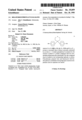
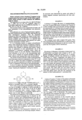
- the invention includes heterocyclic bis(4-hydroxyphenyl)cycloalkanes (hereinafter sometimes simply "heterocyclic bisphenols") having the formula ##STR2## wherein X is S, SO.[.,.]. .Iadd.or .Iaddend.SO 2 .[.or N-OCOR and R is a C 1-4 primary or secondary alkyl or C 6-8 aromatic radical.]..
- the X value in the heterocyclic bisphenols of this invention may be sulfur.[.,.]. .Iadd.or a sulfoxide or .Iaddend.sulfone group .[.or an acylated nitrogen atom.
- R may be an alkyl radical such as methyl, ethyl, 1-propyl, 2-propyl, 1-butyl, 2-butyl or 2-methylpropyl, or an aromatic radical such as phenyl, tolyl or xylyl. Methyl is preferred.]..
- the heterocyclic bisphenols of this invention in which X is sulfur .[.or acylated nitrogen.]. may be prepared by the reaction of phenol with tetrahydrothiopyran-4-one .[.or an acylated 4-piperidone.]. in the presence of an acidic catalyst.
- a mercaptan is preferably also present as a reaction promoter.
- the compounds in which X is sulfur may be converted to those in which X is SO and/or SO 2 by oxidation with a suitable oxidizing agent; for example, with a carboxylic peracid such as peracetic acid in acidic medium, typically glacial acetic acid.
- heterocyclic bisphenols of this invention is illustrated by the following examples. Molecular structures were determined by proton and carbon-13 nuclear magnetic resonance spectroscopy and mass spectrometry.
- heterocyclic bisphenols of this invention may be converted to polycarbonates by reaction with a carbonate source such as phosgene or dimethyl carbonate, using conventional techniques. These include melt polymerization, interfacial polymerization and interfacial conversion to bischloroformate followed by polymerization. Chain termination agents such as phenol may also be employed.
- Such polycarbonates are another aspect of the invention; they comprise heterocyclohexylidenebisphenol structural units of the formula ##STR3## wherein X is as previously defined.
- Polycarbonates of the invention in which X is SO and/or SO 2 may also be prepared from corresponding polycarbonates in which X is S by oxidation with a suitable oxidizing agent, typically a peracid.
- a suitable oxidizing agent typically a peracid.
- the polycarbonates of this invention include both homopolycarbonates and copolycarbonates.
- Copolycarbonates may include more than one molecular species of the heterocyclohexylidenebisphenol structural units. They may also contain units corresponding to the dihydroxy compounds disclosed by name or formula (generic or specific) in U.S. Pat. No. 4,217,438, the disclosure of which is incorporated by reference herein.
- Such copolycarbonates typically comprise about 25-75% by number of bis(4-hydroxybiphenylyl)alkane units, with the balance being other units.
- Said other units include those having the formula ##STR4## wherein each of A 1 and A 2 is a monocyclic divalent aromatic radical and Y is a bridging radical in which one or two atoms separate A 1 from A 2 .
- the free valence bonds in formula III are usually in the meta or para positions of A 1 and A 2 in relation to Y.
- the A 1 and A 2 values may be unsubstituted phenylene or substituted derivatives thereof, illustrative substituents (one or more) being alkyl, alkenyl, halo (especially chloro and/or bromo), nitro, alkoxy and the like. Unsubstituted phenylene radicals are preferred. Both A 1 and A 2 are preferably p-phenylene, although both may be o- or m-phenylene or one o- or m-phenylene and the other p-phenylene.
- the bridging radical, Y is one in which one or two atoms, preferably one, separate A 1 from A 2 . It is most often a hydrocarbon radical and particularly a saturated radical such as methylene, cyclohexylmethylene, 2-[2.2.1]-bicycloheptylmethylene, ethylene, isopropylidene, neopentylidene, cyclohexylidene, cyclopentadecylidene, cyclododecylidene or adamantylidene, especially a gem-alkylene (alkylidene) radical.
- a hydrocarbon radical and particularly a saturated radical such as methylene, cyclohexylmethylene, 2-[2.2.1]-bicycloheptylmethylene, ethylene, isopropylidene, neopentylidene, cyclohexylidene, cyclopentadecylidene, cyclododec
- unsaturated radicals and radicals which contain atoms other than carbon and hydrogen; for example, 2,2-dichloroethylidene, carbonyl, phthalidylidene, oxy, thio, sulfoxy and sulfone.
- unsaturated radicals and radicals which contain atoms other than carbon and hydrogen; for example, 2,2-dichloroethylidene, carbonyl, phthalidylidene, oxy, thio, sulfoxy and sulfone.
- the preferred units of formula III are 2,2-bis(4-phenylene)propane carbonate units, which are derived from bisphenol A and in which Y is isopropylidene and A 1 and A 2 are each p-phenylene.
- Phosgene was passed into the mixtures, with stirring, for 10 minutes to a total of 6% w/v, as the pH values of the aqueous phases were maintained between 10 and 11 by the addition of 10% aqueous sodium hydroxide solution.
- the mixtures were then purged with nitrogen for 15 minutes and the organic phases separated, washed twice with 3% aqueous hydrochloric acid solution and four times with water and dried over magnesium sulfate.
- the dried solutions were poured into methanol and the precipitated solids were redissolved in methylene chloride, precipitated by the addition of acetonitrile, redissolved again in methylene chloride and reprecipitated by the addition of methanol.
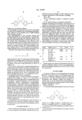
- the resulting copolycarbonates were dried to constant weight. Their identities and properties are listed in the following table.
Landscapes
- Chemical & Material Sciences (AREA)
- Organic Chemistry (AREA)
- Health & Medical Sciences (AREA)
- Chemical Kinetics & Catalysis (AREA)
- Medicinal Chemistry (AREA)
- Polymers & Plastics (AREA)
- Polyesters Or Polycarbonates (AREA)
- Heterocyclic Carbon Compounds Containing A Hetero Ring Having Oxygen Or Sulfur (AREA)
- Heterocyclic Compounds Containing Sulfur Atoms (AREA)
- Hydrogenated Pyridines (AREA)
Abstract
Description
______________________________________
Example Bisphenol, mole %
                      Mw       Mw/Mn  Tg, °C.
______________________________________
[4]3    Ex. 1, 100    50,000   1.91   209
[5]4    Ex. 1, 50     90,500   1.68   186
        Bisphenol A, 50
[6]5    Ex. 1, 50     --       --     234
        Ex. [3]2, 50
[7      Ex. 2, 100    --       --     221
8       Ex. 2, 50     70,000   1.74   207
        Bisphenol A, 50]
[9]6    Ex. [3]2, 50  50,800   1.57   185
        Bisphenol A, 50
______________________________________
Claims (4)
Priority Applications (1)
| Application Number | Priority Date | Filing Date | Title |
|---|---|---|---|
| US08/341,232 USRE35059E (en) | 1992-12-11 | 1994-11-17 | Bis(4-hydroxyphenyl)cycloalkanes |
Applications Claiming Priority (3)
| Application Number | Priority Date | Filing Date | Title |
|---|---|---|---|
| US07/989,316 US5300622A (en) | 1992-12-11 | 1992-12-11 | Polycarbonate from heterocyclic bis(4-hydroxyphenyl)cycloalkane |
| US08/132,979 US5306832A (en) | 1992-12-11 | 1993-10-07 | Heterocyclic bis(4-hydroxyphenyl(cycloalkanes and polycarbonates prepared therefrom |
| US08/341,232 USRE35059E (en) | 1992-12-11 | 1994-11-17 | Bis(4-hydroxyphenyl)cycloalkanes |
Related Parent Applications (2)
| Application Number | Title | Priority Date | Filing Date |
|---|---|---|---|
| US07/989,316 Division US5300622A (en) | 1992-12-11 | 1992-12-11 | Polycarbonate from heterocyclic bis(4-hydroxyphenyl)cycloalkane |
| US08/132,979 Reissue US5306832A (en) | 1992-12-11 | 1993-10-07 | Heterocyclic bis(4-hydroxyphenyl(cycloalkanes and polycarbonates prepared therefrom |
Publications (1)
| Publication Number | Publication Date |
|---|---|
| USRE35059E true USRE35059E (en) | 1995-10-10 |
Family
ID=25535003
Family Applications (3)
| Application Number | Title | Priority Date | Filing Date |
|---|---|---|---|
| US07/989,316 Expired - Lifetime US5300622A (en) | 1992-12-11 | 1992-12-11 | Polycarbonate from heterocyclic bis(4-hydroxyphenyl)cycloalkane |
| US08/132,979 Ceased US5306832A (en) | 1992-12-11 | 1993-10-07 | Heterocyclic bis(4-hydroxyphenyl(cycloalkanes and polycarbonates prepared therefrom |
| US08/341,232 Expired - Lifetime USRE35059E (en) | 1992-12-11 | 1994-11-17 | Bis(4-hydroxyphenyl)cycloalkanes |
Family Applications Before (2)
| Application Number | Title | Priority Date | Filing Date |
|---|---|---|---|
| US07/989,316 Expired - Lifetime US5300622A (en) | 1992-12-11 | 1992-12-11 | Polycarbonate from heterocyclic bis(4-hydroxyphenyl)cycloalkane |
| US08/132,979 Ceased US5306832A (en) | 1992-12-11 | 1993-10-07 | Heterocyclic bis(4-hydroxyphenyl(cycloalkanes and polycarbonates prepared therefrom |
Country Status (5)
| Country | Link |
|---|---|
| US (3) | US5300622A (en) |
| EP (1) | EP0606722B1 (en) |
| JP (1) | JP2593624B2 (en) |
| DE (1) | DE69305319T2 (en) |
| ES (1) | ES2092776T3 (en) |
Families Citing this family (1)
| Publication number | Priority date | Publication date | Assignee | Title |
|---|---|---|---|---|
| JP2004359667A (en) * | 2003-05-13 | 2004-12-24 | Honshu Chem Ind Co Ltd | New heterocyclic bis (substituted phenols) |
Citations (3)
| Publication number | Priority date | Publication date | Assignee | Title |
|---|---|---|---|---|
| US3437637A (en) * | 1964-03-17 | 1969-04-08 | Union Carbide Corp | Novel bisphenol polycarbonates |
| US3461098A (en) * | 1964-03-27 | 1969-08-12 | Union Carbide Corp | Polycarbonates of the bisphenol of cyclohexadiene |
| US5013849A (en) * | 1989-12-22 | 1991-05-07 | Eastman Kodak Company | Derivatives of 4H-thiopyran-1,1-dioxides useful as electron-transport agents in electrophotographic elements |
Family Cites Families (1)
| Publication number | Priority date | Publication date | Assignee | Title |
|---|---|---|---|---|
| US3395186A (en) * | 1964-03-17 | 1968-07-30 | Union Carbide Corp | Novel bisphenols of 1, 4-dimethylene cyclohexane |
-
1992
- 1992-12-11 US US07/989,316 patent/US5300622A/en not_active Expired - Lifetime
-
1993
- 1993-10-07 US US08/132,979 patent/US5306832A/en not_active Ceased
- 1993-12-07 DE DE69305319T patent/DE69305319T2/en not_active Expired - Fee Related
- 1993-12-07 ES ES93309802T patent/ES2092776T3/en not_active Expired - Lifetime
- 1993-12-07 EP EP93309802A patent/EP0606722B1/en not_active Expired - Lifetime
- 1993-12-10 JP JP5309604A patent/JP2593624B2/en not_active Expired - Lifetime
-
1994
- 1994-11-17 US US08/341,232 patent/USRE35059E/en not_active Expired - Lifetime
Patent Citations (3)
| Publication number | Priority date | Publication date | Assignee | Title |
|---|---|---|---|---|
| US3437637A (en) * | 1964-03-17 | 1969-04-08 | Union Carbide Corp | Novel bisphenol polycarbonates |
| US3461098A (en) * | 1964-03-27 | 1969-08-12 | Union Carbide Corp | Polycarbonates of the bisphenol of cyclohexadiene |
| US5013849A (en) * | 1989-12-22 | 1991-05-07 | Eastman Kodak Company | Derivatives of 4H-thiopyran-1,1-dioxides useful as electron-transport agents in electrophotographic elements |
Non-Patent Citations (4)
| Title |
|---|
| Diederich et al. "Designed water soluble macrocyclic esterases: from nonproductive to productive binding" J. Org. Chem. 53 2744-2757 (1988). |
| Diederich et al. "New water soluble macrocycles of paracyclophane type" Tetrahedron Lett. 23 3167-3170 (1982). |
| Diederich et al. Designed water soluble macrocyclic esterases: from nonproductive to productive binding J. Org. Chem. 53 2744 2757 (1988). * |
| Diederich et al. New water soluble macrocycles of paracyclophane type Tetrahedron Lett. 23 3167 3170 (1982). * |
Also Published As
| Publication number | Publication date |
|---|---|
| ES2092776T3 (en) | 1996-12-01 |
| EP0606722A1 (en) | 1994-07-20 |
| JP2593624B2 (en) | 1997-03-26 |
| DE69305319T2 (en) | 1997-04-30 |
| US5300622A (en) | 1994-04-05 |
| DE69305319D1 (en) | 1996-11-14 |
| EP0606722B1 (en) | 1996-10-09 |
| JPH06263863A (en) | 1994-09-20 |
| US5306832A (en) | 1994-04-26 |
Similar Documents
| Publication | Publication Date | Title |
|---|---|---|
| US4469861A (en) | Polycarbonate composition from branched chain dihydric phenol | |
| US4778936A (en) | Triphenol compound | |
| CA1064191A (en) | Branched, high-molecular weight thermoplastic polycarbonates | |
| ES2400338T3 (en) | Modified polycarbonates with improved surface properties | |
| US4277600A (en) | Tetraphenolic compounds and polycarbonates containing the same | |
| ES2283999T3 (en) | VERY RAMIFIED POLYCARBONATES AND COPOLICARBONATES WITH IMPROVED FLUIDITY CHARACTERISTICS, PRODUCTION AND USE OF THE SAME. | |
| US4514334A (en) | Polyphenolic compounds | |
| US4415725A (en) | Aromatic branched polycarbonate from tetraphenol | |
| US4426513A (en) | Polycarbonate resins based on polyphenolic compounds | |
| US5480959A (en) | Substantially pure bisphenols and polymers comprising bisphenols | |
| USRE35059E (en) | Bis(4-hydroxyphenyl)cycloalkanes | |
| US5319149A (en) | Bis[4'-(4-hydroxyphenyl)-phenyl]alkanes and polycarbonates prepared therefrom | |
| JPS6284035A (en) | Triphenol compound | |
| US4952664A (en) | Process for producing weather-resistant polycarbonate with triazine-imide chain terminator | |
| US5281688A (en) | Polycarbonate from 1,3-bis(4-hydroxyphenyl)-1,3-dialkylcyclohexanes | |
| US5863992A (en) | Tetraphenols and their use as polycarbonate branching agents | |
| US5342905A (en) | Process for making an ester containing polyether sulfone | |
| US5128437A (en) | Polycarbonate from bi(tetrahydrofuran)di phenol | |
| US5276213A (en) | Special dihydroxydiphenyl bicycloalkanes, their production and their use for the production of high molecular weight polycarbonates | |
| US4547564A (en) | Polyester carbonate from branched chain alkylidene dihydric phenol | |
| US4663434A (en) | Polycarbonates exhibiting improved heat resistance | |
| US4139687A (en) | Cyclic carbonate trimer of 2,2-bis(4-hydroxyphenyl)-1,1-dichloroethylene | |
| KR940005979B1 (en) | Polythiocarbonates and preparing process therefor | |
| JPH0339326A (en) | Copolycarbonate resin and production thereof | |
| JPS63108023A (en) | Novel polycarbonate polymer and its production |
Legal Events
| Date | Code | Title | Description |
|---|---|---|---|
| FEPP | Fee payment procedure |
Free format text: PAYOR NUMBER ASSIGNED (ORIGINAL EVENT CODE: ASPN); ENTITY STATUS OF PATENT OWNER: LARGE ENTITY |
|
| FEPP | Fee payment procedure |
Free format text: PAT HLDR NO LONGER CLAIMS SMALL ENT STAT AS INDIV INVENTOR (ORIGINAL EVENT CODE: LSM1); ENTITY STATUS OF PATENT OWNER: LARGE ENTITY |
|
| FPAY | Fee payment |
Year of fee payment: 4 |
|
| FEPP | Fee payment procedure |
Free format text: PAYER NUMBER DE-ASSIGNED (ORIGINAL EVENT CODE: RMPN); ENTITY STATUS OF PATENT OWNER: LARGE ENTITY |
|
| FEPP | Fee payment procedure |
Free format text: PAYOR NUMBER ASSIGNED (ORIGINAL EVENT CODE: ASPN); ENTITY STATUS OF PATENT OWNER: LARGE ENTITY |
|
| FPAY | Fee payment |
Year of fee payment: 8 |
|
| FPAY | Fee payment |
Year of fee payment: 12 |
|
| AS | Assignment |
Owner name: SABIC INNOVATIVE PLASTICS IP B.V., NETHERLANDS Free format text: ASSIGNMENT OF ASSIGNORS INTEREST;ASSIGNOR:GENERAL ELECTRIC COMPANY;REEL/FRAME:020820/0578 Effective date: 20070831 |
|
| AS | Assignment |
Owner name: CITIBANK, N.A., AS COLLATERAL AGENT,NEW YORK Free format text: SECURITY AGREEMENT;ASSIGNOR:SABIC INNOVATIVE PLASTICS IP B.V.;REEL/FRAME:021423/0001 Effective date: 20080307 Owner name: CITIBANK, N.A., AS COLLATERAL AGENT, NEW YORK Free format text: SECURITY AGREEMENT;ASSIGNOR:SABIC INNOVATIVE PLASTICS IP B.V.;REEL/FRAME:021423/0001 Effective date: 20080307 |