USPP9092P - Shadblow serviceberry plant named `Glenn Form` - Google Patents
Shadblow serviceberry plant named `Glenn Form` Download PDFInfo
- Publication number
- USPP9092P USPP9092P US08/159,822 US15982293V US9092P US PP9092 P USPP9092 P US PP9092P US 15982293 V US15982293 V US 15982293V US 9092 P US9092 P US 9092P
- Authority
- US
- United States
- Prior art keywords
- glenn
- serviceberry
- shadblow
- plant named
- dense
- Prior art date
- Legal status (The legal status is an assumption and is not a legal conclusion. Google has not performed a legal analysis and makes no representation as to the accuracy of the status listed.)
- Expired - Lifetime
Links
- 244000304226 Amelanchier arborea Species 0.000 title claims abstract description 10
- 201000010099 disease Diseases 0.000 claims abstract description 3
- 208000037265 diseases, disorders, signs and symptoms Diseases 0.000 claims abstract description 3
- 235000013399 edible fruits Nutrition 0.000 description 14
- 241000196324 Embryophyta Species 0.000 description 4
- 241000894007 species Species 0.000 description 4
- 240000003278 Amelanchier canadensis Species 0.000 description 2
- 235000007087 Amelanchier canadensis Nutrition 0.000 description 2
- 235000020030 perry Nutrition 0.000 description 2
- 230000000644 propagated effect Effects 0.000 description 2
- 241001164374 Calyx Species 0.000 description 1
- 241000221785 Erysiphales Species 0.000 description 1
- 240000001140 Mimosa pudica Species 0.000 description 1
- 230000011681 asexual reproduction Effects 0.000 description 1
- 238000013465 asexual reproduction Methods 0.000 description 1
- 239000003086 colorant Substances 0.000 description 1
- 230000010154 cross-pollination Effects 0.000 description 1
- 230000000694 effects Effects 0.000 description 1
- 230000035558 fertility Effects 0.000 description 1
- 239000003205 fragrance Substances 0.000 description 1
- 238000003898 horticulture Methods 0.000 description 1
- 230000001788 irregular Effects 0.000 description 1
- 239000000203 mixture Substances 0.000 description 1
- 230000002085 persistent effect Effects 0.000 description 1
- 235000021039 pomes Nutrition 0.000 description 1
- 230000033458 reproduction Effects 0.000 description 1
- 238000010008 shearing Methods 0.000 description 1
- 238000009966 trimming Methods 0.000 description 1
- 230000017260 vegetative to reproductive phase transition of meristem Effects 0.000 description 1
- 230000000007 visual effect Effects 0.000 description 1
Images
Classifications
-
- A—HUMAN NECESSITIES
- A01—AGRICULTURE; FORESTRY; ANIMAL HUSBANDRY; HUNTING; TRAPPING; FISHING
- A01H—NEW PLANTS OR NON-TRANSGENIC PROCESSES FOR OBTAINING THEM; PLANT REPRODUCTION BY TISSUE CULTURE TECHNIQUES
- A01H6/00—Angiosperms, i.e. flowering plants, characterised by their botanic taxonomy
- A01H6/74—Rosaceae, e.g. strawberry, apple, almonds, pear, rose, blackberries or raspberries
-
- A—HUMAN NECESSITIES
- A01—AGRICULTURE; FORESTRY; ANIMAL HUSBANDRY; HUNTING; TRAPPING; FISHING
- A01H—NEW PLANTS OR NON-TRANSGENIC PROCESSES FOR OBTAINING THEM; PLANT REPRODUCTION BY TISSUE CULTURE TECHNIQUES
- A01H5/00—Angiosperms, i.e. flowering plants, characterised by their plant parts; Angiosperms characterised otherwise than by their botanic taxonomy
- A01H5/02—Flowers
-
- Y—GENERAL TAGGING OF NEW TECHNOLOGICAL DEVELOPMENTS; GENERAL TAGGING OF CROSS-SECTIONAL TECHNOLOGIES SPANNING OVER SEVERAL SECTIONS OF THE IPC; TECHNICAL SUBJECTS COVERED BY FORMER USPC CROSS-REFERENCE ART COLLECTIONS [XRACs] AND DIGESTS
- Y10—TECHNICAL SUBJECTS COVERED BY FORMER USPC
- Y10T—TECHNICAL SUBJECTS COVERED BY FORMER US CLASSIFICATION
- Y10T82/00—Turning
- Y10T82/14—Axial pattern
- Y10T82/141—Axial pattern having transverse tool and templet guide
-
- Y—GENERAL TAGGING OF NEW TECHNOLOGICAL DEVELOPMENTS; GENERAL TAGGING OF CROSS-SECTIONAL TECHNOLOGIES SPANNING OVER SEVERAL SECTIONS OF THE IPC; TECHNICAL SUBJECTS COVERED BY FORMER USPC CROSS-REFERENCE ART COLLECTIONS [XRACs] AND DIGESTS
- Y10—TECHNICAL SUBJECTS COVERED BY FORMER USPC
- Y10T—TECHNICAL SUBJECTS COVERED BY FORMER US CLASSIFICATION
- Y10T82/00—Turning
- Y10T82/14—Axial pattern
- Y10T82/141—Axial pattern having transverse tool and templet guide
- Y10T82/147—Axial pattern having transverse tool and templet guide having hydraulic actuator
-
- Y—GENERAL TAGGING OF NEW TECHNOLOGICAL DEVELOPMENTS; GENERAL TAGGING OF CROSS-SECTIONAL TECHNOLOGIES SPANNING OVER SEVERAL SECTIONS OF THE IPC; TECHNICAL SUBJECTS COVERED BY FORMER USPC CROSS-REFERENCE ART COLLECTIONS [XRACs] AND DIGESTS
- Y10—TECHNICAL SUBJECTS COVERED BY FORMER USPC
- Y10T—TECHNICAL SUBJECTS COVERED BY FORMER US CLASSIFICATION
- Y10T82/00—Turning
- Y10T82/25—Lathe
- Y10T82/2585—Tool rest
- Y10T82/2591—Tool post
Definitions
- the present invention relates to a new and distinct variety of shadblow serviceberry plant, botanically known as Amelanchier canadensis, and known by the cultivar name Glenn Form.
- This new cultivar was discovered by me as a seedling selected from a large planting of seedlings in a cultivated area in Lake County, Ohio. This new cultivar stood out among its sister seedlings by virtue of its upright and dense branching habit and symmetrical growth form, the typical seedling being more broad spreading, open, and irregular in its branching habit.
- the growth habit of Glenn Form is that of a large shrub, having an ultimate height and spread of 11/2 to 6 meters.
- vegetatively propagated plants of Glenn Form typically 3 or more stems arise from the crown, diverge at first because of competition, and soon re-orient their growth in a vertical direction. Secondary stems and branches from these grow in a vertical direction.
- the angle described by the outer stems of a 21/2 meter tall nursery specimen is 45°-50°.
- Glenn Form has been vegetatively propagated by tissue culture, and plants produced in this manner consistently and uniformly exhibit the distinctive characteristics of the original selected seedling.
- Glenn Form will grow well on shaded sites, growth is more open and less dense under such conditions. Consequently for use as a hedge or screen, Glenn Form should be grown in full sun.
- the flowers and fruits of Glenn Form do not differ markedly from those typical of the species, except that the fruits are very sparsely borne. Less than 10% of inflorescences produce any mature fruit, and on those that do, only 2-3 fruits develop per raceme. In each fruit that develops, only 2-4 out of a potential 12 seeds are produced. The reasons for this lack of fertility are not known. Because sparse fruiting has been displayed in mixed plantings of Glenn Form with other seedlings of its species and cultivars of other serviceberry species which bloom at the same time and would provide ample opportunities for cross pollination, this is believed to be a consistent characteristic of this variety.
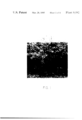
- the density and growth form of Glenn Form make it eminently suited for use as a hedge or screen. Further, the natural form of Glenn Form significantly reduces the labor required to maintain it as an acceptable hedge or screen. For example, the specimen illustrated in FIG. 1 of the accompanying drawing was produced with no shearing or trimming.
- Glenn Form The vegetative characteristics of Glenn Form are essentially similar to that of the species. However, the leaves of Glenn Form are substantially unaffected by powdery mildew, remaining clean and attached when other plants of this species are becoming defoliated. Fall leaf color is a mixture of bright red and green, yielding a mottled effect.
- Glenn Form has an upright and dense branching habit, dense foliage, regular growth form, and freedom from defoliating leaf diseases, which makes it particularly suitable for use as a hedge or screen.
- White Pillar In comparison to White Pillar disclosed in U.S. Plant Pat. No. 7,072, Glenn Form is upright but not columnar in habit, with an ultimate height of 41/2 to 6 meters, and has an internode spacing that is very tight, making it a dense foliage plant that is particularly suitable as a hedge or visual screen.
- White Pillar on the other hand, is columnar in habit, with an ultimate height of approximately 6 to 9 meters, and has a much wider internode spacing which gives it a more open look, making it more suitable for a windbreak or specimen tree.
- FIG. 1 is a colored photograph illustrating in perspective view the overall appearance of the cultivar Glenn Form in early spring during flowering
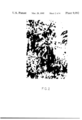
- FIG. 2 is a colored photograph illustrating a close-up view of the flowers of Glenn Form
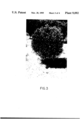
- FIG. 3 is a colored photograph illustrating in perspective view the overall appearance of Glenn Form in full leaf during the summer months.
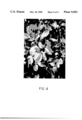
- FIG. 4 is a colored photograph illustrating a close-up view of the leaves of Glenn Form in the fall.
- Form/Size Large shrub (to 5 meters tall and wide) of symmetrical, upright form and dense growth.
- Branches Thin and smooth, with abundant lenticels, medium brown (RHS Brown Group 200C). 1-2 years twigs covered with a waxy bloom which later weathers off to reveal brown color. Internode length 10 to 20 mm.
- Leaves Ovate, 4-5 cm. in length, 2-2.5 cm. wide. Upper surface of leaves glabrous, color Green Group 137A, with a sheen. Lower surfaces of expanding leaves are pilose, becoming glabrous except on midrib, color Green Group 138A. Fall color Red Group 43A mottled with green. Margins are serrulate. Petiole 5-10 mm. long, eglandular.
- Fruits Sparsely borne, developing from a very few inflorescences, and only 2-3 fruits at most on a single raceme. Fruits are pomes, 7-8 mm. long and 9-10 mm. in diameter, with a persistent calyx. Fruits covered with a waxy bloom, changing from green to Red Group 45B to Red-Purple Group 59A. Fruits ripen 3rd-4th week in June. An individual fruit typically contains 2-4 fully developed seeds out of a potential 12 seeds.
Landscapes
- Life Sciences & Earth Sciences (AREA)
- Health & Medical Sciences (AREA)
- Physiology (AREA)
- Botany (AREA)
- Developmental Biology & Embryology (AREA)
- Environmental Sciences (AREA)
- Natural Medicines & Medicinal Plants (AREA)
- Breeding Of Plants And Reproduction By Means Of Culturing (AREA)
Abstract
A shadblow serviceberry plant named Glenn Form, a large shrub characterized by its upright and dense branching habit, dense foliage, regular growth form, and freedom from defoliating leaf diseases, making it particularly suitable for use as a hedge or screen.
Description
The present invention relates to a new and distinct variety of shadblow serviceberry plant, botanically known as Amelanchier canadensis, and known by the cultivar name Glenn Form.
This new cultivar was discovered by me as a seedling selected from a large planting of seedlings in a cultivated area in Lake County, Ohio. This new cultivar stood out among its sister seedlings by virtue of its upright and dense branching habit and symmetrical growth form, the typical seedling being more broad spreading, open, and irregular in its branching habit.
Asexual reproduction by tissue culture at Perry in Lake County, Ohio has reproduced the unique features of the new cultivar described hereafter through successive propagations.
The growth habit of Glenn Form is that of a large shrub, having an ultimate height and spread of 11/2 to 6 meters. In vegetatively propagated plants of Glenn Form, typically 3 or more stems arise from the crown, diverge at first because of competition, and soon re-orient their growth in a vertical direction. Secondary stems and branches from these grow in a vertical direction. The angle described by the outer stems of a 21/2 meter tall nursery specimen is 45°-50°. Glenn Form has been vegetatively propagated by tissue culture, and plants produced in this manner consistently and uniformly exhibit the distinctive characteristics of the original selected seedling.
Although Glenn Form will grow well on shaded sites, growth is more open and less dense under such conditions. Consequently for use as a hedge or screen, Glenn Form should be grown in full sun.
The flowers and fruits of Glenn Form do not differ markedly from those typical of the species, except that the fruits are very sparsely borne. Less than 10% of inflorescences produce any mature fruit, and on those that do, only 2-3 fruits develop per raceme. In each fruit that develops, only 2-4 out of a potential 12 seeds are produced. The reasons for this lack of fertility are not known. Because sparse fruiting has been displayed in mixed plantings of Glenn Form with other seedlings of its species and cultivars of other serviceberry species which bloom at the same time and would provide ample opportunities for cross pollination, this is believed to be a consistent characteristic of this variety. Since fruits of other serviceberry species are taken so rapidly by birds as they ripen, the display of fruit is not considered a significant ornamental characteristic of shadblow serviceberry palnts. The sparse production of fruit by Glenn Form is an advantage because of its attractiveness to birds and the resultant soiling of sidewalks, structures and vehicles as a result of their feeding will be minimized.
The density and growth form of Glenn Form make it eminently suited for use as a hedge or screen. Further, the natural form of Glenn Form significantly reduces the labor required to maintain it as an acceptable hedge or screen. For example, the specimen illustrated in FIG. 1 of the accompanying drawing was produced with no shearing or trimming.
The vegetative characteristics of Glenn Form are essentially similar to that of the species. However, the leaves of Glenn Form are substantially unaffected by powdery mildew, remaining clean and attached when other plants of this species are becoming defoliated. Fall leaf color is a mixture of bright red and green, yielding a mottled effect.
The following characteristics distinguish Glenn Form from other shadblow serviceberry plants:
1. Glenn Form has an upright and dense branching habit, dense foliage, regular growth form, and freedom from defoliating leaf diseases, which makes it particularly suitable for use as a hedge or screen.
2. In comparison to White Pillar disclosed in U.S. Plant Pat. No. 7,072, Glenn Form is upright but not columnar in habit, with an ultimate height of 41/2 to 6 meters, and has an internode spacing that is very tight, making it a dense foliage plant that is particularly suitable as a hedge or visual screen. White Pillar, on the other hand, is columnar in habit, with an ultimate height of approximately 6 to 9 meters, and has a much wider internode spacing which gives it a more open look, making it more suitable for a windbreak or specimen tree.
Referring now more particularly to the accompanying drawing:
FIG. 1 is a colored photograph illustrating in perspective view the overall appearance of the cultivar Glenn Form in early spring during flowering;
FIG. 2 is a colored photograph illustrating a close-up view of the flowers of Glenn Form;
FIG. 3 is a colored photograph illustrating in perspective view the overall appearance of Glenn Form in full leaf during the summer months; and
FIG. 4 is a colored photograph illustrating a close-up view of the leaves of Glenn Form in the fall.
All four drawing figures show the colors as true as is reasonably possible to obtain in colored reproductions of this type.
The following is a detailed description of my new and distinct variety of shadblow serviceberry produced and grown outdoors at Perry, in Lake County, Ohio. In all cases where color is different from other known shadblow serviceberry plants and is considered a distinguishing feature of this new variety, color references are made to The Royal Horticulture Society Colour Chart.
Parentage: Unknown--grown from commercial seed of Amelanchier canadensis.
Form/Size: Large shrub (to 5 meters tall and wide) of symmetrical, upright form and dense growth.
Hardiness: Hardy in USDA Hardiness Zone 4.
Growth rate: Moderate--A specimen 4 years old produces approximately 30 cm. of new growth in one year in Lake County, Ohio.
Stems: Smooth, light gray in color.
Branches: Thin and smooth, with abundant lenticels, medium brown (RHS Brown Group 200C). 1-2 years twigs covered with a waxy bloom which later weathers off to reveal brown color. Internode length 10 to 20 mm.
Leaves: Ovate, 4-5 cm. in length, 2-2.5 cm. wide. Upper surface of leaves glabrous, color Green Group 137A, with a sheen. Lower surfaces of expanding leaves are pilose, becoming glabrous except on midrib, color Green Group 138A. Fall color Red Group 43A mottled with green. Margins are serrulate. Petiole 5-10 mm. long, eglandular.
Flowers: Borne in upright racemes, 10-12 flowers per 3.5 cm. long raceme, in late April/early May in Lake County, Ohio. Individual flowers are 5-petalled, with white petals approximately 8 mm. long. Flowers are abundant, and have no fragrance.
Fruits: Sparsely borne, developing from a very few inflorescences, and only 2-3 fruits at most on a single raceme. Fruits are pomes, 7-8 mm. long and 9-10 mm. in diameter, with a persistent calyx. Fruits covered with a waxy bloom, changing from green to Red Group 45B to Red-Purple Group 59A. Fruits ripen 3rd-4th week in June. An individual fruit typically contains 2-4 fully developed seeds out of a potential 12 seeds.
Claims (1)
1. A shadblow serviceberry plant named Glenn Form, as described and illustrated, a large shrub characterized by its upright and dense branching habit, dense foliage, regular growth form, and freedom from defoliating leaf diseases.
Priority Applications (1)
| Application Number | Priority Date | Filing Date | Title |
|---|---|---|---|
| US08/159,822 USPP9092P (en) | 1993-12-01 | 1993-12-01 | Shadblow serviceberry plant named `Glenn Form` |
Applications Claiming Priority (1)
| Application Number | Priority Date | Filing Date | Title |
|---|---|---|---|
| US08/159,822 USPP9092P (en) | 1993-12-01 | 1993-12-01 | Shadblow serviceberry plant named `Glenn Form` |
Publications (1)
| Publication Number | Publication Date |
|---|---|
| USPP9092P true USPP9092P (en) | 1995-03-28 |
Family
ID=22574202
Family Applications (1)
| Application Number | Title | Priority Date | Filing Date |
|---|---|---|---|
| US08/159,822 Expired - Lifetime USPP9092P (en) | 1993-12-01 | 1993-12-01 | Shadblow serviceberry plant named `Glenn Form` |
Country Status (1)
| Country | Link |
|---|---|
| US (1) | USPP9092P (en) |
Citations (1)
| Publication number | Priority date | Publication date | Assignee | Title |
|---|---|---|---|---|
| USPP7072P (en) * | 1988-06-13 | 1989-12-12 | Newplant Associates | Amelanchier candensis "White Pillar" |
-
1993
- 1993-12-01 US US08/159,822 patent/USPP9092P/en not_active Expired - Lifetime
Patent Citations (1)
| Publication number | Priority date | Publication date | Assignee | Title |
|---|---|---|---|---|
| USPP7072P (en) * | 1988-06-13 | 1989-12-12 | Newplant Associates | Amelanchier candensis "White Pillar" |
Similar Documents
| Publication | Publication Date | Title |
|---|---|---|
| USPP9092P (en) | Shadblow serviceberry plant named `Glenn Form` | |
| US8507777B2 (en) | Guzmania hybrid named ‘TROPIX’ | |
| US7943837B2 (en) | Vriesea hybrid named ‘MUNDO’ | |
| USPP10423P (en) | Dogwood (Cornus florida) named `Am-erika Touch-O-Pink` | |
| USPP37068P2 (en) | Cornus plant named ‘Rutstar’ | |
| US6066788A (en) | Guzmania plant named `intro` | |
| USPP7608P (en) | Hibiscus plant named `Sweet Caroline` | |
| USPP36427P2 (en) | Anthurium plant named ‘AN2809193’ | |
| USPP12176P2 (en) | Guzmania plant named ‘Anton’ | |
| USPP35162P2 (en) | Anthurium plant named ‘AN2112420’ | |
| USPP35224P2 (en) | Anthurium plant named ‘AN2863066’ | |
| USPP34253P2 (en) | Anthurium plant named ‘AN2971079’ | |
| USPP34632P2 (en) | Anthurium plant named ‘AN2922932’ | |
| USPP33839P2 (en) | Thuja plant named ‘Quethucor’ | |
| USPP34473P2 (en) | Anthurium plant named ‘AN2169973’ | |
| USPP34728P2 (en) | Anthurium plant named ‘AN2265294’ | |
| US11653607B2 (en) | Gypsophila variety ‘DGYPSALBBF’ having acute inflorescence branching | |
| USPP34077P2 (en) | Anthurium plant named ‘AN2562165’ | |
| USPP33771P2 (en) | Anthurium plant named ‘ANTHGLAM’ | |
| USPP33431P2 (en) | Lomandra plant named ‘Arctic Frost’ | |
| USPP8858P (en) | Heuchera variety cv. Absi | |
| USPP31335P2 (en) | Anthurium plant named ‘ANTHAMYO’ | |
| USPP30967P2 (en) | Anthurium plant named ‘ANTHGLYNT’ | |
| USPP31489P2 (en) | Anthurium plant named ‘ANTHFANXOL’ | |
| USPP8518P (en) | Dogwood tree `Phillips Pink No. 1` |
Legal Events
| Date | Code | Title | Description |
|---|---|---|---|
| AS | Assignment |
Owner name: HERMAN LOSELY & SON, INC., OHIO Free format text: ASSIGNMENT OF ASSIGNORS INTEREST;ASSIGNOR:LOSELY, EDWARD;REEL/FRAME:006793/0432 Effective date: 19931106 |