USPP6809P - Rose plant named Weopop - Google Patents
Rose plant named Weopop Download PDFInfo
- Publication number
- USPP6809P USPP6809P US07/116,278 US11627887V US6809P US PP6809 P USPP6809 P US PP6809P US 11627887 V US11627887 V US 11627887V US 6809 P US6809 P US 6809P
- Authority
- US
- United States
- Prior art keywords
- yellow
- somewhat
- green
- moderately
- rose
- Prior art date
- Legal status (The legal status is an assumption and is not a legal conclusion. Google has not performed a legal analysis and makes no representation as to the accuracy of the status listed.)
- Expired - Lifetime
Links
- 241000220317 Rosa Species 0.000 title claims abstract description 11
- 235000002017 Zea mays subsp mays Nutrition 0.000 claims abstract description 5
- 241000482268 Zea mays subsp. mays Species 0.000 claims abstract description 5
- 241000196324 Embryophyta Species 0.000 claims description 6
- 210000004209 hair Anatomy 0.000 description 6
- 210000004907 gland Anatomy 0.000 description 5
- 241001164374 Calyx Species 0.000 description 2
- 241000109329 Rosa xanthina Species 0.000 description 2
- 235000004789 Rosa xanthina Nutrition 0.000 description 2
- 230000001154 acute effect Effects 0.000 description 2
- 235000009508 confectionery Nutrition 0.000 description 2
- 230000000694 effects Effects 0.000 description 2
- 239000003205 fragrance Substances 0.000 description 2
- 210000000056 organ Anatomy 0.000 description 2
- 230000001850 reproductive effect Effects 0.000 description 2
- 208000035240 Disease Resistance Diseases 0.000 description 1
- 241000221785 Erysiphales Species 0.000 description 1
- 102000011842 Serrate-Jagged Proteins Human genes 0.000 description 1
- 108010036039 Serrate-Jagged Proteins Proteins 0.000 description 1
- 230000011681 asexual reproduction Effects 0.000 description 1
- 238000013465 asexual reproduction Methods 0.000 description 1
- 230000034303 cell budding Effects 0.000 description 1
- 150000001875 compounds Chemical class 0.000 description 1
- 235000012907 honey Nutrition 0.000 description 1
- JEIPFZHSYJVQDO-UHFFFAOYSA-N iron(III) oxide Inorganic materials O=[Fe]O[Fe]=O JEIPFZHSYJVQDO-UHFFFAOYSA-N 0.000 description 1
- 230000001788 irregular Effects 0.000 description 1
- 210000001672 ovary Anatomy 0.000 description 1
- 239000000126 substance Substances 0.000 description 1
Images

Classifications
-
- A—HUMAN NECESSITIES
- A01—AGRICULTURE; FORESTRY; ANIMAL HUSBANDRY; HUNTING; TRAPPING; FISHING
- A01H—NEW PLANTS OR NON-TRANSGENIC PROCESSES FOR OBTAINING THEM; PLANT REPRODUCTION BY TISSUE CULTURE TECHNIQUES
- A01H6/00—Angiosperms, i.e. flowering plants, characterised by their botanic taxonomy
- A01H6/74—Rosaceae, e.g. strawberry, apple, almonds, pear, rose, blackberries or raspberries
- A01H6/749—Rosa, i.e. roses
-
- A—HUMAN NECESSITIES
- A01—AGRICULTURE; FORESTRY; ANIMAL HUSBANDRY; HUNTING; TRAPPING; FISHING
- A01H—NEW PLANTS OR NON-TRANSGENIC PROCESSES FOR OBTAINING THEM; PLANT REPRODUCTION BY TISSUE CULTURE TECHNIQUES
- A01H5/00—Angiosperms, i.e. flowering plants, characterised by their plant parts; Angiosperms characterised otherwise than by their botanic taxonomy
- A01H5/02—Flowers
Definitions
- the present invention relates to a new and distinct variety of rose plant of the miniature rose class, which was discovered and first asexually reproduced by the named inventors herein.
- the denomination of this new rose is "Weopop”.
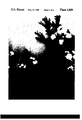
- the new variety cv. Weopop may be distinguished from other presently available commercial rose cultivars by the following combination of characteristics: its abundant production of flower clusters which provide a nearly continuous display of color in the garden, its bushy full slightly pendulous habit, its sweet honey-like fragrance, its above-average disease resistance in Canoga Park, Calif., and its clean white bloom color essentially as described and illustrated herein.
- Asexual reproduction by budding of the new variety as performed in San Bernardino County, Calif. shows that the foregoing and other distinguishing characteristics come true to form and are established and transmitted through succeeding propagations.
- the new rose may be distinguished from its unpatented parent, "Popcorn” by the following combination of characteristics: significantly larger leaves, significantly larger flower size, and significantly larger overall habit essentially as described and illustrated herein.
- Flower size of the parent “Popcorn” is 1.5 to 2 cm. and flower size of the new variety is 2.5 to 3 cm.
- the new variety usually bears several flowers per stem. Flowers are borne in irregular pyramidal clusters on normal strength medium long stems for the class. Outdoors the plant blooms very abundantly and nearly continuously during the growing season. The flowers have a moderate sweet honey fragrance.
- the peduncle is of average length for the class, of slender to average caliper, and usually erect. It is almost entirely smooth with few stipitate glands, and numerous fine hairs. Peduncle color is between Yellow-Green 144B and Yellow-Green 146C.
- the bud Before the calyx breaks, the bud is of small to medium size for the class, moderatedly short in length, and pointed to globular in shape. The surface of the bud bears numerous stipitate glands usually with slender foliaceous parts extending beyond the tip of the bud equal to 1/2 or more of its length. Bud color before sepals fall, is between Yellow-Green 144B and Yellow-Green 146C.
- the inner surface of the sepals is lined with fine wooly tomentum; sepal margins are lined with few finely cut foliaceous parts and some stipitate glands and hairs.
- the bud As the first petal opens, the bud is moderately small to medium size for the class, somewhat short to medium length, and somewhat pointed to globular in form. The color of the outside and inside surfaces of the newly opened petals is near Yellow-White 158B. The bud does open up well and is not prevented from opening by wet, cold, hot, or dry weather.
- the bloom When fully open, the bloom is somewhat small to medium size for the class, ranging from 2.5 to 3.0 cms. in diameter. Petalage is double with 25 to 28 petals and 1 to 4 petaloids arranged regularly. When partially open, the bloom form is moderately cupped to globular, and the petals are somewhat loosely cupped. When fully open, the bloom form is somewhat more flat to cupped and the petals are more flat to undulated.
- the petals are of moderately light substance and of medium thickness, with inside surfaces slightly satiny and outside surfaces slightly shiny to satiny.
- the outside petals are somewhat narrowly obovate in shape with apices somewhat rounded and usually slightly notched with one notch.
- the inside petals are somewhat narrowly obovate to oblanceolate in shape with apices usually slightly notched with one to two notches.
- the outside and inside surface of the outside, intermediate and inner petals is between Yellow-White 158D and White 155B.
- the general color effect of the newly opened flower is between Yellow-White 158D and White 155B.
- the outside and inside surface of the outside and inner petals is between White 155B and White 155D.
- the general color effect of the three day old flower is between White 155B and White 155D.
- the petals On the spent bloom, the petals usually drop off cleanly and are not particularly affected by cold, hot, wet, or dry weather.
- Stamens are few in number and are arranged irregularly about the pistil; several are mixed with petaloids.
- the filaments are of moderately short length, many without anthers.
- the anthers are moderately small for the class and all open approximately at the same time.
- Another color is near Yellow-Orange 21B when immature and near Yellow 13A at maturity. Pollen is somewhat sparse and near Yellow 13C in color.
- Pistils are few in number (approximately 14). The styles are somewhat uneven, very short in length, somewhat average caliper, and moderately bunched. Stigma color is near Green-Yellow 1C. Ovaries are usually all enclosed in the calyx.
- the compound leaves are usually comprised of three to seven and sometimes nine or more leaflets and are borne abundantly.
- the leaves are moderately large for the class, distinctively larger than its parent "Popcorn", somewhat heavy to crisp in texture, and semi-glossy in finish.
- the leaflets are shaped moderately oval with somewhat acute to mucronate apices and somewhat acute bases. Their margins are usually simply serrate.
- the upper surface of the mature leaf is between Green 137A and Yellow-Green 147A.
- the under surface of the mature leaf is between Green 138B and Yellow-Green 148B.
- the upper surface of the young leaf is between Yellow-Green 146A and Yellow-Green 147A.
- the under surface of the young leaf is near Yellow-Green 147B.
- the rachis is somewhat light to average in caliper and moderately grooved with some stipitate glands and hairs on the edges of the upper side.
- the under side of the rachis is somewhat smooth with few stipitate glands and small prickles.
- the stipules are of moderately long length with medium width moderately short points that usually turn out at an angle of more than 90 degrees.
- the plant displays an above average degree of resistance to powdery mildew and rust as compared to other commercial varieties grown under comparable conditions.
- the new plant has a large growth habit for a cultivar of this class and may achieve growth as much as twice the height of the parent plant. It displays very vigorous growth and the canes are of light to medium caliper for the class.
- the major stems are new Yellow-Green 146D. They bear few large prickles which are moderately long for the class. The large prickles are hooked moderately downward with a somewhat long narrow base; prickle color is near Greyed-Orange 165B. The major stem bears no small prickles and no hairs.
- the branches are between Yellow-Green 144A and Yellow-Green 147A. They bear few large prickles which are moderately long for the class. The large prickles are hooked moderately downward with a somewhat long narrow base; prickle color is near Greyed-Yellow 161B. The branches bear no small prickles and no hairs.
- the new shoots are between Yellow-Green 144B and Yellow-Green 147C. They bear few large prickles which are moderately long for the class. The large prickles are hooked moderately downward with a somewhat long narrow base; prickle color is near Greyed-Orange 165B. The shoots bear no small prickles and no hairs.
Landscapes
- Life Sciences & Earth Sciences (AREA)
- Health & Medical Sciences (AREA)
- Physiology (AREA)
- Botany (AREA)
- Developmental Biology & Embryology (AREA)
- Environmental Sciences (AREA)
- Natural Medicines & Medicinal Plants (AREA)
- Breeding Of Plants And Reproduction By Means Of Culturing (AREA)
Abstract
Description
Claims (1)
Priority Applications (1)
| Application Number | Priority Date | Filing Date | Title |
|---|---|---|---|
| US07/116,278 USPP6809P (en) | 1987-11-02 | 1987-11-02 | Rose plant named Weopop |
Applications Claiming Priority (1)
| Application Number | Priority Date | Filing Date | Title |
|---|---|---|---|
| US07/116,278 USPP6809P (en) | 1987-11-02 | 1987-11-02 | Rose plant named Weopop |
Publications (1)
| Publication Number | Publication Date |
|---|---|
| USPP6809P true USPP6809P (en) | 1989-05-23 |
Family
ID=22366235
Family Applications (1)
| Application Number | Title | Priority Date | Filing Date |
|---|---|---|---|
| US07/116,278 Expired - Lifetime USPP6809P (en) | 1987-11-02 | 1987-11-02 | Rose plant named Weopop |
Country Status (1)
| Country | Link |
|---|---|
| US (1) | USPP6809P (en) |
-
1987
- 1987-11-02 US US07/116,278 patent/USPP6809P/en not_active Expired - Lifetime
Similar Documents
| Publication | Publication Date | Title |
|---|---|---|
| USPP20767P3 (en) | Floribunda rose named ‘Sunstar’ | |
| USPP9389P (en) | Hybrid Tea rose plant named `Wekjoe` | |
| USPP5519P (en) | Hybrid tea rose plant vc. Macauck | |
| USPP6809P (en) | Rose plant named Weopop | |
| USPP9718P (en) | Hybrid Tea rose plant named `Fryxotic` | |
| USPP10126P (en) | Floribunda rose plant variety named `Wekplapep` | |
| USPP9161P (en) | Floribunda rose plant named Harwelcome | |
| USPP35384P2 (en) | Hybrid tea rose plant named ‘WEKmamoprela’ | |
| USPP8020P (en) | Hybrid miniature rose plant named Benfig | |
| USPP8183P (en) | Hybrid Floribunda rose plant named Wekuz | |
| USPP10072P (en) | Floribunda rose plant variety named `Wekcryplag` | |
| USPP11384P (en) | Hybrid tea rose plant named `WEKcryland` | |
| USPP7588P (en) | Hybrid miniature rose plant named "Weksybil" | |
| USPP15334P2 (en) | Floribunda rose plant named ‘FRYcentury’ | |
| USPP6953P (en) | Hybrid floribunda rose plant | |
| USPP10478P (en) | Floribunda rose plant named `Harflow` | |
| USPP9211P (en) | Shrub rose plant named `Frytrooper` | |
| USPP7580P (en) | Hybrid miniature rose plant named "Weklips" | |
| USPP10070P (en) | Shrub rose plant variety named `Wekboroco` | |
| USPP9719P (en) | Grandiflora rose plant named `Wekblagab` | |
| USPP9071P (en) | Hybrid tea rose plant named Wekfrag | |
| USPP16739P3 (en) | Climbing shrub rose plant named ‘Meiviowit’ | |
| USPP10923P (en) | Shrub rose plant named `Pouldron` | |
| USPP7986P (en) | Hybrid miniature rose plant named Wekhelen | |
| USPP10639P (en) | Climbing rose plant named `Poulclimb` |
Legal Events
| Date | Code | Title | Description |
|---|---|---|---|
| AS | Assignment |
Owner name: WEEKS WHOLESALE ROSE GROWER, INC., 926 W. PHILADEL Free format text: ASSIGNMENT OF ASSIGNORS INTEREST.;ASSIGNORS:FONDA, HENRY;DESAMERO, LUIS;REEL/FRAME:004838/0206 Effective date: 19880207 Owner name: WEEKS WHOLESALE ROSE GROWER, INC.,CALIFORNIA Free format text: ASSIGNMENT OF ASSIGNORS INTEREST;ASSIGNORS:FONDA, HENRY;DESAMERO, LUIS;REEL/FRAME:004838/0206 Effective date: 19880207 |
|
| AS | Assignment |
Owner name: TENNENBAUM CAPITAL PARTNERS, LLC, CALIFORNIA Free format text: ASSIGNMENT OF ASSIGNORS INTEREST;ASSIGNOR:WEEKS WHOLESALE ROSE GROWER;REEL/FRAME:014394/0173 Effective date: 20030630 |
|
| AS | Assignment |
Owner name: WEEKS WHOLESALE ROSE GROWER, CALIFORNIA Free format text: RELEASE OF ASSIGNMENT FOR SECURITY;ASSIGNOR:TENNENBAUM CAPITAL PARTNERS, LLC, AS COLLATERAL AGENT;REEL/FRAME:016967/0328 Effective date: 20050930 |
|
| AS | Assignment |
Owner name: HARRIS TRUST AND SAVINGS BANK, AS AGENT, ILLINOIS Free format text: SECURITY AGREEMENT;ASSIGNOR:WEEKS WHOLESALE ROSE GROWER;REEL/FRAME:022813/0128 Effective date: 20020124 |
|
| AS | Assignment |
Owner name: IGP ACQUISITION LLC, INDIANA Free format text: ASSIGNMENT OF ASSIGNORS INTEREST;ASSIGNOR:WEEKS WHOLESALE ROSE GROWER, INC.;REEL/FRAME:026393/0046 Effective date: 20110526 |