USPP35076P2 - Salvia plant named ‘ARGGR17011’ - Google Patents
Salvia plant named ‘ARGGR17011’ Download PDFInfo
- Publication number
- USPP35076P2 USPP35076P2 US17/887,391 US202217887391V USPP35076P2 US PP35076 P2 USPP35076 P2 US PP35076P2 US 202217887391 V US202217887391 V US 202217887391V US PP35076 P2 USPP35076 P2 US PP35076P2
- Authority
- US
- United States
- Prior art keywords
- color
- arggr17011
- length
- average
- plant
- Prior art date
- Legal status (The legal status is an assumption and is not a legal conclusion. Google has not performed a legal analysis and makes no representation as to the accuracy of the status listed.)
- Active
Links
- 241001072909 Salvia Species 0.000 title claims abstract description 11
- 241000196324 Embryophyta Species 0.000 abstract description 18
- 238000003892 spreading Methods 0.000 abstract description 5
- 210000004209 hair Anatomy 0.000 description 8
- 235000017276 Salvia Nutrition 0.000 description 7
- 241001164374 Calyx Species 0.000 description 3
- 240000001140 Mimosa pudica Species 0.000 description 3
- BQCADISMDOOEFD-UHFFFAOYSA-N Silver Chemical compound [Ag] BQCADISMDOOEFD-UHFFFAOYSA-N 0.000 description 3
- 238000005520 cutting process Methods 0.000 description 3
- 230000000762 glandular Effects 0.000 description 3
- 239000000203 mixture Substances 0.000 description 3
- 239000011122 softwood Substances 0.000 description 3
- 235000004062 Salvia guaranitica Nutrition 0.000 description 2
- 241001184577 Salvia guaranitica Species 0.000 description 2
- 235000010563 Salvia orbignaei Nutrition 0.000 description 2
- 241000862247 Salvia orbignaei Species 0.000 description 2
- 241000607479 Yersinia pestis Species 0.000 description 2
- 230000001488 breeding effect Effects 0.000 description 2
- 239000003086 colorant Substances 0.000 description 2
- 201000010099 disease Diseases 0.000 description 2
- 208000037265 diseases, disorders, signs and symptoms Diseases 0.000 description 2
- 230000007613 environmental effect Effects 0.000 description 2
- 239000002689 soil Substances 0.000 description 2
- 230000017260 vegetative to reproductive phase transition of meristem Effects 0.000 description 2
- 240000007108 Fuchsia magellanica Species 0.000 description 1
- 101001018064 Homo sapiens Lysosomal-trafficking regulator Proteins 0.000 description 1
- 102100033472 Lysosomal-trafficking regulator Human genes 0.000 description 1
- 244000038561 Modiola caroliniana Species 0.000 description 1
- 235000010703 Modiola caroliniana Nutrition 0.000 description 1
- 230000001154 acute effect Effects 0.000 description 1
- 238000004140 cleaning Methods 0.000 description 1
- 238000001816 cooling Methods 0.000 description 1
- 235000019628 coolness Nutrition 0.000 description 1
- 238000009826 distribution Methods 0.000 description 1
- 235000013399 edible fruits Nutrition 0.000 description 1
- 239000003205 fragrance Substances 0.000 description 1
- 238000010413 gardening Methods 0.000 description 1
- 230000000977 initiatory effect Effects 0.000 description 1
- 210000000056 organ Anatomy 0.000 description 1
- 210000001672 ovary Anatomy 0.000 description 1
- 238000004382 potting Methods 0.000 description 1
- 230000001850 reproductive effect Effects 0.000 description 1
- 230000021749 root development Effects 0.000 description 1
Images

Classifications
-
- A—HUMAN NECESSITIES
- A01—AGRICULTURE; FORESTRY; ANIMAL HUSBANDRY; HUNTING; TRAPPING; FISHING
- A01H—NEW PLANTS OR NON-TRANSGENIC PROCESSES FOR OBTAINING THEM; PLANT REPRODUCTION BY TISSUE CULTURE TECHNIQUES
- A01H6/00—Angiosperms, i.e. flowering plants, characterised by their botanic taxonomy
- A01H6/50—Lamiaceae, e.g. lavender, mint or chia
- A01H6/508—Salvia sp., e.g. chia
-
- A—HUMAN NECESSITIES
- A01—AGRICULTURE; FORESTRY; ANIMAL HUSBANDRY; HUNTING; TRAPPING; FISHING
- A01H—NEW PLANTS OR NON-TRANSGENIC PROCESSES FOR OBTAINING THEM; PLANT REPRODUCTION BY TISSUE CULTURE TECHNIQUES
- A01H6/00—Angiosperms, i.e. flowering plants, characterised by their botanic taxonomy
- A01H6/50—Lamiaceae, e.g. lavender, mint or chia
Definitions
- Botanical classification Salvia guaranitica x Salvia orbignaei.
- the present invention relates to a new and distinct cultivar of Salvia plant, botanically of hybrid origin and known as Salvia ‘ARGGR17011’ and will be referred to hereinafter by its cultivar name, ‘ARGGR17011’.
- ‘ARGGR17011’ is an herbaceous perennial grown for landscape use and for use as a container plant.
- the new invention arose from an ongoing controlled breeding program in Mar del Plata, Argentina.
- the goal of the breeding program was to develop a new cultivar of Salvia with a bushy upright plant habit, smaller leaves, pink flowers and pale green foliage.
- the female parent of ‘ARGGR17011’ differs from ‘ARGGR17011’ in having a taller and less compact plant habit, flowers that are blue to mauve in color, and foliage that is dark green in color.
- the male parent of ‘ARGGR17011’ differs from ‘ARGGR17011’ in having woody stems (not herbaceous), inflorescences with flowers that are less congested, and leaves that are more narrow. ‘ARGGR17011’ can be compared to the Salvia cultivars ‘Amante’ (U.S. Plant Pat. No. 31,104) and ‘Black and Bloom’ (U.S. Plant Pat. No. 27,183).
- ‘Amante’ differs from ‘ARGGR17011’ in having a non-spreading plant habit, calyxes that are almost black in color, and flowers that are fuchsia to red in color. ‘Black and Bloom’ differs from ‘ARGGR17011’ in having a non-spreading plant habit, calyxes that are almost black in color, and flowers that are blue in color.
- Publications include website listings by Crocus co., Thompson & Morgan, Plantagogo, Hayloft Plants, Middleton Nurseries, Van Meuwen, Cowell's Garden Center, Western Salvias, economy and Viveros, National Gardening Association, Coolings Co, Scog (Twitter), Hardys Cottage Garden Plants, Barnes Nurseries, Vitroflora, Knight Garden Centers, The English Garden Co., Genesis Marketing Co., RHS Plants, Chelsea Flower Show, Camolin Potting Shed, Dobies Co., JP Parkers, and Le Chatel des vivaces.
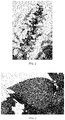
- FIG. 1 provides a side view of ‘ARGGR17011’ in bloom.
- FIG. 2 provides a close-up view of a flowering stem of ‘ARGGR17011’.
- FIG. 3 provides a close-up view of the foliage of ‘ARGGR17011’.
Landscapes
- Health & Medical Sciences (AREA)
- Life Sciences & Earth Sciences (AREA)
- Natural Medicines & Medicinal Plants (AREA)
- Physiology (AREA)
- Botany (AREA)
- Developmental Biology & Embryology (AREA)
- Environmental Sciences (AREA)
- Breeding Of Plants And Reproduction By Means Of Culturing (AREA)
Abstract
A new cultivar of hybrid Salvia plant named ‘ARGGR17011’ that is characterized by its bushy upright plant habit, its leaves that are small in size, its flowers that are pink in color, its foliage that is pale green in color, and its clump-forming growth habit with short, spreading rhizomes.
Description
Botanical classification: Salvia guaranitica x Salvia orbignaei.
Variety denomination: ‘ARGGR17011’.
The present invention relates to a new and distinct cultivar of Salvia plant, botanically of hybrid origin and known as Salvia ‘ARGGR17011’ and will be referred to hereinafter by its cultivar name, ‘ARGGR17011’. ‘ARGGR17011’ is an herbaceous perennial grown for landscape use and for use as a container plant.
The new invention arose from an ongoing controlled breeding program in Mar del Plata, Argentina. The goal of the breeding program was to develop a new cultivar of Salvia with a bushy upright plant habit, smaller leaves, pink flowers and pale green foliage.
The Inventor made a controlled cross in March of 2016 in Mar del Plata, Argentina between Salvia guaranitica ‘Amistad’ (U.S. Plant Pat. No. 23,578) as the female parent and an unnamed and unpatented plant of Salvia orbignaei as the male parent. ‘ARGGR17011’ was selected in March of 2017 as a single unique plant amongst the resulting seedlings.
Asexual propagation of the new cultivar was first accomplished by softwood stem cuttings in Mar del Plata, Argentina in March 2017 under the direction the Inventor. Asexual propagation by softwood stem cuttings has determined that the characteristics of the new cultivar are stable and are reproduced true to type in successive generations.
The following traits have been repeatedly observed and represent the characteristics of the new cultivar. These attributes in combination distinguish ‘ARGGR17011’ as a unique cultivar of Salvia.
-
- 1. ‘ARGGR17011’ exhibits a bushy upright plant habit.
- 2. ‘ARGGR17011’ exhibits leaves that are small in size.
- 3. ‘ARGGR17011’ exhibits flowers that are pink in color.
- 4. ‘ARGGR17011’ exhibits foliage that is pale green in color.
- 5. ‘ARGGR17011’ exhibits clump-forming growth habit with short, spreading rhizomes.
The female parent of ‘ARGGR17011’ differs from ‘ARGGR17011’ in having a taller and less compact plant habit, flowers that are blue to mauve in color, and foliage that is dark green in color. The male parent of ‘ARGGR17011’ differs from ‘ARGGR17011’ in having woody stems (not herbaceous), inflorescences with flowers that are less congested, and leaves that are more narrow. ‘ARGGR17011’ can be compared to the Salvia cultivars ‘Amante’ (U.S. Plant Pat. No. 31,104) and ‘Black and Bloom’ (U.S. Plant Pat. No. 27,183). ‘Amante’ differs from ‘ARGGR17011’ in having a non-spreading plant habit, calyxes that are almost black in color, and flowers that are fuchsia to red in color. ‘Black and Bloom’ differs from ‘ARGGR17011’ in having a non-spreading plant habit, calyxes that are almost black in color, and flowers that are blue in color.
The Applicant asserts that no publications or advertisements relating to sales, offers for sale, or public distribution occurred more than one year prior to the effective filing date of this application. Any information about the claimed plant would have been obtained from a direct or indirect disclosure from the Inventor. The Applicant claims a prior art exemption under 35 U.S.C. 102(b)(1) for disclosure and/or sales that fall within a one-year grace period prior to the filing date. Publications include website listings by Crocus co., Thompson & Morgan, Plantagogo, Hayloft Plants, Middleton Nurseries, Van Meuwen, Cowell's Garden Center, Western Salvias, Economy and Viveros, National Gardening Association, Coolings Co, Scog (Twitter), Hardys Cottage Garden Plants, Barnes Nurseries, Vitroflora, Knight Garden Centers, The English Garden Co., Genesis Marketing Co., RHS Plants, Chelsea Flower Show, Camolin Potting Shed, Dobies Co., JP Parkers, and Le Chatel des vivaces.
The accompanying color photographs illustrate the overall appearance and distinct characteristics of a 6-month-old plant of the new Salvia as grown outdoors in a 17-cm container in Lisse, The Netherlands.
The photograph in FIG. 1 provides a side view of ‘ARGGR17011’ in bloom.
The photograph in FIG. 2 provides a close-up view of a flowering stem of ‘ARGGR17011’.
The photograph in FIG. 3 provides a close-up view of the foliage of ‘ARGGR17011’.
The colors in the photographs may differ slightly from the color values cited in the detailed botanical description, which accurately describe the colors of the new Salvia.
The following is a detailed description of the new cultivar of 6-month-old plants as grown outdoors in 17-cm containers in Lisse, The Netherlands. The phenotype of the new cultivar may vary with variations in environmental, climatic, and cultural conditions, as it has not been tested under all possible environmental conditions. The color determination is in accordance with The 2015 Colour Chart of The Royal Horticultural Society, London, England, except where general color terms of ordinary dictionary significance are used.
- General description:
-
- Blooming period.—May to October in the Netherlands.
- Plant type.—Herbaceous perennial.
- Plant habit.—Bushy, upright, spreading with short rhizomes.
- Plant size.—An average of 51 cm in height (soil level to top of floral plane), 70 cm in height (soil level to top of floral plane) and 110 cm in spread as a 6-month old plant.
- Hardiness.—At least in U.S.D.A. Zones 8 to 10.
- Diseases and pests.—No susceptibility or resistance to diseases or pests has been observed.
- Root description.—Fibrous on short rhizomes.
- Propagation.—Softwood stem cuttings.
- Growth rate.—Moderately vigorous.
- Root development.—2 weeks for root initiation and about 4 weeks to produce a fully young plant.
-
- Stem description:
-
- Shape.—Quadrangular.
- Stem color.—New growth; 143B, mature stems; 144A, single axillary stripe 147A.
- Stem size.—Average of 52 cm in length (excluding inflorescence), 8 mm in diameter.
- Stem surface.—Moderately glossy, moderately covered with short hairs, average of 1.5 mm in length, transparent and NN155D in color.
- Stem aspect.—Average of 65°.
- Stem strength.—Strong.
- Internode length.—Average of 5.8 cm.
- Branching.—Average of 2 primary branches, 9 secondary branches.
-
- Foliage description:
-
- Leaf shape.—Broadly ovate.
- Leaf division.—Simple.
- Leaf base.—Truncate.
- Leaf apex.—Acute.
- Leaf venation.—Pinnate, 146D in color on upper surface, 145A in color on lower surface.
- Leaf margins.—Serrate.
- Leaf arrangement.—Opposite.
- Leaf attachment.—Petiolate.
- Leaf surface.—Upper surface moderately glossy, and moderately covered with very short hairs, average of 0.3 mm in length, too small to measure color, lower surface matte, both sides rugose, moderately covered with very short hairs; 0.2 mm in length, too small to measure color.
- Leaf size.—Up to 11 cm in length and 7.3 cm in width.
- Leaf color.—Young upper surface 139A, young lower surface 147B, mature upper surface NN137A and 147A, mature lower surface 147B.
- Petioles.—Average of 3.9 cm in length, 2 mm in width at widest point, strong, color; upper surface 148C, margins 148A, lower surface 143C and 144B, upper surface slightly glossy, lower surface matte.
-
- Inflorescence description:
-
- Inflorescence type.—Terminal verticillaster.
- Lastingness of inflorescence.—Individual flowers average of 10 days, very freely flowering, self-cleaning.
- Inflorescence size.—An average of 38.8 cm in height and 7.6 cm in width.
- Flower type.—Single, labiate.
- Flower number.—An average of 112 flowers per inflorescence, quantity of flowers and buds per plant 3,000.
- Flower aspect.—Outward.
- Flower fragrance.—None.
- Flower buds.—Oblanceolate to narrow obovate in shape, average of 1.8 cm in length and 5.5 mm in diameter, color; 61A, immature sepals 146A, top a blend of 200A and 203B, base 143B, surface is matte and moderately pubescent with short glandular hairs; average of 0.5 mm in length, too small to measure color.
- Flower size.—1.1 cm in diameter (horizontal), 1.5 cm in diameter (vertical), depth 4.4 cm, throat diameter 3 mm, tube 2.5 cm in length and 9 mm in diameter.
- Peduncle (Rachis).—Quadrangulate, an average of 38.2 cm in length and 3 mm in width, held in an average angle of 35°, color 146D, tinged N186C, strong, surface is slightly glossy, moderately covered with very short hairs; 0.75 mm in length, N155A in color.
- Pedicels.—An average of 6 mm in length and 1 mm in width, held in an average angle of 30°, 148A in color, moderately strong, surface is matte and densely covered with very short hairs; 0.2 mm in length, too small to measure color.
- Calyx.—Campanulate, about 1.6 cm in length and 6 mm in diameter.
- Sepals.—2, oblanceolate in shape, fused, 1.6 cm in length, 7 mm in width, apex acute, tip of sepal cleft, upper surface smooth, glabrous, matte, lower surface matte and moderately covered with very short glandular hairs, 0.5 mm in length and too small to measure color, color: upper surface when opening and fully open 146B to 146D, tinged at the top a blend of 147A and 200A, lower surface when opening and fully open; 146A, tinged towards the top a blend of 200A and 203B, immature sepals 143B.
- Petals.—Labiate, 1 upper lip, 1 lower lip, average of 2 per flower, 1 whorl, lower 50% fused, color: when opening and fully open upper surface; upper lip 70B, lower lip 72C, when opening and fully open lower surface; 71D, throat color; 75A, tube color; 70B, upper lip; 4 mm in length, 4 mm in width, obovate in shape and folded, emarginate tip, fused into tube, entire, non-undulate, upper surface glabrous, slightly velvety, very slightly glossy, lower surface very slightly velvety, moderately covered with pubescent, short glandular hairs, 0.3 mm in length, 64A in color, lower lip; 3.5 cm in length, 1.1 cm in width, broadly obovate in shape with a single obovate lobe on each side, emarginate tip, fused into tube, entire, medium undulate, upper surface glabrous, slightly velvety, very slightly glossy, lower surface very slightly velvety.
-
- Reproductive organs:
-
- Gynoecium.—Pistil; 1, average of 4.4 cm in length, style; 8 mm in length, 73C, base 155A, stigma; 4 mm in diameter, cleft, decurrent in shape, 77A in color, ovary; 151D in color.
- Androecium.—Stamens; 2, filaments; 75B in color, average of 1.4 cm in length, anthers; narrow oblong, dorsifixed, 5 mm in length, 0.75 mm in width, 177D, pollen; low, 159D in color.
- Fruit and seed.—None observed to date.
-
Claims (1)
1. A new and distinct cultivar of Salvia plant named ‘ARGGR17011’ as herein illustrated and described.
Applications Claiming Priority (2)
| Application Number | Priority Date | Filing Date | Title |
|---|---|---|---|
| QZ20220165 | 2022-01-18 | ||
| QZPBR20220165 | 2022-01-18 |
Publications (1)
| Publication Number | Publication Date |
|---|---|
| USPP35076P2 true USPP35076P2 (en) | 2023-03-28 |
Family
ID=85722431
Family Applications (1)
| Application Number | Title | Priority Date | Filing Date |
|---|---|---|---|
| US17/887,391 Active USPP35076P2 (en) | 2022-01-18 | 2022-08-12 | Salvia plant named ‘ARGGR17011’ |
Country Status (1)
| Country | Link |
|---|---|
| US (1) | USPP35076P2 (en) |
-
2022
- 2022-08-12 US US17/887,391 patent/USPP35076P2/en active Active
Similar Documents
| Publication | Publication Date | Title |
|---|---|---|
| USPP33977P2 (en) | Weigela plant named ‘JS4’ | |
| USPP35076P2 (en) | Salvia plant named ‘ARGGR17011’ | |
| USPP32454P2 (en) | Rudbeckia plant named ‘Rubsol’ | |
| USPP32453P2 (en) | Rudbeckia plant named ‘RUDFA538’ | |
| USPP36364P2 (en) | Heliopsis plant named ‘VAR006’ | |
| USPP35957P2 (en) | Agastache plant named ‘Agapk’ | |
| USPP34677P2 (en) | Salvia plant named ‘TUCARINK’ | |
| USPP36077P2 (en) | Scabiosa plant named ‘Ichbu2005’ | |
| USPP35921P2 (en) | Rhododendron plant named ‘AZAARE02’ | |
| USPP33993P2 (en) | Salvia plant named ‘Bocofpea’ | |
| USPP34988P2 (en) | Heliopsis plant named ‘Luna Roja’ | |
| USPP36074P3 (en) | Hebe plant named ‘Arona’ | |
| USPP34937P2 (en) | Hebe plant named ‘HL1802019’ | |
| USPP34938P2 (en) | Hebe plant named ‘HM150255’ | |
| USPP34920P2 (en) | Hebe plant named ‘HM150203’ | |
| USPP37129P2 (en) | Deutzia plant named ‘LISSTODEL’ | |
| USPP35208P2 (en) | Hydrangea plant named ‘Hokomarouge’ | |
| USPP34919P2 (en) | Hebe plant named ‘HL1805002’ | |
| USPP35119P2 (en) | Hebe plant named ‘HL1802005’ | |
| USPP34083P2 (en) | Salvia plant named ‘Bocoffla’ | |
| USPP36735P2 (en) | Hydrangea plant named ‘Bokomabo’ | |
| USPP35688P2 (en) | Hibiscus plant named ‘Woojeon’ | |
| USPP35882P3 (en) | Clematis plant named ‘Zo18179’ | |
| USPP36719P2 (en) | Hydrangea plant named ‘Hokomamipe’ | |
| USPP35521P2 (en) | Geum plant named ‘STOCRGEU’ |
Legal Events
| Date | Code | Title | Description |
|---|---|---|---|
| FEPP | Fee payment procedure |
Free format text: ENTITY STATUS SET TO UNDISCOUNTED (ORIGINAL EVENT CODE: BIG.); ENTITY STATUS OF PATENT OWNER: SMALL ENTITY |
|
| FEPP | Fee payment procedure |
Free format text: ENTITY STATUS SET TO SMALL (ORIGINAL EVENT CODE: SMAL); ENTITY STATUS OF PATENT OWNER: SMALL ENTITY |