USPP34817P2 - Japanese snowbell tree named ‘JFS 6SJ’ - Google Patents
Japanese snowbell tree named ‘JFS 6SJ’ Download PDFInfo
- Publication number
- USPP34817P2 USPP34817P2 US17/714,492 US202217714492V USPP34817P2 US PP34817 P2 USPP34817 P2 US PP34817P2 US 202217714492 V US202217714492 V US 202217714492V US PP34817 P2 USPP34817 P2 US PP34817P2
- Authority
- US
- United States
- Prior art keywords
- jfs
- trees
- color
- tree
- boring
- Prior art date
- Legal status (The legal status is an assumption and is not a legal conclusion. Google has not performed a legal analysis and makes no representation as to the accuracy of the status listed.)
- Active, expires
Links
Images




Classifications
-
- A—HUMAN NECESSITIES
- A01—AGRICULTURE; FORESTRY; ANIMAL HUSBANDRY; HUNTING; TRAPPING; FISHING
- A01H—NEW PLANTS OR NON-TRANSGENIC PROCESSES FOR OBTAINING THEM; PLANT REPRODUCTION BY TISSUE CULTURE TECHNIQUES
- A01H6/00—Angiosperms, i.e. flowering plants, characterised by their botanic taxonomy
Definitions
- test trees were kept as stock trees and planted into field stock block locations in 2020 to provide stock material for future production. The remaining test trees were destroyed.
- This new cultivar possesses a unique combination of characteristics that have proven firmly fixed in asexually propagated progeny and that comprise a combination of a dark purple foliage, white flowers and a pendulous or weeping form.
- FIG. 1 Shows the original tree at 8 years of age with summer foliage.
- FIG. 2 Shows a close-up of the spring foliage on the original tree.
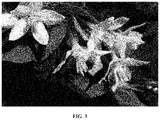
- FIG. 3 Shows a close up of flowers on the original tree.
- FIG. 4 Shows a close up of flower buds on a display board with scale.
- FIG. 5 Shows a close up of flowers on a display board with scale.
- FIG. 6 Shows a close up of flowers on a display board with scale.
- FIG. 7 Shows new spring foliage tip on a display board with scale.
- FIG. 8 Shows autumn leaves on a display board with scale.
- FIG. 9 Shows 3 year old trees in nursery row production.
- FIG. 10 Shows the original tree in winter without foliage.
- FIG. 11 Shows seed on a display board with scale.
- JFS 6SJ The following detailed description of the ‘JFS 6SJ’ variety is based on observations of the original tree growing in Boring, Oreg. and of two and three year old asexually reproduced progeny. The observed progeny were trees which were growing in Boring, Oreg. Color descriptions are made with reference to The Royal Horticultural Society (London) Colour Chart ⁇ 1986, except where ordinary dictionary significance of color is indicated.
- the claimed cultivar ‘JFS K6SJ’ Compared to the seed parent tree Styrax japonicus ‘Evening Light’ the claimed cultivar ‘JFS K6SJ’ has a very different growth habit having pendulous weeping branches rather than an upright growing habit.
Landscapes
- Life Sciences & Earth Sciences (AREA)
- Health & Medical Sciences (AREA)
- Physiology (AREA)
- Botany (AREA)
- Developmental Biology & Embryology (AREA)
- Environmental Sciences (AREA)
- Breeding Of Plants And Reproduction By Means Of Culturing (AREA)
Abstract
A variety of Styrax japonicus which combines a combination of a mounding weeping habit, profuse single white flowers, dark purple foliage that remains glossy & disease free through the summer.
Description
Latin name of the genus and species of the plant claimed: Styrax japonicus.
Variety denomination: ‘JFS 6SJ’.
In 2003 we began a program on ornamental Japanese snowbell cultivar development. One of the goals of the program was to produce an improved cultivar with weeping form. In 2005 a large number of seedlings were grown in nursery rows in Boring, Oreg. The best were transplanted for further evaluation in 2007, and then selected again for their best features. The most promising selections included trees with weeping form and were transplanted into a final evaluation block in 2011. Next to these trees, we planted a single specimen of Styrax japonicus ‘Evening Light’ U.S. Plant Pat. No. 24,168.
We allowed these trees to freely cross pollinate in the spring of 2012, and then in the fall of 2012, collected the seed of the ‘Evening Light’ as well as other selected individual trees in the block. This seed collection produced a total of 166 plants grown in small liner pots in 2013.
In the spring of 2014 these seedlings from four different parent trees were planted out in a trial row for observation and evaluation. By 2015 it was clear to see that one of the seedlings of ‘Evening Light’ exhibited a unique set of characteristics: Similar dark purple foliage to the parent tree Styrax japonicus ‘Evening Light’ but having a strongly weeping instead of upright growth habit. This tree was labelled ‘JFS 6SJ’ and tagged for further observation & evaluation.
In the summers of 2015 and 2016 we took cutting wood from this tree and 96 softwood cuttings were made each year to assess its ability to be propagated from cuttings as well as from budding. Liners produced from these cuttings were planted out in 2017 & 2018 for observation & evaluation.
Also in the summer of 2016 budwood was taken from ‘JFS 6SJ’ and we budded onto 15 seedlings. 7 of these buds were successful and produced new trees. Observations continued of both the original tree and these new trees.
In 2017 this budding process was repeated with 120 trees producing a further 79 trees for evaluation.
All cuttings taken from ‘JFS 6SJ’ for asexual propagation were rooted under mist and grown in Boring, Oreg. All buds taken from ‘JFS 6SJ’ were budded onto rootstocks and grown in Boring, Oreg.
By 2018 it was clear to see that ‘JFS 6SJ’ could be successfully asexually propagated by both softwood cutting production and field chip budding. Both methods produced trees that exhibited the exact same characteristics as the original tree in every respect.
In 2018 the original ‘JFS 6SJ’ was transplanted into a new location on the nursery where it remains today. Of the test trees that were produced 50 were kept as stock trees and planted into field stock block locations in 2020 to provide stock material for future production. The remaining test trees were destroyed.
This new cultivar possesses a unique combination of characteristics that have proven firmly fixed in asexually propagated progeny and that comprise a combination of a dark purple foliage, white flowers and a pendulous or weeping form.
The colors of an illustration of this type may vary with lighting conditions and, therefore, color characteristics of this new variety should be determined with reference to the observations described herein, rather than from these illustrations alone.
The following detailed description of the ‘JFS 6SJ’ variety is based on observations of the original tree growing in Boring, Oreg. and of two and three year old asexually reproduced progeny. The observed progeny were trees which were growing in Boring, Oreg. Color descriptions are made with reference to The Royal Horticultural Society (London) Colour Chart © 1986, except where ordinary dictionary significance of color is indicated.
- Scientific name: Styrax japonicus ‘JFS 6SJ’.
- Parentage:
-
- Seed parent.—Open pollinated seedling of Styrax japonicus ‘Evening Light’ U.S. Plant Pat. No. 24,168.
- Pollen parent.—Unknown.
-
- Tree:
-
- Overall shape.—Upright with pendulous branching.
- Height.—At 9 years of age, about 2.5 meters high.
- Width.—At 9 years of
age 1 meter spread. - Caliper (trunk diameter).—At 9 years of age, about 85 mm at 100 mm height, 65 mm at 1 m height.
- Trunk.—Strong with curves under nursery growing conditions.
- Trunk bark texture.—Smooth with longitudinal shallow fissures.
- Trunk bark color.—Greyed Green 197B.
- Immature bark color.—Greyed Orange 163D.
- Mature bark color.—Greyed Green 197C to 198B.
- Lenticels.—Absent.
- Branch color.—Greyed Brown 199A.
- Branch lenticels.—Absent.
- Dormant buds.—Sessile 3-4 mm long 1-1.5 mm wide.
- Internodes.—Average internode length is about 15-25 mm on one-year-old shoots.
- Hardiness.—Has tolerated temperatures to 14° F. in Boring, Oreg. (Jan. 6, 2017) which is the lowest temperature experienced at this location for this period. It is believed to have
zone 5 cold hardiness similar to other plants of the same species.
-
- Leaves: Except as otherwise noted, observations are from twenty vigorous growth leaves.
-
- Arrangement.—Alternate.
- Type.—Simple, entire.
- Texture.—Smooth, with slight undulation between the veins.
- Sheen.—Glossy on upper surface Matt on the lower surface.
- Length.—Averaging 60 mm-90 mm.
- Width.—Averaging 20 mm to 40 mm.
- Petioles.—8 mm to 10 mm long, about 1-2 mm in diameter.
- Overall shape.—Ovate.
- Margin.—Serrulate.
- Tip.—Acuminate.
- Base.—Acute.
- Spring leaf color.—Greyed-Purple 187A to 187B.
- Summer leaf color.—Greyed-Purple 187A fading to Green 139A. Lower leaf surface: Green 137A to 137B. Vein: Greyed-Purple 187C. Fall Leaf Color: Foliage returns to Greyed-Purple 187A fading to Brown 200A.
- Fall color begins.—October 15th (Boring, Oreg. 2021).
- Fall color peak.—November 1st (Boring, Oreg. 2021).
- Fall color ends.—November 20th (Boring, Oreg. 2021).
- Pubescence.—None.
- Persistence.—Tree is deciduous.
-
- Flowers:
-
- Overall.—Number of flowers per cluster: 4 to 5.
- Size.—24 mm to 28 mm in diameter.
- Shape.—Symmetrical, rounded, 5 petals, not cupped.
- Unopened bud.—Red Purple 65B to Red Purple 65C.
- Petals.—Five petals per flower, 6 mm to 8 mm wide×15 mm to 18 mm long. Color White 155A to very pale Red-Purple 62D.
- Stamens.—About 10 to 15 stamens, 8 mm to 10 mm arranged concentrically around pistil.
- Anthers.—Orange 26A. 2 mm to 3 mm long by 0.5 mm to 1 mm in diameter.
- Pistil.—Yellow 10A,
length 8 mm-10 mm. - Pollen.—Orange 26A.
- Pedicel.—20 mm to 30 mm long by 0.5 mm to 0.6 mm in diameter. Red 46A.
- Pubescence.—None.
- Fragrance.—Slightly sweet.
- Flowering date.—In Boring, Oreg. 2021 (an average bloom year). First bloom May 15th, peak bloom May 30th, last bloom June 15th.
-
- Fruit: Observations are from a sampling of typical seeds.
-
- Cluster.—4 to 5 seeds per cluster.
- Type.—Dried drupe, ovoid, longer than wide.
- Size.—Typical fruit is 8 mm to 10 mm in length by 6 mm to 8 mm wide.
- Color.—Immature fruit is Greyed-Green 194A to 194C.
- Seeds.—Typically 1 per fruit, ovoid 6 mm to 8 mm long by 5 mm to 6 mm wide.
- Seed color.—Mature seed is Greyed — Orange 164A to 164B.
-
Compared to the seed parent tree Styrax japonicus ‘Evening Light’ the claimed cultivar ‘JFS K6SJ’ has a very different growth habit having pendulous weeping branches rather than an upright growing habit.
| COMPARISON TO OTHER SIMILAR VARIETIES: |
| Styrax japonicus | Styrax japonicus | ||
| ‘Evening Light’ | ‘JL Weeping’ | ||
| Styrax japonicus | U.S. Plant Pat. | U.S. Plant Pat. | |
| ‘JFS 6SJ’ | No. 24,168 | No. 23,755 | |
| Form | Pendulous Growth | Upright Growth | Pendulous Growth |
| Leaf Color | Purple | Purple | Green |
| Leaf Length | 60 mm to 90 mm | 40 mm to 70 mm | 80 mm to 100 mm |
| Flowers | Single. White 155A | Single. White | Single. Red - |
| to Red-Purple 62D | 155B | Purple 65B | |
| Comparative | Late May to Mid | Late May to Mid | Mid to late May in |
| flowering | June in Boring | June in Boring | Boring Oregon |
| time | Oregon | Oregon | |
Claims (1)
1. A new and distinct variety of Japanese snowbell tree as herein illustrated and described.
Priority Applications (1)
| Application Number | Priority Date | Filing Date | Title |
|---|---|---|---|
| US17/714,492 USPP34817P2 (en) | 2022-04-06 | 2022-04-06 | Japanese snowbell tree named ‘JFS 6SJ’ |
Applications Claiming Priority (1)
| Application Number | Priority Date | Filing Date | Title |
|---|---|---|---|
| US17/714,492 USPP34817P2 (en) | 2022-04-06 | 2022-04-06 | Japanese snowbell tree named ‘JFS 6SJ’ |
Publications (1)
| Publication Number | Publication Date |
|---|---|
| USPP34817P2 true USPP34817P2 (en) | 2022-12-13 |
Family
ID=84426445
Family Applications (1)
| Application Number | Title | Priority Date | Filing Date |
|---|---|---|---|
| US17/714,492 Active 2042-04-06 USPP34817P2 (en) | 2022-04-06 | 2022-04-06 | Japanese snowbell tree named ‘JFS 6SJ’ |
Country Status (1)
| Country | Link |
|---|---|
| US (1) | USPP34817P2 (en) |
-
2022
- 2022-04-06 US US17/714,492 patent/USPP34817P2/en active Active
Similar Documents
| Publication | Publication Date | Title |
|---|---|---|
| USPP23463P2 (en) | Buddleja plant named ‘TOBUD0802’ | |
| USPP34817P2 (en) | Japanese snowbell tree named ‘JFS 6SJ’ | |
| USPP32110P2 (en) | Blueberry plant denominated ‘Katahdin’ | |
| USPP21613P3 (en) | Kiwi plant named ‘Bruce’ | |
| USPP34356P2 (en) | Crabapple tree named ‘JFS KW218MX’ | |
| USPP34818P2 (en) | Japanese Zelkova tree named ‘JFS KW4ZS’ | |
| USPP36716P2 (en) | Heptacodium tree named ‘JFS GM1HM’ | |
| USPP36538P2 (en) | Red maple tree named ‘WW Warren’ | |
| USPP35444P2 (en) | Avocado tree named ‘BL516’ | |
| USPP34493P2 (en) | Finger lime plant named ‘UF SunLime’ | |
| USPP28994P3 (en) | Male pistachio tree named ‘Famoso’ | |
| USPP32817P2 (en) | Abelia plant named ‘00-BC-46-4’ | |
| USPP36101P2 (en) | Weigela plant named ‘PODARASNWOW1’ | |
| USPP37115P2 (en) | Distylium plant named ‘ZhDis12-16’ | |
| USPP37068P2 (en) | Cornus plant named ‘Rutstar’ | |
| USPP35852P3 (en) | Blueberry plant named ‘BLUECSOL11’ | |
| USPP34188P2 (en) | Finger lime plant named ‘UF RedLime’ | |
| USPP35968P3 (en) | Blueberry plant variety named ‘BLUECSOL9’ | |
| USPP35851P3 (en) | Blueberry plant variety named ‘BLUECSOL7’ | |
| USPP18252P3 (en) | Cranberry variety named ‘NJS98-23’ | |
| USPP31232P2 (en) | Crabapple tree named ‘JFS KW139MX’ | |
| USPP32619P2 (en) | Cherry tree named ‘JFS KW21PS’ | |
| USPP17182P3 (en) | Peach tree plant named ‘Plawhite 5’ | |
| USPP31076P3 (en) | Crabapple tree named ‘JFS KW214MX’ | |
| USPP27954P2 (en) | Crabapple tree named ‘JFS-KW207’ |
Legal Events
| Date | Code | Title | Description |
|---|---|---|---|
| FEPP | Fee payment procedure |
Free format text: ENTITY STATUS SET TO UNDISCOUNTED (ORIGINAL EVENT CODE: BIG.); ENTITY STATUS OF PATENT OWNER: SMALL ENTITY |
|
| FEPP | Fee payment procedure |
Free format text: ENTITY STATUS SET TO SMALL (ORIGINAL EVENT CODE: SMAL); ENTITY STATUS OF PATENT OWNER: SMALL ENTITY |