USPP31610P2 - Tecoma hybrid plant named ‘Red Hot’ - Google Patents
Tecoma hybrid plant named ‘Red Hot’ Download PDFInfo
- Publication number
- USPP31610P2 USPP31610P2 US16/350,157 US201816350157V USPP31610P2 US PP31610 P2 USPP31610 P2 US PP31610P2 US 201816350157 V US201816350157 V US 201816350157V US PP31610 P2 USPP31610 P2 US PP31610P2
- Authority
- US
- United States
- Prior art keywords
- tecoma
- red hot
- color
- hybrid
- red
- Prior art date
- Legal status (The legal status is an assumption and is not a legal conclusion. Google has not performed a legal analysis and makes no representation as to the accuracy of the status listed.)
- Active
Links
Images


Classifications
-
- A—HUMAN NECESSITIES
- A01—AGRICULTURE; FORESTRY; ANIMAL HUSBANDRY; HUNTING; TRAPPING; FISHING
- A01H—NEW PLANTS OR NON-TRANSGENIC PROCESSES FOR OBTAINING THEM; PLANT REPRODUCTION BY TISSUE CULTURE TECHNIQUES
- A01H6/00—Angiosperms, i.e. flowering plants, characterised by their botanic taxonomy
-
- A—HUMAN NECESSITIES
- A01—AGRICULTURE; FORESTRY; ANIMAL HUSBANDRY; HUNTING; TRAPPING; FISHING
- A01H—NEW PLANTS OR NON-TRANSGENIC PROCESSES FOR OBTAINING THEM; PLANT REPRODUCTION BY TISSUE CULTURE TECHNIQUES
- A01H5/00—Angiosperms, i.e. flowering plants, characterised by their plant parts; Angiosperms characterised otherwise than by their botanic taxonomy
- A01H5/02—Flowers
Definitions
- Tecoma stans Plants of the genus Tecoma have been grown as landscape plants for many decades. These plants typically have bright green leaves and large trumpet shaped flowers that attract hummingbirds and bees. The most common species grown has been Tecoma stans , the most widely distributed of the genus, growing from the tropics and subtropics of South America to the warmer parts of the American Southwest. There are reportedly 14 species of Tecoma , mostly native to the Andean region. This number has come into question in recent research, as the actual number may only be half that estimate since many of the species are highly variable and interspecies hybrids appear to be fairly common in nature. Several of the South American species with red or orange flowers have been hybridized with Tecoma stans . Many of these hybrids have been patented beginning in 2007.
- the present invention relates to a new and distinct cultivar of Tecoma hybrid.
- the cultivar originated as a chance seedling of unknown hybrid origin, with both male and female parents unknown, which germinated at a nursery near Sahuarita, Ariz. and is the object of this application.
- Tecoma hybrid ‘Red Hot’ blooms throughout the warm season (average daytime highs exceeding 70° F., specifically from roughly April-early November).
- the propagation procedure is as follows: Four-inch long cuttings are taken from semihardwood branches and placed into DIP'N GROTM (1:10 water mixture) for 15 seconds. The plants are then placed into growing medium and moved to a fog house with humidity controlled between 85-93% relative humidity at a temperature between 65-85° F. First roots appear in about a month with rooting essentially complete within 8 weeks.
- FIG. 1 shows a Tecoma hybrid ‘Red Hot’ plant aged 3 years from rooted cutting growing near Sahuarita, Ariz.
- FIG. 2 shows the leaves of Tecoma hybrid ‘Red Hot’.
- FIG. 3 shows flowers and inflorescences of Tecoma hybrid ‘Red Hot’.
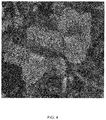
- FIG. 4 is a closeup of the flowers of Tecoma hybrid ‘Red Hot’.
- Tecoma hybrid ‘Red Hot’ is a highly branched, upright, compact, leafy shrub about 3 feet tall ⁇ 2.5 feet wide at age 3.
- the plants are dense in appearance. Branch angle ranges from 25-45°.
- Young stems are obscurely and sparsely puberulent, mostly near the nodes. Frequently two branches are produced at each node. Branches are very strong. The plant examined had about 300 branches. Branch color varies from 144A on the shaded to N77A on the sunward side. Lenticels are absent. Young stems measure 2-3mm in diameter. Internode length ranges from 15-45 mm. The largest older stems are up to 16 mm in diameter, color 164D.
- Roots were observed on rooted cuttings. Young roots are fine, 1 mm or less in diameter, and moderately strongly branching. Root growth is relatively erratic, tending downward. Young roots are colored 159C.
- Leaf arrangement is opposite, the leaves odd pinnately compound, with (3) 5-9 leaflets, mostly with 7 leaflets. Leaves are ascending and diverge from the stem axis at an angle of about 45°
- Leaf adaxial surface is glabrous, glossy, bordering on resinous, color 147A.
- Leaf abaxial surface glabrous, glossy, but less so than adaxial surface, color 147B.
- Leaves measure 5.5-11 cm long, 2.5-4cm wide.
- Leaflets measure 6-12 mm wide ⁇ 16-32 mm long. The apical leaflet is always the largest and usually has a slight twist.
- Leaflet margins are serrate, leaflets variously upwardly folded or cupped along the leaflet midrib.
- Leaflet shape is more or less elliptical, base and tip both acute. Leaflet tips mostly slightly apiculate.
- Leaflet bases vary from equally to obliquely acute.
- Leaflets have net venation with main veins arranged pinnately. Veins are slightly depressed adaxially and raised abaxially.
- Leaflets are colored 147A adaxially and 147B abaxially. Leaves are without a discernable fragrance. The plant examined had about 2500 leaves.
- Petiole is semicircular in cross section, with a raised nerve on either edge of the flat (adaxial) side, petiole surface glabrous, slightly resinous. The petiole diverges from the stem axis at an angle of about 45°. Petiole color ranges from 144A to 146C, sometimes tinged with 61A along the petiole margins and bases on sunward leaves. Petiole measures 16-30 mm long, 0.75-1.6 mm wide. Leaf rachis similar to petiole in color and shape.
- Inflorescence is terminal not deviating from the stem axis. On first examination the inflorescence appears racemose, but is actually a reduced panicle.
- Peduncle bracts 2 these stipule-like, located below the pair of leaves at the inflorescence base, these bracts 4 mm long ⁇ 0.75 mm wide, color 144B.
- Floral branch bract 1 2 mm long ⁇ 0.75 mm, color 144B. Inflorescence is subsecund, typically 6-13 cm long ⁇ 10 cm in diameter, each inflorescence producing from 7-25 flowers. Sub pedicellar inflorescence branches measure 6-9 mm long, 1-1.5 mm in diameter, terete, glabrous, color 144B. Pedicels measure 4-7 mm long, 1 mm in diameter, terete, glabrous, color 144B. Pedicels diverge from the inflorescence axes at 45-60°. Mature buds are 38-43 mm long, 7-9 mm at the widest point. Bud with an angular pentagonal bulge at the tip, color 46A, grading to 34A along the tube.
- the bud is somewhat upcurved. Flowers are 40-50 mm long ⁇ 28-30 mm wide. Flowers last 2-3 days and then fall away within a week. Flowers are slightly fragrant. Flowers are bilabiate, upcurved, trumpet shaped with 5 more or less dentate petal lobes, color 46A (both surfaces), the 2 upper lobes reflexed, 3 lower petals extended, then curving somewhat backward at the apex. Corolla tube lineoid from base for 11 mm, 2 mm diameter, then flaring to 10-11 mm at the limb, tube color 46C. Interior of corolla with numerous (17-21) guidelines colored as the corolla lobes (46A) on an orange background (23B).
- Corolla lobes measure 8-10 mm long ⁇ 9-11 mm wide.
- the lobes are rounded in shape and slightly constricted at the fused portion of the corolla.
- the petal lobe margin is entire.
- the lobes are slightly crisped and are glabrous.
- Calyx is lobed, the lobes carinate, apiculate, glabrous, about 3 mm long ⁇ 2 mm wide, color 144B.
- Stamens 4 normal and 1 vestigial. Normal stamens are attached to the corolla for about 15 mm, then free for an additional 10-14 mm, filament diameter 0.75 mm at the attachment point, then tapering toward the anther, filament color 13C. Anthers basifixed, dehiscing longitudinally from the base, the thecae spreading before anthesis, apparently with little or no pollen, the pollen colored 11B. Open anthers about 5 mm long, 1 mm wide, color 11B. Pistil is superior, single, measuring from 27-30 mm in length, with 2 carpels. Ovary lance/lineoid, measuring 4.5 mm long ⁇ 1 mm in diameter, color 144C, abruptly tapering to the style. Style is 22-25 mm long, color 154C. Stigma strongly laterally compressed, diamond shaped, about 1 mm, color 154B.
- Tecoma hybrid ‘Red Hot’ is not cold hardy and is damaged by frost. The plants are root hardy to about 20°. Bloom season runs from about April to mid November in the area of the evaluated specimen. Pest and pathogens: none noted.
- Tecoma cultivars has increased substantially in the last 20 years. Below Tecoma hybrid ‘Red Hot’ is compared to other patented cultivars.
- Tecoma hybrid ‘Red Hot’ differs most notably having larger, redder buds and flowers.
- the flowers of Tecoma ‘Sunhorteaka’ are, however, slightly larger in diameter at the apex of the flower.
- Leaves of Tecoma hybrid ‘Red Hot’ are considerably smaller than those of ‘Sunhorteaka’ with mostly 5-9 leaflets compared to 3-5 with ‘Sunhorteaka’.
- Tecoma hybrid ‘Red Hot’ differs most notably having red flowers as opposed to predominantly yellow flowers with ‘Sunhorteki’ as well as having mostly 5-9 leaflets compared to 3-5 on ‘Sunhorteki’.
- Tecoma hybrid ‘Red Hot’ differs most notably having red flowers as opposed to yellow-orange with ‘Mnstapbe’ as well as having mostly 5-9 leaflets compared to 3-5 with ‘Mnstapbe’.
- Tecoma hybrid differs most notably having red flowers as opposed to yellow flowers with ‘TEC60109105’ as well as having mostly 5-9 leaflets compared to 7-11 with ‘TEC60109105’.
- Tecoma hybrid ‘Red Hot’ differs most notably in having red flowers compared to orange-red with ‘TEC6010916’ as well as having mostly 5-9 leaflets compared to 9-11 with ‘TEC6010916’.
- Tecoma hybrid ‘Red Hot’ has redder flowers, leaves with typically 7 leaflets compared to 5 or 7 for ‘Sunhortedai’. Also, the leaves of ‘Red Hot’ are only about a third as wide and smaller overall compared to ‘Sunhortedai’.
- ‘Red Hot’ may be easily separated as the flower colors of both ‘Balbahelor’ and ‘Balbahel’ fall within the yellow flower group and the flowers of ‘Red Hot’ fall within the red color group.
Landscapes
- Life Sciences & Earth Sciences (AREA)
- Health & Medical Sciences (AREA)
- Physiology (AREA)
- Botany (AREA)
- Developmental Biology & Embryology (AREA)
- Environmental Sciences (AREA)
- Breeding Of Plants And Reproduction By Means Of Culturing (AREA)
Abstract
Compact, upright, bush form, red flower clusters, and lack of seed production characterize a new and distinct Tecoma hybrid named ‘Red Hot’. Tecoma hybrid ‘Red Hot’ blooms throughout the warm season (average daytime highs exceeding 70° F.).
Description
Latin name: Tecoma hybrid ‘Red Hot’.
Varietal denomination: ‘Red Hot’.
Plants of the genus Tecoma have been grown as landscape plants for many decades. These plants typically have bright green leaves and large trumpet shaped flowers that attract hummingbirds and bees. The most common species grown has been Tecoma stans, the most widely distributed of the genus, growing from the tropics and subtropics of South America to the warmer parts of the American Southwest. There are reportedly 14 species of Tecoma, mostly native to the Andean region. This number has come into question in recent research, as the actual number may only be half that estimate since many of the species are highly variable and interspecies hybrids appear to be fairly common in nature. Several of the South American species with red or orange flowers have been hybridized with Tecoma stans. Many of these hybrids have been patented beginning in 2007. Many of the hybrids have reduced fertility, with the culturally desirable result of less fruit production and trash in the landscape. Many of the hybrids incorporate the orange or orange-red characteristics typical of some of the Andean species. The present invention relates to a new and distinct cultivar of Tecoma hybrid. The cultivar originated as a chance seedling of unknown hybrid origin, with both male and female parents unknown, which germinated at a nursery near Sahuarita, Ariz. and is the object of this application.
Among the features that distinguish the new Tecoma cultivar from all other available and commercial varieties of Tecoma known to the inventor are the following combination of characteristics: compact bush form, red flower clusters, leaves with mostly 5-9 leaflets and lack of seed production. Tecoma hybrid ‘Red Hot’ blooms throughout the warm season (average daytime highs exceeding 70° F., specifically from roughly April-early November).
The propagation procedure is as follows: Four-inch long cuttings are taken from semihardwood branches and placed into DIP'N GRO™ (1:10 water mixture) for 15 seconds. The plants are then placed into growing medium and moved to a fog house with humidity controlled between 85-93% relative humidity at a temperature between 65-85° F. First roots appear in about a month with rooting essentially complete within 8 weeks.
The foregoing characteristics and distinctions come true to form and are established and transmitted through succeeding propagations. The present invention has not been evaluated under all possible environmental conditions, such that the phenotype may vary with variations in environment without a change in the genotype of the plant.
The accompanying photographs illustrate Tecoma hybrid ‘RRRRR’ growing near Sahuarita, Ariz., depicted in color as nearly correct as it is possible to make in a color illustration of the character.
The following is a detailed description of the new Tecoma plant based upon a plant at age 3 from a cutting growing near Sahuarita, Ariz. The color descriptions are based upon the 5th edition R.H.S. Colour Chart, 2007. Color names other than common usage are as listed in COLOR Universal Language and Dictionary of Names, by Kenneth L. Kelly and Deane B. Judd; National Bureau of Standards special publication 440. Washington, D.C.: U.S. Department of Commerce, National Bureau of Standards, December 1976.
Tecoma hybrid ‘Red Hot’ is a highly branched, upright, compact, leafy shrub about 3 feet tall×2.5 feet wide at age 3. The plants are dense in appearance. Branch angle ranges from 25-45°. Young stems are obscurely and sparsely puberulent, mostly near the nodes. Frequently two branches are produced at each node. Branches are very strong. The plant examined had about 300 branches. Branch color varies from 144A on the shaded to N77A on the sunward side. Lenticels are absent. Young stems measure 2-3mm in diameter. Internode length ranges from 15-45 mm. The largest older stems are up to 16 mm in diameter, color 164D.
Roots were observed on rooted cuttings. Young roots are fine, 1 mm or less in diameter, and moderately strongly branching. Root growth is relatively erratic, tending downward. Young roots are colored 159C.
Leaf arrangement is opposite, the leaves odd pinnately compound, with (3) 5-9 leaflets, mostly with 7 leaflets. Leaves are ascending and diverge from the stem axis at an angle of about 45° Leaf adaxial surface is glabrous, glossy, bordering on resinous, color 147A. Leaf abaxial surface glabrous, glossy, but less so than adaxial surface, color 147B. Leaves measure 5.5-11 cm long, 2.5-4cm wide. Leaflets measure 6-12 mm wide×16-32 mm long. The apical leaflet is always the largest and usually has a slight twist. Leaflet margins are serrate, leaflets variously upwardly folded or cupped along the leaflet midrib. Leaflet shape is more or less elliptical, base and tip both acute. Leaflet tips mostly slightly apiculate. Leaflet bases vary from equally to obliquely acute. Leaflets have net venation with main veins arranged pinnately. Veins are slightly depressed adaxially and raised abaxially. Leaflets are colored 147A adaxially and 147B abaxially. Leaves are without a discernable fragrance. The plant examined had about 2500 leaves.
Stipules none. Active axillary buds glabrous, dorsally compressed, 2 mm long×1.5 mm wide×1 mm thick. Dormant/undeveloped axillary buds obscure, less than 1 mm.
Petiole is semicircular in cross section, with a raised nerve on either edge of the flat (adaxial) side, petiole surface glabrous, slightly resinous. The petiole diverges from the stem axis at an angle of about 45°. Petiole color ranges from 144A to 146C, sometimes tinged with 61A along the petiole margins and bases on sunward leaves. Petiole measures 16-30 mm long, 0.75-1.6 mm wide. Leaf rachis similar to petiole in color and shape.
Inflorescence is terminal not deviating from the stem axis. On first examination the inflorescence appears racemose, but is actually a reduced panicle. Peduncle 2 mm in diameter×6-13 mm in length, slightly tapering, color grading from N77A on the sunward side to 144A on the shaded side. The peduncle surface is glabrous and slightly resinous. The peduncle is moderately strong at the time of anthesis. Peduncle bracts 2, these stipule-like, located below the pair of leaves at the inflorescence base, these bracts 4 mm long×0.75 mm wide, color 144B. Pedicellar bracts 2, 1 mm long×0.25 mm wide, color 144B. Floral branch bract 1, 2 mm long×0.75 mm, color 144B. Inflorescence is subsecund, typically 6-13 cm long×10 cm in diameter, each inflorescence producing from 7-25 flowers. Sub pedicellar inflorescence branches measure 6-9 mm long, 1-1.5 mm in diameter, terete, glabrous, color 144B. Pedicels measure 4-7 mm long, 1 mm in diameter, terete, glabrous, color 144B. Pedicels diverge from the inflorescence axes at 45-60°. Mature buds are 38-43 mm long, 7-9 mm at the widest point. Bud with an angular pentagonal bulge at the tip, color 46A, grading to 34A along the tube. The bud is somewhat upcurved. Flowers are 40-50 mm long×28-30 mm wide. Flowers last 2-3 days and then fall away within a week. Flowers are slightly fragrant. Flowers are bilabiate, upcurved, trumpet shaped with 5 more or less dentate petal lobes, color 46A (both surfaces), the 2 upper lobes reflexed, 3 lower petals extended, then curving somewhat backward at the apex. Corolla tube lineoid from base for 11 mm, 2 mm diameter, then flaring to 10-11 mm at the limb, tube color 46C. Interior of corolla with numerous (17-21) guidelines colored as the corolla lobes (46A) on an orange background (23B). Corolla lobes measure 8-10 mm long×9-11 mm wide. The lobes are rounded in shape and slightly constricted at the fused portion of the corolla. The petal lobe margin is entire. The lobes are slightly crisped and are glabrous. Calyx regular, 5-6 mm long×3mm wide at the widest point, more or less campanulate, the tube slightly angled, glabrous, color varying from N77A on the sunward side to 144B on the shaded side. Calyx is lobed, the lobes carinate, apiculate, glabrous, about 3 mm long×2 mm wide, color 144B.
Stamens: 4 normal and 1 vestigial. Normal stamens are attached to the corolla for about 15 mm, then free for an additional 10-14 mm, filament diameter 0.75 mm at the attachment point, then tapering toward the anther, filament color 13C. Anthers basifixed, dehiscing longitudinally from the base, the thecae spreading before anthesis, apparently with little or no pollen, the pollen colored 11B. Open anthers about 5 mm long, 1 mm wide, color 11B. Pistil is superior, single, measuring from 27-30 mm in length, with 2 carpels. Ovary lance/lineoid, measuring 4.5 mm long×1 mm in diameter, color 144C, abruptly tapering to the style. Style is 22-25 mm long, color 154C. Stigma strongly laterally compressed, diamond shaped, about 1 mm, color 154B.
Fruits were not seen; the plant is apparently at least mostly sterile.
Tecoma hybrid ‘Red Hot’ is not cold hardy and is damaged by frost. The plants are root hardy to about 20°. Bloom season runs from about April to mid November in the area of the evaluated specimen. Pest and pathogens: none noted.
The number of Tecoma cultivars has increased substantially in the last 20 years. Below Tecoma hybrid ‘Red Hot’ is compared to other patented cultivars.
Compared to Tecoma ‘Sunhorteaka’ (U.S. Plant Pat. No. 27,372), Tecoma hybrid ‘Red Hot’ differs most notably having larger, redder buds and flowers. The flowers of Tecoma ‘Sunhorteaka’ are, however, slightly larger in diameter at the apex of the flower. Leaves of Tecoma hybrid ‘Red Hot’ are considerably smaller than those of ‘Sunhorteaka’ with mostly 5-9 leaflets compared to 3-5 with ‘Sunhorteaka’.
Compared to Tecoma ‘Sunhorteki’ (U.S. Plant Pat. No. 27,373), Tecoma hybrid ‘Red Hot’ differs most notably having red flowers as opposed to predominantly yellow flowers with ‘Sunhorteki’ as well as having mostly 5-9 leaflets compared to 3-5 on ‘Sunhorteki’.
Compared to Tecoma ‘Mnstapbe’ (U.S. Plant Pat. No. 20,246), Tecoma hybrid ‘Red Hot’ differs most notably having red flowers as opposed to yellow-orange with ‘Mnstapbe’ as well as having mostly 5-9 leaflets compared to 3-5 with ‘Mnstapbe’.
Compared to Tecoma ‘TEC60109105’ (U.S. Plant Pat. No. 24,169), Tecoma hybrid differs most notably having red flowers as opposed to yellow flowers with ‘TEC60109105’ as well as having mostly 5-9 leaflets compared to 7-11 with ‘TEC60109105’.
Compared to Tecoma ‘TEC6010916’ (U.S. Plant Pat. No. 24,170), Tecoma hybrid ‘Red Hot’ differs most notably in having red flowers compared to orange-red with ‘TEC6010916’ as well as having mostly 5-9 leaflets compared to 9-11 with ‘TEC6010916’.
Compared to Tecoma ‘Sunhortedai’ (U.S. Plant Pat. No. 29,169), Tecoma hybrid ‘Red Hot’ has redder flowers, leaves with typically 7 leaflets compared to 5 or 7 for ‘Sunhortedai’. Also, the leaves of ‘Red Hot’ are only about a third as wide and smaller overall compared to ‘Sunhortedai’.
Compared to Tecoma ‘Balbahelor’ (U.S. Plant Pat. No. 30,633) and ‘Balbahel’ (U.S. Plant Pat. No. 30,667), ‘Red Hot’ may be easily separated as the flower colors of both ‘Balbahelor’ and ‘Balbahel’ fall within the yellow flower group and the flowers of ‘Red Hot’ fall within the red color group.
Claims (1)
1. A new and distinct Tecoma plant substantially as described and illustrated herein.
Priority Applications (1)
| Application Number | Priority Date | Filing Date | Title |
|---|---|---|---|
| US16/350,157 USPP31610P2 (en) | 2018-10-09 | 2018-10-09 | Tecoma hybrid plant named ‘Red Hot’ |
Applications Claiming Priority (1)
| Application Number | Priority Date | Filing Date | Title |
|---|---|---|---|
| US16/350,157 USPP31610P2 (en) | 2018-10-09 | 2018-10-09 | Tecoma hybrid plant named ‘Red Hot’ |
Publications (2)
| Publication Number | Publication Date |
|---|---|
| USPP31610P2 true USPP31610P2 (en) | 2020-03-31 |
| US20200113098P1 US20200113098P1 (en) | 2020-04-09 |
Family
ID=69951414
Family Applications (1)
| Application Number | Title | Priority Date | Filing Date |
|---|---|---|---|
| US16/350,157 Active USPP31610P2 (en) | 2018-10-09 | 2018-10-09 | Tecoma hybrid plant named ‘Red Hot’ |
Country Status (1)
| Country | Link |
|---|---|
| US (1) | USPP31610P2 (en) |
-
2018
- 2018-10-09 US US16/350,157 patent/USPP31610P2/en active Active
Also Published As
| Publication number | Publication date |
|---|---|
| US20200113098P1 (en) | 2020-04-09 |
Similar Documents
| Publication | Publication Date | Title |
|---|---|---|
| USPP35437P2 (en) | Leucophyllum hybrid plant named ‘Microburst’ | |
| USPP31610P2 (en) | Tecoma hybrid plant named ‘Red Hot’ | |
| USPP19381P2 (en) | Southern highbrush blueberry plant named ‘FLX-2’ | |
| USPP36336P2 (en) | Leucophyllum plant named ‘Laredo’ | |
| USPP34220P2 (en) | Sphaeralcea plant named ‘Orange Crush’ | |
| US20090235417P1 (en) | Oncidium heaven scent 'sweet baby' | |
| USPP36083P2 (en) | Baptisia plant named ‘Grape Escape’ | |
| USPP35764P2 (en) | Physocarpus plant named ‘SueCKat’ | |
| USPP11033P (en) | Blueberry plant called `Bluecrisp` | |
| US11730101B1 (en) | Rumex plant named ‘DRUMFOHNID’ | |
| USPP34689P2 (en) | Baptisia plant named ‘Burgundy Blast’ | |
| USPP33454P2 (en) | Leucophyllum frutescens shrub named ‘San Antonio Rose’ | |
| USPP35492P3 (en) | Asclepias linaria plant named ‘Monarch Magnet 2.0’ | |
| USPP15091P2 (en) | Hibiscus plant named ‘Whit XX’ | |
| USPP30666P3 (en) | Gregg ash tree named ‘Libby Davidson’ | |
| USPP31751P2 (en) | Hibiscus coccineus plant named ‘Whit XXII’ | |
| USPP29603P2 (en) | Penstemon plant named ‘Midnight Masquerade’ | |
| USPP31335P2 (en) | Anthurium plant named ‘ANTHAMYO’ | |
| USPP30374P2 (en) | Miscanthus plant named ‘Fire Dragon’ | |
| USPP30478P2 (en) | Baptisia plant named ‘American Goldfinch’ | |
| USPP33514P3 (en) | Prosopis plant named Dodonaea viscosa ‘Emerald Ice’ | |
| USPP29166P2 (en) | Floribunda rose plant named ‘JAJchel’ | |
| USPP20169P2 (en) | Anigozanthos hybrid plant named ‘Rambodiam’ | |
| USPP28434P2 (en) | Silene plant named ‘Sunshine n Daydreams’ | |
| USPP29476P2 (en) | Lantana plant named ‘Duelanhavsunse’ |
Legal Events
| Date | Code | Title | Description |
|---|---|---|---|
| FEPP | Fee payment procedure |
Free format text: ENTITY STATUS SET TO SMALL (ORIGINAL EVENT CODE: SMAL); ENTITY STATUS OF PATENT OWNER: SMALL ENTITY |