USPP28946P2 - Echinopsis plant named ‘Flambeau’ - Google Patents
Echinopsis plant named ‘Flambeau’ Download PDFInfo
- Publication number
- USPP28946P2 USPP28946P2 US15/330,625 US201615330625V USPP28946P2 US PP28946 P2 USPP28946 P2 US PP28946P2 US 201615330625 V US201615330625 V US 201615330625V US PP28946 P2 USPP28946 P2 US PP28946P2
- Authority
- US
- United States
- Prior art keywords
- echinopsis
- flambeau
- hybrid
- flowers
- approximately
- Prior art date
- Legal status (The legal status is an assumption and is not a legal conclusion. Google has not performed a legal analysis and makes no representation as to the accuracy of the status listed.)
- Active
Links
Images


Classifications
-
- A—HUMAN NECESSITIES
- A01—AGRICULTURE; FORESTRY; ANIMAL HUSBANDRY; HUNTING; TRAPPING; FISHING
- A01H—NEW PLANTS OR NON-TRANSGENIC PROCESSES FOR OBTAINING THEM; PLANT REPRODUCTION BY TISSUE CULTURE TECHNIQUES
- A01H5/00—Angiosperms, i.e. flowering plants, characterised by their plant parts; Angiosperms characterised otherwise than by their botanic taxonomy
- A01H5/02—Flowers
-
- A—HUMAN NECESSITIES
- A01—AGRICULTURE; FORESTRY; ANIMAL HUSBANDRY; HUNTING; TRAPPING; FISHING
- A01H—NEW PLANTS OR NON-TRANSGENIC PROCESSES FOR OBTAINING THEM; PLANT REPRODUCTION BY TISSUE CULTURE TECHNIQUES
- A01H6/00—Angiosperms, i.e. flowering plants, characterised by their botanic taxonomy
- A01H6/24—Cactaceae, e.g. cactus or Easter cactus
Definitions
- Echinopsis ‘Flambeau’ The new cultivar, Echinopsis ‘Flambeau’, was found by the inventor, Renee O'Connell, as the result of a crossing made April 2013 as part of a planned breeding program.
- the seed parent variety is the unpatented proprietary variety referred to as Echinopsis hybrida ‘RQ 17’, a member of the Chamaelobivia group of Echnopsis .
- the pollen parent is the unpatented proprietary variety Echinopsis hybrida ‘KK 03’, also a member of the Chamaelobivia group.
- Echinopsis ‘Flambeau’ was selected by the inventor, Renee O Connell, in May of 2014 from a group of seedlings resulting from the 2013 crossing, at a commercial greenhouse in Vista. Calif.
- the cultivar ‘FLAMBEAU’ has not been observed under all possible environmental conditions.
- the phenotype may vary somewhat with variations in environment such as temperature, day length, and light intensity, without, however, any variance in genotype.
- Plants of the new cultivar ‘FLAMBEAU’ are similar to plants of the seed parent, in most horticultural characteristics, however, plants of the new cultivar ‘FLAMBEAU’ differ in the following;
- Plants of the new cultivar ‘FLAMBEAU’ are similar to plants of the pollen parent, in most horticultural characteristics, however, plants of the new cultivar ‘FLAMBEAU’ differ in the following;
- Plants of the new cultivar ‘FLAMBEAU’ are comparable to the unpatented, commercial variety Echinopsis ‘Fire Chief’.
- the two Echinopsis varieties are similar in most horticultural characteristics; however, the new variety ‘FLAMBEAU’ differs in the following:
- Plants of the new cultivar ‘FLAMBEAU’ can also be comparable to the unpatented commercial variety Echinopsis ‘Westfield Alba’.
- the two Echinopsis varieties are similar in most horticultural characteristics; however, the new variety ‘FLAMBEAU’ differs in the following:
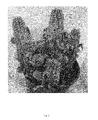
- FIG. 1 illustrates in full color in close-up of the flower of Echinopsis hybrid ‘Flambeau’, grown in a greenhouse (approximately 3000 to 4000 foot candles) in Vista, Calif.
- FIG. 2 illustrates in full color Echinopsis hybrid ‘Flambeau’ in 1 gallon pot with spent flowers.
- FIG. 3 illustrates in full color the plant morphology of Echinopsis hybrid ‘Flambeau’
Landscapes
- Life Sciences & Earth Sciences (AREA)
- Health & Medical Sciences (AREA)
- Physiology (AREA)
- Botany (AREA)
- Developmental Biology & Embryology (AREA)
- Environmental Sciences (AREA)
- Natural Medicines & Medicinal Plants (AREA)
- Cultivation Of Plants (AREA)
Abstract
A new and distinct Echinopsis cultivar named ‘Flambeau’ is disclosed, characterized by distinctive magenta and orange flowers in a triple whorl produced over a 6 to 7 month period. Plants are fast growing and very free offsetting, resulting in both improved propagation rates and improved finished plant production times. Echinopsis is an ornamental cactus, useful as an indoor ornamental plant and outdoors in warm climates.
Description
Latin name of the genus and species: Echinopsis hybrida.
Variety denomination: ‘FLAMBEAU’.
The new cultivar, Echinopsis ‘Flambeau’, was found by the inventor, Renee O'Connell, as the result of a crossing made April 2013 as part of a planned breeding program. The seed parent variety is the unpatented proprietary variety referred to as Echinopsis hybrida ‘RQ 17’, a member of the Chamaelobivia group of Echnopsis. The pollen parent is the unpatented proprietary variety Echinopsis hybrida ‘KK 03’, also a member of the Chamaelobivia group. Echinopsis ‘Flambeau’ was selected by the inventor, Renee O Connell, in May of 2014 from a group of seedlings resulting from the 2013 crossing, at a commercial greenhouse in Vista. Calif.
Asexual reproduction of the new cultivar ‘Flambeau’ was first performed in Vista, Calif., at a commercial greenhouse, by vegetative offsets, known as “peanuts” in May of 2014. ‘Flambeau’ has since produced multiple generations and has shown that the unique features of this cultivar are stable and reproduced true to type.
The cultivar ‘FLAMBEAU’ has not been observed under all possible environmental conditions. The phenotype may vary somewhat with variations in environment such as temperature, day length, and light intensity, without, however, any variance in genotype.
The following traits have been repeatedly observed and are determined to be the unique characteristics of ‘FLAMBEAU’ These characteristics in combination distinguish ‘FLAMBEAU’ as a new and distinct Echinopsis cultivar:
-
- 1. ‘Flambeau’ is very freely offsetting, producing 100 to over 150 offsets in a 1 gallon pot.
- 2. ‘Flambeau’ is very floriferous, often producing over 150 flowers a season when grown in a 1 gallon pot.
- 3. ‘Flambeau’ flowers for a 6-7 month span whereas comparable Echinopsis hybrids do not.
- 4. During the 6-7 month span of flowering, the new variety also displays 2 or more heavy “flushes” of flowers; at times there may be 35 to 40 flowers open at the same time when grown in a 1 gallon pot.
- 5. Distinctive flower; magenta petals, with a reddish-orange underside, surrounded by decorative sepals colored magenta and orange.
- 5. Flowers typically 2 inches in diameter, occurring in multiple whorls, giving the appearance of a double flower.
- 6. ‘Flambeau’ is fast growing, forming an offsetting plant ready for sale in a 9 cm pot within 4-5 months from a single “peanut”. Two full sized 9 cm plants will fill a 1 gallon pot in 2 months from transplant, ready for sale.
Plants of the new cultivar ‘FLAMBEAU’ are similar to plants of the seed parent, in most horticultural characteristics, however, plants of the new cultivar ‘FLAMBEAU’ differ in the following;
-
- 1. ‘Flambeau’ produces flowers with underside of petals a contrasting color, whereas ‘RQ 17’ produces flowers of one color.
- 2. ‘Flambeau’ produces thicker apical spines than Echinopsis hybrid ‘RQ 17’.
- 3. ‘Flambeau’ is more floriferous than Echinopsis hybrid ‘RQ 17’.
- 4. ‘Flambeau’ produces more offsets than Echinopsis hybrid ‘RQ 17’.
- 5. The flowers of ‘Flambeau’, have more petals per flower, than those of Echinopsis hybrid ‘RQ 17’.
Plants of the new cultivar ‘FLAMBEAU’ are similar to plants of the pollen parent, in most horticultural characteristics, however, plants of the new cultivar ‘FLAMBEAU’ differ in the following;
-
- 1. ‘Flambeau’ has larger flowers than Echinopsis hybrid ‘KK 03’.
- 2. ‘Flambeau’ is more resistant to the pathogen Bipolaris cactivora (Helminthosporium cactivorum) than is Echinopsis hybrid ‘KK 03’
- 3. The flowers of Echinopsis hybrid ‘Flambeau’, due to the extra petals per flower, are more double-flowered than those of Echinopsis hybrid ‘KK 03’.
- 4. The flowers of the Echinopsis hybrid ‘Flambeau’ have at least two colors, whereas the flowers of the Echinopsis hybrid ‘KK 03’ are one color.
- 5. The flowers of the ‘Flambeau’ can occur in several, very heavy flushes of flowers over a long span of flowering of 6-7 months, whereas the flowers of the Echinopsis hybrid ‘KK 03’ occur in less heavy flushes, and the flowering span is only 3 months.
Plants of the new cultivar ‘FLAMBEAU’ are comparable to the unpatented, commercial variety Echinopsis ‘Fire Chief’. The two Echinopsis varieties are similar in most horticultural characteristics; however, the new variety ‘FLAMBEAU’ differs in the following:
-
- 1. Echinopsis hybrid ‘Flambeau’ produces flowers with at least two colors, whereas those of Echinopsis hybrid ‘Fire Chief’ are a monotone orange.
- 2. Echinopsis hybrid ‘Flambeau’ produces many more offsets than does Echinopsis hybrid ‘Fire Chief’, aiding in faster production of plants for commercial sales.
- 3. Echinopsis hybrid ‘Flambeau’ grows faster than does Echinopsis hybrid ‘Fire Chief’, accelerating production times in the commercial nursery.
- 4. The flower size of Echinopsis hybrid ‘Flambeau’ is larger than the flower size of Echinopsis ‘Fire Chief’
- 5. Echinopsis hybrid ‘Flambeau’ exhibits several heavy flushes of flowers over a 6 to 7 month flowering span, whereas Echinopsis hybrid ‘Fire Chief’ does not produce these flower flushes, and the flowering span is only 1-2 months.
Plants of the new cultivar ‘FLAMBEAU’ can also be comparable to the unpatented commercial variety Echinopsis ‘Westfield Alba’. The two Echinopsis varieties are similar in most horticultural characteristics; however, the new variety ‘FLAMBEAU’ differs in the following:
-
- 1. Echinopsis hybrid ‘Flambeau’ produces much larger “peanuts” (vegetative offsets) than does Echinopsis ‘Westfield Alba’, aiding in producing a saleable plant faster.
- 2. Echinopsis hybrid ‘Flambeau’ grows at a faster rate than does Echinopsis hybrid ‘Westfield Alba’, thereby enhancing production and reducing production time.
- 3. Echinopsis hybrid ‘Flambeau’ grows with a more upright morphology, unlike the prostrate, pendulous habit of Echinopsis hybrid ‘Westfield Alba’.
- 4. Echinopsis hybrid ‘Flambeau’ produces flowers with at least 2 colors, whereas Echinopsis hybrid ‘Westfield Alba’ has monotone white flowers.
- 5. The flowers of Echinopsis hybrid ‘Flambeau’ are much larger than those of Echinopsis hybrid ‘Westfield Alba’.
The accompanying photographs illustrate in full color typical of plants of Echinopsis ‘Flambeau’ grown in a greenhouse in Vista, Calif. Age of the plant photographed is approximately 5 months from a vegetative offset, “peanut”. The photographs were taken using conventional techniques and although colors may appear different from actual colors due to light reflectance it is as accurate as possible by conventional photographic techniques. All photographs provided by the breeder.
In the following description, color references are made to The Royal Horticultural Society Colour Chart, 2007, except where general terms of ordinary dictionary significance are used. The following observations and measurements describe ‘Flambeau’ plants in a commercial shadehouse in Vista, Calif. Temperatures ranged from 34° F. to 90° F. night and day. No artificial light, photoperiodic treatments or chemical treatments were given to the plants. Natural light conditions were approximately 2500-4000 foot candles of light. Measurements and numerical values represent averages of typical plant types.
- Botanical classification: Echinopsis hybrida ‘FLAMBEAU’.
- Type of propagation typically used: Vegetative offsets known as “peanuts”.
- Time to initiate roots: About 3 weeks at approximately 22° to 26° C.
- Root description: Densely fibrous.
- Age of plant described: Approximately 4 months.
- Container size of the plant described: 9 cm.
- General plant description: Columnar, clump forming small cactus.
- Growth habit: Upright, becoming prostrate with maturity. Abundant offsets forming clumps from base.
- Plant height: Approximately 9 to 17 cm.
- Quantity of offsets: 2 to 10 present on a 4 inch pot, at the end of the growing season, in September.
- Stem description:
-
- Diameter.—3.5 to 4.0 cm.
- Length.—12 to 17 cm.
- Color.—Near RHS Green 138B and 138C.
-
- Areole:
-
- Spacing.—Approximately 4 mm apart on rib.
- Quantity.—Approximately 500 per mature stem.
-
- Spine/thorn description:
-
- Arrangement.—Spines radially arranged. Average 10 ribs of spines vertically linear, nearly straight, very minor spiral. Ribs spaced approximately 10 to 15 mm apart. No prominent central spine. Radial spines approximately 4 mm, colored near Greyed-Yellow 161D. Moderate quantity of dense trichomes approximately 1 mm colored near Greyed-Yellow 161C.
-
- Natural flowering season: Approximately Spring until Fall in Southern California. Flowers constantly present, with 2 or more flushes of abundant flowering occurring.
- Inflorescence type and habit: Open funnel form. Reduced tube length open, radial flower of multiple whorls.
- Flower longevity on plant: 1 to 2 days.
- Quantity of flowers: 4 inch pot has approximately 5 to 15 flowers and buds. A mature plant in a 1 gallon pot can have 35 to 40 flowers during peak flowering.
- Individual flower size:
-
- Diameter.—8 cm.
- Length.—4 cm.
- Flower tube length.—2.5 cm.
- Flower tube diameter at distal end.—1.7 cm.
- Flower tube diameter at proximal end.—0.9 cm.
-
- Petals:
-
- Petal arrangement.—Triple whorl.
- Length.—Average range 2.5 to 3.5 cm.
- Width.—0.7 cm.
- Quantity.—Typically 25 to 35.
- Texture.—Glabrous all surfaces.
- Appearance.—Very shiny upper surface, moderately shiny lower surface.
- Margin.—Entire.
- Tip shape.—Mucronate.
-
- Color:
-
- Petals.—When opening: Upper surface: Near RHS Red 53D, but much brighter. Lower surface: Near RHS Red 53B. Fully opened: Upper surface: Between Red 46C and Red-Purple N57A, but much brighter. Faint streaking near Orange-Red 32A. Lower Surface: Brighter than RHS Red 53C, streaked Orange-Red 32D. Fading: Upper Surface: Near Red 53D, streaks of Orange-Red 33C. Lower Surface: Near Red 53D, streaks of Orange-Red 33C.
-
- Flower tube:
-
- Inner surface.—Near RHS Red 47B.
- Outer surface.—Near RHS Orange-White 159A.
-
- Bud:
-
- Shape.—Oblong.
- Length.—Approximately 7 cm.
- Diameter.—Approximately 3.0 cm
- Color.—Near RHS Orange-Red 32D.
-
- Peduncle:
-
- Length.—2.0 cm.
- Diameter.—1.0 cm.
- Color.—Near RHS Greyed-Orange N170D.
- Orientation.—Approximately 15 to 45° from stem.
- Strength.—Very strong.
- Texture.—Villous, moderately dense.
-
- Sepals:
-
- Shape.—Quantity per flower: Average 10.
- Length.—Approximately shortest: Average 1.8 cm longest: 3.9 cm.
- Width.—Approximately 0.6 cm.
- Margin.—Entire.
- Apex.—Acute to Cuspidate.
- Texture.—Glabrous and shiny all surfaces.
- Color, upper surface.—Near Orange 26B, flushed and streaked Red 53B.
- Color lower surfaces.—Near RHS Orange 26A.
-
- Stamens:
-
- Number.—Average range 150 to 250.
- Filament length.—Approximately 0.9 cm.
- Filament color.—Near RHS Red 53A.
-
- Anthers:
-
- Shape.—Oblong.
- Length.—Approximately 2 mm.
- Color.—Near RHS Orange-White 159C.
- Pollen.—Color: Near RHS Yellow-White 158C. Quantity: Moderate.
-
- Pistil:
-
- Number.—1.
- Length.—Approximately 4.0 cm.
- Style.—Length: Approximately 3.0 cm. Color: Near RHS Orange-Red 31C, base of style near Yellow-Green 153C.
- Stigma.—Shape: 2 parted, each section folded inward. Size: 5 mm long, 5 mm wide. Color: Near RHS Yellow-Green 144C.
- Ovary.—Length: 9 mm. Shape: Narrow oblong. Texture: Sericeous, sticky. Color: Near RHS Yellow-Green 145C.
-
- Fruits and seeds: Seed pods ovate, average range 1.3 to 1.9 cm in length, about 5 mm in diameter. Colored near Grey-brown N199A, densely sericeous, hairs near White 155A. Low to moderate seed production, seeds colored near Greyed-Orange 177C.
- Temperature tolerance: USDA zones 10 and above.
- Disease/pest resistance: More resistant to the pathogen Bipolaris cactivora (Helminthosporium cactivorum) Neither resistance nor susceptibility to other pathogens or pests of Echinopsis observed.
- Drought tolerance: Extreme tolerance for drought.
Claims (1)
1. A new and distinct cultivar of Echinopsis plant named ‘FLAMBEAU’ as herein illustrated and described.
Priority Applications (1)
| Application Number | Priority Date | Filing Date | Title |
|---|---|---|---|
| US15/330,625 USPP28946P2 (en) | 2016-10-18 | 2016-10-18 | Echinopsis plant named ‘Flambeau’ |
Applications Claiming Priority (1)
| Application Number | Priority Date | Filing Date | Title |
|---|---|---|---|
| US15/330,625 USPP28946P2 (en) | 2016-10-18 | 2016-10-18 | Echinopsis plant named ‘Flambeau’ |
Publications (1)
| Publication Number | Publication Date |
|---|---|
| USPP28946P2 true USPP28946P2 (en) | 2018-02-06 |
Family
ID=61026759
Family Applications (1)
| Application Number | Title | Priority Date | Filing Date |
|---|---|---|---|
| US15/330,625 Active USPP28946P2 (en) | 2016-10-18 | 2016-10-18 | Echinopsis plant named ‘Flambeau’ |
Country Status (1)
| Country | Link |
|---|---|
| US (1) | USPP28946P2 (en) |
Cited By (1)
| Publication number | Priority date | Publication date | Assignee | Title |
|---|---|---|---|---|
| USPP31389P2 (en) * | 2018-11-30 | 2020-01-21 | Altman Specialty Plants, Inc. | Echinopsis hybrida cristata ‘Mystic Maze’ |
-
2016
- 2016-10-18 US US15/330,625 patent/USPP28946P2/en active Active
Cited By (1)
| Publication number | Priority date | Publication date | Assignee | Title |
|---|---|---|---|---|
| USPP31389P2 (en) * | 2018-11-30 | 2020-01-21 | Altman Specialty Plants, Inc. | Echinopsis hybrida cristata ‘Mystic Maze’ |
Similar Documents
| Publication | Publication Date | Title |
|---|---|---|
| USPP28946P2 (en) | Echinopsis plant named ‘Flambeau’ | |
| USPP18227P3 (en) | Vriesea plant named ‘Stream’ | |
| USPP29915P2 (en) | Echinopsis plant named ‘Ruby Starlight’ | |
| USPP29597P3 (en) | Echinopsis plant named ‘Mardi Gras’ | |
| USPP25261P3 (en) | Streptocarpus plant named ‘SLSBC09-0’ | |
| USPP18176P3 (en) | Vriesea plant named ‘Style’ | |
| USPP33953P2 (en) | Dianthus plant named ‘G18144’ | |
| USPP34517P2 (en) | Iberis plant named ‘DIBFRFLAL’ | |
| USPP33242P3 (en) | Anigozanthos plant named ‘Ramboprise’ | |
| USPP19071P2 (en) | Vriesea part named ‘Magic’ | |
| USPP34287P2 (en) | Echeveria plant named ‘Fairy Princess’ | |
| USPP32425P2 (en) | Isotoma plant named ‘Isopapi’ | |
| USPP13924P2 (en) | Saintpaulia plant named ‘Ina’ | |
| USPP32250P2 (en) | Vriesea plant named ‘SHADE’ | |
| USPP32212P2 (en) | Vriesea plant named ‘BRIGHT DAY’ | |
| USPP32599P2 (en) | Vriesea plant named ‘FLARE’ | |
| US10609882B1 (en) | Neoregelia cultivar named ‘Bluzh’ | |
| USPP30766P3 (en) | Lagerstroemia plant named ‘G2X13368’ | |
| USPP18235P3 (en) | Vriesea plant named ‘Energy’ | |
| USPP30079P2 (en) | Dianthus plant named ‘KonD1039K1’ | |
| USPP29007P2 (en) | Lagerstroemia plant named ‘G2X133181’ | |
| USPP30094P3 (en) | Barberry plant named ‘UCONNBTB113’ | |
| USPP29526P3 (en) | Echeveria plant named ‘Ruby Kissed’ | |
| USPP29616P3 (en) | Begonia plant named ‘Fibegosora’ | |
| USPP24714P3 (en) | Streptocarpus plant named ‘SLSPC16-0’ |