USPP28903P2 - Buddleia plant named ‘Prince Charming’ - Google Patents
Buddleia plant named ‘Prince Charming’ Download PDFInfo
- Publication number
- USPP28903P2 USPP28903P2 US15/530,090 US201615530090V USPP28903P2 US PP28903 P2 USPP28903 P2 US PP28903P2 US 201615530090 V US201615530090 V US 201615530090V US PP28903 P2 USPP28903 P2 US PP28903P2
- Authority
- US
- United States
- Prior art keywords
- rhs
- plant
- long
- color
- buddleia
- Prior art date
- Legal status (The legal status is an assumption and is not a legal conclusion. Google has not performed a legal analysis and makes no representation as to the accuracy of the status listed.)
- Active
Links
- 241001113925 Buddleja Species 0.000 title claims abstract description 17
- 230000017260 vegetative to reproductive phase transition of meristem Effects 0.000 abstract description 2
- 241000196324 Embryophyta Species 0.000 description 19
- 240000001140 Mimosa pudica Species 0.000 description 4
- 230000001154 acute effect Effects 0.000 description 4
- 210000003462 vein Anatomy 0.000 description 4
- 241001573881 Corolla Species 0.000 description 3
- 238000005520 cutting process Methods 0.000 description 3
- 235000013399 edible fruits Nutrition 0.000 description 2
- 230000007613 environmental effect Effects 0.000 description 2
- 230000035558 fertility Effects 0.000 description 2
- 239000003205 fragrance Substances 0.000 description 2
- 230000000644 propagated effect Effects 0.000 description 2
- 239000002689 soil Substances 0.000 description 2
- 241001136675 Buddleja davidii Species 0.000 description 1
- 241000282994 Cervidae Species 0.000 description 1
- 208000035240 Disease Resistance Diseases 0.000 description 1
- 241000218922 Magnoliophyta Species 0.000 description 1
- 241000207844 Scrophulariaceae Species 0.000 description 1
- 102000011842 Serrate-Jagged Proteins Human genes 0.000 description 1
- 108010036039 Serrate-Jagged Proteins Proteins 0.000 description 1
- 230000011681 asexual reproduction Effects 0.000 description 1
- 238000013465 asexual reproduction Methods 0.000 description 1
- 230000001488 breeding effect Effects 0.000 description 1
- 239000002775 capsule Substances 0.000 description 1
- 239000003086 colorant Substances 0.000 description 1
- 235000009508 confectionery Nutrition 0.000 description 1
- 230000010154 cross-pollination Effects 0.000 description 1
- 239000003337 fertilizer Substances 0.000 description 1
- 230000005094 fruit set Effects 0.000 description 1
- 230000004927 fusion Effects 0.000 description 1
- 230000012010 growth Effects 0.000 description 1
- 238000002955 isolation Methods 0.000 description 1
- 238000000034 method Methods 0.000 description 1
- 210000001672 ovary Anatomy 0.000 description 1
- 230000002085 persistent effect Effects 0.000 description 1
- 239000005648 plant growth regulator Substances 0.000 description 1
- 230000002035 prolonged effect Effects 0.000 description 1
- 230000033458 reproduction Effects 0.000 description 1
- 239000004576 sand Substances 0.000 description 1
- 239000011122 softwood Substances 0.000 description 1
- 238000001228 spectrum Methods 0.000 description 1
- 230000000153 supplemental effect Effects 0.000 description 1
- XLYOFNOQVPJJNP-UHFFFAOYSA-N water Substances O XLYOFNOQVPJJNP-UHFFFAOYSA-N 0.000 description 1
Images
Definitions
- Botanical classification Buddleia davidii.
- the present invention relates to the new and distinct butterfly bush plant of the Scrophulariaceae family, Buddleia ‘Prince Charming’ hybridized by Hans A. Hansen in the summer of 2013 at a wholesale perennial nursery in Zeeland, Mich., USA.
- ‘Prince Charming’ is the result of an ongoing breeding program conducted by the inventor. The goals for this program have been to produce improved, garden-worthy plants for the ornamental plant market.
- the new plant, originally assigned breeder code 13-10-2 is a single seedling selection from a cross between the unreleased proprietary hybrid 12-67-01 (not patented) as the female or seed patent.
- the male parent was from an isolation block of unreleased proprietary siblings to the proprietary hybrid 12-67-01 and may have been a sibling of 12-67-01 or a selfing.
- the new cultivar was discovered and selected as an individual flowering plant within the progeny of the above stated cross-pollination during the summer 2013 in a controlled environment at the same nursery in Zeeland, Mich.
- Plants of the new Buddleia have not been observed under all possible environmental conditions.
- the phenotype may vary somewhat with variations in environment and cultural practices such as temperature, light intensity, available moisture and fertility without, however, any variance in genotype.
- the new plant Compared to the female plant the new plant has a deeper cerise-pink to raspberry-pink flower color and is less sprawling in habit. Comparison to the male plant is not possible as the exact male plant is not known.
- Buddleia ‘Prince Charming’ is a unique winter-hardy butterfly bush different from all other Buddleia cultivars known to the inventor based on the following combined repeatedly observed distinguishing traits:
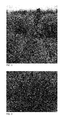
- the photographs of the new plant demonstrate the overall appearance of the plant, including the unique traits.
- the colors are as accurate as reasonably possible with color reproductions. Ambient light spectrum, source and direction may cause the appearance of minor variation in color.
- FIG. 1 shows a close-up of the inflorescence.
- FIG. 2 shows the habit of a three-year-old plant in mid-season flowering.
Landscapes
- Cultivation Of Plants (AREA)
Abstract
Buddleia ‘Prince Charming’ is a short, compact, mounded, multi-stemmed, winter-hardy butterfly bush with long, compact, flowering, thyrse over a long season beginning mid-summer with sweetly-fragrant flowers of bright cerise-pink to raspberry-pink petals that are attractively offset by dark green foliage with silvery undersides. The new plant is valuable for landscaping en masse, as an accent or as a potted specimen.
Description
Botanical classification: Buddleia davidii.
Variety denomination: ‘Prince Charming’.
The present invention relates to the new and distinct butterfly bush plant of the Scrophulariaceae family, Buddleia ‘Prince Charming’ hybridized by Hans A. Hansen in the summer of 2013 at a wholesale perennial nursery in Zeeland, Mich., USA. ‘Prince Charming’ is the result of an ongoing breeding program conducted by the inventor. The goals for this program have been to produce improved, garden-worthy plants for the ornamental plant market. The new plant, originally assigned breeder code 13-10-2, is a single seedling selection from a cross between the unreleased proprietary hybrid 12-67-01 (not patented) as the female or seed patent. The male parent was from an isolation block of unreleased proprietary siblings to the proprietary hybrid 12-67-01 and may have been a sibling of 12-67-01 or a selfing. The new cultivar was discovered and selected as an individual flowering plant within the progeny of the above stated cross-pollination during the summer 2013 in a controlled environment at the same nursery in Zeeland, Mich.
No plants of Buddleia ‘Prince Charming’ have been sold, under this or any other name, in this country or anywhere in the world, prior to the filing of this application, nor has any disclosure of the new plant been made prior to the filing of this application with the exception of that which may have been disclosed within one year of the filing date of this application and was either derived directly or indirectly from the inventor.
Buddleia ‘Prince Charming’ was first asexually propagated from a single select plant in 2015 by stem cuttings at the same nursery in Zeeland, Mich. The resultant asexually propagated plants have been found to be stable and true to type in successive generations of asexual reproduction.
Plants of the new Buddleia have not been observed under all possible environmental conditions. The phenotype may vary somewhat with variations in environment and cultural practices such as temperature, light intensity, available moisture and fertility without, however, any variance in genotype.
Compared to the female plant the new plant has a deeper cerise-pink to raspberry-pink flower color and is less sprawling in habit. Comparison to the male plant is not possible as the exact male plant is not known.
The nearest comparison plants are Buddleia ‘Miss Molly’ U.S. Plant Pat. No. 23,425, and ‘Miss Ruby’ U.S. Plant Pat. No. 19,950, ‘Red Chip’ (not patented), Pink Pagoda’ U.S. Plant Pat. No. 23,214, ‘Pink Micro Chip’ U.S. Plant Pat. No. 26,547 and ‘Queen of Hearts’ U.S. Plant Pat. No. 27,987. ‘Miss Molly’, ‘Miss Ruby’, ‘Red Chip’ and ‘Queen of Hearts’ are all taller and wider in habit than ‘Prince Charming’. ‘Prince Charming’ is more compact in branching, height and width with flowers having a more bright cerise-pink to raspberry-pink coloration than all of the above butterfly bush cultivars.
Buddleia ‘Prince Charming’ is a unique winter-hardy butterfly bush different from all other Buddleia cultivars known to the inventor based on the following combined repeatedly observed distinguishing traits:
-
- 1. Winter-hardy butterfly bush shrub, with multiple-stemmed, branched, compact, rounded-mounded habit.
- 2. Many-flowered compact thyrse over a prolonged season beginning mid-summer.
- 3. Flowers with bright cerise-pink to raspberry-pink petals.
- 4. Lanceolate foliage of dark green with silvery undersides.
The photographs of the new plant demonstrate the overall appearance of the plant, including the unique traits. The colors are as accurate as reasonably possible with color reproductions. Ambient light spectrum, source and direction may cause the appearance of minor variation in color.
The following descriptions and color references are based on the 2001 edition of The Royal Horticultural Society Colour Chart except where common dictionary terms are used. The new plant, Buddleia ‘Prince Charming’, has not been observed under all possible environments. The phenotype may vary slightly with different environmental conditions, such as temperature, light, fertility, moisture and maturity levels, but without any change in the genotype. The following observations and size descriptions are of three-year-old plants in the loamy-sand, open-sun, field trials of a nursery in Zeeland, Mich. with supplemental fertilizer and water as needed. The plants are natural habit and were not treated with plant growth regulators, nor were they pinched at any time in the growth year except to cut back woody stems to about 15 cm tall in early spring.
- Parentage: Unreleased proprietary hybrid 12-67-01 (not patented) as the female or seed patent; unreleased proprietary siblings to the proprietary hybrid 12-67-01 as the male or pollen parent.
- Propagation:
-
- Method.—Softwood cuttings.
- Time to initiate roots from tissue culture.—About two weeks.
- Rooting habit.—Normal, dense and branching, developing thick at base to about 1.5 cm diameter.
- Root color.—Creamy white between RHS 159A and lighter than RHS 159 D depending on soil type.
- Crop time.—Under normal summer growing conditions 12 to 15 weeks to flower in a four-liter container from cutting. Plant vigor is very good.
-
- Plant description:
-
- Plant shape and habit.—Winter-hardy, herbaceous to semi-woody, well-branched shrub with about 14 thick upright and branched main stems producing a compact rounded mound about 90 cm tall and about 117 cm wide.
- Stem.—Terete and woody in lower portion, with exfoliating bark; younger upper portion puberulent; strong and flexible; average about 75 cm tall from soil line to just below terminal flowers, and about 0.8 cm diameter at the base; before distal flowers about 12 branches per main stem in upper six nodes, extending at about 45° angle from horizontal.
- Stem color.—Distal portion just below flowers between RHS 146D and RHS 147D with tinting of nearest RHS 61B in regions of high light exposure; basal 10 cm between RHS 200C and RHS 165B with striations between RHS 200A and RHS N199B.
- Internode.—About 10 nodes per main stem below flowers, average internode length about 7.5 cm on unpinched plant; upper internodes slightly more elongated than lower internodes.
-
- Foliage description: Opposite, decussate; serrate; puberulent to pulverulent abaxial and glabrous adaxial; elliptic; attenuate to cuneate base and acute apex; sessile; no foliar fragrance detected.
-
- Leaf blade size.—Up to about 6.1 cm long and about 19.0 mm wide, average about 5.5 cm long and about 16.0 mm wide; becoming smaller in distal portion of stem.
- Foliage color.—Young expanding leaf adaxial side nearest RHS 144A, young expanding abaxial nearest RHS 149D; mature leaves adaxial side between RHS 139A and RHS 137A, mature abaxial nearest RHS 194A.
- Veins.—Reticulate; abaxial costate, puberulent to pulverulent; adaxial glabrous, slightly impressed.
- Vein color.—Abaxial midrib nearest RHS 147C and secondary veins nearest RHS 194A; adaxial midrib nearest RHS 195B and secondary veins between RHS 139A and RHS 137A.
- Petioles.—Leaves sessile.
- Inflorescence description.—Glomerate thyrse consisting of about 400 persistent salverform flowers; to about 15.0 cm long and about 4.5 cm across; beginning in mid-July and continuing until frost in Michigan.
- Buds.—Elongated clavate, apex rounded; one day prior to opening about 10.0 mm long and about 2.5 mm diameter in club and throat about 1.0 mm diameter in throat and about 8.0 mm long.
- Bud color.—Nearest RHS 64A in club portion, basal one-third of tube portion nearest RHS 2D, distal two-thirds of tube nearest RHS 53C.
- Sepals.—Typically four, proximal two-thirds connate, adpressed to corolla tube; acute apex; glabrous adaxial and pubescent abaxial; margin entire; fused in about the basal 1.6 mm and split in about the terminal 0.9 mm; forming a corolla about 2.5 mm long and about 1.0 mm across; individually less than about 1.0 mm wide at point of fusion.
- Sepal color.—Adaxial and abaxial nearest RHS 138A along center longitudinal axis and nearest RHS 138D along margins of abaxial and adaxial.
- Flowers fragrance.—Pleasantly and distinctly sweet.
- Petals.—Four; glabrous; fused into salverform with typically straight terete tube about 9.0 mm long and 1.0 mm diameter, and a abruptly applanate face about 7.0 mm across; petal blade rounded with crenate margin; apex rounded; blade to about 2.5 mm across and about 3.0 mm long from fused face.
- Petal color.—Adaxial tube base nearest RHS 2D, distal one half tube center nearest RHS 171B, adaxial face blades between RHS 71B and RHS 71C when first open and lightening to nearest RHS 71D with age; abaxial tube base nearest RHS 2D, distal two-thirds of tube nearest RHS 53C and abaxial petal blades between RHS 71B and RHS 71C when first open and lightening to nearest RHS 71D with age.
- Gynoecium.—Pistil: one; about 3.2 mm long; Style: short, round, glabrous; about 1.2 mm long and less than 0.2 mm diameter; color nearest RHS 145D; Stigma: oblong, minutely puberulent; about 0.2 mm in diameter and about 0.5 mm long; color nearest RHS 144B; Ovary: superior; oblong globose; about 1.0 mm across at base and 1.5 mm tall; distally tapering to style; color nearest RHS 145A.
- Androecium.—Four; Filaments: not produced or very short; Anthers: typically four; oblong; introrse; adnate to about mid-point of corolla tube; about 1.0 mm long and 0.5 mm wide; color nearest RHS 18B; Pollen: globose, less than 0.1 mm long; color nearest RHS 18B.
- Pedicel.—Short, puberulent; about 1.0 mm long and about 0.5 mm diameter; color nearest than RHS N138B.
- Peduncle.—Quadrangular, puberulent to pulverulent, flexible and strong; to about 17.0 cm long, and about 1.5 mm diameter at base below flowers.
- Peduncle color.—Between RHS 146D with less direct light and RHS 147D with tinting of nearest RHS 187A in more intense light.
- Fruit.—Moderate fruit set; oblong with acute apex; glabrous, bi-valved, septicidal capsule; about 5.0 mm long and about 1.7 mm diameter.
- Fruit color.—As maturing nearest RHS 162D; when mature and dehiscing nearest RHS 164B.
- Seed.—Elongated linear with sharply acute ends; about 1.5 mm long and less than 0.2 mm across in center.
- Seed color.—Nearest RHS 200A.
-
- Disease resistance: Resistance has been noted to deer browsing. Other resistance beyond that common to butterfly bush cultivars has not been observed. The plant grows best with plenty of moisture and adequate drainage, but is able to tolerate some drought when mature. Hardiness at least from USDA zone 6 through 10.
Claims (1)
1. A new cultivar of winter-hardy butterfly bush Buddleia plant named ‘Prince Charming’ as herein illustrated and described.
Priority Applications (1)
| Application Number | Priority Date | Filing Date | Title |
|---|---|---|---|
| US15/530,090 USPP28903P2 (en) | 2016-12-01 | 2016-12-01 | Buddleia plant named ‘Prince Charming’ |
Applications Claiming Priority (1)
| Application Number | Priority Date | Filing Date | Title |
|---|---|---|---|
| US15/530,090 USPP28903P2 (en) | 2016-12-01 | 2016-12-01 | Buddleia plant named ‘Prince Charming’ |
Publications (1)
| Publication Number | Publication Date |
|---|---|
| USPP28903P2 true USPP28903P2 (en) | 2018-01-30 |
Family
ID=61005222
Family Applications (1)
| Application Number | Title | Priority Date | Filing Date |
|---|---|---|---|
| US15/530,090 Active USPP28903P2 (en) | 2016-12-01 | 2016-12-01 | Buddleia plant named ‘Prince Charming’ |
Country Status (1)
| Country | Link |
|---|---|
| US (1) | USPP28903P2 (en) |
-
2016
- 2016-12-01 US US15/530,090 patent/USPP28903P2/en active Active
Similar Documents
| Publication | Publication Date | Title |
|---|---|---|
| USPP25730P2 (en) | Buddleja plant named ‘Boscranz’ | |
| USPP28177P2 (en) | Buddleia plant named ‘Magenta Munchkin’ | |
| USPP35438P2 (en) | Buddleia plant named ‘Pink Cascade II’ | |
| USPP28903P2 (en) | Buddleia plant named ‘Prince Charming’ | |
| USPP33665P2 (en) | Buddleia plant named ‘Princess Pink’ | |
| USPP37116P2 (en) | Buddleia plant named ‘Cherry Royale’ | |
| USPP28680P2 (en) | Phlox plant named ‘Fashionably Early Princess’ | |
| USPP34298P2 (en) | Buddleia plant named ‘Violet Cascade’ | |
| USPP30635P2 (en) | Buddleia plant named ‘Lavender Cascade’ | |
| USPP33844P2 (en) | Buddleia plant named ‘Lilac Cascade’ | |
| USPP36083P2 (en) | Baptisia plant named ‘Grape Escape’ | |
| USPP34266P2 (en) | Buddleia plant named ‘Gold Drop’ | |
| USPP36444P2 (en) | Phlox plant named ‘Material Girl’ | |
| USPP30711P2 (en) | Buddleia plant named ‘Pink Cascade’ | |
| USPP34434P2 (en) | Monarda plant named ‘Pardon My Rose’ | |
| USPP35084P2 (en) | Dianthus plant named ‘Red Rouge’ | |
| USPP30868P2 (en) | Buddleia plant named ‘Grand Cascade’ | |
| USPP33625P2 (en) | Buddleia plant named ‘Buddaplav’ | |
| USPP34110P2 (en) | Monarda plant named ‘Electric Neon Coral’ | |
| USPP34141P2 (en) | Buddleia plant named ‘Budcon1331’ | |
| USPP34205P2 (en) | Monarda plant named ‘Leading Lady Pink’ | |
| USPP34142P2 (en) | Buddleia plant named ‘Conbud2080’ | |
| USPP33566P2 (en) | Buddleia plant named ‘Dapconwhi’ | |
| USPP27834P2 (en) | Buddleia plant named ‘Dark Dynasty’ | |
| USPP32093P2 (en) | Phlox plant named ‘Opening Act Ultrapink’ |