USPP28697P2 - Rhododendron ‘MFARSS’ - Google Patents
Rhododendron ‘MFARSS’ Download PDFInfo
- Publication number
- USPP28697P2 USPP28697P2 US15/330,250 US201615330250V USPP28697P2 US PP28697 P2 USPP28697 P2 US PP28697P2 US 201615330250 V US201615330250 V US 201615330250V US PP28697 P2 USPP28697 P2 US PP28697P2
- Authority
- US
- United States
- Prior art keywords
- mfarss
- plants
- rhododendron
- color
- new
- Prior art date
- Legal status (The legal status is an assumption and is not a legal conclusion. Google has not performed a legal analysis and makes no representation as to the accuracy of the status listed.)
- Active
Links
- 241000208422 Rhododendron Species 0.000 title claims abstract description 11
- 241000196324 Embryophyta Species 0.000 abstract description 27
- 230000007613 environmental effect Effects 0.000 abstract description 2
- 241000208981 Argyroxiphium Species 0.000 description 5
- 102220496819 DNA dC->dU-editing enzyme APOBEC-3A_N57A_mutation Human genes 0.000 description 5
- 241001164374 Calyx Species 0.000 description 2
- 241000220317 Rosa Species 0.000 description 2
- 241000607479 Yersinia pestis Species 0.000 description 2
- 230000001154 acute effect Effects 0.000 description 2
- 238000004140 cleaning Methods 0.000 description 2
- 239000003086 colorant Substances 0.000 description 2
- 238000005520 cutting process Methods 0.000 description 2
- 201000010099 disease Diseases 0.000 description 2
- 208000037265 diseases, disorders, signs and symptoms Diseases 0.000 description 2
- 238000005259 measurement Methods 0.000 description 2
- 230000017260 vegetative to reproductive phase transition of meristem Effects 0.000 description 2
- 240000001140 Mimosa pudica Species 0.000 description 1
- 102220499684 Transcriptional protein SWT1_N66A_mutation Human genes 0.000 description 1
- 238000007796 conventional method Methods 0.000 description 1
- 239000006071 cream Substances 0.000 description 1
- 235000013399 edible fruits Nutrition 0.000 description 1
- 239000003205 fragrance Substances 0.000 description 1
- 239000011121 hardwood Substances 0.000 description 1
- 238000004519 manufacturing process Methods 0.000 description 1
- 238000000034 method Methods 0.000 description 1
- 230000035772 mutation Effects 0.000 description 1
- 210000000056 organ Anatomy 0.000 description 1
- 210000001672 ovary Anatomy 0.000 description 1
- 230000002085 persistent effect Effects 0.000 description 1
- 230000000644 propagated effect Effects 0.000 description 1
- 230000001850 reproductive effect Effects 0.000 description 1
- 239000011122 softwood Substances 0.000 description 1
- 241000894007 species Species 0.000 description 1
Images

Classifications
-
- A—HUMAN NECESSITIES
- A01—AGRICULTURE; FORESTRY; ANIMAL HUSBANDRY; HUNTING; TRAPPING; FISHING
- A01H—NEW PLANTS OR NON-TRANSGENIC PROCESSES FOR OBTAINING THEM; PLANT REPRODUCTION BY TISSUE CULTURE TECHNIQUES
- A01H5/00—Angiosperms, i.e. flowering plants, characterised by their plant parts; Angiosperms characterised otherwise than by their botanic taxonomy
- A01H5/02—Flowers
-
- A—HUMAN NECESSITIES
- A01—AGRICULTURE; FORESTRY; ANIMAL HUSBANDRY; HUNTING; TRAPPING; FISHING
- A01H—NEW PLANTS OR NON-TRANSGENIC PROCESSES FOR OBTAINING THEM; PLANT REPRODUCTION BY TISSUE CULTURE TECHNIQUES
- A01H6/00—Angiosperms, i.e. flowering plants, characterised by their botanic taxonomy
- A01H6/36—Ericaceae, e.g. azalea, cranberry or blueberry
- A01H6/364—Rhododendron, e.g. Azalea
Definitions
- Rhododendron hybrida Latin name of the genus and species: Rhododendron hybrida.
- the new cultivar is a product of chance discovery by the inventor, Michael Farrow.
- This new variety hereinafter referred to as ‘MFARSS’, was discovered as a single branch, naturally occurring mutation of Rhododendron ‘Farrow’ U.S. Plant Pat. No. 22,209.
- the new variety was selected by the inventor during 2010 at a commercial nursery in Warwick, Md.
- the inventor After identifying the new variety as a potentially interesting selection, the inventor first propagated the new variety by softwood cuttings at the same commercial nursery in Warwick, Md. The inventor continued controlled testing and propagation, assessing stability of the unique characteristics of this variety. At least three generations have been reproduced and have shown that the unique features of this cultivar are stable and reproduced true to type.
- the cultivar ‘MFARSS’ has not been observed under all possible environmental conditions. The phenotype may vary somewhat with variations in environment such as temperature, day length, and light intensity, without, however, any variance in genotype. The following traits have been repeatedly observed and are determined to be the unique characteristics of ‘MFARSS’ These characteristics in combination distinguish ‘MFARSS’ as a new and distinct Rhododendron cultivar:
- MARSS is similar in most horticultural characteristics to the parent. Plants of the new cultivar ‘MFARSS’ however differ in the following:
- ‘MFARSS’ can be compared to the commercial variety Rhododendron hybrida ‘Girard's Rose’, unpatented. Plants of the new cultivar ‘MFARSS’ are similar to plants of ‘Girard's Rose’ in most horticultural characteristics, including a very similar flower color. However, plants of the new cultivar ‘MFARSS’ differ in the following:
- ‘MFARSS’ can be compared to the commercial variety Rhododendron hybrida ‘Silver Sword’, unpatented. Plants of the new cultivar ‘MFARSS’ are similar to plants of ‘Silver Sword’ in most horticultural characteristics, however, plants of the new cultivar ‘MFARSS’ differ in the following:
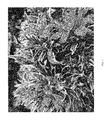
- FIG. 1 illustrates in full color a 2 year old plant of the new variety in a 5 gallon pot.
- FIG. 2 illustrates in full color a close up of a typical flower and foliage of the new variety.
Landscapes
- Life Sciences & Earth Sciences (AREA)
- Health & Medical Sciences (AREA)
- Physiology (AREA)
- Botany (AREA)
- Developmental Biology & Embryology (AREA)
- Environmental Sciences (AREA)
- Natural Medicines & Medicinal Plants (AREA)
- Breeding Of Plants And Reproduction By Means Of Culturing (AREA)
Abstract
A new and distinct Rhododendron cultivar named ‘MFARSS’ is disclosed, characterized by distinctive full double pink flowers. Plants are upright and vigorous. Plants bloom Spring, Summer and Fall and exhibit good tolerance to environmental stressors. The new cultivar is a Rhododendron, suitable for ornamental garden purposes.
Description
Latin name of the genus and species: Rhododendron hybrida.
Variety denomination: ‘MFARSS’.
The new cultivar is a product of chance discovery by the inventor, Michael Farrow. This new variety, hereinafter referred to as ‘MFARSS’, was discovered as a single branch, naturally occurring mutation of Rhododendron ‘Farrow’ U.S. Plant Pat. No. 22,209. The new variety was selected by the inventor during 2010 at a commercial nursery in Warwick, Md.
After identifying the new variety as a potentially interesting selection, the inventor first propagated the new variety by softwood cuttings at the same commercial nursery in Warwick, Md. The inventor continued controlled testing and propagation, assessing stability of the unique characteristics of this variety. At least three generations have been reproduced and have shown that the unique features of this cultivar are stable and reproduced true to type.
The cultivar ‘MFARSS’ has not been observed under all possible environmental conditions. The phenotype may vary somewhat with variations in environment such as temperature, day length, and light intensity, without, however, any variance in genotype. The following traits have been repeatedly observed and are determined to be the unique characteristics of ‘MFARSS’ These characteristics in combination distinguish ‘MFARSS’ as a new and distinct Rhododendron cultivar:
-
- 1. Compact, densely growing plant habit.
- 2. Heavy blooming.
- 3. Distinct creamy variegated leaf margins.
- 4. Bright magenta pink flowers.
‘MFARSS’ is similar in most horticultural characteristics to the parent. Plants of the new cultivar ‘MFARSS’ however differ in the following:
-
- 1. The new variety has a denser, more compact plant habit.
- 2. The new variety produces more flowers per plant, and has small amount of re-blooming, after the initial heavy flush not found in the parent variety.
‘MFARSS’ can be compared to the commercial variety Rhododendron hybrida ‘Girard's Rose’, unpatented. Plants of the new cultivar ‘MFARSS’ are similar to plants of ‘Girard's Rose’ in most horticultural characteristics, including a very similar flower color. However, plants of the new cultivar ‘MFARSS’ differ in the following:
-
- 1. Plants of the new variety are even more compact than plants of this comparator.
- 2. Plants of ‘MFARSS’ have variegated foliage, not found in this comparator variety.
‘MFARSS’ can be compared to the commercial variety Rhododendron hybrida ‘Silver Sword’, unpatented. Plants of the new cultivar ‘MFARSS’ are similar to plants of ‘Silver Sword’ in most horticultural characteristics, however, plants of the new cultivar ‘MFARSS’ differ in the following:
-
- 1. ‘MFARSS’ has a thicker cream colored leaf margin.
- 2. Plants of ‘MFARSS’ are more compact and dense than plants of ‘Silver Sword’.
- 3. Foliage of ‘MFARSS’ has a more acute apex than foliage of ‘Silver Sword’.
- 4. Plants of ‘MFARSS’ have a shorter mature height than plants of ‘Silver Sword’.
The accompanying photograph in FIG. 1 illustrates in full color a 2 year old plant of the new variety in a 5 gallon pot.
The photographs were taken using conventional techniques and although colors may appear different from actual colors due to light reflectance it is as accurate as possible by conventional photographic techniques.
In the following description, color references are made to The Royal Horticultural Society Colour Chart, fifth edition, except where general terms of ordinary dictionary significance are used. The following observations and measurements describe ‘MFARSS’ plants grown outdoors in Loxley, Ala. Plants are approximately 2 to 3 years old, in a 3 gallon nursery container. Measurements and numerical values represent averages of typical plant types.
- Botanical classification: Rhododendron hybrida ‘MFARSS’.
- Typically by semi-hardwood cuttings in Spring and Summer.
- Root description: Fine, fibrous young roots, well branched. Colored near RHS Grey-Brown 199A.
- Growth habit: Low, mounded evergreen shrub.
- Height: Approximately 24 cm to top of foliar and flowering plane.
- Plant spread: Approximately 33 cm.
- Growth rate: Slow to moderate.
- Branching characteristics: Very well branched with basal branches and lateral branches. Lateral branching encouraged by pinching.
- Lateral branches:
- Lateral branch quantity: Average 48.
- Length of primary branches: Average range 19 to 25 cm.
- Diameter of primary branches: Approximately 45 mm.
- Primary branch strength: Strong.
- Lateral branch color: Immature: Near Yellow-Green 144B. Mature: Near Greyed-Orange 165A.
- Primary branch texture: Scaly, rough.
- Lateral branch texture: Slightly pubescent.
- Internode length: Average 1.3 cm.
- Age of plant described: Approximately 2 to 3 years.
- Leaf:
-
- Type.—Simple.
- Arrangement.—Alternate or whorled.
- Average length.—Average 4.5 cm.
- Average width.—Average 1.1 cm.
- Shape of blade.—Lanceolate to oblanceolate.
- Apex.—Acute.
- Base.—Cuneate to attenuate.
- Attachment.—Stalked.
- Margin.—Entire. Undulate.
- Texture of top surface.—Glabrous.
- Texture of bottom surface.—Sparsely pubescent.
- Appearance.—Upper surface glossy, under surface matte.
- Color.—Young foliage upper side: Near Yellow-Green 146B, margins near Yellow 10D. Young foliage under side: Near Yellow-Green 146B, margins near Yellow 10D. Mature foliage upper side: Near Yellow-Green 146A, margins near Yellow 11D. Mature foliage under side: Near Yellow-Green 146B, margins near Yellow 11D.
- Venation.—Type: Pinnate. Venation color upper side: Identical to leaf blade. Venation color under side: Identical to leaf blade.
- Petiole.—Length: About 0.6 cm. Diameter: About 0.1 cm. Color: Upper Surface: Near RHS Yellow-Green 164C. Lower Surface: Near RHS Yellow-Green 146C. Texture: Upper and lower surfaces slightly pubescent.
-
- Bloom period: Natural flowering begins in May, under conditions found in Michigan.
- Flower:
-
- Arrangement.—Axillary clusters of perfect, single funnel shaped individual flowers. Typically 2 to 5 flowers per cluster. About 160 flowers and buds on a plant in full bloom. Flower longevity approximately 3 weeks.
-
- Flowers:
-
- Length.—Average 4.0 cm.
- Diameter.—Average 6.0 cm.
- Facing direction.—Outwardly and upwardly facing.
- Persistent or self-cleaning.—Self-cleaning.
- Fragrance.—None.
-
- Petals:
-
- Length.—Approximately 2.5 cm.
- Width.—Approximately 1.5 to 2.0 cm
- Apex.—Acute, undulating and ruffled.
- Base.—Fused.
- Shape of petal.—Ovate.
- Petal margin.—Entire, ruffled.
- Petal number.—5.
- Petal texture.—Smooth.
- Color.—Upper surface at first opening: Near RHS Red-Purple N57A. Under surface at first opening: Near RHS Red-Purple N57A. Inner surface at maturity: Near RHS Red-Purple N57A. Outer surface at maturity: Near RHS Red-Purple N57A.
-
- Bud:
-
- Shape.—Elliptic.
- Length.—2.4 cm.
- Diameter.—1.2 cm.
- Color.—Near RHS Red-Purple N57A.
-
- Calyx/sepals: Star shaped calyx.
-
- Quantity per flower.—5 sepals.
- Shape.—Lanceolate.
- Length.—9 mm.
- Width.—3 mm.
- Apex.—Narrowly acute.
- Base.—Fused.
- Margin.—Entire.
- Texture.—All surfaces slightly pubescent.
- Color.—Interior Surface: Near RHS Yellow-Green 145D. Outer Surface: Near RHS Yellow-Green 145D.
-
- Peduncle: Not present, inflorescence pedicels emerge directly from node.
- Pedicel:
-
- Length.—Average 5 mm.
- Diameter.—1 mm.
- Color.—Near RHS Yellow-Green 145D, tinged near Red-Purple 57A.
- Texture.—Slightly pubescent.
- Aspect.—Straight. Angle of attachment, approximately 45° angle from stem.
- Strength.—Strong.
-
- Stamens:
-
- Number.—5.
- Filament length.—3 cm.
- Width.—0.1 cm.
- Filament color.—Near RHS Red-Purple 57A.
- Anthers.—Shape: Spherical. Length: Less than 1 mm. Color: Near RHS Red-Purple 72A. Pollen: Scant, colored near Red-Purple 57A.
-
- Pistil:
-
- Number.—1.
- Length.—Average 3.2 cm.
- Style.—Length: Average 3.0. cm. Color: Near RHS Red-Purple N57C. Stigma: Globular, colored near Red-Purple N66A. Ovary: Colored near White 155C.
-
- Disease and pest resistance: Not observed to be susceptible nor resistant to normal diseases and pests of Rhododendron.
- Temperature tolerance: Observed hardy to USDA Zone 7, potentially hardy to zone 6.
- Fruit/seed production: Not observed to date.
Claims (1)
1. A new and distinct cultivar of Rhododendron plant named ‘MFARSS’ as herein illustrated and described.
Priority Applications (1)
| Application Number | Priority Date | Filing Date | Title |
|---|---|---|---|
| US15/330,250 USPP28697P2 (en) | 2016-08-29 | 2016-08-29 | Rhododendron ‘MFARSS’ |
Applications Claiming Priority (1)
| Application Number | Priority Date | Filing Date | Title |
|---|---|---|---|
| US15/330,250 USPP28697P2 (en) | 2016-08-29 | 2016-08-29 | Rhododendron ‘MFARSS’ |
Publications (1)
| Publication Number | Publication Date |
|---|---|
| USPP28697P2 true USPP28697P2 (en) | 2017-11-28 |
Family
ID=60408490
Family Applications (1)
| Application Number | Title | Priority Date | Filing Date |
|---|---|---|---|
| US15/330,250 Active USPP28697P2 (en) | 2016-08-29 | 2016-08-29 | Rhododendron ‘MFARSS’ |
Country Status (1)
| Country | Link |
|---|---|
| US (1) | USPP28697P2 (en) |
-
2016
- 2016-08-29 US US15/330,250 patent/USPP28697P2/en active Active
Similar Documents
| Publication | Publication Date | Title |
|---|---|---|
| USPP28697P2 (en) | Rhododendron ‘MFARSS’ | |
| USPP29358P2 (en) | Paeonia plant named ‘RTPIV791-01’ | |
| USPP36173P2 (en) | Prunus plant named ‘UCONNPCSDR’ | |
| USPP35481P2 (en) | Campanula plant named ‘Purple Fountain’ | |
| USPP35292P2 (en) | Lagerstroemia plant named ‘BD-01-20’ | |
| USPP33179P2 (en) | Lagerstroemia plant named ‘HOCH1099’ | |
| USPP34219P2 (en) | Lagerstroemia plant named ‘G19234’ | |
| USPP34960P2 (en) | Anigozanthos plant named ‘KPCARN’ | |
| USPP35146P2 (en) | Weigela plant named ‘VERWEIG9’ | |
| USPP32967P2 (en) | Rhododendron plant named ‘ROBLEZD’ | |
| USPP33457P2 (en) | Abelia plant named ‘MINCAUTRI’ | |
| USPP32507P2 (en) | Rhododendron plant named ‘ROBLEZF’ | |
| USPP33178P2 (en) | Lagerstroemia plant named ‘HOCH1065’ | |
| USPP32503P2 (en) | Rhamnus tree named ‘SMNRFBT’ | |
| USPP32377P2 (en) | Delosperma plant named ‘DDLRE03-0’ | |
| USPP32516P2 (en) | Gardenia plant named ‘LEEFIVE’ | |
| USPP32506P2 (en) | Rhododendron plant named ‘ROBLEZE’ | |
| USPP31964P2 (en) | Cotinus plant named ‘SMCCDLP’ | |
| USPP28972P2 (en) | Rhododendron plant named ‘WHA01’ | |
| USPP30256P2 (en) | Gaura plant named ‘GBAWH02-1’ | |
| USPP28727P3 (en) | Rhododendron plant named ‘BAILEC’ | |
| USPP28728P3 (en) | Rhododendron plant named ‘BAILEB’ | |
| US20140196184P1 (en) | Azalea plant named 'ROBLEX' | |
| USPP30449P3 (en) | Viburnum plant named ‘BRANT01’ | |
| USPP29326P2 (en) | Hibiscus plant named ‘SUMMER HOLIDAY’ |