USPP28487P2 - Phlox plant named ‘Amethyst Pearl’ - Google Patents
Phlox plant named ‘Amethyst Pearl’ Download PDFInfo
- Publication number
- USPP28487P2 USPP28487P2 US15/330,047 US201615330047V USPP28487P2 US PP28487 P2 USPP28487 P2 US PP28487P2 US 201615330047 V US201615330047 V US 201615330047V US PP28487 P2 USPP28487 P2 US PP28487P2
- Authority
- US
- United States
- Prior art keywords
- rhs
- phlox
- pearl
- amethyst
- color
- Prior art date
- Legal status (The legal status is an assumption and is not a legal conclusion. Google has not performed a legal analysis and makes no representation as to the accuracy of the status listed.)
- Active
Links
- 241000124429 Phlox Species 0.000 title claims abstract 4
- 241000196324 Embryophyta Species 0.000 claims abstract description 9
- 241000272878 Apodiformes Species 0.000 claims 1
- 241000255777 Lepidoptera Species 0.000 claims 1
- 244000304393 Phlox paniculata Species 0.000 abstract description 16
- 241001469893 Oxyzygonectes dovii Species 0.000 abstract description 3
- 230000001154 acute effect Effects 0.000 description 4
- 210000003462 vein Anatomy 0.000 description 4
- 230000017260 vegetative to reproductive phase transition of meristem Effects 0.000 description 3
- 238000005520 cutting process Methods 0.000 description 2
- 239000003205 fragrance Substances 0.000 description 2
- 230000000644 propagated effect Effects 0.000 description 2
- 239000002689 soil Substances 0.000 description 2
- 239000007787 solid Substances 0.000 description 2
- 239000000126 substance Substances 0.000 description 2
- 241000221785 Erysiphales Species 0.000 description 1
- 244000178870 Lavandula angustifolia Species 0.000 description 1
- 235000010663 Lavandula angustifolia Nutrition 0.000 description 1
- 241001479634 Phlox glaberrima Species 0.000 description 1
- 241001479636 Phlox maculata Species 0.000 description 1
- 241000607479 Yersinia pestis Species 0.000 description 1
- 230000006578 abscission Effects 0.000 description 1
- 239000002775 capsule Substances 0.000 description 1
- 238000004140 cleaning Methods 0.000 description 1
- 239000003086 colorant Substances 0.000 description 1
- 235000009508 confectionery Nutrition 0.000 description 1
- 201000010099 disease Diseases 0.000 description 1
- 208000037265 diseases, disorders, signs and symptoms Diseases 0.000 description 1
- 235000013399 edible fruits Nutrition 0.000 description 1
- 230000035558 fertility Effects 0.000 description 1
- 239000003337 fertilizer Substances 0.000 description 1
- 210000004209 hair Anatomy 0.000 description 1
- 239000001102 lavandula vera Substances 0.000 description 1
- 235000018219 lavender Nutrition 0.000 description 1
- 238000004519 manufacturing process Methods 0.000 description 1
- 239000000203 mixture Substances 0.000 description 1
- 230000035772 mutation Effects 0.000 description 1
- 210000001672 ovary Anatomy 0.000 description 1
- 230000002085 persistent effect Effects 0.000 description 1
- 230000033458 reproduction Effects 0.000 description 1
- 102220246481 rs147782267 Human genes 0.000 description 1
- 238000001228 spectrum Methods 0.000 description 1
- 238000003892 spreading Methods 0.000 description 1
- 230000000153 supplemental effect Effects 0.000 description 1
- 208000024891 symptom Diseases 0.000 description 1
- XLYOFNOQVPJJNP-UHFFFAOYSA-N water Substances O XLYOFNOQVPJJNP-UHFFFAOYSA-N 0.000 description 1
Images
Classifications
-
- A—HUMAN NECESSITIES
- A01—AGRICULTURE; FORESTRY; ANIMAL HUSBANDRY; HUNTING; TRAPPING; FISHING
- A01H—NEW PLANTS OR NON-TRANSGENIC PROCESSES FOR OBTAINING THEM; PLANT REPRODUCTION BY TISSUE CULTURE TECHNIQUES
- A01H5/00—Angiosperms, i.e. flowering plants, characterised by their plant parts; Angiosperms characterised otherwise than by their botanic taxonomy
- A01H5/02—Flowers
-
- A—HUMAN NECESSITIES
- A01—AGRICULTURE; FORESTRY; ANIMAL HUSBANDRY; HUNTING; TRAPPING; FISHING
- A01H—NEW PLANTS OR NON-TRANSGENIC PROCESSES FOR OBTAINING THEM; PLANT REPRODUCTION BY TISSUE CULTURE TECHNIQUES
- A01H6/00—Angiosperms, i.e. flowering plants, characterised by their botanic taxonomy
- A01H6/70—Polemoniaceae, e.g. Phlox
Definitions
- Botanical classification Phlox hybrid.
- the present invention relates to a new and distinct cultivar of Phlox plant, known as Phlox ‘Amethyst Pearl’ and will be referred to hereafter by its cultivar name, ‘Amethyst Pearl’, or the “new plant”.
- the new plant was discovered in a production field of a wholesale perennial nursery in Zeeland, Mich. on Oct. 11, 2011 as an non-induced branch sport on Phlox ‘Minnie Pearl’ and assigned the temporary accession number of 11-SP-PHL-101.
- ‘Minnie Pearl’ was originally found along a roadside in Kemper, Miss. in a natural population presumed to be a natural hybrid between Phlox maculata and Phlox glaberrima .
- the new plant has been asexually propagated by stem cuttings in the greenhouses at the same nursery in Zeeland, Mich.
- the unique characteristics of the new plant have been found to be reproducible and stable in successive generations of asexually propagated and the resultant plants have been found to be identical to the original selection.
- Phlox ‘Amethyst Pearl’ is unique from all other tall garden phlox or other phlox known to the inventor. The new plant differs from ‘Minnie Pearl’ by having light lavender pink flowers with a white eye compared to the solid white flower of ‘Minnie Pearl’. Compared to other known Phlox paniculata hybrids ‘Amethyst Pearl’ has foliage of stiffer and thicker-substance and the flowers about a month earlier. ‘Amethyst Pearl’ differs from and all other phlox known to the inventor in the following repeatedly observed traits in combination:
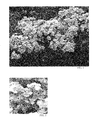
- the photographs of the new plant demonstrate the unique traits of ‘Amethyst Pearl’ and the overall appearance of the plant at two-years old.
- the colors are as accurate as reasonably possible with color reproductions. Variation in ambient light spectrum, source and direction may cause the appearance of minor variation in color.
- FIG. 1 shows the new plant in flower in the landscape with late spring to early summer foliage.
- FIG. 2 shows the floriferous flower head of the new plant together with mid-summer foliage.
- Phlox ‘Amethyst Pearl’ has not been observed under all possible environments. The phenotype may vary slightly with different growing environments such as temperature, light, fertility, soil pH, moisture and maturity levels, but without any change in the genotype. The following observations and size descriptions are based on two-year-old plants in the full sun trial garden of a wholesale perennial nursery in Zeeland, Mich. with supplemental fertilizer and water as needed.
Landscapes
- Life Sciences & Earth Sciences (AREA)
- Health & Medical Sciences (AREA)
- Physiology (AREA)
- Botany (AREA)
- Developmental Biology & Embryology (AREA)
- Environmental Sciences (AREA)
- Natural Medicines & Medicinal Plants (AREA)
- Breeding Of Plants And Reproduction By Means Of Culturing (AREA)
Abstract
A new and unique cultivar of garden phlox named Phlox ‘Amethyst Pearl’ multi-stemmed compact habit, slowly spread plant with bright, glossy-green, lanceolate leaves. Flowers are sweetly fragrant, light lavender-pink with white eye beginning very early in early June, continuing for about four weeks and repeating in early-fall. Foliage stays clean and resists mildew.
Description
Botanical classification: Phlox hybrid.
Variety denomination: ‘Amethyst Pearl’.
The present invention relates to a new and distinct cultivar of Phlox plant, known as Phlox ‘Amethyst Pearl’ and will be referred to hereafter by its cultivar name, ‘Amethyst Pearl’, or the “new plant”. The new plant was discovered in a production field of a wholesale perennial nursery in Zeeland, Mich. on Oct. 11, 2011 as an non-induced branch sport on Phlox ‘Minnie Pearl’ and assigned the temporary accession number of 11-SP-PHL-101. ‘Minnie Pearl’ was originally found along a roadside in Kemper, Miss. in a natural population presumed to be a natural hybrid between Phlox maculata and Phlox glaberrima. The new plant has been asexually propagated by stem cuttings in the greenhouses at the same nursery in Zeeland, Mich. The unique characteristics of the new plant have been found to be reproducible and stable in successive generations of asexually propagated and the resultant plants have been found to be identical to the original selection.
No plants of Phlox ‘Amethyst Pearl’ have been sold, in this country or anywhere in the world, prior to the filing of this application, nor has any disclosure of the new plant been made prior to the filing of this application with the exception of that which may have been disclosed within one year of the filing date of this application and was either derived directly or indirectly from the inventor.
Phlox ‘Amethyst Pearl’ is unique from all other tall garden phlox or other phlox known to the inventor. The new plant differs from ‘Minnie Pearl’ by having light lavender pink flowers with a white eye compared to the solid white flower of ‘Minnie Pearl’. Compared to other known Phlox paniculata hybrids ‘Amethyst Pearl’ has foliage of stiffer and thicker-substance and the flowers about a month earlier. ‘Amethyst Pearl’ differs from and all other phlox known to the inventor in the following repeatedly observed traits in combination:
-
- 1. Plants of compact habit, slowly spreading by short rhizomes, producing clean, glossy, bright-green, lanceolate leaves.
- 2. Foliage thicker substance than Phlox paniculata types.
- 3. Multiple stems produce rounded heads of flower very early in the season.
- 4. Sweetly fragrant flowers on stems of about 30 to 45 cm tall producing sweetly-fragrant light lavender-pink flowers with white eye zones.
The photographs of the new plant demonstrate the unique traits of ‘Amethyst Pearl’ and the overall appearance of the plant at two-years old. The colors are as accurate as reasonably possible with color reproductions. Variation in ambient light spectrum, source and direction may cause the appearance of minor variation in color.
The following descriptions and color references are based on The 2001 edition of The Royal Horticultural Society Colour Chart except where common dictionary terms are used. Phlox ‘Amethyst Pearl’ has not been observed under all possible environments. The phenotype may vary slightly with different growing environments such as temperature, light, fertility, soil pH, moisture and maturity levels, but without any change in the genotype. The following observations and size descriptions are based on two-year-old plants in the full sun trial garden of a wholesale perennial nursery in Zeeland, Mich. with supplemental fertilizer and water as needed.
- Botanical classification: Phlox hybrid.
- Parentage: Non-induced branch sport mutation of Phlox ‘Minnie Pearl’.
- Plant habit: Hardy herbaceous perennial, compact, producing about 30 to 40 rigid upright stems; 30 to 45 cm tall at flowering and 26 to 33 cm wide; rounded panicle cluster about 9.0 cm across and 7.0 cm tall; flowering begins about June 8th in Michigan and continuing for about 4 weeks and repeating in the early-fall if deadheaded for another 3 weeks.
- Propagation: Stem cuttings; rooting in about 14 days.
- Time to produce finished crop in 3.8 liter pots: About 8 to 10 weeks; moderate rate of growth.
- Root: Primary roots to about 1.0 mm thick; secondary fibrous and freely branching; color creamy white to tan depending on soil type.
- Leaves: Simple, opposite, lanceolate, entire; slightly puberulent adaxial surrounding vein and glabrous abaxial; lustrous adaxial, matte abaxial; acute apex, rounded base; about 11.0 cm long by about 1.9 cm wide near the center.
- Leaf color at flowering: Adaxial nearest RHS 137A; abaxial surface nearest RHS 147C.
- Foliage fragrance: None detected.
- Veins: Pinnate; glabrous abaxial, slightly puberulent adaxial; mid-vein about 1.0 mm wide at base, slightly sunken adaxial and raised abaxial.
- Vein color: Adaxial midrib between RHS 163B and RHS 162A, nearest RHS 145C on abaxial surface; secondary veins same color as surround leaf.
- Petiole: Leaves sessile.
- Stems: Terete; stiff; strong; upright; glabrous to minutely puberulent; about 26.0 cm long and 3.0 mm diameter at base.
- Stem color: Between RHS 145B and RHS 145C distally becoming more maculate proximally with lowest 4.0 cm nearest solid RHS 83B.
- Nodes: About 9 per stem; average internode length about 2.9 cm; shorter proximally and longer distally.
- Node color: Between RHS 145B and RHS 145C.
- Flowers: Perfect; salverform, with fused tube about 2.8 cm long and face about 2.8 cm across consisting five petals; held in a tight panicle of about 48 flowers; attitude upright to outward.
- Flower longevity: About 5 days on plant or as cut flower; self-cleaning.
- Flower fragrance: Pleasantly sweet.
- Buds one to two days prior to opening: Narrowly oblanceolate, to nearly clavate; acute apex with petals twisted about each other; about 3.3 cm long and 1.5 mm diameter in tube and 4.0 mm diameter toward apex.
- Bud color: Nearest RHS 76C distally with tube nearest RHS N77D distally and nearest RHS 150D.
- Petals: Five, glabrous except for adaxial about 10.0 mm of tube throat, rounded limbs with rounded to emarginate apex; limbs diameter about 1.2 cm, overlapping about one-third of the petals to either side; base fused into a tube about 3.0 mm diameter and 2.6 cm long; basal one-third of tube inner surface with fine hairs the same color as petals.
- Petal color:
-
- Top or adaxial surface of limb.—Central eye of about 5.0 mm diameter nearest RHS 155D, remainder of petal outside of center eye of nearest RHS 84B.
- Back or abaxial surface of limb.—Between RHS 76B and RHS 76C.
- Inner or adaxial surface of tube.—Between RHS 75C and RHS 75D in dorsal half and gradually lightening to nearest RHS 150D at base.
- Outer or abaxial surface of tube.—Between RHS 75C and RHS 75D in dorsal half and lightening to lighter than RHS 150D at base.
-
- Androecium:
-
- Filaments.—Usually five, fused to inner petals, of varying lengths between 1.0 mm and 2.0 mm and less than 0.5 mm in diameter; lighter than RHS 155D.
- Anther.—Oblong elliptic; dorsifixed; oblong, about 2.5 mm long by 0.5 mm wide.
- Anther color.—Nearest RHS 17B.
- Pollen.—Nearly microscopic, spherical; color nearest RHS 17B.
-
- Gynoecium: One pistil per flower.
-
- Style.—Cylindrical; about 2.8 cm long and 0.5 mm diameter when flower is mature; lighter than RHS 1D and more yellow-green than RHS 155C in the center and distal portion and near white lighter than RHS 155D at base.
- Stigma.—Split into three branches in the proximal 2 mm, less than 0.25 mm in diameter; persistent after flower abscission; nearest RHS 2C.
- Ovary.—Inferior; elliptic, about 2.0 mm long and1.0 mm diameter; color nearest RHS 145A.
-
- Sepals: Five, glabrous; lanceolate; acute apex, fused in basal 7.0 mm; individually about 10.0 mm long and 1.0 mm wide.
- Sepal color: Between RHS 137B and RHS 139B on both adaxial and abaxial surfaces with heavy tinting of between RHS 187A and RHS N187A.
- Peduncle: Glaucous to minutely puberulent, stiff, strong, upright, terete; about 1.5 mm diameter at base and 4.0 cm long; branched at distal nodes.
- Peduncle color: Blend between RHS 151A and RHS 151B.
- Fruit: Dehiscent capsule with flat base and acute to mucronate apex; about 7.0 mm long and 5.0 mm diameter; color at maturity nearest RHS 161C.
- Seeds: Up to four; slightly flattened ellipsoid; about 3.5 mm long and 2.5 mm across and 2.0 mm thick; color nearest RHS 202A.
- Hardiness and culture: The new plant grows best with plenty of moisture and adequate drainage; hardy to at least from USDA zone 3 through 8.
- Disease and pest resistance: Phlox ‘Amethyst Pearl’ demonstrated the excellent powdery mildew resistance under conditions that would normally show symptoms.
Claims (1)
1. A new and distinct cultivar of hybrid phlox plant named Phlox ‘Amethyst Pearl’, as herein described and illustrated, especially suitable as a potted plant, for the garden, for attracting hummingbirds and butterflies, and for cut flower arrangements.
Priority Applications (1)
| Application Number | Priority Date | Filing Date | Title |
|---|---|---|---|
| US15/330,047 USPP28487P2 (en) | 2016-07-29 | 2016-07-29 | Phlox plant named ‘Amethyst Pearl’ |
Applications Claiming Priority (1)
| Application Number | Priority Date | Filing Date | Title |
|---|---|---|---|
| US15/330,047 USPP28487P2 (en) | 2016-07-29 | 2016-07-29 | Phlox plant named ‘Amethyst Pearl’ |
Publications (1)
| Publication Number | Publication Date |
|---|---|
| USPP28487P2 true USPP28487P2 (en) | 2017-10-03 |
Family
ID=59928427
Family Applications (1)
| Application Number | Title | Priority Date | Filing Date |
|---|---|---|---|
| US15/330,047 Active USPP28487P2 (en) | 2016-07-29 | 2016-07-29 | Phlox plant named ‘Amethyst Pearl’ |
Country Status (1)
| Country | Link |
|---|---|
| US (1) | USPP28487P2 (en) |
Cited By (1)
| Publication number | Priority date | Publication date | Assignee | Title |
|---|---|---|---|---|
| USPP29911P3 (en) * | 2016-12-01 | 2018-11-27 | Walters Gardens, Inc | Phlox plant named ‘Fashionably Early Flamingo’ |
-
2016
- 2016-07-29 US US15/330,047 patent/USPP28487P2/en active Active
Cited By (1)
| Publication number | Priority date | Publication date | Assignee | Title |
|---|---|---|---|---|
| USPP29911P3 (en) * | 2016-12-01 | 2018-11-27 | Walters Gardens, Inc | Phlox plant named ‘Fashionably Early Flamingo’ |
Similar Documents
| Publication | Publication Date | Title |
|---|---|---|
| USPP29222P2 (en) | Dianthus plant named ‘Paint the Town Magenta’ | |
| USPP28487P2 (en) | Phlox plant named ‘Amethyst Pearl’ | |
| USPP31485P2 (en) | Phlox plant named ‘Rocky Road Magenta’ | |
| USPP31433P2 (en) | Heuchera plant named ‘Peachberry Ice’ | |
| USPP28680P2 (en) | Phlox plant named ‘Fashionably Early Princess’ | |
| USPP35787P2 (en) | Phlox plant named ‘Prismatic Pink’ | |
| USPP36444P2 (en) | Phlox plant named ‘Material Girl’ | |
| USPP36599P3 (en) | Phlox plant named ‘Fancy Girl’ | |
| USPP32093P2 (en) | Phlox plant named ‘Opening Act Ultrapink’ | |
| USPP34101P2 (en) | Phlox plant named ‘Opening Act Romance’ | |
| USPP32025P2 (en) | Phlox plant named ‘Baby Doll Pink’ | |
| USPP32248P2 (en) | Phlox plant named ‘Rocky Road Grape’ | |
| USPP33487P2 (en) | Phlox plant named ‘Baby Doll White’ | |
| USPP36886P2 (en) | Phlox plant named ‘Dream Girl’ | |
| USPP35232P2 (en) | Pulmonaria plant named ‘Pink-a-Blue’ | |
| USPP32324P2 (en) | Phlox plant named ‘Party Girl’ | |
| USPP32323P2 (en) | Phlox plant named ‘Cover Girl’ | |
| USPP34205P2 (en) | Monarda plant named ‘Leading Lady Pink’ | |
| USPP33795P2 (en) | Phlox plant named ‘Magenta Pearl’ | |
| USPP33276P2 (en) | Phlox plant named ‘Pink Sparkles’ | |
| USPP31308P3 (en) | Phlox plant named ‘Kung Fuchsia’ | |
| USPP32990P2 (en) | Phlox plant named ‘Crater Lake’ | |
| USPP33665P2 (en) | Buddleia plant named ‘Princess Pink’ | |
| USPP33006P2 (en) | Phlox plant named ‘Majestic Magenta’ | |
| USPP31168P2 (en) | Phlox plant named ‘Bedazzled Lavender’ |