USPP25986P2 - Hibiscus plant named ‘Plum Fantasy’ - Google Patents
Hibiscus plant named ‘Plum Fantasy’ Download PDFInfo
- Publication number
- USPP25986P2 USPP25986P2 US13/998,772 US201313998772V USPP25986P2 US PP25986 P2 USPP25986 P2 US PP25986P2 US 201313998772 V US201313998772 V US 201313998772V US PP25986 P2 USPP25986 P2 US PP25986P2
- Authority
- US
- United States
- Prior art keywords
- rhs
- fantasy
- plum
- color
- plant
- Prior art date
- Legal status (The legal status is an assumption and is not a legal conclusion. Google has not performed a legal analysis and makes no representation as to the accuracy of the status listed.)
- Active, expires
Links
- 241000218033 Hibiscus Species 0.000 title description 15
- 241000196324 Embryophyta Species 0.000 claims abstract description 17
- 235000006868 Hibiscus hybrid Nutrition 0.000 claims abstract description 3
- 230000002035 prolonged effect Effects 0.000 abstract description 2
- 235000005206 Hibiscus Nutrition 0.000 description 13
- 235000007185 Hibiscus lunariifolius Nutrition 0.000 description 13
- 210000003462 vein Anatomy 0.000 description 7
- 230000001154 acute effect Effects 0.000 description 6
- 240000001140 Mimosa pudica Species 0.000 description 4
- 238000005520 cutting process Methods 0.000 description 3
- 230000017260 vegetative to reproductive phase transition of meristem Effects 0.000 description 3
- 208000035240 Disease Resistance Diseases 0.000 description 2
- 241000289690 Xenarthra Species 0.000 description 2
- 230000006578 abscission Effects 0.000 description 2
- 230000000644 propagated effect Effects 0.000 description 2
- 241000894007 species Species 0.000 description 2
- 230000036561 sun exposure Effects 0.000 description 2
- 241001164374 Calyx Species 0.000 description 1
- 102220499684 Transcriptional protein SWT1_N66A_mutation Human genes 0.000 description 1
- 241000607479 Yersinia pestis Species 0.000 description 1
- 230000011681 asexual reproduction Effects 0.000 description 1
- 238000013465 asexual reproduction Methods 0.000 description 1
- 239000002775 capsule Substances 0.000 description 1
- 239000003086 colorant Substances 0.000 description 1
- 230000003247 decreasing effect Effects 0.000 description 1
- 235000013399 edible fruits Nutrition 0.000 description 1
- 230000007613 environmental effect Effects 0.000 description 1
- 230000035558 fertility Effects 0.000 description 1
- 239000003337 fertilizer Substances 0.000 description 1
- 239000003205 fragrance Substances 0.000 description 1
- 230000004927 fusion Effects 0.000 description 1
- 230000012010 growth Effects 0.000 description 1
- 230000002045 lasting effect Effects 0.000 description 1
- 238000000034 method Methods 0.000 description 1
- 238000002156 mixing Methods 0.000 description 1
- 239000000203 mixture Substances 0.000 description 1
- 210000001672 ovary Anatomy 0.000 description 1
- 229940023569 palmate Drugs 0.000 description 1
- 239000000049 pigment Substances 0.000 description 1
- 239000005648 plant growth regulator Substances 0.000 description 1
- 238000004161 plant tissue culture Methods 0.000 description 1
- 230000033458 reproduction Effects 0.000 description 1
- 239000004576 sand Substances 0.000 description 1
- 239000002689 soil Substances 0.000 description 1
- 238000001228 spectrum Methods 0.000 description 1
- 230000000153 supplemental effect Effects 0.000 description 1
- XLYOFNOQVPJJNP-UHFFFAOYSA-N water Substances O XLYOFNOQVPJJNP-UHFFFAOYSA-N 0.000 description 1
Images
Classifications
-
- A—HUMAN NECESSITIES
- A01—AGRICULTURE; FORESTRY; ANIMAL HUSBANDRY; HUNTING; TRAPPING; FISHING
- A01H—NEW PLANTS OR NON-TRANSGENIC PROCESSES FOR OBTAINING THEM; PLANT REPRODUCTION BY TISSUE CULTURE TECHNIQUES
- A01H5/00—Angiosperms, i.e. flowering plants, characterised by their plant parts; Angiosperms characterised otherwise than by their botanic taxonomy
- A01H5/02—Flowers
-
- A—HUMAN NECESSITIES
- A01—AGRICULTURE; FORESTRY; ANIMAL HUSBANDRY; HUNTING; TRAPPING; FISHING
- A01H—NEW PLANTS OR NON-TRANSGENIC PROCESSES FOR OBTAINING THEM; PLANT REPRODUCTION BY TISSUE CULTURE TECHNIQUES
- A01H6/00—Angiosperms, i.e. flowering plants, characterised by their botanic taxonomy
- A01H6/60—Malvaceae, e.g. cotton or hibiscus
- A01H6/608—Hibiscus
Definitions
- the present invention relates to the new and distinct hardy, herbaceous, hibiscus plant, Hibiscus ‘Plum Fantasy’ hybridized by Clarence H. Falstad, III in the summer of 2007 at a nursery in Zeeland, Mich.
- the new plant originally labeled # F7-16-01, is from a cross between Hibiscus ‘Summer Storm’ U.S. Plant Pat. No. 20,443 (female pod parent) times the proprietary hybrid # 05-139-17 (not patented) (male pollen parent). Both parents have a complex mixture of species in them, most likely including the species: moscheutos, coccineus and laevis (formerly militaris ).
- Hibiscus ‘Plum Fantasy’ was first asexually propagated in 2010 by both stem cuttings and sterile tissue culture at the same nursery in Zeeland, Mich. The resultant asexually propagated plants have been found to be stable and true to type in successive generations of asexual reproduction.
- Hibiscus ‘Plum Fantasy’ differs from its parents as well as all other hardy herbaceous hibiscus known to the applicant in many traits.
- the foliage color of ‘Plum Fantasy’ is dark green with generally tri-lobed foliage.
- the most similar hibiscus in flower color known to the applicant is ‘Sultry Kiss’ U.S. Plant Pat. No. 22300, but the petals of the new plant are puckered three-dimensional in an unusual way and the color of ‘Plum Fantasy’ is a brighter color with slightly more magenta-red.
- Other hibiscus including: ‘Jazzberry Jam’ (not patented), ‘Tie Dye’ U.S. Plant Pat. No. 24,178 and ‘Berrylicious’ U.S. Plant Pat. No. 24,062 have rippled or pleated petals along the veins and margins but without the puckering of new plant which also give a greater three-dimensional appearance.
- Hibiscus ‘Plum Fantasy’ is a unique hardy herbaceous hibiscus with the following combined traits:
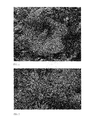
- the photographs of the new plant demonstrate the overall appearance of the plant, including the unique traits.
- the colors are as accurate as reasonably possible with color reproductions. Ambient light spectrum, source and direction may cause the appearance of minor variation in color.
- FIG. 1 shows a close-up of the flowers with puckered petals of vibrant magenta-red.
- FIG. 2 shows a three-year old plant in the landscape.
Landscapes
- Life Sciences & Earth Sciences (AREA)
- Health & Medical Sciences (AREA)
- Physiology (AREA)
- Botany (AREA)
- Developmental Biology & Embryology (AREA)
- Environmental Sciences (AREA)
- Natural Medicines & Medicinal Plants (AREA)
- Breeding Of Plants And Reproduction By Means Of Culturing (AREA)
Abstract
A new and distinct cultivar of hardy herbaceous perennial Hibiscus hybrid plant named ‘Plum Fantasy’ comprising an upright dense branching, numerous flowers over a prolonged season having vibrant magenta-red overlapping petals and a darker red lustrous eye. The petals have a unique three-dimensional dimpling or puckering which helps resist strong wind, bright sun and harsh rain conditions. The foliage is dark-green, primarily heavily-dissected and tri-lobed.
Description
Botanical classification: Hibiscus hybrid (L.).
Variety denomination: ‘Plum Fantasy’.
The present invention relates to the new and distinct hardy, herbaceous, hibiscus plant, Hibiscus ‘Plum Fantasy’ hybridized by Clarence H. Falstad, III in the summer of 2007 at a nursery in Zeeland, Mich. The new plant, originally labeled # F7-16-01, is from a cross between Hibiscus ‘Summer Storm’ U.S. Plant Pat. No. 20,443 (female pod parent) times the proprietary hybrid # 05-139-17 (not patented) (male pollen parent). Both parents have a complex mixture of species in them, most likely including the species: moscheutos, coccineus and laevis (formerly militaris). Hibiscus ‘Plum Fantasy’ was first asexually propagated in 2010 by both stem cuttings and sterile tissue culture at the same nursery in Zeeland, Mich. The resultant asexually propagated plants have been found to be stable and true to type in successive generations of asexual reproduction.
Hibiscus ‘Plum Fantasy’ differs from its parents as well as all other hardy herbaceous hibiscus known to the applicant in many traits. The foliage color of ‘Plum Fantasy’ is dark green with generally tri-lobed foliage. The most similar hibiscus in flower color known to the applicant is ‘Sultry Kiss’ U.S. Plant Pat. No. 22300, but the petals of the new plant are puckered three-dimensional in an unusual way and the color of ‘Plum Fantasy’ is a brighter color with slightly more magenta-red. Other hibiscus including: ‘Jazzberry Jam’ (not patented), ‘Tie Dye’ U.S. Plant Pat. No. 24,178 and ‘Berrylicious’ U.S. Plant Pat. No. 24,062 have rippled or pleated petals along the veins and margins but without the puckering of new plant which also give a greater three-dimensional appearance.
Hibiscus ‘Plum Fantasy’ is a unique hardy herbaceous hibiscus with the following combined traits:
-
- 1. Hardy perennial with dense branching.
- 2. Many flowers over a prolonged season having vibrant magenta-red overlapping petals and a darker red lustrous eye.
- 3. Petals have a unique dimpling or puckering giving the appearance of a three-dimensional petals and helping resist strong wind, bright sun and rain conditions.
- 4. Dark-green, heavily-dissected primarily tri-lobed foliage.
The photographs of the new plant demonstrate the overall appearance of the plant, including the unique traits. The colors are as accurate as reasonably possible with color reproductions. Ambient light spectrum, source and direction may cause the appearance of minor variation in color.
The following descriptions and color references are based on the 2001 edition of The Royal Horticultural Society Colour Chart except where common dictionary terms are used. The new plant, Hibiscus ‘Plum Fantasy’, has not been observed under all possible environments. The phenotype may vary slightly with different environmental conditions, such as temperature, light, fertility, moisture and maturity levels, but without any change in the genotype. The following observations and size descriptions are of three year-old plants in the loamy-sand, open-field full-sun trials of a nursery in Zeeland, Mich. with supplemental fertilizer and water as needed. The plants are natural habit and were not treated with plant growth regulators, nor were they pinched at any time in the growth year.
- Parentage: Hibiscus ‘Summer Storm’ U.S. Plant Pat. No. 20,443 (female seed parent) times the proprietary hybrid # 05-139-17 (not patented) (male pollen parent).
- Propagation:
-
- Method.—Stem cuttings and sterile plant tissue culture division.
- Time to initiate roots from tissue culture.—About two weeks.
- Rooting habit.—Normal, branching, developing thick to about 3.0 cm diameter, fleshy; root color creamy yellow between RHS 161D and lighter than RHS 159D depending on soil type.
- Crop time.—Under normal summer growing conditions 12 to 16 weeks to flower in a four-liter container from cutting. Plant vigor is very good.
-
- Plant description:
-
- Plant shape and habit.—Hardy herbaceous perennial with 12 to 16 thick upright and heavily branched main stems producing a upright spreading mound about 165.0 cm tall and 150.0 cm wide, widest about ¾ to top; 7 to 10 primary branches per main stem protruding at 60° to 45° angle from vertical, lateral branches on the lower one third to half of the primary branches; lateral branch size: between 8.0 cm and 25 cm long (shorter at the upper nodes) and average 7.0 mm diameter at the base of branch; flowering on the upper ⅓ of the plant beginning at axillary nodes while still developing at the apex.
- Stem.—Rounded, glabrous, glaucous; average 165.0 cm tall and 3.5 cm diameter at base; stem color between RHS N186B and RHS N187B.
- Plant size.—Unpinched plant with stems 165 cm tall; overall plant about 150 cm wide about 35 cm from the top (widest point).
- Internode.—About 34 nodes per stem, average internode length about 5.0 cm of unpinched plant, varied between 2.0 to 6.0 cm widest in middle portion of stem.
-
- Foliage description: Alternate; dentate; glabrous; mostly deeply cleft tri-lobed; with side lobes at about 80 degree angle from center lobe; texture above lustrous in distal leaves and matte in proximal leaves, texture below matte; leaf blade size average 9.5 cm long and 8.5 cm wide, becoming smaller in distal portion of stem.
-
- Foliage color.—Adaxial side darker or more gray than RHS 139A and RHS 136A and more green than RHS N189A with a slight tint of RHS N187B; abaxial side between RHS 147C and RHS 148C.
- Veins.—Palmate; adaxial primary and secondary adaxial veins mostly nearest RHS 138C and with high sun exposure becoming greyed-purple nearest RHS 183D; primary and secondary abaxial veins nearest RHS 145B with some leaves developing pigment of nearest RHS 187B.
- Petioles.—Average size 6.5 cm long and 3.0 mm wide; mostly cylindrical with proximal petioles more plano-convex; glaucous, glabrous.
- Petiole color.—Above between RHS 182B and RHS 183D; and abaxial nearest RHS 143C in more light and where protected from light nearest RHS 139C; below between RHS 187A to RHS 185B where protected from high light intensities.
-
- Flower description:
-
- Buds.—One day prior to opening about 7.5 cm long and 3.5 cm in diameter, acute apex and bluntly rounded base, unopened petals wrinkled at veins; exposed petal color between RHS 59C and RHS 60B; prior to showing petals: buds are about 3.5 cm long and 2.5 cm in diameter, ovoid with acute apex, carinate at the sepal fusion seams; color between RHS 141C and RHS 143C rarely with veining, sepal carina having light tinting nearest RHS N186C.
- Epicalyx.—Entire, smooth, glabrous, linear with sharply acute apex and attenuate base, curved around sepals; typically 11 to 12 per flower; about 2.5 cm long tapering to base of about 3.0 mm wide; adaxial and abaxial color between RHS 141C and RHS 141D.
- Sepals.—Five, proximal half connate forming campanulate star-shaped calyx; acute apex; margin entire, edentate; about 4.5 cm long and 5.5 cm wide.
- Sepal color.—Abaxial between RHS 143C and RHS 144B, adaxial color between RHS 144B and RHS 143B.
- Flowers.—Solitary, 18 to 26 per main stem without pinching; slightly reflexed petals giving color for more than 180 degrees or full front view; upward and outwardly facing; average 22.0 cm across and 5.5 cm deep from outside face to edge of reflexed petals, larger in early part of flowering season; persist for a one to two days; effective for at least 12 weeks beginning mid-July and lasting into October; no detectable fragrance.
- Petals.—Five; glabrous, slightly lustrous in center and dull both front and back toward middle and perimeter, adnate to the androecium to form a column, imbricate to about 100% overlapping at widest part (petals completely overlapping the next petal to the petal in the position two over), palmately veined, primary and secondary veins impressed on front and ribbed on back; shape: rounded; margins: entire, edentate; apex: rounded; base: short claw-like; size: average 12 cm long and 13 cm wide at widest portion (larger in earlier part of flowering season); center dark eye about 5.0 cm diameter.
- Petal color.—Adaxial between RHS 59C and RHS 61B with a darker eye of darker than RHS 59A, nearest RHS 187A; abaxial color between RHS 59C and RHS 61C; vein color nearest RHS 187C radiating out from the center eye about 2.5 cm on adaxial surface and the same as surrounding tissue on abaxial surface.
- Gynoecium.—Style: enclosed in column about 7.5 cm long and 1.5 cm wide at base; column color blending between RHS 52A and RHS N66A at middle and base, nearest RHS 63A distally; style protruding from column and split in distal 8.0 mm portion into typically five branches and protrudes from column, branch diameter 2.0 mm; branch color nearest RHS 187C. Stigma: typically five; globose, puberulose, about 3.0 mm in diameter, nearest RHS 187B. Ovary: superior, about 6.0 mm across at base and 6.0 mm tall; acute apex; color between RHS 145B and RHS 145C.
- Androecium.—Filaments: numerous, about 140; less than 1.0 mm in diameter and about 6.0 mm long; attached along nearly the entire length of column; color between RHS 64B and RHS 64A. Anthers: reniform; about 2 mm long and 1 mm wide; nearest RHS 186B. Pollen: numerous, globose, less than 0.1 mm long, between RHS 156C and RHS 161C.
- Pedicel.—Rounded in cross section, glabrous; length from base of sepal to abscission point average 2.2 cm long and 3.0 mm wide, longer on early flowers decreasing in distal flowers; color nearest RHS 138B.
- Peduncle.—Rounded, glabrous, flowers are held easily visible on average 5.5 cm long from abscission point to stem and 3.0 mm wide, longer on earlier flowers; color nearest RHS 138A with tinting of RHS 186A in higher direct sun exposure.
- Fruit.—Few, loculicidal capsule; glabrous; globose, occasionally with abruptly acute apex; color between RHS N199B and RHS N199C when mature.
- Seed.—Minutely floccose, typically globose; about 3.0 mm in diameter; color between RHS 200A and RHS N199B.
-
- Resistance: The flowers of ‘Plum Fantasy’ have resisted wind, rain and hot sun conditions better than most hardy perennial hibiscus. Other pest and disease resistance beyond that of other hardy perennial hibiscus cultivars has not been observed. The plant grows best with plenty of moisture, but is able to tolerate some drought once established. Hardiness at least from USDA zone 4 through 9, and other disease resistance is typical of that of other hardy hibiscus cultivars.
Claims (1)
1. A new cultivar of hardy herbaceous perennial Hibiscus hybrid plant named ‘Plum Fantasy’ as herein illustrated and described, suitable for potted plant culture, landscaping as a specimen or en masse, and especially suited for patios and confined spaces because of the compact habit.
Priority Applications (1)
| Application Number | Priority Date | Filing Date | Title |
|---|---|---|---|
| US13/998,772 USPP25986P2 (en) | 2013-12-04 | 2013-12-04 | Hibiscus plant named ‘Plum Fantasy’ |
Applications Claiming Priority (1)
| Application Number | Priority Date | Filing Date | Title |
|---|---|---|---|
| US13/998,772 USPP25986P2 (en) | 2013-12-04 | 2013-12-04 | Hibiscus plant named ‘Plum Fantasy’ |
Publications (1)
| Publication Number | Publication Date |
|---|---|
| USPP25986P2 true USPP25986P2 (en) | 2015-10-13 |
Family
ID=54252865
Family Applications (1)
| Application Number | Title | Priority Date | Filing Date |
|---|---|---|---|
| US13/998,772 Active 2034-05-13 USPP25986P2 (en) | 2013-12-04 | 2013-12-04 | Hibiscus plant named ‘Plum Fantasy’ |
Country Status (1)
| Country | Link |
|---|---|
| US (1) | USPP25986P2 (en) |
-
2013
- 2013-12-04 US US13/998,772 patent/USPP25986P2/en active Active
Similar Documents
| Publication | Publication Date | Title |
|---|---|---|
| USPP25986P2 (en) | Hibiscus plant named ‘Plum Fantasy’ | |
| USPP24760P2 (en) | Hibiscus plant named ‘heartthrob’ | |
| USPP24079P3 (en) | Hibiscus plant named ‘Midnight Marvel’ | |
| USPP27838P2 (en) | Hibiscus plant named ‘Mars Madness’ | |
| USPP28868P3 (en) | Lobelia plant named ‘LOBZ0011’ | |
| USPP26977P2 (en) | Hydrangea plant named ‘SMNHPPINKA’ | |
| USPP32178P2 (en) | Lavandula plant named ‘sako1638’ | |
| USPP14569P2 (en) | Lantana plant named ‘Red Butler’ | |
| USPP27936P2 (en) | Hibiscus plant named ‘Berry Awesome’ | |
| USPP32296P2 (en) | Penstemon plant named ‘Balquared’ | |
| USPP30738P2 (en) | Hibiscus plant named ‘Cherry Choco Latte’ | |
| USPP31930P2 (en) | Lavandula plant named ‘Anouk Deluxe 108’ | |
| USPP27839P2 (en) | Hibiscus plant named ‘Vintage Wine’ | |
| USPP27880P2 (en) | Hibiscus plant named ‘Perfect Storm’ | |
| USPP30967P2 (en) | Anthurium plant named ‘ANTHGLYNT’ | |
| USPP27901P2 (en) | Hibiscus plant named ‘Starry Starry Night’ | |
| USPP27837P2 (en) | Hibiscus plant named ‘Mocha Moon’ | |
| US20160338238P1 (en) | Hydrangea plant named 'JoAnn' | |
| USPP30954P2 (en) | Abelia plant named ‘SRPabeper’ | |
| USPP29295P2 (en) | Hibiscus plant named ‘Airbrush Effect’ | |
| USPP21984P2 (en) | Hibiscus plant named ‘Cranberry Crush’ | |
| USPP26089P2 (en) | Hibiscus plant named ‘Cherry Cheesecake’ | |
| USPP22300P2 (en) | Hibiscus plant named ‘Sultry Kiss’ | |
| USPP29811P2 (en) | Petunia plant named ‘INPETROYMA’ | |
| USPP24062P2 (en) | Hibiscus plant named ‘Berrylicious’ |