USPP21908P3 - Mandevilla plant named ‘Hannyajisenred6106’ - Google Patents
Mandevilla plant named ‘Hannyajisenred6106’ Download PDFInfo
- Publication number
- USPP21908P3 USPP21908P3 US12/588,097 US58809709V USPP21908P3 US PP21908 P3 USPP21908 P3 US PP21908P3 US 58809709 V US58809709 V US 58809709V US PP21908 P3 USPP21908 P3 US PP21908P3
- Authority
- US
- United States
- Prior art keywords
- color
- close
- plant
- color chart
- habit
- Prior art date
- Legal status (The legal status is an assumption and is not a legal conclusion. Google has not performed a legal analysis and makes no representation as to the accuracy of the status listed.)
- Active
Links
Images

Classifications
-
- A—HUMAN NECESSITIES
- A01—AGRICULTURE; FORESTRY; ANIMAL HUSBANDRY; HUNTING; TRAPPING; FISHING
- A01H—NEW PLANTS OR NON-TRANSGENIC PROCESSES FOR OBTAINING THEM; PLANT REPRODUCTION BY TISSUE CULTURE TECHNIQUES
- A01H5/00—Angiosperms, i.e. flowering plants, characterised by their plant parts; Angiosperms characterised otherwise than by their botanic taxonomy
- A01H5/02—Flowers
-
- A—HUMAN NECESSITIES
- A01—AGRICULTURE; FORESTRY; ANIMAL HUSBANDRY; HUNTING; TRAPPING; FISHING
- A01H—NEW PLANTS OR NON-TRANSGENIC PROCESSES FOR OBTAINING THEM; PLANT REPRODUCTION BY TISSUE CULTURE TECHNIQUES
- A01H6/00—Angiosperms, i.e. flowering plants, characterised by their botanic taxonomy
- A01H6/08—Apocynaceae, e.g. Madagascar periwinkle
- A01H6/088—Mandevilla
Definitions
- a red-based nameless variety of a culture line possessed by Applicant was crossbred with mixed pollens of nameless varieties of a culture line possessed by Applicant in a farm owned by Applicant in Yusui-cho, Aira-gun, Kagoshima, Japan.
- the red-based nameless variety had waved petals and slightly larger flowers.
- the mixed pollens were obtained from several nameless varieties such as a pink-based variety, a deep-red-based variety, and a rose-based variety.
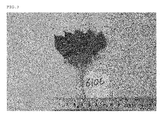
- FIG. 1 is a view of the plant body, wherein the plant is 14 months old after the above insertion in a soil of the branch.
- FIG. 2 is a close-up view of the flower, wherein the plant is 14 months old after the above insertion in a soil of the branch.
- FIG. 3 is a diagrammatic view of the plant's flower, wherein the plant is 14 months old after the above insertion in a soil of the branch.
- the ‘Hannyajisenred6106’ has bright red-colored flowers, not-waved petals and slightly thin scapes compared to the Applicant's other varieties such as ‘Tsukiakaripink6030’(U.S. patent application Ser. No. 12/588,096), ‘Kedoaka5152’(U.S. patent application Ser. No. 12/588,099), ‘Sawaranored5134’(U.S. patent application Ser. No. 12/588,100),.and ‘Kamishindenpink5005’(U.S. patent application Ser. No. 12/588,098).
Landscapes
- Life Sciences & Earth Sciences (AREA)
- Health & Medical Sciences (AREA)
- Physiology (AREA)
- Botany (AREA)
- Developmental Biology & Embryology (AREA)
- Environmental Sciences (AREA)
- Natural Medicines & Medicinal Plants (AREA)
- Breeding Of Plants And Reproduction By Means Of Culturing (AREA)
Abstract
A new and distinct of Mandevilla plant denominated ‘Hannyajisenred6106’. It has upright and vining plant habit, relatively small glossy foliage, freely branching habit, freely flowering habit. The plant is in full flower around Mother's Day.
Description
All content of Japanese application No. 22769, filed on Jul. 17, 2008 is incorporated herein by reference.
In May, 2004, to obtain this variety, a red-based nameless variety of a culture line possessed by Applicant was crossbred with mixed pollens of nameless varieties of a culture line possessed by Applicant in a farm owned by Applicant in Yusui-cho, Aira-gun, Kagoshima, Japan. Compared to ‘Hannyajisenred6106’, the red-based nameless variety had waved petals and slightly larger flowers. The mixed pollens were obtained from several nameless varieties such as a pink-based variety, a deep-red-based variety, and a rose-based variety.
In February, 2005, a plant was grown through the above crossbred and a resultant seed was planted in soil on the farm owned by Applicant in Yusui-cho, Aira-gun, Kagoshima, Japan, to grow (germinate) and then bloom. This planting was carried out to expect that some varied plant could be obtained.
In April, 2006, among several hundreds of the flowering plants, some compact plants having slightly small flowers, bright color and not-waved petals appeared. Then, one of these plants was selected and a branch (stem) thereof was removed and insterted in soil on the farm owned by Applicant in Yusui-cho, Aira-gun, Kagoshima, Japan, to grow (cutting, i.e., vegetative reproduction) and such a vegetative reproduction was repeated for propagation.
In June, 2007, the culture was completed after ensuring uniformity and stability. In other words, it was confirmed that the plant having slightly small flowers, bright color and not-waved petals, which was ‘Hannyajisenred6106’, could be obtained with uniformity and stability, and the above repetition was completed.
-
- 1. Upright and vining plant habit.
- 2. Relatively small glossy foliage.
- 3. Freely branching habit.
- 4. Freely flowering habit.
- 5. Being in full flower around Mother's Day.
The accompanying colored photographs illustrate the overall appearance of the new cultivar, showing the colors as true as it is reasonably possible to obtain in colored reproductions of this type. Colors in the photographs may differ slightly from the color values cited in the detailed botanical description which accurately describe the actual colors of the new Mandevilla.
In the following description, color references are made to Japan Horticulture Standard Color Chart, edited as the 2nd print, resale on Sep. 10, 1997, except where general terms of ordinary dictionary significance are used. Plants used for the aforementioned photographs and following description were grown under conditions which closely approximate commercial production conditions during the early summer in a polyethylene-covered greenhouse in Yusui-cho, Aira-gun, Kagoshima in Japan. During the production of the plants, day temperatures averaged 26° C., and night temperatures averaged 14° C.
- Propagation:
-
- Type.—By vegetative cuttings.
- Time to initiate roots.—About three weeks at 23° C. to 26° C.
- Time to produce a rooted young plant.—About 40 days at 23° C. to 26° C.
- Root description.—Fibrous, fleshy, white in color.
- Rooting habit.—Freely branching.
-
- Plant description:
-
- Form.—Perennial. Upright and vining plant habit. Vigorous growth habit.
- Plant height.—About 70.5 cm.
- Lateral branch description.—Length: About 70.5 cm.
- Diameter.—About 1.5 mm. Internode length: About 2.0 cm. Strength: Strong. Texture: Smooth, glabrous. Color, young: Close to Color Chart No. 3307. Mature: Close to Color Chart No. 1309.
-
- Foliage description:
-
- Arrangement.—Opposite, simple.
- Length.—4.6 cm.
- Width.—2.5 cm.
- Shape.—Elliptic.
- Apex.—Cuspidate.
- Base.—Cordate.
- Margin.—Entire.
- Texture, upper and lower surfaces.—Smooth, glabrous.
- Luster, upper and lower surfaces.—Glossy.
- Venation pattern.—Pinnate, reticulate.
- Color.—Developing foliage, upper surface: Close to Color Chart No. 3507. Developing foliage, lower surface: Close to Color Chart No. 3508. Fully expanded foliage, upper surface: Close to Color Chart No.3509, Venation, Close to Color Chart No. 3508. Lower surface: Close to Color Chart No. 3508, Venation, Close to Color Chart No. 3508.
- Petiole length.—About 1.4 cm.
- Petiole diameter.—About 0.2 cm.
- Petiole texture, upper and lower surfaces.—Sparsely pubescent.
- Petiole color, upper and lower surfaces.—Close to Color Chart No. 3507.
-
- Flower description:
-
- Flower type and habit.—Single salver form flowers; flowers racemose; flowers face mostly outwardly, freely flowering habit, about five flowers per inflorescence.
- Natural flowering season.—Long flowering period; Fully flowering from late spring to early summer in Japan; Suspended flowering in midsummer, and then be in a flowering period again in late autumn.
- Flower longevity on the plant.—Ten to fourteen days. Flowers not persistent.
- Fragrance.—Not detected.
- Inflorescence length.—7.5 cm.
- Inflorescence diameter.—7.0 cm.
- Flowers.—Appearance: Flared trumpet, corolla fused, five-parted; petals slightly imbricate; flowers roughly star-shaped. Diameter: 7.0 cm. Depth (length): 5.3 cm. Throat diameter: About 1.5 cm. Tube length: 5.3 cm. Tube diameter, mid-section: 1.0 cm. Tube diameter, base: About 3 mm.
- Flower buds.—Height: About 6.5 cm. Diameter: About 1.2 cm. Shape: Lenticular. Color: Close to Color Chart No. 0408.
- Corolla.—Arrangement/appearance: Single whorl of five petals, fused into flared trumpet; petals slightly imbricate. Petal length: About 5.3 cm. Petal width: About 2.3 cm. Petal shape: Spatulate. Petal apex: Acuminate. Petal margin: Entire, slightly undulate. Petal texture, upper and lower surfaces: Smooth, glabrous, velvety. Color: Petal, when opening and fully opened, upper surface: Close to Color Chart No. 0107; Lower surface: Close to Color Chart No. 0107.
- Sepals.—Arrangement/appearance: Five per flower in a single whorl; fused. Length: About 9 mm. Width: About 4 mm. Shape: Lanceolate. Apex: Acute. Margin: Entire. Texture, upper and lower surfaces: Smooth, glabrous. Color, immature, upper and lower surfaces: Close to Color Chart No. 3504; towards the apex, close to Color Chart No. 3504. Color, mature, upper and lower surfaces: Close to Color Chart No. 3504; towards the apex, close to Color Chart No. 3504.
- Peduncles.—Length: About 1.8 cm. Diameter: About 2 mm. Texture: Smooth, glabrous. Strength: Flexible, but strong. Color: Close to Color Chart No. 9707.
- Pedicels.—Length: About 2.0 cm. Diameter: 3 mm. Texture: Smooth, glabrous, flexible, but strong. Color: Close to Color Chart No. 3507.
- Reproductive organs.—Stamens: Quantity/arrangement: Typically five; filament fused to corolla; anthers, connivent. Anther shape: Elliptic. Anther size: About 8 mm by 1 mm. Anther color: Close to Color Chart No.2505. Pollen amount: Scarce. Pollen color: Close to Color Chart No.2506. Pistils: Quantity: Typically one. Pistil length: About 2.4 cm. Stigma shape: Conical. Stigma color: Close to Color Chart No.3506. Ovary color: Close to Color Chart No.3506.
- Seed/fruit.—Seed and fruit production has not been observed.
-
- Disease/pest resistance: Plants of the new Mandevilla have not been noted to be resistant to pathogens and pests common to Mandevilla.
- Temperature tolerance: Plants of the new Mandevilla have been observed to tolerate temperatures from about 5° C. to about 37° C.
The ‘Hannyajisenred6106’ has bright red-colored flowers, not-waved petals and slightly thin scapes compared to the Applicant's other varieties such as ‘Tsukiakaripink6030’(U.S. patent application Ser. No. 12/588,096), ‘Kedoaka5152’(U.S. patent application Ser. No. 12/588,099), ‘Sawaranored5134’(U.S. patent application Ser. No. 12/588,100),.and ‘Kamishindenpink5005’(U.S. patent application Ser. No. 12/588,098).
Claims (1)
1. A new and distinct Mandevilla plant named ‘Hannyajisenred6106’ as illustrated and described.
Priority Applications (1)
| Application Number | Priority Date | Filing Date | Title |
|---|---|---|---|
| US12/588,097 USPP21908P3 (en) | 2009-10-02 | 2009-10-02 | Mandevilla plant named ‘Hannyajisenred6106’ |
Applications Claiming Priority (2)
| Application Number | Priority Date | Filing Date | Title |
|---|---|---|---|
| JP22769 | 2008-07-17 | ||
| US12/588,097 USPP21908P3 (en) | 2009-10-02 | 2009-10-02 | Mandevilla plant named ‘Hannyajisenred6106’ |
Publications (2)
| Publication Number | Publication Date |
|---|---|
| US20100071102P1 US20100071102P1 (en) | 2010-03-18 |
| USPP21908P3 true USPP21908P3 (en) | 2011-05-10 |
Family
ID=42008462
Family Applications (1)
| Application Number | Title | Priority Date | Filing Date |
|---|---|---|---|
| US12/588,097 Active USPP21908P3 (en) | 2009-10-02 | 2009-10-02 | Mandevilla plant named ‘Hannyajisenred6106’ |
Country Status (1)
| Country | Link |
|---|---|
| US (1) | USPP21908P3 (en) |
-
2009
- 2009-10-02 US US12/588,097 patent/USPP21908P3/en active Active
Also Published As
| Publication number | Publication date |
|---|---|
| US20100071102P1 (en) | 2010-03-18 |
Similar Documents
| Publication | Publication Date | Title |
|---|---|---|
| USPP21908P3 (en) | Mandevilla plant named ‘Hannyajisenred6106’ | |
| USPP21909P3 (en) | Mandevilla plant named ‘Kedoaka5152’ | |
| USPP21919P3 (en) | Mandevilla plant named ‘Sawaranored5134’ | |
| USPP21910P3 (en) | Mandevilla plant named ‘Tsukiakaripink6030’ | |
| USPP21911P3 (en) | Mandevilla plant named ‘Kamishindenpink5005’ | |
| USPP24964P3 (en) | Mandevilla lindl plant named ‘SGred8’ | |
| USPP24974P3 (en) | Mandevilla lindl plant named ‘SGlightred9’ | |
| USPP21890P3 (en) | Mandevilla plant named ‘Tsuruhanbestpinki-1’ | |
| USPP21866P3 (en) | Mandevilla LINDL plant named ‘Tsurumarunoaka5155’ | |
| USPP25595P2 (en) | Petunia plant named ‘Duepepneo’ | |
| US20130097756P1 (en) | Momochakored5 | |
| USPP30134P3 (en) | Petunia plant named ‘Duepotpluyel17’ | |
| USPP29811P2 (en) | Petunia plant named ‘INPETROYMA’ | |
| USPP29872P2 (en) | Calibrachoa plant named ‘BBCAL76001’ | |
| US20150313053P1 (en) | Mandevilla lindl plant named "SGRed8" | |
| USPP29429P2 (en) | Petunia plant named ‘Duefortpigem17’ | |
| USPP28424P2 (en) | Petunia plant named ‘Duepetsurmagha’ | |
| USPP29412P2 (en) | Petunia plant named ‘Duepetsurwhiorch’ | |
| USPP29030P3 (en) | Calibrachoa plant named ‘BBCAL27801’ | |
| USPP30404P3 (en) | Calibrachoa plant named ‘Duealnagogi’ | |
| USPP29919P3 (en) | Calibrachoa plant named ‘JGCAL7901’ | |
| USPP24101P2 (en) | Petunia plant named ‘Duegpre’ | |
| USPP25486P2 (en) | Petunia plant named ‘BHTUN6202’ | |
| USPP27377P2 (en) | Lantana plant named ‘G12164’ | |
| USPP25551P2 (en) | Petunia plant named ‘Dueimqbee’ |