USPP19720P2 - Hydrangea plant named ‘Agrihydratwee’ - Google Patents
Hydrangea plant named ‘Agrihydratwee’ Download PDFInfo
- Publication number
- USPP19720P2 USPP19720P2 US12/074,414 US7441408V USPP19720P2 US PP19720 P2 USPP19720 P2 US PP19720P2 US 7441408 V US7441408 V US 7441408V US PP19720 P2 USPP19720 P2 US PP19720P2
- Authority
- US
- United States
- Prior art keywords
- hydrangea
- color
- plants
- close
- agrihydratwee
- Prior art date
- Legal status (The legal status is an assumption and is not a legal conclusion. Google has not performed a legal analysis and makes no representation as to the accuracy of the status listed.)
- Active
Links
- 241001092080 Hydrangea Species 0.000 title claims abstract description 31
- 241000196324 Embryophyta Species 0.000 abstract description 32
- 235000014486 Hydrangea macrophylla Nutrition 0.000 description 28
- 239000003086 colorant Substances 0.000 description 3
- 238000005520 cutting process Methods 0.000 description 3
- 238000004519 manufacturing process Methods 0.000 description 3
- 230000017260 vegetative to reproductive phase transition of meristem Effects 0.000 description 3
- 241000218922 Magnoliophyta Species 0.000 description 2
- 241000607479 Yersinia pestis Species 0.000 description 2
- 230000001154 acute effect Effects 0.000 description 2
- 230000001488 breeding effect Effects 0.000 description 2
- 230000010154 cross-pollination Effects 0.000 description 2
- 210000000056 organ Anatomy 0.000 description 2
- 230000001850 reproductive effect Effects 0.000 description 2
- 240000001140 Mimosa pudica Species 0.000 description 1
- 102000011842 Serrate-Jagged Proteins Human genes 0.000 description 1
- 108010036039 Serrate-Jagged Proteins Proteins 0.000 description 1
- 230000011681 asexual reproduction Effects 0.000 description 1
- 238000013465 asexual reproduction Methods 0.000 description 1
- 201000010099 disease Diseases 0.000 description 1
- 208000037265 diseases, disorders, signs and symptoms Diseases 0.000 description 1
- 230000007613 environmental effect Effects 0.000 description 1
- 210000001672 ovary Anatomy 0.000 description 1
- 244000052769 pathogen Species 0.000 description 1
- 230000002085 persistent effect Effects 0.000 description 1
- 230000033458 reproduction Effects 0.000 description 1
Images
Classifications
-
- A—HUMAN NECESSITIES
- A01—AGRICULTURE; FORESTRY; ANIMAL HUSBANDRY; HUNTING; TRAPPING; FISHING
- A01H—NEW PLANTS OR NON-TRANSGENIC PROCESSES FOR OBTAINING THEM; PLANT REPRODUCTION BY TISSUE CULTURE TECHNIQUES
- A01H5/00—Angiosperms, i.e. flowering plants, characterised by their plant parts; Angiosperms characterised otherwise than by their botanic taxonomy
- A01H5/02—Flowers
-
- A—HUMAN NECESSITIES
- A01—AGRICULTURE; FORESTRY; ANIMAL HUSBANDRY; HUNTING; TRAPPING; FISHING
- A01H—NEW PLANTS OR NON-TRANSGENIC PROCESSES FOR OBTAINING THEM; PLANT REPRODUCTION BY TISSUE CULTURE TECHNIQUES
- A01H6/00—Angiosperms, i.e. flowering plants, characterised by their botanic taxonomy
- A01H6/48—Hydrangeacae, e.g. Hydrangea
Definitions
- Botanical designation Hydrangea hybrida.
- the present invention relates to a new and distinct cultivar of Hydrangea, botanically known as Hydrangea hybrida and hereinafter referred to by the name ‘Agrihydratwee’.
- the new Hydrangea is a product of a planned breeding program conducted by the Inventor in Aalsmeer, The Netherlands.
- the objective of the breeding program was to create new Hydrangea cultivars with strong stems, large inflorescences and attractive flower color.
- the new Hydrangea originated from a cross-pollination made by the Inventor on Apr. 15, 2001 in Aalsmeer, The Netherlands, of a proprietary selection of Hydrangea hybrida identified as code number 20 118-02, not patented, as the female, or seed, parent with a proprietary selection of Hydrangea hybrida identified as code number 200132-01, not patented, as the male, or pollen, parent.
- the new Hydrangea was discovered and selected by the Inventor as a single flowering plant within the progeny of the stated cross-pollination in a controlled environment in Glandorf, Germany on Mar. 15, 2003.
- the cultivar Agrihydratwee has not been observed under all possible environmental conditions.
- the phenotype may vary somewhat with variations in environment and cultural practices such as temperature and light intensity without, however, any variance in genotype.
- Plants of the new Hydrangea differ from plants of female parent selection primarily in branching habit as plants of the new Hydrangea are more freely branching than plants of the female parent selection.
- Plants of the new Hydrangea differ from plants of male parent selection primarily in flower color as plants of the male parent selection have light blue-colored flowers.
- Plants of the new Hydrangea can be compared to plants of the cultivar Bela, disclosed in U.S. Plant Pat. No. 16,099. Plants of the new Hydrangea differ from plants of the cultivar Bela in the following characteristics:
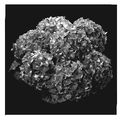
- the accompanying colored photograph illustrates the unique appearance of the new cultivar, showing the colors as true as it is reasonably possible to obtain in colored reproductions of this type. Colors in the photograph may differ from the color value cited in the detailed botanical description which accurately describe the colors of the new Hydrangea .
- the photograph comprises a side perspective view of a typical flowering plant of ‘Agrihydratwee’ grown in a container.
Landscapes
- Life Sciences & Earth Sciences (AREA)
- Health & Medical Sciences (AREA)
- Physiology (AREA)
- Botany (AREA)
- Developmental Biology & Embryology (AREA)
- Environmental Sciences (AREA)
- Natural Medicines & Medicinal Plants (AREA)
- Breeding Of Plants And Reproduction By Means Of Culturing (AREA)
Abstract
A new and distinct cultivar of Hydrangea plant named ‘Agrihydratwee’, characterized by its upright and mounded plant habit; strong roots and stems; freely branching habit; and large inflorescences with blue-colored flowers.
Description
Botanical designation: Hydrangea hybrida.
Cultivar denomination: ‘Agrihydratwee’.
The present invention relates to a new and distinct cultivar of Hydrangea, botanically known as Hydrangea hybrida and hereinafter referred to by the name ‘Agrihydratwee’.
The new Hydrangea is a product of a planned breeding program conducted by the Inventor in Aalsmeer, The Netherlands. The objective of the breeding program was to create new Hydrangea cultivars with strong stems, large inflorescences and attractive flower color.
The new Hydrangea originated from a cross-pollination made by the Inventor on Apr. 15, 2001 in Aalsmeer, The Netherlands, of a proprietary selection of Hydrangea hybrida identified as code number 20 118-02, not patented, as the female, or seed, parent with a proprietary selection of Hydrangea hybrida identified as code number 200132-01, not patented, as the male, or pollen, parent. The new Hydrangea was discovered and selected by the Inventor as a single flowering plant within the progeny of the stated cross-pollination in a controlled environment in Glandorf, Germany on Mar. 15, 2003.
Asexual reproduction of the new Hydrangea by vegetative cuttings in a controlled environment in a greenhouse in Aalsmeer, The Netherlands since Mar. 15, 2004, has shown that the unique features of this new Hydrangea are stable and reproduced true to type in successive generations.
The cultivar Agrihydratwee has not been observed under all possible environmental conditions. The phenotype may vary somewhat with variations in environment and cultural practices such as temperature and light intensity without, however, any variance in genotype.
The following traits have been repeatedly observed and are determined to be the unique characteristics of ‘Agrihydratwee’. These characteristics in combination distinguish ‘Agrihydratwee’ as a new and distinct cultivar of Hydrangea:
-
- 1. Upright and mounded plant habit.
- 2. Strong roots and moderately strong stems.
- 3. Freely branching habit.
- 4. Large inflorescences with blue-colored flowers.
Plants of the new Hydrangea differ from plants of female parent selection primarily in branching habit as plants of the new Hydrangea are more freely branching than plants of the female parent selection.
Plants of the new Hydrangea differ from plants of male parent selection primarily in flower color as plants of the male parent selection have light blue-colored flowers.
Plants of the new Hydrangea can be compared to plants of the cultivar Bela, disclosed in U.S. Plant Pat. No. 16,099. Plants of the new Hydrangea differ from plants of the cultivar Bela in the following characteristics:
-
- 1. Plants of the new Hydrangea are more compact than and not as vigorous as plants of the cultivar Bela.
- 2. Plants of the new Hydrangea have smaller leaves than plants of the cultivar Bela.
- 3. Plants of the new Hydrangea and the cultivar Bela differ in flower color as plants of the cultivar Bela have lighter blue-colored flowers.
The accompanying colored photograph illustrates the unique appearance of the new cultivar, showing the colors as true as it is reasonably possible to obtain in colored reproductions of this type. Colors in the photograph may differ from the color value cited in the detailed botanical description which accurately describe the colors of the new Hydrangea. The photograph comprises a side perspective view of a typical flowering plant of ‘Agrihydratwee’ grown in a container.
In the following description, color references are made to The Royal Horticultural Society Colour Chart, 1995 Edition, except where general terms of ordinary dictionary significance are used. Plants used in the aforementioned photograph and in the following description were grown during the winter in De Kwakel, The Netherlands, in 15-cm containers in a glass-covered greenhouse and under conditions which closely approximate commercial production conditions. During the production of the plants, day and night temperatures averaged 17° C. Plants of the new Hydrangea were about one year old when the photograph and description were taken.
- Botanical description: Hydrangea hybrida cultivar Agrihydratwee.
- Parentage:
-
- Female, or seed, parent.—Proprietary selection of Hydrangea hybrida identified as code number 20 118-02, not patented.
- Male, or pollen, parent.—Proprietary selection of Hydrangea hybrida identified as code number 200132-01, not patented.
-
- Propagation:
-
- Type cutting.—By vegetative cuttings.
- Time to initiate roots, summer.—About 14 days at temperatures of 23° C.
- Time to initiate roots, winter.—About 18 days at temperatures of 18° C.
- Time to produce a rooted young plant, summer.—About four weeks at temperatures of 23° C.
- Time to produce a rooted young plant, winter.—About five weeks at temperatures of 18° C.
- Root description.—Thick; whitish brown in color.
- Rooting habit.—Freely branching; dense.
-
- Plant description:
-
- Form/growth habit.—Upright and mounded plant habit; inverted triangle. Moderately strong lateral branches; moderately vigorous growth habit.
- Plant height.—About 30 cm.
- Plant diameter or area of spread.—About 30 cm.
- Branching habit.—When pinched, freely branching with about five lateral branches per plant.
- Lateral branches.—Length: About 18 cm. Diameter: About 5 mm. Internode length: About 5 cm. Texture: Smooth, glabrous. Strength: Moderately strong. Color: Close to 146C.
-
- Foliage description:
-
- Arrangement.—Opposite, simple.
- Length.—About 12 cm.
- Width.—About 8 cm.
- Shape.—Elliptic to obovate.
- Apex.—Acute to acuminate.
- Base.—Obtuse to cuneate.
- Margin.—Dentate to serrate.
- Texture, upper and lower surfaces.—Rugose; glabrous.
- Venation pattern.—Pinnate.
- Color.—Developing foliage, upper surface: Close to 137A. Developing foliage, lower surface: Close to 137D. Fully expanded foliage, upper surface: Close to 139A; venation, 146D. Fully expanded foliage, lower surface: Close to 146D; venation, 146D.
- Petiole.—Length: About 1.5 cm. Diameter: About 3 mm. Texture, upper and lower surfaces: Smooth, glabrous. Color, upper and lower surfaces: Close to 146D.
-
- Flower description:
-
- Flower type and habit.—Single sterile and fertile flowers arranged on terminal panicles; panicles large and globular. Flowers face upright to outward. Flowers persistent. Flowers not fragrant.
- Natural flowering season.—Continuous flowering during the summer in Northern Europe.
- Flower longevity.—Sterile flowers last about four months on the plant; fertile flowers last about one month on the plant.
- Quantity of flowers.—Freely flowering; about 50 sterile flowers per panicle and about 30 fertile flowers per panicle.
- Panicle height.—About 5 cm.
- Panicle diameter.—About 14 cm.
- Sterile flower diameter.—About 5.5 cm.
- Sterile flower depth (height).—About 5 mm.
- Fertile flower diameter.—About 8 mm.
- Fertile flower depth (height).—About 5 mm.
- Flower buds.—Length: About 3 mm. Diameter: About 3 mm. Shape: Flattened globular. Color: Close to 144A.
- Petals, sterile flowers only, fertile flowers without petals.—Arrangement: About four in a single whorl. Length: About 3.5 mm. Width: About 2 mm. Shape: Ovate. Apex: Acute. Base: Attenuate. Margin: Entire. Texture, upper and lower surfaces: Smooth, glabrous. Color: When opening, upper and lower surfaces: Close to 157D. Fully opened, upper surface: Close to 100C. Fully opened, lower surface: Close to 100D.
- Sepals, sterile flowers.—Quantity per flower: About four or five in a single whorl. Length: About 2.5 cm. Width: About 3 cm. Shape: Deltoid. Apex: Obtuse. Base: Cuneate. Margin: Entire. Texture, upper surface: Smooth, glabrous. Texture, lower surface: Rugose, glabrous. Color, upper surface: Close to 100A. Color, lower surface: Close to 100B to 100C.
- Sepals, fertile flowers.—Quantity per flower: About four in a single whorl. Length: About 3.5 mm. Width: About 2 mm. Shape: Ovate. Apex: Acute. Base: Obtuse. Margin: Entire. Texture, upper and lower surfaces: Smooth, glabrous. Color, upper surface: Close to 100A. Color, lower surface: Close to 100B to 100C.
- Pedicels, sterile flowers.—Angle: About 45° from vertical. Strength: Strong. Length: About 2 cm. Diameter: About 2 mm. Texture: Smooth, glabrous. Color: Close to 98B.
- Pedicels, fertile flowers.—Angle: Mostly upright. Strength: Moderately strong. Length: About 1 cm. Diameter: About 1 mm. Texture: Smooth, glabrous. Color: Close to 98C.
- Reproductive organs, fertile flowers only; sterile flowers without reproductive organs.—Stamens: Quantity per flower: About eight. Anther shape: Conical. Anther length: About 1 mm. Anther color: Close to 98C. Pollen amount: Abundant. Pollen color: Close to 155D. Pistils: Pistil quantity per flower: About three. Pistil length: About 1 mm. Stigma shape: Oval. Stigma color: Close to 155A. Style length: About 1 mm. Style color: Close to 101D. Ovary color: Close to 145D.
- Seeds.—Length: About 0.5 mm. Diameter: About 0.1 mm. Color: Close to 200C.
-
- Disease/pest resistance: Under commercial production conditions, plants of the new Hydrangea have not been observed to be resistant to pathogens or pests common to Hydrangea.
- Temperature tolerance: Plants of the new Hydrangea have been shown to be tolerant to temperatures ranging from about 3° C. to about 38° C.
Claims (1)
1. A new and distinct Hydrangea plant named ‘Agrihydratwee’ as illustrated and described.
Priority Applications (1)
| Application Number | Priority Date | Filing Date | Title |
|---|---|---|---|
| US12/074,414 USPP19720P2 (en) | 2008-03-03 | 2008-03-03 | Hydrangea plant named ‘Agrihydratwee’ |
Applications Claiming Priority (1)
| Application Number | Priority Date | Filing Date | Title |
|---|---|---|---|
| US12/074,414 USPP19720P2 (en) | 2008-03-03 | 2008-03-03 | Hydrangea plant named ‘Agrihydratwee’ |
Publications (1)
| Publication Number | Publication Date |
|---|---|
| USPP19720P2 true USPP19720P2 (en) | 2009-02-17 |
Family
ID=40349481
Family Applications (1)
| Application Number | Title | Priority Date | Filing Date |
|---|---|---|---|
| US12/074,414 Active USPP19720P2 (en) | 2008-03-03 | 2008-03-03 | Hydrangea plant named ‘Agrihydratwee’ |
Country Status (1)
| Country | Link |
|---|---|
| US (1) | USPP19720P2 (en) |
-
2008
- 2008-03-03 US US12/074,414 patent/USPP19720P2/en active Active
Similar Documents
| Publication | Publication Date | Title |
|---|---|---|
| USPP16441P2 (en) | Hydrangea plant named ‘200749077’ | |
| USPP19720P2 (en) | Hydrangea plant named ‘Agrihydratwee’ | |
| USPP19737P2 (en) | Hydrangea plant named ‘Agrihydrazeven’ | |
| USPP19730P2 (en) | Hydrangea plant named ‘Agrihydraeen’ | |
| USPP19726P2 (en) | Hydrangea plant named ‘Agrihydradrie’ | |
| USPP19731P2 (en) | Hydrangea Plant Named ‘Agrihydravijf’ | |
| USPP19794P2 (en) | Hydrangea Plant Named ‘Agrihydravier’ | |
| USPP21320P2 (en) | Hydrangea plant named ‘Agrihydraacht’ | |
| USPP19722P2 (en) | Hydrangea Plant Named ‘Agrihydrazes’ | |
| USPP16204P2 (en) | Hydrangea plant named ‘801’ | |
| USPP16264P2 (en) | Hydrangea plant named ‘1301’ | |
| USPP23783P2 (en) | Hydrangea plant named ‘Agrihydranegen’ | |
| USPP23840P2 (en) | Hydrangea plant named ‘Agrihydratien’ | |
| USPP23802P2 (en) | Hydrangea plant named ‘Agrihydraveertien’ | |
| USPP23782P2 (en) | Hydrangea plant named ‘Agrihydraelf’ | |
| USPP23841P2 (en) | Hydrangea plant named ‘Agrihydrazestien’ | |
| USPP23871P2 (en) | Hydrangea plant named ‘Agrihydratwaalf’ | |
| USPP23852P2 (en) | Hydrangea plant named ‘Agrihydravijftien’ | |
| USPP23839P2 (en) | Hydrangea plant named ‘Agrihydradertien’ | |
| USPP25320P2 (en) | Hydrangea plant named ‘H211903’ | |
| USPP29220P2 (en) | Hydrangea plant named ‘hba215911’ | |
| USPP16321P2 (en) | Hydrangea plant named ‘200724077’ | |
| USPP26219P2 (en) | Hydrangea plant named ‘H213902’ | |
| USPP25392P2 (en) | Hydrangea plant named ‘H211905’ | |
| USPP26221P2 (en) | Hydrangea plant named ‘H213901’ |
Legal Events
| Date | Code | Title | Description |
|---|---|---|---|
| AS | Assignment |
Owner name: AGRIOM B.V., NETHERLANDS Free format text: ASSIGNMENT OF ASSIGNORS INTEREST;ASSIGNOR:NIELS ARTS;REEL/FRAME:020648/0034 Effective date: 20071022 |