US9983838B2 - Routing method performed by cloud printing system and cloud server and system for performing the same - Google Patents
Routing method performed by cloud printing system and cloud server and system for performing the same Download PDFInfo
- Publication number
- US9983838B2 US9983838B2 US15/404,828 US201715404828A US9983838B2 US 9983838 B2 US9983838 B2 US 9983838B2 US 201715404828 A US201715404828 A US 201715404828A US 9983838 B2 US9983838 B2 US 9983838B2
- Authority
- US
- United States
- Prior art keywords
- rendering
- document
- server
- average
- cluster
- Prior art date
- Legal status (The legal status is an assumption and is not a legal conclusion. Google has not performed a legal analysis and makes no representation as to the accuracy of the status listed.)
- Active
Links
Images




Classifications
-
- G—PHYSICS
- G06—COMPUTING OR CALCULATING; COUNTING
- G06F—ELECTRIC DIGITAL DATA PROCESSING
- G06F3/00—Input arrangements for transferring data to be processed into a form capable of being handled by the computer; Output arrangements for transferring data from processing unit to output unit, e.g. interface arrangements
- G06F3/12—Digital output to print unit, e.g. line printer, chain printer
- G06F3/1201—Dedicated interfaces to print systems
- G06F3/1223—Dedicated interfaces to print systems specifically adapted to use a particular technique
- G06F3/1237—Print job management
- G06F3/126—Job scheduling, e.g. queuing, determine appropriate device
-
- G—PHYSICS
- G06—COMPUTING OR CALCULATING; COUNTING
- G06F—ELECTRIC DIGITAL DATA PROCESSING
- G06F3/00—Input arrangements for transferring data to be processed into a form capable of being handled by the computer; Output arrangements for transferring data from processing unit to output unit, e.g. interface arrangements
- G06F3/12—Digital output to print unit, e.g. line printer, chain printer
- G06F3/1201—Dedicated interfaces to print systems
- G06F3/1202—Dedicated interfaces to print systems specifically adapted to achieve a particular effect
- G06F3/1211—Improving printing performance
- G06F3/1212—Improving printing performance achieving reduced delay between job submission and print start
- G06F3/1213—Improving printing performance achieving reduced delay between job submission and print start at an intermediate node or at the final node
-
- G—PHYSICS
- G06—COMPUTING OR CALCULATING; COUNTING
- G06F—ELECTRIC DIGITAL DATA PROCESSING
- G06F3/00—Input arrangements for transferring data to be processed into a form capable of being handled by the computer; Output arrangements for transferring data from processing unit to output unit, e.g. interface arrangements
- G06F3/12—Digital output to print unit, e.g. line printer, chain printer
- G06F3/1201—Dedicated interfaces to print systems
- G06F3/1223—Dedicated interfaces to print systems specifically adapted to use a particular technique
- G06F3/1224—Client or server resources management
- G06F3/1226—Discovery of devices having required properties
-
- G—PHYSICS
- G06—COMPUTING OR CALCULATING; COUNTING
- G06F—ELECTRIC DIGITAL DATA PROCESSING
- G06F3/00—Input arrangements for transferring data to be processed into a form capable of being handled by the computer; Output arrangements for transferring data from processing unit to output unit, e.g. interface arrangements
- G06F3/12—Digital output to print unit, e.g. line printer, chain printer
- G06F3/1201—Dedicated interfaces to print systems
- G06F3/1223—Dedicated interfaces to print systems specifically adapted to use a particular technique
- G06F3/1237—Print job management
- G06F3/1268—Job submission, e.g. submitting print job order or request not the print data itself
-
- G—PHYSICS
- G06—COMPUTING OR CALCULATING; COUNTING
- G06F—ELECTRIC DIGITAL DATA PROCESSING
- G06F3/00—Input arrangements for transferring data to be processed into a form capable of being handled by the computer; Output arrangements for transferring data from processing unit to output unit, e.g. interface arrangements
- G06F3/12—Digital output to print unit, e.g. line printer, chain printer
- G06F3/1201—Dedicated interfaces to print systems
- G06F3/1278—Dedicated interfaces to print systems specifically adapted to adopt a particular infrastructure
- G06F3/1285—Remote printer device, e.g. being remote from client or server
- G06F3/1288—Remote printer device, e.g. being remote from client or server in client-server-printer device configuration
-
- G—PHYSICS
- G06—COMPUTING OR CALCULATING; COUNTING
- G06F—ELECTRIC DIGITAL DATA PROCESSING
- G06F2206/00—Indexing scheme related to dedicated interfaces for computers
- G06F2206/15—Indexing scheme related to printer interfaces for computers, indexing schema related to group G06F3/12
- G06F2206/1508—Load balancing
Definitions
- the present disclosure relates to a method, performed by a cloud printing system, of efficiently routing a document to a rendering server and an apparatus for performing the method.
- a cloud printing system uploads a document, which a user desires to be printed, to a cloud server
- the cloud server performs rendering on the document, generates printing data, transmits the generated printing data to a printer, and requests the printer to print the transmitted printing data.
- a plurality of rendering servers for performing rendering on a document are generally present in a cloud server. Some of the plurality of rendering servers may form rendering clusters.
- a load balancer included in a cloud server distributes printing jobs, i.e. routes documents that are printing targets, to a rendering server so as to prevent a load from being concentrated on a specific rendering cluster or rendering server.
- an aspect of the present disclosure is to provide methods and apparatuses for routing a printing target document in a cloud printing system so as to reduce a waiting time of a customer.
- a document routing method performed by a cloud printing system includes receiving a request to print a document, selecting, based on attributes of the document, one of a plurality of rendering clusters, selecting, based on a job performing status of each of a plurality of rendering servers, one of the plurality of rendering servers included in the selected rendering cluster, transmitting the document to the selected rendering server, and requesting the selected rendering server to perform rendering on the document.
- a cloud server for supporting a cloud printing service.
- the cloud server includes a load balancer configured to select a rendering server according to a rendering load of a document, a plurality of rendering clusters each including a plurality of rendering servers, and a deploy server configured to transmit a rendered document to an image forming apparatus, wherein the load balancer is further configured to select one of the plurality of rendering clusters based on attributes of the document, select one of the plurality of rendering servers included in the selected rendering cluster based on a job performing status of each of the plurality of rendering servers, and request the selected rendering server to perform rendering on the document.
- a method of providing a user interface (UI) for setting conditions used for performing a document routing method performed by a cloud printing system includes providing a UI for receiving a condition used for selecting a rendering cluster based on attributes of a document and a condition used for selecting a rendering server based on a job performing status of the rendering server, selecting the rendering cluster and the rendering server according to the conditions received through the UI, and transmitting the document to the selected rendering server.
- UI user interface
- FIG. 1 is a block diagram of a cloud printing system according to an embodiment of the present disclosure
- FIG. 2 is a block diagram of a software configuration of a load balancer according to an embodiment of the present disclosure
- FIG. 3 illustrates a table including weights and assigned values using for calculating a load value according to an embodiment of the present disclosure
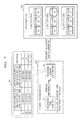
- FIG. 4 is a diagram of a process of performing static routing based on attributes of a document according to an embodiment of the present disclosure
- FIG. 5 is a diagram of a process of performing static routing based on attributes of a document and a customer type according to an embodiment of the present disclosure
- FIG. 6 is a diagram of a process of performing dynamic routing based on an average rendering time according to an embodiment of the present disclosure
- FIG. 7 is a diagram of a process of performing dynamic routing based on a variation of an average rendering time according to an embodiment of the present disclosure
- FIGS. 8, 9, 10, 11, and 12 are flowcharts of a document routing method performed by a cloud printing system according to various embodiments of the present disclosure.
- FIG. 13 illustrates a user interface (UI) including menus for setting conditions user for performing a routing method according to an embodiment of the present disclosure.
- UI user interface
- a “document” means all types of printing targets including at least one of objects such as text, graphics, images, etc.
- FIG. 1 is a block diagram of a cloud printing system according to an embodiment of the present disclosure.
- a cloud server 1 of the cloud printing system may include a load balancer 100 , a rendering unit 200 , and a deploy server 300 .
- the rendering unit 200 may include a plurality of rendering servers A 1 , . . . A 3 , through C 1 , . . . C 3 . Some of the rendering servers A 1 through C 3 may form rendering clusters 210 , 220 , and 230 .
- the load balancer 100 may route the received document to the rendering unit 200 . That is, the load balancer 100 may select one of the plurality of rendering servers A 1 through C 3 included in the rendering unit 200 , may transmit the document to the selected rendering server, and may request the selected rendering server to perform rendering on the document.
- the load balancer 100 may select a rendering cluster based on attributes of the document, which is called static routing.
- the load balancer 100 may consider a client type in addition to the attributes of the document during static routing. If the rendering cluster is selected, the load balancer 100 may select one of rendering servers included in the selected rendering cluster based on job performing statuses of the rendering servers, which is called dynamic routing.
- the load balancer 100 may select a rendering server based on the job performing statuses of the rendering servers, i.e. an average rendering time and a variation thereof. In this regard, a method of selecting the rendering server will be described in detail with reference to the following drawings.
- the load balancer 100 may be configured as a server that performs load balancing, i.e. a load balancing server.
- the rendering servers A 1 through C 3 included in the rendering unit 200 may perform rendering on the received document, may convert the document into a file of a printable format, may generate printing data, and may transmit the generated printing data to the deploy server 300 .
- the deploy server 300 may transmit the received printing data to a printer 20 that performs printing.
- FIG. 2 is a block diagram of a software configuration of the load balancer 100 according to an embodiment of the present disclosure.
- the load balancer 100 may include a static routing module 110 and a dynamic routing module 120 .
- the static routing module 110 may select a rendering cluster based on attributes of a document and may notify the dynamic routing module 120 of the selected rendering cluster.
- the static routing module 110 may include a document attribute detector 111 and a cluster determiner 112 .
- the static routing module 110 may further include a customer type confirmer 113 .
- the document attribute detector 111 may analyze metadata of the document and may detect the attributes of the document.
- the detected attributes of the document may include a format of the document, a capacity, the number of pages, a complexity, etc.
- the complexity may be presented as the number of objects included in the document.
- the document attribute detector 111 may transmit the detected attributes of the document to the cluster determiner 112 .
- the cluster determiner 112 may select one of a plurality of rendering clusters included in the rendering unit 200 based on the received attributes of the document.
- the cluster determiner 112 may calculate a load value by applying a weight and an assigned value that are preset with respect to each of the attributes of the document and may select a rendering cluster corresponding to the calculated load value.
- the load value is a numerical value of a rendering load of the document, i.e. a degree of a load applied for rendering of the document.
- the load value may be a relative numerical value of an amount of resources used for rendering of the document.
- the load value of the document increases.
- a table including weights and assigned values for calculating a load value is shown in FIG. 3 .
- FIG. 3 illustrates a table including weights and assigned values used for calculating a load value according to an embodiment of the present disclosure.
- a weight and an assigned value may be given to each of attributes of a document.
- the table shown in FIG. 3 is merely an embodiment and may further include other attributes, may exclude some of the attributes, or may set different weights and attributes.
- the cluster determiner 112 may select the rendering cluster corresponding to the load value.
- the rendering cluster may be preset according to the load value. Assuming that the plurality of rendering clusters have different performance levels, as the load value gets higher, a rendering cluster of a higher performance may be preset. An example in this regard will be described in detail with reference to FIG. 4 below.
- the static routing module 110 may selectively include the customer type confirmer 113 .
- the customer type confirmer 113 may confirm a customer type of a user who requests printing and may notify the cluster determiner 112 of the customer type so that the cluster determiner 112 may use the customer type when determining the rendering cluster. That is, the cluster determiner 112 may select the rendering cluster in consideration of the customer type in addition to the attributes of the document. An example in this regard will be described in detail with reference to FIG. 5 below.
- the static routing module 110 may notify the dynamic routing module 120 of the selected rendering cluster.
- the dynamic routing module 120 may select one of rendering servers included in the rendering cluster selected by the static routing module 110 .
- the dynamic routing module 120 may select a rendering server based on job performing statuses of the rendering servers.
- the dynamic routing module 120 may include a rendering time detector 121 and a rendering server determiner 122 .
- the rendering time detector 121 may calculate an average rendering time per printing job with respect to each of the rendering servers included in the rendering cluster selected by the static routing module 110 . Specifically, the rendering time detector 121 may calculate the average rendering time per printing job within a preset period. For example, the rendering time detector 121 may calculate an average time taken in connection with rendering jobs performed before a 10 minute period from a calculation time. Alternatively, the rendering time detector 121 may calculate the average rendering time of a preset number of printing jobs. For example, the rendering time detector 121 may calculate an average time taken in connection with 15 printing jobs before the calculation time.
- the rendering time detector 121 may calculate a variation of the average rendering time per printing job with respect to each of the rendering servers. Specifically, the rendering time detector 121 may calculate the average rendering time per printing job with respect to each of two or more preset periods and may calculate a variation of an average rendering time of two different sections per printing job. For example, the rendering time detector 121 may calculate the variation by calculating an average time taken in connection with rendering jobs performed during a first period (within a period from 10 minutes to 20 minutes from the calculation time) and during a second period (within a period from 10 minutes to the calculation time) and subtracting an average rendering time of the first period from an average rendering time of the second period.
- the rendering time detector 121 may transmit the calculated average rendering time or the calculated variation of the average rendering time to the rendering server determiner 122 .
- the rendering server determiner 122 may select a rendering server based on the received average rendering time or the received variation of the average rendering time. For example, the rendering server determiner 122 may select a rendering server with a minimum average rendering time. Alternatively, the rendering server determiner 122 may select a rendering server with a minimum variation of the average rendering time. Examples in this regard will be described in detail with reference to FIGS. 6 and 7 below.
- the load balancer 100 may transmit the document to the selected rendering server to request rendering of the document.
- FIG. 4 is a diagram of a process of performing static routing based on attributes of a document according to an embodiment of the present disclosure.
- the document attribute detector 111 may analyze metadata of the received document, may extract the attributes of the document, and may transmit the extracted attributes of the document to the cluster determiner 112 .
- An example of the extracted attributes of the document is shown in a region 401 .
- the cluster determiner 112 may calculate a load value by applying the attributes of the document of the region 401 to the table of FIG. 3 .
- An equation for calculating the load value is shown in a region 402 by applying weights and assigned values of the table of FIG. 3 .
- the load value is calculated as 0.69.
- the cluster determiner 112 may select a rendering cluster corresponding to the calculated load value (0.69), i.e. a cluster B, with reference to a table indicating load values of a region 403 and correspondence relationships between rendering clusters.
- a cluster A corresponding to the highest load value has the highest performance
- a cluster C corresponding to the lowest load value has the lowest performance. That is, a rendering cluster of a higher performance may correspond to a higher load value.
- the cluster determiner 112 may notify the dynamic routing module 120 about the cluster B having been selected.
- a rendering cluster of a higher performance corresponding to a higher load value may be selected because a higher load applied to rendering of a document causes a greater processing time difference according to a rendering performance.
- a document with a small load may not have a great rendering time difference whether using a high performance rendering server or a low performance rendering server, whereas a document with a great load may have a relatively great rendering time difference.
- dynamic routing described above may be performed in order to minimize a waiting time caused by rendering.
- FIG. 5 is a diagram of a process of performing static routing based on attributes of a document and a customer type according to an embodiment of the present disclosure.
- the document attribute detector 111 may extract the attributes of the document of a region 501 and may transmit the extracted attributes of the document to the cluster determiner 112 .
- the cluster determiner 112 may calculate a load value (0.69) according to an equation of a region 502 by applying the attributes of the document of the region 501 to the table of FIG. 3 . This is the same as the embodiment of FIG. 4 .
- the customer type confirmer 113 may confirm the customer type of a user who requests printing of the document and may transmit the configured customer type to the cluster determiner 112 .
- the cluster determiner 112 may select a rendering cluster based on the attributes of the document and the customer type.
- Customer types may have previously classified categories according to a certain reference. For example, customer types may be classified into paid users and unpaid users or very important person (VIP) customers and guests. In addition, customer types may be classified according to various references.
- VIP very important person
- the customer type of a region 503 is a guest.
- the cluster determiner 112 may select a cluster C by applying the calculated load value (0.69) and the customer type (guest) to a table of a region 504 .
- the cluster determiner 112 may notify the dynamic routing module 120 about that the cluster C has been selected.
- a rendering cluster may be differently selected according to a customer type even if a document has the same load value as described above because an expected value of a service may be different according to customer users. For example, since paid users and unpaid users have different expected waiting times, it may be reasonable to provide services by reflecting the different expected waiting times.
- FIG. 6 is a diagram of a process of performing dynamic routing based on an average rendering time according to an embodiment of the present disclosure.
- the rendering time detector 121 may calculate an average rendering time of each of a plurality of servers B 1 , B 2 , and B 3 included in the cluster B.
- an average rendering time taken in connection with rendering jobs performed within the last 10 minutes, i.e. 10 minutes from a calculation time, may be calculated as shown in a table of a region 601 of FIG. 6 .
- the rendering server determiner 122 may compare received average rendering time with respect to the servers B 1 , B 2 , and B 3 and may select the server B 2 with a minimum average rendering time as a rendering server.
- the rendering server determiner 122 may transmit a document file to the selected server B 2 to request rendering of the document file.
- a current load of each rendering server may be determined from an average rendering time of rendering servers and a rendering server that is determined to have a minimum load, i.e., a rendering server with a minimum average rendering time, may be selected, thereby reducing a waiting time of rendering jobs.
- FIG. 7 is a diagram of a process of performing dynamic routing based on a variation of an average rendering time according to an embodiment of the present disclosure.
- the rendering time detector 121 may calculate a variation of an average rendering time of each of the plurality of servers B 1 , B 2 , and B 3 included in the cluster B.
- an average rendering time with respect to each of two periods may be calculated and a variation of the average rendering time of the two periods may be calculated. That is, since the server B 1 has an average rendering time of 5 seconds in a first period and an average rendering time of 3 seconds in a second period, the variation of the average rendering time of the two periods may be ⁇ 2 seconds.
- +3 seconds and ⁇ 4 seconds are respectively obtained.
- the calculated average rendering time and variations according to the periods are shown as a table of a region 701 .
- the rendering server determiner 122 may compare the received variations of the average rendering time with respect to the servers B 1 , B 2 , and B 3 and may select the server B 3 with a minimum variation as a rendering server. The rendering server determiner 122 may transmit a document file to the selected server B 3 to request rendering on the document file.
- the rendering server determiner 122 may select a rendering server in consideration of not only the variation but also the average rendering time of a recent period, i.e. the second period, and the variation.
- a specific reference may be variously set.
- a smaller variation of an average rendering time may mean a smaller load applied to a rendering server, and thus a rendering server with a minimum variation may be selected, thereby reducing a waiting time of a rendering job.
- FIGS. 8, 9, 10, 11, and 12 are flowcharts of a document routing method performed by a cloud printing system according to various embodiments of the present disclosure. Although descriptions provided with reference to FIGS. 1 through 7 above are partially omitted below, the omitted descriptions may apply to the various embodiments with reference to FIGS. 8 through 12 .
- a load balancer of a cloud server may select a rendering cluster based on document attributes.
- the load balancer may determine a degree of a load of a document from the document attributes and may select a rendering cluster with a higher performance as the determined degree of the load becomes higher.
- FIGS. 9 and 10 Detailed operations included in operation 801 will be described with reference to FIGS. 9 and 10 below.
- the load balancer may select one of rendering servers included in the determined rendering cluster based on a job performing status of each of the rendering servers. That is, the load balancer may select the rendering server based on an average rendering time of the rendering servers and a variation thereof. Detailed operations included in operation 802 will be described with reference to FIGS. 11 and 12 below.
- the rendered document may be transmitted to a printer. That is, if the rendering server renders the received document, generates a printing file in a printable format, and transmits the generated printing file to a deploy server, the deploy server may transmit the received printing file to the printer to request printing of the printing file.
- FIGS. 9 and 10 illustrate detailed operations included in operation 801 of FIG. 8 .
- FIG. 9 is a flowchart of a method of selecting a rendering cluster based on document attributes.
- FIG. 10 is a flowchart of a method of selecting a rendering cluster based on document attributes and a customer type.
- a load balancer may extract document attributes from metadata of a document.
- the extracted document attributes may include a format of the document, a capacity, the number of pages, a complexity, etc.
- the load balancer may calculate a load value by using the extracted document attributes.
- the load balancer may calculate the load value by applying a weight and an assigned value that is preset with respect to each of the document attributes.
- the calculated load value may indicate a degree of a load with respect to rendering of the document.
- the load balancer may select the rendering cluster based on the load value and a performance of the rendering cluster.
- the load balancer may select a rendering cluster with a higher performance as the load value becomes higher and may use a table in which rendering clusters corresponding to a range of the load value are designated.
- operations 1001 and 1002 are the same as operations 901 and 902 of FIG. 9 .
- a load balancer may confirm a customer type of a user who requests printing from metadata of a document. For example, the load balancer may confirm whether the user is a paid user or an unpaid user or the user is a VIP user or a guest.
- a reference for classifying customer types may be variously set.
- the load balancer may select a rendering cluster based on a load value, the customer type, and a performance of the rendering cluster.
- a table in which a range of the load value and rendering clusters corresponding to customer types are designated may be used.
- FIGS. 11 and 12 illustrate detailed operations included in operation 802 of FIG. 8 .
- FIG. 11 is a flowchart of a method of selecting a rendering server based on an average rendering time.
- FIG. 11 is a flowchart of a method of selecting a rendering server based on a variation of an average rendering time.
- a load balancer may calculate an average rendering time within a certain period with respect to each of rendering servers included in a rendering cluster selected in operation 801 of FIG. 8 . That is, the load balancer may calculate an average of time taken in connection with rendering jobs performed during a present certain period according to the rendering servers.
- the load balancer may select a server with a minimum average rendering time as a rendering server.
- a load balancer may calculate an average rendering time within at least two periods with respect to each of rendering servers included in a rendering cluster selected in operation 801 of FIG. 8 .
- the load balancer may calculate a variation of the average rendering time and may select a rendering server based on the calculated variation. That is, the load balancer may calculate the variation of the average rendering time according to the rendering servers by subtracting an average rendering time of one period from an average rendering time of another period. The load balancer may select a server with a minimum variation as the rendering server.
- FIG. 13 illustrates a user interface (UI) 1300 including menus 1311 , 1312 , 1313 , 1314 , 1321 , and 1322 for setting conditions used for performing a routing method according to an embodiment of the present disclosure.
- UI user interface
- the conditions for performing the routing method described above may be appropriately set by a user, and thus an UI may be necessarily provided in order to set the conditions.
- the UI may be provided in various forms.
- the UI may display setting menus on a screen.
- FIG. 13 illustrates structures of setting menus that may be provided to the UI, rather than a detailed form of the UI.
- the menu 1311 for setting weights with respect to document attributes the menu 1312 for setting an assigned value according to a range of the document attributes
- the menu 1313 for setting whether a customer type is considered the menu 1314 for setting a cluster selection reference may be provided.
- the menu 1321 for setting a section for calculating an average rendering time and the menu 1322 for setting a server selection reference may be provided.
- the various embodiments of the present inventive concept can be written as computer programs and can be implemented in general-use digital computers that execute the programs using a non-transitory computer readable recording medium.
- the non-transitory computer readable recording medium include magnetic storage media (e.g., read only memory (ROM), floppy disks, hard disks, etc.), and optical recording media (e.g., compact disc ROMs (CD-ROMs), or digital versatile discs (DVDs)).
- a rendering cluster when a cloud printing system is provided, a rendering cluster may be selected based on document attributes, a rendering server may be selected based on a job performing status of the rendering server, and thus rendering efficiency may be enhanced, thereby reducing a waiting time of a customer and operating the cloud printing system with relatively low costs.
Landscapes
- Engineering & Computer Science (AREA)
- Theoretical Computer Science (AREA)
- Human Computer Interaction (AREA)
- Physics & Mathematics (AREA)
- General Engineering & Computer Science (AREA)
- General Physics & Mathematics (AREA)
- Accessory Devices And Overall Control Thereof (AREA)
Abstract
Description
Claims (20)
Applications Claiming Priority (2)
| Application Number | Priority Date | Filing Date | Title |
|---|---|---|---|
| KR10-2016-0006471 | 2016-01-19 | ||
| KR1020160006471A KR20170086894A (en) | 2016-01-19 | 2016-01-19 | Routing method in cloud print system, cloud server and system for performing the same |
Publications (2)
| Publication Number | Publication Date |
|---|---|
| US20170206039A1 US20170206039A1 (en) | 2017-07-20 |
| US9983838B2 true US9983838B2 (en) | 2018-05-29 |
Family
ID=59314538
Family Applications (1)
| Application Number | Title | Priority Date | Filing Date |
|---|---|---|---|
| US15/404,828 Active US9983838B2 (en) | 2016-01-19 | 2017-01-12 | Routing method performed by cloud printing system and cloud server and system for performing the same |
Country Status (2)
| Country | Link |
|---|---|
| US (1) | US9983838B2 (en) |
| KR (1) | KR20170086894A (en) |
Families Citing this family (1)
| Publication number | Priority date | Publication date | Assignee | Title |
|---|---|---|---|---|
| WO2022025935A1 (en) | 2020-07-31 | 2022-02-03 | Hewlett-Packard Development Company, L.P. | Recommended print job delivery paths |
Citations (3)
| Publication number | Priority date | Publication date | Assignee | Title |
|---|---|---|---|---|
| US20020089691A1 (en) * | 2001-01-11 | 2002-07-11 | Andrew Fertlitsch | Methods and systems for printing device load-balancing |
| US20150092233A1 (en) * | 2013-09-30 | 2015-04-02 | Samsung Electronics Co., Ltd. | System and method for providing cloud printing service |
| US9071609B2 (en) | 2012-10-08 | 2015-06-30 | Google Technology Holdings LLC | Methods and apparatus for performing dynamic load balancing of processing resources |
-
2016
- 2016-01-19 KR KR1020160006471A patent/KR20170086894A/en not_active Withdrawn
-
2017
- 2017-01-12 US US15/404,828 patent/US9983838B2/en active Active
Patent Citations (3)
| Publication number | Priority date | Publication date | Assignee | Title |
|---|---|---|---|---|
| US20020089691A1 (en) * | 2001-01-11 | 2002-07-11 | Andrew Fertlitsch | Methods and systems for printing device load-balancing |
| US9071609B2 (en) | 2012-10-08 | 2015-06-30 | Google Technology Holdings LLC | Methods and apparatus for performing dynamic load balancing of processing resources |
| US20150092233A1 (en) * | 2013-09-30 | 2015-04-02 | Samsung Electronics Co., Ltd. | System and method for providing cloud printing service |
Also Published As
| Publication number | Publication date |
|---|---|
| US20170206039A1 (en) | 2017-07-20 |
| KR20170086894A (en) | 2017-07-27 |
Similar Documents
| Publication | Publication Date | Title |
|---|---|---|
| US9158460B2 (en) | Selecting data nodes using multiple storage policies in cloud storage system | |
| JP5743723B2 (en) | Printing system, service processing method, and program | |
| US20090213937A1 (en) | Image processing apparatus and method, program, and recording medium | |
| WO2012012058A1 (en) | Image processing in a computer network | |
| US11222272B2 (en) | Methods and systems for advanced content cacheability determination | |
| US10601904B2 (en) | Cooperation system | |
| KR20150039524A (en) | Cloud system, method for controlling thereof, management server and method for controlling thereof | |
| US12197383B2 (en) | Method and system for using dynamic content types | |
| CN105760467A (en) | Real-time data read-write method, device and system and NFS server | |
| EP2523091B1 (en) | System management server, and management method and program | |
| JP2011187063A (en) | Printing internet inaccessible web content via remote printing service | |
| US9983838B2 (en) | Routing method performed by cloud printing system and cloud server and system for performing the same | |
| US8305590B2 (en) | Driver of server managing image forming device drivers, and data printing method using the same | |
| US20190042991A1 (en) | Resource physical positioning planning tool | |
| JP6500668B2 (en) | Job processing system, job processing apparatus and job processing program | |
| CN107592553B (en) | Image compression agent balance processing method and device | |
| US9552182B2 (en) | Printing using multiple print processing resources | |
| US11509717B2 (en) | Cross datacenter read-write consistency in a distributed cloud computing platform | |
| US20150138594A1 (en) | Output management device, output management system, and output manangement method | |
| US11831707B2 (en) | Redirect processing for content delivery networks | |
| US8775224B2 (en) | Method and apparatus for dynamic specification of a business value by a discovered resource | |
| US11316992B2 (en) | Information processing apparatus and non-transitory computer readable medium | |
| US20210273864A1 (en) | Communication analysis apparatus, communication analysis method, and program | |
| KR102100848B1 (en) | Proxy server and method for managing replica thereby | |
| WO2018142695A1 (en) | Server device, information processing system and image formation device |
Legal Events
| Date | Code | Title | Description |
|---|---|---|---|
| AS | Assignment |
Owner name: S-PRINTING SOLUTION CO., LTD., KOREA, REPUBLIC OF Free format text: ASSIGNMENT OF ASSIGNORS INTEREST;ASSIGNOR:LEE, BYEONG-JIN;REEL/FRAME:040975/0119 Effective date: 20161230 |
|
| STCF | Information on status: patent grant |
Free format text: PATENTED CASE |
|
| AS | Assignment |
Owner name: HP PRINTING KOREA CO., LTD., KOREA, REPUBLIC OF Free format text: CHANGE OF NAME;ASSIGNOR:S-PRINTING SOLUTION CO., LTD.;REEL/FRAME:047370/0405 Effective date: 20180316 |
|
| CC | Certificate of correction | ||
| AS | Assignment |
Owner name: HP PRINTING KOREA CO., LTD., KOREA, REPUBLIC OF Free format text: CORRECTIVE ASSIGNMENT TO CORRECT THE DOCUMENTATION EVIDENCING THE CHANGE OF NAME PREVIOUSLY RECORDED ON REEL 047370 FRAME 0405. ASSIGNOR(S) HEREBY CONFIRMS THE CHANGE OF NAME;ASSIGNOR:S-PRINTING SOLUTION CO., LTD.;REEL/FRAME:047769/0001 Effective date: 20180316 |
|
| AS | Assignment |
Owner name: HP PRINTING KOREA CO., LTD., KOREA, REPUBLIC OF Free format text: CHANGE OF LEGAL ENTITY EFFECTIVE AUG. 31, 2018;ASSIGNOR:HP PRINTING KOREA CO., LTD.;REEL/FRAME:050938/0139 Effective date: 20190611 |
|
| AS | Assignment |
Owner name: HEWLETT-PACKARD DEVELOPMENT COMPANY, L.P., TEXAS Free format text: CONFIRMATORY ASSIGNMENT EFFECTIVE NOVEMBER 1, 2018;ASSIGNOR:HP PRINTING KOREA CO., LTD.;REEL/FRAME:050747/0080 Effective date: 20190826 |
|
| MAFP | Maintenance fee payment |
Free format text: PAYMENT OF MAINTENANCE FEE, 4TH YEAR, LARGE ENTITY (ORIGINAL EVENT CODE: M1551); ENTITY STATUS OF PATENT OWNER: LARGE ENTITY Year of fee payment: 4 |
|
| MAFP | Maintenance fee payment |
Free format text: PAYMENT OF MAINTENANCE FEE, 8TH YEAR, LARGE ENTITY (ORIGINAL EVENT CODE: M1552); ENTITY STATUS OF PATENT OWNER: LARGE ENTITY Year of fee payment: 8 |