US9965320B2 - Processor with transactional capability and logging circuitry to report transactional operations - Google Patents
Processor with transactional capability and logging circuitry to report transactional operations Download PDFInfo
- Publication number
- US9965320B2 US9965320B2 US14/142,475 US201314142475A US9965320B2 US 9965320 B2 US9965320 B2 US 9965320B2 US 201314142475 A US201314142475 A US 201314142475A US 9965320 B2 US9965320 B2 US 9965320B2
- Authority
- US
- United States
- Prior art keywords
- transaction
- instruction
- abort
- memory
- processor
- Prior art date
- Legal status (The legal status is an assumption and is not a legal conclusion. Google has not performed a legal analysis and makes no representation as to the accuracy of the status listed.)
- Active
Links
Images



Classifications
-
- G—PHYSICS
- G06—COMPUTING OR CALCULATING; COUNTING
- G06F—ELECTRIC DIGITAL DATA PROCESSING
- G06F13/00—Interconnection of, or transfer of information or other signals between, memories, input/output devices or central processing units
- G06F13/10—Program control for peripheral devices
- G06F13/12—Program control for peripheral devices using hardware independent of the central processor, e.g. channel or peripheral processor
- G06F13/124—Program control for peripheral devices using hardware independent of the central processor, e.g. channel or peripheral processor where hardware is a sequential transfer control unit, e.g. microprocessor, peripheral processor or state-machine
-
- G—PHYSICS
- G06—COMPUTING OR CALCULATING; COUNTING
- G06F—ELECTRIC DIGITAL DATA PROCESSING
- G06F9/00—Arrangements for program control, e.g. control units
- G06F9/06—Arrangements for program control, e.g. control units using stored programs, i.e. using an internal store of processing equipment to receive or retain programs
- G06F9/46—Multiprogramming arrangements
- G06F9/466—Transaction processing
- G06F9/467—Transactional memory
-
- G—PHYSICS
- G06—COMPUTING OR CALCULATING; COUNTING
- G06F—ELECTRIC DIGITAL DATA PROCESSING
- G06F11/00—Error detection; Error correction; Monitoring
- G06F11/07—Responding to the occurrence of a fault, e.g. fault tolerance
- G06F11/0703—Error or fault processing not based on redundancy, i.e. by taking additional measures to deal with the error or fault not making use of redundancy in operation, in hardware, or in data representation
- G06F11/0706—Error or fault processing not based on redundancy, i.e. by taking additional measures to deal with the error or fault not making use of redundancy in operation, in hardware, or in data representation the processing taking place on a specific hardware platform or in a specific software environment
- G06F11/0721—Error or fault processing not based on redundancy, i.e. by taking additional measures to deal with the error or fault not making use of redundancy in operation, in hardware, or in data representation the processing taking place on a specific hardware platform or in a specific software environment within a central processing unit [CPU]
- G06F11/0724—Error or fault processing not based on redundancy, i.e. by taking additional measures to deal with the error or fault not making use of redundancy in operation, in hardware, or in data representation the processing taking place on a specific hardware platform or in a specific software environment within a central processing unit [CPU] in a multiprocessor or a multi-core unit
-
- G—PHYSICS
- G06—COMPUTING OR CALCULATING; COUNTING
- G06F—ELECTRIC DIGITAL DATA PROCESSING
- G06F11/00—Error detection; Error correction; Monitoring
- G06F11/07—Responding to the occurrence of a fault, e.g. fault tolerance
- G06F11/0703—Error or fault processing not based on redundancy, i.e. by taking additional measures to deal with the error or fault not making use of redundancy in operation, in hardware, or in data representation
- G06F11/0766—Error or fault reporting or storing
- G06F11/0772—Means for error signaling, e.g. using interrupts, exception flags, dedicated error registers
-
- G—PHYSICS
- G06—COMPUTING OR CALCULATING; COUNTING
- G06F—ELECTRIC DIGITAL DATA PROCESSING
- G06F12/00—Accessing, addressing or allocating within memory systems or architectures
- G06F12/02—Addressing or allocation; Relocation
- G06F12/08—Addressing or allocation; Relocation in hierarchically structured memory systems, e.g. virtual memory systems
- G06F12/0802—Addressing of a memory level in which the access to the desired data or data block requires associative addressing means, e.g. caches
- G06F12/0806—Multiuser, multiprocessor or multiprocessing cache systems
- G06F12/0815—Cache consistency protocols
- G06F12/0817—Cache consistency protocols using directory methods
- G06F12/0828—Cache consistency protocols using directory methods with concurrent directory accessing, i.e. handling multiple concurrent coherency transactions
-
- G—PHYSICS
- G06—COMPUTING OR CALCULATING; COUNTING
- G06F—ELECTRIC DIGITAL DATA PROCESSING
- G06F13/00—Interconnection of, or transfer of information or other signals between, memories, input/output devices or central processing units
- G06F13/10—Program control for peripheral devices
- G06F13/12—Program control for peripheral devices using hardware independent of the central processor, e.g. channel or peripheral processor
- G06F13/124—Program control for peripheral devices using hardware independent of the central processor, e.g. channel or peripheral processor where hardware is a sequential transfer control unit, e.g. microprocessor, peripheral processor or state-machine
- G06F13/126—Program control for peripheral devices using hardware independent of the central processor, e.g. channel or peripheral processor where hardware is a sequential transfer control unit, e.g. microprocessor, peripheral processor or state-machine and has means for transferring I/O instructions and statuses between control unit and main processor
-
- G—PHYSICS
- G06—COMPUTING OR CALCULATING; COUNTING
- G06F—ELECTRIC DIGITAL DATA PROCESSING
- G06F9/00—Arrangements for program control, e.g. control units
- G06F9/06—Arrangements for program control, e.g. control units using stored programs, i.e. using an internal store of processing equipment to receive or retain programs
- G06F9/30—Arrangements for executing machine instructions, e.g. instruction decode
- G06F9/30003—Arrangements for executing specific machine instructions
- G06F9/30076—Arrangements for executing specific machine instructions to perform miscellaneous control operations, e.g. NOP
- G06F9/3009—Thread control instructions
-
- G—PHYSICS
- G06—COMPUTING OR CALCULATING; COUNTING
- G06F—ELECTRIC DIGITAL DATA PROCESSING
- G06F9/00—Arrangements for program control, e.g. control units
- G06F9/06—Arrangements for program control, e.g. control units using stored programs, i.e. using an internal store of processing equipment to receive or retain programs
- G06F9/30—Arrangements for executing machine instructions, e.g. instruction decode
- G06F9/38—Concurrent instruction execution, e.g. pipeline or look ahead
- G06F9/3824—Operand accessing
- G06F9/3834—Maintaining memory consistency
-
- G—PHYSICS
- G06—COMPUTING OR CALCULATING; COUNTING
- G06F—ELECTRIC DIGITAL DATA PROCESSING
- G06F9/00—Arrangements for program control, e.g. control units
- G06F9/06—Arrangements for program control, e.g. control units using stored programs, i.e. using an internal store of processing equipment to receive or retain programs
- G06F9/46—Multiprogramming arrangements
- G06F9/50—Allocation of resources, e.g. of the central processing unit [CPU]
- G06F9/5005—Allocation of resources, e.g. of the central processing unit [CPU] to service a request
- G06F9/5011—Allocation of resources, e.g. of the central processing unit [CPU] to service a request the resources being hardware resources other than CPUs, Servers and Terminals
- G06F9/5016—Allocation of resources, e.g. of the central processing unit [CPU] to service a request the resources being hardware resources other than CPUs, Servers and Terminals the resource being the memory
-
- G—PHYSICS
- G06—COMPUTING OR CALCULATING; COUNTING
- G06F—ELECTRIC DIGITAL DATA PROCESSING
- G06F9/00—Arrangements for program control, e.g. control units
- G06F9/06—Arrangements for program control, e.g. control units using stored programs, i.e. using an internal store of processing equipment to receive or retain programs
- G06F9/46—Multiprogramming arrangements
- G06F9/52—Program synchronisation; Mutual exclusion, e.g. by means of semaphores
- G06F9/526—Mutual exclusion algorithms
- G06F9/528—Mutual exclusion algorithms by using speculative mechanisms
-
- G—PHYSICS
- G06—COMPUTING OR CALCULATING; COUNTING
- G06F—ELECTRIC DIGITAL DATA PROCESSING
- G06F2212/00—Indexing scheme relating to accessing, addressing or allocation within memory systems or architectures
- G06F2212/25—Using a specific main memory architecture
- G06F2212/251—Local memory within processor subsystem
Definitions
- the field of invention pertains to the computing sciences and, more specifically, to a processor with transactional capability and logging circuitry to report transactional operations.
- Multi-core processors and/or multi-threaded instruction execution pipelines within processing cores have caused software programmers to develop multi-threaded software programs (as opposed to single threaded software programs).
- Multi-threaded software is naturally complex because of the different processes that concurrently execute.
- multi-threaded software is additionally difficult to debug because of an aspect of “non-determinism” in the manner of its execution.
- a multi-threaded software program may execute differently across two different run-times even if the program starts from an identical input state.
- logging is used to record certain critical junctures in a multi-threaded software program's execution.
- Processors are presently designed with logging circuits that observe the execution of a processor's software and record certain critical events that the circuits have been designed to detect. If the software program crashes, the log record is analyzed to study the execution of the program leading up to the crash.
- FIG. 1 shows a processor
- FIG. 2 shows an improved processor
- FIG. 3 a shows a first method that can be executed by said processor
- FIG. 3 b shows a second method that can be executed by said processor
- FIG. 3 c shows a third method that can be executed by said processor
- FIG. 3 d shows a fourth method that can be executed by said processor
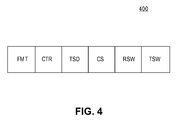
- FIG. 4 shows a packet structure
- FIG. 5 shows a computing system
- FIG. 1 shows a prior art processor 100 implemented on a semiconductor chip having logging circuitry 101 _ 1 through 101 _N for tracking specific aspects of multi-threaded program flow and recording such aspects externally from the processor 100 so that the program's execution can be later studied and understood.
- each instance of the processor logging circuitry 101 _ 1 through 101 _N is designed to look at each thread of its local processing core as being executed in “chunks” where certain, specific looked for events terminate a chunk.
- the multi-threaded execution of a larger multi-threaded program that perhaps executes threads across all cores 105 _ 1 through 105 _X can be thoroughly analyzed.
- Each instance of logging circuitry is assigned a specific region of system memory 103 in which to store its respective chunks.
- Each hardware thread executed by a particular core is allocated its own respective space within the system memory region allocated to the logging circuitry.
- a single instruction execution pipeline can concurrently execute multiple hardware threads (e.g., 8 hardware threads).
- each processing core can contain more than one instruction execution pipeline (e.g., FIG. 1 shows each core having two instruction execution pipelines 106 ).
- Hardware threads are understood to be the threads actively being executed within an instruction execution pipeline.
- Instruction execution pipelines are typically designed to concurrently execute a maximum/limited number of hardware threads where the maximum/limit is set by the hardware design of the pipeline.
- a software thread is understood to be a singular stream of program code instructions. The number of software threads supported by a processor can greatly exceed the number of hardware threads.
- a software thread is recognized as also being a hardware thread when the thread's state/context information is switched into an instruction execution pipeline. The software thread loses its hardware thread status when its state/context is switched out of the instruction execution pipeline.
- there is one instance of logging circuitry per hardware thread for simplicity FIG. 1 only shows one logging circuit per core).
- a logging circuitry instance (e.g., instance 101 _ 1 ) is designed to terminate a chunk for a thread on any of the following conditions: 1) a memory race condition; 2) a switch of the thread from an active to a hibernated state; 3) a translation look-aside-buffer (TLB) invalidation; 4) a transition of the thread outside a privilege level it was configured for (e.g., the thread transitions from a “user” privilege level to a “kernel” privilege level in response to an interrupt or exception); 5) the thread attempts to access an un-cacheable memory region.
- TLB translation look-aside-buffer
- FIG. 1 also shows an inset 120 the prior art structure of a packet for a chunk of a particular thread.
- the packet includes: 1) a packet format identifier (FMT); 2) the termination reason for the chunk (CTR); 3) a differential timestamp (time between this packet and previous chunk's packet) (TSD); 4) the number of instructions that were executed by the chunk between the thread's previous chunk's termination and the chunk's termination (CS); 5) the number of outstanding writes for the chunk (i.e., the number of retired but not yet globally visible (committed) store operations)(RSW); 6) the number of retired load/store operations of the oldest not yet retired macro instruction (NTB).
- the core ID and the thread ID are added by a software layer which can determine both based on where the chunk is stored in system memory 103 .
- each logging circuitry instance 101 _ 1 through 101 _N is coupled to “hooks” 104 _ 1 through 104 _N in their respective processing cores 105 _ 1 through 105 _N of the processor (e.g., in the vicinity of the instruction execution pipelines 106 _ 1 through 106 _N that execute the respective instruction streams of the various software threads) that are designed to detect the looked for chunk termination events.
- the various hooks detect a chunk termination event for the thread and report the event to the logging circuitry 101 .
- the logging circuitry 101 formulates a packet consistent with the structure of inset 120 and causes the packet to be written to external memory 103 .
- Each core is coupled to a memory race detection circuit 107 _ 1 through 107 _N.
- a memory race detection circuit 107 _ 1 through 107 _N there is one memory race detection circuit for each processing core coupled proximate to the core's L1 cache 108 _ 1 through 108 _N.
- Each memory race circuit 107 _ 1 through 107 _N is designed to detect memory races at its associated L1 cache.
- a memory race occurs when two different software processes (e.g., two different threads) try to access the same memory location.
- each thread remembers all memory accesses (addresses) of the current chunk.
- a chunk is terminated and a new chunk is created when a conflict to one of the addresses remembered by the current chunk is detected (no matter how long this access is in the past).
- a race can be caused when two different threads on a same core attempt to access the same memory location or when two different threads on two different cores attempt to access the same memory location.
- a first core will snoop a second core's L1 cache.
- interconnection network 109 is used to transport such snoops.
- Each memory race detection circuit 107 _ 1 through 107 _N tracks recent read operations and recent write operations (referred to as “read sets” and “write sets”) and compares them to incoming read requests and incoming write requests.
- a memory race circuit will detect a memory race condition anytime it detects concurrent “read-after-write” (RAW), “write-after-write” (WAW) or “write-after-read” (WAR) operations directed to the same memory address.
- RAW read-after-write
- WAR write-after-read”
- the identity of the conflicting address may optionally be included in the chunk (depending on whether larger or smaller chunks are desired) that is recorded for a memory race.
- FIG. 2 shows an improvement to the prior art processor of FIG. 1 .
- the improved processor of FIG. 2 in an embodiment assumes all of the functionality described above with respect to FIG. 1 plus the additional improvements described immediately below.
- the processor's individual cores 205 _ 1 through 205 _N include the additional capability of executing “transactions”.
- the execution of transactions corresponds to execution of speculative code well beyond traditional speculative execution boundaries.
- Traditional speculative execution such as branch prediction, permits an instruction execution pipeline to execute a program along a program branch before confirmation that the direction taken was the correct program flow path.
- results of executed instructions are contained (e.g., in a reorder buffer) internal to the pipeline but not written externally to a processor's architectural state (registers). As such, results of the speculatively executed instructions are not globally visible. If the predicted branch is incorrect the pipeline is flushed and program flow restarts from the incorrectly predicted branch. If the prediction is correct, the instruction results are committed to the architectural state external to the pipeline for global viewing by other processes. In general, however, the amount of data changes that can be contained is of limited size and therefore the amount of speculatively executed code is limited.
- processing cores that support transactions permit speculative execution well beyond the type of speculative execution discussed above (although the cores of FIG. 2 may also be designed to include branch prediction).
- processes are able to execute “as if” they have placed locks on shared items of data.
- a process e.g., a software thread
- acquires a lock on an entire database e.g., an entire shared memory, such as LLC cache and/or system memory 203 or region thereof where the process's data is kept.
- the process executes some logic and, upon completion of the logic, determines that changes need to be made to one or more of the data items.
- the process then “commits” the data items to the database and releases the lock on the database thereby permitting other processes to access the data items.
- the execution pipelines 206 _ 1 through 206 _N of the processor have enhanced functional units to support instructions (e.g., XACQUIRE and XRELEASE) that permit a software thread to believe it has locked a database as described above. That is, the XACQUIRE instruction when executed announces the beginning of speculative execution and the acquisition of a lock on a database. The XRELEASE instruction when executed announces the end of speculative execution and the release of the lock on a database.
- instructions e.g., XACQUIRE and XRELEASE
- the underlying hardware of the processor 200 acts more to let the software thread believe it has placed a lock on the database when, in fact, it has technically not locked the entire database, but rather, caused conflict detect hardware 221 within the processor to look for and enforce serial operation between competing threads for a same data item.
- the XACQUIRE instruction has the effect of “turning on” conflict detect hardware 221 within the processor that understands the database (e.g., system memory or a specific portion thereof) is supposed to “behave as if locked”.
- the conflict detect hardware 221 will permit another process to access the database so long as the access does not compete with the accesses made by the process that executed the XACQUIRE instruction and believes it has acquired a lock (here, a competing access is understood to mean a same memory address). If competing accesses are detected, the thread is “aborted” which causes the transaction's state to flush and the program to return to the XACQUIRE instruction to restart another attempt for the transaction.
- the conflict detection circuitry 221 detects when another process has attempted to access a same memory location as a transaction that has executed XACQUIRE and is executing within a speculative region of code.
- the processor also supports additional instructions that permit more advanced transactional semantics (e.g., XBEGIN, XEND and XABORT).
- XBEGIN and END act essentially the same as XACQUIRE and XRELEASE, respectively.
- XBEGIN announces the beginning of speculative execution (turns on conflict detection circuitry 221 ) and XEND announces the end of speculative execution (turns off conflict detection circuitry 221 ).
- a transaction abort leaves an error code in control register space 222 (e.g., EAX model specific register space implemented with one or more register circuits) of a core that executed the aborted thread providing more details about the abort (e.g., abort caused by ABORT instruction, transaction may succeed on retry, conflict caused abort, internal buffer overflowed, debug breakpoint was hit, abort occurred during nested transaction).
- control register space 222 e.g., EAX model specific register space implemented with one or more register circuits
- the information left in the register space 222 can be used to direct program flow after an abort to other than into an automatic retry of the transaction
- the processor may support an instruction (e.g., XABORT) that explicitly aborts the transaction.
- the XABORT instruction gives the programmer the ability to define other transactional abort conditions other than those explicitly designed into the processor hardware.
- the EAX register will contain information provided by the XABORT instruction (e.g., describing the event that caused its execution)
- the improved processor 200 of FIG. 2 includes additional enhancements to the logging circuitry 201 that are designed to identify the existence of transactions and delineate chunks based on them. More specifically, additional hooks 230 within the cores are observed in FIG.
- logging circuitry 201 that are designed to: 1) detect execution of an instruction that signifies the beginning of a transaction's execution of speculative code (e.g., XACQUIRE or XBEGIN) and report the event to the logging circuitry 201 ; and, 2) detect execution of an instruction that signifies the end of a transaction's execution of speculative code (e.g., XRELEASE or XEND) and report the event to the logging circuitry 201 .
- the logging circuitry 201 will terminate a chunk, create a packet that describes the chunk termination and report the packet out to system memory 203 (e.g., via memory controller 209 ).
- the new hooks 230 will report the existence of an aborted transaction.
- the logging circuitry 201 will terminate a chunk, create a packet that describes the chunk termination and write the packet out to system memory 203 .
- the detection of an abort for logging purposes rides off the conflict detection circuitry 221 within the processing cores 205 that actually detects conflicts for aborting transactions rather than on the memory race detection circuitry 207 .
- the relationship between the conflict detection circuitry 221 and the memory race detection circuitry 207 is discussed in more detail below.
- the additional hooks 230 are further designed to report the information contained in the register space 222 to the logging circuitry 201 .
- processors that support an instruction that explicitly terminates a transaction e.g., XABORT
- a transaction abort packet will also be created and reported out (e.g., with EAX register content if available).
- FIG. 3 a shows a first methodology performed by the processor of FIG. 2 .
- an instruction is executed that marks the beginning of the execution of speculatively executed transactional code 301 .
- the instruction is not deemed “executed” until it is retired.
- a signal is directed to logging circuitry 302 .
- the logging circuitry creates a chunk termination packet that indicates the chunk is being terminated because a transaction has started 303 .
- the chunk termination packet is reported out 304 (e.g., by being written into external system memory).
- FIG. 3 b shows a second methodology performed by the processor of FIG. 2 .
- an instruction is executed that marks the end of the execution of speculatively executed transactional code (e.g., after the transaction has successfully committed its data changes) 311 .
- the instruction is not deemed “executed” until it is retired.
- a signal is directed to logging circuitry 312 .
- the logging circuitry creates a chunk termination packet that indicates the chunk is being terminated because a transaction has ended 313 .
- the chunk termination packet is reported out 314 (e.g., by being written into external system memory).
- FIG. 3 c shows a third methodology performed by the processor of FIG. 2 .
- hardware e.g., conflict detection circuitry 221
- a signal is sent indicating the existence of the conflict 322 (e.g., from conflict detection circuitry 222 to the processing core pipeline that is executing the transaction).
- the transaction is aborted and information is written into control register space 323 .
- a signal is sent to logging circuitry 324 .
- the logging circuitry accesses the register space and creates a chunk termination packet that indicates the chunk is being terminated because a transaction has aborted and which includes information from the register 325 .
- the chunk termination packet is reported out 326 (e.g., by being written into external system memory).
- FIG. 3 d shows a fourth methodology performed by the processor of FIG. 2 .
- an instruction is executed that explicitly aborts a transaction and information is written into a control register 331 .
- a signal is sent to logging circuitry 332 .
- the logging circuitry accesses the register and creates a chunk termination packet that indicates the chunk is being terminated because a transaction has aborted and which includes information from the register 333 .
- the chunk termination packet is reported out 334 (e.g., by being written into external system memory).
- FIG. 4 shows an embodiment of a packet structure 400 that is written out by the logging circuitry 201 of FIG. 2 when writing out transaction related chunk termination packets.
- the packet structure largely maintains the same structure as the prior art packet 120 of FIG. 1 .
- the chunk termination reason (CTR) field of the packet can contain information indicating any of the additional events: 1) transaction start; 2) transaction end; and, 3) transaction abort.
- the CTR field can additionally indicate whether the processor supports an explicit abort instruction (e.g., XABORT).
- NTB in packet 120 of FIG. 1 is replaced with a “transaction status word” (TSW) that provides additional information describing the chunk termination for transactions.
- TSW transaction status word
- the TSW contains the contents of the (e.g., EAX) control register in the case of a transaction abort, or, the contents of a “transaction nested counter” register (not depicted) in the case of a transaction start or transaction end.
- the contents of the EAX control register indicate: 1) if the abort is from an XABORT instruction; 2) whether the transaction may succeed on retry; 3) if the abort is from a conflict; 4) if the abort is from an overflow; 5) if the abort is from a debug breakpoint; 6) whether the aborted transaction is nested.
- the processor is designed to support a string of transactions within a transaction (e.g., a first transaction can start another transaction and so on).
- the transaction nested counter value within its reserved register space essentially keeps track of which inner transaction (if any) the current transaction pertains to.
- the memory race detection circuitry 207 (part of the prior art logging technology of FIG. 1 ) can be enabled while the special hooks for transaction abort detection 230 and logging are also enabled. This can be achieved by designing the processor 200 of FIG. 2 with a mode that permits both the new transactional hooks 230 and the memory race hooks to both be enabled and active at the same time. This permits, for example, all conflicts to have potentially occurred within a transaction to be recorded (e.g., because the memory race hooks cause the logging circuitry 201 to report out on any detected conflicts during execution of the transaction (notably, a memory race condition and a conflict are similar events)).
- control register information that is provided commensurate with an abort e.g., the aforementioned EAX register
- the conflict detect circuitry 222 can be modified to report this information for entry into the register space.
- the TSW information of a chunk termination packet can include information pertaining to an abort as to whether or not the memory race detection circuitry 207 detected any conflicts. If not, it is suggestive that the conflict detection circuitry 221 that aborted the transaction actually experienced a “false positive” conflict. In an implementation, false positives are possible at the conflict detection circuitry 221 because of the fact that caches (such as an L1 cache) use hashing circuits to determine where a cached item of data is to be stored and, typically, multiple different memory addresses can hash to a same caching storage location.
- caches such as an L1 cache
- the memory race detection circuitry 207 is also capable of generating false positives for similar reasons—although the hashing and storage of memory addresses can be different in the memory race detection circuitry (e.g., a bloom filter is used to keep the read and write sets and memory addresses are hashed to a specific bloom filter location) than in the caching circuitry where the transaction conflict detection circuitry 221 resides. As such, in this case, if the memory race detection circuitry reports any conflicts they cannot be completely relied upon for detecting transactional aborts.
- the CTR information of a transaction related chunk termination packet indicates whether the transaction was terminated because of a late lock acquire (LLA).
- LLA late lock acquire
- a late lock acquire is a special circumstance that permits a transaction to commit its data even though the transaction has not completed.
- LLAs are imposed when the transaction needs to be “paused”, e.g., in response to an exception or unsafe instruction so that its state can be externally saved. After the transaction's state is externally saved, the transaction resumes normal operation. In this case, again, hooks within the processing cores report out the occurrence of any LLA event to the logging circuitry 201 which reports out a chunk termination event pertaining to the LLA and its termination of the transaction.
- the logging circuitry 201 can be implemented in any number of ways. At a first extreme the logging circuitry 201 can be implemented completely in dedicated, custom logic circuitry. At another extreme the logging circuitry 201 can be implemented as a micro-controller or other form of program code execution circuitry that executes program code (e.g., firmware) to perform its various functions. Other blends between these two extremes are also possible.
- program code e.g., firmware
- any of the logic processes taught by the discussion above may be performed with a controller, micro-controller or similar component, such processes may be implemented with program code such as machine-executable instructions that cause a machine that executes these instructions to perform certain functions.
- An article of manufacture may be used to store program code.
- An article of manufacture that stores program code may be embodied as, but is not limited to, one or more memories (e.g., one or more flash memories, random access memories (static, dynamic or other)), optical disks, CD-ROMs, DVD ROMs, EPROMs, EEPROMs, magnetic or optical cards or other type of machine-readable media suitable for storing electronic instructions.
- Program code may also be downloaded from a remote computer (e.g., a server) to a requesting computer (e.g., a client) by way of data signals embodied in a propagation medium (e.g., via a communication link (e.g., a network connection)).
- a remote computer e.g., a server
- a requesting computer e.g., a client
- Program code may also be downloaded from a remote computer (e.g., a server) to a requesting computer (e.g., a client) by way of data signals embodied in a propagation medium (e.g., via a communication link (e.g., a network connection)).
- a communication link e.g., a network connection
- FIG. 5 shows an embodiment of a computing system (e.g., a computer).
- the computer includes one or more processors 501 such as the processor 200 of FIG. 2 or at least one or more processors having transactional related logging circuitry functionality as discussed above.
- the processors communicate to one another and a memory controller 502 through an interconnection network 503 .
- a graphics processor 504 can be coupled to the interconnection network 503 or the memory controller 502 directly.
- an I/O hub 505 can be coupled to the interconnection network 503 or the memory controller 502 , directly.
- the memory controller is coupled to a system memory 506 .
- the above description describes a processor, including: memory access conflict detection circuitry to identify a conflict pertaining to a transaction being executed by a thread that believes it has locked information within a memory; logging circuitry to construct and report out a packet if the memory access conflict detection circuitry identifies a conflict that causes the transaction to be aborted.
- the processor includes register space to store information pertaining to the transaction's abort.
- the packet includes information from the register space.
- the information indicates that the transaction was aborted because the memory access conflict detection circuitry detected a conflict.
- the processor comprises a memory race detection circuit to detect memory races, the logging circuitry to construct and report out a packet if the memory race detection circuit detects a memory race.
- the processor is designed to permit the logging circuitry to be concurrently responsive to both the memory access conflict detection circuitry and the memory race detection circuit.
- the processor supports an instruction that explicitly aborts a transaction, the logging circuitry to report out a second packet if the instruction is executed.
- the processor supports an instruction that marks the beginning of a transaction, the logging circuitry to report out a second packet if the instruction is executed.
- the processor supports an instruction that marks the end of a successfully completed transaction, the logging circuitry to report out a second packet if the instruction is executed.
- a method includes: executing an instruction that marks the beginning a transaction, the instruction being part of a thread that believes it has a lock on information within a memory; constructing and reporting out a logging packet in response to the executing of the instruction; and, constructing and reporting out a second logging packet in response to the transaction having ended.
- the transaction has successfully completed and the constructing and reporting out the second packet is responsive to execution of a second instruction that marks successful completion of the transaction.
- the transaction has been aborted and the constructing and reporting out of the second packet is responsive to execution of a second instruction that explicitly aborted the transaction.
- the transaction has been aborted because a memory access conflict was detected.
- the method further includes detecting a memory race while the transaction is executing.
- the method further includes constructing and reporting out a third logging packet in response to the detection of the memory race.
- a computing system includes: a) a processor, the processor comprising: memory access conflict detection circuitry to identify a conflict pertaining to a transaction being executed by a thread that believes it has locked information within a memory; logging circuitry to construct and report out a packet if the memory access conflict detection circuitry identifies a conflict that causes the transaction to be aborted; and, b) a memory controller coupled to the memory.
- the processor supports an instruction that explicitly aborts a transaction, the logging circuitry to report out a second packet if the instruction is executed.
- the processor supports an instruction that marks the beginning of a transaction, the logging circuitry to report out a second packet if the instruction is executed.
- the processor supports an instruction that marks the end of a successfully completed transaction, the logging circuitry to report out a second packet if the instruction is executed.
- the processor includes register space to store information pertaining to the transaction's abort and the packet includes information from the register space.
Landscapes
- Engineering & Computer Science (AREA)
- Theoretical Computer Science (AREA)
- Software Systems (AREA)
- Physics & Mathematics (AREA)
- General Engineering & Computer Science (AREA)
- General Physics & Mathematics (AREA)
- Quality & Reliability (AREA)
- Computer Hardware Design (AREA)
- Microelectronics & Electronic Packaging (AREA)
- Debugging And Monitoring (AREA)
- Multi Processors (AREA)
Abstract
Description
Claims (24)
Priority Applications (4)
| Application Number | Priority Date | Filing Date | Title |
|---|---|---|---|
| US14/142,475 US9965320B2 (en) | 2013-12-27 | 2013-12-27 | Processor with transactional capability and logging circuitry to report transactional operations |
| EP14194407.4A EP2889769B1 (en) | 2013-12-27 | 2014-11-21 | Processor with transactional capability and logging circuitry to report transactional operations |
| RU2014147955A RU2625524C2 (en) | 2013-12-27 | 2014-11-27 | Processor made with possibility of transactions and registration scheme for report on transaction operations |
| CN201410789863.1A CN104750459B (en) | 2013-12-27 | 2014-12-17 | Processor with transaction functionality and the log recording circuit for reporting transaction operation |
Applications Claiming Priority (1)
| Application Number | Priority Date | Filing Date | Title |
|---|---|---|---|
| US14/142,475 US9965320B2 (en) | 2013-12-27 | 2013-12-27 | Processor with transactional capability and logging circuitry to report transactional operations |
Publications (2)
| Publication Number | Publication Date |
|---|---|
| US20150186178A1 US20150186178A1 (en) | 2015-07-02 |
| US9965320B2 true US9965320B2 (en) | 2018-05-08 |
Family
ID=51951699
Family Applications (1)
| Application Number | Title | Priority Date | Filing Date |
|---|---|---|---|
| US14/142,475 Active US9965320B2 (en) | 2013-12-27 | 2013-12-27 | Processor with transactional capability and logging circuitry to report transactional operations |
Country Status (4)
| Country | Link |
|---|---|
| US (1) | US9965320B2 (en) |
| EP (1) | EP2889769B1 (en) |
| CN (1) | CN104750459B (en) |
| RU (1) | RU2625524C2 (en) |
Cited By (2)
| Publication number | Priority date | Publication date | Assignee | Title |
|---|---|---|---|---|
| US10558464B2 (en) | 2017-02-09 | 2020-02-11 | International Business Machines Corporation | Infinite processor thread balancing |
| US20200057692A1 (en) * | 2018-08-20 | 2020-02-20 | Arm Limited | Identifying read-set information based on an encoding of replaceable-information values |
Families Citing this family (9)
| Publication number | Priority date | Publication date | Assignee | Title |
|---|---|---|---|---|
| US9298632B2 (en) * | 2012-06-28 | 2016-03-29 | Intel Corporation | Hybrid cache state and filter tracking of memory operations during a transaction |
| US9697040B2 (en) * | 2014-03-26 | 2017-07-04 | Intel Corporation | Software replayer for transactional memory programs |
| GB2536871A (en) * | 2015-03-04 | 2016-10-05 | Advanced Risc Mach Ltd | An apparatus and method to generate trace data in response to transactional execution |
| US11048516B2 (en) * | 2015-06-27 | 2021-06-29 | Intel Corporation | Systems, methods, and apparatuses for last branch record support compatible with binary translation and speculative execution using an architectural bit array and a write bit array |
| US20170286111A1 (en) * | 2016-04-01 | 2017-10-05 | Intel Corporation | Instruction, Circuits, and Logic for Data Capture for Software Monitoring and Debugging |
| US10031834B2 (en) | 2016-08-31 | 2018-07-24 | Microsoft Technology Licensing, Llc | Cache-based tracing for time travel debugging and analysis |
| US10642737B2 (en) * | 2018-02-23 | 2020-05-05 | Microsoft Technology Licensing, Llc | Logging cache influxes by request to a higher-level cache |
| EP3594804B1 (en) * | 2018-07-09 | 2021-11-03 | ARM Limited | Transactional compare-and-discard instruction |
| US11847064B2 (en) | 2018-12-07 | 2023-12-19 | International Business Machines Corporation | Buffer and methods for address translations in a processor |
Citations (58)
| Publication number | Priority date | Publication date | Assignee | Title |
|---|---|---|---|---|
| US5740461A (en) | 1994-05-03 | 1998-04-14 | Advanced Risc Machines Limited | Data processing with multiple instruction sets |
| US5996064A (en) | 1997-12-30 | 1999-11-30 | Intel Corporation | Method and apparatus for guaranteeing minimum variable schedule distance by using post-ready latency |
| US6009256A (en) | 1997-05-02 | 1999-12-28 | Axis Systems, Inc. | Simulation/emulation system and method |
| US20060236136A1 (en) | 2005-04-14 | 2006-10-19 | Jones Darren M | Apparatus and method for automatic low power mode invocation in a multi-threaded processor |
| US7188290B2 (en) | 2002-04-23 | 2007-03-06 | Intel Corporation | Data alignment for telecommunications networks |
| US20070143276A1 (en) | 2005-12-07 | 2007-06-21 | Microsoft Corporation | Implementing strong atomicity in software transactional memory |
| US20070283102A1 (en) | 2004-11-18 | 2007-12-06 | International Business Machines Corporation | Mechanism that Provides Efficient Multi-Word Load Atomicity |
| US20070294702A1 (en) | 1998-12-16 | 2007-12-20 | Mips Technologies, Inc. | Method and apparatus for implementing atomicity of memory operations in dynamic multi-streaming processors |
| US20080019209A1 (en) | 2006-07-23 | 2008-01-24 | Solid State System Co., Ltd. | Access time adjusting circuit and method for non-volatile memory |
| US20080062786A1 (en) | 2006-09-13 | 2008-03-13 | Samsung Electronics Co., Ltd. | Apparatus and method for providing atomicity with respect to request of write operation for successive sector |
| US20080098184A1 (en) | 2005-04-28 | 2008-04-24 | Huras Matthew A | Storage pools with write atomicity |
| US20080109641A1 (en) | 2006-11-07 | 2008-05-08 | Microsoft Corporation | Automatic and systematic detection of race conditions and atomicity violations |
| US7376798B1 (en) | 2005-04-07 | 2008-05-20 | Transmeta Corporation | Memory management methods and systems that support cache consistency |
| US20080163220A1 (en) | 2006-12-28 | 2008-07-03 | Cheng Wang | Efficient and consistent software transactional memory |
| US7441107B2 (en) * | 2003-12-31 | 2008-10-21 | Intel Corporation | Utilizing an advanced load address table for memory disambiguation in an out of order processor |
| US20090019209A1 (en) * | 2007-07-09 | 2009-01-15 | Xiaowei Shen | Reservation Required Transactions |
| US20090043845A1 (en) | 2005-04-12 | 2009-02-12 | International Business Machines Corporation | Method, system and computer program for providing atomicity for a unit of work |
| US20090046851A1 (en) | 2007-08-17 | 2009-02-19 | Lars Elmegaard-Fessel | Method and system for atomicity for elliptic curve cryptosystems |
| US20090077540A1 (en) | 2007-03-07 | 2009-03-19 | Yuanyuan Zhou | Atomicity Violation Detection Using Access Interleaving Invariants |
| US20090138890A1 (en) * | 2007-11-21 | 2009-05-28 | Arm Limited | Contention management for a hardware transactional memory |
| US20090164759A1 (en) * | 2007-12-19 | 2009-06-25 | International Business Machines Corporation | Execution of Single-Threaded Programs on a Multiprocessor Managed by an Operating System |
| US20090172317A1 (en) | 2007-12-30 | 2009-07-02 | Bratin Saha | Mechanisms for strong atomicity in a transactional memory system |
| US20090172305A1 (en) | 2007-12-30 | 2009-07-02 | Tatiana Shpeisman | Efficient non-transactional write barriers for strong atomicity |
| US20090319739A1 (en) | 2008-06-19 | 2009-12-24 | Tatiana Shpeisman | Dynamic optimization for removal of strong atomicity barriers |
| US20100005255A1 (en) | 2008-07-01 | 2010-01-07 | Shyam Kaushik | Method for providing atomicity for host write input/outputs (I/Os) in a continuous data protection (CDP)-enabled volume using intent log |
| US20100058034A1 (en) * | 2008-08-29 | 2010-03-04 | International Business Machines Corporation | Creating register dependencies to model hazardous memory dependencies |
| US20100162250A1 (en) | 2008-12-24 | 2010-06-24 | Ali-Reza Adl-Tabatabai | Optimization for safe elimination of weak atomicity overhead |
| US20100169623A1 (en) * | 2008-12-29 | 2010-07-01 | David Dice | Method and System for Reducing Abort Rates in Speculative Lock Elision using Contention Management Mechanisms |
| US20100251031A1 (en) | 2009-03-24 | 2010-09-30 | Jason Nieh | Systems and methods for recording and replaying application execution |
| US20100325376A1 (en) | 2009-06-22 | 2010-12-23 | International Business Machines Corporation | Apparatus and Method to Maintain Write Operation Atomicity Where a Data Transfer Operation Crosses a Data Storage Medium Track Boundary |
| US20110010712A1 (en) | 2009-06-18 | 2011-01-13 | Thober Mark A | Methods for Improving Atomicity of Runtime Inspections |
| US20110016470A1 (en) * | 2009-07-17 | 2011-01-20 | International Business Machines Corporation | Transactional Conflict Resolution Based on Locality |
| US20110022893A1 (en) | 2009-07-22 | 2011-01-27 | Microsoft Corporation | Detecting data race and atomicity violation via typestate-guided static analysis |
| US20110029101A1 (en) | 2009-08-03 | 2011-02-03 | Rafael Castro Scorsi | Methods for Data Acquisition Systems in Real Time Applications |
| US20110172968A1 (en) | 2010-01-08 | 2011-07-14 | International Business Machines Corporation | Distributed performance counters |
| US20110264959A1 (en) | 2010-04-21 | 2011-10-27 | International Business Machines Corporation | Partial recording of a computer program execution for replay |
| US20110276783A1 (en) | 2010-05-04 | 2011-11-10 | Golla Robert T | Thread fairness on a multi-threaded processor with multi-cycle cryptographic operations |
| US20120011491A1 (en) | 2010-07-06 | 2012-01-12 | Adi Eldar | Efficient recording and replaying of the execution path of a computer program |
| US20120079246A1 (en) | 2010-09-25 | 2012-03-29 | Breternitz Jr Mauricio | Apparatus, method, and system for providing a decision mechanism for conditional commits in an atomic region |
| US20120204062A1 (en) | 2011-02-09 | 2012-08-09 | Microsoft Corporation | Data race detection |
| US20120227045A1 (en) * | 2009-12-26 | 2012-09-06 | Knauth Laura A | Method, apparatus, and system for speculative execution event counter checkpointing and restoring |
| US20120239987A1 (en) | 2011-03-16 | 2012-09-20 | Vmware, Inc. | System and Method of Manipulating Virtual Machine Recordings for High-Level Execution and Replay |
| US8312455B2 (en) * | 2007-12-19 | 2012-11-13 | International Business Machines Corporation | Optimizing execution of single-threaded programs on a multiprocessor managed by compilation |
| US20130047163A1 (en) | 2011-08-19 | 2013-02-21 | Virendra J. Marathe | Systems and Methods for Detecting and Tolerating Atomicity Violations Between Concurrent Code Blocks |
| US20130159678A1 (en) * | 2011-12-15 | 2013-06-20 | Toshihiko Koju | Code optimization by memory barrier removal and enclosure within transaction |
| US20130205119A1 (en) * | 2012-02-02 | 2013-08-08 | Ravi Rajwar | Instruction and logic to test transactional execution status |
| WO2013115816A1 (en) | 2012-02-02 | 2013-08-08 | Intel Corporation | A method, apparatus, and system for speculative abort control mechanisms |
| WO2013147898A1 (en) | 2012-03-30 | 2013-10-03 | Intel Corporation | Tracing mechanism for recording shared memory interleavings on multi-core processors |
| US20130339687A1 (en) | 2012-06-15 | 2013-12-19 | International Business Machines Corporation | Processor assist facility |
| US20130339688A1 (en) * | 2012-06-15 | 2013-12-19 | International Business Machines Corporation | Management of multiple nested transactions |
| US20140040551A1 (en) * | 2012-08-02 | 2014-02-06 | International Business Machines Corporation | Rewind only transactions in a data processing system supporting transactional storage accesses |
| US20140089642A1 (en) | 2012-09-27 | 2014-03-27 | Justin E. Gottschlich | Methods and systems for performing a replay execution |
| US20140115590A1 (en) * | 2012-10-24 | 2014-04-24 | International Business Machines Corporation | Method and apparatus for conditional transaction abort and precise abort handling |
| US8806270B2 (en) | 2011-11-14 | 2014-08-12 | International Business Machines Corporation | Method, apparatus and product for testing transactions |
| US20140281274A1 (en) | 2013-03-16 | 2014-09-18 | Intel Corporation | Shared memory interleavings for instruction atomicity violations |
| US20140298342A1 (en) * | 2013-03-26 | 2014-10-02 | International Business Machines Corporation | Transactional lock elision with delayed lock checking |
| US8881153B2 (en) * | 2010-02-24 | 2014-11-04 | International Business Machines Corporation | Speculative thread execution with hardware transactional memory |
| US9128781B2 (en) | 2012-12-28 | 2015-09-08 | Intel Corporation | Processor with memory race recorder to record thread interleavings in multi-threaded software |
Family Cites Families (3)
| Publication number | Priority date | Publication date | Assignee | Title |
|---|---|---|---|---|
| EP0834135B1 (en) * | 1995-06-15 | 2003-01-02 | Intel Corporation | Architecture for an i/o processor that integrates a pci to pci bridge |
| US7340582B2 (en) * | 2004-09-30 | 2008-03-04 | Intel Corporation | Fault processing for direct memory access address translation |
| US8001548B2 (en) * | 2008-10-20 | 2011-08-16 | Microsoft Corporation | Transaction processing for side-effecting actions in transactional memory |
-
2013
- 2013-12-27 US US14/142,475 patent/US9965320B2/en active Active
-
2014
- 2014-11-21 EP EP14194407.4A patent/EP2889769B1/en not_active Not-in-force
- 2014-11-27 RU RU2014147955A patent/RU2625524C2/en not_active IP Right Cessation
- 2014-12-17 CN CN201410789863.1A patent/CN104750459B/en not_active Expired - Fee Related
Patent Citations (67)
| Publication number | Priority date | Publication date | Assignee | Title |
|---|---|---|---|---|
| US5740461A (en) | 1994-05-03 | 1998-04-14 | Advanced Risc Machines Limited | Data processing with multiple instruction sets |
| US6009256A (en) | 1997-05-02 | 1999-12-28 | Axis Systems, Inc. | Simulation/emulation system and method |
| US5996064A (en) | 1997-12-30 | 1999-11-30 | Intel Corporation | Method and apparatus for guaranteeing minimum variable schedule distance by using post-ready latency |
| US20070294702A1 (en) | 1998-12-16 | 2007-12-20 | Mips Technologies, Inc. | Method and apparatus for implementing atomicity of memory operations in dynamic multi-streaming processors |
| US7188290B2 (en) | 2002-04-23 | 2007-03-06 | Intel Corporation | Data alignment for telecommunications networks |
| US7441107B2 (en) * | 2003-12-31 | 2008-10-21 | Intel Corporation | Utilizing an advanced load address table for memory disambiguation in an out of order processor |
| US20070283102A1 (en) | 2004-11-18 | 2007-12-06 | International Business Machines Corporation | Mechanism that Provides Efficient Multi-Word Load Atomicity |
| US7376798B1 (en) | 2005-04-07 | 2008-05-20 | Transmeta Corporation | Memory management methods and systems that support cache consistency |
| US20090043845A1 (en) | 2005-04-12 | 2009-02-12 | International Business Machines Corporation | Method, system and computer program for providing atomicity for a unit of work |
| US20060236136A1 (en) | 2005-04-14 | 2006-10-19 | Jones Darren M | Apparatus and method for automatic low power mode invocation in a multi-threaded processor |
| US20080098184A1 (en) | 2005-04-28 | 2008-04-24 | Huras Matthew A | Storage pools with write atomicity |
| US20070143276A1 (en) | 2005-12-07 | 2007-06-21 | Microsoft Corporation | Implementing strong atomicity in software transactional memory |
| US20080019209A1 (en) | 2006-07-23 | 2008-01-24 | Solid State System Co., Ltd. | Access time adjusting circuit and method for non-volatile memory |
| US20080062786A1 (en) | 2006-09-13 | 2008-03-13 | Samsung Electronics Co., Ltd. | Apparatus and method for providing atomicity with respect to request of write operation for successive sector |
| US20080109641A1 (en) | 2006-11-07 | 2008-05-08 | Microsoft Corporation | Automatic and systematic detection of race conditions and atomicity violations |
| US20080163220A1 (en) | 2006-12-28 | 2008-07-03 | Cheng Wang | Efficient and consistent software transactional memory |
| US20090077540A1 (en) | 2007-03-07 | 2009-03-19 | Yuanyuan Zhou | Atomicity Violation Detection Using Access Interleaving Invariants |
| US20130219367A9 (en) | 2007-03-07 | 2013-08-22 | Yuanyuan Zhou | Atomicity violation detection using access interleaving invariants |
| US20090019209A1 (en) * | 2007-07-09 | 2009-01-15 | Xiaowei Shen | Reservation Required Transactions |
| US7945741B2 (en) * | 2007-07-09 | 2011-05-17 | International Business Machines Corporation | Reservation required transactions |
| US20090046851A1 (en) | 2007-08-17 | 2009-02-19 | Lars Elmegaard-Fessel | Method and system for atomicity for elliptic curve cryptosystems |
| US20090138890A1 (en) * | 2007-11-21 | 2009-05-28 | Arm Limited | Contention management for a hardware transactional memory |
| US8312455B2 (en) * | 2007-12-19 | 2012-11-13 | International Business Machines Corporation | Optimizing execution of single-threaded programs on a multiprocessor managed by compilation |
| US20090164759A1 (en) * | 2007-12-19 | 2009-06-25 | International Business Machines Corporation | Execution of Single-Threaded Programs on a Multiprocessor Managed by an Operating System |
| US8544006B2 (en) * | 2007-12-19 | 2013-09-24 | International Business Machines Corporation | Resolving conflicts by restarting execution of failed discretely executable subcomponent using register and memory values generated by main component after the occurrence of a conflict |
| US20090172305A1 (en) | 2007-12-30 | 2009-07-02 | Tatiana Shpeisman | Efficient non-transactional write barriers for strong atomicity |
| US20090172317A1 (en) | 2007-12-30 | 2009-07-02 | Bratin Saha | Mechanisms for strong atomicity in a transactional memory system |
| US20110271017A1 (en) | 2007-12-30 | 2011-11-03 | Tatiana Shpeisman | Efficient non-transactional write barriers for strong atomicity |
| US20120174083A1 (en) | 2008-06-19 | 2012-07-05 | Tatiana Shpeisman | Dynamic optimization for removal of strong atomicity barriers |
| US20090319739A1 (en) | 2008-06-19 | 2009-12-24 | Tatiana Shpeisman | Dynamic optimization for removal of strong atomicity barriers |
| US20100005255A1 (en) | 2008-07-01 | 2010-01-07 | Shyam Kaushik | Method for providing atomicity for host write input/outputs (I/Os) in a continuous data protection (CDP)-enabled volume using intent log |
| US20100058034A1 (en) * | 2008-08-29 | 2010-03-04 | International Business Machines Corporation | Creating register dependencies to model hazardous memory dependencies |
| US20100162250A1 (en) | 2008-12-24 | 2010-06-24 | Ali-Reza Adl-Tabatabai | Optimization for safe elimination of weak atomicity overhead |
| US20100169623A1 (en) * | 2008-12-29 | 2010-07-01 | David Dice | Method and System for Reducing Abort Rates in Speculative Lock Elision using Contention Management Mechanisms |
| US20100251031A1 (en) | 2009-03-24 | 2010-09-30 | Jason Nieh | Systems and methods for recording and replaying application execution |
| US20110010712A1 (en) | 2009-06-18 | 2011-01-13 | Thober Mark A | Methods for Improving Atomicity of Runtime Inspections |
| US20100325376A1 (en) | 2009-06-22 | 2010-12-23 | International Business Machines Corporation | Apparatus and Method to Maintain Write Operation Atomicity Where a Data Transfer Operation Crosses a Data Storage Medium Track Boundary |
| US8539486B2 (en) * | 2009-07-17 | 2013-09-17 | International Business Machines Corporation | Transactional block conflict resolution based on the determination of executing threads in parallel or in serial mode |
| US20110016470A1 (en) * | 2009-07-17 | 2011-01-20 | International Business Machines Corporation | Transactional Conflict Resolution Based on Locality |
| US20110022893A1 (en) | 2009-07-22 | 2011-01-27 | Microsoft Corporation | Detecting data race and atomicity violation via typestate-guided static analysis |
| US20110029101A1 (en) | 2009-08-03 | 2011-02-03 | Rafael Castro Scorsi | Methods for Data Acquisition Systems in Real Time Applications |
| US20120227045A1 (en) * | 2009-12-26 | 2012-09-06 | Knauth Laura A | Method, apparatus, and system for speculative execution event counter checkpointing and restoring |
| US20110172968A1 (en) | 2010-01-08 | 2011-07-14 | International Business Machines Corporation | Distributed performance counters |
| US8881153B2 (en) * | 2010-02-24 | 2014-11-04 | International Business Machines Corporation | Speculative thread execution with hardware transactional memory |
| US20110264959A1 (en) | 2010-04-21 | 2011-10-27 | International Business Machines Corporation | Partial recording of a computer program execution for replay |
| US20110276783A1 (en) | 2010-05-04 | 2011-11-10 | Golla Robert T | Thread fairness on a multi-threaded processor with multi-cycle cryptographic operations |
| US20120011491A1 (en) | 2010-07-06 | 2012-01-12 | Adi Eldar | Efficient recording and replaying of the execution path of a computer program |
| US20120079246A1 (en) | 2010-09-25 | 2012-03-29 | Breternitz Jr Mauricio | Apparatus, method, and system for providing a decision mechanism for conditional commits in an atomic region |
| US20120204062A1 (en) | 2011-02-09 | 2012-08-09 | Microsoft Corporation | Data race detection |
| US20120239987A1 (en) | 2011-03-16 | 2012-09-20 | Vmware, Inc. | System and Method of Manipulating Virtual Machine Recordings for High-Level Execution and Replay |
| US20130047163A1 (en) | 2011-08-19 | 2013-02-21 | Virendra J. Marathe | Systems and Methods for Detecting and Tolerating Atomicity Violations Between Concurrent Code Blocks |
| US8806270B2 (en) | 2011-11-14 | 2014-08-12 | International Business Machines Corporation | Method, apparatus and product for testing transactions |
| US20130159678A1 (en) * | 2011-12-15 | 2013-06-20 | Toshihiko Koju | Code optimization by memory barrier removal and enclosure within transaction |
| US20130205119A1 (en) * | 2012-02-02 | 2013-08-08 | Ravi Rajwar | Instruction and logic to test transactional execution status |
| US20160154648A1 (en) * | 2012-02-02 | 2016-06-02 | Martin G. Dixon | Method, apparatus, and system for speculative abort control mechanisms |
| WO2013115816A1 (en) | 2012-02-02 | 2013-08-08 | Intel Corporation | A method, apparatus, and system for speculative abort control mechanisms |
| WO2013147898A1 (en) | 2012-03-30 | 2013-10-03 | Intel Corporation | Tracing mechanism for recording shared memory interleavings on multi-core processors |
| US20130339688A1 (en) * | 2012-06-15 | 2013-12-19 | International Business Machines Corporation | Management of multiple nested transactions |
| US9298469B2 (en) * | 2012-06-15 | 2016-03-29 | International Business Machines Corporation | Management of multiple nested transactions |
| US20130339687A1 (en) | 2012-06-15 | 2013-12-19 | International Business Machines Corporation | Processor assist facility |
| US20140040551A1 (en) * | 2012-08-02 | 2014-02-06 | International Business Machines Corporation | Rewind only transactions in a data processing system supporting transactional storage accesses |
| WO2014052637A1 (en) | 2012-09-27 | 2014-04-03 | Intel Corporation | Methods and systems for performing a replay execution |
| US20140089642A1 (en) | 2012-09-27 | 2014-03-27 | Justin E. Gottschlich | Methods and systems for performing a replay execution |
| US20140115590A1 (en) * | 2012-10-24 | 2014-04-24 | International Business Machines Corporation | Method and apparatus for conditional transaction abort and precise abort handling |
| US9128781B2 (en) | 2012-12-28 | 2015-09-08 | Intel Corporation | Processor with memory race recorder to record thread interleavings in multi-threaded software |
| US20140281274A1 (en) | 2013-03-16 | 2014-09-18 | Intel Corporation | Shared memory interleavings for instruction atomicity violations |
| US20140298342A1 (en) * | 2013-03-26 | 2014-10-02 | International Business Machines Corporation | Transactional lock elision with delayed lock checking |
Non-Patent Citations (30)
| Title |
|---|
| David M. Gallagher et al.; Dynamic Memory Disambiguation Using the Memory Conflict Buffer; 1994 ACM; pp. 183-193; <http://dl.acm.org/citation.cfm?id=195534>. * |
| Extended European Search Report from European Patent Application No. 14194407.4, dated Apr. 17, 2015, 6 pages. |
| Final Office action from U.S. Appl. No. 13/844,817, dated Jun. 15, 2016, 37 pages. |
| Final Office action from U.S. Appl. No. 13/844,817, dated Jun. 5, 2015, 25 pages. |
| George Z. Chrysos et al.; Memory Dependence Prediction using Store Sets; 1998 IEEE; pp. 142-153; <http://dl.acm.org/citation.cfm?id=279378>. * |
| Gilles Pokam et al.; CoreRacer A Practical Memory Race Recorder for Multicore x86 TSO Processors; 2011 ACM; pp. 216-225; <https://dl.acm.org/citation.cfm?id=2155646>. * |
| Hower, D.R. et al., "Rerun: Exploiting Episodes for Lightweight Memory Race Recording", in Proceedings of International Symposium on Computer Architecture, Jun. 2008, 12 pages. |
| John Erickson et al.; Effective Data-Race Detection for the Kernel ; 2010 OSDI; 12 pages; <https://www.usenix.org/legacy/event/osdi10/tech/full_papers/Erickson.pdf>. * |
| Joseph Devietti et al.; DMP Deterministic Shared Memory Multiprocessing; 2009 ACM; pp. 85-96; <https://dl.acm.org/citation.cfm?id=1508255>. * |
| Maurice Herlihy et al.; Transactional Memory Support for Lock-Free Data Structures; 1993 IEEE; pp. 289-300; <http://dl.acm.org/citation.cfm?id=165164>. * |
| Milos Prvulovic; CORD Cost effective (and nearly overhead-free) Order Recording and Data race detection; 2006 IEEE; pp. 236-247; <http://ieeexplore.ieee.org/stamp/stamp.jsp?tp=&arnumber=1598132>. * |
| Min Xu et al.; A Regulated Transitive Reduction (RTR) for Longer Memory Race Recording; 2006 ACM; pp. 49-60; <http://dl.acm.org/citation.cfm?id=1168865>. * |
| Notice of Allowance from U.S. Appl. No. 13/629,131, dated Dec. 17, 2015, 7 pages. |
| Notice of Allowance from U.S. Appl. No. 13/729,718, dated Apr. 30, 2015, 8 pages. |
| Notice of Allowance from U.S. Appl. No. 13/844,817, dated Dec. 22, 2017, 9 pages. |
| Office Action from European Patent Application No. 14194407.4, dated Mar. 11, 2016, 5 pages. |
| Office action from U.S. Appl. No. 13/629,131, dated Jul. 20, 2015, 4 pages. |
| Office action from U.S. Appl. No. 13/844,817, dated Jan. 12, 2015, 23 pages. |
| Office action from U.S. Appl. No. 13/844,817, dated Jan. 15, 2016, 25 pages. |
| Office action from U.S. Appl. No. 13/844,817, dated Mar. 23, 2017, 41 pages. |
| PCT/US2013/061990 International Preliminary Report on Patentability, dated Mar. 31, 2015, 6 pages. |
| PCT/US2013/061990 International Search Report, dated Jan. 29, 2014, 3 pages. |
| PCT/US2013/061990 Written Opinion of the International Searching Authority, dated Jan. 29, 2014, 5 pages. |
| Pokam, G. et al., "Architecting a Chunk-based Memory Race Recorder in Modem CMPs", MICRO, 2009, 11 pages. |
| Pokam, Gilles et al., "Core Racer: A Practical Memory Race Recorder for Multicore x86 TSO Processors", MICRO'11, Dec. 3-7, 2011, Copyright 2011; 10 pages. |
| Sarita V. Adve et al.; Detecting Data Races on Weak Memory Systems; 1991 ACM; pp. 234-243; <https://dl.acm.org/citation.cfm?id=115976>. * |
| Scott Rixner et al.; Memory Access Scheduling; 2000 ACM; pp. 128-138; <http://dl.acm.org/citation.cfm?id=339668>. * |
| Shantanu Gupta et al; Using Hardware Transactional Memory for Data Race Detection; 2009 IEEE; 11 pages; <http://ieeexplore.ieee.org/stamp/stamp.jsp?tp=&arnumber=5161006>. * |
| Sheldon S. L. Chang; Multiple-Read Single Write Memory and Its Applications; 1980 IEEE; pp. 689-694; <http://ieeexplore.ieee.org/stamp/stamp.jsp?arnumber=1675650>. * |
| Xu, Min et al., "A Hardware Memory Race Recorder for Deterministic Replay", Published by the IEEE Computer Society, Jan.-Feb. 2007, pp. 48-55. |
Cited By (3)
| Publication number | Priority date | Publication date | Assignee | Title |
|---|---|---|---|---|
| US10558464B2 (en) | 2017-02-09 | 2020-02-11 | International Business Machines Corporation | Infinite processor thread balancing |
| US20200057692A1 (en) * | 2018-08-20 | 2020-02-20 | Arm Limited | Identifying read-set information based on an encoding of replaceable-information values |
| US10783031B2 (en) * | 2018-08-20 | 2020-09-22 | Arm Limited | Identifying read-set information based on an encoding of replaceable-information values |
Also Published As
| Publication number | Publication date |
|---|---|
| US20150186178A1 (en) | 2015-07-02 |
| RU2014147955A (en) | 2016-06-27 |
| CN104750459A (en) | 2015-07-01 |
| EP2889769B1 (en) | 2017-05-24 |
| RU2625524C2 (en) | 2017-07-14 |
| EP2889769A1 (en) | 2015-07-01 |
| EP2889769A8 (en) | 2016-02-17 |
| CN104750459B (en) | 2017-11-28 |
Similar Documents
| Publication | Publication Date | Title |
|---|---|---|
| EP2889769B1 (en) | Processor with transactional capability and logging circuitry to report transactional operations | |
| JP5507706B2 (en) | Mechanism for speeding up transactions using buffering stores | |
| US7500087B2 (en) | Synchronization of parallel processes using speculative execution of synchronization instructions | |
| US8190859B2 (en) | Critical section detection and prediction mechanism for hardware lock elision | |
| TWI476595B (en) | Registering a user-handler in hardware for transactional memory event handling | |
| US7958319B2 (en) | Hardware acceleration for a software transactional memory system | |
| TWI448897B (en) | Method and apparatus for monitoring memory access in hardware,a processor and a system therefor | |
| RU2501071C2 (en) | Late lock acquire mechanism for hardware lock elision (hle) | |
| US9798577B2 (en) | Transactional storage accesses supporting differing priority levels | |
| JP2011529603A (en) | Advanced synchronization mechanism that can be virtualized | |
| US10108464B2 (en) | Managing speculative memory access requests in the presence of transactional storage accesses | |
| US10007549B2 (en) | Apparatus and method for a profiler for hardware transactional memory programs | |
| CN112236750A (en) | Handling exclusive load instructions in devices that support transactional memory | |
| US10671400B2 (en) | Enhanced managed runtime environments that support deterministic record and replay | |
| Orosa | Scientific Report for STSM project |
Legal Events
| Date | Code | Title | Description |
|---|---|---|---|
| AS | Assignment |
Owner name: INTEL CORPORATION, CALIFORNIA Free format text: ASSIGNMENT OF ASSIGNORS INTEREST;ASSIGNORS:KASSA, ROLF;GOTTSCHLICH, JUSTIN E.;HU, SHILIANG;AND OTHERS;SIGNING DATES FROM 20140102 TO 20150128;REEL/FRAME:034868/0688 |
|
| STCF | Information on status: patent grant |
Free format text: PATENTED CASE |
|
| MAFP | Maintenance fee payment |
Free format text: PAYMENT OF MAINTENANCE FEE, 4TH YEAR, LARGE ENTITY (ORIGINAL EVENT CODE: M1551); ENTITY STATUS OF PATENT OWNER: LARGE ENTITY Year of fee payment: 4 |
|
| AS | Assignment |
Owner name: TAHOE RESEARCH, LTD., IRELAND Free format text: ASSIGNMENT OF ASSIGNORS INTEREST;ASSIGNOR:INTEL CORPORATION;REEL/FRAME:061175/0176 Effective date: 20220718 |
|
| MAFP | Maintenance fee payment |
Free format text: PAYMENT OF MAINTENANCE FEE, 8TH YEAR, LARGE ENTITY (ORIGINAL EVENT CODE: M1552); ENTITY STATUS OF PATENT OWNER: LARGE ENTITY Year of fee payment: 8 |