US9954645B2 - Method and device for providing secure transmission based on polar code - Google Patents
Method and device for providing secure transmission based on polar code Download PDFInfo
- Publication number
- US9954645B2 US9954645B2 US14/959,828 US201514959828A US9954645B2 US 9954645 B2 US9954645 B2 US 9954645B2 US 201514959828 A US201514959828 A US 201514959828A US 9954645 B2 US9954645 B2 US 9954645B2
- Authority
- US
- United States
- Prior art keywords
- bit
- channels
- bit channels
- channel
- information bits
- Prior art date
- Legal status (The legal status is an assumption and is not a legal conclusion. Google has not performed a legal analysis and makes no representation as to the accuracy of the status listed.)
- Active, expires
Links
Images




Classifications
-
- H—ELECTRICITY
- H04—ELECTRIC COMMUNICATION TECHNIQUE
- H04L—TRANSMISSION OF DIGITAL INFORMATION, e.g. TELEGRAPHIC COMMUNICATION
- H04L1/00—Arrangements for detecting or preventing errors in the information received
- H04L1/004—Arrangements for detecting or preventing errors in the information received by using forward error control
- H04L1/0041—Arrangements at the transmitter end
-
- H—ELECTRICITY
- H04—ELECTRIC COMMUNICATION TECHNIQUE
- H04L—TRANSMISSION OF DIGITAL INFORMATION, e.g. TELEGRAPHIC COMMUNICATION
- H04L1/00—Arrangements for detecting or preventing errors in the information received
- H04L1/0001—Systems modifying transmission characteristics according to link quality, e.g. power backoff
- H04L1/0009—Systems modifying transmission characteristics according to link quality, e.g. power backoff by adapting the channel coding
-
- H—ELECTRICITY
- H04—ELECTRIC COMMUNICATION TECHNIQUE
- H04L—TRANSMISSION OF DIGITAL INFORMATION, e.g. TELEGRAPHIC COMMUNICATION
- H04L63/00—Network architectures or network communication protocols for network security
- H04L63/04—Network architectures or network communication protocols for network security for providing a confidential data exchange among entities communicating through data packet networks
- H04L63/0428—Network architectures or network communication protocols for network security for providing a confidential data exchange among entities communicating through data packet networks wherein the data content is protected, e.g. by encrypting or encapsulating the payload
-
- H—ELECTRICITY
- H03—ELECTRONIC CIRCUITRY
- H03M—CODING; DECODING; CODE CONVERSION IN GENERAL
- H03M13/00—Coding, decoding or code conversion, for error detection or error correction; Coding theory basic assumptions; Coding bounds; Error probability evaluation methods; Channel models; Simulation or testing of codes
- H03M13/03—Error detection or forward error correction by redundancy in data representation, i.e. code words containing more digits than the source words
- H03M13/05—Error detection or forward error correction by redundancy in data representation, i.e. code words containing more digits than the source words using block codes, i.e. a predetermined number of check bits joined to a predetermined number of information bits
- H03M13/13—Linear codes
-
- H—ELECTRICITY
- H04—ELECTRIC COMMUNICATION TECHNIQUE
- H04L—TRANSMISSION OF DIGITAL INFORMATION, e.g. TELEGRAPHIC COMMUNICATION
- H04L1/00—Arrangements for detecting or preventing errors in the information received
- H04L1/004—Arrangements for detecting or preventing errors in the information received by using forward error control
- H04L1/0056—Systems characterized by the type of code used
- H04L1/0057—Block codes
Definitions
- the present invention relates to a wireless communication, and more particularly a method and device for providing a secure transmission based on a polar code.
- channel codes In a communication system, the most efficient way to transmit data to a receiver is to use a channel code which guarantees good performance of error correction.
- Many kinds of channel codes have been studied and used. Typical channel codes include a convolution code, a Reed Solomon code, a turbo code, and an LDPC code.
- a polar code has been recently developed and satisfies a binary input channel capacity, and it is the first case to mathematically prove that the binary input channel capacity is satisfied.
- the polar code is made on the foundation that if a polar code generator matrix is used to transmit information bits, they are separate into bit channels not having errors and bit channels always having errors because the length of a code is long. It is called channel polarization.
- a transmission rate is a value that is obtained by dividing the number of bit channels not having errors by the number of entire bit channels (that is, code length). If code length becomes greater infinitely, the transmission rate may infinitely become close to a channel capacity defined in information theory.
- a polar code with length of n is transmitted by using binary input channels by n times. Each binary channel is presented as W((y
- x ⁇ X indicates a transmitting signal
- y ⁇ Y indicates a receiving signal.
- a vector channel may be generated as below: W n ( y 1 n
- a composite channel may be generated as below: ⁇ tilde over (W) ⁇ n ( y 1 n
- v 1 n ) W n ( y 1 n
- ⁇ tilde over (W) ⁇ n is divided by n number of bit channels.
- the i-th bit channel defined in X ⁇ Y n ⁇ X i ⁇ 1 , 1 ⁇ i ⁇ n is given below:
- v i ) is called the i-th bit channel and represented as in W (i) .
- performance of each bit channel may be represented as mutual information I(W (i) ).
- Binary input channels are considered in the present invention, so that it is found that 0 ⁇ Z(W (i) ) ⁇ 1 and 0 ⁇ I(W (i) ) ⁇ 1 is valid.
- I(W (i) ) ⁇ 1 iff Z(W (i) ) ⁇ 0
- I(W (i) ) ⁇ 0 iff Z(W (i) ) ⁇ 0.
- the n number of bit channels in the polar code may be separate into a good channel set ( n (W)) not having errors and a bad bit channel set ( n (W)) always having errors.
- a block decoding error probability P err may be limited as below: max Z ( W (i) ) ⁇ P err ⁇ i ⁇ Z ( W (i) ) [Equation 8]
- a secret key is not used, and instead various physical layer technologies based on an information theory, a communication theory, and a signal processing theory are used for security.
- the recent technology is a method of realizing security using a polar code at the physical layer.
- Alice is defined as an information transmitter
- Bob is defined as a target receiver (or a legal information receiver)
- Eve is defined as an eavesdropper (or an illegal information receiver).
- FIG. 1 shows an existing polar code
- security communication uses a polar code at the physical layer.
- a channel to Bob is good, so more number of bit channels to Bob is good.
- bit channels which are good for both of Bob and Eve bit channels which are good for Bob but bad for Eve
- bit channels which are bad for both of Bob and eve Random bits 300 are transmitted to the first bit channel set
- actual information bits 200 are transmitted to the second bit channel set
- frozen bits 100 are transmitted to the third bit channel set.
- Bob can decode the received information bits 200 , but Even can't.
- the transmission method based on polar codes which is shown in FIG. 1 , has two problems.
- the first problem is that even though there are many bit channels good for Bob, if the number of the bit channels good for Bob is close to the number of bit channels good for Eve, the number of bit channels which is actually able to transmit information may be very few.
- the second problem is that even though FIG. 1 is based on assumption in which a code length n is infinitely long, the code length n is any finite value in the real world. As such, if a code length is finite, a code cannot be separate simply into a good bit channel set not having errors and a bad bit channel set always having errors, as shown in Equation (5) and (6).
- bit channels are called gray bit channels.
- the present disclosure aims to propose a method for addressing the above issues.
- a method for providing a secure transmission based on a polar code comprises generating an output bit sequence by applying a polar code generator matrix to an input bit sequence, and transmitting the output bit sequence to a target receiver.
- the input bit sequence includes first information bits, second information bits and third information bits.
- the first information bits correspond to gray bit channels for the target receiver and bad bit channels for an eavesdropper.
- the third information bits correspond to good bit channels for the target receiver and gray bit channels for the eavesdropper.
- the input bit sequence may further include frozen bits corresponding to bad bit channels for the target receiver and bad bit channels for the eavesdropper.
- the second information bits may correspond to good bit channels for the target receiver and bad bit channels for the eavesdropper.
- the input bit sequence may further include random bits corresponding to good bit channels for the target receiver and good bit channels for the eavesdropper.
- the good bit channels, the gray bit channels and the bad bit channels may be determined based on mutual information obtained from relationships between the input bit sequence and the output bit sequence.
- a device for providing a secure transmission based on a polar code comprises a transceiver configured to transmit and receive radio signals, and a processor operatively coupled with the transceiver. Th processor is configured to generate an output bit sequence by applying a polar code generator matrix to an input bit sequence, and control the transceiver to transmit the output bit sequence to a target receiver.
- the input bit sequence includes first information bits, second information bits and third information bits.
- the first information bits correspond to gray bit channels for the target receiver and bad bit channels for an eavesdropper.
- the third information bits correspond to good bit channels for the target receiver and gray bit channels for the eavesdropper.
- Information bits can securely be transmitted from Alice to Bob while increasing the amount of the information bits.
- FIG. 1 shows an existing polar code
- FIG. 2 is a conceptual diagram illustrating secure data transmission.
- FIG. 3 shows the polar code with an SPN.
- FIG. 4 is an exemplary view illustrating an error probability of the channel for the existing polar code.
- FIG. 5 is another exemplary view illustrating an error probability of the channel for the existing polar code.
- FIG. 6 is an exemplary view illustrating an error probability of the channel for the polar code with the SPN.
- FIG. 7 is another exemplary view illustrating an error probability of the channel for the polar code with the SPN.
- FIG. 8 is an exemplary view illustrating an error probability of the channel for the polar code with the SPN and dynamic frozen bits.
- FIGS. 9A and 9B shows error probabilities of MDS codes.
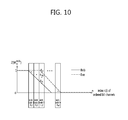
- FIG. 10 is an exemplary view illustrating the MDS codes used for gray bit channels.
- FIG. 11 is an exemplary view illustrating an error probability of the channel for the polar code with the MDS codes.
- FIG. 12 is an exemplary view illustrating an error probability of the channel for the polar code with the MDS codes and the SPN.
- FIG. 13 is an exemplary view illustrating an error probability of the channel for the polar code with the MDS codes, the SPN and the dynamic frozen bits.
- FIG. 14 is conceptual diagram illustrating the information combination.
- FIG. 15 is an exemplary view illustrating the mutual information of the channel for the existing polar code.
- FIG. 16 is an exemplary view illustrating the mutual information of the channel for the polar code with an REP code and an SPC code.
- FIG. 17 is an exemplary view a bit channel set ⁇ m
- FIG. 18 is an exemplary view REP coding.
- FIG. 19 is another exemplary view REP coding.
- FIG. 20 is an exemplary view a reusing the mutual information.
- FIG. 21 is an exemplary view illustrating the channel polarization in a 2 ⁇ 2 polar code module.
- FIG. 22 is an exemplary view illustrating the channel depolarization in a 2 ⁇ 2 polar code module.
- FIG. 23 is an exemplary view illustrating the channel depolarization in a 4 ⁇ 4 polar code module.
- FIG. 24 is another exemplary view illustrating the channel depolarization in a 4 ⁇ 4 polar code module.
- FIG. 25 is an exemplary view illustrating the channel polarization in a 4 ⁇ 4 polar code module.
- FIG. 26 is an exemplary view illustrating the channel depolarization in a 8 ⁇ 8 polar code module.
- FIG. 27 is an exemplary view illustrating the channel depolarization in a general polar code module.
- FIG. 28 is an exemplary view illustrating the mutual information of the channel for the polar code with a channel depolarization.
- FIG. 29 is an exemplary view illustrating the mutual information of the channel for the polar code with a channel depolarization, REP coding and SPC coding.
- FIG. 30 is an exemplary view illustrating the mutual information of the channel for a non-security polar code with a channel depolarization.
- FIG. 31 is an exemplary view illustrating the mutual information of the channel for a non-security polar code with a channel depolarization and REP coding.
- FIG. 32 is a flowchart illustrating information bits transmission method according to an embodiment of the present invention.
- FIG. 33 is a block diagram illustrating a security communication system according to an embodiment of the present invention.
- the present invention is described in security communication using polar codes for security at the physical layer. That is, it aims to allow information transmitted from Alice to be decoded at Bob without any error but not to be decoded at Eve, while maximizing the amount of the transmitted information.
- FIG. 2 is a conceptual diagram illustrating secure data transmission.
- FIG. 3 shows the polar code with an SPN.
- the polar code uses substitution permutation networks (SPNs).
- SPN substitution permutation networks
- An SPN is a device which is used in existing security communications based on cryptography. If even a single bit error occurs at a receiver of the SPN, every bit at an output may come to have a probability of 50%. The worst bit error probability is 50% (not 100%), and in this case bits in the output is changed randomly. That is, if even a single bit error exists in the receiver of the SPN, an error occurs in every bit in the output of the SPN. This is called an avalanche effect.
- the existing cryptography uses an SPN along with a secret key to achieve security communications. However, in the present invention, an SPN is used without a secret key only for the purpose of error amplifications. A concept regarding this is shown in FIG. 2 .
- FIG. 3 a method proposed by the present invention is shown in FIG. 3 .
- Alice uses all the bit channels good for Bob.
- the information bits 210 are encoded by the SPN (which does not use a secret key).
- the transmitted bits are sent to bit channels good for Bob, so any error does not occur in the bits that Bob receives.
- Bob uses an SPN
- errors are not amplified.
- Eve some of transmitted bits pass through bit channels bad for Eve, so errors exists in the bits that Eve receives.
- errors are amplified in an SPN output of Eve, and a bit error probability for all the output bits is close to 50%.
- bit channels may have Z and I values, each of which is 0 or not close to 1, and such bit channels are gray bit channels. To describe them mathematically, they may be classified into good bit channels (almost) not having errors, bad bit channels (almost) always having errors, and gray bit channels between the good bit channels and the bad bit channels.
- FIG. 4 is an exemplary view illustrating an error probability of the channel for the existing polar code.
- FIG. 5 is another exemplary view illustrating an error probability of the channel for the existing polar code.
- bit channel W (i) is greater than ⁇ Z L but smaller than ⁇ Z U .
- bit channel is a gray bit channel.
- W b is given as a channel between Alice and Bob
- W c is given as a channel between Alice and Eve
- W b is better than W c .
- the following six types of bit channel sets may be considered.
- Z Z Z ( W b ) ⁇ Z ( W c ) [Equation 12]
- U Z Z ( W b ) ⁇ Z ( W c ) [Equation 13]
- I Z Z ( W b ) ⁇ Z ( W c ) [Equation 14]
- J Z Z ( W b ) ⁇ Z ( W c ) [Equation 15]
- V Z Z ( W b ) ⁇ Z ( W c ) [Equation 16]
- R Z Z ( W b ) ⁇ Z ( W c ) [Equation 17]
- FIG. 4 illustrates a case where I Z is not a null set
- FIG. 5 illustrates a case where I Z is a null set.
- bit channels are arranged in a direction to which a Bhattacharyya value decreases, and such arrangement is indicated by ⁇ (i).
- bit channels for Bob If any bit channels for Bob is good bit channels, bits to be transmitted to the bit channels may be decoded at Bob without any error. That is, the bit channels are reliable channel not having errors. If any bit channels for Eve is bad bit channels, bits to be transmitted to the bit channels are not decoded at Eve. That is, the bit channels are safe channels in light of security. Thus, bit channels to which information bits 200 are transmitted should be bit channels good for Bob but bad for Eve. Based on this concept, a very simple transmission method may be given, as shown in FIG. 4 . That is, only to bit channels belonging to I Z , information can be transmitted as shown in the following:
- Frozen bits 100 are transmitted to bit channels belonging to Z Z
- Frozen bits 100 are transmitted to bit channels belonging to U Z
- Information bits 200 are transmitted to bit channels belonging to I Z
- Random bits 300 are transmitted to bit channels belonging to V Z
- Random bits 300 are transmitted to bit channels belonging to R Z.
- I Z is a null set
- FIG. 5 information cannot be transmitted at all. Therefore, as shown in FIG. 4 or FIG. 5 , the number of bit channels to which information is actually able to be transmitted may be very limited or none. To solve this problem, there are proposed new transmission methods in the following.
- the present invention uses an SPN along with a polar code, as shown in FIG. 2 .
- FIG. 6 is an exemplary view illustrating an error probability of the channel for the polar code with the SPN.
- FIG. 7 is another exemplary view illustrating an error probability of the channel for the polar code with the SPN.
- information bits 210 are transmitted to bit channels belonging to three sets I Z , V Z , and R Z .
- the information bits 210 are decoded at Alice by an SPN and interpreted at Bob by an SPN (a secret key is not used in the two SPN).
- Bit channels belonging to the three sets I Z , V Z , and R Z are all good bit channels for Bob.
- any error does not occur.
- all the bit channels belonging to I Z are bad bit channels for Eve, and even bit channels belonging to V Z are gray bit channels, which are not good bit channels.
- bits transmitted to a bit channel belonging to R Z may be decoded without any error.
- an error always occurs in bits transmitted to bit channels belonging to I Z , and an error may or may not occur in bits transmitted to bit channels belonging to V Z .
- All the transmitted bits are encoded by an SPN, and if Eve wants to decode even a single bit without an error, it is required to decode all the bits without an error because of the avalanche effect of the SPN.
- Eve is not able to decode any bit transmitted to bit channels belonging to I Z Among all the transmitted bits, so security strength of transmitted data is proportional to the number of bits transmitted through I Z , that is,
- bits transmitted to bit channels belonging to I Z act as secret keys.
- AES Advance Encryption Standard
- bits transmitted to bit channels belonging to I Z act as secret keys.
- AES Advance Encryption Standard
- which is the most typical method in existing cryptography provides three secret keys, such as 128 bit, 196 bit, and 256 bit. It is known that in most cases a 128-bit secret key is good enough for security of transmitted data.
- ⁇ 128 security of data to be transmitted using an SPN and a polar code proposed in the present invention is high enough. In contrary, if
- An existing polar code use certain bit values agreed between Alice and Bob as a frozen bit. In the case of symmetric channels, 0 may be transmitted as the frozen bit. As such, if a frozen bit is fixed, it is appropriate to see that Eve is informed of values for the frozen bit.
- FIG. 8 is an exemplary view illustrating an error probability of the channel for the polar code with the SPN and dynamic frozen bits.
- the present invention proposes a method of updating a frozen bit 110 in every polar code frame or polar code codeword. That is, as frozen bits 110 of a polar code in the current frame, information bits 210 within a past polar code frame decoded by Bob without any error are used.
- CRC may be used at Alice to transmit information bits (such past information bits could not be decoded by Eve without any error).
- Alice uses an SPN to decode both of frozen bits 110 and information bits 210 .
- Frozen bits 110 at Bob's point of view are bits which have been decoded without any error, and all information bits 210 are bit channels for Bob, so that any decoding error does not occur and thus any error amplification by an SPN does not occur.
- errors occur not only in information bits 210 , but also frozen bits 110 .
- all frozen bits 110 are transmitted to bit channels bad for Eve, errors always occur at Eve when the frozen bits 110 are decoded.
- an error probability for an output bit at Eve is close to 50%. This kind of transmission method is shown in FIG. 8 .
- MDS Maximum Distance Separable
- RS Read Solomon
- FIGS. 9A and 9B shows error probabilities of MDS codes.
- FIGS. 9A and 9B Performance of an MES code regarding a Binary Erasure Channel (BEC) is shown in FIGS. 9A and 9B .
- a left drawing shows a decoding error probability in light of log scale.
- ⁇ denotes an erasure probability of a BEC
- L denotes length of an MDS code
- L 0 denotes the number of information symbols transmitted in a single codeword of the MDS code
- ⁇ is fixed and a code rate decreases, even a decoding error probability also decreases. Meanwhile, if a code rate R is fixed and a code length L increases, the slope of a decoding error curve keeps increasing to be almost vertical. In this case, error curves corresponding different code lengths L but having the same code rate R approximately crosses the same point.
- a erasure probability corresponding to the point is represented by ⁇ TH .
- the erasure probability ⁇ TH is changed depending on a code rate. That is, by adjusting the code rate properly, it is possible to adjust a value of ⁇ TH . If the actual erasure probability ⁇ is smaller than ⁇ TH ( ⁇ TH ), a decoding error probability improves as the code length L increases.
- FIG. 10 is an exemplary view illustrating the MDS codes used for gray bit channels.
- FIG. 11 is an exemplary view illustrating an error probability of the channel for the polar code with the MDS codes.
- bit channels of a polar code are classified into a plurality of sets and an MDS code having a different code rate for each set.
- ⁇ TH of the MDS code should be greater than ⁇ b but smaller than ⁇ e . That is, an MDS code rate is adjusted to satisfy ⁇ b ⁇ TH ⁇ e and be located approximately in the middle of ⁇ b and ⁇ e .
- This concept is shown in FIG. 10 .
- the transmission method proposed in FIGS. 10 and 11 may be realized using not only an MDS code, but also any of various other channel codes.
- a turbo code, an LDPC doe, and any other channel code may be used.
- the same method may be used even when a given channel is a channel other than a binary erasure channel.
- FIG. 12 is an exemplary view illustrating an error probability of the channel for the polar code with the MDS codes and the SPN.
- FIG. 13 is an exemplary view illustrating an error probability of the channel for the polar code with the MDS codes, the SPN and the dynamic frozen bits.
- FIG. 14 is conceptual diagram illustrating the information combination.
- a method to be added to a polar coding is information combining.
- An information combining methods are repetition coding and single parity check coding.
- REF coding refers to repetition coding
- SPC coding refers to single parity check coding.
- REP coding is implemented as below.
- X 0 ⁇ 0,1 ⁇ is a binary symbol to be transmitted.
- X 1 , X 2 , . . . , X K ⁇ 0,1 ⁇ which are K number of binary symbols and satisfy the following condition, are transmitted:
- K number of symbols X 1 , X 2 , . . . , X K is transmitted to binary input channels W 1 , W 2 , . . . , W K which are independent of each other.
- REP coding is represented by rep (W).
- W ⁇ W 1 , . . . , W K ].
- SPC coding is implemented as below.
- X 0 ⁇ 0,1 ⁇ is a binary symbol to be transmitted.
- K number of symbols X 1 , X 2 , . . . , X K is transmitted to binary input channels W 1 , W 2 , . . . , W K which are independent of one another.
- SPC coding is represented by spc (W).
- W ⁇ W 1 , . . . , W K ].
- the method proposed in the present invention are able to be applied not only to a binary symmetric channel and a binary erasure channel, but also any kind of binary input channels, so that in the real world an upper bound and a lower bound may be used as below.
- an upper bound and a lower bound may be used as below.
- a lower bound may be always used for Bob and an upper bound may be always used for Eve.
- bit channels combined by the coding methods may not be independent, but dependent.
- length of a code is not too short, dependence of bit channels of a polar code is not great and it may be reduced as the length of the code increases.
- the bit channels may be used with ignoring dependence thereof.
- a good bit channel, a bad bit channel, and a gray bit channel are distinguished based on mutual information.
- FIG. 15 is an exemplary view illustrating the mutual information of the channel for the existing polar code.
- J I is not a null set if I I is a null set
- J I is a null set if I I is not a null set.
- a polar coding method with improved performance in a case where I I is not a null set and J I is a null set.
- a similar method may be proposed even in a case where I I is a null set and J I is not a null set.
- a transmission method shown in FIG. 15 may be considered. That is, in this case, information is to be transmitted only to bit channels belonging to I I , as shown in the following:
- Frozen bits 100 are transmitted to bit channels belonging to U I
- Information bits 200 are transmitted to bit channels belonging to I I
- Random bits 300 are transmitted to bit channels belonging to V I
- Random bits 300 are transmitted to bit channels belonging to R I
- FIG. 16 is an exemplary view illustrating the mutual information of the channel for the polar code with an REP code and an SPC code.
- the method proposed in the present invention uses REP coding for bit channels belonging to U I and SPC coding for bit channels belonging to V I , as shown in the following:
- Information bits 240 are transmitted using REP coding to bit channels belonging to U I
- Information bits 200 are transmitted to bit channels belonging to I I
- Information bits 250 are transmitted using SPC coding to bit channels belonging to V I
- Random bits 300 are transmitted to bit channels belonging to R I
- bit channels are arranged in a direction to which the amount of mutual information increases, and such arrangement is indicated by ⁇ (i).
- FIG. 17 is an exemplary view a bit channel set ⁇ m
- W b ⁇ k ⁇ W b (i) :i ⁇ k ⁇ is used to indicate all the bit channels of Bob belonging to a bit channel set ⁇ k .
- the method proposed in the present invention transmits one-bit information using a REP coding method to
- number of bit channels belonging to each bit channel set ⁇ k ⁇ U I , k 1, . . . , k rep .
- information bits 240 corresponding to K rep which is the number of bit channel sets may be further transmitted using the REP coding method.
- the method proposed in the present invention transmits one-bit information using a SPC coding method to
- number of bit channels belonging to each bit channel set ⁇ k ⁇ V I , k 1, . . . , K spc .
- information bits 250 corresponding to K spc which is the number of bit channel sets may be further transmitted using the SPC coding method.
- Method 1 and Method 2 proposed in the above may maximize the number of bits capable of being further transmitted by REP coding and SPC coding, but may be complicated while such optimization is done.
- this chapter there is proposed simple REP coding and SPC coding methods which are less complicated.
- FIG. 18 is an exemplary view REP coding.
- the basic idea of a proposed algorithm is select a pair of a bit channel having a small amount of mutual information and a bit channel having a great amount of mutual information and then perform REP coding and SPC coding with respect to the two bit channels.
- various pairs of bit channels belonging to a bit channel set U I may be obtained, as shown in the following algorithm.
- various pairs of bit channels belonging to a bit channel set V I may be obtained, as shown in the following algorithm.
- V I ⁇ v 1 , . . . , V B c ⁇
- Successive interference cancellation (SIC), whose complexity is low, is used for decoding a polar code.
- SIC Successive interference cancellation
- REP coding or SPC coding is solely used, complexity requiring to decode the code is very low.
- REP decoding or SPC decoding is used along with SIC.
- decoding complexity is higher than that of an existing SIC method. The complexity in this case is similar to that of a case where list decoding is used.
- SIC decoding of a polar code decoding is not performed in the order of bit channels arranged according to an amount of mutual information.
- decoding is performed when such arrangement is not made, and, if REP decoding or SPC decoding is further used, complexity may increase exponentially. For example, If REP coding is performed at a receiver, as shown in FIG. 18 , SIC decoding and REP decoding needs to be done at the receiver. However, at a worst case, SIC decoding needs to be performed considering bit pairs up to 7 at the same time, and, in this case, complexity may be high.
- the present invention proposes a new method.
- FIG. 19 is another exemplary view REP coding.
- bit channels of U I and V I in an order that they are decoded by the SIC method (In the methods 3 and 4, bit channels of U I and V I are arranged in an increasing order of the amount of information). Then, exclude Bob's bit channels whose mutual information is smaller than a certain reference value I b Th and Eve's bit channels whose mutual information is greater than a certain reference value I e Th . Then, determine a bit channel set ⁇ k which performs SPC to transmit one-bit information. Similarly, determine a bit channel set ⁇ k which performs SPC to transmit one-bit information. When determining each of the sets ⁇ k and ⁇ k , the determination is made by sequentially searching for bit channels arranged in an order that they are decoded by SIC decoding.
- V I ⁇ 1 , . . . , ⁇ B b ⁇ .
- the amount of mutual information should be increased for bit channels belonging to U, and decreased for bit channels belonging to V I .
- REP coding is used for the bit channels belonging to U I
- SPC coding is used for the bit channels belonging to V I .
- FIG. 20 is an exemplary view a reusing the mutual information.
- the more efficient method is transferring mutual information of the bit channels belonging to V I to the bit channels belonging to U I .
- mutual information of the bit channels belonging to V I may naturally decrease, while mutual information of the bit channels belonging to U I may increase.
- FIG. 21 is an exemplary view illustrating the channel polarization in a 2 ⁇ 2 polar code module.
- FIG. 22 is an exemplary view illustrating the channel depolarization in a 2 ⁇ 2 polar code module.
- FIG. 23 is an exemplary view illustrating the channel depolarization in a 4 ⁇ 4 polar code module.
- FIG. 24 is another exemplary view illustrating the channel depolarization in a 4 ⁇ 4 polar code module.
- FIG. 25 is an exemplary view illustrating the channel polarization in a 4 ⁇ 4 polar code module.
- FIG. 26 is an exemplary view illustrating the channel depolarization in a 8 ⁇ 8 polar code module.
- the present invention proposes channel depolarization.
- a simple 2 ⁇ 2 polar code module in FIG. 12 As shown in the drawing, a channel W (1) corresponding to an input bit U 1 and W (2) corresponding to U 2 are polarized. That is, the following is valid: I ( W (1) ) ⁇ I ( W ) ⁇ I ( W (2) ) [Equation 35]
- I(W) is the amount of mutual information of an original channel when a polar code is not used.
- the reason that channels are polarized is that XOR operation of the second input bit U 2 is performed with respect to the first branch X 1 . This is the basic concept of an existing polar code.
- the two bit channels come to have the same amount of mutual information, and it is called depolarization.
- This concept may be applied to a polar code which is greater in size.
- effects of depolarization may be achieved by performing XOR operation of U 4 with respect to the first, second, and third branches in a 4 ⁇ 4 polar code.
- effects of depolarization effects may be achieved by performing XOR operation of U 3 with respect to the first branch in a 4 ⁇ 4 polar code.
- FIG. 25 shows a case where XOR operation of U 3 is performed with respect to the second branch in a 4 ⁇ 4 polar code. However, in this case, polarization rather than depolarization occurs.
- FIG. 27 is an exemplary view illustrating the channel depolarization in a general polar code module.
- a branch X i is given as XOR of various input bits including U j . But, i ⁇ j.
- This objective may be achieved by depolarization which is made by performing XOR of an input bit U j with respect to a branch X i .
- This concept is shown in FIG. 27 .
- a bit channel corresponding to the input bit U i after depolarization is indicated by W + (i)
- a bit channel corresponding to the input bit U j is indicated by W ⁇ (j) .
- a receiver When a polar code transmitter performs XOR computation for depolarization, a receiver simply performs decoding by using a SIC decoder that is used for an existing polar code.
- FIG. 28 is an exemplary view illustrating the mutual information of the channel for the polar code with a channel depolarization.
- bit channel i belonging to a set U I and a bit channel j belonging to a set V I i ⁇ U I and j ⁇ V I .
- a branch X i corresponding to an input bit U i is given as XOR of various other input bits including an input bit U j . But, i ⁇ j.
- the amount of mutual information of bit channels belonging to U I needs to increase, while the amount of mutual information of bit channels belonging to V I .
- Method 7 K dcp , which is the number of pairs of bit channels to be depolarized, is maximized. In this case, decoding reliability at Bob and a security level at Eve should always satisfy a preset standard. Due to depolarization, gray bit channels belonging to U I are converted into reliable channels, and gray bit channels belonging to V I are converted into channels of sustainable security. Method 7 is similar to Method 1 and Method 2 in that the number of bits to be further transmitted is maximized. However, Method 7 is distinguishable in that mutual information is transferred to a bit channel in less need of mutual information to a bit channel in more need of mutual information without incurring any loss of the mutual information.
- Method 8 there may be proposed a method based on depolarization with reduced complexity, which is Method 8.
- Method 8 is similar to Method 3 and 4 in that complexity is reduced.
- V I ⁇ v 1 , . . . v B e ⁇
- FIG. 29 is an exemplary view illustrating the mutual information of the channel for the polar code with a channel depolarization, REP coding and SPC coding.
- Step 2a REP coding
- Step 2b SPC coding
- the present invention has so far proposed various methods to improve performance of a security communication polar code.
- the proposed methods may be used to improve performance of a non-security communication polar code.
- a transmitter is Alice
- a receiver is Bob
- Eve does not exist.
- FIG. 30 is an exemplary view illustrating the mutual information of the channel for a non-security polar code with a channel depolarization.
- FIG. 31 is an exemplary view illustrating the mutual information of the channel for a non-security polar code with a channel depolarization and REP coding.
- performance of a non-security communication polar code may be improved using depolarization 400 proposed in this chapter.
- the basic concept is that mutual information of the rightmost bit channels are extremely close to 0 so that the mutual information may be greater than a given standard ⁇ I U even when the mutual information is somewhat reduced.
- a value of mutual information of channel bits belonging to U I is now smaller than the given standard ⁇ I U but may increase to become greater than ⁇ I U if the amount of mutual information is increased by depolarization 400 .
- FIG. 32 is a flowchart illustrating information bits transmission method according to an embodiment of the present invention.
- a wireless communication system generate an output bit sequence by applying a polar code generator matrix to an input bit sequence, as discloses in embodiments of FIG. 3 to FIG. 16 (step S 510 ). More specifically, the input bit sequence includes frozen bits, first information bits, second information bits, third information bits and random bits.
- the first information bits correspond to gray bit channels for Bob and bad bit channels for Eve.
- the third information bits correspond to good bit channels for Bob and gray bit channels for Eve.
- the frozen bits correspond to bad bit channels for Bob and bad bit channels for Eve.
- the frozen bits is predetermined value updated in every frame of the output bit sequence.
- the random bits correspond to good bit channels for Bob and good bit channels for Eve.
- the good bit channels, the gray bit channels and bad bit channels are determined based on mutual information obtained from relationship between the input bit sequence and the output bit sequence, according to the Definition 2.
- the output bit sequence corresponded with the first information bits is encoded by using REP coding.
- the output bit sequence corresponded with the third information bits is encoded by using SPC coding.
- FIG. 33 is a block diagram illustrating a security communication system according to an embodiment of the present invention.
- the communication device 600 includes a processor 610 , a memory 620 and transceiver 630 .
- the memory 620 is connected to the processor 610 , and stores various information for driving the processor 610 .
- the transceiver 630 is connected to the processor 610 , and sends and receives signals.
- the processor 610 implements suggested functions, procedures, and/or methods. In the above embodiment, the operation of the wireless communication system of FIG. 32 may be implemented by the processor 610 .
- the processor 610 may include Application-Specific Integrated Circuits (ASICs), other chipsets, logic circuits, and/or data processors.
- the memory 620 may include Read-Only Memory (ROM), Random Access Memory (RAM), flash memory, memory cards, storage media and/or other storage devices.
- the transceiver 630 may include a baseband circuit for processing a signal.
- the above-described scheme may be implemented using a module (i.e., process or function, etc) which performs the above function.
- the module may be stored in the memory 620 and executed by the processor 610 .
- the memory 620 may be disposed to the processor 610 internally or externally and connected to the processor 610 using a variety of well-known means.
- a polar code is used for security communications wherein performance thereof is improved so that a transmission rate may be better than that of an existing polar code. More specifically, with a security level at Eve being guaranteed to be at or above a given standard, it is possible to improve a transmission rate by polar coding. Reliability and security are defined in light of both of a decoding error probability and the amount of mutual information, and a polar code method improved based on the definition has been proposed.
- an SPN or any other channel code is used. Due to error amplification by an SPN, this proposed method may lead to a transmission rate improved more than an existing method. Or, by using various channel codes (typically, an MDS code) along with a polar code, it is possible to improve a transmission rate of security data. In addition, by dynamically allocating frozen bits of a polar code, it is possible to enhance security.
- depolarization or REP coding proposed in the present invention for security communication is applied to an existing non-security polar code, it is possible to improve a transmission rate while maintaining reliability at or above a certain standard.
Landscapes
- Engineering & Computer Science (AREA)
- Computer Networks & Wireless Communication (AREA)
- Signal Processing (AREA)
- Computer Security & Cryptography (AREA)
- Quality & Reliability (AREA)
- Computer Hardware Design (AREA)
- Computing Systems (AREA)
- General Engineering & Computer Science (AREA)
- Detection And Prevention Of Errors In Transmission (AREA)
- Error Detection And Correction (AREA)
Abstract
Description
W n(y 1 n |x 1 n)=πi=1 n W(y i |x i) [Equation 1]
{tilde over (W)} n(y 1 n |v 1 n)=W n(y 1 n |v 1 n G n) [Equation 2]
Z(W (i))=Σy


In this case, the following property is valid:
max


Z Z=
U Z=
I Z=
J Z=
V Z=
R Z=
X 0 =X 1 = . . . =X K [Equation 18]

Y=[Y 1 ,Y 2 , . . . ,Y K ]=[W 1(X 1),W 2(X 2), . . . ,W K(X K)] [Equation 19]
I(
I(
X 0 ⊕X 1 ⊕X 2 ⊕ . . . ⊕X K=0 [Equation 22]
Y=[Y 1 ,Y 2 , . . . ,Y K ]=[W 1(X 1),W 2(X 2), . . . ,W K(X K)] [Equation 23]
I(
I(
Z I=
U I=
I I=
J I=
V I=
R I=
| ψrep ← 0 |
| For p = 1: 1: Bb |
| For q = Bb: − 1: p + 1 |
If uq ∉ ψrep AND I( |
| I( |
| ψrep ← ψrep∪{uq} |
| break |
| End |
| End |
| End |
| ψspc ← 0 |
| For p = 1: 1: Be |
| For q = Be: − 1: p + 1 |
| If v ∉ ψspc AND I( |
| I( |
| ψspc ← ψspc ∪{vq} |
| break |
| End |
| End |
| End |
| Ωk ← 0, ∀k |
| Set k=1 |
| For p = 1: 1: Bb |
If I(Wb up) ≥ Ib Th AND I(We up) ≤ Ie Th AND I( |
| δ1 L |
| Ωk ← Ωk ∪ (up} |
| If I( |
| k ← k + 1 |
| End |
| End |
| End |
| Θk ← 0, ∀k |
| Set k=1 |
| For p = 1: 1: Be |
| If I(Wb vp) ≥ Ib Th AND I(We vp) ≤ Ic Th AND I( |
| δ1 U |
| Θk ← Θk ∪ (vp} |
| If I( |
| k ← k + 1 |
| End |
| End |
| End |
I(W (1))≤I(W)≤I(W (2)) [Equation 35]
I(W (1))=I(W)=I(W (2)) [Equation 36]

(W + (i) ,W − (j))=
W + (i)=
W − (j)=
I(W + (i))≥I(W (i)) and I(W − (j))≤I(W (j)) [Equation 40]
(W b+ (i) ,W b− (j))=

W b+ (i)=
W b− (i)=
(W c+ (i) ,W c− (j))=
W c+ (i)=
W c− (i)=
I(W b+ (i))≥I(W b (i)) and I(W b− (j))≤I(W b (j)) [Equation 47]
I(W c+ (i))≥I(W c (i)) and I(W c− (j))≤I(W c (j)) [Equation 48]
I(
I(
I(
I(
i k ∈U I ,k=1,2, . . . ,K dcp
j k ∈V I ,k=1,2, . . . ,K dcp
(i k
| ψdcp ← 0 |
| For p = 1: 1: Bb |
| For q = Be: − 1: 1 |
If v ∉ ψdcp AND I( |
| I( |
| ψdcp ← ψdcp ∪ (vq} |
| break |
| End |
| End |
| End |
Claims (18)
Priority Applications (1)
| Application Number | Priority Date | Filing Date | Title |
|---|---|---|---|
| US14/959,828 US9954645B2 (en) | 2014-12-05 | 2015-12-04 | Method and device for providing secure transmission based on polar code |
Applications Claiming Priority (2)
| Application Number | Priority Date | Filing Date | Title |
|---|---|---|---|
| US201462087799P | 2014-12-05 | 2014-12-05 | |
| US14/959,828 US9954645B2 (en) | 2014-12-05 | 2015-12-04 | Method and device for providing secure transmission based on polar code |
Publications (2)
| Publication Number | Publication Date |
|---|---|
| US20160164629A1 US20160164629A1 (en) | 2016-06-09 |
| US9954645B2 true US9954645B2 (en) | 2018-04-24 |
Family
ID=56095294
Family Applications (1)
| Application Number | Title | Priority Date | Filing Date |
|---|---|---|---|
| US14/959,828 Active 2036-05-19 US9954645B2 (en) | 2014-12-05 | 2015-12-04 | Method and device for providing secure transmission based on polar code |
Country Status (1)
| Country | Link |
|---|---|
| US (1) | US9954645B2 (en) |
Cited By (4)
| Publication number | Priority date | Publication date | Assignee | Title |
|---|---|---|---|---|
| CN110401455A (en) * | 2019-06-03 | 2019-11-01 | 中国地质大学(武汉) | Coding and decoding method of polarization channel in wireless measurement-while-drilling system based on gray code structure |
| CN110611551A (en) * | 2019-09-27 | 2019-12-24 | 北京理工大学 | A Control Channel Coding and Blind Detection Method Based on Nested Polar Codes |
| US10523368B2 (en) * | 2015-12-18 | 2019-12-31 | Huawei Technologies Co., Ltd. | Polar code processing method and communications device |
| US11108411B2 (en) * | 2017-04-18 | 2021-08-31 | Huawei Technologies Duesseldorf Gmbh | Polar coding with dynamic frozen bits |
Families Citing this family (48)
| Publication number | Priority date | Publication date | Assignee | Title |
|---|---|---|---|---|
| US10784901B2 (en) | 2015-11-12 | 2020-09-22 | Qualcomm Incorporated | Puncturing for structured low density parity check (LDPC) codes |
| US10305514B2 (en) * | 2016-02-04 | 2019-05-28 | The Royal Institution For The Advancement Of Learning/Mcgill University | Multi-mode unrolled polar decoders |
| WO2017156792A1 (en) | 2016-03-18 | 2017-09-21 | Qualcomm Incorporated | Transmission of new data in a hybrid automatic repeat request (harq) retransmission with polar coded transmissions |
| US11043966B2 (en) | 2016-05-11 | 2021-06-22 | Qualcomm Incorporated | Methods and apparatus for efficiently generating multiple lifted low-density parity-check (LDPC) codes |
| US10454499B2 (en) | 2016-05-12 | 2019-10-22 | Qualcomm Incorporated | Enhanced puncturing and low-density parity-check (LDPC) code structure |
| US9917675B2 (en) | 2016-06-01 | 2018-03-13 | Qualcomm Incorporated | Enhanced polar code constructions by strategic placement of CRC bits |
| US10313057B2 (en) | 2016-06-01 | 2019-06-04 | Qualcomm Incorporated | Error detection in wireless communications using sectional redundancy check information |
| US10469104B2 (en) | 2016-06-14 | 2019-11-05 | Qualcomm Incorporated | Methods and apparatus for compactly describing lifted low-density parity-check (LDPC) codes |
| CN109478959B (en) * | 2016-07-27 | 2021-08-06 | 高通股份有限公司 | Design of Hybrid Automatic Repeat Request (HARQ) Feedback Bits for Polar Codes |
| US10461887B2 (en) * | 2016-08-10 | 2019-10-29 | Huawei Technologies Co., Ltd. | Methods and systems for blind detection with polar code |
| US11356202B2 (en) | 2016-09-28 | 2022-06-07 | Idac Holdings, Inc. | Efficient broadcast channel in beamformed systems for NR |
| CN106506009B (en) * | 2016-10-31 | 2020-09-25 | 中国石油大学(华东) | Decoding method of polarization code |
| US10069510B2 (en) | 2016-11-21 | 2018-09-04 | Samsung Electronics Co., Ltd. | System and method for maximal code polarization |
| WO2018101805A1 (en) * | 2016-12-02 | 2018-06-07 | 엘지전자 주식회사 | Method for performing decoding by terminal and terminal for performing same method |
| WO2018119883A1 (en) | 2016-12-29 | 2018-07-05 | Qualcomm Incorporated | Nested structure for polar code construction using density evolution |
| WO2018126378A1 (en) * | 2017-01-05 | 2018-07-12 | Qualcomm Incorporated | Wireless communication with polar codes using a mask sequence for frozen bits |
| US10348328B2 (en) | 2017-01-06 | 2019-07-09 | At&T Intellectual Property I, L.P. | Reducing control channel overhead using polar codes |
| CN108288969B (en) * | 2017-01-07 | 2021-12-21 | 华为技术有限公司 | Method and apparatus for data encoding and decoding |
| US10277252B2 (en) * | 2017-01-09 | 2019-04-30 | At&T Intellectual Property I, L.P. | Encoding data with polar codes for control channels |
| WO2018129734A1 (en) | 2017-01-16 | 2018-07-19 | Qualcomm Incorporated | Dynamic frozen polar codes |
| KR102635532B1 (en) * | 2017-02-03 | 2024-02-08 | 삼성전자주식회사 | Method and apparatus for transmitting and receiving a signal using polar coding in a communication system |
| CN114598424B (en) * | 2017-02-15 | 2025-04-08 | 中兴通讯股份有限公司 | Data processing method and device |
| CN109937547B (en) * | 2017-02-21 | 2021-08-27 | 上海朗帛通信技术有限公司 | Method and device for channel coding in base station and user equipment |
| CN108574560B (en) * | 2017-03-13 | 2020-07-24 | 华为技术有限公司 | Encoding method, decoding method, device and equipment |
| CN108574494B (en) * | 2017-03-13 | 2020-08-25 | 华为技术有限公司 | Coding and decoding method and device |
| WO2018165843A1 (en) | 2017-03-14 | 2018-09-20 | Qualcomm Incorporated | Mutual information based polar code construction |
| WO2018166256A1 (en) * | 2017-03-14 | 2018-09-20 | Qualcomm Incorporated | Mutual information based polar code construction |
| CN109412608B (en) | 2017-03-24 | 2019-11-05 | 华为技术有限公司 | Polar coding method and code device, interpretation method and code translator |
| US11632193B2 (en) * | 2017-04-20 | 2023-04-18 | Qualcomm Incorporated | Dynamic frozen bits and error detection for polar codes |
| CN110690941B (en) * | 2017-04-28 | 2020-07-24 | 华为技术有限公司 | Polar code rate matching method and device |
| CN108809500B (en) | 2017-05-05 | 2020-12-22 | 华为技术有限公司 | Coding method, apparatus and equipment |
| US10312939B2 (en) | 2017-06-10 | 2019-06-04 | Qualcomm Incorporated | Communication techniques involving pairwise orthogonality of adjacent rows in LPDC code |
| US12476733B2 (en) | 2017-06-19 | 2025-11-18 | Qualcomm Incorporated | Communication techniques with self-decodable redundancy versions (RVs) using systematic codes |
| WO2019018120A1 (en) | 2017-07-07 | 2019-01-24 | Qualcomm Incorporated | Communication techniques applying low-density parity-check code base graph selection |
| CN108667568B (en) * | 2017-07-28 | 2019-11-19 | 华为技术有限公司 | A kind of Polar code encoding method and device |
| CN109391343B (en) | 2017-08-02 | 2021-09-03 | 华为技术有限公司 | Polar code encoding method and device |
| CN109391345B (en) | 2017-08-04 | 2022-10-11 | 华为技术有限公司 | Polar code encoding method and device |
| US10425190B2 (en) * | 2017-09-08 | 2019-09-24 | Huawei Technologies Co., Ltd. | Channel encoding method and apparatus in wireless communications |
| CN108365921B (en) * | 2017-09-30 | 2019-03-26 | 华为技术有限公司 | Polar encoding method and encoding device, decoding method and decoding device |
| TWI665878B (en) * | 2018-02-09 | 2019-07-11 | 旺宏電子股份有限公司 | Polar code generating method, and electronic device and non-transitory computer-readable storage medium therefor |
| US10608669B2 (en) | 2018-02-16 | 2020-03-31 | At&T Intellectual Property I, L.P. | Performance of data channel using polar codes for a wireless communication system |
| CN109951240B (en) * | 2019-03-25 | 2020-05-26 | 北京航空航天大学 | Physical layer secure communication transmission method based on polar code wiretap channel |
| CN110266321B (en) * | 2019-06-04 | 2020-12-18 | 北京大学 | A new polar code-based communication method and system |
| US11271596B2 (en) * | 2019-09-27 | 2022-03-08 | Samsung Electronics Co., Ltd | System and method for identifying and decoding Reed-Muller codes in polar codes |
| CN111464265B (en) * | 2020-04-03 | 2021-07-13 | 北京邮电大学 | An Information Transmission Method Based on Encrypted Polar Coding in Degraded Eavesdropping Channel |
| CN114553400B (en) * | 2020-11-26 | 2023-12-26 | 国网新疆电力有限公司信息通信公司 | Polar code-based long-distance quantum key distribution method, system and storage medium for power systems |
| US12052604B2 (en) * | 2021-08-03 | 2024-07-30 | Qualcomm Incorporated | Selecting transport blocks for network coding |
| CN116073943A (en) * | 2021-10-30 | 2023-05-05 | 华为技术有限公司 | A coding method, a decoding method and a communication device |
Citations (3)
| Publication number | Priority date | Publication date | Assignee | Title |
|---|---|---|---|---|
| US20130216221A1 (en) * | 2012-02-20 | 2013-08-22 | Tyco Electronics Subsea Communications Llc | System and Method Including Modified Bit-Interleaved Coded Modulation |
| US20160013810A1 (en) * | 2014-07-10 | 2016-01-14 | The Royal Institution For The Advancement Of Learning / Mcgill University | Flexible polar encoders and decoders |
| US20160365977A1 (en) * | 2014-02-24 | 2016-12-15 | Qatar Foundation For Education, Science And Community Development | Apparatus and method for secure communication on a compound channel |
-
2015
- 2015-12-04 US US14/959,828 patent/US9954645B2/en active Active
Patent Citations (3)
| Publication number | Priority date | Publication date | Assignee | Title |
|---|---|---|---|---|
| US20130216221A1 (en) * | 2012-02-20 | 2013-08-22 | Tyco Electronics Subsea Communications Llc | System and Method Including Modified Bit-Interleaved Coded Modulation |
| US20160365977A1 (en) * | 2014-02-24 | 2016-12-15 | Qatar Foundation For Education, Science And Community Development | Apparatus and method for secure communication on a compound channel |
| US20160013810A1 (en) * | 2014-07-10 | 2016-01-14 | The Royal Institution For The Advancement Of Learning / Mcgill University | Flexible polar encoders and decoders |
Non-Patent Citations (1)
| Title |
|---|
| Mandavifar et al in "Achieving the Secrecy Capacity of Wiretap Channels Using Polar Codes" (IEEE Trans. on Inf. Theory, vol. 57, pp. 6428-6443); Jun. 2010. * |
Cited By (5)
| Publication number | Priority date | Publication date | Assignee | Title |
|---|---|---|---|---|
| US10523368B2 (en) * | 2015-12-18 | 2019-12-31 | Huawei Technologies Co., Ltd. | Polar code processing method and communications device |
| US11108411B2 (en) * | 2017-04-18 | 2021-08-31 | Huawei Technologies Duesseldorf Gmbh | Polar coding with dynamic frozen bits |
| CN110401455A (en) * | 2019-06-03 | 2019-11-01 | 中国地质大学(武汉) | Coding and decoding method of polarization channel in wireless measurement-while-drilling system based on gray code structure |
| CN110401455B (en) * | 2019-06-03 | 2021-04-30 | 中国地质大学(武汉) | Polarization Channel Encoding and Decoding Method for Wireless Measurement While Drilling System Based on Gray Code Structure |
| CN110611551A (en) * | 2019-09-27 | 2019-12-24 | 北京理工大学 | A Control Channel Coding and Blind Detection Method Based on Nested Polar Codes |
Also Published As
| Publication number | Publication date |
|---|---|
| US20160164629A1 (en) | 2016-06-09 |
Similar Documents
| Publication | Publication Date | Title |
|---|---|---|
| US9954645B2 (en) | Method and device for providing secure transmission based on polar code | |
| US10231121B2 (en) | Security communication using polar code scheme | |
| US8781125B2 (en) | Systems and methods of secure coding for physical layer communication channels | |
| US10581462B2 (en) | Signature-enabled polar encoder and decoder | |
| US10311243B2 (en) | Method and apparatus for secure communication | |
| Klinc et al. | LDPC for physical layer security | |
| US20130326630A1 (en) | Pre-processor for physical layer security | |
| Etesami et al. | LDPC code construction for wireless physical-layer key reconciliation | |
| Che et al. | Reliable, deniable and hidable communication | |
| KR101280142B1 (en) | Secure Communication Using Non-systematic Error Control Codes | |
| US10432360B2 (en) | Method and device for performing HARQ based on polar codes | |
| Cui et al. | Polar codes with the unequal error protection property | |
| Besser et al. | Flexible design of finite blocklength wiretap codes by autoencoders | |
| CN106789027B (en) | Method and system for confirming consistency of secret key by using unconditional secure transmission | |
| US20140153723A1 (en) | System for providing physical layer security | |
| Zheng et al. | Experimental demonstration of 9.6 Gbit/s polar coded infrared light communication system | |
| CN117768111A (en) | A QKD post-processing method and system based on code rate adaptive polar code | |
| Choo et al. | Achievable rates for lattice coded Gaussian wiretap channels | |
| Asano et al. | High-quality secure wireless transmission scheme using polar codes and radio-wave encrypted modulation | |
| KR101356104B1 (en) | Method of calculating equivocation of a wiretapper, and method and system of transmitting secret message | |
| Latif et al. | ARQ-based secret key sharing | |
| Ito et al. | A chaos MIMO-based polar concatenation code for secure channel coding | |
| US9401806B2 (en) | Data security method used in a wireless communication system | |
| Погасій et al. | Development of Niederriter crypto-code design models on LDPC-codes | |
| CN101854242B (en) | Method of Constructing Wire-tap Channel I Based on Feedback and LDPC Codes |
Legal Events
| Date | Code | Title | Description |
|---|---|---|---|
| AS | Assignment |
Owner name: LG ELECTRONICS INC., KOREA, REPUBLIC OF Free format text: ASSIGNMENT OF ASSIGNORS INTEREST;ASSIGNORS:AHN, JOONKUI;KIM, ILMIN;KIM, BYOUNGHOON;REEL/FRAME:037225/0095 Effective date: 20151207 |
|
| STCF | Information on status: patent grant |
Free format text: PATENTED CASE |
|
| MAFP | Maintenance fee payment |
Free format text: PAYMENT OF MAINTENANCE FEE, 4TH YEAR, LARGE ENTITY (ORIGINAL EVENT CODE: M1551); ENTITY STATUS OF PATENT OWNER: LARGE ENTITY Year of fee payment: 4 |
|
| MAFP | Maintenance fee payment |
Free format text: PAYMENT OF MAINTENANCE FEE, 8TH YEAR, LARGE ENTITY (ORIGINAL EVENT CODE: M1552); ENTITY STATUS OF PATENT OWNER: LARGE ENTITY Year of fee payment: 8 |