US9935132B2 - Pixel structure - Google Patents

Pixel structure Download PDF

Info

Publication number
US9935132B2
US9935132B2 US15/183,811 US201615183811A US9935132B2 US 9935132 B2 US9935132 B2 US 9935132B2 US 201615183811 A US201615183811 A US 201615183811A US 9935132 B2 US9935132 B2 US 9935132B2
Authority
US
United States
Prior art keywords
layer
transparent conductive
patterned transparent
color filter
disposed
Prior art date
Legal status (The legal status is an assumption and is not a legal conclusion. Google has not performed a legal analysis and makes no representation as to the accuracy of the status listed.)
Active
Application number
US15/183,811
Other versions
US20170069663A1 (en
Inventor
Ai-Ju Tsai
Chang-Hung Lee
Ming-Hsien Lee
Chen-Kang Li
Current Assignee (The listed assignees may be inaccurate. Google has not performed a legal analysis and makes no representation or warranty as to the accuracy of the list.)
AUO Corp
Original Assignee
AU Optronics Corp
Priority date (The priority date is an assumption and is not a legal conclusion. Google has not performed a legal analysis and makes no representation as to the accuracy of the date listed.)
Filing date
Publication date
Application filed by AU Optronics Corp filed Critical AU Optronics Corp
Assigned to AU OPTRONICS CORPORATION reassignment AU OPTRONICS CORPORATION ASSIGNMENT OF ASSIGNORS INTEREST (SEE DOCUMENT FOR DETAILS). Assignors: LI, CHEN-KANG, LEE, CHANG-HUNG, LEE, MING-HSIEN, TSAI, AI-JU
Publication of US20170069663A1 publication Critical patent/US20170069663A1/en
Application granted granted Critical
Publication of US9935132B2 publication Critical patent/US9935132B2/en
Active legal-status Critical Current
Anticipated expiration legal-status Critical

Links

Images

Classifications

    • HELECTRICITY
    • H10SEMICONDUCTOR DEVICES; ELECTRIC SOLID-STATE DEVICES NOT OTHERWISE PROVIDED FOR
    • H10FINORGANIC SEMICONDUCTOR DEVICES SENSITIVE TO INFRARED RADIATION, LIGHT, ELECTROMAGNETIC RADIATION OF SHORTER WAVELENGTH OR CORPUSCULAR RADIATION
    • H10F39/00Integrated devices, or assemblies of multiple devices, comprising at least one element covered by group H10F30/00, e.g. radiation detectors comprising photodiode arrays
    • H10F39/80Constructional details of image sensors
    • H10F39/802Geometry or disposition of elements in pixels, e.g. address-lines or gate electrodes
    • H01L27/124
    • GPHYSICS
    • G02OPTICS
    • G02FOPTICAL DEVICES OR ARRANGEMENTS FOR THE CONTROL OF LIGHT BY MODIFICATION OF THE OPTICAL PROPERTIES OF THE MEDIA OF THE ELEMENTS INVOLVED THEREIN; NON-LINEAR OPTICS; FREQUENCY-CHANGING OF LIGHT; OPTICAL LOGIC ELEMENTS; OPTICAL ANALOGUE/DIGITAL CONVERTERS
    • G02F1/00Devices or arrangements for the control of the intensity, colour, phase, polarisation or direction of light arriving from an independent light source, e.g. switching, gating or modulating; Non-linear optics
    • G02F1/01Devices or arrangements for the control of the intensity, colour, phase, polarisation or direction of light arriving from an independent light source, e.g. switching, gating or modulating; Non-linear optics for the control of the intensity, phase, polarisation or colour 
    • G02F1/13Devices or arrangements for the control of the intensity, colour, phase, polarisation or direction of light arriving from an independent light source, e.g. switching, gating or modulating; Non-linear optics for the control of the intensity, phase, polarisation or colour  based on liquid crystals, e.g. single liquid crystal display cells
    • G02F1/133Constructional arrangements; Operation of liquid crystal cells; Circuit arrangements
    • G02F1/136Liquid crystal cells structurally associated with a semi-conducting layer or substrate, e.g. cells forming part of an integrated circuit
    • G02F1/1362Active matrix addressed cells
    • G02F1/136227Through-hole connection of the pixel electrode to the active element through an insulation layer
    • H01L27/1222
    • H01L29/41733
    • H01L29/6675
    • H01L29/78672
    • HELECTRICITY
    • H10SEMICONDUCTOR DEVICES; ELECTRIC SOLID-STATE DEVICES NOT OTHERWISE PROVIDED FOR
    • H10DINORGANIC ELECTRIC SEMICONDUCTOR DEVICES
    • H10D30/00Field-effect transistors [FET]
    • H10D30/01Manufacture or treatment
    • H10D30/021Manufacture or treatment of FETs having insulated gates [IGFET]
    • H10D30/031Manufacture or treatment of FETs having insulated gates [IGFET] of thin-film transistors [TFT]
    • H10D30/0321Manufacture or treatment of FETs having insulated gates [IGFET] of thin-film transistors [TFT] comprising silicon, e.g. amorphous silicon or polysilicon
    • HELECTRICITY
    • H10SEMICONDUCTOR DEVICES; ELECTRIC SOLID-STATE DEVICES NOT OTHERWISE PROVIDED FOR
    • H10DINORGANIC ELECTRIC SEMICONDUCTOR DEVICES
    • H10D30/00Field-effect transistors [FET]
    • H10D30/60Insulated-gate field-effect transistors [IGFET]
    • H10D30/67Thin-film transistors [TFT]
    • H10D30/6704Thin-film transistors [TFT] having supplementary regions or layers in the thin films or in the insulated bulk substrates for controlling properties of the device
    • H10D30/6723Thin-film transistors [TFT] having supplementary regions or layers in the thin films or in the insulated bulk substrates for controlling properties of the device having light shields
    • HELECTRICITY
    • H10SEMICONDUCTOR DEVICES; ELECTRIC SOLID-STATE DEVICES NOT OTHERWISE PROVIDED FOR
    • H10DINORGANIC ELECTRIC SEMICONDUCTOR DEVICES
    • H10D30/00Field-effect transistors [FET]
    • H10D30/60Insulated-gate field-effect transistors [IGFET]
    • H10D30/67Thin-film transistors [TFT]
    • H10D30/6729Thin-film transistors [TFT] characterised by the electrodes
    • HELECTRICITY
    • H10SEMICONDUCTOR DEVICES; ELECTRIC SOLID-STATE DEVICES NOT OTHERWISE PROVIDED FOR
    • H10DINORGANIC ELECTRIC SEMICONDUCTOR DEVICES
    • H10D30/00Field-effect transistors [FET]
    • H10D30/60Insulated-gate field-effect transistors [IGFET]
    • H10D30/67Thin-film transistors [TFT]
    • H10D30/6729Thin-film transistors [TFT] characterised by the electrodes
    • H10D30/673Thin-film transistors [TFT] characterised by the electrodes characterised by the shapes, relative sizes or dispositions of the gate electrodes
    • H10D30/6731Top-gate only TFTs
    • HELECTRICITY
    • H10SEMICONDUCTOR DEVICES; ELECTRIC SOLID-STATE DEVICES NOT OTHERWISE PROVIDED FOR
    • H10DINORGANIC ELECTRIC SEMICONDUCTOR DEVICES
    • H10D30/00Field-effect transistors [FET]
    • H10D30/60Insulated-gate field-effect transistors [IGFET]
    • H10D30/67Thin-film transistors [TFT]
    • H10D30/674Thin-film transistors [TFT] characterised by the active materials
    • H10D30/6741Group IV materials, e.g. germanium or silicon carbide
    • H10D30/6743Silicon
    • H10D30/6745Polycrystalline or microcrystalline silicon
    • HELECTRICITY
    • H10SEMICONDUCTOR DEVICES; ELECTRIC SOLID-STATE DEVICES NOT OTHERWISE PROVIDED FOR
    • H10DINORGANIC ELECTRIC SEMICONDUCTOR DEVICES
    • H10D86/00Integrated devices formed in or on insulating or conducting substrates, e.g. formed in silicon-on-insulator [SOI] substrates or on stainless steel or glass substrates
    • H10D86/40Integrated devices formed in or on insulating or conducting substrates, e.g. formed in silicon-on-insulator [SOI] substrates or on stainless steel or glass substrates characterised by multiple TFTs
    • H10D86/421Integrated devices formed in or on insulating or conducting substrates, e.g. formed in silicon-on-insulator [SOI] substrates or on stainless steel or glass substrates characterised by multiple TFTs having a particular composition, shape or crystalline structure of the active layer
    • HELECTRICITY
    • H10SEMICONDUCTOR DEVICES; ELECTRIC SOLID-STATE DEVICES NOT OTHERWISE PROVIDED FOR
    • H10DINORGANIC ELECTRIC SEMICONDUCTOR DEVICES
    • H10D86/00Integrated devices formed in or on insulating or conducting substrates, e.g. formed in silicon-on-insulator [SOI] substrates or on stainless steel or glass substrates
    • H10D86/40Integrated devices formed in or on insulating or conducting substrates, e.g. formed in silicon-on-insulator [SOI] substrates or on stainless steel or glass substrates characterised by multiple TFTs
    • H10D86/441Interconnections, e.g. scanning lines
    • HELECTRICITY
    • H10SEMICONDUCTOR DEVICES; ELECTRIC SOLID-STATE DEVICES NOT OTHERWISE PROVIDED FOR
    • H10DINORGANIC ELECTRIC SEMICONDUCTOR DEVICES
    • H10D86/00Integrated devices formed in or on insulating or conducting substrates, e.g. formed in silicon-on-insulator [SOI] substrates or on stainless steel or glass substrates
    • H10D86/40Integrated devices formed in or on insulating or conducting substrates, e.g. formed in silicon-on-insulator [SOI] substrates or on stainless steel or glass substrates characterised by multiple TFTs
    • H10D86/60Integrated devices formed in or on insulating or conducting substrates, e.g. formed in silicon-on-insulator [SOI] substrates or on stainless steel or glass substrates characterised by multiple TFTs wherein the TFTs are in active matrices
    • HELECTRICITY
    • H10SEMICONDUCTOR DEVICES; ELECTRIC SOLID-STATE DEVICES NOT OTHERWISE PROVIDED FOR
    • H10FINORGANIC SEMICONDUCTOR DEVICES SENSITIVE TO INFRARED RADIATION, LIGHT, ELECTROMAGNETIC RADIATION OF SHORTER WAVELENGTH OR CORPUSCULAR RADIATION
    • H10F39/00Integrated devices, or assemblies of multiple devices, comprising at least one element covered by group H10F30/00, e.g. radiation detectors comprising photodiode arrays
    • H10F39/80Constructional details of image sensors
    • H10F39/811Interconnections
    • GPHYSICS
    • G02OPTICS
    • G02FOPTICAL DEVICES OR ARRANGEMENTS FOR THE CONTROL OF LIGHT BY MODIFICATION OF THE OPTICAL PROPERTIES OF THE MEDIA OF THE ELEMENTS INVOLVED THEREIN; NON-LINEAR OPTICS; FREQUENCY-CHANGING OF LIGHT; OPTICAL LOGIC ELEMENTS; OPTICAL ANALOGUE/DIGITAL CONVERTERS
    • G02F1/00Devices or arrangements for the control of the intensity, colour, phase, polarisation or direction of light arriving from an independent light source, e.g. switching, gating or modulating; Non-linear optics
    • G02F1/01Devices or arrangements for the control of the intensity, colour, phase, polarisation or direction of light arriving from an independent light source, e.g. switching, gating or modulating; Non-linear optics for the control of the intensity, phase, polarisation or colour 
    • G02F1/13Devices or arrangements for the control of the intensity, colour, phase, polarisation or direction of light arriving from an independent light source, e.g. switching, gating or modulating; Non-linear optics for the control of the intensity, phase, polarisation or colour  based on liquid crystals, e.g. single liquid crystal display cells
    • G02F1/133Constructional arrangements; Operation of liquid crystal cells; Circuit arrangements
    • G02F1/136Liquid crystal cells structurally associated with a semi-conducting layer or substrate, e.g. cells forming part of an integrated circuit
    • G02F1/1362Active matrix addressed cells
    • G02F1/136222Colour filters incorporated in the active matrix substrate
    • G02F2001/136222

Definitions

  • the present invention generally relates to a pixel structure, in particular, to a pixel structure that a contact pattern layer is shared between two adjacent sub-pixels.
  • LTPS low temperature poly-silicon
  • the display with high definition has higher pixel density.
  • the size of each sub-pixel is also reduced relatively. Since the size of sub-pixel is smaller, the process difficulty of the contact window between the pixel electrode and the drain electrode in the sub-pixel is also increased.
  • the contact window cannot be formed, such that the pixel electrode cannot electrically connect to the drain electrode successfully that causing the liquid crystal molecules cannot be driven by the pixel electrode correctly. In this situation, the sub-pixel will not display normally, thus the display quality is deteriorated.
  • the invention provides a pixel structure to enhance the display quality.
  • a pixel structure disposed on a substrate includes a plurality of scan lines, a plurality of data lines, and a plurality of sub-pixels.
  • the sub-pixel includes a plurality of switch devices, a contact pattern layer, a plurality of color filter pattern layers, and a plurality of pixel electrodes.
  • Each of the switch devices is electrically connected to one of the scan lines and one of the data lines respectively.
  • the contact pattern layer and the color filter pattern layers are disposed on the substrate and the switch devices.
  • the contact pattern layer covers at least part of two adjacent switch devices. At least two of the color filter pattern layers each includes a patterned opening respectively, and the contact pattern layer is disposed in the patterned opening.
  • the pixel electrode is disposed on the color filter pattern layers, the contact pattern layer, and the switch devices. At least one pixel electrode is partially disposed between the color filter pattern layer and the corresponding switch devices while electrically connected to the switch devices.
  • the contact pattern layer is shared between two adjacent sub-pixels, and different patterned transparent conductive layers are used as extension of the drain electrode to extend upper layer of the present invention, such that the most upper layer of the patterned transparent conductive layer is electrically connected to the drain electrode via the patterned transparent conductive layer thereunder.
  • the process of the contact window in the pixel structure may not be restricted by the size of the pixel structure and the process limitation, and the most upper layer of the patterned transparent conductive layer is electrically connected to the drain electrode indeed to provide better display quality.
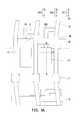
  • FIG. 1A to FIG. 11A are schematic top views illustrating a manufacturing process of a pixel structure according to an embodiment of the invention.
  • FIG. 1B to FIG. 11B are schematic cross-sectional views illustrating a manufacturing process taken along sectional lines A-A′ and B-B′ depicted in FIG. 1A to FIG. 11A .
  • FIG. 1A to FIG. 11A are schematic top views illustrating a manufacturing process of a pixel structure according to an embodiment of the invention.
  • FIG. 1B to FIG. 11B are schematic cross-sectional views illustrating a manufacturing process taken along sectional lines A-A′ and B-B′ depicted in FIG. 1A to FIG. 11A .
  • the manufacturing process of the pixel structure of the invention is illustrated sequentially thereinafter.
  • a substrate 100 is provided.
  • a material of the substrate 100 may be glass, quartz, organic polymer, or other suitable materials.
  • a light shielding layer SM is formed on the substrate 100 .
  • the purpose of the light shielding layer SM is to shield metal traces formed in the following process.
  • the light shielding layer SM is a black matrix layer of the pixel structure substantially in the embodiment.
  • a material of the light shielding layer SM is metal; however, the invention is not limited thereto.
  • a material of the light shielding layer SM may be a light sensitive resin material or other opaque materials. It should be mentioned that, in other embodiments, the light shielding layer SM may be omitted.
  • a buffer layer 200 and a poly-silicon layer 300 are formed on the substrate 100 and the light shielding layer SM sequentially.
  • the purpose of the buffer layer 200 is to strength the adhesion of the poly-silicon layer 300 .
  • the material of the substrate 100 is glass, quartz, or organic polymer, etc, of which the adhesion of silicon atoms is poor.
  • the material of the buffer layer 200 using such as silicon nitride may enable the poly-silicon layer 300 to deposit and adhere on the buffer layer 200 preferably.
  • a method of forming the poly-silicon layer 300 includes forming an amorphous silicon layer (not shown) on the buffer layer 200 .
  • the poly-silicon layer in the embodiment may be formed by using any known methods.
  • parts of region include dopants so as to form a source electrode region and a drain electrode region (not shown).
  • a gate insulating layer GI and a first patterned metal layer 350 are formed on the buffer layer 200 and the poly-silicon layer 300 sequentially.
  • the gate insulating layer GI completely covers the buffer layer 200 and the poly-silicon layer 300 .
  • a material of the gate insulating layer GI includes inorganic materials (e.g., silicon oxide, silicon nitride, silicon oxynitride, other suitable materials, or a stacked layer composed of at least two above-mentioned materials), organic materials, other suitable materials, or a combination thereof. That is, the material of the gate insulating layer GI and the material of the buffer layer 200 may be the same or different.
  • a material of the first patterned metal layer 350 may be an alloy, metal nitride materials, metal oxide materials, metal oxynitride materials, a stacked layer composed of metal materials with other conductive materials, or other suitable materials.
  • the first patterned metal layer 350 is a plurality of signal lines SL of the pixel structure substantially in the embodiment. It should be mentioned that, a gate electrode G is formed from the part where the first pattered metal layer 350 and the poly-silicon layer 300 are overlapped, and a channel CH is formed from the part where the poly-silicon layer 300 and the first patterned metal layer 350 are overlapped.
  • the gate insulating layer GI completely covers the buffer layer 200 and the poly-silicon layer 300 , the gate electrode G of the first patterned metal layer 350 and the channel CH of the poly-silicon layer 300 are separated by the gate insulating layer GI and electrically insulated from each other.
  • the light shielding layer SM since the purpose of the light shielding layer SM is to shield the metal traces, the light shielding layer SM is distributed between the substrate 100 and the scan lines SL. In other words, at least parts of the light shielding layer SM and the scan lines SL are overlapped as shown in FIG. 3A .
  • an inter-layer dielectric layer 400 is formed to cover the gate insulating layer GI and the first patterned metal layer 350 .
  • the inter-layer dielectric layer 400 includes a plurality of openings to form a plurality of gate insulating layer contact windows C 1 penetrating the inter-layer dielectric layer 400 and the gate insulating layer GI. That is, the gate insulating layer contact windows C 1 expose parts of the poly-silicon layer 300 .
  • the material of the inter-layer dielectric layer 400 and the material of the gate insulating layer GI may be the same or different.
  • the material of the inter-layer dielectric layer 400 is not limited in the invention, so long as the material of the inter-layer dielectric layer 400 is an insulating material.
  • a second patterned metal layer 500 is formed on the inter-layer dielectric layer 400 .
  • a source electrode S and a drain electrode D are formed respectively from parts of the second patterned metal layer 500 filled in the gate insulating layer contact window C 1 while a plurality of data lines DL are formed from the second patterned metal layer 500 not filled in the gate insulating layer contact window C 1 . That is, the second patterned metal layer 500 includes the source S, the drain electrode D, and the data lines DL, and the source electrode S and the drain electrode D are connected to the poly-silicon layer 300 via the gate insulating layer contact window C 1 respectively.
  • a material of the second patterned metal layer 500 may be an alloy, metal nitride materials, metal oxide materials, metal oxynitride materials, a metal material, a stacked layer composed of metal materials with other conductive materials, or other suitable materials similar to the first patterned metal layer 350 .
  • the material of the first patterned metal layer 350 and the material of the second patterned metal layer 500 may be the same or different.
  • the scan lines SL are intersected with the data lines DL. In other words, an extending direction of the scan lines SL is not parallel to an extending direction of the data lines DL. Preferably, the extending direction of the scan lines SL is substantially perpendicular to the extending direction of the data lines DL.
  • the light shielding layer SM since the purpose of the light shielding layer SM is to shield the metal traces, the light shielding layer SM is distributed between the substrate 100 and the data lines DL. In other words, at least parts of the light shielding layer SM and the data lines DL are overlapped as shown in FIG. 5A .
  • a switch device TFT is composed of the gate electrode G, the source electrode S, the drain electrode D, and the channel CH.
  • the channel CH is formed in the poly-silicon layer 300 in the embodiment, and the source electrode S and the drain electrode D are connected to the drain electrode region and the source electrode region (not shown) in the poly-silicon layer 300 respectively.
  • the switch device TFT is a poly-silicon transistor in the embodiment. In other words, in the embodiment, the source electrode S and the drain electrode D of each switch device TFT are formed in the poly-silicon layer 300 .
  • the gate electrode G in the switch device TFT is electrically connected to the scan lines SL, and the source electrode S in the switch device TFT is electrically connected to the data lines DL. That is, each of the switch devices TFT is electrically connected to one scan line SL and one data line DL respectively.
  • a contact pattern layer 600 is formed on the inter-layer dielectric layer 400 and the second patterned metal layer 500 , wherein the contact pattern layer 600 is extended from one side to another side of one data line DL.
  • the contact pattern layer 600 covers at least parts of one data line DL of the pixel structure in the embodiment. More particularly, the contact pattern layer 600 covers the above-mentioned at least parts of the drain electrode D of the two sides of one data line DL. That is, the contact pattern layer 600 covers at least parts of two adjacent switch devices TFT as shown in FIG. 6A .
  • a material of the contact pattern layer 600 may be an organic insulating material; however, the invention is not limited thereto. Referring to FIG.
  • a first patterned transparent conductive layer 710 is formed subsequently.
  • the first patterned transparent conductive layer 710 is disposed on the contact pattern layer 600 and the switch device TFT.
  • the first patterned transparent conductive layer 710 partially covers the contact pattern layer 600 and extends to partially cover the corresponding switch device TFT, so that it is directly contacted and electrically connected to the corresponding switch device TFT.
  • the first patterned transparent conductive layer 710 and the drain electrode D of the switch device TFT are directly contacted and electrically connected to each other, and further extends to the contact pattern layer 600 top so as to cover parts of the contact pattern layer 600 .
  • the first patterned transparent conductive layer 710 extends from a side of the contact pattern layer 600 to the top surface of the contact pattern layer 600 .
  • a material of the first patterned transparent conductive layer 710 includes metal oxides, such as indium tin oxide (ITO), indium zinc oxide (IZO), aluminum tin oxide (ATO), aluminum zinc oxide (AZO), indium germanium zinc oxide, other suitable oxides, or a stacked layer composed of at least two above-mentioned materials.
  • a color filter pattern layer CF is formed at the surroundings of the contact pattern layer 600 .
  • the color filter pattern layer CF includes a first color filter pattern CF 1 and a second color filter pattern CF 2 .
  • the first color filter pattern CF 1 and the second color filter pattern CF 2 are disposed corresponding to each of the sub-pixels.
  • the first color filter pattern CF 1 and the second color filter pattern CF 2 include a patterned opening OPN respectively, and the contact pattern layer 600 is disposed in the corresponding patterned opening OPN.
  • single contact pattern layer 600 is disposed in a space formed from the patterned opening OPN of the first color filter pattern CF 1 and the patterned opening OPN of the second color filter pattern CF 2 .
  • the color filter pattern layer CF covers the data lines DL, so as to ensure the insulation between the data lines DL and other films formed in the following processes.
  • the first color filter pattern CF 1 and the second color filter pattern CF 2 may be selected from red, green, or blue color filter patterns; however, the invention is not limited thereto.
  • color of the first color filter pattern CF 1 and color of the second color filter pattern CF 2 may be the same or different; however, the invention is not limited thereto.
  • the color filter pattern layer CF and the switch device TFT are disposed on the same substrate 100 in the embodiment, so as to form the structure of the color filter layer on array (COA).
  • a second patterned transparent conductive layer 720 is formed on the color filter pattern layer CF and the contact pattern layer 600 .
  • the second patterned transparent conductive layer 720 includes a plurality of first contact windows C 2 , and the first contact windows C 2 expose parts of the first patterned transparent conductive layer 710 and the contact pattern layer 600 .
  • the second patterned transparent conductive layer 720 covers the pixel structure entirely, and only parts of the first patterned transparent conductive layer 710 and the contact pattern layer 600 are exposed, so as to form a transverse electric field (not shown) with the first patterned transparent conductive layer 710 .
  • a material of the second patterned transparent conductive layer 720 and a material of the first patterned transparent conductive layer 710 may be the same or different; however, the invention is not limited thereto.
  • the protective layer 800 covers the second patterned transparent conductive layer 720 , the contact pattern layer 600 , and the color filter pattern layer CF, so as to achieve protecting these devices.
  • a material of the protective layer 800 includes inorganic materials (e.g., silicon oxide, silicon nitride, silicon oxynitride, other suitable materials, or a stacked layer composed of at least two above-mentioned materials), organic materials, other suitable materials, or a combination thereof.
  • the protective layer 800 further includes a plurality of second contact windows C 3 .
  • the second contact windows C 3 exposes parts of the first patterned transparent conductive layer 710 and the contact pattern layer 600 similar to the first contact windows C 2 .
  • a third patterned transparent conductive layer 730 is formed on the protective layer 800 .
  • a material of the third patterned transparent conductive layer 730 may be the same or different from the material of the first patterned transparent conductive layer 710 and the second patterned transparent conductive layer 720 .
  • the third patterned transparent conductive layer 730 is directly contacted and electrically connected to the first patterned transparent conductive layer 710 via the second contact windows C 3 throughout the protective layer 800 .
  • the third patterned transparent conductive layer 730 is electrically connected to the drain electrode D of the switch device TFT via the first patterned transparent conductive layer 710 .
  • the pixel structure P of the embodiment is almost completed, and the pixel structure P includes two adjacent sub-pixels P 1 and P 2 .
  • one contact pattern layer 600 is shared between the two adjacent sub-pixels P 1 and P 2 so that the drain electrode D of the switch device TFT of the sub-pixels P 1 and P 2 may extend to higher plane along the contact pattern layer 600 , and the third patterned transparent conductive layer 730 may be electrically connected to the drain electrode D of the switch device TFT via the extended first patterned transparent conductive layer 710 .
  • the contact windows connected to the pixel electrode 700 and the drain electrode D are not restricted by the process limitation, and the process difficulty is decreased.
  • the contact pattern layer is shared between two adjacent sub-pixels, and different patterned transparent conductive layers are used as extension of the drain electrode to extend upper layer of the present invention, such that the most upper layer of the patterned transparent conductive layer is electrically connected to the drain electrode via the patterned transparent conductive layer thereunder.
  • the process of the contact window in the pixel structure may not be restricted by the size of the pixel structure and the process limitation, and the most upper layer of the patterned transparent conductive layer is electrically connected to the drain electrode indeed to provide better display quality.

Landscapes

  • Physics & Mathematics (AREA)
  • Nonlinear Science (AREA)
  • Crystallography & Structural Chemistry (AREA)
  • Chemical & Material Sciences (AREA)
  • General Physics & Mathematics (AREA)
  • Mathematical Physics (AREA)
  • Optics & Photonics (AREA)
  • Engineering & Computer Science (AREA)
  • Microelectronics & Electronic Packaging (AREA)
  • Liquid Crystal (AREA)
  • Devices For Indicating Variable Information By Combining Individual Elements (AREA)
  • Geometry (AREA)
  • Thin Film Transistor (AREA)

Abstract

A pixel structure including scan lines, data lines, and sub-pixels is provided. The scan and data lines are disposed on the substrate. The sub-pixels include switch devices, contact pattern layer, color filter pattern layers, and pixel electrodes. The switch devices are electrically connected to one scan line and one data line respectively. The contact pattern layer and the color filter pattern layer are disposed on the substrate and the switch devices. The contact pattern layer covers part of two adjacent switch devices. At least two color filter pattern layers include a patterned opening respectively, and the contact pattern layer is disposed in the patterned opening. The pixel electrodes are disposed on the color filter pattern layer, the contact pattern layer, and the switch device. At least one pixel electrode is partially disposed between the color filter pattern layer and the corresponding switch device while electrically connected to the switch device.

Description

CROSS-REFERENCE TO RELATED APPLICATION
This application claims the priority benefit of Taiwan application serial no. 104129476, filed on Sep. 7, 2015. The entirety of the above-mentioned patent application is hereby incorporated by reference herein and made a part of this specification.
BACKGROUND OF THE INVENTION
1. Field of the Invention
The present invention generally relates to a pixel structure, in particular, to a pixel structure that a contact pattern layer is shared between two adjacent sub-pixels.
2. Description of Related Art
In recent years, low temperature poly-silicon (LTPS) liquid crystal display is a mainstream design of consumer product development recently, of which main application is a small and medium size liquid crystal display with high degree of integration and high definition. However, the display with high definition has higher pixel density. Thus, the size of each sub-pixel is also reduced relatively. Since the size of sub-pixel is smaller, the process difficulty of the contact window between the pixel electrode and the drain electrode in the sub-pixel is also increased. Furthermore, when the desired size of the contact window is smaller than the process limitation, the contact window cannot be formed, such that the pixel electrode cannot electrically connect to the drain electrode successfully that causing the liquid crystal molecules cannot be driven by the pixel electrode correctly. In this situation, the sub-pixel will not display normally, thus the display quality is deteriorated.
SUMMARY OF THE INVENTION
The invention provides a pixel structure to enhance the display quality.
In an embodiment of the invention, a pixel structure disposed on a substrate is provided. The pixel structure includes a plurality of scan lines, a plurality of data lines, and a plurality of sub-pixels. The sub-pixel includes a plurality of switch devices, a contact pattern layer, a plurality of color filter pattern layers, and a plurality of pixel electrodes. Each of the switch devices is electrically connected to one of the scan lines and one of the data lines respectively. The contact pattern layer and the color filter pattern layers are disposed on the substrate and the switch devices. The contact pattern layer covers at least part of two adjacent switch devices. At least two of the color filter pattern layers each includes a patterned opening respectively, and the contact pattern layer is disposed in the patterned opening. The pixel electrode is disposed on the color filter pattern layers, the contact pattern layer, and the switch devices. At least one pixel electrode is partially disposed between the color filter pattern layer and the corresponding switch devices while electrically connected to the switch devices.
Based on the above, the contact pattern layer is shared between two adjacent sub-pixels, and different patterned transparent conductive layers are used as extension of the drain electrode to extend upper layer of the present invention, such that the most upper layer of the patterned transparent conductive layer is electrically connected to the drain electrode via the patterned transparent conductive layer thereunder. Thereby, the process of the contact window in the pixel structure may not be restricted by the size of the pixel structure and the process limitation, and the most upper layer of the patterned transparent conductive layer is electrically connected to the drain electrode indeed to provide better display quality.
Several exemplary embodiments accompanied with figures are described in detail below to further describe the invention in details.
BRIEF DESCRIPTION OF THE DRAWINGS
The accompanying drawings are included to provide a further understanding of the invention, and are incorporated in and constitute a part of this specification. The drawings illustrate embodiments of the invention and, together with the description, serve to explain the principles of the invention.
FIG. 1A to FIG. 11A are schematic top views illustrating a manufacturing process of a pixel structure according to an embodiment of the invention.
FIG. 1B to FIG. 11B are schematic cross-sectional views illustrating a manufacturing process taken along sectional lines A-A′ and B-B′ depicted in FIG. 1A to FIG. 11A.
DESCRIPTION OF THE EMBODIMENTS
FIG. 1A to FIG. 11A are schematic top views illustrating a manufacturing process of a pixel structure according to an embodiment of the invention. FIG. 1B to FIG. 11B are schematic cross-sectional views illustrating a manufacturing process taken along sectional lines A-A′ and B-B′ depicted in FIG. 1A to FIG. 11A. The manufacturing process of the pixel structure of the invention is illustrated sequentially thereinafter.
Referring to FIG. 1A and FIG. 1B at the same time, a substrate 100 is provided. A material of the substrate 100 may be glass, quartz, organic polymer, or other suitable materials. Then, a light shielding layer SM is formed on the substrate 100. The purpose of the light shielding layer SM is to shield metal traces formed in the following process. In other words, the light shielding layer SM is a black matrix layer of the pixel structure substantially in the embodiment. In the embodiment, a material of the light shielding layer SM is metal; however, the invention is not limited thereto. In other embodiments, a material of the light shielding layer SM may be a light sensitive resin material or other opaque materials. It should be mentioned that, in other embodiments, the light shielding layer SM may be omitted.
Referring to FIG. 2A and FIG. 2B at the same time, after the light shielding layer SM is formed, a buffer layer 200 and a poly-silicon layer 300 are formed on the substrate 100 and the light shielding layer SM sequentially. The purpose of the buffer layer 200 is to strength the adhesion of the poly-silicon layer 300. Specifically, since the material of the substrate 100 is glass, quartz, or organic polymer, etc, of which the adhesion of silicon atoms is poor. Thus, the material of the buffer layer 200 using such as silicon nitride may enable the poly-silicon layer 300 to deposit and adhere on the buffer layer 200 preferably. A method of forming the poly-silicon layer 300 includes forming an amorphous silicon layer (not shown) on the buffer layer 200. Then, an annealing process is performed on the amorphous silicon layer to transfer the amorphous silicon layer into the poly-silicon layer 300; however, the invention is not limited thereto. The poly-silicon layer in the embodiment may be formed by using any known methods. In the poly-silicon layer 300, parts of region include dopants so as to form a source electrode region and a drain electrode region (not shown).
Referring to FIG. 3A and FIG. 3B at the same time, a gate insulating layer GI and a first patterned metal layer 350 are formed on the buffer layer 200 and the poly-silicon layer 300 sequentially. The gate insulating layer GI completely covers the buffer layer 200 and the poly-silicon layer 300. A material of the gate insulating layer GI includes inorganic materials (e.g., silicon oxide, silicon nitride, silicon oxynitride, other suitable materials, or a stacked layer composed of at least two above-mentioned materials), organic materials, other suitable materials, or a combination thereof. That is, the material of the gate insulating layer GI and the material of the buffer layer 200 may be the same or different. A material of the first patterned metal layer 350 may be an alloy, metal nitride materials, metal oxide materials, metal oxynitride materials, a stacked layer composed of metal materials with other conductive materials, or other suitable materials. The first patterned metal layer 350 is a plurality of signal lines SL of the pixel structure substantially in the embodiment. It should be mentioned that, a gate electrode G is formed from the part where the first pattered metal layer 350 and the poly-silicon layer 300 are overlapped, and a channel CH is formed from the part where the poly-silicon layer 300 and the first patterned metal layer 350 are overlapped. As above-mentioned, since the gate insulating layer GI completely covers the buffer layer 200 and the poly-silicon layer 300, the gate electrode G of the first patterned metal layer 350 and the channel CH of the poly-silicon layer 300 are separated by the gate insulating layer GI and electrically insulated from each other. In another aspect, as above-mentioned, since the purpose of the light shielding layer SM is to shield the metal traces, the light shielding layer SM is distributed between the substrate 100 and the scan lines SL. In other words, at least parts of the light shielding layer SM and the scan lines SL are overlapped as shown in FIG. 3A.
After that, referring to FIG. 4A and FIG. 4B at the same time, an inter-layer dielectric layer 400 is formed to cover the gate insulating layer GI and the first patterned metal layer 350. The inter-layer dielectric layer 400 includes a plurality of openings to form a plurality of gate insulating layer contact windows C1 penetrating the inter-layer dielectric layer 400 and the gate insulating layer GI. That is, the gate insulating layer contact windows C1 expose parts of the poly-silicon layer 300. The material of the inter-layer dielectric layer 400 and the material of the gate insulating layer GI may be the same or different. The material of the inter-layer dielectric layer 400 is not limited in the invention, so long as the material of the inter-layer dielectric layer 400 is an insulating material.
Referring to FIG. 5A and FIG. 5B at the same time, a second patterned metal layer 500 is formed on the inter-layer dielectric layer 400. A source electrode S and a drain electrode D are formed respectively from parts of the second patterned metal layer 500 filled in the gate insulating layer contact window C1 while a plurality of data lines DL are formed from the second patterned metal layer 500 not filled in the gate insulating layer contact window C1. That is, the second patterned metal layer 500 includes the source S, the drain electrode D, and the data lines DL, and the source electrode S and the drain electrode D are connected to the poly-silicon layer 300 via the gate insulating layer contact window C1 respectively. A material of the second patterned metal layer 500 may be an alloy, metal nitride materials, metal oxide materials, metal oxynitride materials, a metal material, a stacked layer composed of metal materials with other conductive materials, or other suitable materials similar to the first patterned metal layer 350. In other words, the material of the first patterned metal layer 350 and the material of the second patterned metal layer 500 may be the same or different. In another aspect, the scan lines SL are intersected with the data lines DL. In other words, an extending direction of the scan lines SL is not parallel to an extending direction of the data lines DL. Preferably, the extending direction of the scan lines SL is substantially perpendicular to the extending direction of the data lines DL. As above-mentioned, since the purpose of the light shielding layer SM is to shield the metal traces, the light shielding layer SM is distributed between the substrate 100 and the data lines DL. In other words, at least parts of the light shielding layer SM and the data lines DL are overlapped as shown in FIG. 5A.
According to the above-mentioned, a switch device TFT is composed of the gate electrode G, the source electrode S, the drain electrode D, and the channel CH. In another aspect, since the channel CH is formed in the poly-silicon layer 300 in the embodiment, and the source electrode S and the drain electrode D are connected to the drain electrode region and the source electrode region (not shown) in the poly-silicon layer 300 respectively. The switch device TFT is a poly-silicon transistor in the embodiment. In other words, in the embodiment, the source electrode S and the drain electrode D of each switch device TFT are formed in the poly-silicon layer 300. In another aspect, the gate electrode G in the switch device TFT is electrically connected to the scan lines SL, and the source electrode S in the switch device TFT is electrically connected to the data lines DL. That is, each of the switch devices TFT is electrically connected to one scan line SL and one data line DL respectively.
Referring to FIG. 6A and FIG. 6B at the same time, a contact pattern layer 600 is formed on the inter-layer dielectric layer 400 and the second patterned metal layer 500, wherein the contact pattern layer 600 is extended from one side to another side of one data line DL. Particularly, the contact pattern layer 600 covers at least parts of one data line DL of the pixel structure in the embodiment. More particularly, the contact pattern layer 600 covers the above-mentioned at least parts of the drain electrode D of the two sides of one data line DL. That is, the contact pattern layer 600 covers at least parts of two adjacent switch devices TFT as shown in FIG. 6A. A material of the contact pattern layer 600 may be an organic insulating material; however, the invention is not limited thereto. Referring to FIG. 7A and FIG. 7B at the same time, a first patterned transparent conductive layer 710 is formed subsequently. The first patterned transparent conductive layer 710 is disposed on the contact pattern layer 600 and the switch device TFT. The first patterned transparent conductive layer 710 partially covers the contact pattern layer 600 and extends to partially cover the corresponding switch device TFT, so that it is directly contacted and electrically connected to the corresponding switch device TFT. In other words, the first patterned transparent conductive layer 710 and the drain electrode D of the switch device TFT are directly contacted and electrically connected to each other, and further extends to the contact pattern layer 600 top so as to cover parts of the contact pattern layer 600. Therefore, the first patterned transparent conductive layer 710 extends from a side of the contact pattern layer 600 to the top surface of the contact pattern layer 600. In another aspect, a material of the first patterned transparent conductive layer 710 includes metal oxides, such as indium tin oxide (ITO), indium zinc oxide (IZO), aluminum tin oxide (ATO), aluminum zinc oxide (AZO), indium germanium zinc oxide, other suitable oxides, or a stacked layer composed of at least two above-mentioned materials.
Referring to FIG. 8A and FIG. 8B at the same time, after the first patterned transparent conductive layer 710 is formed, a color filter pattern layer CF is formed at the surroundings of the contact pattern layer 600. The color filter pattern layer CF includes a first color filter pattern CF1 and a second color filter pattern CF2. In other words, the first color filter pattern CF1 and the second color filter pattern CF2 are disposed corresponding to each of the sub-pixels. The first color filter pattern CF1 and the second color filter pattern CF2 include a patterned opening OPN respectively, and the contact pattern layer 600 is disposed in the corresponding patterned opening OPN. It is noted that, since, one contact pattern layer 600 is shared between two adjacent sub-pixels in this embodiment, single contact pattern layer 600 is disposed in a space formed from the patterned opening OPN of the first color filter pattern CF1 and the patterned opening OPN of the second color filter pattern CF2. In another aspect, in this embodiment, the color filter pattern layer CF covers the data lines DL, so as to ensure the insulation between the data lines DL and other films formed in the following processes.
As above-mentioned, the first color filter pattern CF1 and the second color filter pattern CF2 may be selected from red, green, or blue color filter patterns; however, the invention is not limited thereto. In another aspect, color of the first color filter pattern CF1 and color of the second color filter pattern CF2 may be the same or different; however, the invention is not limited thereto. Otherwise, the color filter pattern layer CF and the switch device TFT are disposed on the same substrate 100 in the embodiment, so as to form the structure of the color filter layer on array (COA).
Referring to FIG. 9A and FIG. 9B at the same time, a second patterned transparent conductive layer 720 is formed on the color filter pattern layer CF and the contact pattern layer 600. The second patterned transparent conductive layer 720 includes a plurality of first contact windows C2, and the first contact windows C2 expose parts of the first patterned transparent conductive layer 710 and the contact pattern layer 600. In other words, the second patterned transparent conductive layer 720 covers the pixel structure entirely, and only parts of the first patterned transparent conductive layer 710 and the contact pattern layer 600 are exposed, so as to form a transverse electric field (not shown) with the first patterned transparent conductive layer 710. A material of the second patterned transparent conductive layer 720 and a material of the first patterned transparent conductive layer 710 may be the same or different; however, the invention is not limited thereto.
Thereafter, referring to FIG. 10A and FIG. 10B at the same time, after the second patterned transparent conductive layer 720 is formed, further including the steps to form a protective layer 800. In other words, the protective layer 800 covers the second patterned transparent conductive layer 720, the contact pattern layer 600, and the color filter pattern layer CF, so as to achieve protecting these devices. A material of the protective layer 800 includes inorganic materials (e.g., silicon oxide, silicon nitride, silicon oxynitride, other suitable materials, or a stacked layer composed of at least two above-mentioned materials), organic materials, other suitable materials, or a combination thereof. Otherwise, the protective layer 800 further includes a plurality of second contact windows C3. The second contact windows C3 exposes parts of the first patterned transparent conductive layer 710 and the contact pattern layer 600 similar to the first contact windows C2.
Referring to FIG. 11A and FIG. 11B at the same time, a third patterned transparent conductive layer 730 is formed on the protective layer 800. A material of the third patterned transparent conductive layer 730 may be the same or different from the material of the first patterned transparent conductive layer 710 and the second patterned transparent conductive layer 720. The third patterned transparent conductive layer 730 is directly contacted and electrically connected to the first patterned transparent conductive layer 710 via the second contact windows C3 throughout the protective layer 800. As above-mentioned, since the drain electrode D of the switch device TFT is electrically connected to the first patterned transparent conductive layer 710, the third patterned transparent conductive layer 730 is electrically connected to the drain electrode D of the switch device TFT via the first patterned transparent conductive layer 710.
In this step, the pixel structure P of the embodiment is almost completed, and the pixel structure P includes two adjacent sub-pixels P1 and P2. In this embodiment, one contact pattern layer 600 is shared between the two adjacent sub-pixels P1 and P2 so that the drain electrode D of the switch device TFT of the sub-pixels P1 and P2 may extend to higher plane along the contact pattern layer 600, and the third patterned transparent conductive layer 730 may be electrically connected to the drain electrode D of the switch device TFT via the extended first patterned transparent conductive layer 710. Thus, the contact windows connected to the pixel electrode 700 and the drain electrode D are not restricted by the process limitation, and the process difficulty is decreased.
To sum up, the contact pattern layer is shared between two adjacent sub-pixels, and different patterned transparent conductive layers are used as extension of the drain electrode to extend upper layer of the present invention, such that the most upper layer of the patterned transparent conductive layer is electrically connected to the drain electrode via the patterned transparent conductive layer thereunder. Thereby, the process of the contact window in the pixel structure may not be restricted by the size of the pixel structure and the process limitation, and the most upper layer of the patterned transparent conductive layer is electrically connected to the drain electrode indeed to provide better display quality.
It will be apparent to those skilled in the art that various modifications and variations can be made to the structure of the present invention without departing from the scope or spirit of the invention. In view of the foregoing, it is intended that the present invention cover modifications and variations of this invention provided they fall within the scope of the following claims and their equivalents.

Claims (8)

What is claimed is:
1. A pixel structure disposed on a substrate, the pixel structure comprising:
a plurality of scan lines and a plurality of data lines disposed on the substrate, the scan lines being intersected with the data lines; and
a plurality of sub-pixels, comprising:
a plurality of switch devices, each of the switch devices being electrically connected to one of the scan lines and one of the data lines;
a contact pattern layer;
a plurality of color filter pattern layers, the contact pattern layer and the color filter pattern layers being disposed on the substrate and the switch devices, wherein the contact pattern layer covers at least part of two adjacent switch devices, at least two of the color filter pattern layers each includes a patterned opening, and the contact pattern layer is disposed in a space formed by the patterned openings of the at least two of the color filter pattern layers; and
a plurality of pixel electrodes disposed on the color filter pattern layers, the contact pattern layer, and the switch devices, at least one pixel electrode being partially disposed between the color filter pattern layer and the corresponding switch devices while electrically connected to the switch devices, wherein each of the pixel electrodes comprises:
a first patterned transparent conductive layer disposed on the contact pattern layer and the switch devices, wherein each of the first patterned transparent conductive layers partially covers the contact pattern layer and extends to partially cover the corresponding switch device so as to contact and electrically connect to the corresponding switch device;
a second patterned transparent conductive layer disposed on the color filter pattern layer and the contact pattern layer, and the second patterned transparent conductive layer having a plurality of first contact windows to expose part of each of the first patterned transparent conductive layers; and
a third patterned transparent conductive layer disposed on the second patterned transparent conductive layer, wherein the third patterned transparent conductive layer is contacted and electrically connected to the first patterned transparent conductive layer through the first contact windows.
2. The pixel structure according to claim 1, wherein each of the switch devices comprises a gate electrode electrically connected to one of the scan line correspondingly, a source electrode electrically connected to one of the data line correspondingly, and a drain electrode electrically connected to one of the pixel electrode correspondingly.
3. The pixel structure according to claim 1, wherein each of the switch devices comprises a poly-silicon transistor, and a source electrode and a drain electrode of each of the switch devices are connected to a poly-silicon layer of the poly-silicon transistor.
4. The pixel structure according to claim 1, further comprising a protective layer, wherein the protective layer covers the second patterned transparent conductive layers, the contact pattern layer, and the color filter pattern layers, and the protective layer having a plurality of second contact windows to expose part of each of the first patterned transparent conductive layers.
5. The pixel structure according to claim 4, wherein each of the first patterned transparent conductive layers is electrically connected to the corresponding third patterned transparent conductive layer through each of the first contact windows and each of the second contact windows.
6. The pixel structure according to claim 1, wherein the contact pattern layer extends from one side to another side of the one of the data lines so as to cover part of the data line.
7. The pixel structure according to claim 1, further comprising a light shielding layer, wherein the light shielding layer is disposed between the switch devices and the substrate.
8. The pixel structure according to claim 7, wherein the light shielding layer is further disposed between the scan lines and the substrate and between the data lilies and the substrate.
US15/183,811 2015-09-07 2016-06-16 Pixel structure Active US9935132B2 (en)

Applications Claiming Priority (3)

Application Number Priority Date Filing Date Title
TW104129476A 2015-09-07
TW104129476A TWI540370B (en) 2015-09-07 2015-09-07 Pixel structure
TW104129476 2015-09-07

Publications (2)

Publication Number Publication Date
US20170069663A1 US20170069663A1 (en) 2017-03-09
US9935132B2 true US9935132B2 (en) 2018-04-03

Family

ID=55287176

Family Applications (1)

Application Number Title Priority Date Filing Date
US15/183,811 Active US9935132B2 (en) 2015-09-07 2016-06-16 Pixel structure

Country Status (3)

Country Link
US (1) US9935132B2 (en)
CN (1) CN105336755B (en)
TW (1) TWI540370B (en)

Citations (2)

* Cited by examiner, † Cited by third party
Publication number Priority date Publication date Assignee Title
US20110031517A1 (en) * 2009-08-04 2011-02-10 Au Optronics Corporation Method for fabricating pixel structure
US20160343747A1 (en) * 2014-12-16 2016-11-24 Shenzhen China Star Optoelectronics Technology Co., Ltd. Ltps array substrate

Family Cites Families (4)

* Cited by examiner, † Cited by third party
Publication number Priority date Publication date Assignee Title
JPH09261671A (en) * 1996-03-27 1997-10-03 Toshiba Corp Stacked solid-state imaging device and color camera using the same
TWI495942B (en) * 2013-05-20 2015-08-11 友達光電股份有限公司 Pixel structure, display panel and pixel structure manufacturing method
TWI508269B (en) * 2013-06-20 2015-11-11 Au Optronics Corp Pixel structure
CN104155815B (en) * 2014-09-01 2017-03-01 友达光电股份有限公司 pixel structure

Patent Citations (2)

* Cited by examiner, † Cited by third party
Publication number Priority date Publication date Assignee Title
US20110031517A1 (en) * 2009-08-04 2011-02-10 Au Optronics Corporation Method for fabricating pixel structure
US20160343747A1 (en) * 2014-12-16 2016-11-24 Shenzhen China Star Optoelectronics Technology Co., Ltd. Ltps array substrate

Also Published As

Publication number Publication date
CN105336755B (en) 2018-03-16
CN105336755A (en) 2016-02-17
TW201710765A (en) 2017-03-16
US20170069663A1 (en) 2017-03-09
TWI540370B (en) 2016-07-01

Similar Documents

Publication Publication Date Title
US9711542B2 (en) Method for fabricating display panel
US9581871B2 (en) Display panel comprising a wire disposed and sandwiched in between a sealant and a planarization layer and method for manufacturing the same
US8932902B2 (en) Thin film transistor substrate having metal oxide semiconductor and method for manufacturing the same
US20130049003A1 (en) Organic light emitting display device and method for manufacturing the same
US10608052B2 (en) Display substrate and method of manufacturing the same
US9519182B2 (en) Display panel and method of manufacturing the same
WO2019233267A1 (en) Thin film transistor and manufacturing method and display device
EP3660916B1 (en) Display apparatus and method of manufacturing the same
JP6521534B2 (en) Thin film transistor, method of manufacturing the same, array substrate and display device
KR102130110B1 (en) Display panel and method of manufacturing the same
CN105070726B (en) Thin film transistor and pixel structure
CN111180493B (en) Display panel, manufacturing method thereof and display device
US9570481B2 (en) Display substrate and method of manufacturing the same
KR20160125598A (en) Thin film transistor array substrate and method of manufacturing thereof and display device having the thin film transistor array substrate
US9182641B2 (en) Signal line structure of a flat display
US20120081273A1 (en) Pixel structure, pixel array and display panel
WO2016106881A1 (en) Method for manufacturing array substrate
US9059048B2 (en) Array substrate with ESD assembly and short-circuit ring
KR20150062741A (en) Array substrate for fringe field switching mode liquid crystal display device and Method of fabricating the same
US9001298B1 (en) Pixel structure, display panel and manufacturing method of pixel structure
US9935132B2 (en) Pixel structure
CN104377208B (en) Display base plate and its manufacture method and display device
KR102062916B1 (en) Thin Film Transistor Substrate Having Metal Oxide Semiconductor And Method For Manufacturing The Same
KR102469790B1 (en) Display substrate and method of manufacturing the same
KR101974609B1 (en) Thin Film Transistor Substrate Having Metal Oxide Semiconductor And Method For Manufacturing The Same

Legal Events

Date Code Title Description
AS Assignment

Owner name: AU OPTRONICS CORPORATION, TAIWAN

Free format text: ASSIGNMENT OF ASSIGNORS INTEREST;ASSIGNORS:TSAI, AI-JU;LEE, CHANG-HUNG;LEE, MING-HSIEN;AND OTHERS;SIGNING DATES FROM 20160603 TO 20160606;REEL/FRAME:038963/0152

STCF Information on status: patent grant

Free format text: PATENTED CASE

MAFP Maintenance fee payment

Free format text: PAYMENT OF MAINTENANCE FEE, 4TH YEAR, LARGE ENTITY (ORIGINAL EVENT CODE: M1551); ENTITY STATUS OF PATENT OWNER: LARGE ENTITY

Year of fee payment: 4

MAFP Maintenance fee payment

Free format text: PAYMENT OF MAINTENANCE FEE, 8TH YEAR, LARGE ENTITY (ORIGINAL EVENT CODE: M1552); ENTITY STATUS OF PATENT OWNER: LARGE ENTITY

Year of fee payment: 8