US9934324B2 - Index structure to accelerate graph traversal - Google Patents
Index structure to accelerate graph traversal Download PDFInfo
- Publication number
- US9934324B2 US9934324B2 US14/308,172 US201414308172A US9934324B2 US 9934324 B2 US9934324 B2 US 9934324B2 US 201414308172 A US201414308172 A US 201414308172A US 9934324 B2 US9934324 B2 US 9934324B2
- Authority
- US
- United States
- Prior art keywords
- block
- index
- graph
- value
- column
- Prior art date
- Legal status (The legal status is an assumption and is not a legal conclusion. Google has not performed a legal analysis and makes no representation as to the accuracy of the status listed.)
- Active, expires
Links
Images




Classifications
-
- G06F17/30958—
-
- G—PHYSICS
- G06—COMPUTING OR CALCULATING; COUNTING
- G06F—ELECTRIC DIGITAL DATA PROCESSING
- G06F16/00—Information retrieval; Database structures therefor; File system structures therefor
- G06F16/90—Details of database functions independent of the retrieved data types
- G06F16/901—Indexing; Data structures therefor; Storage structures
- G06F16/9024—Graphs; Linked lists
Definitions
- a data graph represents data from multiple domains in an expressive and flexible way.
- a data graph can show relationships between different data objects, and relationships between data objects and properties of these objects. These relationships may be mapped to vertices and edges in the data graph.
- FIG. 1 is a block diagram of a database management system, according to an embodiment.
- FIG. 2A is an example property graph, according to an embodiment.
- FIG. 2B is a column-oriented representation of a vertex table of an example property graph, according to an embodiment.
- FIG. 2C is a column-oriented representation of an edge table of an example property graph, according to an embodiment.
- FIG. 3 is an exemplary block diagram of a block-based index, according to an embodiment.
- FIG. 4 is exemplary pseudo code of a look-up function for looking up a value in a column using a block-based index, according to an embodiment.
- FIG. 5 is an exemplary block diagram of an updated block-based index, according to an embodiment.
- FIG. 6 is exemplary pseudo code of a level synchronous traversal algorithm on a column with a block-based index, according to an embodiment.
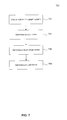
- FIG. 7 is an example flowchart of a method for generating a block-based index, according to an embodiment.
- FIG. 8 is an example flowchart of a method for updating a block-based index, according to an embodiment.
- FIG. 9 is an example flowchart of a method for looking up a value in a graph column with a block-based index, according to an embodiment.
- FIG. 10 is an exemplary computing device where the contemplated embodiments can be implemented.
- FIG. 1 is a block diagram 100 of a database management system, according to an embodiment.
- Database management system 102 may be a memory-centric data management system that leverages hardware capabilities, such as, but not limited to vast main memory space, multi core CPUs and GPU processors, and solid state drive (SSD) storage.
- hardware capabilities such as, but not limited to vast main memory space, multi core CPUs and GPU processors, and solid state drive (SSD) storage.
- database management system 102 includes connection and session management module 104 .
- Connection and session management module 104 creates and manages sessions and connections for database clients.
- Database clients may be computing devices under a control of a user (also referred to as client devices) that access and/or execute business applications 106 .
- Business applications 106 are custom or generic applications that include applications related to social media, bio-informatics, and business processing, to name a few examples.
- Connection and session management module 104 also receives different queries, including graph queries, that database clients issue to database management system 102 and transmits the results of the queries back to the database clients.
- connection and session management module 104 may use database languages 108 , to manipulate data associated with business applications 106 .
- Example database languages 108 include structured query language (SQL) 108 a , SQL Script 108 b (a scripting language for describing application specific calculations inside the database), MultiDimensional eXpressions (MDX) 108 c , and WIPE (for data graph processing) 108 d , to give a few examples.
- SQL structured query language
- MDX MultiDimensional eXpressions
- WIPE for data graph processing
- optimizer and plan generator 112 parses and optimizes client requests that, for example, may be made using database languages 108 .
- optimizer and plan generator 110 may generate an execution plan for executing a client request in database management system 102 . Once generated, optimizer and plan generator 110 passes the execution plan to execution engine 112 .
- execution engine 112 invokes an in-memory processing engine 116 to process the execution plan.
- Execution engine 112 may invoke a different in-memory processing engine 114 based on the execution plan type.
- Example in-memory processing engines 116 include a relational engine 116 a , a graph engine 116 b and a text engine 116 c.
- relational engine 116 a processes structured data.
- Relational engine 116 supports both row- and column-oriented physical representations of relational tables.
- column-oriented data is stored in a highly compressed format in order to improve the efficiency of memory resource usage and to speed up the data transfer from disk storage to cache memory or from cache memory to CPU.
- graph engine 116 b and text engine 116 c support efficient representation and processing of unstructured and irregularly structured data.
- graph engine 116 b processes data graphs.
- graph engine 116 b provides a set of base operations that act upon a graph. In an embodiment, these operations may be invoked using WIPE 108 d , a graph query and manipulation language.
- text engine 116 c provides text indexing and search capabilities.
- Example text indexing and search capabilities include search for words and phrases, fuzzy search (which tolerates typing errors), and linguistic search (which finds variations of words based on linguistic rules).
- text engine 116 c ranks search results and supports searching across multiple tables and views.
- database management system 102 includes graph engine 116 b .
- Graph engine 116 b processes data stored in a form of a data graph.
- graph engine 116 b includes an internal graph application program interface (API) that provides a set of core operators.
- the core operators are the building blocks for graph data query and manipulation language, such as, but not limited to WIPE.
- the core operators may be leveraged to implement higher level graph processing algorithms, such as shortest path, nearest neighbor, minimum spanning tree, maximum flow, or transitive closure calculations, to name a few examples.
- a data graph may be represented as a property graph.
- a property graph is a directed graph where vertices and edges have attributes. Attributes on vertices and edges can be understood as name-value pairs.
- a vertex attribute may include a unique identifier
- an edge attribute may represent a semantic type of a connection.
- database management system 102 stores property graphs as adjacency lists of columns of data. Those columns of data may be stored as separate sections of data, rather than consecutive rows that are common in conventional relational database systems.
- FIG. 2A is an example property graph 200 A, according to an embodiment.
- Property graph 200 A includes vertices 202 and edges 204 .
- property graph 200 A there are five exemplary vertices 202 and six exemplary edges 204 .
- Each vertex 202 has exemplary attributes including “id”, “name” and “type”, that may or may not be associated with values.
- an “id” property may be the only required attribute for vertices 202 .
- Each edge has exemplary attribute “type” and “rating” that may or may not be associated with values.
- property graph 200 A that includes above attributes for vertices 202 and edges 204 is exemplary, and that there may be other types of property graphs that include other types of attributes.
- vertices 202 and edges 204 of property graph 200 A may be stored in column-oriented, relationship tables, shown in FIGS. 2B and 2C .
- FIG. 2B is an example column-oriented representation of a vertex table 200 B of a property graph, according to an embodiment.
- vertex table 200 B represents vertices in property graph 200 A, but may also represent vertex tables for other property graphs.
- Each vertex in vertex table 200 B is mapped to a single database record, and each vertex attribute is mapped to a separate column. For example, attributes “id,” “name,” and “type” are mapped to different columns.
- attribute “id” is a unique identifier that identifies each vertex (also referred to as a vertex ID), as shown in a vertex identifier column 206 .
- Exemplary vertex IDs 1 - 5 in vertex identifier column 206 identify the five exemplary vertices in a property graph 200 A.
- the unique identifier is the only mandatory attribute in vertex table 200 B.
- edges 204 are stored in an edge table.
- FIG. 2C is an example column based representation of an edge table 200 C in a property graph, according to an embodiment.
- edge table 200 C represents edges in property graph 200 A.
- Each edge 204 in edge table 200 C is mapped to a single database record.
- edge 204 in the property graph is uniquely identified by the composite key that includes a source vertex, a target vertex, and an edge type.
- edge table 200 C includes a source vertex column V s , such as V s column 208 , and a target vertex column V t , such as V t column 210 .
- V s column 208 includes a set of vertices that originate edges 204 in property graph 200 A.
- V t column 210 includes a set of vertex IDs that are a destination of edges 204 in property graph 200 A.
- property graph 200 A may include a bi-directional edge, such as edge 204 A.
- edge 204 A both source vertex and target vertex act as a source and target vertices.
- bi-directional edge 204 A may be represented as two distinct edges in edge table 200 C where each edge indicates a direction from a source vertex to a target vertex (not shown).
- a graph traversal operator (also referred to as a GTO) is an operator that traverses column-oriented property graphs in response to a query issued, for example, by a client device.
- the GTO includes an IO (input/output) interface.
- the input interface receives parameters for input. These parameters may include a set of start vertices and a traversal description, in one embodiment.
- Input parameters may be received from a client device or other processors in database management system 102 as part of a query. In a different implementation, input parameters may be derived from a query.
- GTO may generate a set of discovered vertices R, as output.
- the set of discovered vertices R may be returned to a client device or further used within database management system 102 as input to another operation.
- a scan based approach may be expensive. The expense may be in part due to the graph traversals requiring repetitive full column scans.
- one way to accelerate a graph traversal is to constrain a scan range to a fraction of a column.
- a GTO may perform one or more traversals on a fraction of a column instead of a whole column.
- an index on a column may be a more efficient alternative to a scan-based traversal for sparse graph topologies or vertices in a property graph having a small neighborhood. Vertices having small neighborhoods may be vertices connected to a number of adjacent vertices that is below a predefined threshold.
- graph engine 116 b includes an indexing module 118 .
- FIG. 3 is an example block diagram 300 of a block-based index, according to an embodiment.
- Block diagram 300 includes a graph column 302 .
- Graph column 302 includes a representative block-based index 304 generated by indexing module 118 .
- Block-based index 304 may be divided into multiple blocks. For exemplary purposes block-based index 304 is divided into two blocks, B 1 and B 2 , though the implementation is not limited to this embodiment.
- the blocks, such as blocks B 1 and B 2 may be physical partitions in graph column 302 .
- the physical memory space that graph column 302 occupies in memory (such as one of memories in FIG. 10 ) is divided into blocks.
- the blocks, such as blocks B 1 and B 2 may be logical partitions in graph column 302 .
- graph column 302 is logically divided into blocks, but the divisions are not propagated into the physical memory.
- block-based index 304 includes two data structures.
- the first data structure is block index 306 .
- Block index 306 includes multiple blocks, such as blocks B 1 and B 2 , where each bi block is set on a particular portion of graph column 302 .
- blocks in block index 306 are continuous and non-overlapping blocks. For example, blocks are continuous, because bi blocks continuously cover values in graph column 302 , as shown in FIG. 3 . Blocks are non-overlapping because blocks in block index 306 do not overlap with other blocks in terms of the memory addresses of records that blocks cover in graph column 302 .
- block index 306 may also have a minimum number of blocks.
- the minimum number of blocks may be set or modified by database management system 102 .
- the minimum number of blocks for block index 306 is two.
- blocks in block index 306 are associated with value codes 310 .
- Value codes 310 correspond to data values of records in graph column 302 .
- Value codes 310 may be the actual data values of records in graph column 302 or an encoded value that is optimized for processing within database management system 102 .
- the second data structure is a block range vector 308 .
- Block range vector 308 represents a concise data structure for block ranges for blocks in block index 306 .
- block range vector 308 may only store the end position of the block boundary for each block in block index 306 .
- block range vector 308 stores two block ranges, one block range for block B 1 and the other for block B 2 .
- boundaries for each block in block range vector 308 may be derived by using the formula below: [brv[b ⁇ 1]+1,brv[b]] where brv is a block range vector and b is a block.
- indexing module 118 when a request is made to retrieve a value from graph column 302 that includes block-based index 304 , indexing module 118 returns block ranges from block range vector 308 .
- the block ranges may include the start and end ranges of blocks in block index 306 that include the value.
- FIG. 4 is an example pseudo code 400 of a look-up function for looking up a value in a column using a block-based index described in FIG. 3 , according to an embodiment.
- an input to the look-up function in pseudo code 400 is a set of values S that are included in graph column 302 , such as but not limited to graph column 302 , and output to the look-up function are a set of blocks with range information from block range vector 308 .
- the look-up function determines blocks for each value s i in set S, where i is a positive integer. For each value s i , the look-up function identifies a block in block index 306 that stores value s. Once the look-up function identifies the relevant blocks, at lines 4 - 5 of pseudo code 400 , the look-up function determines the range information for each block using block range vector 308 and returns the set of the identified blocks and the corresponding range information as output.
- indexing module 118 may construct block-based index 304 by scanning graph column 302 and storing information about block boundaries and values in each block in temporary blocks. Once indexing module 118 completes the scan, indexing module 118 converts the temporary blocks into block index 306 and block range vector 308 .
- block index 306 does not rely on a fixed block size, but may increase the block size so that all occurrences of a value maybe retrieved from a single block. For example, the size of a block may be increased if there are more values than the size of the block.
- indexing module 118 supports inserts, updates, and deletions of records from graph column 302 .
- inserts, updates and deletions may occur when edges and vertices are being inserted, updated or deleted in property graph 200 A.
- deletions of records in graph column 302 may be performed by data management system 102 in a way that the deleted records are no longer visible to components within data management system 102 , such as indexing module 118 , even though the deleted records may be present in data management system memory.
- indexing module 118 processes an in-place update of graph column 302 as a deletion followed by an insertion. Insertion is discussed below.
- indexing module 118 inserts a new record into graph column 302 , by appending the record to the end of graph column 302 .
- Example new record may include data associated with a new edge or a vertex in property graph 200 A.
- appending a record to the end of graph column 302 may cause the same value to be matched to multiple blocks in block index 306 .
- FIG. 5 is an exemplary block diagram 500 of an updated block-based index, according to an embodiment.
- indexing module 118 inserts the record into the end of graph column 302 .
- indexing module 118 also updates block-based index 304 .
- indexing module extends the range of the unfinished block to include the new record, and updates the range information of the block in block range vector 308 accordingly (not shown).
- indexing module 118 generates a new block, such as block B 3 .
- indexing module 118 associates the value code information for block B 3 in block index 306 , as shown by block 306 a . Additionally, indexing module 118 also generates range information for block B 3 that includes an end position of block B 3 in block range vector 308 , as shown by range information 308 a that is associated with block B 3 .
- indexing module 118 measures the quality of block-based index 304 with respect to query performance. To measure the quality of block-based index 304 , in one embodiment, indexing module 118 generates a health factor 312 . Health factor 312 indicates health of block-based index 304 . Health factor 312 may be divided in sub-health factors, where each sub-health factor is associated with a health of a block, such as but not limited to blocks B 1 , B 2 and B 3 .
- Exemplary sub-health factors in block diagram 500 are sub-health factors 312 a - c , where sub-health factor 312 a is associated with block B 1 , sub-health factor 312 b is associated with block B 2 , sub-health factor 312 c is associated with block B 3 .
- a decrease in health factor 312 for block index 306 is inversely proportional to the size of the block set.
- the health of health factor 312 may be a sum of sub-health factors 312 a - c that is divided by the number of blocks.
- health factors 312 a,c 1.0 for blocks B 1 and B 3 because value codes 310 for blocks B 1 and B 3 map only to blocks B 1 and B 3
- health factor 312 of block-based index 304 may be defined as
- h designates the value of health factor 312
- i is a positive integer inclusive of values in graph column 302
- is the number of different values in the block-based index 304
- is a total number of blocks in block index 304
- h i is a health factor associated with a particular block.
- represents all vertices in vertex column V s 208
- represents a total number of blocks in block-based index 304 set on vertex column V s 208 .
- indexing module 118 may delete and recreate block-based index 304 .
- indexing module 118 may reorganize records in graph column 302 into a new cluster, where records having like values may be clustered continuously in graph column 302 .
- block-based index 304 may be used during a scan based graph traversal, such as but not limited to, a traversal using a level synchronous traversal algorithm.
- GTO uses the level synchronous traversal algorithm to identify values in graph column 302 .
- FIG. 6 is exemplary pseudo code 600 of a level synchronous traversal algorithm on a column with a block-based index, according to an embodiment.
- a level synchronous traversal algorithm is a multi-threaded graph traversal algorithm where block-based index 304 is set on, for example, column V s 208 in edge table 200 C of property graph 200 A.
- the level synchronous traversal algorithm receives a set of start vertices S, a set of related edges E a , a collection boundary c, a recursion boundary r, and a traversal direction d as input parameters. These input parameters may be generated by graph engine 116 b or be included in a query generated by a client device.
- a set of related edges E a are edges that a level synchronous traversal algorithm uses during a graph traversal to traverse between source and target vertices in, for example, edge table 200 C.
- a recursion boundary r defines a maximum number of levels in a property graph that level synchronous traversal algorithm may traverse.
- the recursion boundary may be infinite ( ⁇ ).
- a collection boundary c specifies a traversal level from where level synchronous traversal algorithm starts collecting discovered vertices.
- level synchronous traversal algorithm may enforce a condition c ⁇ r to determine a set of discovered vertices R.
- Level synchronous traversal algorithm then generates an output that includes a set of discovered vertices R that have been visited in the boundaries defined by c and r.
- level synchronous traversal algorithm outputs a set of discovered vertices R.
- level synchronous traversal algorithm adds the set of start vertices S to the set of discovered vertices R.
- the level synchronous traversal algorithm initializes a set of working vertices D w from the set of start vertices S. After the initialization, the level synchronous traversal algorithm enters a “while” loop at line 5 of pseudo code 600 , where the level synchronous traversal algorithm generates a set of discovered vertices R until either the recursion boundary r is reached at line 5 , or all the vertices in the property graph have been discovered at lines 6 - 7 .
- level synchronous traversal algorithm scans block-based index 304 set on V s column 208 for vertices in the set of working vertices D w , using the look-up function discussed in FIG. 4 .
- the look-up function returns a set of blocks B set on V s column 208 and the corresponding ranges of blocks B where the vertices in the set of working vertices D w may be found.
- level synchronous traversal algorithm initiates multiple threads that in parallel scan each block from the set of blocks B. Each thread stores vertices found in the respective block from the vertices of the working set D w into a position list P.
- level synchronous traversal algorithm retrieves vertices adjacent to vertices in the position list P from V t column 210 at line 14 of pseudo code 600 .
- level synchronous traversal algorithm determines whether the vertices in the adjacent set of vertices may be included in the discovered set of vertices R based on the collection boundary c as shown in lines 15 - 16 of pseudo code 600 .
- level synchronous traversal completes and returns a set of discovered vertices R.
- FIG. 7 is an example flowchart 700 of a method for generating a block-based index, according to an embodiment.
- Method 700 can be performed by processing logic that can comprise hardware (e.g., circuitry, dedicated logic, programmable logic, microcode, etc.), software (e.g., instructions run on a processing device), or a combination thereof.
- processing logic can comprise hardware (e.g., circuitry, dedicated logic, programmable logic, microcode, etc.), software (e.g., instructions run on a processing device), or a combination thereof.
- values are clustered in a graph column.
- indexing module 118 clusters same values in graph column 302 next to each other.
- a block index is generated.
- indexing module 118 generates a block index 306 that includes one or more blocks. Once generated, indexing module 118 maps each value in graph column 302 directly or by way of an encoded value code to a block, such as but not limited to blocks B 1 or B 2 in block index 306 .
- a block range vector is generated.
- indexing module 118 generates block range vector 308 that tracks the range of each block that is set on graph column 302 .
- a health factor is generated.
- indexing module 118 generates health factor 312 for block index 306 and sub-health factors for each block within block index 306 .
- FIG. 8 is an example flowchart 800 of a method for updating a block-based index, according to an embodiment.
- Method 800 can be performed by processing logic that can comprise hardware (e.g., circuitry, dedicated logic, programmable logic, microcode, etc.), software (e.g., instructions run on a processing device), or a combination thereof.
- processing logic can comprise hardware (e.g., circuitry, dedicated logic, programmable logic, microcode, etc.), software (e.g., instructions run on a processing device), or a combination thereof.
- a record update to a graph column is made.
- graph engine 116 b updates the end of graph column 302 with a new record, when, for example, an edge is added to a property graph 200 A.
- a new block is generated.
- indexing module 118 generates a new block for a new record that is inserted in graph column 302 .
- indexing module 118 may not generate a new block but may use a previously created block that is not full, such as but not limited to when the size of the previously created block is less than the minimum block size. In this case, indexing module performs steps 806 - 810 on the previously created block.
- a block index is updated.
- indexing module 118 associates the value or the value code of the record of step 802 with a block of step 804 , and sets the block on graph column 302 .
- range information of a new block is generated.
- indexing module 118 generates range information for the block of step 804 , and stores the range information in block range vector 308 .
- the health factor is updated.
- indexing module 118 updates health factor 312 of block index 306 , that results from an addition of a new record at step 806 .
- health factor 312 may be a sum of health factors 312 a - c of individual blocks in block index 306 . In this case, when, as a result of an update of step 802 , same values or value codes 310 are associated with multiple blocks, health factor 312 may decrease.
- FIG. 9 is an example flowchart 900 of a method for looking up a value in a graph column with a block-based index, according to an embodiment.
- Method 900 can be performed by processing logic that can comprise hardware (e.g., circuitry, dedicated logic, programmable logic, microcode, etc.), software (e.g., instructions run on a processing device), or a combination thereof.
- processing logic can comprise hardware (e.g., circuitry, dedicated logic, programmable logic, microcode, etc.), software (e.g., instructions run on a processing device), or a combination thereof.
- a value is received.
- a GTO receives a value that requires a look-up in graph column 302 .
- a block that stores the value is identified. For example, a GTO identifies a block in block index 306 that stores the value or value code associated with the value.
- range information of the block is determined. For example, a GTO determines range information for the block identified in step 904 using block range vector 308 .
- a section of a graph column is scanned.
- GTO scans the section of graph column 302 on which the block of step 904 is set and using the range information of step 906 to return a value.
- Computer system 1000 can be any well-known computer capable of performing the functions described herein.
- Computer system 1000 includes one or more processors (also called central processing units, or CPUs), such as a processor 1004 .
- processors also called central processing units, or CPUs
- Processor 1004 is connected to a communication infrastructure or bus 1006 .
- One or more processors 1004 may each be a graphics processing unit (GPU).
- a GPU is a processor that is a specialized electronic circuit designed to process mathematically intensive applications.
- the GPU may have a parallel structure that is efficient for parallel processing of large blocks of data, such as mathematically intensive data common to computer graphics applications, images, videos, etc.
- Computer system 1000 also includes user input/output device(s) 1003 , such as monitors, keyboards, pointing devices, etc., that communicate with communication infrastructure 1006 through user input/output interface(s) 1002 .
- user input/output device(s) 1003 such as monitors, keyboards, pointing devices, etc.
- communication infrastructure 1006 such as keyboards, pointing devices, etc.
- Computer system 1000 also includes a main or primary memory 1008 , such as random access memory (RAM).
- Main memory 1008 may include one or more levels of cache.
- Main memory 1008 has stored therein control logic (i.e., computer software) and/or data.
- Computer system 1000 may also include one or more secondary storage devices or memory 1010 .
- Secondary memory 1010 may include, for example, a hard disk drive 1012 and/or a removable storage device or drive 1014 .
- Removable storage drive 1014 may be a floppy disk drive, a magnetic tape drive, a compact disk drive, an optical storage device, tape backup device, and/or any other storage device/drive.
- Removable storage drive 1014 may interact with a removable storage unit 1018 .
- Removable storage unit 1018 includes a computer usable or readable storage device having stored thereon computer software (control logic) and/or data.
- Removable storage unit 1018 may be a floppy disk, magnetic tape, compact disk, DVD, optical storage disk, and/any other computer data storage device.
- Removable storage drive 1014 reads from and/or writes to removable storage unit 1018 in a well-known manner.
- secondary memory 1010 may include other means, instrumentalities or other approaches for allowing computer programs and/or other instructions and/or data to be accessed by computer system 1000 .
- Such means, instrumentalities or other approaches may include, for example, a removable storage unit 1022 and an interface 1020 .
- the removable storage unit 1022 and the interface 1020 may include a program cartridge and cartridge interface (such as that found in video game devices), a removable memory chip (such as an EPROM or PROM) and associated socket, a memory stick and USB port, a memory card and associated memory card slot, and/or any other removable storage unit and associated interface.
- Computer system 1000 may further include a communication or network interface 1024 .
- Communication interface 1024 enables computer system 1000 to communicate and interact with any combination of remote devices, remote networks, remote entities, etc. (individually and collectively referenced by reference number 1028 ).
- communication interface 1024 may allow computer system 1000 to communicate with remote devices 1028 over communications path 1026 , which may be wired and/or wireless, and which may include any combination of LANs, WANs, the Internet, etc. Control logic and/or data may be transmitted to and from computer system 1000 via communication path 1026 .
- a tangible apparatus or article of manufacture comprising a tangible computer useable or readable medium having control logic (software) stored thereon is also referred to herein as a computer program product or program storage device.
- control logic software stored thereon
- control logic when executed by one or more data processing devices (such as computer system 1000 ), causes such data processing devices to operate as described herein.
- references herein to “one embodiment,” “an embodiment,” “an example embodiment,” or similar phrases indicate that the embodiment described may include a particular feature, structure, or characteristic, but every embodiment may not necessarily include the particular feature, structure, or characteristic. Moreover, such phrases are not necessarily referring to the same embodiment. Further, when a particular feature, structure, or characteristic is described in connection with an embodiment, it would be within the knowledge of persons skilled in the relevant art(s) to incorporate such feature, structure, or characteristic into other embodiments whether or not explicitly mentioned or described herein.
Landscapes
- Engineering & Computer Science (AREA)
- Databases & Information Systems (AREA)
- Theoretical Computer Science (AREA)
- Software Systems (AREA)
- Data Mining & Analysis (AREA)
- Physics & Mathematics (AREA)
- General Engineering & Computer Science (AREA)
- General Physics & Mathematics (AREA)
- Information Retrieval, Db Structures And Fs Structures Therefor (AREA)
Abstract
Description
[brv[b−1]+1,brv[b]]
where brv is a block range vector and b is a block.
where h designates the value of
Claims (15)
Priority Applications (1)
| Application Number | Priority Date | Filing Date | Title |
|---|---|---|---|
| US14/308,172 US9934324B2 (en) | 2014-06-18 | 2014-06-18 | Index structure to accelerate graph traversal |
Applications Claiming Priority (1)
| Application Number | Priority Date | Filing Date | Title |
|---|---|---|---|
| US14/308,172 US9934324B2 (en) | 2014-06-18 | 2014-06-18 | Index structure to accelerate graph traversal |
Publications (2)
| Publication Number | Publication Date |
|---|---|
| US20150370838A1 US20150370838A1 (en) | 2015-12-24 |
| US9934324B2 true US9934324B2 (en) | 2018-04-03 |
Family
ID=54869826
Family Applications (1)
| Application Number | Title | Priority Date | Filing Date |
|---|---|---|---|
| US14/308,172 Active 2036-06-06 US9934324B2 (en) | 2014-06-18 | 2014-06-18 | Index structure to accelerate graph traversal |
Country Status (1)
| Country | Link |
|---|---|
| US (1) | US9934324B2 (en) |
Cited By (2)
| Publication number | Priority date | Publication date | Assignee | Title |
|---|---|---|---|---|
| US10831771B2 (en) | 2015-07-06 | 2020-11-10 | Sap Se | Interactive exploration of large graphs |
| US11507623B2 (en) | 2020-03-05 | 2022-11-22 | Sap Se | Inheritance in dynamic hierarchical systems |
Families Citing this family (15)
| Publication number | Priority date | Publication date | Assignee | Title |
|---|---|---|---|---|
| CN103984695B (en) * | 2014-03-21 | 2017-06-20 | 华为技术有限公司 | A kind of data query method and device in database |
| US9507815B2 (en) * | 2014-07-07 | 2016-11-29 | Sap Se | Column store optimization using simplex store |
| US10977266B2 (en) * | 2014-08-27 | 2021-04-13 | Sap Se | Ad-hoc analytical query of graph data |
| US10114859B2 (en) * | 2015-11-19 | 2018-10-30 | Sap Se | Extensions of structured query language for database-native support of graph data |
| CN105975498A (en) * | 2016-04-27 | 2016-09-28 | 华为技术有限公司 | Data query method, device and system |
| US9811544B1 (en) | 2016-07-07 | 2017-11-07 | Sas Institute Inc. | Management of real-time and historical streaming data |
| US10423663B2 (en) * | 2017-01-18 | 2019-09-24 | Oracle International Corporation | Fast graph query engine optimized for typical real-world graph instances whose small portion of vertices have extremely large degree |
| US10990595B2 (en) * | 2018-05-18 | 2021-04-27 | Oracle International Corporation | Fast distributed graph query engine |
| US10795672B2 (en) * | 2018-10-31 | 2020-10-06 | Oracle International Corporation | Automatic generation of multi-source breadth-first search from high-level graph language for distributed graph processing systems |
| US11544328B2 (en) * | 2018-11-28 | 2023-01-03 | Kroll Government Solutions, Llc | Method and system for streamlined auditing |
| US11675785B2 (en) | 2020-01-31 | 2023-06-13 | Oracle International Corporation | Dynamic asynchronous traversals for distributed graph queries |
| CA3186623A1 (en) * | 2020-06-09 | 2021-12-16 | Liveramp, Inc. | Graph data structure edge profiling in mapreduce computational framework |
| US12050646B2 (en) * | 2021-08-20 | 2024-07-30 | Baidu Usa Llc | Proximity graph maintenance for fast online nearest neighbor search |
| US11907255B2 (en) | 2022-03-04 | 2024-02-20 | Oracle International Corporation | Access-frequency-based entity replication techniques for distributed property graphs with schema |
| US12367194B1 (en) | 2024-01-22 | 2025-07-22 | Oracle International Corporation | Compilation techniques for algorithmic graph processing in a relational database |
Citations (7)
| Publication number | Priority date | Publication date | Assignee | Title |
|---|---|---|---|---|
| US20080243811A1 (en) * | 2007-03-29 | 2008-10-02 | Ibm Corporation | System and method for ranked keyword search on graphs |
| US20080320214A1 (en) * | 2003-12-02 | 2008-12-25 | Super Talent Electronics Inc. | Multi-Level Controller with Smart Storage Transfer Manager for Interleaving Multiple Single-Chip Flash Memory Devices |
| US20130018922A1 (en) * | 2011-07-13 | 2013-01-17 | Palo Alto Research Center Incorporated | Memory efficient state-set representation for planning |
| US8380701B1 (en) * | 2011-09-02 | 2013-02-19 | International Business Machines Corporation | Using a partially built index in a computer database system |
| US20150052134A1 (en) * | 2013-08-14 | 2015-02-19 | International Business Machines Corporation | Method and Apparatus for Storing Sparse Graph Data as Multi-Dimensional Cluster |
| US20150120745A1 (en) * | 2013-10-28 | 2015-04-30 | Yahoo! Inc. | Dynamic database indexes for entity attribute value stores |
| US20160314196A1 (en) * | 2013-01-02 | 2016-10-27 | Research Now Group, Inc. | Using a graph database to match entities by evaluating boolean expressions |
-
2014
- 2014-06-18 US US14/308,172 patent/US9934324B2/en active Active
Patent Citations (7)
| Publication number | Priority date | Publication date | Assignee | Title |
|---|---|---|---|---|
| US20080320214A1 (en) * | 2003-12-02 | 2008-12-25 | Super Talent Electronics Inc. | Multi-Level Controller with Smart Storage Transfer Manager for Interleaving Multiple Single-Chip Flash Memory Devices |
| US20080243811A1 (en) * | 2007-03-29 | 2008-10-02 | Ibm Corporation | System and method for ranked keyword search on graphs |
| US20130018922A1 (en) * | 2011-07-13 | 2013-01-17 | Palo Alto Research Center Incorporated | Memory efficient state-set representation for planning |
| US8380701B1 (en) * | 2011-09-02 | 2013-02-19 | International Business Machines Corporation | Using a partially built index in a computer database system |
| US20160314196A1 (en) * | 2013-01-02 | 2016-10-27 | Research Now Group, Inc. | Using a graph database to match entities by evaluating boolean expressions |
| US20150052134A1 (en) * | 2013-08-14 | 2015-02-19 | International Business Machines Corporation | Method and Apparatus for Storing Sparse Graph Data as Multi-Dimensional Cluster |
| US20150120745A1 (en) * | 2013-10-28 | 2015-04-30 | Yahoo! Inc. | Dynamic database indexes for entity attribute value stores |
Cited By (2)
| Publication number | Priority date | Publication date | Assignee | Title |
|---|---|---|---|---|
| US10831771B2 (en) | 2015-07-06 | 2020-11-10 | Sap Se | Interactive exploration of large graphs |
| US11507623B2 (en) | 2020-03-05 | 2022-11-22 | Sap Se | Inheritance in dynamic hierarchical systems |
Also Published As
| Publication number | Publication date |
|---|---|
| US20150370838A1 (en) | 2015-12-24 |
Similar Documents
| Publication | Publication Date | Title |
|---|---|---|
| US20150370838A1 (en) | Index structure to accelerate graph traversal | |
| US9547728B2 (en) | Graph traversal operator and extensible framework inside a column store | |
| US9697254B2 (en) | Graph traversal operator inside a column store | |
| US9405855B2 (en) | Processing diff-queries on property graphs | |
| US8396852B2 (en) | Evaluating execution plan changes after a wakeup threshold time | |
| US11334544B2 (en) | Method, apparatus, device and medium for storing and querying data | |
| Liu et al. | U-skyline: A new skyline query for uncertain databases | |
| US8949222B2 (en) | Changing the compression level of query plans | |
| CN111651641B (en) | Graph query method, device and storage medium | |
| US9218394B2 (en) | Reading rows from memory prior to reading rows from secondary storage | |
| US20230161765A1 (en) | System and method for disjunctive joins using a lookup table | |
| US20230205769A1 (en) | System and method for disjunctive joins | |
| US20200104425A1 (en) | Techniques for lossless and lossy large-scale graph summarization | |
| US10691688B2 (en) | Cracking page-loadable columns for in-memory data management | |
| US10372736B2 (en) | Generating and implementing local search engines over large databases | |
| CN113190551A (en) | Feature retrieval system construction method, feature retrieval method, device and equipment | |
| Urbani et al. | Adaptive low-level storage of very large knowledge graphs | |
| CN113868434B (en) | Data processing method, device and storage medium of graph database | |
| Sudhir et al. | Replicated layout for in-memory database systems | |
| US12536186B1 (en) | Implementing vector index build and search using query operators | |
| CN120086231A (en) | Updating method, data processing system and computer program product | |
| US9471634B2 (en) | Execution of negated conditions using a bitmap | |
| CN107291875A (en) | A kind of metadata organization management method and system based on metadata graph | |
| CN107229704A (en) | A kind of resource description framework querying method and system based on KSP algorithms | |
| Haubenschild et al. | Asgraph: a mutable multi-versioned graph container with high analytical performance |
Legal Events
| Date | Code | Title | Description |
|---|---|---|---|
| AS | Assignment |
Owner name: SAP AG, GERMANY Free format text: ASSIGNMENT OF ASSIGNORS INTEREST;ASSIGNORS:PARADIES, MARCUS;RUDOLF, MICHAEL;BORNHOEVD, CHRISTOF;AND OTHERS;SIGNING DATES FROM 20140616 TO 20140617;REEL/FRAME:033131/0349 |
|
| AS | Assignment |
Owner name: SAP SE, GERMANY Free format text: CHANGE OF NAME;ASSIGNOR:SAP AG;REEL/FRAME:033625/0223 Effective date: 20140707 |
|
| STCF | Information on status: patent grant |
Free format text: PATENTED CASE |
|
| MAFP | Maintenance fee payment |
Free format text: PAYMENT OF MAINTENANCE FEE, 4TH YEAR, LARGE ENTITY (ORIGINAL EVENT CODE: M1551); ENTITY STATUS OF PATENT OWNER: LARGE ENTITY Year of fee payment: 4 |
|
| MAFP | Maintenance fee payment |
Free format text: PAYMENT OF MAINTENANCE FEE, 8TH YEAR, LARGE ENTITY (ORIGINAL EVENT CODE: M1552); ENTITY STATUS OF PATENT OWNER: LARGE ENTITY Year of fee payment: 8 |