US9894045B1 - Determining application reputation based on deviations in security rating scores - Google Patents
Determining application reputation based on deviations in security rating scores Download PDFInfo
- Publication number
- US9894045B1 US9894045B1 US14/968,453 US201514968453A US9894045B1 US 9894045 B1 US9894045 B1 US 9894045B1 US 201514968453 A US201514968453 A US 201514968453A US 9894045 B1 US9894045 B1 US 9894045B1
- Authority
- US
- United States
- Prior art keywords
- application
- package
- application package
- key
- reputation
- Prior art date
- Legal status (The legal status is an assumption and is not a legal conclusion. Google has not performed a legal analysis and makes no representation as to the accuracy of the status listed.)
- Expired - Fee Related, expires
Links
Images



Classifications
-
- G—PHYSICS
- G06—COMPUTING OR CALCULATING; COUNTING
- G06F—ELECTRIC DIGITAL DATA PROCESSING
- G06F21/00—Security arrangements for protecting computers, components thereof, programs or data against unauthorised activity
- G06F21/50—Monitoring users, programs or devices to maintain the integrity of platforms, e.g. of processors, firmware or operating systems
- G06F21/57—Certifying or maintaining trusted computer platforms, e.g. secure boots or power-downs, version controls, system software checks, secure updates or assessing vulnerabilities
-
- H—ELECTRICITY
- H04—ELECTRIC COMMUNICATION TECHNIQUE
- H04L—TRANSMISSION OF DIGITAL INFORMATION, e.g. TELEGRAPHIC COMMUNICATION
- H04L63/00—Network architectures or network communication protocols for network security
- H04L63/06—Network architectures or network communication protocols for network security for supporting key management in a packet data network
- H04L63/061—Network architectures or network communication protocols for network security for supporting key management in a packet data network for key exchange, e.g. in peer-to-peer networks
-
- G—PHYSICS
- G06—COMPUTING OR CALCULATING; COUNTING
- G06F—ELECTRIC DIGITAL DATA PROCESSING
- G06F21/00—Security arrangements for protecting computers, components thereof, programs or data against unauthorised activity
- G06F21/50—Monitoring users, programs or devices to maintain the integrity of platforms, e.g. of processors, firmware or operating systems
- G06F21/51—Monitoring users, programs or devices to maintain the integrity of platforms, e.g. of processors, firmware or operating systems at application loading time, e.g. accepting, rejecting, starting or inhibiting executable software based on integrity or source reliability
-
- G—PHYSICS
- G06—COMPUTING OR CALCULATING; COUNTING
- G06F—ELECTRIC DIGITAL DATA PROCESSING
- G06F21/00—Security arrangements for protecting computers, components thereof, programs or data against unauthorised activity
- G06F21/50—Monitoring users, programs or devices to maintain the integrity of platforms, e.g. of processors, firmware or operating systems
- G06F21/55—Detecting local intrusion or implementing counter-measures
- G06F21/554—Detecting local intrusion or implementing counter-measures involving event detection and direct action
-
- G—PHYSICS
- G06—COMPUTING OR CALCULATING; COUNTING
- G06F—ELECTRIC DIGITAL DATA PROCESSING
- G06F21/00—Security arrangements for protecting computers, components thereof, programs or data against unauthorised activity
- G06F21/50—Monitoring users, programs or devices to maintain the integrity of platforms, e.g. of processors, firmware or operating systems
- G06F21/57—Certifying or maintaining trusted computer platforms, e.g. secure boots or power-downs, version controls, system software checks, secure updates or assessing vulnerabilities
- G06F21/577—Assessing vulnerabilities and evaluating computer system security
-
- H—ELECTRICITY
- H04—ELECTRIC COMMUNICATION TECHNIQUE
- H04L—TRANSMISSION OF DIGITAL INFORMATION, e.g. TELEGRAPHIC COMMUNICATION
- H04L63/00—Network architectures or network communication protocols for network security
- H04L63/12—Applying verification of the received information
- H04L63/126—Applying verification of the received information the source of the received data
-
- H—ELECTRICITY
- H04—ELECTRIC COMMUNICATION TECHNIQUE
- H04L—TRANSMISSION OF DIGITAL INFORMATION, e.g. TELEGRAPHIC COMMUNICATION
- H04L63/00—Network architectures or network communication protocols for network security
- H04L63/14—Network architectures or network communication protocols for network security for detecting or protecting against malicious traffic
- H04L63/1408—Network architectures or network communication protocols for network security for detecting or protecting against malicious traffic by monitoring network traffic
-
- H—ELECTRICITY
- H04—ELECTRIC COMMUNICATION TECHNIQUE
- H04L—TRANSMISSION OF DIGITAL INFORMATION, e.g. TELEGRAPHIC COMMUNICATION
- H04L63/00—Network architectures or network communication protocols for network security
- H04L63/14—Network architectures or network communication protocols for network security for detecting or protecting against malicious traffic
- H04L63/1433—Vulnerability analysis
-
- H—ELECTRICITY
- H04—ELECTRIC COMMUNICATION TECHNIQUE
- H04L—TRANSMISSION OF DIGITAL INFORMATION, e.g. TELEGRAPHIC COMMUNICATION
- H04L9/00—Cryptographic mechanisms or cryptographic arrangements for secret or secure communications; Network security protocols
- H04L9/32—Cryptographic mechanisms or cryptographic arrangements for secret or secure communications; Network security protocols including means for verifying the identity or authority of a user of the system or for message authentication, e.g. authorization, entity authentication, data integrity or data verification, non-repudiation, key authentication or verification of credentials
- H04L9/3247—Cryptographic mechanisms or cryptographic arrangements for secret or secure communications; Network security protocols including means for verifying the identity or authority of a user of the system or for message authentication, e.g. authorization, entity authentication, data integrity or data verification, non-repudiation, key authentication or verification of credentials involving digital signatures
-
- G—PHYSICS
- G06—COMPUTING OR CALCULATING; COUNTING
- G06F—ELECTRIC DIGITAL DATA PROCESSING
- G06F2221/00—Indexing scheme relating to security arrangements for protecting computers, components thereof, programs or data against unauthorised activity
- G06F2221/03—Indexing scheme relating to G06F21/50, monitoring users, programs or devices to maintain the integrity of platforms
- G06F2221/033—Test or assess software
Definitions
- Embodiments presented herein generally relate to computer security systems, and more specifically, to determining application reputation based on differences in security rating scores between applications.
- Applications downloaded from such repositories are generally signed using a key owned by an application developer.
- an application developer owns a single key used to sign all applications published on the application repository.
- the key may be, for example, the private key from a public-private key pair.
- the private key is generally maintained by the application developer as a secret, and the corresponding public key is generally used to verify a signature associated with an object generated using that object and the private key. By verifying the signature used to sign an application, a system can identify the source of the application.
- Applications created by the same company generally express a number of similarities. For example, applications distributed by the same company may use the same application program interfaces (APIs), common graphical user interface (GUI) elements, and so on. Additionally, applications from the same developer may use a common package naming convention. However, in some cases, a legitimate application created by the developer may use significantly different APIs, GUI elements, and so on from other applications created by the developer. In some cases, security systems may flag these applications as potential security risks even though these applications are legitimate.
- APIs application program interfaces
- GUI graphical user interface
- security systems may flag these applications as potential security risks even though these applications are legitimate.
- a key leak may occur, which may expose an application developer's private key to the public.
- malware developers can sign rogue applications using the leaked key, thus making it appear that a rogue application was released by a legitimate application developer.
- malware developers may release applications that appear to be legitimate.
- Security software can be configured to block installation and execution of applications based on a variety of parameters. For example, rule-based security policies can be used to rate the security risks posed by different applications. Security software may apply rules based on the priority associated with each rule. Miscalculating the priority associated with each rule may cause errors by either blocking applications that are safe or allowing unsafe applications to execute on the computer system.
- One embodiment of the present disclosure includes a method for detecting security risks from application packages signed using a key.
- the method generally includes calculating a difference score for a first application package signed using the key.
- the difference score may be based on differences detected between content of the first application package and content of one or more second application packages signed using the key.
- a computing system calculates an average difference score from the individual difference scores. Upon determining that the difference score for a specific application package of the second application packages exceeds the average difference score by a threshold amount, the computing system sets a reputation associated with the specific application package to an unknown reputation and generates an alert indicating that the specific application package is a potential security risk.
- Another embodiment provides a computer-readable storage medium having instructions, which, when executed on a processor, performs an operation for detecting security risks from application packages signed using a key.
- the method generally includes calculating a difference score for a first application package signed using the key.
- the difference score may be based on differences detected between content of the first application package and content of one or more second application packages signed using the key.
- a computing system calculates an average difference score from the individual difference scores. Upon determining that the difference score for a specific application package of the second application packages exceeds the average difference score by a threshold amount, the computing system sets a reputation associated with the specific application package to an unknown reputation and generates an alert indicating that the specific application package is a potential security risk.
- Still another embodiment of the present invention includes a processor and a memory storing a program, which, when executed on the processor, performs an operation for detecting security risks from application packages signed using a key.
- the method generally includes calculating a difference score for a first application package signed using the key. The difference score may be based on differences detected between content of the first application package and content of one or more second application packages signed using the key.
- a computing system calculates an average difference score from the individual difference scores. Upon determining that the difference score for a specific application package of the second application packages exceeds the average difference score by a threshold amount, the computing system sets a reputation associated with the specific application package to an unknown reputation and generates an alert indicating that the specific application package is a potential security risk.
- FIG. 1 illustrates an example of a networked computing environment, according to one embodiment.
- FIG. 2 illustrates an example application analysis engine, according to one embodiment.
- FIG. 3 illustrates example operations for detecting possible rogue applications based on differences between the application and other applications signed using the same key, according to one embodiment.
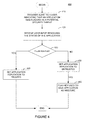
- FIG. 4 illustrates example operations for resolving detected possible rogue applications, according to one embodiment.
- FIG. 5 illustrates an example computing system for managing security ratings of applications based on deviation scores of applications signed using the same key, according to one embodiment.
- Embodiments presented herein provide techniques for detecting potential security risks from applications signed using a common signing key. Potential security risks can be detected, for example, based on differences between applications signed using the same key.
- a security system can flag the potential security risks for resolution.
- a user may resolve potential security risks on an endpoint system.
- a manager of a reputation service may resolve potential security risks on the reputation service, which allows security software on an endpoint system to allow or block users from downloading and/or executing known malware or otherwise rogue applications on the endpoint system.
- endpoint systems may allow the false positive applications to execute and block the applications flagged as security threats from executing on the endpoint system.
- a security system can determine which applications may pose a security risk to an endpoint system (e.g., rogue data exfiltrators, keyloggers, premium short messaging service (SMS) attacks, and so on).
- endpoint system e.g., rogue data exfiltrators, keyloggers, premium short messaging service (SMS) attacks, and so on.
- SMS premium short messaging service
- User resolution of the flagged security threats may additionally indicate if an application developer's private key has been leaked and used to sign rogue applications, which may be used to block users from installing and/or executing any new applications signed using the leaked key.
- FIG. 1 illustrates an example computing environment 100 , according to one embodiment.
- the computing environment includes a plurality of endpoint systems 120 connected to a network 110 .
- Network 110 may be connected to one or more external networks 150 , and each of the endpoint systems 120 may access a remote reputation service 130 and an application repository 140 through network 110 via one or more external networks 150 .
- Each endpoint system 120 in network 110 may execute an endpoint security system locally to monitor for potential security breach events, such as rogue downloads, execution of rogue applications, exfiltration of data stored endpoint system 120 , and so on.
- endpoint systems 120 generally include an endpoint monitor 122 and one or more applications 124 .
- endpoint monitor 122 includes an interface for querying a reputation service 130 for information about an application 124 that attempts to execute on endpoint system 120 or that a user is downloading onto endpoint system 120 . Endpoint monitor 122 may begin running when endpoint system 120 is booted up.
- endpoint monitor 122 queries reputation service 130 to obtain reputation information for the downloaded application. If the reputation service indicates that the downloaded package has a good reputation (e.g., widely used and trusted open source software packages, such as the GIMP image manipulation program, the OpenOffice productivity suite, or mobile ports of desktop open source packages) or is trusted (e.g., commercially available software signed by the software provider), endpoint monitor 122 may allow installation of the program from the downloaded application package. If, however, the reputation service indicates that the downloaded application package is untrusted (e.g., the application includes malware, keyloggers, or other security threats), endpoint monitor 122 may block installation of the program and may additionally delete the downloaded program installation package.
- a good reputation e.g., widely used and trusted open source software packages, such as the GIMP image manipulation program, the OpenOffice productivity suite, or mobile ports of desktop open source packages
- endpoint monitor 122 may allow installation of the program from the downloaded application package. If, however, the reputation service indicates that the downloaded application package is untrusted (e.g., the application includes
- endpoint system 120 may further include an application analysis engine in addition to or in lieu of an interface to query reputation service 130 .
- the analysis engine may obtain one or more applications signed using a particular developer key from an application repository and compare each of the applications obtained from the application repository to a target application obtained from the application repository.
- the target application may be a known, trusted application; in other cases, the target application may be an application previously determined to be representative of the applications distributed by the developer through the application repository.
- the analysis engine can calculate a score indicating the application's similarity to the target application.
- a difference score can be calculated based on similarities between the application and the target application in package naming scheme, APIs and GUI elements that are used in the applications, and so on.
- applications created by the same developer typically use a common naming scheme, many of the same APIs, and many of the same GUI elements.
- the difference score between a target application and an application obtained from the application repository may typically be low (e.g., close to zero).
- the analysis engine can calculate other scores for determining whether an application is a potential security risk. For example, the analysis engine can generate a score based on application classifications, where the analysis engine examines the functionality of the application and classifies the application as a multimedia application, a messaging application, a gaming application, and so on. Because applications developed by the same developer generally fall within the same category, applications in a different class than the bulk of the applications signed using a developer's private key may be flagged as a potential security risk.
- the analysis engine can determine whether an application is a potential security risk using rules-based scoring.
- Rules-based scoring may be used, for example, to generate a difference score between a target application and an application obtained from the application repository by examining which security rules are triggered by the applications. For example, similar applications may trigger data transmission rules using a common destination. However, a rogue application signed using a developer's private key may trigger data transmission rules using a different destination or different data format, and an analysis engine can use such deviations in rules-based scoring to detect differences between applications available for download from an application repository.
- the analysis engine Upon calculating deviation scores for each of the one or more applications, the analysis engine calculates the average deviation score for the applications signed using a particular key. Based on the calculated average deviation score, the analysis engine calculates the difference between the average deviation score and the deviation scores for each of the one or more applications. If the difference exceeds a threshold value, the analysis engine can flag the application as a potential security risk and flag the application for further review. Otherwise, the analysis engine can flag the application as safe and allow a user to download and execute the application on endpoint system 120 .
- the threshold value may be a number of standard deviations away from the calculated average mean deviation score for all of the applications signed using the same key.
- endpoint system 120 may include a management interface 126 .
- Management interface 126 allows a user of the endpoint system 120 to view applications flagged as potential security risks (either from a local analysis engine or from an analysis engine at a remote reputation service 130 ) and resolve the flagged applications as legitimate applications (i.e., false positives) or rogue applications. If a user resolves a flagged application as a false positive through management interface 126 , the flagged application may be resolved as a legitimate application in endpoint monitor 122 or reputation service 130 (e.g., added to a whitelist). Otherwise, if a user resolves a flagged application as a security risk, the application may be marked as untrusted at endpoint system 120 or reputation service 130 (e.g., added to a blacklist).
- the resolution may additionally indicate that the key used to sign the flagged application has been leaked.
- the key itself may be added to a blacklist at endpoint monitor 122 or reputation service 130 .
- the new applications may be automatically added to a list of untrusted applications (an application blacklist) at endpoint monitor 122 or reputation service 130 .
- endpoint monitor 120 may proactively prevent users from downloading or executing newly released applications signed using a leaked key, as such applications have a high probability of being malicious.
- the resolution may be effective only for the endpoint system 120 on which the local endpoint monitor 122 executes. If the application is resolved on a reputation service 130 through management interface 126 , however, the resolution may be effective for any endpoint system 120 that queries reputation service 130 for reputation data before allowing (or not allowing) a user to download and/or execute the application.
- Reputation service 130 generally may be an existing service that uses crowdsourced data to determine whether applications are trusted, untrusted, or unknown.
- reputation service 130 may be hosted in the cloud and accessible by endpoint monitor 122 via an external network 140 (e.g., the Internet).
- reputation service 130 may be updated to reflect the reputation of the new applications. For example, when a new version of an office productivity suite is released, reputation service 130 may be updated to reflect that the new version of the office productivity suite is trusted (like previous versions of the suite).
- Other applications may initially have an unproven or unknown reputation, and as reputation service 130 receives additional data about the application from other users, reputation service 130 may update the reputation to reflect user feedback about the application.
- reputation data about known threats e.g., rogue keyloggers, botnet software, etc.
- reputation service 130 may include an analysis engine 132 and an endpoint security interface 134 .
- analysis engine 132 may obtain applications signed using a particular key from an application repository 140 and compare the applications obtained from application repository 140 to a target application signed using the key.
- the target application may be a known and trusted application.
- Analysis engine 132 can generate a similarity (or difference) score for each application obtained from application repository 140 by comparing each application to the target application and calculate an average deviation from the target application. Applications with similarity (or difference) scores within a threshold amount from the average deviation may be assumed to be safe, while applications with similarity (or difference) scores that differ from the calculated average by an amount exceeding the threshold amount may be a potential security risk. When analysis engine 132 determines that an application is a potential security risk, analysis engine 132 may generate an alert to be displayed to a user on an endpoint system 120 (e.g., in management interface 126 on endpoint system 120 1 ).
- the alert may inform a user that an application was detected to be a possible security risk and request that the user indicate whether the application is safe (e.g., should be marked as trusted in reputation service 130 ) or is unsafe (e.g., should be marked as untrusted in reputation service 130 ).
- analysis engine 132 may receive data from an endpoint system 120 with data indicating whether the application is safe or unsafe. As discussed above, if a user indicates that the application is safe, analysis engine 132 may add the application to a list of applications that may be installed and executed on an endpoint system 120 . For example, analysis engine 132 may add a reputation status of “good” or “trusted” to the application in reputation service 130 . Otherwise, if a user indicates that the application is unsafe, analysis engine 132 may add the application to a list of applications that are blocked from installing and executing on an endpoint system 120 . For example, analysis engine 132 may add a reputation status of “untrusted” to the application in reputation service 130 .
- Endpoint security interface 134 provides an interface for receiving requests for reputation data from an endpoint monitor 122 at endpoint system 120 and transmitting reputation data to endpoint system 120 for use in allowing or blocking installation and/or execution of applications on endpoint system 120 .
- endpoint security interface 134 may further provide an interface for transmitting alerts to an endpoint system 120 used to manage reputation service 130 . As discussed above, these alerts may include the identity of an application flagged as a possible security risk and request that a user indicate whether the application is a legitimate application or a rogue application.
- Application repository 140 generally may be an existing service that stores and manages applications that can be downloaded onto an endpoint system 120 .
- Applications 124 downloaded from application repository 140 may be updated with new versions of the applications as new versions are added to application repository 140 .
- an analysis engine component of an endpoint monitor 122 on endpoint system 120 or analysis engine 132 in reputation service 130 may obtain all applications available through application repository 140 signed using a particular developer's key and analyze the obtained applications for deviations that may indicate that an application is a potential security risk. After endpoint monitor 122 or analysis engine 132 determines that an application is a potential security risk, and after a user confirms that the application is a security risk, the application may remain available for download from application repository 140 . However, users may be blocked from downloading and/or executing the application on endpoint system 120 .
- FIG. 2 illustrates an example analysis engine 132 , according to one embodiment.
- analysis engine includes an application repository interface 210 , application score generator 220 , and alert generator 230 .
- Application repository interface 210 is generally configured to obtain a set of application packages from application repository 140 on a per-key basis.
- analysis engine 132 may maintain a list of keys used to sign applications available for download from application repository 140 .
- a manager of reputation service 130 may select applications associated with a particular key for analysis; in other cases, analysis engine 132 may periodically obtain application packages associated with a particular key for analysis.
- application repository interface 210 may open a connection with application repository 140 and download a copy of each application package signed using the identified key.
- application repository interface 210 may further download additional information about each application package from application repository 140 , such as a description of the application.
- application score generator 220 analyzes each application to calculate a difference (or similarity) score between each application. As discussed above, in one example, application score generator 220 can compare each application in the obtained set to a target application, which may be an application that is known to be legitimate. Application score generator 220 may generate a single difference (or similarity) score for each application relative to the target application. Once application score generator 220 calculates difference (or similarity) scores for each application, application score generator 220 may calculate an average similarity score for the set of applications and provide the calculated similarity scores to alert generator 230 for further analysis.
- application score generator 220 can calculate difference (or similarity) scores for each application package in the set relative to the remaining applications in the set.
- Application score generator 220 may calculate n ⁇ 1 difference (or similarity) scores for each application package and may further calculate an average similarity score for each application package based on the n ⁇ 1 difference (or similarity) scores.
- application score generator 220 can generate an average difference (or similarity) score for the set of applications and provide the calculated average score for each application and the average score for the set of application packages to alert generator 230 for further analysis.
- application score generator 220 may generate a difference or similarity score based, at least in part, on application package name, information about components used in each application package, and so on. Because application packages developed by the same developer often use the same (or similar) naming conventions, APIs, GUI elements, and other common attributes, applications developed by the same developer typically would have a low difference score (or correspondingly, a high similarity score). Meanwhile, rogue applications signed using a leaked key may not use the same naming conventions, APIs, GUI elements, and so on as legitimate applications signed using the leaked key, and thus, would have a high difference score (or correspondingly, a low similarity score). Additionally, application score generator 220 may calculate difference and/or similarity scores based, at least in part, on application classification, rules on how applications access and use data (both locally and remotely), and so on.
- Alert generator 230 is generally configured to analyze the difference (or similarity) scores generated for each application package in the set of application packages signed using the same key for potential security risks. As discussed above, alert generator 230 may detect a potential security risk based on the difference between a baseline value and a calculated difference (or similarity) score. For example, a baseline value may be set to the average difference (or similarity) score calculated for all of the application packages signed using the key, and a threshold value may represent a permissible amount of variation between application packages signed using the same key. For example, the threshold value may be set to a single standard deviation away from the average difference (or similarity) score calculated for all of the application packages signed using the key.
- alert generator 230 determines whether the calculated difference (or similarity) score for each application package indicates that an application package is a potential security risk (e.g., a rogue application signed using a rogue key). If the calculated difference (or similarity) score for an application package falls within the acceptable range (e.g., average difference (or similarity) score, plus/minus the threshold value), alert generator 230 need not take any further action for the application package. However, if the calculated difference (or similarity) score for an application falls outside the acceptable range, alert generator 230 may flag the application package as a potentially rogue application and request that a user indicate whether the application package is legitimate or a rogue application.
- the acceptable range e.g., average difference (or similarity) score, plus/minus the threshold value
- alert generator 230 can further set the reputation status for each application package in reputation service 130 based on detecting potentially rogue applications from deviations in difference (or similarity) scores. For example, when alert generator 230 determines that the difference (or similarity) score for an application package falls within the threshold value from the calculated average, alert generator 230 can set the reputation of the application package to “trusted” or “good.” As described above, users may install and execute these applications on an endpoint system 120 . If alert generator 230 , however, determines that the difference (or similarity) score for an application package diverges from the average by more than the threshold value, alert generator 230 may temporarily set the reputation of the application package to “unknown,” which may require that a user explicitly allow the application to execute on endpoint system 120 .
- reputation service 132 When reputation service 132 receives data indicating that an application package flagged as a potential security risk is a legitimate application, reputation service 132 can reset the reputation of the application to “trusted” or “good.” However, if reputation service 132 receives data indicating that a flagged application package is a rogue application, reputation service 132 can set the reputation of the application to “untrusted.” Endpoint monitor 122 may, as discussed above, use information indicating that an application has a poor reputation to block users of an endpoint system 120 from download, installing, and/or executing the application.
- reputation service 132 may additionally flag the key used to sign the application package as a leaked key. Subsequently, new applications released on an application repository 140 using the leaked key may be presumptively classified as rogue applications (e.g., added to reputation service 132 with a reputation status of “untrusted”).
- FIG. 3 illustrates example operations 300 that may be performed by a reputation service to detect potentially rogue applications from a set of application packages signed using a common key, according to one embodiment.
- Operations 300 begin at step 310 , where the reputation service obtains an application from an application repository.
- the application may be signed using a particular key associated with a single developer, and the application may be one of a set of applications being analyzed for potential security risks (e.g., from rogue applications being signed with the key).
- the reputation service calculates a deviation score for the application relative to a second application signed using the key.
- the second application may be a known and trusted application. In other cases, the second application may be another application obtained from the application repository.
- the reputation service determines whether the calculated deviation score exceeds a threshold value.
- the reputation service may use an average deviation score calculated across all of the applications from application repository 140 signed using the key as a baseline value.
- a threshold value may be a number of standard deviations from the baseline value. If the deviation score does not exceed the threshold value (e.g., the deviation score falls between [baseline value ⁇ threshold value] and [baseline value+threshold value]), operations 300 may end.
- the reputation service flags the application as a potential security risk.
- the reputation service sets the application reputation to an “unknown” reputation, pending resolution by a manager of the reputation service.
- FIG. 4 illustrates example operations 400 that may be performed to resolve flagged applications as actual security risks or false positives, according to one embodiment.
- Operations 400 begin at step 410 , where the reputation service transmits an alert to a user indicating that an application was flagged as a potential security threat.
- a reputation service may determine that an application is a potential security threat based on deviations in difference (or similarity) scores relative to a baseline value, which may be an average difference (or similarity) score calculated across a set of application packages signed using the same developer key.
- An application flagged as a potential security threat may have a difference (or similarity) score deviating from the baseline value by an amount greater than a threshold value (e.g., more than one standard deviation away from the baseline).
- the reputation service may transmit the alert as a notification to be displayed in management interface 126 on an endpoint system 120 used by a system administrator. Additionally or alternatively, the reputation service may transmit the alert to a system administrator via e-mail or text message.
- the alert may include, for example, information identifying the application package (e.g., application name, package name, purported developer, and so on) and the key used to sign the application.
- the reputation service receives user input resolving the status of the application (e.g., whether the application is a legitimate application (e.g., the alert was a false positive) or a rogue application).
- the reputation service determines if the user input indicates that the alert was a false positive. If the alert was a false positive, at step 440 , the reputation service sets the application reputation to a trusted status (“good” or “trusted”). As discussed above, by setting the application reputation to a trusted status, users can install and execute the application on an endpoint system 120 without intervention by endpoint monitor 122 .
- the reputation service sets the application reputation to untrusted. As discussed above, by setting the application reputation to untrusted, endpoint monitor 122 may block a user from downloading, installing, and/or executing the application on an endpoint system 120 .
- the reputation service flags the key used to sign the application as insecure. Because a rogue application was signed using the key, the reputation service can infer that the key has been leaked. Thus, future applications signed using the key may not be trustworthy. As discussed above, by flagging the key as a leaked key, the reputation service may presumptively assign an “untrusted” status to new application packages signed using the leaked key. By assigning an “untrusted” reputation status to new applications signed using a leaked key, the reputation system can prevent users from downloading, installing, and/or executing potentially unsafe applications on an endpoint system 120 , which may prevent threats such as rogue data exfiltrators, keyloggers, spyware, and so on from compromising user data at endpoint system 120 .
- FIG. 5 illustrates an example endpoint system 500 that uses calculated deviations in difference (or similarity) scores to determine whether application packages signed using a common key are possible security threats, according to an embodiment.
- the endpoint system 500 includes, without limitation, a central processing unit (CPU) 502 , one or more I/O device interfaces 504 which may allow for the connection of various I/O devices 514 (e.g., keyboards, displays, mouse devices, pen input, etc.) to the endpoint system 500 , network interface 506 , a memory 508 , storage 510 , and an interconnect 512 .
- CPU central processing unit
- CPU 502 may retrieve and execute programming instructions stored in the memory 508 . Similarly, the CPU 502 may retrieve and store application data residing in the memory 508 .
- the interconnect 512 transmits programming instructions and application data, among the CPU 502 , I/O device interface 504 , network interface 506 , memory 508 , and storage 510 .
- CPU 502 is included to be representative of a single CPU, multiple CPUs, a single CPU having multiple processing cores, and the like.
- the memory 508 is included to be representative of a random access memory.
- the storage 510 may be a disk drive. Although shown as a single unit, the storage 510 may be a combination of fixed and/or removable storage devices, such as fixed disc drives, removable memory cards or optical storage, network attached storage (NAS), or a storage area-network (SAN).
- NAS network attached storage
- SAN storage area-network
- memory 508 includes an endpoint monitor 520 and an analysis engine 530 .
- Endpoint monitor 520 may include an interface to obtain reputation data from a reputation data repository.
- a reputation service interface may transmit a query based on the received data to a remote reputation service via network interface 506 or to a reputation service installed locally on endpoint system 500 .
- endpoint monitor 520 receives data from the reputation service indicating if the application is trusted, untrusted, or neither trusted nor untrusted.
- endpoint monitor 520 may allow the application to run on endpoint system 500 without further intervention (e.g., for applications with a “good” or “trusted” reputation), require user permission to execute (e.g., for applications with an “unknown” reputation), or block the application from running on endpoint system 500 (e.g., for applications with a “poor” or “untrusted” reputation).
- Analysis engine 530 generally includes an application repository interface 532 , an application score generator 534 , and an alert generator 536 .
- Application repository interface 532 may obtain a set of application packages from a remote application repository by transmitting a request for all applications signed using a particular key via network interface 506 . Upon receiving the set of application packages, application repository interface 532 may provide the set of application packages to application score generator 534 for further analysis.
- application score generator 534 generally calculates difference (or similarity) scores between application packages downloaded from a remote application repository via application repository interface 532 .
- application score generator 534 calculates difference (or similarity) scores against a reference application package, which may be a known application package that is trusted.
- application score generator 534 calculates difference (or similarity) scores for an application package against the other application packages in the set of application packages downloaded from an application repository.
- Application score generator 534 may calculate an average difference (or similarity) score for each application and provide the calculated scores to alert generator 536 for further processing.
- alert generator 536 may calculate a threshold value relative to a baseline difference (or similarity) score, which may be an average difference (or similarity) score calculated by application score generator 534 . If a difference (or similarity) score falls within a range between [baseline value ⁇ threshold value] and [baseline value+threshold value], alert generator 536 need not take any further action. Otherwise, alert generator 536 may flag the application package as a potential security risk and request that a user indicate whether or not the application is actually a security risk.
- alert generator 536 may associate the application package with an “untrusted” reputation status and flag the key used to sign the application package as a leaked key. As discussed above, upon flagging the key as a leaked key, future applications signed using the leaked key may be added to a blacklist in reputation data 540 , which may block a user of endpoint system 500 from downloading, installing, and/or executing the application on the endpoint system.
- reputation data 540 may include data indicating whether applications available on an application repository are trusted, untrusted, or unknown. Endpoint monitor 520 may query reputation data 540 for information about the reputation of a particular application. Further, as discussed above, as analysis engine 530 determines that some applications are potential security risks, the flagged applications may be associated with an “unknown” reputation status in reputation data 540 until a user indicates that the flagged application is legitimate (at which point the reputation data associated with the application is changed to “good” or “trusted”) or a rogue application (at which point the reputation data associated with the application is changed to “untrusted”). In some cases, reputation data 540 may further include a database of leaked keys.
- a key may be added to the database of leaked keys in reputation data 540 when a user indicates that a flagged application signed by a key is, in fact, a rogue application.
- a reputation service can monitor an application repository for newly added applications signed using the leaked key and preemptively add these applications to reputation data 540 with an “untrusted” reputation status.
Landscapes
- Engineering & Computer Science (AREA)
- Computer Security & Cryptography (AREA)
- Computer Hardware Design (AREA)
- General Engineering & Computer Science (AREA)
- Computing Systems (AREA)
- Computer Networks & Wireless Communication (AREA)
- Signal Processing (AREA)
- Software Systems (AREA)
- Theoretical Computer Science (AREA)
- Physics & Mathematics (AREA)
- General Physics & Mathematics (AREA)
- Debugging And Monitoring (AREA)
Abstract
Description
Claims (20)
Priority Applications (1)
| Application Number | Priority Date | Filing Date | Title |
|---|---|---|---|
| US14/968,453 US9894045B1 (en) | 2015-12-14 | 2015-12-14 | Determining application reputation based on deviations in security rating scores |
Applications Claiming Priority (1)
| Application Number | Priority Date | Filing Date | Title |
|---|---|---|---|
| US14/968,453 US9894045B1 (en) | 2015-12-14 | 2015-12-14 | Determining application reputation based on deviations in security rating scores |
Publications (1)
| Publication Number | Publication Date |
|---|---|
| US9894045B1 true US9894045B1 (en) | 2018-02-13 |
Family
ID=61148093
Family Applications (1)
| Application Number | Title | Priority Date | Filing Date |
|---|---|---|---|
| US14/968,453 Expired - Fee Related US9894045B1 (en) | 2015-12-14 | 2015-12-14 | Determining application reputation based on deviations in security rating scores |
Country Status (1)
| Country | Link |
|---|---|
| US (1) | US9894045B1 (en) |
Cited By (6)
| Publication number | Priority date | Publication date | Assignee | Title |
|---|---|---|---|---|
| US11010470B2 (en) * | 2017-12-15 | 2021-05-18 | Microsoft Technology Licensing, Llc | Anti-virus file system cache for operating system remediation |
| US20210256121A1 (en) * | 2018-11-06 | 2021-08-19 | Carrier Corporation | System and method to build robust classifiers against evasion attacks |
| US11140061B1 (en) * | 2020-12-01 | 2021-10-05 | Wells Fargo Bank, N.A. | Policy control threat detection |
| US20220200941A1 (en) * | 2020-12-22 | 2022-06-23 | Mcafee, Llc | Reputation Clusters for Uniform Resource Locators |
| US20220413845A1 (en) * | 2021-06-25 | 2022-12-29 | Sedai Inc. | Autonomous release management in distributed computing systems |
| US12355877B2 (en) * | 2020-02-25 | 2025-07-08 | Samsung Electronics Co., Ltd. | Method for signing key management by electronic device, and electronic device therefor |
Citations (6)
| Publication number | Priority date | Publication date | Assignee | Title |
|---|---|---|---|---|
| US7373524B2 (en) * | 2004-02-24 | 2008-05-13 | Covelight Systems, Inc. | Methods, systems and computer program products for monitoring user behavior for a server application |
| US7900259B2 (en) * | 2007-03-16 | 2011-03-01 | Prevari | Predictive assessment of network risks |
| US8621591B2 (en) * | 2010-10-19 | 2013-12-31 | Symantec Corporation | Software signing certificate reputation model |
| US8856936B2 (en) * | 2011-10-14 | 2014-10-07 | Albeado Inc. | Pervasive, domain and situational-aware, adaptive, automated, and coordinated analysis and control of enterprise-wide computers, networks, and applications for mitigation of business and operational risks and enhancement of cyber security |
| US9009819B1 (en) * | 2011-01-20 | 2015-04-14 | Symantec Corporation | Method and system for detecting rogue security software that displays frequent misleading warnings |
| US9021589B2 (en) * | 2012-06-05 | 2015-04-28 | Los Alamos National Security, Llc | Integrating multiple data sources for malware classification |
-
2015
- 2015-12-14 US US14/968,453 patent/US9894045B1/en not_active Expired - Fee Related
Patent Citations (6)
| Publication number | Priority date | Publication date | Assignee | Title |
|---|---|---|---|---|
| US7373524B2 (en) * | 2004-02-24 | 2008-05-13 | Covelight Systems, Inc. | Methods, systems and computer program products for monitoring user behavior for a server application |
| US7900259B2 (en) * | 2007-03-16 | 2011-03-01 | Prevari | Predictive assessment of network risks |
| US8621591B2 (en) * | 2010-10-19 | 2013-12-31 | Symantec Corporation | Software signing certificate reputation model |
| US9009819B1 (en) * | 2011-01-20 | 2015-04-14 | Symantec Corporation | Method and system for detecting rogue security software that displays frequent misleading warnings |
| US8856936B2 (en) * | 2011-10-14 | 2014-10-07 | Albeado Inc. | Pervasive, domain and situational-aware, adaptive, automated, and coordinated analysis and control of enterprise-wide computers, networks, and applications for mitigation of business and operational risks and enhancement of cyber security |
| US9021589B2 (en) * | 2012-06-05 | 2015-04-28 | Los Alamos National Security, Llc | Integrating multiple data sources for malware classification |
Cited By (9)
| Publication number | Priority date | Publication date | Assignee | Title |
|---|---|---|---|---|
| US11010470B2 (en) * | 2017-12-15 | 2021-05-18 | Microsoft Technology Licensing, Llc | Anti-virus file system cache for operating system remediation |
| US20210256121A1 (en) * | 2018-11-06 | 2021-08-19 | Carrier Corporation | System and method to build robust classifiers against evasion attacks |
| US11941118B2 (en) * | 2018-11-06 | 2024-03-26 | Carrier Corporation | System and method to build robust classifiers against evasion attacks |
| US12355877B2 (en) * | 2020-02-25 | 2025-07-08 | Samsung Electronics Co., Ltd. | Method for signing key management by electronic device, and electronic device therefor |
| US11140061B1 (en) * | 2020-12-01 | 2021-10-05 | Wells Fargo Bank, N.A. | Policy control threat detection |
| US11899559B1 (en) | 2020-12-01 | 2024-02-13 | Wells Fargo Bank, N.A. | Policy control threat detection |
| US20220200941A1 (en) * | 2020-12-22 | 2022-06-23 | Mcafee, Llc | Reputation Clusters for Uniform Resource Locators |
| US20220413845A1 (en) * | 2021-06-25 | 2022-12-29 | Sedai Inc. | Autonomous release management in distributed computing systems |
| US11593100B2 (en) * | 2021-06-25 | 2023-02-28 | Sedai, Inc. | Autonomous release management in distributed computing systems |
Similar Documents
| Publication | Publication Date | Title |
|---|---|---|
| US11582257B2 (en) | Prioritizing internet-accessible workloads for cyber security | |
| US12244641B2 (en) | Application firewall | |
| JP6334069B2 (en) | System and method for accuracy assurance of detection of malicious code | |
| US8621591B2 (en) | Software signing certificate reputation model | |
| JP6134395B2 (en) | System and method for risk-based rules for application control | |
| US20140201843A1 (en) | Systems and methods for identifying and reporting application and file vulnerabilities | |
| US11368361B2 (en) | Tamper-resistant service management for enterprise systems | |
| US9455994B1 (en) | Techniques for intelligently executing a digital signature | |
| CN102067146A (en) | Secure application streaming | |
| CN102694820A (en) | Processing method of signature rule, server and intrusion defending system | |
| US20240195830A1 (en) | Malicious application detection | |
| US20250184352A1 (en) | Detecting malware infection path in a cloud computing environment utilizing a security graph | |
| WO2022229731A1 (en) | Systems and methods for side scanning | |
| US20220237286A1 (en) | Kernel based exploitation detection and prevention using grammatically structured rules | |
| CN115408690A (en) | System and method for detecting potentially malicious changes in an application |
Legal Events
| Date | Code | Title | Description |
|---|---|---|---|
| AS | Assignment |
Owner name: SYMANTEC CORPORATION, CALIFORNIA Free format text: ASSIGNMENT OF ASSIGNORS INTEREST;ASSIGNOR:MAO, JUN;REEL/FRAME:037329/0123 Effective date: 20151208 |
|
| STCF | Information on status: patent grant |
Free format text: PATENTED CASE |
|
| AS | Assignment |
Owner name: CA, INC., CALIFORNIA Free format text: ASSIGNMENT OF ASSIGNORS INTEREST;ASSIGNOR:SYMANTEC CORPORATION;REEL/FRAME:051144/0918 Effective date: 20191104 |
|
| MAFP | Maintenance fee payment |
Free format text: PAYMENT OF MAINTENANCE FEE, 4TH YEAR, LARGE ENTITY (ORIGINAL EVENT CODE: M1551); ENTITY STATUS OF PATENT OWNER: LARGE ENTITY Year of fee payment: 4 |
|
| FEPP | Fee payment procedure |
Free format text: MAINTENANCE FEE REMINDER MAILED (ORIGINAL EVENT CODE: REM.); ENTITY STATUS OF PATENT OWNER: LARGE ENTITY |
|
| LAPS | Lapse for failure to pay maintenance fees |
Free format text: PATENT EXPIRED FOR FAILURE TO PAY MAINTENANCE FEES (ORIGINAL EVENT CODE: EXP.); ENTITY STATUS OF PATENT OWNER: LARGE ENTITY |
|
| STCH | Information on status: patent discontinuation |
Free format text: PATENT EXPIRED DUE TO NONPAYMENT OF MAINTENANCE FEES UNDER 37 CFR 1.362 |
|
| FP | Lapsed due to failure to pay maintenance fee |
Effective date: 20260213 |