US9884847B2 - Indazole retinoic acid receptor-related orphan receptor modulators and uses thereof - Google Patents
Indazole retinoic acid receptor-related orphan receptor modulators and uses thereof Download PDFInfo
- Publication number
- US9884847B2 US9884847B2 US15/325,808 US201515325808A US9884847B2 US 9884847 B2 US9884847 B2 US 9884847B2 US 201515325808 A US201515325808 A US 201515325808A US 9884847 B2 US9884847 B2 US 9884847B2
- Authority
- US
- United States
- Prior art keywords
- methyl
- pyrazol
- indazol
- indazole
- alkyl
- Prior art date
- Legal status (The legal status is an assumption and is not a legal conclusion. Google has not performed a legal analysis and makes no representation as to the accuracy of the status listed.)
- Expired - Fee Related
Links
- 0 *.*.*CS(N)(=O)=O.[1*]C[Y]CC(N)=O.[2*]C1=CC=C2C(=C1)C=NN2CC.[2*]C1=CC=C2C(=C1)C=NN2CC Chemical compound *.*.*CS(N)(=O)=O.[1*]C[Y]CC(N)=O.[2*]C1=CC=C2C(=C1)C=NN2CC.[2*]C1=CC=C2C(=C1)C=NN2CC 0.000 description 18
- PASDCCFISLVPSO-UHFFFAOYSA-N O=C(Cl)C1=CC=CC=C1 Chemical compound O=C(Cl)C1=CC=CC=C1 PASDCCFISLVPSO-UHFFFAOYSA-N 0.000 description 7
- NQUVCRCCRXRJCK-UHFFFAOYSA-N CC1=CC=C(C(=O)Cl)C=C1 Chemical compound CC1=CC=C(C(=O)Cl)C=C1 NQUVCRCCRXRJCK-UHFFFAOYSA-N 0.000 description 4
- YYROPELSRYBVMQ-UHFFFAOYSA-N CC1=CC=C(S(=O)(=O)Cl)C=C1 Chemical compound CC1=CC=C(S(=O)(=O)Cl)C=C1 YYROPELSRYBVMQ-UHFFFAOYSA-N 0.000 description 4
- CDCFERWURRNLLA-UHFFFAOYSA-N O=C(Cl)C1=C(F)C(F)=CC=C1 Chemical compound O=C(Cl)C1=C(F)C(F)=CC=C1 CDCFERWURRNLLA-UHFFFAOYSA-N 0.000 description 4
- RAAGZOYMEQDCTD-UHFFFAOYSA-N O=C(Cl)C1=C(F)C=CC=C1 Chemical compound O=C(Cl)C1=C(F)C=CC=C1 RAAGZOYMEQDCTD-UHFFFAOYSA-N 0.000 description 4
- SYVNVEGIRVXRQH-UHFFFAOYSA-N O=C(Cl)C1=CC(F)=CC=C1 Chemical compound O=C(Cl)C1=CC(F)=CC=C1 SYVNVEGIRVXRQH-UHFFFAOYSA-N 0.000 description 4
- CZKLEJHVLCMVQR-UHFFFAOYSA-N O=C(Cl)C1=CC=C(F)C=C1 Chemical compound O=C(Cl)C1=CC=C(F)C=C1 CZKLEJHVLCMVQR-UHFFFAOYSA-N 0.000 description 4
- VMZCDNSFRSVYKQ-UHFFFAOYSA-N O=C(Cl)CC1=CC=CC=C1 Chemical compound O=C(Cl)CC1=CC=CC=C1 VMZCDNSFRSVYKQ-UHFFFAOYSA-N 0.000 description 4
- MFEILWXBDBCWKF-UHFFFAOYSA-N O=C(Cl)CCC1=CC=CC=C1 Chemical compound O=C(Cl)CCC1=CC=CC=C1 MFEILWXBDBCWKF-UHFFFAOYSA-N 0.000 description 4
- OKYSUJVCDXZGKE-UHFFFAOYSA-N O=S(=O)(Cl)C1=CC(F)=CC=C1 Chemical compound O=S(=O)(Cl)C1=CC(F)=CC=C1 OKYSUJVCDXZGKE-UHFFFAOYSA-N 0.000 description 4
- XAWPGBRXJYGALH-UHFFFAOYSA-N [C-]#[N+]C1=CC=CC(C(=O)Cl)=C1 Chemical compound [C-]#[N+]C1=CC=CC(C(=O)Cl)=C1 XAWPGBRXJYGALH-UHFFFAOYSA-N 0.000 description 4
- YHOYYHYBFSYOSQ-UHFFFAOYSA-N CC1=CC=CC(C(=O)Cl)=C1 Chemical compound CC1=CC=CC(C(=O)Cl)=C1 YHOYYHYBFSYOSQ-UHFFFAOYSA-N 0.000 description 3
- NFWDJXPNFKVUEM-UHFFFAOYSA-N O=C(Cl)C1=CC(CO)=CC=C1 Chemical compound O=C(Cl)C1=CC(CO)=CC=C1 NFWDJXPNFKVUEM-UHFFFAOYSA-N 0.000 description 3
- WEPUZBYKXNKSDH-UHFFFAOYSA-N O=C(Cl)C1CCCC1 Chemical compound O=C(Cl)C1CCCC1 WEPUZBYKXNKSDH-UHFFFAOYSA-N 0.000 description 3
- YFYNHFVWTBQDGK-UHFFFAOYSA-N O=C(O)CCC1=C(F)C(F)=CC=C1 Chemical compound O=C(O)CCC1=C(F)C(F)=CC=C1 YFYNHFVWTBQDGK-UHFFFAOYSA-N 0.000 description 3
- GUZLQEOSDXLCKX-UHFFFAOYSA-N O=C(O)CCC1=C(F)C=CC=C1 Chemical compound O=C(O)CCC1=C(F)C=CC=C1 GUZLQEOSDXLCKX-UHFFFAOYSA-N 0.000 description 3
- UBLMRADOKLXLCD-UHFFFAOYSA-N O=C(O)CCC1=CC(F)=CC=C1 Chemical compound O=C(O)CCC1=CC(F)=CC=C1 UBLMRADOKLXLCD-UHFFFAOYSA-N 0.000 description 3
- ZMKXWDPUXLPHCA-UHFFFAOYSA-N O=C(O)CCC1=CC=C(F)C=C1 Chemical compound O=C(O)CCC1=CC=C(F)C=C1 ZMKXWDPUXLPHCA-UHFFFAOYSA-N 0.000 description 3
- VHCVYGNNCGAWBP-UHFFFAOYSA-N O=S(=O)(Cl)C1=C(F)C(F)=CC=C1 Chemical compound O=S(=O)(Cl)C1=C(F)C(F)=CC=C1 VHCVYGNNCGAWBP-UHFFFAOYSA-N 0.000 description 3
- ZSZKAQCISWFDCQ-UHFFFAOYSA-N O=S(=O)(Cl)C1=C(F)C=CC=C1 Chemical compound O=S(=O)(Cl)C1=C(F)C=CC=C1 ZSZKAQCISWFDCQ-UHFFFAOYSA-N 0.000 description 3
- MRZWOBNQYQXAIR-UHFFFAOYSA-N O=S(=O)(Cl)C1=CC=C(C(F)F)C=C1 Chemical compound O=S(=O)(Cl)C1=CC=C(C(F)F)C=C1 MRZWOBNQYQXAIR-UHFFFAOYSA-N 0.000 description 3
- BFXHJFKKRGVUMU-UHFFFAOYSA-N O=S(=O)(Cl)C1=CC=C(F)C=C1 Chemical compound O=S(=O)(Cl)C1=CC=C(F)C=C1 BFXHJFKKRGVUMU-UHFFFAOYSA-N 0.000 description 3
- FJIWIXZQHWAPCU-UHFFFAOYSA-N [C-]#[N+]C1=CC=CC(S(=O)(=O)Cl)=C1 Chemical compound [C-]#[N+]C1=CC=CC(S(=O)(=O)Cl)=C1 FJIWIXZQHWAPCU-UHFFFAOYSA-N 0.000 description 3
- JVSFQJZRHXAUGT-UHFFFAOYSA-N CC(C)(C)C(=O)Cl Chemical compound CC(C)(C)C(=O)Cl JVSFQJZRHXAUGT-UHFFFAOYSA-N 0.000 description 2
- RTHNNGUGYOOTGZ-UHFFFAOYSA-N CC1(C)CC(CN2N=CC3=CC(C4=CNN=C4)=CC=C32)CN1C(=O)C1=CC=CC(C#N)=C1 Chemical compound CC1(C)CC(CN2N=CC3=CC(C4=CNN=C4)=CC=C32)CN1C(=O)C1=CC=CC(C#N)=C1 RTHNNGUGYOOTGZ-UHFFFAOYSA-N 0.000 description 2
- AMRALJDAKWLFCK-UHFFFAOYSA-N CC1=CC=C(C(=O)N2CCC(CN3N=CC4=CC(C5=CNN=C5)=CC=C43)CC2)C=C1 Chemical compound CC1=CC=C(C(=O)N2CCC(CN3N=CC4=CC(C5=CNN=C5)=CC=C43)CC2)C=C1 AMRALJDAKWLFCK-UHFFFAOYSA-N 0.000 description 2
- DPCUPENSKDHPQI-TZHYSIJRSA-N C[C@@H]1CC(CN2N=CC3=CC(C4=CNN=C4)=CC=C32)CN1S(=O)(=O)C1=CC=CC=C1 Chemical compound C[C@@H]1CC(CN2N=CC3=CC(C4=CNN=C4)=CC=C32)CN1S(=O)(=O)C1=CC=CC=C1 DPCUPENSKDHPQI-TZHYSIJRSA-N 0.000 description 2
- FKCAFBXWVJYRTK-FQWCMUAHSA-N C[C@H]1CC(CN2N=CC3=CC(C4=CN(C5CCCCO5)N=C4)=CC=C32)CN1 Chemical compound C[C@H]1CC(CN2N=CC3=CC(C4=CN(C5CCCCO5)N=C4)=CC=C32)CN1 FKCAFBXWVJYRTK-FQWCMUAHSA-N 0.000 description 2
- GZVGDSHPRRFWFQ-UHFFFAOYSA-N N#CC1=CC(CCC(=O)O)=CC=C1 Chemical compound N#CC1=CC(CCC(=O)O)=CC=C1 GZVGDSHPRRFWFQ-UHFFFAOYSA-N 0.000 description 2
- DLPNPSGNFXANFI-UHFFFAOYSA-N N#CC1=CC(S(=O)(=O)N2CCC(CN3N=CC4=CC(C5=CNN=C5)=CC=C43)CC2)=CC=C1 Chemical compound N#CC1=CC(S(=O)(=O)N2CCC(CN3N=CC4=CC(C5=CNN=C5)=CC=C43)CC2)=CC=C1 DLPNPSGNFXANFI-UHFFFAOYSA-N 0.000 description 2
- CLNYJGIJHHAPIN-UHFFFAOYSA-N O=C(C1=CC=CC=C1)N1CCC(CN2N=CC3=CC(C4=CNN=C4)=CC=C32)CC1 Chemical compound O=C(C1=CC=CC=C1)N1CCC(CN2N=CC3=CC(C4=CNN=C4)=CC=C32)CC1 CLNYJGIJHHAPIN-UHFFFAOYSA-N 0.000 description 2
- MJLLDLXWXHMLDN-UHFFFAOYSA-N O=C(CCC1=CC=CC=C1F)N1CCC(CN2N=CC3=CC(C4=CNN=C4)=CC=C32)CC1 Chemical compound O=C(CCC1=CC=CC=C1F)N1CCC(CN2N=CC3=CC(C4=CNN=C4)=CC=C32)CC1 MJLLDLXWXHMLDN-UHFFFAOYSA-N 0.000 description 2
- HNEJPMXUCOAAGQ-UHFFFAOYSA-N O=C=O.[H]CCC1=CC=CC(C)=C1 Chemical compound O=C=O.[H]CCC1=CC=CC(C)=C1 HNEJPMXUCOAAGQ-UHFFFAOYSA-N 0.000 description 2
- ROCYKUBOYVRXFK-UHFFFAOYSA-N O=S(=O)(Cl)C1=CC(CO)=CC=C1 Chemical compound O=S(=O)(Cl)C1=CC(CO)=CC=C1 ROCYKUBOYVRXFK-UHFFFAOYSA-N 0.000 description 2
- GAMVSVHHZJAKAC-UHFFFAOYSA-G BCC.CC1=C/C2=C(\C=C/1)CN=C2.CCN1N=CC2=C1/C=C\C(C)=C/2.CCN1N=CC2=C1/C=C\C(C)=C/2.CCN1N=CC2=C1/C=C\C(C)=C/2.CCN1N=CC2=C1/C=C\C(C)=C/2.CCN1N=CC2=C1/C=C\C(C)=C/2.CN.CN.C[W].I.II.I[IH]I.I[V](I)I.I[V]I.N[Y].N[Y].N[Y].[H]N.[V].[V]I.[V]I Chemical compound BCC.CC1=C/C2=C(\C=C/1)CN=C2.CCN1N=CC2=C1/C=C\C(C)=C/2.CCN1N=CC2=C1/C=C\C(C)=C/2.CCN1N=CC2=C1/C=C\C(C)=C/2.CCN1N=CC2=C1/C=C\C(C)=C/2.CCN1N=CC2=C1/C=C\C(C)=C/2.CN.CN.C[W].I.II.I[IH]I.I[V](I)I.I[V]I.N[Y].N[Y].N[Y].[H]N.[V].[V]I.[V]I GAMVSVHHZJAKAC-UHFFFAOYSA-G 0.000 description 1
- JWQDZPKJUNGKBO-UHFFFAOYSA-N BrC1=CN(C2CCCCO2)N=C1.BrC1=CNN=C1.C1=COCCC1.CC1(C)OB(B2OC(C)(C)C(C)(C)O2)OC1(C)C.CC1(C)OB(C2=CN(C3CCCCO3)N=C2)OC1(C)C Chemical compound BrC1=CN(C2CCCCO2)N=C1.BrC1=CNN=C1.C1=COCCC1.CC1(C)OB(B2OC(C)(C)C(C)(C)O2)OC1(C)C.CC1(C)OB(C2=CN(C3CCCCO3)N=C2)OC1(C)C JWQDZPKJUNGKBO-UHFFFAOYSA-N 0.000 description 1
- MEMUCBNUCFYNFS-UHFFFAOYSA-N C1=NN(CC2CC3CCC2C3)C2=CC=C(C3=CN(C4CCCCO4)N=C3)C=C12 Chemical compound C1=NN(CC2CC3CCC2C3)C2=CC=C(C3=CN(C4CCCCO4)N=C3)C=C12 MEMUCBNUCFYNFS-UHFFFAOYSA-N 0.000 description 1
- LQLDRSDWYZGAEP-UHFFFAOYSA-N C1=NN(CC2CCCNCC2)C2=CC=C(C3=CN(C4CCCCO4)N=C3)C=C12 Chemical compound C1=NN(CC2CCCNCC2)C2=CC=C(C3=CN(C4CCCCO4)N=C3)C=C12 LQLDRSDWYZGAEP-UHFFFAOYSA-N 0.000 description 1
- XSGQVVOVRUUDDK-UHFFFAOYSA-N C1=NN(CC2CCNC2)C2=CC=C(C3=CN(C4CCCCO4)N=C3)C=C12 Chemical compound C1=NN(CC2CCNC2)C2=CC=C(C3=CN(C4CCCCO4)N=C3)C=C12 XSGQVVOVRUUDDK-UHFFFAOYSA-N 0.000 description 1
- VHQWTYNWBQYEAZ-UHFFFAOYSA-N C1=NN(CC2CCNCC2)C2=CC=C(C3=CN(C4CCCCO4)N=C3)C=C12 Chemical compound C1=NN(CC2CCNCC2)C2=CC=C(C3=CN(C4CCCCO4)N=C3)C=C12 VHQWTYNWBQYEAZ-UHFFFAOYSA-N 0.000 description 1
- SEFYOOMEHPCUPW-UHFFFAOYSA-N CC(C)(C)C(=O)N1C2CCC1C(CN1N=CC3=CC(C4=CNN=C4)=CC=C31)C2 Chemical compound CC(C)(C)C(=O)N1C2CCC1C(CN1N=CC3=CC(C4=CNN=C4)=CC=C31)C2 SEFYOOMEHPCUPW-UHFFFAOYSA-N 0.000 description 1
- NLONIPAWKUSXOY-UHFFFAOYSA-N CC(C)(C)C(=O)N1C2CCC1C(CN1N=CC3=CC(C4=CNN=C4)=CC=C31)C2.CC1=CC=CC=C1OCC(=O)N1C2CCC1C(CN1N=CC3=CC(C4=NNN=C4)=CC=C31)C2.O=C(CCC1=CC=CC(F)=C1)N1C2CCC1C(CN1N=CC3=CC(C4=NNN=C4)=CC=C31)C2.O=C(COC1=CC=CC(F)=C1)N1C2CCC1C(CN1N=CC3=CC(C4=NNN=C4)=CC=C31)C2 Chemical compound CC(C)(C)C(=O)N1C2CCC1C(CN1N=CC3=CC(C4=CNN=C4)=CC=C31)C2.CC1=CC=CC=C1OCC(=O)N1C2CCC1C(CN1N=CC3=CC(C4=NNN=C4)=CC=C31)C2.O=C(CCC1=CC=CC(F)=C1)N1C2CCC1C(CN1N=CC3=CC(C4=NNN=C4)=CC=C31)C2.O=C(COC1=CC=CC(F)=C1)N1C2CCC1C(CN1N=CC3=CC(C4=NNN=C4)=CC=C31)C2 NLONIPAWKUSXOY-UHFFFAOYSA-N 0.000 description 1
- DTUDXROXUVJYCL-UHFFFAOYSA-N CC(C)(C)C(=O)N1CCC(CN2N=CC3=CC(C4=CNN=C4)=CC=C32)CC1.O=C(C1=CC=CC=C1)N1CCC(CN2N=CC3=CC(C4=CNN=C4)=CC=C32)CC1.O=C(C1=CC=CC=C1F)N1CCC(CN2N=CC3=CC(C4=CNN=C4)=CC=C32)CC1.O=C(CC1=CC=CC=C1)N1CCC(CN2N=CC3=CC(C4=CNN=C4)=CC=C32)CC1.O=C(CCC1=CC=CC=C1)N1CCC(CN2N=CC3=CC(C4=CNN=C4)=CC=C32)CC1 Chemical compound CC(C)(C)C(=O)N1CCC(CN2N=CC3=CC(C4=CNN=C4)=CC=C32)CC1.O=C(C1=CC=CC=C1)N1CCC(CN2N=CC3=CC(C4=CNN=C4)=CC=C32)CC1.O=C(C1=CC=CC=C1F)N1CCC(CN2N=CC3=CC(C4=CNN=C4)=CC=C32)CC1.O=C(CC1=CC=CC=C1)N1CCC(CN2N=CC3=CC(C4=CNN=C4)=CC=C32)CC1.O=C(CCC1=CC=CC=C1)N1CCC(CN2N=CC3=CC(C4=CNN=C4)=CC=C32)CC1 DTUDXROXUVJYCL-UHFFFAOYSA-N 0.000 description 1
- IQQBIUOBBZUWBZ-UHFFFAOYSA-N CC(C)C(=O)N1C2CCC1C(CN1N=CC3=CC(C4=CNN=C4)=CC=C31)C2.CC(C)CC(=O)N1C2CCC1C(CN1N=CC3=CC(C4=CNN=C4)=CC=C31)C2.N#CC1=CC=CC(CC(=O)N2C3CCC2C(CN2N=CC4=CC(C5=CNN=C5)=CC=C42)C3)=C1.O=C(CC1=CC=CN=C1)N1C2CCC1C(CN1N=CC3=CC(C4=CNN=C4)=CC=C31)C2 Chemical compound CC(C)C(=O)N1C2CCC1C(CN1N=CC3=CC(C4=CNN=C4)=CC=C31)C2.CC(C)CC(=O)N1C2CCC1C(CN1N=CC3=CC(C4=CNN=C4)=CC=C31)C2.N#CC1=CC=CC(CC(=O)N2C3CCC2C(CN2N=CC4=CC(C5=CNN=C5)=CC=C42)C3)=C1.O=C(CC1=CC=CN=C1)N1C2CCC1C(CN1N=CC3=CC(C4=CNN=C4)=CC=C31)C2 IQQBIUOBBZUWBZ-UHFFFAOYSA-N 0.000 description 1
- RCAVVCHHRHZLOV-UHFFFAOYSA-N CC(C)C(=O)N1CCCC(CN2N=CC3=CC(C4=CNN=C4)=CC=C32)CC1.CC(C)CC(=O)N1CCCC(CN2N=CC3=CC(C4=CNN=C4)=CC=C32)CC1.O=C(C1=NC=CC=C1)N1CCCC(CN2N=CC3=CC(C4=CNN=C4)=CC=C32)CC1.O=C(CC1=CC=CC=C1)N1CCCC(CN2N=CC3=CC(C4=CNN=C4)=CC=C32)CC1 Chemical compound CC(C)C(=O)N1CCCC(CN2N=CC3=CC(C4=CNN=C4)=CC=C32)CC1.CC(C)CC(=O)N1CCCC(CN2N=CC3=CC(C4=CNN=C4)=CC=C32)CC1.O=C(C1=NC=CC=C1)N1CCCC(CN2N=CC3=CC(C4=CNN=C4)=CC=C32)CC1.O=C(CC1=CC=CC=C1)N1CCCC(CN2N=CC3=CC(C4=CNN=C4)=CC=C32)CC1 RCAVVCHHRHZLOV-UHFFFAOYSA-N 0.000 description 1
- RSSVMZULZJKDGT-UHFFFAOYSA-N CC1(C)CC(CN2N=CC3=CC(C4=CN(C5CCCCO5)N=C4)=CC=C32)CN1 Chemical compound CC1(C)CC(CN2N=CC3=CC(C4=CN(C5CCCCO5)N=C4)=CC=C32)CN1 RSSVMZULZJKDGT-UHFFFAOYSA-N 0.000 description 1
- FLKBGRKFBHMHAR-UHFFFAOYSA-N CC1(C)CC(CN2N=CC3=CC(C4=CNN=C4)=CC=C32)CN1C(=O)C1=C(F)C(F)=CC=C1 Chemical compound CC1(C)CC(CN2N=CC3=CC(C4=CNN=C4)=CC=C32)CN1C(=O)C1=C(F)C(F)=CC=C1 FLKBGRKFBHMHAR-UHFFFAOYSA-N 0.000 description 1
- IGAXUQUBYRSUQL-UHFFFAOYSA-N CC1(C)CC(CN2N=CC3=CC(C4=CNN=C4)=CC=C32)CN1C(=O)C1=C(F)C(F)=CC=C1.CC1(C)CC(CN2N=CC3=CC(C4=CNN=C4)=CC=C32)CN1C(=O)C1=C(F)C=CC=C1.CC1=CC=C(C(=O)N2CC(CN3N=CC4=CC(C5=CNN=C5)=CC=C43)CC2(C)C)C=C1.COC1=CC(C(=O)N2CC(CN3N=CC4=CC(C5=CNN=C5)=CC=C43)CC2(C)C)=CC=C1 Chemical compound CC1(C)CC(CN2N=CC3=CC(C4=CNN=C4)=CC=C32)CN1C(=O)C1=C(F)C(F)=CC=C1.CC1(C)CC(CN2N=CC3=CC(C4=CNN=C4)=CC=C32)CN1C(=O)C1=C(F)C=CC=C1.CC1=CC=C(C(=O)N2CC(CN3N=CC4=CC(C5=CNN=C5)=CC=C43)CC2(C)C)C=C1.COC1=CC(C(=O)N2CC(CN3N=CC4=CC(C5=CNN=C5)=CC=C43)CC2(C)C)=CC=C1 IGAXUQUBYRSUQL-UHFFFAOYSA-N 0.000 description 1
- VVZFVBZZNLGHSI-UHFFFAOYSA-N CC1(C)CC(CN2N=CC3=CC(C4=CNN=C4)=CC=C32)CN1C(=O)C1=C(F)C=CC=C1 Chemical compound CC1(C)CC(CN2N=CC3=CC(C4=CNN=C4)=CC=C32)CN1C(=O)C1=C(F)C=CC=C1 VVZFVBZZNLGHSI-UHFFFAOYSA-N 0.000 description 1
- AKGZBCMNLGXNOB-UHFFFAOYSA-N CC1(C)CC(CN2N=CC3=CC(C4=CNN=C4)=CC=C32)CN1C(=O)C1=CC=C(F)C=C1 Chemical compound CC1(C)CC(CN2N=CC3=CC(C4=CNN=C4)=CC=C32)CN1C(=O)C1=CC=C(F)C=C1 AKGZBCMNLGXNOB-UHFFFAOYSA-N 0.000 description 1
- RWRIHKWYAYTJLI-UHFFFAOYSA-N CC1(C)CC(CN2N=CC3=CC(C4=CNN=C4)=CC=C32)CN1C(=O)C1=CC=C(F)C=C1.CC1(C)CC(CN2N=CC3=CC(C4=CNN=C4)=CC=C32)CN1C(=O)C1=CC=CC(F)=C1.CC1(C)CC(CN2N=CC3=CC(C4=CNN=C4)=CC=C32)CN1C(=O)C1=CC=CC=C1.CC1(C)CC(CN2N=CC3=CC(C4=CNN=C4)=CC=C32)CN1C(=O)CCC1=CC=CC=C1.CN1C=C(C2=CC=C3C(=C2)C=NN3CC2CCN(C(=O)CCC3=CC=CC=C3)CC2)C=N1 Chemical compound CC1(C)CC(CN2N=CC3=CC(C4=CNN=C4)=CC=C32)CN1C(=O)C1=CC=C(F)C=C1.CC1(C)CC(CN2N=CC3=CC(C4=CNN=C4)=CC=C32)CN1C(=O)C1=CC=CC(F)=C1.CC1(C)CC(CN2N=CC3=CC(C4=CNN=C4)=CC=C32)CN1C(=O)C1=CC=CC=C1.CC1(C)CC(CN2N=CC3=CC(C4=CNN=C4)=CC=C32)CN1C(=O)CCC1=CC=CC=C1.CN1C=C(C2=CC=C3C(=C2)C=NN3CC2CCN(C(=O)CCC3=CC=CC=C3)CC2)C=N1 RWRIHKWYAYTJLI-UHFFFAOYSA-N 0.000 description 1
- SUIFXQAHUKIKCI-YCDXAPQFSA-N CC1(C)CC(CN2N=CC3=CC(C4=CNN=C4)=CC=C32)CN1C(=O)C1=CC=CC(C#N)=C1.CC1=CC(C(=O)N2CC(CN3N=CC4=CC(C5=CNN=C5)=CC=C43)CC2(C)C)=CC=C1.C[C@@H]1CC(CN2N=CC3=CC(C4=CNN=C4)=CC=C32)CN1C(=O)CCC1=CC=C(F)C=C1.C[C@@H]1CC(CN2N=CC3=CC(C4=CNN=C4)=CC=C32)CN1C(=O)CCC1=CC=CC(F)=C1 Chemical compound CC1(C)CC(CN2N=CC3=CC(C4=CNN=C4)=CC=C32)CN1C(=O)C1=CC=CC(C#N)=C1.CC1=CC(C(=O)N2CC(CN3N=CC4=CC(C5=CNN=C5)=CC=C43)CC2(C)C)=CC=C1.C[C@@H]1CC(CN2N=CC3=CC(C4=CNN=C4)=CC=C32)CN1C(=O)CCC1=CC=C(F)C=C1.C[C@@H]1CC(CN2N=CC3=CC(C4=CNN=C4)=CC=C32)CN1C(=O)CCC1=CC=CC(F)=C1 SUIFXQAHUKIKCI-YCDXAPQFSA-N 0.000 description 1
- PLGDAMVTTSUSAX-UHFFFAOYSA-N CC1(C)CC(CN2N=CC3=CC(C4=CNN=C4)=CC=C32)CN1C(=O)C1=CC=CC(F)=C1 Chemical compound CC1(C)CC(CN2N=CC3=CC(C4=CNN=C4)=CC=C32)CN1C(=O)C1=CC=CC(F)=C1 PLGDAMVTTSUSAX-UHFFFAOYSA-N 0.000 description 1
- NPBOFNCTTYJSMB-UHFFFAOYSA-N CC1(C)CC(CN2N=CC3=CC(C4=CNN=C4)=CC=C32)CN1C(=O)C1=CC=CC=C1 Chemical compound CC1(C)CC(CN2N=CC3=CC(C4=CNN=C4)=CC=C32)CN1C(=O)C1=CC=CC=C1 NPBOFNCTTYJSMB-UHFFFAOYSA-N 0.000 description 1
- BBNACQYLLVSUTC-UHFFFAOYSA-N CC1(C)CC(CN2N=CC3=CC(C4=CNN=C4)=CC=C32)CN1C(=O)C1CCCC1 Chemical compound CC1(C)CC(CN2N=CC3=CC(C4=CNN=C4)=CC=C32)CN1C(=O)C1CCCC1 BBNACQYLLVSUTC-UHFFFAOYSA-N 0.000 description 1
- YQIOGMXUXCKTIE-UHFFFAOYSA-N CC1(C)CC(CN2N=CC3=CC(C4=CNN=C4)=CC=C32)CN1C(=O)CC1=CC=CC=C1 Chemical compound CC1(C)CC(CN2N=CC3=CC(C4=CNN=C4)=CC=C32)CN1C(=O)CC1=CC=CC=C1 YQIOGMXUXCKTIE-UHFFFAOYSA-N 0.000 description 1
- XRYFJIOZEPEAIA-OIEPMGSFSA-N CC1(C)CC(CN2N=CC3=CC(C4=CNN=C4)=CC=C32)CN1C(=O)CC1=CC=CC=C1.CC1=CC(C(=O)N2CC(CN3N=CC4=CC(C5=CNN=C5)=CC=C43)C[C@@H]2C)=CC=C1.C[C@H]1CC(CN2N=CC3=CC(C4=CNN=C4)=CC=C32)CN1C(=O)C1=CC=CC(C#N)=C1.O=C(CCC1=CC=CC=C1)N1CCC(CN2N=CC3=CC(C4=NNN=C4)=CC=C32)CC1 Chemical compound CC1(C)CC(CN2N=CC3=CC(C4=CNN=C4)=CC=C32)CN1C(=O)CC1=CC=CC=C1.CC1=CC(C(=O)N2CC(CN3N=CC4=CC(C5=CNN=C5)=CC=C43)C[C@@H]2C)=CC=C1.C[C@H]1CC(CN2N=CC3=CC(C4=CNN=C4)=CC=C32)CN1C(=O)C1=CC=CC(C#N)=C1.O=C(CCC1=CC=CC=C1)N1CCC(CN2N=CC3=CC(C4=NNN=C4)=CC=C32)CC1 XRYFJIOZEPEAIA-OIEPMGSFSA-N 0.000 description 1
- WLNPEUJWUCJZOB-UHFFFAOYSA-N CC1(C)CC(CN2N=CC3=CC(C4=CNN=C4)=CC=C32)CN1C(=O)CC1CCCCC1.CC1=C(C2=CC=C3C(=C2)C=NN3CC2CCN(C(=O)CCC3=CC=CC=C3)C(C)C2)C=NN1.CC1CC(CN2N=CC3=CC(C4=CNN=C4)=CC=C32)CN1C(=O)CC1=C(F)C=CC=C1.CC1CC(CN2N=CC3=CC(C4=CNN=C4)=CC=C32)CN1C(=O)CC1=CC(F)=CC=C1.CC1CC(CN2N=CC3=CC(C4=CNN=C4)=CC=C32)CN1C(=O)CC1=CC=C(F)C=C1 Chemical compound CC1(C)CC(CN2N=CC3=CC(C4=CNN=C4)=CC=C32)CN1C(=O)CC1CCCCC1.CC1=C(C2=CC=C3C(=C2)C=NN3CC2CCN(C(=O)CCC3=CC=CC=C3)C(C)C2)C=NN1.CC1CC(CN2N=CC3=CC(C4=CNN=C4)=CC=C32)CN1C(=O)CC1=C(F)C=CC=C1.CC1CC(CN2N=CC3=CC(C4=CNN=C4)=CC=C32)CN1C(=O)CC1=CC(F)=CC=C1.CC1CC(CN2N=CC3=CC(C4=CNN=C4)=CC=C32)CN1C(=O)CC1=CC=C(F)C=C1 WLNPEUJWUCJZOB-UHFFFAOYSA-N 0.000 description 1
- IKUIVIYJOGKVNM-UHFFFAOYSA-N CC1(C)CC(CN2N=CC3=CC(C4=CNN=C4)=CC=C32)CN1C(=O)CCC1=CC=CC=C1 Chemical compound CC1(C)CC(CN2N=CC3=CC(C4=CNN=C4)=CC=C32)CN1C(=O)CCC1=CC=CC=C1 IKUIVIYJOGKVNM-UHFFFAOYSA-N 0.000 description 1
- YQNKNSWECHAKPT-UHFFFAOYSA-N CC1(C)CC(CN2N=CC3=CC(C4=CNN=C4)=CC=C32)CN1S(=O)(=O)C1=C(F)C(F)=CC=C1 Chemical compound CC1(C)CC(CN2N=CC3=CC(C4=CNN=C4)=CC=C32)CN1S(=O)(=O)C1=C(F)C(F)=CC=C1 YQNKNSWECHAKPT-UHFFFAOYSA-N 0.000 description 1
- UMRKEHRRYVRVLE-UHFFFAOYSA-N CC1(C)CC(CN2N=CC3=CC(C4=CNN=C4)=CC=C32)CN1S(=O)(=O)C1=C(F)C(F)=CC=C1.CC1(C)CC(CN2N=CC3=CC(C4=CNN=C4)=CC=C32)CN1S(=O)(=O)C1=C(F)C=CC=C1.CC1(C)CC(CN2N=CC3=CC(C4=CNN=C4)=CC=C32)CN1S(=O)(=O)C1=CC=C(F)C=C1.CC1(C)CC(CN2N=CC3=CC(C4=CNN=C4)=CC=C32)CN1S(=O)(=O)C1=CC=CC(F)=C1.CC1=CC=C(S(=O)(=O)N2CC(CN3N=CC4=CC(C5=CNN=C5)=CC=C43)CC2(C)C)C=C1 Chemical compound CC1(C)CC(CN2N=CC3=CC(C4=CNN=C4)=CC=C32)CN1S(=O)(=O)C1=C(F)C(F)=CC=C1.CC1(C)CC(CN2N=CC3=CC(C4=CNN=C4)=CC=C32)CN1S(=O)(=O)C1=C(F)C=CC=C1.CC1(C)CC(CN2N=CC3=CC(C4=CNN=C4)=CC=C32)CN1S(=O)(=O)C1=CC=C(F)C=C1.CC1(C)CC(CN2N=CC3=CC(C4=CNN=C4)=CC=C32)CN1S(=O)(=O)C1=CC=CC(F)=C1.CC1=CC=C(S(=O)(=O)N2CC(CN3N=CC4=CC(C5=CNN=C5)=CC=C43)CC2(C)C)C=C1 UMRKEHRRYVRVLE-UHFFFAOYSA-N 0.000 description 1
- YGTGRHKYPZSKLJ-UHFFFAOYSA-N CC1(C)CC(CN2N=CC3=CC(C4=CNN=C4)=CC=C32)CN1S(=O)(=O)C1=C(F)C=CC=C1 Chemical compound CC1(C)CC(CN2N=CC3=CC(C4=CNN=C4)=CC=C32)CN1S(=O)(=O)C1=C(F)C=CC=C1 YGTGRHKYPZSKLJ-UHFFFAOYSA-N 0.000 description 1
- HWJCOLSXMSVCRY-UHFFFAOYSA-N CC1(C)CC(CN2N=CC3=CC(C4=CNN=C4)=CC=C32)CN1S(=O)(=O)C1=CC=C(C#N)C=C1 Chemical compound CC1(C)CC(CN2N=CC3=CC(C4=CNN=C4)=CC=C32)CN1S(=O)(=O)C1=CC=C(C#N)C=C1 HWJCOLSXMSVCRY-UHFFFAOYSA-N 0.000 description 1
- DUVVKOACLWWBNG-UHFFFAOYSA-N CC1(C)CC(CN2N=CC3=CC(C4=CNN=C4)=CC=C32)CN1S(=O)(=O)C1=CC=C(C#N)C=C1.CC1(C)CC(CN2N=CC3=CC(C4=CNN=C4)=CC=C32)CN1S(=O)(=O)C1=CC=CC(C#N)=C1.CC1=CC(S(=O)(=O)N2CC(CN3N=CC4=CC(C5=CNN=C5)=CC=C43)CC2(C)C)=CC=C1.CC1=CC(S(=O)(=O)N2CC(CN3N=CC4=CC(C5=CNN=C5)=CC=C43)CC2(C)C)=CC=C1F.COC1=CC(S(=O)(=O)N2CC(CN3N=CC4=CC(C5=CNN=C5)=CC=C43)CC2(C)C)=CC=C1 Chemical compound CC1(C)CC(CN2N=CC3=CC(C4=CNN=C4)=CC=C32)CN1S(=O)(=O)C1=CC=C(C#N)C=C1.CC1(C)CC(CN2N=CC3=CC(C4=CNN=C4)=CC=C32)CN1S(=O)(=O)C1=CC=CC(C#N)=C1.CC1=CC(S(=O)(=O)N2CC(CN3N=CC4=CC(C5=CNN=C5)=CC=C43)CC2(C)C)=CC=C1.CC1=CC(S(=O)(=O)N2CC(CN3N=CC4=CC(C5=CNN=C5)=CC=C43)CC2(C)C)=CC=C1F.COC1=CC(S(=O)(=O)N2CC(CN3N=CC4=CC(C5=CNN=C5)=CC=C43)CC2(C)C)=CC=C1 DUVVKOACLWWBNG-UHFFFAOYSA-N 0.000 description 1
- YXICOINMFSXEPV-UHFFFAOYSA-N CC1(C)CC(CN2N=CC3=CC(C4=CNN=C4)=CC=C32)CN1S(=O)(=O)C1=CC=C(F)C=C1 Chemical compound CC1(C)CC(CN2N=CC3=CC(C4=CNN=C4)=CC=C32)CN1S(=O)(=O)C1=CC=C(F)C=C1 YXICOINMFSXEPV-UHFFFAOYSA-N 0.000 description 1
- SXHZZKJPGBCQPQ-UHFFFAOYSA-N CC1(C)CC(CN2N=CC3=CC(C4=CNN=C4)=CC=C32)CN1S(=O)(=O)C1=CC=CC(C#N)=C1 Chemical compound CC1(C)CC(CN2N=CC3=CC(C4=CNN=C4)=CC=C32)CN1S(=O)(=O)C1=CC=CC(C#N)=C1 SXHZZKJPGBCQPQ-UHFFFAOYSA-N 0.000 description 1
- LCEPDTNUKDOSNI-UHFFFAOYSA-N CC1(C)CC(CN2N=CC3=CC(C4=CNN=C4)=CC=C32)CN1S(=O)(=O)C1=CC=CC(F)=C1 Chemical compound CC1(C)CC(CN2N=CC3=CC(C4=CNN=C4)=CC=C32)CN1S(=O)(=O)C1=CC=CC(F)=C1 LCEPDTNUKDOSNI-UHFFFAOYSA-N 0.000 description 1
- MDNCXFVWZDIRAA-UHFFFAOYSA-N CC1(C)CC(CN2N=CC3=CC(C4=CNN=C4)=CC=C32)CN1S(=O)(=O)C1=CC=CC=C1 Chemical compound CC1(C)CC(CN2N=CC3=CC(C4=CNN=C4)=CC=C32)CN1S(=O)(=O)C1=CC=CC=C1 MDNCXFVWZDIRAA-UHFFFAOYSA-N 0.000 description 1
- GGCXQANHRBMRGI-UHFFFAOYSA-N CC1=C(C2=CC=C3C(=C2)C=NN3CC2CCN(C(=O)CCC3=CC=CC=C3)CC2)C=NN1.CN1C=C(C2=CC=C3C(=C2)C=NN3CC2CCN(C(=O)CCC3=CC=CC=C3)CC2)C=N1.CN1C=C(C2=CC=C3C(=C2)C=NN3CC2CCN(C(=O)CCC3=CC=CC=C3)CC2)N=N1.O=C(CCC1=CC=CC=C1)N1CCC(CN2N=CC3=CC(C4=NC=CN=C4)=CC=C32)CC1 Chemical compound CC1=C(C2=CC=C3C(=C2)C=NN3CC2CCN(C(=O)CCC3=CC=CC=C3)CC2)C=NN1.CN1C=C(C2=CC=C3C(=C2)C=NN3CC2CCN(C(=O)CCC3=CC=CC=C3)CC2)C=N1.CN1C=C(C2=CC=C3C(=C2)C=NN3CC2CCN(C(=O)CCC3=CC=CC=C3)CC2)N=N1.O=C(CCC1=CC=CC=C1)N1CCC(CN2N=CC3=CC(C4=NC=CN=C4)=CC=C32)CC1 GGCXQANHRBMRGI-UHFFFAOYSA-N 0.000 description 1
- ALEQALYEZFNWOP-UHFFFAOYSA-N CC1=C(F)C=CC(S(=O)(=O)Cl)=C1 Chemical compound CC1=C(F)C=CC(S(=O)(=O)Cl)=C1 ALEQALYEZFNWOP-UHFFFAOYSA-N 0.000 description 1
- FDTQCJKBHOBTHJ-CMSJPHETSA-N CC1=C(F)C=CC(S(=O)(=O)N2CC(CN3N=CC4=CC(C5=CNN=C5)=CC=C43)C[C@H]2C)=C1.C[C@@H]1CC(CN2N=CC3=CC(C4=CNN=C4)=CC=C32)CN1S(=O)(=O)C1=C(F)C(F)=CC=C1.C[C@@H]1CC(CN2N=CC3=CC(C4=CNN=C4)=CC=C32)CN1S(=O)(=O)C1=C(F)C=CC=C1.C[C@@H]1CC(CN2N=CC3=CC(C4=CNN=C4)=CC=C32)CN1S(=O)(=O)C1=CC=CC(F)=C1 Chemical compound CC1=C(F)C=CC(S(=O)(=O)N2CC(CN3N=CC4=CC(C5=CNN=C5)=CC=C43)C[C@H]2C)=C1.C[C@@H]1CC(CN2N=CC3=CC(C4=CNN=C4)=CC=C32)CN1S(=O)(=O)C1=C(F)C(F)=CC=C1.C[C@@H]1CC(CN2N=CC3=CC(C4=CNN=C4)=CC=C32)CN1S(=O)(=O)C1=C(F)C=CC=C1.C[C@@H]1CC(CN2N=CC3=CC(C4=CNN=C4)=CC=C32)CN1S(=O)(=O)C1=CC=CC(F)=C1 FDTQCJKBHOBTHJ-CMSJPHETSA-N 0.000 description 1
- GDNMEMDXINFHTG-UHFFFAOYSA-N CC1=CC(C(=O)N2CC(CN3N=CC4=CC(C5=CNN=C5)=CC=C43)CC2(C)C)=CC=C1 Chemical compound CC1=CC(C(=O)N2CC(CN3N=CC4=CC(C5=CNN=C5)=CC=C43)CC2(C)C)=CC=C1 GDNMEMDXINFHTG-UHFFFAOYSA-N 0.000 description 1
- RNVLEDXKRUVCJY-ZENAZSQFSA-N CC1=CC(C(=O)N2CC(CN3N=CC4=CC(C5=CNN=C5)=CC=C43)C[C@@H]2C)=CC=C1 Chemical compound CC1=CC(C(=O)N2CC(CN3N=CC4=CC(C5=CNN=C5)=CC=C43)C[C@@H]2C)=CC=C1 RNVLEDXKRUVCJY-ZENAZSQFSA-N 0.000 description 1
- ROYRVRIFKKQCQW-DHLGLETFSA-N CC1=CC(C(=O)N2CC(CN3N=CC4=CC(C5=CNN=C5)=CC=C43)C[C@@H]2C)=CC=C1.CC1=CC=CC(S(=O)(=O)N2CC(CN3N=CC4=CC(C5=CNN=C5)=CC=C43)C[C@@H]2C)=C1F.COC1=CC(C(=O)N2CC(CN3N=CC4=CC(C5=CNN=C5)=CC=C43)C[C@@H]2C)=CC=C1.C[C@H]1CC(CN2N=CC3=CC(C4=CNN=C4)=CC=C32)CN1C(=O)C1=CC=CC(C#N)=C1 Chemical compound CC1=CC(C(=O)N2CC(CN3N=CC4=CC(C5=CNN=C5)=CC=C43)C[C@@H]2C)=CC=C1.CC1=CC=CC(S(=O)(=O)N2CC(CN3N=CC4=CC(C5=CNN=C5)=CC=C43)C[C@@H]2C)=C1F.COC1=CC(C(=O)N2CC(CN3N=CC4=CC(C5=CNN=C5)=CC=C43)C[C@@H]2C)=CC=C1.C[C@H]1CC(CN2N=CC3=CC(C4=CNN=C4)=CC=C32)CN1C(=O)C1=CC=CC(C#N)=C1 ROYRVRIFKKQCQW-DHLGLETFSA-N 0.000 description 1
- VNPAOAATYZZXAQ-ORKRJTHESA-N CC1=CC(C(=O)N2CC(CN3N=CC4=CC(C5=CNN=C5)=CC=C43)C[C@@H]2C)=CC=C1.C[C@@H]1CC(CN2N=CC3=CC(C4=CNN=C4)=CC=C32)CN1C(=O)C1=CC=C(F)C=C1.C[C@@H]1CC(CN2N=CC3=CC(C4=CNN=C4)=CC=C32)CN1C(=O)C1=CC=CC(F)=C1.C[C@@H]1CC(CN2N=CC3=CC(C4=CNN=C4)=CC=C32)CN1C(=O)C1=CC=CC=C1F Chemical compound CC1=CC(C(=O)N2CC(CN3N=CC4=CC(C5=CNN=C5)=CC=C43)C[C@@H]2C)=CC=C1.C[C@@H]1CC(CN2N=CC3=CC(C4=CNN=C4)=CC=C32)CN1C(=O)C1=CC=C(F)C=C1.C[C@@H]1CC(CN2N=CC3=CC(C4=CNN=C4)=CC=C32)CN1C(=O)C1=CC=CC(F)=C1.C[C@@H]1CC(CN2N=CC3=CC(C4=CNN=C4)=CC=C32)CN1C(=O)C1=CC=CC=C1F VNPAOAATYZZXAQ-ORKRJTHESA-N 0.000 description 1
- RNVLEDXKRUVCJY-QNSVNVJESA-N CC1=CC(C(=O)N2CC(CN3N=CC4=CC(C5=CNN=C5)=CC=C43)C[C@H]2C)=CC=C1 Chemical compound CC1=CC(C(=O)N2CC(CN3N=CC4=CC(C5=CNN=C5)=CC=C43)C[C@H]2C)=CC=C1 RNVLEDXKRUVCJY-QNSVNVJESA-N 0.000 description 1
- XBBOHBGJLPKIPY-ZQRQZVKFSA-N CC1=CC(CCC(=O)N2CC(CN3N=CC4=CC(C5=CNN=C5)=CC=C43)C[C@@H]2C)=CC=C1 Chemical compound CC1=CC(CCC(=O)N2CC(CN3N=CC4=CC(C5=CNN=C5)=CC=C43)C[C@@H]2C)=CC=C1 XBBOHBGJLPKIPY-ZQRQZVKFSA-N 0.000 description 1
- MLSTXHYVPRNEED-XOSNALQNSA-N CC1=CC(CCC(=O)N2CC(CN3N=CC4=CC(C5=CNN=C5)=CC=C43)C[C@@H]2C)=CC=C1.C[C@H]1CC(CN2N=CC3=CC(C4=CNN=C4)=CC=C32)CN1C(=O)C1=CC=C(F)C=C1.C[C@H]1CC(CN2N=CC3=CC(C4=CNN=C4)=CC=C32)CN1C(=O)C1=CC=CC(F)=C1.C[C@H]1CC(CN2N=CC3=CC(C4=CNN=C4)=CC=C32)CN1C(=O)CCC1=CC=CC(C#N)=C1 Chemical compound CC1=CC(CCC(=O)N2CC(CN3N=CC4=CC(C5=CNN=C5)=CC=C43)C[C@@H]2C)=CC=C1.C[C@H]1CC(CN2N=CC3=CC(C4=CNN=C4)=CC=C32)CN1C(=O)C1=CC=C(F)C=C1.C[C@H]1CC(CN2N=CC3=CC(C4=CNN=C4)=CC=C32)CN1C(=O)C1=CC=CC(F)=C1.C[C@H]1CC(CN2N=CC3=CC(C4=CNN=C4)=CC=C32)CN1C(=O)CCC1=CC=CC(C#N)=C1 MLSTXHYVPRNEED-XOSNALQNSA-N 0.000 description 1
- XBBOHBGJLPKIPY-YMBRHYMPSA-N CC1=CC(CCC(=O)N2CC(CN3N=CC4=CC(C5=CNN=C5)=CC=C43)C[C@H]2C)=CC=C1 Chemical compound CC1=CC(CCC(=O)N2CC(CN3N=CC4=CC(C5=CNN=C5)=CC=C43)C[C@H]2C)=CC=C1 XBBOHBGJLPKIPY-YMBRHYMPSA-N 0.000 description 1
- SVPRMLFEQAWPAX-ZDMNLWROSA-N CC1=CC(CCC(=O)N2CC(CN3N=CC4=CC(C5=CNN=C5)=CC=C43)C[C@H]2C)=CC=C1.C[C@H]1CC(CN2N=CC3=CC(C4=CNN=C4)=CC=C32)CN1C(=O)CCC1=CC=C(F)C=C1.C[C@H]1CC(CN2N=CC3=CC(C4=CNN=C4)=CC=C32)CN1C(=O)CCC1=CC=CC(F)=C1.C[C@H]1CC(CN2N=CC3=CC(C4=CNN=C4)=CC=C32)CN1C(=O)CCC1=CC=CC=C1F Chemical compound CC1=CC(CCC(=O)N2CC(CN3N=CC4=CC(C5=CNN=C5)=CC=C43)C[C@H]2C)=CC=C1.C[C@H]1CC(CN2N=CC3=CC(C4=CNN=C4)=CC=C32)CN1C(=O)CCC1=CC=C(F)C=C1.C[C@H]1CC(CN2N=CC3=CC(C4=CNN=C4)=CC=C32)CN1C(=O)CCC1=CC=CC(F)=C1.C[C@H]1CC(CN2N=CC3=CC(C4=CNN=C4)=CC=C32)CN1C(=O)CCC1=CC=CC=C1F SVPRMLFEQAWPAX-ZDMNLWROSA-N 0.000 description 1
- UEHVLUFOINJNTK-OAYLLPTRSA-N CC1=CC(CCC(=O)N2CC(CN3N=CC4=CC(C5=CNN=C5)=CC=C43)C[C@H]2C)=CC=C1F.CC1=CC=C(CCC(=O)N2CC(CN3N=CC4=CC(C5=CNN=C5)=CC=C43)C[C@H]2C)C(F)=C1.C[C@H]1CC(CN2N=CC3=CC(C4=CNN=C4)=CC=C32)CN1C(=O)CCC1=CC=C(F)C=C1.C[C@H]1CC(CN2N=CC3=CC(C4=CNN=C4)=CC=C32)CN1C(=O)CCC1=CC=CC(F)=C1 Chemical compound CC1=CC(CCC(=O)N2CC(CN3N=CC4=CC(C5=CNN=C5)=CC=C43)C[C@H]2C)=CC=C1F.CC1=CC=C(CCC(=O)N2CC(CN3N=CC4=CC(C5=CNN=C5)=CC=C43)C[C@H]2C)C(F)=C1.C[C@H]1CC(CN2N=CC3=CC(C4=CNN=C4)=CC=C32)CN1C(=O)CCC1=CC=C(F)C=C1.C[C@H]1CC(CN2N=CC3=CC(C4=CNN=C4)=CC=C32)CN1C(=O)CCC1=CC=CC(F)=C1 UEHVLUFOINJNTK-OAYLLPTRSA-N 0.000 description 1
- XIVOIODVVHBYGW-UHFFFAOYSA-N CC1=CC(S(=O)(=O)N2CC(CN3N=CC4=CC(C5=CNN=C5)=CC=C43)CC2(C)C)=CC=C1 Chemical compound CC1=CC(S(=O)(=O)N2CC(CN3N=CC4=CC(C5=CNN=C5)=CC=C43)CC2(C)C)=CC=C1 XIVOIODVVHBYGW-UHFFFAOYSA-N 0.000 description 1
- QCTYHZZMCJRMPH-UHFFFAOYSA-N CC1=CC(S(=O)(=O)N2CC(CN3N=CC4=CC(C5=CNN=C5)=CC=C43)CC2(C)C)=CC=C1F Chemical compound CC1=CC(S(=O)(=O)N2CC(CN3N=CC4=CC(C5=CNN=C5)=CC=C43)CC2(C)C)=CC=C1F QCTYHZZMCJRMPH-UHFFFAOYSA-N 0.000 description 1
- MPGPUZAYTZGMKF-UHFFFAOYSA-N CC1=CC=C(C(=O)N2CC(CN3N=CC4=CC(C5=CNN=C5)=CC=C43)CC2(C)C)C=C1 Chemical compound CC1=CC=C(C(=O)N2CC(CN3N=CC4=CC(C5=CNN=C5)=CC=C43)CC2(C)C)C=C1 MPGPUZAYTZGMKF-UHFFFAOYSA-N 0.000 description 1
- HTHYLGGJISLHED-ZENAZSQFSA-N CC1=CC=C(C(=O)N2CC(CN3N=CC4=CC(C5=CNN=C5)=CC=C43)C[C@@H]2C)C=C1 Chemical compound CC1=CC=C(C(=O)N2CC(CN3N=CC4=CC(C5=CNN=C5)=CC=C43)C[C@@H]2C)C=C1 HTHYLGGJISLHED-ZENAZSQFSA-N 0.000 description 1
- NSMJOYLVNIFVGA-LLOLCKIDSA-N CC1=CC=C(C(=O)N2CC(CN3N=CC4=CC(C5=CNN=C5)=CC=C43)C[C@@H]2C)C=C1.COC1=CC(C(=O)N2CC(CN3N=CC4=CC(C5=CNN=C5)=CC=C43)C[C@@H]2C)=CC=C1.C[C@H]1CC(CN2N=CC3=CC(C4=CNN=C4)=CC=C32)CN1C(=O)C1=CC=CC(F)=C1F.C[C@H]1CC(CN2N=CC3=CC(C4=CNN=C4)=CC=C32)CN1C(=O)C1=CC=CC=C1F Chemical compound CC1=CC=C(C(=O)N2CC(CN3N=CC4=CC(C5=CNN=C5)=CC=C43)C[C@@H]2C)C=C1.COC1=CC(C(=O)N2CC(CN3N=CC4=CC(C5=CNN=C5)=CC=C43)C[C@@H]2C)=CC=C1.C[C@H]1CC(CN2N=CC3=CC(C4=CNN=C4)=CC=C32)CN1C(=O)C1=CC=CC(F)=C1F.C[C@H]1CC(CN2N=CC3=CC(C4=CNN=C4)=CC=C32)CN1C(=O)C1=CC=CC=C1F NSMJOYLVNIFVGA-LLOLCKIDSA-N 0.000 description 1
- HZWOHCINMLFTSH-BJQUKBIVSA-N CC1=CC=C(C(=O)N2CC(CN3N=CC4=CC(C5=CNN=C5)=CC=C43)C[C@@H]2C)C=C1.C[C@H]1CC(CN2N=CC3=CC(C4=CNN=C4)=CC=C32)CN1S(=O)(=O)C1=C(F)C(F)=CC=C1.C[C@H]1CC(CN2N=CC3=CC(C4=CNN=C4)=CC=C32)CN1S(=O)(=O)C1=CC=C(F)C=C1.O=S(=O)(C1=CC=CC=C1F)N1CCC(CN2N=CC3=CC(C4=CNN=C4)=CC=C32)CC1 Chemical compound CC1=CC=C(C(=O)N2CC(CN3N=CC4=CC(C5=CNN=C5)=CC=C43)C[C@@H]2C)C=C1.C[C@H]1CC(CN2N=CC3=CC(C4=CNN=C4)=CC=C32)CN1S(=O)(=O)C1=C(F)C(F)=CC=C1.C[C@H]1CC(CN2N=CC3=CC(C4=CNN=C4)=CC=C32)CN1S(=O)(=O)C1=CC=C(F)C=C1.O=S(=O)(C1=CC=CC=C1F)N1CCC(CN2N=CC3=CC(C4=CNN=C4)=CC=C32)CC1 HZWOHCINMLFTSH-BJQUKBIVSA-N 0.000 description 1
- HTHYLGGJISLHED-QNSVNVJESA-N CC1=CC=C(C(=O)N2CC(CN3N=CC4=CC(C5=CNN=C5)=CC=C43)C[C@H]2C)C=C1 Chemical compound CC1=CC=C(C(=O)N2CC(CN3N=CC4=CC(C5=CNN=C5)=CC=C43)C[C@H]2C)C=C1 HTHYLGGJISLHED-QNSVNVJESA-N 0.000 description 1
- YOYJAWOSDWVXHH-UHFFFAOYSA-N CC1=CC=C(CCC(=O)N2CCC(CN3N=CC4=CC(C5=CNN=C5)=CC=C43)CC2)C=C1 Chemical compound CC1=CC=C(CCC(=O)N2CCC(CN3N=CC4=CC(C5=CNN=C5)=CC=C43)CC2)C=C1 YOYJAWOSDWVXHH-UHFFFAOYSA-N 0.000 description 1
- FMSVWLKXBAORCL-UHFFFAOYSA-N CC1=CC=C(CCC(=O)N2CCC(CN3N=CC4=CC(C5=CNN=C5)=CC=C43)CC2)C=C1.CC1CC(CN2N=CC3=CC(C4=CNN=C4)=CC=C32)CCN1C(=O)C1=CC=CC=C1.CC1CC(CN2N=CC3=CC(C4=CNN=C4)=CC=C32)CCN1C(=O)CC1=CC=CC=C1.N#CC1=CC(CCC(=O)N2CCC(CN3N=CC4=CC(C5=CNN=C5)=CC=C43)CC2)=CC=C1.N#CC1=CC=C(CCC(=O)N2CCC(CN3N=CC4=CC(C5=CNN=C5)=CC=C43)CC2)C=C1 Chemical compound CC1=CC=C(CCC(=O)N2CCC(CN3N=CC4=CC(C5=CNN=C5)=CC=C43)CC2)C=C1.CC1CC(CN2N=CC3=CC(C4=CNN=C4)=CC=C32)CCN1C(=O)C1=CC=CC=C1.CC1CC(CN2N=CC3=CC(C4=CNN=C4)=CC=C32)CCN1C(=O)CC1=CC=CC=C1.N#CC1=CC(CCC(=O)N2CCC(CN3N=CC4=CC(C5=CNN=C5)=CC=C43)CC2)=CC=C1.N#CC1=CC=C(CCC(=O)N2CCC(CN3N=CC4=CC(C5=CNN=C5)=CC=C43)CC2)C=C1 FMSVWLKXBAORCL-UHFFFAOYSA-N 0.000 description 1
- LDYGRLNSOKABMM-UHFFFAOYSA-N CC1=CC=C(CCC(=O)O)C=C1 Chemical compound CC1=CC=C(CCC(=O)O)C=C1 LDYGRLNSOKABMM-UHFFFAOYSA-N 0.000 description 1
- JUIFDXIIJCJEHS-UHFFFAOYSA-N CC1=CC=C(S(=O)(=O)N2CC(CN3N=CC4=CC(C5=CNN=C5)=CC=C43)CC2(C)C)C=C1 Chemical compound CC1=CC=C(S(=O)(=O)N2CC(CN3N=CC4=CC(C5=CNN=C5)=CC=C43)CC2(C)C)C=C1 JUIFDXIIJCJEHS-UHFFFAOYSA-N 0.000 description 1
- HPZJEGYUMNAMSY-ZENAZSQFSA-N CC1=CC=C(S(=O)(=O)N2CC(CN3N=CC4=CC(C5=CNN=C5)=CC=C43)C[C@@H]2C)C=C1 Chemical compound CC1=CC=C(S(=O)(=O)N2CC(CN3N=CC4=CC(C5=CNN=C5)=CC=C43)C[C@@H]2C)C=C1 HPZJEGYUMNAMSY-ZENAZSQFSA-N 0.000 description 1
- MNAXRRZZBHLBSN-OIAPFZGCSA-N CC1=CC=C(S(=O)(=O)N2CC(CN3N=CC4=CC(C5=CNN=C5)=CC=C43)C[C@@H]2C)C=C1.C[C@H]1CC(CN2N=CC3=CC(C4=CNN=C4)=CC=C32)CN1S(=O)(=O)C1=C(F)C(F)=CC=C1.C[C@H]1CC(CN2N=CC3=CC(C4=CNN=C4)=CC=C32)CN1S(=O)(=O)C1=C(F)C=CC=C1.C[C@H]1CC(CN2N=CC3=CC(C4=CNN=C4)=CC=C32)CN1S(=O)(=O)C1=CC=CC(F)=C1 Chemical compound CC1=CC=C(S(=O)(=O)N2CC(CN3N=CC4=CC(C5=CNN=C5)=CC=C43)C[C@@H]2C)C=C1.C[C@H]1CC(CN2N=CC3=CC(C4=CNN=C4)=CC=C32)CN1S(=O)(=O)C1=C(F)C(F)=CC=C1.C[C@H]1CC(CN2N=CC3=CC(C4=CNN=C4)=CC=C32)CN1S(=O)(=O)C1=C(F)C=CC=C1.C[C@H]1CC(CN2N=CC3=CC(C4=CNN=C4)=CC=C32)CN1S(=O)(=O)C1=CC=CC(F)=C1 MNAXRRZZBHLBSN-OIAPFZGCSA-N 0.000 description 1
- HPZJEGYUMNAMSY-QNSVNVJESA-N CC1=CC=C(S(=O)(=O)N2CC(CN3N=CC4=CC(C5=CNN=C5)=CC=C43)C[C@H]2C)C=C1 Chemical compound CC1=CC=C(S(=O)(=O)N2CC(CN3N=CC4=CC(C5=CNN=C5)=CC=C43)C[C@H]2C)C=C1 HPZJEGYUMNAMSY-QNSVNVJESA-N 0.000 description 1
- FSBSYGVUEUKIGO-UHFFFAOYSA-N CC1=CC=C(S(=O)(=O)N2CCC(CN3N=CC4=CC(C5=CNN=C5)=CC=C43)CC2)C=C1 Chemical compound CC1=CC=C(S(=O)(=O)N2CCC(CN3N=CC4=CC(C5=CNN=C5)=CC=C43)CC2)C=C1 FSBSYGVUEUKIGO-UHFFFAOYSA-N 0.000 description 1
- XUDDBPWYUUQIIF-UHFFFAOYSA-N CC1=CC=C(S(=O)(=O)OCC2CC(C)N(CC3=CC=CC=C3)C2)C=C1 Chemical compound CC1=CC=C(S(=O)(=O)OCC2CC(C)N(CC3=CC=CC=C3)C2)C=C1 XUDDBPWYUUQIIF-UHFFFAOYSA-N 0.000 description 1
- YRWKKCPHGQAQCZ-UHFFFAOYSA-N CC1=CC=C(S(=O)(=O)OCC2CC3CCC2N3C(=O)OCC2=CC=CC=C2)C=C1 Chemical compound CC1=CC=C(S(=O)(=O)OCC2CC3CCC2N3C(=O)OCC2=CC=CC=C2)C=C1 YRWKKCPHGQAQCZ-UHFFFAOYSA-N 0.000 description 1
- JYIKCTAHHQOOPA-UHFFFAOYSA-N CC1=CC=C(S(=O)(=O)OCC2CCCN(C(=O)OCC3=CC=CC=C3)CC2)C=C1 Chemical compound CC1=CC=C(S(=O)(=O)OCC2CCCN(C(=O)OCC3=CC=CC=C3)CC2)C=C1 JYIKCTAHHQOOPA-UHFFFAOYSA-N 0.000 description 1
- KFPMLWUKHQMEBU-UHFFFAOYSA-N CC1=CC=CC(S(=O)(=O)Cl)=C1 Chemical compound CC1=CC=CC(S(=O)(=O)Cl)=C1 KFPMLWUKHQMEBU-UHFFFAOYSA-N 0.000 description 1
- UCWBYBBQMBUOLY-UHFFFAOYSA-N CC1=CC=CC=C1CCC(=O)N1C2CCC1C(CN1N=CC3=CC(C4=CNN=C4)=CC=C31)C2.O=C(CCC1=CC=CC=C1)N1C2CCC1C(CN1N=CC3=CC(C4=CNN=C4)=CC=C31)C2.O=C(CCC1=CC=CC=C1)N1C2CCC1C(CN1N=CC3=CC(C4=NNN=C4)=CC=C31)C2.O=C(COC1=CC=CC=C1)N1C2CCC1C(CN1N=CC3=CC(C4=CNN=C4)=CC=C31)C2 Chemical compound CC1=CC=CC=C1CCC(=O)N1C2CCC1C(CN1N=CC3=CC(C4=CNN=C4)=CC=C31)C2.O=C(CCC1=CC=CC=C1)N1C2CCC1C(CN1N=CC3=CC(C4=CNN=C4)=CC=C31)C2.O=C(CCC1=CC=CC=C1)N1C2CCC1C(CN1N=CC3=CC(C4=NNN=C4)=CC=C31)C2.O=C(COC1=CC=CC=C1)N1C2CCC1C(CN1N=CC3=CC(C4=CNN=C4)=CC=C31)C2 UCWBYBBQMBUOLY-UHFFFAOYSA-N 0.000 description 1
- FKCAFBXWVJYRTK-UHFFFAOYSA-N CC1CC(CN2N=CC3=CC(C4=CN(C5CCCCO5)N=C4)=CC=C32)CN1 Chemical compound CC1CC(CN2N=CC3=CC(C4=CN(C5CCCCO5)N=C4)=CC=C32)CN1 FKCAFBXWVJYRTK-UHFFFAOYSA-N 0.000 description 1
- AQRIUTHMUFCIFZ-UHFFFAOYSA-N CC1CC(CN2N=CC3=CC(C4=CNN=C4)=CC=C32)CCN1C(=O)C(C)(C)C.CC1CC(CN2N=CC3=CC(C4=CNN=C4)=CC=C32)CCN1C(=O)C1=CC=CC(F)=C1.CC1CC(CN2N=CC3=CC(C4=CNN=C4)=CC=C32)CCN1C(=O)C1=CC=CC=C1F.CC1CC(CN2N=CC3=CC(C4=CNN=C4)=CC=C32)CCN1C(=O)CCC1=CC=CC=C1 Chemical compound CC1CC(CN2N=CC3=CC(C4=CNN=C4)=CC=C32)CCN1C(=O)C(C)(C)C.CC1CC(CN2N=CC3=CC(C4=CNN=C4)=CC=C32)CCN1C(=O)C1=CC=CC(F)=C1.CC1CC(CN2N=CC3=CC(C4=CNN=C4)=CC=C32)CCN1C(=O)C1=CC=CC=C1F.CC1CC(CN2N=CC3=CC(C4=CNN=C4)=CC=C32)CCN1C(=O)CCC1=CC=CC=C1 AQRIUTHMUFCIFZ-UHFFFAOYSA-N 0.000 description 1
- PSTOJZUHLXDKQF-UHFFFAOYSA-N CC1CC(CN2N=CC3=CC(C4=CNN=C4)=CC=C32)CN1C(=O)C(C)(C)C Chemical compound CC1CC(CN2N=CC3=CC(C4=CNN=C4)=CC=C32)CN1C(=O)C(C)(C)C PSTOJZUHLXDKQF-UHFFFAOYSA-N 0.000 description 1
- CIEWIKBTAPGYBG-UHFFFAOYSA-N CC1CC(CN2N=CC3=CC(C4=CNN=C4)=CC=C32)CN1C(=O)C1=CC=C(C#N)C=C1.CC1CC(CN2N=CC3=CC(C4=CNN=C4)=CC=C32)CN1C(=O)CCC1=CC=C(C#N)C=C1.CC1CC(CN2N=CC3=CC(C4=CNN=C4)=CC=C32)CN1C(=O)CCC1=CC=C(F)C=C1.CC1CC(CN2N=CC3=CC(C4=CNN=C4)=CC=C32)CN1C(=O)CCC1=CC=CC=C1.CC1CC(CN2N=CC3=CC(C4=CNN=C4)=CC=C32)CN1C(=O)CCC1=CC=CC=C1F Chemical compound CC1CC(CN2N=CC3=CC(C4=CNN=C4)=CC=C32)CN1C(=O)C1=CC=C(C#N)C=C1.CC1CC(CN2N=CC3=CC(C4=CNN=C4)=CC=C32)CN1C(=O)CCC1=CC=C(C#N)C=C1.CC1CC(CN2N=CC3=CC(C4=CNN=C4)=CC=C32)CN1C(=O)CCC1=CC=C(F)C=C1.CC1CC(CN2N=CC3=CC(C4=CNN=C4)=CC=C32)CN1C(=O)CCC1=CC=CC=C1.CC1CC(CN2N=CC3=CC(C4=CNN=C4)=CC=C32)CN1C(=O)CCC1=CC=CC=C1F CIEWIKBTAPGYBG-UHFFFAOYSA-N 0.000 description 1
- OSGNPVXNTQTAMZ-UHFFFAOYSA-N CC1CC(CN2N=CC3=CC(C4=CNN=C4)=CC=C32)CN1C(=O)C1=CC=C(F)C=C1.CC1CC(CN2N=CC3=CC(C4=CNN=C4)=CC=C32)CN1C(=O)C1=CC=CC=C1.CC1CC(CN2N=CC3=CC(C4=CNN=C4)=CC=C32)CN1C(=O)C1=CC=CC=C1C#N.CC1CC(CN2N=CC3=CC(C4=CNN=C4)=CC=C32)CN1C(=O)CCC1=CC=CC(F)=C1 Chemical compound CC1CC(CN2N=CC3=CC(C4=CNN=C4)=CC=C32)CN1C(=O)C1=CC=C(F)C=C1.CC1CC(CN2N=CC3=CC(C4=CNN=C4)=CC=C32)CN1C(=O)C1=CC=CC=C1.CC1CC(CN2N=CC3=CC(C4=CNN=C4)=CC=C32)CN1C(=O)C1=CC=CC=C1C#N.CC1CC(CN2N=CC3=CC(C4=CNN=C4)=CC=C32)CN1C(=O)CCC1=CC=CC(F)=C1 OSGNPVXNTQTAMZ-UHFFFAOYSA-N 0.000 description 1
- FFJJPTKUIQPHMV-UHFFFAOYSA-N CC1CC(CN2N=CC3=CC(C4=CNN=C4)=CC=C32)CN1C(=O)C1=CC=CC=C1 Chemical compound CC1CC(CN2N=CC3=CC(C4=CNN=C4)=CC=C32)CN1C(=O)C1=CC=CC=C1 FFJJPTKUIQPHMV-UHFFFAOYSA-N 0.000 description 1
- LURMNIZCNBFPNB-UHFFFAOYSA-N CC1CC(CN2N=CC3=CC(C4=CNN=C4)=CC=C32)CN1C(=O)C1CCCC1 Chemical compound CC1CC(CN2N=CC3=CC(C4=CNN=C4)=CC=C32)CN1C(=O)C1CCCC1 LURMNIZCNBFPNB-UHFFFAOYSA-N 0.000 description 1
- VIMSBKDOPBAPIK-UHFFFAOYSA-N CC1CC(CN2N=CC3=CC(C4=CNN=C4)=CC=C32)CN1C(=O)C1CCCCC1 Chemical compound CC1CC(CN2N=CC3=CC(C4=CNN=C4)=CC=C32)CN1C(=O)C1CCCCC1 VIMSBKDOPBAPIK-UHFFFAOYSA-N 0.000 description 1
- FITLDJISHKSARO-UHFFFAOYSA-N CC1CC(CN2N=CC3=CC(C4=CNN=C4)=CC=C32)CN1C(=O)CC1=CC=CC=C1 Chemical compound CC1CC(CN2N=CC3=CC(C4=CNN=C4)=CC=C32)CN1C(=O)CC1=CC=CC=C1 FITLDJISHKSARO-UHFFFAOYSA-N 0.000 description 1
- IFXZIRKWWBHIBR-UHFFFAOYSA-N CC1CC(CN2N=CC3=CC(C4=CNN=C4)=CC=C32)CN1C(=O)CCC1=CC=CC=C1 Chemical compound CC1CC(CN2N=CC3=CC(C4=CNN=C4)=CC=C32)CN1C(=O)CCC1=CC=CC=C1 IFXZIRKWWBHIBR-UHFFFAOYSA-N 0.000 description 1
- CFFBBSMTFYEVRZ-UHFFFAOYSA-N CCC1CCN(C(=O)OCC2=CC=CC=C2)C1 Chemical compound CCC1CCN(C(=O)OCC2=CC=CC=C2)C1 CFFBBSMTFYEVRZ-UHFFFAOYSA-N 0.000 description 1
- WWAPGPNAAKVLAV-UHFFFAOYSA-N CCC1CN(CC2=CC=CC=C2)C(C)(C)C1 Chemical compound CCC1CN(CC2=CC=CC=C2)C(C)(C)C1 WWAPGPNAAKVLAV-UHFFFAOYSA-N 0.000 description 1
- JHNHIKZGERKBFI-UHFFFAOYSA-N CCN1N=CC2=C1/C=C\C(C(=O)[Y])=C/2.CCN1N=CC2=C1/C=C\C(C)=C/2.CI.IC(I)I.ICI.N[Y].N[Y].O=C([Y])C1=C/C2=C(\C=C/1)CN=C2 Chemical compound CCN1N=CC2=C1/C=C\C(C(=O)[Y])=C/2.CCN1N=CC2=C1/C=C\C(C)=C/2.CI.IC(I)I.ICI.N[Y].N[Y].O=C([Y])C1=C/C2=C(\C=C/1)CN=C2 JHNHIKZGERKBFI-UHFFFAOYSA-N 0.000 description 1
- BEWCHNDDLWCGHS-UHFFFAOYSA-N CN1C=C(C2=CC=C3C(=C2)C=NN3CC2CCN(C(=O)C3=CC=CC=C3)CC2)C=N1.CN1C=C(C2=CC=C3C(=C2)C=NN3CC2CCN(C(=O)CCC3=CC=C(F)C=C3)CC2)C=N1.O=C(CCC1=CC=CC=C1)N1CCC(CN2N=CC3=CC(C4=NC=CC=C4)=CC=C32)CC1.[C-]#[N+]CN1C=C(C2=CC=C3C(=C2)C=NN3CC2CCN(C(=O)CCC3=CC=CC=C3)CC2)C=N1 Chemical compound CN1C=C(C2=CC=C3C(=C2)C=NN3CC2CCN(C(=O)C3=CC=CC=C3)CC2)C=N1.CN1C=C(C2=CC=C3C(=C2)C=NN3CC2CCN(C(=O)CCC3=CC=C(F)C=C3)CC2)C=N1.O=C(CCC1=CC=CC=C1)N1CCC(CN2N=CC3=CC(C4=NC=CC=C4)=CC=C32)CC1.[C-]#[N+]CN1C=C(C2=CC=C3C(=C2)C=NN3CC2CCN(C(=O)CCC3=CC=CC=C3)CC2)C=N1 BEWCHNDDLWCGHS-UHFFFAOYSA-N 0.000 description 1
- BECDZOOUALQKDZ-UHFFFAOYSA-N CN1CCC(CN2N=CC3=CC(Br)=CC=C32)CC1 Chemical compound CN1CCC(CN2N=CC3=CC(Br)=CC=C32)CC1 BECDZOOUALQKDZ-UHFFFAOYSA-N 0.000 description 1
- SQGIIQCGEWJJQG-UHFFFAOYSA-N COC1=CC(C(=O)N2CC(CN3N=CC4=CC(C5=CNN=C5)=CC=C43)CC2(C)C)=CC=C1 Chemical compound COC1=CC(C(=O)N2CC(CN3N=CC4=CC(C5=CNN=C5)=CC=C43)CC2(C)C)=CC=C1 SQGIIQCGEWJJQG-UHFFFAOYSA-N 0.000 description 1
- ADHWHMQVMWAJBE-BHWOMJMDSA-N COC1=CC(C(=O)N2CC(CN3N=CC4=CC(C5=CNN=C5)=CC=C43)C[C@@H]2C)=CC=C1 Chemical compound COC1=CC(C(=O)N2CC(CN3N=CC4=CC(C5=CNN=C5)=CC=C43)C[C@@H]2C)=CC=C1 ADHWHMQVMWAJBE-BHWOMJMDSA-N 0.000 description 1
- ADHWHMQVMWAJBE-TZHYSIJRSA-N COC1=CC(C(=O)N2CC(CN3N=CC4=CC(C5=CNN=C5)=CC=C43)C[C@H]2C)=CC=C1 Chemical compound COC1=CC(C(=O)N2CC(CN3N=CC4=CC(C5=CNN=C5)=CC=C43)C[C@H]2C)=CC=C1 ADHWHMQVMWAJBE-TZHYSIJRSA-N 0.000 description 1
- IZDLUQZAAHNGDE-AIKYGNNZSA-N COC1=CC(CCC(=O)N2CC(CN3N=CC4=CC(C5=CNN=C5)=CC=C43)C[C@H]2C)=CC=C1.C[C@@H]1CC(CN2N=CC3=CC(C4=CNN=C4)=CC=C32)CN1C(=O)CCC1=CC=CC(C#N)=C1.C[C@@H]1CC(CN2N=CC3=CC(C4=CNN=C4)=CC=C32)CN1C(=O)CCC1=CC=CC(F)=C1F.C[C@@H]1CC(CN2N=CC3=CC(C4=CNN=C4)=CC=C32)CN1C(=O)CCC1=CC=CC=C1F Chemical compound COC1=CC(CCC(=O)N2CC(CN3N=CC4=CC(C5=CNN=C5)=CC=C43)C[C@H]2C)=CC=C1.C[C@@H]1CC(CN2N=CC3=CC(C4=CNN=C4)=CC=C32)CN1C(=O)CCC1=CC=CC(C#N)=C1.C[C@@H]1CC(CN2N=CC3=CC(C4=CNN=C4)=CC=C32)CN1C(=O)CCC1=CC=CC(F)=C1F.C[C@@H]1CC(CN2N=CC3=CC(C4=CNN=C4)=CC=C32)CN1C(=O)CCC1=CC=CC=C1F IZDLUQZAAHNGDE-AIKYGNNZSA-N 0.000 description 1
- LZAWHJTZTVOBIY-BHWOMJMDSA-N COC1=CC(S(=O)(=O)N2CC(CN3N=CC4=CC(C5=CNN=C5)=CC=C43)C[C@@H]2C)=CC=C1 Chemical compound COC1=CC(S(=O)(=O)N2CC(CN3N=CC4=CC(C5=CNN=C5)=CC=C43)C[C@@H]2C)=CC=C1 LZAWHJTZTVOBIY-BHWOMJMDSA-N 0.000 description 1
- ZYWKWHHYBLCXLS-CCOSQWNZSA-N COC1=CC(S(=O)(=O)N2CC(CN3N=CC4=CC(C5=CNN=C5)=CC=C43)C[C@@H]2C)=CC=C1.C[C@@H]1CC(CN2N=CC3=CC(C4=CNN=C4)=CC=C32)CN1S(=O)(=O)C1=CC=C(F)C=C1.C[C@H]1CC(CN2N=CC3=CC(C4=CNN=C4)=CC=C32)CN1S(=O)(=O)C1=CC=CC(C#N)=C1.C[C@H]1CC(CN2N=CC3=CC(C4=CNN=C4)=CC=C32)CN1S(=O)(=O)C1=CC=CC(C(F)F)=C1 Chemical compound COC1=CC(S(=O)(=O)N2CC(CN3N=CC4=CC(C5=CNN=C5)=CC=C43)C[C@@H]2C)=CC=C1.C[C@@H]1CC(CN2N=CC3=CC(C4=CNN=C4)=CC=C32)CN1S(=O)(=O)C1=CC=C(F)C=C1.C[C@H]1CC(CN2N=CC3=CC(C4=CNN=C4)=CC=C32)CN1S(=O)(=O)C1=CC=CC(C#N)=C1.C[C@H]1CC(CN2N=CC3=CC(C4=CNN=C4)=CC=C32)CN1S(=O)(=O)C1=CC=CC(C(F)F)=C1 ZYWKWHHYBLCXLS-CCOSQWNZSA-N 0.000 description 1
- LZAWHJTZTVOBIY-TZHYSIJRSA-N COC1=CC(S(=O)(=O)N2CC(CN3N=CC4=CC(C5=CNN=C5)=CC=C43)C[C@H]2C)=CC=C1 Chemical compound COC1=CC(S(=O)(=O)N2CC(CN3N=CC4=CC(C5=CNN=C5)=CC=C43)C[C@H]2C)=CC=C1 LZAWHJTZTVOBIY-TZHYSIJRSA-N 0.000 description 1
- PFDZFJYKHIEDPC-NURBFRSFSA-N COC1=CC(S(=O)(=O)N2CC(CN3N=CC4=CC(C5=CNN=C5)=CC=C43)C[C@H]2C)=CC=C1.C[C@@H]1CC(CN2N=CC3=CC(C4=CNN=C4)=CC=C32)CN1S(=O)(=O)C1=C(Cl)C=CC=C1.C[C@@H]1CC(CN2N=CC3=CC(C4=CNN=C4)=CC=C32)CN1S(=O)(=O)C1=CC=CC(C(F)F)=C1.C[C@H]1CC(CN2N=CC3=CC(C4=CNN=C4)=CC=C32)CN1S(=O)(=O)C1=C(F)C=CC(F)=C1 Chemical compound COC1=CC(S(=O)(=O)N2CC(CN3N=CC4=CC(C5=CNN=C5)=CC=C43)C[C@H]2C)=CC=C1.C[C@@H]1CC(CN2N=CC3=CC(C4=CNN=C4)=CC=C32)CN1S(=O)(=O)C1=C(Cl)C=CC=C1.C[C@@H]1CC(CN2N=CC3=CC(C4=CNN=C4)=CC=C32)CN1S(=O)(=O)C1=CC=CC(C(F)F)=C1.C[C@H]1CC(CN2N=CC3=CC(C4=CNN=C4)=CC=C32)CN1S(=O)(=O)C1=C(F)C=CC(F)=C1 PFDZFJYKHIEDPC-NURBFRSFSA-N 0.000 description 1
- YMKVQOXWNFWPIL-UHFFFAOYSA-N COC1=CC=CC=C1CCC(=O)N1CCCC(CN2N=CC3=CC(C4=CNN=C4)=CC=C32)CC1.N#CC1=CC=C(C(=O)N2CCCC(CN3N=CC4=CC(C5=CNN=C5)=CC=C43)CC2)C=C1.O=C(C1=CC=CC=C1)N1C2CCC1C(CN1N=CC3=CC(C4=CNN=C4)=CC=C31)C2.O=C(CC1=CC=CC(Cl)=C1)N1CCCC(CN2N=CC3=CC(C4=CNN=C4)=CC=C32)CC1 Chemical compound COC1=CC=CC=C1CCC(=O)N1CCCC(CN2N=CC3=CC(C4=CNN=C4)=CC=C32)CC1.N#CC1=CC=C(C(=O)N2CCCC(CN3N=CC4=CC(C5=CNN=C5)=CC=C43)CC2)C=C1.O=C(C1=CC=CC=C1)N1C2CCC1C(CN1N=CC3=CC(C4=CNN=C4)=CC=C31)C2.O=C(CC1=CC=CC(Cl)=C1)N1CCCC(CN2N=CC3=CC(C4=CNN=C4)=CC=C32)CC1 YMKVQOXWNFWPIL-UHFFFAOYSA-N 0.000 description 1
- FTDXSEMZBDSEOF-UHFFFAOYSA-N CS(=O)(=O)N1CCC(CN2N=CC3=CC(C4=CNN=C4)=CC=C32)CC1.O=S(=O)(C1=CC=C(Cl)C=C1)N1CCC(CN2N=CC3=CC(C4=CNN=C4)=CC=C32)CC1.O=S(=O)(C1=CC=CC=C1)N1CCC(CN2N=CC3=CC(C4=CNN=C4)=CC=C32)CC1.O=S(=O)(C1CCCCC1)N1CCC(CN2N=CC3=CC(C4=CNN=C4)=CC=C32)CC1.O=S(=O)(CC1=CC=CC=C1)N1CCC(CN2N=CC3=CC(C4=CNN=C4)=CC=C32)CC1.O=S(=O)(CCC1=CC=CC=C1)N1CCC(CN2N=CC3=CC(C4=CNN=C4)=CC=C32)CC1 Chemical compound CS(=O)(=O)N1CCC(CN2N=CC3=CC(C4=CNN=C4)=CC=C32)CC1.O=S(=O)(C1=CC=C(Cl)C=C1)N1CCC(CN2N=CC3=CC(C4=CNN=C4)=CC=C32)CC1.O=S(=O)(C1=CC=CC=C1)N1CCC(CN2N=CC3=CC(C4=CNN=C4)=CC=C32)CC1.O=S(=O)(C1CCCCC1)N1CCC(CN2N=CC3=CC(C4=CNN=C4)=CC=C32)CC1.O=S(=O)(CC1=CC=CC=C1)N1CCC(CN2N=CC3=CC(C4=CNN=C4)=CC=C32)CC1.O=S(=O)(CCC1=CC=CC=C1)N1CCC(CN2N=CC3=CC(C4=CNN=C4)=CC=C32)CC1 FTDXSEMZBDSEOF-UHFFFAOYSA-N 0.000 description 1
- WDBZUZVQTMOKQY-PKOBYXMFSA-N C[C@@H](C[C@@H](C[n]1ncc2c1ccc(-c1c[nH]nc1)c2)C1)N1C(CCc1cccc(F)c1)=O Chemical compound C[C@@H](C[C@@H](C[n]1ncc2c1ccc(-c1c[nH]nc1)c2)C1)N1C(CCc1cccc(F)c1)=O WDBZUZVQTMOKQY-PKOBYXMFSA-N 0.000 description 1
- LZAWHJTZTVOBIY-DLBZAZTESA-N C[C@@H](C[C@H](C[n]1ncc2c1ccc(-c1c[nH]nc1)c2)C1)N1S(c1cc(OC)ccc1)(=O)=O Chemical compound C[C@@H](C[C@H](C[n]1ncc2c1ccc(-c1c[nH]nc1)c2)C1)N1S(c1cc(OC)ccc1)(=O)=O LZAWHJTZTVOBIY-DLBZAZTESA-N 0.000 description 1
- GIERJTAZBBFKBP-NOEAQDQFSA-N C[C@@H]1CC(CN2N=CC3=CC(C4=CNN=C4)=CC=C32)CN1C(=O)C(C)(C)C.C[C@@H]1CC(CN2N=CC3=CC(C4=CNN=C4)=CC=C32)CN1C(=O)C1CCCCC1.C[C@@H]1CC(CN2N=CC3=CC(C4=CNN=C4)=CC=C32)CN1C(=O)CCC1=CC=CC=C1.C[C@H]1CC(CN2N=CC3=CC(C4=CNN=C4)=CC=C32)CN1C(=O)C1=CC=CC=C1.C[C@H]1CC(CN2N=CC3=CC(C4=CNN=C4)=CC=C32)CN1C(=O)C1CCCCC1 Chemical compound C[C@@H]1CC(CN2N=CC3=CC(C4=CNN=C4)=CC=C32)CN1C(=O)C(C)(C)C.C[C@@H]1CC(CN2N=CC3=CC(C4=CNN=C4)=CC=C32)CN1C(=O)C1CCCCC1.C[C@@H]1CC(CN2N=CC3=CC(C4=CNN=C4)=CC=C32)CN1C(=O)CCC1=CC=CC=C1.C[C@H]1CC(CN2N=CC3=CC(C4=CNN=C4)=CC=C32)CN1C(=O)C1=CC=CC=C1.C[C@H]1CC(CN2N=CC3=CC(C4=CNN=C4)=CC=C32)CN1C(=O)C1CCCCC1 GIERJTAZBBFKBP-NOEAQDQFSA-N 0.000 description 1
- NYYXDIOICHXWBZ-UWPFFDQISA-N C[C@@H]1CC(CN2N=CC3=CC(C4=CNN=C4)=CC=C32)CN1C(=O)C1=CC=C(Cl)C=C1.C[C@@H]1CC(CN2N=CC3=CC(C4=CNN=C4)=CC=C32)CN1C(=O)C1=CC=CC=C1.C[C@@H]1CC(CN2N=CC3=CC(C4=CNN=C4)=CC=C32)CN1C(=O)C1=CC=CC=C1C#N.C[C@H]1CC(CN2N=CC3=CC(C4=CNN=C4)=CC=C32)CN1C(=O)C1=CC=C(F)C=C1.C[C@H]1CC(CN2N=CC3=CC(C4=CNN=C4)=CC=C32)CN1C(=O)C1=CC=CC=C1C#N Chemical compound C[C@@H]1CC(CN2N=CC3=CC(C4=CNN=C4)=CC=C32)CN1C(=O)C1=CC=C(Cl)C=C1.C[C@@H]1CC(CN2N=CC3=CC(C4=CNN=C4)=CC=C32)CN1C(=O)C1=CC=CC=C1.C[C@@H]1CC(CN2N=CC3=CC(C4=CNN=C4)=CC=C32)CN1C(=O)C1=CC=CC=C1C#N.C[C@H]1CC(CN2N=CC3=CC(C4=CNN=C4)=CC=C32)CN1C(=O)C1=CC=C(F)C=C1.C[C@H]1CC(CN2N=CC3=CC(C4=CNN=C4)=CC=C32)CN1C(=O)C1=CC=CC=C1C#N NYYXDIOICHXWBZ-UWPFFDQISA-N 0.000 description 1
- CWLQRHUJJRTPRB-AAFJCEBUSA-N C[C@@H]1CC(CN2N=CC3=CC(C4=CNN=C4)=CC=C32)CN1C(=O)C1=CC=C(F)C=C1 Chemical compound C[C@@H]1CC(CN2N=CC3=CC(C4=CNN=C4)=CC=C32)CN1C(=O)C1=CC=C(F)C=C1 CWLQRHUJJRTPRB-AAFJCEBUSA-N 0.000 description 1
- WVHSXMJDOBRJOU-PYUWXLGESA-N C[C@@H]1CC(CN2N=CC3=CC(C4=CNN=C4)=CC=C32)CN1C(=O)C1=CC=CC(C#N)=C1 Chemical compound C[C@@H]1CC(CN2N=CC3=CC(C4=CNN=C4)=CC=C32)CN1C(=O)C1=CC=CC(C#N)=C1 WVHSXMJDOBRJOU-PYUWXLGESA-N 0.000 description 1
- JYHVIRGIPHPCAM-GICMACPYSA-N C[C@@H]1CC(CN2N=CC3=CC(C4=CNN=C4)=CC=C32)CN1C(=O)C1=CC=CC(F)=C1F Chemical compound C[C@@H]1CC(CN2N=CC3=CC(C4=CNN=C4)=CC=C32)CN1C(=O)C1=CC=CC(F)=C1F JYHVIRGIPHPCAM-GICMACPYSA-N 0.000 description 1
- QUOLTOUXYAFVOL-AAFJCEBUSA-N C[C@@H]1CC(CN2N=CC3=CC(C4=CNN=C4)=CC=C32)CN1C(=O)C1=CC=CC=C1F Chemical compound C[C@@H]1CC(CN2N=CC3=CC(C4=CNN=C4)=CC=C32)CN1C(=O)C1=CC=CC=C1F QUOLTOUXYAFVOL-AAFJCEBUSA-N 0.000 description 1
- CSUXPBIKYKRULR-BEBNHKGVSA-N C[C@@H]1CC(CN2N=CC3=CC(C4=CNN=C4)=CC=C32)CN1C(=O)CC1=CC=CC=C1.C[C@H]1CC(CN2N=CC3=CC(C4=CNN=C4)=CC=C32)CN1C(=O)CC1=CC(F)=CC=C1.C[C@H]1CC(CN2N=CC3=CC(C4=CNN=C4)=CC=C32)CN1C(=O)CC1=CC=CC=C1.C[C@H]1CC(CN2N=CC3=CC(C4=CNN=C4)=CC=C32)CN1C(=O)CCC1=CC=CC=C1 Chemical compound C[C@@H]1CC(CN2N=CC3=CC(C4=CNN=C4)=CC=C32)CN1C(=O)CC1=CC=CC=C1.C[C@H]1CC(CN2N=CC3=CC(C4=CNN=C4)=CC=C32)CN1C(=O)CC1=CC(F)=CC=C1.C[C@H]1CC(CN2N=CC3=CC(C4=CNN=C4)=CC=C32)CN1C(=O)CC1=CC=CC=C1.C[C@H]1CC(CN2N=CC3=CC(C4=CNN=C4)=CC=C32)CN1C(=O)CCC1=CC=CC=C1 CSUXPBIKYKRULR-BEBNHKGVSA-N 0.000 description 1
- TXIOKRLQTOKPMU-DUSLRRAJSA-N C[C@@H]1CC(CN2N=CC3=CC(C4=CNN=C4)=CC=C32)CN1C(=O)CCC1=CC=C(F)C=C1 Chemical compound C[C@@H]1CC(CN2N=CC3=CC(C4=CNN=C4)=CC=C32)CN1C(=O)CCC1=CC=C(F)C=C1 TXIOKRLQTOKPMU-DUSLRRAJSA-N 0.000 description 1
- METHQRABHSCXOU-ITUIMRKVSA-N C[C@@H]1CC(CN2N=CC3=CC(C4=CNN=C4)=CC=C32)CN1C(=O)CCC1=CC=CC(C#N)=C1 Chemical compound C[C@@H]1CC(CN2N=CC3=CC(C4=CNN=C4)=CC=C32)CN1C(=O)CCC1=CC=CC(C#N)=C1 METHQRABHSCXOU-ITUIMRKVSA-N 0.000 description 1
- WDBZUZVQTMOKQY-DUSLRRAJSA-N C[C@@H]1CC(CN2N=CC3=CC(C4=CNN=C4)=CC=C32)CN1C(=O)CCC1=CC=CC(F)=C1 Chemical compound C[C@@H]1CC(CN2N=CC3=CC(C4=CNN=C4)=CC=C32)CN1C(=O)CCC1=CC=CC(F)=C1 WDBZUZVQTMOKQY-DUSLRRAJSA-N 0.000 description 1
- AZJFDMTYJBBBLO-TZHYSIJRSA-N C[C@@H]1CC(CN2N=CC3=CC(C4=CNN=C4)=CC=C32)CN1C(=O)CCC1=CC=CC(F)=C1F Chemical compound C[C@@H]1CC(CN2N=CC3=CC(C4=CNN=C4)=CC=C32)CN1C(=O)CCC1=CC=CC(F)=C1F AZJFDMTYJBBBLO-TZHYSIJRSA-N 0.000 description 1
- IFXZIRKWWBHIBR-QSVWIEALSA-N C[C@@H]1CC(CN2N=CC3=CC(C4=CNN=C4)=CC=C32)CN1C(=O)CCC1=CC=CC=C1 Chemical compound C[C@@H]1CC(CN2N=CC3=CC(C4=CNN=C4)=CC=C32)CN1C(=O)CCC1=CC=CC=C1 IFXZIRKWWBHIBR-QSVWIEALSA-N 0.000 description 1
- QXUQMZUPWZIZGT-QNSVNVJESA-N C[C@@H]1CC(CN2N=CC3=CC(C4=CNN=C4)=CC=C32)CN1C(=O)CCC1=CC=CC=C1F Chemical compound C[C@@H]1CC(CN2N=CC3=CC(C4=CNN=C4)=CC=C32)CN1C(=O)CCC1=CC=CC=C1F QXUQMZUPWZIZGT-QNSVNVJESA-N 0.000 description 1
- XIFLAMUUAOJAFQ-GICMACPYSA-N C[C@@H]1CC(CN2N=CC3=CC(C4=CNN=C4)=CC=C32)CN1S(=O)(=O)C1=C(F)C(F)=CC=C1 Chemical compound C[C@@H]1CC(CN2N=CC3=CC(C4=CNN=C4)=CC=C32)CN1S(=O)(=O)C1=C(F)C(F)=CC=C1 XIFLAMUUAOJAFQ-GICMACPYSA-N 0.000 description 1
- ITDKCGMNWLISHR-AAFJCEBUSA-N C[C@@H]1CC(CN2N=CC3=CC(C4=CNN=C4)=CC=C32)CN1S(=O)(=O)C1=C(F)C=CC=C1 Chemical compound C[C@@H]1CC(CN2N=CC3=CC(C4=CNN=C4)=CC=C32)CN1S(=O)(=O)C1=C(F)C=CC=C1 ITDKCGMNWLISHR-AAFJCEBUSA-N 0.000 description 1
- MAGIABDXCSIVCP-AAFJCEBUSA-N C[C@@H]1CC(CN2N=CC3=CC(C4=CNN=C4)=CC=C32)CN1S(=O)(=O)C1=CC=C(F)C=C1 Chemical compound C[C@@H]1CC(CN2N=CC3=CC(C4=CNN=C4)=CC=C32)CN1S(=O)(=O)C1=CC=C(F)C=C1 MAGIABDXCSIVCP-AAFJCEBUSA-N 0.000 description 1
- CEYYBAKPJATFAM-PYUWXLGESA-N C[C@@H]1CC(CN2N=CC3=CC(C4=CNN=C4)=CC=C32)CN1S(=O)(=O)C1=CC=CC(C#N)=C1 Chemical compound C[C@@H]1CC(CN2N=CC3=CC(C4=CNN=C4)=CC=C32)CN1S(=O)(=O)C1=CC=CC(C#N)=C1 CEYYBAKPJATFAM-PYUWXLGESA-N 0.000 description 1
- OLZPQZSCPWWBSN-AAFJCEBUSA-N C[C@@H]1CC(CN2N=CC3=CC(C4=CNN=C4)=CC=C32)CN1S(=O)(=O)C1=CC=CC(C(F)F)=C1 Chemical compound C[C@@H]1CC(CN2N=CC3=CC(C4=CNN=C4)=CC=C32)CN1S(=O)(=O)C1=CC=CC(C(F)F)=C1 OLZPQZSCPWWBSN-AAFJCEBUSA-N 0.000 description 1
- CGALWMXWYJMEPZ-AAFJCEBUSA-N C[C@@H]1CC(CN2N=CC3=CC(C4=CNN=C4)=CC=C32)CN1S(=O)(=O)C1=CC=CC(F)=C1 Chemical compound C[C@@H]1CC(CN2N=CC3=CC(C4=CNN=C4)=CC=C32)CN1S(=O)(=O)C1=CC=CC(F)=C1 CGALWMXWYJMEPZ-AAFJCEBUSA-N 0.000 description 1
- BRZVNJSSYYNMMC-GKEQVKLJSA-N C[C@@H]1C[C@@H](C)N(CC2=CC=CC=C2)C1.C[C@H]1C[C@@H](C)CN1CC1=CC=CC=C1 Chemical compound C[C@@H]1C[C@@H](C)N(CC2=CC=CC=C2)C1.C[C@H]1C[C@@H](C)CN1CC1=CC=CC=C1 BRZVNJSSYYNMMC-GKEQVKLJSA-N 0.000 description 1
- KNFWGZNQPYXPGX-HZPDHXFCSA-N C[C@H](C[C@@H](C[n]1ncc2c1ccc(-c1c[nH]nc1)c2)C1)N1C(c1cc(F)ccc1)=O Chemical compound C[C@H](C[C@@H](C[n]1ncc2c1ccc(-c1c[nH]nc1)c2)C1)N1C(c1cc(F)ccc1)=O KNFWGZNQPYXPGX-HZPDHXFCSA-N 0.000 description 1
- MAGIABDXCSIVCP-HZPDHXFCSA-N C[C@H](C[C@H](C[n]1ncc2c1ccc(-c1c[nH]nc1)c2)C1)N1S(c(cc1)ccc1F)(=O)=O Chemical compound C[C@H](C[C@H](C[n]1ncc2c1ccc(-c1c[nH]nc1)c2)C1)N1S(c(cc1)ccc1F)(=O)=O MAGIABDXCSIVCP-HZPDHXFCSA-N 0.000 description 1
- CWLQRHUJJRTPRB-VYRBHSGPSA-N C[C@H]1CC(CN2N=CC3=CC(C4=CNN=C4)=CC=C32)CN1C(=O)C1=CC=C(F)C=C1 Chemical compound C[C@H]1CC(CN2N=CC3=CC(C4=CNN=C4)=CC=C32)CN1C(=O)C1=CC=C(F)C=C1 CWLQRHUJJRTPRB-VYRBHSGPSA-N 0.000 description 1
- WVHSXMJDOBRJOU-ATNAJCNCSA-N C[C@H]1CC(CN2N=CC3=CC(C4=CNN=C4)=CC=C32)CN1C(=O)C1=CC=CC(C#N)=C1 Chemical compound C[C@H]1CC(CN2N=CC3=CC(C4=CNN=C4)=CC=C32)CN1C(=O)C1=CC=CC(C#N)=C1 WVHSXMJDOBRJOU-ATNAJCNCSA-N 0.000 description 1
- KNFWGZNQPYXPGX-VYRBHSGPSA-N C[C@H]1CC(CN2N=CC3=CC(C4=CNN=C4)=CC=C32)CN1C(=O)C1=CC=CC(F)=C1 Chemical compound C[C@H]1CC(CN2N=CC3=CC(C4=CNN=C4)=CC=C32)CN1C(=O)C1=CC=CC(F)=C1 KNFWGZNQPYXPGX-VYRBHSGPSA-N 0.000 description 1
- JYHVIRGIPHPCAM-MLCCFXAWSA-N C[C@H]1CC(CN2N=CC3=CC(C4=CNN=C4)=CC=C32)CN1C(=O)C1=CC=CC(F)=C1F Chemical compound C[C@H]1CC(CN2N=CC3=CC(C4=CNN=C4)=CC=C32)CN1C(=O)C1=CC=CC(F)=C1F JYHVIRGIPHPCAM-MLCCFXAWSA-N 0.000 description 1
- QUOLTOUXYAFVOL-VYRBHSGPSA-N C[C@H]1CC(CN2N=CC3=CC(C4=CNN=C4)=CC=C32)CN1C(=O)C1=CC=CC=C1F Chemical compound C[C@H]1CC(CN2N=CC3=CC(C4=CNN=C4)=CC=C32)CN1C(=O)C1=CC=CC=C1F QUOLTOUXYAFVOL-VYRBHSGPSA-N 0.000 description 1
- TXIOKRLQTOKPMU-KKFHFHRHSA-N C[C@H]1CC(CN2N=CC3=CC(C4=CNN=C4)=CC=C32)CN1C(=O)CCC1=CC=C(F)C=C1 Chemical compound C[C@H]1CC(CN2N=CC3=CC(C4=CNN=C4)=CC=C32)CN1C(=O)CCC1=CC=C(F)C=C1 TXIOKRLQTOKPMU-KKFHFHRHSA-N 0.000 description 1
- METHQRABHSCXOU-YMXDCFFPSA-N C[C@H]1CC(CN2N=CC3=CC(C4=CNN=C4)=CC=C32)CN1C(=O)CCC1=CC=CC(C#N)=C1 Chemical compound C[C@H]1CC(CN2N=CC3=CC(C4=CNN=C4)=CC=C32)CN1C(=O)CCC1=CC=CC(C#N)=C1 METHQRABHSCXOU-YMXDCFFPSA-N 0.000 description 1
- WDBZUZVQTMOKQY-KKFHFHRHSA-N C[C@H]1CC(CN2N=CC3=CC(C4=CNN=C4)=CC=C32)CN1C(=O)CCC1=CC=CC(F)=C1 Chemical compound C[C@H]1CC(CN2N=CC3=CC(C4=CNN=C4)=CC=C32)CN1C(=O)CCC1=CC=CC(F)=C1 WDBZUZVQTMOKQY-KKFHFHRHSA-N 0.000 description 1
- AZJFDMTYJBBBLO-BHWOMJMDSA-N C[C@H]1CC(CN2N=CC3=CC(C4=CNN=C4)=CC=C32)CN1C(=O)CCC1=CC=CC(F)=C1F Chemical compound C[C@H]1CC(CN2N=CC3=CC(C4=CNN=C4)=CC=C32)CN1C(=O)CCC1=CC=CC(F)=C1F AZJFDMTYJBBBLO-BHWOMJMDSA-N 0.000 description 1
- IFXZIRKWWBHIBR-LROBGIAVSA-N C[C@H]1CC(CN2N=CC3=CC(C4=CNN=C4)=CC=C32)CN1C(=O)CCC1=CC=CC=C1 Chemical compound C[C@H]1CC(CN2N=CC3=CC(C4=CNN=C4)=CC=C32)CN1C(=O)CCC1=CC=CC=C1 IFXZIRKWWBHIBR-LROBGIAVSA-N 0.000 description 1
- QXUQMZUPWZIZGT-ZENAZSQFSA-N C[C@H]1CC(CN2N=CC3=CC(C4=CNN=C4)=CC=C32)CN1C(=O)CCC1=CC=CC=C1F Chemical compound C[C@H]1CC(CN2N=CC3=CC(C4=CNN=C4)=CC=C32)CN1C(=O)CCC1=CC=CC=C1F QXUQMZUPWZIZGT-ZENAZSQFSA-N 0.000 description 1
- XIFLAMUUAOJAFQ-MLCCFXAWSA-N C[C@H]1CC(CN2N=CC3=CC(C4=CNN=C4)=CC=C32)CN1S(=O)(=O)C1=C(F)C(F)=CC=C1 Chemical compound C[C@H]1CC(CN2N=CC3=CC(C4=CNN=C4)=CC=C32)CN1S(=O)(=O)C1=C(F)C(F)=CC=C1 XIFLAMUUAOJAFQ-MLCCFXAWSA-N 0.000 description 1
- ITDKCGMNWLISHR-VYRBHSGPSA-N C[C@H]1CC(CN2N=CC3=CC(C4=CNN=C4)=CC=C32)CN1S(=O)(=O)C1=C(F)C=CC=C1 Chemical compound C[C@H]1CC(CN2N=CC3=CC(C4=CNN=C4)=CC=C32)CN1S(=O)(=O)C1=C(F)C=CC=C1 ITDKCGMNWLISHR-VYRBHSGPSA-N 0.000 description 1
- MAGIABDXCSIVCP-VYRBHSGPSA-N C[C@H]1CC(CN2N=CC3=CC(C4=CNN=C4)=CC=C32)CN1S(=O)(=O)C1=CC=C(F)C=C1 Chemical compound C[C@H]1CC(CN2N=CC3=CC(C4=CNN=C4)=CC=C32)CN1S(=O)(=O)C1=CC=C(F)C=C1 MAGIABDXCSIVCP-VYRBHSGPSA-N 0.000 description 1
- CEYYBAKPJATFAM-ATNAJCNCSA-N C[C@H]1CC(CN2N=CC3=CC(C4=CNN=C4)=CC=C32)CN1S(=O)(=O)C1=CC=CC(C#N)=C1 Chemical compound C[C@H]1CC(CN2N=CC3=CC(C4=CNN=C4)=CC=C32)CN1S(=O)(=O)C1=CC=CC(C#N)=C1 CEYYBAKPJATFAM-ATNAJCNCSA-N 0.000 description 1
- OLZPQZSCPWWBSN-VYRBHSGPSA-N C[C@H]1CC(CN2N=CC3=CC(C4=CNN=C4)=CC=C32)CN1S(=O)(=O)C1=CC=CC(C(F)F)=C1 Chemical compound C[C@H]1CC(CN2N=CC3=CC(C4=CNN=C4)=CC=C32)CN1S(=O)(=O)C1=CC=CC(C(F)F)=C1 OLZPQZSCPWWBSN-VYRBHSGPSA-N 0.000 description 1
- CGALWMXWYJMEPZ-VYRBHSGPSA-N C[C@H]1CC(CN2N=CC3=CC(C4=CNN=C4)=CC=C32)CN1S(=O)(=O)C1=CC=CC(F)=C1 Chemical compound C[C@H]1CC(CN2N=CC3=CC(C4=CNN=C4)=CC=C32)CN1S(=O)(=O)C1=CC=CC(F)=C1 CGALWMXWYJMEPZ-VYRBHSGPSA-N 0.000 description 1
- VWXVTHDQAOAENP-UHFFFAOYSA-N Cc1cccc(CCC(O)=O)c1 Chemical compound Cc1cccc(CCC(O)=O)c1 VWXVTHDQAOAENP-UHFFFAOYSA-N 0.000 description 1
- WYLFLNHNVFGSEX-UHFFFAOYSA-N N#CC1=CC(C(=O)N2CCC(CN3N=CC4=CC(C5=CNN=C5)=CC=C43)CC2)=CC=C1 Chemical compound N#CC1=CC(C(=O)N2CCC(CN3N=CC4=CC(C5=CNN=C5)=CC=C43)CC2)=CC=C1 WYLFLNHNVFGSEX-UHFFFAOYSA-N 0.000 description 1
- ZAPFAHNXLIONLH-UHFFFAOYSA-N N#CC1=CC(C(=O)N2CCC(CN3N=CC4=CC(C5=CNN=C5)=CC=C43)CC2)=CC=C1.N#CC1=CC=CC=C1C(=O)N1CCC(CN2N=CC3=CC(C4=CNN=C4)=CC=C32)CC1.O=C(C1=CC=C(F)C=C1)N1CCC(CN2N=CC3=CC(C4=CNN=C4)=CC=C32)CC1.O=C(C1=CC=CC(F)=C1)N1CCC(CN2N=CC3=CC(C4=CNN=C4)=CC=C32)CC1.O=C(CCC1=CC=CC(F)=C1)N1CCC(CN2N=CC3=CC(C4=CNN=C4)=CC=C32)CC1.O=C(CCC1=CC=CC=C1F)N1CCC(CN2N=CC3=CC(C4=CNN=C4)=CC=C32)CC1 Chemical compound N#CC1=CC(C(=O)N2CCC(CN3N=CC4=CC(C5=CNN=C5)=CC=C43)CC2)=CC=C1.N#CC1=CC=CC=C1C(=O)N1CCC(CN2N=CC3=CC(C4=CNN=C4)=CC=C32)CC1.O=C(C1=CC=C(F)C=C1)N1CCC(CN2N=CC3=CC(C4=CNN=C4)=CC=C32)CC1.O=C(C1=CC=CC(F)=C1)N1CCC(CN2N=CC3=CC(C4=CNN=C4)=CC=C32)CC1.O=C(CCC1=CC=CC(F)=C1)N1CCC(CN2N=CC3=CC(C4=CNN=C4)=CC=C32)CC1.O=C(CCC1=CC=CC=C1F)N1CCC(CN2N=CC3=CC(C4=CNN=C4)=CC=C32)CC1 ZAPFAHNXLIONLH-UHFFFAOYSA-N 0.000 description 1
- QWZXBTHYTAYDNV-UHFFFAOYSA-N N#CC1=CC(CCC(=O)N2CCC(CN3N=CC4=CC(C5=CNN=C5)=CC=C43)CC2)=CC=C1 Chemical compound N#CC1=CC(CCC(=O)N2CCC(CN3N=CC4=CC(C5=CNN=C5)=CC=C43)CC2)=CC=C1 QWZXBTHYTAYDNV-UHFFFAOYSA-N 0.000 description 1
- BHNRGBRMCNHNQD-UHFFFAOYSA-N N#CC1=CC(S(=O)(=O)Cl)=CC=C1 Chemical compound N#CC1=CC(S(=O)(=O)Cl)=CC=C1 BHNRGBRMCNHNQD-UHFFFAOYSA-N 0.000 description 1
- SKIGIBUHPINIGS-UHFFFAOYSA-N N#CC1=CC=C(C(=O)N2CCC(CN3N=CC4=CC(C5=CNN=C5)=CC=C43)CC2)C=C1 Chemical compound N#CC1=CC=C(C(=O)N2CCC(CN3N=CC4=CC(C5=CNN=C5)=CC=C43)CC2)C=C1 SKIGIBUHPINIGS-UHFFFAOYSA-N 0.000 description 1
- TXVYQHHMQZBVFI-UHFFFAOYSA-N N#CC1=CC=C(CCC(=O)N2CCC(CN3N=CC4=CC(C5=CNN=C5)=CC=C43)CC2)C=C1 Chemical compound N#CC1=CC=C(CCC(=O)N2CCC(CN3N=CC4=CC(C5=CNN=C5)=CC=C43)CC2)C=C1 TXVYQHHMQZBVFI-UHFFFAOYSA-N 0.000 description 1
- QWWRIXYPFMHCTP-UHFFFAOYSA-N N#CC1=CC=C(S(=O)(=O)N2CCC(CN3N=CC4=CC(C5=CNN=C5)=CC=C43)CC2)C=C1 Chemical compound N#CC1=CC=C(S(=O)(=O)N2CCC(CN3N=CC4=CC(C5=CNN=C5)=CC=C43)CC2)C=C1 QWWRIXYPFMHCTP-UHFFFAOYSA-N 0.000 description 1
- AMGDGAHUXZWYAK-UHFFFAOYSA-N N#CC1=CC=C(S(=O)(=O)N2CCC(CN3N=CC4=CC(C5=CNN=C5)=CC=C43)CC2)C=C1.O=S(=O)(C1=CC=C(F)C=C1)N1CCC(CN2N=CC3=CC(C4=CNN=C4)=CC=C32)CC1.O=S(=O)(C1=CC=CC(F)=C1)N1CCC(CN2N=CC3=CC(C4=CNN=C4)=CC=C32)CC1.O=S(=O)(C1=CC=CN=C1)N1CCC(CN2N=CC3=CC(C4=CNN=C4)=CC=C32)CC1 Chemical compound N#CC1=CC=C(S(=O)(=O)N2CCC(CN3N=CC4=CC(C5=CNN=C5)=CC=C43)CC2)C=C1.O=S(=O)(C1=CC=C(F)C=C1)N1CCC(CN2N=CC3=CC(C4=CNN=C4)=CC=C32)CC1.O=S(=O)(C1=CC=CC(F)=C1)N1CCC(CN2N=CC3=CC(C4=CNN=C4)=CC=C32)CC1.O=S(=O)(C1=CC=CN=C1)N1CCC(CN2N=CC3=CC(C4=CNN=C4)=CC=C32)CC1 AMGDGAHUXZWYAK-UHFFFAOYSA-N 0.000 description 1
- JZAPDYQCQJXNOW-UHFFFAOYSA-N N#CC1=CC=CC=C1CCC(=O)N1CCC(CN2N=CC3=CC(C4=CNN=C4)=CC=C32)CC1.N#CC1=CC=CC=C1OCC(=O)N1CCC(CN2N=CC3=CC(C4=CNN=C4)=CC=C32)CC1.O=C(CCC1=CC=C(F)C=C1)N1CCC(CN2N=CC3=CC(C4=CNN=C4)=CC=C32)CC1.O=C(CCC1=CC=C(F)C=C1F)N1CCC(CN2N=CC3=CC(C4=CNN=C4)=CC=C32)CC1.O=C(CCC1=CC=CC(F)=C1F)N1CCC(CN2N=CC3=CC(C4=CNN=C4)=CC=C32)CC1 Chemical compound N#CC1=CC=CC=C1CCC(=O)N1CCC(CN2N=CC3=CC(C4=CNN=C4)=CC=C32)CC1.N#CC1=CC=CC=C1OCC(=O)N1CCC(CN2N=CC3=CC(C4=CNN=C4)=CC=C32)CC1.O=C(CCC1=CC=C(F)C=C1)N1CCC(CN2N=CC3=CC(C4=CNN=C4)=CC=C32)CC1.O=C(CCC1=CC=C(F)C=C1F)N1CCC(CN2N=CC3=CC(C4=CNN=C4)=CC=C32)CC1.O=C(CCC1=CC=CC(F)=C1F)N1CCC(CN2N=CC3=CC(C4=CNN=C4)=CC=C32)CC1 JZAPDYQCQJXNOW-UHFFFAOYSA-N 0.000 description 1
- BBDATYKIQFFALO-UHFFFAOYSA-N O=C(C1=CC=C(F)C=C1)N1CCC(CN2N=CC3=CC(C4=CNN=C4)=CC=C32)CC1 Chemical compound O=C(C1=CC=C(F)C=C1)N1CCC(CN2N=CC3=CC(C4=CNN=C4)=CC=C32)CC1 BBDATYKIQFFALO-UHFFFAOYSA-N 0.000 description 1
- XREXIIPOIFRDRW-UHFFFAOYSA-N O=C(C1=CC=C(F)C=C1)N1CCCC(CN2N=CC3=CC(C4=CNN=C4)=CC=C32)CC1.O=C(CC1=CC=CC(F)=C1)N1CCCC(CN2N=CC3=CC(C4=CNN=C4)=CC=C32)CC1.O=C(CCC1=CC=CC(F)=C1)N1CCCC(CN2N=CC3=CC(C4=CNN=C4)=CC=C32)CC1.O=C(OCC1=CC=CC=C1)N1CCCC(CN2N=CC3=CC(C4=CNN=C4)=CC=C32)CC1 Chemical compound O=C(C1=CC=C(F)C=C1)N1CCCC(CN2N=CC3=CC(C4=CNN=C4)=CC=C32)CC1.O=C(CC1=CC=CC(F)=C1)N1CCCC(CN2N=CC3=CC(C4=CNN=C4)=CC=C32)CC1.O=C(CCC1=CC=CC(F)=C1)N1CCCC(CN2N=CC3=CC(C4=CNN=C4)=CC=C32)CC1.O=C(OCC1=CC=CC=C1)N1CCCC(CN2N=CC3=CC(C4=CNN=C4)=CC=C32)CC1 XREXIIPOIFRDRW-UHFFFAOYSA-N 0.000 description 1
- KSCHBXAQLPNYBQ-UHFFFAOYSA-N O=C(C1=CC=C(F)C=C1F)N1CCC(CN2N=CC3=CC(C4=CNN=C4)=CC=C32)CC1 Chemical compound O=C(C1=CC=C(F)C=C1F)N1CCC(CN2N=CC3=CC(C4=CNN=C4)=CC=C32)CC1 KSCHBXAQLPNYBQ-UHFFFAOYSA-N 0.000 description 1
- QVJFCVVVXBPQOY-UHFFFAOYSA-N O=C(C1=CC=CC(F)=C1)N1CCC(CN2N=CC3=CC(C4=CNN=C4)=CC=C32)CC1 Chemical compound O=C(C1=CC=CC(F)=C1)N1CCC(CN2N=CC3=CC(C4=CNN=C4)=CC=C32)CC1 QVJFCVVVXBPQOY-UHFFFAOYSA-N 0.000 description 1
- VBBHLPCXQNUQFP-UHFFFAOYSA-N O=C(C1=CC=CC(F)=C1F)N1CCC(CN2N=CC3=CC(C4=CNN=C4)=CC=C32)CC1 Chemical compound O=C(C1=CC=CC(F)=C1F)N1CCC(CN2N=CC3=CC(C4=CNN=C4)=CC=C32)CC1 VBBHLPCXQNUQFP-UHFFFAOYSA-N 0.000 description 1
- HJFQMMOSXVTZCG-UHFFFAOYSA-N O=C(C1=CC=CC=C1)N1C2CCC1C(CN1N=CC3=CC(C4=CNN=C4)=CC=C31)C2 Chemical compound O=C(C1=CC=CC=C1)N1C2CCC1C(CN1N=CC3=CC(C4=CNN=C4)=CC=C31)C2 HJFQMMOSXVTZCG-UHFFFAOYSA-N 0.000 description 1
- FJLHPBNCLDQKAY-UHFFFAOYSA-N O=C(C1=CC=CC=C1)N1CCC(CN2N=CC3=CC(C4=CNN=C4)=CC=C32)C1 Chemical compound O=C(C1=CC=CC=C1)N1CCC(CN2N=CC3=CC(C4=CNN=C4)=CC=C32)C1 FJLHPBNCLDQKAY-UHFFFAOYSA-N 0.000 description 1
- PPZKBCJNAMUFSU-UHFFFAOYSA-N O=C(C1=CC=CC=C1)N1CCCC(CN2N=CC3=CC(C4=CNN=C4)=CC=C32)CC1 Chemical compound O=C(C1=CC=CC=C1)N1CCCC(CN2N=CC3=CC(C4=CNN=C4)=CC=C32)CC1 PPZKBCJNAMUFSU-UHFFFAOYSA-N 0.000 description 1
- HWXCNGYITMWUEQ-UHFFFAOYSA-N O=C(C1=CC=CC=C1)N1CCCC(CN2N=CC3=CC(C4=CNN=C4)=CC=C32)CC1.O=C(C1CCCCC1)N1CCCC(CN2N=CC3=CC(C4=CNN=C4)=CC=C32)CC1.O=C(CC1=CC=CC=C1)N1CCCC(CN2N=CC3=CC(C4=CNN=C4)=CC=C32)CC1.O=C(CCC1=CC=CC=C1)N1CCCC(CN2N=CC3=CC(C4=CNN=C4)=CC=C32)CC1 Chemical compound O=C(C1=CC=CC=C1)N1CCCC(CN2N=CC3=CC(C4=CNN=C4)=CC=C32)CC1.O=C(C1CCCCC1)N1CCCC(CN2N=CC3=CC(C4=CNN=C4)=CC=C32)CC1.O=C(CC1=CC=CC=C1)N1CCCC(CN2N=CC3=CC(C4=CNN=C4)=CC=C32)CC1.O=C(CCC1=CC=CC=C1)N1CCCC(CN2N=CC3=CC(C4=CNN=C4)=CC=C32)CC1 HWXCNGYITMWUEQ-UHFFFAOYSA-N 0.000 description 1
- LLHVXDJIEOMIBO-UHFFFAOYSA-N O=C(C1=CC=CC=C1F)N1CCC(CN2N=CC3=CC(C4=CNN=C4)=CC=C32)CC1 Chemical compound O=C(C1=CC=CC=C1F)N1CCC(CN2N=CC3=CC(C4=CNN=C4)=CC=C32)CC1 LLHVXDJIEOMIBO-UHFFFAOYSA-N 0.000 description 1
- ZPMCQQAXCGCEOE-UHFFFAOYSA-N O=C(C1CCCC1)N1CCCC(CN2N=CC3=CC(C4=CNN=C4)=CC=C32)CC1 Chemical compound O=C(C1CCCC1)N1CCCC(CN2N=CC3=CC(C4=CNN=C4)=CC=C32)CC1 ZPMCQQAXCGCEOE-UHFFFAOYSA-N 0.000 description 1
- NIJDKIZQMZGVJE-UHFFFAOYSA-N O=C(C1CCCCC1)N1C2CCC1C(CN1N=CC3=CC(C4=CNN=C4)=CC=C31)C2.O=C(CC1=CC=CC=C1)N1C2CCC1C(CN1N=CC3=CC(C4=CNN=C4)=CC=C31)C2.O=C(CC1CCCCC1)N1C2CCC1C(CN1N=CC3=CC(C4=CNN=C4)=CC=C31)C2.O=C(CCC1=CC=C(Cl)C=C1)N1C2CCC1C(CN1N=CC3=CC(C4=CNN=C4)=CC=C31)C2 Chemical compound O=C(C1CCCCC1)N1C2CCC1C(CN1N=CC3=CC(C4=CNN=C4)=CC=C31)C2.O=C(CC1=CC=CC=C1)N1C2CCC1C(CN1N=CC3=CC(C4=CNN=C4)=CC=C31)C2.O=C(CC1CCCCC1)N1C2CCC1C(CN1N=CC3=CC(C4=CNN=C4)=CC=C31)C2.O=C(CCC1=CC=C(Cl)C=C1)N1C2CCC1C(CN1N=CC3=CC(C4=CNN=C4)=CC=C31)C2 NIJDKIZQMZGVJE-UHFFFAOYSA-N 0.000 description 1
- BQLCVHSECMKNOW-UHFFFAOYSA-N O=C(CC1=CC=CC=C1)N1C2CCC1C(CN1N=CC3=CC(C4=CNN=C4)=CC=C31)C2 Chemical compound O=C(CC1=CC=CC=C1)N1C2CCC1C(CN1N=CC3=CC(C4=CNN=C4)=CC=C31)C2 BQLCVHSECMKNOW-UHFFFAOYSA-N 0.000 description 1
- HLEGCZXEEZDABQ-UHFFFAOYSA-N O=C(CC1=CC=CC=C1)N1CCC(CN2N=CC3=CC(C4=CN(C5CCCCO5)N=C4)=CC=C32)CC1 Chemical compound O=C(CC1=CC=CC=C1)N1CCC(CN2N=CC3=CC(C4=CN(C5CCCCO5)N=C4)=CC=C32)CC1 HLEGCZXEEZDABQ-UHFFFAOYSA-N 0.000 description 1
- DZIAEQBFYGWBHZ-UHFFFAOYSA-N O=C(CC1=CC=CC=C1)N1CCC(CN2N=CC3=CC(C4=CNN=C4)=CC=C32)CC1 Chemical compound O=C(CC1=CC=CC=C1)N1CCC(CN2N=CC3=CC(C4=CNN=C4)=CC=C32)CC1 DZIAEQBFYGWBHZ-UHFFFAOYSA-N 0.000 description 1
- YOCKPGVNNOOKHW-UHFFFAOYSA-N O=C(CC1=CC=CC=C1)N1CCCC(CN2N=CC3=CC(C4=CNN=C4)=CC=C32)CC1 Chemical compound O=C(CC1=CC=CC=C1)N1CCCC(CN2N=CC3=CC(C4=CNN=C4)=CC=C32)CC1 YOCKPGVNNOOKHW-UHFFFAOYSA-N 0.000 description 1
- UGPNCQHGPZDPTP-UHFFFAOYSA-N O=C(CC1CCCCC1)N1CCC(CN2N=CC3=CC(C4=CN(C5CCCCO5)N=C4)=CC=C32)CC1 Chemical compound O=C(CC1CCCCC1)N1CCC(CN2N=CC3=CC(C4=CN(C5CCCCO5)N=C4)=CC=C32)CC1 UGPNCQHGPZDPTP-UHFFFAOYSA-N 0.000 description 1
- XHCAEKMGXQQJCL-UHFFFAOYSA-N O=C(CC1CCCCC1)N1CCC(CN2N=CC3=CC(C4=CNN=C4)=CC=C32)CC1 Chemical compound O=C(CC1CCCCC1)N1CCC(CN2N=CC3=CC(C4=CNN=C4)=CC=C32)CC1 XHCAEKMGXQQJCL-UHFFFAOYSA-N 0.000 description 1
- XMTWJAMUDWZYRC-UHFFFAOYSA-N O=C(CCC1=CC=C(F)C=C1)N1CCC(CN2N=CC3=CC(C4=CNN=C4)=CC=C32)CC1 Chemical compound O=C(CCC1=CC=C(F)C=C1)N1CCC(CN2N=CC3=CC(C4=CNN=C4)=CC=C32)CC1 XMTWJAMUDWZYRC-UHFFFAOYSA-N 0.000 description 1
- KLYHZNYQZJJFMQ-UHFFFAOYSA-N O=C(CCC1=CC=C(F)C=C1F)N1CCC(CN2N=CC3=CC(C4=CNN=C4)=CC=C32)CC1 Chemical compound O=C(CCC1=CC=C(F)C=C1F)N1CCC(CN2N=CC3=CC(C4=CNN=C4)=CC=C32)CC1 KLYHZNYQZJJFMQ-UHFFFAOYSA-N 0.000 description 1
- IFOLTGXSIXKHFQ-UHFFFAOYSA-N O=C(CCC1=CC=CC(F)=C1)N1CCC(CN2N=CC3=CC(C4=CNN=C4)=CC=C32)CC1 Chemical compound O=C(CCC1=CC=CC(F)=C1)N1CCC(CN2N=CC3=CC(C4=CNN=C4)=CC=C32)CC1 IFOLTGXSIXKHFQ-UHFFFAOYSA-N 0.000 description 1
- AABOGOALCWRRCB-UHFFFAOYSA-N O=C(CCC1=CC=CC(F)=C1F)N1CCC(CN2N=CC3=CC(C4=CNN=C4)=CC=C32)CC1 Chemical compound O=C(CCC1=CC=CC(F)=C1F)N1CCC(CN2N=CC3=CC(C4=CNN=C4)=CC=C32)CC1 AABOGOALCWRRCB-UHFFFAOYSA-N 0.000 description 1
- KPHWFHKAGVQJQX-UHFFFAOYSA-N O=C(CCC1=CC=CC=C1)N1C2CCC1C(CN1N=CC3=CC(C4=CNN=C4)=CC=C31)C2 Chemical compound O=C(CCC1=CC=CC=C1)N1C2CCC1C(CN1N=CC3=CC(C4=CNN=C4)=CC=C31)C2 KPHWFHKAGVQJQX-UHFFFAOYSA-N 0.000 description 1
- XDIQPRLVFZYDPG-UHFFFAOYSA-N O=C(CCC1=CC=CC=C1)N1CCC(CN2N=CC3=CC(C4=CN(C5CCCCO5)N=C4)=CC=C32)CC1 Chemical compound O=C(CCC1=CC=CC=C1)N1CCC(CN2N=CC3=CC(C4=CN(C5CCCCO5)N=C4)=CC=C32)CC1 XDIQPRLVFZYDPG-UHFFFAOYSA-N 0.000 description 1
- KRYQMKHXUPKCFE-UHFFFAOYSA-N O=C(CCC1=CC=CC=C1)N1CCC(CN2N=CC3=CC(C4=CNN=C4)=CC=C32)C1 Chemical compound O=C(CCC1=CC=CC=C1)N1CCC(CN2N=CC3=CC(C4=CNN=C4)=CC=C32)C1 KRYQMKHXUPKCFE-UHFFFAOYSA-N 0.000 description 1
- NRVUWCJAJGMLPM-UHFFFAOYSA-N O=C(CCC1=CC=CC=C1)N1CCC(CN2N=CC3=CC(C4=CNN=C4)=CC=C32)CC1 Chemical compound O=C(CCC1=CC=CC=C1)N1CCC(CN2N=CC3=CC(C4=CNN=C4)=CC=C32)CC1 NRVUWCJAJGMLPM-UHFFFAOYSA-N 0.000 description 1
- RFEWIZQWPNVPPX-UHFFFAOYSA-N O=C(CCC1=CC=CC=C1)N1CCCC(CN2N=CC3=CC(C4=CNN=C4)=CC=C32)CC1 Chemical compound O=C(CCC1=CC=CC=C1)N1CCCC(CN2N=CC3=CC(C4=CNN=C4)=CC=C32)CC1 RFEWIZQWPNVPPX-UHFFFAOYSA-N 0.000 description 1
- YOKYSXFEHRSJDL-UHFFFAOYSA-N O=C(CCCC1=CC=CC=C1)N1CCC(CN2N=CC3=CC(C4=CN(C5CCCCO5)N=C4)=CC=C32)CC1 Chemical compound O=C(CCCC1=CC=CC=C1)N1CCC(CN2N=CC3=CC(C4=CN(C5CCCCO5)N=C4)=CC=C32)CC1 YOKYSXFEHRSJDL-UHFFFAOYSA-N 0.000 description 1
- QZERAQJTNNIQQG-UHFFFAOYSA-N O=C(CCCC1=CC=CC=C1)N1CCC(CN2N=CC3=CC(C4=CNN=C4)=CC=C32)CC1 Chemical compound O=C(CCCC1=CC=CC=C1)N1CCC(CN2N=CC3=CC(C4=CNN=C4)=CC=C32)CC1 QZERAQJTNNIQQG-UHFFFAOYSA-N 0.000 description 1
- JSWRVDNTKPAJLB-UHFFFAOYSA-N O=C(Cl)C1=C(F)C=C(F)C=C1 Chemical compound O=C(Cl)C1=C(F)C=C(F)C=C1 JSWRVDNTKPAJLB-UHFFFAOYSA-N 0.000 description 1
- RVOJTCZRIKWHDX-UHFFFAOYSA-N O=C(Cl)C1CCCCC1 Chemical compound O=C(Cl)C1CCCCC1 RVOJTCZRIKWHDX-UHFFFAOYSA-N 0.000 description 1
- XAPRKUUFZCSOTE-UHFFFAOYSA-N O=C(O)CCC1=C(F)C=C(F)C=C1 Chemical compound O=C(O)CCC1=C(F)C=C(F)C=C1 XAPRKUUFZCSOTE-UHFFFAOYSA-N 0.000 description 1
- WPUKEYMRZYSCCA-UHFFFAOYSA-N O=S(=O)(C1=CC=C(C(F)F)C=C1)N1CCC(CN2N=CC3=CC(C4=CNN=C4)=CC=C32)CC1 Chemical compound O=S(=O)(C1=CC=C(C(F)F)C=C1)N1CCC(CN2N=CC3=CC(C4=CNN=C4)=CC=C32)CC1 WPUKEYMRZYSCCA-UHFFFAOYSA-N 0.000 description 1
- LIARBFXXMFRDSO-UHFFFAOYSA-N O=S(=O)(C1=CC=C(Cl)C=C1)N1CCC(CN2N=CC3=CC(C4=CNN=C4)=CC=C32)CC1 Chemical compound O=S(=O)(C1=CC=C(Cl)C=C1)N1CCC(CN2N=CC3=CC(C4=CNN=C4)=CC=C32)CC1 LIARBFXXMFRDSO-UHFFFAOYSA-N 0.000 description 1
- PVFAXGYMLZDDRO-UHFFFAOYSA-N O=S(=O)(C1=CC=C(F)C=C1)N1CCC(CN2N=CC3=CC(C4=CNN=C4)=CC=C32)CC1 Chemical compound O=S(=O)(C1=CC=C(F)C=C1)N1CCC(CN2N=CC3=CC(C4=CNN=C4)=CC=C32)CC1 PVFAXGYMLZDDRO-UHFFFAOYSA-N 0.000 description 1
- PNMSFFXYTCZCMQ-UHFFFAOYSA-N O=S(=O)(C1=CC=CC(F)=C1)N1CCC(CN2N=CC3=CC(C4=CNN=C4)=CC=C32)CC1 Chemical compound O=S(=O)(C1=CC=CC(F)=C1)N1CCC(CN2N=CC3=CC(C4=CNN=C4)=CC=C32)CC1 PNMSFFXYTCZCMQ-UHFFFAOYSA-N 0.000 description 1
- FUUHVDCUZARMPC-UHFFFAOYSA-N O=S(=O)(C1=CC=CC=C1)N1CCC(CN2N=CC3=CC(C4=CN(C5CCCCO5)N=C4)=CC=C32)CC1 Chemical compound O=S(=O)(C1=CC=CC=C1)N1CCC(CN2N=CC3=CC(C4=CN(C5CCCCO5)N=C4)=CC=C32)CC1 FUUHVDCUZARMPC-UHFFFAOYSA-N 0.000 description 1
- KMHYWRFCLVEUGO-UHFFFAOYSA-N O=S(=O)(C1=CC=CC=C1)N1CCC(CN2N=CC3=CC(C4=CNN=C4)=CC=C32)CC1 Chemical compound O=S(=O)(C1=CC=CC=C1)N1CCC(CN2N=CC3=CC(C4=CNN=C4)=CC=C32)CC1 KMHYWRFCLVEUGO-UHFFFAOYSA-N 0.000 description 1
- XMTJWXTWAOUPKA-UHFFFAOYSA-N O=S(=O)(C1=CC=CC=C1F)N1CCC(CN2N=CC3=CC(C4=CNN=C4)=CC=C32)CC1 Chemical compound O=S(=O)(C1=CC=CC=C1F)N1CCC(CN2N=CC3=CC(C4=CNN=C4)=CC=C32)CC1 XMTJWXTWAOUPKA-UHFFFAOYSA-N 0.000 description 1
- QPLOMQIJINUBKB-UHFFFAOYSA-N O=S(=O)(C1=CC=CN=C1)N1CCC(CN2N=CC3=CC(C4=CNN=C4)=CC=C32)CC1 Chemical compound O=S(=O)(C1=CC=CN=C1)N1CCC(CN2N=CC3=CC(C4=CNN=C4)=CC=C32)CC1 QPLOMQIJINUBKB-UHFFFAOYSA-N 0.000 description 1
- OFVHTFHDWAUVMJ-UHFFFAOYSA-N O=S(=O)(CC1=CC=CC=C1)N1CCC(CN2N=CC3=CC(C4=CN(C5CCCCO5)N=C4)=CC=C32)CC1 Chemical compound O=S(=O)(CC1=CC=CC=C1)N1CCC(CN2N=CC3=CC(C4=CN(C5CCCCO5)N=C4)=CC=C32)CC1 OFVHTFHDWAUVMJ-UHFFFAOYSA-N 0.000 description 1
- UKEXBYOAXPJFAK-UHFFFAOYSA-N O=S(=O)(CC1=CC=CC=C1)N1CCC(CN2N=CC3=CC(C4=CNN=C4)=CC=C32)CC1 Chemical compound O=S(=O)(CC1=CC=CC=C1)N1CCC(CN2N=CC3=CC(C4=CNN=C4)=CC=C32)CC1 UKEXBYOAXPJFAK-UHFFFAOYSA-N 0.000 description 1
- XHSNSSKWLNUNIA-UHFFFAOYSA-N [C-]#[N+]C1=CC=C(C(=O)Cl)C=C1 Chemical compound [C-]#[N+]C1=CC=C(C(=O)Cl)C=C1 XHSNSSKWLNUNIA-UHFFFAOYSA-N 0.000 description 1
- KOVLVZRLDUAEQZ-UHFFFAOYSA-N [C-]#[N+]C1=CC=C(CCC(=O)O)C=C1 Chemical compound [C-]#[N+]C1=CC=C(CCC(=O)O)C=C1 KOVLVZRLDUAEQZ-UHFFFAOYSA-N 0.000 description 1
- QGLRQSXNFHBOTQ-UHFFFAOYSA-N [C-]#[N+]C1=CC=C(S(=O)(=O)Cl)C=C1 Chemical compound [C-]#[N+]C1=CC=C(S(=O)(=O)Cl)C=C1 QGLRQSXNFHBOTQ-UHFFFAOYSA-N 0.000 description 1
- LZFRLPIYAQZLAN-UHFFFAOYSA-N [C-]#[N+]C1=CC=CC(CCC(=O)O)=C1 Chemical compound [C-]#[N+]C1=CC=CC(CCC(=O)O)=C1 LZFRLPIYAQZLAN-UHFFFAOYSA-N 0.000 description 1
Classifications
-
- C—CHEMISTRY; METALLURGY
- C07—ORGANIC CHEMISTRY
- C07D—HETEROCYCLIC COMPOUNDS
- C07D401/00—Heterocyclic compounds containing two or more hetero rings, having nitrogen atoms as the only ring hetero atoms, at least one ring being a six-membered ring with only one nitrogen atom
- C07D401/14—Heterocyclic compounds containing two or more hetero rings, having nitrogen atoms as the only ring hetero atoms, at least one ring being a six-membered ring with only one nitrogen atom containing three or more hetero rings
-
- A—HUMAN NECESSITIES
- A61—MEDICAL OR VETERINARY SCIENCE; HYGIENE
- A61P—SPECIFIC THERAPEUTIC ACTIVITY OF CHEMICAL COMPOUNDS OR MEDICINAL PREPARATIONS
- A61P19/00—Drugs for skeletal disorders
- A61P19/02—Drugs for skeletal disorders for joint disorders, e.g. arthritis, arthrosis
-
- C—CHEMISTRY; METALLURGY
- C07—ORGANIC CHEMISTRY
- C07D—HETEROCYCLIC COMPOUNDS
- C07D403/00—Heterocyclic compounds containing two or more hetero rings, having nitrogen atoms as the only ring hetero atoms, not provided for by group C07D401/00
- C07D403/14—Heterocyclic compounds containing two or more hetero rings, having nitrogen atoms as the only ring hetero atoms, not provided for by group C07D401/00 containing three or more hetero rings
-
- C—CHEMISTRY; METALLURGY
- C07—ORGANIC CHEMISTRY
- C07D—HETEROCYCLIC COMPOUNDS
- C07D405/00—Heterocyclic compounds containing both one or more hetero rings having oxygen atoms as the only ring hetero atoms, and one or more rings having nitrogen as the only ring hetero atom
- C07D405/14—Heterocyclic compounds containing both one or more hetero rings having oxygen atoms as the only ring hetero atoms, and one or more rings having nitrogen as the only ring hetero atom containing three or more hetero rings
-
- C—CHEMISTRY; METALLURGY
- C07—ORGANIC CHEMISTRY
- C07D—HETEROCYCLIC COMPOUNDS
- C07D487/00—Heterocyclic compounds containing nitrogen atoms as the only ring hetero atoms in the condensed system, not provided for by groups C07D451/00 - C07D477/00
- C07D487/02—Heterocyclic compounds containing nitrogen atoms as the only ring hetero atoms in the condensed system, not provided for by groups C07D451/00 - C07D477/00 in which the condensed system contains two hetero rings
- C07D487/08—Bridged systems
Definitions
- the invention relates to Retinoic Acid Receptor-Related Orphan Receptor (ROR) regulated diseases and disorders. More particularly, the invention relates to ROR modulators; compositions comprising a therapeutically effective amount of a ROR modulator; and methods for treating or preventing ROR regulated diseases and disorders. All documents cited to or relied upon below are expressly incorporated herein by reference in their entirety.
- RORs Retinoic Acid Receptor-Related Orphan Receptors
- ROR subfamily consists of three major isoforms: ROR ⁇ (NR1F1), ROR ⁇ (NR1F2), and ROR ⁇ (NR1F3), encoded by the RORA, RORB and RORC genes, respectively.
- RORs are multidomain proteins that contain four principal domains typical of nuclear receptors: a highly variable N-terminal A/B domain, a highly conserved DNA-binding domain (DBD), a ligand binding domain (LBD) that contains the ligand-dependent activation function-2 (AF-2), and a hinge domain between the DBD and LBD.
- ROR ⁇ Each ROR gene through alternative splicing and promoter usage generates several ROR isoforms that differ only in their amino-terminus.
- ROR ⁇ 1-4 there are four ROR ⁇ isoforms (ROR ⁇ 1-4), one ROR ⁇ 1 isoform, and two ROR ⁇ isoforms (ROR ⁇ 1 and ROR ⁇ 2 [ROR ⁇ t]) that are expressed in a highly tissue-specific manner.
- ROR ⁇ and ROR ⁇ play an important role in the regulation of lipid/glucose homeostasis, cellular metabolism, immune function and circadian rhythms, and have been implicated in the pathogenesis of several autoimmune, inflammatory and metabolic diseases (Burris et al. (2012) Chem. Biol., 19:51-59; Burris et al.
- small molecule drugs that bind to the nuclear receptor LBDs such as ROR could elicit a variety of pharmacological responses, including activation (agonists), inactivation (antagonists or non-agonists), and for receptors that are constitutively active, ligands can downregulate the constitutive response (inverse agonists).
- T H 17 T Helper 17
- IL-17A IL-17F
- IL-17AF IL-21
- IL-22 proinflammatory cytokines
- T H 17 cells include ⁇ / ⁇ T cells and innate lymphoid cells; however, T H 17 cells are distinguished by the specific regulation of ROR ⁇ and ROR ⁇ t for cytokine transcriptional output and effector functions, and also by ROR ⁇ (Cua & Tato (2010) Nat. Rev. Immunol., 10:479-489; Huh & Littman (2012) Eur. J. Immunol., 42:2232-2237; Ivanov et al.
- ROR ⁇ , ROR ⁇ and/or ROR ⁇ t could have a broader anti-inflammatory effect on the combined inhibition of all T H 17 cytokine production and inflammatory cellular function, and in the induction and expansion of suppressive T Reg cells, important in autoimmune and inflammatory disease resolution, and may also have therapeutic potential in metabolic diseases such as diet-induced insulin resistance known to be regulated by ROR. Since both ROR ⁇ 1 and ROR ⁇ t protein isoforms, contain identical LBDs, small molecule ROR ⁇ modulators that inhibit ROR ⁇ t activity will also inhibit ROR ⁇ . Furthermore, ROR ⁇ similarly plays an important regulatory role in the development or resolution of autoimmune and inflammatory disorders, and also in metabolic and oncologic diseases (Kojetin & Burris (2014) Nat. Rev.
- ROR ⁇ critically regulates lipid and glucose homeostasis and cellular metabolism that contribute to the development of metabolic diseases. Furthermore, ROR ⁇ expression is downregulated in several types of cancer. Therefore, as ligand-dependent transcription factors, it is desirable to prepare compounds that modulate ROR ⁇ and/or ROR ⁇ activity which can be used in the treatment of ROR ⁇ - and/or ROR ⁇ -regulated autoimmune, inflammatory, metabolic and oncologic diseases.
- the present invention is directed to compounds of the formula (I):
- A is a monocyclic or bicyclic 5- to 8-membered heterocyclic ring having one ring carbon replaced by N as shown, said ring optionally mono- or bi-substituted on one or more ring carbons independently with a C 1 -C 6 alkyl group;
- X is —(CH 2 ) n —, —O—, or —NH—;
- Y is —(CH 2 ) p —, —O—, —S— or —SO 2 —, with the proviso that X and Y are not both a heteroatom;
- Z is —(CH 2 ) q —;
- R 1 is
- the present invention is also directed to compounds of the formula (I):
- A is a monocyclic or bicyclic 5- to 8-membered heterocyclic ring having one ring carbon replaced by N as shown, said ring optionally mono- or bi-substituted on one or more ring carbons independently with a C 1 -C 6 alkyl group;
- Z is —(CH 2 ) q —;
- R 1 is
- the present invention is further directed to pharmaceutically acceptable salts of the compounds of formula (I), pharmaceutical compositions and to methods of treating diseases and disorders.
- the compounds and compositions disclosed herein are ROR modulators and useful for the treatment of ROR-mediated diseases and disorders.
- the invention is based in part on the discovery of ROR modulators, which interact with ROR ⁇ and/or ROR ⁇ and thereby inhibit or induce ROR ⁇ and/or ROR ⁇ activity, and ROR ⁇ - and/or ROR ⁇ -regulated target gene and protein expression.
- the invention is also based on compositions comprising an effective amount of a ROR modulator; and methods for treating or preventing disorders regulated by ROR ⁇ and/or ROR ⁇ , comprising the administration of a therapeutically effective amount of a ROR modulator.
- ROR refers to ROR ⁇ and/or ROR ⁇ isoforms.
- ROR ⁇ refers to all isoforms encoded by the RORA gene.
- ROR ⁇ refers to all isoforms encoded by the RORC gene which include ROR ⁇ 1 and ROR ⁇ t [ROR ⁇ 2].
- ROR ⁇ modulator refers to a chemical compound that modulates, either directly or indirectly, the activity of ROR ⁇ .
- ROR ⁇ modulators include antagonists/non-agonists, inverse agonists and agonists of ROR ⁇ .
- ROR ⁇ modulator refers to a chemical compound that modulates, either directly or indirectly, the activity of ROR ⁇ .
- ROR ⁇ modulators include antagonists/non-agonists, inverse agonists and agonists of ROR ⁇ .
- ROR modulator includes any and all possible isomers, stereoisomers, enantiomers, diastereomers, tautomers, pharmaceutically acceptable salts, hydrates, solvates, and prodrugs of the ROR modulators described herein.
- an element means one element or more than one element.
- aryl refers to cyclic, aromatic hydrocarbon groups that have 1 to 2 aromatic rings, including monocyclic or bicyclic groups such as phenyl, biphenyl or naphthyl. Where containing two aromatic rings (bicyclic, etc.), the aromatic rings of the aryl group may be joined at a single point (e.g., biphenyl), or fused (e.g., naphthyl).
- the aryl group may be optionally substituted by one or more substituents, e.g., 1 to 5 substituents, at any point of attachment. The substituents can themselves be optionally substituted.
- C 1 -C 3 alkyl refers to a straight or branched chain saturated hydrocarbon containing 1-3 carbon atoms. Examples of a C 1 -C 3 alkyl group include, but are not limited to, methyl, ethyl, propyl and isopropyl.
- C 1 -C 4 alkyl refers to a straight or branched chain saturated hydrocarbon containing 1-4 carbon atoms. Examples of a C 1 -C 4 alkyl group include, but are not limited to, methyl, ethyl, propyl, butyl, isopropyl, isobutyl, sec-butyl and tert-butyl.
- C 1 -C 5 alkyl refers to a straight or branched chain saturated hydrocarbon containing 1-5 carbon atoms.
- Examples of a C 1 -C 5 alkyl group include, but are not limited to, methyl, ethyl, propyl, butyl, pentyl, isopropyl, isobutyl, sec-butyl and tert-butyl, isopentyl and neopentyl.
- C 1 -C 6 alkyl refers to a straight or branched chain saturated hydrocarbon containing 1-6 carbon atoms.
- Examples of a C 1 -C 6 alkyl group include, but are not limited to, methyl, ethyl, propyl, butyl, pentyl, hexyl, isopropyl, isobutyl, sec-butyl, tert-butyl, isopentyl, and neopentyl.
- cycloalkyl refers to a cyclic hydrocarbon containing 3-6 carbon atoms.
- examples of a cycloalkyl group include, but are not limited to, cyclopropyl, cyclobutyl, cyclopentyl and cyclohexyl.
- heterocycle refers to a cyclic hydrocarbon containing 3-12 atoms wherein at least one of the atoms is an O, N, or S wherein a monocyclic heterocycle may contain up to two double bonds.
- heterocycles include, but are not limited to, aziridine, oxirane, thiirane, azetidine, oxetane, morpholine, thiomorpholine, thietane, pyrrolidine, tetrahydrofuran, tetrahydrothiophene, piperidine, tetrahydropyran, thiane, imidazolidine, oxazolidine, thiazolidine, dioxolane, dithiolane, piperazine, oxazine, dithiane, and dioxane.
- heteroaryl refers to an aromatic mono- or polycyclic radical of 5 to 12 atoms having at least one aromatic ring containing one, two, or three ring heteroatoms selected from N, O, and S, with the remaining ring atoms being C.
- heteroaryls include, but are not limited to, furan, thiophene, pyrrole, pyrroline, oxazole, thiazole, imidazole, pyrazole, isoxazole, isothiazole, triazole, thiadiazole, pyran, pyridine, pyridazine, pyrimidine, pyrazine and triazene.
- any of the substitutable hydrogens on an alkyl, cycloalkyl, heterocycle and heteroaryl can be substituted independently with one or more substituents, for example 1, 2 or 3 substituents.
- substituents include, but are not limited to, halogen (e.g., 1, 2 or three halogens), C 1 -C 3 alkyl, hydroxyl, alkoxy, oxo and cyano groups.
- a “patient” is a mammal, e.g., a human, mouse, rat, guinea pig, dog, cat, horse, cow, pig, or non-human primate, such as a monkey, chimpanzee, baboon or rhesus monkey, and the terms “patient” and “subject” are used interchangeably herein.
- the invention also includes pharmaceutical compositions comprising a therapeutically effective amount of a ROR modulator and a pharmaceutically acceptable carrier.
- the invention includes a ROR modulator provided as a pharmaceutically acceptable prodrug, hydrate, salt, such as a pharmaceutically acceptable salt, enantiomers, stereoisomers, or mixtures thereof.
- salts include, e.g., water-soluble and water-insoluble salts, such as the acetate, amsonate (4,4-diaminostilbene-2, 2-disulfonate), benzenesulfonate, benzoate, bicarbonate, bisulfate, bitartrate, borate, bromide, butyrate, calcium, calcium edetate, camsylate, carbonate, chloride, citrate, clavulariate, dihydrochloride, edetate, edisylate, estolate, esylate, fumarate, gluceptate, gluconate, glutamate, glycollylarsanilate, hexafluorophosphate, hexylresorcinate, hydrabamine, hydrobromide, hydrochloride, hydroxynaphthoate, iodide, isothionate, lactate, lactobionate, laurate, magnesium, malate
- a “therapeutically effective amount” when used in connection with a ROR modulator is an amount effective for treating or preventing a ROR-regulated disease or disorder.
- carrier encompasses carriers, excipients, and diluents and means a material, composition or vehicle, such as a liquid or solid filler, diluent, excipient, solvent or encapsulating material, involved in carrying or transporting a pharmaceutical agent from one organ, or portion of the body, to another organ, or portion of the body.
- treating refers to improving at least one symptom of the subject's disorder. Treating can be curing, improving, or at least partially ameliorating the disorder.
- disorder is used in this disclosure to mean, and is used interchangeably with, the terms disease, condition, or illness, unless otherwise indicated.
- administer refers to either directly administering a compound or pharmaceutically acceptable salt of the compound or a composition to a subject, or administering a prodrug derivative or analog of the compound or pharmaceutically acceptable salt of the compound or composition to the subject, which can form an equivalent amount of active compound within the subject's body.
- prodrug means a compound which is convertible in vivo by metabolic means (e.g., by hydrolysis) to a ROR modulator.
- substituent can replace a hydrogen bound to a carbon, nitrogen, or oxygen.
- a substituent is oxo (i.e., ⁇ O) then 2 hydrogens on the atom are replaced by a single O.
- Suitable substituents are selected from the following which include, but are not limited to, hydroxyl, halogen, perfluorinated C 1 -C 6 alkyl, amine, —C 1 -C 12 alkyl, —C 2 -C 12 alkene, —C 2 -C 12 alkyne, —(C 1 -C 3 alkyl)-(cycloalkyl), aryl, alkyl-aryl, —C(O)H, —C(O)OH, —C(O)alkyl, —C(O)—O-alkyl, —C(O)NH(alkyl), benzyl, —C(O)NH 2 , —C(O)N(alkyl) 2 , —NHC(O)H, —NHC(O)alkyl, —SO 2 (alkyl), —SO 2 NH 2 , —SO 2 NH(alkyl), —SO 2 N(alkyl)
- ACTB is ⁇ -actin
- AF-2 activation function-2
- AIBN is azobisisobutyronitrile
- Boc and BOC are tert-butoxycarbonyl
- Boc 2 O is di-tert-butyl dicarbonate
- BOP is (Benzotriazol-1-yloxy)tris(dimethylamino)phosphonium hexafluorophosphate
- BSA bovine serum albumin
- CD is cluster of differentiation
- CDI is 1,1′-carbonyldiimidazole
- DBD is DNA-binding domain
- DCC is N,N′-dicyclohexylcarbodiimide
- DIEA and DIPEA is N,N-diisopropylethylamine
- DMAP is 4-dimethylaminopyridine
- DMEM Dulbecco's Modified Eagle Medium
- DMF is N,N-dimethylformamide
- DMSO dimethyl s
- A is a monocyclic or bicyclic 5- to 8-membered heterocyclic ring having one ring carbon replaced by N as shown, said ring optionally mono- or bi-substituted on one or more ring carbons independently with a C 1 -C 6 alkyl group;
- X is —(CH 2 ) n —, —O—, or —NH—;
- Y is —(CH 2 ) p —, —O—, or —S—, with the proviso that X and Y are not both a heteroatom;
- Z is —(CH 2 ) q —;
- R 1 is
- X is —CH 2 —, —O—, or —NH—.
- R 1 is phenyl substituted with halogen, alkylsulfonyl, alkoxy or C 1 -C 6 alkyl.
- R 1 is an unsubstituted 5- or 6-membered heteroaryl group having one or more ring carbons replaced by N.
- R 2 is an unsubstituted 5- to 7-membered heteroaryl group having one, two or three ring carbons replaced by N.
- X is —(CH 2 ) n —, —O—, or —NH—
- Y is —(CH 2 ) p —, —O—, or —S—, with the proviso that X and Y are not both a heteroatom
- Z is —(CH 2 ) q —
- R 1 is
- X is —(CH 2 ) n —, —O—, or —NH
- Y is —(CH 2 ) p —, —O—, or —S—, with the proviso that X and Y are not both a heteroatom
- Z is —(CH 2 ) q —
- R 1 is
- X is —(CH 2 ) n —, —O—, or —NH
- Y is —(CH 2 ) p —, —O—, or —S—, with the proviso that X and Y are not both a heteroatom
- Z is —(CH 2 ) q —
- R 1 is
- A is a monocyclic or bicyclic 5- to 8-membered heterocyclic ring having one ring carbon replaced by N as shown, said ring optionally mono- or bi-substituted on one or more ring carbons independently with a C 1 -C 6 alkyl group;
- Z is —(CH 2 ) q —;
- Y is —(CH 2 ) p — or O
- R 1 is
- R 1 is phenyl substituted with halogen, alkylsulfonyl, alkoxy, —CN, alkyl, or C 1 -C 6 alkyl.
- R 1 is an unsubstituted 5- or 6-membered heteroaryl group having one or more ring carbons replaced by N.
- R 2 is an unsubstituted 5- to 7-membered heteroaryl group having one, two or three ring carbons replaced by N.
- a pharmaceutical composition comprising a therapeutically effective amount of a compound according to formulas (I) or (II), or a pharmaceutically acceptable salt thereof, and a pharmaceutically acceptable carrier.
- a method of treating a Retinoic Acid Receptor-Related Orphan Receptor mediated disease or disorder comprising the step of administering a therapeutically effective amount of a compound according to formulas (I) or (II), or a pharmaceutically acceptable salt thereof, to a patient in need thereof.
- a method of treating a Retinoic Acid Receptor-Related Orphan Receptor mediated disease or disorder comprising the step of administering a therapeutically effective amount of a compound according to formulas (I) or (II) to a patient in need thereof, wherein said disease or disorder is an autoimmune, inflammatory, metabolic or oncologic disease or disorder.
- a method of treating a Retinoic Acid Receptor-Related Orphan Receptor mediated disease or disorder comprising the step of administering a therapeutically effective amount of a compound according to formulas (I) or (II) to a patient in need thereof, wherein said disease or disorder is rheumatoid arthritis, psoriasis, psoriatic arthritis, polymyalgia rheumatica, multiple sclerosis, lupus, uveitis, inflammatory bowel disease, ankylosing spondylitis, vasculitis, atherosclerosis, macular degeneration, diabetes, obesity, cancer, asthma or chronic obstructive pulmonary disease.
- methods of inhibiting, preventing or treating a disease, or symptoms of a disease, regulated by ROR ⁇ and/or ROR ⁇ comprises administering to a subject in need thereof, a therapeutically-effective amount of a ROR modulator.
- the disease regulated by ROR ⁇ and/or ROR ⁇ is selected from Autoimmune, Inflammatory, Metabolic and Oncologic Diseases, including but not limited to angina pectoris, myocardial infarction, atherosclerosis, cystic fibrosis, gastritis, autoimmune myositis, giant cell arteritis, Wegener's granulomatosis, asthma, chronic obstructive pulmonary disease, rheumatoid arthritis, juvenile rheumatoid arthritis, allergen-induced lung inflammation, allergy, psoriasis, psoriatic arthritis, colitis, inflammatory bowel disease, Crohn's disease, ulcerative colitis, Sjogren's syndrome, dry eye, optic neuritis, neuromyelitis optica, myasthenia gravis, Guillain-Barre syndrome, Graves disease, multiple sclerosis, autoimmune uveitis, ankylosing spondylitis, organ transplant rejection, polymyalg
- Also described are methods of inducing or inhibiting ROR ⁇ - and/or ROR ⁇ -regulated target gene expression and protein production in a subject which comprises administering to a subject in need thereof a pharmaceutically effective amount of a ROR modulator.
- Also described are methods of decreasing or increasing the amount of ROR ⁇ - and/or ROR ⁇ -regulated production of T H 17 cytokines IL-17A, IL-17F, IL-17AF, IL-21, and/or IL-22 in a subject which comprises administering to a subject in need thereof a pharmaceutically effective amount of a ROR modulator.
- Also described are methods of inducing or inhibiting, either directly or indirectly, ROR ⁇ - and/or ROR ⁇ -regulated cell proliferation or activation in a subject which comprises administering to a subject in need thereof a pharmaceutically effective amount of a ROR modulator.
- the ROR modulators can each be administered in amounts that are sufficient to treat or prevent but are not limited to Autoimmune, Inflammatory, Metabolic and Oncologic Diseases, or prevent the development thereof in subjects.
- the invention also includes pharmaceutical compositions useful for treating or preventing a ROR regulated disease, or for inhibiting a ROR regulated disease, or more than one of these activities.
- the compositions can be suitable for internal use and comprise an effective amount of a ROR modulator and a pharmaceutically acceptable carrier.
- the ROR modulators are especially useful in that they demonstrate very low systemic toxicity or no systemic toxicity.
- Administration of the ROR modulators can be accomplished via any mode of administration for therapeutic agents. These modes include systemic or local administration such as oral, nasal, parenteral (intravenous), intramuscular, intrathecal, intra-vitreal, transdermal, subcutaneous, vaginal, buccal, rectal, topical administration modes or as a drug-eluting stent.
- systemic or local administration such as oral, nasal, parenteral (intravenous), intramuscular, intrathecal, intra-vitreal, transdermal, subcutaneous, vaginal, buccal, rectal, topical administration modes or as a drug-eluting stent.
- compositions can be in solid, semi-solid or liquid dosage form, such as, for example, injectables, tablets, suppositories, pills, time-release capsules, elixirs, tinctures, emulsions, syrups, powders, liquids, suspensions, or the like, sometimes in unit dosages and consistent with conventional pharmaceutical practices.
- injectables tablets, suppositories, pills, time-release capsules, elixirs, tinctures, emulsions, syrups, powders, liquids, suspensions, or the like, sometimes in unit dosages and consistent with conventional pharmaceutical practices.
- they can also be administered in intravenous (both bolus and infusion), intraperitoneal, intrathecal, intra-vitreal injection, subcutaneous or intramuscular form, all using forms well known to those skilled in the pharmaceutical arts.
- Illustrative pharmaceutical compositions are tablets and gelatin capsules comprising a ROR modulator and a pharmaceutically acceptable carrier, such as: a) a diluent, e.g., purified water, triglyceride oils, such as hydrogenated or partially hydrogenated vegetable oil, or mixtures thereof, corn oil, olive oil, sunflower oil, safflower oil, fish oils, such as EPA or DHA, or their esters or triglycerides or mixtures thereof, omega-3 fatty acids or derivatives thereof, lactose, dextrose, sucrose, mannitol, sorbitol, cellulose, sodium, saccharin, glucose and/or glycine; b) a lubricant, e.g., silica, talcum, stearic acid, its magnesium or calcium salt, sodium oleate, sodium stearate, magnesium stearate, sodium benzoate, sodium acetate, sodium chloride and/or polyethylene glycol; for tablets also;
- Liquid, particularly injectable, compositions can, for example, be prepared by dissolution, dispersion, etc.
- the ROR modulator is dissolved in or mixed with a pharmaceutically acceptable solvent such as, for example, water, saline, aqueous dextrose, glycerol, ethanol, and the like, to thereby form an injectable isotonic solution or suspension.
- a pharmaceutically acceptable solvent such as, for example, water, saline, aqueous dextrose, glycerol, ethanol, and the like.
- Proteins such as albumin, chylomicron particles, or serum proteins can be used to solubilize the ROR modulators.
- the ROR modulators can be also formulated as a suppository that can be prepared from fatty emulsions or suspensions; using polyalkylene glycols such as propylene glycol, as the carrier.
- the pharmaceutical formulations described herein include, but are not limited to, aqueous liquid dispersions, self-emulsifying dispersions, solid solutions, liposomal dispersions, aerosols, solid dosage forms, powders, immediate release formulations, controlled release formulations, fast melt formulations, delayed release formulations, extended release formulations, pulsatile release formulations, multiparticulate formulations, and mixed immediate and controlled release formulations
- the ROR modulators can also be administered in the form of liposome delivery systems, such as small unilamellar vesicles, large unilamellar vesicles and multilamellar vesicles.
- Liposomes can be formed from a variety of phospholipids, containing cholesterol, stearylamine or phosphatidylcholines.
- a film of lipid components is hydrated with an aqueous solution of drug to a form lipid layer encapsulating the drug, as described in U.S. Pat. No. 5,262,564, the contents of which are herein incorporated by reference in their entirety.
- ROR modulators can also be delivered by the use of monoclonal antibodies as individual carriers to which the ROR modulators are coupled.
- the ROR modulators can also be coupled with soluble polymers as targetable drug carriers.
- Such polymers can include polyvinylpyrrolidone, pyran copolymer, polyhydroxypropylmethacrylamide-phenol, polyhydroxyethylaspanamidephenol, or polyethyleneoxidepolylysine substituted with palmitoyl residues.
- the ROR modulators can be coupled to a class of biodegradable polymers useful in achieving controlled release of a drug, for example, polylactic acid, polyepsilon caprolactone, polyhydroxy butyric acid, polyorthoesters, polyacetals, polydihydropyrans, polycyanoacrylates and cross-linked or amphipathic block copolymers of hydrogels.
- ROR modulators are not covalently bound to a polymer, e.g., a polycarboxylic acid polymer, or a polyacrylate.
- Parenteral injectable administration is generally used for subcutaneous, intramuscular or intravenous injections and infusions.
- Injectables can be prepared in conventional forms, either as liquid solutions or suspensions or solid forms suitable for dissolving in liquid prior to injection.
- compositions can be prepared according to conventional mixing, granulating or coating methods, respectively, and the present pharmaceutical compositions can contain from about 0.1% to about 80%, from about 5% to about 60%, or from about 1% to about 20% of the ROR modulator by weight or volume.
- the dosage regimen utilizing the ROR modulator is selected in accordance with a variety of factors including type, species, age, weight, sex, race, diet, and medical condition of the patient; the severity of the condition to be treated; the route of administration; the renal or hepatic function of the patient; and the particular ROR modulator employed.
- a physician or veterinarian of ordinary skill in the art can readily determine and prescribe the effective amount of the drug required to prevent, counter or arrest the progress of the condition.
- Effective dosage amounts of the present invention when used for the indicated effects, range from about 0.1 mg to about 5000 mg of the active ingredient per unit dose which could be administered.
- the compositions are in the form of a tablet that can be scored.
- Appropriate dosages of the ROR modulators can be determined as set forth in Goodman, L. S.; Gilman, A. The Pharmacological Basis of Therapeutics, 5th ed.; MacMillan: New York, 1975, pp. 201-226, the contents of which are hereby incorporated by reference.
- ROR modulators can be administered in a single daily dose, or the total daily dosage can be administered in divided doses of two, three or four times daily. Furthermore, ROR modulators can be administered in intranasal form via topical use of suitable intranasal vehicles, or via transdermal routes, using those forms of transdermal skin patches well known to those of ordinary skill in that art. To be administered in the form of a transdermal delivery system, the dosage administration can be continuous rather than intermittent throughout the dosage regimen.
- Other illustrative topical preparations include creams, ointments, lotions, aerosol sprays and gels, wherein the concentration of the ROR modulator ranges from about 0.1% to about 15%, w/w or w/v.
- the ROR modulators can also each be administered in amounts that are sufficient to treat or prevent ROR-associated diseases.
- ROR-associated diseases include, but are not limited to, Autoimmune, Inflammatory, Metabolic and Oncologic diseases, either individually or in combination with one or more agents and or methods for treating and preventing these ROR-regulated diseases.
- Compounds of the present invention can be prepared beginning with commercially available starting materials and utilizing general synthetic techniques and procedures known to those skilled in the art.
- Chemicals may be purchased from companies such as for example SigmaAldrich, Argonaut Technologies, VWR and Lancaster. Chromatography supplies and equipment may be purchased from such companies as for example AnaLogix, Inc, Burlington, Wis.; Biotage AB, Charlottesville, Va.; Analytical Sales and Services, Inc., Pompton Plains, N.J.; Teledyne Isco, Lincoln, Nebr.; VWR International, Bridgeport, N.J.; Varian Inc., Palo Alto, Calif., and Mettler Toledo Instrument Newark, Del. Biotage, ISCO and Analogix columns are pre-packed silica gel columns used in standard chromatography.
- the starting materials I shown in scheme 1 wherein X is a group capable of participating in a transition metal catalyzed cross coupling reaction, such as a chloride, bromide, iodide or triflate, are commercially available or readily prepared from commercially available compounds.
- Alkylation of I on nitrogen with a compound II in which B is a leaving group such as a bromide, chloride or tosylate and Y is either a protecting group, an acyl group of the invention or an acyl group which can be transformed into an acyl group, of the invention to give a compound III can be accomplished by standard methods, such as treatment of a solution of compound I in suitable inert solvent such as DMF with base such as NaH followed by compound II.
- the reaction may be carried out at room temperature, or at a mildly elevated temperature. This reaction may give a mixture of 1- and 2-alkylated products. These can be separated chromatography or carried on and separated at a later stage as convenient.
- Het-W in which Het is an optionally substituted 5-7-membered heteroaromatic compound, which may incorporate a protecting group as appropriate, and W is a functional group such as a boronic acid or a halogen atom, capable of participating in a transition metal catalyzed cross-coupling reaction such as a Suzuki reaction.
- Skilled organic chemists will understand how to select the particular choice of X, W and transition metal catalyst for a given desired transformation and incorporate the appropriate protection/deprotection methods, where needed. In some cases, it may be desirable to convert X to a metal derivative prior to coupling. For example, see Stadlwieser, J.
- organostannane or organozinc intermediates may be preferable for a particular desired coupling reaction.
- organo zinc mediated coupling reactions see Sidduri, A., et al., Synthesis 2014, 46, 430-444.
- Carrying out the coupling reaction will then lead to the target compounds V, which depending on the selection of Y, may be compounds of the invention or intermediates that can be converted to compounds of the invention.
- V may be compounds of the invention or intermediates that can be converted to compounds of the invention.
- Y is an acyl group of the invention or a protected variant of such
- removal of any protecting groups will lead directly to compounds of the invention.
- Y is a protecting group, for example a benzyl, carboxybenzyl or Boc group
- removal using the appropriate conditions, well known to medicinal chemists would lead to VI, which can be transformed to a compound of the invention via acylation, followed by any needed functional group or protecting group manipulation.
- heterocycles Het in the above structures may be constructed directly attached to the indazole ring.
- Such transformations are well known in heterocyclic chemistry and skilled medicinal chemists will understand how to vary the order of the steps to suit the particular choice of target structure.
- 1,2,3-triazoles may be ready constructed by first converting a compound of structure III to an acetylene for example by treatment with TMS-acetylene in the presence of a suitable transition metal catalyst.
- TMS-acetylene in the presence of a suitable transition metal catalyst.
- the TMS group is lost during workup and when it is still present, it can be removed under standard basic conditions to give a compound of structure IX.
- Triazole formation using this method is widely used in organic chemistry and is typically referred to as “click chemistry”.
- click chemistry One variant is described in, Tornoe, C. W., et al, J. Org Chem, 2002, 67, 3057-3064.
- the application of click chemistry to the synthesis of certain electron deficient triazoles is described in Chattopadhysy, B., Organic Letters 2010, 12, 2166-2169.
- further functionalization of this substituent can be carried out after triazole formation using standard methods.
- heteroaromatic species from a carbonyl derivative such as XI, Y ⁇ H, OH, NHR 4 , or OR 5 , wherein R 4 is H, lower alkyl or OR 6 , wherein R 6 is H or lower alkyl and R 5 is lower alkyl or another substituent suitable for the displacement chemistry associated with the intended heterocycle construction.
- a carbonyl derivative such as XI, Y ⁇ H, OH, NHR 4 , or OR 5
- R 4 is H, lower alkyl or OR 6
- R 6 is H or lower alkyl and R 5 is lower alkyl or another substituent suitable for the displacement chemistry associated with the intended heterocycle construction.
- Such intermediates can be alkylated as above with the appropriate reagents of structure II to give compounds of structure XII as described in Scheme 1, followed by elaboration of the carbonyl derivative to the desired heterocyclic derivatives, XIII using the chemistry appropriate to the target heterocycle.
- the intermediate compounds II are either commercially available or can be prepared in a few steps using standard techniques well known to practicing medicinal chemists.
- the choice of protecting group will depend on the remaining steps anticipated during the rest of the synthesis of the particular target compound.
- benzyl-, carboxybenzyloxy- or Boc groups are used.
- a particularly useful guide to selection of nitrogen protecting groups is Greene's Protective Groups in Organic Synthesis by Peter G. M. Wuts and T. W. Greene, 4 th ed., Wiley, 2007.
- a compound of structure XIV in which one of R 6 and R 7 is lower alkyl and the other is H or lower alkyl can be alkylated on nitrogen, for example with benzylbromide in the presence of a suitable base, for example NaH in DMF at 0° C. to give a compound of structure XV.
- a dialkylcarbonate, such as dimethyl carbonate in the presence of a strong base, for example lithium diisopropylamide at a temperature between ⁇ 78° C. and room temperature in a suitable inert solvent such as THF leads to the corresponding alkyl ester of structure XVI.
- Reduction of XVI with a strong reducing agent such as lithium aluminum hydride at a temperature of 0° C. to room temperature in a suitable solvent such as THF leads to an alcohol of structure XVII in which the hydroxyl moiety can be converted into a leaving group, for example by treatment with tosyl chloride in the present of a suitable base, for example triethylamine in dichloromethane to give a compound such as XVIII, which is suitable for use in the alkylation reaction described in Scheme 1.
- the alcohol XVII could also be converted into other leaving groups such as a halogen if use of a tosyl group is not desired.
- Intermediate bicyclic compounds II can be prepared in a few steps using standard techniques well known to practicing medicinal chemists.
- Convenient starting materials include aza-bicyclic alcohols and ketones which can be homologated, for example via a Wittig reaction to a aldehyde or carboxylate which after reduction, will yield a hydroxymethyl azabicyclic derivative that in turn can be transformed to a bicyclic compound of formula II.
- Some references to these starting materials include: EP978,280, EP115,933, U.S. Pat. No. 4,013,668, Krow, G., et al., Synthetic Communications 1972, 2, 211-214, Gong, L., et al. Bioorg Med Chem Lett 2003, 13, 3587-3600.
- the choice of protecting group will depend on the remaining steps anticipated during the rest of the synthesis of the particular target compound. Typically, benzyl-, carboxybenzyloxy- or Boc groups are used.
- Preparative purification by HPLC was carried out on a Waters 2707 Auto Purification system equipped with a 2996 PDA detector and using a X-Bridge C18, 150 ⁇ 30 mm ID, 5 ⁇ column; mobile phase A: 0.01M aqueous ammonium acetate, mobile phase B: acetonitrile.
- the gradient program was: Time (min)/% of B: 0/30, 3/30, 20/80, 25/90 and a total run time of 30 min. Detection was set at 210 nm.
- Proton NMR was run on an Aligent 400MRDD2 400 MHz instrument. Analytical purity was determined on a Waters Acquity UPLC system with 2998 PDA detector using a Acquity BEH C18, 100 ⁇ 2.1 mm, 1.7 ⁇ column. Method 1 employed a mobile phase A of 0.025% aqueous TFA; mobile phase B of 0.025% TFA in acetonitrile and method B employed a mobile phase A of 0.25% aqueous formic acid; mobile phase B of 0.025% formic acid in acetonitrile. Run times were 6 min with the gradients determined by compound polarity; the detection range was 200 to 400 nm.
- Method-1 used a Waters Acquity UPLC system with 2998 PDA detector. Column: Acquity; BEH; C18, 50 ⁇ 2.1 mm; 1.7 ⁇ ; mobile phase A: 0.025% aqueous formic acid; mobile phase B: 0.025% formic acid in acetonitrile. The gradient program varied based on compound polarity over a 5 min run time and a detection range of 200 nm to 400 nm was employed.
- Method-2 used a Waters Alliance 2695 HPLC system with 2998 PDA detector. Column: X-Bridge C18, 50 ⁇ 4.6 mm, 2.5 ⁇ ; mobile phase A: 0.01M aqueous ammonium bicarbonate; mobile phase B: acetonitrile.
- the run time was 7 min and the gradient varied according to compound polarity; a detection range of 200-400 nm was employed.
- the MS detector was a Waters Single Quadra pole Mass Detector, model SQD-2 with Z-spray technique equipped with an ESI source employing both ‘Positive’ and ‘Negative’ scan modes.
- Lithium Aluminium hydride (2M in hexane, 15.7 mL, 31.5 mmol, 3.7 eq) was added slowly to a solution of methyl 1-benzyl-5-methyl-2-oxopyrrolidine-3-carboxylate (2.1 g, 8.20 mmol, 1.0 eq) in THF (35 mL), at 0° C. and the mixture was allowed to warm to room temperature over 3 h.
- Debenzylation to give 1-((5-methylpyrrolidin-3-yl)methyl)-5-(1-(tetrahydro-2H-pyran-2-yl)-1H-pyrazol-4-yl)-1H-indazole can be accomplished by treatment of a methanol solution of the above compound with ammonium formate and Pd(OH) 2 /C at reflux for several hours.
- Step 2 Synthesis of methyl 1-benzyl-5-methyl-2-oxopyrrolidine-3-carboxylate and 1-benzyl-5-methyl-2-oxopyrrolidine-3-carboxylic acid
- n-BuLi (2M in hexanes, 215 mL, 0.528 mol, 2.0 eq) was slowly added to a stirred solution of diisopropyl amine (78.4 mL, 0.555 mol, 2.1 eq) in THF (500 mL), at ⁇ 78° C. and stirring was continued for 40 min, during which time, the temperature of the reaction was allowed to rise to ⁇ 20° C. The mixture was again cooled to ⁇ 78° C., a solution of 1-benzyl-5-methylpyrrolidin-2-one (50 g, 0.265 mol, 1.0 eq) in THF (5.0 L) was added and stirring was continued for 45 min, maintaining the same temperature.
- 1-benzyl-5-methylpyrrolidin-2-one 50 g, 0.265 mol, 1.0 eq
- Step 4 Synthesis of (1-benzyl-5-methylpyrrolidin-3-yl) methyl 4-methylbenzenesulfonate
- Step 5 Separation of cis and trans isomers of (1-benzyl-5-methylpyrrolidin-3-yl)methyl 4-methylbenzenesulfonate
- Reaction step 1 Synthesis of 1-benzyl-5,5-dimethylpyrrolidin-2-one
- reaction mixture was quenched by the addition of ice cubes and extracted with ethyl acetate (500 mL). The organic extract was dried over anhydrous sodium sulfate, filtered and concentrated under reduced pressure. The crude product was purified by column chromatography on silica gel (100-200 mesh), eluting with a 40% gradient of ethyl acetate in hexanes to afford 1-benzyl-5,5-dimethylpyrrolidin-2-one (40.0 g, 63.6%) as colourless viscous liquid.
- Lithium aluminium hydride (2M in hexane, 145 mL, 306 mmol, 4.0 eq) was added slowly to a stirred solution of methyl 1-benzyl-5,5-dimethyl-2-oxopyrrolidine-3-carboxylate (20.0 g, 76.6 mmol, 1.0 eq) in THF (200 mL) at 0° C. and stirring was continued while the mixture was allowed to warm up to room temperature over a period of 6 h.
- 3-Phenylpropanoyl chloride (0.115 g, 0.68 mmol, 1.2 eq) and triethylamine (0.127 mL, 0.90 mmol, 1.66 eq) were added to a stirred solution of 1-(piperidin-4-ylmethyl)-5-(1-(tetrahydro-2H-pyran-2-yl)-1H-pyrazol-4-yl)-1H-indazole (0.200 g 0.547 mmol, 1.0 eq) in dichloromethane (10 mL) at 0° C. and the mixture was stirred at room temperature for 2 h.
- HATU (0.31 g, 0.824 mmol, 1.5 eq) was added to a mixture of phenyl acetic acid (0.089 g, 0.65 mmol, 1.2 eq) and DIPEA (0.21 g, 1.65 mmol, 3 eq) in DMF (4 mL) at 0° C.
- the resulting mixture stirred for 15 min, 1-(piperidin-4-ylmethyl)-5-(1-(tetrahydro-2H-pyran-2-yl)-1H-pyrazol-4-yl)-1H-indazole (0.20 g, 0.55 mmol, 1.0 eq) was added and the mixture was stirred for 12 h at room temperature.
- Triethylamine (0.45 ml, 3.29 mmol) was slowly added to a solution of 1-((5,5-dimethylpyrrolidin-3-yl)methyl)-5-(1-(tetrahydro-2H-pyran-2-yl)-1H-pyrazol-4-yl)-1H-indazole (0.250 g, 0.659 mmol,) in dichloromethane (10 mL), at 0° C. followed by 3-phenylpropanoyl chloride (0.132 g, 0.791 mmol) and the mixture was allowed to stir at room temperature for 4 h.
- Benzenesulfonyl chloride (0.16 mL, 1.23 mmol, 1.5 eq) and triethylamine (0.57 mL, 4.1 mmol, 5.0 eq) were added to a stirred solution of 1-(piperidin-4-ylmethyl)-5-(1-(tetrahydro-2H-pyran-2-yl)-1H-pyrazol-4-yl)-1H-indazole (0.3 g 0.81 mmol, 1.0 eq) in dichloromethane (10 mL) at 0° C. and the mixture was stirred at room temperature for 4 h.
- Phenylmethanesulfonyl chloride (0.117 g, 0.49 mmol, 1.5 eq) and triethylamine (0.30 mL, 2.05 mmol, 5.0 eq) were added to a stirred solution of 1-(piperidin-4-ylmethyl)-5-(1-(tetrahydro-2H-pyran-2-yl)-1H-pyrazol-4-yl)-1H-indazole (0.150 g 0.41 mmol, 1.0 eq) in dichloromethane (5 mL) at 0° C. and the mixture was stirred at room temperature for 4 h.
- Triethylamine (0.414 g, 4.1 mmol) was slowly added to a solution of rac.-cis-1-((5-methylpyrrolidin-3-yl)methyl)-5-(1-(tetrahydro-2H-pyran-2-yl)-1H-pyrazol-4-yl)-1H-indazole (0.300 g, 0.82 mmol) in dichloromethane (5 mL), at 0° C. followed by benzenesulfonyl chloride (0.173 g, 0.98 mmol) and the mixture was allowed to stir at room temperature for 2 h.
- Step 1 Synthesis of rac.-trans-1-((5-methyl-1-(phenylsulfonyl)pyrrolidin-3-yl)methyl)-5-(1-(tetrahydro-2H-pyran-2-yl)-1H-pyrazol-4-yl)-1H-indazole
- Triethylamine (0.273 g, 2.70 mmol) was slowly added to a solution of rac.-trans-1-((5-methylpyrrolidin-3-yl)methyl)-5-(1-(tetrahydro-2H-pyran-2-yl)-1H-pyrazol-4-yl)-1H-indazole (0.200 g, 0.54 mmol) in dichloromethane (5 mL), at 0° C. followed by benzenesulfonyl chloride (0.115 g, 0.65 mmol, 1.2 eq) and the mixture was allowed to stir at room temperature for 2 h.
- Triethylamine (0.45 ml, 3.29 mmol) was slowly added to a solution of 1-((5,5-dimethylpyrrolidin-3-yl)methyl)-5-(1-(tetrahydro-2H-pyran-2-yl)-1H-pyrazol-4-yl)-1H-indazole (0.250 g, 0.659 mmol, 1.0 eq) in dichloromethane (10 mL), at 0° C. followed by benzenesulfonyl chloride (0.174 g, 0.791 mmol) and the mixture was allowed to stir at room temperature for 4 h.
- Example Acyl Chloride Product 42 5-(1H-pyrazol-4-yl)-1-((1-tosylpiperidin-4- yl)methyl)-1H-indazole 43 3-((4-((5-(1H-pyrazol-4-yl)-1H-indazol-1- yl)methyl)piperidin-1- yl)sulfonyl)benzonitrile 44 1-((1-((4- (difluoromethyl)phenyl)sulfonyl)piperidin- 4-yl)methyl)-5-(1H-pyrazol-4-yl)-1H- indazole
- Triethylamine (0.272 g, 2.7 mmol) was slowly added to a solution of rac.-cis-1-((5-methylpyrrolidin-3-yl)methyl)-5-(1-(tetrahydro-2H-pyran-2-yl)-1H-pyrazol-4-yl)-1H-indazole (0.200 g, 0.54 mmol) in dichloromethane (8 mL), at 0° C. followed by hydrocinnamoyl chloride (0.111 g, 0.65 mmol) and the mixture was allowed to stir at room temperature for 12 h.
- Triethylamine (0.273 g, 2.7 mmol) was slowly added to a solution of rac.-trans-1-((5-methylpyrrolidin-3-yl)methyl)-5-(1-(tetrahydro-2H-pyran-2-yl)-1H-pyrazol-4-yl)-1H-indazole (0.200 g, 0.54 mmol) in dichloromethane (8 mL), at 0° C. followed by hydrocinnamoyl chloride (0.109 g, 0.65 mmol) and the mixture was allowed to stir at room temperature for 12 h.
- Example Carboxylic Acid Product 48 1-(4-((5-(1H-pyrazol-4-yl)-1H-indazol-1- yl)methyl)piperidin-1-yl)-3-(2- fluorophenyl)propan-1-one 49 1-(4-((5-(1H-pyrazol-4-yl)-1H-indazol-1- yl)methyl)piperidin-1-yl)-3-(4- fluorophenyl)propan-1-one 50 1-(4-((5-(1H-pyrazol-4-yl)-1H-indazol-1- yl)methyl)piperidin-1-yl)-3-(3- fluorophenyl)propan-1-one 51 1-(4-((5-(1H-pyrazol-4-yl)-1H-indazol-1- yl)methyl)piperidin-1-yl)-3-(2,3- difluorophenyl)propan-1-one 52
- Example Carboxylic Acid Product 56 (4-((5-(1H-pyrazol-4-yl)-1H-indazol-1- yl)methyl)piperidin-1-yl)(phenyl)methanone 57 (4-((5-(1H-pyrazol-4-yl)-1H-indazol-1- yl)methyl)piperidin-1-yl)(2- fluorophenyl)methanone 58 (4-((5-(1H-pyrazol-4-yl)-1H-indazol-1- yl)methyl)piperidin-1-yl)(4- fluorophenyl)methanone 59 (4-((5-(1H-pyrazol-4-yl)-1H-indazol-1- yl)methyl)piperidin-1-yl)(2,3- difluorophenyl)methanone 60 (4-((5-(1H-pyrazol-4-yl)-1H-indazol-1-
- Example Acyl Chloride Product 65 (4-((5-(1H-pyrazol-4-yl)-1H-indazol-1-yl)methyl)- 2,2-dimethylpyrrolidin-1-yl)(4- fluorophenyl)methanone 66 (4-((5-(1H-pyrazol-4-yl)-1H-indazol-1-yl)methyl)- 2,2-dimethylpyrrolidin-1-yl)(3- fluorophenyl)methanone 67 (4-((5-(1H-pyrazol-4-yl)-1H-indazol-1-yl)methyl)- 2,2-dimethylpyrrolidin-1-yl)(2- fluorophenyl)methanone 68 (4-((5-(1H-pyrazol-4-yl)-1H-indazol-1-ylmethyl)- 2,2-dimethylpyrrolidin-1-yl)(2,3- difluorophenyl)methan
- Example Carboxylic Acid Product 73 rac.-trans-1-(4-((5-(1H-pyrazol-4-yl)-1H- indazol-1-yl)methyl)-2-methylpyrrolidin-1- yl)-3-(4-fluorophenyl)propan-1-one 74 rac.-trans-1-(4-((5-(1H-pyrazol-4-yl)-1H- indazol-1-yl)methyl)-2-methylpyrrolidin-1- yl)-3-(3-fluorophenyl)propan-1-one 75 rac.-trans-1-(4-((5-(1H-pyrazol-4-yl)-1H- indazol-1-yl)methyl)-2-methylpyrrolidin-1- yl)-3-(2-fluorophenyl)propan-1-one 76 rac.-trans-1-(4-((5-(1H-pyrazol-4-yl)-1H- ind
- Example Carboxylic Acid Product 79 rac.-trans-1-(4-((5-(1H-pyrazol-4-yl)-1H- indazol-1-yl)methyl)-2-methylpyrrolidin-1- yl)-3-(4-fluorophenyl)propan-1-one 80 rac.-trans-1-(4-((5-(1H-pyrazol-4-yl)-1H- indazol-1-yl)methyl)-2-methylpyrrolidin-1- yl)-3-(3-fluorophenyl)propan-1-one 81 rac.-trans-1-(4-((5-(1H-pyrazol-4-yl)-1H- indazol-1-yl)methyl)-2-methylpyrrolidin-1- yl)-3-(2-fluorophenyl)propan-1-one 82 rac.-trans-1-(4-((5-(1H-pyrazol-4-yl)-1H- ind
- Example Acyl Chloride Product 85 rac.-cis-(4-((5-(1H-pyrazol-4-yl)-1H-indazol-1- yl)methyl)-2-methylpyrrolidin-1-yl)(4- fluorophenyl)methanone 86 rac.-cis-(4-((5-(1H-pyrazol-4-yl)-1H-indazol-1- yl)methyl)-2-methylpyrrolidin-1-yl)(3- fluorophenyl)methanone 87 rac.-cis-(4-((5-(1H-pyrazol-4-yl)-1H-indazol-1- yl)methyl)-2-methylpyrrolidin-1-yl)(2- fluorophenyl)methanone 88 rac.-cis-(4-((5-(1H-pyrazol-4-yl)-1H-indazol-1- yl)methyl)-2
- Example Acyl Chloride Product 93 rac.-cis-(4-((5-(1H-pyrazol-4-yl)-1H-indazol-1- yl)methyl)-2-methylpyrrolidin-1-yl)(4- fluorophenyl)methanone 94 rac.-cis-(4-((5-(1H-pyrazol-4-yl)-1H-indazol-1- yl)methyl)-2-methylpyrrolidin-1-yl)(3- fluorophenyl)methanone 95 rac.-cis-(4-((5-(1H-pyrazol-4-yl)-1H-indazol-1- yl)methyl)-2-methylpyrrolidin-1-yl)(2- fluorophenyl)methanone 86 rac.-cis-(4-((5-(1H-pyrazol-4-yl)-1H-indazol-1- yl)methyl)-2
- Example Sulfonyl Chloride Product 101 rac.-trans-1-((1-((4-fluorophenyl)sulfonyl)-5- methylpyrrolidin-3-yl)methyl)-5-(1H-pyrazol-4-yl)- 1H-indazole 102 rac.-trans-1-((1-((3-fluorophenyl)sulfonyl)-5- methylpyrrolidin-3-yl)methyl)-5-(1H-pyrazol-4-yl)- 1H-indazole 103 rac.-trans-1-((1-((2-fluorophenyl)sulfonyl)-5- methylpyrrolidin-3-yl)methyl)-5-(1H-pyrazol-4-yl)- 1H-indazole 104 rac.-trans-1-((1-((2,3-difluorophenyl)sulfonyl)-5- methylpyrroli
- Example Sulfonyl Chloride Product 109 rac.-cis-1-((1-((4-fluorophenyl)sulfonyl)-5- methylpyrrolidin-3-yl)methyl)-5-(1H-pyrazol-4-yl)- 1H-indazole 110 rac.-cis-1-((1-((3-fluorophenyl)sulfonyl)-5- methylpyrrolidin-3-yl)methyl)-5-(1H-pyrazol-4-yl)- 1H-indazole 111 rac.-cis-1-((1-((2-fluorophenyl)sulfonyl)-5- methylpyrrolidin-3-yl)methyl)-5-(1H-pyrazol-4-yl)- 1H-indazole 112 rac.-cis-1-((1-((2,3-difluorophenyl)sulfonyl)-5-
- Example Acyl Chloride Product 117 1-((1-((4-fluorophenyl)sulfonyl)-5,5- dimeethylpyrrolidin-3-yl)methyl)-5-(1H-pyrazol-4-yl)- 1H-indazole 118 1-((1-((3-fluorophenyl)sulfonyl)-5,5- dimethylpyrrolidin-3-yl)methyl)-5-(1H-pyrazol-4-yl)- 1H-indazole 119 1-((1-((2-fluorophenyl)sulfonyl)-5,5- dimethylpyrrolidin-3-yl)methyl)-5-(1H-pyrazol-4-yl)- 1H-indazole 120 1-((1-((2,3-difluorophenyl)sulfonyl)-5,5- dimethylpyrrolidin-3-yl)methyl)-5-(1H-pyr
- PBMCs Peripheral blood mononuclear cells
- leukocyte enriched plasma (buffy coat) from healthy donors (New York Blood Center).
- PBMCs were isolated by density gradient centrifugation using Ficoll-PaqueTM PLUS (GE Healthcare).
- Human CD4+ T cells were seeded into 96-well plates (5 ⁇ 10 4 cells/well) and activated with plate-bound anti-human (h)-CD3 antibody and soluble h-aCD28 (both at 1 ug/ml; eBioscience) and differentiated into T H 17 cells with 20 ng/mL h-IL-6, 5 ng/mL h-TGF- ⁇ 1, 10 ng/mL h-IL-23 (eBioscience) and 10 ng/mL IL-1 ⁇ (Miltenyi Biotec) in serum-free TexMACS Medium (Miltenyi Biotec) supplemented with 1% Penicillin/Streptomycin (Lonza) for 3 days.
- CD4+ T cells propagated under T H 17-polarizing conditions were cultured in the presence or absence of various concentrations of compounds with a final concentration of 0.1% DMSO.
- Supernatants were collected and stored at ⁇ 20° C. until assayed for IL-17A, IL-17F and IL-21 levels by “Ready-Set-Go” ELISA kits (eBioscience) as per manufacturer's instructions. Endpoint absorbance was read at 450 nm using a microplate reader (Perkin Elmer).
- the half maximal inhibitory concentrations (IC 50 ) for representative compounds of the invention were determined by GraphPad Prism® software and presented in the table below (wherein “nd” is “not determined”):
Landscapes
- Chemical & Material Sciences (AREA)
- Organic Chemistry (AREA)
- Health & Medical Sciences (AREA)
- Medicinal Chemistry (AREA)
- Immunology (AREA)
- Bioinformatics & Cheminformatics (AREA)
- Physical Education & Sports Medicine (AREA)
- Rheumatology (AREA)
- Chemical Kinetics & Catalysis (AREA)
- General Chemical & Material Sciences (AREA)
- Orthopedic Medicine & Surgery (AREA)
- Nuclear Medicine, Radiotherapy & Molecular Imaging (AREA)
- Engineering & Computer Science (AREA)
- Pharmacology & Pharmacy (AREA)
- Life Sciences & Earth Sciences (AREA)
- Animal Behavior & Ethology (AREA)
- General Health & Medical Sciences (AREA)
- Public Health (AREA)
- Veterinary Medicine (AREA)
- Pharmaceuticals Containing Other Organic And Inorganic Compounds (AREA)
- Plural Heterocyclic Compounds (AREA)
Abstract

as well as pharmaceutically acceptable salts thereof, wherein the substituents are as those disclosed in the specification. These compounds, and the pharmaceutical compositions containing them, are useful for the treatment of Retinoic Acid Receptor-Related Orphan Receptor regulated diseases and disorders.
Description

wherein:
A is a monocyclic or bicyclic 5- to 8-membered heterocyclic ring having one ring carbon replaced by N as shown, said ring optionally mono- or bi-substituted on one or more ring carbons independently with a C1-C6 alkyl group;
X is —(CH2)n—, —O—, or —NH—;
Y is —(CH2)p—, —O—, —S— or —SO2—, with the proviso that X and Y are not both a heteroatom;
Z is —(CH2)q—;
R1 is
-
- C1-C6 alkyl, optionally substituted with one or more —OH, halogen or —CN,
- phenyl, optionally mono- or bisubstituted independently with halogen, alkoxy, C1-C6 alkyl, —CN, -alkylsulfonyloxy, -nitrile, alkylsulfonyl, halo-C1-C6 alkyl or C1-C5 cycloalkyl,
- cycloalkyl, optionally substituted,
- heterocycle, optionally substituted or
- a 5- or 6-membered heteroaryl group having one or more ring carbons independently replaced by N, O or S, said heteroaryl optionally mono- or bisubstituted independently with halogen, alkoxy, C1-C6 alkyl, —CN, nitrile or perfluorinated C1-C6 alkyl;
R2 is a 5- to 7-membered heteroaryl group having one, two or three ring carbons independently replaced by N, O or S, said heteroaryl optionally mono- or bi-substituted independently with C1-C6 alkyl, —CN or (═O);
n is 0 or 1;
p is 0 or 1; and
q is 0, 1 or 2.

wherein:
A is a monocyclic or bicyclic 5- to 8-membered heterocyclic ring having one ring carbon replaced by N as shown, said ring optionally mono- or bi-substituted on one or more ring carbons independently with a C1-C6 alkyl group;
Z is —(CH2)q—;
R1 is
-
- C1-C6 alkyl, optionally substituted with one or more —OH, halogen or —CN,
- phenyl, optionally substituted with halogen, alkoxy, C1-C6 alkyl, —CN, -alkylsulfonyloxy, -nitrile, alkylsulfonyl, halo-C1-C6 alkyl or C1-C5 cycloalkyl,
- cycloalkyl, optionally substituted,
- heterocycle, optionally substituted or
- a 5- or 6-membered heteroaryl group having one or more ring carbons independently replaced by N, O or S, said heteroaryl optionally substituted with halogen, alkoxy, C1-C6 alkyl, —CN, nitrile or perfluorinated C1-C6 alkyl;
R2 is a 5- to 7-membered heteroaryl group having one, two or three ring carbons independently replaced by N, O or S, said heteroaryl optionally mono- or bi-substituted independently with C1-C6 alkyl, —CN or (═O); and
q is 0, 1 or 2.

wherein:
A is a monocyclic or bicyclic 5- to 8-membered heterocyclic ring having one ring carbon replaced by N as shown, said ring optionally mono- or bi-substituted on one or more ring carbons independently with a C1-C6 alkyl group;
X is —(CH2)n—, —O—, or —NH—;
Y is —(CH2)p—, —O—, or —S—, with the proviso that X and Y are not both a heteroatom;
Z is —(CH2)q—;
R1 is
-
- C1-C6 alkyl, optionally substituted with one or more —OH, halogen or —CN,
- phenyl, optionally mono- or bisubstituted independently with halogen, alkoxy, C1-C6 alkyl, —CN, -alkylsulfonyloxy, -nitrile, alkylsulfonyl, halo-C1-C6 alkyl or C1-C5 cycloalkyl,
- cycloalkyl, optionally substituted,
- heterocycle, optionally substituted or
- a 5- or 6-membered heteroaryl group having one or more ring carbons independently replaced by N, O or S, said heteroaryl optionally mono- or bisubstituted independently with halogen, alkoxy, C1-C6 alkyl, —CN, nitrile or perfluorinated C1-C6 alkyl;
R2 is a 5- to 7-membered heteroaryl group having one, two or three ring carbons independently replaced by N, O or S, said heteroaryl optionally mono- or bi-substituted independently with C1-C6 alkyl, —CN or (═O);
n is 0 or 1;
p is 0 or 1; and
q is 0, 1 or 2,
or a pharmaceutically acceptable salt thereof.

wherein:
X is —(CH2)n—, —O—, or —NH—;
Y is —(CH2)p—, —O—, or —S—, with the proviso that X and Y are not both a heteroatom;
Z is —(CH2)q—;
R1 is
-
- C1-C6 alkyl, optionally substituted with one or more —OH, halogen or —CN,
- phenyl, optionally mono- or bisubstituted independently with halogen, alkoxy, C1-C6 alkyl, —CN, -alkylsulfonyloxy, -nitrile, alkylsulfonyl, halo-C1-C6 alkyl or C1-C5 cycloalkyl,
- cycloalkyl, optionally substituted,
- heterocycle, optionally substituted or
- a 5- or 6-membered heteroaryl group having one or more ring carbons independently replaced by N, O or S, said heteroaryl optionally mono- or bisubstituted independently with halogen, alkoxy, C1-C6 alkyl, —CN, nitrile or perfluorinated C1-C6 alkyl;
R2 is a 5- to 7-membered heteroaryl group having one, two or three ring carbons independently replaced by N, O or S, said heteroaryl optionally mono- or bi-substituted independently with C1-C6 alkyl, —CN or (═O);
R3, R4, R5 and R6 are, independently of each other, H or —C1-C6 alkyl;
n is 0 or 1;
p is 0 or 1; and
q is 0 1 or 2,
or a pharmaceutically acceptable salt thereof.

wherein:
X is —(CH2)n—, —O—, or —NH;
Y is —(CH2)p—, —O—, or —S—, with the proviso that X and Y are not both a heteroatom;
Z is —(CH2)q—;
R1 is
-
- C1-C6 alkyl, optionally substituted with one or more —OH, halogen or —CN,
- phenyl, optionally mono- or bisubstituted independently with halogen, alkoxy, C1-C6 alkyl, —CN, -alkylsulfonyloxy, -nitrile, alkylsulfonyl, halo-C1-C6 alkyl or C1-C5 cycloalkyl,
- cycloalkyl, optionally substituted,
- heterocycle, optionally substituted or
- a 5- or 6-membered heteroaryl group having one or more ring carbons independently replaced by N, O or S, said heteroaryl optionally mono- or bisubstituted independently with halogen, alkoxy, C1-C6 alkyl, —CN, nitrile or perfluorinated C1-C6 alkyl;
R2 is a 5- to 7-membered heteroaryl group having one, two or three ring carbons independently replaced by N, O or S, said heteroaryl optionally mono- or bi-substituted independently with C1-C6 alkyl, —CN or (═O);
R3 and R4 are, independently of each other, H or —C1-C6 alkyl;
n is 0 or 1;
p is 0 or 1; and
q is 0, 1 or 2,
or a pharmaceutically acceptable salt thereof.

wherein:
X is —(CH2)n—, —O—, or —NH;
Y is —(CH2)p—, —O—, or —S—, with the proviso that X and Y are not both a heteroatom;
Z is —(CH2)q—;
R1 is
-
- C1-C6 alkyl, optionally substituted with one or more —OH, halogen or —CN,
- phenyl, optionally mono- or bisubstituted independently with halogen, alkoxy, C1-C6 alkyl, —CN, -alkylsulfonyloxy, -nitrile, alkylsulfonyl, halo-C1-C6 alkyl or C1-C5 cycloalkyl,
- cycloalkyl, optionally substituted,
- heterocycle, optionally substituted or
- a 5- or 6-membered heteroaryl group having one or more ring carbons independently replaced by N, O or S, said heteroaryl optionally mono- or bisubstituted independently with halogen, alkoxy, C1-C6 alkyl, —CN, nitrile or perfluorinated C1-C6 alkyl;
R2 is a 5- to 7-membered heteroaryl group having one, two or three ring carbons independently replaced by N, O or S, said heteroaryl optionally mono- or bi-substituted independently with C1-C6 alkyl, —CN or (═O);
R3, R4, R5 and R6 are, independently of each other, H or —C1-C6 alkyl;
n is 0 or 1;
p is 0 or 1; and
q is 0, 1 or 2,
or a pharmaceutically acceptable salt thereof.
- 1-(4-((5-(1H-pyrazol-4-yl)-1H-indazol-1-yl)methyl)piperidin-1-yl)-3-phenylpropan-1-one,
- 1-(4-((5-(1H-pyrazol-4-yl)-1H-indazol-1-yl)methyl)piperidin-1-yl)-2-cyclohexylethanone,
- 1-(4-((5-(1H-pyrazol-4-yl)-1H-indazol-1-yl)methyl)piperidin-1-yl)-2-phenylethanone,
- 1-(4-((5-(1H-pyrazol-4-yl)-1H-indazol-1-yl)methyl)piperidin-1-yl)-4-phenylbutan-1-one, 1-(4-((5-(1H-pyrazol-4-yl)-1H-indazol-1-yl)methyl)-2,2-dimethylpyrrolidin-1-yl)-3-phenylpropan-1-one,
- rac.-cis-1-(4-((5-(1H-pyrazol-4-yl)-1H-indazol-1-yl)methyl)-2-methylpyrrolidin-1-yl)-3-phenylpropan-1-one or
- rac.-trans-1-(4-((5-(1H-pyrazol-4-yl)-1H-indazol-1-yl)methyl)-2-methylpyrrolidin-1-yl)-3-phenylpropan-1-one.
- 1-(4-((5-(1H-pyrazol-4-yl)-1H-indazol-1-yl)methyl)piperidin-1-yl)phenylmethanone,
- (3-((5-(1H-pyrazol-4-yl)-1H-indazol-1-yl)methyl)pyrrolidin-1-yl)(phenyl)methanone,
- 1-(3-((5-(1H-pyrazol-4-yl)-1H-indazol-1-yl)methyl)pyrrolidin-1-yl)-3-phenylpropan-1-one,
- (4-((5-(1H-pyrazol-4-yl)-1H-indazol-1-yl)methyl)-2-methylpyrrolidin-1-yl)(phenyl)methanone,
- 1-(4-((5-(1H-pyrazol-4-yl)-1H-indazol-1-yl)methyl)-2-methylpyrrolidin-1-yl)-2-phenylethanone,
- 1-(4-((5-(1H-pyrazol-4-yl)-1H-indazol-1-yl)methyl)-2-methylpyrrolidin-1-yl)-3-phenylpropan-1-one,
- (4-((5-(1H-pyrazol-4-yl)-1H-indazol-1-yl)methyl)-2-methylpyrrolidin-1-yl)(cyclopentyl)methanone,
- (3-((5-(1H-pyrazol-4-yl)-1H-indazol-1-yl)methyl)pyrrolidin-1-yl)(cyclohexyl)methanone,
- 1-(4-((5-(1H-pyrazol-4-yl)-1H-indazol-1-yl)methyl)-2-methylpyrrolidin-1-yl)-2,2-dimethylpropan-1-one,
- 1-(4-((5-(1H-pyrazol-4-yl)-1H-indazol-1-yl)methyl)-2,2-dimethylpyrrolidin-1-yl)-2-phenylethanone,
- (4-((5-(1H-pyrazol-4-yl)-1H-indazol-1-yl)methyl)azepan-1-yl)(phenyl)methanone,
- 1-(4-((5-(1H-pyrazol-4-yl)-1H-indazol-1-yl)methyl)azepan-1-yl)-3-phenylpropan-1-one,
- 1-(4-((5-(1H-pyrazol-4-yl)-1H-indazol-1-yl)methyl)azepan-1-yl)-2-phenylethanone,
- (4-((5-(1H-pyrazol-4-yl)-1H-indazol-1-yl)methyl)azepan-1-yl)(cyclopentyl)methanone,
- (2-((5-(1H-pyrazol-4-yl)-1H-indazol-1-yl)methyl)-7-azabicyclo[2.2.1]heptan-7-yl)(phenyl)methanone,
- 1-(2-((5-(1H-pyrazol-4-yl)-1H-indazol-1-yl)methyl)-7-azabicyclo[2.2.1]heptan-7-yl)-2-phenylethanone,
- 1-(2-((5-(1H-pyrazol-4-yl)-1H-indazol-1-yl)methyl)-7-azabicyclo[2.2.1]heptan-7-yl)-3-phenylpropan-1-one or
- 1-(2-((5-(1H-pyrazol-4-yl)-1H-indazol-1-yl)methyl)-7-azabicyclo[2.2.1]heptan-7-yl)-2,2-dimethylpropan-1-one,
- 1-(4-((5-(1H-pyrazol-4-yl)-1H-indazol-1-yl)methyl)piperidin-1-yl)-3-(2-fluorophenyl)propan-1-one,
- 1-(4-((5-(1H-pyrazol-4-yl)-1H-indazol-1-yl)methyl)piperidin-1-yl)-3-(4-fluorophenyl)propan-1-one,
- 1-(4-((5-(1H-pyrazol-4-yl)-1H-indazol-1-yl)methyl)piperidin-1-yl)-3-(3-fluorophenyl)propan-1-one,
- 1-(4-((5-(1H-pyrazol-4-yl)-1H-indazol-1-yl)methyl)piperidin-1-yl)-3-(2,3-difluorophenyl)propan-1-one,
- 1-(4-((5-(1H-pyrazol-4-yl)-1H-indazol-1-yl)methyl)piperidin-1-yl)-3-(2,4-difluorophenyl)propan-1-one,
- 1-(4-((5-(1H-pyrazol-4-yl)-1H-indazol-1-yl)methyl)piperidin-1-yl)-3-(p-tolyl)propan-1-one,
- 4-(3-(4-((5-(1H-pyrazol-4-yl)-1H-indazol-1-yl)methyl)piperidin-1-yl)-3-oxopropyl)benzonitrile,
- 3-(3-(4-((5-(1H-pyrazol-4-yl)-1H-indazol-1-yl)methyl)piperidin-1-yl)-3-oxopropyl)benzonitrile,
- (4-((5-(1H-pyrazol-4-yl)-1H-indazol-1-yl)methyl)piperidin-1-yl)(2-fluorophenyl)methanone,
- (4-((5-(1H-pyrazol-4-yl)-1H-indazol-1-yl)methyl)piperidin-1-yl)(4-fluorophenyl)methanone,
- (4-((5-(1H-pyrazol-4-yl)-1H-indazol-1-yl)methyl)piperidin-1-yl)(2,3-difluorophenyl)methanone,
- (4-((5-(1H-pyrazol-4-yl)-1H-indazol-1-yl)methyl)piperidin-1-yl)(2,4-difluorophenyl)methanone,
- (4-((5-(1H-pyrazol-4-yl)-1H-indazol-1-yl)methyl)piperidin-1-yl)(p-tolyl)methanone,
- 4-(4-((5-(1H-pyrazol-4-yl)-1H-indazol-1-yl)methyl)piperidine-1-carbonyl)benzonitrile,
- 3-(4-((5-(1H-pyrazol-4-yl)-1H-indazol-1-yl)methyl)piperidine-1-carbonyl)benzonitrile,
- (4-((5-(1H-pyrazol-4-yl)-1H-indazol-1-yl)methyl)piperidin-1-yl)(3-fluorophenyl)methanone,
- (4-((5-(1H-pyrazol-4-yl)-1H-indazol-1-yl)methyl)-2,2-dimethylpyrrolidin-1-yl)(4-fluorophenyl)methanone,
- (4-((5-(1H-pyrazol-4-yl)-1H-indazol-1-yl)methyl)-2,2-dimethylpyrrolidin-1-yl)(3-fluorophenyl)methanone.
- (4-((5-(1H-pyrazol-4-yl)-1H-indazol-1-yl)methyl)-2,2-dimethylpyrrolidin-1-yl)(2-fluorophenyl)methanone,
- (4-((5-(1H-pyrazol-4-yl)-1H-indazol-1-yl)methyl)-2,2-dimethylpyrrolidin-1-yl)(2,3-difluorophenyl)methanone,
- (4-((5-(1H-pyrazol-4-yl)-1H-indazol-1-yl)methyl)-2,2-dimethylpyrrolidin-1-yl)(p-tolyl)methanone,
- 4-((5-(1H-pyrazol-4-yl)-1H-indazol-1-yl)methyl)-2,2-dimethylpyrrolidin-1-yl)(3-methoxyphenyl)methanone,
- 3-(4-((5-(1H-pyrazol-4-yl)-1H-indazol-1-yl)methyl)-2,2-dimethylpyrrolidine-1-carbonyl)benzonitrile,
- (4-((5-(1H-pyrazol-4-yl)-1H-indazol-1-yl)methyl)-2,2-dimethylpyrrolidin-1-yl)(m-tolyl)methanone,
- rac.-trans-1-(4-((5-(1H-pyrazol-4-yl)-1H-indazol-1-yl)methyl)-2-methylpyrrolidin-1-yl)-3-(4-fluorophenyl)propan-1-one,
- rac.-trans-1-(4-((5-(1H-pyrazol-4-yl)-1H-indazol-1-yl)methyl)-2-methylpyrrolidin-1-yl)-3-(3-fluorophenyl)propan-1-one,
- rac.-trans-1-(4-((5-(1H-pyrazol-4-yl)-1H-indazol-1-yl)methyl)-2-methylpyrrolidin-1-yl)-3-(2-fluorophenyl)propan-1-one,
- rac.-trans-1-(4-((5-(1H-pyrazol-4-yl)-1H-indazol-1-yl)methyl)-2-methylpyrrolidin-1-yl)-3-(2,3-difluorophenyl)propan-1-one,
- rac.-trans-3-(3-(4-((5-(1H-pyrazol-4-yl)-1H-indazol-1-yl)methyl)-2-methylpyrrolidin-1-yl)-3-oxopropyl)benzonitrile,
- rac.-trans-1-(4-((5-(1H-pyrazol-4-yl)-1H-indazol-1-yl)methyl)-2-methylpyrrolidin-1-yl)-3-(m-tolyl)propan-1-one,
- rac.-cis-1-(4-((5-(1H-pyrazol-4-yl)-1H-indazol-1-yl)methyl)-2-methylpyrrolidin-1-yl)-3-(4-fluorophenyl)propan-1-one,
- rac.-cis-1-(4-((5-(1H-pyrazol-4-yl)-1H-indazol-1-yl)methyl)-2-methylpyrrolidin-1-yl)-3-(3-fluorophenyl)propan-1-one,
- rac.-cis-1-(4-((5-(1H-pyrazol-4-yl)-1H-indazol-1-yl)methyl)-2-methylpyrrolidin-1-yl)-3-(2-fluorophenyl)propan-1-one,
- rac.-cis-1-(4-((5-(1H-pyrazol-4-yl)-1H-indazol-1-yl)methyl)-2-methylpyrrolidin-1-yl)-3-(2,3-difluorophenyl)propan-1-one,
- rac.-cis-3-(3-(4-((5-(1H-pyrazol-4-yl)-1H-indazol-1-yl)methyl)-2-methylpyrrolidin-1-yl)-3-oxopropyl)benzonitrile or
- rac.-cis-1-(4-((5-(1H-pyrazol-4-yl)-1H-indazol-1-yl)methyl)-2-methylpyrrolidin-1-yl)-3-(m-tolyl)propan-1-one.

wherein:
A is a monocyclic or bicyclic 5- to 8-membered heterocyclic ring having one ring carbon replaced by N as shown, said ring optionally mono- or bi-substituted on one or more ring carbons independently with a C1-C6 alkyl group;
Z is —(CH2)q—;
Y is —(CH2)p— or O
R1 is
-
- C1-C6 alkyl, optionally substituted with one or more —OH, halogen or —CN,
- phenyl, optionally substituted with halogen, alkoxy, C1-C6 alkyl, —CN, -alkylsulfonyloxy, alkylsulfonyl, halo-C1-C6 alkyl or C1-C5 cycloalkyl,
- cycloalkyl, optionally substituted,
- heterocycle, optionally substituted or
- a 5- or 6-membered heteroaryl group having one or more ring carbons independently replaced by N, O or S, said heteroaryl optionally substituted with halogen, alkoxy, C1-C6 alkyl, —CN, nitrile or perfluorinated C1-C6 alkyl;
R2 is a 5- to 7-membered heteroaryl group having one, two or three ring carbons independently replaced by N, O or S, said heteroaryl optionally mono- or bi-substituted independently with C1-C6 alkyl, —CN or (═O); and
q is 0, 1 or 2,
p is 0 or 1,
or a pharmaceutically acceptable salt thereof.
- 1-((1-(phenylsulfonyl)piperidin-4-yl)methyl)-5-(1H-pyrazol-4-yl)-1H-indazole,
- 1-((1-(benzylsulfonyl)piperidin-4-yl)methyl)-5-(1H-pyrazol-4-yl)-1H-indazole,
- rac.-cis-1-((5-methyl-1-(phenylsulfonyl)pyrrolidin-3-yl)methyl)-5-(1H-pyrazol-4-yl)-1H-indazole,
- rac.-trans-1-((5-methyl-1-(phenylsulfonyl)pyrrolidin-3-yl)methyl)-5-(1H-pyrazol-4-yl)-1H-indazole,
- 1-((5,5-dimethyl-1-(phenylsulfonyl)pyrrolidin-3-yl)methyl)-5-(1H-pyrazol-4-yl)-1H-indazole,
- 1-((1-((4-chlorophenyl)sulfonyl)piperidin-4-yl)methyl)-5-(1H-pyrazol-4-yl)-1H-indazole,
- 1-((1-((4-fluorophenyl)sulfonyl)piperidin-4-yl)methyl)-5-(1H-pyrazol-4-yl)-1H-indazole,
- 4-(4-((5-(1H-pyrazol-4-yl)-1H-indazol-1-yl)methyl)piperidin-1-ylsulfonyl)benzonitrile,
- 5-(1H-pyrazol-4-yl)-1-((1-(pyridin-3-ylsulfonyl)piperidin-4-yl)methyl)-1H-indazole,
- 1-((1-((3-fluorophenyl)sulfonyl)piperidin-4-yl)methyl)-5-(1H-pyrazol-4-yl)-1H-indazole or
- 1-((1-((2-fluorophenyl)sulfonyl)piperidin-4-yl)methyl)-5-(1H-pyrazol-4-yl)-1H-indazole.
- 5-(1H-pyrazol-4-yl)-1-((1-tosylpiperidin-4-yl)methyl)-1H-indazole,
- 3-((4-((5-(1H-pyrazol-4-yl)-1H-indazol-1-yl)methyl)piperidin-1-yl)sulfonyl)benzonitrile,
- 1-((1-((4-(difluoromethyl)phenyl)sulfonyl)piperidin-4-yl)methyl)-5-(1H-pyrazol-4-yl)-1H-indazole,
- rac.-trans-1-((1-((4-fluorophenyl)sulfonyl)-5-methylpyrrolidin-3-yl)methyl)-5-(1H-pyrazol-4-yl)-1H-indazole,
- rac.-trans-1-((1-((3-fluorophenyl)sulfonyl)-5-methylpyrrolidin-3-yl)methyl)-5-(1H-pyrazol-4-yl)-1H-indazole,
- rac.-trans-1-((1-((2-fluorophenyl)sulfonyl)-5-methylpyrrolidin-3-yl)methyl)-5-(1H-pyrazol-4-yl)-1H-indazole,
- rac.-trans-1-((1-((2,3-difluorophenyl)sulfonyl)-5-methylpyrrolidin-3-yl)methyl)-5-(1H-pyrazol-4-yl)-1H-indazole,
- rac.-trans-1-(((3R,5S)-5-methyl-1-tosylpyrrolidin-3-yl)methyl)-5-(1H-pyrazol-4-yl)-1H-indazole,
- rac.-trans-1-((1-((3-methoxyphenyl)sulfonyl)-5-methylpyrrolidin-3-yl)methyl)-5-(1H-pyrazol-4-yl)-1H-indazole,
- rac.-trans-3-((4-((5-(1H-pyrazol-4-yl)-1H-indazol-1-yl)methyl)-2-methylpyrrolidin-1-yl)sulfonyl)benzonitrile,
- rac.-trans-1-((1-((3-(difluoromethyl)phenyl)sulfonyl)-5-methylpyrrolidin-3-yl)methyl)-5-(1H-pyrazol-4-yl)-1H-indazole,
- rac.-cis-1-((1-((4-fluorophenyl)sulfonyl)-5-methylpyrrolidin-3-yl)methyl)-5-(1H-pyrazol-4-yl)-1H-indazole,
- rac.-cis-1-((1-((3-fluorophenyl)sulfonyl)-5-methylpyrrolidin-3-yl)methyl)-5-(1H-pyrazol-4-yl)-1H-indazole,
- rac.-cis-1-((1-((2-fluorophenyl)sulfonyl)-5-methylpyrrolidin-3-yl)methyl)-5-(1H-pyrazol-4-yl)-1H-indazole,
- rac.-cis-1-((1-((2,3-difluorophenyl)sulfonyl)-5-methylpyrrolidin-3-yl)methyl)-5-(1H-pyrazol-4-yl)-1H-indazole,
- rac.-cis-1-(((3R,5S)-5-methyl-1-tosylpyrrolidin-3-yl)methyl)-5-(1H-pyrazol-4-yl)-1H-indazole,
- rac.-cis-1-((1-((3-methoxyphenyl)sulfonyl)-5-methylpyrrolidin-3-yl)methyl)-5-(1H-pyrazol-4-yl)-1H-indazole,
- rac.-cis-3-((4-((5-(1H-pyrazol-4-yl)-1H-indazol-1-yl)methyl)-2-methylpyrrolidin-1-yl)sulfonyl)benzonitrile,
- rac.-cis-1-((1-((3-(difluoromethyl)phenyl)sulfonyl)-5-methylpyrrolidin-3-yl)methyl)-5-(1H-pyrazol-4-yl)-1H-indazole,
- 1-((1-((4-fluorophenyl)sulfonyl)-5,5-dimethylpyrrolidin-3-yl)methyl)-5-(1H-pyrazol-4-yl)-1H-indazole,
- 1-((1-((3-fluorophenyl)sulfonyl)-5,5-dimethylpyrrolidin-3-yl)methyl)-5-(1H-pyrazol-4-yl)-1H-indazole,
- 1-((1-((2-fluorophenyl)sulfonyl)-5,5-dimethylpyrrolidin-3-yl)methyl)-5-(1H-pyrazol-4-yl)-1H-indazole,
- 1-((1-((2,3-difluorophenyl)sulfonyl)-5,5-dimethylpyrrolidin-3-yl)methyl)-5-(1H-pyrazol-4-yl)-1H-indazole,
- 1-((5,5-dimethyl-1-tosylpyrrolidin-3-yl)methyl)-5-(1H-pyrazol-4-yl)-1H-indazole,
- 1-((5,5-dimethyl-1-(m-tolylsulfonyl)pyrrolidin-3-yl)methyl)-5-(1H-pyrazol-4-yl)-1H-indazole,
- 3-((4-((5-(1H-pyrazol-4-yl)-1H-indazol-1-yl)methyl)-2,2-dimethylpyrrolidin-1-yl)sulfonyl)benzonitrile,
- 4-((4-((5-(1H-pyrazol-4-yl)-1H-indazol-1-yl)methyl)-2,2-dimethylpyrrolidin-1-yl)sulfonyl)benzonitrile or
- 1-((1-((4-fluoro-3-methylphenyl)sulfonyl)-5,5-dimethylpyrrolidin-3-yl)methyl)-5-(1H-pyrazol-4-yl)-1H-indazole.


| Acyl | ||
| Example | Chloride | Product |
| 9 |
 |
 |
| 10 |
 |
 |
| Acyl | ||
| Example | Chloride | Product |
| 11 |
 |
 |
| 12 |
 |
 |
| 13 |
 |
 |
| 14 |
 |
 |
| 15 |
 |
 |
| 16 |
 |
 |

| Acyl | ||
| Example | Chloride | Product |
| 18 |
 |
 |
| 19 |
 |
 |
| 20 |
 |
 |
| Acyl | ||
| Example | Chloride | Product |
| 21 |
 |
 |
| 22 |
 |
 |
| 23 |
 |
 |
| 24 |
 |
 |
| Acyl | ||
| Example | Chloride | Product |
| 25 |
 |
 |
| 26 |
 |
 |
| 27 |
 |
 |
| 28 |
 |
 |


| Example | Acyl Chloride | Product |
| 42 |
 |
 |
| 43 |
 |
 |
| 44 |
 |
 |
| Acyl | ||
| Example | Chloride | Product |
| 45 |
 |
 |


| Example | Carboxylic Acid | Product |
| 48 |
 |
 |
| 49 |
 |
 |
| 50 |
 |
 |
| 51 |
 |
 |
| 52 |
 |
 |
| 53 |
 |
 |
| 54 |
 |
 |
| 55 |
 |
 |
| Example | Carboxylic Acid | Product |
| 56 |
 |
 |
| 57 |
 |
 |
| 58 |
 |
 |
| 59 |
 |
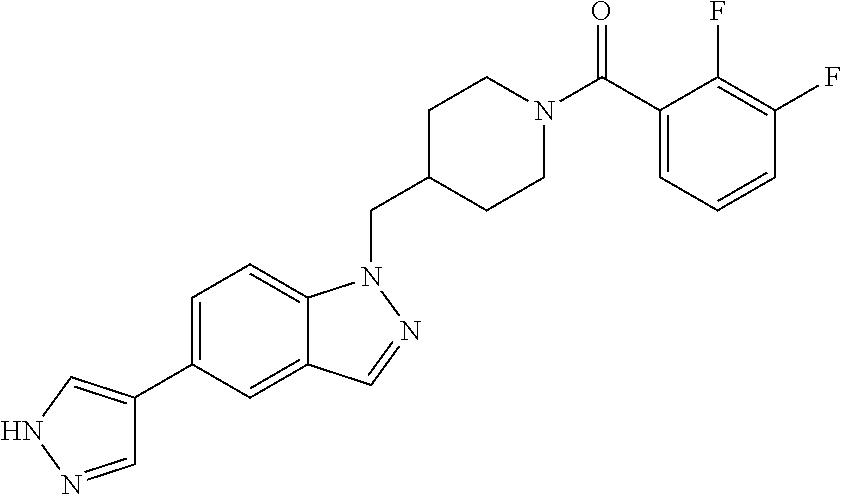 |
| 60 |
 |
 |
| 61 |
 |
 |
| 62 |
 |
 |
| 63 |
 |
 |
| 64 |
 |
 |
| Example | Acyl Chloride | Product |
| 65 |
 |
 |
| 66 |
 |
 |
| 67 |
 |
 |
| 68 |
 |
 |
| 69 |
 |
 |
| 70 |
 |
 |
| 71 |
 |
 |
| 72 |
 |
 |
| Example | Carboxylic Acid | Product |
| 73 |
 |
 |
| 74 |
 |
 |
| 75 |
 |
 |
| 76 |
 |
 |
| 77 |
 |
 |
| 78 |
 |
 |
| Example | Carboxylic Acid | Product |
| 79 |
 |
 |
| 80 |
 |
 |
| 81 |
 |
 |
| 82 |
 |
 |
| 83 |
 |
 |
| 84 |
 |
 |
| Example | Acyl Chloride | Product |
| 85 |
 |
 |
| 86 |
 |
 |
| 87 |
 |
 |
| 88 |
 |
 |
| 89 |
 |
 |
| 90 |
 |
 |
| 91 |
 |
 |
| 92 |
 |
 |
| Example | Acyl Chloride | Product |
| 93 |
 |
 |
| 94 |
 |
 |
| 95 |
 |
 |
| 86 |
 |
 |
| 97 |
 |
 |
| 98 |
 |
 |
| 99 |
 |
 |
| 100 |
 |
 |
| Example | Sulfonyl Chloride | Product |
| 101 |
 |
 |
| 102 |
 |
 |
| 103 |
 |
 |
| 104 |
 |
 |
| 105 |
 |
 |
| 106 |
 |
 |
| 107 |
 |
 |
| 108 |
 |
 |
| Example | Sulfonyl Chloride | Product |
| 109 |
 |
 |
| 110 |
 |
 |
| 111 |
 |
 |
| 112 |
 |
 |
| 113 |
 |
 |
| 114 |
 |
 |
| 115 |
 |
 |
| 116 |
 |
 |
| Example | Acyl Chloride | Product |
| 117 |
 |
 |
| 118 |
 |
 |
| 119 |
 |
 |
| 120 |
 |
 |
| 121 |
 |
 |
| 122 |
 |
 |
| 123 |
 |
 |
| 124 |
 |
 |
| 125 |
 |
 |
| Example | IL-17A | IL-17F | IL-22 | IL-21 |
| Number | [IC50 uM] | [IC50 uM] | [IC50 uM] | [IC50 uM] |
| 3 | <10 | <10 | nd | <10 |
| 4 | <10 | <10 | nd | <10 |
| 7 | <10 | <10 | nd | <10 |
| 8 | <10 | <10 | nd | <10 |
| 19 | <10 | <10 | nd | nd |
| 30 | <10 | <10 | <10 | <10 |
| 32 | <10 | <10 | <10 | <10 |
| 33 | <10 | <10 | nd | <10 |
| 34 | <10 | <10 | nd | <10 |
| 35 | <10 | <10 | nd | <10 |
| 37 | <10 | <10 | nd | nd |
| 38 | <10 | <10 | nd | nd |
| 39 | <10 | <10 | nd | nd |
| 42 | <10 | <10 | nd | nd |
| 43 | <10 | <10 | nd | nd |
| 44 | <10 | <10 | nd | nd |
| 46 | <10 | <10 | nd | <10 |
| 47 | <10 | <10 | nd | <10 |
Claims (40)


Priority Applications (1)
| Application Number | Priority Date | Filing Date | Title |
|---|---|---|---|
| US15/325,808 US9884847B2 (en) | 2014-07-25 | 2015-07-24 | Indazole retinoic acid receptor-related orphan receptor modulators and uses thereof |
Applications Claiming Priority (3)
| Application Number | Priority Date | Filing Date | Title |
|---|---|---|---|
| US201462028841P | 2014-07-25 | 2014-07-25 | |
| US15/325,808 US9884847B2 (en) | 2014-07-25 | 2015-07-24 | Indazole retinoic acid receptor-related orphan receptor modulators and uses thereof |
| PCT/US2015/041931 WO2016014913A1 (en) | 2014-07-25 | 2015-07-24 | Indazole retinoic acid receptor-related orphan receptor modulators and uses thereof |
Publications (2)
| Publication Number | Publication Date |
|---|---|
| US20170158669A1 US20170158669A1 (en) | 2017-06-08 |
| US9884847B2 true US9884847B2 (en) | 2018-02-06 |
Family
ID=55163821
Family Applications (2)
| Application Number | Title | Priority Date | Filing Date |
|---|---|---|---|
| US14/808,313 Abandoned US20160024057A1 (en) | 2014-07-25 | 2015-07-24 | Indazole retinoic acid receptor-related orphan receptor modulators and uses thereof |
| US15/325,808 Expired - Fee Related US9884847B2 (en) | 2014-07-25 | 2015-07-24 | Indazole retinoic acid receptor-related orphan receptor modulators and uses thereof |
Family Applications Before (1)
| Application Number | Title | Priority Date | Filing Date |
|---|---|---|---|
| US14/808,313 Abandoned US20160024057A1 (en) | 2014-07-25 | 2015-07-24 | Indazole retinoic acid receptor-related orphan receptor modulators and uses thereof |
Country Status (3)
| Country | Link |
|---|---|
| US (2) | US20160024057A1 (en) |
| EP (1) | EP3172198A4 (en) |
| WO (1) | WO2016014913A1 (en) |
Families Citing this family (2)
| Publication number | Priority date | Publication date | Assignee | Title |
|---|---|---|---|---|
| WO2016014913A1 (en) * | 2014-07-25 | 2016-01-28 | Innov17 Llc | Indazole retinoic acid receptor-related orphan receptor modulators and uses thereof |
| US20170298060A1 (en) * | 2016-04-18 | 2017-10-19 | Innov17 Llc | Pyrrolopyridine retinoic acid receptor-related orphan receptor modulators and uses thereof |
Citations (7)
| Publication number | Priority date | Publication date | Assignee | Title |
|---|---|---|---|---|
| US6300342B1 (en) | 1997-06-26 | 2001-10-09 | Boehringer Ingelheim Pharm Kg | Antithrombotic phenylalkyl derivatives |
| US6534535B1 (en) | 1999-08-12 | 2003-03-18 | Millennium Pharmaceuticals, Inc. | Inhibitors of factor Xa |
| US20070054903A1 (en) | 2005-06-30 | 2007-03-08 | Amgen Inc. | Bis-aryl kinase inhibitors and method |
| WO2013159095A1 (en) | 2012-04-20 | 2013-10-24 | Anderson Gaweco | Ror modulators and their uses |
| WO2014028597A2 (en) | 2012-08-15 | 2014-02-20 | Merck Sharp & Dohme Corp. | 3-CYCLOHEXENYL AND CYCLOHEXYL SUBSTITUTED INDOLE AND INDAZOLE COMPOUNDS AS RORgammaT INHIBITORS AND USES THEREOF |
| US20140187554A1 (en) | 2011-05-16 | 2014-07-03 | The Scripps Research Institute | Modulators of the nuclear hormone receptor ror |
| US20160024057A1 (en) * | 2014-07-25 | 2016-01-28 | Innov17 Llc | Indazole retinoic acid receptor-related orphan receptor modulators and uses thereof |
Family Cites Families (2)
| Publication number | Priority date | Publication date | Assignee | Title |
|---|---|---|---|---|
| KR20070091665A (en) * | 2004-12-22 | 2007-09-11 | 세라밴스 인코포레이티드 | Indazole-carboxamide compound |
| WO2014026330A1 (en) * | 2012-08-15 | 2014-02-20 | Merck Sharp & Dohme Corp. | 3-AMINOCYCLOALKYL COMPOUNDS AS RORgammaT INHIBITORS AND USES THEREOF |
-
2015
- 2015-07-24 WO PCT/US2015/041931 patent/WO2016014913A1/en not_active Ceased
- 2015-07-24 EP EP15825325.2A patent/EP3172198A4/en not_active Withdrawn
- 2015-07-24 US US14/808,313 patent/US20160024057A1/en not_active Abandoned
- 2015-07-24 US US15/325,808 patent/US9884847B2/en not_active Expired - Fee Related
Patent Citations (7)
| Publication number | Priority date | Publication date | Assignee | Title |
|---|---|---|---|---|
| US6300342B1 (en) | 1997-06-26 | 2001-10-09 | Boehringer Ingelheim Pharm Kg | Antithrombotic phenylalkyl derivatives |
| US6534535B1 (en) | 1999-08-12 | 2003-03-18 | Millennium Pharmaceuticals, Inc. | Inhibitors of factor Xa |
| US20070054903A1 (en) | 2005-06-30 | 2007-03-08 | Amgen Inc. | Bis-aryl kinase inhibitors and method |
| US20140187554A1 (en) | 2011-05-16 | 2014-07-03 | The Scripps Research Institute | Modulators of the nuclear hormone receptor ror |
| WO2013159095A1 (en) | 2012-04-20 | 2013-10-24 | Anderson Gaweco | Ror modulators and their uses |
| WO2014028597A2 (en) | 2012-08-15 | 2014-02-20 | Merck Sharp & Dohme Corp. | 3-CYCLOHEXENYL AND CYCLOHEXYL SUBSTITUTED INDOLE AND INDAZOLE COMPOUNDS AS RORgammaT INHIBITORS AND USES THEREOF |
| US20160024057A1 (en) * | 2014-07-25 | 2016-01-28 | Innov17 Llc | Indazole retinoic acid receptor-related orphan receptor modulators and uses thereof |
Non-Patent Citations (1)
| Title |
|---|
| The International Search Report and Written Opinion, dated Nov. 2, 2015, in the related PCT Application No. PCT/US15/41931. |
Also Published As
| Publication number | Publication date |
|---|---|
| EP3172198A1 (en) | 2017-05-31 |
| WO2016014913A1 (en) | 2016-01-28 |
| US20170158669A1 (en) | 2017-06-08 |
| EP3172198A4 (en) | 2018-02-21 |
| US20160024057A1 (en) | 2016-01-28 |
Similar Documents
| Publication | Publication Date | Title |
|---|---|---|
| ES2675583T3 (en) | TNF-alpha benzimidazoles modulators | |
| US20240262801A1 (en) | Compounds having 5-(2-fluoro-6-hydroxyphenyl)-1,2,5-thiadiazolidin-3-one 1,1-dioxide as inhibitors of protein kinase phosphatase enzymes | |
| CA3199496A1 (en) | Heterocycle derivatives for treating trpm3 mediated disorders | |
| TW202342464A (en) | Inhibitors of rna helicase dhx9 and uses thereof | |
| US11890275B2 (en) | Therapeutic compounds | |
| AU2003286701A1 (en) | Tetrahydropyranyl cyclopentyl benzylamide modulators of chemokine receptor activity | |
| US9771374B2 (en) | Benzimidazole retinoic acid receptor-related orphan receptor modulators and uses thereof | |
| US11834450B2 (en) | Compounds having ((3-nitrophenyl)sulfonyl)acetamide as BCL-2 inhibitors | |
| AU2014234909A1 (en) | Acyclic cyanoethylpyrazolo pyridones as Janus kinase inhibitors | |
| EP2844260A1 (en) | Ror modulators and their uses | |
| US9701663B2 (en) | Sulfonamide retinoic acid receptor-related orphan receptor modulators and uses thereof | |
| JP2004512323A (en) | Pyrrolidine modulator of CCR5 chemokine receptor activity | |
| US20150252022A1 (en) | Retinoic acid receptor-related orphan receptor modulators and uses thereof | |
| CN121002008A (en) | CBL-B inhibitors | |
| US20170158669A1 (en) | Indazole retinoic acid receptor-related orphan receptor modulators and uses thereof | |
| US20150252051A1 (en) | Retinoic acid receptor-related orphan receptor modulators and uses thereof | |
| US20160024086A1 (en) | Azaindole retinoic acid receptor-related orphan receptor modulators and uses thereof | |
| US20170298060A1 (en) | Pyrrolopyridine retinoic acid receptor-related orphan receptor modulators and uses thereof | |
| CN116964046B (en) | PLK4 inhibitors and uses thereof |
Legal Events
| Date | Code | Title | Description |
|---|---|---|---|
| AS | Assignment |
Owner name: INNOV17 LLC, NEW YORK Free format text: ASSIGNMENT OF ASSIGNORS INTEREST;ASSIGNORS:GAWECO, ANDERSON;TILLEY, JEFFERSON;BLINN, JAMES;SIGNING DATES FROM 20151008 TO 20151105;REEL/FRAME:041015/0626 |
|
| STCF | Information on status: patent grant |
Free format text: PATENTED CASE |
|
| MAFP | Maintenance fee payment |
Free format text: PAYMENT OF MAINTENANCE FEE, 4TH YR, SMALL ENTITY (ORIGINAL EVENT CODE: M2551); ENTITY STATUS OF PATENT OWNER: SMALL ENTITY Year of fee payment: 4 |
|
| FEPP | Fee payment procedure |
Free format text: MAINTENANCE FEE REMINDER MAILED (ORIGINAL EVENT CODE: REM.); ENTITY STATUS OF PATENT OWNER: SMALL ENTITY |
|
| LAPS | Lapse for failure to pay maintenance fees |
Free format text: PATENT EXPIRED FOR FAILURE TO PAY MAINTENANCE FEES (ORIGINAL EVENT CODE: EXP.); ENTITY STATUS OF PATENT OWNER: SMALL ENTITY |
|
| STCH | Information on status: patent discontinuation |
Free format text: PATENT EXPIRED DUE TO NONPAYMENT OF MAINTENANCE FEES UNDER 37 CFR 1.362 |
|
| FP | Lapsed due to failure to pay maintenance fee |
Effective date: 20260206 |