US9877A - Improvement in processes for making glue - Google Patents
Improvement in processes for making glue Download PDFInfo
- Publication number
- US9877A US9877A US9877DA US9877A US 9877 A US9877 A US 9877A US 9877D A US9877D A US 9877DA US 9877 A US9877 A US 9877A
- Authority
- US
- United States
- Prior art keywords
- glue
- processes
- improvement
- lime
- scraps
- Prior art date
- Legal status (The legal status is an assumption and is not a legal conclusion. Google has not performed a legal analysis and makes no representation as to the accuracy of the status listed.)
- Expired - Lifetime
Links
- 239000003292 glue Substances 0.000 title description 11
- 238000000034 method Methods 0.000 title description 11
- XLYOFNOQVPJJNP-UHFFFAOYSA-N water Substances O XLYOFNOQVPJJNP-UHFFFAOYSA-N 0.000 description 9
- 235000008733 Citrus aurantifolia Nutrition 0.000 description 7
- 235000011941 Tilia x europaea Nutrition 0.000 description 7
- 238000009835 boiling Methods 0.000 description 7
- 239000004571 lime Substances 0.000 description 7
- 239000000463 material Substances 0.000 description 6
- 238000004519 manufacturing process Methods 0.000 description 5
- 238000000354 decomposition reaction Methods 0.000 description 4
- 239000001828 Gelatine Substances 0.000 description 3
- 208000027418 Wounds and injury Diseases 0.000 description 3
- 230000006378 damage Effects 0.000 description 3
- 238000001035 drying Methods 0.000 description 3
- 229920000159 gelatin Polymers 0.000 description 3
- 235000019322 gelatine Nutrition 0.000 description 3
- 208000014674 injury Diseases 0.000 description 3
- 238000005406 washing Methods 0.000 description 3
- 239000002253 acid Substances 0.000 description 2
- 238000007792 addition Methods 0.000 description 2
- 150000001875 compounds Chemical class 0.000 description 2
- 239000006071 cream Substances 0.000 description 2
- 238000010790 dilution Methods 0.000 description 2
- 239000012895 dilution Substances 0.000 description 2
- 238000002845 discoloration Methods 0.000 description 2
- 238000004513 sizing Methods 0.000 description 2
- QAOWNCQODCNURD-UHFFFAOYSA-N Sulfuric acid Chemical compound OS(O)(=O)=O QAOWNCQODCNURD-UHFFFAOYSA-N 0.000 description 1
- 239000000920 calcium hydroxide Substances 0.000 description 1
- 235000011116 calcium hydroxide Nutrition 0.000 description 1
- 238000003763 carbonization Methods 0.000 description 1
- 238000006243 chemical reaction Methods 0.000 description 1
- 239000003795 chemical substances by application Substances 0.000 description 1
- 239000011248 coating agent Substances 0.000 description 1
- 238000000576 coating method Methods 0.000 description 1
- 238000009833 condensation Methods 0.000 description 1
- 230000005494 condensation Effects 0.000 description 1
- 230000002939 deleterious effect Effects 0.000 description 1
- 239000000428 dust Substances 0.000 description 1
- 230000000694 effects Effects 0.000 description 1
- 238000001704 evaporation Methods 0.000 description 1
- 230000008020 evaporation Effects 0.000 description 1
- 230000002349 favourable effect Effects 0.000 description 1
- 238000010438 heat treatment Methods 0.000 description 1
- 230000000266 injurious effect Effects 0.000 description 1
- 238000002360 preparation method Methods 0.000 description 1
- 238000004321 preservation Methods 0.000 description 1
- 239000002994 raw material Substances 0.000 description 1
- 238000009877 rendering Methods 0.000 description 1
- 238000003860 storage Methods 0.000 description 1
- 239000001117 sulphuric acid Substances 0.000 description 1
- 235000011149 sulphuric acid Nutrition 0.000 description 1
Images

Classifications
-
- C—CHEMISTRY; METALLURGY
- C09—DYES; PAINTS; POLISHES; NATURAL RESINS; ADHESIVES; COMPOSITIONS NOT OTHERWISE PROVIDED FOR; APPLICATIONS OF MATERIALS NOT OTHERWISE PROVIDED FOR
- C09H—PREPARATION OF GLUE OR GELATINE
- C09H3/00—Isolation of glue or gelatine from raw materials, e.g. by extracting, by heating
Definitions
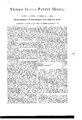
- a is the tub within which the glue scraps are boiled.
- b is the open steam-pipe.
- f is a cock at the exhaustend of the pipe to regulate the pressure of steam Within the coil, and consequently its heating power.
Landscapes
- Chemical & Material Sciences (AREA)
- Organic Chemistry (AREA)
- Adhesives Or Adhesive Processes (AREA)
Description
UNITED STATES PATENT OFFICE.
DAVID A. JAMES, OF CINCINNATI, OHIO.
IMPROVEMENT IN PROCESSES FOR MAKING GLUE.
Specification forming part of Letters Patent No. 9,877, dated July 26, 1853.
To all whom t may concern:
Be it known that I, DAVID A. JAMES, of Cincin nati, Hamilton county, Ohio, have invented new and useful Improvements in the Process of Manufacturing Glue; and I do hereby declare the following to be a full, clear, and exact description of the naturel and operation thereof, reference being had to the annexed drawing, making part of this specification, in which the boiling apparatus is represented by vertical section.
By the improved processes herein explained I am enabled to manufacture from a given material a better article of glue, and with greater economy and dispatch, than by the customary modes.
The usual mode of preserving.;` the glue scraps received from the tanneries has been by storing them as they accumulate during the winter in vats of strong lime-water-a mode of treatment involving much labor in rehandling and applying fresh lime, or, by neglect, a considerable loss from decomposition of the scraps.
It is to remedy these evils that the first part of my improvement is made, which consists in washing the scraps thoroughly by small quantities in a thick cream of lime and piling them under the protection of a roof in layers forming an angle of about twenty degrees with the horizon-thatis, commencing in one corner of the space to be occupied, I constantlypreserve thatpart of the pile the highest by making the additions all over the surface--the extent of the piles either in height or surface being of little consequence. By this treatment the danger of decomposition is in great measure avoided, partly by the draining off of the superfluous Water, but mainly by the coating of milk of lime received by each shred of the animal matter before going into the pile. By the old method the lime contained by the scraps is neutralized by atmospheric exposure at the expense of much labor and more time, extending generally to the holding of the Winters receipts until the succeeding autumn, as the heat of summer renders it necessary to suspend the manufacture. This protracted exposure, besides necessitating a large amount of capital to lie idle, subjects the material to injury from partial decomposition, dust, discoloration, &c., all which, together with part of the expense, is avoided by the following method of treatment: Sulphuric acid is an especially useful agent, as from the insolubility of the resulting compound it is left as a part of the residuum in the tubs at the end of the'boiling. I take the moist scraps direct from the heap, and after thoroughly washing to free them from the superficial lime add to them dilute sulphuric or other acid to decompose any calcareous compounds or neutralize any free lime, when after another careful Washing they are ready for the boiling. y The open steamjet, which of late years has superseded the highly-objectionable furnace boiling, is itself objectionable from the continual addition of water and the consequent dilution of the gluesize, thus rendering the boiling of glue by means of it a very uncertain operation under the most favorable circumstances, even with dried material, while from the recent scraps the manufacture would be quite impracticable, as they contain at the beginning of the operation more water than should be found in the sizing at the end of it. This position is illustrated by the following statement:
One hundred pounds recent scraps contain:
NVater 78 parts Gelatine 1l parts Insoluble residuu-m 11 parts 100 parts Proportion of water to gelatine, seven to one; proportion required for laying on the nets for drying, three of Water to one of gelatine; overplus of water, four. Sizing strong enough for exposure on the nets for drying contains three of water to one of resulting glue, and to produce a size of this strength by the evaporation of four-sevenths of the water I have provided means for using the heat of the steam Without suffering inconvenience from its water of condensation. I therefore introduce another steam-pipe, which, passing into the tub, is coiled near the bottom in the form of a convolute (disposed in one or two planes, as may be most convenient) in as many turns as may be necessary, and, being returned, discharges its moisture outside of the tub.
The advantages claimed are of a very decided character and are as follows: The immediate appropriation of the material, thereby, besides effecting a saving of capital, avoiding the injury and direct loss from decomposition, discoloration, labor, &c., at-
tendant on the old method; renderingunnecessary the extensive preparations for drying the rawr material; the saving of time and labor by boiling the material when in a less dry and refractory condition; the saving of storage room for the scrap; the superior quality of the product, arising in part from the sounder and more fit condition of the raW material and in part from the superior character of the boiling process, which, while it gives perfect control of the strength of the sizing-z`- e., its concentration-yet avoids all risk of injury to its gelatinizing properties by carbonization.
. In the annexed drawing, a is the tub within which the glue scraps are boiled.
b is the open steam-pipe.
c is the close steam-pipe.v
cl c are cocks admitting steam to them.
f is a cock at the exhaustend of the pipe to regulate the pressure of steam Within the coil, and consequently its heating power.
Having thus described the nature of my improvements in. the processes of manufacturing glue, WhatI claim therein as new, and desire to secure by Letters Patent, Vis
1. The method, substantially as described,
of preservation and conversion into glue of the tanners scraps, dac., by open piling successive layers of scrap coated by cream of lime, (in place of the lime-steeping heretofore resorted to,) followed by the application of sulphuric or other suitable acid, Which, combining with the lime, prevents its deleterious action on the glue and supersedes the necessity of the atmospheric exposure noW resorted to.
2. The combination, with the said previous treatment, the process, substantially as described, of making glue by means of the combination of direct and indirect steam acting in concert or separately, according to the stage of the process and the relative heat and moisture required, avoiding on the one hand the injurious scorching effects of the open furnace and on the other hand the serious inconvenience of undue dilution by the open steam-j et.
In testimony whereof I have hereunto set my hand before two subscribing witnesses.
, DAVID A. JAMES. Witnesses;
GEO. H. KNIGHT,
J. N. GETZENDANNER.
Publications (1)
| Publication Number | Publication Date |
|---|---|
| US9877A true US9877A (en) | 1853-07-26 |
Family
ID=2070198
Family Applications (1)
| Application Number | Title | Priority Date | Filing Date |
|---|---|---|---|
| US9877D Expired - Lifetime US9877A (en) | Improvement in processes for making glue |
Country Status (1)
| Country | Link |
|---|---|
| US (1) | US9877A (en) |
-
0
- US US9877D patent/US9877A/en not_active Expired - Lifetime
Similar Documents
| Publication | Publication Date | Title |
|---|---|---|
| US5525721A (en) | Acetylation method for material containing cellulose, and manufacturing method for modified wood | |
| AT500342B1 (en) | PROCESS FOR PRODUCING ACETYLATED WOOD | |
| US690592A (en) | Process of drying grain. | |
| US8995A (en) | Improvement in processes for preparing oakum | |
| US1106778A (en) | Process of making a retarder for plaster and the like from lime wastage. | |
| US197739A (en) | Improvement in bating compounds for hides or skins | |
| US38267A (en) | Improved liquid composition for bating skins and hides | |
| US750986A (en) | Valentin lapp | |
| US139749A (en) | Improvement in apparatus for treating grain for distillation | |
| US123747A (en) | Improvement in the manufacture of paper | |
| US987394A (en) | Process of drying fish. | |
| US7797A (en) | Improvement in processes for-rendering cordage uninflammable | |
| US104629A (en) | Improvement in process and composition for water-proofing leather | |
| US1057319A (en) | Impregnated wood and method of preparing the same. | |
| US768274A (en) | Process of manufacturing glue or size. | |
| US633778A (en) | Wood-preserving compound. | |
| JPS5934260A (en) | Activation of plant rot mud | |
| US17387A (en) | charles mellibe | |
| US150504A (en) | Improvement in the processes for the manufacture of paper | |
| US165822A (en) | Improvement in modes of tanning leather | |
| US2971813A (en) | Treatment of montan wax with chromic acid and simultaneous formation of chromic tanning mash | |
| US101783A (en) | Improvement in the manufacture of sugar and alcohol from lichens | |
| US224554A (en) | marbeau | |
| US1885884A (en) | Insecticide and processes of making same | |
| US354714A (en) | Clemens lohmann |